







Abstract
Background
Flexible work self-efficacy is crucial for employees in addressing work challenges and maintaining their physical and mental well-being.
Objective
This study aims to reveal the joint effects of multiple interrelated flexible work characteristics on employee self-efficacy in flexible work.
Methods
Based on the data from 239 questionnaires, the fuzzy set qualitative comparative analysis method was used for variable calibration, necessary conditions analysis and configuration analysis.
Results
No singular work characteristic emerged as an indispensable prerequisite for achieving high self-efficacy in flexible work environments. Instead, configurations such as the “low-strain unbalanced type” formed by coupling high resources with low demands and the “positive balanced type” formed by coupling high resources with high demands led to high self-efficacy in flexible work. Conversely, the configuration termed “high-strain unbalanced type,” resulting from coupling high demands with low resources, led to non-high self-efficacy in flexible work.
Conclusions
The collection of flexible work characteristics affects employee self-efficacy in multiple paths and alternative relationships, and companies can improve employee self-efficacy in flexible work through diversified flexible work design according to organizational development requirements and endowment differences.
Introduction
With the advancement of information technology and the digitization process of enterprises, flexible working practices (FWP), celebrated as a seminal practice of the twenty-first century, have emerged as a paradigmatic shift in work arrangements.1,2 The onset of the global COVID-19 pandemic has accelerated this trend, catalyzing a global shift towards flexible and remote work modalities, a development embraced by a growing number of enterprises. 3 While these arrangements are typically seen as beneficial to employees, especially for those with a certain level of flexible working ability, flexible work is widely believed to be associated with various positive outcomes such as increased well-being and improved productivity.2,4 However, recent scholarly discourse has illuminated a “darker” aspect.5,6 Given the high autonomy and independence inherent in flexible work, employees who perceive their ability to work flexibly as low are often more susceptible to stress, frustration, and depression, resulting in a range of health issues.7,8 Therefore, flexible work self-efficacy not only influences the job performance and career development of flexible workers but also profoundly impacts their physical and mental well-being.
Scholars have investigated the antecedent variables of employee self-efficacy in flexible work environments, suggesting that factors such as flexible work experience and training, information technology competence, effective managerial practices in flexible work, and the physical and mental states of employees are associated with employee self-efficacy in flexible work.9,10 However, our argument emphazises the need for further research into these determinants, particularly considering the context of their relevance. Before the COVID-19 pandemic, the predominance of flexible work arrangements allowed employees significant autonomy in choosing whether or not to engage in such practices. Consequently, flexible work opportunities tend to be available primarily to those who already possess the necessary skills to succeed in such environments. This suggests potential selection bias and endogeneity concerns in previous studies, as they might be applicable solely, or particularly, to those who are capable of engaging in flexible work.11,12 The pandemic's role as a catalyst in the widespread adoption of flexible work has created a distinctive context that generates a large number of less selective flexible workers. 13 Given this unique milieu, a re-examination of the antecedents of employee self-efficacy in flexible work environments is valuable both theoretically and practically.
Meanwhile, according to the Self-Efficacy Theory, an individual's self-efficacy is a subjective judgment of their capabilities and their perceived control over the surrounding work environment.14,15 This self-judgment is informed by various sources, including past accomplishments, vicarious experiences, social persuasion, and physiological and emotional states.14,16,17 However, it is imperative to acknowledge that such self-efficacy assessments are task-specific and susceptible to influence by relevant job characteristics. 14 While existing literature has identified job characteristics such as task controllability and feedback mechanisms as influential factors for self-efficacy,18,19 there remains a paucity of research specifically addressing the interplay between job characteristics and employee self-efficacy in flexible work contexts. The Job Demands-Resources (JD-R) model utilizes two general categories—job demands and job resources—to represent the majority of job attributes. It posits that job demands are associated with individuals’ energy depletion, whereas job resources are related to motivational incentives and serve to buffer the negative effects of job demands. 20 The JD-R model is considered a valuable tool for analyzing flexible work characteristics and their multidimensional impacts on employees.2,21
Particularly with respect to research methodology, the majority of these studies have predominantly utilized traditional regression analysis to explore the marginal “net effects” of specific job characteristics on individual self-efficacy, which might not adequately capture the complex interplay among various interrelated job characteristics and their collective impact on employee self-efficacy in flexible work contexts. In contrast, qualitative comparative analysis (QCA), which takes a holistic perspective, enables a comprehensive exploration of these interactions.22,23 This approach facilitates a configurational understanding of the complex relationship between flexible work characteristics and employees’ self-efficacy in flexible work.
Employing this configurational perspective, our study aims to construct a framework grounded in the JD-R model to analyze the constellation of job characteristics and their correlation with work self-efficacy in flexible work contexts. By leveraging fuzzy set qualitative comparative analysis (fsQCA), we endeavor to elucidate the configurational effects of these job characteristics on employees’ self-efficacy in flexible work settings. Our objective is to furnish organizations with strategic insights for effective flexible work arrangements, thereby augmenting employee self-efficacy.
Theoretical foundation and model construction
Adhering to the configurational theorization process encompassing scoping, linking, and naming as outlined by Furnari et al., 24 this section initially employed the JD-R framework to systematically review relevant job characteristics in flexible work. It identified potential conditioning factors that may contribute to the formation of configurations and establishes the analytical scope. Building on this foundation, we developed a model to explore the configurational effects of flexible work characteristics on employees’ self-efficacy in flexible work settings.
Flexible work characteristics within the job demands-resources framework
The “double-edged sword effect” of flexible work has long been demonstrated,25,26 which triggers a series of opposing but interdependent changes in job characteristics. For instance, flexible work arrangements grant employees autonomy in determining the when, where, and how of their work—in which greater flexibility is provided in daily tasks, fostering self-leadership.27,28 However, the phenomenon termed the “autonomy paradox” in flexible work suggests that increased freedom is often accompanied by escalated workload,25,29 contributing to an “always on, responsive to questions” work culture. 12 This autonomy and self-leadership inadvertently inspire a sense of responsibility among employees, leading them to exert extra effort, consequently escalating their working hours and intensity.30,31 Simultaneously, flexible work enables employees to allocate resources more flexibly to balance work and non-work commitments, achieving a work-family balance. 32 Nevertheless, this flexibility also tends to fuzzy the boundary between professional and personal realms, potentially leading to increased family interference with work. 33 Additionally, the dispersion of work time and space can precipitate communication challenges, and frequent and inconsistent electronic communication may also contribute to uncertainty regarding the roles of flexible work employees, resulting in role ambiguity.34,35
Additionally, the JD-R model conceptualizes job characteristics from the aspects of job demands and job resources. When it comes to job demands, it usually encompasses all the costs required for employees to maintain their physical and mental efforts in terms of physical, psychological, social, and organizational aspects within their work. Conversely, job resources are those positive factors that aid in achieving work objectives, mitigate physiological and psychological costs, and promote personal growth and development.20,36 This seems to correspond with the challenges and advantages brought by flexible work.37,38 In our study, we selected the three identified challenges of flexible work — workload, family interference with work, and role ambiguity — as job demands, while categorizing the three strengths — work autonomy, self-leadership, and work-family balance — as job resources. This approach integrates the characteristics of flexible work into a unified research framework. Based on the existence states of job demands and job resources, flexible work characteristics can be categorized into four distinct types: single, balanced, unbalanced, and absent. Following this, nine potential forms of flexible work characteristics were generated considering their varying degrees of intensity and asymmetric relationships, as illustrated in Table 1.
Potential configurations of flexible work characteristics.
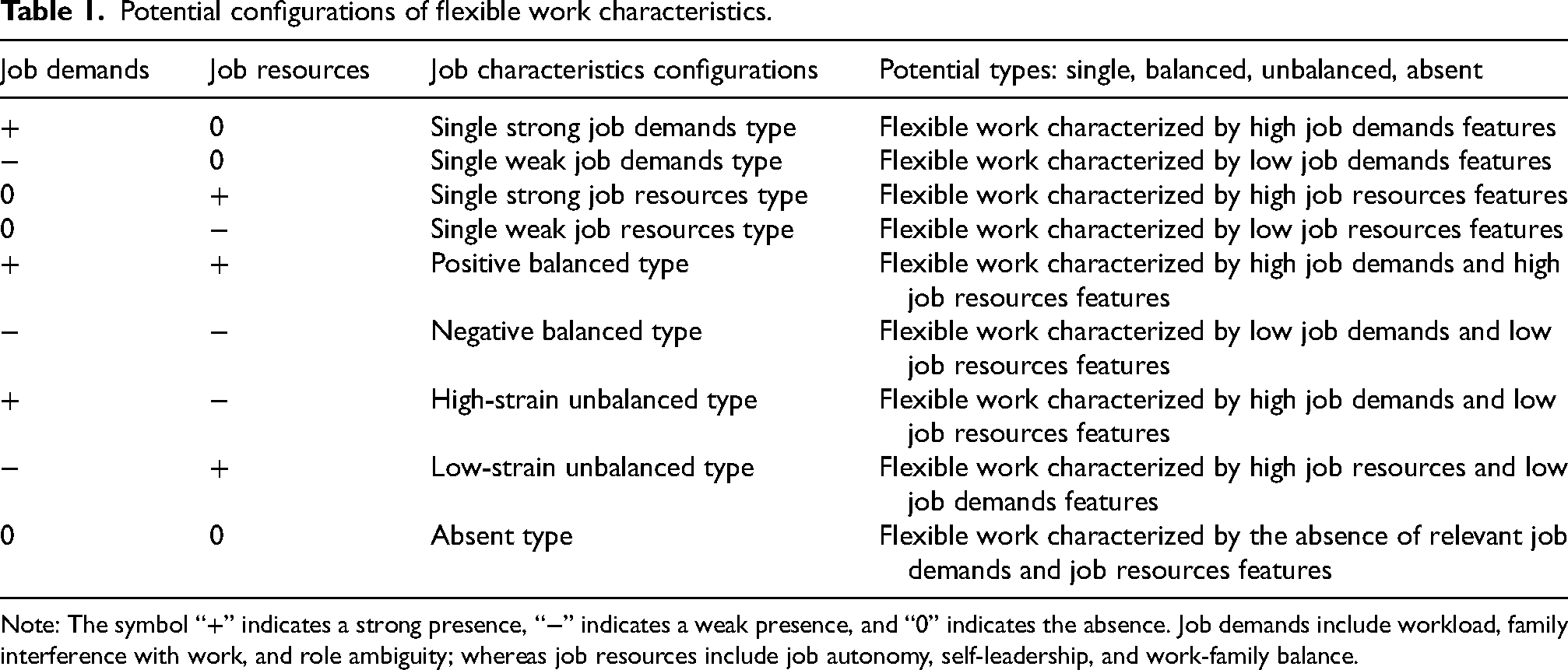
Note: The symbol “+” indicates a strong presence, “−” indicates a weak presence, and “0” indicates the absence. Job demands include workload, family interference with work, and role ambiguity; whereas job resources include job autonomy, self-leadership, and work-family balance.
Theoretical model construction
Existing research on analyzing the impacts of flexible work characteristics on employee psychology and behavior from a configurational perspective remains sparse. Consequently, clarifying the relationship between various elements of job characteristics and employees’ self-efficacy in flexible work helps to explore the coupling effects of potential combinations of job characteristics on employees’ self-efficacy within the context of flexible work, significantly enhancing the development of theoretical models.
In relation to the influence of flexible job demands on employees’ self-efficacy, scholars have found that flexible work often comes with unforeseen and unpredictable job developments, as well as increased workload. 39 This excessive workload can deplete employees’ psychological and physical resources, preventing them from fully engaging in work and resulting in lower work motivation and self-efficacy. 40 Meanwhile, factors such as physical and temporal boundary isolation, decreased interaction capabilities, and fragmented work relationships increase uncertainty in the roles of flexible work employees, which further leads to role ambiguity and draining employees’ mental and emotional energy.21,41,42 This can trigger negative reactions such as fatigue, frustration, depression, and even loss of job competence,7,43,44 all of which undermine employees’ sense of control and the formation of self-efficacy in flexible work. Additionally, the frequent role transitions in flexible work accentuate family interference with work, 2 necessitating greater investment of time, energy, and resources to fulfill work and family responsibilities. However, the limited availability of resources makes it challenging for employees to simultaneously balance the demands of work and family,45,46 thereby fostering conflict, stress, emotional exhaustion, and impeding the development of self-efficacy in flexible work.
Conversely, regarding the relationship between flexible job resources and employees’ self-efficacy, job autonomy—a primary feature of flexible work—enables employees to tailor their work tasks to their preferences, thereby enhancing the coordination of work and non-work activities. 47 This autonomy satisfies individuals’ fundamental psychological need for autonomy, boosting employees’ confidence and proactiveness in their work. Job autonomy also signals that employees are valued by the organization, expanding their sense of control and enhancing their self-efficacy.48,49 Furthermore, flexible work arrangements permit employees to exercise self-leadership within an independent temporal and spatial framework, 50 thereby fostering intrinsic motivation, a sense of accomplishment, and competence, 28 enhancing their self-efficacy in flexible work. Additionally, the ability to balance work and family demands is a significant benefit of flexible work, heightening employees’ job satisfaction and organizational identification,51,52 leading to increased responsibility, engagement, and positive self-awareness,53,54 culminating in a robust sense of self-efficacy in flexible work.
In summary, workload, family interference with work, and role ambiguity involve individual energy expenditure processes that are detrimental to the development of employees’ self-efficacy in flexible work. In contrast, job autonomy, self-leadership, and work-life balance, through individual motivational incentive mechanisms, can foster employees’ self-efficacy in flexible work. Moreover, the influence of job resources and job demands on self-efficacy is not independent, as complex interrelationships among these factors significantly affect employees’ self-efficacy in flexible work environments. For instance, it has been observed that high job resources, when coupled with high job demands, can enhance individuals’ work motivation and increase opportunities for skill development and personal growth.55,56 Thus, such a combination of high resources and high demands in job characteristics may foster the development of employees’ flexible work self-efficacy. However, our understanding of the impact of various forms of flexible work characteristics, as mentioned in Table 1, and their specific combinations of characteristic elements on employees’ flexible work self-efficacy, remains limited. In Figure 1, we present a configurational effects model that aims to systematically elucidate the complex and diverse relationships between coupled configurations of relevant job demands and resource elements and their effect on employees’ flexible work self-efficacy.
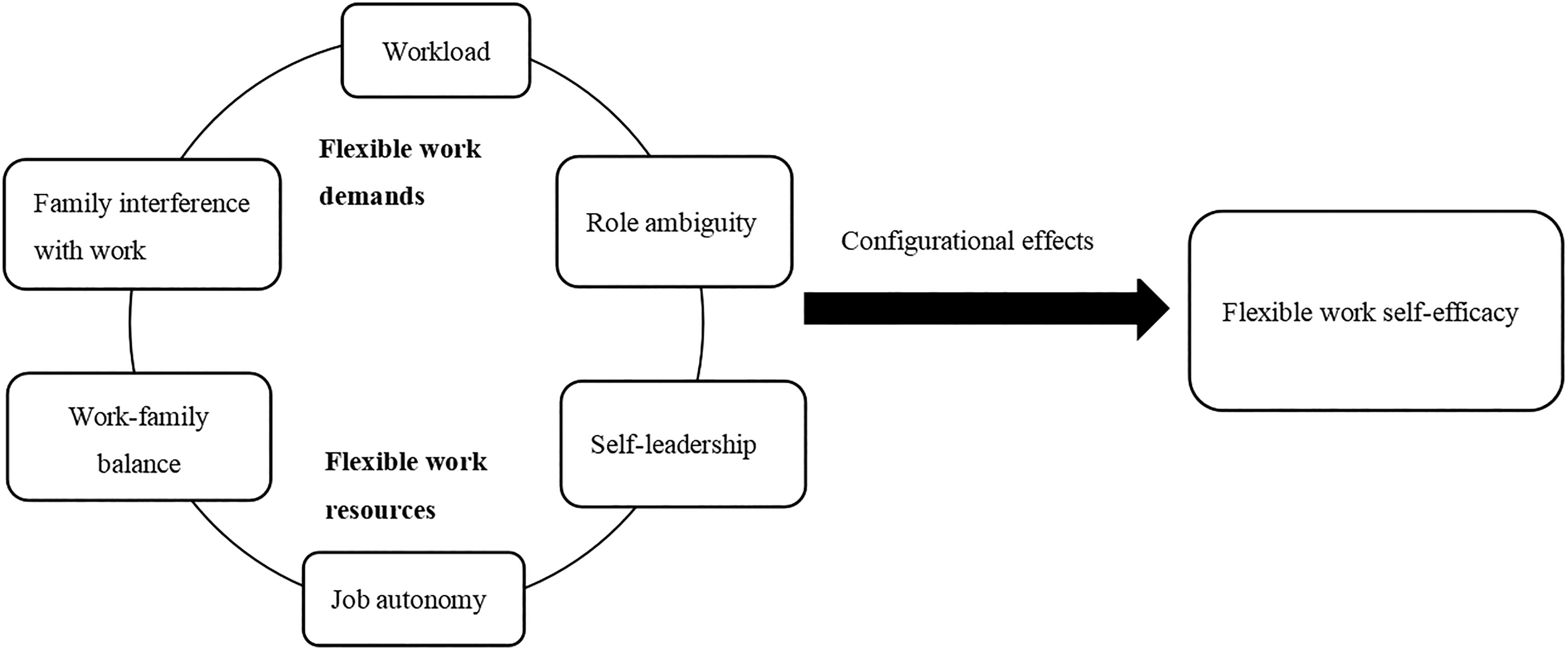
The configurational effects model of flexible work characteristics on employees’ flexible work self-efficacy.
Methods
Sample
For our research, we employed an online survey method to collect data. Online survey exhibits some notable strengths in terms of sample scope, distribution bias, and cost. 57 Additionally, online surveys can utilize backend user information to accurately distribute questionnaires to the same subjects at different time intervals, enhancing the convenience of longitudinal studies. So we used the paid sample service of the professional online survey platform “Wenjuanxing” for data collection. “Wenjuanxing”, a Chinese online data collection platform comparable to Amazon Mechanical Turk and Prolific Academic, boasts a vast participant pool that enables researchers to recruit niche samples as required. 2 This approach enables the selection of employees with flexible work experiences. According to the pricing from Wenjuanxing, each participant received 20 RMB (equivalent to 2.76 USD), and informed consent forms were provided to all participants.
To mitigate common method variance, the survey was administered in two phases. The first round(July 2023) primarily aimed to screen employees with flexible work experiences and measure their personal information and flexible work characteristics, resulting in 363 valid responses. Three months later, the second round was conducted to assess individuals’ self-efficacy in flexible work, and this time we garnered responses from 253 participants. Through systematic built-in quality control mechanisms as well as manual screening (such as IP and username filtering, assessing the length of time spent, completeness of information, etc.), effective questionnaire screening was conducted. Finally, a total of 239 valid responses were obtained.
In our sample, 51.0% are male and 49.0% are female. Regarding age, 21.3% are 25 years old or younger, 41.0% are between 26–35 years old, 23.5% are between 36–45 years old, and 14.2% are older than 45. In terms of work experience, 9.6% have been with the current company for less than a year, 25.5% for 1–2 years, 32.2% for 3–5 years, 23.9% for 6–10 years, and 8.8% for more than 10 years. As for education, 11.3% have less than a college degree, 23.0% have a college degree, 50.6% have a bachelor's degree, and 15.1% have a master's degree or higher.
Measurement of variables
We adapted from relevant scales that have proven maturity and suitability for the Chinese context to measure variables, including job demands (workload, role ambiguity, and family interference with work), job resources (work-family balance, job autonomy, and self-leadership), and flexible work self-efficacy. Modifications were made based on the flexible work scenario. All variable items were scored on a 5-point Likert scale (1 = strongly disagree, 5 = strongly agree).
Flexible work demands. Workload was measured using the 5-item scale from Peterson et al.. 58 A sample item is “My flexible workload is too heavy”. The measurement of role ambiguity was adapted from the 3-item scale by Singh et al., 59 and a sample item is “In my flexible work, I know exactly what is expected of me”. Family interference with work refers to a 9-item scale from Graves and Harrison. 38 A sample item is “In my flexible work, my family or personal life drained me of the energy I needed to do my job”.
Flexible work resources. We measured work-family balance using a 5-item scale adapted from Greenhaus et al., 60 with a sample item being “In my flexible work, I am able to balance the demands of my work and the demands of my family”. The measurement of job autonomy is developed by Spreitzer's 61 3-item scale. A sample item is “In my flexible work, I have significant autonomy in determining how I do my job”. Self-leadership was measured using the 9-item scale adapted from Houghton et al., 62 and a sample item is “In my flexible work, I establish specific goals for my own performance”.
Flexible work self-efficacy. For the assessment of flexible work self-efficacy, we developed a 3-item checklist, referencing Bledow's 63 and Matthews et al.'s 64 studies. A sample item is “I have the knowledge and technical ability to complete the flexible work objectives”.
Fuzzy-set QCA
The impact of flexible work characteristics on individuals typically manifests in configurational patterns rather than the independent effects of individual features. Given this, we employed the fsQCA method. It is rooted in a holistic perspective and involves a cross-case comparative analysis, suitable for exploring the configurations of conditions that lead to the occurrence or absence of expected outcomes, thereby elucidating the complex causal relationships among multiple variables. In comparison to traditional regression analysis, fsQCA adopts a case-oriented method that emphasizes the overall characteristics of different cases and how multiple conditions combine to form causal paths.22,65 The variable-oriented approach typically assumes independent and linear relationships between variables, attempting to explain causal relationships by investigating the marginal effects of individual variables. However, when independent variables are correlated, the unique effect of a single variable may be obscured by related variables. In real-world situations, the conditions leading to an outcome are often interdependent rather than independent, with different influencing factors interacting and jointly affecting the outcome variable. FsQCA assumes the interdependence of conditions during overall analysis, which better aligns with social phenomena. It treats each case as a configuration of conditions and focuses on the overall characteristics of different cases and how multiple conditions combine into causal paths, thereby clarifying the complex causal relationships among variables.22,65
Furthermore, given the categorical and degree differences in cases, fsQCA requires data calibration, which converts research conditions and outcome variables into the degree of membership in corresponding combinations, ensuring that measurements have clear theoretical explanations and practical significance. 66 This study explores the complex impact mechanism of flexible work characteristics on employees’ sense of work effectiveness, which is a configurational problem. Compared to regression analysis, fsQCA is a more appropriate method for this study.
Results
Common method variance and reliability and validity analysis
All variables we measured are derived from the same set of participants, so we examined the potential existence of common method bias using the Harman single-factor test. 67 An unrotated factor analysis was conducted on all items, with the first factor explaining 33.990% of the variance. This percentage is below the critical threshold of 40% and does not exceed half of the total variance explained, indicating that no single factor explains the majority of the variance. This suggests that common method bias is acceptable in our study.
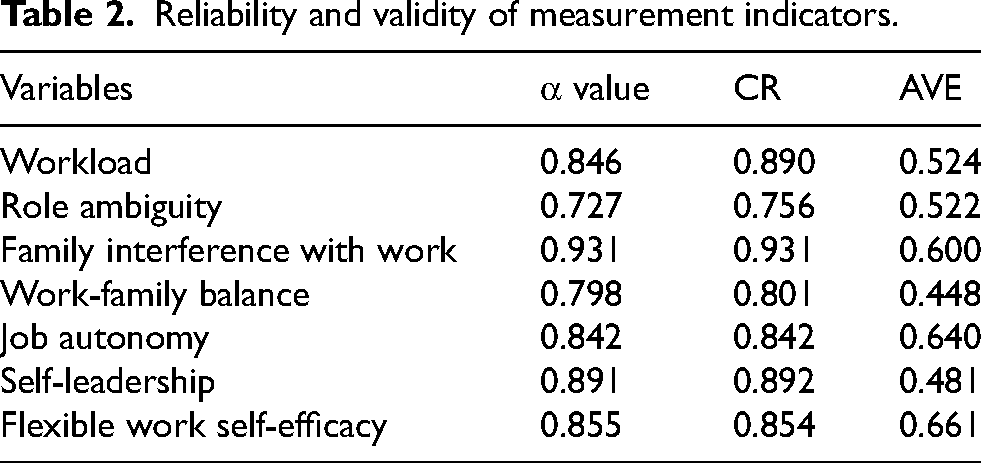
To assess reliability, we used SPSS 20.0 to compute Cronbach's α coefficients of each construct, as presented in Table 2. The α values for 7 constructs were all greater than 0.7, indicating good reliability. In terms of validity, the composite reliability (CR) values for all construct combination were all above 0.7, and the average variance extracted (AVE) for each construct was greater than 0.4, indicating that the constructs pass the convergent validity test. 68
Reliability and validity of measurement indicators.
Variable calibration and necessary condition analysis
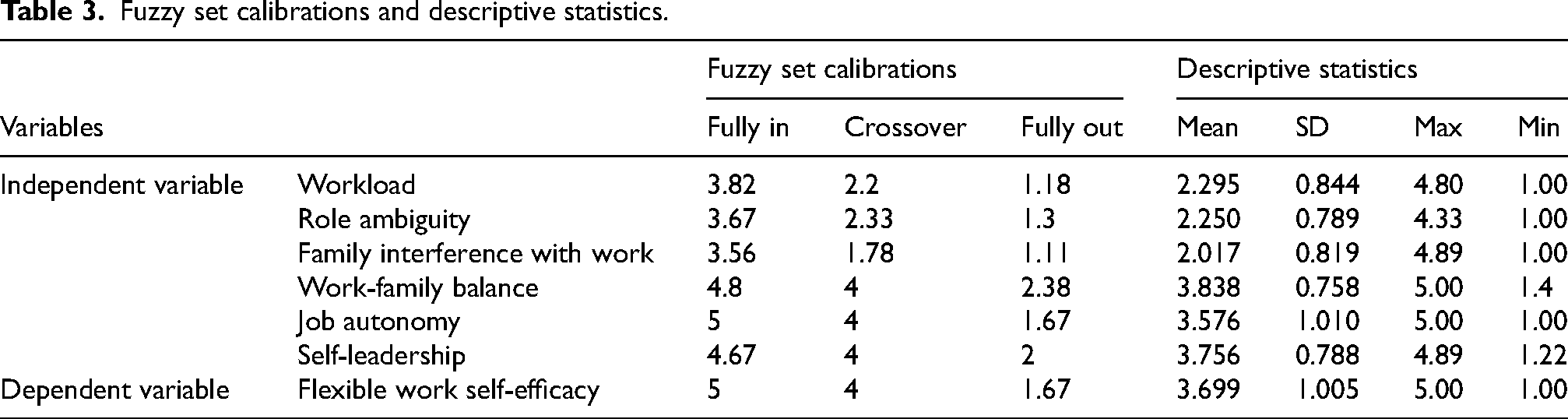
We employed the direct calibration method to conduct structured calibration on the data. In selecting anchor points, we assigned the 95%, 50%, and 5% quantiles of the sample data as the thresholds for “fully in,” “neither in or out,” and “fully put,” respectively. 66 The calibration anchor points for each variable, along with descriptive statistics, are detailed in Table 3.
Fuzzy set calibrations and descriptive statistics.
Necessary conditions analysis
In the preliminary phase of our investigation, it is imperative to ascertain potential necessary conditions. QCA leverages a consistency index to evaluate the necessity of conditions, positing a condition as necessary when the consistency measure surpasses the critical threshold of 0.9. 69 Examination of the data presented in Table 4 reveals that the consistency indices for each conditional variable fall below the 0.9 threshold, indicating the absence of any singular necessary condition pivotal for fostering elevated levels of employee self-efficacy in the context of flexible work.
Necessary conditions analysis.
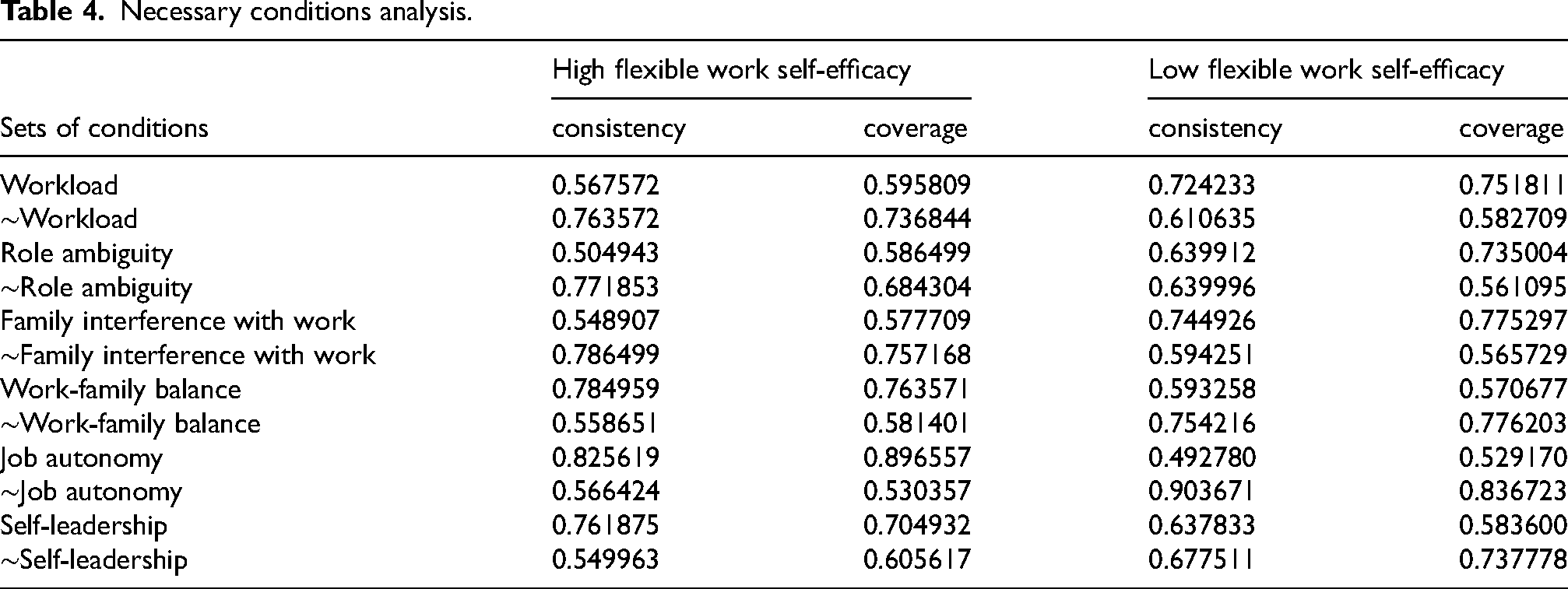
Conversely, when analyzing the necessity for scenarios characterized by low employee self-efficacy in flexible work, a different pattern emerged. Specifically, the consistency index for low job autonomy surpasses the 0.9 threshold, ostensibly indicating that low job autonomy may constitute a necessary condition for the emergence of low employee flexible work self-efficacy. However, a more nuanced examination of an analysis of the X-Y scatter plot juxtaposing low job autonomy with low flexible work self-efficacy, reveals a different narrative. Approximately one-third of the cases in this analysis are positioned above the diagonal axis, which suggests that low job autonomy does not constitute a necessary condition for low employee flexible work self-efficacy. 70
Configuration analysis
We conducted a sufficiency analysis using fsQCA3.0. Referencing prior studies,69,71,72 we established a frequency benchmark of ≥ 2, a raw consistency benchmark of ≥ 0.8, and we set the PRI consistency threshold at 0.8. We compared the intermediate solutions with the parsimonious solutions. Conditions present in both solutions are considered core conditions, while those appearing only in the intermediate solution are categorized as peripheral conditions.65,69 We use the conventional notations to report our results: ● indicates the presence of core causal condition, • indicates the presence of peripheral conditions, ⊗ indicates the absence of core causal condition, ⊗ indicates the absence of peripheral condition, and whitespace indicates a fuzzy state.
Table 5 shows that the six antecedent variables constitute six pathways that can explain high levels of flexible work self-efficacy. The overall solution consistency level is 0.929, suggesting that within the configurations of the six conditions presented in the table, 92.9% of employees exhibit high levels of flexible work self-efficacy. And the solution coverage is 0.751, indicating that these six condition configurations can explain 75.1% of cases with high levels of employee flexible work self-efficacy. In our configurational analysis, both the consistency and coverage of the solution exceed the critical thresholds, based on which we consider the empirical analysis to be valid. In the earlier examination of the nine forms of flexible work configurations, we found that low-strain unbalanced and positive balanced types are the job characteristic configurations conducive to achieving high levels of flexible work self-efficacy.
Configurations for achieving high employee flexible work self-efficacy and low employee flexible work self-efficacy (fsqca).
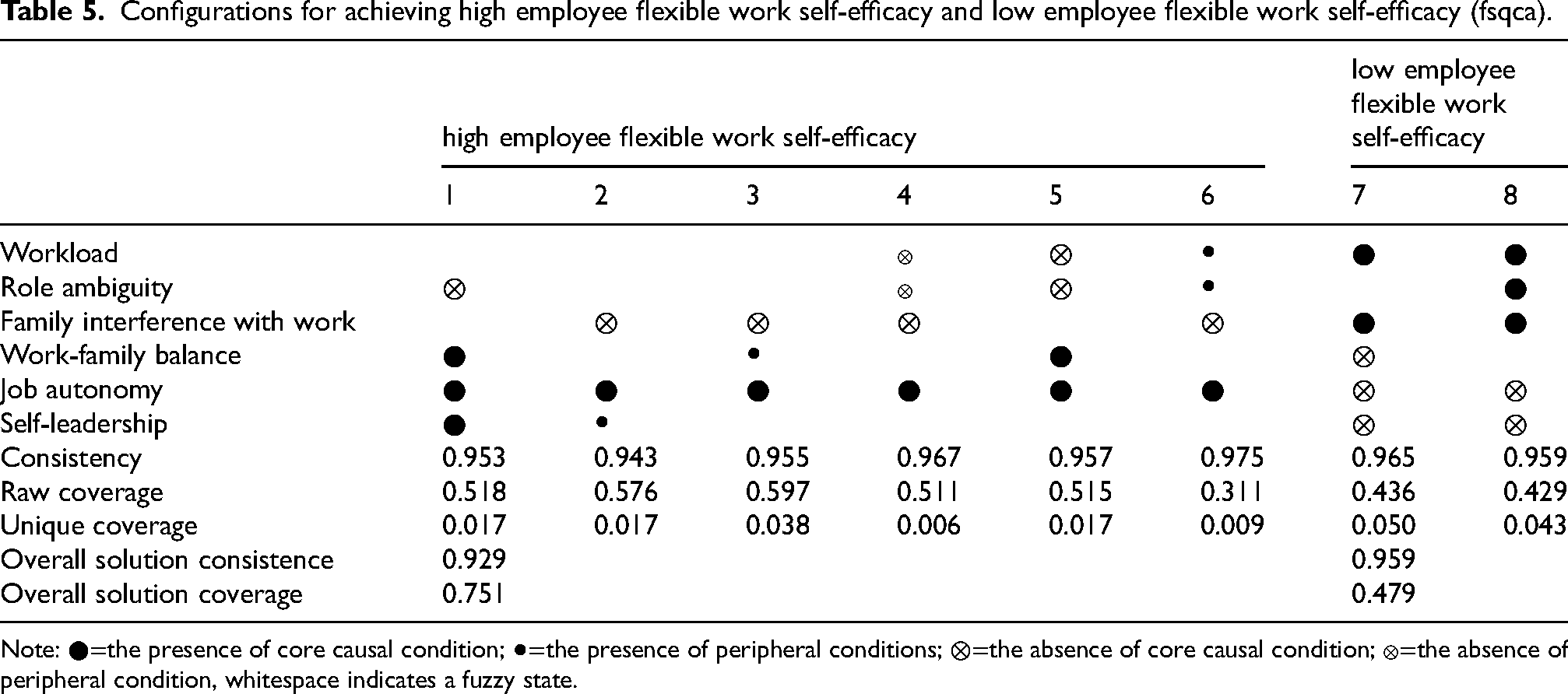
Note: ●=the presence of core causal condition; •=the presence of peripheral conditions; ⨂=the absence of core causal condition; ⨂=the absence of peripheral condition, whitespace indicates a fuzzy state.
In this analysis, Configurations 1–5 all exhibit a distinct low-strain unbalanced job characteristic configuration, confirming the positive impact of a combination of high job resources and low job demands on employees’ flexible work self-efficacy. Configuration 1 indicates that when high work-family balance, high job autonomy, high self-leadership, and low role ambiguity are the core conditions, employees exhibit high levels of flexible work self-efficacy, with work overload and family interference with work appearing to be less significant. This configuration highlights the motivational incentive mechanism of job resources on flexible work self-efficacy, and can be considered as a “high-resources low-strain unbalanced type”. The coverage is 0.518, indicating that it can explain 51.8% of the cases of high employee flexible work self-efficacy.
Configurations 2, 3, and 4 all identify low family interference with work and high job autonomy as core conditions. Configuration 2 additionally incorporates high self-leadership as a peripheral condition, while Configuration 3 includes high work-family balance, both tending to demonstrate the positive influence of job resources on flexible work self-efficacy, aligning with the “high-resources low-strain unbalanced type”. The coverage of these two configurations is 0.576 and 0.597 respectively, indicating that they can explain approximately 57.6% and 59.7% of cases of high-level employee self-efficacy in flexible work. Configuration4, in contrast, adds low role ambiguity and low workload as peripheral conditions. Differing from the first three high-resource configurations, this configuration distinctively exhibits the positive impact of the energy conservation mechanism associated with weak job demands on flexible work self-efficacy. It can be categorized as a “low-demands low-strain unbalanced type”. The coverage for this configuration is 0.511, suggesting it can explain 51.1% of cases of high-level self-efficacy in flexible work.
Configuration 5 indicates that high work-family balance, high job autonomy, low workload, and low role ambiguity all serve as core conditions, leading employees to exhibit high self-efficacy in flexible work. This configuration, exhibiting concurrent motivational incentives and energy conservation tendencies, can be considered a “dual-dominated low-strain unbalanced type”. The coverage is 0.515, indicating its 51.5% explanatory power for high-level employee self-efficacy in flexible work.
Configuration 6 suggests that high job autonomy and low family interference with work as core conditions, supplemented by high workload and high role ambiguity as peripheral conditions, can foster high self-efficacy in flexible work among employees. Contrasting with the previous five configurations that combine high resources with low demands, this configuration presents a balanced combination of high resources and high demands, which can be characterized as a “positive balanced type”. The coverage of this configuration is 31.1%, indicating it can explain 31.1% of cases of high-level employee self-efficacy in flexible work.
Our study also examined configurations leading to low levels of employee self-efficacy in flexible work, identifying two distinct configurations. Configuration7, as shown in Table 5, indicates that a combination of high workload, high family interference with work, low work-family balance, low job autonomy, and low self-leadership, irrespective of the level of role ambiguity, results in employees lacking high self-efficacy in flexible work. Configuration 8 demonstrates that a mix of high workload, high role ambiguity, high family interference with work, low job autonomy, and low self-leadership, regardless of the work-family balance level, also prevents employees from exhibiting high levels of self-efficacy in flexible work. These two configurations both present a “high-strain unbalanced type” job characteristic configuration of high demands and low resources. In such states, flexible work not only consumes substantial physical and psychological resources of employees but also fails to foster their work motivation, leading to lower levels of self-efficacy in flexible work.
Robustness checks
To ensure the accuracy and reliability of the research findings, we conducted a robustness test on the configurational conditions of employee flexible work self-efficacy. Drawing on the practices of other scholars, we examined the robustness of the results by varying the case frequency threshold and altering the consistency of PRI.69,73 Initially, the threshold for the number of cases was lowered to 1, as demonstrated in Table 6, which yielded configurations largely consistent with those discussed earlier in the text. Subsequently, the PRI consistency threshold was reduced from 0.8 to 0.75, as shown in Table 7. The configurations derived under this adjusted threshold were also closely aligned with previous findings, thus affirming the robustness of the study's results.
Robustness test results (changing case number threshold).
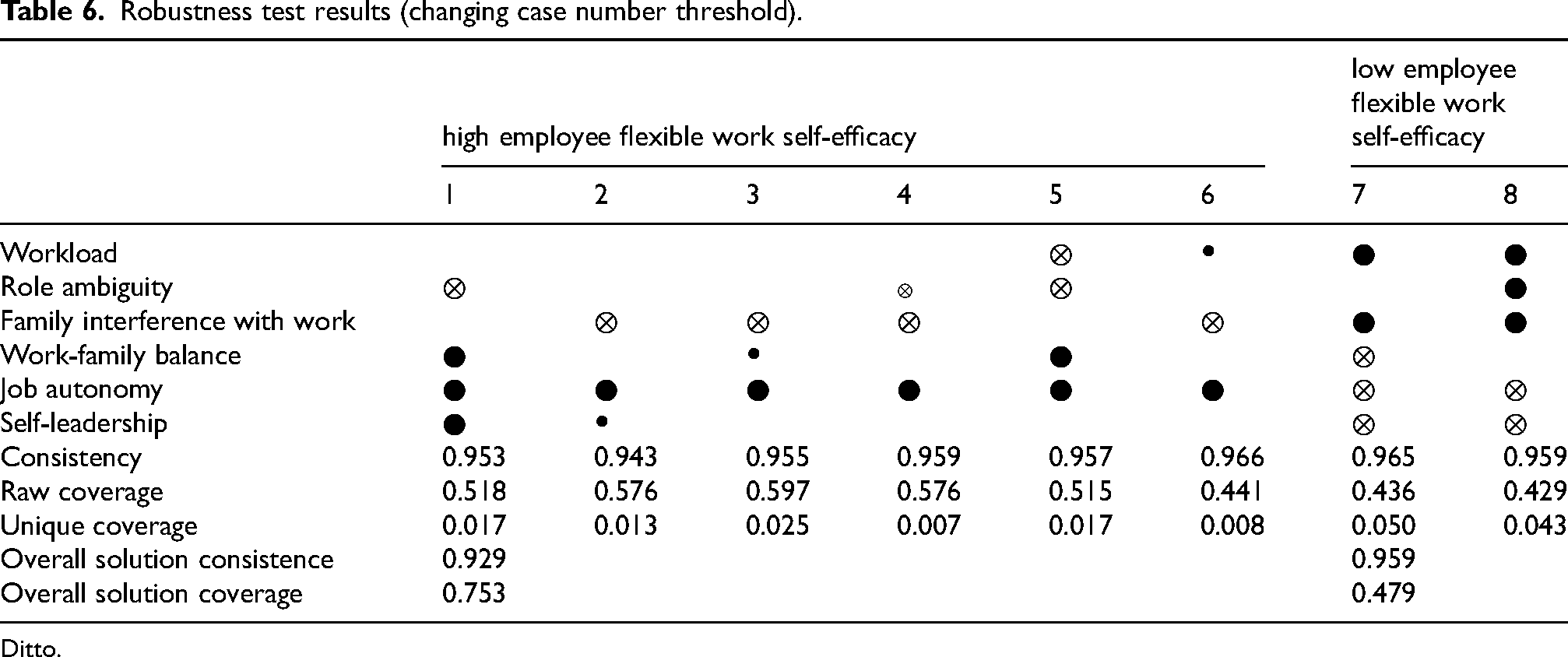
Ditto.
Robustness test results (changing the PRI consistency threshold).
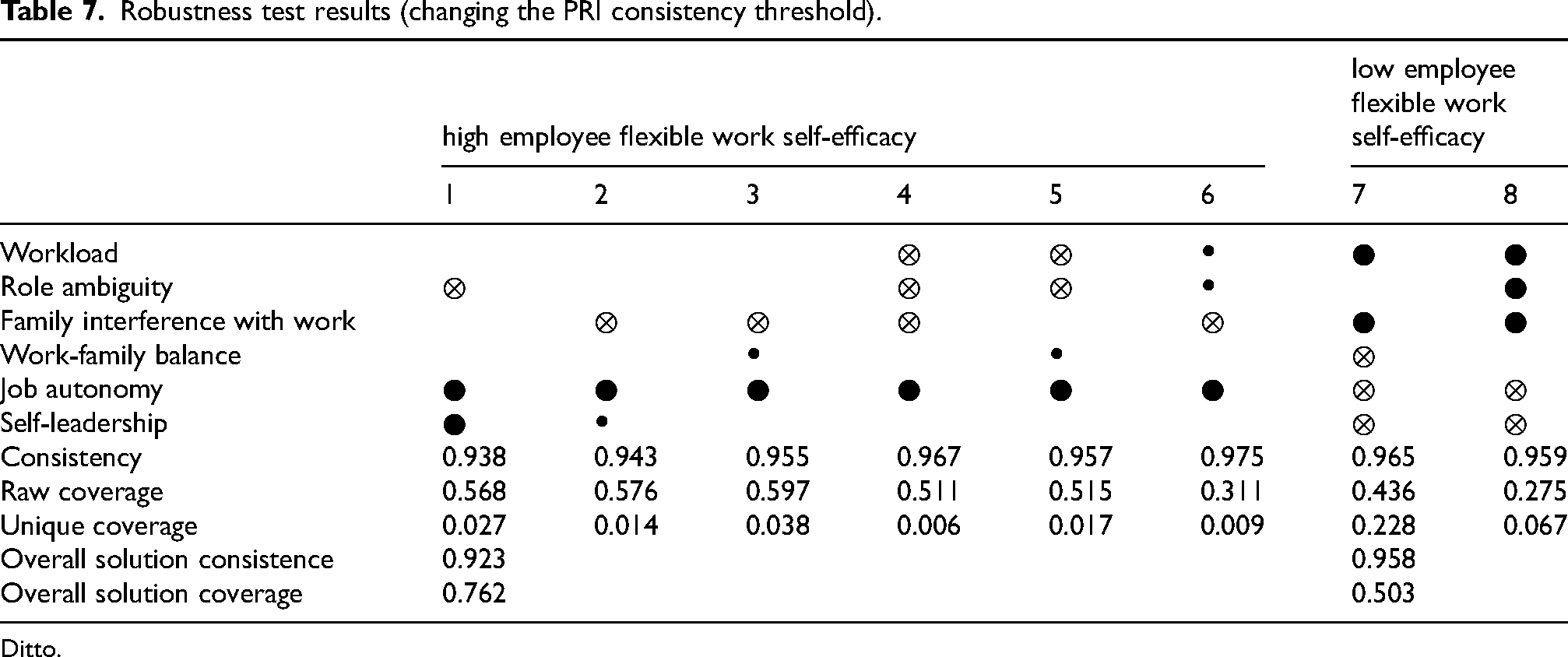
Ditto.
Discussion
Based on the JD-R model, we considered work overload, family interference with work, and role ambiguity as flexible job demands, and job autonomy, self-leadership, and work-family balance as flexible job resources, as potential conditions affecting employee flexible work self-efficacy. We employed fsQCA to identify the coupled configurations of these job characteristic elements and their complex impacts on employee flexible work self-efficacy. The findings are as follows: First, none of the six job characteristic variables alone constitute a necessary condition for flexible work self-efficacy. Second, the emergence of high flexible work self-efficacy can be categorized into two main configurational patterns: one is the “low-strain unbalanced type” job characteristic configuration pattern formed by high job resources coupled with low job demands, and the other is the “positive balanced type” configuration pattern, resulting from the coupling of high job resources with high job demands. There are five specific configurations within the “low-strain unbalanced type,” including three configurations emphasizing the motivational incentive mechanism of high job resources, known as “high-resources low-strain unbalanced type” configurations, one configuration highlighting the energy conservation mechanism of low job demands, termed as “low-demands low-strain unbalanced type” configuration, and one configuration considering both aspects, named “dual-dominated low-strain unbalanced type” configuration. The “positive balanced type” has one specific configuration where high job demands and high job resources coexist in balance. Last, the “high-strain unbalanced type” job characteristic configuration pattern, formed by high job demands coupled with low job resources, is found to have a negative impact on employee flexible work self-efficacy.
Theoretical implications
Our research has several theoretical implications. A fundamental theoretical contribution is the enrichment and expansion of situational research on the antecedents of self-efficacy. Since the renowned psychologist, Bandura introduced the concept of self-efficacy, 14 industrial and organizational psychologists have increasingly focused on the application of self-efficacy in the field of organizational behavior. This has led to the gradual formation of a comprehensive theoretical framework for self-efficacy. Given that self-efficacy is considered one of the most influential factors in employee cognition and behavior,74,75 exploring the antecedents and formation mechanisms of employee self-efficacy has become one of the hottest topics in organizational behavior research. Previous studies have confirmed that employee self-efficacy is related to numerous factors, such as individual traits, leadership style, interpersonal relationships, psychological and emotional factors.15,76,77 The development and widespread application of digital technologies have led to more flexible and autonomous work models and contexts,1,78 necessitating the exploration of the situational rules of self-efficacy theory in new organizational scenarios. This paper, based on the JD-R model, constructs a job characteristic framework in the context of flexible work to explore the complex relationship between flexible work characteristics and self-efficacy in flexible work employees. It provides some new insights for the application of self-efficacy theory in flexible work contexts.
Additionally, our research adopts a configurational perspective, which moves beyond the limitations of linear regression in the study of self-efficacy. Through employing a configurational perspective combined with fsQCA, we revealed the impact of the coupling characteristics of work features on self-efficacy in flexible work. Using traditional linear regression analysis, scholars have found that the emergence of self-efficacy in flexible work is influenced by employee experience training, physical and mental state, information technology capabilities, etc. 9 However, this marginal “net effect” analysis of linear regression methods alone is inadequate to reveal the combined effect of various interrelated flexible work characteristics on employee self-efficacy in flexible work. Configurational analysis, which emphasizes the consideration of systems and wholes, can address multifactorial concurrent causal issues with multiple antecedent variables. 22 Using this approach, we try to explore the coupling configurations of work feature elements related to high-level and low-level self-efficacy in flexible work, revealing the diverse combinations of job characteristics that influence employees’ self-efficacy in flexible work contexts. This provides methodological guidance for the analysis of similar issues in the future.
A further theoretical implication lies in the elucidation of the multiple pathways and potential substitutes through which job characteristics impact self-efficacy in flexible work arrangements. The research indicates that employees’ flexible work self-efficacy stems from the coupling configuration of high job resources and varying levels of job demands, highlighting the core role of job resources in shaping employee self-efficacy in flexible work. The conclusion identifies that flexible job resources like job autonomy can aid employees in coping with complex flexible job demands, robustly supporting the applicability of the buffering hypothesis of the JD-R model in flexible job situations.55,79 This finding also aligns with scholars’ observations that challenging job demands such as workload can foster personal growth and motivate employees. 80 Simultaneously, for achieving high self-efficacy in flexible work, research has revealed potential substitutive relationships between job resources and job demands (Configuration 1 versus Configuration 5), among different job resources (Configuration 2 versus Configuration 3), and among different job demands (Configuration 3 versus Configuration 5), deepening the theoretical understanding of job characteristics.
Management inspirations
Our study holds significant value for the management practices of flexible working for enterprises. First, our findings suggest that employees’ self-efficacy originates from the coupling of diverse job characteristics in flexible work settings, revealing an “all roads lead Rome” effect. Managers can enhance employees’ self-efficacy in flexible work through diverse, high-quality flexible work designs. However, it is crucial that these flexible work designs are not fragmented but rather focus on the integrality and synergy of management policies. For instance, the study reveals that single-type flexible work characteristic cannot form a high sense of self-efficacy in flexible work. Therefore, in designing flexible work, businesses should leverage the synergistic effects of job resources and demands, reducing energy depletion caused by job demands while amplifying the motivational effects of job resources to collectively boost employees’ self-efficacy in flexible work.
Second, the potential substitutive relationships among the elements of flexible work characteristics provide insights into how organizations can select appropriate paths to enhance employees’ self-efficacy, aligning with organizational development requirements and endowment differences. For example, in work contexts with high job autonomy, high work-family balance, and low role ambiguity, the roles of high self-leadership and low workload in fostering employees’ self-efficacy in flexible work can substitute for each other. Thus, for businesses with heavy flexible work tasks, if reducing workload is not feasible, a key focus in flexible work design should be to strengthen related training to enhance employees’ self-leadership skills. Additionally, we found that in contexts with high work-family balance and high job autonomy, the combination of low workload and low role ambiguity can be mutually substitutable with low family interference with work. This implies that for flexible work types that are challenging to achieve low family interference with work, such as working from home, using richer communication media to improve the clarity of work arrangements and communication, and strengthening feedback to reduce employees’ workload and role ambiguity is a feasible approach.
Finally, job autonomy is an essential factor that cannot be overlooked. Our results suggest that job autonomy consistently emerges as a core condition in configurations associated with high self-efficacy in flexible work, as well as those associated with low self-efficacy. This underscores its distinctive significance in shaping employees’ self-efficacy within flexible work settings. Consequently, it is imperative for managers to meticulously consider the role of job autonomy, steering clear of ensnaring employees within the “autonomy-control paradox”. Particularly, in the context of burgeoning digital technologies and the escalating digitalization of businesses, the enhanced convenience of connectivity might tempt managers to amplify supervision and intervention in the activities of employees engaged in flexible work. Excessive interaction and feedback can make employees feel more controlled and constrained, undermining their job autonomy. Therefore, organizations need to establish digital communication norms and clear connectivity rules to avoid the pitfalls of continuous connection. By standardizing interactive procedures in flexible work and establishing contingency plans, organizations can enhance employees’ predictability and control over flexible work.
Limitations and future research
Our research has some limitations. First, the reliance on self-reported measures for all variables, despite the implementation of strategies such as temporal separation to mitigate common method bias, may still compromise the authenticity and accuracy of the findings. To enhance methodological rigor, future investigations are encouraged to adopt a mixed-methods approach, integrating self-assessments with evaluations from external observers, and to complement questionnaire surveys with situational experiments.
Second, the current research focused on the influence of job characteristic factors on employees’ self-efficacy within flexible work arrangements. However, the potential impact of additional variables, including organizational behavior, leadership styles, and individual personality traits, warrants further exploration. Future studies could enrich the existing model by incorporating these variables to elucidate the multifaceted effects of organizational, work-related, and individual factors.
Furthermore, in terms of the selection of flexible work characteristics, we only considered three flexible work demands (workload, family interference with work, and role ambiguity) and three flexible work resources (job autonomy, self-leadership, and work-family balance) as antecedent conditions influencing employees’ self-efficacy in flexible work. Subsequent research could consider adding corresponding flexible work characteristics to comprehensively detect the relationship between flexible work characteristics and employees’ self-efficacy in flexible work.
Finally, this study employed the fsQCA method based on set theory analysis to elucidate the complex causal relationships underlying the influence of flexible work characteristics on self-efficacy. Finally, we utilized fsQCA based on set theory to explain the complex causal relationships in constructing self-efficacy under flexible work characteristics. For future research, an integrative approach that combines fsQCA with additional quantitative methodologies is recommended to explore the formation mechanisms and boundary conditions of employees’ flexible work self-efficacy, further refining and expanding the findings of this study.
Conclusions
This study explores the complex causal relationships between job characteristics and employees’ self-efficacy in the context of flexible work, revealing how self-efficacy is formed under the interaction of different job characteristics. Specifically, the study shows that self-efficacy mainly arises from two types of coupling: high job resources-high job demands and high job resources-low job demands. Based on the Job Demands-Resources model and the configurational perspective, the research provides important theoretical insights and practical recommendations for enhancing employees’ self-efficacy in a flexible work environment. Managers should emphasize the supportive role of job resources, such as job autonomy, self-leadership, and work-family balance, in fostering employees’ self-efficacy. Actively cultivating employees’ self-efficacy can stimulate their subjective initiative, thereby improving overall job performance and well-being.
Footnotes
Acknowledgment
The authors would like to sincerely thank all individuals and organizations who contributed to and participated in this research.
All procedures performed involving human participants were in accordance with the principles of the Declaration of Helsinki. Our research protocol has been approved by the Ethics Committee of Anhui University of Technology, with the approval number SB-AHUT-REC-2023-06-HS01.
Written informed consent was obtained from all participants prior to their involvement in the study.
This work was supported by the National Natural Science Foundation of China (No. 72172002), the Anhui Philosophy and Social Science Planning Project (AHSKY2022D107), and the 2023 Higher Education Scientific Research Planning Project of the China Association of Higher Education (23CX0408).
Declaration of conflicting interests
The authors declared no potential conflicts of interest with respect to the research, authorship, and/or publication of this article.