







Abstract
Background
Much of the research on workplace interpersonal capitalization has focused on the adverse effects experienced by responders, leaving the potential benefits for those who disclose largely unexplored.
Objective
To address this gap, we draw on conservation of resources theory to examine how engaging in workplace interpersonal capitalization influences disclosers’ OCBI through the mediating role of self-efficacy.
Methods
This study conducted a three-wave, multi-source survey to examine the theoretical model and test hypotheses using response surface methodology with Mplus 7.4. Data were collected in three stages from a sample of 297 full-time employees. We employed path analysis to evaluate and test the hypotheses.
Results
The results show that self-efficacy mediates the relationship between workplace interpersonal capitalization and OCBI among disclosers. Furthermore, when disclosers perceive their coworkers as more responsive, they report higher levels of self-efficacy.
Conclusions
By emphasizing the role of workplace interpersonal capitalization in enhancing resource gains for disclosers, this study contributes to a deeper understanding of its positive impacts. The discussion also explores the broader implications and limitations.
Keywords
Introduction
Employees frequently encounter positive work events, such as receiving compliments from supervisors, completing tasks ahead of schedule, or successfully assisting clients.1–4 These positive experiences are often shared with others in a behavior known as workplace interpersonal capitalization, which refers to individuals voluntarily sharing personal and positive work-related experiences with coworkers and is common in organizational settings.5,6 This practice fosters interpersonal bonds and enhances workplace interactions. Given its relational and affective nature, employees tend to engage in this practice for three main reasons: (1) it occurs on approximately 60% of workdays, making it a frequent behavior; (2) prolonged interactions with colleagues provide ample opportunities for such exchanges; and (3) many work tasks are inherently collaborative in nature, rendering work events highly social. 6 As a result, positive social interactions, particularly among colleagues, shape organizational life and significantly influence employees’ attitudes and behaviors.
A growing body of research suggests that workplace interpersonal capitalization can positively influence various domains, including job satisfaction, 7 life satisfaction, 8 overall well-being, and relationship quality. 9 Much of this literature assumes that such behavior is inherently beneficial, often emphasizing its role in eliciting interpersonal citizenship behaviors from recipients. 6 However, this view may be overly optimistic, as it largely centers on the positive outcomes for recipients while overlooking potential drawbacks. Emerging evidence indicates that capitalization attempts may also evoke negative emotional reactions in recipients, such as anxiety and envy, which can give rise to detrimental behaviors like social undermining and contact avoidance directed at the discloser.6,10,11
Despite this growing body of research on recipients, a significant gap remains in understanding the implications of workplace interpersonal capitalization for the disclosers themselves. Specifically, it remains unclear how the role of the discloser in this process influences their own outcomes. Existing research often assumes that workplace interpersonal capitalization benefits responders and organizations.6,11 However, does this assumption also hold true for disclosers? If so, does engaging in workplace interpersonal capitalization positively influence them? This question is crucial to explore, as it could shed light on the conditions and mechanisms under which disclosers benefit from capitalization, contributing to both theoretical and practical advancements. Furthermore, this research could offer a more nuanced understanding of how workplace interpersonal capitalization enhances individual well-being and job satisfaction. It could also highlight broader organizational outcomes, such as increased collaboration, employee engagement, and workplace harmony. Ultimately, understanding these positive effects can help organizations foster a more supportive and collaborative work environment.
To address this gap in the literature, we adopt Conservation of Resources (COR) theory 12 as the foundation for our study, developing a conceptual framework that outlines the mechanisms through which workplace interpersonal capitalization influences the discloser's Organizational Citizenship Behavior for Individuals (OCBI) (see Figure 1). Our research investigates the influence of workplace interpersonal capitalization on the discloser's behavior from an actor-centric perspective, exploring the reasons and conditions under which this effect occurs. Specifically, COR theory is applied here to clarify the nature of resources and to conceptualize workplace interpersonal capitalization as a form of resource investment that offers both benefits and growth opportunities for disclosers.13–15
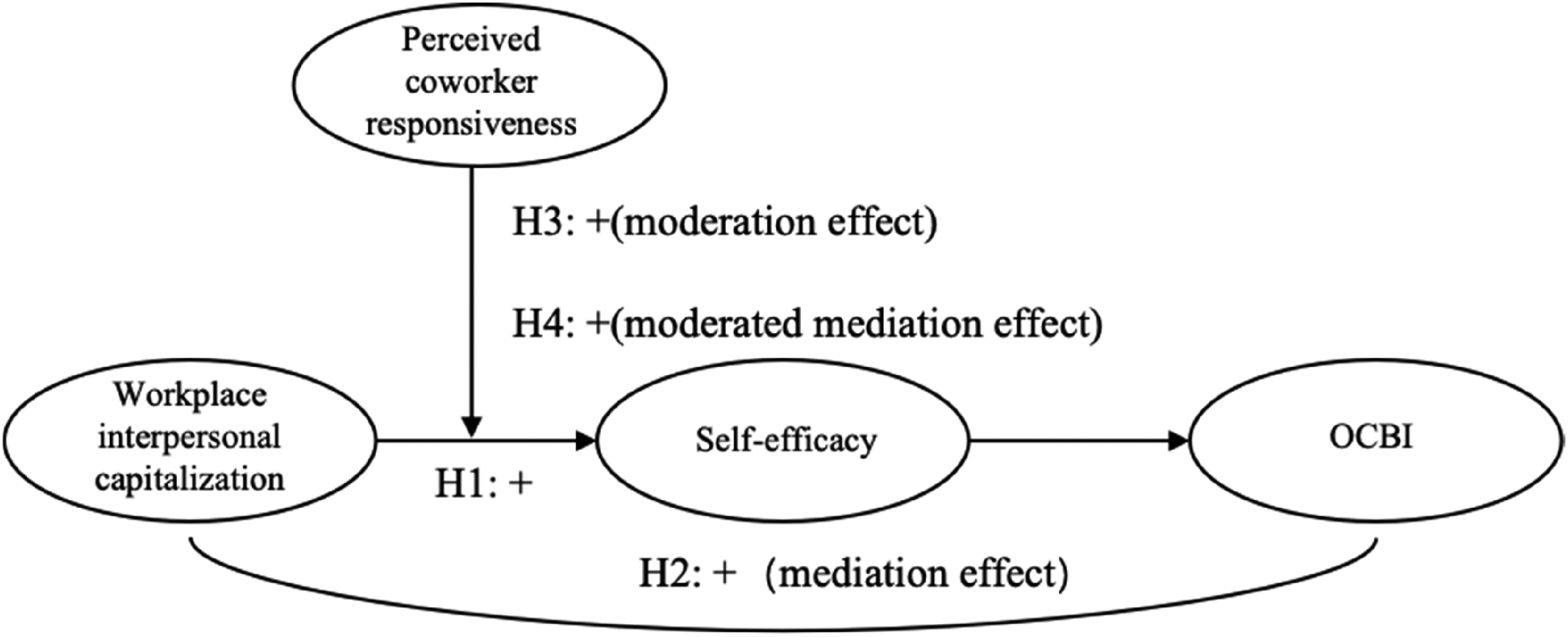
Theoretical model of the current research.
To better understand how these mechanisms operate, we focus on the process of workplace interpersonal capitalization, which enables disclosers to build personal resources by creating opportunities to strengthen social connections, gain recognition, and receive positive feedback. Positive social interactions enhance individuals’ sense of belonging and self-worth, which in turn fosters greater interpersonal self-efficacy, defined as the confidence to successfully perform job-related interpersonal tasks.16,17 As their self-efficacy grows, employees become more confident in their interpersonal capabilities and thus more motivated to engage in constructive interpersonal behaviors.18,19 One such behavior is Organizational Citizenship Behavior directed toward Individuals (OCBI), defined as voluntary actions intended to help coworkers and support the smooth functioning of the organization. 20 OCBI, in turn, serves as a strategy for reinvesting in social capital and generating future resources, such as increased social support, peer recognition, and stronger workplace relationships.2,21,22
Additionally, we examine potential boundary conditions that may moderate the strength of the relationship between workplace interpersonal capitalization and the discloser's self-efficacy. In particular, studies grounded in COR theory have emphasized that interpersonal factors may serve as important moderators in the process of social interaction.13,23 Given that coworkers are the recipients of capitalization attempts,6,10 we propose that perceived coworker responsiveness, defined as the extent to which disclosers experience their coworkers’ reactions as caring, validating, and constructive, 24 may influence how these interactions shape the discloser's self-efficacy and, subsequently, their engagement in OCBI.
Our research contributes to the literature on workplace interpersonal capitalization and COR theory in several ways. First, we shift the focus from the effects of workplace interpersonal capitalization on responders to its effects on disclosers. By adopting an actor-centric perspective, we explore how disclosers’ capitalization behaviors influence their own outcomes and workplace experiences. This shift enables us to offer a more nuanced understanding of the role and consequences of workplace interpersonal capitalization for disclosers, enhancing insights into how these behaviors contribute to both individual and organizational dynamics. Second, we expand the study of workplace interpersonal capitalization by investigating the underlying mechanisms that explain why and under what conditions it yields positive outcomes for disclosers. Our research identifies specific circumstances that enhance these effects, providing a deeper understanding of how workplace interpersonal capitalization benefits disclosers. This contribution enriches both the theoretical framework and practical implications of the phenomenon. Finally, we extend COR theory by proposing that perceived coworker responsiveness functions as a personal resource. This resource helps individuals manage and stabilize their fluctuating personal resources, facilitating the rapid replenishment of resources during interpersonal interactions. By uncovering this dynamic, we offer valuable insights for managers and organizations on how to leverage coworker responsiveness to enhance the benefits of workplace interpersonal capitalization. This extension underscores the importance of fostering supportive work environments to optimize the positive impacts of capitalization practices.
Theory and hypotheses development
Conservation of resources theory
Our study draws on COR theory to explain the underlying mechanisms through which workplace interpersonal capitalization influences the discloser's OCBI. According to COR theory, individuals are motivated to preserve, protect, and build up their essential resources—such as time, energy, and emotional well-being—and that they are motivated to protect these resources from potential loss.13,25 Moreover, COR theory highlights how personal resources are shaped by work-related events and interactions, which, in turn, drive individual behaviors and outcomes.26,27 Workplace interpersonal capitalization refers to the act of sharing positive work-related experiences with colleagues. 6 This form of sharing allows employees to not only reinforce their achievements but also to create a supportive social environment. Research has consistently demonstrated that such capitalization is closely tied to the generation of positive affect, leading to improvements in individuals’ emotional well-being and satisfaction.4,11,24,28 From a COR perspective, the act of disclosure can be seen as an investment of emotional and social resources, with the expectation that sharing positive experiences will lead to a replenishment or gain of additional resources in return.
In line with COR theory, we propose that engaging in workplace interpersonal capitalization contributes to the expansion of the discloser's resource pool, particularly through the enhancement of self-efficacy. Self-efficacy refers to the belief in one's ability to successfully perform job-related tasks and represents a critical psychological resource. This resource can be strengthened through positive social interactions and affirming feedback from others.16,29 When employees share positive work experiences with coworkers, they often receive recognition and validation from their peers. Such responses reinforce their sense of competence and promote feelings of self-worth. As a result, the accumulation of psychological resources such as self-efficacy can increase employees’ motivation to engage in OCBI, as they feel more confident and empowered to go beyond formal responsibilities to assist and support others in the workplace.
Workplace interpersonal capitalization, self-efficacy, and OCBI
Drawing on COR theory,
23
we propose that workplace interpersonal capitalization, which refers to the act of sharing positive work-related experiences with coworkers,
6
enhances employees’ self-efficacy. According to COR theory, individuals are motivated to invest in and accumulate resources, and such investment often leads to a self-reinforcing gain cycle.
30
In this context, workplace interpersonal capitalization represents an emotional and relational resource investment that facilitates the development of personal psychological resources such as self-efficacy. Self-efficacy refers to individuals’ belief in their ability to effectively perform interpersonal tasks at work16,17 and is particularly responsive to social validation. When employees share positive experiences and receive affirmation and supportive feedback, their sense of competence and social value is reinforced.6,31,32 These interactions help individuals internalize positive self-views and strengthen their belief that they can successfully navigate interpersonal challenges.33–36 In addition, social affirmation enhances self-representation and supports self-enhancement processes,37–39 which in turn contribute to the development of self-efficacy. As employees internalize these positive interpersonal experiences as psychological resources, they are more likely to experience psychological growth and develop stronger beliefs in their ability to interact effectively with others.40–42 Therefore, we propose the following hypothesis: H1: Workplace interpersonal capitalization is positively associated with self-efficacy.
Building on COR theory, we further propose that workplace interpersonal capitalization indirectly promotes employees’ OCBI through enhanced self-efficacy. As individuals acquire resources, their capacity to invest in and accumulate additional resources increases, forming a self-reinforcing gain cycle. 13 In line with this logic, workplace interpersonal capitalization serves as an investment of emotional resources.6,38 When employees share positive work experiences with coworkers, they often receive affirmation and supportive feedback, which reinforces their perceived competence and social value. These interactions help employees build psychological resources such as self-efficacy, which are essential for translating positive experiences into constructive workplace behaviors, including OCBI.16,43 Heightened self-efficacy has been shown to foster proactive interpersonal behaviors, such as assisting colleagues and promoting team cohesion. Empirical research supports this relationship, as individuals with higher self-efficacy are more likely to engage authentically with others and provide interpersonal support.19,44–46 As Bandura noted, “A strong sense of efficacy promotes a prosocial mindset, marked by cooperation, helpfulness, and a genuine concern for the well-being of others”. 47 This suggests that employees who feel more capable and confident at work are more inclined to take initiative and engage in discretionary behaviors, particularly those that benefit coworkers. Such actions are central to OCBI, which encompasses voluntary behaviors aimed at supporting colleagues and enhancing organizational effectiveness. 20
In line with the proposed positive relationship between workplace interpersonal capitalization and self-efficacy articulated in Hypothesis 1, we expect that employees with greater self-efficacy will exhibit higher levels of OCBI. Those who feel empowered through interpersonal capitalization are likely to channel this confidence into behaviors that benefit their colleagues. Therefore, we propose the following hypothesis: H2: Self-efficacy mediates the positive effect of workplace interpersonal capitalization and OCBI.
The moderating effect of perceived coworker responsiveness
We propose that perceived coworker responsiveness moderates the relationship between workplace interpersonal capitalization and self-efficacy. Prior research grounded in COR theory emphasizes that interpersonal factors can play a critical role in shaping how individuals acquire or lose resources through social interactions.13,23 Perceived coworker responsiveness refers to the extent to which disclosers feel acknowledged, valued, and supported by colleagues during capitalization attempts, 24 and it may influence whether individuals derive psychological resources such as self-efficacy from these interactions. Research has shown that responsiveness is widely recognized as a central component of the capitalization process and significantly shapes the outcomes of disclosure for those who share positive experiences.3,24 It serves as a relational cue, enabling individuals to assess their social value and form expectations about future responses from coworkers.48–50 Thus, when disclosers perceive high levels of coworker responsiveness and feel valued during capitalization attempts, they are more likely to gain confidence that their contributions are appreciated, which in turn enhances their self-efficacy. 16
Conversely, when perceived coworker responsiveness is low, disclosers may feel ignored or undervalued, weakening their confidence in their abilities and reducing their motivation at work. Prior research suggests that responsiveness functions as a relational signal that helps individuals evaluate their social worth and anticipate future reactions from colleagues.
24
A lack of acknowledgment during capitalization attempts may lead employees to question the value of their contributions, ultimately resulting in diminished self-efficacy and lower engagement. In such contexts, the positive effects of workplace interpersonal capitalization on self-efficacy may be significantly undermined. Therefore, we propose the following hypotheses: H3: Perceived coworker responsiveness moderates the positive relationship between workplace interpersonal capitalization and self-efficacy, such that the will be stronger when perceived coworker responsiveness is high (vs. low).
Considering the indirect effect proposed in H2 and drawing on research regarding moderated mediation effects,
51
we suggest that perceived coworker responsiveness moderates this indirect relationship. Therefore, we propose the following hypotheses: H4: Perceived coworker responsiveness moderates the positive indirect effect of workplace interpersonal capitalization on OCBI via self-efficacy, such that the positive indirect effect will be stronger when perceived coworker responsiveness is high (vs. low).
Methods
Participants and procedure
Our study utilized a three-wave field survey approach. Participants were mostly recruited from training programs and MBA/EMBA courses, with help from the Business Alumni Office at a leading university in southern China. We contacted potential participants through email and WeChat, offering a summary of the research goals and procedures. In total, 401 full-time employees agreed to participate in the survey. To ensure voluntary participation and protect the anonymity and confidentiality of responses, these assurances were prominently stated on the cover page of each questionnaire link. To address concerns about common method bias, data collection was spread across three distinct phases, each separated by one month. Respondents were given a token of appreciation worth 20 RMB (about $3) in each phase as an incentive for their participation and to acknowledge their contributions.
In the Time 1 survey, participants were asked to evaluate their workplace interpersonal capitalization, coworker friendship, perceived coworker responsiveness, and provide demographic information. A total of 378 questionnaires were collected during this phase. At Time 2, participants assessed their self-efficacy, with 356 respondents completing the survey. For Time 3, participants reported their OCBI, yielding 327 completed questionnaires. After excluding invalid responses, the final sample comprised 297 participants, resulting in a valid response rate of 74.06%.
In the final sample, 57.2% of participants were male, 54.5% had a college degree, and their average age was 34.75 years (SD = 6.74). Participants, on average, reported sharing positive work events approximately 5.27 times (SD = 1.44).
Measures
Workplace interpersonal capitalization. This construct was assessed using a five-item scale developed by Watkins. 6 A sample item is, “I told my coworkers about the good things that happened to me at work.” (α = .93)
Self-efficacy. Self-efficacy was measured using a six-item scale adapted from Goldberg, 52 as utilized in prior research by Lin. 14 A sample item is, “I came up with good solutions.” (α = .86)
Perceived coworker responsiveness. This variable was measured with a three-item scale from Gable. 48 A sample item reads, “My coworkers make me feel like they value my abilities and opinions.” (α = .90)
OCBI. OCBI was assessed using an eight-item scale developed by Lee and Allen. 53 A sample item is, “Willingly give your time to help others who have work-related problems.” (α = .83)
Control variables. In addition to demographic controls, we accounted for coworker friendship, given that prior research suggests responses to capitalization may depend on the nature of coworker relationships.6,24 Coworker friendship was measured using a three-item scale from Colbert 54 (α = .88). Additionally, to rule out the possibility that our results are simply driven by variation in exposure to positive work events, we asked participants to indicate how frequently they experienced personal work-related positive events.
Analytic strategy
Data analysis for our study was performed using SPSS 26.0 and Mplus 8.0. Initially, descriptive statistical analyses were conducted with SPSS 26.0 to examine the correlations between variables. To assess potential common method bias (CMB), Harman's single-factor test was also performed using SPSS 26.0. Additionally, confirmatory factor analysis (CFA) was conducted using Mplus 8.0 to verify the discriminant validity of the core variables. Finally, bootstrapping was carried out using Mplus 8.0 to test the hypothesized relationships, and confidence intervals (CIs) were constructed to evaluate the moderated mediation effect (Edwards & Lambert, 2007).
Results
Common method bias and confirmatory factor analysis
Harman's one-factor test indicated that the first unrotated factor accounted for 35.15% of the total variance, significantly below the commonly accepted 40% threshold. To further validate our model, we conducted a series of CFA to test the discriminant validity of our key constructs—workplace interpersonal capitalization, self-efficacy, perceived coworker responsiveness, and OCBI. The CFA results demonstrated that the hypothesized four-factor model (χ² = 255.65, df = 203; χ²/df = 1.26, CFI = .94, TLI = .93, RMSEA = .03, SRMR = .05) offered a better alignment with the data than other models (see Table 1). The means, correlations, and Cronbach's α were reported in Table 2.
Results of confirmatory factor analysis.
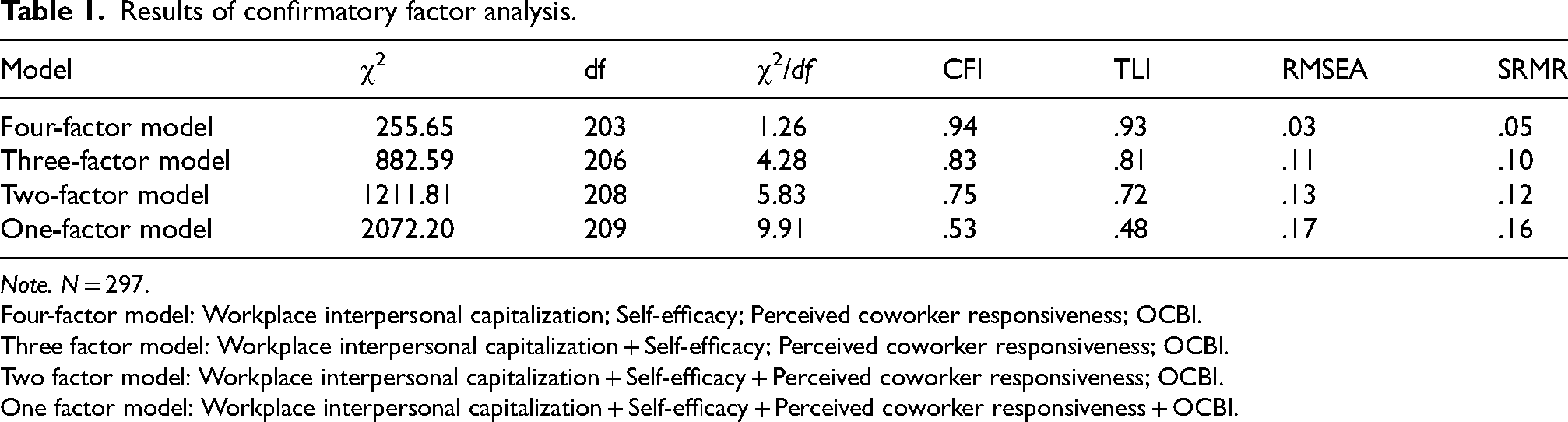
Note. N = 297.
Four-factor model: Workplace interpersonal capitalization; Self-efficacy; Perceived coworker responsiveness; OCBI.
Three factor model: Workplace interpersonal capitalization + Self-efficacy; Perceived coworker responsiveness; OCBI.
Two factor model: Workplace interpersonal capitalization + Self-efficacy + Perceived coworker responsiveness; OCBI.
One factor model: Workplace interpersonal capitalization + Self-efficacy + Perceived coworker responsiveness + OCBI.
Descriptive statistics and correlations.
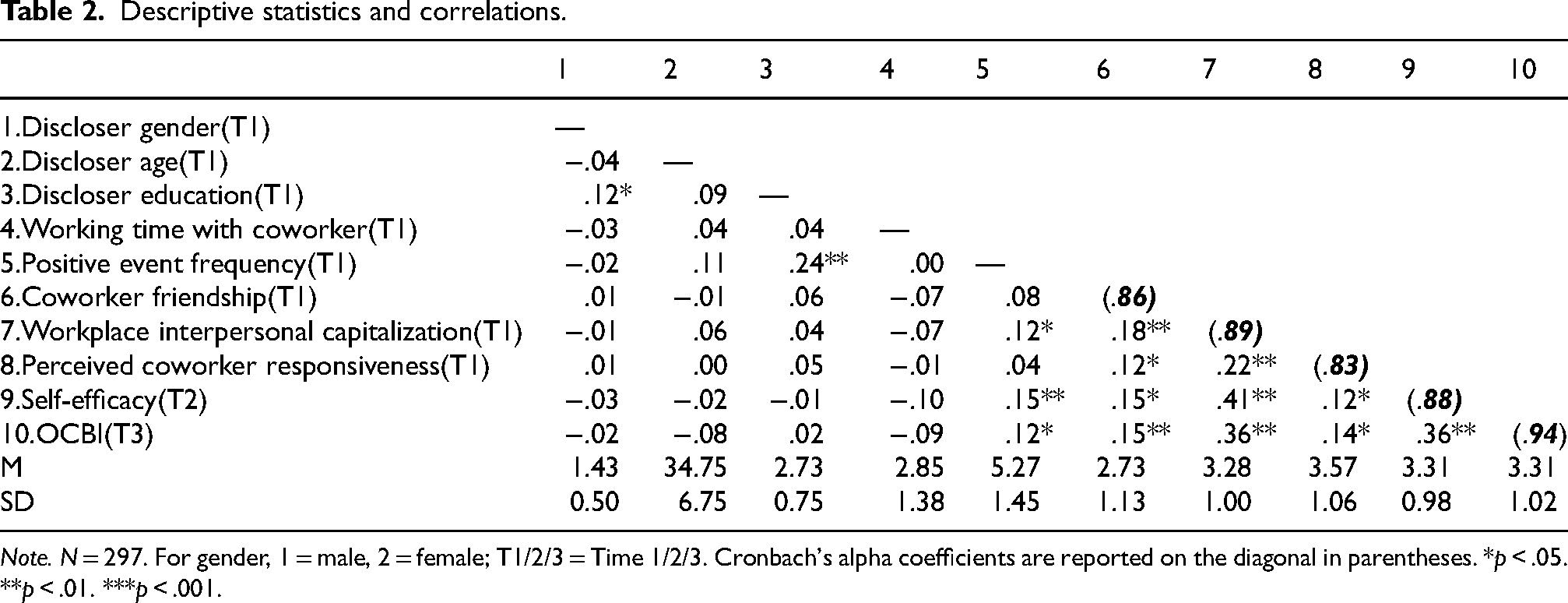
Note. N = 297. For gender, 1 = male, 2 = female; T1/2/3 = Time 1/2/3. Cronbach's alpha coefficients are reported on the diagonal in parentheses. *p < .05. **p < .01. ***p < .001.
Hypotheses testing
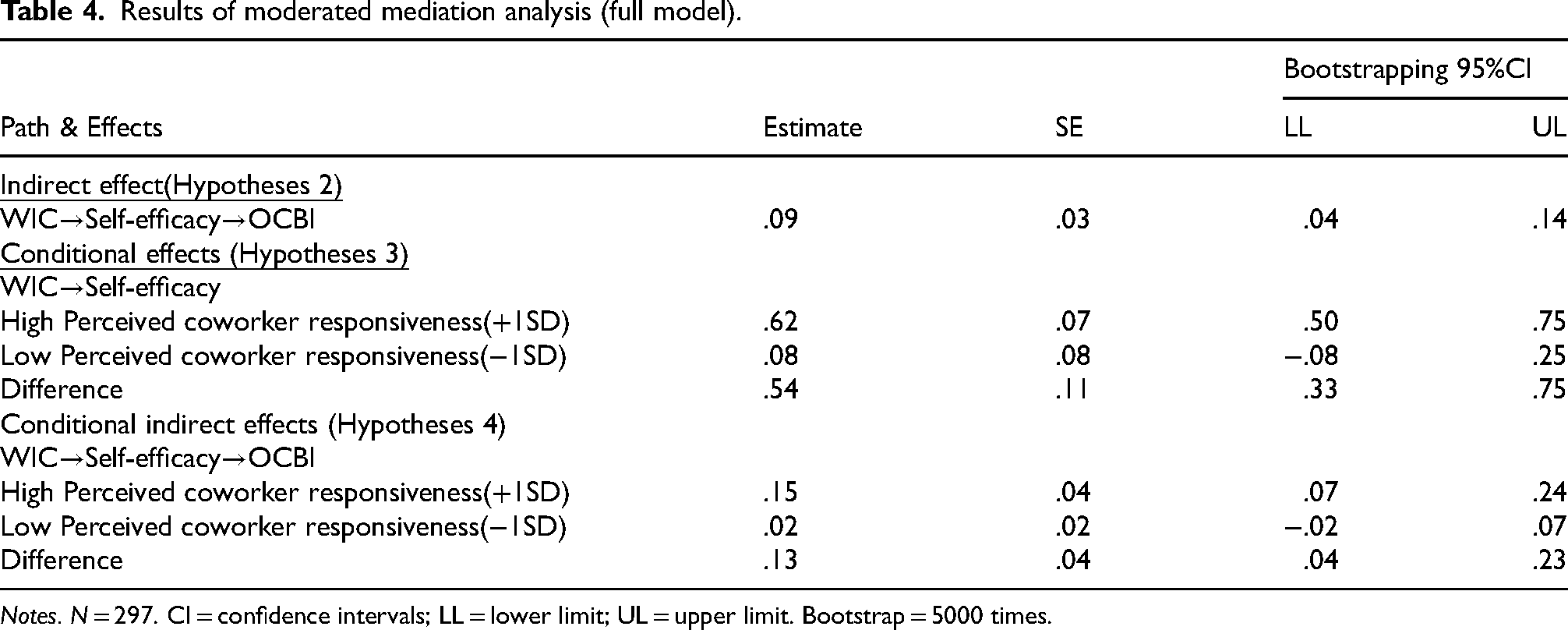
We conducted Bootstrapping analysis using Mplus 8.0 to examine our hypotheses. The findings, outlined in Tables 3 and 4, include adjustments for control variables. As shown in Table 3, workplace interpersonal capitalization is significantly and positively associated with discloser self-efficacy (b = .35, p < .001), providing support for Hypothesis 1. Furthermore, self-efficacy among disclosers is positively linked to OCBI (b = .24, p < .001), offering initial evidence in favor of Hypothesis 2. In addition, an indirect effect of workplace interpersonal capitalization on OCBI via self-efficacy was detected (estimate = .09, SE = .03, 95% CI = [.04, .14]), lending further support to Hypothesis 2.
Path analysis results of the relationship among workplace interpersonal capitalization and outcomes (full model).
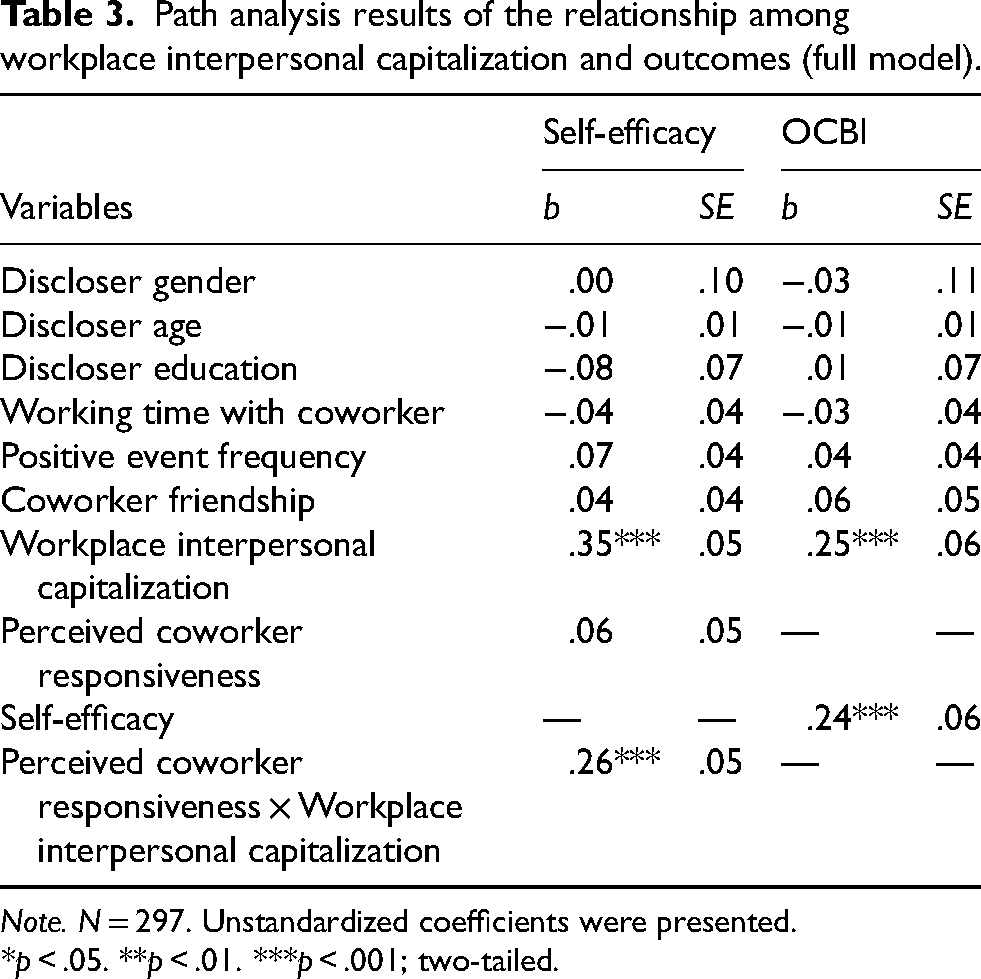
Note. N = 297. Unstandardized coefficients were presented.
*p < .05. **p < .01. ***p < .001; two-tailed.
Results of moderated mediation analysis (full model).
Notes. N = 297. CI = confidence intervals; LL = lower limit; UL = upper limit. Bootstrap = 5000 times.
Furthermore, perceived coworker responsiveness had a significant moderating effect on the relationship between workplace interpersonal capitalization and self-efficacy (b = .26, p < .001), thus preliminarily verifying H3. We conducted a simple slope analysis to verify the moderating effect of perceived coworker responsiveness (see Figure 2). Specifically, when perceived coworker responsiveness was high, the effect of workplace interpersonal capitalization on self-efficacy was significant (estimate = .62, SE = .07, 95% CI = [.50, .75]). In contrast, when perceived coworker responsiveness was low, the effect of workplace interpersonal capitalization on self-efficacy was not significant (estimate = .08, SE = .08, 95% CI = [−.08, .25]). The difference between the high and low groups (estimate = .54, SE = .11, 95% CI = [.33, .75]) was also significant, further supporting Hypothesis 3.
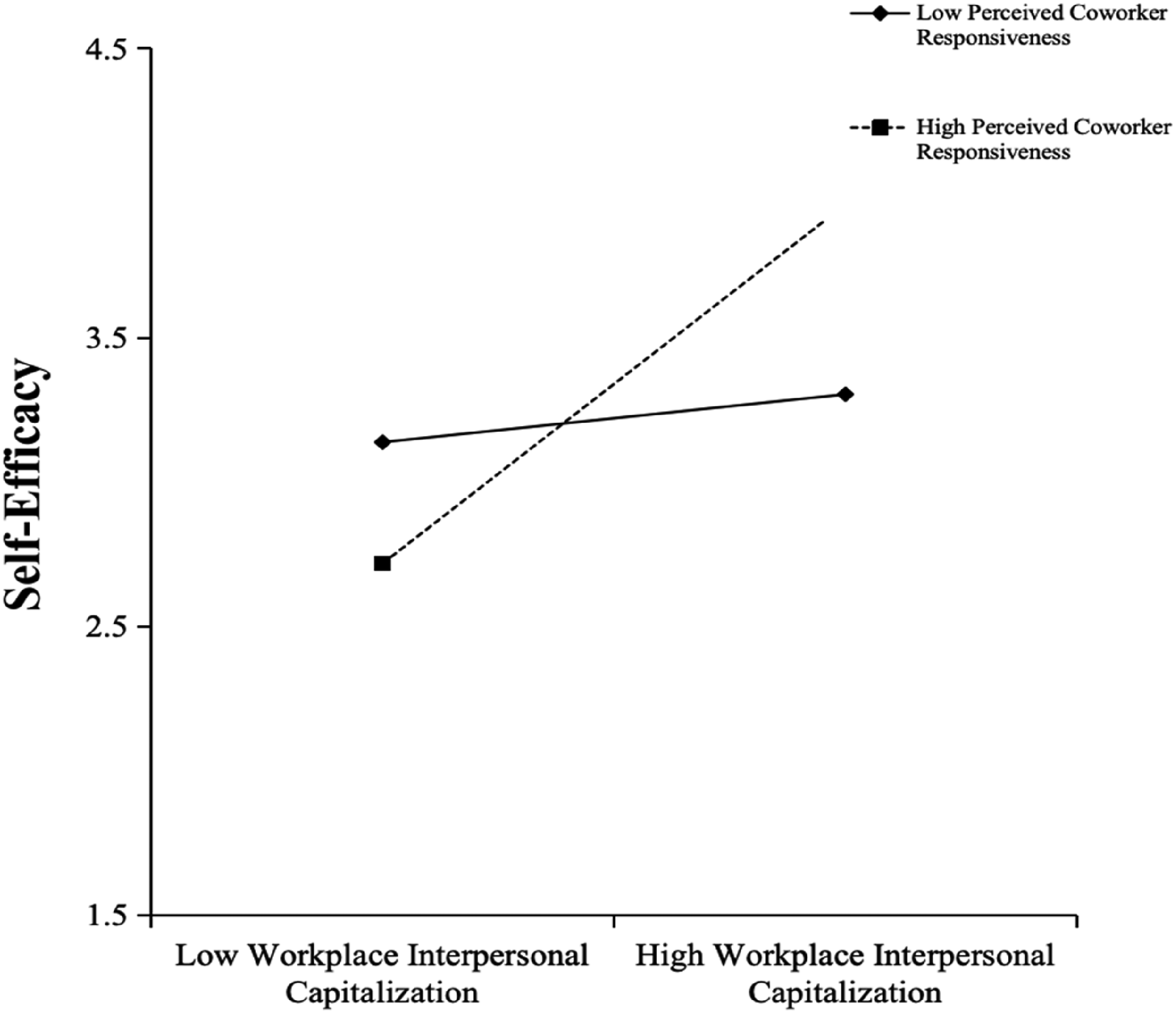
The moderating role of perceived coworker responsiveness on relationship between workplace interpersonal capitalization and self-efficacy.
Additionally, the analysis showed that the indirect effect of workplace interpersonal capitalization on OCBI through self-efficacy was both positive and significant when perceived coworker responsiveness was high (estimate = .15, SE = .04, 95% CI = [.07, .24]). Conversely, this effect was not significant when perceived coworker responsiveness was low (estimate = .02, SE = .02, 95% CI = [−.02, .07]). The difference between these indirect effects was statistically significant (estimate = .13, SE = .04, 95% CI = [.04, .23]), thus providing support for Hypothesis 4.
General discussion
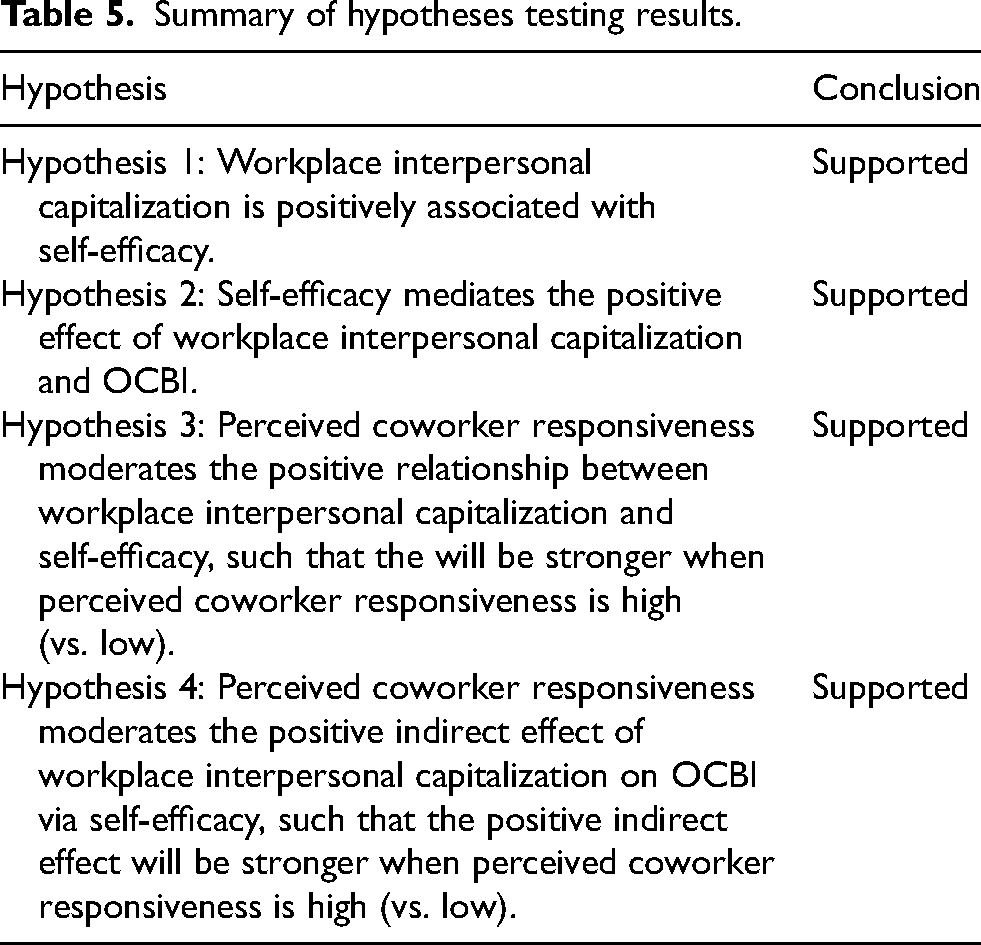
Workplace interpersonal capitalization has increasingly attracted scholarly attention, with research consistently showing its positive effects on various life domains, such as job and life satisfaction, well-being, and relationship satisfaction.7–9 Despite these benefits, recent studies have highlighted some potential drawbacks, particularly for responders, who may experience negative work outcomes like social undermining and contact avoidance.6,10,11 Building on COR theory,12,13 our study investigates the impact of workplace interpersonal capitalization on OCBI and the mechanisms that shape this relationship. The findings indicate that sharing positive work experiences boosts the discloser's self-efficacy, which in turn increases their engagement in OCBI. Moreover, the mediation effect of workplace interpersonal capitalization on OCBI through self-efficacy is moderated by perceived coworker responsiveness. Specifically, when perceived coworker responsiveness is high, the positive indirect effect of interpersonal capitalization on OCBI via self-efficacy becomes more pronounced, while this effect weakens when coworker responsiveness is low (See Table 5). These results highlight the critical role of coworker responsiveness in amplifying the advantages of workplace interpersonal capitalization, ultimately fostering a supportive work environment and encouraging positive organizational behaviors.
Summary of hypotheses testing results.
Theoretical implications
Our study offers several important contributions to the existing body of literature. First, by examining how engaging in workplace interpersonal capitalization influences the discloser's OCBI, we enhance our understanding of the outcomes of such capitalization practices for the disclosers themselves. Although prior research has mainly concentrated on the effects of workplace interpersonal capitalization on responders, its influence on disclosers has been largely neglected.6,10,38,43 Recent research has begun to explore this gap by emphasizing the actor-based effects of workplace interpersonal capitalization, demonstrating that disclosers’ behaviors can have both direct and indirect impacts on their own emotional states and actions. 36 Moreover, some research has argued that focusing solely on coworkers without considering the disclosers is insufficient.3,24 By responding to this literature gap, our study answers the call from Watkins 38 to investigate the potential positive impacts of workplace interpersonal capitalization on disclosers from an actor-centric perspective.
Second, our research makes a significant contribution to the literature on workplace interpersonal capitalization by revealing the mechanisms through which disclosers’ capitalization behaviors can enhance their OCBI. While previous studies have generally affirmed that capitalization yields benefits when relationship quality, trust, and social acceptance are high,4,28,32,48 our study reexamines this perspective by demonstrating that workplace interpersonal capitalization can positively affect disclosers’ self-efficacy and, consequently, their OCBI. This finding supports the recent literature on the beneficial effects of disclosers’ capitalization behaviors. 38 Furthermore, we explore the circumstances under which these positive effects are most likely to manifest by examining the moderating role of perceived coworker responsiveness. In doing so, our study offers a more nuanced and thorough understanding of how workplace interpersonal capitalization impacts disclosers, providing valuable practical insights for enhancing workplace interactions.
Third, this research introduces a resource-based perspective to the study of workplace interpersonal capitalization by examining how the act of disclosing positive experiences impacts the fluctuation of personal resources for the discloser. While existing empirical studies on workplace interpersonal capitalization largely draw from affective events theory, 10 social comparison theory, 6 or the social-functionalist model of emotions, 38 they have not fully explored how disclosers’ capitalization behaviors influence their personal resource dynamics. By integrating COR theory into our framework, we highlight workplace interpersonal capitalization as a critical form of resource investment that can lead to resource gain. This approach not only expands the theoretical understanding of capitalization but also provides new insights into how such behaviors contribute to the management and stabilization of personal resources.
Practical implications
Beyond its theoretical contributions, our research provides important practical implications for organizations and managers. Firstly, the results suggest that encouraging workplace interpersonal capitalization can significantly enhance the self-efficacy of individuals who share positive experiences, ultimately leading to increased OCBI. To effectively leverage the benefits of workplace interpersonal capitalization, organizational leaders should take active steps to foster a culture of positive sharing among employees. This could involve encouraging staff members to share uplifting news during team meetings or creating office environments that naturally facilitate casual, positive interactions. However, leaders must be cautious, as other studies have highlighted that sharing positive experiences can sometimes have unintended consequences, such as triggering negative social comparisons or causing social friction.6,55 As a result, it's essential for leaders to consider the organizational context and the dynamics within their teams before broadly promoting such practices to ensure they foster a supportive and inclusive atmosphere.
Secondly, our research emphasizes the critical role of perceived coworker responsiveness in shaping the connection between workplace interpersonal capitalization, self-efficacy, and OCBI. Leader should focus on fostering an environment where employees feel their positive contributions are acknowledged and valued by their peers. This could involve training programs to enhance active listening skills, promoting a culture of mutual support, and recognizing employees who demonstrate responsiveness. By emphasizing and nurturing coworker responsiveness, organizations can maximize the positive effects of interpersonal capitalization, thereby enhancing self-efficacy and encouraging behaviors that contribute to a supportive and collaborative workplace.
Thirdly, organizations should encourage employees to share positive work experience to create an open and supportive atmosphere. By promoting the value of sharing positive events, organizations can increase opportunities for employees to engage with one another. For example, regular sharing sessions or group discussions can be organized to facilitate the exchange of success stories. Additionally, organizations can leverage new media platforms and social networking tools (e.g., internal company platforms, WeChat groups, or enterprise apps) to enhance interaction and information sharing.55,56 These tools allow employees to share experiences and engage in real-time discussions, foster mutual understanding and support. This not only breaks down information barriers but also strengthens team connections, encourages cross-departmental collaboration, and enhances the overall knowledge-sharing culture in the workplace.
Limitations, and future directions
This study has several limitations that future research should consider addressing. Although we controlled for age as a variable, it is important to note that age may still have a significant impact on the empirical results. While age was included as a control variable in our analysis, employees of different age groups may exhibit different behaviors and responses in the workplace interpersonal capitalization process. For example, younger employees may rely more on social support and interaction to gain recognition, whereas older employees may be more inclined to share their work experiences and accomplishments. Therefore, age differences may still influence the process and outcomes of workplace interpersonal capitalization process, despite these differences being controlled for. 57
Additionally, although we conducted tests for common method variance because all measurements were self-reported by employees, this approach may still introduce social desirability bias. To mitigate this issue, future studies could incorporate social desirability as a control variable to refine the analysis. 58 Moreover, despite employing a three-stage method for data collection to reduce common method bias, further improvements are needed. Future research could benefit from employing alternative data collection techniques, such as gathering multi-source data or conducting longitudinal studies. These methods could help minimize biases and enhance the robustness of the findings by providing more diverse perspectives and tracking changes over time. Using multi-source data can also validate self-reported results through external assessments, adding another layer of credibility to the research outcomes. Finally, longitudinal studies would allow researchers to observe the impact of workplace interpersonal capitalization over an extended period, offering insights into long-term effects and trends.
Second, this study primarily focuses on the positive effects of workplace interpersonal capitalization, particularly its impact on self-efficacy, as explained by COR theory. However, workplace interpersonal capitalization may not always lead to long-term benefits.6,10 For example, sharing positive work experiences might provoke envy and anxiety among coworkers, potentially leading to negative outcomes over time.6,10 With the increasing use of digital tools and communication platforms, such as AI, email, and collaborative workspaces, these interactions may become more frequent but also more indirect, potentially intensifying the effects of sharing positive news. In particular, technology may amplify social comparisons and increase feelings of inadequacy or jealousy, leading to negative emotional responses. Therefore, future research should investigate the broader range of potential consequences, including the possible drawbacks of sharing positive news at work, especially for the individuals who disclose such information in the long run. This could include exploring how digital communication platforms and AI tools influence coworker interactions and responses to workplace interpersonal capitalization. This would help provide a more comprehensive understanding of the effects of workplace interpersonal capitalization, taking into account the evolving role of technology in shaping workplace dynamics.
Third, we have identified perceived coworker responsiveness as a key boundary condition that may enhance the impact of workplace interpersonal capitalization. However, future research should also explore other potential boundary conditions. Existing studies suggest that the effects of workplace interpersonal capitalization on coworkers can be influenced by environmental and situational factors.6,11 Therefore, we encourage researchers to investigate how various situational factors, such as a cooperative work environment, may moderate the effects of workplace interpersonal capitalization from a COR perspective. In addition, with the increasing digitalization and remote work environments, future research can explore how AI and technological tools impact employees’ perceptions of coworker responsiveness. Specifically, does technology enhance or hinder coworker interaction, thereby influencing the process of workplace interpersonal capitalization? It is possible that, while technology may facilitate interactions, it could also make such interactions more indirect and less frequent, especially in remote work settings. Understanding how technological advancements affect coworker responsiveness can provide important insights into the changing dynamics of workplace behavior in the digital age.
Finally, our study has limitations in exploring the impact of organizational environment and institutional structures within specific industries, as it has not fully accounted for the significant differences in thinking patterns and established practices across industries. For example, there may be notable differences between high-dynamics sectors, such as technology companies, and more traditional industries like healthcare or public administration, which could make it difficult to directly compare the effects of workplace interpersonal capitalization. Therefore, future research should further explore the impact of industry-specific institutions on workplace interpersonal capitalization, particularly in comparing high-dynamics sectors with traditional ones. Additionally, cross-industry research could uncover industry-specific influencing factors and provide more practical guidance for organizational management practices across different environments.
Footnotes
Acknowledgements
The authors particularly appreciate all survey participants. They are also very grateful to the three anonymous reviewers for their valuable comments and suggestions.

Ethical considerations
Not applicable. This study did not require ethics committee approval, as it did not involve any clinical trials or sensitive personal data. In accordance with the Declaration of Helsinki, all participants provided informed consent, and their anonymity and confidentiality were fully protected.
Consent to participate
Informed consent was obtained from all participants prior to data collection.
Funding
The authors received no financial support for the research, authorship, and/or publication of this article.
Declaration of conflicting interests
The authors declared no potential conflicts of interest with respect to the research, authorship, and/or publication of this article.