







Abstract
Background
Teachers’ mental health and interpersonal trust are critical for fostering a positive educational environment. Workplace spirituality and organizational justice are increasingly recognized as important factors influencing these outcomes, yet their specific impacts remain underexplored in educational settings.
Objective
This study examines the effects of workplace spirituality and organizational justice on teachers’ interpersonal trust and mental health, with a focus on the mediating role of interpersonal trust.
Methods
Structural Equation Modeling (SEM) was employed to analyze the relationships between workplace spirituality, organizational justice, interpersonal trust, and mental health. Data were collected from teachers and analyzed to determine the direct and indirect effects of the variables.
Results
The analysis revealed significant positive effects of workplace spirituality on interpersonal trust and mental health, as well as organizational justice on interpersonal trust and mental health. Interpersonal trust mediated the relationship between workplace spirituality, organizational justice, and mental health. The model explained 56.8% of the variance in interpersonal trust and 67.1% of the variance in mental health.
Conclusions
Fostering workplace spirituality and organizational justice is essential for enhancing teachers’ interpersonal trust and mental health. These findings suggest that school management should design and implement supportive policies and programs to promote these factors. Future research should investigate additional variables influencing teacher well-being and consider diverse educational settings or methodologies.
Keywords
Introduction
Mental health holds paramount importance within educational institutions, exerting profound effects on both employee welfare and institutional effectiveness. Research consistently demonstrates a positive correlation between good mental health and heightened productivity among educational staff. 1 This is particularly crucial given the demanding nature of responsibilities within the education sector, where managing fatigue and stress levels is essential for employees to meet job demands effectively. 2 Moreover, the pivotal role of teachers in shaping students’ educational experiences underscores the criticality of prioritizing their mental well-being to cultivate conducive learning environments. 3
Understanding mental health in educational settings goes beyond the absence of disorders; it encompasses overall health quality and functional capacity across individual, familial, and communal levels. 4 Educational institutions play a vital role in promoting holistic well-being by integrating stress management programs and mental health services into their organizational framework. 5 Simultaneously, teachers must prioritize their mental health to fulfill their roles effectively, as cognitive clarity and emotional regulation are integral components of healthy mental behavior. 6
Recent studies have shown that teacher well-being is influenced by multiple organizational and personal factors, with burnout and stress being significant concerns. Sohail et al. 7 highlight the complex interplay of job demands, organizational support, and individual resilience in shaping teachers’ mental health outcomes, emphasizing the need for systemic interventions in schools to mitigate burnout and enhance well-being. 7 Additionally, Blau's 8 theory on social exchange suggests that positive interpersonal relationships and fair treatment within an organization are key to fostering trust and commitment, which can buffer against stress and burnout. 8 Mayer 9 further expands on this by proposing an integrative model of organizational trust, suggesting that trust at the interpersonal and organizational levels significantly impacts employees’ emotional and psychological well-being. 9 As these factors influence teachers’ engagement, motivation, and stress levels, they are critical for creating supportive work environments that contribute to holistic well-being. 10
This research introduces a novel exploration of Interpersonal Trust (IT) as a mediator in the relationship between Workplace Spirituality (WPS), Organizational Justice (OJ), and Mental Health (MH). The study's uniqueness is reflected in four key aspects: the development of a theoretical model, empirical testing of hypotheses, the introduction of a new conceptual dimension, and the selection of the research context. The theoretical model addresses existing gaps by focusing on interpersonal trust rather than organizational-level trust, as emphasized in previous studies. By constructing and testing hypotheses derived from prior research, this study sheds light on interpersonal trust as a critical mediator. Furthermore, it conceptualizes interpersonal trust within a new paradigm and investigates its role in a unique research context mental health among teachers in Integrated Islamic Schools in West Java.
This study aims to fill the literature gap regarding the impact of organizational dynamics, specifically Interpersonal Trust, WPS and OJ, on teacher MH within Integrated Islamic Schools (SITs). By delving into this underexplored area, it seeks to inform targeted interventions that enhance teacher well-being and organizational efficacy within SITs. Recognizing teachers’ pivotal role in shaping students’ educational journeys, this research strives to foster supportive work environments conducive to holistic student development within Integrated Islamic Schools. Through empirical inquiry and analysis, this study aims to contribute theoretically and practically to the discourse on teacher well-being, offering actionable insights for educational policymakers, school administrators, and teacher support programs.
Literature review
Theoretical background
Theoretical discussions surrounding Interpersonal Trust (IT), Workplace Spirituality (WPS), Organizational Justice (OJ), and Mental Health (MH) in the workplace provide a crucial foundation for understanding their complex interrelationships and their impact on individual well-being within organizational settings.
Interpersonal Trust, a cornerstone of effective organizational functioning, is often conceptualized through social trust theory and social exchange theory. According to Rotter, 7 social trust theory suggests that trust develops through individuals’ experiences in social interactions, while Blau 8 highlights the significance of mutually beneficial exchanges in building trust. Moreover, agency theory underscores the pivotal role of trust among team members in achieving common goals.
Recent research has further elucidated the importance of trust in organizational contexts. For instance, a study by Mayer et al. 9 found that interpersonal trust positively influences employee engagement and organizational commitment. Similarly, Zhao et al. 11 demonstrated that trust mediates the relationship between transformational leadership and employee creativity, highlighting its role in facilitating positive outcomes in the workplace.
WPS has garnered increasing attention as a vital dimension of organizational life. Scholars have explored its associations with transformational leadership, motivation theories, and value congruence. Skaalvik 10 emphasizes the role of transformational leadership in creating a workplace environment supportive of spirituality, while Ashmos & Duchon 12 define WPS as individuals’ perception of a work environment conducive to finding life purpose and aligning beliefs with organizational values.
Recent studies have shed light on the positive impact of WPS on employee well-being. For example, a study by Jurkiewicz & Giacalone 13 found that WPS is positively associated with job satisfaction and organizational citizenship behavior. Similarly, Jha et al. 14 demonstrated that WPS moderates the relationship between job demands and burnout, indicating its buffering effect on employee stress levels.
OJ rooted in social justice theories, emphasizes fairness in resource distribution and procedural decision-making processes. Recent research has underscored its role in shaping interpersonal trust and organizational outcomes. Neveu & Kakavand 15 found a significant relationship between OJ and interpersonal trust, suggesting that organizations fostering high levels of justice are likely to cultivate trust among employees.
Moreover, OJ has been linked to various positive organizational outcomes. For instance, a study by Cohen-Charash and Spector 16 revealed that perceptions of procedural justice are positively associated with job satisfaction and organizational commitment. Additionally, Neveu & Kakavand 15 demonstrated that OJ moderates the relationship between job demands and psychological strain, highlighting its importance in mitigating the adverse effects of workplace stressors.
MH in the workplace has emerged as a critical concern, with scholars investigating its determinants and consequences. Stress theory, psychological health theory, and social support theory offer valuable insights into understanding MH outcomes in organizational contexts. Recent research has highlighted the role of workplace factors in shaping employee well-being.
For example, a study by Wang et al. 17 found that job insecurity is negatively associated with MH outcomes, highlighting the detrimental effects of perceived threats to employment stability. Moreover, Luthans et al. 2 demonstrated that social support from coworkers buffers the impact of job stressors on employee MH, indicating the importance of supportive workplace relationships in fostering resilience.
Overall, the integration of these theoretical frameworks underscores their collective influence on workplace dynamics and individual well-being. Moving forward, organizations can leverage these insights to develop strategies that promote trust, spirituality, justice, and MH among employees, thereby fostering a positive work environment and enhancing organizational effectiveness. Further research is needed to explore the nuanced interactions between these constructs and their implications for organizational outcomes.
Hypotheses development
Based on the theoretical background outlined above, we propose the following hypotheses:
Hypothesis 1 (H1): Workplace spirituality (WPS) positively influences interpersonal trust (IT) among employees. Drawing on social exchange theory, employees who perceive their work environment as spiritually fulfilling are more likely to trust their colleagues and supervisors.
Hypothesis 2 (H2): Organizational justice (OJ) positively influences interpersonal trust (IT) among employees. Consistent with equity theory, employees who perceive their organization as fair in resource allocation, decision-making processes, and interpersonal treatment are more likely to trust their colleagues and supervisors.
Hypothesis 3 (H3): Interpersonal trust (IT) positively influences Mental Health (MH) outcomes among employees. Building on social exchange theory, employees who trust their colleagues and supervisors experience greater psychological well-being and job satisfaction.
Hypothesis 4 (H4): Interpersonal trust (IT) mediates the relationship between Workplace spirituality (WPS) and MH outcomes. Drawing on social exchange theory, trust serves as a mechanism through which spiritual fulfillment in the workplace influences employees’ Mental Health (MH).
Hypothesis 5 (H5): Interpersonal trust (IT) mediates the relationship between organizational justice (OJ) and Mental Health (MH) outcomes. Consistent with social exchange theory, trust serves as a mechanism through which perceptions of fairness in the organization influence employees’ MH.
The theoretical background and hypotheses development establish a framework for examining the relationships among WPS, organizational justice, interpersonal trust, and MH within organizational contexts. Testing these hypotheses enhances our understanding of how organizational factors impact employee well-being and performance. Figure 1 illustrates the study's conceptual framework.
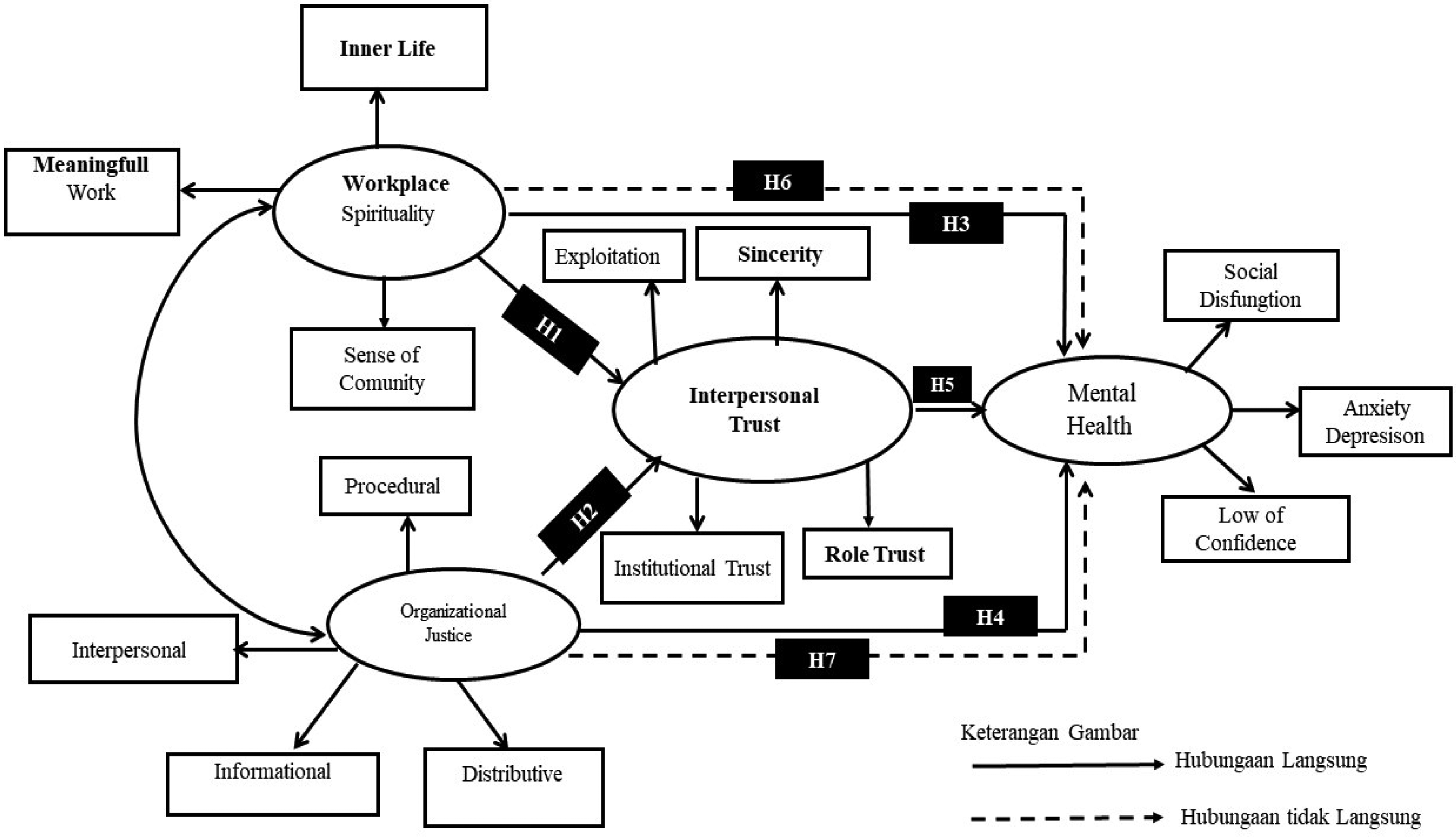
Framework study.
Methodology
Methodological paradigm
This research adheres to a positivist paradigm with a quantitative approach, guided by the principles delineated in “Research Methods for Business Students” by Saunders et al. 18 The positivist paradigm underscores the importance of objective measurement and empirical data collection to discern quantifiable patterns and relationships.
Research design
This study employs a quantitative approach to scrutinize data from specific populations and samples. Research instruments are utilized to collect and subsequently analyze data quantitatively or statistically. The primary aim is to elucidate relationships, test relevant theories, and identify predictive values that can be extrapolated to a wider context.
Population, sample, and sampling technique
The study focuses on teachers in integrated Islamic schools in Indonesia, comprising 231 individuals across eight institutions. Probability sampling was employed, affording every element of the population an equal chance of selection. The sampling technique utilized is limited probability sampling, employing an area sampling approach.
Instrument validation and reliability testing
Before collecting data, we did a test essential to validate and ensure the reliability of the instrument used. Validity testing involves assessing whether each item of the questionnaire is appropriate, known as item validity testing and every instrument has a value more than 0.7. Reliability testing aims to determine whether the instrument produces consistent results over multiple uses. A reliable instrument yields consistent results even when used at different times and places. Both validity and reliability testing are crucial for obtaining convincing research results.
Data collection techniques
The research is designed to investigate the relationship between WPS, OJ, and MH, mediated by trust in teachers in Islamic schools in West Java. Data collection involves distributing questionnaires directly to the respondents in their respective workplaces. Respondents are requested to fill out the questionnaires independently to avoid bias or social desirability bias. The questionnaire utilizes Likert scales, a technique used to measure attitudes, opinions, and perceptions. Likert scale items range from strongly positive to strongly negative, providing a nuanced understanding of respondent viewpoints.
Descriptive analysis
Descriptive analysis entails characterizing respondent demographics and research variables. It involves summarizing respondent characteristics based on age, gender, education, and tenure. Descriptive analysis is crucial for understanding the sample demographics and aiding in inferential analysis interpretation. The analysis will be presented using graphs and percentages.
Inferential analysis
Inferential analysis will be conducted using Structural Equation Modeling (SEM) based on Partial Least Squares (PLS) method, employing WarpPLS 7.0 software. SEM is suitable for predicting applications, analyzing small sample sizes, and testing overall model fit. Reliability testing will involve determining composite reliability, with values above 0.8 indicating high reliability. Validity testing will utilize factor loadings criteria (> 0.5) from average variance extracted (AVE). The model's coefficient of determination (R²) will explain the variation in endogenous variables. Hypotheses will be tested with a significance level of 0.05. Path coefficient values will determine the direction of correlation coefficients. 19
Hypothesis testing
Hypothesis testing will be conducted in two stages: analyzing data with and without mediation effects. The objective is to assess the differences between models with and without mediation effects and understand these variances. Hypotheses will be accepted if p < 0.05 with a confidence level of 5%. 19
Results and discussion
This section explains the results of instrument testing, respondent characteristics, and the description of research variables. The instrument testing results confirm that the questionnaire used for data collection is valid and reliable. The respondent characteristics provide an overview of the respondents, while the variable descriptions offer insights into the respondents’ perceptions of the studied variables.
Respondent characteristics
The summarizes the demographic characteristics of 231 teachers from Islamic schools in Indonesia. It shows the distribution of respondents by age, gender, marital status, education level, and years of service. Most respondents were aged between 25 and 35, female, married, held a Bachelor's degree, and had less than 5 years of service. These findings offer insight into the composition of the study sample, aiding in the interpretation of research outcomes.
The study sample, crucial for interpreting research outcomes, exhibited a diverse demographic and professional profile. Age distribution revealed that 15.2% of respondents were under 25 years, 51.5% were between 25 and 35 years, 22.5% were between 35 and 45 years, and 10.8% were over 45 years. The sample comprised 39.8% males and 60.2% females. Marital status indicated that 28.1% were unmarried and 71.9% were married. Educational backgrounds varied, with 10.8% having a high school education, 3% holding a Diploma (D3), 77.9% possessing a Bachelor's degree (S1), 7.8% holding a Master's degree (S2), and 0.4% having a Doctorate (S3). In terms of professional experience, 42% had less than 5 years of service, 29.9% had between 5 and 10 years, and 28.1% had over 10 years of service. These characteristics provide a comprehensive context for the study's findings.
Instrument validity and reliability
The research utilized a questionnaire as its primary instrument, which underwent preliminary testing with 30 respondents before distribution to the entire sample. The data obtained from this initial testing phase were subjected to validity and reliability analyses to ensure the questionnaire's effectiveness in measuring the research variables.
Instrument validity
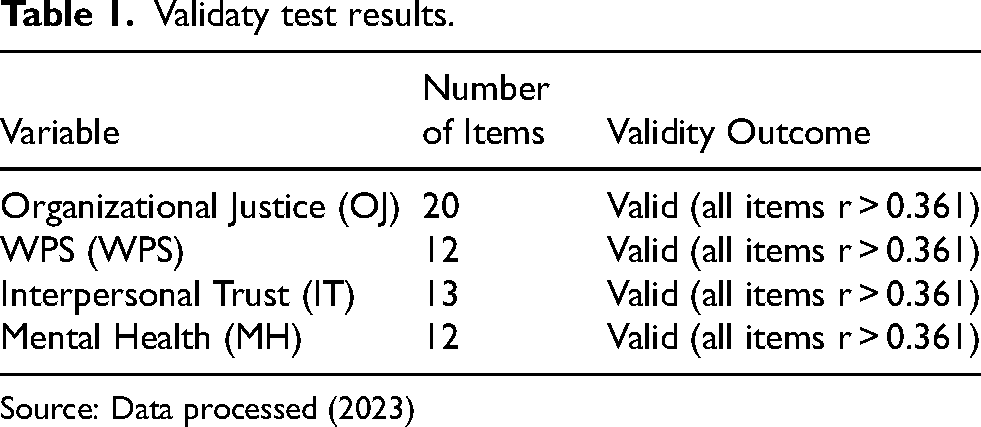
Validity testing was conducted using SPSS version 26, focusing on the corrected item-total correlation (r-value) for each questionnaire item. An item is considered valid if its r-value surpasses the critical value (r-table). With a sample size of 30 respondents and a significance level of 5%, the critical value was determined to be 0.361. All items exceeded this threshold, confirming their validity. The validity test results for the research instruments employed in this study are summarized below in Table 1
Validaty test results.
Source: Data processed (2023)
All items assessing OJ, WPS, Interpersonal Trust, and MH were deemed valid for their respective constructs.
Instrument reliability
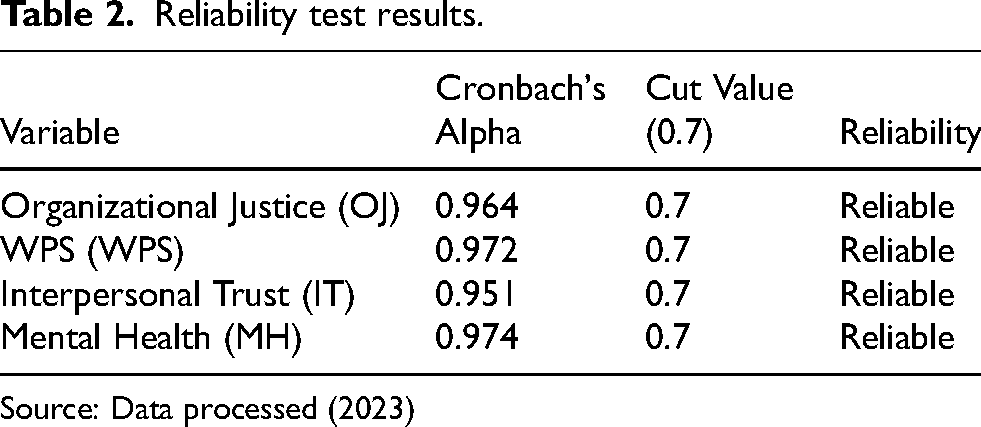
Table 2 presents the results of the reliability assessment conducted after confirming validity, using Cronbach's Alpha as the measure. An instrument is considered reliable when its Cronbach's Alpha value exceeds the threshold of 0.7. 20
Reliability test results.
Source: Data processed (2023)
All research instruments demonstrated high reliability, with Cronbach's Alpha values exceeding the established threshold of 0.7.
Description of research variables
The research variables of WPS, OJ, Interpersonal Trust, and MH were analyzed using a 1–7 Likert scale, categorizing responses into low, medium, and high perceptions. Structural model testing encompassed phases including assumption testing, goodness of fit testing, influence testing, coefficient of determination analysis, and hypothesis testing, all contributing to assessing the structural model's robustness. Assumptions for SEM were rigorously tested: the sample size of 231 exceeded the minimum requirement, outliers were identified and excluded, normality was confirmed, and multicollinearity was absent. With all SEM assumptions met, the analysis proceeded to the Goodness of Fit model testing stage, ensuring the validity and reliability of the analysis.
Testing goodness of fit model
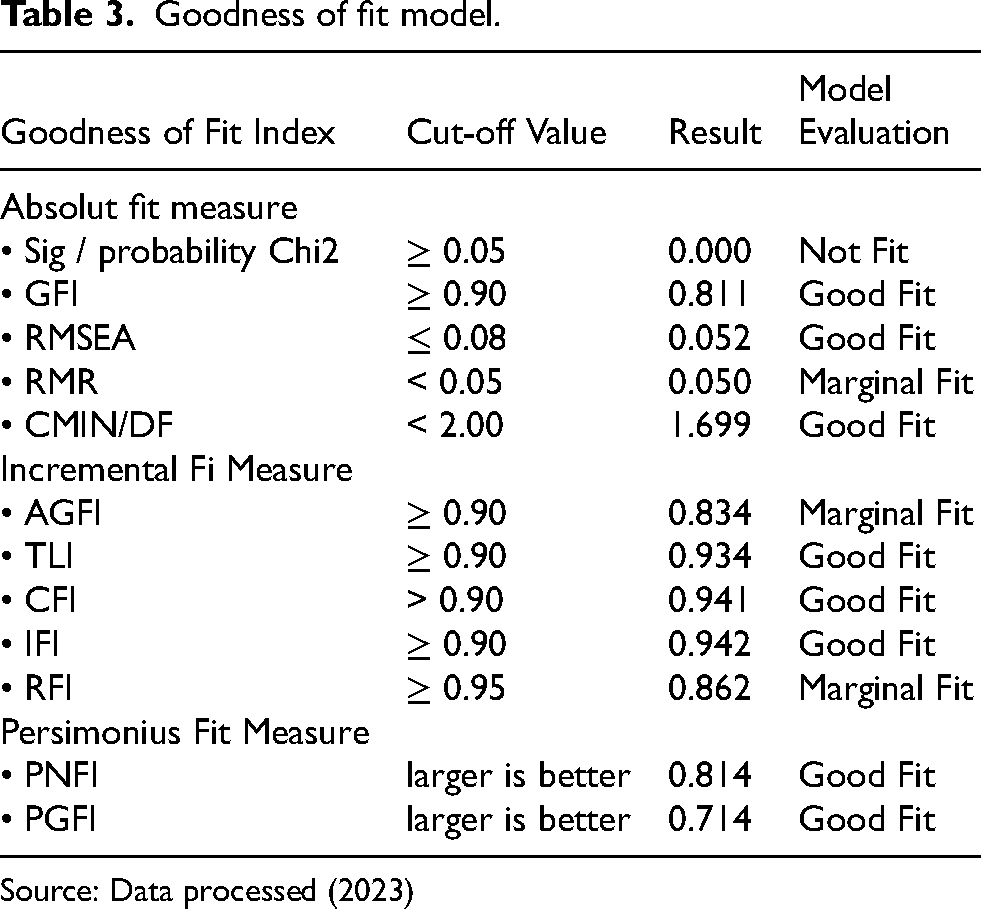
In SEM, the goodness of fit model test assesses how well the proposed model fits the observed data. This test involves examining various criteria, including Chi Square value, probability, degrees of freedom (df), and several fit indices such as GFI, AGFI, TLI, CFI, RMSEA, and RMR. In Figure 2 the results of the model estimation and the goodness of fit test:
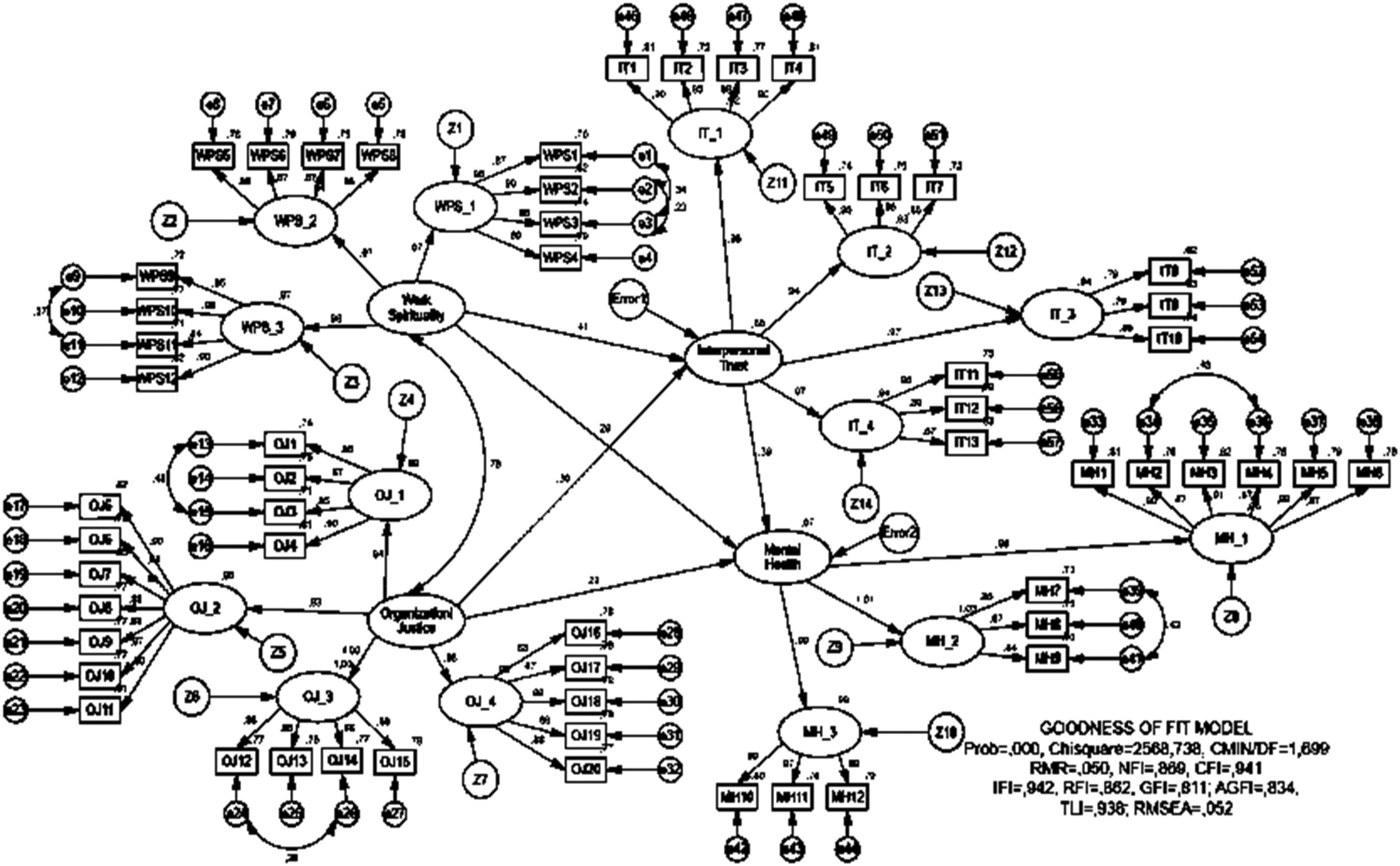
Results of the goodness of fit test of the structural model.
Structural model goodness of fit test results
Based on the results in Table 3 of the structural model estimation in Figure 2 above, it can be observed that the SEM model exhibits a reasonably good goodness of fit, particularly evident from the values of CMIN/DF, NFI, CFI, IFI, RFI, TLI, and RMSEA (falling within the category of good fit). Other parameters are within the criteria of marginal fit. Additionally, according to the goodness of fit criteria proposed by Gaskin, J. & Lim, J. (2016), the SEM model is also considered excellent, as shown in Table IV.12. The table indicates that the model meets the criteria for excellence, indicating its suitability for hypothesis testing in the research. In Table 3 a summary of the goodness of fit testing results for the SEM model estimated in this study
Goodness of fit model.
Source: Data processed (2023)
The results of the goodness of fit test indicate that the SEM model demonstrates a good fit to the data, meeting the criteria for various fit indices. However, it is noted that some parameters fall within the marginal fit category, suggesting areas for potential improvement or further investigation.
Testing inter-variable influence
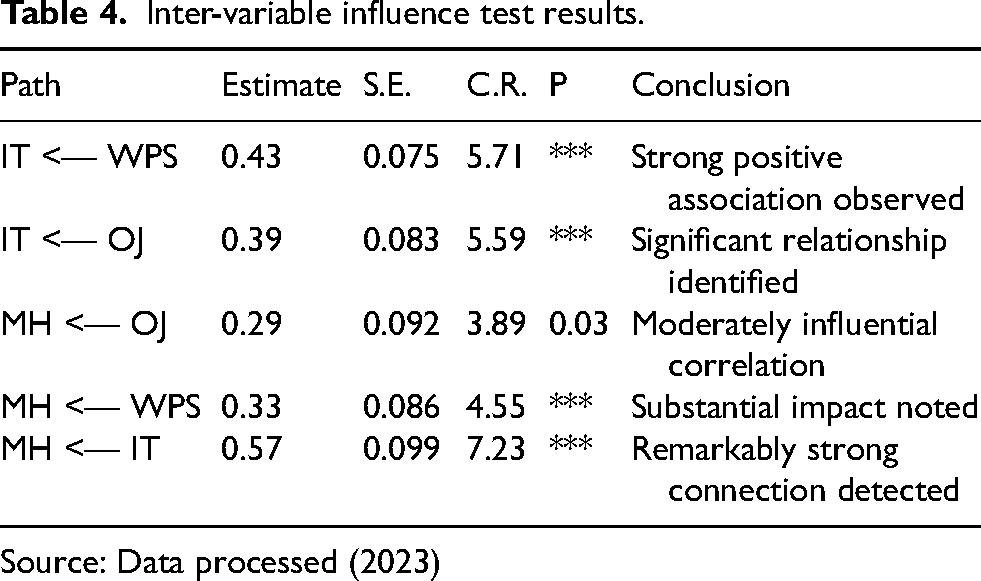
In Structural Equation Modelling (SEM), the examination of inter-variable influence is conducted by assessing the p-value and CR (Critical Ratio), followed by reviewing the path coefficient values. With a significance level of 5%, a variable is considered to have a significant influence on another if, on the path, the p-value is < 0.05 or CR > 1.96. Conversely, if the p-value > 0.05 and CR < 1.96, the influence between variables is deemed not significant.
Testing direct effects
The results from the inter-variable influence test presented in Table 4 indicate significant relationships between WPS, OJ, interpersonal trust, and M MH H.
Inter-variable influence test results.
Source: Data processed (2023)
WPS positively influences interpersonal trust, suggesting that higher levels of WPS are associated with increased trust among individuals, while lower levels lead to diminished trust. Similarly, OJ positively affects both interpersonal trust and MH, indicating that improved perceptions of fairness within the organization correlate with higher levels of trust and better MH outcomes. Moreover, WPS demonstrates a positive impact on MH, with higher levels contributing to improved mental well-being. Additionally, interpersonal trust is found to have a positive effect on MH, with greater trust levels associated with higher levels of mental well-being. These findings emphasize the importance of fostering positive work environments characterized by spirituality, fairness, and trust to promote overall employee well-being within organizations.
Testing indirect effects
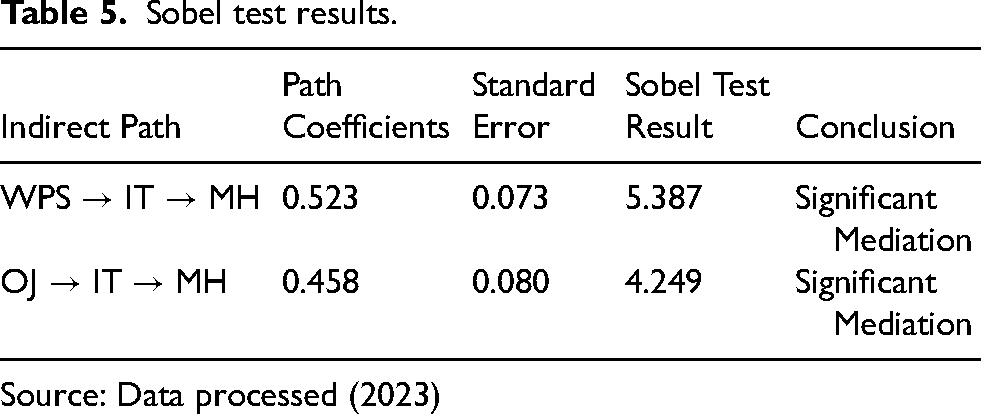
To test the mediating role of Interpersonal Trust in the effects of WPS and OJ on MH, a Sobel test is conducted. The Sobel test can be performed manually or using a Sobel calculator. The results of the Sobel test are presented in the Table 5 below
Sobel test results.
Source: Data processed (2023)
The results of the hypotheses demonstrate significant indirect effects of WPS and OJ on MH through the mediator Interpersonal Trust. WPS exhibits a positive influence on MH, with a coefficient of 0.523, mediated by Interpersonal Trust, as evidenced by a Sobel Test Result of 5.387. Similarly, OJ positively impacts MH, with a coefficient of 0.458, mediated by Interpersonal Trust, supported by a Sobel Test Result of 4.249. These findings underscore the crucial role of both WPS and OJ in shaping MH outcomes, highlighting the intermediary function of Interpersonal Trust. Thus, organizations should prioritize cultivating positive work environments and fair organizational practices to foster employee well-being, leveraging Trust resources effectively to enhance MH outcomes.
Robustness tests
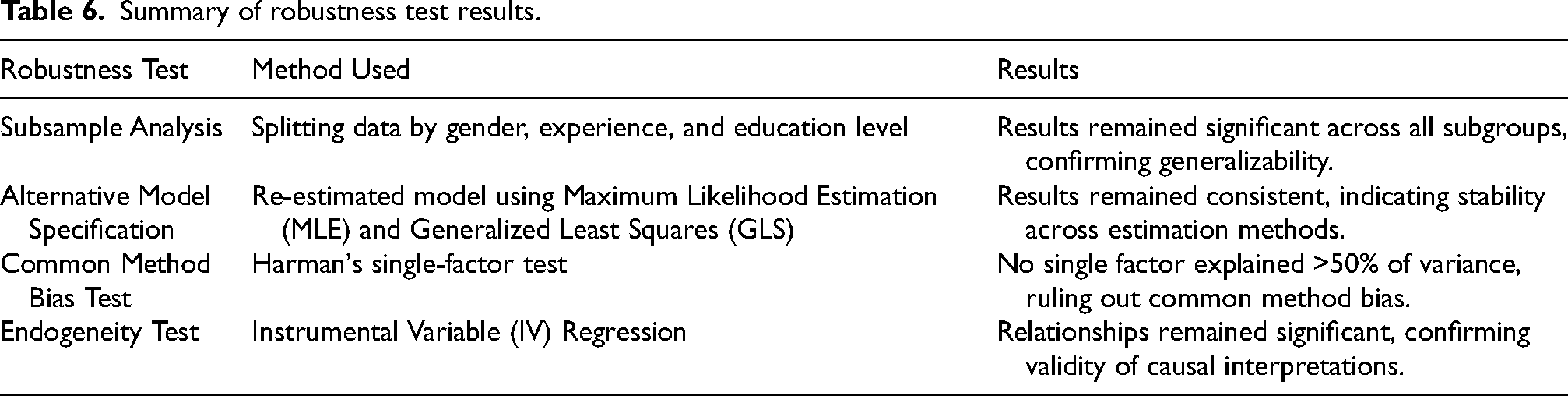
To ensure the stability and reliability of the findings, several robustness tests were conducted to assess whether the relationships among Workplace Spirituality (WPS), Organizational Justice (OJ), Interpersonal Trust (IT), and Mental Health (MH) remain consistent under different analytical conditions.
Subsample Analysis: The model was re-estimated across different subsamples based on gender, teaching experience, and education level. The significance and direction of relationships remained consistent, confirming the generalizability of the findings across different demographic groups. Alternative Model Specification: The Structural Equation Model (SEM) was re-estimated using Maximum Likelihood Estimation (MLE) and Generalized Least Squares (GLS). The consistency of the estimated coefficients across different estimation techniques supports the robustness of the conclusions. Common Method Bias and Endogeneity: Harman's single-factor test was performed to assess common method bias. The results indicated that no single factor accounted for more than 50% of the variance, suggesting that common method bias is not a concern. To address potential endogeneity in the relationships between Workplace Spirituality (WPS), Organizational Justice (OJ), and Mental Health (MH), we employed Instrumental Variable (IV) regression. IV regression addresses the bias that arises when explanatory variables are correlated with the error term, ensuring consistent estimates by leveraging instruments that influence the endogenous variable but are uncorrelated with the error term in the outcome equation. In this study, we used lagged values of Workplace Spirituality and Organizational Justice as instrumental variables to address endogeneity between WPS and MH, as well as OJ and MH. The instruments were selected based on theoretical justification and prior literature indicating that past organizational perceptions influence current mental health indirectly but are not directly affected by current mental health outcomes, thus satisfying the relevance and exclusion restriction conditions for valid instruments. While the core analysis was conducted using SEM in AMOS, the IV regression was performed separately using SPSS. The first-stage regression results confirmed instrument relevance (F-statistic > 10), and the Hansen's J-test supported instrument exogeneity (p > 0.05), validating the applicability and robustness of our chosen instruments. The results remained stable, reinforcing the validity of the causal interpretations.
The results of these robustness tests are summarized in Table 6, demonstrating that the findings are not sensitive to model assumptions, estimation methods, or sample variations. Including this table enhances clarity and transparency in presenting the robustness assessments.
Summary of robustness test results.
Discussion
The initial hypothesis positing a positive and significant correlation between WPS and Interpersonal Trust received confirmation. It was deduced that heightened levels of WPS correlate with increased Interpersonal Trust among individuals, while inadequate WPS diminishes Interpersonal Trust. This finding resonates with prior research underlining the significance of WPS in enhancing human resource capabilities associated with emotional intelligence and work behavior.21,22 Additionally, it finds support in studies suggesting that WPS positively impacts job satisfaction and intrapersonal abilities such as self-confidence, self-control, and self-identity. 23 Furthermore, the research findings imply that WPS contributes to employee satisfaction and well-being by nurturing intrinsic and positive emotional values, thereby augmenting overall job satisfaction and welfare.24,25
The confirmation of a strong affirmative relationship between Workplace Spirituality (WPS) and Interpersonal Trust provides both convergence and divergence with existing literature. While previous studies have highlighted WPS's ability to facilitate emotional intelligence and work behavior,21,22 this study clearly points to its broader implications for trust processes within academic settings. Another strength to the contention that workplace spirituality (WPS) is not only a requirement for the enhancement of interpersonal relations but also to reduce workplace conflicts through the alignment of intrinsic values. 26 In contrast to research focused mainly in the corporate world, this study puts the impact of WPS directly in the education sector, indicating how it has a strong position in establishing cooperative interaction among educators. This sectorally focused initiative is a distinct addition to the body of literature on the subject, responding to appeals for contextualization in spirituality and organizational trust building. 27
The subsequent hypothesis, proposing a positive and significant association between OJ and Interpersonal Trust, was substantiated. It was concluded that heightened levels of OJ correlate with increased Interpersonal Trust among teachers, while inadequate OJ diminishes Interpersonal Trust. This finding aligns with prior research indicating a robust correlation between OJ and employee trust, commitment, and satisfaction.28,29 Furthermore, it underscores the role of OJ in fostering a positive emotional state and mental well-being among employees.30,31
According to this, findings on Organizational Justice (OJ) and Interpersonal Trust go beyond previous research by emphasizing its psychological underpinnings. While previous research often speaks to the role of OJ in building trust and commitment,28,29 this study provides empirical evidence for its unique contribution to emotional well-being in schools. For instance, the Academy of Management Review has highlighted the applicability of the fairness heuristic theory, proposing that organizational justice (OJ) perceptions have a strong influence on trust and social exchange processes. 32 The originality of this study is in its focus on the possible role of OJ as a buffer against mental health problems among teachers, with implications for preventing occupational burnout and enhancing job satisfaction.
The subsequent hypothesis, proposing a positive and significant correlation between Interpersonal Trust and MH, received confirmation. It was concluded that heightened levels of Interpersonal Trust correlate with improved MH among individuals, while lower levels of Interpersonal Trust diminish MH. This finding is consistent with prior research indicating a positive association between Interpersonal Trust and employee well-being and MH.33,34 Additionally, it underscores the importance of Interpersonal Trust in fostering resilience and positive emotional states when facing life challenges. 35
The high positive relationship between Interpersonal Trust and Mental Health (MH) is aligned with the current advances in psychology and organizational studies. This indicates how significant trust is to enable employees to grow stronger and emotionally healthier. It has already been established in previous research in the Journal of Applied Psychology that trust decreases stress and enables coping ability in the face of adversity. 36 The results of this study indicate that Interpersonal Trust is a key variable in linking WPS and OJ to MH. It enables us to comprehend how trust enhances the beneficial impacts of organizational variables.
The subsequent hypothesis, proposing a positive and significant correlation between WPS and MH, was supported. It was concluded that heightened levels of WPS correlate with improved MH among individuals, while lower levels of WPS diminish MH. This finding aligns with prior research highlighting the role of spirituality in promoting MH and well-being.37,38 Moreover, it underscores the significance of WPS in creating a supportive environment conducive to positive MH outcomes. 39
The subsequent hypothesis, proposing a positive and significant correlation between OJ and MH, was supported. It was concluded that heightened levels of OJ correlate with improved MH among individuals, while lower levels of OJ diminish MH. This finding is consistent with prior research emphasizing the impact of OJ on reducing stress and enhancing psychological well-being.31,40 Additionally, it highlights the role of OJ in creating a positive work environment conducive to employee MH and overall satisfaction. 41
The subsequent hypothesis, proposing that Interpersonal Trust mediates the relationship between WPS and MH, was supported. The analysis indicated that Interpersonal Trust significantly mediates the relationship between WPS and MH. This finding underscores the importance of WPS in fostering Interpersonal Trust, which, in turn, contributes to improved MH among individuals. It aligns with prior research highlighting the positive impact of WPS on interpersonal relationships and mental well-being.42,43
The final hypothesis, proposing that Interpersonal Trust mediates the relationship between OJ and MH, was supported. The analysis revealed that Interpersonal Trust significantly mediates the relationship between OJ and MH. This finding underscores the role of OJ in fostering Interpersonal Trust, which subsequently enhances MH among individuals. It aligns with prior research indicating the mediating role of Interpersonal Trust in organizational factors’ impact on employee well-being.40,44
Finally, the contribution of the present study to this mushrooming interest in the mediating roles of Interpersonal Trust is that it has been uniquely positioned between organizational inputs and employee psychological outcomes. Supportively, these findings place the present research within the recent debates on the place of trust in the Journal of Management Studies to help an organization attain both cohesiveness and individual well-being. 45 This research adds to this literature by locating such relationships within educational settings and highlighting some very practical ways in which policymakers and school leaders can engender trust as a means to enhance teacher mental health and institutional outcomes. Consequently, the final section reinforces the relevance of the different theoretical underpinnings while taking the debate one step further by providing an integrative, sectoral approach. Consequently, future research must be longitudinal on these variables so that their implications can be meaningfully extended into diverse organizational and cultural contexts.
Additionally, these findings carry practical implications for human resource management and organizational policies, emphasizing the importance of fostering WPS, OJ, and Interpersonal Trust to promote employee MH and overall well-being in educational settings. Moreover, they highlight the significance of creating a positive work environment that supports employees’ emotional and psychological needs, ultimately contributing to organizational effectiveness and success.
Conclusion
This study explored the relationships between WPS, OJ, Interpersonal Trust, and MH within educational settings. The findings uncovered significant associations: WPS correlated positively with Interpersonal Trust and MH, suggesting that a strong spiritual presence in the workplace fosters trust and enhances mental well-being. Similarly, OJ showed positive correlations with Interpersonal Trust and MH, indicating that fair treatment within organizations positively influences employee trust and MH outcomes. Furthermore, the study revealed a positive link between Interpersonal Trust and MH, underscoring the importance of trust in promoting psychological well-being. Additionally, both WPS and OJ indirectly impacted MH through their effects on Interpersonal Trust, highlighting trust's mediating role in these relationships. These findings deepen our understanding of how organizational factors shape employee well-being, particularly within educational contexts.
Longitudinal Studies: Longitudinal research should be conducted to examine how WPS, OJ, and interpersonal trust evolve over time and their long-term effects on MH. This approach would provide a clearer understanding of causality and the sustainability of observed relationships. Cross-Cultural Studies: Research across diverse cultural and regional contexts can help uncover how cultural norms, values, and societal structures influence the relationships among WPS, OJ, interpersonal trust, and MH. This would enhance the generalizability and applicability of findings. Experimental and Intervention Studies: Future studies could design and implement structured interventions to improve WPS, foster OJ, and strengthen interpersonal trust. The effectiveness of these interventions can then be measured through rigorous experimental designs, offering evidence-based strategies for organizations. Exploration of Moderating and Mediating Variables: Investigating moderating factors such as leadership styles, job roles, or organizational climate and mediating factors like organizational commitment or emotional well-being could provide a more nuanced understanding of the conditions that enhance or weaken these relationships. Industry-Specific Research: Conducting research within specific industries, particularly those with high stress or unique workplace dynamics, could provide tailored insights into how organizational factors influence employee MH and trust in different settings.
Cross-Sectional Design: The study's cross-sectional nature limits the ability to draw causal conclusions, as data was collected at a single point in time. Sampling Bias: The sample is drawn from teachers in Integrated Islamic Schools in West Java, limiting generalizability to other educational contexts or geographic regions. Self-Reported Data: The use of Likert scale questionnaires may introduce social desirability bias, as respondents may provide answers they perceive as more acceptable. Limited Factors Considered: The study focuses on WPS, OJ, and interpersonal trust, excluding other potential mediating or moderating factors such as leadership styles and organizational climate.
Footnotes
Acknowledgements
The authors thank Dr Askar Garad for his valuable feedback and consultations during the manuscript revision process.

Funding
The authors received no financial support for the research, authorship, and/or publication of this article.
Declaration of conflicting interests
The authors declared no potential conflicts of interest with respect to the research, authorship, and/or publication of this article.