







Abstract
Background
There is a paradox in the field of physical activity, where leisure-time physical activity and occupational physical activity have inconsistent associations with health outcomes. Therefore, an increasing number of studies have investigated the associations between occupational physical activity and health outcomes. Given the rapid growth of publications in the field, an analytical synthesis of the literature is needed.
Objective
The aim of this bibliometric analysis was to assess scientific productivity and provide a knowledge structure for the field of occupational physical activity and health from 2004 to 2024.
Methods
Eligible publications records indexed on the Web of Science were downloaded for conducting a performance analysis, science mapping and visualisation. The VOSviewer, CiteSpace, and Microsoft Excel were used to conduct the bibliometric analysis.
Results
During the past two decades, a total of 1619 publications in the field of occupational physical activity for health were included. Healy G.N. and Dunstan D.W. were the most published authors in this field (41 publications). The USA (415 publications) and the University of Queensland (88 publications) were the most published countries and research institutions. The knowledge structure in this field showed a path of evolution from observational to intervention studies. Human resource management and organisational behaviour would be future research topics.
Conclusions
Results of this bibliometric analysis provide researchers and other stakeholders with a comprehensive knowledge structure in the field of occupational physical activity for health and evidence-based recommendations for future research.
Introduction
Increasing physical activity (PA) and reducing sedentary behaviour (SB) have been identified as two important public health targets for population health. 1 However, it is estimated that three out of ten adults do not meet the recommended PA level worldwide. 2 Compelling evidence has demonstrated that meeting the recommended PA level is not only associated with lower mortality rate, lower incidence of cardiovascular disease (CVD), and lower risk of cancer3,4 but also benefits mental health. 5 The World Health Organization 2020 guidelines on PA and SB specify intensity and duration of overall and some specific forms (e.g., muscle strengthening exercise) of PA among the targeted populations, whereas the guidelines do not provide recommendations for different PA domains (e.g., occupational, transportation, domestic, and leisure time). 1 This indicates a research necessity to explore the relationships between different PA domains and health outcomes, which can be used to inform the new guidelines development. Moreover, there is a paradox regarding the effects of leisure-time PA (LTPA) and occupational PA (OPA) on health outcomes, 6 that is, OPA may not lead to consistent health benefits as LTPA. 7 For example, a meta-analysis has demonstrated that OPA does not significantly lower CVD mortality, 8 while LTPA does. 9 Similarly, the scenarios on the relationships between SB and health outcomes also occur according to different SB domains.10,11
To enhance precision in public health policy and actions, it is essential to further clarify the relationship between PA domains and health outcomes. LTPA and OPA are the similar PA domains. LTPA is used to describe PA that individuals engage in during their free time. 12 In contrast, OPA consists of PA that is associated with employment and typically occurs during working hours. 12 Besides OPA, SB is also highly prevalent in workplaces, with office workers spending approximately 70% of their time sitting.13,14 Prolonged occupational SB, identified as a potential health risk factor, 15 has been linked to lower job satisfaction and higher levels of fatigue. 16 Moreover, previous research has shown that workplace health promotion programmes can reduce employee injury rates and absenteeism, improve retention, and thereby enhance the productivity.11,16
Due to the benefits of OPA promotion, a growing number of researchers have explored the impacts of OPA on health, resulting in numerous scientific publications, including cross-sectional studies, longitudinal studies, and clinical trials. 17 Based on these original investigations, evidence syntheses (e.g., systematic reviews and meta-analyses) have been developed to inform subsequent intervention and policy development.10,15 However, in-depth syntheses typically address specific research questions (e.g., how much OPA reduces the risk of CVD), while broader syntheses, such as bibliometric analyses, offer additional valuable insights into comprehensive knowledge structure and development. 18 For example, bibliometric analyses help relevant stakeholders in research assess their scientific performance using publication- and citation-related metrics. 19 Furthermore, through bibliometric related techniques, rigorous bibliometric analyses can reveal the knowledge structure of a research field and predict future trends. 20 Such rigorous bibliometric analyses have been conducted in fields related to OPA for health, such as PA, SB, and cognitive function, 21 SB and CVD, 22 and workplace bullying, 23 providing knowledge structures and recommendations for future research. However, despite many original studies and in-depth syntheses, the field of OPA for health still lacks a comprehensive bibliometric analysis. Conducting a rigorous, comprehensive bibliometric analysis in the field of OPA for health can offer a comprehensive overview of this field, helping researchers and funding agencies to identify future research priorities and facilitate collaborations. 20 Therefore, the aim of this study was to evaluate the scientific productivity and knowledge structure of the field of OPA for health from 2004 to 2024.
Methods
To ensure rigour and transparency, the bibliometric guidelines were applied in developing the methodology of the current study. 20 Moreover, considering the characteristics of publications in the field of OPA for health, the study methodology was informed according to the recommendations for conducting bibliometric analyses in the biomedical field. 19
Database and search strategy
The Science Citation Index Expanded, Social Sciences Citation Index, Arts & Humanities Citation Index, and Emerging Sources Citation Index, from the Web of Science Core Collection (WoSCC), were selected as data source for this bibliometric analysis. Considering that publications in the field of OPA for health are multidisciplinary, using the specialised databases, such as PubMed and SPORTDiscus, may lead to search bias. Therefore, the multidisciplinary database, the WoSCC, was used as it is the most widely used database in bibliometric analyses, 24 and the number of publications and citations in this database does not differ significantly from other large multidisciplinary databases. 25 Although other large multidisciplinary databases (e.g., Scopus, Google Scholar) can be used for bibliometric analyses, the bibliometric guidelines recommend selecting only one suitable database to minimise potential human errors caused by combining multiple databases. 20 Using one single multidisciplinary database admittedly introduces potential search omissions; however, combining multiple databases may introduce greater bias due to differences in bibliometric metric formats (e.g., author name formats). Importantly, most bibliometric analyses related to OPA for health have utilised the WoSCC as their data source, so using the same database can enhance the comparability of results.21–23 The current search strategy was identified primarily from previous reviews on the topic of OPA for health according to the bibliometric guideline. 20 First, keywords used in highly cited reviews in the field of OPA for health were extracted,26–28 and only those related to PA or occupational environment were included. Keywords related to physical fitness and those not related to health were not considered. Second, additional keywords were added through brainstorming among the authors. Finally, two rounds of searches were needed to conduct similar to the previous bibliometric analysis, 21 and the final search strategy in this study was adjusted based on the previous results. The final search strategy consisted of two sets of keywords, Physical Activity and Occupational Environment, connected by the Boolean logic operator ‘AND’. The search strategy was restricted to the title of the publication, and the specific search strategy is available in Appendix A. To avoid bias introduced by the absence of bibliometric metrics (e.g., reference list) in other types of publications, only Articles and Review Articles published in English were included in this analysis. The search was conducted on the 30 May 2024, and publication dates of the documents were restricted from 2004-01-01 to 2024-05-30. A total of 2184 publications were retrieved, while 486 publications were excluded because they did not meet the publication type (e.g., 311 Meeting Abstracts, 90 Editorial Materials) and 79 publications were excluded because they were published in other languages. Finally, a total of 1619 eligible publications were included.
Data analysis
Based on bibliometric guidelines and previous studies,20–21 three bibliometric techniques—performance analysis, science mapping, and visualisation—were applied in the current study. In the performance analysis, the number of publications and citations, along with the Average Citations per Item (ACI) were employed to assess the scientific outputs of research entities (e.g., authors, countries, institutions, and journals). For science mapping, co-authorship analysis (e.g., collaborative networks among authors), reference co-citation analysis, and authors’ keyword co-occurrence analysis were utilised to illustrate the knowledge structure in the field of OPA for health. Additionally, in the authors’ keyword co-occurrence analysis, citation burst analysis was conducted to predict future research trends. VOSviewer (version 1.6.20) and CiteSpace (version 6.3.R1, 64-bit Advanced) were used for the visualisation of science mapping.29–30 VOSviewer was specifically applied to perform co-authorship analysis and generate collaborative networks among research entities. CiteSpace was used to conduct reference co-citation analysis and authors’ keyword co-occurrence analysis. Finally, the trend of annual publications was modelled using a cubic polynomial function in Microsoft Excel 2019 (Redmond, WA) to predict future publication trends in this field. 22
Results
General performance and trends in scientific productivity
From 2004 to 2024, 1619 publications in the field of OPA for health were included. These 1619 publications cited a total of 18,323 documents and received a total of 29,796 citations, with an average of 18.40 citations per publication. Figure 1A shows the distribution of annual publications in this field from a number of 14 documents (year 2004), through a decade of rapid growth, to a milestone of 100 documents in year 2015. The peak in the annual number of publications as reached in year 2021 (170 documents). Figure 1B illustrates the predicted trend of annual publications based on a cubic polynomial function, supporting an increasing publication trend in the next years. By the end of May, 51 documents have been published in this field in year 2024. According to the cubic polynomial function (R² = 0.976), 180 documents are estimated to be published in year 2024.
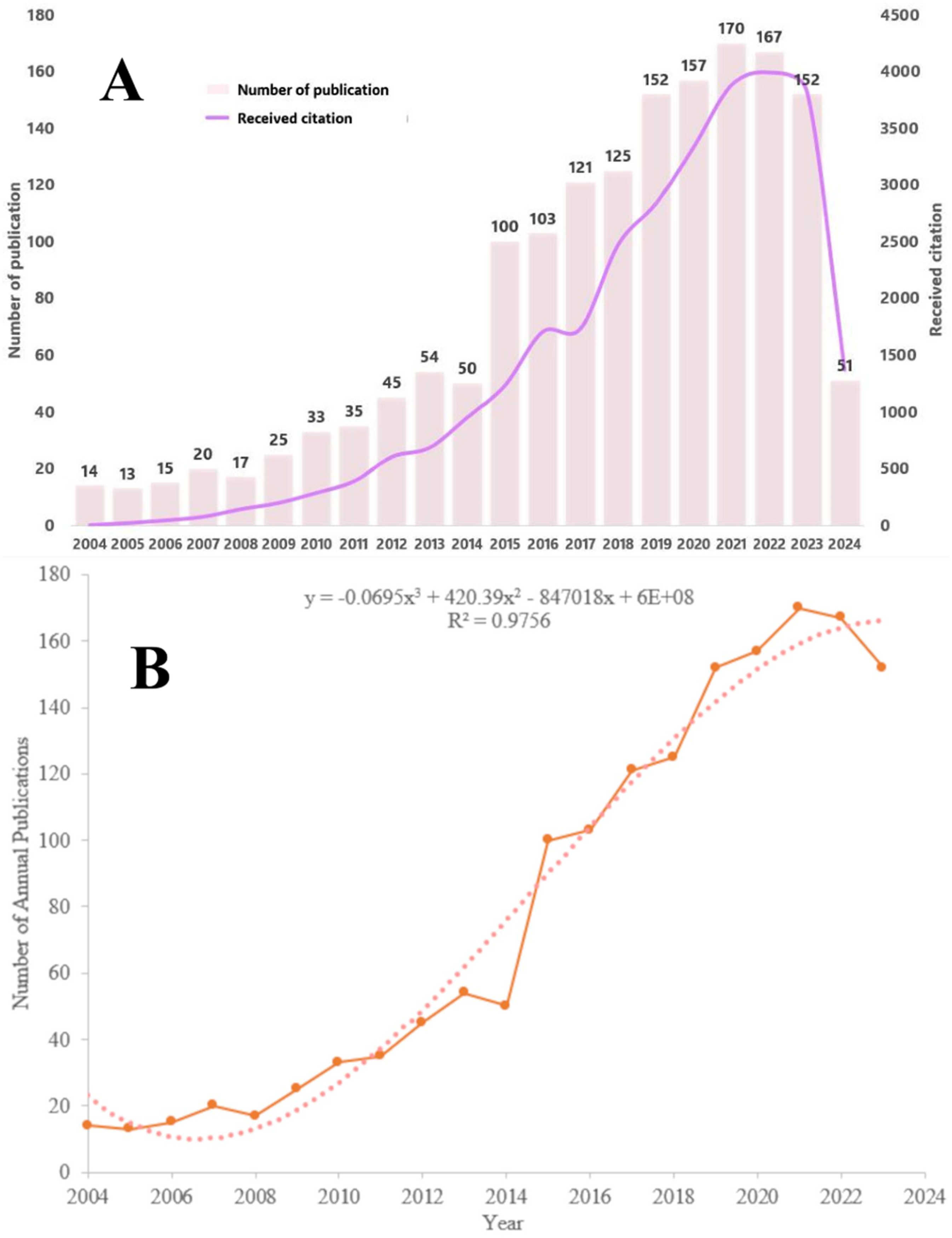
(A) Annual number of publications and citations in the field of occupational physical activity for health (2004–2024); (B) Trends of annual publications in the field of occupational physical activity for health (2004–2024).
Performance and the collaboration of authors
A large number of authors (n = 5562) contributed at least one publication in the field of OPA for health from 2004 to 2024. Table 1 shows the 11 most published authors in this field, of which Healy G.N. and Dunstan D.W. published the highest number of documents (41 publications). Meanwhile, Owen N. had the highest ACI among the authors (ACI = 88.36), followed by Chau J.Y. (ACI = 87.60). In terms of the collaboration of authors, Healy G.N. had the highest Total Link Strength (TLS), suggesting that she collaborated most frequently with the other authors. A total of 10 collaboration clusters were identified, with Healy G.N. (red cluster, 15 items), Chau J.Y. (green cluster, 14 items) and Holtermann A. (blue cluster, 14 items) leading the three main collaboration clusters (see Figure 2).
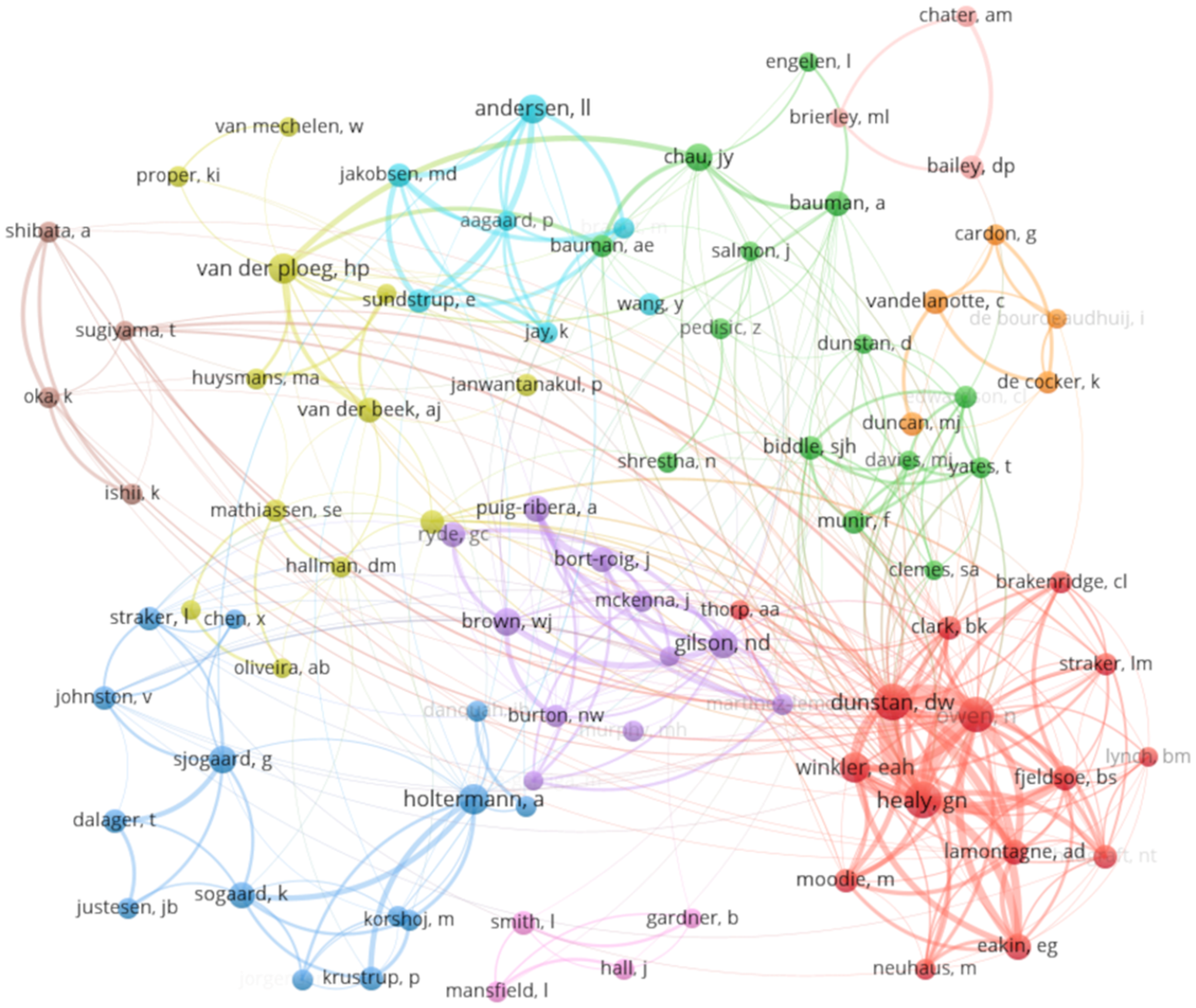
Collaborative network of authors in the field of occupational physical activity for health (2004–2024).
Top 11 authors with the highest number of publications in the field of occupational physical activity for health (2004–2024).
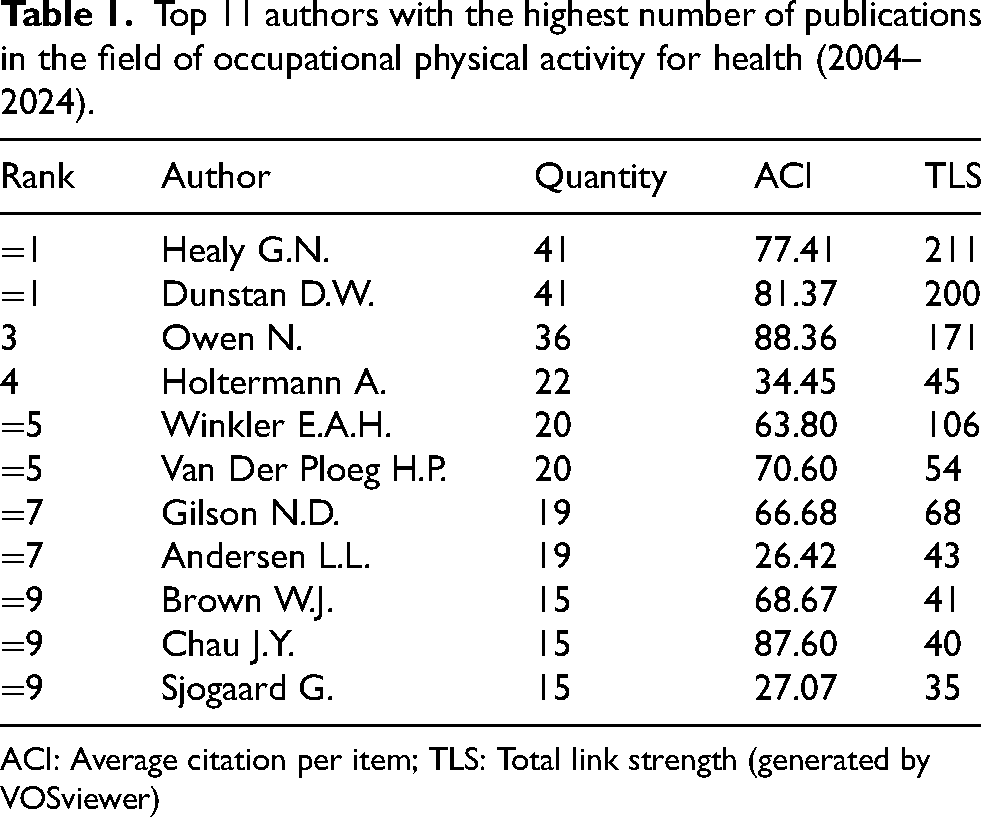
ACI: Average citation per item; TLS: Total link strength (generated by VOSviewer)
Performance and the collaboration of countries and institutions
A total of 2018 institutions from 89 different countries/regions contributed 1619 publications in the field of OPA for health. Table 2 shows the most prolific countries/regions in this field. The USA contributed the highest number of publications (415 publications), followed by Australia and England. Among the most published countries/regions in this field, China and Iran were the only two developing countries (i.e., low- and middle-income countries). Australia had the highest ACI (ACI = 36.13), while Spain, China and Iran had the relatively lower ACIs. In terms of collaboration, Canada and England had the highest TLS, indicating that their researchers collaborated more frequently with other countries/regions. A total of seven collaboration clusters were found in Figure 3A, with Germany (red cluster, 11 items); USA (green cluster, 7 items) and Australia (blue cluster, 6 items) leading the three main collaboration clusters.

(A) Collaborative network of countries/regions in the field of occupational physical activity for health (2004–2024); (B) collaborative network of institutions in the field of occupational physical activity for health (2004–2024).
Top ten countries/regions with the highest number of publications in the field of occupational physical activity for health (2004–2024).
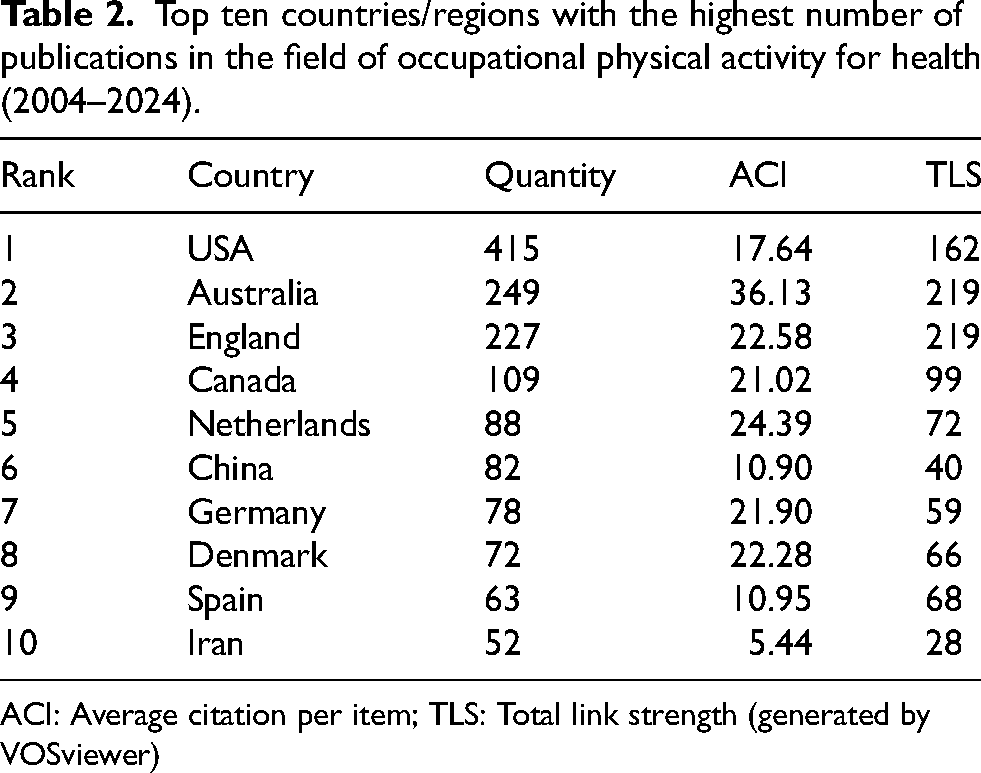
ACI: Average citation per item; TLS: Total link strength (generated by VOSviewer)
The most published institutions in the field of OPA for health in the last two decades are shown in Table 3. The University of Queensland in Australia contributed the highest number of 88 publications, followed by Monash University and Curtin University, also in Australia. Meanwhile, Australia contributed eight of the top ten most published institutions, with the remaining two institutions both coming from Denmark. Monash University had the highest ACI (ACI = 59.71), followed by the University of Western Australia and the University of Queensland. In terms of collaborations, the University of Queensland had the highest TLS. Figure 3B presents the collaboration network of institutions in this field over the last two decades, with 12 collaboration clusters being identified. West Virginia University (red cluster, 32 items), University of Southern Queensland (green cluster, 25 items), and University of Leicester (blue cluster, 24 items) led the three main collaboration clusters.
Top ten institutions with the highest number of publications in the field of occupational physical activity for health (2004–2024).
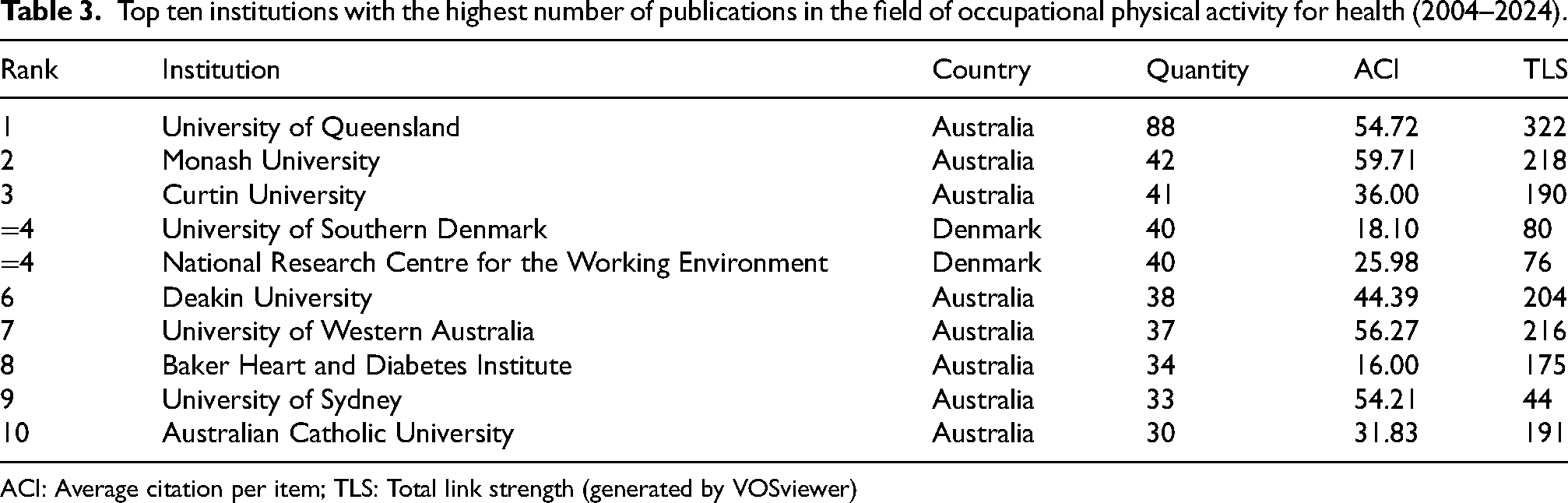
ACI: Average citation per item; TLS: Total link strength (generated by VOSviewer)
Performance of journals, categories, and funding agencies
1619 documents in the field of OPA for health from 2004 to 2024 were published in 718 different journals, with more than half of the documents open access (869 documents). Table 4 shows the eleven journals that published the highest number of documents in this field. The BMC Public Health published the most of documents in this field, followed by the International Journal of Environmental Research and Public Health. Based on the Journal Citation Reports 2023, only International Journal of Behavioral Nutrition and Physical Activity had an impact factor of more than five.
Top eleven journals publishing the highest number of publications in the field of occupational physical activity for health (2004–2024).
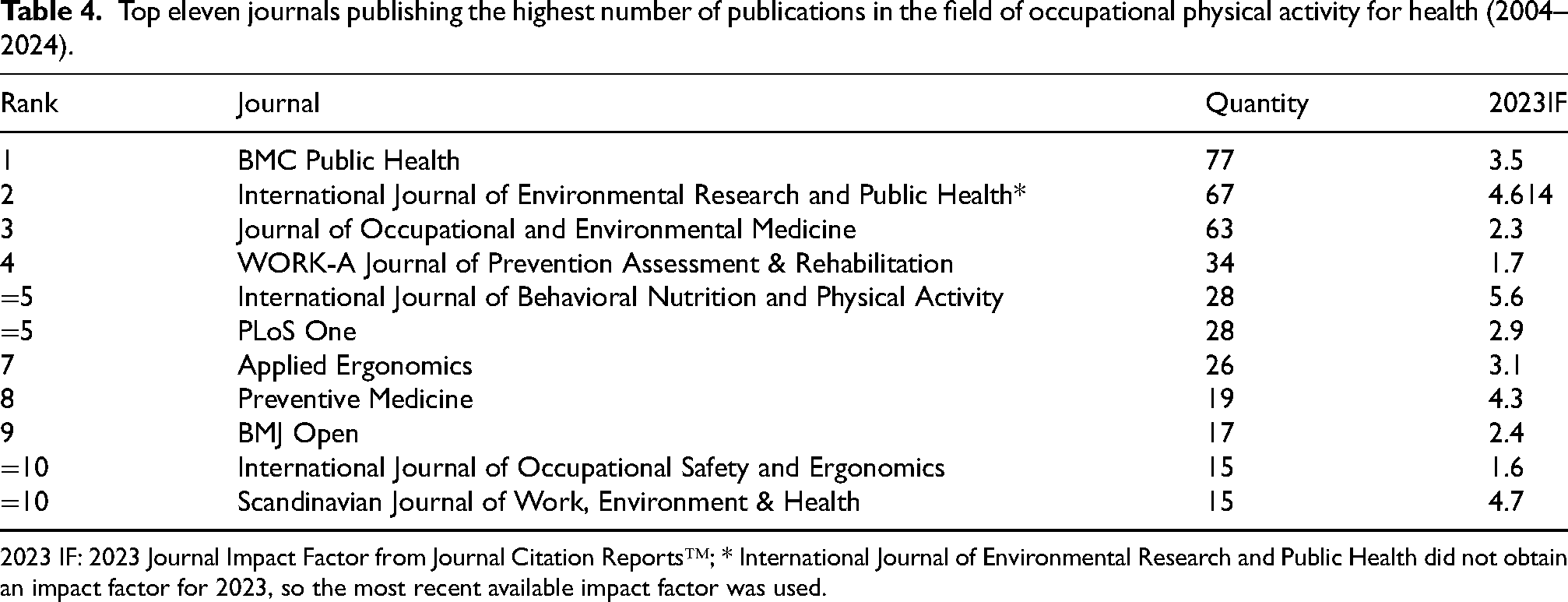
2023 IF: 2023 Journal Impact Factor from Journal Citation Reports™; * International Journal of Environmental Research and Public Health did not obtain an impact factor for 2023, so the most recent available impact factor was used.
Publications in the field of OPA for health were categorised into 151 different WoSCC categories, with Public Environmental & Occupational Health (512 documents) containing the highest number of publications, followed by Sport Sciences (176 documents), Psychology Applied (125 documents), Hospitality & Leisure Sport Tourism (122 documents), and Medicine General Internal (91 documents). More than 60% of the publications in this field received at least one grant (993 documents). The National Health and Medical Research Council supported the highest amount of funding (Australia, 75 publications), followed by United States Department of Health and Human Services (USA, 60 publications), and National Institutes of Health (USA, 42 publications).
Analysis of reference
Table 5 illustrates the top five publications that received the highest number of citations in the field of OPA for health from 2004 to 2024. Of these five publications, two were Review Articles and three were Original Articles. Van Uffelen et al.'s Review Article on the relationship between occupational SB (OSB) and health risks received the highest citations (citation = 368). Among Articles, Thorp et al.'s cross-sectional study in 2012 received the highest citations, investigating the prevalence of PA and SB among employees in office workplace (citation = 327).
Top five publications with the highest number of citations in the field of occupational physical activity for health (2004–2024).
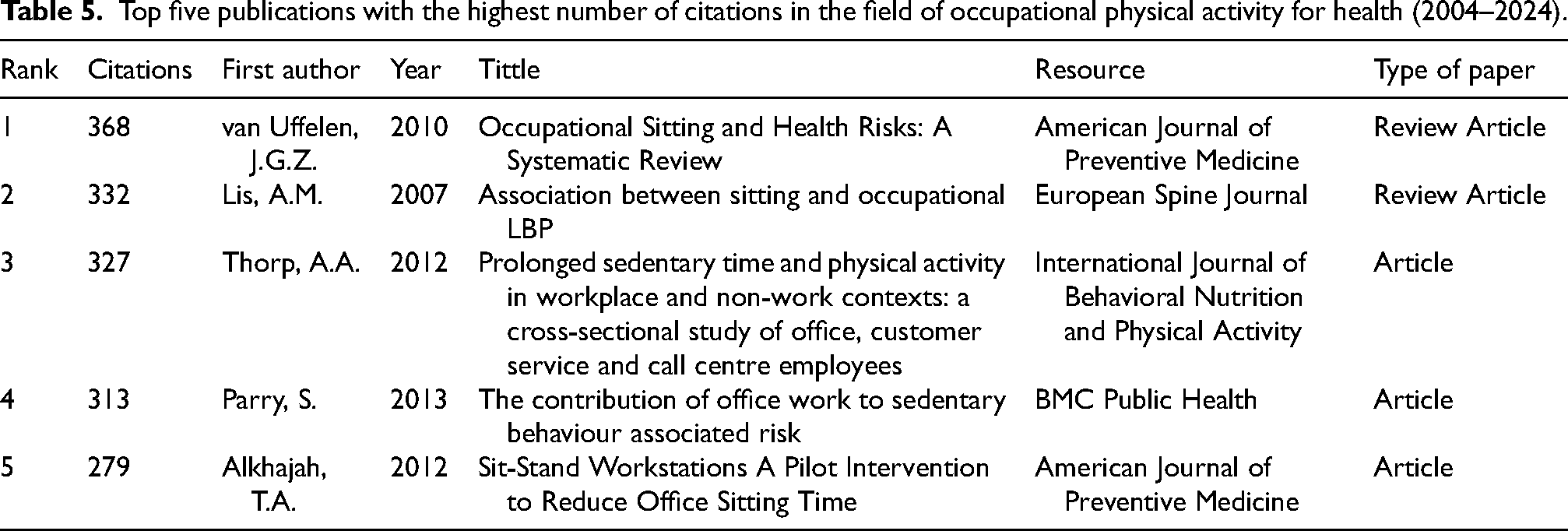
Figure 4 shows the knowledge structure of the field of OPA for health from 2004 to 2024 based on the reference co-cited analysis by CiteSpace. The Modularity values (0.7622) and Weighted mean silhouette values (0.8696) suggested that the clustering strategy in the current reference co-cited analysis was valid. Within this research field, 14 clusters were identified, with cluster #0 Behaviour Change Wheel having the highest number of publications, followed by cluster #1 high-intensity interval training and cluster #2 wearable device. In this reference co-cited analysis, a major research trend was identified. From 2004 to 2024, research in this field has evolved from cluster #4 occupational sitting to cluster #15 activity permissive desks, cluster #2 wearable device, cluster #0 behaviour change wheel, cluster #1 high-intensity interval training, and finally to cluster #7 strength training. The evolution of the research trend reflects the progression from observational investigations to intervention studies and demonstrates the progression of the major intervention methods.
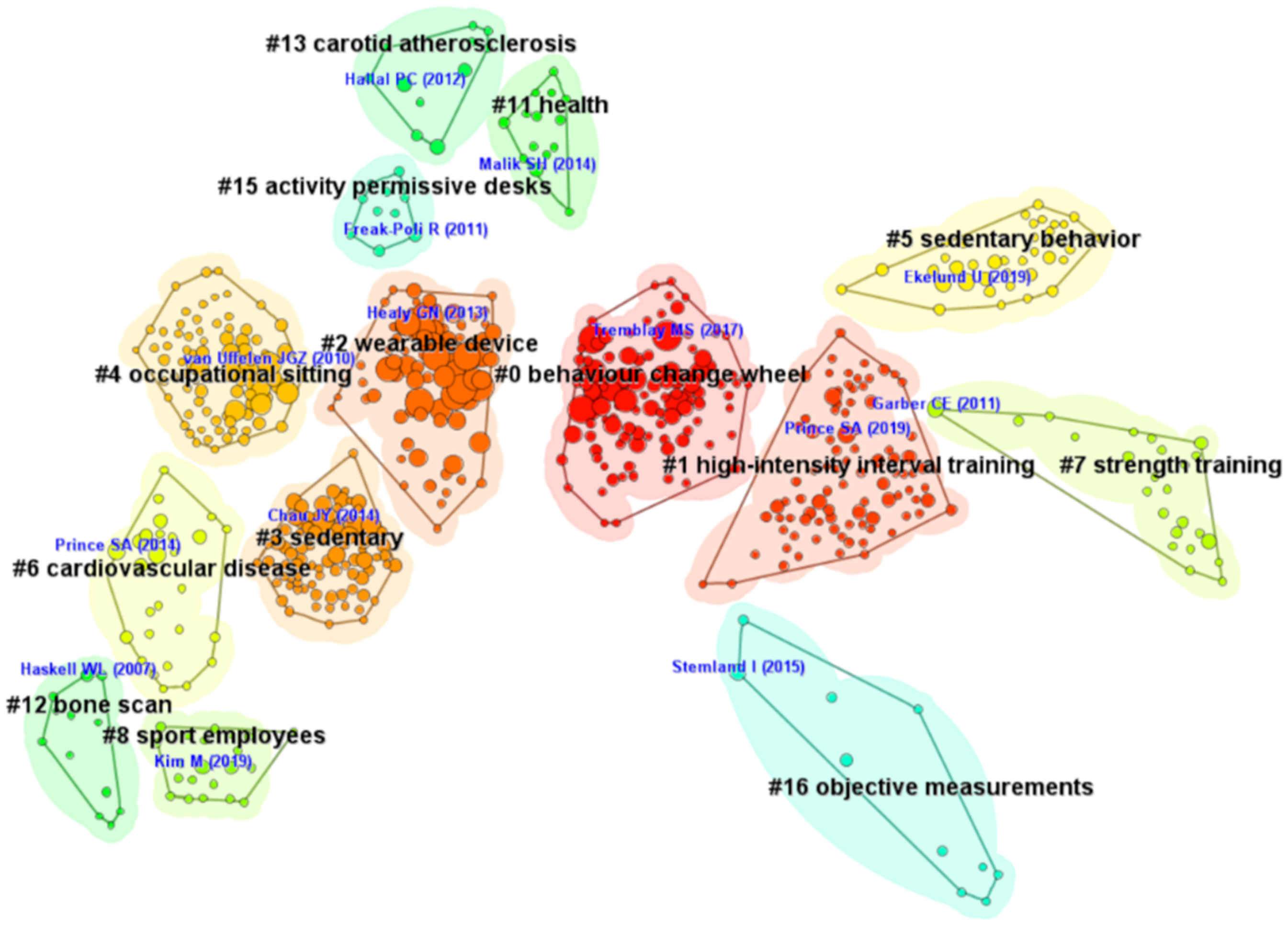
Knowledge structure of the field of occupational physical activity for health based on the reference co-cited analysis (2004–2024).
Citation bursts analysis of authors’ keywords
Figure 5 shows the top 20 authors’ keywords with the strongest citation bursts in the field of OPA for health from 2004 to 2024, while Sitting Time and Public Health had the strongest citation bursts. In the past three years, Human Resource Management and Organizational Behaivor received the strongest citation bursts, which indicates those keywords could be future research trends.
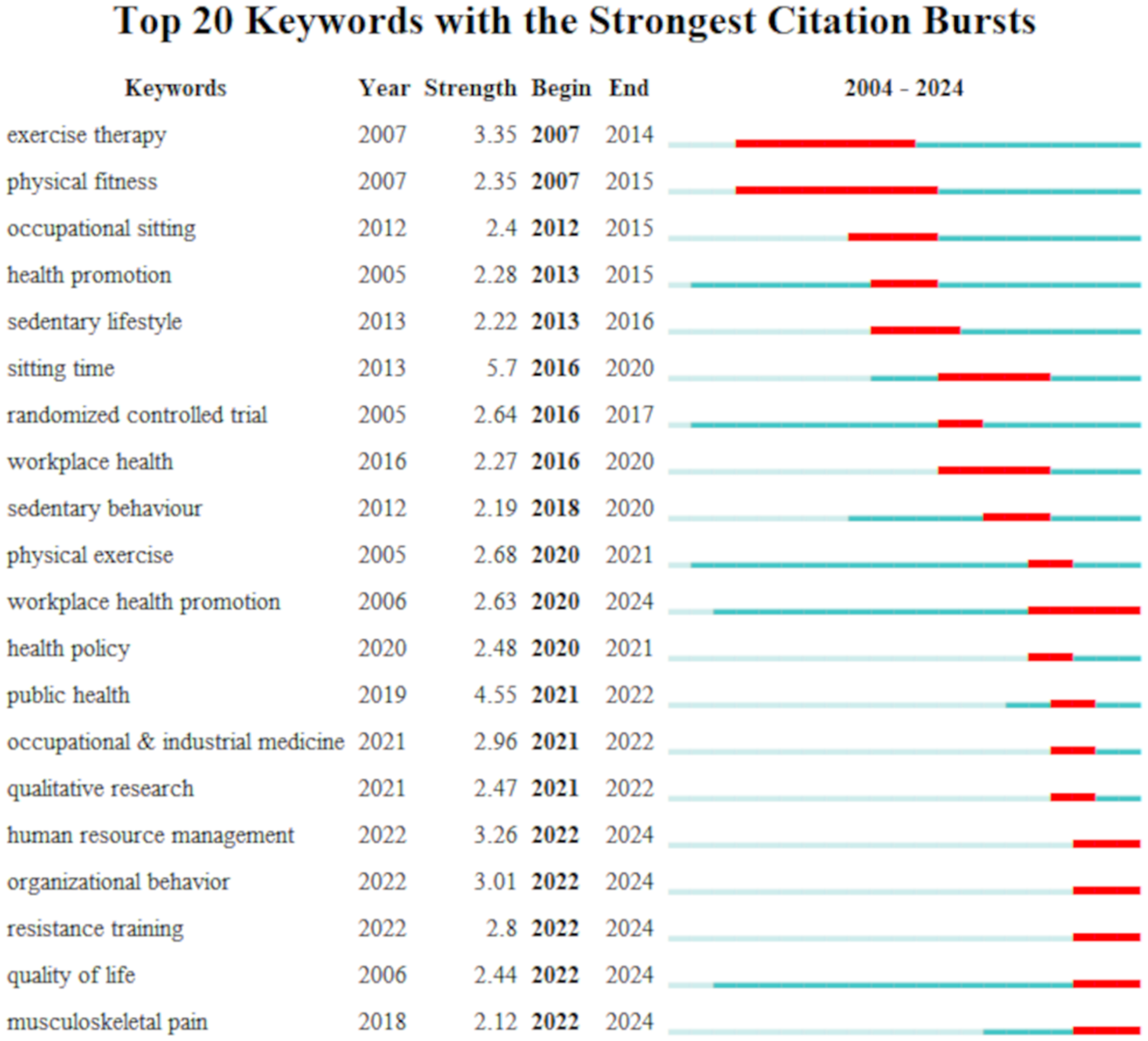
Top 20 keywords with the strongest citation bursts in the field of occupational physical activity for health (2004–2024).
Discussion
General scientific productivity
To the best of our knowledge, the current study is one of the first bibliometric analyses in the field of OPA for health that strictly followed the bibliometric guidelines and used two bibliometric software to analyse the knowledge structure. The number of annual publications in this field shows an increase trend over the past two decades. According to cubic polynomial modelling, annual publications will continue to increase in the future. This is consistent with the results of bibliometric analysis in related research fields. 21
The performance analysis revealed relatively strong scientific productivity across various countries/regions in the field of OPA for health over the last two decades. The USA was the most prolific country in this field, significantly ahead of second-placed Australia, consistent with findings in similar fields. 21 One potential explanation is that the USA has invested substantially in occupational medicine since the industrial revolution. 31 However, the number of publications by a country/region is typically related to its population size and economic strength. 32 China and Iran were the only two low- and middle-income countries demonstrating high productivity in this field, highlighting that most existing evidence regarding OPA and OSB originates from high-income countries. 33 In contrast, few studies have investigated OPA and OSB patterns in low-income and under-represented countries, despite their ongoing economic transition from agriculture to industrial economies. 33 However, according to World Bank estimates, 84% of the world's 5 billion people of working age live in developing countries (i.e., low- and middle-income countries), where working conditions are typically poorer than in developed countries (i.e., high-income countries). 34 Bauman et al. (2011) compared PA patterns and their associations with socioeconomic factors in six Asia-Pacific countries, spanning low-, middle-, and high-income contexts, and found that associations between LTPA, OPA, and socioeconomic factors differ across these nations. 35 Additionally, time spent on OPA varies even among low- and middle-income countries. 36 Therefore, low-income and under-represented countries urgently need to establish comparable surveillance systems to monitor noncommunicable disease risk factors. 36 Subsequently, collaboration with high-income countries can facilitate national or regionally representative epidemiological surveys investigating the associations between socioeconomic factors and OPA in these low-income contexts. For instance, researchers from Papua New Guinea collaborated with Australian researchers to investigate OPA and OSB patterns among workers in Papua New Guinea, providing a foundation for future interventions in that region. 37 Following epidemiological surveys, tailored intervention studies informed by appropriate behavioural change theories could then be conducted to optimise the balance of PA, SB, and sleep within the 24-h activity cycle. At the policy level, low-income and under-represented countries should consider their unique prevalence rates of OPA and related risk factors, alongside their socioeconomic development status, to determine policy priorities. Importantly, policy development must also address health inequalities within countries, as socioeconomically disadvantaged populations disproportionately bear the burden of insufficient PA. 35
Knowledge structure
The visualisation of reference co-citation analysis provides insight into the knowledge structure in the field of OPA for health, including its evolutionary path over the last two decades. Generally, this evolutionary path aligns with the Behavioural Epidemiology Framework adapted for PA research, progressing from observational studies to intervention research. 38 According to the adapted Behavioural Epidemiology Framework, accurate level estimates of behaviour serve as a foundation for the subsequent studies. 38 Accurate measures of OPA allow researchers and stakeholders to more precisely identify the associations between behaviour and health outcomes, thereby informing interventions and policy decisions. Typically, accelerometers and questionnaires are employed to estimate the levels and patterns of OPA and OSB. 39 For instance, Maes et al. conducted a validation study using accelerometers, demonstrating that the Occupational Sitting and Physical Activity Questionnaire demonstrated acceptable measurement characteristics for estimating OSB. 40 Furthermore, the validity of the OSPAQ was also assessed within a work-from-home context and found to be valid at the population level. 41 However, the majority of validation studies on OPA measurement have been conducted in high-income countries, highlighting the urgent need to develop culturally adapted OPA measurement tools in low- and middle-income countries.
This bibliometric analysis provided knowledge structures for the field of OPA for health. Among the clusters that represent observational studies, the most representative study is a systematic review of observational studies by van Uffelen et al. This systematic review included 43 observational studies and found the association between increased OSB and higher BMI. 15 Recently, researchers have explored the relationship between OPA and health-related outcomes using some large publicly accessible databases. For example, Luo et al. used data from the China Kadoorie Biobank of more than 140,000 people to explore the relationship between OPA and mortality among Chinese urban workers. 42 This large observational study found that the PA paradox (i.e., higher levels of OPA are associated with a higher risk of mortality) exists in the well-educated Chinese population. 42
As evidence from observational studies has increased, a growing body of workplace intervention studies have been conducted. A systematic review by Neuhaus et al. demonstrated that activity-permissive workstations could reduce OSB by 77 min per 8-h workday without negatively affecting work performance. 43 Additionally, advancements in technology have led to the incorporation of wearable devices in OPA research. Typically, wearable devices are utilised to monitor PA levels, 44 and several recent studies have also investigated their impact on OPA and OSB levels. 45 Furthermore, an increasing number of behavioural change theories have been integrated into workplace intervention studies focused on OPA for health. The UK Medical Research Council highlights the importance of using theories and frameworks to inform the development of interventions aimed at behavioural change, with the Behaviour Change Wheel being the most frequently applied theory in OPA interventions. 46 Ojo et al. investigated barriers and facilitators to reducing workplace SB using the COM-B model, a central component of the Behaviour Change Wheel, identifying 39 potential behaviour-change techniques. 47 Building on this foundation, Yang et al. demonstrated that an internet-based intervention toolkit developed using the Behaviour Change Wheel effectively reduced OSB among university staff working from home during the COVID-19 pandemic. 48 Additionally, several exercise interventions have been adapted for workplace settings. Amatori et al. summarised seven intervention studies and found that high-intensity interval training was feasible but did not significantly improve health-related outcomes in work settings. 49 More recently, strength training interventions in workplaces have been shown to reduce chronic pain and mitigate declines in employees’ work capacity.50,51
Future research trends
Citation burst analysis based on the authors’ keyword co-occurrence analysis can suggest that a particular keyword has received a greater number of citations in a shorter period. In this study, human resource management and organisational behaivor are the authors’ keywords that have been most frequently mentioned recently. The current working environment is highly heterogeneous, while a ‘one-size-fits-all’ approach to making changes in OPA and OSB is difficult to implement. Therefore, environmental factors influencing behavioural change need to be identified. Safi et al. reported that more than 75% and nearly 60% of the participants identified that lack of support from management and workplace culture were the barriers to promoting OPA, respectively. 52 Moreover, support from management and flexible working hours were identified as facilitators of behaviour change in the workplace. 52 Despite previous intervention studies achieving some positive results, there is still a gap between experiments and the real world. Future interventions for OPA and OSB are still recommended to follow the behaviour change wheel during the design process, identifying facilitators and barriers to behaviour change. Furthermore, it is recommended to communicate with management during the design process to provide organisational level support for behaviour change. 53 Citation burst analysis, based on the authors’ keyword co-occurrence analysis, identifies keywords receiving a notably high number of citations within a short period. In this study, “human resource management” and “organisational behaviour” emerged as the most frequently cited authors’ keywords recently. The current working environment is highly heterogeneous; thus, implementing a ‘one-size-fits-all’ approach to modifying OPA and OSB is challenging. Consequently, factors influencing behavioural change at the environmental level need to be clearly identified. Safi et al. reported that more than 75% and nearly 60% of participants perceived lack of management support and workplace culture, respectively, as barriers to promoting OPA. 52 Additionally, management support and flexible working hours were recognised as facilitators for workplace behavioural change. 52 Despite some positive outcomes achieved by previous intervention studies, a notable gap remains between experimental results and real-world implementation. Future interventions targeting OPA and OSB are recommended to follow the Behaviour Change Wheel during their design phase, clearly identifying both barriers and facilitators to behaviour change. Moreover, it is advisable to engage in conversation with management during the design process to ensure organisational-level support for successful behaviour change. 53
Limitations and future directions
Whilst the current bibliometric analysis was carried out in strict adherence to the bibliometric guidelines, there are still some limitations. First, the current study only used the WoSCC as the data source. Although this database is widely used in bibliometric analyses, 24 it will still result in the omission of some publications. However, existing bibliometric software has limitations in merging different databases. Therefore, it is recommended that the bibliometric software develops the function of merging different databases in the future. Second, there is inevitable citation bias in scientific research. 54 The citation lag can result in some important publications not being identified by bibliometric metrics in time. Third, the number of publications may not be a sensitive metric for evaluating scientific performance. It is therefore suggested that different bibliometric metrics could be developed and validated to more accurately assess scientific performance.
Furthermore, given the limited OPA research, low-income and under-represented countries urgently need to make substantial investments in establishing comparable surveillance systems to monitor noncommunicable disease risk factors. They should also identify appropriate interventions and policy priorities aligned with their socioeconomic development. Moreover, international and interregional cooperation is essential to effectively address these global health inequalities.
Conclusion
From 2004 to 2024, scientific output in the field of OPA for health demonstrated a steadily increasing trend. The USA produced the highest number of publications, while the University of Queensland, along with authors G.N. Healy and D.W. Dunstan, were the most published contributors. Reference co-citation analysis highlighted a transition from observational to intervention studies, illustrating the evolution of knowledge in this field. Citation burst analysis identified human resource management and organisational behaviour as promising future research directions.
Footnotes
Author's note
Kai Li is also affiliated at College of Sports Industry and Leisure, Nanjing Sport Institute, Nanjing, China.

Funding
The authors received no financial support for the research, authorship, and/or publication of this article.
Declaration of conflicting interests
The authors declared no potential conflicts of interest with respect to the research, authorship, and/or publication of this article.
Appendix A: Search Strategy
TI = (“physical activt*” OR exercis* OR sport$ OR sit OR sitting OR sedentary OR step$ OR stair$)
TI = (employe* OR “work related” OR “work-related” OR job$ OR staff$ OR office* OR occupation* OR vocation* OR workplace OR worksite)
Search strategy = #1 AND #2
Notes: TI = Tittle.