







Abstract
Background
Body awareness is a topic, which has been investigating by the scientists, recently.
Objective
This study aimed to determine effects of low back health education (BHE) on physical function and body awareness in academicians.
Methods
This study is a randomized controlled study. 94 academicians (47 in intervention group and 47 controls) (mean age: 43.22 ± 10.924 years) participated. Participants were evaluated before and after 6-week BHE and exercise program. To evaluate physical functions, One Leg Standing Test, Half Squat, Curl-Up, and Sit and Reach Test were used. The Body Awareness Questionnaire (BAQ) was used to assess body awareness (BA) of participants. Intervention group received BHE, including back school. After the education program, they participated in exercise program (six weeks; one day a week). Control group was only given an informative brochure about BHE.
Results
All parameters in terms of physical function increased in both groups (p ≤ 0.05). However, when the groups were compared, difference was found to be significant in favor of intervention group (p ≤ 0.05). BA scores also increased at the end of six weeks in both groups (p ≤ 0.05). But no differences were found between the groups (p ≥ 0.05), except for body response estimation in BAQ (p ≤ 0.05).
Conclusions
The results showed that exercise program increased physical functions rather than BA.
Introduction
There are many problems that threaten the low back health of employs. Low back pain is one of the most common problems. Low back pain can cause limitation of movement and loss of work. All occupational groups and individuals of all ages can be affected by low back pain. Low back pain is a very common problem, especially in office workers. Low back pain can cause undesirable consequences for employes, such as loss of work power and performance, increase in stress level and difficulty in performing professional activities. It is known that office workers who do not work physically in heavy work also face this problem. 1 Mild and moderate low back pain seen in employes restricts individual's mobility, reducing their work efficiency and quality of life.2,3 Chronic low back pain has been found to go beyond a musculoskeletal problem and cause different health problems. Problems such as kinesiophobia, increased depressive symptoms 4 and negative effects on body awareness 5 can occur, which significantly affect the individual psycho-socially. 6
Although there are many studies examining different professional groups about low back health, the number of studies conducted with academicians is limited. In a study conducted by Çetişli Korkmaz et al., 7 they stated that low back pain is a frequently seen health problem among academicians and teachers working under similar conditions and environments. Another study showed that the teaching profession is among the occupational groups where musculoskeletal problems are commonly seen and that this occupational group is at high risk. 8
In this context, academicians may be considered to be at risk for low back health. Academicians are at risk in terms of their body structures and postures due to their intensive in-class training, long working hours at the desk, and strenuous research and study activities. This may also have a negative impact on their body awareness. Studies have determined that academicians have more neck, back and low back pain.9–13 Because academicians who do not use their body mechanics correctly at the desk, in front of the computer and during in-class education, and who do not have exercise habits are more likely to encounter chronic low back pain.
The definition of body awareness is used to refer to body management, use of the body, and body experience. Improper use of body mechanics negatively affects body awareness and causes health problems such as low back pain.14,15 Although there are many studies on body awareness, there is no study investigating the interaction between low back health and body awareness in academicians. This study was designed to teach academicians to use body mechanics correctly and effectively in their daily lives and at work, decrease their risk of low back problems, heighten their body awareness, and establish healthy exercise habits in them. Our study aimed to investigate the effect of low back health education on physical function and body awareness in academicians.
Material and method
A total of 94 volunteer academicians, 49 women (52.1%) and 45 men (47.9%), with an average age of 43.22 ± 10.924 years between the ages of 25–65, were included in the study. Permission was obtained from both universities for the academicians of Ondokuz Mayıs University and Samsun University, who make up the population of our study, to take part in our study. For this thesis, ethics committee approval was received from Biruni University Non-Interventional Clinical Research Ethics Committee Presidency (approval number: 2022/73-06, date: 18.08.2022). This study has been registered on ClinicalTrials.gov with the registration number NCT05948189. This study is the publication of the first author's Master's thesis.
The study is open to full-time academic staff at Ondokuz Mayıs University or Samsun University who have been employed for at least three consecutive years. Male and female volunteers between the ages of 25 and 65 are eligible to participate. However, those with low back pain, previous spinal surgery, neurological or orthopedic conditions will be excluded from the study. In addition, people with heart or lung problems, unless medically controlled, and part-time workers are not eligible to participate. These criteria ensure that participants are able to participate in the study without underlying health problems that could affect the results.
Academicians from both universities who agreed to engage in the study were personally visited in their offices, given information about the study through a face-to-face interview, and asked whether they would take part in the study.
This study was planned as a randomized controlled study. In determining the sample size of the study, “In scale studies, the sample volume should be at least 5 times the size of each scale item.” 16 suggestion was taken into consideration. According to the number of items in the Body Awareness survey used in the study, a minimum of 18 × 5 = 90 individuals must be reached. It was decided that the sample group would consist of 108 people in total (increased by 20% due to risks such as the person dropping out of education or not participating in the measurement) against possible problems. For this reason, the study started with 108 individuals. Simple probability sampling (random sampling) method was used to determine the sample group. In this method, all individuals in the population have equal probability of being selected for sampling. In order to determine the sample, first of all, all individuals in the universe were numbered from 1 to n (n = 2542), the papers belonging to the numbers were placed in a black bag so that they could not be seen from the outside, and the lottery process was applied to give each individual an equal chance of being selected from the bag 17 (Figure 1).
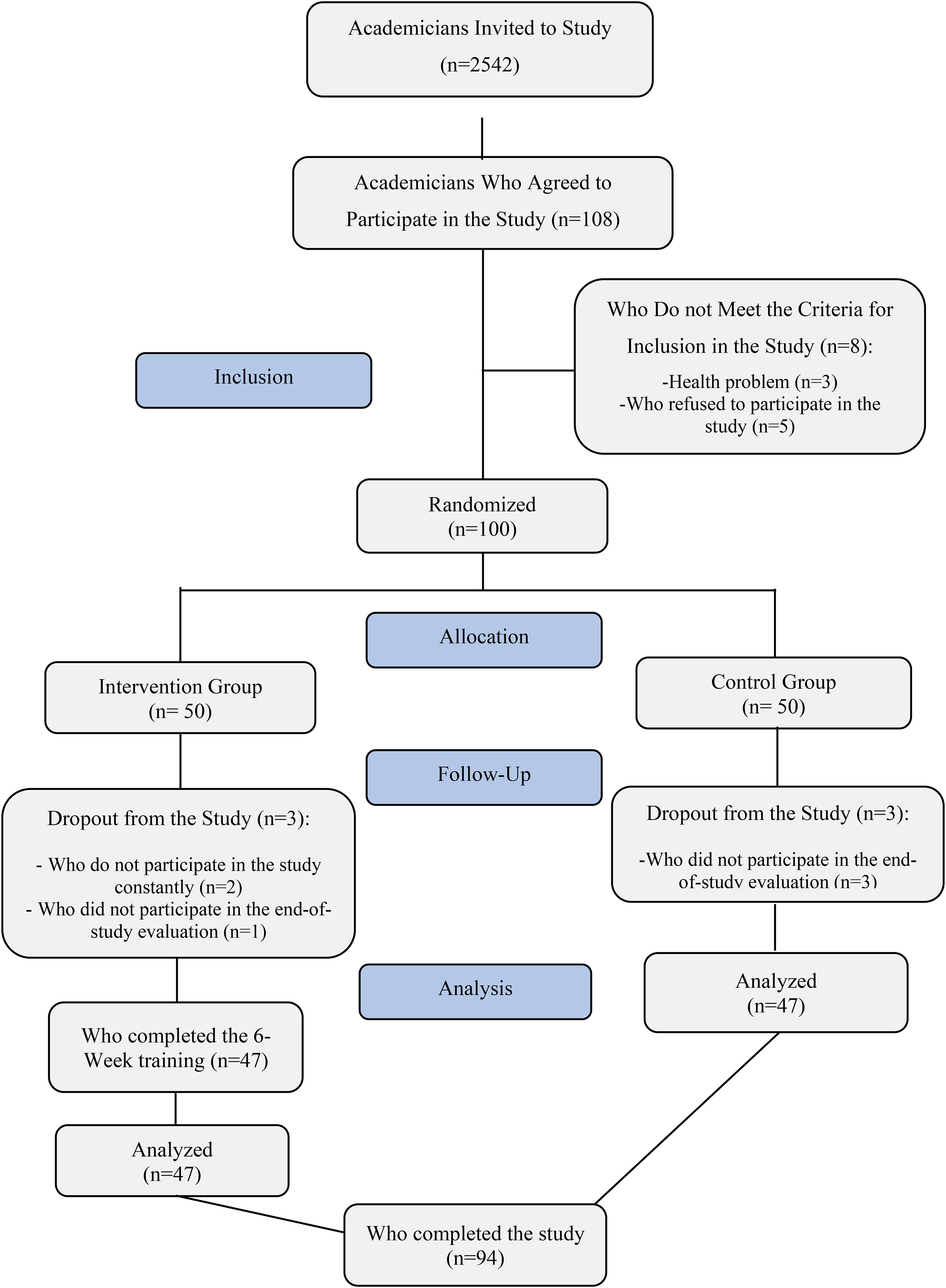
Flow chart of the study.
All evaluations of the participants were evaluated through face-to-face surveys and applied physical tests. The entire data collection process and training of the study was carried out by the physiotherapist who was a researcher in the study. All participants filled out the demographic information registration form and the Body Awareness Questionnaire under the supervision of the researcher physiotherapist. Then, physical function tests of the study and control groups were taken by the researcher physiotherapist before the low back health education and the results were recorded. All tests were applied by the same physiotherapist in the same day.
Following the physical tests, low back health education was started with the working group. Before the exercise training, participants were given low back health education and protection methods by the researcher physiotherapist using visual presentation in the classroom environment. In this low back health education; information was provided on topics such as spine anatomy, muscle and ligament structure, signs and symptoms of low back pain, and methods of prevention from low back pain.
Study group participants exercised in groups of 9 people one day a week under the supervision of a researcher physiotherapist. The evaluation and training of the participants was carried out by a research physiotherapist at the Yaşar Doğu Faculty of Sports Sciences, Ondokuz Mayıs University in Samsun. 6-week exercise program consisting of strengthening (Figures 2 and 3), flexibility (Figures 4 and 5), endurance, postural alignment and stabilization exercises was applied. All exercises performed in the same order by participants. The exercises order was set up as follow: postural alignment, flexibility, strengthening, endurance, stabilization exercises. After three exercises completed, the participants were given five seconds break. The study was completed with 20 min of low back health education (with visual presentation in the classroom) and 6 weeks of exercise (1 day a week, 30 min). A brochure about low back health was distributed to the control group and they were asked to read the brochure. The back health brochure included information on the rules to follow in daily activities and the benefits of exercise. It also included visual information on correct posture and correct sitting and sleeping positions.
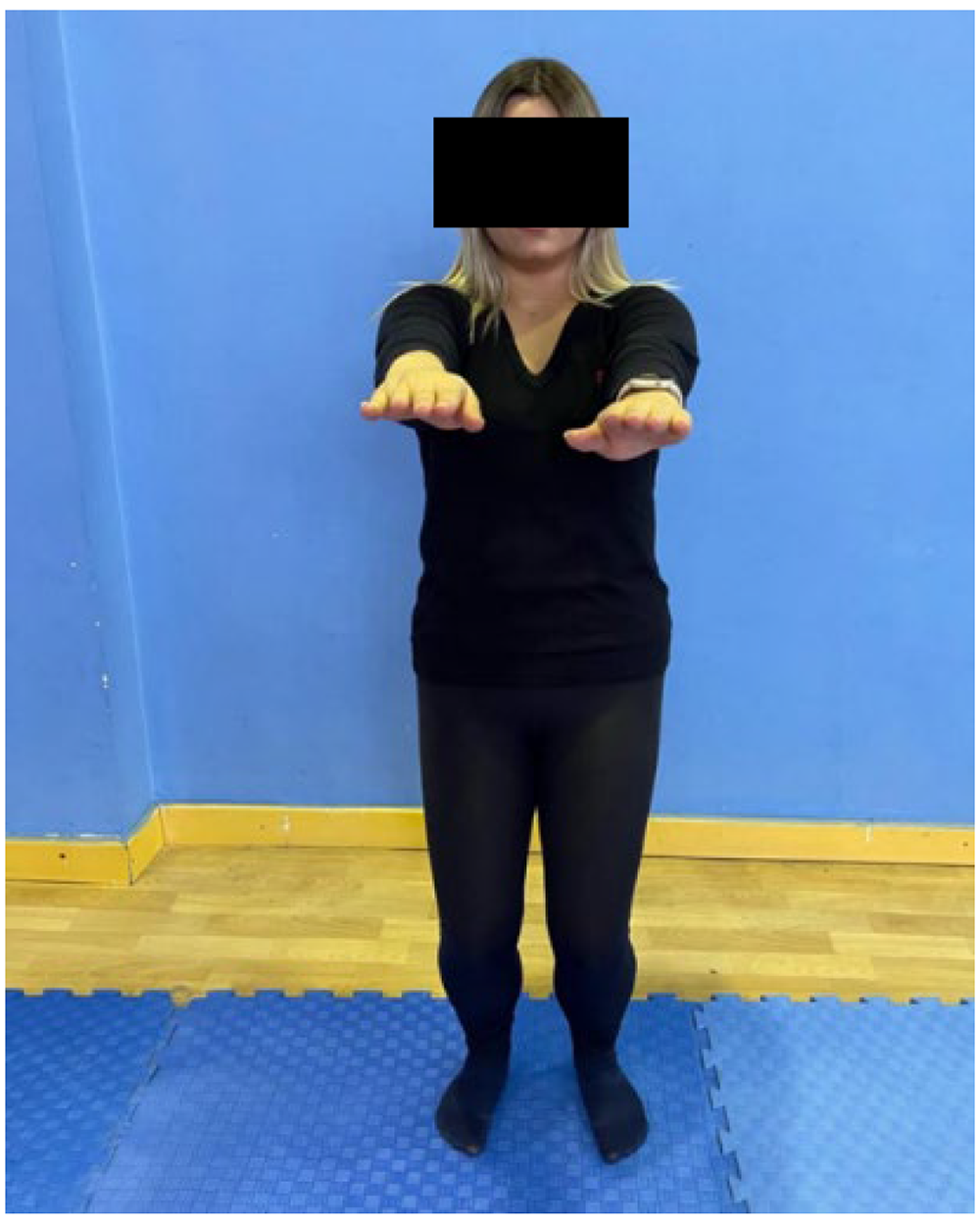
Half squat exercise.
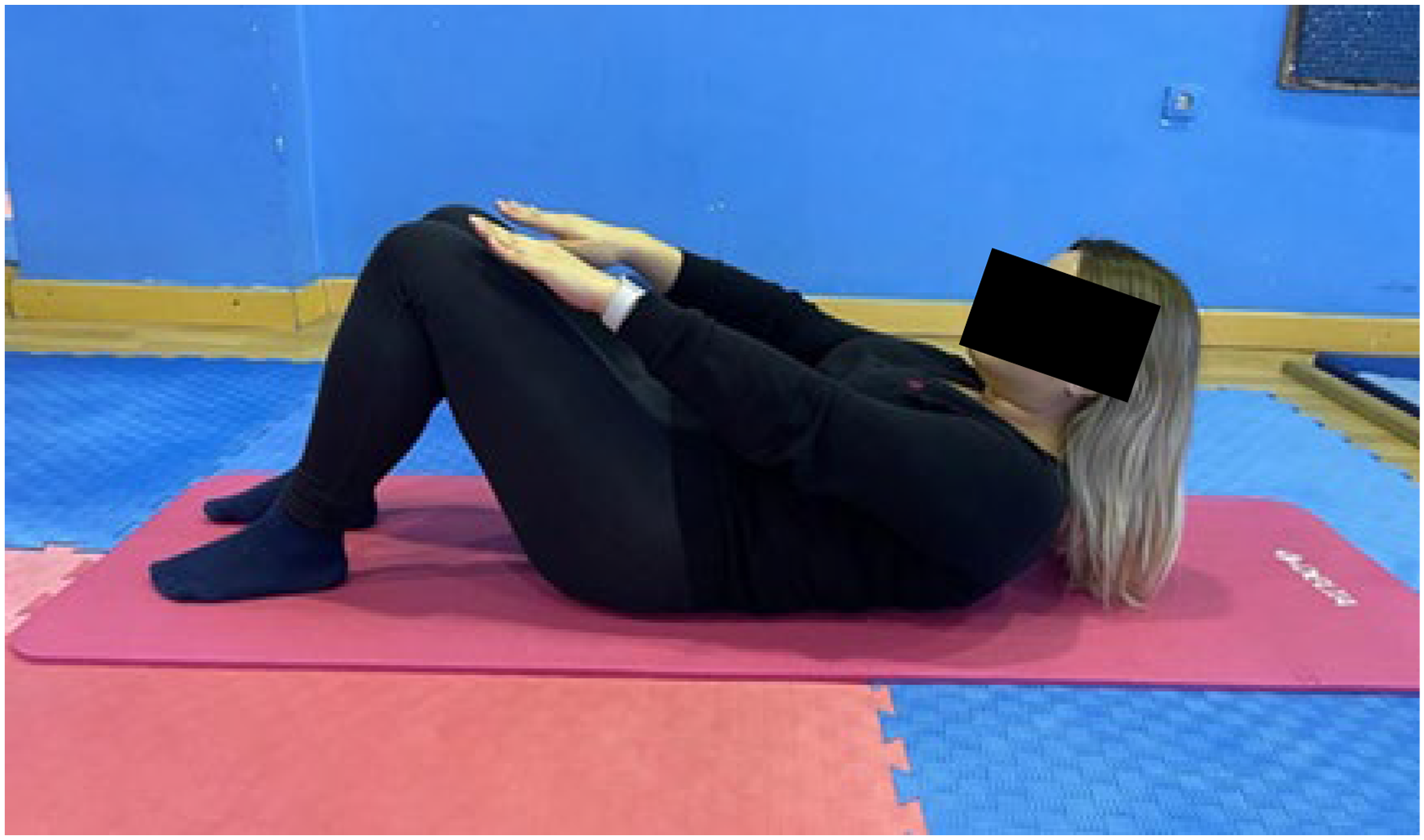
Abdominal muscles strengthening exercise.
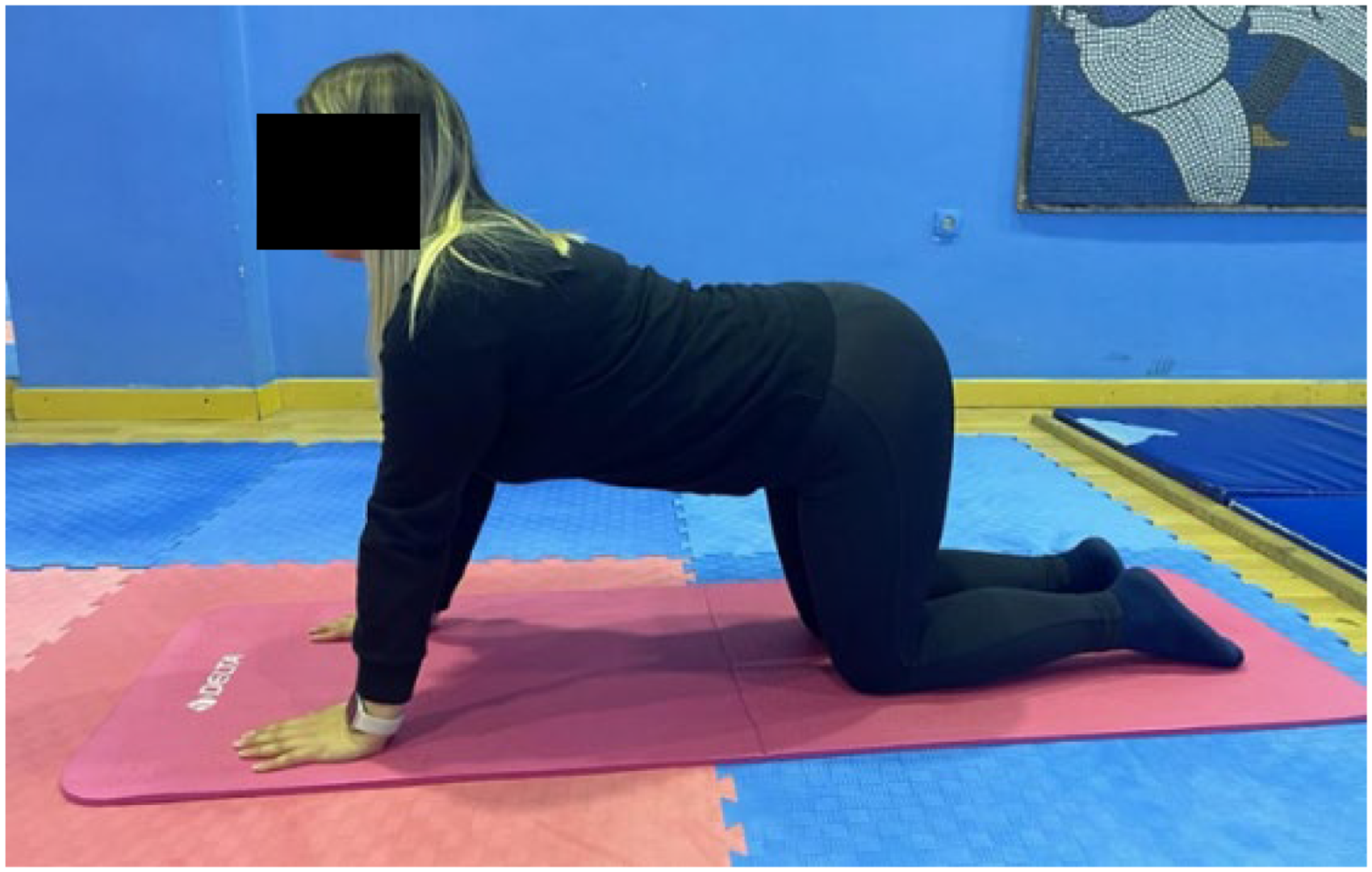
Cat-camel exercise-spinal mobilization exercise in the crawling position.
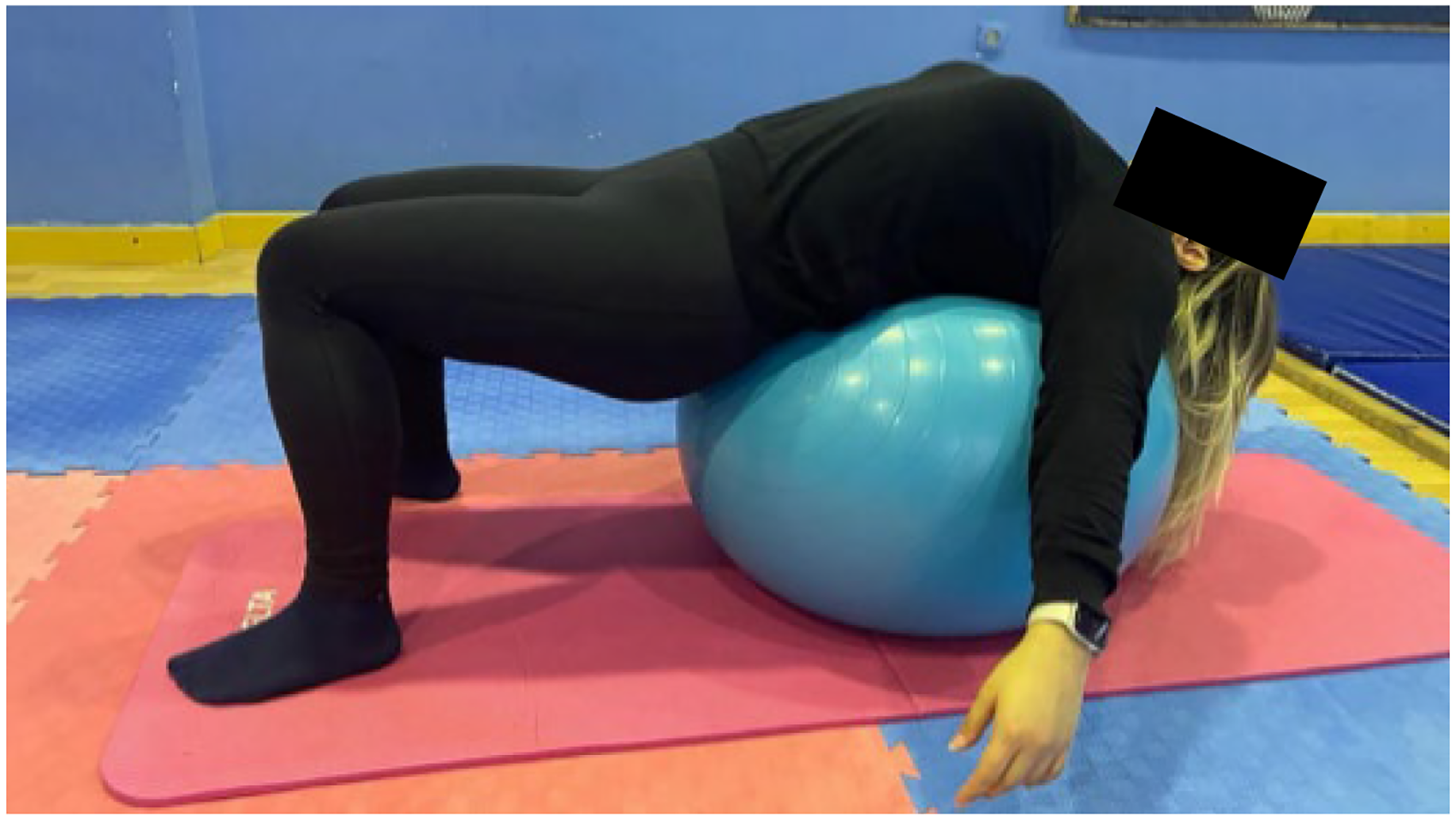
Spinal mobilization on the therapeutic ball in the supine position.
At the end of the 6-week low back health education, the questionnaire and physical function measurements of the study and control groups were taken again. This study, which consisted of a total of 1 week of evaluation, 6 weeks of exercise training and 1 week of re-evaluation, was completed in a period of 8 weeks. During 6 week exercise treaning, nobody reported any complaints or problems due to exercises.
Demographic information of the participants such as age, height, body weight, body mass index, lower extremity dominance and working time were recorded. Lower extremity dominance was determined as the foot with which the ball was kicked. 18
Outcome measurements of the study
The Single Leg Stance (SLS) Test: This test, which evaluates balance and static standing ability, also gives an idea about the risk of falling of individuals. Balance is evaluated by determining the duration of standing on one leg with eyes open and closed during standing.19–21 The duration of the participants standing on one leg with their eyes open and closed was determined in seconds using a stopwatch. Participants who completed The SLS Test were allowed to rest for 3 min by sitting or lying on their back, and the test was performed with their eyes closed.
Half Squat Test: Participants were asked to squat in a standing position with their knees flexed to 20˚ and the number of repetitions per minute was recorded. A stopwatch was used during the test. The scores of the participants who completed the one-minute period were recorded.22,23
Curl-up Test: In the starting position for this test, which measures the strength and endurance of the abdominal muscles, the participant is positioned in a supine position, knees flexed at approximately 140 degrees, feet on the floor, legs slightly abducted, arms parallel to the body and palms facing the ground. The participant was asked to perform the sit-up movement by stretching his arms forward and return to the starting point.24–26 The number of sit-ups completed by the participants in one minute was recorded. The time was monitored with a stopwatch.
Sit and Reach Test: The flexibility levels of the participants were evaluated with the sit and reach test. A sit-and-reach stand (Takei TKK- 5003 Analog Standing Trunk Flex Meter, TKK- 5005 Multi Box) with a length of 45 cm, a width of 35 cm and a height of 40 cm was used for measurement. There is an apparatus on the table that the participant can push forward with his or her fingers. The participant was asked to sit in front of the coffee table with his/her feet perpendicular to the table and his/her knees in an extension position. In this position, the participant was asked to reach forward, slowly push the apparatus on the table with hands and legs tense, and wait 1–2 s at this point.27,28 At the beginning of the test, the apparatus on the sit and reach table is at −20 cm. The participants’ sit and reach measurements were recorded in cm on this device. The value of the participants who could not reach the specified reference point (0 cm) was recorded as (−cm), and the value of those who passed the reference point was recorded as (+cm).
Statistical analysis
Kolmogrov-Smirnov and Levene tests were applied to the data obtained in the study to check the assumption of normality and homogeneity of variances (p ≥ 0.05). In the study, differences between the groups (study and control groups) in age, height, body weight, body mass index and study year measurements were determined by Student's t-test. In the study, whether there was a difference between the groups (control and experimental groups) in terms of standing time on one leg, half-squat test results, sit-up test results and sit and reach test results before and after education was evaluated by The Repeated measures ANOVA. The relationships between the participants’ physical function test results and body awareness scores were evaluated with the Pearson-Correlation coefficient. Reliability coefficients (Cronbach's alpha) were estimated and interpreted to check the internal consistency of the participants’ answers to the Body Awareness Questionnaire items used in the study. All statistical calculations were made in the SPSS 21.0 V. statistical package program, and the findings are given as n, %, mean and standard deviation (Mean ± SD) and were considered significant at the p ≤ 0.05 level.
Results
The demographic and physical characteristics of the participants are shown in Table 1. Age, body weight, height, body mass index (BMI) and working time of individuals in the control and study groups were compared, however there was not a significant difference (p ≥ 0.05). This indicates that the distribution of individuals into groups in terms of demographic characteristics is homogeneous.
The distribution of demographic and physical characteristics of the participants according to the groups.
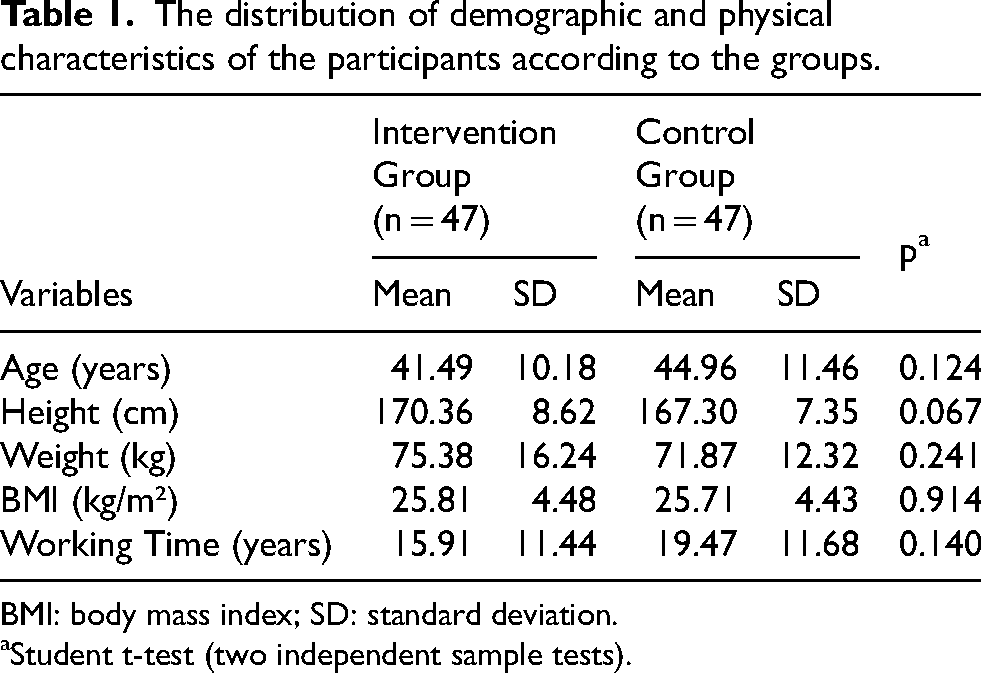
BMI: body mass index; SD: standard deviation.
Student t-test (two independent sample tests).
In the study, a statistically significant difference was determined between the results of the physical function tests before and after the education of the individuals in the study and control groups (p ≤ 0.05; Table 2). It was observed that there was a greater positive improvement in the individuals in the study group than in the control group between the pre- and post- education measurements of the individuals participating in the study in terms of the time they stood on one leg with eyes closed, the number of half-squats, the number of sit-ups and the sit-and-reach distance.
Distribution of the physical function test results of the participants according to the groups.
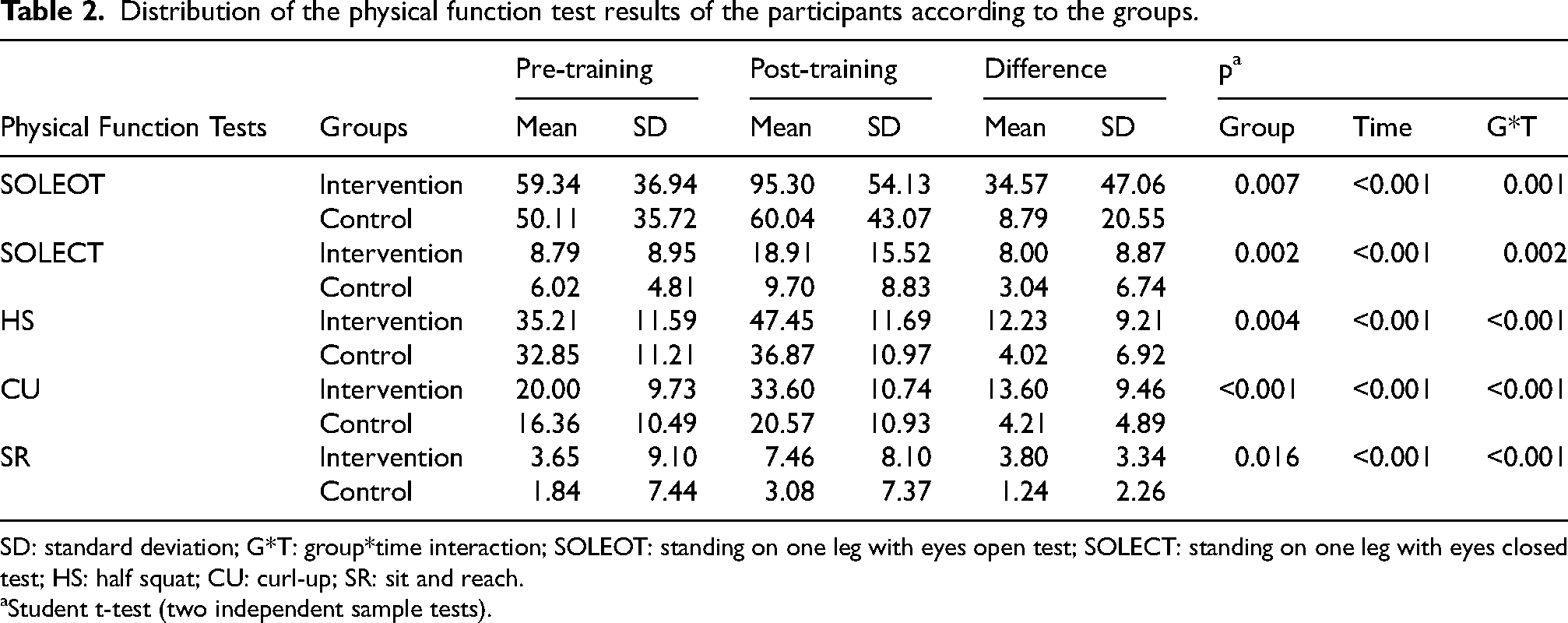
SD: standard deviation; G*T: group*time interaction; SOLEOT: standing on one leg with eyes open test; SOLECT: standing on one leg with eyes closed test; HS: half squat; CU: curl-up; SR: sit and reach.
Student t-test (two independent sample tests).
The total scores and subscale total scores of the participants in the study and control groups from the The Body Awareness Questionnaire before and after education could not be significantly differentiated (p ≥ 0.05). However, there is a significant difference between the estimated sub-dimension total scores of the body reactions of the participants in the study and the control group depending on time (p = 0.031). It was determined that the participants in the study group had a greater increase in the estimated body reactions subscale total scores and body awareness total scores after the training than the individuals in the control group. The Body Awareness Questionnaire (BAQ) results of the individuals in the study and control groups pre- and post- education are given in Table 3.
The results of the pre and post training Body Awareness Questionnaire of the participants.
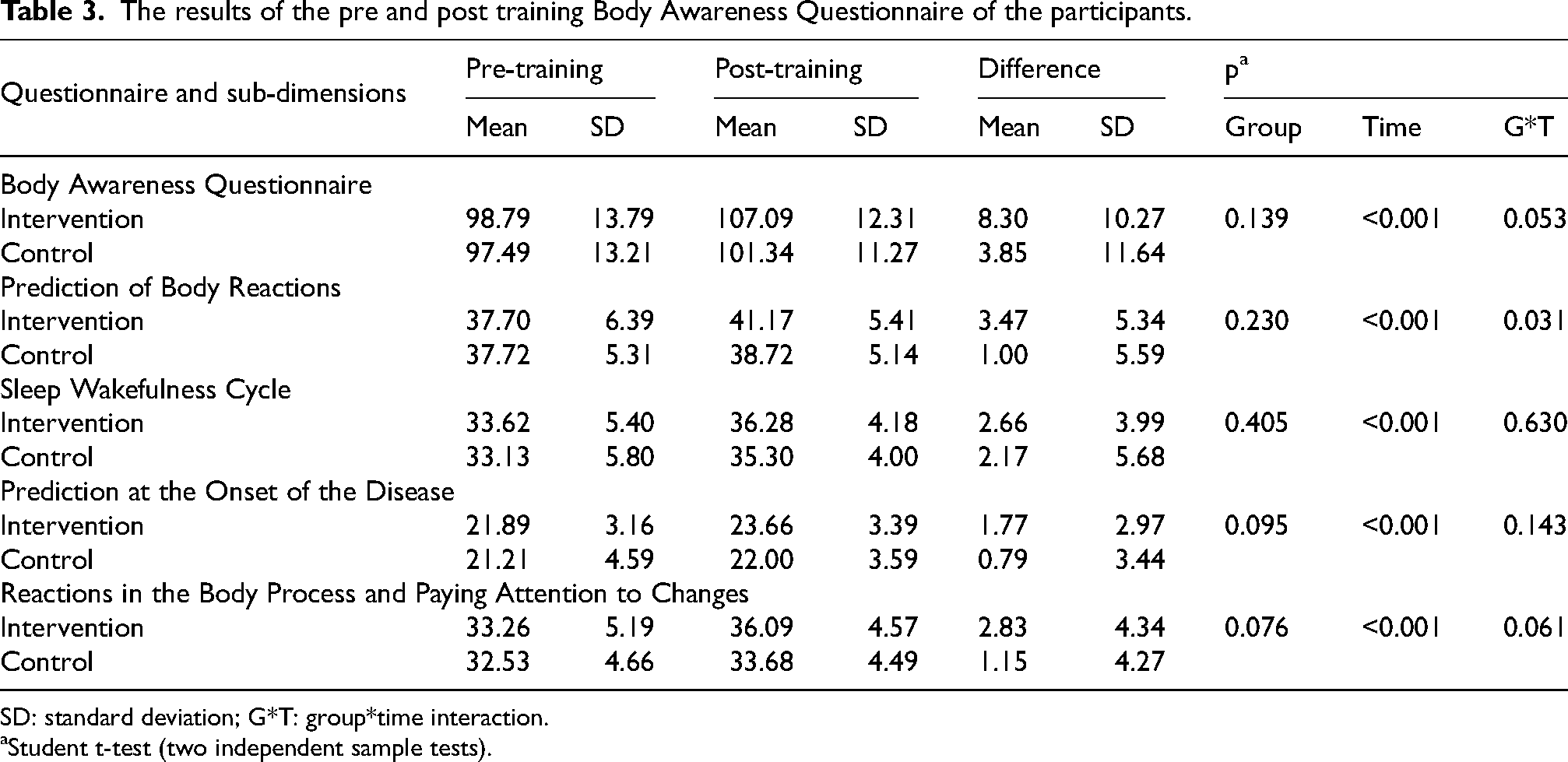
SD: standard deviation; G*T: group*time interaction.
Student t-test (two independent sample tests).
In the study, a statistically significant relationship between pre-training physical function test measurements and BAQ and sub-dimension total scores could not be determined (p > 0.05; Table 4).
The relationships between the physical function test measurements of the participants and the results of the Body Awareness Questionnaire before the application. a
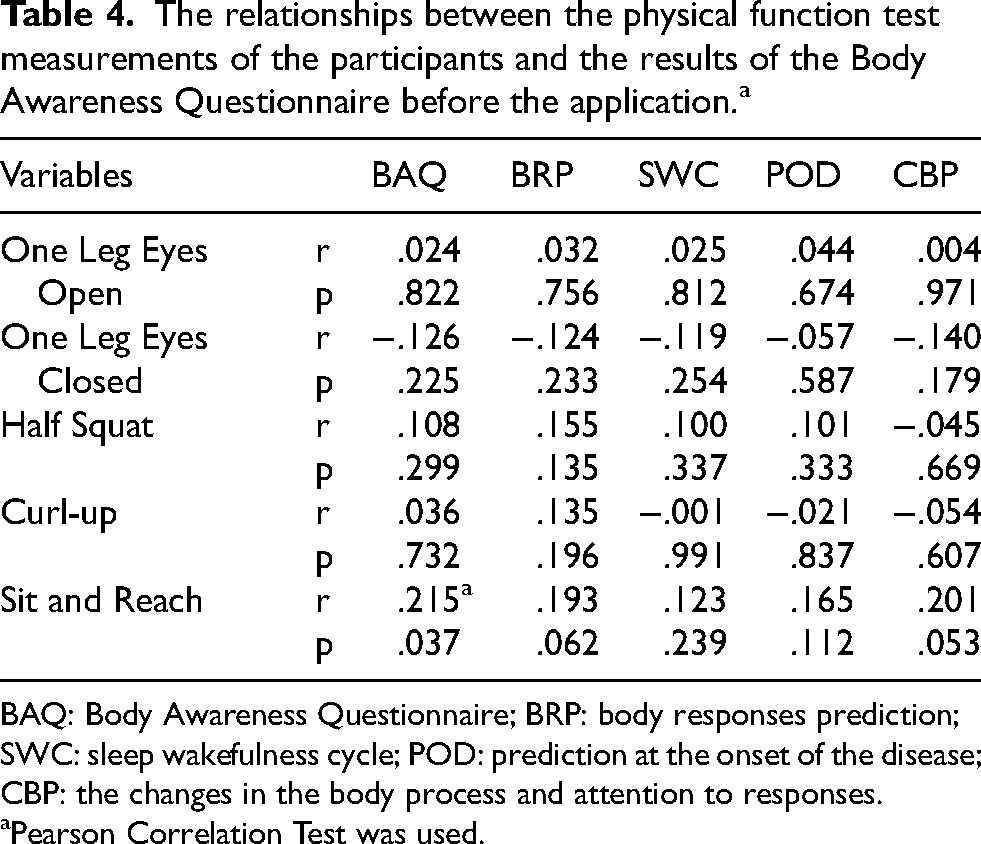
BAQ: Body Awareness Questionnaire; BRP: body responses prediction; SWC: sleep wakefulness cycle; POD: prediction at the onset of the disease; CBP: the changes in the body process and attention to responses.
Pearson Correlation Test was used.
In the study, a statistically significant relationship between post- education physical function test measurements and Body Awareness Questionnaire total and subscale total scores could not be determined (p > 0.05; Table 5).
The relationships between the physical function test measurements of the participants and the results of the Body Awareness Questionnaire after the application. a
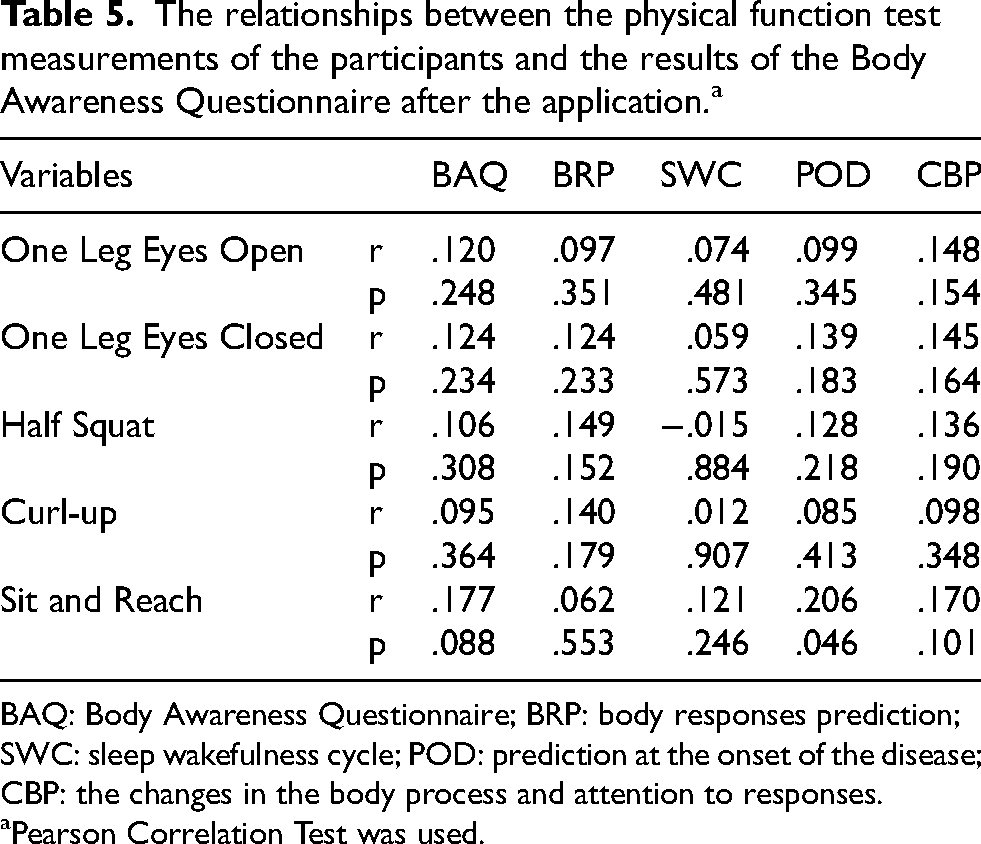
BAQ: Body Awareness Questionnaire; BRP: body responses prediction; SWC: sleep wakefulness cycle; POD: prediction at the onset of the disease; CBP: the changes in the body process and attention to responses.
Pearson Correlation Test was used.
Discussion
In order to improve people's quality of life, protect their low back health, increase their performance in everyday activities, and inform them about the risk factors for low back pain, preventive physiotherapy has been utilized for many years. Raising awareness among academicians about low back health is one of our study's most significant goals. Our study aimed to investigate the effect of low back health education on physical function and body awareness in academicians. In our study, we hypothesized that academicians who participated in low back health education and exercise would demonstrate more improvement in body awareness and physical functions (strengthening, flexibility, endurance, postural straightness, and stabilization) than academicians who did not exercise. Our hypotheses are supported by the study's findings. Low back health education increased academicians’ physical functions and body awareness. However, it has been concluded that exercise has a greater effect on increasing physical functions.
In the literature, The SLS Test with eyes open is one of the most frequently used tests in the assessment of static balance. In the studies,29–31 to show that exercise increases balance, the test of standing on one leg with eyes open was used. In our study, an increase was determined in the results of the one-leg standing tests with eyes open and closed in both groups, but a higher increase was observed in the results of the study group, that is, the participants who had exercise education. This result showed that exercise increased the time spent standing on one leg. Because of this, we support that these balance-related tests can be used safely in low back health education programs and recommend their use as part of assessment in such programs.
In a study conducted by Göğremiş, 32 it was determined that there was a greater increase in the number of half-squats per minute between the pre- and post- education measurements of the individuals participating in the study compared to the control group. In a study by Hermassi et al., 33 it was observed that the number of half-squats per minute was increased in the study group, while there was a decrease in the control group in the post- education measurements of the participants. In a study conducted by Cortell-Tormo et al., 34 it was observed that individuals in the exercise and study groups increased in the number of half-squats after exercise, and in individuals in the exercise group. It was found that there was a higher increase in individuals in the exercise group compared to the control group. In our study, an increase in the number of half-squats per minute was determined in both groups, and it was observed that there was a greater increase in the individuals in the study group than in the control group. This result can be considered as the positive gains of exercising.
In the literature, sit and reach test is one of the most preferred tests in the assessment of flexibility. 35 and 36 used the sit-and-reach test in their studies to show that physical training increases flexibility. In our study, an increase was determined in the sit-reach test results in both groups, and it was determined that the results of the participants who had exercise training were higher and their flexibility increased more. This study reaffirmed the beneficial impacts of exercise training on people's ability to become more flexible.
Body awareness affects low back health education. This concept, which we frequently encounter in the literature, makes positive contributions to the exercise program. In a study by Atılgan et al. 37 in which they investigated the effect of yoga in healthy women, a decrease in total body awareness scores occurred after yoga exercise. In a study conducted by Erden et al., 38 it was observed that there was no difference in the total scores and sub dimensions of athletes in terms of body awareness (BAQ: BRP, SWC, POD and CBP) among sports branches.
In another study conducted by Emirzeoğlu et al., 39 there was no difference detected between athletes and the sedentary group in terms of BAQ total score. One of the BAQ subscales, Changes in Body Process and Attention to Responses (CBP) score was found to be higher in sedentary individuals than in athletes. In our study, there was an increase in both groups. It was determined that there was a slight increase in the total body awareness scores in the study group compared to the control group. In addition, it was determined that the participants in the study group had a greater increase in the body reactions assessment sub-dimension (BRP) total scores after the training than the individuals in the control group. It is thought that this is due to the fact that the participants in the study group exercised for 6 weeks.
When the literature is examined, it is seen that there are many national and international studies within the scope of low back health education and low back school.40–48 These studies have demonstrated that low back health education has positive effects on low back health. In our study, low back health education (Low Back School) was given to the study group participants. Similar to other research in this field published in the literature, it was observed that the physical functions of the participants who participated in the exercise program and received low back health education increased at the end of our study. For example, in a study, it was reported that there was a significant improvement in the low back school group in terms of pain and functional impairment parameters compared to the exercise group only. 45 In another study, nurses in the study group participated in a spine care program for 3 months. The control group received only brief written lifestyle guidance. As a result of this study, it was observed that spine health education significantly reduced chronic nonspecific low back pain. 46 When we look at these studies, as in our study, low back health education and low back school programs are essential for people to increase their physical functions and protect their low back health. In addition, it is necessary to develop and expand such programs within the scope of preventive physiotherapy, and to raise awareness of working or non-working individuals in order to protect their general spine health. In the studies conducted,49,50 it has been emphasized that there is a decrease in pain and disability after exercise. In another study, it was reported that there was an improvement in pain and physical functions after exercise in patients with chronic mechanical low back pain. 51 Due to their preventive effects before pain and disability occur in this sense, we think that low back health education and back school programs within the scope of preventive physiotherapy should be more widespread.
Due to the way and conditions of work of academicians, it is necessary that their body awareness should be good and they should be protected from risks. Therefore, their awareness about low back health should be high. When the literature is examined, no study has been found that investigates the effects of low back health education on increasing the body awareness of academicians. It has been observed that our study raises awareness about low back health among academicians. This is the strongest aspect of our study. At the same time, the participants in the study group exercising for 6 weeks will help them gain the habit of exercise. Another strong aspect of our study is that there is no statistically significant difference in terms of demographic and physical characteristics of the participants who were randomly divided into two groups. This result shows that the distribution across groups is homogeneous. In addition, the factor analysis of the BAQ according to the answers of the participants, the calculation of Cronbach's alpha value and its internal consistency within the scope of this study is another strong aspect of our study. Another strong aspect of our study is that other studies in the literature examine only the parameters of physical function in low back health education and do not address the concept of body awareness. Since all of the individuals participating in our study had a high level of education, their body awareness was better than expected. This situation is not suitable for showing possible positive developments in body awareness and can be considered as a limitation of the study. In addition, a limitation of our study is that the BAQ, which examines the general functions used to evaluate participants’ body awareness, is not a specific enough questionnaire to create this distinction. Another limitation is that the participants were not followed up long-term after the education and their results were not recorded.
Conclusion
The results showed that exercise program increased physical functions rather than body awareness (BA). In this study, the physical function of the individuals in the study group, who were given back health education along with the exercise program and the control group, who were given only back health education brochure, increased. However, improvements in physical functioning are significant in favor of the study group. The total body awareness scores of the academicians participating in the study increased after the low back health education.
The results showed that exercise program increased physical functions rather than BA.
Footnotes
Acknowledgements
I would like to thank the Rectorates of Ondokuz Mayıs University and Samsun University for granting the necessary permission for the conduct of my study and all the participants who sacrificed their time and agreed to participate in the study.

Ethical considerations
Ethics committee approval was received from Biruni University Non-Interventional Clinical Research Ethics Committee Presidency (approval number: 2022/73-06, date: 18.08.2022).
Informed consent
The informants were informed both verbally and in written text about the study and signed their informed consent to participate.
Funding
The authors received no financial support for the research, authorship, and/or publication of this article.
Declaration of conflicting interests
The authors declared no potential conflicts of interest with respect to the research, authorship, and/or publication of this article.
Availability of data and material
The dataset of this study is available from the corresponding author upon reasonable request.