







Abstract
Background
One of the riskiest industries in the world is the construction industry, where employees are subjected to accidents. To reduce these risks, personal protective equipment (PPE) is introduced. Many technical advancements are happening around the globe. However, such advancements are lacking in the construction industry and PPE kits.
Objective
This study reviews how product design affects the design of safety boots used in the construction sector.
Methods
A systematic literature review was conducted using SCOPUS, Google Scholar, PubMed, and ScienceDirect databases, focusing on peer-reviewed journal articles published in English over the last ten years (2014–2024). Articles were selected based on a detailed screening process, including evaluations of titles, abstracts, and full texts, to ensure relevance to the study. Following the PRISMA approach, 30 papers were identified using keywords such as “safety boots,” “construction industry,” “ergonomics,” “IoT,” and “AI.” These selected studies were analyzed to identify key research questions, findings, and gaps within the field.
Results
Research has indicated that factors that influence the boot wear design in the construction industry are materials, pressure point, shaft height, shaft weight, boot weight, sole height, foot arch, toe box, ergonomics, foot morphology, technological advancement, etc, all these factors can, directly and indirectly, affect the function, durability, and comfort of the boots. An ergonomically advanced boot can decrease pain, musculoskeletal disorders, and wounds. Artificial intelligence can be directly used in the design process for refinement, prototyping, and analysis. Data analysis, communications, and coordination can be increased by using advanced smart boots. In short, incorporating ergonomics, technologies, and AI can improve the user experience and worker safety.
Conclusion
By better understanding the relationship between product design, material, ergonomics, technology and AI, the design of safety boots can promise more comfort and safety. Many factors like toe box, sole height, foot arch, shaft height, weight can directly affect the function of a boot. New materials like cordura, sympatex can be used for making membranes of the boots. Temperature, biometric, chemical sensors, and AI can increase the safety and data analysis. But further research has to be done on many factors like shaft height, weight, sensors, and usage of AI in design process and manufacture. Designing a smart safety boot for construction workers has good scope. The manufacturers can create boots that exceed workers’ expectations, thereby providing a safer and more productive work environment.
Introduction
The construction sector is a critical component of the global economy, significantly contributing to both GDP and employment.1,2 As of 2023, the global construction industry was valued at approximately $13 trillion, accounting for about 13.4% of global GDP.1,2 This substantial share highlights its importance in driving economic growth. Additionally, the construction industry is a major source of employment, providing jobs to over 100 million people, or roughly 7% of the global workforce. 3 In many developed nations, construction comprises 6–9% of GDP, playing a pivotal role in labor markets.3,4 Looking ahead, the sector is projected to continue its growth, with expectations to account for 13.2% of global GDP by 2025. 1 This growth is anticipated to be fuelled by ongoing infrastructure development, urbanization, and technological innovations within the industry. 4 These figures underscore the construction sector's integral role in both global economic output and employment.
Environment, health, and safety (EHS) play a major role in construction industries today. Construction industry is one of the biggest and cornerstone of economic development. Accidents in the construction industries are one of the leading causes for severe wound, death, temporary and permanent losses. It can also lead to reduction in productivity, loss of time, traumas, blisters, cuts, fractures etc. According to the International Labor Organization, around 270 million people lose their life while working in the construction industry. 5 But various methods are followed to reduce this number. It has become an important part of the companies to provide good health and working environment to their workers. Due to industrialization, there has been an increase in the development of industrial diseases. Because of this most of the companies give high importance to their workers’ safety but most of the workers are still unaware of it or they are not educated enough to know the im-portance of the safety measures or are overconfident.
Reducing fatalities in the construction sector has been achieved through a combination of proactive design strategies, technological advancements, and comprehensive safety management systems. For example, the implementation of Prevention through Design (PtD) in the UK, mandated by the Construction (Design and Management) Regulations, has significantly contributed to the decline in construction-related fatalities—from 10 per 100,000 workers in 1995 to 1.62 in 2021.6–9 Additionally, the use of Safety Management Systems (SMS) in over 300 multinational projects resulted in a 43% reduction in incident rates over four years, highlighting the effectiveness of formal safety protocols. 10 Technological interventions, such as modular construction, have been shown to reduce reportable accidents by over 80% compared to conventional on-site methods due to the controlled factory environment. 11 Furthermore, a meta-analysis of long-term global data indicates that fatal injuries in the construction industry have decreased by approximately 35%, with an annual average reduction rate of 6% due to sustained safety efforts. 12 Together, these findings underscore the importance of integrated, proactive approaches in significantly lowering death rates within the construction industry.
Providing proper education and providing personal protective equipment (PPE) kits are the ways to provide safety for their workers. Gloves, boots, helmets, body harness are some of the examples for this. Such PPE kits are very important for helping the workers to work in adverse conditions. For example, working in a very hot condition without proper gears can cause hyperpyrexia, musculoskeletal disorders, and heat exhaustion.13,14 Wearing shoes of different size, low toe clearance, low metatarsal guards can cause problems for legs and lower back. People neglect such problems and only few studies are conducted on this. Studies have to be conducted to find the exact problems and solutions for this.
Foot injuries are prevalent in industries due to improper boot design, poor ground conditions, and lack of safety measures. According to OSHA data, inadequate footwear accounts for a significant portion of workplace injuries, with slip, trip, and fall incidents being common causes. Boots that lack proper arch support, slip-resistant soles, or proper fit increase vulnerability to injuries. Additionally, uneven or hazardous ground conditions such as wet or oily surfaces further exacerbate the risk. Proper training and safety footwear, as well as maintaining safe ground conditions, are crucial in mitigating these injuries.15,16
Among all the mishaps, foot injuries constitute a significant portion despite all the advancement and are still continuing as the major problem. A critical solution for this is to design a boot that is ergonomically safe and durable. But only less research has been done in this field until now. Designing a boot with anthropometric measurement can prevent musculoskeletal disorders and accidents due to misfits. 17 Designing footwear with ergonomic principles and precise measurements can significantly reduce the risk of musculoskeletal disorders (MSDs), lower back pain, blisters, swelling, and wounds. Even moderately ergonomic or worn-out boots can lead to serious long-term issues. MSDs involve injuries to muscles, joints, and related tissues, typically caused by repetitive motion or poor posture. In occupational settings, boot design directly affects posture, comfort, and gait. Supportive, well-fitted footwear minimizes strain on the lower limbs and back, while poor design increases injury risk. Thus, ergonomic boot design is vital for preventing MSDs and enhancing worker health and performance.18,19
This research paper explores the relationship between product design and the performance of safety boots within the construction industry by reviewing existing literature and case studies. Several factors such as support, protection, stability, structure, ergonomics, and comfort are crucial when designing safety boots. Physiological aspects, including materials, terrain, work mode, bulkiness, weight, and shaft length, also play significant roles. 14 Traditionally, rubber was the primary material used in boot manufacturing. However, studies have shown that rubber boots, being quite heavy, can cause discomfort and strain on the legs. As a result, the development of new designs has become necessary, particularly considering factors like temperature resistance. New materials such as aramids are now being used in boot production. Additionally, the integration of advanced features like temperature sensors, heat sensors, GPS, biometric systems, and the Internet of Things is being explored.20,21 These technological advancements highlight the incredible progress in product design, driven by modern innovations like artificial intelligence and systems such as ChatGPT, which have enabled products to reach new heights. Research is also focusing on making safety boots lighter, more durable, and ergonomically better suited to users. The aim of this paper is to emphasize the critical role user-centered design plays in enhancing worker safety and minimizing the risk of injury within the construction industry. It underscores the importance of ergonomics and anthropometry in the design process. By gaining a better understanding of the relationship between product design and safety, manufacturers can create boots that not only meet regulatory standards but also exceed the expectations of workers, thus fostering safer and more productive work environments.
Despite considerable advancements in the design and technology of safety boots, significant research gaps remain in addressing the full range of factors contributing to worker safety and comfort in the construction sector. While ergonomics, anthropometric measurements, and material innovations have been explored, there has been limited research on the comprehensive integration of these factors with the rapidly evolving technological landscape. The use of advanced materials like aramids and the incorporation of features such as heat sensors, biometric systems, and IoT are still in early stages, with limited empirical evidence on their long-term benefits. Moreover, the role of artificial intelligence (AI) in customizing boot designs to fit individual needs and dynamically adapting to diverse work conditions is an underexplored area. While comfort and injury prevention remain central to boot design, the relationship between these elements and performance in various environments (e.g., extreme temperatures, hazardous terrains) has not been well-established. Furthermore, there is a lack of comprehensive studies that connect product design innovations directly to measurable improvements in worker health, productivity, and safety. Addressing these gaps will provide critical insights for manufacturers and policymakers, paving the way for the next generation of safety improvements in the construction industry.
Therefore, the main objective of this research is to find the extent of research in the field of influence of product design, ergonomics, and new technologies in safety boots. Based on above discussion, current study is concentrated on research questions (RQ) as:
RQ 1. What factors can be enhanced to make the boots more comfortable?
RQ 2. How advanced technologies like Artificial Intelligence can be added to safety boots?
Method
The systematic review process adopted in this study adheres to the Preferred Reporting Items for Systematic Reviews and Meta-Analyses (PRISMA) approach, as depicted in Figure 1. This study explores the influence of ergonomics and modern technologies in the design of safety boots for construction sites. After formulating the core research questions, an extensive literature search was conducted using reputable online databases, including Google Scholar, ScienceDirect, PubMed, and SCOPUS.
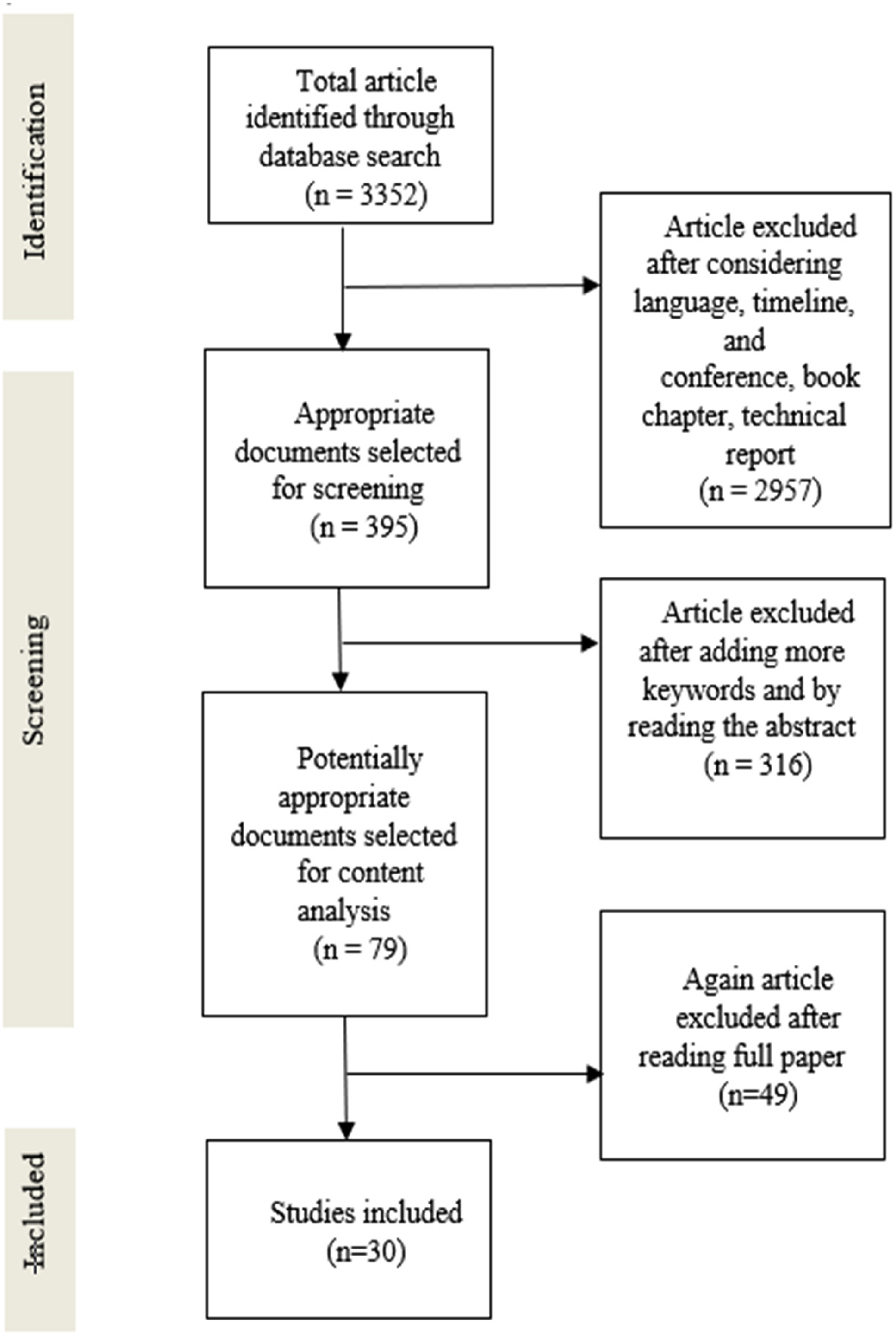
PRISMA flowchart depicting the research article selection process.
The primary focus was on peer-reviewed journal articles published within the timeframe of 2014 to 2024, specifically addressing themes such as safety boots, ergonomics, IoT, AI, material innovation, and their application in the construction industry. Keyword combinations such as “safety boots,” “ergonomics,” “IoT,” “AI,” and “construction industry” were used to refine the search. The scope was extended to include related fields such as firefighting gear and footwear design to capture interdisciplinary insights.
From a total of 3352 articles, an initial screening was done based on titles and relevance. Based on the PRISMA approach, 30 publications were chosen for this study after a thorough review of abstracts, introductions, keywords, and timings.
Inclusion Criteria:
Peer-reviewed journal articles published between 2014 and 2024. Studies focusing on ergonomics, technology integration, and material science related to safety boots. Articles related to the construction industry, and closely associated sectors like firefighting. Literature that includes keywords such as “boots,” “safety boots,” “ergonomics,” “construction,” “materials,” “IoT,” and “AI.
Exclusion Criteria:
Non-peer-reviewed publications, blog posts, or news articles. Papers unrelated to the design, function, or technological enhancement of safety footwear. Studies not in English or published outside the specified date range. Duplicate publications or review articles without primary data or novel contributions.
Each selected study was carefully analyzed for its contribution to the current understanding of ergonomic and technological factors in safety boot design. The synthesized insights from these works informed the development of the study's conclusions.
Results of the literature review on influence of ergonomics and technological advancements in safety boots for the construction industry
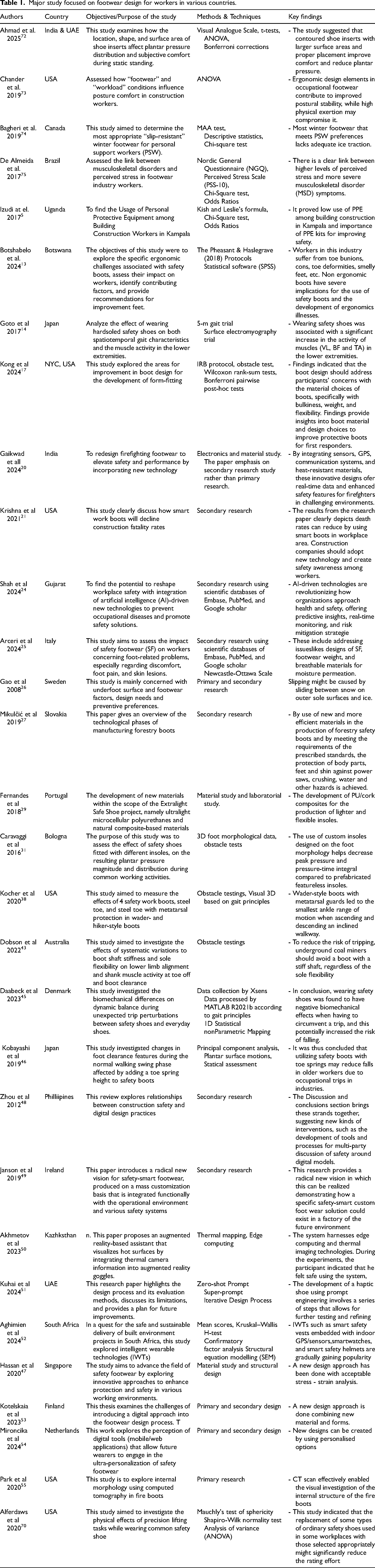
The construction industry is one of the largest and fastest-growing sectors globally. Infrastructure plays a vital role in a country's development and economic growth. This industry is continually evolving due to the integration of emerging technologies, changing budgets, evolving requirements, and ongoing advancements. Despite its importance, construction remains one of the most complex and time-consuming industries, with its challenges increasing day by day. The current systematic literature is summarized in Table 1, presenting key findings from various countries based on research methods and outcomes related to both footwear and the construction domain. Studies in construction management focusing on project success, Environmental Health and Safety (EHS), and Critical Success Factors (CSFs) play a significant role in enhancing project effectiveness and outcomes. Various factors contribute to the successful development and execution of a construction project. Key elements include communication systems, material management, plant and machinery management, planning processes, EHS control mechanisms, feedback systems, organizational structure, quality assurance and control, and human resource management. While some of these variables are critical to project success, others may have a relatively negligible impact. 22 EHS play a major role in the construction industry. Many companies have made the EHS department an integral part of the company. It is the companies’ responsibility to provide its workers a safe and healthy environment for working. They should make sure that no worker will suffer from any industrial diseases or accidents. Workers are subjected to lot of physical problem like slippery floor, fluctuating temperatures etc, chemical problems like smell of solvents, dust, cement, airborne particles etc, biological problems like age, height, strength, behavioural or psychological problems like anger management, overconfidence, education etc, mechanical problems like heavy tools, slips, crushing, cuts, falls etc, ergonomic problems like awkward postures, overexertion, wrong handling of tools, over straining etc that can cause major problems like death, temporary or permanent losses, wounds, cuts, industrial diseases, traumas etc. Improper safety equipment, safety attitude, safety management, safety training can also cause the above problems too. Providing proper education, training and personnel protective equipment or PPE can reduce the possibilities of such accidents. PPE kit includes eye and face protection like goggles, or face shields, foot protection like safety shoes, boots etc, hand protection like gloves etc, shoulder protection, head protection like hard hats, helmets etc, body harness, rope, tools and hearing protection like ear-plugs, earmuffs etc and respiratory masks. 23 Over the years, significant advancements have been made in various components of PPE, but limited research has been conducted specifically on safety boots or shoes. Boots are a crucial part of the PPE kit, as they are the only piece of equipment in direct contact with the ground. The design of a safety boot can greatly influence the biomechanical factors of foot balance and even the wearer's walking posture. According to one study, approximately 60% of women and 45% of men report discomfort while wearing their safety boots. 24 If safety boots are improperly fitted or ergonomically unfit, they can significantly affect performance. The design of the boots not only impacts balance but can also lead to direct injuries, reduced productivity, falls, slips, blisters, and foot pain disorders like Musculoskeletal Disorders (MSDs). MSDs affect the muscles, bones, ligaments, and tendons that support the limbs, and any damage to this system can result in permanent disorders. A study conducted in Nigeria revealed that 84.8% of participants experienced ankle pain, while 34.8% reported lower back pain, 34.8% suffered from neck pain, and 49.6% experienced hip pain due to prolonged use of non-ergonomic safety footwear. 25 Additionally, many workers report that boots are often heavy, bulky, inflexible, and exhausting to wear, contributing to the above issues. There are primarily two types of boots used in such environments: rubber boots and tactical boots. Rubber boots are typically made from layers of vulcanized rubber and copolymers, while tactical boots are made from leather or other materials, excluding copolymers. Both types of boots are equipped with laces or zippers (in the case of tactical boots) to ensure a secure fit, while rubber boots often use toggles. Both boot types are designed to provide protection against hazardous materials, chemicals, and biological or radiological threats. 17
Major study focused on footwear design for workers in various countries.
Designing a safety boot is a meticulous and precise task. Despite comparing various safety boots in the USA, scientists have found that workers still experience discomfort and pain. Issues such as excessive sweating, heaviness, and heat are the primary causes of discomfort, particularly in the toe cap region, toes, and metatarsal areas. Studies show that 30.2% of workers suffer from dry skin, 28% from hard nails, and 30% from calluses, among other issues. 24 Therefore, designing a safety boot requires extensive research and attention to detail. Several factors impact the design of a safety boot, including support, protection, stability, structure, ease of use, and comfort. The materials used, terrain, work environment, usage duration, and physical conditions like temperature all play a significant role in the durability of the boot. Terrain is especially crucial, as boots need to be suitable for the specific environment. For instance, anti-slip materials and thermal insulation are vital for boots designed for icy or snowy work sites. 26 A safety shoe or boot should be resistant to chemicals, mechanical shocks, and slipping. Additionally, the boots should provide good shock absorption, water resistance, and thermal insulation. Shock-absorbing materials can be incorporated into the heel or inner sole for better comfort and protection. Materials like Sympatex can be used to make the boot water-resistant. This membrane ensures waterproofing due to its hydrophilic structure, repelling external water while allowing water vapor inside the boot to escape, keeping it dry. 27 Using multi layered and sophisticated material like steel, processed leather, non-woven textiles, waterproof membrane, fabrics etc, highly developed technologies and manufacturing process, the use of ergonomics can increase the effectiveness of the boot. Use of bovine leather as an outer material has many advantages like hydrophobicity, liquid resistance, and abrasion resistance. But the bovine leather is not sustain-able as it can contribute to global warming, water pollution and water. Materials like Cordura can also be used near the upper part of the boot or around the angle. This material is recycled from polyester and polyamide and are water resistant, abrasion resistant and tough. They are also highly breathable. Apart from safety layers and membranes, fabrics play a major role in providing comfort. Aramid fibres are an example for it. 24 They have good heat resistance and strength. Apart from this they are soft and comfortable to wear because of their low molecular weight. They are also made from polyamide and Kevlar is an example for this. 28 They are extremely chemical resistant and are of high quality. Metallic guards are also used for the protection of the toe and metatarsal region from crushing. Steel, aluminium, nylon meshes can be used for this. Adding ultramolecular polyurethane and cork composite can also provide a comfortable innersole. It also plays a major role in shock absorption too. 29 The above said membranes and layers can be layered one above the other for effective cover. Apart from these materials, GORE-TEX, Vibram (highly water resistant, durable and breathable) etc can be used to make the outer or the sole part which will also reduce the mass of the boot. 30 Even providing soles made of Ethylene Vinyl Acetate can increase the support and comfort of the shoe. It is highly known for its shock absorption, cushioning and abrasion resistance. 31 The performance and comfort of protective footwear can be significantly enhanced through the integration of multi-layered, high-performance materials and advanced manufacturing technologies. Bovine leather, commonly used as an outer layer, offers properties such as hydrophobicity, liquid resistance, and abrasion resistance. However, its environmental impact—including contributions to global warming and water pollution—renders it less sustainable. In contrast, Cordura, a high-tenacity nylon fabric derived from recycled polyester and polyamide, presents a more sustainable option with high abrasion resistance and mechanical toughness, especially when applied to high-stress areas such as the ankle. Nevertheless, empirical evaluations reveal that Cordura demonstrates limited water vapor permeability and fails under extreme abrasion scenarios. 32 For inner membrane layers, Sympatex, a non-porous, hydrophilic membrane, provides superior waterproofing capabilities (water column > 45,000 mm) and high moisture vapor transmission rates (MVTR > 2500 g/m2/24 h), which are essential for thermal and moisture regulation during prolonged use.33,34,35 Aramid fibers, such as Kevlar, further contribute to thermal stability and structural integrity, while offering wear comfort due to their low molecular weight and soft texture. Toe and metatarsal protection is achieved through the inclusion of metallic reinforcements made from materials such as steel, aluminum, or reinforced nylon mesh. For the insole, the application of ultramolecular polyurethane and cork composites provides effective shock absorption and long-term comfort. Outsole materials such as Vibram and Ethylene Vinyl Acetate (EVA) enhance durability, cushioning, and load-bearing capacity while minimizing weight. EVA, in particular, exhibits excellent impact absorption and abrasion resistance, which is crucial for occupational and outdoor performance applications. 36 A strategic combination of these materials within a multilayered architecture ensures optimal functionality, environmental sustainability, and user comfort in high-performance footwear.
Other than material, ergonomics plays a major role in the design. When a person walks, the whole-body weight is transferred to the ground through the lower limb. If the energy transfers or path of the transfer is not right, there is a high chance of having excess strain on the supporting anatomical structure. This could affect the equilibrium of the body and internal structures. Even by introducing toe and metatarsal caps, care should be given to reserve appropriate down clearance for the feet. The skin can suffer from wear and tear if enough down clearance is not given especially while climbing stairs or getting down the stairs.13,37,38 Care should be given while designing the angle of the innersole from the ground, the hole for inserting the feet etc. Kinetics, kinematics, and electromyography are to be thoroughly tested before designing it. All these issues come under the ergonomics and anthropometry. Research has been done to study the walking style of people in bare foot, slippers, and military boots to know more about the influence of ergonomics in walking.
The efficiency of kinematic energy production from human steps remains a contentious issue, especially in light of recent advancements in wearable technology. While human locomotion can theoretically generate significant energy—studies estimate up to 34 watts from the knee joint alone—practical implementation through wearable devices faces challenges such as low-frequency motion, user comfort constraints, and energy conversion inefficiencies. Technologies like triboelectric nanogenerators (TENGs), piezoelectric energy harvesters (PEHs), and electromagnetic systems have shown promise, yet their real-world power outputs are modest, often ranging from milliwatts to a few watts under optimal conditions.39–42 Additionally, storage and conversion systems further dilute the harvested energy, limiting its immediate applicability for powering consumer electronics. Therefore, while the concept is technologically feasible, the current efficiency levels justify questioning the viability of widespread energy harvesting from human steps using wearables.
Different factors affect the ergonomics of a shoe. Shaft of a boot plays a major role in protection of a person's shank, ankle and foot. Restriction of the movement in these regions can alter the walking pattern, ground clearance and comfort. 43 Famous companies like Nike, Rebook have a shaft height of 12 cm to 15.5 cm. This height is comparatively shorter than most of the other boots. But studies show that using shorter or optimal shaft height could increase mobility and comfort. Moreover, using an optimum shaft stiffness can protect the leg from sprains and wounds. Shaft stiffness depends on the material and thickness of the inner lining. Further, the more the shaft height, the more the weight. A boot with 18.5 cm of boot height can weigh up to 0.9 kg. Weight of the boot, mostly, varies between 1 kg to 4 kg. Hence, wearing boots of higher weight can cause high pressure above the metatarsal area and high plantar pressure. It also affects sole flexibility and oxygen consumption. This can cause pain in knee, hip joints, and MSDs. So, height of the boot shaft, stiffness and mass can play a close relation with MS Disorders. Sole flexibility is the next factor. It depends solemnly on the material and texture. According to study, using a very flexible sole could increase the mass and reduce the toe clearance. Using a stiffer sole decreases the weight and increases the toe clearance. But contrary to other research, the result is vice versa. So future study has to be done on this and on different terrain too. Flexible sole has lower oxygen consumption, good muscle, and ankle movement while, stiffer sole requires more metatarsal flexion and it produces more plantar pressure. 44 Anatomical measurements are the next factor. Close observation of foot morphology and measurements should be considered while designing. Biomechanical analyses confirmed that the dynamic balance was increasingly affected when wearing safety shoes compared with everyday shoes during and after unexpected trips. 45 Standard codes or books like “Indian Anthropometric dimensions for Ergonomic design” can be used for more precise design. Special care can be given while designing for arch types, toe box, ball of the foot and foot width. There are different arch types like flat foot, neutral foot etc. A built in– arch support system can help in distributing the pressure evenly. The toe box should be big enough for natural toe movement and toe clearances. Steel composite boxes can be used to protect the toes from crushing and falling objects. Adequate heel cushioning can be provided to increase the shock absorption and stability. Even adjusting and introducing toe springs can reduce the chances of falling of old construction workers. 46 Foot width can vary significantly, so it is essential to design shoes that accommodate narrow, standard, wide, and extra-wide foot shapes. Adjustable features such as zippers, laces, and straps can be added to enhance comfort. Additionally, incorporating removable insoles, anti-static properties, and moisture-wicking linings will further improve the overall comfort of the shoe. Achieving these features requires thorough research into foot morphology, anatomy, and ergonomics. Accurately obtaining the correct shape and size is crucial for ensuring the protection and comfort of workers. Researchers from Singapore developed a boot design to enhance protection and safety in various working environments. They provided a toe cum upper metatarsal cap to protect the leg. The Figure 2 and 3 depicts the design and the CAD drawing of the proposed design from the Singapore researchers. The mechanical structure was designed and tested using the Solidworks software. The simulation result showing the maximum yield and displacement of the mechanical support was favouring and above the standard. 47
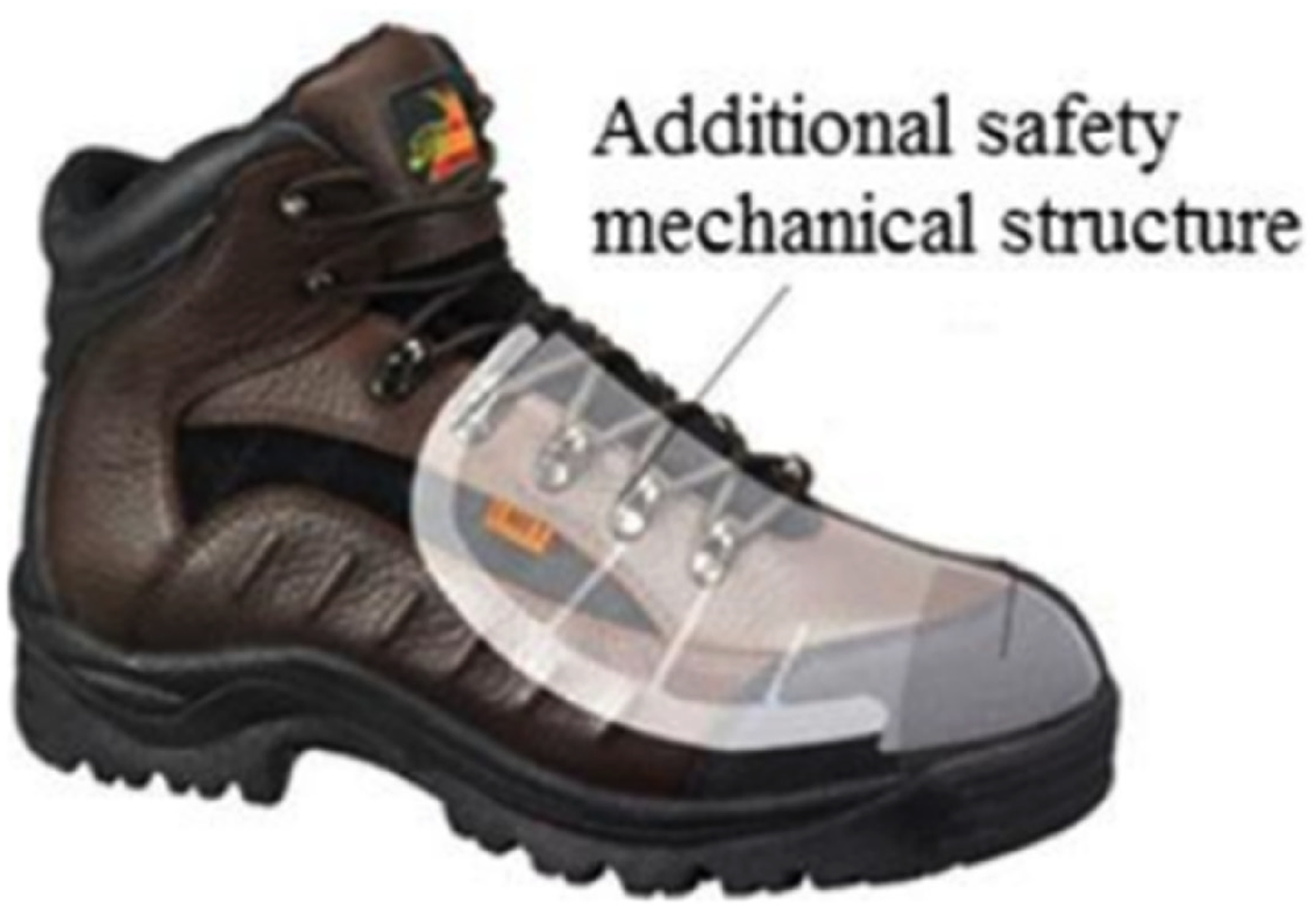
New design of safety boots from Singapore. 47
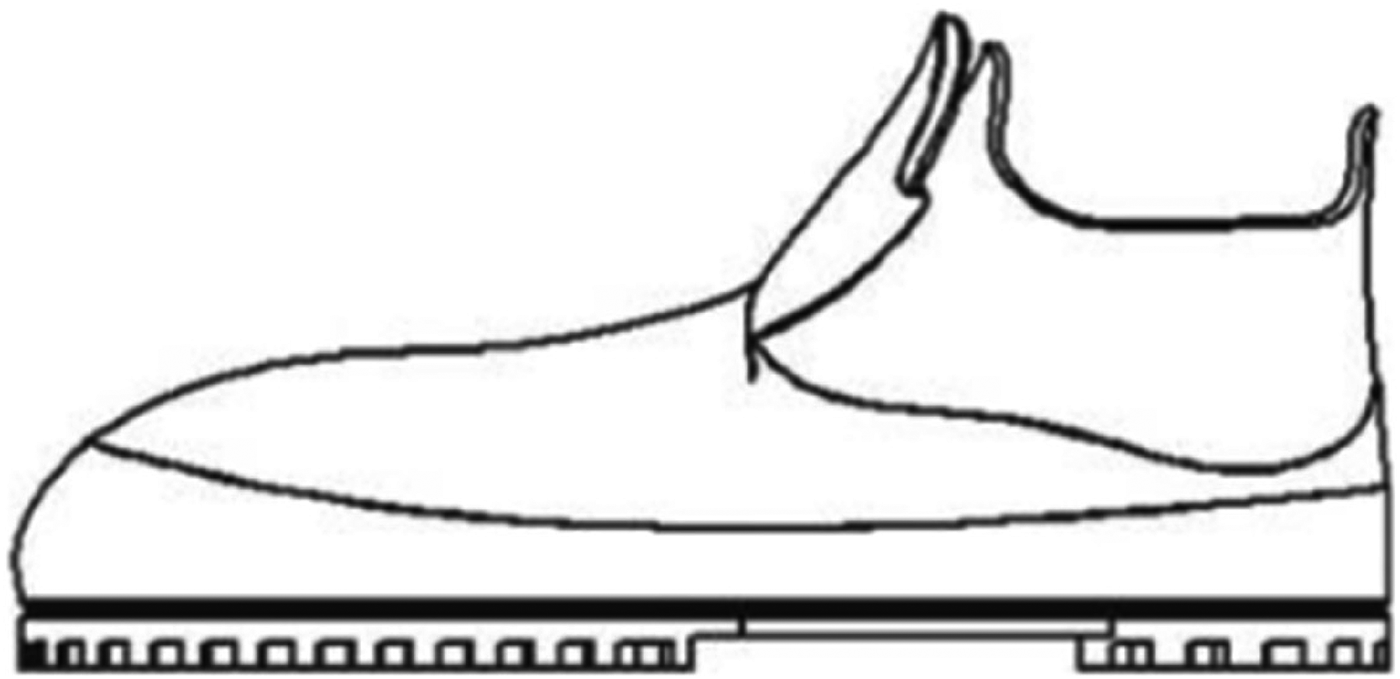
New design of safety boots from Singapore. 47
After ergonomics, usage of modern era technology plays a great role in the design of the boots. New technologies like sensors, chips, artificial intelligence can also be used for advancing the safety of the boots. We can add Global Positioning Systems (GPS), Internet of Things (IoT), biometric sensors, temperature sensors, chemical sensors etc on it. It helps to increase the awareness, safety, user friendliness and comfort. By using 4D CAD, GPS, radio frequency identification (RFID), Geographic information systems (GIS), we can easily improve construction safety, worker tracking, data tracking and transferring, visualisation etc. 48 The data availed through such methods, like temperature, weight, motion, kinematics, weather report etc, can increase the supervision and post incident analysis. Integrated temperature sensors could give real time temperature and extreme conditions. The pressure sensors can measure the pressure distribution around the foot and can easily detect all pressure points and plantar pressures. Acceleration sensors can be used to measure the force acting on the foot while walking, running, lifting objects etc. Biometric sensors can be used to check the vitality of a worker from anywhere. This includes heart rate, oxygen levels, blood pressures etc. Addition of GPS can give precise location and easy coordination. 20 Studies of using such methods in the boots of fire fighters are going on. Same features can be also used in construction sites too. Research has been done to produce electricity from kinetic energy produced by the workers while walking. This electricity production can be used for powering the sensors. Lights or reflective lights can be given in the boots to highlight the worker during night. The French company called Intellinum uses such features to provide hazardous conditions to the workers just by tapping the toe. Derivations of MORSE code are used in these systems. It is also equipped with led lights, buzzers and vibration motors for safe communication and alarm. If any incident happens, the worker can circulate the message regarding the injury to other workers without any effort. If any alert is not received by any worker, the details and location of the worker is sent to the supervisor. 49
Using generative AI like ChatGPT and generative designs, can be used while designing to produce multiple designs. Researchers are undergoing generative design in haptic boots. Haptic boots can alert the worker about upcoming obstacles, falling objects etc. It can also warn the workers about gas leaks, electrical surges, extreme temperature etc. 50 It can also measure the pressure, force, movement, fatigue etc. Apart from this many features like geo fencing, nocturnal flashlight functionality, wireless connectivity etc can be done using AI integration. 24 All design processes like design empathy, design refinement, design evaluation etc can be integrated with features like ChatGPT, generative design in fusion 360 etc.51,52 The Industrial revolution of 4.0 is going on. Software solutions with AI, AR, big data, cloud computing, and data analysis can push the manufacturing renaissance further advancements to reduce and neglect occupational and safety hazards. 24 It can help in analysing different materials and suggest the best combination for high comfort and protection. AI can also help in prototyping and testing of new designs and forecast the results too. Different additional safety features and mechanical features can be included in the safety shoes by analysing it on software like SolidWorks, blenders etc.47,53 The stress analysis, flow simulation, aerodynamics etc can be easily checked on SolidWorks for proper mechanisms. Generative design options in the software like Fusion 360 can be used for creating various designs of the same concepts. So it can also analyse data from manufacturing machines, quality control and identify potential errors in safety. New technologies like feet morphology using computer tomography, 3d scanners can be used for proper understanding of the anatomy and can be used to make the safety boots customised and personalised according to the needs of the wearer.54,55 Companies like Red Wing Shoe company use AI-driven Ultimate Fit Experience for customers across all 500 + retail stores. They believe that switching to AI can provide the most customizable, premium, and efficient retail experience in the category. Of course, manual, and conventional methods like interviews and camps are to be done for the same. AI softwares like Midjourney can be used for the whole design process including research, ideation and rendering. The integration of ChatGPT with this software can give a lot of suggestions regarding material selection, appearance and finish. Figure 4 shows the boot design made with Midjurney. The design process is quick and accurate but cant be used in all contexts. Figure 5 shows the AI driven Ultimate Fit Experience from Red Wing Shoe company. 53
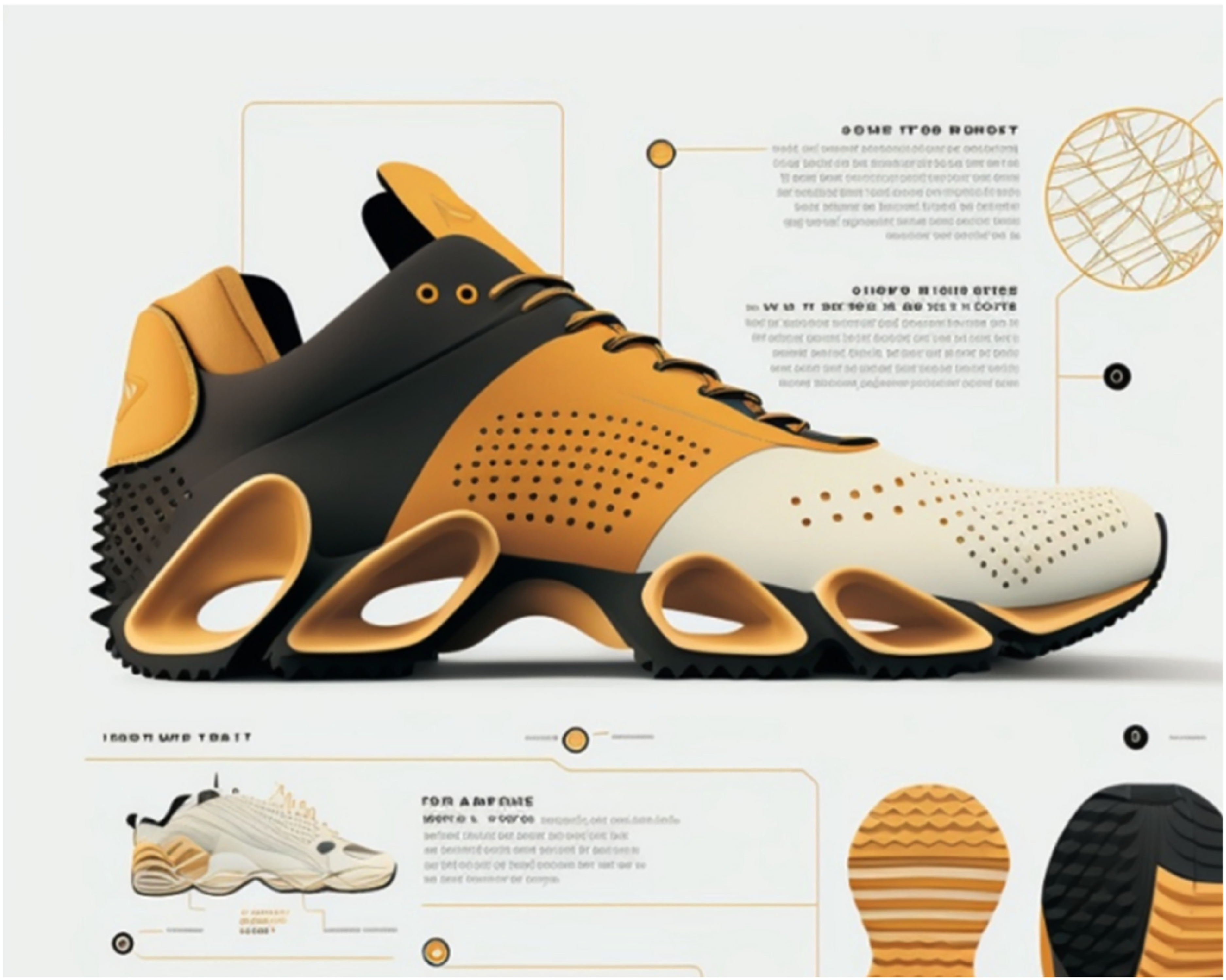
Design of safety boot done using Midjourney AI software by researchers from Finland. 53
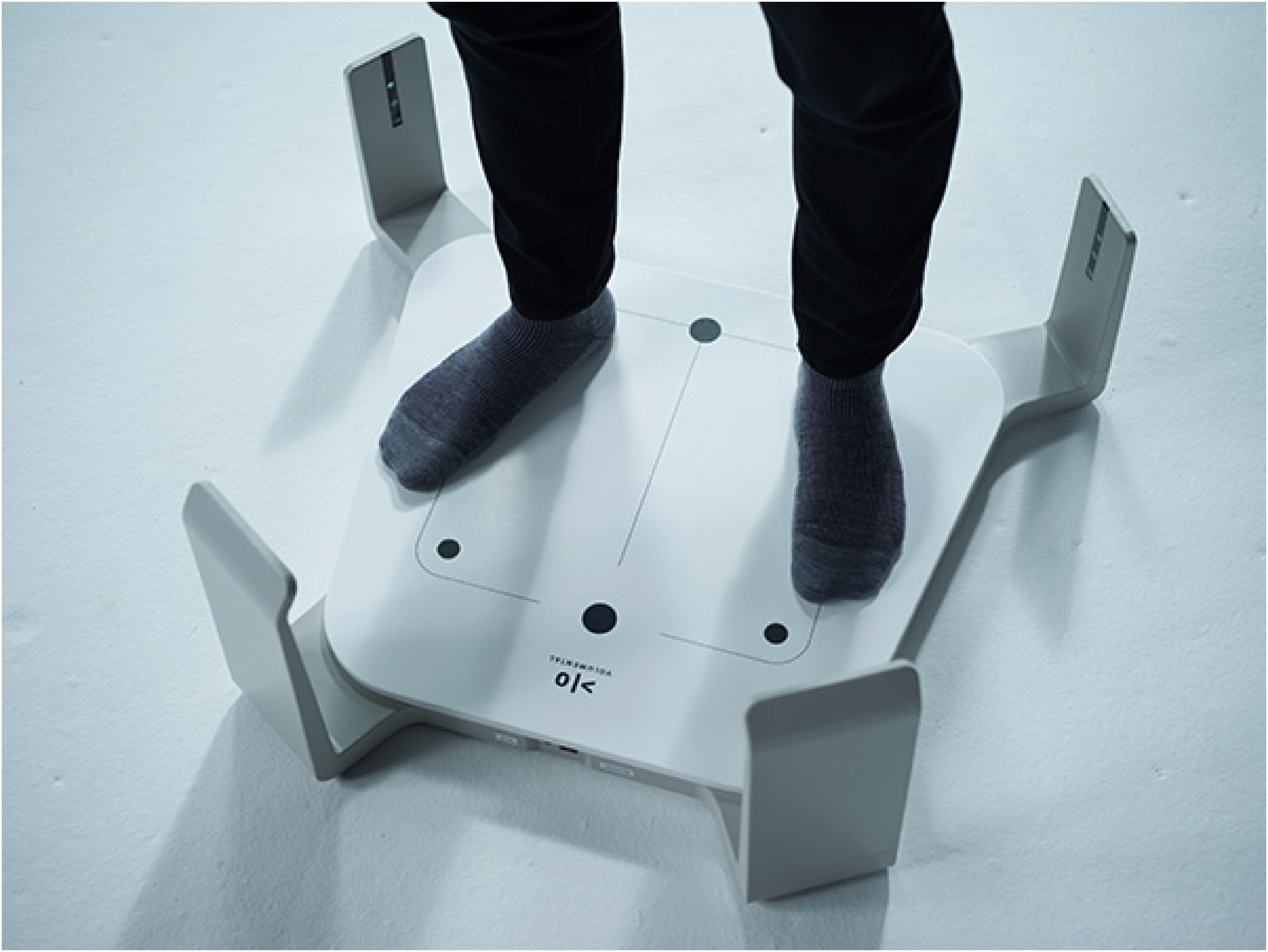
AI driven ultimate fit experience from red wing shoe company [https://www.redwingshoeco.com/blog-entries/the-fit-of-tomorrow-red-wing-shoes-launches-ultimate-fit-experience].
The factors affecting the comfort and safety of the boots in the construction and fire-fighting industry have been discussed above. Factors like ergonomics, anatomy, material, and new technology have been discussed in depth. Future research can also be done on various factors to make the boots lighter, safer, and advanced.
Global validity of Indian anthropometric data
Indian anthropometric data is critical for understanding the physical dimensions of the Indian population, but it
Comparison of body dimensions
India: The average height for Indian men is 165 cm (5'5”), and for women, 152 cm (5'0”). 56 Indian feet tend to be shorter and broader with lower arches. The average foot length for Indian men is 25.9 cm, and for women, 24.5 cm. 57
Europe: Europeans generally have taller statues, with men averaging 175 cm (5'9”) and women 165 cm (5'5”). 58 Foot morphology in Europeans is characterized by longer, narrower feet with higher arches. The average foot length for European men is 27.1 cm, and for women, 25.5 cm. 59
Africa: African populations tend to have broader feet and lower arches, with foot length for men averaging 26.1 cm and for women, 25.4 cm. 60 The average height of African men is around 167 cm (5'6”) (Bodenhorn, 2009).
America: The U.S. population, being highly diverse, shows variation in anthropometric data. American men typically measure 177 cm (5'9”), and women 163 cm (5'4”). 61 American foot morphology varies based on ethnicity, but foot length averages 27.3 cm for men and 25.8 cm for women. 62
Asia: East Asian populations (e.g., Chinese and Japanese) show shorter statues with men averaging 170 cm (5'7”) and women 158 cm (5'2”). 63 Their feet tend to be narrower, with the average foot length for East Asian men at 25.5 cm. 64
Foot morphology comparison
Indian Feet: Shorter and broader with lower arches.
European Feet: Longer, narrower, with higher arches.
African Feet: Broader, with lower arches.
American Feet: Mixed characteristics based on ethnicity, with intermediate foot morphology.
Asian Feet: Narrower and slightly higher arches than Indian feet.
Risks in boot design
Boot design plays a vital role in occupational safety by influencing the prevention of injuries and the long-term health of workers. Statistical data helps quantify risks and identify potential failures, underscoring the importance of thoughtful design in mitigating safety footwear-related risks. 65 Research shows that foot pain prevalence among workers wearing safety footwear ranges from 42.3% to 60.8%, with common complaints related to discomfort in areas such as the toes, toecaps, and metatarsal–toe crease regions. 25 In addition to pain, skin conditions like irritant contact dermatitis, dry skin, calluses, corns, and blisters are prevalent, with irritant contact dermatitis affecting 97.9% of cases. 25 A study by Pereira-Barriga et al. 66 involving 321 Australian workers found that 91% reported foot problems attributed to their safety footwear. These issues included foot pain (49%), calluses (33%), excessive heat (65%), inflexible soles (52%), and pressure from steel toe caps (47%). These findings highlight the substantial impact of design elements on worker comfort and health. Furthermore, a study focusing on factory employees found that 62.5% experienced heel pain (plantar fasciitis), 50.83% reported radiating foot pain, and 47.5% experienced excessive heat or wet conditions. Additionally, 43.34% of employees reported that the intensity of pain caused by their safety footwear interfered with their work capacity. 67 These statistics emphasize the need for ergonomic and well-considered boot design to prevent discomfort and injuries. Design improvements should prioritize factors such as weight reduction, flexibility, breathability, and proper fit to enhance worker safety and overall well-being.
Deficiencies in current boot designs and proposed design specifications
Current boot designs face two main deficiencies: weight and flexibility. Boots made from heavy materials like leather or thick synthetics increase energy expenditure, causing fatigue and discomfort during prolonged use. 68 The excess weight also limits mobility, making physical activities more strenuous. Additionally, many traditional boots feature rigid soles that hinder foot movement, reducing comfort and increasing injury risk. This lack of flexibility becomes a concern when navigating uneven terrains where more adaptability is needed. The comparison between traditional and new boot design features is presented in Table 2.68,69
Comparing between traditional vs. new boot design features.

Proposed new design specifications
Lightweight composite materials
Incorporating lightweight composites like carbon fiber, thermoplastic polyurethane (TPU), and Kevlar can significantly reduce boot weight without sacrificing durability. Carbon fiber provides a strong, lightweight support structure, while TPU and Kevlar improve flexibility and abrasion resistance, enhancing comfort and reducing fatigue.
Dynamic sole
A dynamic sole adapts to the natural motion of the foot and varying terrains. Incorporating viscoelastic polymers for cushioning and flexible segments for foot articulation will provide better shock absorption and support. The use of adaptive tread patterns improves grip and stability.
Discussion of research findings
The research findings are summarized as: RQ 1. What factors can be enhanced to make the boots more comfortable?
Research indicates that approximately 60% of women and 45% of men find their safety boots uncomfortable. Several factors influence the comfort of safety footwear, and numerous studies have shown that discomfort in boots can lead to a decrease in both heart rate stability and overall productivity.70,71 The selection and type of safety boots largely depend on the working environment, particularly the location and terrain. Most workers prefer boots that are suited to specific terrains and prioritize features such as lightweight construction and breathable materials. For example, terrains like icy or snowy worksites require boots with anti-slip soles and effective thermal insulation. The comfort of safety boots is influenced by materials, design, ergonomics, and the integration of modern technologies. Generally, there are two main types of safety boots: rubber boots made from vulcanized rubber and tactile boots made from materials such as leather and copolymers. These boots are typically constructed from multiple layers of different materials. The use of advanced materials like Sympatex, bovine leather, and Cordura can enhance water resistance, toughness, lightness, and breathability. Inner layers and outer soles made from materials such as aramids, polyamide, Kevlar, GORE-TEX, and Vibram can significantly reduce the overall mass while improving durability and comfort. Additionally, the use of Ethylene Vinyl Acetate (EVA) in soles enhances cushioning and support. Components like stainless steel, aluminum, and nylon meshes are often used in toe caps and metatarsal guards for added protection. Anatomy, ergonomics, and foot morphology must be thoroughly studied to develop an optimal design. Factors such as shaft length and thickness, boot mass, flexibility, and cushioning thickness all directly impact the functionality, comfort, and safety of the footwear. Scientific principles such as kinetics, kinematics, and statics also play a vital role in design optimization. Reference materials such as Indian anthropometric dimensions for ergonomic design provide essential data for accurate sizing and shaping.
Foot-specific factors—such as arch type, toe box design, ball of the foot, and foot width—also greatly affect comfort. Adjustments like toe springs can help reduce the risk of falls, particularly among older construction workers. Furthermore, features like zippers, laces, and adjustable straps can enhance both fit and comfort.
In summary, the comfort and functionality of safety boots are significantly shaped by the choice of materials and attention to ergonomic design. The integration of modern technologies, including sensors and the Internet of Things (IoT), can further improve the performance and comfort of safety footwear. By considering these factors, it is possible to create boots that offer both safety and a high level of user comfort. RQ 2. How advanced technologies like Artificial Intelligence can be added to safety boots?
In the era of Industrial Revolution 4.0, technologies such as body sensors, artificial intelligence (AI), modern materials, advanced manufacturing processes, and the Internet of Things (IoT) are playing a pivotal role in enhancing worker safety. Safety boots can now be embedded with a variety of sensors to monitor parameters like temperature, biometrics, weather conditions, chemical exposure, weight, kinematics, acceleration, and pressure. These sensors collect real-time data related to the worker's health and environment, enabling proactive safety measures.
Technologies such as 4D CAD, GPS, Radio Frequency Identification (RFID), and Geographic Information Systems (GIS) are being used to improve construction safety, monitor worker locations, and facilitate seamless data tracking and communication. The data collected can be analyzed to issue timely warnings, preventing accidents and enhancing situational awareness on-site.
With GPS integration, supervisors can monitor the exact location of workers, increasing both safety and accountability. Additionally, energy to power these smart features can be harvested from the worker's kinetic movements and converted into electricity. A French company, Intellinum, has implemented such technology to power on-boot LEDs, buzzers, and vibrators. These features allow messages and alerts to be conveyed to workers in real time. In emergency situations, workers can also signal each other by tapping their toes, using simplified derivatives of Morse code for communication. AI-powered generative design tools and platforms like ChatGPT are being utilized to innovate and optimize safety boot designs. Design and mechanical features can be modeled and analyzed using engineering software such as SolidWorks, ensuring durability and enhanced safety. AI can also support different stages of the design process, including design empathy, refinement, and evaluation, helping engineers select the best possible design based on performance metrics.
Furthermore, the integration of AI, augmented reality (AR), and data analytics enables more effective material selection, prototyping, qualitative assessments, and forecasting of wear, damage, and failure. Research is also underway into the application of haptic technology in safety boots, which could allow boots to warn workers about potential hazards like nearby obstacles, gas leaks, extreme temperatures, and dangerous terrain.
By integrating AI, smart sensors, advanced design tools, and haptic feedback, safety boots are evolving into intelligent, responsive safety gear. These innovations not only improve protection and comfort but also provide personalized solutions tailored to the specific needs of each worker, ultimately leading to a safer and more efficient work environment.
Identified research gap & further opportunity
Previous studies have identified key criteria for safety boots, including support, protection, stability, structure, ergonomics, and comfort. Ongoing research focuses on integrating new materials, ergonomics, and technologies into safety boots. However, several questions remain unanswered. The relationship between shaft height, flexibility, and boot mass has yet to be thoroughly explored to reach a definitive conclusion. Research on reducing boot weight without compromising safety or comfort remains limited. There is also a need to develop materials for the outer membrane and soles to decrease the overall weight. Further investigation is required on foot arch, pressure points, and shock absorption. The application of haptic technology and artificial intelligence in real-world scenarios is still in its infancy, with minimal use of AI in safety boot manufacturing. The potential for AI in generative design and the manufacturing process remains largely unexplored, and research on safety boots in construction sites is still limited. Looking ahead, the development of smart safety boots for construction workers holds significant potential. There is a need to explore methods for implementing AI and sensors on construction sites. Additionally, safety boots that are customizable for individual workers’ ergonomics, along with new materials, could be introduced. Innovative applications of AI in safety boot design should be further explored. Therefore, future research could focus on advanced smart boots, generative design, and materials. While this study primarily targets construction industry workers, there is ample opportunity for further exploration in fields such as the military and fire industries.
Innovative contribution and practical implication of the study
This study pioneers the integration of ergonomics, advanced materials, and cutting-edge technologies such as AI, sensors, and haptic systems to transform safety boot design in the construction industry. Focusing on user-centered and anthropometric principles, it promotes smart, customizable, and lightweight boots tailored to individual workers and diverse work environments. AI-driven generative design enables precise foot morphology scanning, ensuring a perfect fit that enhances comfort and reduces injury risks. Real-time health monitoring and predictive safety alerts, facilitated by embedded sensors and haptic feedback, offer proactive protection, especially useful when workers’ vision is obstructed while carrying loads. The incorporation of mechanical guards provides robust impact protection from falling objects, while breathable, slip-resistant materials maintain hygiene and safety. Additionally, durable yet lightweight sole materials improve overall boot performance without compromising comfort. This research delivers practical insights for manufacturers to develop intelligent safety boots that boost worker safety, comfort, and productivity. It also supports policymakers in establishing future PPE standards for high-risk industries. Beyond construction, these innovations have the potential to enhance safety and well-being in sectors like firefighting, mining, and defense, ultimately contributing to safer workplaces and reduced injury rates across hazardous occupations.
Study limitation
Study limitations refer to factors that may affect the accuracy and applicability of research findings. These include a small or unrepresentative sample size, time constraints, and sampling bias, which can limit the generalizability of the results. Measurement errors or inaccuracies in data collection tools can also impact the reliability of the findings. External variables or uncontrolled factors may influence outcomes, and a lack of long-term data might prevent understanding of lasting effects. Additionally, researcher bias, ethical constraints, and limited resources (such as budget or equipment) can further constrain the study's scope and conclusions. The current study is limited to investigating comfort footwear design variables specifically for construction industry workers.
Conclusion
Various researches have been conducted to prove how heart rate and productivity decrease with a reduction in the comfort of boots. Ultimately, this study underscores the significant importance of materials, ergonomics, and new technologies in designing comfortable all-weather safety shoes. Special care must be taken for support, protection, stability, structure, ergonomics, and comfort while designing. New materials like Sympatex, Cordura, and aramids can be used for making the membranes of safety boots. These materials are lightweight, abrasion-resistant, and water-resistant. Metallic meshes are provided for protecting the toes and metatarsal area. A precise study must be conducted before finalizing the dimensions of the shaft, width, and sole height of the boots. It is particularly interesting to observe how changing the shaft height can alter walking patterns and comfort. By using foot morphology and ergonomic principles, more user-friendly boots can be manufactured.
Using modern technologies like sensors in boots can enhance the user experience for workers. It becomes easier to coordinate and collect data for analysis. Alert messages can be transmitted to workers effortlessly. AI can be utilized in the design process, manufacturing, and generative design. Technologically advanced boots with haptic technology can improve both comfort and safety for workers. Various methods of using AI in generative design and manufacturing processes remain largely unexplored. It has also been observed that only a few studies have been conducted on safety boots used in construction sites. Designing a smart safety boot for construction workers holds great potential. Methods for implementing AI and sensors in real-world applications must also be developed. By better understanding the relationship between product design and safety, manufacturers can create boots that not only meet regulatory standards but also exceed worker expectations, thereby fostering a safer and more productive work environment.
Footnotes
Acknowledgements
The authors have no acknowledgments.
Ethical approval
Not applicable.
Informed consent
Not applicable.
Funding
The authors received no financial support for the research, authorship, and/or publication of this article.
Declaration of conflicting interests
The authors declared no potential conflicts of interest with respect to the research, authorship, and/or publication of this article.
