







Abstract
Background
Climate change has been identified as the biggest threat to global public health. 1 Despite the clear connection between negative health outcomes and anthropogenic climate change, there are few guidelines for curricular inclusion within healthcare education, including occupational therapy (OT). However, the World Federation of Occupational Therapists has emphasized the importance of sustainability, 2 and the American Occupational Therapy Association published a policy asserting the profession's commitment to addressing these topics. 3
Objective
This study explored the perspectives of OT educators in the United States on the relevance, importance, and feasibility of integrating climate change and environmental sustainability into OT education programs.
Methods
An online Qualtrics survey was distributed, with 64 respondents across the United States. Descriptive and inferential statistics were conducted to determine relationships between respondent responses to question pairs. Qualitative responses underwent thematic analysis.
Results
Most educators acknowledged the relevance and importance of addressing climate change and environmental sustainability. Several barriers hindered implementation, including an already overloaded curriculum with a lack of explicitly related Accreditation Council for Occupational Therapy standards, limited time, a lack of awareness of how climate change and environmental sustainability fit into OT programs, and skepticism about climate change as relevant to OT practice.
Conclusions
The findings indicate varied perspectives among US-based OT faculty. They suggest a need for educational resources that link climate change and environmental sustainability to health, occupation and other core tenets of OT and offer strategies for integrating this content into OT education.
Keywords
Background
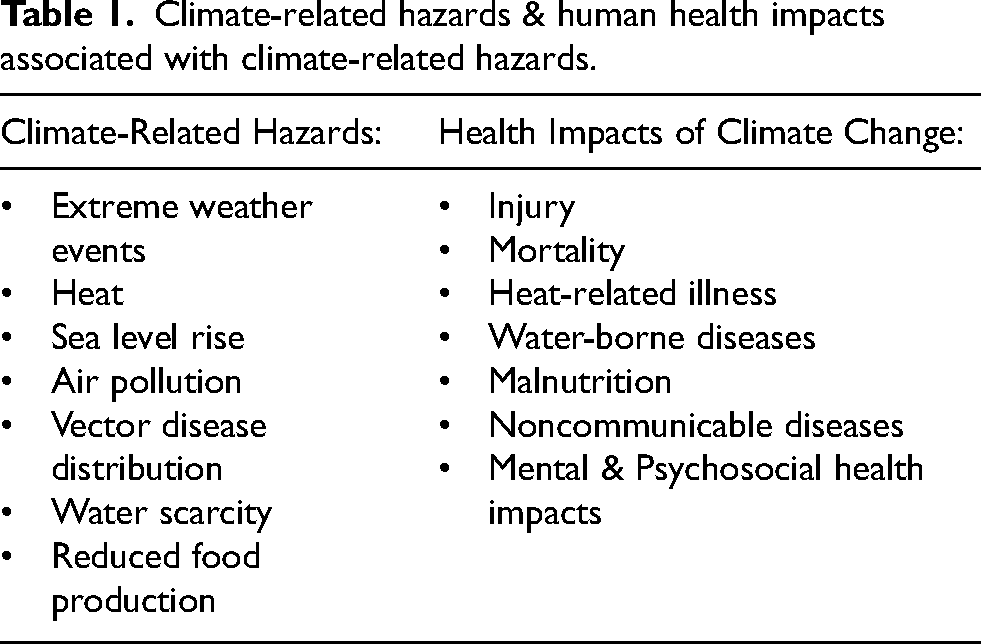
For decades, scientists and public health officials have warned that human-caused climate change (CC) and associated extreme weather events are among the greatest threats to global human health in the twenty-first century.1,4,5 The many direct and indirect health impacts of CC are well established.5–11 Extreme heat events are associated with heat-related illnesses, injuries and falls, respiratory disease, cardiovascular disease, neurological conditions, chronic kidney disease, infectious and parasitic disease, and impacts on mental health and wellbeing.8,10 Other climate-related weather events, such as hurricanes, droughts, and floods, are associated with mortality, adverse mental health outcomes (distress, anxiety, depression), and adverse nutritional outcomes due to crop impacts and food insecurity. 10 Social determinants of health such as neighborhood, housing, education and employment intersect with susceptibility to health impacts of CC. Table 1 summarizes climate-related hazards and human health impacts associated with CC.
Climate-related hazards & human health impacts associated with climate-related hazards.
Despite overwhelming evidence of human-caused CC and its pressing near-term and lasting dangers and disruptions, health systems have been slow to respond to this crisis. Americans remain poorly prepared to survive, much less thrive, in a climate-changed era. Government, business, and health sectors have been slow to act, and continued investment in fossil fuels, along with retrenchment of environmental protection policies, are escalating human health risks
Current efforts in health professions education
Significant literature is emerging on CC and environmental sustainability (ES) curricula in medical and interprofessional health professions education.15–18 Developments in health professions education literature reflect a growing recognition of the need to prepare professionals to anticipate, assess and respond to the health impacts of CC.16,18 Two general educational frameworks on CC and health have gained traction in health professions education. The Global Consortium on Climate and Health Education (GCCHE) has developed and refined an influential framework for health professional education on CC and health; domains include knowledge and analytic skills, collaboration and communication, policy, public health practice, and clinical practice. 18 These are updated periodically, in recognition of a changing and growing field. An international consensus statement 19 on “Planetary Health and Education for Sustainable Healthcare” offers definitions and a framework for addressing the relationship between planetary sustainability and human health in health professions education. The University of Minnesota has reconfigured its nursing curriculum according to the Planetary Health Education Framework by creating “crosswalks” between planetary health concepts and nursing accreditation requirements. 20
Interprofessional education (IPE) is a growing field of educational research, and interprofessional educational experiences are mandated by most health professional educational accrediting bodies. However, interdisciplinary education on CC and sustainability is in its early stages. A scoping review on interdisciplinary team collaboration education 21 found that fewer than 15% of 111 articles addressed interdisciplinary collaboration on CC health impacts. Commentaries in mainstream medical journals have called for educating health professionals “in all disciplines, at all levels of training” 16 (p12) on climate-responsive care. Indeed a few institutions have sought to do so. Columbia University's Department of Environmental Health Sciences has treated patients affected by climate-related environmental hazards since 200822–24 and has developed comprehensive online continuing educational programs for health professionals, including courses tailored for professionals in various regions of the Global South. Colorado School of Medicine offers fellowship programs with individual electives and lecture series22,25, 26 ; and Harvard University has integrated climate and health training into its residency curriculum.22,27 Interprofessional colleagues at Duke University created a hybrid pilot IPE course on climate and health 28 and a freely available Coursera course, “Climate and Health for Health Professions.”
Part of the push for medical and interprofessional education on CC and health has been a call to address sustainability of healthcare practices and systems themselves. It is well established that US healthcare systems contribute around 8 percent of the greenhouse gases emitted annually in the US. 25 80% of this occurs through the supply chain, thus suggesting potential efficiencies to reduce both Greenhouse gas (GHG) emissions and waste. A participatory action research study in the UK demonstrated the feasibility and acceptability of several different strategies to integrate material on sustainability of healthcare practice throughout medical educational courses. 29 Building on healthcare's emphasis on self-awareness with reflection, Huss et al. 30 used humanistic principles to help health professional students connect environmental experiences with community impacts and become clinical change agents in their respective settings.
Educators, clinicians and researchers are actively developing and sharing educational resources and approaches to climate and sustainability education for health professions. Few of these have been researched extensively, and best practices are yet to be established. 31 Within this evolving landscape of health professions education, occupational therapy (OT) holds an important position. It is well established that CC is a phenomenon caused by human systems and activity. As a health profession that emphasizes a holistic, client-centered approach to health and wellbeing, OT is particularly well-suited to address the health and wellbeing impacts of CC; the need to mitigate, adapt, and build resilience to CC through occupational transitions at individual, group, system and population levels; and the need to transition to more environmentally sustainable OT practices. These complementary opportunities are reflected in emergent efforts by OT educators and practitioners, as detailed in the following section.
Current efforts in OT education
Efforts to address CC and sustainability in OT research and practice have emerged in the last decade,32–34 accompanied by whitepapers such as the World Federation of Occupational Therapy's (WFOT) Sustainability Matters. 35 Numerous published calls for action have urged occupational therapists to engage collectively in climate action,36, 37 and promote and engage in environmentally sustainable practices in the context of a changing climate. 38 Occupational science and OT scholars have developed guiding concepts for transformative change in the OT field such as ecopation, 39 occupational ecology, 40 intergenerational occupational justice, 14 and environmentally-informed OT.41,42
Responding to these developments, an emerging literature provides guidance on integrating climate and sustainability themes into OT education. Hess and Rihtman 32 identify three core components for doing so: reconceptualizing practice through sustainability, balancing environmental considerations and client-centered care, and fostering interprofessional collaboration. Recent publications promote integrating planetary health in OT education through the “doing” framework, i.e., transferring skills from education into lifestyle habits and interdisciplinary team roles.21,32 Tyminski and colleagues 43 offer a novel meta-curriculum for OT, designed to prepare therapists to address contemporary and novel challenges, including CC, which may impact health and wellbeing in unanticipated ways. Meta-curricular themes include population health, life-long learning, advocacy, interprofessional collaboration, evidence and translational science generation, diversity and inclusion, psychosocial factor impact, aging, wellbeing, preventative care, informatics, and contemporary issues. In the last five years, literature has linked these themes with sustainability and CC in OT education.30,32,34,41,43
Professional associations are also active in promoting integration of sustainability and CC concepts into OT education. In 2016, WFOT published Minimum Standards for the Education of Occupational Therapists, asserting that collaboration “in the mitigation of the negative effects of CC and other environmental challenges” is an essential standard for OT education programs. 44 (p33) The American Occupational Therapy Association (AOTA) adopted a policy in 2022 (Policy E.16) demonstrating commitment to addressing climate change and promoting environmental sustainability through practice, research and education. 3 Despite this support from national and international OT professional associations, curricular inclusion of climate change and environmental sustainability topics remains optional in entry-level OT programs in the United States. No Accreditation Council for Occupational Therapy (ACOTE) educational standards 45 specifically address CC and ES.
Objectives
As discussed above, OT is moving toward defining its role in addressing CC and ES, however, little is known about how and to what extent OT education programs in the United States are addressing these topics, or how they are viewed by faculty. Our study aims were as follows:
Identify and measure United States OT educators’ perceptions of the relevance, importance, and feasibility of including content on CC and ES in the degree program's curricula they are currently teaching in entry-level OT education programs. Explore how ACOTE-accredited and developing entry-level OT and OTA degree programs are currently addressing CC and ES, and what challenges faculty identify when doing so.
We anticipated diverse perspectives on the relevance, importance, and feasibility of climate concerns in OT.
Methods
Study design
The current study utilizes an exploratory-descriptive, mixed methods survey design. This design strategy was selected due to a lack of current peer-reviewed literature on the inclusion of CC and sustainability in OT education in the United States. For the mixed methods approach, opportunities to elaborate on each question were included to provide additional context for the quantitative data. This study was approved by the University of New Mexico Human Research Protections Office, study #24-079.
Research team positionality
All members of the team, with the exception of research assistants (CM, SM) are members of Occupational Therapists for Environmental Action. The PI, Audi Santos, is a nonbinary multiracial light-skinned BIPOC OT educator, residing in the Southwest region of the United States in a minority-majority state. Denise Nepveux is a white, cisgender female OT educator who resides in the Southeastern United States. Elizabeth Richardson is a white, cisgender female OT educator residing in the Mid-Atlantic region of the U.S. Tyler R. Hood is a cisgender, light-skinned male who resides in the mid-western region of the U.S. and is currently completing his third-year as an occupational therapy student. Research assistant, Cameron Murdock, is a white, cisgender female with a Bachelor’s degree, currently a Master of Occupational Therapy student residing in the Southwest U.S. Sina Mokhtar is an experienced data analyst who provided contributions to the quantitative data analysis provided in this paper and also resides in the Southwest U.S.
Research instrument & data collection
Given the scarcity of literature on CC and sustainability curricula in healthcare professions, the research team was unable to identify a survey tool to address our questions. Therefore, three members of the research team developed a survey to address our research aims and gather contextual information.
Although the primary aim of this study was to gather perspectives on the inclusion of curricular content explicitly addressing CC and ES, it was recognized that exploration of certain subtopics could help achieve a deeper understanding of the respondents’ perceptions and practices. The Occupational Therapy Practice Framework, 4th edition,46,47 the World Federation of Occupational Therapists’ Sustainability Matters: Guiding Principles for Sustainability in Occupational Therapy Practice, Education and Scholarship, 47 and the ACOTE Standards 45 were used to identify topics relevant to the primary research aims and to ensure alignment with current terminology found in core OT documents. Please refer to Table 2 for the list subcategories. Rating categories were developed to elicit and distinguish respondents’ perceptions of the topics, their connection to OT (Relevance), themselves (Importance), and the practicality of incorporating them into OT curricula (Feasibility). The survey included 26 questions that were divided into six separate sections. Most of the questions were closed-ended, using a rating scale, with a few open-ended questions.
Survey design.
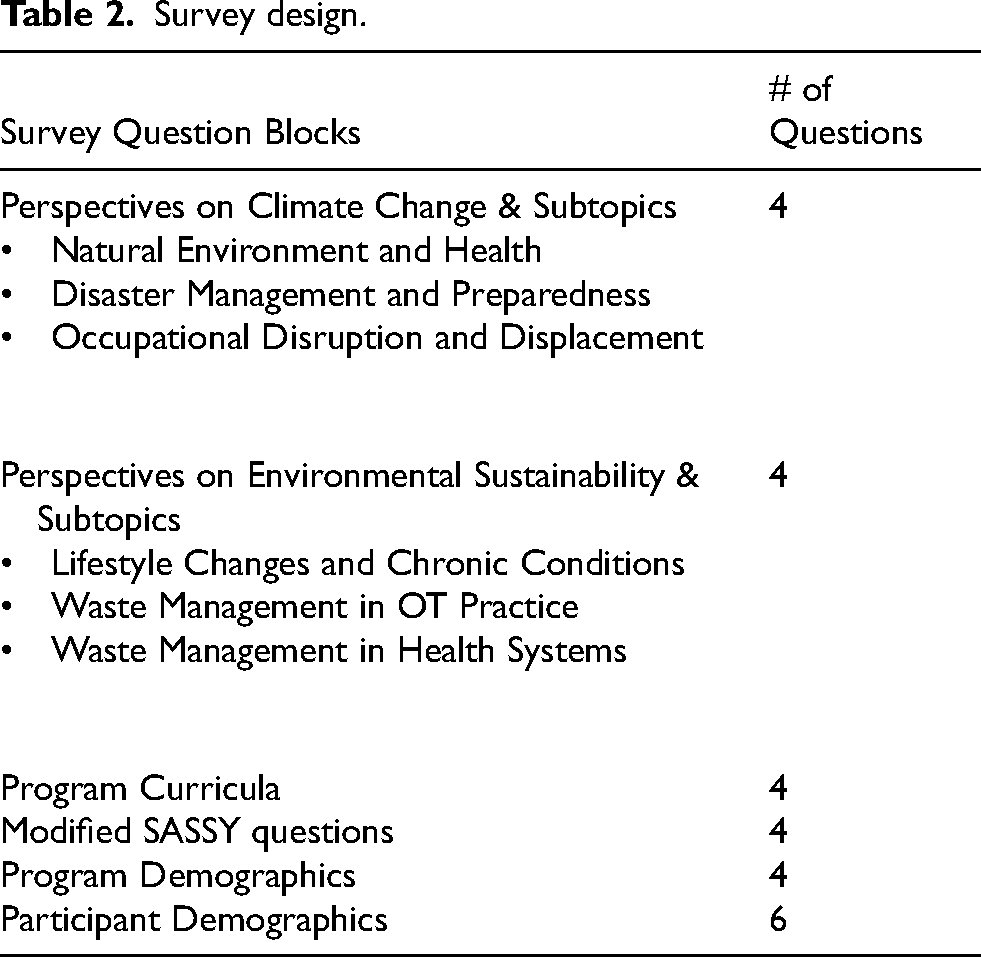
The first two sections of the survey examined respondents’ perceptions of the Relevance, Importance, and Feasibility of addressing each of the main topics and associated subtopics within their program curriculum using a four-point Likert scale (None, Low, Medium, High). These sections were structured so that the first question in each of these sections asked about the main topic and was followed by questions about the subtopics, although subtopic questions were not explicitly identified as such. For each question, there was an option to elaborate by adding comments. The subsequent section included both open and closed-ended questions about how CC and ES are addressed in respondents’ program curricula and what resources and barriers exist. The next section consisted of questions adapted from the Six Americas Super Short SurveY [sic](SASSY) a short, four-question tool used to determine respondents’ overall perception of and response to global warming. 48 These questions were modified by replacing the term “Global Warming” with “Climate Change” to reflect the current study focus. Finally, the two demographic sections gathered information about the respondents and the OT education program they were currently teaching in.
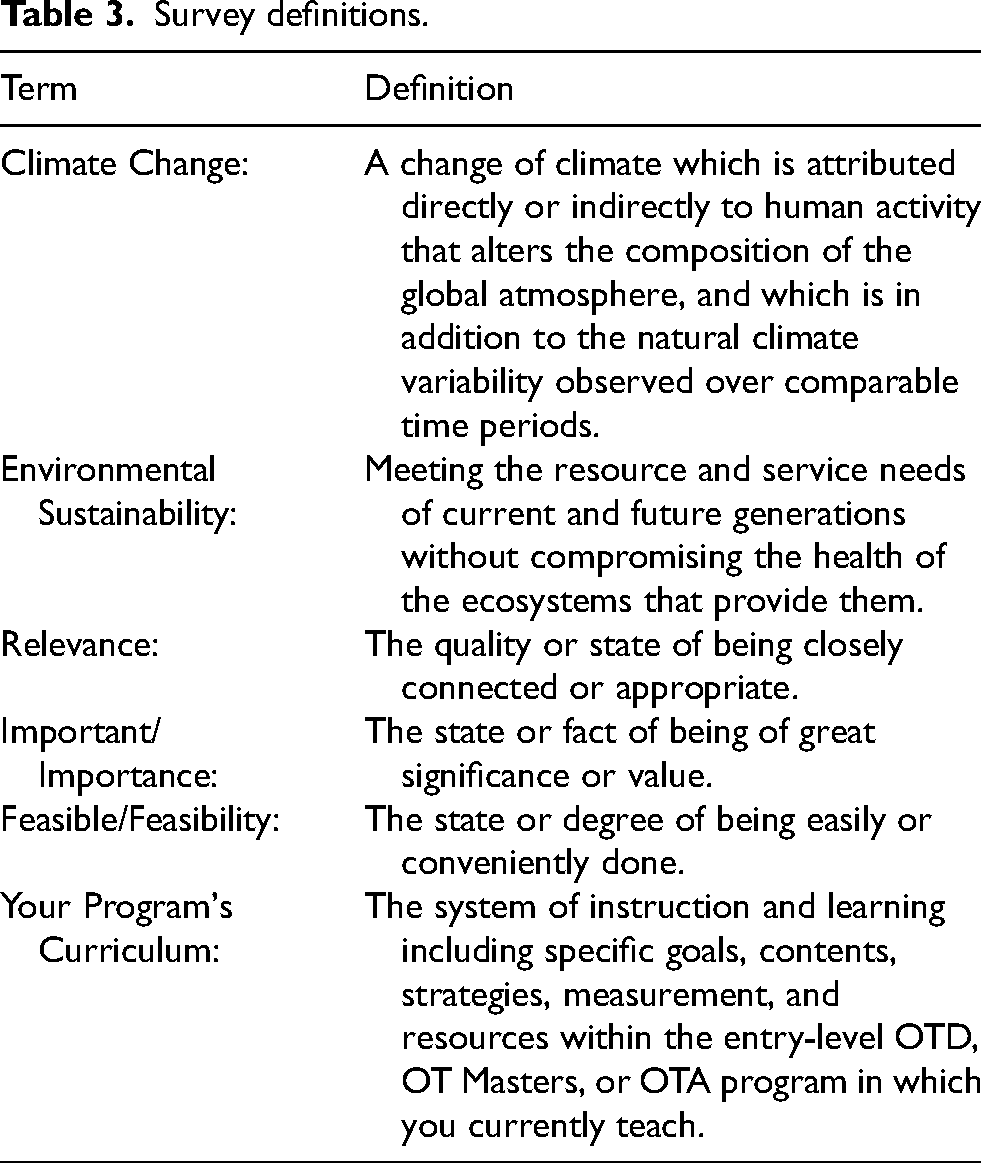
The survey was created on the Qualtrics platform. Definitions were provided to respondents at the start of relevant sections. Table 3 outlines terms defined in the survey.
Survey definitions.
The research team then obtained feedback on the survey questions and usability from members of the Occupational Therapists for Environmental Action (OTEA) leadership group. This feedback was incorporated by modifying language in the survey and eliminating some questions.
Data collection occurred through Qualtrics. Respondents were able to access the survey through an anonymous link. No personally identifying information was obtained in the survey, ensuring respondent confidentiality. No compensation was provided to respondents.
Population & sample
Respondents included OT educators in Doctor of OT, Master's of OT, or OT Assistant programs that were either currently ACOTE-accredited or undergoing accreditation in the United States. The study used convenience sampling, which focused on direct email outreach to faculty members within ACOTE-accredited OT programs (or currently undergoing accreditation process), as listed on publicly available university websites. Respondents were also recruited through CommunOT, the online discussion forum for AOTA members, and with members of (OTEA). This combination of strategies was selected to increase recruitment to aim for diverse representation of OT educators throughout the United States.
Data analysis
Quantitative
Preliminary data organization and cleaning were conducted by the PI and research assistant. Secondary data visualization was obtained using Qualtrics Software. The quantitative data was then analyzed in R, for descriptive statistical analysis by an experienced data analyst.
Chi-square tests were used to examine associations between categorical variables. To reduce the risk of Type I error due to multiple comparisons, Bonferroni corrections were applied separately for each group of related outcomes. The strength of significant associations was evaluated using Cramer's V. All analyses were conducted at a significance level of 0.05.
Qualitative
Two members of the research team conducted thematic analysis of respondent comments, using a collaborative team approach. 49 Thematic analysis was selected rather than content analysis because comments were substantial in length and content and our aims were to understand the nuances of educator perspectives. De-identified comments were organized according to each survey question and coded inductively using password-protected Delve software. Each member completed independent review, analysis, and coding of the data and the pair met weekly over a period of eight weeks to discuss findings, reach consensus on coding, and iteratively revise the emergent codebook. Meeting notes and a running audit trail were recorded in shared documents stored on secure servers and accessible only to the two researchers.
Results
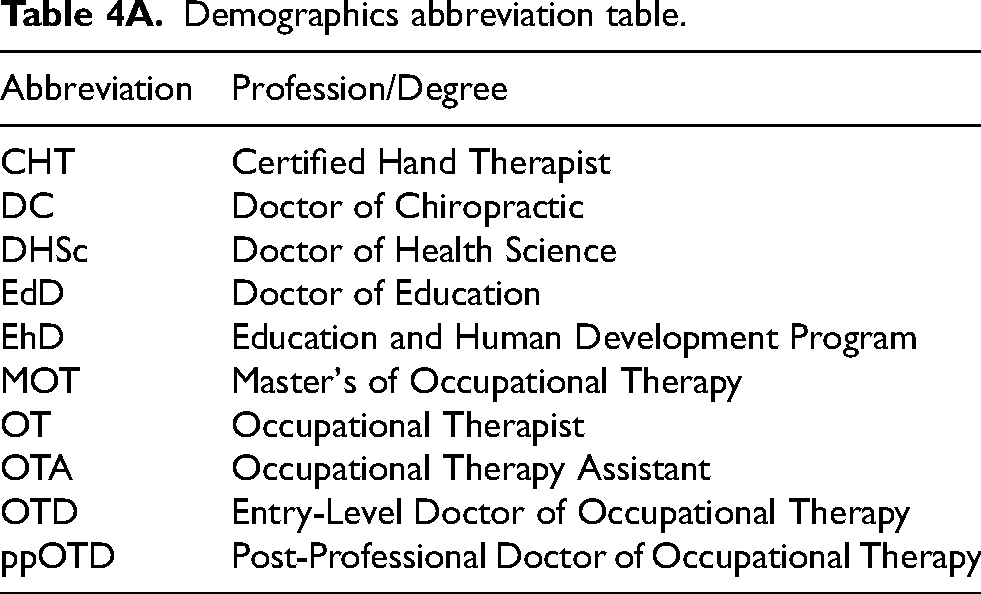
A total of 64 respondents participated in the survey, however, participation declined toward the end of the survey; only 56 respondents completed the survey in full. Table 4 provides a summary of respondent demographics.
Respondent demographics.
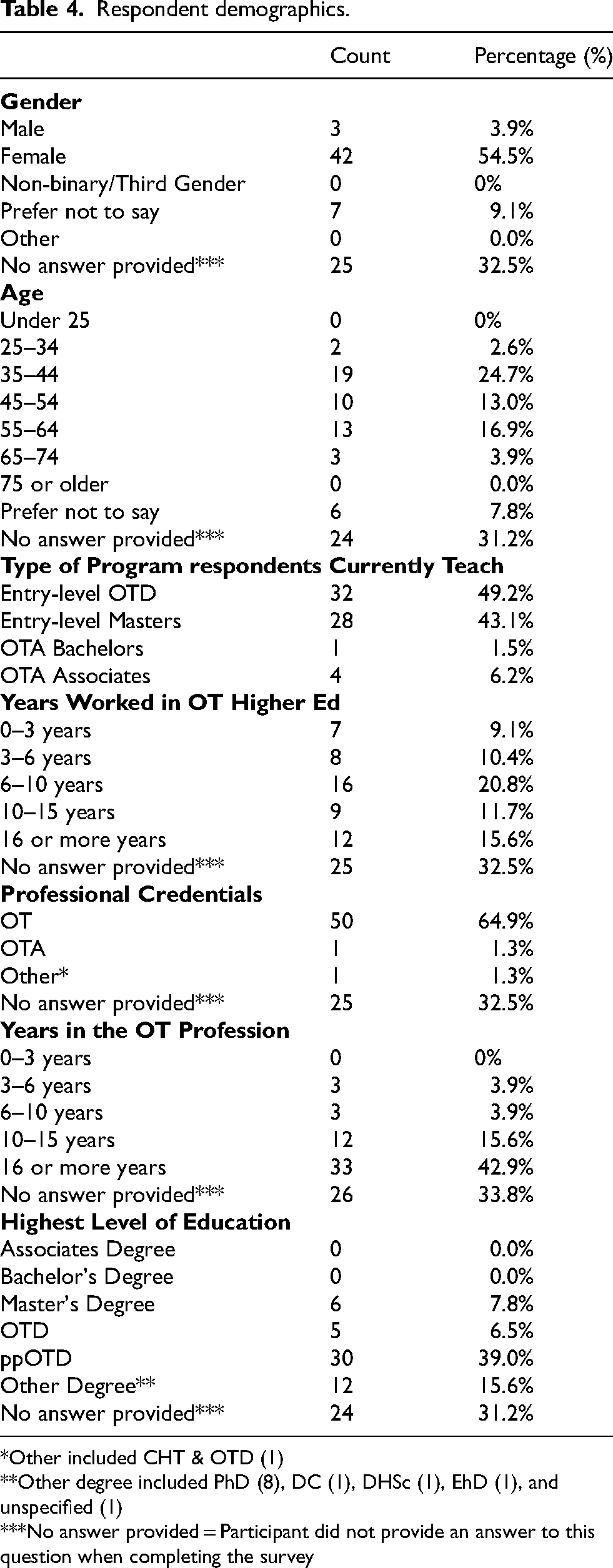
*Other included CHT & OTD (1)
**Other degree included PhD (8), DC (1), DHSc (1), EhD (1), and unspecified (1)
***No answer provided = Participant did not provide an answer to this question when completing the survey
Demographics abbreviation table.
Responses to modified SASSY survey questions
A total of 56 respondents answered the modified SASSY survey questions. Most respondents (75%) considered CC to be personally important, with 54% expressing concern. Only 14% believed CC would affect them “a great deal,” while 59% anticipated “moderate” harm. In contrast, 92% thought CC would severely harm future generations, with only one respondent disagreeing and two unsure.
Ratings of relevance, importance, and feasibility by topic
Participant ratings of relevance, importance, and feasibility of including CC and ES topics in OT curricula varied significantly.
Climate change in OT education
Sixty-four responses were gathered regarding respondent perspectives on addressing CC in their program's curriculum. Perspectives on the relevance of CC to OT curricula varied widely as shown in Figure 1. The Importance of CC to OT curricula was rated slightly higher (none: 18.8%, low: 29.7%, medium: 23.4%, high: 28.1%), also shown in Figure 1. Feasibility, on the other hand, was rated notably lower (none: 18.8%, low: 37.5%, medium: 35.9%, high: 7.8%).
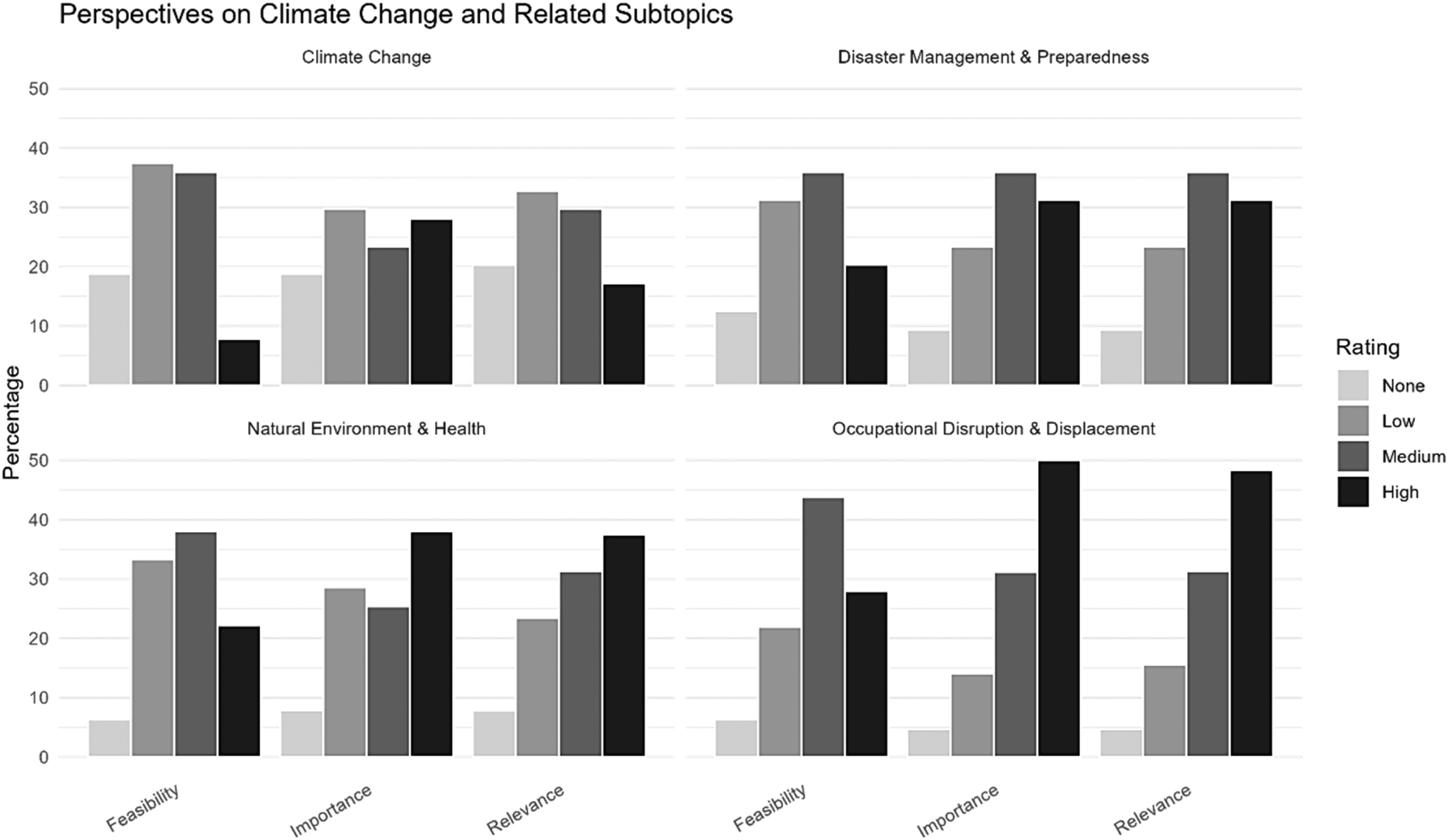
Respondent perspectives on climate change & related subtopics (percentages).
Subtopics such as Natural Environment & Health, Disaster Management & Preparedness, and Occupational Disruption & Displacement were rated higher than the main topic of CC. Natural Environment & Health had 68.8% rating its relevance as medium or high, with 63.5% rating its importance similarly. However, 39.7% of respondents rated its feasibility as none or low. Similarly, Disaster Management & Preparedness received higher ratings for relevance (67.2%) and importance (67.2%), but lower feasibility (43.75% rated it low or medium). Occupational Disruption & Displacement received the highest ratings for relevance (79.7%), importance (81.3%), and feasibility (71.9%).
Environmental sustainability in OT education
Sixty responses were collected on the inclusion of ES in OT curricula. Relevance ratings for ES showed 20% rated it as none, 38.3% as low, 20% as medium, and 21.7% as high. Importance ratings were similarly spread, with 23.3% rating it high. Feasibility ratings were even lower (8.5% rated it high).
Regarding subtopics, Lifestyle Changes to Address Chronic Conditions was highly rated across all three criteria (95.2% rated its relevance, importance, and feasibility as medium or high). Conversely, Waste Reduction in OT Practice and Waste Reduction in Healthcare Systems received lower ratings in relevance, importance, and feasibility, with 63.3% and 66.1%, respectively, rating them low or medium.
Figure 2 indicates the percentage of respondents rating Environmental Sustainability and related subtopics as none, low, medium, or high in terms of relevance, importance, and feasibility.
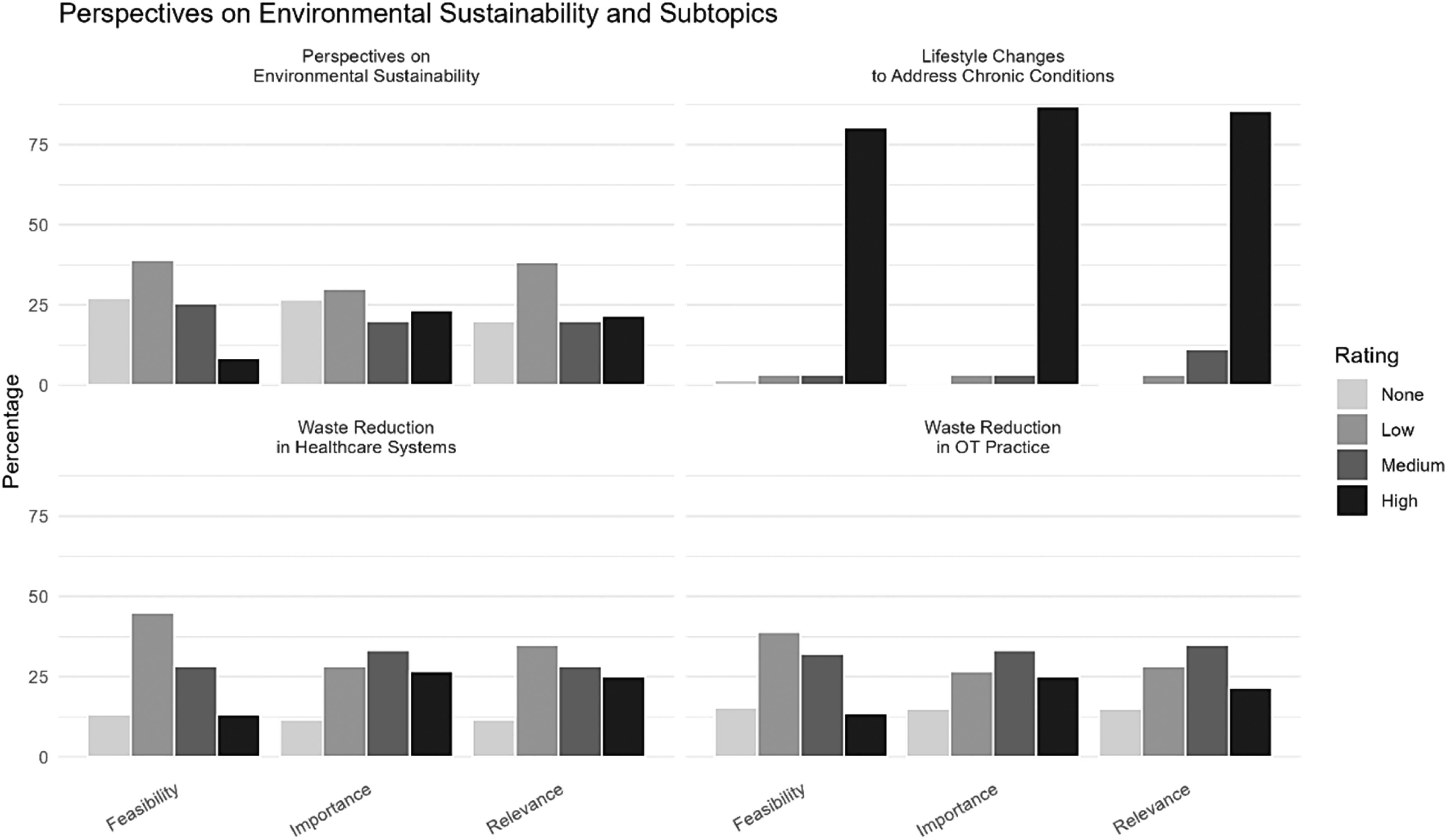
Respondent perspectives on environmental sustainability subtopics (percentages).
Relationships between participant responses
Statistical analysis revealed significant associations between participants’ responses to the modified SASSY survey questions and their views on integrating CC and ES into OT curricula. Chi-square tests showed significant relationships between several pairs of responses and suggest possible associations:
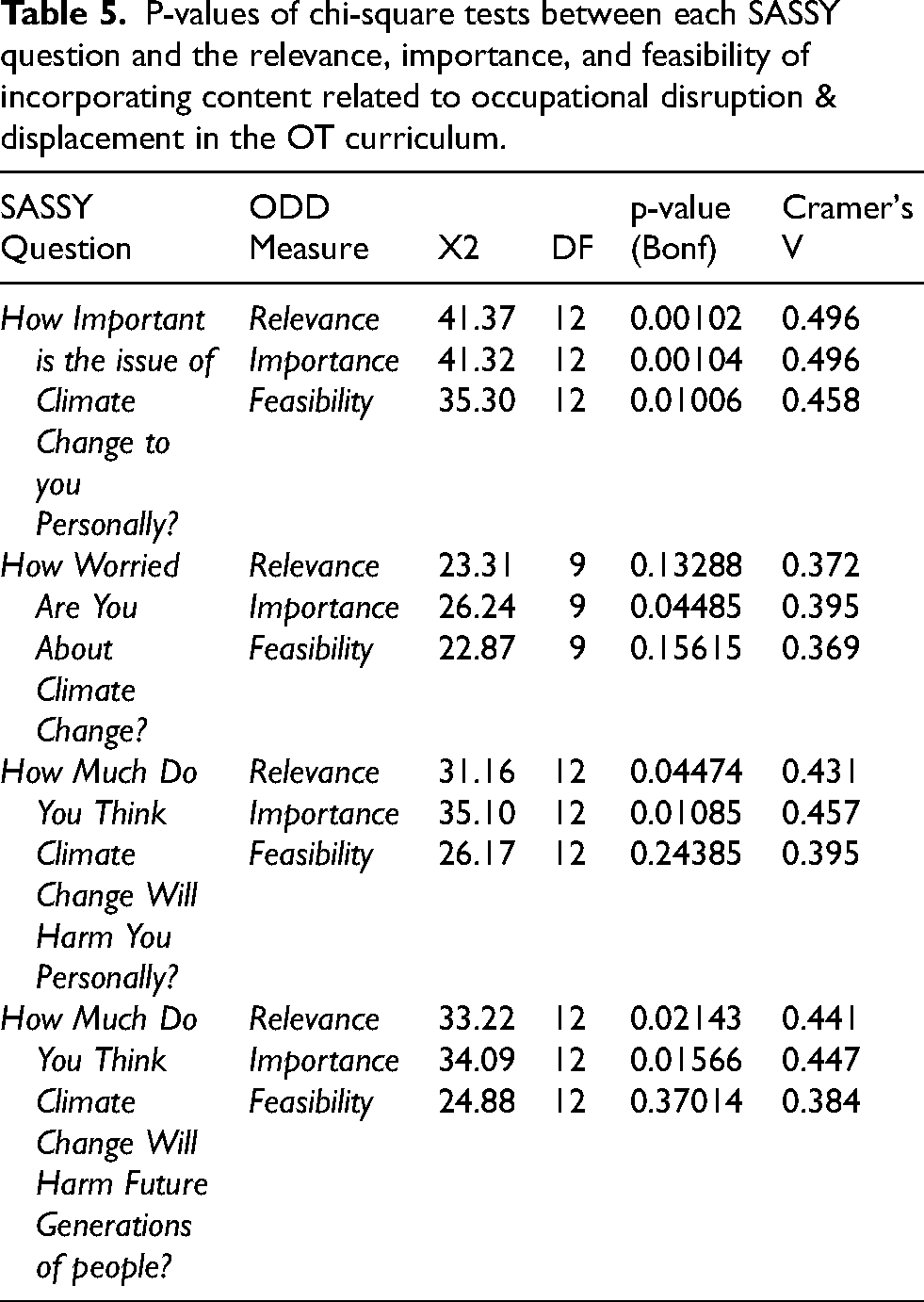
Personal Importance of Climate Change: Personal importance of CC was significantly associated with participants’ views on the relevance (p = 0.0010, Cramer's V = 0.50, large), importance (p = 0.0010, V = 0.50, large), and feasibility (p = 0.0101, V = 0.46, medium) of Occupational Disruption & Displacement in OT curricula.
Worry About Climate Change: Worry about CC was significantly linked with participants’ views on the importance of including climate change in OT curricula (p = 0.021, Cramer's V = 0.41, medium association). Significant links were also found with the relevance (p = 0.017, V = 0.41, medium) and importance (p = 0.034, V = 0.40, medium) of the subtopic Natural Environment & Health, and with the importance of Occupational Disruption & Displacement (p = 0.045, V = 0.40, medium).
Personal Harm from Climate Change: Concern about personal harm from CC was significantly associated with the relevance (p = 0.0447, Cramer's V = 0.43, medium) and importance (p = 0.0109, V = 0.46, medium) of including content on Occupational Disruption & Displacement in OT curricula.
Harm to Future Generations: Concern for future generations was significantly associated with the importance of including CC in OT curricula (p = 0.0136, Cramer's V = 0.45, medium). Significant associations were also observed with the relevance (p = 0.0239, V = 0.44, medium) and importance (p = 0.0238, V = 0.44, medium) of the subtopic Natural Environment & Health, and with the relevance (p = 0.0214, V = 0.44, medium) and importance (p = 0.0157, V = 0.45, medium) of Occupational Disruption & Displacement.
Table 5 provides a summary of the chi-square test results for significant associations related to Occupational Disruption & Displacement in the OT curriculum.
P-values of chi-square tests between each SASSY question and the relevance, importance, and feasibility of incorporating content related to occupational disruption & displacement in the OT curriculum.
Qualitative results
These qualitative findings represent an analysis of the 367 respondent comments on both rating scale and open-ended questions. These comments offered insight into how educators interpreted the relevance, importance, and feasibility of CC and ES topics in OT curricula. They also provided context on current teaching practices and perceived supports and barriers to integration.
After each survey question, respondents had the option of adding a comment explaining their response. We completed a thematic analysis 49 of these comments in order to provide context and insight to quantitative findings.
We identified three overarching themes: 1) expressions of support or justification; 2) expressions of hesitation; and 3) current and suggested educational practices. Within each overarching theme we identified several subthemes, which are detailed below. Some comments spanned multiple overarching themes, as respondents often weighed pros and cons of a particular curricular topic in their own program setting and offered ideas for implementation.
Support for curricular integration of climate change and sustainability topics
Comments reflected a wide variety of arguments supporting integration of CC and ES topics into entry-level OT curricula. These included significance to health and occupation, relevance to and alignment with OT, student interest, and potential contributions of OT.
Significance to health and occupation
When considering integration of climate and sustainability topics, some commenters stressed the urgency of the climate crisis, for example stating: “Climate change is a significant threat to population health on a global scale.” [respondent 39]. Others emphasized the ways in which climate change disrupts everyday occupation. One respondent commented:
Heat and cold alone greatly impact our interactions day to day and at an increased rate for children and elderly. Flooding and drought also impact our ability to sustain a home [respondent 25].
Another reported:
In Arizona we are experiencing higher temperatures every summer and the heat lingers longer into fall. It affects where people live and play. People experiencing homelessness are affected. The elderly cannot afford their electric bills and die in their homes. Individuals with dementia/Alzheimers burn their feet. Children cannot play outside [respondent 9].
Relevance to and alignment with occupational therapy
A strong theme in survey comments was that climate, sustainability, and related topics are consistent with entry-level OT practice and/or its underlying principles. Respondents reflected on the core concepts and assumptions of OT. For example, “the connection between the individual, their environment, and their occupations cannot be overstated” [respondent 27] and the natural environment is “a huge factor in health and performance” [respondent 71]. Some respondents made reference to OT health promotion and prevention approaches. For instance, regarding disaster preparedness, one respondent observed, “The change in [ACOTE] language on health promotion and disease prevention for OTs helps make this topic fit very naturally in OT curricula” [respondent 62]. Others commented on scope of practice, emphasizing CC and ES content as aligned with OT's role in addressing determinants of health across groups, communities and populations. For example, respondent 13 commented that, “Covering [natural environment] is similar to covering social determinants of health broadly” when teaching occupational models of practice.
Sustainability values, habits and skills were also explored. Respondents offered examples of how sustainable practices were incorporated into their educational programs, such as hosting a DME (durable medical equipment) closet for reissue of adaptive equipment, carpooling to events, and employing china and flatware rather than single-use items at gatherings. As one respondent shared, “[being] good stewards of our materials, supplies and environments…should be understood as part of the basic skills of an entry-level OT” [respondent 56].
Student interest
High levels of student engagement with CC and ES topics were also discussed in comments. Some described students as “very aware of climate change and interested in addressing it,” [respondent 39] with one noting that, due in part to campus-wide sustainability initiatives, “the students naturally discuss it when indicated” [respondent 19].
Hesitations about curricular integration of climate change and sustainability topics
Hesitations expressed in survey comments focused mainly upon scope of practice, curricular space and priority, entry-level relevance, social consensus, and consistency with client-centered practice.
Current and potential scope of practice
Comments frequently discussed OT scope of practice. Climate change, environmental sustainability, and waste reduction were each noted by some respondents as beyond OT scope of practice. For example, one commented: “I don't believe climate change has anything to do with becoming an OT. Climate change has no impact on occupational therapy” [respondent 35]. Other respondents saw climate change as important but outside the scope of OT. For example, one commented:
While I personally view addressing climate change as highly relevant and extremely important, I do not see it as professionally belonging within the domain of occupational therapy. As facilitators of health and wellbeing, we cannot claim, be and do everything there is to be done. We belong on teams of professionals, each with a specialization that contributes to the greater good [respondent 18].
Some respondents, including those personally concerned about climate change and/or active in environmental sustainability, doubted that OT could contribute to sustainability within practice or in their workplaces. One participant summed up this paradox as follows:
I feel tremendous despair about human-caused climate change. I do not see a role for OTs to address climate change in the curriculum. At home, I am an environmentalist - I reduce, reuse, recycle, refuse and rot (compost). At my ICU, I use infinite wipes and chux and precaution gowns. I use more plastic in one shift than I do in a month at my home. I don't see OT curricula as a way to solve this problem [respondent 1].
Entry-level curricular space and priority
When discussing barriers to the feasibility of addressing CC, Sustainability, and related topics in OT curricula, a common theme was that there was simply no space in the curriculum to add new topics, both in light of accreditation standards and entry-level practice preparation. For example, one commenter reflected, “Our curriculum is already so full that it is difficult to incorporate new content without loads of shared decision-making on what should be cycled out” [respondent 62].
Some comments about curricular space also linked these issues with educational priority
The ACOTE standards are way too excessive, and there are many other priorities that students have to learn and be exposed to in order to prepare for entry-level practice. This is very much an advocacy and public health topic, but where are we supposed to give it the time that it deserves? [respondent 12].
Another remarked, “We have far more important content to address that is clearly within our scope” [respondent 7].
Time and the demands of accreditation standards were expressed as barriers even for respondents who saw entry-level educational value in CC and ES topics. For example, one commented:
I do think [Climate Change] needs to be incorporated into the curriculum, however this is a challenge given the context of needing to meet ACOTE standards within a limited amount of time [respondent 28].
Social consensus
Respondents also highlighted social and political barriers to incorporating CC and ES content into curricula, especially citing lack of shared views on these matters among peer faculty. One respondent commented that “The biggest challenge may come from faculty who do not yet grasp the connection between human activity (occupation) and climate change” [respondent 39]. The perceived support—or lack thereof—from students was also noted as a potential barrier. One respondent remarked, “Sometimes climate-related discussions are seen as partisan by students and lead to accusations of liberal bias” [respondent 62]. Another referred to ES as one among other “trendy, politically charged topics” [respondent 10] that displace more relevant and necessary learning.
Client-centered practice
From the perspective of some respondents, entry-level education on CC and ES-related topics would seem irrelevant because a focus on population-level concerns is contrary to OT's commitment to client-centered practice:
While I can see how [the natural environment] would have an occupational impact, I believe the primary role of OT's is to address client needs where and as they are. If there is an environmental change that impacts health or accessibility, we can meet that need as it arises [respondent 56].
In response to a question about resources used or desired for teaching about CC and ES, another said:
I do not feel it is within our scope of practice or indicated for OT practice. Of course, if a client says their occupational deficit is their ability to participate in an occupation related to climate change (i.e., they want to be able to sort their recycling bin) then an OT could perform an activity analysis and address the occupational deficit [respondent 52].
Current and suggested educational practices
Respondents also were asked to describe their current educational practices with regard to CC and ES and offer suggestions for resource development. Many comments indicated that these topics were not currently addressed. Among programs that did address these topics, a wide range of course areas were identified. Occupational science, adult-focused intervention courses, “emerging practice” areas, and population health were commonly mentioned, with additional references to culture, health and wellness, and psychosocial practice. Subtopics currently integrated into curricula included disaster preparedness, occupational justice, the natural environment, nature-based practice, and accessibility.
Integration strategies were often limited, with content “peppered” into case scenarios or client profiles, or delivered through occasional lectures. Other approaches included sharing faculty research or professional interests, promoting student behavior change and extracurricular engagement, aligning with institutional sustainability initiatives, and incorporating activities such as recycling and upcycling.
As for potential integration points, some respondents viewed CC and sustainability as naturally fitting within discussions of occupational performance, habits, rituals, spirituality, health impacts, and interventions at both individual and systems levels. Others—particularly those who viewed the topics as less relevant or feasible for entry-level curricula—suggested they may be better suited to continuing education, advanced practice, or specialized areas of study.
Barriers and resources
As suggested above, a frequently cited barrier to integration of CC and ES topics was an already full curriculum, particularly in accelerated programs. Other barriers included perceptions of the topic as partisan among students, lack of faculty interest, and limited institutional support. Key resources identified included university-based resources (e.g., sustainability offices or “green teams”), knowledgeable or interested faculty, supportive administrators (e.g., program directors, deans), and personal commitment. When asked about desired resources, respondents emphasized the need for practical teaching materials—such as sample curricula, case studies, and videos—that could be readily implemented. Additional requests included curated lists of relevant organizations and resources and guidance on how CC and ES connect to OT.
Discussion
Occupational therapy faculty who participated in our survey showed a wide range of perspectives on the prospect of integrating CC and sustainability topics into entry level curricula. Survey results show that while most respondents viewed CC as personally important and were concerned about its future impacts, fewer believed it would greatly affect them personally. Statistical analyses revealed significant associations between respondents’ CC attitudes and their support for including related content in OT curricula. Those who felt more personally impacted by CC, or more concerned about its effect on future generations, tended to rate climate-related and ES subtopics as higher in relevance and importance. Those who viewed CC/ES as highly relevant often emphasized links to occupational performance, population health, and health equity that are core to the OT profession as currently practiced. Subtopics like disaster preparedness, lifestyle change, and the natural environment were identified as more accessible and directly connected to OT competencies, underscoring the importance of how these topics are framed in educational contexts.
However, numerous hesitations and barriers were also identified. Chief among them was curricular overload, particularly in the context of meeting accreditation standards. Even though accreditation was not specifically referenced in the survey questions, it featured prominently in responses, suggesting its strong influence on curricular decisions. While some educators saw potential alignment between CC/ES and existing standards, others viewed these topics as outside the scope of required content, or even outside the scope of OT practice. No respondents advocated for adding new standards; some even voiced concern over expanding them, reflecting fatigue around perceived curricular expansion.
Social and institutional factors added further complexity. Climate change remains a polarizing issue in the United States. Some educators described faculty disinterest or concerns about political polarization in student discussions. Others noted high levels of student engagement and alignment with institutional sustainability efforts as facilitators. These diverse and complex dynamics echo findings from previous studies in OT and other health professions, representing popular support on one hand, and political tensions on the other.16,50
Despite these hesitations, educators expressed a strong desire for accessible teaching resources such as case studies, videos, and ready-to-implement curricular examples, indicating that the core challenge may lie in capacity rather than motivation. This points to a clear role for professional associations and sustainability-focused OT groups in creating and disseminating practical, discipline-specific tools for educators.
While broad curricular integration of CC and ES is not yet the norm, these findings suggest growing interest and highlight actionable opportunities to support educators through resource development and strategic alignment with existing curricular priorities.
Implications for OT education
These findings highlight the complex terrain OT educators must navigate when considering the integration of CC and ES into entry-level curricula. While there is growing recognition of the relevance of these topics to health, occupation, and OT practice, integration remains limited and inconsistent. Current teaching tends to be ad hoc, driven more by individual faculty interest, specific topics, or alignment with institutional priorities than by coordinated programmatic effort.
This study reveals a significant gap between educators’ awareness of CC and its integration into OT education, reinforcing prior findings 50 suggesting limited expertise and confidence in addressing these topics. There is an opportunity to build faculty capacity through continuing education and curated resources that connect CC/ES to OT-specific concepts.
Many respondents reported that topics related to climate and sustainability could be incorporated into existing curricular areas such as health promotion, prevention, population health, and social determinants of health. This aligns with prior research suggesting that embedding content, rather than creating standalone courses, may be a more feasible and effective strategy. An integrated approach also reinforces that environmental and climate concerns are foundational to OT practice, not peripheral or niche.
While some programs already utilize institutional supports or sustainability initiatives, the call for practical resources was clear. Respondents requested sample materials, resource lists, and clearer links between CC and accreditation standards. These tools could empower educators to meaningfully integrate CC/ES content without overwhelming faculty or students.
Low ratings for topics like waste reduction in healthcare indicate a broader educational need to address healthcare's role in greenhouse gas emissions and sustainability. Guiding educators to see the relevance of CC/ES within topics they already teach, such as the natural environment, occupational disruption, and lifestyle interventions, may offer an accessible entry point for integration. Explicitly linking CC/ES to accreditation standards and providing low barrier teaching tools will be key strategies in supporting uptake.
Limitations
Several limitations should be considered. The small sample size (n = 64) and lack of representative sample, likely due to convenience sampling methods limit generalizability of these findings to all OT educators in the U.S.
Additionally, we used bivariate chi-square tests to explore associations of interest. While this approach does not account for potential covariation or collinearity among predictors, we selected it based on the limited sample size and the exploratory nature of the study. We acknowledge this limitation, and findings should be interpreted with caution.
Although the survey was designed to explore key dimensions of CC/ES integration—relevance, importance, and feasibility—its length may have contributed to response fatigue. This is evident in declining response rates across the survey and a 12.5% abandonment rate, which may have impacted the depth and reliability of later responses.
Although accreditation standards were not mentioned in any survey questions, their inclusion in the survey introduction may have influenced respondents’ focus on accreditation-related barriers. This likely contributed to the strong emphasis on curricular constraints, potentially limiting the expression of other facilitators or perspectives on integration.
Future research
Given the study's limited sample size, future research should aim to include a larger and more diverse group of OT educators to enhance the generalizability of findings. Expanding the sample across different regions, program types, and institutional contexts could provide a more comprehensive understanding of educator perspectives on the integration of climate change and sustainability content within OT education.
Future studies should also delve deeper into educator perspectives on specific content areas and modules related to climate change, sustainability, and their intersections with occupational justice, population health, and social determinants of health. Additionally, further exploration of how educators perceive the alignment of such content with existing ACOTE standards would offer valuable insight into curriculum integration strategies and potential areas for curricular revision or enhancement.
Another important area for future investigation is the development and evaluation of faculty development initiatives and ready-to-use educational materials designed to support the inclusion of climate and sustainability-related content. Research on the effectiveness of these resources, particularly in terms of improving educator confidence, knowledge, and implementation, could inform best practices and foster greater adoption of related curricula across OT programs.
Conclusion
This study explored OT educators’ perspectives on integrating CC and ES into entry-level OT curricula. Results reveal diverse views: while some educators see CC/ES as central to OT, others question its relevance. Despite this, most subtopics, such as disaster preparedness, occupational justice, and the natural environment, were rated as relevant, important, and feasible. Practical integration strategies included embedding content into existing courses, case-based learning, and aligning with institutional sustainability initiatives. Findings underscore that successful curricular integration requires more than awareness of importance; it depends on curricular alignment, faculty development, and accessible teaching resources. Providing educators with clear, actionable guidance will help ensure that occupational therapy practitioners are prepared to practice in a climate changed world.
Footnotes
Acknowledgements

Ethical considerations
This study was approved by the University of New Mexico Human Research Protections Office, study #24-079.
Consent to participate
Informed Consent was provided in written format at the start of the Qualtrics survey. Participants were advised that proceeding with the survey indicated their consent to participate.
Author contributions
Funding
Funding for this study was provided by a small grant from the University of New Mexico Department of Pediatrics Research Allocation Committee. Grant expenses included quantitative data analysis contract, research assistant contract, and dissemination materials. Funding did not include salary time for the PI or other authors.
School of Medicine, University of New Mexico, (Dept of Pediatrics Research Allocation Committee).
Declaration of conflicting interests
The authors declared no potential conflicts of interest with respect to the research, authorship, and/or publication of this article.
Data availability statement
The datasets generated during and/or analyzed during the current study are available from the corresponding author on reasonable request.