







Abstract
Background
Employee engagement is a crucial factor for organizational success. One effective way employers can enhance engagement is by fostering a stronger psychological sense of influence among employees. Supporting green activities or values that resonate with the workforce is a key strategy. However, the relationship between psychological ownership, work engagement, and green human capital has not been thoroughly evaluated in existing literature.
Objective
The purpose of this study is to provide a comprehensive review of the literature on the relationship between psychological ownership, work engagement, and green human capital. This review aims to evaluate prior studies and identify key trends and gaps in the field.
Methods
A total of 50 studies meeting the inclusion criteria were analyzed. The dataset, spanning from 2017 to 2023, was examined using bibliometric analysis. Notably, publications from publishers such as Elsevier, Emerald, MDPI, Sage, and others were excluded. The research employed VOS viewer software to conduct co-authorship, co-occurrence, and citation analyses.
Results
The analysis revealed the top countries, authors, journals, and academic works in the field. It also highlighted key trends in the literature and provided insights into ongoing and future research directions.
Conclusions
Psychological ownership has the potential to reduce behavioral issues and enhance employee engagement. However, the effectiveness of this outcome is contingent upon leadership styles and the support mechanisms provided by the organization.
Keywords
Introduction
The idea of “green human resource management” has taken precedence over the rising awareness of environmental sustainability. According to Ren et al., 1 this innovative approach to HRM is a “phenomenon significant to comprehending the interactions among organizational operations that affect the natural environment and the development, evolution, implementation, and impact of HRM systems.” Green Human Resource Management (GHRM) includes strategies for attracting and keeping environmentally conscious workers as well as employing them. 2 Organizations should also put in place appropriate training programs, awards, and benefits systems to speak about having a strong GHRM department. 3 In other words, through various procedures, including hiring and selection, pay management, performance management, and departure policies, GHRM practices enable the implementation of green practices. 4 Green Human Resource Management (GHRM) practices contribute to a positive employer brand by demonstrating a company's commitment to sustainability and employee well-being. This, in turn, boosts work engagement, which is a state where employees are deeply involved and invested in their work, both physically and psychologically. 5
The significance of Green Human Resource Management (GHRM) arises from the fact that it is an essential part of a strategy plan focused on the environment that aims to establish, uphold, and enhance sustainable development. 6 Businesses that actively use GHRM might develop a “green” reputation that helps mitigate the negative effects of unfavorable incidents. Indeed, production, culture, tactics, and even employee behaviors that influence a supply chain's green environmental performance may be predicted by GHRM practices. 7 According to Lee and Klassen 8 and Jabbour et al., 9 the development of green human capital promotes a sustainable supply chain, which incorporates reverse logistics and green manufacturing to achieve sustainability.
Green human capital builds a favorable employer image for a corporation, resulting in various positive organizational effects, such as employee engagement. According to Keyko et al., 10 work engagement in this context should be interpreted as the physiological and psychological states that are associated with work in a cognitive and affective sense, promoting the attitudes and actions required to accomplish organizational-level goals. According to Schaufeli et al., 11 emotional attachment to a possession goal can have a positive impact on employees’ attitudes within an organization and lead to higher levels of identification and engagement. It can also give organizations a leg up on their sustainability journey by incentivizing employees to stay and put in a lot of effort toward the organization's strategic goals. 12 Also, according to Van Dyne and Pierce, 13 psychological ownership is a phenomenon that people feel on a psychological level when they acquire a sense of ownership over an objective. It is the outcome of focusing, giving careful thought to, and deliberate action about one's belongings. 14 It aids people in forging and preserving their sense of self. 15 Perceived control, self-investment, and knowledge are the antecedents of psychological ownership. 16 Psychological ownership enables the transfer of self-associated traits to the target, hence strengthening emotional attachment to the target and enhancing its perceived worth. 17 Moreover, green human capital may support sustainable development by fostering a shared vision for an organization's green initiatives, which in turn can increase workers’ psychological sense of ownership.
The parameter of the study emphasizes green human capital, work engagement, psychological ownership, psychological capital, sustainable behavior, business performance, and green innovation have all become increasingly important in organizational research. Green human capital refers to the amount of knowledge, competencies, and abilities that employees possess related to environmental sustainability. 18 Work engagement occurs when an employee experiences a positive, fulfilling work-related state of mind that is characterized by vigor, dedication, and absorption. 19 Psychological ownership refers to the feelings of possessiveness and connection that employees have with their work or organization. 20 Psychological capital represents an individual's positive psychological state. The four positive psychological states are self-efficacy, hope, optimism, and resilience. 21 Sustainable behavior consists of behaviors that minimize environmental impacts, and green innovation includes newly developed products or processes that promote environmental sustainability. 22 Van-Chien Pham et al. 23 reported a significant increase in research on psychological capital (PsyCap), noting that 69.9% of PsyCap journal articles were published during 2022–2023, which reflects a rapid growth compared to earlier years. Their study also uniquely focused on the Scopus database, an area not deeply explored in prior bibliometric analyses.
Research contribution and gap
The intersection of green human capital and work engagement presents a critical area of inquiry within contemporary organizational psychology. Despite growing recognition of the significance of environmental sustainability in workplaces, the specific mechanisms through which green human capital influences employee engagement remain underexplored. Furthermore, while psychological ownership has been identified as a potent driver of work engagement, its interplay with green initiatives has yet to be adequately investigated. Unfortunately, there is a shortage of studies analyzing how Green human capital contributes to psychological ownership and work engagement in the body of existing literature. Past research on the connection between GHRM and work engagement24,25 found that GHRM has a direct impact on work engagement. Several other research studies have shown that work engagement as a result of the organization is mostly achieved through psychological ownership, making it important to explore the relationship between GHRM and work engagement.26,27 Despite the mediating effect of psychological ownership in the relationship between green human capital initiatives and work engagement remains a notable gap. Therefore, this study aims to address this gap by exploring how psychological ownership mediates the relationship between green human capital and work engagement. By doing so, it provides actionable insights for organizations determined to promote sustainable and highly engaged work environments.
Research question
This study's main goal is to close the current research gap by offering responses to the subsequent three research questions:
A bibliometric study was conducted to investigate these research questions, employing a range of approaches including co-authorship analysis, co-occurrence analysis, and citation analysis. The following is a summary of the study's structure: Section 2 describes the materials as well as the methods used in this investigation after the introduction. Section 3 presents the comprehensive results of the bibliometric analyses, providing insights into publication trends, keyword evolution, and leading contributors in the fields of green human capital, work engagement, and psychological ownership. These findings directly respond to the research questions concerning trends, keyword usage, and significant parameters in the domain. The study is finally concluded in Section 4 with a discussion of its limitations and recommendations for future studies.
Literature review
Green HRM, psychological ownership, and work engagement
Recent studies have increasingly explored the role of Green Human Resource Management (GHRM) in shaping employee attitudes and behaviors, particularly through psychological ownership and work engagement. Elif Baykal and Osman Bayraktar 5 highlighted how GHRM enhances corporate image and employee engagement. Their study, conducted among 255 Turkish white-collar manufacturing employees using AMOS and PROCESS tools, confirmed that psychological ownership mediates the relationship between GHRM and work engagement, aligning with Social Identity Theory. Employees who perceive value alignment with green practices feel a stronger sense of ownership and engagement. Building on the psychological ownership framework, Ahmed Farghaly Tawfik 28 examined its mediating role between GHRM and green behavior among 204 academic nursing staff. Findings affirmed a partial mediation effect, emphasizing that GHRM significantly influences green behavior, even when psychological ownership is considered. In a similar line, Ujwal Shankar 29 investigated the influence of GHRM on work engagement (WE) through the mediators psychological ownership (PO) and perceived green organizational support (PGOS). Using a cross-sectional survey and Structural Equation Modeling (SEM), results showed that GHRM positively influences WE through PO, with limited impact via PGOS, indicating that empowered environments foster meaningful work. Meanwhile, Khutso Pitso Mankgele and Olawale Fatoki 30 analyzed the role of environmentally specific empowering leadership on organizational citizenship behavior for the environment (OCBE). With data from 525 hotel managers in South Africa, the study found that such leadership enhances OCBE, with PO and green work engagement serving as mediators. Additionally, environmental concern among co-employees was found to moderate this relationship. From a broader lens, Meghna Goswami and Anil Kumar Goswami 31 conducted a comprehensive bibliometric and TCCM analysis of 954 Web of Science articles on Psychological Capital (PsyCap). Their findings indicate that PsyCap is a growing field with potential for future development, especially in work engagement and mental well-being. Similarly, Van-Chien Pham et al. 23 analyzed 2244 Scopus-indexed papers from 1997 to 2023 using VOSviewer and content analysis tools. Their review emphasizes growing attention toward PsyCap's connection with well-being, job satisfaction, and work engagement, highlighting its significance in organizational contexts.
Research gap
While recent studies have explored the relationship between Green Human Resource Management (GHRM), psychological ownership, and work engagement (Baykal & Bayraktar, 5 ; Tawfik, 28 ; Shankar,, 29 most have focused on specific sectors such as manufacturing, healthcare, or hospitality. However, there is limited research on how GHRM influences work engagement through psychological mechanisms like ownership in diverse or cross-industry contexts. Additionally, although bibliometric studies by Pham et al. 23 and Goswami & Goswami 31 have highlighted the growing importance of psychological capital and well-being, empirical studies connecting GHRM, psychological ownership, and PsyCap in an integrated model are scarce. This leaves a gap in understanding how these constructs interact across broader organizational settings and different cultural contexts.
Materials and methods
Data extraction
The most important step of the research process is choosing the methods and resources for data processing. Online databases may be used to obtain information on scientific publications. Major databases, including WoS, Medline, Google Scholar, and Scopus, are often utilized in bibliometric research. 32 The data used in this study were taken from the Google Scholar Core Collections. Because Google Scholar covers a large number of important academic information sources and guarantees access to high-quality data, it was selected.
Keyword search strategy
The following stage was conducting a keyword search for “green human resource” to find all of Google Scholar's reputable publications, such as Elsevier, Emerald, frontiersin.org, MDPI, Sage Journals, Springer, Taylor & Francis, and Wiley Online Library during the past years (2017–2023). When compared to other keywords, this one had the greatest number of associated publications. The keywords search approach used the query string TITLE-ABS-KEY ((“green human capital” OR “work engagement” OR “psychological ownership” OR “psychological capital” OR “sustainable behavior” OR “business performance” OR “green innovation”) AND (LIMIT-TO (SUBJAREA, “BUSI”)) AND (LIMIT-TO (DOCTYPE, “ar”)) AND (LIMIT-TO (PUBSTAGE, “final”))) to obtain articles that contained these phrases in the titles, abstracts, or keywords, setting the criteria for the journal and article keyword searches.
Search criteria
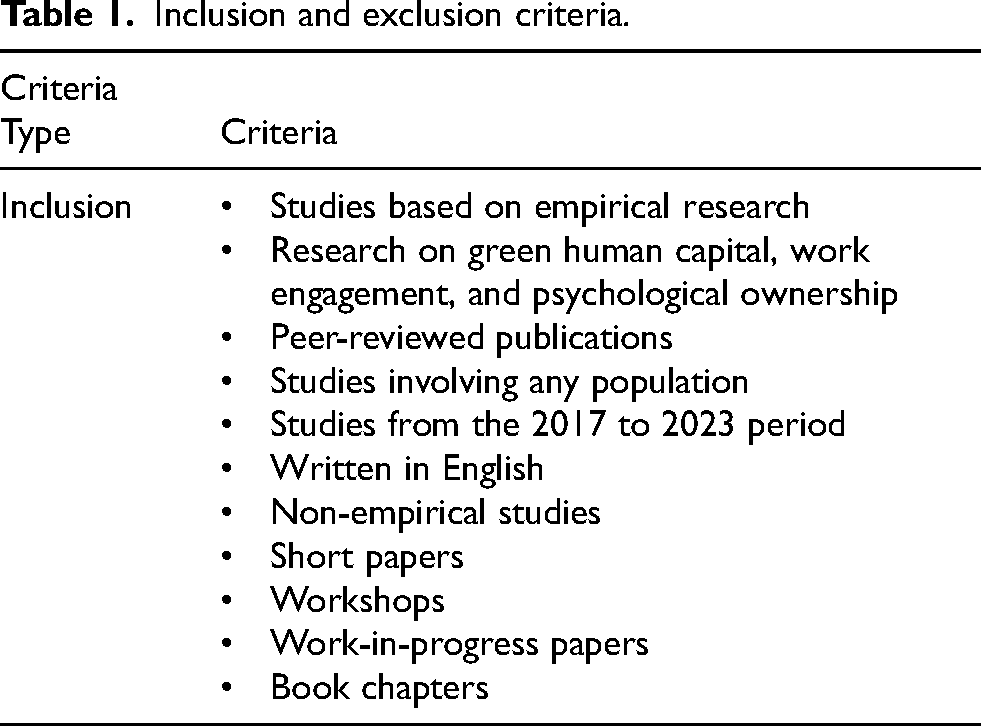
The next step is to configure the search criteria when the databases have been chosen. Table 1 summarizes the criteria used for the database search, separating the conditions for inclusion and exclusion. Using this method, this research was able to compile a wide range of academic papers, research findings, and publications to provide a thorough understanding of brand expansion and loyalty. Therefore, 50 titles from the 249 articles that the first search yielded satisfied the below-mentioned criteria and were examined in more detail.
Inclusion and exclusion criteria.
Data analysis and visualization
A thorough and collaborative review of the literature is required, especially about the recent and notable advances in the development of scientific knowledge. In this context, using bibliometric methods has become a popular quantitative way of doing a systematic analysis of bibliographic information. Information may be more easily categorized and arranged using this strategy according to several factors, such as journals, authors, and nations. Researchers can obtain a comprehensive grasp of a particular study topic by utilizing bibliometric analysis. 33 The research on green human capital, work engagement, and psychological ownership that was gathered from the Google Scholar database was statistically examined in the current study using bibliometric analysis. The selection of analytic units, such as documents, sources, authors, organizations, nations, cited references, and author keywords, allowed for the carrying out of many studies, including co-author, co-citation, and co-occurrence analyses. 32 VOS viewer (version 1.6.19) was utilized as a software application to make the creation and display of bibliometric maps easier. 34 This method made it possible to comprehend how psychological ownership, job engagement, and green human capital are related to one another. Figure 1 highlights the systematic approach utilized in the present investigation.
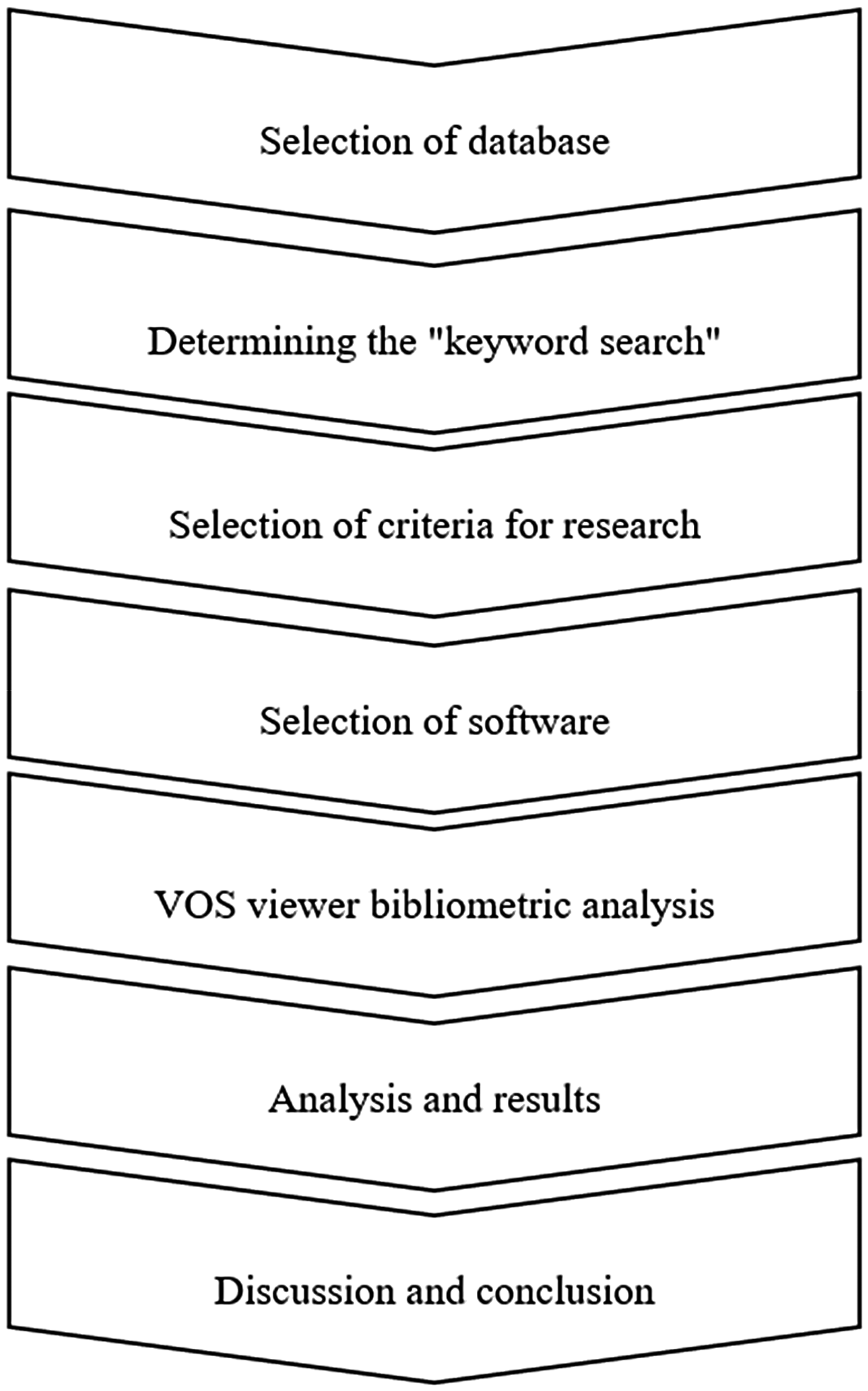
Bibliometric review's workflow.
Result
Number of publications
Figure 2 shows the number of articles published each year from 2017 to 2023. Initially, there was a gradual increase in the number of articles, with 3 articles in 2017, 4 in 2018, and 5 in 2019. This upward trend suggests a growing interest or investment in the topic or area of research being covered by these articles. However, in 2020, there was a noticeable drop to just 1 article, which could be attributed to various factors such as disruptions caused by the COVID-19 pandemic, shifts in research focus, or resource constraints affecting publication capabilities.
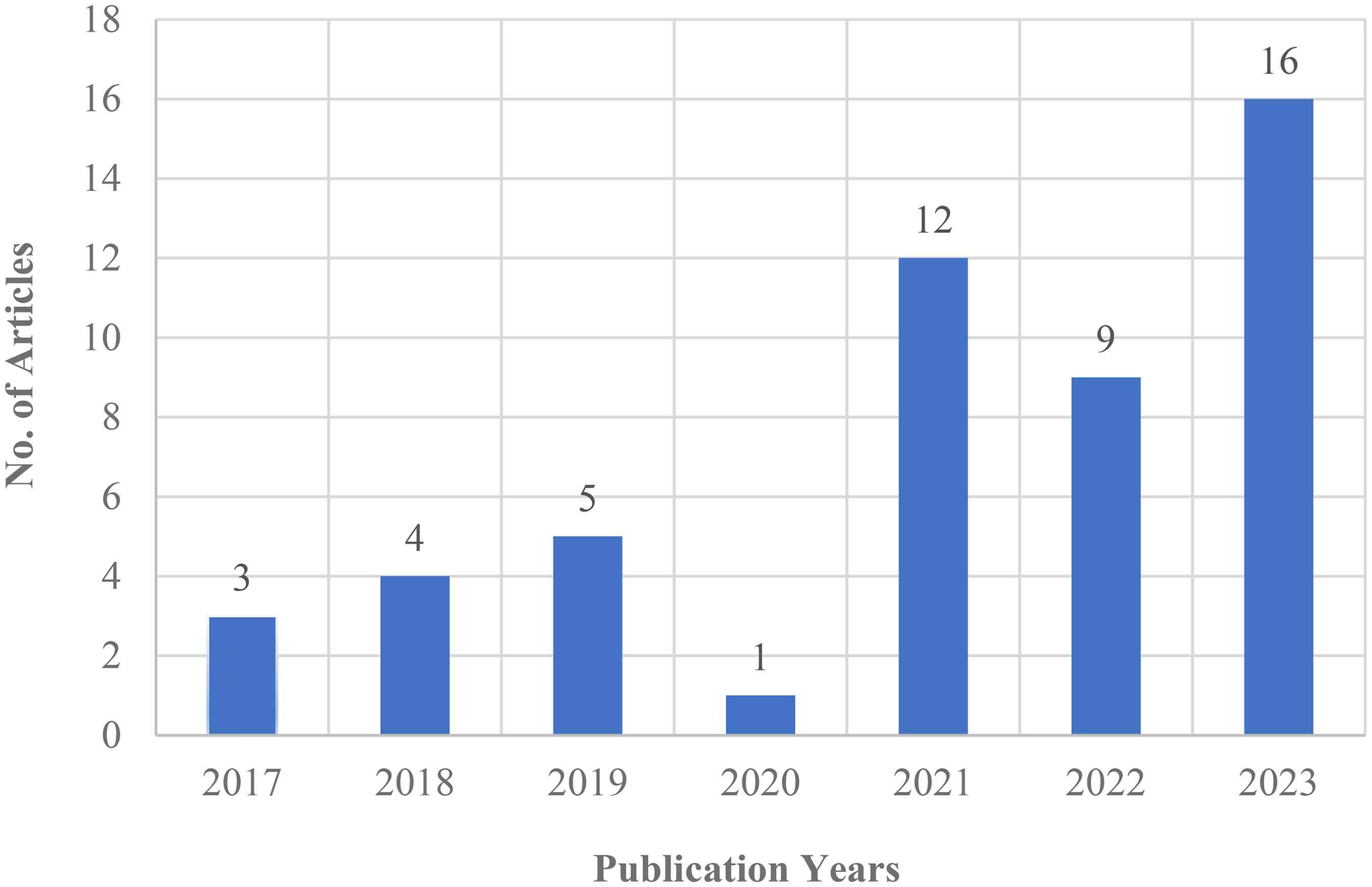
Number of publications per year.
However, the number of publications rebounded strongly in 2021, with 12 articles published, indicating a recovery in research activities. This upward trend continued in 2022, with 9 articles published, and peaked in 2023, with 16 articles. Overall, the data shows a general increase in the number of publications over the years, suggesting a growing interest in the topics covered by these articles. This pattern suggests a growing interest and focus on the topics of green human capital, work engagement, and psychological ownership in recent years.
Assessment of journals and citations
Table 2 presents a detailed evolution of journals and citations across various academic publications, with a focus on journals within the fields of human resources, psychology, leadership, organizational studies, and sustainability, among others. It highlights the diversity in the volume of total citations and publications associated with each journal. Notably, some journals have accumulated a significant number of citations from a single publication, such as “Human Resource Management” with 1179 citations, “Asia Pacific Journal of Human Resources” with 942 citations, and “Technological Forecasting & Social Change” with 1441 citations. These high citation counts indicate the substantial impact and influence of the research published within these journals, suggesting that these specific articles have been widely recognized and referenced within their respective fields. Additionally, the data illustrate the varying degrees of scholarly attention and recognition received by different journals. For instance, “Corporate Social Responsibility and Environmental Management” and “Journal of Leadership & Organizational Studies” have relatively high citation counts (188 and 274, respectively) despite having only one publication each, underscoring the high relevance and contribution of those specific papers. In contrast, journals such as “Frontiers in Public Health” and “Frontiers in Sustainability” show minimal citation impact with just one citation each, suggesting either a more recent publication date or lesser engagement from the academic community. Moreover, functional journals like “Society and Business Review” and “Industrial and Commercial Training” exhibit low citation numbers, reflecting either a more specialized audience or potentially lower visibility within the broader academic landscape.
Assessment of journals and citations.
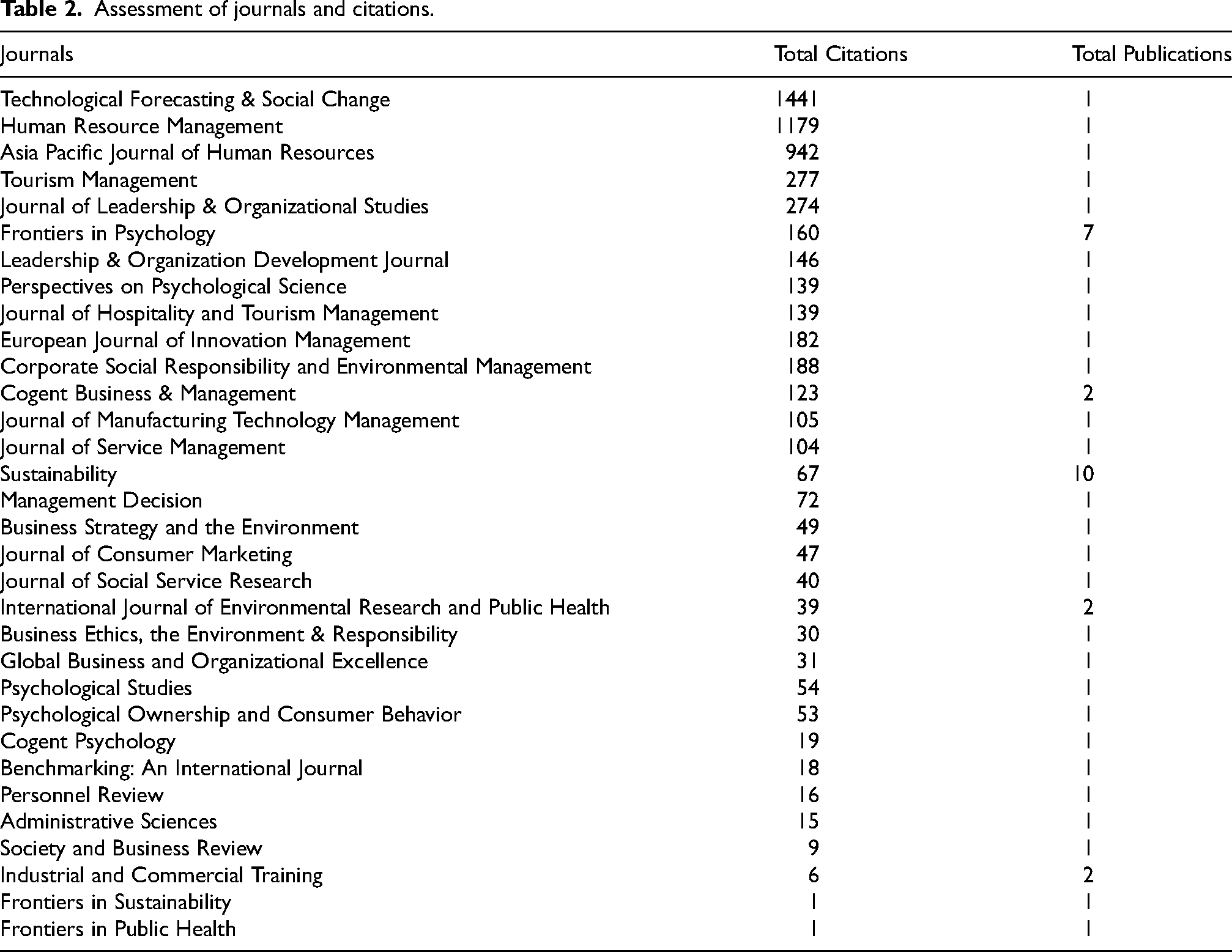
The distribution of total publications also varies widely among the journals. For example, “Sustainability” has 10 publications with a relatively modest total citation count of 67, indicating either newer research or a broader but less impactful reach. “Frontiers in Psychology” stands out with 7 publications and a total citation count of 160, showing consistent research output with moderate impact. In contrast, many journals, such as “The Journal of Leadership & Organizational Studies” and “The Asia Pacific Journal of Human Resources,” have only one publication but still manage to gather significant citations, which may suggest highly influential single papers or milestone studies. This disparity underscores the varying influence and specialization of journals within these interconnected academic domains.
Assessment of journal publishers
The distribution of journal publishers and the number of journals they publish are shown in Figure 3, which sheds insight into the prominence and existence of different publishers in the field of academic publishing. With 13 journals, MDPI leads, displaying a noteworthy position and a wide-ranging and varied portfolio. Emerald follows with 10 journals, showing strong representation, likely due to its focus on business, management, and social sciences. Frontiersin.org also has a notable presence with 8 journals, reflecting its emphasis on open-access and multidisciplinary research. Wiley Online Library, another major journal, publishes 7 journals, reinforcing its extensive reach across various academic disciplines. Taylor & Francis, with 4 journals, continues to be a key contributor, especially in the humanities and social sciences. Elsevier and Journals. Sagepub, each with 3 journals, and Springer with 2, although having fewer journals compared to MDPI and Emerald, remain influential due to their high impact and reputation in the scientific community. This distribution highlights the competitive and diverse nature of academic publishing, where both large and specialized publishers play crucial roles in disseminating scholarly knowledge.
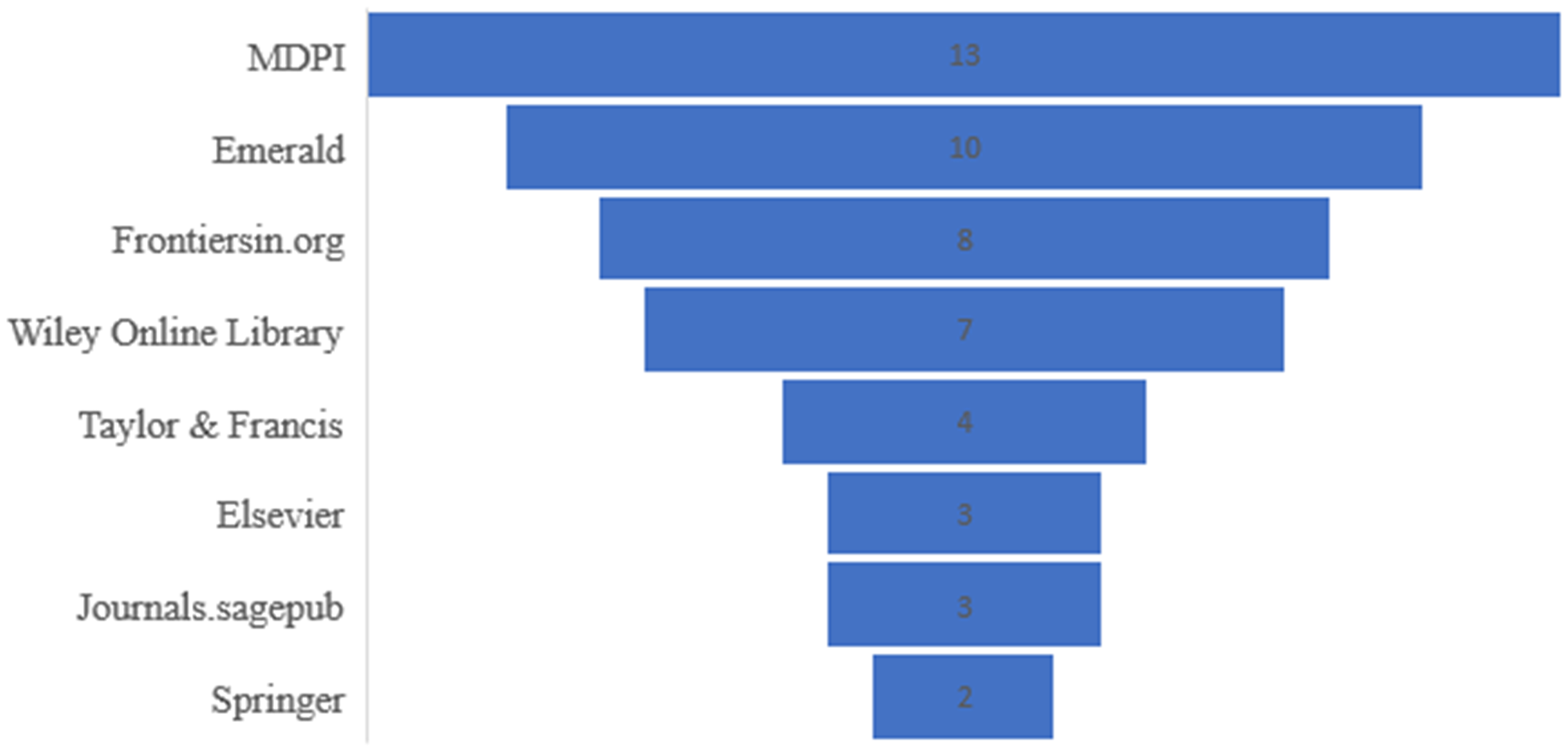
Assessment of journal publishers.
Authors’ geographic representation
Figure 4 shows the geographic representation of authors based on their country of origin and the frequency of their contributions to academic journals. This data highlights the global diversity and distribution of scholarly activity across different countries. China leads with a substantial margin, contributing 16 authors, indicating a strong presence in academic research and publication. Pakistan follows with 12 authors, showcasing significant scholarly output from this region. Saudi Arabia also has a notable representation with 9 authors, reflecting its active participation in academic discourse. Taiwan and the UK both contribute 5 authors each, indicating a balanced engagement in research activities.
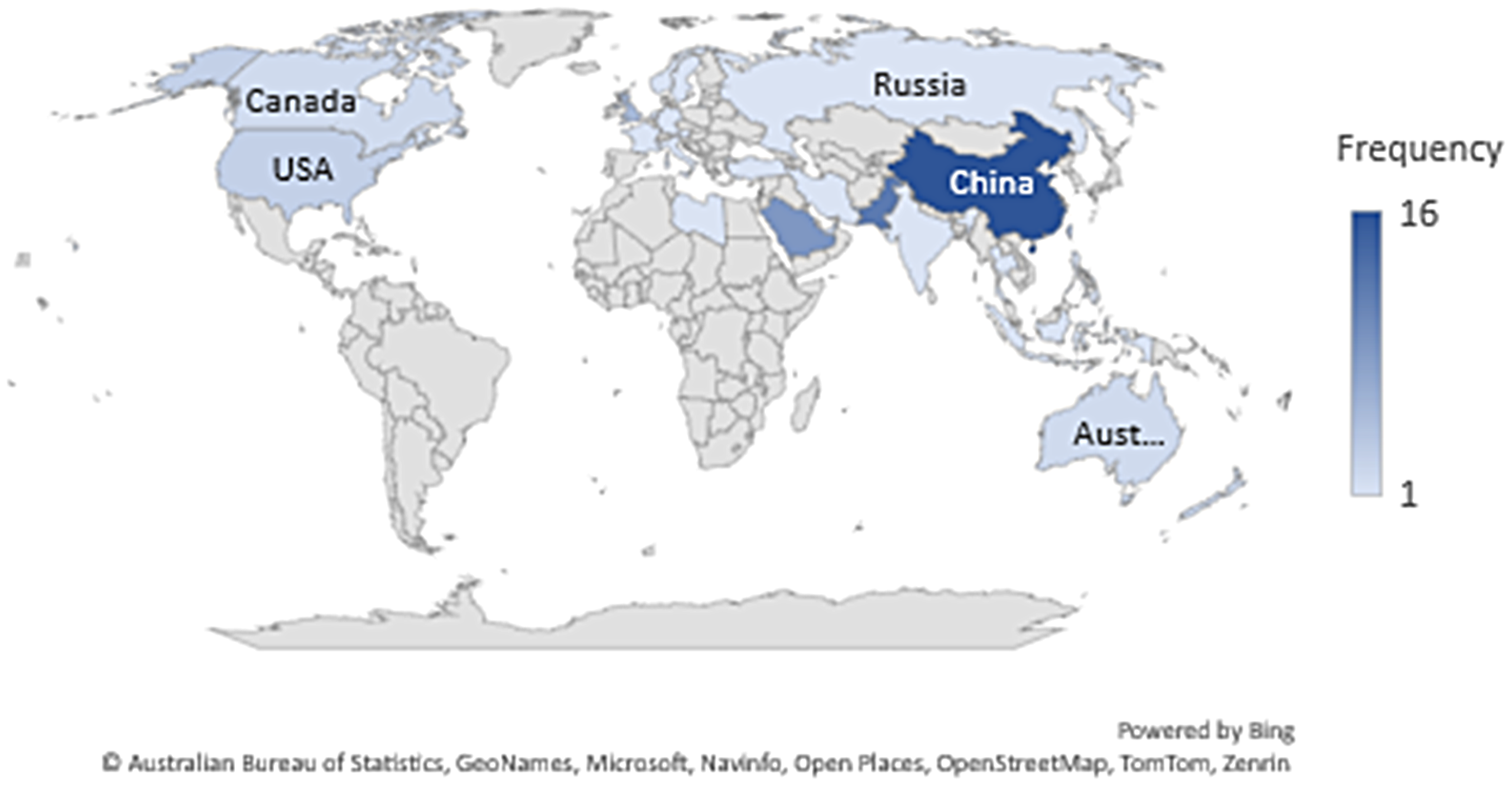
Authors’ geographic representation.
Several countries have moderate representation, such as the USA and the UAE, each with 3 authors, and Australia, New Zealand, and Canada, each with 2 authors. These numbers demonstrate well-distributed participation from different parts of the world. A diverse range of countries, including the Netherlands, Austria, India, France, Russia, Italy, Thailand, Sweden, Germany, Norway, Turkey, the Philippines, Korea, Indonesia, Iran, and Libya, each has 1 author represented. This wide range of countries, although contributing fewer authors individually, collectively underscores the global reach and inclusivity of the academic community. Therefore, the distribution pattern highlights the prominence of certain countries in academic research, such as China and Pakistan, while also illustrating the wide-ranging contributions of various other nations. This geographic diversity is essential for fostering a comprehensive and multifaceted understanding of research topics, enriched by perspectives from different cultural, economic, and social backgrounds.
Co-authorship analysis
Figure 5 indicates the co-authorship network of researchers focused on green human capital, work engagement, and psychological ownership, illustrating the interconnected relationships among scholars investigating these intersecting areas. Researchers in this network collaborate to explore how investments in green human capital, such as sustainable skills and knowledge work engagement and foster psychological ownership among employees. Within this network, individual academics are represented as nodes, and co-authorship links resulting from collaborative articles examining certain themes are shown as edges. The network highlights a dynamic interchange of ideas and discoveries by showcasing both small collaborative groups and larger, more widespread partnerships. Through examining these links, researchers want to learn more about how environmentally friendly procedures and organizational tactics may boost employee engagement and foster a sense of responsibility for the company's environmental and strategic goals.
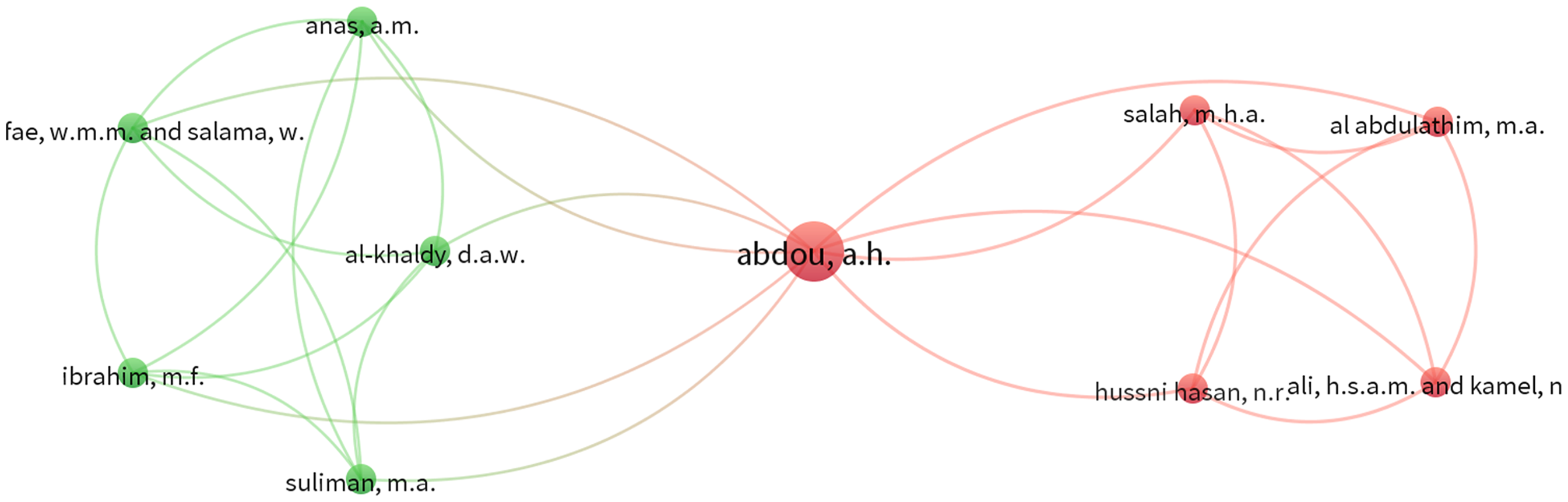
Co-authorship analysis.
Co-occurrence keyword analysis
Research trends and current themes in a certain field can be identified by analyzing author keywords. This research employed the VOS viewer software to perform a bibliometrics analysis and graphically exhibit the keywords that were collected from 50 publications on psychological ownership, work engagement, and green human capital.
The keyword clustering offers an overview of the primary issues and study areas that have been thoroughly examined and addressed in the literature on psychological ownership, work engagement, and green human capital. A network mapping of the author's keywords is produced by a co-occurrence keyword analysis, as shown in Figure 6. The map offers insights into the thematic structure of the area by providing a visual representation of the links between terms within the literature on psychological ownership, work engagement, and green human capital. It facilitates the identification of clusters of closely related terms and enhances our understanding of the links between various field study themes.
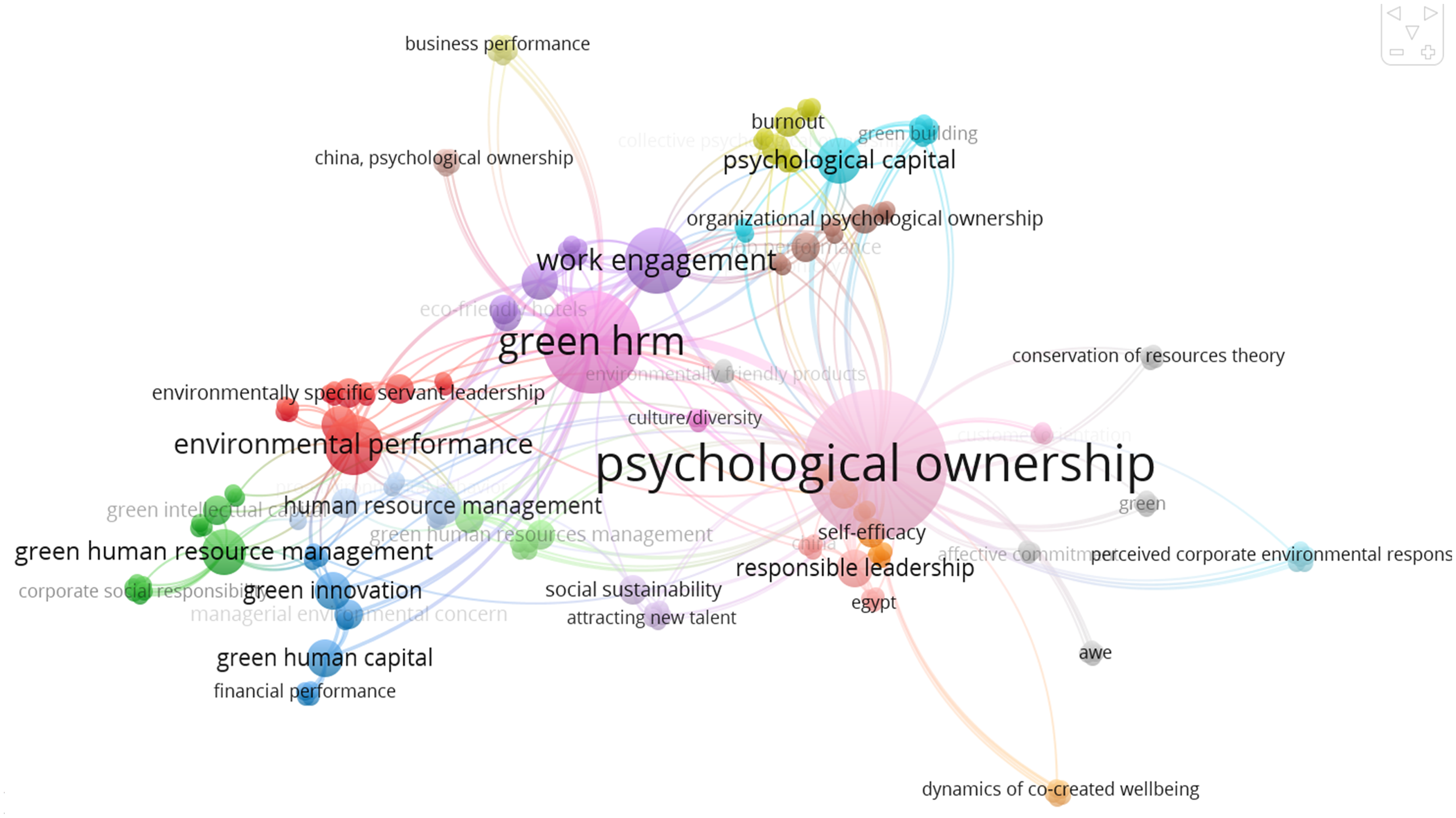
Co-occurrence keyword analysis.
The network is defined by the arrangement of its nodes (circles) in terms of their size and distance, as well as by the strength of the lines (edges) joining them together. Node Size (Frequency): The diameter of a keyword's circle is a visual representation of its weight or frequency, indicating how often that term occurs in the titles, abstracts, and keywords of the publications being analysed. The largest node, psychological ownership, turns out to be the central and most frequently studied topic. Edge Thickness (Co-occurrence): The edges between the nodes symbolise co-occurrence. The presence of thick and many lines between two keywords implies a strong connection between their themes and shows that the two concepts are often researched in the same papers. Clustering (Thematic Areas): The placement of nodes into different areas (shown by their closeness) indicates the main thematic clusters or sub-fields of research. The map distinctly marks out several interlinked areas that are based on specific core ideas.
Cluster 1 (Pink) focuses on psychological ownership, which is evident in keywords such as “psychological ownership; empowering leadership; self-efficacy; job demands-resources; membership identification.” These keywords suggest a shared research interest in understanding how individuals perceive and relate to their roles and responsibilities within organizations.35,36 Psychological ownership explores the sense of possession and investment employees feel towards their work, affecting behaviors like in-role performance and workplace deviance. Scholars in this cluster likely investigate how fostering psychological ownership can enhance employee engagement and reduce workplace deviance through leadership styles and organizational support mechanisms.37,38
Cluster 2 (Purple) emphasizes work engagement, with keywords like “work engagement, job satisfaction, burnout, work engagement; safety citizenship behavior.” This cluster centers on how individuals interact with their work environment emotionally, cognitively, and behaviorally. 39 Researchers here explore factors influencing work engagement, including leadership styles, job demands and resources, and organizational climates such as psychological safety and ethical leadership.26,27 The focus is on understanding how to cultivate positive work experiences that lead to high levels of engagement, job satisfaction, and safety citizenship behaviors, which are crucial for organizational productivity and employee well-being.
Cluster 3 (Blue) revolves around green human capital, evident in keywords such as “green behavior; green HRM; environmental management; green human resource management.” This cluster explores how organizations manage and develop human capital towards environmental sustainability.40,41 Researchers investigate the integration of green practices within human resource management, such as sustainable skill development, green values, and creating a psychological green climate. 42 The aim is to understand how organizations can enhance their environmental performance and competitiveness through strategic HR practices and employee engagement in green initiatives.
Cluster 4 (Green) focuses on green human resource management (HRM), highlighted by keywords like “green HRM; green innovation; environmental performance; green intellectual capital.” This cluster examines how HRM practices contribute to organizational sustainability and environmental stewardship. 43 Scholars study topics such as green recruitment, leadership's role in promoting a green psychological climate, and the development of green innovation within organizations.41,44 The emphasis is on leveraging HRM strategies to foster a culture of sustainability and enhance organizational performance in environmental dimensions.
Overall, these clusters illustrate the interconnectedness of research themes related to organizational behavior, HRM, and environmental sustainability. They highlight how psychological factors (ownership, engagement) intersect with green initiatives and HRM practices to drive organizational success and sustainability. Collaboration across these clusters enhances understanding of complex organizational dynamics and informs strategies for fostering sustainable practices and employee well-being in modern workplaces.
Discussion
The comprehensive review and bibliometric analysis conducted in this study shed light on the evolving landscape of research concerning green human capital, work engagement, and psychological ownership from 2017 to 2023. By systematically categorizing and analyzing 50 relevant studies, the research addresses three key research questions aimed at uncovering recent trends, keyword usage patterns, and prominent contributors in this interdisciplinary field.
Firstly, RQ1: What have been the recent research trends in green human capital, work engagement, and psychological ownership publications in terms of time, subjects covered, and geographical distribution? The study identifies a clear trajectory in research trends over the examined period. It highlights an increasing focus on the intersection of psychological ownership, work engagement, and green human capital within organizational contexts. This trend underscores a growing recognition of how employee perceptions, attitudes, and behaviors toward their work and the environment influence organizational outcomes. Geographically, the analysis identifies leading nations contributing to this body of knowledge, providing insights into global research leadership and regional disparities in research activity and focus.
Secondly, RQ2: What keywords were used in journal articles from 2017 to 2023, and how have the trends for each year developed for these keywords? The keyword analysis reveals nuanced shifts in research emphasis across the years. Keywords such as psychological ownership, work engagement, and green HRM consistently emerge, indicating core areas of investigation. The evolving nature of these keywords reflects changing research interests and emerging priorities within the academic community studying organizational behavior and sustainability. This analysis not only serves to map out thematic developments but also provides a basis for understanding the interconnectedness of concepts and the evolution of research paradigms over time.
Thirdly, RQ3: Which nations, authors, journals, and academic publications are leading the way in the field of green human capital, work engagement, and psychological ownership publications research? The identification of leading authors, journals, and academic publications offers valuable insights into the scholarly landscape of this interdisciplinary field. Prominent journals, such as those published by Elsevier, Emerald, MDPI, and Springer, are central to disseminating research on green human capital and work engagement. The identification of these journals underscores their influence in shaping the academic conversation around sustainability, HRM practices, and psychological ownership. By pinpointing influential contributors and impactful outlets, the study provides a roadmap for researchers seeking to engage with and contribute to ongoing debates and advancements. This aspect of the analysis underscores the collaborative nature of research in this area and highlights key stakeholders driving innovation and knowledge dissemination.
Human capital, particularly green human capital, is key to an organization's sustainable performance, but work-family conflict and workplace abuse hinder employee engagement and productivity,45,46 Additionally, psychological capability plays a vital role in enhancing individual well-being and organizational success. It positively impacts physical and mental health, work engagement, and job performance. 47 Addressing these challenges is crucial for the promotion of a motivated and effective workforce.
Shah et al. 48 study looks at how Green Human Resource Management (GHRM) research has grown from 2002 to 2022 using data from two big databases. It gives a wide view of the topic across different fields and shows the main trends and research groups. The existing study focuses on recent research from 2017 to 2023 about green human capital, work engagement, and psychological ownership, looking closely at specific ideas and important authors. Nermin Kişi's 49 study examines employee engagement more broadly from 2002 to 2022, with many articles from one database. It highlights main themes like job satisfaction and teamwork, and shows how countries and researchers work together. While Shah et al. and the existing study focus more on green HRM and related psychological ideas, Kişi's study looks at employee engagement in general and points out new areas to study, like leadership and technology. Together, these studies give both detailed views of how green HRM and employee engagement research have developed.
Conclusion
This study looked at research from 2017 to 2023 on green human capital, work engagement, and psychological ownership by reviewing 50 important articles. It found that more and more researchers are focusing on how employees’ feelings of ownership and engagement connect with eco-friendly HR practices in organizations. The study showed which countries and journals are leading this research and highlighted key topics like green HRM and work engagement. It also pointed out that while green human capital is important for a company's success, problems like work-family conflict and workplace abuse can lower employee engagement and productivity. Psychological factors, such as mental well-being, play a big role in improving how employees perform and feel at work. Overall, these findings help organizations understand how to support their employees better while promoting sustainability.
In conclusion, this study advances our understanding of how psychological factors intersect with environmental sustainability and human resource management practices to shape organizational dynamics and employee outcomes. By synthesizing existing knowledge and highlighting research gaps, it contributes to the theoretical foundations of green human capital, work engagement, and psychological ownership. Moreover, the findings offer practical implications for organizations aiming to foster sustainable practices and enhance employee well-being through strategic HRM interventions.
Implication
The implications drawn from this study are manifold and crucial for both academic research and practical organizational management. By elucidating the interconnectedness of green human capital, work engagement, and psychological ownership, the findings underscore the importance of integrating sustainability principles into HRM practices. Organizations can leverage these insights to foster a culture that promotes employee engagement and ownership, thereby enhancing organizational performance and sustainability. Understanding the dynamics of psychological ownership and work engagement enables leaders to implement strategies that cultivate a sense of purpose and responsibility among employees, leading to higher levels of job satisfaction and reduced turnover. Moreover, the emphasis on green HRM highlights the strategic advantage of aligning HR practices with environmental goals, facilitating innovation, and improving organizational competitiveness in sustainability. Ultimately, these implications guide organizations in developing holistic approaches that not only optimize employee well-being but also contribute positively to environmental stewardship and overall organizational success in the modern, globalized economy.
Practical implications
The findings of this study also carry significant practical implications for organizations. Psychological ownership has been shown to have the potential to decrease behavioral issues, such as turnover and disengagement, and to increase work engagement. However, this is contingent on organizational factors, such as leadership style and the presence of supportive green HRM practices. Organizations that successfully integrate sustainability into their HRM strategies are likely to see higher levels of employee engagement and organizational commitment, as employees feel a greater sense of ownership over their work and the company's environmental initiatives. Moreover, this study highlights the importance of incorporating green human capital initiatives into organizational practices. By developing a culture of psychological ownership and work engagement, organizations can create a more sustainable and engaged workforce. HRM interventions that promote green values, sustainability initiatives, and employee well-being are essential in achieving these outcomes. HR professionals, managers, and leaders should understand the impact of psychological ownership and integrate it into their talent management and employee engagement strategies. Policymakers can consider the role of psychological ownership in shaping labor market dynamics and designing policies that support employee well-being and productivity. By promoting psychological ownership in the workplace, we can contribute to a more engaged and productive workforce, leading to a more prosperous and healthier society overall.
Limitations and future research scope
The limitations of the current study primarily revolve around the scope and selection criteria of the included publications. By excluding reputable journals from major publishers such as Elsevier, Emerald, and Wiley, there is a risk of missing out on potentially significant studies that could provide further insights into the intersection of green human capital, work engagement, and psychological ownership. Additionally, the dataset covering 2017 to 2023 may not encompass the latest developments or emerging trends in this field, potentially limiting the comprehensiveness of the findings. The study is limited by its reliance on quantitative bibliometric analysis, which may overlook qualitative nuances and deeper contextual factors influencing the studied relationships. Future research could address these limitations by broadening the inclusion criteria to incorporate a wider range of sources and extending the timeframe to capture more recent publications. Furthermore, investigating specific industry contexts or geographical regions that may influence the relationship between green human capital and employee outcomes could provide a more nuanced understanding of these dynamics. Future research should integrate mixed-method approaches, combining bibliometric analysis with qualitative data, to better understand how green human capital initiatives impact psychological ownership and work engagement at the organizational level. Finally, qualitative studies exploring the lived experiences of employees within organizations committed to sustainable practices could offer valuable insights into the mechanisms through which green human capital impacts psychological ownership and work engagement.
Footnotes
Acknowledgements
All authors have made substantial contributions to the conception and design, revising the manuscript, and the final approval of the version to be published. Also, all authors agreed to be accountable for all aspects of the work in ensuring that questions related to the accuracy or integrity of any part of the work are appropriately investigated and resolved.
Ethical approval
Not Applicable.
Informed consent
Not Applicable.
Funding
This research did not receive any specific funding.
Declaration of conflicting interests
The authors declared no potential conflicts of interest with respect to the research, authorship, and/or publication of this article.