







Abstract
Background
Workplace Safety Risk Assessment (WSRA) is a fundamental tool for identifying hazards and preventing accidents in the workplace. Despite its widespread use, there is a lack of comprehensive understanding regarding the current state and potential pitfalls of WSRA methodologies in the Iranian context.
Objective
The objective of this study was to analyze the current state of semi-quantitative WSRA practices in Iran, highlighting potential pitfalls and areas for improvement.
Methods
An online data-gathering form was designed and distributed to a diverse sample of Iranian safety professionals involved in the WSRA process (n = 412). Descriptive statistics were employed to interpret the findings.
Results
The study findings revealed that a majority of organizations in Iran rely on semi-quantitative approaches for conducting WSRA. The study also highlighted significant variations in WSRA practices, both in terms of completeness and quality of implementation. In addition, the study identified and prioritized 24 barriers and pitfalls to successful WSRA implementation. These factors contribute to ineffective risk assessment outcomes and jeopardize workplace safety.
Conclusions
The findings of this study highlight the need for greater attention to be paid to WSRA in Iran and suggest several areas where improvements can be made to enhance the effectiveness of this important safety tool. The insights gained from this research can inform policymakers, safety professionals, and organizational managers in Iran about the pitfalls and challenges associated with existing WSRA methods, contributing to the development of more effective and robust workplace safety strategies.
Introduction
Despite advancements in workplace safety management, the rate of accidents in workplaces remains alarmingly high. According to data provided by the Ministry of Labor of Iran, an average of approximately 1000 workers lost their lives due to work-related accidents between 2013 and 2022. 1 These accidents inflict detrimental consequences upon workers, employers, families, and communities. The objective of Occupational Health and Safety (OHS) is to mitigate or prevent such unfortunate occurrences. To achieve this goal, risk assessment is a useful and preventive tool used by occupational health and safety specialists and employers to control workplace hazards.2,3
Various definitions of risk have been proposed in the scientific literature. Traditionally, risk has been defined as “the combination of frequency or the probability of events and the degree of damages or consequences of these events.” However, more contemporary scientific works have incorporated the concept of uncertainty, and risk is defined as uncertainty about the occurrence of events and their consequences. Risk management is widely acknowledged as a crucial and obligatory procedure for the successful implementation of occupational health and safety programs. This process involves several key steps, including identification of potential hazards, estimation and evaluation of the level of risk, and determination of mitigation measures.2,4,5
Although the concept of risk and risk assessment is very old, since the 1970s and 1980s, health and safety risk assessment methods became widespread in the workplace in a scientifically rigorous manner.6,7 In the case of Iran, risk assessment methods for occupational safety have gradually gained acceptance over the past two decades, to the point where risk assessment is now considered a fundamental and indispensable element of occupational safety management, and almost any action in the field of safety originates from risk assessment. Through the provision of a suitable framework for risk identification, evaluation, and prioritization of control solutions, risk assessment establishes a valid and appropriate decision support system for safety professionals and managers.2,8
Many techniques exist for conducting safety risk assessments in the workplace, which can be broadly categorized into three classes based on the risk analysis step: qualitative, semi-quantitative, and quantitative techniques. Qualitative techniques analyze risk using categories such as “low,” “medium,” and “high,” relying on subjective judgment without numerical data. Semi-quantitative techniques enhance this approach by assigning numerical values to these categories, enabling scoring and comparison; however, these values are still based on expert judgment rather than precise data. In contrast, quantitative techniques use measurable statistical data to calculate risk values in specific numerical units, resulting in a more objective evaluation. Semi-quantitative techniques offer greater accuracy and enhance comprehension when compared to qualitative techniques. Additionally, they are relatively easier to implement and have a broader scope than quantitative techniques. As a result, semi-quantitative techniques find more extensive application within workplaces.2,8,9
Despite the prevalent utilization of semi-quantitative WSRA in maintaining and improving occupational safety, our review indicates that no field study has been conducted to analyze the state of WSRA in Iran. Consequently, there is a lack of general knowledge regarding the various aspects of WSRA and their qualitative characteristics, which leaves many aspects of risk assessment unknown. State analysis can play a pivotal role in identifying and elucidating current strategies and activities, contextual factors, strengths, weaknesses, threats, and opportunities for improvement related to WSRA. Through this process, state analysis can facilitate the targeting and systematization of future efforts and activities in the field of WSRA while providing guidance to avoid wasting time and resources on repetitive or erroneous activities in this domain. Moreover, incorporating the perspectives and experiences of stakeholders (risk assessors) in the state analysis process facilitates the implementation of any intervention aimed at enhancing the quality of WSRA. Ultimately, the outcomes of this study can serve as a practical reference for macro-level decisions in the sphere of workplace safety management.
Method
This study employed a cross-sectional online survey to investigate the state of WSRA in Iran. Figure 1 provides a schematic overview of the sequential steps in the study, and the following subsections provide a detailed explanation of each step.
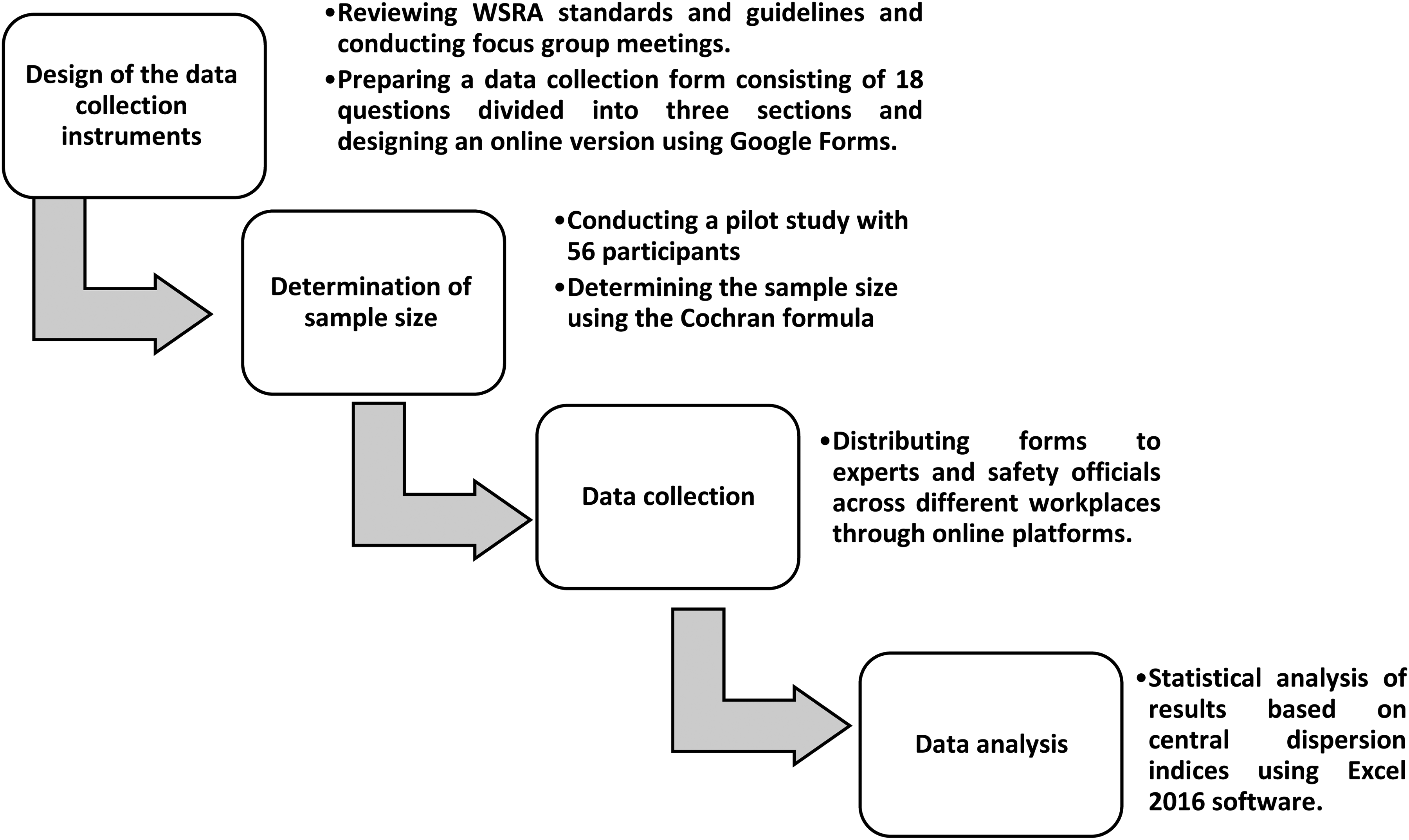
Steps of study.
Design of the data collection instruments
The study instrument used to collect data was designed specifically for this study. The form was developed through a comprehensive review of standards, guidelines, and existing research, complemented by multiple focus group meetings conducted by the research team. This process identified important aspects and variables relevant to semi-quantitative WSRA, which were subsequently refined and incorporated into a final data collection form. The form consisted of three sections and a total of 18 questions (Supplementary File 1). The first section contained five general questions addressing participant information such as their field of study, work experience in workplace safety, familiarity with WSRA methods, the type of organization they were affiliated with, and the life cycle stage of their organization. The second section comprised 12 specific questions exploring different dimensions of semi-quantitative WSRA. The final section presented a 24-choice question aimed at identifying the most significant pitfalls and barriers encountered when conducting WSRA. The design of these questions was based on the ISO 31000:2018 standard, covering areas such as scope, context, criteria, risk identification, risk analysis, risk evaluation, risk treatment, recording and reporting, monitoring and review, and communication and consultation. 4 To enhance coherence and achieve integrated results, all questions except for the question on work experience were multiple-choice. Additionally, to capture useful information, each question included an “other” option with the ability to record explanations, and participants could select more than one option where applicable. The final data collection form was designed using the Google Forms platform, which offers several advantages, including being free, accommodating an unlimited number of variables and participants, and automatically transferring data into Excel spreadsheets.10,11
Determination of sample size
The target population for this study comprised safety experts responsible for conducting WSRA in Iran. The sample size was determined using Cochran's formula, represented by the following equation:
12

Where:
n = required sample size Z = Z-value corresponding to the desired confidence level p = estimated proportion of the attribute present in the population d = desired margin of error (precision)
Since there was no prior data on the target population, we conducted a preliminary online pilot study with 56 participants to estimate the proportion (p) and margin of error (d). Based on the data obtained from the pilot study and the aforementioned formula, the required sample size was calculated to be 386 participants. Ultimately, 412 individuals participated in the study, as the online form was kept open. A non-probability available sampling method was used because there was no comprehensive national sampling frame of all safety professionals.
Data collection
In order to fulfill the study objectives, it was necessary to gather information from various workplaces with a wide geographical distribution. Traditional methods of data collection were deemed impractical due to their time-consuming and expensive nature. Therefore, an online survey method was employed for data collection. This method offered several advantages over classic data collection techniques, including ease of designing and distributing data collection tools, reduced costs, high response rates, minimized incomplete questionnaires, and extensive data collection potential across wider geographical areas. However, online research methods are not without limitations. The absence of an interviewer may result in missing useful information due to ambiguity in questions.13,14 To overcome this limitation, the online form utilized in this study was designed to be as simple and straightforward as possible, with additional guidance provided within the questions or through linked online resources.
Once the online form was designed using the Google Forms platform and underwent final checks, the relevant link, along with an initial explanation, was disseminated to participants through various internet media, including email, LinkedIn, WhatsApp, and Telegram. The description section of the online form included information on the study's purpose, participant requirements, the approximate time required to complete the form, and methods for contacting the research team. Although there was no comprehensive database of safety officials in Iranian workplaces, diligent efforts were made to distribute the form extensively across diverse workplaces with an appropriate geographical distribution. The online form was open from January 10 to May 17, 2023, without imposing any mandatory completion criteria for respondents. To ensure complete responses, the online form was designed such that individuals could only submit their answers after responding to all questions. The Ethics Committees of the schools of health and nutrition at Shiraz University of Medical Sciences have waived the requirement to obtain informed consent from participants.
Data analysis
Data analysis for this study was conducted using Microsoft Excel 2016 (Microsoft Corporation, USA). Descriptive statistics, such as frequencies, percentages, and means, were employed to summarize participants’ responses and describe the study variables.
Results
The average work experience of the participants in the field of workplace safety was approximately 9 years, and 86% of them had university education related to workplace safety. Also, 58% of participants had attended WSRA workshops. Detailed information regarding the type and phase of the workplace of the study participants can be found in Figure 2.
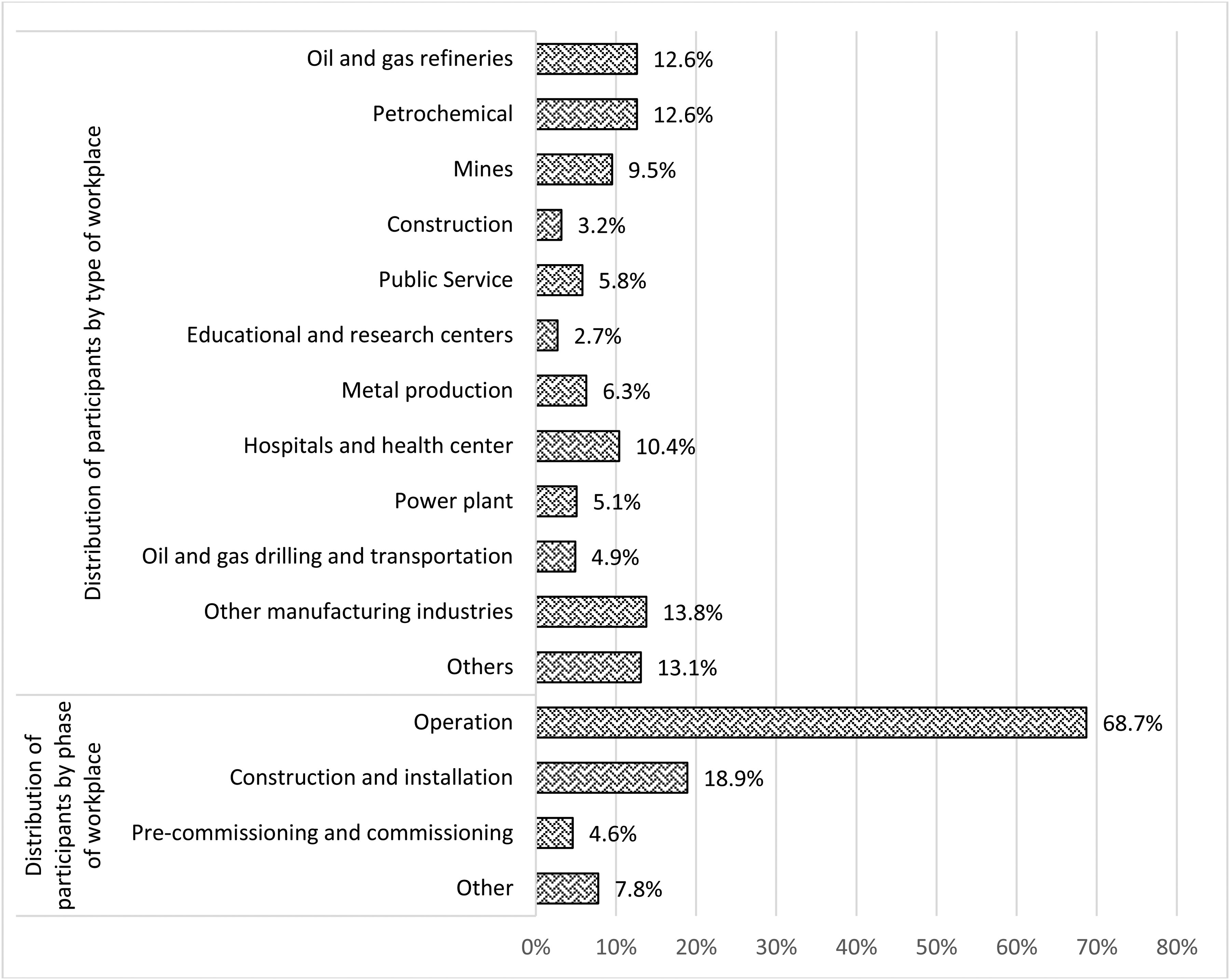
Distribution of participants by type and phase of workplace.
Figure 3 illustrates the results of ten general techniques employed in the context of WSRA. Notably, the most commonly utilized techniques include Failure Mode and Effects Analysis (FMEA), Job Safety Analysis (JSA), and checklists. Figure 4 provides insights into the utilization of specific purpose WSRA techniques, while Figure 5 presents the extent of coverage or completeness of WSRA across various areas. It is evident from the data that the highest level of achievement is observed in the risk assessment of routine activities; however, this aspect is done completely in only 59.5% of organizations.
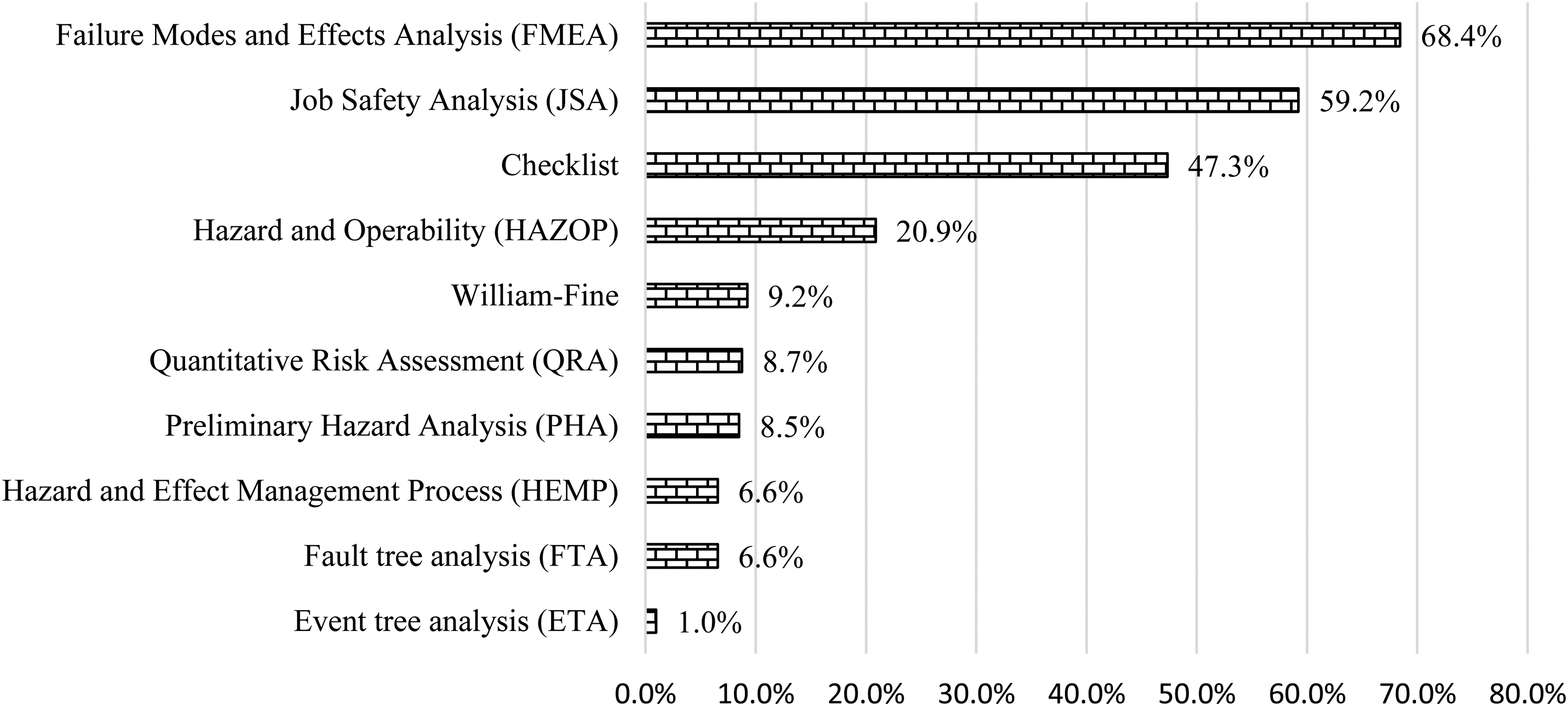
Distribution of general WSRA techniques in Iran's workplaces.
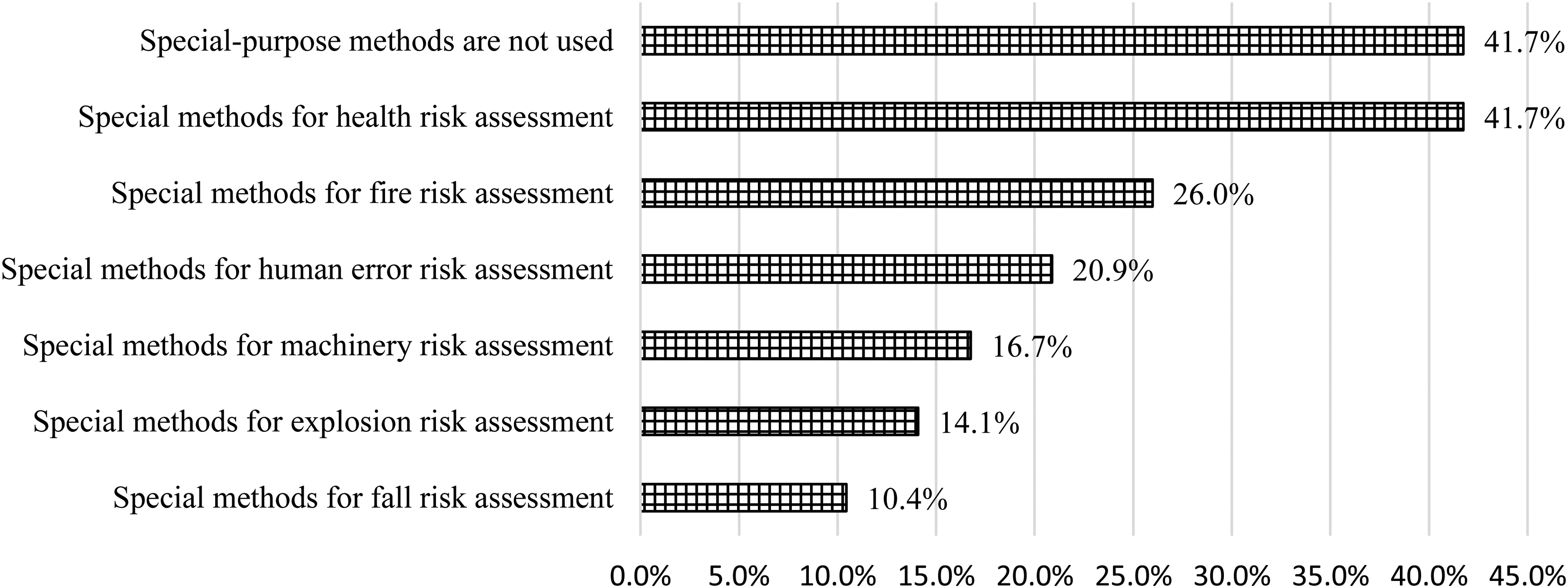
Distribution of specific purpose WSRA techniques in Iran's workplaces.
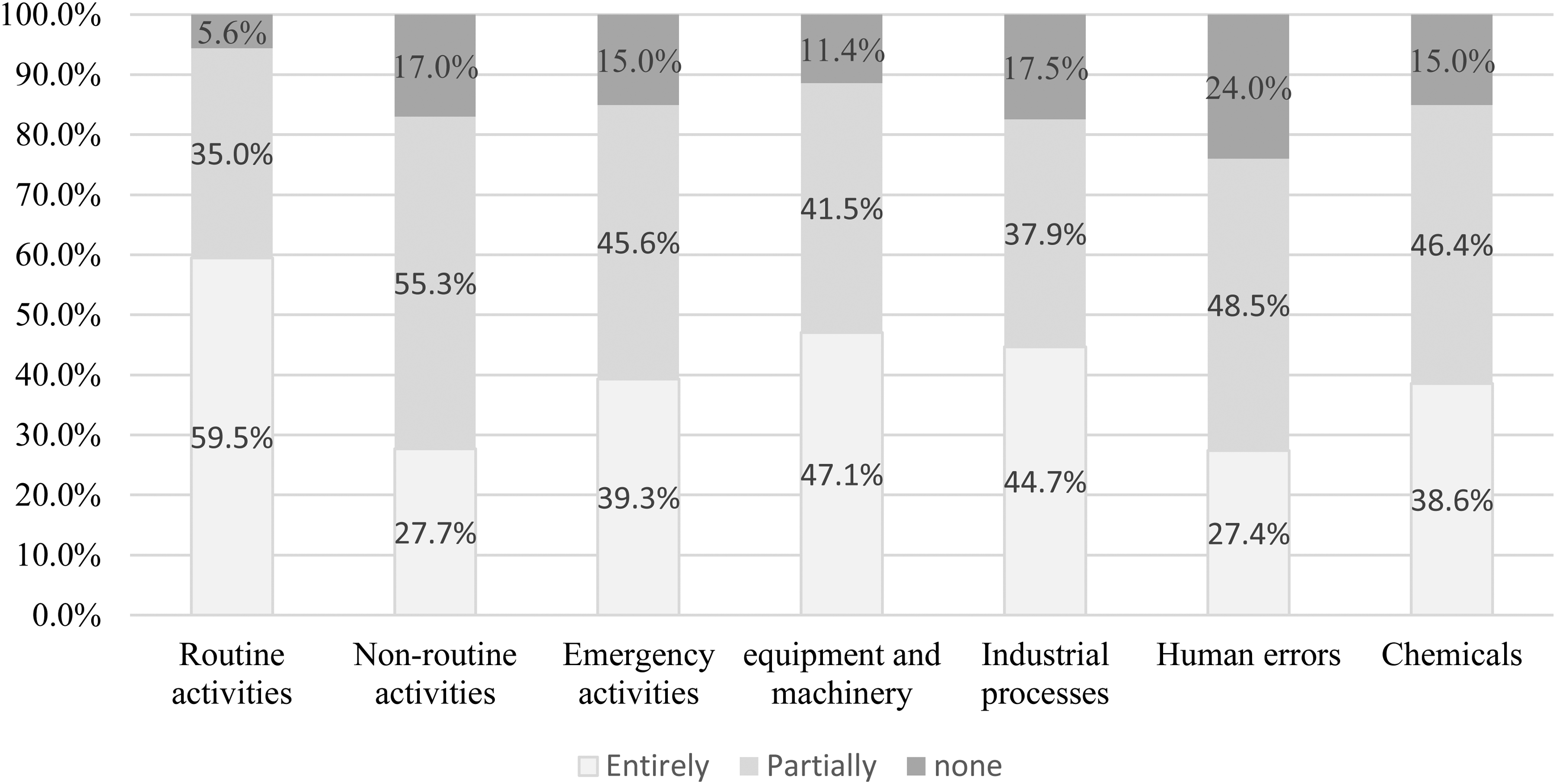
Degree of completeness of WSRA in the potential risk areas.
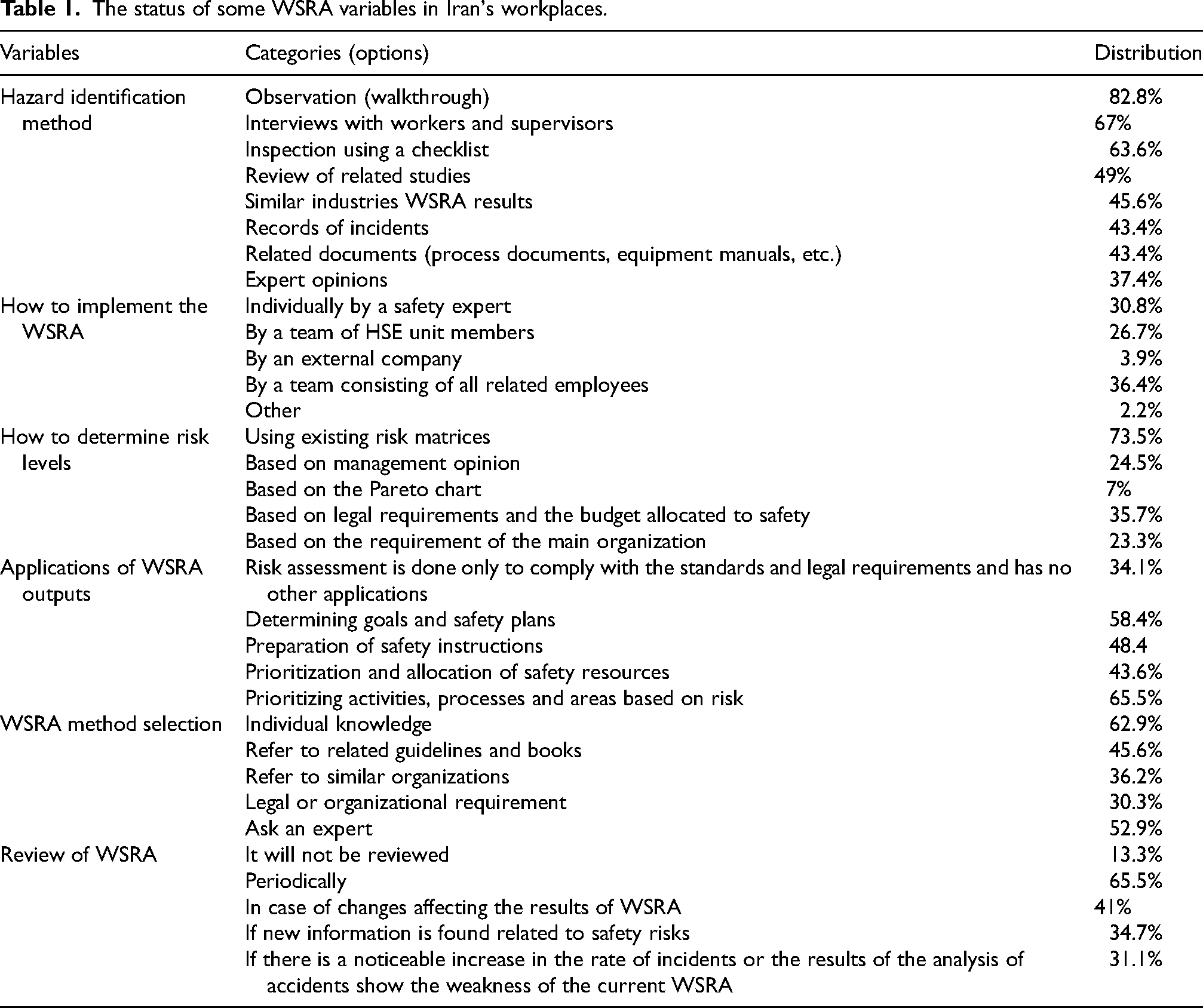
The findings indicate that 73.1% of the surveyed workplaces have a documented procedure for executing the WSRA. In 16.5% of the workplaces, the WSRA is partially reliant on a documented procedure, and in 10.4% of the workplaces, there is an absence of a documented WSRA procedure. Also, the results of the study showed that only 22.8% of the workplaces use software as the primary or supplementary tool in performing the WSRA. Figure 6 provides a graphical illustration of the utilization of various types of risk matrices. Further details pertaining to other variables of the study can be found in Table 1.
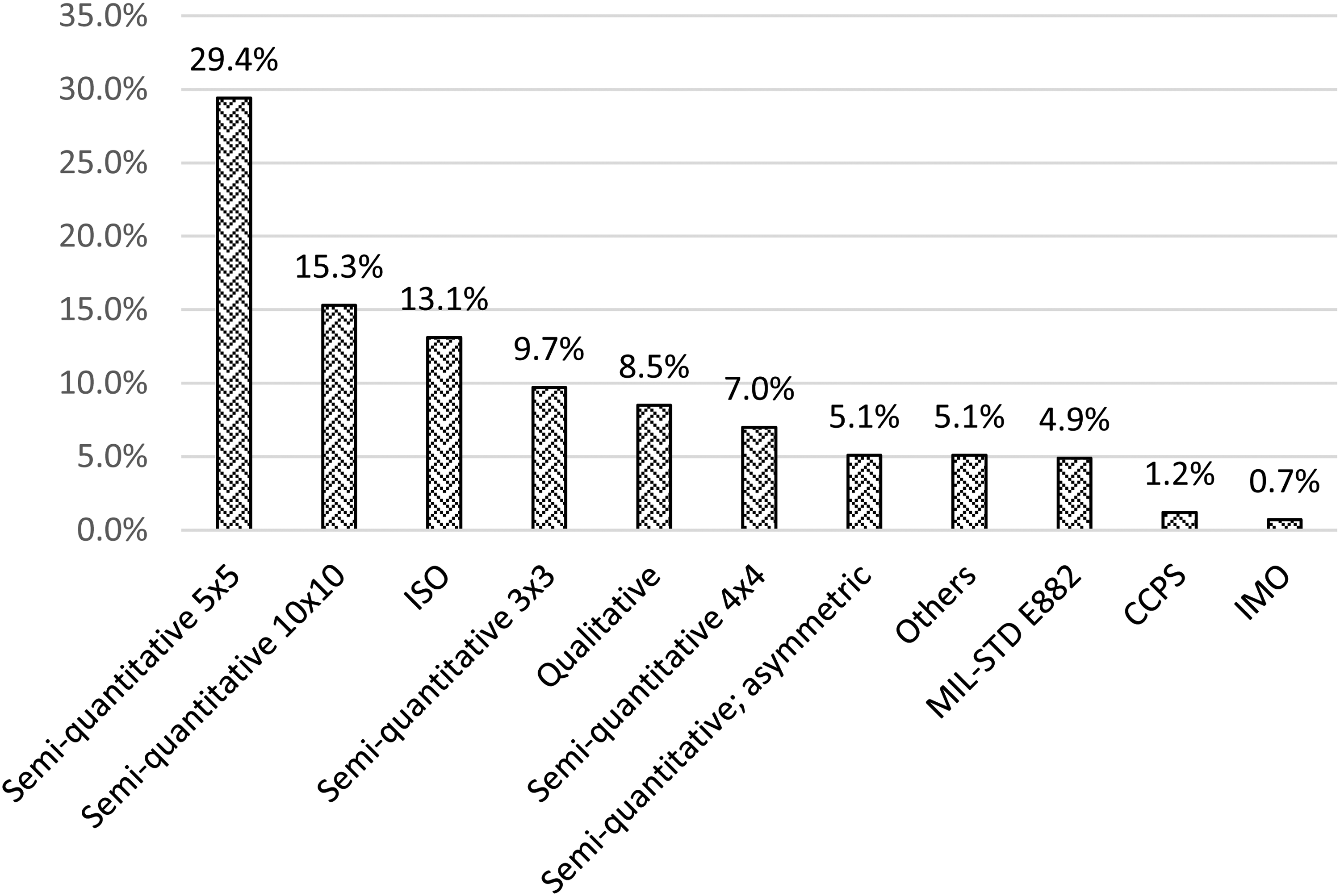
Distribution of risk matrices used in Iran's workplaces.
The status of some WSRA variables in Iran's workplaces.
In Figure 7, the findings regarding the barriers and pitfalls of WSRA in Iranian workplaces are presented. It can be observed that among the examined factors, “Lack of management commitment and resource allocation to WSRA” is the most prevalent. Overall, the mean distribution of these factors in Iranian workplaces is approximately 26%, which is significantly high.
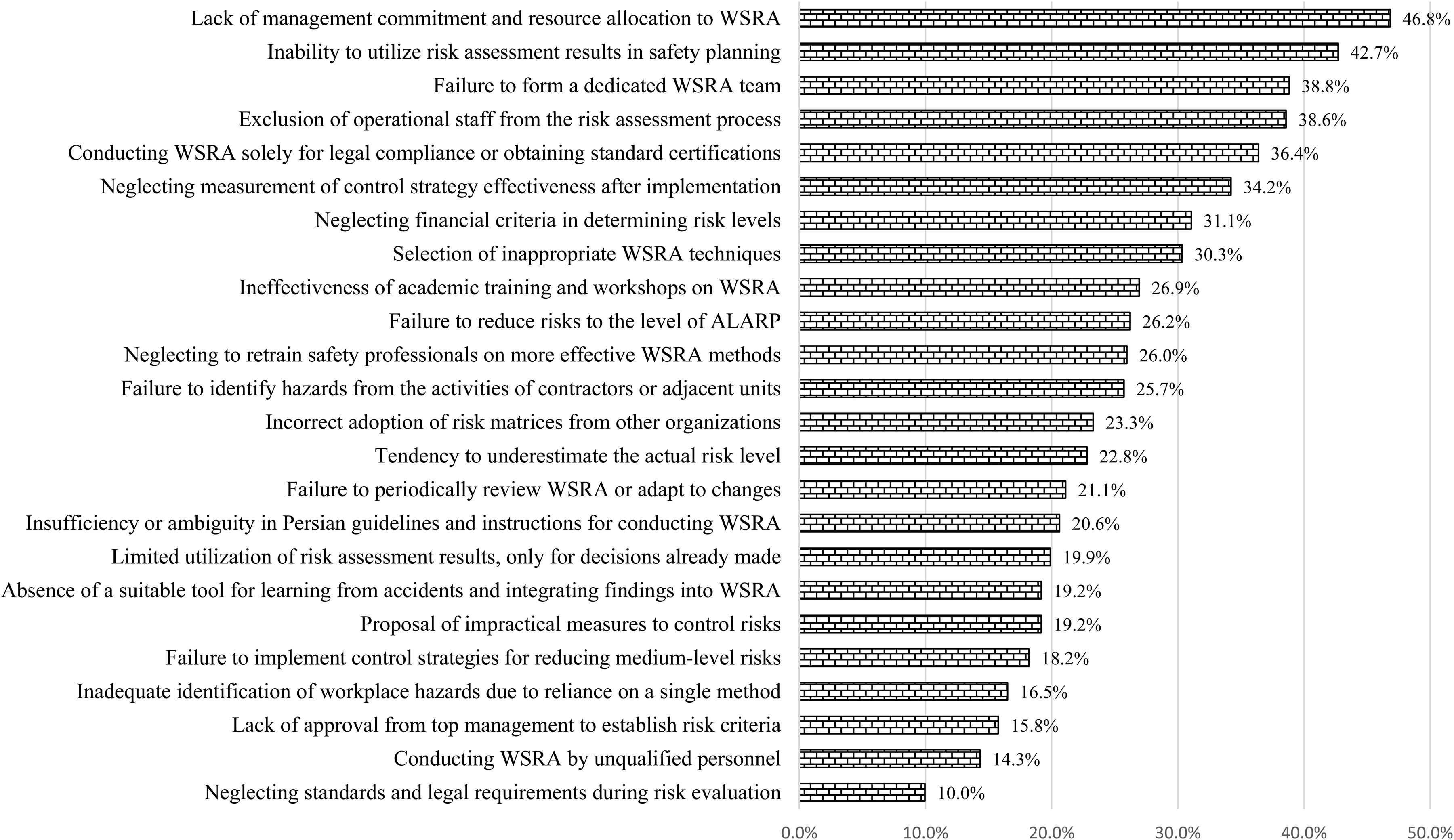
Distribution of WSRA pitfalls and barriers in Iran's workplaces.
Discussion
The study aimed to analyze the current status of semi-quantitative WSRA practices in Iran, highlighting challenges and areas for improvement. Findings indicate that academic courses are crucial for acquiring WSRA knowledge and skills, necessitating greater focus on risk assessment in curriculum planning. This can be achieved by increasing risk assessment course units, aligning content with practical needs, incorporating real-world examples, facilitating industry-based projects, adopting interactive teaching methods, consulting experts, and maintaining ongoing evaluation and feedback. Additionally, approximately 16% of risk assessors lack formal education in safety-related fields and university-level training in risk assessment, underscoring the need for enhanced training workshops and improved materials.
The study found that Failure Mode and Effects Analysis (FMEA), Job Safety Analysis (JSA), and checklists are the most commonly used WSRA techniques in Iran, while quantitative risk assessment (QRA) techniques are limited. FMEA's popularity stems from its applicability in identifying failures in hardware, software, and processes. Although a version of this method is widely utilized in Iranian industries to assess the risks associated with human activities, there exist substantial concerns regarding its validity and reliability. JSA is frequently adapted for risk assessment, valued for its simplicity and effectiveness in determining training needs and work instructions.8,15,16 Risk assessment of human activities is more prevalent than in other areas, reflecting the widespread use of this technique. Checklists serve various purposes in workplace safety, primarily to identify hazards and support risk assessment.
Notably, despite the prevalence of multicriteria decision-making (MCDM) and fuzzy methods in research to enhance risk assessment accuracy in Iran17–20 there are no reported instances of these methods being applied in workplace. This reveals a significant gap between research practices and their practical application in risk assessment methodologies.
The study found that 41.7% of workplaces do not use specific purpose WSRA techniques, and only 41.7% conduct specialized health hazard risk assessments. Given the different nature of safety and health risks, employing similar techniques may not be suitable. 21 Among safety risks, specific fire risk assessment techniques are the most commonly used, with a 26% usage rate. Although specific purpose WSRA techniques have a limited scope, they provide greater accuracy and sensitivity by considering various factors affecting risks and accidents. Therefore, it is recommended to adopt specific WSRA techniques for precise evaluation of workplace hazards.
The completeness of the WSRA was another key focus of this study. Among the seven areas examined, routine activities demonstrated the highest level of comprehensiveness, yet this still fell below 60%. This indicates that most organizations do not thoroughly cover all objectives in their risk assessments, which limits their effectiveness in identifying and controlling workplace hazards. Supporting this finding, a study by Lenhardt and Beck found that only one in four German companies conducted WRAs that met essential procedural requirements and comprehensively addressed potential risk areas. 22
About 27% of organizations conduct WSRA without a documented procedure, indicating informal assessments. A written WSRA procedure is crucial as it enhances compliance, systematizes documentation, increases management commitment, clarifies roles in the risk assessment process, and boosts employee participation, ultimately improving WSRA.4,15 Furthermore, only 22.8% of organizations use software for safety risk assessment, primarily relying on electronic forms or in-house software of questionable validity. Reliable software can enhance risk identification, standardize assessment templates, automate workflows, manage data effectively, and improve communication among employees involved in the risk assessment process, thereby increasing WSRA quality and efficiency.
Forming a team comprising all relevant individuals is generally considered the standard and accepted method for WSRA. However, this study finds that only 36.4% of organizations use this approach. This discrepancy may stem from insufficient management commitment and a lack of a documented procedure for conducting risk assessments. According to ISO 31000, senior management is responsible for updating and integrating the risk assessment process, defining responsibilities, and involving personnel in WSRA. 4
The study reveals that semi-quantitative risk matrices of 5 × 5 and 10 × 10 are the most commonly used in workplaces, while qualitative matrices are used to a lesser extent (8.5%). In qualitative risk matrices, probability and severity are expressed using qualitative scales, whereas semi-quantitative matrices use numerical representations, which reduces ambiguity. Increasing the severity and probability classes enhances the reliability and resolution of the matrix, improving the accuracy of risk assessments. Well-designed matrices are crucial for decision-making regarding risks and can significantly reduce uncertainties in the assessment process. 23
Successful risk assessments depend on identifying all workplace hazards. Organizations should use all available methods to gather data for WSRAs. 4 However, this study shows that the use of multiple information-gathering methods is limited, with only one method employed in 12.6% of organizations. For instance, interviewing employees and supervisors, a reliable method for identifying risks, is used in only 67% of workplaces. To improve this, it is recommended to train risk assessors, adopt new technologies, and establish standard protocols for hazard identification.
The results showed that organizations use different methods to determine risk levels and criteria. However, scientific methods based on organizational capabilities to assess risk levels are underutilized. Most organizations rely on existing risk matrices, which is inadequate given the significant differences in financial, technical, managerial, and social factors among them. While several studies employ multi-criteria decision-making (MCDM) methods for risk assessment and prioritization,17–19,24 none of the organizations surveyed reported using these methods. A possible reason could be a lack of familiarity with MCDM methods and their complexity. Therefore, to address the impact of various factors on risk criteria, it is recommended to enhance awareness among experts and managers regarding MCDM-based tools.
The selection of an appropriate technique is crucial for performing WSRA. It requires careful consideration of the technique's strengths, weaknesses, goals, and application scope. 25 The present study reveals that multiple methods are used to select a suitable technique. However, the use of these methods is not error-free. The study results indicate that individual knowledge (62.9%) plays the most significant role. WSRA techniques vary widely, each with its own advantages, disadvantages, and specific application domains. A lack of knowledge about these techniques may lead to inappropriate selections. Moreover, choosing a technique based on modeling similar organizations may not guarantee the correct selection, as fundamental differences may exist between organizations.
Despite guidelines emphasizing the need for up-to-date WSRA, this study showed that 13.3% of organizations do not review WSRA at all. In the remaining organizations, reviews are often not conducted according to required conditions; only 65.5% perform periodic revisions. Failure to review risks as specified not only represents significant noncompliance but also creates a false sense of safety, as changes are not reflected at the organizational level, potentially increasing the actual level of risk and the likelihood of accidents. To address this, organizations need a systematic and documented procedure for conducting WSRA that includes a review plan.
The results regarding barriers to effective WSRA implementation highlighted the prevalence of identified factors. Participants most commonly reported a lack of management commitment and resource allocation to WSRA. Several studies emphasize the critical role of senior management in managing safety and reducing accidents. The ISO 31000 standard also highlights commitment and leadership as key elements of risk assessment. 4 Increasing managers’ awareness of risk assessment, establishing written executive guidelines and procedures, implementing occupational health and safety management systems, and establishing monitoring procedures to evaluate performance are vital for improving risk assessment.
Practical and theoretical implications
From a theoretical perspective, despite the numerous studies conducted on workplace safety risk management in Iran, a comprehensive field study examining the overall situation has yet to be undertaken. This research represents the first large-scale field study analyzing the status of semi-quantitative WSRA in Iran. Its results offer a thorough understanding of current practices, the quality of implementation, as well as the barriers, strengths, and weaknesses in this area, providing a scientific foundation for future research.
From a practical perspective, the findings of this study can serve as valuable input for macro-level interventions aimed at improving workplace safety risk management in Iran, particularly for policymakers and legal authorities in the field of occupational safety and health. At the micro level, the study's results assist safety experts and organizational managers in identifying common weaknesses and developing effective solutions to enhance the risk assessment process within their organizations.
Limitations of the study
In this study, an online survey method was employed to collect the necessary data for analyzing the status of risk management in workplaces. This method was chosen due to the nature of the required data—simple and low in uncertainty—and its clear advantages, including ease of design, distribution, and data collection, as well as significantly lower costs compared to traditional data collection methods. Additionally, it offers a reduced rate of incomplete questionnaires and allows for extensive data collection across a broader geographical area, making it a logical and suitable tool for this stage of the study. However, this method has a limitation in controlling study participants effectively. It is particularly difficult to determine and ensure the participation of a specific number of individuals from each cluster, such as industries, organizations, and different geographical areas, in online survey studies. Even if field surveys were conducted for this study, this limitation would not be completely addressed. This is because comprehensive information about workplaces and their safety structures within the country was unavailable at the time of the study.
Conclusion
This study sheds light on the current state of semi-quantitative WSRA implementation in Iran and identifies notable pitfalls associated with its application. As evident from the findings of this study, risk assessment in Iran lacks both in terms of quantity (completeness) and quality, falling considerably short of desired standards. Given that risk assessment plays a crucial role in preventing accidents and enhancing workplace safety, this inadequacy may contribute to the high occurrence of occupational incidents within organizations. Given the poor quality of risk assessment, there is a need to develop comprehensive guidelines and quality control tools to ensure the proper execution of WSRA. To address the various errors in the risk assessment process, regulatory systems and legal inspections should prioritize the quality of risk assessment. Legal inspectors and auditors from standard-issuing organizations should receive proper training to not only assess the completeness of risk assessment but also to emphasize its quality aspects. Furthermore, it is advisable to develop a framework and mechanism for utilizing the outcomes of studies aimed at clarifying and minimizing uncertainties in the semi-quantitative WSRA process. This should be accompanied by the creation of suitable decision-making tools to aid risk assessors. Furthermore, as many of the identified problems stem from management issues and the knowledge and performance of risk assessors, training programs must be developed and implemented to meet the needs of all individuals involved in the risk assessment process.
Supplemental Material
sj-docx-1-wor-10.1177_10519815251413175 - Supplemental material for A current state analysis of semi-quantitative workplace safety risk assessment (WSRA) in Iran: Identifying pitfalls and opportunities for improvement
Supplemental material, sj-docx-1-wor-10.1177_10519815251413175 for A current state analysis of semi-quantitative workplace safety risk assessment (WSRA) in Iran: Identifying pitfalls and opportunities for improvement by Fazel Rajabi, Mojtaba Kamalinia, Moslem Alimohammadlou, Aboubakr Jafarnezhad and Mehdi Jahangiri in WORK
Footnotes
Abbreviations
Acknowledgements
The authors gratefully acknowledge all participants who contributed to this study.
Ethical approval
The present study was approved by the Ethics Committees of schools of health and nutrition- Shiraz University of Medical Sciences, Iran (IR.SUMSU.SCHEANUT.REC.1401.116).
Informed consent
The requirement to obtain informed consent from participants has been waived by the Ethics Committees of schools of health and nutrition- Shiraz University of Medical Sciences.
Author contributions
Conceptualization, FR and MJ; design of the work, FR and MJ and MK; formal analysis and interpretation of data, MA and AJ and FR; writing—original draft preparation, FR; writing—review and editing, MJ and MK and MA and AJ; All authors reviewed the manuscript.
Funding
The authors disclosed receipt of the following financial support for the research, authorship, and/or publication of this article: This study was supported by Shiraz University of Medical Sciences [grant number: 26769].
Declaration of conflicting interest
The authors declare that they have no known competing financial interests or personal relationships that could have appeared to influence the work reported in this paper.
Data availability statement
All data analyses are included in the manuscript. Additional data are available upon request from the corresponding author.
Supplemental material
Supplemental material for this article is available online.
References
Supplementary Material
Please find the following supplemental material available below.
For Open Access articles published under a Creative Commons License, all supplemental material carries the same license as the article it is associated with.
For non-Open Access articles published, all supplemental material carries a non-exclusive license, and permission requests for re-use of supplemental material or any part of supplemental material shall be sent directly to the copyright owner as specified in the copyright notice associated with the article.
