







Abstract
Background
The number of shipyard accidents should be reduced by examining the effects of the various demographic and workplace factors on the severity of the accident.
Objective
The study examines shipyard accidents and various occupational-behavioral-environmental factors affecting these accidents to find minor accidents (or near-misses) that turned out to be major and to examine the effects of factors on the possible consequences of the accidents, to compare the predicted results with the actual results, and to investigate possible hidden reasons for the occurrence of accidents.
Methods
The study uses an accident causality model and conducts experiments with a multi-factor approach on accident causality in the shipbuilding industry through logistic regression and machine learning. It performs an association rules analysis to further enhance the causality model.
Results
Machine learning algorithm outputs yielded results that differed significantly from the apparent descriptive distribution of causes of major accidents. Lack of control and audit stands out as the most important accident factor in the occurrence of major accidents. Design errors and lack of training are also two important administrative factors in the occurrence of major accidents. 38.2% of major occupational accidents in shipyards are preventable or can be overcome with minor injury. In 87% of preventable major accidents, the employee had been involved in one or two previous minor incidents.
Conclusion
Administrative deficiencies are prominent in major accidents. The main employer's workers and managers are at higher risk in terms of major accident exposure. The effectiveness of safety training should be increased in accordance with the changing working environment and technological conditions.
Keywords
Introduction
A significant portion of global trade relies on maritime transport, making the shipbuilding sector crucial for the economic growth of developing countries. However, it is also one of the most hazardous industries. These accidents lead not only to personal tragedies but also to substantial economic consequences, highlighting the need for thorough investigations into their causes and the implementation of effective preventive measures.
The shipbuilding sector is distinctive due to the complex interactions among machinery, materials, and human factors, which makes risk management particularly challenging. Since traditional accident research provides limited insights, there is an increasing demand for specialized studies that explore the causes of accidents using targeted methodological approaches.
In the literature, accident causation theories are categorized into four groups: accident proneness theory, domino theories, injury epidemiology models, and systems theories. Sequential models begin with Heinrich's Domino Theory, while human information processing models explain accidents in terms of human behavior and actions.1–4
One of the sequential accident theories that still maintains its importance today is Petersen's “accident-incident-causation theory”. 5 Accidents occur in a series of logical or statistical sequences, either horizontally or vertically (conical). Various hazardous situations and human behaviors in the workplace can lead to near-miss incidents, followed by minor accidents, and eventually major work accidents in a sequential order. There is substantial evidence in the literature indicating that work-related accidents result from a specific sequence of numerous environmental, human, and administrative risk factors. However, opinions differ regarding the extent to which these factors can influence accidents in terms of time and space. Consequently, there has been a rapid increase in studies that examine a wide range of accident factors—including human, environmental, mechanical, and managerial—while employing multiple methods such as big data, data mining, and machine learning to analyze the causes of accidents.6–10
Many of these studies, which bring new approaches to accident causation, are related to the construction or mining industries, etc., due to their high-risk nature.11–15 Studies in the maritime field, on the other hand, seem to focus mainly on the modeling of marine accidents. Among these, the study by Wang et al. (2019) is important due to its similarity to our study's design. They investigate the causes of ship collision accidents using multiple logistic regression and big data approaches. 16 Li et al. (2024) and Lan et al. (2023) also study marine accidents with Bayesian networks and association rule mining.17,18 Sevgili et al. (2022) also determine oil spill risk by analyzing tankship accidents, and sinking and flooding are the most perilous accidents that increase the likelihood of occurrence of oil spills, and accidents occurring in coastal waterways are more likely to cause an oil spill. 19 Zhou and Thai (2015) use the adaptive neuro-fuzzy inference system (ANFIS) to study the personal injury on oil tankers using a database of personal injury accidents recorded by tankships. 20 Kretschmann (2020) Brandt et al. (2024) and Antão et al. (2023) are also proposed various models for risk prediction with integrated machine learning approaches for maritime safety.21,22,23 Two new studies are also highlight the interaction between behavioral factors such as communication, social relationships, attention level, workload, mental health and attention in maritime accidents.24,25
Due to its high-risk processes, the shipbuilding industry is also becoming one of the application areas of machine learning methodologies in accident causation. Liu et al. (2021) and Costa et al. (2018) performed risk modeling in the shipbuilding industry with Bayesian networks approach.26,27 Chan Park et.al. (2010) investigated risk factors of work-related upper extremity musculoskeletal disorders in male shipyard workers with structural equation model analysis. 28 Jeong (2021) examined falls, slips, chemical, mechanical, and confined space accidents in the shipbuilding industry through regression analysis and found that older workers, female workers, foreign workers, temporary workers, novice workers, and workers in small companies were more likely to have accidents. 29
The latest studies have shown that work-related accidents are not caused by a single cause, such as workers’ carelessness, but rather by the complex interaction of numerous factors that constitute the working environment. Accident causality studies have attempted to examine the interactions among these factors. These factors generally consist of environmental factors (machine defects, design errors, raw materials, noise, storage, climatic conditions, etc.), administrative factors (supervision, documentation, training, shift schedule, cleanliness, personal protective equipment selection, etc.), and human factors (behavior, professional experience, age, gender, education level, fatigue, etc.). Some of these risk factors are easily manageable, while others are difficult or impossible to change. In the relevant literature, human factors that are impossible or very difficult to change (such as age and experience) have been relatively understudied. There are varying results regarding the impact of various demographic, occupational, and behavioral characteristics of workers on the occurrence of accidents due to differences in traditional measurement and methodological approaches. This is because traditional approaches tend to hold that human factors are more influential and significant in workplace accidents than managerial and environmental factors. However, the arguments, methodologies, and outcomes presented regarding the validity of these views are controversial. Furthermore, studies that comparatively evaluate the impact of human and other factors on work-related accidents are limited. New methodological approaches may provide more reliable data on this issue. In this study, it is aimed to obtain quantitative information about the impact level of predominantly human factors in the causality of occupational accidents and to create a new and integrated methodological approach to determine the critical factors in the process of transforming minor incidents into major accidents.
Machine learning approaches offer more nuanced and reliable information about the interactions between human factors, the working environment, and management factors. They help reveal hidden patterns in the interaction between factors. Therefore, interest in new methodological approaches to the causation of workplace accidents is growing. Observing the impact of human factors in workplace accidents is not as straightforward as observing the work environment and management factors. Complex work processes, workloads, and cramped conditions, particularly in shipyards, make this even more challenging. Deep learning, with its large datasets, can be useful in mitigating this challenge.
Despite some of the important studies mentioned above, it is not possible to say that the studies analyzing the causality of occupational accidents in shipbuilding and the worker element in this causality are sufficient. Furthermore, not enough study has researched the interaction between minor incidents and major accidents, along with their contributing factors in the shipbuilding sector. Investigating the causes, relationships, and consequences of near-miss incidents, minor accidents, and major accidents in shipbuilding could provide valuable insights that effectively prevent future accidents. The research aims to provide quantitative outputs regarding the interactions between some individual factors and accident recurrences of workers that may be effective in shipyard accidents by considering them within a model framework together with other factors. These factors include the type of accident, day of the accident, accident hour, worker's occupation, the work done at the time of the accident, the cause of the accident, and worker's near misses or accident recurrences. The goal is to identify predictive findings concerning accidents that are classified as minor or near-miss but turn out to be major, or vice versa. To achieve this, an accident causality model will be developed using a multi-factor approach within the shipbuilding sector, leveraging big data algorithms and machine learning techniques. The study will examine how these factors influence the potential consequences of accidents and will compare the predictive results with actual outcomes to uncover any underlying reasons for the occurrence of accidents. The rest of the study is designed as follows: The second section describes the methods and data sources, the third section provides the results and discusses the signficancy of these findings, and finally the fourth section provides final comments and concluding remarks.
Data design and methodology
The dataset for this study comprises real accident data meticulously gathered by occupational safety experts from the workplace health and safety units of leading shipbuilding companies in Turkey over a three-year period. To enhance the performance of the algorithm, data were consolidated and refined by various projects in Excel, eliminating 35 rows of unverifiable or incomplete information.
For some variables, categories with low frequencies that could be merged with other categories were combined into a single group. For instance, in the accident cause variable, categories like “carelessness-faulty behavior” and “hastiness-fast working” were merged, as were “crushing-cutting” and “injury-spraining” in the accident definition variable. This approach aimed to create homogeneous and balanced observed frequencies among the subcategories of each variable. As a result, the accident cause variable was consolidated into 18 categories, the accident definition variable into 17 categories, and the occupation variable into 26 categories. This optimization transformed our dataset into categorical variables that were ideally suited for logistic regression (LR) analysis, one of the algorithms the study planned to use. Ultimately, the dataset comprised 904 accident records, with 666 (73.67%) classified as minor accidents or near-miss accidents and 238 (26.33%) categorized as major accidents resulting in injuries or fatalities.
In the accident model, 10 variables were used: 1 dependent and 9 independent. The data of the dependent variable “accident result” were collected in two categories as “minor injury or near-miss incident” and “major injury and death.” According to the records in the data set, if the worker was on sick leave for 3 or more days, these accidents were included in the major accident category; if the worker was on sick leave for up to 2 days or could not work with a sick leave report, these accidents were included in the minor accident or near-miss incident category. The independent variables included in the model were accident definition, accident month, accident day, accident hour, occupation of the worker, work done during the accident, accident cause, near-miss or accident recurrence number of the worker, and the employer type (main or sub-employer).
Data were prepared as an input file for the Python-based Orange 3.38 program. First, a descriptive distribution table of all accidents was prepared. In the second stage, binary LR model estimates were obtained with the binary categorical structure of our dependent variable. With this estimation model, minor and major accidents were defined as classes, and the created classifier was asked to classify the accidents, and the model performance was evaluated with the basic performance criteria Matthews Correlation Coefficient (MCC), the Area under the ROC Curve (AUC), Classification Accuracy (CA), F1, Precision, and Recall values. At the same time, it was determined within a certain reliability interval which accidents our model predicted as major and which as minor events (or near-misses). The objective is to determine which incidents could have been major but were minor, that is, narrowly avoided, or which caused more severe results when they could have been minor.
Thirdly, the regression coefficient values of the independent variables on the dependent variable categories in the LR analysis model were calculated. According to these values, it was estimated which variables would be most effective in minor and which variables would be most effective in major accidents. Fourthly, the estimation results from the LR model were used as input and the lift and leverage values were used to determine which factors were associated with each other using the association rules (AR) analysis. Separate AR were created with the Orange software AR algorithm at a 60% confidence level and a minimum support condition of 6% for 91 incidents that were actually major but predicted as minor and 30 incidents that were minor or near-miss but predicted as major. For a better understanding, the framework in Orange is given in Figure 1.
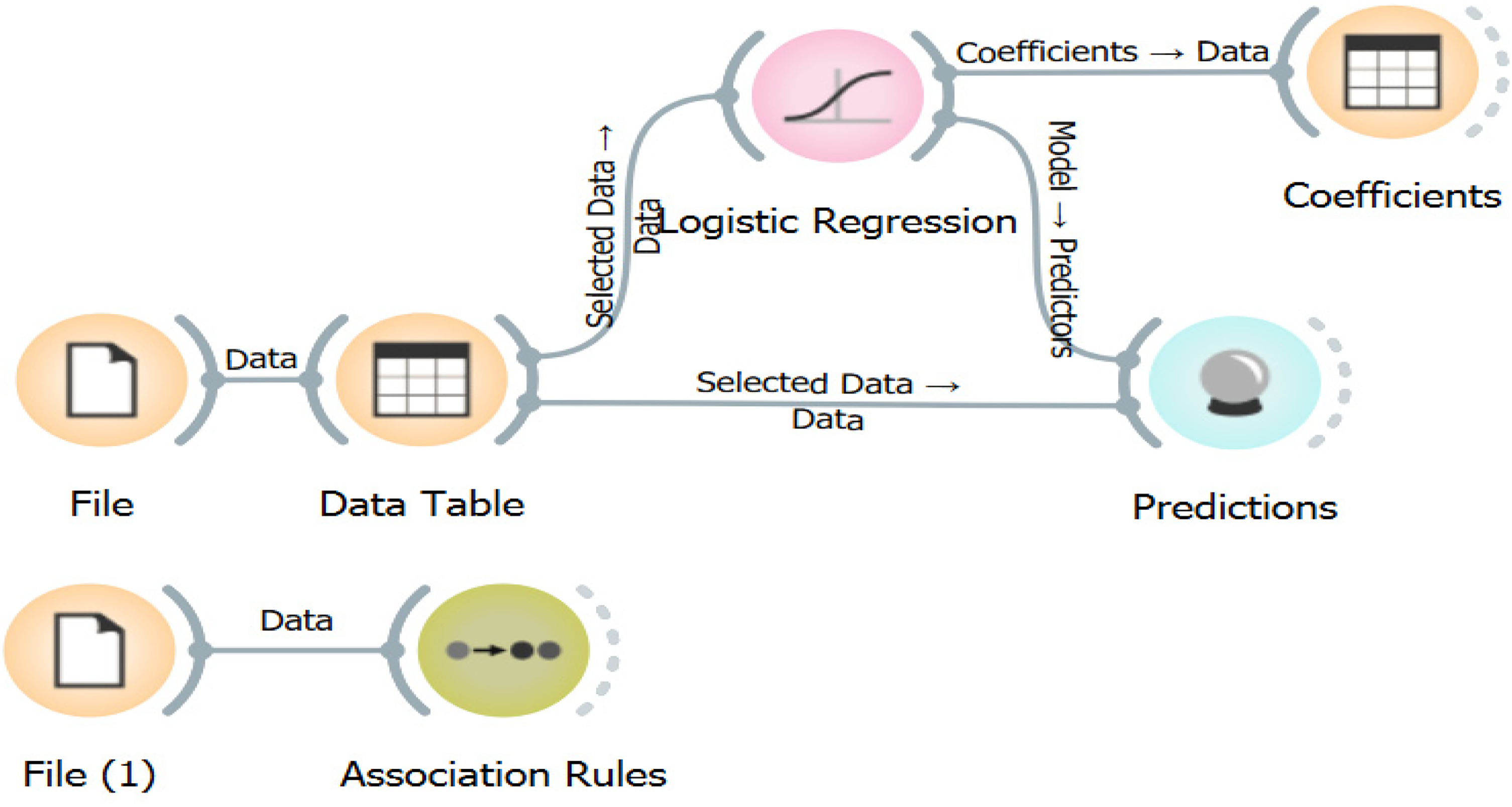
LR and AR framework in Orange.
Results and discussion
Descriptive statistics
The summary report is provided in Table 1.
Summary report of accident data.
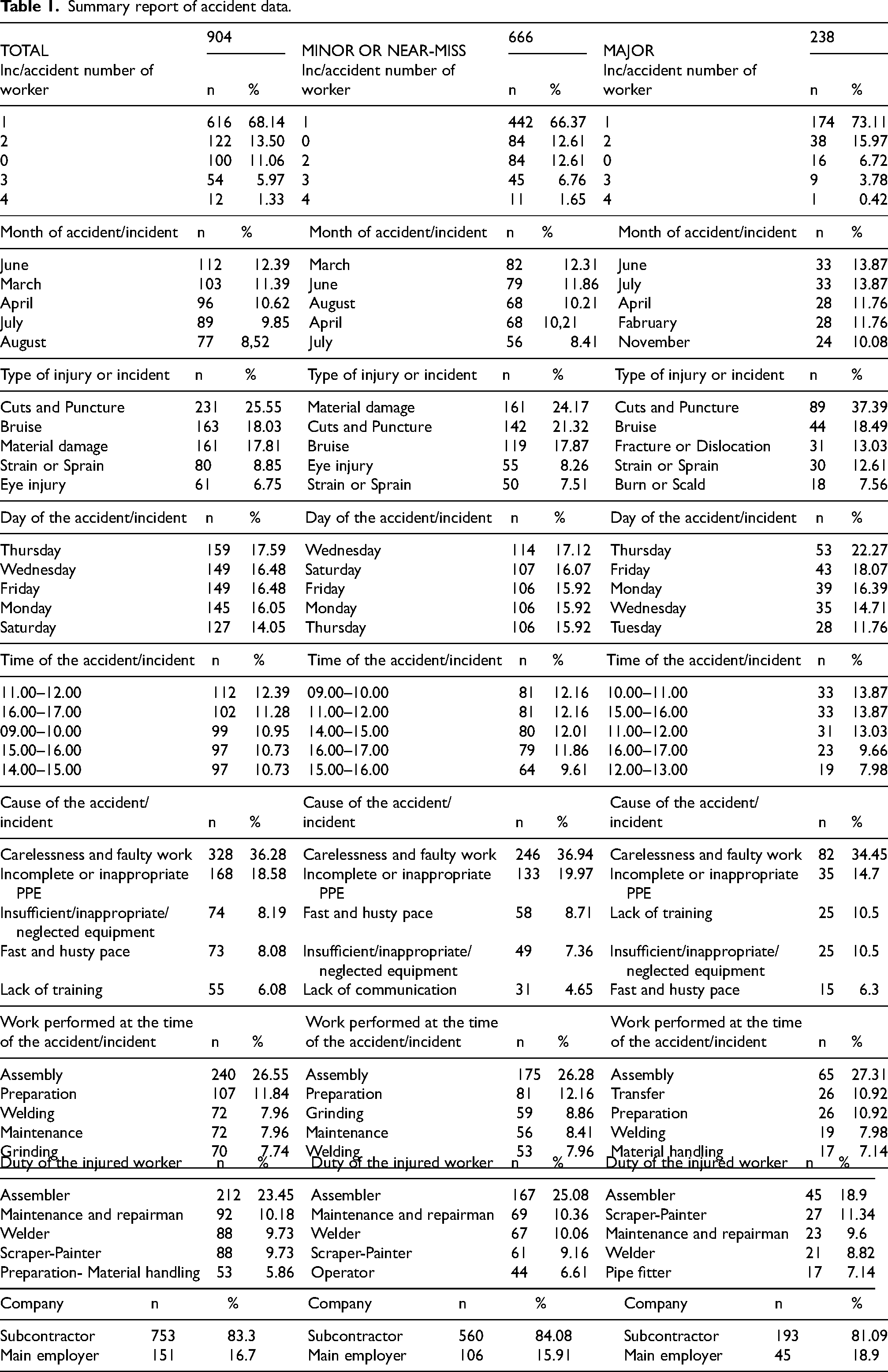
Accordingly, 66.37% of workers who experienced minor incidents had at least one previous accident or incident, while 73.11% of workers who experienced major accidents had at least one previous accident, and 16% had at least two accidents or near-miss incidents. The most common minor accident and near-miss types are “cuts and punctures,” “bruises,” and “material damage.” “Strain and sprain” and “eye injury” are listed next. These results are in line with the structure of shipbuilding manufacturing processes. However, there are different results in major accidents. “Cuts and puncture” and “bruise” are still important, but the weight of “cuts and puncture” is very high (37%). “Fracture or dislocation,” “strain or sprain,” and “burn or scald” also cause serious injuries. Working with cutting and piercing hand tools and work equipment in shipyards, working at heights, fast working tempo, and burn incidents related to welding cause serious accidents. On the other hand, there are no major accidents caused by electric shock.
The distribution of major and minor causes of accidents is similar, but there is a difference in the ranking. Carelessness or faulty work and not using appropriate personal protective equipment (PPE) are the first two in all, but lack of training is the third in serious accident causes. Neglected and inappropriate equipment, fast work, and messy environment are also important causes of serious accidents. Welding equipment is used a lot in shipyards due to the intensity of welding work. Fires, explosions, and poisonings resulting from malfunctions in welding hoses are also important causes of major accidents.
According to the work done during the accident, minor incidents occur more during assembly, preparation, grinding, maintenance work, and welding. Major accidents occur during assembly, transfer, preparation, welding, and material handling. In major accidents, especially transfer and material handling come to the forefront because the work equipment used in these works, such as forklifts and cranes, and material falls during the transfer and loading cause more serious injuries or fatal accidents. Since the use of this equipment is also dependent on knowledge, inadequate training and experience result in serious accidents.
According to the employer type, the rate of major accidents in the total number of accidents of subcontractor workers is approximately 25%, this rate is 30% for main employer workers. Subcontractor workers are employed in manufacturing jobs with higher hazardous levels. Due to legal responsibilities, the main employers keep the training, audit, support, and sanctions on subcontractor workers. Main employer workers, who generally do not work in hazardous working fields anymore and perform administrative duties, are less aware of the hazards when they go out to the hazardous fields, even though they have received training.
Looking at the hourly distributions, most of the accidents occurred between 09:00 and 10:00 (99 accidents), 11:00 and 12:00 (112 accidents), 14:00 and 15:00 (97 accidents), and 16:00 and 17:00 (102 accidents). Accidents generally increase in the first and last hours of the shift. On the other hand, minor incidents show a partial decrease in the morning (10:00–11:00) and afternoon (15:00–16:00) hours, while an upward momentum is seen in major accidents. The distribution is provided in Figure 2.
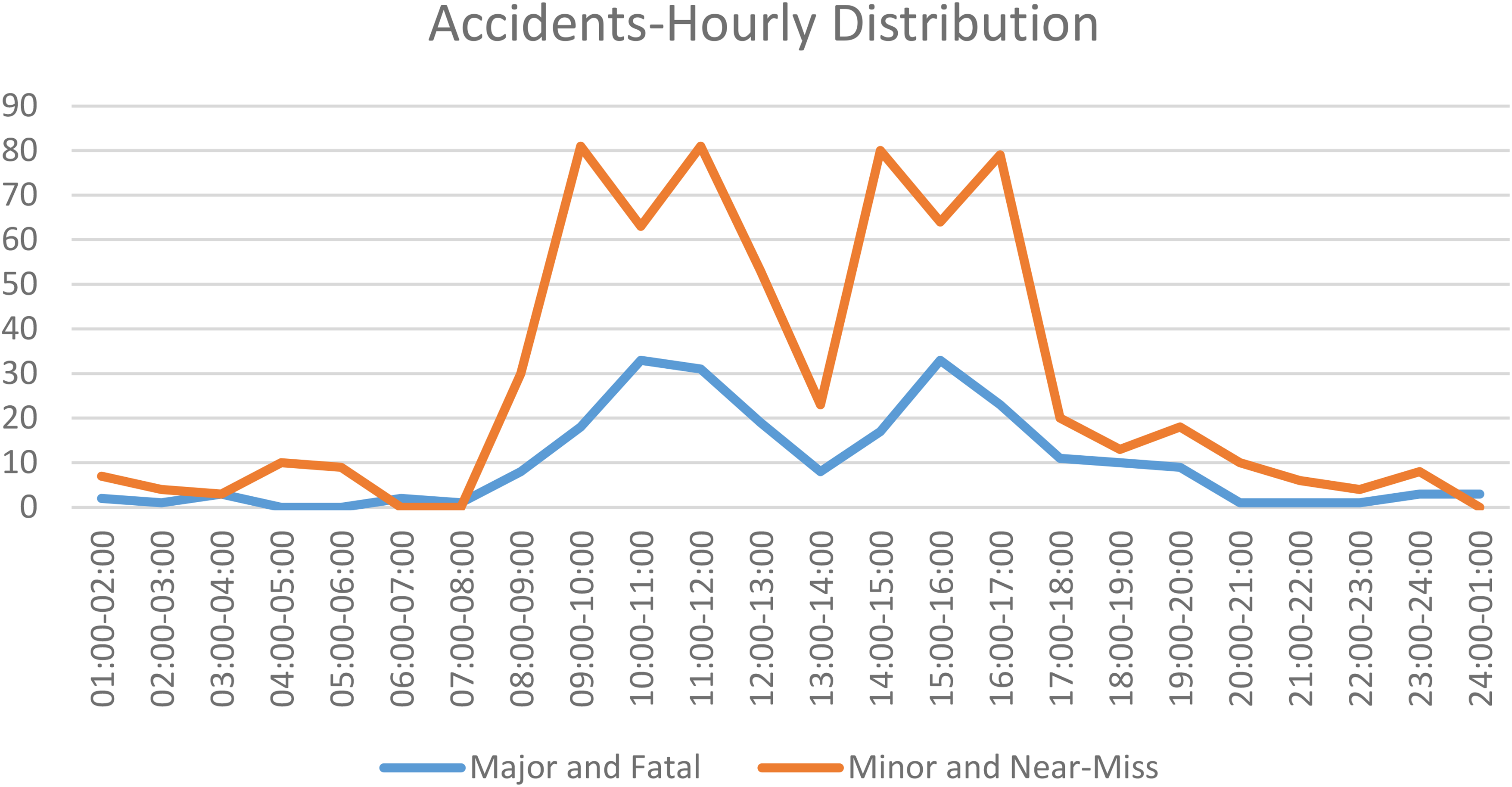
Hourly major and minor accidents.
Examining 904 accidents yields that the most accidents occurred during assembly (240). This is followed by preparation (107), maintenance (72), grinding (70), cleaning (69), and transfer (69). While the number of minor accidents varies between 2 and 5 times more than major accidents, this rate is 16/22 and 17/14 in repair and transportation jobs, respectively. The occupations that are more exposed to accidents according to the occupation of the injured worker are the same, with a few exceptions. However, in terms of exposure to serious accidents, assemblers, scrapers-painters, maintenance workers, welders, and electricians are at higher risk. The interesting result in this data is that a total of 11 foremen and 8 engineers were exposed to major accidents. In addition, none of the 16 accidents experienced by electricians were caused by electric shock.
Binary logistic regression model outputs
The performance metrics of the predictive model are calculated as follows: AUC = 0.944, CA = 0.866, F1 = 0.859, Precision = 0.863, Recall = 0.866, and MCC = 0.636. All values indicate a strong classifier performance. The model estimated 636 of 666 minor events (95%) and 147 of 238 major accidents (62%) correctly. 30 minor cases (5%) are classified as major, and 91 major cases (38%) are classified as minor by the prediction model with 0.505 and 0.972 confidence levels. The major accidents that the model predicts as minor and minor incidents that the model predicted as major are provided in Table 2. In each part of the table, the first two columns show minor incidents predicted as major, and the last two columns show major accidents predicted as minor.
Distribution of minor accidents predicted as major and major accidents predicted as minor.
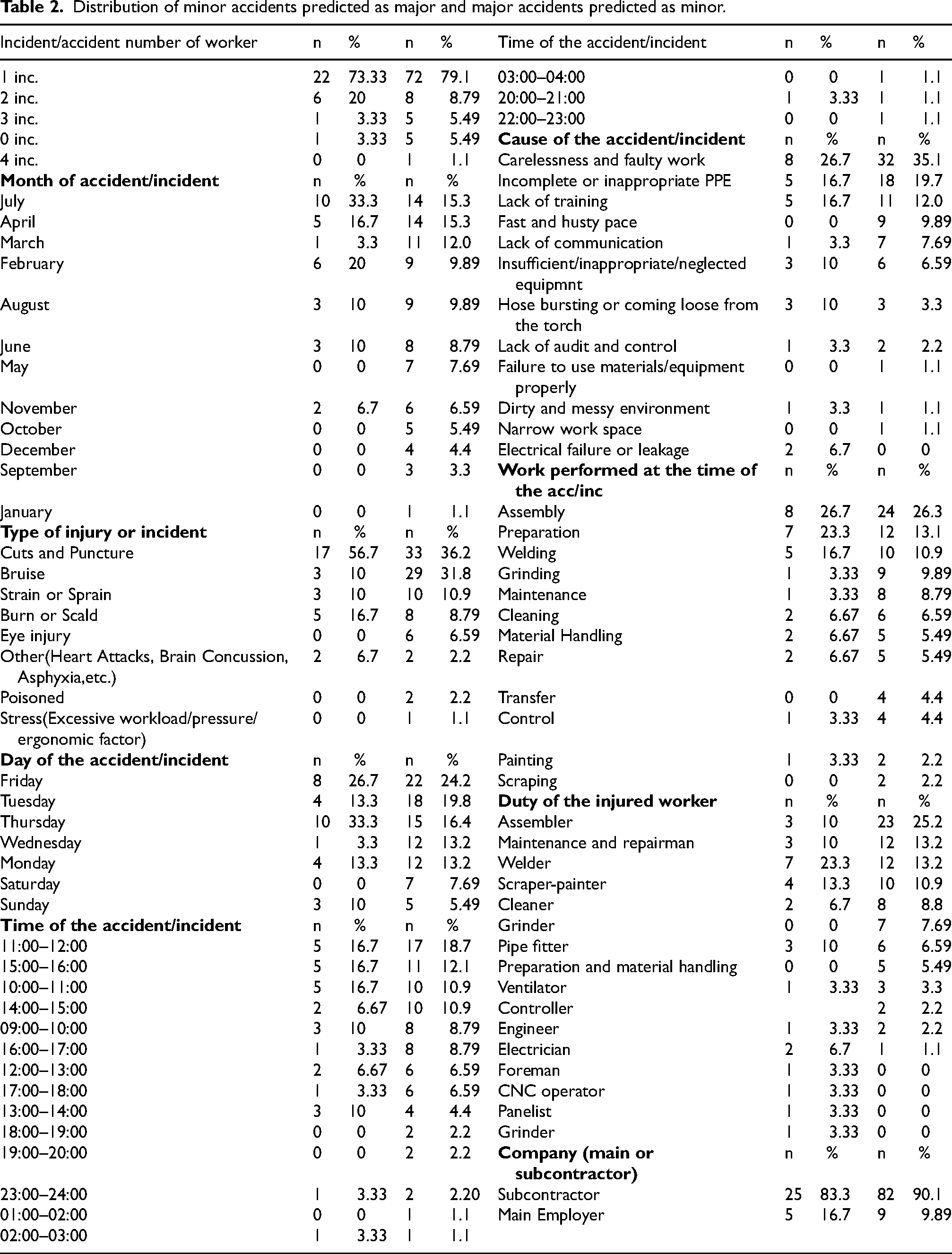
In minor incidents that the accident prediction model predicts as major, 93% of the workers had been involved in an accident or minor incident once or twice before. 33% of minor incidents that narrowly avoided major accidents occurred in July and on Thursday. The distribution is homogeneous according to working hours. 56% of them were cut and punctured, and 16% were burn and scald accidents. Most of them occurred during assembly (26%), preparation (23%) and welding (16%) work. The most frequent near-missed accidents were experienced by welders (23%), raspers-painters (13%), maintenance-repairers (10%), and subcontractor workers (83%). In the distribution by causes, carelessness and faulty behavior (26%) come first, followed by inadequate training and lack of PPE (16%) and inadequate equipment and hose bursts (10%).
The model predicted 91 incidents that occurred major accidents as minor. According to research findings, 38.2% of major occupational accidents in shipyards are preventable or can be overcome with minor injury. In 79% of these, the worker was involved in an incident once before, and in 8%, twice before. In 90% of the incidents, the person was a subcontractor worker. Distribution by months and days is homogeneous; July and April and Fridays and Tuesdays are slightly more. In the distribution by hours, the 11:00–12:00 h period disrupts the homogeneous distribution. Approximately 19% occurred at this hour; the 15:00–16:00 period (12%) and 10:00–11:00 are also important (11%). In the total distribution of major accidents (Table 1), these 3-h intervals are in the first three places but in approximately equal proportions. 11:00–12:00 is the last hour before lunch; 15:00–16:00 is sometimes the last and sometimes the penultimate hour of the shift. These hours are especially the hours when the worker's fatigue increases, attention decreases, and perhaps they rush the job. Medical reasons such as low blood sugar may also have an effect. To prevent major accidents during these hours, managerial and organizational measures such as intensifying audits during these hours, regulating break times, not performing hazardous work during these hours, and increasing the emphasis on these issues in training may be necessary.
36% of the incidents are again puncture and cut, but unlike the narrowly avoided accidents, crushing accidents (31%) are in second place. These are followed by strains and sprains (11%) and burns-scalds (8%). One of the important data points is that 6 of the eye injury incidents, which usually cause minor injuries such as burrs during welding operations in shipyards, turned out to be major injuries, and the algorithm predicted all of them as minor injuries. It shows how effective the reasons, such as workers not using the PPE or their inappropriateness (goggles, masks, and so on), poor maintenance of hand tools and equipment or their parts, or not using them correctly (not changing the spiral disk on time or removing the protective cover, etc.), or lack of audit (preventing workers’ faulty behavior), can be on incidents that can actually be avoided with near-misses or minor injuries.
26% of the preventable major accidents occurred during assembly, 13% during preparation, 11% during welding, and 10% during grinding. In the distribution by job, assemblers were 25%, maintenance and repairers 13%, welders 13%, raspers-painters 11%, and cleaners (8%). The total distribution of major accidents was assemblers (19%), raspers-painters (11%), maintenance and repairers (9%), welders (8%) and pipe fitters (7%). However, while cleaners were 8th in the total number of major accidents and 9th in minor incidents, they were 5th in this distribution. In other words, while cleaners are normally expected to have relatively fewer major accidents compared to other professions, they experienced major accidents in 8 incidents where minors were expected. According to the ranking, it is expected that the number of major accident exposures in maintenance and repair workers will be lower.
In the distribution of the preventable accidents based on causes, similar to the major ones, carelessness and incorrect behavior, not using PPE, and lack of training are in the top three. However, following ranking is hastiness, lack of communication, and not using the equipment properly. In the accidents predicted as major, equipment that is not suitable for safety, electrical leakage, messy work environments, and carelessness come into play. In both cases, lack of audit is a significant problem.
The total rate of individual factors in preventable major accidents is 50%, and it is 74% in the narrowly avoided accidents. In addition, the rate of individual-behavioral causes is 63% in total major accidents. That is, administrative influences play a much more dominant role in preventable major accidents than in other types of accidents. These results also show the effect of behavioral reasons such as carelessness, not using the equipment properly, and hastiness on major accidents and the significant effect of administrative interventions and measures to reduce these personal factors on reducing major accidents. In other words, the effect of proactive managerial activities on serious injuries that could have been prevented even better is clearly derived.
In the model, the regression coefficients showing the possible effect levels of the independent variables (regressors) on the two categories of our dependent variable, near-miss and minor incidents and major accidents, were calculated, and the 68 significant instances with the highest positive and negative values out of 130 instances are presented in Table 3. The entity names are shortened for simplicity. The regression coefficients were calculated by taking the “near-miss and minor accident” category in the dependent variable as reference.
Remaining binary regression coefficients (ref Variable: near-miss and minor accident
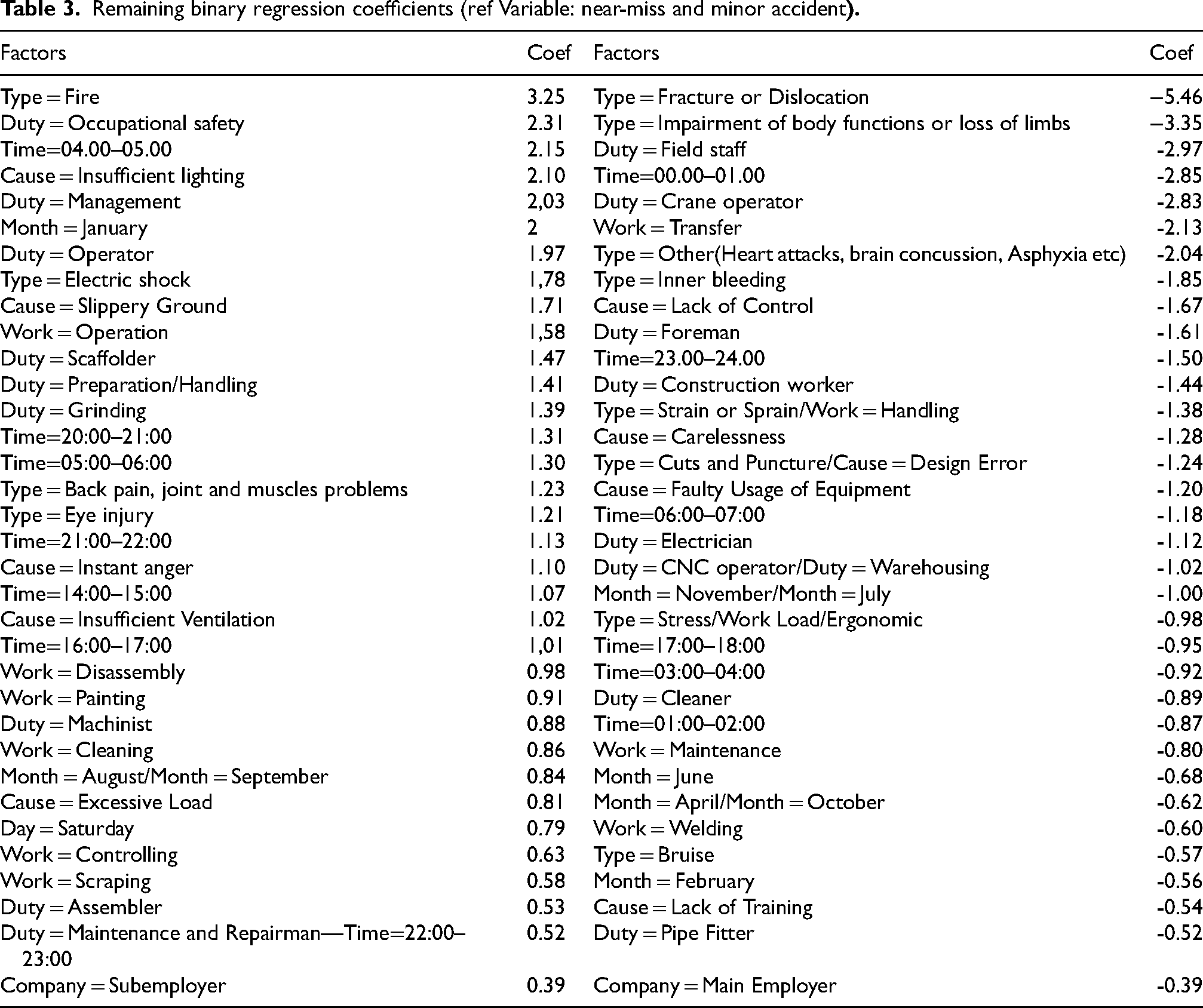
Fire incidents, most of which are avoided as non-injury incidents, are quite important in the formation of minor accidents, followed by electric shocks (1.78) and eye injuries (1.21). Occupational safety personnel (2.31), administrative personnel (2.03), and operators (1.97) are exposed to fewer accidents and mostly minor accidents. Minor accidents occur more between 04:00 and 05:00 because there are fewer workers and risky work is not done during these hours. Inadequate lighting (2.1) and slippery ground (1.71) are the most important reasons for minor accidents or near-misses. Although these factors sometimes have the potential to cause major effects, they are mostly overcome without injury.
In major accidents, the types of accidents are fractures and dislocations (−5.46), impaired body functions and limb losses (−3.35), and internal bleeding (−1.85). In shipyards, falling or machine accidents occur due to problems such as working at heights and at speed, messy environments, slippery ground, and use of hazardous equipment. These result in fractures or limb losses. Heart attacks, strokes, and brain hemorrhages are also considered work-related accidents in the legal sense in Turkey. Therefore, they are also major (–2.04).
Major accidents are most likely to occur in field staff (–2.97) and crane operators (–2.83). These are generally low-skilled workers who are constantly moving and have low education and perception skills. The result is interesting for foremen (–1.61) because foremen have a relatively high level of education. The probability of major accidents is higher for builders, electricians, warehousemen and cleaners. Another interesting result is that while minor incidents occur more in electric shock, the probability of major accidents is higher for electricians (–1.12). Today, there are no more deaths and serious injuries due to electric shock in shipyards because measures against electrical hazards have been developed. However, electricians are not only exposed to hazards caused by electricity. Falling from heights and machinery and equipment accidents are more prominent. Accidents resulting in strains and sprains and major injuries are more likely to occur when performing manual handling work (–1.38). Transfer work, a similar job, has the highest probability of major injury (–2.13). In transfer work, materials are carried especially with lifting and carrying equipment (forklifts, pallet trucks, cranes). Repair (–0.8) and welding (–0.6) also require hand tools (welding equipment, spirals), and working at heights and in closed areas. Considering the time of the accident, the highest negative coefficients are for the periods 00:00–01:00 (–2.85) and 23:00–00:00 (–1.5), two consecutive periods.
The regression coefficients related to the causes of major accidents provide very important results. Lack of audit and control is the most important factor for major accidents (–1.67). This is not a factor related to the worker, such as the worker's carelessness or not using PPE, but a managerial factor. For the factors related to workers, absent-mindedness and faulty usage of equipment are ranked first (–1.28) and second (–1.20). However, design errors (–1.24) and lack of training (–0.54) are two other important factors affecting major accidents. The data shows that in the occurrence of major accidents in shipyards, it is mostly the working environment, equipment design, and administrative flaws that play a more effective role, not behavioral factors.
Major and minor accidents are differently distributed in different months. In minor and near misses, January (2.00) is the most significant, followed by August and September (0.84). In majors, November and July (–1.0) are prominent. The high number of major accidents in some months can be considered as the possible effects of seasonal factors, increased work pressure and poor work design.
In the descriptive distribution, the major accident rate of main employer workers is 5% higher than that of subcontractors, and also, according to the regression results, the probability of having a major accident is 40% higher.
The final output is the effect of the worker's previous minor accident-near miss incident count on turning into major accidents. Since there were very few cases with 4 incident/accident experiences (especially only 1 record with a major accident), it has been excluded. In this context, the data in Table 3 show that as the worker's minor accident or near-miss incident increases, he gradually becomes more inclined to have a major accident. However, those who have never had an incident seem to be slightly closer to a major accident at the value of −0.34. This may also be related to the worker's inexperience due to the effect of both professional and safety knowledge in some cases and not knowing the working environment sufficiently.
Association rules
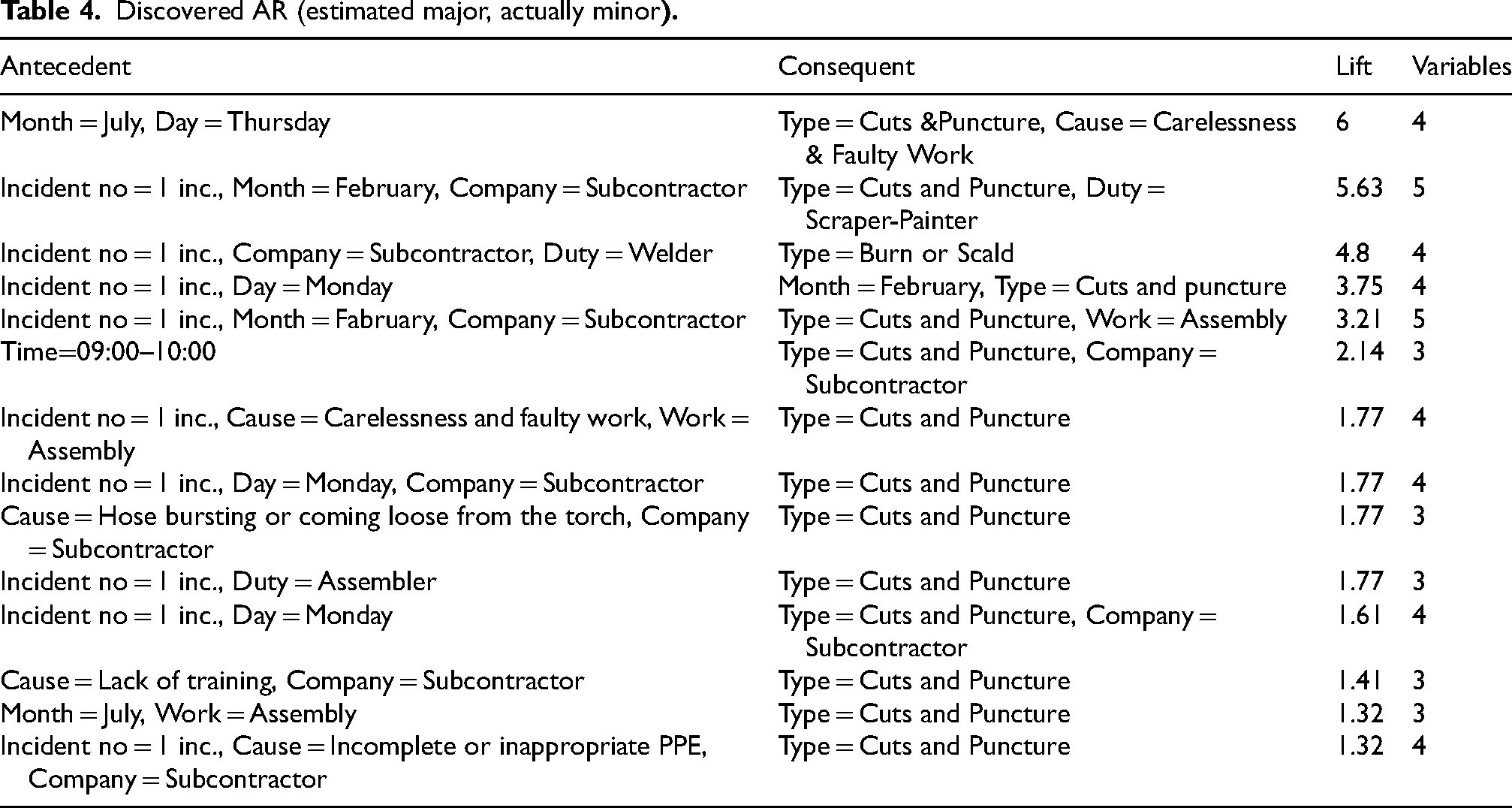
Using the estimation results obtained from the LR model, 121 events that were actually major but predicted as minor by the model or were minor but predicted as major were used as inputs, and AR were created with the Orange software AR algorithm at a 60% confidence level and a minimum support condition of 6%. Using 91 rules calculated by the algorithm, the following AR in Tables 4 and 5 below are important in the formation of minor near-miss incidents and major accidents and act together. The most meaningful results with the highest lift value and the most variables are given.
Discovered AR (estimated major, actually minor
Discovered AR (estimated minor, actually major
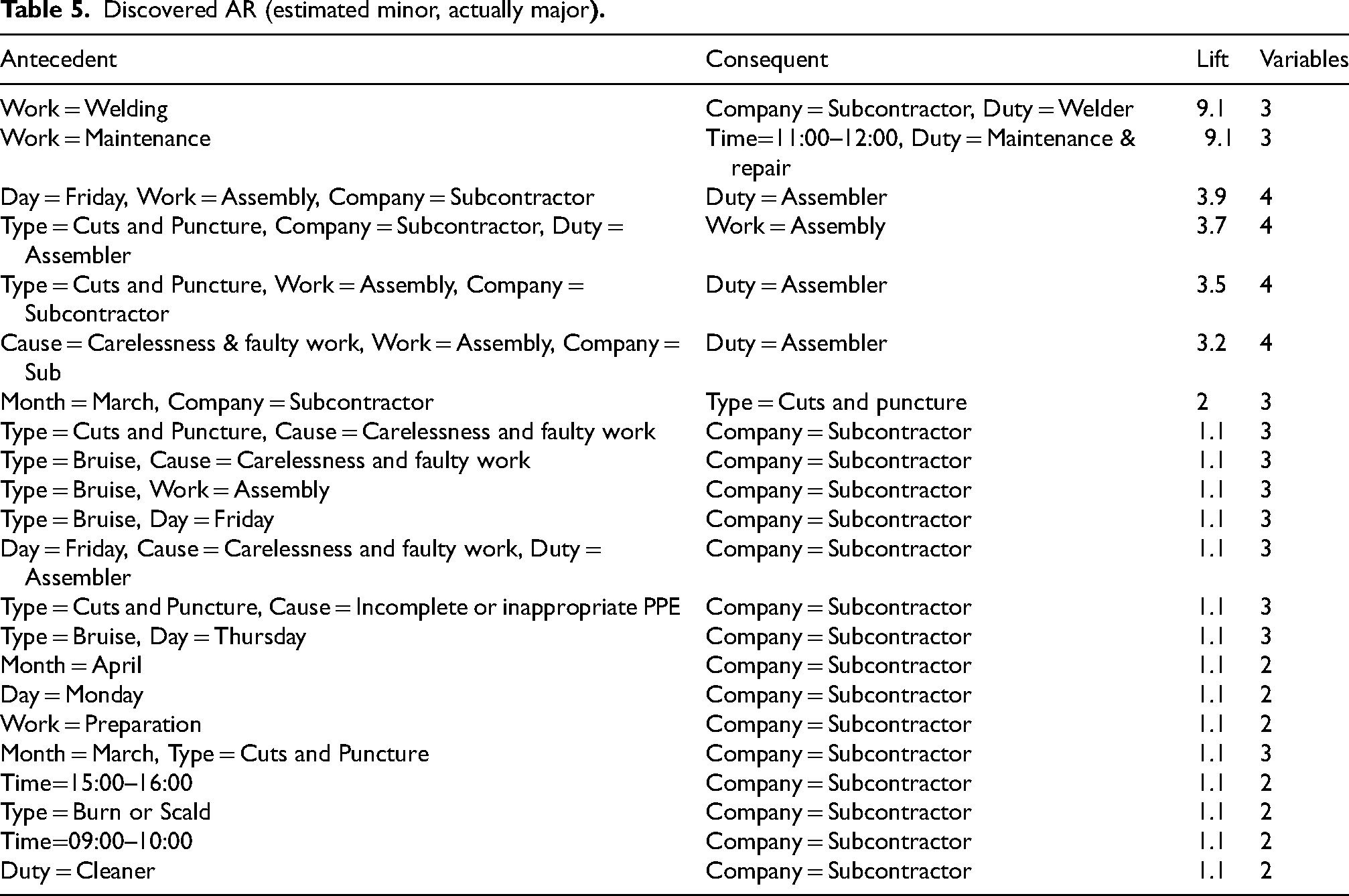
Table 4 includes 30 events, for which two 5-variable and seven 4-variable significant rules were found. The most significant rule with a lift value of 6 is accidents resulting in cuts and punctures due to carelessness and incorrect behavior on Thursdays in July. With another high lift value (5.63), February, rasping and painting, subcontractor, cut and puncture, and the 1 accident frequency factors come together with AR. When the results are evaluated overall, the prominent factors in narrowly avoided accidents are again subcontractor workers, rasping and painting workers, welders and assemblers, accidents in the form of cuts and punctures and burns, carelessness and incorrect behavior, not using PPE, hose bursts, and lack of training. The months when narrowly avoided accidents occurred are July and February, Thursday and Monday.
Table 5 includes 91 events; there are four 4-variables and eleven 3-variables. In incidents where a major and serious injury cannot be avoided, although it should be minor, subcontractor workers come to the fore again. In 87% of workers have been involved in an incident once or twice before. In 90% of cases, the person is a subcontractor worker. The 11:00–12:00 and 15:00–16:00 periods are prominent. Especially assemblers, assembly works, carelessness and incorrect behaviors, cut-puncture accidents, and Fridays act together. Maintenance-repairers, assemblers, preparers, and cleaners as workers’ duty; carelessness and not using PPE as accident causes; cuts and punctures, crushing, and burns as injury types; Friday, Thursday, and Monday as accident days; welding, maintenance, and assembly as the work done at the time of the accident; March and April as accident months; and 11.00–12.00 and 15.00–16.00 as accident intervals are significant.
The variables that are effective in minor and major accidents are similar, but there are also differences. For example, welders and assemblers are still the leading actors in avoidable accidents, but there are maintenance-repairers and preparation and cleaning workers in near misses. In addition, while carelessness, incorrect behavior, and not using PPE are important in both, lack of training and welding hose malfunctions are also effective in near-miss accidents.
Conclusion
In 93% of the incidents estimated as major and 87% of those estimated as minor, the worker has been involved in an accident or incident once or twice before. Causes of preventable major accidents are carelessness and faulty behavior, lack of training, lack of PPE, and inadequate and poorly maintained equipment, which are prominent, but hose bursts, electrical leaks, messy work environments, and absent-mindedness are also important reasons. The most puncture-cut and crushing accidents occurred while performing assembly, preparation, welding, and grinding work. Assemblers, maintenance-repair workers, welders, raspers-painters, and cleaners were more affected by these major preventable accidents. The rate of personal (behavioral) causes in major accidents predicted by the algorithm is 50%, and in minor accidents it is 74%.
According to regression coefficients, lack of audit is the leading cause of major accidents, followed by carelessness, improper use of equipment, and inadequate training. Stress, workload, and ergonomic factors also have a significant effect on the occurrence of major accidents. Field staff, crane operators, foremen, construction workers, CNC operators, electricians, and cleaners are most prone to major accidents. The risk of major accidents is higher in transfer, manual handling, repair, and welding jobs, respectively.
The probability of major accidents for the main employer's workers is high, and as the number of accidents or near-miss incidents of the worker increases, they gradually tend to have major accidents. Accident hours may be important in major accidents and should be evaluated carefully.
In light of the results, the following practical implications and recommendations are presented. Electric shock, falling from heights, eye injuries, and explosion accidents are decreasing, but stress, workload, psychosocial and ergonomic risks, and their effects, especially on major accidents, are becoming increasingly visible. Appropriate organizational arrangements that prioritize occupational safety in shipyards are still important. The effect of individual-behavioral handicaps in accident causality is relatively decreasing but still continuing, whereas the positive effect of managerial proactive interventions, especially in preventing major accidents, is becoming more visible than before.
Working at heights, in open climates or confined spaces, electrical work, and welding, all of which can lead to serious injuries, are performed simultaneously in the shipbuilding industry. Accidents involving serious injuries and deaths also have significant financial consequences for businesses. Managers and experts often tend to focus on specific issues based on official data or workplace accident records. These include working at heights, electrical hazards, fire, explosion, confined space hazards, and so on.
This approach is valid to some extent within the framework of a risk management approach. However, it is not sufficient. Accident analysis methodologies obtained through deep learning approaches can be crucial in identifying risk factors that should be addressed to reduce major accidents and identifying areas where preventive approaches should be focused.
Indeed, our research identified that administrative factors such as inadequate and poorly maintained equipment, lack of audit and training, inadequate accident/incident analysis, and an unorganized work environment played a significant role in preventable major accidents occurring in shipyards. We also found results that prompted a reassessment of priorities in terms of the types of accidents, the work being done at the time of the accident, and the professions affected. Furthermore, we found that almost 40% of major accidents were preventable.
We observed that preventable major accidents increased during the average shift hours, and many accidents, such as crushings and burr slips, that would normally result in minor injuries, became major. We observed that major accidents were more common in assembly and preparation tasks, assembly, preparation, and cleaning workers. However, we also found that maintenance and repair workers were injured in preventable accidents at a higher rate than expected.
When we evaluated the regression results in terms of susceptibility to major accidents, we found that crane operators and foremen, as well as electricians, were more prone to major accidents despite such high measures. Transfer, manual handling, and repair tasks also carry a high probability of major accidents. Contrary to popular belief, we found that main employer workers are at greater risk of major accident exposure than subcontracted workers. In our study, we evaluated the possible causes of these injuries. One of the most important findings of our research, contrary to traditional findings, is that the primary cause of major accidents is a lack of supervision and control. Furthermore, managerial errors in the form of design errors and lack of training play a dominant role in major accidents. Furthermore, we found that the impact of individual factors in preventable major accidents is significantly reduced, while the impact of managerial and environmental factors is equally significant and influential as individual factors.
Audit protocols may need to be revised and made flexible within the risk management system, considering the hours, locations, and people where major accidents are concentrated, and their causes. Audits can be intensified at hours and places where major accidents occur most frequently. Internal auditors should only perform auditing duties and no other duties. Work permit procedures and documentation must be strictly adhered to. It is crucial that senior management provides seamless organizational support to safety teams. The role of training in the occurrence of major and preventable accidents is undeniable. Security trainings should not be solely holistic or field-specific but should be personalized and flexible within the framework of risks. A sustainable performance evaluation framework should be established to measure the effectiveness of trainings.
In conclusion, it appears that workplace safety measures are not limited to providing PPE or working at height equipment, or routine training for workers. Within the framework of current knowledge and technological conditions, it does not seem possible to attribute the causes of occupational accidents in risky sectors such as construction, mining and shipbuilding solely to reasons such as failure to use personal protective equipment or worker carelessness. Developing countries struggle to provide the knowledge, technology, and financial resources for accident causation investigations and accident prevention, leading to an increase in fatal accidents in high-risk sectors. Investigating the causes of accidents, planning, implementing, and monitoring proactive measures in all high-risk sectors, such as shipyards, should be the shared responsibility of all stakeholders in the workplace, including government agencies.
This study has unique aspects, but it also has limitations. The first one is the limited number of variables that can be recorded at shipyards. For example, if other data such as the worker's working system, education level, marital status, and so on had been included, more compelling results would have been obtained. The data covers only a few shipyards in Turkey. Results may differ depending on different climatic, environmental, and technologic conditions. This research focused primarily on human factors. Studies that also consider various factors related to the working environment could be conducted. The study is conducted using a moderately large dataset. However, as databases related to these accidents expand, new software is developed, and new methods are discovered, different insights are developed more comprehensively.
Footnotes
Acknowledgements
Not applicable
Ethical approval
Not applicable
Informed consent
Not applicable
Funding
The authors received no financial support for the research, authorship, and/or publication of this article.
Declaration of Conflicting Interests
The authors declared no potential conflicts of interest with respect to the research, authorship, and/or publication of this article.
Data availability
Data sharing is not possible due to the corporate policies of the organizations providing the data