







Abstract
Background
Low back pain (LBP) is the most prevalent musculoskeletal disorder (MSD) impacting all socioeconomic groups across the global population. There is a need to define good prevention strategies among taxi drivers in Cameroon.
Objective
This study aimed to assess the prevalence of LBP and its relationship with job satisfaction (JS) among taxi drivers in Bafoussam, Cameroon.
Methods
We conducted a cross-sectional study from April to August 2023 including 321 male drivers with a minimum of one year of experience driving a taxi aged 21 years or more based in Bafoussam. We used an exhaustive sampling method and performed bivariate analysis to determine associations in variables, the significance level was set at p < 0.05 and the confidence interval (CI) was set at 95%.
Results
The past 12 months’ prevalence of LBP was 73.2% and the proportion of job dissatisfaction was 65.7%. Factors associated to the occurrence of LBP were: being unmarried (aOR:2.82; CI:1.70–4.69; P < 0.001) and practicing another job (aOR: 2.82; CI: 1.64–4.82; P < 0.001). Significative negative correlation has been found between the occurrence of LBP and alcohol consumption (aOR: 0.39; CI:0.22- 0.68; P = 0.001). And there were no association between JS and LBP.
Conclusions
LBP was highly prevalent among taxi drivers, but no association was found between job dissatisfaction and LBP. These findings highlight the need to improve drivers’ working conditions and further investigate other factors that may contribute to LBP in this population.
Keywords
Introduction
Low back pain (LBP) is the most prevalent musculoskeletal disorder (MSD) across all socioeconomic groups worldwide. The lifetime risk of experiencing LBP is estimated to be between 60% and 80%. 1 The pain is felt by patients from the anatomical area of the back below the twelfth rib and above the inferior gluteal fold. On average, 95% of low back disorders are nonspecific or strain/sprain. 1 The pain may arise from any of the spinal structures: intervertebral disc, facets, ligaments, vertebrae, tendons, and muscles.1–3 A recent study examining the most common global conditions found that LBP is ranked as the fourth most common condition in primary care visits in developed countries. Indeed, chronic LBP is one of the most common, poorly understood, and potentially disabling chronic pain conditions from which older adults suffer. 4 It leads to significant work absenteeism and decreased productivity, creating financial strain for employers, employees, and the healthcare system.5–7 It has been recognized as one of the top three occupational health issues to be addressed by the World Health Organization (WHO). 1
The American Society of Pain and Neuroscience (ASPN) identifies LBP as a leading cause of disability both in the US and globally, highlighting the need for preventive strategies to reduce its burden. 8 It has been demonstrated in the literature that physiotherapy interventions are indicated to reduce and treat LBP.5,7,9–11 Taxi drivers are often forced to stop work because of the pain. To develop strategies to prevent low-back pain, many studies around the world have been trying to determine associated factors with the occurrence of LBP among taxi drivers.12–17 Despite advancements in the treatment of LBP, the issue persists and continues to significantly affect taxi drivers. Job satisfaction (JS) remains a crucial topic in all sectors of the global economy. 18 Although previous studies have examined various factors contributing to the occurrence of LBP among taxi drivers, there has been limited focus on exploring the role of job satisfaction in the prevalence of LBP among taxi drivers in Low and Middle-Income Countries (LMICs).
In low-income-countries like Cameroon, taxi drivers may suffer more from LBP view the degrading nature of the roads and poor-quality vehicles used. 19 A recent study in Yaoundé (Cameroon) on musculoskeletal disorders among taxi drivers identified LBP as the most common MSD affecting this population. The authors emphasized the need to address job dissatisfaction and better understand other factors associated with LBP to develop effective prevention strategies. 19 Bafoussam is the capital and center of the Western region of Cameroon. This region is mostly rural and has poor roads, which are not suitable for the adequate transportation of goods and people. This causes frequent traffic congestion and increased fuel consumption, thus causing taxi drivers to spend with little or no benefit on their side. Frequent car breakdowns due to bad roads, increased spending in the garage, and it would be tempting to think that LBP is a recurrent pathology among drivers in the town of Bafoussam, and most of them are not satisfied with their work. With this in mind, we conducted this study to determine the association between job satisfaction among taxi drivers in Bafoussam and the occurrence of LBP. More specifically, we determined: the prevalence of
LBP in this population, the drivers’ JS, and the factors related to the onset of lumbar pain.
Methods
Study design, period and setting
We conducted an analytical cross-sectional study among taxi drivers in Bafoussam between April 2 and August 29, 2023. We chose Bafoussam because it is the capital of the Western Region and has a large number of households. Cameroon is a transit city in the Western Region.
Because the intercity traffic in this region is very heavy, as the population mostly uses taxis in Bafoussam to reach the surrounding villages. This makes Bafoussam probably one of the cities with the highest number of taxi drivers in the country.
Study population
The study included licensed taxi drivers based in Bafoussam who had been actively driving for at least one year and were willing to participate. Participants were male, aged 21 years or older. Drivers were excluded if they were unable to participate due to acute illness, physical disability, or if they did not provide consent to participate. Participants who did not complete the interview were also excluded. To reflect the real occupational population, drivers with a history of LBP were included, as previous episodes, even with known causes, may act as potential risk factors for future or recurrent LBP.
Data collection
After obtaining authorization from the heads of the Taxi Drivers Associations to collect data, data were collected at the drivers’ meetings, as well as during their daily breaks at agencies and bus stations. Data collection was carried out through face-to-face interviews with the participants. To avoid duplication, participants were systematically asked whether they had participated in the study before. We used a non-probabilistic and exhaustive sampling method. We used a structured questionnaire to collect data on: The general characteristics of participants: age, body mass index (BMI), school, marital status, passed history of low-back traumatism, another work activity, average hours of weekly work, average hours of daily work, smoking, number of cigarettes per week, alcohol consumption, number of beer per week. Various ergonomic features of the work vehicle (cabin, seat, backrest, lumbar support, and steering wheel) were assessed using exploratory Likert-type items. Although these questions were not part of a validated scale, they enabled participants to rate each aspect from “very uncomfortable” to “very comfortable” and were used solely for descriptive purposes. The physical strain of the work was assessed by evaluating the difficulty getting in and out of the vehicle and baggage handling effort (classified from never, rarely, often to very often). Data on the occurrence of LBP during the past 12 months and the past 7 days were assessed using the Nordic Musculoskeletal questionnaire. And finally, the last part of the questionnaire assessed the satisfaction of drivers with a simple question on whether they are satisfied or not with their work. The questionnaire used in this study was developed by the researchers and pretested on a small group of taxi drivers before data collection.
Data analysis
Data were analyzed using IBM SPSS (Statistics for the Social Sciences) software, version 23. Descriptive statistics were used to summarize and quantitatively describe the results, while we performed multivariable logistic regression to determine association between the occurrence of LBP and JS. The significance level was set at p < 0.05, and de confidence interval (CI) was set at 95%.
Ethical consideration
After completing the necessary administrative procedures, a research ethics approval letter (No: 090/L/MINSANTE/SG/DRSPO/CBF) was issued by the Internal Reviewing Board of the West Regional Public Health Delegation of Cameroon. Research authorizations were obtained from the presidents of the taxi drivers’ associations. Informed consent was provided in writing by all participants before the commencement of each interview. The study was conducted in full adherence to the core principles of medical research as outlined in the Declaration of Helsinki.
Results
General characteristics of participants
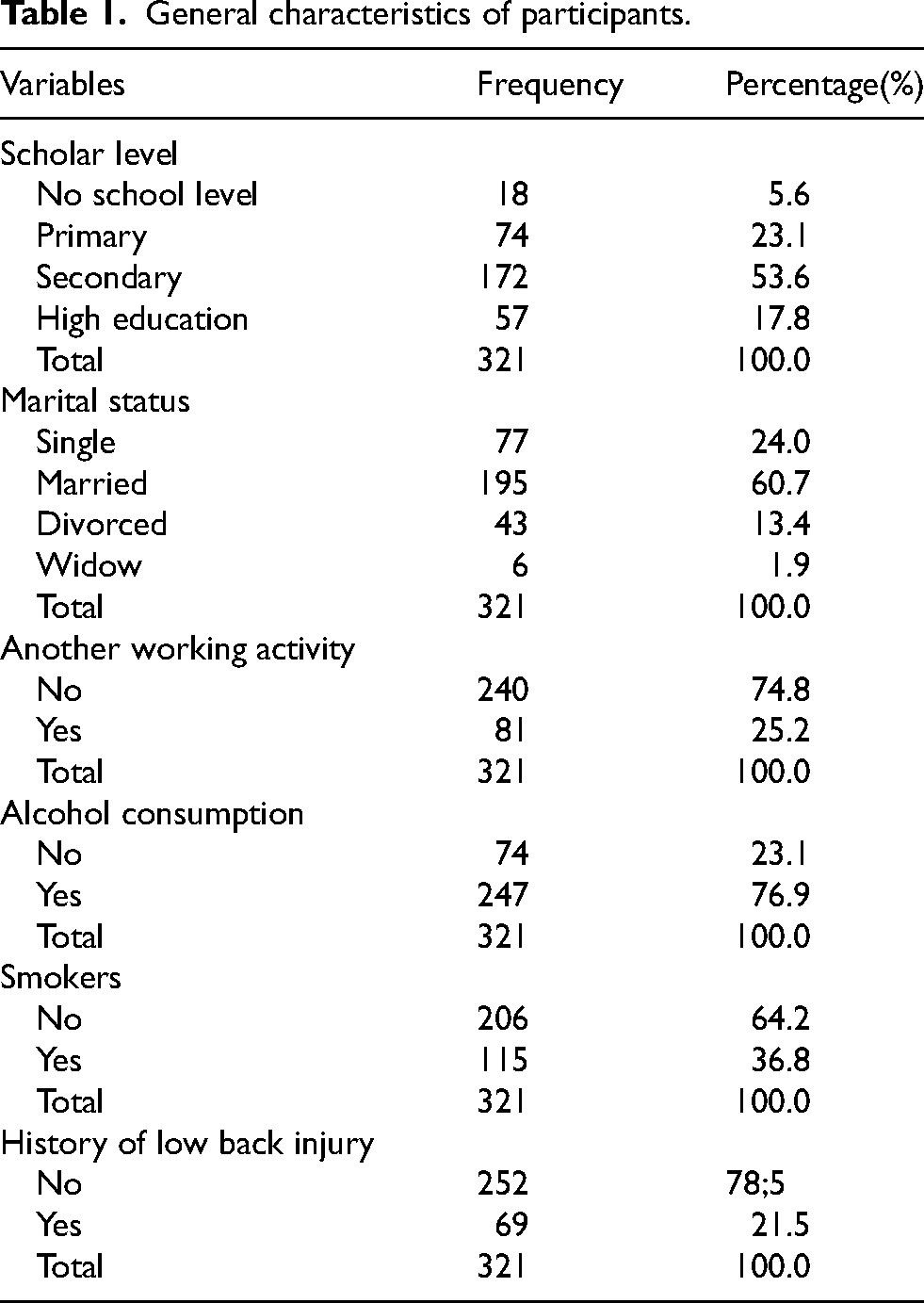
This study enrolled 321 male taxi drivers with an average age of 38.4 (±9.4) years. Most participants, (53.6%, 172) were having secondary educational level with (5.6%, 18) who had no educational level. The majority of participants were married (60.7%, 195). The average age of working experience was 8.5 (±5.1) years. The average weekly working hours were 46.9 (±8.9) hours, and the average daily working hours were 6.2 (±1.6) hours. The average BMI was 25.5 (±3.7) kg/m2. Some participants were having another activity apart from being taxi drivers (81 on 321 i.e., 25.2%). A few participants reported a history of low back accident (23, i.e., 7.2%). Of the 321 participants (76.9%, 247) reported drinking alcohol with an average of 12.3 (±5.5) beers per week. And (35.8%, 115) were smokers with an average of 5.6 (±1.9) cigarettes daily (Table 1).
General characteristics of participants.
Vehicle ergonomics
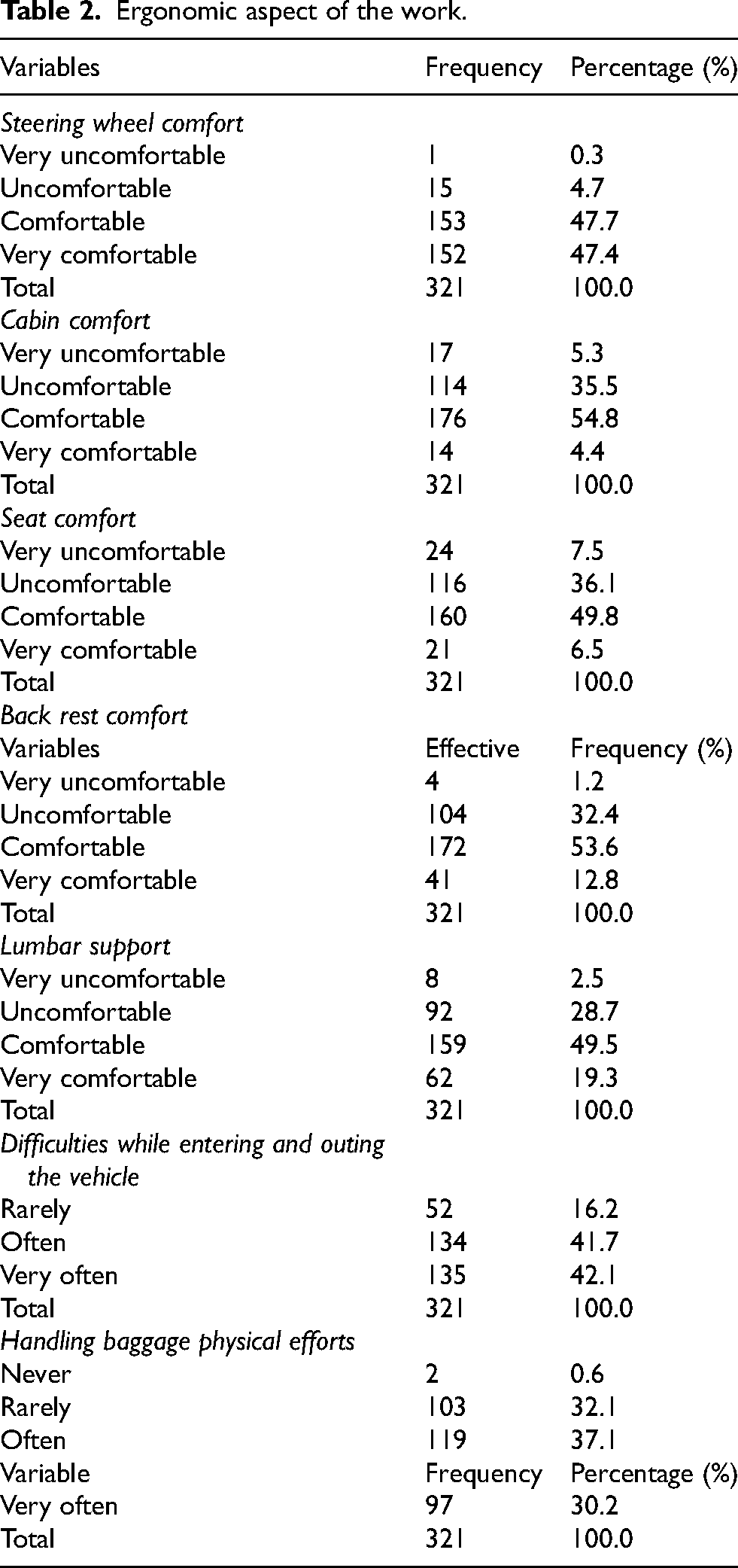
Participants reported the ergonomic condition of their vehicles and we found that 157 out of 321 participants (47.4%) had a very comfortable steering wheel. Only 14 (4.4%) had a very comfortable cabin and 144 (35.5%) had an uncomfortable vehicle cabin. Regarding the seat, 116 (36.1%) reported having an uncomfortable seat, while 160 (49.8%) reported having a comfortable seat. More than half of the participants (53.6%, 172) reported having a comfortable vehicle backrest. Regarding lumbar support, 159 participants (49.5%) reported having comfortable lumbar support while driving. In our study, 135 participants (42.1%) had difficulty getting in and out of the vehicle very often. Only 2 participants (0.6%) reported that they did not exert physical effort in carrying luggage during work. 119 participants (37.1%) reported that they exerted physical effort during work (Table 2).
Ergonomic aspect of the work.
Associations to the occurrence of low back pain during last 12 months.
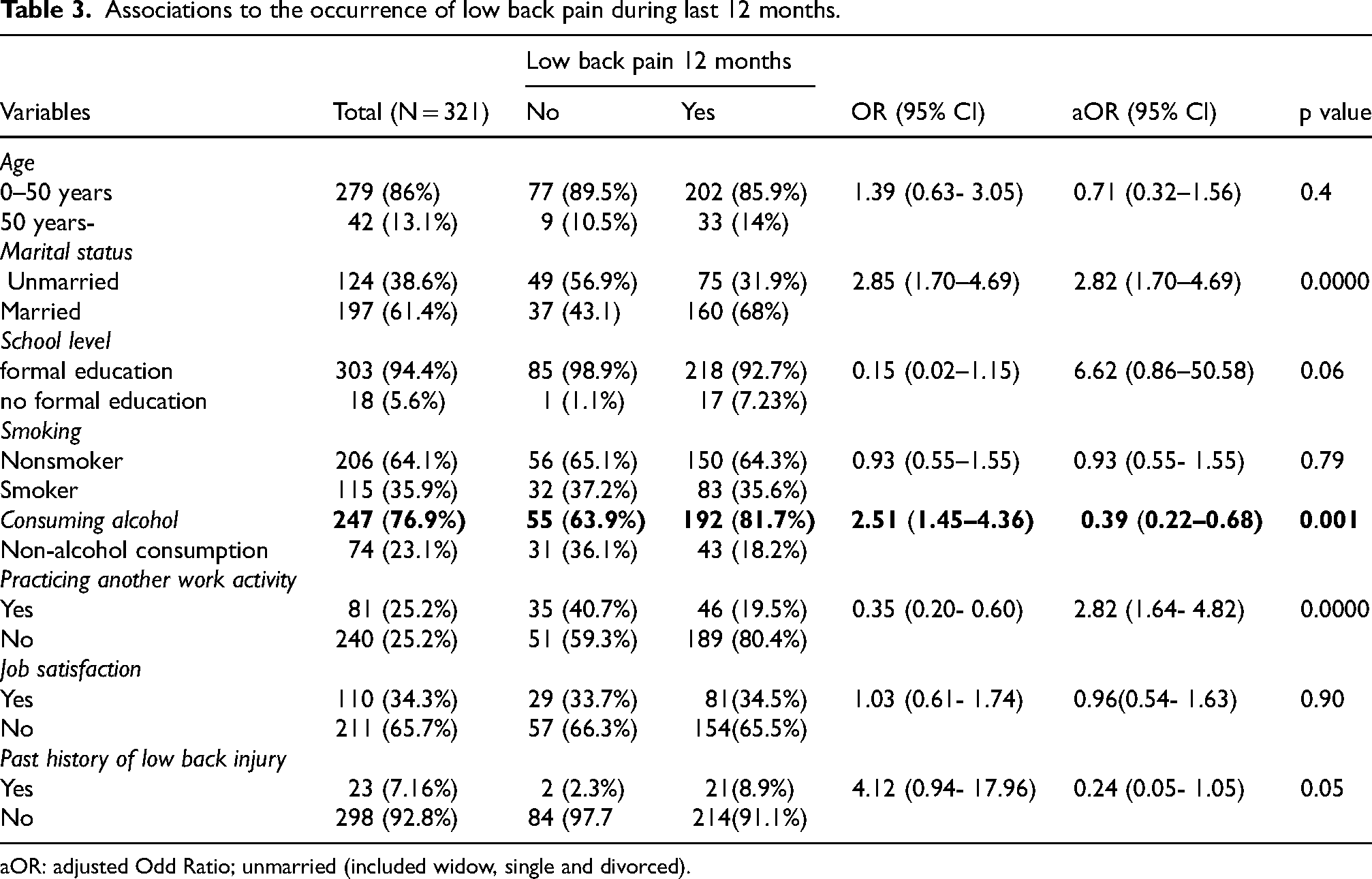
aOR: adjusted Odd Ratio; unmarried (included widow, single and divorced).
Prevalence of self-reported work-related low back pain and job satisfaction
Out of the 321 participants, 235 reported having had LBP during the last 12 months, for a prevalence of LBP in the previous 12 months of 73.2%. And the prevalence of LBP in the previous 7 days was (68.5%, 220). Most participants (65.7%, 211) reported job dissatisfaction, while 34.3% (110) were satisfied with their job.
Factors associated to the occurrence of self-reported work-related low back pain during the last 12 month
After multivariate analysis, were associated with the occurrence of self-reported LBP during the last 12 months the following risks factors: being unmarried (aOR: 2.82; CI: 1.70- 4.69; P˂0.001) and practicing another work activity (aOR: 2.82; CI: 1.64–4.82; P˂0.001). A significant negative correlation was found between the occurrence of self-reported work-related LBP and alcohol consumption (aOR: 0.39; CI: 0.22- 0.68; 0.001), suggesting a reduction of the occurrence of LBP with increasing alcohol consumption. However, no significant association has been found with JS and the occurrence of LBP during the last 12 months (aOR: 0.96; CI: 0.54- 1.63; P = 0.90) (Table 3).
Discussion
LBP is the most widespread MSD, affecting individuals across all socioeconomic groups globally. In Cameroon, taxi drivers are not exempted from the professional groups affected by LBP. Our study revealed that the prevalence of LBP among taxi drivers during the 12 past months was 73.2% and the prevalence of LBP during the last 7 days was 68.5%. These prevalences are more than those found in studies conducted among taxi drivers in China (54%), 17 Malaysia (48.5%), 20 Taiwan (51%), 21 and Turkey (49,7%). 15 However, our findings are similar to the results found among taxi drivers in Yaoundé (Cameroon) were the prevalence of LBP among taxi drivers was 72.8%. 19 These results may be linked to the specific context of Cameroon, an underdeveloped country, especially in terms of roads, vehicle safety, access to health care, and ineffective roadside checks. This exposes drivers to discomforts linked to overloads, to the use of more isolated roads by drivers in an irregular situation.22–24 This provides suggestions for taxi drivers on practical, low-cost interventions that could address the high prevalence of LBP among taxi drivers, such as workplace ergonomics, driver training programs or access to occupational health services. Above all, this allows us to underline the need for policy to address the working conditions and health needs of taxi drivers in the West region of Cameroon, and to facilitate the process of regulating the vehicles and their drivers. This would lead to better working conditions for these drivers, and above all, would probably improve their level of satisfaction, which was low (34.3%) in our study.
Findings from this study show that, majority of participants (65.7%) reported job dissatisfaction. JS is a highly relevant topic across all sectors of the national economy worldwide. 18 Studies have revealed that dissatisfaction could be caused by several factors like task characteristics, time pressure, resource availability, work design, workload distribution and work-life balance.18,25,26 The dissatisfaction rate in our study is very high compared to the rate found on Turkey's drivers (40.7%). 15 This difference could be explained by the setting and studies populations, where study with low rate of dissatisfaction was in a high-income country. The disparity between LMICs and developed countries in terms of access to healthcare, regulation and worker protection 27 could explain the lower dissatisfaction rate among taxi drivers in Turkey, as opposed to Cameroon. In Cameroon, the quality of roads and the lack of work codification in political policies22,24 could contribute to raising the rate of dissatisfaction.
This study showed that there was no significant association between LBP and JS (aOR: 0.96; CI: 0.54- 1.63; P = 0.90). However, it has undoubtedly been demonstrated that JS optimizes the well-being of workers. 28 Job dissatisfaction may interact with other unmeasured contextual stressors among taxi drivers in the West region of Cameroon. Although the specific influence of financial or family-related pressures remains undocumented in this population, it is plausible that a combination of socioeconomic and contextual factors could contribute to LBP. Because these elements were not assessed in this study, the researchers could not draw conclusions on their role, and future research should explore these dimensions more systematically. From another perspective, personality traits like resilience could influence how job dissatisfaction affects LBP. Alternatively, there may be reverse causality at play; LBP might lead to job dissatisfaction rather than the other way around.
After multivariate analysis, the factors associated with the occurrence of self-reported LBP among taxi drivers during the last 12 months were: being unmarried (aOR: 2.82; CI: 1.70-
4.69; P˂0.001) and practicing another work activity (aOR: 2.82; CI: 1.64–4.82; P˂0.001). The association with unmarried status can be explained by the fact that, unlike married people, single people do not benefit from constant support from a partner, which could facilitate the development of stress and MSD like LBP. Furthermore, unmarried drivers could be working more hours than married which may expose them to the occurrence of LBP.29,30 Moreover, it has been reported that marital status is associated with enhanced JS, and well-being of workers28,31 which could help mitigate the impact of LBP, contrary to unmarried individuals. On the other hand, practicing another activity apart from taxi-driving, perhaps to improve the financial security, can increase the level of mechanical stress through additional physical demands, psychological stress, favoring the occurrence and maintenance of stress and anxiety, which could lead to or maintain LBP.
Furthermore, a significant negative correlation was found between the occurrence of self- reported LBP among taxi drivers and alcohol consumption (aOR: 0.39; CI: 0.22- 0.68), suggesting a reduction of the occurrence of LBP with increasing alcohol consumption. This shows the discordance with the existing literature. Studies showed the positive causal effect of alcohol consumption and LBP 32 ; some others showed no association between alcohol consumption and LBP.33,34 In the literature, alcohol consumption is associated with pain-related psychological distress and leads to a maladaptive attempt to manage the symptoms caused by LBP. 35 Our contradictory results could be explained by many factors, like environmental or lifestyle factors unique to people from the West region of Cameroon, which might be contributing to this unexpected finding. Moreover, the fact that perhaps the amount of alcohol consumed by our study participants (12.3 (±5.5) beers per week) was not excessive enough for their system to induce LBP. This could suggest that genetic factors proper to this population could be evaluated for a better understanding of this result by future clinical studies. These findings highlight the need for further study on the factors associated with LBP in a larger and more diverse population of taxi drivers in terms of culture, region and lifestyle.
Despite its strengths and its contribution to a topic rarely documented in Cameroon, this study presents several limitations that should be acknowledged. First, because data were collected in a single region, the findings may not be fully generalizable to all taxi drivers in the country. The use of self-reported measures for work-related LBP and JS may introduce recall and reporting biases, and the cross-sectional design prevents establishing causal relationships. Second, although vehicle ergonomics was assessed descriptively, ergonomic variables were not incorporated into the regression models, as the exploratory questions used were not derived from validated ergonomic assessment tools. Including non-standardized measures in inferential analyses could have produced misleading or non-interpretable results. Future studies should incorporate validated ergonomic instruments to better quantify the contribution of vehicle-related factors. Additionally, information on other work or non-work activities that could influence LBP was not collected, which may limit the ability to account for all relevant confounders.
Conclusions
This study sought to examine the prevalence of self-reported work-related LBP and its association with JS among taxi drivers in the West region of Cameroon. The results reveal a significant prevalence of work-related lumbar pain and a high level of job dissatisfaction within this population. Notably, LBP was associated with being unmarried and having a secondary job. However, our analysis revealed no significant correlation between JS and the occurrence of LBP. Future prospective studies are needed to explore the impact of marital status on LBP among taxi drivers in this population and to inform targeted interventions. Findings from this study emphasize the need for policymakers to address the working conditions and health needs of taxi drivers in the West region of Cameroon to improve their health and well-being.
Footnotes
List of abbreviations
Acknowledgements
We thank all participants of this study
Ethical approval
The research ethics approval letter (No:090/L/MINSANTE/SG/DRSPO/CBF) from the Internal Revising Board of the West Region Public Health Delegation of Cameroon was obtained for this study.
Informed consent
Informed consent was obtained from all participants in written form before the start of each interview.
Funding
The authors received no financial support for the research, authorship, and/or publication of this article.
Declaration of conflicting interests
The authors declared no potential conflicts of interest with respect to the research, authorship, and/or publication of this article.
