







Abstract
Background
Active learning methods have gained increasing attention in the field of Occupational Safety and Health (OSH) training due to their potential to enhance learner engagement, knowledge retention, and practical skill development. However, to date, there is limited research that systematically evaluates the application and effectiveness of active learning methodologies in OSH training, particularly with regard to their impact on knowledge retention, behavioural change, and the practical transfer of learning to workplace safety practices.
Objective
This review explores a range of active methodologies, such as problem-based learning, project-based learning, simulations, storytelling, virtual reality, augmented reality and immersive virtual reality, with the aim of identifying their effectiveness, key benefits, and implementation challenges.
Methods
This systematic review followed Preferred Reported Items for Reviews and Meta-Analyses (PRISMA) guidelines.
Results
A total of 21 peer-reviewed studies were examined and organised according to their aims, training methods, results, opportunities, and challenges. The findings suggest that immersive technologies and experiential approaches are increasingly adopted to address the limitations of traditional training methods. Despite their positive impact on motivation and learning outcomes, several obstacles remain, including high financial and technical demands and institutional resistance.
Conclusions
This review provides relevant insights for professionals and decision-makers seeking to innovate OSH training practices and calls for further empirical research to support the broader application of active learning strategies in this context.
Keywords
Introduction
Occupational Safety and Health (OSH) is a legal and ethical imperative for preventing work-related accidents and diseases. 1 Effective OSH training is crucial, not only for reducing incidents but also for enhancing productivity and worker well-being.2,3 However, such training is often delivered through traditional, lecture-based methods, which can result in poor engagement, knowledge retention, and practical application, ultimately compromising workplace safety.4,5
Active learning methodologies have emerged as a superior alternative, offering a learner-centred approach that uses simulations, case studies, and practical exercises tailored to organisational contexts.6–9 This approach fosters comprehensive competencies, knowledge, skills, and safety-oriented attitudes, enabling workers to better identify and mitigate risks, with evidence linking it to improved OSH indicators and safer practices.5,7–12
Furthermore, active OSH training aligns with key Sustainable Development Goals: promoting decent work (SDG 8), supporting quality education (SDG 4), and ensuring good health and well-being (SDG 3). 13 The shift towards digital and hybrid work environments, accelerated by the COVID-19 pandemic, has further increased the demand for such dynamic and adaptable training strategies. 14
Despite its benefits, implementing active learning faces challenges, including organisational resistance and the need for adapted pedagogical strategies. 9 Overcoming these barriers is essential to building a more resilient, safety-conscious workforce and achieving sustainable improvements in occupational safety. 10 Therefore, this review aims to critically analyse the impact and implementation of active learning methodologies in OSH training.
Materials and methods
Research strategy
This systematic review was conducted in accordance with Preferred Reported Items for Reviews and Meta-Analyses (PRISMA) guidelines. 15 The search was conducted on the 12th of February 2025. The search string (Table 1) was applied to the four previously mentioned databases, covering the abstract, title, and keyword fields of the articles, adjusted to the different databases. The exclusion criteria, previously described, were used as filters to refine the results. Additionally, other articles were subsequently identified using the backward citation technique, which involved analysing the reference lists of the included studies, and the forward citation technique, which involved examining studies that cited the included studies.
Keywords for review research.

Eligibility criteria
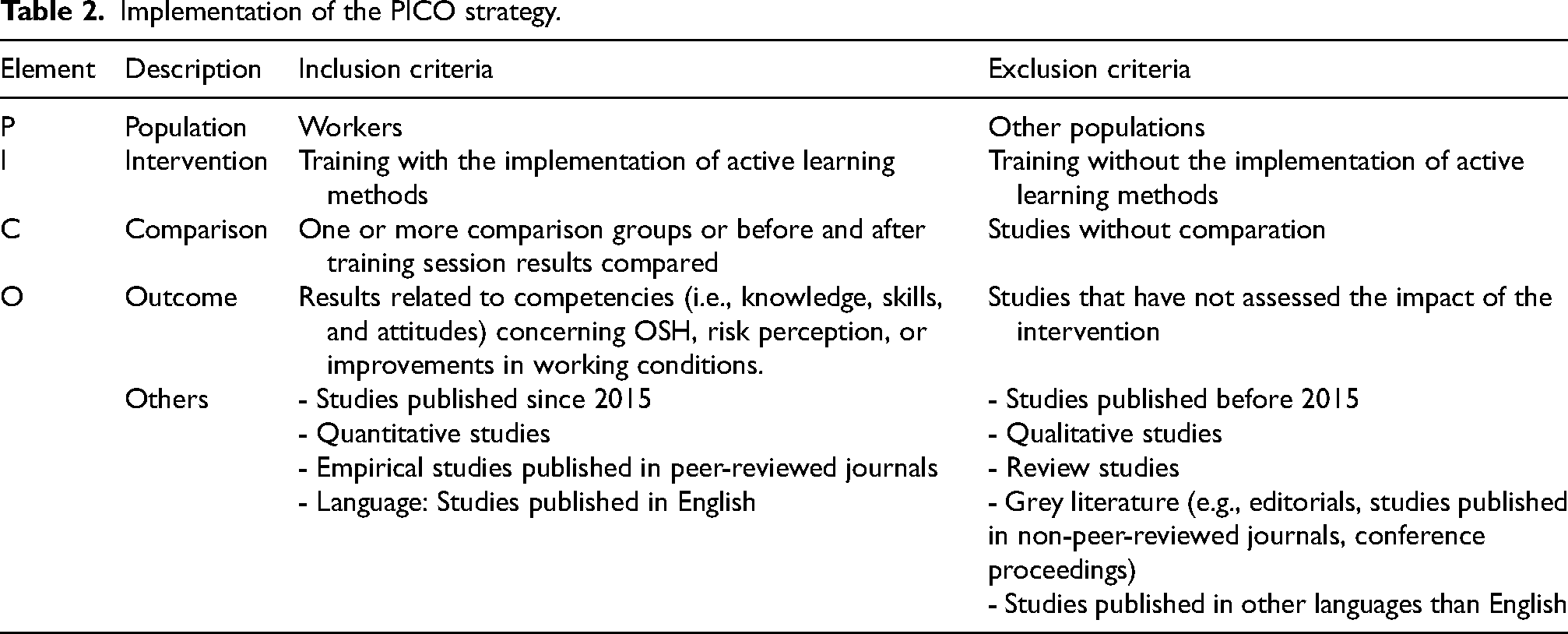
Table 2 presents the eligibility criteria defined using the PICO strategy, including quantitative and empirical studies that analysed the effect of the active learning methods published from 2015 onwards in peer-reviewed journals, written in English, involving workers trained through active learning methods with group comparisons, while excluding review articles, grey literature, non-peer-reviewed publications, conference proceedings, and studies not aligned with the research objective. The research strategy was conducted to identify relevant and up-to-date studies, published in the last ten years, on the topic in question. This time window was chosen to ensure that the review only included the most recent studies, reflecting the discovered practices and current trends in this field.
Implementation of the PICO strategy.
Screening criteria
After searching the databases and applying their automatic filters, the articles were exported for title and abstract screening to Rayyan software. 16 In addition to the initial screening, a full-text analysis of the included articles was performed.
Exclusion criteria 1, 2, and 3 were initially applied to the results obtained from the databases, using the available automated search filters. The remaining records were then exported to Rayyan software, where two reviewers independently conducted the initial screening, applying criterion 4 for the evaluation of titles and abstracts. Agreement between reviewers was assessed using Cohen's kappa. Following the resolution of any disagreements by consensus, the selected articles proceeded to full-text analysis. The two reviewers jointly conducted full-text screening. In cases where consensus could not be reached, two additional reviewers, who were not involved in the initial screening process, were consulted to reach a final decision, thereby minimising selection bias and ensuring methodological independence.
Results
The initial search yielded a total of 801 articles. After removing 250 duplicates, 551 articles remained for screening based on their titles and abstracts. During title screening, 507 were excluded, with a Cohen's kappa of 0.94 and 99.1% agreement between reviewers. Following abstract screening, 24 articles were excluded, with a Cohen's kappa of 0.91 and 95.5% agreement. From the 21 remaining articles, one was excluded due to its lack of focus on safety training. Additionally, one relevant article was identified through reference screening. In total, 21 articles were included in the final review. The study selection process is illustrated in the PRISMA flow (Figure 1).
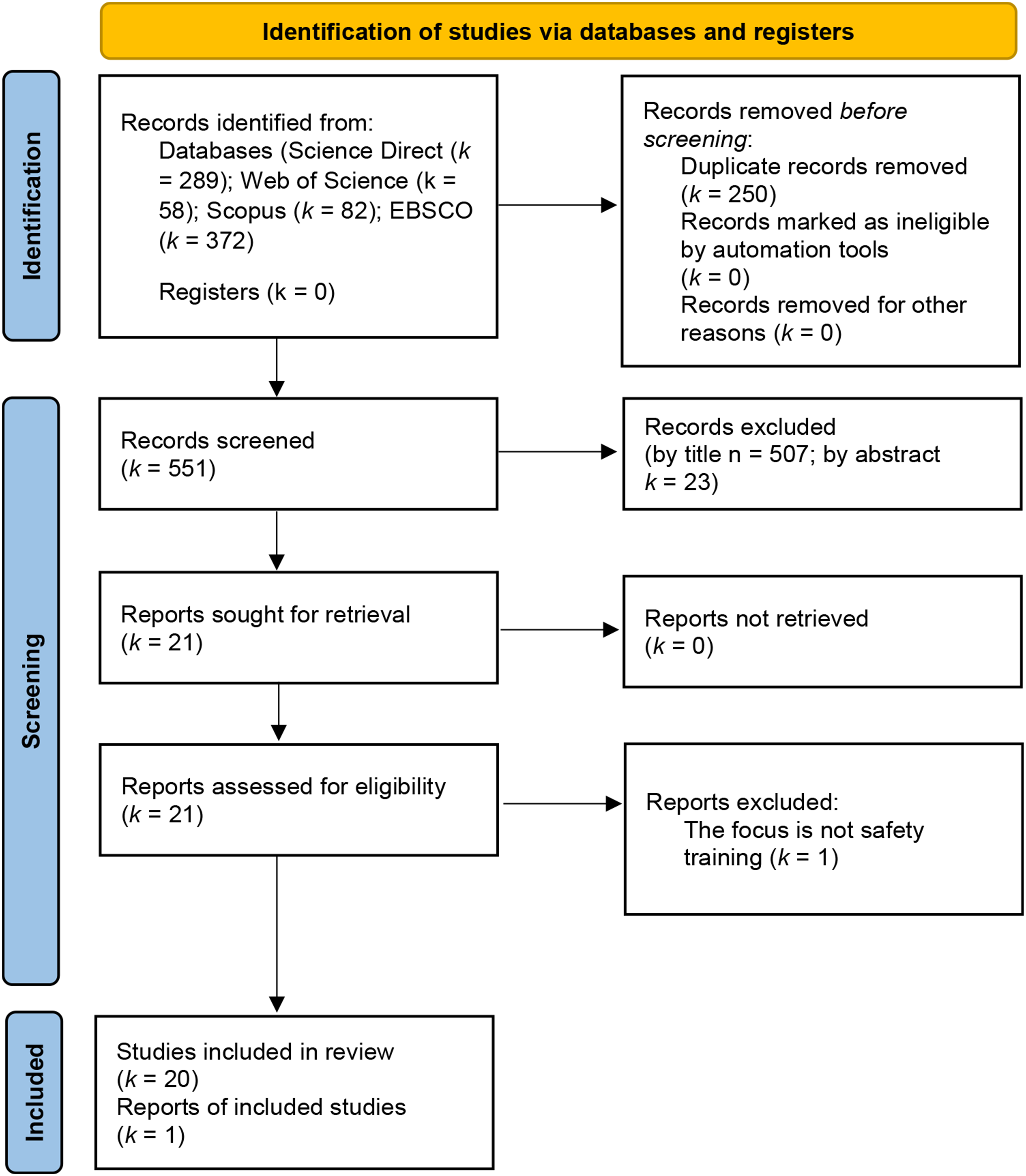
PRISMA flow diagram.
Study selection
Methodological quality and risk of bias
The quality of the included studies was assessed using the MMAT, version 2018. 17 Each study was assigned to the appropriate study category according to the MMAT flowchart, and the corresponding methodological criteria were applied. Based on the number of criteria met, studies were classified into three categories: High, Medium, or Low quality. The classification results are summarised in Table 3, and the full set of questions and criteria used for each category is available in Appendix A. Results indicate that the majority of the studies (21 in total) demonstrated high methodological quality, with 17 classified as “High” and 4 as “Medium”. This predominance of high-quality studies suggests that the evidence base underpinning this review is methodologically sound and provides a reliable foundation for the synthesis of findings. The strong representation of rigorous studies enhances confidence in the conclusions drawn, particularly regarding the effectiveness and applicability of active learning methods in OSH training. Nevertheless, the presence of a smaller number of studies rated as medium quality indicates that certain methodological shortcomings remain, such as incomplete reporting, limited clarity in study design, or insufficient detail on data collection and analysis. These limitations do not compromise the overall robustness of the review but should be considered when interpreting the results and considering the generalisability of specific findings.
Quality assessment.
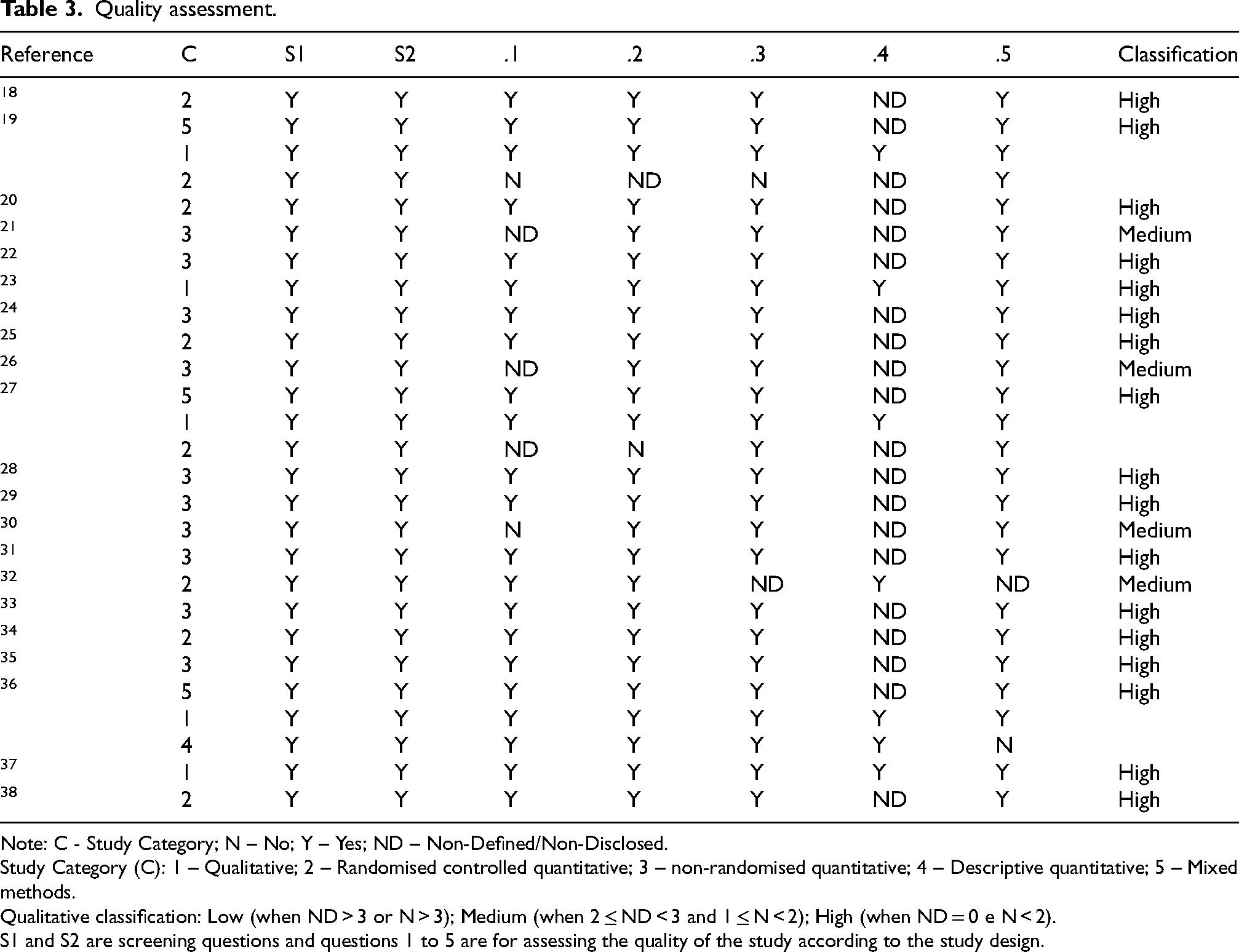
Note: C - Study Category; N – No; Y – Yes; ND – Non-Defined/Non-Disclosed.
Study Category (C): 1 – Qualitative; 2 – Randomised controlled quantitative; 3 – non-randomised quantitative; 4 – Descriptive quantitative; 5 – Mixed methods.
Qualitative classification: Low (when ND > 3 or N > 3); Medium (when 2 ≤ ND < 3 and 1 ≤ N < 2); High (when ND = 0 e N < 2).
S1 and S2 are screening questions and questions 1 to 5 are for assessing the quality of the study according to the study design.
Insights from the included studies
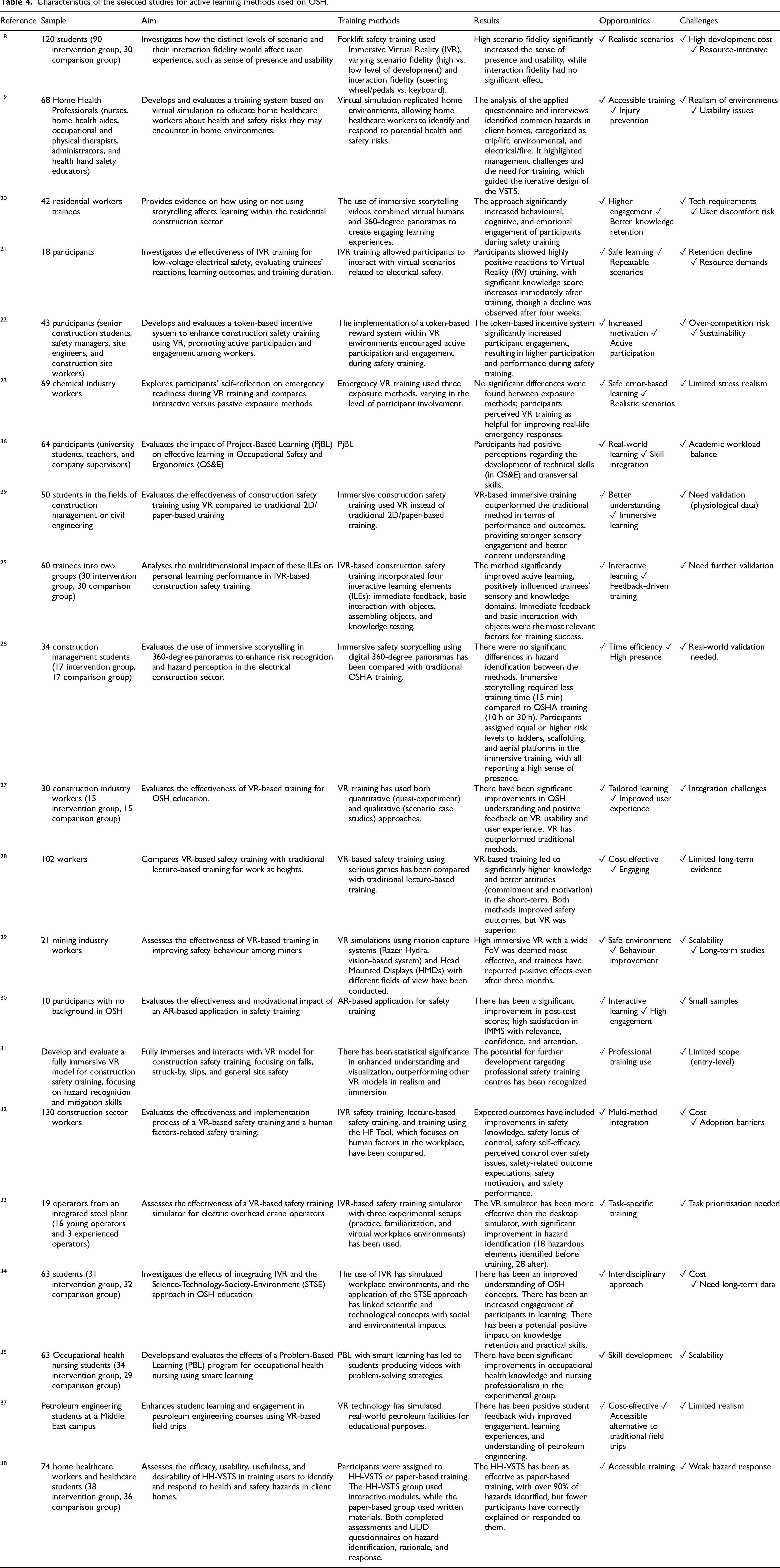
Table 4 summarises the characteristics of the selected studies, which form the basis for comparing the effectiveness of different active learning approaches in OSH training. This comparison aims to identify how methods such as virtual reality (VR), immersive virtual reality (IVR), project-based learning (PjBL), Virtual Simulation, and problem-based learning (PBL) differ in their impact on developing competencies (knowledge, skills, and attitudes), improving risk perception, and promoting safer working practices.
Characteristics of the selected studies for active learning methods used on OSH.
For a visual synthesis of evidence strength across methods and outcome domains, see Figure 2.
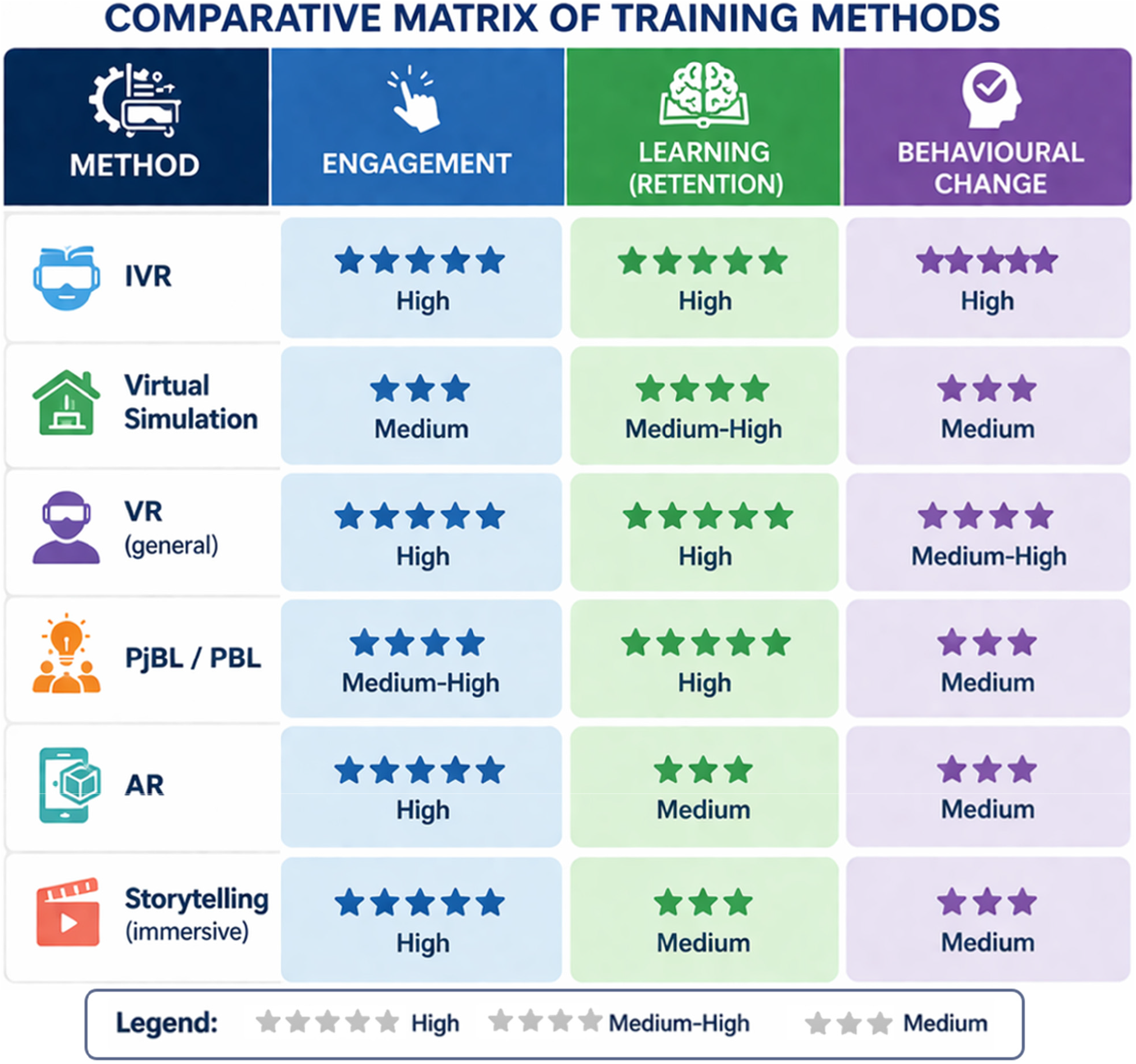
Visual synthesis of the effectiveness of immersive and educational training methods in occupational safety, comparing their impact on engagement, learning, retention, and behavioural change based on the reviewed studies. IVR – immersive virtual reality; VR – virtual reality; PBL – problem-based learning; PjBL – project-based learning; AR – augmented reality.
The studies encompassed diverse population, including 38% students,18,20 10% healthcare professionals,,19,24 and 48% workers from industrial and construction sectors.22,25 The methodologies implemented across these studies included 57% virtual reality and IVR, 10% immersive storytelling, 9% PjBL, 10% virtual simulation, 5% augmented reality (AR) and 5% PBL.
Regarding IVR, key opportunities identified include its potential to enhance learner engagement 30 and facilitate risk-free experiential learning, while the main challenges involve the need for further empirical validation, as well as significant resource and cost requirements. Results denoted strong immediate learning outcomes and behavioural improvements, though some studies reported a decline in knowledge retention over time.
VR was the most frequently applied method. Opportunities include enabling participants to make mistakes without real-world consequences, offering personalised and adaptive learning pathways, providing cost-effective and accessible training solutions, and overcoming logistical and safety constraints.26,35 Challenges for VR integration relate to aligning its use with educational curricula, ensuring accurate replication of real-world conditions, and simulating authentic stress responses.28,32 Results also showing consistent improvements in knowledge retention, safety attitudes, and learner engagement.
Storytelling as an immersive learning method has demonstrated strong potential to improve training effectiveness and retention, reduce training duration, and boost motivation and engagement.21,23 By embedding safety concepts within realistic and emotionally engaging narratives, this approach enables learners to better connect with training content, fostering deeper understanding and long-term behavioural change. Moreover, storytelling facilitates contextualisation of risks and safety procedures, which can be particularly effective in promoting hazard recognition and decision-making in critical situations. However, its implementation requires adequate technological resources, careful cost management, and more robust empirical research to validate its impact across different occupational settings and workforce profiles.
Virtual Simulation provides an engaging and accessible training environment,33,37 although it demands investment in suitable technological infrastructure. Results denoted that this method contributes to reduces injuries and enhances home healthcare safety.
PBL and PjBL approaches promote the development of practical and transversal skills and enable experiential learning closely aligned with workplace challenges (Colim et al., 2022,; Pribadi et al., 2024) yet face difficulties in ensuring effective integration between academic learning and industry requirements. Results showed improvements in knowledge retention, enhanced risk perception, strengthened problem-solving and critical thinking skills, and increase learner engagement and motivation. However, the transfer of knowledge to real-world tasks depended on the level of guidance provided and the alignment of learning activities with organisational practices.
Across the included studies, evidence remains unevenly distributed across sectors, learner populations, and outcome domains. Most interventions were implemented in high-risk industries such as construction and manufacturing, with fewer studies conducted in healthcare or mixed-sector environments. Similarly, the majority of participants were workers in vocational or professional training contexts, while student populations were less frequently examined. Outcome assessment was predominantly focused on short-term knowledge acquisition and self-reported risk awareness, with substantially fewer studies evaluating behavioural change and very limited evidence addressing long-term safety outcomes. Direct measurement of workplace incident reduction was absent across all studies. Although many interventions reported positive educational effects, variability in outcome measures, follow-up duration, and evaluation methods limits comparability across studies and constrains conclusions regarding sustained or real-world impact.
Discussion
It is important to contextualise the findings of the primary studies prior to thematic synthesis. The conclusions presented in Table 4 reflect the original authors’ interpretations. However, from a systematic review perspective, several claims, particularly regarding accident reduction, sustained behavioural change, and long-term knowledge retention, are based on small samples, short follow-up periods, and self-reported or simulation-based measures. Therefore, while this review faithfully reports the outcomes of the original studies, these are interpreted with due caution in the synthesis that follows.
Taken together, the included studies show consistent short-term educational benefits but uneven evidence across outcome domains. Effects are strongest for learner engagement, perceived learning, and immediate knowledge acquisition. Evidence becomes progressively weaker for behavioural transfer, sustained knowledge retention, and real-world safety outcomes. Most studies rely on controlled environments, short follow-up periods, and self-reported or simulation-based measures, limiting conclusions about long-term effectiveness or organisational safety impact.
The analysis of the included studies highlights a growing trend in the use of VR as a training methodology in occupational safety. While each study has unique contextual particularities, the collective findings consistently recognize VR as a tool that enhances learner engagement and perceived learning, and knowledge retention. 21 From a methodological standpoint, the studies primarily focus on developing more effective, interactive, and realistic training approaches. For instance, Bao et al. (2024) 22 and Pribadi et al. (2024) 27 examine how VR boosts participation and content comprehension, whereas Garcia Fracaro et al. (2024) 23 and Rey-Becerra et al. (2023) 28 directly compare VR with traditional training methods. This diversity underscores a continuous quest for innovation, emphasising how technology can enhance training efficacy.
Pribadi et al. (2024) 27 and Rey-Becerra et al. (2023) 28 provide compelling evidence of VR's impact on knowledge retention and behavioural outcomes, supporting earlier work by. 29 These findings align with insights from Burke et al. (2006) 5 and Barros et al. (2020), 40 highlighting immersive methods as key for risk perception and decision-making in hazardous scenarios. Beyond technological factors, motivational engagement and interactivity are critical to training effectiveness.41–43 Improvements were observed in performance, knowledge, and safety attitudes, though some studies reported medium-term retention and mixed results depending on exposure levels.23,28,29
Immersive storytelling was identified in only one study, yet it demonstrated potential to enhance learner motivation, engagement, and knowledge retention.21,23 By integrating narrative elements into VR contexts, this approach creates emotionally compelling and contextually meaningful learning experiences. Applications using 360-degree panoramic videos reduced training duration without compromising learning outcomes,26,44 while participants reported heightened sense of presence and improved hazard awareness. 45 Immersive storytelling is particularly valuable for delivering training that combines cognitive and emotional engagement, fostering deeper learning in complex safety scenarios. However, the lack of additional empirical evidence limits the generalisation of results, and further studies are required to validate its effectiveness across different occupational contexts, examine long-term behavioural impacts, and determine optimal design strategies for real-world implementation.
Overall, VR research is concentrated on engagement and knowledge outcomes, with limited evidence addressing sustained behavioural change or real-world safety indicators.
IVR has been increasingly recognised as a powerful tool in occupational safety training, offering the ability to replicate high-risk scenarios in a safe and controlled environment. Studies show that scenario fidelity—particularly the visual and contextual realism of the environment—significantly enhances learners’ sense of presence and perceived usability, whereas interaction fidelity, such as using specialized controllers, appears less critical. 18 IVR-based training has demonstrated substantial immediate learning gains and high participant satisfaction; however, some studies report a decline in knowledge retention after several weeks, highlighting the need for reinforcement strategies to consolidate long-term memory. 21 Comparative analyses indicate that immersive training consistently outperforms traditional 2D methods in performance and engagement, promoting deeper sensory and cognitive participation essential for behaviour change in safety-critical contexts.24,42,43 Specific interactive elements, such as immediate feedback and object manipulation, have been shown to further maximise learning outcomes, underscoring the importance of pedagogical design alongside technological implementation. 25 Despite these benefits, practical and systemic barriers remain, including technological requirements, high development costs, specialised trainers, organisational resistance, and context-dependent limitations.22,31,46,47 Limited longitudinal studies also restrict understanding of long-term impact.27–29 Nevertheless, IVR fosters content personalisation, safer training conditions, long-term skill retention, and the development of transferable competencies such as decision-making and emotional regulation, with approaches like serious games and reward systems proving particularly effective for younger trainees or those with limited OSH literacy.22,28,31,37 Strategic implementation, careful pedagogical design, contextual adaptation, and sustained evaluation are crucial to fully realise IVR's potential, ensuring engagement, behavioural transformation, and long-term effectiveness across diverse organisational contexts.25,48,49
Virtual simulation provides effective training solutions where real-world practice is impractical, such as in home healthcare or high-risk occupational settings.38,50 Systems like the Home Hazard Virtual Simulation Training System allow repeated hazard identification in a safe digital environment, promoting experiential learning and risk-free practice. Participants engaging with dynamic modules demonstrated improved hazard recognition, although conceptual understanding and response accuracy may require further refinement. 51 These simulations facilitate applied learning, enabling users to develop transferable skills such as decision-making and hazard assessment, while replicating diverse, realistic scenarios. Widespread adoption requires significant technological investment and accessibility considerations. 38 Despite these challenges, virtual simulations have proven adaptable and effective in enhancing hazard perception and reinforcing OSH competencies, particularly where in-person instruction is limited or impractical.
Active learning strategies such as PBL and PjBL have demonstrated considerable potential in enhancing cognitive skills, problem-solving abilities, and applied knowledge within OSH contexts.36,50These methodologies place learners at the centre of the training process, encouraging active engagement, critical thinking, and collaboration through real-world problem-solving and project-based tasks. PBL typically involves presenting learners with complex, open-ended problems that require analysis, research, and solution development, while PjBL integrates practical projects, often in partnership with industry, to apply theoretical knowledge to authentic workplace challenges.36,52 Evidence from included studies indicates positive outcomes in both technical skills and soft competencies, such as teamwork, communication, and professional identity development. 35 Despite these encouraging results, the overall body of evidence remains limited, with some studies rated as medium quality due to methodological gaps, small sample sizes, or variability in intervention design. Successful implementation of PBL and PjBL requires careful alignment between academic learning outcomes and workplace requirements, ongoing support from trainers, and structured integration of reflective and evaluative processes to ensure meaningful learning transfer to real-world occupational settings.
AR-based training has demonstrated significant potential in enhancing knowledge acquisition, learner motivation, and engagement in occupational safety contexts.30,53 By overlaying digital information onto real-world environments, AR enables participants to interact with simulated hazards while remaining in a physically safe setting, promoting contextualised learning and immediate feedback. However, the efficacy of AR is context-dependent; studies report that task performance may decline when switching between different visual contexts or altering focal distances, highlighting the need to carefully design AR scenarios to match the intended learning objectives. 54 Most research has been conducted in controlled laboratory environments with small sample sizes, which limits the generalisability of findings to diverse, real-world OSH settings. 55 Additional challenges include technological requirements, the potential cognitive load imposed by AR interfaces, and the need for participant training to navigate augmented environments effectively. Despite these limitations, the evidence suggests that, when thoughtfully implemented, AR can complement traditional and immersive learning methods by providing interactive, contextualised experiences that reinforce knowledge retention and hazard awareness. Future studies should explore AR applications across varied occupational sectors, assess long-term behavioural outcomes, and evaluate scalability in real-world training programmes.
Implications for sustainable development
These findings support the relevance of immersive and active learning approaches to advancing occupational safety in alignment with sustainable development objectives, while also highlighting the need for stronger evidence linking training innovations to measurable real-world safety improvements.
Quality assessment
The majority of studies included in this review were classified as high quality, indicating coherence between research questions, study design, data collection, analysis, and the conclusions drawn. Nevertheless, a subset of medium-quality studies highlights recurring methodological limitations, such as small sample sizes, absence of randomisation or control groups, limited longitudinal follow-up, and insufficient justification of findings. These factors constrain the generalisability of results and suggest caution when interpreting the reported benefits of immersive and active learning approaches.
Importantly, the most consistent findings, particularly those related to knowledge retention and risk perception, are predominantly derived from high-quality studies. In contrast, evidence concerning long-term behavioural outcomes and the sustainability of learning gains is more frequently supported by medium-quality studies and should therefore be interpreted with greater reservation. This differentiation is critical to avoid overgeneralisation and to appropriately weigh the strength of the available evidence.
Strength and limits of effectiveness claims
Additionally, variability in training modalities, intervention intensity, and measurement tools introduces further complexity in comparing outcomes across studies. Despite these limitations, the collective evidence supports the capacity of immersive technologies and active learning strategies to enhance knowledge retention, risk perception, and behavioural performance in OSH training. To maximise validity and sustainability, future research should prioritise rigorous experimental designs, larger and more diverse participant samples, contextually relevant intervention scenarios, and continuous evaluation of both short- and long-term outcomes. Such methodological rigour will strengthen the evidence base and facilitate the effective translation of these approaches into diverse occupational training contexts.
Overall, the analysed studies provide adequate answers to the research questions and demonstrate coherent data collection and analysis processes, with appropriate methodological approaches that minimise bias and reinforce the validity of reported findings. However, despite the predominance of high-quality studies, several were rated as medium quality, reflecting methodological limitations such as small sample sizes, absence of randomisation or control groups, and variability in study design. These factors limit the generalisability of the findings and suggest caution when interpreting reported benefits. Additional concerns include limited exploration of relevant variables, reliance on generic simulation scenarios, and a scarcity of longitudinal studies, which restricts understanding of long-term outcomes. Collectively, these limitations underscore the need for more rigorous, context-sensitive, and longitudinal research to strengthen the evidence base for immersive and active learning methodologies in OSH training, ensuring that future interventions are both effective and sustainable.
In general, the evidence indicates that immersive and active learning approaches provide meaningful short-term educational benefits but insufficient proof of sustained behavioural change or real-world safety impact, highlighting a clear gap between training effectiveness and demonstrable occupational safety outcomes.
Conclusions
Active learning and immersive technologies are increasingly used in OSH training and consistently demonstrate strong effects on learner engagement, knowledge acquisition, and perceived risk awareness. These approaches provide safe and realistic environments for experiential learning and offer clear advantages over traditional instructional methods in promoting active participation and immediate learning outcomes.
However, the evidence base remains limited in several critical respects. Long-term knowledge retention is insufficiently examined, behavioural transfer to real workplace settings is rarely observed directly, and no studies objectively measure reductions in accident rates. Methodological variability and the absence of cost-effectiveness analyses further constrain conclusions regarding scalability and organisational impact.
To strengthen the evidence base, future research should prioritise longitudinal and context-sensitive designs that evaluate sustained behavioural outcomes and objective safety indicators. Greater methodological standardisation and economic evaluation will be essential to determine whether educational benefits translate into measurable improvements in workplace safety.
For practice, organisations implementing active learning in OSH training should prioritise repeated exposure, scenario realism, and integration into continuous professional development rather than one-off interventions. Evaluation frameworks should incorporate behavioural observation and operational safety indicators alongside knowledge testing.
For policy, regulatory and institutional bodies should support the development of evidence-based training standards, promote evaluation of real-world safety outcomes, and consider funding mechanisms that enable organisations to adopt and rigorously assess immersive training technologies.
Footnotes
Acknowledgements
Not applicable.
Ethical approval
Not applicable.
Informed consent
Not applicable.
Funding
The authors disclosed receipt of the following financial support for the research, authorship, and/or publication of this article: Matilde A. Rodrigues, Margarida Rocha and F. Daniela Ferreira has been supported by Fundação para a Ciência e Tecnologia (FCT) through R&D Units funding (UID/06397/2025); Artemisa R. Dores has been supported by Fundação para a Ciência e Tecnologia (FCT) through R&D Units funding (UID/5210/2025).  .
.
Declaration of conflicting interests
The authors declared no potential conflicts of interest with respect to the research, authorship, and/or publication of this article.