






Abstract
Background
Intermediary objects are widely used in ergonomics to support participatory design dynamics, but their combined use as interconnected systems remains underexplored. Understanding how different objects reinforce each other may help ergonomists to better act during the design process.
Objective
This article introduces the concept of Intermediary Objects System (IOS), defined as sets of representations employed by ergonomists across different stages of the design process.
Methods
Two case studies were analyzed: the design of biotechnology laboratories and an onshore collaborative center. In both cases, ergonomists used different sets of intermediary objects such as modified blueprints and scale models, complemented by additional tools, to stimulate discussions on work activity, engage users, and preserve project memory.
Results
Findings show that intermediary objects not only facilitated debates on work and collaborative problem-solving but also reinforced each other, creating a cumulative process of knowledge construction. This synergy allowed researchers to connect design decisions directly to work activity.
Conclusion
The concept of Intermediary Objects System (IOS) broadens the understanding of intermediary objects in ergonomics and highlights their value in participatory design. By using multiple intermediary objects, ergonomists can mediate different types of interaction to debate work activity and accumulate understanding both for themselves and for the participants, thereby facilitating project discussions in participatory dynamics.
Keywords
Introduction
Integrating knowledge about work activity into design projects remains a central challenge for ergonomists,1,2 particularly in participatory workspace design contexts. Participatory ergonomics is understood as an approach grounded in the active involvement of workers in the analysis and design of their own work situations, recognizing them as key contributors to the identification of problems and the development of solutions. 3 By engaging workers in design processes, participatory approaches help focus solutions on actual work needs, improve the quality of design outcomes, and increase project acceptability and solution ownership. 4 Within this perspective, Béguin and Duarte 5 emphasize that participation is not limited to consultation but is constructed through dialogue between designers, operators, and ergonomists. The ergonomist plays a central mediating role in this process, organizing arenas for debate, translating between technical constraints and work activity, and supporting the collective construction of shared representations. Through this dialogical approach, participatory ergonomics contributes not only to better technical solutions but also to innovation processes grounded in real work activity.
Building on this participatory perspective, work simulation methods and participatory design approaches have been developed to address unforeseen variability in design projects. These approaches mobilize personal and collective resources, allow contradictions and debates about values to emerge, and place workers and designers at the center of the design process.6,7 In doing so, they transform work activity into an explicit, shared object of discussion rather than an implicit background, creating conditions for its integration into design decisions.
Within this perspective, several studies have explored how work activity analysis can support design through simulation. These contributions include the future work approach, 8 conceptual insights on how work activity analysis can inform design through simulation,9,10 methodological developments of simulation techniques,11,12 and reflections on how knowledge about work can be transferred into engineering and architectural projects.13,14 Across these works, simulation is not conceived as a simple validation tool, but as a collective process through which future work situations are explored and negotiated.
To conduct simulations, however, it is often necessary to rely on project representations. Ergonomists and designers frequently need physical or virtual support to represent design solutions and mediate discussions on work issues, achieved through intermediary objects. An intermediary object is a temporary representation of something still under development. Through such objects, designers can externalize ideas and interact with others during the process.15,16 Intermediary objects may take various forms—such as blueprints, scale models, prototypes, or digital representations. Although the concept was originally developed in sociology to analyze coordination within sociotechnical networks, ergonomists have mobilized it to characterize representations that mediate between technical constraints and work activity, supporting dialogue and negotiation during design processes. The literature also frequently refers to the notion of boundary objects. 17 While these concepts are theoretically distinct, in participatory ergonomics they play complementary roles; from a practical standpoint, their distinction becomes secondary, as both function as mediating artifacts that support collaboration, knowledge exchange, and as both contribute to creating common representations.
These objects serve as resources to foster user participation and structure discussions about work, as illustrated in the studies presented below. Paper-based prototypes have been used to simulate digital interfaces,18,19 Lego scale models to support the participatory design of laboratories, 10 and game boards with movable pieces have represented production layouts. 20 Other examples include full-scale mock-ups, 21 floor layouts drawn on the ground. 22
Recent investigations have broadened this repertoire to include digital and conceptual representations. Video Exposure Monitoring (VEM) has been used to visualize chemical risks 23 ; design guidelines and ergonomic checklists have acted as conceptual intermediaries in large-scale projects 24 ; participatory simulations, in connection with work analysis, have been applied to the design of operations centers 25 ; and maker labs have provided 3D-printed prototypes to support collaborative exploration. 26 In addition, project reports, meeting notes, and evaluation grids have also been recognized as intermediary objects within constructive ergonomics frameworks, anchoring debates and negotiations. 27
Building on these contributions, this article focuses on the organization of intermediary objects across the workspace design process. Rather than examining intermediary objects individually or at isolated moments of a project, it looks at how ergonomists mobilize several representations across successive phases of design process. From this perspective, the interest lies not in the properties of a single object, but in the way different intermediary objects are combined and articulated over time to support continuity in participatory dynamics and the progressive integration of work knowledge into design.
This article proposes the notion of an Intermediary Object Systems to describe this articulation of multiple representations throughout workspace design projects. This perspective offers a complementary lens to existing approaches by focusing on how intermediary objects are selected, adapted, and sequenced to support continuity in participatory dynamics. The emphasis is placed on the ergonomist's role in orchestrating these objects so that the output of one representation prepares the ground for the next, and the limitations of a given object are compensated by another.
The analysis draws on two participatory workspace design projects: the design of biotechnology laboratories and the restructuring of an Onshore Collaborative Center (OCC). Both cases concerned the design of workspaces, and in both situations ergonomists mobilized different intermediary objects to support discussions on work activity throughout the design process. Examining these two projects allows explore how different representations are articulated over time in concrete design situations, while accounting for variations in organizational context and technical constraints.
This article is structured as follows. First, the methodological approach is presented. The two case studies are then described, followed by an analysis of how intermediary objects were mobilized across different project phases. Finally, a cross-case discussion highlights the principles underlying their articulation into intermediary object systems and the conclusion summarizes the implications for ergonomic practice.
Method
This research adopts a qualitative, practice-oriented research design, 28 drawing on two participatory workspace design projects: the design of biotechnology laboratories and the restructuring of an onshore collaborative center (OCC). Rather than treating the cases as bounded units for formal comparison, the analysis builds on an engagement with design practices as they unfold, focusing on how ergonomists act within concrete project situations and mobilize resources to support participation and simulation.
The two projects were retrospectively examined to explore how intermediary objects were mobilized and articulated over time during the design process. The notion of Intermediary Objects System (IOS) is used as an analytical lens to examine how different representations were selected, adapted, and sequenced across successive phases of workspace design. The aim is to identify recurring principles in the organization of intermediary objects within participatory workspace design practices. Considering that projects are social processes in which interactions among participants shape outcomes, 29 the analysis focused on design practices as they unfolded in concrete situations. This perspective made it possible to examine exchanges, negotiations, and emerging solutions, with particular attention to how intermediary objects mediated participation, guided the construction of proposals, and supported discussions on work activity throughout the design process.
Case selection and contexts
The two cases were selected because they involved participatory workspace design processes in which ergonomists played an active role in mobilizing intermediary objects to support discussions on work activity. Both projects generated extensive empirical material and were documented within the framework of two doctoral researches, which ensured systematic observation, detailed recording of participatory situations, and reflexive analysis of the design processes.
The laboratory design project was conducted in 2012 and focused on the relocation of biotechnology research teams to a new laboratory complex. The restructuring of the onshore collaborative center took place in 2017 and addressed the integration of multiple operational teams into a shared workspace. The temporal distance between the projects and the present analysis supports a retrospective perspective on design practices, allowing for a more reflexive examination of how intermediary objects were articulated over time and across different project contexts.
Cases settings
In the first case, the project involved relocating four biotechnology research teams, totaling about 60 people, to a modernized laboratory complex. Each team worked on different research topics and had its own specialized laboratory, in addition to access to 18 shared laboratories within the same complex. The ergonomist began the project by gathering technical information and reviewing prior decisions regarding the initial organization of spaces and equipment in the new building. He then conducted a study of work situations, identifying problems in the existing laboratories and analyzing their consequences for researchers’ activities. This context motivated the adaptation and subsequent diversification of intermediary objects to support participation and discussion.
Subsequently, representatives from each team collaborated using a Lego scale model to facilitate design discussions. Lego pieces allowed the assembly of colored elements that could be easily handled and fixed to a support, while the click-fit system enabled rapid modifications during discussions of design solutions. During these sessions, the ergonomist also proposed typical action situations, 8 enabling teams to evaluate design proposals based on their work experience. Results from the simulations were compiled into digital plans and a photographic collection documenting the laboratories and the evolution of design solutions. These materials were shared with project coordination and all researchers involved, supporting the consolidation and communication of project decisions.
In the second case, the project involved the restructuring of an Onshore Collaborative Center (OCC) in the oil industry, aiming to unify the operation of seven teams into a shared workspace and to accommodate a staff increase from 42 to 83 workers. The demand was to provide recommendations for the basic design of the new OCC, particularly the main collaborative space to be installed in a former restaurant area. The intervention structure in the OCC project articulated work analysis and simulation. 25 First, the ergonomists began the project by conducting an analysis of work situations, focusing on routine operations as well as atypical and emergency scenarios. Observations and discussions with operators and managers highlighted strong interdependencies between activities and high demands for coordination, communication, and collective decision-making. This context informed the subsequent selection and adaptation of intermediary objects to support participatory discussions.
In the following stage, three participatory simulation sessions were organized using different intermediary objects to explore layout alternatives and future work situations. Adapted architectural drawings were first used to present initial proposals, followed by more interactive representations. An interactive floor plan allowed participants to manipulate workstation elements and test spatial configurations, while three-dimensional digital models supported the visualization of the future environment. These representations were sometimes used in combination and, in later sessions, directly in the space that would be transformed into the OCC. Throughout the process, the ergonomists acted as mediators, encouraging participants to articulate their work practices and coordination needs. The simulations were documented through drawings, photographs, and digital models, supporting the consolidation and communication of design proposals.
Across both cases, the design processes were structured around participatory meetings in which intermediary objects played a central mediating role. The intermediary objects mobilized in each case were not the same, reflecting differences in organizational context, project constraints, and design demands. However, because both projects involved the design of workspaces, these objects shared functional similarities, particularly in supporting spatial reasoning, discussions on work activity, and collective decision-making. Although the organizational settings and work activities differed, both projects required the ergonomists to select, adapt, and combine multiple representations to make work activity visible, support negotiation between actors, and sustain continuity in the design process. Taken together, these similarities and differences allow the cases to be analyzed comparatively, without assuming the use of identical intermediary objects. A synthesis of the intermediary objects used in each case is presented at the end Results section, providing an overview of how distinct objects were articulated into intermediary object systems.
Data collection
Data collection followed the main phases of the ergonomists’ interventions in each project. During the work analysis phase, data were gathered through observations, interviews, and informal discussions with workers, documented in field notes and the ergonomists’ notebooks. During the participatory simulation phases, additional materials were collected, including photographs, videos, audio recordings, and annotated representations produced during meetings.
These materials captured both the use of intermediary objects and the debates they supported, as well as the modifications made to representations over time. Project documents such as modified blueprints, scale models, interactive floor plans, and digital models were also retained as empirical material.
Analytical procedure
The analysis focused on how intermediary objects were mobilized and articulated throughout the design processes. Three main analytical dimensions guided the examination of the empirical material:
The types of intermediary objects used at different stages of the projects; The role of each object in supporting discussions on work activity and design choices; The relationships between successive objects, particularly how the output of one representation informed or prepared the use of the next.
Episodes in which intermediary objects played a mediating role in discussions on work activity or design decisions were identified and selected for closer examination. These episodes were compared within and across the two case studies in order to identify recurrent patterns in object use, transitions between representations, and complementarities between different objects.
Rather than applying a formal coding procedure, the analysis consisted of a systematic examination of situations in which intermediary objects were used to mediate participation and simulation. Attention was paid to how representations were adapted to users, how they compensated for each other's limitations, and how they contributed to the continuity of collective reasoning across project phases. This procedure allowed the identification of how intermediary objects were intentionally mobilized and combined throughout the design processes.
Results
Different intermediary objects were used by ergonomists in different phases of the design process. These objects had different intentions, such as: presenting the project to workers, building a common representation among those involved, provoking reflections about the work. Each object contributed to broadening the understanding of the project and its relationships with the work carried out.
Intermediary objects used during the laboratory design project
In the first step during the project, the ergonomist used intermediary objects to better understand the lab researchers’ work activities and evaluate design solutions. This stage aimed to generate knowledge about real work situations, since it is on this knowledge that the ergonomist builds the validity of his action. 10 Initially, the ergonomist visited the laboratories to observe and discuss the lab researchers’ use of equipment, facilities, and encountered difficulties. During these visits, he also produced verbalizations with the researchers about the use of equipment, the facilities, and the difficulties found in their daily work. He found that the relationship between laboratories was crucial, as lab researchers used various spaces throughout the day. Because the researchers’ activities were distributed across different laboratories depending on the equipment needed, the way the spaces were organized in the new building would directly affect their work.
When presenting the proposed blueprint of the new complex, he faced difficulties as lab researchers struggled to understand the graphical representation. This was because their academic background was mainly in the biological sciences, and they were not accustomed to reading architectural drawings, which made comprehension difficult. In addition, most project information had been previously shared by email, but despite the intention of disseminating information, the content circulated was not accessible or fully understandable for the users. The difficulty in reading the blueprints, combined with the lack of familiarity with the proposed spaces, often led to interruptions in the discussions. Researchers frequently needed to confirm which laboratory was being referred to, locate related areas, or correct misunderstandings about the layout. These recurrent clarifications disrupted the flow of dialogue and revealed the challenges participants faced in interpreting the technical drawings.
For this blueprint to serve as a real support for dialogue, it had to be adapted. Figure 1 shows a series of colored markings were added to distinguish classes of laboratories, together with familiar names for the researcher (and not technical names used by the architecture consultant) and legends to help users identify spaces. To address this, the blueprint was modified with colored markings, codes and familiar names to identify different types of laboratories, making it easier for lab researchers to understand and evaluate the space organization. After these modifications, the blueprint became a more effective support for discussion, allowing researchers to identify laboratories more easily and to relate spatial arrangements to their work activities, whereas the original unmodified blueprint had proved too abstract and difficult for them to interpret.
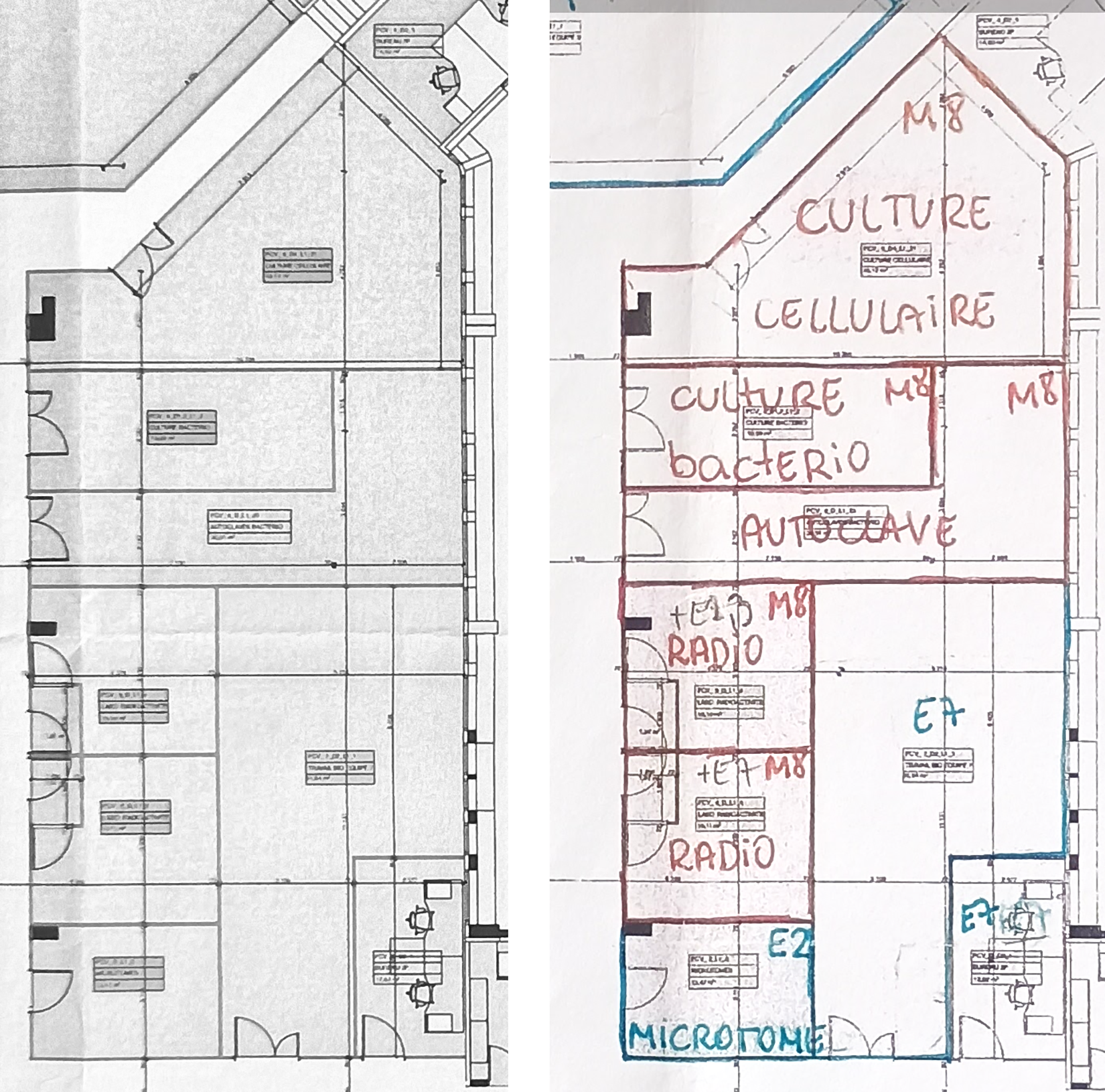
Original architectural blueprint (left) and adapted blueprint used by the ergonomist to support discussions on work activity (right).
Among the laboratories most frequently used by researchers and technicians in the department was the cell culture laboratory. This space was dedicated to preparing culture media and replicating microorganisms under controlled conditions, a task that demanded careful manipulation of materials and strict procedures to avoid contamination. The work required the use of specialized equipment, such as laminar flow hoods equipped with UV systems for sterilization, incubators, agitators, and centrifuges located on different floors. Each of these devices was essential to ensure proper growth conditions for microorganisms and to maintain the reliability of experiments.
One of the main difficulties raised during the discussions concerned the need for storage space to keep prepared materials, especially when preparations were carried out on different days. Each procedure conducted by a researcher involved the preparation of several culture media. Since these steps were often performed on different days, the prepared material had to be stored in the laboratory, which was equipped with environmental control systems such as temperature and humidity. Because of the laboratory's frequent use, space was often insufficient, and the material ended up being kept on a shelf and a support table. Currently, this laboratory faces a shortage of adequate storage areas. As illustrated in Figure 2, researchers often prepare media in advance, leaving them on benches or in limited cabinet space, which creates overcrowding and increasing contamination risks.
During discussions mediated by the adapted blueprint, researchers recognized that this storage problem would be transferred to the future laboratory configuration if no design changes were made. All the researchers who discussed this issue with the ergonomist agreed that it would represent a persistent problem in the new laboratory and therefore needed to be addressed in the design phase.
When representatives from the four research teams gathered to discuss the laboratory layouts using the scale model, the question of storage in the cell culture laboratory became a central issue. The problem was already familiar to participants, since it had been previously discussed with the ergonomist in meetings mediated by the adapted blueprints. As a result, everyone arrived at the session with a clear understanding of the difficulties and the need for a solution.
The group considered different alternatives. One initial idea was to keep the culture media under the equipment, as some researchers had already done. However, this solution was quickly discarded due to the risks of contamination, confirmed by the experience of a technician who had observed such incidents in practice. Other attempts focused on reorganizing the existing space, but these measures proved insufficient to address the demand.
At this point, the ergonomist suggested using an adjacent space to relieve pressure on the laboratory itself. Next to the cell culture room, the project blueprint included the autoclave area, where a column of cabinets was already planned for storing sterilized glassware and supplies. The proposal (illustrated in Figure 3) was to reserve part of one of these cabinets for the temporary storage of culture media. This alternative gained immediate attention, as it offered a practical extension of storage space directly accessible from the cell culture lab, while avoiding risks to sample integrity. The conversation illustrated how the scale model and the blueprints mediated the dialogue, enabling researchers to confront their daily problems collectively and to imagine new solutions for the future laboratory.
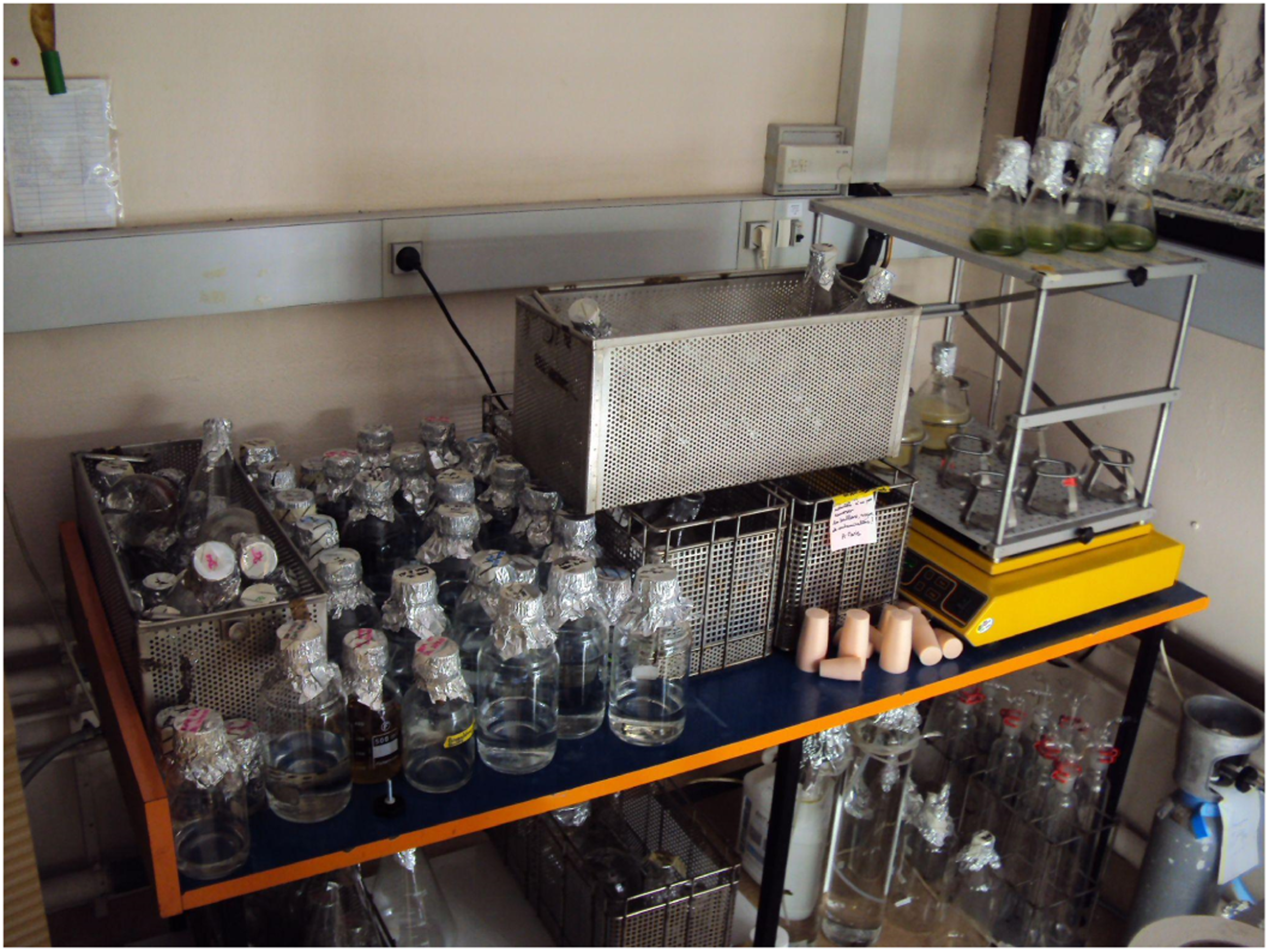
Several culture media stored on a bench in the cell culture laboratory.
Intermediary objects used during the OCC design project
Unlike the biotechnology laboratories case, the OCC workers were already familiar with project representations through simblueprints. In the first simulation cycle, discussions began after the work analysis phase and aimed to introduce the project to workers and select one of two layout alternatives. The workers commented on the impact of workstation placement on their activities and selected one proposal for further development in subsequent simulations.
From the perspective of process monitoring operators, however, the planned videowalls did not seem relevant to their work, since the analysis of variables was carried out in different systems, through direct interaction with colleagues in small meetings, and via telephone communication with other departments. They found it difficult to imagine what information would be displayed on the large screens in a way that would be meaningful to all operators. In contrast, the team manager considered the videowall to be an important feature, even though at that stage he did not yet know which information would be projected. These contrasting viewpoints were highlighted during the first simulation cycle.
In the second cycle, an interactive floor plan was used. This was designed as a simplified board with movable workstation pieces in different colors and shapes representing each team's workstations, allowing participants to manipulate the layout directly. Two operators from each team, together with managers and four ergonomists, took part in the session. During discussions, operators rearranged the pieces to emphasize the importance of holding monitoring meetings with peers, which usually took place informally in the corridor between workstations. Although the modifications proposed by operators were still constrained by the videowall concept required by management, the simulation stimulated extensive reflections on how work would be carried out in this new context. In this sense, the interactive floor plan not only allowed the representation of different layouts but also fostered debate about the introduction of a new technical device and the creation of new possibilities for work organization.
In the third cycle, 3D model images were introduced, providing perspective views of the future environment and detailing the layout. These representations included references to walls and equipment absent from the 2D supports, helping participants better visualize the space and propose new layout alternatives. However, as finalized renderings, the 3D models could not be modified during the simulation sessions.
Between the second and third cycles, and without the ergonomists present, operators themselves continued the debate. They sketched new layout alternatives to accommodate the informal meetings that were crucial for sharing information among team members. Using the interactive floor plan, they arranged their workstations in semicircle configurations, ensuring that meetings could occur at the center of the layout. From the operators’ perspective, monitoring activities were oriented toward trend analysis and recommendations rather than real-time action. Thus, the videowall would be used only occasionally, in specific situations. Figure 4 illustrates the interactive floor plan use, when in several moments successive modifications to the interactive floor plan emerged directly from discussions about work activity, with each adjustment reflecting negotiated agreements among participants.
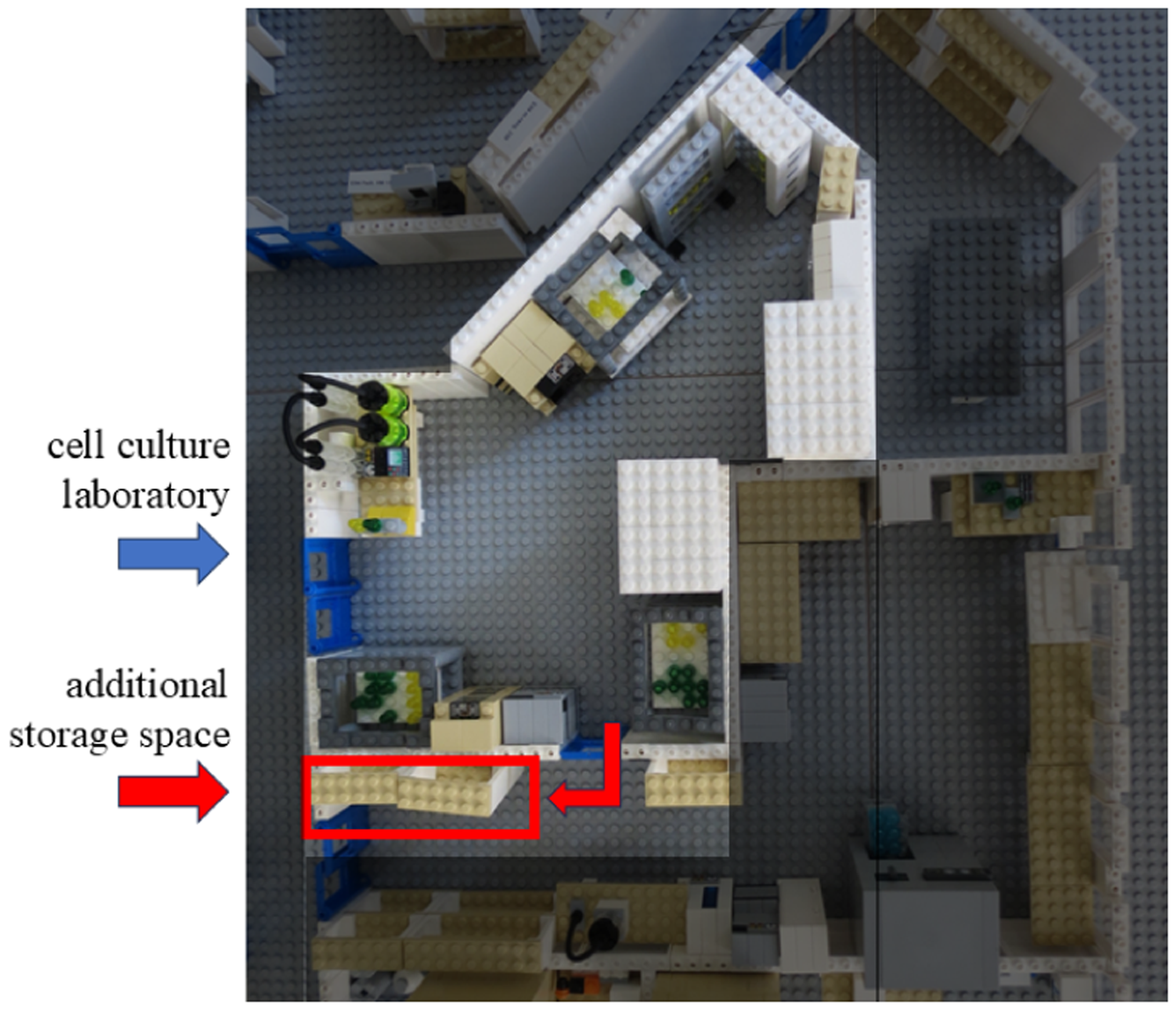
Solution developed collectively through agreements to address the storage issue.
The 3D model images were projected together with other supports already in use, such as large-format printed floor plans, the interactive plan, and the actual environment to be transformed. This multimodal use of resources broadened participants’ spatial understanding and guided the proposal of new layout solutions. Yet, because the 3D model was produced using modeling software, it could not be directly manipulated during the meetings. In contrast, the interactive floor plan, which remained available alongside the 3D representations, allowed operators to defend their proposals based on their work activities and to test modifications interactively.
The simulation meetings with the interactive floor plan and 3D model images were conducted in the actual location that would be transformed into the OCC. This enabled the combination of intermediary objects with the spatial perception offered by the real environment. By using the interactive floor plan directly in the future workspace, operators were able to situate their proposed workstations, recognize elements of the plan in the real setting, and test how typical activities would unfold. Figure 5 shows participants using the interactive floor plan within the future OCC space, discussing communication within and between the teams. Highlighting how representations and physical context were jointly mobilized during the simulation sessions.
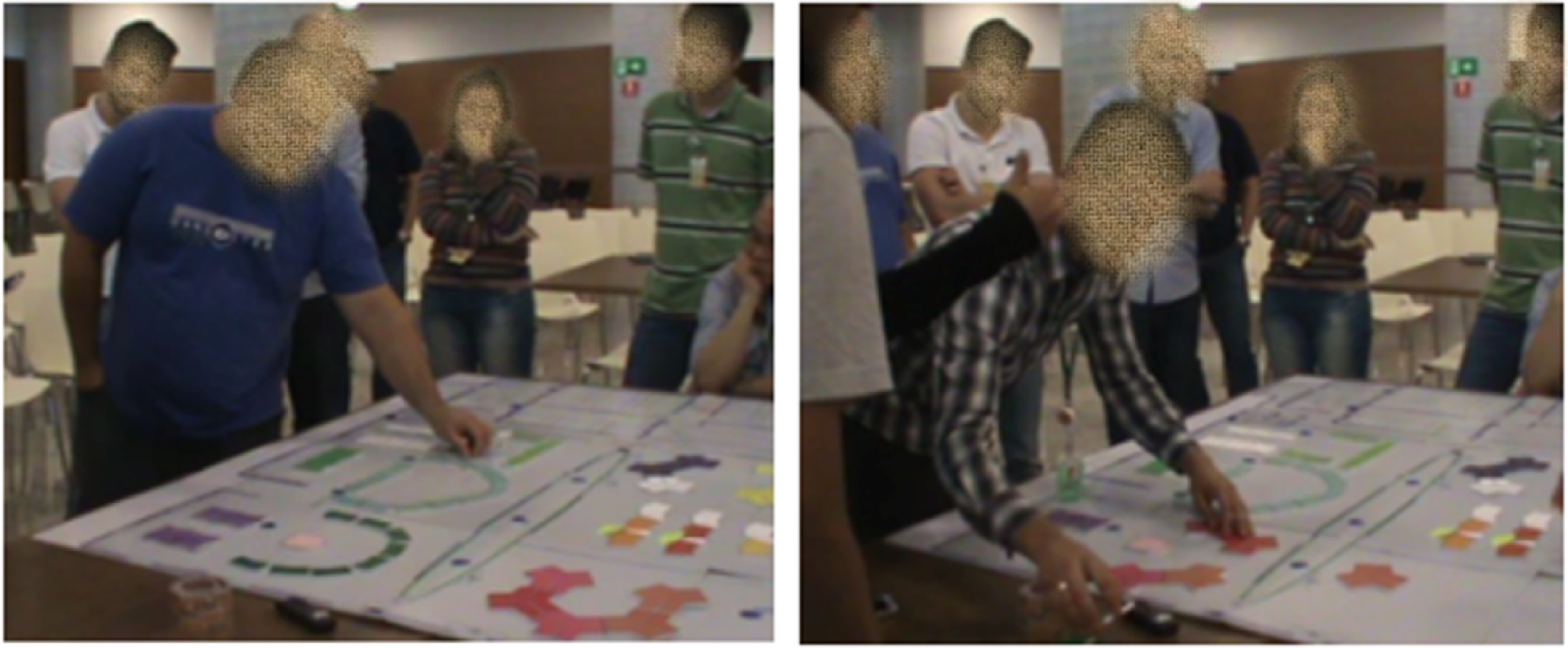
Interactive floor plan used during the second simulation cycle in the OCC project, showing movable workstation pieces arranged by operators to explore two alternatives of spatial configurations and coordination practices.
Synthesis of intermediary object systems across the cases
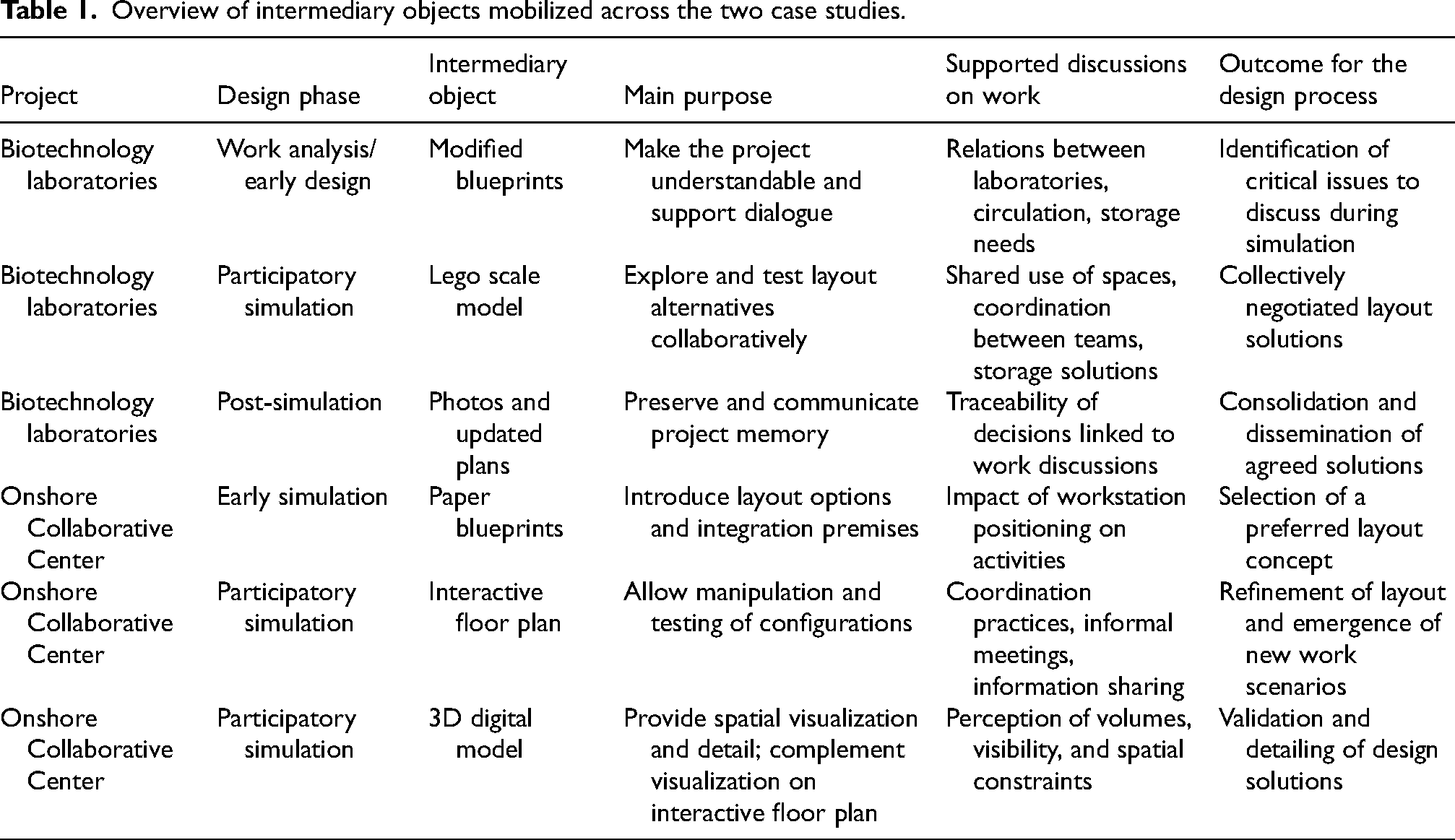
To consolidate the findings presented in Sections 3.1 and 3.2, Table 1 synthesizes the intermediary objects mobilized in each case, their positioning within the design process, and the types of work-related discussions they supported. Rather than presenting isolated tools, the table highlights how different intermediary objects were sequentially and complementarily used by ergonomists to structure participatory dynamics over time. This synthesis shows how early representations supported problem identification, how more interactive objects enabled collective exploration of solutions, and how post-simulation artifacts preserved and communicated design decisions across the two cases.
Overview of intermediary objects mobilized across the two case studies.
Discussion
In both case studies, intermediary objects were used to mediate discussions on work activity while also addressing concrete technical aspects of workspace design. In the biotechnology laboratories project, the technical focus was primarily on the spatial organization of specialized and shared laboratories, equipment placement, circulation, and storage requirements under controlled environmental conditions. In the OCC project, technical issues concerned workstation arrangement, visibility, communication flows, integration of monitoring technologies, and the introduction of large display systems within a collaborative environment. Despite these differences, both projects shared common technical constraints inherent to workspace design, such as spatial limitations and equipment interfaces. In both cases, intermediary objects supported the articulation between these technical elements and work activity by allowing participants to examine how design decisions would affect coordination, information exchange, and daily practices. This comparative perspective highlights how intermediary objects can be mobilized to address distinct technical demands while fulfilling a similar mediating role between discussion on work restraints and design choices.
For project representations to function as effective supports for dialogue, they often needed to be adapted to translate technical design information into forms that could be understood and appropriated by workers, enabling them to contribute from the perspective of their work activity. In both projects, modified architectural blueprints were the first intermediary objects mobilized during the design process. These modifications transformed the blueprint into an intermediary object capable of mediating discussions about work activity. Within the Intermediary Object System, the modified blueprint played a foundational role by enabling a first shared representation of the project among the ergonomist and workers making spatial relations intelligible and allowing work-related problems to be collectively identified. As shown previously in Figure 5, these adapted representations supported early debates on spatial relations, circulation, and constraints associated with work organization, which later informed discussions conducted with more interactive intermediary objects.
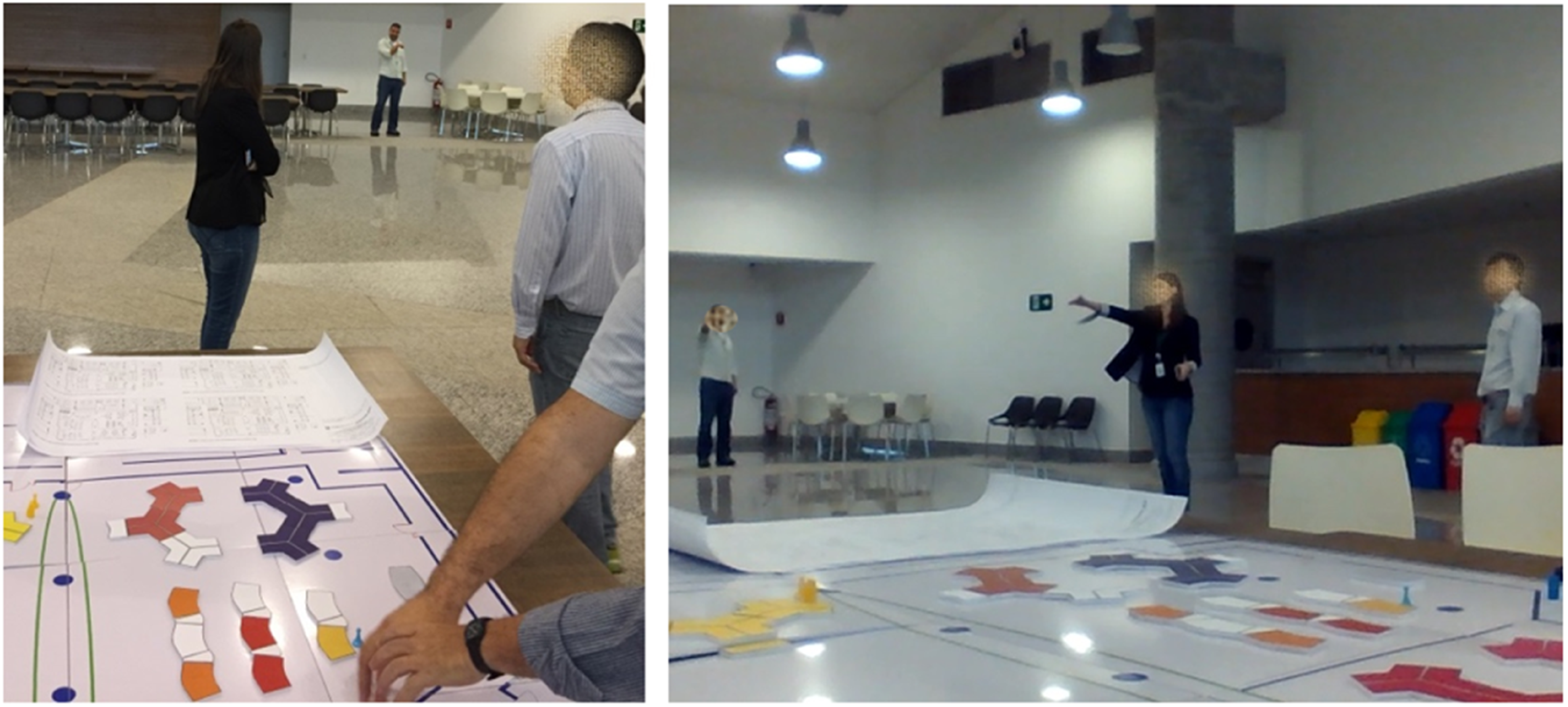
On the left: interactive floor plan with movable workstation elements used by operators; on the right: operators positioning themselves in the space to test coordination practices.
This type of use complements what is traditionally reported in the literature, where intermediary (or boundary) objects are most often identified as supports for collaboration within participatory ergonomics studies. However, their mobilization during the work analysis phase remains rarely addressed. As shown in this study, and similarly reported by Broberg et al., 14 the use of intermediary objects at this stage can effectively support the ergonomist's action by structuring dialogue, making work activity visible, and preparing subsequent participatory design discussions.
Subsequently, in the lab project, the ergonomist brought together representatives from all teams to discuss layout solutions using a Lego scale model. Among the various issues debated, the data highlighted a recurring difficulty related to the lack of storage space for prepared culture media, particularly when preparations were carried out on different days. As illustrated in Figure 2, culture media were stored on benches or improvised surfaces, leading to overcrowding and increasing contamination risks. This figure documents a concrete work situation that had been initially identified during the work analysis phase and discussed with the support of the modified blueprints. When the current storage conditions were compared with those proposed in the future layout, it became clear that the problem would be transferred to the new laboratory complex.
During the simulation meeting with the scale model, the issue of storage in the cell culture laboratory was discussed among participants. The proposal to use cabinets located in the adjacent autoclave area for the temporary storage of culture media emerged during discussions mediated by the scale model. However, the debate surrounding this problem had already been initiated earlier, during the work study phase supported by the modified blueprints. Within the Intermediary Object System, the scale model allowed issues previously identified through the blueprint to be revisited and translated into concrete spatial arrangements. In this sense, the successive use of intermediary objects supported cumulative reasoning, as problems identified with one representation were taken up, refined, and addressed through another, more interactive object.
A similar dynamic was observed in the OCC project. In the second simulation cycle, an interactive floor plan was introduced, enabling participants to directly manipulate workstation layouts. As shown in Figure 4, operators rearranged workstation pieces to reflect informal coordination practices, such as meetings held between adjacent workstations. Although the intermediary objects differed between the two projects, they fulfilled comparable roles within the ergonomists’ actions: in both cases, interactive representations enabled participants to experiment with spatial configurations and negotiate design solutions based on their work practices. Within the Intermediary Object System, the interactive floor plan functioned as a mediating object that supported the transformation of previously discussed coordination issues into spatial propositions, compensating for the rigidity of other representations and grounding discussions in concrete work situations. This form of use is complementary to what is traditionally described in the literature, in which intermediary objects are primarily framed as supports for collaboration within participatory ergonomics approaches.12–14,18
The compilation of updated blueprints and photographic records constituted a subsequent set of intermediary objects within the project. Unlike the modified blueprints and the scale model, these objects were not intended to mediate debates directly with users, but rather to support project management and subsequent design stages. After the ergonomist's participation in both projects, responsibility for advancing the technical specifications would be transferred to an external architectural firm, and further modifications to the project were expected due to technical and regulatory constraints. As the scale model was dismantled at the end of the simulations, the photographic documentation and revised plans preserved the memory of the solutions collectively discussed and agreed upon. Within the Intermediary Object System, these objects ensured continuity by stabilizing design decisions, supporting communication with architectural stakeholders, and mediating subsequent exchanges beyond the participatory phase.
This concern with preserving project memory and documenting the solutions developed provides project management with materials that are closer to the language of design (e.g., plans and visual records), enabling dialogue with designers in later stages. In this way, these records offer concrete resources for organizations to address the well-documented difficulties of integrating ergonomics into design processes reported in previous studies.30,31
Across the two cases, different patterns of articulation between intermediary objects can be observed. In the laboratory design project, the relationship between objects followed a cumulative and sequential logic. Issues discussed during the work study phase using the modified blueprints were subsequently taken up during the simulation sessions with the Lego scale model. Decisions negotiated collectively with the scale model were then stabilized and recorded through compilations of updated plans and photographs, preserving the outcomes of the participatory process.
In contrast, in the OCC project, we also observed that intermediary objects were mobilized in complementary and simultaneous manner. The interactive floor plan and the 3D model were used together during the simulation cycles, each compensating for the limitations of the other and supporting discussions from different perspectives. These simulations took place in the same space that would later be transformed into the OCC, allowing participants to test future positioning and coordination in the real space while relying on the representations to project future work situations, as illustrated in Figure 5. Together, these objects supported participants’ ability to relate layout proposals to the real space and to better project future work situations, overcoming limitations associated with the exclusive use of two-dimensional plans. These distinct modes of articulation illustrate how intermediary objects can be organized either sequentially or in parallel, depending on project conditions and design dynamics. Within the Intermediary Object System, this configuration combined different representational resources with direct spatial perception.
For both cases, the ergonomists created and mobilized multiple intermediary objects to support participation, thus forming what we describe as an intermediary object system. This notion refers to a set of instruments used throughout the project, with different but complementary objectives. It is up to the ergonomist to select, adapt, and articulate these objects so that they are coherent with the project context. What transforms them into a system is not their coexistence, but the intentional way in which they are combined: the output of one object prepares the ground for the next, and the limitations of a given representation are compensated by another.
The Intermediary Objects System perspective complements existing approaches that emphasize the role of intermediary (or boundary objects) in design and participatory processes. While several studies describe the use of two or more intermediary objects,11,15,17,18,24 they rarely make explicit whether these objects were intentionally combined to complement one another throughout the design process. In our findings, the choice and sequence of intermediary objects were not incidental but deliberately planned to create links between different project stages. Each object was selected to highlight specific aspects of work activity and design constraints, while also preparing participants for subsequent discussions. In other words, the objects “communicate” with each other, reinforcing representations and preserving the continuity of collective reasoning. This deliberate orchestration transforms isolated objects into an integrated intermediary object system within ergonomic interventions.
Beyond its analytical contribution, the IOS perspective also has practical implications for ergonomic intervention. It suggests that intermediary objects should not be selected or designed in isolation, but deliberately organized as part of a coherent system. From this viewpoint, three heuristic principles can be outlined for ergonomists: first, to select representations that are intelligible and meaningful for participants, enabling the translation of technical project information into forms grounded in work activity; second, to adapt and combine intermediary objects so that the limitations of one representation are compensated by others; and third, to articulate these objects over time in a way that preserves the memory of discussions and prepares subsequent stages of the design process. These principles emphasize the active role of the ergonomist in orchestrating representational practices.
This study presents some limitations that should be acknowledged. Both cases concern participatory workspace design projects and involve similar demands related to layout discussions, which may have influenced the organization of the intermediary object systems observed. In addition, the cases were not initially conceived for comparative purposes but were retrospectively examined through the lens of intermediary object systems. While this retrospective perspective supports a reflexive analysis of design practices, it limits the extent to which direct comparisons across cases can be generalized.
These limitations suggest that future research could benefit from studies explicitly designed to compare intermediary object systems across different types of projects, domains, and design constraints. Such investigations may provide further insights into how ergonomists intentionally organize and adapt intermediary object systems to support participation and the integration of work knowledge into design beyond workspace-related projects.
Conclusion
In the published studies on intermediary objects, authors focus on the use of a single object, generally a scale model or a graphic scheme. But this centrality of an object does not mean the non-existence of other objects circulating between the project actors. While other objects may be mentioned, their role within the overall design process is seldom explained, and their intentional articulation is rarely discussed. Our findings highlight that intermediary objects are not only useful individually but can also be deliberately combined into a coherent system. By carefully selecting, adapting, and sequencing multiple objects, ergonomists can create synergies between representations, enabling each object to enrich the next and collectively support the integration of work knowledge into design.
Furthermore, users’ participation in a project is not restrained to a particular moment, but rather constructed along the project. Ergonomists can profit from using different intermediary objects to assist him or her in several design phases. The knowledge these objects mediate during exchanges among ergonomists, designers and users, will reflect on sequential phases. These different intermediary objects articulated will form an intermediary object system that can help ergonomists to integrate work knowledge in the design process.
Footnotes
Acknowledgements
The authors would like to thank to Leopoldo Américo Miguez de Mello Research & Development Center (Cenpes) – Petrobras and National Agency of Petroleum, Natural Gas and Biofuels (ANP) for their support with the case study of this research. They would also like to thank PhD Luciano do Valle Garotti for assistance with this research.
To support the preparation of this manuscript, artificial intelligence tools were employed in a limited scope: first, to assist in revising the text in the authors’ native language by reducing sentence length to facilitate translation into English; and subsequently, to produce an initial translation and suggest opportunities for compacting information, making the text more concise and objective. All content, analysis, and final revisions were conducted and validated by the authors.
ORCID iDs

Ethical approval and informed consent statements
Ethics committee approval was not applicable to this study.
Funding
The author(s) disclosed receipt of the following financial support for the research, authorship, and/or publication of this article: This study was financed in part by the Coordenação de Aperfeiçoamento de Pessoal de Nível Superior – Brasil (CAPES) – Finance code 001.
Declaration of conflicting interests
The author(s) declared no potential conflicts of interest with respect to the research, authorship, and/or publication of this article.
Data availability statement
The data that support the findings of this study are qualitative in nature (field notes, interviews, and observations) and have been made publicly available through two doctoral theses deposited in institutional repositories.