






Abstract
Background
Electronic performance monitoring (EPM) is increasingly embedded in digitally managed workplaces, yet its effects on employees’ adaptive work behaviors remain mixed, particularly in project-based professional settings.
Objective
This study examines how EPM affects construction and engineering professionals’ job crafting behaviors through the mediating roles of transactional and relational psychological contracts. It also investigates whether performance goal orientation, specifically performance-approach and performance-avoidance orientations, moderates these relationships.
Methods
A three-wave, time-lagged survey was conducted with 312 construction and engineering professionals from seven engineering-related firms in eastern and southern China. EPM exposure, psychological contract types, and job crafting behaviors were measured across three monthly intervals. Performance goal orientations were also assessed. Structural equation modeling was used to test a moderated mediation model.
Results
EPM was associated with promotion-focused job crafting through relational psychological contracts, particularly among employees high in performance-approach orientation. In contrast, EPM was associated with prevention-focused job crafting through transactional psychological contracts, especially among those high in performance-avoidance orientation. These findings reveal distinct cognitive and motivational pathways underlying employees’ responses to monitoring systems.
Conclusions
The findings show that EPM does not produce uniform effects, but rather shapes different forms of job crafting depending on employees’ psychological contract perceptions and goal orientations. This study contributes to understanding employee adaptation under digital surveillance and offers practical insight for designing monitoring systems that support constructive engagement rather than defensive responses.
Keywords
Introduction
Digital surveillance technologies are increasingly reshaping the landscape of construction and engineering management. 1 Electronic performance monitoring (EPM), including activity tracking software, digital attendance systems, and real-time performance dashboards, has become a core component of project oversight in modern engineering firms.1–2 Promoted as tools to enhance transparency, accountability, and efficiency, these systems are now embedded in daily workflows across sectors such as infrastructure development, civil engineering, and industrial project management. 3 However, growing reliance on EPM has also introduced subtle yet significant psychological dynamics within professional roles that traditionally valued autonomy, problem-solving, and discretion. For construction and engineering professionals, whose work often requires technical innovation, independent judgment, and cross-functional collaboration, constant monitoring may signal either developmental support or evaluative scrutiny.4–5 Existing studies have shown that while EPM can increase task visibility and clarify performance expectations, it may also trigger psychological strain, reduce perceived autonomy, and foster behavioral resistance. 2 These contrasting effects raise important questions about the cognitive mechanisms through which construction and engineering professionals make sense of EPM and how such interpretations influence their day-to-day work behaviors. Yet, research exploring the nuanced cognitive and motivational processes underlying these outcomes remains limited, particularly in high-skill, project-based sectors like construction and engineering.
This study draws on psychological contract theory to explore how construction and engineering professionals’ interpretations of EPM shape their behavioral responses. Psychological contracts refer to the implicit beliefs employees hold about reciprocal obligations in the employment relationship. 6 When EPM is viewed as enabling growth, fairness, and career development, employees are likely to form relational psychological contracts characterized by trust, long-term commitment, and discretionary effort. In contrast, when EPM is perceived as controlling, punitive, or overly outcome-driven, employees may form transactional contracts grounded in short-term, instrumental exchange.7–8 These divergent contracts can lead to distinct patterns of job crafting. Relational contracts often support promotion-focused job crafting, wherein employees proactively reshape tasks to enhance meaning, skill use, and impact.7–8 Transactional contracts, by contrast, are more likely to induce prevention-focused job crafting, involving withdrawal, risk minimization, or surface-level compliance. Importantly, how construction and engineering professionals respond to EPM is not uniform but conditioned by individual motivational dispositions. Performance goal orientation, a key construct in motivation theory, captures how individuals strive to demonstrate competence. 9 Those with performance-approach orientation aim to succeed and gain recognition, and are more likely to interpret EPM as an opportunity for achievement. 10 This interpretation reinforces relational contracts and encourages positive, growth-oriented job crafting. In contrast, those with high performance-avoidance orientation seek to avoid failure and negative judgment. 10 They may interpret EPM as threatening or punitive, leading to transactional contract formation and self-protective work behaviors. Despite the increasing use of EPM in engineering firms, few studies have examined how such technologies interact with individual differences in goal orientation to influence psychological contract development and subsequent job crafting strategies.
To address these gaps, this study investigates how EPM affects promotion-focused and prevention-focused job crafting among construction and engineering professionals, and examines the mediating role of psychological contracts and the moderating role of performance goal orientation. By focusing on a sample of construction and engineering professionals employed in digitally monitored workplaces, this research provides new insights into how surveillance technologies influence employee adaptation and agency in complex project environments. The study contributes to the growing literature on EPM, expands the application of psychological contract theory in technology-mediated settings, and highlights the importance of individual motivation in shaping workplace behavior under digital control conditions. 11 Although the study focuses on behavioral outcomes, these responses may also have implications for employees’ psychosocial functioning, perceived autonomy, and engagement, which are core concerns of WORK. This framing situates the research within the broader context of sustainable work participation and employee well-being, without altering the primary focus on job-crafting behaviors.
Theory and hypotheses
Electronic performance monitoring and psychological contract types
EPM has increasingly reshaped how organizations evaluate and manage employees, particularly in technologically intensive fields such as engineering and construction. 12 It refers to the use of digital technologies to monitor employee behaviors, outputs, and compliance in real time for purposes such as performance improvement and accountability. 5 Importantly, EPM is not only a control mechanism but also an organizational signal through which employees infer how the organization evaluates their contributions and defines the terms of exchange. 13 Such interpretations are central to psychological contract formation. Relational psychological contracts are rooted in long-term socio-emotional exchange, whereas transactional psychological contracts emphasize short-term, explicit, and monetized exchanges. 13
In the context of EPM, these two forms of psychological contract may evolve in opposing directions. On the one hand, EPM can signal organizational investment in clarity, fairness, and transparency, which may reinforce employees’ belief in a stable and supportive work relationship. Such perceptions may nurture a stronger sense of socio-emotional connection, responsibility, and mutual respect, all hallmarks of the relational psychological contract. 14 For instance, when EPM is implemented in ways that emphasize developmental feedback, recognition, or alignment with team goals, employees may infer that the organization values their growth and contributions beyond mere outputs. This interpretation fosters trust and psychological safety, reinforcing the long-term, relational aspect of the contract. 15
However, EPM may also intensify employees’ perceptions of being commodified or surveilled, particularly when monitoring is perceived as intrusive, punitive, or overly rigid.16–17 In such cases, employees are more likely to recalibrate their psychological contract toward a transactional logic.
7
They may view the employment relationship in narrow economic terms, emphasizing measurable inputs and outputs while withdrawing affective or extra-role engagement.
18
Transactional contracts become salient when employees feel that trust and autonomy are eroded, and that their value to the organization lies primarily in productivity metrics. For construction and engineering professionals, whose work involves a high degree of problem-solving and discretionary effort, such shifts may have especially profound consequences. Therefore, we propose the following hypotheses:
The mediating role of psychological contracts
To further clarify the behavioral consequences of EPM, we examine relational and transactional psychological contracts as two mediating pathways linking monitoring to job crafting.6–7,19 Building on the arguments above, EPM provides employees with cues about whether the organization views them as long-term partners or as contributors whose value is primarily assessed through measurable performance outcomes. These different interpretations are expected to shape distinct forms of job crafting. A relational psychological contract should encourage employees to expand their roles and invest in personal growth, whereas a transactional psychological contract should make employees more likely to protect themselves, limit exposure, and comply with minimum performance expectations.20–21
When construction and engineering professionals view EPM as a fair and developmental system, they are more likely to interpret it as a tool that enhances transparency and signals organizational support for their contributions and long-term growth.4,20 This interpretation reinforces relational psychological contracts by strengthening employees’ beliefs that the organization values mutual loyalty, development opportunities, and sustained engagement. 8 As a result, employees with a stronger relational contract are more likely to reciprocate through promotion-focused job crafting, such as proactively expanding tasks, acquiring new skills, and increasing personal investment in project outcomes.20,22
In contrast, when construction and engineering professionals perceive EPM as overly controlling, reductionist, or solely outcome-focused, they may form a transactional psychological contract.
23
Such a contract emphasizes short-term, instrumental exchange and performance-based evaluation.
24
Under these conditions, employees may feel that their value is contingent on measurable outputs rather than broader contributions. As a result, they are more likely to engage in prevention-focused job crafting by avoiding mistakes, reducing visibility, or meeting only minimal performance expectations rather than pursuing long-term innovation or improvement.
25
Studies further show that when employees interpret organizational systems as instrumental rather than developmental, transactional psychological contracts become more salient and inhibit proactive behaviors.
26
Taken together, these arguments suggest that relational and transactional psychological contracts represent two distinct pathways through which EPM shapes promotion-focused and prevention-focused job crafting. Therefore, we propose the following hypotheses:
The moderating role of goal orientations
While EPM can trigger divergent perceptions of the employment relationship, employees’ individual characteristics may shape how they cognitively internalize such monitoring. 25 Among these characteristics, goal orientation, a motivational construct describing how individuals interpret, pursue, and respond to performance situations, is especially relevant in high-accountability, evaluation-heavy contexts such as digital monitoring.10,27 In particular, performance-approach and performance-avoidance goal orientations may moderate the extent to which EPM leads to relational or transactional psychological contract development. Performance-approach goal orientation reflects an individual's desire to demonstrate competence and outperform others. 10
Employees with this orientation are often motivated by achievement, status, and recognition. When exposed to EPM, these individuals may interpret the monitoring as a legitimate tool for performance enhancement and visibility, especially if they perceive it as a means to showcase their strengths and secure future rewards. Consequently, they are more likely to develop relational psychological contracts, as they view the organization as a partner in their long-term professional growth. For instance, construction and engineering professionals with a strong performance-approach goal orientation are more inclined to seek feedback actively, particularly if the feedback provides opportunities for self-validation and recognition. 28 Furthermore, these individuals may welcome monitoring systems as helpful mechanisms to boost self-efficacy and career advancement, provided the feedback is seen as useful and informative. 29 This reciprocal understanding of development and reward can foster commitment, trust, and goal alignment between the employee and employer over time. 30
Conversely, performance-avoidance goal orientation reflects a motivation to avoid failure and negative judgment. Employees high in this trait tend to be risk-averse, avoid uncertainty, and emphasize self-protection. When exposed to EPM, such individuals are more likely to interpret the system as threatening or punitive. This perception may prompt a shift toward transactional psychological contracts, in which they view the organization more as a performance evaluator than a developmental partner. As a result, these employees tend to focus on short-term compliance and minimal visibility rather than long-term development or innovation. In engineering contexts, this may manifest as disengagement from collaborative learning, hesitation to initiate complex tasks, or avoidance of responsibility behaviors aligned with a transactional mindset. Research supports this view, showing that performance-avoidant individuals under perceived organizational pressure are less likely to engage in proactive or implicit knowledge-sharing, especially when they also perceive psychological contract breach.31–32 This defensive stance limits opportunities to build relational trust and undermines the motivational climate necessary for creativity and sustained engagement. 33
Recent research suggests that employees’ reactions to EPM are shaped by their goal orientations.2,34 Performance-approach orientation makes employees more likely to interpret monitoring as developmental and visibility-enhancing, thereby reinforcing relational psychological contracts.
35
By contrast, performance-avoidance orientation makes employees more likely to interpret monitoring as evaluative and threatening, which is more consistent with transactional psychological contracts and prevention-focused responses.36–37 Therefore, we propose the following hypotheses:
Figure 1 presents the proposed theoretical model, in which EPM influences promotion-focused and prevention-focused job crafting through relational and transactional psychological contracts, while performance-approach and performance-avoidance goal orientations moderate the first-stage relationships.
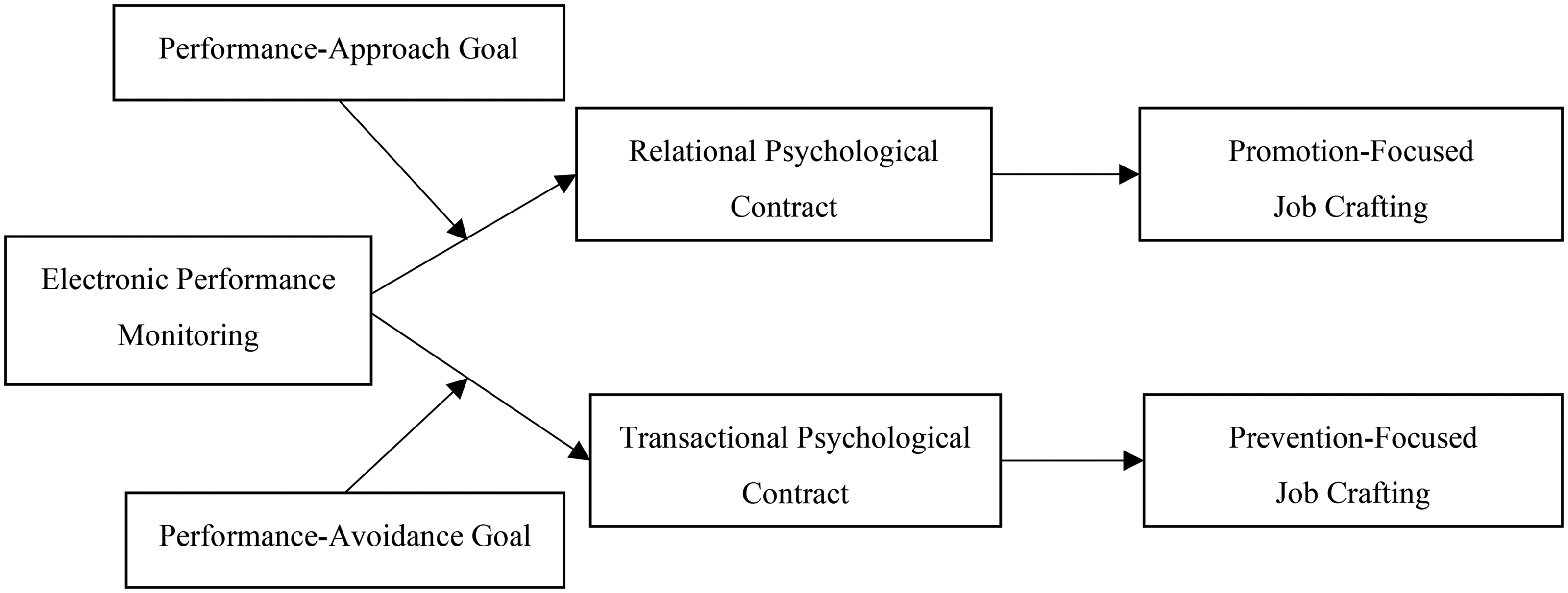
Research model.
Method
Sample and procedure
To empirically test the proposed theoretical model and hypotheses, this study employed a three-wave, time-lagged survey design targeting construction and engineering professionals working in medium to large construction and engineering firms located in digitally advanced regions of eastern and southern China. Participating firms were selected based on three criteria: (1) consistent use of EPM systems over the past three years; (2) EPM systems encompassing core modules such as site attendance tracking, task-level behavior surveillance, and performance dashboards; and (3) organizational size exceeding 200 employees with a formalized managerial and project-based structure. Seven engineering-related firms were recruited through a combination of institutional contacts and publicly available industry directories. These firms spanned sectors including civil construction, structural engineering consulting, infrastructure development, and architectural design. Prior to survey distribution, the research team coordinated with each firm's HR and project management offices to communicate the study objectives, timeline, confidentiality protocols, and informed consent arrangements. Participants were required to review and provide written informed consent before completing the questionnaire. Anonymous participant codes were assigned to facilitate longitudinal matching across survey waves while preserving anonymity and ethical compliance.
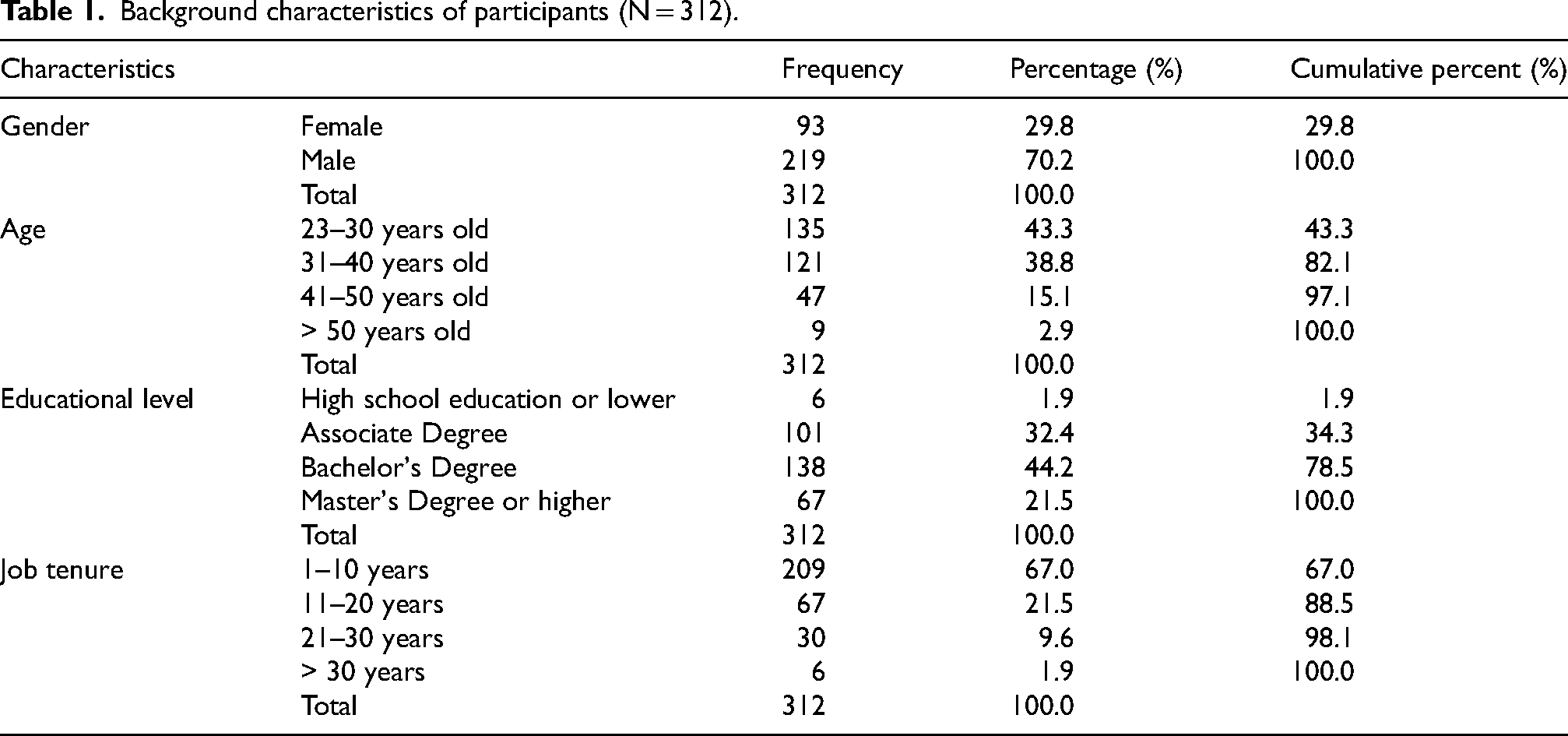
In the first wave (T1), participants reported their perceived exposure to electronic performance monitoring, performance-approach goal orientation, performance-avoidance goal orientation, and demographic information, yielding 412 valid responses. One month later, the second wave (T2) assessed participants’ perceptions of the transactional psychological contract and relational psychological contract, resulting in 361 valid questionnaires. The third wave (T3), conducted one month after T2, captured participants’ job crafting behaviors, including promotion-focused and prevention-focused job crafting, with 333 responses collected. After matching responses across all three waves and screening for incomplete or inconsistent data, a total of 312 complete and matched responses were retained for final analysis, yielding a final match rate of 75.7% based on the initial T1 sample. Regarding sample characteristics, 29.8% were female and 70.2% were male. In terms of age, 82.1% were between 23 and 40 years old, indicating a primarily young to mid-career population. Regarding educational background, 65.7% held a bachelor's degree or higher, including 21.5% with a master's degree or above. As for job tenure, 67.0% had 1 to 10 years of work experience, and 21.5% had between 11 and 20 years. Overall, the sample reflects a relatively well-educated and experienced construction and engineering workforce, suitable for examining individual responses to electronic performance monitoring. Information on participant demographics is shown in Table 1.
Background characteristics of participants (N = 312).
Ethical considerations
Ethical approval for this research was obtained from the Institutional Review Board of the corresponding author's university. All participants were informed about the purpose of the study, the voluntary nature of participation, and their right to withdraw at any time without penalty. Informed consent was obtained prior to data collection, and all responses were collected anonymously. The researchers ensured that no personally identifiable information was recorded, and data confidentiality was maintained throughout the three-wave survey process.
Measures
To ensure the accuracy of the translated measurement items, this study followed the back-translation procedure outlined by Brislin(1970). 38 All scales were administered using a five-point Likert format, ranging from 1 (strongly disagree) to 5 (strongly agree).
Variables and scales
Electronic performance monitoring (independent variable)
This construct was measured using a four-item scale adapted from Thiel and Sahatjian (2022). 39 A sample item is “In the workplace, my work behavior is monitored with an electronic technology.” The Cronbach's alpha for this scale was 0.879.
Transactional and relational psychological contracts(mediating variables)
Transactional and relational psychological contracts were assessed using a 17-item scale adapted from Grimmer and Oddy (2007). 13 A sample item for transactional psychological contracts is “I do this job just for the money,” with a Cronbach's alpha of 0.939. A sample item for relational psychological contracts is “I expect to gain promotion in this company with length of service and effort to achieve goals,” with a Cronbach's alpha of 0.940.
Promotion-Focused job crafting (dependent variable)
Promotion-focused job crafting was measured using 16 items from, 40 covering four dimensions. A sample item is “This employee added complexity to his/her tasks by changing the structure or sequence.” Given the relatively large number of items, we employed an item parceling strategy to balance model complexity with sample size and improve estimation stability for the subsequent latent moderated structural (LMS) equation analyses. 41 As the scale is multidimensional and the primary focus of this study is not to examine each individual lower-order factor, the facet-representative parceling approach was adopted. 42 This method is commonly used in research on multidimensional constructs, as it can improve the stability of latent variable measurement and reduce estimation errors.42–43 It should be noted that although item parceling can enhance the stability of model fitting, it may weaken the informational differences at the level of the original items. Therefore, in the interpretation of the results, this study mainly focuses on the overall effects of the higher-order structure rather than extending to the detailed differences among each dimension. 42 Four parcels were constructed by computing the mean scores of items within each dimension, representing promotion-oriented relationship, skill, task, and cognitive crafting. This scale demonstrated good internal consistency, with a Cronbach's alpha of 0.880.
Prevention-Focused job crafting(dependent variable)
Prevention-focused job crafting was measured using 12 items from Bindl et al. (2019), 40 also encompassing four dimensions. A sample item is “This employee focused his/her mind on the best parts of his/her job, while trying to ignore those parts he/she didn’t like.” Following the same approach as for promotion-focused job crafting, we created four facet-representative parcels by averaging item scores within each subscale, representing prevention-oriented relationship, skill, task, and cognitive crafting. This scale demonstrated good internal consistency, with a Cronbach's alpha of 0.867.
Performance goal orientation (moderating variable)
This construct was assessed using an eight-item scale adapted from VandeWalle (1997), 10 with four items measuring performance-approach orientation and four items measuring performance-avoidance orientation. A sample item for performance-approach orientation is “I’m concerned with showing that I can perform better than my coworkers,” with a Cronbach's alpha of 0.913. A sample item for performance-avoidance orientation is “I would avoid taking on a new task if there was a chance that I would appear rather incompetent to others,” with a Cronbach's alpha of 0.889.
Control variables
In line with prior research, 44 this study controlled for four demographic and employment-related characteristics: gender, age, education, and job tenure.
Results
Common method bias test
To assess the potential influence of common method variance (CMV), this study used Harman's single-factor test as an initial diagnostic procedure. 45 An exploratory factor analysis was conducted in SPSS 25.0. The results showed that no single factor emerged from the unrotated factor structure, and the largest factor accounted for 36.77% of the variance, which is below the commonly used 40% threshold. 46 These results suggest that CMV was unlikely to be severe. However, Harman's single-factor test is only a preliminary assessment and does not provide a definitive test of common method bias. In addition, although the three-wave time-lagged design helped reduce common method concerns through temporal separation, common method bias cannot be entirely ruled out because several variables were measured using self-reports.
Measurement model
In the present study, partial least squares structural equation modeling (PLS-SEM) was performed using Smart-PLS 4.0 to test the proposed hypotheses. The results of reliability and validity assessments are presented in Table 2. With respect to reliability, all item factor loadings exceeded the threshold of 0.7, and the composite reliability (CR) values for all constructs were greater than 0.7, indicating adequate internal consistency.47–48
Construct reliability and validity.
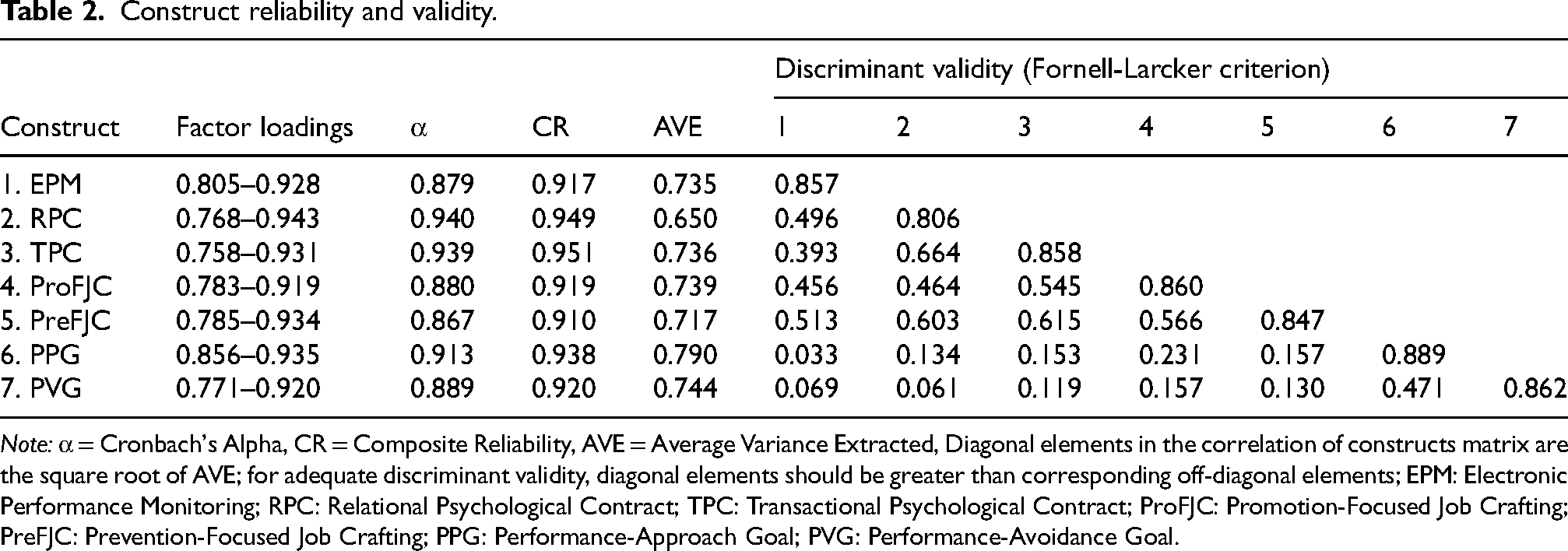
Note: α = Cronbach's Alpha, CR = Composite Reliability, AVE = Average Variance Extracted, Diagonal elements in the correlation of constructs matrix are the square root of AVE; for adequate discriminant validity, diagonal elements should be greater than corresponding off-diagonal elements; EPM: Electronic Performance Monitoring; RPC: Relational Psychological Contract; TPC: Transactional Psychological Contract; ProFJC: Promotion-Focused Job Crafting; PreFJC: Prevention-Focused Job Crafting; PPG: Performance-Approach Goal; PVG: Performance-Avoidance Goal.
Regarding validity, the average variance extracted (AVE) for each construct was above 0.5, demonstrating satisfactory convergent validity. 48 In support of discriminant validity, two complementary tests were conducted. First, the square root of the AVE for each construct was found to exceed its correlation coefficients with all other constructs. 48 Second, as shown in Table 3, the Heterotrait-Monotrait (HTMT) ratios for all constructs were below the threshold of 0.9. 49 Together, these results confirm the presence of discriminant validity across the constructs.
Heterotrait-Monotrait ratio (HTMT).
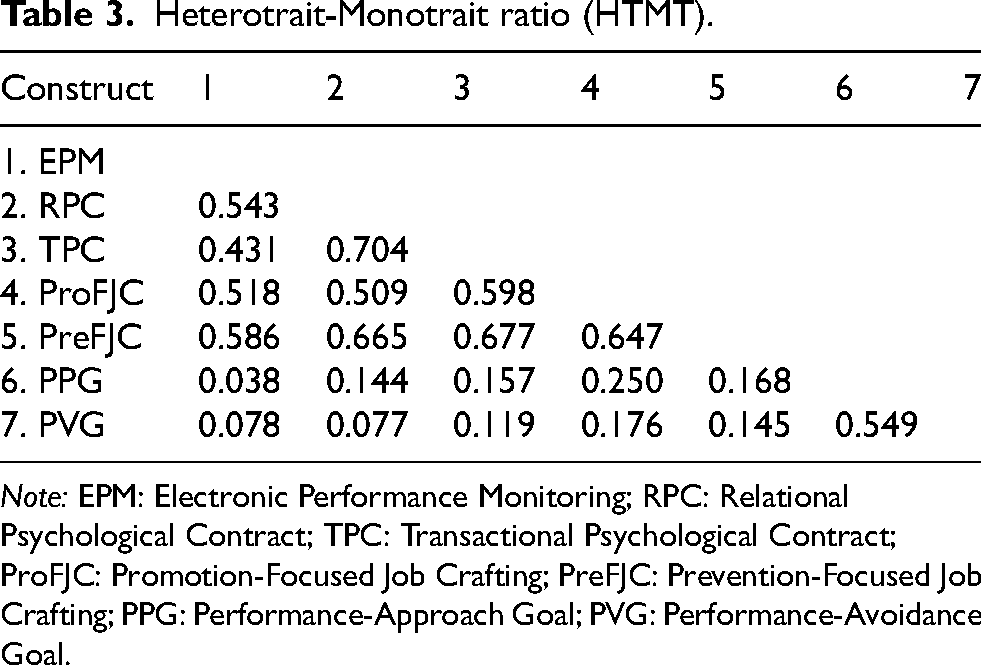
Note: EPM: Electronic Performance Monitoring; RPC: Relational Psychological Contract; TPC: Transactional Psychological Contract; ProFJC: Promotion-Focused Job Crafting; PreFJC: Prevention-Focused Job Crafting; PPG: Performance-Approach Goal; PVG: Performance-Avoidance Goal.
Structural model and hypotheses testing
The bootstrapping technique (95% bias-corrected confidence intervals; 5000 bootstrap samples) was applied to test the significance of path coefficients. The results of these path coefficient significance tests, alongside the path analysis and hypothesis testing outcomes, are reported in Table 4. EPM was positively associated with relational psychological contract (β = 0.459, p < 0.001), supporting H1. EPM exhibited a positive association with transactional psychological contract (β = 0.368, p < 0.001), supporting H2. Relational psychological contract mediates the relationship between EPM and promotion-focused job crafting (β = 0.144, p < 0.001), which lent support to H3. Transactional psychological contract mediated the relationship between EPM and prevention-focused job crafting (β = 0.179, p < 0.001), supporting H4. Performance-approach goal orientation positively moderated the relationship between EPM and relational psychological contract (β = 0.135, p < 0.05); specifically, this positive relationship was stronger when performance-approach orientation was higher, thus supporting H5. Performance-avoidance goal orientation positively moderated the relationship between EPM and transactional psychological contract (β = 0.140, p < 0.01); notably, the strength of this relationship increased with higher levels of performance-avoidance orientation, supporting H6.
Results of path analysis and hypotheses testing.
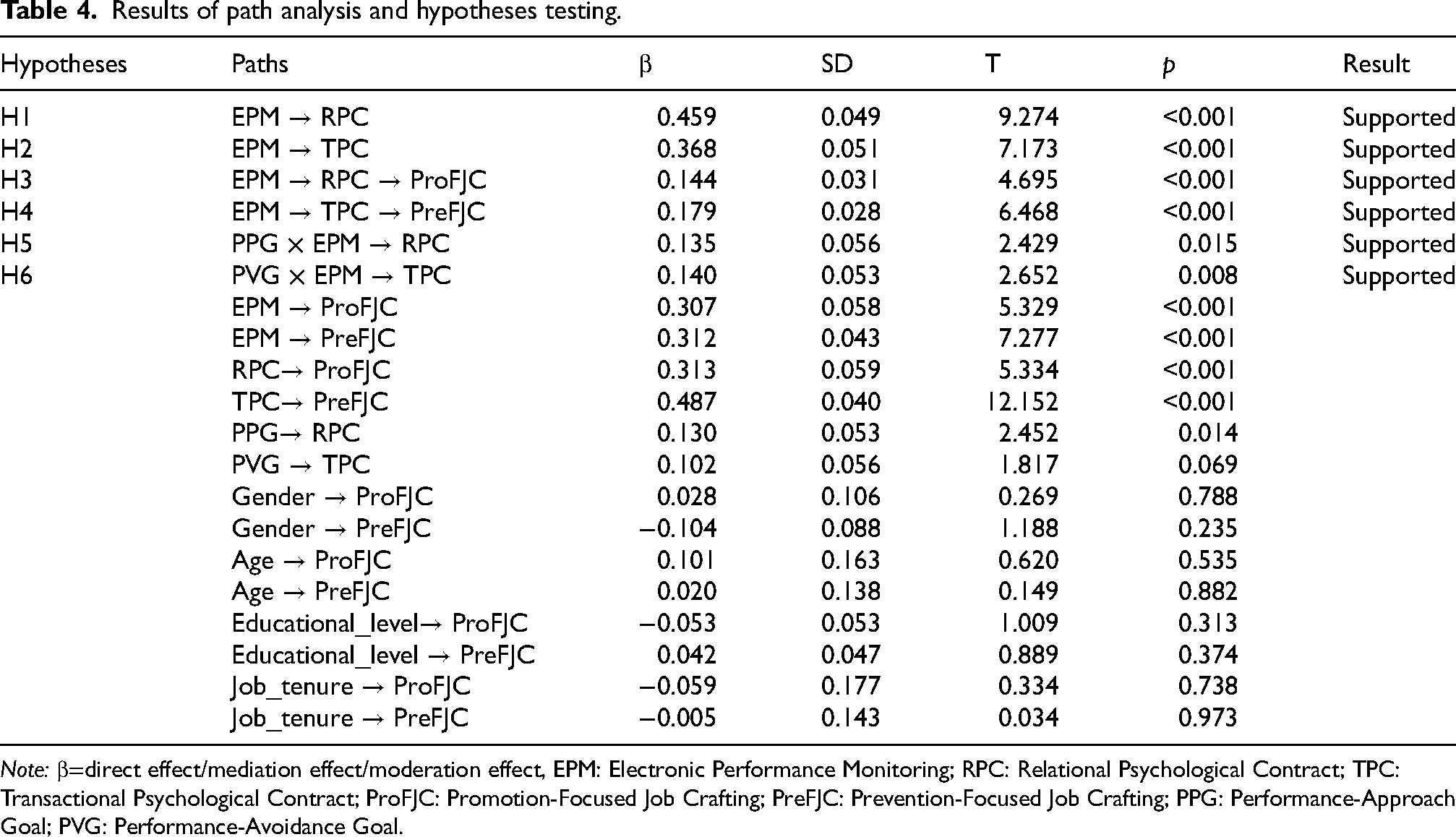
Note: β=direct effect/mediation effect/moderation effect, EPM: Electronic Performance Monitoring; RPC: Relational Psychological Contract; TPC: Transactional Psychological Contract; ProFJC: Promotion-Focused Job Crafting; PreFJC: Prevention-Focused Job Crafting; PPG: Performance-Approach Goal; PVG: Performance-Avoidance Goal.
The structural model explains 27.6% of the variance in relational psychological contract, 18.4% of the variance in transactional psychological contract, 28.7% of the variance in promotion-focused job crafting, and 47.0% of the variance in prevention-focused job crafting. Table 5 reports the variance inflation factors (VIFs) for the structural model. All VIF values fell below the threshold of 10, 50 indicating that collinearity did not pose a substantive threat to the model.
Variance inflation factors (VIFs) for the structural model.
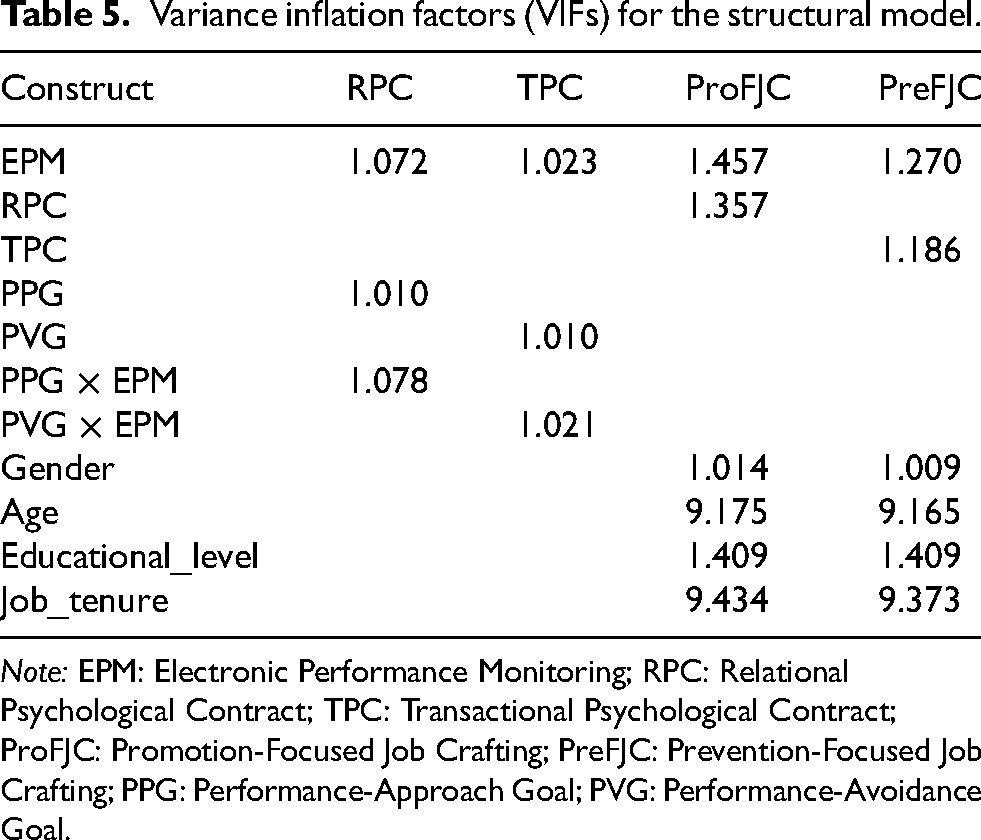
Note: EPM: Electronic Performance Monitoring; RPC: Relational Psychological Contract; TPC: Transactional Psychological Contract; ProFJC: Promotion-Focused Job Crafting; PreFJC: Prevention-Focused Job Crafting; PPG: Performance-Approach Goal; PVG: Performance-Avoidance Goal.
Conclusions
This study examined how and under what conditions EPM influences construction and engineering professionals’ job crafting behaviors. Grounded in psychological contract theory and goal orientation theory, the findings reveal that the impact of EPM on promotion and prevention-focused job crafting is mediated by the type of psychological contract formed by employees. When construction and engineering professionals perceive EPM as developmental, they are more likely to form relational psychological contracts, which in turn foster promotion-focused crafting behaviors such as skill development, task enrichment, and proactive role engagement. In contrast, when EPM is viewed as evaluative or controlling, it triggers transactional psychological contracts, leading to prevention-focused job crafting characterized by risk aversion, reduced initiative, and surface-level task completion. Moreover, these effects are contingent on individual differences in goal orientation. Construction and engineering professionals with strong performance-approach orientation are more likely to construe EPM as an opportunity for growth and recognition, thereby reinforcing relational contracts and active engagement. Conversely, individuals high in performance-avoidance orientation are inclined to interpret EPM as a threat, strengthening transactional contracts and prompting defensive behavioral responses. These findings underscore that the effects of EPM are not universal, but contingent on employees’ goal orientations, which shape how they cognitively interpret monitoring and form corresponding psychological contracts. Although the study focuses on job-crafting behaviors, these behavioral patterns may also have implications for employees’ psychosocial functioning, perceived autonomy, and adaptive capacity in project-based work, linking the findings more explicitly to core WORK themes.
Theoretical implications
This study advances theoretical understanding of EPM by revealing how it shapes construction and engineering professionals’ behavioral responses through distinct psychological contracts, and how these effects are contingent upon individual goal orientations. While previous research has primarily evaluated EPM in terms of productivity, control, or emotional strain, limited attention has been paid to its implications for motivational cognition in professionalized, project-based settings such as engineering.2,4,50–51 By focusing on the development of psychological contracts in response to EPM, this study contributes a cognitive interpretation of surveillance technologies, showing that EPM functions not only as a control mechanism but also as a symbolic signal that influences how employees define their exchange relationship with the organization.
Second, this research extends psychological contract theory by identifying it as a core mechanism that translates digital monitoring cues into divergent job crafting behaviors. The findings indicate that when construction and engineering professionals perceive EPM as developmental and supportive, they are more likely to form relational psychological contracts, which promote promotion-focused job crafting behaviors such as task expansion, skill acquisition, and cognitive engagement. Conversely, when EPM is interpreted as evaluative or punitive, it activates transactional psychological contracts, leading to prevention-focused job crafting marked by risk aversion, surface compliance, and avoidance of additional responsibility. These insights broaden the scope of psychological contract research by situating it within the digitalized context of performance monitoring, and highlight its explanatory value in understanding proactive versus defensive behavioral strategies.
Third, the study contributes to goal orientation theory by showing that performance-approach and performance-avoidance orientations significantly moderate how construction and engineering professionals cognitively respond to EPM. Performance-approach orientation enhances the likelihood of interpreting EPM as relational and developmental, thereby strengthening promotion-focused job crafting. In contrast, performance-avoidance orientation increases sensitivity to perceived evaluative pressure, fostering transactional contracts and encouraging avoidance behaviors. These findings provide empirical support for the proposition that goal orientation influences how individuals cognitively appraise workplace stimuli under pressure, 44 and further suggest that digital monitoring tools such as EPM may amplify these dispositional effects by serving as salient signals of performance contingencies. 51
Finally, this study enriches the job crafting literature by differentiating between promotion-focused and prevention-focused job crafting as theoretically grounded and empirically separable outcomes. In engineering contexts characterized by high task interdependence, complexity, and continuous learning demands, identifying the psychological mechanisms that foster proactive versus avoidant task engagement is particularly critical. 52 Our findings suggest that job crafting is not a uniformly constructive response, but one shaped by how employees cognitively interpret managerial control signals such as EPM. When construction and engineering professionals perceive EPM as relational and developmental, they tend to engage in promotion-focused crafting aimed at self-expansion and capability growth. In contrast, when EPM is appraised as controlling or evaluative, prevention-focused crafting emerges as a self-protective adaptation strategy. These insights extend prior research by illustrating how contextual cues and motivational orientations interact to produce qualitatively different forms of discretionary work behavior under digital surveillance. 4 In doing so, this study links research on digital monitoring to broader occupational concerns about psychosocial functioning, professional autonomy, and sustainable work participation in project-based professional settings.
Practical implications
The findings of this study suggest that EPM does not produce uniform outcomes among construction and engineering professionals; instead, its effectiveness is shaped by individual motivational dispositions. For project managers and organizational leaders, this implies that EPM strategies should be adapted to account for employees’ differing goal orientations. Specifically, those with strong performance-approach orientation are more likely to interpret EPM as an opportunity for skill enhancement, recognition, and advancement. In engineering practice, this can manifest in greater willingness to take initiative on technical tasks, adopt digital tools to streamline workflows, or actively seek feedback for performance refinement. In contrast, employees with high performance-avoidance orientation may perceive EPM as a form of evaluative pressure, heightening concerns over failure and leading to more risk-averse behavior. Such individuals may avoid unfamiliar tasks, reduce engagement in collaborative problem-solving, or narrowly comply with role expectations. Therefore, rather than applying uniform monitoring policies, organizations should promote performance climates that emphasize learning, effort recognition, and low-threat feedback environments. 53 These practices can help attenuate anxiety among avoidance-oriented employees while reinforcing developmental interpretations of EPM for those more motivated by achievement.
Second, enhancing employees’ motivational readiness by leveraging their goal orientations may support more adaptive responses to EPM. Performance-approach-oriented employees tend to respond positively to challenge, particularly when they view monitoring as a path to competence development and visibility. Organizations can reinforce this interpretation by clarifying developmental objectives of EPM, setting progressive performance goals, and offering task autonomy. Such practices are likely to foster promotion-focused job crafting behaviors, including expanding task scope, acquiring new technical knowledge, or redesigning workflows. In contrast, employees with performance-avoidance tendencies may need a more supportive context to mitigate defensive reactions. Engineering managers should emphasize coaching rather than evaluation, provide reassurance around the use of monitoring data, and create an environment where mistakes are viewed as part of the learning process. This can help shift perceptions of EPM from punitive oversight to constructive support, encouraging more adaptive coping even among more risk-sensitive individuals.
Third, transparent communication is essential for shaping how construction and engineering professionals perceive and respond to EPM. 3 When the purpose of monitoring is not clearly explained, employees may default to assumptions of surveillance and control. To counter this, project leaders should proactively communicate how EPM data informs development plans, supports safety and quality objectives, or enables fairer performance recognition. Clarifying how monitoring information will be used, and just as importantly, how it will not be used, can reduce suspicion and encourage more positive engagement. In engineering contexts where autonomy and technical judgment are valued, framing EPM as a feedback mechanism rather than a disciplinary tool is especially important. Informational transparency also helps reinforce psychological contract clarity, aligning expectations between the organization and these professionals.
Fourth, integrating EPM into a broader climate of trust and development can amplify its positive effects. Monitoring systems should be embedded within a management approach that prioritizes fairness, merit-based recognition, and participatory decision-making. 54 Construction and engineering professionals are more likely to engage proactively with EPM when they perceive it as one component of a larger system that supports growth, rather than a narrow instrument of control. Practices such as regular one-on-one feedback meetings, peer learning sessions, and involving employees in the design or refinement of EPM processes can enhance perceived legitimacy. These interventions not only strengthen relational psychological contracts but also reduce the likelihood of resistance or disengagement among technically autonomous staff.
Finally, EPM implementation should consider individual variability in appraisal sensitivity and goal orientation. Employees with high performance-avoidance orientation may be disproportionately affected by perceived surveillance pressure, making them more likely to adopt avoidance-oriented job crafting. To address this, managers can provide gradual exposure to monitoring systems, clarify the connection between feedback and development, and reinforce a supportive error-tolerant culture. 54 Tailoring EPM strategies in this way allows organizations to maintain accountability while promoting psychological safety, especially in engineering roles where innovation, independent judgment, and long-cycle problem solving are critical. Overall, these practical insights can help ensure that EPM serves as a facilitator of constructive employee behavior, rather than a source of resistance or withdrawal.
Limitations and future research directions
Despite its contributions, this study has several limitations. First, although we used a three-wave time-lagged survey design to reduce common method concerns, the data still relied primarily on self-reported measures of EPM, psychological contracts, and job crafting. Accordingly, common method bias cannot be entirely ruled out. In addition, while temporal separation strengthens the plausibility of the proposed relationships, the study remains observational in nature, and the findings should therefore be interpreted as theoretically consistent associations rather than definitive causal effects. Future research could employ longitudinal, multi-source, or experimental designs to test the directionality of these relationships more rigorously. Second, the sample consisted of 312 construction and engineering professionals from seven firms located in eastern and southern China. Although this context is relevant for examining EPM in high-accountability and digitally monitored project-based work settings, the relatively small sample size, limited geographic coverage, and focus on a single occupational group constrain the generalizability of the findings. Accordingly, the results should not be generalized beyond the occupational and regional context examined in this study, and are more appropriately interpreted as practical recommendations for the specific population studied. Future research should test the robustness and generalizability of these findings using larger samples drawn from a broader range of firms, regions, occupational groups, and national contexts. Third, this study focused on relational and transactional psychological contracts as the main mediating mechanisms, but other cognitive and affective processes may also shape employees’ responses to EPM. Variables such as perceived organizational support, trust in management, or fairness perceptions may provide additional explanatory value and should be incorporated in future research. Fourth, performance goal orientation was treated as a relatively stable individual trait. Future studies could examine whether organizational interventions, such as leadership practices, training, or reward systems, shape employees’ approach- and avoidance-oriented responses to monitoring. Finally, this study examined promotion-focused and prevention-focused job crafting but did not assess longer-term outcomes such as innovation, collaboration, or project performance. Future research could extend the model by incorporating objective performance indicators or supervisor evaluations to further strengthen the practical implications of these behavioral pathways.
Footnotes
Acknowledgements
The authors would like to thank the participating construction and engineering professionals and the cooperating firms for their support during the data collection process.
Ethical approval
This study was reviewed and granted an exemption from full ethical approval by the Institutional Review Board of Guangdong Construction Polytechnic because it involved an anonymous survey of adult participants, collected no personally identifiable information, and posed minimal risk to participants.
Informed consent
Informed consent was obtained from all participants included in the study.
Author contributions
Study design: WJM; Data collection: CFQ; Data analysis: CFQ; Study supervision: CFQ; Manuscript writing: CFQ and WJM; Critical revisions for important intellectual content: CFQ and WJM.
Funding
The authors disclosed receipt of the following financial support for the research, authorship, and/or publication of this article: This work was supported by the Higher Education Special Project of the Education Science Planning of Guangdong (grant number 2023GXJK167).
Declaration of conflicting interests
The authors declared no potential conflicts of interest with respect to the research, authorship, and/or publication of this article.