







Abstract
Background
Many parents report difficulties as they navigate their child's shift from school-based services to adult disability services during the secondary transition process. Connecting families to adult services through interagency collaboration is a way to promote access to adult services.
Objective
This study examined adult disability service representatives’ participation in transition planning meetings, parents’ awareness of adult disability services, and factors associated with parent awareness of adult disability services.
Methods
Parents of transition-aged students with disabilities (n = 240) responded to an online survey, answering questions about their child's most recent transition planning meeting and their awareness of adult disability services. Descriptive analyses and a multiple regression analysis were conducted to answer research questions.
Results
Overall, parental awareness of adult disability services was low. Most parents reported no adult service representatives attended their child's most recent transition planning meeting. The strongest predictors of increased parental awareness of adult services included older child age, having a child that is not diagnosed with a specific learning disability, and parent input on transition goals.
Conclusion
By improving interagency collaboration, we can increase parent awareness of services and reduce gaps in services for adults with disabilities as they transition to adulthood.
Introduction
The transition from high school to adulthood is a vulnerable and challenging period for many young adults. The struggles of deciding between higher education or entering the workforce, discovering a career path, and heightened financial responsibilities can be overwhelming. For young adults who have disabilities, this transition can be even more complicated. Many of these young adults face additional barriers, such as navigating societal stigmas surrounding disability (Lindsay et al., 2023), health issues (Franklin et al., 2019), and/or a lack of understanding of adult responsibilities (Hoffman & Kirby, 2022).
As part of the transition from school to adulthood, young adults with disabilities move from school-based services to adult disability services. For youth between the ages of 3–22 years who qualify for individualized education programs (IEPs), schools provide many disability-related services. Depending on their unique needs, students may receive school-based services such as specialized instruction, speech and language therapy, occupational therapy, assistive technology, and/or behavior intervention services, in one (school) setting. Conversely, adult services are provided by community-based agencies and service providers who offer supports for adults with disabilities. Unlike school-based services, adult services are often located in various places across one's community (Taylor et al., 2017). For instance, adults with disabilities may attend a community-based transition program for socialization and skill development or postsecondary education classes at a local university; they may receive vocational supports from Vocational Rehabilitation (VR) and/or independent living support from a Center for Independent Living (CIL). This can result in added coordination efforts and an increased need for transportation. While students with disabilities are entitled to school-based services under federal law (i.e., Individuals with Disabilities Education Act [IDEA], 2004), adult disability services are eligibility-based, meaning individuals must qualify for each service based on their disability diagnosis and other factors, such as income (Carlson & Wilt, 2020). Even when individuals with disabilities are eligible, many adult services have long waitlists that can span months or years (Schott et al., 2021).
Due to these differences, many individuals with disabilities and their families report difficulties transitioning from school-based services to adult services. For instance, adults with disabilities have reported difficulties securing needed home- and community-based services (Karpman et al., 2024) and accessing adequate disability supports and services in postsecondary education settings (Fossey et al., 2017). Parents report limited awareness of adult disability services, difficulty accessing resources, and service mismatch troubles as major barriers in their child's successful transition to adulthood (Hoffman & Kirby, 2022; Sanderson & Aquino, 2023). Further, many parents of individuals with disabilities learn about potential services through word of mouth from other parents rather than from their child's school (Carlson & Wilt, 2020).
A proactive stance should be taken to meet the needs of young adults with disabilities and their families as they transition to adulthood. Specifically, interagency collaboration is a way to promote access to adult services. Interagency collaboration refers to the “collaboration between school and community agencies [e.g., adult services] to ensure that a student's transition needs are met” (Hughes & Carter, 2012, p. 63). Schools should play a key role in transition planning, acting as a bridge between students, their families, and adult services. As the bridge, the school should inform and educate students and their families of adult services the student may need after leaving the school setting and connect them to the services they are interested in obtaining. Schools should invite adult services to participate in students’ transition planning meetings, ensuring a smoother transition process (Wehman, 2020). Indeed, students with disabilities connected to adult services before leaving school are more likely to engage in post-school education and employment (Test et al., 2009).
Although interagency collaboration has been linked to positive postschool outcomes for students with disabilities (Mazzotti et al., 2021), relatively little research exists on interagency collaboration practices in the field (Poirier et al., 2022). The research that does exist paints a promising, yet incomplete picture of interagency collaboration practices. For instance, in their systematic review of transition practice literature, Test and colleagues (2009) established interagency collaboration as a predictor of positive educational and employment postschool outcomes with “potential” level of evidence. However, two follow-up reviews meant to update Test et al.'s established evidence-base for transition practices (Mazzotti et al., 2016, 2021), found no additional evidence supporting interagency collaboration. Although it is considered a best practice, there continues to be a lack of interagency collaboration during transition planning, which can pose difficulties for students with disabilities and their families as students transition to adult life (Taylor et al., 2016). More research is needed to determine the connections being made between students and their parents and adult services, including if parents are aware of- or connected to- available adult disability services and whether representatives from adult services are included in students’ transition planning meetings.
It is also important to understand factors that may be related to parents’ awareness of adult services and agencies to identify and address potential vulnerabilities. Parent and child characteristics and activities related to transition planning could be linked to increased parent knowledge of adult services. Regarding parent characteristics, research has shown that higher socioeconomic status (SES) is correlated with increased access to information and resources, including information and resources for children with disabilities (Wehman et al., 2015). Additionally, adults with IDD from non-White backgrounds receive fewer adult services, have lower average annual service expenditures (Barth et al., 2020), and have higher rates of unmet service needs (Burke & Heller, 2017)−indicating that parents’ racial or ethnic backgrounds may also be related to their awareness of adult services.
Characteristics of young adults with disabilities may also be related to parents’ awareness of adult services. For instance, as a child ages and nears the end of their time in the school setting, members of the transition planning team (including educators and parents) may amplify their transition-planning efforts, resulting in increased interagency collaboration. Further, a child's disability diagnosis could be an important predictor of parent awareness. For instance, more resources, such as online information modules, may be available to parents of children with certain disabilities, such as autism (Hall et al., 2016). Because individuals with intellectual disabilities (ID) often require support in one or more life areas across the lifespan (Thompson & DeSpain, 2016), their parents may be in contact with disability services from an early age. Conversely, students with disabilities that are considered “mild,” such as Specific Learning Disabilities (SLD), may not need the same level of support in adulthood; in turn, their parents may be unaware of available adult services.
Finally, certain activities related to transition planning could also be associated with parents’ awareness of adult services. For instance, students and parents who attend transition planning meetings and provide input regarding transition goals may be more involved in the transition planning process (Goscicki et al., 2023; Hirano et al., 2018) and, thus, be more aware of adult services. Work experiences for youth with disabilities have been tied to benefits, such as higher rates of postschool employment (Mazzotti et al., 2021; Wehman et al., 2015). Adolescents with disabilities who participate in work experiences may already be connected with employment services such as VR (Honeycutt et al., 2015) and, thus, have parents who are aware of adult services.
Given the difficulties parents have navigating adult disability services and the positive outcomes associated with connecting students and their families to adult services before leaving the school setting (Test et al., 2009), this study aims to contribute to the limited research base on interagency collaboration by examining the participation of adult service representatives in transition planning meetings, as well as parents’ of transition-aged students with disabilities awareness of adult services. We addressed the following three research questions (RQs): RQ1. To what extent are parents of transition-aged students’ aware of adult disability services and agencies? RQ2. To what extent do representatives from adult disability services and agencies attend transition planning meetings? RQ3. What factors are associated with increased parental awareness of adult services and agencies?
Methods
Participants
The survey was open to participants who were: (a) 18 years or older and (b) the parent or legal guardian of at least one child with disabilities. At the time of the survey, their child must have: (a) been between the ages of 5–21 years (i.e., “school-age”) and (b) had a current IEP. A total of 1,183 parents participated in the survey. However, for the purposes of this study, we only used responses from parents of transition-aged students with disabilities, defined as students aged 16 and older (in alignment with the IDEA [2004] transition planning requirements). This left a sample of 240 parent respondents; a sample size that was small but adequate to detect a medium effect size.
Parent respondents ranged in age from 35–73 years (M = 51.33, SD = 6.69). Most participants identified as White (89.6%), while smaller percentages identified as Latino/Hispanic (4.2%), Black (3.3%), and Asian (0.8%) An additional 2.1% of parents in our sample (n = 5) selected an “other” category to describe their racial/ethnic identity, wherein they had the option to self-describe. Further, 97.1% of participants identified as female and 2.9% as male. The children of respondents (i.e., students with disabilities) were 66.5% male and 33.5% female. They ranged in age from 16–21 years (M = 17.61, SD = 1.59). The most common disabilities included autism, ID, Other Health Impairment (OHI), and Developmental Delay (DD); parents could select more than one disability category to describe their child. See Table 1.
Characteristics of Participants, their Children, and Transition Activities.
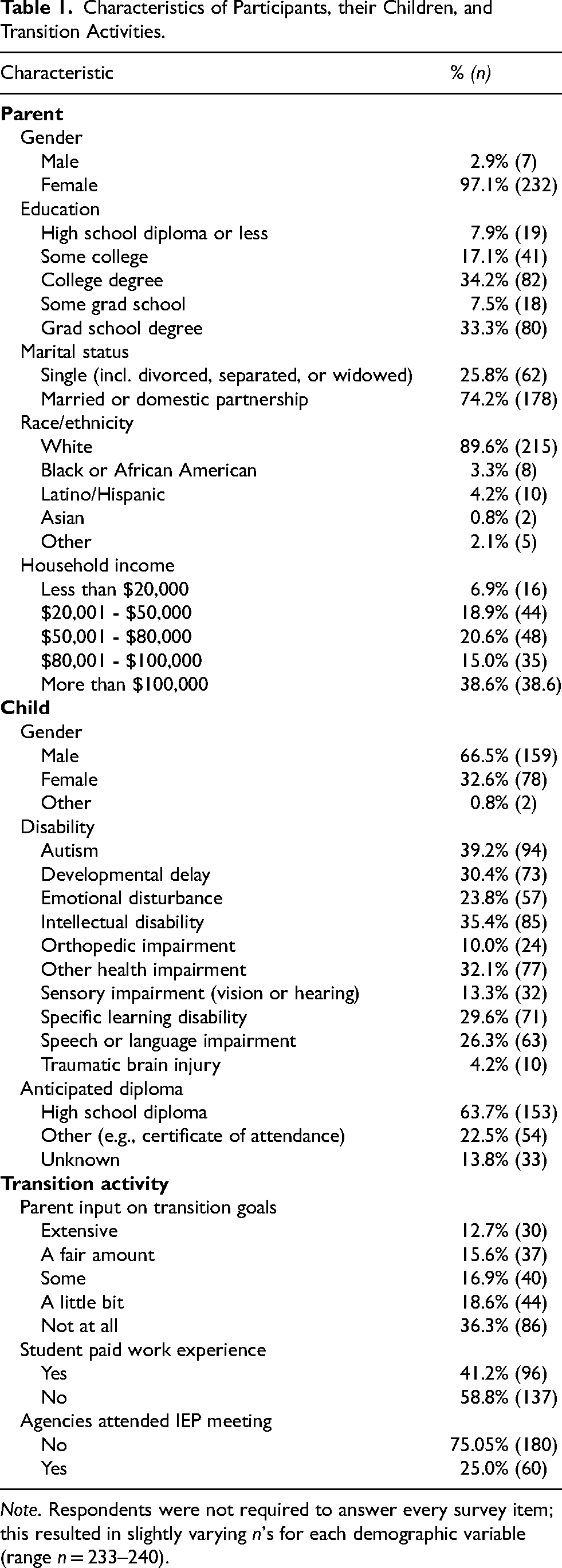
Note. Respondents were not required to answer every survey item; this resulted in slightly varying n's for each demographic variable (range n = 233–240).
Procedures
The survey questions analyzed in this study were part of a larger survey focused on the experiences of parents and children with disabilities during the IEP process (Goscicki et al., 2023; Sanderson, 2023; Sanderson & Bumble, 2023; Sanderson & Goldman, 2022, 2023; Sanderson & Rojas, 2023). The survey was developed using an iterative process and was based on prior studies of parent IEP meeting experiences (e.g., Griffin et al., 2014; Martin et al., 2006). The survey was initially pilot tested by two individuals with master's degrees in special education and experience with IEP meetings. Minor revisions to survey question wording were made based on their feedback. Next, the study was sent to the university Institutional Review Board for approval. The survey was then uploaded to REDCap, a secure web-based application (Harris et al., 2009).
Participants were recruited using e-mails and electronic flyers. They were distributed to approximately 200 state and local chapters of The Arc, 67 University Centers for Excellence in Developmental Disabilities, and numerous parent support groups (e.g., Parent Training and Information Centers) across all 50 states. Recruitment emails were also sent to over 7,000 agencies listed in the Wrightslaw Yellow Pages for Kids with Disabilities. To recruit a diverse sample, personalized phone calls and emails were also sent to a subset of the above organizations that specialize in providing services to families of youth with disabilities from diverse racial and ethnic backgrounds.
The survey was available online at REDCap from September 2017 to January 2018. All survey responses were submitted electronically to REDCap. To attract participants, the survey featured an incentive wherein 50 random survey participants were selected to receive a $20 e-gift card to the store of their choice. Instructions stated that only one parent or legal guardian per family could participate. If the family had more than one child meeting inclusion criteria, the respondent was directed to answer survey questions about their oldest qualifying child only.
The survey took participants approximately 30 min to complete. The survey began by obtaining informed consent and was followed by four sections that asked questions about: (1) the parent respondent (e.g., respondent demographics); (2) the parent respondent's child with a disability (e.g., child demographics); (3) the parent respondent's partnership with school personnel; and (4) the parent and student's participation at their most recent IEP meeting. Branching logic was used throughout the survey; participants only saw certain questions if they answered yes to a related question. Notably, only parents of transition-aged students (aged 16 years and older) saw questions regarding the presence of adult services at their child's most recent IEP or transition planning meeting. Participants also had the option to skip any survey question, resulting in varying number of responses to each question. To complete statistical analyses, responses were transformed into an SPSS dataset directly from REDCap. All data analyses were conducted using SPSS software (version 28.0).
Outcome Variables
The extent of parent awareness of adult disability services served as the primary outcome variable in this study. For the purposes of this study, “parent awareness” was broadly defined to capture a range of possibilities. Using a four-point scale (0= I am not aware of this service, 1= I have heard of this service and/or my child's school has mentioned this service, 2 = I am in contact with this service, or 3= My child receives this service), respondents rated their level of awareness of six adult services/agencies: (1) Vocational Rehabilitation (VR), (2) Social Security Administration (SSA), (3) postsecondary education, (4) CIL, (5) residential services, and (6) community-based transition programs.
A secondary outcome variable was the extent to which representatives from adult services/agencies attended students’ transition planning meetings (RQ2). We asked parents, “Which of the following service agency representatives attended your child's most recent IEP or transition planning meeting? Check all that apply.” Response options included: “No outside agency representatives attended,” “Vocational Rehabilitation counselor,” “Independent living counselor,” “Postsecondary education coordinator,” or “Other.” If the respondent selected “Other,” they were prompted to write-in the agency or service representative that attended the meeting.
Data Analyses
Descriptive analyses were used to answer RQ1 and RQ2. To evaluate parent awareness of adult services and agencies (RQ1), we analyzed participant responses to the survey question related to our primary outcome variable. For each of the six items (i.e., agencies/services), we calculated the percentage of participants who selected each response option, as well as the mean and standard deviation. We also computed an overall parent awareness score by combining participants’ responses to all six items (possible range 0–18). This combined score was used as the outcome variable in RQ3 analyses (described below). To determine the extent that representatives from adult services and agencies attended transition planning meetings (RQ2), we analyzed the percentage of respondents who selected each response option (i.e., “No outside agency representatives attended”, “Vocational Rehabilitation counselor,” “Independent living counselor,” “Postsecondary education coordinator,” or “Other”). We analyzed write-in responses to the “Other” category using conceptual content analysis (Elo & Kyngäs, 2008), wherein we determined the existence and frequency of concepts within write-in responses.
Finally, we performed a multiple regression analysis to determine the predictors of the extent of parent awareness with adult services and agencies (RQ3), powered at .97 to detect a medium effect size, and calculated squared semi-partial coefficients (sr2). The overall (combined) parent awareness score (i.e., summed score of six parent awareness survey items) was used as the outcome variable for the regression. Characteristics of the parent, the child, and the child's transition-planning related activities served as predictor variables in the regression analysis. Parent characteristics included annual household income (1= $20,000 or less, 2= $20,001-$50,000, 3 = $50,001–$80,000, 4 = $80,001-$100,000, and 5 = over $100,000) and race/ethnicity (0 = White, 1 = Non-White). Participants’ race/ethnicity was broadly categorized due to small numbers of racially/ethnically diverse participants in this sample. Characteristics of the child included: age and diagnosis of ID, SLD, or autism (for each disability category 0 = No, 1 = Yes). Activities related to transition-planning included: (1) the extent to which parents provided input regarding their child's individualized transition goals (1 = Not at all to 5 = Extensively); (2) student attendance at their most recent IEP/transition planning meeting (0 = No, 1 = Yes); (3) if the student participated in one or more frequent (i.e., monthly or more) paid or unpaid work experiences (0 = No, 1 = Yes).
Results
Parent Awareness of Adult Disability Services and Agencies (RQ1)
Parent awareness of adult disability services and agencies varied. See Figure 1. Of the six services/agencies measured, postsecondary education was the service with the largest number of parents who were either in contact with the service (19.7%) or were already receiving the service (25.4%). SSA was second in this regard, with 7.4% in contact with the service and 33.6% already receiving SSA. Alternatively, the largest percentage of parents were unaware of the CIL (48.9%). Further, 46.3% of parents were unaware of community-based transition programs, 39.1% were unaware of residential services available to adults with disabilities, 25.2% were unaware of VR services, 18.9% were unaware of postsecondary education options for adults with disabilities, and 12.2% were unaware of SSA. Overall parent awareness scores (i.e., sum scores from all six items) ranged from 0–18 (M = 6.90, SD = 4.26).
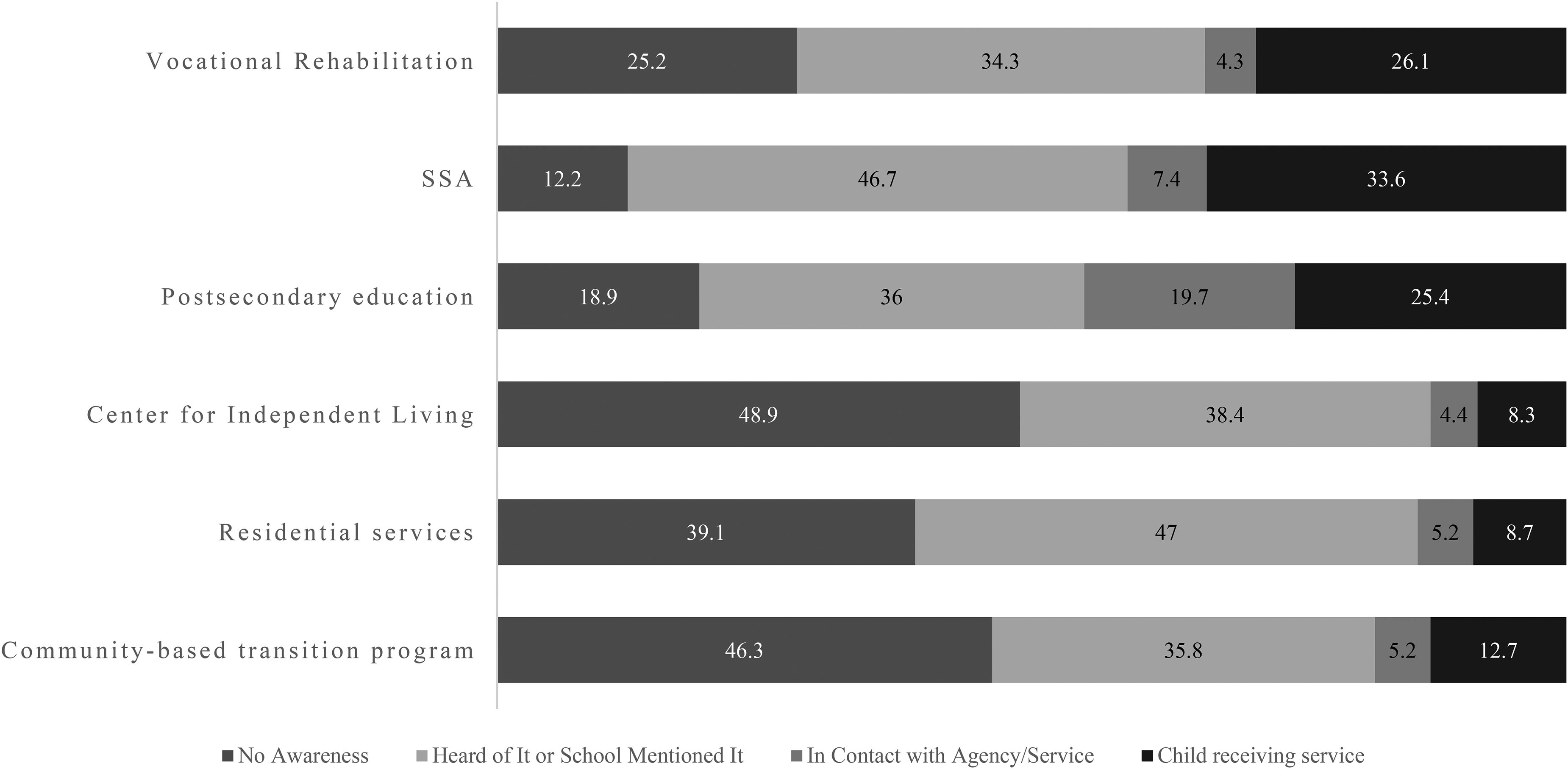
Parents awareness of adult services and agencies.
Adult Service Agency Representative Attendance at Transition Planning Meetings (RQ2)
Overall, 77.9% of parents (n = 187) reported that no adult service or agency representatives attended their child's most recent IEP and/or transition planning meeting, 18.4% (n = 44) reported that one representative attended, and 3.7% (n = 9) reported representatives from two or more agencies attended. See Figure 2. Although parents were provided with a list of specific adult service representatives (e.g., Vocational Rehabilitation counselor, independent living counselor, postsecondary education coordinator), the most common option selected was “other” - with 13.8% of parents (n = 33) choosing this option. Of those, 30 parents wrote-in responses to describe the adult service/ agency representatives in attendance. Analysis of write-in responses found that “other” representatives were service coordinators or case managers (n = 10); representatives from the Department of Developmental Services (n = 4); medical providers, such as mental health providers or doctors who performed an independent evaluation (n = 3); or representatives from miscellaneous agencies or services (e.g., afterschool programs, behavior interventionists, etc.; n = 13). Additionally, VR representatives attended 9.2% (n = 22) of transition planning meetings; postsecondary education coordinators attended 2.1% of meetings (n = 5), and independent living counselors attended 1.3% of meetings (n = 3).
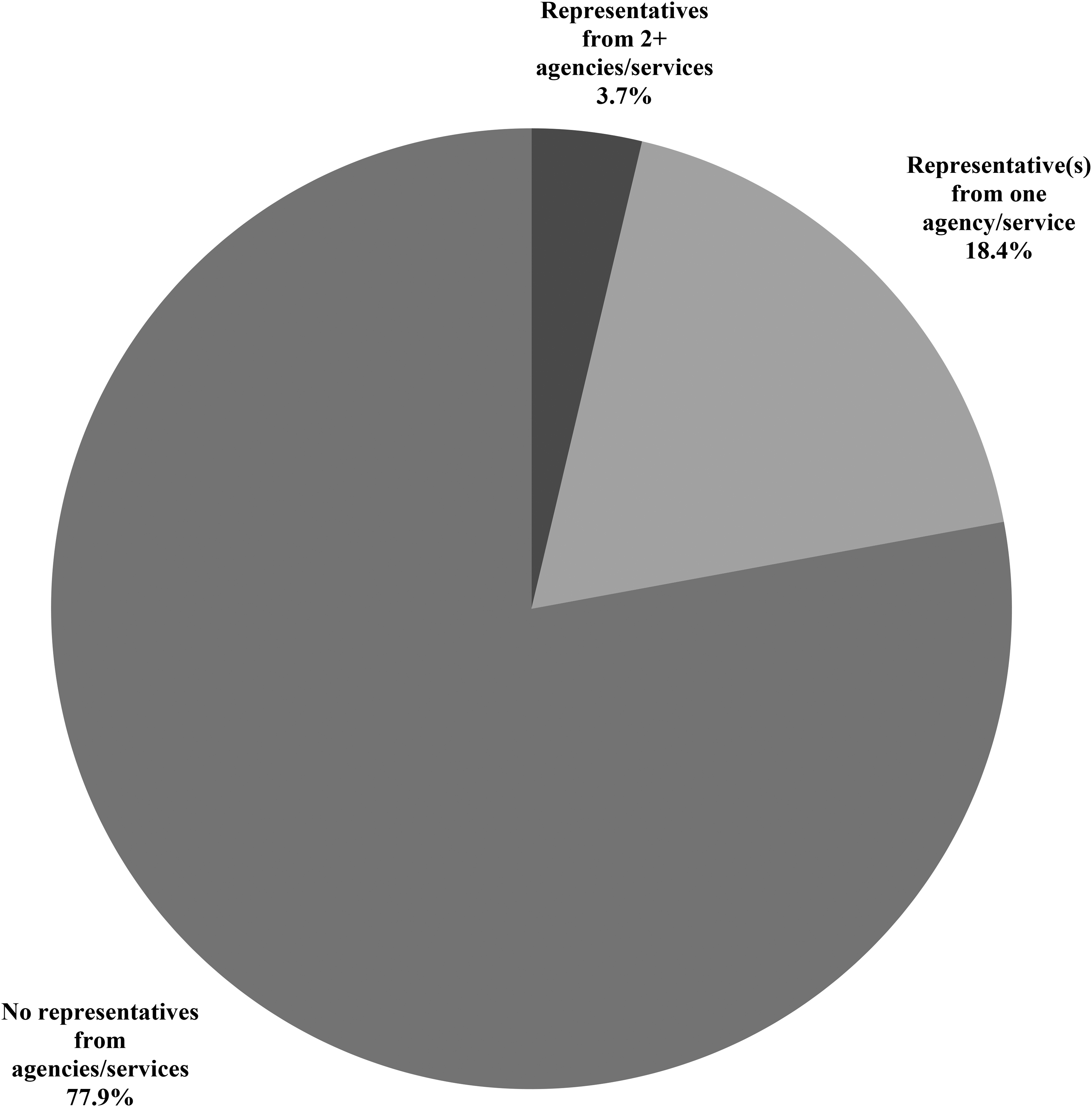
Adult service or agency representative attendance at transition planning meeting.
Factors Associated with Increased Awareness of Adult Services and Agencies (RQ3)
The regression was significant and accounted for 32.3% of the variance, F (10, 207) = 9.39, p < .001. The following variables significantly predicted an increased awareness of adult services and agencies for parents of transition aged students with disabilities: lower annual household income, older child age, having a child without a specific learning disability diagnosis, parents providing more input on their child's transition goals, and the child having one or more frequent (at least monthly) work experiences. See Table 2.
Parent Awareness of Ddult Services and Agencies by Parent, Student, and Transition Planning Characteristics.
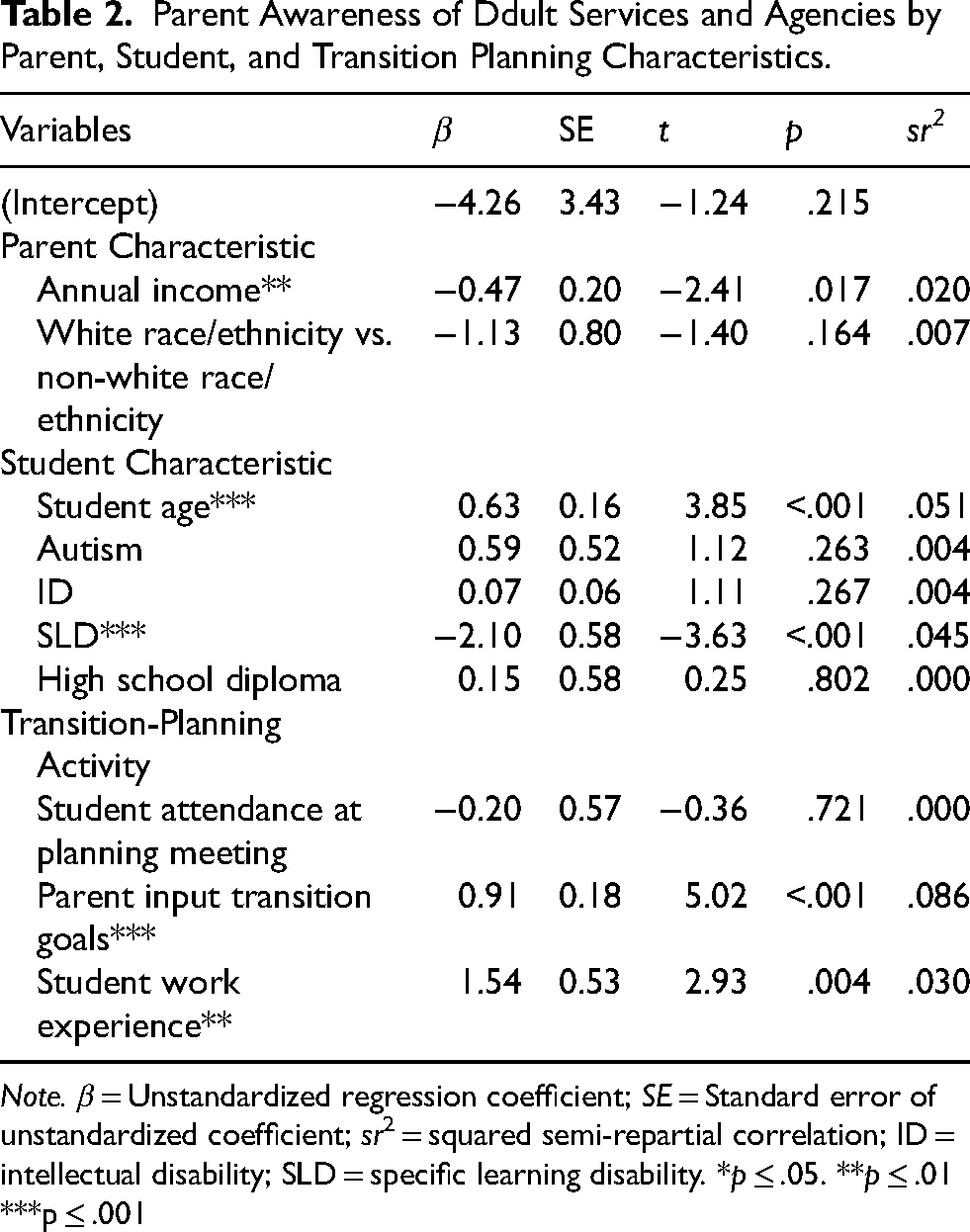
Note. β = Unstandardized regression coefficient; SE = Standard error of unstandardized coefficient; sr2 = squared semi-repartial correlation; ID = intellectual disability; SLD = specific learning disability. *p ≤ .05. **p ≤ .01 ***p ≤ .001
Discussion
The transition from school to adulthood can be difficult for individuals with disabilities and their families, especially as they navigate from school-based to adult services. Although connecting students with disabilities and their families to needed adult services before leaving the school setting is linked to improved postschool outcomes (Mazzotti et al., 2021), little is known about the extent to which these critical connections are being made. Analyzing responses to a national, online parent-report survey, this study examined interagency collaboration and its impacts, including parents’ awareness of adult services and agencies. Our study had several key findings that extend the literature and have implications for research and practice.
Our first finding indicates that, overall, parents of transition-aged youth with disabilities may be aware of some adult services and agencies for individuals with disabilities but are generally not in contact with them. Looking at parent awareness across the six measured services/agencies, the combined awareness score was quite low (mean score of 6.9 on a scale of 0–18); equating to a score of approximately 1 for each agency or service (i.e., “I have heard of this service or my child's school has mentioned this service”). However, looking at individual scores for each of the six measured services/agencies, we see that quite a large percentage of parents were unaware of key adult services.
Considering the poor employment outcomes for adults with disabilities, it is particularly troublesome that one-fourth of parents were unaware of VR. VR provides a wide variety of resources to adults with disabilities, including career counseling, employment preparation, independent living skills, on-site job training, and assistive technology (Department of Rehabilitation, 2023). Connecting students and their families with VR services during transition planning is key to supporting vocational skills and improving employment outcomes for adults with disabilities. School personnel should work collaboratively with VR counselors to provide pre-employment transition services to transition-aged youth with disabilities prior to leaving the school setting (Rousey et al., 2022).
Even though postsecondary education was the service with the highest percentage of parents either in contact with or receiving the service, still almost 1 of every 5 parents who participated in our survey (18.9%) were unaware of postsecondary education options for adults with disabilities. This is troubling, as postsecondary education is linked to improved adult outcomes for individuals with disabilities, including employment, independent living outcomes, and life satisfaction (Grigal et al., 2021). Notably, postsecondary education is no longer reserved for high achieving high school graduates. More and more universities have programs that cater to the needs of neurodiverse individuals (Hollow, 2023). Additionally, inclusive postsecondary education programs for individuals with intellectual disabilities have recently exploded in popularity, with over 300 programs available across the US (Think College, 2023). Connecting transition-aged students with disabilities and their families with postsecondary education programs that meet their unique needs is another pathway to improved adult outcomes.
Second, we found that adult service/agency representatives were not in attendance at the vast majority (∼80%) of students’ most recent transition planning or IEP meeting. This finding aligns with existing research that has found interagency collaboration throughout the transition process is necessary, but currently not fully implemented (Poirier et al., 2022; Taylor et al., 2016). This could be due to a variety of reasons. For instance, special education teachers (who often coordinate IEP and transition planning meetings) may have large caseloads, limiting their ability for collaboration with adult service agency representatives (Magee & Plotner, 2022); they may be unaware of all the potential adult services for which their students may qualify and/or view certain services or postsecondary options as inappropriate for their student(s) (Bumble et al., 2023).
The lack of adult disability service representation at planning meetings is concerning, as IEP teams − particularly transition planning teams− “rely on multiple stakeholders with different skills, roles, and background knowledge to implement effective practices” (Rowe et al., 2022, p. 240). Indeed, interagency collaboration requires the involvement of community partners, such as VR, postsecondary education, and/or potential employers, to ensure students with disabilities have the supports and skills needed to successfully transition from school to adulthood (Rousey et al., 2022). Positive outcomes are more likely when students are connected with adult services before leaving the school setting (Mazzotti et al., 2021; Test et al., 2009).
Our third finding highlights characteristics of the parent, the student, and transition planning activities associated with increased parent awareness of adult services. Interestingly, we found that having a lower annual household income was associated with increased awareness of adult disability services. Due to their SES, families with lower incomes may qualify for social services, including access to a social worker or case manager. Case managers are responsible for providing parents with information on needed services (Moro & Brashler, 2019), which could result in parents being more aware of adult disability services.
In terms of student characteristics, having an older student and a student without a specific learning disability diagnosis was associated with increased parent awareness of adult services. These findings make sense, as older students are more closely approaching the end of their time in school. Although “best practice” calls for schools to introduce potential postschool services and agencies as early as possible (Taylor et al., 2020), some may wait until the student is closer to leaving the school setting and ready to transition to adult services. Further, many students with a specific learning disability are typically classified as having mild or moderate support needs and, compared to individuals with more significant support needs, may not require an array of disability services in adulthood.
Increased parent awareness of adult services was also associated with students having regular work experiences. Work experiences during high school are considered an important component of high-quality transition services (Mamun et al., 2018) and have been linked to increased postschool employment (Mazzotti et al., 2021; Wehman et al., 2015). In some families, parents may facilitate such work experiences for their child (Petner-Arrey et al., 2016) and, in doing so, may learn of other adult services.
Additionally, parents were more aware of adult services when they contributed more to the development of their child's transition goals. Parents may be more willing to contribute during transition planning meetings if they perceive themselves to be respected and valuable stakeholders (Kurth et al., 2019). In this regard, schools must focus on establishing strong family-school partnerships characterized by collaboration and open communication, allowing all team members to have a voice in the decision-making process (Miller et al., 2019; Turnbull et al., 2015).
Implications for Research and Practice
This study is one of the few to examine the impact of interagency collaboration practices on parent awareness of adult services. Unfortunately, our findings point to low rates of interagency collaboration occurring in real-world settings, with only about 20% of transition-aged students in our sample having a representative from an adult service or agency present at their most recent transition planning meeting. Researchers must continue to examine interagency collaboration to understand what is (and is not) happening in the field. For example, what supports do secondary educators and service providers need to build interagency partnerships? How do parents of students with disabilities prefer to learn about and connect with adult services? Are certain factors, such as school (e.g., rural vs. urban) or student characteristics (e.g., age, disability), associated with adult service representatives’ attendance at transition planning meetings? With this information, researchers can work to identify ways to support practitioners’ collaboration with adult services and agencies.
Our findings also have clear implications for practice. Parents are currently unaware of many adult disability services. To remedy this, schools should provide families with accessible resources, such as videos, brochures, and/or a website, that highlight local adult disability agencies and services available to individuals with disabilities and their families. Schools should review these resources and available services with students and their families at annual IEP meetings both prior to and during transition planning (Papay et al., 2015). By learning about available services and supports early on, parents can request certain adult service agencies be involved in their child's transition planning meetings.
Our findings also demonstrate the need for enhanced collaboration between schools, students with disabilities and their families, and adult disability services. The CIRCLES intervention (Flowers et al., 2018) offers a promising approach. With CIRCLES, a School Team (STeam) is developed, consisting of school district service providers (e.g., teachers, counselors, and/or case managers) and representatives from every agency able to provide transition services (e.g., VR, The Arc, transportation agencies, residential agencies). Each month the STeam meets with approximately 10 transition-aged students with disabilities and their families at the school site. During these meetings, the STeam collaboratively develops a transition plan with each student and their family – determining which agencies can provide transition services. Students and families are given time to ask questions and set follow-up appointments with specific agencies. By connecting students and families to adult services, students with disabilities can leave school with appropriate supports in place − avoiding gaps in needed services (Shogren & Wittenburg, 2020).
Practitioners can also focus on finding ways to meaningfully involve parents in the transition planning process. In a recent study, Goscicki et al. (2023) found that parents of transition-aged students contributed more toward school-related versus transition-related topics during IEP meetings. However, parents are key members of transition planning teams and should have a voice in developing meaningful transition goals. By providing parents with ongoing opportunities to provide input throughout the transition planning process, practitioners can build stronger family-school partnerships (Goscicki et al., 2023; Miller et al., 2019).
Finally, our findings reinforce the importance of vocational experiences for students with disabilities. In addition to increased parent awareness of services, work experiences for students with disabilities during high school have been tied to myriad positive outcomes, including competitive postschool employment (Wehman et al., 2015), postsecondary education, and independent living (Mazzotti et al., 2021). Schools should collaborate with VR counselors to provide pre-employment transition services to all transition-aged youth with disabilities prior to leaving the school setting (Rousey et al., 2022).
Limitations
This study had limitations that should be noted. First, as this was an online survey study, participation was limited to individuals with access to the internet. This may have caused limitations with our sample, including a lack of respondents from diverse racial or ethnic backgrounds. Future research should recruit more diverse samples to better understand their experiences with transition planning and interagency collaboration, including parent awareness of adult services. Next, though there are many important services and organizations that serve adults with disabilities (e.g., day programs, state developmental disability services, disability advocacy associations), we only examined parents’ awareness of six services. Future research should examine parents’ awareness of and access to additional services. Our study only focused on transition-aged students with disabilities (16 years and older − aligning with IDEA [2004] transition planning requirements). However, best practice suggests transition planning begin earlier than the legal requirement (Papay et al., 2015). Future researchers should examine the extent of interagency collaboration between families of younger children with disabilities and adult disability services. Further, because each student and family has unique needs, they may not need to be in contact with or be served by every service. Finally, as previously noted, the data in this study were collected from 2017–2018. However, given the dearth of existing research on parent awareness of adult disability services, our study provides important information regarding parent awareness of adult disability services and current practices in interagency collaboration during transition planning.
Conclusion
Overall, this study provides valuable insight into interagency collaboration practices. Our findings demonstrate that large percentages of parents of transition-aged students with disabilities are unaware of adult disability services and agencies. Even when parents are aware of these services and agencies, many are not yet in contact with them. Relatedly, the majority of parents reported that no disability service or agency representatives attended their child's most recent IEP/transition planning meeting. Finally, we found that various factors were related to parent awareness of adult services. Particularly important were transition planning activities, such as student work experiences and parents providing input on their child's transition goals. Moving forward, special educators must prioritize interagency collaboration, connecting students with disabilities and their families to adult services before leaving the school setting. By doing so, educators can help students avoid a gap in needed services and work toward improving adult outcomes for individuals with disabilities.
Footnotes
Acknowledgements
None to report.
Ethics Statement
This study was approved by the Vanderbilt University Institutional Review Board in August, 2017 (IRB Approval #171481).
Informed Consent
Informed consent was obtained from all participants included in the study.
Funding
None to report.
Declaration of Conflicting Interests
The authors declared no potential conflicts of interest with respect to the research, authorship, and/or publication of this article.