







Abstract
Background
Vocational rehabilitation (VR) is crucial for individuals with substance use disorders (SUDs). The interplay between employment and SUD recovery is intricate, and VR agencies can significantly improve employment prospects and overall wellness.
Objective
This overview consolidates findings from systematic reviews focused on VR interventions aimed at improving employment outcomes for individuals with SUDs.
Method
Following PRISMA guidelines, we conducted a comprehensive search of electronic databases (2014–2025) for systematic reviews on VR interventions for SUDs. Six reviews (69 unique studies, N = 11,236 participants) met the inclusion criteria. Data were synthesized narratively.
Results
Supported employment models—particularly Individual Placement and Support (IPS) and Comprehensive Employment Support (CES)—demonstrated the strongest evidence, improving employment rates (e.g., IPS achieved 76% competitive employment at 12 months vs. 28% in standard care). Key barriers included fragmented service systems, employer stigma, and sobriety requirements, while facilitators involved integrated care, rapid job placement, and individualized support. Significant gaps included limited long-term data, demographic underrepresentation, and inconsistent outcome measures.
Conclusion
VR interventions for SUDs should prioritize evidence-based, person-centered models (e.g., IPS) alongside policy reforms to address systemic barriers. Future research must standardize metrics, extend follow-up periods, and include diverse populations to ensure equitable access and efficacy.
Introduction
Vocational rehabilitation (VR) plays a pivotal role in supporting individuals with substance use disorders (SUDs) as they navigate the complexities of recovery and reintegration into the workforce (Johnson et al., 2021; Sprong et al., 2023). The relationship between SUDs and employment is complex and multifaceted (Volkow & Blanco, 2023). While work can provide a sense of purpose and stability, the challenges posed by addiction can significantly hinder an individual's ability to maintain employment (Earnshaw et al., 2025; Maynes & Grant, 2024). In addressing these challenges, effective vocational rehabilitation interventions emerge as crucial components in fostering the recovery process and the socio-economic well-being of individuals grappling with SUDs (Frone et al., 2022).
SUDs represent a pervasive global issue, imposing profound effects not only on individuals but also on their families, communities, and society at large (Taylor et al., 2023). The widespread prevalence of SUDs poses a significant public health challenge, leading to substantial economic burdens through healthcare expenditures, reduced productivity, and demands on social services (Peterson et al., 2021; Yarnell et al., 2020). Vocational rehabilitation has emerged as a critical intervention to address the immediate needs of individuals with SUDs while fostering sustainable recovery and resilience (Huang et al., 2024; Maynes & Grant, 2024). Rehabilitation programs can serve as a bridge, connecting individuals with the essential resources and skills to facilitate successful employment and reintegration into society (Shaver et al., 2023; Stevenson et al., 2025).
Research (Maynes & Nishikawara, 2023; Richardson et al., 2012; Ti et al., 2015) indicates that an individual's employment status following rehabilitation is a critical predictor of relapse rates and recovery outcomes. Employment not only enhances treatment outcomes but also serves as a motivational factor for continued participation in therapeutic programs. This association between employment and recovery underscores the importance of integrating job readiness into substance use treatment programs (Rumrill & Bishop, 2023). Engaging in meaningful work helps individuals develop a sense of purpose and identity, which can be essential for breaking the cycle of addiction (Richardson & Epp, 2016). In other words, an individual's self-confidence is bolstered by engagement in an occupation, which facilitates reintegration into the social environment. Employment helps individuals take on a productive societal role that makes them more committed to the treatment (Austin & Boyd, 2021; Motyka et al., 2022).
An effective VR intervention encompasses various characteristics, each tailored to address the specific needs of individuals with SUDs (Ryan & Boland, 2021). These characteristics include personalized assessments, holistic approaches, and integration of mental health and addiction services, the fostering of supportive work environments, and the development of essential job skills (Shaver et al., 2023). Previous studies (Nesvåg & McKay, 2018; Saxton et al., 2021) show that personalized interventions that consider an individual's unique circumstances, strengths, and challenges yield the most positive outcomes. Furthermore, interventions that adopt a holistic approach addressing the vocational aspects as well as the psychological, social, and health-related factors tend to promote better recovery outcomes (Kim et al., 2021).
Despite the growing body of literature on vocational rehabilitation for individuals with SUDs, there remains a notable lack of consensus regarding the most effective strategies and characteristics that underpin successful interventions. Systematic reviews serve as a valuable tool in synthesizing existing research, identifying gaps in knowledge, and highlighting best practices (Kolaski et al., 2023). By examining various studies on vocational rehabilitation interventions, we can distill the essential elements that contribute to their efficacy and offer insights into how these programs can be optimized for this population.
As we delve into the characteristics of effective vocational rehabilitation interventions for individuals with SUDs, this overview aims to explore the findings of systematic reviews, highlighting key themes, interventions, and recommendations for practice. By synthesizing these insights, we provide a comprehensive understanding of the components that constitute effective vocational rehabilitation within the context of substance use recovery. Furthermore, this synthesis contributes to the existing body of literature and serves as a resource for practitioners, policymakers, and stakeholders involved in developing and implementing vocational rehabilitation programs for individuals with SUDs.
What kinds of vocational rehabilitation interventions have been used for SUD employment, and how effective were the programs? What kinds of barriers and facilitators affect the effectiveness of vocational rehabilitation of people with SUDs? What are the gaps and limitations of the studies? What are the implications for the policy and practice?
Methods
The present review was registered in PROSPERO (CRD420251027536), which is a public log for research reviews designed to make science more open, efficient, and reliable (https://www.crd.york.ac.uk/prospero/), and guided by the PRISMA (Preferred Reporting Items for Systematic reviews and Meta-Analyses, 2020) guidelines. This overview aims to synthesize findings from existing systematic reviews on vocational rehabilitation (VR) interventions for individuals with SUDs. The following methodological steps were undertaken to ensure a comprehensive and rigorous review of the relevant studies.
Search Strategy
A systematic search of electronic databases was conducted to identify relevant systematic reviews, literature reviews, and meta-analyses published between 2014 and 2025. The databases included PubMed, Web of Science, CINAHL, PsycINFO, EBSCO, Embase, Cochrane Library, Google Scholar, and Scopus. The search strategy aimed to capture a diverse array of VR interventions and utilized a comprehensive list of keywords related to “vocational rehabilitation,” “substance use,” and “intervention” models. Boolean operators such as AND, OR, and NOT, along with truncations, were employed to enhance the search's effectiveness.
Inclusion and Exclusion Criteria
To ensure relevance and quality, specific inclusion and exclusion criteria were established. Reviews included if they: (a) were peer-reviewed systematic, literature, or meta-analyses that report VR interventions; (b) target populations of SUDs ranging from 18 to 60 years old who have difficulty in obtaining or maintaining employment; (c) assess at least one employment-related outcome; (d) were in English; and (e) had full-text availability. Conversely, reviews were excluded if they lacked systematic searching details, focused on gray literature, did not clearly define populations or interventions, or failed to meet quality assessment standards.
Screening Process
References identified by the search strategy were entered into EndNote V.21.5 software, and duplicates were removed. Titles and abstracts were screened independently by two reviewers (YD and ZA). In cases where conclusions cannot be drawn from the title and abstract alone, the full paper is retrieved. Full-text inclusion criteria were checked independently by the same two reviewers, and discrepancies were resolved through discussion, with a third reviewer (AN) consulted if necessary.
Data Extraction
Data from the included reviews were extracted using a standardized data extraction form. Two independent reviewers (YD & ZA) managed this process. The data extraction form was initially executed in a pilot mode and revised based on feedback from expert colleagues. Extracted information was included: author, date of publication, journal, number of participants, type of population, eligibility criteria, definitions of the vocational rehabilitation model, primary outcome identifiers, statistical analyses performed, study findings, and authors’ conclusions.
Quality Assessment
To ensure the robustness of our synthesis, the methodological quality of the included reviews was appraised using the AMSTAR-2 (Shea et al., 2017) tool. This instrument evaluates systematic reviews across 16 key domains (https://amstar.ca/Amstar_Checklist.php). We set a pre-defined threshold of >8/16 to identify high/moderate quality reviews and exclude those with critical flaws. Notably, all included reviews scored 15 or 16, indicating no critical weaknesses and only minor, non-critical limitations. This results in a high degree of confidence in both their findings and our overarching synthesis of evidence on vocational rehabilitation interventions.
Data Analysis
A narrative synthesis approach (Lisy & Porritt, 2016) was employed to summarize the findings from the included reviews. This synthesis focused on organizing findings into major themes concerning theoretical frameworks of interventions, digital formats, support systems, and demographic disparities. To ensure a rigorous and transparent synthesis of the diverse interventions, the analysis was supported by the latest version of MAXQDA qualitative data analysis software. This software was applied to facilitate a systematic categorization of the 11 identified VR models. The process began with the extraction of key descriptive data from each primary study within the included reviews. Using a deductive coding framework based on established evaluation standards for VR interventions—such as core principles, primary outcomes measured, and duration of follow-up—textual data of each model's methodology and results were coded and grouped. MAXQDA's code queries were then utilized to compare and contrast the models, allowing for the objective identification of patterns and the clear differentiation between models with strong empirical support and those with moderate or limited evidence. This structured, software-assisted approach ensured a consistent and reproducible analysis of how each model was applied within VR for SUDs and evaluated against consistent standards.
Results
Description of Studies
The initial search identified 13,414 articles. After removing duplicates (n = 13,408), 6 articles remained for full-text review. Details of the article selection process are illustrated in Figure 1. The analysis includes studies published from 2014 to the last update in March 2025.
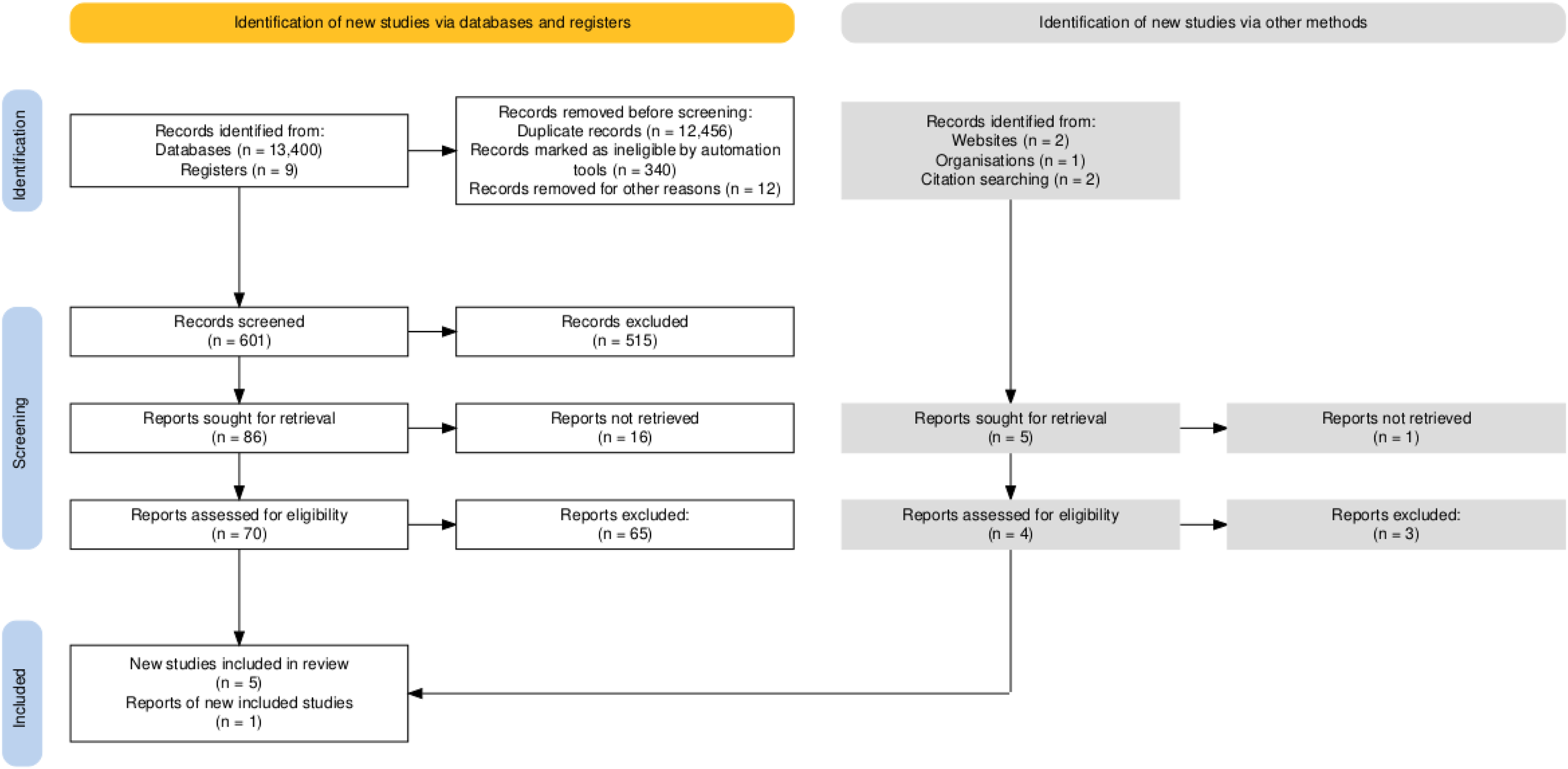
Flow PRISMA diagram.
Table 1 summarizes the descriptive characteristics of the included systematic reviews. A total of six reviews about vocational rehabilitation interventions for people with SUDs were incorporated into this overview. The number of primary studies analyzed within each review ranged from 7 (Harrison et al., 2020) to 20 (Wharakura et al., 2022). Cumulatively, these reviews included 69 unique studies with a total sample size of 11,236 participants. The publication years of the primary studies spanned from 1996 to 2019. All included reviews demonstrated relatively high-quality standards according to the AMSTAR-2 assessment tool (Shea et al., 2017).
Systematic Reviews Characteristic.
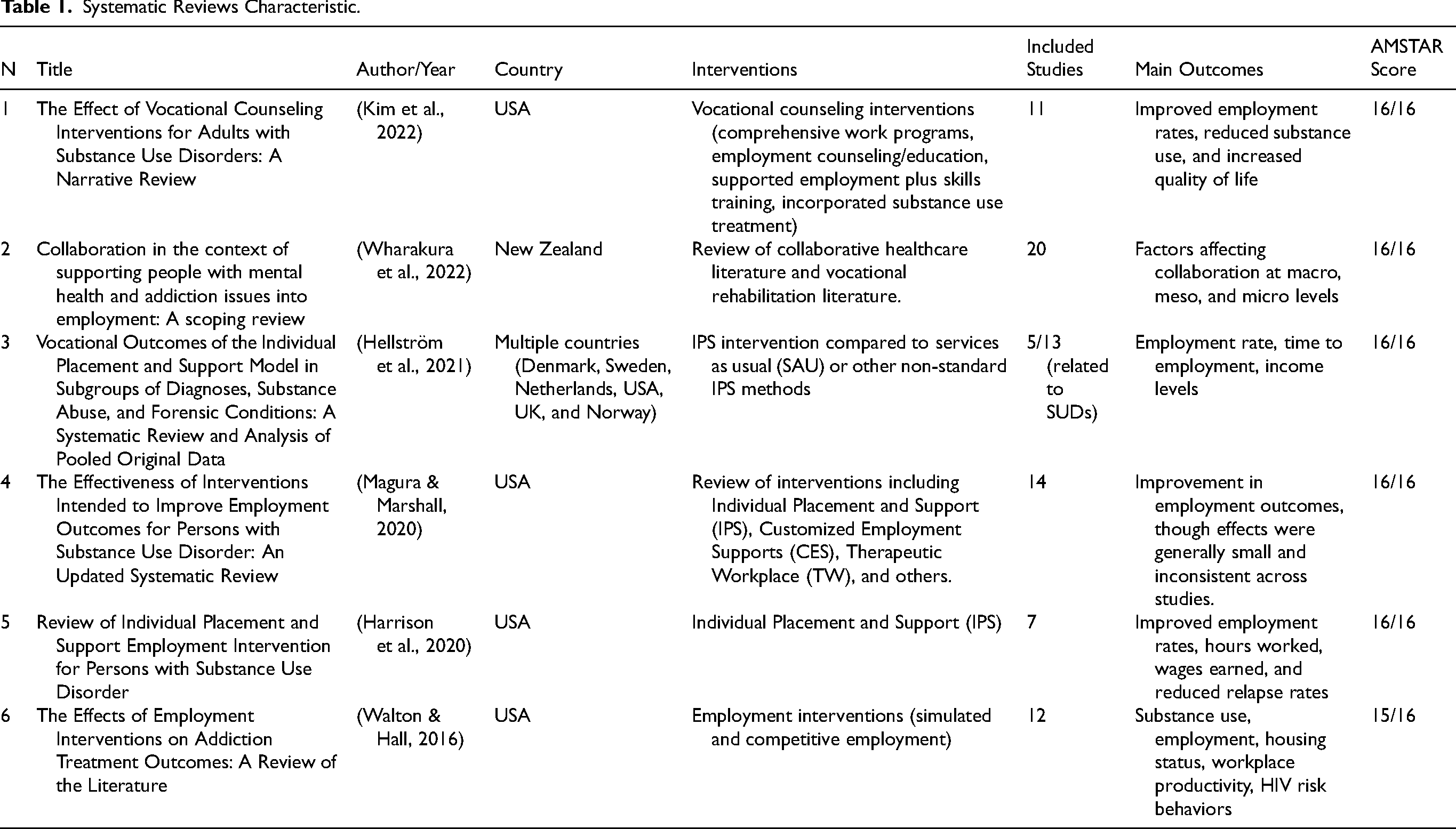
Systematic reviews were analyzed to address the research questions, and the key findings (Questions 1–4) are summarized as follows:
Studies highlighted the importance of participation in VR programs, which has been shown to reduce substance use rates (Walton & Hall, 2016). Through an analysis of systematic reviews, this study identified 11 VR interventions tailored for individuals with SUDs, outlining their core methodologies and efficacy.
Individual Placement and Support
Individual Placement and Support (IPS) was mentioned in four reviews (Harrison et al., 2020; Hellström et al., 2021; Kim et al., 2022; Magura & Marshall, 2020) and, alongside the second Customized Employment Support (CES) program, showed the most robust outcomes. Originally developed for individuals with severe mental illness, IPS is an evidence-based supported employment model grounded in eight key principles as defined by Becker and Drake (2003). These include a focus on competitive employment, zero exclusion, rapid job search, integrating with treatment, personalized job matching, systematic job development, benefits counseling, and unlimited support. Recent studies indicate its effectiveness for SUD populations, with Kim et al. (2022) reporting a 76% competitive employment rate at 12-month follow-up compared to 28% in standard care. Hellström et al. (2021) further found that the programs work best for polySUDs. The finding that VR programs like IPS work best for polySUDs is significant because it suggests these intensive, person-centered models are most effective for individuals with the highest needs. Polysubstance use is often linked to greater severity of addiction, more complex barriers to employment (e.g., co-occurring mental health issues, homelessness, criminal records), and profound socioeconomic instability. The core principles of IPS—such as zero exclusion, rapid job search, and integrated, unlimited support—are uniquely designed to address this complexity. By providing a stabilizing force of purpose, routine, and income without a prerequisite of sobriety, these programs directly counter the chaos that fuels polysubstance use, making the intervention's positive impact more pronounced for this group compared to those with less complex, single-substance disorders.
Comprehensive Employment Support (CES)
Although CES was less covered in the studies compared to IPS, with only two reviews addressing it (Kim et al., 2022 & Magura & Marshall, 2020), it has demonstrated comparable promise. Adapted from IPS, CES is a counseling-based intervention specifically designed for individuals with SUDs, incorporating intensive job search skills, case management, and fieldwork support. CES focuses on helping clients access existing community-based employment opportunities and incorporates vocational fieldwork, such as accompanying clients to explore local job postings or initiate employer contacts. Kim et al. (2022) found that, at six-month follow-up, CES participants achieved higher rates of paid, competitive, and informal employment compared to control groups.
Helping Offenders Work (hOW)
This program is mentioned in one review (Kim et al., 2022) and integrates job and life skills development, job training, and welfare-to-work transition support. While empirical evidence remains limited, the program has demonstrated moderate effectiveness in facilitating employment among participants.
Therapeutic Workplace
Magura and Marshall (2020) characterized this intervention as a contingency-based motivational approach. Participants learned basic skills required for a data entry operator job and were employed under the condition of sustained abstinence from opioids and cocaine. Salary was contingent upon both abstinence and consistent work attendance, with the primary emphasis on recovery rather than long-term employment. However, evidence supporting its long-term vocational outcomes remains scarce (Magura & Marshall, 2020).
Community Restitution Apprentice-Focused Training (CRAFT)
Developed by the National Association of Home Builders, CRAFT is a six-month employment program targeting high-risk youth and justice-involved individuals with SUDs. It addresses skill deficits through a structured yet adaptable curriculum, including pre-vocational training, employability skills development, job placement, and retention support. While Magura and Marshall (2020) noted its potential to enhance job placement, empirical validation is limited to only one study (Schaeffer et al., cited in Magura & Marshall, 2020) that reported favorable employment outcomes for youth in the construction industry at 30-month follow-up.
Drug Court Employment Intervention
Magura and Marshall (2020) described this intervention as a structured program comprising 26 individual and group counseling sessions across three phases: employment obtaining, maintaining, and upgrading. While the program showed modest effectiveness, further research is needed to assess its long-term impact on vocational outcomes for individuals with SUDs.
Job Seekers Workshop (JSW)
Referenced in one study each by Magura and Marshall (2020) and Kim et al. (2022) review, JSW includes short-term small group training in job-seeking strategies, including interview skills, identifying available jobs, and cold-calling employers. Although initial results indicated improved employment rates and reduced criminal activity, these effects were diminished at 6-to 12-month follow-ups (Kim et al., 2022).
Integrated Interpersonal Cognitive Problem Solving (ICPS)
This six-month counseling intervention employs a problem-solving framework to assist clients in securing and maintaining a job during SUD treatment. While short-term employment gains were observed, differences between groups were no longer significant at six-month follow-up. Only one study cited in Magura & Marshall's (2020) review evaluated this approach, highlighting the need for further investigation.
Casa Works for Families (CWF)
Kim et al. (2022) identified a single study examining CWF, an integrated intervention addressing SUDs, employment, and domestic violence among women. At 12-month follow-up, 46% of participants achieved abstinence, and 30% gained part-time employment. However, the absence of a control group limits the strength of these findings.
Motivated Stepped Care (MSC)
This is an individual or group counseling program focusing on reducing drug or alcohol use, increasing employability through education, and improving participant motivation for job seeking. The intervention employs a phased approach, transitioning participants from stabilization to employment counseling and case management.
Work Therapy
Kim et al. (2022) referenced a work therapy program including job readiness training, rapid job search, job placement assistance, and supported housing. While short-term employment gains were observed at three-month follow-up, the absence of a control group limits definitive conclusions about efficacy. In general, among the 11 programs reviewed, IPS and Comprehensive Employment Support (CES) showed the strongest empirical support, while other interventions exhibited moderate or limited evidence due to methodological constraints or a paucity of studies.
The effectiveness of VR programs for individuals with SUDs is affected by various barriers and facilitators that interact. Systematic fragmentation between SUD treatment and employment services has been identified as a major barrier (Harrison et al., 2020; Wharakura et al., 2022), compounded by financial constraints, including exclusion from reimbursement models and short-term funding cycles that undermine sustainability (Magura & Marshall, 2020; Wharakura et al., 2022). Employer stigma regarding reliability and relapse, along with prevalent criminal records in this population, significantly restricts job opportunities (Harrison et al., 2020; Walton & Hall, 2016). Programmatic barriers include sobriety requirements that exclude those in early recovery (Harrison et al., 2020) and contingency-based models that may penalize relapse (Magura & Marshall, 2020), while comorbid mental health conditions, cognitive impairments, and homelessness further complicate employment readiness (Hellström et al., 2021). Additional challenges include misalignment with labor market needs (Magura & Marshall, 2020) and provider attitudes that may prioritize abstinence over employment or lack SUD-specific training (Harrison et al., 2020; Wharakura et al., 2022).
Conversely, effective facilitators include inclusive policies like IPS's zero-exclusion approach (Harrison et al., 2020), employment-focused strategies emphasizing rapid job search and competitive employment (Hellström et al., 2021), and integrated service delivery models (Magura & Marshall, 2020). Person-centered supports such as tailored job matching and long-term follow-up (Harrison et al., 2020; Kim et al., 2022), cross sector partnerships in terms of formal contracts between SUD clinics, VR agencies and employers (Walton & Hall, 2016; Wharakura et al., 2022), holistic interventions addressing concurrent needs such as trauma, housing, and child care needs alongside employment (Kim et al., 2022), and stigma reduction efforts (Walton & Hall, 2016) have all demonstrated positive impacts on VR outcomes for this population.
Our analysis revealed several methodological and substantive limitations in the existing literature that warrant further investigation. A significant proportion of primary studies employed a quasi-experimental design or lacked control groups, compromising the strength of causal inferences. Many studies were underpowered to detect meaningful effects, particularly for vulnerable subgroups such as women and ethnic minorities. High attrition rates in several trials posed threats to internal validity. The predominance of short-term follow-up periods (typically six months) limited insights into long-term sustainability. Geographically, the evidence base was heavily concentrated in the United States, with limited contributions from New Zealand, Denmark, Sweden, the Netherlands, the UK, and Norway. Notable gaps in demographic representation emerged, including insufficient gender- and disaggregated data, minimal focus on women's experiences, and inadequate inclusion of sexual minorities (LGBT + individuals), persons with disabilities, and racially/ethnically diverse populations- underscoring the need for more equitable and inclusive research approaches. Additionally, heterogeneous employment metrics across studies hindered comparative analysis and synthesis of findings.
The systematic review evidence presents compelling directions for enhancing VR in SUD treatment ecosystems. At the policy level, multisectoral collaboration is essential to reposition employment as a core component of recovery rather than an ancillary service. This requires formal recognition of evidence-based VR models like IPS within standard SUD treatment protocols and the establishment of interagency agreements to align workforce development and healthcare policies. The current reliance on short-term funding cycles necessitates reform toward sustained financing mechanisms that enable longitudinal program evaluations and service delivery.
Practically, implementation should prioritize scaling proven VR models (e.g., IPS, CES) through workforce capacity building, including training SUD specialists in employment principles and co-locating career and rehabilitation counselors within treatment centers. Programs require tailored adaptations for high-risk populations, incorporating childcare support, flexible scheduling, and trauma-informed approaches for women, alongside telehealth delivery for rural residents and persons with disabilities. Standardization of outcome metrics is critical to strengthen monitoring and accountability systems.
Methodologically, future research should address current limitations through controlled trials with adequate power, cost-benefit analysis comparing VR to conventional care, and targeted studies with underserved demographics (women, racial/ethnic minorities, LGBTQ + individuals, and persons with disabilities). Investment in digital VR tools and the development of robust, standardized employment measures represent additional priorities for advancing both research and practice in this field.
Discussion
The findings from this overview of systematic reviews (2014–2025) highlight the nuanced landscape of vocational rehabilitation (VR) interventions for individuals with SUDs. A key insight is the prominence of evidence-based models such as IPS, which operate on eight core principles that underpin their effectiveness (Becker & Drake, 2003; Harrison et al., 2020). One of the most compelling reasons for the utility of IPS is its person-centered, rapid-entry approach, which contrasts sharply with traditional rehabilitation programs that often require clients to be abstinent or “clean” before engaging fully. Magura and Marshall (2020) reported some short-term benefits of abstinence-contingent programs like the Therapeutic Workplace, though these effects typically diminished over time.
This distinction warrants a detailed analysis aligned with Richardson and Epp (2016). In traditional models, the emphasis on sobriety as a precondition for employment may inadvertently create barriers to entry, delaying clients’ access to meaningful work and potentially diminishing motivation to sustain recovery. In contrast, IPS's principle of zero exclusion and its emphasis on rapid job placement allow individuals to participate in employment activities regardless of their current substance use status (Hellström et al., 2021). This approach, aligned with Kim et al. (2022), recognizes that employment itself can serve as a therapeutic activity, fostering motivation, routine, and social integration—elements critical for sustained recovery.
Furthermore, allowing individuals to enter VR programs without the prerequisite of sobriety reduces stigma and enhances engagement. According to Earnshaw et al. (2025), this approach acknowledges that recovery is a process and that employment can be a vital component of this journey, rather than a reward contingent upon sobriety. The flexibility embedded in IPS principles aligns with harm reduction philosophies, which prioritize meeting individuals where they are and supporting incremental progress (Richardson & Epp, 2016).
From an interpretative standpoint, this approach shifts the paradigm from a punitive or abstinence-focused model to one emphasizing support, inclusion, and continuity of care. Frone et al. (2022) and Wharakura et al. (2022) underscore the importance of removing systemic and procedural barriers that might otherwise hinder participation. This model also encourages a more humane and pragmatic view of recovery, recognizing that relapse can be part of the process and should not result in exclusion from employment opportunities. This perspective is not aligned with traditional VR models described in Walton and Hall (2016).
The practical implications of this difference are significant. Programs adopting IPS principles are likely to see higher engagement rates, better retention, and more sustainable employment outcomes. Kim et al. (2022) and Hellström et al. (2021) suggest that such approaches also potentially reduce the cycle of relapse and re-entry into treatment, creating a more integrated pathway to recovery. For policymakers, this evidence supports reforming eligibility criteria and program protocols to facilitate earlier and more inclusive access to VR services, although some gender-specific needs remain unaddressed, as noted by Motyka et al. (2022).
Limitations
The review highlighted that many primary studies used quasi-experimental designs or lacked control groups, limiting causal conclusions about intervention effectiveness. Most studies had short follow-up periods (less than six months), restricting understanding of long-term outcomes. The evidence was mainly from high-income countries like the U.S., with limited data from other regions, reducing generalizability. Additionally, there was a lack of demographic diversity, with insufficient focus on subpopulations such as women, minorities, LGBT + individuals, and people with disabilities, which hinders the assessment of differential impacts. Variability in how employment outcomes were measured across studies complicated comparisons, and some interventions lacked rigorous designs like randomized controlled trials, weakening the overall strength of the evidence.
Conclusion
In conclusion, the divergence between IPS's flexible entry criteria and traditional abstinence requirements reflects a broader shift toward person-centered, recovery-oriented approaches in VR for SUD populations. Recognizing and operationalizing this distinction can enhance program effectiveness, reduce barriers, and promote a more compassionate and pragmatic framework for supporting individuals on their recovery journey.
Footnotes
Acknowledgements
The manuscript is an overview paper; therefore, this statement is not applicable.
Ethics Statement
The manuscript is an overview paper and does not involve any human or animal participants; therefore, informed consent was not required.
Funding
The authors received no financial support for the research, authorship, and/or publication of this article.
Declaration of Conflicting Interests
The authors declared no potential conflicts of interest with respect to the research, authorship, and/or publication of this article.