






Abstract
Background
Employment is a key protective factor for individuals with disabilities and justice-involved youth, yet hiring outcomes depend not only on job-seeker readiness but also on demand-side employer decisions that were reshaped by pandemic-related labor shortages.
Objective
This study examined how entry-level employers across the United States experienced pandemic-related labor shortages and the strategies they used to fill workforce gaps when hiring individuals with disabilities and justice-involved youth. The study assessed predictors of shortage experience and impact severity and variation in employer strategy use.
Method
Data were drawn from two national employer surveys (N = 2,278). Logistic and linear regression models tested whether demographic, organizational, and industry characteristics predicted shortage experience and impact. A thematic analysis of 1,767 open-ended responses identified six strategy domains. Mixed-methods comparisons examined differences in strategy use by shortage impact level and employer size.
Results
Larger companies had significantly higher odds of experiencing shortages and reported greater levels of impact. Six strategy domains emerged: wage/benefit incentives, flexible work arrangements, inclusive and second-chance hiring, systems and internal workforce development, external partnerships, and expanded recruitment. Employers with moderate or significant impact relied more on recruitment-intensive and incentive-based strategies, while smaller firms emphasized flexibility and low-cost outreach. Survey group did not predict differences after covariate adjustment.
Conclusion
Findings highlight shared demand-side mechanisms across populations and underscore the importance of aligning VR and transition services with employers’ strategy patterns and capacity constraints during labor shortages.
Keywords
Introduction
Meaningful employment is a cornerstone of adult life and a protective factor against negative trajectories for populations that face systemic exclusion, including justice-involved youth and individuals with disabilities. Employment is linked with financial independence, social participation, and identity development, and it is consistently associated with reduced recidivism among system-involved youth and improved quality of life among individuals with disabilities (Ashford & Gallagher, 2019; Shandra & Hogan, 2008; Wagner et al., 2014). For youth returning from juvenile justice settings, sustained engagement in work and school is among the strongest predictors of successful community reentry, while for individuals with disabilities, equitable access to work remains a central goal of public policy and civil rights protections (Ameri et al., 2018; Mathur & Griller Clark, 2014; OECD, 2010).
Employer Decision-Making
A substantial portion of the transition and rehabilitation literature focuses on supply side supports that build skills and readiness among job seekers. Yet employment outcomes also hinge on demand side factors, specifically whether employers are willing and prepared to hire, retain, and advance candidates from historically excluded groups. Multiple studies show that employer decisions are shaped by perceived risk and liability, stigma attached to justice involvement or disability status, and the presence of concrete, job relevant qualifications and work histories (Decker et al., 2015; Griller Clark et al., 2020; Kocman et al., 2017). Employers report valuing both general employability skills and specific signals of preparedness, including prior work experience, references, and short cycle industry certificates such as OSHA, First Aid or ServSafe, with evidence that higher qualifications can mitigate stigma and increase interview and hiring recommendations for candidates with records (Ju et al., 2012; Ju et al., 2014; Varghese et al., 2010). Related strands of research document pervasive misconceptions about accommodation costs and performance, despite consistent findings that most accommodations are no cost or low cost and that inclusive hiring can enhance workforce diversity and culture (Job Accommodation Network, 2025; Lindsay et al., 2018).
Pandemic Labor Shortage
The COVID-19 pandemic produced abrupt and uneven shocks to the labor market. Employers across sectors reported difficulty finding qualified applicants, unfilled positions, and persistent churn. In many industries, vacancy pressure prompted wage adjustments, signing incentives, flexibility expansions, and reexamination of minimum requirements, while in others, hiring remained constrained by regulatory, credentialing, or risk management considerations (Gasper et al., 2020; Goda & Soltas, 2022). National business reporting and sectoral analyses indicate that post-pandemic conditions were characterized by tight labor availability in hospitality, manufacturing, education, and health services, with employers experimenting with new sourcing channels and partnership models to widen applicant pools (Ferguson & Lucy, 2023; Gasper et al., 2020). At the macro level, job openings surged relative to the pool of unemployed workers in 2022 before returning toward a 2019-like balance by mid 2024 (BLS, 2025) and remote and hybrid work accounted for roughly 28% of paid workdays by mid-2023 (Barrero et al., 2023). For justice involved youth, longstanding evidence suggests that offense type, liability concerns, and timing of disclosure influence employers’ decisions and for individuals with disabilities, organizational culture, prior experience with disability inclusion, and knowledge of accommodations are common determinants (Houtenville & Kalargyrou, 2015; Ju et al., 2013; Pham et al., 2015).
Cross-Population Lens
Although there is existing research addressing barriers and facilitators for individuals with disabilities and for justice-involved youth separately, fewer studies examine employer behavior across both populations under the same macroeconomic conditions. The overlapping constructs in these literatures suggest shared mechanisms. Employers respond to clear, credible signals of readiness and to operational pressures such as vacancies and efficiency needs, and they operate within institutional rules that can either enable or constrain inclusive hiring, including public incentives and fair chance or accommodation guidance (Decker et al., 2015; ODEP, 2020; Varghese et al., 2010). At the same time, the two populations face distinct sources of stigma and compliance concerns, making it important to identify points of convergence and divergence in employer strategies used during labor shortages (Griller Clark et al., 2020; Kocman et al., 2017).
Study Purpose
This convergent mixed methods study integrates two post-pandemic, nationally distributed employer surveys focused on entry-level hiring for individuals with disabilities and for youth with prior involvement in the juvenile justice system. Its purpose is to examine how employers experienced pandemic-related labor shortages; identify the strategies they used to fill workforce gaps; and determine whether patterns in shortages, impacts, and strategy use vary by organizational and respondent characteristics. Quantitative analyses were necessary to identify systematic patterns in labor-shortage experience and impact across organizational characteristics, while qualitative data were essential for capturing the specific strategies, adaptations, and decision logics employers used to address workforce gaps. Integrating the two forms of evidence allows for a more complete account of employer behavior during labor-market disruption. Guided by a demand-side perspective, we apply a mixed-methods approach to address the following research questions:
Predicting Shortage Experience: Does gender, age, race, ethnicity, respondent role, company size, business structure, industry, or geographic region predict whether a business experienced a pandemic-related labor shortage? Predicting Shortage Impact: Does gender, age, race, ethnicity, respondent role, company size, business structure, industry, or geographic region predict the reported level of impact of the pandemic-related labor shortage on the business? Strategies Used: What strategies are companies using to fill the workforce gap? Differences in Strategy Profiles: Do strategy profiles differ according to the reported level of shortage impact and by company size?
By analyzing common items across two employer samples that focus on individuals with disabilities and justice-involved youth, this study provides a cross-population view of how organizations navigated hiring during a period of sustained labor scarcity. The results can inform transition education, vocational rehabilitation, workforce development and reentry programming by aligning services with the strategy clusters employers actually deploy when vacancies are persistent, and they can guide policy efforts that lower transaction costs for small and midsize firms and that scale partnerships where employer infrastructure already exists (Gasper et al., 2020; Job Accommodation Network, 2025; Mazzotti et al., 2016).
Methods
This study draws on a combined sample of 2,278 entry-level employers from across the U.S., integrating responses from two post-COVID-19 surveys to examine employer experiences with labor shortages and their strategies for addressing workforce gaps. Survey 1 (i.e., S1) focused on employer perspectives toward hiring individuals with disabilities (n = 809) and Survey 2 (i.e., S2) on hiring justice-involved youth (n = 1,469). Data for S1 was collected in early 2023 and data for S2 was collected in late 2022. All participants were identified as individuals responsible for hiring decisions. By analyzing shared questions across both samples, the study offers a unique perspective on employer decision-making in times of labor disruption. The sample, survey measure, procedures, and analysis methods are detailed below.
Sample
Our sample was roughly split along gender identity, with 52% of our sample identifying as female and 47% as male. Forty-four percent of respondents were ages 35–54, 29% were 18–34, and 27% were 55 or older. Thirty-two percent were a general manager or supervisor, 23% were hiring managers, 13% were HR personnel, 22% were the owner, President, or CEO, and 10% represented a different role in the business. See Table 1 for comprehensive demographics, including the differences in representation between S1 and S2. To aid in interpretation, we combined categories for several variables (see Table 1 note). Chi-square tests of independence were conducted to assess differences between the two survey samples. Results indicated statistically significant differences in industry, structure, company size, age of respondent, and role of respondent, indicating the need for accounting for these differences by adding “survey type” as a grouping variable in the regression analyses to account for sample-level differences.
Demographic Characteristics of Survey Respondents (n = 2,278).
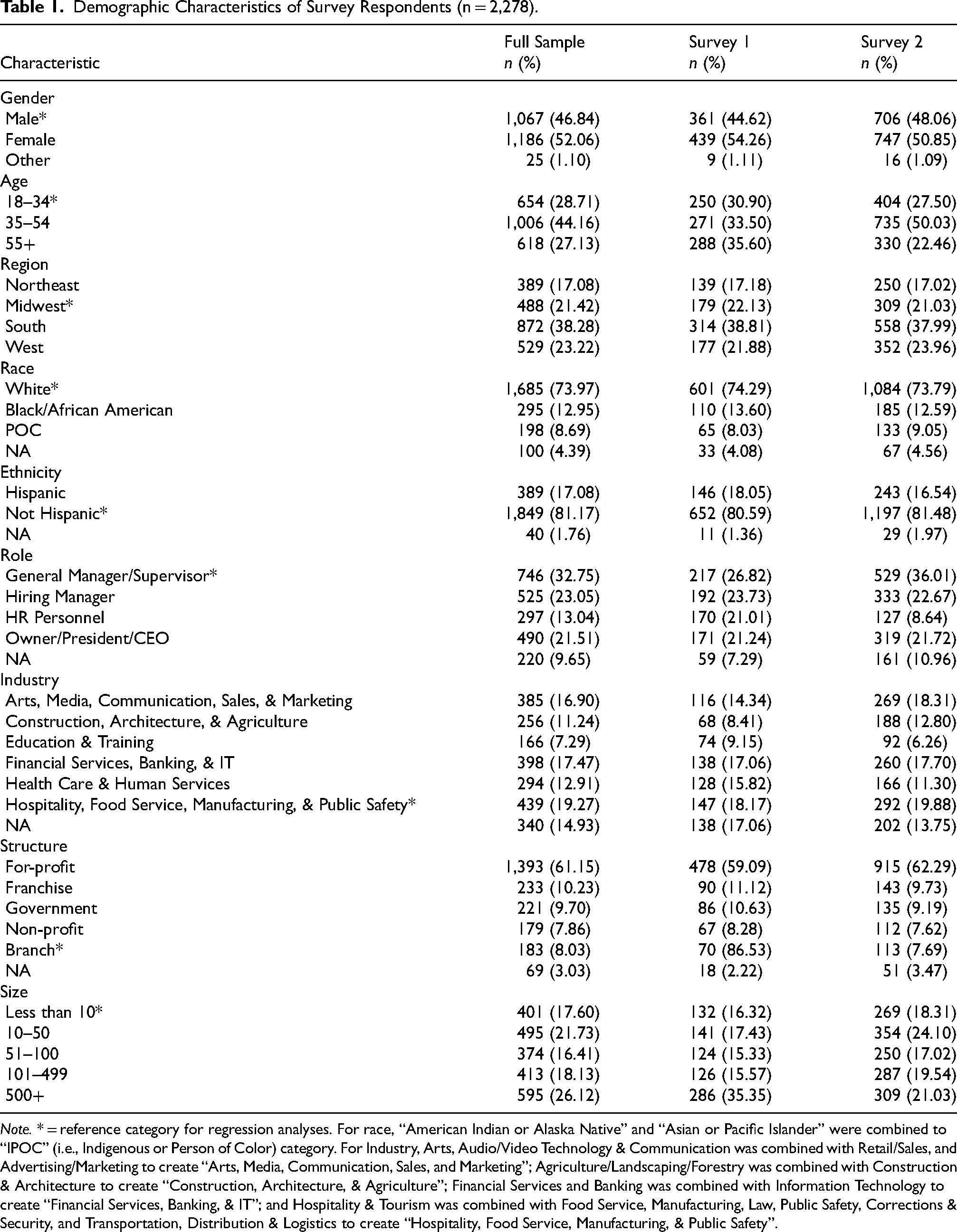
Note. * = reference category for regression analyses. For race, “American Indian or Alaska Native” and “Asian or Pacific Islander” were combined to “IPOC” (i.e., Indigenous or Person of Color) category. For Industry, Arts, Audio/Video Technology & Communication was combined with Retail/Sales, and Advertising/Marketing to create “Arts, Media, Communication, Sales, and Marketing”; Agriculture/Landscaping/Forestry was combined with Construction & Architecture to create “Construction, Architecture, & Agriculture”; Financial Services and Banking was combined with Information Technology to create “Financial Services, Banking, & IT”; and Hospitality & Tourism was combined with Food Service, Manufacturing, Law, Public Safety, Corrections & Security, and Transportation, Distribution & Logistics to create “Hospitality, Food Service, Manufacturing, & Public Safety”.
Measure
Data were collected from two separate surveys (see Appendices A and B in Supplemental Materials) and combined to answer shared questions regarding labor shortage impacts on entry-level employers. The development of S1, targeting employer perspectives toward individuals with disabilities (IWD), was informed by previous employer surveys (e.g., Domzal et al., 2008; Ju et al., 2014) and had four sections: (1) demographics, (2) business practices, (3) skill assessment, and (4) COVID-19 implications. S2, interested in employer perspectives toward justice-involved youth, was also informed by previous studies (Griller Clark et al., 2020; Pham et al., 2015). Shared questions analyzed for the purposes of the study were: Have you experienced any labor shortage and/or lack of qualified workers to fill needed position in your company since the start of the COVID-19 pandemic? (yes/no/don’t know); If so, what is the level of the labor shortage/lack of qualified workers experienced by your company since the start of the COVID-19 pandemi?c (only small impact on our company, slight impact on our company, moderate impact on our company, or significant impact on our company); and What strategies is your company currently implementing to fill the workforce gap?. Each survey was pilot tested with approximately 10% of the target sample (i.e., ∼80 respondents for S1 and ∼140 respondents for S2) and both performed as intended. Each survey took approximately 10 min to complete.
Procedures
Participant recruitment, survey distribution, and data collection for both surveys were completed in about three weeks each through a service purchased from Qualtrics, a third-party survey platform and dissemination company. Participants provided informed consent prior to beginning the respective survey and were screened via self-report to determine that they were responsible for hiring decisions. Response data were accessed through the Qualtrics platform. All study procedures were reviewed and approved by the Institutional Review Board. We employed several procedures to reduce bias in survey data collection and to increase our response quality. Responses were checked for ambiguous text in open-ended responses, duplicate responses, completion rate, patterns of unanswered responses, speeders, and straight-lining responses (Brainard et al., 2022). We used embedded bot detection and removed from the analysis any responses determined to be impacted by these biases.
Data Analysis
This study was designed to understand the impact of the COVID-19 pandemic on businesses that hire entry-level employees. We conducted quantitative analyses to answer research questions 1 and 2, qualitative analyses to answer research question 3, and a combination of quantitative and qualitative analyses to answer research question 4. Data were cleaned and screened upon receipt and all quantitative analyses were conducted using R (Version 4.3.3; R Core Team, 2025) and the R packages mice (Version 1.0; van Buuren & Groothuis-Oudshoorn, 2011), and psych (Version 1.8.12; Revelle, 2018). Chi-square tests of independence were used to determine if there were significant differences between participants in S1 and S2.
Quantitative Analyses
For the quantitative analyses, we used logistic regression to answer RQ 1 and linear regression to answer RQ 2, examining main effects. All independent variables (i.e., IVs) for each regression model were categorical in nature and, therefore, dummy coded for ease of interpretation. See Table 1 for reference categories. IVs were group (i.e., S1 or S2), gender, age, region, role of respondent, industry, structure, and business size. The dependent variable (i.e., DV) for RQ 1 was whether the business experienced a labor shortage because of the pandemic (i.e., yes/no/not sure) and the DV for RQ 2 was the level of impact of that labor shortage on the business. The DV for RQ 1 was treated as a binary categorical variable with responses of “not sure” treated as missing, and therefore logistic regression was used. The four response options for the DV for RQ 2 (i.e., only small impact on our company, slight impact on our company, moderate impact on our company, or significant impact on our company) were treated as continuous, and therefore, we used linear regression. For the purposes of the analyses, responses of “not sure” and “other” were treated as missing, and missing data ranged from 0% to 15%. Little's MCAR test indicated that data were not missing completely at random, χ2 = 1,182.16, df = 617, p < .001, and therefore we addressed missing data using multiple imputation by chained equations (White et al., 2011) using 25 imputations for all IVs and DVs.
Qualitative Analyses
To answer RQ 3 we used data consolidation and thematic analysis to code open-ended responses to the survey question What strategies is your company currently implementing to fill the workforce gap? We used a hybrid deductive-inductive approach consistent with recommended qualitative practices (e.g., Braun & Clarke, 2020; Miles et al., 2013). We began with a deductive framework aligned to the research aims and prior literature (e.g., wage or benefit incentives, flexible work arrangements, inclusive hiring/second chance hiring, upskilling or training, external partnerships, systems improvement, and automation or technology). We then iteratively refined codes inductively to capture additional emergent patterns (e.g., hiring events/job boards, subcontracting/temporary staffing, retention strategies, social media, qualification changes). The final codebook was applied at the theme level to reach response, meaning a response could receive multiple codes if multiple strategies were mentioned. Two coders (i.e., the first and second authors) independently coded the data using the finalized codework. The team double-coded a stratified subset (n = 228 [10%]) of responses spanning the full set of themes to estimate inter-rater reliability (IRR).
IRR was assessed on the double-coded subset in two complementary ways: (a) binary, per-theme agreement across all code assignments, and (b) exact multi-label agreement at the response level. Overall agreement was 98.5% (Cohen's κ = 0.731) and exact multi-label match at the response level indicated that 71.1% of responses had an identical set of codes. Per-theme kappas were generally in the substantial to almost perfect range for the most prevalent codes. Agreement was lower but acceptable for several less frequent or more interpretive categories (e.g., upskilling, partnerships, systems, and qualifications), which we anticipated given code ambiguity and sparsity. Median percent agreement per theme was 98.7% (range: 91.7–100%). Disagreements were resolved in scheduled adjudication meetings, during which coders reviewed discrepant cases and reconciled to consensus.
Mixed Analyses
To address RQ 4, we examined whether strategies businesses used to address shortages varied according to how strongly they reported being impacted by the pandemic. To support explicit integration, qualitative thematic codes were linked to quantitatively defined subgroups and summarized using joint displays, which enable mixed-methods integration by visually combining statistical groupings with qualitatively derived strategy themes, allowing direct comparison of strategy prevalence across organizational contexts. This approach makes connections between datasets transparent and supports meta-inferences grounded in both quantitative patterns and qualitative meaning (Fetters et al., 2013). A procedural diagram is provided in Supplemental Figure S2 to enhance transparency and alignment with mixed-methods quality indicators. After finalizing the qualitative codes, we merged the coded dataset with participants’ responses to the four-level impact item. We then re-tabulated the presence of each thematic code within each impact level and generated descriptive comparisons of theme prevalence across the four groups. Because results from RQs 1 and 2 indicated systematic differences by employer size, we also incorporated employer size comparisons as part of our RQ 4 analytic plan, allowing us to examine whether smaller, medium-sized, and larger employers differed in the strategies they reported using to address their labor shortages.
Results
Results from each of the two regression models are presented below, followed by results of the qualitative coding of open-ended responses regarding helpful strategies to mitigate the impact of the labor shortage, and finally a synthesis of quantitative and qualitative data to examine differences in strategies across level of labor shortage impact. Tables 2 and 3 present the regression model results, reporting estimate, standard error (SE), Wald chi-square (Wald χ2), 95% confidence intervals with lower and upper limits (LL and UL), and p-value (p).
Logistic Regression Analysis on Whether Employers Experienced a Pandemic-Related Labor Shortage.
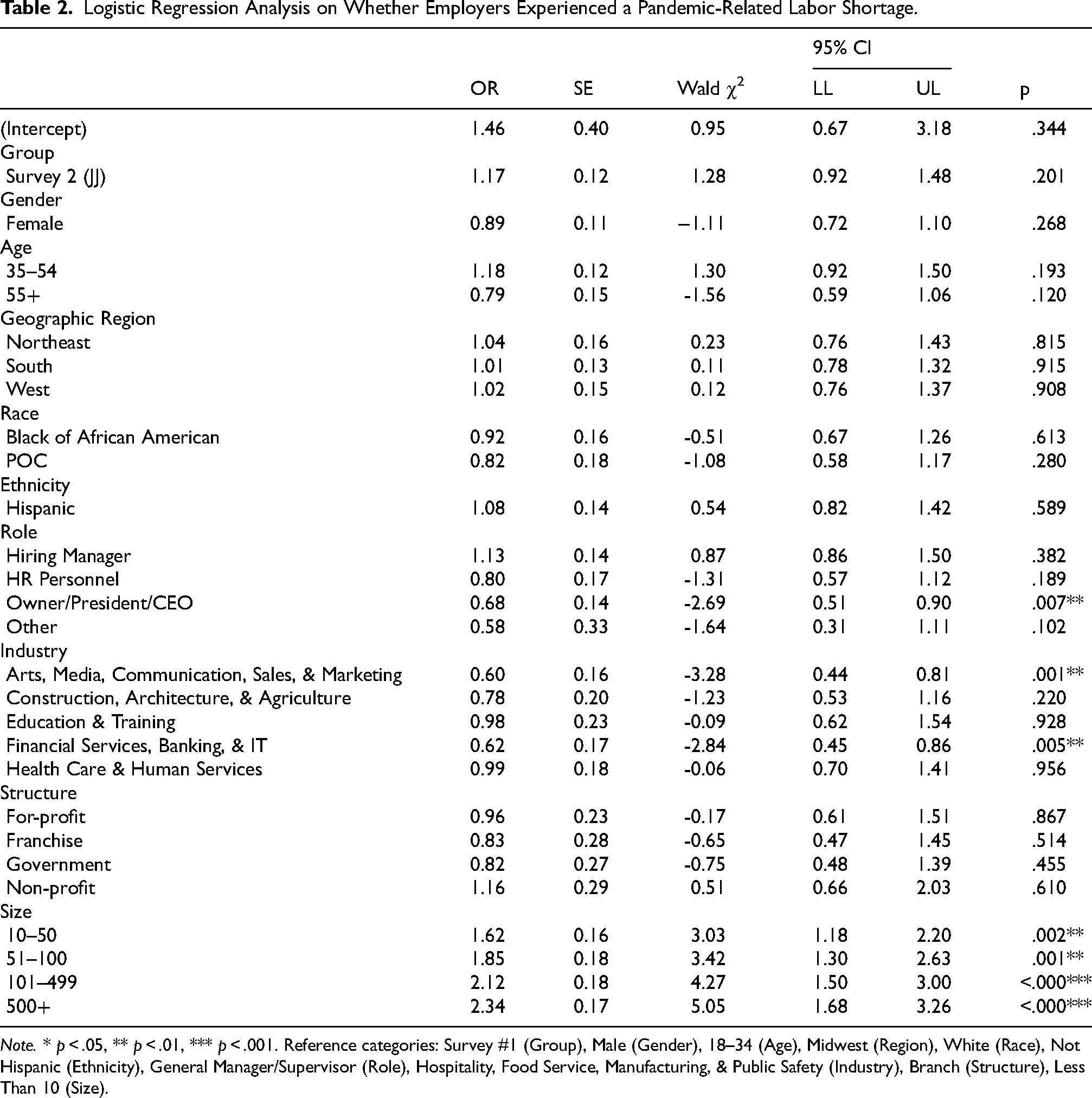
Note. * p < .05, ** p < .01, *** p < .001. Reference categories: Survey #1 (Group), Male (Gender), 18–34 (Age), Midwest (Region), White (Race), Not Hispanic (Ethnicity), General Manager/Supervisor (Role), Hospitality, Food Service, Manufacturing, & Public Safety (Industry), Branch (Structure), Less Than 10 (Size).
Linear Regression Analysis on the Impact of the Pandemic-Related Labor Shortage on Employers.
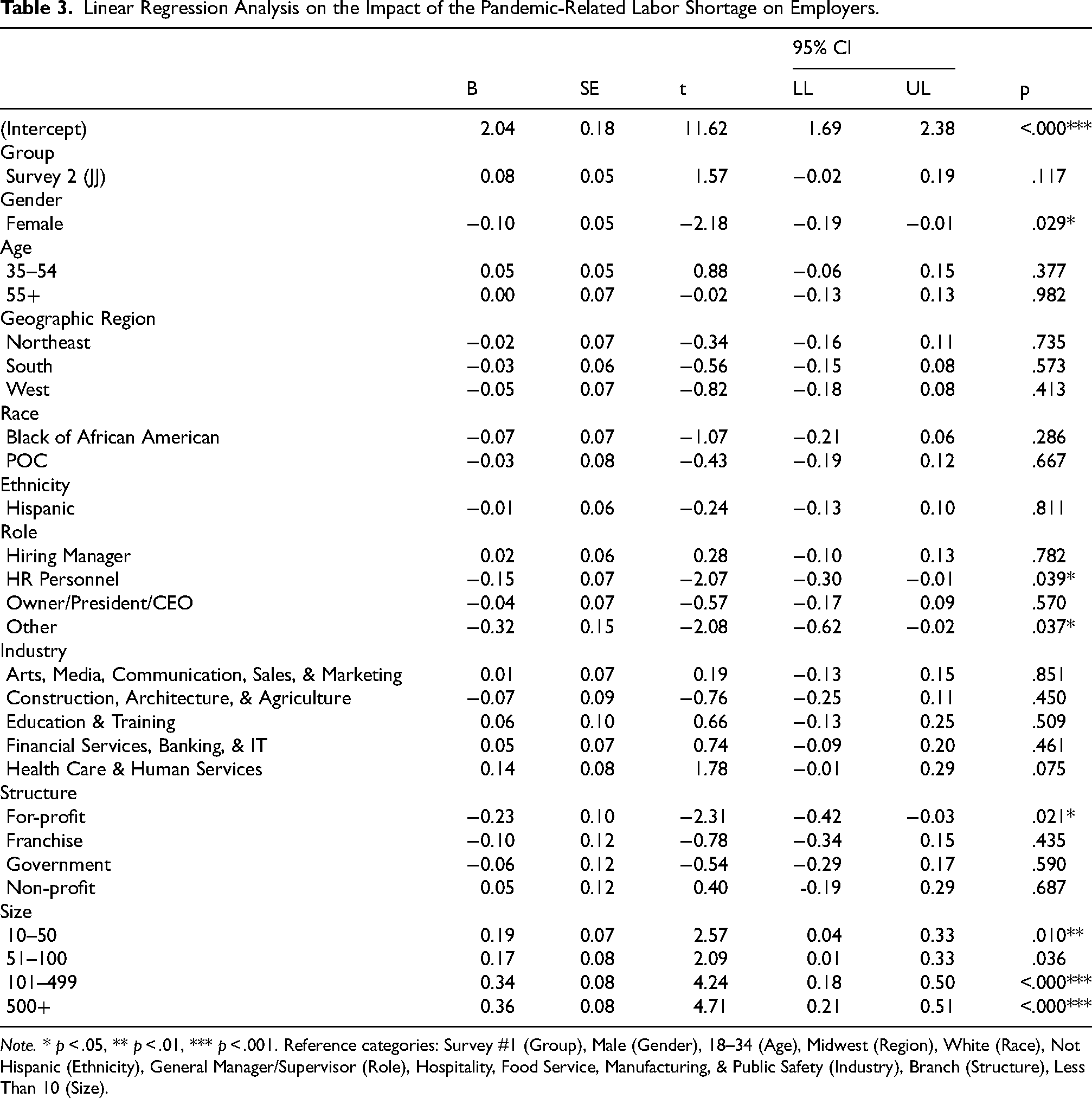
Note. * p < .05, ** p < .01, *** p < .001. Reference categories: Survey #1 (Group), Male (Gender), 18–34 (Age), Midwest (Region), White (Race), Not Hispanic (Ethnicity), General Manager/Supervisor (Role), Hospitality, Food Service, Manufacturing, & Public Safety (Industry), Branch (Structure), Less Than 10 (Size).
Research Question 1: Labor Shortage Experience
To answer RQ 1, we ran a binary logistic regression model with all included IVs to test their ability to predict whether a business experienced a labor shortage resulting from the COVID-19 pandemic. The result for the role in business was statistically significant for Owner, President, or CEO, indicating that the odds of experiencing a labor shortage decreased by 32% (95% CI [0.51, 0.90]) compared with General Managers and Supervisors. The result for industry was also statistically significant, indicating that the odds of experiencing a labor shortage decreased by 40% (95% CI [0.44, 0.81]) for Arts, Media, Communication, Sales, and Marketing and by 38% (95% CI [0.45, 0.86]) for Financial Services, Banking, and IT companies compared with Hospitality, Food Service, Manufacturing, & Public Safety companies. Finally, the result for business size was statistically significant, indicating that the odds of experiencing a labor shortage increased by 62% (95% CI [1.18, 2.20]) for companies with 10–50 employees, 85% (95% CI [1.30, 2.63]) for companies with 51–100 employees, 112% (95% CI [1.50, 3.00]) for companies with 101–499 employees, and 134% (95% CI [1.68, 3.26]) for companies with 500 + employees compared with companies with fewer than 10 employees.
Research Question 2: Labor Shortage Impact
To answer RQ 2 we ran a linear regression model with all included IVs to test their ability to predict the level of impact a business experienced due to the pandemic-related labor shortage. Several predictors were statistically significant including gender identity, with women reporting slightly lower levels of impact compared to men, B = –0.10, SE = 0.05, t = –2.18, p = .029. Respondent role in business was also statistically significant with HR personnel (B = –0.15, p = .039) and those in “Other” roles (B = –0.32, p = .037) reporting lower impact than General Managers or Supervisors. Business structure was also statistically significant with for-profit companies reporting lower impact than other organizational types (B = –0.23, p = .021). Finally, company size was statistically significant with larger companies reporting higher levels of impact, B = 0.19, p = .010 (10–50 employees), B = 0.17, p = .036 (51–100 employees), B = 0.34, p < .001 (101–499 employees), and B = 0.36, p < .001 (500 + employees). Other variables, including survey group, age, race, ethnicity, industry, and region, were not statistically significant predictors of impact level. The fact that “survey type” (i.e., “group”) was not statistically significant in either model suggests that after controlling for other variables, the two employer groups did not meaningfully differ from one another. Findings also support the original analysis plan of stratifying qualitative responses by level of impact in RQ 4.
Research Question 3: Strategies to Address Labor Shortage
To answer RQ 3, we conducted a qualitative thematic analysis of open-ended responses to the question, What strategies is your company currently implementing to fill the workforce gap? Of the 2,278 total responses to both surveys, 1,767 provided a valid response to the open-ended question and were retained for analysis. The thematic analysis yielded six overarching strategy domains, each with multiple sub-themes reflecting the actions employers reported taking to mitigate pandemic-related staffing challenges. Our code tree is provided in Figure S1 and Table S1 provides the full codebook including definitions and representative quotes. Below is a summary of the major themes that emerged from the data.
Wage and Benefit Incentives
Across samples, employers described increasing compensation as a primary method of addressing staffing shortages. Strategies included raising base wages, offering sign-on bonuses, improving benefit packages (e.g., health insurance, childcare, paid time off), and initiating tuition reimbursement or other targeted incentives. Employers emphasized that although wage increases were sometimes effective in improving applicant flow, ongoing labor shortages required more structured and competitive compensation packages rather than incremental pay adjustments.
Flexible Work Arrangements
Employers also described expanding or formalizing flexible scheduling to attract and retain workers. This included offering flexible or reduced hours, remote or hybrid work options when feasible, and allowing employees to adjust schedules to accommodate caregiving or health needs. Although flexibility was more prevalent in mid- to large-sized companies and in industries conducive to remote work, several employers also noted experimenting with creative scheduling to accommodate applicants who otherwise would not enter the labor force.
Inclusive Hiring Practices
Many employers reported implementing or expanding strategies aligned with inclusive hiring, including actively recruiting individuals with disabilities, lowering or modifying minimum qualifications (e.g., education requirements, years of experience), and adopting or strengthening second-chance hiring policies for applicants with criminal histories. Some employers described broadening diversity, equity, and inclusion (DEI) initiatives, such as revising position descriptions to reduce unnecessary barriers or partnering with organizations serving underrepresented populations. Several employers noted explicitly removing background checks or reconsidering exclusionary hiring filters (e.g., asking whether an applicant has a felony conviction) as part of their response to the workforce shortage.
Systems Infrastructure and Internal Workforce Development
A substantial proportion of responses focused on internal organizational changes designed to improve workforce stability. These included retention initiatives (e.g., retention bonuses, mentoring programs, and probationary period supports) upskilling and cross-training (e.g., retraining existing staff to cover shortages or expanding internal promotion pipelines), streamlining hiring and onboarding (e.g., reducing onboarding time, updating HR systems, and simplifying interviews), technology adoption (e.g., automated applicant tracking systems and other AI-enhanced recruitment tools) and workload redistribution, with existing employees taking on additional responsibilities during periods of high vacancy. These strategies were especially common among employers reporting moderate to significant labor-shortage impacts.
External Partnerships
Employers frequently described partnering with external entities to supplement or expand recruitment. These included temporary staffing agencies and subcontractors; colleges, trade schools, and training programs; community-based organizations including those serving individuals with disabilities or justice-involved youth; job coaches or supported employment specialists; and networking efforts with regional workforce boards or professional associations.
General Recruitment and Advertising Efforts
Finally, many respondents described increasing general recruitment activities, such as expanding advertising campaigns, posting on additional job boards (e.g., LinkedIn, Indeed), attending job fairs, offering employee referral bonuses, and leveraging social media or physical signage. Employers with severe shortages often reported adopting more aggressive or multi-channel recruitment strategies, including coordinated outreach across multiple states.
Research Question 4: Strategies by Impact Area and Business Size
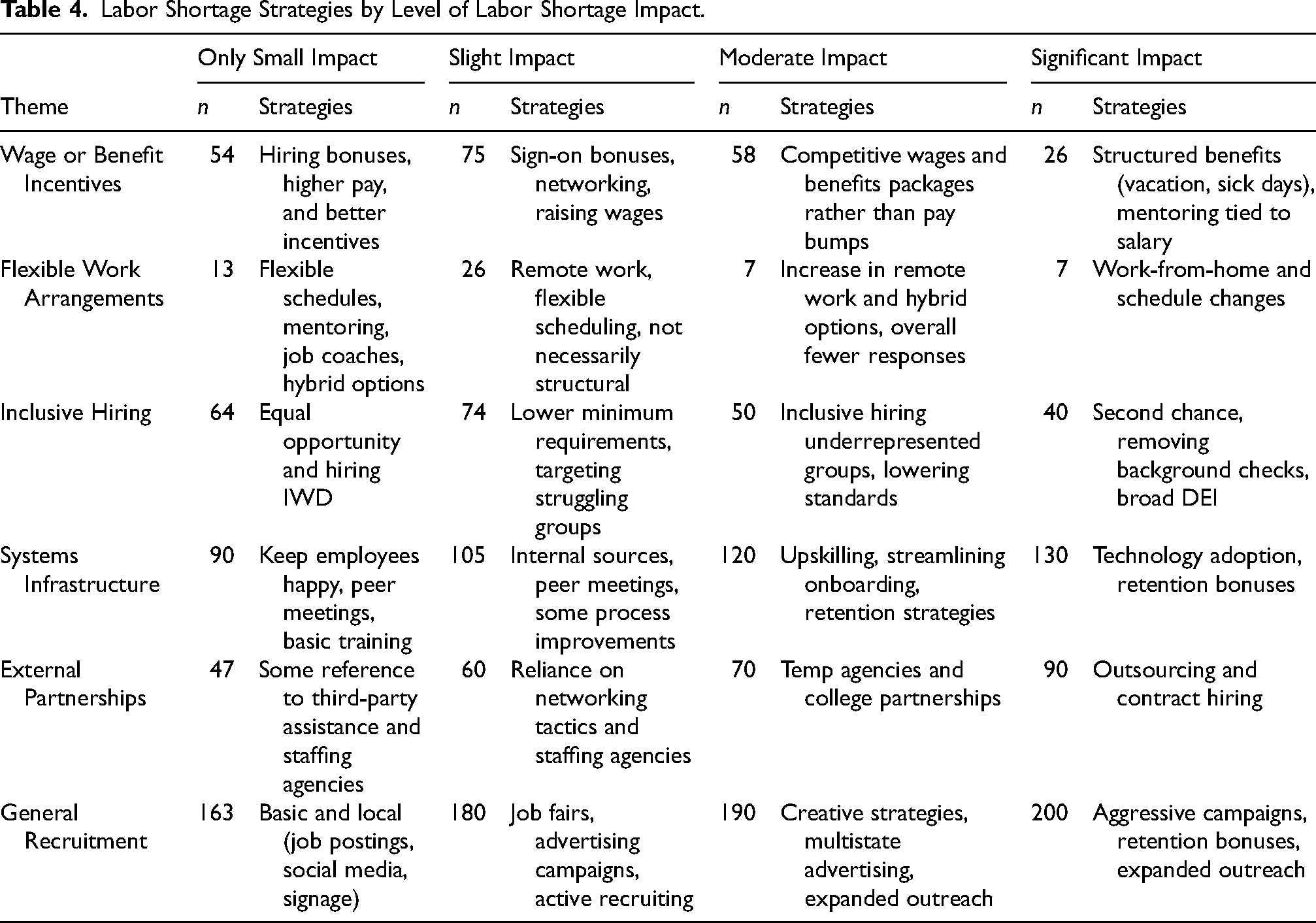
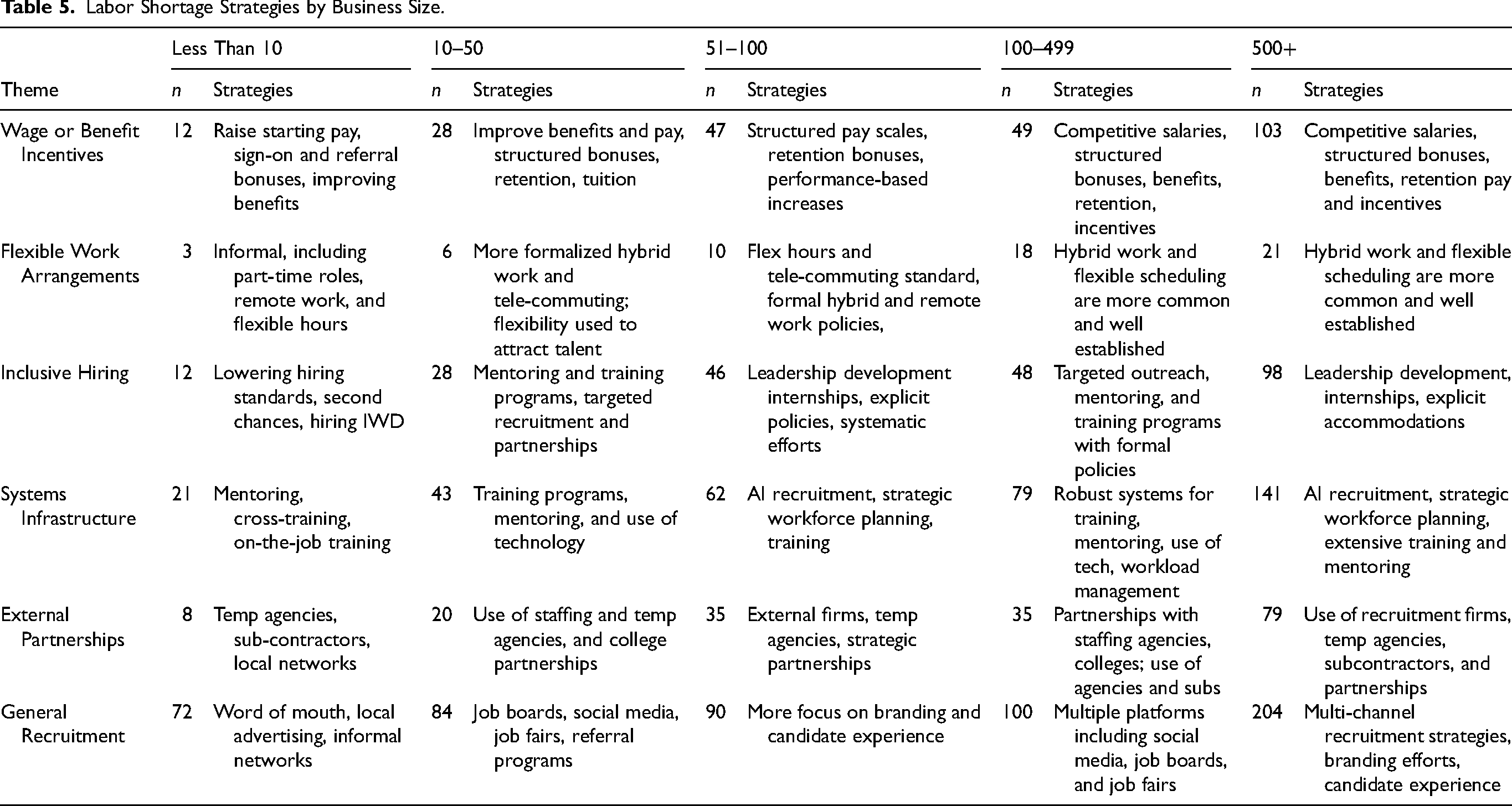
To address RQ 4 we used a convergent mixed-methods approach, using results from RQs 1 and 2 to stratify strategies found in RQ 3 to examine whether the strategies to address shortages differed according to level of pandemic-related impact on hiring and organizational size. Summarized below are the major patterns observed across groups. Tables 4 and 5 function as joint displays, integrating quantitative groupings (labor-shortage impact level and employer size) with qualitative strategy themes. These displays illustrate how employer responses varied across organizational contexts and provide the primary mechanism for mixed-methods integration in RQ4. Table titles were revised to explicitly signal their role as joint displays.
Labor Shortage Strategies by Level of Labor Shortage Impact.
Labor Shortage Strategies by Business Size.
Differences by Level of Pandemic Impact on Hiring
Clear differences emerged in the types of strategies employers used depending on how strongly they reported that the COVID-19 pandemic had impacted their hiring practices. Businesses with moderate or significant impact were more likely to describe strategies that expanded or intensified recruitment efforts including active outreach strategies (e.g., hiring events, social media recruiting, and increased advertising), lowering or modifying qualifications (e.g., relaxing experience requirements or broadening acceptable credentials), and use of subcontractors or temporary staffing agencies to fill immediate gaps. These patterns indicate that employers experiencing greater disruption relied more on short-term or rapid-cycle solutions.
Employers reporting greater pandemic impact also mentioned wage and benefit incentives (e.g., pay increases, bonuses, improved benefit packages) at higher rates than those reporting only slight or small impact. This mirrors the findings from RQ 1 suggesting that compensation pressures were disproportionately felt among more affected employers. In contrast, several strategies including upskilling and training
Differences by Employer Size
Employer size was also associated with distinct patterns in strategy use. Smaller employers tended to emphasize flexibility and direct recruitment and more frequently referenced flexible scheduling and adjusted work arrangements; word-of-mouth recruiting, local job boards, and community-based outreach; and using generalist, low-cost strategies rather than paid advertising or formal partnerships. Strategies noted by medium-sized employers balanced use of incentives and partnerships and showed a more diversified mix of strategies. These strategies included pay and benefit adjustments; retention initiatives; partnerships with schools, training providers, or community organizations; and expanded recruitment channels, including both paid and unpaid approaches. This group displayed the most heterogeneity, consistent with the variability seen in their workforce challenges in RQs 1 and 2. Large employers showed a stronger use of formalized strategies and structural changes. They were more likely to report formal recruitment partnerships, including collaborations with workforce agencies or educational institutions; upskilling/reskilling programs supported by internal training units; technology and systems improvements such as applicant-tracking system upgrades, streamlined onboarding, or process automation; and sign-on bonuses and structured incentive plans. These findings align with the greater capacity and HR infrastructure typically available to larger organizations.
Discussion
This mixed-methods study integrated two national employer surveys (N = 2,278) to examine entry-level hiring during the post-COVID labor market. Four primary findings emerged. First, employer role, industry, and company size predicted whether firms experienced a pandemic-related labor shortage. Owners/CEOs were less likely to report a shortage than General Managers/Supervisors, several white-collar industries reported lower odds than hospitality/manufacturing/public safety, and the odds of reporting a shortage increased steadily with business size. Second, the level of shortage impact was associated with gender (i.e., women slightly lower), role (i.e., HR and “Other” lower), organizational structure (i.e., for-profit lower than other types), and again, larger size predicted greater impact. Third, qualitative analyses identified six strategy domains employers used to address workforce gaps: wage and benefit incentives, flexibility, inclusive hiring/second chance, systems/retention/upskilling, external partnerships, and general recruitment. Inter-rater reliability was strong, supporting the robustness of the codebook and coding process. Fourth, strategy use varied by both pandemic impact level and employer size. Highly impacted firms relied more on recruitment-intensive and incentive-based approaches (e.g., job fairs, advertising, qualification changes, staffing agencies), whereas less impacted firms tended toward incremental adjustments. Small firms emphasized flexibility and direct, low-cost recruiting, mid-sized firms showed balanced approaches (e.g., incentives, partnerships, retention), and large firms were more likely to deploy formalized strategies (e.g., technology upgrades, structured partnerships, standardized incentives).
Shortage and Impact Patterns
The consistent association between firm size and both the likelihood of reporting a shortage and the severity of its impact suggests that scale intensifies exposure to staffing disruptions. Larger firms typically manage more roles, have greater operational interdependence, and face tighter efficiency targets. Vacancies ripple through production, customer service, or compliance more visibly than in very small firms. Conversely, Owners/CEOs’ lower odds of reporting shortages relative to GMs/Supervisors may reflect role distance from day-to-day staffing constraints or broader strategic latitude to reallocate work temporarily (e.g., delaying expansion, automating tasks). These size- and role-linked differences are important context for understanding why strategy approaches diverge across organizations.
Strategies by Impact Level and Business Size
Firms reporting moderate or significant impact most frequently used strategies designed to expand applicant pools and accelerate hiring processes, such as advertising, hiring events, staffing agencies, and adjustments to minimum qualifications. These are high-leverage levers for near-term vacancy reduction. In contrast, upskilling, systems and process improvements, and technology appeared more aligned with longer-term capacity building. Relative to employer size, small employers leaned on flexible scheduling
Taken together, the quantitative and qualitative findings provide a coherent picture of how employers navigated pandemic-related labor shortages along two intersecting dimensions: who the employer is, as reflected by organizational size and role structure, and how hard they were hit, as reflected by reported shortage severity. Regression analyses showed that larger employers were significantly more likely to experience labor shortages and to report greater levels of impact, indicating that scale intensified exposure to workforce disruption. The qualitative findings illuminate how these statistical patterns translated into practice, revealing that employers experiencing greater impact and those with larger organizational capacity relied more heavily on recruitment-intensive and compensation-based strategies, including expanded advertising, sign-on bonuses, structured wage and benefit packages, and formal partnerships. At the same time, a persistent backbone of systems-oriented and retention-focused strategies, such as upskilling, process improvements, and internal workforce development, appeared across employer types, suggesting longer-term capacity-building responses that extended beyond acute labor pressure. These findings underscore that who the employer is and how hard they were hit determine what they do, and that the convergence of size and impact explains the simultaneous prominence of recruitment and compensation strategies alongside sustained investments in systems and retention. Without integrating quantitative patterns with qualitative strategy profiles, the analysis would be limited to identifying differences across employers rather than explaining how organizational capacity and labor market disruption jointly shaped decision-making.
The qualitative findings help explain why larger employers reported both higher odds of experiencing labor shortages and greater impact severity. Larger organizations described more formalized recruitment systems, structured incentive packages, and reliance on external partnerships, strategies that are typically activated when disruptions threaten operational continuity across departments. These responses suggest that large firms experienced shortages not only as staffing challenges but as system-level risks, consistent with greater interdependence and efficiency pressures. Conversely, strategies described by small employers such as flexibility, informal recruiting, and low-cost outreach help contextualize why small firms reported lower levels of impact despite facing the same labor market conditions. Their adaptable role structures and ability to redistribute work may have buffered against the severity of disruptions. Thus, the qualitative data illuminate the mechanisms behind the quantitative patterns, clarifying how organizational capacity intersects with shortage exposure to shape employer decision-making.
Implications for Practice
The implications below are intended for professionals who design and deliver employer-facing workforce supports, including vocational rehabilitation (VR) counselors, secondary transition specialists, workforce development staff, employment specialists, and reentry workforce practitioners. For VR professionals, transition specialists, workforce intermediaries, and reentry employment staff, the findings highlight the importance of differentiating employer engagement strategies based on organizational capacity and labor shortage impact. Rather than approaching employers with uniform service models, practitioners should assess both employer size and the severity of staffing disruption to determine the appropriate level and type of support. First, practitioners working with employers reporting moderate to significant labor shortage impact should prioritize rapid placement and vacancy-filling supports. These may include coordinating short-term work trials, internships, or supported employment placements; facilitating rapid screening and interview processes; and organizing cohort-based placements when employers have multiple openings. Large employers are well-positioned for structured partnerships that align candidate pipelines with internal training systems, such as skills-based screening linked to onboarding or upskilling programs. In contrast, practitioners engaging small employers should focus on reducing administrative and supervisory burden by providing hands-on assistance with job descriptions, applicant screening, onboarding, and early-stage supervision, as well as information on wage subsidies, tax credits, and accommodation supports.
Second, workforce and transition professionals should align service offerings with the strategy clusters employers are already using. For employers emphasizing recruitment expansion, practitioners can add value by sourcing candidates, verifying job-relevant skills, coordinating hiring events, and supporting expedited interviews. For employers responding through compensation strategies, practitioners can support decision-making by providing local labor market wage information, advising on retention incentives, and offering benefits counseling to help employees with disabilities navigate earnings and benefits interactions. For employers focused on systems and retention, practitioners can deliver training on inclusive supervision and accommodations, provide structured mentorship supports, and assist with simplifying onboarding and early performance expectations. Finally, practitioners supporting individuals with disabilities and justice-involved youth should operationalize inclusive and second chance hiring pathways. When employers report lowering or modifying qualifications, practitioners should translate these changes into skills-based matching processes that emphasize demonstrated competencies rather than credentials alone. Short-cycle, industry-recognized certifications can be used strategically to reduce time to productivity and employer-perceived risk. Placements should be paired with proactive job coaching, early retention check-ins, and problem-solving supports for both supervisors and employees, reinforcing employer confidence and increasing the likelihood of sustained inclusive hiring over time.
Implications for Policy
Study findings also suggest several important implications for policy. First, policy efforts should incentivize partnerships where they scale. Public funds (i.e., VR, Workforce Innovation and Opportunity Act [WIOA], workforce boards) can be most efficiently deployed by subsidizing employer-side infrastructure that repeatedly converts candidates into hires. These may include co-funded training cohorts, paid job trials, and shared recruitment events hosted with large and mid-sized employers. Second, policy efforts should reduce transaction costs for small employers. Small businesses frequently rely on informal recruiting and flexible scheduling. Policies that underwrite placement and navigation services, short-term wage offsets, or micro-grants for onboarding tools (e.g., timekeeping, scheduling, HR templates) can enable inclusive hiring without requiring a full HR staff. Finally, policy should promote skills-based, barrier-reduced hiring. Given the prevalence of qualification adjustments among highly impacted firms, states and localities can accelerate skills-based hiring (e.g., competency frameworks, public sector degree-requirement removals) and clarify fair chance hiring guidance to expand talent pools without sacrificing safety or performance.
Limitations and Future Directions
While this study employed a large, nationally distributed employer sample and integrated quantitative predictors with qualitative strategy mapping, there are several limitations that should temper interpretation. Data are self-reported and cross-sectional, limiting causal inference and inviting perceptual biases (e.g., role-based differences). Despite harmonization, combining two surveys introduces potential unmeasured heterogeneity across groups. Industry representation is uneven, and some qualitative responses were brief, which may under-detect subtler strategies. Finally, RQ4 comparisons were descriptive by design, and future work could apply model-based approaches to estimate adjusted differences by impact and size. Future research should pursue three lines of inquiry. First, longitudinal designs can test whether recruitment-intensive and incentive-based strategies persist as markets normalize, and whether they translate into retention gains. Second, industry-specific studies can disentangle sectoral norms from organizational capacity (e.g., hospitality vs. finance). Third, employer trials with structured partnerships (VR, community colleges, reentry programs) can experimentally test time to hire
Conclusion
In a post-pandemic labor market, employers adapt along the intersecting axis of how hard they were hit and how much capacity they have. High-impact firms emphasized immediate, recruitment-intensive, and incentive-based responses, while lower-impact firms made incremental adjustments. Small employers prioritized flexibility and direct outreach while large employers activated formal partnerships, technology, and training. For workforce programs serving individuals with disabilities and justice-involved youth, the most actionable path is to meet employers where they are by aligning services to the strategy clusters employers already use and scaling the partnerships that reliably convert into quality jobs for these often-marginalized populations.
Supplemental Material
sj-docx-1-jvr-10.1177_10522263261466985 - Supplemental material for Labor Shortage Impacts of the COVID-19 Pandemic on Entry-Level Employers: Strategies for Hiring Individuals with Disabilities and Justice-Involved Youth
Supplemental material, sj-docx-1-jvr-10.1177_10522263261466985 for Labor Shortage Impacts of the COVID-19 Pandemic on Entry-Level Employers: Strategies for Hiring Individuals with Disabilities and Justice-Involved Youth by Kyle Reardon, Andre Leon, Deanne K Unruh and Dawn A Rowe in Journal of Vocational Rehabilitation
Footnotes

Ethics Statement
The studies that generated the extant data used in the analyses reported in this manuscript were approved by the University of Oregon's Institutional Review Board under protocols 11132018.104 and STUDY00000690.
Informed Consent
Survey respondents completed an informed consent on the first page of each survey prior to completing the survey itself.
Funding
The authors disclosed receipt of the following financial support for the research, authorship, and/or publication of this article: This work was supported by the Institute of Education Sciences, (grant number R324A150138).
Declaration of Conflicting Interests
The authors declared no potential conflicts of interest with respect to the research, authorship, and/or publication of this article.
Supplemental Material
Supplemental material for this article is available online.
References
Supplementary Material
Please find the following supplemental material available below.
For Open Access articles published under a Creative Commons License, all supplemental material carries the same license as the article it is associated with.
For non-Open Access articles published, all supplemental material carries a non-exclusive license, and permission requests for re-use of supplemental material or any part of supplemental material shall be sent directly to the copyright owner as specified in the copyright notice associated with the article.
