






Abstract
Background
Supporting long-term employment worker with physical disabilities is both an equity imperative and a strategic advantage, however, there remains a notable gap in studies that examine which specific VR services most effectively enhance employment retention among individuals with physical disabilities.
Objective
This study examined demographic, socioeconomic, and VR service predictors of job retention among individuals with physical disabilities who were employed at program entry.
Methods
Secondary data analysis was conducted using the U.S. Rehabilitation Services Administration Case Service Report from Program Years 2022–2023. The analytic sample included 5,562 working-age adults (25–54) with physical disabilities who were employed at the time of individualized plan for employment development. Sequential logistic regression was used to identify predictors of job retention at case closure.
Results
Postsecondary education significantly increased the odds of retention, while low-income status, secondary disabilities, significant disability status, and receipt of SSI/SSDI decreased it. Among VR services, rehabilitation technology, diagnosis and treatment, and maintenance were strongly associated with positive retention outcomes, while assessment services were negatively associated.
Conclusions
Job retention of workers with physical disabilities improves through education, VR supports, and inclusive employer practices, underscoring the need for retention-focused VR systems and collaborative strategies that reduce turnover, advance equity, and strengthen organizational success.
Introduction
Work plays a crucial role in promoting both physical and mental health for people with and without disabilities (Achterberg et al., 2009; Dean et al., 2018; Dutta et al., 2020; Fryers, 2006; Iwanaga, Chan, Anderson et al., 2021; Hall et al., 2013; Helliwell et al., 2020; Ipsen, 2006; Kamerāde et al., 2019; Muller et al., 2017; Wu et al., 2024). Steady work allows adults to live independently, support a family, access health care, build social connections, maintain dignity, and contribute meaningfully to their communities (Dutta et al., 2020; Fryers, 2006; Iwanaga, Chan, Anderson et al., 2021; Wu et al., 2024). Conversely, unemployment, income inequality, and poverty are strongly linked to poorer outcomes, including limited access to medical care, stigma, social isolation, psychological distress, and reduced quality of life (Dutta et al., 2020; Driscoll & Bernstein, 2012; Iwanaga, Chan, Anderson et al., 2021; McKee-Ryan et al., 2005; Wu et al., 2024). For individuals with physical disabilities, employment is especially vital, serving as a foundation for physical well-being, psychological resilience, social engagement, and financial stability (Chan et al., 2017; Dutta et al., 2020; Iwanaga, Chan, Anderson et al., 2021; Wu et al., 2024). Beyond wages, work promotes autonomy, fosters inclusion, and provides a sense of purpose (Dutta et al., 2020; Iwanaga, Chan, Anderson et al., 2021; Wu et al., 2024).
Access to gainful employment with opportunities for advancement is recognized as a fundamental human right (Office of the United Nations High Commissioner for Human Rights, 2018). Yet, despite decades of legislative progress and disability rights advocacy, stark disparities in employment outcomes persist. National labor force data underscore these inequities. In 2024, the employment–population ratio (defined as the number of employed people as a percentage of the civilian noninstitutional population) stood at 22.7% for people with disabilities versus 65.5% for those without (U. S. Department of Labor, Bureau of Labor Statistics, 2025). The employment–population ratio is defined as the number of employed people as a percentage of the civilian noninstitutional population
The economic consequences extend beyond employment itself. According to the 2023 Annual Disability Statistics Compendium, among community-living adults aged 18–64, 24.2% of people with disabilities lived in poverty, compared to 9.9% of people without disabilities (Thomas et al., 2025). This reinforces the long-term economic and social toll of exclusion from stable labor market opportunities.
In the post-pandemic workforce, turnover has been shaped by blurred work–life boundaries, rising stress and burnout, reduced social connection, and a stronger desire for purpose, growth, and alignment with personal values. Poor organizational culture, limited advancement, and job insecurity have also led many employees to seek healthier and more stable opportunities, such as positions offering greater job security, better work-life balance, supportive organizational climates, or alternative work arrangements (e.g., self-employment) (Mutuma, 2025). For workers with physical disabilities, these challenges are magnified by rapid digital transformation (Kothiyal, 2025). Many are employed in the fields such as manufacturing, retail, transportation and services, industries especially vulnerable to automation and economic shifts (Iwanaga, Chan, Anderson et al., 2021; Wu, Iwanaga, Grenawalt et al., 2023). Insufficient accommodations, including accessible infrastructure, ergonomic supports, and adaptive technologies, further increase the risk of involuntary job exits (Iwanaga, Chan, Anderson et al., 2021; Wu, Iwanaga, Grenawalt et al., 2023). Stigma and unconscious bias compound these challenges by reinforcing stereotypes that portray employees with physical disabilities as less capable or more costly, limiting equitable opportunities for hiring, retention, and advancement (Chan et al., 2021; Wu, Iwanaga, Grenawalt et al., 2023).
Hiring individuals with physical disabilities is not only a moral and legal responsibility, but a strategic move that strengthens the workforce and lays the foundation for long-term organizational success (Aging and Disability Services [ADS], 2024; Employer Assistance and Resource Network on Disability Inclusion [EARN], 2023; Wu, Iwanaga, Grenawalt et al., 2023). While these individuals often face systemic barriers such as inaccessible recruitment processes and hiring bias (Iwanaga, Chan, Tansey et al., 2024; Wu, Iwanaga, Grenawalt et al., 2023), research consistently shows that, when provided with inclusive and supportive environments, they are equally, if not more, dependable, innovative, and loyal than their peers (ADS, 2024; EARN, 2023; Iwanaga, Chan, Tansey et al., 2024; Lindsay et al., 2018; Wu, Iwanaga, Grenawalt et al., 2023). However, the true value of inclusive hiring emerges only when paired with robust retention strategies. Hiring alone is not enough, without intentional efforts to retain employees with physical disabilities, organizations risk losing the very talent they aimed to attract (EARN, 2023; Wu, Iwanaga, Grenawalt et al., 2023).
Employment retention is influenced by a range of persistent obstacles. Workplace accessibility issues, such as insufficient accommodations, poor ergonomic design, and inaccessible transportation, impede long-term employment (Bezyak et al., 2023; Lauer & Houtenville, 2018). Health-related challenges, including fluctuating chronic pain, fatigue, or secondary health conditions, may affect job consistency and performance (Beatty et al., 2019; Kuper et al., 2024). Discrimination, subtle bias, and exclusionary workplace cultures contribute to psychological stress and job dissatisfaction (Schur et al., 2009). Moreover, the absence of long-term supports, such as accessible training, mentorship, and advancement pathways, constrains career mobility (Hernandez et al., 2008; Santuzzi & Waltz, 2016). The consequences of poor retention extend beyond lost productivity: individuals who cycle in and out of employment are at heightened risk of poverty, social isolation, and deteriorating health (Livermore & Honeycutt, 2015).
Retention is the cornerstone of sustainable inclusion, reflecting an organization's authentic, ongoing commitment to accessibility and equity beyond the initial hire, not merely a performative act at the point of hire (Business Management & Daily, 2025; Carnevale & Smith, 2013; Ehrlich-Jones et al., 2025). For employees with physical disabilities, effective retention strategies, such as peer mentoring, flexible scheduling, remote work options, inclusive leadership, and workplace culture, enhance performance, morale, and organizational loyalty (Ehrlich-Jones et al., 2025; Lengnick-Hall et al., 2008; Von Schrader et al., 2011; Wu, Iwanaga, Grenawalt et al., 2023). A recent systematic review by Ehrlich-Jones et al. (2025) highlighted peer mentoring as an emerging yet underutilized strategy that can meaningfully support employment retention for individuals with physical disabilities. The review found that structured peer mentoring programs not only offer emotional and social support, but also provide practical guidance on navigating workplace challenges, including accommodation requests, discrimination, and transition stressors. These mentoring relationships have been shown to reduce job-related stress and increase job tenure, particularly when embedded within broader vocational or organizational support systems.
Supporting long-term employment for workers with physical disabilities is both an equity imperative and a strategic advantage. Employees with physical disabilities bring valuable strengths like resilience, problem-solving, adaptability, and innovation that contribute meaningfully to organizational performance and culture (Ehrlich-Jones et al., 2025; Wu, Iwanaga, Grenawalt et al., 2023). Retaining these employees also provides financial benefits, as replacing an employee earning $50,000, can cost between $25,000 and $100,000 (Business Management & Daily, 2025), while most accommodations are inexpensive, 56% cost nothing and the majority of others require less than $500 (Job Accommodation Network, 2025). Employers can further offset expenses through incentives such as the Work Opportunity Tax Credit and the Disabled Access Credit (Joseph, n.d.; Employment Resources Inc., 2025).
A win-win job retention program exemplifies how aligning business goals with employee needs benefits both employers and employees. By integrating accessible workplace design, ergonomic adjustments, health promotion programs, peer mentoring, flexible scheduling, and career development opportunities
The State-Federal Vocational Rehabilitation Program
The State–Federal Vocational Rehabilitation (VR) program remains one of the nation's most impactful public systems for advancing employment and independence among people with disabilities. In fiscal year 2024
While research has identified effective VR interventions for individuals with intellectual and developmental disabilities (Chan & Kregel, 2019; Iwanaga, Carter et al., 2023; Wehman et al., 2014), neurological conditions (Chan et al., 2020), severe mental illnesses (Kaya et al., 2022), and recovering from addiction (Wu et al., 2025), there remains a notable gap in studies that examine which specific VR services most effectively enhance employment retention among individuals with physical disabilities. Although employment acquisition is often tracked, retention, critical for long-term self-sufficiency and workforce inclusion, has received comparatively little attention. A recent systematic review by Ehrlich-Jones et al. (2025) is one of the few to directly explore retention outcomes, highlighting the benefits of peer mentoring and long-term supports in helping individuals with physical disabilities sustain employment over time. However, such research remains rare and largely descriptive. Addressing this gap is vital to optimizing service delivery and ensuring VR investments lead to lasting outcomes. Expanding access to and tailoring VR services for individuals with physical disabilities, particularly in the post-COVID labor market, can significantly improve not only employment continuity, but also long-term health, financial stability, and overall well-being.
Purpose of the Study
The purpose of this study was to investigate factors influencing the job retention of individuals with physical disabilities who were already employed at the time they entered VR services. Specifically, the study examined how demographic, socioeconomic, and VR service variables predicted whether participants remained employed at case closure. Individuals who seek VR services while employed often do so because they need support with (a) maintaining their current jobs, (b) returning to work after health- or disability-related interruptions, or (c) securing new employment opportunities. In this study, job retention reflects employment status at case closure rather than continuity in the same job. From a VR perspective, unemployment at service exit represents a meaningful risk outcome regardless of whether individuals sought to retain their current position or change jobs. By focusing on this group, the study provides insight into the VR services and supports most strongly associated with sustained employment and long-term career stability for workers with physical disabilities.
Research Questions
To what extent do demographic characteristics (age, gender, race/ethnicity) and socioeconomic factors (low-income status, postsecondary education, secondary disability, significant disability status, and receipt of SSI/SSDI) predict job retention at case closure among individuals with physical disabilities?
To what extent do VR services (e.g., counseling and guidance, diagnosis and treatment, assessment, rehabilitation technology, job placement assistance, information and referral, job search assistance, other services, transportation, and maintenance) contribute to predicting job retention beyond demographic and socioeconomic factors?
Which VR services emerge as the strongest predictors of job retention among individuals with physical disabilities who were employed at the time of VR application?
Methods
Study Cohort and Inclusion Criteria
This study employed secondary data analysis of the U.S. Department of Education's Rehabilitation Services Administration (RSA) Case Service Report (RSA-911: RSA, 2023). Data from Program Years 2022 and 2023 were combined to enhance statistical power and capture recent patterns of service delivery for individuals with physical disabilities. Participants were included if they were between 25 and 54 years of age; reported physical disability defined by RSA Codebook (RSA, 2023); were employed at Individualized Plan for Employment (IPE), and received at least one VR services. A total of 9219 participants met these criteria. To ensure valid analyses, only individuals with complete data on all study variables were retained, resulting in a final analytic sample of 5562 participants. To assess potential selection bias, excluded and included cases were compared on available demographic and disability-related variables (e.g., age, gender, race, disability significance, and SSI/SSDI receipt). These comparisons did not reveal meaningful differences between groups, suggesting minimal risk of systematic bias associated with case exclusion.
Variables
Outcome Variable
The outcome variable was employment status at case closure. In the RSA-911 data, case closure refers to the formal completion of VR services following a signed IPE. Cases closed for other reasons (e.g., withdrawal, inability to contact, institutionalization, or closure without an IPE) were excluded to ensure comparability. Employment status was dichotomized as retained employment versus not employed at case closure. Because the RSA-911 dataset does not capture job transitions, the voluntariness or motivation of employment changes, or continuity in the same position, employment retention in this study reflects employment status at case closure rather than job tenure or planned job change.
Predictor Variables
Demographic and socioeconomic characteristics, and VR career services were considered predictor variables.
Significance of disability was defined according to RSA-911 criteria. State VR agencies determine disability significance by assessing the extent to which functional limitations, (specifically in mobility, communication, self-care, self-direction, interpersonal skills, work tolerance, or work skills), affect an individual's ability to obtain or maintain employment. Consistent with RSA-911 coding, disability significance was categorized as 0 = no significant disability, 1 = significant disability, and 2 = most significant disability, with no significant disability serving as the reference category in the analyses.
Socioeconomic factors included low-income status, defined using RSA-911 criteria such as receipt of public assistance, family income below federal poverty thresholds, or related indicators of economic disadvantage. Receipt of Supplemental Security Income (SSI) or Social Security Disability Insurance (SSDI) was included as a dichotomous variable, with no benefits as the reference group. Postsecondary educational attainment was also included and recoded into a dichotomous variable. Participants with a special education diploma, high school diploma, or GED were classified as having no postsecondary education, whereas those with vocational or technical certificates, professional certifications, associate degrees, bachelor's degrees, or graduate degrees were classified as having postsecondary education.
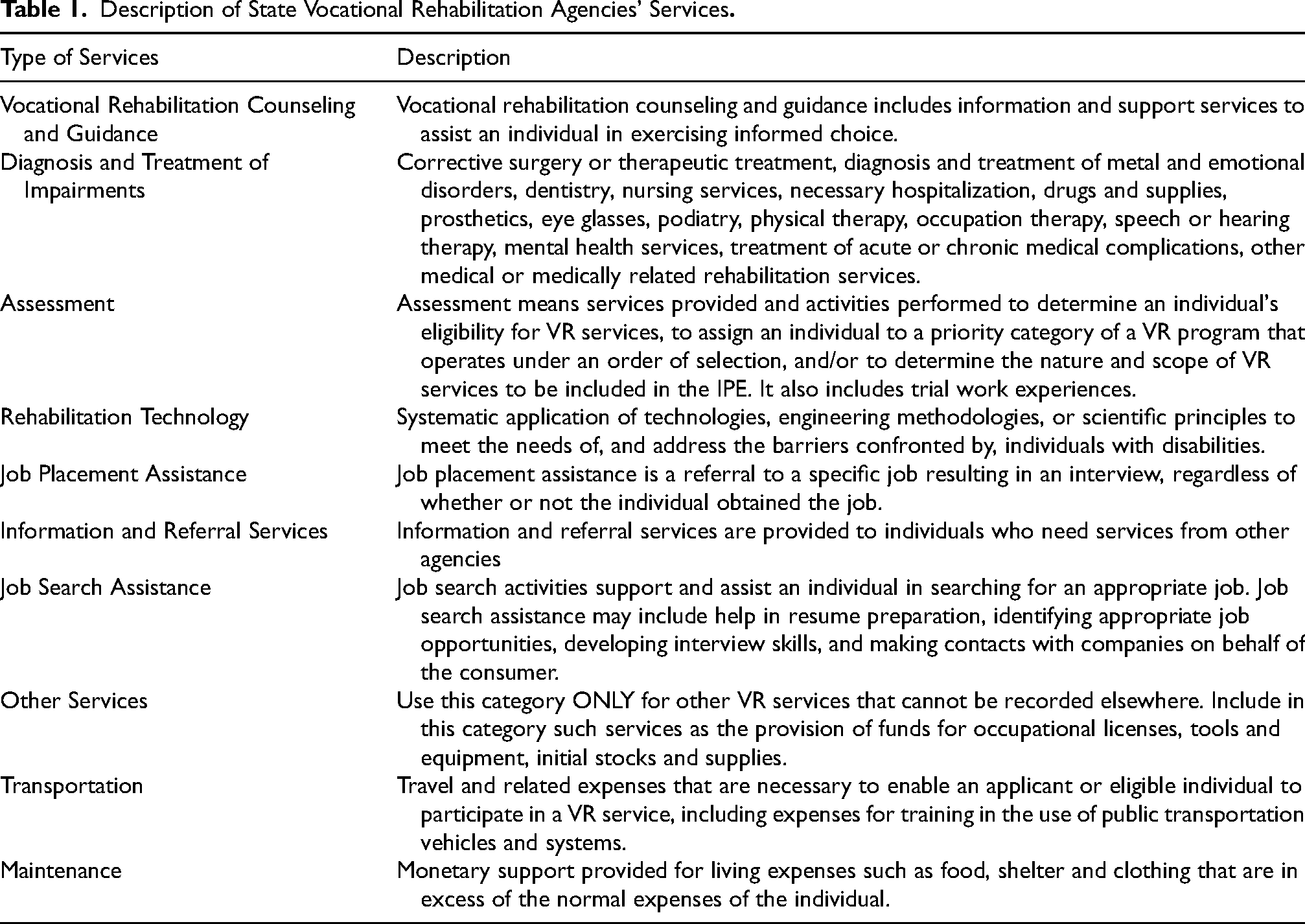
Description of State Vocational Rehabilitation Agencies’ Services
Data Analysis
All analyses were conducted using IBM SPSS Statistics Version 31.0 for Mac. Descriptive statistics were calculated to summarize participant characteristics and VR services use. The primary analysis was sequential logistic regression analysis (SLRA; Hoyt et al., 2008; Wilson & Lorenz, 2015). SLRA examines relationships between predictor variables and a binary outcome by sequentially adding sets of predictors to assess their unique contribution to model fit and explanatory power. In this study, demographic and socioeconomic variables were entered in Step 1, and VR service variables were entered in Step 2. Multicollinearity was assessed using variance inflation factors (VIF) and tolerance values. All VIF values were below 4.0 and all tolerance values exceeded 0.20, indicating no concerns regarding multicollinearity (Hair, 2010).
Results
Descriptive Statistics
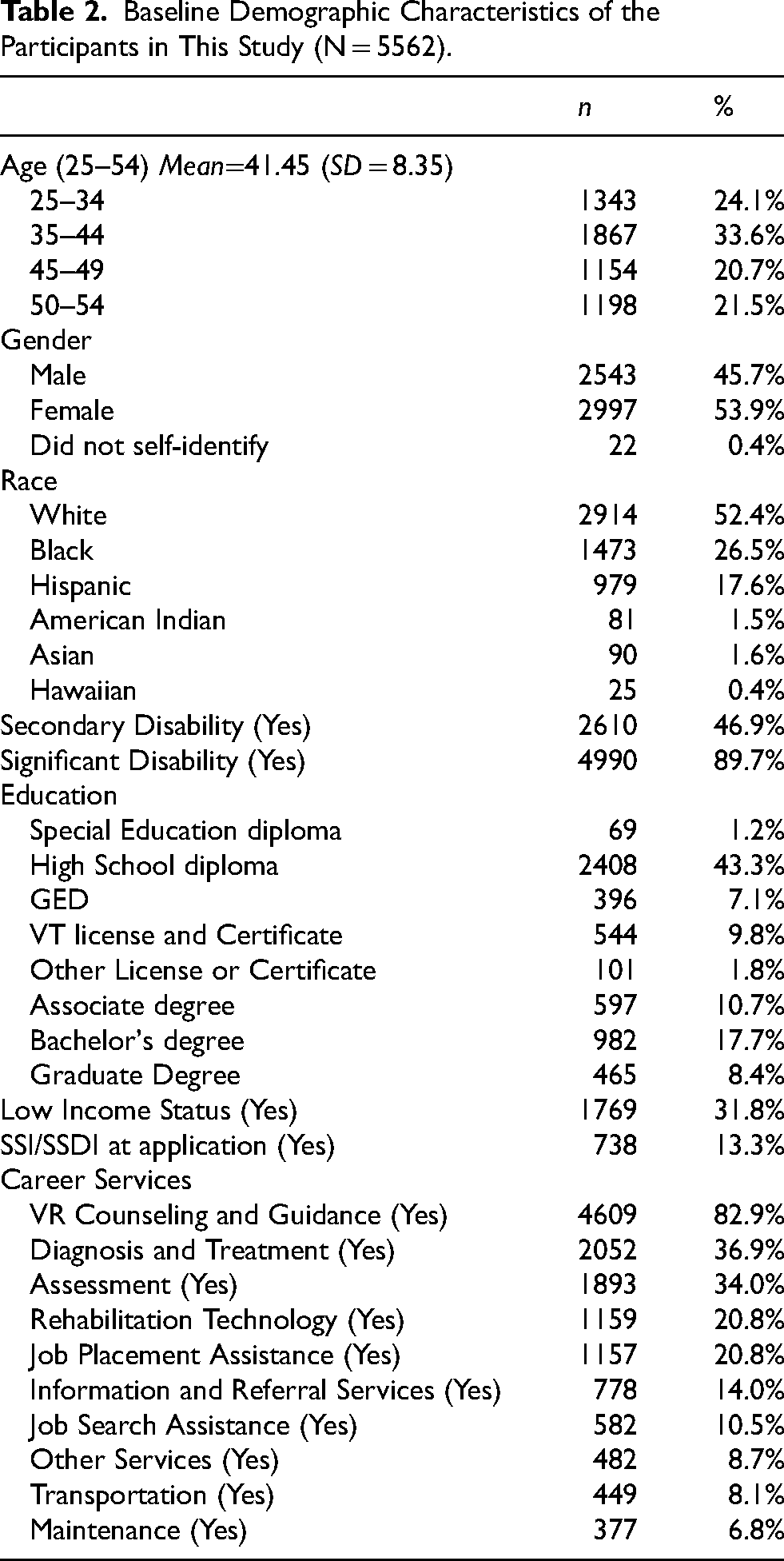
The analytic sample included 5,562 participants with physical disabilities who were employed at baseline (i.e., at IPE development). Although employment at baseline was an inclusion criterion, employment status was reassessed at case closure to examine employment retention. At closure, 73.9% (n = 4,108) of the sample retained employment. The average time between IPE development and case closure was 556 days (approximately 18.3 months; SD = 591 days, or 19.4 months).
Participants ranged in age from 25 to 54 years (M = 41.45, SD = 8.35). The sample was balanced by gender, with 45.7% male (n = 2,543), 53.9% female (n = 2,997), and 0.4% (n = 22) who did not self-identify. Racial and ethnic representation was diverse, with the largest proportion identifying as White (52.4%, n = 2,914), followed by Black (26.5%, n = 1,473), Hispanic (17.6%, n = 979), Asian (1.6%, n = 90), American Indian (1.5%, n = 81), and Native Hawaiian/Pacific Islander (0.4%, n = 25). Nearly half of the sample reported a secondary disability (46.9%, n = 2,610), and a large majority were classified as having a significant disability (89.7%, n = 4,990).
Educational attainment varied across the sample. Approximately 43.3% (n = 2,408) held a high school diploma, 7.1% (n = 396) had a GED, and 9.8% (n = 544) had a vocational or technical license or certificate. Additional categories included 1.8% (n = 101) with other certifications, 1.2% (n = 69) with a special education diploma, 10.7% (n = 597) with an associate degree, 17.7% (n = 982) with a bachelor's degree, and 8.4% (n = 465) with a graduate degree. Socioeconomic factors revealed that nearly one-third of participants were classified as low income at application (31.8%, n = 1,769), and 13.3% (n = 738) were receiving SSI or SSDI benefits at the time of application.
Use of VR services was extensive. The majority of participants received VR counseling and guidance (82.9%, n = 4,609). Other commonly utilized services included diagnosis and treatment (36.9%, n = 2,052), assessment (34.0%, n = 1,893), rehabilitation technology (20.8%, n = 1,159), and job placement assistance (20.8%, n = 1,157). Less frequently reported services included information and referral (14.0%, n = 778), job search assistance (10.5%, n = 582), other services such as occupational licenses or tools (8.7%, n = 482), transportation (8.1%, n = 449), and maintenance support for living expenses (6.8%, n = 377) (Table 2).
Baseline Demographic Characteristics of the Participants in This Study (N = 5562).
Sequential Logistic Regression Analysis
A sequential logistic regression analysis was conducted to examine predictors of job retention among VR participants with physical disabilities. Predictors were entered in two steps: (1) demographic and socioeconomic characteristics, and (2) VR service variables.
Step 1: Demographic and Socioeconomic Characteristics
In the first step, several demographic and socioeconomic factors emerged as significant predictors of employment retention. Postsecondary education was positively associated with employment, with individuals who attained postsecondary education being 29% more likely to retain employment compared to those without postsecondary education (OR = 1.29, 95% CI [1.14, 1.46], p < .001). In contrast, low-income status decreased the likelihood of employment by approximately 23% (OR = 0.77, 95% CI [0.67, 0.87], p < .001). Having a secondary disability and being classified with a significant disability further reduced the odds of employment by 28% (OR = 0.72, 95% CI [0.64, 0.82], p < .001) and 48% (OR = 0.52, 95% CI [0.40, 0.66], p < .001), respectively. Receipt of Social Security benefits at application was also associated with 30% decreased in the odds of employment (OR = 0.70, 95% CI [0.59, 0.83], p < .001). Race, gender, and age group were not significant predictors in this model. Overall, the Step 1 model accounted for a modest but significant portion of the variance in employment outcomes (Nagelkerke R2 = .04).
Step 2: Full Model Including VR Services
When VR service variables were added in the second step, the explanatory power of the model improved (Nagelkerke R2 = .14). Postsecondary education remained a strong positive predictor, with individuals attaining postsecondary education being 35% more likely to retain employment (OR = 1.35, 95% CI [1.19, 1.54], p < .001). Low-income status continued to reduce the odds of job retention by 17% (OR = 0.83, 95% CI [0.72, 0.95], p = .008), secondary disability reduce the odds by 20% (OR = 0.80, 95% CI [0.70, 0.91], p < .001), and significant disability reduce the odds by 52% (OR = 0.48, 95% CI [0.37, 0.62], p < .001). Receipt of SSDI/SSI at application was also associated with lower odds of job retention, decreasing the likelihood by 27% (OR = 0.73, 95% CI [0.61, 0.87], p < .001). Race continued to be significant, with non-White participants showing 14% lower odds of job retention (OR = 0.86, 95% CI [0.75, 0.98], p = .021).
Among VR services, rehabilitation technology emerged as the strongest predictor of job retention. This service, which involves the systematic application of assistive technologies and engineering solutions to address disability-related barriers, increased the odds of job retention by 263% (OR = 3.63, 95% CI [2.96, 4.45], p < .001). Diagnosis and treatment services, including medical care such as physical or occupational therapy, prosthetics, or mental health treatment, also had a powerful impact, increased likelihood of job retention by 164% (OR = 2.64, 95% CI [2.25, 3.09], p < .001). Maintenance services, which provide financial assistance for essential living expenses like food, shelter, or clothing, were similarly beneficial, increased job retention odds by 92% (OR = 1.92, 95% CI [1.43, 2.56], p < .001). In contrast, assessment services, which are used to determine eligibility, assign priority categories, or conduct trial work experiences, were associated with decreased odds of job retention by 27% (OR = 0.73, 95% CI [0.62, 0.84], p < .001), suggesting that individuals requiring more extensive assessments may face additional challenges in achieving successful outcomes. Other VR services, including counseling and guidance, job placement assistance, information and referral, job search support, provision of tools or supplies, and transportation, were not statistically significant in the final model (Table 3).
Sequential Logistic Regression Analysis for Prediction of Employment Outcome at Exit (N = 5562).
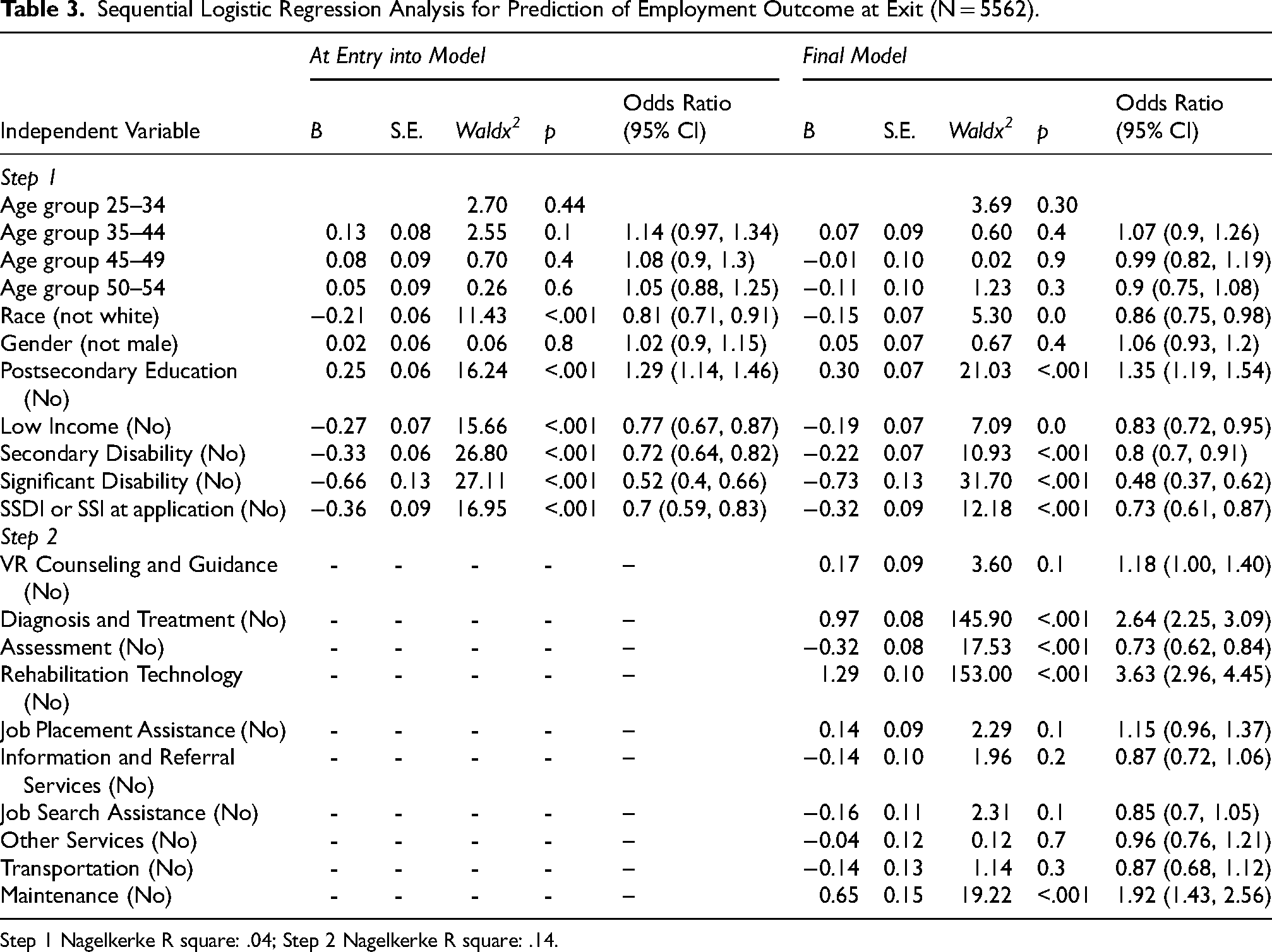
Step 1 Nagelkerke R square: .04; Step 2 Nagelkerke R square: .14.
Discussion
Employment retention for people with physical disabilities remains underexamined in VR research. In the post-pandemic workforce, broader turnover pressures have been magnified for this population by rapid digital transformation and concentration in sectors vulnerable to automation (Mutuma, 2025; Kothiyal, 2025; Iwanaga, Chan, Anderson et al., 2021; Wu, Iwanaga, Grenawalt et al., 2023). Insufficient accommodations, combined with stigma and bias, further elevate risks of job loss and restrict equitable opportunities for retention and advancement (Chan et al., 2021; Wu, Iwanaga, Grenawalt et al., 2023). This study contributes to this goal by identifying demographic, socioeconomic, and VR service factors associated with job retention among individuals with physical disabilities who were already employed at the time of entering VR.
Findings indicated that higher education was associated with a greater likelihood of retaining employment, consistent with earlier evidence that educational attainment enhances job stability and opportunities for advancement among individuals with disabilities (Iwanaga, Chan, Chen et al., 2021). In contrast, low-income status, the presence of secondary disabilities, and receipt of Social Security benefits reduced the odds of retention. These results align with previous studies showing that financial insecurity and multiple health-related challenges can undermine sustained employment (Iwanaga, Chan, Anderson et al., 2021a; Taylor et al., 2022). Racial disparities were also evident, with non-White participants having lower odds of retention, reflecting structural inequities that continue to shape labor market outcomes (Iwanaga, Chan, Bezyak et al., 2024).
The results of this study demonstrate the central role of VR services in supporting job retention for individuals with physical disabilities. Rehabilitation technology was the strongest predictor, with participants who received this service more than three times as likely to retain job. Access to assistive technologies, adaptive equipment, and workplace modifications directly addresses functional barriers, improves productivity, and strengthens worker confidence. This finding is consistent with research showing that accommodations, especially those involving technology, are among the most effective strategies for sustaining employment for workers with physical disabilities (Kim et al., 2020; Iwanaga, Chan, Tansey et al., 2024). Diagnosis and treatment services were also strongly related to positive outcomes. These services, including physical or occupational therapy, prosthetic devices, and pain management, help workers manage chronic or progressive conditions that might otherwise jeopardize their employment. The association suggests that when health-related needs are addressed, workers are better able to maintain steady performance and avoid interruptions that could lead to job loss. Maintenance services were another significant predictor of retention. By providing financial support for basic needs such as housing, food, and clothing, these services reduce immediate stressors that often interfere with stable employment. Many individuals with physical disabilities live with financial insecurity, and even short-term disruptions in income can threaten their ability to remain employed. Maintenance assistance helps create stability, allowing clients to concentrate on work rather than urgent survival needs.
In contrast, assessment services were negatively associated with retention. This result likely reflects the higher complexity of cases among clients who require extensive assessments. Individuals receiving these services may face more severe functional limitations, multiple conditions, or unclear vocational goals, all of which can make sustained employment more difficult to achieve (Kaya et al., 2020). Similar patterns have been reported in other VR studies, where services linked to higher-need groups show negative associations with outcomes not because the services are ineffective, but because they indicate greater employment risk at entry.
Overall, the findings indicate that the VR services most valuable for sustaining employment among people with physical disabilities are those that directly reduce disability-related barriers through rehabilitation technology, support ongoing health management through diagnosis and treatment, and provide stability through maintenance services. Together, these supports address both individual needs and environmental challenges, allowing workers with physical disabilities to maintain their roles as productive employees.
Limitations
Several limitations should be considered when interpreting these findings. First, the analysis relied on secondary data from the RSA-911 case service report. While this dataset provides large sample sizes and national representation, it is limited by the accuracy and completeness of administrative reporting. In addition, the RSA-911 data do not include information on job tenure, job start dates, or the timing of employment transitions. As a result, participants were not followed for equivalent lengths of time, and employment retention in this study reflects employment status at case closure rather than the length or stability of employment over time. Participants also varied in service duration, although longer service duration was associated with lower odds of employment retention, including this variable did not change the significance or direction of the findings. Because service duration may reflect case complexity or level of need rather than the independent effect of time, future studies should consider standardized follow-up periods or survival analytic approaches. Further, key factors such as job quality, workplace culture, and employer accommodations are not captured, which narrows the scope of predictors examined.
Second, employed individuals seeking VR services represent a heterogeneous group, including those seeking to retain current employment and those pursuing new employment opportunities. Because the dataset does not capture the timing or motivation of employment changes or distinguish planned job transitions from job loss, we were unable to isolate subgroups employment-seeking subgroups or conduct sensitivity analyses. Nonetheless, employment status at case closure remains a meaningful outcome in the VR context, as unemployment carries significant economic and health risks regardless of the reason for separation. Differences in VR service receipt across employment-seeking groups may also contribute to observed associations and warrant examination in future research using more detailed employment data.
Third, although sequential logistic regression allowed estimation of the contributions of demographic, socioeconomic, and service variables, the observational design prevents causal inference. For example, the negative association between assessment services and retention likely reflects greater client complexity rather than the effect of the service itself. Last, the study focused on short-term outcomes at case closure. Longitudinal data are needed to determine whether employment is sustained beyond VR services and to capture career trajectories over time. Future research should integrate administrative data with longitudinal surveys and employer records to provide a fuller understanding of factors that influence long-term stability for people with physical disabilities.
Implications
Retaining employees with physical disabilities is a shared responsibility among VR counselors, employers, employees, and policymakers. Our findings underscore the importance of VR services that extend beyond job placement to support sustained employment outcomes.
Conclusion
Employment retention is essential for the health, independence, and economic stability of individuals with physical disabilities, yet they remain at heightened risk of job loss and underemployment. This study found that higher education increased the likelihood of retention, while low-income status, secondary disabilities, and receipt of SSI/SSDI reduced it. Among VR services, rehabilitation technology, diagnosis and treatment, and maintenance were the strongest predictors of sustained employment, underscoring the importance of supports that address health, functional barriers, and financial stability. These findings highlight the need for VR systems to shift from a placement-oriented model toward retention-focused practices that emphasize accessibility, health management, and stabilization supports. In the post-pandemic era, retention requires shared responsibility across multiple stakeholders, with outcomes shaped not only by wages or policies but also by how effectively health, functional, and socioeconomic challenges are addressed.
Footnotes

Ethics Statement
This study involves a secondary analysis of RSA-911 data and, therefore, did not require institutional IRB approval.
Informed Consent
N/A
Funding
The authors disclosed receipt of the following financial support for the research, authorship, and/or publication of this article: The contents of this manuscript were developed under a grant from the National Institute on Disability, Independent Living, and Rehabilitation Research (NIDILRR grant number #90RTEM0014). NIDILRR is a Center within the Administration for Community Living (ACL), Department of Health and Human Services (HHS). The contents of this manuscript do not necessarily represent the policy of NIDILRR, ACL, HHS, and you should not assume endorsement by the Federal Government. In addition, the contents of this publication were developed under grant, H421F240111, from the U.S. Department of Education (Department). The Department does not mandate or prescribe practices, models, or other activities described or discussed in this document. The contents of this manuscript may contain examples of, adaptations of, and links to resources created and maintained by another public or private organization. The Department does not control or guarantee the accuracy, relevance, timeliness, or completeness of this outside information. The content of this manuscript does not necessarily represent the policy of the Department. This publication is not intended to represent the views or policy of or be an endorsement of any views expressed or materials provided by any Federal agency.
Declaration of Conflicting Interests
The authors declared no potential conflicts of interest with respect to the research, authorship, and/or publication of this article.