







Abstract
Innovative instructional methods can help improve student engagement and learning outcomes when teaching difficult subjects, such as statistics. This instructional innovation article illustrates how gamification can be applied in management education to improve students’ learning experience, engagement, and acquisition of knowledge. Our purpose is to demonstrate how gamification is not only a powerful way to build on the use of games and game thinking in our field, but also a versatile application of education technology that could potentially enhance the way management knowledge is taught. Furthermore, it is a low-risk way for management educators to join and contribute to the larger virtual revolution. We document the process of combining the Technology, Pedagogy, and Content Knowledge (TPACK) competency framework and the Mechanics, Dynamics, and Aesthetics (MDA) design framework to create both theoretically and practically motivated gamification designs in a graduate-level statistics class. With student data and feedback, we demonstrate that gamification helped create a positive learning experience, facilitated interactions in the course, and assisted the learning of statistical knowledge. We offer suggestions and concrete examples for interested educators to implement gamification in their courses.
Introduction
Statistical training is an indispensable part of business school curricula, yet 75 to 80% of graduate students experience statistics anxiety (Onwuegbuzie et al., 2000) that negatively affects their learning (Onwuegbuzie & Seaman, 1995). This apprehension toward statistics is more common for students in social science programs than their counterparts in natural sciences, technology, engineering, or math (Cronin et al., 2011). These negative attitudes that students have toward statistics courses lead them to be less engaged and perform poorly (Ashaari et al., 2011; Chen et al., 2019), particularly in statistics courses offered online (Redpath, 2012). When teaching difficult subjects, innovative instructional methods are needed to help reduce anxiety and enhance engagement (Pan & Tang, 2004; Townsend et al., 1998).
Gamification is one of the most recent developments in a long history of games and play in management education (Deterding, 2019). Defined as the application of video game elements in non-game contexts to promote motivation and engagement in learning (Deterding, 2012), gamification is a step beyond the game-based learning that many management educators are accustomed to using. Game-based learning uses games as vessels for learning topical content (Issacs, 2015; Keeler, 2014; S. Schöbel et al., 2021), and student interest usually ends after they have completed the games (Folmar, 2015). In-class experiential exercises (e.g., Trinh, 2022a) and business simulation games (e.g., Gibbons et al., 2022) are examples of game-based learning. In contrast, gamification uses game elements in educational settings, such as points, badges, and leaderboards (Vesa & Harviainen, 2019), to create a playful atmosphere conducive to learning (Deterding, 2012; Landers et al., 2018) and to generate long-lasting motivation and engagement among learners (Folmar, 2015; Simões et al., 2013).
In this article, we illustrate how gamification can be applied in management education to improve students’ learning experience and engagement in order to facilitate the acquisition of knowledge. Our purpose is to demonstrate how gamification is not only a powerful way to build on the strengths of games and game thinking to teach difficult subjects in our field (Trinh, 2022b), but also a versatile application of education technology that could potentially disrupt the way management knowledge is taught. Even though the gamification process illustrates how technologies can disrupt the teaching and learning experience in a good way, we also demonstrate that implementing such a technologies-enabling disruption need not be complicated or even high-tech. We first provide a brief review of the design thinking behind gamification and the benefits of gamification in management education. We then document gamification design principles, attributes, and processes in a graduate-level statistics class. With student data and feedback, we demonstrate that gamification achieved three objectives: creating a positive learning experience for students, encouraging frequent interactions with the instructor and classmates, and facilitating the acquisition of statistical knowledge. Finally, we discuss the implications for management education.
Gamification in Management Education
Gamification: A Design Process, not a Product
The term “gamification” is generally used to describe “the design process used to identify and add game elements to an existing system in a meaningful and impactful way” (Landers, 2019, p. 137). It differs from serious games, defined as games “in which education (in its various forms) is the primary goal, rather than entertainment” (Michael & Chen, 2005, p. 17). This conceptual distinction between serious games and gamification is important for several reasons. First, experiential learning exercises and business simulations commonly used in management education should be categorized as serious games instead of gamification. In this sense, management education has a long history of using games, yet has been slow to adopt gamification. Second, because gamification is inherently a design process, it is most conceptually similar to game design, not to games (Landers et al., 2018). When management educators adopt gamification, they are not creating a game or an activity, but instead are using game elements to alter the learning experience. Third, due to these distinctions, the ways in which gamification could be used in management education differ from how games have been used. While serious games are intended to achieve a learning purpose directly, gamification creates motivational affordances that affect psychological outcomes and indirectly influence behavioral outcomes (Hamari et al., 2014; Landers, 2014). In our example of a statistics course below, the instructor used different avatars to react to students’ accurate and inaccurate answers on quizzes. Students may enjoy seeing the “correct” avatar (a positive psychological reaction) and thus try harder on the quiz (a behavioral outcome), but they are unlikely to learn from the avatars themselves (a gamification attribute). Finally, serious games are whole entities with a beginning, middle, and end, and the lesson intended to be learned must be inclusively presented within the game. Gamification, on the other hand, is composed of separate design elements utilized purposefully (S. Schöbel et al., 2021). Therefore, management educators can pick and choose different game attributes to achieve their desired outcomes.
Benefits of Gamification in Management Education
Although the use of gamification in management education has been limited (Landers et al., 2018), research thus far has shown generally favorable outcomes for students. S. M. Schöbel et al. (2022) used points and badges in an online training program in a business and information systems management course. Using an experimental research design, they found that the use of points and badges led to students having greater feelings of satisfaction and emotional engagement in the learning process, which ultimately led to their enhanced problem-solving skills. Kauppinen and Choudhary (2021) used rewards and Kahoot! in an entrepreneurship education course and found that the presence of a reward offered to the best player heightened students’ motivation to participate. In a similar vein, Huang and Hew (2021) used badges and a leaderboard in an information management course and demonstrated that their gamification design enhanced students’ completion of course assignments and the quality of the work being completed. Dias (2017) used points, badges, challenges, and leaderboards in an operations research/management science course. Students in the gamified courses had higher rates of participation and performance than those in the traditional course formats. These early research results further motivated the lead author to gamify her statistics course.
Integrating Gamification Into Teaching With the Technology, Pedagogy, and Content Knowledge (TPACK) Model
The TPACK framework, originally developed by Mishra and Koehler (2006), describes the kinds of knowledge that teachers need to successfully integrate technology into their teaching (Figure 1). There are three core components needed for effective teaching with technology: content knowledge—knowledge about the subject matter; pedagogical knowledge—knowledge about the processes, practices, and methods of teaching and learning; and technological knowledge—knowledge about information technology via mastery obtained from using them and continually adapting to their changes (Koehler & Mishra, 2009). Because technology can drastically change the way content is delivered, it can also affect what content is taught, and therefore, “integration efforts should be creatively designed or structured for particular subject matter ideas in specific classroom contexts” (Koehler & Mishra, 2009, p. 62).
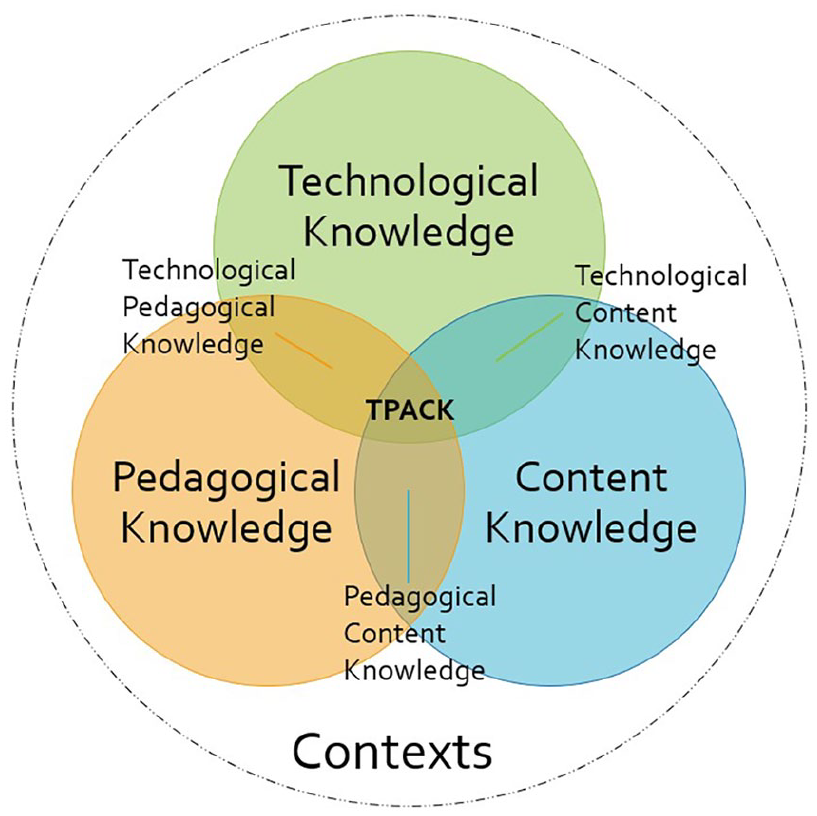
The technology, pedagogy, and content knowledge (TPACK) framework and its knowledge components.
Although a detailed explanation of the TPACK framework is outside of the scope of this article, it is introduced here because it illustrates the interdependence among different bodies of knowledge that an individual or team should possess in order to effectively drive design and implementation decisions when wanting to integrate technology with teaching efforts. In connection with gamification, the TPACK framework is needed in the context of this article for 2 reasons. First, TPACK and gamification have a mutually beneficial relationship with each other regarding instructors’ competencies. Research has suggested that engagement with the TPACK framework improved teachers’ skills in developing and using gamification in their classes (Prabawa, 2017). At the same time, learning how to gamify also improved teachers’ understanding of TPACK and how its components interact (Figg & Jaipal-Jamani, 2015, 2018). Thus, gamification may not only be an innovative use of EdTech, but also a way to help teachers learn to better integrate technology into their curricula. Second, we wish to illustrate how our design decisions when gamifying this statistics course closely followed the TPACK framework. In our description of the process below, we first explain the institutional context, as well as the content knowledge, pedagogical knowledge, and technological knowledge. We then describe the detailed design decisions and gamification attributes as the integration of all of the TPACK components.
The Contexts for the Instructional Innovation
Institutional Context
The lead author designed and gamified a graduate-level introductory statistics course in the Master of Science degree program in Organizational Leadership at a large, public university in the United States. Students in this program were mostly nontraditional students working full-time while concurrently taking graduate-level classes. Many students had never taken a statistics class prior to this course; others last took it in their undergraduate studies many years ago. This course is offered in an asynchronously online, accelerated format using Canvas as the main learning management system (LMS). Students often take this class in the second half of the program after completing several prerequisites. The class is a requirement for students completing the thesis track of the program (approximately 10% of students) and an elective class for students pursuing the applied capstone project track (90%). The duration of the course is 7 to 8 weeks, depending on the semester. The enrollment cap is 50 students per semester.
Content Knowledge
The learning objectives of the course are to help students apply statistical techniques to answer research questions and test hypotheses, engage in critical discussions related to quantitative data analysis, analyze quantitative data using SPSS, communicate results effectively in APA format, and demonstrate the ability to conduct research responsibly and ethically. This course covers topics in univariate and multivariate statistics, from sample size, central tendencies, and principles of null hypothesis testing to t-tests, ANOVAs, correlations, and regression analyses. This course assumes no prior knowledge of statistics nor proficiency in data processing.
Pedagogical Knowledge
The lead author has extensive experience teaching statistics and research methods at the undergraduate, MBA, and PhD levels and has been well-trained in the application of experiential learning theory (Kolb, 1984, 2015). She believes that students learn best when they engage in the learning process holistically and when they have a positive learning experience. Learning from failures and mistakes (Cannon & Edmondson, 2001; Edmondson, 2011; Weinzimmer & Esken, 2017) and social learning (Bandura & Walters, 1977; Vygotsky, 1978) are both very important in this process. In her experience teaching statistics, students tend to not come to class excited about learning a new skill. Instead, they are often apprehensive about the subject and sometimes withdraw from learning at the sight of large data tables or complicated charts. From a pedagogical standpoint, she would like to help students overcome their fear of statistics and develop a positive learning identity (Kolb & Kolb, 2009; Trinh, 2019) with regard to statistics. Therefore, she adopted the humanistic gamification design (Deterding, 2019) to create a hospitable learning space (Kolb & Kolb, 2005; Trinh et al., 2021) for students to learn statistics. Specifically, she had three objectives for gamification: create a positive learning experience, encourage more interactions in the course, and facilitate effective knowledge acquisition—in other words, the “fun” of gamification would overcome the “fear” of statistics. She continually improves the course with student feedback. To date, this course is currently in its seventh offering and has been certified by Quality Matters® as a well-conceived, well-designed, and well-presented online course.
Technological Knowledge
Students enrolled in this course already possess sufficient technological literacy to engage with course materials effectively. They have taken a number of prerequisite courses in the same asynchronously online, accelerated format, and can navigate the online learning environment (e.g., engaging with the LMS, opening videos, taking screenshots, uploading assignments, and joining virtual office hours). Thus, the instructor posted instructions and video tutorials on Canvas to introduce new software to students. The university provided technical support through a 24/7 IT help desk and instructional designers to assist instructors in choosing the appropriate technological tools for their courses. Third-party tools that integrate with Canvas were available to the instructor.
The online delivery format itself presents additional challenges for this statistics class. Prior research has suggested that online learning may be more effective in applied and qualitative than quantitative subjects (Redpath, 2012). This is especially true with upper-level economics and statistics courses (Redpath, 2012), though it is unclear if the lack of success was due to the nature of the content matter or ineffective teaching methods. This is a problem at the heart of the TPACK model that course instructors and designers must solve using their integrated knowledge of technology, pedagogy, and content.
Design Decisions and Gamification Attributes
When designing this gamified course, the instructor adopted Hunicke et al.’s (2004) Mechanics, Dynamics, and Aesthetics (MDA) framework of game design. It is a tool to help designers, researchers, and scholars decompose, understand, and create coherence among the interrelated components of a game or a gamified system. While the framework is named in the causal order of “Mechanics → Dynamics → Aesthetics,” players experience the gamification in the opposite direction (Hunicke et al., 2004). Therefore, the instructor adopted an experience-driven design approach, as opposed to a feature-driven approach, as described below. Although the entire design process was supported by technology, this technologies-enabling disruption utilizes many skills that management educators already possess.
Step One: Decide Gamification Aesthetics
In game design, aesthetics is what makes a game “fun” for players. It describes the socioemotional outcomes that game designers want to evoke in players through the activities in gameplay. Examples of aesthetics include sensation (game as sense-pleasure), fantasy (game as make-believe), narrative (game as drama), challenge (game as obstacle course), fellowship (game as a social framework), discovery (game as uncharted territory), expression (game as self-discovery), and submission (game as a pastime). A social game, such as Charades, evokes the sense of “fun” from fellowship, expression, and challenge, while a role-playing game, such as Final Fantasy, makes it fun through fantasy, narrative, expression, discovery, challenge, and submission (Hunicke et al., 2004).
In this gamified statistics class, the instructor intended to make it fun by using the elements of fantasy, challenge, fellowship, discovery, and expression. Recent research has shown that incorporating fantasy into gamification promotes student learning and the quality of online interaction (Bai et al., 2022). She chose a comic-style textbook: Field’s (2016) An adventure in statistics: The reality enigma. The textbook narrates a musician’s journey through the fantasy land of Elpis: only by learning and applying statistics can he decipher the scientific report that his genius scientist girlfriend left behind after her disappearance. Students can follow the protagonist along this clichéd “save the princess” storyline, collect game items to enrich their own adventures, and defeat zombies and dragons along the way. As they learn new statistical content, unlock new quests, and discover more territories in quantitative research and data analysis, they will also encounter more challenges. Some are in the form of weekly practice exercises to help them understand new concepts and to practice their data analysis skills in Excel and SPSS, while others are tests they must pass to demonstrate competency in the subject. Best yet, students can also develop fellowship by working together in “boss battles”—weekly comprehensive statistical assignments based on real-world data that the entire class can collaborate on. If the class average exceeds 80%, all participating students will earn an extra reward. Students’ adventures in this course are somewhat personalized and thus allow them to strategize, express themselves, and realize their own learning strengths and weaknesses.
Step Two: Outline Gamification Dynamics
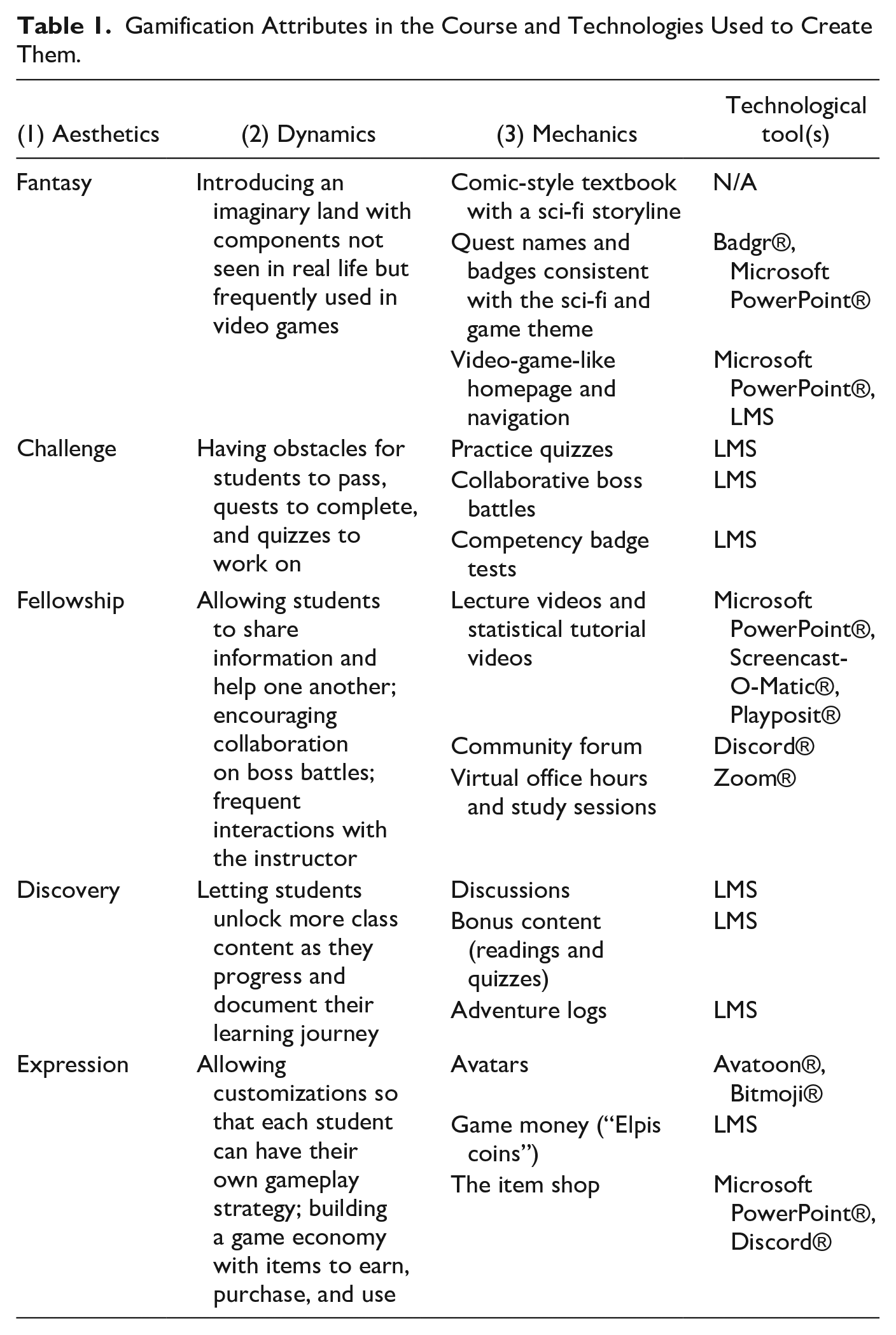
The second component of the MDA framework, dynamics, describes the mechanisms through which the gamification attributes create the desired aesthetic experiences (Hunicke et al., 2004). In this class, the fantasy element was created by introducing an imaginary land (the city of Elpis, presented in the textbook) with elements not seen in real life but frequently used in video games. Challenge was created by having obstacles for students to pass, quests to complete, and quizzes to work on. Fellowship was created by allowing students to share information and help one another, encouraging student collaboration on collective quests, and facilitating frequent interactions with the instructor. Discovery was created by letting students unlock more class content as they progressed and documented their learning journey. Finally, the expression element was created by allowing customizations for each student to have their own gameplay strategy and building a game economy with items to earn, purchase, and use. Table 1 presents the gamification attributes in this class along with the technological tools used to create them.
Gamification Attributes in the Course and Technologies Used to Create Them.
Step Three: Align Gamification Mechanics
Mechanics are components of the game—levels, assets, content, actions, and control mechanisms—presented to players that support overall gameplay dynamics (Hunicke et al., 2004). As demonstrated in Table 1, these attributes were created consistently with the aforementioned aesthetics and dynamics components. More so, these attributes utilize all of the components of TPACK and intertwine with one another to create a unique gameplay experience.
To instill a sense of fantasy, the instructor created competency badges and quest names that played along with the sci-fi textbook, such as “Zombie Wave,” “Defeat the Nightmare Shadow,” or “The Novice Geek Badge Test.” She also built a video-game-like homepage on Canvas with navigation buttons (Figure 2) that signaled that this course would be different from other courses.
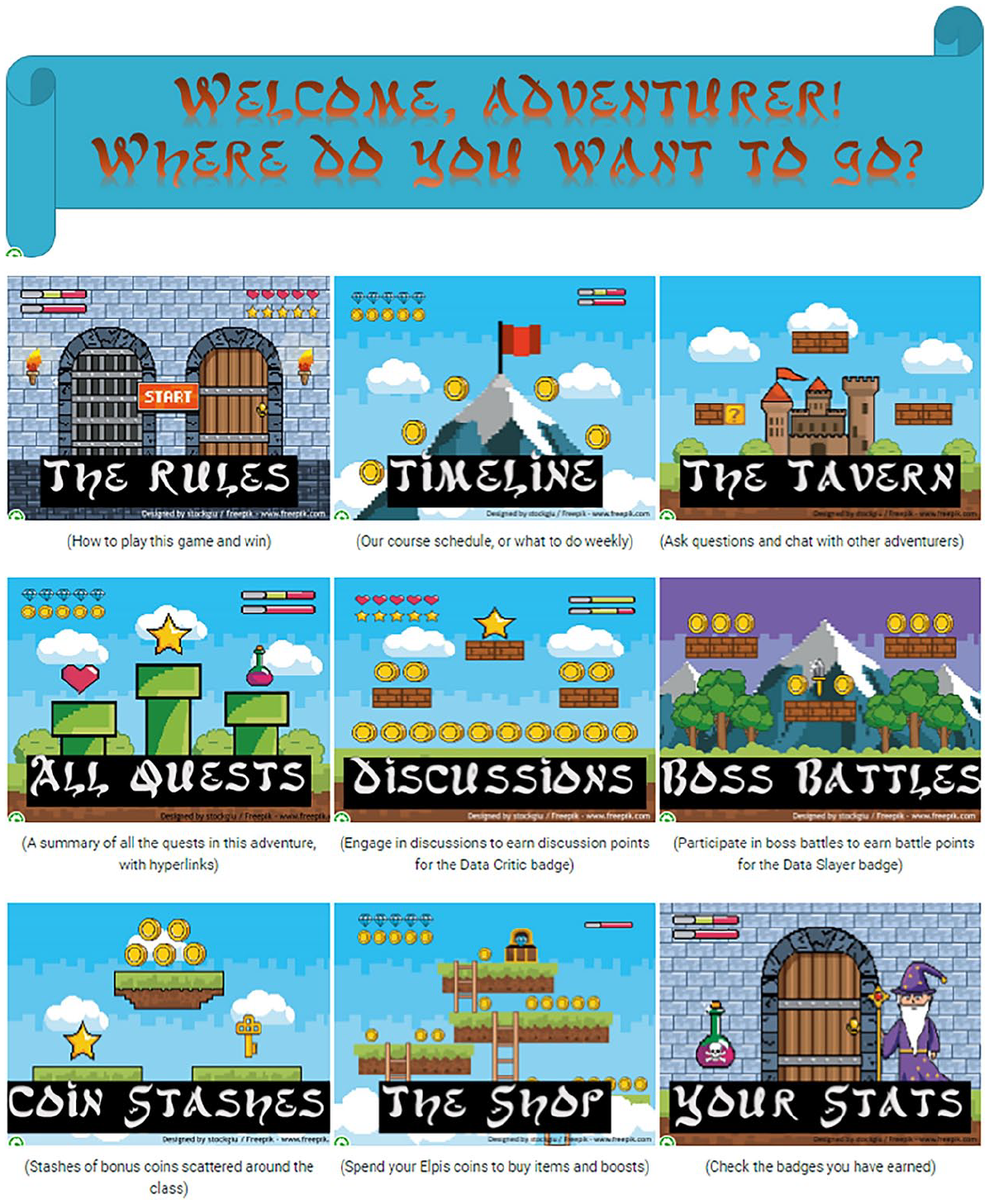
The course homepage.
Challenges are presented when students complete practice quizzes to familiarize themselves with the content of each module and tackle competency badge tests to demonstrate mastery of the topic. The course grade is tied to the number of badges earned during the semester: 10 badges out of 10 will be equivalent to a grade of “A+,” 9 badges will be an “A,” 8 badges will be a “B,” and so on. Out of the 10 badges in the course, 7 are competency badges, which students earn if they pass the corresponding test with a score of 90% or higher. The other three badges can be earned by accumulating enough practice (“1000 Elpis coins”), participating in class discussions (“250 discussion points”), and joining their classmates in defeating the bosses (“300 battle points”). Boss battles are comprehensive quizzes using real-world datasets in which students can collaborate with their classmates. Even though these quizzes require individual submissions, students may work with one another to find the answers; they are only forbidden to give out direct answers. All of these attributes can be set up in the LMS, with images created and edited in Microsoft PowerPoint®. The competency badge system can be integrated into Canvas using Badgr®, a third-party tool that awards a pre-specified badge automatically whenever a student completes a module. Setting the requirements for module completion is done in Canvas.
Regarding fellowship, throughout the course, students are encouraged to interact and assist one another. In addition to boss battle collaborations, they can also exchange comments through the discussion forum on the LMS and the community forum in Discord®. Students are also encouraged to interact with the instructor by asking questions in Discord or attending virtual office hours on Zoom®. The course’s lecture videos and statistical tutorial videos were also built as if the instructor was talking directly to the students. These videos were created using PowerPoint and Screencast-O-Matic®, where Playposit® was used to insert self-check interactive quiz questions in the middle of the lectures. The instructor’s avatar cheers the students on when they answer correctly and gives them a stern look when they get it wrong.
The discovery element was experienced progressively in the course. As students learn more about statistics and unfold more storylines through the city of Elpis, they also get exposed to more statistical content in the form of additional readings, bonus quiz questions, or discussions related to quantitative research. They are encouraged to reflect on their learning journey and what they have learned in weekly adventure logs. These features were set up in the LMS.
Finally, students may express themselves through the use of avatars, which can be created using free tools, such as Avatoon® or Bitmoji®, and through strategizing their gameplay. They earn game money (“Elpis coins”) by completing quests, such as practice quizzes and scavenger hunts. The course has an item shop (Figure 3) containing game items that can be purchased with these coins and used to help their learning journey. For example, students can spend 10 coins to get a hint from the instructor on any question (i.e., use of a Seeker’s Scroll) or spend 600 coins to retake a test (i.e., use of a Portal of Possibilities). At the beginning of the course, all students are given a Starter Pack consisting of a Torch of Truth, an Hourglass of Time, a Potion, a Portal of Possibilities, and 10 Seeker’s Scrolls to start their journeys. These mechanics enable students to play the game and pass the class in many more ways than traditional test-taking classes. It is noteworthy that the instructor used bots—autonomous programs that can interact with systems and users—in Discord, such as Yui, UnbelievaBoat, T4, and Mimu, to facilitate the gamified aspect of the course. She used their built-in commands to set up the entire economy and the Discord server. Students can interact at any time with the bots to check their inventories, buy items, and use items, thus eliminating the need for the instructor to keep track on a separate spreadsheet or to be online 24/7. Some game actions will still require the instructor’s execution, such as giving hints to students or adjusting scores in the grade book.

The item shop.
Evidence of Learning
To recap, the objectives of the gamification of this statistics course were to (1) create a positive learning experience for students and (2) encourage interactions in the course in order to (3) facilitate effective knowledge acquisition. In this section, we present the evidence of learning and answer the research question: How did the gamification design accomplish these objectives (or not)?
Sample
Participants were 30 students (17 females and 13 males, 43.3% White) from three sections of this graduate-level statistics course at a large, public university in the United States. Data were collected from Fall 2021 to Summer 2022, with a 100% participation rate. Students were primarily nontraditional with an average age of 32 years, 80.6% of whom were working full-time. The average work experience for all students was 10.7 years. This project was granted an exemption by the Institutional Review Board at the authors’ university (ID #STUDY00014751). All participants provided written consent to participate in the research. The lead author instructed all three course sections.
Data Collected
We collected students’ weekly journals in which they reflected on their learning journey in the course, in accordance with Hamari et al.’s (2014) call to include more qualitative data about user experience with gamification. Students were instructed to write about anything, including but not limited to, what they learned, what they understood best, what they did not understand, what they liked or did not like, and their future learning plan. To avoid coercion, submission of this weekly journal was optional and students automatically received full credit for submitting it, regardless of what they wrote. On average, we had 5.7 journal entries from students; every student submitted at least two journal entries. Student reflection is an appropriate source of data to show the evidence of learning in this course because reflection has long been recognized in management education as a skill for students to develop (Albert & Grzeda, 2015; Betts, 2004; Hibbert, 2013; Pavlovich et al., 2009) and as a component of self-regulated learning (Zimmerman & Moylan, 2009) and experiential learning (Kolb, 2014; Trinh et al., 2021) as well as a self-assessment of learning (Panadero et al., 2016; Yan & Brown, 2017). We also collected students’ feedback from a mid-course evaluation, which was administered at the end of week 4 in the 7.5-week course. This evaluation asked students to identify what they liked about the course and what should be improved, with the same grading setup as the weekly journal. Twenty-seven students submitted this optional mid-course evaluation (90% response rate). In addition to students’ self-assessment of their learning processes, we also examined test scores and badge achievements as measures of cognitive learning in this course (Sitzmann et al., 2010). Finally, we had permission to use the anonymous course evaluations at the end of the course, which included numerical ratings as well as student comments. Twenty-two students submitted the final course evaluation (73.33% response rate). These response rates are well above the average student response rate in course evaluations in the lead author’s department (41% for 2021 and 34% for 2022), in similar published studies (e.g., Avery et al., 2006), and in recent instructional innovations published in the Journal of Management Education (e.g., D. B. Allen et al., 2022).
Data Analysis
Student feedback data were evaluated and coded separately by the second and third authors, both of whom were not involved in the design or implementation of the course. These two independent coders assessed the data in two ways. First, they coded the weekly journal submissions to assess whether students had a good learning experience in that particular week (0 = No, 1 = Yes). The two coders discussed and resolved any disagreements. We calculated intercoder reliability by performing an analysis of variance binary intraclass correlation coefficients (ICCs) in SPSS (O’Connor & Joffe, 2020). ICCs ranged from 0.698 for week 2 (lowest) to 1.000 for week 7 (highest) (p < .001), indicating substantial agreement between the two coders (O’Connor & Joffe, 2020).
Second, they then coded all student feedback line-by-line to examine whether each of the three intended objectives of using gamification was achieved. They followed Gioia’s methodology (Gioia et al., 2013) by using open and axial coding to construct first-order concepts and then summarizing these concepts into second-order themes, which, in turn, were coalesced into aggregate dimensions to build an iterative data structure (i.e., a “Gioia table”). The lead author reviewed the codes and contributed additional insights if she saw something missing. Table 2 displays the process of student reflection data being distilled into concepts and formed into themes, and ultimately, constructing the aggregate dimensions by which gamification impacted the student learning process. We included students’ quotes in Table 2 to save space in the section below.
Gioia Table Documenting the Emergence of First-Order Concepts and Second-Order Themes.
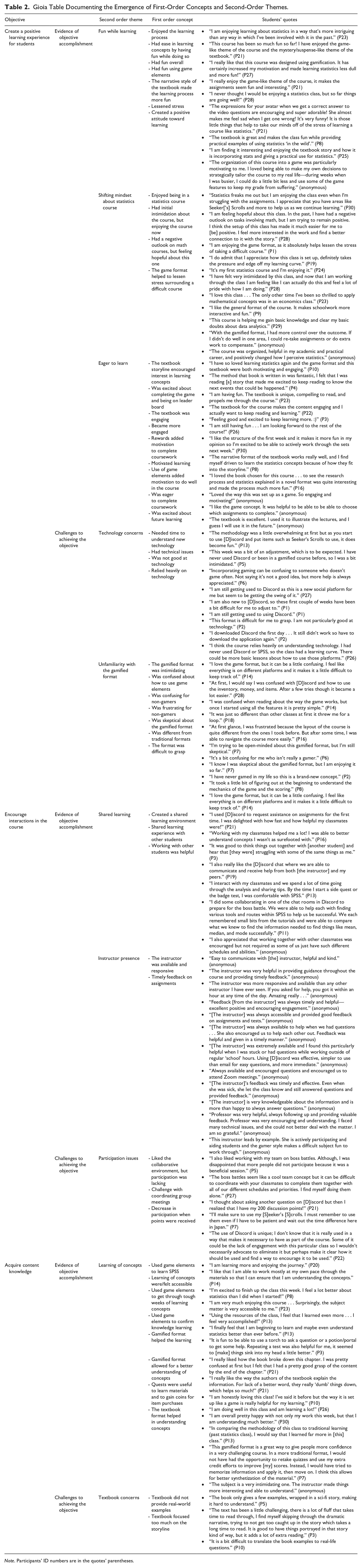
Note. Participants’ ID numbers are in the quotes’ parentheses.
Results
Objective 1: Gamification Creates a Positive Learning Experience
A lot of students commented on how the gamified design provided opportunities to learn while having fun. This positive learning environment helped to reduce the negative feelings or concerns that they had surrounding taking a statistics course. Better yet, students conveyed positive feelings towards statistics from being in this gamified course: I really like that this course was designed using gamification. It has certainly increased my motivation and made learning statistics less dull and more fun! (Participant 27)
The integration of statistics concepts within the textbook’s storyline encouraged students to continue reading and learning. For example, they said: The narrative format of the textbook works really well, and I find myself driven to learn the statistics concepts because of how they fit into the storyline. (Participant 8)
Students also remarked on how they engaged with the instructor’s avatar: The expressions for your avatar when we get a correct answer to the video questions are encouraging and super adorable! She almost makes me feel sad when I get one wrong! It's very funny! It is those little things that help to take our minds off of the stress of learning a course like statistics. (Participant 21)
While creating a positive experience for students, the gamified course design also incited some uncertainty in students regarding the new technologies. Students faced a steep learning curve at the beginning of the course: This week was a bit of an adjustment, which is to be expected. I have never used Discord or been in a gamified course before, so I was a bit intimidated. (Participant 5)
However, with additional time using the new technologies, students felt more at ease.
At first, I would say I was confused with [D]iscord and how to use the inventory, money, and items. After a few tries though it became a lot easier. (Participant 28)
Objective 2: Gamification Encourages Interactions
The use of Discord and “boss battle” assignments facilitated a collaborative learning environment in which students were able to help each other with grasping course concepts: I interact with my classmates and we spend a lot of time going through the analysis and sharing tips. By the time I start a side quest or the badge test, I was comfortable with SPSS. (Participant 13)
Students also enjoyed being able to get help from the instructor quickly: The instructor was more responsive and available than any other instructor I have ever seen. If you asked for help, you got it within an hour at any time of the day. Amazing really . . . (anonymous)
However, the asynchronous format of the course and the fact that students were located in different time zones prevented them from finding meeting times that worked for everyone in the class. As a result, students could not work together as much as they wanted: The boss battles seem like a cool team concept but it can be difficult to coordinate with your classmates to complete them together with all of our different schedules and priorities. I find myself doing them alone. (Participant 27)
One student halted participation when they had earned enough discussion points and therefore no longer had to participate: I thought about asking another question on [D]iscord but then I realized that I have my 200 discussion points! (Participant 21)
Objective 3: Gamification Facilitates Knowledge Acquisition
Overall, students felt that this gamified course helped them learn statistics effectively. They remarked: I am overall pretty happy with not only my work this week, but that I am understanding much better. (Participant 30)
Moreover, students highlighted how this course allowed for greater absorption of content well beyond that of other traditional courses: In comparing the methodology of this class to traditional learning (past statistics class), I would say that I learned far more in [this] class. (Participant 13)
The comic-style textbook also received a lot of compliments. In addition to making the learning process fun for students, it was able to simplify statistics concepts and demonstrate how to apply them to real-world problems: I am finding it interesting and enjoying the textbook story and how it is incorporating stats and giving a practical use for statistics. (Participant 25)
However, not all students appreciated the format of the textbook. A few students commented how the narrative style of the textbook distracted them in their learning process: The book only gives a few examples, wrapped in a sci-fi story, making it hard to understand. (Participant 5)
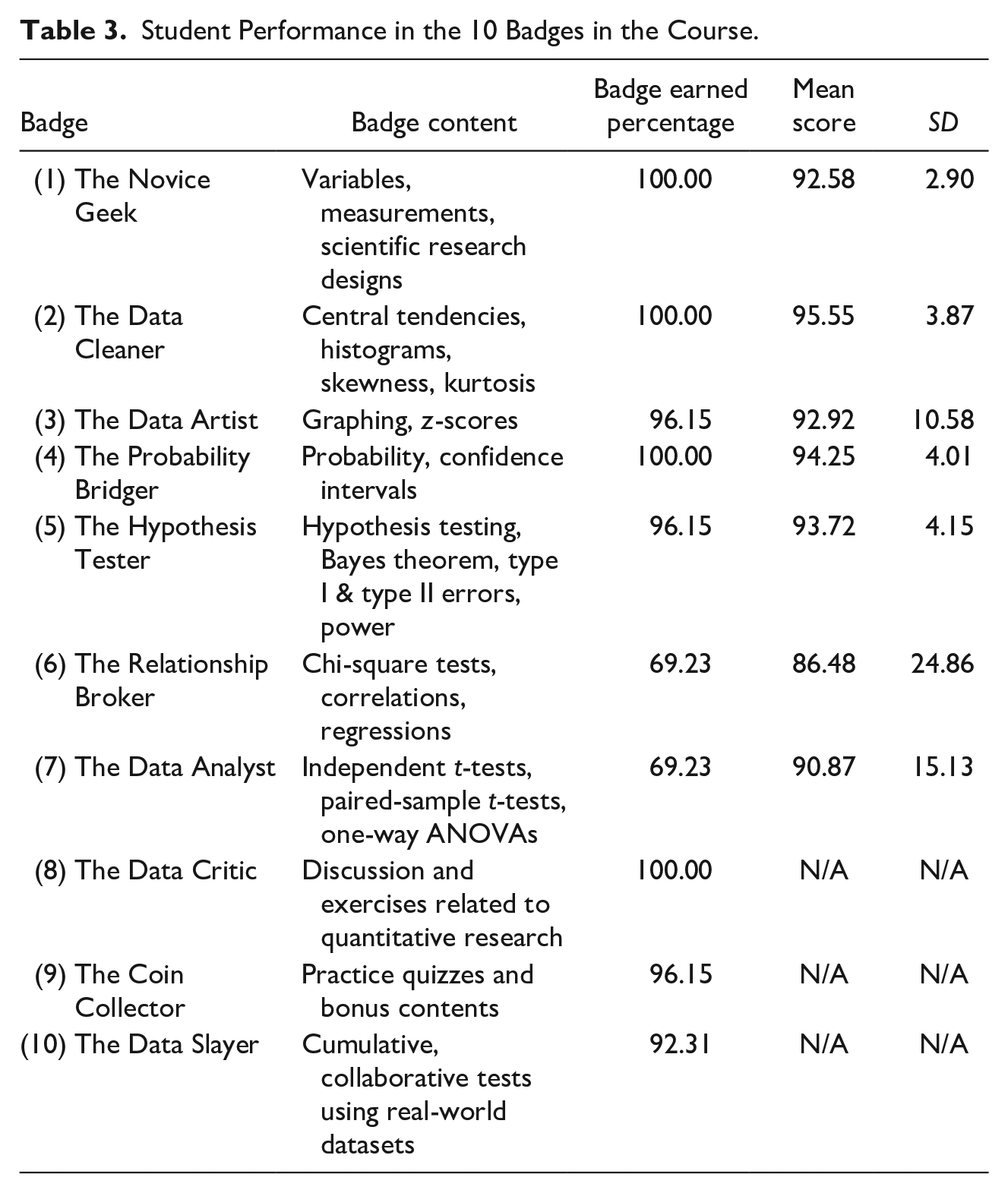
Performance data from the grade book showed that students, on average, achieved the learning objectives of the course (see Table 3).
Student Performance in the 10 Badges in the Course.
Student Course Evaluations
Twenty-two out of 30 students completed course evaluations in the three sections of this course. Table 4 shows the average student ratings and their standard deviations in some key dimensions pertaining to the course. The numeric ratings are well above the departmental and university averages and suggest that this course was exceptional. Combined with the verbatim feedback, we can say that this gamified statistics course was successful and well-received by the students. The gamification not only helped alleviate students’ fear of statistics but also facilitated effective learning processes that allowed them to interact with their classmates, get the support they need, and absorb content materials in a difficult course.
Student Evaluations of the Gamified Statistics Class.
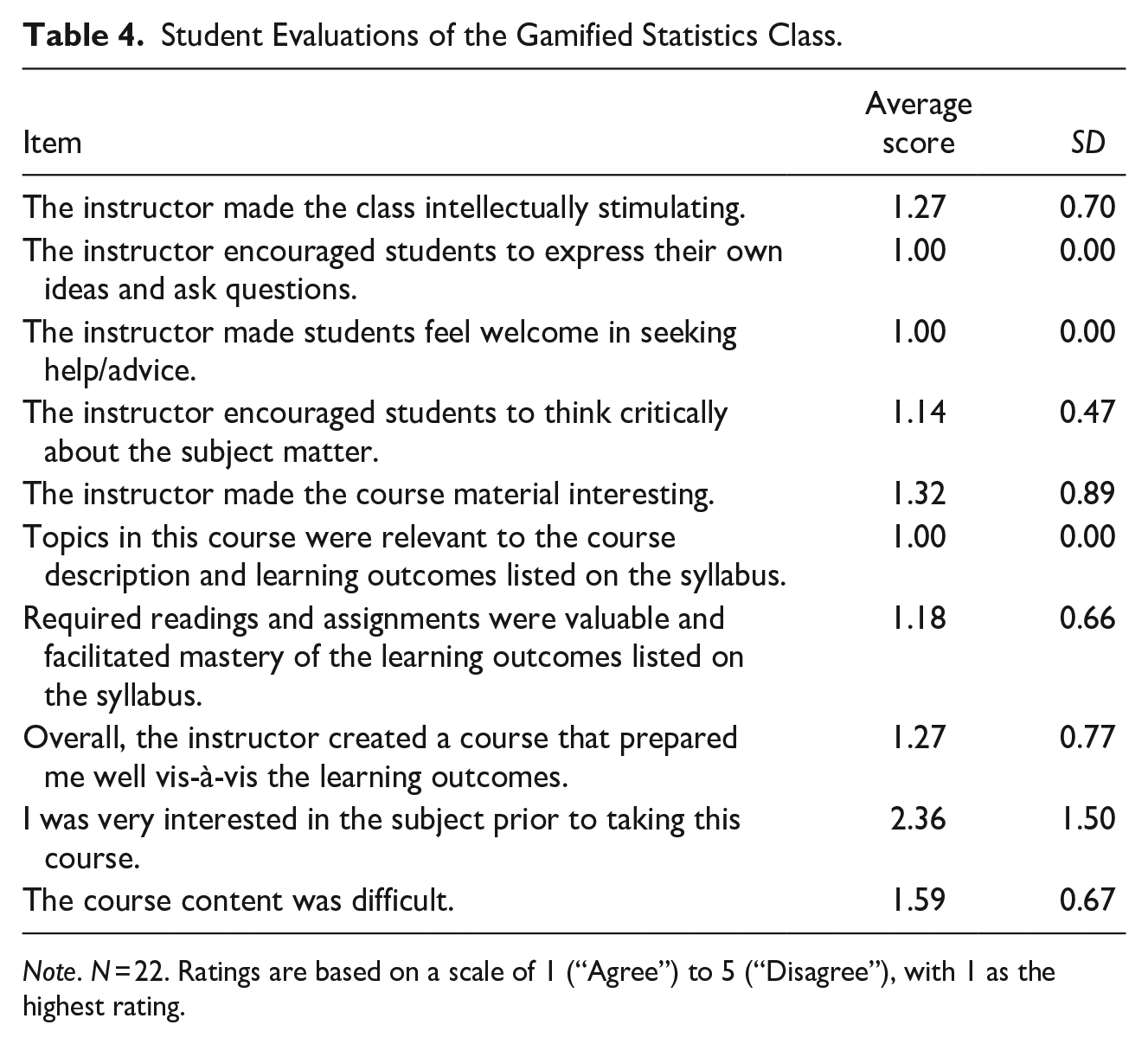
Note. N = 22. Ratings are based on a scale of 1 (“Agree”) to 5 (“Disagree”), with 1 as the highest rating.
Discussion and Implications for Management Educators
Our focus in this article has been to show how gamification can be an effective instructional strategy that incorporates technologies-enabling disruption into management education and enhances the student learning experience. The objectives for gamifying this Master’s level statistics class were to create a positive learning environment, encourage students’ interactions in the course, and enable them to learn course materials more effectively. The course instructor thoughtfully combines the TPACK competency framework and the MDA design framework to derive both theoretically and practically motivated gamification designs, making this article one of the first to document such a process. Data from student performance, reflection, feedback, and evaluation provided positive initial evidence that all of these three objectives were achieved, with some minor caveats. On the one hand, gamification worked well for most course participants: it allowed them to have fun with the course, overcome their fear of statistics, and in some cases, even create a positive impression of statistics. As a result, students delved into the statistics materials, interacted with the instructor and classmates, and learned the content materials effectively.
On the other hand, a gamified course design presents a steep learning curve to students in the beginning. It generally took students in this course one to two weeks to get used to the gamified format because the game attributes can be confusing at first, especially for people who do not play games. Since the course also introduced gamified commands (in Discord) in conjunction with a new software (SPSS), students needed time to understand the different technologies and sometimes got frustrated when they had technical issues. These concerns usually ease in a couple of weeks after students get used to the course design and functions, but future instructors should provide very clear explanations in the course shell and be prepared to answer questions at the beginning of the course. In addition to technological issues, students in this course reported a lack of participation from their classmates in collaborative assignments and challenges in coordinating group meetings across different time zones and busy schedules. While these are common issues in online courses (Redpath, 2012), future designs would need to modify motivational mechanisms to encourage collaboration in courses with it being a learning objective. Finally, the comic-style textbook did not work for everyone: some students were distracted from the storyline and wanted a more straightforward, traditional textbook; others wanted more real-world examples. Future instructors should consider the needs of their students in their textbook selection and prepare other instructional materials to complement the textbook. In our case, the instructor kept the comic-style textbook because more students liked it than disliked it and added real-world examples in her teaching videos and assignments.
From this experience, we offer the following implications for management educators. First, even though gamification may look complicated, it is not very difficult to implement and is, in fact, one example to show how technologies-enabling disruption can be quite easy and low-tech to design. As we have demonstrated, instructors can pick and choose any number of gamification attributes that fit their class and implement them with fairly easy-to-use technological tools such as their own LMS and PowerPoint. Like most other well-designed asynchronous online courses, course design took the greatest effort in our case. In this heavily gamified course, the lead author spent roughly 200 hours building the course from scratch—including creating the course outline, learning about gamification, developing content, such as lectures, tutorials, and quizzes, graphic designing, and pre-testing. However, if interested instructors want to add gamification attributes to an existing course (see examples in Table 5), it could take as little as an hour or two of work. In fact, it is recommended that future instructors start small with their gamification design and slowly add or modify attributes that make the most sense to their courses (Trinh, 2022b).
Examples of How Management Educators Can Use Gamification in Their Courses.
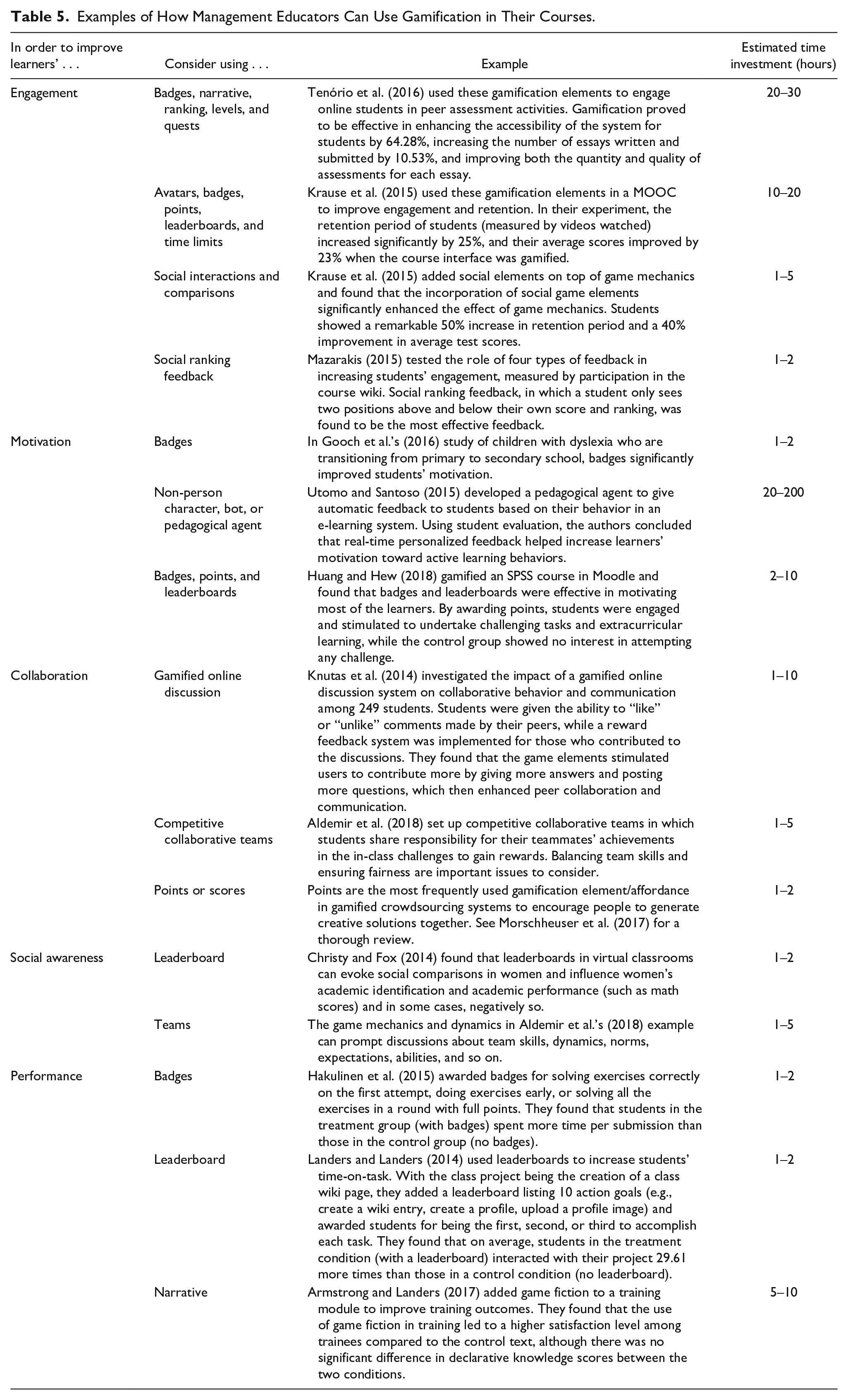
Second, guidance for gamification in higher education is available to any interested educators. The designing framework and process documented in this article, which were both theoretically and practically driven, are just one example of how to gamify. Hamari et al. (2014), as well as Landers (2014), presented the overall principles of the gamification design process: first, identify a targeted behavioral change, then identify psychological changes that would engender that behavioral change, and finally, identify gamification attributes that would create the desired psychological changes. Huang and Hew (2018, 2021) presented a five-step gamification design procedure based on the five motivational needs (i.e., goal, access, challenges, collaboration, and feedback). Most recently, Trinh (2022b) offered a beginner’s 10-step guide to gamify a course. Colombero and Dal Zotto (2022) reviewed how the LMS Moodle has functions to enable gamification. Table 5 features examples of how gamification can be utilized to affect learners’ engagement, motivation, collaboration, social awareness, and performance, following Antonaci et al.’s (2019) comprehensive review. Since gamification is a design process, similar mechanisms can be implemented in management classes to teach any content topic, ranging from leadership, power, communication, teamwork, negotiation, and human resource management to information systems, corporate social responsibility, and data analytics (Wanick & Bui, 2019). Instructors can set up a system with points, badges, and a leaderboard to encourage students to engage in desirable learning behaviors. The awarded behaviors could also vary from individual (e.g., make a discussion post) to collective (e.g., name your team), from collaborative (e.g., give constructive feedback to a classmate) to competitive (e.g., succeed in one negotiation), depending on the class topics and the instructors’ preferences. Management educators should explore the available resources to determine which fits their styles and needs the most.
Despite its strengths, gamification is not without limitations. The steep learning curve that students encounter when they are new to gamification is one source of concern for instructors. This can be mitigated by offering clear instructions, examples, and time for students to experiment with the format. In addition, an overreliance on technology could also be a potential issue. Our example of gamification was purposefully low-tech because the lead author intended it to be accessible to a wide audience, including instructors who do not work at institutions with extensive technological capability or support. However, gamification designs can get indefinitely fancy, thus risking placing a burden on students with low technological literacy. Above all of these, most importantly, we caution future instructors against “fake gamification” (Landers, 2019), or adding game elements without any reason or altering the underlying processes, as that is counterproductive and harmful to the legitimacy of the whole field of gamification. It is important to follow rigorous guidelines, such as the MDA design framework, to avoid gamifying for the sake of gamifying, as it could prevent positive, meaningful experiences through which students could learn and grow and tarnish gamification as an incentive dispenser and manipulator of human behaviors (Deterding, 2019). A more in-depth discourse around this topic can be found in the dialog on gamification led by Vesa and Harviainen (2019).
The exciting work on gamification bears a lot of implications for future research. The relatively small amount of research on gamification in management education means there are still a lot of opportunities in this area. Because gamification is not theorized to directly lead to learning (Landers et al., 2018), future research would need to carefully incorporate experimental conditions to demonstrate its effects on learning outcomes. Research could be done on the separate effects of each gamification attribute or a combination of these attributes, retention of knowledge from a gamified course in comparison to a more traditional course format, the differential effects of content-based versus participation-based assignments and points, and the alignment of gamification mechanisms and learning objectives.
Conclusion
In conclusion, this instructional innovation article contributes to the special issue by showcasing how gamification—as an instructional strategy and a technologies-enabling disruption—could enhance the teaching and learning processes in management education. We share S. J. Allen’s (2020) concern that in general, management educators are unaware, unfamiliar, and underprepared to engage with technology, thus doing a disservice to our students in the fourth industrial revolution. If we cannot keep up with current technologies, utilize them to our advantage, or at least expose students to what they might face in the workplace, then management education is truly going to be on the “chopping block” (S. J. Allen, 2020). In this context, gamification can also be considered a low-risk experiment for management educators and a high-potential intervention to combine technology and experiential learning to create a holistic experience (Trinh & Kolb, 2012) for students virtually, thus allowing management educators to join and contribute to the larger, ongoing virtual revolution. Management educators may be surprised to find out that simple changes, empowered by education technology, can have a huge impact on both what we deliver and how we deliver it. Adding a little fun can go a long way!
Footnotes
Acknowledgements
We would like to thank Ann Magsamen for her research assistance on this article. We thank our writing editors, Terry Christenson and Elizabeth Sheets, for helping us with the flow and coherence. Last but certainly not least, we thank our peers in the Women of Organizational Behavior writing group for their companionship and support during our entire research process.
This article is part of the Special Issue, “From Taylor to Tableau: Technology as a tool, topic, and differentiator in management education.”
Author Contributions
Declaration of Conflicting Interests
The author(s) declared no potential conflicts of interest with respect to the research, authorship, and/or publication of this article.
Funding
The author(s) received no financial support for the research, authorship, and/or publication of this article.
