







Abstract
Keywords
Servant leadership is a leadership approach based on universal values and involves an ethical, practical, and meaningful way to live and lead (Greenleaf, 1977; Keith, 2010). Servant leadership has been adopted around the world as a follower-centered transformational leadership paradigm focusing on identifying and meeting the needs of others (Greenleaf, 1977; Keith, 2010; Liden et al., 2008; Mayer, 2010, Parris & Peachey, 2013; Patterson, 2003; Sendjaya, 2015; Trompenaars & Voerman, 2010; Van Dierendonck & Patterson, 2015). Although servant leadership formally emerged with Greenleaf’s (1977) writings, and despite increased research on the phenomenon since the new millennium, an understanding of servant leadership is still developing as both a philosophy and leadership methodology (Coetzer et al., 2017; Parris & Peachey, 2013; Van Dierendonck, 2011).
Servant leadership is distinguished from other leadership approaches in its philosophical premise that servant-leaders recognize themselves as servants primarily (Greenleaf, 1977). Servant-leaders have an innate desire to help others, and therefore make the conscious decision to lead others to improve their welfare (Greenleaf, 1977). This hallmark definition of servant leadership illustrates two important and unique elements that differentiate it from other leadership methodologies: (a) a sincere interest in serving subordinates; and (b) an authority to lead that is derived from stewardship and the influence of service itself and is not driven by incentive of power or recognition (van Dierendonck & Patterson, 2010). Greenleaf (1977) further delineated a best test assertion of servant leadership, which considered whether those who receive the service are developing, progressing, and improving as people—the best test (Greenleaf, 1977). This premise identified the personal growth of others as a fundamental concern for servant-leaders, and committing to the growth of people, as well as caring for their wellbeing, is recognized as a central tenet of servant leadership (Liden et al., 2008; Patterson, 2003; Sousa & Van Dierendonck, 2017).
Although servant leadership has been examined and measured throughout educational contexts, an exploration of the personal growth phenomenon within servant-leadership in education is worth investigation. This study, involving educational servant-leaders and their perceptions of personal growth, and the ways personal growth is acknowledged and exercised by principals and superintendents, may assist current and aspiring educational servant-leaders to improve and develop their leadership capacity and influence the growth of those they serve to create more effective schools. The purpose of this research was to investigate the servant leadership practices of principals and superintendents to understand the personal growth phenomenon related to servant leadership in educational leadership.
Related Literature
Servant leadership embodies the role of an educational leader as steward, where school administrators orient their duties and responsibilities toward the people in the school and the school itself (Sergiovanni, 2007). The natural servant is a person who primarily identifies as a servant, and secondarily as a leader, and therefore is more likely to serve another’s highest priority needs unlike leaders who are prompted to serve due to the expectation of their hierarchical position (Greenleaf, 1977). This literature review discusses servant leadership in general and servant leadership in educational contexts, as well as emotional intelligence as it intersects with servant leadership.
Servant Leadership
Servant Leadership (SL) is rooted in the foundational writings of Robert Greenleaf (1970), who established leadership theory through the paradigm that a servant-leader identifies primarily as a servant and secondary as a leader, and the result of choices associated with this identity allows servants to act on their primary role. The entire conceptual framework of SL is embodied in this prioritization of serving as an antecedent to leading. To continually strive for desired results, servant-leaders are prompted to ask themselves, ‘"Whom do you serve?”’ and ‘“For what purpose?"’ (SanFacon & Spears, 2011, p. 115). Through the position of servanthood, a SL surrenders his or her personal need for power and in doing so, workers endow such leaders with authority to lead (Greenleaf, 1977).
The concepts of growth and development are central considerations of the servant-leader. In his hallmark characterization of servant leadership’s best test, Greenleaf (1977) stated:
[t]he difference manifests itself in the care taken by the servant-first to make sure that the other people’s highest priority needs are being served. The best test, and difficult to administer, is: Do the served grow as persons? Do they, while being served, become healthier, wiser, freer, more autonomous, more likely themselves to become servants? (p. 27).
Servant leaders believe that “people have an intrinsic value beyond their tangible contributions as workers,” and as a result, “the servant-leader is deeply committed to the personal, professional, and spiritual growth of each and every individual within the institution” (Spears, 1995, p. 15). Servant leadership measures have referred to the personal growth phenomenon as: (a) helping subordinates grow and develop (Laub, 1999; Liden et al., 2008; Page & Wong, 2000); and (b) empowerment (Ehrhart, 2004; Liden et al., 2008; Page & Wong, 2000; Van Dierendonck & Patterson, 2015).
Educational Servant Leadership
As schools are progressing towards more collegial, cooperative, and transformative entities, avenues for organizational change are created through more democratic-oriented leadership approaches such as SL (Crippen, 2005). Stewardship and guidance are principles central to SL, and both are elements that resonate with the continuous improvement aspects of education and schools (Crippen, 2010; Culver, 2009). Educational servant-leaders genuinely care for and value others, which contributes to both individual and organizational wellness (Brumley, 2012). Through recognizing the distinct capabilities of everyone, along with acknowledging their contributions to the schools’ success, educational servant-leaders foster supportive school cultures (Brumley, 2012; Culver, 2009).
A leader who holds the service of their stakeholders as his or her primary role makes decisions that are in the best interests of the organizations’ people and its purpose (Brumley, 2012). By putting the needs of others and the heath of the organization above personal desires, principals as servant-leaders, “release power and become vulnerable, as the organization itself gains power and grows strong and meaningful” (Brumley, 2012, p. 31). Through their virtuous principle-centered behaviors, servant-leaders gain the authority to lead schools, and develop trusting relationships that are reinforced through their propensity to make decisions based on the foundation of values, rather than self-interests (Sergiovanni, 2007). By serving others and placing oneself in the service of ideals, educational servant-leaders acquire a moral authority, which is the source of their strength and influence (Crippen, 2005; Sergiovanni, 1992).
Principal servant-leaders are instrumental in developing and fostering positive school cultures. Through modeling their behaviors for others to emulate, the values of building-level servant-leaders become a norm for staff to follow (Stewart, 2017). By understanding themselves as the lead learner, the principal reflects the most important qualities of education, which are “experiencing, displaying, modeling and celebrating what is hoped and expected that teachers and pupils will do” (Sergiovanni, 2007, p. 51), a notion that demonstrates the collaborative nature of educational servant leadership. Furthermore, school culture hinges on the purpose, shared values, and vision for the school which educational servant leaders use to, “help shape the school as a covenantal community” (Sergiovanni, 2007), p. 51). A shared and agreed upon sense of mission can foster “a culture of collaborative service toward strong, considerate communities” (Crippen, 2005).
Stemming from the foundation of establishing purpose, educational servant-leaders utilize empowerment to enable others to reach the desired goals of the school. By embodying a leader of leader’s mindset, educational servant leaders entrust power to others, creating a liberating effect for both administrators and teachers (Sergiovanni, 2007). Educational servant-leaders are “cognizant of the school’s big picture while empowering its people to be more, do more, and achieve more by providing emotional support, intellectual growth, and physical resources needed for success” (Brumley, 2012, p. 37). Through team building, leadership development, shared decision-making along with an atmosphere of collegiality, servant-leaders build the capacities of teachers (Sergiovanni, 1992). The servant-leaders’ first among equals approach is an empowering force that allows them to exchange power over, for power to; power to is goal-bound, deriving its energy from the achievement of shared vision and purpose, rather than relying on rules and the position of authority (Sergiovanni, 2007, p. 57).
Educational Servant Leadership and Organizational Learning
The practices and approaches of educational servant-leaders consider principles of constitute organizational learning (OL). With educational servant-leaders, knowledge is not regulated to organizational position or hierarchy, but teachers are empowered to have a voice and are supported to become leaders themselves (Culver, 2009). Through envisioning oneself as the leader of leaders, educational servant-leaders build the capacities of teachers and others through team building, leadership development, shared decision making and establishing the value of collegiality (Sergiovanni, 1992). Rather than being guided by organizational processes, educational servant leaders are influenced by servant-inspired values such as, “What are we about? Why? Are students being served? Is the school learning as learning community being served? What are our obligations to this community? And with these questions in mind, how can we best get the job done?” (Sergiovanni, 1992, p. 128–129). As noted by Senge (2000, 2012), the values of educational servant leaders are lived out through learning organization disciplines as personal mastery, shared vision, mental models, team learning, and systems thinking.
Emotional Intelligence
The concept of emotional intelligence (EI) originated in social intelligence theory, which developed throughout the 20th century (Snow, 2010). By hypothesizing about the composition of intelligence, Thorndike (1920, p. 228) described three facets: (a) abstract intelligence, the ability to understand and manage ideas; (b) mechanical intelligence, the ability to understand and manage concrete objects; and (c) social intelligence, the ability to understand and manage people. Social intelligence, as conceptualized by Thorndike (1920), pertains to behaving rationally in interpersonal relationships.
The term emotional intelligence was coined in Salovey and Mayer’s (1990) foundational framework, which described the components of EI and emotion-related skills. In their seminal work, the researchers presented the first definition of EI as: “The subset of social intelligence that involves the ability to monitor one’s own and others' feelings and emotions, to discriminate among them and to use this information to guide one’s thinking and actions” (p. 189). To include a more developed understanding the act of thinking about feelings, Mayer and Salovey (1997) revised their previous framework. In their reconceptualization, EI was redefined as: “The ability to perceive emotions, to access and generate emotions so as to assist thought, to understand emotions and emotional knowledge, and to reflectively regulate emotion so as to promote emotional and intellectual growth” (1997, p. 5). This restructured EI framework was presented through a four-branch model, with four sub-abilities attributed to each branch, resulting in a 16-dimension EI model on a low-to-high-level continuum that ranged from: (a) perception, appraisal, and expression of emotion; (b) emotional facilitation of thinking; (c) understanding and analyzing emotions and employing emotional knowledge; and (d) reflective regulation of emotions to promote emotional and intellectual growth (Mayer & Salovey, 1997, p. 11–14). In addition to formalizing a model of EI, the Mayer-Salovey-Caruso Emotional Intelligence Test (MSCEIT; Mayer, Salovey, & Caruso, 2002) was designed to measure the four-branch model of EI through 141-items across the dimensions of perception of emotion, integration and assimilation of emotion, knowledge about emotions, and management of emotions (Conte, 2005).
According to the Bar-On model, emotional-social intelligence is, “an array of interrelated emotional and social competencies, skills and behaviors that determine how well we understand and express ourselves, understand others and relate with them, and cope with daily demands, challenges and pressures” (Reuven Bar-On.org, 2013, p. 1). The Bar-On model of emotional and social intelligence are comprised of 15 related emotional and social competencies across five overarching interrelated factors of EI: (a) intrapersonal, or self-awareness and self-expression; (b) interpersonal, social awareness and interaction; (c) stress management, or emotional management and control; (d) adaptability or change management; and (e) general mood, or self-motivation (Bar-On, 1997). The Bar-On model hinges on the interrelationship between one’s emotional and social skills and behaviors and is unique to other models of EI at the focus is on reaching optimal levels of human performance, including self-actualization and subjective wellbeing (Bar-On, 2006).
In Goleman’s (1998) model of EI, there are five basic emotional and social competencies are organized by personal skills, or how a person self-manages, and social skills, or how a person manages relationships. Personal skill competencies include: (a) self-awareness, or knowing one’s internal states, preferences, resources, and intuitions; (b) self-regulation, or managing one’s internal impulses and resources; and (c) motivation, or emotional tendencies that guide or facilitate goal attainment) (Goleman, 1998, p.26). The social competencies outlined in Goleman’s (1998) model included empathy, or the awareness of other’s feelings, needs, and concerns, and social skills, or adeptness and inducing desirable responses in others (Goleman, 1998, p. 27) the domains of self-awareness, self-management, social awareness, relationship management.
Servant Leadership and Emotional Intelligence
A review of the servant leadership (SL) as it connects to emotional intelligence (EI) literature are presented in this section. The earliest SL literature to draw distinctly on the construct of EI appeared in an article written by Winston and Hartsfield (2004), who compared concepts of EI by Mayer and Salovey (1997) with the five prominent servant leadership models that existed at that time by Page and Wong (2000), Russell and Gregory Stone (2002), Sendjaya and Sarros (2002), Patterson (2003), and Winston (2003). A theoretical review and discussion of the literature indicated strong ties between SL and three out of the four EI factors: (a) the ability to appraise and express emotion; (b) the use of emotion to enhance cognitive processes and decision-making; and (c) the reflective regulation of emotion (Winston & Hartsfield, 2004). Van Diernconck and Heeren (2006) also considered the interpersonal characteristics of servant leaders by incorporating EI as a construct informing their model. Soon after, (Spencer, 2007) through the reconfiguration of Patterson’s (2003) already-existing SL model, created a theoretical framework utilizing the EI traits of servant leaders. Lastly, Hannay and Fretwell (2010) developed a model of SL and EI that highlights the similarities between the SL traits noted by Russell and Stone (2002) and EI characteristics identified by Goleman (1998), and developed a theoretical model based on trust, integrity, service orientation, empathy, and appreciation.
Parolini (2005) conducted the first empirical study on SL and EI investigating the impact of leaders’ EI on followers’ perceptions of SL behaviors and SL culture. EI was measured using Wong and Law’s (Wong & Law, 2002) 16-item instrument that assessed four dimensions of EI: self-emotion appraisal, others’ emotion appraisal, uses of emotion, and regulation of emotion. Results of the study demonstrated significant but low correlations between supervisors’ emotional appraisal, or the ability to understand emotions and express these emotions naturally), both self-rated (r = .175, p < .05) and other-rated (r = .226, p < .05) with follower perception of SL behavior. Although the findings did not indicate strong correlations, the results demonstrated a relationship between EI and follower perception of SL behaviors.
Van Staden (2007) examined the relationship between the constructs of SL, EI, trust in the immediate supervisor, and meaning in life. To assess EI the later version of the Emotional Intelligence Index (EQI), developed by Rahim and Minors (2003), was utilized, which included five dimensions EI: self-awareness, self-regulation, motivation, empathy, and social skills. A correlation analysis revealed a significant positive relationship (r (158) = .830; p < .01) between managers rated as having a high level of EI along with exhibiting a high level of SL.
Vidic (2007) examined the relationship between EI and the leadership styles of servant, transformational, transactional, and passive/avoidant leaders. EI in this study was measured through the Emotional and Social Competence Inventory (ESCI), which included four dimensions of EI: self-awareness, self-management, social awareness, and relationship management. A canonical correlational analysis demonstrated strong, positive relationships between all four components of EI and SL (r (535) = .39). Analysis also indicated that individuals rated higher on trust/inclusion and service components of SL were positively and strongly related to all 12 subscales of EI.
A mixed-methods study was conducted to understand the relationship between SL, EI, and employee engagement (Portillo, 2015). Participants were given an adapted version of Parolini’s (2005) Servant Leadership Survey, which was based on the SL instruments of Page and Wong (2000) and Dennis and Winston (2003). To measure and assess EQ, The Emotional Intelligence Questionnaire (TEIQue) was used and consisted of 15 subscales organized under the four broad categories of well-being, self-control skills, emotional skills, and social skills (Petrides, 2009). For the qualitative portion of the study, interviews were conducted with four of the 12 leaders who completed the EQ and SL surveys and demonstrated high employee engagement scores. Data analysis suggested that EI was found to be positively and significantly associated with SL (r = .80, p < .01).
The relationship between EI and SL behaviors was investigated via the Servant Leadership Behavior Scale (SLBS) to self-report SL behaviors across six dimensions: voluntary subordination, authentic self, covenantal relationship, responsible morality, transcendent spirituality, and transforming influence Sendjaya et al., 2008). EI was self-assessed by the leaders through the Trait Emotional Intelligence Questionnaire- Short Form (TEIQue-SF), which assessed 15 facets of EI across wellbeing, self-control, emotionality, and sociability (Petrides, 2009). A correlational analysis determined a moderate positive relationship (r = 0.56, p = 0.00) exists between SL and EI.
Conclusion
The literature review highlighted the relationship between educational leadership, servant leadership, and educational servant leadership and emotional intelligence. To enhance the growth of workers and improve the quality of organizations, businesses, and non-profit institutions rely less on autocratic and hierarchical leadership models in favor of relationship-oriented leadership approaches such as servant leadership (Wheatley, 2002). Education is a people-business and an industry founded on the principles of growth and development. Educational servant-leaders are committed to the personal growth of the people they serve. An in-depth study of how such leaders understand personal growth was the purpose of this study.
Method
The research design was a collective case study (Creswell, 2007). The case was bound by the phenomenon of servant leadership, leadership position as public-school superintendents and principals who were nationally recognized for their exemplary leadership or were recommended by experts in the field of servant leadership as well as local leaders, allowing for new insights about educational servant leadership growth-focused practices and beliefs to emerge from various contexts and participants. The following research question guided the study: How do principals and superintendents who identify as servant-leaders understand and facilitate personal growth in the people they serve?
Settings and Participants
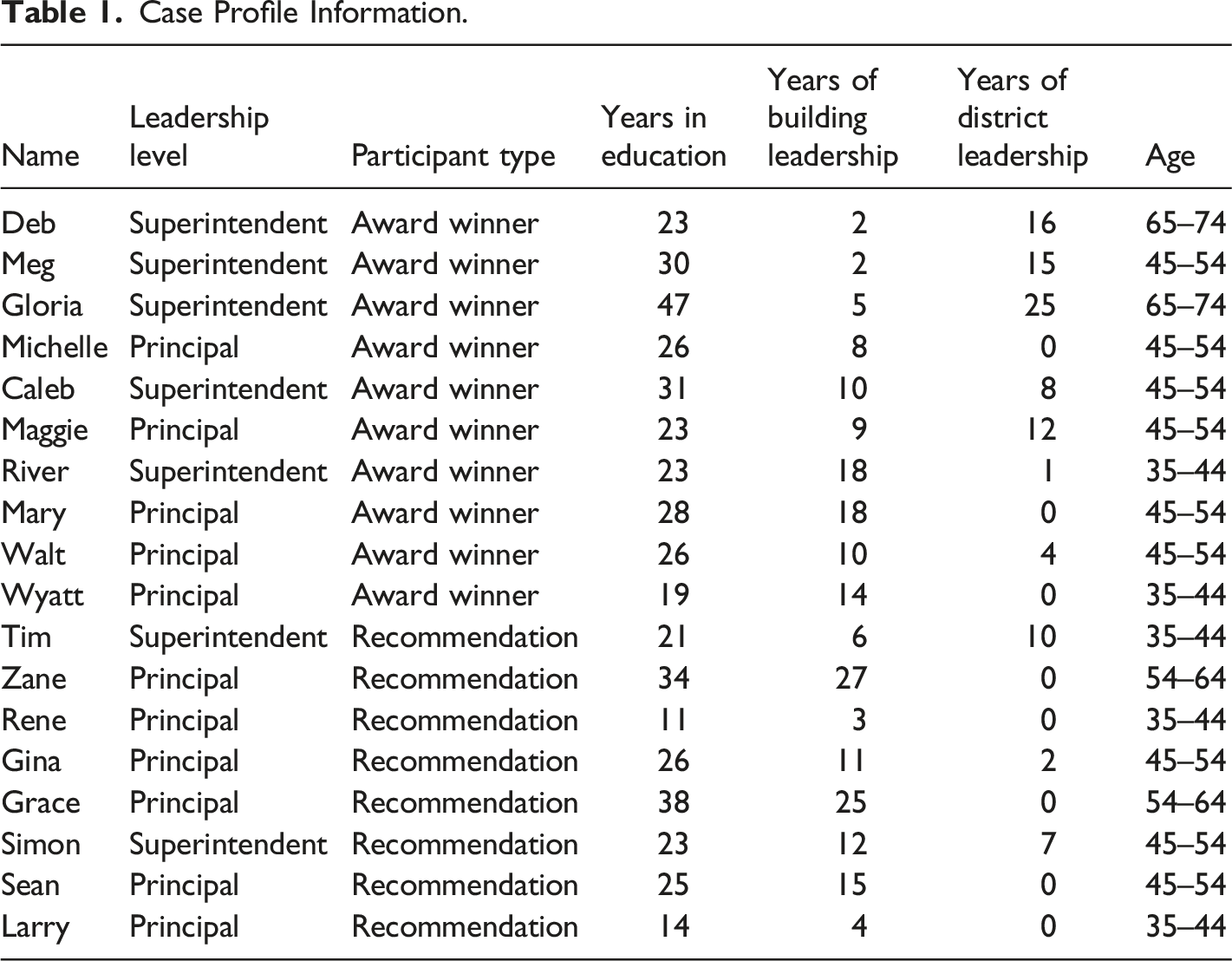
The collective case study design allows for exploration into the phenomenon of servant leadership, consisting of principal and superintendent participants who identified as servant-leaders. Several criteria comprised the sampling frame for Phase 1: (a) building-level leaders were principals at any K-12 level school, while superintendents were the district-level leader in charge of their school district; and (b) participants were prior state winners of the AASA Superintendent of the Year between the years 2015–19, the NASSP Principal of the Year or the NAESP National Distinguished Principal awards between 2014 and 2018. Participants were either nationally recognized for exemplary leadership or were nominated by experts in the field of servant-leadership or local school leaders within proximity of the researcher. Phase 1 sampling includes from 602 potential recipients of the American Association of School Administrators (AASA) Superintendent of the Year, the National Association of Secondary School Principals (NASSP) Principal of the Year, and the National Association of Elementary School Principals (NAESP) National Distinguished Principal awards over the past 5 years. All potential participants were sent an email about the study and a link to complete a researcher-created Servant Leader-Personal Growth (SL-PG) questionnaire through the online SurveyMonkey platform. The instrument contains 17 questions written with the purpose to obtain demographic information, to verify participants’ self-identification as a servant-leader and whether others’ personal growth was important to them, and to indicate their possible participation in the interview portion of the study. Out of the 602 emails containing the SurveyMonkey questionnaire link, 75 prospective participants responded, and 10 were selected for the interview portion of the study for phase 1.
Phase 2 of the research sample followed the same process as Phase 1, but the population was derived from the recommendations of experts in the field of servant leadership as well as local school leaders. Once other-identified as a school-leader, the nominated leaders were sent the SL-GP questionnaire to share demographic information, self-identify as a servant-leader, and indicate their interest in participating in the interview portion of the study. Phase 2 sampling added an additional eight participants to include in the study.
Description of the Case
Case Profile Information.
Instrumentation
Three instruments were used to collect data for the research study. The first instrument was a researcher-created Servant Leader-Personal Growth questionnaire. Participants completed 17 questions regarding demographics, servant-leadership, and the phenomenon of personal growth. The instrument was completed online using the SurveyMonkey platform. The second phase of data collection involved individual semi-structured interviews. For questions one through four, the protocol consists of 10 questions regarding leadership, servant leadership, and the personal growth of others. For interviews five through 18 the interview protocol was revised to consist of 12 questions. Finally, a third instrument was used through the application of a follow-up interview protocol, which consists of seven questions regarding emotional intelligence, adult learning, and organizational learning.
Questionnaire
After providing consent to participate in the SL-PG questionnaire, participants were asked 12 demographic questions consisting of seven multiple-choice and five fill-in items. The demographic questions allowed the researcher to identify personal information about participants’ gender, ethnicity, and age. In addition, the questionnaire obtained drew information about participants’ leadership position including the type of leader (superintendent or principal), total length of time in the field of education, total years of experience as a leader, number of years in their current role, and the size of and geographic location of their school. The questionnaire also inquired about their beliefs regarding serving, their self-identification as a servant-leader, familiarity with servant leadership literature, and their beliefs about the personal growth of others.
Interviews
Participants were asked to volunteer to participate in Phase 2 of the research study in the last question of the SurveyMonkey online survey. The researcher sent an email to each participant who included their contact information, to schedule individual follow-up interviews. A total of 18 participants who consented were interviewed. Individual interviews were conducted virtually through the Zoom video conferencing platform or over the phone. Twelve questions remained consistent between interviews and asked most participants all interview questions. The interview protocol consisted of one general leadership questions (i.e.: If you could summarize your purpose as a leader, what would it be?); four servant leadership questions (i.e.: What does serving others mean to you?”); six questions regarding how the participants understood the personal growth phenomenon (i.e.: How do you help those you serve to feel they are achieving and that their contributions matter?); and one open-ended question (i.e.: Is there anything I missed or didn’t ask you about how you understand personal growth, or about servant leadership?). Each interview lasted between 30 and 45 minutes and was recorded using computer software and were later transcribed using a transcription program.
Participants were asked to take part in a follow-up interview regarding the data findings and themes that presented during the first round of interviews. The follow-up interview protocol was divided across the two finding statements that emerged from the first and cycling coding processes and analysis. The first question asked participants about building relationships and managing emotions; and the second question addressed the organizational learning through five sub-questions related to personal vision, shared vision, mental models, team learning, and systems thinking. Follow-up interviews lasted roughly 30 minutes and were recorded and transcribed.
Data Analysis
The data were analyzed through inductive and deductive analysis processes informed by Miles et al. (2014). Inductive analysis allowed for codes to emerge simultaneously with data analysis and collection (Miles, et al., 2014). First cycle coding was utilized by assigning descriptive codes to segments of interview data (Miles et al., 2014). Second cycle coding or pattern coding was used to develop categories and themes from the emergent cycle one codes (Miles et al., 2014). Categories emerged from a code reduction process; for example, the codes needs-recognizing, needs-addressing, and needs-identifying, were categorized under social awareness. The codes relationship skills, knowing your people, recognizing others’ efforts, coming alongside, collaboration, coach, and the little things were categorized as relationship skills. Deductive analysis was informed by the literature through preexisting conceptual frameworks from emotional intelligence and servant leadership literature (Miles et al., 2014). In the final phase of analysis, two finding statements emerged: 1. Participants used emotional intelligence to facilitate the growth of others; 2. Participants facilitated leadership through organizational learning principles.
Trustworthiness
To establish trustworthiness in this collective case study, the four-dimensional model developed by (Lincoln & Guba, 1985) provided strategies for addressing credibility, transferability, dependability, and confirmability. In addition, Krefting’s (1991) strategies for establishing trustworthiness were used. To establish credibility in this study, reflexivity through field journaling allowed for a reflective process of recognizing researcher bias and enabled the contextualization of new understandings through the analysis of the data (Krefting, 1991). During the follow-up interviews, participants were asked to comment on the finding statements to add clarify their understanding regarding the phenomenon of interest. Lastly, the interviewing process contributed to the credibility of this study through the types and styles of questions that were asked (Krefting, 1991). Applicability of qualitative research is inherently limited across other instances of a phenomena because of the situational uniqueness of groups being studied (Krefting, 1991). To address transferability in this study, rich-thick description and specific criteria were used to identify participants under examination. Demographics allow readers to make decisions about the applicability of the case participants to other settings. A data audit was conducted between the two researchers for dependability (Krefting, 1991). In addition, detailed description of the data collection and analysis process are outlined, demonstrating an evidence trail from initial data collection to final findings.
Findings
Two finding statements emerged from the data analysis. First, participant principals and superintendent servant-leaders utilized emotional intelligence to facilitate the growth of others. Second, participant principal and superintendent servant-leaders facilitated personal growth through organizational learning principles.
Finding Statement One
Participants Used Emotional Intelligence to Facilitate the Growth of Others
Emotional intelligence is “[t]he ability to perceive and express emotion, assimilate emotion in thought, understand and reason with emotion, and regulate emotion in the self and others” (Mayer et al., 2000, p. 532). Emotional intelligence involves both personal and social abilities, including how an individual manages their own emotions and the way relationships are mediated with others (Goleman et al., 2013). This management of the self and others is negotiated through four domains of emotional intelligence: self-awareness, self-management, social awareness, and relationship skills (Goleman et al., 2013). To facilitate the growth process with those they serve, educational servant-leaders utilized a variety of social and personal competencies of emotional intelligence.
Social Competence
All 18 participants demonstrated emotional intelligence through a variety of social competencies. Social competence is comprised of the emotional intelligence domains of social awareness and relationship management and ultimately determines how one manages relationships (Goleman et al., 2013). Social competence is exemplified by a leaders’ aptness to recognize others’ emotional conditions as well as the deeper aspects driving behavior (Bradberry, 2014). Social competence equips leaders with the capacity to advance the quality and kinship of their relationship with others (Bradberry, 2014). Empathy or “social radar,” as Goleman (1998) stated, is the skill that all social competencies are rooted in and are foundationally important for work contexts (p. 137). This theme was represented participants’ manifestation of their social competence: social awareness and organizational awareness.
Social Awareness
All 18 participants utilized the emotional intelligence competency of social awareness to recognize and address the needs of their staff. Social awareness involves the capacity to understand others’ feelings, the perceptivity of ones’ organizational atmosphere, and the ability to respond appropriately to needs with action (Goleman et al., 2013). Through this ability to sense others’ feelings, leaders can respond appropriately across a range of positive and negative emotions displayed by others (Goleman et al., 2013). Servant-leader participants had a heightened awareness of the undercurrents impacting their organization and the people within. For example, Grace described her social awareness through “paying attention to the input that I’m given on a daily basis.” Larry understood the concept of social awareness through an iceberg analogy: “And just everything is just the tip of the iceberg… and anything that is below the surface are all representative of needs that need to be fulfilled and addressed by a leader (I-1). In a similar manner, Sean highlighted his beliefs: “To be a good leader, you have to be a good learner. And part of that learning process is understanding and being empathetic to what others are going through. And then as a result of that, being able to serve those needs to the best of your ability”.
Organizational Awareness
Fourteen of 18 participants demonstrated their utilization of organizational awareness to serve their schools and the individuals within them. Organizational awareness allows leaders to make sense of the interactions and relationships between people within institutions and understand the forces, guiding values, and unspoken rules that influence them (Goleman et al., 2013). Deb projected a sense of organizational awareness when she shared: You can feel in the organization when there’s a tension, or, like, this isn’t the way I want it to look, or this doesn’t feel the way I wanted to feel. So, then you say, okay, where’s the gap? What’s missing?
River exemplified a sense of organizational awareness through his recognition: “We’re in position that there’s no good solutions, but that becomes the challenge; can we figure it out and come up with a solution that works for the benefit of all? Finally, Michelle summarized an understanding of organizational awareness: “The decisions that are made within the building aren’t only about someone’s personal growth and their professional growth, but it’s also about serving the needs of the building.
Personal Competence
All 18 participants demonstrated emotional intelligence through a variety of personal competencies. Personal competence determine how one manages themselves, and is composed of the emotional intelligence domains of self-awareness and self-management (Goleman et al., 2013). Through utilizing personal competence, leaders can recognize their own emotions that drive their behavior (Bradberry, 2014). Being able to manage the self comes down to the choices one makes through regulating emotions, actions, and values (Covey, 2004).
Self-Awareness
Each of the participants utilized the emotional intelligence competency of self-awareness to facilitate their work in schools. Self-aware leaders do not let their emotions control them; rather, they are able regulate their emotions to act in constructive ways (Goleman et al., 2013). Leaders who are emotionally self-aware are in touch with their inner emotional responses and understand how impact their internal states impact job performance (Goleman et al., 2013). Though enabling the recognition of ones’ emotions, self-awareness is the domain of emotional intelligence that allows all others to manifest (Goleman et al., 2013).
Gloria demonstrated self-awareness when she articulated, “You can’t be self-serving. You’re there for others. You have a purpose and you have to guide people to be fulfilled with that in mind” Sean portrayed his self-awareness by recognizing his journey through leadership. “Just sort of feeling my way through leadership and coming to terms of my own understanding of it. And developing my own capacities.” Michelle exhibited self-awareness by recognizing her internal drive to bring about change in her school by collaborating with others. “That’s why I’m inspired to continue to improve on myself for sure and help at our school.” Lastly, Maggie demonstrated self-awareness when she commented on receiving feedback from staff for her own personal reflection. “If there’s a common theme that’s an area that I need to work on.... And that anonymous can be scary sometimes… But that’s the risk you take and you just have to have thick skin.”
Self-Management
All 18 participants utilized the emotional intelligence competency of self-management to facilitate their work with staff and their schools. Self-management enables a leader to manage their inner dispositions to achieve outward objectives (Goleman et al., 2013). Self-management empowers individuals to behave independently of emotions, allowing for the clarity of the mind needed to prevent negative feelings from impeding the materialization of ones’ intentions (Goleman et al., 2013).
River portrayed a sense of self-management when he spoke about shouldering a responsibility for his organization as the leader: At the end of the day, I would fall on the sword for people. And not to be a hero. It’s not about that. It’s about I signed up for the position, and I feel that’s what the position needs to do. You’re not going to skirt the responsibility. You’re going to take responsibility for it and own it.
Sean exemplified self-management through the embodiment of his professional integrity. “We want people to acknowledge failure, including us as leaders. That you know, there are going to be times where we make mistakes, and we need to own them.”
Finding Statement Two
Participants Facilitated Personal Growth Through Organizational Learning Principles
Learning organizations are defined as, “Organizations where people continually expand their capacity to create the results they truly desire, where new and expansive patterns of thinking are nurtured, where collective aspiration is set free, and where people are continually learning to see the whole together” (Senge, 1990, p. 3). Growth in learning organizations involves a variety of disciplines that are interdependent of one another and include personal mastery, shared vision, mental models, team learning, and the integration of all disciplines and systems thinking (Senge, 1990). Participants articulated individual and collective aspirations and recognizing and managing complexity.
Articulating Individual and Collective Aspirations
Fourteen of 18 participants facilitated organizational learning through expressing of individual and collective aspirations. Individual and collective aspirations allow organizations and the people within to sustain an orientation towards the achievement of a desired goal (Senge et al., 2012). Collectively, both personal and shared visions act as catalysts for school improvement; vision empowers learning, equipping individuals with the capability to overcome obstacles while journeying towards overarching goals (Senge et al., 2012). Individual and collective visions incorporate the internal recognition and clarification of one’s beliefs, knowledge, and meaning-making processes with externally interacting with new ways of thinking in concert with others through shared aspirations (Goleman et al., 2013).
Deb made the distinction that affirming individual and collective aspirations goes beyond just a mere statement. “It’s not about coming out with an edict. It’s about engendering that culture and that vision, the direction that we want to go in order to get people there.” Grace articulated a clear message that was inclusive of both her individual desires as well as the aspirations for her collective building: We have to be about all students learning… That sounds very trite… But it forces you to look at how each individual kid learns… That becomes the most crucial thing… And then the challenge becomes, how do you get them there?
Lastly, Simon exemplified the importance of amalgamating individual and collective aspirations when he noted his responsibly to “publicly describe the mission of the organization and then invite people into that mission by describing it and making explicit linkages to the work they do, to how it serves that mission.” Articulating individual and collective aspirations are exemplified through three modes: shared vision, mental models, and systems thinking.
Shared Vision
Twelve of 18 participants utilized organizational learning through the discipline of shared vision. Shared vision creates a common purpose around the collective desired outcomes of the people in an organization (Senge et al., 2012). Shared visions are interwoven into an organizations’ identity through universal guiding principles as well as prevailing strategies and practices (Senge et al., 2012). A common vision ensures continuity between the endeavors of individuals and collective efforts are guided towards increased organizational coherence (Senge, 1990). Wyatt reflected on the importance of a shared vision: The leader has to have a vision for the school, because the decisions that are made within the building aren't only about someone's personal growth and their professional growth, but it's also about serving the needs of the building… You have to have purpose for why you get to that school every day.
Mental Models
All 18 participants utilize mental models to catalyze action within their organizations. Mental models are composed of the paradigms or worldviews of how things work, and consist of the foundational assumptions that are instrumental in influencing behavior (Senge et al., 2012). Mental models can range in complexity from mere generalizations to abstract ideologies, but they all influence one’s actions (Senge, 1990). Wyatt shared his motto that “everybody has a story and no story is the same”, which is a mental model that influences his leadership approach to others and was demonstrated through his reflection: One of the best models to lead people is to get to know who they are as people…. [Through the mental model of knowing her story] I served her better. I think I understood her better. I think our connection is stronger. I think I trust her more. I think she trusts me more.
Michelle retold how the mental model of envisioning others as authentic agents of change involved a paradigm shift that empowered others through recognizing their leadership capacity. “Any one of us [staff and administration]. Any students can step up and say, ‘No, here’s where we need to do in order to do something better, different or whatnot.’ And that just gives voice to everyone else’s leadership.” Deb referenced a mental model that enables her to better understand the home/school partnership when she said, “I believe very strongly that every parent comes with an innate desire for their child to succeed, even when their actions may seem contradictory to that.” This mentality ultimately allowed Deb to consider the deeper question of, “How do you build a relationship through that understanding of common interest in child success? How do you build an understanding that allows you to hear each other?”
Systems Thinking
Sixteen of 18 participants utilized systems thinking to better recognize and manage the complexities of their organization. Rather than conceptualizing problems and goals as isolated events, system thinking provides a dynamic methodology for envisioning organizations as components of larger structures (Senge et al., 2012). Through a systems archetype a leader can consider how their actions impact a variety of stakeholders (Senge et al., 2012). Systems thinking empowers leaders to look beyond isolated events by recognizing changes over time, observing patterns that are influenced through established structures, and considering the deeply held beliefs through which they envision those structures (Senge et al., 2012). Larry portrayed a system-thinking mentality when he reflected on the imagery of an iceberg and the notion of what lies beneath it: When I look at that metaphor I just think of, there's the surface things that we see on a daily basis… But then there are the deeper systemic initiatives and conversations that take a lot more time that lay beneath. So that's often what I tend to connect to.
Grace exhibited the attributes of a systems thinker when she referenced, “Look[ing] at the whole and then begin to make sure that we’ve included all the parts. Michelle noted a systems mindset when she commented on her awareness of the complexity of organizational need. “There’s the needs that are specific to my school that we need to address. And then there’s the things that come up from the bottom up, that teachers bring to our forefront.” River represented a system thinking awareness when he stated: We have to create systems at play for it to then create sustainability… At the end of the year, we'll go back, ‘How did our new system work? Did it get better? Yeah, it got better. Can it get better still? Yes, it can.’…So we also have to assess our own systems on a regular basis.
Discussion and Implications
The purpose of this study was to consider the perceptions of servant-leader superintendents and principals regarding how they understand and facilitate the personal growth of those they serve. The first finding statement was that the methods employed by participant educational servant-leaders to facilitate staff development exhibited the use of emotional intelligence (EI). The present study found that servant-leader participants demonstrated their ability to effectively utilize EI both at the building and district levels. To facilitate the development and growth of others, servant-leader participants demonstrated EI through personal competency and social competency. These emotional skills demonstrated the combination of the internalized (self-awareness and self-management) and externalized (social awareness and relationship building) competencies of EI.
For practicing or aspiring educational servant-leaders both at the district and building levels, this study offers two insights. First, it is advantageous to raise the self-awareness of the motivations and growth areas as well as exercise the emotional self-control to be committed to personally growing others as well as themselves. Second, it is beneficial for educational servant-leaders to recognize the role of socially intelligent leadership practices by empathetically servicing staff needs and employing resonant leadership approaches that foster authentic relationships and catalyze the personal development of others.
Finding one demonstrates the importance for educational servant-leaders to acquire emotionally intelligent skills and exhibits the interconnection between both personal and social dimensions of emotional development. By increasing their own personal and social intelligence, educational servant-leaders can create more resonate organizations capable of stimulating the growth and development of others. This implication is congruent with the notion that emotional intelligence can, in fact, be learned (Goleman, 1998). Further, Goleman et al. (2013) noted the distinct relationship between EI and leadership, and wrote that great leaders are, “made, not born… as they gradually acquire, in the course of their lives and careers, the competencies that make them so effective. The competencies can be learned by any leader, at any point” (p. 123).
A crucial step in developing EI skills is to understand a given leader’s strengths and weaknesses and develop a plan (Goleman et al., 2013), so a recommendation is that educational servant-leaders might institute a regular practice of taking EI self-assessments. Following their self-evaluation an educational servant-leader might create an action plan for developing strategic EI competencies they can improve on. Additionally, servant-leaders may institute a process that will allow them to attain regular feedback from staff regarding both their leadership practices and their EI behaviors. The feedback received may indicate that a particular type of leadership approach may be useful to employ.
The second finding was that educational servant-leaders involved in this study use the disciplines of a learning organization through efforts to facilitate their leadership. The present study found that servant-leader participants used principles of OL to develop the collective capacities of their schools and the capacity of people within them. Servant leader participants exhibited the principles of OL through articulating individual and collective aspirations (personal mastery and shared vision) and managing and recognizing complexity (systems thinking).
In the present study, through their ability to recognize patterns using questioning, dialogue was used as a tool for participants to develop new ideas and develop greater organizational awareness. This effort demonstrated participants’ ability to become a “leader as teacher” by helping others consistent with Senge (1990). By recognizing the interconnection of the school environment and utilizing strategic systemic structures, participants employed architectural methods, to draw distinct connections between the parts of the organization and the whole. This enabled participant servant-leaders to not only see different levels of reality themselves, but also to share that perspective with others.
An implication is that educational servant-leaders might implement systems thinking strategies to both inform their own awareness and equip others to attain a better understanding throughout the organization. Leaders as teachers can utilize theories, methods, and tools to help or teach others to gain more holistic view of the system at large. Structural tools that educational servant-leaders can use to help others, as well as equip themselves to think more systemically, include Senge’s (Senge, 1993) dialogue, systems archetypes, and causal loop diagrams.
Connections Between Finding One and Two
Through the duality of reconciling the paradox between the individual and the collective, educational servant-leaders can embrace the greatest points of influence on the growth and development of people and their institutions. For educational servant-leaders, the personal growth phenomenon presents itself as a polarity to leverage rather than a problem to solve (Johnson & Seidler, 2015). Polarities are interdependent opposites that are ongoing, chronic, unavoidable and unsolvable (Johnson, 1993). Due to their paradoxical interdependency, one element in a polarity cannot be addressed without considering the other (Johnson, 1993).
An implication for servant leaders using EI is that educational servant-leaders must become instrumental in helping the individual and the group identify their emotional reality. Consistent with Goleman et al. (2013), leaders cannot provide high-quality leadership if their staff’s typical behaviors prohibit them from doing so, and they cannot change the team’s typical behaviors unless they maintain the assumption that the main task of the leader is to work with people’s emotions. Practically, for servant leaders, this means navigating this emotionally driven process to homogenize the individual and collective paradox. They must help both the individual and the collective encounter the felt but unseen emotional context that surrounds them. Therefore, to create emotional resonance educational servant-leaders should adopt methods and practices that consider the individual and collective polarity to address both organizational climate and culture.
Limitations
Several limitations to this collective case study should be noted. First, the study involves the self-identification of servant-leaders, so no specific servant leadership instrumentation was used to verify the participants’ embodied servant leadership qualities. Additionally, although steps were taken to identify a purposeful sample for the study, the population of participants includes the recommendations of others and is limited geographically to the northeast of the United States for those recommendations. Lastly, since this research is exploratory rather than explanatory, larger generalizations should not be inferred from the results of this study. Findings are contextual and specific to the reader.
Conclusion
The current research study investigates the perceptions of educational servant-leader principals and superintendents regarding the personal growth of those they serve. The findings demonstrated that to facilitate the growth of others’ educational servant-leaders utilized emotional intelligence; and facilitated their leadership through the principles of a learning organization. Finally, this study suggests that servant-leader principals and superintendents can leverage the polarity between the individual and the collective to facilitate the growth of others. The educational servant-leader can discern the most optimal actions to encourage the development of those they serve through individual and collective approaches that incorporate understanding emotions and applying principles of organizational learning. Servant-leaders can elevate the ability of organization to serve the individuals within them, by providing growth opportunities through generative developmental processes. The strategic actions of the educational servant-leaders can create the conditions for which these forces can manifest and through leveraging the individual and the collective, perhaps educational servant-leaders and their intuitions, can serve others in a greater capacity.
Footnotes
Declaration of Conflicting Interests
The author(s) declared no potential conflicts of interest with respect to the research, authorship, and/or publication of this article.
Funding
The author(s) received no financial support for the research, authorship, and/or publication of this article.
