







Abstract
PK-12 leaders use gender- and sexuality-inclusivity professional development (IPD) as a tool to improve the school climate for LGBTQ+ students, but IPD programs vary widely in their scope, breadth, duration, instructional approach, and content. In this paper, we present the IPD conceptual framework, which proposes a sustained, intensive, and expansive approach to PD can influence student outcomes through changes in educators’ beliefs, attitudes, skills, and knowledge concerning gender and sexuality. Using a large, Midwestern school district as a case study, we examine characteristics of schools participating in an intensive IPD program and whether participation contributed to school disciplinary rates. Using 2018-2019 administrative and program data from the district and state department of instruction, we: 1) describe demographic and program differences between IPD and non-IPD schools, and 2) evaluate the contribution of IPD on disciplinary outcomes using OLS regression analysis controlling for selection characteristics. Our analysis reveals less racial and ethnically-diverse and better financially-resourced schools participate in the IPD program. The regression analysis suggests schools participating in IPD have lower suspension rates, assault rates, and endangering behavior rates compared to non-IPD schools. Several studies indicate supportive leaders and IPD improves school climates for LGBTQ+ students; however, quantitative descriptions of how IPD may influence student behavior remain scarce. Policymakers and educational leaders may be interested in this study’s results suggesting a decrease in disciplinary actions among schools committed to IPD with core components of the IPD framework.
Keywords
Introduction
In a year when more states have enacted anti-trans, anti-queer state laws than ever before in the United States (205 by April of 2021; HRC 2021), PK-12 leaders need evidence about effective practices that could support lesbian, gay, bisexual, transgender, queer, and other gender-expansive students (LGBTQ+). All students deserve to feel safe in schools, supported by educators, and achieve their academic goals. Yet, the institutionalization of the gender binary in schools creates cis-privileged and heterosexist systems, which contributes to disparities between LGBTQ + students and their straight and cisgender counterparts in academic achievement (Poteat et al., 2013), school safety (Toomey et al., 2010, 2012), and, ultimately, the school-to-prison pipeline (Marksamer, 2008; Snapp & Russell, 2016) and the school-to-coffin pipeline (Wozolek et al., 2017).
One of several ways to counter moves to further institutionalize homophobia and transphobia in schools could be to focus on changing educators’ practices. Educational research suggests school-based supports (supportive staff, inclusive curricula, presence of gender and sexuality alliances (GSAs), and anti-bullying or harassment policies) can improve school climates for LGBTQ + students and, subsequently, the academic and behavioral outcomes of LGBTQ + youth (Day et al., 2019; Murchison et al., 2021; Poteat et al., 2013). However, similar quantitative evaluations of gender and sexuality inclusivity professional development (IPD) remain scarce.
Gender and sexuality inclusivity professional development (IPD) is one of several tools school leaders use to change school climate. Several researchers have suggested IPD plays an important role in shifting educators’ beliefs (Case & Meier, 2014; Greytak et al., 2013; Greytak & Kosciw, 2010; Payne & Smith, 2018; Staley & Leonardi, 2020), attitudes about gender and sexuality, knowledge, and skills. In doing so, IPD subsequently can improve LGBTQ + students’ sense of belonging in schools (Szalacha, 2003) and decrease rates of victimization (Poteat et al., 2019). Still, other educational scholars have questioned whether IPD contributes to sustained structural changes or sustained changes in educational leaders’ and teachers’ practices (Martino et al., 2020; Payne & Smith, 2018). Administrators’ personal beliefs, values, and experiences with LGBTQ + people contribute to their willingness to learn about inclusion and implement policies’ protections (Hernandez & Fraynd, 2014; Marshall & Hernandez, 2013).Leaders are more likely to participate in IPD when it is framed as an important element in improving school climate and achievement goals (Capper, 2018; Payne & Smith, 2018). Several scholars note changes in educators’ beliefs and practices after IPD; yet, it is unclear whether IPD can provoke significant changes to complex, more distal student outcomes, such as discipline rates, and, if so, under what conditions. Contributing to the difficulty of measuring IPD programs’ effects on educators’ and students’ behaviors, the scale, scope, and intensity of IPD programs vary widely.
Using a modified version of Desimone’s professional development conceptual framework (2009; shown in Figure 1), this study examines elementary students’ disciplinary outcomes after the implementation of an intensive IPD program that required several of the core features of professional development described in Desimone’s framework. These core features include: 1) content focus, 2) duration, 3) active learning, 4) collective participation, and 5) coherence (Desimone, 2009). We first review the literature on how school climates contribute to the social relationships and discipline of LGBTQ + students. We then discuss the role administration and teachers play in improving the school climate and discipline of LGBTQ + students. Next, we explain why IPD incorporating the core features of professional development highlighted in the conceptual framework shown in Figure 1 can strengthen that relationship. After reviewing the literature and IPD conceptual framework, we explain the IPD case study and methods. In this intensive IPD program in a large, Midwestern school district, school leaders had to commit to several training sessions, curriculum development, leadership teams, and modifications to the school mission for at least one year. Thus the IPD program aligned with some of the core features of PD outlined in the IPD conceptual framework.
Our study of elementary schools then addresses two main research goals. First, we describe which types of elementary schools participated in this intensive, elective IPD program by comparing demographics and financial resources for IPD and non-IPD schools. Second, we examine whether participation in the IPD program contributed to decreased disciplinary rates in IPD schools. For this study aim, we conducted a cross-sectional OLS regression analysis of the most recent year of delivery (2018-2019), when 39% of the elementary schools participated in the program, and controlled for school characteristics associated with selection into the IPD program. While the cross-sectional design does not allow us to make any causal claims, using multivariate regression analysis allows us to test if there is an association between IPD delivery and disciplinary rates while controlling for school demographic differences. To conclude, we discuss the potential of IPD to facilitate supportive school climates and learning for adults and youth in schools, especially IPD programs that embed the core components of the IPD conceptual framework.
Background
LGBTQ + Student Learning in Poor School Climates
Despite several nationwide efforts to curb gender-based bullying, such as the Trevor Project’s “It Gets Better” campaign, and wider acceptance of LGBTQ + people (Flores et al., 2017; Gallup, Inc, 2021; Pew Research Center, 2016), the number of LGBTQ + students bullied in school remains high (Kosciw et al., 2020). While LGBTQ + youth flourish in many schools, LGBTQ + students still face persistent victimization in schools overall (Gordon et al., 2018; Poteat et al., 2019). More than eighty percent of LGBTQ + students (86%) report they have experienced harassment or assault at school, and more than half (59.1%) report they felt unsafe at school because of their sexual orientation (Kosciw et al., 2020). One-fifth of LGBTQ + students indicate they changed school because they felt unsafe.
These social experiences may have academic repercussions. When students with marginalized identities encounter hostile environments, they experience physical stress (McQuillan et al., 2021; Hatzenbuehler et al., 2013; Meyer, 1995), which impedes their ability to learn (Hammond, 2014). LGBTQ + students who report higher bullying levels also indicate they miss more school, have lower GPAs, higher rates of depression, more discipline at school, and lower academic aspirations. This bullying does not only come from students’ peers. Two-thirds of LGBTQ + students indicate educators and staff also make derogatory comments based on gender, and less than one-fifth report staff intervene when LGBTQ + students report bullying behavior among their peers. The gender- and sexuality-based bullying that negatively impacts LGBTQ + students’ learning also creates a poorer learning environment for all students. Gender-policing limits the identity development of cisgender and heterosexual students alike. Conversely, inclusive schools can create space for identity development (Hernandez et al., 2020), reduce bullying behaviors (Thapa et al., 2013), and improve student attendance, discipline, and academic achievement (Cohen et al., 2009).
LGBTQ + Students and School Discipline
Being absent from school can subsequently lead to academic decline, pushing students out of schools and into the criminal justice system (Mallett, 2015; Nicholson-Crotty et al., 2009; Snapp et al., 2015). In addition to avoiding school because of gender- and sexuality-based bullying, the over-policing of gender in schools contributes to the school-to-prison pipeline for LGBTQ+ and students of color (Marksamer, 2008; Snapp & Russell, 2016). LGBTQ + students encounter disproportionate disciplinary actions from school administrators and teachers, which increases the number of students who receive in-school suspensions, out-of-school suspensions, and expulsions (Snapp et al., 2015). Students who skip, due to fear and avoidance of bullying, or miss school, because of disciplinary actions, do not engage with instructional content (Birkett et al., 2014; Fabelo et al., 2011; Lacoe & Steinberg, 2019; Losen et al., 2014; Skiba & Losen, 2016). School leaders play an important role in disrupting this pushout by identifying and interrupting gender-based bullying by students and adults in schools.
Supportive Educators’ Role in Improving LGBTQ + Students’ Social Relationships
School cultures that value diversity and support students with marginalized identities create positive climates that enhance all students’ abilities to thrive. Administrators set the foundation for positive school cultures by establishing learning and diversity and inclusion goals for the school, and then by selecting the appropriate professional development and curriculum to modify educators’ skills, knowledge, beliefs, and attitudes to implement these goals (Capper, 2018; Capper et al., 2006; Theoharis, 2007). Yet, one in five LGBTQ students (22.5%) report school administration is not supportive of LGBTQ + students (Kosciw et al., 2020).
Educators play an essential role in supporting more positive social interactions, improving learning, and decreasing disciplinary rates. LGBTQ + students experience better school climates when teachers intervene in bias-based bullying and harassment (Kosciw et al., 2020). Yet, a number of studies suggest educators inconsistently intervene and often indirectly punish gender-expansive students when they do try to intervene (Meyer, 2008; Snapp et al., 2015). Whether educators intervene depends, in part, on how much training they have received, their self-efficacy (Poteat et al., 2019), and whether they believe their administration will support teachers and staff who do intervene in bias-based bullying. The alignment of administrators, teachers, and staff who build inclusive classrooms allows students to feel more comfortable to engage in learning - and can even mitigate the effects of poor school climates on LGBTQ + students’ educational and behavioral outcomes.
Supportive Educators’ Role in Improving LGBTQ + Students’ Learning and Discipline
The importance of supportive school leaders, teachers, and staff on student learning and discipline is also well-established. LGBTQ + students with more supportive staff at their school reported higher levels of school belonging, self-esteem, and lower levels of depression (Kosciw et al., 2020). Supportive staff has been positively associated with LGBTQ + students’ sense of safety and negatively associated with absenteeism and victimization (Kosciw et al., 2020; McGuire et al., 2010; Watson et al., 2021). Students with supportive school staff even have reported better distal outcomes that influence learning, such as less alcohol use, compared to LGBTQ + students who report that adults in their school are not supportive (Watson et al., 2021). These socio-emotional factors contribute to better learning environments for LGBTQ + students. LGBTQ + students with more supportive staff and mentors have higher school engagement, educational aspirations, GPA’s, and rates of high school graduation (Drevon et al., 2016; Kosciw et al., 2013, 2020; Seelman et al., 2015).
Similarly, educators’ beliefs and knowledge about LGBTQ + students influence school discipline. Educators enforce discipline policies based on beliefs about culturally appropriate behavior (Diamond & Lewis, 2019; Ispa-Landa, 2017; Losen et al., 2014; Poteat et al., 2016), resulting in the over-policing of students with historically-marginalized identities. Exclusionary discipline practices – such as in-school suspensions, out-of-school suspensions, and expulsions - negatively impacts students of color and LGBTQ + students’ when educators’ mistake students’ gender expression (i.e., use of language, appearance, voice volume, social interactions) as defiant (Ispa-Landa, 2013; Snapp et al., 2015). Because of this heightened scrutiny of gendered behavior, students are unsure if and when their expression will result in punishment and whether or not teachers will intervene in bias-based bullying, inhibiting their learning. Conversely, student learning can be enhanced when students trust the adults in their school will intervene in direct bullying and provide a safe, supportive environment to explore different aspects of their identity.
Inclusivity Professional Development as a Mechanism to Improving School Social Dynamics, Learning, and Discipline
No single strategy will accomplish the work of changing the gendered school policies, procedures, and practices in American schools, but IPD represents one tool that may shift the beliefs, attitudes, knowledge, and skills of key adults involved in schools. Changing educators’ beliefs, attitudes, knowledge, and practices through professional development can then mediate students’ outcomes (Borko, 2004; Darling-Hammond et al., 2017; Desimone, 2009). School leaders and teachers set behavioral expectations and facilitate many in-school student interactions; yet, educators report they either lack the necessary training or want more training to create inclusive schools for LGBTQ + students (Dragowski et al., 2016; Swanson & Gettinger, 2016). In a survey of secondary teachers conducted by the LGBTQ + advocacy group GLSEN, only one-third reported receiving professional development on diversity, LGB issues, and transgender issues (Kosciw et al., 2018). Despite many educators expressing a need for IPD on gender and sexuality issues, few educators receive this in-service training.
PK-12 administrators responsible for selecting professional development might not understand the importance of IPD concerning gender and sexuality. While some educational leadership instructors do discuss gender and sexuality in individual courses, O’Malley and Capper (2014) found these topics have not been integrated into educational leadership programs either. Like many the curriculum in educational leadership programs, many PK-12 leaders don’t see gender and sexual diversity as part of their diversity and inclusion mission. In an evaluation of an IPD program in New England, Payne and Smith (2018) found many administrators did not believe there were enough LGBTQ + families in their school to warrant the resources and did not see gender- and sexual-diversity as falling under their inclusion and diversity goals. Payne and Smith identified resistance among school leaders to commit to IPD trainings, even when educators in their school believed teachers would benefit from it.
Several studies indicate school supports can improve school climates for LGBTQ + students (Day et al., 2019; Kosciw et al., 2013, 2020; McGuire et al., 2010; Poteat et al., 2013; Seelman et al., 2015), which is linked to students’ academic and health outcomes. However, quantitative evaluations of the relationships between gender- and sexuality-inclusivity-professional development (IPD) and students’ school experiences and outcomes remain scarce, especially studies exploring distal student outcomes such as student disciplinary actions. Further, not all IPD programs are equal, and the design of IPD likely matters in both the impact on educators and students. Finally, scholars have widely focused on student outcomes for middle and high school students. Far fewer studies examine student outcomes in elementary schools. This study examines elementary students’ disciplinary outcomes after the implementation of an intensive IPD program that shares several of the core features of effective professional development (Desimone, 2009).
Conceptual Framework
Effective Features of Inclusivity Professional Development
The IPD program evaluated in this study uses a conceptual framework similar to many effective content professional development programs focusing on content delivery, active learning, coherence, duration, and collective participation (Blank & Alas, 2009; Desimone, 2009; Garet et al., 2001). We adapt Desimone’s professional development conceptual framework (2009; shown in Figure 1) to highlight how elements of effective content-focused professional development may apply to IPD and, consequently, contribute to changes in school disciplinary rates (see Fig. 1). Previous reviews and metanalyses of rigorous PD studies suggest that PD can significantly improve student achievement (Blank & Alas, 2009; Van Veen et al., 2012; Yoon et al., 2007). PD studies that demonstrate a positive link between PD and improved student outcomes share the following program features: content-focused, utilizes active learning, engages participants in collaboration, models effective practice, supplies coaching, provides time for feedback and reflection (Blank & Alas, 2009; Darling-Hammond et al., 2017; Desimone, 2009; Van Veen et al., 2012). While content-specific instructional PD has been shown to effectively influence student outcomes under specific conditions (Darling-Hammond et al., 2017), the scope, scale, and format of professional development trainings have been a significant predictor of change (Anand & Winters, 2008).
Schools that successfully implement change ensure that educators work centers on professional learning (Hirsch, 2019; Jensen et al., 2016). High-performing schools link professional learning to district goals, develop teacher expertise and leadership capacities, articulate a clear evaluation and accountability system, and designate time for educators to engage in professional learning (Jensen et al., 2016; Van Veen et al., 2012). In many ways, the failure of IPD to initiate change in existing IPD studies concerning gender and sexuality can be understood through the modified IPD conceptual framework (Figure 1). The IPD program in our study meets all of the aforementioned best practices except for content-focused; rather, the scope of the IPD program addresses teachers’ beliefs, attitudes, knowledge, skills concerning gender and sexuality regardless of the content area.
Inclusivity Professional Development Shift Educators Beliefs and Practices
Creating inclusive environments for LGBTQ + students requires educators to change their behaviors and redefine their deeply held beliefs of gender and sexuality. IPD has been associated with greater involvement in LGBT-supportive practices, such as intervening in gender-based bullying (Espelage et al., 2014; Swanson & Gettinger, 2016), providing individual students with support (GLSEN 2016), and using an LGBTQ + -inclusive curriculum. Similarly, educators’ improved self-efficacy influences their likelihood to intervene in LGBTQ + bias-based bullying (Greytak & Kosciw, 2010). Interview studies (Mangin, 2019; Payne & Smith, 2011) and at least one quantitative evaluation with pre-/post-IPD survey data (Greytak et al., 2013) suggest that IPD can change educators’ beliefs about gender. Once trained, over 95% of educators report IPD is useful and relevant (McQuillan & Leininger, 2021). These studies suggest IPD can at least raise awareness about LGBTQ + students and why schools need gender reforms, which could be an important step towards more equitable practices (Hanssmann, 2012).
Scale and Scope of Inclusivity Professional Development Matters
When IPD programs discuss gender and sexuality in schools, numerous educational scholars have noted that existing IPD programs fail to move educators beyond frames of safety and risk towards sustained, deeper structural reforms (Mayo & Blackburn, 2019; Sadowski, 2020; Smith & Payne, 2016). These critiques of IPD also speak to the range of IPD trainings available, especially IPD programs that do not meet the criteria described in the conceptual framework. For example, Smith and Payne (2016) found that educators’ attempts to integrate transgender students into schools reified the heteronormative structure, and Martino et al. (2020) argued that school leaders use inclusive practices for individual transgender students to resist further structural changes to cisnormative systems. Staley and Leonardi (2020) propose the overarching approach to content learning needs to shift towards conversations of oppression, power, and the self with a greater focus on active learning that prepares teachers to “disrupt normativity.” Preparing teachers to disrupt normativity includes providing active learning opportunities. Rather than passively listening to a lecture on gender and sexuality in schools, active learning involves opportunities for reflection and to practice changing instruction, discipline, and social interactions. This can include role-playing, planning new lessons, journaling, small group discussions, or on-going professional learning communities. These aspects of professional development align with prominent approaches to building equity-focused professional learning communities (Carter Andrews & Richmond, 2019; Cochran-Smith, 2011).
Several studies also point to the ineffectiveness of IPD trainings that are not part of a broader, sustained organizational effort, which speaks to the coherence of the IPD goals across organizational structures and duration of the IPD delivery across time. A longitudinal analysis of 30 years of corporate diversity efforts revealed IPD alone was among the least effective measures companies took to increase workforce diversity (Kalev et al., 2006). Similarly, evaluations of a one-hour, online diversity training indicated diversity training could decrease support for marginalized groups (Chang et al., 2019), and a meta-analysis of the influence of inclusivity training in the workplace suggested IPD had virtually no impact on behaviors and attitudes (Bezrukova et al., 2016). However, in Bezrukova’s study, participants did learn more about marginalized groups and discrimination. The effect of this change was even greater when IPD is part of sustained diversity strategies across time and stakeholders. Integrated, sustained efforts to build collective participation by reaching multiple stakeholders have had limited success in changing workplace climates (Anand & Winters, 2008; Bezrukova et al., 2016), but it is clear that short, passive trainings that remain disconnected from broader equity goals have been ineffective at motivating organizational reforms. Most descriptions of the IPD programs do not meet many of the core features of professional development programs that initiate changes in educators’ behaviors: collective participation, duration, coherence, active learning, and content learning.
So, what happens when schools embed gender- and sexuality-equity goals using IPD that meets the criteria of our conceptual framework: collective participation throughout the school community, sustained duration, coherence from policies to practices, active learning opportunities, and content learning concerning gender and sexuality? Evaluations of this scaled-up delivery remain scarce, but existing evaluations highlight the importance of these IPD components when describing the shortcomings of specific IPD programs. Payne and Smith (2011) emphasized the importance of a sustained effort by school leaders so educators can process and implement strategies from IPD. They argue that IPD also needs to be tailored to the local context, delivered within schools, and developed by other educators in order to change educators’ beliefs and efforts about gender. However, in their later evaluation of an IPD program, Payne and Smith (2018) noted that IPD trainers often struggle to gain access to schools to deliver IPD because administrators did not prioritize gender and sexuality issues. In one of the earliest evaluations, Szalacha, 2003 mixed-methods study assessing school supports concerning sexual diversity in Massachusetts secondary schools indicated an additive effect of school supports on student school climate (2003). When schools adopted more than one of the Safe Schools Program for Gay and Lesbian Students recommendations, which included teacher training along with GSA’s or school policies, students’ perceptions of school climate increased compared to students without school supports. However, this effect for teacher trainings disappeared when schools had all three supports, suggesting the relative importance of school policies and GSAs.
Still, a number of IPD evaluations suggest investing resources into intensive IPD with collective participation, duration, coherence, active learning, and content learning could lead to improved school climates. Staley and Leonardi (2020) stressed the importance of IPD with a queer pedological lens that has the potential to disrupt broader systems of oppression in schools. While acknowledging the challenges to sustaining the political and financial resources for this kind of IPD training, they highlight the need to provide resources and space for continuous reflection – both for educators and those delivering IPD to diverse school contexts. Hanssman (2012) suggested that IPD can be a useful mechanism to start educators on a journey but should not be the end of the journey. He proposed that IPD can provide opportunities for educators to reflect on their beliefs and attitudes concerning gender, educate teachers about gender and sexuality concepts, practice new skills, and build a foundation for more gender work. However, Hanssman underlined IPD should not be the solution to reforming schools (Hanssman, 2012). Instead of focusing on the impact of IPD on teachers’ beliefs and attitudes, the current study extends the literature on gender- and sexuality-inclusivity professional development designed for educational institutions, and more specifically, the relatively limited quantitative evaluations, by evaluating one districts’ rollout of an IPD program on students’ behavioral outcomes.
Method
This study of 33 elementary schools in a large, urban, Midwestern school district used cross-sectional data to evaluate whether IPD contributes to variation in student behavioral outcomes. The district only offered elementary school leaders the whole-school IPD program. Secondary and middle school teachers could individually elect to take parts of the curriculum portion of the training, such as an LGBTQ + Students 101 course. However, the district did not offer the whole-school IPD training and support to middle and high school principals.
The school district started the IPD program in 2013 with one school participating. By 2018, 15 of 33 schools participated in the IPD program. The study used cross-sectional data from 2018-2019 to evaluate the relationship between IPD and our outcomes of interest in the year with the highest degree of participation. Both academic researchers and district-level practitioners designed the current study to examine the implementation of an IPD program aimed at improving outcomes for LGBTQ + students across a large, Midwestern district. However, the authors of this paper have not been involved in the design or implementation of the IPD curriculum, nor do they have a financial stake in the program’s success.
The IPD Program
Elementary school principals elect to enroll their school in the year-long program (duration), committing the whole school (collective participation) to: 1) at least two 90-minute training sessions for all staff (content knowledge), and 2) two 45-minute sessions devoted to LGBTQ + -inclusive lesson modeling, lesson planning, scenario practice, reflection, and discussion (active learning). In some schools, the facilitators also delivered trainings to the parent-teacher organization (collective participation) and organized parent and/or student panels (content knowledge).
Initially, trainers describe basic gender and sexuality concepts and the risks PK-12 schools pose to students who vary from gender norms. After the first year of the program, training delved into more nuanced topics, such as family diversity, specific strategies for supporting transgender and nonbinary students, and the legal foundation for creating inclusive schools (content delivery). The IPD facilitators also adopt an intersectional, critical approach to the training that includes discussions about how marginalized identities may intersect to increase risk or access resources. A national LGBTQ advocacy organization provides the district trainers with a curriculum and a template for sustained engagement, but local trainers modify this template using their knowledge of the district policies, procedures, practices, and school culture. Next, the principal commits to revising the school improvement plan to align with training objectives and building a leadership team (coherence). This alignment within the school also puts the school in better alignment with the district’s policies and guidance concerning LGBTQ + students. The leadership team guides the implementation of key improvement goals and attends on-going retreats and monthly meetings (coherence and duration).
The IPD program in this study shares key features (i.e., content delivery, active learning, coherence, duration, and collective participation) of effective PD programs and schools that successfully implement change (i.e., link professional learning to district goals, develop teacher expertise, ensure time for professional learning). Based on the existing literature concerning the effectiveness of PK-12 professional development programs, we propose that the scaled-up version of IPD at the center of this evaluation would likely to change (1) educators’ beliefs, attitudes, knowledge, and skills, (2) educators’ social interactions with students, their instructional, and disciplinary practices, and (3) improve students’ social interactions, learning, and behavior as Desimone’s model (2009) indicates (see Figure 1). However, because this study relies on existing secondary data, we only test one aspect of this theory of change: whether the IPD program relates to changes in educators’ and students’ behaviors, proxied by school discipline rates.
Data
The 2018-2019 school data comes from two sources: 1) the state department of education school report card and discipline data for 33 elementary schools, and 2) district training records.
Variables
IPD Delivery
This study’s main independent variable is the dichotomous variable of school IPD delivery (0 = no schoolwide inclusivity professional development; 1 = received schoolwide inclusivity professional development). We partnered with school district trainers who kept detailed records of when schools committed to the intensive IPD program and their fidelity to the training plan. Individual educators in non-IPD schools could have received IPD training through voluntary districtwide trainings or external professional development. This analysis focuses only on schoolwide delivery. Participation has increased from one school in the 2013-2014 to 15 in the 2018-2019 school year. In 2018-2019, 55% of elementary schools in the district were not in the IPD program.
Demographics
The research team retrieved school enrollment, racial breakdown, percent of students’ economically disadvantaged, and percent of students receiving special education, and English Language Learner services from the Department of Instruction’s school report card data. We derived the school percentages from a count of each student group as a percent of all students’ enrollment. Table 1 presents the means for these school-level demographics across IPD and non-IPD schools.
Disciplinary Actions
The state requires each school to track and report disciplinary actions to the state department of education. The discipline data includes counts on suspensions, expulsions, and incidents by the infraction (i.e., assaults, endangering behavior, weapons-related, and other school violations). We created discipline rates by dividing the number of incidents/suspensions by enrollment to assess counts per student in the school. There were too few elementary school exclusions to analyze meaningfully, so we excluded this variable from our analysis.
Analytical Strategies
To empirically explore the research questions, the researchers used independent sample t-tests and Ordinary Least Squares (OLS) multivariate regression analysis. Using demographic data from the School Report Card, we examine the balance of school demographics between IPD and non-IPD schools across several variables of interest with independent sample t-tests and account for multiple comparisons using the Bonferroni correction. These variables include race/ethnicity, economic status (proxied by Free and Reduced Lunch enrollment), percent of students enrolled in special education programs, and English language learners (ELL). Next, we explore variation in IPD uptake and school-level discipline outcomes by conducting OLS multivariate regression analysis evaluating whether IPD participation in the 2018-2019 academic year contributes to disciplinary outcomes controlling for race, SES, and special education enrollment. The regression analysis techniques allow the research team to evaluate differences when a greater percentage of elementary schools (39%) participated during the 2018-2019 academic year.
We use Stata/SE 14.2 for Mac and an a-priori p-value of 0.05 as the criterion for statistical significance in all analyses, except the bivariate analysis of school demographics across IPD and non-IPD schools. For this analysis, we use the adjusted the criterion to p < 0.0045 after computing Bonferroni’s correction.
Results
Bivariate Analysis of School Demographics Between IPD and Non-IPD Schools
As shown in Table 1, our results suggest IPD schools enroll fewer low-SES students (t(33) = 3.348, p = 0.002). Non-IPD schools have less white students (t(33) = −2.208, p = 0.035), more Black/African American students (t(33) = 3.336, p = 0.002), and more students with two or more races (t(33) = 3.464, p = 0.002) than IPD schools. These results suggest meaningful differences in schools that commit to the intensive IPD program compared to other schools in the district that do not commit. Except for the difference in white students in non-IPD and IPD schools, these significant differences stand even after adjusting for multiple comparisons with the Bonferroni correction (α/n). Using the Bonferroni correction, we rejected the null hypothesis if the p-value was less than 0.0045.
OLS Multivariate Regression Analysis Examining Inclusivity Professional Development, School Demographics, and Disciplinary Actions
Table 2 presents the preliminary regression analysis results for 2018-2019. When controlling for school demographics, IPD schools have lower suspension (β = −1.592, p = 0.032), assault (β = -1.098, p = 0.049), and endangering behavior rates (β = -0.273, p = 0.035) than non-IPD schools. There are no significant differences in other school violations (β = -0.168, p = 0.200) and weapon-related incidents (β = -0.045, p = 0.191) between IPD and non-IPD schools. Overall, our results suggest the IPD program contributes to lower behavioral problems of students even after controlling for school demographics in the 2018-2019 academic year.
Discussion
As more PK-12 students identify as lesbian, gay, bisexual, transgender, queer, and other gender-expansive (LGBTQ+) identities (Johns et al., 2020), educational leaders have sought strategies to increase staff awareness of gender issues and educational reforms. The IPD training described in this study represents programming that required a sustained and deep commitment to school gender- and sexuality-related reforms. It targets educators’ practices, knowledge about LGBTQ + identities, and beliefs because they are important mechanisms in improving students’ social and learning environments as well as educators’ approaches to discipline. The trainers provided time to reflect on educators’ identity and role in students’ social interactions, learning, discipline and prepared educators to engage in inclusive practices through active learning opportunities. It also required leaders to embed principles from the training into the school’s mission, curricular practices, and in the creation of a leadership team tasked with on-going training. Our findings suggest schools that enrolled in the scaled-up IPD program experienced lower disciplinary rates (Figure 2).
Additionally, our results suggest that gender- and sexuality-inclusivity efforts that leaders adopted to address poor school climates for LGBTQ + students have a positive impact on all students. Our results indicated lower disciplinary rates among all students in schools that adopted the IPD program, not just lower disciplinary actions for LGBTQ + students. Educational scholars and activists alike have called upon school leaders to incorporate a more nuanced understanding of gender into school reforms (Airton et al., 2019; Butler, 2004; Kirkup et al., 2020; Mayo, 2017). Mayo (2017) pushes educational researchers to consider the complex nature of how gender has been understood across contexts and time. For instance, what and who is considered gender-expansive changes depending upon the historical period, the institution, and the students’ multiple identities. Kirkup et al. (2020) Butler investigates the expansive nature of implementating of laws protecting from discrimination based on gender identity and expression in Canada. The authors explain how these legal protections could extend beyond the protection of transgender and gender nonconforming people, since all people have a gender expression. Airton et al (2019) and McQuillan (2022) expand this argument further in their descriptions of administrative guidance documents concerning transgender students in Canada and the United States, respectively. The authors illustrate how policymakers provide more nuanced understandings of gender to educators that also extend to all students’ gender nonconforming expression, although protecting transgender students is the stated goal of the policy implementation documents. The findings of the current student suggest that comprehensive, intensive inclusivity efforts could benefit all students in the school.
Existing case studies have documented improvements to educators’ inclusivity practices after IPD (Greytak et al., 2013; Mangin, 2019; Payne & Smith, 2011), but scholars have questioned whether gender and sexuality IPD has the potential to improve conditions for students (Payne & Smith, 2018; Sadowski, 2020). Importantly, several scholars have drawn upon queer theory to emphasize the importance of centering and listening to student voices in developing teachers' professional development that (Meyer et al., 2016; Staley & Leonardi, 2020). Past research has indicated IPD decreased rates of LGBTQ + student bullying (Espelage et al., 2014; Ioverno & Russell, 2020) and changes in teachers’ gendered beliefs and practices (Kosciw et al., 2018; Ioverno et al., 2022; McQuillan, 2021) found schools committing to IPD for over a decade had an even greater effect on decreasing victimization, supporting our argument that IPD should be sustained over time. Most notably, we were not able to assess changes in educators’ beliefs, knowledge, attitudes, and skills that previous scholars have described in the existing qualitative and survey research.
Based on the IPD Conceptual Framework shown in Figure 1, we theorize that the changes in schoolwide discipline come through changes in beliefs, attitudes, knowledge, and skills. Thus, our findings extend previous research by connecting IPD to improvements in student disciplinary actions, a result we found especially surprising given the distal nature of disciplinary actions from IPD delivery in our conceptual framework. The results from the current study highlight the importance of also drawing from the existing PD research base when making decisions about effective PD investments: the content depth, sustained duration, opportunities for active learning, commitment to reform across school structures, and collective efforts of the community matter.
While our promising results suggest the IPD program may positively influence student disciplinary outcomes, inequitable access to the program remains a concern. IPD schools served predominantly white students from families with a higher economic status. Whereas non-IPD schools tended to have more students of color, students receiving special education services, and economically-disadvantaged students. Selection into the program raises equity concerns about which students have access to IPD-trained teachers, who may be better able to support LGBTQ + students and foster inclusive classrooms. Additionally, these contextual differences often influence whether and how PD influences teachers’ beliefs, skills, attitudes, and beliefs change (Borko, 2004; Desimone, 2009).
While this study makes a methodological and conceptual contribution to the existing IPD literature, which frequently depends upon qualitative case studies and a primarily queer studies framework, there are several important limitations of this study. First, schools volunteered to participate in the IPD program, introducing selection bias. While student outcomes between required and voluntary PD do not always vary (OECD, 2021; Timperly et al., 2007), the selection bias still poses a methodological concern. We attempted to control for some demographic characteristics of schools in the 2018-2019 OLS regression analysis. However, it is unlikely we captured all factors. Because we used existing secondary data for this study, we were limited in our ability to test all components of the conceptual model due to data limitations. Most notably, we were not able to assess changes in educators’ beliefs, knowledge, attitudes, and skills that previous scholars have described in the existing qualitative and survey research.
Second, this study concentrates on one district’s efforts to implement IPD training in elementary schools. The small sample size (15 IPD schools, 33 schools total), inaccessibility of student-level data, and demographic covariates contributed to low statistical power, reducing the likelihood of detecting an association. As more data is available, more complex models should control for additional characteristics that may influence discipline. Third, the outcome we use in this study, discipline measures, could be too general to capture the real effect of IPD. Student outcome measures reside at the end of a long chain of interrelated actions IPD could initiate. IPD may be more closely associated with other student outcomes, such as perceived teacher support or school belonging (Szalacha, 2003). Alternatively, IPD may influence teachers’ beliefs and actions but fall short of inspiring institutional change that improves students’ outcomes. These measurement concerns and schools’ propensity to engage in many reform efforts at once contributes to possible confounding factors influencing our results. Random assignment of IPD, a larger sample size, and triangulating a broader array of outcomes across teachers and students may be necessary to capture the true effect of IPD.
Despite the obstacles encountered, our findings suggest that committing to an intensive IPD program may positively influence student disciplinary outcomes and point to the need for more rigorous quantitative research to complement the on-going qualitative evaluations. The authors propose adapting an existing content-focused model to explore the relationship between an intensive, scaled IPD program and changes in both teachers’ and students’ behaviors because educational scholars have not reached a consensus about what constitutes effective IPD. Future research is needed to assess whether and under what conditions IPD programming can inspire structural change to improve student outcomes. We encountered several methodological challenges similar to what has been documented in the broader literature. These challenges included changes in the content and scale of the IPD program as the program evolved in the district and nationally. The district and national instructional changes limited the viability of a longitudinal design. Moving forward, researchers and local programmers should work in partnership to develop well-implemented, rigorously-designed, mixed-methods program evaluations. Methods that permit causal inference may be ideal for identifying the mechanism of IPD change.
Conclusion
Principals, superintendents, and other district leaders responsible for making decisions about PD programming will be interested in our findings of LGBTQ + -inclusivity training and decreased disciplinary actions. This study highlights the importance of sustained efforts to reform and align supportive policies, procedures, and practices for LGBTQ + students (coherence) in addition to IPD that introduces new information about gender and sexuality (content knowledge). Beyond this alignment and content training, the IPD should provide opportunities for active learning and dialogue for multiple educational stakeholders, including administration, teachers, other school staff, and parents (collective participation and content learning). In other words, the teacher training sessions focused on content delivery and developing new skills should be only one component of an intensive effort to reform cis- and heteronormative policies, procedures, practices, and beliefs in schools. A commitment to long-term, broad-reaching IPD programs should be aligned with several reform tools, such as protective policies and administrative guidance concerning transgender students (McQuillan, 2022), to prompt a continuous cycle of learning.
An intensive, scaled approach to IPD programming is even more important as schools welcome students back from virtual learning. More specifically, the IPD programs’ emphasis on intersectionality for schools that have been committed for several years explores the multiple, structural inequalities for students with multiple marginalized identities or social statuses that have been exacerbated by the pandemic. Policymakers and district leaders should not only consider the content of IPD delivery, but whether the program has used the core features of collective participation, sustained duration, coherence across the organization, and active learning opportunities as they seek additional guidance and resources in their work with LGBTQ + families and students.
Footnotes
Acknowledgments
We appreciate the invaluable guidance from our practitioner partners, Sherie Hohs and Jennifer Herdina, in clarifying key constructs, interpreting our findings in the local context, and identifying sources of additional data to explain our initial findings. We are also grateful to Anjalé Welton and Eric Grodsky for additional comments on the manuscript and the research support from Eric Grodsky, Beth Vaade, Katie Eklund, Amanda Krueger, and Jake Wertz. Support for this research was provided by the Madison Education Partnership (MEP) Sponsored Research Grant, Office of the Vice Chancellor for Research and Graduate Education at the University of Wisconsin –Madison with funding from the Wisconsin Alumni Research Foundation, Institute of Education Sciences, the U.S. Department of Education (#R305B200026), and the Wisconsin Center for Education Research. The opinions expressed are those of the authors and do not represent views of the funding agencies.
Declaration of Conflicting Interests
The author(s) declared no potential conflicts of interest with respect to the research, authorship, and/or publication of this article.
Funding
The author(s) disclosed receipt of the following financial support for the research, authorship, and/or publication of this article: This work was supported by the Wisconsin Center for Education Research, Wisconsin Alumni Research Foundation, Madison Education Partnership (Sponsored Research Grant), and Institute of Education Sciences (#R305B200026).

Appendix
IPD Conceptual Framework Modified from Desimone’s PD Framework (2009).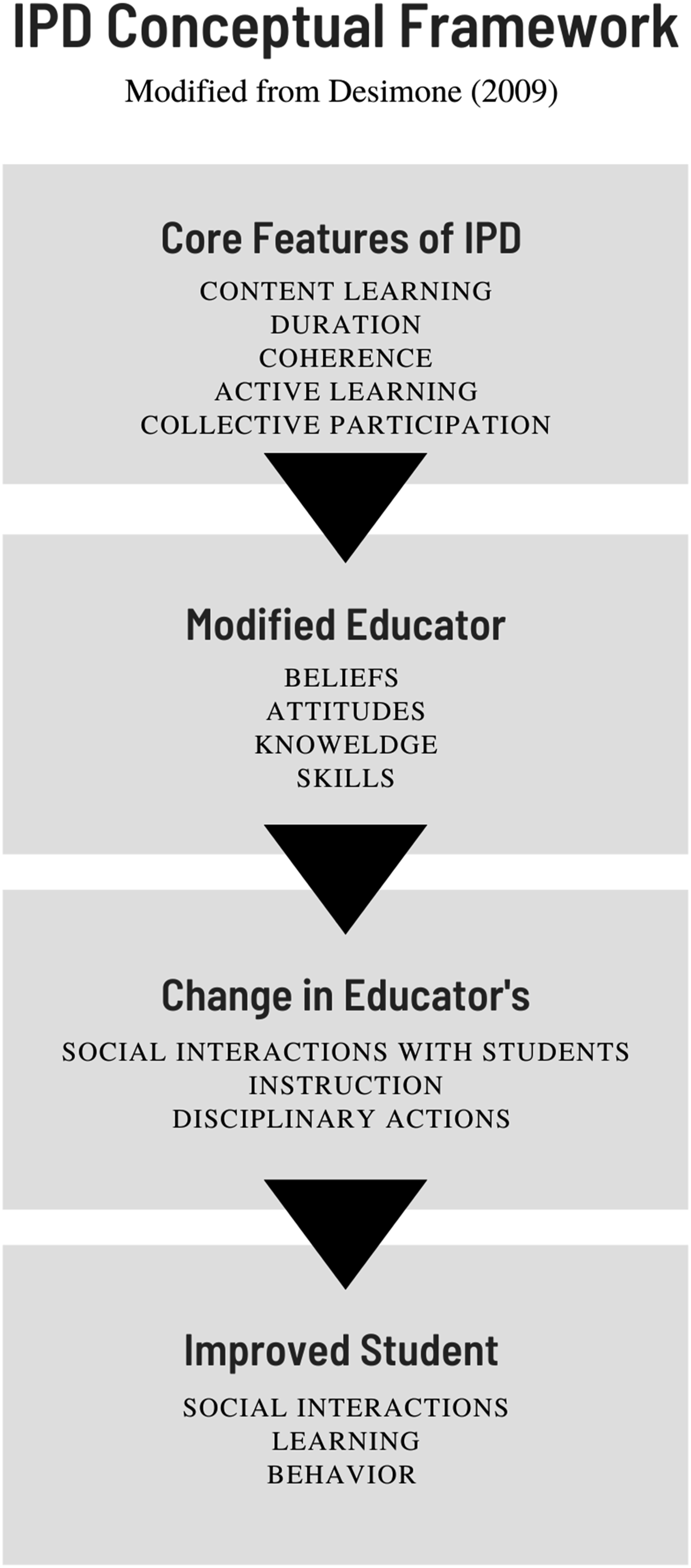
Comparison of Non-IPD to IPD school demographics in 2018-2019.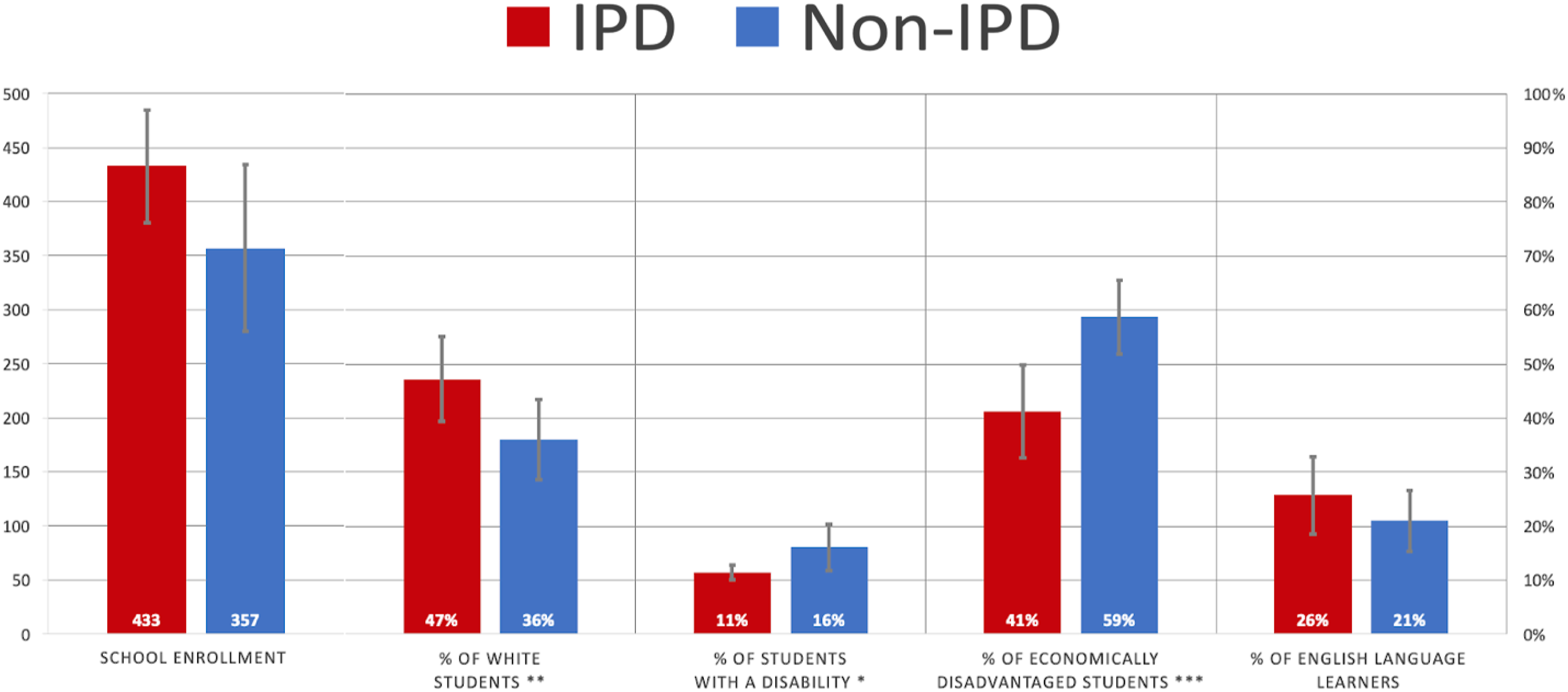
Comparison of Non-IPD to IPD School Demographics in 2018-2019. Notes.
SE refers to Standard Error. *p < .05 **p < .01.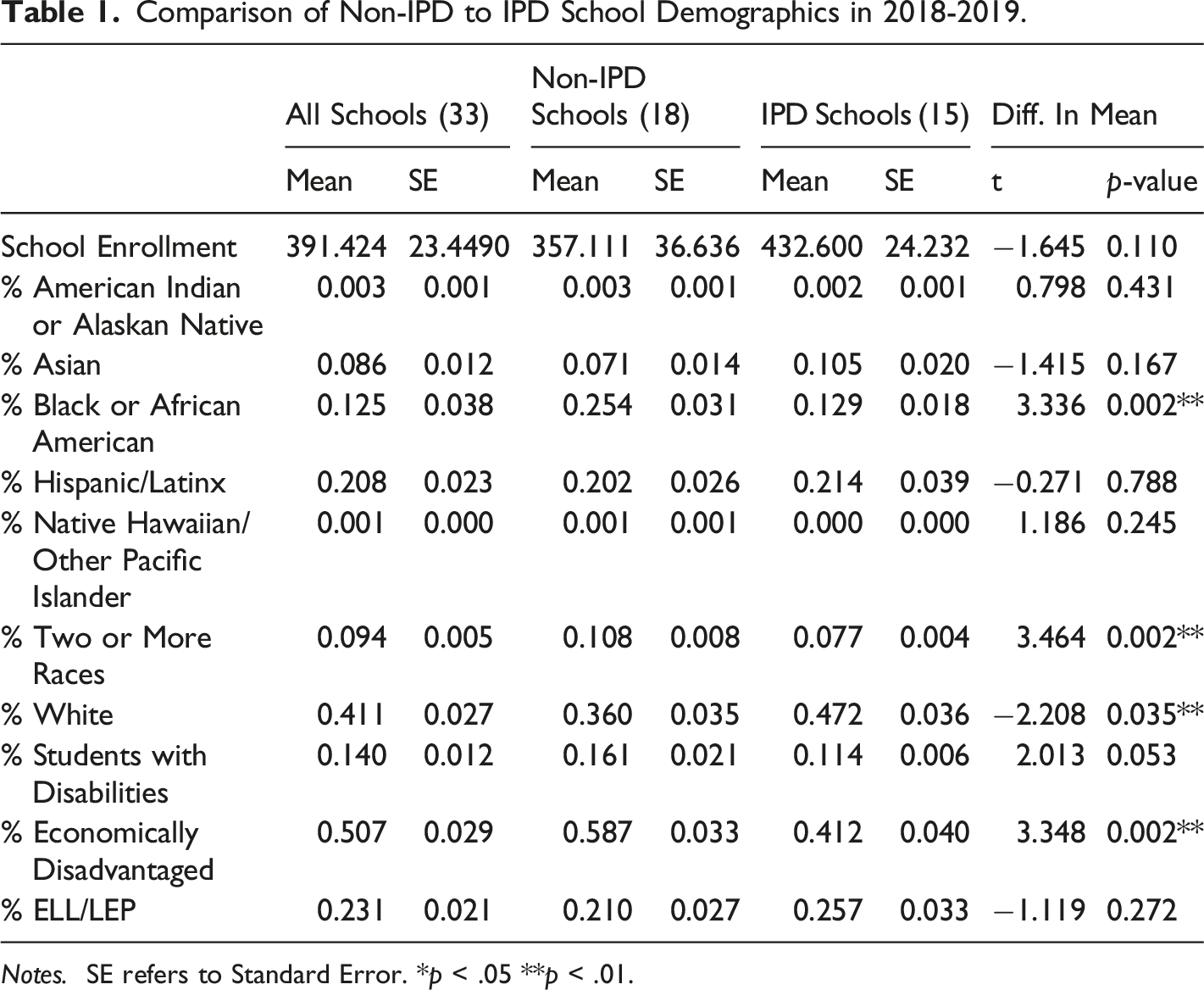
All Schools (33)
Non-IPD Schools (18)
IPD Schools (15)
Diff. In Mean
Mean
SE
Mean
SE
Mean
SE
t
p-value
School Enrollment
391.424
23.4490
357.111
36.636
432.600
24.232
−1.645
0.110
% American Indian or Alaskan Native
0.003
0.001
0.003
0.001
0.002
0.001
0.798
0.431
% Asian
0.086
0.012
0.071
0.014
0.105
0.020
−1.415
0.167
% Black or African American
0.125
0.038
0.254
0.031
0.129
0.018
3.336
0.002**
% Hispanic/Latinx
0.208
0.023
0.202
0.026
0.214
0.039
−0.271
0.788
% Native Hawaiian/Other Pacific Islander
0.001
0.000
0.001
0.001
0.000
0.000
1.186
0.245
% Two or More Races
0.094
0.005
0.108
0.008
0.077
0.004
3.464
0.002**
% White
0.411
0.027
0.360
0.035
0.472
0.036
−2.208
0.035**
% Students with Disabilities
0.140
0.012
0.161
0.021
0.114
0.006
2.013
0.053
% Economically Disadvantaged
0.507
0.029
0.587
0.033
0.412
0.040
3.348
0.002**
% ELL/LEP
0.231
0.021
0.210
0.027
0.257
0.033
−1.119
0.272
OLS Regression Analysis of 2018-2019 Behavioral Outcomes Controlling for School Demographic Characteristics. Notes. Robust standard errors are in parentheses. *p < .1 **p < .05 ***p < .01. 
Model 1
Model 2
Model 3
Model 4
Model 5
Variable
Suspension Rate
Assault Rate
Endangering Behavior Rate
Other School Violation Rate
WeaponRelated Rate
Intercept
1.072 (2.983)
−0.685 (2.101)
0.710 (0.608)
0.690 (0.737)
0.311 (0.240)
PD Status
−1.592** (0.707)
−1.098** (0.534)
−0.273** (0.123)
−0.168 (0.128)
−0.045 (0.034)
% White Students
1.581 (3.827)
2.894 (2.797)
−0.350 (0.729)
−0.543 (0.810)
−0.371 (0.269)
% Students with Disabilities
−7.009** (3.049)
−4.296* (2.177)
−1.442* (0.780)
−0.908 (0.668)
−0.306 (0.208)
% Economically Disadvantaged
2.803 (2.841)
3.205 (2.200)
−0.065 (0.708)
−0.183 (0.666)
−0.136 (0.180)
N
33
33
33
33
33
R2
0.224
0.226
0.193
0.089
0.178
F for change in R2
2.27*
2.14
2.01
0.66
0.61