







Abstract
The education finance system in California was replaced in 2013 by the Local Control Funding Formula (LCFF). The new formula provides districts with greater flexibility and accountability at the local level in making fiscal decisions. As part of this process, districts must work with stakeholders to develop a Local Control Accountability Plan (LCAP), a three-year plan outlining district goals for improving student outcomes. Drawing upon Queer Theory, with its emphasis on hetero-cis-normativity and intersectionality, this study examines how school district LCAPs address, or fail to address, the unique experiences and needs of LGBTQ students. Despite extensive state legal protections in California, decades of research continue to reveal that LGBTQ students experience disproportionately hostile school climates compared to their non-LGBTQ peers. In this study, we analyzed LCAPs from the 25 largest school districts in California from the 2022–2023 academic year to determine whether plans included school climate data pertaining to the experiences of LGBTQ students and whether they established queer-specific goals and actions to improve outcomes for this student population. Findings from this document analysis revealed that none of the districts in our sample included disaggregated school climate data reflecting the experiences of LGBTQ students. Furthermore, only 56% established at least one LGBTQ-targeted goal or action related to improving their outcomes, which we categorized into five themes for analysis. Due to a number of barriers, we argue that without additional state guidelines and resources, school districts may continue to inadequately address school climate concerns for this population within their accountability plans.
Introduction
California implemented a significant education finance reform in 2013 called the Local Control Funding Formula (LCFF). The restructuring gave districts increased autonomy in allocating funds (Heilig et al., 2017; Ojeda et al., 2019). Fundamental to this process is a three-year district planning process called the Local Control Accountability Plan (LCAP). In this plan, districts outline where and how they will distribute funds to promote the success of each student. However, the state does not task districts with completing their accountability plans in isolation. Instead, LCAPs must be completed in close collaboration with educational partners (students, staff, and parents/caregivers). As a collaborative team, they identify inequities, establish goals and actions to address them, and determine where funds are distributed (California Department of Education [CDE], 2024d). While districts have autonomy and flexibility, the LCAP must address eight-state adopted priorities, including (1) Basic Services, (2) Implementation of State Standards, (3) Parent Involvement, (4) Student Achievement, (5) Student Engagement, (6) School Climate, (7) Course Access, (8) Student Outcomes (California Department of Education, 2023a). Although this study analyzed the entirety of the LCAPs in our sample, we primarily focus on Priority Six, School Climate. While the state’s aim for the LCAP is to promote equity and continuous improvement, its effectiveness in fostering inclusive school environments for historically underrecognized groups, such as LGBTQ students, remains a topic of inquiry and a call for school leaders to lead the charge in addressing locally.
While this study focuses on California, its findings offer valuable insights for educational leaders and policymakers nationwide. Regardless of state-specific legal frameworks, it is in the best interest of all school districts to closely monitor school climate data, disaggregated by student identity (including by sexual orientation and gender identity), to improve learning and mental wellness effectively (Daily et al., 2020; Gase et al., 2017). Even in the 19 other states with explicit nondiscrimination protections for LGBTQ students, improvement plans and their implementation can fall short of addressing the unique challenges and needs of these students (Kosciw et al., 2022; Movement Advancement Project, 2025). This disconnect between policy and practice underscores the importance of examining not only the existence of protective policies but also their efficacy in creating safe learning environments (Woltran et al., 2024). This also highlights the need for robust accountability mechanisms with mandates, ensuring districts effectively monitor and address the needs of LGBTQ and other marginalized student populations through data-driven, identity-specific action planning (Levin & Datnow, 2012). This need is underscored by the persistent negative experiences of LGBTQ students.
Research has consistently revealed alarming rates of bullying, harassment, and discrimination experienced by LGBTQ students (Hanson et al., 2019; Johns et al., 2020; Kosciw et al., 2022). This occurs despite LGBTQ students being a protected class under California law. When students attend schools with unsafe climates, studies have shown significant impacts on attendance, academic performance, and mental wellness (Daily et al., 2020; Gase et al., 2017; Kosciw et al., 2022).
This study aims to understand efforts by 25 of California’s largest school districts by examining the extent to which they leverage their LCAPs to highlight school climate-related data on the experiences of LGBTQ students and whether they establish targeted goals and actions to address their unique needs. Our research addresses two questions: (1) To what extent do school district LCAPs incorporate school climate data specific to the experiences of LGBTQ students? (2) To what extent do school district LCAPs articulate goals and actions to enhance outcomes for LGBTQ students?
For decades, scholars have increasingly recognized the importance of a positive school climate and data-driven decision-making to promote safer and more inclusive environments (Thapa et al., 2013). By analyzing LCAPs, this research aims to inform policymakers and educational leaders on a potential path forward to create safer and more inclusive learning environments for queer students.
Theoretical Framework
This study utilized a document analysis method with a Queer Theory perspective. With its emphasis on dismantling conventional structures of sexual orientation and gender, Queer Theory provides a helpful lens for assessing if and how school accountability plans address school climate-related concerns of LGBTQ students. Using this framework for analysis offers a useful tool to spotlight when a district’s equity lens is intentionally inclusive of queer student identities, as well as when they fall short (Wozolek, 2019).
Queer Theory critiques the prevalence of heteronormativity, which presumes that everyone is straight by default, leading many LGB individuals to feel invisible and excluded (Butler, 1990; Sedgwick, 1990). This theory also challenges the gender binary, which implies that there are only two genders, discounting the broad spectrum of gender identities and expressions that exist in classrooms and in society (Blaise & Taylor, 2012; Bornstein & Bornstein, 1994; Butler, 1990; Sedgwick, 1990).
Applying a Queer Theory lens enables us to analyze LCAP language, identify challenges to cis-heteronormative assumptions, and evaluate the representation of LGBTQ students both independently and intersectionally. Additionally, leveraging Queer Theory will help us recognize when rhetoric, even when it seems queer-inclusive, can be performative rather than induce transformational change (Halvorsen, 2023).
Through document analysis informed by Queer Theory framework, this study critically examines how school districts articulate their commitments to equity and inclusion for LGBTQ students in their LCAPs. This approach explores the alignment between policy language and broader equity goals and investigates whether district plans address systemic issues, such as cis-heteronormative practices and the safety disparities experienced by LGBTQ students. The following literature review situates this analysis within the broader context of research on school climate, LGBTQ student experiences, and the role of policy in fostering inclusive educational environments.
Literature Review
In this literature review, we explore the critical role of school climate in supporting academic success, mental wellness, and equity, with a focus on the experiences of LGBTQ students. We examine state-level priorities and recommendations for addressing school climate in LCAPs, including tools like the California Healthy Kids Survey (CHKS) for collecting and analyzing data. Furthermore, we review evidence-based practices such as LGBTQ-inclusive curricula and relevant state laws designed to protect these students. Finally, we discuss barriers to inclusion, such as educator bias, community pushback, and the broader sociopolitical climate. This review provides a comprehensive foundation for understanding the challenges and opportunities in creating safe and inclusive school environments for LGBTQ students.
School Climate and Its Importance
A healthy school climate fosters the conditions in which optimal learning can take place. Researchers have found that a positive school climate can improve academic performance, attendance, and mental wellness (Daily et al., 2020; Gase et al., 2017). A strong focus on improving school climate for students of all demographics can help educational leaders accelerate learning and close equity gaps. Disaggregated school climate data results are a concerning reality for many districts, particularly as they relate to the experiences of historically underrecognized student populations. A national report from the Centers for Disease Control and Prevention (CDC) measuring risks and behaviors across multiple years found that higher proportions of LGB students experience violence, victimization, and suicidal ideation compared to their non-LGB peers (Centers for Disease Control and Prevention, 2023). According to another national survey from GLSEN, 81.8% of LGBTQ youth felt unsafe at school because of one or more of their identities (Kosciw et al., 2022).
The California Center for School Climate, a California Department of Education (CDE) initiative, defines school climate as the qualities of the school environment experienced by students, encompassing relationships, teaching and learning practices, and organizational structures. To provide guidance, they highlight three domains that characterize a school’s climate: belonging and connections, safety and wellness, and environment (Magby & Cerna, 2023). These domains provide a framework for schools as they consider goal setting, action planning, and accountability.
Intentions and Expectations at the State Level for Priority Six: School Climate
School climate is one of eight state-adopted priorities that districts must address in their LCAPs (CDE, 2024b). In support of these efforts, the CDE recommends their evidence-based model practices to educational leaders as part of their strategic approaches to LCAPs. While not an exhaustive list, the CDE’s model practices (CDE, 2025b) are intended to guide districts as they evaluate and plan how they will build a positive school climate within their local control. The CDE suggests districts consider implementing a school climate improvement process, such as developing a task force through which current school climate needs and new initiatives can be monitored and evaluated for impact. Collecting data relevant to school climate is a key component of planning.
State Recommendations on Collecting, Analyzing, and Responding to School Climate Data
According to the CDE, a district’s effort to enhance its overall school climate must be an integral part of its improvement plans to have a positive and sustainable effect (CDE, 2023d). To gather data metrics, the CDE encourages districts to administer anonymous school climate surveys. School climate data is required for LCAPs to help districts meet related local priorities (Klevan et al., 2024). The CDE’s recommended survey tool is the California Healthy Kids Survey (CHKS), which measures student safety, mental wellness, and resiliency (CDE, 2023d). The CHKS includes demographic questions, allowing districts to disaggregate data by student population (including by sexual orientation and gender identity) and generate customized reports by school site, district, county or statewide using an online dashboard (California Department of Education, 2025a). This dashboard has the capability to produce colorful comparative tables, graphs and charts on demand, making it easy to spot disparities. There are other school climate surveys that help districts align with CDE guidelines for the LCAP, including Panorama Education. According to Panorama Education’s website, several California districts, including the unified school districts in San Francisco, Long Beach, and San Bernardino, use its school climate survey (Panorama Education, n.d.).
School staff are suggested to deepen their understanding of climate survey results beyond quantitative data by using qualitative measures, such as targeted focus groups (e.g., LGBTQ student focus group, Black student focus group) (Holquist et al., 2023). This data-driven approach aligns with research emphasizing the importance of analyzing school climate data from various sources, including surveys, listening circles, and disciplinary records, to identify specific areas of concern experienced by particular student groups (Thapa et al., 2013).
Data-driven decision-making is essential for effective educational practice in schools. Educational leaders play a critical role in this process, leveraging data and guiding others to inform both policy and practice (Mandinach, 2012). Disaggregating school climate data by identity or characteristic helps districts uncover disparities across diverse student populations, allowing them to allocate resources and targeted support. This tailored approach is crucial for addressing issues and developing effective interventions to ensure that all students feel safe, supported, and included (CDE, 2017; Cerna et al., 2021; Voight & Nation, 2016).
Moreover, regularly collecting and analyzing disaggregated data from school climate surveys and student focus groups can serve as a mechanism to monitor the degree to which targeted practices and support improve student outcomes. With data-driven goals and actions in place, educators can monitor impacts on school climate and adjust efforts as needed. This systematic approach, grounded in data and focused on action, has led to positive outcomes such as improved student engagement, academic performance, and a sense of belonging (CDE, 2017; Voight & Nation, 2016). To illustrate the importance of such data-driven insights, the following section examines results from the CHKS, highlighting key inequities and their implications for school climate improvement efforts.
Results from the CHKS
Percentage of LGBTQ and Non-LGBTQ Middle School Students on the CHKS Reporting Victimization and Fear of Physical Violence.
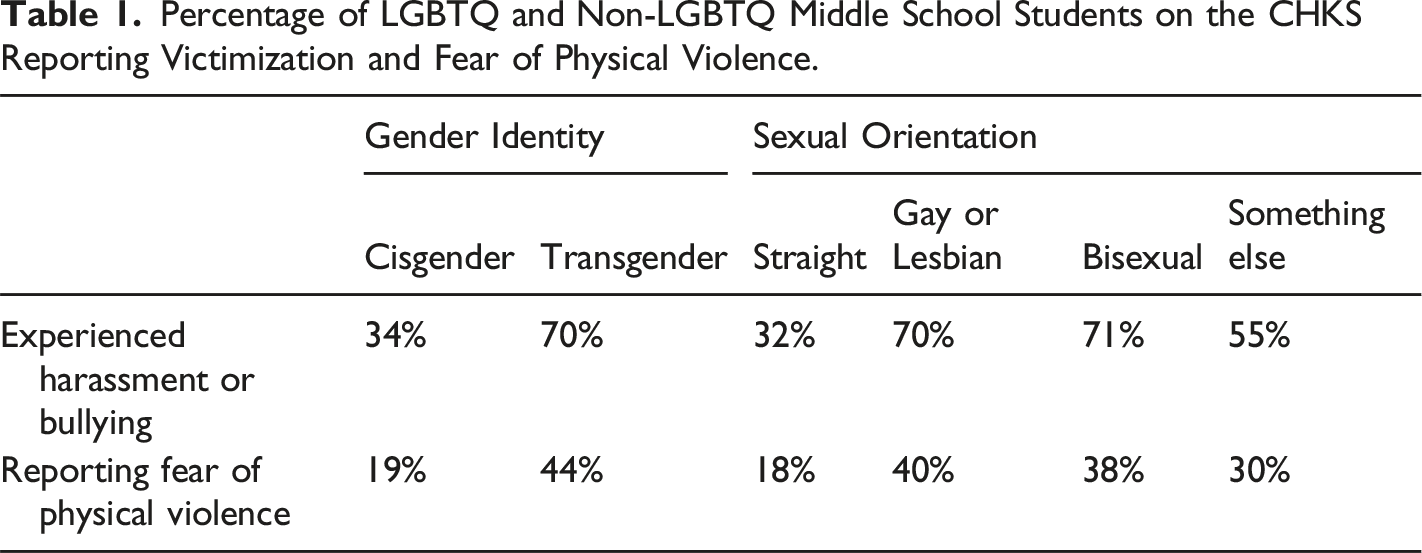
These disparities highlight the need for actionable steps to address inequities faced by LGBTQ students and to analyze existing state protections that may be underutilized or require modifications to address these persistent safety concerns.
State Protections
While California possesses a robust legal framework designed to ensure LGBTQ student safety and inclusion, the effectiveness of these policies ultimately depends on their implementation at the district and school levels (Cohen et al., 2007). Persistent disparities in school climate data between LGBTQ and non-LGBTQ students suggest a potential disconnect between policy and practice. Therefore, we provide an overview of key state legislation to highlight potentially overlooked protections or to identify avenues for strengthening existing policies. This legislative analysis is particularly relevant given our research findings, which indicate that inadequate implementation may be contributing to the observed disparities in school safety.
In 2002, the California Student Safety and Violence Prevention Act, or Assembly Bill (AB) 537, added sexual orientation and gender identity into nondiscrimination policies, providing explicit protections for LGBTQ students (CDE, 2001, 2023b). Similarly, in 2009, elected officials strengthened anti-bullying protections for LGBTQ students with the passage of Seth’s Law (AB 9). California school districts are required to enumerate sexual orientation and gender identity, among other protected characteristics in their mandated nondiscrimination and anti-bullying policies (CDE, 2024c). The state also made changes to curriculum laws with the passage of the FAIR Education Act (Senate Bill 48). The legislation requires History-Social Science curricula to include the positive contributions of LGBTQ people throughout history, allowing queer students to see themselves reflected during instruction (CDE, 2023e). California’s sexual health education law, titled the California Healthy Youth Act (AB 329), went into effect in 2016, requiring instructional materials to be LGBTQ-inclusive, providing yet another opportunity for classroom representation (CDE, 2023f). Also, in 2016, California passed the School Success and Opportunity Act (AB 1266), a robust law that further protects gender-diverse students in the state. The law provides more clarity around the rights of transgender students, including access to bathrooms and to play on sports teams that align with their gender identity. Essentially, AB 1266 outlined that schools shall treat transgender students in accordance with their gender identity (CDE, 2023b, 2024a).
More recently, in 2023, the state passed AB 1078 and AB 5, sending a powerful message to queer students and educators that the California public school system would continue to promote safe and welcoming environments for LGBTQ pupils. AB 1078, titled Accurate and Inclusive Curriculum, banned the ability to censor instructional materials and books simply because they discuss racial equity or LGBTQ identities (Machado, 2023). Signed into law during the same month as AB 1078 was AB 5, known as the Safe and Supportive Schools Act, requiring cultural competency training for certified staff at the secondary level on LGBTQ inclusion. The required training must commence in districts during the 2025–2026 school year (Office of the Governor Gavin Newsom, 2023).
California’s legal requirements concerning the safety and inclusion of LGBTQ students have direct implications for LCAP development. District leaders have the responsibility to translate these legal protections into the everyday experiences of their LGBTQ students and to recognize when they fall short (Cohen et al., 2007).
Student Perceptions and Educator Bias
While state laws are clear on the rights and protections of LGBTQ students, there are still biased perceptions that persist in schools. Studies have indicated high levels of anti-LGBTQ bias in schools and low levels of perceived support from educators. California survey data revealed an alarming rate of biased remarks by school staff, with 49% of LGBTQ students regularly hearing homophobic comments and 67% hearing negative comments about gender expression by educators (GLSEN, 2023). Researchers have found a strong correlation between how teachers feel about LGBTQ inclusion and the sentiments of the principal. One study found that when school administrators reported having a positive attitude toward LGBTQ students, it improved the perception that the teaching staff also viewed LGBTQ students positively (Boyland et al., 2020). Only 11% of LGBTQ students indicated that educators intervened, either most of the time or always when homophobic comments were made by peers (Kosciw et al., 2022). When students regularly experience uninterrupted bias in the classroom, it can negatively impact learning, engagement, and mental wellness (Reyes et al., 2012; Scrimin et al., 2017).
Evidence-Based Practices
To comply with state legal requirements and improve the school climate for LGBTQ students, districts can leverage practices shown to enhance their sense of safety and belonging. When students can see themselves reflected in textbooks and classroom lessons, they feel seen and valued (Snapp et al., 2015). Finding community through student-led and queer-inclusive noncurricular clubs like a Genders and Sexuality Alliance, or GSA, allows LGBTQ students to form positive peer relationships in an environment free of safety concerns (Poteat et al., 2013). District policies can also improve school climate measures. School districts with enumerated, LGBTQ-inclusive, nondiscrimination, and anti-bullying policies send a message to both students and staff that classrooms and hallways shall be safe and welcoming environments for all students, regardless of identity (Meyer et al., 2019). However, policies alone may not translate into an environment that truly feels safe. Professional learning for staff on LGBTQ inclusion can provide educators with the knowledge and empowerment they need to shift their approach (Campbell et al., 2021). Training helps educators have a better understanding of queer identities, legal protections, and practices necessary for students to begin feeling genuinely supported. When staff training is made available, it may also signal a green light that teachers often seek from educational leaders to move from neutral to action on these issues (Kosciw et al., 2022; Russell et al., 2021). In one study, when queer students could identify 11 or more LGBTQ-supportive educators on their campus, 34% felt unsafe, compared to 64.2% when they could only identify five or fewer queer-supportive staff (Kosciw et al., 2022). According to Saewyc and Homma (2017), LGBTQ-supportive staff also has the strongest impact on the academic performance and mental wellness of queer students.
Barriers
To advance LGBTQ inclusion across all schools in the state, we must understand why some districts and school staff hesitate or avoid LGBTQ inclusion work. Research points to several contributing factors. According to Russell et al. (2021), school personnel are sometimes unaware of policies that explicitly protect LGBTQ students. As Boyland et al. (2016) point out, educational leaders are responsible for providing strong leadership around systemic changes needed to support all minoritized student populations; however, they may lack the knowledge on how to do so for queer students. Other scholars have argued that fear of parent/caregiver pushback has hindered queer inclusion efforts in schools (Campbell et al., 2021).
The current sociopolitical climate exacerbates educators’ fear of community pushback. Recent years have witnessed record numbers of proposed and adopted anti-LGBTQ laws across the United States, influencing a resurgence of misinformation and discriminatory rhetoric around LGBTQ people and LGBTQ-inclusive practices in schools (Levengood & Hadland, 2023). The tracked a staggering 508 anti-LGBTQ bills introduced across the U.S. in 2023 alone, with 233 explicitly targeting the rights of LGBTQ students and educators (ACLU, 2023). While California has solid legislative support for LGBTQ-inclusive schools, a different scene is playing out at some local school board meetings. During a routine resolution for LGBTQ Pride Month in 2023 by a California district school board, hundreds of protesters clashed with LGBTQ advocates and supporters, leading to violence and at least three arrests by local police (Ebrahimji & Mossburg, 2023). In a 2023 educator survey, 55% of teachers admitted to self-censoring their teaching on topics related to social or political issues, highlighting the effect of potential parent/caregiver pushback or the perceived lack of district leadership support (Woo et al., 2024).
In this review, we highlighted the significance of school climate in fostering equity, safety, and academic success for LGBTQ students. The literature review also reveals how state-level priorities, data-driven practices, and legislative protections intersect with evidence-based strategies to address disparities and barriers to inclusion. To build on these insights, the methodology section details the document analysis approach used to evaluate how 25 of California’s largest school districts address priorities and relevant concerns in their LCAPs.
Methodology
In this study, we drew from the qualitative tradition of social science research to examine LCAPs from California’s 25 largest school districts based on student enrollment. This approach was selected to identify whether publicly available district accountability plans shed light on the school climate data concerns experienced by LGBTQ students and whether they included goals or actions to improve their outcomes. Identified trends and patterns across districts related to LGBTQ inclusion efforts were then categorized into common themes. We selected the LCAP to analyze over other district documents since they are legally required, must be completed collaboratively with various stakeholders, and are obligated to address school climate, one of eight state-adopted priorities.
Sources
We selected the 25 largest school districts in California, as measured by student enrollment. The CDE compiles a list of the 25 largest school districts on its website, which we used to identify our participating districts (CDE, 2023c). Our sample of 25 LCAPs represented 23 unified and two high school districts, collectively serving 1,687,388 students (28.8% of California’s student population). The districts geographically represent Northern, Central, and Southern California, as well as urban and rural areas.
Procedures
Creswell (2014) posited that qualitative methods enable researchers to understand and interpret social problems. Document analysis was selected as the appropriate method for this study because it enables researchers to systematically analyze official policy documents to better understand how policies are conceptualized, articulated, and implemented based on textual data (Bowen, 2009). LCAPs are essential policy documents that outline priorities, actions, and resource allocations, making them key artifacts for understanding institutional commitments and practices. We downloaded the 2022–2023 LCAPs from California’s 25 largest school districts directly from their respective websites in May of 2023. To identify LGBTQ-specific school climate data, goals, and actions, we conducted a systematic document analysis. Our search strategy employed a combination of keywords, including LGBTQ acronyms (both abbreviated and spelled out) and terms associated with queer-inclusive practices, policies, and research (e.g., sexuality, sexual minority, orientation, gender identity, expression, nonconforming, gender transition plan, GSA, FAIR Education Act). Subsequently, we scanned the entirety of the LCAP to confirm that we did not miss anything queer-related. Instances where keywords appeared outside of an LGBTQ context (e.g., pride, identity, gender), were omitted from our final analysis.
To facilitate analysis, we extracted all text segments containing LGBTQ-specific terms and compiled them into a spreadsheet, which was then independently coded by both researchers. The length of these text segments ranged from a few sentences to full paragraphs. For the coding process, we used an inductive category development approach (Mayring, 2019), allowing the data to guide the development of categories and themes. This inductive process was informed by qualitative content analysis methods, which emphasize the iterative development of categories directly from the data (Hsieh & Shannon, 2005). The coding surfaced multiple categories, one related to school climate data and 31 related to goals and actions. Following independent coding, we engaged in a collaborative process of comparing and refining our initial codes, an approach consistent with efforts to enhance credibility through team-based consensus-building in qualitative research (Nowell et al., 2017). This process revealed a single category for school climate data and eight categories related to goals and actions. This collaborative review also served as a form of peer debriefing (Lincoln & Guba, 1985), supporting ongoing reflexivity and strengthened the credibility of our interpretations. Among the goals and actions, we merged conceptually similar categories into five overarching themes. This thematic grouping followed an iterative coding process aligned with Saldaña’s (2016) guidance on code clustering and category development. We documented our individual analytical insights in a separate column within the spreadsheet and conducted a final collective review to ensure clarity and consensus for inter-rater calibration.
Findings
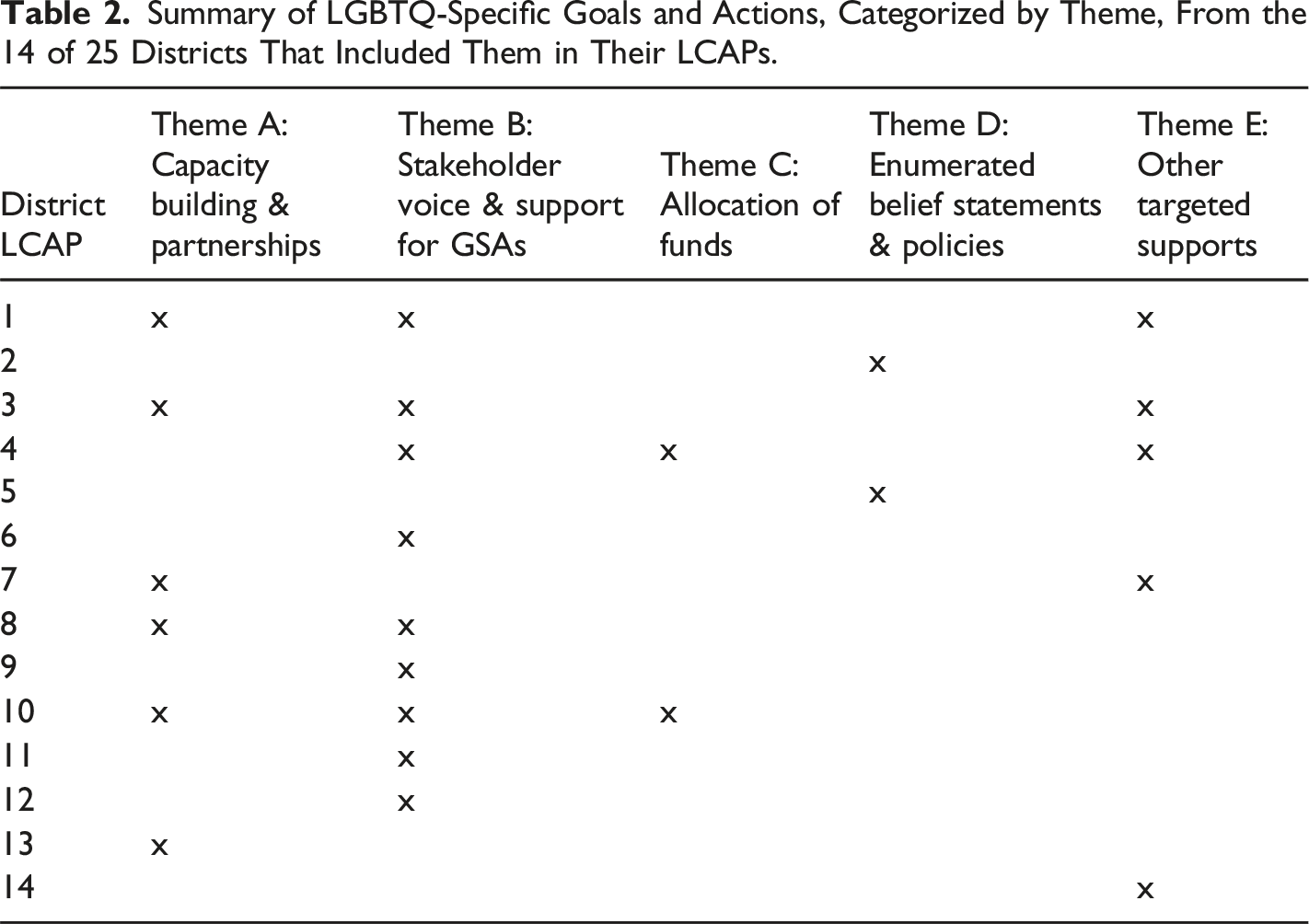
Historically, LGBTQ students have faced disproportionately hostile school climates, impacting their safety and sense of belonging (Hanson et al., 2019; Johns et al., 2020; Kosciw et al., 2022). Given this historical context and guided by Queer Theory’s critique of heteronormativity and the gender binary, we first examined the extent to which districts included school climate data related to the experiences of LGBTQ students in their LCAPs, finding no direct evidence of such data. One district, however, included indirect school climate data measuring the perceptions of others toward students of different sexual orientations, which we included in our analysis. The district did not include stakeholder perception data based on students of different gender identities. Subsequently, of the 25 districts, only 14 included LGBTQ-specific goals and actions in their LCAP. To understand how districts approached this work, our analysis focused on these 14 districts (56% of the districts in our sample), identifying key themes in their prioritized goals and actions.
In order to focus on broader insights rather than individual district performance, the school districts have been anonymized. This decision also stemmed from the lack of standout or model districts that could offer valuable insights to others. This approach aims to provide a general understanding of how large districts in California are addressing or not addressing the needs and challenges of LGBTQ students.
Summary of findings
Summary of LGBTQ-Specific Goals and Actions, Categorized by Theme, From the 14 of 25 Districts That Included Them in Their LCAPs.
School Climate Data Analysis
None of the districts in our sample included direct data on LGBTQ student experiences. One LCAP offered indirect data related to LGB students, specifically stakeholder (staff, students, and parents/caregivers) perceptions of support for students with different sexual orientations. The same LCAP lacked data on perceived support for different gender identities, omitting information on stakeholder views regarding transgender and non-binary students.
The single district included data from the CHKS measuring stakeholder support for students based on four student demographics (e.g., different races/ethnicities, religions, disabilities, and sexual orientations). While 95%–97% of staff consistently reported feeling supportive of students across all four demographics, only 83% of students and 83% of parents/caregivers reported feeling supportive of students with different sexual orientations. This percentage was notably lower than the support reported for the other student groups measured, all of which reached 89% or higher. This pattern suggests that while staff demonstrate consistently strong support for various student groups, students and parents/caregivers may harbor less inclusive attitudes towards LGB students. Despite these findings, the district failed to include additional LGBTQ-specific goals or actions to address these concerns, demonstrating a lack of data-driven action planning. Moreover, the absence of data on stakeholder perceptions of support for different gender identities in the LCAP hindered our ability to analyze perceptions toward transgender and non-binary students.
Furthermore, through a Queer Theory lens, the lack of direct data not only limits understanding of the experiences and needs of this student population but also risks creating a false perception that existing supports are sufficient. This absence of direct data leaves the district without the crucial insights needed to identify and address potential concerns regarding the safety and inclusion of queer students through data-driven goals and actions.
LGBTQ-Specific Goals and Actions: Capacity Building and Partnerships
The analysis of LCAPs for inclusion of LGBTQ-specific goals or actions revealed a distinct focus on capacity building and partnerships in relation to supporting LGBTQ students. Five districts highlighted professional development for staff as a key strategy. Of these, two districts emphasized staff training on supporting both LGBTQ students and their parents/caregivers, while two others identified a staff training focus on Identity Support Plans (also known as Gender Support Plans). Notably, one district outlined plans to hire two Project Implementers, whose many responsibilities include presenting LGBTQ-focused staff training. These approaches highlight how some districts recognize the need to equip their staff with professional learning on LGBTQ inclusion.
Partnerships with community organizations emerged as a key approach to building capacity. Three districts engaged community organizations to provide professional development for staff, and one district highlighted a collaboration with a community-based mental health organization specifically dedicated to serving the needs of LGBTQ students and their families. These partnerships demonstrate how districts are leveraging external resources to support students and build internal capacity.
LGBTQ-Specific Goals and Actions: Stakeholder Voice and Support for GSAs
While California mandates a collaborative, stakeholder-driven process for LCAP development, our analysis reveals a critical gap in the inclusion of LGBTQ people among these groups. Only one out of 25 districts explicitly stated that LGBTQ individuals participated in their “Stakeholder Task Force,” demonstrating a commitment to incorporating queer perspectives. The single district further amplified student voices by disseminating a survey to students in their GSAs. In another district, the LCAP planning team identified supporting LGBTQ students as a high priority. The LCAP did not specify LGBTQ representation in the planning process or provide concrete details about LGBTQ-specific support. Beyond LCAP planning groups, a single district aimed to establish an LGBTQ parent advisory group to improve community engagement and diverse feedback throughout the academic year. These findings underscore the need for more intentional efforts to ensure LGBTQ stakeholders are not only included in the LCAP development cycle but also that their perspectives translate into detailed goals and actions to address their concerns.
Despite the limited evidence of queer representation among LCAP planning teams, districts demonstrated a greater tendency to engage LGBTQ student voices in other support initiatives. Outside of formal LCAP development, three districts emphasized the role of student voice, including that of LGBTQ youth, in driving equity-focused actions. For instance, one district highlighted that their student-led Equity Council spearheaded an “LGBTQ+ Welcoming Campaign.” However, details regarding the campaign or its impact were not disclosed. Two districts highlighted support for their GSAs, with one offering mentorship for club members and the other facilitating virtual, cross-district collaborations. Neither district provided details about what the mentorship program offers or the frequency of the virtual collaborations.
Data collection through student surveys that included LGBTQ students emerged as another strategy utilized by two districts. One district noted that 5% of student survey respondents identified as non-binary or gender diverse. Another indicated that survey results would inform support services and staff training for diverse student groups, including LGBTQ students. However, neither district articulated specific actions based on their survey findings beyond a general commitment to providing additional support. While these efforts to gather LGBTQ student voices are promising, Queer Theory reminds us that true equity requires more than just collecting data or statements that indicate support.
LGBTQ-Specific Goals and Actions: Allocation of Funds
The LCAP process promotes local control of resource allocation to address equity gaps. However, our analysis reveals a disconnect between this stated value and how districts earmark funds to meet the needs of queer students. This study found that only two districts articulated dedicated funding for LGBTQ-specific supports within their accountability plans, although funding levels were not disclosed. One district outlined a continued commitment to funding school and classroom supports for various underserved groups, which included LGBTQ students, students of color, and English learners, among others. This pledge within a broader framework of equity aligns with Queer Theory’s call for dismantling all systems of oppression and a commitment to intersectional liberation. The other district, however, allocated funding for unspecified LGBTQ-related activities but categorized this as “one-time” funds due to needs related to COVID-19. Establishing dedicated funding that is temporary ignores the reality that queer students face these challenges every day – challenges that existed long before the pandemic. This finding reflects a broader societal tendency, as highlighted by Queer Theory, to treat queer issues as optional rather than integral to educational equity.
LGBTQ-Specific Goals and Actions: Enumerated Belief Statements and Policies
Explicitly naming and addressing the needs of underrecognized populations, particularly within belief statements or policies, is often necessary to advance true equity. We identified two districts that included enumerated policies or belief statements specifically including LGBTQ students. One district’s equity policy highlighted a commitment to dismantling systemic racism and discrimination based on gender identity and sexual orientation, further emphasizing that their view of equity is queer-inclusive. Similarly, within its values statement, another district recognized diversity as a core strength and stressed providing an equitable learning environment for all students, explicitly mentioning gender and sexual orientation alongside other categories like race, culture, and ability. However, while these enumerated statements hold potential for positive change, our analysis revealed a critical gap between rhetoric and action. These statements represented the only instances where LGBTQ-specific language appeared in their accountability plans.
LGBTQ-Specific Goals and Actions: Other Targeted Supports
Our final theme focused on other targeted supports, which we identified within five district LCAPs. Centralizing LGBTQ-specific supports within a district department was a noticeable trend within three accountability plans. One district’s Youth Advocacy and Ethnic Studies Department developed six diverse identity-based curriculum modules for secondary schools, covering topics ranging from Black and Native American students to LGBTQIA + History. While their goals for the modules were to celebrate the identity of all youth and expand learning perspectives from various communities, they did not specify whether the modules would be mandatory or optional. Another district outlined queer-specific supports within its Equity Department, explicitly mentioning the expansion of universal equity programs such as the Black Alliance, Young Men of Color, Native Education, and LGBTQ+ Pride. However, information about the content, implementation, or evaluation of these programs was missing. We were impressed that one district mentioned the existence of “LGBTQ Support Services,” but like the others, no details about the specific services were provided.
Although content from the two other district LCAPs in this category did not discuss their LGBTQ-targeted supports within a particular district department, they appeared to both be centralized efforts from the district office. One of them highlighted the role of a Central Social Emotional Counselor tasked with supporting LGBTQ students, among a host of other responsibilities, but no additional details about the queer-specific support were included. Similarly, another district broadly stated its goal of expanding and maintaining welcoming and inclusive school environments, listing LGBTQ safety as one focus area, but failed to articulate any concrete actions.
These instances of targeted support for LGBTQ students, while noteworthy, present a significant limitation to our analysis due to insufficient details. Further information regarding the frequency, reach, implementation, accountability, progress monitoring, and impact of these initiatives is crucial to determine their effectiveness in fostering genuinely inclusive school environments for queer students.
Discussion
The LCAP process provides a critical opportunity for districts to identify and address inequities that impact student outcomes. However, our study reveals a significant disconnect between this intended purpose and the limited actions detailed to address the persistent challenges facing LGBTQ students in California. While our analysis identified some emerging practices, most of the implications for this study revolve around what the 25 LCAPs were lacking as it relates to the pervasive concerns experienced by many queer students in the state.
When district LCAPs lack disaggregated data on the experiences of LGBTQ students, their most well-intentioned targeted goals to improve their outcomes are compromised from the start. Our analysis of 25 LCAPs revealed no disaggregated school climate data highlighting the needs and challenges facing queer students, which hindered districts’ ability to translate insights into tangible data-driven actions where impact could be measured and progress monitored (Collins et al., 2023; Hunt et al., 2024). This pattern may be linked to the fact that educational leaders traditionally prioritize academic performance data when making key decisions, even though actions that improve school climate foster improved learning outcomes in schools (Schildkamp et al., 2012). Capper et al. (2006) also argue that preparation programs for educational leaders often overlook discussions about sexual orientation and gender identity when addressing the topic of equity. Professional learning opportunities specialized for educational leaders and modifications within their preparation programs could help shift mindsets that school climate is not separate from but integral to improving the academic performance of their students, and discussions about social injustices must include LGBTQ identities and their intersections (Daily et al., 2020). Training and technical assistance for LCAP planning teams could also improve the likelihood that districts prioritize data-driven action planning as they aim to improve outcomes for LGBTQ students and other underrecognized student populations (Levin & Datnow, 2012).
While we identified several LGBTQ-targeted goals and actions within 14 of the 25 LCAPs, the vague details surrounding them limit their potential impact. Firstly, it presents challenges for educational leaders as it relates to accountability. When initiatives are ill-defined, ensuring implementation at the intended level becomes a nearly impossible task. Furthermore, the lack of detail surrounding these actions makes it difficult for other districts to replicate successful efforts in their respective schools. To enhance clarity and facilitate broader adoption, LCAP planning teams could work with external reviewers to verify that their outlined goals and actions would be easily understood by individuals outside of the planning process.
Another notable implication revolves around a district’s decision to share positive stakeholder perception data on their supportive views of LGB students without also sharing data concerning the experiences of LGBTQ students themselves. This type of perception measure, in and of itself, does not equate to a safe and healthy school climate for queer students. While it is helpful when educators hold LGBTQ-supportive views, the benefits may not translate unless queer students can easily identify who on campus is LGBTQ-affirming. According to GLSEN (2023), only 66% of LGBTQ students in California could identify six or more supportive staff at school, which does not correlate with the one LCAP in our sample that shared 95% of their staff held supportive views toward LGB students. Without district data to confirm that queer students’ experiences align with perception data collected from stakeholders, the district is left in the dark about where to target its improvement efforts (Collins et al., 2023).
There are additional implications for the 96% of the districts in our sample that did not articulate a commitment to funding allocation on direct supports for queer students. Districts receive state resources to address inequities and improve student outcomes, which begs the question, why were LGBTQ students not prioritized? While it is unlikely the intention of district leaders to further marginalize queer students, when they choose not to allocate funding to address the inequities they experience, it conveys that their needs are less important. As one study showed, this could inadvertently result in less visible allyship from teachers if they perceive district leaders as being less than supportive of LGBTQ students (Boyland et al., 2020).
While our study identifies missed opportunities at the district level, the state also bears responsibility, particularly regarding policy implementation and accountability. Although necessary, simply adopting LGBTQ-inclusive state policies is insufficient if districts do not adhere to them or if they fail to equitably prioritize the needs and challenges of LGBTQ students. The state urgently needs to revise its statewide guidance on the LCAP to ensure districts address inequities experienced by LGBTQ student populations. This guidance should require districts to use school climate tools that include demographic questions related to sexual orientation and gender identity, such as the CHKS, and subsequently incorporate disaggregated data on LGBTQ student experiences into their LCAPs (Cerna et al., 2021; Voight & Nation, 2016). Furthermore, the state should require LCAPs to include measurable, time-bound, data-driven goals and actions addressing disparities experienced by LGBTQ students, prioritizing research-based practices (Levin & Datnow, 2012). Ample training and technical support from the CDE are crucial for building the capacity of educational leaders in this area of systems change and adherence to explicit state policies that require LGBTQ-inclusive schools (Boyland et al., 2016; Cohen et al., 2007). Investing in these recommendations will require additional resources and funding, but this investment is crucial for holding districts accountable for implementing long-standing state policies that protect LGBTQ students and improve their persistently harmful school climate trends.
Limitations
While this study offers a snapshot of what districts prioritize in their LCAPs to support LGBTQ students, there are limitations. We restricted our analysis to accountability plans for the 2022–2023 year, which may not capture interventions or other targeted supports from previous years. Furthermore, we only selected 25 LCAPs from the largest school districts in California to analyze, which may not represent the practices of smaller districts in the state. Additionally, there were limited amounts of LGBTQ-specific content found within the LCAPs in our sample, and districts provided very few details surrounding the LGBTQ-targeted goals and actions they included. This hindered our ability to conduct a more thorough analysis of the LGBTQ-specific supports found and our ability to infer impact.
Conclusion
The most significant findings of this study concern what we did not find within the LCAPs as they pertain to the unique challenges and needs of LGBTQ students. None of the districts within our sample articulated disaggregated school climate data on the experiences of queer students, preventing data-driven decision-making. Some districts never referenced LGBTQ students directly, and those that did omitted details about their LGBTQ-targeted goals and actions. Without disaggregated data and additional context about LGBTQ-targeted goals and actions, accountability and monitoring progress are hindered. This study highlights an opportunity for educational leaders and policymakers in California to leverage the power of the LCAP as a mechanism to improve student outcomes, particularly for LGBTQ students and other underrecognized populations. Local control is an important component of the LCAP, but the state still has a vested interest in the overall success of students, as evidenced by required guidelines, such as the state-adopted priorities that accountability plans must address. Additional state requirements on the type of disaggregated data expected on district LCAPs and guidance on establishing data-driven decisions and how to leverage them for accountability and progress monitoring have the potential to bolster school climate data measures throughout the state.
Footnotes
Declaration of Conflicting Interests
The authors declared no potential conflicts of interest with respect to the research, authorship, and/or publication of this article.
Funding
The authors received no financial support for the research, authorship, and/or publication of this article.

Data Availability Statement
LCAPs are publicly available on each district’s website.