







Abstract
As part of an ongoing oral history project, a conversation was held with Dr. Mary Margaret Kerr on the past, present, and possible future of the field of providing services to children with emotional-behavioral disorders. Dr. Wood stresses the increasing importance of providing an interdisciplinary approach to meet the needs for children or, as she put it, to be a “middle child” in one’s profession.
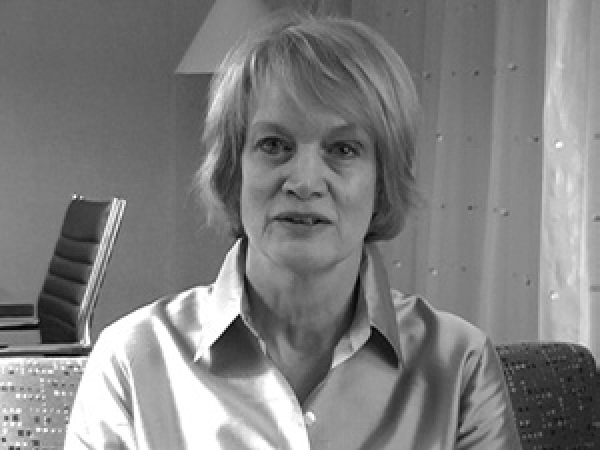
Dr. Mary Margaret Kerr is a professor and chair of administrative and policy studies, professor of psychology in education, and professor of child psychiatry at the University of Pittsburgh. Dr. Kerr has worked in urban school districts throughout her academic career. Her focus has been the improvement of services for students with emotional and behavioral problems. Dr. Kerr served Pittsburgh City Schools for several years as director of pupil services, where she administered services such as guidance, social work, counseling, alternative education, health services, school safety, and discipline.
In 1995, Dr. Kerr was appointed by the federal court in California to serve as consent decree administrator for the Chanda Smith special education case in the Los Angeles Unified School District. In this capacity, she worked for nearly a decade with attorneys, families, and educators to reform special education services for over 82,000 students. Upon returning to her university position, Dr. Kerr directed training services for a youth suicide and violence prevention center and the STAR-Center, a state-funded center that provides crisis response services, training, and policy consultation to school districts and agencies across Pennsylvania. Dr. Kerr led a technical assistance team for the implementation of schoolwide positive behavioral supports for K–8 schools for the Pittsburgh Public Schools.
Dr. Kerr’s work in applied settings has provided case study material for textbooks and many presentations and publications. In 2010, Dr. Kerr was named the Jean Winsand Distinguished Woman in Education by the Tri-State Area Study Council. In 2011, Dr. Kerr received the University of Pittsburgh Chancellor’s Distinguished Teaching Award. In 2012, she received the Council of Graduate Students in Education’s Extra Mile Award.
Mary Margaret Kerr was interviewed by Jim Teagarden and Marilyn Kaff during the 2012 Midwest Symposium for Leadership in Behavior Disorders in Kansas City.
How did you get in the field of emotional and behavioral disorders with kids?
I was an undergraduate student at Duke University and I fell for an ad on the bulletin board. Cliff Wing, who was the department chair and very creative, made this “unbelievable opportunity” known to undergraduates and only a couple would be selected for this “phenomenal, desirable position” with no pay, to supervise recess for the inpatient department of psychiatry school. And the way he worded it . . . he should’ve had a career in media relations because I applied and really hoped that I would get it. I had no idea what I was getting into. I had never been around children with psychiatric illness and I certainly didn’t know anything about sports, games, recess, or anything like that. But I survived!
So, could you describe a typical a recess that you would supervise?
There was one child who sang, nonstop, every single word of every single song from Joseph and the Amazing Technicolor Dreamcoat . . . the entire soundtrack, all day long. There was another child who did not speak and simply did the Woody Woodpecker voice. He would hide a lot, so it was kind of like a Marco Polo game in the swimming pool. We were in a small, rather wooded space; the children were running all over the place; I was always amazed that nobody ever left there with a head injury . . . and we were just supposed to keep them alive and reasonably happy, while the staff took a much-needed break. I was intrigued by their behavior. I was intrigued by this whole notion that psychiatrists worked with teachers and psychologists. I was hooked at 19 or 20 years old.
Could you describe your career in the field?
Long . . . long. I started early. I have been in the field, in that same kind of work, for the whole experience. What I try to explain to people, because my career has taken a lot of interesting twists and turns, is that I work primarily . . . in schools, urban schools in particular. The work I do is in support of children’s mental health and safety. The type of work I do is either applied research or training or administering large programs in what we call pupil services or special education, trying to improve the nonacademic side of the house, if you will. That’s what I do.
What’s been your favorite part of your career? Is there any one thing?
Oh, many! I am biologically a middle child and a colleague once said to me that “I think institutionally you are [in the middle] too; because you are always in the middle of other people’s disciplines, of other people’s problems. You always like to be in the middle.” I like to solve problems. I get bored fairly easy and this has been a field with lots of problems to solve. Initially I thought that I would be a professor of the sort who had mentored me so well and had done so well. As I look back on my career, I realize that the professors that I had were unique, but they also had some things in common. Every major professor who I’ve had has been either a psychologist or a clinician of some kind. That’s pretty unusual for somebody with degrees in psychology and education. They’ve been very good clinicians, so they were very, very good supervisors because they knew how to observe and interview and pull out that which I might not have wanted to acknowledge. Nick Long was a huge influence; I didn’t realize the influence at the time. Nick was an academic professor of great standing, but he was also running an urban school in downtown D.C. for kids who were very, very troubled and troubling. Seeing that dual career, I think, just sort of became like a chip embedded in me and I’ve been pursuing that same duality every since.
When you mentioned the trajectory of your career, I’m thinking back to your experience in Los Angeles. Could you tell us about that?
Well, I think what led to that experience is kind of interesting. I was in a very rigorous department of psychiatry as a faculty member in the tenure stream. I was an associate professor and I was doing a lot of research. Most of my work was in the Pittsburgh Public Schools. And one day, the superintendent approached me about being their director of pupil services. I really didn’t take it seriously. I didn’t have that certification, I hadn’t worked for an urban district central office, but to make a long story short, Dick Wallace, who was a rivetingly good superintendent in his last superintendency, did what so many have done, which was to make me an offer that I just couldn’t refuse. Certainly not financially. But the excitement of an opportunity to be in the middle of change and to create something different with somebody who was a magnificent leader has always been irresistible to me, whether it was Nick Long inviting me to teach in the middle of the year when a teacher had walked out and didn’t even return for her purse. Anybody who can sell that to a graduate student who didn’t plan to work that year was kind of remarkable.
How did he sell you on that?
Nick Long sold me on the idea that I wanted to come work in Rose School because, as he reminded me, I had waited 1 year to be his advisee. I went to American [University] and literally waited a year as a learning disabilities major until I could get on his roster, which was a very enviable position, to be his advisee. When it wasn’t happening, I thought, “Well, I guess I’m just going to major in learning disabilities. It’s pretty interesting and I can take courses with Nick.” And then he called me one day and said that he needed a master teacher. He said, “You have a master’s in behavior disorders from Duke, don’t you?” I replied, “Yes, but I’m really not interested in teaching. I’m just going to grad school full-time and as you know, I really want to be your advisee.” He said, “As you know, I really need a teacher. Our last one left on a break and never returned for her purse.” This was in January. I understood negotiations. I began teaching for Nick Long and I got to be his advisee.
At any rate, Dick Wallace made me a similar kind of “really out-of-the-box” offer. Nobody leaves the University of Pittsburgh Department of Psychiatry . . . in a tenure line position . . . with an associate promotion behind you . . . and lots of research waiting in the wings to go work and straighten out pupil services in an urban district. People, including many of my colleagues, . . . said, “This is academic suicide. This is a really bad idea. You really ought to think this through.” But I couldn’t resist it. I did that for 5 years. In those 5 years, I also became the director of school safety and, thereby, the administrator for the school police force, which led to some other work: crisis and so forth.
But getting back to the question about Los Angeles, I was in my office one day and Mark Rosenbaum, executive director of the Southern California ACLU [American Civil Liberties Union], called me. I thought, in my naive way, they were just calling to raise money. So, I didn’t return the phone call the first few times, until finally my assistant said, “I think you should call this man. He really wants to talk with you.” I said, “They’re probably raising money.” She said, “No, not from California.” At any rate, Mark Rosenbaum called and said he talked to “who’s who” in the field, that everybody he talked to was somebody famous.
I said, “Oh, well, sir, you’ve had a magnificent series of conversations. These are all the top names in the field.” He said, “Yes, they all mentioned you.” I said, “Well, that was very kind of them, but how can I help you?” He said, “Well, we need an expert witness and none of them will do.” I said, “Sir, I don’t know you and I don’t mean to be disrespectful, but if they won’t be what you need, sir, I think you really might want to rethink your qualifications. These are the top names in the field.” He said, “They don’t qualify but they said you do.” I said, “I really don’t understand.” He said, “No, they said that you’re the only sucker in the field who ever went on the payroll of an urban school district for a considerable length of time.” I said, “Well, if that’s what you’re looking for, then yes, they are correct.” He said, “I only need you for 6 weeks. It’s a very narrow area of law. We just need an expert to work with the district’s expert on this one.”
It turned out to be a little longer than 6 weeks. I was then appointed by the federal court to oversee the reform along with another expert. I commuted to L.A. for nine-and-a-half years. I had young children who would come with me, with their babysitter, and go to the parks and the ocean out there. It was a life-changing experience because it was such a huge district. The diversity was staggering in terms of interpreters and languages and families and communities with whom we worked very closely. And, of course, the scope of the work was absolutely mind-boggling. But, it was a tremendous experience. I learned a great deal about mediation. I learned a great deal about special education, California’s laws, and it was wonderful.
What events, policies, innovations, and people have had the most impact on you in your profession?
Well, I think I’ve gone on too long about many of them, but what I would say is that my career has been marked by quite remarkable, interesting, and totally unexpected invitations. I would say to young people that it’s important to be open to the invitation that’s a little off the typical path. It may well be the career changer that you just can’t imagine for yourself. And the fact that other people could imagine me in a different future was such a gift. And this is the gift that I try to share with my own younger colleagues and students.
What are the positive and negative influences on this field that you currently see?
I’m very heartened by the fact that Kathleen Lane and others are doing important work on how children with emotional-behavioral disorders learn and how to actually teach them academics. When we were trained, and you know it was several hundred years ago, our role was called teacher-therapists. The idea was that you just kept kids together in the room until they went to therapy, but we had no pedagogy. I had very meager pedagogical skills. It’s a wonder that I survived. So, I think that the opportunity that this generation has to deliver the whole package of pedagogy and mental health and behavioral supports is, I’m sure, a gift that they take for granted.
I think that kind of bifurcation [that] kind of characterized the field when I came into it has dissipated in a number of ways. It is no longer predominately a men’s field. When I first started coming to national meetings, I was one of only a few women. It is no longer [that way]. And by the way, do not call me “guy.” Don’t ever say “you guys.” We women worked hard so we wouldn’t be called guys and you wouldn’t [want to] be either . . . you young women who are listening.
The other divisiveness that we saw was the split between education and psychiatry. Now, I’m a member of a group that I like very much. It’s called the Mental Health Education Integration Consortium. So the school mental health movement has really tried to pull educators and mental health providers together. That was really different in the field some years ago. So, what I would say, that is very hopeful to me, is the fact that many of the deep divides that we experienced decades ago are over with. The healing has happened, the interdisciplinary research is accepted practice, people can work across academic departments, kids double major, and that’s all really wonderful.
Where the divide is worse, though, is in urban education. The haves and have-not divide is worse than I’ve ever seen it. The funding crisis is worse than I’ve ever seen it. Many of the new laws put children with disabilities or children of color or children who are not primarily English speakers under a microscope of academic performance, which leads to people saying things like, “Well, if it weren’t for those kids, our scores would be fine.” So, this awful divisiveness that pits children against children, special educators against general educators, even to the top ranks of urban district governance, I think is insidious and is very, very dangerous for the future. Once we started disaggregating the data, which I thought naively was going to be really helpful, that’s when it opened up this battle.
What research needs to be done yet in the area of special education in your opinion?
I think we’ve done a terrible job at looking at failure. I think the field has really not looked at failing well. It’s not easy to publish, you don’t get anything if you have no power to report, but nobody is really looking hard at failing schools. People are looking very hard at turnaround schools. People are looking very hard at promising practices, evidence-based practices, what works . . . everything is under the microscope, if it’s successful. If it’s not successful, nobody is studying it. I don’t think you can go out into the world studying only wellness, not illness, of systems or practices.
I find conferences, frankly, a little boring, when every single presentation is about “how great we were” and “how well it worked.” I’m a little bored by that. I would love to go to a conference where people candidly discussed their failures. I had a mentor, Joaquim (Kim) Puig-Antich, who was chief of child psychiatry, who said to me once, “People need to have the courage to examine their failures.” Now, he said this as a physician, where that is a standard part of the practice. You do postmortems all of the time as a physician or whenever they’re necessary. But, we don’t do that very well in this work.
We aren’t examining the consent decrees, why they were in every major city in the U.S., what caused them to be there . . . I have never been asked to give a talk about the huge consent decree in Los Angeles, and yet, the lessons are multiple. How did a district fail this badly and then require such intervention? Those kinds of cases are readily available.
Are those who forget history damned to repeat it? Jim Kauffman recently said publishers are asking to remove some chapters on history because “nobody’s interested in it.”
I think the examination that I would wish for the field is not one of mere history lessons or admonishments. I think admonishments just make people defensive. They’re not that interesting to me. I think to have practitioners join with researchers, which in itself would be refreshing, and it does happen sometimes. But in a really genuinely, egalitarian way to say, “Gosh, there’s so much that you don’t know about what goes on in schools and we can tell you that. There’s so much that you do know, that we don’t really get or understand. These are the problems of practice that we really wish you would address.”
I teach my master’s students this way. They take no exams. They write no papers, because they are in a professional school. Every one of their projects must address a problem of practice in the field and they’re published on our website (www.sbbh.pitt.edu). There are over 400 of these resources now and they are based on the evidence. They’re evidence-based projects, but I say, “Here’s a problem that we’re having in the field. Now, solve it or, at least, address it.” They really like doing that kind of applied work and there is a big space for that kind of work.
What do you see as the future of the field?
I think it’s a bright future, because there are such bright people in it. I couldn’t get a job now! These people are so smarter and wiser and more talented and creative and far better educated and trained. So, I have a lot of hope for the field because the young professors that I see and the practitioners that I get to interact with in schools and conferences are absolutely, stunningly smart and creative. They still are fervently interested in the kinds of kids that we’re interested in. So . . . I have no problems. I could retire tomorrow and know the field is in good hands.
What advice would you offer those just entering the field?
Well, as you all know, my general advice is live healthy, use sunscreen, seat belts, don’t text and drive, have a good doctor and tell them the truth, get your checkups . . . the same advice I would give to my own adult children. I think there is a tendency, especially in this kind of work, towards unhealthy habits. So, I say this with some humor, but I mean it quite seriously. It’s a field where people quickly exit because they can’t handle it. So, I think that the healthier that someone is coming into this field, and certainly, this generation has the capacity for that—mentally healthy, physically healthy—I think that it’s very, very important and often overlooked in training programs.
The other advice I would have is that this is a very personal field. You really have to know yourself deeply. And we don’t do a lot of deep supervision of the sort that I grew up on. I was videotaped every time I taught. Those videotapes were analyzed, with me, every week. That kind of supervision just doesn’t exist. So, I think that if you don’t have the ability to be observed and lots of good supervision and conferences, then you really need to dig deep and find professionals who can help you analyze yourself. You have to be in touch with your feelings. You’ve got to be able to manage an emotion and regulate those feelings in order to work with such a volatile population.
That being said, if you like it, there’s no career better. It’s intriguing, it’s full of really smart people. Behavioral disorders and disabilities in some ways are . . . disabilities that kids can actually shed if we do our work very well and very efficiently and not waste their time and their lives. So it’s a very hopeful field to get into, in an ironic sort of way.
As far as teacher preparation and education, what would you suggest for teachers going into this profession?
In terms of people who are going to prepare teachers, young professors . . . be sure to get the right job. I think a match is very important. There’s been a lot of pressure to apply to the top-tier schools. The competition is ferocious, the tenure pressures are enormous, and it’s not the place for everyone, nor should it be. I think if people have a deep commitment to teaching, that is nothing to be ashamed of and they should seek those professorate positions where they can really focus on teaching. If, on the other hand, they were well prepared and really see a research career and that’s where they truly want to focus, go for those positions. But one is not better than the other.
Once you’re in those kinds of positions, you’ve got to find people who’ll tell you the truth. It’s really hard. You’ve got to find editors who’ll say, “You know what? This writing’s really bad, but I’ll help you get it right.” You need to surround yourself with mentors who will be with you on your worst day and your best day and will celebrate with you, but will also buy you a cup of coffee and say, “You know what? It’s not the end of the world that your manuscript was rejected or that your student evaluations weren’t terrific.” I’ve really benefited from mentors far more than they’ve benefited having me in their midst. I really think that’s the key. You don’t do this work by yourself. It’s getting harder. The stakes are higher, the competition is tougher . . . it never was for any of us.
So, I think find the right position that’s good for you, and your family, and the people that support you. You are not your job, you don’t have to be your job, it’s okay to have what this generation calls balance. We didn’t know what that was, but I admire this group for seeking balance. On the other hand, it takes a lot of work. You’ve got to be ready to do more work than other people around you if you’re going to succeed, because it just takes a lot of time.
Thank you very much!
Oh it was my pleasure. Thank you all!
Mary Margaret Kerr’s career reflects all the best of a middle child. Working across disciplines and fields she has tirelessly put herself in the middle to make things better for children. Her example of working together, bringing out the best in each other, and supporting one another serve the field very well. The authors thank Dr. Kerr for her support and willingness to “get in the middle.”
Footnotes
Declaration of Conflicting Interests
The author(s) declared no potential conflicts of interest with respect to the research, authorship, and/or publication of this article.
Funding
The author(s) disclosed receipt of the following financial support for the research, authorship, and/or publication of this article: The authors acknowledge funding support from the Midwest Symposium for Leadership in Behavioral Disorders.