







Abstract
The availability of effective research-based interventions and practices within schools is a growing concern within the field of education. There remains a lack of interventions that have been fully evaluated for use within schools and by school personnel, particularly in the area of social skills interventions. Understanding the need for social skills interventions and the long-term impact of not receiving appropriate programming is clear. Less is established on how to define the specific need and appropriate manner by which to match intervention to those needs within school settings. This article provides a six-step decision-making process designed to support educators in determining best practice social skills instruction.
The availability of effective research-based interventions and practices within schools is a growing concern within the field of education (Cook & Cook, 2011; Cook & Odom, 2013). While there have been many research initiatives to bridge the gap between research and schools, there remains a lack of interventions that have been fully evaluated for use within schools and by school personnel (Wong et al., 2013). A lack of evidence-based interventions that are designed for school-based use puts schools at risk for accessing practices that do not provide positive student outcomes. Furthermore, school personnel are required to use practices that are evidence-based in schools. While teachers are equipped to identify what behavior or skill may need intervention, they are rarely provided clear tools and processes to discriminate between potential interventions to discern the optimal effectiveness for the identified student need (Camargo et al., 2014).
The Need for Social Skills Intervention
Social competence refers to the ability of a person to have his or her needs and wants met and is crucial for healthy development throughout childhood, leading to more positive outcomes in adulthood (Domitrovich, Durlak, Staley, & Weissberg, 2017; Gresham, 1986). School personnel may refer to a student’s behavior as opposed to specifically referencing the student’s social competence. Using the term social competence may be more appropriate when students are working with others and within contexts that require socially and emotionally appropriate interaction, so the term behavior may be too broad (Merrell & Gimpel, 2014; Meyers, Durlak, & Wandersman, 2012). For example, labeling difficulty with social interactions (e.g., initiating conversation with a peer, exiting a conversation appropriately) as a lack of social competence provides more specificity of need for the student than labeling the deficit as a behavior problem.
By gathering information from sources in a variety of contexts, a more accurate picture of the level of competence can be generated. For example, families can evaluate how socially competent a child is at home or in the community, whereas educators can observe to what degree a student is functioning socially across school environments and with peers and adults (Leach, 2010). In addition, depending on the developmental level of the student, a self-assessment of one’s own social competence may be appropriate. We can expect the majority of students will learn the social skills by which to appropriately engage with others and their environments, as is developmentally appropriate, throughout their education across primary and secondary levels. There are students, however, who will need additional supports to master the skills of appropriate social interaction (Kasari et al., 2016). These deficits can have a broad and long-term impact on academic and postschool success. Not only does impairment in social skills lead to decreased performance throughout the school years, but it also may have poor long-term outcomes across basic life domains including but not limited to an inability to hold a job, delinquency, substance abuse, aggression, and difficulty maintaining long-term personal relationships (Billstedt, Gillberg, & Gillberg, 2005; Domitrovich et al., 2017).
One could ask teachers if they can think of a student who would greatly benefit from effective social skills instruction, and it’s highly likely that they would respond with a resounding yes. Understanding the need for social skills interventions and the long-term impact of not receiving appropriate programming is clear. Less established is how to define the specific need and appropriate manner by which to match intervention to those needs. This article provides a six-step decision-making process designed to support educators in determining best practice social skills instruction. Figures 1 and 2 highlight these steps.
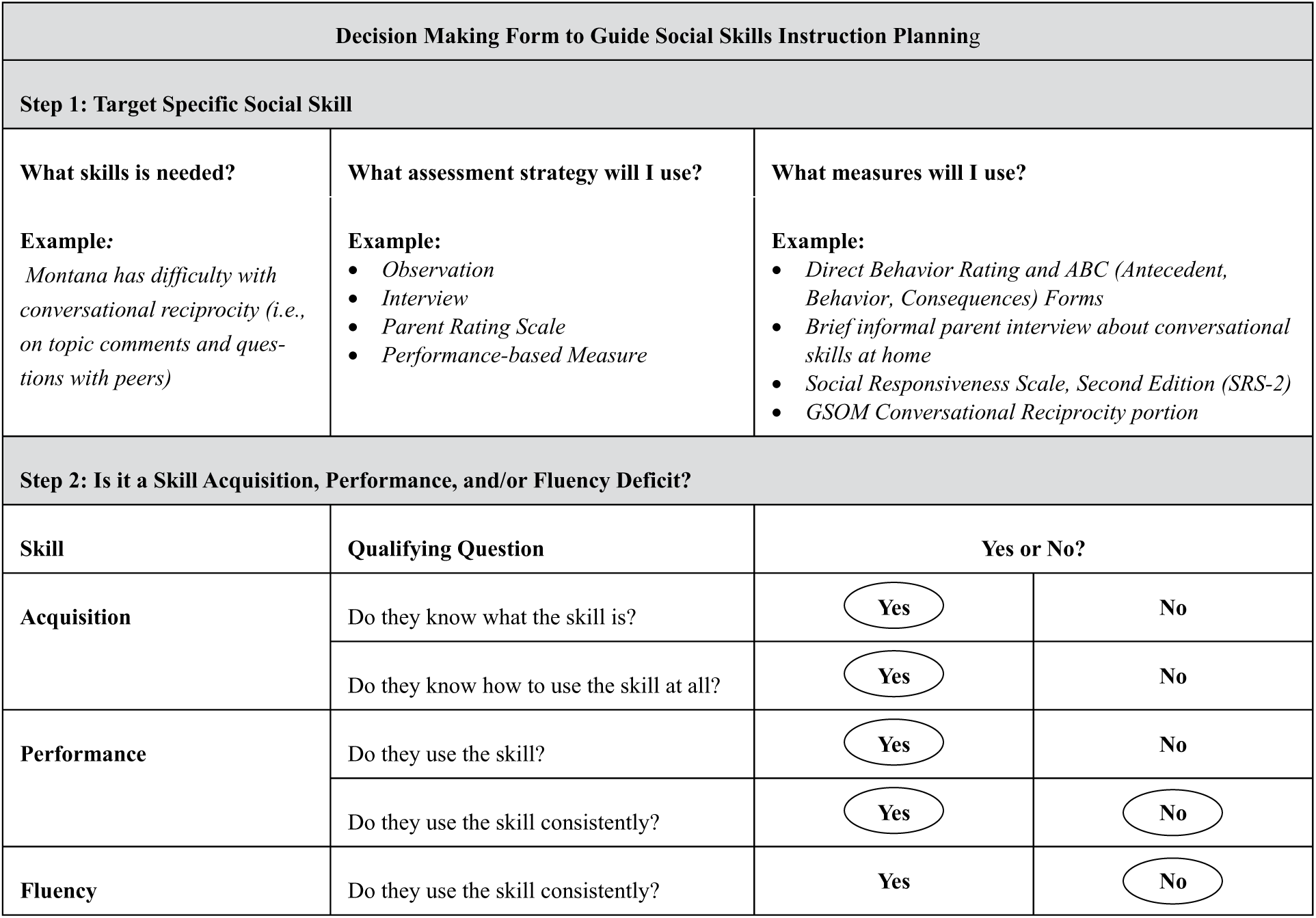
Decision-making form to guide social skills instruction process.
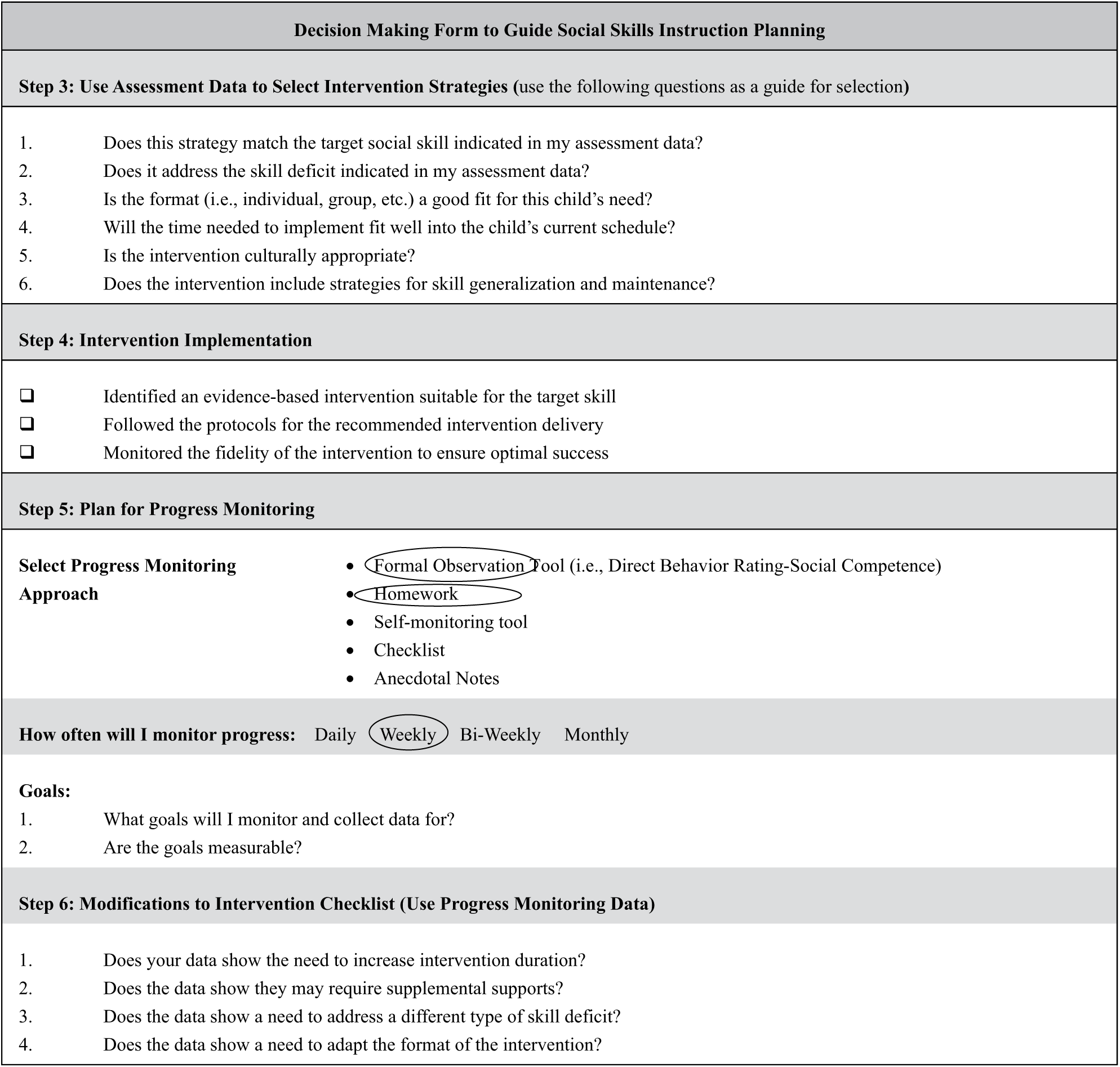
Decision-making form to guide social skills instruction process (Contd.).
Step 1: Assessing Social Skills
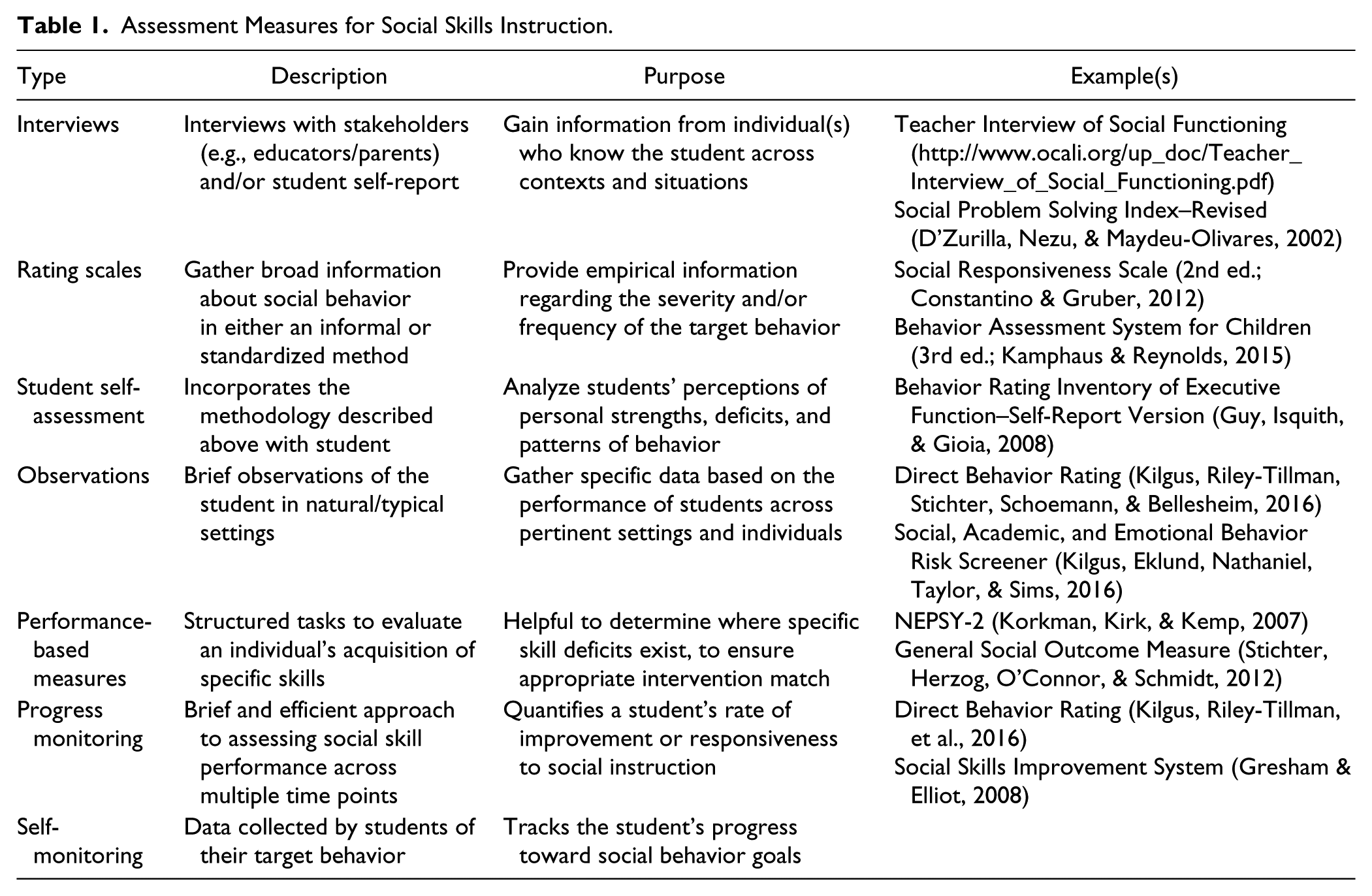
The first step in this process is understanding the need and type of assessment required, in other words, identifying what type of social skills intervention is needed and how to assess the intervention’s effectiveness. As with academics, identification of need alone is insufficient to determine instructional techniques and level of support necessary. Unlike academics, far less information is readily available to determine how to assess and prioritize social skill development; therefore, educators must draw on various sources for data collection (Kamps et al., 2015). Several different methods will be reviewed that can be used for identification of targeted needs, including interviews, rating scales, observation, and performance-based measures. Table 1 provides details about measures to use when collecting data for social skills instruction.
Assessment Measures for Social Skills Instruction.
Interviews
Interviewing is a measurement technique that uses a series of questions to derive pertinent information and can be used across settings and stakeholders such as parents, educators, and target students and their peers. Interviews provide beneficial information in that they allow individuals who are close to the target student to give details about the student’s strengths and needs across environments. They also allow students themselves to provide insight on challenges and strengths. The goal of an interview is to get a clear picture of what is happening at school (in the classroom, lunchroom, playground, and other typical contexts) from the relevant stakeholders to inform appropriate intervention selection and/or modification. See Figure 3 for examples of questions that may be helpful when interviewing.

Sample interview questions.
Interviews can be advantageous in a school environment as they do not require a third party or novel person in the environment to gather the information. Interviews can be formal, with a standard set of questions and scoring rubric (DiCicco-Bloom & Crabtree, 2006). They also can be informal or unstructured, composed of a series of pertinent questions, to further develop instructional targets and intervention. Interviews can often supplement direct observations or standardized assessments to capture the full picture of the students daily functioning or in a specific situation. For example, if the interview is conducted with individuals who are with the student throughout the day, valuable information can be gathered about performance variation across different settings, demands, tasks, and individuals.
Structured interviews typically are completed by following specific protocols and guidelines. Because interviews can be an important and effective tool to identify target problem behaviors, key questions may be generated by teachers to ensure information is gathered regarding what the need is (i.e., clearly and concisely identify the target problem behavior), where it’s seen as a need (in what settings), to what degree it is a need (i.e., the severity), what has been done before (i.e., previous interventions tried), and how successful those interventions have been.
Rating Scales
Rating scales are questionnaires designed to gather broad information about social behavior. Much like interviews, ratings scales can be either informal or standardized and are composed of a series of questions regarding the target behaviors which stakeholders rate typically based on severity or frequency. The primary benefit of rating scales is the efficiency by which they can be completed, often repeatedly over time, and interpreted. Furthermore, they can easily be completed by numerous individuals across multiple settings (e.g., the individual, parents, educators/staff) to ensure a complete depiction of the current level of skill (Achenbach, McConaughy, & Howell, 1987).
One potential limitation of using some standardized rating scales is that some can be rather long, may require a great deal of observation to complete accurately, or can require very specific scoring techniques (Merrell & Gimpel, 2014). Often it is recommended that practitioners use standardized measures to capture the rate of improvement from baseline to the intervention stage; this helps to ensure an accurate interpretation of the amount of change that has occurred as a result of intervention implementation (Rao, Beidel, & Murray, 2008). Informal measures may be more useful for progress monitoring or the initial stages of information gathering. Figure 4 provides considerations when choosing rating scales.
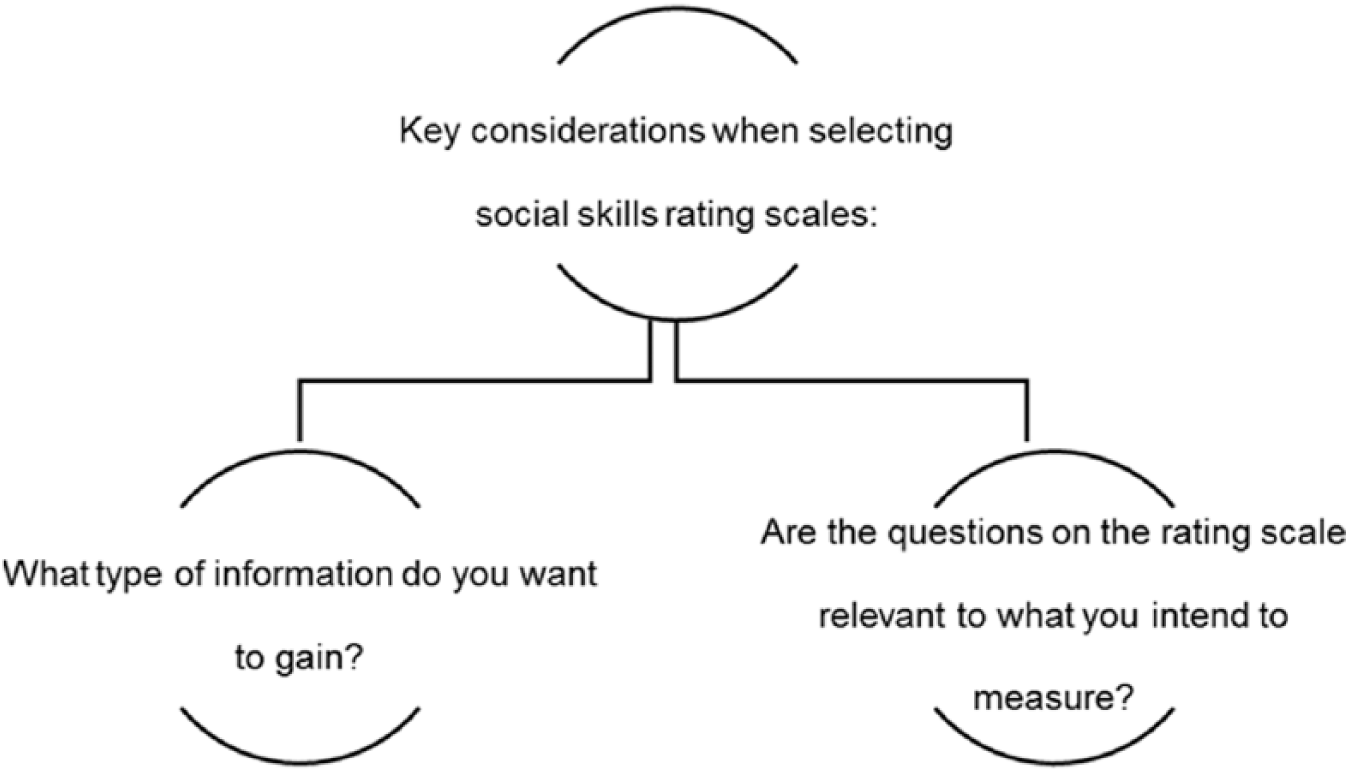
Questions to consider when selecting rating scales for social skills assessment.
Direct Observation
Direct instruction is another common measurement tool to assess a student’s skill level (Shapiro & Heick, 2004). Direct observation provides in-context data as the observer monitors the live performance of students as well as the outcome of their behavior. However, the quality of the data is contingent on the type of observation utilized. There are two methods used to collect and analyze data gathered during direct observations both qualitative and quantitative methods.
Qualitative data collection, for example, allows the observer to take notes as behaviors occur. The strength of this method is that a great deal can be captured because the observer is not filtering the data on predetermined behavioral targets. The challenge of this type of data collection is that it can be more difficult to categorize the observations so that data can be compared across settings and activities (Volpe, McConaughy, & Hintze, 2009). As such, it is recommended, especially in education settings where resources are tight, to focus on a few key behaviors to observe at times when they are consistently reported as either never occurring or always occurring. Once patterns emerge, it then becomes easier to hone in on even more efficient collection methods, such as quantitative data.
The collection of quantitative data, otherwise known as systematic direct observation, is the use of numerical values to capture target behaviors (Hintz, Volpe, & Shapiro, 2008). For example, if looking at how long or often a child interacts (i.e., duration), one may list a behavior of interest and then have either a stop watch or a tally counter to assist in data collection. See Figure 5 for an example of a standardized direct observation measurement tool. These numeric values can then be easily converted to baseline rates of average length, or range of frequency of behaviors of interest. In turn it can then be far simpler to track progress across time, as well as compare data before and after the intervention was conducted. Completing these types of quantitative observations, while often ideal, can also be costly in terms of time and personnel. Through the use of technology (e.g., smartphone or tablet apps) and repurposing items (i.e., golf counters, rubber band transfer from wrist to wrist) some degree of active data collection can be accomplished even in the most challenging classroom. In addition, approved videotaping after necessary consent has been obtained, use of ancillary support staff, and short duration observations (i.e., probes) can also assist in securing a feasible means to collect this type of data. If there are many students in need of data collection, a team approach to sharing the load or alternate means of data collection might be most feasible.
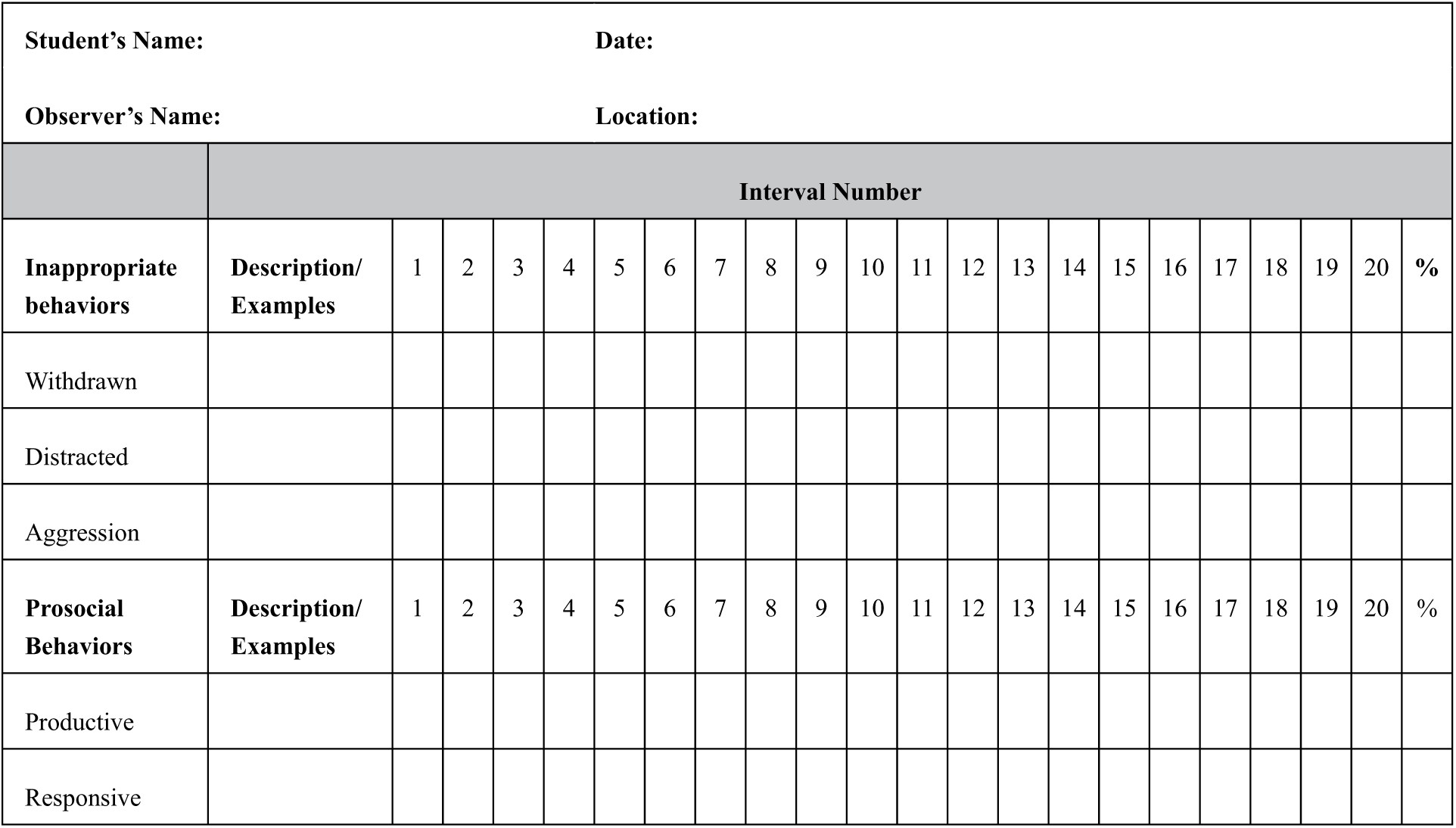
Sample Systematic Direct Observation (SDO) form.
Performance-Based Measures
Performance-based measures differ from the assessments previously described in that they are used to test students’ performance on a specific task. These assessments may be standardized or may consist of grade-level tasks from the classroom. A benefit of performance-based measures is that they are efficient in that they may be administered to multiple students simultaneously and provide quantified information to inform instruction. A common challenge in the classroom is ensuring students, of varying skill levels, are receiving appropriate instruction to match that skill level (Salvia, Ysseldyke, & Witmer, 2012). Performance-based measures help educators identify the students’ current skill level, so that they can appropriately match level of instruction to ability level for all students in the classroom. These can be very helpful in understanding where a specific skill deficit resides that needs support. While measures such as rating scales and direct observation capture the actual performance of social skills, performance-based measures assess the student’s understanding of social skills (Michelson, Sugai, Wood, & Kazdin, 2013). Using performance-based measures as well as measures that are more ecologically valid like direct observation provides a balanced picture of strengths and areas for student improvement.
The benefit of both rating scales and performance-based measures is that they are efficient and economical for use in schools, where resources are often limited. In addition, personnel often do not have to undergo extensive training for some of these measures, which provides more flexibility in regard to who administers the assessments and when. Once an assessment strategy is chosen, it is important to follow a clear path to defining the target skill, collection of data, and intervention adoption and monitoring. Figures 5 and 6 highlight these next steps.
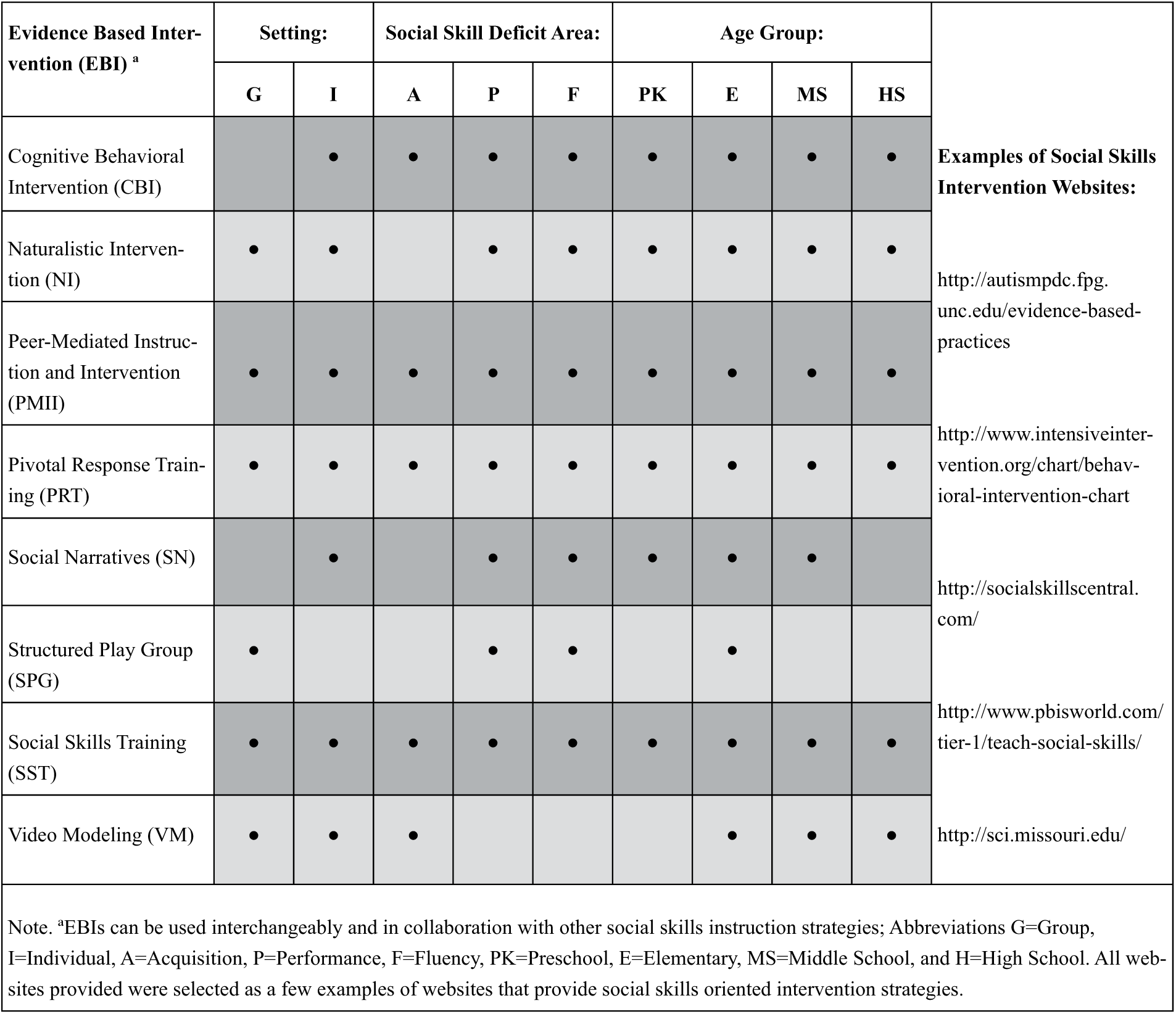
Recommendations for evidence-based interventions for social skills instruction.
Step 2: Distinguish Among Skill Acquisition, Performance, and Fluency Deficits
Once primary social competence deficits are identified, it is essential to ascertain if students are experiencing a skill acquisition deficit, performance deficit, or fluency deficit (Stichter & Conroy, in press). This will aid in determining the type and intensity of intervention. It is important to complete this step to best match the intervention with the level of instruction that the student needs.
When students are in the acquisition phase of learning, they are not yet demonstrating the target behaviors appropriately or perhaps even at all; therefore, they require direct instruction to learn or improve a needed social skill. For more information about best practices in teaching and intervention, refer to High-Leverage Practices in Special Education from the Council for Exceptional Children and CEEDAR Center (2017). Once students can demonstrate the skill in some manner (e.g., one on one, in a contrived prompted manner) but are not demonstrating skills in more naturalistic situations or demonstrating them consistently, these students are most likely exhibiting a performance or fluency deficit. To extend these skills, most often students will benefit from incorporating numerous practice opportunities into their learning environment (Stichter & Conroy, in press). Making practice opportunities as naturalistic as possible is important when building performance and fluency; therefore, modification of the environment to include these opportunities may be necessary. Incorporating numerous practice opportunities and making opportunities as naturalistic as possible as well as increasing the contexts and individuals with whom students are practicing skills will promote generalization across different environments. Using peer-mediated or adult-mediated coaching strategies is one way to optimize more naturalistic practice opportunities, which also serves to allow generalization of new skills to occur (Stichter & Conroy, in press). Figure 1 highlights questions to consider when determining what type of skill deficit a student may have.
Step 3: Intervention Selection
While the intervention selection process is complex, there are a few considerations relevant to measurement when selecting an intervention. Effectively matching the social skills need to the appropriate intervention is key, but also can be complicated without sufficient information. Assessment data that provide indicators of need across environments, people, and levels of need are incredibly helpful when choosing among the increasing number of available interventions. In addition to the specific skills, it’s also helpful to consider if the intervention is designed in such a way that matches the number of students that you have identified as needing intervention and the amount of time that will be allocated to intervention daily. As previously discussed, there is still a need for more evidence-based social skills instruction interventions; however, combining key assessment data and professional skill sets, it is possible to find interventions that have a good evidence-base and will provide effective instruction.
There are resources available online that provide valuable information related to intervention selection. Websites such as Intervention Central (http://www.interventioncentral.org/), What Works Clearinghouse (http://ies.ed.gov/ncee/wwc/), and the Evidence Based Intervention Network (http://ebi.missouri.edu) provide not only examples of numerous evidence-based interventions but also detailed information about selecting interventions, the population the intervention is designed to target, implementation best practices, and measurement tools that may be appropriate for the intervention. Figure 6 highlights a few examples of evidence-based interventions and considerations for each that represent various needs and settings. Again, these are selected examples for illustrative purposes. The aforementioned websites can highlight several others.
Assessing and ensuring that the intervention is delivered as intended are imperative, otherwise the effectiveness of the intervention cannot be accurately determined.
Step 4: Implement the Intervention
Given that each intervention is different and varies in implementation requirements, it is critical to continually reference the intervention recommendations and guidelines to ensure fidelity of the intervention is maintained. Again, Figure 6 highlights several sources for more specifics on using specific evidenced-based interventions with fidelity. Successful interventions were researched and implemented based on specific criteria and steps to ensure that the intervention, as opposed to other concurrent factors, contributed to the change. As such, it is imperative that these protocols are also followed in applied settings to achieve the desired effect. Furthermore, it is helpful to map out the assessments that will be conducted during and at the end of an intervention cycle to determine effectiveness and next steps for instruction.
Step 5: Evaluate and Monitor Progress
Assessment throughout the intervention is critical to evaluate the effectiveness of the intervention and is dependent on the type of intervention selected and the material that is delivered. Progress should be monitored regularly to ensure that students are growing and developing skills at an acceptable rate.
Progress monitoring (PM) measures are typically brief, efficient methods of assessing student growth from the start of intervention and continuing throughout its progress (Stecker, Lembke, & Foegen, 2008). These measures provide a quantifiable rate of improvement or responsiveness to instruction. Given that PM tools are designed for use consistently over time, looking at the score of only one administration will provide an inaccurate snapshot of the student’s progress (Kerr & Nelson, 2010). In addition, progress-monitoring tools can support educators in recognizing and understanding slower than desired progress or key areas that are more difficult for students. When educators have this information, they can target additional instruction or support in areas that will allow students to meet expectations (Simonsen, Fairbanks, Briesch, Myers, & Sugai, 2008).
When using PM for the purpose of informing social skills instruction, there are several considerations. Prior to the start of intervention, decide at what consistent interval throughout intervention PM administration will occur. Consistent sequencing of PM is important so that progress is being measured equally across time. For example, it wouldn’t be useful to collect PM data for the first, fourth, and fifth weeks of intervention because inconsistent time of intervention delivery would pass between assessment periods (Kerr & Nelson, 2010). The educator must then decide what measure is most appropriate. Occasionally, a social skills intervention may have a PM component that can be used, but if that is not the case educators may select an appropriate measure that is sensitive enough to detect change over time.
PM data are essential in determining appropriate placement for programming, especially when allocating support for a student and deciding when the intensity of instruction needs to increase or decrease. One way to do this is to graph the data as they are collected. Particularly with PM data, if data are graphed, this visual provides educators with an easy way to identify if the student is making progress and when a change in approach to teaching the skills may be necessary. It’s never enough just to collect the data; they must be utilized throughout the intervention selection and implementation process.
Steps 6: Use Data to Continue Ongoing Modifications
While selecting and implementing the intervention may be considered the most important parts, ensuring that the assessment is provided adequately and effectively is equally important. It is vital to gather information about the student’s level of functioning in social competence, to identify areas of need (i.e., where the deficits lie), to identify appropriate interventions, and to monitor progress. Through the use of effective PM, an educator can quickly see when progress either plateaus or regresses. This assists instructional planning by highlighting the need for increased dosage and/or intensity of the intervention. It can also provide insights as to time of day, lack of prerequisite skills a student may need to fully progress, or the need for additional generalization and maintenance programming to support the transfer of skills and continued use of those skills beyond instructional time.
Cultural Considerations
Social skills assessment and intervention must also be culturally sensitive. Cultural competency or sensitivity can be described as one’s ability to attend to students with diverse values, beliefs, behaviors, social, cultural, religious, and linguistic needs (Cartledge & Loe, 2001; Cartledge & Milburn, 1996; Goode, Dunne, & Bronheim, 2006). It is pertinent that educators remain aware that situations will occur that require cultural adaptations to social skills measures and instruction, especially for these practices to be more effective and individualized. Cultural competency can seem like a relatively ambiguous construct for educators to facilitate in practice. Shealey and Callins (2007) described two relevant approaches for educators to adopt that are culturally sensitive and practical: (a) learn about the cultures represented in the classroom and translate that knowledge into instructional practice and (b) provide culturally appropriate social situations for learning. Sugai and Maheady (1988) also provided practical recommendations for assessing the behavior of culturally diverse students: (a) use a functional assessment approach, (b) observe and compare the student to typical peers within the classroom, and (c) examine how the student’s linguistic competence and the educator’s personal behavioral expectations may disrupt social interactions within the classroom.
Social skills instruction is not one-size-fits-all and must meet the needs of rapidly changing demographics within schools. American families are increasingly diverse and complex in terms of race, ethnicity, immigrant status, socioeconomic circumstances, and family structures (Cherlin, 2010). With this knowledge, educators must remain cognizant and accepting of diverse customs and social norms of students within their school community. For example, eye contact may be assessed as a skill in which a student needs improvement. For this skill and others, one may consider whether the student’s behavior (e.g., lack of eye contact) is a cultural custom for respect. In some religions, too much eye contact is not considered appropriate based on gender. Unlike self-regulation, cultural considerations for eye contact may be easily modified, without changing the intended purpose for social skills instruction.
A Continuum of Needs
Most educators have a significant range of students in their classrooms that they need to adequately teach and monitor. The area of social competence is no exception. Some students may have very subtle yet impactful deficits for their long-term outcomes (e.g., cannot ask for help appropriately) whereas others have clear and significant deficits (e.g., they struggle with impulse control or emotional regulation) creating a need for intensive supports. The result of not implementing social competence interventions and measuring for growth over time is multidimensional. The implications for long-term consequences across the lifetime in social domains have already been discussed. There is also the challenge that many times students who do not have appropriate social skills will be misidentified as having behavioral challenges instead of social skills deficits. The manifestation of social skills deficits as challenging behavior for these students is often an outcome of simply lacking the skills to interact appropriately, rather than having a behavior disorder. If this distinction is not made, students will not be provided the appropriate services to learn to change these behaviors and improve their chances of success.
There remains a need for research in the area of social competence, specifically increasing the availability of evidence-based measurement tools for social competence (Odom, Cox, & Brock, 2013). There are populations in schools that would benefit significantly, in both the short term and the long term, from social competence interventions, specifically students with a diagnosis of an autism spectrum disorder or emotional behavior disorder. As research has shown, students who experience social skills deficits experience decreased academic performance, few close friendships, and oftentimes lifelong difficulties when they are not instructed in appropriate social skills. Given that schools are responsible for addressing all needs of students, including both academic and the ability of students to generalize skills effectively, both socially and emotionally, the assessment and implementation of social competence interventions is critical in schools.
Footnotes
Declaration of Conflicting Interests
The authors declared no potential conflicts of interest with respect to the research, authorship, and/or publication of this article.
Funding
The authors received no financial support for the research, authorship, and/or publication of this article.
