






Abstract
This article introduces School-Wide Positive Behavioral Interventions and Supports (SW-PBIS) in Turkish schools through a family–school–university partnership methodology, Learning Lab. The Learning Lab served as a structured, collaborative process through which educators, families, and researchers jointly examined discipline practices, identified systemic and contextual barriers, and co-developed culturally responsive Tier 1 supports aligned with national regulations. Rather than presenting SW-PBIS as a framework to be adopted directly, this article highlights the collaborative design process used to embed preventive practices within a centralized education system. Practical implications for practitioners include guidance on introducing SW-PBIS across cultural contexts, engaging families as authentic partners in decision making, and using collaborative methods to design equitable and sustainable school-wide behavior support systems.
Introduction
School safety is consistently ranked among the top priorities of both educational stakeholders and school personnel (Gray & Lewis, 2015; Reynolds & Astor, 2022). Exclusionary disciplinary practices not only disrupt learning but also increase dropout rates and long-term risks. In many countries’ educational systems, responses to challenging student behavior continue to rely heavily on exclusionary disciplinary practices such as suspensions, expulsions, and office discipline referrals. These practices are associated with a range of negative outcomes, including reduced academic engagement, increased risk of dropout, and long-term involvement with the justice system (Fabelo et al., 2011; Glover & Clarke-Glover, 2025; Losen & Martinez, 2013; Noltemeyer et al., 2015). As a result, there is a growing international consensus on the need for preventive, evidence-based frameworks that support students’ positive behaviors while minimizing exclusionary disciplinary actions.
School-Wide Positive Behavioral Interventions and Supports (SW-PBIS) is a multitiered system of supports framework designed to promote positive behavior and improve social, emotional, and academic outcomes for all students (Gage et al., 2019). SW-PBIS emphasizes proactive practices for systematically teaching behavioral expectations, data-based decision-making, and outcomes, and an explicit focus on equity (Center on PBIS, 2025a). The SW-PBIS framework, developed in the United States (U.S.), has been implemented in over 25,000 schools. Research from a range of international contexts, including European and Pan-Pacific regions, provides further evidence that the framework can be effective beyond its original national setting and be adapted to different countries and social, historical, and geographical contexts (Demirtaş et al., 2025; Kincaid et al., 2023; Okamura et al., 2023).
Despite growing international interest in SW-PBIS, there is limited guidance on how to introduce the framework within education systems that differ from those in the U.S. This gap is particularly evident in countries such as Türkiye, where all public schools operate under a centralized education system. In this system, academic calendar, curriculum, assessment, and disciplinary practices are regulated through nationally defined procedures (Ministry of National Education [MoNE], 2017). In Türkiye, the MoNE centrally regulates the 12-year compulsory education system, structured as 4-year elementary, middle, and high school cycles. At the secondary level, students enroll in various school types based on their academic performance or preference. These school types include general, science, vocational and technical, and religious-based schools. Although all schools operate within the national regulatory framework of the MoNE, the primary distinction between public and private schools lies in their administration and funding. Private schools generally provide greater operational flexibility, smaller class sizes, and improved access to support staff, facilitating more independent execution of specialized programs than public schools do.
School size and classroom density in Türkiye vary significantly across regions, reflecting regional demographics. Schools in metropolitan cities such as İstanbul, Ankara, and İzmir frequently experience higher enrollment rates, whereas rural schools serve smaller student populations. Thus, these contextual differences may impact student-teacher ratios and the overall educational environment. To guarantee accessibility in remote communities or for students with disabilities, the state offers “transported education” (state-funded transportation to centralized schools). Other policies to support accessibility include free textbook distribution, scholarships, social assistance programs, and inclusive educational practices. Formal parental involvement is facilitated through school-parent associations and the national e-School Management Information System, which enables families to track academic progress digitally. Nonetheless, parental involvement remains predominantly formal and case-oriented; there is an acknowledged need to shift these interactions toward more proactive, collaborative partnerships in decision-making processes.
School discipline practices in Türkiye vary across age groups, progressing from developmentally oriented, guidance-based practices in early childhood and elementary education to highly formalized, regulation-driven procedures in secondary education. For example, although educators typically address behavioral concerns through classroom-based strategies, observations, and collaboration with school counseling services and families for elementary students, they often utilize more formal disciplinary actions for secondary students (MoNE, 2017). Typical disciplinary actions for student behavior may include issuing a warning, a reprimand, or transferring a student to a different school in elementary education. In contrast, disciplinary practices for student behavior in the secondary years can include reprimands, out-of-school suspensions (1 to 5 days), transfers to another school, or expulsion. As Karasu and colleagues (2019) reported, Turkish educators usually address behavioral problems often through punishment after they occur rather than preventing them. This top-down structural feature restricts local schools’ flexibility to adapt an autonomous school-wide preventive discipline framework such as SW-PBIS. It is important to note that the SW-PBIS framework is not explicitly incorporated into the national education system or existing school discipline-related legal and policy regulations.
Taken together, these contextual characteristics highlight the importance of exploring how SW-PBIS can be meaningfully introduced and adapted in Türkiye. Thus, this article highlights how the Learning Lab methodology can support family-school-university partnerships in introducing and adapting the SW-PBIS framework within this context. Practically, this involves (a) beginning with locally meaningful discipline data that educators and families already recognize, (b) jointly examining how current practices differ across grade levels, (c) identifying points where preventive Tier 1 practices can be embedded without conflicting with national regulations, and (d) co-developing behavior expectations and reinforcement strategies that are developmentally appropriate and culturally responsive (Melekoglu et al., 2017; Melekoğlu & Diken, 2022). Such an approach allows schools to gradually shift from reactive, case-based responses to proactive, school-wide systems, even within a centralized system. Stakeholders need to collaboratively analyze, adapt, and implement core Tier 1 features while maintaining fidelity to the underlying principles of SW-PBIS (Horner et al., 2017; Sugai & Horner, 2002).
SW-PBIS implementation necessitates collaboration of local stakeholders, including families, educators, and researchers. Family-school partnerships are critical to implementing SW-PBIS. In the past, researchers have highlighted the importance of collaboration in SW-PBIS implementation and practices (Bal et al., 2016; Garbacz, 2019). Clearly, authentic partnerships are necessary to incorporate families’ perspectives, experiences, and goals into the development and implementation of SW-PBIS. This approach is instrumental in facilitating a practical understanding of their needs and interests. The Center on PBIS (2025b) suggested that families and educators could collaborate on (a) building trusting relationships, (b) engaging reciprocal communication, (c) promoting equitable family representation, and (d) engaging families in data-informed decision-making.
One essential aspect of effective family-school collaboration is the development of systemic processes for shared decision-making (Witte et al., 2021). However, less guidance is available on how to operationalize these principles in centralized education systems or sustain collaborative structures over time. The adaptation and implementation of SW-PBIS outside the U.S. and in diverse national contexts require further examination. It is imperative to develop the knowledge and skills to introduce the SW-PBIS framework to local schools that have not yet adapted it, as this will be informative for all. However, only a limited number of researchers studied the SW-PBIS framework in Türkiye. For instance, researchers have conducted research projects to introduce the SW-PBIS framework to teachers and families (Erbaş & Yücesoy-Özkan, 2008), to train families in a home-based PBIS model (Melekoğlu et al., 2024), and to increase teachers’ knowledge and skills regarding the framework (Çolak, 2023). Researchers have also examined Tier 1 or Tier 2 levels of PBIS (e.g., Atbaşı et al., 2019; Melekoğlu & Diken, 2022).
In this article, we describe a 5-day professional development (PD) program designed to introduce and adapt SW-PBIS Tier 1 practices in Turkish middle and high schools through the Learning Lab methodology (Bal et al., 2016). Rather than presenting SW-PBIS as a fixed program, our work foregrounds the process of collaborative design, focusing on how educators, families, and researchers can jointly analyze discipline data, identify systemic contradictions, and develop ecologically valid, locally meaningful Tier 1 supports based on the unique needs, resources, and interests of their local school contexts. Particular attention is given to practices that support students with high-incidence disabilities, including learning disabilities and emotional/behavioral disorders, for whom predictable routines, explicit instruction of expectations, and consistent reinforcement are especially critical.
The Learning Lab Methodology
Grounded in Cultural-Historical Activity Theory (CHAT), Learning Lab strategically brings together multiple stakeholders to examine existing practices, question taken-for-granted assumptions, and co-construct new solutions aligned with local values, resources, and constraints (Bal et al., 2018; Engeström et al., 2013). Learning Labs include local stakeholders (e.g., educators, students, administrators, families, and community members). Learning Lab members move beyond “what can I do?” toward a shared understanding of “what we can do” within their own school contexts through structured action steps. Through a series of collective, expansive actions, members engaged in root-cause analyses to identify the issues their schools face and to design a new system to develop adaptive, sustainable systemic solutions (Cakir et al., 2022; Ko et al., 2022; Mawene et al., 2025).
In this study, we aimed to establish authentic, collaborative partnerships in which participants learned, discussed, and analyzed systemic issues, and developed locally meaningful solutions to their unique and ever-changing needs, strengths, and goals. The Learning Lab methodology plays a key role in facilitating this collaborative learning process (Engeström et al., 2013). The key idea is that learning happens not only by applying existing solutions but also by creating new ones together, learning what is not yet there (Engeström et al., 2013). By documenting this process, we aim to provide practitioners with practical guidance for introducing and adapting SW-PBIS in centralized education systems and other international contexts where preventive behavioral frameworks are not yet utilized. In what follows, we describe the details of our PD program along with the perspectives of its participants.
The Project Purpose, Participants, and Duration
The purpose of the present project was two-fold. The first was to introduce the SW-PBIS framework to middle and high schools in Türkiye’s Black Sea Region. The second purpose was to design Tier 1 systems for participating schools and discuss implementation possibilities. To accomplish these goals, we developed and implemented a 5-day PD program in 2024 that included activities focused on defining problem behaviors, analyzing their root causes, introducing the SW-PBIS framework, and developing Tier 1 models. Table 1 includes information about the Learning Lab PD sessions.
Sessions and Agendas.
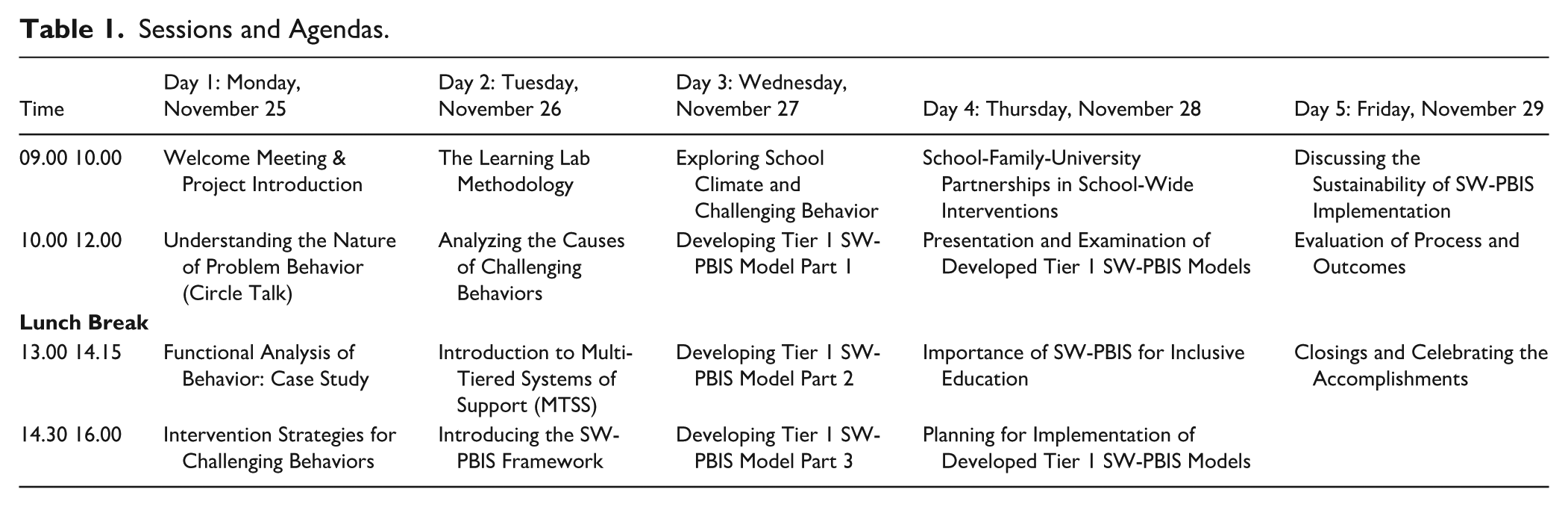
The project took place in a city in northeastern Türkiye. There were 26 public schools in the city’s school district. These schools included five kindergartens, seven elementary schools, seven middle schools, and seven high schools. A total of 6,157 students were enrolled in these schools. From three middle schools and three high schools, a total of 21 participants with diverse roles (including six principals, five teachers, six school counselors, and four parents) participated in the project. Ten of them were female, and eleven were male.
The project team included seven researchers with prior experience in designing and implementing the SW-PBIS framework in school settings. The project consisted of 19 sessions, totaling 5 days. The project took place in a non-educational environment. In this way, we provided participants with a third space where they could examine and improve existing practices in a positive and constructive environment (Gutiérrez, 2008). The research team collected data via video recordings of the training sessions, focus group interviews, field notes, observations, and artifacts produced during the sessions.
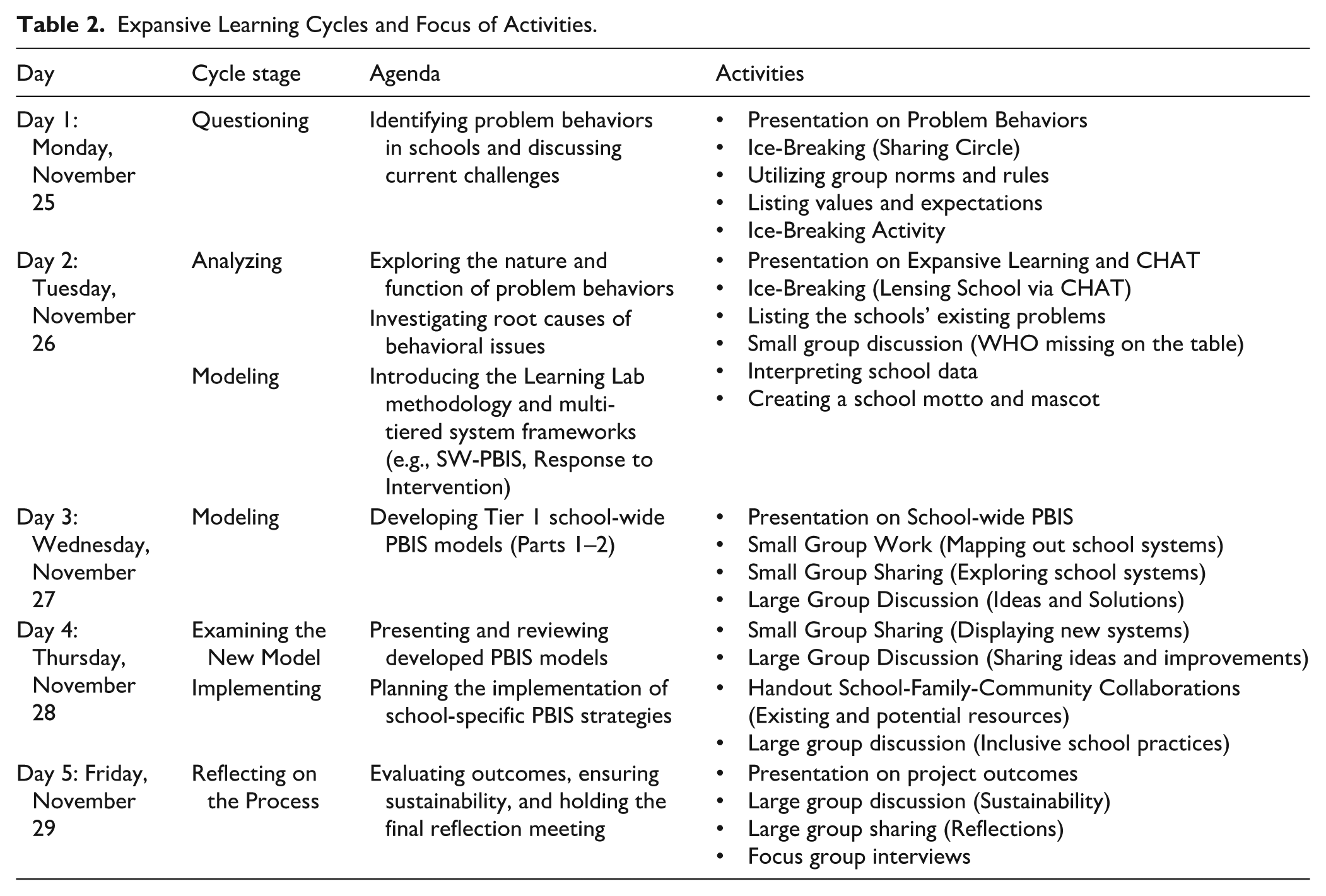
We utilized Learning Lab to design and deliver the program content. In Learning Labs, participants follow the expansive learning actions to move from problem identification to problem solving. The actions generally include: (a) forming the group, (b) questioning, (c) analyzing, (d) modeling, (e) examining, (f) implementing, and (g) reflecting on the process (Bal et al., 2018; Engeström et al., 2013). We developed and implemented a 5-day PD program based on these actions. However, we also had to differentiate our use of Learning Lab from that of other Learning Labs at times due to cultural and contextual differences. While typical Learning Labs are localized within a single organization, such as an elementary school (Afacan et al., 2021) or a middle school (Cakir et al., 2022), our study adopted a multi-institutional approach, integrating six schools around a common shared object. The shift from a single-site to an inter-institutional site required particular contextual adaptations to the process, which are elaborated in the following sections. Table 2 shows how we aligned the program with the expansive learning actions. The following section outlines easy-to-follow instructions for using the Learning Lab methodology to introduce the SW-PBIS framework to schools outside the U.S., based on our study.
Expansive Learning Cycles and Focus of Activities.
Obtain the District Leadership’s Support
Prior to the project, the program facilitators need to obtain the district’s leadership support. They can schedule a meeting with the district’s leadership team to discuss the project’s objectives, content, timeline, and potential dates. The facilitators should be ready to provide brief information on the use and impact of SW-PBIS in schools, as this may be a new concept for school district leaders. Leadership support is critical, as this work involves collaborating with teachers, principals, and families. This is especially important for projects involving schools within a centralized education system, as participants need permission to participate for the project’s entire duration.
Identify Appropriate Local Schools and Form Inclusive Working Groups
Upon securing authorization from the school district’s administration, facilitators can invite schools to participate in the project. These schools may be representative of the district’s schools. In our study, the school district leadership allowed our team to collaborate with three middle and three high schools. We compiled a list of potential participants comprising four to five individuals, including an administrator, a school counselor, a family member, and a teacher. As Bal and colleagues (2016) suggested, establishing a diverse participant group to form a more inclusive working group was beneficial. In total, our participants comprised six groups of four to five individuals and around 30 participants, including school administrators, teachers, school counselors, families, and researchers serving as program facilitators.
The structure of the Learning Lab differed from that of other Learning Labs because we worked with six schools simultaneously. We should also note that our funder’s expectations influenced the design of our Learning Lab, a key consideration in the project’s planning. The supporting institution required us to complete our work within one week, so we designed a 5-day-long activity program. These activities were also intended to promote inclusive practices for individuals with special needs and to encourage collaboration between schools, families, and universities. It is therefore important to note that the expectations of the school leadership team and funders can shape the design of the Learning Lab process in other projects. Under these conditions, we formed six inclusive working groups, and their first task was to question the discipline data in their schools. Figure 1 illustrates the collaborative framework utilized in one of our stakeholder workshop sessions. Participants were positioned at six round tables, intentionally comprising a diverse array of roles to foster interdisciplinary dialogue, with each round table representing a distinct school.
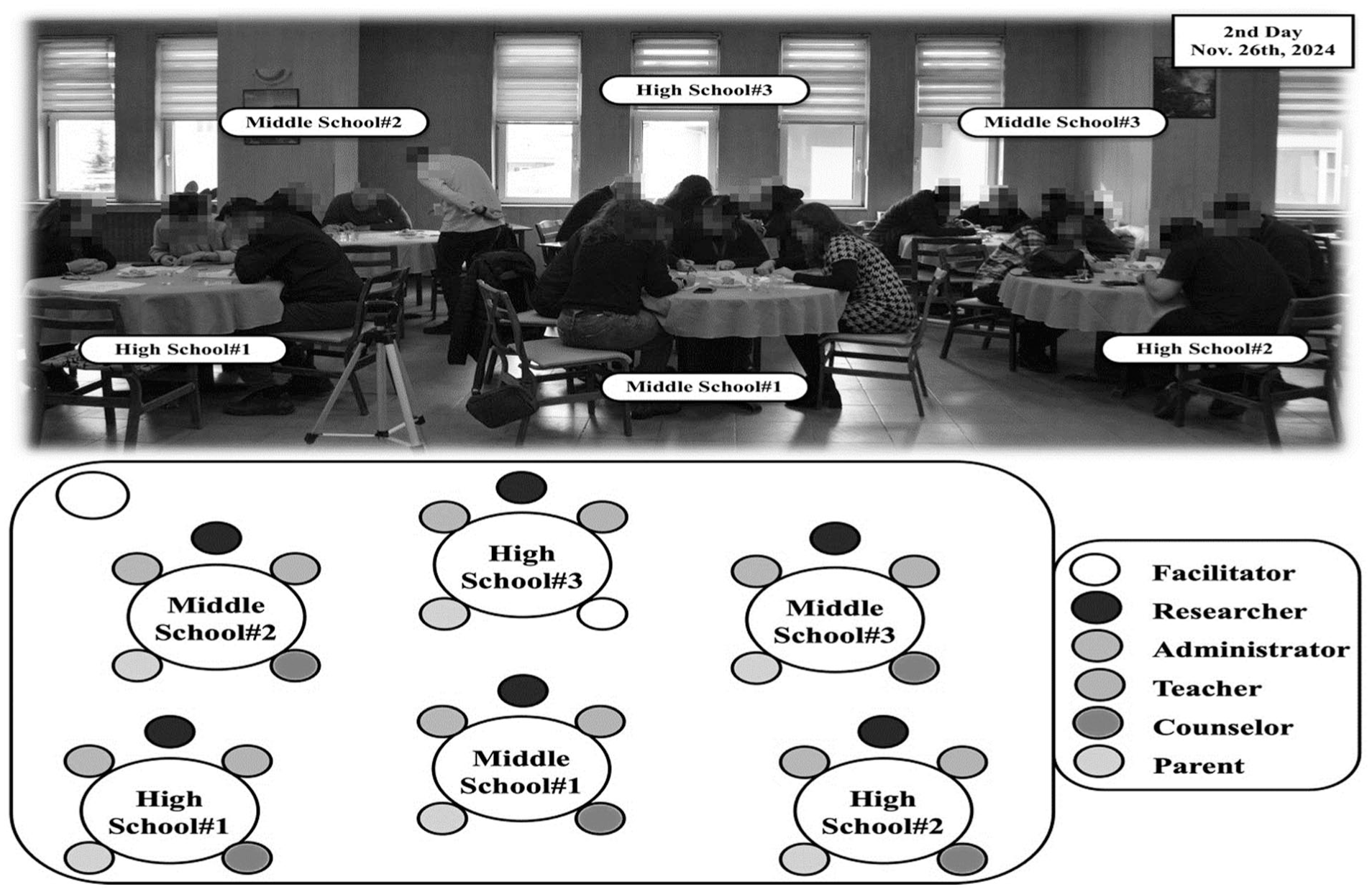
Participant collaboration setup.
Questioning the Existing School Discipline Data
One essential component of the SW-PBIS framework is the use of data to inform decision-making. Thus, a meaningful start is to review the existing school discipline data for all participants on the first day. It is important to note that this stage can vary between schools that implement SW-PBIS and those that do not. In schools that already implement SW-PBIS, the questioning stage can focus on identifying the problems within the SW-PBIS system and data. As in our own context, in schools that do not implement the SW-PBIS framework, this stage may focus on identifying prevalent problem behaviors and school-based disciplinary practices. At this stage, facilitators can encourage participants to openly share their experiences with challenging behaviors. An ice-breaking activity in the form of a sharing circle can help facilitate this. Each member can have the opportunity to share their personal experiences with challenging behaviors in school or home settings. The purpose of this activity is to create a Here and Now (Bal et al., 2016) situation in which participants can share, observe, and accept the existing disciplinary challenges in their settings each day. Facilitators can note challenging behaviors as participants define and share them with the whole group. In our project, we identified the following list of behaviors at the end of this activity: abusive behavior, absenteeism, bullying, disrespectful conduct, cruel actions, cyberbullying, damage to materials, tardiness, and dress code violations.
Participants can also review their school discipline data together. Data management systems used by schools, such as the e-School Management Information System in our context, can help participants review data and question problems. For this activity, school principals or counselors from each school can present their school discipline data to other participants. In our project, a high school counselor shared her school’s discipline data: I receive approximately 100 discipline files [including reasons for discipline referrals or any evidence collected for referred cases] within a year. I review them [or examine all relevant documents within the files] and give them to the principal. The principal then decides whether to refer them to the disciplinary committee. Subsequently, the disciplinary committee imposes penalties in accordance with the regulations. However, I receive approximately 100 files every year. (Day 1, Large Group Discussion).
It is uncommon for schools in Türkiye to share discipline data with their local stakeholders. This data review activity helps participants better understand existing school discipline outcomes. In this case, one school reported about 100 cases in a single year, among about 400 students. The decision regarding the consequences of a referral is made by the school or the district’s discipline committee and depends on the referral’s severity. Furthermore, school data can be categorized by gender, family income, ethnicity, or disability status. This type of examination can be instrumental in identifying potential disparities in behavior outcomes based on gender, income, race, and disability status, particularly for high-incidence disabilities.
Analyzing the Root Causes of Discipline Issues
The second day of the program can include analyzing the root causes of challenging behaviors and presenting multi-tiered systems of support frameworks, including SW-PBIS. First, facilitators can invite participants to discuss the possible root causes of challenging behaviors identified on the first day. In our project, participants created a list of root causes, including peer effect, changing values, problems in family-school communication, inconsistencies between home and school environments, a competitive academic environment, issues with anger management, an increase in the use of psychiatric medication, negative role models in digital environments, and a hostile home environment. A high school teacher shared his experience as follows: A student from my class was sent to discipline last week, and I asked why, and it turned out he was selling cigarettes. I asked him why he did that. He said, Sir, how else am I going to learn business? and he was an accounting student. (Day 2, Large Group Discussion).
Participants can share similar experiences with the entire group. Sharing their experiences enables participants to understand the challenges each member faces regarding discipline and possible root causes. During this session, participants can analyze school-level disciplinary data, focusing on gender, income, ethnicity, disability status, and grade level. In our project, we found it helpful to use schools’ existing data management systems for this activity. Similarly, participants from different schools can do this activity by reviewing their schools’ data management systems. After questioning existing disciplinary outcomes and practices and analyzing their root causes, researchers can introduce the SW-PBIS framework to participants. It was vital to introduce the working principles of the multi-tiered support systems, including SW-PBIS, because our participants were unfamiliar with them. Participants in the U.S.-based studies may already be familiar with the SW-PBIS framework through everyday school practices or educational laws. However, facilitators working within different contexts should consider introducing the framework to their participants if it is not already familiar to them. We added sessions to introduce SW-PBIS to school participants in our Learning Lab. Participants should gain insight into the practical applications of the multi-tiered models in educational settings. Secondly, researchers should focus on the SW-PBIS framework, including Tiers 1, 2, and 3. However, each tier may require many training sessions, so focusing only on Tier 1 can be useful initially.
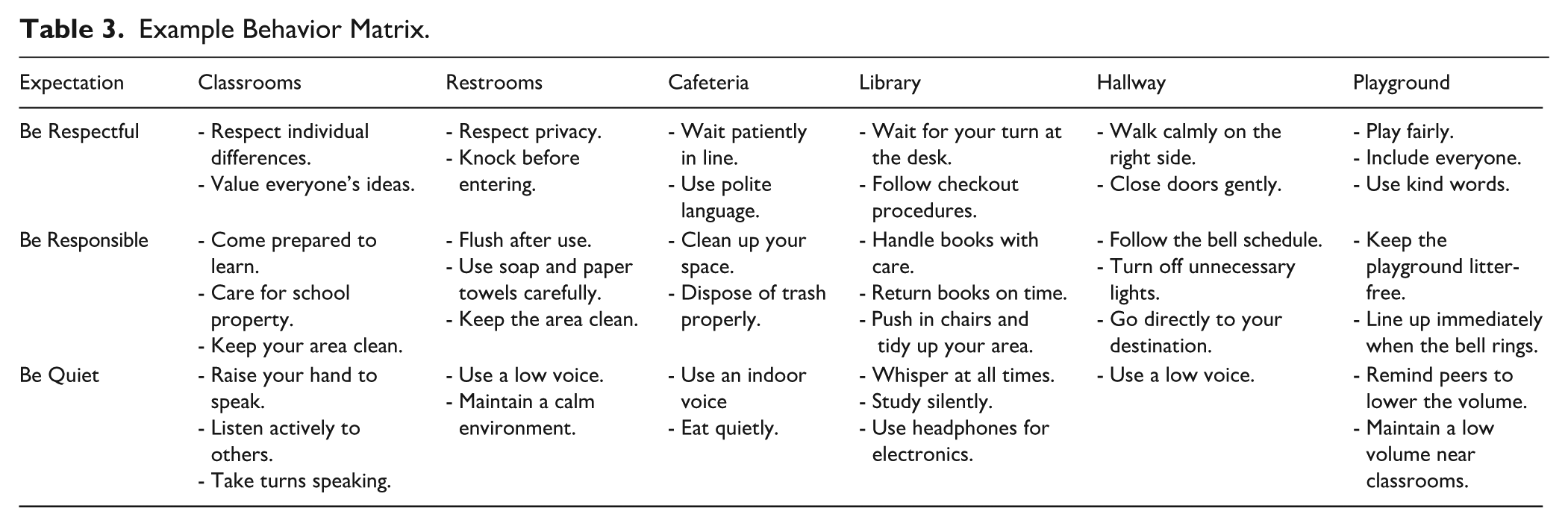
In addition to the sessions related to introducing the SW-PBIS framework, participants should also practice and complete its relevant activities. During this session, participants can practice creating behavior matrices for various school environments (e.g., classrooms, hallways, or cafeterias). Participants from each school can also create school-wide expectations (e.g., being responsible, being respectful, being safe) and illustrate mottos. These activities can encourage participants to support their schools’ discipline systems by integrating SW-PBIS components. For example, Table 3 illustrates a behavior matrix collaboratively designed by participants to address noise, a common issue and stress factor identified during the questioning and analysis of school-related problems. Each group established behavioral expectations for a specific setting, shared them with the larger group, and used affirmative language rather than prohibitions to demonstrate a unified approach. A school-wide voice-level system was discussed and used alongside the matrix to evaluate noise levels in each environment. After participants learn the fundamental principles and core practices of SW-PBIS Tier 1, they can map out their existing discipline systems and incorporate SW-PBIS elements to model new systems.
Example Behavior Matrix.
Mapping Out the Existing Behavior System and Modeling the New System
The third day’s activities can involve mapping out the existing discipline system and modeling the new system aligned with SW-PBIS Tier 1 practices. In other Learning Labs, facilitators direct participants to map out their existing SW-PBIS systems and to identify systemic contradictions (Bal et al., 2018). This process may be viewed as a method for evaluating the fidelity of implementing SW-PBIS. The purpose of mapping out the existing behavior support system was different in our Learning Lab. It served as a stimulus for participants to develop a behavior support framework tailored to the specific requirements and interests of their respective schools. Thus, we initially introduced the SW-PBIS framework and guided participants in incorporating its core components into their existing discipline systems. In addition, participants paid particular attention to aligning each component with the requirements of Türkiye’s central education system and existing regulatory structures during model development. For these reasons, it is important to note that the mapping of the existing behavior system and the modeling process can differ between schools that implement SW-PBIS and those that do not.
At this stage, facilitators can invite each school’s participants to map out their existing discipline system on the provided poster paper. While participants map the system, they can also identify what works and what needs to be improved. These visuals of discipline systems allow participants to see various scenarios for addressing challenging behavior in the classroom. After mapping out the existing systems, participants can identify areas for improvement and design a Tier 1 SW-PBIS system based on its components. At this stage, participants can identify areas for improvement in their systems and propose enhancements. In our project, for example, a high school principal noted, “We have identified some shortcomings in our system. We realized that we did not sufficiently inform our teachers about the discipline process” (Day 3, Small Group Presentations). Our program participants also stated that they did not establish effective communication with parents during disciplinary processes. The working group noted that adolescent psychiatrists could not be contacted when needed.
Lastly, the working group recommended efforts to change parents’ negative attitudes toward the school. As in the example given for this high school, groups can also identify areas for improvement in the existing system. The third day can conclude with a discussion of who should be included on an SW-PBIS team established at the group’s schools and what their responsibilities should be. The groups can indicate possible team members and their duties using sticky notes in their existing systems. Figure 2 illustrates the team’s collective work to improve the existing system by incorporating SW-PBIS components.
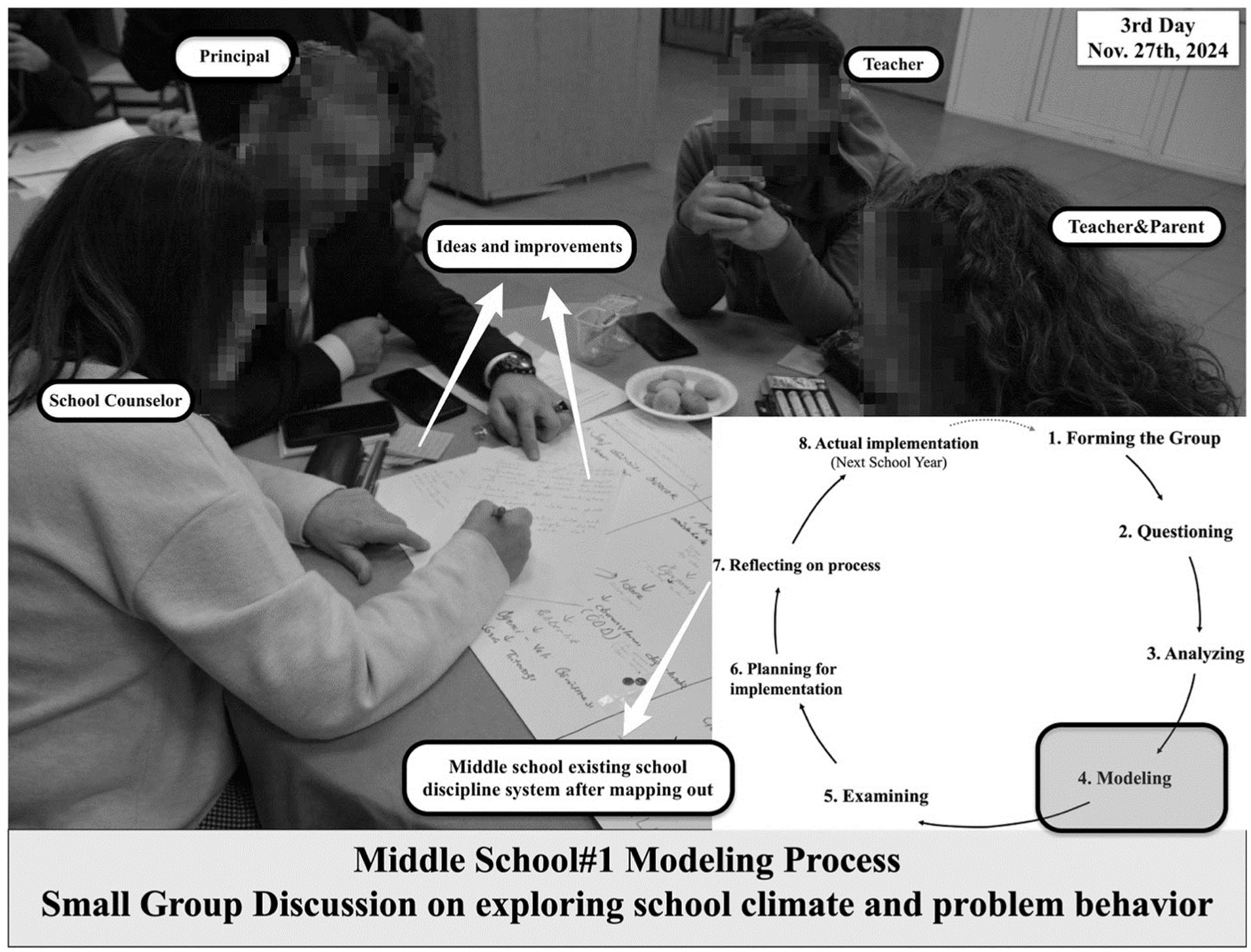
Participants are working on the modeling process of their school system.
Examining the New Systems and Planning for Implementation
The fourth day of the program involves examining each school’s improved discipline models and planning for their implementations. Each school can present its models to the larger group and receive feedback. They can discuss how to identify local stakeholders with whom they can collaborate and explore ways to strengthen their existing systems through these partnerships. In our project, the working groups identified their stakeholders and potential collaborations using sticky notes on the systems. Upon examining the group works, the local stakeholders with whom collaboration could be established were identified as follows: the university (visits, sharing of current knowledge), the municipality (building a playground), the theater (field trips), publishers (sponsorships), the forestry directorate (tree planting), the provincial directorate of youth and sports (directing students toward sports disciplines), and parents. For example, the local university can share evidence-based knowledge while the municipality can build a playground for the school. Field trips and tree planting partnerships with the local theater and the forestry directorate can support social-emotional growth and reward positive behavior. Parents can help align home and school expectations, local publishers can sponsor materials, and the provincial directorate of youth and sports can guide students toward healthy disciplines.
Participants considered that partnerships with these stakeholders could complement school-based preventive practices for all students, particularly for those more likely to exhibit problem behavior in and out of the school environment. In our PD program, those proximate stakeholders were readily available to aid schools. In a similar vein, other facilitators can work with schools to identify potential local organizations that can help foster schools’ positive behavior support practices in their local contexts. In addition, activities the groups can plan to undertake in communication with parents include establishing strong, effective communication regarding absenteeism, mobile phone use, and dress code; improving the parent appointment system; and planning seminars for parents. Examining and planning implementation activities can enable participants to simulate how improved models fit the realities of their schools, allowing them to see how these improvements can be integrated into their daily teaching practices. Figure 3 illustrates one of the high school teams’ presentations during the examining phase, where they shared implementation ideas and discussed systemic issues related to behavior and family engagement in our study.
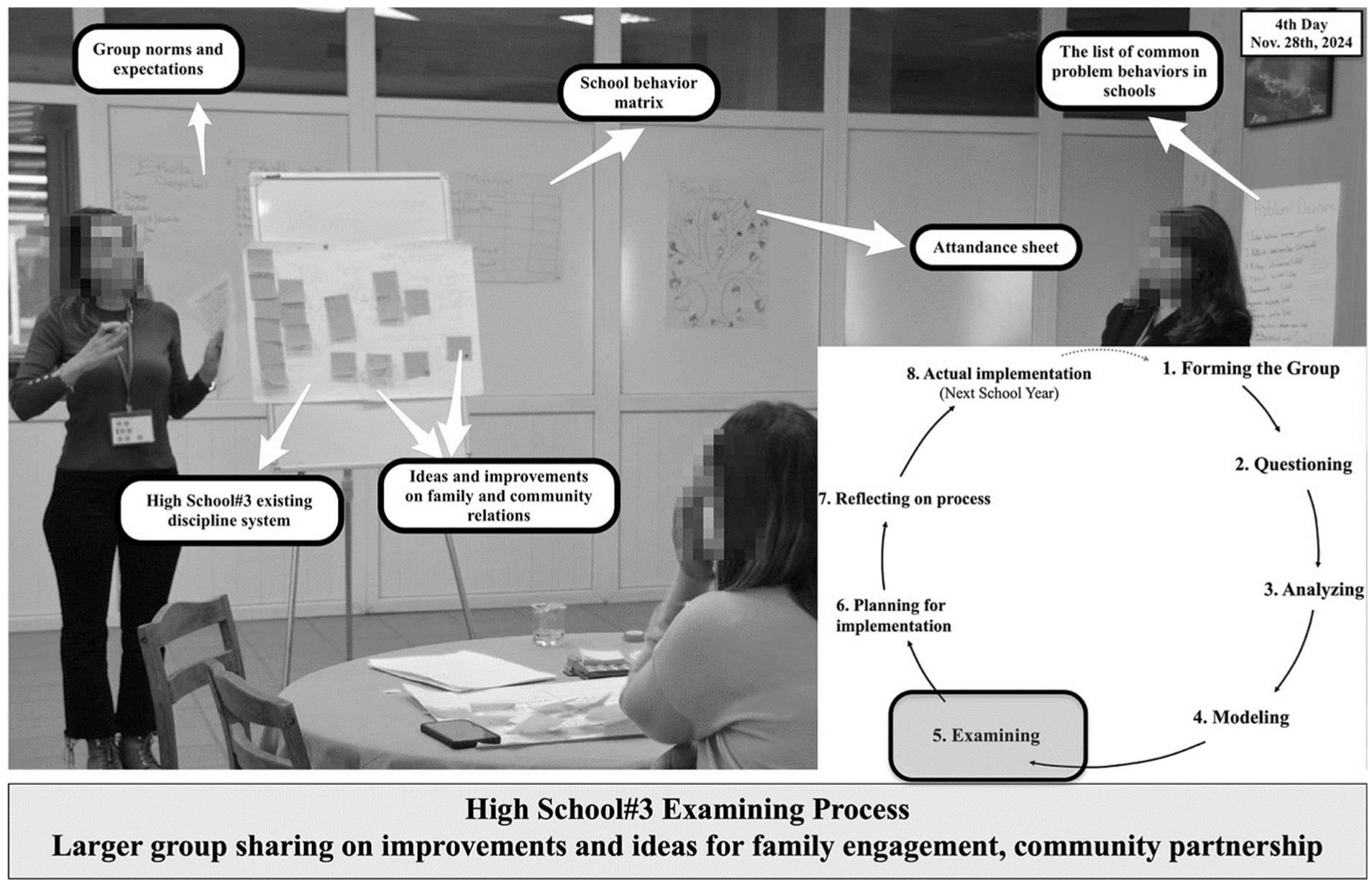
Participants working on examining the process of their school system.
Participants can then finalize plans for implementing new models in their schools. It is important to acknowledge that new school-wide initiatives may be contingent on approval by the school district’s leadership team or the MoNE in centralized education systems. This may directly impact the implementation plans of local schools. This issue was also evident in the implementation plans of our Learning Lab participants. For example, a high school teacher emphasized the importance of top-down requirements in centralized education systems, As for implementing such a framework in our school voluntarily, particularly in collaboration with the Directorate General for Guidance and Special Education, our attitude changes immediately when we are presented with an official letter. We then question how can we do this? (Day 5, Focus Group Interview).
Similarly, another high school teacher stated, “If the leadership team issues a statement in support of this framework, there is a possibility that it will be implemented” (Day 5, Focus Group Interview). Therefore, facilitators planning to adapt and implement the SW-PBIS framework in public schools within centralized education systems must obtain approval from their local school district leadership and/or the MoNE.
Reflecting on the Process
The final day of the project can involve discussing the sustainability of the new models and reflecting on the entire process of inclusive knowledge production and systemic design. In terms of sustainability, for example, a high school team could undertake activities such as selecting the administrator, teacher, student, support staff member, and parent of the year; determining the school motto, logo, and anthem; conducting more regular needs analyses for parents and determining activities accordingly. The planning indicates that participants intended to implement SW-PBIS practices, including awards for accomplishments, school-wide expectations, and data-driven decision-making, in their schools. While participants were discussing these sustainability-related issues, we should note that the implementation and sustainability largely depended on whether the MoNE supported them. Lastly, each participant can reflect on the project process and its outcomes. In our project, all participants reported that it helped them gain a better understanding of their school systems. Below, we present quotes that illustrate participants’ opinions of the project.
Key Insights From the Learning Lab in Türkiye
A central insight from our Learning Lab is the power of discipline data as a starting point. By reviewing referral and suspension patterns together, families, educators, and researchers can identify systemic inequities that might otherwise be dismissed as isolated incidents. The data provides a concrete, shared foundation for reflection, making inequities visible and hence transferable. As a high school history teacher stated: “Whether it was our school administrator or our school counselor, the three or four of us came together and had the opportunity to get to know our school better” (Day 5, Focus Group Interview).
Equally important is recognizing contradictions between values and practices. While school leaders and staff articulate equity and inclusion as core commitments, the heavy reliance on exclusionary discipline can reveal a gap between intentions and day-to-day realities. Naming this mismatch can create a sense of urgency and motivate stakeholders to seek new approaches that align with their stated values. A high school counselor uttered the source of those contradictions: “Only administrators seem to be aware of the disciplinary system. We have not really introduced it to teachers, parents, or students. We realized we had noticed this shortcoming” (Day 5, Focus Group Interview). The Learning Lab also highlighted the importance of collaborative design for developing strategies that are meaningful and feasible within the specific social and historical contexts of local schools. This collaborative process ensured that proposed solutions were not imposed from outside but emerged from those most directly engaged with the schools. Our Learning Lab also fostered an ongoing partnership between one of the participating high schools and members of our research team. Members of our team collaborated with the high school’s leadership and submitted a project proposal to the European Union. This collaborative project aims to establish a school-wide system to promote pro-environmental behavior in this school setting.
Stakeholders can identify sustainable collaborative practices that emphasize relationships over punishment. For example, regular conferences among families, teachers, and students, along with other similar collaborative strategies, can address immediate disciplinary challenges and offer pathways to building more supportive school environments. A middle school parent summed up those points effectively: We really enjoyed our dialogues with each other. In fact, I noticed that we got to know each other much better during the activities than during the lessons. It was something completely different. If we had sat next to each other, even if you had given us 50 hours of lessons, we would not have gotten to know each other that well. Awareness was created in every sense. The joy of creating something together is very different. I think that this excitement was created in this group. I think we will do new things; we will get together. This feeling should not be lost. (Day 5, Focus Group Interview).
Finally, it is important to note that adapting the SW-PBIS framework to different international school settings can pose various barriers and challenges. Facilitators should be ready to learn about local educational policies, school expectations, and diverse cultures when adapting SW-PBIS practices. In particular, the language and symbols used to convey school-wide behavior expectations and reinforcement systems should align with local values, cultures, and discipline policies. Additionally, centralized education systems can sometimes limit school leaders’ ability to introduce new practices. Adapting SW-PBIS practices to local schools can be tough for educators who already have many responsibilities. In our study, one middle school counselor indicated, “I think it is feasible [implementing SW-PBIS], but it is very exhausting in terms of sustainability, and the reason for this is too much paperwork and high expectations for academic achievement in our school.” Thus, educators might be reluctant to start a new behavior-focused initiative, as they may have a lot of work and high expectations for academic achievement but not for behavioral achievement. To solve this issue, in centralized national education systems, the Ministries of Education can establish units such as the Center on PBIS. These units can use the positive behavior support framework either nationwide or in a small number of schools. They can also develop tools or manuals and provide continuous professional development training for educators.
Practical Takeaways
Discipline systems can be co-designed collaboratively through the Learning Lab methodology.
SW-PBIS Tier 1 can be adapted to different cultural and systemic contexts, including in countries with centralized education systems.
Adaptation of the SW-PBIS framework requires facilitators to consider local educational policies, resources, and cultural values.
Learning Lab provides structured steps for systemic change (e.g., forming groups, questioning existing systemic issues, conducting root cause analysis, modeling, examining, planning implementation, and reflecting).
Conclusion
Our project in Türkiye demonstrates that the SW-PBIS framework can be successfully introduced and adapted in new cultural contexts when families, educators, and researchers engage in reciprocal partnership aiming at systemic transformation. The Learning Lab provided a research-based process for stakeholders in Turkish schools to move beyond compliance-oriented implementation toward meaningful and context-specific practices.
The Learning Lab offers a promising, culturally responsive/sustaining pathway for introducing evidence-based frameworks in global contexts where they are not yet established. Families actively participated in the decision-making process. Participants from the six schools encountered challenging behaviors and needed a framework to address them. Our use of the Learning Lab methodology greatly helped the project. Future projects introducing SW-PBIS to local schools can use the Learning Lab methodology, as it offers a collaborative, organized, and democratic process. Moreover, the Learning Lab can provide an activity-based lens for identifying systemic challenges, aligning units of analysis, and guiding reflective steps among diverse stakeholders. It can also create a shared space where contradictions in current practices can be surfaced, examined, and transformed through collective activity.
For facilitators aiming to implement SW-PBIS to their local context, three key lessons stand out: (a) Engage families as knowledge producers and decision-makers. Families offered critical perspectives on how school discipline practices affect students. Their participation ensured that new practices were culturally responsive to community resources, needs, practices, histories, and goals. Schools seeking to adapt SW-PBIS should create structured opportunities for families to co-analyze data and co-design solutions. (b) Generate and use data to guide critical dialogues. Discipline data provided a concrete entry point for collaborative reflection. When shared transparently, data helped stakeholders recognize systemic patterns and motivated them to effect change. Facilitators can make progress by presenting data not just as numbers, but as a tool for dialogue about equity and inclusion. (c) Adapt, don’t adopt. Rather than importing SW-PBIS directly from the U.S., the Learning Lab participants designed restorative practices that aligned with local cultural expectations, practices, and regulations. This underscores the importance of adaptation: the SW-PBIS framework should be flexible and adjusted to fit the needs, languages, values, and regulations of each school community. Ultimately, this work highlights that implementing SW-PBIS is not simply about fidelity to a program model, but about building ownership and collective agency through collaborative design. For school leaders and practitioners, Learning Labs offer a concrete way to create systems that are inclusive, adaptive, culturally responsive, and sustainable.
Footnotes
ORCID iDs

Funding
The authors disclosed receipt of the following financial support for the research, authorship, and/or publication of this article: This project was funded by The Scientific and Technological Research Council of Türkiye [TÜBİTAK, Project Number:124B242]. The content is solely the responsibility of the authors and does not represent the official views of TÜBİTAK.
Declaration of Conflicting Interests
The authors declared no potential conflicts of interest with respect to the research, authorship, and/or publication of this article.