







Abstract
We used a multiple baseline across strategies design to determine the effect of technology-enhanced performance-based feedback on parent’s use of preventive strategies to address children’s challenging behaviors for two parent–child dyads. A father, mother, and each of their young children participated. We also measured associated child outcomes and parent’s perceptions of the technology-enhanced performance-based feedback intervention. We observed a functional relation between our intervention and parent practice. Although variable, desired child behaviors increased, and challenging behaviors decreased. Finally, parents indicated that they perceived the intervention to be socially valid.
Keywords
To facilitate development, children need opportunities throughout everyday activities to attain developmental targets (Johnson et al., 2015; Snyder et al., 2015). One way to support children’s acquisition and maintenance of skills is through the use of Naturalistic Instruction (NI; Snyder et al., 2015), which aligns with the Division for Early Childhood’s (DEC, 2014) Recommended Practices. NI is characterized by providing intentional opportunities within everyday activities to attain a specific skill (Snyder et al., 2015). These opportunities are provided during everyday activities by individuals with whom the child interacts (Snyder et al., 2015). This results in children receiving the intensity of opportunities needed to attain and maintain target skills.
The social-emotional development of young children is of utmost importance as it has lifelong social and academic implications (Duncan et al., 2007; Heckman et al., 2006, 2013; Jones et al., 2015; McClelland et al., 2017). When young children present persistent challenging behaviors, interventions aimed at supporting social-emotional development are crucial as it is unlikely these behaviors will change without teaching replacement social-emotional skills (Blair et al., 2010; Dunlap et al., 2006). Children who do not receive opportunities to enhance their social-emotional development may experience further challenges in their social and academic outcomes (Bettencourt et al., 2018). One key component of social-emotional intervention is the use of NI to prevent challenging behavior and elicit an appropriate replacement behavior (Barton et al., 2018; Dunlap et al., 2006). These preventive strategies are naturalistic in nature as they can be used within the context of everyday activities by individuals with whom the child typically interacts.
Young children typically spend a plethora of time in their homes with caregivers, and these are frequently parents (Meadan et al., 2016). Parents have demonstrated the capacity to use NI with fidelity when they receive support (Kashinath et al., 2006; Meadan et al., 2016; Roberts & Kaiser, 2011). A common element within support that has been provided has been the provision of performance-based feedback or feedback that is specific, immediate, suggestive, and affirmative (Dunlap et al., 2006; Kashinath et al., 2006; Meadan et al., 2014, 2016; Mobayed et al., 2000; Roberts & Kaiser, 2011; Scheeler et al., 2004; Snodgrass et al., 2017; Wong et al., 2013; Woods et al., 2004).
Researchers have supported parent’s use of NI to address child communication (e.g., Meadan et al., 2014). Specifically, written procedures and verbal explanations have been used to support parents when eliciting communication (Mobayed et al., 2000). The researchers began by explaining the importance of providing communication opportunities to the child throughout the day. Then they provided an outline that described practice procedures. Parents completed a quiz to identify any areas of clarification needed, and the researchers observed parent–child interactions, providing prompts on using the procedures as needed. Similarly, Meadan and colleagues (2014) conducted a single case experimental design study to determine the effect of coaching on parent communicative practices and child outcomes. Their intervention included (a) providing information regarding social-communication interventions, (b) reviewing handout materials and examples, (c) sharing an instructional DVD with examples of a parent using the strategies, (d) developing an action plan, and (e) addressing parent’s questions and concerns. Other researchers have provided written handouts, prompted parents to describe NI, identified ways to use NI within everyday activities, and watched videos of parent–child interactions paired with reflection, modeling, and practice (Kashinath et al., 2006; Woods et al., 2004). Findings across these studies suggest that parents and children demonstrated positive change upon implementation of the intervention. Parents learned the new teaching strategies, implemented them with fidelity, and were satisfied with intervention procedures and outcomes. In addition, parents suggested that there were improvements in their children’s target skills.
Researchers have also targeted parent’s use of NI to address children’s social-emotional development. Dunlap and colleagues (2006) implemented a parent coaching intervention with mothers to address young children’s challenging behaviors. Mothers were trained to use interventions that would promote the use of functional communication to replace challenging behaviors. The intervention included training and prompts to use functional communication strategies (modeling) to precede challenging behaviors. The mothers used the target NI strategies, and challenging behaviors decreased.
Although each of these parent-coaching interventions demonstrated effectiveness in enhancing parent’s use of target practices, all contained an element of face-to-face support which for some families can be associated with barriers such as scheduling or discomfort of others in one’s home (Cason et al., 2012; Hebbeler et al., 2012; Kasprzak et al., 2012; Olsen et al., 2012). By only providing a face-to-face option, some families may not have access to individualized, family-centered support (Meadan et al., 2016; Peterson et al., 2010). One way to address the challenges associated with coaching accessibility is through the provision of technology-enhanced performance-based feedback (TEPF). Providing the option of TEPF or face-to-face coaching gives families choice and promotes access for all using a mode based on family preference.
TEPF allows a “coach” to support an educator, such as a parent, by observing from an alternate location via technologies such as a video and using video conferencing systems, email, or bug-in-ear technology to provide performance-based feedback (Coogle et al., 2015). TEPF has demonstrated effectiveness in supporting a variety of educators’ outcomes, including teacher candidates, teachers, and families (Coogle et al., 2015, 2021; Meadan et al., 2016). For example, Coogle and colleagues (2021) observed teacher candidates and teachers via video conferencing and provided real-time feedback regarding their use of NI communication strategies using Bluetooth technology. All teacher candidates and teachers increased their use of NI, and children responded to the opportunities that were provided.
In addition, there is emerging research specific to researchers engaging directly with parents to support their use of NI using TEPF. For example, parents have received training on NI plus feedback via video conferencing (Meadan et al., 2016). Parents received (a) training on social communication, (b) a handout regarding NI to enhance social communication, (c) video examples, and (d) the researchers supported families in developing an action plan and engaged in a question-and-answer session. Parent coaching included a video conferencing meeting prior to observing parent–child interaction where the coach and parent discussed the action plan and implementing NI. After this, a 5- to 7-minute observation and postobservation video conferencing call took place where feedback was provided by the coach regarding the parent’s use of NI. Parents used NI with fidelity, and child outcomes were enhanced.
Although TEPF has demonstrated effectiveness with a variety of educators, there is a need to learn more, particularly surrounding whether TEPF results in parent’s use of preventive NI strategies to promote social-emotional development within their everyday activities. There is also a need to examine associated child outcomes and parent’s perceived social validity of TEPF. Therefore, the research questions we sought to answer included:
Method
We used a single case, multiple baseline design across strategies to determine if a functional relation between TEPF and parent use of preventive NI strategies existed. We also examined associated child outcomes. Our study met What Works Clearinghouse (WWC, 2020) Standards with reservations as we systematically implemented the independent variable, had adequate sessions within each condition and tier, and we collected fidelity of implementation (FOI) data (WWC 4.1); however, for feasibility reasons and maintaining parent buy-in, we decided a priori to transition to the next tier of intervention or conclude intervention upon three sessions above baseline. This resulted in both parent dyads having three intervention probes in the final tier of intervention as opposed to the five needed to meet standards without reservations.
Setting and Participants
Two parent–child dyads participated in the study, which took place in their homes. Dyad 1 was a father and son. At the start of the study, the focus child was 4 years old and had no diagnosis. He attended a community care preschool full-time, and the parents reported that teachers frequently contacted them regarding challenging behaviors he was engaging in at school (e.g., following directions). His father was 46 years of age. The child was Asian American (Father was Asian, and his mother was American), and the father had a high school diploma. The father indicated that the focus child had challenges with his behavior and wanted to focus on behavior management, specifically following directions during transitions. Transitions took place in the home, moving from one routine to the next (i.e., putting shoes on and transitioning from the house to the car to go to school). Dyad 2 was a mother and son. At the start of the study, the focus child was 4 years old, and his mother was 26 years of age. The child was White and was diagnosed with autism spectrum disorder and attention deficit hyperactivity disorder. The child was receiving private occupational therapy services throughout the duration of the study and was not receiving any additional services nor had an IEP. He attended community care part-time and also received care from his grandmother, mother, and father. His mother completed some college and emergency medical services training. The Dyad 2 parent had concerns regarding her son completing tasks, specifically sitting at the kitchen table in the home and eating during mealtimes. Both children had typical language and communication skills. Because sessions were focused on the routine and what was naturally occurring between the child and family, sessions varied in length and across conditions ranged from 3 to 13 minutes, and averaged 8 to 9 minutes across both families.
Procedures
Pre-Baseline
During the prebaseline condition, the first and second authors met with each parent individually via Zoom. During this meeting, the authors discussed the purpose of the study (to support their use of preventive NI strategies); gained consent; shared what preventive NI strategies are by providing a handout, defined them, and shared verbal examples from previous research (Barton et al., 2018). They discussed parent preferences in regard to (a) activities (Dyad 1 selected transitions and Dyad 2 selected mealtimes), (b) video sharing (shared iPhone album), (c) identified what mode of technology parents would like to receive feedback (both selected Zoom from the options of email, real-time feedback, text, or Zoom), and (d) family preferences in regard to which preventive strategies they wished to try. Upon completing this Zoom meeting, parent participants were invited to begin sharing three-to-five via a secure cloud on their iPhone. We did ask the Dyad 1 parent for one additional video as we observed slight variability in his data.
Baseline
During the baseline condition, participants began collecting videos using their iPhones while engaging in the activities they selected (transition and mealtime). They shared videos with the researchers via a secure cloud system and did not receive feedback during the baseline condition. Dyad 1 submitted seven baseline videos and Dyad 2 submitted five baseline videos.
Intervention
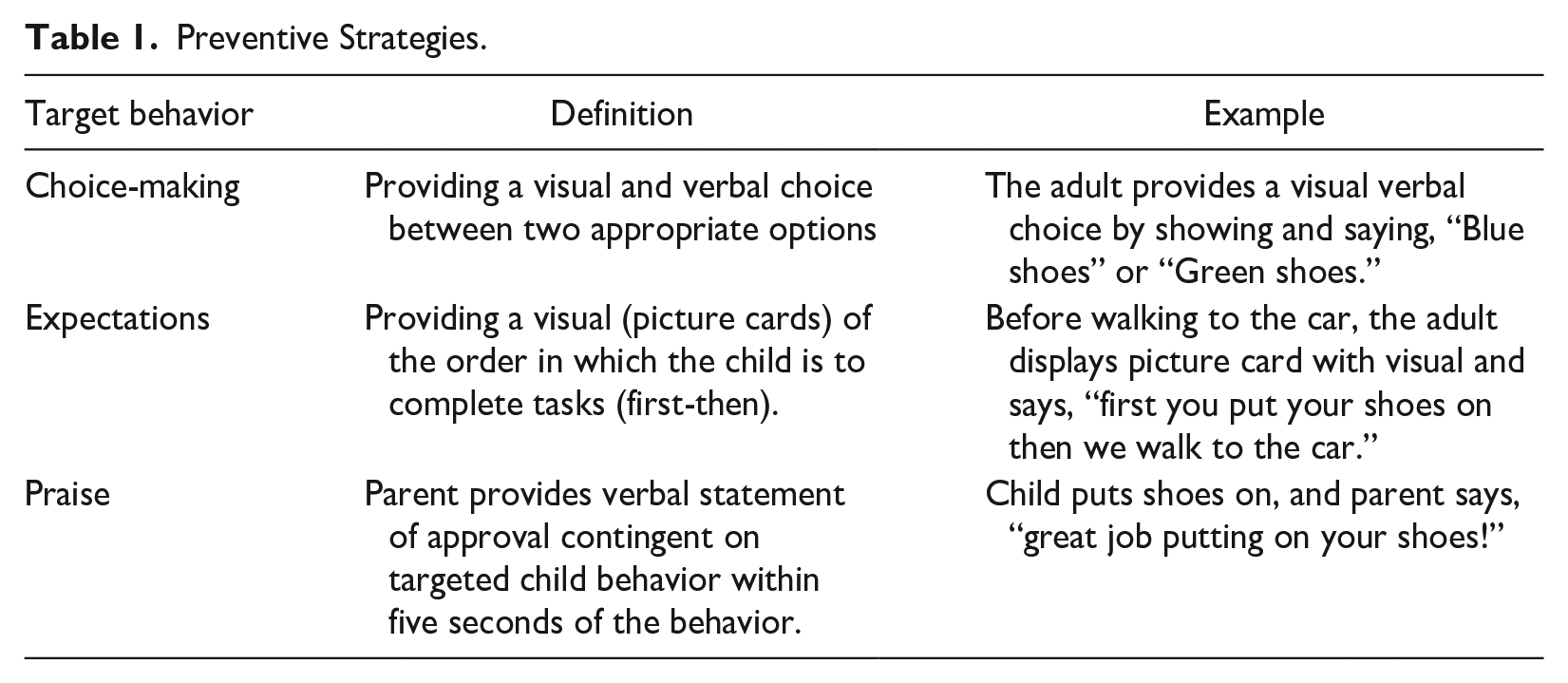
Upon completion of the last baseline session, the first and second author randomized the order of three, parent-selected, target preventive NI strategies (expectations, choice-making, and praise; Barton et al., 2018) (see Table 1). These were strategies parents were not yet using that would promote child skills aligned with parent areas of concern. During the initial intervention session, they met with the parent via Zoom to identify one of the three strategies to focus. During the intervention condition, participants engaged in a cycle in which they shared one video, and upon submitting the video, met with the first and/or second author via Zoom within 1 week (based upon parent preference and schedule) to receive TEPF before collecting their next video. During each Zoom meeting, the authors (a) asked how the strategy was working for the parents, (b) identified how many times the parent used the strategy, (c) provided up to three uses of the strategy with video examples, and (d) shared up to three suggestions regarding how the parent might consider using the strategy in the future. Each Zoom meeting also concluded with a positive statement (e.g., “Thanks so much for partnering together with us.”). Upon adding the second and third preventive NI strategy tiers, the previous strategy continued to be a focus by identifying how many times the participant used the strategy and sharing three example uses of the strategy.
Preventive Strategies.
Measures
Family and Child Outcome Measures
The first and second author adapted a measure from their previous research (Coogle et al., 2021) to identify intervals in which parents used preventive NI strategies (expectations [providing a visual of the order in which the child is to complete tasks], praise [providing a verbal statement of approval contingent on target child behavior within five seconds of the behavior], and choice [providing a visual and verbal choice between two appropriate options]). If the parent used any of the preventive NI strategies within the 10-second intervals, it was coded as yes. We then computed the percent of intervals in which each behavior occurred.
The third author used the same form to identify intervals in which children engaged in desired and/or challenging behavior. Depending on their target skills and routines, desired and challenging behaviors were defined individually for each child. For the Dyad 1 child, desired behavior was following directions (e.g., choosing an item presented, completing a task, facilitating a transition) provided by dad within 10 seconds, while challenging behaviors were defined as taking more than 10 seconds to start a direction or doing something other than the provided direction. For the Dyad 2 child, desired behavior included sitting on their bottom, engaging in meal activities (e.g., eating, drinking), and playing with meal-appropriate materials (e.g., utensils, plate, and cup), while challenging behaviors were defined as any behavior within an interval that did not meet desired behavior (e.g., standing on chair and playing with nonmeal-related materials). For Dyad 1, we computed the percent of intervals based on opportunities for child behavior, and for Dyad 2, we computed the percent of intervals (opposed to using opportunities). These decisions were made based on the type of child behaviors we were observing. For the Dyad 1 child, we were observing a discontinuous behavior (e.g., following a direction), and for the Dyad 2 child we were observing a continuous behavior (e.g., sitting). For both dependent variables (parent and child behaviors), the researchers computed the total number of intervals containing a preventive strategy, desired behavior, and challenging behavior. Researchers used 10-second partial interval coding when analyzing videos. Partial-interval coding allowed researchers to determine whether or not target behaviors occurred during each time interval.
Family Survey
The authors collaborated to create a family survey to identify family perceptions of TEPF effectiveness and feasibility (see Supplemental Appendix). The survey was created in Google Forms, and the hyperlink was shared with parents via email at the end of the study. The survey contained 16 items (eight descriptive questions and eight open-ended questions regarding parent perceptions of TEPF). Questions were related to the ease of use of strategies, how children responded to the strategies, and whether parents were continuing to use strategies.
Data Analysis
We used the six elements of visual analysis to analyze our primary variables, which were parent use of target NI preventive strategies and associated child outcomes (Horner et al., 2005). We examined graphs for consistency in level, trend, and variability within each condition for each parent. We inspected graphs for immediacy of effect upon the start of intervention, overlap of data across research conditions, and consistency of data across conditions for each parent (Kratochwill et al., 2013).
We used thematic analysis and pattern coding to determine themes that emerged from family surveys (Miles et al., 2014). The first author reviewed survey responses using the survey questions as starter codes. These included challenges, child skills, and parent skills. Within each of these starter codes, units of meaning emerged which formed the codes within each theme.
Foi
The first and/or second author collected procedural FOI data across all study conditions. We measured FOI within the pre-baseline condition by determining whether the following took place: signing the letter of consent, identifying child strengths, reviewing NI strategies, selecting one activity and parent, selecting feedback mode (e.g., Zoom, email, or text), requesting provided for videos, and discussing the schedule. FOI during the baseline condition was measured by determining that no feedback was provided and identifying whether the activity within the video was the one that families identified. During the intervention condition, we determined FOI by identifying if the following occurred: determining the video was of the appropriate activity, reviewing the target strategy and definition, asking if the strategy seemed appropriate, providing a frequency count of each target strategy, providing up to three verbatim examples of their use of the target strategy and child response (e.g., “When you reminded him or expectations using the pictures he started getting ready to transition to school.”), providing up to three verbatim examples of their missed opportunities (e.g., “You could provide a choice between his red or blue hat by saying red hat or blue hat.”), and closing with a positive statement. FOI was 100% across all conditions of the study.
Interobserver Agreement
All authors used the point by point agreement method to collect interobserver agreement (IOA) data on parent and child outcomes for at least 20% of data across conditions (baseline and intervention) and strategies. All authors had previous experience coding videos using partial interval coding and event recording. The first author trained them for coding IOA by providing explicit definitions of both adult and child behaviors, providing examples, and allowing each of them to independently code videos for comparison to become reliable. We independently collected IOA for 31% of sessions for Dyad 1 and 26% of sessions for Dyad 2. The mean IOA for Dyad 1 was 98% for choice (range = 94%–100%), 92% for praise (range = 89%–100%), and 95% for expectations (range = 91%–100%). The mean IOA for challenging behavior was 92% (range = 72%–100%) and 98% for desired behavior (range = 94%–100%). The mean IOA for Dyad 2 was 99% for choice (range = 94%–100%), 100% for praise, and 93% for expectations (range = 86%–98%). The mean IOA for challenging behavior was 93% (range = 72%–100%), and 92% for desired behavior (range = 66%–100%). By independently coding IOA sessions we eliminated bias associated with author coding.
Results
Research Question 1: Parent Outcomes
Our first research question examined whether or not there was a functional relation between TEPF and parent use of preventive NI strategies. The introduction of TEPF produced higher levels of target behaviors across both parents, as seen in Figures 1 and 2. During baseline, the levels of parent’s use of preventive NI strategies were low and stable, with all strategy use increasing with the introduction of TEPF. Thus, three intrasubject replications across two dyads demonstrated a functional relation between the use of preventive NI strategies and TEPF.
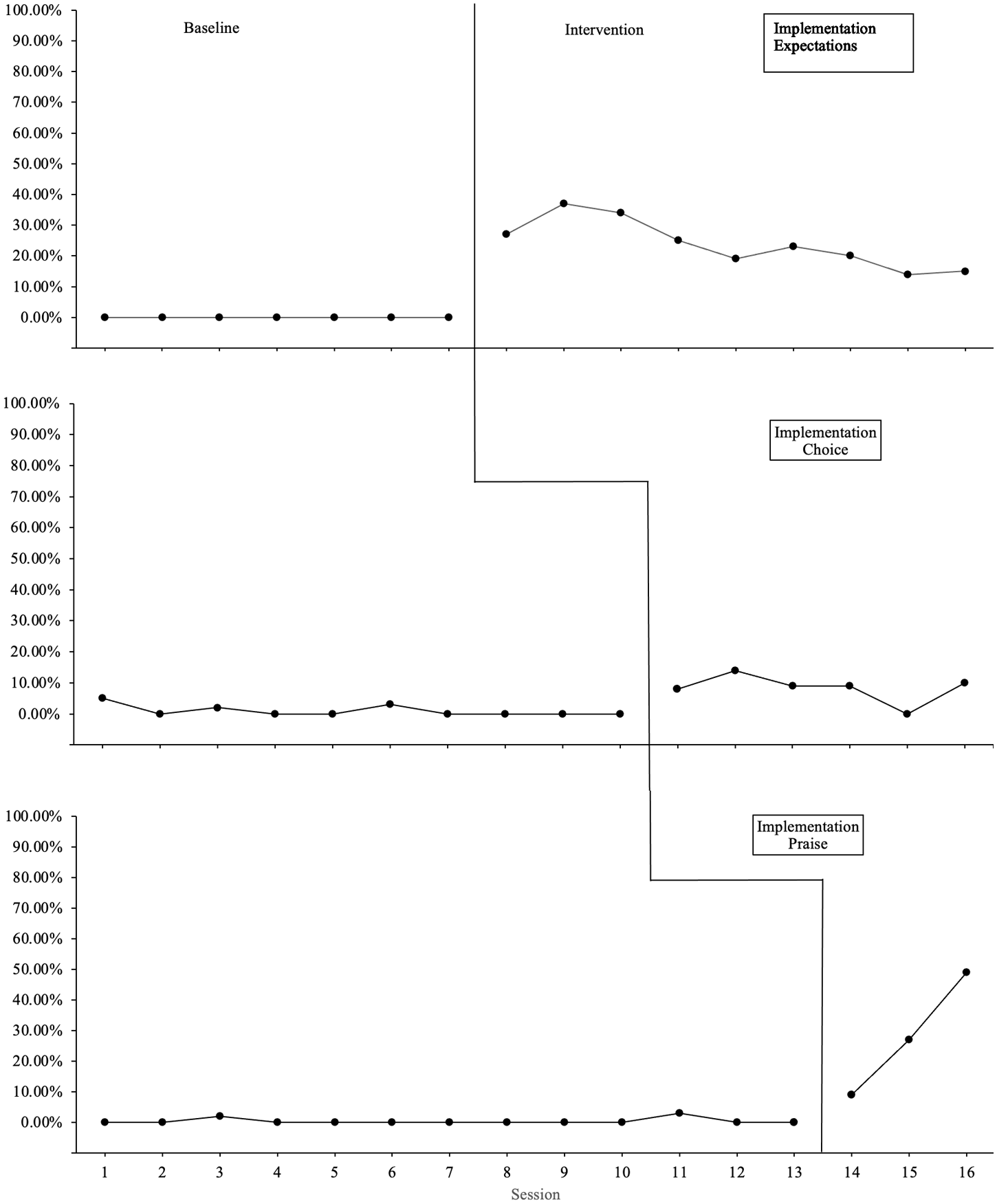
Dyad 1 Parent Behavior.
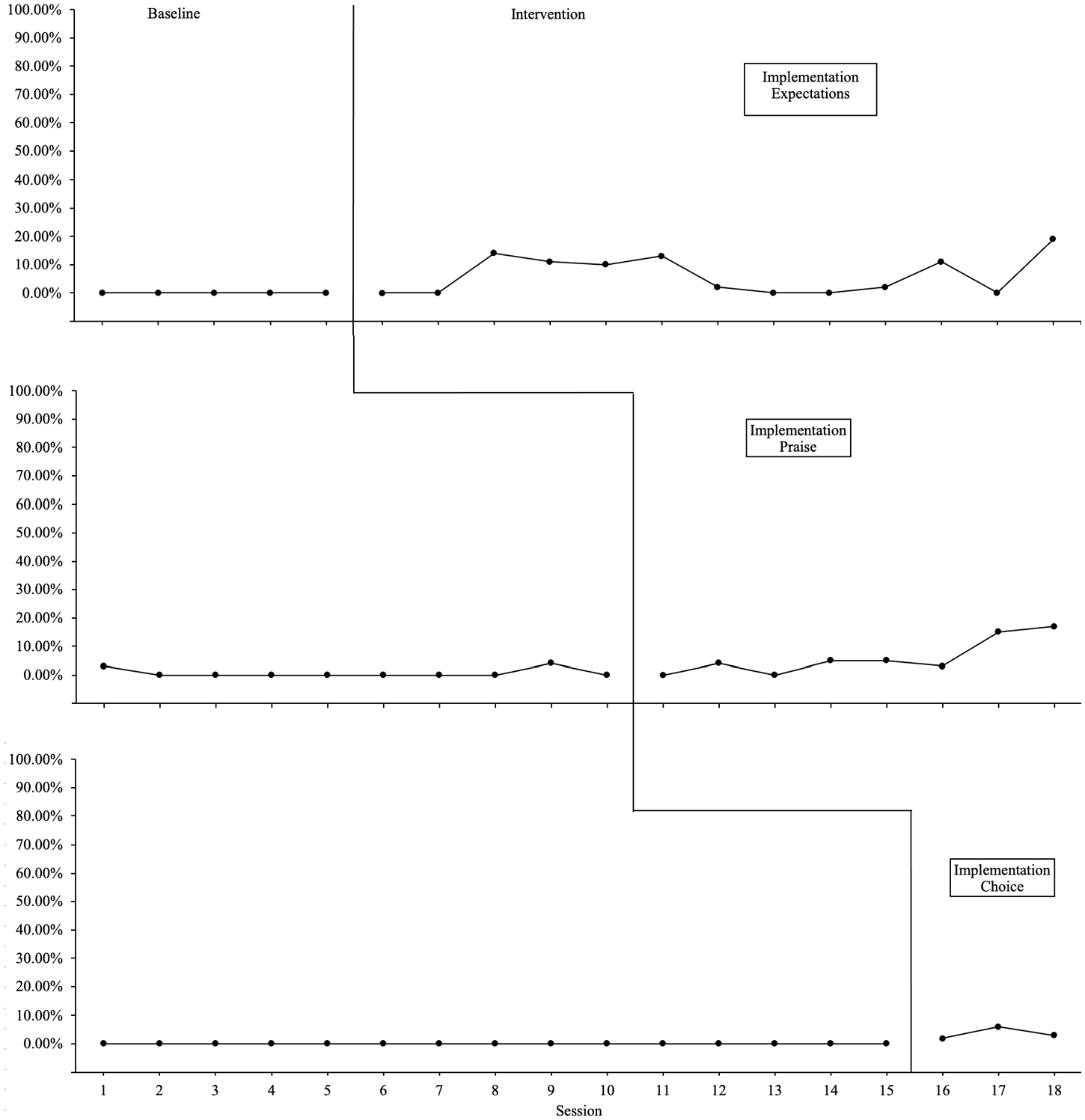
Dyad 2 Parent Behavior.
Dyad 1 Parent
The Dyad 1 parent demonstrated zero-celerating levels of the three preventive NI strategies during baseline. Intervention commenced after the meeting between the last baseline probe and before the first intervention probe. Once intervention was convened, there was an immediate increase in use of expectations from 0% in baseline to 27% of intervals in the first intervention session. The Dyad 1 parent had variable use of expectations throughout intervention (M = 24% [13]; range = 14%–34% [8–19]). Dyad 1 parent’s frequency of expectations remained at higher levels than baseline with zero overlapping data.
Dyad 1 parent’s use of providing choices was low and stable during baseline (M = 1%; range = 0%–5%) and demonstrated a gradual increase upon the introduction of TEPF; however, throughout the intervention condition, one data points overlapped with baseline (i.e., Intervention Session 5). The mean was 8%, and the range was 0% to 14%. Although Dyad 1 parent’s use of providing choices was variable, he demonstrated a higher level of choices than in baseline.
Dyad 1 parent’s use of the third preventive NI strategy, praise, was low and stable during baseline (range = 0%–2%). There was an immediate increase in use of praise once TEPF was introduced. Dyad 1 parent’s use of praise demonstrated an accelerating trend with zero overlapping data (M = 28%; range 9%–49%).
Dyad 1 parent’s strategy use showed an immediate increase across all tiers. There was minimal overlapping data and an increase in level across tiers. Therefore, a functional relation was observed between TEPF and Dyad 1 parent’s use of preventive NI strategies.
Dyad 2 Parent
The Dyad 2 parent demonstrated a zero-celerating level of expectations during baseline. Upon the start of intervention in the first tier, we observed a gradual increase and variable use of expectations (M = 6%; range = 0%–19%). There was an increase in level, but there were five overlapping data points between baseline and intervention.
Dyad 2 parent’s use of praise during baseline demonstrated a low and stable trend (M = 1%; range = 0%–4%). Dyad 2 parent’s data demonstrated a gradual increase in level and an accelerating trend (M = 6%; range = 0%–17%). There were three overlapping data points between baseline and intervention.
Dyad 2 parent’s use of choice was zero-celerating baseline. Once TEPF was introduced, there was an increase in their use of choice (M = 4%; range = 2%–6%). Dyad 2 parent’s use of choice was variable, and there were no overlapping data points between intervention and baseline.
The Dyad 2 parent demonstrated variable use of preventive NI strategies. She demonstrated a low and stable frequency of strategies throughout baseline across all tiers; however, she increased her use of each target preventive NI strategy as TEPF was introduced. The Dyad 2 parent demonstrated gradual increases in her use of preventive NI strategies; however, two of the tiers (i.e., expectations and praise) had overlapping data with baseline, following the introduction of TEPF. Due to the increase in level across tiers, a functional relation was observed between TEPF and Dyad 2 parent’s use of preventive NI strategies.
Research Question 2: Associated Child Outcomes
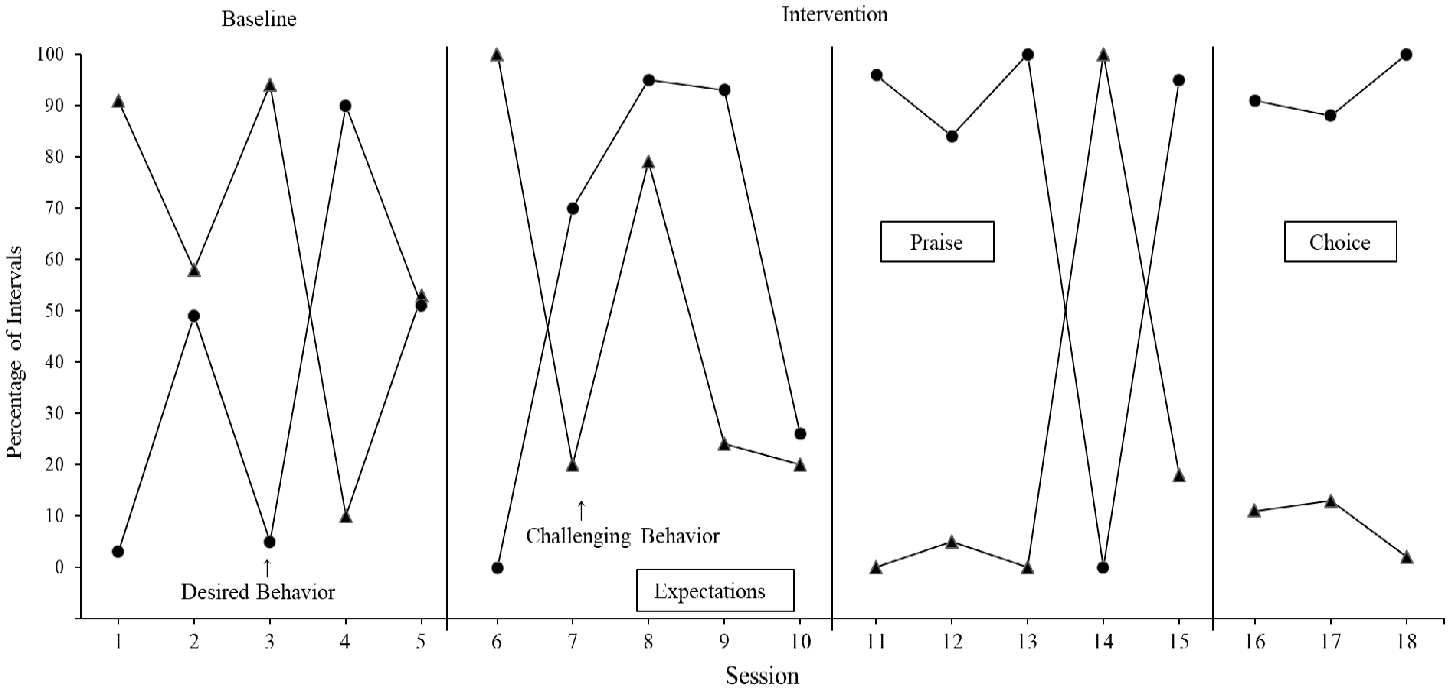
Our second research question explored the associated child outcomes based on parent use of the preventive NI strategies. Child behaviors are reported in Figures 3 and 4.
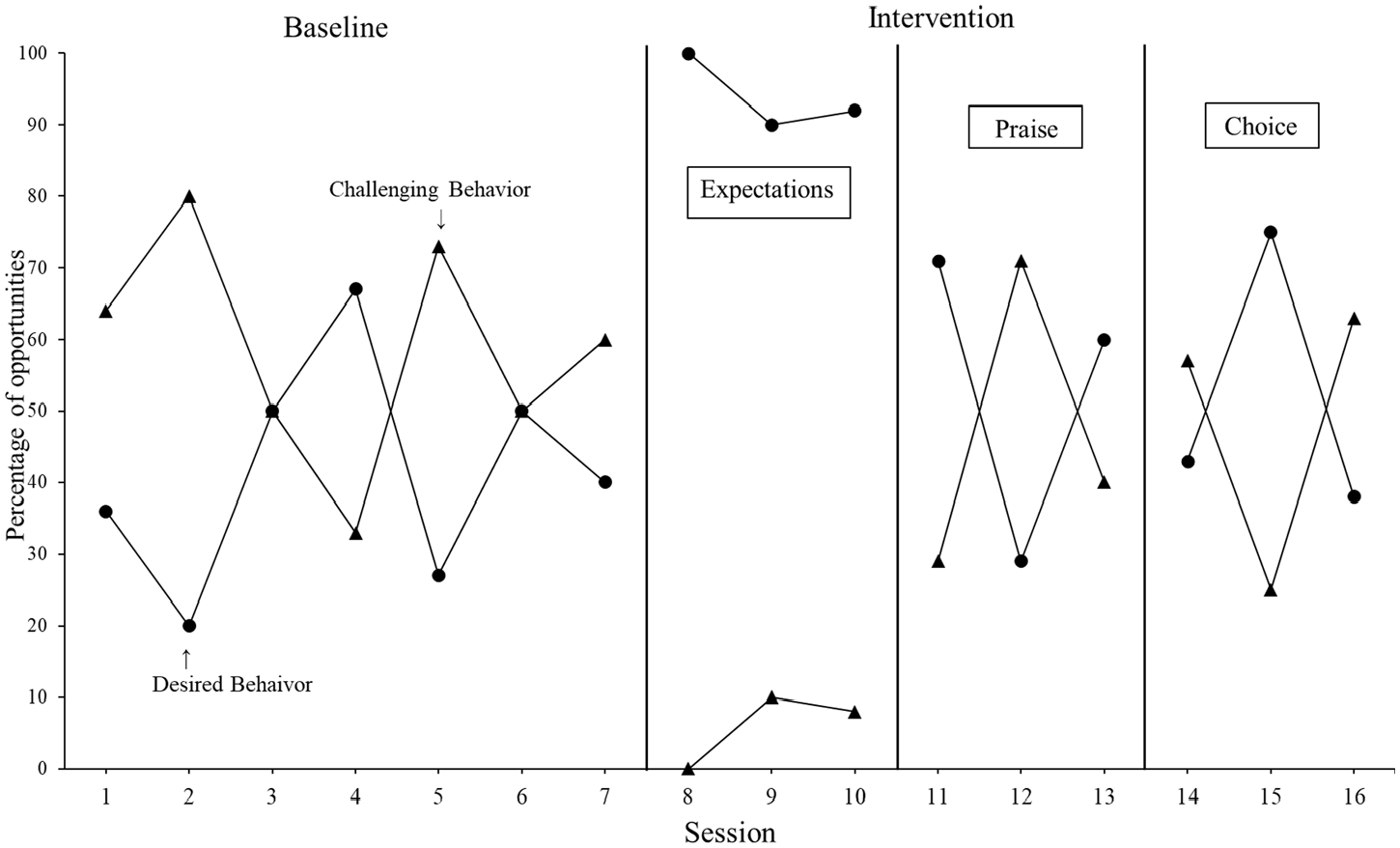
Dyad 1 Child Behavior.
Dyad 2 Child Behavior.
Dyad 1 Child
The Dyad 1 child demonstrated moderate-to-high levels of challenging behavior throughout baseline (M = 59%; range = 33%–80%). We observed desired behaviors at lower levels than challenging behaviors with variability (M = 41%; range = 20%–67% of all opportunities). The challenging behaviors demonstrated a variable trend across all baseline sessions leading into intervention. Once intervention was introduced to the Dyad 1 parent (i.e., expectations), there was an immediate increase in desired behaviors (M = 94%; range = 90%–100%), and an immediate decrease in challenging behaviors (M = 6%; range = 0%–10%). There were no overlapping data between baseline and the first tier of intervention. Upon the implementation of the second preventive NI strategy (i.e., praise), Dyad 1 child’s behavior returned to similar levels seen in baseline. Challenging behavior was demonstrated at higher levels (M = 47%; range = 29%–71%), and desired behaviors were at lower levels (M = 53%; range = 29%–71%) than the first tier.
The child’s behavior remained variable with the commencement of the third preventive NI strategy (i.e., providing choices). Challenging behavior decreased (M = 48%; range = 25%–63%) and desired behavior increased (M = 52%; range = 37%–75%). This final tier of intervention also demonstrated overlapping data with the baseline condition.
Dyad 2 Child
The Dyad 2 child demonstrated high levels of challenging behavior throughout baseline (M = 61%; range = 10%–94%), with a variable trend leading into intervention. Desired behaviors were observed at lower levels than challenging behaviors with variability of all intervals (M = 37%; range = 3%–90%). Desired behaviors demonstrated variability leading into intervention. Once intervention was introduced to the Dyad 2 parent (i.e., expectations), there was an initial increase in challenging behavior with a decrease in desired behavior. Overall, the level of challenging behavior decreased (M = 47%; range = 20%–100%), with overlapping data from baseline. However, the desired behavior in this condition had an overall increase, demonstrating variable data (M = 57%; range = 0%–95%) and an increase in level. Upon the implementation of the second preventive NI strategy (i.e., praise), the child’s behavior demonstrated an immediate increase in desired behaviors and an immediate decrease in challenging behaviors (M = 75%; range = 0%–100%). In this tier, data were more stable with the exception of session 14 due to having the iPad for the duration of this session (coded as challenging behavior as it was not a mealtime material, and one which the Dyad 2 parent wanted to remove from mealtime). Challenging behaviors were observed at variable levels (M = 25%; range = 0%–100%) across all intervals. With the commencement of the third preventive NI strategy (i.e., providing choices), the child’s behavior stabilized. Challenging behaviors were low (M = 9%; range = 2%–13%) and desired behaviors were high (M = 93%; range = 99%–100%). This final tier of intervention also demonstrated one overlapping datum for both challenging and desired behaviors with the baseline phase.
Research Question 3: Parent Perceptions of TEPF
Our third research question was related to parent perceptions of TEPF. Three themes emerged from the open-ended survey, which included: challenges, child skills, and parent skills.
Challenges
Challenges were the comments that parents made regarding what was challenging about the intervention. There were two codes within challenges that were related to the ease in use of the strategies. The first was from the Dyad 1 parent when he indicated it felt awkward to use some of the strategies, “Wasn’t challenging but at times felt awkward. Some techniques and strategies used felt awkward executing.” The Dyad 2 parent also suggested challenges associated with initial changes to the mealtime activity when she said, “At first it was challenging because any change or disruption to [child’s name] everyday life was a huge thing for him. Towards the end it became so easy, and almost effortless.”
Child Skills
Child skills were comments parents made in regard to the developmental outcomes they observed. There were six codes within this theme which included areas in which the parents wanted to see their child develop (e.g., behavior management and transitions). In addition, parents identified their observations regarding child skills upon receiving intervention. For example, the Dyad 2 parent responded to her perceived effectiveness of the intervention when she said, “Extremely effective (intervention effectiveness)! We went from 30- to 60-minute lunch times down to 10- to 15-minute lunch times with some strategies that helped both of us understand what the other one wants.”
Parent Skills
The final theme was parent skills. Parent skills included six codes and were defined as descriptions which parents identified developing because of receiving intervention. These codes were related to less repeating, less physical redirection, and the way in which parent communication changed (e.g., positive statements). When reflecting on how the intervention impacted parent–child interactions, the Dyad 2 parent said, I’ve always been the stern mother. I noticed from the two videos that you can’t expect kids especially with [a] developmental delay to know what you are asking for them to do, especially without communication. I noticed my communication got better each attempt we made at eating. I wasn’t getting as frustrated with everything. I was communicating to him what I wanted and praising him for the good he did. At the beginning I didn’t praise him or relay what I needed him to do without getting frustrated by not understanding why he wasn’t understanding.
Within this theme, parents also identified how they have continued to use strategies. For example, the Dyad 1 parent said, We continue to use some of the strategies to guide child’s behavior and making good decisions. We provide positive affirmations to reinforcement [reinforce] good behavior. [My] Child receives prizes out of toy bag when good decisions are made or shows good behavior.
Discussion
Our results support previous research in which TEPF was used to increase educators’ use of preventive NI strategies (Barton et al., 2018). Previously, TEPF targeting preventive NI strategies has primarily been studied in classroom settings. Like previous research in which TEPF was provided to parents to support their use of communicative NI strategies (Meadan et al., 2016), our findings also demonstrated effectiveness.
Our findings add to the literature by examining the use of TEPF provided to parents to increase young children’s desired behaviors using NI during everyday activities. Previous TEPF researchers have primarily focused on communicative NI strategies using a professional development system that researchers developed and identified (Meadan et al., 2016). Our research extends these findings by promoting parent choice in regard to developmental targets (e.g., following directions and engaging during mealtime), family activities, and the mode in which families wanted to receive TEPF. In our research, parents selected an area of development where they had the greatest concern, and the activity in which they were observing this concern. Parents also identified the mode in which they wanted to receive TEPF. They made the scheduling decisions regarding when they captured videos and when they were available to engage in TEPF via Zoom. Embedding parent choice still resulted in observing a functional relation between TEPF and parent use of NI preventive strategies.
Our research also adds to the literature by examining associated child outcomes across tiers. Previous research is limited in examining associated child outcomes regarding social-emotional development; yet, child outcomes are the ultimate goal in supporting educator practice. Interestingly, each dyad demonstrated a notable change in level in the first intervention tier, suggesting that these initial changes in parent behavior resulted in increased desired behavior and decreased challenging behavior. Child data did become variable across tiers with Dyad 2’s data stabilizing. This may have suggested a need for more intensive or consistent use of parent behavior, specifically expectations, over time. Both parents used a higher level of expectations at the start of intervention (immediately for Dyad 1 and gradually for Dyad 2), and this decreased and became more variable throughout the duration of intervention in the first tier.
Parent perceptions regarding the feasibility and effectiveness of TEPF is an important addition. Parents indicated that it was feasible to engage in TEPF, and they noted its effectiveness. They commented on observed changes in both their own as well as their child’s behavior. Parents also indicated that they have continued to use the preventive NI strategies. These findings suggest that in addition to observing increased use of target preventive NI strategies, parents anecdotally noted changes in their own behavior, which influenced their child’s behavior.
Limitations
While considering the findings from this research, it is important to identify the limitations. First, this research took place in the natural home setting for each child and parent, and therefore, the schedule for intervention relied heavily on the family’s ability to record interactions. This resulted in varying amounts of time between sessions across replications. The time in between sessions could have an impact on both parent’s use of preventive NI strategies and children’s behaviors.
We asked each participant to identify typical activities in which concerns about their child’s behavior occurred. These behaviors were identified and defined by the parent in consultation with the first and second authors. When determining appropriate desired behaviors to replace challenging behaviors, parents were asked to identify and define what they would like to see happen during these activities. Each parent selected behaviors and activities that were unique to them, which is an important consideration when considering the findings across cases and the implications.
Finally, we used partial-interval coding to analyze videos. This approach may have led to an underestimate of the frequency of behaviors (Lane & Ledford, 2014). The frequency of parent behaviors and thus child opportunities to respond will vary based on the type of behaviors observed. We used a 10-second interval to code behaviors based on previous research (Coogle et al., 2021), but multiple behaviors could occur within this short interval of time (Hupp et al., 2011).
Implications for Research and Practice
Despite the limitations, our findings have implications for future research and practice. First, this study might be replicated by other researchers with a variety of parent–child dyads in home settings to determine the impact of TEPF on parent’s use of NI. Previous research has demonstrated effectiveness of TEPF on educator use of strategies (Coogle et al., 2021), but the use of TEPF to support parents is limited. Future research might also focus on supporting parents within community settings, as young children and families often spend time across a variety of settings and environments (Bronfenbrenner & Ceci, 1994; El Nokali et al., 2010). In addition, similar to previous research (Coogle et al., 2022), researchers might consider examining the implementation quality of NI.
These findings also have practice implications for coaches and practitioners who support young children and their families. Previous research has indicated that parents can use NI as intended with support such as performance feedback (Dunlap et al., 2006; Kashinath et al., 2006; Meadan et al., 2014, 2016; Mobayed et al., 2000; Roberts & Kaiser, 2011; Scheeler et al., 2004; Snodgrass et al., 2017; Wong et al., 2013; Woods et al., 2004). For some families, the use of TEPF to provide this support may alleviate some of the logistical constraints limiting coaches and practitioners from providing high-quality performance-based feedback face-to-face, such as time and costs associated with traveling to children and families’ natural environments. For example, if a family is in a rural setting or a community with limited education resources, they may not have access to regular, face- to- face coaching support. Some families may prefer the option of TEPF mode opposed to face- to- face coaching. In addition, TEPF may be a resource to support maintenance and generalization of practices taught during various home visiting programs (e.g., Part C Early Intervention and Applied Behavior Analysis). This may be a system that would further support family–child interactions in early intervention settings and could perhaps support educators in partnering with families to ensure wrap-around service delivery (e.g., schools and homes).
Conclusion
Young children, particularly those with delays and disabilities, need opportunities to practice and attain target skills. It is important that they receive these opportunities with the intensity necessary, and therefore, considering the environments and the people with whom they interact is imperative to their development. Parents are frequently individuals with whom young children interact, and, with coaching support, have demonstrated capacity in using preventive NI strategies with fidelity to facilitate their child’s development. Therefore, identifying effective systems, such as TEPF, to provide support that make it accessible, feasible, and effective are important for both parent and child outcomes.
Supplemental Material
sj-docx-1-jei-10.1177_10538151231169951 – Supplemental material for Parent’s Use of Naturalistic Instruction Upon Receiving Technology-Enhanced Performance-Based Feedback
Supplemental material, sj-docx-1-jei-10.1177_10538151231169951 for Parent’s Use of Naturalistic Instruction Upon Receiving Technology-Enhanced Performance-Based Feedback by Christan Grygas Coogle, Emil Majetich, Sloan O. Storie and Clarissa Bunch Wade in Journal of Early Intervention
Footnotes
Declaration of Conflicting Interests
The author(s) declared no potential conflicts of interest with respect to the research, authorship, and/or publication of this article.
Funding
The auth006Fr(s) received no financial support for the research, authorship, and/or publication of this article.

Supplemental Material
Supplemental material for this article is available online.
References
Supplementary Material
Please find the following supplemental material available below.
For Open Access articles published under a Creative Commons License, all supplemental material carries the same license as the article it is associated with.
For non-Open Access articles published, all supplemental material carries a non-exclusive license, and permission requests for re-use of supplemental material or any part of supplemental material shall be sent directly to the copyright owner as specified in the copyright notice associated with the article.
