







Abstract
Learning transfer and prosocial behavior (PSB) are critical components of many outdoor education programs for adolescents. This study examined the effects of a theoretically grounded treatment curriculum designed to foster the transfer of learning of general and contextual PSB (also called expedition behavior) among adolescents enrolled on 14-day backpacking courses with the National Outdoor Leadership School. Results suggest that the treatment curriculum increased proximal learning of PSB more than courses that featured the traditional curriculum. Qualitative results suggested that students learned PSB primarily as a result of its relevance to the expedition environment, that it is most useful when working with or understanding others, and that it can be applied to multiple contexts post-course, including with family, at school, and with sport teams. Implications for designing a curriculum that fosters transfer and for developing PSB in participants are considered.
Keywords
Adventure education programs are educational experiences designed to develop intrapersonal, interpersonal, and group development outcomes in students. Programs often use outdoor activities such as climbing, kayaking, and sailing to challenge students, then subsequently engage them in reflection activities designed to foster development of specific learning outcomes. As a field, adventure education programs draw upon a number of philosophical and pedagogical traditions, such as Dewey’s (1938) ideas of educational reform, Kolb’s (1984) model of experiential learning, and James’s (1988) visions of a morality-driven purpose. Programs use a variety of means and structures to develop outcomes in students.
A sizable body of research can testify to adventure education’s effectiveness in developing outcomes in the short-term (e.g., Kellert, 1998; Sibthorp, Paisley, & Gookin, 2007). Evidence for the development of self-efficacy, leadership, life effectiveness, academic ability, and other outcomes is well established (e.g., Hattie, March, Neill, & Richards, 1997). Other scholarly work describes the processes by which students acquire learning outcomes (Paisley, Furman, Sibthorp, & Gookin, 2008; Walsh & Golins, 1975). Although these bodies of literature are critical for describing the effectiveness of adventure education, they do not address how well those outcomes transfer to life post-program.
Learning transfer describes the process of how the learning achieved in one context is used in a new, different context. Baldwin and Ford (1988) describe the three primary factors that influence transfer as (a) characteristics of the student, (b) characteristics of the training program, and (c) characteristics of the transfer environment. Some scholars suggest that adventure education programs excel at developing proximal outcomes in students, but that transfer does not necessarily follow. For instance, Brown (2010) stated “assuming that this learning will continue beyond the course is based more on wishful thinking and observations of behavioral change during the program than a strong empirical research base” (p. 19). The gulf between proximal learning achievement and actual transfer has been coined the transfer dilemma (Carraher & Schliemann, 2002).
To better understand the concept of transfer and how it operates, this study examined the efficacy of a theory-based curriculum on the transfer of PSB from wilderness backpacking courses. Specifically, a quasi-experimental design compared the effect of a theory-based curriculum on participants from four NOLS courses to participants on four NOLS courses featuring a traditional curriculum. Qualitative data were used to further explicate the importance and use of PSB in postcourse situations.
Background
Learning Transfer
There are three traditions of transfer literature in adventure education. The first tradition regards qualitative research that describes what learning transfers from adventure and outdoor education experiences. For instance, Mazze (2006) qualitatively examined the environmental attitudes of nine former NOLS students. Each of the nine reported an increase in their connection with nature and the outdoors several months post-course. Miller (2001) used thematic analysis of five case studies elicited from participants on a 35-day canoeing expedition in Northern Ontario. Participants reported that they developed a commitment to personal activism that was maintained 3 years post-course. Boland and Heintzman (2009) determined that almost all students in a 14-day outdoor education course reported increased participation in outdoor recreation, participation in environmental action, and a change in environmental behaviors as a part of their course.
The second tradition regards quantitative studies that examine what types of content transfer. For instance, in 2007 a study of NOLS alumni was conducted that found transferable outcomes included outdoor skills, ability to function effectively under difficult circumstances, self-confidence, ability to serve in a leadership role, ability to work as a team member, and an appreciation of nature (Sibthorp, Paisley, Furman, & Gookin, 2008). Gass and Priest (2006) reported transferable learning involving teamwork in corporate adventure groups and Hammitt and colleagues (1996) determined that NOLS students transferred environmentally responsible behaviors from their NOLS courses. As an aggregate, the quantitative investigations of transfer are diverse and lack a coherent theme. However, there is partial support for transfer in the similar areas as the qualitative studies.
A third tradition of literature describes how to foster transfer in adventure programming. Walsh and Golins (1975) proposed a model of participant change whereby students are immersed into a prescribed physical and social environment and provided progressively more difficult challenges. Leberman and Martin (2004) found that a postcourse reflection activity could enhance transfer of learning from an outdoor learning experience. Gass (1985) described 11 methods for increasing transfer of learning, such as including significant others in the learning process and extending the program into the student’s home environment. Luckner and Nadler (1997) suggested that intentional use of reflection activities, developing appropriate metaphors, and debriefing activities would foster transfer. McKenzie (2003) suggested a number of factors that foster transfer, such as group discussions, feedback, and providing a solo experience for students. Sibthorp, Furman, Paisley, Gookin, and Schumann (2011) found that key transfer mechanisms included instructors, the student group, curriculum, educational philosophy, physical environment, and personal triumph.
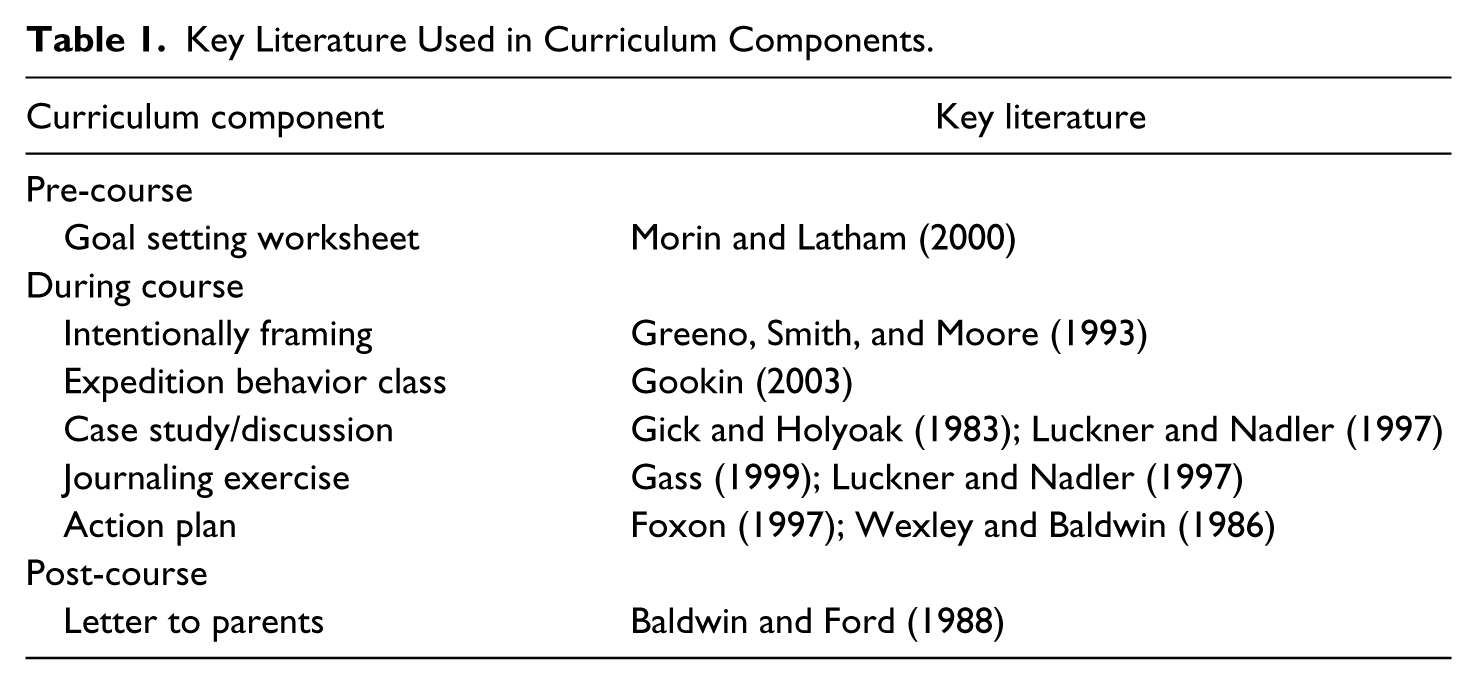
While not specific to adventure education, the broader literature on learning transfer suggests some useful transfer enhancing practices, including intentional framing, using case studies, using journaling exercises, enhancing transfer support, and developing an action plan. Based on this literature, a curriculum to enhance transfer of learning in an adventure context was developed that included these elements. See Table 1 for a synopsis of the literature that supports the central curricular components. Despite the literature on mechanisms of transfer, there remains some debate as to the efficacy and utility of intentionally designing adventure programs for transfer.
Key Literature Used in Curriculum Components.
Prosocial Behavior (PSB) and Expedition Behavior
PSB is frequently defined as a behavior that is primarily aimed at benefiting others (Carlo, Crockett, Randall, & Roesch, 2007) and is a significant concern in adolescent development. Motivations for engaging in PSB are varied from receiving positive recognition, to soothing personal distress, to reinforcing self-concept (e.g., Carlo & Randall, 2002). Solomon and colleagues note that PSB is a significant issue for adolescents due to “inadequate levels of social responsibility and concern for others’ welfare, accompanied by excessive self-centeredness and social alienation” (Solomon et al., 1985, p. 18). These authors continue by suggesting that these problems may lead to increased vandalism, violence, delinquency, and school discipline problems for youth.
PSB is determined by internal factors and external factors. Internal factors include perspective taking, moral reasoning, empathy/sympathy, cognitive attributions, and personality/temperament (Fabes, Carlo, Kupanoff, & Laible, 1999). External factors, those that are not situated within the person, include family and peer influences, schooling, and culture (Carlo, Fabes, Laible, & Kupanoff, 1999). It is generally agreed that tendencies for PSB are determined genetically to some extent, although the estimates vary widely, from above 60% to below 30% (Penner, Dovidio, Piliavin, & Schroeder, 2005).
PSB in expeditionary groups is often called expedition behavior. Expedition behavior is a primary learning outcome of several adventure education programs, such as NOLS and the Wilderness Education Association (WEA). Expedition behaviors are commonly thought of as behaviors that are performed for the benefit of another person during a backcountry experience. Jostad, Paisley, and Gookin (2012) determined that communication, living with others, relationship building, group dynamics, and conflict resolution all provided opportunities for NOLS students to understand expedition behavior more fully. According to Petzoldt, “good expedition behavior is an awareness of the relationships which exist in the out-of-doors plus the motivation and character to be as concerned for others as one is for oneself” (Petzoldt, 1984, p. 168). Gookin (2006, n.p.) described examples of expedition behavior as “helping a fellow student get through a rough day by carrying some of their weight, turning back due to bad weather, bringing your tentmate a hot drink, or keeping a smile on your face during five days of torrential rains.” The WEA wrote “the skillful practice of expedition behavior demands motivation, self-awareness, and other-awareness under varying group and environmental conditions” (WEA, n.d.).
This article suggests that expedition behavior is a contextualized and proximal representation of the more general construct of PSB. The support for this relationship stems from comparing traditional definitions and descriptions to the limited expedition behavior literature. Consider the following definitions of PSB, “actions that benefit other people or society as a whole” (Twenge, Baumeister, DeWall, Ciarocco, & Bartels, 2007, p. 57) and “voluntary behavior intended to benefit another” (Eisenberg & Fabes, 1998, p. 702), and “behaviors primarily aimed at benefitting others” (Carlo et al., 2007, p. 301). With these definitions in mind, consider the expedition behavior example from Gookin (above). Gookin’s examples are all consistent with these three definitions of PSB; the primary difference is that they take place in one particular context. In addition, at least one other contextualized representation of PSB is thought to exist. Brief and Motowidlo (1986) developed an idea called prosocial organizational behaviors based around PSB, and posited a link between PSB and a specific context. This article posits a similar relationship.
Given the preceding literature review, this study aimed to determine the effects of a treatment curriculum designed to increase transfer of PSB in adventure education. Specifically, the treatment curriculum included elements of goal setting, framing, case studies, journaling, action plans, and reflection that were hypothesized to increase the transfer of PSB in adolescents enrolled in backpacking courses at NOLS. To test this premise, a quasi-experimental study was conducted that allowed the effects of the treatment to be compared with the traditional curriculum used at NOLS. Contextual and general effects were assessed through two measures of PSB. Qualitative data were collected to further explicate the transfer process.
Method
Participants and Setting
The sample for this study included 14- to 15-year-old students from eight summer NOLS backpacking courses. The courses were conducted on federal lands in the Greater Yellowstone Ecosystem and were relatively remote, 14-day backcountry experiences. Four of the courses were included in the treatment group and had instructors that were trained to implement the treatment curriculum. The other four courses comprised the comparison group and offered the traditional NOLS curriculum. The treatment group had 57 students; the comparison group had 60.
Measurement
To assess how well general and contextual PSB was learned, research participants were asked to complete the expedition behavior composite scale from the NOLS Outcome Instrument (NOI; Sibthorp et al., 2007). The NOI measures learning outcomes per the six NOLS learning objectives. Students participating in this study completed the expedition behavior composite scale at the end of their courses in a post and retrospective pretest format. These data assessed how well proximal (NOLS-related) PSB was learned as an immediate postcourse outcome. The NOI uses a Likert-type scale ranging from 1 (not like me) to 8 (like me). Two sample items are “I am patient with others” and “I place emphasis on group goals above personal goals.” A retrospective pretest format was used with the NOI expedition behavior items to addresses response-shift bias, a methodological issue where students have a more complete (or different) understanding of question content following a program than before it started. As students come to understand what expedition behavior is and entails through the course progression, it is difficult for them to accurately assess their expedition behavior before the course. The retrospective pretest provides an opportunity for respondents to project their scores based on one consistent definition and understanding—the one they have post-course. A previous study examined the merits and challenges with retrospective pretests in adventure education (Sibthorp, Paisley, Gookin, & Ward, 2007).
General PSB was measured with the Prosocial Tendencies Measure–Revised (PTM-R), an instrument designed to assess PSB in early adolescents. The 21-item instrument features six subscales: (a) compliant, (b) public, (c) anonymous, (d) dire, (e) emotional, and (f) altruistic. Carlo, Hausmann, Christiansen, and Randall (2003) described compliant behaviors as those that are performed at a request—If a parent asks a son to wash the dishes, for instance. Public PSB are those behaviors that are performed in the presence of onlookers, where anonymous behaviors are performed without the actor receiving recognition for them. Dire PSB are performed in the event of a crisis, when one or more individuals are in desperate need. Emotionally provocative situations involve a heightened level of conditional distress. Altruistic behaviors are performed when there was no potential for explicit reward to the actor. Two sample items include “I never wait to help others when they ask for it” and “It makes me feel good when I can comfort someone who is very upset.” Given the relatively low internal consistencies reported for some of the subscales, the PTM-R was treated as a one-dimensional general measure of PSB for this study, where the subscales domains represented a general approach to PSB content. The overall Cronbach’s alpha was .71 for these data.
The PTM-R was administered three times: pre-course when students arrived at the NOLS branch, immediately post-course, and at 3 months post-course. Scores between the treatment group and comparison group were compared to assess differences in the transfer of PSB. Demographic data were collected at the conclusion of the questionnaire.
At 3 months post-course, students also responded to a series of qualitative questions. Students completed responses to the following questions via an Internet-based survey. These questions were as follows:
What was it about the course that helped you learn expedition behavior?
In what ways have they been useful to you since you’ve been home?
What is the biggest single example of how you’ve used your expedition behavior skills since returning home?
Procedures
The treatment curriculum was distinctly different from the traditional curriculum. The traditional curriculum often begins with a formal class that describes what expedition behavior is. From there, typical NOLS expedition behavior curriculum teaches about expedition behavior by way of describing its relationship to leadership, communication, and conflict resolution. Instructors often use anecdotes that describe what it is and why it is relevant. Instructors frequently coach students throughout the course on their expedition behavior. The treatment curriculum and the traditional curriculum still used the formal class that described expedition behavior, but varied from that point forward. Specifically, the treatment curriculum included elements of goal setting, framing, case studies, journaling, action plans, and reflection that were not included in the traditional curriculum (refer to Table 1 for details).
Most of the treatment curriculum was delivered by the treatment course instructors during the course. These instructors participated in a 3-hr precourse training session that (a) defined the theoretical background and problem, (b) introduced the curriculum content, and (c) described the curriculum delivery and under what circumstances that delivery might vary. Two elements—a precourse goal setting worksheet and a letter home to parents—were sent directly to the study participants by the researchers. Although each instructor team was provided with an outline of when to ideally administer the individual learning experiences, they were granted flexibility in timing and form due to the unpredictable nature of the backcountry courses.
Data Analysis
Quantitative data were entered into SPSS 14.0 and then cleaned and screened for univariate and multivariate outliers. Repeated measures ANOVA was used to examine the differences between the treatment group and the comparison group for both general PSB and the expedition behavior scale.
Qualitative data were analyzed through constant comparison by two independent researchers and then enumerated. Enumeration was completed by counting the number of responses in a theme. The unit of analysis was the individual response. Constant comparison technique is a “systematic method for recording, coding, and analyzing data” (Henderson, 2006). It involves comparing participant responses against one another until specific themes emerge.
Results
After data cleaning and screening, the main analyses were run to determine the effects of the treatment curriculum by group and over time. The first analysis compared the effect of the treatment curriculum on expedition behavior by group. The interaction term (Time × Group) was significant, F(1, 115) = 7.98, p = .01, partial η2 = .07, indicating that the effect of time was moderated by treatment group. The treatment group exhibited a significantly greater gain in expedition behavior than the group that experienced the traditional curriculum (see Table 2). However, the strength of this association was relatively small. There was also a significant main effect over time (p < .001, partial η2 = .79), indicating that both groups reported significant increases in expedition behavior over the course.
Descriptive Statistics for Proximal and Contextual PSB (Expedition Behavior).
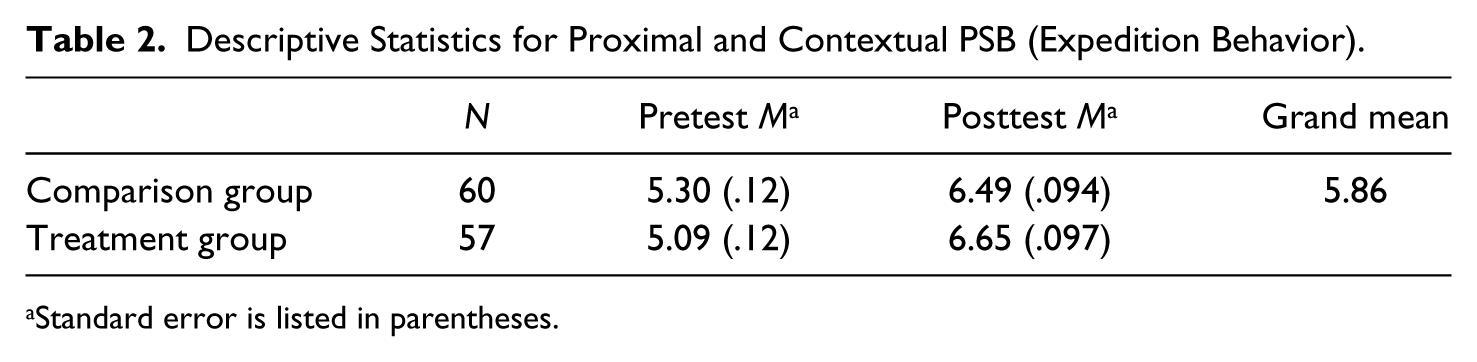
Standard error is listed in parentheses.
The second analysis tested the differences in the general measure of PSB, as measured by the PTM-R. The analysis did not support the premise that there were any significant differences by groups, either as a main effect (p > .05) or an interaction term (p> .05). As with expedition behavior, there was a significant effect of time, F(2, 34) = 8.614, p = .01, partial η2 = .34. As there were three times, a simple main effects analysis was run to examine the source of the differences. The significant differences in time were primarily attributable to the elevated postcourse (time 2) means on the PTM-R composite score. The precourse mean was 3.07; the postcourse mean was 3.37; the three-month postcourse mean was 2.93, which is not significantly different from the precourse mean.
Qualitative Results
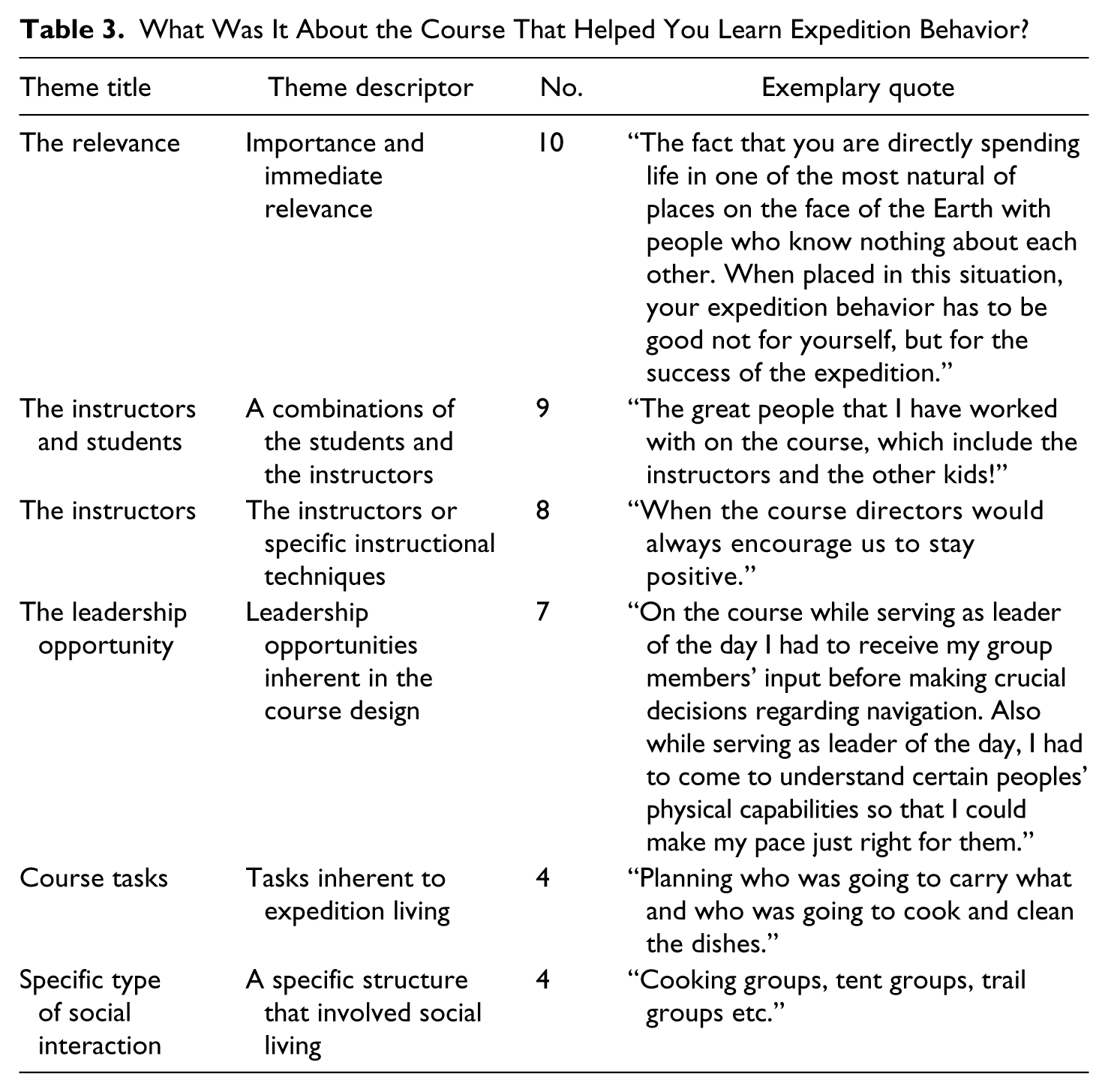
Qualitative questions were asked at 3 months post-course to a convenience sample of 50 participants. These questions were posed after participants responded to the PTM-R. The first question analyzed was “What was it about the course that helped you learn expedition behavior?” A total of 42 participants provided useable responses to this question. Data analysis revealed six distinct themes: (a) relevance, (b) instructors and students, (c) instructors, (d) leadership opportunity, (e) course tasks, and (f) a specific type of social interaction. Results for the first question are reported in Table 3.
What Was It About the Course That Helped You Learn Expedition Behavior?
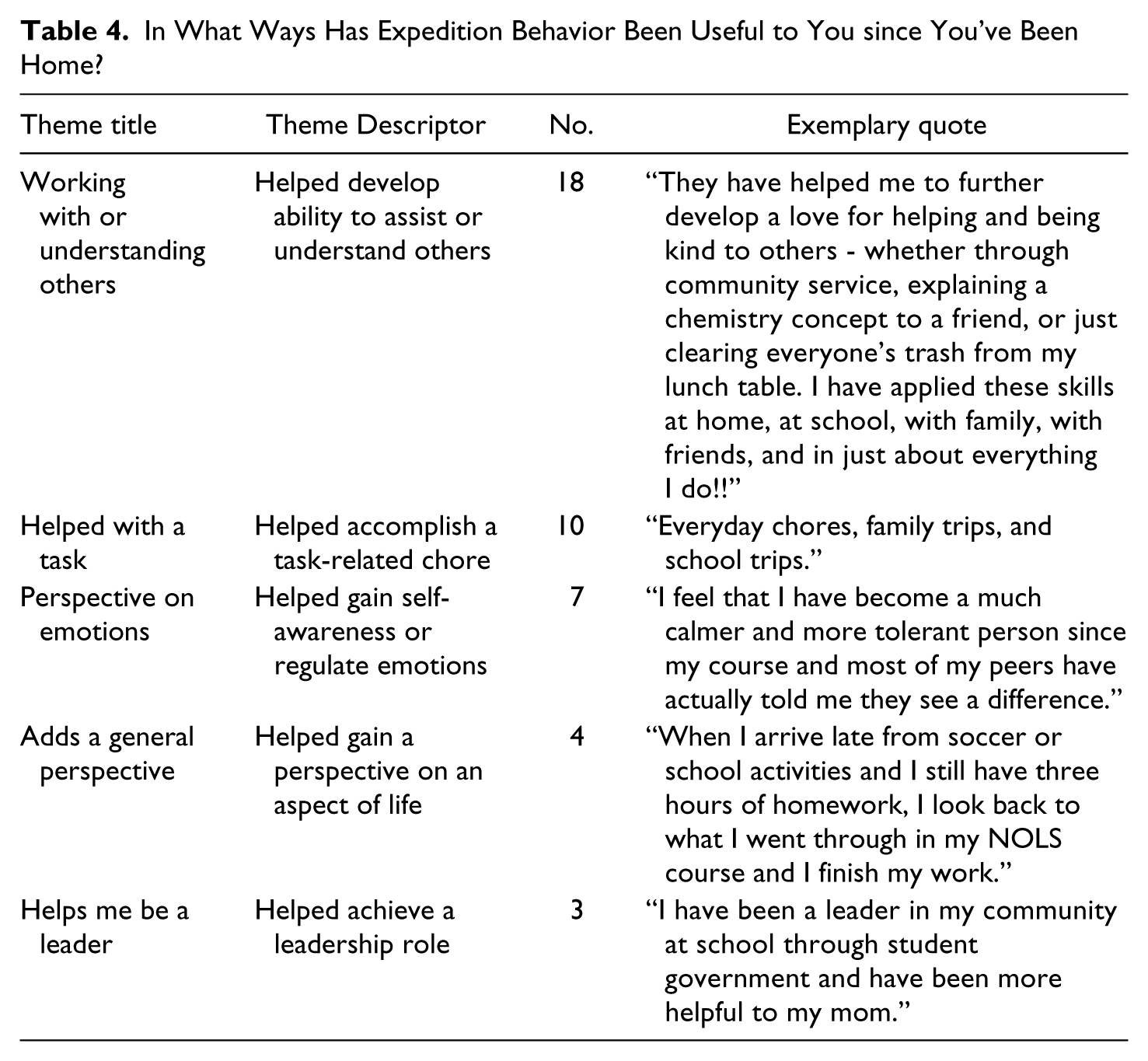
The second question analyzed was “In what ways have they been useful to you since you’ve been home.” A total of 42 participants provided useable responses to this question. Data analysis revealed five distinct themes: (a) working with or understanding others, (b) helped with a task, (c) perspective on emotions, (d) adds a general perspective, and (e) helps me be a leader. Results for this question are reported in Table 4.
In What Ways Has Expedition Behavior Been Useful to You since You’ve Been Home?
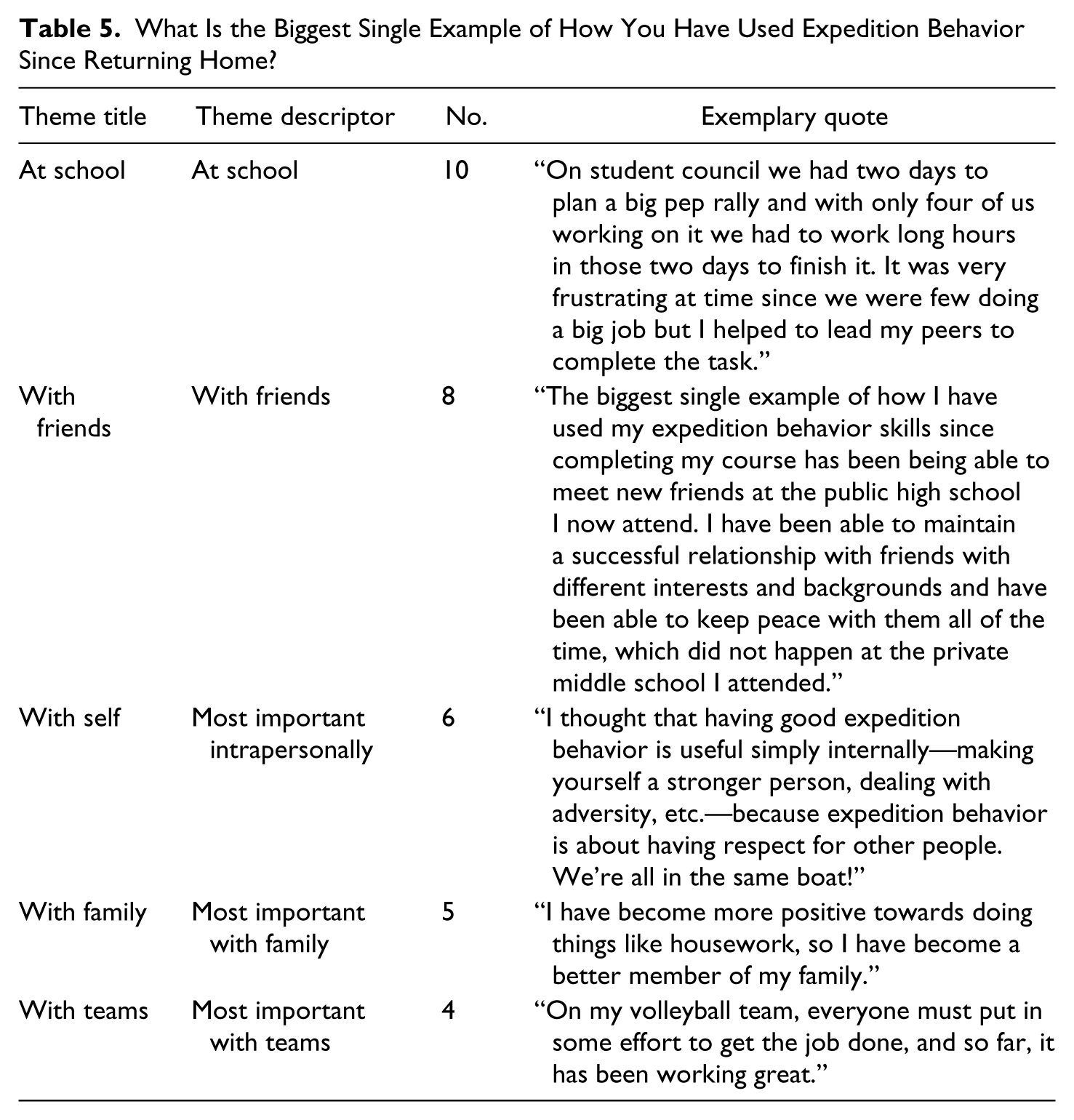
The third question analyzed was “What is the biggest single example of how you’ve used your expedition behavior skills since returning home?” A total of 33 participants provided useable responses to this question. Because answers were similar to the answers in question number two, themes were developed around contexts where expedition behaviors took place. Data analysis revealed five distinct themes: (a) at school, (b) with friends, (c) with self, (d) with family, and (e) with teams. Results can be viewed in Table 5.
What Is the Biggest Single Example of How You Have Used Expedition Behavior Since Returning Home?
Discussion
It is almost axiomatic that adventure education programs are capable of producing intrapersonal, interpersonal, and group development outcomes. Results from this study join the substantial body of literature suggesting that proximal gains in socially oriented variables are higher post-course than prior to participating in a program. In light of the effectiveness of adventure education programs in increasing proximal gains, this finding was not necessarily surprising, although it is important. What is more noteworthy is that a treatment curriculum significantly increased gains in learning compared with a traditional curriculum. This finding suggests that adventure education programming can be enhanced, or at least modified, to highlight a particular outcome for a specific population.
This raises the following question: What was it about the treatment curriculum that was responsible for the increase in proximal and contextual PSB scores? Without further study, this question cannot be conclusively answered; however, it is worth noting that much of the curriculum can be generally described as self-directed reflective exercises involving discussion that take advantage of unstructured time. Self-directed curriculum, in this case, means reflecting and journaling on written question prompts provided by the instructor. Periods of unstructured time on NOLS courses are relatively few and far between, and the few that remain often serve as a period for students to decompress. However, the use or nonuse of unstructured time for self-directed curriculum should be a decision made intentionally by staff. One tentative conclusion from this study is that utilizing otherwise unstructured time for self-directed curriculum may have a significant impact on learning outcomes. Thus, the question for instructional and program staff is, “Do we want to structure more time for students to engage in self-directed curriculum at the benefit of higher outcomes?” The appropriate answer will vary from course to course, as the freedom to learn and reflect in undirected and unstructured ways certainly has potential to be broadly beneficial.
An additional consideration is the use of a precourse goal setting worksheet. Seventy-six percent of the students responded to this worksheet. This type of exercise has been shown to facilitate educational outcomes (e.g., Dansereau et al., 1979; Wehmeyer, Palmer, Agran, Mithaug, & Martin, 2000), and may have been a factor in increasing contextual PSB scores for this sample. Some adventure programs may find it useful to include a precourse goal setting worksheet at minimal cost to administrative resources.
Despite immediate postcourse differences in expedition behavior, changes in general PSB over time appeared largely unaffected by the type of curriculum. Although there are several potential reasons for this, it may be that transfer may be too difficult to target through intentional interventions. There are a substantial number of factors involved in whether an individual transfers a particular outcome from a backcountry context to a front country context. The number of factors involved in transfer is perhaps best described by reflecting upon complexity of the Learning Transfer System Inventory (Holton, Bates, & Ruona, 2000), a measurement instrument designed to assess transfer factors. The instrument identifies 57 variables that influence transfer. If transfer is affected by so many different variables, one can imagine the difficulties in effectively programming for transfer.
PSB was learned over the duration of the NOLS course for both the treatment and traditional curriculum groups. This is consistent with results from other studies that suggest PSB is a learnable outcome. For instance, Solomon and colleagues authored a series of publications (e.g., Solomon et. al., 1988) that used cooperative activities, regular participation in helping and sharing activities, exposure to role-modeling, role-playing, and positive discipline to promote PSB for schoolchildren. The present study may have been able to foster learning about PSB because of the relevance (noted in the previous section) and because many of the activities on a NOLS course are functionally similar to those examined by Solomon and colleagues.
Contrarily, this result is also consistent with a phenomenon in adventure education programs called postgroup euphoria (Hattie et al., 1997). Postgroup euphoria occurs when students return from the field in a euphoric state, a common outcome that may influence scores on self-report data. It is difficult to say with confidence whether postgroup euphoria affected the results from this study. However, the fact that scores from the treatment and comparison groups rose at posttest yet returned to baseline at follow-up does raise the question.
Discussion About Qualitative Findings
Qualitative data analysis focused on three questions: (a) What was it about the course that helped you learn expedition behavior? (b) In what ways has expedition behavior been useful to you since you’ve been home? and (c) What is the biggest single example of how you have used expedition behavior since you’ve returned home?
Regarding the first question, students reported that they learned expedition behavior as a function of relevance, the instructors and students, the instructors, the leadership opportunity, course tasks, and a specific type of social interaction. The responses were similar to the findings from Paisley et al. (2008) who determined that expedition behavior is learned as a function of social dynamics, course experience, formal classes, relevance, role-modeling, and feedback. It appears that expedition behavior is not learned in a single way, but is learned in different ways by different people. Likewise, Mize, Ladd, and Price (1985) suggest that PSB is can be learned through role-modeling, which a number of research participants in this sample noted.
Regarding the second question, students reported that (a) working with or understanding others, (b) helping with a task, (c) gaining perspective on emotions, (d) gaining a general perspective, and (e) helping them be a leader were all ways that expedition behavior had been useful to them since they had been home. It appears that some students in the sample identified learning expedition behavior as something that was transferable to everyday life, and that expedition behavior is a transferable outcome of participation on NOLS courses.
Analysis of the third question focused on the context of application rather than context of transfer. As such, students reported that they used their expedition behavior skills (a) at school, (b) with their friends, (c) with their self, (d) with their family, and (e) with teams. This result suggests that for the sample, expedition behavior was a transferable outcome of their NOLS course in multiple places. Although it would be lovely to believe these findings were a result of their NOLS course, it is possible that the research participants were now able to identify and articulate PSB, but did not change their actual behaviors in a meaningful way.
The qualitative data supported the premise that content learned during adventure education programs does indeed transfer to life post-course. This is consistent with prior research regarding transfer in adventure education (e.g., Gass, Garvey, & Sugerman, 2003; Holman & McAvoy, 2004; Miller, 2001). This study contributes to the body of literature regarding transfer by suggesting that PSB is a transferrable outcome.
Conclusion
In light of this study, the insights of Detterman (1993) gain a richer meaning. Detterman claimed that transfer is largely an idiosyncratic domain that is difficult—if not impossible—for educators to influence. Although this perspective is difficult for educators who hope to foster transfer among their students to accept, Detterman’s point is well made—There are significant challenges for optimal transfer to occur. Regardless, though, adventure education programs should continue to develop evidence-based methods for fostering learning transfer. Specifically, developing means of facilitating precourse goal setting and postcourse reflection (e.g. Leberman & Martin, 2004) may increase program effectiveness by engaging learners for a longer duration, and by enhancing perceived similarities between contexts (Engle, 2006). Although the nature of adventure education programs is likely a transfer-optimizing experience, it is probable that there are means of increasing transfer as yet undetermined.
Footnotes
Declaration of Conflicting Interests
The author(s) declared no potential conflicts of interest with respect to the research, authorship, and/or publication of this article.
Funding
The author(s) received no financial support for the research, authorship, and/or publication of this article.