







Abstract
Keywords
With innovative and disruptive technologies on the rise, medical education is constantly evolving to keep pace with changes in medical practice, the emergence of new diseases, and ever-changing societal needs (Quintero, 2014). However, the delivery of evidence-based medicine and the production of a safe physician have remained as two core aims (The Evolution of Medical Education, 1958). According to the Commission on Education of Health Professionals for the 21st Century, current medical school graduates must be capable of mobilizing knowledge, engaging in critical reasoning, and practicing ethical conduct (Frenk et al., 2011). They need to be competent participants in patient- and population-centered health systems as members of locally responsive and globally connected teams. This is particularly relevant to the United Arab Emirates (UAE), which has experienced over a short period a profound transformation into an ultramodern global hub with a substantially high standard of living (Hannawi & Al Salmi, 2014). This rapid socioeconomic development, along with the continuous scrutiny of planners and purchasers and the growing wealth and expectations of the population, is increasing the pressures on the UAE health and educational systems.
To prepare doctors equipped to handle challenges emerging from these conditions, the Mohammed Bin Rashid University of Medicine and Health Sciences (MBRU), Dubai, UAE, developed and has been implementing the MBRU-Summer Scholars’ Program (MBRU-SSP): a co-curricular program for undergraduate medical students. This program integrates Kolb's experiential learning theory with situated learning theory (Otaki, Naidoo et al., 2020; Senok et al., 2021). As such, the scope is broadened to embrace learning that is situated in the context of wider societal dynamics and trends (Quay, 2003). In the program, participants undergo a dynamic process of learning which incorporates concrete experience, reflective observation, abstract conceptualization, and active experimentation (Kolb & Kolb, 2009; Kolb, 1984). Moreover, program organizers, participating students, and onsite mentors are key stakeholders with differing roles in the program design, implementation, and evaluation.
Literature Review
Stakeholders’ Theory
Stakeholders’ theory emerged in the business world and is aimed at addressing ethics, morals, and values of stakeholders in an organizational entity. Although stakeholders have been defined in various ways, loosely speaking, they represent anyone with an interest in a project, business, or organization. Freeman (1984) first defined stakeholders as “any group or individual who can affect or is affected by the achievement of the organization's objectives” (p. 46). In 2004, he added that stakeholders are the groups considered to be vital to the survival and success of the corporation or entity (Freeman, 2004). Stakeholders can be from within or outside the organizational network. Primary and secondary stakeholders represent differing stakeholder levels which can exist within the network. The continued participation of a primary stakeholder essential to the corporation's survival, while secondary stakeholders are those who, despite their influence on or by the organization, are not essential for its continued existence. According to Donaldson and Preston (1995), Stakeholders’ theory has descriptive (indicating the characteristics of the entity), instrumental (utilization of empirical data to identify connections between the management of stakeholders and achievement of corporate goals), and normative elements which are mutually supportive. However, the fundamental basis of stakeholders’ theory is normative and integrates the concept that stakeholders have an interest in the organization, are identified by that interest, and are of intrinsic value to the organization (Donaldson & Preston, 1995).
As stakeholders’ theory takes into consideration the influences of multiple interest groups, it has been found to be relevant beyond the business world. In higher education, this concept aligns with the value of nurturing collaboration between all parties involved in experiential educational activities (Association for Experiential Education, 2021). Building on stakeholders’ theory, Hoyle and Goffnett (2013) identified the student, the educational institution, and the employer as primary stakeholders to consider in internship programs (Hoyle & Goffnett, 2013). Indeed, studies from across the world have drawn upon Hoyle & Goffnett; (2013) conceptualization of stakeholders’ theory in experiential education to investigate the perceptions of these primary stakeholders in internship programs (reviewed in Sauder et al., 2019). The literature surrounding stakeholders’ theory in internship programs has been described as fragmented due to “discipline-specific research” and the tendency to “compare perceptions of one or two stakeholders rather than all three involved entities” (Sauder et al., 2019, p. 3). In addition to internship programs, which constitute part of the curriculum, some medical schools also offer co-curricular experiential education programs. Yet, published reports from these co-curricular programs (Alamodi et al., 2014; Brown et al., 2018; Jonker et al., 2018) also suffer from similar fragmentation as described by Sauder et al. (2019). Indeed, none of the studies derived from medical school co-curricular programs (Alamodi et al., 2014; Brown et al., 2018; Jonker et al., 2018) have captured the perceptions of all three primary stakeholders (i.e., students, home institutions, and host institutions) involved in the programs (Senok et al., 2021).
The purpose of this study was therefore to systematically capture and assemble the perceptions of the primary stakeholders of a co-curricular program for medical students in order to evaluate the extent to which the program meets its objectives. The evidence generated from such a holistic perspective will enable the continuous quality improvement of the experiential learning opportunities provided. Plus, more broadly, the knowledge gained from this study can help educational institutions that train future health professionals to maximize the value of such co-curricular programs to all involved stakeholders.
Method
Description of MBRU-SSP
The program examined in this study offers undergraduate medical students cross-cultural experiences away from the classroom setting at an early stage in their educational journeys. The primary objective of these experiences is to enable students to acquire and integrate skills and knowledge in five domains: research, clinical practice, community service, health systems, and arts and culture. Although this program is not integrated into the curriculum, it is designed in a way that it is highly associated with and complementary to the curriculum. Thus MBRU-SSP can be viewed as a co-curricular program, as opposed to an extra-curricular one (Otaki, Naidoo et al., 2020; Senok et al., 2021).
Steps of MBRU-SSP's Annual Cycle
The program has been operational since the inception of the University in 2016. A total of 24 students participated in Academic Year (AY) 2016-2017, 71 students in AY 2017-2018, and 107 students in AY 2018-2019. The annual MBRU-SSP cycle, as per Figure 1, is composed of three phases, planning, implementation, and evaluation.
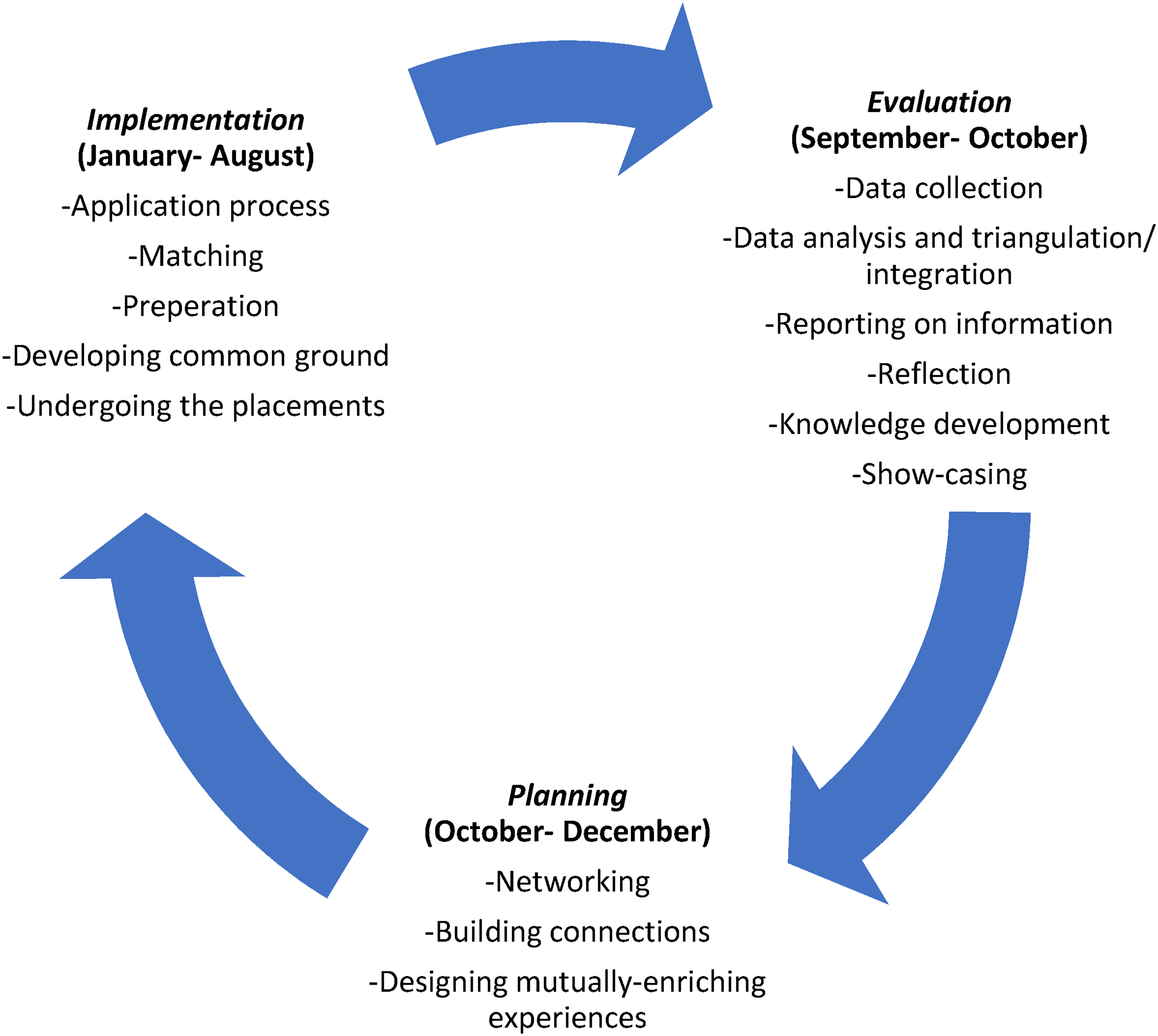
MBRU-SSP Annual Cycle.
Planning
The planning phase spans from October through December of every AY. It commences with deploying the networks of the faculty and staff to identify potential collaborating centers and onsite mentors. The identified centers are approached via emailing, video conferencing, and/ or face-to-face meetings to solicit interest to collaborate, establish common ground, and tailor mutually beneficial placement opportunities. At the end of December, a preliminary list of centers is shared with the students for them to have an overview of the available placement options in preparation for the actual application process.
Implementation
By mid-January, students start applying for their preferred placements using a dedicated, in-house online platform that inquires for both quantitative and qualitative data. This platform remains open until the end of January. Throughout this time, the students have full autonomy to choose whether, or not, to apply for placements in the program. During the month of February, applications are processed, and students are matched to centers. By the end of February, the results of application processing are announced to students and onsite mentors at the collaborating centers. Upon attaining this milestone, the students initiate the dialogue with the respective mentors where they exchange thoughts and ideas to better refine and manage expectations on both sides. During this time, the participating students are required to undergo two preparatory sessions. The actual placements take place between June and mid-August.
Evaluation
Upon completion of the placements, a survey is circulated among the participating students and onsite mentors to evaluate their experiences. The program organizers also get the opportunity to provide feedback on the overall program and its effectiveness. All the collected data is assimilated and analyzed for continuous learning and development purposes as part of the MBRU Institutional Research function. In addition, the MBRU-SSP Awards Day, during which students showcase their experiences through poster presentations, occurs in October.
Research Design
This study utilized an explanatory mixed methods design (Figure 2) (Ellaway, 2020; Fetters, 2019). Data from three groups of stakeholders, Program Organizers (PO), Participating Students (PS), and Onsite Mentors (OM), was triangulated. The datasets of the AY 2018-2019 cycle were extracted and sequentially analyzed. The quantitative datasets were analyzed first followed by the qualitative datasets. Through mixed methods integration (Levitt et al., 2018), the authors were able to utilize the findings of the quantitative analyses to guide the analyses of the qualitative datasets. During integration, the authors recognized concordances and complementarities across the findings. They were also open to any potential discordances (Fetters & Freshwater, 2015). Ethical approval was granted by the MBRU Institutional Review Board (Reference # MBRU-IRB-2020-004).
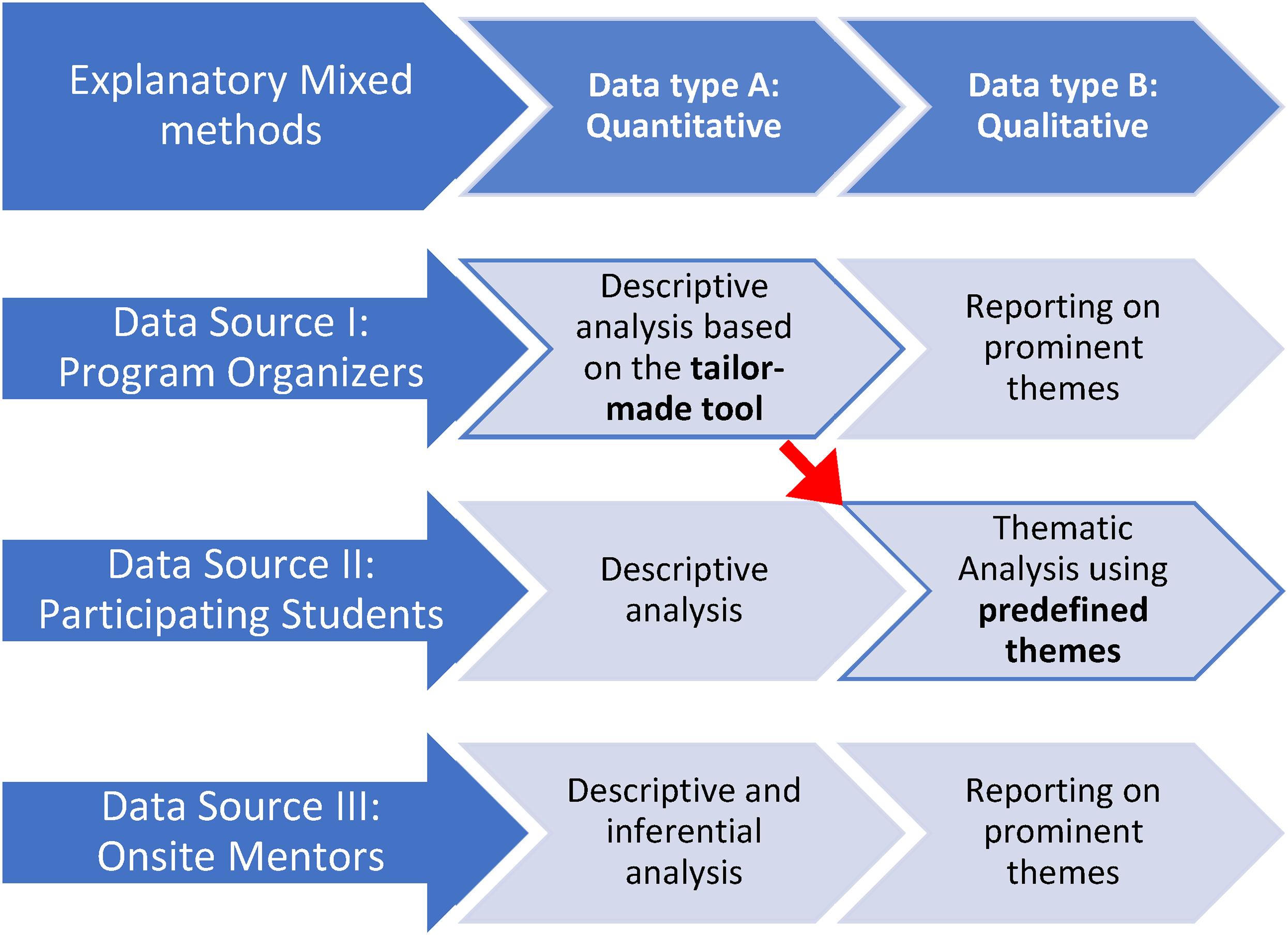
Adapted sequential, explanatory mixed methods design. The Red arrow represents how the themes of the qualitative analysis (of the Participating Students) were predefined based on the components of the tailor-made tool that proved to be reliable and valid in the preceding stage (quantitative analysis of the Program Organizers perspective).
Data Collection
The data from each of the three groups of stakeholders consisted of both quantitative and qualitative components and was collected during the evaluation phase of the MBRU-SSP cycle.
Program organizers (Po)
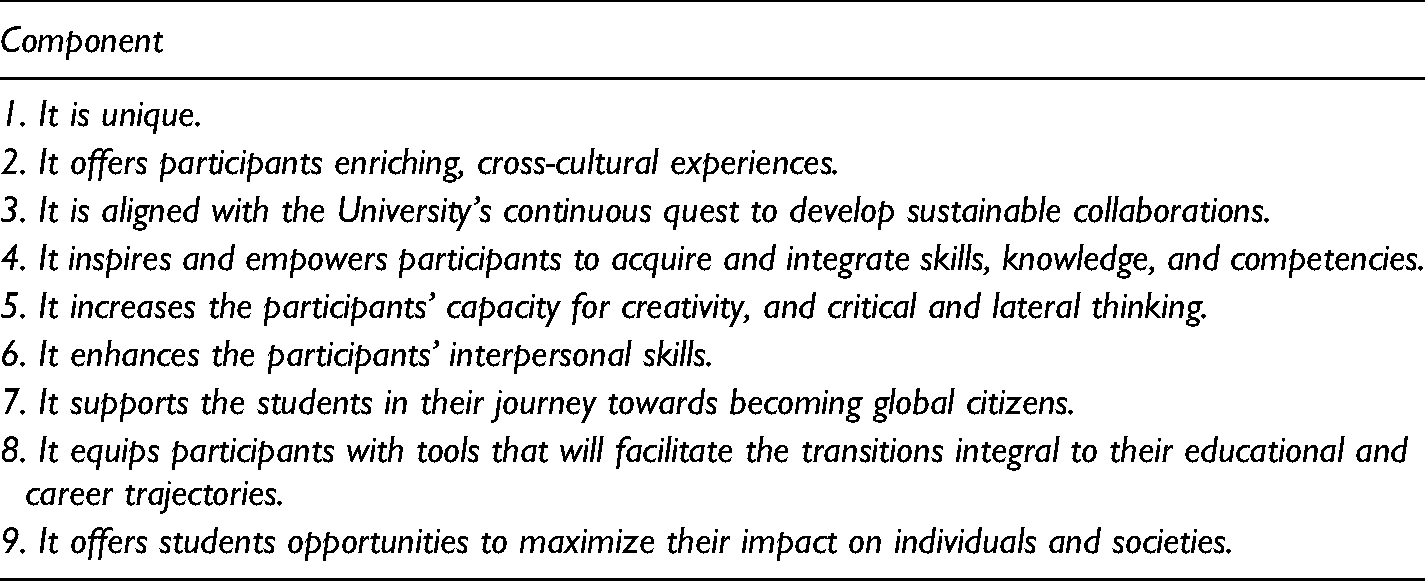
The PO are the internal stakeholders, who at any point in time, played an active role in preparing, implementing, and/or evaluating the program. A tailor-made tool was developed to capture the perception of the PO regarding the extent to which the program met its pre-set objectives. The tool was designed to evaluate nine characteristics of the program (based on the pre-set objectives) using a five-point Likert-type scale (Table 1). The PO were also asked to list any additional benefits of the program and to indicate opportunities for improvement.
Components of the tailor-made tool to capture the perception of the program organizers.
Participating students (Ps)
After completion of placements, the PS were requested to rate the quality of their experience, the support and mentorship provided at the hosting center, and whether, or not, they would recommend the respective center to other students. The students were also required to submit a reflective note of their experience and its perceived added value.
Onsite mentors (Om)
The OM were requested to quantitatively rate the performance of each assigned student according to the following variables: attendance, interest in work, teamwork, and initiative. The OM were also requested to provide additional comments about the students and the program.
Data Analyses
Quantitative datasets
The quantitative data were analyzed using SPSS statistical software version 27.0. Analyses were largely descriptive for the data of all three groups of stakeholders, where percentages across categories were calculated. Specifically, for the quantitative data of the PO, each of the nine program characteristics was assessed against a 5-point Likert-type scale (1 = Strongly Disagree, 5 = Strongly Agree). For each component of the tool, the mean and standard deviation were determined. The percentage of the mean across all components was then calculated. Cronbach's Alpha and Principal Component Analysis were performed to test for internal consistency and external variance, respectively. For the OM dataset, inferential analysis using the Pearson Chi-Square test was conducted to assess dependencies across categorical variables.
Qualitative datasets
NVivo software version 12 plus (QSR International Pty Ltd, Vic, Australia) was used to manage qualitative data, code the text fragments, and facilitate the analysis. A unique identification number (e.g., PS-23) was assigned to each student. The same number was utilized for the corresponding OM (e.g., OM-23 mentored PS-23). Each organizer in the PO qualitative dataset was given a unique identification letter (e.g., PO-A). Each dataset was handled separately. In keeping with the thematic analysis technique, each response was reflected upon individually. Data was analyzed by three researchers using thematic analysis (authors Senok, Al Heialy, & Naidoo). These researchers are members of the committee that steers the planning, implementation, and evaluation of the MBRU-SSP. The subjectivity of the researchers was kept in check throughout the qualitative analysis process. Prior to the initiation of the data analysis process, the three researchers, along with a facilitator, discussed their own subjectivity. In the respective meeting, the facilitator encouraged the researchers to be reflective, and to exercise reflexivity, through a conscious process of unmasking underlying assumptions, ideologies, and beliefs. The questions that were thoughtfully addressed revolved around how the researchers perceive themselves, and what personal attributes they believe affect their perceptions and in turn their engagement in the data analysis process. The facilitator noted these attributes and ensured that the researchers’ engagement in the series of discussions led to well-rounded interpretations of phenomena throughout the data analysis process. This type of research is based on the belief that human-beings and their actions are too complex to be fully understood with external tools, requiring researchers to investigate significant aspects of reality through engaging in the subject under investigation (Sawatsky et al., 2019). For this study, the researchers developed a collective perception of the situation in order to shed light on data patterns relevant to answering the research question.
The qualitative analysis of the PS relied on the same nine components of the above-mentioned quantitative tool (Table 1). These components formed the predefined themes upon which the qualitative analyses were anchored. Reflections and segments of the text that stood out to the researchers were traced to one of these themes. Another round of analysis was conducted for the text segments within each theme to split it into two categories.
Results
The response rates across the data sources were as follows: 71.4% for the PO (10 out of 14), 36.4% for PS (39 out of 107), and 49.5% for the OM (53 out of 107).
Quantitative Analysis
Program organizers
The reliability score of Cronbach's Alpha for the tailor-made evaluation tool that captured the perception of PO was 83.6%. The percentage of the average per item was between 92% and 100% (Table 2). In addition, the total score of agreement was 38.2, indicating an overall percentage of 95.5% (i.e., Strongly Agree). According to the Principal Component Analysis, 83.8% of the variance can be explained by the instrument which means the instrument is not only reliable but also valid for what it is intended to measure.
Perspective of the Program Organizers (n = 10).
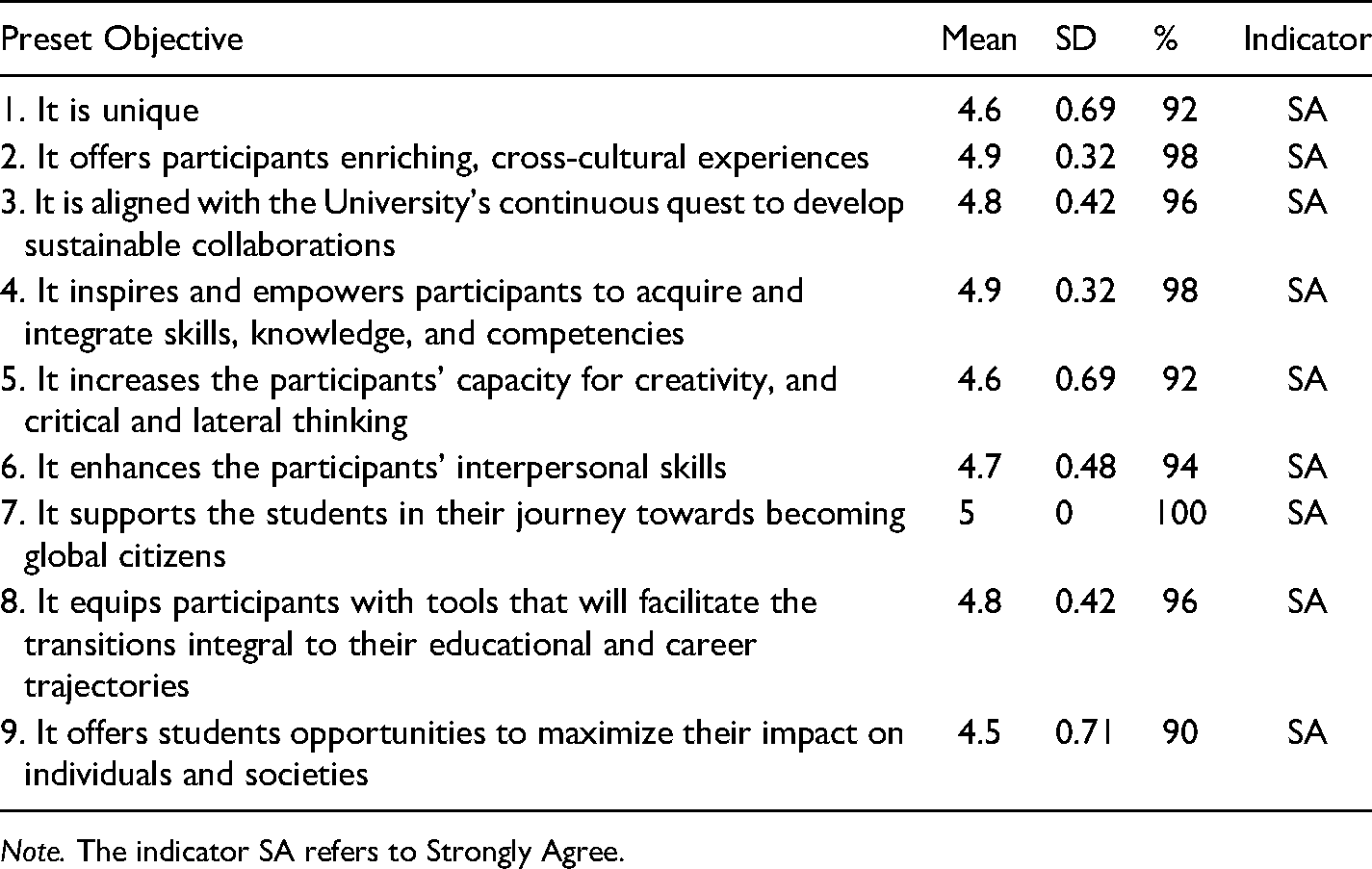
Note. The indicator SA refers to Strongly Agree.
Participating students
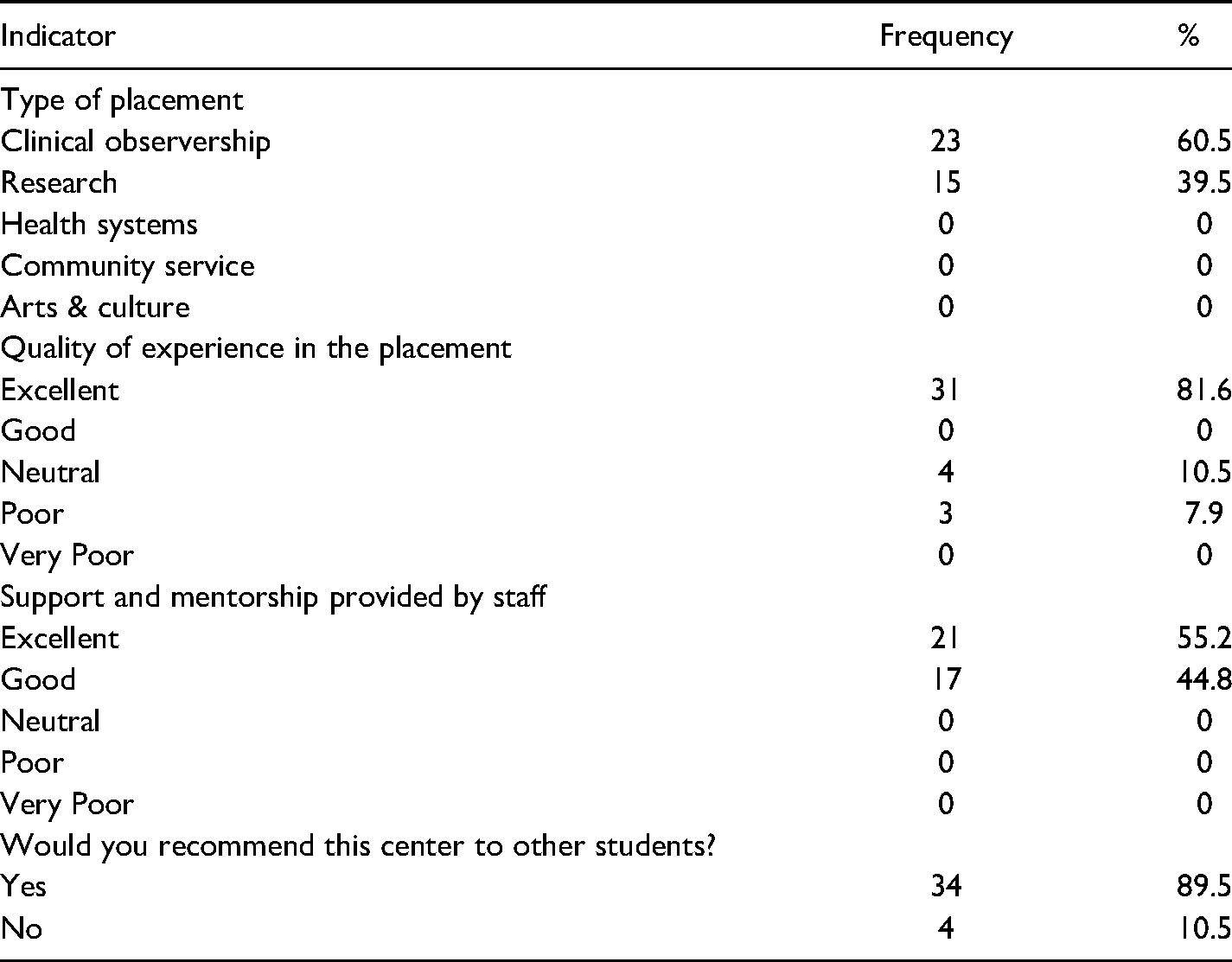
Most of the respondents (60.5%) undertook a Clinical Observership, and all others indicated Research as the placement type (Table 3). Majority of the PS (81.6%) rated the overall quality of their placement experiences as excellent, and 89.5% will recommend their hosting centers to other students (Table 3). In addition, all respondents rated the support received from their OM and the hosting centers as either good or excellent.
Perspective of the Participating Students (n = 38).
Onsite mentors
Most of the OM (88.7%) thought that the attendance of the PS was excellent (Table 4). The extent of engagement of the PS was perceived to be high by 64.2% of the OM, with69.8% of the PS noted to display high interest in their work throughout the placements. Also, majority of OM indicated that the PS tendency to take initiative was either medium or high (Table 4).
Perspective of the Onsite Mentors (n = 53).
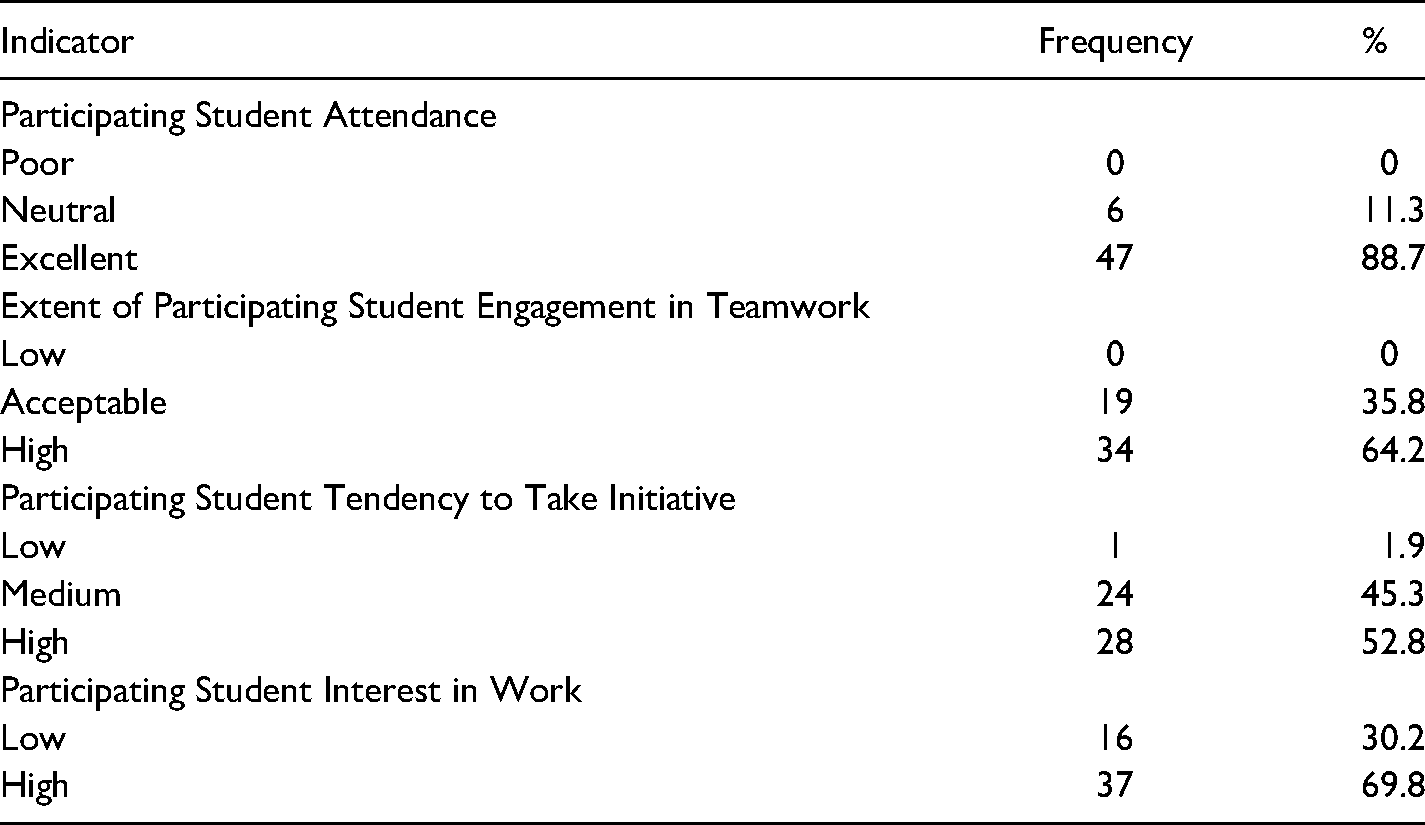
Teamwork engagement was positively associated with attendance (p < 0.001). The tendency to take initiative and to have interest in work were significantly associated with high attendance among PS (p < 0.01). The level of engagement in teamwork was not associated with tendency to take initiative but was significantly associated with interest in work (p < 0.01).
Qualitative Analysis
Program organizers
The qualitative data from the PO showed that the MBRU-SSP reinforced the MBBS curriculum:
The PO indicated the alignment of the program with the University's continuous quest for building sustainable connections:
The acquired interpersonal skills and the nurturance of global citizens were also touched upon by the PO:
Participating students
The thematic analysis of the qualitative data collected from the PS after completion of the MBRU-SSP experience resulted in the conceptual framework depicted in Figure 3. The qualitative analysis generated 18 categories. To sequentially use the findings of the quantitative analysis for explaining the qualitative data, the generated categories were deductively fitted into the nine predefined themes. This resulted in the encapsulation of two categories within each theme (Figure 3).
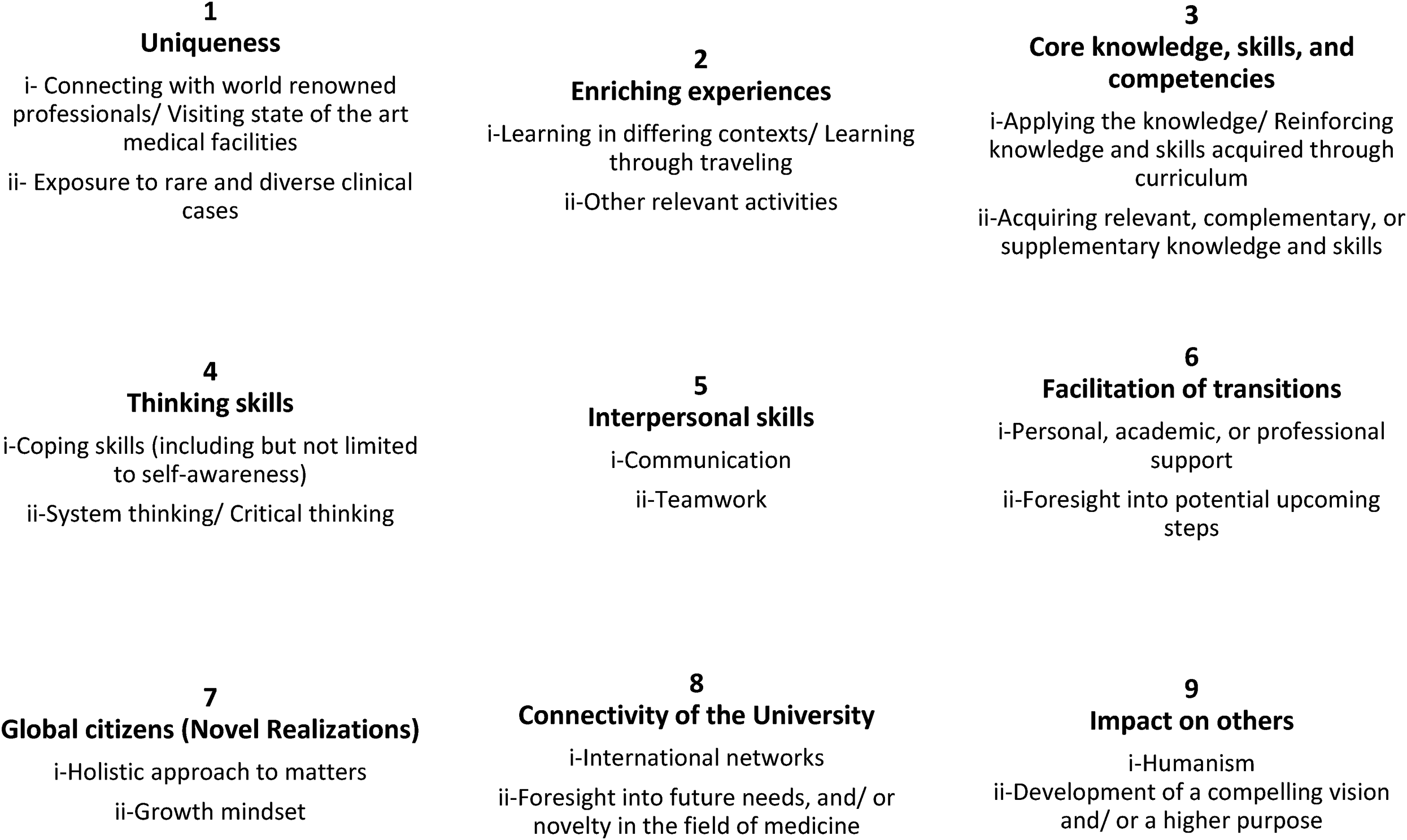
The study's analytical framework: generated by basing a qualitative analysis on the output of a preceding quantitative analysis.
Theme 1: Uniqueness
The first category within this theme related to how this opportunity exposed the PS to world renowned professionals and state of the art medical facilities.
Relevantly, the second category was related to exposure to rare and diverse clinical presentations.
Theme 2: Enriching Experiences
The PS reflected upon learning through traveling and across differing contexts.
The second category within this theme referred to the PS engagement in complementary learning activities such as socializing and networking.
Theme 3: Core Knowledge, Skills, and Competencies
Within this theme, many students highlighted the reinforcement of the knowledge and skills in basic and clinical sciences that they had already acquired as part of the Bachelor of Medicine, Bachelor of Surgery (MBBS) program.
The second category in this theme highlighted the integration of relevant, complementary knowledge and skills:
Theme 4: Thinking Skills
Within the first category in this theme, PS referred to several coping mechanisms.
PS also referred to critical and system thinking, which formed the second category.
Theme 5: Interpersonal Skills
Enhancement of communication was alluded to several times by the PS.
Secondly, teamwork, openness, and capacity to see matters from different perspectives was also highlighted:
Theme 6: Facilitates Students’ Transitions
This theme reflects the personal, academic, and/or professional aspects of the MBRU-SSP that supports the students through the transitions that are integral to their academic and career trajectories.
This facilitation also occurred by enabling foresight into potential upcoming steps:
Theme 7: Novel Realizations
Based on our predefined framework (Table 1), the expected Theme 7 is “Global Citizenship”. During the qualitative analysis, it became apparent that global citizenship is intrinsic to all the components of the MBRU-SSP, and it encapsulates the generated conceptual framework. This discrepancy called for the reconsideration of the code of this theme, where all the text segments that did not fit into the remaining eight themes were thoroughly reviewed. Out of this investigation, two categories emerged, namely: understanding complexities and maintaining a growth mindset. Accordingly, Theme 7 was recoded as “Novel Realizations”, and related to how the MBRU-SSP widens the horizons of the PS, helping them to better understand dynamics and complexities.
MBRU-SSP also enabled the PS to attain and maintain a growth mindset.
Theme 8: Connectivity of the University
This theme referred to how the program provides PS with networking opportunities which in turn fosters the connectivity of the University:
In addition, this theme also suggested that the PS gain insight about novelties in the field of medicine:
Theme 9: Impact on Others
The last theme showed how the PS were empowered to contribute to the community-at-large. On one front, the PS experienced the humanistic side of medicine:
The PS also felt inspired to develop a compelling vision and/or a higher purpose:
Onsite mentors
This qualitative dataset revolved around the OM perception about the performance of the PS. Most of the comments describing the PS were positive in nature.
Very few comments highlighted opportunities for improvement in the students’ performance:
The OM indicated how they perceived the PS influenced the hosting center.
The OM also referred to the relevant competencies attained by the PS and their exposure to enriching cultural experiences:
Discussion
Leveraging stakeholders’ theory in this study called for the perceptions of the PO, PS, and OM to be captured and systematically integrated. This macro-perspective, coupled with the mixed methods approach to research (Levitt et al., 2018), broadened the scope of analysis and enhanced its rigor (Ellaway, 2020). This in turn enabled the generation of an evidence-driven conceptual framework, which encapsulated the development that occurs at the level of the community due to individuals’ engagement in co-curricular experiences. Integrating such a holistic perspective in exploring experiential education programmes in health professions education is rare (Akomaning et al., 2011; Sauder et al., 2019). Most studies assessing the impact of co-curricular programs for medical students investigate a single perspective (Alamodi et al., 2014; Brown et al., 2018) or two, at most (Jonker et al., 2018). The insights generated from such studies, albeit valuable, do not constitute a thorough, 360-degree assessment.
This study showed that the MBRU-SSP is fulfilling its pre-set objectives and hence can be considered efficacious. All the involved stakeholders expressed satisfaction with the entailed experiences. From the perspective of stakeholders’ theory, the high level of contentment among all involved parties can be attributed to the reliability of the program's planning and implementation processes, as well as its proper embeddedness within the home institution (Barron et al., 2017; Quay, 2003). This sheds light on the importance of intra- and inter-institutional collaborations as the bedrock of co-curricular programs. The impact of forming effective, long-term interdependencies in the planning, implementation, and evaluation of co-curricular programs shows how the whole can become greater than the sum of its parts. In other words, when individual parts are effectively interconnected to form one entity, they become more valuable than the operation of individual parts in silos (Barnier et al., 2017; Saks & Gruman, 2011). Furthermore, the MBRU-SSP exhibits a Community-Based Participatory (CBP) model where there is substantial engagement of all involved stakeholders (Wallerstein et al., 2019). Building capacity needs to be maintained at the core of such programs hence they need to be designed in a way that enhances the skills, knowledge, and attitudes of all involved.
The findings also suggest that satisfactory attendance of the PS is associated with high level of engagement, tendency to take initiative, and interest in the subject matter. These associations suggest that the level of the PS attendance constitutes an important factor for the sustainability of the program. This is in alignment with situated learning theory which suggests that experiential education can be considered as the learning that occurs through participation in the social world (Lave, 1991; Emo et al., 2015; Quay, 2003; Seaman et al., 2017).
A major outcome of this research study is that it generated an evidence-driven conceptual framework which can be utilized by other schools of medicine and health sciences to guide the institutionalization and development of efficacious co-curricular programs. Although the qualitative data of the PS fitted smoothly into the pre-set framework as per the original research design, there was a discrepancy around Theme 7. The initial label for this theme, global citizenship, was found to encompass the whole model rather than just a segment of it. Accordingly, the researchers decided to refine their approach, such that the text segments that were perceived to be relevant to the research question but did not fit into any of the other eight themes, were revisited through inductive analysis. Such purposeful methodological refinements are expected to fine-tune the analytical intentions and in turn strengthen the study's trustworthiness (Kiger & Varpio, 2020; Koro-Ljungberg & Bussing, 2013). Interestingly, all the text fragments that went through re-analysis relate to the novel realizations acquired through undergoing an experience first-hand (Dyche & Epstein, 2011; Krupat et al., 2011; Maudsley & Strivens, 2000). Therefore, Theme 7, initially named “Global Citizenship” was re-labeled as “Novel Realizations” in the analytical framework (Figure 3). The generated framework, in its entirety, builds upon the relevant literature which highlights that the process of becoming global citizens requires that the students go through a transformative experience that positively alters their sense of self and understanding of others in the world (Brigham, 2011).
Limitations
A limitation of this study is that all PS who reported upon their MBRU-SSP experience had undertaken either a clinical observership or a research internship; hence, the perception of the PS who engaged in other types of placements was not captured. Although the findings included associations across several variables, causality could not be established due to the study design. Since this study is based on a single co-curricular program, the generalizability of the findings is limited to programs that are similar in nature (Levitt et al., 2018). It is thus recommended for future studies to be of longitudinal research design, measuring the variables across differing time points. This will enable researchers to establish causality and explore the long-term outcome and impact of such programs. Moreover, all the information generated from this study is based on evaluation data which reveals the stakeholders’ reactions to the experience which constitutes Level 1 of the Kirkpatrick model, a common model in medical education (Otaki, Khamis, et al., 2020). It would be worthwhile for future studies to take the entailed analyses a step further by incorporating means of assessing the attainment of corresponding competencies: knowledge and skills (i.e. Levels 2 and 3 of the Kirkpatrick model), and the long-term impact of such co-curricular programs on the quality of care and patients’ outcomes (i.e., all the way to Level 4 of the same model).
Conclusion
Co-curricular programs, such as MBRU-SSP, have substantial impact and benefits for all involved stakeholders, especially the participating students. The “Global Citizenship” framework generated from this study encapsulates the diverse benefits of participation in such programs and represents a tool that can be deployed by institutions developing similar programs.
Footnotes
Declaration of Conflicting Interests
The author(s) declared no potential conflicts of interest with respect to the research, authorship, and/or publication of this article.
Funding
The author(s) received no financial support for the research, authorship and/or publication of this article.
