







Abstract
Out-of-school time (OST) programs are recognized as an effective model for fostering healthy and positive development among children and adolescents (Durlak et al., 2010; Fukkink & Boogaard, 2020; Vandell et al., 2015). High-quality OST youth programs have been associated with higher academic achievement (Barr et al., 2006), increased social skills (Grogan et al., 2014), and positive emotional outcomes (Bang et al., 2020). A defining feature of high-quality OST programs is positive youth development (PYD), which informs intentional programming to facilitate strengths-based supports and opportunities for youth (Dimitrova & Wiium, 2021). By adopting PYD frameworks, OST programs can create physically and emotionally safe places for youth, provide opportunities to build positive and supportive relationships with peers and adults, facilitate skill development in areas aligned with youth strengths and interests that foster meaningful involvement, voice, and leadership (Shinn & Yoshikawa, 2008).
Relationships with dedicated, attentive adults are an important program component for achieving PYD outcomes (Li & Julian, 2012; Weybright et al., 2017). Relationships with caring adults positively influence youth in multiple ways, including the ability to regulate emotions, build trust in others, and develop social skills (Li & Julian, 2012; Yu & Deutsch, 2021). Despite attempts from OST program providers to foster and maintain positive youth-adult relationships, the nature of these relationships can vary widely across contexts and youth populations (Bowers et al., 2015; Yu & Deutsch, 2021; Zeldin et al., 2016).
One such population is military-connected youth, those youth whose parents have been deployed, prepared for deployment, or have lost their lives during service. Military-connected youth face conventional challenges associated with adolescent development and must also navigate the uncertainty of a military family lifestyle (Bello-Utu & DeSocio, 2015; Esposito-Smythers et al., 2011). Therefore, supportive and enduring relationships with adults in OST programs may be particularly beneficial for military-connected youth. Given the effectiveness of programs centered on youth-adult relationships for addressing the needs of marginalized youth and the limited literature on programs targeting military-connected youth (Sullivan & Larson, 2010; Ungar, 2015; Weybright et al., 2017), the current study examines how a youth leadership program using a youth-adult partnership (YAP) model contributed to skill development and career preparedness outcomes for military-connected youth. Further, this study examines longer-term outcomes of youth leadership program participation to illumine how programs that target military-connected youth contribute to positive trajectories toward adulthood (Arnold, 2018; Furstenberg et al., 2004). The following research questions were explored:
RQ1: How does the application of a youth-adult partnership model within a youth leadership program targeting military-connected influence interactions between youth and adults? RQ2: How does participation in a youth leadership program targeting military-connected youth influence skill development among youth and adults? RQ3: How does participation in a youth leadership program targeting military-connected youth influence future career preparedness and success among youth and adults?
Literature Review
Military-Connected Youth
Approximately 1.6 million military dependents are under age 20 (or 22 if enrolled as full-time students) across Active Duty, Selected Reserves, and the National Guard units (United States Department of Defense, 2017). Numerous family stressors are associated with deployment and reintegration following deployment (Esposito-Smythers et al., 2011). The indirect effects of military service can create long-term issues for non-deployed family members and their dependent children (Ormeno et al., 2020; Ruscio et al., 2002). As military-connected youth reach adolescence, they become increasingly aware of the dangers associated with deployment (Bello-Utu & DeSocio, 2015; Huebner & Mancini, 2005); subsequently, this age group is at increased risk for internalizing problems, stress-related disorders, sleep issues, and academic struggles (Chandra et al., 2011). Many military-connected youth experience multiple relocations due to deployments, and such relocations can lead to military-connected youth feeling disconnected from their peers, discouraged at school, and angry towards their parents (Ormeno et al., 2020).
Youth Development Programs Targeting Military-Connected Youth
The PYD perspective explains how youth thrive and demonstrate healthy functioning when environmental resources accompany their strengths (Easterbrooks et al., 2013). Ginsburg and Jablow (2020) expanded on the well-developed and extensively researched Five Cs model of PYD (i.e., competence, confidence, connection, character, contribution; Lerner et al., 2021) to develop the Seven Cs model as a framework for youth resilience. Resilience is conceptualized as “sustained competence or positive adjustment in the face of adversity” (Easterbrooks et al., 2013, p. 100) resulting from interactions between a person and their environment. During adolescence, resilience may be influenced by factors across a young person's ecological and sociocultural systems (Masten, 2019). The Seven Cs model addresses resilience by adding two additional concepts—coping and control—to the Five Cs model of PYD (Ginsburg & Jablow, 2020). Coping and control are helpful in identifying resilience strengths and weaknesses in youth (Barger et al., 2017). Effective youth development programs that promote resilience often attempt to positively influence at least one factor within the Seven Cs framework (Mahmoud & Rothenberger, 2019). Additionally, because the Seven Cs are related, positively impacting one aspect typically results in positive change in others (Ginsburg & Jablow, 2020). For military-connected youth to thrive, youth development programs seek to provide opportunities to enhance and support the Seven Cs (Kudler & Porter, 2013) as well as build resiliency (Huebner & Mancini, 2005). In the current study, the Seven Cs framework was embedded within Boys and Girls Clubs of America’s (BGCA's) program theory for serving military-connected youth through the Military Teen Ambassador (MTA) program.
OST programs intentionally designed to address the needs of military-connected youth provide opportunities for stability and elicit positive outcomes (e.g., feelings of comfort, happiness, safety, and parental dependability; Richardson et al., 2016), with the most effective programs addressing both internal and external stressors by promoting internal (i.e., resilience) and interpersonal (i.e., connectedness) assets (Esposito-Smythers et al., 2011; Jordan, 2021). Previous studies of military-connected youth targeted potential negative developmental and family outcomes affiliated with the military lifestyle (see Easterbrooks et al., 2013); however, limited literature exists on the effectiveness and benefits of programs designed to serve military-connected youth. Few studies have examined how youth-serving programs can assist military-connected youth in developing coping strategies, life skills, and social supports (Jordan, 2021; Parry et al., 2023; Weston et al., 2021).
Youth-Adult Partnerships
This study was informed by a YAP framework (Camino, 2000; Zeldin et al., 2013). YAPs reflect the idea that (1) cooperative efforts include both youth and adults (Camino, 2000; Zeldin et al., 2013) and (2) encourage the building of instrumental relationships among youth and adults (Weybright et al., 2017; Zeldin et al., 2016). YAPs differ from parent-child, student-teacher, and mentoring relationships because they require mutual teaching and learning between both parties (Camino, 2000). When utilized effectively, YAPs emphasize the necessity of youth power in decision-making (Camino, 2000; Weybright et al., 2017) and encourage collaborative action between youth and adults in community spaces (Camino, 2000; Zeldin et al., 2013).
Not only has YAP involvement been linked to increased program motivation (Akiva et al., 2014) and higher program quality (Krauss et al., 2014), such relationships between youth and adults positively impact social skills (Akiva et al., 2014) and identity development (Ramey et al., 2017). Youth who engage in YAPs experience greater empowerment while developing problem-solving and decision-making skills (Akiva et al., 2014; Krauss et al., 2014). Successful YAPs within youth-serving organizations must be established within the program structure and implemented through curriculum and staff training (Weybright et al., 2017). In the current study, a YAP model was a defining feature of the MTA Steering Committee.
Method
Institutional Review Board Approval
This study was reviewed and approved by the Institutional Review Board at Clemson University. All participants provided consent.
Study Site
For more than two decades, BGCA has partnered with the U.S. Armed Forces to provide programs and services to youth and military families. One such program is BGCA Military Teen Ambassadors (MTA)—a centralized training for military youth and their advisors from U.S. military installations. The training targets the development of life skills and leadership capabilities of military teens, focusing on resiliency and reintegration of the family following deployment. Previous studies have examined outcomes associated with BGCA's MTA program (Parry et al., 2023; Weston et al., 2021). This research suggests that BGCA's use of the Seven Cs of Resiliency within the MTA program has been associated with significant increases in program participants’ knowledge of resiliency and reintegration (Weston et al., 2021). Furthermore, participants also demonstrated high levels of teamwork, communication and leadership skills, and knowledge of community needs (Parry et al., 2023; Weston et al., 2021).
A novel dimension of the MTA program is the integration of a Steering Committee comprised of Teens and Adult Advisors, who work cooperatively to plan, implement, and evaluate the MTA program. A central feature of the MTA program and the MTA Steering Committee is fostering youth-adult partnerships (Liang et al., 2013). Both the MTA program and the MTA Steering Committee provide opportunities for teens to build relationships with their Adult Advisors as mentors that support their success. The current study builds on previous work by examining how an intentional youth leadership structure (i.e., the Steering Committee) built on a PVD framework can support developmental outcomes.
Design and Participants
A mixed-methods survey was used to evaluate immediate and long-term outcomes associated with MTA Steering Committee participation. This design involved administering a survey that generated cross-sectional quantitative and qualitative data.
The population for this study included 66 Teens and Adult Advisors, both current and alumni participants, who had been involved in the MTA Steering Committee since 2014. Participants were recruited into the study in cooperation with BGCA administrators. Purposeful sampling based on role (i.e., Teen or Adult Advisor) and Steering Committee experience (i.e., from 1 year to 7 years) was used to promote sample diversity. This approach identified a sample of 39 youth and adults involved in the MTA Steering Committee, and all agreed to participate in the study for a response rate of 59%.
Data Collection Procedures
Data were collected in 2021 through an online Qualtrics survey. To ensure the confidentiality of military-connected youth and adult advisors participating in the survey, we implemented rigorous data protection measures. Personal information and survey responses were encrypted to prevent misuse of sensitive data. Secure data storage protocols were employed using secure servers. These measures were designed to minimize potential risks and protect the integrity of the research data.
Materials and Measures
The survey consisted of adapted standardized scales, developed items, and open-ended questions appropriate for the study research questions.
Open-Ended Questions
In addition to the survey scales, seven open-ended questions were included in the survey to allow participants to provide additional information about the possible influence of MTA Steering Committee participation. Examples of these open-ended questions included, “How, if at all, did involvement in the BGCA MTA Steering Committee help you learn how to work effectively with adults to achieve the goals of the Steering Committee?” and “If you had to describe for a friend how serving on the BGCA MTA Steering Committee impacted (or did not impact) your future college or career interest or success, what would you tell them?”
Data Analysis
Quantitative data associated with the three research questions from the quantitative scales and descriptive questions were analyzed using SPSS version 28. Prior to data analysis, data screening examined outliers, normality, and missingness. Frequencies and boxplots were examined to identify data irregularities. A Missing Values Analysis identified 0–2.5% missing data in the target variables, which was considered acceptable based on the literature (Graham, 2009). Due to the small sample size, limited missing data, and negatively skewed responses, non-parametric statistics were used. Mann-Whitney U tests were conducted for all comparisons (e.g., skill composite scores between teen and adult advisors, and skill composite scores based on years serving on the MTA Steering Committee). The non-parametric Mann-Whitney U test of rank means is appropriate when comparing differences between independent groups when the dependent variable is either ordinal or continuous and the data are not normally distributed (Field, 2013).
Qualitative data associated with the three research questions from the open-ended responses on the survey were analyzed using directed content analysis, in which the goal was to systematically code the data to identify patterns in the data (Hsieh & Shannon, 2005). The coding process was directed in that it was guided by prior research on military youth leadership programs (Weston et al., 2021) and youth-adult partnerships (Weybright et al., 2017), as well as terms used within the MTA program (e.g., resilience, reintegration). One research team member completed coding and category development. Then an audit of the qualitative analyses and interpretations was completed by an external researcher familiar with the project but not involved in the initial development of the open-ended questions or the coding process (Cutcliffe & McKenna, 2004). The audit process affirmed the coder's interpretations reflected the data and did not reveal conflicting interpretations. Categories that resulted from this coding and audit process included skill building, youth-adult partnerships, supportive relationships, youth involvement, social/cultural competence, professionalism, programming, and safety.
Results
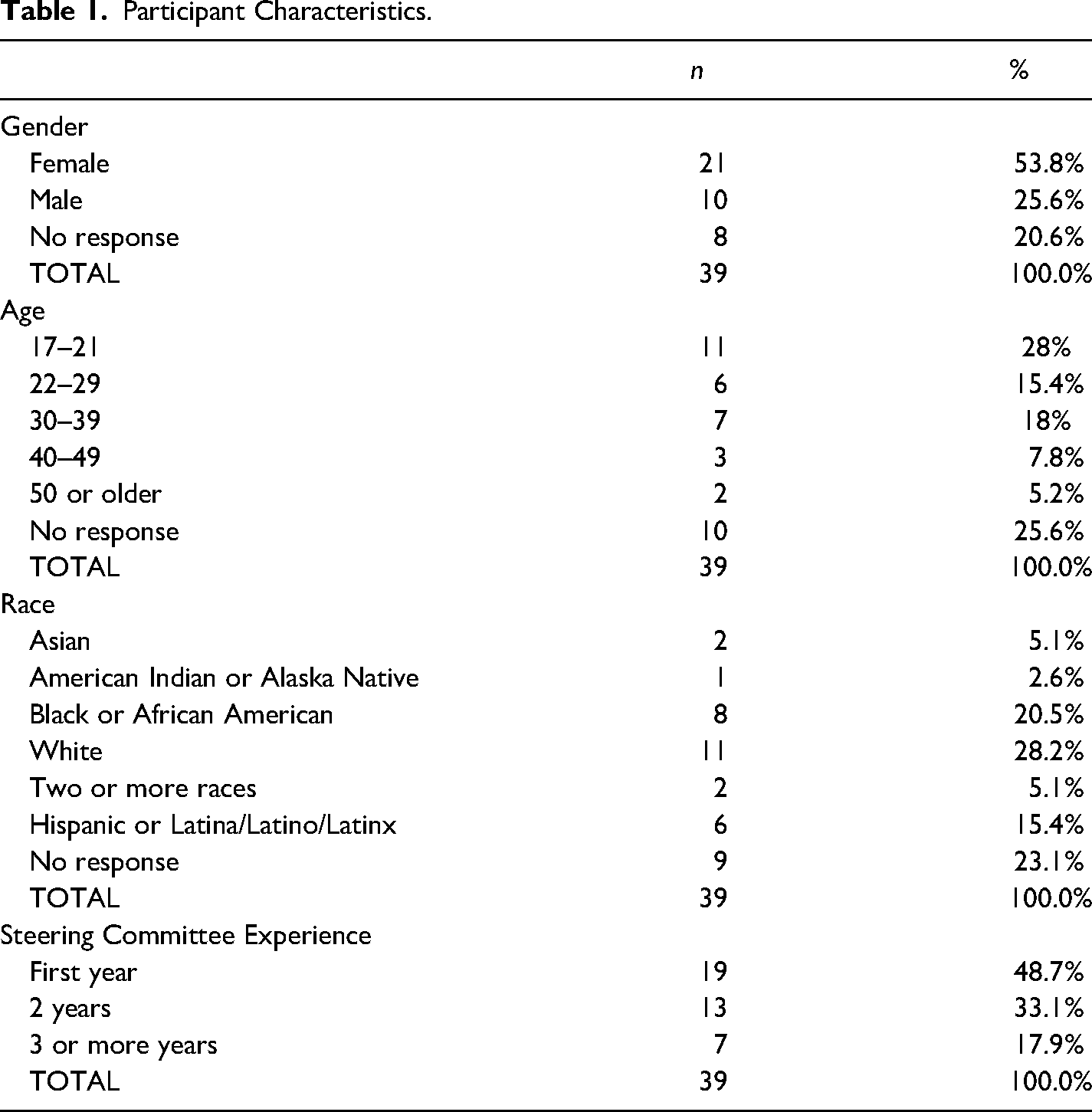
Demographics and other descriptive data were collected for all participants (see Table 1). The sample (N = 39) consisted of 19 Teen members, 19 Adult Advisors, and 1 “Lead Advisor coordinator.” Most respondents were female (53.8%), and the remainder were male (25.6%) or did not answer the question (20.5%). Participants ranged from 17 to 69 years old across all MTA Steering Committee members. Multiple ethnic/racial groups were represented, with most respondents identifying themselves as White (28.2%), Black/African American (20.5%), or Hispanic/Latino (15.4%). The largest proportion of respondents reported that this was their first year serving on the Committee (48.7%), while 33.3% had two years of experience, and 17.9% had three or more years of experience serving on the Committee.
Participant Characteristics.
Youth-Adult Partnerships
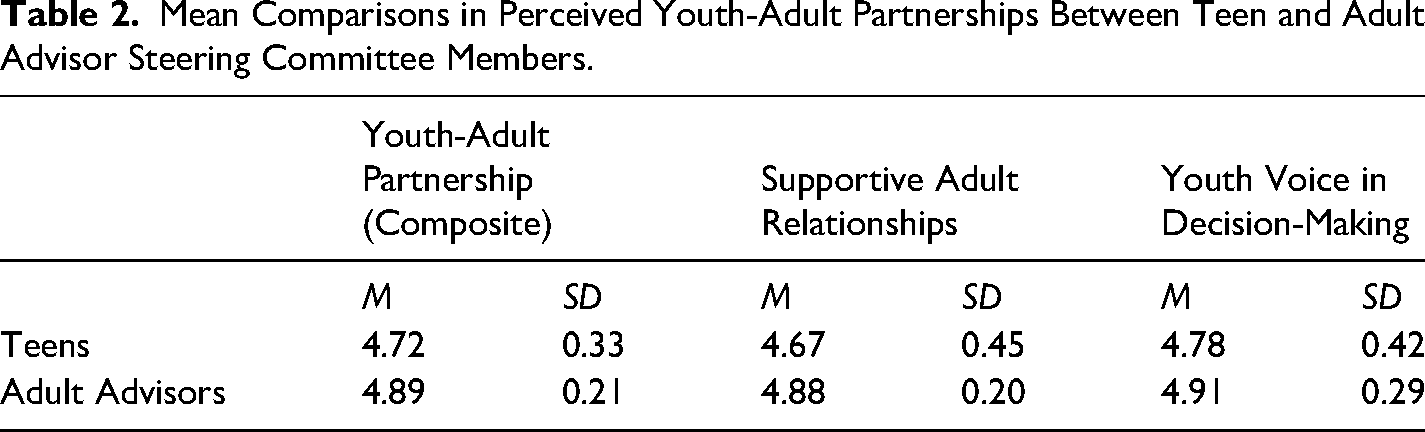
The first research question (RQ1) was, “How does the application of the youth-adult partnership model within a military youth leadership program influence interactions between youth and adults?” Participants reported on the quality of the youth-adult partnerships developed within the MTA Steering Committee between Teens and Adult Advisors. Overall, both teens and adult advisors reported high levels of support and allowance for youth voice (See Table 2). Mann–Whitney U tests were conducted to compare YAP scores between youth and adult participants. Although adult participants reported higher levels of overall youth-adult partnerships than youth, support, and allowance for youth voice, these differences were not statistically significant.
Mean Comparisons in Perceived Youth-Adult Partnerships Between Teen and Adult Advisor Steering Committee Members.
Respondents also answered the following open-ended question about their youth-adult interactions, “How, if at all, did involvement in the MTA Steering Committee help you learn how to work effectively with adults to achieve the goals of the Steering Committee?” Based on participants’ responses, Teens and Adult advisors benefited from the YAP model used during the MTA Steering Committee. A critical dimension of a successful YAP was the development of supportive relationships between youth and adults, featuring the provision of authentic friendship and guidance to one another. Specific elements within the MTA Steering Committee were also important for facilitating YAPs, including mutual respect and accountability. Most of all, youth expressed that they were given the opportunity to have meaningful, authentic voice and involvement in decision-making (see Table 3).
Youth Skills in the Context of Effective Youth-Adult Partnerships.
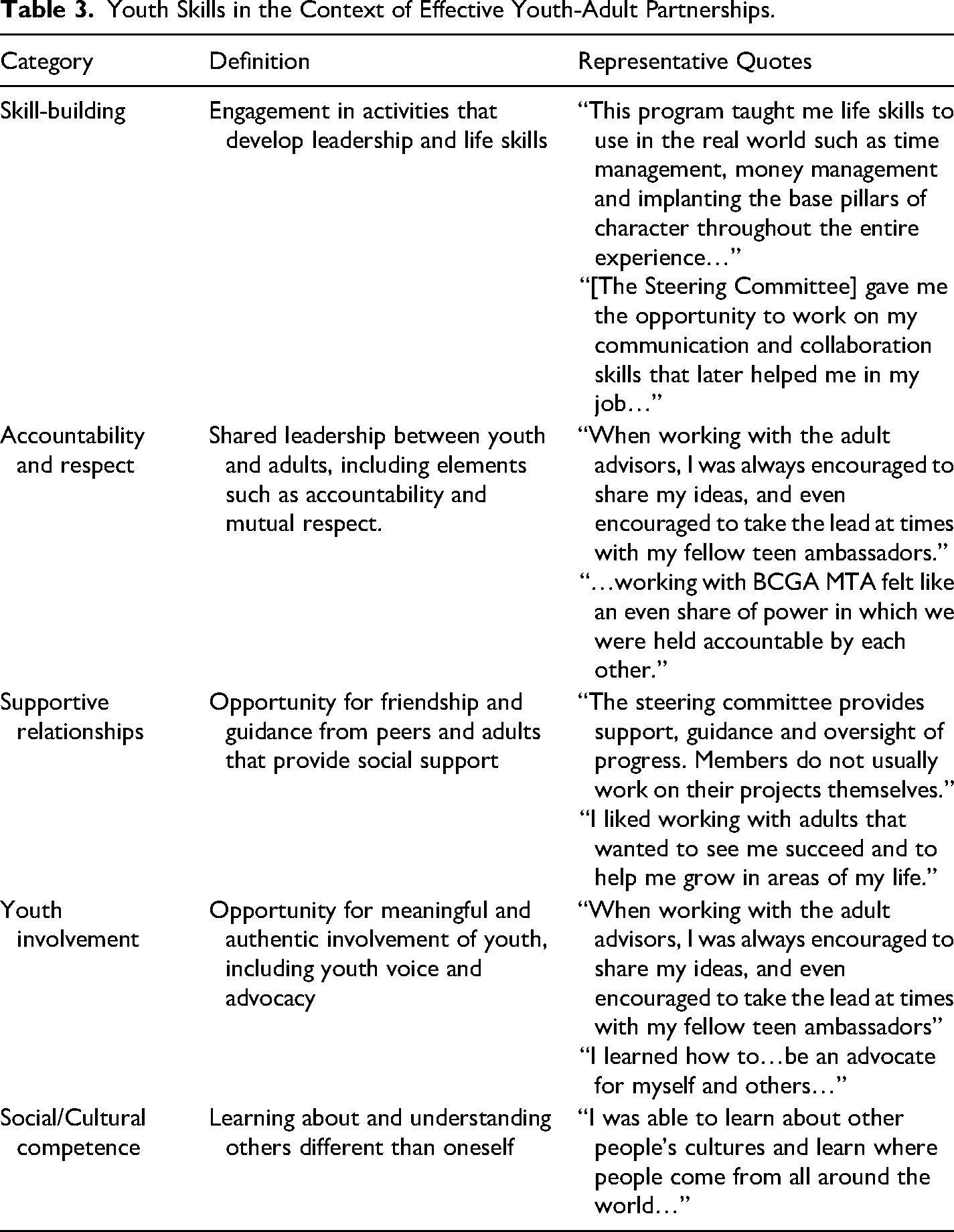
Respondents also identified skills they developed because of the successful application of a YAP model within the MTA Steering Committee. This skill growth was associated with communication, program planning, time management, and goal setting. Respondents also shared how they became more socially and culturally competent through their work with peers and adults in the MTA Steering Committee.
Youth and Adult Skill Development
The second research question (RQ2) was, “How does participation in a military youth leadership program influence skill development among youth and adults?” The first step in exploring this question was determining whether skill growth was reported (i.e., what skills were impacted). Participants were asked to rate their level of agreement with specific statements related to whether or not serving on the MTA Steering Committee impacted their skills in areas that included public speaking, organization skills, leadership, teamwork, responsibility, and self-motivation/goal setting (see Table 4). Most Teens and Adult Advisors reported high levels of each outcome. Therefore, to account for the skewed distribution of these scores, Mann-Whitney U tests were conducted to compare skill composite scores between Teens and Adult Advisor participants. No statistically significant differences were found.
Mean Comparisons in Perceived Skills Between Teen and Adult Advisor Steering Committee Members.

The influence of years of experience on the Steering Committee on skill growth was also examined. Most participants reported high levels of each of the outcomes regardless of their year on the Committee. Therefore, to account for the skewed distribution of these scores, Mann-Whitney U tests were conducted to compare skill composite scores between participants based on years on the Committee (i.e., first year compared with more than one year). Across the outcomes, the only statistically significant difference was associated with reported growth in organization skills, with participants for whom this was their first year on the committee reporting lower organization skills than members who had been on the committee for two or more years (U = 75.5, p = .006).
The second step in addressing this question was determining what programmatic factors contributed to skill growth (i.e., how skills were impacted). Survey respondents were asked open-ended questions about how MTA Steering Committee participation impacted skill growth. Responses suggested various programmatic factors were important in supporting skill growth. First, relationship-building opportunities between Teens and Adult Advisors allowed them to establish a strong foundation representing an intentional partnership focused on achieving shared goals (i.e., the outcomes of the MTA program). Relationship-building was tied to an organizational culture that stressed accountability and professionalism. Second, Teens and Adult Advisors had access to diverse leadership opportunities, including leading committees and being responsible for key events and tasks. Third, Teens and Adult Advisors had opportunities to practice skills, such as creating schedules and calendars to organize their work (see Table 6).
Mean Comparisons in Perceived Career Preparedness Based on Role (Teens; Adult Advisors) and Years of MTA Experience (First Year; Two or More Years).
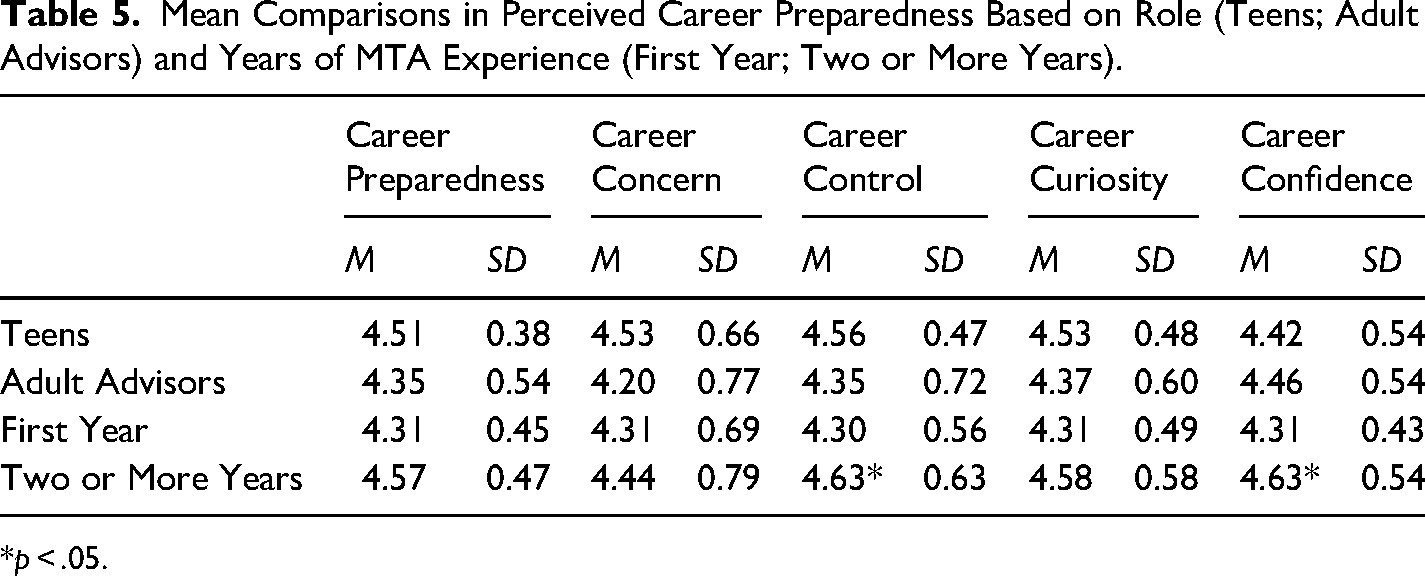
*p < .05.
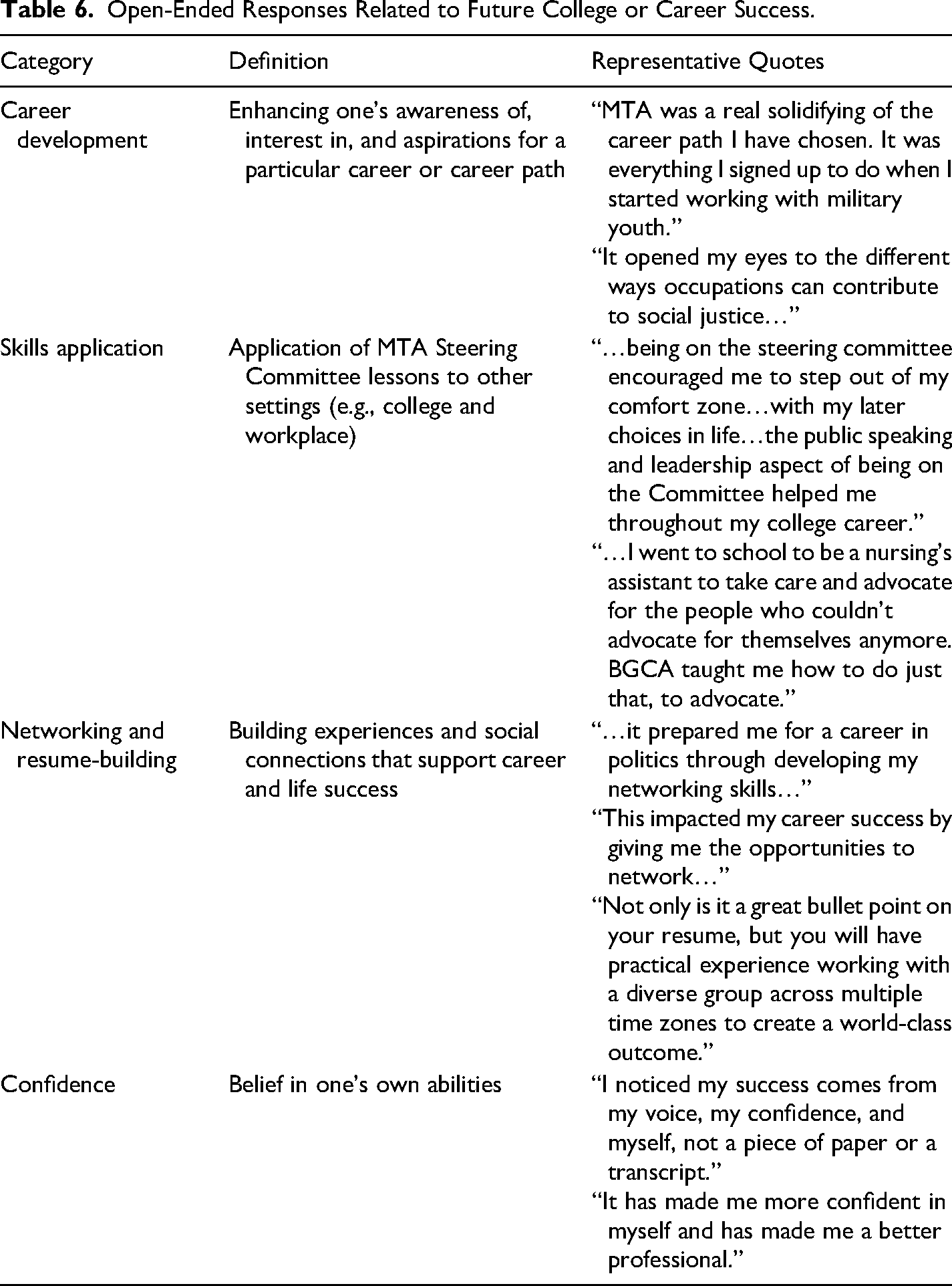
Open-Ended Responses Related to Future College or Career Success.
Career Preparedness
The third research question (RQ3) was, “How does participation in a military youth leadership program influence career preparedness among youth and adults?” Participants were asked to what extent involvement in the MTA Steering Committee helped them develop capacities and behaviors linked to career preparedness. Measuring career preparedness provided an overall score on these capacities as well as four subscale scores: career concern, career control, career curiosity, and career confidence (see Table 5). Overall, both Teens and Adult Advisors reported high levels of career capacities. To account for the skewed distribution of these scores, Mann-Whitney U tests were conducted to compare skill composite scores between Teens and Adult Advisors. There were no statistically significant differences between Teens and Adult Advisors on the career preparedness outcomes.
Career preparedness was also assessed according to years of MTA experience. Participants reported high levels of each of the outcomes regardless of their year on the MTA Steering Committee. Therefore, to account for the skewed distribution of these scores, Mann-Whitney U tests compared career preparedness scores between members who reported this was their first year on the committee versus those who had been on the committee for two or more years. Participants for whom this was their first year on the MTA Steering Committee reported lower career control and career confidence scores than members who had been on the Committee for two or more years (U = 83.0, p = .006, and U = 89.5, p = .050; Table 5).
The possible influence of MTA Steering Committee participation on career and college interest or success was also explored through open-ended questions. Four emergent themes were identified in the responses of Teens and Adult Advisors (see Table 6). One, involvement in the committee enhanced teen and adult awareness of, interest in, and aspiration for a specific career path. Two, committee participation allowed Teens and Adults to apply skills they learned to other situations, such as employment or college-related contexts. Three, Teens strengthened their professional networks and resumes, which prepared them to work collaboratively and build social systems that could be leveraged in the future. Four, MTA Steering Committee participation increased Teens’ confidence in their abilities, which helped them succeed in professional workplace settings.
Discussion
This study examined how participation in the BGCA MTA Steering Committee, as a partnership between Teens and Adult Advisors working toward shared program goals, influenced skill development and career preparedness outcomes for military-connected youth who were members of the committee. Skill development growth was measured for public speaking, organizational skills, leadership, teamwork, responsibility, and goal setting. Teen and Adult Advisor participation in the Steering Committee was associated with high levels in all targeted skill areas, which supports previous studies of youth leadership program outcomes (De Vera et al., 2016; Larson et al., 2006; Weston et al., 2021). Participating in the MTA Steering Committee for two or more years resulted in statistically significant growth in organizational skills when compared to participating in the committee for the first time. This finding aligns with the program model and may reflect a dosage effect, with more exposure to the program resulting in more growth in that outcome (Falkenström et al., 2016; Kopta, 2003; Kopta et al., 1994). In line with evaluations of youth and young adult leadership programs in other settings (De Vera et al., 2016; Silliman et al., 2020), organizational skills are a key competency developed through the MTA Steering Committee. Given that organization is considered a critical 21st century skill relevant across a variety of education and employment settings (Partnership for twenty-first Century Skills, 2019), our findings suggest MTA Steering Committee can play an important role in college and career preparedness.
Skill development was closely tied to programmatic factors, including supportive Teen and Adult Advisor relationships, opportunities to practice and apply skills, and Teens and Adult Advisors being accountable to one another. Mutual collaboration and respect are evident in these relationships and outlined in the YAP framework. Supportive relationships and the opportunity to learn and practice new skills are essential elements of a PYD setting, and the study findings provide evidence supporting the BGCA MTA Steering Committee as a setting that promotes PYD (Arnold & Silliman, 2017) and, more broadly, the effectiveness of experiential-based programs for promoting PYD (Newman et al., 2017; Norton et al., 2023). The opportunity to practice new skills is also critical for learning, as practice is an essential ingredient in experiential learning models (Kolb, 2015; Newman et al., 2017). Additionally, these programmatic factors have been shown to assist military-connected youth in managing military life stressors (Jordan, 2021; Mmari et al., 2010) and influence increased happiness and comfort (Richardson et al., 2016).
This study also evaluated whether involvement in the MTA Steering Committee built capacities and behaviors linked to college and career preparedness. Although there were no statistically significant differences between Steering Committee participants on the career preparedness scale, responses to the open-ended questions were more revealing. Open-ended responses suggested that committee participation positively influenced college and career success by increasing members’ career awareness and interest, increasing their confidence in their ability to be successful in college or a future career, by giving them skills that could be applied to a college or career, by allowing them to build a network and social connections, and by providing them with resume-building experiences through the Steering Committee.
An important dimension of this study was assessing the quality of YAPs among members of the MTA Steering Committee. Although Adult Advisors reported higher levels of overall YAPs on the survey scale items for support and allowance for youth voice, these differences were not statistically significant. However, the open-ended responses provide a more nuanced perspective, suggesting that teens benefitted greatly from adult-youth partnerships, as those relationships enabled them to embrace leadership roles, engage in hands-on learning experiences, learning from Adult Advisors’ who role modeled positive behaviors and attitudes.
The importance of shared accountability, reflective of the YAP, was a novel emergent finding in this study. Teens and Adult Advisors holding each other accountable for completing assigned work tasks was an impactful element of the Steering Committee culture. While accountability as a dimension of YAPs has not been a topic heavily discussed within the YAP literature, accountability has been identified as a critical characteristic of high-functioning teams (Lencioni, 2012) and provides further evidence of the effectiveness of the Steering Committee as a model for providing Teens and Adult Advisors with meaningful partnership opportunities. Furthermore, exposure to these effective, work-related partnerships with adults may be a programmatic feature that promotes college/ career preparedness that was not captured in the quantitative measurement.
Implications for Practice
Youth-serving organizations can benefit from this study by adding a YAP model as a dimension of existing or future youth leadership programs. The current study also demonstrated the effectiveness of YAPs for serving military-connected youth. Adult Advisors served as non-parent adult role models and mentors, which were important for youth with limited access to one or more parents due to deployment (Huebner et al., 2007). Youth organizations could bolster opportunities to practice skills as this study supports the extensive literature supporting experiential learning as a dimension of youth learning and training programs (Galeotti, 2015; Hamilton, 1980; Kolb, 2014).
Implications for Research
Data in this study were cross-sectional and only collected following the completion of the program. Therefore, change in reported skills growth could not be measured. Rather, the current study focused on possible differences between Teen and Adult Advisor skills and possible differences based on years of experience serving on the Steering Committee. Future studies could use different research designs (i.e., pre/post and retrospective pre-test designs) to better assess skill development over time. In addition, research supporting the implementation of youth leadership programs is needed (Bean et al., 2017). Such studies would be process evaluations using implementation science to assess dimensions including participant engagement, instructor effectiveness, fidelity to the curriculum, program quality, and program adaptation (Cumming et al., 2022; Duerden & Witt, 2012; Durlak & DuPre, 2008; Tidmarsh et al., 2022). The first step towards implementation studies of youth leadership programs like the one examined in the current study is program implementation guide development to foster adherence to program design.
Limitations
Some study limitations are important to consider. First, data analyzed for this study were self-reported by current and former Teen and Adult Advisors of the Steering Committee. In some cases, these responses reflected retrospective evaluations of skill growth and program impacts on outcomes. As such, the responses are susceptible to method bias, including response bias for self-presentation or recall gaps (Podsakoff et al., 2012). Future mixed-methods studies and those that include data collected from other sources (e.g., parents of teens involved in the Steering Committee, employers of current or past Steering Committee members) would be useful for confirming findings in the present study. Second, the sample size in the current study was relatively small, and the findings should be interpreted with caution. However, a moderately high response rate was achieved, and the data were highly representative of the population, with Steering Committee members representing multiple cohorts to provide a longitudinal perspective.
Conclusions
Previous research by Weston et al. (2021) suggested the efficacy of the BGCA MTA program for building leadership skills in military-connected youth, along with enhancing knowledge of resiliency and reintegration among those youth. The current study builds on that work by providing support for the positive impact of the MTA Steering Committee—the YAP responsible for planning, implementing, and evaluating the MTA program—in Teens and Adult Advisors providing that leadership. Together, these studies offer strong evidence supporting BGCA's efforts to develop a youth leadership program grounded in PYD principles, founded on a collaborative, effective YAP model, and intentional in producing enhancements to leadership and career development skills.
Footnotes
Acknowledgements
The authors would like to thank the youth and adult advisors who participated in this study for their valuable contributions to this research.
Data Availability Statement
Data for this study are available from the corresponding author upon reasonable request.
Declaration of Conflicting Interest
The authors declared no potential conflicts of interest with respect to the research, authorship, and/or publication of this article.
Ethical Approval,Content to Participate,and Consent to Publication
This project was reviewed and approved by Clemson University's Institutional Review Board (#IRB2021–035493–02). All participants provided consent to participate and consent for publication.
Funding
The authors disclosed receipt of the following financial support for the research, authorship, and/or publication of this article: Funding for this study was provided by the Boys and Girls Clubs of America (grant number 2020000550).
