






Abstract
Significance of the Research Statement
A complementary mixed methods evaluation of an experimental learning seated volleyball tournament project identified met student learning outcomes across all five levels of Kaufman's Evaluation of Learning Framework as well as high engagement in the participants. This evaluation identified a cost-effective project that can dually create valuable professional skill development as well as meaningful engagement for participants.
Entry-level health, kinesiology, and sport professionals, such as certified therapeutic recreation specialists and sport managers, will encounter individuals of varying ability levels. New and seasoned professionals alike must be able to work with a variety of stakeholders, as diversity represents more than racial/ethnic background and gender differences. Varying levels of knowledge, skills, and abilities must be taken into consideration to work effectively with all populations. Recreational therapy's professional scope of practice requires purposeful, strength-based programs, involving all levels of functioning that may require adaptations for all people of all ages who have disabilities (Anderson & Heyne, 2021). Similarly, the Commission on Sport Management Accreditation recommends all sport management students should possess the skills to work with diverse populations, including differences in ability (Commission on Sport Management Accreditation, 2024). These skills may be developed through experiential learning with a service-oriented component.
Experiential learning which offers benefits for students in the recreational therapy (RT) and sport management (SM) fields. These learning techniques, when combined into groupwork, can provide valuable insight into processes, understanding of career-based knowledge, and create a broader view of the world outside of the classroom (Jones, 2012). In sport management programs, experiential learning is a key component to career readiness and success post-graduation (Howe & Rode, 2024). In addition, interdisciplinary learning experiences are advantageous in the learning process (Croft & Wang, 2023). Combining these factors into the curriculum can create a more well-rounded educational experience, which can better prepare students for recreational therapy and sport management fields.
The purpose of this initial comprehensive evaluation was to determine if a student-led seated volleyball project created an avenue for RT and SM students to develop skills in education, planning, and implementation of adaptive programming. This evaluation examined two perspectives of the seated volleyball tournament: (1) the learning outcomes of the RT student planners using Kaufman's Model of Learning Evaluation (Kaufman & Keller, 1994); and (2) SM volunteer, participant, and attendee motivation using the self-determination theory (Deci & Ryan, 1985). This approach offers a comprehensive review of an experiential project with purposes of future curriculum and practice development for experiential learning opportunities.
Experiential Learning
According to the American Association of Colleges and Universities (2025), experiential learning is a high impact practice included with other activities such as apprenticeships, practicum experiences, volunteerism, and service learning. Experiential learning is essentially learning by doing, affording students the opportunity to apply skills learned through their course of study. One form of experiential learning is service learning, which Bringle et al. (2006) describe as a course focused learning opportunity that involves structured service activity and reflection on that involvement. Although this project was primarily campus based, the structure of this experiential learning experience incorporated characteristics that are common in service-oriented projects such as organized programming, inclusive participation, collaboration, and reflection.
Reflection provides students the opportunity to process experiences while providing educators with data that aids in improved future implementation. Experiential and community engaged learning experiences often place importance on reflection as an aspect of student growth. Conway et al. (2009) presented four categories of outcomes of service learning in their meta-analysis of service learning's effects: academic, personal, social, and citizenship outcomes that are associated with these types of applied learning experiences. Positive changes were found for each of the four categories of outcomes, highlighting the overall positive impact experiential learning may have on all stakeholders.
Intrinsic Motivation
Experiential learning experiences provide opportunities for learning with nontraditional engagement. However, to what extent a person engages depends on the motivational level of the learner and their motivating factors. Intrinsic motivation can be a motivator for behavioral change and repeated involvement in an activity of interest. Previous research has shown that students with high intrinsic motivation are more authentically involved in learning than learners who are extrinsically motivated (Saeed & Zyngier, 2012). Experiential learning experiences that are enjoyable with opportunities to connect with others can increase initiative for students to apply skills in future professional settings (Al-Saedi et al., 2017). In addition, hands-on experiences, in comparison to passive forms of instruction, have been shown to increase intrinsic motivation and engagement (Erikson et al., 2020).
Self-determination theory (Deci & Ryan, 1985; Ryan & Deci, 2000) posits intrinsic motivation is largely influenced by three needs: autonomy, competence, and relatedness. According to Reeve and Deci (1996), external opportunities can increase intrinsic motivation when they are less controlling and received as positive. Creating learning environments with reduced pressure, positive experiences, and opportunities for connection may promote intrinsic motivation and facilitate deeper learning.
Within learning scenarios involving adapted sport awareness, intrinsic motivation is particularly important. Learning experiences that connect students to challenge, independence, and concepts outside of a classroom, can engage intrinsic motivation, thus creating lasting skills. In addition, it is relevant to create authentic learning for professional fields that may have societal impacts, such as scenarios that require adaptive programming and education.
Adapted Sport Awareness and the Social Model of Disability
The Social Model of Disability is a well-established paradigm identifying disability as arising from barriers within a person's community or surroundings, such as attitudes, lack of adaptation, or unequal opportunities (Oliver, 2018; Shakespeare, 2006). Recreational therapy and sport management professionals are tasked with creating equally accessible leisure programs and facilities.
Research has shown that educational programs based on the Social Model of Disability can significantly impact disability perspectives. When participants without disabilities were exposed to the social model of disability, they were more aware of how society can create barriers for people with disabilities with an interest in policy change (Dirth & Branscombe, 2017). Interactive opportunities to develop adaptive programming awareness can be accomplished through exposure to adaptive sport programming such as an adapted form of activity or sport like seated volleyball. These experiences have improved attitudes about disabilities (Barney, 2012; Reina et al., 2021) and increased awareness of potential barriers individuals with disabilities encounter (Wozencroft et al., 2014).
Kaufman Model of Learning Evaluation
Kaufman's model of learning evaluation is a framework used to determine the effectiveness of human performance by identifying internal, external, and societal impacts on learning (Kaufman, 1996; Kaufman & Keller, 1994). This framework is an extension of the well-known Kirkpatrick Training Evaluation Model (Kirkpatrick, 1994), which includes four areas of consideration when evaluating learning: reaction, learning, behavior, and results. Kaufman's model is similar but changes the first level of the reaction of the learner to input and process, which considers the quality of resources available and efficiency of learning (Kaufman, 1996). This change identifies that the learner may be content with their learning experience if the resources they have available are perceived as satisfactory. In addition, Kaufman's model considers the impact learning may have on society, which is relevant information to consider when evaluating educational projects involving advocacy efforts.
Kaufman's five-step evaluation model considers all aspects of the learning process, from the initial reaction of the learner, to the process of receiving new information, to application of new knowledge. The first level, input and process, reviews the learner's perception of the initial instruction as well as their review of the resources and instruction offered. The second level, acquisition, determines if the newly acquired knowledge is executed in alignment with the learning objectives. Level three, application, is focused on what aspects of the learning are being used in practice. Level four, organizational impact, focuses on whether the new information has benefited the program, learner, and organization. Finally, level five, societal impact, considers whether what was learned has societal implications.
Method
Participants
RT students (n = 15) were responsible for assessment, planning, and implementation of the seated volleyball tournament as part of a semester-long class project. SM undergraduate students (n = 14) participated in or aided in the facilitation of the event as part of applied learning requirements. The single elimination tournament began with 72 players, 12 teams of six players, which consisted of a combination of RT undergraduate students who were not involved in the class project, SM volunteers, or undergraduate and graduate students who signed up to play who were not students within these two programs. In addition to players, there were student spectators of the event who did not register to play or aid in the planning of the event.
Research Questions
This evaluation examined an experiential-learning seated volleyball tournament to determine comprehensive learning. First, we determined the impact of experiential learning on student learning outcomes through using Kaufman's Model of Learning Evaluation. Next, we explored the motivation and engagement of participants of the tournament. Finally, we combined both perspectives to comprehensively evaluate this project.
Design
This initial comprehensive evaluation of a class experiential project used a qualitative dominant complementary mixed methods approach (Creswell & Clark, 2017) to investigate two perspectives: RT student planners (n = 15), and participants (student volunteers, players, and spectators; N = 18). Figure 1 provides an overview of the approach. A complementary mixed methods design simultaneously collects and analyzes both qualitative and quantitative data to answer different aspects of a research topic. Further, Johnson and Onwuegbuzie (2004) posit the main principle of mixed methods research is to allow researchers to “collect multiple data using different strategies, approaches, and methods in such a way that the resulting mixture or combination is likely to result in complementary strengths and nonoverlapping weaknesses” (p. 18). As such, mixed methods research is viewed as an ideal method of investigation in the current study.
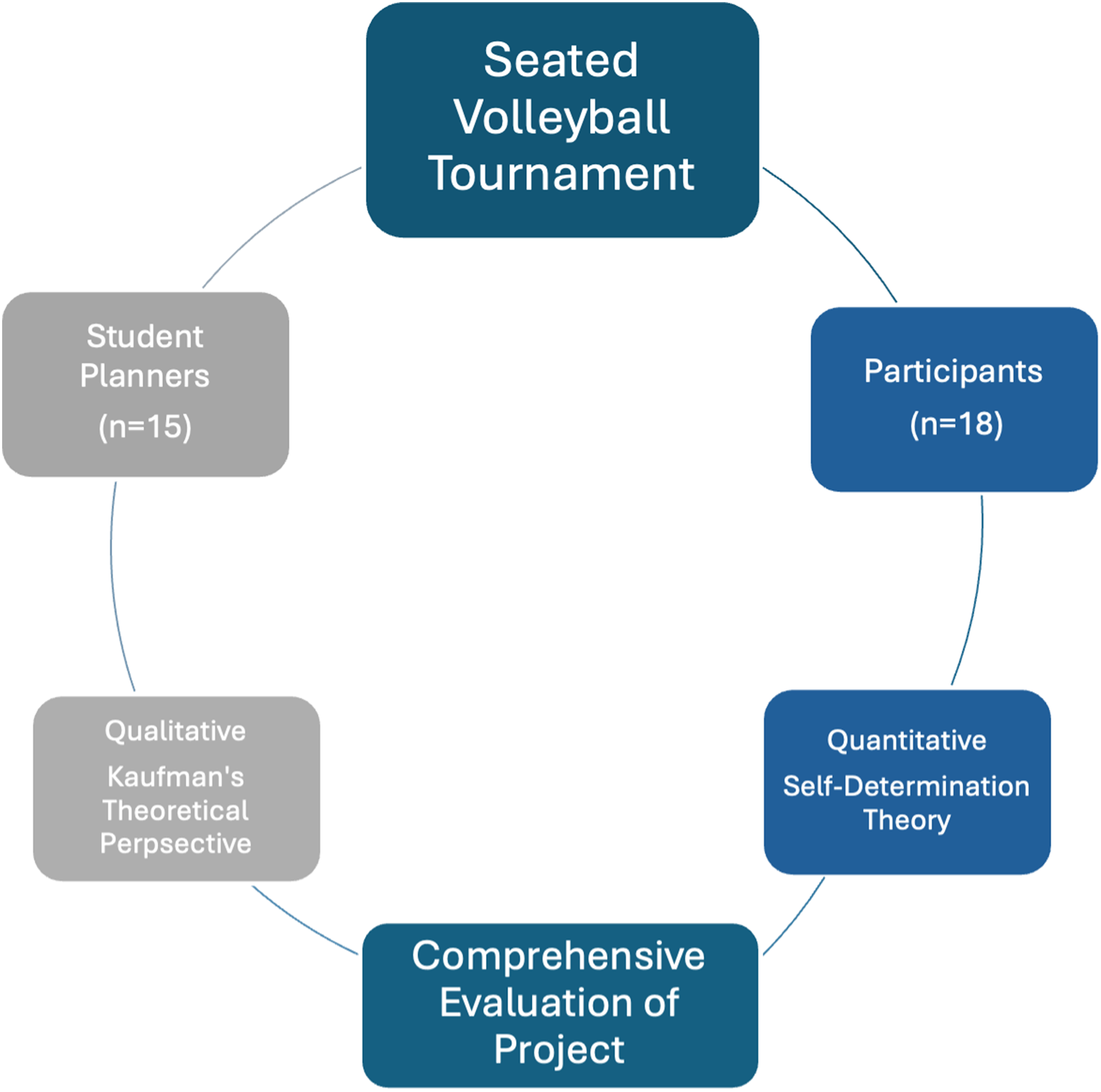
Complementary mixed methods approach evaluation design for a seated volleyball tournament project.
The RT and SM student perspective was examined using a qualitative approach based upon Kaufman's evaluation framework and the participant perspective was analyzed quantitatively with guidance from the self-determination theory (Deci & Ryan, 1985). This dual-insight approach illustrates experiential projects have the capability of benefiting multiple stakeholders and provides a comprehensive review that can aid in future curriculum development and practice. The institutional review board at the University of South Alabama approved this study (#2304136-1). All participants were provided with informed consent.
Materials
Student Self-Reflection Questions
All students involved in the project planning and implementation were provided the opportunity to complete anonymous open-ended self-reflection questionnaires. These questions were completed by student planners one week post seated volleyball tournament. These ten questions pertained to each of the five levels of Kaufman's Evaluation Model of Learning (Kaufman & Keller, 1994): input, process, acquisition, application, and impact on both micro and macro levels. These questions were created based upon skills that would be addressed within each stage of the learning process according to Kaufman and Keller. The two researchers reviewed these questions. The questions are provided in Table 1.
Student Self-Reflection Questions Based on Kaufman's Model of Learning Evaluation.
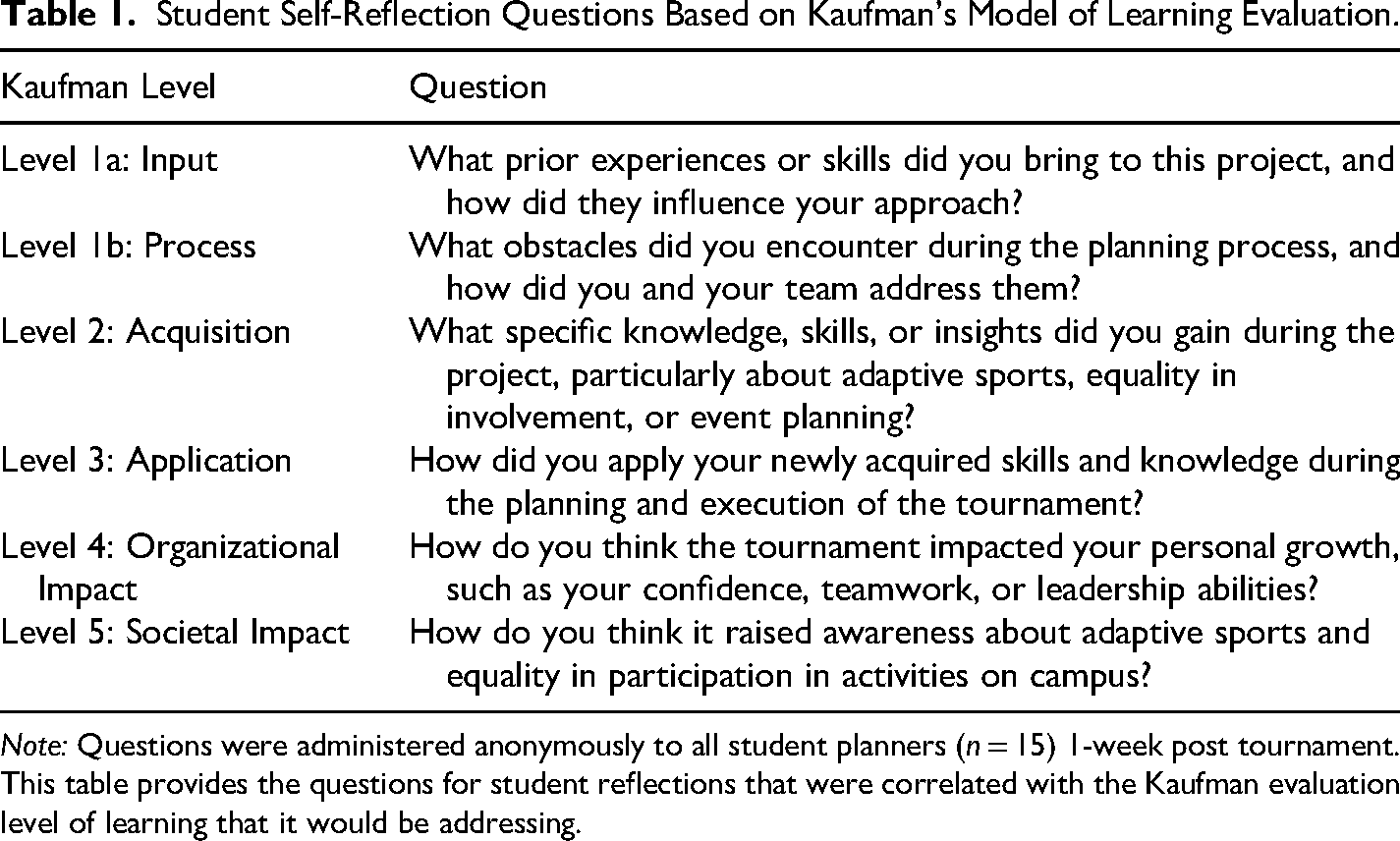
Note: Questions were administered anonymously to all student planners (n = 15) 1-week post tournament. This table provides the questions for student reflections that were correlated with the Kaufman evaluation level of learning that it would be addressing.
Intrinsic Motivation Inventory
An adapted version of the Intrinsic Motivation Inventory (IMI) was used to access the perception of the participants’ interest and engagement (Deci & Ryan, 1985; McAuley et al., 1989). This adapted 15-item questionnaire assessed the following areas: interest/enjoyment, perceived competence, effort/importance, pressure/tension, perceived choice, value/usefulness, and relatedness. This adapted version consisted of two items for all subscales, except for three adjusted value/usefulness questions related to seated volleyball. The 15-item adapted scale is provided in Table 2. All items were measured on a 5-point Likert scale that ranges from 1 “strongly disagree” to 5 “strongly agree.” Due to the small sample size from this initial evaluation, these results provide descriptive information on participant perceptions. Qualtrics was used to distribute this voluntary scale to participants at the end of the tournament.
Fifteen-Item Adapted Intrinsic Motivation Scale.
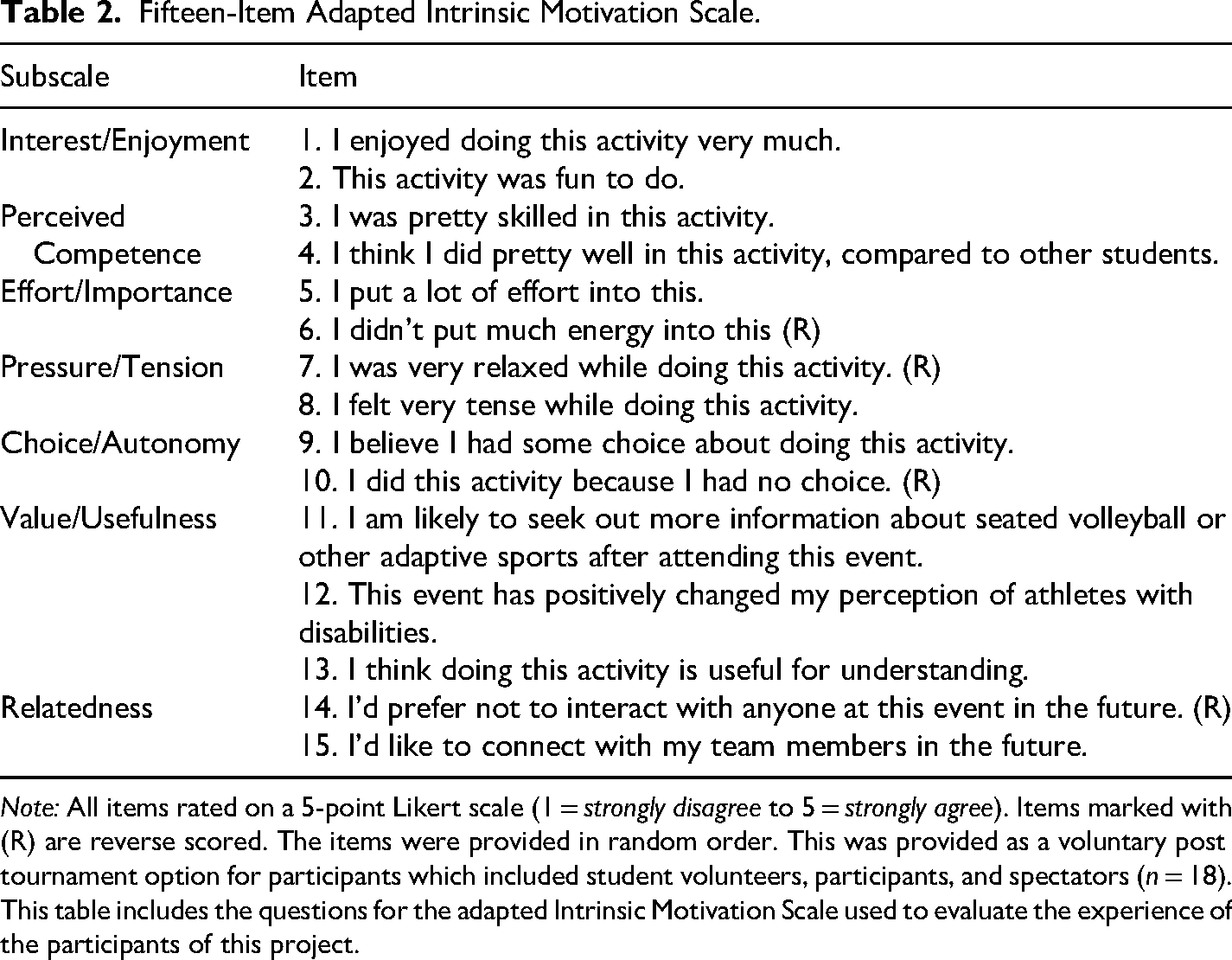
Note: All items rated on a 5-point Likert scale (1 = strongly disagree to 5 = strongly agree). Items marked with (R) are reverse scored. The items were provided in random order. This was provided as a voluntary post tournament option for participants which included student volunteers, participants, and spectators (n = 18). This table includes the questions for the adapted Intrinsic Motivation Scale used to evaluate the experience of the participants of this project.
Procedures
This project was undertaken as part of a required undergraduate course for junior and senior RT majors. The course consists of various aspects of the recreational therapy scope of practice involving interventions for individuals who have physical disabilities. All students enrolled in the course completed basic recreational therapy courses, which include assessment, planning, implementation, evaluation, and awareness of various disabilities. A unique aspect of the tournament was that it was an inclusive event, meaning all ability levels were involved and no prior skill level was required. This event intentionally included eight individuals who were currently enrolled in a program for postsecondary education students with intellectual or developmental disabilities and one participant who required the use of a wheelchair for mobility.
Traditionally, this course requires students to lead an in-class activity for their peers related to a specific intervention presented within the course. Although beneficial, students did not have the opportunity to transfer skills outside of the classroom. This experiential learning assignment was provided as an opportunity for RT students to educate others about inclusivity in sports through exposure to adaptive programming through the sport of seated volleyball. Seated volleyball, a sport recognized by the International Paralympic Committee, is a modified version of stand-up volleyball using a lower net and requires players to remain seated, maintaining contact with the ground at all times (Sitting Volleyball, n.d.). This sport was chosen due to the highly adaptive nature of the game, the ability to accommodate various skill levels, and low overhead cost for implementation, with limited adaptive equipment required.
The sophomore to senior SM students at the study's university are required to complete applied learning experiences outside of the classroom as a component of at least four core curriculum courses, including an introductory sport management course, and three additional courses focusing on sport marketing, sport law, and sport facility management. The activities students are required to complete are tailored to the course objectives. For example, those in the sport marketing course would complete experiential learning tasks concentrating on marketing while those in the facilities class, for example, would be more concerned with facility analyses.
The project was assigned at the beginning of a 16-week semester and involved 14 weeks of planning with various deliverables that resulted in the final implementation of the tournament. The students were divided into four groups. Each group was responsible for a different element of the tournament. These groups included: (1) Education and Outreach, (2) Logistics and Venue Setup, (3) Participant Coordination, and (4) Facilitation and Implementation. The deliverables related to the overall project are provided in supplementary material within Appendix A. Students were responsible for familiarizing themselves with seated volleyball through online videos and reading materials. Five students attended an in-person workshop led by an adaptive physical education expert in which they learned how to lead a seated volleyball game. These five students provided in-class instruction to the remainder of the class project planners.
One of the defining goals of this project, in addition to valuable skills in planning and implementation, was for students to provide education to all student participants, volunteers, and spectators about inclusion in sports. A large portion of recreational therapy practice involves education as well as advocacy for people with disabilities (Stumbo & Peterson, 2021). Before the tournament, RT students led an orientation with an introduction to RT and the purpose of adaptive sports for student participants of the event, SM volunteers, and spectators. In addition, the purpose of adaptations to the game was explained.
Student organizers decided to modify the tournament for all abilities and skill levels. The tournament consisted of an adapted version of seated volleyball, which included some rule variations from standard regulation tournament play. Adaptations included shorter serve distances, additional bounces between hits, and decreased point requirements per match. The purpose of these adaptations was for the participants to not only understand the sport but to have an enjoyable experience with minimal stress. The single-elimination format included six players per team, a standard procedure. Participants were able to sign up before the tournament, or were randomly assigned to a team on gameday at check-in.
Analytic Strategy
Quantitative
Individual items from the post-tournament intrinsic motivation inventory were summarized using descriptive statistics. A mean score was calculated for the items that were provided to represent each subscale within the 15-item survey. Given the small sample size and exploratory nature of this evaluation, findings are interpreted descriptively.
Qualitative
The qualitative analysis consisted of a thematic analysis using a deductive approach with pre-established codes that consisted of the five levels of Kaufman's Model of Learning Evaluation: Input, Process, Acquisition, Application, Organizational Inputs, and Societal Impact. This choice was used based on a clear set of predetermined sections of the learning experience that the researchers wanted to investigate (Fife & Gossner, 2024). Two researchers independently reviewed all data line by line. The reviewed data were coded and categorized according to the level of Kaufman's Model. This process was used to determine if learning was evidenced across all levels of learning.
After the completion of deductive coding, an inductive approach to thematic analysis was used to acquire themes which emerged from the deductive analysis. This review involved both researchers reviewing each reflection to identify recurring phrases or ideas. These phrases and ideas were grouped together into themes through constant comparative analysis until no further themes emerged from the data. For intercoder reliability, the two researchers independently reviewed the data and jointly agreed upon emergent codes and met to discuss potential differences. Both NVivo 14 and ATLAS.ti qualitative coding software were used to complete the data analysis.
Results
Quantitative (Participant Motivation and Engagement Perspective)
Participants of the tournament reported high levels of interest and enjoyment (M = 4.53; SD = 0.72), effort/importance (M = 4.39; SD = 0.47), value (M = 4.43; SD = 0.51), perceived choice (M = 3.89; SD = 0.50), and relatedness (M = 4.17; SD = 0.82). Moderate levels of perceived competence (M = 3.28; SD = 0.84) and pressure were noted (M = 2.44; SD = 0.84). Descriptive statistics for all subscales are provided in Table 3.
Intrinsic Motivation Subscale Descriptives (n = 18).
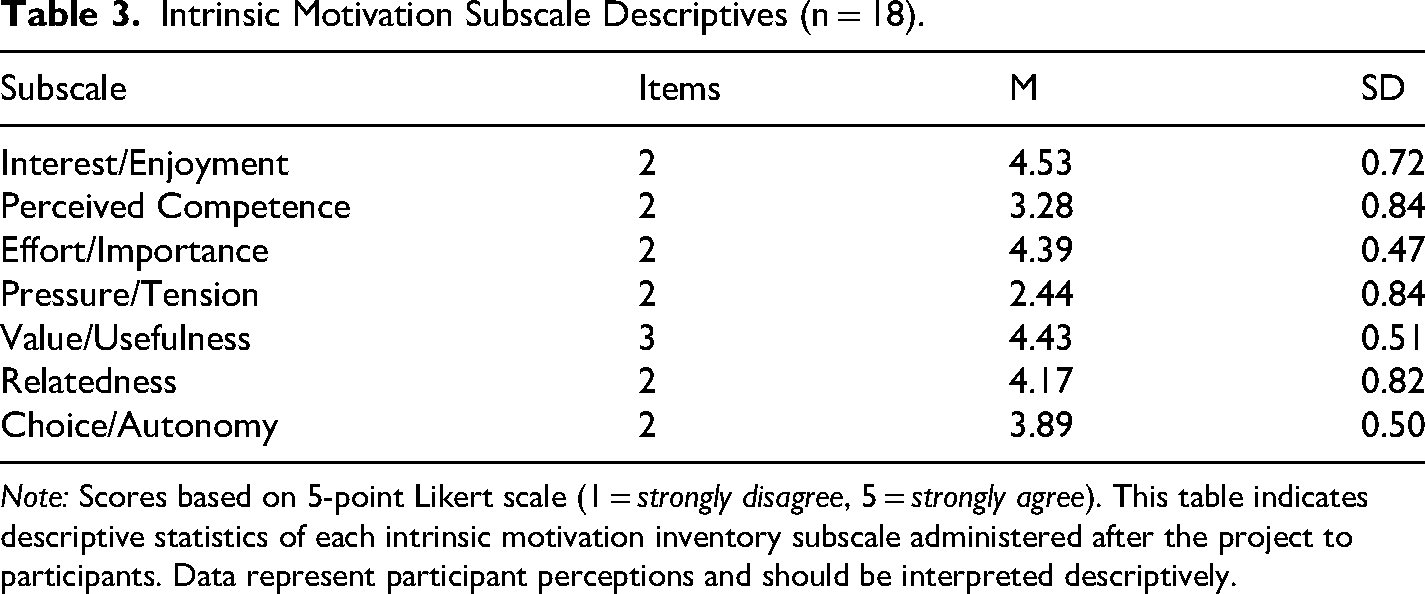
Note: Scores based on 5-point Likert scale (1 = strongly disagree, 5 = strongly agree). This table indicates descriptive statistics of each intrinsic motivation inventory subscale administered after the project to participants. Data represent participant perceptions and should be interpreted descriptively.
Qualitative (Student Planner Learning Outcomes)
Deductive Analysis
The deductive portion of the analysis of the results is organized into the five coding categories based upon each level of Kaufman's Model of Learning Evaluation. RT students who were required to plan the tournament displayed learning across all levels of Kaufman's framework. Acquisition, the highest occurring code, demonstrated the RT students gained new knowledge. These findings also indicate that the project is educationally comprehensive because all levels of Kaufman's evaluation framework were acknowledged in the initial deductive analysis.
Level 2: Acquisition (62 coded instances)
Students reflected on specific competencies learned in class that were useful for this project, such as the relevance of activity analysis and interpersonal communication: I learned how to do logistics for an event and how to connect with certain people to get correct information for the contestants. Also, how to encourage the people playing since they never played before and to give themselves some grace.
Level 1a: Input (34 coded instances). Students reflected on the resources available to them for this project, as well as the impact prior knowledge or experience had on their ability to be successful. Students were able to recall their own skills, which were positive attributes to the project, and identified how previous recreational therapy courses and training provided guidance in the planning and implementation of the tournament. “I brought the experience I have learned from all RT classes, along with my volunteering.” In addition to skills and resources, students identified as being beneficial to the project, their reflections also addressed how the learning process itself functioned.
Level 1b: Process (34 coded instances). The planning process created opportunities for soft skill development, such as teamwork and communication which were highly valued and noted within the reflections. Students were able to identify conflict management and the ability to move forward with decisions and planning as a team: When the group became stressed, we talked out all the possibilities we could to get a task done and when unable to move forward as a group we asked for help which led to all of us understanding together.
Delegation and time management skills were also needed for the project's success and were acknowledged as being useful in the planning process. Students identified solutions for accomplishing assigned tasks and noted ways to remain connected throughout the planning process. One student stated, “Getting together and actually getting stuff done was an obstacle, with our biggest way of communicating being through text messages.” Students noted changes in the project that could aid in improving future replication of the assignment with particular emphasis on the need for more in-class planning time with group members and improved inter-group communication. All these skills were valuable planning and management level skills that can be replicated with future careers.
Level 3: Application (24 coded instances). Students recognized opportunities for use of learned skills that can be applied within future professional settings. Several participants noted how the experience prepared them for recreational therapy practice and personal growth that could be applied in future roles. One student noted, “I think it definitely boosted my confidence in my ability to be an RT and have a job doing things like this event one day.” The growth of confidence and recognition of ability levels was noted in multiple reflections: My confidence in myself and as an RT student grew after this event. I was able to get in front of the crowd and excitedly introduce the tournament and the purpose of recreational therapy. Speaking in front of all those people and my fellow classmates boosted my confidence and helped to reassure me that I am on the right career path.
Transferable skills were acknowledged with emphasis placed on leadership, event planning, and interprofessional interaction. Students noted new levels of ability to take leadership roles and acknowledged planning for unexpected situations. Preparation for professional collaboration in different roles was noted as valuable in future settings.
Higher order thinking includes decision making, problem solving, and creative thinking which leads to enhanced learning (Brookhart, 2010). Student reflections identified situations in which all three of these skills were used indicating the potential transfer of knowledge: Event planning in multiple groups focusing on different parts that eventually overlap became a slight issue. That planning issue led to me gaining the confidence to address the issue as everyone is on the same level as a group management mindset. Insight from others with different perspective on the same idea is always an experience to learn from and apply to future interprofessional settings.
Level 4: Organizational Inputs (25 coded instances). Students provided valuable input that identifies how this project can be replicated. Clear suggestions for course enhancement, such as continued checkpoints for assignments with feedback, were considered helpful. In addition, students found in-class time to be beneficial for group collaboration.
Further, students identified areas in which this project could have an impact on other students, professionals, and the university. Students’ provided positive feedback that RT as a major can be impacted with attrition, “I think this event made me even more excited to be involved in this major.” Students were hopeful that the outcomes of the tournament would be impactful for the university community and expressed excitement about the event's potential to grow annually.
Level 5: Societal Impact (31 coded instances). In addition to organizational impact, the adaptive sport awareness aspect of this project was noted by students with the potential for impact on a societal level, which moves beyond just the project itself. This resonating theme was noted within reflections, “the tournament has broadened their minds to see other sports as adaptive and understand how to create an equal playing field for all participants in their sport.” The project served as a tool for building an inclusive community, with students noting it brought people together, created new friendships, and increased knowledge about recreational therapy and adaptive sports. Students were hopeful that this project provided professional field acknowledgement and awareness within the community with potential for broader awareness beyond the campus.
Inductive Analysis With Emergent Themes
During deductive analysis of the student reflection questions, researchers identified the emergent themes of disability awareness, communication and teamwork, engagement that leads to community building, and professional development.
Adaptive sport awareness. This theme was found to be consistent across all five of Kaufman's levels during the deduction coding analysis, with emphasis placed upon the organizational and societal impact areas of Kaufman's evaluation framework. The code identifies a direct connection between one of the primary purposes of this project, as well as connections to the theoretical background involving the social model of disability. Students noted the benefit of eliminating participation barriers through education, “because this is the first of its kind, people on campus may have been opened to a new world in which those who have disabilities can do what is typical, just a little different.” In addition, the hope in some reflections is that the experience might adjust the mindset of its participants: Participants were opened to the world of adaptive sports and were better able to gain an understanding of its importance. I don’t think many of the participants have had much experience with people with disabilities, so I also think it helped change their perspective on the definition of inclusivity.
Communication and teamwork. These specific competencies directly relate to the skills required in professional practice. Additionally, these two skills are among the four primary competencies identified by the Interprofessional Education Collaborative (Interprofessional Education Collaborative, 2023). Students were able to highlight how these two developed skills were interwoven in the project. These themes were noted within Process, Acquisition, and Application. An example within this theme included: For my group, we communicated well throughout the whole project. We brainstormed and had open discussions on how to finalize our work. We all came into the project with respect and willingness to compromise on ideas to better create a smooth teamwork flow amongst us.
Professional development improvement. This theme was noted within process, acquisition, and application. Students specifically highlighted an increase in confidence and leadership that would be beneficial in future professional environments, “I think it made me more confident with leading and working with others.” Students highlighted that leadership roles were not common previously, “this really boosted my confidence because I had never taken on so much leadership before.” In addition, some quotations pointed out that these skills would be helpful in their future professions. All of these were connected to student learning outcomes for this project.
Engagement leads to community building. The engagement and community building theme emerged across all levels. Students as participants and event managers acknowledged engagement with others through teamwork development, which led to a sense of connection and community building. Students identified the engagement aspect: This event helped to raise awareness by showing that adaptive sports are just as fun as regular sports. It presents the idea that just because something is unfamiliar doesn’t mean you can’t enjoy the experience. I think I was a little bit surprised at how much fun people who were not RT majors had. They were informed of the adaptive sports and inclusivity aspect, but it was awesome to see how much fun they were having, while also learning of the different adaptations that exist for people who have disabilities.
Integration of Findings
The qualitative and quantitative findings complemented each other revealing a comprehensive project that impacted learning. The student planner's reflections emphasized adaptive sport awareness and community building, which aligned with the participants’ high perceived value (M = 4.43, SD = 0.51). This high perceived value supports the student planner's observations that participants were “open to the world of adaptive sports.” This convergence suggests that experiential projects can develop professional competencies in students while creating meaningful engagement for participants.
Discussion
This complementary mixed method initial evaluation demonstrated that experiential learning, effectively achieved student learning outcomes in education, planning, and implementation of adaptive programming for RT and SM students. The evaluation examined a seated volleyball experiential-learning project from two perspectives: the student planners and the student participants. Through the lens of Kaufman's Learning Evaluation Model, student planners displayed learning across all five levels, representative of a comprehensive learning experience. Further, the student volunteers, participants, and spectators reported high levels of intrinsic motivation, indicating experiential learning could be beneficial for student planners and participants of adaptive sport awareness events.
Similar findings have been identified in previous research studies involving experiential and community engaged approaches. For example, Gipson et al. (2023) found SM students had increased engagement in coursework, sense of purpose, and the ability to apply knowledge derived from the assigned service-oriented learning project. Similarly, RT students involved in community learning experiences reported meaningful engagement as well as development of core recreational therapy competencies (Messina & Davenport, 2024). These studies highlight that students benefit from applied experiential learning projects in a meaningful way. The current research supports these findings, reiterating the value of experiential learning projects for pre-professional development and engagement. A somewhat unique aspect of the current study also adds to the extant literature showing recipients of these types of projects may also realize benefits.
Kaufman's evaluation framework helped to identify that student event managers developed skills which may be transferable into professional, real-world settings. Application of knowledge and theory is one of the primary goals of collegiate education. Not only did student reflections indicate learning across all levels of Kaufman's framework, but acquisition was the most frequently coded deductive theme. Students clearly acknowledged enhanced skill development including delegation, time management, and planning with adaptations. Other soft skills emerged within the themes of communication and teamwork, and professional development. Qualitative data analysis showed confidence and leadership were frequently mentioned as valued attributes. As evidenced by these identified competency outcomes, technical and interpersonal skills can simultaneously be developed through experiential learning projects. Again, it is important to note students explicitly noted that these competencies could be applied to future professional endeavors.
Our study findings align with Miller et al. (2022), who found experiential learning opportunities, presented as work-integrated learning in sport event management, can aid students in development of soft skills such as cultural and disability awareness, as well as the ability to apply classroom content. Further, in recreational therapy fieldwork experiences, students identified the benefit of applying competencies such as communication, adaptations, and detailed planning with gains in confidence and motivation for their future profession (Thomas et al., 2024). The general picture emerging from this analysis is that experiential learning projects incorporating a service-oriented component can create parallel educational outcomes for student planners and offer meaningful engagement for participants. As sport and recreation industries become more diverse, equipping students with such skills is paramount.
Participants reported high mean scores for perceived value (M = 4.43, SD = 0.51) and interest/enjoyment (M = 4.53, SD = 0.72) suggesting that participants found the experience both important and enjoyable. Based upon these descriptive findings, although exploratory, educators may consider designing experiences that promote high interest/enjoyment and perceived value which, as these findings suggest, may be key to sustained involvement. In addition, these findings support Kaufman's organizational impact level indicating students may further seek information related to their majors. Going beyond the organizational level, the societal impact occurs as participants assign value to well-managed activities thereby potentially changing their attitudes. These findings provide practical guidance for future research within the area of adaptive sport awareness programming.
Theoretical frameworks supporting inclusive programming are noted within the outcomes of this study. The societal impact component of Kaufman's framework was directly acknowledged through the recurring emerging theme of adaptive sport awareness. The adaptive sport awareness findings, as well as the value of the experience identified from the scale results, connect to the Social Model of Disability. Societal attitudes and lack of adaptation can create disability (Oliver, 2018). Through exposure to adaptive programming, students are introduced to potential barriers that could be reduced, thus creating more inclusive environments and programs. This directly aligns with research by Reina et al. (2021) who found students displayed significantly improved attitudes regarding inclusion of people with disabilities after engaging in adapted programming. Tindall (2013) determined students displayed a greater appreciation for adaptive sports and motivation to seek information which also connects well with the findings from the current study. College students engaging in paralympic skills labs have also displayed similar attitudinal shifts in their knowledge of adaptive sports (McKay et al., 2021; McKay et al., 2024). However, it is important to note that adaptive sport programming experiences like seated volleyball differ from controversial disability simulation in that participants engage on the same playing field in a sport consistent with the Social Model of Disability's focus on removing barriers and promotion of inclusive engagement. The present seated volleyball tournament, as analyzed in this study, may provide an avenue for attitudinal shifts to occur.
In addition to the theoretical framework connection, institutional benefits were observed. The high level of engagement by participants validated for student event managers that the planned tournament was successful, perhaps enhancing their skill transfer in future professional settings. In the qualitative analysis, students commented how the observed engagement validated major choices such as, “I’m on the right career path” or “I think this event made me even more excited to be involved in this major.” These statements reinforce that experiential learning assignments may strengthen professional identity development and career commitment. The alignment between student validation of career choices and Kaufman's organizational impact level suggests that well-designed experiential learning projects have the potential to create meaningful connections between academic preparation and professional practice. In turn, this alignment ultimately enhances the educational value of sport management and recreational therapy programs.
Implications for Education
The findings from this project can aid educators who seek to implement a similar course project. This project was carried out over one semester, 14 weeks total. The randomly assigned groups were required to submit periodic assignments before the final implementation of the tournament at weeks three, six, and nine. The assignment submissions varied due to different roles for each group. The student assignment and deliverables are provided within the supplementary materials, Appendix A. For example, as part of the deliverables for the project, one team was responsible for group adapted sport awareness education for all participants. This deliverable consisted of a speech outline. Instructor observation and student reflections confirmed the benefit of assignment checkpoints. In future implementation, it would be beneficial to allow designated planning time for groups closely aligned with those submission dates. Student reflections noted that it was often difficult to know what other groups were doing with the limited time provided for overall class discussion. For replication, we would recommend a group communication discussion board or centralized communication platform online. In addition to these assignments, a 60-min mock tournament game was provided in which students were able to rotate positions from participant, referee, score keeper, or observer. This planning session was probably one of the most influential in the planning stages before the tournament itself, as students could modify their rules, roles, and programming to accommodate various ability levels. Multiple planning sessions beginning earlier in the semester would be helpful as well.
Implementing seated volleyball is an easy and cost-effective way to create a opportunities for students to be exposed to adaptive programming and build adaptive sport awareness. Only one instructor implemented this project for a class of 18 students. On the day of the event, another instructor helped with volunteer supervision. All student planners were given designated job responsibilities the day of the event related to their assigned group tasks. For example, the Participant Coordination group was responsible for checking in preregistered teams, collecting liability waivers, answering questions, and creating the participant roster/teams. Each group was also responsible for delegating responsibilities to volunteers from sport management classes based upon what their group's task was for the tournament. For larger tournaments, it might be helpful to have more than one instructor involved at all stages. We used a gymnasium on campus with the option to incorporate six games at once with court size being 33-feet long by 20-feet wide. Our on-campus athletics department shared six pickleball nets (already lower and the correct size) as well as volleyballs used in team practice sessions. Instead of marking courts, we used cones from the physical education department. This game can also be easily adjusted for population size or age. Students were instructed to plan for a larger crowd than the initial sign-up list reflected, a modification that proved to be beneficial as game-day participation numbers were considerably higher than anticipated. The students were able to easily change the team assignments for the tournament due to preplanning. During the matches, a minimum of two students were stationed at each court with one as the referee and the other as the score keeper/referee for a total of six initial games playing at once. There were 12 participants at each court (six for each team). The tournament was a single-elimination format therefore the first round of games presented the most challenges to manage, but this became easier after a few teams were eliminated. As the tournament progressed, students were instructed to entertain those participants who wanted to learn more about the game, or they offered cheering support for the final games.
With the physical nature of the game and the potential for injuries, a university review was required before the tournament. All student participants were required to complete a liability waiver to participate. Student volunteers/organizers ensured proper documentation was complete as participants checked in. The primary instructor also reviewed these waivers.
To evaluate project effectiveness, student performance and project evaluation were considered. Rubrics were created for each of the deliverables that teams were required to submit. These assignment rubrics are provided as supplementary material in Appendix A. Students were also allowed to evaluate their team members through a provided Qualtrics link anonymously. Table 1 displays the student reflection questions within the framework of the Kaufman Model of Learning Evaluation. Overall grades consisted of a combination of group deliverable grades, the average of individual reviews from team members, and active participation on the day of the event.
Future Research
This novel evaluation project lays the foundation for future research. It would be helpful to investigate the outcomes of different role assignments. For example, a smaller group of students attended an inclusion workshop which included seated volleyball and taught their peers information they learned from the workshop. In addition, the players in the tournament could offer a different perspective than the volunteers. More in-depth investigation of attitudinal behavioral changes in relationship to inclusion or adaptive sport awareness could present with interesting, useful outcomes. Further research might also include the perception of those participants who engaged with a disability such as one of the participants who requires a daily wheelchair versus those participants who did not. Although difficult to implement, it is suggested to consider long-term impacts of programming, such as learning behavior changes or future influence on the organization.
Limitations of the Present Study
Some limitations should be considered from this evaluation. The generalizability of the findings is reduced due to small sample sizes of both the student planners (n = 15) and the participants of the event who responded to IMI (n = 18). The study lacked a pre-tournament IMI baseline score from participants to compare with the voluntary post-IMI score. This limitation reduces the ability to illustrate that the outcomes were a result of involvement in the seated volleyball tournament. It would be helpful to implement pre- and post-IMI scores with future studies of this type. The adapted IMI questionnaire provided participant perspective that was descriptive; however, future studies should consider validated instruments with established psychometric properties to strengthen quantitative findings.
Conclusion
Overall, this initial evaluation had three primary purposes: (1) to understand the impact of an experiential learning project involving seated volleyball, (2) to identify the impact that an adaptive sport awareness activity might have on participants, and (3) to comprehensively evaluate the outcome of an experiential project using different stakeholders’ point of view. By examining provided reflections from students and survey results from participants, it was determined that this project is a practical, cost-effective option for students to develop professional skill competencies. In addition, it offers an option for organizational and societal impact.
Supplemental Material
sj-docx-1-jee-10.1177_10538259261463561 - Supplemental material for The Initial Evaluation of an Experiential Learning Project Using Kaufman's Evaluation Framework
Supplemental material, sj-docx-1-jee-10.1177_10538259261463561 for The Initial Evaluation of an Experiential Learning Project Using Kaufman's Evaluation Framework by Carolyn M. Bates and Brooke E. Forester in Journal of Experiential Education
Footnotes

Ethical Approval and Informed Consent Statements
This study was approved by the institutional review board at the University of South Alabama (#2304136–1). All participants were provided informed consent.
Credit Authorship Contribution Statement
CMB: project administration, conceptualization, methodology, formal analysis, and writing original draft and editing. BF: data curation, conceptualization, formal analysis, and writing and editing.
Funding
The authors received no financial support for the research, authorship, and/or publication of this article. This research did not receive any specific grant from funding agencies in the public, commercial, or not-for-profit sectors.
Declaration of Conflicting Interests
The authors declared no potential conflicts of interest with respect to the research, authorship, and/or publication of this article.
Data Availability Statement
The data that support the findings of this study are available from the corresponding author, CMB, upon reasonable request.
Supplemental Material
Supplemental material for this article is available online.
Author Biographies
References
Supplementary Material
Please find the following supplemental material available below.
For Open Access articles published under a Creative Commons License, all supplemental material carries the same license as the article it is associated with.
For non-Open Access articles published, all supplemental material carries a non-exclusive license, and permission requests for re-use of supplemental material or any part of supplemental material shall be sent directly to the copyright owner as specified in the copyright notice associated with the article.
