






Abstract
The current study explored symptom clusters in a heterogenous sample that includes all age groups, and all types of cancer being treated with chemotherapy. A cross-sectional survey design was used. The sample comprise 393 cancer patients with a mean age of 52.1 years (SD 13.9). The most prevalent symptoms were tiredness (78.9%), lack of energy (71.8%), and irritability (66.9%) and the most distressing symptom was lack of appetite. Four clusters of the symptom experience: chemotherapy-related, psychological, fatigue and pain, and gastrointestinal symptoms, regardless of the dimension used, were identified. The content and number of symptoms within each cluster using the distress dimension were slightly different from the occurrence dimension. The findings call for an early comprehensive assessment and treatment of symptoms for patients undergoing chemotherapy. Also, healthcare providers especially nurses need to thoroughly assess and manage these symptoms to ease patients’ experience, enhance their compliance and improve their quality of life.
Introduction
Cancer is a serious disease because of its complexity and progressive nature. Pathological changes that occur as a result of cancer, in addition to the use of treatment modalities, are usually accompanied by many distressing symptoms (Al Qadire, 2018; Yarbro et al., 2018). A study on 498 patients with different types of cancer indicated that they had on average 11 symptoms occurring at the same time (Al Qadire & Al Khalaileh, 2016). Patients most commonly experienced the following symptoms: fatigue, feeling drowsy, lack of the appetite, benign distress, and pain. Further, all symptoms in the M. D. Anderson Symptom Inventory (Cleeland et al., 2000) were indicated by at least 70% of patients; an increasing number of symptoms was found to predict a lower mean quality of life score (Al Qadire & Al Khalaileh, 2016).
The current study was conducted in Jordan, a country in the center of the Middle East with a total population of about 10 million people. According to the Jordanian Cancer Registry, 8,755 new cancer cases were diagnosed during 2017 of them 72.6% were Jordanians (Nimri et al., 2022). In addition, it is estimated that 50.7 of the cased are discovered in patients with age range from 30 to 59 years old, 54.7 of the cases with this age group were among males. The top three cancers in Jordan were breast cancer (20.5%), colorectal cancer (10.8%), and lymphomas (7.6) for both genders (Nimri et al., 2022). However, recent reports show that the number of cancer cases have increased from 3370 in 2000 to 5,409 in 2013 (Khader et al., 2018). The crude incidence rate in that period was 82.8/100,000 population (Khader et al., 2018).
Cancer can be detected in either primary or tertiary care settings. If patients are diagnosed with cancer in a primary care setting, they are usually referred to the nearest facility that offers cancer treatment, where the diagnosis is confirmed, and treatment is started. Regardless of whether or not they have medical insurance, all residents are eligible for free cancer treatment. This includes all associated costs, such as admission, cancer treatment, and pain drugs. Patients can also go directly to a private hospital if they want to pay for their medical care.
Literature Review
In the field of symptom management, when two or more symptoms occur together, they form distinct groups known as symptom clusters (Sullivan, Leutwyler, Dunn, & Miaskowski, 2018). A symptom cluster is defined as “two or more concurrent symptoms that are related, and they may or may not have a common cause” (Dodd et al., 2001). Each cluster is independent of others and is caused by a different etiology (Khamboon & Pakanta, 2021). Treatment modalities for cancer are usually multidimensional and include chemotherapy, radiotherapy, surgery, and adjuvant medications like steroids or hormone treatment (Yarbro et al., 2018). In such cases, the possibility of experiencing a symptom cluster is increased (Dodd et al., 2001). Previous research has found that interventions based on the management of symptom clusters are more effective than managing individual symptoms (Bender et al., 2018). This can affect patient outcomes such as morbidity, disease prognosis, functional status, quality of life, and mortality (Khamboon & Pakanta, 2021). In addition, it is more cost-effective from the perspective of the healthcare system (Bjerkeset et al., 2020).
To better understand these clusters and enhance the quality of care, some previous studies adopted a new approach to identifying clusters by using two or more dimensions of the symptom experience to create the clusters (Hsu et al., 2017). For instance, one study that explored symptom clusters in lung cancer patients receiving chemotherapy based on severity and occurrence dimensions identified five symptom clusters (i.e., sickness behavior, lung cancer-specific, psychological, nutritional, and epithelial) (Wong et al., 2017). A different study that explored differences in occurrence, frequency, intensity, and distress of symptoms post-chemotherapy in adolescents, found that clusters were relatively similar; however, fatigue was the only symptom with significantly greater frequency and intensity, and nausea was the only symptom with significantly greater distress (Walker et al., 2010). The literature also reported a number of different studies that investigated if the number and types of symptom clusters vary based on the dimension of the symptom experience used to create the clusters. These studies found that approximately the same symptoms are loaded to the same cluster with small variations (Han et al., 2019; Sullivan et al., 2017; Sullivan, Leutwyler, Dunn, Cooper, et al., 2018).
The number of studies investigating symptom clusters using more than one dimension of the symptoms experience is small. For example, a recent systematic literature review conducted to describe symptom clusters in patients undergoing chemotherapy showed that only three (15.7%) out of 19 studies used two dimensions, with occurrence as the most frequently used dimension (Sullivan, Leutwyler, Dunn, & Miaskowski, 2018). However, there has been a promising increment in the use of multiple symptom dimensions to identify symptom clusters in the last 3 years; a recently published systematic review reported that seven (30%) out of 23 studies used either occurrence and severity or severity and distress to identify symptom clusters among patients receiving chemotherapy (Harris et al., 2021). Previous studies that explored symptom clusters based on specific dimensions used a variety of methodologies and often focused on a specific cancer type, for example, lung or breast cancer. Different variables also affected the occurrence and severity of symptoms, including age, stage of cancer, type of chemotherapy time since chemotherapy, and socio-demographic variables, limiting the generalizability and use of the findings to a narrow group of patients (Miaskowski et al., 2017). Despite the expansion of publications on symptom clusters since 2001, there are still areas that need further research, such as which is the best statistical approach to identify the clusters, which dimension of symptom experience should be used in cluster identification, and how the dimensions could affect the number and content of clusters. Therefore, the current study aims to describe and compare symptom clusters using the frequency and distress dimensions among patients undergoing treatment for different types of cancer.
Methods
Design
A cross-sectional survey design was used.
Sample and Settings
The sample comprises 393 cancer patients aged 18 years or more. The participants were conveniently recruited from two major government hospitals, a comprehensive cancer care center and a teaching hospital providing inpatient and outpatient cancer care including chemotherapy.
Inclusion and exclusion criteria: to be included in this study, a participant had to be an adult patient (i.e., at an age of 18 and above), diagnosed with any type of cancer, on chemotherapy at the time of the survey, able to read and write in Arabic, and agreed to take part in the study. However, patients who were physically unable to complete the questionnaire or had not received at least once chemotherapy cycle were excluded.
Instruments
A Demographic Questionnaire collected information about the patients’ characteristics: age, gender, marital status, educational level, employment status, and monthly income; and type and stage of cancer, time since diagnosis, and presence of a family caregiver.
The Rotterdam Symptom Checklist (RSCL) was used to assess the occurrence and distress of symptoms among patients with cancer during chemotherapy treatment (de Haes et al., 1990). The RSCL consists of 39 items divided into three sub-scales. The first is the symptoms scale which asks about 30 symptoms; for each, the patients are asked if they had the symptom; if yes, they are asked to rate their response on a 4-point Likert type scale (1 = not at all, 2 = a little, 3 = quite a bit, 4 = very much); the total distress score can thus range from 30 to 120. The second scale asks about the ability of patients to perform daily living activities. It has eight questions and patients select an answer from the 4-point Likert scale. The third scale consists of one question on the patients’ overall perception of their quality of life. The data collected on daily living activity and quality of life will not be discussed in this paper. The RSCL content, construct and criterion validity are well established (de Haes et al., 1990; De Haes et al., 1996; Paci, 1992; Pelayo-Alvarez et al., 2013; Philip et al., 1998). The Arabic version of the RSCL used in this study is valid and reliable (de Haes et al., 1990).
The symptoms sub-scale was found to have to two sub-domains: physical and psychological. The Cronbach alpha for the psychological domain ranged from .88 to .94, but was lower for the physical domain, 0.71 to 88 (de Haes et al., 1990; De Haes et al., 1996). However, in this study for the occurrence scale the Cronbach alpha was 0.930 (Cronbach’s Alpha if Item Deleted ranged from .927 to .930) and 0.953 for the distress scale (Cronbach’s Alpha if Item Deleted ranged from .941 to .955). Tables 1 and 2 present the inter-item correlation for the occurrence and distress dimensions.
Inter-item Correlation Analysis of the Symptoms Occurrence Scale.

S1 = Tiredness; S2 = Lack of energy; S3 = Irritability; S4 = Sore muscles; S5 = Worrying; S6 = Lower back pain; S7 = Nervousness; S8 = Tingling hands or feet; S9 = Loss of hair; S10 = Decreased sexual interest; S11 = Dry mouth; S12 = Feeling tense; S13 = Lack of appetite; S14 = Difficulty sleeping; S15 = Depressed mood; S16 = Nausea; S17 = Anxiety; S18 = Abdominal pain; S19 = Constipation; S20 = Headache; S21 = Dizziness; S22 = Shortness of breath; S23 = Difficulty concentrating; S24 = Burning/sore eyes; S25 = Sore mouth/pain when swallowing; S26 = Shivering; S27 = Diarrhea; S28 = Vomiting; S29 = Despairing about of future; S30 = Acid indigestion/ heartburn.
Inter-item Correlation Analysis of the Symptoms Distress Scale.

S1 = Tiredness; S2 = Lack of energy; S3 = Irritability; S4 = Sore muscles; S5 = Worrying; S6 = Lower back pain; S7 = Nervousness; S8 = Tingling hands or feet; S9 = Loss of hair; S10 = Decreased sexual interest; S11 = Dry mouth; S12 = Feeling tense, S13 = Lack of appetite; S14 = Difficulty sleeping, S15= Depressed mood, S16= Nausea, S17= Anxiety, S18= Abdominal pain; S19 = Constipation; S20 = Headache; S21 = Dizziness; S22 = Shortness of breath; S23 = Difficulty concentrating; S24 = Burning/sore eyes; S25 = Sore mouth/pain when swallowing; S26 = Shivering, S27 = Diarrhea; S28 = Vomiting; S29 = Despairing about of future; S30 = Acid indigestion/ heartburn.
Ethical Considerations
Ethical approval to conduct the study was obtained from the Ethics Committees of the selected hospitals. All participants volunteered to fill in the questionnaire, and their agreement was considered as implicit informed consent. This study was conducted in accordance with the terms of the Helsinki Declaration.
Data Collection
Participants who met the inclusion criteria were approached in the chemotherapy units by the research team members to explain the study. Brief information was provided about the study’s purpose, procedures, and requirements. Patients were then given the questionnaire and asked to leave the completed form in the box designated for this purpose within each unit. The researchers were available to help, explain, or answer participants’ queries during the whole data collection period. The information about cancer type, stage, and time since diagnosis was extracted from the medical records by the research team, after obtaining informed consent and collection of the completed questionnaires.
Data Analysis
Data from all the completed questionnaires was coded, entered, and analyzed using the Statistical Package for the Social Sciences (SPSS) version 26. Descriptive statistics, that is, mean, standard deviation (SD), mode, frequency, and percentages, were used to summarize the participants’ characteristics and symptoms, symptom occurrence, and distress level.
Exploratory Factor Analysis (EFA) was used to identify the symptom clusters. The principal component method was used. The varimax rotation method was adopted, allowing a small number of variables to load highly into each factor and resulting in more interpretable symptom clusters. For the EFAs using dichotomous occurrence items, tetrachoric correlations were used to create the matrix of associations. The Kaiser-Meyer-Oklin measures confirmed the adequacy of the sample size for occurrence (KMO = 0.941) and distress (KMO = 0.942). Symptoms’ occurrence and distress were used to identify symptom clusters. All symptoms with an occurrence rate of 30 or more were included in the EFA. Symptom distress was given a zero score when the patient did not report its presence. A factor loading level of ≥.30 was required (Field, 2018); only factors with two items or more were considered satisfactory (in accordance with the definition of a symptom cluster), and for items that loaded on two factors, the item was retained by the factor with the higher loading. All factors with eigenvalues more than 1 were regarded as a cluster. Also, examining a scree plot confirmed the four factors for the two-factor analysis.
Results
Participants’ Characteristics
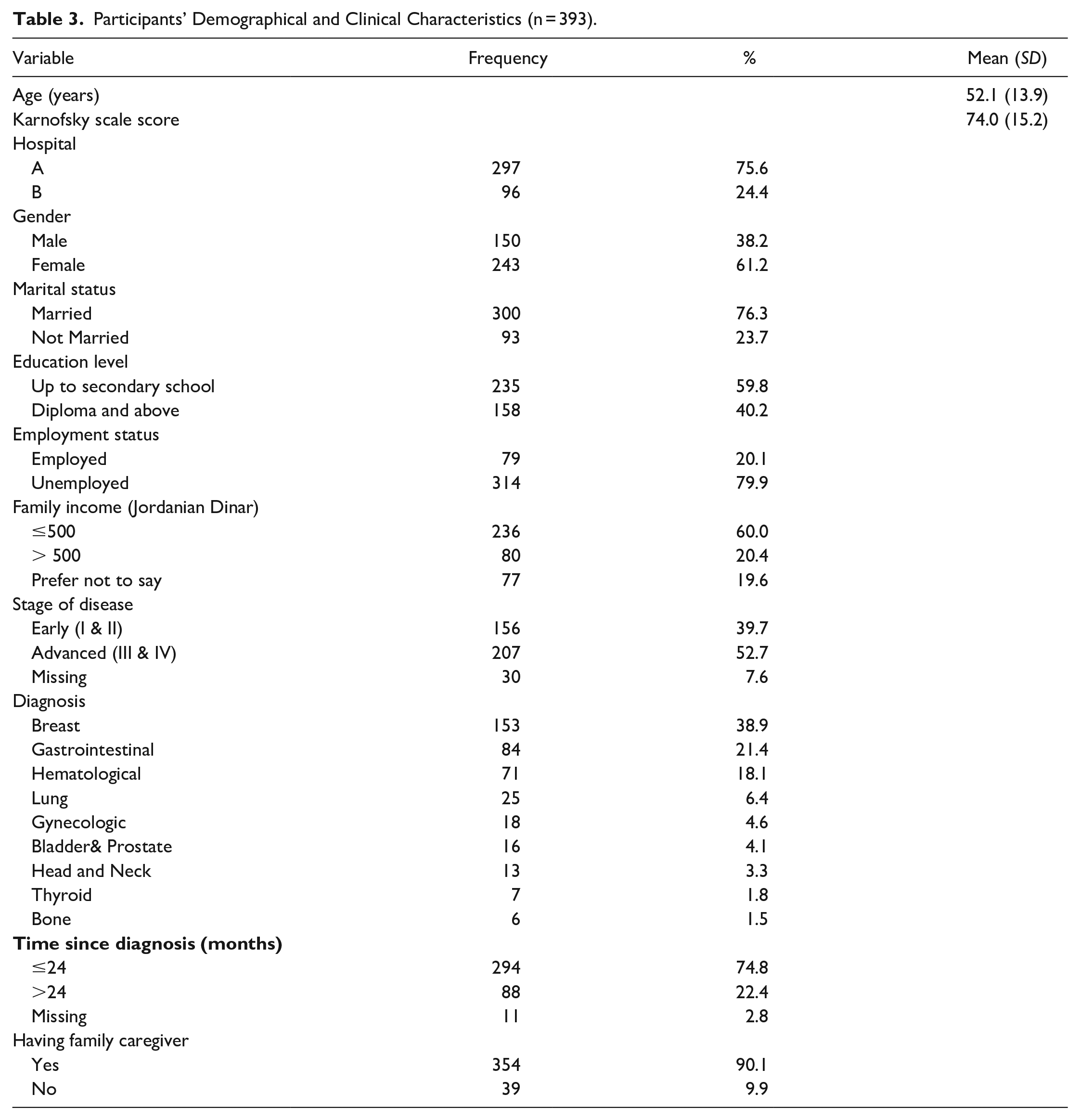
The participants’ demographics and clinical characteristics are presented in Table 3. We approached 450 patients with cancer receiving chemotherapy at the time of the survey. Of these, 25 declined to participate, 17 were fatigued and unable to fill in the questionnaire, 10 did not return the questionnaire, and five did not complete the questionnaire due to sensitivity reaction to chemotherapy. The response rate was thus 87.3% (n = 393). The mean age of the participants was 52.1 years (SD 13.9), and the majority were female (61.2%). The most common cancer diagnoses were breast cancer (38.9%), gastrointestinal cancers (21.4%), and hematological cancer (18.1%). In addition, most of the participants were married (76.3%), had up to secondary school as their highest education level (59.8%), and had an advanced stage of cancer (52.7%).
Participants’ Demographical and Clinical Characteristics (n = 393).
Symptoms Experienced by Patients Receiving Chemotherapy
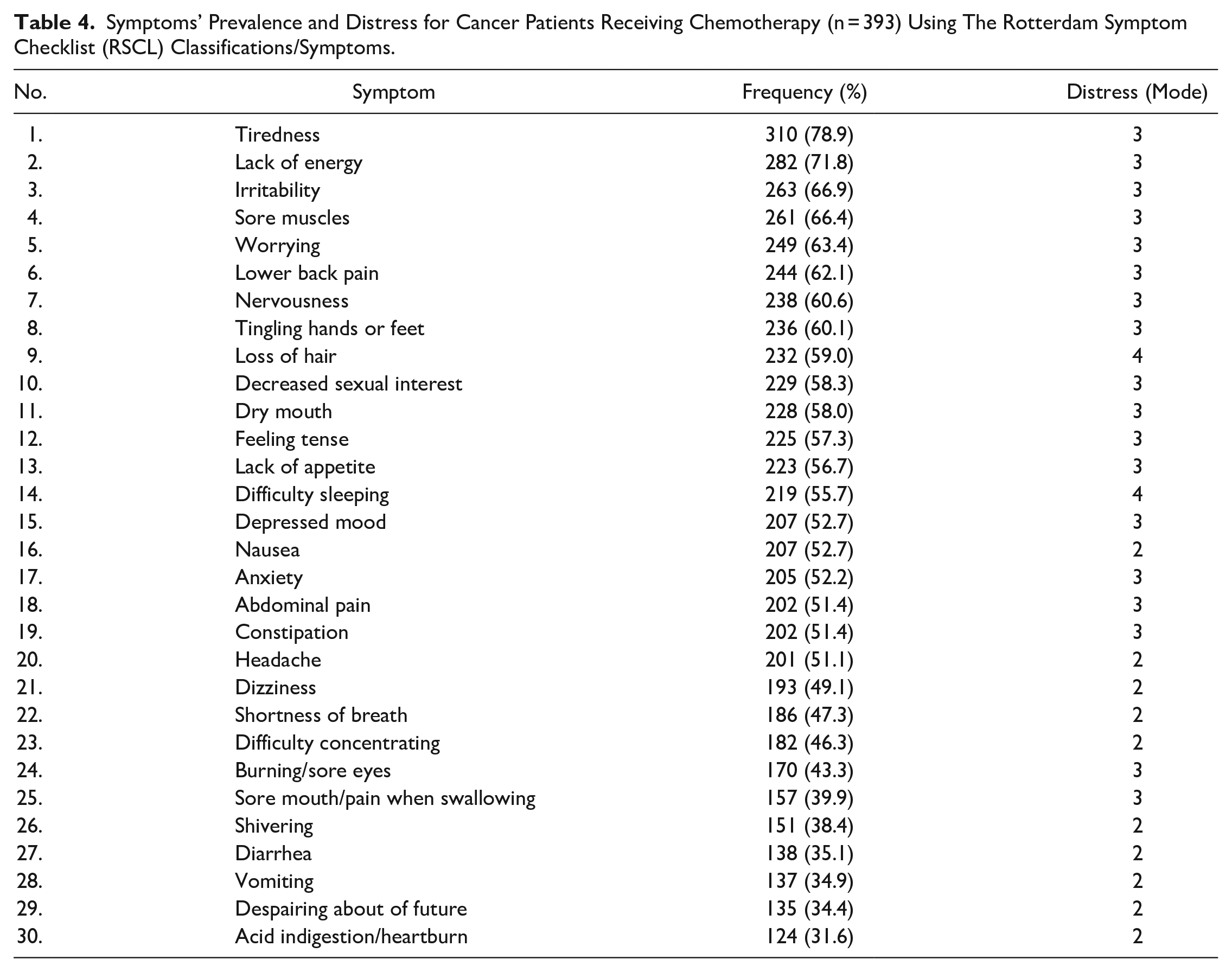
The occurrence and distress dimensions of symptom experience were measured. Table 4 presents these as reported by the participants, ranked according to the highest occurrence rate. Twenty out of the 30 screened symptoms had an occurrence rate of more than 50%. The top five reported symptoms were: tiredness (78.9%), lack of energy (71.8%), irritability (66.9%), sore muscles (66.4%), and worrying (63.4%). The least frequently occurring symptom was acid indigestion/heartburn (31.6%). All the symptoms were reported by at least 30% of the participants. The most distressing symptoms were lack of appetite and loss of hair (mode = 4), and another 19 symptoms were rated as quite distressing (mode = 3). The mean total distress score was 76.1 (SD 22.2) out of the possible maximum of 120.
Symptoms’ Prevalence and Distress for Cancer Patients Receiving Chemotherapy (n = 393) Using The Rotterdam Symptom Checklist (RSCL) Classifications/Symptoms.
Symptom Clusters Using the Symptom Occurrence Dimension
All symptoms were included in the EFA as they all have an occurrence rate >30%. The results show symptoms grouped into four clusters as follows: (1) a chemotherapy-related symptom cluster of ten symptoms (burning/sore eyes, shortness of breath, dry mouth, sore mouth/pain when swallowing, loss of hair, shivering, difficulty concentrating, tingling hands or feet, headache, and decreased sexual interest); (2) a psychological symptom cluster comprising seven symptoms (depressed mood, anxiety, feeling tense, worrying, nervousness, irritability, and despairing about the future); (3) a fatigue and pain symptom cluster with five symptoms (tiredness, sore muscles, lack of energy, difficulty sleeping, and lower back pain); and (4) a gastrointestinal symptom cluster of eight symptoms (vomiting, abdominal pain, lack of appetite, nausea, dizziness, diarrhea, acid indigestion/heartburn, and constipation). The four clusters overall explained 42% of the variance, and the chemotherapy-related cluster 32% of the variance. EFA for symptoms using the occurrence dimensions are shown in Table 5. Cronbach’s alpha values for internal consistency of the clusters were excellent, ranging from .74 to .86.
Symptom Clusters Based on Symptoms Occurrence and using Exploratory Factor Analysis (n = 393).

Symptom Clusters Using the Symptom Distress Dimension
For the distress dimension, all 30 symptoms were included in the EFA (Table 6). One symptom did not load in any factor (i.e., constipation). The remaining 29 symptoms formed four clusters: chemotherapy-related symptoms; psychological symptoms; fatigue and pain symptoms; and gastrointestinal symptom clusters. The content and number of symptoms within each cluster were slightly different from the occurrence dimension. For the chemotherapy-related symptoms cluster, the number remained the same at 10 symptoms; however, acid indigestion/heartburn and diarrhea were replaced by headache and decreased sexual interest (percent agreement 80%). For the psychological symptoms cluster, the number of symptoms increased by one to eight. The symptom of decreased sexual interest loaded to this cluster (percent agreement 87.5%). Further, the number of symptoms in the pain and fatigue symptoms cluster increased to six, with the addition of headache (percent agreement 83.3%). Finally, the number of symptoms comprising the gastrointestinal symptoms cluster decreased from eight to five symptoms with a percent agreement of 62.5%. Diarrhea and acid indigestion/heartburn loaded to another cluster and constipation did not load in any cluster. However, the four symptoms’ clusters explained 44% of the variance, with the psychological symptom cluster as the major contributor (33%). Cronbach’s alpha values for internal consistency of the clusters were excellent, ranging from .80 to .85.
Symptom Clusters Based on Symptoms Distress and using Exploratory Factor Analysis (n = 393).

Discussion
The current study demonstrated that cancer patients undergoing chemotherapy experienced several symptoms during that period. These symptoms were found to group into four clusters regardless of the dimension of the symptom experience: chemotherapy-related, psychological, fatigue and pain, and gastrointestinal symptoms.
The most prevalent symptoms in the current study were tiredness, lack of energy, irritability, sore muscles, and worrying. In addition, 20 of the 30 assessed symptoms were reported by more than 50% of the participants. Similar findings were reported in several previous studies (Choi & Ryu, 2018; Han et al., 2019; Sullivan, Leutwyler, Dunn, & Miaskowski, 2018). For example, Choi and Ryu (2018) recorded a prevalence of at least 53% of the participants experiencing each symptom; however, they also reported other common symptoms in their population than those reported in our study, namely, fatigue, distress, sad, drowsy, and dry mouth (Choi & Ryu, 2018). Similarly, Sullivan, Leutwyler, Dunn, and Miaskowski (2018) reported that their population of breast cancer patients experienced lack of energy, difficulty sleeping, and pain as the most frequently occurring symptoms, similar to our study’s findings (Sullivan, Leutwyler, Dunn, Cooper, et al., 2018). Han et al. (2019) reported that those symptoms occurring in more than 50% of the cases were lack of energy, numbness or tingling in hands/feet, difficulty sleeping, pain, feeling drowsy, and nausea. Previous studies reported similar most-common symptoms with some variation that might be specific to the cancer in the populations studied, while our results are based on a broader population with different types of cancer.
Regarding the distress dimension, lack of appetite and loss of hair were considered by the study participants as the most distressing symptoms. This is partly in line with studies identifying loss of hair as one of the emotional- or body image-related symptom clusters (Cherwin & Perkhounkova, 2017; Han et al., 2019). As with our findings, loss of appetite has been reported as one of the most common symptoms leading to both physical and emotional distress (Hsu et al., 2017). It is, however, significant that the distress levels of the most common symptoms might change over the chemotherapy cycles (Tantoy et al., 2017). Although this was not studied in our sample, it is important to consider such patterns in future studies as well as in clinical practice.
Our findings could facilitate planning of clinical interventions targeting both physical and mental symptoms in persons with cancer, regardless of cancer type. In particular, our results confirmed the fact that patients experience several symptoms during the period of chemotherapy treatment. Hence, healthcare providers need to thoroughly assess and manage these symptoms to ease patients’ experience, enhance their compliance and improve their quality of life.
In this study, two dimensions of symptom experience, occurrence and distress level, were assessed and used to identify the symptom clusters. The results showed that the number of clusters remained the same, four, for both dimensions, although the symptoms in each cluster were slightly different. Cancer types of specific symptom clusters have been reported in different studies (Nho et al., 2017; Russell et al., 2019), but very few have focused on symptom clusters regardless of cancer type, which is one of this study’s strengths. Based on our current findings, there are common symptom clusters among patients with cancer receiving chemotherapy. The stability of symptom clusters across dimensions has been tested and confirmed in patients with different types of cancer such as lung cancer (Russell et al., 2019), breast cancer (Sullivan, Leutwyler, Dunn, Cooper, et al., 2018), and in a heterogeneous group of cancer patients (Al Qadire et al., 2020) receiving chemotherapy. In the current study, the symptom clusters identified were also relatively stable across the dimensions of occurrence and distress, regardless of cancer diagnosis. This calls for attention to more effective interventions that target the symptom clusters before they occur, especially during chemotherapy. In addition, a recent literature review on symptom clusters reported the most common ones as the psychological, gastrointestinal, and nutritional clusters (Harris et al., 2021), which partly resembles our own findings; we also identified four clusters, and the exact content within each cluster is different (Harris et al., 2021). Other studies reported that certain clusters remain stable over time (Al Qadire et al., 2020; Molassiotis et al., 2010; Skerman et al., 2012). The time aspect and stability of the identified symptom clusters were not considered in our study and therefore need to be investigated further, combined with the occurrence and distress dimensions in a similar heterogeneous cancer sample.
In addition, slight changes in the content of the clusters were identified between occurrence and distress dimensions in the current study. The percentage of agreement between the two dimensions was: in the chemotherapy-related cluster (80.0%), the psychological cluster (87.5%), the pain and fatigue cluster (83.3%), and the gastrointestinal cluster (62.5%). The four clusters explained 42% of the variance using the occurrence dimension and 44% of the variance in the distress dimension. Distress-based symptom clusters described in other studies identified between six clusters, explaining 53% of the variance (Cherwin & Perkhounkova, 2017), and four clusters using three different dimensions (occurrence, severity, and distress), with similar agreement to our findings (ranging from 40% to 100% depending on the cluster) (Han et al., 2019). Given the agreement between the occurrence and distress dimensions in the current study, it is possible that the symptom clusters identified would occur again based on the distress level and be sustained for a longer time, which strengthens the importance of preventive actions prior to planned chemotherapy treatment.
The symptom clusters identified in the current study (the chemotherapy-related cluster with ten symptoms, psychological cluster with seven symptoms, fatigue, and pain cluster with five symptoms, gastrointestinal cluster with eight symptoms) are in line with other studies’ findings. Although there is substantial evidence for the presence of a psychoneurological cluster of symptoms that includes pain, fatigue, sleep disturbance, and depressive symptoms (Cooley & Siefert, 2016; Kim et al., 2012), the gastrointestinal symptom cluster seems to be the most frequently reported in cancer patients receiving chemotherapy which is similar to our findings, even though the symptoms within the cluster seem to vary across studies (Albusoul et al., 2017; Cherwin & Perkhounkova, 2017; Han et al., 2019). Furthermore, it was concluded that the gastrointestinal symptom cluster was built on two symptom clusters: appetite (three symptoms: lack of appetite, nausea, and taste changes) and bloating (three symptoms: belching, feeling bloated, and diaphoresis) (Cooley & Siefert, 2016; Kim et al., 2012), which together become six symptoms compared to our more nuanced eight symptoms. This could be explained by the fact that our sample is broader, with different cancer diagnoses. Furthermore, factors that affect the occurrence of the gastrointestinal symptoms may also be related to the regimens utilized for the treatment of the condition; this needs to be investigated further. Overall, symptom clusters seem to be similar and stable regardless of the dimension, and so a comprehensive approach to treating symptoms based on clusters needs to be developed and tested.
The results of the current study need to be interpreted in the light of the following limitations. This sample was obtained from two health systems in one country. Therefore, large, more diverse samples are needed. Also, the difference in types and intensity of treatment required may need to be considered as it would greatly influence the symptom experience. More than half the sample had an advanced stage of the disease, and the experience of those at a less advanced stage are less represented; differences by stage and the aggressiveness and length of time of treatment should therefore be considered in future work. Additionally, cultural factors influence if symptoms are disclosed and how they are interpreted. The intersection of culture and gender, and reporting of the symptom experience, should be considered. Finally, this study used a self-reported symptoms assessment tool that may inflate the prevalence and the degree of distress. However, patients’ self-reporting of subjective symptoms remains the most reliable assessment method, and assessment of the long-term stability of symptom clusters is needed in future research.
Implications for Clinical Practice
This work may serve as a foundation for the future development of tools that can be used for symptom screening and management across patient populations. Such tools may be helpful for early identification and monitoring of symptoms. Also, teaching patients about different symptom presentations prior to starting treatment may help them with the management of symptoms; such a step could support their psychological well-being by giving them a sense of control over how symptoms are experienced. For example, this information can help patients and families plan ahead, putting into place the support needed for the patient as it relates to certain symptoms. This type of education can also help lessen patients’ fears—if they were to experience such symptoms—as they know the symptom is common and the trajectory may be short. Furthermore, patients may be able to proactively adjust their environment and activities to lessen the symptom burden.
Conclusions
This study demonstrated that symptoms are prevalent, and cause distress, in patients with cancer. These symptoms were grouped into four clusters using two different dimensions. The findings call for an early comprehensive assessment and treatment of symptoms for patients undergoing chemotherapy, particularly those with gastrointestinal symptoms. Also, as this group of patients experiences the highest proportion of symptoms during the continuum of cancer care, strengthening the effort to develop interventions targeting the symptom clusters in patients receiving chemotherapy is urgently needed.
Footnotes
Declaration of Conflicting Interests
The author(s) declared no potential conflicts of interest with respect to the research, authorship, and/or publication of this article.
Funding
The author(s) received no financial support for the research, authorship, and/or publication of this article.
