







Abstract
Background
In recent years, assistive products for cognition (APC) have been developed as a means of helping people with dementia to continue independent living as long as possible. However, APC are not widely recognized and there have been few research reports in Japan. The purpose of this study was to clarify the usage and recognition of APC, and to propose solutions for their widespread use.
Methods
A self-administered questionnaire survey was conducted on the primary caregivers of older adults with cognitive decline. Informed consent was implied by the completion and submission of the questionnaire, which included an explanation of the study purpose and procedures.
Results
The results indicated that approximately 80% of participants had no prior experience using APC. A comparative analysis based on caregiver age groups revealed that awareness of APC was higher among younger caregivers than older ones. Furthermore, younger caregivers demonstrated a greater willingness to propose the use of APC to older adults compared to their older counterparts. Over 80% of caregivers agreed that awareness of APC would increase if more recommendations were made by social workers or medical professionals.
Conclusions
To enhance awareness of APC, it is essential to tailor both the content and methods of information delivery to the specific needs of the target population, taking into account the ages of older adults and their caregivers.
Introduction
Recently, the number of individuals with dementia has been increasing due to the rapid ageing of the population.1–3 Consequently, it is essential to support people with dementia in maintaining activities of daily living (ADL) independently for as long as possible; to achieve this, assistive products for cognition (APC) are being developed.4–8 These products include devices designed to aid with ADL, such as time orientation, memory, and attention, to assist those experiencing cognitive decline. Examples of APC include devices that assist in scheduling and medication administration.4–8
Recent reports have demonstrated the effectiveness of APC, particularly the use of medication support devices, which have been shown to improve medication adherence and self-esteem of patients and reduce the burden on caregivers.4,5 Additionally, previous studies have reported that the use of electronic calendars reduced the frequency with which older adults with memory impairments asked about the date. 6 Furthermore, in a study involving 27 community-dwelling older adults living alone, the use of an electronic calendar over a 12-week period resulted in association with significant improvement in Mini-Mental State Examination scores, a common dementia screening tool of cognitive function. In addition, changes in daily activities were observed, such as the ability to prepare for attending day services and a reduction in instances of forgetting to take out the garbage. 6 Moreover, the use of APC has been found to alleviate stress and anxiety among caregivers. 7
However, in Japan, the range of APC covered by long-term care insurance specifically for people with dementia is quite limited, with only one type of wandering detection device available. 9 Therefore, few older adults make use of other APC. According to Kawasaki et al., 10 approximately half of the rehabilitation professionals such as Occupational Therapists and Physical Therapists who responded to the survey reported having experience in the provision of APC, indicating that engagement in APC among this professional group remains limited. Additional barriers to the widespread adoption of APC, such as limited awareness and costs for users, have been noted. Furthermore, the World Health Organization has reported that it is estimated that over 2.5 billion individuals require at least one form of assistive product. 11 It is projected that approximately 3.5 billion people will need access to assistive technology by the year 2050; however, in many countries, the majority of those in need are unfortunately unable to obtain the assistive products they require. 11
This study surveyed older adults with cognitive decline to assess the challenges associated with APC use. The objectives of this study were to (1) clarify the status of APC use and awareness, (2) identify barriers to its adoption, and (3) propose solutions to improving the awareness of APC.12,13
Methods
Study design
A self-administered, anonymous questionnaire survey was performed. The questionnaires were distributed manually or by mail to the staff of each participating institution. Each questionnaire included an instruction sheet and a pre-addressed return envelope. Consent to participate was considered granted upon the return of the completed questionnaire.
Participants
The target population was the primary caregivers of older adults with cognitive decline (certified as requiring support or nursing care). The participants were caregivers of older adults (i.e. care recipients) who received healthcare at research collaborating institutions, including Community Comprehensive Support Centre A, Long-Term Care Health Facility B, and Dementia Café C, as well as those who provided consent through recruitment of students and faculty advisors. Participants were recruited from older nursing homes and daily care facilities in urban areas of Japan. Enrolment began in March 2023 and was completed in November 2023.
Survey items
The survey items covered the following topics: basic information on the caregivers (age, residential status, residential area), basic information about the older adults (age, sex, level of care required, medical history), history of APC use, APC devices they were familiar with and would like to propose, measures to increase APC awareness, and which APC devices older adults would like to use (optional answers). For those with a history of APC use, additional questions were asked about the types of APC they have used, who recommended them, the reasons for their use, and the systems employed. Furthermore, respondents were asked to rate changes in care burden, satisfaction, and the impact on the lives of older adults on a 5-point Likert scale. For those who had not used APC, the reasons for non-use were inquired.
9
According to Kawasaki et al. (2023),
10
specific examples of APC include medication support devices, schedule support devices, finders, easy-to-operate home appliances, memory aids, information-support robots, healing robots, monitoring support devices, wheelchairs with automatic brakes, and wearable devices. Respondents were provided with a handout detailing images and descriptions of APC to aid their understanding (Figure 1). Examples of assistive products for cognition (APC):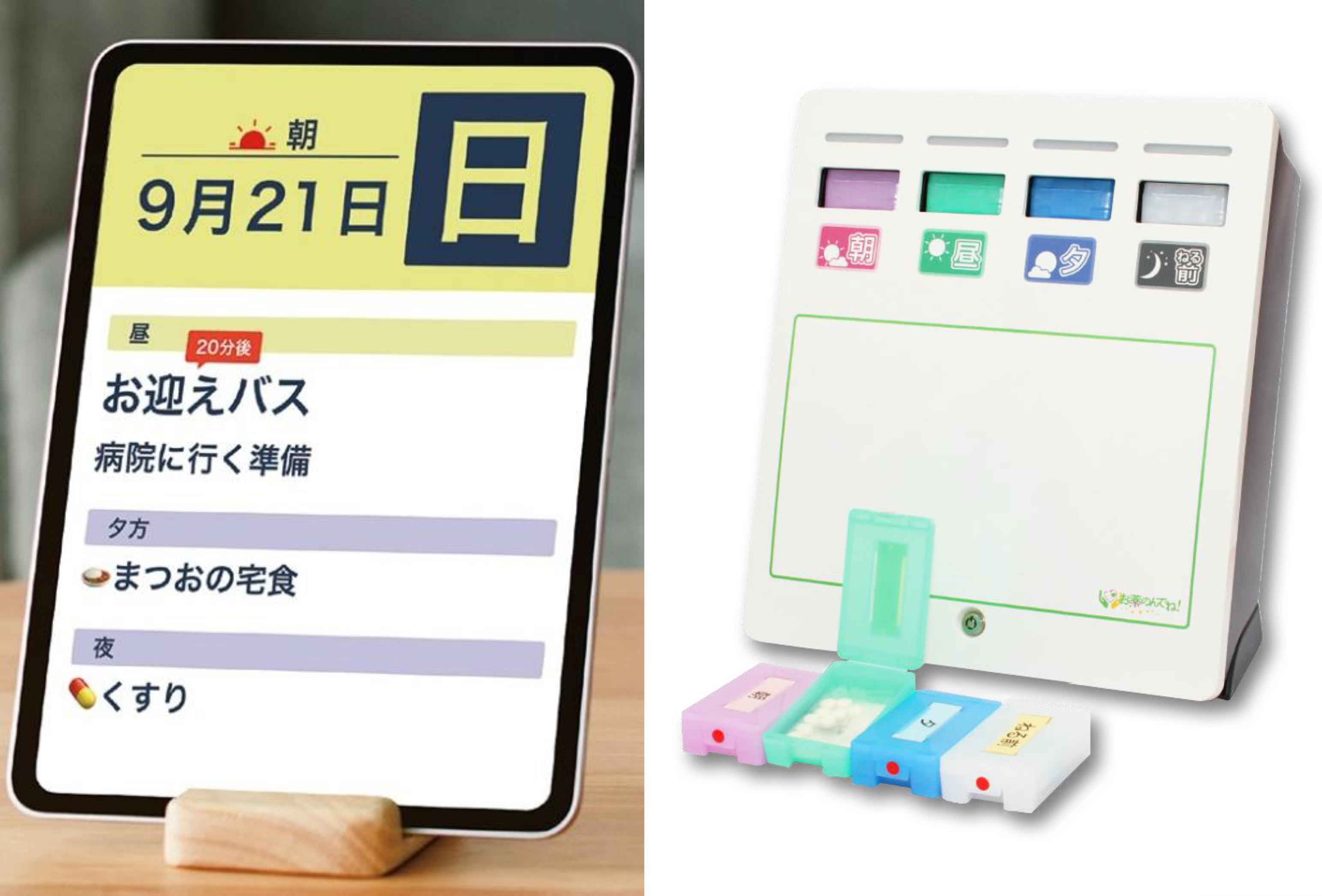
Statistical analysis
The questionnaire results were analysed using simple statistical methods. The group with no history of APC use was further divided into two groups according to the age of the caregiver: a group of caregivers under 70 years old (12 individuals) and a group over 70 years old (10 individuals). Similarly, the older adults were divided into two groups: a group of older adults under 90 years old (12 individuals) and a group over 90 years old (10 individuals). A comparative analysis was conducted for each age group, focusing on the APC devices they had encountered and those they would like to propose.
Ethical considerations
This study was approved by the Bioethics Review Committee of Nagoya University Graduate School of Medicine and School of Medicine Hospital (Approval number: 22-609-2).
Results
Participants
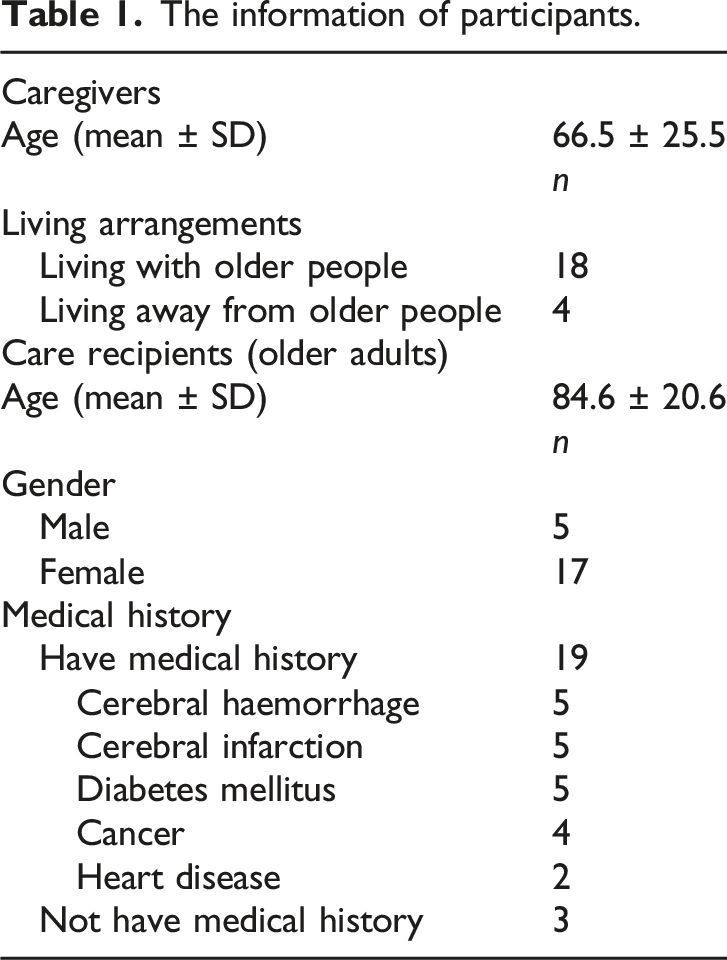
The information of participants.
Status of use and details
Among the 22 respondents, four had a history of APC use, while 18 had never used APC, accounting for over 80% of the total. Of the four respondents who had used APC, two had used monitoring support devices, and one had used a schedule support device. One respondent did not provide details. A care manager and an occupational therapist recommended the use of APC for two of these respondents, while two did not receive any recommendations. The reasons for starting to use APC were ‘because it is convenient’, ‘because it was introduced or suggested’, and ‘because I was in a situation where I had to use it’. One respondent did not answer this question. Regarding the system used when starting APC use, one respondent mentioned the ‘model project for loaning nursing care equipment from the local government’, two stated that they did not use any system, and one started using it for research purposes. One respondent did not answer. Regarding changes in the burden of caregiving, two respondents indicated their burden had ‘decreased a little’, while one reported that it ‘did not change much’, and one did not respond. In terms of changes in the lives of caregivers due to APC use, three respondents reported ‘no change’, and one did not respond.
Among the 18 respondents who had never used APC, 12 (66.7%) stated that they ‘did not know it existed’, and 11 (61.1%) stated they ‘did not feel the need for it’. All respondents chose one of the two reasons, while one (5.6%) person noted ‘the cost was high’ (Figure 2). Reasons for not using APC among individuals with no prior experience.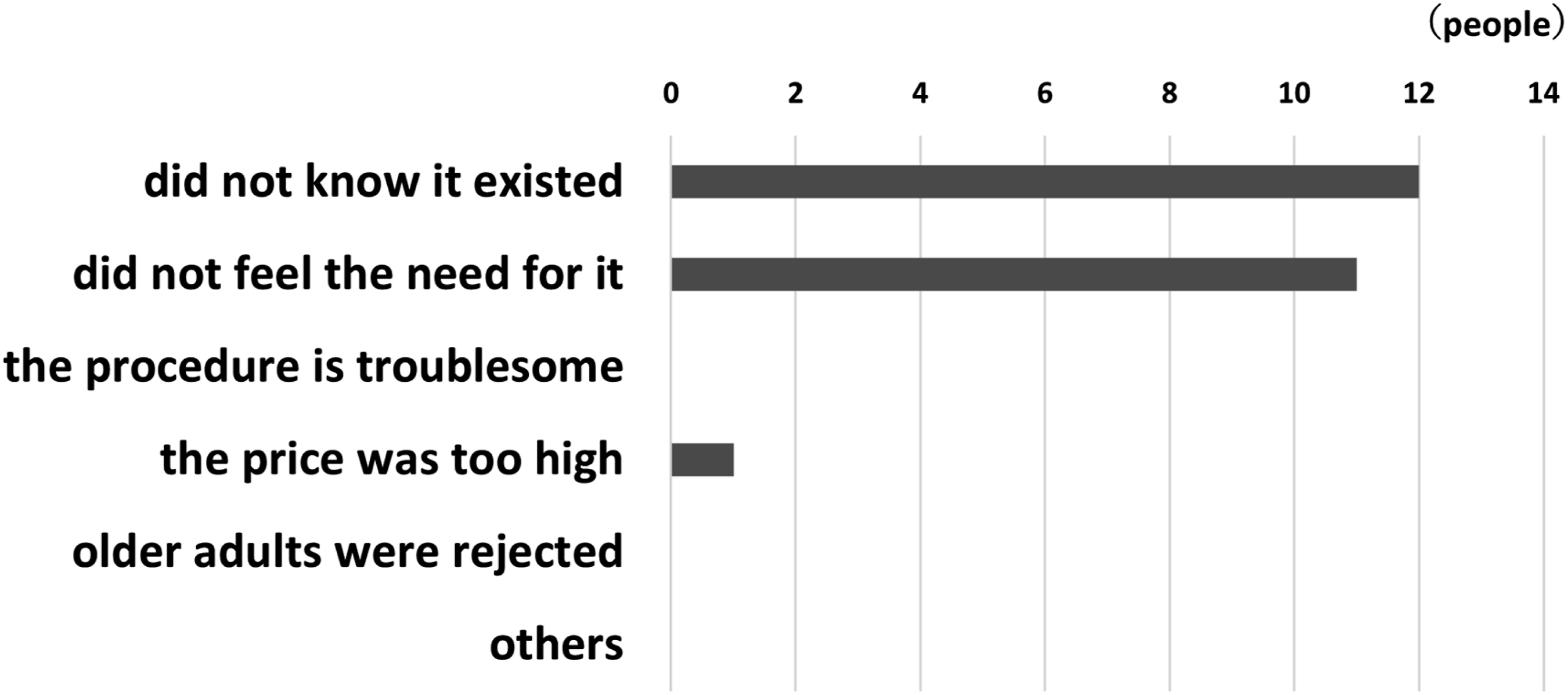
APC they were familiar with
Among the 22 respondents, seven (31.8%) selected information support robots and monitoring support devices as APC they had seen before, six (27.3%) selected healing robots, four (18.2%) chose wearable devices, and fewer than three selected other APC devices. Five (22.7%) respondents indicated that they had never seen any APC.
When comparing APC awareness by caregiver age group, the group under 70 years old reported seeing 23 types of APC, while the group over 70 years reported seeing 11, indicating younger caregivers under 70 years were more familiar with APC. Among the 12 caregivers under 70 years of age, six (50%) had seen information support robots, five (41.7%) had seen monitoring support devices, and four (33.3%) had seen healing robots and wearable devices. One (8%) respondent each had seen medication support devices, schedule support devices, finders, and easy-to-operate home appliances. In the group of 10 respondents aged 70 years and older, two (20.0%) had seen easy-to-operate home appliances, information support robots, healing robots, and monitoring support devices. The APC devices they had seen varied, with one (10.0%) respondent each having seen schedule support devices, wheelchairs with automatic brakes, and wearable devices. Notably, one (8.3%) caregiver in the under-70 group and four (40%) in the over-70 group indicated that they had not seen any APC (Figure 3). This figure presents the distribution of APC devices that caregivers have encountered, categorized by caregivers’ age group (70 years and older vs under 70 years).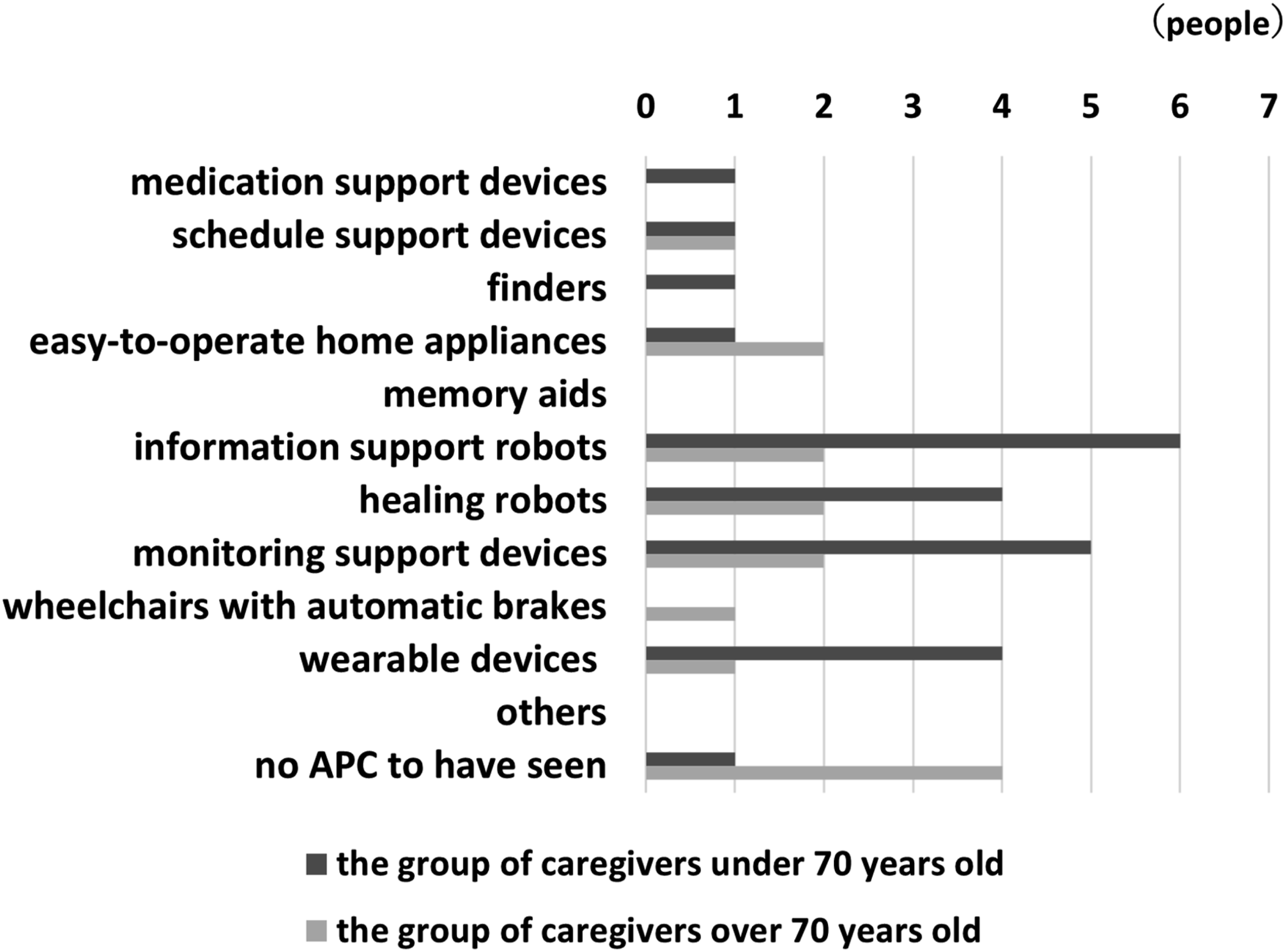
In the comparative analysis of the older adults (i.e. care recipients) by age group, the responses showed that individuals in the under 90 years old group in need of care had ‘no APC’. In the under-90-year-old group, five (41.7%) of the 12 caregivers had seen healing robots, four (33.3%) had seen information support robots, and two (16.7%) had seen easy-to-operate home appliances and monitoring support devices. In contrast, among the 10 caregivers of those aged 90 years or older, five (50.0%) had seen monitoring support devices, and four (40.0%) had seen wearable devices and information support robots (Figure 4). This figure presents the distribution of APC devices that caregivers have encountered, categorized by care recipients’ age group (90 years and older vs under 90 years).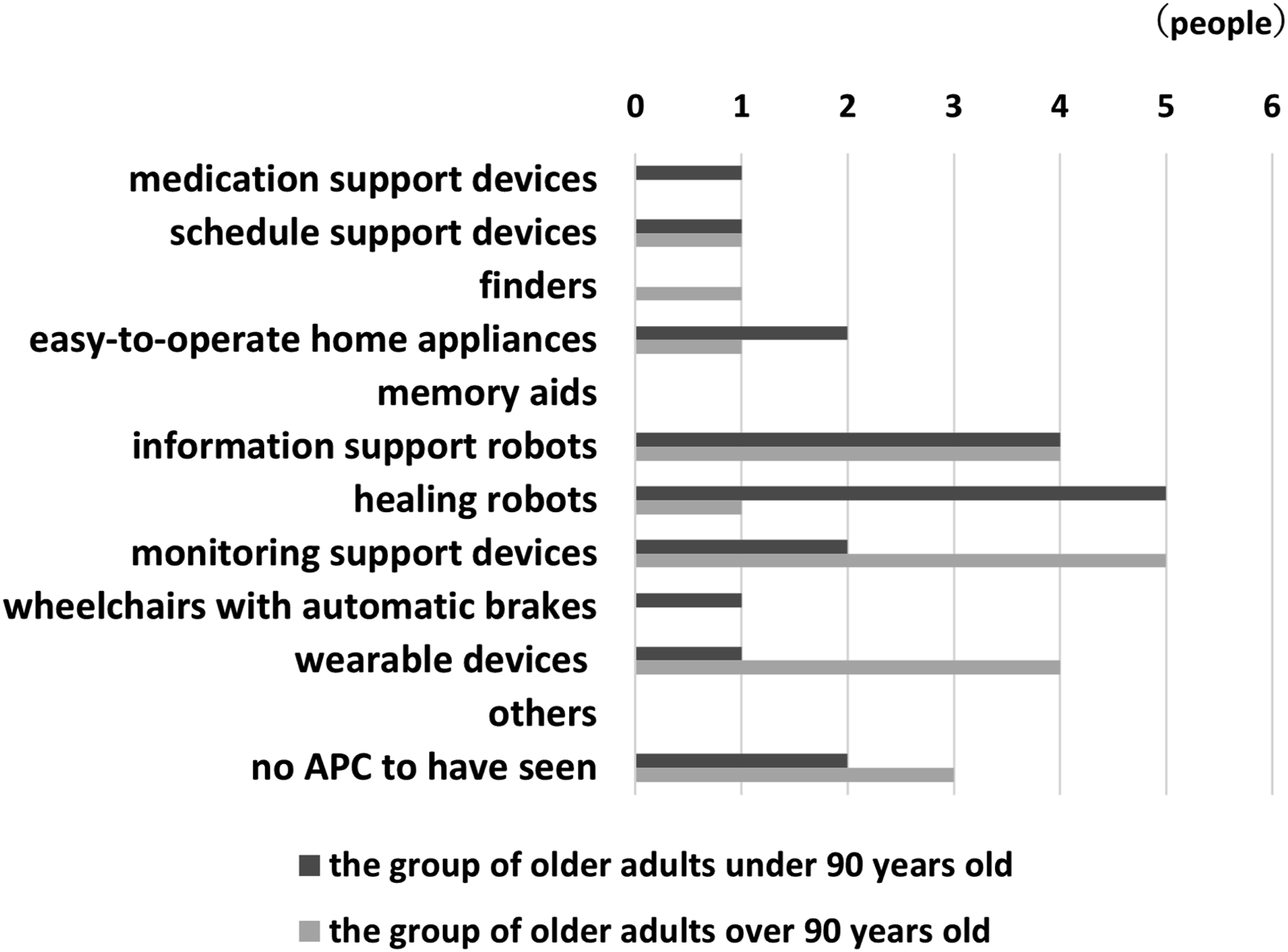
APC would like to propose
Among the 22 respondents, the most commonly proposed APC were easy-to-operate home appliances and monitoring support devices, each suggested by six (27.2%) respondents; this was followed by medication support devices, schedule support devices, and healing robots, each proposed by four (18.1%) respondents. Other APC devices were proposed by two or fewer respondents. Two (9.0%) respondents indicated that they had no APC to propose (Figure 5). APC caregivers consider proposing to care recipients.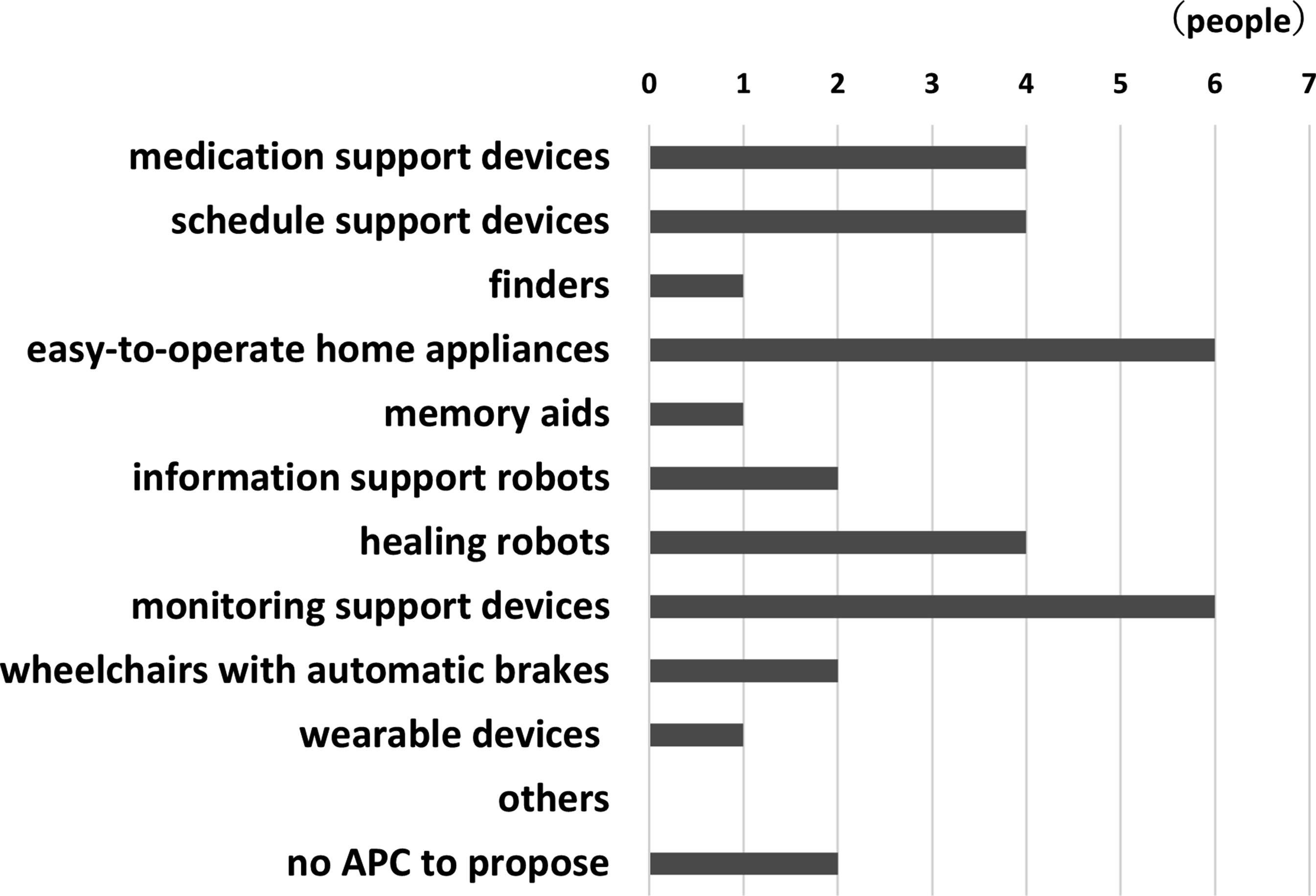
In a comparison based on the age of the older adults (i.e. care recipients), 19 APC proposals were made for the group of care recipients under 90 years old, while 12 proposals were made for the group over 90 years old. In other words, the younger the care recipient, the more interested their caregivers were in proposing APC.
APC that the care recipients themselves would like to use
Eleven respondents answered this question. The most common response was easy-to-operate home appliances (four respondents, 36.3%), followed by monitoring support devices (two respondents, 18.2%) and finders, information support robots, and healing robots (one respondent, 9.0% each).
Measures to promote and raise awareness of APC
Among the 22 respondents, the most common recommendation was ‘increase the number of proposals from healthcare or welfare professionals’, selected by 19 (86.4%) respondents, followed by ‘creating an environment for easy access to APC such as rental services’, chosen by 13 (59.0%) respondents, with the majority of respondents answering the above two items. Additionally, six (27.3%) respondents selected ‘distribution of leaflets’, while four (18.2%) respondents selected ‘providing information at social gatherings, etc.’ (Figure 6). Measures considered by caregivers to promote the spread and awareness of APC.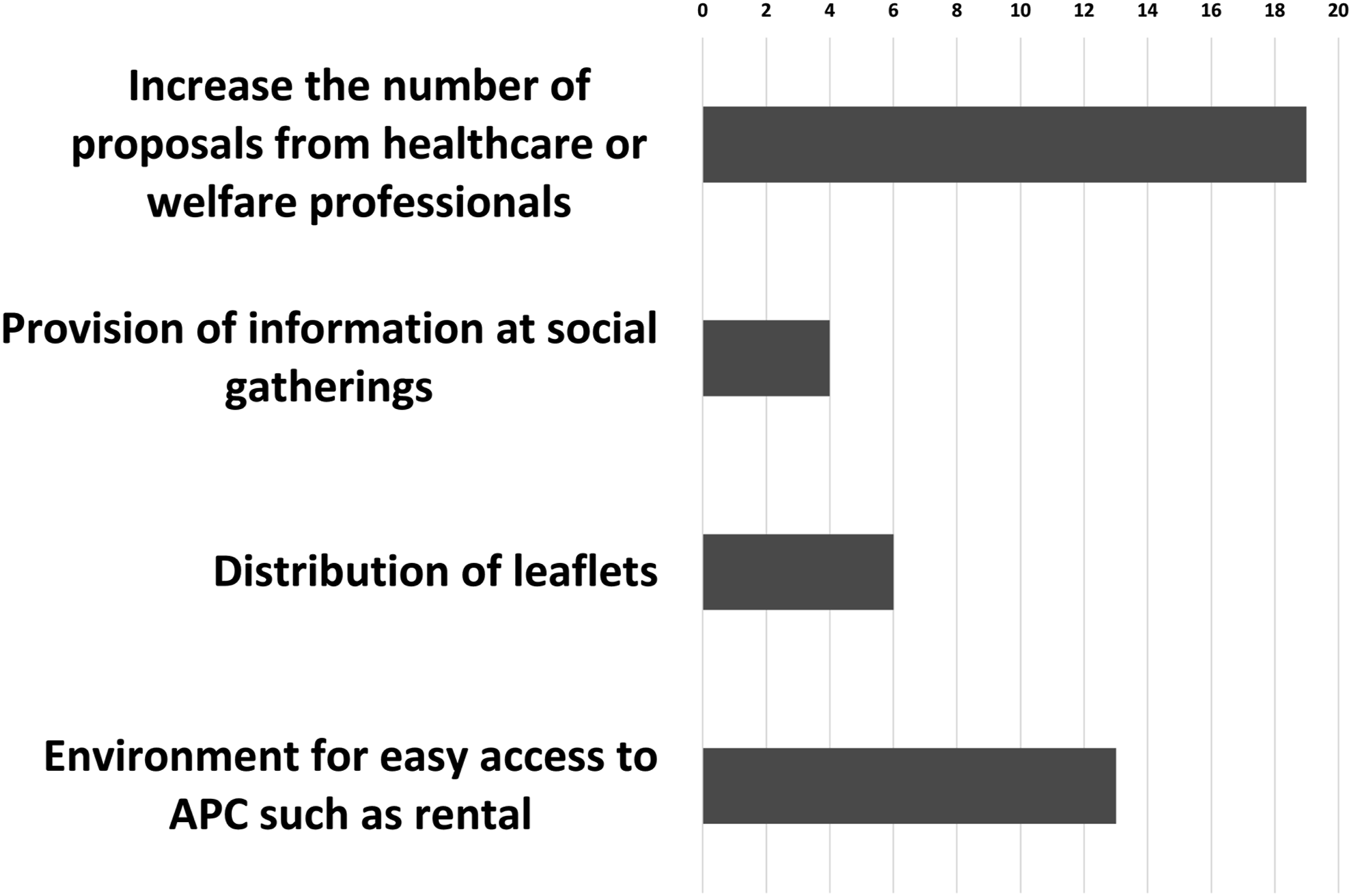
Discussion
As in the previous study, 10 the number of respondents with no history of APC use was much larger than that of those with APC use, indicating that APC is not widely used. Since the number of respondents with a history of APC use was small, it is difficult to obtain a detailed understanding of the actual status of APC use in this study.
The majority of the respondents gave ‘did not know it existed’ or ‘did not feel the need for it’ as the reason for not having used APC. Since multiple responses were allowed in this survey, some respondents answered both ‘did not know it existed’ and ‘did not feel the need for it’. We believe that these respondents did not feel the need for APC because they did not know that they existed and had not obtained information on how to use them or their benefits. Another reason given for not having used APC was that they were ‘expensive’. Although there are ways to reduce the cost burden on those who use APC, such as utilizing government rental programs or installing free applications on devices in the home, there is a lack of sufficient information for caregivers and their support persons. However, the problem is that there is not enough information available to older adults and caregivers. 10 In addition, a lack of knowledge on the part of those providing APC, such as rehabilitation professionals, has been pointed out, 10 and the fact that there are individual differences among professionals has also been viewed as problematic.10,14 Therefore, it is important to improve awareness of APC by creating an environment where older adults and caregivers can obtain correct knowledge and information, and by educating professionals.
In the comparative analysis by age group of caregivers, the number of APC they had seen was higher in the group of caregivers under 70 years old. This result suggests that the younger the age of the caregivers, the more information about APC they have obtained. It has been reported that younger people obtain information more frequently through ICT,14,15 and it is possible that they are also more likely to have access to information about APC than the older age group. These results suggest the need to consider how to provide information according to the age of the support person. In the age group analysis of the care recipients, more respondents in the 90 and older age group responded that they used watchful waiting support devices and wearable devices. These are devices that check the vital signs of the caregivers and are life-sustaining APC. Since the purpose of proposing APC may differ depending on the age of the caregiver, we believe it is important to propose APC that match the caregiver’s age and other characteristics. As a whole, a lot of respondents had seen information support robots and wearable devices. Information support robots and wearable devices are often used not as APC but for advertising on TV or on street corners. Therefore, it is possible that those who responded that they had seen these APC may have included those who recognized them as general products rather than as APC to support cognitive functions.
The number of responses for easy-to-operate home appliances was high as the APC they would like to propose. It has been reported that older people feel more comfortable with appliances that are simple to operate.16–18 The average age of the supporters in this study was 66.5 ± 25.5 years old, and 13 of the caregivers were also older than 65 years old. It is possible that easy-to-operate home appliances were listed as APC that they would like to propose to their caregivers because they are easy for the caregivers to use. Four or more respondents indicated that they would like to propose medication support devices, schedule support devices, and easy-to-operate home appliances to their care recipients, whereas fewer than three respondents answered the question regarding APC they had seen. Even for APC that respondents had ‘never seen before’, the fact that the number of respondents who had heard of APC and wanted to propose them increased in this survey suggests that these APC are in line with the needs of caregivers. Based on the above results, it is conceivable that the number of those who use APC may increase in the future if information on the types of APC, their purposes of use, and how to utilize them is disseminated and general awareness is increased. 10 In addition, medication support devices, schedule support devices, and easy-to-operate home appliances are mainly APC that help care recipients ‘do things by themselves’. It is possible that caregivers want care recipients to maintain ‘do-it-yourself’ as much as possible, suggesting that there is a high need for APC that support the daily activities of the older. Furthermore, the results of the comparative analysis by age group of the care recipients showed that the number of APC that the group under 90 years old wanted to propose exceeded the number of APC that the group over 90 years old wanted to propose. It has been reported that older people have difficulty adapting to environmental changes.19,20 Therefore, these findings suggest that caregivers may be more inclined to propose APC when care recipients are younger, potentially due to perceptions of greater decision-making capacity or longer anticipated care trajectories.
The APC that the care recipients themselves would like to use were easy-to-operate home appliances, monitoring support devices, finders, information support robots, and healing robots. Of these, the easy-to-operate home appliances, finders, and information support robot are APC that actually help the care recipients reduce the difficulties they face in their daily lives at home and support ‘do-it-yourself’ activities. As for healing robots, they are reported to have psychological effects such as improving mood and increasing motivation, physiological effects such as reducing stress and stabilizing blood pressure, and social effects by triggering communication.21–23 It is conceivable that the caregivers themselves expect an increase in ‘do-it-yourself’ activities and positive effects on their own mental and physical aspects with regard to APC.
More than half of all respondents indicated that a measure to promote the spread of APC would be to increase the number of proposals from social workers and medical professionals. It is believed that suggestions from professionals with knowledge of the lives of the older and medical knowledge would be more readily accepted by caregivers. In a previous study, care managers were the most frequently cited person with whom family caregivers could consult,24,25 and they are considered to be familiar caregivers. It is important for medical professionals to propose APC that meets the needs of both supporter and caregivers in collaboration with other professions, while keeping in mind the subject’s mental and physical functions, cognitive functions, and ‘ability to do’, and considering the individual life.
As mentioned above, the number of responses for APC that respondents would like to propose was greater than the number of responses for APC they have seen, suggesting that social recognition and diffusion of APC will improve as supporters gain information about APC. It is considered important to provide ‘opportunities to know’ about APC through the distribution of leaflets, which were popular among the respondents, and by providing information at social gatherings.26,27
However, the present study has several limitations. In this study, the number of respondents to the questionnaire survey was 22, for a collection rate of 31.4%. One possible reason for the low response rate is that the respondents, the caregivers, were busy with their daily caregiving duties and did not have enough time to complete the survey. In this study, the questionnaire was returned at a later date, but it is necessary to consider research methods that take the respondents into consideration in the future, such as a simple questionnaire survey that can be answered on the spot, or a short interview survey. The questionnaire survey did not include questions on the cognitive functions and life backgrounds of the care recipients, making it impossible to determine the type of APC that would best suit their individual characteristics. In the future, it will be necessary to revisit the questionnaire survey items and conduct a larger-scale survey with the aim of disseminating APC that are appropriate for the target population.
In conclusion, a questionnaire survey on APC was conducted among caregivers of older persons with cognitive decline in this study. The results revealed that few respondents had a history of using APC; many responded that they ‘did not know they existed’ as the reason for not having used APC, and APC that were not listed in the ‘APC I have seen’ were listed in the ‘APC I would like to propose’, indicating that information on APC This suggests that obtaining information about APC may increase the number of people who use APC. It was also suggested that in order to improve the social recognition of APC and to promote APC, it is important to select APC and information provision methods that meet the needs of individual subjects, taking into consideration the ages of caregivers and care recipients.
Footnotes
Acknowledgements

Ethical considerations
This study was approved by the Bioethics Review Committee of Nagoya University Graduate School of Medicine and School of Medicine Hospital (Approval number: 22-609-2) on April 19, 2023.
Consent to participate
Informed consent was implied by the completion and submission of the questionnaire, which included an explanation of the study purpose and procedures.
Author contributions
Chizuru Kata: writing-original draft, methodology, investigation, data curation, formal analysis. Yuko Nishiura: conceptualization, methodology, supervision, writing-review and editing.
Funding
The authors received no financial support for the research, authorship, and/or publication of this article.
Declaration of conflicting interests
The authors declared no potential conflicts of interest with respect to the research, authorship, and/or publication of this article.
Data Availability Statement
The data that support the findings of this study are available from the corresponding author upon reasonable request.