







Abstract
This study explores how virtual reality (VR) can be used not only to enrich tourism experiences but also to support social equality and inclusivity by improving access and social integration for disadvantaged individuals. While prior research largely emphasizes VR’s experiential benefits for tourists, this research shifts attention to its broader social value for people with limited travel opportunities due to disability, age, or economic constraints. Using a qualitative approach, participants were first informed about the purpose of the study and then took part in a VR-based travel experience. Afterwards, semi-structured interviews were conducted through a 12-question guide, and the data were analyzed and interpreted in line with the research objectives. The findings indicate that many disadvantaged individuals had been able to travel in the past, but current economic conditions, commercial barriers, or personal health issues now restrict their access to tourism services. The study contributes to accessible tourism research by offering a technological perspective and demonstrating that VR can provide meaningful leisure and engagement opportunities, particularly for disabled, elderly, and economically disadvantaged groups. It also argues that VR may enhance independence, freedom, and quality of life by enabling individuals to virtually explore destinations they might otherwise be unable to visit, positioning VR as a socially and psychologically beneficial tool rather than merely an entertainment-oriented innovation.
Keywords
Introduction
This study explores how Virtual Reality (VR) technology can be used as an opportunity and transformation tool to enhance access to tourism services for disadvantaged individuals. Tourism, for people with disabilities, the elderly, and other marginalized groups, is often inaccessible due to physical barriers, financial constraints, and health issues. Virtual Reality, however, offers the potential to overcome these obstacles, enabling individuals to virtually travel and experience tourist destinations.
The group of disadvantaged individuals may include ones who need salvation such as children, youth, elders, disabled persons, immigrants, females, families with single parent, and economically disadvantaged persons. Individuals in these groups who require salvation are the ones with disabilities, ones older than a certain age (elders); the ones living in insufficient life conditions varying in terms of quantitative and qualitative variables with respect to demographical characteristics; and the ones who need social security to reach the modern living standards in terms of economical, physiological, psychological, and sociological under government responsibility. These disadvantaged groups suffer characteristics such as physical or mental disabilities that occurred as a result of traumas or accidents in their postnatal period as much as the natural born characteristics; and they are not able to sustain requirements of their personal and social lives alone. 1 Erbay 1 reports that museums have intensified efforts toward facilitating hosting disadvantaged visitors recently; and museums from many locations of the world have been reorganized for disadvantaged visitors to ensure they spend longer time in the museum. 1 For the future projections of museums, robots advanced with artificial intelligence and augmented reality would be at service of disadvantaged individuals along their visiting and education activities at museums. Accordingly, electronic guides, robots supported with different software have been included similar museum educations in the recent period.
With the Industry 4.0 paradigm, Virtual Reality (VR), Augmented Reality (AR), Mixed Reality (MR), and Extended Reality (XR) applications have been adopted across a number of domains such as military, security, health service, education, manufacturing, cultural heritage, retailing, real estate, and entertainment as well as Metaverse. In the next couple of years, the use of these technologies is expected to expand all other industries primarily in tourism.2,3 Robots, artificial intelligence, blockchain, internet of things (IoT), and facilitating technologies such as XR, VR, AR, MR, and Metaverse will be in multi-user collaboration for everyone including children, elders and disabled individuals with no borders of race, gender, age, or religion. 4
As a novel qualitative approach, a virtual tour of London was provided to disadvantaged individuals as a virtual touristic activity in their comfort zones using virtual reality (VR) headsets. The role of VR, as an opportunity and transformation tool, in supporting disadvantaged individuals’ access to tourism services through a VR headset was studied. Our study introduced a novel perspective by concentrating on the tourism needs of disadvantaged individuals for tourism business operators to motivate them to make new arrangements and services, and for researchers to increase studies on tourism movements of older adults and individuals with mobility limitations.
In this study, inclusion refers to the extent to which individuals who face structural barriers to travel can be meaningfully involved in tourism-related experiences and derive a sense of belonging, recognition, and opportunity. Participation is used in an experiential sense, referring to active engagement with the VR-mediated tour (attention, interaction, and expressed involvement) and the perceived ability to “take part” in tourism despite constraints. Accordingly, access is conceptualized not as an objective audit of accessible infrastructure, but as a subjective experience of opportunity and control shaped through the VR encounter.
This study argues that VR can provide individuals with disabilities, as well as other marginalized groups, with independence, freedom, and an enhanced quality of life by allowing them to virtually explore destinations they may otherwise be unable to visit. Additionally, the study aims to contribute to the literature by examining VR’s broader potential as a tool for social and psychological benefits, beyond mere entertainment. In this regard, it distinguishes itself from existing research by considering VR as not only a technological innovation but also a socially transformative tool.
Conceptual framework
Virtual reality and tourism
Virtual reality is a technological concept which carries users into a simulation environment created by a computer. VR headsets allow users to take a step into a virtual world and interact with it. The tourism industry discovered the great potential of the VR technology and started to offer an opportunity to tourists to explore and experience different destinations virtually.
In order to catch up with fast-paced technological advancements, data storage capacity expanded with developing technological infrastructure, and this facilitated data transfer and process as well. Hence, three-dimensional virtual environments that could not be distinguished from the real world started to be designed. Advanced virtual reality technology makes it possible to manufacture an intangible object which in fact does not exist in real world with the help of three-dimensional printers. The domain of VR software has been gaining greater attention across sectors. It became possible to take advantage of variety of VR software for many things that could not be accessed conveniently in terms of economically, materially, safely due to hindrance of physical capability, available time or money. The VR technology has been utilized by many industries from entertainment industry to health, from sales to architecture and education. Whereas the new fictional universe created with technological developments and referred to as virtual reality, or “Metaverse” has gained presence in every aspect of life, number of studies on these new concepts has increased every day. 3
Over the time, various concepts such as artificial reality or cyberspace have been used to refer VR concept. The concept of VR was first referred by Jaron Lanier 1989. In the current literature, it is possible to encounter different descriptions of VR; for example, Oppenheim describes VR as perception of the interaction between machine and human by means of visual and audio technologies.3,5 According to Mihelj et al., 6 VR is an interactive computer simulation allowing users to feel just like they are in a virtual environment in which they could give sensual feedback by perceiving real-time status and actions of users. Additionally, Boas 7 emphasizes that VR technology refers information technology domain aiming to create a virtual world, to allow individuals to enter into this world, and to gain individuals to interact with this virtual world. Especially simulations developed for pilot training and computer games using glasses and other devices could be given as examples of this technology. 2
Figure 1 summarizes a ten-stage framework frequently cited in the VR application-development literature. We include it as an illustrative organizing heuristic to situate our VR-tour session within broader design discussions, not as a tested or validated sequence derived from this study. In practice, such stages are typically revisited iteratively based on user feedback, usability findings, and technical constraints. Accordingly, we reference the framework only as contextual background for readers interested in VR-tour design considerations (see Figure 1). Development stages of the VR application. Source: Authors.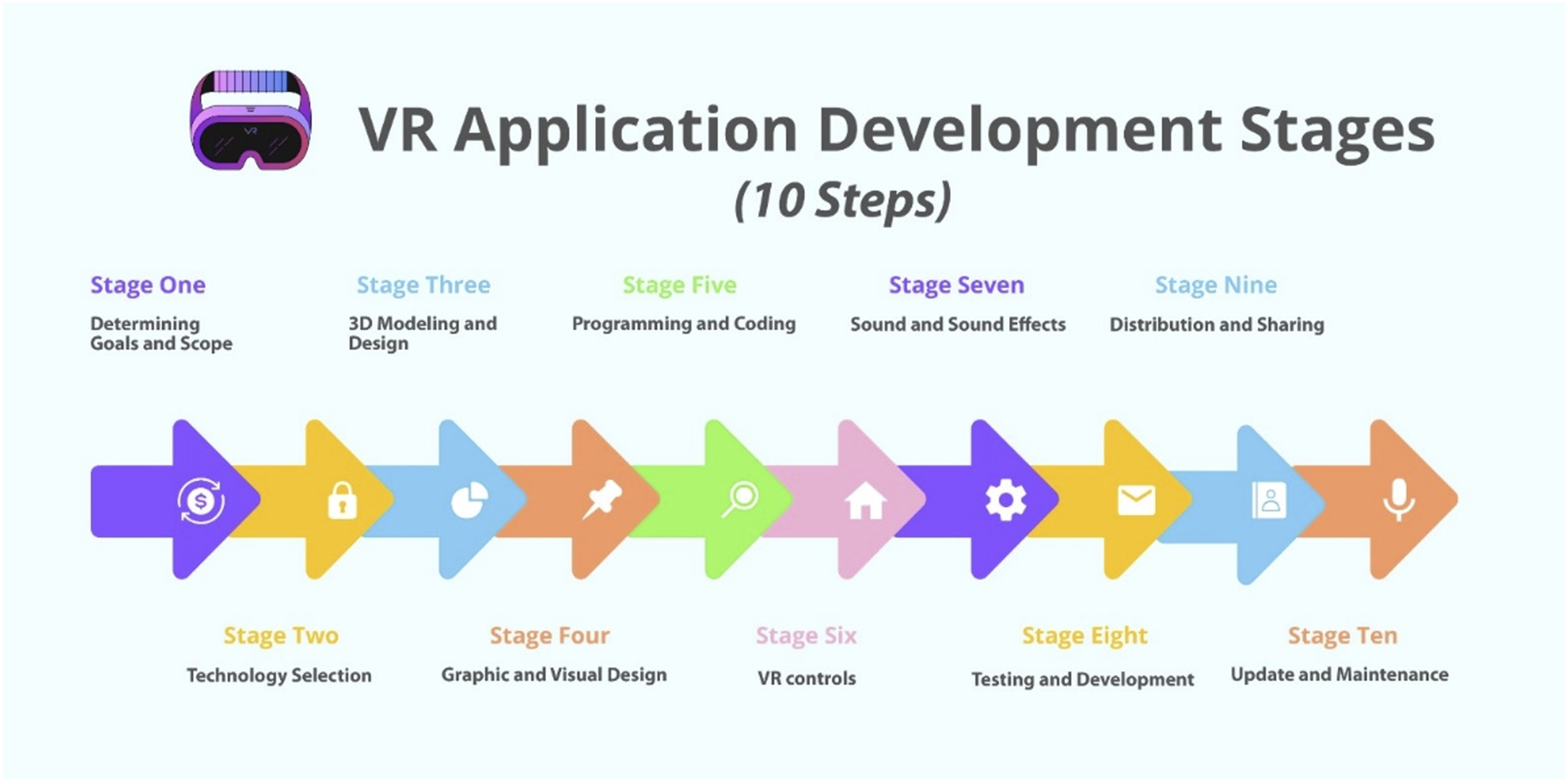
As an example of VR applications from the tourism and hospitality industry, travel agencies and businesses have started to use VR applications for the individuals to let them visit distant destinations. Moreover, Street Museum application was developed for the London Museum; augmented reality application developed for visiting the National Palace Museum in South Korea; VR advertisements of Hilton Hotels for their guests to explore new destinations; and VR postcards introduced by the Marriott Hotels to their potential customers to promote their hotels and to facilitate their reservation decisions.3,8,9
VR could be utilized in various areas such as 3D Movies, theme park roller coasters, ghost train, live concert, real-time sport games, museum and gallery visits, and computer games. Just like many other industries, the greatest advantage of the VR application introduced to the entertainment industry is the capability of simulating risky activities in real life. Of these applications, VR games come forward as the most common one. Apart from the versions that could be played with computer keyboard, there are other types that could be played with hand-held controllers capable of simulating body movements even if they are not limitless. 3
Briefly, VR technology enables total design of a simulated world in which users dive into virtual reality, whereas Augmented reality (AR) is an environment in which digital references (for instance texts, images, videos, and virtual things) are mounted on the physical world to “augment” it; and finally Mixed reality (MR) presents the combination of virtual and real world together. Moreover, expanded reality (XR) could be described as combination of VR, AR and MR technologies. 10
The expression of Metaverse is composed of two words: “meta” which means beyond and the “universe.”4,11,12 Barry et al. 13 describe the term of “Metaverse” as a “3-dimensional world in which our avatars would do everything in our name.” Meanwhile, Metaverse is a novel economic and social system which brings various online and offline platforms together. 14 Moreover, Metaverse considered that humans would soon be able to do diverse activities by using wearable technologies and VR devices such as going to movie theatre and shopping without exerting any physical effort. 2
According to Çolakoğlu et al., 11 tourists are expected to be more open to VR technologies and Metaverse applications to experience 3D affordable and new virtual opportunities before buying tourism products and services. As the authors are of the opinion that the VR technology that would be utilized in the tourism and hospitality industry would affect tourists’ purchasing power positively, this could create a novel business branch at travel agencies. Especially, it is suggested that Metaverse would allow individuals with physical or financial disadvantages to participate in tourism activities and create additional income opportunity for destinations or businesses. For instance, virtual occasions could be arranged for larger groups who could not be hosted because of capacity shortage or limitations.15,16
Kılıçarslan et al. 16 report in their study that special groups such as “individuals with disabilities” or “handicapped individuals” might find travelling more difficult. According to their research, “individuals experiencing accessing issues, for instance disadvantaged individuals, having such VR experience could be great opportunity. Moreover, “some participants” indicate that this could also be useful for low-income groups who may not have travelling or going vacation: [in Metaverse] travelling would be much more affordable. This means that economically disadvantaged groups could gain opportunity for travelling because many respondents claim that these devices would be more common and affordable in the near future.
Metaverse could develop real-travel experience or define. Even if it could not replace the real travel experience, it could offer substantial benefit by introducing virtual travel experiences especially for users who are not physically capable of travelling. 17 Metaverse allows physically handicapped individuals or the ones who lack opportunity for travel to participate in activities virtually. Tourists are given opportunity to travel, to participate in an event, and to socialize in any avatar body. For instance, the Kingdom of Saudi Arabia announced at the beginning of 2022 that they were developing a project allowing Muslim pilgrims to visit Ka’ba, their most sacred place, in Metaverse. Thus, Saudi Arabia could provide opportunity to individuals who are not physically capable of serving their religious Hajj duties in a Metaverse environment.16,18
Ashton et al. 19 studied difficulties and opportunities of utility of Metaverse in the hospitality industry from the industry business owners’ perspective. Business owners view individuals with limited social competency in the real world (for instance, persons feel shy in society) and individuals with physical or mental disability, dementia, who are not capable of travelling or experiencing severe difficulty during travel as their potential customers. Metaverse allows hospitality organizations to attract new consumer groups such as individuals with disabilities and create new niche in the market.
Accessibility difficulties of disadvantaged individuals
Disadvantaged individuals could have limited access to the conventional tourism experiences due to their physical disabilities, visual, or hearing impairments. This situation could result in difficulties accessing touristic facilities, to make travel plans among members of this group because of physical and peripheral hindrances.
Technology has gained great advancements for the societies from all over the world. However, disadvantaged individuals are not able to take advantage of these developments equally because of physical and peripheral obstacles such as difficulties with accessing tablet and laptop. Devices which indeed could be more commonly found today as well as their reluctance to use these devices. In fact, technological devices and the new technologies and services coming with them are mostly for new generations. As a result of their reluctance to adopt these advancements, it could be seen that elders are getting more and more isolated from modern society; and this suggests that it becomes crucial to comprehend different communication types. For instance, some of the obstacles experienced by elders when they are considering getting acquainted with new technologies is lack of home internet connection, limited cognition about what these novel technologies could offer them, misunderstanding of marketing messages, considering these messages are only for youth, and complications caused by poor device ergonomics or design. 20
Advantages of VR headsets for access
• Overcoming Obstacles: VR can help reduce physical barriers by enabling disadvantaged individuals to explore virtual environments and destinations without the need for physical travel. • Personalized Experiences: VR could offer tailor-made tourism experiences to users according to their individual area of interest. Visual and audio guidance could ensure their travel to be more valued and meaningful. • Increasing Sensual Experiences: VR experiences enriched with visual and audio effects could allow disadvantaged individuals to feel tourism spots more intimately. • Saving on Cost and Time: Virtual tourism could decrease travel costs and save on time. This means accessible tourism experience for disadvantaged individuals.
Difficulties and solutions
• Technological obstacles: developing user-friendly and accessible VR devices is important for disadvantaged individuals. • Content variety: it is necessary to create contents that could satisfy specific needs of disadvantaged individuals. • Education and awareness: it is important to train disadvantaged individuals about advantages and usage of VR technology and raise their awareness because disadvantaged individuals mostly lack knowledge and perspective about these technologies.
Building on this framework, we use a VR city-tour case (London) as an illustrative scenario to examine how older adults with low income and limited access to technology experience tourism access, participation, and perceived control when interacting with VR headsets. The next section details the methodological choices and the VR protocol used to translate these concepts into the participants’ VR experience and interview accounts.
This study does not aim to measure or audit destination accessibility (e.g. compliance with accessibility standards) or to compare destinations in terms of accessible infrastructure. Rather, it examines how disadvantaged older adults experience and interpret access to tourism when exposure to a destination is mediated through a VR headset. In this sense, “access” is conceptualized as a subjective and relational experience shaped by perceived opportunity, participation, and control within a technology-supported encounter. By focusing on VR-mediated access experience, the study connects discussions of inclusion in tourism with an empirically grounded account of how a short VR tour can function as an “opportunity and transformation” pathway for individuals facing structural barriers to physical travel.
Research methodology
In the present study under title of “Access of Disadvantaged Individuals to Tourism Services through Virtual Reality Glasses: Virtual Reality as an Opportunity and Transformation Tool,” structured interview, one of the qualitative research methods, was conducted with the disadvantaged individuals from Nazilli County of Aydın City, Turkiye. This research employs a qualitative approach, and a case study was chosen as one of the qualitative research methods. According to Creswell, 21 a case study is a qualitative research approach in which the researcher in-depth examines one or several situations within a timeframe using multiple data collection tools (observations, interviews, audiovisuals, documents, reports), identifying the situations and related themes. A case study is a method in which a single situation or event is examined in depth, longitudinally, and systematically collects data, examining what happens in a real-world setting. The results reveal why the event occurred as it did and what should be focused on in future studies. 22
In this study, the case is defined as a bounded VR-mediated tourism access experience involving disadvantaged older adults residing in Harpasa Village (Nazilli, Aydin, Turkiye) who participated in a short VR tour of London and subsequently took part in structured interviews. The case is bounded by the participants (disadvantaged older adults), the setting (Nazilli, Harpasa Village), the intervention (a single-session VR destination exposure), and the purpose (understanding how access, participation, and perceived control are experienced through VR). A case study design was considered appropriate because it enables an in-depth, contextualized examination of a phenomenon within its real-life setting, rather than producing a generalized audit of destination accessibility.
The research question in the study is “How do disadvantaged individuals experience and make sense of access to tourism services through a VR headset as a tool for opportunity and transformation?”
Ethical approval for this study was obtained from the Ethics Committee of Aydın Adnan Menderes University Tourism and Gastronomy Research (No. F4TFUHP; 11 November 2025). Participants were informed about the study purpose and procedures, and about their right to withdraw at any time without penalty. Written informed consent was obtained prior to participation, including consent for audio and video recording. All data were anonymized and stored securely, and no identifying information is reported.
Data collection
In this study, a qualitative research method was employed by providing participants with a virtual destination experience through the use of VR headsets. This approach was chosen because it is essential to examine participants’ personal perceptions and reactions in order to deeply understand the emotional and psychological effects of virtual reality experiences. Quantitative and other methods may fall short in capturing the impact of such experiences on individuals’ quality of life. The qualitative approach allows for a more comprehensive and meaningful exploration of participants’ experiences and emotional responses.
In the qualitative studies, mostly non-random sampling method is preferred. Researchers suggest about the objectives of qualitative studies that it is crucial to discover underlying causes about the concerned issue rather than asking too many questions and reaching out too many people. Additionally, the most appropriate sampling method is regarded as non-probabilistic sampling for the qualitative studies. The most commonly practiced version of non-probabilistic sampling method is purposeful sampling which includes participants selected by researchers based on certain criterions or objectives. This method allows to select individuals who could give the best answers to have a deeper insight about a certain phenomenon rather than the sampling set to represent greater group who could answer the research question best. 23 In this scope, purposeful sampling method, one of the non-probabilistic sampling methods, was employed in our study.
Sampling strategy: A criterion-based purposive sampling approach was used, consistent with qualitative inquiry where the aim is depth of understanding rather than statistical representativeness. Participants were selected because they met all of the following characteristics: aged 60 years and above, low-income status, and limited access to technology due to living in a rural village context. Participants were reached through the researchers’ acquaintance network within the village setting.
Inclusion and exclusion criteria: Participants were eligible if they: (1) were aged 60 years or older; (2) had low income and limited access to technology due to living in a village context; (3) were able to participate in a VR experience; and (4) were able to provide informed consent. Participants were excluded if they had a visual or hearing impairment that could prevent them from adequately experiencing the VR content and participating in the interview.
Sample description: A total of 14 participants took part in the study. All participants were aged 60 years and above and met the study’s disadvantage criteria (low income and limited access to technology due to rural/village living). The sample was homogeneous in gender. All data were collected in the village context where participants resided.
The interview guide consisted of 12 questions (see Appendix A). The 12 structured interview questions for volunteer participants were prepared by reviewing the literature.1,3,4,11,15,16,19,20 During the sessions with participants, they were first provided a VR headset to have a virtual London city tour along the streets; and then proceeded to the interview questions. At the end of the tour, their opinions about the overall experience were collected. Saturation point refers to the point where the new data collection stream, new data/theme entry process, ceases and begins to repeat and where data started to repeat themselves. This is a situation in which a researcher assumes that sufficient depth and coverage is reached with the currently available data. 24 A researcher may not be sure about the sample size during data collection. However, when emerging subjects and processes start to repeat themselves, that is, new information or theme is not gained, they could consider that sufficient level of data is reached. 25 Moreover, Teddlie and Tashakkori 26 suggest that a sample size of 6 to 24 for the case studies over individuals would be adequate.
Interview guide development and refinement: The interview questions were developed in line with the study objectives and informed by a review of prior literature on VR use, accessible/inclusive tourism, and participation barriers. The draft interview guide was reviewed by two subject-matter experts (one associate professor and one professor) to improve clarity and reduce potentially leading wording, and then refined prior to fieldwork. Interviews were conducted face-to-face using neutral probes to encourage elaboration without steering participants.
In the data collection part of our study, face-to-face interviews were conducted with totally 14 disadvantaged individuals. These interviews were continued until the saturation point; then collection phase was ceased. Total interview time spent for our study was about 2 hours with a range from the shortest of 4 min to the longest of 10 min, with a 7 min average length of interviews (see Figure 2). Images during implication. Source: Authors.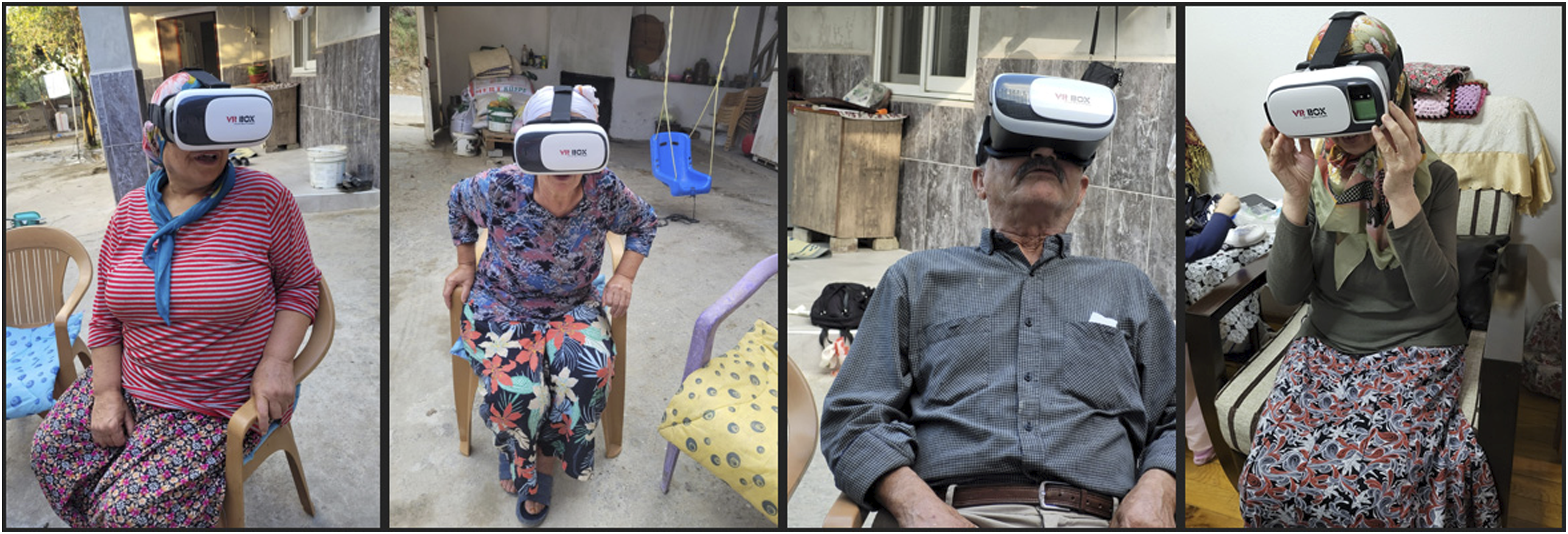
The answers of participants were both recorded by a voice recorder and important parts were taken on note paper during the interview. During these interviews, participants were asked the questions written in the interview form (see Appendix A). London was chosen because it is one of the world’s most desirable cities with its historical heritage, cultural diversity, arts and entertainment scene, and easy access. There are also VR programs and applications that allow participants to experience these destinations with VR headsets without travelling there (see Figure 3). Virtual London City tour app images. Source: Authors.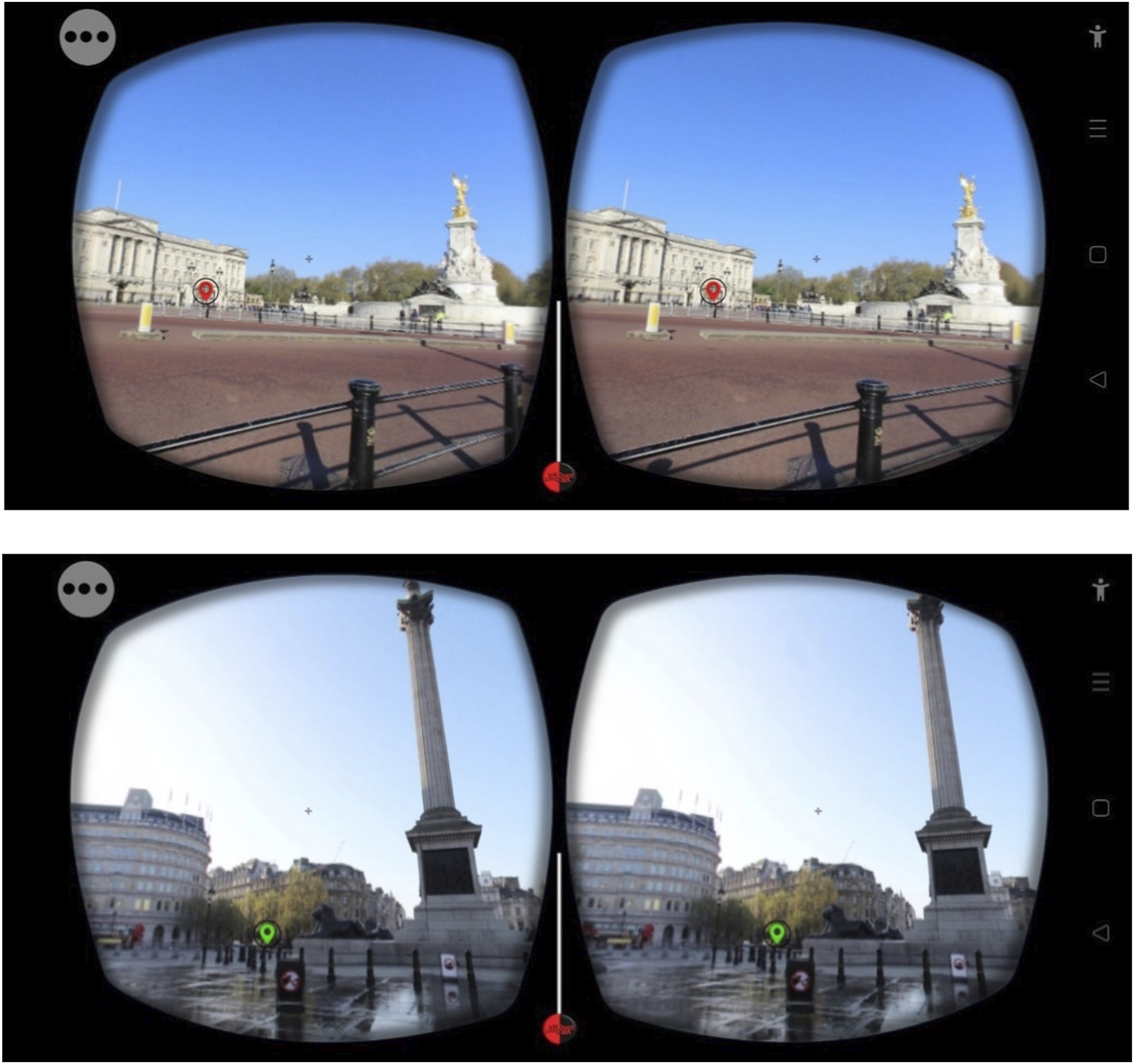
About the VR program and its implementation
The “London VR-360 Virtual Tour” app is a virtual reality application that allows users to explore London (see Figure 3). Developed by VRDuct, this app offers a 360-degree experience of the city’s most iconic landmarks and historic sites. Users can navigate through locations such as Trafalgar Square, the Tower of London, Tower Bridge, St Paul’s Cathedral, the River Thames, Buckingham Palace, and the London Eye (AppBrain) (VR Duct).
VR equipment and setting: The VR experience was delivered using a VR head-mounted display (standalone). Participants experienced the Android APK application “London VR.” Data collection took place outdoors in the garden of a village house; participants were seated and monitored by the researcher to minimize discomfort and ensure safety. No motion sickness or adverse effects were reported during the sessions. The researcher provided assistance only when needed (e.g., device adjustment).
Procedure: Before the VR session, participants received a short briefing explaining what they would experience in the VR application, how to use the headset, and that they could pause or stop at any time. Participants then experienced the “London VR” application for an average of approximately 7 min. Immediately after the VR session, a face-to-face interview was conducted and audio and video recordings were obtained with participant consent.
Managing adverse effects: Participants were asked about discomfort (e.g., dizziness, nausea, and eye strain) during and after the VR experience. Breaks were offered, and the session was terminated upon request.
The app provides a virtual tour with audio guides available in multiple languages including English, Spanish, Portuguese, Italian, and Chinese. Some features, like the audio guide, require a payment to unlock.
Data analysis
The research data was examined using an inductive approach, focusing on interpreting the data through coding, categorization, thematic analysis, or dimensional perspectives. 27 To ensure that the study aligns with its objectives, the case study method, a well-established and frequently applied approach in scientific research, was employed. 28 In this study, audio and video recordings from the participant were collected using a face-to-face structured interview technique, and the data were subsequently analyzed through the Content Analysis Technique. Content analysis, which plays a significant role in mass media research, is a systematic data analysis method that facilitates the subjective interpretation of textual data by identifying codes, themes, or recurring patterns. 28 In line with this design, the boundaries of the case were specified a priori (participants, setting, VR session, and data sources), which supported systematic and transparent analysis.
Trustworthiness and rigor: To enhance credibility and dependability, two researchers independently coded the data and then held a consensus (agreement) meeting to discuss and reconcile codes and theme development. An audit trail was maintained to document coding decisions and revisions throughout the analysis.
In the qualitative research methods, at first, collected data are described with open and free coding. Then, created codes are categorized according to the similarities or differences among them. Thematic coding is the process of systematic analysis of qualitative data and sorting them under certain categories of themes. This method helps to fracture data obtained from interview process under meaningful divisions and to determine repeating patterns and themes. 29 In the present study, answers of participants collected during interviews were categorized and summarized in tables.
Findings
Description of participant characteristics.
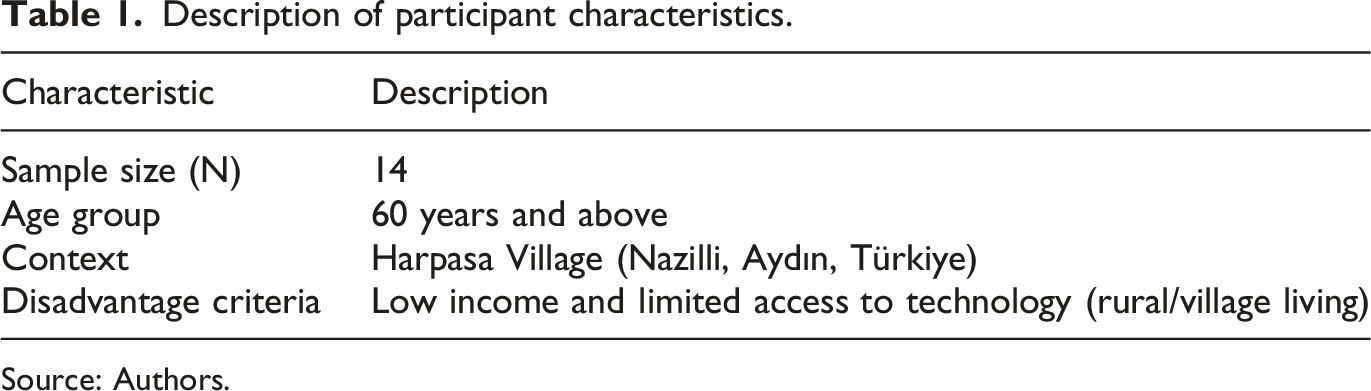
Source: Authors.
In the interview sessions, participants were first asked “Have you travelled before?”. Of the total 14 participants, 3 responded as “No,” whereas 11 responded as “Yes.” Then, they were asked “How about now, are you able to travel?”. The respondents who said “No” were asked “If No, why?” to obtain clearer explanations about their reasons hindering their travel. Half of the respondents said “Yes” while other half said “No.” The prominent reasons for participants not to travel were found to be economic, job-related as well as health problems. Afterwards, the interview was carried on with the questions concerning the VR application.
Findings about the category of “description of VR application.”
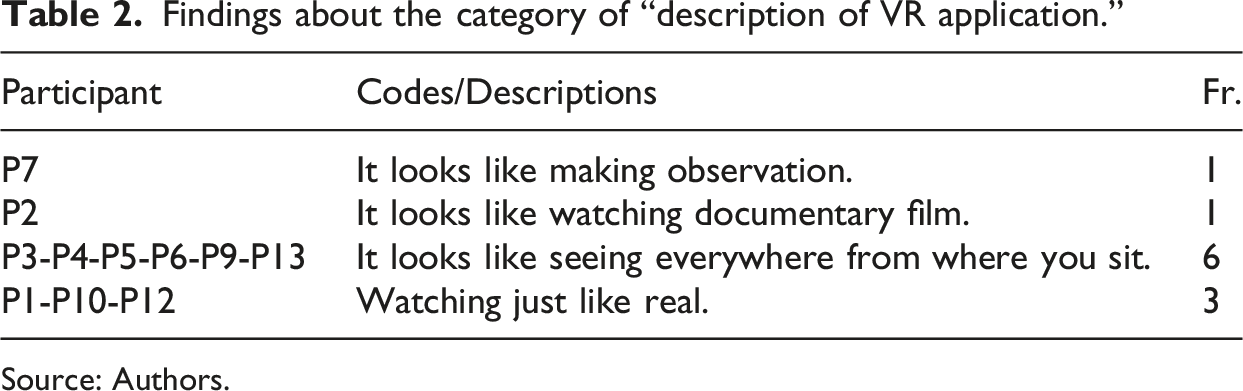
Source: Authors.
Findings about the category of “opinions about Metaverse (the other universe).” Concerning the answers of participants to the question of “What is Metaverse (the other universe)? What do you think about it?”, it was determined that all participants were not knowledgeable about this subject. It was found that 11 participants (P1-P2-P3-P6…P9-P11…P14) had no idea about it, whereas 3 participants (P4-P5-P10) had never heard of it. Accordingly, it was concluded that this was because of the fact that “Metaverse” concept was new relatively with the high average age of disadvantaged participants.
Findings about the category of “adequate opportunities and organizations in tourism destinations for disadvantaged individuals.”
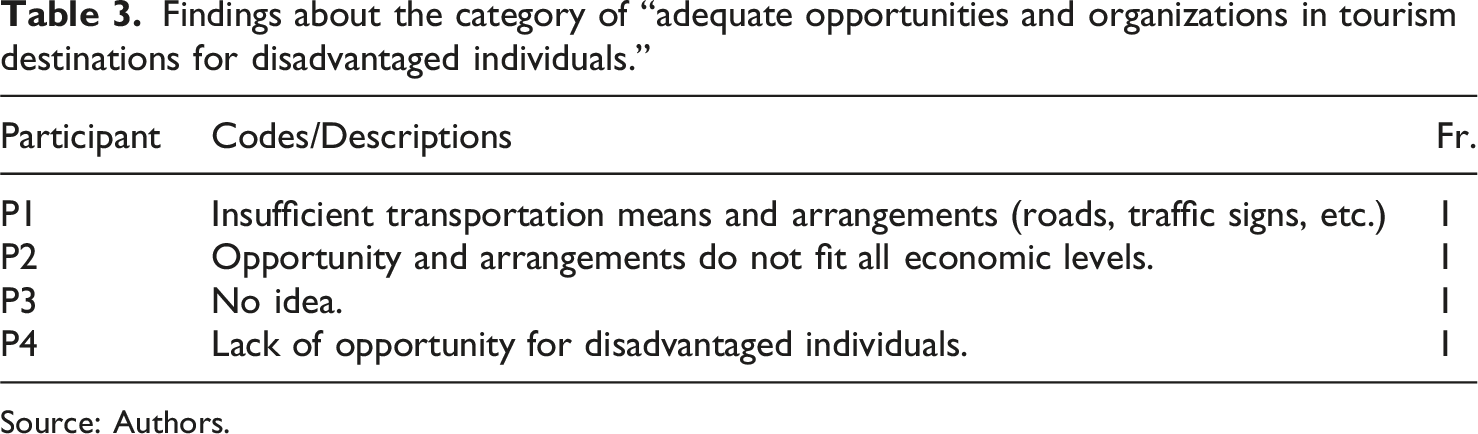
Source: Authors.
Findings about the category of “virtual tour experience and awareness.”
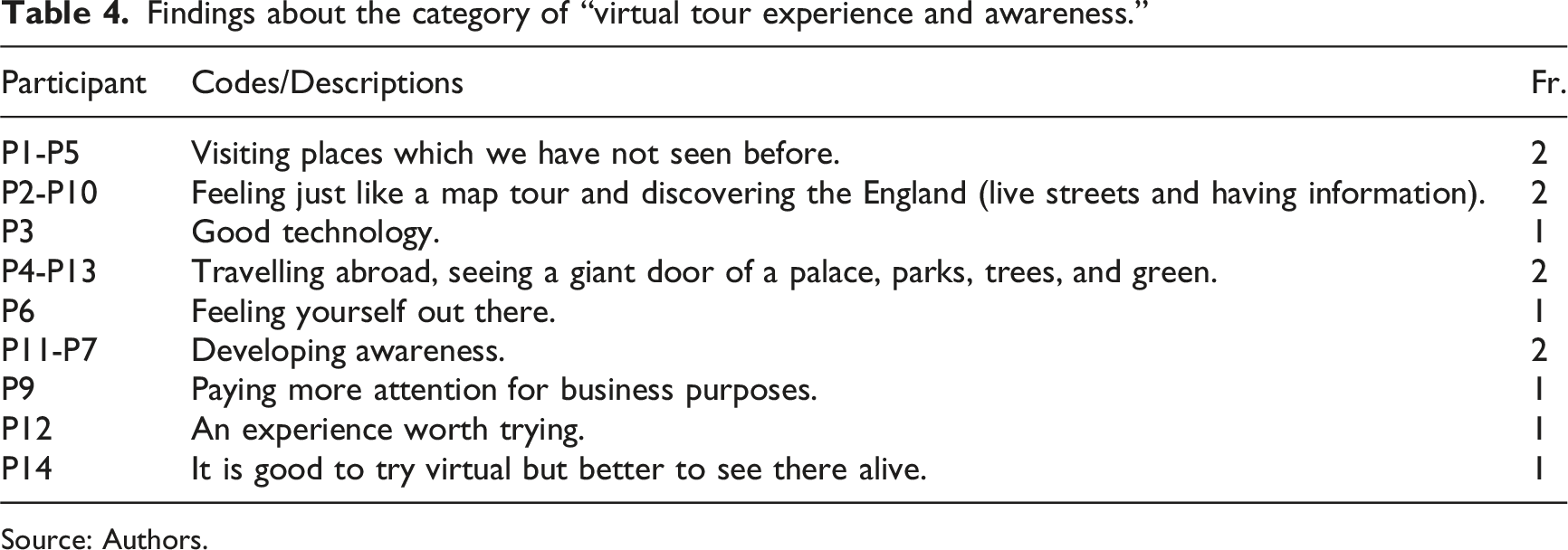
Source: Authors.
Findings about the category of “preference of virtual reality or real travel.”
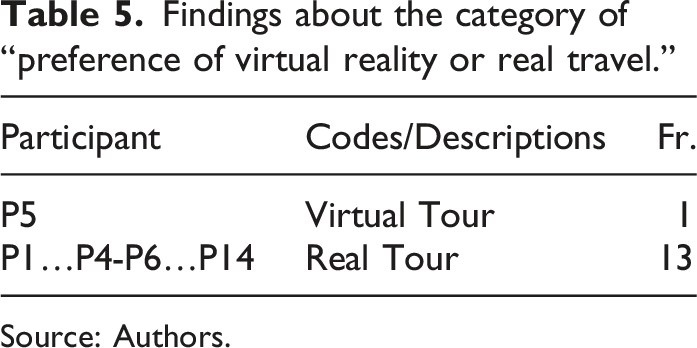
Source: Authors.
Findings about the category of “participating in virtual environment experience.”
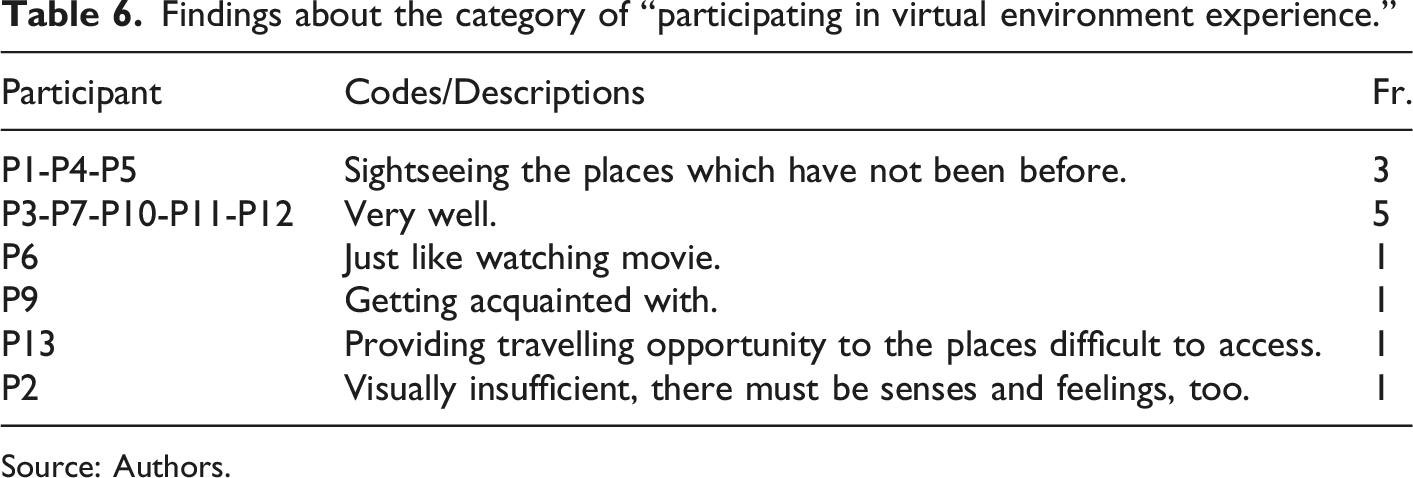
Source: Authors.
Findings about the category of “pros and cons of virtual environment experience.”
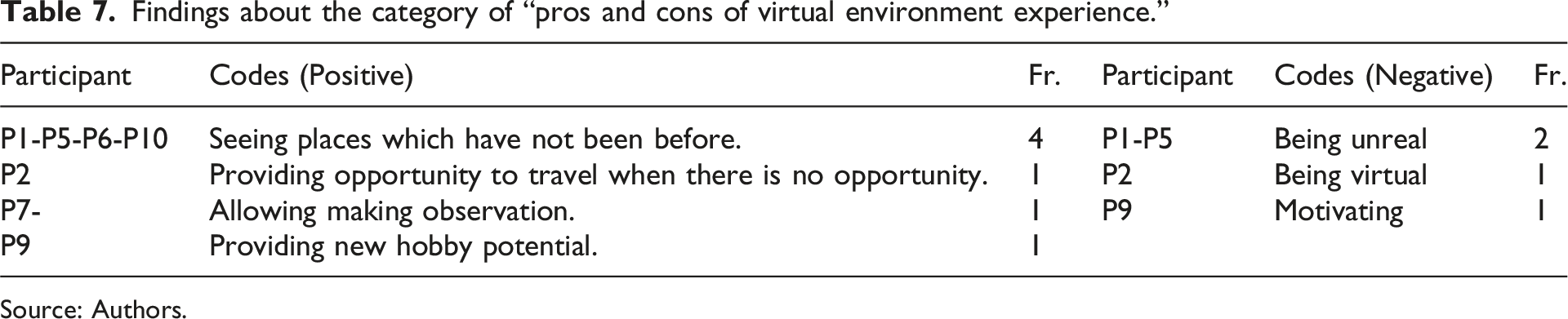
Source: Authors.
When the answers of the respondents to the question of “In terms of adapting yourself to VR, how adequate did you feel about it? Was it complicated or simple?” were taken into consideration, all of the 14 respondents replied that it was easy to adapt themselves and they felt adequate themselves. Only one participant said VR tour seemed complicated at the beginning, but then he/she easily figured out.
When the answers of the respondents to the question of “Does VR fit your needs, interests, values, objectives or culture?” were taken into consideration, it was found that all of the participants responded positively about the fitness of VR to their needs, interests, values, objective, and culture, but one of them emphasized that his/her answer was personal.
Findings about the category of “tendency of trying virtual tour in the future and professional provision of this service.”
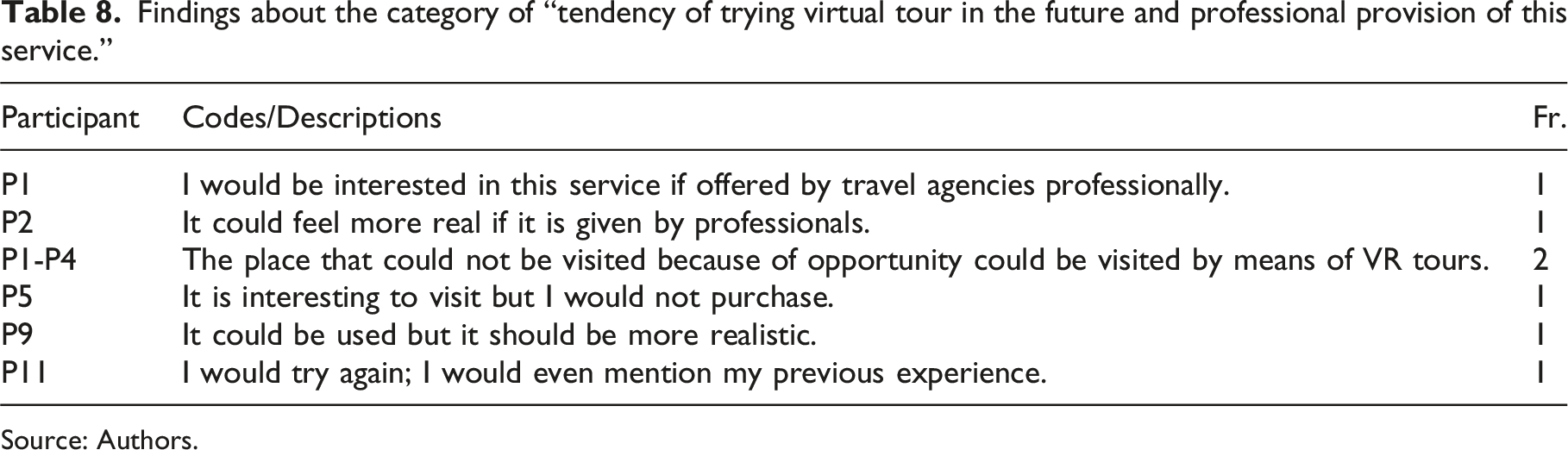
Source: Authors.
Findings about the category of “technology companies’ investments in VR applications.”
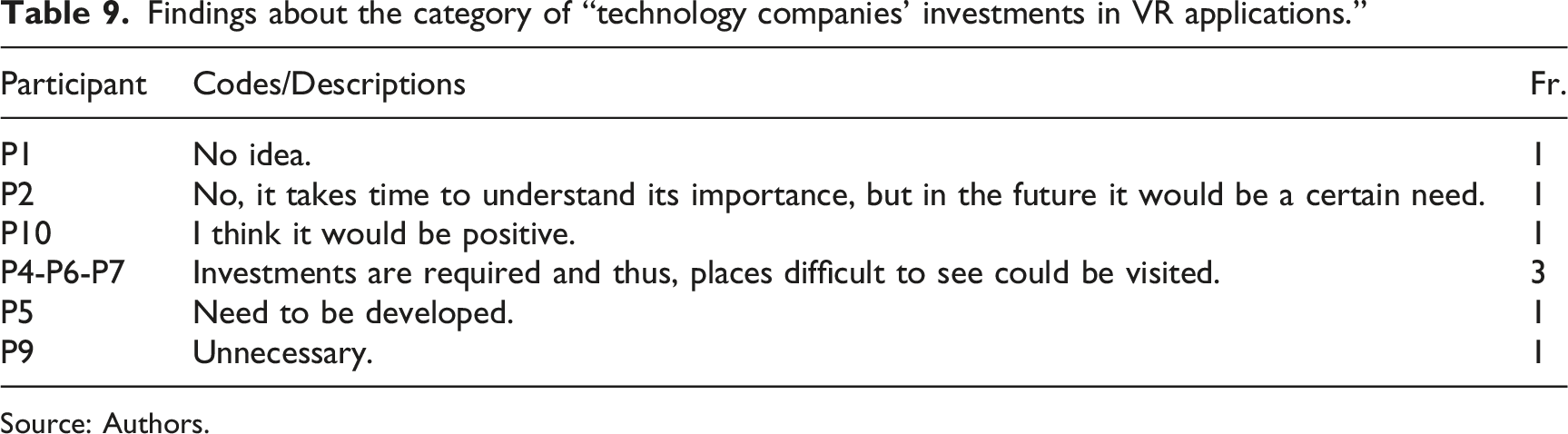
Source: Authors.
Findings about the category of “the future of VR applications.”
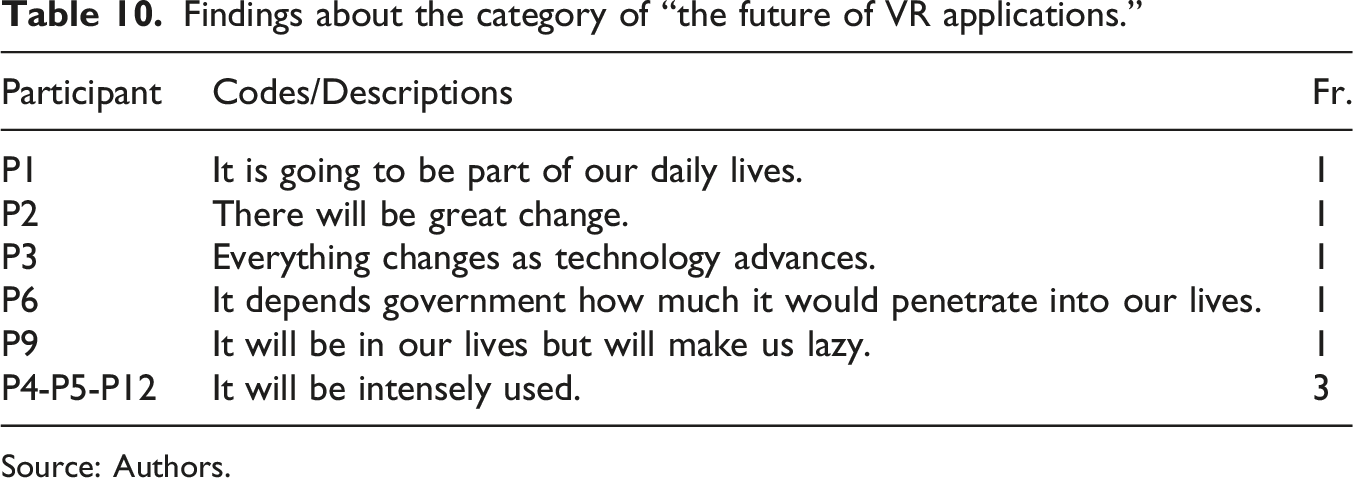
Source: Authors.
Discussion and conclusion
This qualitative study explored a London city VR tour experience among disadvantaged older adults who face difficulties in accessing tourism services. Drawing on VR as an opportunity-creating and potentially transformative tool, we examined how a VR headset might support access to tourism experiences in familiar and comfortable settings. Using criterion-based purposive sampling, we recruited local residents from Harpasa Village (Nazilli, Aydın, Türkiye). After briefing participants on the study purpose and obtaining informed consent, we administered the VR tour application. Following the tour, we conducted face-to-face semi-structured interviews (12 questions) with 14 participants. Data were analyzed using qualitative content analysis and summarized in tables.
Our findings indicated that participants had been able to travel in the past, but current economic constraints, work demands, and health conditions now limit their access to tourism services. Participants described the VR tour as enabling them to see places almost as if they were real – without the need for physical travel – and likened the experience to watching a documentary or observing a destination. Most were unfamiliar with the term “metaverse,” which may reflect the older age profile of the sample and limited opportunities to follow rapidly changing digital trends. Participants also emphasized that tourism destinations often lack affordable and accessible infrastructure (e.g. roads, signals, and facilities), further constraining participation. These accounts suggest that coordinated efforts by government and tourism providers could expand equitable access by improving accessibility arrangements and leveraging supportive technologies.
Participants noted that the virtual tour enabled them to visit places they had not seen before and increased their awareness of VR-related technologies. They characterized the experience as a new discovery and an activity worth trying; however, most still preferred physical travel. They perceived current VR experiences as not yet sufficiently realistic to fully elicit a strong sense of “being there.” In particular, participants remarked that the experience was largely limited to audio-visual stimulation and lacked active participation and multisensory cues (e.g. smell and touch). Nevertheless, they emphasized that VR can provide useful pre-visit insights and an alternative means of accessing destinations that would otherwise be out of reach.
A key positive aspect reported by participants was the opportunity to observe destinations that they would normally be unable to access due to practical constraints and limited resources. At the same time, they described negative aspects related to the virtual nature of the experience, including feelings of unreality and, for some, the sense that it could serve as a bittersweet reminder of travel they cannot currently undertake. Regarding usability, participants reported that they adapted to the headset quickly and felt capable of using it, even if it initially seemed complicated. Overall, they considered the VR experience to align with their interests, values, goals, culture, and needs.
Participants indicated that they would be interested in future virtual tours if the experience were made more realistic and offered by professional tourism providers. Some noted they might purchase such a service to explore destinations they cannot visit due to limited opportunities, and they were willing to recommend the experience to others based on their first trial. Participants also expressed a generally positive view of technology companies investing in VR applications designed for disadvantaged groups. Given the rapid pace of technological change, they anticipated that VR applications will become more widespread and more seamlessly integrated into everyday life.
Theoretical implications
This study examines disadvantaged individuals’ access to tourism services through virtual reality (VR) headsets. Because empirical work on technology-enabled pathways to accessible tourism remains limited, our findings contribute to contemporary accessible tourism research by documenting how disadvantaged older adults experience VR-mediated tourism content.
By foregrounding a technological perspective, the study also engages with discussions of equal opportunity and accessibility to tourism products and services. Our findings highlight how VR access can create opportunities for participation, experience, and awareness in a virtual environment, while also revealing practical challenges that shape expectations for technology-supported accessibility.
Practical implications
Accordingly, we reference the ten-stage development framework as a helpful design-oriented point of comparison for VR-tour creation; however, it is not an output validated by this study and should not be read as a prescriptive linear roadmap. Rather, it serves as contextual background, and any application to inclusive VR-tour design should be adapted iteratively to the setting, users, and constraints involved (see Figure 1).
Head-mounted displays (HMDs) allow users to experience places around the world virtually at any time. 30 This capability can shape perceptions of destinations because places are presented not only in physical form but also in virtual form. The potential for VR to complement – or partially substitute for – physical travel has been widely discussed.30–33 VR may also be a relatively low-cost and environmentally friendlier option for certain forms of tourism consumption, and it can offer alternatives for accessing heritage sites under preservation or locations that no longer exist. For older and mobility-limited travellers, VR can enable engagement with destinations that would otherwise be inaccessible. Existing applications (e.g. Ascape, YouVisit, Everest VR, and SpaceVR) illustrate the breadth of virtual travel experiences. However, broader adoption depends on tourists’ perceptions and the extent to which VR can support a convincing sense of “being there,” which likely requires multisensory stimulation beyond audio-visual cues.32,34
Overall, VR technologies appeared to offer meaningful leisure benefits for older adults facing economic disadvantage and limited access to travel opportunities. Although VR is unlikely to fully replace conventional travel and tourism, it may provide a complementary pathway for individuals who face barriers to physical travel to engage with destinations from home. 11
Future research and limitations
Regarding limitations, the study relied on criterion-based purposive sampling through personal networks within a single rural village context (Nazilli, Aydın, Türkiye). While this approach enabled access to older adults who are economically disadvantaged and have limited access to technology, it may introduce selection bias and limits transferability to other settings or disadvantaged groups.
The VR exposure was brief (approximately 7 min) and based on a single application (London VR) experienced while seated; longer or repeated sessions, different content types, and alternative devices may yield different responses. In addition, individuals with visual or hearing impairments were excluded, so the findings do not address those accessibility needs and should not be generalized to all disability groups. Finally, participants’ low prior technology familiarity may have shaped first-impression reactions; future studies could incorporate training or acclimatization to distinguish novelty effects from sustained experience.
We encourage accessible tourism scholars to recognize and address the need for disadvantaged individuals to engage in travel with equity and dignity through appropriate technological means. Future research may consider the following questions: • To what extent can digital tools and applications positively affect the lives of disadvantaged older adults with little or no prior travel experience? • To what extent can VR reduce the environmental impacts associated with physical travel (e.g. air pollution, fossil fuel use, and food and water consumption)? • How, and under what conditions, can VR support sustainable tourism? • Can VR help make heritage sites that are physically inaccessible, under conservation restrictions, or no longer exist accessible, and what are the implications for interpretation and authenticity? • Can VR deliver meaningful travel experiences with lower energy and resource requirements than physical travel? • What is the level of demand for VR headsets across industries, and what barriers limit broader adoption? • What forms of government support could enable VR applications that can be utilized by disadvantaged groups?
Supplemental material
Supplemental material - Access of disadvantaged individuals to tourism services through virtual reality glasses: Virtual reality as an opportunity and transformation tool
Supplemental material for Access of disadvantaged individuals to tourism services through virtual reality glasses: Virtual reality as an opportunity and transformation tool by Ülker Çolakoğlu, Can Serkan Tuncay, Esra Anış, and Özlem Çelik in Technology and Disability.
Footnotes

Ethical considerations
The study was conducted in accordance with the Declaration of Helsinki and was approved by the Ethics Committee of Aydın Adnan Menderes University Tourism and Gastronomy Research (no. F4TFUHP) on 11 November 2025, with the need for written informed consent waived.
Consent to participate
Voluntary participation.
Author contributions
Conceptualization: Ülker Çolakoğlu; Methodology: Ülker Çolakoğlu, Can Serkan Tuncay; Investigation: Esra Anış, Özlem Çelik; Formal analysis: Can Serkan Tuncay; Writing – original draft: Ülker Çolakoğlu, Esra Anış; Writing – review & editing: Özlem Çelik, Can Serkan Tuncay; Supervision: Ülker Çolakoğlu.
Funding
The authors received no financial support for the research, authorship, and/or publication of this article.
Declaration of conflicting interests
The authors declared no potential conflicts of interest with respect to the research, authorship, and/or publication of this article.
Data Availability Statement
Due to privacy and ethical restrictions, interview transcripts are not publicly available. De-identified excerpts and the coding framework can be shared upon reasonable request to the corresponding author.
Supplemental material
Supplemental material for this article is available online.
References
Supplementary Material
Please find the following supplemental material available below.
For Open Access articles published under a Creative Commons License, all supplemental material carries the same license as the article it is associated with.
For non-Open Access articles published, all supplemental material carries a non-exclusive license, and permission requests for re-use of supplemental material or any part of supplemental material shall be sent directly to the copyright owner as specified in the copyright notice associated with the article.
