







Abstract
Introduction
This investigation examines the perceptions of educators regarding artificial intelligence (AI) technologies in the context of teaching students with disabilities, focusing on their effectiveness, the challenges of implementation, and their impact on student engagement.
Methods
A structured questionnaire consisting of 16 items, organized into three dimensions, was used to gather data from a sample of 740 educators working with students with disabilities (407 males and 333 females). The data were analyzed using descriptive statistics and ANOVA.
Results
The results show no statistically significant differences among demographic variables, indicating a shared understanding among educators regarding their perceptions of AI technologies in special education. Additionally, the results indicate a predominantly favorable view of AI tools, reflected in a mean score of 3.90, suggesting robust confidence in their ability to improve learning outcomes. Nonetheless, educators recognized considerable challenges in implementation, as indicated by a mean score of 3.76, particularly concerning data privacy and technical issues. Furthermore, the views on AI’s influence on student engagement were average, reflected in a mean score of 2.82, indicating an area that requires enhancement.
Conclusion
This investigation underscores the potential of AI to enhance special education while emphasizing the need for targeted professional development and institutional support to address implementation challenges.
Keywords
Introduction
Teachers significantly contribute to society’s socio-economic and political advancement beyond their instructional duties, encompassing the creation of a conducive classroom environment, role modeling, mentoring, nurturing, attentive listening, recognizing discomfort, managing, prompting, serving as a resource, assessing, organizing, participating, and tutoring.
Notwithstanding these responsibilities, there exists a worldwide deficiency of well-educated educators, particularly in the realm of special education. Robots are essential for addressing educational issues that significantly impact children with disabilities and unique educational requirements. Educational delivery methods must be innovative, akin to other services. Information Communication Technologies (ICTs) have initiated inclusive special education chances through the utilization of AI and assistive technologies (ATs).1–3
Researchers possess diverse definitions of artificial intelligence. Nonetheless, most definitions emphasize that it is an undertaking that allows robots to function efficiently and with anticipation. Accordingly, artificial intelligence (AI) is a branch of computer science that addresses cognitive problems associated with human intellect, such as pattern recognition, learning, and problem-solving. 4 It is essential to language translation, decision-making, visual perception, speech recognition, and other cognitive processes. 5 Computer systems strive to emulate human behavior, making personalized and adaptive learning and advising solutions that improve the student experience attainable. 6 Moreover, employed for student assessment, improving the experience of students with disabilities, and optimizing learning analytics. 7 Moreover, AI can create content, inspire learning, answer tough questions, and engage with students, much like a human instructor. However, its use presents moral, privacy, and ethical issues.8–10
Choosing the appropriate tools for AIs, including ATs, is essential for productivity in both classroom and home settings. Assistive technology can enhance the quality of life for impaired youth and mitigate learning challenges.11,12
Learning disorders often persist across the lifespan; however, appropriate educational technologies and instructional strategies can support learners with disabilities by enhancing accessibility, engagement, and learning outcomes. Assistive technology aids disabled youth in acquiring fundamental skills and knowledge.12 Consequently, they serve as educational instruments, akin to pens and pencils, enabling students without disabilities to access resources that enhance their competitiveness both out of and in the classroom. Tools must be precisely identified and implemented to address the child’s learning requirements, enhance communication, adapt to changing environments, and be utilized consistently. Assistive technologies include remote controls, tape recorders, smart glasses, magnifiers, cognitive hearing aids, and sign language.12–14
Students encountering difficulties in mathematics, organization, memory, listening, writing and reading, can benefit considerably from the application of AI and assistive technologies. When selecting assistive technologies for children with learning disabilities, several factors must be considered: the specific challenges encountered by the child, the identification of their strengths, the involvement of the child in the selection process, the alignment of assistive technologies with the child’s weaknesses and strengths, the determination of the tool’s placement, the compatibility of the assistive technologies, and the user-friendliness of the chosen tools.8,13
However, a thorough review of the literature revealed a deficiency in established AI-SEN delivery methods. Human rights advocates, academics, social workers, and government agencies encounter considerable obstacles in formulating strategies and obtaining resources to guarantee that students with learning disabilities access high-quality and pertinent education, largely attributable to inadequate systematic documentation. This research seeks to fill this gap and advance universal education.
In this study, AI technologies refer to digital systems and tools that use data-driven algorithms to support teaching, learning, and accessibility in educational environments. In the context of special education, these technologies include adaptive learning systems, intelligent tutoring systems, AI-based language-learning tools, speech recognition systems, automated feedback tools, and assistive technologies designed to support students with disabilities.15–18 These tools can analyze learner data, personalize instructional content, and provide adaptive feedback to support diverse learning needs in inclusive educational settings.
This study aims to investigate how AI technologies influence education for students with disabilities, focusing on the insights and experiences shared by educators. It seeks to provide a comprehensive examination of how these technologies improve learning outcomes and support tailored instruction. It will explore the influence of demographic variables, including age, gender, qualifications, teaching stage, and years of experience, on educators’ views regarding AI. It also aims to uncover the obstacles that educators encounter while integrating AI tools into their teaching practices and assess the effects of these tools on student motivation and engagement. Ultimately, this study aims to guide future initiatives that integrate AI into special education settings and to offer valuable insights into effective methodologies.
Research Questions
1. How do educators’ demographic factors (age, gender, qualifications, teaching stage, and years of experience) influence their perceptions of AI technologies in teaching students with disabilities? 2. What are educators’ perceptions of the effectiveness of AI technologies in enhancing learning outcomes and supporting individualized instruction for students with disabilities? 3. What are the primary challenges educators face in implementing AI technologies in classrooms for students with disabilities? 4. How do educators rate the impact of AI tools on student engagement, motivation, and personalized learning experiences for students with disabilities?
Literature Review
The literature review examines the extent and scope of AI’s use in special education needs (SEN) delivery today, exchanges knowledge, and motivates a process that will accelerate growth in all directions to support and promote AI and ATs so that kids with learning disabilities can get an education that is relevant, affordable, and of high quality like all other kids.
Theoretical Framework
To strengthen the conceptual foundation of this study and clarify the relationships among its main variables, the research is guided by an integrated theoretical framework that combines the Technology Acceptance Model (TAM), the Concerns-Based Adoption Model (CBAM), and Self-Determination Theory (SDT). These complementary perspectives help explain how educators perceive artificial intelligence (AI) technologies, how challenges emerge during their implementation, and how the quality of technology integration may influence student engagement in special education contexts.
The Technology Acceptance Model (TAM) explains how users adopt new technologies based primarily on perceived usefulness and perceived ease of use. 19 In the educational setting, educators tend to incorporate digital technology, viewing it as helpful for enhancing instruction effectiveness and learning. According to previous research, educators’ perceptions are a key factor in classroom technology adoption and integration. 20 Regarding the use of AI in special education, the attitude of teachers towards the usefulness of AI tools in individualized instruction, accessibility, and learning support could be a major factor in determining their readiness to use the technologies in their instruction.8,10
While TAM explains initial perceptions and adoption intentions, the Concerns-Based Adoption Model (CBAM) provides a framework for understanding the challenges that arise during the implementation of educational innovations. CBAM suggests that educators experience different stages of concern when adopting new technologies, including concerns related to personal readiness, task management, and the broader impact on teaching and learning. 21 In the case of AI technologies in education, these concerns may involve issues such as technical difficulties, lack of training, ethical considerations, and data privacy challenges.22,23 Research on AI in special education similarly highlights barriers related to infrastructure, professional development, and institutional support. 17 Understanding these implementation challenges is therefore essential for explaining variations in educators’ experiences when integrating AI tools into classrooms.
In addition to teacher perceptions and implementation challenges, this study considers the potential influence of AI technologies on student engagement. Self-Determination Theory (SDT) can be used to explain this dimension as the three fundamental psychological needs of autonomy, competence, and relatedness should be met in order to maintain the drive to remain motivated and engaged in learning environments. Educational technologies assisted by AI can be used to meet these requirements by offering a personalized learning experience, adaptive feedback, and accessible learning spaces to students with disabilities. 15 With the help of assistive technologies and adaptive systems, students can have more opportunities to engage with learning resources on their own and be more involved in classroom work. 12 Recent research also highlights the role of advanced digital tools, including augmented and AI-supported systems, in improving learning accessibility and engagement for learners with disabilities. 24
Together, these theoretical perspectives provide a structured framework for explaining the relationships examined in this study. TAM explains how educators’ perceptions influence their willingness to adopt AI technologies, CBAM helps interpret the challenges encountered during implementation, and SDT provides insight into how the successful use of AI technologies may influence student engagement and motivation. The integration of these frameworks therefore offers a comprehensive lens for examining the educational use of AI technologies in special education settings.
Integration of the theoretical framework with existing literature.

Based on these theoretical perspectives, the study proposes a conceptual relationship between AI technologies in education, educators’ perceptions, implementation challenges, and student engagement. Educators’ perceptions influence their willingness to adopt AI technologies, while implementation challenges may affect the extent to which these technologies are effectively integrated into teaching practices. The quality of integration may, in turn, shape the level of student engagement and the extent to which personalized learning opportunities are realized for students with disabilities. Figure 1 presents the conceptual framework, highlighting the relationships among the variables investigated in this study. Conceptual framework of the study.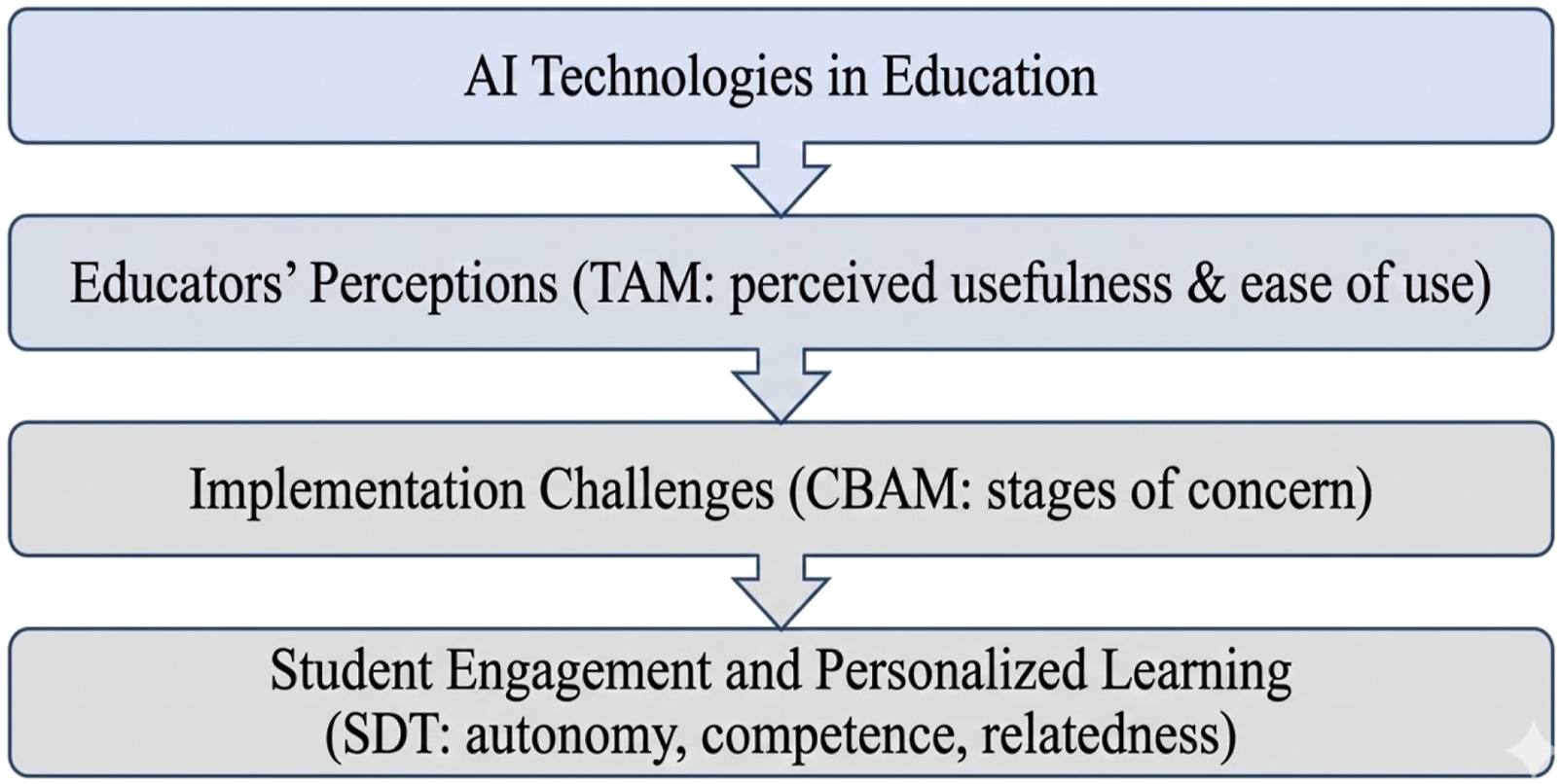
AI-supported Personalized Learning in Education
Artificial intelligence plays a crucial role in education by facilitating individualized learning opportunities. 25 Individualized learning refers to the customization of educational resources and instructional strategies to meet the distinct needs, abilities, and learning pace of each student. Artificial intelligence offers tailored learning experiences and resources to address individual needs and abilities. 26 The factory model school system, established during the 18th-century industrial revolution, prioritized impersonal instruction and has seen minimal evolution over the past two centuries. 27 In contrast, contemporary digital technologies increasingly support learner-centered instructional models that allow teaching and learning processes to adapt to diverse learning profiles and needs. 28
AI-supported individualized education technologies allow learners to be assessed based on their knowledge level and learning needs, enabling adaptive instructional strategies and personalized feedback.29,30 These systems allow students to interact with educational content that corresponds to their current level of understanding while providing educators with data-driven insights that can guide instructional decisions and support more effective teaching practices.29,31 Additionally, artificial intelligence technologies enable students to understand the topic at their own speed and guide professors on how to assist them. 29 Furthermore, AI provides students with individualized homework and activities depending on their own competencies and difficulties. 25 One of the most important contributions AI makes to education is intelligent tutoring systems (ITS) for distant learning. These systems provide adaptive feedback, personalized learning pathways, and automated guidance based on learner performance data.16,32 An essential technology for learning environments is an ITS capable of providing suitable comments to students. These tailored comments are instant and helpful. 15
According to Chassignol et al., 15 robots driven by artificial intelligence is a fast-expanding discipline in education. In several disciplines including reading, basic writing, mathematics, programming logic etc., robots can assist students in their learning processes. 33 Furthermore, AI-supported humanoid robots and intelligent learning systems can assist teachers in facilitating interactive learning activities and improving student engagement. Apart from raising the caliber of instruction, tailored learning environments enable students with particular requirements to acquire more efficient knowledge. Based on their tailored education plans, AI technologies can dynamically adapt instructional materials and learning activities to students’ abilities and learning progress, which supports more inclusive and responsive learning environments.15,28
Applications of Artificial Intelligence in Special Education
Applications of AI address a number of shortcomings. AI-driven educational systems can adapt learning materials and instructional strategies to accommodate diverse learning abilities and support students with disabilities in accessing educational content more effectively.8,10 AI benefits students with unique needs. 25 Recent studies also demonstrate the potential of AI-supported language-learning tools and adaptive digital systems to support communication and engagement among learners with developmental and communication challenges, including autistic learners. 18 Virtual reality and augmented reality technologies represent important AI-supported learning tools that can enhance accessibility and engagement for students with disabilities. These technologies create immersive learning environments that help students visualize concepts and interact with educational content more effectively.24,34 Recent empirical research has also demonstrated that augmented reality tools can significantly improve language-learning outcomes for students with learning disabilities by enhancing vocabulary acquisition and engagement in early education settings. 35 Students’ involvement with course material can therefore be enhanced through interactive and immersive learning environments such as 3D simulations, augmented reality tools, and AI-supported visual learning systems.25,28
AI should help achieve the United Nations Sustainable Development Goals (SDGs), particularly Goal 4, which aims to ensure access to high-quality education for all. 36 This goal emphasizes the importance of inclusive and equitable education systems that enable participation and learning opportunities for all learners, including individuals with disabilities. As an example, “…guarantee equitable access to all tiers of education and vocational training for marginalized groups, including indigenous populations, children in precarious circumstances, and individuals with disabilities,” Goal 4.5 of the UN Sustainable Development Agenda. 37 Within this framework, AI technologies can function not only as instructional tools but also as enablers of accessibility, participation, and inclusive learning experiences for students with disabilities. 28
Although there is increasing interest in AI technologies in education, a notable gap exists in the literature concerning their application for students with disabilities. Prior studies have predominantly examined the broader incorporation of AI in educational contexts, while comparatively fewer have focused on educators’ perceptions and experiences of implementing these technologies in special education classrooms. 28 Understanding educators’ perspectives is essential because teachers play a central role in selecting, adapting, and integrating AI tools into instructional practices. This study aims to address this gap by focusing on educators’ perceptions and experiences of working directly with students with disabilities. This research identifies the challenges and advantages of AI tools in special education, aiming to provide insights that enhance understanding and facilitate effective implementation of AI technologies, thereby improving educational outcomes for students with disabilities.
Methodology
This study investigates the impact of AI technologies on education for students with disabilities. To achieve a comprehensive understanding of educators’ perceptions, challenges, and student engagement with AI tools, we employed a quantitative approach using a structured questionnaire.
Participants
The participants in this study were educators who teach students with disabilities at different educational stages, including preschool, elementary, intermediate, and secondary levels in Saudi Arabia. A purposive sampling approach was used to recruit teachers who had direct experience working with students with disabilities and could therefore provide informed perspectives on the use of artificial intelligence (AI) technologies in special education.
The questionnaire was distributed electronically through professional networks and educational communication channels targeting special education teachers. A total of 740 educators participated in the study, including 407 males 55.0% and 333 females 45.0%. The sample included teachers with diverse backgrounds in terms of age, qualifications, teaching stage, and years of professional experience, providing a broad range of perspectives on the integration of AI technologies in special education.
Sample characteristics
Sample characteristics.
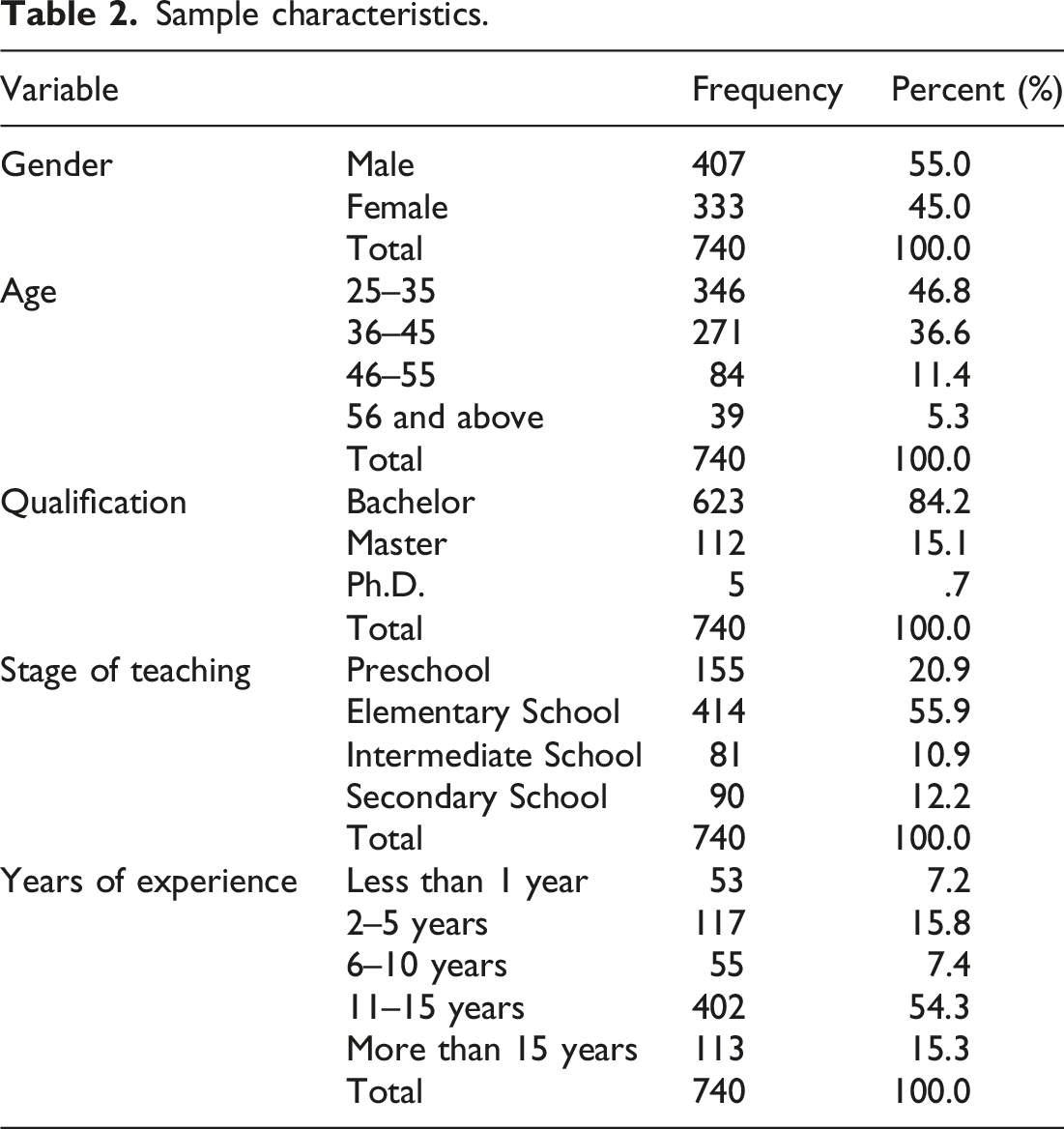
In terms of teaching stage, most educators worked in Elementary Schools 55.9%, followed by Preschool 20.9%, Secondary School 12.2%, and Intermediate School 10.9%. Regarding teaching experience, the largest group had 11–15 years 54.3%, followed by more than 15 years 15.3% and 2–5 years 15.8%.
Tool
The initial questionnaire comprised 24 three-dimensional components. The construction underwent validation through both exploratory and confirmatory factor analysis. The model underwent extensive validation, culminating in a final version of 16 that encompasses instructors’ confidence in grasping AI concepts, the effectiveness of AI tools, integration challenges, and students’ engagement and eagerness to utilize AI.
In preparing this scale, the researcher reviewed the theoretical literature and previous studies related to the topic and the theoretical frameworks explaining it. The researcher found no existing scale that measures the impact of AI technologies on education for students with disabilities. Subsequently, the scale was drafted in its preliminary form, consisting of 16 items that assess the impact of AI technologies through three dimensions: 1. Perceptions of AI Technologies in Students with Disabilities Education 2. Implementation Challenges of AI in Classrooms for Students with Disabilities 3. Student Engagement with AI Technologies
In this study, student engagement refers to educators’ perceptions of students’ motivation, participation, and interaction with AI-supported learning activities, rather than direct observation of students’ behaviors. Teacher perceptions are frequently used in educational research to evaluate classroom engagement and instructional effectiveness.20,29
The items were crafted with simplicity and clarity in mind. The items were rated using a five-point Likert scale, which categorizes responses as follows: Strongly Disagree, Disagree, Neutral, Agree, Strongly Agree.
The scale was presented to a group of experts in the field as reviewers to provide feedback on the appropriateness of the items. The agreement percentage among reviewers was calculated, retaining items that received a 90% agreement rate or higher. Some items were modified or removed based on the reviewers’ suggestions, resulting in a final scale of 16 items, confirming the reviewers’ validity.
To ensure the psychometric properties of the scale, the researcher verified its validity by applying it to a sample for exploratory purposes. Internal consistency of the scale items was assessed by calculating the correlation coefficients between respondents’ scores for each item and the total score for its respective dimension. The correlation coefficients ranged from 0.61 to 0.82 for the first dimension, 0.62 to 0.84 for the second, and 0.66 to 0.80 for the third. Regarding the correlation of the dimensions with the total score of the scale, the correlation was 0.92 for the first dimension, 0.88 for the second, and 0.93 for the third. All correlation coefficients were significant at the 0.001 level, indicating internal consistency among the items and confirming their belonging to their respective dimension and, in turn, to the measured construct, thereby demonstrating the construct validity of the study tool.
An exploratory factor analysis assessed the overall construct validity of the scale, employing the Principal Components method and utilizing orthogonal rotation through Varimax. This approach aimed to identify factors by selecting items with the highest loadings for each factor following rotation. Items with loadings greater than 0.4 were chosen and classified under the factor with the highest loading. The factor analysis yielded three factors, accounting for a total variance of 59.94%. The first factor comprised 6 items, with an eigenvalue of 4.25, explaining 26.53% of the total variance. The second factor comprised 4 items, exhibiting an eigenvalue of 4.17 and accounting for 19.28% of the total variance. The third factor comprised 6 items, exhibiting an eigenvalue of 3.81 and accounting for 17.12% of the total variance. To verify the loading of the proposed items for each factor, a confirmatory factor analysis (CFA) was conducted using the Maximum Likelihood Method and LISREL software. The analysis confirmed the three-factor structure of the scale. Results indicated that the path coefficients for the scale items ranged between 0.60 and 0.80 and were all statistically significant at the P ≤ 0.01 level. The chi-square (χ2) value was 618.43 with 149 degrees of freedom and a significance level of p ≤ 0.001, indicating a good model fit (χ2/df = 4.15) to the data. Additionally, the fit indices (RMSEA, GFI, AGFI, and NFI) fell within the ideal range for each index, further confirming the model’s adequacy; the scale is therefore factor-valid. Figure 2 presents the confirmatory factor analysis model for the measurement scale. Model for the confirmatory factor analysis.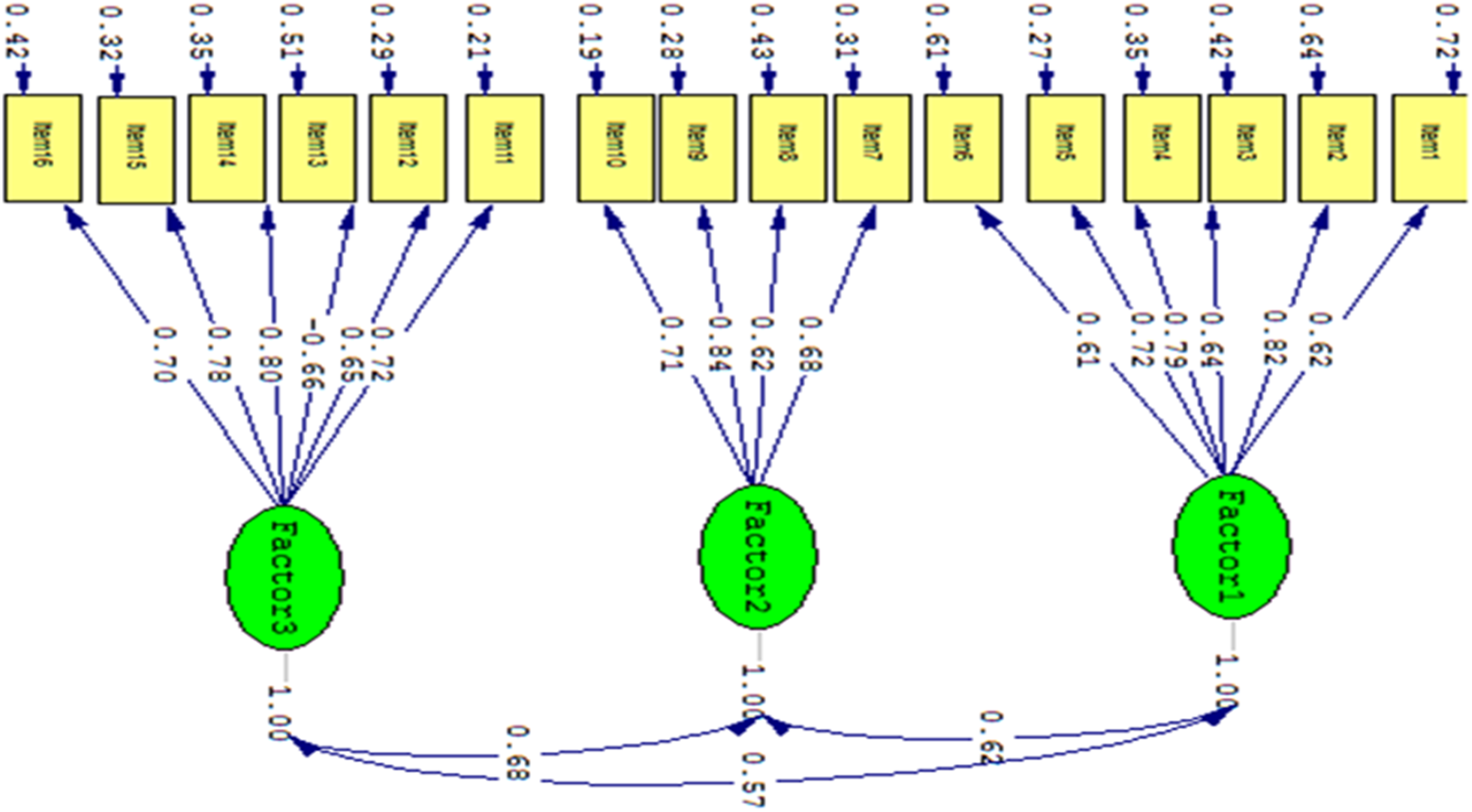
Values of composite reliability and convergent validity for the scale.
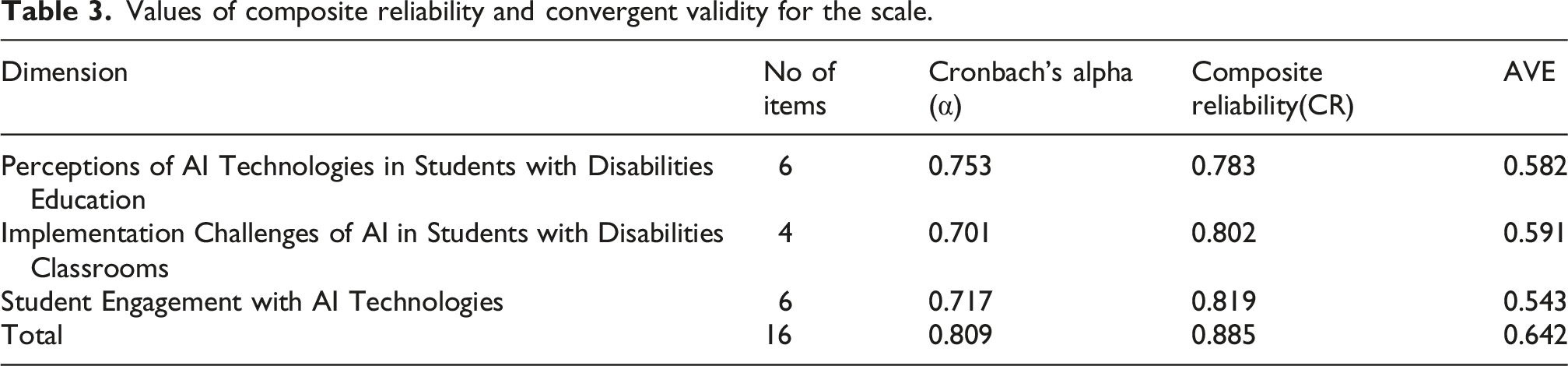
Table 3 shows the indicators for composite reliability (CR). This indicator is based on the standardized loadings (λ) and the values of shared variance. As noted in Table 2, the composite reliability values for the first dimension were 0.783, for the second dimension 0.802, and for the third dimension 0.819. These coefficients indicate high reliability. The Cronbach’s alpha values for the dimensions of the scale were 0.753 for the first dimension, 0.701 for the second dimension, 0.717 for the third dimension, and 0.809 for the overall scale. These values are statistically acceptable.
Procedures and Data Collection
This study employed a quantitative survey design to examine educators’ perceptions of AI technologies in teaching students with disabilities, the challenges associated with their implementation, and their perceived influence on student engagement. Data were collected using the validated questionnaire described in the previous section. The instrument included two main components: demographic information (gender, age, academic qualifications, teaching stage, and years of teaching experience) and Likert-scale items measuring educators’ perceptions of AI technologies, implementation challenges, and student engagement.
Prior to the main data collection, the questionnaire underwent expert review by specialists in educational technology and special education to ensure clarity, relevance, and content validity. A pilot study was subsequently conducted with a small group of educators to evaluate the clarity and reliability of the instrument. Feedback from this pilot testing was used to refine several items and improve wording before distributing the final version of the survey.
The questionnaire was administered electronically using Google Forms to facilitate accessibility and broad participation. The survey link was distributed to educators working with students with disabilities through professional networks, institutional communication channels, and educational social media groups. Participation was voluntary, and respondents were informed about the purpose of the study, the confidentiality of their responses, and their right to withdraw at any time.
Data collection took place over a four-week period, during which reminder messages were periodically sent to increase the response rate. The final dataset included responses from 740 educators representing different educational stages and professional backgrounds, providing diverse perspectives on the integration of AI technologies in special education settings.
Data Analysis
The collected data were analyzed using SPSS version 26. Both descriptive and inferential statistical techniques were employed to address the research questions.
First, descriptive statistics were calculated to summarize the demographic characteristics of the participants and to provide an overview of educators’ responses to the questionnaire items. Measures including means, standard deviations, frequencies, and percentages were used to describe the distribution of responses across the study variables.
Second, inferential statistical analysis was conducted to examine whether educators’ perceptions of AI technologies differed according to demographic variables such as gender, age, qualifications, teaching stage, and years of experience. Analysis of Variance (ANOVA) was used to test for statistically significant differences between demographic groups.
The internal consistency of the questionnaire was assessed using Cronbach’s alpha reliability coefficients. A threshold value of 0.70 was considered acceptable to determine adequate internal consistency for the items within each dimension of the scale. These analyses ensured that the instrument reliably measured the constructs of educators’ perceptions of AI technologies, implementation challenges, and perceived student engagement.
Ethical considerations
Throughout the execution of this study, strict adherence to ethical standards was maintained to ensure the integrity and reliability of the research. Prior to data collection, approval was secured from the appropriate institutional ethical review boards. Details regarding the study’s aims and methods were communicated clearly to participants, who then provided their informed consent to participate. Rigorous protocols, such as data anonymization, were established to safeguard the privacy and confidentiality of participants. Additionally, the study was structured to uphold the rights and well-being of participants by guaranteeing voluntary involvement and permitting withdrawal from the study at any time without penalty.
Results
The study yielded three main findings. First, educators generally reported positive perceptions of AI technologies for supporting the education of students with disabilities. Second, educators identified several implementation challenges, particularly related to technical difficulties and data privacy concerns. Third, educators reported moderate perceptions regarding the impact of AI technologies on student engagement. In addition, the statistical analysis showed no significant differences in perceptions across demographic variables.
How do educators’ demographic factors (age, gender, qualifications, teaching stage, and years of experience) influence their perceptions of AI technologies in teaching students with disabilities?
To answer this question, descriptive statistics were reviewed for each variable, followed by an analysis of the differences in teachers’ perceptions based on the variables (age, gender, qualifications, teaching stage, and years of experience) as follows.
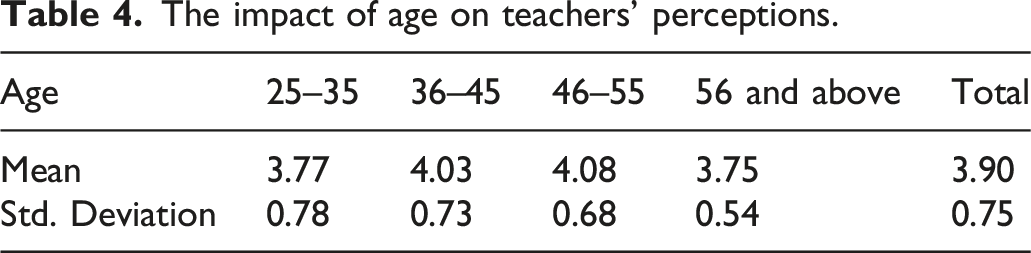
To determine the impact of age on teachers’ perceptions of AI technologies in teaching students with disabilities, the mean scores of their perceptions were calculated according to age groups as follows.
The impact of age on teachers’ perceptions.
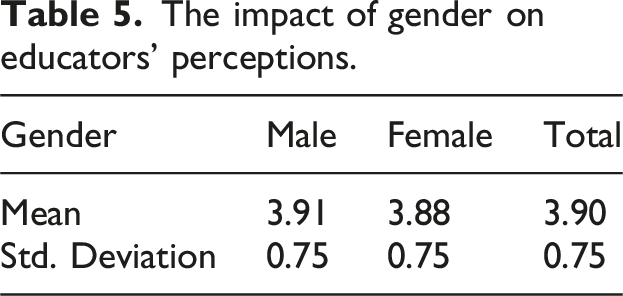
To understand the impact of gender on educators’ perceptions of AI technologies in teaching students with disabilities, the means of their perceptions are presented by gender.
The impact of gender on educators’ perceptions.
To understand the impact of qualification on educators’ perceptions of AI technologies in teaching students with disabilities, the means of their perceptions were calculated by qualification as follows.
The impact of qualification on educators’ perceptions.
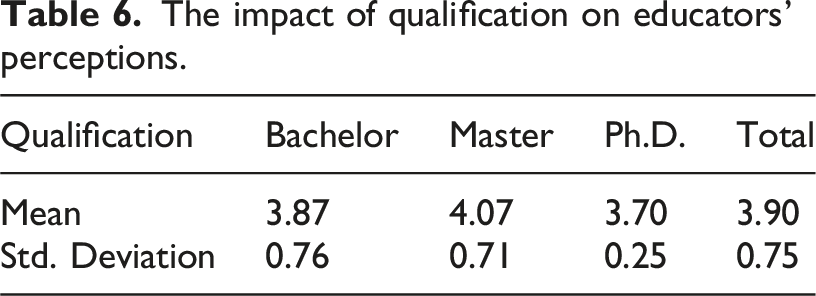
Among the qualifications, educators with a Master’s degree expressed the highest enthusiasm for adopting AI technology, with a mean score of 4.07. Those with a Bachelor’s degree followed closely behind, scoring 3.87, while Doctorate holders showed the least eagerness, with a mean score of 3.70. The standard deviations also reflect this trend, with Bachelor’s degree holders at 0.76, Master’s degree holders at 0.71, and Doctorate holders at 0.25, indicating more uniformity in their views.
This pattern suggests that having advanced qualifications does not necessarily lead to a greater willingness to embrace AI in teaching, pointing to the need for further exploration into how different educational backgrounds influence the adoption of innovative teaching tools in special education.
To understand the impact of qualification level on educators’ perceptions of AI technologies in teaching students with disabilities, the means of their perceptions were calculated as follows.
The impact of educational stage on educators’ perceptions.

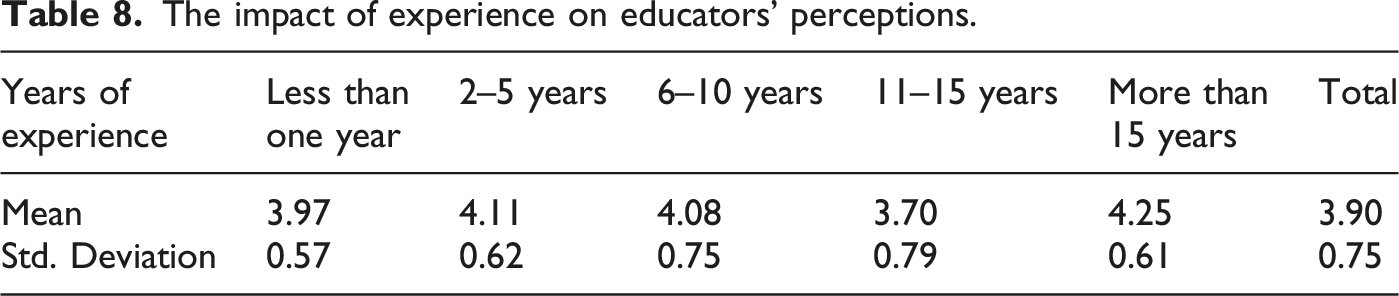
To understand the impact of experience on educators’ perceptions of AI technologies in teaching students with disabilities, the means of their perceptions were calculated based on years of experience as follows.
The impact of experience on educators’ perceptions.
ANOVA analysis of perceptions of AI technologies in teaching students with disabilities.
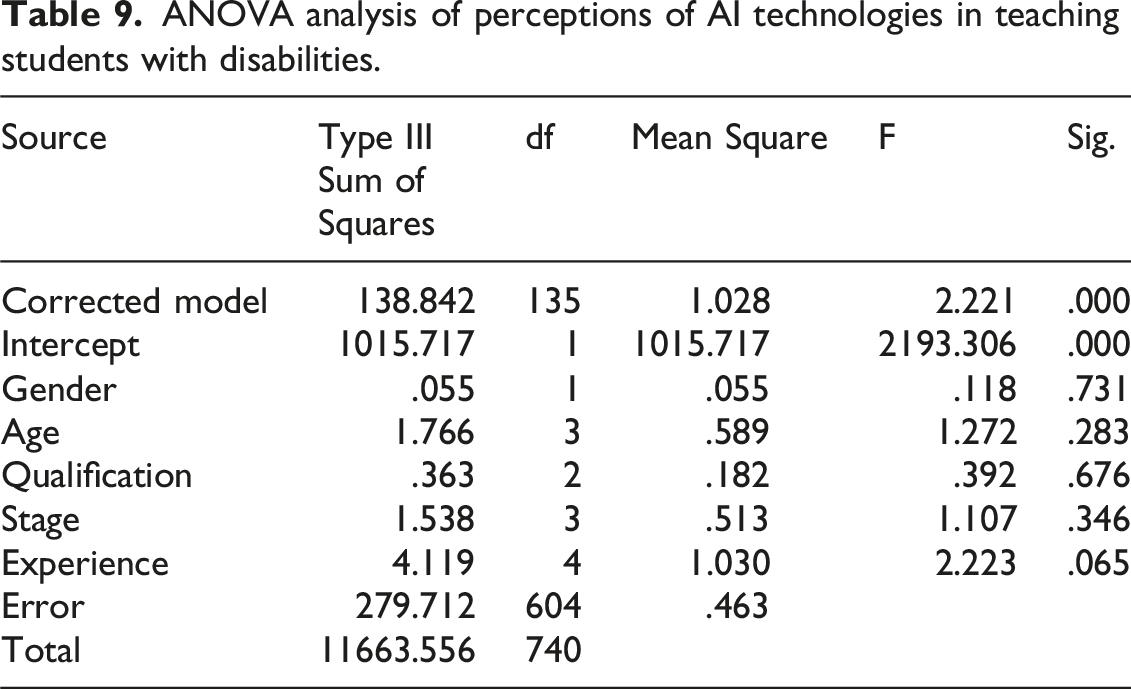
The data presented in Table 9 indicate that no statistically significant differences were found in educators’ perceptions of AI technologies in teaching students with disabilities based on gender, age, qualifications, teaching stage, or years of experience (p > .05). To further examine the magnitude of these relationships, effect sizes were calculated using partial eta squared (η2). The results indicated very small effect sizes for all demographic variables, including gender (η2 = .000), age (η2 = .006), qualification (η2 = .001), teaching stage (η2 = .005), and years of experience (η2 = .014). These results suggest that demographic variables have a negligible practical influence on educators’ perceptions, indicating that educators across different demographic groups share relatively similar views regarding the use of AI technologies in teaching students with disabilities.
What are educators’ perceptions of the effectiveness of AI technologies in enhancing learning outcomes and supporting individualized instruction for students with disabilities?
Descriptive analysis for perceptions of AI technologies in students with disabilities education.
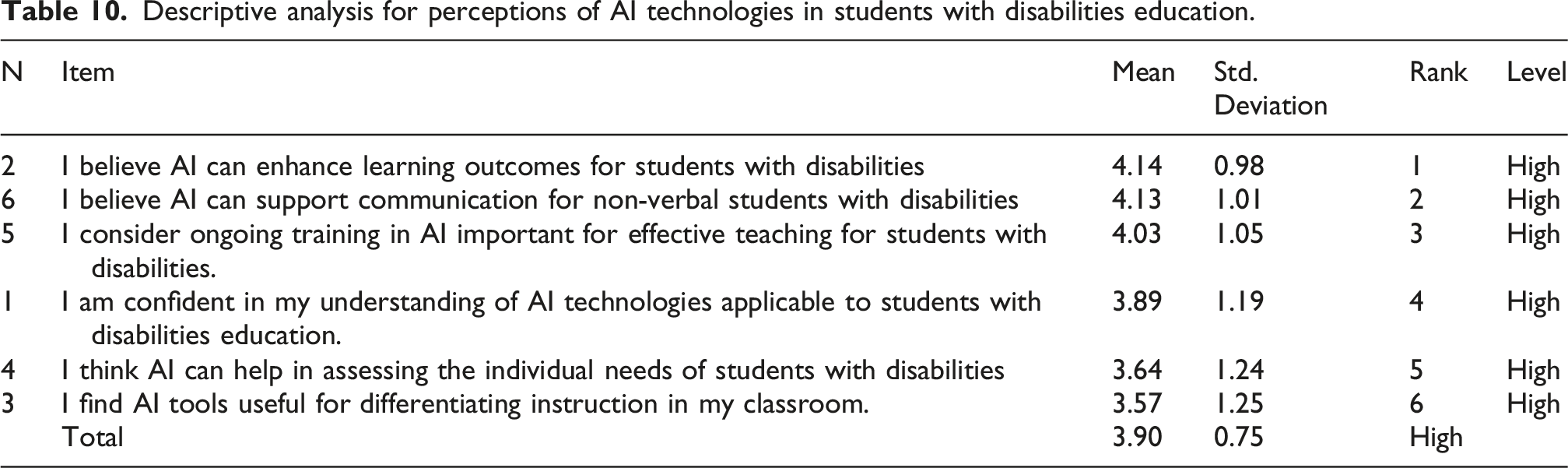
It can be observed from the previous table that educators’ perceptions of the effectiveness of AI technologies in enhancing learning outcomes and supporting individualized instruction for students with disabilities were rated highly, with a mean score of 3.90. This average falls within the second category of the five-point Likert scale, indicating a high level of perception. The standard deviation was 0.75, which is less than one, suggesting that the members of the study sample had consistent views regarding the effectiveness of AI technologies in this context. The items can be reviewed the items in order as presented in the previous Table 10.
What are the primary challenges educators face in implementing AI technologies in classrooms for students with disabilities?
Descriptive analysis for implementation challenges of AI in students with disabilities classrooms.
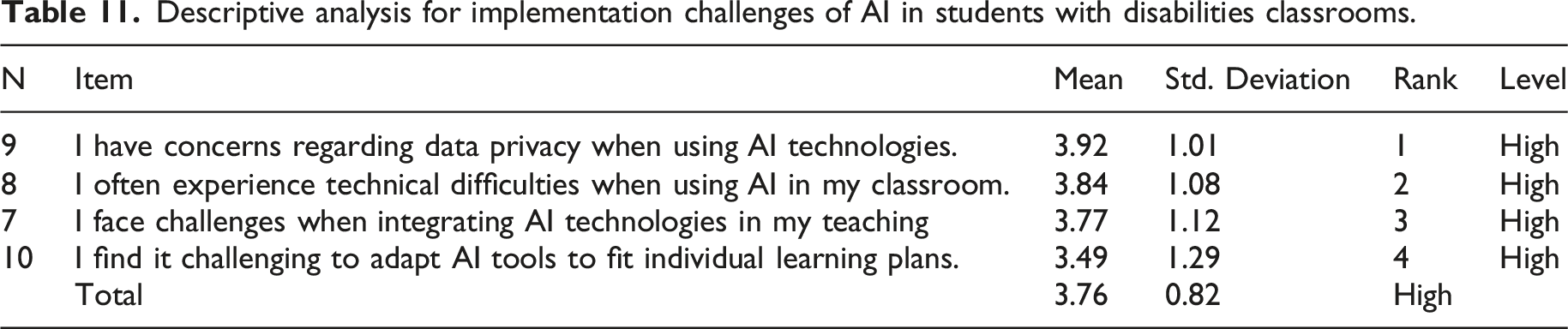
The previous table shows the challenges educators face in implementing AI technologies in classrooms for students with disabilities were highly rated, with a mean score of 3.76. This average falls within the second category of the five-point Likert scale, indicating a high level of perception. The standard deviation was 0.82, which is less than one, suggesting that the members of the study sample had consistent views regarding the implementation challenges in this context.
The most prominent challenges identified were: 1. Concerns regarding data privacy when using AI technologies. 2. Technical difficulties when using AI in the classroom.
How do educators rate the impact of AI tools on student engagement, motivation, and personalized learning experiences for students with disabilities?
Descriptive analysis for student engagement with AI technologies.
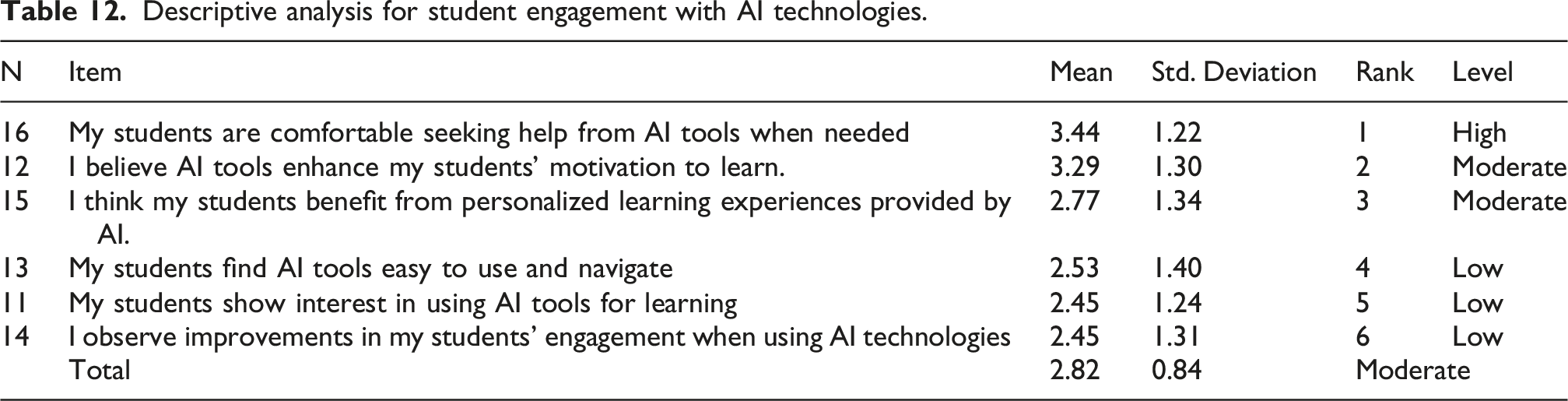
It can be observed from the previous Table 12 that educators’ ratings of the impact of AI tools on student engagement, motivation, and personalized learning experiences for students with disabilities were at a moderate level, with a mean score of 2.82. This average falls within the third category of the five-point Likert scale, indicating a medium level of perception. The standard deviation was 0.84, which is less than one, suggesting that the members of the study sample had consistent views regarding student engagement with AI technologies.
Discussion
This investigation sought to examine the views of educators regarding AI technologies in the context of teaching students with disabilities, emphasizing their effectiveness, the challenges associated with implementation, and their influence on student engagement. The results demonstrate a complex perspective on the incorporation of AI tools in special education, emphasizing both favorable views and notable obstacles.
Regarding the first research question, the study investigates the influence of demographic factors, such as age, gender, qualifications, teaching stage, and years of experience, on educators’ perceptions of AI technologies in the context of teaching disabled pupils. Despite the generally optimistic outlook of educators, the findings reveal surprising trends. The ANOVA analysis revealed no statistically significant differences among demographic variables, indicating that educators across different demographic groups share broadly similar perceptions of AI technologies in special education. This suggests a robust basis for implementing AI in educational contexts. Optimistic perspectives can enhance educational results for learners with disabilities. Future investigations should explore how specific contextual factors mediate this relationship. These findings also align with the Technology Acceptance Model (TAM), which suggests that educators’ positive perceptions of technology usefulness and ease of use can facilitate the adoption of AI technologies in educational settings.
While educators aged 46 to 55 indicated a notable interest in employing AI technologies, seniors aged 56 and older recorded the lowest mean score. However, these variations in mean scores should be interpreted cautiously, as the statistical analysis did not reveal significant demographic differences. Middle-aged teachers, through their engagement in contemporary educational strategies, might exhibit a greater openness to innovative teaching techniques. While their middle-aged colleagues blend traditional methods with innovative concepts to achieve a broader understanding of AI integration, studies indicate that younger educators exhibit greater ease with technology. 20
Male educators exhibited a marginally greater willingness to utilize AI technologies compared to their female counterparts. Nevertheless, the ANOVA results indicated that this difference was not statistically significant, suggesting that gender does not substantially influence educators’ perceptions of AI technologies. Previous studies suggest that male instructors might be more inclined to embrace new technologies because of their experiences with technological socialization practices. 38
Educators with a master’s degree exhibited the highest enthusiasm for utilizing AI while those with a bachelor’s degree followed closely. Although slight variations in mean scores were observed across qualification levels, these differences were not statistically significant according to the ANOVA results. The mean score recorded for doctoral instructors indicates that higher qualifications may not necessarily lead to greater openness to AI technologies, questioning the assumption that increased education fosters innovation. Research discovered 4 that educators possessing a deeper theoretical understanding tend to approach technology use with greater caution, favoring conventional pedagogical methods.
Teachers in Secondary School and Preschool demonstrated the highest readiness to adopt AI technologies, whereas those in Elementary School (mean = 3.75) showed the least enthusiasm. However, these differences should be interpreted as descriptive trends rather than statistically meaningful differences. Given that seasoned educators frequently handle more intricate material, they might be more inclined to recognize the advantages of AI in meeting sophisticated learning requirements. This aligns with previous studies indicating that AI technology has the potential to enhance diverse learning environments at various educational stages.17,28
Educators with more than 15 years of experience achieved the highest mean score of 4.25, indicating a notable level of confidence in AI technologies. Nevertheless, the statistical analysis showed that years of experience did not significantly influence educators’ perceptions of AI technologies. This trend is particularly intriguing when compared to the lowest mean score observed in the 11- to 15-year category. Experienced educators might be more inclined to leverage AI to enhance their teaching methods after observing the advancements in educational technologies. Experienced educators frequently possess substantial practical knowledge, enabling them to effectively incorporate new technology when they recognize its advantages.19,20
With regard to the second study question, which looked at teachers’ opinions of how well artificial intelligence technology might improve learning results, the mean score was 3.90. This result is consistent with earlier studies indicating teachers understand how artificial intelligence could help students with impairments have better educational results.39,40 The favorable impressions could result from the growing availability of artificial intelligence tools that provide customized learning experiences, therefore enabling teachers to modify their methods to fit particular student demands. Though the general impression was good, it is important to consider the contextual elements that could affect these opinions, such training and knowledge with artificial intelligence tools.
The third research question centered on the obstacles that educators encounter when integrating AI technologies. These findings can also be interpreted through the Concerns-Based Adoption Model (CBAM), which suggests that educators experience different stages of concern when adopting new technologies, including concerns related to technical readiness, management of implementation, and the broader impact on teaching practices. The average score of 3.76 suggests that educators recognize the advantages of AI, yet they face considerable obstacles, especially related to data privacy and technical challenges. The findings align with earlier research, indicating that educators frequently perceive themselves as ill-equipped to tackle privacy issues and often lack adequate technical assistance.22,23 Confronting these challenges is crucial for the effective incorporation of AI in educational settings.
These findings highlight the complexity of integrating AI technologies into educational settings. While educators recognize the potential of AI to support students with disabilities, the results indicate a gap between theoretical expectations and practical implementation. Concerns related to data privacy and the lack of adequate technical support appear to represent major barriers to effective adoption. Addressing these challenges requires targeted professional development programs that strengthen teachers’ technical competencies while also emphasizing ethical considerations associated with the responsible use of AI in education.
In the end, if these important obstacles are not removed, the integration of artificial intelligence technologies may stay shallow, therefore restricting their ability to revolutionize education for students with disabilities. Creating an atmosphere where artificial intelligence can really enhance educational outcomes depends on educators having the tools they need to properly handle these problems.
Finally, the fourth study question looked at how artificial intelligence tools affected student involvement, drive, and individualized learning opportunities. Although there is still great room for improvement, the mean score of 2.82 shows that teachers see the possibility of artificial intelligence to raise student involvement. Previous research indicates that, particularly among students with impairments, the efficient application of artificial intelligence may improve student motivation and engagement.8,9,28 However, it is important to note that student engagement in this study reflects educators’ perceptions rather than direct observation of students’ behaviors. Nonetheless, the diverse perspectives presented in this study may indicate different levels of artificial intelligence integration within educational settings and emphasize the necessity for re-oriented approaches to effectively leverage these technologies.
From the perspective of Self-Determination Theory (SDT), AI technologies may support student engagement by facilitating personalized learning experiences that enhance learners’ autonomy, competence, and participation in classroom activities. It is important to reiterate that these findings reflect educators’ perceptions of student engagement rather than direct observations of student behavior, which should be considered when interpreting the moderate mean score.
These results underline numerous crucial factors. The modest mean score indicates that although many teachers may lack a thorough knowledge of how to properly use these tools to maximize their benefits, even if they acknowledge the possibilities of artificial intelligence. This suggests a discrepancy between knowledge and practical application most likely resulting from insufficient professional development choices based on artificial intelligence technology and appropriate training. Moreover, even if past research shows that artificial intelligence increases student involvement, the actual results are much influenced by the quality of AI tools and their fit with educational approaches.
Furthermore, the results of the study could indicate the wider difficulties encountered by educators as they adjust to swiftly changing technologies. The differing levels of integration may suggest that certain educators are reluctant or insufficiently equipped to implement AI successfully, resulting in uneven experiences within the classroom. This underscores the importance of schools implementing thorough support systems that encompass training, resources, and continuous assessment of AI tools within educational environments. In the absence of these frameworks, the ability of AI to improve engagement and tailor learning experiences for students with disabilities could largely go untapped.
Pedagogical Implications
This study’s findings present significant pedagogical implications. Considering the favorable views of AI technologies, it is advisable for educators to incorporate these tools into their instructional methods. Professional development programs must be structured to equip educators with essential training for the effective use of AI tools in the classroom, focusing on both technical competencies and ethical issues, especially concerning data privacy. Additionally, educational institutions ought to cultivate an environment that encourages educators to explore and implement AI technologies with adequate support. This may entail establishing collaborative environments for educators to exchange experiences, challenges, and successes related to the implementation of AI in their classrooms.
It is essential to engage educators in the decision-making process concerning the selection and implementation of AI tools. Their insights can ensure that technologies implemented in educational environments meet the needs and specific requirements of students with disabilities. Addressing these recommendations and implications enables educators to enhance the effectiveness of AI technologies in supporting the learning experiences of students with disabilities, resulting in improved educational outcomes. Such participatory approaches align with the Technology Acceptance Model (TAM), as involving educators in selecting AI tools may enhance their perceived usefulness and ease of use, thereby facilitating successful adoption.
Conclusion
This study emphasizes the favorable perceptions that educators have about the effectiveness of AI technologies in special education, while also noting the considerable implementation challenges and moderate assessments of their impact on student engagement. The findings highlight the necessity of equipping educators with appropriate training and resources to effectively manage the complexities associated with AI integration in teaching practices. Future research must further investigate these dynamics, emphasizing longitudinal studies that evaluate the changing perceptions of educators as AI technologies increasingly integrate into educational environments.
While this study provides valuable insights, it is important to recognize several limitations. Firstly, the research primarily utilized self-reported data from educators, which may introduce bias. Participants may have offered socially desirable responses instead of accurately representing their true perceptions. Future research may integrate qualitative methods, including interviews or focus groups, to obtain a more profound understanding of educators’ experiences and perceptions concerning AI technologies. Secondly, the study’s sample was restricted to a particular geographic area, potentially constraining the generalizability of the results. Future research should focus on obtaining a more diverse sample that encompasses educators from different regions and educational contexts to enhance the understanding of perceptions regarding AI in special education. In addition, the cross-sectional design of this study captures perceptions at a singular moment in time. Longitudinal studies are essential for evaluating the evolution of educators’ perceptions regarding AI technologies as they accumulate experience and as these technologies advance. Finally, universities, governments, and research foundations may provide funding for projects and studies concerning the application of AI in special education, thereby incentivizing researchers to concentrate on well-supported areas. 17
Footnotes

Funding
The author disclosed receipt of the following financial support for the research, authorship, and/or publication of this article: The Deanship of Scientific Research at Northern Border University (NBU-FFR-2025-22-01).
Declaration of Conflicting Interests
The author declared no potential conflicts of interest with respect to the research, authorship, and/or publication of this article.
Data Availability Statement
Data is available and can be obtained through a reasonable request directed to the corresponding author.