







Abstract
Objective
Families increasingly use online resources to acquire medical information about their child's condition with little understanding of the legitimacy of the source of information or of the information itself. We evaluate the quality and readability of online information related to positional head shape conditions and identify unmet needs for healthcare providers to improve online patient education.
Design
The search terms “flat head baby,” “brachycephaly,” and “plagiocephaly” were queried on the Google search engine and the first 20 websites for each were reviewed. Included websites were evaluated for quality using the DISCERN Instrument and readability using the Flesch-Kincaid Reading Grade Level (FKGL) and Flesch Reading Ease Score (FRES). Websites were categorized by upload source and results were compared using one-way ANOVA.
Results
38 websites met inclusion criteria. There was no significant correlation between DISCERN score and Google search rank between the three search terms. Professional organizations provided websites with the highest mean DISCERN score (56.3) and commercial websites with the lowest score (36.6, P = .003), indicating “good” and “poor” quality content, respectively. Readability assessments showed an overall average FKGL of 9.9 and FRES of 54.4, suggesting “fairly difficult”. Hospitals provided the most website results and tended to publish lower quality information, yet are the most readable.
Conclusions
High quality websites written at an appropriate reading level for the general public are lacking. A review of online resources for positional head shape conditions can be used to derive recommendations to improve the content of online patient education for pediatric healthcare.
Introduction
As patients become more involved in making decisions concerning one's own medical care, there is a reliance on the internet and open access journals for scientific information given its accessibility. Of the Americans that use the internet, 80% search for medical information and 49% have reported consulting the internet for medical information prior to meeting with a physician.1,2 In light of these statistics, one may assume that the highest Google-ranked websites are the best sources of information. However, unlike peer-reviewed journal articles, Google does not employ a screening process to prove legitimacy of the uploaded information, resulting in patients potentially using websites that provide low quality or incorrect information, which could have ramifications on patient care. 3
To further complicate matters, websites with high quality medical information may not be comprehensible to the layperson. A provider's success in engaging patients and providing therapeutic benefit through that relationship is limited by a provider's ability to explain concepts in a manner that the patient can understand verbally or through print resources, as well as the patient's baseline health literacy, which has been found to be “low” in 26% of Americans and “marginal” in another 20%. 4 To mitigate concerns regarding health literacy, the American Medical Association (AMA) recommends that patient information be written at the 6th grade reading level. 5
As roughly half of all infants are identified with an atypical head shape around 2- to 3- months of age, we felt that a review of online resources for diagnosis and treatment of head shape anomalies would provide an excellent sample by which to evaluate the quality and readability of these resources. Families increasingly use the internet to learn about their infant's head shape condition prior to consulting a healthcare professional.6,7 However, confusion may occur due to similarities between positional head shape conditions and craniosynostosis. 8 Concerns may emerge regarding treatment options, as they differ between the conditions. While craniosynostosis is often treated surgically, plagiocephaly treatment favors nonoperative measures. 9 In the era of overtreatment, referrals to craniofacial teams are largely driven by patients themselves, many of whom turn to the internet for medical and surgical knowledge. 10 As such, inaccurate or low-quality information online has the potential to not only induce anxiety, but to also influence the way patients and families interact with providers and the medical system at large.
Given the high prevalence of plagiocephaly, there is an unmet need for medical educators and providers to assess online information and protect our patients from potentially harmful advice that may lead to confusion or poor decision making. To address this knowledge gap, we identified websites for search frequency, quality, and readability. The results of our study will depict a comprehensive picture of the online educational resources pertaining to one of the most common conditions for which families conduct an online search: positional head shape. This study may serve as a guide by which pediatric health care providers can evaluate the types of organizations which provide the best online content describing pediatric head shape conditions to families, and thereby recommend proper resources to families.
Methods
To identify search frequency of each website, we first identified the highest Google-ranked websites using both medical and “colloquial” search terms related to positional head shape conditions to recreate the search engine results one might find when the diagnosis is or is not known, respectively. To identify website quality, we then objectively evaluated each website using the DISCERN Instrument. To identify website readability, we evaluated each website using the Flesch Reading Ease Score (FRES), and Flesch-Kincaid Grade Level (FKGL). The respective scores were compared by website source.11,12
Eligibility
To determine the colloquial search term that was used in the study, five search terms were chosen by the authors to reflect how the general population would identify and query atypical head shape conditions in babies using a search engine: “flat head baby,” “head shape baby,” “flat spot on head,” “flat head syndrome,” and “baby head shape.” These five search terms were entered on Google Trends (https://trends.google.com) and the search term with the highest relative search volume (RSV) between March 7, 2021 and March 5, 2022 was identified. RSV compares the popularity of different search terms on the date of the inquiry, with the highest RSV corresponding to the most popular search term. 13 Of the five search terms queried, “flat head baby” had the highest RSV and was therefore selected to serve as the most common “colloquial” search term for the remainder of the study. Next, the search terms “brachycephaly” and “plagiocephaly” were selected to serve as the more technical medical words that one might search when the diagnosis is known.
Data Collection
On March 5, 2022, the search terms “flat head baby,” “brachycephaly,” and “plagiocephaly” were entered into the Google search engine to collect the top 20 websites yielded for each search term. The top 20 websites correspond to the first 2 pages of the Google Search results, as previous observational analysis found that 75% of participants only look at the first page of Google websites when searching for medical information. 14 Advertisements for companies that are displayed along with the search results were excluded from the list of the top 20 websites, as Google Ads differ based on geographical location. 15 This process was repeated using an additional computer on the following day (March 6, 2022) to ensure the order of website results remained consistent across devices and time. Websites that met the inclusion criteria were based in the United States, written in English, and intended to provide medical information for patients or families.
Websites were categorized by the following upload sources, which were used to describe the website type or publisher of online content: professional organization, hospital, health reference, general reference, or commercial website. Professional organizations include academic journals and professional societies of medical specialties (ie, the American Association of Neurological Surgeons), hospitals include health care systems and academic medical centers (ie, Mayo Clinic), health references include websites that have been validated by a healthcare professional (ie, Healthline), general references include blog posts and Wikipedia, and commercial websites include companies that promote their products (ie, Pampers) 16–20.
Measurement and Scoring
For each website, reference to three atypical head shape conditions (plagiocephaly, brachycephaly, and craniosynostosis) were recorded. It was also recorded if websites provided links for further reading on the three atypical head shape conditions.
Three of the authors independently used the DISCERN Instrument to assess each website for quality. 11 The DISCERN Instrument is a validated tool consisting of 16 questions used to gauge the quality of written educational information using criteria that assess reliability and treatment information discussed in the content provided. Questions 1-8 assess the reliability of the information, such as a readily available bibliography and unbiased information. Questions 9-15 assess the specific treatment options that are discussed, including both the benefits and risks of treatments. Question 16 is a cumulative rating based on the initial 15 questions. Each question is rated on a scale of 1 to 5, with 1 being the lowest, indicating that none of the criteria are met, and 5 being the highest, indicating that all criteria are fully met. The average of the authors’ scores for each question were used to compile a total score for each website that ranges from 16 to 80.
Readability of the respective websites was determined using the Flesch Reading Ease Score (FRES) and Flesch-Kincaid Grade Level (FKGL). 12 FRES ranges from 0-100 and is determined by the average length of words and sentences. A FRES less than 50 represents lengthy sentences with numerous syllables per word that are difficult to read. 21 FKGL is also determined by the average sentence length, along with the average number of syllables per word. FKGL is used to determine the reading level of text by grade level in the United States education system. 12 Website text was entered into Microsoft Word (Microsoft Word® for Mac Version 16.60, Microsoft Corporation, Redmond, WA) and the Editor feature was used to produce Readability Statistics, which is a commonly used software for determining readability levels 21–25.
Statistical Analysis
Data in the tables and graphs represent mean ± standard deviation (SD). The average number of websites based on category was calculated, as well as the average number of websites that discuss other positional head shape conditions, such as craniosynostosis. One-way ANOVA followed by post-hoc Tukey's Honest Significance test were performed for comparison of the average DISCERN score, FKGL, and FRES by website source. The top 3 websites for each search term were ranked by DISCERN score, followed by a linear regression and Pearson Correlation test that assessed the correlation between DISCERN score and Google Search Rank. Statistical analyses were performed using GraphPad Prism 9.2.0 software and P-value < .05 was considered statistically significant.
Results
Of the 20 websites identified for each of the three search terms, 14 met inclusion criteria for “flat head baby,” 6 for “brachycephaly,” and 18 for “plagiocephaly” (n = 38; Table 1). There were 2 duplicate websites included for the search terms “flat head baby” and “plagiocephaly”. “Plagiocephaly” was the most popular of the three search terms (RSV = 67), followed by “flat head baby” (RSV = 60) and “brachycephaly” (RSV = 14). Hospital websites provided the greatest yield for “flat head baby” (50%) and “plagiocephaly” (72.2%), whereas commercial sources were responsible for most websites corresponding to “brachycephaly” (50%). Most websites for “flat head baby” discussed plagiocephaly (92.9%), followed by craniosynostosis (46.2%) and brachycephaly (35.7%). 83.3% of “plagiocephaly” websites discussed craniosynostosis, yet few discussed brachycephaly (11.1%). All “brachycephaly” websites discussed plagiocephaly, but only 33.3% discussed craniosynostosis.
List of Variables Collected for Each Search Term.
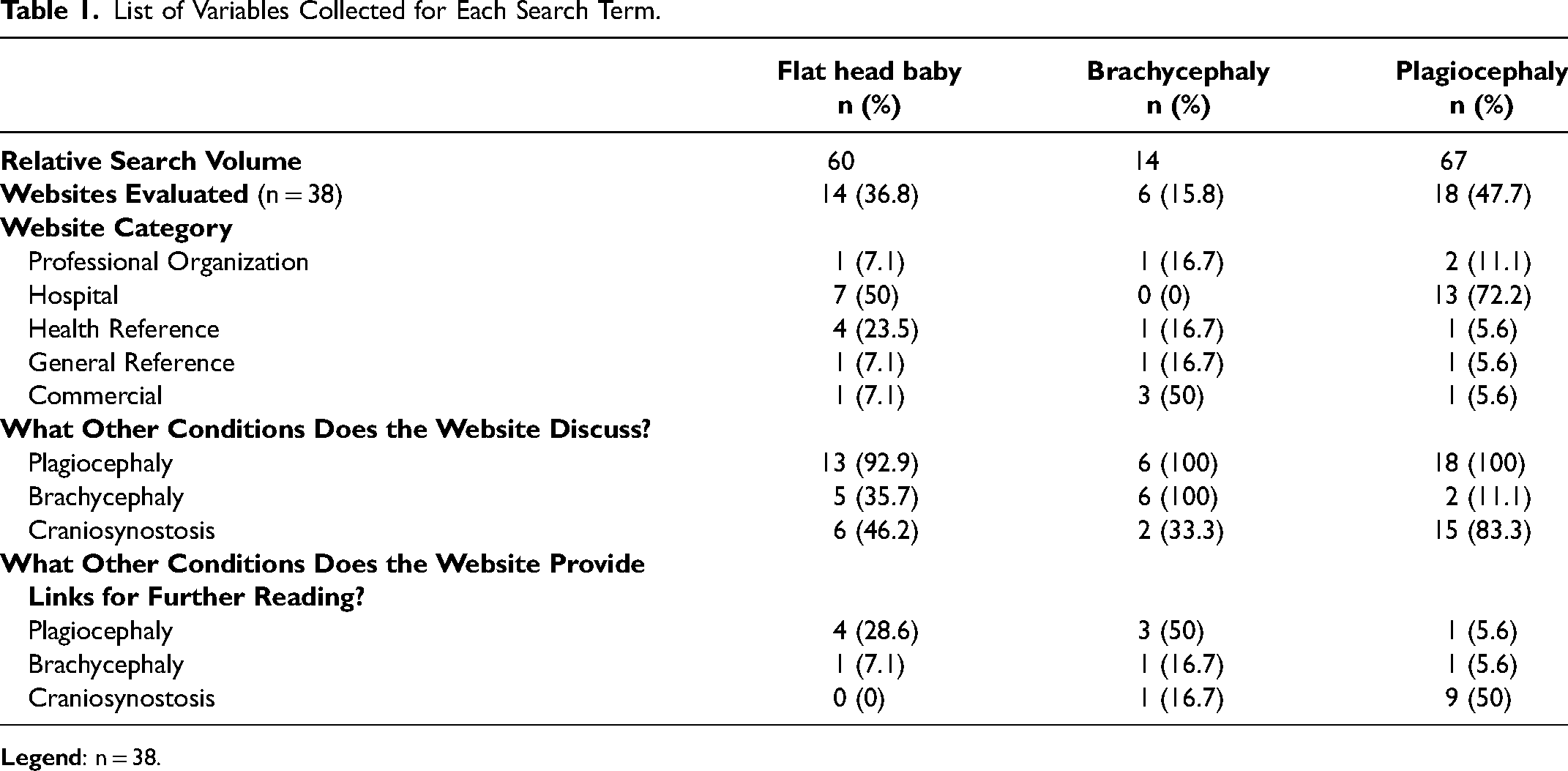
Overall, our search terms yielded the most website results from hospitals (52.6%) and the least from professional organizations (10.5%; Table 1). Although professional organizations contributed the lowest number of websites to our study, their websites scored the highest on the DISCERN Instrument (56.3), indicating “good” quality information, compared to hospitals (42.9, P = .016) and commercial websites (36.6, P = .003), which have “fair” and “poor” quality information, respectively (Figure 1). 26 Health reference websites also presented “good” information and received the second highest DISCERN scores (52.1), which were significantly higher than commercial websites (P = .015). Websites published by hospitals received the second lowest DISCERN scores (42.9), falling behind general reference (50.2) and above commercial (36.6) websites; however, there was no statistical significance between these categories (P = .48 and P = .43, respectively).
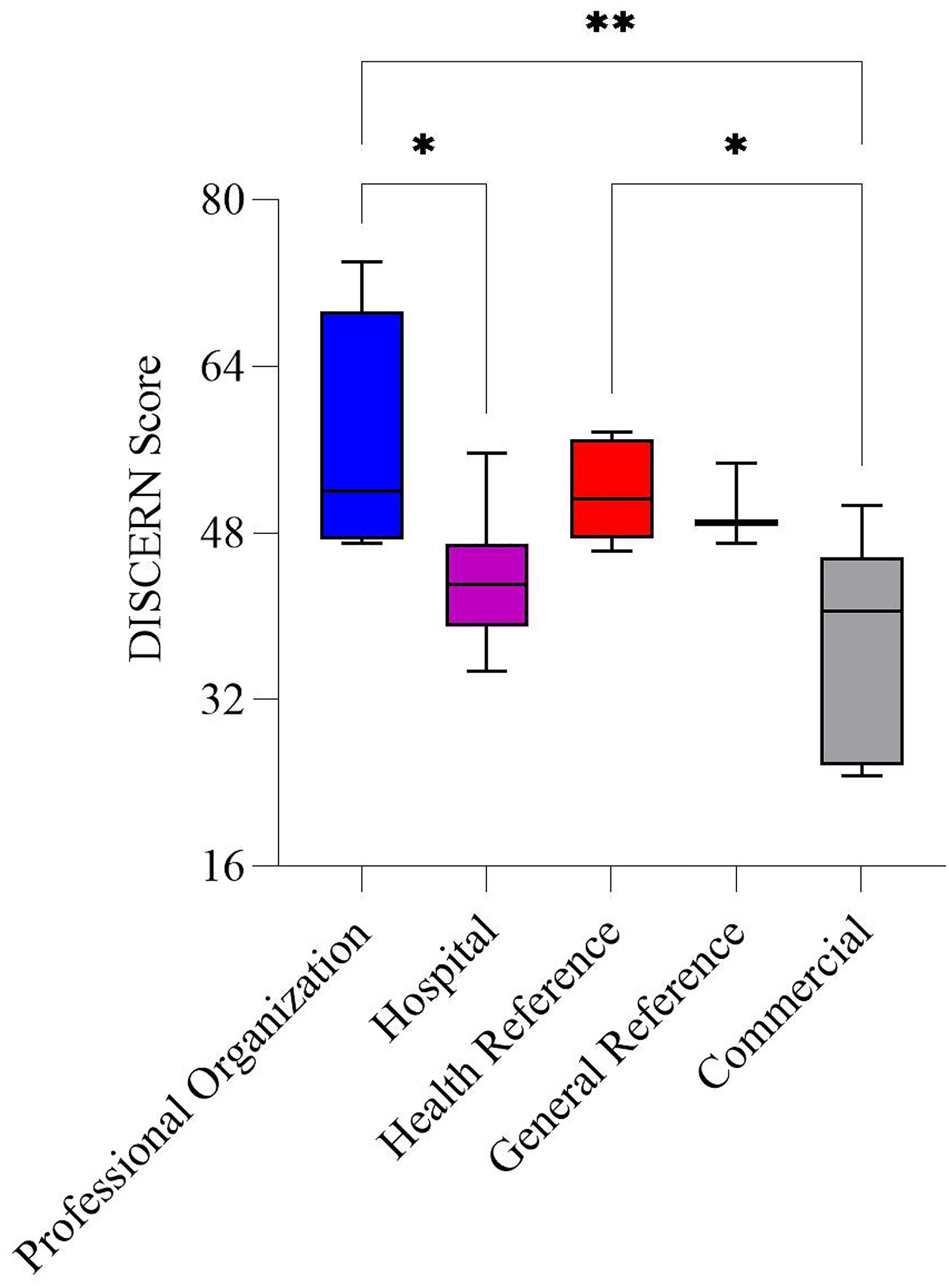
A comparison of average DISCERN score by website category. * designates statistical significance of p < 0.05; ** designates statistical significance of p < 0.001.
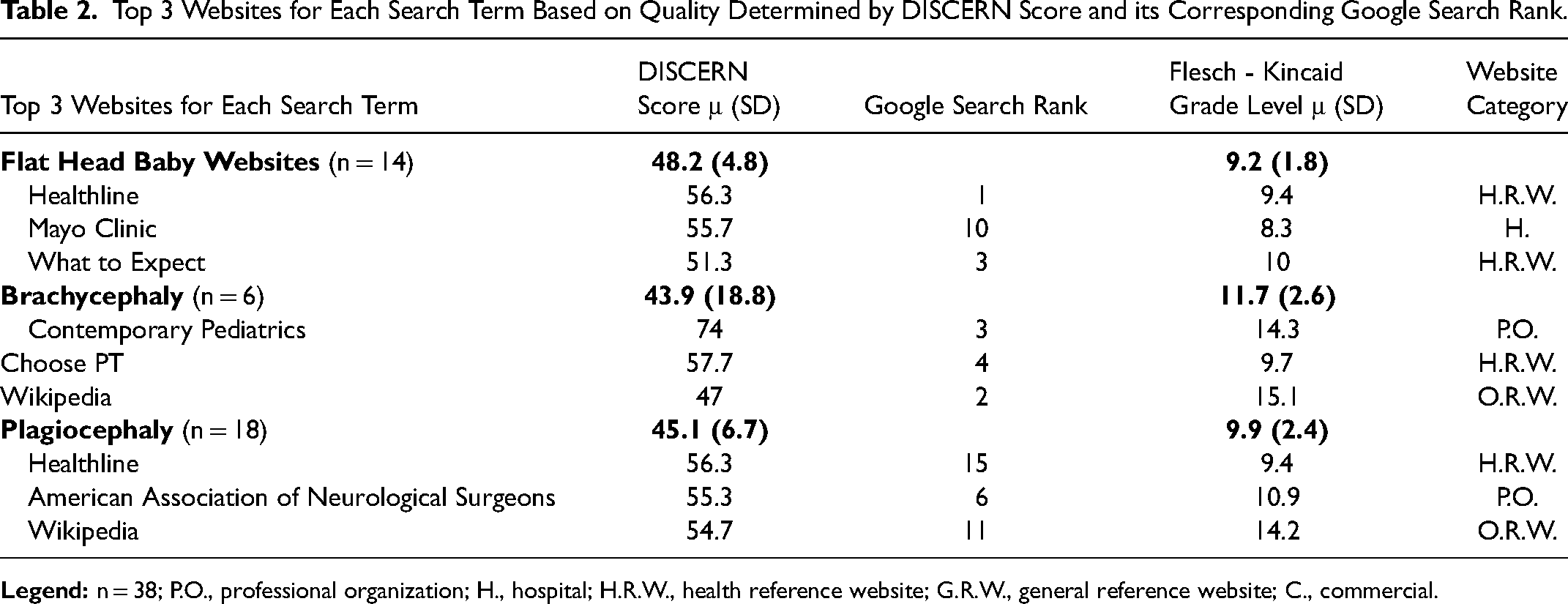
The 1st Google Search Rank website for the search term “flat head baby” corresponded to the highest DISCERN score of all “flat head baby” websites, while the 10th Google Search Rank website received the 2nd highest DISCERN score (Table 2). For the search term “plagiocephaly,” the 15th, 6th, and 11th Google Search Rank websites for that search term corresponded to the three highest DISCERN scores, respectively.
Top 3 Websites for Each Search Term Based on Quality Determined by DISCERN Score and its Corresponding Google Search Rank.
There was no significant correlation between DISCERN score and Google Search Rank for the search terms “flat head baby” (P = .29), “plagiocephaly” (P = .56), and “brachycephaly” (P = .39; Figure 2).
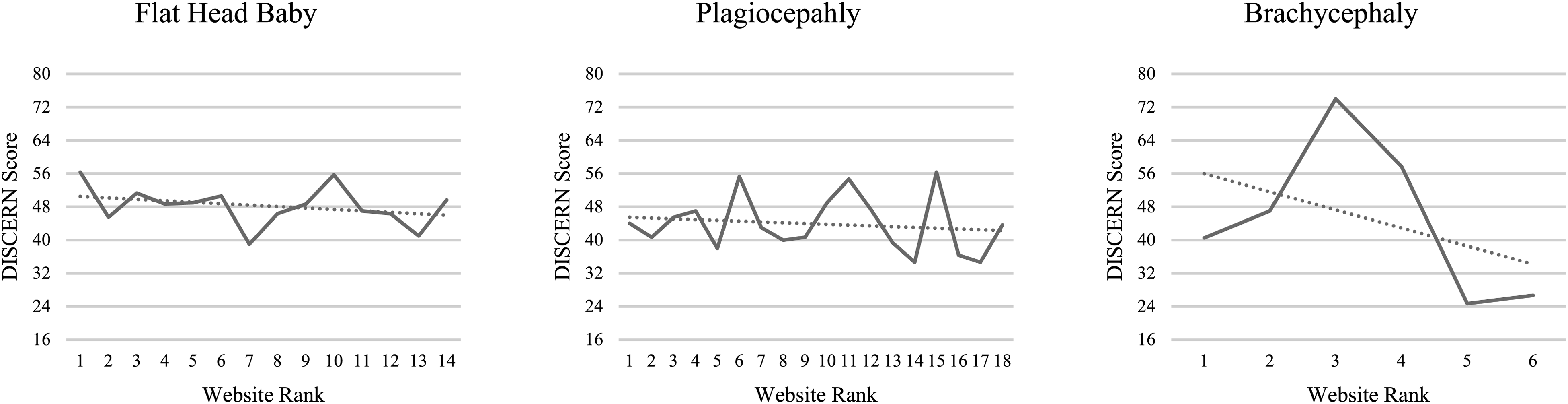
Correlation of Google search rank versus DISCERN score for each search term. A linear regression, as indicated by the dotted line, was performed to predict DISCERN score based on google search rank. Correlation coefficients for websites corresponding to the search terms “flat head baby”, “plagiocephaly”, and “brachycephaly” were −0.31, −0.15, and −0.43, respectively. Using the Pearson Correlation Coefficient, no significant correlation was identified between DISCERN score and Google Search Rank (“flat head baby” P = .29, “plagiocephaly” P = .56, and “brachycephaly” P = .39).
The average FKGL for all websites was 9.9 (Table 3). Health reference websites had the highest FKGL (10.4) and hospital websites had the lowest (9.3). There was no significant difference between FKGL and the website category (P = .18). Of the 38 websites, only two (5.3%) were written at the AMA recommended 6th grade reading level. 5 These websites were provided by hospitals.
Readability of Website Categories Based on the Flesch-Kincaid Grade Level and Flesch Reading Ease Score.
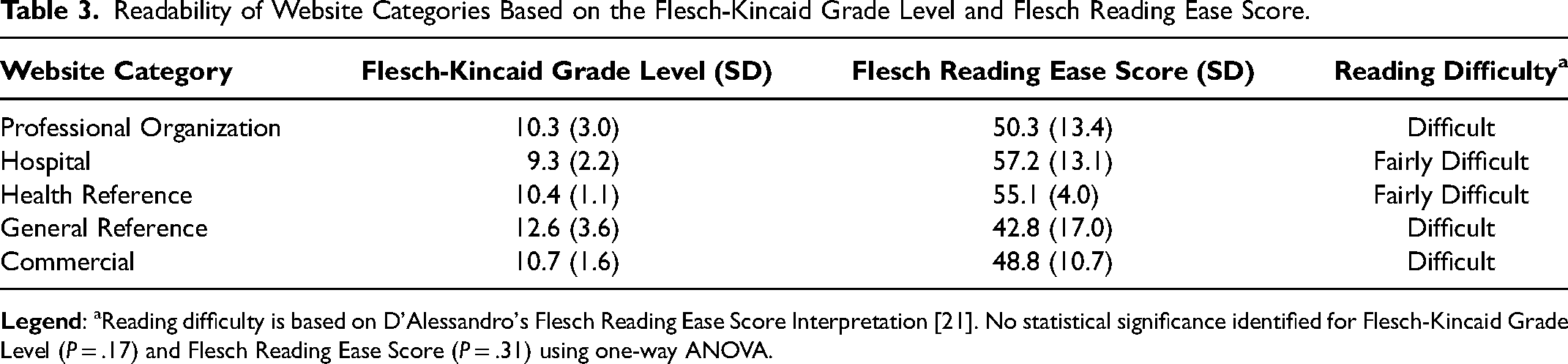
The average FRES for all websites was 54.4, which is considered “fairly difficult” to read (Table 3). 21 The higher the FRES the easier it is to read the text, with scores above 60 representing a “standard” ease of reading and scores above 81 considered an “easy” text to read. Of the 38 websites, 15 (39.5%) had a standard ease of reading. No websites were considered “easy” to read. All website categories had an average FRES corresponding to fairly difficult or difficult ease of reading, and there was no significant difference between website categories (P = .31).
Discussion
This study provides an objective and comprehensive evaluation of the quality and readability of websites with patient information on pediatric head shape conditions, which are prevalent in roughly half of all infants [6]. Given the high frequency of online searches for atypical head shape conditions in infants, we feel this provides an excellent sample of the quality of websites directed to patient education for pediatric conditions. Overall, we found that the more colloquial search term “flat head baby” yields websites with the highest quality and easiest readability, indicating that one does not need to be familiar with medical terminology to yield high quality information from an online search. Furthermore, when seeking medical information on Google, one may perceive the top 10 websites to be the best source of that information; however, the results of our study indicate that this is not always the case, as the highest quality website for the search term “plagiocephaly” was #15 on the Google Rank List. Although our study found no relationship between the websites’ Google Search Rank and quality when compared across search terms, we identified statistically significant differences between a website's quality, as determined by the DISCERN Instrument, and its source. Previous studies have looked at the quality of patient information for various pediatric craniofacial conditions, but none have evaluated how the quality of published information online varies by the source of that information.22,27,28 Specifically, we found that the highest quality websites were published by professional organizations, such as the American Association of Neurological Surgeons, and the lowest quality by commercial organizations interested in promoting products. 20
The results of our study contradict the popular misconception that hospitals are the most reliable sources for high quality online patient information. Although hospitals contribute to more than 50% of the most popular websites related to pediatric head shape conditions, they tend to publish lower quality information than health reference websites, which include Healthline. 18 Previous studies have also found that hospitals publish lower quality information than health reference websites, demonstrating the need for hospitals to improve the quality of online patient information. 29 Professional organizations, although representing a minority of the top 20 websites perused according to Google Search Rank, tended to publish the highest quality information on their websites. Although one would reasonably conclude that patients and families should more frequently utilize websites maintained by professional organizations, such as peer reviewed journals and professional societies of medical specialties, the average reading level of these sources is four grade levels higher than the recommended 6th grade reading level. Therefore, authors of these websites should evaluate whether the reading level of these sources is compatible with the reading level of families seeking these resources.
Evaluation of readability using both FRES, which determines the ease of reading based on the average length of words and sentences, and FKGL, which determines the United States grade level of text based on average sentence length and syllables per word, indicates that less than 40% of all websites reviewed had a standard reading level, and only 5.3% were written at the recommended level of 6th grade. 5 These results align with previous studies on pediatric and adult facial plastic surgery procedures that found inconsistencies between patient information and the recommended 6th grade reading level 21,22,24,25,29–33. In 2022, a scoping review of 36 previously published studies examined the readability of online patient information for plastic surgery procedures, which represents the largest analysis of educational material for the plastic surgery patient to date (n = 1539). 34 Tiourin et al. found that material was consistently above the recommended reading level, regardless of procedure type. 34 The websites with a reading level closest to that of 6th grade included those provided by hospitals, whereas general reference websites delivered medical information in the highest reading level. Although not statistically significant, hospitals are closer to providing more “patient friendly” information online than general reference websites. However, hospital websites were also found to have the second lowest quality based on DISCERN scores. One explanation for this finding might be that hospital websites focus on providing information that the general population can understand, which results in omission of some of the critical components required for a higher DISCERN score. These findings suggest that a new metric that integrates the most important elements of the DISCERN Instrument with that of readability would more closely align our criteria for assessing patient information with patient needs. This metric would create a standard for websites publishing medical information, ensuring that patients are capable of comprehending the high-quality information that is readily available online.
Of the three reports in the pediatric plastic surgery literature evaluating the quality of patient information online, only one has also included an analysis of the quality and readability of content.22,27,28 In that report of 30 websites related to microtia or aural atresia, Alamoudi and Hong similarly identified hospitals as the largest contributors of online patient education and an average FKGL of 10. 21 The authors noted that websites on microtia and aural atresia lacked pertinent details related to the impact of treatment on quality of life. As positional head shape conditions are one of the most common craniofacial conditions among children, there is considerable need to enhance the quality and readability of patient education online related to positional head conditions.6,35,36
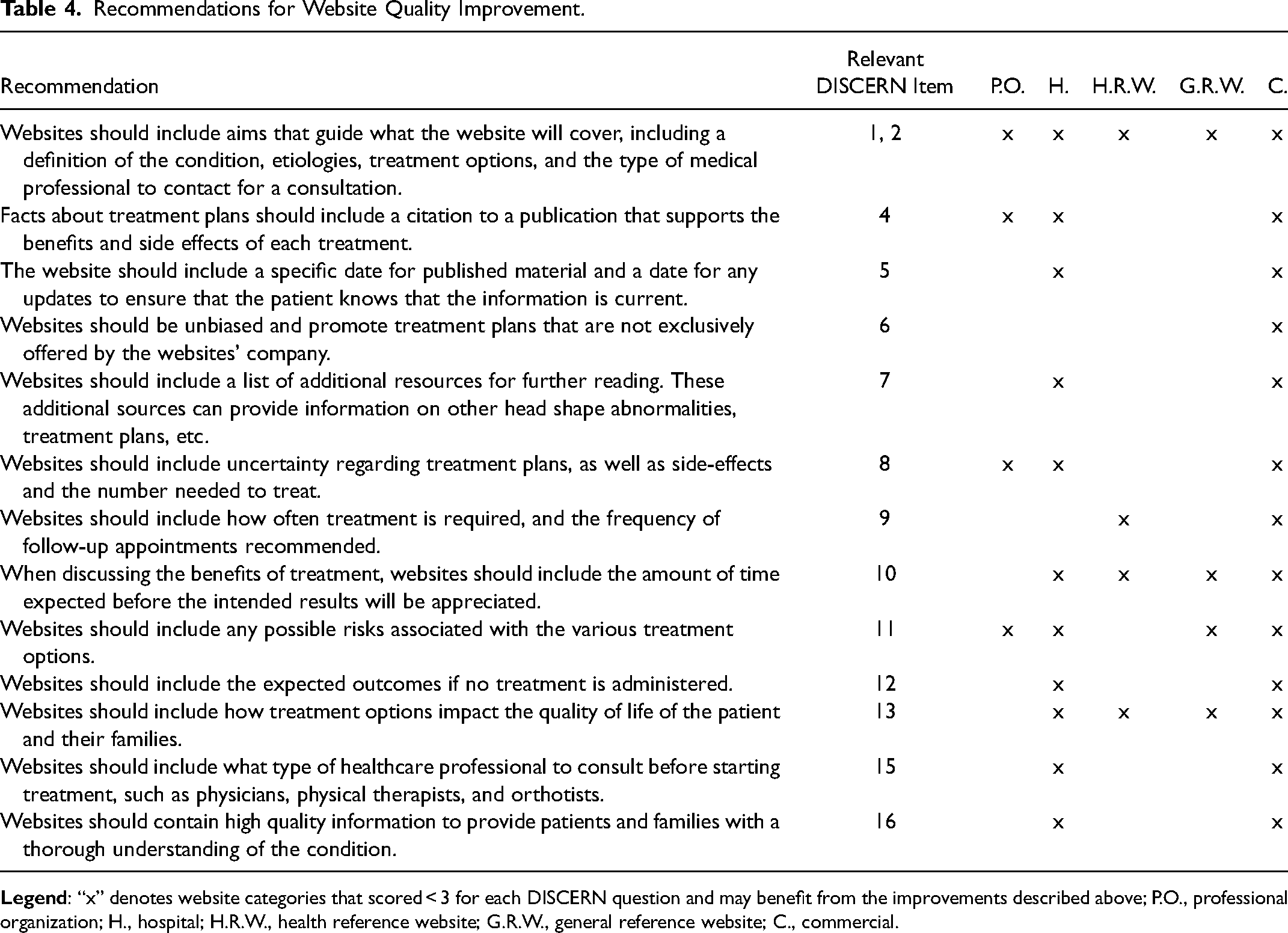
A list of recommendations for websites to improve the content and delivery of their online material and the relevant websites that would benefit from these recommendations is provided in Table 4. In general, all websites should focus on improving their introductory paragraph and/or website aims. Clear aims will provide readers with a better understanding of what will be covered on the website, making it easier to follow. Further, most websites would benefit from including citations when referencing treatment plans. This would allow patients and families to learn more about the treatment options and develop a more realistic framework to manage their expectations. When discussing treatment plans, websites should include possible side effects during treatment, and what patient population is likely to benefit the most from treatment. Additionally, length of treatment expected before results are seen is an important component that should not be overlooked. Finally, websites should include how the treatment options impact the lifestyle of patients and those providing care for them. Incorporating these recommendations will provide patients and families with higher quality information and allow them to make more informed decisions by which to direct their child's healthcare. To improve readability, we recommend that websites use shorter sentences and words with minimal syllables when conveying important patient information. Websites should provide content at a 6th grade reading level. Free readability software, such as the Readability Statistics feature on Microsoft Word employed during this study, would help to standardize readability levels across websites.
Recommendations for Website Quality Improvement.
There are a few limitations to this study that are worth considering. First, our decision to use the Google search engine to collate websites may fail to capture the highly ranked websites retrieved on other search engines, such as Yahoo, Bing, etc. From April 2021 to April 2022, however, Google comprised approximately 85% of the search engine market share in the United States, suggesting that the websites utilized in this study are likely to reflect the most popular websites at the time of this report. 37 Second, it is possible that Google retrieves information specific to the region or country where it is being utilized, and the website results in this study may vary based on location and language. To circumvent this limitation, we chose to include only English websites from the United States. Additionally, we focused on the most common colloquial search term, and other search terms may yield different results. Because the internet is a vast resource, we are unable to capture the full scope of information. However, the common colloquial search term used in this study has more than double the RSV of the other search terms. Future investigation should assess the quality of medical information when only colloquial search terms are used. Finally, given that more than half of the world's population has become engaged with social media since its inception in 1996, our study may fail to capture the contribution that social media platforms may have on disseminating patient information and influencing patient decision-making. 38 However, the quality of information on social media outlets falls outside the scope of the current study. Future studies should focus on the extent to which social media is being utilized by patients and families for medical information on pediatric craniofacial conditions, as well as the quality and readability of the most popular posts that pertain to positional head conditions.
As elucidated in prior studies, a website, irrespective of its quality, is only as useful and impactful as its ability to convey the information. 22 All past and future studies on the quality of patient information, as well as attempts to improve delivery of that information in real time, should be approached with this in mind. Information disseminated online will continue to serve as a popular avenue for communicating medical information and influencing patient decision-making. The major value of providing essential medical information on patient-accessible websites are: 1) it will help patients to understand what conditions would benefit from further assessment by health care personnel; 2) for head shape anomalies that should be evaluated by health care personnel, it will help to guide families to seek initial assessment by a health care provider rather than simply going to a company that fits helmet for profit; 3) it would potentially decrease the cost of care by avoiding unnecessary helmet therapy when physical therapy and positioning may be sufficient treatment options; 4) it could improve quality of care for patients who do undergo helmet therapy as they would be directed to a team of healthcare providers rather than solely to a technician who fits helmets. Team therapy would include a physical therapist to help correct head position, thereby serving to minimize relapse of the head shape condition once helmet therapy is completed.
Health care personnel should take meaningful steps towards improvement of online information. There has been little effort made to improve the readability of patient materials pertaining to plastic surgery procedures in the last twelve years. 24 Targeted efforts in this arena could have a major impact on helping families through well-informed decision-making.22,24
Conclusion
This study provides a comprehensive review of the quality and readability of websites pertaining to pediatric positional head shape conditions, which affects roughly half of all patients during infancy. Overall, we found that professional organizations have the highest quality of online information yet are the least likely to be in the top 20 Google search results. Hospitals, on the other hand, provide the most readable websites but tend to publish lower quality information than health reference websites. This discrepancy in quality and readability was observed from all website sources, emphasizing the need for websites to improve their quality without sacrificing the readability of patient information.
Footnotes
Declaration of Conflicting Interests
The author(s) declared no potential conflicts of interest with respect to the research, authorship, and/or publication of this article.
Funding
The author(s) received no financial support for the research, authorship, and/or publication of this article.
