






Abstract
21st Century Solutions to the Most Complex Problems in CF Surgery: Microsurgery and VSP
22q Team Care: Different Models, Same Goal
Jill Arganbright (1), Emily Gallagher (2), Hany Ale-Escobar (3), Vandana Shashi (4), Donna McDonald-McGinn (5)
(1) Children's Mercy Hospital, Kansas City, MO (2) University of Washington, Seattle Children's Hospital, Seattle, WA (3) Joe DiMaggio Children's Hospital, Hollywood, FL (4) Duke University School of Medicine, Durham, NC (5) Children's Hospital - Clinical Genetics Center, Philadelphia, PA
Background/Purpose: Patients with 22q11.2 deletion syndrome (22q11.2DS) present to many cleft/craniofacial teams in the United States for assessment and management of speech and language disorders including velopharyngeal dysfunction. Because patients with 22q11.2DS are at risk for multisystem involvement and developmental deficits during childhood, they often require coordinated care from a multidisciplinary team. Unlike the well-established team care standards for cleft and craniofacial care, management models for patients with 22q11.2 DS vary widely. While some core team members are consistent across regions of the United States, there is marked variability in both the composition and structure of team care for 22q patients, even amongst larger teams. Also, 22q teams face unique challenges, often related to geographic distribution of patients and available resources. As a result, management approaches vary in ways that may impact clinical outcomes of patients with 22q11.2DS. Despite wide variability in 22q team structure, there is still a common unifying goal of providing expert multidisciplinary care for children with 22q11.2DS. The aim of this presentation is to highlight various models of 22q team care across several institutions in the United States. This will serve as a useful resource for individuals and groups that are interested in starting a 22q team or continuing to grow their current 22q team.
Methods/Description: ACPA's 22q11.2 Related Disorders Special Interest Group offers this interactive session which will showcase five 22q teams across the United States. These 5 teams were purposely selected to have wide variability amongst themselves including demographic/regional location as well as maturity (well established vs newly formed teams). Each of the five 22q team representatives will give a 5 minute presentation which will detail their hospital location/type, the structure and format of their 22q team including specialist composition, care coordination strategies, and team conferencing. Similarities and differences amongst the 22q teams will be highlighted throughout these short presentations. The remainder of the session will be dedicated to interactive discussion amongst the panelists and audience as we tackle questions regarding specific challenges to 22q team care and insight into how each team overcomes these challenges. The team representatives will also address their approaches to patient education, outreach, and transition. We will use an audience interaction app that allows for audience responses/participation throughout the presentation. Our goal is for a collaborative discussion not only amongst the 22q team representatives but also with the audience. Additional time will be given for a formal question and answer session at the end.
3D objective measures for grading the primary unilateral cleft lip nasal deformity: lateral deviation of subnasale is both a clinical and morphologic index of unrepaired cleft severity
Raymond Tse (1), David Fisher (2), Alexander Allori (3), Stephen Beals (4), Thomas Samson (5), Damir Matic (6), Michael Bezuhly (7), Russell Ettinger (1), Ezgi Mercan (1)
(1) Seattle Children's Hospital, Seattle, WA (2) Toronto Hospital for Sick Children, Toronto, Ontario (3) Duke University, Durham, NC (4) Barrow Cleft & Craniofacial Center, Phoenix, AZ (5) Penn State Hershey Medical Center, Hershey, PA (6) University of Western Ontario, London, WY (7) Dalhousie University, Halifax, Nova Scotia
Background/Purpose: Evidence-based treatment of the unilateral cleft lip nasal deformity continues to be hampered by limitations in methods to objectively assess morphology. We have previously found that initial cleft severity predicts post-operative outcome and have explored the use of traditional anthropometric measures as objective means to grade severity. Application of contemporary approaches and the use of computer vision techniques, to leverage the rich surface data of 3D images, has generated additional objective measures for evaluation. The purpose of this study was to utilize a consensus standard of nasal appearance and 3D stereophotogrammetry to determine whether objective measures could be used to characterize severity.
Methods/Description: 3D images of 45 infants with unrepaired cleft lip and 5 age-matched controls were assembled for assessment by 7 cleft surgeons (Americleft Surgeon Subgroup), who independently sorted images into increasing severity of nasal deformity on 2 separate occasions. Internal agreement was assessed. Correlations between objective measures (33 anthropometric dimensions, 135 landmark vectors, and 13 shape-based indices) and the subjective panel rankings were determined using uni-variate and multi-variate linear regression models.
Results: Inter- and intra- rater reliability were excellent (intra-class correlation 0.93). Amongst the objective measures assessed, the lateral deviation of subnasale from the inter-endocanthial midline (sn_x) had the highest correlation (0.85, p < 0.001) with the surgeon ranked severity standard. Anthropometric measurements with high correlation coefficient included nostril width ratio (0.77), lateral lip height ratio (0.71), tip alar volume ratio (0.66), and columellar angle (0.64). 3D surface-based indices with high correlation included point difference symmetry (0.84), dorsum deviation (0.78), and radius difference symmetry (0.77). Univariate and multi-variate regression confirmed that sn_x is the most important predictor of clinical severity. Pre-operative sn_x was also found to be predictive of the post-operative outcome at 5 years of age (0.71, p < 0.001).
Conclusions: Lateral deviation of subnasale (sn_x), the surface landmark for the anterior nasal spine, is the best objective measure of surgical severity for the initial cleft nasal deformity, as determined by subjective assessment. Pre-operative sn_x is predictive of subjective outcome at 5 years of age. Use of sn_x to stratify severity is consistent with our current understanding of embryology and pathogenesis of the deformity.
3D Printed Fabrication of Nasoalveolar Molding Appliance using MRI Modeling in Patients with Cleft Lip and Palate
Chelsea Wehr (1), Austin Lignieres (2), Alfredo Cepeda (3), Antonio Cardenas (4), F. Kurt Kasper (1), Bhavini Acharya (5), Eliana Bonfante-Mejia (3), Roy Riascos-Castaneda (3), Rajan Patel (6), Brett Chiquet (7), Matthew Greives (8)
(1) UTHealth School of Dentistry, Houston, TX (2) McGovern Medical School, Houston, TX (3) McGovern Medical School at The University of Texas Health Science Center at Houston, Houston, TX (4) The University of Texas Health Science Center at Houston School of Dentistry, Houston, TX (5) McGovern Medical School at the University of Texas Health Sciences Center at Houston, Houston, TX (6) Texas Children's Hospital, Baylor College of Medicine, Houston, TX (7) University of Texas Health Science Center at Houston School of Dentistry, Houston, TX (8) McGovern Medical School at The University of Texas Health Science Center at Houston (UTHealth), Houston, TX
Background/Purpose: Orofacial clefts are common congenital defects that can occur due to various genetic and environmental factors. In the past five years, literature has become available which explores the idea of using computer-aided-design (CAD) and 3D printing technology for the fabrication of presurgical infant orthopedic appliances for cleft lip and palate. Presurgical infant orthopedics (PSIO) were introduced with the primary objective of repositioning the nasolabial and maxillary segments closer together to reduce the severity of the cleft in preparation for primary cheiloplasty. The purpose of this study is to demonstrate that an MRI face scan can be used to completely digitize the experience of fabricating a PSIO appliance.
Methods/Description: One patient with unilateral CLP was recruited for participation in this study at our institution. This study employed two different methods for creating a naso-alveolar molding (NAM) appliance, which is used in CLP patients to improve anatomic positioning of the orofacial cleft in preparation for primary cheiloplasty. The patient underwent intraoral impression for traditional fabrication of a naso-alveolar molding appliance (PMMA-NAM) and also MRI of the face for digital fabrication of a naso-alveolar molding appliance (CAD-NAM). The two appliances were then compared using landmarks for measurements. During the MRI, a feed and swaddle method was used to induce sleep and obtain imaging. An acrylic splint and subsequently a metal-free pacifier were used to separate the tongue from the hard palate, and make the soft tissue structures more distinguishable on the MRI. A 3D model was digitally created using 3D Slicer, an open-source image computing platform, and then the model was transferred to 3Shape Appliance Designer, a CAD software, to digitally fabricate a NAM appliance.
Results: The patient was 36 days old at the time of MRI and 38 days old for collection of the traditional intraoral impression. There were no adverse events associated with either visit. There was a statistically significant difference in the external arch width between the CAD-NAM and the PMMA-NAM with a mean difference of +1.15 mm (P = 0.0031). There were no significant differences in the internal arch width (IR-IL) or the arch length (IP-PP) (P > 0.05). Additionally, there was clinical success in the interchangeable fit of both appliances on both models.
Conclusions: This technique could successfully eliminate the intraoral impression step and its associated adverse events in the fabrication of PSIO appliances. An MRI taken in the hospital after birth may be a solution for children living in rural areas, increasing access to care for those born with craniofacial anomalies such as CLP. The use of data from a larger patient population would be useful in determining the efficacy of this novel approach.
3D Printing of Orbital Floor Stamps: Feasibility and Efficacy in Reconstruction of Orbital Floor Fractures
Eric Zeng (1), Griffin Bins (2), Blake Dunson (1), Christopher Runyan (3)
(1) Wake Forest University School of Medicine, Winston Salem, NC (2) Wake Forest Baptist Health, Winston-Salem, NC (3) Wake Forest Baptist Medical Center, Winston Salem, NC
Background/Purpose: Three-dimensional (3D) printing is widely used in craniofacial surgery to enhance pre-operative planning, surgical precision, and patient outcomes. However, this technology comes with high costs and lengthy turnaround times that hinder its broad application in acute craniofacial trauma cases. Industry-printed orbital floor implants cost $8,000 on average and require several days of production time. We previously innovated a novel approach using in-house 3D printers to create contour models to generate patient-specific orbital floor implants. This method enables trauma centers to create patient-specific anatomical implants in a few hours and we hypothesized that this could be done a fraction of the cost of industry-produced implants.
Methods/Description: A retrospective cohort study was performed for 14 patients who have undergone orbital floor reconstruction using either in-house or industry-printed 3D models at our institution from 2019 to 2022. Demographic information (age, sex, comorbidities, type of trauma, and BMI), perioperative data (operative length, blood loss, and length of hospital stay), and postoperative results (complications, functional outcomes, and subjective aesthetic outcomes) were collected. In-house orbital floor 3D stamps were designed using mirrored patient CT scans and printing costs were retrieved from our in-house 3D printing lab.
Results: In-house 3D-printed stamps were used as contour models to press absorbable plates (Sonicweld®, KLS Martin) into patient-specific implants, and associated costs were compared to those for industry-created custom implants. Implants created with the help of in-house 3D printing costed 85% less than industry 3D printing ($998 and $6,701, respectively). In-house 3D printing averaged a turnaround time of 3.5 hours and was quicker than the industry average of several days. There were no significant differences found in complication rates and no patients in either group required re-operation.
Conclusions: This new method of in-house 3D printing to treat orbital floor fractures is rapid, low-cost, and as clinically effective as industry 3D-printed implants. Due to its quick turnaround time, this approach contributes unique value in acute trauma settings where patients may require urgent operation. With greater adoption of this technology, we hope that trauma centers can offer more patients access to custom orbital floor implants, shaped to their own individual anatomy.
80 Years Of ACPA: the influences of history, politics, war and pandemics on cleft and craniofacial care
Marilyn Cohen (1)
(1) Cooper Hospital University Medical Center, Camden, NJ
Background/Purpose: The care of individuals with clefts and craniofacial conditions has been discussed, researched, and the outcomes of that care presented at ACPA meetings for 80 years. The provision of cleft and craniofacial care has been provided through a team approach and that team approach has been altered both postively and negatively by historic events. The purpose of this paper is to outline how history and invention have influenced both postively and negatively the provision of cleft-craniofacial care. The changes in the face of the ACPA membership over the past 80 years is representative of these influences.
Methods/Description: ACPA's 80 year history and the papers presented at it's meetings and in it's journal are a time capsule of 4 plus generations of cleft-craniofacial care. The intent of this paper is to present a peek into that time capsule. Therefore, a brief history of the expansion of ACPA's membership will be presented. The influence of political changes in the United States and the positive and negative effects of wars over the last 2 centuries on health care will be outlined. The changes that have been necessitated by the current and past pandemics will be hightlighted and how they have influenced patient care. This paper will describe how the indudstrial revolution and the processing of rubber and steel in the 1800's made available materials that helped to revolutionize the care of patients with clefts and how the multidisciplinary needs of injured soldiers in World War I brought the concept of team care to the forefront. The role of the great depression of the 1930's and the establishment of the Maternal Child Health Act will be described. The polio epidemic and how the care of patients during that epidemic became a basis for the establishment of pediatric interdisciplinary care teams will be presented together with how the surgical technques used to treat battle injuries in World War II became the basis for the development of modern craniofacial surgery.
A Beginner's Guide to Lactation Counseling: Educating and Empowering Families of Newborns with Clefts about the Benefits of Breast Milk
Melisande Ploutz (1)
(1) University of Rochester Medical Center, Rochester, NY
Background/Purpose: The benefits of breastfeeding and breast milk consumption are seemingly endless, both for mom and baby. Babies born with cleft lip and palate or cleft palate alone will face challenges feeding at the breast, and will most likely require a specialized bottle to feed with. This presentation will discuss the nurse's role in providing simple and basic lactation counseling to families of newborns with cleft lip and palate or cleft palate alone to help educate and empower mothers to pump and feed their babies breast milk. The overall goal of the presentation is for nurses and other team members to gain knowledge and comfort providing general education and support to families who cannot directly breastfeed their cleft affected baby, but still want to provide their baby with breast milk.
Methods/Description: It is well established that babies born with cleft lip and palate or cleft palate alone will have trouble breastfeeding. Yet breast milk is the ideal food for babies as it provides optimal nutrition, important antibodies, and protection from illnesses. Several studies have shown that breast milk provision rates for infants with cleft lip and/or palate are lower than the rates in non-cleft infants. Mothers of babies born with cleft lip and palate or cleft palate alone can still provide their babies with breast milk if they are properly educated and empowered to pump. Cleft and Craniofacial Team nurses can play an integral role in supporting mothers with pumping and feeding their breast milk via an assistive bottle. This presentation will describe how Cleft and Craniofacial Team nurses can prepare parents for their exclusively pumping journey as early as the prenatal visit. With proper preparation and realistic expectations, mothers will be more likely to pump and feed their infants breast milk for a longer period of time.
A Calvarial Defect Murine Model for the Investigation of the Osteogenic Potential of Umbilical Cord Stem Cells in Alveolar Cleft Repair
Eloise Stanton (1), Jifan Feng (2), Katelyn Kondra (1), Janet Sanchez (2), Christian Jimenez (1), Mark Urata (3), Yang Chai (4), Jeffrey Hammoudeh (5)
(1) Keck School of Medicine of the University of Southern California, Los Angeles, CA (2) Center for Craniofacial Molecular Biology of USC, Los Angeles, United States (3) Children's Hospital Los Angeles/Keck School of Medicine of USC/Ostrow School of Dentistry of USC, Los Angeles, CA (4) University of Southern California, Los Angeles, CA (5) Children's Hospital Los Angeles, Los Angeles, CA
Background/Purpose: Cleft lip and/or palate (CLP) is one of the most common congenital anomalies and is frequently associated with an alveolar cleft. At many institutions, the standard graft material of alveolar cleft repair (ACR) is autogenous iliac crest bone; however, bone-morphogenetic-protein 2 has shown to be a viable alternative with similar success rates. An alternative potential graft adjunct, umbilical cord stem cells (UCSC), has yet to be explored in vivo. There is ample pre-clinical literature supporting the utility and advantages of UCSC in ACR. Their capacity for self-renewal, pluripotent differentiation, and proliferation allows UCSC to be harnessed for regenerative medicine. Our study seeks to evaluate the feasibility of using UCSC and their osteogenic and regenerative capabilities in a mouse model to improve ACR.
Methods/Description: Sixteen FoxN1 mice were included in the study, which were separated into three groups: (1) calvarial defect surgery and no treatment (n = 6) (2) calvarial defect surgery with poly(D,L-lactide-co-glycolide) (PLGA) treatment (n = 6) (3) calvarial defect surgery with UCSC mixed with PLGA. Calvarial defect surgeries consisted of a sagittal skin incision followed by creation of bilateral, 2 mm diameter, full-thickness, parietal bone defects using a 1.8 mm dental drill; of note, 2 mm is the established critical size defect of murine calvarial bone. At 4-weeks postoperatively, the remaining mice were then sacrificed for histologic examination, RNAscope, and immunohistochemistry.
Results: All 18 mice underwent calvarial defect surgeries without postoperative complications or infections. All mice were fully ambulatory with no signs of neurologic deficits throughout the 4-week follow-up period. As evidenced by microCT imaging, at 1-, 2-, 3, and, 4-weeks postoperatively, all calvarial defects in groups (1) and (2) remained patent without significant differences in defect sizes between the two groups. Histologically, group (1) and (2) defects demonstrated patency without significant size differences at 4 weeks postoperatively. In contrast, the UCSC group (3) had significantly greater bone fill in the defects at each of the postoperative time points on microCT imaging and demonstrated a lack of patency histologically at final follow-up.
Conclusions: These results demonstrate a successful calvarial defect murine model for the investigation of UCSC-mediated osteogenesis and bone repair. Further, our findings provide evidence that PLGA alone has no short-term effect on bone formation nor any unwanted side effects, making it an attractive vehicle for graft substitutes. Further investigation using this UCSC and PLGA scaffold combination in a larger animal porcine model is warranted in hopes of future translation to ACR in patients with CLP.
A Community Based Craniofacial Team Day Facilitates Optimism and Psychosocial Support Among the Families of Children with Cleft Lip and Palate
Myles LaValley (1), Sarah Diaddigo (2), Thomas Imahiyerobo (3), Seth Aschen (4), Ishani Premaratne (5)
(1) Columbia University Vagelos College of Physicians and Surgeons, New York, NY (2) Columbia University Vagelos College of Physicians and Surgeons, New York, United States (3) Columbia University Medical Center, New York, NY (4) Columbia University and the NewYork-Presbyterian - Morgan Stanley Children's Hospital, New York, NY (5) University of Southern California, Los Angeles, United States
Background/Purpose: Patients with a cleft lip and/or palate (CLP) present a complex clinical challenge requiring a multidisciplinary approach for optimal treatment. Increased psychosocial and community support improves patient outcomes, decreases family stress, and considering the relationship between cleft incidence and indicators of lower socioeconomic status, may offer an additional benefit to under-resourced families. This institution's Craniofacial Team Day (CTD) is an event where patients with CLP and their families interact with the cleft care team members and other families in an informal setting. Survey data from the CTD in 2019 indicated that parents of patients with CLP were more optimistic about their child's well-being and planned to spend more time talking with other CLP families after attending the CTD. This study surveyed attendees of the 2022 CTD to understand how community events improve outcomes, satisfaction, and access to support resources through exposure to the CLP community.
Methods/Description: CTD attendees completed a pre-event questionnaire which utilized a 5-point Likert-scale, multiple choice questions, and free text responses. One week later, a post-event survey was administered via Qualtrics. The survey designs and questions were consistent between 2019 and 2022 CTD. The survey questions asked about parents’ perception of their child's condition, engagement with other CLP families, and interaction with the treatment team. Responses were compared between the pre- and post-event surveys as well as between the 2019 and 2022 surveys.
Results: 44 responses were collected from 22 families at CTD, with 32% of these families also completing the post-event questionnaire. Families attended CTD primarily for encouragement and the craniofacial team, each being indicated by 57% of respondents and also being the most common answers in 2019 (70%). Concern regarding a CLP child's ability to make friends (39% to 29%) and future career success (37% to 29%) both decreased pre-event to post-event. After the CTD more parents would be enthusiastic about providing support to other CLP families (86% to 100%) and viewed their child's condition as less severe (66% to 86%). Most families turn to CLP providers for their psychosocial support, both before (89%) and after (67%) the event. While providers remained the main source of support, there was a substantial increase (29% to 43%) in parents indicating that they would use other CLP families as a main source of psychosocial support.
Conclusions: Community gatherings such as a CTD are an encouraging opportunity for CLP families to connect with each other and their providers in a family-centered setting. This facilitated exposure may lessen concerns regarding children's ability to function socially, create a more optimistic perspective of their condition, and facilitate greater psychosocial support between CLP families. Institutions may benefit from similar events, especially in under-resourced communities, to improve outcomes for their patients with CLP.
A Comparative Effectiveness Study of Speech and Surgical Outcomes and the Cleft Outcomes Registry-Research Network – CORNET: Study Design, Current Status, Opportunities, and Challenges
Kathy Chapman (1), Adriane Baylis (2), Mary Hardin-Jones (3), Richard Kirschner (2), Thomas Sitzman (4)
(1) University of Utah, Salt Lake City, UT (2) Nationwide Children's Hospital, Columbus, OH (3) University of Wyoming, Laramie, WY (4) Phoenix Children's Hospital, Phoenix, AZ
Background/Purpose: Children with cleft palate + lip (CP + L) undergo numerous surgical, orthodontic, speech, and other interventions to lessen the impact of clefting. Yet, there is genuine uncertainty about the effectiveness and outcomes of many aspects of cleft care. Consequently, treatment decisions are often based on biases from prior training, clinical experiences, or provider expertise rather than rigorous research. In the United States (US), significant historical barriers to research in cleft palate (CP) exist including poor intercenter collaboration; underpowered studies; a lack of standard protocols for collecting and measuring outcomes; and a limited number of appropriate study designs/statistical techniques. Our NIH-NIDCR funded study, including a consortium of 18 cleft palate-craniofacial centers across the US, has attempted to overcome these barriers. In addition to the hypothesis-driven study of primary palatoplasty outcomes, we are attempting to characterize practice variation in speech interventions and their impact on outcomes. A unique aspect of the grant is the creation of the Cleft Outcomes Registry-Research Network (CORNET), which is the first true ‘biopsy’ of current clinical practice and outcomes for children with CP + L in the US while also facilitating interdisciplinary collaborations through data/resource sharing.
Methods/Description: A prospective, longitudinal comparative-effectiveness study design is being used to compare outcomes of two palate repair techniques (intra-velar veloplasty and Furlow Z-plasty). Exclusion criteria include: submucous CP, severe to profound sensorineural hearing loss, palatoplasty performed past 30 months of age, and primary home language not English or Spanish. Common data elements related to demographic, medical, surgical, developmental and intervention related factors are collected across multiple time points. Providers (surgeons and speech-language pathologists [SLP]) also complete point-of-care forms and provide information on their training/experience. Speech and surgical outcomes are assessed at 3 years of age by blinded, trained SLP raters from standard video-recorded samples.
Results: Over 1,200 children are enrolled in the study. Currently, 88% have undergone palate repair, and 72% have completed post-op visits. Seventy-one percent and 52% have completed 16- and 24-month visits, respectively. One-hundred and fifteen children have completed the 3-year speech outcome assessments.
Conclusions: The CORNET project provides an innovative model for collaborative multicenter CP outcomes research in the US. The goal of this network is to provide an enduring contribution to the field of CP and to support timely and clinically relevant research. Other investigators have begun to leverage CORNET to examine other outcomes (i.e., health, psychosocial, dental). A discussion of study challenges and lessons learned related to recruitment, COVID-19 disruptions, integration of study activities into team care, and participant retention strategies will also be included.
A comparison of early speech production in children who have cleft palate with and without Pierre Robin sequence
Kari Lien (1), Mary Hardin-Jones (2), Libby Heimbaugh (2), Kathy Chapman (1), Adriane Baylis (3), Chelsea Sommer (4), Caitlin Cummings (3)
(1) University of Utah, Salt Lake City, UT (2) University of Wyoming, Laramie, WY (3) Nationwide Children's Hospital, Columbus, OH (4) Florida International University, Miami, FL
Background/Purpose: Historically, children with Pierre Robin sequence (PRS) have been excluded or have not been examined as a separate group in cleft speech outcome research due to small sample size and/or concern for influence of other anomalies associated with PRS. Thus, our understanding of early speech development in children with PRS is limited. Past research has identified differences in cleft width and temporary effects of tongue-lip adhesion on speech in children with PRS (Godbout et al., 2014; LeBlanc and Golding-Kushner, 1992). The purpose of this study was to compare the number of different stop consonants in the consonant inventory in 16-month-old children with Pierre Robin sequence (PRS) and cleft palate compared to children with cleft palate only (CPO).
Methods/Description: As part of a larger longitudinal multisite study of cleft palate speech outcomes, we conducted a prospective observational study of 27 children with non-syndromic PRS, matched with 27 children with non-syndromic CPO. Groups were matched for cleft type, sex, and number of months between palate repair and speech assessment. On average, children with PRS were 4.59 months post-surgery, and their peers with CPO were 4.89 months post-surgery. Additional participant demographic and medical history, including history of airway management, is available to characterize the sample. Parents were asked to record approximately two hours of their child's vocalizations at home using a Language ENvironmental Analysis (LENA) recorder. Four ten-minute audio-recorded samples of vocalizations were extracted from the original recording for each participant and analyzed for presence of stop consonants.
Results: One-way analysis of variance (ANOVA) was used to compare the groups on number of stop consonants in their consonant inventory and differences in place and voicing features. A Bonferroni correction was used to adjust for multiple tests. Children with CPO used significantly more different stop consonants in their consonant inventory (mean = 3.5 stops) than their peers with PRS (mean = 2 stops) at 16 months of age, F(1, 52) = 11.36, p < .001, d = 0.91. Children with CPO had significantly more voiced stops in their consonant inventory, F(1, 52) = 8.80, p < .005, d = 0.81, and velar stops, F(1, 52) = 20.35, p < .001, d = 1.22, than peers with PRS. Groups were not significantly different in the number of voiceless stops, labial stops, or alveolar stops in consonant inventory.
Conclusions: Children with PRS had significantly fewer oral stops in their consonant inventory compared to children with CPO. Children with PRS also had fewer voiced stop consonants and velar stop consonants in their inventory. These data suggest children with PRS may experience larger delays in speech production compared to their non-PRS peers with clefts, which has implications for early assessment and intervention planning.
A Comparison of Revision Rates in Patients Undergoing Traditional versus Neonatal Cleft Lip Repair
Sarah Alfeerawi (1), Idean Roohani (2), Collean Trotter (2), Dylan Choi (1), Pasha Shakoori (3), Artur Fahradyan (1), Mark Urata (1), William Magee (1), Jeffrey Hammoudeh (1)
(1) Division of Plastic and Maxillofacial Surgery, Children’s Hospital Los Angeles, Los Angeles, CA (2) Keck School of Medicine of USC, Los Angeles, CA (3) Division of Plastic and Maxillofacial Surgery, Keck School of Medicine of USC, Los Angeles, CA
Background/Purpose: Traditional cleft lip repair (TLR) with or without nasoalveolar molding (NAM) as an adjunctive treatment has been the gold standard for cleft lip reconstruction. However, assessing the efficacy of the traditional technique and its impact on improving nasal symmetry led to the introduction of early cleft lip repair (ECLR). ECLR takes advantage of the high degree of plasticity within the nasal cartilage and maxilla while reducing the need for secondary procedures. This study compares the revision rate and timing of revision from the index surgery in patients who underwent ECLR versus TLR.
Methods/Description: A retrospective review was conducted on all patients with unilateral cleft lip (UCL) with nasal deformities ± palate who underwent cleft lip nasal repair by two senior attending surgeons from 2011 to 2022. Patients with craniofacial syndromes were excluded. Patient demographics, corrected gestational age, comorbidities, age of lip repair, cleft phenotype, revisions, and follow-up time were collected. Timing from cleft lip repair to nasal revision was calculated. Chi-squared and independent t-tests were used to analyze categorical and continuous data, respectively. Kaplan-Meier analysis was used to compare the risk of revision over time between cohorts.
Results: Upon review, 236 patients were identified, of which 131 (55.5%) underwent ECLR and 105 (45.5%) underwent TLR ± NAM. The average ages of ECLR and TLR ± NAM were 1.0 ± 0.5 months and 3.6 ± 0.8 months, respectively (p < 0.0001). Overall, the ECLR cohort had a significantly lower revision rate compared to the TLR cohort (10.7% vs 26.9%, p = 0.001). Moreover, the TLR cohort had significantly more major revisions (p = 0.017). Average follow-up times were 5.7 ± 3.6 years for the TLR cohort and 3.0 ± 2.0 years for the ECLR cohort (p < 0.001). To minimize the systematic variability between cohorts, patients with greater than 84 months of follow-up time were excluded to analyze groups with comparable follow-up times. The ECLR cohort took a significantly longer time from lip repair to revision compared to the TLR cohort (3.7 ± 1.8 years vs. 2.3 ± 1.5 years; p = 0.037). The three-year revision rate of the TLR cohort (18.1%) was significantly higher compared to the ECLR cohort (4.1%; p = 0.035).
Conclusions: Timing of the cleft lip repair and its effects on the extent of revisions mandates objective validation of clinical utility. The TLR cohort had a significantly higher revision rate compared to ECLR; notably, a higher proportion of revisions in the TLR cohort required major corrections. Furthermore, the TLR cohort was at increased risk for revision compared to the ECLR cohort. Our findings suggest that cleft lip repair between one to three months of age can improve primary outcomes, while also decreasing the burden of secondary procedures later in life.
A Comprehensive Scheme for Classifying VPI Surgeries and the Intentional Technique Variations Among Surgeons
Raymond Tse (1), Thomas Sitzman (2)
(1) Seattle Children's Hospital, Seattle, WA (2) Phoenix Children's Hospital, Phoenix, AZ
Background/Purpose: While surgical procedures for velopharyngeal insufficiency (VPI) can generally be categorized into palate re-repair, pharyngeal flap, sphincter pharyngoplasty, and posterior wall augmentation, there is substantial variation in how these procedures are performed. The purpose of this study was to describe a classification schema for VPI surgical procedures developed by surgeons participating in the Velopharyngeal Insufficiency Outcomes Prediction Study (VPI-OPS) that incorporates intentional variations in surgical technique.
Methods/Description: Two cleft surgeons completed an in-depth review of VPI surgery publications and developed a preliminary schema that encompassed all existing VPI surgical procedures. Forty-one cleft surgeons from twelve hospitals across the United States and Canada then reviewed the schema and either confirmed that it encompassed all VPI surgeries they performed or requested additions. The schema was updated to include all requested additions. The two cleft surgeons who developed the initial schema then directly observed VPI procedures at all twelve hospitals to confirm consistency of schema application among surgeons. During these observations, details were recorded on each surgeon's technique.
Results: VPI surgical procedures were divided into three groups: palatoplasty; pharynx-based reconstruction (e.g. pharyngoplasty); and augmentation. Palatoplasty operations included straight line mucosal incision with intravelar veloplasty, Furlow double-opposing Z-plasty, and palate lengthening with buccal myomucosal flaps. Many surgeons blended maneuvers from these three techniques, so a more descriptive schema was developed classifying the maneuvers employed on the oral mucosa, nasal mucosa, and muscle. Pharynx-based reconstruction included pharyngeal flap and sphincter pharyngoplasty, with variations in design for each. Augmentation procedures included palate and posterior wall augmentation, with variations in augmentation materials.
Conclusions: A comprehensive schema for classifying VPI surgical procedures is presented and encompasses viewpoints from over forty surgeons. This schema will serve as the frame for evaluating surgical outcomes in the VPI-OPS study.
A Critical Assessment Of Gender Diversity Within Plastic Surgery
Jean Carlo Rivera (1), Sacha Hauc (1), Mica Williams (2), Hui Yu Juan (3), Daniel Najafali (4), Aaron Long (1), Paris Butler (5), John Persing (1), Michael Alperovich (1)
(1) Yale School of Medicine, New Haven, CT (2) Yale University School of Medicine, New Haven, CT (3) Virginia Commonwealth University School of Medicine, Richmond, VA (4) Carle Illinois College of Medicine, Urbana, IL (5) Division of Plastic and Reconstructive Surgery, University of Pennsylvania, Philadelphia, PA
Background/Purpose: Prior research into female representation in leadership positions, has not comprehensively analyzed gender diversity within residency class as well as faculty by academic title, including society and journal board within the past 5 years. This study sought to examine gender distributions within academic plastic surgery faculty and leadership, appointment to journal editorial boards, election to society boards, and selection for society sponsored visiting professorship programs.
Methods/Description: A cross-sectional study was performed to evaluate gender in plastic surgery among academic faculty, journal editorial boards, and professional societies’ leadership positions. Our sample included 1918 subjects across 879 plastic surgery journal editorial board members, 872 plastic surgery academic faculty members, and 167 plastic surgery association board members.
Results: A total of 872 plastic surgery academic faculty were reviewed from 86 plastic surgery program websites. The majority (76.7% or 669) were male, which was significant (p-value < 0.0001). Faculty members were further subdivided by academic rank. A significant difference was found between the number of male and female faculty members at all academic positions (p-value < 0.001). Of 245 full professors, 7.8% were female. There were 226 associate professors queried with 22.1% identified as female. Similarly, 401 assistant professors were identified with 33.4% identified as female. There was a significant difference (p-value = 0.005) in the gender distribution of visiting professors among the various PRS societies with 87% being male.
Conclusions: While women now make up more than half of medical students, disparities in gender representation persist in many specialties in medicine, including plastic surgery. Our results show that representation of women in plastic surgery trails behind recently reported numbers for other specialties. Difficulty finding mentors, family responsibilities, and institutional biases have been cited as barriers to women reaching faculty and leadership roles in plastic surgery. Additional years of training in fellowship programs may compound these issues. Future studies are warranted to assess gender disparities in the field of plastic surgery and better understand the factors which prevent women from occupying faculty positions and leadership roles in plastic surgery.
A Descriptive Analysis of Ophthalmologic Comorbidities in Craniosynostosis
Evien Albazi (1), Darin Patmon (1), Anna Carlson (2), John Girotto (2), Brooke Geddie (2)
(1) Michigan State University College of Human Medicine, Grand Rapids, MI (2) Helen DeVos Children's Hospital, Grand Rapids, MI
Background/Purpose: Craniosynostosis often alters the upper third of the facial skeleton which may lead to orbital distortions or asymmetry. This can have ophthalmologic consequences thus highlighting the importance of a multidisciplinary approach including ophthalmologists in craniosynostosis care. We seek to better understand the ophthalmologic comorbidities associated with craniosynostosis by performing a descriptive analysis of our patients.
Methods/Description: A retrospective analysis of consecutive patients who received cranioplasty secondary to craniosynostosis were included for analysis in our study. Notes from ophthalmologists in our multidisciplinary clinic were audited to verify diagnoses. Additional demographic and surgical data were collected and analyzed to provide summary statistics of the most common ophthalmologic comorbidities associated with craniosynostosis.
Results: A total of 177 patients met inclusion criteria for our study. The most common ophthalmologic comorbidity associated with craniosynostosis was strabismus which was diagnosed in 15.82% (n = 28) of patients. Most commonly exotropia was recorded (60.71%, n = 17) but also esotropia (35.71%, n = 10) or hypertropia (3.57%, n = 1). Pseudostrabismus was diagnosed in 5.08% (n = 9) of patients. Strabismus was most commonly diagnosed in patients with unicoronal craniosynostosis (47.06%, n = 8) followed by multisuture craniosynostosis (38.46%, n = 5) and bicoronal craniosynostosis (35.71%, n = 5). Trigonocephaly was associated with strabismus in 13.16% (n = 5) of patients but had the highest rate of pseudo strabismus at 15.79% (n = 6). Additional ophthalmologic comorbidities present in our patient population include amblyopia (n = 15, 8.47%), papilledema (n = 8, 4.52%), optic neuropathy (n = 4, 2.26%), and exposure keratopathy (n = 1, 0.56%).
Conclusions: Strabismus affects approximately 1 in 6 patients diagnosed with craniosynostosis with a higher prevalence in patients with involvement of the coronal sutures. Early consultation of ophthalmologists in these patients may prove beneficial in decreasing the long-term consequences of strabismus.
A Fully Digitized Workflow to Fabricate Nasoalveolar Molding Devices for Treatment of Cleft Lip and Palate
Angie Zaki-Sabet (1), Mariam Zade (2), Eric Braden (1), Mairaj Ahmed (2), Krishna Koka (3)
(1) Arkansas Children's Hospital, Little Rock, AR (2) Montefiore Medical Center, Bronx, NY (3) University of Michigan, Ann Arbor, MI
Background/Purpose: Cleft lip with or without cleft palate is among the most common birth defects with an estimated incidence of 1:1000 live births[1, 2]. Nasoalveolar molding (NAM) is a presurgical orthopedic application that reorients misaligned bony and soft tissue structures to reduce the severity of the initial cleft alveolar and nasal deformities for better alignment during reconstructive surgery [3-5]. The traditional fabrication technique involves the fabrication of a removable acrylic plate that is adjusted manually by orthodontists at weekly intervals[4, 6]. Despite NAM's advantage of improving primary surgical outcomes, the current approach has limitations, including requiring multiple impressions, chairside modifications, and extensive provider time. We propose a new approach through fully digitizing mold manipulation and 3-D printing to fabricate clear aligner NAM devices to improve accessibility, accuracy, and speed of NAM therapy.
Methods/Description: A workflow was developed to demonstrate using an intraoral scanner, CAD software, and 3D printing to design the NAM appliance. This workflow includes an intraoral scanner to capture impressions of the alveolar segments, obtaining a digital STL image of the cleft, CAD software to freeform mold the alveolar segments to simulate progressive cleft width closure, and finally printing of a series of intraoral appliances for sequential use. Sequential movements are done digitally by a CAD designer under the guidance of an orthodontist, and the treatment sequence is approved by the clinician.
Results: The current process of fabricating and modifying NAMs is incredibly labor intensive, and by digitizing the manipulation and fabrication, the process is more efficient. A more efficient medical device manufacturing process will allow clinicians to drop the price of treatment, opening up NAM to new markets. Digitization not only makes the manufacturing process more efficient but also allows expertise to be decentralized. Through uploading 3D files to secure clouds, experts can access, manipulate, plan, and approve NAMs without being on location.
Conclusions: Digitally aided workflows leveraging intraoral scanners, CAD software, and 3D printing can provide greater benefits to traditional NAM fabrication by reducing the burden of care, especially in areas of the world without the provider expertise to fabricate NAMs. This proposed digital approach results in a personalized NAM design that can accelerate adoption and reduce challenges.
A Mobile-based Augmented Reality Model for Diagnostic and Spatial Assessment Tasks Evaluating Traumatic Craniofacial Fractures
Solomon Lee (1), Niel Panchal (1), William Hoffman (1), Benjamin Laguna (1), Jason Pomerantz (1), Jesse Courtier (1)
(1) University of California San Francisco, San Francisco, CA
Background/Purpose: Accurate diagnosis and spatial characterization of craniofacial fractures is critical for treatment planning and precise fracture reduction. Augmented reality (AR) is an emerging tool with potential for better diagnostic evaluation than traditional three-dimensional (3D) reformats. This study tests whether an accessible mobile-based AR model improves diagnostic accuracy, spatial understanding, and decreases task cognitive load when evaluating facial fractures.
Methods/Description: Surgical providers (n = 30) in specialties managing craniofacial trauma assessed a database of mandibular and maxillofacial complex fractures of varying severity using computed-tomography slices supplemented with either traditional 3D reformats (control) or the AR model (experimental). Providers completed diagnostic and spatial characterization tasks, and were evaluated quantitatively on diagnostic accuracy, task cognitive load, and weighted preference for the traditional versus AR model. Task cognitive load and weighted interface preferences were adapted from the NASA Task Load Index survey. Providers were also evaluated qualitatively on their AR experience compared to traditional 3D reformats.
Results: 83% of providers preferred the AR model overall. Diagnostic sensitivity and specificity were equivalent between the control and experimental groups. Stratified by training level, junior providers (post-graduate year two or less) found the AR model required less effort (p = 0.02), was less frustrating (p = 0.01), and was preferred for fracture displacement characterization (p = 0.04). Means were compared using paired t-test. The AR model had no significant impact on senior providers (post-graduate year three or greater). Qualitative findings expanded upon quantitative results. All providers found the AR model allowed more intuitive manipulation of the 3D object, but junior providers expressed greater preference for the AR model over traditional imaging for diagnostic and educational purposes, while senior providers found that the AR model did not significantly alter their established approach to fracture evaluation.
Conclusions: Our study demonstrates that our mobile-based AR model is a preferable interface to traditional 3D formats for spatial assessment tasks and decreasing task cognitive load, most notably in less experienced providers for whom perioperative practices are less established.
A Modified Schedule Structure for Maxillary Distraction Osteogenesis
Danielle Sobol (1), Stefanie Hush (1), Joseph Williams (1)
(1) Children's Healthcare of Atlanta, Atlanta, GA
Background/Purpose: Maxillary distraction is a tool used to correct significant molar Class III malocclusion often seen in patients with cleft lip and palate. First introduced using an external halo device, subsequent distraction devices have been designed to be placed internally, adjacent to the midfacial skeleton. Typically, the device access pins are in the upper buccal sulcus. In traditional activation phase, the devices are advanced 0.5 mm twice daily over approximately 2-3 weeks. We have found these activation events are associated with significant anxiety and pain leading to decreased compliance at home and, on occasion, abortion of the distraction schedule completely. We have introduced a modification of this schedule utilizing larger interval distractions every 7 days under sedation. Our hypothesis is that this new schedule still allows for successful advancement with limited relapse of the LeFort segment.
Methods/Description: Seven consecutive patients with history of cleft lip and palate underwent implementation of the new interval distraction schedule after LeFort I osteotomies. Cephalograms were taken preoperatively and 6 months post distraction removal. Three patients obtained an additional cephalogram at the time of distraction removal. The cephalometric landmarks were analyzed including SNA and ANB angles as an indicator of maxillary positioning.
Results: The total amount of distraction averaged 16.5 mm. Number of days from initial device placement and distraction to completion of distraction was 11.4 days. Patients had an average of 2.4 distraction events (including initial distraction at the time of device placement). Advancement during each interval distraction event averaged 7.1 mm, 5.2 mm, and 4.3 mm, respectively. One patient underwent a final distraction event of 7.5 mm.
Cephalometric analysis
3 patients with 3 cephalograms: SNA ANB
Preoperative: 66.7, -6.9
Perioperative device removal: 74.8, 2.1
6 months post device removal: 72.9, -1.8
7 patients (total): SNA, ANB
Preoperative: 69.1, -7.8
6 months post device removal: 77.5, 1.2
Conclusions: Modifying the schedule of maxillary distraction from twice daily turns during activation phase to weekly advancements with larger interval movements provided acceptable results with limited relapse. The modified schedule was tolerated much better by the patients.
A multicentre study to assess speech outcomes at the age of 5 years in children with complete bilateral cleft lip and palate: a comparison of single-stage versus two-stage lip repair techniques
Bhavika Khera (1), Lauren Laverty (2), Serena Martin (3), Jane Kerby (4), Sarah Overton (5), Eilish O'Conor (6), Stephanie Van Eeden (4), Chris Hill (6), Peter Hodgkinson (7), David Sainsbury (4), Guy Thorburn (8), Marc Swan (5)
(1) Oxford Univerisy Hospitals, Oxford, United Kingdom (2) Belfast, Belfast, United Kingdom (3) Oxford University Hospitals, Oxford, United Kingdom (4) Newcastle Hospitals NHS Foundation Trust, Newcastle, United Kingdom (5) Oxford University Hospitals, Oxford, United Kingdom (6) Belfast Health and Social Care Trust, Belfast, Ireland (7) Newcastle Hospitals NHS Foundation Trust, Newcaslte, United Kingdom (8) Spires Cleft Centre, Oxford, United Kingdom
Background/Purpose: Published speech outcomes in children with bilateral cleft lip and palate (BCLP) are consistently less favourable than other cleft phenotypes. BCLP is often associated with a higher rate of complications including palatal fistula. A multi-centre study was undertaken to ascertain whether the surgical protocol for primary lip reconstruction impacts on speech outcomes in children with BCLP. Definitive single-stage lip closure was compared to a two-staged reconstruction whereby an initial lip adhesion is followed by a definitive repair
Methods/Description: A retrospective study encompassing three regional cleft centres in the United Kingdom was performed. Patients born with a complete BCLP between the years 2005 and 2021 were included. Syndromic and non-syndromic cases were recruited. One hundred and forty-nine children were identified; one hundred-and-fourteen met the inclusion criteria for this study. Thirty-nine patients (34%) had a single-stage lip repair with simultaneous bilateral vomerine flap closure of the hard palate at a median age of 3.8 months (range 2.6- 19.4 months) followed by a Sommerlad palatoplasty at a median age of 10.2 months (range 7.6- 22.1 months). Seventy-five patients (66%) underwent a two-stage lip repair with sequential vomerine flap closure of the hard palate. The median age at the first-stage lip adhesion was 3.5 months (range 0.7- 13.5 months) and at the definitive lip reconstruction was 9.3 months (range 4.7- 29.5 months). The median age at the subsequent palatoplasty was 12.6 months (range 7.3-36.0 months). There was a significant difference in the timing of palatoplasty between the two cohorts (p < 0.00001, Mann-Whitney U test). Speech outcomes were assessed by dedicated cleft speech therapists using the GOS.SP.ASS. methodology. Bilabial consonant production at 18 months, 3 years and 5 years was evaluated in addition to Cleft Speech Characteristics (CSCs) at 5 years. Outcomes were compared between the single-stage and two-stage cohorts. In addition, the incidence of palatal fistula (using the Pittsburgh classification) and the five-year index (representing maxillary growth) were recorded and compared between the two cohorts. Children with a BCLP who had a single-stage lip repair had significantly improved bilabial consonant production at 18 months (p = 0.0035, χ2) and 3 years (p = 0.0028, χ2) in comparison to children undergoing a two-stage lip repair. However, at 5 years both groups had equivalent outcomes for bilabial consonant production (p = 1, χ2). There was no significant difference between the two cohorts with regards to anterior oral (p = 0.5182, χ2), posterior oral (p = 0.5112, χ2), non-oral (p = 0.7393, χ2) and passive (p = 0.1579, χ2) cleft characteristics. Children who had a single-stage repair had a significantly higher fistula rate in comparison to the two-stage cohort (p = 0.016, χ2). There was no significant difference in the five-year index between the two groups (p = 0.7928, χ2).
A Multi-Institution Evaluation of Outcomes with Periorbital Steroids in Fronto-Orbital Advancement
Daniel Cho (1), Jessica Blum (2), Nicole Kurnik (3), Jordan Swanson (2), Srinivas Susarla (4), Jesse Taylor (5), Richard Hopper (6), Craig Birgfeld (7), Scott Bartlett (2)
(1) University of Wisconsin - Madison, Madison, WI (2) Children's Hospital of Philadelphia, Philadelphia, PA (3) Phoenix Children's Hospital, Phoenix, AZ (4) Seattle Children's Hospital, Seattle, WA (5) The Children's Hospital of Philadelphia, Philadelphia, PA (6) Seatte Children's Hospital, Seattle, WA (7) University of Washington, Seattle, WA
Background/Purpose: There is little data on the use of steroids to reduce facial and periorbital swelling in pediatric craniofacial surgery, particularly for cranial vault remodeling in craniosynostosis. A study performed at Boston Children's Hospital in 2010 demonstrated a short course of perioperative IV steroids reduced hospital length of stay by two days with an associated reduction in cost of care by 27%. The Great Ormond Street Hospital published a study in 2001 with the tumescent infiltration of steroids demonstrating reduced post-operative eye closure in fronto-orbital advancements (FOAs). Neither study provided a comprehensive evaluation of peri-operative outcomes or reported on infectious complications. The aim of this study was to evaluate the impact of periorbital steroid administration techniques on peri- and postoperative outcomes following FOA.
Methods/Description: A retrospective review of all patients who underwent FOA between 2012 and 2021 at two tertiary pediatric craniofacial centers was performed. All procedures were performed in a standard fashion by one of four senior surgeons in conjunction with a pediatric neurosurgeon. Clinical cohorts included groups with no local administration of steroid (NON), direct injection of a dilute solution of triamcinolone and epinephrine into the periorbital region (INJ), and placement of Gelfoam saturated in a triamcinolone suspension on the bandeau prior to skin closure (GEL). Significance between outcome measures was determined using one-way ANOVA or chi-squared test, using adjusted standardized residuals and Tukey's HSD for post-hoc testing. Variables predictive of infectious complications were explored using forward stepwise logistic regression.
Results: Comparison of infection rate with the dose of steroid administered in the periorbital region demonstrated a strong linear correlation (NON 2.6%, INJ 4.4%, GEL 10.3%, p = 0.061). Most infections were localized surgical site infections (86.3%) but other infections included temporal, epidural, and subgaleal abscesses. Infections manifested at an average of 34 days post-operatively. 72.7% required readmission and 68.2 required surgical irrigation and debridement. A forward stepwise regression analysis revealed increased ASA class, longer hospital length of stay, and increased intraoperative IV morphine milligram equivalents administered to be the only significant independent predictors of increased infectious complications.
Conclusions: The findings of this study suggest a dose-dependent relationship between periorbital steroid dose and rate of post-operative infections, with key contributions from ASA class and hospital length of stay. Our evidence does not directly support the initiation or cessation of periorbital steroid use but rather careful consideration of dosage and administration technique employed.
A Multi-Institutional Analysis of Perioperative Outcomes in Syndromic Craniosynostosis
Daniel Cho (1), Jessica Blum (2), Petra Meier-Haran (3), Huber Benzon (4), Franklyn Cladis (5), Jesse Taylor (2)
(1) University of Wisconsin - Madison, Madison, WI (2) Children's Hospital of Philadelphia, Philadelphia, PA (3) Boston Children's Hospital, Boston, MA (4) Ann and Robert H. Lurie Children’s Hospital, Chicago, IL (5) University of Pittsburgh Children’s Hospital, Pittsburg, PA
Background/Purpose: The medical complexity of patients with craniosynostosis syndromes presents unique perioperative challenges for both craniofacial surgeons and anesthesiologists, especially in the context of the staged surgical care these patients require. Previous studies have reported general recommendations for treating this rare patient population but no multi-center studies evaluating perioperative outcomes in patients with syndromic craniosynostosis have been published. Improved knowledge of expected perioperative considerations is important to optimize the safety of these patients undergoing surgery. The purpose of this study was to assess the differences in perioperative outcomes between the craniosynostosis syndromes.
Methods/Description: A retrospective review of a multi-institutional anesthesiology database of patients undergoing cranial vault remodeling for craniosynostosis was performed. Patients with known craniosynostosis syndromes were selected for analysis and stratified based on Apert, Crouzon, Pfeiffer, Saethre-Chotzen, or other syndromic diagnosis. A 3:1 matching of patients based on age, weight, ASA status, and endoscopic vs open cranial vault remodeling procedure was performed. Demographic and perioperative variables were analyzed using comparative testing and Bonferroni correction.
Results: A total of 2192 patients undergoing surgical intervention for craniosynostosis were included in the multi-institutional anesthesiology database. 548 of these patients had syndromic craniosynostosis with 132 Apert, 125 Crouzon, 61 Pfeiffer, 70 Saethre-Chotzen, and 160 other syndromes. Most patients underwent open cranial vault reconstruction prior to the age of 24 months. Evaluation of peri-operative outcomes revealed that patients with Pfeiffer syndrome experience more postoperative complications than those with Crouzon (36.2% vs. 14.4%, p = 0.001) or Saethre-Chotzen (11.6%, p = 0.001). Additionally, Pfeiffer syndrome was associated with more days in the hospital than those with Crouzon (15.5 ± 23.3 vs. 5.7 ± 4.4, p < 0.0001), Saethre-Chotzen (4.6 ± 1.4, p = 0.0001), or ‘other’ syndromes (6.9 ± 11.6, p = 0.0005). There was no difference between cohorts in exposure to donor blood, intra-operative coagulation products or antifibrinolytics, or post-operative intubation (p > 0.05).
Conclusions: Key differences in perioperative outcomes exist between syndromic cohorts, especially in regard to complications in Pfeiffer syndrome, which is associated with longer hospitalizations and a greater risk of complications than other craniosynostosis syndromes. This information can be used to inform perioperative management pathways, counsel families, and optimize quality of surgical care.
A National Analysis of Adverse Events between Outpatient versus Inpatient Alveolar Bone Grafting
Idean Roohani (1), Eloise Stanton (1), Sarah Alfeerawi (2), Dylan Choi (2), Collean Trotter (1), Pasha Shakoori (3), Artur Fahradyan (2), Mark Urata (2), Jeffrey Hammoudeh (2)
(1) Keck School of Medicine of USC, Los Angeles, CA (2) Division of Plastic and Maxillofacial Surgery, Children’s Hospital Los Angeles, Los Angeles, CA (3) Division of Plastic and Reconstructive Surgery, Keck School of Medicine of USC, Los Angeles, CA
Background/Purpose: Alveolar bone grafting (ABG) has been the preferred treatment modality for children with alveolar clefts. Historically, patients who undergo ABG are kept inpatient for close postoperative monitoring. However, recent studies have proposed a shift toward outpatient management. The purpose of this study was to compare postoperative outcomes between inpatient and outpatient ABG.
Methods/Description: A retrospective review of the National Surgical Quality Improvement Program-Pediatric database was conducted on patients who underwent ABG from 2012-2020. Patient demographics, perioperative factors, length of stay (LOS), surgical site infection (SSI) rates, and 30-day outcomes were collected. SSIs were categorized as superficial incisional, deep incisional, or organ/space. Pearson's chi-squared and multivariate logistic regression were used for statistical analysis.
Results: Among 863,860 patients in the database, 5,719 patients underwent ABG, of which 2,745 (48.0%) were completed inpatient and 2,974 (52.0%) were completed outpatient. Overall, 30-day readmission, reoperation, and complication rates were 1.2%. 1.0%, and 1.0%, respectively with the inpatient cohort presenting with more postoperative complications (1.3% vs. 0.7%; p = 0.014). The inpatient cohort had a higher rates of superficial incisional SSI (0.5% vs. 0.1%; p = 0.002) and organ/space SSI (0.3% vs. 0.0%; p = 0.003) compared to outpatient. Upon multivariate analysis, longer LOS following operation (Odds Ratio [OR]: 1.230; p = 0.013) and the inpatient setting (OR: 7.248; p = 0.011) independently predicted superficial incisional SSI.
Conclusions: ABG is an overall safe procedure for alveolar cleft repair with reported low complication, readmission, and reoperation rates. However, we found that the inpatient setting and extended postoperative stay independently contribute to slightly increased superficial incisional SSI rates. Based on these findings, we recommend shifting towards outpatient ABG procedures as they may confer a lower risk of hospital-acquired infectious complications.
A National Analysis of the Association between Cleft Palate and Various Congenital Comorbidities
Eloise Stanton (1), Idean Roohani (1), Mark Urata (2), Jeffrey Hammoudeh (2)
(1) Keck School of Medicine of USC, Los Angeles, CA (2) Division of Plastic and Maxillofacial Surgery, Children’s Hospital Los Angeles, Los Angeles, CA
Background/Purpose: In the literature, it is well established that patients with cleft palate often have coexisting congenital anomalies. However, these relationships have yet to be fully described on a large scale. This study aims to analyze the associations between cleft palate and other congenital anomalies at a national level.
Methods/Description: The American College of Surgeons National Surgical Quality Improvement Program Pediatric Date File was queried to identify patients who underwent cleft palate (CP) repair between 2012-2022. Chi-square analysis was performed to identify associations between CP and the following congenital anomalies: cardiac defects, structural pulmonary abnormalities, hematological disorders, neuromuscular disorders, seizure disorders, and cerebral palsy.
Results: Upon review, 70,820 patients were identified in the database, 13,203 of whom were determined to have a CP. The following congenital anomalies were found to be significantly associated with CP: cardiac defect (p < 0.001), pulmonary abnormalities (p < 0.001), hematological disorders (p = 0.019), neuromuscular disorders (p < 0.001), and seizure disorders (p < 0.001). The association between CP and cerebral palsy was not statistically significant (p = 0.646).
Conclusions: This study demonstrates the high rates of other congenital anomalies in patients with cleft palate, even without a syndrome. Subsequently, these findings beget integral information for providers to appropriately screen patients early on and counsel patients’ families on these other potential coexisting defects.
A National Comparison of Outpatient and Inpatient Procedures for Correcting Velopharyngeal Insufficiency
Idean Roohani (1), Eloise Stanton (1), Sarah Alfeerawi (2), Collean Trotter (1), Dylan Choi (2), Pasha Shakoori (3), Artur Fahradyan (2), Mark Urata (2), Jeffrey Hammoudeh (2)
(1) Keck School of Medicine of USC, Los Angeles, CA (2) Division of Plastic and Maxillofacial Surgery, Children’s Hospital Los Angeles, Los Angeles, CA (3) Division of Plastic and Reconstructive Surgery, Keck School of Medicine of USC, Los Angeles, CA
Background/Purpose: Velopharyngeal insufficiency (VPI) may follow cleft palate repair often requiring surgical intervention to minimize impaired speech production. This study investigates current practices in outpatient versus inpatient surgical management of VPI.
Methods/Description: A retrospective review of the National Surgical Quality Improvement Program-Pediatric database was conducted on patients who underwent VPI surgery from 2012-2020. Patient demographics, comorbidities, perioperative factors, and 30-day complication/readmission rates were collected. Univariate analysis and multivariate regression were performed for statistical analysis.
Results: Upon review, 4616 patients underwent VPI surgery, of which 2505 (54.3%) were inpatient and 2111 (45.7%) were outpatient. The overall 30-day readmission rate across the inpatient and outpatient cohorts was 3.3% (3.6% vs. 2.8%, respectively; p = 0.282). The 30-day complication rate was greater in the inpatient cohort (3.4%) compared to the outpatient cohort (1.8%, p = 0.001). Multivariate regression of the outpatient population identified 30-day steroid use (Odds Ratio [OR]: 18.398; p < 0.001), hematologic disorders (OR: 9.958; p = 0.035), structural pulmonary abnormalities (OR: 2.730, p = 0.022), and female sex (OR: 2.781; p = 0.016) as independent risk factors for readmission.
Conclusions: Outpatient VPI surgery can be safe in carefully selected patients. However, in the presence of comorbidities such as pulmonary and hematologic disorders or long-term steroid use, inpatient settings should be recommended where adequate resources are available in the rare case of complications.
A Nationwide Analysis of the Impact of Patient Factors on Surgical Outcomes in Patients with Craniosynostosis
Eloise Stanton (1), Idean Roohani (1), Jeffrey Hammoudeh (2), Mark Urata (2)
(1) Keck School of Medicine of USC, Los Angeles, CA (2) Division of Plastic and Maxillofacial Surgery, Children’s Hospital Los Angeles, Los Angeles, CA
Background/Purpose: The pathogenesis of craniosynostosis, characterized by the premature fusion of calvarial sutures, is multifaceted and often the result of an amalgamation of contributing factors. This study seeks to elucidate the relationship between demographic factors and preexisting conditions that impact the likelihood of a patient being diagnosed with craniosynostosis.
Methods/Description: The American College of Surgeons National Surgical Quality Improvement Program Pediatric Date File was analyzed between 2014-2022. The data file was queried to identify all patients diagnosed with craniosynostosis. Multiple logistic regression was performed to model the association of craniosynostosis with the following covariates: age, sex, birth weight, age, race, American Society of Anesthesiologists (ASA) class, congenital cardiac defects (stratified by minor/major/severe), and prematurity.
Results: Upon review, 70,820 patients were identified in the database, 8,645 of whom were determined to have craniosynostosis. Multiple logistic regression determined that ASA class, race, cardiac defects, and prematurity were significantly associated with a diagnosis of craniosynostosis (p < 0.001). Neither sex (p = 0.493) nor birth weight (p = 0.122) was predictive of craniosynostosis. The race identified with the highest rate of craniosynostosis was other/undetermined (2.2%), followed by white (1.2%), multi-racial (1.0%), Native Hawaiin or Pacific Islander (0.93%), Black/African American (0.76%) and Asian (0.73%).
Conclusions: The findings of this study provide evidence for the intersectionality of patient demographics and preexisting conditions with craniosynostosis. Further analysis of these identifiers can help physicians better understand populations with a greater risk of craniosynostosis. Accordingly, this allows for improved risk stratification of newborns and may beget earlier diagnosis and subsequently improve craniosynostosis management.
A Primer Course for Pediatric Cleft and Craniomaxillofacial Surgery Fellows
Jeffrey Taylor (1), Shelly Abramowicz (1), Steven Goudy (1), Ross Michaels (2), David Zopf (3), Ramon Ruiz (4), Paul Tiwana (5)
(1) Emory University, Atlanta, GA (2) University Of Michigan, Ann Arbor, United States (3) U of M, Pediatric Otolarngology, Ann Arbor, MI (4) Arnold Palmer Hospital for Children, Orlando, FL (5) University of Oklahoma, Norman, OK
Background/Purpose: Surgical fellow education traditionally consisted of supervised direct patient care. The COVID-19 pandemic limited some of these opportunities and emphasized additional methods of education. The purpose of this study was to assess the value of a new Primer Course for Pediatric Cleft and Craniomaxillofacial Surgery fellows and the impact of the course on fellows’ skill set and confidence level.
Methods/Description: Pediatric Cleft and craniomaxillofacial surgery fellows attended a virtual course or a 3-day surgical skills course. Courses consisted of wet lab using cadavers, high fidelity surgical simulation using 3D printed models, virtual simulation, problem-based learning, traditional lecture format, and small group discussions. The courses concentrated on operative management of craniosynostosis, cleft lip, cleft palate, pharyngeal flap, advanced trans-cranial procedures, and mandibular/maxillary distraction. All applicants completed an anonymous pre- and post-course survey to assess the effectiveness of the course. Surveys consisted of 5 sections rating the level of confidence with Likert Scale (1 = none to 5 = significant). This information was then reviewed by a blinded investigator who was not involved with the course directly. Participates were excluded if they did not complete both surveys. Analyses were performed using SASS statistical software; two-sided p-values < 0.05 were considered statistically significant.
Results: The virtual fellowship course was attended by all Pediatric Cleft and Craniomaxillofacial surgery fellows who graduated from accredited Oral and Maxillofacial surgery programs and Otolaryngology programs. There were 23 participates that completed the pre- and post-course survey. Mean age was 33 (range 30 to 43) and there were 16 males and 7 females. Participates felt that the simulation was very important to their education (4.88, SD 0.35) and that they would like to maintain this tool for future reference (4.57, SD 0.78). Participants were satisfied with all sections of the course. Specifically, participants felt their expertise went up significantly in pharyngeal flap reconstruction (mean score change of 1.00, p-value 0.04) and advanced trans-cranial procedures (mean score change of 1.79, p-value of 0.007).
Conclusions: A course for fellows which combines various teaching methods is a valuable tool for surgical education at the fellowship level. Participates appreciated the opportunity to explore these important procedures in a safe and risk-free environment.
A qualitative analysis of the positive effects of living with a craniofacial condition: the patient and parent perspective
Caitlyn Belza (1), Alyssa Choi (2), Josseline Herrera Eguizabal (1), Megan Korhummel (2), Jessica Blum (1), Sydney Olfus (2), Chelsea Rapoport (2), Vanessa Malcarne (2), Amanda Gosman (3)
(1) University of California, San Diego, San Diego, CA (2) San Diego State University, San Diego, CA (3) University of California San Diego, San Diego, CA
Background/Purpose: Patient-centered care is a core value of the multidisciplinary approach to managing craniofacial conditions (CFC) and requires a common understanding of the patient's values, preferences and needs. Qualitative interviews regarding aspects of quality of life (QoL) provide an avenue to explore the perspectives of patients who live with CFCs and create an opportunity to discuss the experiences their families. Though CFCs are usually associated with challenges and adverse outcomes, perceived positive effects may also exist.[1] This study used thematic analysis of qualitative interviews to highlight patient and parent-reported positive effects of CFCs.
Methods/Description: Spanish and English-speaking patients with CFCs (cleft lip and/or palate, craniosynostosis, microtia, hemifacial microsomia, and dermatologic conditions/neurovascular malformations) and parents of patients with CFCs were recruited to participate in semi-structured qualitative interviews regarding QoL. In-person interviews were audio-taped then transcribed. Interviews conducted in Spanish were translated to English. There were 103 transcripts total (n = 72 parent interviews, n = 31 patient interviews). The research team combined findings from extant literature on benefit finding (i.e., positive effects) with thematic analysis of interview data to identify and define themes and design a code book. 67 transcripts (n = 52 parents, n = 15 patients) were found to contain benefit themes. Of these 67, 37 of the interviews were conducted in English and 30 were conducted in Spanish. Identified benefits were coded by two independent raters; interrater agreement was 85% for identifying benefits and 86% for thematic coding. Interrater discrepancies were documented and resolved by the research team.
Results: Seven main themes were identified including personal growth, social relationships, understanding/helping others, spiritual or religious beliefs, material/external gains, personal health, and philanthropy. For parents, the most frequently identified theme was personal growth, with an emphasis on how living with a CFC had positive effects related to philosophy on life and character development. Parents also emphasized that living with a CFC promoted understanding/helping people facing challenges and deepened social relationships. Child patients were most likely to mention that living with a CFC led them to personal growth, particularly regarding their outlook on life. Patients mentioned that living with a CFC helped them better understand others facing challenges, encouraged them to engage in efforts to help those in need and improved their social relationships.
Conclusions: While CFCs are associated with multifactorial QoL challenges for both patients and parents, the experience of living with a CFC was reported to also be beneficial. These findings highlight some of the personal and interpersonal positive outcomes associated with CFCs, which provides valuable insight to the multi-disciplinary team caring for this community.
A Quarter Century Review of Socioeconomic Disparities in Submucous Cleft Diagnosis and Outcomes
Collean Trotter (1), Dylan Choi (2), Sarah Alfeerawi (2), Idean Roohani (1), Jacqueline Stoneburner (3), Pasha Shakoori (3), Mark Urata (4), Jessica Lee (2), Jeffrey Hammoudeh (2)
(1) Keck School of Medicine of USC, Los Angeles, CA (2) Division of Plastic and Maxillofacial Surgery, Children’s Hospital Los Angeles, Los Angeles, CA (3) Division of Plastic and Reconstructive Surgery, Keck School of Medicine of USC, Los Angeles, CA (4) Division of Plastic and Maxillofacial Surgery, Children’s Hospital Los Angele, Los Angeles, CA
Background/Purpose: Submucous cleft palate (SMCP) is a congenital anomaly, affecting 1 in 1200 live births. Early detection facilitates proactive speech therapy and development of compensatory speech mechanisms. However, SMCP is a subtle exam finding, contributing to delays in diagnosis. Though the timing and necessity of repair remains controversial, literature suggests an increased risk of persistent velopharyngeal insufficiency (VPI) with delayed care. This study aims to analyze the relationships between patient demographics, age of diagnosis and repair, and post-operative outcomes in patients with SMCP.
Methods/Description: A retrospective review was conducted for patients with surgical indications for SMCP who underwent palatoplasty at an urban academic children's hospital from 1997-2022. The patient demographics, socioeconomic characteristics, comorbidities, timing of diagnosis/repair, postoperative outcomes, rates of persistent VPI, and utilization of public assistance programs (PAP) (electronic benefit transfer, monetary and housing aid) were collected. Independent t-test and chi-squared analysis were performed using R Studio 4.2.1.
Results: Upon review, 1,552 patients were identified with cleft palate, of which 88 had a SMCP. Of those 88 patients, 67.0% identified as Hispanic, 21.6% as White, 9.1% as Asian, and 2.3% as Black. Sixty-nine percent of patients had public insurance and 30.7% had private insurance. At diagnosis, comorbidities included otological pathology (38.6%) and speech related pathology (85.2%). While there was no significant difference in the age of diagnosis or palatoplasty between races, patients with public insurance were diagnosed later than those with private insurance (73.1 ± 55.1months vs. 31.7 ± 26.8 months; p < 0.001). Subsequently, those with public insurance underwent palatoplasty later than those with private insurance (93.3 ± 47.9 months vs. 53.5 ± 42.6 months, p < 0.001). Upon analysis of outcomes, patients receiving PAP support experienced higher rates of persistent VPI than those without (70.0% vs 42.0%, p = 0.014). Other complications, including rates of fistula, postoperative infections, and VPI, did not significantly vary between ethnicities or insurance types. The average length of follow up was 3.6 ± 3.9 years.
Conclusions: The varying presentation of SMCP can contribute to challenges in timely diagnosis and speech outcomes. Among this population, there was a significantly higher age at diagnosis and palatoplasty in those with public insurance. Higher rates of persistent VPI among patients relying on PAP may suggest a disparity in both recognition and treatment of surgical SMCP. Hence, financially vulnerable populations may experience increased risk of inferior speech outcomes. Community practitioners and surgeons should consider examination specifically for submucous cleft palates in low resource populations, particularly in instances of chronic otitis media or recalcitrant speech pathology.
A Review of Bilateral Cleft Lip Repairs at Two Sub-Regional Centers in Nigeria
Oti Nimi Aria (1), Ifeanyichukwu Onah (2)
(1) University of Port Harcourt Teaching Hospital, Port Harcourt, Nigeria (2) National orthopaedic hospital, Enugu, Nigeria, Enugu, Nigeria
Background/Purpose: Bilateral cleft lip is a congenital anomaly that occurs as a result of non-fusion of the medial nasal prominences with the maxillary prominences on both sides. Bilateral cleft lip repair is technically challenging, requiring careful consideration and appropriate surgical technique for a good outcome. This study aims to review the presentation patterns of bilateral cleft lip, the surgical techniques employed and the outcome of bilateral cleft lip repairs done at two sub-regional centers in Nigeria. RESEARCH QUESTIONS: 1) What are the presentation patterns of patients with bilateral cleft lip at each of the study centers? 2) What surgical techniques were employed for bilateral cleft lip repair at the study centres? 3) What were the surgical outcomes of patients with bilateral cleft lip at the study centres?
Methods/Description: This is a 15 year retrospective study of 101 patients who had bilateral cleft lip repair at the study centres. Data of all the patients was extracted from the cleft database and analysed using SPSS version 25.
Results: A total 101 cases were reviewed with a 55.4% (56) male preponderance. The pattern of bilateral cleft lip was bilateral complete in 66.3% (67), bilateral incomplete in 21.8% (22) and a combination in 11.9% (12) . There was associated cleft palate in 59.4% (60) and rotation of the premaxilla in 39.6% (40) of the study population. Straight-line surgical technique was employed in 49.5% (50),Millard in 20.8% (21), Mulliken in 15.8% (16) patients, Rotation Advancement in 2% (2) and others in 11.9% (12) . The mean duration of admission was 1.8 days. There was partial dehiscence in 3% and complete dehiscence in 2% of patients.
Conclusions: Bilateral cleft lip presents with various clinical patterns. The surgical repair is technically demanding and the choice of surgical technique may vary depending on the severity of the bilateral cleft lip and the surgeon's expertise. Employing the appropriate surgical technique results in a good outcome. KEYWORDS: Bilateral cleft lip, cleft lip repair.
A scoping review to identify elements for inclusion in an enhanced recovery pathway for primary cleft palate repair
Richard Gaule (1), Jonathan Jeger (1), Catherine de Blacam (2)
(1) Trinity College Dublin, Dublin, Ireland (2) Dublin Cleft Centre, Dublin, Ireland
Background/Purpose: Enhanced recovery pathways (ERPs) have been implemented successfully in many surgical disciplines and are increasingly being reported in the cleft lip and palate literature. The aim of this scoping review was to map the existing sources of evidence on perioperative care and recovery strategies for primary cleft palate repair, to determine elements that should be included in an ERP and to identify gaps in our knowledge.
Methods/Description: A search strategy was developed in conjunction with a medical librarian. Using the identified key words and index terms, a search was undertaken across the PubMed, Embase, Cochrane and Scopus databases and results were uploaded to Covidence systematic review software. Abstracts were screened in duplicate by two reviewers and subsequently eligible full-text articles were screened based on specified inclusion and exclusion criteria.. The reference lists of included studies were screened for additional studies, which did not appear in the initial literature search. Elements included in published ERPs were recorded and collated. Reported outcome measures were also recorded.
Results: Initial database searches returned 130 abstracts. Following the removal of duplicates, 68 records through database search and a further 7 records through bibliographic search were identified. Following title, abstract and full text review, 40 studies were included for qualitative synthesis. The most frequently-reported ERP topics pertained to anaesthesia, peri-operative analgesia and parent education. There was a dearth of evidence about peri-operative nursing care. The most frequently-reported outcomes were requirement for post operative analgesia, return to feeding and length of hospital stay. Only one study reported parent/caregiver-reported outcomes. Based on the extracted data, we propose that the following elements be included in any ERP for primary cleft palate repair: preoperative parent/caregiver education; minimisation of preoperative fasting time; pre-operative analgesia such as pregabalin and acetaminophen; palatal nerve blocks; intra-operative administration of clonidine, dexamethasone and late administration of dexmedetomidine; perioperative antibiotics and ondansetron; postoperative non-opioid analgesia; early postoperative oral feeding; discharge planning and use of a standardised follow-up protocol document.
Conclusions: The findings of this scoping review collate the available evidence from the literature and provide the framework to develop an institutional ERP for primary cleft palate repair. The role of nursing care in enhancing recovery and the impact of ERPs on parent/caregiver-reported outcomes remains to be explored. ERPs have the potential to offer many improvements in peri-operative care for primary palate repair, including a quicker return to feeding and decreased postoperative opioid use.
A Self-Assessment Tool for the Evaluation of Team-Based Cleft and Craniofacial Care
David Fitzsimons (1)
(1) The Children's Hospital at Westmead, WESTMEAD, SYDNEY
Background/Purpose: The delivery of comprehensive, coordinated, team-based care for individuals affected by cleft lip and/or palate and other related craniofacial conditions is an ongoing challenge for health care teams across the world. A successful health care team is ideally characterized by team members with a high degree of clinical and administrative expertise, sufficient, timely and appropriate resource allocation, institutional support, and an adherence to standardized, established protocols of care. In order to identify, and ideally quantify, the nature of current gaps, inefficiencies, relative weaknesses and areas of concern that exist within a team's provision of care, regular self-assessment of a team's adherence to all aspects of the patient journey should be undertaken at regular intervals. Such an assessment should extend beyond the collection of selected key performance indicators (KPIs) and encompass, where possible, the full range of clinical and administrative services provided by a team. Given the presence of published documentation, most notably from the American Cleft Palate-Craniofacial Association (ACPA) pertaining to both the Standards and Protocols of Team-Based Care, it was envisaged that a structured self-assessment tool could be developed, based on these standards and protocols, that could guide a cleft and/or craniofacial team through such a self-assessment process. The aim of this project is to present a computerized self-assessment tool developed to allow a cleft and/or craniofacial team to prioritize and score their compliance to a range of standardized and customized aspects of team-based care.
Methods/Description: The presentation will demonstrate the functionality and scope of the developed tool, including the scope of the included parameters and standards; the nature of the team-provided rating system for the applicability of each component of care to an individual team; and the team-provided rating system for the compliance to each component of care. The presentation will show how included self-assessment reports can be tailored to specific documentation e.g. how well a team complies with the ACPA parameters of care, or to customizable aspects of care, e.g. how well a team complies with its management of hearing/Eustachian tube dysfunction. Reports demonstrating the areas of relative strength and weakness within team care will also be demonstrated. Interested participants will be encouraged to download the tool free of charge to trial within their own cleft and/or craniofacial team as desired.
A Standardized Approach to Airway Management During Abbé Flap Reconstruction
Colton Fernstrum (1), Paige Deichmann (1), Forrest Duncan (1), Laura Humphries (1), Ian Hoppe (1)
(1) University of Mississippi Medical Center, Jackson, MS
Background/Purpose: The Abbé flap is a two staged procedure to address upper lip tightness in bilateral cleft lip patients. The first operation involves elevation of a flap from the lower lip on a labial artery pedicle, and inserting it into the upper lip. The second stage is performed 2-4 weeks later and involves division of the pedicle and insetting. Insertion of the flap leads to a surgically closed mouth, which remains closed until division of the pedicle during the second stage. Airway manipulation and management in the setting of a surgically closed mouth presents a challenge from an anesthetic standpoint. In addition, the frequency of difficult airways in children with cleft lip and palate varies from 2.9 - 23%. Cleft lip and palate are associated with many syndromes that predispose to micrognathia, which increases the incidence of difficult direct laryngoscopy to 50%. Therefore, the clinician should have a high suspicion for a difficult airway in this specific patient population. This study aims to describe the authors’ standardized approach to airway management in cleft lip patients undergoing Abbé flap reconstruction.
Methods/Description: Methods A retrospective review was performed including consecutive patients who underwent Abbe flap reconstruction at a single institution from 2019 to 2022. Seven patients were included and characteristics including demographics, airway, sedation or anxiolytics given, surgical sequence of events, and any airway complications were gathered.
Results: During the initial surgery, the airway was secured via nasotracheal intubation to allow for adequate surgical exposure. For any concern for a potential difficult airway, appropriate equipment is made available including a fiberoptic bronchoscope. Emergence and extubation also present a unique set of challenges. With the newly constructed Abbe flap suturing the mouth closed, the anesthesiologist forfeits the ability to reintubate should the patient fail extubation. In addition, any coughing, bucking, or tension on the surgical site with emergence could cause the patient to inadvertently disrupt the integrity of the new flap. To facilitate a smooth emergence, we recommend the use of dexmedetomidine 0.3-1mcg/kg, titrated to effect. When these patients return for the second stage of division, the patient should be kept spontaneously breathing to allow the surgeon to release the flap. This was achieved with a combination of local anesthetic and intravenous anxiolytics. After allowing for effect, the bridging portion was divided and the labial artery cauterized. After the flap was released, the anesthesiologist secured the airway with an oropharyngeal endotracheal tube under direct laryngoscopy.
Conclusions: The proposed standardized approach to airway management during Abbé flap reconstruction was safe and effective in this limited series of patients.
A Ten-Year Retrospective Review of Patients with Craniosynostosis: Delineating Surgical Treatments and Respective Surgical Complications
Eric Min (1), Adriane Baylis (2), Tran Bourgeois (3), Alyssa Fogolin (2), John Munday (2), Annie Drapeau (2), Ibrahim Khansa (2), Gregory Pearson (2)
(1) Ohio State College of Medicine, Columbus, OH (2) Nationwide Children's Hospital, Columbus, OH (3) The Abigail Wexner Research Institute at Nationwide Children's Hospital, Columbus, OH
Background/Purpose: Craniosynostosis (CS) occurs when the sutures of a child's skull fuse too early in development. The types of CS are defined by the anatomical sutures involved: metopic, sagittal, coronal, lambdoidal, or multi-sutural. CS can result in growth restrictions on the brain and has been associated with cognitive and behavioral abnormalities. Because surgical correction is the primary treatment to correct CS, this study sought to correlate the different surgical treatment modalities with their post-surgical complications and associated risk factors.
Methods/Description: A retrospective chart review was conducted for all patients undergoing surgical correction for CS at a tertiary pediatric hospital between 2011-2021. 374 children with a median age of 5 months (IQR: 3, 10) at first surgery met inclusion criteria and were divided into groups based on CS type (83% with single suture CS & 17% with multi-suture CS) and CS surgical treatment (51% with non-minimally invasive & 49% with minimally invasive surgery). Patient demographics, syndromic status, clinical characteristics, peri-operative details, and length of stay were examined. Outcomes of interest included post-operative 14-day ED presentation, 14-day readmission, and unplanned re-operations related to the primary surgery. Univariate and multivariable logistical regression modeling were used to compare post-operative outcomes among the types of CS and types of surgical treatments.
Results: In total, 7% (n = 27) of patients presented to the ED after surgical treatment, 0.80% (n = 3) required re-admission, and 9% (n = 33) required an unplanned re-operation. Of the 27 patients who presented to the ED, 10 (37.04%) patients underwent posterior cranial vault reconstruction (PCVR) and 4 (14.81%) patients underwent posterior cranial vault distraction (PCVD) (P = 0.0488 and P = 0.0395 respectively). 45% (n = 15) of patients who required a re-operation had multi-suture CS (P=<.0001) and 30.30% (n = 10) of patients who required a re-operation underwent PCVD (P=<0.0001). After adjusting for age at first surgery, odds of re-operation were 4.2 (95% CI: 1.70, 10.37, P = 0.0019) for patients with multi-suture CS and 8.63 (95% CI: 2.51, 29.63, P = 0.0006) for patients with PCVR. Patients who underwent PCVR also had 2.86 odds (95% CI: 0.84, 9.79, P = 0.0945) of ED presentation after adjusting for age at first surgery. Finally, each month increase in age at first surgery resulted in a lower risk of re-operation (OR: 0.93, 95% CI: 0.74, 1.17, P = 0.5475).
Conclusions: Treatment of CS was found to have very low 14-day re-admission rates. However, patients with multi-suture CS and those undergoing PCVD were more likely to require unplanned re-operations. PCVD was also highly associated with an increased frequency of ED visits. While a later age at first surgery resulted in a lower risk of re-operation, clinical trade-offs should be considered regarding the potential impact on developmental outcomes. Strategies for reduction of surgical complications and their causes will be discussed.
A Visual Aid for Facilitating the Practice of Narrow Phonetic Transcription by Consensus for Cleft Palate Speech
David Fitzsimons (1)
(1) The Children's Hospital at Westmead, WESTMEAD, SYDNEY
Background/Purpose: It is well established that the gold standard for the assessment of cleft palate speech is the perceptual speech assessment conducted by a trained, experienced Speech-Language Pathologist (SLP). Global measures of speech including speech understandability, speech acceptability and velopharyngeal function tend to be ‘rated’ or ‘judged’ by SLPs, using a range of validated ordinal or visual-analogue scales, with disagreements in ratings reflected, and reported, using various reliability measures. More specific measures of speech, including a patient's articulation and phonology, are primarily determined by SLPs using the practice of narrow phonetic transcription. However, for clinical audit, clinical outcomes studies, and clinical competency training, disagreements in narrow phonetic transcription can be problematic to report and manage. In 1984, almost 40 years ago, a landmark paper in Speech-Language Pathology was published, describing ‘A procedure for phonetic transcription by consensus’ (Shriberg, L. D., Kwiatkowski, J., & Hoffmann, K.). This paper describes a process for managing disagreements in narrow phonetic transcription and includes specific rules to follow as part of the procedure to determine specific transcriptions. However, interpreting these transcription rules and conventions can be difficult for SLPs new to narrow phonetic transcription by consensus, given the complexities inherent in cleft palate speech, and so it was determined that a resource be developed to guide SLPs understanding of this process. The aim of this poster is to share a simple visual aid that has been developed to guide SLPs through this process of narrow phonetic transcription, which in our institution, is now available for all consensus listening sessions.
Methods/Description: Essentially a poster within a poster, this paper will highlight the visual aid developed to guide the narrow phonetic transcription of cleft palate speech by consensus, based on this well-established transcription process. The aid clearly delineates the important stages of transcription, specifically the Independent Transcription Procedures, the Consensus Procedures for Disagreements, and the application of Consensus Rules. Examples of the common interpretation of rules as they apply to the transcription of cleft palate speech are included on the aid.
Abnormalities of TBX1 Result in Broad Overlapping Features of 22q11.2 Deletion Syndrome
Donna McDonald-McGinn (1), Victoria Giunta (2), T. Blaine Crowley (2), Daniel McGinn (2), Lauren Lairson (2), Oahn Tran (3), Beverly Emanuel (2), Rosemarie Smith (4), Ellen Moran (5), Elaine Zackai (2), Beata Nowakowska (6)
(1) Children's Hospital - Clinical Genetics Center, Philadelphia, PA (2) Children's Hospital of Philadelphia, Philadelphia, PA (3) Children's Hospital of Philadelphia, Philadelphia, United States (4) Maine Medical Center, Portland, ME (5) Hassenfeld Children's Hospital at NYU Langone, New York, NY (6) Institute of Mother and Child, Warsaw, Other
Background/Purpose: Tbx1 is a member of the Tbox family of binding domain transcription factors. Mice haploinsufficient for Tbx1 have major features associated with 22q11.2 deletion syndrome (22q11.2DS). In fact, Tbx1-homozygous null mutant mouse embryos die at birth with cleft palate, absent thymus and parathyroid glands, truncus arteriosus and ventricular septal defects (VSD). Despite this strong association with structural anomalies, and more recently autism, the question continues as to whether analysis of TBX1, located within the 22q11.2 DiGeorge critical region should be performed in patients with overlapping phenotypes but without 22q11.2DS. Here we report findings in patients with typical features of 22q11.2DS without 22q11.2DS, or another identifiable cause such as diabetic or retinoic acid embryopathy or CHD7 mutations, but with variants in TBX1, providing additional human evidence to support such clinical investigations.
Methods/Description: We identified 6 patients from 4 families with TBX1 variants as part of our ongoing IRB-approved investigations into phenocopies of 22q11.2DS.
Results: 4 probands, a half-sibling, and parent were identified as having TBX1 variants including 1 nonsense and 1 frameshift mutation, a deletion, and a familial duplication. 4/6 were female and 5/6 Caucasian. 3 probands presented with Interrupted Aortic Arch (IAA). 1 proband had lymphedema. The half-sibling had a vascular ring and his mother had anxiety. 4/6 had significant developmental delay. 2/6 had hypocalcemia. Immunodeficiency was observed in 3 patients tested. 2 had FTT. One child with IAA, a VSD, bicuspid aortic arch, hypocalcemia, thymic hypoplasia, FTT, and GERD, was negative for the 22q11.2DS in infancy. She was referred back to the 22q Clinic by the Palate Surgeon and Speech Pathologist at age 5 years with concerns for 22q11.2DS due to her prior history, as well as VPI, apraxia, chronic otitis media, OSA, thrombocytopenia, cervical spine anomalies, winged scapula, hypotonia, developmental and speech delay.
Conclusions: Here we report 6 patients with TBX1 variants with overlapping features of 22q11.2DS, adding to the handful of patients previously reported in the literature (Yagi 2003, Zweier 2007, Pan 2015). Findings within our sub-cohort which may lead to identification of a causal relationship with TBX1 in the general population include velopharyngeal dysfunction and lymphedema. Perhaps more importantly, these findings serve to further confirm the phenotypic overlap between patients with TBX1 variants and 22q11.2DS emphasizing the need to test all patients with 22q11.2DS phenocopies for TBX1 variants immediately when a deletion is not identified in order to provide appropriate medical management, genetic counseling, and to obviate the protracted diagnostic odyssey.
Accounting for linguistic diversity in English-Spanish speaking toddlers with cleft palate: Use of a bilingual vocabulary scoring protocol
Chelsea Sommer (1), Caitlin Cummings (2), Kelly Cordero (3), Kari Lien (4), Sarah Pollard (4), Adriane Baylis (2), Kathy Chapman (4)
(1) Florida International University, Miami, FL (2) Nationwide Children's Hospital, Columbus, OH (3) Barrow Cleft and Craniofacial Center, Phoenix, AZ (4) University of Utah, Salt Lake City, UT
Background/Purpose: Speech-language pathologists (SLPs) must account for language background when assessing bilingual children. The MacArthur-Bates Communicative Development Inventories (CDI) is a parent report measure that assesses receptive and expressive vocabulary and is available in English and Spanish. It is best practice for SLPs to assess children in both languages. If a child is bilingual and only one language is assessed, or if both languages are assessed, but the norms for the assessment protocol only include monolingual speakers, their vocabulary skills may be underestimated. As a result, investigators have suggested using total vocabulary scores (TVS) for bilinguals, reflecting a combination of words produced in both languages (e.g., the child is given credit for both cross-language synonyms such as dog and perro). The purpose of this study was to compare the vocabulary scores obtained on the English and Spanish CDIs to vocabulary scores with TVS for bilingual toddlers with repaired cleft palate.
Methods/Description: This study included 19 toddlers assessed at 16 months of age, and 15 toddlers assessed at 24 months of age. Toddlers were considered bilingual if their percent of language exposure in English and Spanish (at the time of assessment) was 20% or greater on a language background questionnaire (Cummings et al., 2022). All toddlers were administered both the English and Spanish forms of the CDI-I (words and gestures) at 16 months and the CDI-II (words and sentences) at 24 months.
Results: Paired t-tests were used to compare each child's number of words on the English and Spanish forms of the CDI, separately, to their total number of words derived with the TVS method. At 16 months, toddlers understood significantly fewer words on the CDI-I in English (t (18) =-5.07, p=<.001) and in Spanish (t (18) =-6.58, p=<.001) when compared to their TVS. These toddlers also produced significantly fewer words in English (t (18) =-2.39, p = .028) and in Spanish (t (18) =-2.45, p = .025) when compared to their TVS. Similar results were noted on the CDI-II (administered at 24 months) as toddlers produced significantly fewer words in English (t (14) =-2.81, p = .014) and in Spanish (t (14) =-2.95, p = .011) when compared to their TVS.
Conclusions: The TVS protocol yielded higher scores on all vocabulary measures. These findings provide further support that SLPs should consider both languages when assessing speech and language development in bilingual toddlers. Moreover, if scoring only accounted for one language, many bilinguals would have fallen one standard deviation below the mean, potentially misidentifying them as language delayed and/or resulting in over-referral for early intervention services. In contrast, when both languages were accounted for with the TVS, more vocabulary scores fell within the average range. Using TVS to account for productions in both languages is more representative of the child's linguistic ability and provides a more accurate assessment of receptive and expressive vocabulary skills.
Acrylated Hyaluronic-Acid Based Hydrogel for the Treatment of Craniofacial Volumetric Muscle Loss
Lucas Rohrer (1), Katharine Pomerantz (1), Jason Pomerantz (1), Shinji Kato (2)
(1) University of California San Francisco, San Francisco, CA (2) Sapporo Medical University, Sapporo, Hokkaido
Background/Purpose: Current surgical treatment options for craniofacial volumetric muscle loss (VML) have disadvantages, are unable to fully restore normal function, sensation, or expression, and have not significantly changed in 30 years. While in vivo studies of tissue engineering approaches utilizing biomimetic matrices in animal models of extremity VML have shown promise, very little research in craniofacial VML has been conducted. Hydrogels, such as semi-synthetic hyaluronic acid (HyA) hydrogels, are a commonly used scaffold for in vivo strategies because they can integrate cellular solutions, fill irregularly shaped defects, resemble natural tissue extracellular matrix, and tend to induce a lesser inflammatory response relative to other tissue-engineering approaches.
Methods/Description: To evaluate a HyA hydrogel composed of HyA macromer, a bsp-RGD (15) peptide sequence, high-molecular-weight heparin, and matrix metalloproteinase-cleavable cross-linker in the treatment of craniofacial VML, we developed a novel rodent model of masseter VML with an injury measuring 5mmx5mmx5 mm and applied HyA hydrogel. Masseters were explanted between 2- and 16-weeks postoperatively and were analyzed for parameters of muscle regeneration including fibrosis, defect size, and fiber cross-sectional area (FCSA).
Results: Trichrome stain revealed significantly less fibrosis and was associated with a lesser decrease in defect size among masseters treated with hydrogel compared to unrepaired controls.
Conclusions: These results suggest hydrogel mitigates fibrotic healing response and wound contracture, and are a promising early step in the use of hydrogel-based treatments for regeneration of craniofacial VML. This novel model provides an accessible system for basic and translational investigation of tissue-engineering approaches for craniofacial VML.
ActifuseTM as an onlay graft for augmentation of the piriform margin: an alternative to autologous bone graft in correcting depression of the alar base
Jane Kerby (1), Sophie Butterworth (2), Helen Stark (3), Max Robinson (4), Peter Hodgkinson (5)
(1) Newcastle Upon Tyne NHS Foundation Trust, Newcastle, United Kingdom (2) Clinical Excellence Network, Royal College of Surgeons of England, London, United Kingdom (3) Newcastle Hospitals NHS Foundation trust, Newcastle, United Kingdom (4) Newcastle Hospitals NHS Foundation Trust, Newcastle, United Kingdom (5) Newcastle Hospitals NHS Foundation Trust, Newcaslte, United Kingdom
Background/Purpose: Depression of the nasal base in secondary cleft nasal deformity is from underlying bony deficiency on the cleft side resulting in significant asymmetry. For the past 12 years our senior author has been utilising ActifuseTM, an artificial bone substitute, as an onlay graft to augment the pyriform margin and improve alar base depression at the alar base.
Methods/Description: A retrospective review of 34 patients undergoing ActifuseTM augmentation of their piriform margin, most commonly in conjunction with a lip re-repair and/or open septorhinoplasty, were included in the study. Results: Mean age at revision surgery was 25 years. Average follow up was 2 years and 2 months. In all patients the aesthetic result was result was favourable to surgeon and patient. Complications included infection (requiring debridement n = 2, requiring oral antibiotics n = 1) and overcorrection (reported as patients feeling tightness in the area) requiring debulking (n = 3). 4 patients returning to theatre had biopsies of the bone taken which showed vital, reparative woven bone alongside ActifuseTM particles. Discussion: The procedure is quick, easy to use, and requires no additional donor sites or scars. Our review has shown evidence of reparative bone formation in association with ActifuseTM which has not previously been described in the literature.
Advocating for publicly insured patients with craniofacial differences, a state level experience to improve orthodontic treatment coverage.
Sylvia Dominguez (1), Sonya Amezcua (2), Geisel Collazo (3), Mark Runge (4)
(1) UI Health- Craniofacial Center, Chicago, IL (2) University of Illinois at Chicago, Chicago, IL (3) The University of Illinois Hospital & Health Sciences System, Chicago, IL (4) University of Illinois, Chicago, IL
Background/Purpose: Patients with cleft and craniofacial conditions need ongoing multidisciplinary care and treatment. Dental and orthodontic care are critical to ensure surgical reconstruction outcomes, however many children with cleft and craniofacial conditions are unable to have the necessary dental and orthodontic support needed for the surgical reconstruction due to gaps in dental and orthodontic coverage; this is especially true for lower income families and minorities increasing disparities in care.
Methods/Description: The Craniofacial team treats patients with cleft and craniofacial conditions, from birth to late adulthood regardless of their ability to pay with or without insurance, we observed that many patients under State public insurance had their orthodontic treatment claims denied. This presentation describe the experiences of an academic center advocating for low income patients with public insurance in the State of Illinois to guarantee orthodontic coverage for patient with cleft and craniofacial conditions in order to decrease disparities and promote equity in care at a State level.
Aesthetic outcomes from age 7-22 years in cleft lip/palate: Exploration of CLEFT-Q results from a multi-center cleft and craniofacial network
Kristina Dunworth (1), Amanda Del Risco (1), Denisse Porras Fimbres (1), Alexander Allori (2)
(1) Duke University School of Medicine, Durham, NC (2) Duke University Division of Plastic, Maxillofacial, and Oral Surgery, Durham, NC
Background/Purpose: Patients with cleft lip/palate may carry the visible stigma of looking ‘different’ unless rendered adequate care. Traditionally, aesthetic outcomes have been studied predominantly using anthropometric or ad-hoc clinician-reported measures from single institutional case series or from small inter-center comparisons. To date, the patient's perspective has rarely been considered outside qualitative studies. Recently, it has become more feasible to include quantitative measurements of aesthetic outcomes from the patient's perspective due to the availability of condition-specific patient-reported outcome measures (PROMs) like CLEFT-Q. The purpose of this study is to explore how aesthetic outcomes differ by patient age, cleft phenotype, and treatment center using preliminary PROM data from a multi-center cleft and craniofacial collaborative.
Methods/Description: CLEFT-Q surveys were administered prospectively by seven treatment centers between 2019-2021. Respondents were patients aged 7 to 22 years with isolated/non-syndromic cleft lip and/or alveolus and/or palate. Each CLEFT-Q scale ranged from 0 to 100, with higher scores indicating better aesthetic results. Median scores and interquartile ranges (IQR) for each scale were compared cross-sectionally by age, cleft phenotype, and treatment center.
Results: Older age groups reported generally worse appearance than younger groups according to median CLEFT-Q Face, Nose, and Jaw scores. For example, patients with cleft lip with or without cleft alveolus reported a median (IQR) CLEFT-Q Nose score of 100 (85.75, 100.0) at age 8, 68 (61.0, 70.0) at age 12, and 34 (22.0, 60.0) at age 15. Analysis by phenotype revealed that patients with unilateral or bilateral cleft lip, alveolus, and palate reported the worst CLEFT-Q Nose and Jaw scores; however, all phenotypes reported similar ratings of overall facial appearance (CLEFT-Q Face). All treatment centers had similar distributions of aesthetic PROM scores. Longitudinal data (same patient responses over multiple time points) demonstrated responsiveness of these PROMs to meaningful changes in their condition achieved by operative interventions like maxillary advancement and rhinoplasty.
Conclusions: Cleft-specific PROM scales allowed for comparison of aesthetic outcomes by patient age, cleft phenotype, and treatment center. Present work is focused on generating team performance reports and longitudinal patient performance reports that can be used in clinical care.
AI Radiographic Severity Assessment and Age of Surgery Associated with Neurocognitive Outcomes in Metopic Craniosynostosis
Mariana Almeida (1), Aaron Long (1), Sacha Hauc (1), David Alper (1), Jean Carlo Rivera (1), Justin Beiriger (2), Jesse Goldstein (2), Linda Mayes (1), John Persing (1), Michael Alperovich (1)
(1) Yale School of Medicine, New Haven, CT (2) University of Pittsburgh School of Medicine, Pittsburgh, PA
Background/Purpose: Radiographic severity of metopic synostosis has been suggested as a possible predictor of neurocognitive outcomes. Recently, artificial intelligence(AI) has been used to quantify severity. Age at surgery has been shown to predict long-term neurocognition in sagittal synostosis but has not been adequately explored in metopic synostosis.
Methods/Description: Children ages 6-18 years old with surgically-corrected metopic synostosis underwent testing of intelligence quotient, academic achievement, and visuomotor integration (VMI). Endocranial bifrontal angle (EBA), adjusted EBA, frontal angle, and AI-derived metopic severity (MSS) and cranial morphology deviation (CMD) scores were determined. Scans were categorized as moderate or severe (EBA < 124). Multivariate linear regressions were used to assess the association of age at surgery and severity with neurocognitive outcomes.
Results: 41 patients with average age at surgery 8.6 ± 6.5 months and average age at testing 10.8 ± 3.4 years old were included. Patients in the severe group received surgery at a younger age (6.4 ± 2.6 vs 10.3 ± 8.1 months, p = 0.03). Multivariate linear regression models identified associations between reading comprehension and MSS (p = 0.04) and CMD (p = 0.018) as well as for reading composite and age at surgery (p = 0.04), MSS (p = 0.02) and CMD (p = 0.01). Age at surgery was associated with VMI in all 6 models controlling for each severity measure (p < 0.05).
Conclusions: Pre-operative radiographic severity of metopic synostosis and age at surgery were associated with neurocognitive outcomes at school age. Lower AI-derived MSS and CMD scores had better reading outcomes, while younger age at surgery had better visuomotor integration. Prompt surgical correction of metopic synostosis may be important to reduce neurodevelopmental differences.
Airway Change after Primary Furlow Palatoplasty: Comparison between conventional and small Double-Opposing Z-plasty
Tsung-De Lin (1), Ting Chen Lu (2), Lun-Jou Lo (2), Frank Chun Shin Chang Chang (3)
(1) Chang Gung Memorial Hospital, Taoyuan City, Taiwan (2) Chang Gung Memorial Hospital, Taipei, Taiwan (3) Chang Gung Memorial Hospital, Taoyuan, Taiwan
Background/Purpose: Furlow palatoplasty with lateral incision in hard palate is one of the most commonly used techniques for primary palatoplasty nowadays. Several modifications have been advocated for lower oronasal fistula rate and better speech outcomes. Small double opposing Z-plasty is one of the modifications in our cleft center. Clinical observations revealed different impactions on the airway with different modifications of the Furlow palatoplasty. In this study, we compare the airway change between the conventional Furlow palatoplasty and small double opposing Z-plasty palatoplasty.
Methods/Description: 93 patients with cleft lip or cleft lip and palate who underwent secondary bone grafting with preoperative computed tomography (CT) between 2017-2019 were included. Any patients with pharyngeal flap were excluded in this study. In all included patients, 69 patients with cleft lip and palate were divided into experimental group and they had underwent primary Furlow palatoplsty at the average age of 12 months. In experimental group, 31 patients were using conventional Z plasty and 38 patients were using small Z plasty. 24 patients with cleft lip only were used as control group. CT scan were used to measure the velopharyngeal and oropharyngeal airway volume. The qualitative speech analysis was also collected for comparison.
Results: For the qualitative speech analysis, 24 patients showed adequate (77.4%) and 7 patients showed marginal (22.6%) in the conventional Z group. On the other hand, 36 patients were adequate(94.7%), and 2 patients were marginal level(5.3%) in the small Z plasty group. For the airway volume measurement, both the velopharyngeal and oropharyngeal airway volume in average were larger in the small Z group than the conventrional Z group. For velopharyngeal airway volume, there were significant difference between these two experimental subgroups(p = 0.001), the control group and conventional Z subgroup(p = 0.037), but no significant difference between the control group and small Z plasty subgroup(p = 0.28). The average of velopharyngeal airway volume in control group was between these 2 experimental subgroups. For oropharyngeal airway volume, no significant difference was revealed between the control and experimental groups, the small Z plasty and the conventional Z plasty subgroups.
Conclusions: The small double opposing Z-plasty palatoplasty preserves relatively more airway volume than conventional Furlow palatoplasty for the cleft lip and palate patients. The corresponding better speech outcome can also be seen in this study.
Airway changes in syndromic craniosynostosis: a 3D tomographic study and Computational Fluid Dynamics Modeling of Respiratory Airflow
Ivy Trindade-Suedam (1), Michele Garcia-Usó (2), Luiz André Pimenta (3), Sergio Trindade (4), Cristiano Tonello (5), Amelia Drake (6)
(1) Hospital for Rehabilitation of Craniofacial Anomalies, University of Sao Paulo, Bauru, Sao Paulo (2) Bauru School of Dentistry - University of São Paulo, Bauru, São Paulo (3) University of North Carolina at Chapel Hill, School of Dentistry, Craniofacial Center, Chapel Hill, NC (4) Hospital for Rehabilitation of Craniofacial Anomalies, University of São Paulo, Bauru-SP, Brazil., Bauru - SP, SP (5) Department of Craniofacial Surgery, Hospital for Rehabilitation of Craniofacial Anomalies, Universi, Bauru, São Paulo (6) University of North Carolina, School of Medicine, Chapel Hill, NC
Background/Purpose: Syndromic craniosynostosis (SC) involves a spectrum of craniofacial dysmorphic manifestations, including midface hypoplasia, among others. It is hypothesized that the upper aiways (UAW) are reduced and respiraratory airflow can be impaired in these individuals. The aim of this study was to assess the UAW changes in individuals with SC as compared to controls, by means of computed tomography and computational fluid dynamics (CFD) modeling of respiratory airflow.
Methods/Description: From a pool of 70 tomography scans previously obtained for clinical purposes, 29 matched the inclusion criteria which corresponded to high quality scans with a field of view of at least 13 cm, from the sela to the C4 vertebrae. These scans were divided into 2 groups: 1) CON: 19 scans of control non-syndromic individuals (21.2 ± 3.7 y); 2) SC: 10 scans of individulas with syndromic craniosynostosis (22.1 ± 5.1 y). Volume (V) and minimal cross-sectional area (mCSA) were assessed by Mimics software (Materialise, Belgium). Upper airways were divided into total upper airway (tUAW), nasal cavity (NC) and pharynx (Phrx). Cephalometric analysis was assessed using Dolphin software (Dolphin Imaging, USA). Seven individuals of each group, age and gender matched, were considered for CFD simulation. Measurements were done twice by the same evaluator at 2 different time points. Values of p < 0.05 were considered significant.
Results: Mean values of V (±sd) (Δ %) for groups CON and SC corresponded to: tUAW = 34.3 ± 6.0 and 24,5 ± 9.6 (-29%); NC =17.9 ± 3.1 and 14.1 ± 4.3 (-21%); Phrx =16.5 ± 4.6 and 10.4 ± 5.6 (-37%); respectively. Mean mCSA (±sd) for groups CON and SC corresponded to 67.3 ± 54.2 and 28.7 ± 17.1 (-57%). With respect to cephalometric findings in CON and SC groups, mean values corresponded respectively to: maxillomandibular length, represented by Co-A (mm) = 84.1 ± 5.8 and 67.4 ± 11.3 (-20%) and by Go-Me (mm) = 71.1 ± 6.0 and 58.4 ± 9.5 (-18%); maxillary position in relation to the skull base, represented by SNA = 82.9°±3.8 and 76.4°±8.5 (-8%); flexure of skull base angle, represented by Ba-S-N = 131.2°±6.2 and 121.9°±7.6 (-7%). There was a positive correlation between the cephalometric variables Co-A/Go-Me and V Phrx. The mCSA showed a positive correlation with V Phrx. On CFD analysis, mean values for CON and SC of pressure boundary condition (±sd) (Δ %), expressed in Pascals, corresponded to -45.6 ± 24.3 and -107.8 ± 63.1 (136%), respectively. The UAW resistance (Pa/(L/min), corresponded to -2.7 ± 1.8 and -6.9 ± 3.8 (155%), respectively. The flow rate (L/min) corresponde 17.2 ± 2.4 and 15.8 ± 1.9, respectively.
Conclusions: Upper airway dimensions, cephalometric parameteres and the CFD analysis revealed significant impairment in the respiratory anatomy and function of syndromic craniosynostosis individuals. The initial hypothesis was confirmed and the results suggested that these individuals are at risk for obstructive sleep apnea and should be closely monitored by the multidisciplinary team.
Alveolar grafting outcomes associated with surgical premaxillary repositioning in cleft lip and palate: bone morphogenetic protein (rhBMP-2) versus iliac crest.
CRISTIANO TONELLO (1), Leopoldo Rocha (2), Roberta Carvalho (2), Renato Faco (2), Nivaldo Alonso (3), Claudia Resende Leal (4)
(1) University of São Paulo, Bauru, SP (2) Hospital for Rehabilitation of Craniofacial Anomalies- University of São Paulo, Bauru, SP (3) University of São Paulo, São Paulo, CT (4) Hospital of Rehabilitation for Craniofacial Anomalies - University of São Paulo, Bauru, São Paulo
Background/Purpose: To compare success rates of alveolar grafts associated with surgical premaxillary repositioning performed with autogenous cancellous bone from the anterior iliac crest or bone morphogenetic protein (rhBMP-2).
Methods/Description: This cross-sectional study evaluated a sample of periapical and occlusal radiographs of 28 individuals with bilateral complete cleft lip and palate (mean age 12 years 11 months), consecutively submitted to surgical premaxillary repositioning with alveolar graft. The individuals were divided into 2 groups according to the material used to fill the bone defect: anterior iliac crest bone (IG) or rhBMP-2 (BMPG), totaling 14 patients per group. Surgeries were performed by 3 maxillofacial surgeons, at a single rehabilitation center. Radiographs were taken 12 months after surgery. Surgical outcomes were characterized as success or failure by 3 independent and blinded examiners based on the modified Bergland and SWAG (The Americleft Standardized Way to Assess Grafts) scales. Intra and inter-examiner and between scales reliabilities were verified by the Kappa test. Comparison between GI and GBMP was performed using Fisher's test (p < 0.05).
Results: There was no significance between the ages of individuals in the IG and BMPG (p = 0.471). The scales showed 96.4% agreement (K = 0.85).The BMPG and IG had similar success rates with the two scales. However, only the modified Bergland scale verified the influence of age on the surgical outcome.
Conclusions: Alveolar grafts associated with surgical premaxillary repositioning performed with rhBMP-2 showed similar outcomes to those performed with cancellous bone from the anterior iliac crest. Regardless of the material used, surgeries performed late had an 8 times higher prevalence of failure than those operated at the ideal time.
An Analysis of Age at Cleft Surgery Based on Gender, Race, Distance from Treatment Center, and Payor Status
Sarah Rimmer (1), Jonathan Richard (1), Zhide Fang (1), Mohamad Masoumy (1), Delora Mount (1), Gregory Fulton (1)
(1) Louisiana State University Health Sciences Center - New Orleans, New Orleans, LA
Background/Purpose: This project retrospectively assessed the cleft population at a regional cleft center using a standardized set of outcomes developed by the cleft team. Surgical data regarding age at primary cleft lip repair (PCLR), primary cleft palate repair (PCPR), and alveolar bone graft (ABG) was analyzed based on gender, race, payor status, and distance to treatment center.
Methods/Description: ICD-10 and CPT codes that correlated with cleft anomalies and surgical procedures of the lip and palate were used to generate a sample of 167 surgical procedures at a regional cleft center from April 2018 to May 2022. Linear regression analyses, Wilcoxon Rank-Sum, and Kruskal-Wallis tests were performed to identify differences in age at surgical repair based on gender, race, payor status, and distance to treatment center.
Results: The median age at PCLR was 5.2 ± 2.6 months. There was no difference in age at PCLR based on gender or distance to treatment center. There is mild evidence suggesting patients identified as Asian had higher age at PCLR than those identified as White (one sided p = 0.05 < 0.1). Otherwise, no difference in age at PCLR was found based on race. There was significant evidence patients with financial assistance (FA) had higher age at PCLR than those with Medicaid (one sided p = 0.030 < 0.05), and mild evidence patients with FA had higher age at PCLR than those with commercial insurance (Com) (one sided p = 0.083 < 0.1). The median age at PCPR was 1.4 ± 0.8 years. There was no difference in age at PCPR based on gender or distance to treatment center. There was mild evidence suggesting the age at PCPR for patients identified as American Indian (AI) or Alaska Native (AN) was higher than for patients identified as African American (AA) and White separately, as the comparison between AA and AI or AN had an exact one-sided p = 0.059 < 0.1, and the comparison between White and AI or AN had an exact one-sided p = 0.089 < 0.1. Mild evidence suggested the age at PCPR for patients with Medicaid was higher than for patients with Com and those who used self-pay separately, as the comparison between Com and Medicaid had a one-sided p = 0.066 < 0.1, and the comparison between Self Pay and Medicaid had a one-sided p = 0.053 < 0.1. The median age at ABG was 11.6 ± 3.7 years. There was no difference in age at ABG based on gender, payor status, or distance to treatment center. Patients identified as AA had significantly higher age at ABG than patients identified as White (one-sided p value = 0.021 < 0.05), but no difference between AA and Asian (p value = 0.287).
Conclusions: In our sample, gender and distance to treatment center did not significantly affect median age at cleft surgery. However, significant differences in age at surgery were found based on race and payor status. This study aims to elucidate areas of delayed care to focus future interventions and illuminate populations that might benefit from closer surveillance and care coordination.
An Analysis of Craniosynostosis Medical Malpractice Litigation
Alyssa Reese (1), Hannah Smith (2), Mark Burke (3)
(1) Jacobs School of Medicine and Biomedical Sciences, Buffalo, NY (2) University of Rochester Medical Center, Rochester, NY (3) Erie County Medical Center, Buffalo, NY
Background/Purpose: Craniosynostosis is a congenital defect that can result in a number of complications if surgical correction is delayed. However, craniosynostosis repair is a complex surgical procedure with significant risks. The purpose of this study was to determine the characteristics of medical malpractice litigation associated with a diagnosis of craniosynostosis.
Methods/Description: The Westlaw Campus Research legal database was reviewed for all available opinions associated with craniosynostosis between 2010 and 2022. Inclusion criteria included a complaint of medical malpractice and a diagnosis of craniosynostosis. Demographics including gender, age, and vital status (alive or deceased) were collected. The patient's relationship to the plaintiff, state where the case took place, specialty of the defendant(s), and case outcomes were also determined.
Results: A total of six cases were included. All of the cases involved pediatric patients with the parent(s) of the patient as the plaintiff(s) (N = 6, 100%) and included both patients who underwent operative intervention and those who did not. The patient was deceased in one case (16.7%). The disciplines involved as defendants in the cases included neurosurgery (N = 2, 33.3%), neurology (N = 1, 16.7%), obstetrics/gynecology (N = 1, 16.7%), plastic surgery (N = 1, 16.7%), primary care (N = 1, 16.7%), and nursing (N = 1, 16.7%). The hospital where the surgery took place was also listed as a defendant in three of the cases (50%), while the other three cases involved care at a clinic. Claims involved failure to diagnose the craniosynostosis (N = 2, 33.3%), post-operative management (N = 2, 33.3%), negligent technique (N = 2, 33.3%), wrongful death (N = 1, 16.7%), and informed consent (N = 1, 16.7%). All of the initial verdicts were ruled in favor of the defendant (N = 6, 100%).
Conclusions: Medical malpractice litigation associated with craniosynostosis is not common. However, when it does arise, a wide variety of specialties involved in care of the patient can be liable and the cases are most often ruled in favor of the defendant(s).
An Assessment of Adverse Events in Patients With 22q11.2 Deletion Syndrome Undergoing Palatoplasty: A Review of the NSQIP Pediatric Database
Hannah Bergman (1), Lindsey Asti (1), Richard Kirschner (1)
(1) Nationwide Children's Hospital, Columbus, OH
Background/Purpose: Patients with 22q11.2 Deletion Syndrome (22qDS) express a wide spectrum of individual phenotypes, which frequently leads to hypervigilance by healthcare teams involved in their care. This hypervigilance was exemplified historically by protocolized intensive care unit stays after routine procedures. Due to these concerns, patients with 22qDS are often excluded from studies due to the broad implications of their diagnosis. Additionally, they are often understudied due to the condition being somewhat rare. However, the National Surgical Quality Improvement Program (NSQIP) Pediatric database is a large administrative dataset that has been used to identify factors related to surgical outcomes in pediatric and craniofacial surgical procedures and can be used to study more rare conditions. The purpose of this study was to assess the association of demographics, comorbidities, and diagnosis of 22qDS with 30-day postoperative complications in patients undergoing primary palatoplasty, to elicit whether this particular diagnosis requires an escalation in cares as supported by data rather than historical anecdotes.
Methods/Description: We used the 2012-2020 NSQIP Pediatric database to identify patients ≤3 years with and without 22qDS who underwent primary palatoplasty. In total, there were 10,745 patients ≤3 years old who underwent primary palatoplasty; 83 (0.8%) of whom had 22qDS and 10,662 (99.8%) did not. Demographics, comorbidities, and perioperative characteristics were compared between those with and without 22qDS, and logistic regression was used to determine if children with 22qDS had higher odds of experiencing a 30-day postoperative complication or readmission than their non-syndromic counterparts. As a sensitivity analysis, we matched 3 controls to 1 case based on operative year, surgeon specialty, and patient age in years. A conditional logistic regression model was fit to determine the risk factors for those who experience a complication within 30 days of surgery.
Results: As expected, children with 22qDS were older when they underwent primary palatoplasty and were more likely to have comorbidities. A total of 513 patients (4.8%; 8 (9.6%) among those with 22qDS and 505 (4.7%) among those without) experienced a postoperative complication within 30 days and 255 were readmitted (2.4%). A diagnosis of 22qDS was not a significant independent risk factor for a complication (adjusted odds ratio (aOR) = 1.13; 95% confidence interval (CI): 0.50-2.54) or readmission (aOR = 1.74; 95% CI: 0.74-4.13) within 30 days. In the sensitivity analysis, only the presence of a cardiac risk factor was associated with an increased odds of a complication within 30 days.
Conclusions: This study found that the diagnosis of 22qDS was not an independent predictor of post- palatoplasty complication risk, and in fact 30-day complications are rare for those patients undergoing cleft palate repair, even among those patients with 22qDS. Presence of a cardiac risk factor, however, did increase the odds of 30-day complication.
An Automated Tool for Differentiating Lambdoid Craniosynostosis and Deformational Plagiocephaly
Griffin Bins (1), Larry Zhou (2), Cyamac Heravian (3), Lisa David (4), Christopher Runyan (5)
(1) Wake Forest Baptist Health, Winston-Salem, NC (2) Wake Forest University School of Medicine, Winston Salem, NC (3) Wake Forest School of Medicine, Winston-Salem, NC (4) Wake Forest UnBaptist Medical Center, Winston Salem, NC (5) Wake Forest Baptist Medical Center, Winston Salem, NC
Background/Purpose: Unilateral lambdoid craniosynostosis (ULC) is a rare form of major suture craniosynostosis that results in morphology in which the posterior growth of the head is asymmetrically restricted. This resembles the more common asymmetric posterior morphology of plagiocephaly. Clinical evaluation attempts to appreciate differences between the two; however, objective metrics are needed to assist in appropriate diagnosis. As the condition of ULC is rare, single-center studies are ill-equipped to generate sample sizes needed to power the objective quantification of the ULC abnormality. Further, the affected posterior cranium has few reproducible anatomic landmarks therefore impeding the effectiveness of classic cephalometric study. For these reasons, no tool yet exists for improved diagnosis outside of CT imaging for observation of suture fusion.
Methods/Description: A multicenter database was utilized to identify 53 CT scans or 3D photographs of patients with isolated nonsyndromic ULC. These individuals were compared to 65 3D photographs of individuals with deformational plagiocephaly. These images were then used to create models of scalp anatomy. All individuals were oriented so the fused suture or anterior displacement of plagiocephaly was on the left. If the patient was ‘right-sided’ the mirror of their scan was used. Three sets of 11 equidistant planes were created based on cranial length, width, and height. Their intersections created a Cartesian grid and reproducible surface landmarks. Patterns in cranial posterior length, anterior length, width, and height were described, and differences in symmetry and overall displacement were used to create metrics with the ability to differentiate ULC and plagiocephaly. The performance of these tools was evaluated using area under the curve analysis (AUC).
Results: Populations illustrated classically described trends with the ULC population showing restricted anterior growth on the side of suture fusion while those with plagiocephaly showed parallel anterior shifting of the entire lateral hemisphere. Further, as expected, in both populations the posterior cranium was more affected than the anterior. With regard to height and width, those with plagiocephaly showed lower degrees of asymmetry globally. These trends were trialed on a variety of measurement tools. Tools involving aspects of posterior length were consistently lower performing, indicating that while ULC typically has a greater effect on posterior length, those with severe plagiocephaly likely approach a similar degree of abnormality. Thus, a final tool was selected which captures the differential degrees of anterior growth, height asymmetry, and width asymmetry. This measure functions well with an AUC of 0.983, sensitivity of 92.5%, and specificity of 95.3%.
Conclusions: By evaluating objective population trends in all vectors of cranial growth, conserved patterns are observed which allow effective differentiation between ULC and plagiocephaly using only surface anatomy.
An Exploratory Investigation of the Palatoglossus Muscle in Children: An MRI Study
Samantha Power (1), Katelyn Kotlarek (1)
(1) University of Wyoming, Laramie, WY
Background/Purpose: The palatoglossus (PG) muscle is an extrinsic muscle of the tongue and a muscle of the velopharyngeal mechanism. Research has suggested that the PG muscle plays an active role in deglutition and lowering of the velum. PG function continues to be an evolving subject of interest. However, little has been reported on the typical morphology and orientation of the PG muscle. Studies of PG muscle morphology have primarily used human cadavers, and no studies have reported visualizing the PG muscle in living individuals, specifically in children. MRI has been employed to study other velopharyngeal muscles, including the levator veli palatini, tensor veli palatini, salpingopharyngeus, and musculus uvulae. The purpose of this study was to (1) determine if similar MRI methods could be applied to the PG muscle, and (2) describe the relationship of the PG and LVP muscle planes in children.
Methods/Description: Following IRB approval, 3D MRI scans of 10 children aged 4-7 years were selected from a pre-existing database. To be included in this database, participants underwent a child-friendly, non-sedated T2-weighted, 3D anatomical scan. Participants were not included if craniofacial or musculoskeletal anomalies, or resonance disorders were observed. Images were uploaded and analyzed using ThermoFisherTM AmiraTM software. Two custom oblique-coronal planes were created by hand for each participant to visualize the PG and LVP muscles. Descriptive statistics were used to describe the data. Inter- and intra-rater reliability was obtained on 50% of participants using a Pearson Product Moment Correlation.
Results: Previously published MRI methods were successfully applied to the PG muscle. Intra- and inter-rater reliability were in excellent agreement ranging from r = .905 - .981. PG muscle length ranged from 17.95 mm to 26.96 mm (Mean = 21.21 mm, SD = 3.1 mm). Velar insertion distance ranged from 17.22 mm to 30.95 mm (Mean = 26.62 mm, SD = 3.9 mm). Lingual insertion distance ranged from 26.91 mm to 36.02 mm (Mean = 31.8 mm, SD = 2.5 mm). Muscle width at midpoint ranged from 2.32 mm to 3.08 mm (Mean = 2.79 mm, SD = 0.24 mm). Angle Measurements were also taken. The PG-LVP angle ranged from 7.3° to 52.7° (Mean = 30.17°, SD = 15.0°). The LVP (sagittal) angle ranged from 42.5° to 75.9° (Mean = 65.28°, SD = 11.6°). The PG angle ranged from 16.9° to 52.3° (Mean = 36.11°, SD = 13.8°). Qualitatively, the PG muscle varied among children but was consistent within the same individual.
Conclusions: MRI protocol previously applied to the LVP muscle was successfully applied to the PG muscle. The PG muscle was determined to be similar in size and shape within an individual participant but variable in length and positioning across the participant group. The relationship between the PG and LVP planes varied across participants.
An Overview of ADHD for Cleft Team Providers
Yvonne Gutierrez (1), Amy Conrad (2), Alexis Johns (1)
(1) Children's Hospital Los Angeles, Los Angeles, CA (2) University of Iowa Children's Hospital, Iowa City, IA
Background/Purpose: Rates of Attention-Deficit/Hyperactivity Disorder (ADHD) among individuals with a cleft, particularly for males, tend to be higher than their peers and range from 4% to 25%. As ADHD can negatively impact academic, social, home, and community functioning, cleft team members can play a key role in identifying symptoms of possible ADHD and providing guidance about appropriate evaluation and treatment options. Team members can also address common misconceptions and stigma about ADHD and its treatment. Facilitating access to effective ADHD treatment can lead to significant increases in quality of life and academic functioning for individuals with a cleft. This presentation provides an overview for team members to be able to discuss ADHD evaluation and treatment with families. This presentation will provide a summary of the literature describing ADHD in cleft populations, ways to talk about ADHD with families as part of team care, and outline treatment options, including medication management and monitoring for side effects.
Methods/Description: The literature will be summarized on ADHD prevalence rates in cleft populations and neuroimaging correlates. Distinguishing ADHD from co-occurring concerns, such as language delays, hearing loss, learning disorders, anxiety, and mood symptoms, will be discussed. Strategies for team members to introduce ADHD during clinic visits will be reviewed, including clarifying family-reported concerns and use of behavioral observations. Psychoeducation will be summarized to address ADHD misconceptions and stigma. Appropriate evaluation steps for families to expect by various disciplines will be outlined. School-based supports and mental health interventions for ADHD will be reviewed. ADHD medication management through primary care will be described, including the types of ADHD medications available and ways to reduce the impact of possible side-effects.
Analysis of facial shape progression in cherubism using AI and dimension reduction methods
Tron Darvann (1), Nuno Hermann (2)
(1) 3D Craniofacial Image Research Laboratory, Copenhagen, Zealand (2) Pediatric Dentistry and Clinical Genetics, School of Dentistry, University of Copenhagen, Copenhagen, Denmark
Background/Purpose: Cherubism is an autosomal dominant inherited fibro-osseous disorder caused by mutations in the SH3BP3 gene. Cherubism primarily affects the jaws with swelling of the bones. Diagnosis is usually made in early childhood because of swelling of the jaws and this typically progresses with increasing volume of cystic lesions, often with harmful effects on teeth and occlusion. We report on the development and use of a state-of-the-art AI (Artificial Intelligence) deep learning software to identify 3D facial features that are subsequently used to extract detailed information about facial morphology and progression and demonstrate its use on facial scans of a young girl with cherubism.
Methods/Description: A young girl diagnosed with cherubism in early childhood had Cone Beam CT and/or 3dMD facial surface scans acquired 9 times between 1 and 13 years of age. A state-of-the-art deep convolutional neural network software was applied to automatically identify facial landmarks in each of the face surfaces. A 3D face atlas was deformed to each face surface allowing calculation of temporal shape development. The face data were, together with 50 face scans of normal individuals, subjected to a PCA (Principal Components Analysis) providing major modes of variation in the data. Groupings and temporal paths in PC space could be identified in a PCA score plot. The ability of the method to discover a particular type of shape progression was validated by correlation between PC scores and direct measurements on the face surfaces.
Results: The first two principal components were seen to describe important shape variation in the data. In a plot of PC 2 against PC 1, the phenotype of cherubism was, at all ages, fully separated from the control population along PC 1, mainly in terms of swelling in the lower and middle lateral portions of the chin. Simultaneously, a clear progression with age was seen along PC 2, initially with normal values at early age, moving towards a location representing abnormal facial shape mainly representing swelling in the upper lateral portion of the chin. The Pearson correlation was high (0.9), and the maximal swelling observed (at 13 years of age) was 30 mm.
Conclusions: The method made it possible to discern between two major components of longitudinal shape variation that were seen to represent different aspects of development in the case of cherubism studied. We hypothesize that a similar pattern is present in other individuals with cherubism. It is a useful tool for understanding of how the face shape progresses with time and how it differs from normal.
Analysis of Structural and Functional Outcomes of Primary Palatoplasty.
ADEOLA OLUSANYA (1), Afieharo Michael (2), Timothy Aladelusi (3), Tosin Babarinde (3)
(1) College of Medicine, University of Ibadan, Ibadan, Nigeria (2) Dept. of Plastic, Reconstructive and Aesthetic Surgery College of Medicine, University of Ibadan, Ibadan, Oyo State (3) University College Hospital, Ibadan, Nigeria
Background/Purpose: An infant with cleft palate is first challenged by feeding difficulties and subsequently articulation of speech. Repair of cleft palate anomaly has been sponsored in our country by a charity organization for more than a decade. However, published reports on the outcomes of these repairs in our local environment are sparse. Information on the outcome of repair will aid in auditing the repairs, identifying areas of strengths and weaknesses and, most of all, will guide providers towards improvement in surgical outcomes and overall cleft care. This study aims to present the structural and functional outcomes of primary palatal repairs from a cleft care centre.
Methods/Description: This is a prospective cohort study of patients who had primary palatal repairs between January 2010 and August 2021. Outcome measures were fistula rate (structural) and perceptual speech assessment (functional) by parent, caregiver or patient. The cleft anomalies were classified according to Veau's classification. Chi-squared test and T-test were performed to explore associations between types of cleft, age at time of surgery and the outcome measures.
Results: Seventy-nine patients who had palatal repairs for clefts of primary and secondary palate or secondary palate alone were studied. Twenty-two patients were excluded and details of 57 patients with a mean age of 6.7 (SD+/- 8.4) years were analyzed. Fistula rate was 5.3% and 54.4% had normal speech. Patients with normal speech were significantly younger than those with impaired speech at time of repair. Normal speech outcomes were more common among patients with Veau types I (85.7%) and III (66.7%) cleft anomalies.
Conclusions: This study documents functional outcomes and fistula rate from a single cleft care centre. More studies are desirable in this aspect of cleft care to enable an appraisal that can lead to improved surgical cleft care especially in low-resource settings.
Anatomical and Physiological Changes Following Buccal Fat Pad Graft: A Longitudinal Study
Abigail Haenssler (1), Katelyn Kotlarek (2), Jamie Perry (3), Michael Jaskolka (4)
(1) MGH Institute of Health Professions, Boston, MA (2) University of Wyoming, Laramie, WY (3) East Carolina University, Greenville, NC (4) New Hannover Regional Medical Center, Wilmington, NC
Background/Purpose: The overarching aim of this study is to use MRI to inform our understanding of the structural changes, longitudinally, in the velum caused by a pedicled buccal fat pad graft (BFP) used during palate re-repair for cleft palate. The effect the BFP has on palatal and velopharyngeal anatomy longitudinally, is currently unknown. Studies have described the use of the BFP at the time of primary palate repair, hypothesizing that this technique results in an increase in vascularized tissue within an otherwise denuded space at the posterior hard palate. In such, it was expected that this increase in volume and vascularity provided by the BFP would prevent wound contracture, thus maintaining a longer velum and optimizing maxillary growth. However, the surgical outcomes of the BFP have not been assessed longitudinally. The purpose of this study is to inform our understanding of the structural changes to the velum caused by the pedicled BFP used during palate re-repair, over a two-year time span.
Methods/Description: In accordance with the Institutional Review Board, a single participant was recruited to participate in the longitudinal study. The participant completed a total of six MRIs over the course of two and a half years. The first MRI was obtained 6 months prior to the participant undergoing a palate re-repair for velopharyngeal insufficiency using the pedicled BFP graft placement at six years of age. Post-op scans were obtained every three months for the first year and at two years post-op.
Results: Velopharyngeal muscle measurements were compared between pre-op and post-op MRI scans. Velar length, effective velar length and velar thickness were all noted to increase between the 6 month pre-op scan and the 3 month post-op scan. All variables remained consistent between the 5 post-op scans (3 months, 6 months, 9 months, 12 months, 2 years). Post-op measures were also compared to normative data for age and race-matched peers (Perry et al., 2018). A longer velar length, greater velar thickness, and smaller distance between the velar knee and posterior pharyngeal wall were noted for the individual with the palate re-repair in comparison to age and race-matched peers. Visually, the pedicled BFP graft is seen between the hard and soft palate junction in all post-op scans.
Conclusions: This study highlights the utility of using magnetic resonance imaging to quantify the changes that occur to the velopharyngeal anatomy following the pedicled BFP graft. The present study serves as preliminary support that this surgical technique creates a more favorable velopharyngeal system by adding tissue and volume to the velum. Upon further investigation, this may prove to create a more advantageous system for speech production over traditional cleft palate repair techniques. This may subsequently reduce overall medical costs and improve quality of life and overall clinical care in this population.
Anatomical and Physiological Changes Following Primary Palatoplasty Using the Buccal Flap Approach
Abigail Haenssler (1), Robert Mann (2), Imani Gilbert (3), Taylor Snodgrass (3), Samuel Mann (4), Xiangming Fang (3), Jamie Perry (3)
(1) MGH Institute of Health Professions, Boston, MA (2) Spectrum Health Medical Group, Grand Rapids, MI (3) East Carolina University, Greenville, NC (4) Spectrum Health, Grand Rapids, MI
Background/Purpose: The Anatomic Cleft Restoration Philosophy (ACRP), a surgical approach that utilizes buccal flaps, embraces tissue replacement as its major concept to achieve effective cleft restoration. The surgical approach aims to close the palate without tension, lengthen the palate, reconstruct the levator muscular sling, not inhibit craniofacial growth and achieve proper resonance for speech (Mann et al., 2017; Mann et al., 2011). The literature on the buccal flap approach has presented promising perceptual results but do not evaluate the anatomical outcomes to achieve velopharyngeal (VP) closure. The purpose of the study was to provide anatomical data on the anatomy of adults with a repaired cleft palate as a result of the ACRP approach. The study aimed to compare craniofacial and VP anatomy following the ACRP approach to non-cleft anatomy to examine whether or not the surgical technique created a VP mechanism that was similar to that of normal VP anatomy.
Methods/Description: Magnetic resonance imaging was used to analyze VP and craniofacial variables for 15 adults with cleft palate who received a primary palatoplasty using the ACRP approach and 15 age-matched adults with non-cleft anatomy. The participants were matched for age and race due to the known racial impact on VP variables. The MRI protocol, processing methods, and analysis were consistent with previous investigations of the velopharynx using MRI. An ANCOVA was used to compare the values obtained between the two groups while controlling for height, weight, and race.
Results: Statistically significant differences (p < .05) for effective velar length, effective VP ratio, sella-nasion-subspinale angle, and maximal velar stretch were noted between the two groups. The individuals in the ACRP group demonstrated a greater effective velar length and effective VP ratio compared to the non-cleft group. The individuals in the non-cleft group demonstrated a larger sella-nasion-subspinale angle and a larger maximal velar stretch compared to the ACRP group. There were no significant differences between the two groups for velar thickness, velar length, VP portal depth, levator length, nasion-sella-basion angle or sella-nasion-supramentale angle.
Conclusions: This study defined anatomic changes resulting from primary palate repair using the ACRP approach. Results from the study suggest that the ACRP surgical approach creates a longer effective velar length, which places the levator veli palatini muscle in a more favorable position for VP closure. This study highlights the utility of using MRI to quantify the changes that occur to the VP anatomy following the ACRP surgical approach and may help improve diagnostic and treatment approaches for individuals with cleft palate. Future research should assess how the anatomical changes found in this study impact speech and compare data to traditional cleft palate repairs without the use of the ACRP repair and to individuals with non-cleft anatomy.
Anatomical subunit approach to the primary cleft nose deformity: an algorithm metric based concept
Derek Mendonca (1), Ghaith Alsadaawi (2)
(1) Al Jalila Children's Hospital, Dubai, United Arab Emirates (2) Al Jalila Children’s Hospital, Dubai, United Arab Emirates
Background/Purpose: Primary surgical correction of the cleft nasal deformity is challenging. The cleft side nasal lining and cartilage is slumped and tethered laterally to the pyriform base. Current primary nose correction techniques are unsatisfactory in the long term, with a significant rate of relapse. The author has observed that nasal lining is tight and deficient, with clear differences between the normal, unilateral and bilateral cleft nose deformity. The aim of this study is to review the authors experience with the anatomical subunit based approach and provide an algorithm for correction of all primary cleft nose deformities.
Methods/Description: This was a retrospective review of all primary lip and nose cases from 2021-2022. The heights of cleft and non cleft nasal heights were measured. The difference was graded as mild: 1-2 mm, moderate: 2-4 mm, Severe: > 4 mm. Mild asymmetries were treated with lateral crural advancement and closure. Moderate asymmetries were treated with lateral crural advancement and a local flap. Severe asymmetries were managed with a lateral crural advancement, local flap and vermilion graft. Pre and post-operative anthropometry measurements (nasal width, nasal projection, nostril width and nostril height) were obtained, and repeated at 3 and 6 and 12 months follow up. Photographs were taken and objectively compared.
Results: A total of 12 patients were included in the study, with mean age at surgery of 3.5 months. Primary nasal correction added a mean time of 35 minutes to the total surgery time. There were 4 patients with mild deformity, five with moderate and three with severe asymmetry.Post operative nasal width and heights were maintained at 12 months follow up. Primary septal relocation was performed and no percutaneous cartilage sutures or nasal tip dissection was done. Complete nasal correction was seen in the unilateral cleft lip patient. At 3 months and 6 months follow up, nasal anthropometry parameters are maintained and no nasal stenosis or relapse of deformity noted.
Conclusions: A novel nasal cartilage/lining subunit classification forms the basis for a surgical strategy addressing comprehensive correction of the unilateral cleft nasal deformity. The cleft nasal correction is stable at 12 months. This is the first metric based study in the analysis and execution of the primary cleft nasal deformity.
Antrochoanal polyp in the context of a pharyngeal flap: A case report to illustrate an unexpected cause of nasal airway obstruction in a child with 22q11.2 deletion syndrome
Hannah Bergman (1), Abdulrahman Althubaiti (1), John Munday (1), Adriane Baylis (1), Jonathan Grischkan (2), Richard Kirschner (1)
(1) Nationwide Children's Hospital, Columbus, OH (2) Nationwide Childrens Hospital, Columbus, OH
Background/Purpose: The posterior pharyngeal flap (PPF) is commonly used in treatment of velopharyngeal dysfunction with the goal of eliminating hypernasality and nasal air emission and improving intraoral pressure for speech. Potential risks of this procedure include the development of persistent nasal airway obstruction, snoring, and obstructive sleep apnea. While obstructive symptoms are often temporary and related to surgical site edema in the acute post-operative phase, occasionally these symptoms are persistent and severe enough to merit flap revision or complete flap takedown. We report on a 14 year old boy with 22q11.2 deletion syndrome with a history of PPF surgery and progressively worsening symptoms of nasal airway obstruction, later found to be due to a large antrochoanal polyp.
Methods/Description: A 14-year-old male with 22q11.2 deletion syndrome underwent treatment for hypernasal speech due to congenital velopharyngeal dysfunction (VPD) with a PPF at age 8 years of age. The patient had known developmental articulation errors, moderate hypernasality, and receptive-expressive language delays prior to surgical intervention. Pertinent surgical history included adenotonsillectomy several months prior to posterior pharyngeal flap procedure. The patient's post-operative course was uncomplicated and he did not develop obstructive sleep apnea, though he did have snoring in the acute post-operative period. Almost two years after PPF surgery, the patient presented with new complaints of hyponasal resonance and snoring; obstructive symptoms were investigated with a polysomnogram. His BMI at this time was 24. Continuous positive airway pressure (CPAP) treatment was recommended. At 14 years of age, he returned to clinic with complaints of obstructed nasal breathing, tiredness, and mouth-breathing, in addition to snoring and non-compliance with CPAP. He reported inability to exercise and was found to have a BMI of 39. Speech remained hyponasal. Outside imaging from his orthodontist reported concern for his PPF contributing to his nasal obstructive symptoms so the decision was made to evaluate his PPF via nasopharyngoscopy in the clinic jointly with the plastic surgeon, otolaryngologist, and speech pathologist. Nasopharyngoscopy revealed turbinate hypertrophy, nasal polyps, and a large antrochoanal polyp emanating from the maxillary sinus, positioned on top of the PPF. Subsequent CT scan confirmed these findings and assisted with operative planning for removal of the polyp. Surgical removal of the polyp was completed under general anesthesia approximately one month later. Pathology of the lesion was consistent with the diagnosis of antrochoanal polyp. The patient did well post-operatively and suffered no adverse events during his hospitalization. Post-operative speech evaluation revealed normal resonance and nasometry within normal limits. Repeat nasopharyngoscopy revealed a patent nasal airway and patent PPF ports bilaterally. Results of follow-up polysomnogram are pending.
Are Diversity, Inclusion and Access to Cleft Care Simply a Place at the Table or a Directive to Lead the Table?
John van Aalst (1), thao wolbert (2), Thomas Imahiyerobo (3), Russell Reid (4), Noopur Gangopadhyay (5), Renata Maricevich (6), Shay Dean (7)
(1) Faces for Life, Walton, KY (2) University of Nebraska Medical Center, Omaha, NE (3) Columbia University Medical Center, New York, NY (4) University of Chicago, Chicago, IL (5) Lurie Children's Hospital (6) Texas Childrens Hospital, Houston, TX (7) Dean Plastic Surgery, Los Angeles, CA
Background/Purpose: Diversity, inclusion and access to care are not merely popular buzzwords, but a demonstration of our willingness and need to harness the differences that may separate us into strengths that better us. This process needs to go well beyond simply being diverse, but encouraging a strong voice from everyone present and leadership roles for all sitting at the table. This panel includes seasoned, lightly seasoned, and resident cleft practitioners who are African American, Brazilian, Indian, Nigerian, Palestinian, and Vietnamese. Each panelist is acquainted with how diversity, inclusion, and access require cultural competencies that begin by placing a high value on diversity, by appreciating our cultural differences; engaging in cultural self-assessment, adapting our services toward diverse cultures, and building this cultural knowledge into our institutions. Though we ‘know’ what to do, we may underestimate the amount of work it requires. Among the 9 categories of the GLOBE study on cultural competencies, (Institutional Collectivism, In-Group Collectivism, Power Distance, Uncertainty Avoidance, Gender Egalitarianism, Assertiveness, Humane Orientation, Future Orientation, and Performance Orientation), we will focus most intensely on cultural differences in Power Distance (culturally accepting unequal power distribution), Gender Egalitarianism (minimizing gender inequality), and Assertiveness (behaving confrontationally in our work relationships).
Methods/Description: This panel will discuss the meaning of diversity, inclusion and access in our professional cleft and craniofacial work, both at our home institutions and internationally. We will dissect what happens when these characteristics are not present due to multiple reasons, including implicit bias and under-appreciation of the breadth of cultural competencies needed to thrive in an increasingly globalized world. We will discuss how to reverse these dysfunctional behaviors with intentional leadership planning and by utilizing established metrics to measure our success. Successful diversity, inclusion and access leads to improved innovation, effectiveness, and powerful change. Improving diversity, inclusion and access begins with creating a diverse team, actively giving a voice to everyone at the table, and understanding what those voices are saying. Getting to the table must be followed by an expectation of leading the table.
ASCFS Linton Whitaker Lecture
Irene Mathijssen (1)
(1) Erasmus Medical Center, Rotterdam, Netherlands
The European Commission strongly supports easy access to centers of expertise for all European inhabitants with rare diseases. Therefore, 24 European Reference Networks (ERNs) were established in 2017, of which one is dedicated to congenital craniofacial disorders, ERN CRANIO. Prior to this, each European country installed a process to acknowledge hospitals as expert centers for specific rare diseases, if they matched the criteria. Only accredited centers are allowed to be members of an ERN. Within ERN CRANIO 48 hospitals from 24 countries plus patient support groups are involved. The members develop guidelines, exchange programs for clinicians and researchers, patient information material in all languages, and a registry on outcome of care that allows multicenter research. On behalf of Erasmus MC, Dr. Mathijssen coordinates ERN CRANIO. Dr. Mathijssen will discuss the hurdles to achieve national centralization of care, highlight the set-up of ERN CRANIO, and illustrate the potential gain in patient care that can be achieved from this approach.
ASCFS President's Invited Lecture
Assessment and Validation of Preoperative Three-Dimensional Volumetric Analysis to Predict Bone Graft Success in Alveolar Cleft Reconstruction
Pasha Shakoori (1), Idean Roohani (2), Simon Youn (3), Sarah Alfeerawi (3), Collean Trotter (2), Dylan Choi (3), Artur Fahradyan (3), Mark Urata (3), William Magee (3), Jeffrey Hammoudeh (3)
(1) Division of Plastic and Reconstructive Surgery, Keck School of Medicine of USC, Los Angeles, CA (2) Keck School of Medicine of USC, Los Angeles, CA (3) Division of Plastic and Maxillofacial Surgery, Children’s Hospital Los Angeles, Los Angeles, CA
Background/Purpose: Iliac crest bone graft (ICBG) is the standard of care for alveolar bone grafting (ABG) in patients with complete cleft lip and palate. However, recombinant human bone morphogenetic protein (rhBMP-2) with demineralized bone matrix (DBM) has been proposed as an alternative. The success of ABG can be attributed to many factors, such as graft type, preoperative cleft size, cleft phenotype, and timing of repair. This study aims to identify the best predictor for successful bony bridge formation in ABG.
Methods/Description: A retrospective review evaluated patients undergoing ABG from 2016-2022. Patients with genetic syndromes, bilateral clefts, and missing postoperative cone beam computed tomography (CBCT) were excluded. The cleft width and 3-dimensional volumetric defect sizes were calculated using preoperative CBCT scans. The area under the curve (AUC) using receiver-operating characteristic analysis was used to determine the strongest predictor of graft success among age at ABG, preoperative cleft width, and volumetric size. AUC > 0.700 was the marker of adequate sensitivity and specificity.
Results: Of the 148 patients screened, 62 met inclusion criteria and underwent ABG with ICBG (n = 28) or rhBMP-2/DBM (n = 34). There was no significant difference in failure of bony bridge formation between graft types (ICBG: 35.7%, rhBMP-2/DBM: 38.2%; p = 0.768). Across both cohorts, preoperative volumetric size had a larger AUC (0.858; p = 0.007) compared to preoperative cleft width (0.689; p = 0.007) and age (0.642; p = 0.024). Individually, volumetric cleft size strongly predicted graft failure among both ICBG (AUC: 0.967) and rhBMP-2/DBM (AUC: 0.781) cohorts. The average follow-up time after ABG among all patients was 26.9 ± 15.9 months.
Conclusions: Our findings identified preoperative volumetric cleft size as the strongest predictor for successful bony bridge formation in ABG. Clinicians can prioritize volumetric analysis via CBCT to better predict graft failure among clefts of varying sizes.
Association of Reproductive Healthcare Utilization with Birth Prevalence of Cleft Lip and Palate in a Population-Based Analysis
Kiersten Woodyard (1), Douglas Dembinski (2), Sydni Meunier (2), Brian Pan (1)
(1) Cincinnati Children's Hospital Medical Center, Cincinnati, OH (2) University of Cincinnati Division of Plastic and Reconstructive Surgery, Cincinnati, OH
Background/Purpose: Previous investigations of cleft lip and palate birth prevalence in population-based samples have found an increased risk of clefts with use of Assisted Reproductive Technology, as well as an increased risk of clefts with late initiation to prenatal care. A contemporary analysis was conducted with population-based data to investigate the association of cleft lip and palate with these two varying degrees of reproductive healthcare utilization.
Methods/Description: Population-based data for orofacial clefts was extracted using the CDC Wide-ranging ONline Data for Epidemiologic Research (WONDER) database. Data for approximately 19 million US births from 2016-2020 was examined, including maternal demographics, prenatal care, use of infertility treatments, and presence of OFCs. Data was available for patients with Cleft Palate Only (CPO) and Cleft Lip with or without Cleft Palate (CL ± P). Clefts are theorized to have separate mechanisms for development of CPO and CL ± P, and were therefore analyzed separately. Odds Ratio was used to compare patients with CPO and CL ± P with patients who did not have either orofacial cleft condition at birth.
Results: 9078 patients with CL ± P and 4468 patients with CPO were born in the 2016-2020 period, for a total of 13,546 clefts identified in liveborn infants at the time of birth certificate issuance. 18.95 million records represented a liveborn infant without either cleft condition identified at birth. Mothers who received no prenatal care had increased risk for a liveborn infant with CL ± P and CPO. Initiation of prenatal care within the first trimester had protective effect against both CL ± P and CPO. Those who used infertility treatment overall had a higher risk of a liveborn infant with CPO but not CL ± P. The broader category of infertility treatment included use of fertility-enhancing drugs, artificial insemination or assisted reproductive technology (ART, or IVF). Of those who had infertility treatment, use of fertility-enhancing drugs had higher risk of CPO but not CL ± P. However, of those who used infertility treatment, pregnancies that resulted from assisted reproductive technology were at higher risk of CL ± P but not CPO. Mothers of a liveborn infant with either cleft abnormality did not seek infertility treatments at disproportionally earlier ages compared to age-matched cohorts in the general population.
Conclusions: Lack of prenatal care showed similar risk for CL ± P compared to previous studies, but the association between prenatal care and CPO contradicts previous investigations. While use of any infertility treatment overall was associated with CPO, further delineation found that use of fertility-enhancing drugs was associated with CPO and use of ART was associated with CL ± P. Future studies should aim to further characterize the association between clefts and patient use of reproductive health services in periconceptional and prenatal periods.
Associations of Demographic Characteristics, Cleft Morphology, and Treatment-Related Variables with Psychosocial Outcomes in Children with Cleft Lip and/or Palate
Canice Crerand (1), Claudia Crilly Bellucci (2), Amy Conrad (3), Meredith Albert (4), Celia Heppner (5), Farah Sheikh (6), Suzanne Woodard (7), Shivika Udaipuria (8), Kathy Kapp-Simon (9)
(1) Nationwide Children's Hospital, Columbus, OH (2) Shriners Hospitals for Children - Chicago and University of Illinois at Chicago, Chicago, IL (3) University of Iowa Children's Hospital, Iowa City, IA (4) Shriners Hospitals for Children Chicago, Chicago, IL (5) Children's Medical Center, Dallas, TX (6) The Hospital for Sick Children, Toronto, Ontario (7) Lancaster Cleft Palate Clinic, Lancaster, PA (8) Nationwide Childrens Hospital, Columbus, OH (9) Shriners Hospitals for Children & University of Illinois, Chicago, Chicago, IL
Background/Purpose: Children with cleft lip and/or palate (CL/P) undergo multiple surgeries during infancy and early childhood to improve facial appearance and function and psychosocial well-being. While many studies have evaluated psychosocial functioning in youth with CL/P, few studies link psychosocial outcomes to treatment protocol variations. To address this gap, we conducted a multi-site study to evaluate psychological outcomes related to demographic characteristics, cleft morphology, and treatment of children, with non-syndromic CL/P.
Methods/Description: English or Spanish-speaking, non-adopted children, ages 8.0 to 10.99, with non-syndromic CL/P and their parents (N = 284) were enrolled from six North American cleft teams. Parent interviews and medical chart reviews were used to collect information on socio-economic status (SES), cleft diagnosis and morphology, and treatment parameters including: 1) Age at lip repair; 2) Age at palate repair and type of palate closure; 3) Velopharyngeal competency (was a secondary palate repair required); 4) Cleft morphology (unilateral vs. bilateral and incomplete vs. complete); and 5) Total number of cleft-related surgeries. Outcome measures included: Pediatric Quality of Life Inventory (QoL): Parent, Child, Family Impact Module; Patient Reported Outcome Measurement Information System: Stigma, Anxiety, Depression; Child Behavior Checklist; CLEFT-Q. Separate multiple regression analyses were used to examine the associations of demographic, cleft morphology, and treatment variables with psychosocial outcomes for children with cleft lip with/without palate, cleft palate with/without cleft lip, and cleft lip and palate.
Results: Better QoL (Ps = .023-.035), fewer behavior problems (Ps = .020-.055), higher competence (Ps < .001-.010), and better appearance/speech outcomes (Ps < .001-.042) were reported for White and higher SES families. Complete cleft lip was associated with more parent and child-reported depressive symptoms (Ps = .038, .045) and more negative appearance ratings (Ps = .031-.047), while bilateral cleft lip was associated with better appearance outcomes (Ps = .010-.055) but more parent-reported affective problems (P = .038). Fewer cleft surgeries were associated with better child and parent-reported QoL (Ps = .004-.050), child competence (Ps = .023-.038), less stigma (P = .003), and fewer behavior problems (Ps = .016-.052). Earlier age at lip repair was associated with better school competence (P = .021) and early palate surgery with child-reported QoL (Ps = .002-.020) and better speech function (P = .007). Lip (Ps = .006-.054) and palate (Ps = .009-.053) revision were associated with higher parent and child-reported QoL. Palate revision was associated with better parent-reported social competence (P = .017) and fewer externalizing problems (P = .039).
Conclusions: Demographic characteristics, cleft morphology, and treatments provided in infancy and early childhood are associated with psychological functioning and self-reported appearance and speech outcomes at elementary school age.
Attributes that Increase Vulnerabilities to Reduced Human Milk Feeding Outcomes Among Babies with Cleft Lip and Palate Admitted to the NICU
Neda Tahmasebifard (1), Gabrielle Stowe (1), Patrick Briley (1), Jamie Perry (1)
(1) East Carolina University, Greenville, NC
Background/Purpose: This study aimed to identify infant and maternal factors associated with reduced human milk feeding among infants admitted to a neonatal intensive care unit (NICU) with cleft lip with or without cleft palate (CL ± P).
Methods/Description: Data collected on mothers and infants admitted to the NICU with CL ± P from the 2018 National Vital Statistics System were used for this study. Chi-square tests of independence and independent sample t tests were used to compare categorical variables and continuous variables, respectively, among two groups of infants admitted to the NICU with CL ± P – those who did and did not receive human milk feeding at discharge.
Results: The sample included 660 infants admitted to the NICU with CL ± P, of which 353 received human milk at discharge. Significant differences were found between the two groups for marital status, mother's education, maternal smoking record, total number of prenatal care visits, multiparity record, gestational age, birth weight, and using assisted ventilation.
Conclusions: Results indicated that, as a function of human milk feeding at discharge, mothers and their infants admitted to the NICU with CL ± P exhibit differences across infant and maternal factors. These findings further our understanding of this sample of mothers and infants with CL ± P, while potentially identifying determinants to human milk feeding. This study provides insight into infant and maternal characteristics which may be associated with barriers to human milk feeding.
Balancing Improved Survival and Long-term Outcomes After Surgical Treatment of Pediatric Head and Neck Cancer
Collean Trotter (1), Idean Roohani (1), Jessica Lo (1), Sarah Alfeerawi (2), Pasha Shakoori (3), Devon O'Brien (1), Dylan Choi (2), Kevin Chen (2), Mark Urata (2), Jeffrey Hammoudeh (2)
(1) Keck School of Medicine of USC, Los Angeles, CA (2) Division of Plastic and Maxillofacial Surgery, Children’s Hospital Los Angeles, Los Angeles, CA (3) Division of Plastic and Reconstructive Surgery, Keck School of Medicine of USC, Los Angeles, CA
Background/Purpose: With a high density of critical structures which may include muscle, bone, or skin, the head and neck region presents distinct reconstructive challenges for microsurgeons. For pediatric patients, the reconstruction of head and neck cancer (HNC) is further complexed by the priority to preserve future bone growth and optimize functionality while maintaining low morbidity. Current resection of HNC and adjuvant therapy predisposes patients to severe long-term complications, motivating the surgeon to assess the balance between survivability and quality of life. This study aims to examine the survival, complications, and functional outcomes characteristic to pediatric HNCs.
Methods/Description: A retrospective analysis was conducted evaluating patients that underwent HNC treatment between 2000 and 2017. Patient medical history, demographics, disease stage, margin classifications, and long-term outcomes were abstracted from medical charts.
Results: Of 77 pediatric patients with HNC, the average age of diagnosis was 5.9 ± 5.6 years old with connective tissue neoplasms as the most common type of HNC (n = 52; 67.5%). Among the 56 patients that underwent tumor resection by the plastic and maxillofacial service, 27 (48.2%) had negative margins (R0), of which 15 (26.8%) received adjuvant therapy. The remainder of the resections were limited with anticipated positive margins given the tumor's proximity to critical structures and to avoid significant morbidity. The overall survival was 85.7% with significantly higher rates of death among patients who did not undergo any surgical intervention compared to those who did (28.6% vs 7.7%, p = 0.028). Among patients who underwent R0 resection, those who did not undergo chemoradiation had a higher predicted 5-year survival compared to those who did (65.0% vs 95.0%, p = 0.004). The incidence of deglutition dysfunction and chronic infection respectively were significantly higher in patients receiving surgery and chemotherapy (0.0% vs 25.0%, p = 0.022, 0.0% vs 25.0%, p = 0.022), chemoradiation (0.0% vs 33.3%, p = 0.007; 0% vs 25.0%, p = 0.022), and any adjuvant therapy (0.0% vs 29.2%,p = 0.029, 0.0% vs 25.0%p = 0.043) compared to surgery alone.
Conclusions: In contrast to adult HNC, pediatric HNC are commonly malignant sarcomatous tumors, and early and aggressive surgical intervention provides balance in survivability and morbidity. Our data suggests that chronic dysfunctions may be a sequela of additional therapies. Deglutition and mastication dysfunction was more common among patients who received any adjuvant therapies, potentially secondary to chronic mucositis associated with these therapies. Particularly, radiation therapy confers an increased risk for poor functional outcomes and should be prescribed with caution.
Balancing Orthognathic and Speech Needs in Patients with Repaired Cleft Palate: Implications for Surgical Management
Adriane Baylis (1), Davinder Singh (2), Patricia Beals (3), Sara Kinter (4), Cory Resnick (5)
(1) Nationwide Children's Hospital, Columbus, OH (2) Division of Plastic Surgery Phoenix Childrens Hospital, Barrow Cleft and Craniofacial Center, Phoenix, AZ (3) Barrow Cleft & Craniofacial Center, Phoenix, AZ (4) Seattle Children's Hospital, Seattle, WA (5) Boston Children's Hospital, Boston, MA
Background/Purpose: Maxillary advancement procedures are often necessary for adolescents and young adults with repaired cleft lip and palate to improve facial profile, occlusion, mastication, and speech. The tradeoff between these treatment benefits and the risk of inducing or worsening velopharyngeal insufficiency (VPI) is a key part of surgical decision-making. In this interdisciplinary panel, we will explore challenges, treatment approaches, and controversies in the management of Class III malocclusion in the setting of pre-existing or post-advancement VPI.
Methods/Description: This panel includes two craniofacial surgeons, two SLPs, and one orthodontist from several cleft teams in the US. Using a case-based learning approach, moderators will present a case vignette, associated imaging, and speech recordings, and then engage with the panelists in discussion regarding treatment options, risks and benefits, and strategies for prioritizing and timing of treatments. Literature supporting various treatment approaches and known risks/benefits of treatments will also be reviewed as part of case dialogue. Specific concepts which will be explored during case discussions include timing of VPI evaluation and treatment relative to timing of maxillary advancement surgery; surgical approaches for maxillary advancement; providing informed consent and anticipatory guidance to patients and families about the risks and benefits of maxillary advancement surgery. Live audience participation in case discussions will also be encouraged using live polling.
Barriers to Care for Patients with Orofacial Clefts in the United States
Zachary Provenzano (1), Madelyn Welch (1), Carlos Martinez (2), Paulina Le (3), Jan Eberth (4), Elliott Chen (5)
(1) UofSC School of Medicine/Prisma Health, Columbia, SC (2) Prisma Health/UofSC Plastic Surgery, Columbia, SC (3) USC School of Medicine/Prisma Health Plastic Surgery, COLUMBIA, SC (4) Drexel University, Philadelphia, PA (5) USC School of Medicine/Prisma Health, Columbia, SC
Background/Purpose: Congenital abnormalities, such as orofacial clefts, often require timely surgical intervention and extensive longitudinal care. Patients with cleft lip and palate require close follow-up by a multidisciplinary team for post-operative care, speech development, nutritional and feeding education, and specialized dental care. Centralization of craniofacial services has been shown to improve outcomes of orofacial cleft repair. Understanding population-specific barriers to both initial repair and longitudinal care is crucial. This systematic review of the existing literature on such barriers to cleft care will better inform survey design and give cleft care teams a better understanding of the barriers to long term care that their patients face.
Methods/Description: PubMed, EBSCO, and Cochrane databases were queried using the following search terms: access/accessibility, disparities, social determinants of health, socioeconomic status (SES), and geography. The studies included in this review were in English, conducted in the United States, had human subjects, and had primary data that met our criteria to analyze barriers in cleft care. Ultimately, 17 articles met these inclusion criteria. Of these studies, 7 were surveys, 3 were cross-sectional studies, 6 were retrospective studies, and one was a correlation study.
Results: Review of the literature revealed cleft care barriers related to race, finances, and geographic location for both initial surgery and long-term care. Black, Hispanic, Asian, and low-income patients with cleft palate receive initial repair at a later age than their white counterparts, and both Black and Hispanic children had 80% increased odds of readmission following primary cleft lip repair. Black children and those who qualified for need-based financial assistance were significantly more likely to miss follow-up appointments after initial repair. Children from lower-income quartiles also tend to undergo repair procedures at a later age than those in the highest income quartile. Patients who live in the South have significantly increased driving distances to receive care, relative to those who live in the Northeast or West Coast. Patients who live in the Midwest underwent primary palatoplasty at later ages than those who live in other regions of the United States. Other barriers such as parents and guardians having to take time off work, younger parental age, level of parental education, and cleft type contribute to difficulties in care.
Conclusions: Cleft lip and palate patients require a multitude of specialists and longitudinal care that can be challenging for minority, rural, low SES, and underinsured patients to access. There is a clear gap in access for both primary repair and long-term follow-up that needs to be addressed moving forward.
Barriers to Care: Characteristics that Predict Patient Attendance at Post-Operative Speech Appointments
Gabrielle Stowe (1), Katherine Dillon (2), Eshan Schleif (3), Colin Brady (2), Magdalena Soldanska (4), Joseph Williams (2)
(1) Children's Healthcare of Atlanta Center for Craniofacial Disorders, Atlanta, GA (2) Children's Healthcare of Atlanta, Atlanta, GA (3) East Carolina University, Greenville, NC (4) Childrens Healthcare of Atlanta, Atlanta, GA
Background/Purpose: Previous literature on the craniofacial population suggests that patients with poor attendance to follow-up appointments result in poorer prognosis (Guerrero, 2012; Shaw et al., 2005). Peck et al. (2021) suggested that geographic distance to the craniofacial center is a barrier to longitudinal care. Other studies have reported age, gender, medical history, socioeconomic status, and race as potential barriers to craniofacial patient follow up, however findings are inconclusive (Van Swol et al., 2022; Smillie et al., 2015; Semb et al., 2005; Rodd et al., 2007). Furthermore, there is limited investigation on attendance rates to speech evaluations following pharyngoplasty or secondary palatoplasty. An evaluation of speech, resonance, and velopharyngeal function with a speech-language pathologist following palatoplasty or pharyngoplasty is considered the gold standard of care (ACPA Parameters of Care, 2018). Post-operative speech evaluations are necessary to identify the surgical outcome, address any remaining speech errors following the surgery, or refer the patient for further follow-up by other craniofacial disciplines. The purpose of this study was to identify predictors of patient attendance at speech appointments following pharyngoplasty or secondary palatoplasty.
Methods/Description: A retrospective study including 604 patients (315 males, 289 females) between the ages of birth and 21 years who underwent pharyngoplasty or secondary palatoplasty at a tertiary pediatric hospital between 2015 and 2021 was conducted. Out of 604 patients, 439 attended their post-operative speech appointment and 165 were absent to follow-up at any post-operative speech evaluation. A binomial logistic regression was performed to ascertain the effects of age, sex, primary language, race, and distance from clinic on the likelihood that patients will attend the post-operative speech appointment.
Results: The logistic regression model was statistically significant (χ2 (9) = 87.646, p < .001). The model explained 20.0% (Nagelkerke R2) of the variance in post-operative speech appointment attendance and correctly classified 77.7% of cases. Preliminary results from this study suggest that age and race may be predictors of attendance at patient post-operative speech evaluation.
Conclusions: This study illuminates which characteristics may influence patient attendance at post-operative speech evaluations. Craniofacial teams should be aware of these characteristics and initiate patient education protocols among patient groups at risk for poor attendance and adherence for speech appointments following pharyngoplasty or secondary palatoplasty.
Beyond Bottle Selection
Jenny Kern (1), Anne Hardy (2), Jillian Sugg (2)
(1) Duke University Hospital, Durham, NC (2) Duke University Hospital, Durham, United States
Background/Purpose: It is well documented that infants with cleft lip and/or palate (CL/P) often experience feeding difficulties that may negatively impact growth, particularly in the early months of life. Many children with CL/P benefit from compression-based bottle systems and cleft-specific feeding strategies; however, the level of evidence supporting feeding interventions in individuals with isolated orofacial clefts is limited due to small sample size, heterogeneity of the populations, and lack of replication. Moreover, feeding and swallowing difficulties for children with craniofacial anomalies, other congenital anomalies, comorbidities, and/or developmental or cognitive delay are often more complex than for isolated CL/P. Such cases require advanced critical thinking skills for assessment and treatment. The purpose of this session is to explore diagnostic and management challenges in pediatric patients who present with complex feeding and swallowing difficulties beyond those expected for a child with CL/P.
Methods/Description: In this interactive workshop, speech-language pathologists from a large medical center will present a variety of cases of infants and young children with cleft and craniofacial conditions who have feeding/swallowing difficulties related to anatomical, respiratory, gastrointestinal, and oral sensory comorbidities. The presenters will describe the use of patient-focused care to develop a treatment plan for each case. Specifically, referrals to other disciplines, consideration for utensil selection, and other therapeutic strategies will be discussed. Challenges such as slow growth/poor weight gain and swallowing safety will be considered. Attendees will have the opportunity to practice critical thinking regarding complicated feeding and swallowing profiles in this population through participation and collaboration. The more exposure clinicians have to a variety of feeding profiles, the more factors they may consider in assessment and treatment of feeding/swallowing difficulties for future patients with cleft and craniofacial conditions.
Bioresorbable Plates as an Alternative for Columellar Support in Secondary Cleft Rhinoplasty
Amalia Gomez-Rexrode (1), Megan Dietze-Fiedler (2), Christian Vercler (2), Steven Kasten (2), Steven Buchman (3), Raquel Ulma (4)
(1) University of Michigan Medical School, Ann Arbor, MI (2) Department of Surgery, Section of Plastic and Reconstructive Surgery, University of Michigan, Ann Arbor, MI (3) University of Michigan, Ann Arbor, MI (4) University of Michigan, Ann Arbor, United States
Background/Purpose: The cleft nasal deformity presents a unique set of functional and aesthetic challenges. Lack of nasal tip projection is a common patient complaint; therefore, columellar support is invariably addressed during the operation. Traditional surgical methods that include autologous cartilage grafts are associated with donor site morbidity, limited graft availability, and uncertainty of resorption mechanics. Depending on the cartilage source, grafts may not always provide the degree of structural support required to gain adequate nasal projection. Bioresorbable plates are a safe, reliable alternative to autografts that provide strong support without the morbidity of cartilage harvesting. We describe a single center's experience using the Resorb-X® bioresorbable plate in secondary rhinoplasty in patients with unilateral and bilateral cleft lip nasal deformities with poor tip projection, requiring columellar support.
Methods/Description: A retrospective chart review identified patients with cleft deformities that underwent an open rhinoplasty from 2007-2022. Patients were screened for open rhinoplasty with the use of a bioresorbable plate (BRP) or cartilage graft only (CG) for columellar support. A bivariate analysis was conducted to compare baseline patient characteristics between the two groups. Data collected included cleft type, age at time of surgery, sex, race, date of last follow-up, complications, and need for revision surgery.
Results: In total, 63 patients who underwent secondary cleft rhinoplasty were evaluated of which 30 underwent rhinoplasty with the use of a BRP and 33 with a CG. Bilateral clefts comprised 40.1% of the BRP group and 12.5% of the CG group. Average age at time of surgery was 18.1 years in the BRP group and 19.5 years in the CG group. Females comprised 56.6% of the BRP group and 54.4% of the CG group. Most of the sample population identified as white, with 76.7% in the BRP group and 78.8% in the CG group. Average duration of follow-up was 834.9 days in those with a BRP versus 398.1 days in those with a CG. Complications in the BRP group included infection (n = 2), extrusion (n = 1), and deformation (n = 1). Complications in the CG group included deformation (n = 1) and perforation (n = 1) (p = 0.25). Revision rhinoplasties were conducted in 4 patients in the BRP group and 2 patients in the CG group (p = 0.23). Initial review of long-term postoperative results demonstrated maintenance of tip projection and excellent aesthetics in patients that underwent columellar extension support with a BRP. Cases will be discussed.
Conclusions: Bioresorbable plates are an alternative to cartilage grafts for columellar support in the challenging secondary cleft rhinoplasty repair, especially in a patient population where harvest morbidity is not acceptable. These provide rigid nasal tip projection without the need for a second autologous cartilage donor site. Postoperative aesthetic results were excellent, as nasal tip projection appeared to remain stable despite material resorption mechanics.
Breastfeeding Support as a Part of Cleft/Craniofacial Care
Azure Koehler (1), Mary Church (1), Amanda Smith (2), Maleah Blake (1)
(1) Nationwide Children's Hospital, Columbus, OH (2) Nationwide Childrens Hospital, Columbus, OH
Background/Purpose: The World Health Organization has set a goal that 50% of all infants worldwide will exclusively breastfeed for the first 6 months of life by year 2025 (WHO, 2022). This goal is derived from evidenced-based research on the benefits of breastmilk, including, but not limited to immunologic support and protection against common childhood illnesses, greater cognitive performance, and lowered risk for the later development of obesity and diabetes. Breastfeeding also includes maternal benefits as well, including reduced risk of breast and ovarian cancers and shorter post-partum healing time for vaginal and cesarean deliveries. Although infants with a cleft palate are unable to adequately feed directly from the breast, there are other supports that can be offered to promote breastmilk consumption/breastfeeding in craniofacial patients. This poster presentation describes the effective incorporation of breastfeeding and breast milk nutrition protocols into the craniofacial infant feeding program at a large tertiary cleft/craniofacial center.
Methods/Description: When an infant is diagnosed with a cleft prenatally, a prenatal consultation is scheduled with the team prior to delivery. During this consultation, families have the opportunity to discuss feeding goals with the team and receive education about feeding difficulties that infants with cleft palate experience. Families who wish to provide breast milk to their infant are encouraged to pump, then feed via a cleft specialty bottle system. Non-nutritive breast feeding for maternal-infant bonding and increasing milk supply is recommended after bottle is provided. Lactation consultants are available for the prenatal visit and for subsequent cleft clinic visits after delivery. Several staff have become lactation counselors to further support mother's goal to provide breast milk. At each infant feeding visit, pumping is assessed and difficulties are addressed. These interventions and others will be presented as examples of how teams can support breastfeeding and breast milk nutrition in infants with cleft lip/palate.
Breathe Implants (a titatinum implant) can be used to reduce symptoms of airflow obstruction and improve symmetry at the time of secondary rhinoplasty in patients with Cleft lip and/or palate
Jane Kerby (1), Varnaja Varnachandran (2), Sophie Butterworth (3), Peter Hodgkinson (4)
(1) Newcastle Hospitals NHS Foundation Trust, Newcastle, United Kingdom (2) Newcastle Hospitals NHS Foundation Trust, Newcastle, United Kingdom (3) Clinical Excellence Network, Royal College of Surgeons of England, London, United Kingdom (4) Newcastle Hospitals NHS Foundation Trust, Newcaslte, United Kingdom
Background/Purpose: Patients born with a cleft lip and/or palate (CLP) often have reduced size of the nasal airway and it has been reported up to 70% have nasal airway impairment. In addition to this some patients once they reach skeletal maturity may remain dissatisfied with the cosmetic appearance of their nose which is often due to asymmetry. Titanium breathe implants have been described to prevent internal nasal valve collapse and reduce nasal obstruction. For the past 5 years our Senior author has used Titanium breathe implants in adult cleft secondary rhinoplasties to aid in reducing airflow obstruction and improve symmetry/cosmesis. The aim of this study is to describe their use in the CLP population and report any complications.
Methods/Description: A retrospective review all patients who had a Breathe Implant used in our institution. Outcome measures included: patient and surgeon reported satisfaction, need for revision surgery, and any complications. Results: 29 patients (12 females and 17 males) underwent breathe implant insertion. 22 patients had a unilateral cleft lip and/or palate. 4 unilateral lip only and 3 had bilateral cleft lip and palate. Mean age at surgery was 23 years (range 17-39). Indications included improving airway obstruction (8), improving cosmesis (7), or both (14) . Mean follow up was 1 year 5 months. In 83% of cases (24/29) both patient and surgeon were satisfied with the outcome. Two patients are awaiting revision surgery to improve ongoing symptoms of nasal obstruction. There was one case of exposure (through the nasal lining) which occurred in a nurse who had worn a tight fitting FFP mask during the first wave of the coronavirus pandemic. One case of displacement was found after falling directly onto the nose. This patient requested to have another one inserted. Discussion: Breathe implants were inserted during secondary open tip rhinoplasty when they were secured to the caudal edge of the lower lateral cartilage. They are an easy to pre-shaped titanium implant that helps widen the inner nasal valve both relieving symptoms of airway obstruction but can also help improve symmetry and thus cosmesis as shown in this first description of their use in patients with CLP.
Buccal Myomucosal Flaps for Velopharyngeal Insufficiency in Patients with Cleft Palate: Speech Outcomes and Predictors of Hypernasality Resolution
Nicole Kurnik (1), Kelly Cordero (2), Taylor Snodgrass (3), Jessica Williams (4), Davinder Singh (5), Jamie Perry (3), Thomas Sitzman (4)
(1) Mayo Clinic Arizona, Phoenix, AZ (2) Barrow Cleft and Craniofacial Center, Phoenix, AZ (3) East Carolina University, Greenville, NC (4) Phoenix Children's Hospital, Phoenix, AZ (5) Division of Plastic Surgery Phoenix Childrens Hospital, Barrow Cleft and Craniofacial Center, Phoenix, AZ
Background/Purpose: Bilateral buccal myomucosal flaps have become popularized in patients with cleft palate for treatment of velopharyngeal insufficiency (VPI). Use of these flaps has yet to be rigorously evaluated. The purpose of this study is to objectively evaluate the outcome of palatal lengthening with buccal myomucosal flaps for velopharyngeal insufficiency (VPI) with formal speech evaluations and VP MRI.
Methods/Description: An observational study was conducted with adults and children undergoing buccal myomucosal flaps for VPI. Pre- and postoperative speech samples were videorecorded and degree of hypernasality was evaluated from these recordings by SLPs blinded to treatment history using the CAPS-A-AM rating scale. Pre- and postoperative MRI of the velopharynx were obtained and palate length, levator veli palatini (LVP) shortening during phonation, LVP muscle continuity, and velopharyngeal gap size during phonation were measured. T-test and chi-squared tests were used to evaluate for preoperative MRI findings predicting hypernasality resolution and postoperative MRI findings associated with persistent hypernasality.
Results: Since January 2020, 26 patients with non-syndromic cleft palate +/- lip have received bilateral buccal myomucosal flaps for the treatment of VPI. Twenty-seven percent had a unilateral cleft lip and palate, 27% had a bilateral cleft lip and palate, and 15% had prior speech surgery. Pre-operative hypernasality was judged as severe in 42% of patients, moderate in 42% of patients, and mild in 15% of patients. Following surgery, hypernasality improved by an average of 1.9 points (SD 1.3). Resolution of hypernasality occurred in 61% of patients, while 9% of patients experienced no change in hypernasality. Preoperative MRI findings predictive of hypernasality resolution included: smaller velopharyngeal gap size (mean preoperative gap of 3 mm in patients with VPI resolution vs 8 mm in patient with persistent VPI, p = 0.04) and continuity of the LVP muscles (p = 0.02). Postoperative MRI findings associated with persistent hypernasality following surgery included persistent LVP discontinuity (p = 0.04), absence of LVP shortening during phonation (p = 0.04).
Conclusions: Bilateral buccal myomucosal flaps for treatment of VPI is a safe and effective method for treatment of VPI. There are pre and post-operative findings on MRI which may help in patient selection and expectations for outcomes in patients undergoing this treatment option.
Burden of Care of Delayed Extubation following Mandibular Distraction Osteogenesis
Collean Trotter (1), Naikhoba Munabi (2), Idean Roohani (1), Dylan Choi (3), Sarah Alfeerawi (3), Pasha Shakoori (2), Artur Fahradyan (3), Mark Urata (3), Jessica Lee (3), Jeffrey Hammoudeh (3)
(1) Keck School of Medicine of USC, Los Angeles, CA (2) Division of Plastic and Reconstructive Surgery, Keck School of Medicine of USC, Los Angeles, CA (3) Division of Plastic and Maxillofacial Surgery, Children’s Hospital Los Angeles, Los Angeles, CA
Background/Purpose: Congenital micrognathia is a complex condition that can lead to respiratory challenges in the pediatric population. The timing of extubation following mandibular distraction osteogenesis (MDO) varies by institution and is often delayed to minimize the risk of reintubation, which can be a source of morbidity and distress for patients and families. This study aims to assess the effect of sleep apnea (OSA) severity and extubation timing on patient outcomes following MDO.
Methods/Description: All patients that underwent MDO at an urban pediatric medical center from 2004-2022 were retrospectively reviewed. All operations were performed by two senior surgeons. Variables including diagnoses, pre-operative apnea hypopnea and central apnea indices (AHI, CAI), extubation outcomes and timing, and length of stay (LOS) were collected. Patients requiring reintubation were compared to those successfully extubated. Data were analyzed using Wilcoxon signed-rank and chi-squared analyses in R Studio 4.2.1.
Results: One hundred two patients underwent MDO; on average, extubation occurred 10.7 days post-operatively. Twelve patients (11.8%) were reintubated, of which one was syndromic, and three (2.9%) underwent tracheostomy. Reintubated patients had later extubations (14.1 vs. 10.2 days, p = 0.044), increased LOS (75.1 vs 37.0 days, p = 0.004), longer intensive care unit (ICU) LOS (69.0 vs 23.8 days, p = 0.003), and a higher tracheostomy rate (27.3% vs 0.0%, p = 0.001). No statistical difference in comorbidities, distance distracted, and pre-operative AHI or CAI existed between the two cohorts.
Conclusions: The 12.1% reintubation rate in this cohort is comparable to the literature. Reintubation is associated with later extubation independent of OSA severity, doubled LOS, tripled ICU LOS, and 27.0% higher tracheostomy rates. Extensive analysis did not pinpoint factors contributing to reintubation outside of timing. Timing of extubation is a multifactorial decision; further studies are needed to further decrease the burden of care and improve outcomes.
Calibration of a standard assessment protocol, listener ratings, and documentation among cleft team SLPs
Kelly Cordero (1), Jessica Williams (1), Kari Lien (2), Jennifer Philp (1), Elizabeth Alvarez-Montoya (1)
(1) Barrow Cleft & Craniofacial Center, Phoenix, AZ (2) University of Utah, Salt Lake City, UT
Background/Purpose: This interactive session will provide an example of an evidence-based, standardized assessment protocol which can be used by speech-language pathologists (SLPs) in a cleft palate or velopharyngeal dysfunction (VPD) clinic. Rationale for each aspect of the evaluation will be provided as well as adaptations for use with Spanish-speaking patients. Tracking of outcome data over time, including audio/video recorded speech samples, will be addressed. The process for clinical calibration on this protocol by team SLPs will be outlined in detail from selection of samples, to calibration sessions, and calculations of reliability. Implications for involving graduate student clinicians in the process will be discussed, as well as a novel independent listening course developed and used at our center. Finally, the authors will review the documentation templates used to support consistent and detailed yet efficient reporting on this protocol across SLPs. The last portion of the session will be reserved for discussion and brainstorming of how this model could be applied to other clinics.
Methods/Description: Use of a standardized speech protocol provides the opportunity to collect a consistent set of data for patient evaluation over time. Although assessment protocols of velopharyngeal function vary greatly across cleft teams, there have been recent efforts towards standardization (Chapman et al., 2016; Henningsson et al., 2008; John et al., 2006). The first purpose of this session is to provide the rationale for using a standardized speech protocol for any patient age 3 or older who has concerns with velopharyngeal function. Possible protocol components for an efficient and evidence-supported standardized assessment for velopharyngeal dysfunction will be addressed, including a valid and reliable perceptual tool, a standardized articulation test, Nasalance measures (Kummer, 2005), and patient- and caregiver-reported outcome measures (McLeod et al., 2012; Skirko et al., 2013). Guidance will be provided from this cleft team's process, including methods for speech sample collection and tracking of outcome measures in a clinical registry. The next goal is to describe the process for listener calibration on this protocol. At this center, all SLPs have completed an initial training on the CAPS-A-AM clinical protocol (Chapman et al., 2016) and then twice yearly complete internal calibration sessions. During calibration sessions clinical samples with varying levels of severity are accessed via a secure internal hospital network and are rated on the speech parameters of interest. The final goal is to share the established templates utilized for documentation. Templates assist with establishing consistent reporting on the SLP team, working towards valid and reliable results provided from each SLP to each surgeon at every assessment point. Templates also help to control documentation time and provide support for graduate student clinicians, scribes, and new team SLPs
Calvarial Vault Remodeling Technique for Lambdoid Craniosynostosis
Kaamya Varagur (1), Sarah Chiang (2), Gary Skolnick (3), Sybill Naidoo (1), Matthew Smyth (4), Kamlesh Patel (5)
(1) Washington University in St. Louis School of Medicine, St. Louis, MO (2) Washington University School of Medicine in St. Louis, Saint Louis, MO (3) Washington University School of Medicine, St. Louis, MO (4) Johns Hopkins All Children's Hospital, St. Petersburg, United States (5) Washington University School of Medicine in St. Louis, Saint louis, MO
Background/Purpose: Premature fusion of the lambdoid suture is the most uncommon single suture synostosis. It presents with a classic ‘windswept’ appearance, with a trapezoid-shaped head and significant skull asymmetry notable for an ipsilateral mastoid bulge and contralateral frontal bossing. Due to the rarity of lambdoid synostosis, little is known about optimal techniques for its treatment. In particular, the proximity of the lambdoid suture to critical intracranial structures such as the superior sagittal and transverse sinuses represents a potential for significant intraoperative bleeding. Prior work has shown that parietal asymmetry persists after repair in these cases. Here, we present a technique for the treatment of unilateral lambdoid craniosynostosis along with two representative cases.
Methods/Description: This calvarial vault remodeling technique requires the removal of both ipsilateral and contralateral parietal bones. These are moved across hemispheres and re-inset on opposite sides to help correct parietal asymmetry. Obliquely orientated barrel stave osteotomies are performed to provide a safe mechanism for correction of occipital flattening. Postoperative courses of two patients treated using this technique were uncomplicated. Pre-operative and one-year post-operative three-dimensional photos were available from one patient treated by this technique and five patients treated with our earlier techniques. Volume asymmetry was corrected by over 50% with the new method, while correction among patients treated with prior calvarial vault remodeling techniques ranged from 6 to 22%. We believe the technique presented here corrects the windswept appearance and volume asymmetry in patients with lambdoid craniosynostosis while also reducing the potential for complications. Further work will be necessary to confirm this technique's long-term efficacy in a larger cohort.
Canine Impactions in Patients with unilateral cleft lip and palate treated with Presurgical Nasoalveolar Molding: A retrospective study
Marielena Layuno Matos (1), Amara Abreu (2), Daniel Levy-Bercowski (2)
(1) Dental College of Georgia at Augusta University, Augusta, GA (2) Augusta University, Augusta, GA
Background/Purpose: Presurgical nasoalveolar molding (NAM) has been included in the comprehensive treatment plan for patients cleft lip and palate (CLP). This technique aims to mold and reposition the alveolar segments, nasal cartilage and increase columella length in preparation for surgical repair. Previous studies suggest that in patients with CLP the maxillary arch narrows in many cases, resulting in a smaller arch width and higher prevalence of crossbites and impactions when compared to noncleft populations. The purpose of this study is to evaluate the incidence of canine impactions in patients with unilateral cleft lip and palate (UCLP) that were treated with NAM and compare with patients that did not undergo NAM therapy.
Methods/Description: This retrospective study includes chart analysis of 60 patients UCLP between the ages of 10 to 15 years old. The sample was divided in 2 groups: group 1 consisted of 30 patients with UCLP treated with NAM; group 2 consisted of 30 patients with UCLP that were not treated with NAM. Through evaluation of intraoral pictures, CBCT, and panoramic radiograph, the incidence of canine impaction on both groups were evaluated and compared using paired t-test analysis
Results: Impaction of the maxillary canine on patients with UCLP that were treated with NAM (group 1) was significantly greater than on patients who did not undergo NAM therapy (group 2). However, 65% of the patients in group 1 and 74% in group 2 did not suffer from canine impaction. Presence of lateral incisor in cleft area was also evaluated and no significant difference was seen between impaction and presence of incisor in both groups.
Conclusions: Treatment with NAM did cause an increase in canine impactions when compared to patients who were not treated with NAM. Nonetheless, results of both groups demonstrated that normal canine eruption was more predominant than impactions. Association of impactions and the presence of lateral incisor was determined to be non-significant in both groups.
Cephalometric changes associated with late maxillary protraction vs. LeFort I surgery
Stephen Yen (1), Allison Kawata (2), Hitesh Kapadia (3), Barbara Sheller (3), Jaemin Ko (4), Ji Hyun Ahn (2), Xuanyu Lu (5), Lamia Binhuwaishel (5), Stas Grandi (6)
(1) Children's Hospital Los Angeles, University of Southern California, Los Angeles, CA (2) USC, Los Angeles, United States (3) Seattle Children's Hospital, Seattle, WA (4) Children's hospital Los Angeles, Los Angeles, CA (5) Children's Hospital Los Angeles, Los Angeles, CA (6) Children's Hospital Los angeles, Los Angeles, United States
Background/Purpose: In order to evaluate the efficacy of late maxillary protraction as an alternative to LeFort I surgery in patients with nonsyndromic cleft lip and palate and Cl III malocclusion, a clinical trial was conducted that followed patients treated with protraction(ages 11-13) vs. patients who were treated with orthognathic surgery after pubertal growth ended(ages 16-21).
Methods/Description: For this study, 115 patients with a diagnosis of isolated cleft lip and palate and Cl III malocclusion were enrolled in the study(55 protraction, 60 surgery). Based on GOSLON scores(1,2), there were 27 successful patients/53 total protraction patients who completed the study and 37 successful/ 40 total surgery patients. At the time of the analysis, twenty successful protraction and thirty surgery patients reached T4, the one year post-deband time point. The cephalometric data of the successful patients were analyzed using Dolphin software that compared T1 and T3 cephalometric radiographs.
Results: The differences in Cl III correction between protraction and surgery became more apparent one year after debanding(Two factor t-test, p < 0.05, R software). Surgery showed a statistically different amount of maxillary length(Co-ANS, Co-Apt) compared to protraction. Protraction resulted in a statistically significant increase the mandibular plane angle(SN-Go-Gn), while decreasing the occlusal plane angle(SN-OP), known facemask and Cl III elastic effects.
Conclusions: While the facial form and occlusion improved with both treatments, the correction was attained by different mechanisms. With surgery, it was by maxillary advancement, and with protraction by a combination of mandibular rotation and occlusal plane changes.
Challenges and Controversies in Feeding, Nutrition, and Growth for Infants with Cleft
Carrie Heike (1), Lauren Madhoun (2), Sylvie Render (3), Sarah Vetter (4), Gregory Fulton (5), Mariah Kassuhn (1), Karla Haynes (6), Christy McKinney (7), Laura Garcia (6), Canice Crerand (8), Melisande Ploutz (9), Amy Mendillo (10), Thomas Sitzman (11)
(1) Seattle Children's Hospital, Seattle, WA (2) Lancaster Cleft Palate Clinic, Lancaster, PA (3) Ann & Robert H. Lurie Children's Hospital, Chicago, IL (4) Ann & Robert H. Lurie Children's Hospital of Chicago, Chicago, IL (5) Louisiana State University Health Sciences Center & Children's Hospital of New Orleans, New Orleans, LA (6) Children's Hospital Los Angeles, Los Angeles, CA (7) Seattle Childrens Research Institute, Seattle, WA (8) Nationwide Children's Hospital, Columbus, OH (9) University of Rochester Medical Center, Rochester, NY (10) Providence, RI (11) Phoenix Children's Hospital, Phoenix, AZ
Background/Purpose: Infants born with a cleft require feeding and nutrition interventions to ensure appropriate growth. Adequate growth is essential for infant development and particularly important for those undergoing surgical interventions. However, few standards exist regarding the feeding and nutritional management of this population, resulting in varied healthcare protocols. The goal of this interactive session is to engage a panel representing different disciplines and teams across the United States and attendees in a discussion of the areas that may differ most broadly, thus creating a session of sharing and discussion.
Methods/Description: The session will include a brief overview of known literature and then will transition to three areas of discussion. These will focus on feeding and nutrition of infants, but in the context of 1) current management strategies beyond the bottle, 2) the impact of surgical intervention and post-operative care, and 3) the sociodemographic and cultural aspects beyond the cleft that may impact growth. The panelists include professionals involved in feeding care, such as a feeding therapist, dietitian, nurse practitioner, surgeon, social worker, parent advocate, psychologist, nurse practitioner, team coordinator, and epidemiologist to provide varied views and generate dialogue. Once the panelists present their topic, we will encourage audience participation and discussion. The goal of this format is to ensure sharing and learning for all involved. We believe all individuals present during this session will learn about how other professionals and teams work together to promote feeding and nutritional success and navigate unforeseen obstacles. Learners will be able to take many of the items learned during the conversation back to their respective teams for further discussion, and we hope to build a network of professionals for interested in future interaction and collaboration on this topic.
Change in Lower Lip Position Following LeFort I Osteotomy in Patients with Bilateral vs Unilateral Cleft Lip and Palate
Jill Schechter (1), Alexandra Verzella (2), Andre Alcon (3), Bachar Chaya (3), Pradip Shetye (4), Roberto Flores (1)
(1) New York University Langone Health, New York, NY (2) NYU Grossman School of Medicine, New York, NY (3) NYU Langone Health, New York, NY (4) New York University Langone Medical Center, New York, NY
Background/Purpose: Accurately predicting soft tissue changes from orthognathic surgery is crucial for pre- and post-surgical treatment planning and managing patient expectations, especially for patients with cleft lip and palate. Pre-surgically, patients with bilateral CLP characteristically present with a more hypertrophic and everted lower lip than patients with unilateral CLP. However, the change in the position of the lower lip after LeFort I osteotomy has been poorly defined in these groups. The purpose of this study was to compare the change in lower lip position following LeFort I osteotomy in patients with BCLP vs. UCLP.
Methods/Description: The surgical records of 64 patients with CLP (25 bilateral, 39 unilateral) with class III malocclusion who had undergone a single-jaw, one-piece LeFort I osteotomy between 2013 and 2022 at a single institution were retrospectively analyzed. Patients were included if they had a lateral cephalogram or cone-beam computed tomography (CBCT) scan preoperatively and at least 6 months postoperatively. Patients were excluded if they had a genioplasty, any anterior dental restorations in the postoperative period, or if they were missing more than 2 incisors. Lateral cephalometric landmarks were digitized and superimposed by a single investigator with good intra-investigator reliability. Descriptive statistics, linear regression and Mann-Whitney tests were used to compare pre- and post-operative changes.
Results: Pre-surgically, there was a significantly greater horizontal discrepancy between the upper and lower lips for the BCLP group (B: 6.68 mm, U: 4.41 mm, p = .0041). The groups were similarly advanced at A point (B: 7.25 mm, U: 6.37 mm, p = .2236). Post-surgically, lip approximation improved for both groups, resulting in similar final horizontal lip discrepancies (B: 0.82 mm, U: 0.22 mm, p = .0602). However, the difference in the change of the lower lip position between the two groups was not statistically significant (B: -0.86 mm, U: -1.031 mm, p = .5869). There was also quite a wide range of lower lip change for both groups (B: -5.4 mm to +3.6 mm vs. U: -5.6 mm to +4.8 mm) and these changes were unrelated to the magnitude of maxillary advancement (R² = 0.112) or impaction (R² = 0.081).
Conclusions: Pre-surgically, patients with BCLP present with a more protuberant lower lip and a significantly larger horizontal discrepancy between the upper and lower lips. After comparable advancements, patients with BCLP and UCLP exhibit similar improvements to the lower lip position and a similar final horizontal discrepancy between the upper and lower lips. There was also a wide range of lower lip movement for both groups–unrelated to movement of the maxilla–underscoring the unpredictability of the final lower lip position in both patients with BCLP and UCLP. This lack of predictability is important for managing patient expectations, obtaining accurate informed consent, and may indicate postponing lower lip reduction until the final post-LeFort lower lip position is determined.
Changes due to Growth of the Lip and Nose after Primary Cheiloplasty for Unilateral Cleft Lip and Evaluating the Effect of the Surgery
MARIKO NOTO (1), Chiaki Matsui (2), Ryoko Irie (3), Daisuke Sakahara (1), Takaharu Hatano (2), Keisuke Imai (4)
(1) Plastic & Reconstructive Surgery, Osaka City General Hospital, Osaka, Osaka (2) Department Of Plastic & Reconstructive Surgery, Osaka City General Hospital, Osaka, Japan (3) Osaka City General Hospital, Osaka, Japan (4) Osaka City General Hospital, Osaka, Osaka
Background/Purpose: In the treatment for cleft lip and palate, long-term postoperative morphological changes are important when considering the pros and cons of the surgical procedure. In this study, we examined the changes in the left-right difference in the growth of the lip and nose in patients with unilateral cleft lip who underwent surgery.
Methods/Description: For the patients who underwent a modified version of Tajima's Technique (OSAKA method; basically Millard + small triangular flap) at our hospital between 1998 and 2011, we measured the lips and nose using reference points set on clinical photographs (frontal, worm's eye, and lateral view) (1) before primary surgery (2) immediately after primary surgery (3) at one year of age (4) at five years of age (5) one year after the secondary cleft lip surgery, and (6) at 10 years of age. For the left-right comparisons, the ratio of the length of the affected side and the length of the unaffected side were calculated, and how it changed over time was investigated retrospectively. Cases with missing photographs or data were excluded. Statistically significant differences by correspondence t-test or one-sample t-test were defined as P-values less than 0.05.
Results: 131 patients with unilateral cleft lip (complete:62, incomplete:69) were included. In both cases, the ratio of right and left nostrils improved immediately after surgery and showed a tendency to mildly worsen at 1-year-old. The balance between the right and left sides caught up by 5-year-old, and was obtained at 10-year-old. Although there was some retraction of the lip at 1-year-old after the primary surgery, the right and left sides of the lip remained balanced by 10-year-old. In case of incomplete cleft, the white-lip length showed a tendency to increase on the affected side postoperatively, and with respect to red-lip length, the reduced left-right disparity following the primary surgery remained almost unchanged until adulthood. However, there was a mild exacerbation of red-lip length observed in the case of complete clefts. The red lip tends to shorten slightly on the affected side immediately after the secondary cleft lip surgery.
Conclusions: We showed trends in how surgical intervention and growth affect the changes of lip and nose. The nose itself showed less difference between the right and left sides as the patient grew, especially during the growth period of the facial bones after the age of 10 years. These results provided us with sufficient data to evaluate and improve our surgical procedures. In the future, we would modify an initial surgical design that would not upset the left-right balance due to growth after surgery.
Characteristics driving “inappropriate” transfers of pediatric mandibular fracture patients
Lucille Cheng (1), Anne Glenney (2), Zhazira Irgebay (2), Jesse Goldstein (2)
(1) University of Pittsburgh School of Medicine, Pittsburgh, United States (2) Univeristy of Pittsburgh Medical Center, Pittsburgh, PA
Background/Purpose: Mandibular fractures account for up to 48.8% of pediatric facial fractures, making them one of the most common pediatric facial fractures. While a wide range of treatment modalities are available for these injuries, conservative treatment options, including jaw rest or chewing gum, are most frequently indicated. Despite the ubiquitous availability of conservative treatment, pediatric mandibular fracture patients are often transferred, leading to costly and time-consuming ‘inappropriate’ transfers for patients, families, and hospital systems. Also described as ‘secondary overtriage’, ‘potentially avoidable transfers’, or ‘potentially unnecessary transfers’ in existing literature, ‘inappropriate’ transfers place undue burden on families to travel outside their communities while diverting resources from urgent cases. This study evaluates factors influencing ‘inappropriate’ transfer, defined as a patient receiving conservative treatment post-transfer to a children's hospital.
Methods/Description: A retrospective review was performed of patients under 18 years of age who were evaluated for mandibular fractures at a pediatric level I trauma center between 2006 and 2021. Variables studied included demographics, etiology, medical history, associated injuries, treatments, and outcomes. Linear regression, Welch's t-test and ANOVA tests were conducted using Stata SE Software (College Station, TX).
Results: A total of 532 pediatric patients (141 female and 391 male) with 1005 mandibular fractures met inclusion criteria. More than half of the patients (n = 302, 56.77%) were transferred from an outside hospital. Out of 302 total transfers, 178 (58.9%) were inappropriate. Subsequent treatment (conservative vs. surgical intervention) did not differ significantly between the transfer and non-transfer groups (p = 0.72). Patients who were uninsured (p = 0.038) were more likely to be transferred, in line with existing literature on transfers and insurance status. Patients with a soft tissue injury (n = 115, 64.25%) were also more likely to be transferred (p = 0.019). Trauma level, cause of incidence, gender, and presence of another fracture, musculoskeletal or brain injury did not significantly influence rate of transfer.
Conclusions: ‘Inappropriate’ patient transfers are a significant logistical and economic burden to patients and hospital systems. This study describes factors associated with such transfers in pediatric mandibular fractures using one of the largest pediatric facial fracture databases to date. Uninsured pediatric mandibular fracture patients or patients with concurrent soft-tissue injuries were more likely to be transferred than similar peers regardless of presenting trauma level. There was no significant difference in the rate of surgical management between transferred vs. non-transferred patients. Given the heavy resource burden, we recommend research and innovation in remote plastic surgery consultations for pediatric patients who may not benefit from urgent transfer.
Characteristics of Mandibular Fractures in the Pediatric Population
Zhazira Irgebay (1), Anne Glenney (2), Lucille Cheng (3), Runjia Li (3), Goundappa Balasubramani (3), Joseph Mocharnuk (1), Lucas Dvoracek (4), Joseph Losee (5), Jesse Goldstein (1)
(1) University of Pittsburgh School of Medicine, Pittsburgh, PA (2) UPMC, Pittsburgh, PA (3) UPMC, Pittsburgh, United States (4) University of Pittsburgh, Pittsburgh, PA (5) Children's Hospital of Pittsburgh, Pittsburgh, PA
Background/Purpose: Mandibular fractures account for up to 48.8% of pediatric facial fractures. Treatment options range from conservative to operative; however, few studies describe trends in these injuries’ assessment, management, and outcomes. Specifically, there is a lack of literature examining risk factors for adverse outcomes among pediatric mandibular fracture patients. The objective of this study was to codify predictors of adverse outcomes in pediatric mandibular fracture patients in one of the largest single-institution pediatric facial fracture cohorts to date. A secondary aim was to describe fracture patterns and treatment outcomes according to anatomic location.
Methods/Description: A retrospective review was performed of patients under 18 years of age who were evaluated for mandibular fractures at a pediatric level I trauma center between 2006 and 2021. Variables studied included demographics, etiology, medical history, associated facial fractures, other associated injuries, treatments, and outcomes. Univariate analysis, two-sample t-tests, chi-square tests, Fisher's exact test, and logistic regressions were performed using SPSS statistical software (version 27; SPSS Inc, Chicago, IL).
Results: A total of 530 pediatric patients with 829 mandibular fractures were included in the analysis. The mean age of patients at presentation was 11.2 ± 4.8 years old, though most patients were in the oldest age group, with 45.3% of patients over 12 and only 17.5% under 6 years old. The majority of our patient cohort was male (73.4%) and Caucasian (78.3%). Most isolated mandibular fractures were treated with physical therapy (PT) and rest (n = 253, 47.7%). Patients with combination fractures, specifically those involving the parasymphysis and angle, were 2.6 times more likely to undergo surgical management compared to patients with a single facial fracture (p < 0.0001). Patients over 12 years old were significantly more likely to have a concomitant psychiatric diagnosis (p < 0.001). Adverse outcomes were more associated with older age (p < 0.001), male gender (p = 0.042), mechanism (p = 0.008) and cause of injury (p = 0.002), as well as specific fractures (e.g., isolated angle (p = 0.001)). The odds of adverse outcomes were higher for patients treated with CREF or ORIF compared to conservative management (OR = 1.8; 95% Cl 1.0-3.2 and OR = 2.1; 95% Cl 1.2-3.5, respectively).
Conclusions: Understanding the patterns of mandibular fractures and their treatment and outcomes is critical for medical providers to provide the best, evidence-based care for their patients. This study described characteristics, management, and outcomes in a large cohort of pediatric patients and identified specific factors, including older age, violent mechanism of injury, isolated mandibular fracture, and angle or parasymphysis fractures, which were associated with adverse outcomes.
Characteristics of Pediatric Facial Fractures from Winter Recreational Sports and Activities
Anne Glenney (1), Allison Mak (1), Zhazira Irgebay (2), Joseph Losee (3), Jesse Goldstein (2)
(1) UPMC, Pittsburgh, PA (2) University of Pittsburgh School of Medicine, Pittsburgh, PA (3) Children's Hospital of Pittsburgh, Pittsburgh, PA
Background/Purpose: Sports-related injuries are one of the most common mechanisms of pediatric facial fractures. Seasonal activities such as skiing, snowboarding, sledding, tubing and ice skating contribute significantly in the winter months, accounting for thousands of Emergency Department visits every year. This study aims to identify characteristics and patterns of pediatric facial fractures resulting from winter recreational sports and activities.
Methods/Description: A retrospective review was conducted of all patients under the age of 18 presenting to a pediatric level I trauma center with facial fractures resulting from winter sports-related injuries in the period from January 2006 to December 2021. Patient demographics and clinical data including physical exam findings, Glasgow Coma Scale (GCS) scores, operative reports and follow-up records were collected. Two-tailed t-test was performed, with p < 0.05 considered statistically significant.
Results: Three thousand three hundred thirty-four patients were analyzed. Forty-eight patients met inclusion criteria – 25 sledding, 14 skiing, 4 snowboarding, 4 ice skating and 1 tubing. The majority were male (77.3%) and Caucasian (97.7%). Mean age at presentation was 10.75 +/- 4.37 years (range 1.84 to 18.04 years). The most common types of fractures were orbital (43.8%) and nasal fractures (43.8%), and the most common mechanisms of injury were collisions with objects (46.7%) and falls (37.8%). Most patients presented by ambulance (56.3%), and 22 were admitted for inpatient care (45.8%) with a mean hospital stay of 2 +/- 2 days. Five patients (10.4%) presented with decreased GCS scores. Concomitant fractures and associated injuries were recorded, revealing a high coincidence of soft tissue injury (62.5%), neurologic abnormality (50%) and dentoalveolar trauma (22.9%). Nineteen patients (39.6%) underwent surgical reduction. There were no fatalities. Additionally, children under 6 years of age were more likely to present with injury from collisions with objects or people (p = 0.004) and with soft tissue trauma (p = 0.022) compared to older children. Teenagers between the ages of 13 to 18 years were more likely to present from falls (p = 0.001) and with musculoskeletal injuries (p = 0.045) compared to younger children.
Conclusions: Patterns of pediatric facial trauma from winter sports and activities are not well studied at the institutional level, and existing studies focus mostly on skiing and snowboarding. This study identifies sledding as a significant fracture risk as well. We found that children presenting at different ages have distinct patterns of mechanisms of injury and clinical characteristics compared to older children, which is consistent with the literature. These findings reflect the necessity for greater parental awareness and appropriate protective equipment at all ages to prevent more serious trauma.
Characterization of Auricular Growth Within the Pediatric Population Utilizing CT Scan Measurements
Angelo Leto Barone (1), Vinicius Vieira Alves (2), Nina Bredemeier (3), Gabrielle Farley (3), Elise Hogan (4), Jules Madzia (5), Kiersten Woodyard (6), Ann Schwentker (6), Robert Fleck (6)
(1) Nemours Children's Hospital, Orlando, United States (2) Cincinnati Children's Hospital, Cincinnati, OH (3) University of Cincinnati College of Medicine, Cincinnati, OH (4) Cincinnati Children’s, Cincinnati, OH (5) University of Cincinnati College of Medicine, Cincinnati, United States (6) Cincinnati Children's Hospital Medical Center, Cincinnati, OH
Background/Purpose: In patients with microtia, auricular reconstruction would ideally be performed as early as possible to prevent impaired socialization during formative childhood years. The age range of 7 to 10 years is widely accepted as the earliest viable age for reconstruction as full auricular size is achieved by age 8, with some variability dependent on sex and body height (2, 3). This study aims to provide an auricular growth curve that accounts for age and sex, enhancing the individualized approach to ear reconstruction and improving long term functional outcomes and quality of life in patients with microtia.
Methods/Description: This IRB approved retrospective study reviewed unaffected patients who underwent computed tomography angiography (CTA) of the head and neck between May 2010 and January 2022. 10 patients per sex were analyzed for each age group between ages 3 and 18, with 18 patients available for ages 5, 6, 8, and 11. The final study sample was 319 images. Bilateral ear height and width were measured according to a consensus-standardized image measurement protocol. Means and standard deviations of cartilage height and width were calculated for both sexes, and analysis of trends in ear growth was performed through plotting the mean cartilage height, width, and width:height ratio over time.
Results: Of the 319 individuals included in analysis, 159 (49.8%) were female and 160 (50.2%) were male. On average, the width:height ratio for females was 0.58, with a maximum occurring at age 10 (0.67) (Figure 1). For males, the average width:height ratio was 0.59, with a maximum occurring at age 8 (0.70). Cartilage height and width differed significantly between the male and female groups. Mean cartilage height was 51.87 mm for females and 53.30 for males; mean width was 29.98 mm for females and 31.37 mm for males. (Figure 2). The mean difference in cartilage height between ages 3 and 18 was 6.41 mm for females and 12.54 mm for males. The mean difference in cartilage width was 1.84 mm for females and 2.89 mm for males. Maximum cartilage height was reached at age 11 for females and age 12 for males, whereas maximum cartilage width was reached at age 10 and age 8, respectively.
Conclusions: Determining size of the auricle and an adequate age for surgery remain the most prominent challenges when performing autologous ear reconstructions. By measuring height and width of auricular cartilage in pediatric subjects, this study mapped growth trajectory of the ear by sex. We recommend that when planning ear reconstructions, surgeons should base their reconstructions on the estimated size at age 11 for female patients and age 12 for male patients.
Characterization of Mandibular Skeletal Growth in Craniofacial Microsomia using Computed Tomography: Progressive or Static Asymmetry?
Philip Bystrom (1), Sobhi Kazmouz (2), Akriti Choudhary (3), Austin Seaman (4), Kyle Bartelt (4), Bianca DiChiaro (5), Shreya Raman (4), Linping Zhao (6), Chad Purnell (7)
(1) University of Illinois Chicago- Metropolitan Group of Hospitals, Chicago, IL (2) University of Illinois Chicago, Chicago, IL (3) University of Illinois-Chicago, Chicago, IL (4) University of Illinois Chicago College of Medicine, Chicago, IL (5) Loyola University Stritch School of Medicine, Chicago, IL (6) The University of Illinois Hospital & Health Sciences System, Chicago, IL (7) University Of Illinois at Chicago/Shriners Hospitals for Children-Chicago, Chicago, IL
Background/Purpose: Craniofacial microsomia is associated with varying degrees of mandibular asymmetry. Whether the mandibular asymmetry in patients with CFM is progressive or static is a matter of debate. Our objective is to determine the mandibular growth pattern in patients with CFM, which has implications for the optimal timing of surgical intervention.
Methods/Description: We conducted a retrospective chart review of patients with craniofacial microsomia seen at our institution between 2009 and 2022. Mandibular cephalometric measurements, including mandibular ramus height and body length, were obtained from head CT scans which were rendered in three dimensions using Materialize Mimics version 20 (Materialise NV). Mandibular growth rates were modeled using multivariable linear regression and compared using a linear mixed effects model. Analysis was performed using IBM SPSS Statistics, version 28 (IBM Corp).
Results: Eighteen patients with unilateral craniofacial microsomia were included in the analysis. CT scans were acquired between 5 and 22 years of age. Based on Pruzansky-Kaban scoring, there were 2 class I, 10 class IIA, 5 class IIB, and 1 class III mandibles. Eleven patients underwent mandibular distraction. There was no statistically significant difference in growth rates between affected and unaffected mandibular body lengths (0.8 mm/month vs 0.9 mm/month; p = 0.581) or mandibular rami heights (1.2 mm/month vs 1.0 mm/month; p = 0.450). Mandibular distraction decreased the difference in ramus height, but did not normalize this at skeletal maturity.
Conclusions: Our data suggests that mandibular asymmetry in patients with craniofacial microsomia is static and non-progressive. Study power limits our ability to determine growth differences by Pruzansky-Kaban type, but power will improve as we continue to add cases. Additional case numbers will also allow more granular determination of the effects of mandibular distraction on growth.
Characterizing Intranasal Anatomy and Airway Morphology in Patients with Dentofacial Deformities: A Retrospective Study
Nicolas Kaplan (1), Chiara Santiago (2), Christopher Juarez (3), Akriti Choudhary (4), Jane Schumacher (5), Linping Zhao (6), Kevin Yang (5), Chad Purnell (7)
(1) University of Illinois Chicago College of Medicine, Chicago, IL (2) University of Illinois College of Medicine Chicago, Chicago, IL (3) University of Illinois at Peoria College of Medicine, Peoria, IL (4) University of Illinois-Chicago, Chicago, IL (5) University of Illinois Chicago College of Medicine, Chicago, IL (6) The University of Illinois Hospital & Health Sciences System, Chicago, IL (7) University Of Illinois at Chicago/Shriners Hospitals for Children-Chicago, Chicago, IL
Background/Purpose: Dentofacial deformities present among the most common pathologies corrected by craniofacial surgeons. Concurrent airway obstruction in these patients has traditionally been seen as a secondary issue, often requiring multiple follow-up operations to correct. In this study, we aim to assess the intranasal morphology and three-dimensional (3D) nasal airway volume among patients presenting for orthognathic surgery, for consideration of correction at the time of orthognathic surgery.
Methods/Description: We conducted a retrospective chart review for patients diagnosed with dentofacial deformities presenting for orthognathic surgery between ages 16-21 years with CT data. Patients with syndromic diagnoses or clefts were excluded. Using Materialize Mimics software package, we created 3D images from the CT scan data. We then collected linear measurements of the inferior nasal turbinate, the septal deviation area, and nasal airway volume of included patients using these 3D images. Maxillary and mandibular deformities were classified based on cephalometric measurements. Statistical analyses using comparative tests and linear regression models to identify predictors.
Results: A total of 61 patients met inclusion criteria- 9 (15%) Class I, 12 (20%) Class II, and 39 (64%) Class III skeletal jaw relationship. Sagittal position of the maxilla was normal in 20 (33%), hypoplastic in 23 (38%) and hyperplastic in 18 (30%) patients, while that of the mandible was normal in 14 (23%), hypoplastic in 12 (20%) and hyperplastic in 34 (56%) patients. Mean septal deviation area was 49.5mm2 and was not significantly different among groups (p > 0.5). Patients with Class II and III skeletal jaw relationship had more turbinate asymmetry posteriorly, and patients with maxillary hyper-or hypoplasia had more turbinate asymmetry throughout. After controlling for other factors, the distance from nasion to upper incisal tip (vertical maxillary height) significantly predicted left, right, and the total nasal airway volume (B = 1.44, R2 = 0.173, p < 0.001).
Conclusions: Using cephalometric data, we found skeletal jaw relationship to be associated with turbinate asymmetry posteriorly, and maxillary position to be associated with turbinate asymmetry throughout. The vertical maxillary height significantly predicted the nasal airway volume. Nasal airway anomalies are common in patients with dentofacial deformities. These should be expected, assessed, and considered for treatment at the same time as orthognathic surgery.
Characterizing pneumocephalus as a complication of pediatric facial fractures
Anne Glenney (1), Zhazira Irgebay (2), Joseph Mocharnuk (2), Joseph Losee (3), Jesse Goldstein (2)
(1) UPMC, Pittsburgh, PA (2) University of Pittsburgh School of Medicine, Pittsburgh, PA (3) Children's Hospital of Pittsburgh, Pittsburgh, PA
Background/Purpose: Traumatic pneumocephalus is a recognized complication of traumatic brain injury but has not been well characterized in the context of facial fractures. Patients with pneumocephalus often present with non-specific symptoms and consequently are subject to underdiagnosis. The goal of this study was to evaluate the etiology of pneumocephalus in facial fracture patients and its relationship to fracture patterns and patient demographics.
Methods/Description: A retrospective review was performed of patients under 18 years of age who were evaluated for facial fractures at a pediatric level I trauma center from 2006 to 2021. Data including demographic information, fracture etiology, facial fracture characterization, and associated injuries in patients with and without documented pneumocephalus was collected. Data analysis was performed to identify fracture characteristics associated with pneumocephalus in pediatric patients.
Results: Facial fractures were diagnosed in 3334 patients. One hundred thirty-six patients met the inclusion criteria (4.1%). The average age was 9.3 +/- 4.5 years, significantly younger than facial fracture patients without pneumocephalus (p < 0.001). The most commonly implicated injuries in pediatric pneumocephalus patients were motor vehicle accidents (n = 58, 42.6%), followed by activities of daily living (n = 24, 17.60%, p < 0.001), play (n = 16, 11.80%, P < 0.001) and bicycle or scooter accidents (n = 15, 11.00%, p < 0.001). Orbital fractures were the most associated facial fractures (n = 116, 85.3%, p < 0.001). Skull fractures were seen in 86.0% of pneumocephalus patients. Skull fractures were further characterized as frontal (n = 64, 47.1%, p < 0.001), frontal sinus (n = 39, 28.7%, p < 0.001), and sphenoid fractures (n = 42, 30.9%, p < 0.001). Associated neurological injuries were documented in all pneumocephalus patients and included loss of consciousness (n = 51, 37.5%, p < 0.001), subdural hemorrhage (n = 40, 29.4%, p < 0.001), intraparenchymal bleed (n = 27, 19.9%, p < 0.001), and traumatic brain injury (n = 27, 19.9%, p < 0.001). Pneumocephalus patients were more likely to require intensive care (OR, 24.4 [95% CI, 16.7-35.5]) and were less likely to undergo operative treatment (OR, 0.3 [95% Cl: 0.2-0.5]) compared to patients without pneumocephalus.
Conclusions: Traumatic pneumocephalus is a dangerous and poorly characterized complication of facial and skull fractures in pediatric patients. Description of fracture patterns and demographic characteristics associated with pneumocephalus is important as the diagnosis requires a high index of clinical suspicion and, when missed, can result in significant neurologic injuries. Results of this analysis describe demographic and fracture characteristics associated with pneumocephalus in the pediatric population.
Circummaxillary sutural maturation in surgically treated cleft lip and palate: method of classification and clinical implications
Maria Meazzini (1)
(1) University of Milan, Milan, Lombardy
Background/Purpose: The surgical treatment of cleft lip and palate contributes to the impaired growth of the maxilla, thus leading to further orthopedic and/or surgical treatment of maxillary hypoplasia. The correct assessment of the maturational stages of circummaxillary sutures may guide clinical decisions in this field, avoiding useless treatments and reducing the burden of care of these patients.
Methods/Description: To evaluate the maturation of circummaxillary sutures (Midpalatal suture, zygomaticomaxillary sutures and pterigomaxillary sutures) in patients who underwent different types of surgical procedures for the correction of alveolar cleft, a simplified method for the classification of sutural maturational stages was devised and testd for reproducibility. To assess whether there was a difference in sutural maturation between patients subjected to early secondary gingiva-alveoloplasty performed at 24months, and secondary bone graft, performed at 9-11years, on maxillary ossification, CT scans from three groups of patients where evaluated and compared. Samples: Our study samples included subjects affected by unilateral cleft lip and palate: 36 patients underwent gengivoalveoloplasty (Average age at CT = 13 ± 2,1 years) while 45 patients were treated with reconstruction with bone graft (Average age = 12 ± 3 years). CT scans performed by the patients were collected, analyzed and compared to age- and sex-matched CTs of 40 non-affected subjects.
Results: K statistics of the scale adapted to clefts was good to excellent for all sutures. Both cleft patient groups had a significant higher maturation grade than non cleft patients. ESGAP had a higher, though not significantly, maturational grading than bone grafting.
Conclusions: Though no direct correlation between growth potential and sutural maturation in the maxilla has ever been studied, the results of this CT study seem to suggest an earlier maturation in cleft patients maybe correlated to the frequency of maxillary hypoplasia in this patient population.
Cleft Care in Nigeria- Outcome in the past sixteen years, and aspirations for the next decade
Fadekemi Oginni (1)
(1) Obafemi Awolowo University, Ile-Ife, Nigeria, Ile-Ife, Osun State
Background/Purpose: The Smile Train is arguably the biggest cleft charity in the world, fostering cleft and craniofacial care in eighty-seven countries of the world for the past 23 years (Since 1999). Founded by Brian Mullaney and Charles Wang, her entrance into Nigeria dates back to around 2006. A review of the impact of Smile Train's activities in Africa's most populous country after sixteen years is appropriate and instructive in presenting a ten-year strategic national plan. Purpose: To appraise the state of cleft care in Nigeria, present the aspirations for the years ahead and facilitate collaborations for effective advancement in training, care and knowledge.
Methods/Description: The panelists will : Summarize the national achievements in cleft care for the past sixteen years. Highlight the outcomes (short-term and long-term impacts) of the Smile Train's partnership in Nigeria till date. Identify and present aspirations for cleft and craniofacial care in the next decade. Provide basis for examining the next steps in cleft care development for the nation. Stimulate a discussion that provides enough information to attract necessary opportunities for collaboration and mentorship in achieving the next steps. Panelists will include but not necessarily limited to: Cleft care providers (Surgeons, Orthodontists, Nutritionist and Speech-language pathologists); Smile train representative and representative(s) of the ACPA International outreach committee / Global care SIG.
Cleft lip and palate (CLP) repairs in Togo, “Sourire de l’espoir” missions’ experience from October 2008 to May 2013
Têtê Edem KOUEVI-KOKO (1), Komla Amouzou (2), Ekoue Dosseh (2)
(1) Sylvanus Olympio Teaching Hospital, Lomé, None Selected (2) Universite de Lome, Faculte des Sciences de la Sante, Lome, Togo
Background/Purpose: To describe experience of ‘Sourire de l'espoir’ humanitarian missions with cleft lip and palate (CLP) repairs in Togo, and the training of local surgeons during these missions.
Methods/Description: It was a retrospective study. Data were collected and analysed from July to December 2020. Clinical files of patients operated for CLP during humanitarian missions (October 2008-May 2013) in Lome, the capital of Togo, were reviewed. Demographics, clinical, therapeutic patterns were assessed. The Zwisch method, used for the training of local surgeons, was also evaluated. Statistical analysis was performed with Epi Info (CDC version 7.1.3.3-2013).
Results: Ten humanitarian missions took place; 271 preregistered patients were screened during the consultations; 220/271 patients with CLP were operated. The available and complete clinical files included in this study were 201/220 (91.36%). Patients’ mean age was 7.05 (9.22SD) years (range: 3 months-50 years); the sex ratio was 1.05. Cleft lip (CL) cases were 109/201 (54.23%); cleft palate (CP) 53/201 (26.23%), and CLP 39/201 (19.40%). CL was left-sided in 78/148 patients (52.70%), right-sided in 57/148 patients (38.52%), and bilateral in 13/148 patients (8.78%). There were associated malformations in 10/201 (4.98%). The Tennison-Borde-Bedouelle-Malek technique was used for the repair of the lip in 119/148 patients (80.41%); the Onizuka technique (modified Millard technique) for the revision surgery of lip in 19 patients previously operated in other settings. The Kriens-Sommerlad technique was performed for primary and revision surgeries for all the palates in 89/92 (96.73%) patients. The postoperative course was simple in 199/201 (99.00%) patients. Two patients died in the immediate perioperative phase. In the medium term, one patient presented with an infection on the lip, and two patients with palatal fistula were treated by revision surgery in other missions. Three surgeons of the local team were trained. The first two missions were the show and tell step, the third and fourth missions were the smart help step, the fifth and sixth missions the phases of dumb help and from the seventh mission forwards, the no help step.
Conclusions: The ‘Sourire de l'Espoir’ humanitarian missions provided surgery to adults and children with CLP and training on these procedures for local surgeons.
Cleft Nurse Navigator: Early Life Interventions and Family Assistance for Patients with Cleft Lip and Palate
Connor Wagner (1), Carlos Barrero (1), Satvika Kumar (1), Matthew Pontell (1), Lauren Salinero (1), Scott Bartlett (1), Jesse Taylor (1), Nancy Folsom (1), Jordan Swanson (1)
(1) Division of Plastic, Reconstructive, and Oral Surgery, Children's Hospital of Philadelphia, Philadelphia, PA
Background/Purpose: There is a growing body of literature seeking to identify and address factors leading to poorer health outcomes for patients of disadvantaged groups. Prior work from our institution suggests that the addition of a cleft nurse navigator (CNN) to the cleft team has improved equity in the timing of care and early weight gain in our patients. The purpose of this study was to further characterize the specific interventions and assistance to families provided by the nurse navigator in early life which mediate the observed improvement in the distribution of care services.
Methods/Description: Patients presenting with cleft lip (CL) and/or cleft palate (CP) between August 2020 and August 2021 were reviewed. Demographics, cleft diagnosis, and surgical dates were documented. Patients with syndromic diagnoses, Pierre-Robin sequence, late (> 6 months) presentation, and those who did not undergo surgery were excluded. Patients were followed for the first year of life and at least 30 days postoperatively from their last surgery. Email, phone, and text conversations between the CNN and patient families were systematically analyzed. Categories of interactions were feeding support, nasoalveolar molding (NAM) assistance, appointment scheduling, financial assistance, addressing perioperative concerns, and facilitating physician consults. Time to first correspondence relative to patient birth was recorded.
Results: Sixty-nine patients presented in the study period who met criteria for inclusion (30 CL, 18 CP, 21 CLP). There was a total of 639 interactions between the CNN and patient families. Ninety-seven percent of patients had interactions with the CNN throughout the observation period. Scheduling support (30%), addressing perioperative concerns (22%), feeding support (20%) and NAM-assistance (12%) were the most common interactions. Feeding support and NAM assistance were heavily distributed in the first 3 months of life as compared to after 3 months of life (p < 0.001). Median age at first contact was 1 week (range: 22 weeks gestation-14 weeks). There was no difference in the proportion of families receiving feeding support, NAM assistance, or scheduling assistance from the CNN based on insurance status (public v private) or race (white v nonwhite, p > 0.05 for all). There were fewer interactions addressing perioperative concerns between nonwhite families and the CNN as compared to white families (p = 0.008).
Conclusions: The implementation of a cleft nurse navigator at our institution in recent years has improved parent-cleft team communication and effected positive changes for disadvantaged groups. The present study was undertaken to outline specific interventions employed in early life. Results show assistance with scheduling, feeding, NAM, and perioperative concerns represent the dominant forms of communication between the CNN and families, and that CNN services are largely distributed equitably between demographic groups.
Cleft Summit 2022
Raj Vyas (1), Wassim Najjar (2), Robert Younan (2), Mario Haddad (2), Sara Hussein (2), Lucille Ridgell (3), Larry Hartzell (4), Christopher Runyan (5), David Gillett (6), Corstiaan Breugem (7), Marcia Rosario Pérez Dosal (8), Marcus Collares (9), Miguel
(1) University of California, Irvine, Orange, CA (2) Global Smile Foundation, Norwood, MA (3) Global Smile Foundation, Boston, MA (4) University of Arkansas for Medical Sciences, Little Rock, AR (5) Wake Forest Baptist Medical Center, Winston Salem, NC (6) Perth Children's Hospital, Perth, WA (7) Amsterdam UMC, location AMC, Amsterdam, Noord Holland (8) Instituto Nacional de Pediatría, CIUDAD DE MÉXICO, Ciudad de México (9) Rio Grande do Sul Federal University, Porto Alegre, non-applicable (10) Hospital de Sant Joan de Déu, Esplugues de Llobregat, Barcelona (11) Sant Joan de Déu, Barcelona, Spain (12) Brazilian Craniofacial Society, Brazil, non-applicable (13) Sri Ramachandra Institute for Higher Education and Research, Chennai, Non-applicable (14) Nelson R Mandela School of Medicine, Durban, South Africa (15) Southern Connecticut State University, New Haven, CT (16) Global Smile Foundation, Sydney, non-applicable (17) UPMC Children's Hospital of Pittsburgh, Pittsburgh, PA (18) Louisiana State University, Baton Rouge, LA (19) Children's Hospital of Philadelphia, Philadelphia, PA (20) Medical University of South Carolina, Charleston, SC (21) Spectrum Health Medical Group, Grand Rapids, MI (22) Children's Hospital of Pittsburgh, Pittsburgh, PA (23) Cincinnati Chidren's Hospital Medical Center, Cincinnati, OH
Background/Purpose: The first annual Cleft Summit was an interdisciplinary gathering of global leaders and experts in cleft care with the common objective of reaching unifying approaches, guidelines, and possible consensus for the provision of evidence-based comprehensive cleft care at cost-effective standards. Participants included thought leaders in cleft surgery, otolaryngology, speech pathology, orthodontistry, pediatric dentistry, psychiatry/psychology, pediatrics, anesthesia, and nursing. Leaders were asked to discuss, debate, and challenge one another with the hope of establishing agreed upon norms, standards, and best-practice approaches to some of our most challenging and controversial aspects of cleft care.
Methods/Description: The inaugural Cleft Summit took place on October 11, 2022, during the 5th International Comprehensive Cleft Care Workshop in Rio de Janeiro, Brazil, (CCCW 2022). This first gathering specifically focused on the interdisciplinary evaluation and management of velopharyngeal insufficiency (VPI). 32 global leaders in multidisciplinary cleft care gathered for a 2-hour Summit, sharing, and debating various expert perspectives on the interdisciplinary evaluation and management of VPI. Iterative improvements were made to a common unifying statement that eventually reached consensus. A tentative multi-center prospective study was designed to test the validity of this consensus approach. Focus groups were formed to further refine and launch this study. It is our hope and understanding that the 2022 Cleft Summit will form the basis for prospective multi-institutional collaboration and investigation that tests, validates, and improves upon the Summit's conclusions, guidelines, and suggestions. It is our intent that Cleft Summit will be an annual event that allows and encourages participants to continuously propose new areas of interdisciplinary focus, providing a forum and mechanism to test and disseminate the group's conclusions.
CLEFT-Q Value Added: Quantifying Clinical Benefit of Patient-Reported Outcomes Measure in Routine Outpatient Visits
Lauren Salinero (1), Liana Cheung (1), Dillan Villavisanis (1), Carlos Barrero (1), Connor Wagner (1), Matthew Pontell (1), Scott Bartlett (1), Jesse Taylor (1), Jordan Swanson (1)
(1) Children's Hospital of Philadelphia, Philadelphia, PA
Background/Purpose: The CLEFT-Q patient-reported outcome tool measures the attitudes of patients with a history of cleft lip and/or palate towards their facial appearance, speech functioning, and overall psychosocial wellness. This data has many uses in tracking institutional trends, however, administrative burdens and family questionnaire-fatigue present obstacles to widespread adoption. Furthermore, little has been demonstrated regarding what additional clinically relevant data might be captured through the CLEFT-Q that would not otherwise be elicited through unstructured verbal discussion. In this study, we sought to measure the specific advantages of the CLEFT-Q when it comes to individual patient care.
Methods/Description: Encounters between families and craniofacial surgeons at cleft team clinic were observed. All families completing the CLEFT-Q–a routine pre-visit assignment for patients aged 8 to 29 at our center–were eligible for inclusion. Clinicians were initially blinded to the results of the CLEFT-Q when conducting the patient interview. Towards the end of the encounter, the results of the CLEFT-Q were unblinded and clinicians and families were invited to discuss the results. Study observers documented incidences of discordance between patients’ verbalized attitudes prior to questionnaire unblinding compared to their responses on the questionnaire and their verbalized attitudes following unblinding. Discordant observations were classified by topic of discussion (face, nose/nostril, lips/lip scar, jaws, teeth/orthodontics, speech, and mental health) and the clinical impact of any resulting discussion was documented. The distribution of discordant observations was analyzed by topic and demographic sub-groups.
Results: Seventy visits were observed resulting in a study cohort with a mean age of 12.7 years (range 8-19) and 41% patients with cleft palate and 59% patients with cleft lip and palate. Overall, discordance was observed in one or more topic of discussion in 36% of visits, with discordance noted in 9.2% of topics discussed. Psychological function was the most frequently discordant topic (12.7%) while teeth/orthodontics was the least (4.3%), though no topic showed significantly higher rates. Likewise, no age group, gender, or diagnosis was associated with significantly greater rates of discordance, except for patients with cleft lip and palate, who had significantly higher frequency of discordant observations related to lip appearance (20% vs 0%, p = .01). When discordance occurred, it led to further clinical action in the form of additional counseling, new referrals, or recommendation for surgical intervention in 39% of discordant visits.
Conclusions: In providing a structured context for patients to privately reflect and indirectly share their thoughts with their care team, the CLEFT-Q can unlock new insights into patient perspectives that may not otherwise be captured in a verbal interview. In a subset of patients, these insights lead to targeted changes in the clinical and surgical plan.
Clinical applications of three-dimensional model-guided reduction in the management of cranio-orbital fibrous dysplasia
Ryoko Irie (1), Daisuke Sakahara (2), MARIKO NOTO (2), Takaharu Hatano (3), Keisuke Imai (4)
(1) Osaka City General Hospital, Osaka, Japan (2) Plastic & Reconstructive Surgery, Osaka City General Hospital, Osaka, Osaka (3) Department Of Plastic & Reconstructive Surgery, Osaka City General Hospital, Osaka, Japan (4) Osaka City General Hospital, Osaka, Osaka
Background/Purpose: Fibrous dysplasia is a benign bone lesion in which abnormal fibroblasts are replaced by bone matrix, causing significant functional and aesthetic issues. Accurate excision of the abnormal bone is necessary to achieve good results. Herein, we present a case of fibrous dysplasia with cranio-orbital deformity in which a three-dimensional model-guided reduction technique was applied with excellent results.
Methods/Description: ⟨Case Report⟩ The patient was a 17-year-old female with fibrous dysplasia in the left front-orbital area. The lesion had been gradually increasing for about 10 years. Preoperative imaging revealed no abnormalities around the optic nerve, and since the growth had stopped, a bone reduction surgery was performed to improve appearance. Preoperatively, we created a 3D model with symmetrical orbital and forehead appearance mirroring the healthy morphology using 3D imaging software (referred to as the ideal model), as well as a helmet-shaped model guide that fit the abnormal cranial shape. A cylindrical guide hole was made in the model guide so that the distance from the hole to the surface of the ideal model could be determined. Intraoperatively, we drilled the bone from the guide hole to the ideal cranial surface; staining was performed, and bone reduction to the extent of the staining was carried out to reproduce the ideal model shape. We further evaluated the accuracy of the surgery by comparing the preoperative planning model and the model created from the postoperative CT using the modelling software. ⟨Results⟩ The 3D model guide was used without any problems, and no postoperative complications were observed. The maximum error was 3 mm using the preoperative CT images. ⟨Conclusion⟩ Recently, various innovative techniques using image simulation and navigation systems have been reported to obtain accuracy and safety in the treatment of fibrous dysplasia. Intraoperative navigation is a useful method, but it is complicated because of the need to fix the reference marker. We believe that our method is a useful technique that can be easily applied to improve accuracy and ensure safety by clarifying the extent and amount of bone removal intraoperatively.
Clinical evaluation of maxillary alveolar changes following presurgical infant orthopedics: a Comparative study using a single center conventional NAM versus a new digital NAM technique
Nattapong Thongya (1), Hathaichanok Parakarn (1), Poonsak Pisek (1), Buddhathida Wangsrimongkol (1)
(1) Khon Kaen University, Khon Kaen, Thailand
Background/Purpose: Nasoalveolar molding (NAM) is one of presurgical infant orthopedics practiced aiming to align and approximate the maxillary alveolar segments as well as to improve nasal deformity for patients with complete cleft lip and/or palate (CL/P) prior to primary surgery. The conventional technique requires a specific laboratory work for appliance fabrication, long clinical chair time for appliance adjustment and activation. In addition, patients need to be seen on a weekly basis for appliance adjustment. Computer-Aided Design/Computer-Aided Manufacturing (CAD/CAM) technology is an emerging field in cleft care and has been adopted into NAM therapy. Our center has developed digital NAM technique that enables less laboratory work and minimizes appliance adjustment to reduce clinical chair time. Treatment protocol also allows less frequent appointments for the patient. The aim of this pilot study was to compare effects of NAM on maxillary segments dimensional changes between our center's conventional NAM and the digital NAM techniques in patients with unilateral cleft lip and palate (UCLP).
Methods/Description: A retrospective pilot study was performed. Patients were included in this study if they had UCLP and received NAM therapy at out center. Patients were divided into two groups based on type of NAM therapy: group 1 are those who received iDNAM treatment, and group 2 are those who received conventional NAM therapy. The maxillary arch intraoral scan or scan of the models was taken at two time points: the initial visit (T1) and prior to cheiloplasty (T2). STL files were then uploaded into Dolphin software for measurements and analysis. The mean dimensional changes in both linear and angular measurements (T2-T1) of the maxillary alveolar segments between two groups were compared.
Results: Clinical charts and maxillary intraoral scan of 10 patients with UCLP were extensively reviewed. For group 1 (n = 5), the mean cleft gap change and the mean angle of rotation of the greater segment were 7.69 ± 0.73 mm and 12.76 ± 2.55 degrees, respectively. For group 2 (n = 5), the mean changes for both measurements were 4.32 ± 2.32 mm and 4.43 ± 5.22 degrees, respectively. Other variables’ mean differences, including changes of anterior and posterior alveolar width, changes of sagittal length of greater and lesser segments, angle of rotation of the lesser segment, and changes in length of the posterior and anterior of both segments, were comparable in both groups.
Conclusions: Overall dimensional changes of the maxillary alveolar segments following iDNAM therapy was similar to the changes following conventional NAM therapy. However, iDNAM showed greater changes in cleft gap and angle of rotation of the greater segment than conventional NAM therapy. This pilot study shows a promising result when comparing treatment effectiveness of the new NAM technique using digital technology when compared to the conventional method.
Commission on Approval of Teams: ACPA Team Approval Process
Kirt Simmons (1), Martha Matthews (2)
(1) Arkansas Children's Hospital, Little Rock, AR (2) Cooper University Hospital, Moorestown, NJ
Background/Purpose: An overview of the team approval process and review by the Commission on Approval of Teams will be presented.
Methods/Description: This session will help to demystify the ACPA Team Approval process by review the application standard by standard. Helpful hints on how to confidently prepare the application will be provided. Any specific questions team members might have about the application process are welcome, making for an interactive presentation.
Comparative Analysis of Surgical Morbidity of Secondary Frontal Orbital Advancement After Primary Frontal Orbital Advancement for Syndromic and/or Multisutural Craniosynostosis
Austin Grove (1), Thomas Sitzman (1), Nicole Kurnik (1), Davinder Singh (1)
(1) Division of Plastic Surgery Phoenix Children's Hospital, Barrow Cleft and Craniofacial Center, Phoenix, AZ
Background/Purpose: For patients diagnosed with syndromic and/or multisutural craniosynostosis, frontal orbital advancement (FOA) is commonly performed to improve frontal orbital projection and increase orbital/intracranial volume. Unfortunately, a small proportion of these patients who undergo FOA in infancy have unfavorable growth as they age and require a second FOA later in life. The perioperative risks and complications associated with this second procedure have never been quantitively characterized in the literature. Given that secondary FOA involves the same region of the cranium as the initial procedure, there is potential for increased surgical morbidity. The purpose of this study is to evaluate the relative morbidity of primary FOA to that of secondary FOA operations.
Methods/Description: A retrospective review was conducted at a single institution analyzing the surgical morbidity of primary and secondary FOA operations. All patients received intraoperative tranexamic acid (TXA) and had no surgical history of prior frontal cranial operation. In a similar cohort of patients diagnosed with syndromic and/or multisutural craniosynostosis, the perioperative morbidity of an initial FOA (primary) and secondary FOA (surgical history of prior FOA) were compared utilizing non-parametric univariate tests. Key data points measured include operating time, estimated blood loss by weight, transfusion rate, blood transfusion by weight, the prevalence of intraoperative dural injury, and postoperative complication rate.
Results: In total, 33 subjects met the inclusion criteria: 20 in the primary FOA cohort and 13 in the secondary FOA cohort. The secondary FOA group was significantly older, with the median age at the time of secondary FOA being 7.07 years versus 1.23 years in the primary FOA cohort, P < 0.001. Primary FOA had significantly lower unadjusted intraoperative blood loss, however, had significantly higher blood loss when adjusted for the weight of the patient (28 mL/kg for 1° versus 18 mL/kg for 2°, P = 0.014). Primary FOA operations also had a significantly higher likelihood of intraoperative blood transfusion (95% for 1° versus 62% for 2°, P = 0.025). Of note, there were no significant differences between primary and secondary FOA cohorts regarding operative time, distance advanced, blood transfusion by weight, the incidence of intraoperative dural injury, or postoperative complications (P > 0.05).
Conclusions: Secondary FOA imposes similar surgical risk relative to primary FOA in most measures of surgical morbidity. However, secondary FOA averaged significantly less weight-adjusted intraoperative blood loss with a smaller likelihood of requiring intraoperative transfusion, as expected with the more advanced age at the time of secondary FOA operation.
Comparative Outcomes Assessment of Velopharyngeal Insufficiency and Oronasal Fistula Following Modified Furlow versus Straight Line Palatoplasty—What Modifiable Factors Affect Outcomes?
David Cao (1), Sameer Shakir (2), Kristen Klement (1), Robert Havlik (1), Kant Lin (3)
(1) Medical College of Wisconsin, Milwaukee, WI (2) Children's Wisconsin, Milwaukee, WI (3) Children's Wisconsin, Wauwatosa, WI
Background/Purpose: Controversy persists regarding inherent advantages and disadvantages of Modified Furlow (MF) and Straight Line (SL) palatoplasty, with surgeon experience further convoluting outcomes. We hypothesized that 1) MF palatoplasty demonstrates similar rates of postoperative ONF with decreased rates of VPI when compared to SL palatoplasty and 2) increasing surgeon experience leads to decreased postoperative complications independent of palatoplasty technique.
Methods/Description: A retrospective cohort study was performed of nonsyndromic subjects undergoing primary palatoplasty at a tertiary care pediatric hospital over a 20-year period. All subjects underwent palatoplasty prior to 18 months of age and had >2 years of postoperative speech evaluations. Speech evaluations were performed by a team of licensed speech language pathologists using the Velopharyngeal Function Assessment Scale (VFAS) scoring system; a VFAS score >5 indicated VPI. Patient characteristics and postoperative outcomes related to ONF, VPI, and secondary speech surgery were collected. Predictors of postoperative complications were assessed, with p < 0.05 denoting significance.
Results: In total, n = 20 subjects underwent MF repair at mean age of 13.3 months and n = 70 subjects underwent SL repair at mean age 13.0 months (p = 0.671). There was an increased proportion of Veau III clefts in the SL cohort (58.6% v. 30.0%, p < 0.01). The mean length of follow-up was 3.3 years in MF and 7.2 years in the SL cohorts (p < 0.001). The rate of postoperative ONF was significantly greater in the SL cohort (0% versus 34%, p < 0.001). Mean age at initial postoperative speech assessment was 2.8 and 3.1 years in the MF and SL cohorts, respectively (p < 0.20). VFAS scores at initial assessment were significantly different between cohorts (1.6 in MF versus 4.2 in SL cohort, p < 0.001). The rate of VPI was significantly greater in the SL cohort (46% versus 5%, p < 0.001), resulting in a secondary speech surgery recommendation in 36% of the SL cohort. Veau classification did not correlate with postoperative ONF or VPI. There was a significant difference in surgeon experience between the cohorts (MF 33.7 years v. SL 20.3 years, p < 0.001), with increasing experience correlating with lower rates of ONF (p < 0.046). When controlling for Veau classification, surgeon experience, and repair technique on multivariate regression, only SL repairs correlated with the development of postoperative complications (Odds Ratio 39.0, p < 0.001).
Conclusions: There are modifiable factors including surgeon experience and technique that influence the development of postoperative ONF and VPI in patients undergoing primary palatoplasty. When controlling for these factors, modified Furlow repair may be associated with decreased rates of VPI without an increased rate of ONF when compared to straight-line repairs.
Comparing Clinical and Surgical Strategies and Outcomes for Congenital Muscular Torticollis
Brian Macias Martinez (1), Marla Fortoul (1), Jason Kim (2), Marissa Dallara (3), Darisel Ventura Rodriguez (1), Andrea Roca (2), Eric Stelnicki (4), George Kamel (5)
(1) Dr. Kiran C. Patel College of Allopathic Medicine, Davie, FL (2) Nova Southeastern University Dr. Kiran C. Patel College of Allopathic Medicine, Fort Lauderdale, FL (3) Nova Southeastern University College of Allopathic Medicine, Fort Lauderdale, FL (4) Joe DiMaggio Children's Hospital, Fort lauderdale, FL (5) Atlantic Center of Aesthetic and Reconstructive Surgery, Fort Lauderdale, FL
Background/Purpose: Congenital Muscular Torticollis (CMT) is an abnormal twisting of the head and neck due to the contraction of the sternocleidomastoid (SCM) muscle. Treatment options include physical therapy, botulinum toxin injections, and surgical SCM lengthening. In this study, we aim to present the efficacies of the various treatment options for CMT.
Methods/Description: A retrospective chart review was conducted on patients diagnosed with torticollis at a single institution from 2016 to 2021. Inclusion criteria included patients who received medical treatment for torticollis with physical therapy (PT), Botox injections (Botox), or surgical SCM lengthening. Exclusion criteria included a diagnosis of synostosis or ocular torticollis.
Results: One hundred and thirty-one patients were identified for this study. Of the 131 patients identified, 109 patients met the inclusion criteria. 77 (70.6%) patients were successfully treated with PT, 18 patients with intramuscular Botox injection (16.5%), and 14 (12.9%) required surgical SCM lengthening. 56.2% of the patients recalcitrant to PT were treated with intramuscular Botox injection, and the remainder required SCM lengthening.
Conclusions: This study describes the clinical outcomes of various treatment options for CMT. Botox injections and SCM lengthening procedures are safe and efficacious adjunctive therapy options for patients with CMT recalcitrant to physical therapy.
Comparing Clinical Outcomes in Bone Particulate Autologous and Alloplastic Pediatric Cranioplasty: A Meta-Analysis
Matthew Greydanus (1), Robert Roth (2), Nikki Rezania (2), Amir Aminzada (3), Ethan Ritz (4), Amir Dorafshar (5)
(1) Rush University, Chicago, IL (2) Rush University, Chicago, United States (3) Rush University Medical Center, chicago, IL (4) Rush University, Chicago, United States (5) Rush University Medical Center, Chicago, IL
Background/Purpose: Cranioplasty in the pediatric population represents an understudied cohort due to its anatomic plasticity, growth considerations, physiologic characteristics, and amalgam of presenting conditions. Pediatric cranial reconstruction techniques have been established within the adult population, yet there is a paucity of data within the literature with regards to reporting outcome measures and complications of pediatric bone particulate autologous and alloplastic cranioplasties. This meta-analysis aims to provide outcomes associated with pediatric cranioplasty as it relates to the type of materials used and associated rates of reoperation.
Methods/Description: Our project followed the Preferred Reporting for Systematic Reviews and Meta-Analysis (PRISMA) guidelines and GRADE criteria using PubMed/MEDLINE, Scopus, CINAHL, Cochrane Database of Controlled Trials and the Cochrane Database of Systematic Reviews Studies. Our inclusion criteria incorporated age, material used, and description of autologous or alloplastic cranioplasty. Studies published prior to 2000, beyond the pediatric age population, utilizing other procedures, or with unratifiable data were excluded. A meta-analysis of risk differences was done to compare rates of reoperations between studies that contained multiple treatment arms. Analyses were run using the ‘meta’ package in R.
Results: Our review screened a total of 1,338 articles, with 8 meeting criteria for quantitative synthesis. We analyzed a total of 371 patients, with 119 (32%) undergoing alloplastic cranioplasty and 252 (68%) undergoing cranioplasty with other materials. The age range of the cohort was 4 months to 18 years old and follow-up ranged from 9 months to 7 years. We found that pediatric cranioplasties utilizing alloplastic materials were associated with a statistically significant decrease in reoperations compared to bone particulate autologous techniques with a risk difference of 0.17% (p < 0.01). Alloplastic cranioplasties also provided a significant decrease in reoperations when compared to all other materials combined with a risk difference of 0.12% (p < 0.01).
Conclusions: The rapidly growing skull of the pediatric patient adds yet another layer of complexity and nuance to performing cranioplasties on this population. As a result, research from within this population is needed to observe whether outcomes and variables share similar relationships to those within the more heavily researched adult population. This is especially necessary when considering the substantial risks that reoperations can pose to pediatric patients requiring cranioplasty. These risks necessitate a careful examination of operative variables, including choice of material, in order to improve outcomes and maintain a robust, evidence-based standard of care. The extremely limited literature on this population demands further exploration. We plan to continue evaluating reported outcome measures of materials used in pediatric cranioplasties to better understand their unique ramifications.
Comparing Speech-Language Profiles of Children with Nonsyndromic and Syndromic Craniosynostosis
John Munday (1), Gregory Pearson (2), Tran Bourgeois (3), Ibrahim Khansa (2), Alyssa Fogolin (2), Eric Min (4), Adriane Baylis (2)
(1) American Family Children's Hospital, Madison, WI (2) Nationwide Children's Hospital, Columbus, OH (3) The Abigail Wexner Research Institute at Nationwide Children's Hospital, Columbus, OH (4) Ohio State College of Medicine, Columbus, OH
Background/Purpose: Past studies have shown that children with craniosynostosis are at risk for speech and/or language delays, hearing loss, and other communication disorders (Naran et al., 2017). However, few have compared children with and without syndromes directly to examine if the frequency, type, and severity of speech-language disorders differ across these groups. This study aimed to compare speech-language profiles between both groups and examine risk factors associated with their communication disorders.
Methods/Description: A single institution, retrospective cohort study was conducted on children who underwent craniosynostosis surgical repair between 2010-2021. Information was gathered includes age at first surgery, syndromic status, type of surgery, and craniosynostosis type. Inclusion criteria consisted of syndromic or nonsyndromic patients aged 1–60 months at their first surgery who have completed at least one speech-language evaluation. Patients were syndromic if diagnosed with a syndrome or had an FGFR genetic mutation. Outcome measures of interest consisted of auditory comprehension and expressive communication subtests from the Preschool Language Scale-5 (PLS-5), and presence of language disorder and speech disorder. Multiple linear and logistic regressions were conducted to assess effect sizes and levels of association.
Results: Among a total cohort of 169 patients, 15% (n = 25) were syndromic with median age at first surgery (months) being 7 (IQR 4, 13). Syndromic patients on average scored lower than nonsyndromic patients on both the auditory comprehension (-2.82, 95% CI: -14.99, 9.34, P = 0.6494) and the expressive communication (-3.74, 95% CI: -12.91-5.43, P = 0.4238). Syndromic patients also have higher odds of developing a speech disorder (OR: 1.07, 95% CI: 0.33, 3.49, P = 0.5517) and language disorder (OR: 4.14, 95% CI: 1.41, 12.16, P value = 0.0099). Risk factors for speech disorder consisted of multisuture craniosynostosis (OR: 4.1, 95% CI: 1.19, 14.13), and metopic craniosynostosis (OR: 3.04, 95% CI: 1.13, 8.15), P < 0.05 for both. Male and minimally invasive surgery contributed to higher odds of a language disorder (OR: 2.9, 95% CI: 1.27, 6.64, P = 0.0116, OR: 1.21, 95% CI: 0.52, 2.83, P = 0.6573 respectively). Age at first surgery does not significantly affect odds of speech or language disorder (OR: 1.01, 95% CI: 0.97, 1.04, P = 0.703, OR: 0.99, 95% CI: 0.96, 1.03, P = 0.6076 respectively).
Conclusions: Consistent with previous research, children with nonsyndromic craniosynostosis perform better on receptive and expressive language measures and are at a lower risk of speech and language disorders when compared to patients with syndromic craniosynostosis. Based on the data, age at first surgery has minimal effect on receptive and expressive language measures.
Comparing surgical costs and risks of Traditional and Anatomic Cleft Restoration Philosophy-based repairs: framing the full cost & risk picture by evaluating direct surgical costs & number of surgeries required by completion of treatment at maturity
Samuel Mann (1), Robert Mann (2)
(1) Spectrum Health, Grand Rapids, MI (2) Spectrum Health Medical Group, Grand Rapids, MI
Background/Purpose: There is a knowledge gap in identifying true costs and risks of cleft palate repair. Cost studies focus largely on the cost of primary repairs over the first few years. However, we know additional secondary surgeries are frequently required as patients mature. These various treatment paths create not only medical outcomes, but also lifetime cost profiles. Risk assessment are frequently only associated with reviews of peri operative complications. The risks of additional needed surgeries is rarely studied. In this study, both the direct surgical costs of primary and secondary cleft repairs, from birth to maturity and as a risk assessment, the number of surgical procedures required to maturity were analyzed. Two different approaches were compared; the Traditional repairs without tissue replacement, and the Anatomic Cleft Restoration Philosophy (ACRP), which replaces tissue that modern embryology tells us is missing from the cleft.
Methods/Description: Data was collected for two cohorts, including Veau class, OR time, outcomes, complications, and whether speech and/or jaw surgery was required. 1.The ACRP cohort was identified by reviewing 662 patients from the authors 35-year practice which identified 167 patients (V1-4) without syndromes and with follow-up to maturity. 2. A Traditional cohort of 167 virtual patients was created by literature review, paralleling the characteristics of the ACRP group. Treatment algorithms were developed, and costs assigned to each step, based on real cost data in our region. The direct costs associated with primary and secondary surgical procedures were calculated. The number of surgeries required to maturity were calculated. Three sub-groups were analyzed in each cohort. Results: ACRP V1-2 (31 Pt) average (avg) 1.32 surgeries, average lifecycle cost of $39,003. ACRP V3-4 (116 Pt) avg 1.32 surgeries, average lifecycle cost of $39,982. ACRP PRS (20 Pt), avg 1.30 surgeries, average lifecycle cost of $37,898. Traditional V1-2 (31Pt) avg 1.45 surgeries, average lifecycle cost $34,997. Traditional V3-4 (116 Pt), avg 2.21 surgeries, average lifecycle cost $58,787. Traditional PRS (20 Pt), avg 1.7 surgeries, average lifecycle cost $47,766 Conclusion The ACRP has surgery totals and lifecycle costs that are essentially equal across sub-groups. Traditional repairs do not, as total surgeries and lifecycle costs increase with cleft complexity. The ACRP V1-2 repairs (the group with the least tissue replacement), were slightly more expensive, but still averaged fewer surgeries to maturity. All other ACRP sub-groups were less expensive and required fewer surgeries to maturity. When combining all ACRP sub-groups, results clearly show that overall, the ACRP costs less. In total for this small study of 167 patients, the ACRP group required 220 surgeries while the Traditional group required 335 surgeries. The ACRP thus required 115 fewer operations a dramatic reduction in risk for each Pt.
Comparison of 3D facial photographs and clinical documentation for progressive hemifacial atrophy
Tyler Nguyen (1), Stephanie Cohen (2), Katharina Shaw (3), Ruth Ann Vleugels (1), Fatma Dedeoglu (1), Ingrid Ganske (1)
(1) Boston Children's Hospital, Boston, MA (2) Beth Israel Deaconess Medical Center, Boston, MA (3) Brigham and Women's Hospital, Boston, MA
Background/Purpose: Diagnosis of progressive hemifacial atrophy (also known as craniofacial scleroderma and including en coup de sabre and Parry Romberg Syndrome) is largely a clinical diagnosis based on appearance and history of facial changes. Advances in three-dimensional (3D) imaging technology enable objective volumetric analysis and longitudinal assessment of facial asymmetry over time. This study aimed to identify differences in clinical documentation compared to asymmetry detected in 3D photographs for patients with progressive hemifacial atrophy.
Methods/Description: This is a retrospective review of patients with progressive hemifacial atrophy evaluated from 2019-2022. 3D photographs were standardly taken starting in 2019. Clinical documentation for each patient was reviewed comprehensively, noting all lesion locations written by physicians in Plastic Surgery, Dermatology and Rheumatology, including visits predating the imaging study period. The findings were analyzed by anatomic areas and in conjunction with static photos. Patients were divided into two cohorts based on whether analysis of 3D photos were divergent from (‘patients with additional areas of asymmetry’) or convergent with (‘patients with no additional areas of asymmetry’) their clinical documentation. Patients with additional areas of asymmetry were further divided into three subgroups to identify if additional areas were likely, ambiguously, or unlikely to be related to hemifacial atrophy.
Results: Clinical documentation and 3D photos of 33 patients were reviewed. Five patients were excluded due to uncertain diagnoses, technological errors with photographs, or having undergone reconstructive procedures prior to assessment. Out of the 28 included patients (9 male, 19 female) the average age and BMI were 15.2 years and 21.5, respectively. In this cohort, 25 patients (89.3%) had additional areas of asymmetry (12 with one additional area, 9 with two additional areas, 4 with three additional areas) not noted in clinical documentation, while 3 patients (10.7%) had no additional areas of asymmetry. Furthermore, 10 out of 25 patients (40.0%) in the ‘additional areas of asymmetry’ subgroup were identified to have asymmetry likely consistent with hemifacial atrophy. Additional asymmetry for 12 patients (48.0%) was considered ‘ambiguous’ and flagged for future follow-up and 3 patients (12.0%) with additional areas of asymmetry was determined unlikely consistent with disease.
Conclusions: Our study noted many discrepancies between clinical notes and 3D photographs, which likely reflect a combination of factors, including physician recall errors, certain facial areas being of less clinical concern to the patient/family or to the provider, or using imprecise descriptions for regions of the face. Our results suggest that use of 3D photography in conjunction with standard clinical documentation and photos could improve assessment of disease status at each clinical time point and accuracy in research.
Comparison of Furlow and Straight line Repair Techniques on Transverse Dental Arch Dimensions and Extent of Orthodontic Intervention
Collean Trotter (1), Sarah Alfeerawi (2), Dylan Choi (2), Idean Roohani (1), Pasha Shakoori (3), Artur Fahradyan (2), Mark Urata (2), William Magee (2), Jessica Lee (2), Jeffrey Hammoudeh (2)
(1) Keck School of Medicine of USC, Los Angeles, CA (2) Division of Plastic and Maxillofacial Surgery, Children’s Hospital Los Angeles, Los Angeles, CA (3) Division of Plastic and Reconstructive Surgery, Keck School of Medicine of USC, Los Angeles, CA
Background/Purpose: While the Furlow and straight line repair are the most commonly performed palatoplasty techniques, studies have advocated for the Furlow technique as it provides an increase in palatal lengthening. However, the Furlow technique impact on the transverse axis of the dental arch has yet to be explored. This study aims to compare the impact of the Furlow and straight line repair techniques on the transverse dimension of dental arches and the extent for postoperative orthodontic intervention.
Methods/Description: A retrospective chart review of patients with cleft palate with or without a cleft lip at an urban pediatric medical center receiving care from senior surgeons between 1997-2022 was completed. Variables including cleft characteristics, repair type, and orthodontic evaluation and interventions were collected. Patients undergoing straight line repairs (SLR) were compared to those undergoing Furlow palatoplasty. Data were analyzed using Wilcoxon signed-rank and chi-squared analyses in R Studio 4.2.1.
Results: Of 1,552 patients with cleft lip and palate deformities, 52.8% underwent Furlow repair and 47.2% underwent straight line repair. SLR were associated with increased rates of maxillary narrowing (orthodontist reported) when compared to Furlow repairs (47.0% vs 33.0%, p = 0.013). Additionally, patients undergoing SLR demonstrated higher rates of orthodontic transverse palatal expansion compared to the Furlow cohort (45.9% vs 30.2%, p = 0.002). Sub-analysis by cleft type demonstrated that this relationship was only maintained in Veau IV clefts and not in Veau I-III, where the repair technique did not influence rates of transverse palatal expansion.
Conclusions: This data associates straight-line repair with increased prevalence of maxillary narrowing and transverse palatal expansion, particularly in Veau IV cleft phenotypes. A potential explanation is that the greater width of bilateral clefts may require more extensive dissection, contributing to increased scarring and transverse maxillary hypoplasia when completing straight line repair. When counseling patients and families on benefits of various repair techniques, Veau IV clefts should be advised that more extensive orthodontic interventions may be required with straight-line repair techniques.
Comparison of Methodologies for Craniofacial Soft-tissue Cephalometrics: The Value of Virtual Reality
John Vandevender (1), Akriti Choudhary (2), Sobhi Kazmouz (3), Marina Lentskevich (1), Michael Edgar (1), Christopher Juarez (4), Julius Mendoza (3), Kevin Yang (5), Kyle Bartelt (1), Alvin Nguyen (1), Chad Purnell (6)
(1) University of Illinois Chicago College of Medicine, Chicago, IL (2) University of Illinois-Chicago, Chicago, IL (3) University of Illinois Chicago, Chicago, IL (4) University of Illinois College of Medicine at Peoria, Peoria, IL (5) University of Illinois Chicago College of Medicine, Chicago, IL (6) University Of Illinois at Chicago/Shriners Hospitals for Children-Chicago, Chicago, IL
Background/Purpose: Soft-tissue cephalometrics play an important role in plastic surgical perioperative evaluation and research. Myriad options are available for surgeons to perform soft-tissue analysis. The objective of this study was to compare the accuracy, precision, efficiency, and costs of multiple modalities using facial measurements.
Methods/Description: Twenty soft-tissue cephalometric measurements were performed by five measurers of various experience on five adult subjects using each of the following six methods – manual calipers, cone-beam CT, cone-beam CT with measurements performed in virtual reality (VR) (ImmersiveTouch), 3D photogrammetry (3dMDFace), iPad-based 3D photogrammetry (Crisalix), and 2D photography. Measurement sessions were timed and performed in triplicate, for a total of 9,000 measurements. All statistical analyses were performed on SPSS Statistical Package (IBM Corp, Version 28.0.1.0). Intraclass correlation coefficient was calculated to assess accuracy among measurers. One-way ANOVA was used to compare differences in measurements between methods, with Bonferroni post-hoc analysis. To compare precision of different methods across measurements, a coefficient of variation was compared among groups – manual caliper measurements were considered the gold standard.
Results: The intraclass correlation coefficient among the raters was 0.932, indicating excellent reliability. Time for the twenty VR measurements was significantly faster than all other methods (137 seconds vs. 217 seconds for caliper, p < 0.001). Coefficient of variation was highest for 2D photographs and lowest for VR (6.4 vs 11.0, p < 0.001). The coefficient of variation was not statistically different for caliper measurements from the other methods except 2D photographs, for which, the coefficient of variation was significantly worse than caliper measurements (11.1 vs. 8.3, p = 0.006). Measurements with the greatest absolute difference from caliper measurements were measures around the eyes (Left exocanthion to Right exocanthion), tragion to antitragus, and tragion to exocanthion for all measurement types.
Conclusions: Two-dimensional photographs are not an accurate or precise way to measure absolute distances in cephalometrics. Performing cephalometric measurements in virtual reality (VR) was faster than other methods of measurement, with the lowest variation between measurements and equivalent accuracy to caliper measurements. For studies involving a large amount of cephalometric landmarking, virtual reality measurements may be a good option to improve study throughput.
Comparison of one-jaw and two-jaw design in virtual surgery planning for patients with class III dentofacial problem
YOSHITSUGU HATTORI (1), Betty CJ Pai (1), Takafumi Saito (1), Pang-Yun Chou (1), Lun-Jou Lo (1)
(1) Chang Gung Memorial Hospital, Taoyuan, Taiwan
Background/Purpose: Orthognathic surgery is versatile in the treatment of maxillomandibular discrepancies for patients with class III malocclusion. It facilitates not only to attain an ideal occlusion, but also to improve overall facial esthetics and harmonize facial profile; in recent times, patient's expectation is focused profoundly on facial appearance and the demand for esthetic enhancement is increasing. However, there has been no consensus whether to perform a one-jaw (mandibular setback or maxillary advancement) or two-jaw surgical design.
Methods/Description: We retrospectively recruited consecutive patients with class III malocclusion who underwent orthognathic surgery performed by the senior author between August 2016 and November 2021. All patients received two-jaw surgery with preoperative three-dimensional surgical simulation during the study period, and 100 patients were included in this study. Based on the same final occlusion setup as the two-jaw surgery, two types of one-jaw surgery design were created. A total of 400 image sets, including preoperative images and three types of surgical simulations, were measured and compared.
Results: The one-jaw mandibular setback design showed improvements in most of the cephalometric measurements and facial symmetry. Although the one-jaw maxillary advancement design had improved ANB angle and facial convexity, it tended to induce maxillary protrusion and decreased facial symmetry. The two-jaw design facilitated to achieve significantly closer cephalometric measurements to the normative values, better symmetry, and lesser occlusal cant compared with the other surgical designs.
Conclusions: The two-jaw surgery design provided a better overall facial appearance in terms of symmetry, proportion, and profile. However, the surgical design should be individualized for each patient and used in the shared decision-making process during preoperative consultation.
Comparison of radiographic assessment of alveolar bone defects in periapical and cone beam computed tomography images
Jue Wang (1), Kiersten Woodyard (2), Yiou Guo (3)
(1) Cincinnati Children's Hospital, Mason, OH (2) Cincinnati Children's Hospital Medical Center, Cincinnati, OH (3) Cincinnati Children's Hospital, Cincinnati, United States
Background/Purpose: Accurate radiographic assessment of alveolar bone grafting (ABG) is critical in evaluating ABG outcomes in patients with cleft lip and palate. Periapical (PA) radiographs have been widely accepted as the gold standard, but have their own limitations and inconsistencies. Cone beam computed tomography (CBCT) can also be used to evaluate ABG outcomes, with two-dimensional sections of the cleft examined in axial and coronal planes. Despite a higher degree of radiation exposure and higher cost, CBCT has become increasingly prevalent in treatment planning and outcome assessment in patients with cleft lip and palate. However, there is limited evidence regarding which imaging modality is optimal for assessing post-operative ABG outcomes. This study compares PA and CBCT grading of ABG outcomes and conducts an analysis of agreement rate between the two imaging modalities.
Methods/Description: A retrospective chart review was performed of patients who underwent alveolar bone grafting at a single institution. Bone quality of the alveolar cleft site was assessed at three root levels of the adjacent teeth (cervical third, middle third, and apical third) on CBCT images in both vertical and horizontal dimensions. Bone quality of cleft was also assessed at each root level on PA images in vertical dimension. A good-fair-poor grading system was utilized in assessments of both imaging modalities. Gradings for CBCT and PA images were compared using agreement analysis with Cohen Kappa values.
Results: 46 patients had pre- or post-operative images with both CBCT and PA that were appropriate for comparison. A total of 138 alveolar bone sections (three root levels of adjacent teeth in 46 patients) were graded on CBCT and PA images. Gradings at each root level were compared pairwise for each modality and patient. Agreement of CBCT grading with PA grading was 38% (53/138) overall. CBCT assessments rated bone quality lower than PA grading in 52% (72/138) of sections. CBCT had higher grading than PA image grading in 9.4% (13/138) of sections. The weighted Cohen Kappa value for comparison of CBCT and PA readings was 0.19 (95% CI 0.066-0.31, P = 0.0021), indicating a low rate of agreement for the 138 examined sections.
Conclusions: CBCT and PA readings demonstrated an overall low rate of agreement in the assessment of cleft alveolar bone. PA images overestimated bone quality in approximately half of alveolar bone sections examined, suggesting that PA radiographs have lower sensitivity in detecting poor bone grafting outcomes. CBCT demonstrated higher sensitivity in assessment of alveolar bone outcomes. This investigation provides evidence that supports the use of CBCT imaging in preoperative planning and postoperative assessment of alveolar bone grafting procedures.
Comparison of Speech Sound Production and Phonological Development in Patients with Unilateral Cleft Lip and Palate with or without Nasoalveolar Molding (NAM).
Maryam Arab (1), Lindsay Schuster (1), Mahmoud Arab (2), Katherine Katko (1), Mattew Ford (1)
(1) UPMC children's hospital, Pittsburgh, United States (2) Kuwait University, Kuwait city, Kuwait
Background/Purpose: Speech development and quality of speech in children with cleft lip and palate may be affected by anatomical differences. Some of the abnormalities described in the literature are disorders of resonance, audible nasal emission or turbulence, maladaptive articulation placement errors and distortions due to structure. The aim of this study is to evaluate the speech sound production and phonological development in patients with unilateral complete cleft lip and palate treated with or without Nasoalveolar Molding (NAM). To our knowledge, this is the first study to evaluate speech production in relation to history of NAM treatment; this is also a longitudinal study, evaluating individuals up to 8 years of age.
Methods/Description: Retrospective speech analysis for patients with a history of complete unilateral cleft lip and palate who underwent NAM or no NAM therapy were reviewed. Speech was evaluated at different age groups:18 months, 3-4 years, 5-6, and 7-8 years of age. Multiple speech variables were evaluated at different age groups for each patient. These variables include presence of maladaptive or developmental errors, compensations secondary to occlusion, delay in speech, need for speech therapy or secondary surgery for velopharyngeal insufficiency (VPI). A pilot study for 10 patients was conducted, and 50 patients will to be added for the final sample (45 males and 15 females). Pearson correlation was used to test the relationship between the presence of NAM and all the other variables. Whereas panel data probit regression models were used to test the association between NAM and the other variables. Stata version 15.1 was used for the statistical analysis.
Results: Presence of NAM was significantly associated with 31.3% increase in developmental speech errors (P < 0.05). Overall, there is insignificant association between the existence of NAM and all other variables (P > 0.05). The presence of NAM was insignificantly associated with increased probability of existence of distortions or compensation secondary to occlusion, need for speech therapy, and maladaptive articulations errors.
Conclusions: There was a statistically significant increase in developmental articulation errors in cleft lip and palate patients with a history of NAM therapy. There are no other significant differences in speech and language development in patients with unilateral cleft lip and palate who had NAM therapy vs those w/o NAM therapy.
Compliance and Complications of Post-surgical Nasal Stents in Patients with Unilateral Cleft Lip/Palate
Nounprang Boonpongsathian (1), Poonsak Pisek (2), Buddhathida Wangsrimongkol (3)
(1) Khon Kaen University, Muang Khon Kaen, Khon Kaen (2) Khon Kaen University, Muang, Khon Kaen (3) NYU Langone Medical Center, New York, NY
Background/Purpose: Correction of cleft lip and nasal deformity, Nasoalveolar molding, and primary surgery are performed to improve the deformities. However, the corrected nostril can relapse due to scar contraction and tissue memory. Post-surgical nasal stents are used to prevent relapse after the primary surgery and should be maintained in the nasal cavities at all times for several months. Our center's current protocol suggested a minimum of 6 months of wear of the nasal stents. This study aims to investigate the compliance and complications after using self-retained post-surgical nasal stents.
Methods/Description: Methods: A chart review was performed between 2020-2022. Patients were included if they were diagnosed with unilateral cleft lip/palate and had detailed information regarding the use of self-retained post-surgical nasal stents at the time of cheiloplasty (T0) up until the discontinuation of the nasal stents (T1). Patients who had postoperative complications and were unable to continue using post-surgical nasal stents were excluded from this study. Results: Thirteen patients were included in this review. Six patients were able to follow the center's protocol and wore the nasal stents for the whole six months, while the other six could not tolerate and discontinued the nasal stents at three months postoperative. Parents of the latter six reported patients constantly pulling the stents out. The last patient had to discontinue the nasal stents at two-month wear due to a complication. The incident being the patient swallowed the nasal stents, but no additional airway complications, aspiration, or infection were reported. Out of 13 patients, one adverse outcome was reported. No other complications such as skin irritation or allergic reaction to the nasal stents were found. Conclusion: Complications from using post-surgical nasal stents are rare but should be emphasized. In our center, we found that when the patients were 6-9 months old, they tried to pull the nasal stents out. This can cause complications such as swallowing, aspiration, or airway obstruction. To prevent further incidents regarding nasal stent swallowing, we advised the parents to reinforce the self-retained nasal stents in place using two methods. The first method was to wrap the bridge of the nasal stents with tape, then attach the tape to the nose tip, and reinforce it with horizontal tape. The second method was to attach tapes to two sides of the stents using rubber bands and place the tapes over the patient's cheeks. We suggested using either of these two methods at nighttime or when the patients were out of the parents’ sight. The effects of using the nasal stent between different duration are needed for further study. Key Words: Cleft lip and palate, nasal stent
Computer Tomographic Measurement of Parietal Bone Thickness to Predict Perioperative Morbidity of Extended Sagittal Suturectomy for Isolated Sagittal Craniosynostosis
Austin Grove (1), Hannah Kirsch (1), Nicole Kurnik (1), Ruth Bristol (2), Thomas Sitzman (1), Cory Pfeifer (3), Davinder Singh (1)
(1) Division of Plastic Surgery Phoenix Children's Hospital, Barrow Cleft and Craniofacial Center, Phoenix, AZ (2) Division of Neurological Surgery, Barrow Neurological Institute at Phoenix Children's Hospital, Phoenix, AZ (3) Department of Radiology, Phoenix Children's Hospital, Phoenix, AZ
Background/Purpose: For patients diagnosed with sagittal craniosynostosis, an extended suturectomy (ES) is frequently performed at 3-4 months of age to remove the prematurely fused sagittal suture and perform releasing osteotomies, followed by helmeting therapy until the cranial shape is normalized and stable. Although the perioperative risks associated with this operation are less than open cranial reconstructions, blood loss and the need for transfusion still represent a significant risk factor of this surgery. Having an improved ability to predict patients who are at higher risk of increased morbidity would improve surgical decision making and increase informed family consent. The purpose of this study is to characterize the relationship between the perioperative morbidity of ES and the thickness of the parietal bone in the surgical site for patients diagnosed with sagittal craniosynostosis undergoing ES.
Methods/Description: A retrospective review was conducted which analyzed all sagittal ES operations at a single institution for patients diagnosed with isolated sagittal craniosynostosis who were part of a standardized anemia management protocol. For each patient, 27 areas of bone thickness in the region where the bone cuts would occur were analyzed on preoperative CT scans obtained within 1 month of the date of ES and compared to ES perioperative morbidity including hospital LOS, need for transfusion intraoperatively, and intraoperative blood loss using both nonparametric testing and regression models.
Results: In total, 50 patients who met all inclusion criteria were analyzed and had a mean age at the date of ES of 3.66 +/- 0.67 months. Intraoperative blood loss and weight adjusted blood loss were both significantly correlated with preoperative bone thickness at 0.5 cm, 1 cm, 1.5 cm, and 2 cm from the sagittal suture line in the anterior, mid-parietal, and posterior parietal bone. Additionally, the likelihood of needing intraoperative blood transfusion was significantly higher for patients with larger preoperative parietal bone thickness at 0.5 cm, 1 cm, 1.5 cm, and 2 cm from the suture line. Of note, increased parietal bone thickness was also associated with increased hospital LOS when controlling for demographic variables. Both the age at the time of ES and the frequency of postoperative complications had no relationship to calculated bone thickness preoperatively.
Conclusions: Increased preoperative parietal bone thickness in the area where the bone cuts would occur, measured using preoperative CT scans taken within one month of surgery, is significantly associated with increased surgical morbidity of ES operations in children diagnosed with nonsyndromic sagittal synostosis, including increased intraoperative blood loss, transfusion, and hospital LOS. The data presented in this study has the potential to better allow craniofacial teams to anticipate the morbidity of ES preoperatively, leading to enhanced surgical decision making and more comprehensive pre-surgical consultations with families.
Concurrent Clefts of the Lip and Secondary Palate: Early Description and Classification
Darius Balumuka (1), Samantha Burch (2), Erik Wolfswinkel (1), Lori Howell (3)
(1) Oregon Health and Science University, Portland, OR (2) Oregon Health and Science University, Portland, OR (3) Oregon Health & Science University, Portland, OR
Background/Purpose: In the United States, orofacial clefts are a common birth defect that most often manifest as an isolated cleft lip, cleft palate, or cleft lip and cleft palate. The latter, which can be unilateral or bilateral, is typically continuous, extending from the lip through the primary and secondary palate. Concurrent clefts, which we define here as a cleft of the lip and secondary palate in the presence of an intact primary palate, are a distinct and uncommon pattern of orofacial clefts. In the literature, these clefts have previously been labeled as ‘separate clefts of the lip and palate,’ ‘unconnected,’ and ‘bridged clefts’. Studies reporting their frequency and associated risk factors are lacking. In this study, we describe concurrent clefts, propose a classification of these clefts, and begin to investigate various risk factors.
Methods/Description: A retrospective chart review was performed on all patients with cleft lip and palate who received care at a single institution between October 2015 to June 2022. All patients with a cleft lip and an incomplete cleft of the soft and/or hard palate were included in the study. Children with unilateral or bilateral complete cleft lip and palate were excluded. Data collected comprised demographics, mode of conception (in vitro fertilization vs natural vs surrogacy), US state and county of conception, maternal drug and/or other medication use, family history of clefts, and laterality of clefts.
Results: 421 children with clefts were managed during the study period. Thirty-three children (7.8%) were identified with concurrent clefts; 25(76%) male and 8(24%) female. Ethnicity reported was: 23(70%) non-Hispanic, 5(15%) Hispanic, 5(15%) who declined to state ethnicity. All children were conceived naturally except for one child whose birth history was unknown. Three had a positive family history of clefting, 3 diagnosed with associated syndrome, and 4 had maternal drug or medication exposure. Twenty-seven (82%) children were conceived in Oregon spanning 14 counties with the highest commonality (n = 7, 22%) within Marion County. There were 18 left-sided, 11 right-sided, and 4 bilateral clefts. The concurrent cleft combinations were as follows: 12 unilateral cleft lip (UCL) with incomplete cleft of the secondary palate, 9 UCL with cleft of the soft palate only, 8 UCL with a submucous cleft (SMCP), 2 bilateral cleft lips (BCL) with cleft of the soft palate only, and 2 BCL with a SMCP. We propose the following classification: Type I: Unilateral or Bilateral complete or incomplete cleft lip with submcous cleft Type II: Unilateral or Bilateral complete or incomplete cleft lip with cleft of the soft palate only Type III: Unilateral or Bilateral complete or incomplete cleft lip with an incomplete cleft of the soft and hard palate
Conclusions: Concurrent clefts are a rare pattern of orofacial clefting that necessitates further investigation of risk factors. We hypothesize there is an environmental link and seek to identify risk factors in our patient population.
Congenital Craniofacial Conditions Compared to Facial Traumatic Injuries: An Age-Stratified Analysis of Health-Related Quality of Life
Caitlyn Belza (1), Karen Leung (2), Jessica Blum (1), Rishi Modi (1), Edna Montes (3), Burcin Ataseven (4), Emily Ewing (5), Alyssa Choi (6), Chelsea Rapoport (6), Lucy Sheahan (7), Vanessa Malcarne (6), Amanda Gosman (7)
(1) University of California, San Diego, San Diego, CA (2) UC San Diego School of Medicine, La Jolla, CA (3) Rady's Children Hospital San Diego, San Diego, CA (4) Istanbul Kültür University, Istanbul, CA (5) Rady Children's Hospital, San Diego, San Diego, CA (6) San Diego State University, San Diego, CA (7) University of California San Diego, San Diego, CA
Background/Purpose: Pediatric patients with craniofacial differences have been noted to experience multiple psychosocial challenges affecting quality of life, however, there is minimal literature that compares self-reported data between diverse etiologies. This study utilized the Craniofacial Health-Related Quality of Life (CFC-HRQoL) Scale to assess differences in patient- and parent-reported outcomes between congenital craniofacial conditions and traumatic facial injuries (TFI).
Methods/Description: Patients were classified by diagnosis of cleft lip and/or palate (CLP), other craniofacial conditions including craniosynostosis, microtia, hemifacial microsomia, or dermatologic conditions (CFC), or TFI (soft tissue injury and/or facial bone fracture). 266 patients (126 CLP, 87 CFC, 53 TFI) and 414 parents (177 CLP, 154 CFC, 83 TFI) completed the CFC-HRQoL Scale, which evaluates domains including bullying, problems in peer relationships, psychological concerns, appearance satisfaction, desire for change, family support and physical function. Patients and parents reported their responses on a scale of 1 (best outcome) to 5 (worst outcome). One-way ANOVA and post-hoc analyses were performed to compare mean scores across groups.
Results: Patients with CLP reported greater desire for change compared to TFI (M = 3.1 vs M = 2.2, p < .001). Parents reported worse bullying (p = .001) in children with CLP (M = 2.0) and CFC (M = 2.2) versus TFI (M = 1.7) and greater desire for change in CLP versus TFI (M = 2.8 vs M = 2.2, p = .002). When stratified by age, 13–17 years old (yo) CLP and CFC patients reported greater desire for change compared to TFI (M = 3.85 CLP, M = 3.71 CFC, M = 2.25 TFI, p < .001). Parents of 0–6yo patients reported worse bullying in CFC compared to TFI (M = 2.00 CFC, M = 1.58 TFI, p = .039), but more psychological worry in TFI compared to CLP (M = 2.43 TFI, M = 1.88 CLP, p = .012). Parents of 13–17yo patients reported greater desire for change in CLP versus TFI (M = 2.95 CLP, M = 2.09 TFI, p = .004). Parents of patients 18yo and older noted worse bullying in CFC compared to CLP (M = 3.61 CFC, M = 2.47 CLP, p = .020).
Conclusions: These findings suggest various psychosocial domains in which patients and parents were more likely to report worse outcomes in the CLP and CFC cohorts compared to the TFI cohort. There was greater desire for change in patients with CLP when compared to TFI, which appear to be emphasized during adolescence. Parents of CFC also reported worse bullying in early childhood and adulthood. However, parents of young children with traumatic injuries reported their child seemed to have more psychological worry compared to parents in the CLP group. These results supplement our current understanding of the patient and parent experience related to quality of life in the craniofacial community and contributes to our efforts in supporting this population based on their age-related needs.
Continuing Education Needs of SLPs for Treating Children with Cleft Palate: A National Analysis Across Areas of Varying Population Density
Katelan Rogers (1), Kazlin Mason (2), Katelyn Kotlarek (1)
(1) University of Wyoming, Laramie, WY (2) University of Virginia, Charlottesville, VA
Background/Purpose: Specialized knowledge and training is vital for the appropriate care of individuals with cleft palate. Speech-language pathologists (SLPs) have reported feeling inadequately trained to assess and treat this population, despite being one of the most common congenital conditions. Bedwinek and colleagues (2010) found that while 82.1% of SLPs felt unprepared to treat this population, only 19% pursued continuing education (CE) related to children with cleft palate. Insufficient CE opportunities may contribute to knowledge gaps and inadequate service provision. Location and population density are factors which may also impact SLPs’ access to CE resources. The purpose of this study was to identify the impact of population density/rurality on training gaps and CE needs for SLPs evaluating and treating children with cleft palate to determine what resources may be helpful in filling location and practice-specific gaps.
Methods/Description: A national survey was created and administered to SLPs practicing in the United States. Respondents varied in terms of age, type of certification, practice location (rural, town, suburb, or city), and clinical experience related to cleft palate. Descriptive statistics were used to report existing clinician experience and CE needs. Chi-square analyses were conducted to determine the impact of practice area on attributes of various CE opportunities and relevant resources.
Results: Of the 358 respondents, the majority (46.7%) practiced in a school-based setting. Only 35.3% of SLPs received CE benefits from their employer. Respondents reported information obtained from conferences (56.4%), colleagues and mentors (70.0%), and cleft teams (84.4%) to be the most helpful. Regarding future CE content, 79.8% of respondents indicated resources for treatment of articulation disorders would be very helpful, and 78.4% desired resources about treatment of resonance disorders. No significant differences between practice locations were observed related to prior training or past helpfulness of resources. Population density contributed to variability in how respondents ranked the helpfulness of assessment and treatment topics. Specifically, there was a significant association between practice location and assessment (p = 0.023) and treatment (p = 0.016) of resonance disorders, treatment of articulation disorders (p = 0.017), specific therapy techniques (p = 0.015), cleft team decisions (p = 0.016), nasendoscopy rationales (p = 0.009) and techniques (p = 0.016), and video fluoroscopy techniques (p = 0.015). SLPs practicing in areas of lower population density preferred information on assessment and treatment of resonance disorders, treatment of articulation disorders, and specific therapy techniques.
Conclusions: There is a continued need for adequate training and CE opportunities for SLPs in this area. Increased access to high quality CE resources for assessment and treatment of individuals with cleft palate will be key to filling educational gaps, especially in areas of low population density.
Controlling the Vector of Distraction During the Activation Phase of Distraction Osteogenesis Using a Rigid External Distraction System: A Three-Dimensional Analysis
Staš Grandi (1), Stephen Yen (2), Jeffrey Hammoudeh (3)
(1) Children's Hospital Los Angeles, Los Angeles, United States (2) Children's Hospital Los Angeles, University of Southern California, Los Angeles, CA (3) Children's Hospital Los Angeles, Los Angeles, CA
Background/Purpose: Patients with cleft lip and palate (CLP) present with varying degrees of midface hypoplasia. If the skeletal discrepancy is beyond the limitations of correction with orthognathic surgery, distraction osteogenesis (DO) may be required. At the Le Fort 1 level, DO of the midface involves either an internal distraction system or an external distraction system. Both internal and external distraction systems have advantages and disadvantages. A commonly reported advantage to an external distraction system is the ability to control and adjust the vector of distraction during the activation phase of DO. In this article, we report the outcomes of vector control during the activation phase of DO while using a rigid external distraction system at the Le Fort 1 level in a patient with severe midface hypoplasia secondary to bilateral CLP.
Methods/Description: Pre-distraction orthodontics were completed to establish improved arch form compatibility. An acrylic splint with a wire frame and reinforced external traction hooks was fabricated and cemented in the clinical setting. Under general anesthesia, a Le Fort 1 osteotomy was completed. A rigid external distraction system was secured to the cranium and to the external traction hooks of the acrylic splint appliance. The vector of distraction was controlled by managing the line of force in relation to the center of rotation of the mobilized maxilla. Serial lateral cephalometric analyses (SLCA) and three-dimensional (3D) cone beam computed tomography (CBCT) analyses were performed. Linear and angular measurements of the maxilla's anteroposterior (AP) position, vertical position, transverse position, pitch angle, yaw angle, and roll angle were recorded. RESULTS: As measured by SLCA, the angle between Sella-Nasion and A point (SNA) was changed by 24.2 degrees between T1-T2, by 7.7 degrees between T2-T3, and by 0.5 degrees between T3-T4. As measured by SLCA, the angle between Sella-Nasion and Palatal Plane (SN-PP) was changed by 10.5 degrees between T1-T2, by -23.5 degrees between T2-T3, and by 20 degrees between T3-T4. As measured by 3D superimposition of CBCTs from T0 and T5, the change in maxillary AP position was 25.1 mm, the change in vertical position was -3.7 mm, the change in transverse position was -2 mm, the change in SNA was 23.9 degrees, the change in pitch angle in terms of SN-PP was 6.5 degrees, the change in yaw angle in terms of maxillary dental midline deviation was -4.3 degrees, and the roll angle in terms of maxillary intermolar plane was not changed. CONCLUSION: The vector of distraction was significantly changed during the activation phase of DO while using a rigid external distraction system at the Le Fort 1 level in a patient with severe midface hypoplasia secondary to bilateral CLP. Changing the pitch angle was more predictable than changing the yaw angle. The roll angle was predictably controlled and not modified as there was no maxillary cant to address.
Controversies in the Evaluation and Management of Hearing Issues in Children with Clefts and Craniofacial Conditions
Amelia Drake (1), Emily Gallagher (2), John Dahl (3), Shana Jacbos (4), Samantha Atkinson (5), Lauren Leeper (1)
(1) University of North Carolina, School of Medicine, Chapel Hill, NC (2) University of Washington, Seattle Children's Hospital, Seattle, WA (3) Seattle Children's, Seattle, WA (4) UNC Hospitals Audiology, Raleigh, NC (5) Duke University Health System, Durham, NC
Background/Purpose: The general goal for this multi-disciplinary presentation is to discuss, on a case-based presentation format, what to do for the controversial issues dealing with hearing and its effect on speech in the child with a cleft or other craniofacial condition with hearing loss, such as Craniofacial Microsomia.
Methods/Description: The panelists represent three different institutions and four different specialties involved with the assessment and treatment of hearing problems in children with cleft-related diagnoses. Topics will touch on the following: 1) When is early Amplification needed 2) Optimal timing of tube placement 3) Short- and long-term complications 4) Hearing outcomes 5) Impact of hearing on development 6) Socioeconomic barriers 7) Challenges in syndromic patients. An interactive format with the use of sample case presentations will be employed by the panelists to exemplify challenges and controversies in the workup and treatment of hearing loss in the child with a cleft. Topics include what to do when an infant with a cleft doesn't pass the newborn hearing screen and ends up in an endless testing loop for the first year of life. A second topic relates to a child with a submucous cleft palate with conductive hearing loss and speech delay. Other topics (socioeconomic barriers, syndromic patients) will be touched on as well.
Correction of severe vertical excess of the premaxilla in growing patients with bilateral cleft lip and palate patients avoiding the need for premaxillary osteotomy.
Maria Meazzini (1)
(1) University of Milan, Milan, Lombardy
Background/Purpose: Patients with bilateral complete cleft lip and palate (BCLP) may present a vertical excess of the premaxilla during childhood. This is a severe functional and especially psychological aesthetic problem.
Methods/Description: We shall describe an extremely simple and reproducible non-surgical orthopaedic device for the correction of vertical excess of the premaxilla in the deciduous/early mixed dentition phase in patients with BCLP. Six growing patients with complete BCLP with a severe vertical excess of the premaxilla were treated with this approach. An intrusion device associated with a bonded rapid palatal expander was applied to intrude the premaxilla with light continuous orthodontic forces delivered by nikel titanium wires. Five growing patients had been treated previously at the center with a rigid intrusion device delivering high intermittent forces. The previous device was more complex to construct, more bulky for the patient and significantly more expensive. Radiographic and photographic records obtained before and at the end of the orthodontic intrusion. A flattening of the occlusal plane was achieved in all patients, which was comparable with the more complex technique. Normalization of the position of the maxillary incisors and gingival display in relation to the upper lip was obtained, and an improvement in anterior nasal spine position was also observed in all cases. The simple technique described might be of assistance in treating BCLP children with vertical excess of the premaxilla during the deciduous/early mixed dentition phase. This simplified, cheap and easily reproducible method may allow to reduce significantly the burden of care of this rare but complex problem affecting patients with BCLP.
Cranial Defect Reconstruction with Custom 3D-printed Hydroxyapatite Scaffolds: A Large Pre-Clinical Model
Griffin Bins (1), Samuel Kogan (2), Lukasz Witek (3), Christopher Runyan (4)
(1) Wake Forest Baptist Health, Winston-Salem, NC (2) Atrium Health Wake Forest Baptist, Winston-Salem, NC (3) New York University College of Dentistry, New York, NY (4) Wake Forest Baptist Medical Center, Winston Salem, NC
Background/Purpose: When considering critical bone defect reconstruction throughout the body, cranial reconstruction via cranioplasty is an attractive target due to the presence of adjacent, reliable well-vascularized tissue and the relative lack of load bearing. This study seeks to demonstrate the clinical readiness of a bone tissue engineering (BTE) approach for critical cranial defects in an adult non-human primate model.
Methods/Description: Identical 5-cm vertex guided-craniotomies were created in each of 12 rhesus macaques: 3 to demonstrate the critical nature of the defect, and 9 to examine the bony bridging and volumetric bone growth when reconstructed with custom-3D-printed hydroxyapatite scaffolds (KLS Martin). Three treatment groups were tested to examine the contributions of osteogenic factor addition to scaffolds on study outcomes: naked scaffold (n = 3), 2.8 mL (Infuse® Medtronic) rhBMP-2 (n = 3), and 1000 µM dipyridamole (n = 3). Serial CT scans (Q2 months) were obtained until scaffold harvest at 12 months following implantation, at which time micro-CT scan, histology, and nano-indentation testing were performed.
Results: No new bone formation was identified on serial CT scans in subjects whose craniectomies were left unrepaired. Bridging analysis demonstrated the circumferential fusion of the BMP-2-treated scaffolds at the earliest time point examined (100% at the 2-month CT scan). The dipyridamole and naked scaffold groups had significantly less circumferential bridging at the 2-month time point (78.4% and 64.6%, respectively); however, this gradually increased to become statistically similar by the 12-month time-point (93.0% and 92.9%, respectively). Micro-CT analysis of harvested scaffolds demonstrated a significantly greater volume of bone formation in the BMP-2-treated scaffolds (7621 ± 145) compared with the dipyridamole- (6466 ± 693) and naked scaffold (6348 ± 663) groups.
Conclusions: Ingrowth of native tissue into large 3D-printed hydroxyapatite cranioplasty implants as demonstrated by peripheral bony bridging exceeding 90% in all treatment groups within 12 months of implantation. Scaffolds pre-treated with BMP-2 had complete and rapid fusion with the surrounding bone and had the most robust bone formation within scaffold interstices. These findings demonstrate the successful incorporation of large hydroxyapatite cranial scaffolds and suggest an alternative approach to alloplastic materials for surgical cranioplasty.
Cranial Morphology Differences Between Scaphocephalic and Normocephalic Patients with Nonsyndromic Single-Suture Sagittal Craniosynostosis
Alexander Velazquez (1), Martin McCandless (1), Marisa Metildi (1), David Pitre (1), Michael Lebhar (1), Todd Nichols (1), Ian Hoppe (1), Laura Humphries (1)
(1) University of Mississippi Medical Center, Jackson, MS
Background/Purpose: Non-syndromic single-suture sagittal craniosynostosis (NSSS) presentation spans scaphocephalic and normocephalic head shapes. Herein we studied craniometric differences between scaphocephalic and normocephalic patients with NSSS.
Methods/Description: Head CT scans of 10 scaphocephalic and 10 normocephalic NSSSS patients and their age- and sex-matched controls were analyzed, including cranial base angles, distances-from-midline, and intracranial volumes. Two-tailed t-tests compared groups.
Results: Cranial Index was lower for cases than controls in both the scaphocephalic (66.49 vs. 79.62, p = 0.025) and normocephalic groups (74.22 vs. 80.49, p = 0.045). Bifrontal angle (BFA) and interoccipital angle (IOA) were smaller in scaphocephalics vs controls (p = 0.009 and <0.001, respectively). IOA and cranial base angle (CBA) were lower for normocephalics vs controls (p < 0.001 and p = 0.031, respectively). BFA was smaller in scaphocephalics than normocephalics (p = 0.031), but IOA was larger (p < 0.001). Cranial base distances-from-midline were longer to the internal acoustic meatus and shorter to the euryon-to-zygomaticofrontal suture for cases than controls (p < 0.05). Scaphocephalics had a larger anterior cranial volume ratios than controls (19.25% vs 12.7%, p = 0.027). Normocephalics had larger posterior volume ratios than controls (42.1% vs 36.8%, p = 0.044). Scaphocephalics had larger anterior volume ratios than normocephalics (p = 0.027), but smaller posterior compartment volume ratios (p = 0.044).
Conclusions: NSSS scaphocephalic and normocephalic patients have significant craniometric and cranial volumetric differences than their controls and each other. This may have implications for underlying pathophysiology, diagnosis timing and treatment of NSSS.
Cranial Vault Distraction Osteogenesis in the Treatment of ERF-Related Craniosynostosis
Leandro Marx-Albuquerque (1), Ana Meza-Rochin (1), Darius Balumuka (1), Lori Howell (1), Nathan Selden (1), Erik Wolfswinkel (1)
(1) Oregon Health & Science University, Portland, OR
Background/Purpose: ERF-related craniosynostosis is a recently described syndromic form of craniosynostosis that often presents postnatally with progressive multi-suture craniosynostosis. Due to the delayed onset of synostosis, facial and cranial dysmorphism is typically subtle as the cranial sutures remain open during rapid brain growth. Speech, learning, developmental delay, and other neurologic symptoms associated with craniosynostosis are common and occur due to delayed detection and treatment of elevated intracranial pressure (ICP). While ERF-related craniosynostosis has been described in the literature, there is little discussion surrounding appropriate management of patients with ERF-related craniosynostosis. This case report examines cranial vault distraction osteogenesis (CVDO) as a therapeutic intervention in two patients with ERF-related craniosynostosis.
Methods/Description: Two patients with a family history of ERF mutations were identified as carriers in their first year of life by the interdisciplinary care team. During initial workup, both patients had open sutures and had reached developmental milestones appropriate for their age. Both patients’ natural history of disease was consistent with other reported cases of ERF-related craniosynostosis. At approximately 3.5 years of age, both patients developed progressive developmental delay and symptoms concerning for elevated ICP. These concerns were initially evaluated with dilated eye exams and confirmed with ICP monitoring. Follow-up CTs demonstrated delayed onset multi-suture synostosis in both patients. Surgical intracranial volume expansion using CVDO was recommended given their subtle cranial dysmorphology and older age at the time of intervention. CVDO has been shown to provide greater intracranial expansion, prevent acquired skull defects, and limit total dissection and blood loss during surgery. One patient had bilateral lambdoid and sagittal synostosis and underwent posterior CVDO. The second patient had pan-suture synostosis and scaphocephaly and underwent a modified lateral CVDO.
Results: After CVDO, both patients had resultant expanded intracranial volume. Follow-up demonstrated improvement of headaches and sleep disturbances, and progression of development without signs of elevated ICP. Aesthetically, these surgeries improved the patients’ cranial dysmorphology and resulted in relatively normal head shape. Additional follow-up is needed to evaluate the long-term efficacy of CVDO in patients with ERF-related craniosynostosis.
Conclusions: Successful management of patients with ERF-related craniosynostosis requires early detection and careful monitoring. CVDO should be strongly considered in the treatment algorithm of ERF-related craniosynostosis complicated by elevated ICP.
Craniofacial Grand Rounds: Case Studies for the Speech-Language Pathologist
David Zajac (1), Linda Vallino-Napoli (2)
(1) University of North Carolina at Chapel Hill, Chapel Hill, NC (2) Nemours Children's Health System, Wilmington, DE
Background/Purpose: Speech-Language Pathologists (SLPs) on the craniofacial team face a multitude of patients with varying conditions and speech problems. Every patient is a challenge relative to accurate diagnosis and optimal treatment outcomes. This study session will present cases that highlight i) effective components of the perceptual evaluation, ii) differential diagnosis of obligatory and learned speech characteristics, and iii) the use of objective aerodynamic, acoustic, and intelligibility outcome measures. ASHA Special Interest Group 5, Craniofacial and Velopharyngeal Disorders, offers this study session of case presentations to ACPA attendees.
Methods/Description: We will present cases that include physical (i.e., surgical and prosthetic) and behavioral (i.e., speech therapy) management of children and adults. Cases will include speakers who present with obligatory, learned, and/or a combination of both types of speech symptoms. Cases will be presented in both audio and video media. Audience interaction will be invited as part of a discussion format.
Craniofacial Playground Injuries in Preadolescent Children
Alyssa Reese (1), Lauren DiNardo (1), Hannah Smith (2), Mark Burke (3)
(1) Jacobs School of Medicine and Biomedical Sciences, Buffalo, NY (2) University of Rochester Medical Center, Rochester, NY (3) Erie County Medical Center, Buffalo, NY
Background/Purpose: Playground injuries are a common cause of emergency room visits in the pediatric population. The purpose of this study was to evaluate the incidence of craniofacial playground injuries in preadolescent children and determine possible intervention strategies to decrease the number of associated injuries.
Methods/Description: The National Electronic Injury Surveillance System (NEISS) database was queried for injuries of the head, face, eyeball, mouth, and neck caused by ‘playground equipment’ between 2017 and 2021 in children ages 0-12 years old. Demographics including age, race, and gender of the patient as well as the location where the injury took place, type of playground equipment, and disposition of the patient in the emergency room were collected. Descriptive and non-parametric analyses were calculated and statistical significance was set to P < 0.05.
Results: A total of 11,396 playground-related craniofacial injuries were included for an estimated nationwide incidence of 293,624. The majority of the injuries occurred in males (N = 174254, 59.3%). Injuries involving swings were most common 24.2% (N = 71194), followed by monkey bars 21.5% (N = 63102), and slides 19.0% (N = 55719). Site of injury more commonly involved the head (N = 172358) than the face (N = 106246). Laceration was the most common primary injury type (N = 110563, 37.7%), followed by internal injury (N = 93970, 32.0%) and contusion (N = 36767, 12.5%). Lacerations were statistically more likely to occur at school (N = 29795), compared to at home (N = 10659) (P < .001). After evaluation in the emergency room, 97.0% (N = 284942) of patients were treated and released from the hospital and only 0.9% (N = 2762) required admission.
Conclusions: Intervention strategies to reduce playground injuries should be targeted towards increased safety precautions around swings, slides, and monkey bars use, especially for young children in the school setting.
Creation of the Scaphocephalic Index: a System of Regional and Global Measures for Scaphocephaly
Griffin Bins (1), Larry Zhou (2), Ryan Layton (3), Blake Dunson (2), Samuel Kogan (4), Lisa David (5), Christopher Runyan (6)
(1) Wake Forest Baptist Health, Winston-Salem, NC (2) Wake Forest University School of Medicine, Winston Salem, NC (3) Wake Forest School of Medicine, Winston Salem, NC (4) Atrium Health Wake Forest Baptist, Winston-Salem, NC (5) Wake Forest UnBaptist Medical Center, Winston Salem, NC (6) Wake Forest Baptist Medical Center, Winston Salem, NC
Background/Purpose: Premature fusion of the sagittal suture results in a classic dysmorphology, scaphocephaly. Previously, we used surface imaging modalities to develop regional measures, termed the frontal bossing (FBI) and occipital bulleting indices (OBI), to quantify this compensatory elongation. Creating a width-based measure would allow the isolated measurement of the fundamental pathology of scaphocephaly. Further, this measure would allow for the creation of a global metric potentially replacing the familiar cephalic index. The combined system of global and regional tools would allow surgeons to identify both global and regional morphology in scaphocephaly.
Methods/Description: Surface imaging from CT scans or 3D photographs of 360 individuals with sagittal craniosynostosis and 221 normocephalic individuals was obtained. Cartesian grids were created on each individual's surface mesh using equidistant sagittal and coronal planes. Grid intersections were used as reproducible landmarks to identify patterns in width restriction. Area under the curve (AUC) analyses were performed to identify trends in regional morphology and create measures capturing population differences. The most distinct point was then used to create a vertex narrowing index (VNI). Using the FBI, OBI, and VNI, a measure of Width/Length analogous to the cephalic index was created (Scaphocephalic Index, SCI). The system of measurement was then automated.
Results: With regard to width, population differences increased as more superior regions were evaluated with differences peaking just posterior to the Anterior/Posterior midline at a height 70% of the way between the tragion and vertex. The VNI performed well with an AUC of 0.97, a sensitivity of 91.2%, and a specificity of 92.2%. The VNI can be simply combined with the FBI and OBI to form the SCI. SCI measure performance was nearly perfect (AUC >0.999, sensitivity >99%, specificity >99%) in distinguishing control vs SC patients. The population means for the SCI were 63(±5) and 88(±5) for the SC and control populations, respectively.
Conclusions: The VNI allows surgeons to measure and track the primary pathology of SC by isolating the measurement of the width abnormality of sagittal craniosynostosis. The VNI in combination with the FBI and OBI create regional cranial shape indices, which allow for superior differentiation of SC and control patients compared with other systems as it approaches the accuracy of CT imaging. The system may be further utilized for comparison of operative techniques for SC over time as it avoids the need for serial radiation for long-term shape evaluation.
Critical Care Utilization of Patients with Robin Sequence after Palatoplasty
Stephanie Cohen (1), Melissa Kanack (2), Tyler Nguyen (3), Cory Resnick (3), Faye Evans (3), Raymond Park (3), Carolyn Rogers-Vizena (3), Ingrid Ganske (3)
(1) Beth Israel Deaconess Medical Center, Boston, MA (2) University of California, San Diego, San Diego, CA (3) Boston Children's Hospital, Boston, MA
Background/Purpose: Patients with Robin Sequence are often considered to have high risk airways and admitted to the intensive care unit (ICU) for airway monitoring after palatoplasty. Following growth in the first year of life and for infants having undergone mandibular distraction, the airway risk may be reduced such that this is not always warranted. A baseline requirement for patients with Robin Sequence to be monitored in the ICU post-operatively puts strain on acute care resources. The purpose of this study was to review post-operative respiratory events for patients with Robin Sequence and cleft palate that therefore warranted ICU level of care.
Methods/Description: We conducted a retrospective review of patients with and without Robin Sequence undergoing veau I and veau II palatoplasty at our institution from 2014-2022. Patients were identified through CPT and billing codes and confirmed by thorough review of the electronic medical record. Patients without Robin Sequence were selected for the control group if they had isolated cleft palate, without other comorbidities such as cardiopulmonary disease, previous major surgeries, or recent respiratory illness. Demographic data included treatment for micrognathia (tracheostomy, mandibular distraction, positioning), co-morbidities, age at palatoplasty, and operative details of the palate repair (anesthesia time, repair type). Post-operative airway events were defined as: significant airway edema, copious secretions, stridor, laryngospasm, airway obstruction, and/or episodes of desaturation requiring oxygen other than the initial supplemental oxygen administered after extubation. Oxygen requirement, administration of racemic epinephrine, use of airway adjuncts (oral or nasopharyngeal airways), reintubation rates and length of stay were also documented.
Results: 35 patients with Robin Sequence and 93 isolated cleft palate controls were identified. Twenty-four (66%) Robin patients underwent distraction prior to palatoplasty, and 97% had documentation of resolution of obstructive sleep apnea prior to surgery. The median number of intubation attempts was 2 in the Robin cohort and 1 for controls. 80% of patients with Robin Sequence were admitted to the ICU postoperatively, of these, 82% were planned preoperatively. Seven (20%) of Robin patients had an airway event, and all were managed in the ICU. Six (85%) Robin patients who had an airway event had undergone distraction. In comparison, ten (10.7%) controls had an airway, three of which required ICU admission. The average ICU LOS was 1.75 days for Robin patients compared to 3 for controls.
Conclusions: Most patients with Pierre-Robin sequence are admitted to the ICU post-operatively but do not utilize ICU level of care. Future studies to determine predictors of post-operative respiratory events may shorten length of stay and reduce healthcare costs.
CT-based 3D-Printed Occlusal Splints for Repair of Acute Occlusal Trauma: A Feasibility Study
Eric Zeng (1), Griffin Bins (2), Christopher Runyan (3)
(1) Wake Forest University School of Medicine, Winston Salem, NC (2) Wake Forest Baptist Health, Winston-Salem, NC (3) Wake Forest Baptist Medical Center, Winston Salem, NC
Background/Purpose: Mandible fractures account for a large percentage of craniofacial trauma. In complex orthognathic and mandibular cases, virtual surgical planning (VSP) and patient-specific models are frequently used to reduce operative times and improve accuracy of reconstruction. These models often include occlusal splints, which can stabilize the occlusion and aid with osteotomies. However, occlusal splints often require supplemental intraoral scans and several days of production time. This study explores the feasibility of rapid in-house design of occlusal splints using only CT imaging, without the supplementation of high-resolution intraoral scanners.
Methods/Description: For two patients with acute occlusal trauma, DICOM files were obtained from CT scans and imported into Materialise Mimics for bone thresholding. The maxilla, mandible, and damaged fragments were individually segmented and subsequently exported to Geomagic for virtual surgical reduction. If occlusal interference was present, fine adjustments were made with the aim of optimizing molar occlusion and incisal relationship. 3D occlusal splints were created and printed in UMA 90 resin using a Carbon M1 printer at our in-house 3D printing lab. Intraoperatively, the 3D printed occlusal splint was soaked in betadine and placed intraorally prior to wiring.
Results: The average material cost for printing a resin occlusal splint was $20.43, with a total printing cost of $329.10 including labor. Turnaround time averaged 6.5 hours (3 hours of design and 3.5 hours of printing). Intraoperatively, the 3D printed occlusal splint set flawlessly in the patient's teeth, aligning the mandibular fragments and allowing for plating of the mandible fractures with ease.
Conclusions: With the seamless intraoperative application of a 3D printed occlusal splint, this study suggests that designing occlusal splints from solely CT imaging may be viable. This method would contribute unique value in an acute trauma setting where time is limited and only CT imaging is available. Additionally, in traumatic cases with multiple mandible fractures, creating an occlusal splint would aid in stabilizing mandible fragments and allow for accurate plating. Further application of this technique will allow for refinement and outcomes analyses.
Current Post-Operative Feeding Practices Following Cleft Lip and Palate Repair for Infants with Cleft Palate
Jessica Williams (1), Katelyn Kotlarek (2)
(1) Barrow Cleft and Craniofacial Center, Phoenix, AZ (2) University of Wyoming, Laramie, WY
Background/Purpose: The primary goal of cleft palate repair is to achieve adequate velopharyngeal closure for speech purposes. One potential complication to achieving this outcome is development of a fistula post-surgically. For this reason, many surgeons and teams implement restrictive feeding protocols in order to decrease the likelihood of the formation of a fistula. Teams and surgeons may also implement restrictions following lip repair in order to decrease the likelihood of lip dehiscence. While many surgeons have restrictive post-operative feeding protocols in place, there is no standardized recommendation, and these practices vary widely among teams. The purpose of this study was to examine trends and variations in post-operative feeding practices following lip and palate repair.
Methods/Description: IRB approval was obtained. Surgical questions were developed to expand on themes derived from the semi-structured interviews conducted by Kotlarek and colleagues (2021) . The questionnaire was reviewed by a researcher with extensive experience in craniofacial care and a Survey and Analysis Center to ensure face and content validity as well as to reduce potential bias. Qualtrics was used to electronically distribute the survey. The entire survey included a total of 50 questions, a subsection of which were directly related to feeding practices following surgical intervention. Inclusion criteria for the present analysis included providers from North American that have either currently or previously served on a cleft palate team and answered the first surgical question within the survey.
Results: 64 respondents met inclusion criteria. Of these respondents, the majority were in speech-language pathology (47%) or nursing (41%) disciplines, involved in feeding consultations frequently (84%), and working in an outpatient setting (69%). Post-operative restrictions varied widely among providers. Following lip surgery, respondents recommended cleft-adapted bottle feeding or pre-operative system (88%), spoon feeding (9%), cup feeding (13%), and syringe/squeeze bottle feeding (23%). The majority of respondents (69%) indicated infants could return to their pre-operative feeding modality immediately after lip surgery. Following palate surgery, respondents recommended cleft-adapted bottle feeding or pre-operative system (55%), typical bottle feeding (3%), spoon feeding (36%), cup feeding (64%), and syringe/squeeze bottle feeding (30%). Infants could use a feeding system that required suction at an average of 20 days (SD = 16 days) post-operatively and return to an age-appropriate diet at an average of 15 days (SD = 13 days) post-operatively.
Conclusions: Wide variation exists in post-operative feeding guidelines used by feeding providers following surgical cleft lip and palate repair. Additional research is needed to determine if reduced surgical complications, such as dehiscence or fistula formation, are associated with specific post-operative feeding guidelines.
Current SLP Practices in Quality of Life Assessment in Individuals with Cleft Lip and/or Palate
Anna Beatriz Guerrero (1), Vickie Yu (2)
(1) Justine Sherman & Associates, Inc., Monrovia, CA (2) California State University Northridge, Northridge, CA
Background/Purpose: The presence of cleft lip and/or palate (CLP) can negatively affect quality of life (QoL) (Aljohani et. al, 2017; Naros et. al, 2018). While individuals with CLP typically undergo surgical intervention, some continue to experience difficulties in speech and resonance. This can significantly impact QoL. Speech-language pathologists (SLPs) are called to provide a person-centered approach guided by the International Classification of Functioning, Disability and Health Framework (Blake & McLeod, 2018). This model emphasizes the areas of activities and participation in addition to body structure/function. QoL measures have been widely used in the assessment of individuals with communication disorders (e.g., Cranfill & Wright, 2010; Rangamani & Judovsky, 2020) and dysphagia (e.g., Smith et al, 2022) by SLPs. In CLP assessment, several formal QoL measures, including CLEFT-Q (Wong Riff et al., 2017), Cleft Hearing, Appearance and Speech Questionnaire, CHASQ (Stiernman et al., 2019), and VPI Effects on Life Outcomes, VELO (Skirko, 2013) are available for use in the clinical setting, however, little is known about how SLPs assess QoL in individuals with CLP. Thus, this current study seeks to understand how SLPs assess QoL in patients with CLP, and whether they use informal or formal QoL measures throughout assessment and treatment.
Methods/Description: Our study utilized a short, 5-minute survey questionnaire distributed to SLPs in and outside of the US thru social media, CSHA, ASHA and ACPA special interest groups. Data collection is still ongoing. Preliminary data was collected from 39 participants and statistically analyzed. Data analysis focused on the participants’ use of formal QOL assessments in relation to their clinical experience, training, practice setting, and geographical location.
Results: Statistical analysis of preliminary data showed no correlation between clinical experience and use of formal/informal QOL assessments. Descriptive analysis was then conducted for further analysis. All participants indicated that QOL assessment in CLP management is important, with a majority (53.3%) rating QOL assessment as extremely important on a 4-point scale. Forty-four percent of participants reported use of both formal and informal measures in assessing QOL, while 41% reported using informal measures (e.g., interview, observation) only. No participant reported using formal measures only in QOL assessment. Interview and observation were the most reported methods used in QOL assessment. Less than one percent of this study's participants reported use of formal QOL assessments such as the CLEFT-Q, CHASQ, or VELO.
Conclusions: Preliminary data show that SLPs believe in the importance of QOL assessment in individuals with CLP. However, despite the availability of formal QOL measures, few SLPs are using these tools. Interview and observation remain most common methods of QOL assessment. Our findings show similar outcomes with a study on QOL assessment among PWAs (Morrow-Odom et. al., 2017).
Demographic Disparities in Surgical Outcomes of Patients with Craniosynostosis
Collean Trotter (1), Dylan Choi (2), Sarah Alfeerawi (2), Idean Roohani (1), Jacqueline Stoneburner (3), Naikhoba Munabi (3), Artur Fahradyan (2), Jeffrey Hammoudeh (2), Mark Urata (2)
(1) Keck School of Medicine of USC, Los Angeles, CA (2) Division of Plastic and Maxillofacial Surgery, Children’s Hospital Los Angeles, Los Angeles, CA (3) Division of Plastic and Reconstructive Surgery, Keck School of Medicine of USC, Los Angeles, CA
Background/Purpose: Craniosynostosis is a complex condition requiring interventions between three and nine months of age. Literature notes delays in craniosynostosis intervention in underserved communities; however, the effect of these delays remains unclear. This study evaluates the impact of demographics on outcomes of calvarial vault remodeling (CVR).
Methods/Description: All patients undergoing open surgical intervention for craniosynostosis from 2015-2022 at an urban academic pediatric hospital were retrospectively reviewed. Patient demographics, insurance status, age at presentation, age at surgery, intraoperative complications, and long-term outcomes were collected. Patients were grouped based on self-reported race and insurance status. T-test and chi-squared analyses were performed in R studio 4.2.1.
Results: Upon review, 263 patients underwent surgical intervention for craniosynostosis. Patients with public insurance underwent CVR later than those with private insurance (9.46 ± 6.00 vs. 7.64 ± 4.34, p = 0.051). Patients of Asian(9.7 months), Middle Eastern(6.7 months), Hispanic(5.8 months) racial groups underwent CVR later than other races(2.5 months) (p = 0.015). Delayed repair (>9 months) was correlated with more blood loss (318.8cc vs. 262.7cc, p = 0.024), less blood transfused (313.7cc vs 351.5cc, p = 0.058), and higher rates of postoperative helmet therapy (48.6% vs. 23.1%, p = 0.031) compared to repair before nine months.
Conclusions: Our results demonstrated that delayed calvarial vault remodeling in patients of color and patients with public insurance had increased intraoperative blood loss, trending lower subsequent transfusion volume, and increased burden of postoperative care. In underserved populations, awareness and access to specialized reconstructive care may help mitigate negative intraoperative outcomes and additional postoperative care.
Demographics, Injury Patterns and Associated Injuries in 3,334 Pediatric Facial Fracture Patients Treated at a Single Institution
Zhazira Irgebay (1), Anne Glenney (1), Joseph Mocharnuk (1), Justin Beiriger (1), Erin Anstadt (1), Lucas Dvoracek (1), Richard Saladino (1), Joseph Losee (1), Jesse Goldstein (1)
(1) UPMC, Pittsburgh, PA
Background/Purpose: Pediatric craniofacial fractures are fundamentally distinct from those seen in adults due to their anatomic differences and the unique effects of fractures on bony growth and development in the pediatric population. Understanding patterns and injury context informs management and risk mitigation. Previous studies include only inpatients, operative patients, or are specialty-specific. In contrast, our study presents a comprehensive descriptive report of all pediatric facial fracture patients seen at a single institution.
Methods/Description: A retrospective review was performed of patients under 18 years of age who were evaluated for facial fractures at a Level I pediatric trauma center between 2006 and 2021. Sub-analysis was performed for each of three groups defined by age: under 6, 6 to 12, and 12 to 18 years old. Variables studied included demographics, mechanism of injury, fracture pattern, associated injuries, management and outcomes. Univariate chi-squared, Fisher exact analyses, independent t-tests and one-way ANOVA tests were performed as indicated using SPSS statistical software (version 27; SPSS Inc, Chicago, IL).
Results: 3,334 patients were included, with a mean age at presentation of 11.5 ± 4.9 years. Our overall patient cohort was predominately Caucasian (82.6%) and male (68.4%). Thirty-two percent of all patients were hospitalized, 6.0% required ICU care, and 48.4% required surgery. The most common associated injuries seen in our overall cohort were soft tissue (55.7%) and neurologic (23.6%). Children under 6 years of age comprised the smallest cohort: most injuries in this age-group were due to activities of daily living (45.5%) and occurred at home (43.6%). As children aged, the frequency of facial fractures increased, with 37.5% of patients presenting between ages 6 and 12, and 46.6% of patients presenting between ages 12 and 18. Injuries increasingly occurred outside of the home, with 56.3% and 56.1% of patients aged 6 to 12 and 12 to 18, respectively, injured outdoors. Zygomaticomaxillary complex (p = 0.002) and nasal fractures (p < 0.001) were common in older patients, while younger patients experienced more skull (p < 0.001) and orbital fractures (p < 0.001). Sports related injuries and injuries secondary to violence were significantly more common in patients ages 12-18 (p < 0.05) compared to patients under the age of 12. Frequency of ICU admission decreased with age (p < 0.001), while operative intervention increased with age (p < 0.001), with the highest rate of surgical intervention (55.6%) occurring in our oldest patient cohort.
Conclusions: This large-scale study provides an updated characterization of craniofacial fractures in the pediatric population, providing a necessary framework for future studies on outcomes assessments and preventative care.
Denervation During Mandibular Distraction Osteogenesis Results In Impaired Bone Formation
Ruth Tevlin (1), Michelle Griffin (1), Kellen Chen (2), Michael Januszyk (1), Nick Guardino (1), Shannon Walters (2), Garry Gold (1), Charles Chan (2), Geoffrey Gurtner (3), Derrick Wan (1), Michael Longaker (2)
(1) Stanford Hospital and Clinics, Stanford, CA (2) Stanford University, Stanford, CA (3) University of Arizona, Tucson, AZ
Background/Purpose: Craniofacial distraction osteogenesis (DO) is a powerful regenerative technique. It continues however to be marred by complications, often necessitating surgical revision. Mandibular DO is mediated by skeletal stem cells (SSCs) in mice, which enact bone regeneration via neural crest re-activation. As peripheral nerves are essential to progenitor function during development and in response to injury, we question if denervation impairs mandibular DO in both mice and humans.
Methods/Description: Eight-week old C57Bl6 mice were divided into two groups: DO with inferior alveolar nerve (IAN) denervation (‘DO Den’) and DO with IAN intact (‘DO Inn’). An IAN segmental defect was created in the DO-Den cohort following mandibular osteotomy. The IAN was protected in DO Inn. Following a latency period, all mice underwent gradual DO. Specimens were harvested at POD 10, 15, 23 for analysis of the stem and progenitor cell populations using fluorescence-activated cell sorting (FACS) and at POD 43 for microCT and histological analysis. In addition, a 13 year old patient with a past medical history of micrognathia underwent bilateral mandibular DO and was noted post-operatively to have a new unilateral IAN clinical deficit. This allowed a unique opportunity to question if our mouse model findings were conserved in humans. Panorex CT was used to assess bone formation. Bone was then harvested from the bilateral mandible at the time of distractor removal for assessment by histology and FACS analysis of human SSCs.
Results: DO Den demonstrated significantly reduced histological osteogenesis relative to DO Inn, which was evident on microCT at post-operative day 30, 43 and 90 . We identify that denervation preceding DO results in impaired osteogenesis and reduced SSC amplification and osteogenic potential in mice. Single cell RNA sequencing analysis of mouse SSCs revealed that there was a predominance of innervated SSCs in clusters dominated by pathways related to bone formation. Intriguingly, histological, radiological and transcriptional alterations seen in mouse were conserved in the setting of IAN denervation in a rare human mandible clinical specimen three months following completion of distraction. Fibromodulin (FMOD) transcriptional expression was reduced in denervated relative to innervated mouse mandible regenerate. Furthermore, relatively lower FMOD expression was detected using immunohistochemistry in both human and mouse denervated versus innervated bone regenerate. Finally, when exogenous FMOD was added to mouse DO Den- and DO Inn- SSCs undergoing in vitro osteogenic differentiation, the osteogenic potential of DO Den-SSCs was increased in comparison to control untreated DO Den-SSCs, modeling the superior osteogenic potential of DO Inn-SSCs.
Conclusions: Together these data suggest that peripheral nerves maintain a salient role in DO by promoting osteogenesis and the interplay between nerve signaling and bone regeneration may be mediated by FMOD expressed in both mice and humans.
Depression and Patient-Reported Psychosocial and Speech Outcomes in Patients with Cleft Lip and/or Palate
Lauren Salinero (1), Vinayak Ahluwalia (1), Anusha Naik (1), Carlos Barrero (1), Connor Wagner (1), Liana Cheung (1), Matthew Pontell (1), Scott Bartlett (1), Jordan Swanson (1), Jesse Taylor (1)
(1) Children's Hospital of Philadelphia, Philadelphia, PA
Background/Purpose: Differences in facial appearance and functional deficits in speech production may put adolescents with cleft lip and/or palate at higher risk for negative self-image, impaired social functioning, and depression. Patient-reported outcome measures such as the CLEFT-Q give clinicians the ability to systematically measure patient attitudes about these challenges. Yet, depressed mood can compound negative self-image and complicate interpretation of subjective self-evaluations. In this study, we aim to describe the subpopulation of cleft patients with depressive symptoms and analyze patient self-evaluations in the context of objective clinical measures of the same outcomes.
Methods/Description: Retrospective data was collected for all patients completing the CLEFT-Q prior to routine outpatient visits with our cleft team between September 2021 to September 2022. Objective demographic, social, psychiatric, and speech data was collected, along with patient responses across all domains of the CLEFT-Q. Associations between clinically diagnosed depression and patient-reported outcomes were tested and correlation was assessed between patient-reported speech outcomes and Pittsburgh Weighted Speech Scores (PWSS). Subgroup analyses were performed by age range, cleft type, adoption status, and level of parental involvement in completion of the questionnaire.
Results: Three hundred one CLEFT-Q questionnaires were completed by 291 patients during the study period. Clinical data has been collected for an initial group of 105 patients, with complete data collection for the full cohort anticipated by November 2022. Overall, 20% of the preliminary cohort had clinical documentation of depression, with significantly higher rates in patients aged 13 or older (28.6% vs. 12.5%, p = .04). Neither cleft type nor adoption status was significantly associated with depression or differences in self-reported psychological, social, or school function. Patients with depression demonstrated significantly worse CLEFT-Q scores in the psychological function (p = .008), social function (p = .003), school function (p = .007), speech function (p = .019), and speech distress domains (p = .014). These associations were not significant in questionnaires primarily completed by caregivers on behalf of the patient. While depression was associated with worse patient-reported evaluations of speech, it showed no association with objective PWSS total or subcategory scores. In fact, there was no correlation between PWSS and patient-reported speech distress and a slightly negative correlation was found between PWSS and patient-reported speech function (r = -0.21, p = .04).
Conclusions: Patients with clefts likely face emotional health challenges at higher rates than peers, challenges that can be detected with patient-reported measures. Patient self-evaluations are closely intertwined with overall self-image and should be interpreted cautiously and with holistic consideration of each patient's psychosocial context.
Dermoid Cysts of the Auricle: An Updated Review of the Literature
Alyssa Reese (1), Hannah Smith (2), Mark Burke (3)
(1) Jacobs School of Medicine and Biomedical Sciences, Buffalo, NY (2) University of Rochester Medical Center, Rochester, NY (3) Erie County Medical Center, Buffalo, NY
Background/Purpose: Dermoid cysts are congenital anomalies that contain elements of the ectoderm including teeth, bone, and nerves. While uncommon and benign, dermoid cysts of the auricle can cause cosmetic distress in patients of all ages. The purpose of this study was to identify trends in the characteristics of dermoid cysts of the auricle and the demographics of the patient population they affect.
Methods/Description: A PubMed and EMBASE search for English-language publications which included cases of dermoid cyst(s) of the auricle from database inception to present was performed. A total of 48 unique articles and their cited sources were reviewed, and 20 articles were ultimately included. Age and sex of the patient, location of the dermoid cyst, associated anomalies, treatment method, and postoperative outcomes were determined. The color of the patient's skin was also classified by Fitzpatrick scale based on description or available images then divided into categorical classification of light (types I-III) or dark (types IV-VI).
Results: A total of 38 unique cases of dermoid cysts of the auricle were identified. The majority of the patients were male (N = 21, 55.3%) and the ages ranged from 0-63 years. Dermoid cysts were more frequently present on the postauricular surface (N = 18, 47.4%) and on light skin (N = 18, 47.4%). One patient had bilateral dermoid cysts, but the majority of patients were unilateral with right (N = 17, 44.7%) more predominant than left (N = 5, 13.2%). Associated anomalies included microtia, prominent ears, foot polysyndactyly, hemifacial microsomia, and cryptotia. All auricular dermoid cysts were managed with complete surgical excision and no postoperative complications, including recurrence, were reported.
Conclusions: Dermoid cysts of the auricle are uncommon but when treated with complete surgical excision hold little risk of postoperative complications. There may be an increased prevalence of dermoid cysts of the auricle in individuals with lighter skin though the small current pool of reported cases limits ascertainment of this association.
Describing “operative burden” in long-term surgical protocols for cleft lip/palate: a proof-of-concept data-visualization tool
Kristina Dunworth (1), Amanda Del Risco (1), Denisse Porras Fimbres (1), Alexander Allori (2)
(1) Duke University School of Medicine, Durham, NC (2) Duke University Division of Plastic, Maxillofacial, and Oral Surgery, Durham, NC
Background/Purpose: Long-term care of patients with cleft lip/palate is often considered in the theoretical sense. Although surgeons may envision a theoretically ‘ideal pathway’ of care for each cleft phenotype, treatment protocols in reality often deviate from these ideals. At present, it is difficult to visualize or quantify these variations in care, let alone to understand the reasons for deviating from the ideal pathway. Surgeons and cleft teams would benefit from an easy-to-understand visual method of reflecting these performance metrics. This poster uses simulated data for the long-term management of cleft lip/palate to demonstrate one such novel visualization technique. The technique communicates the timeline of what interventions were delivered when and communicates that information for many patients simultaneously. This technique will allow surgeons to identify operative patterns and visually compare their real-world practice with the practice of their peers and with their theoretical ideal.
Methods/Description: Python 3 was used to generate two hypothetical cleft treatment teams (team A and team B), each coded to have their own unique skill levels, complication rates, and protocol tendencies. In this simulation, both teams then treated a set of hypothetical patients with cleft lip/palate, manifesting two distinct patterns of long-term management. To create the visualization, the timeline of operations for each hypothetical patient was used to generate a four-part picture of each team's operative pattern (one part for each of the four possible cleft phenotypes in the simulation). The operative patterns of team A and team B were juxtaposed for comparison.
Results: Visual comparison of the operative patterns revealed that Team A performed fewer operations overall per patient. Notably, Team A performed fewer lip revisions and rhinoplasties than Team B for patients with clefts involving the lip. Team A also performed fewer surgeries for velopharyngeal insufficiency and fistula correction than Team B for patients with clefts involving the palate. When treating patients with cleft lip, alveolus, and palate, Team B also performed rhinoplasties at an earlier age, often causing them to repeat the rhinoplasty at a later date.
Conclusions: This novel visualization technique allows surgeons to see the operative burden they place on their patients and identify trends in their treatment protocols. They can then compare and contrast these trends to their own concept of an ideal treatment protocol and to the protocols of their peers.
Developing a patient centered research priority list for children with Pierre Robin sequence – A Delphi Ranking Study
Jonathan Skirko (1), Steven Goudy (2), Christina Roth (3), Brianne Roby (4), Deborah Kacmarynski (5), Andrew Scott (6), Bola Olarewaju (7), Travis Tollefson (8), Melissa Scholes (9), Kelly Evans (10)
(1) University of Arizona, Tucson, AZ (2) Emory University, Atlanta, GA (3) UC Davis, Sacremento, CA (4) Children's Minnesota, Minneapolis, MN (5) University of Iowa, Iowa City, IA (6) Tufts Medical Center, Boston, MA (7) UC Davis, Sacramento, CA (8) UC Davis, Sacramento, CA (9) University of Colorado School of Medicine, Aurora, CO (10) Seattle Children's Hospital, Seattle, WA
Background/Purpose: Children with Pierre Robin Sequence (PRS) have airway obstruction and feeding problems resulting in prolonged hospitalization, surgical procedures in infancy, and challenges with the hospital to home transition, among other things. With such a broad range of problems facing children with PRS, potential patient-centered outcomes research (PCOR) opportunities are abundant. Identifying and prioritizing future research topics important to PRS families is the first step in advancing the care of these children.
Methods/Description: We have established the Stakeholder Alliance for children with RS (StARS) composed of parents of children with PRS, and a broad group of clinicians from multiple disciplines and institutions, researchers, and advocates. Our group reviewed the existing literature to identify gaps, discussed concepts and areas of importance in PRS, further examined important concepts to create research questions, and refined patient-centered research questions. Potential PCOR questions were categorized by problem area (airway, sleep, feeding, hospital to home transition, speech and hearing) and were iteratively. The list of PCOR questions were then evaluated and rated by broad categories of stakeholders using Sawtooth Software and MaxDiff Best-Worst rankings. Each round of data was analyzed with Hierarchical Bayes Estimation and comments were reviewed by the group. Priority lists were generated by category and the top PCOR questions were highlighted in a final all category priority list.
Results: Eighteen stakeholder participants (including parents) collaborated on this project and participated in the Delphi process. Clinical disciplines represented include otolaryngology, pediatrics, speech pathology, occupational therapy, nursing, case management, OMFS and orthodontics. After repeated iterations, the Delphi ranking approach achieved consensus on the top priority PCOR questions by problem area category. Stakeholders reviewed each category to determine which PCOR questions would be included in the final ranking. The top twenty PCOR questions (for example ‘Do measures of persistent infant airway obstruction (such as perceived sleep disturbed breathing, or obstructive index on sleep study) correlate with a degree of neurodevelopmental and neurobehavioral differences’ and ‘Impact of G-tube versus ‘NG’ feeding tube on 1) hospital readmission, 2) parent psychosocial outcomes, 3) infant weight gain’) were submitted to Best-Worst ranking and a final priority list was compiled.
Conclusions: This project engaged a broad group of stakeholders, identifying important patient centered outcomes research questions both by problem area (airway, feeding, and hospital to home transition, among others) and for Pierre Robin Sequence more generally. These results will guide future patient centered outcomes research focusing on individuals with Pierre Robin Sequence.
Development and Item Reduction of a Pierre Robin Sequence Quality of Life Instrument
Jonathan Skirko (1), Anjali Zukosky (1), Brianne Roby (2), Andrew Scott (3), Christina Roth (4), Melissa Scholes (5), Bola Olarewaju (6), Steven Goudy (7), Travis Tollefson (6), Kelly Evans (8), Man Hung (9)
(1) University of Arizona, Tucson, AZ (2) Children's Minnesota, Minneapolis, MN (3) Tufts Medical Center, Boston, MA (4) UC Davis, Sacremento, CA (5) University of Colorado School of Medicine, Aurora, CO (6) UC Davis, Sacramento, CA (7) Emory University, Atlanta, GA (8) Seattle Children's Hospital, Seattle, WA (9) Roseman University, Salt Lake City, UT
Background/Purpose: Children with Pierre Robin Sequence (PRS) have breathing and feeding difficulties of varying degrees, which can profoundly affect quality of life (QoL). In addition to the child's symptoms, parents often struggle with their own psychosocial and emotional response. Current QoL instruments are too broad to adequately measure QoL in this population and constrains comparative effectiveness studies. The purpose of this study was to develop a PRS specific QoL instrument and item reduction to allow a robust metric for future studies.
Methods/Description: Phase 1: Item Development Focus groups were conducted with parents of children with PRS and transcripts qualitatively coded. Quotes were used generate QoL items. Qualitative coding provided early framework for domains. Items were iteratively reviewed and revised by a multidisciplinary expert panel and cognitive interviews with parents of children with PRS were performed. Response format and recall period for the instrument were included in the cognitive interviews. The resultant items proceeded to phase 2. Phase 2: Item Reduction Parents of children with PRS completed the QoL instrument. Responses were analyzed according to hypothesized domains. The instrument's psychometric characteristics were assessed and marked for potential elimination by item-item correlation (>0.8) and distribution showing floor/ceiling effects. By domain, factor analysis was used identify items with lower performance. Items were marked for potential elimination using the residuals of correlations and factor loadings in an iterative fashion. Items marked for potential elimination were reviewed by a multidisciplinary panel to achieve agreement.
Results: Sixteen parents were interviewed and transcripts qualitatively coded. Items were written into domains including Breathing Problems, Feeding Problems, Nutrition & Weight Gain, and Psychosocial Impact. Cognitive interviews improved item readability and determined the most appropriate response format for the instrument. This resulted in a 78 item initial instrument. 114 parents completed the PRS QoL instrument with 65 (56%) female. The most common initial treatment for PRS was positioning (48%), followed by mandible distraction (24%). Initial Length of stay was most commonly 15-30 days (21%) and 31-40 days (19%). After item reduction, factor loadings followed the hypothesized domains including breathing problems (13 items), feeding problems (6 items), growth problems (4 items), and psychosocial impact (20 items) with three subdomains. Review of the items resulted in two additional feeding items to be tested in future analyses. Further reduction of the psychosocial domain is needed.
Conclusions: The new PRS QoL instrument was developed with focus groups to ensure content validity and reduced to a more functional length. Factor analysis provides early construct validity. This instrument provides a rigorous metric that allows future multicenter comparative effectiveness studies of treatment and evaluation of PRS.
Development of a Hypernasality Screening Tool: An Innovative Approach using Mobile App, Crowdsourcing, and Artificial Intelligence
Andi Zhang (1), Kate Holdener (2), Abby Stylianou (2), Janna Spencer (3), Alexander Lin (4)
(1) Saint Louis University School of Medicine, Saint Louis, MO (2) Saint Louis University, St. Louis, MO (3) Saint Louis University School of Medicine, St. Louis, MO (4) University of California San Francisco (UCSF), San Francisco, CA
Background/Purpose: Patients with cleft palate have primary cleft palate repair at infancy, but 30-40% of these children experience persistent hypernasality (HN) and require revision speech surgery later. Earlier detection of HN leads to earlier treatment that is usually more successful than delayed treatment; however, there is a shortage of speech language pathologists (SLPs) nationally especially in public schools and underserved areas. The limited access to SLPs pose a barrier to care and presents an immediate need for accessible speech screening tools for earlier referral to cleft team specialized SLPs. Automated mobile screening tools would allow remote and low-cost screening. We present our approach to the development of a mobile HN screening tool and its components: ‘Cleft Screen’ mobile app, cloud computing, crowdsourcing, and artificial intelligence.
Methods/Description: Mobile App: The mobile app was designed to collect speech samples in a controlled and easy-to-use manner. After signing up for an account, the family can start the speech recording process which consists of repeating key phrases that we have identified in prior research. The app allows the tracking of patient progress longitudinally and is widely accessible (iOS and Android). Cloud Computing: All speech recordings are automatically uploaded the cloud, to allow automatic workflow among the platforms: collection of speech recordings (via mobile app), labeling of speech data (via crowdsourcing), and training of AI algorithms (via a server). Crowdsourcing: To address the main obstacle in automated HN detection research, the lack of labeled cleft speech data, we utilized crowdsourcing technology. Research has shown that aggregated crowdsourced HN ratings are comparable in accuracy to SLP ratings. By automating the creation of labeled speech data, we can scale and label thousands of data points in a short time. Most advanced machine learning algorithms require large amounts of labeled data, which previous automated HN research was not able to amass and thus prevented from using the most advanced deep learning algorithms. Artificial Intelligence: The final step in the development of our automated HN screening tool is the training of AI algorithms, which allows real time assessment of speech recordings to screen for referrals to cleft team SLPs. We plan to focus on training the most advanced AI algorithms such as Deep Recurrent Networks and Convoluted Neural Networks with the large cleft speech database we are building.
Development of a multi-site learning health network to facilitate dissemination and implementation of the ICHOM Standard Set for cleft care: ACCQUIREnet
Kristina Dunworth (1), Amanda Del Risco (1), Denisse Porras Fimbres (1), Alexander Allori (2)
(1) Duke University School of Medicine, Durham, NC (2) Duke University Division of Plastic, Maxillofacial, and Oral Surgery, Durham, NC
Background/Purpose: In response to the modern-day need for large-scale evidence generation, organizations like the NIH and FDA have encouraged the creation of research networks and learning health systems. The Allied Cleft & Craniofacial Quality-Improvement and Research Network (ACCQUIREnet) was created in 2019 as an effort to facilitate dissemination and implementation of standardized outcome measures, such as those recommended in the ICHOM Standard Set for the Comprehensive Appraisal of Cleft Care. However, creating a network is not without its challenges, and the utility of ‘real world data’ has yet to be appraised. This presentation will provide an overview of the network and its growth over the last few years. Moreover, we will present early findings regarding network data quality, patient characteristics, outcomes data that may be explored, and a work-in-progress concept of a ‘team performance report.’
Methods/Description: Outcomes data were collected according to the guidelines in the ICHOM Standard Set for the Comprehensive Appraisal of Cleft Care. In this study, data were collected prospectively across 7 treatment centers between 2019-2021 and included data on 873 children and young adults aged 3-22 with non-syndromic cleft lip ± alveolus ± palate. Outcome domains that were reviewed included the following: eating and drinking; dental and oral health; speech; otologic health; breathing; appearance; psychosocial well-being; and burden of care. Using data collected on these outcomes, example reports were generated.
Results: Appraisal of data quality was represented using measures of completeness, plausibility, and compliance with data standards. We explore missing data and its potential effect on conclusions drawn from ‘real world data.’ Outcomes across the various domains are explored cross-sectionally across age groups and by cleft phenotype. For the team performance report, median patient outcome measures were compared with the network average.
Conclusions: The infrastructure of a condition-specific learning health network has helped to disseminate and implement prospective outcomes data measurement across various cleft teams. Early exploration of data shows potential for the data to be aggregated, analyzed, and shared back with teams. This will help to identify areas of focus for potential quality-improvement projects, as well as multi-site research projects. ‘Real world data’ does present certain challenges that must be better understood and managed.
Development of a simulation tool for teaching alveolar bone grafting
Ema Zubovic (1), Gary Skolnick (2), Kamlesh Patel (3), Alison Snyder-Warwick (2)
(1) Washington University in St. Louis, Saint Louis, MO (2) Washington University School of Medicine, St. Louis, MO (3) Washington University School of Medicine in St. Louis, Saint louis, MO
Background/Purpose: Alveolar bone grafting in patients with cleft lip and palate requires three-dimensional understanding of cleft anatomy, but few resources exist for teaching and simulating this procedure in three dimensions. Our aim was to develop and test an interactive teaching model for surgical trainees to simulate the alveolar bone graft procedure.
Methods/Description: A layered three-dimensional model of a maxillary alveolar cleft was created using modeling clay. The model was enlarged and the cleft exaggerated for ease of simulation. Resident participants were offered a hands-on demonstration of the incision marking, mucosal flap elevation, and closure. Participants completed surveys before and after the simulation to evaluate its impact on their understanding of anatomy and surgical technique. Results were analyzed with Fisher exact tests. The model is reusable and a teaching video of the simulation was also developed.
Results: 10 residents participated in the study, ranging from PGY-2 to PGY-6 training level. Prior to simulation, 60% of residents agreed with the statement ‘I understand the bony anatomy of the alveolar cleft’, vs. 100% after simulation; 50% agreed with ‘I understand the mucosal anatomy of the cleft alveolus’, vs. 100% after; 30% agreed with ‘I can design the incisions for an alveolar bone graft’, vs. 100% after; 40% agreed with ‘I understand the placement of the bone graft in 3 dimensions’, vs. 100% after; 30% agreed with ‘I understand the mucosal flap closure in 3 dimensions’, vs. 100% after; and 20% agreed with ‘I could teach someone else how the alveolar bone graft procedure is done’, vs. 90% after. Answer distribution differed significantly for each item before and after simulation (p ≤ 0.01). 100% of participants agreed that the tool improved their understanding of alveolar cleft anatomy and the alveolar bone graft procedure.
Conclusions: This proof-of-concept study demonstrates the feasibility of a novel three-dimensional model for teaching alveolar bone grafting in a simulation setting. The model improved resident understanding of alveolar cleft anatomy and surgical technique.
Development of Consistent Velopharyngeal Closure for Stop Consonants in Children with Repaired Cleft Palate
David Zajac (1), Marziye Eshghi (2), Linda Vallino-Napoli (3), Adriane Baylis (4), Di Hu (1), John Preisser (1)
(1) University of North Carolina at Chapel Hill, Chapel Hill, NC (2) MGH Institute of Health Professions, Boston, MA (3) Nemours Children's Health System, Wilmington, DE (4) Nationwide Children's Hospital, Columbus, OH
Background/Purpose: Prior research has shown that young children without cleft palate may take up to 19 months of age to develop consistent velopharyngeal (VP) closure for speech segments (Bunton & Hoit, 2018). Currently, there is limited information relative to children with repaired cleft palate. The purpose of this prospective longitudinal study is to estimate the age at which consistent VP closure occurs for prevocalic stop consonants in children with and without repaired cleft palate.
Methods/Description: Participants consisted of 99 children in 4 groups: 1) cleft lip and palate (CLP; n = 20, 15 males; 15 UCLP, 5 BCLP), 2) cleft palate only (CPO; n = 28, 9 males; 12 hard and soft, 16 soft only), 3) no clefts but with history of early otitis media and placement of ear tubes (OM; n = 26, 19 males), and 4) typically-developing without clefts or OM (TD; n = 25, 11 males). All children with cleft palate had a single-stage repair by 14 months of age; none had known syndromes, oronasal fistulae, or sensorineural hearing loss; all but two had ear tubes. Children were seen at 2-month intervals following palate repair beginning at either 12 or 14 months to 24 months of age. They were engaged in play activities that targeted stop consonants. A binary index of VP function (open versus closed port) was determined during production of spontaneous or elicited prevocalic stops via nasal ram pressure monitoring (Eshghi et al., 2017). The estimated age at which 90% of stops were produced with VP closure was determined for the groups via binomial logistic regression estimated with generalized estimating equations with sex and middle ear status (normal or abnormal tympanograms) as covariates and linear and quadratic terms for age.
Results: The median number of stops produced by children in the CLP, CPO, OM, and TD groups at 12 months of age were 6, 8, 5, and 3 respectively; at 24 months of age the medians were 21, 40, 40, and 54, respectively. The logistic regression model showed significant effects of CLP (p = .0219), CPO (p = .0359), and middle ear status (p = .0174) on the percentage of stops produced with VP closure. The estimated ages at which children with CLP and CPO achieved consistent (or near consistent) VP closure were 23.2 and 17.6 months, respectively; both groups of OM and TD children had consistent closure beginning at 12 months of age. There was no significant effect of sex.
Conclusions: Children with repaired cleft palate, especially CLP, take longer to achieve consistent VP closure for prevocalic stop consonants compared to children without cleft palate. These physiologic findings parallel perceptual studies that also show a longer time to stop emergence for children following cleft palate repair (Zajac et al., 2020). Effects of middle ear status will be discussed.
Development of the International CARE Registry for Craniofacial Microsomia
Christy McKinney (1), Kirsten Daniels (2), Laura Stueckle (2), Kelly Evans (2), Melissa Tumblin (3), Amy Schefer (2), Angela Mills (2), Albert Hsu (2), Carrie Heike (2)
(1) Seattle Childrens Research Institute, Seattle, WA (2) Seattle Children's Research Institute, Seattle, WA (3) Ear Community, Broomfield, CO
Background/Purpose: Craniofacial microsomia (CFM), is a common craniofacial condition characterized by underdevelopment of the ear and jaw. Many affected individuals require longitudinal evaluations and assessments to optimize health and well-being. Little is known about the psychosocial and clinical experiences of caregivers or individuals with CFM. We know even less about adults with CFM and patient and caregiver research priorities.
Methods/Description: Fueled by input from patient advocates, we created a mind map to inform the registry built in a dynamic webspace also serving as an educational resource to the CFM community. We delineated eligibility criteria, domains of inquiry, and case report forms for self-administration in a REDCap web-based registry. As a starting point, we leveraged existing validated tools and prior surveys tailored to caregivers of children with CFM. By design, the registry considers a broad range of research areas. Our multidisciplinary development team includes an epidemiologist, pediatricians, psychologists, surgeons, patient advocates, a database developer, and research coordinators with experience interviewing parents of children with CFM. We conducted an iterative input process with the development team to select and fine-tune eligibility criteria and data elements. We developed surveys and iteratively tested the participant experience completing the surveys in REDCap.
Results: Launching in 2023, the Craniofacial Microsomia: Accelerating Research and Education (‘CARE’) registry will enroll children and adults with CFM and caregivers. The CARE registry will collect baseline patient-entered data from participants and follow-up data annually. The registry will initially be available in English and Spanish. We will collect data on (1) diagnosis (2) birth and neonatal characteristics (3) pregnancy experiences (4) family history (5) surgeries and specialty care (6) hearing; (7) social interactions (8) education (9) care coordination, and (10) demographics. Participants will also submit 2d photographs following a standardized protocol. The website resources include a glossary of CFM-related terms in English and Spanish, a list of patient-relevant research articles, research opportunities and findings, and other supportive resources.
Conclusions: The CARE Registry is a one-of-a-kind global registry for individuals with CFM. It is open to caregivers, and children and adults with CFM. Individuals in the United States and individuals from other countries who speak English and Spanish will soon be invited to participate. We plan to expand to additional languages in the future. With robust enrollment, the CARE registry will be positioned to address unanswered, important, patient-driven questions about the care, health, and research priorities of individuals with CFM.
Disparities between geographic distribution of cleft care teams and birth prevalence of cleft lip and palate
Kiersten Woodyard (1), Gabrielle Farley (2), Douglas Dembinski (3), Brian Pan (1)
(1) Cincinnati Children's Hospital Medical Center, Cincinnati, OH (2) University of Cincinnati College of Medicine, Cincinnati, OH (3) University of Cincinnati Division of Plastic and Reconstructive Surgery, Cincinnati, OH
Background/Purpose: Cleft lip and palate remain among the most prevalent congenital abnormalities of liveborn infants in the United States. Patients require multidisciplinary care and frequent appointments in treatment of complications associated with cleft lip and palate. Geographic proximity to specialized cleft care has been identified as a barrier in qualitative interviews of patient families. This investigation uses population-based data to investigate geographic differences in prevalence of cleft lip and palate and locations of ACPA-approved cleft care teams across the United States.
Methods/Description: Population-based data for cleft lip and palate was extracted using the CDC Wide-ranging ONline Data for Epidemiologic Research (WONDER) database. Data for 19 million US births from 2016-2020 was extracted. Presence of congenital defects and National Center for Health Statistics (NCHS) 2013 metropolitan designation of home county were examined. Data was available for patients with Cleft Palate Only (CPO) and Cleft Lip with or without Cleft Palate (CL ± P). Data for 183 ACPA-approved Cleft Care teams were sourced from online resources and assigned a NCHS metropolitan designation according to zip code. Prevalence of CL ± P, CPO, and ACPA-approved cleft teams in each geographic designation were analyzed to investigate disparities in proximity to cleft care. Odds Ratios with 95% Confidence Intervals were used in categorical comparisons.
Results: 9078 patients with CL ± P and 4468 patients with CPO were born in the 2016-2020 period, for a total of 13,546 liveborn infants identified with cleft lip or palate at birth. During the studied period, approximately 18.95 million records represented liveborn infants without either cleft condition. Patients with CL ± P and CPO were disproportionately overrepresented in non-metropolitan areas when compared to patients without cleft conditions (20.4%, 22.8%, 13.5%). Metropolitan areas had a disproportionately lower prevalence of CL ± P and CPO when compared to the non-cleft population (79.6%, 77.2%, 86.5%). Despite high birth prevalence of CL ± P and CPO in non-metropolitan areas, only 2/183 of ACPA-approved teams were located outside of metropolitan centers. 181/183 (98.9%) of ACPA-approved teams were located in large metropolitan areas, with 51.4% of teams located in large central metropolitan areas with populations in the millions. All comparisons in geographic distribution were found to be statistically significant.
Conclusions: Analysis of geographic distribution demonstrated that patients with cleft lip or palate are more likely to live outside of metropolitan areas compared to infants without cleft lip or palate. In contrast, qualified cleft care centers are largely concentrated within large central metropolitan areas. Interventions to reduce disparities in cleft care should aim to increase geographic access to multidisciplinary clinics.
Distribution of the Zygomaticomaxillary suture maturation in patients with cleft lip and/or palate
Cheerana Chotesmithkul (1), Buddhathida Wangsrimongkol (1), Poonsak Pisek (2)
(1) Khon Kaen University, Khon Kaen, Naimuang, Muang (2) Khon Kaen University, Muang, Khon Kaen
Background/Purpose: The zygomaticomaxillary suture (ZMS) is the longest circummaxillary sutures with intricate interdigitation. Due to its orientation that is perpendicular to the direction of the maxillary protraction force, understanding ZMS maturation stages can be useful when treatment planning for growing patients with midface deficiency. In orthodontic practice, chronological age has long been used as an indicator to determine an appropriate timing for maxillary protraction. This study aimed to assess how the ZMS maturation stages were distributed among growing patients with cleft lip and/or palate (CL/P) in both male and female.
Methods/Description: A retrospective study at a single center in Thailand was performed. Patients with CL/P were included in the study if they met the inclusion criteria of having a high-quality cone beam computed tomography (CBCT) taken between 2020-2022 and at the age between 8-18 years old. All CBCTs were imported and oriented in Dolphin software, and ZMS maturation phases (5 stages from A to E) were evaluated on both sides. The patient was assigned with a ZMS stage, if both sides are at the same maturation phase. However, if one side was at a more advanced stage, the patient would be assigned with the higher one. Patients were divided into two age groups for the analysis: group 1) 8 to 11 years of age and group 2) 12 to 18 years of age. Within each age group, the analysis was done separately for each gender.
Results: Forty-two patients with CL/P were included in the analysis (30 males and 12 females). In group 1, most of male patients appeared to have ZMS stage C (59.09%) while female patients appeared to have ZMS stages B and D (33.33%). In group 2, however, both genders appeared to go through similar stages of ZMS maturation with all individuals demonstrated that fusion of the sutures had occurred (stages D and E).
Conclusions: The maturation stages of ZMS in patients with CL/P older than 11 years are likely to be advanced. Since CBCT is part of the standard records for patients with CL/P, determining of ZMS maturation as a routine practice can be beneficial when treatment planning for growing patients with CL/P. A bigger sample is needed to see the relationship between chronological age and ZMS staging in both genders. A future prospective study will help shed a light into understanding the correlation of ZMS maturation stages and the effectiveness of maxillary protraction in patients with CL/P.
Do patient-specific anatomic factors in the first year of life influence speech outcomes for children with cleft palate at age three?
Kazlin Mason (1), Katelyn Kotlarek (2), Amy Davies (3), Yvonne Wren (4)
(1) University of Virginia, Charlottesville, VA (2) University of Wyoming, Laramie, WY (3) The University of Bristol, Bristol, United Kingdom (4) University of Bristol, Bristol, United Kingdom
Background/Purpose: Craniofacial anomalies, such as cleft palate with or without lip (CP+/-L), often result in anatomic differences that impact both structure and function in the craniofacial complex. Further, anomalies that impact the relationship between the maxilla and mandible can alter speech production (Courtney et al., 1996; Hardin-Jones & Jones, 2005; Leavy et al., 2016; Molsted & Dahl, 1990; Satoh et al., 2004). Due to this, children with CP+/-L are often at risk of articulation disorders. Timing of lip and palate surgery, as well as initial anatomic factors such as cleft width and cleft type, can further influence speech development and outcomes for this population of children. The purpose of this study is to identify anatomic factors in the first year of life that may influence speech outcomes at age three and to identify the likelihood of having cleft-related speech errors (CSCs) given patient-specific anatomy.
Methods/Description: Secondary data analysis of 293 children from the Cleft Collective cohort study was completed. Anatomic variables of interest included: cleft type, palatal width, surgical timing, and fistula status. Descriptive statistics were used to describe patient specific factors and the CSCs. Associations between the patient specific factors and the CSCs were analyzed using Chi square tests of association and Wilcoxon rank sum tests. Binary logistic regression was used to determine the effect size between each of the patient specific factors and the CSCs. Regression models were adjusted for the child's cleft type, biological sex, age, and hearing status.
Results: At least one CSC was reported in 64.9% of the sample (n = 190) at age three years. The most common type of CSC was anterior, reported in 36.2% of the sample (n = 106) and the least common were passive CSCs, reported in 16.0% (n = 47). Children with BCLP were more likely to produce anterior, posterior, and nonoral CSCs compared to children with UCLP and CPO. When performing logistic regression there was strong evidence to suggest an association between palatal width and having at least one passive CSC (OR = 1.23; 95%CIs = 1.07-1.42; P = 0.004). Strong evidence was also found to suggest an association between cleft type and posterior CSCs (ref: cleft palate only [CPO]: unilateral cleft lip and palate [UCLP] OR = 3.70; 95%CIs = 1.72-7.96; P = 0.001: bilateral cleft lip and palate [BCLP] OR = 7.27; 95%CIs = 2.95-17.90; P < 0.001). An association between fistula status and the presence of passive (OR = 3.04; 95%CIs = 1.37-6.75; P = 0.006) and posterior CSCs (OR = 2.22; 95%CIs = 1.05-4.66; P = 0.036) was also observed.
Conclusions: This study provides information regarding the likelihood of CSCs within this population relative to early anatomic predictors. For each additional millimeter increase in cleft width, children are 23% more likely to produce passive CSCs. Children with a UCLP or BCLP are more likely (270% and 627%, respectively), to produce posterior CSCs than patients with CPO. Presence of a fistula increased the likelihood for passive and posterior CSCs.
Does notching along the nasal velar surface during nasopharyngoscopy predict discontinuity of the underlying levator veli palatini muscle?
Jamie Perry (1), Jessica Williams (2), Sara Kinter (3), Taylor Snodgrass (1), Thomas Sitzman (2)
(1) East Carolina University, Greenville, NC (2) Phoenix Children's Hospital, Phoenix, AZ (3) Seattle Children's Hospital, Seattle, WA
Background/Purpose: Nasopharyngoscopy is the most common clinical imaging tool used for surgical planning to treat VPI. The observation of a notch on the central nasal surface of the velum as seen through nasopharyngoscopy has been said to be consistent with sagittal orientation and anteriorly positioned levator veli palatini (LVP) muscle bundles. Many cleft craniofacial teams use these observations as a diagnostic criterion for use of a palate re-repair for treatment of VPI. However, it is not clear whether grooving or velar notching is in fact associated with sagittal oriented and/or anteriorly positioned LVP muscle fibers. Aims: To determine the relative sensitivity and specificity of velar notching seen on nasopharyngoscopy for sagittally oriented and/or anteriorly positioned LVP muscle fibers confirmed on MRI.
Methods/Description: Nasopharyngoscopy and MRI of the velopharynx were performed on 37 patients with VPI following primary palate repair as part of their routine clinical care. Two speech-language pathologists independently rated nasopharyngoscopy studies for the presence or absence of velar notching. MRI was used to evaluate the LVP muscle cohesiveness (and extent of cohesiveness) and position relative to posterior hard palate (termed effective velar length, EVL). To determine the validity of notching on the nasal velar surface as a proxy indicator for LVP muscle continuity, sensitivity and specificity were calculated.
Results: Among those with partial or total levator dehiscence on MRI, presence of a notch accurately identified discontinuity in the LVP 43% (95% CI 22-66%) of the time. In contrast, the absence of a notch accurately indicated LVP continuity 81% (95% CI 54-96%) of the time. The extent of LVP cohesiveness showed similar results for sensitivity and specificity in the middle (45%, 73%) and posterior (44%, 79%) portions of the LVP sling. Specificity and sensitivity scores were the poorest for identifying discontinuity of the anterior portion of the LVP sling (20%, 66%). Median EVL in patients with notching noted on nasopharyngoscopy was 9.8 mm (IQR 7.4-12.4). Among patients with absence of notching, median EVL was 10.5 mm (IQR 7.0-12.5). The absence of a difference in EVL between those with and without a notch (p = 1.00) brings the utility of notching on the nasal surface of the velum as a proxy indicator of LVP status further into question.
Conclusions: Results from this study demonstrate that the observation of a velar notch, as seen on nasopharyngoscopy, is not an accurate method for drawing conclusions about the levator muscle form or relative position.
Does sociocultural background influence parent perceived health-related quality of life for children with congenital and trauma-related craniofacial differences?
Karen Leung (1), Caitlyn Belza (2), Burcin Ataseven (3), Edna Montes (4), Jessica Blum (2), Rishi Modi (2), Lucy Sheahan (5), Michelle Zaldana (5), Chelsea Rapoport (6), Alyssa Choi (6), Vanessa Malcarne (6), Amanda Gosman (5)
(1) UC San Diego School of Medicine, La Jolla, CA (2) University of California, San Diego, San Diego, CA (3) Istanbul Kültür University, Istanbul, CA (4) Rady's Children Hospital San Diego, San Diego, CA (5) University of California San Diego, San Diego, CA (6) San Diego State University, San Diego, CA
Background/Purpose: Parental background influences child rearing methods and expectations for children that may in turn affect how children respond to their craniofacial differences and how parents perceive their child's health-related quality of life (HRQoL). Using the Craniofacial Health Related Quality of Life Scale (CFC-QoL), we examined the relationship of various parent demographics to parent-reported HRQoL of children with craniofacial differences and how they may differ between those with cleft lip and/or palate (CLP), other congenital craniofacial conditions (CFC), and facial trauma (TR).
Methods/Description: 249 parents of children with craniofacial differences (116 CLP, 84 CFC, 49 TR) completed the CFC-QoL, which evaluated domains of bullying, problems in peer relationships, psychological concerns, appearance satisfaction and desire for change, family support, and physical function on a scale of 1 (best) to 5 (worst). Parent responses were classified based on their child's craniofacial difference into 3 groups: CLP, CFC (including craniosynostosis, microtia, dermatologic conditions), or TR. ANOVA identified differences in parent reported QoL domains between groups and ANCOVA evaluated the influence of parent sex, race, ethnicity, and education level on CFC-QoL scores. All analyses controlled for patient age.
Results: Patients were 7-22 years old (average = 13). Most parents were female (80%), White (57%), and Hispanic (62%). 36% acquired less than high school education, 22% high school diploma, 27% some college, and 16% college and beyond. Significant differences were found between groups in problems in peer relationships (x̄ = 1.8 TR vs 2.2 CFC, p = .05), psychological concerns (x̄ = 1.8 CFC vs 2.2 CLP, p = .03), and desire for appearance change (x̄ = 2.5 TR vs 3.1 CLP, p = .02). Within the TR cohort, male parents reported significantly greater appearance satisfaction (x̄ = 1.5 vs 2.4, p = .03) and family support (x̄ = 1.3 vs 2.4, p = .01) than female parents for their children, while Hispanic parents reported significantly less psychological concern than non-Hispanic parents (x̄ = 1.9 vs 2.7, p = .01). No parent demographics were associated with any parent-reported QoL domains in either CLP or CFC cohort.
Conclusions: Parent-reported outcomes in peer relationships, psychological concerns, and desire for appearance change varied depending on origin of craniofacial difference. Parent sex and/or ethnicity impacted perceptions of psychological concern, appearance satisfaction, and family support for children with craniofacial trauma but not congenital conditions. These findings highlight potential sociocultural factors that may influence parent expectations for congenital vs traumatic craniofacial differences and subsequent perceived quality of life.
Dose-Dependent Response of Maternal Peripartum Smoking in Birth Prevalence of Clefts
Kiersten Woodyard (1), Gustavo León (2), Douglas Dembinski (3), Brian Pan (1)
(1) Cincinnati Children's Hospital Medical Center, Cincinnati, OH (2) University of Cincinnati College of Medicine, Cincinnati, OH (3) University of Cincinnati Division of Plastic and Reconstructive Surgery, Cincinnati, OH
Background/Purpose: Cleft lip and palate have been linked with maternal peripartum tobacco use. Periconceptional and 1st trimester smoking are considered highest risk due to development of clefts occurring in early gestation. While dose-dependence has been previously investigated, no study until this point has had appropriate sample size or power to demonstrate a significant dose-response.
Methods/Description: Population-based data was extracted using the CDC Wide-ranging ONline Data for Epidemiologic Research (WONDER) database. Data for 18.9 million US births from 2016-2020 was examined, including maternal demographics, peripartum cigarette use, and presence of congenital defects. Cleft conditions are theorized to have separate mechanisms for development of Cleft Palate Only (CPO) and Cleft Lip with or without Cleft Palate (CL ± P), and therefore were analyzed separately. Odds Ratios and 95% Confidence Intervals were used to compare patients with CPO and CL ± P with patients who did not have either cleft condition at birth. Mantel-Haenszel (MH) Chi-squared test for linear trend was used to assess dose-dependence through comparison of likelihood of CPO and CL ± P at three different doses of maternal smoking (1-5, 6-10, and 11-20 cigarettes daily).
Results: Results demonstrated 9078 infants with CL ± P and 4468 infants with CPO were born in the 2016-2020 period, with approximately 18.9 million births without either cleft condition. Overall, those who used tobacco at all in pregnancy or the periconceptional period had an OR of 1.61 (1.50, 1.72) for CL ± P and an OR of 2.26 (2.07, 2.46) for CPO. Likelihood of CL ± P associated with pre-pregnancy and 1st trimester maternal smoking increased with each of the 3 doses of maternal cigarette use, confirming a linear trend with a p-value <0.000001. Likelihood of CPO was also associated with degree of maternal smoking, with birth prevalence of CPO increasing as number of daily cigarettes increased (p-value <0.000001). All doses of tobacco usage had an increased risk for cleft lip and palate, with the highest examined dose of 11-20 cigarettes demonstrating the highest risk. For CL ± P, daily doses of 1-5, 6-10 and 11-20 cigarettes had ORs of 1.43, 1.54, and 1.75 in the periconceptional period and ORs of 1.43, 1.64, and 1.81 in the 1st trimester. For CPO, daily doses of 1-5, 6-10 and 11-20 cigarettes daily had ORs of 1.64, 2.08, and 2.39 in the periconceptional period and ORs of 1.78, 2.37, and 2.78 in the 1st trimester.
Conclusions: Population-based data and epidemiologic analysis was used to solidify a long-theorized dose-dependent between quantity of maternal tobacco-use and birth prevalence of cleft conditions. Increasing degrees of maternal cigarette smoking demonstrated increasing likelihood of an infant being born with either cleft condition. Patients should be counseled that reduction in quantity of maternal smoking can decrease risk of infants with cleft conditions.
Early Medical and Surgical Experiences of Caregivers of Children with Craniofacial Microsomia
Alexis Johns (1), Bruna Costa (2), Danielle McWilliams (3), Charlotte Russell (3), Nicola Stock (4)
(1) Children's Hospital Los Angeles, Los Angeles, CA (2) Centre for Appearance Research, University of the West of England, bristol, United Kingdom (3) United Kingdom (4) University of the West of England, Bristol, Bristol
Background/Purpose: Craniofacial microsomia (CFM) covers a spectrum of features, including microtia and anomalies in the facial growth of the jaw, soft tissue, nerves, and/or orbits, as well as possible extracranial anomalies. Prior research has identified that negotiating complex multidisciplinary medical care can be challenging for caregivers, yet comprehensive accounts of parental needs during early CFM care are lacking. This qualitative study explored early medical and surgical experiences of caregivers of children with CFM from diagnosis until starting school as part of the larger Craniofacial microsomia: Accelerating Research and Education (CARE) program.
Methods/Description: Participants included 27 mothers and 2 fathers of 28 children with CFM ages 4-17 (mean age = 9.7) living in the US. Interviews (mean time = 81 minutes; range 30-182 minutes) were completed in a narrative format structured with ‘chapters’ created by participants based on the experiences they identified as meaningful. Two authors conducted primary coding in the early childhood period using inductive thematic analysis in an iterative process with final themes reached through consensus among four authors.
Results: Overarching themes of challenges and adaptation were reported by participants in multiple areas of early medical and surgical care. Medical themes covered CFM-associated healthcare, pulmonary and airway needs, vision, and identifying mandibular hypoplasia within the setting of general health concerns and familial perceptions of treatment status. Themes of caregiver treatment decisions about surgery centered on wanting comprehensive education about options, having difficulty weighing risks and benefits of surgeries, goals of minimizing surgical steps and anesthesia exposures, and balancing child participation in decisions with their developmental level. Surgical themes also included parental anxiety about their children's tag removal, hearing, vision, airway, and cleft surgeries was alleviated by provider reassurance, well-coordinated pre- and post-operative care, and positive surgical outcomes.
Conclusions: Caregivers endorsed challenges navigating the medical and surgical care for their young children with CFM. Challenges in making surgical decisions were common. Caregivers discussed the importance of having comprehensive surgical information outlining risks and benefits in an accessible and transparent manner, along with guidance about developmentally appropriate ways to include children in decision making. Thorough pre- and postoperative care, frequent communication, and reassurance by healthcare providers were identified as effective in addressing caregiver anxiety related to initial surgeries. Ongoing advancements in CFM medical and surgical care can be informed by caregiver experiences.
Echocardiographic Outcomes of Paediatric Patients With Orofacial Cleft at a Missionary Hospital in Southwest Nigeria
Stella Ogunmuyiwa (1), Iyabode Dedeke (2), Musa Yusuf (1)
(1) Federal Medical Centre,, Abeokuta, Ogun (2) Federal Medical Centre, Abeokuta, Nigeria, Abeokuta, Ogun
Background/Purpose: Congenital heart disease (CHD) is one of the commonest congenital anomalies associated with Orofacial cleft (OFC) which occurs in 1 in 500 to 2500 births. This study evaluated the prevalence of CHDs based on echocardiographic findings among patients with OFC at a missionary hospital.
Methods/Description: Retrospective data of all patients with OFC at the Smile Train Clinic between January 2016 and December 2020 were reviewed. Echocardiography was done using ‘GE-Vivid V8 echo machine’ for patients who had dysmorphic features, abnormal heart sounds, isolated cleft palate and those who were not thriving despite nutritional intervention.
Results: Fourteen (13.7%) of the 102 OFC patients had CHD on echocardiography. Of these, 13 (92.9%) and only one (7.1%) had insignificant and significant regurgitant lesions respectively. The commonest CHD was patent foramen ovale (35.7%) and the least was aorto-pulmonary window (7.1%). Congenital heart disease occurred commonest (6; 42.9%) in patients with unilateral cleft lip and palate and least in patients with median cleft (1; 7.1%); Aorto-pulmonary window in patients with unilateral cleft lip and palate; patent ductus arteriosus in a patient with isolated cleft palate and median cleft; atrial septal defect in one patient with isolated cleft palate and another with bilateral cleft lip and palate; patent foramen ovale was seen in patients with cleft lip and palate (unilateral 60%; bilateral 40%). Mild tricuspid regurgitation was equally distributed between patients with isolated cleft palate and unilateral cleft lip and palate.
Conclusions: The prevalence of CHD among patients with OFC is high. Hence, there should be a high index of suspicion for CHD among these patients especially in settings where echocardiography is not routinely available.
Educating NICCU Nurses to Standardize Care for the Infant Undergoing Mandibular Distraction Osteogenesis
Sally Danto (1), Nichole Buswell (1), Noreen Clarke (2)
(1) Children's Hospital Los Angeles, Los Angeles, CA (2) Children's Hospital of Los Angeles, Los Angeles, CA
Background/Purpose: Robin sequence (RS) is defined as the presence of micrognathia, glossoptosis and airway obstruction (Breugem et al., 2016). Mandibular Distraction Osteogenesis (MDO) is a surgical procedure that is effectively used to treat airway obstruction; however, MDO requires complex multidisciplinary care, including an extended inpatient admission. Practice guidelines to standardize care, decrease length of stay and improve quality of care (Clarke, 2018) were developed into education targeting nurses in a newborn and infant critical care unit at a 413-bed tertiary care hospital. The education addressed pathophysiology of RS, description of MDO, video demonstration of post-operative care, and education regarding pain control, feeding and care coordination. The goals of this presentation are to provide an overview of MDO education implementation.
Methods/Description: The pathophysiology of Robin Sequence and the Mandibular Distraction Osteogenesis procedure will be described. Practice guidelines will be introduced, along with current practice measures. An overview of a MDO Education project will be presented. Outcomes measuring the success of education dissemination will be presented.
Educational Material Related to Feeding Utensils for Babies with Cleft Lip and Palate
Lais Oliveira (1), Maria Natalia Leite de Medeiros-Santana (1)
(1) Federal University of Sergipe, Lagarto, Sergipe
Background/Purpose: Babies with cleft lip and palate (CLP) need adaptations to be able to feed properly in their first months of life, ensuring adequate nutrition, growth, and global development. Difficulties on feeding are proportional to the severity of the cleft. Thus, when breastfeeding is not possible, it is necessary to use utensils that facilitate feeding. Despite this subject being widely discussed and the clinical procedures being well established in centers specialized in cleft care, it must be considered that many families are assisted by teams from institutions not specialized in that field, especially in developing countries. This fact can lead to inadequate clinical practices, and to suffering for the baby and the family. The purpose of this study was to present an educational material developed for parents, caregivers and professionals not specialized in the care of clefts about the utensils that may facilitate the feeding practices of children with CLP from zero to six months of age.
Methods/Description: The material was developed in 4 steps: 1st - narrative and comprehensive literature review; 2nd - script writing; 3rd - illustration design; 4th design of a booklet-type material, containing texts in appropriate language for the target audience linked to illustrations as facilitators of content understanding. The illustrations were created using the Adobe Illustrator software and the booklet was assembled using the Microsoft PowerPoint software.
Results: The literature review included eight articles and five educational materials (guides, manuals, and booklets) in English and Portuguese. The contents distributed in the script included aspects of anatomy, concept and types of clefts, implications of the types of clefts on feeding process, postures that facilitate feeding, and utensils that facilitate feeding (traditional bottles: soft latex and silicone nipples, special bottles: valve and compression systems, alternative utensils: cup and spoon). The illustrations were created to facilitate understanding of each topic of the script and arranged in a twelve-page booklet.
Conclusions: The educational material presents, in an easy-to-understand language, the possibilities of using different utensils for feeding, considering the difficulties that may be presented by babies with different types of clefts and in different socioeconomic realities. With that, it is expected to contribute to the dissemination of knowledge among parents, caregivers, and professionals from institutions not specialized in cleft care.
Effect of COVID-19 Lockdowns on Timing of Cleft Palatoplasty
Ibrahim Khansa (1), Kathy Chapman (2), Thomas Sitzman (3), Adriane Baylis (1), Sarah Pollard (2), Alyssa Fogolin (1), Richard Kirschner (1)
(1) Nationwide Children's Hospital, Columbus, OH (2) University of Utah, Salt Lake City, UT (3) Phoenix Children's Hospital, Phoenix, AZ
Background/Purpose: Cleft palatoplasty is typically performed around 10-12 months of age. Delays in palatoplasty have adverse effects on speech development. During the early phases of the COVID-19 pandemic, lockdowns affected hospitals and elective surgeries were cancelled for weeks to months. The aims of this study were to 1) Determine baseline risk factors for delayed cleft palate repair, and 2) Identify potential risk factors for greater delays in palatoplasty during COVID-19 lockdowns.
Methods/Description: This study was part of a larger prospective, multi-center comparative study of speech outcomes in children undergoing cleft palate repair. Participants underwent palatoplasty between March 2019 and September 2022 at 18 pediatric hospitals in the United States. Patients with a tracheostomy and those with Pierre Robin sequence were excluded, as these conditions are often associated with later palatoplasty. Age at surgery was corrected for prematurity when indicated. Dates of palatoplasty were divided into four periods: Period 1 (before March 15, 2020), Period 2 (March 15, 2020 to September 14, 2020), Period 3 (September 15, 2020 to March 14, 2021) and Period 4 (March 15, 2021 and later). Factors analyzed included geographic region (East, Midwest, West, South), language (English-speaking, non-English-speaking), sex, ethnicity (Hispanic, non-Hispanic), race (White, Black, Asian, Other), rurality, health insurance type (private, Medicaid, other), and cleft Veau type. Analyses were performed using ANOVA and Student's t test, with p < 0.05 being considered significant
Results: The initial dataset included 1,203 patients with cleft palate (with or without cleft lip). After excluding patients with a tracheostomy, those with Pierre Robin sequence and those who had not undergone palate repair yet, 928 patients remained. Average corrected age at time of palatoplasty was 374 days. Palatoplasty was performed at a later age in children who were female (380.2 days vs. 369.3 days, p = 0.04), Hispanic (391.9 days vs. 367.6 days, p = 0.001), from Other races (408 days vs. 364.5 days for White, 379.5 days for Black, 378.8 days for Asian, p < 0.001), non-English-speaking (403.1 days vs. 372.8 days, p = 0.02) and those on Medicaid (392.6 days vs. 359.1 days for private insurance, p < 0.001). Rurality and Veau type did not affect timing of repair. Between Period 1 (pre-lockdown) and Period 2 (lockdown), the greatest delay in palatoplasty timing occurred in patients who were Hispanic (p = 0.03), from Other races (p = 0.04), and from the Midwest and West regions (p = 0.03).
Conclusions: Palatoplasty was performed later in children who were female, Hispanic, of Other races, non-English-speaking, and on Medicaid. In addition, COVID-19 lockdowns disproportionately affected Hispanic patients and those in the Midwest and West regions. Providers should be aware of these differences as they pertain to equitable access to craniofacial care.
Effect of Orthognathic Surgery on Speech Outcomes in Patients with History of Modified Furlow Palatoplasty
Carlos Barrero (1), Connor Wagner (1), Zachary Valenzuela (1), Lauren Salinero (1), Matthew Pontell (1), Jacob Ariel (1), Rea Chroneos (1), Nisha Vora (1), Susan McCormack (1), Cynthia Solot (1), Marilyn Cohen (2), David Low (1), Joseph Napoli (1), Scott
(1) Children's Hospital of Philadelphia, Philadelphia, PA (2) Cooper Hospital University Medical Center, Camden, NJ
Background/Purpose: Patients with repaired cleft palate are at risk for velopharyngeal dysfunction following maxillary advancement surgery. There is, however, limited information quantifying the change in speech and incidence of velopharyngeal dysfunction following orthognathic surgery in this population. This study seeks to quantify this effect by comparing various speech parameters before and after maxillary advancement.
Methods/Description: Retrospective review of nonsyndromic patients who underwent primary modified-Furlow palatoplasty between 1980 and 2005 who then underwent orthognathic surgery was conducted. The Pittsburgh Weighted Speech Scale (PWSS) was used to compare total speech score, nasal emission, and resonance pre- and post-orthognathic surgery. A total score of 7 or greater was indicative of an incompetent velopharyngeal mechanism (VPI). Effects on speech measures were compared by procedure, Veau cleft type, and by amount of maxillary advancement utilizing Wilcoxon rank sum tests and linear and logistic regressions, as appropriate.
Results: Twenty-six patients met inclusion criteria. Mean age at palatoplasty and orthognathic surgery was 12.8 ± 6.4 months and 16.2 ± 2.4 years, respectively. Average speech follow-up was 3.3 ± 1.7, (Range 0.7-7.8 years), after orthognathic surgery. Ten (38%) patients underwent isolated LeFort I osteotomy, while 16 (62%) underwent combined LeFort I and bilateral sagittal split osteotomies. Maxillary distraction was performed in 4 (15%) patients. Maxillary advancement measurements were available for 24 patients, with mean advancement 8.4 ± 5.1 mm. Preoperatively, 4 (15%) had VPI, which rose to 8 (31%) postoperatively, but was not significant (p = 0.19). Twenty-two patients had either no- or visible-only nasal emission preoperatively, 9 (41%) of whom developed audible emission and 7 (32%) of whom developed severe hypernasality postoperatively. Preoperative emission severity was not predictive of these postoperative changes (Emission p = 0.83, Hypernasality p = 0.95). Of 15 patients with normal preoperative resonance, 7 (44%) worsened postoperatively, while 8 (56%) maintained normal resonance. Neither degree of maxillary advancement nor Veau cleft type were predictive of postoperative resonance (Advancement p = 0.42, Veau type p = 0.56), nasal emission (Advancement p = 0.15, Veau type p = 0.30), or VPI (Advancement p = 0.19, Veau type p = 0.47). There were no differences in postoperative resonance (p = 0.47), nasal emission (p = 0.66), or VPI (p = 0.79) between maxillary distraction and conventional orthognathic surgery groups. Six (23%) patients subsequently underwent secondary speech surgery after maxillary advancement at mean age 17.3 ± 3.7 years.
Conclusions: Maxillary advancement can significantly impact velopharyngeal function. Appropriate pre-operative counseling is critical regarding potential speech changes and need for additional surgery.
Effective correction of columella base deviation in patients with secondary unilateral cleft lip nasal deformity: A muscle-driven technique
Takafumi Saito (1), YOSHITSUGU HATTORI (1), Lun-Jou Lo (2)
(1) Chang Gung Memorial Hospital, Taoyuan, Taiwan (2) Chang Gung Memorial Hospital, Taipei, Taiwan
Background/Purpose: One of the most challenging issues in the patient with unilateral cleft lip nasal deformity have been the columella base deviation. Some surgeons reported that columella base deviation is affected by malposition of anterior nasal spine or caudal nasal septum, and therefore targeting on correction of the skeletal or cartilaginous framework. On the other hand, some regional skin flap techniques have also been reported to improve this deformity. We have applied a muscle-driven technique which helps pulling and maintaining the columella base back in the midline.
Methods/Description: Typically, the columella base is dislocated to non-cleft side. An incision is made along previous scar on cleft-side philtrum ridge, extending laterally and superiorly to ipsilateral nostril floor. Lateral lip orbicularis oris muscle flap is developed. The medial side muscle is slightly undermined, and the medial upper (columella base) part is detached leaving a space. The lateral muscle flap is advanced medially and slightly upward and secured to the contralateral columella base, pulling the columella base to cleft side. Both of lateral and medial muscle flap is sutured in a step fashion to create ideal philtrum shape. Centralization of columella is achieved with a mild over-correction. In some patients with secondary unilateral cleft lip nasal deformity, the muscle-driven technique is combined in the redo rotation-advancement method for the correction of columella base deviation.
Effective way for primary correction of columella base deviation in patients with unilateral cleft lip
Lun-Jou Lo (1)
(1) Chang Gung Memorial Hospital, Taipei, Taiwan
Background/Purpose: Patients with unilateral cleft lip typically present significant columella base deviation to the non-cleft side as one component of the nasal deformities. Failure of its correction results in nasal asymmetry.
Methods/Description: In primary rhinoplasty combined with the lip repair, it is the best timing to address this issue. The orbicularis muscle is dissected and released from its abnormal attachment to the lateral nasal ala. In the medial side, the muscle is released from the columella base, opening a space beneath the columella base to allow its mobilization. The lateral muscle flap is advanced and sutured under the columella base with a subcutaneous sustaining suture to the contralateral nasal floor (muscle Z-plasty). The muscle sutures to the columella base effectively sustain its position. Slight over-correction in the columella base is favorable. Results We have used the muscle-columella base suture technique and obtained satisfactory results over the years. In this presentation, figures and video will be provided. Conclusions It is ideal to address the deformity of columella base deviation in the primary cleft lip repair. The lateral muscle flap to columella base suture is effective. Main Objectives of Presentation To provide an effective technique using the muscle force to correct the columella base deviation that commonly seen
Effectiveness of Le Fort III osteotomy for treatment of Obstructive Sleep Apnea Syndrome (OSAS) in patients affected by craniofacial synostoses
Fabio Mazzoleni (1), Mattia Moretti (2), Maria Meazzini (3)
(1) Operative Unit of Maxillo-Facial Surgery, ASST Monza - San Gerardo Hospital, Monza, Italy (2) Postgraduate School of Maxillo-Facial Surgery, University of Milan, Milan, Italy (3) University of Milan, Milan, Lombardy
Background/Purpose: Hypoplasia and retrusion of midface are common findings in craniofacial synostoses, which are syndromes related to alterations of the Fibroblast Growth Factor Receptors. This morphological alteration, associated with skull base deformity, laxity and redundancy of pharyngeal soft tissues and adendo-tonsillar hypertrophy, leads to different degrees of airway obstruction, which can results in the well-known obstructive sleep apnea syndrome (OSAS). OSAS is associated with daytime sleepiness, inability to maintain concentration and consequently cognitive deficits as well as cardio-pulmonary problems. Many articles in literature show the effectiveness of midface advancement with Le Fort III osteotomy for the treatment of obstructive apneas. The aim of our study is to evaluate the correlation between midface skeletal movements and anatomical changes in airways, as well as changes in the polysomnographic parameters, in patients affected by craniofacial synostoses, who underwent Le Fort III osteotomy.
Methods/Description: We include 62 patients affected by craniofacial synostoses who underwent a Le Fort III osteotomy with classic technique or with rigid external distractor (RED) between 2004 and 2022. We collected for each patient a lateral standardized cephalometric X-Ray or CT scan and a polysomnography before and after surgery.
Results: We evaluated the changes between pre-and post-operative cephalometric (A point, posterior occlusal point and posterior orbital point) and polysomnografic parameters (AHI, ODI, Lowest SpO2) with a paired Student's t-test and the correlation between them with Pearson correlation test. Skeletal changes obtained with Le Fort III osteotomy were all highly statistically significant (p < 0.001) as well as the variation in polysomnografic parameters (p < 0.001 for AHI and Lowest SpO2 and p < 0.05 for ODI).
Conclusions: In literature, there are conflicting results regarding the effectiveness of midfacial advancement for the treatment of OSAS in patients affected by craniofacial synostoses. Our study confirms that Le Fort III osteotomy allows an improvement in polysomnografic parameters, with a positive effect on obstructive sleep apnea syndrome, due to an effective advancement of midface. However, we have to consider that an important role in the genesis of OSAS is played also by soft-tissue tone, adeno-tonsillar hypertrophy and oropharyngeal stenosis.
Effects of Surgery for Velopharyngeal Insufficiency (VPI) on Articulation Errors (AE) and Compensatory Misarticulations (CMA)
Hannah Sanford-Keller (1), Lauren Beckett (2), Grace Tan (3), Caroline Koudelka (4), Henry Milczuk (5)
(1) Oregon Health & Science University, Portland, OR (2) Seattle Children's Hospital, Seattle, WA (3) Oregon Health & Sciences University, Portland, OR (4) OHSU-PSU School of Public Health, Portland, OR (5) Oregon Health and Science University, Portland, OR
Background/Purpose: Speech disorders in children, both with cleft palate or without, can be a complex mix of articulations errors, abnormal resonance, and compensatory misarticulations. Surgery for velopharyngeal insufficiency is often successful improving the resonance disorder. But little is known whether these surgeries have a direct impact on articulation errors or compensatory misarticulations.
Methods/Description: Retrospective chart review of all children who underwent secondary palate or pharynx surgery for VPI. Data was collected regarding cleft type (if any), age at surgery, and medical history. Evaluations by craniofacial speech language pathologists were codified using a Likert scale for different speech assessment variables (resonance, AE, CMA) within 1 year prior to surgery (T1), at less than 6 months postop (T2), and 6–18 months postop (T3). Secondary outcome measures include changes in nasal air emissions (NAE), resonance, speech acceptability, frequency of postop speech therapy, and sleep disordered breathing after surgery. Patients were excluded if there was a history of tracheostomy, autism, developmental delays, 22q deletion syndrome, or oronasal fistula present.
Results: A total of 212 children had surgery for VPI. Mean age at surgery was 84 months (range 33-229 months). There were 47 (20%) children who underwent double-opposing Z-plasty (Furlow) palatoplasty, 78 (34%) children who had revision Furlow palatoplasty, 67 (29%) children had sphincter pharyngoplasty, 20 (9%) children had pharyngeal flap performed for VPI resonance disorders. There were 18 (8%) who had two surgeries performed simultaneously. 87% of patients had improvement in hypernasality within 6 months of VPI surgery. There were modest improvements with AE after surgery at T2 (0–20%- Furlow 17%, revision Furlow 10%, pharyngoplasty 20%, pharyngeal flap 0%). Most patients (72–77%) demonstrated no change in AE within 6 months of surgery. Similarly, CMA improved for some patients (7–26%-Furlow 19%, revision Furlow 26%, pharyngoplasty 14%, pharyngeal flap 7%). Most patients did not show changes to CMA within 6 months of surgery (65–86% unchanged). 76% of patients participated in community-based speech therapy at T2, and 72% were receiving speech therapy at T3. At T3 there were modest improvements in AE and CMA in all groups.
Conclusions: Secondary surgery for VPI is effectively resolves resonance disorders in most patients. But surgery has limited impact on AE or CMA. This supports the need for ongoing speech therapy by community providers to address AE and CMA. Decisions regarding the timing or need for VPI surgery should be based on resonance disorder and not whether AE or CMA are present.
Efficacy of Healthcare Management Internships at an Academic Craniofacial Center
Jessica Hill (1), Meredith Lamb (2), Garrett Bailey (3), Amelia Drake (2)
(1) UNC Craniofacial Center - Division of Craniofacial & Surgical Care - University of North Carolina Cl, Chapel Hill, NC (2) Department of Otolaryngology – Head and Neck Surgery, The University of North Carolina, Chapel Hill, NC (3) UNC Craniofacial Center - Division of Craniofacial & Surgical Care - University of North Carolina CH, Chapel Hill, NC
Background/Purpose: The healthcare management team is a vital aspect of the medical system. Those in healthcare management are required to take on a unique set of responsibilities that are critical to the success of patient care. Training for a career in healthcare management can be daunting due to the wide variety of medical settings available in which to work. It has been well established that experience-based learning through internships are valuable tools for preparing for such careers. Academic Craniofacial Centers present a unique internship opportunity for students entering healthcare management due to its multidisciplinary- team model, demand for handling complex medical conditions, coordinating patient care, as well as the need for managing family communication and engagement, ensuring cultural competence, and providing psychological and social support. In addition to the host site, the preceptor also plays a critical role in education and development of the student intern. The preceptor is responsible for coaching, directing assignments, modeling managerial behavior and skills, and providing career guidance. This aim of this study was to investigate the relationship between career development learning during an internship at a multidisciplinary academic Craniofacial Center and students’ perceived confidence in performing certain tasks and preparedness with entering their careers in healthcare management following the completion of the internship.
Methods/Description: This was a retrospective observational cohort study involving 8 undergraduate students completing a required healthcare management internship at an academic Craniofacial Center. A questionnaire was designed based on the targeted learning objectives of the trainees and was distributed following the completion of the internship to query their perception of efficacy of the internship to prepare them for their field of work in healthcare management.
Results: Findings were based on the Likert scale from 1-5 ranging from being not confident at all to extremely confident for each item. Participant's confidence in understanding the management of complex medical care exhibited a mean score of 4.125, 95% confidence interval [CI] 2.991 to 5.259. Their confidence in customer service skills to center around patientcare rather than the service industry exhibited a mean score of 4.750, 95% confidence interval [CI] 4.159 to 5.341. When asked to compare their knowledge before the internship and after the internship, and rate how much more prepared do they feel going into the healthcare workforce, the mean score was 4.750, 95% confidence interval [CI] 4.159 to 5.341.
Conclusions: Securing an internship is a strategic step in preparation for a successful career in the healthcare industry. An internship in healthcare management at a multidisciplinary Craniofacial Center provides the students the opportunity to expand their knowledge for ultimate success in the field of healthcare management.
Enhanced Recovery after Cleft Palate Surgery: Protocol Development and Implementation in Outreach Settings
Robert Younan (1), Mario Haddad (1), Wassim Najjar (1), Antonio Melhem (1), Sara Hussein (1), Lucille Ridgell (2), Rami Kantar (3), Raj Vyas (4), Usama Hamdan (1)
(1) Global Smile Foundation, Norwood, MA (2) Global Smile Foundation, Boston, MA (3) The University of Maryland Medical Center/Shock Trauma Center, Baltimore, MD (4) University of California, Irvine, Orange, CA
Background/Purpose: Orofacial clefts can result in severe structural and functional impairments and their repair should optimally be performed early in life using a systematic approach. Perioperative and postoperative complications, such as inadequate pain management, bleeding, and delayed oral intake, can impede a timely recovery. Through several incremental steps implemented over the course of the perioperative process, ERAS protocols are designed to enhance postoperative outcomes and achieve more efficient recovery. In this study, we describe a modified ERAS protocol for patients with cleft palate and demonstrate its effectiveness and reproducibility in outreach settings.
Methods/Description: A modified ERAS protocol for Cleft Palate (CP) repair was developed and implemented through Global Smile Foundation (GSF) outreach programs. A multimodal pain regimen using nonopioid analgesics (NSAIDS, acetaminophen), sedatives (dexmedetomidine), Suprazygomatic maxillary nerve blocks (bupivacaine), and local anesthetic (bupivacaine + lidocaine + epinephrine) was instilled. In addition, tranexamic acid, and prophylactic antibiotics were prescribed intraoperatively to reduce bleeding, and infection rates. Pain was evaluated in PACU and on the ward using the FLACC scale. Fentanyl was used as a rescue opioid only in case of persistent pain and discomfort.
Results: All patients (n = 22) who received primary CP repair during GSF's outreach program to Ecuador, in September 2022 were included. Half were male, half were female, and their mean age was 6.5 years, ranging from 1.25 years to 40 years. Intraoperatively the estimated blood loss was less than 20cc for 18/22 cases, and surgeons were satisfied with their field of surgery for 90% of the cases. Two patients (10%) required rescue opioids postoperatively due to persistent pain, and one patient (5%) suffered a post-operative hematoma that required a retake to the OR on the next day. The length of hospital stay for 21/22 patients was less than 1 day, and all patients were able to tolerate fluid intake at discharge.
Conclusions: ERAS protocols have been proven to be highly effective in minimizing postoperative discomfort, reducing opioid use, and decreasing hospital stay in patients undergoing cleft palate repair. Our ERAS principles are particularly relevant given the opioid crisis and can be safely and effectively implemented in resource-constrained situations.
Evaluating the Impact of Severe Malocclusions on Speech Using Lingual Ultrasound Imaging
Nare Ghaltakhchyan (1), Ellie Nanney (1), Laura Jacox (2), Jeff Mielke (3), David Zajac (1)
(1) University of North Carolina at Chapel Hill, Chapel Hill, NC (2) University of North Carolina Adams School of Dentistry, Chapel Hill, NC (3) North Carolina State University, Raleigh, NC
Background/Purpose: Speech-sound disorders (SSDs) can negatively influence perceived intelligence and self-esteem with long-term repercussions. Speech distortions are observed 20 times more frequently in patients with severe, skeletal malocclusions than in the general population. Patients with severe malocclusions requiring orthodontics and jaw surgery for full correction are known as having a dentofacial disharmony (DFD) and include patients with underbites (Class III), overbites (Class II) and/or anterior open bites (AOB), with or without orofacial clefting. Since jaw surgery changes the spatial relationship between the tongue and passive articulators, we hypothesize that patients will change their tongue posture quantitatively (e.g., shifting the tongue in the direction of surgical change) and qualitatively (e.g., shifting the gesture itself from tongue blade to tongue tip or vice versa) when producing the same sounds (stop, affricate and fricative consonants) before and after jaw surgery. To evaluate these hypotheses, imaging techniques must be applied to compare lingual gestures pre- and postoperatively.
Methods/Description: We will describe a study of patients with DFD [N = 18, including 10 Class III, 8 Class II, 8 anterior open bite (AOB)], as well as reference subjects with Class I occlusion (N = 2) enrolled in lingual ultrasound imaging. This articulatory study (N = 20) is intended to complement our larger acoustic and perceptual study of DFD patients (N = 256) and Class I reference subjects (N = 77). In the articulatory study (N = 20), surgical records and audio recordings are collected, along with ultrasound imaging of the tongue 1-month preoperatively, 3 months and 12 months postoperatively. Tongue, palate, and occlusal splines are tracked using Articulate Assistant Advanced (AAA) software. Tongue splines are analyzed in R (using Smoothing Spline Analysis of Variance) to compare lingual differences before and after surgery to produce consonants. A challenge is the necessity to spatially align vocal tract data produced from three different sessions in which the spatial relationship between active and passive articulators has changed due to surgery. We align the hard palate and alveolar ridge across sessions and interpret the changes in tongue position in relation to the direction of movement of the rest of the vocal tract.
Evaluating Vowel Formants of Dentofacial Disharmony Patients
Gabrielle Mascarin (1), Yushan Xie (1), David Zajac (1), Jeff Mielke (2), Laura Jacox (3)
(1) University of North Carolina at Chapel Hill, Chapel Hill, NC (2) North Carolina State University, Raleigh, NC (3) University of North Carolina Adams School of Dentistry, Chapel Hill, NC
Background/Purpose: The size and position of a person's jaws can influence speech; patients with severe jaw disproportions (i.e. underbites or open bites) demonstrate a high prevalence of speech distortions in consonants. Such patients are known as having a Dentofacial Disharmony (DFD) and require orthodontics and jaw surgery for the improvement of their occlusion, ability to chew, facial esthetics, temporomandibular joint function, and possibly speech. Speech disorders can impact peer and teacher perceptions, self-esteem, quality of life, and long-term career performance. As a result, it is important to understand the effects of DFD on speech. Prior work has focused on consonant phonemes among DFD patient groups, including overbites (Class II), underbites (Class III), and anterior open bites (AOB). There has been less attention paid to vowel articulation, with limited data evaluating vowel formants in DFD subjects pre- and post-operatively. To address this gap in knowledge, our aim was to characterize vowel formants in DFD subjects with Class II, III and AOB malocclusions relative to Class I controls and correlate formant values with degree of malocclusion.
Methods/Description: To characterize vowel articulation, audio recordings and surgical records including occlusal (bite) and cephalometric x-ray measures were collected from DFD subjects (103 Class III, 45 Class II, 58 AOB) and 61 Class I reference controls. Participants were recorded speaking phrases that emphasized vowel production. Audio recordings were analyzed by measuring the first two formants (F1 and F2) at the 25% time point of the corner vowels /æ ɑ u i/ using PRAAT software. A linear mixed effects regression model (with the word and patient as random variables) was used to test for relationships between the phonetic realization of particular vowel categories and relative to occlusal and skeletal cephalometric features using R software.
Results: Data analysis is ongoing with comparison of vowel formants across DFD groups and relative to occlusal severity.
Conclusions: Formant analysis provides an objective, quantitative approach for evaluating vowels in DFD subjects. Results will provide valuable insight into the effects of jaw disharmonies on vowel production, with data derived from a large DFD cohort. Findings will have implications for patients with cleft lip and palate, as they frequently are DFD patients with Class III underbites.
Evaluation of the Prevalence, Patterns, and Management of Pediatric Cranial Deformities in an Institutional Plagiocephaly Clinic
Meredith Kugar (1)
(1) University of North Carolina, Chapel Hill, NC
Background/Purpose: Since implementation of the 1992 ‘Back to Sleep Campaign,’ there has been a dramatic increase in the incidence of positional plagiocephaly and referrals to pediatric plastic surgery and neurosurgery to rule out craniosynostosis. Recent studies have demonstrated that triage centers and nurse practitioner-led clinics that evaluate and work up head shape abnormalities are effective and safe alternatives to initial evaluations led by surgeons. Both endoscopic suterectomy and open cranial vault remodeling (CVR) are effective surgical treatments for craniosynostosis. However, recent studies demonstrate superior peri-operative outcomes for endoscopic procedures, including shorter operative and anesthesia time, lower blood loss, transfusion rate and volume, and decreased length of hospital stay. To date, there have been no studies assessing if an advanced practice provider (APP) plagiocephaly clinic leads to increased number of endoscopic surgeries compared to CVR. The study aims to evaluate the prevalence and patterns in referrals for pediatric cranial deformities with the initiation of the nurse practitioner-led plagiocephaly clinic. Outcomes of interest include rates of internal surgical referral, helmet therapy, imaging, craniosynostosis diagnoses, time to surgery, and rates of endoscopic suterectomy versus CVR.
Methods/Description: A single-institution, retrospective chart review was conducted from October 2021 to February 2022. All pediatric patients evaluated in the plagiocephaly clinic during this time period were evaluated. Data was collected on demographics, diagnosis, workup, and surgical treatment if indicated.
Results: A total of 128 patients were evaluated in the plagiocephaly clinic during the data collection time period. 86.9% (n = 106) of the patients underwent further workup with cranial X-ray, while 1.65% (n = 2) underwent CT imaging. 2.3% of patients (n = 3) were referred for evaluation by a neurosurgeon or plastic surgeon at our institution. 68% (n = 87) of patients were referred for cranial orthotics or helmet therapy. No patients during the four-month data collection period were diagnosed with craniosynostosis.
Conclusions: An advanced practice provider plagiocephaly clinic takes significant burden off of pediatric plastic surgeons and neurosurgeons for management of what is a non-surgical diagnosis. The APP plagiocephaly clinic is a vital tool for confirming the diagnosis of plagiocephaly, with close to 87% of patients undergoing X-ray imaging as part of their work up. Over 2/3 of patients are referred for cranial orthotics. We plan to further review our institutional data over the four years in which the APP plagiocephaly clinic has been in place to better understand how this clinic has impacted the diagnosis of craniosynostosis and surgeries for craniosynostosis at our institution.
Evaluation of the Thyroid Stimulating Hormone (TSH) Level and Growth Pattern in Children With Non-syndromic Cleft Lip and Palate
Olawale Adamson (1), Adegbayi Adekunle (2), Olutayo James (1), Wasiu Adeyemo (3), Akin Ladeinde (1), Mobolanle Ogunlewe (1)
(1) College of Medicine, University of Lagos., Lagos, Lagos (2) Lagos University Teaching Hospital (LUTH), Lagos, Lagos (3) College of Medicine University of Lagos, Lagos, Nigeria
Background/Purpose: Congenital defect associated with cleft lip and palate results in uncoordinated and ineffective intraoral suction which may affect feeding and thus influence growth of children. Thyroid hormone among others have been linked with growth and development in children. This study evaluates the level of TSH and the growth pattern in children with non-syndromic cleft lip and palate.
Methods/Description: All infants at first presentation to the Orofacial Cleft clinic from January 2019 - December 2020 were included in this study. Progressive weight, length and head circumference was taken every 3months over a 1-year period. At age 9 months, blood sample was collected for TSH assay and values obtained. Ethical approval was obtained from the Institutions research and Ethics committee. Data was analyzed with SPSS version 20. Frequency distribution and cross tabulations to examine relationships between variables will be done. Pearson's correlation was done for the relationship between TSH values and growth values.
Results: Thirty patients (13(43.3%) females and 17(56.7%) males) followed-up for one year were studied. Their mean birth weight (S.D) was 3.4 ± 0.6 kg. The median TSH value was 1.98 mU/L (IQR: 2.73-1.37) which falls within normal value range. There was no difference in means TSH values across cleft types and no significant correlation between TSH value and anthropometric measurements. The height and weight of children with cleft lip and palate was generally lower than the national average though the rate of growth is similar to the national rate.
Conclusions: TSH level in the study population falls within the normal reference range and growth pattern was similar to national rate.
Evidence-Based Speech Therapy Intervention
Triona Sweeney (1), Linda Vallino-Napoli (2), Cassandra Alighieri (3), Debbie Sell (4), Jill Titterington (5), Emilie Hagberg (6)
(1) Speech@Home, Dublin, Ireland (2) Nemours Children's Health System, Wilmington, DE (3) Ghent University, Belgium (4) Speech@Home, London, United Kingdom (5) Ulster University, Jordanstown, United Kingdom (6) Karolinska Institutet, Stockholm, Sweden
Background/Purpose: Speech sound disorders (SSD) attributed to structural abnormalities associated with cleft palate have been traditionally treated using an articulation model. More recently, attention has been paid to the benefit of a phonological approach to treat these speech errors, while emerging evidence from SSD literature indicates that dosage is vital for optimal outcomes. There is also evidence that therapy delivered by trained parents under the supervision of a speech and language therapist is effective. Access to therapy is a problem in many parts of the world hence the best and most efficacious approach to treatment and how that approach is delivered needs to be ascertained. The aim of this panel is to present the evidence base for two approaches to intervention for children with cleft palate speech disorders, a phonological approach and an articulation approach.
Methods/Description: Speakers will present evidence for each approach to support the suitability for treatment selection. An overview on treatment dosage along with evidence supporting the effective and efficient dosage for positive treatment outcomes will be presented. Lastly, Speech@Home, an online intervention and training package for speech and langugae therapists and parents to work in partnership for the treatment of children with cleft palate speech disorders will be presented, along with the evidence base underpinning the approach from the Parent Led therapist supervised Articulation Therapy (PLAT) research study. They will explore how evidence-based intervention can support the cleft and community therapists working in partnership with parents. Reflection is required by the speech and language therapy profession on current and emerging research findings to help close the current gap between research and clinical practice (Titterington, 2022). This session will provide an opportunity for all members to discuss and explore evidence-based intervention and how this can be brought into clinical practice and evaluated.
Evolution of Field Cleft Surgery Experience: a Ten-Year Review
Ifeanyichukwu Onah (1)
(1) National Orthopaedic Hospital Enugu, Enugu, Enugu
Background/Purpose: There are several reports on field cleft surgery procedures but none from these centres (a public health institution and a Missions hospital). The experiences are highlighted to chronicle the methodology, scope and outcomes of field surgery by these facilities.
Methods/Description: An all-inclusive retrospective review of 125 patients from data uploaded on Smile Train Express and other personal records of the author of surgeries carried out in the field from August 2010 to June 2020.
Results: Ten outreaches were undertaken and 125 patients operated on. We were visiting the venue in the first and subsequently slept over in the rest. The age ranged from 1 week to 55 years. The procedures ranged from lip revision, to combined lip and palate repair. There were 97 unilateral lip and 17 bilateral lip repairs, and 11 palate repairs. One was a combined lip and palate repair. Mohler's modification of Millard unilateral lip repair, Mulliken's bilateral lip repair, and Intravelar veloplasty for palate repair were the commonest procedures. Initially no palate surgery was done. The combination surgery was done in the ninth year. Adult lip repair was done under local anaesthesia, and conscious sedation for children. All palate repairs were done with Total Intravenous Anaesthesia using orotracheal intubation. Monitoring was with pulse oximetry There were no mortalities or blood transfusions. Complications included desaturation in two patients requiring conversion to general anaesthesia, post operative bleeding (controlled by pressure), partial dehiscence and palatal fistula. The follow up is up to 3 years.
Conclusions: Field cleft surgery has evolved from site visit to onsite camps, and from lip repair only, through including palatoplasty, to incorporate combined cleft lip and palate surgery. Field cleft surgery, including the combined lip and palate surgery with careful planning, proper patient selection and careful surgery is safe in our locality
Examination of fistula rate and need for speech surgery in 242 cleft palate repairs at a tertiary care center
John Phillips (1), Matthew Sink (1), Shelby Goza (1), Madyson Brown (1), Samuel Hopper (1), Kathryn Brown (2), Colton Fernstrum (2), Laura Humphries (2), Ian Hoppe (2)
(1) University of Mississippi Medical Center School of Medicine, Jackson, MS (2) University of Mississippi Medical Center, Jackson, MS
Background/Purpose: Fistula formation is a dreaded complication of cleft palate repair and can result in decreased patient quality of life and additional surgeries. Likewise, the development of velopharyngeal insufficiency recalcitrant to speech therapy following cleft palate repair often results in patient distress and necessitates surgical correction. The goal of the present study was to further add to the literature regarding cleft palate repair by providing the authors institution's experience. Specifically, the authors aim to examine different repair techniques with regards to primary endpoints.
Methods/Description: Institutional review board approval was received. All patients undergoing repair of a cleft palate at the authors’ institution over a 10-year period were collected (n = 242). Patient and cleft demographics were collected as well as operative details. Primary outcomes measured were development of a fistula and the need for speech surgery. Further details regarding fistula management and speech surgery were collected. Chi square tests and independent t-tests were utilized to determine significance. A significance value of 0.05 was utilized.
Results: During the time period examined, there were 290 cleft palate repairs performed at the authors’ institution, 242 patients had enough data for analysis. The most common cleft palate encountered was a Veau II (37%). A two-stage palate repair was performed in 17% of patients. A Furlow palatoplasty was performed on 57% of patients. Fistulas were reported in 22% of patients and speech surgery was needed in 11% of patients. A two-stage palate repair was associated with the eventual need for speech surgery (p < 0.001). Furlow palatoplasty was associated with a decreased rate of fistula formation (p < 0.01) and a decreased need for eventual speech surgery (p < 0.001).
Conclusions: This study reiterates much of the existing literature regarding differing cleft palate repairs. A two-stage palate repair is often touted as having a lesser degree of growth restriction, but the present study demonstrates that this comes at the cost of an increased need for speech surgery. Furlow palatoplasty has proven in prior studies to demonstrate an improved speech outcome, which is corroborated in the present study, but is often associated with a higher rate of fistula formation. The present study demonstrated a decreased rate of fistula formation with the Furlow technique, which may be a result of the adoption of the Children's Hospital of Philadelphia modification of the technique. This study further solidifies the clinically superior outcomes of the Furlow palatoplasty over other techniques.
Examining the Need for Postoperative Intensive Care Unit Admission Following Open Cranial Vault Remodeling
Andrea Hiller (1), Destin Groff (1), Taylor Clegg (1), Thomas Samson (1)
(1) Penn State Hershey Medical Center, Hershey, PA
Background/Purpose: Craniosynostosis is defined by the premature fusion of one or more cranial sutures leading to an abnormal skull morphology. Calvarial vault remodeling is considered a safe surgery, relieves any elevated intracranial pressure and confers long-term cranial shape correction while decreasing neuropsychological sequelae. Although there is an extensive body of literature focusing on the operative treatment of craniosynostosis, there is little consensus on optimal postoperative management protocols. In a recent survey regarding postoperative management of craniosynostosis, 100% of respondents routinely send patients to the intensive care unit. This study aims to examine the outcomes of postoperative intermediate care unit admission following cranial vault remodeling as opposed to intensive care unit admission.
Methods/Description: A retrospective analysis was undertaken of all patients who underwent primary cranial vault remodeling from 2018 to 2020 at a single pediatric hospital. Patient demographics, operative factors, peri-operative course, and outcomes were recorded.
Results: Forty patients underwent open surgery for both single and multi-suture craniosynostosis. Sutures affected were sagittal in 15 cases, coronal in 16 (11 unilateral, 5 bilateral), metopic in 6, multi-suture in 2, and 1 lambdoid. Average age of operation was 9.9 months, with a mean follow-up of 17 months. Twenty one patients (51 percent) were admitted to the intermediate unit for postoperative care, while 19 (46 percent) were admitted to the intensive care unit. Among those patients admitted to the intermediate unit, there were no adverse events related to the change in level of care and no patients necessitated a transfer to the intensive care unit. Average hospital stay was 2.9 days. The institution's financial difference in cost of ICU stay versus intermediate bed was $9,960, on average. Omitting just one intensive care unit post-operative stay for this patient cohort would reduce projected health care costs by a total of $ 189,240 over the study period.
Conclusions: Despite the common practice of postoperative admission to the intensive care unit following cranial vault remodeling, the findings of this study suggest that patients with craniosynostosis can be managed safely in an intermediate unit and do not require postoperative ICU admission. This not only results in significant health care cost savings but allows for more efficient ICU resource utilization, which is imperative during the COVID-19 pandemic.
Exploration of a Cleft-Specific Outcomes Registry: Influence of Age, Phenotype, and Treatment Center on Speech Quality
Kristina Dunworth (1), Amanda Del Risco (1), Denisse Porras Fimbres (1), Alexander Allori (2)
(1) Duke University School of Medicine, Durham, NC (2) Duke University Division of Plastic, Maxillofacial, and Oral Surgery, Durham, NC
Background/Purpose: Multi-center learning health networks (LHNs) have gained attention for facilitating standardized outcomes assessment, implementing best practices, and permitting research of complex conditions using ‘real world data.’ Inspired by this movement, several hospitals have joined to form the Allied Cleft & Craniofacial Quality-Improvement and Research Network (ACCQUIREnet) and have agreed to prospectively measure outcomes according to the guidelines of the ICHOM Standard Set for the Comprehensive Appraisal of Cleft Care. Presently, the network has just onboarded its 11th treatment center and has collected outcomes data on almost 1,000 patients. This pilot project explores the ability of the data in the ACCQUIREnet registry to generate and answer meaningful research questions about cleft outcomes. For this presentation, we will focus one outcome domain, speech outcomes, and compare outcomes by (1) age (2) cleft phenotype, and (3) treatment center.
Methods/Description: Data in this pilot project were collected prospectively at 5 cleft treatment centers between 2019-2021. The sample included English-speaking children with unilateral and bilateral cleft lip ± alveolus ± palate aged 3-22 years. Primary outcomes included clinician-reported percent consonants correct (PCC) and velopharyngeal competence (VPC), parent/guardian-reported Intelligibility in Context (ICS), and patient-reported CLEFT-Q Speech Function. Median scores in each outcome domain were compared among cross-sections based on age, phenotype, and treatment center. This is a hypothesis-generating exploratory analysis.
Results: Older age groups exhibited better median PCC scores than younger groups. VPC pathology was worse in 5- and 8-year-olds but improved thereafter. Variation in ICS and CLEFT-Q Speech Function scores across age groups was phenotype dependent. Patients with cleft lip and alveolus exhibited better PCC, VPC, and ICS scores than patients whose cleft also involved the palate. Each of the five treatment centers exhibited more variation in VPC scores than in PCC or ICS scores. Longitudinal patient data furthermore demonstrated responsiveness of the outcome measures to meaningful changes in patient condition (e.g., operative intervention and/or speech therapy).
Conclusions: The data prospectively collected by ACCQUIREnet permitted analysis of cleft speech outcomes by age, cleft phenotype, and treatment center. Ongoing work is focused on exploring other outcome domains such as aesthetic outcomes, maxillofacial growth, and dental occlusion. The network is set up to test specific hypotheses by embedded pragmatic clinical trial design, and any ‘best practices’ identified can be disseminated and implemented across each site in the network.
Exploring the Use of VP Atlases to Describe Velar Movements
Imani Gilbert (1), Camryn Heister (1), Riwei Jin (2), Fangxu Xing (3), Ryan Shosted (2), Jonghye Woo (3), Brad Sutton (2), Jamie Perry (1)
(1) East Carolina University, Greenville, NC (2) University of Illinois at Urbana-Champaign, Champaign, IL (3) Massachusetts General Hospital/ Harvard Medical School, Boston, MA
Background/Purpose: The use of VP MRI atlases has been proposed as a novel and highly innovative means to assess dynamic MRI data. The strength of a VP atlas tool relies on a clear definition of normal anatomy and the procurement of a highly representative database. However, no studies have evaluated the alignment of individual patient data with data constructed to create VP MRI atlases. Furthermore, the subject variables which may impact the accuracy of VP atlas techniques remain unknown. Aims: (1) To assess the validity of created VP atlases (2) identify variables that may impact atlas accuracy, and (3) to interpret velopharyngeal movements and describe the velar configurations of the high-pressure consonant /p/ in two varying contexts.
Methods/Description: Four healthy adults (2 male and 2 female) completed a 3D structural scan and dynamic speech scans. All scans were obtained in under 20 minutes. Dynamic scans were then time-aligned to create representations of the population mean in the form of a VP atlases for each speech stimulus. The speech stimuli used for investigation in this study included the production of /p/ in the phrases: ‘hamper’ and ‘mom ‘n bob are happy. In these contexts, velar configurations of /p/ were looked at when produced (1) after a nasal and (2) after a vowel. Data from all subjects were analyzed and then compared to the corresponding VP atlas across subjects.
Results: To assess the validity of the created VP atlases, velar trends identified in the subject-specific data were compared to those identified in the created atlases. All trends seen in subject-specific data remained true when compared to the atlases. Of particular interest was the varying points of VP closure on the posterior pharyngeal wall for each individual subject. On the created atlases, these varying points of closure led there to be no true contact point depicted on the atlases This is likely due to variables such as pharyngeal depth that varied across subject-specific data. However, general velar trends remained consistent across individual and atlas data. In all contexts, when /p/ was preceded by a nasal consonant (e.g., ‘hamper), the velum was longer and thinner. In comparison, when /p/ was produced in an all oral speech context (e.g., happy), the velum was shorter and thicker. The longer and thinner velar configuration seen in ‘hamper’ may be contributed to a quicker VP port closure force needed to produce /p/ when preceded by a nasal.
Conclusions: Through the alignment of subject-specific dynamic MRI data, VP atlases have the potential to serve as a valid way of interpreting velopharyngeal movements. Future directions should include the creation of velopharyngeal atlases that are specific to race, sex, and age as these are all variables that may impact the accuracy of VP atlasing techniques.
FACE-Q Satisfaction Ratings are Higher After Facial Feminization Surgery than Hormone Replacement Therapy Alone
Mariana Almeida (1), Aaron Long (1), Jean Carlo Rivera (1), Sacha Hauc (1), David Alper (1), Mica Williams (2), John Persing (1), Michael Alperovich (1)
(1) Yale School of Medicine, New Haven, CT (2) Yale University School of Medicine, New Haven, CT
Background/Purpose: Facial feminization surgery (FFS) has been associated with improving psychological outcomes for transgender patients. We aimed to quantify patient satisfaction with their facial appearance after surgery using the FACE-Q, a validated, patient-reported outcome tool.
Methods/Description: Patients at least 6-months from FFS were recruited. FACE-Q modules completed include ‘satisfaction with facial appearance overall’, ‘facial attributes (forehead, nose, cheeks, cheekbone, chin, jawline, and neck)’, ‘decision, ‘outcomes’, ‘psychological function’, and ‘social function’. Overall satisfaction with facial appearance scores were compared to patients on hormone replacement (HRT) alone.
Results: Twenty-three of 57 transfeminine patients responded (40.1%). Insurance coverage was rated as a major barrier in 50% of patients. Average overall satisfaction with facial appearance was 69.3. The highest score was for satisfaction with cheekbones (85.0), followed by forehead (82.5). Patients had high psychological (73.7) and social function (76.1) scores and were satisfied with their decision (77.8) and outcomes (72.9). In a univariate linear model, wait time of less than a year (β-20.4, p = 0.04) and younger age (β-1.4, p < 0.001) were associated with higher scores for overall facial appearance. FFS had a higher overall satisfaction in facial appearance when compared to patients who were on HRT for 3 (69.3 vs 48.5, p < 0.01) and 12-months alone (69.3 vs 54.4, p < 0.001).
Conclusions: FFS is associated with greater satisfaction with overall facial appearance especially when compared to transgender patients on HRT alone. Insurance coverage remains one of the greatest barriers. FFS is important to yield higher overall satisfaction in transfeminine patients and continued improvements in access is needed.
Facial image workflow in cleft & craniofacial patients: early experience with a novel mobile phone application
Michael Golinko (1)
(1) Vanderbilt University Medical Center, Nashville, TN
Background/Purpose: Standardized medical photography of the face is a vital part of clinical evaluation of cleft and craniofacial (CCF) patients particularly since they are often followed from infancy through early adulthood. Many ACPA-approved teams utilize photos of the face at their team meetings not only for identification of the patient but also in medical decision making. Although guidelines exist for standardized clinical photography of the face, few CCF centers have access to or the resources, staff or equipment needed to capture photos adherent to these guidelines. Even with appropriate resources such as a professional medical photographer, multiple steps are required to take the image with a traditional camera and then either physically or digitally transfer the image into the patients’ chart or a HIPPA compliant cloud drive. Leveraging the media capture capability in the mobile electronic medical record (EMR) application, EPIC Haiku (Verona, Wi) an innovative solution was developed and implemented at our institution.
Methods/Description: Creation & System Features The inspiration for this app stemmed from mobile check deposit and American Society of Plastic Surgery (ASPS) photographic guidelines. The image assist app launches directly from the patients’ chart in EPIC Haiku. Several novel features ensure as a consistent a photograph as possible. Users can customize which views of the face they want to capture for each visit. Digital ‘smart’ overlays frame the face of the patient on the mobile phone screen to guide the user to capture the image in a consistent way for the clinically relevant view selected, i.e. portrait, profile, oblique, worm's eye view etc… Once captured, post-processing automatically detects the face and subtracts the background to a blue hue that is commonly used in facial photography. The user then reviews the thumbnail images, can re-take or can upload each image in addition to a composite of all the images which are immediately available in the EMR and does not reside on the users phone. Early Implementation & Experience Access to the pilot app is made possible through Apple's Testflight (Cupertino, CA) software. The pilot photo app has been in active use in our CCF team since August 2021 and currently has 3 surgeons, 1 PA and 2 nurses who use it in the team setting. In the first year since launch, users have used the app to capture 757 individual facial images of 152 patients, all uploaded into EPIC. The patients ranged in age from newborns with clefts to adult patient with all manner of facial differences. We found that children under three often must have some kind of assistance to hold the head still for the digital overlays, and in these cases the background still subtracts to blue but in some cases, the hand of the assistant is present in the final photo. The overall feedback has been that the technology improves work-flow and saves time during CCF team conference and is particularly useful to compare photos of
Facial Mimicry and Emotion Recognition in Children with Cleft Lip and Palate
Robert Brinton Fujiki (1), Fangyun Zhao (1), Paula Niedenthal (1), Susan Thibeault (1)
(1) University of Wisconsin - Madison, Madison, WI, United States
Background/Purpose: Sensorimotor stimulation, in the form of facial mimicry, plays an important role in emotion recognition. Facial mimicry helps an individual simulate and experience an emotion they perceive in another person, thereby contributing to an individual's ability to recognize and interpret that emotion. When facial mimicry is disrupted during development this may have an impact on emotional development. Children with repaired cleft lip may present with reduced ability to mimic facial expressions due to reduced range of motion, or receiving reduced facial expressions from others due to disrupted eye contact. This could then lead to reduced emotion recognition or empathy skills. This study examined facial mimicry, emotion recognition, and empathy in children with repaired cleft lip and palate (CL + P), as well as age matched controls.
Methods/Description: Twenty children between the ages of 8 and 12 with CL + P and 20 age-matched controls were recruited. Children with language delays or hemifacial microsomia were excluded. Participants completed a facial mimicry task. Facial movements were tracked through OpenFace, which returned 17 action units tracking facial muscles. These action units were used to conduct dynamic time warping to quantify facial synchrony. Children completed picture and language-based emotion recognition assessments. Picture-based assessment involved identifying emotions from the Dynamic FACES database. Language-based assessment consisted of identifying how a child might feel in various situations. Finally, participants and their parents completed the Empathy Questionnaire for Children and Adolescents (EmQue), an 18 question instrument designed to measure empathy in children.
Results: Reduced facial mimicry in males with CL + P was observed when compared to females with CL + P and controls, however, this difference did not reach statistical significance. Analysis of individual facial expressions is ongoing. Children with CL + P presented with significantly lower scores on picture-based (p < .01) and language-based emotion recognition assessments (p < .01). Likewise, children with CL + P presented with significantly lower scores on the EmQue child-completed form (p < .01) and parent-completed form (p < .01), suggesting less developed empathy skills. Parent and child scores were better correlated in children with CL + P (r = .64) than controls (r = .56).
Conclusions: Initial results indicate that children with CL + P presented with similar levels of facial synchrony as controls, suggesting that cleft lip repairs were sufficiently effective as to allow for facial mimicry. Despite equivalent facial mimicry, children with CL + P presented with poorer scores on emotion recognition and empathy assessments. Taken together, these findings suggest that deficits in emotion recognition and empathy are not driven by reduced facial mimicry. Future work is needed to identify the driving forces behind the reduced emotion recognition and empathy skills observed in this population, as well as how this might inform treatment.
Factors Predicting Final Jaw Position following Cleft Lip or Palate in Skeletally Mature patients
Michael Edgar (1), Akriti Choudhary (2), Alvin Nguyen (1), Gaia Santiago (3), Chiara Santiago (3), Linping Zhao (4), Chad Purnell (5)
(1) University of Illinois Chicago College of Medicine, Chicago, IL (2) University of Illinois-Chicago, Chicago, IL (3) University of Illinois College of Medicine Chicago, Chicago, IL (4) The University of Illinois Hospital & Health Sciences System, Chicago, IL (5) University Of Illinois at Chicago/Shriners Hospitals for Children-Chicago, Chicago, IL
Background/Purpose: Patients with cleft lip or palate (CLP) undergo multiple surgeries over their lives and often present with jaw deformities, requiring orthognathic correction. There is limited information regarding predictors of the need for orthognathic surgery in patients with cleft. We hypothesized that the volume of cleft-related surgeries plays a role in jaw growth restriction. Our aim is to investigate the factors associated with maxillary hypoplasia and its associated craniofacial morphology in patients with CLP.
Methods/Description: We retrospectively reviewed the charts of 82 patients with CLP with cone beam CT scan data between ages 16-21 years and analyzed the 3D DICOM files for cephalometric landmarks. We analyzed the 3D craniofacial scans for various landmarks using Mimics 24.0 (Materialise NV, Lueven, Belgium). The number, type, and date of cleft-related maxillary surgeries were determined from chart review. Patients with a history of syndromic diagnoses (except Van der Woude syndrome) and primary bone grafting were excluded. Multivariate linear regression was used to assess relationships in craniofacial morphology, surgical data, and demographics.
Results: Of the included patients, 44 had unilateral and 38 had bilateral CLP. Skeletal jaw relationship was Class I (24), Class II (5), or Class III (53) . The median number of cleft surgeries by age 16 was 4 (range 1-8). Multivariate linear regression identified that the number of cleft surgeries was a predictor of facial convexity angle controlling for other factors (R2 = 0.127, B = -0.372, p = 0.001). The maxillary width was predicted by gender and history of undergoing secondary palatal repair (R2 = 0.260, B = -0.384, p = 0.02). SNA angle was lower in patients with bilateral cleft (p = 0.009).
Conclusions: An increase in number of cleft-related maxillary surgeries prior to age 16 is correlated with maxillary growth restriction as indicated by decreasing facial convexity angle and maxillary width. This should be carefully considered when planning the surgical care of patients with orofacial clefting.
Failure Rates Based on Alveolar Cleft Size: An Analysis of the Critical Size Defect for rhBMP-2/DBM and ICBG in Alveolar Cleft Repair
Idean Roohani (1), Simon Youn (2), Sarah Alfeerawi (3), Pasha Shakoori (4), Collean Trotter (1), Dylan Choi (3), Artur Fahradyan (3), Mark Urata (3), William Magee (3), Jeffrey Hammoudeh (3)
(1) Keck School of Medicine of USC, Los Angeles, CA (2) Division of Plastic and Maxillofacial Surgery, Children’s Hospital Los Angeles, Los Angeles, United States (3) Division of Plastic and Maxillofacial Surgery, Children’s Hospital Los Angeles, Los Angeles, CA (4) Division of Plastic and Reconstructive Surgery, Keck School of Medicine of USC, Los Angeles, CA
Background/Purpose: Alveolar bone grafting (ABG) using iliac crest bone graft (ICBG) is the standard of care for children with complete cleft lip and palate. With the advent of recombinant human bone morphogenetic protein (rhBMP-2) and demineralized bone matrix (DBM), donor site morbidity associated with harvesting bone can be avoided. However, a critical size defect for graft failure rates for ICBG and rhBMP-2/DBM remains unknown; this study aims to identify this size defect to guide surgeons performing ABG.
Methods/Description: A retrospective review evaluated patients undergoing ABG from 2016-2022. Patients with genetic syndromes, bilateral clefts, and missing postoperative cone beam computed tomography (CBCT) were excluded. The 3-dimensional volumetric defect sizes were calculated as a trapezoidal pyramid using preoperative CBCT scans. Successful bony bridge formation was determined based on postoperative imaging. Logistic regression was used to model graft failure rates and identify the maximal point, which defined the critical point.
Results: Of the 148 patients screened, 62 met inclusion criteria and underwent ABG with ICBG (n = 28) or rhBMP-2/DBM (n = 34). There was no significant difference in bony bridge formation between graft types (ICBG: 64.3%, rhBMP-2/DBM: 61.8%; p = 0.768). Computational analysis demonstrated similar trends in predictive graft failure for both cohorts. The critical point in failure rate was calculated to be 829.3mm3 and 857.8mm3 for rhBMP-2/DBM and ICBG, respectively. Upon Fisher's exact analysis, there were increased graft failures in clefts beyond the critical point compared to below for both ICBG (90.0% vs. 5.6%; p < 0.001) and rhBMP-2/DBM (62.5% vs. 21.7%; p = 0.005). The critical point did not vary between graft types (p = 0.772). Average follow-up time after ABG was 26.9 ± 15.9 months.
Conclusions: Our findings identified a higher probability of graft failure beyond the predicted critical size defect for each respective bone graft. Clinicians can better counsel families of patients with larger defects with a higher probability of treatment failure using either ICBG or rhBMP-2/DBM.
Five Centers Look at Perioperative Alveolar Bone Graft Care
Melisande Ploutz (1), Megan Halvorson (2), Payton Leonhardt (3), Eve Rorison (4), Clare Gargaro (5)
(1) University of Rochester Medical Center, Rochester, NY (2) Phoenix Children's Hospital, Phoenix, AZ (3) Phoenix’s Children’s Hospital (4) University of California San Francisco, San Francisco, CA (5) Vanderbilt Children's Hospital, Nashville, TN
Background/Purpose: Cleft and Craniofacial Center's across the country perform alveolar bone graft surgery daily. Each center provides unique care to patients during the pre and post-operative period to minimize risks and optimize outcomes. Care for patients can vary greatly from team to team. In this interactive panel, five diverse teams from across the United States will outline and discuss the pre and post-operative guidelines used to manage patients in the perioperative phases of alveolar bone graft surgery. The overall goals of the panel discussion are to highlight how diverse the perioperative care for alveolar bone graft patients is, and to share best practices with the audience. The panel will discuss the rationale behind differences, including geographic and demographic differences, and surgeon preferences.
Methods/Description: The perioperative care of patients undergoing alveolar bone graft surgery varies greatly from team to team. Our panel, which consists of nurses and advanced practice providers from different teams throughout the United States, will discuss aspects and rationales of perioperative care for patients undergoing alveolar bone graft surgery. During our interactive panel, each nurse and advanced practice provider will discuss center demographics including size, patient volume, timing for surgery, orthodontic preparation, and surgery technique. We will also discuss pre and postoperative lab and imaging tests. Post-operative management will be discussed including nutrition and feeding, use of intraoral splints, pain medications, wound care, and monitoring / follow up. This session will be informative to both new and experienced team members. There will be time allotted for questions and discussion at the end of the panel.
From Novice to Expert: Tips for successful transition into the role of a Craniofacial Care Coordinator
Erin Lowerhouse (1)
(1) Children's Hospital Los Angeles, Los Angeles, CA
Background/Purpose: Cleft lip and palate is a common congenital malformation occurring in 1 of every 700 live births. While the condition may be common, clinicians trained in craniofacial care and the nuances of diagnosis and treatment of craniofacial syndromes is far less common. There are few individuals that transition into the role of Craniofacial Care Coordinator with previous clinical knowledge and experience in the field. A successful transition from novice to expert clinician is best supported by a foundation of clinical knowledge and awareness of craniofacial standards of care as well as professional support and personal resilience. In this 10-minute quick talk targeted to the Care Coordination SIG, we will review the transition experience of a bedside RN to successful Craniofacial Care Coordinator role. Identification and establishment of a timeline for transition, reliable sources of information for cleft care and rare genetic syndromes, support systems for professional success and activities for personal wellbeing will be discussed. Information and tips gained from this lecture can be applied to individuals in any clinical role who desires to learn more about craniofacial care, supports or trains clinicians transitioning into practice, or is clinician with less than 2 years of experience seeking professional support and guidance. Through this thoughtful review of one clinicians experience and takeaways, it may be possible to apply information obtained in this lecture to improve patient outcomes, improve clinician transition and on-boarding experiences, enhance clinician job satisfaction and promote resilience amongst novice personnel.
Methods/Description: Objectives: 1) Delineate a reasonable timeline for novice to expert clinician transition and training. 2) Identify 3 reliable resources of information for craniofacial diagnosis and care. 3) Discuss the role of professional organizations and mentorship in professional development and success. 4) Identify 3 activities or strategies which support self-care and work-life balance.
Frontal sinus development in endoscopic-assisted craniosynostosis correction: a preliminary report
Gabriel Hayek (1), David Yates (1), David Jimenez (1)
(1) El Paso Children's Hospital, El Paso, TX
Background/Purpose: The development of the frontal sinus and its effect on brow position and long-term esthetics has been debated in the literature. Recent studies have qualitatively and quantitatively demonstrated reduced frontal sinus volume resulting in increased supraorbital retrusion and worse brow positions (Taylor, 2017). This has an impact on long-term esthetics and thus potential psychosocial implications and need for re-operation. Advances in the treatment of craniosynostosis now result in the ability to perform a minimally invasive, endoscopic-assisted reconstruction at a young age (Jimenez). The purpose of this retrospective sampling review is to identify a correlation with normal frontal sinus morphology following endoscopic-assisted craniosynostosis correction compared to the reported rates in the literature following traditional open anterior cranial vault reconstructive procedures.
Methods/Description: It is difficult to develop an adequate long-term series of patients with craniosynostosis from birth to when pneumatization of the frontal sinuses would be complete. Routine computed tomographic scans or even plain films are not performed given the inherent risks of radiation. The current literature largely uses incidental imaging following traumatic injuries in children as a control group. The authors in this series have a particularly large series of over 1000 patients with craniosynostosis treated in an endoscopic-assisted fashion. A random sampling of these patients who underwent imaging for various reasons was used to gain an understanding of the morphological development of the frontal sinus in this patient population. An exhaustive search of the English literature was performed to identify all papers studying the morphologic development of the frontal sinus following open anterior cranial vault reconstruction. The data was then combined and compared to the random sampling of the authors’ endoscopic-assisted patients.
Results: Preliminary results show that all randomly sampled patients who underwent endoscopic-assisted craniosynostosis reconstruction went on to develop full and bilaterally symmetric frontal sinuses. Only approximately 50% of the combined data for patients in the open repair had full, bilaterally symmetric frontal sinus development.
Conclusions: Preliminary data shows that endoscopic-assisted craniosynostosis repair has significant advantages in terms of frontal sinus development compared to open anterior cranial vault reconstructions. This is expected to result in improved long-term aesthetics. Furthermore, this preliminary sampling demonstrates an important area for future, more rigorous data analysis.
Frontal Sinus Pneumatization in Craniosynostosis
Christopher Kalmar (1), Sonia Pandey (2), Michael Golinko (1)
(1) Vanderbilt University Medical Center, Nashville, TN (2) Vanderbilt, Nashville, TN
Background/Purpose: Craniosynostosis can be associated with elevated intracranial pressure (ICP). Traditional radiographic signs of long-standing elevated ICP include ‘copper-beaten appearance’ on the inner table of the skull. Normal frontal sinus pneumatization occurs in the early toddler years and continues through emergence of adult dentition. Pressure upon the frontal bone may inhibit the anteroposterior expansion of this bone segment in a way that inhibits frontal sinus pneumatization. We hypothesized that elevated ICP may inhibit pneumatization of the frontal sinus, and thereby serve as another radiographic biomarker of elevated ICP. The purpose of this study was to evaluate influence of elevated ICP in craniosynostosis upon frontal sinus pneumatization in children presenting older than 5 years of age.
Methods/Description: Retrospective cohort study was conducted of craniosynostosis patients operated on between 2009 and 2020. The experimental group included patients who presented after 5 years of age with clinical signs of elevated ICP. The control group included age-matched patients unaffected by craniosynostosis undergoing radiographic maxillofacial imaging for other indications. Frontal sinus volume (FSV) was measured using Sectra IDS7. T tests were used to compare the FSV of these two cohorts.
Results: A total of 363 patients had open cranial vault reconstruction done for craniosynostosis between 2009 and 2020, of which 9 patients met the inclusion criteria for the experimental group. Median age of these patients was 7 years, and the range was 5-39 years. There were 100 age-matched control patients. Three of the nine experimental patients had single-suture craniosynostosis, while the rest had more than one suture affected. Five of the multi-suture craniosynostosis patients, and none of the single-suture craniosynostosis patients, were syndromic or had systemic disorders. Headache was a presenting complaint in six patients, of which only two had documented optic disc changes. Two of the patients with mild headaches were admitted for ICP monitoring and were confirmed to have elevated ICP. Head CT scans showed some degree of prominent inner table brain impressions (ie copper-beaten appearance) in all patients, as well as Chiari I malformation in five patients. Absence of frontal sinus pneumatization was significantly more common in the experimental group than the control group (p < .001, 89% vs 12%). Mean FSV of the experimental group was significantly lower than of the control group (p = .029, 133 mm3 vs 2016 mm3).
Conclusions: In patients older than five years of age, frontal sinus hypoplasia can be an indicator of long-standing elevated ICP, which may provide an additional biomarker to help guide clinical management of craniosynostosis in these patients.
Fronto-orbital Advancement For Metopic and Unilateral Coronal Synostosis: The Lateral Brow Projection Angle
Adrienne Fettig (1), Fiona Stefanik (2), Kelsi Krakauer (1), Darius Balumuka (1), Lori Howell (3), Nathan Selden (4), Erik Wolfswinkel (1)
(1) Oregon Health and Science University, Portland, OR (2) Oregon Health and Science University, Portland, United States (3) Oregon Health & Science University, Portland, OR (4) OHSU, Portland, OR
Background/Purpose: The goals of fronto-orbital advancement (FOA) surgery for metopic synotosis (MS) and unilateral coronal synostosis (UCS) are to expand intracranial volume and offer aesthetic correction of compensatory head growth. To accommodate for high rates of FOA relapse, due to difficulty in overcoming soft tissue forces, resultant deadspace and natural head reshaping, overcorrection is performed. Parents often voice concern about the degree of immediate postoperative overprojection and longterm outcomes. To analyze correction and relapse, many objective measurements require complicated 3D software technology or are purely subjecive. As an alternative, we present, a simple, reproducible method called the lateral brow projection angle. This study aims to assess the relationship between amount of FOA achieved and % of advancement maintained at 2 yrs postoperatively in patients who have undergone FOA for MCS and UCS, as a pilot study.
Methods/Description: We performed an IRB approved retrospective review of patients with MS or UCS who underwent FOA from 2012-2019. Only patients with pre-op, immediate post-op, and 2-year follow-up CT data were included. Lateral brow protrusion angle (LBPA) was defined as an angle between a line made at the maximal medial projection of skull at the glabella and maximal lateral brow projection. % of advancement maintained is calculated by (degrees advanced - degrees relapsed) / degrees advanced X 100).
Results: 22 patients with MS were included. Mean age at operation was 11.1 months (range 5 - 48) and mean follow up time was 34 months. The mean LBPA on the right was 20.5 (SD 4.2) pre-op, 6.5 (4.4) immediately post-op, and 12.6 (SD 3.7) at follow-up. Average right % of advancement maintained was 54.3 (SD 37.0). The mean LBPA on the left was 19.5 (SD 4.6) pre-op, 5.8 (3.7) immediately post-op and 11.0 (SD 3.6) at follow-up. Average left % of advancement maintained was 61.6 (SD 39.1). Total average % of advancement maintained was 58.0 (SD 35.8). 17 patients with UCS were included. 13 patients had right-sided UCS and 4 had left-sided UCS. Mean age at operation was 8.4 months (5 - 11) and mean follow-up time was 25.9 months. Mean LBPA on affected side was 13.9 (SD 2.7) pre-op, 4.6 (SD 1.9) post-op, and 11.3 (SD 2.6) at follow-up. Average % of advancement maintained was 17.7 (SD 51.0). On the unaffected side, mean LBPA at immediate post-op was 4.5 (SD 3.1) compared to 9.1 (SD 2.5) at 2 year follow-up. The mean CVAI immediately post-op was 4.5 (SD 1.3) compared to 3.0 (SD 2.8) at follow-up. No patient in either cohort required revision for increased intracranial pressure or aesthetic concern.
Conclusions: Utilizing a simple, reproducible method of measurement, the LBPA, we demonstrated the average % of advancement maintained was 58.0% for MS bilaterally and 17.7% for UCS on the affected side at two years. This helps presurgical counseling to parents regarding expected outcomes.
Furlow Palatoplasty as Day Case Surgery – A Regional Cleft Unit Experience.
Neala Glynn (1), Serena Martin (2), Chris Hill (1)
(1) Ulster Hospital, Belfast, Northern Ireland (2) Spires cleft centre, Oxford, United Kingdom
Background/Purpose: As part of a quality improvement project the feasibility of performing Furlow palatoplasty as a day case procedure was assessed at a regional cleft centre. Based on the initial analysis, non-syndromic children without co-morbidities had lower post-operative pain requirements and were deemed suitable for discharge on the day of surgery. Since 2017 suitable patients undergoing Furlow palatoplasty have been planned as day case procedures. This paper reviews all Furlow cleft palate repairs performed in the regional cleft centre from 2017 to 2022.
Methods/Description: Over this time period a total of eighty-six Furlow cleft palatoplasty procedures were performed. Twenty-eight patients (33%) had associated syndromes or genetic conditions, Robin sequence was the commonest (n = 11, 13%) followed by 22q1.1 deletion (n = 10, 12%). Indications for primary Furlow palatoplasty included submucous cleft palate (n = 27, 31%), cleft of the soft palate (n = 25, 29%) and cleft of the secondary palate (n = 6, 7%). The senior author also performs a Furlow palatoplasty for secondary speech surgery, this was the case in 28 patients (33%). In total, thirty-six patients (42%) had surgery performed on a day case basis. Of these, twenty-four were primary procedures (67%) and twelve were secondary procedures (33%). The majority of patients discharged on the day of surgery had no underlying genetic condition (n = 25, 69%). The mean age for those undergoing primary Furlow palatoplasty was 3 years. The mean age for those undergoing secondary procedures was 6 years and 9 months. For patients admitted overnight for observation the indications included poor oral intake and ongoing pain requirements. For those who had an underlying syndrome or genetic condition an overnight stay was anticipated given the associated co-morbidities and increased pain requirements observed during the initial project. Following discharge seven patients re-presented to the emergency department or sought advice from their primary care team. Reasons for presentation included; bleeding (n = 1), vomiting and diarrhoea (n = 1), viral illness (n = 1), pyrexia (n = 1), reduced oral intake (n = 1) and wound dehiscence (n = 2). Four of the patients re-presenting with postoperative illness or complications had been discharged on the same day of operation. Only one patient required re-admission for intravenous fluid administration and was discharged the following day, this patient had been discharged on the day of surgery.
Generic Quality of Life Pre- and Post-Treatment for Class III Malocclusion with Protraction or Orthognathic Surgery in Youth with Cleft Lip and Palate
Alexis Johns (1), Bocheng Gu (2), Cynthia Gong (2), Amarjit Dass (2), Stephen Yen (3)
(1) Children's Hospital Los Angeles, Los Angeles, CA (2) University of Southern California, Los Angeles, CA (3) Children's Hospital Los Angeles, University of Southern California, Los Angeles, CA
Background/Purpose: Approximately a quarter to half of youth with cleft lip and palate (CLP) develop class III malocclusion, which can impact quality of life (QoL). Intervention for class III malocclusion includes orthodontic treatment using rapid maxillary expansion and constriction with protraction or orthognathic surgery with LeFort I osteotomies and maxillary advancement. Little is known about the comparative impact on QoL of these options, which take place at different developmental periods. The purpose of this study is to describe pre- and post-treatment QoL for the overall sample as well as based on treatment received and if they had a successful outcome.
Methods/Description: As part of a prospective cohort study, participants with isolated CLP completed the widely-used generic measure of health status short-form (SF-12), which consists of the Physical Component Summary (PCS) and Mental Component Summary (MCS) QoL scales. Results are reported as T-scores (M = 50 ± 10). The SF-12 was completed at baseline and either a year after orthognathic surgery or at debanding a year after maximal correction for the protraction group. One-way ANOVAs and paired sample t-tests were run to compare group SF-12 scale means.
Results: Patients (N = 93; 55% male) were 11-22 years old (M = 14.4 ± 2.9) and underwent either protraction (n = 53) or orthognathic surgery (n = 40). Most participants were Latinx (69%), had low socioeconomic status (58%), and had public insurance (61%). Patients had unilateral (81%) or bilateral (19%) CLP and had a history of 2-10 (M = 5.1 ± 1.9) cleft-related surgeries. Pre-treatment GOSLON ratings were 3 (14%), 4 (52%), or 5 (34%) and improvement to GOSLON ratings of 2 post-treatment was seen for 51% of the protraction group and 93% of the surgery patients. Mean SF-12 scores were all in the average range clinically and there were no significant relationships between SF-12 scales and medical or sociodemographic variables. While there was no significant difference in MCS for the whole sample, PCS scores significantly improved from baseline (M = 51.8 ± 6.8) to post-treatment (M = 54.2 ± 5.0), P = .001 with moderate effect size (Cohen's d = .32). Both PCS and MCS were significantly higher at baseline for the surgery group; however, there were no group differences post-treatment based on type intervention or the treatment outcome.
Conclusions: Improvement in physical functioning was reported across the sample after treatment; however, there were no differences based on the type of intervention or the treatment outcome. Average range scores across time points suggest similar QoL as the general population despite stressors experienced during treatment. While generic QoL measures are useful to help describe the impact of CLP care in the context of the general population, study findings may partially reflect the lack of items specific to cleft-related QoL. Consideration of QoL as part of CLP care and research is key to providing family-centered care.
Genetic Subtypes of Apert Syndrome and an Observed Interaction with Early Life Airway Severity
Connor Wagner (1), Anchith Kota (1), Matthew Pontell (1), Carlos Barrero (1), Lauren Salinero (1), Jordan Swanson (1), Jesse Taylor (1), Scott Bartlett (1)
(1) Division of Plastic, Reconstructive, and Oral Surgery, Children's Hospital of Philadelphia, Philadelphia, PA
Background/Purpose: Apert syndrome is predominantly caused by two missense mutations in the FGFR2 gene, either Ser252Trp or Pro253Arg. Historically, genetic subtype has not been associated with phenotypic variability, with the exception of severe hand deformities and the presence of a cleft palate, which are more common with Pro253Arg and Ser252Trp mutations, respectively. Cranial suture fusion patterns and the severity of midface hypoplasia are presumed to be similar between subtypes. This study aims to determine whether FGFR2 subtype mutations affect phenotypic craniofacial dysmorphology.
Methods/Description: Patients with a clinical diagnosis of Apert syndrome treated at our institution were reviewed for prior FGFR2 genetic testing. Type of cranial suture fusion was compared between patients with different mutation types. Polysomnography studies obtained prior to airway intervention were reviewed for obstructive apnea-hypopnea indices (OAHI), and oxygen saturation nadir by pulse oximeter (SpO2). Severity of obstructive sleep apnea (OSA) was classified as either not tested or OAHI < 1, mild (OAHI 1-5), moderate (OAHI 5-10), or severe (OAHI > 10). OAHI and SpO2 nadir were compared between groups.
Results: Forty-three patients with Apert syndrome were treated from 2000-2022, 25 of whom had known mutations (13 Ser252Trp, 12 Pro253Arg). Groups were similar with respect to suture fusion, with 91% of Pro253Arg mutations and 85% of Ser252Trp mutations having bicoronal synostosis (p = 0.588). There were no differences in sagittal, metopic, lambdoid, or squamosal fusion (p > 0.05 for all). OSA severity differed by mutation, with 62% of patients with Ser252Trp mutations having severe OSA compared to 12% of patients with Pro253Arg mutations (p = 0.006). Average OAHI was 22.3 ± 24.3 in the Ser252Trp group and 9.5 ± 17.4 in the Pro253Arg group (p = 0.237). Average SpO2 nadir was 71 ± 22% in the Ser252Trp group compared to 80 ± 18% in the Pro253Arg group (p = 0.462). Patients with Pro253Arg mutations underwent sleep studies at a greater average age (5.1 ± 3.5 years) than those with Ser252Trp mutations (1.4 ± 2.2 years, p < 0.001).
Conclusions: While genetic subtype does not appear to interact with characteristics of suture fusion in Apert syndrome, the results suggest that there may be differential severity of midface hypoplasia between these groups. In particular, it appears that OSA is more severe in patients with Ser252Trp mutations, and that concern for OSA occurs earlier in life than in patients with Pro253Arg mutations. Although this patient cohort is small, the profundity of apparent differences between these groups with respect to the airway in early life warrants additionally investigation. Further delineating the impacts of these mutations may influence early airway interventions and inform surgical planning on the midface. Future efforts will aim to objectively compare the midfacial skeleton of these groups with three-dimensional image analysis.
“Getting to Know You”: The Benefits of Collaboration with Family Partners for the Benefit of Patient Care in Cleft and Craniofacial Multidisciplinary Teams
Carlee Jones (1), George Ake (2), Ana Maria Fernandez (1), Kristina Dunworth (3), Alexander Allori (1)
(1) Duke University Division of Plastic, Maxillofacial, and Oral Surgery, Durham, NC (2) Duke University Division of Child & Family Mental Health & Community Psychiatry, Durham, NC (3) Duke University School of Medicine, Durham, NC
Background/Purpose: Patient engagement is a topic that many multidisciplinary Cleft and Craniofacial Teams encounter as they provide care to patients and families with diverse backgrounds and needs. Involving patients in the design and delivery of care can lead to reduced hospital admissions, improved effectiveness, efficiency and quality of health services, improved quality of life and enhanced quality and accountability of health services (Bombard, et al., 2018). In contrast, when there is not sufficient engagement, patients and families may choose not to access the suggested care thereby missing the opportunity to improve outcomes. This may be even more true for the vulnerable groups, such as children who have gone through international adoption, or children with emotional or behavioral concerns. This presentation will highlight how one team demonstrated patient engagement as a core value of effective Team care and prioritizes establishing relationships with children and families to promote successful outcomes.
Methods/Description: This presentation will outline strategies and ideas that can be used to enhance patient engagement. A patient's father will present ideas from the patient/family perspective, such as language and behaviors that are welcoming for team care and the impact it has on children, sharing projects that honor the perspective of children and can serve as a resource for other children with similar experiences, and allowing children to engage and participate actively in their care. The Team coordinator will discuss steps taken by the Team to promote engagement including the incorporation of the concepts of motivational interviewing into all patient interaction, finding different ways to promote the strengths and accomplishments of children, and making each child's time in clinic individualized to their needs and as fun and pleasant as possible. Well edited, high quality video recordings of staff and parents will also be used to demonstrate these points. By striving to follow these guidelines and constantly aiming to recognize and develop additional ways, the hope is to establish a meaningful collaboration between families and teams. Through this practice, a child can receive comprehensive, meaningful, and holistic care. In conclusion, by actively engaging children and their families in their care, they may be more likely to return to recommended clinic appointments, comply with recommended strategies and find satisfaction in clinical and surgical results. While this is not a scientific study, the intent of this presentation is to articulate personal stories in team/family collaborations that can impact day-to-day practice and hear practical strategies that can inspire teams to develop similar collaborative relationships to enhance the impact of Team care.
Greater Changes in Bossing Angle among Facial Feminization Patients is Associated with Higher Patient Satisfaction
Mica Williams (1), Mariana Almeida (1), David Alper (1), Jean Carlo Rivera (1), John Persing (1), Michael Alperovich (1)
(1) Yale School of Medicine, New Haven, CT
Background/Purpose: Facial feminization surgery (FFS) is a key part of gender affirming surgery to help patients live according to their gender identity. Although the differences between masculine and feminine facial structures have been explored, there is little literature on standardizing the frontal nasal angle and the bossing angle. We aim to measure the anterior table changes in FFS forehead contouring and its relationship to patient satisfaction.
Methods/Description: We analyzed pre-and post-operative CT scans among patients who underwent facial feminization surgery in Mimics V25.0 software by Materialise. Two angles were measured: bossing angle and frontal nasal angle. The bossing angle was defined using the anatomical landmarks of the glabella, nasion, and a point parallel to the nasion on the superior anterior table. The frontal nasal angle was defined using the glabella, nasion and the middle of the sella. Patients were surveyed postoperatively for satisfaction using the FACE-Q forehead/eyebrow module. Univariate linear regressions were utilized to assesses associations between post-operative angles and percent change with FACE-Q forehead satisfaction scores.
Results: There were 10 patients who underwent FFS (20 CT scans). The average post-operative FNA was 107.4°, with an average change of 6.6%. The average post-operative BA was 11.9°, with an average change in the BA of 37.3%. There was no significant association between the FNA changes and forehead satisfaction. A greater change in the BA was significantly associated with higher patient satisfaction scores in the appearance of their forehead (B = 1.88, p = 0.019).
Conclusions: These findings contribute to identifying ideal angles for FFS forehead contouring. The greater changes seen in BA suggests it may be more specific for identifying changes to the anterior table. Greater changes made to the bossing angle are associated with higher levels of patient satisfaction.
Growth and Symmetry of the Levator Veli Palatini Muscle Within the First Two Years of Life
Katelyn Kotlarek (1), Sierra Levene (2), Annalisa Piccorelli (1), Gregory Allen (3), Krystle Barhaghi (4), Ilana Neuberger (5)
(1) University of Wyoming, Laramie, WY (2) University of Washington School of Medicine, Seattle, WA (3) University of Colorado School of Medicine, Children's Hospital Colorado, Aurora, CO (4) Children's Hospital Colorado, Aurora, CO (5) University of Colorado School of Medicine, Aurora, CO
Background/Purpose: As the primary muscle responsible for velar elevation, the levator veli palatini (LVP) is important to typical speech production. In most cases, velar elevation contributes to closing the velopharyngeal port, creating a tight seal between the nasopharynx and oropharynx. Research has shown variations in typical velopharyngeal morphology within infants and toddlers related to age, race, and sex (Kotlarek et al., 2022; Schenck et al., 2016). Additionally, muscular asymmetry of the LVP has been reported in a normative sample of adults but has never been examined in children under 24 months. This is of clinical relevance, as infants with cleft palate receive primary palatoplasty during this time to restore the LVP and velum. The purpose of this study was to (1) quantify changes in LVP morphology due to growth, sex, and race during the first 2 years of life (2) determine if asymmetry of the LVP is present in this age range, and (3) provide normative data for comparison to individuals with cleft palate.
Methods/Description: Following IRB approval and an a priori power analysis, a retrospective chart review of patients under 24 months of age at a large pediatric hospital was completed to identify 216 MRI scans using a 3D FLAIR sequence. These scans were originally obtained for medical necessity within the past 18 months. After applying exclusion criteria, 200 scans were analyzed with ThermoFisherTM AmiraTM software to obtain measurements of the LVP muscle. A multivariate analysis of covariance (MANCOVA) was completed to determine if there was a significant age effect on LVP dimensions while considering sex and race. Matched paired t-tests were completed to assess for differences in the left and right LVP muscle bundles. All reliability measures demonstrated excellent agreement.
Results: The MANCOVA revealed a statistically significant (p < .0001) difference between corrected age groups based on the overall combination of dependent variables after controlling for sex and race. Regarding corrected age, significant differences were present in extravelar length (p < .0001), intravelar length (p < .0001), insertion thickness (p < .0001), and midline thickness (p < .0001); significance was also reached for the difference between right and left insertion thickness (p = .0413). Regarding sex, significant differences were present in intravelar length (p = .0412) and insertion thickness (p = .0281). Regarding race, significant differences were present in insertion thickness (p = .0334) as well as the difference between right and left intravelar length (p = .0473). Matched paired t-tests revealed significant differences between the left and right LVP muscle bundles for total LVP length (p = .0491) and angle of origin (p < .0001).
Conclusions: Differences in LVP morphology were observed in individuals under 2 years or age while considering corrected age, sex, and race. Anatomical asymmetry of the LVP was significant in some dimensions but varied by age range.
Growth velocity in U.S. children with orofacial clefts in the first 6 months of life
Christy McKinney (1), Waylon Howard (2), Kiley Biljani (3), Kelly Evans (1), Dawn Leavitt (1), Mariah Kassuhn (1), Carrie Heike (1)
(1) Seattle Childrens Research Institute, Seattle, WA (2) Seattle Childrens Research Institute, Seattle, United States (3) Seattle Children's Research Institute, Seattle, United States
Background/Purpose: Infants with OCs have a higher prevalence of malnutrition than normative peers, however longitudinal growth patterns of infants with OCs time is not well characterized. We aimed to estimate growth velocity in a large cohort of infants with OCs in the United States overall and by type of OC and comorbidities from 0-6 months of age.
Methods/Description: We conducted a cohort study to examine malnutrition in infants with an OC between 0-6 months of age at a single U.S. tertiary care hospital from 2010 to 2020. We calculated the average weight-for-age z-scores (WAZ) and weight -for-length z-scores (WLZ) for each child for each month from 0 to 6 months of age. We evaluated growth velocity in WAZ and WLZ over six monthly time points. We examined growth velocity of WAZ and WLZ overall and by type of OC (cleft lip and palate [CLP], cleft palate [CP], and Cleft Lip [CL]), and by presence/absence of comorbidities. Analysis was conducted using a series of latent growth curve models.
Results: We included 883 infants with OCs, and 14,193 weight and 7,322 length measurements. The initial linear trend model for WAZ and WLZ demonstrated poor fit to the data suggesting that a traditional linear model does not adequately capture WAZ or WLZ change over the first 6 months of life. Change over the 6-month period was then modeled using two linear slopes. One slope captured a downward linear rate of change in WAZ per month between 0 up to 3 months of age, and the second slope captured an upward linear rate of change in WAZ between 3 and 6 months of age. Based on this model, there was a significant linear decline in WAZ of −0.21 (p < 0.001) between months 1 and 3. The mean WAZ at month 3 (intercept) was -1.33 (p < 0.001). Then, there was a significant linear increase in the WAZ of 0.21 (p < 0.001) from months 3 to 6 which indicated that WAZ increased monthly. When stratified by type of OC, the same change process was observed, however the slopes for those with CP and CLP groups decreased more than the slope for CL (all p-values <0.05). We found the same trends when assessing the cohort with OC and medical comorbidities, however WAZ decreased more among those with than those without comorbidities (p-values <0.05). Similar patterns overall, by type of OC, and comorbidities were observed for WLZ.
Conclusions: Infants with OCs compared to normative peers have substantial longitudinal growth impairment in the first 6 months of life. Identification of those at highest risk, monitoring and contextually appropriate strategies to ensure growth in infants with OCs are needed.
Health Disparities in Pediatric Facial Fractures and Trauma: A Retrospective Analysis of 2,691 Patients
Joseph Mocharnuk (1), Anne Glenney (2), Yadira Villavalzo (3), Jesse Goldstein (1)
(1) University of Pittsburgh School of Medicine, Pittsburgh, PA (2) UPMC, Pittsburgh, PA (3) UPMC, Pittsburgh, United States
Background/Purpose: Pediatric facial fractures are a common cause of emergency department visits and hospital admissions. However, little has been published on the social determinants of health for pediatric facial fractures. This study aims to investigate the contribution socioeconomic status, race, education, household structure, English-language proficiency, and insurance status has on the management and outcomes in pediatric facial fracture patients.
Methods/Description: A retrospective review was performed of patients under age 18 who were evaluated for facial fractures at a pediatric level I trauma center between 2006-2021. Variables studied included demographic information, CDC's Social Vulnerability Index (SVI), injury characteristics, management, and outcomes.
Results: Facial fractures were diagnosed in 3334 patients; 2691 patients met inclusion criteria. A total of 18.3% were non- white, of whom 14.5% were Black. Black patients were 1.62 times more likely than white patients to present with mandibular fractures (p < 0.001). Most fracture subtypes were associated with an increased SVI, unemployment, and a single parent household (p < 0.0001). When controlling for fracture type, Black patients were 2.4 times more likely to receive imaging (p < 0.0001) than white patients, but 0.52 times as likely to receive surgery (p < 0.0001). Furthermore, Black patients were 2.2 times as likely to be uninsured as white patients (p = 0.00021) and 1.5 times as likely to be lost to follow-up (p = 0.00019).
Conclusions: Our results show that race and socioeconomic status influence treatment and outcomes in pediatric facial fractures. Identifying systemic barriers that impact management and outcomes in vulnerable patients is necessary to overcome healthcare gaps and optimize clinical outcomes.
Hearing Loss and Severity of Symptoms in Nonsyndromic Craniosynostosis
Sammy Othman (1), Jason Cohn (2)
(1) Northwell Health, New York City, NY (2) Philadelphia College of Osteopathic Medicine, Philadelphia, PA
Background/Purpose: Craniosynostosis is a well-described pathology involving aberrant formation of skull continuity. Due to these pathological fusions, the efficacy of the pediatric auditory system can manifest in conditions lending to ineffective hearing. While syndromic craniosynostosis has been analyzed for this purpose, hearing loss in infants with nonsyndromic craniosynostosis is less examined. The purpose of this study is to analyze whether nonsyndromic subtype may have an effect on hearing.
Methods/Description: A two-center retrospective chart to identify patients having nonsyndromic craniosynostosis. Subjects with either metopic or sagittal craniosynostosis were included. Factors including age, demographics, severity of symptoms - including headache, otitis media, micrognathia, hydrocephalus, and macrocephaly - treatment, and hearing loss were identified and examined.
Results: In total, 93 patients with nonsyndromic craniosynostosis were identified. The mean age of this cohort was 38.4 ± 39.4 months. Of these, sagittal synostosis was most common (58/93, 62.4%) while 37.6% of subjects had isolated metopic craniosynostosis. The majority of subject s were male (68.8%). The most common ethnicity was Caucasian (54.4%), with Hispanic (22.4%) and African American (20.4%) also representing common ethnicities. Importantly, most subjects experienced little symptoms (77.4%). In total, 8 (7.9%) suffered from hearing loss. These factors were not associated with subject hearing loss (p < 0.05). Additionally, craniosynostosis type was not associated with hearing loss (p < 0.707) or severity of symptoms (p < 0.05).
Conclusions: While craniosynostosis can present devastating complications secondary to premature skull fusion, it appears that nonsyndromic craniosynostosis in the metopic and sagittal patterns do not differ significantly in severity of symptoms nor hearing loss. While syndromic craniosynostosis rightfully requires increased vigilance, nonsyndromic craniosynosistis may be less severe though prompt and appropriate treatment can aid to mitigate complications.
Hearing Loss in Patients with 22q11.2 Deletion Syndrome: a Review of 689 Patients
Jill Arganbright (1), T. Blaine Crowley (2), Meghan Tracy (3), Janelle Noel-Macdonnell (3), Kimbery Gaiser (4), Amanda Moore (5), Jamie Hamm (5), Bernice Morrow (6), Hansoo Song (7), Lisa Elden (4), Srivats Narayanan (8), Lori Yaktine (1), Donna McDonald-
(1) Children's Mercy Hospital, Kansas City, MO (2) Children's Hospital of Philadelphia, Philadelphia, PA (3) Children's Mercy Kansas City, Kansas City, MO (4) CHOP, Philadelphia, United States (5) Children's Mercy Hospital, Kansas City, United States (6) Albert Einstein College of Medicine, New York, NY (7) Albert Einstein College of Medicine, New York City, United States (8) University of Missouri-Kansas City, Kansas City, MO (9) Children's Hospital - Clinical Genetics Center, Philadelphia, PA
Background/Purpose: Hearing loss is considered common in children with 22q11.2 deletion syndrome (22q11.2DS). In fact, a few studies have reported a 32-77% prevalence, most often conductive (CHL) and frequently caused by chronic otitis media with effusion. However, cochlear and ossicular anomalies have also been observed. Sensorineural hearing loss (SNHL) is less frequent and importantly it is unclear if this develops or progresses over time. Despite the prior studies examining hearing loss in patients with 22q11.2DS, there is an overall paucity of data regarding frequency, type, and specific features including cochlear abnormalities. We therefore investigated this question across two large US-based 22q Center cohorts.
Methods/Description: Retrospective chart review was completed, and data combined for two large 22q Centers based in tertiary care children's hospitals in Kansas City and Philadelphia, USA. IRB approval was obtained at both institutions. Pediatric patients with a diagnosis of 22q11.2 deletion syndrome and documented audiologic testing were included. Data extracted included: a laboratory confirmed chromosome 22q11.2 deletion via FISH, MLPA, CGH or SNP microarray; co-morbidities in particular congenital heart disease (CHD), palatal anomalies, and speech and language delay; results of all prior audiologic testing and radiologic temporal bone imaging; and otologic surgical procedures.
Results: 1,640 charts were reviewed. Of these, 689 patients had a confirmed diagnosis of 22q11.2DS and documented audiologic testing, and thus were included. For this cohort, 489 (71%) had at least one abnormal audiogram demonstrating hearing loss, including CHL (83%), SNHL (12%), and mixed (5%). Most were mild in severity. Most patients with SNHL remained stable and did not see progression over time. Interestingly, each individual with SNHL also had history of a cardiac defect. 42% of patients required myringotomy tube placement, and of these 55% went on to require multiple sets of ear tubes. Thirty-seven patients had temporal bone imaging (CT n = 32, MRI n = 5). Inner and middle ear abnormalities were very common including: dysmorphia of the vestibule (13), semicircular canals (12), cochlea (6), and ossicular abnormalities (10) . Co-morbidities included speech delay (87%) and cleft palate (26%), which included both submucous cleft palate and overt cleft palate.
Conclusions: This is the largest collection of data to date describing hearing loss in children with 22q11.2DS across two large US-based tertiary care facilities with 22q Centers. This study confirms the high frequency of hearing loss in these patients and highlights the importance of otolaryngology and audiology involvement in managing patients with 22q11.2DS across the lifespan. Increasing awareness and screening for hearing loss in this patient population is critical as speech and language deficits may be exacerbated by these issues. Annual ear exam with audiogram is recommended to allow for timely diagnosis and treatment of hearing loss.
Hospital Variation and Resource Use for Infants with Craniosynostosis Undergoing Open, Endoscopic, and Distraction Osteogenesis Operative Techniques
Melissa Kanack (1), Mark Proctor (2), John Meara (2), Daniel M Balkin (3), Jonathan Rodean (4), Isabel Stringfellow (3), Jay Berry (3)
(1) University of California, San Diego, San Diego, CA (2) Boston Children's Hospitals, Boston, MA (3) Boston Children's Hospital, Boston, MA (4) Children's Hospital Association, Lenexa, KS
Background/Purpose: Craniosynostosis occurs in approximately 1 in 2,000 births in the United States. There remains wide variation in treatment with inconsistent adoption of endoscopic and distraction techniques. Compared to open procedures, endoscopic techniques are less invasive with reduced morbidity and achieve similar aesthetic and functional outcomes for infants with non-syndromic craniosynostosis. Nevertheless, it requires early diagnosis and referral before 3 months of age. The purpose of this study is to assess variation in endoscopic versus open (with or without distraction osteogenesis) treatment of craniosynostosis across children's hospitals in the United States and to compare hospital cost, length of stay, and re-admission rates between treatment approaches.
Methods/Description: Retrospective analysis of 4,800 infants undergoing craniosynostosis procedures from 2016-2020 in 39 freestanding children's hospitals in the Pediatric Health Information System database. Endoscopic versus open cranial vault surgery (with and without distraction) was identified using ICD-10-CM codes. Post-operative inpatient healthcare utilization was the main outcome, including cost, length of stay, and hospital readmission. Hospital cost was calculated from specific cost-to-charge ratios unique to each hospital. For patients undergoing procedures that involved distraction, hospital resource use for distraction device removal was combined with the initial procedure for distractor placement. Bivariate analysis was performed with Wilcoxon Rank Sum and Chi-Square tests. A generalized linear model was devised for multivariable analysis.
Results: 68% of patients underwent open craniosynostosis repair while 32% underwent endoscopic intervention. Distraction was employed in 3.3% of endoscopic and 6.3% of open repairs. A lower rate of endoscopic repair was observed in non-Hispanic black (17.8%) vs. non-Hispanic white children (33.0%, p < .001). Endoscopic repair varied by primary payer: a lower percentage of endoscopic repair was observed in children with public vs. private insurance (23.8% vs. 37.8%, p < .001). Overall hospital cost was higher with open vs. endoscopic repair: median $35,201 vs. $14,897 (p < .001).
Conclusions: Substantial variation exists in the surgical approach to craniosynostosis. Endoscopic repair without distraction had the lowest hospital resource use, while open repair with distraction had the highest. Despite potentially qualifying for endoscopic treatment, the vast majority of procedures done on infants under 6 months of age were open interventions. This may result from regional variations in procedure availability, as well as access to post-operative orthotics. More limited use of endoscopic strategies were found in children residing in the southeastern U.S., children with minority race/ethnicity, and children using public insurance. Further investigation is needed to evaluate these disparities and assess barriers to endoscopic surgery, including timing of diagnosis and referral from pediatric clinicians.
How many speech and jaw surgeries are necessary? A review of 164 patients with Veau 3&4 clefts followed to maturity; comparing results of repairs based on the Anatomic Cleft Restoration Philosophy (ACRP) with Traditional/Hybrid repairs.
Robert Mann (1)
(1) Spectrum Health Medical Group, Grand Rapids, MI
Background/Purpose: A successful cleft reconstruction is achieved when the patient speaks, looks, and functions normally at physical maturity. This study examines the mechanisms by which patients achieved these goals. At the primary surgery, repairs based on traditional cleft philosophy approximate and rearrange the tissue that is within and adjacent to the cleft defect. This approach can be successful for patients born with the smaller less complex clefts. But for those patients born with the wider more complex clefts the traditional approach often results in speech and growth problems. Modern embryology sees the cleft as a malformation where with increasing severity comes a literal absence of tissue, not just a gap. The obvious solution is to replace the missing tissue. This straightforward insight was the basis for the Anatomic Cleft Restoration Philosophy (ACRP), which is an additive, tissue replacement approach to cleft reconstruction. The ACRP combines cleft embryology with modern reconstructive principles. During 34 years of development, four concepts became the core of the ACRP. 1.Patient specific surgery 2.Tissue replacement where ever possible 3. Reduce scarring 4. Use irreplaceable tissue only when the best result is possible. The success of any cleft approach is only as good as the results obtained for the most severe clefts. The purpose of this study is to review the results of patients with Veau 3&4 clefts who were treated and followed to maturity, and to answer 3 questions; 1. How often do patients require speech and/or jaw surgery? 2. How do ACRP repairs compare to patients the author treated with Traditional and hybrid repairs (ex. Ian Jackson type)? 3. How does the ACRP compare with Traditional results in the literature.
Methods/Description: From 1985- 2019, a review of 662 of the author's patients produced 164 patients born with Veau 3-4 clefts, without syndromes who had >17 years follow-up. The need for speech and/or jaw surgery or if neither speech or jaw surgery was deemed necessary, was tabulated. Results: 1. 48 Patients were treated with Traditional and Hybrid repairs (Hybrids have some but not all ACRP concepts incorporated into the operations). 42% needed speech surgery, 58% needed jaw surgery (These results were consistent with traditional repair results rates found with literature review.) The percentage of patients who did not need either speech or jaw surgery after primary repair varied from 7.1% to 33.33%, depending on the type of traditional or hybrid repair. 2. 116 ACRP repairs (Z - Plasty +/- buccal flaps, without relaxing incisions or gingival periosteoplasty). 8% needed speech surgery, 9% needed jaw surgery. 83% of ACRP treated patients did not require any speech or jaw surgery. Conclusion: The patients born with Veau 3&4 clefts that were treated with repairs using all of the core concepts of the ACRP required significantly less speech/jaw surgeries compared to those patients treated with Traditional / Hybrid repairs.
“I Can’t Provide What My Child Needs”: Early Feeding Experiences of Caregivers of Children with Craniofacial Microsomia
Bruna Costa (1), Alexis Johns (2), Charlotte Russell (3), Danielle McWilliams (3), Nicola Stock (4)
(1) Centre for Appearance Research, University of the West of England, Bristol, United Kingdom (2) Children's Hospital Los Angeles, Los Angeles, CA (3) United Kingdom (4) University of the West of England, Bristol, Bristol
Background/Purpose: Craniofacial Microsomia (CFM) refers to a spectrum of features, which can affect the ear(s), jaw, facial soft tissue, facial nerves, and orbits with possible multisystem involvement and functional impairments. Previous research indicates that feeding may be an especially pertinent challenge for new parents of children with craniofacial conditions, though the evidence base specifically on CFM is limited. A comprehensive understanding of these experiences among parents of children with CFM is imperative for understanding possible unmet support needs. This qualitative study explored early feeding experiences of caregivers of children with CFM as part of the larger Craniofacial microsomia: Accelerating Research and Education (CARE) program.
Methods/Description: Participants were 27 mothers and 2 fathers of 28 children with CFM ages 4-17 (mean age = 9.7) living in the US. Interviews (mean time = 81 minutes; range 30-182 minutes) were completed in a narrative format based on ‘chapters’ generated by participants drawn from their experiences with CFM. Primary coding in the early childhood period was completed by two authors using inductive thematic analysis in an iterative process and final themes were developed through consensus among four authors.
Results: Four areas of early feeding concerns were identified within overarching themes of challenges and adaptation related to early CFM care. (1) Feeding concerns related to children included difficulties latching, poor weight gain, reflux and digestion issues, frequent crying and vomiting, aspiration, picky eating behaviors, and pulling feeding tubes out. (2) Caregiver breastfeeding difficulties included infections, difficulties producing milk, breast pump issues, and feelings of guilt, loss, and failure. (3) For those children with feeding tubes, caregiver concerns included stressors related to day-to-day management, cost, impact on oral skills, and feeling unsupported. (4) Medical experiences included long wait times for feeding services, requiring multiple providers, extended in-patient stays, and important issues impacting feeding being missed by providers.
Conclusions: The early years following a diagnosis of CFM can be a challenging period for caregivers as they address their children's potentially complex feeding needs. Concerns related to children with CFM, their caregivers, and the medical team were reported, which suggests there is scope for improvements in the way feeding support is delivered in CFM care. Practical support for breast, bottle, and tube feeding and emotional support to reduce caregivers’ distress was suggested, alongside comprehensive information on infant nutrition and developing healthy eating behaviors. Caregiver experiences are a powerful tool for informing ongoing advancements in CFM care and the development of appropriate resources.
Identifying Crowdfunding Trends for Surgical and Ancillary Treatment for Cleft Lip and Palate: A Cross-Sectional Study
Jennifer Smith (1), Riccardo De Cataldo (1), Brendan Podszus (1), Yifan Guo (2)
(1) Eastern Virginia Medical School, Norfolk, VA (2) Children’s Hospital of the King’s Daughter, Norfolk, VA
Background/Purpose: Cleft lip and palate are common pediatric craniofacial pathologies requiring treatment into adolescence and adulthood. Patients typically require long-term multidisciplinary care beyond the initial cleft surgery, including speech therapy, alveolar bone grafts, orthodontics, rhinoplasty, orthognathic surgery, and dental implants. This comprehensive care, which insurance may not cover completely, creates a significant financial burden for patients and families, driving some families toward crowdfunding websites. One popular crowdfunding website, GoFundMe, has received over $650 million in medical donations since 2018. This cross-sectional study examined common themes in crowdfunding for cleft lip and palate care, in order to identify the greatest financial needs for patients and families.
Methods/Description: A GoFundMe search for ‘cleft lip palate’ was performed, using the ‘medical’ filter. Inclusion criteria included fundraisers for one or two specific human patients with cleft lip, cleft palate, or both. Funds were required to cover costs of initial cleft repair, follow-up surgeries, ancillary services, and other expenses incurred as a result of cleft care. Three independent reviewers screened the initial results. Data on cleft type, patient demographics, purpose of donation, and amounts requested and received were recorded. Categorical data was analyzed using a one-way ANOVA.
Results: Out of 618 drives, 356 met inclusion criteria. Beneficiaries were most commonly white and Hispanic patients living in the United States, and were most commonly benefactors’ children. Adults and parents of infants requested the highest amounts ($26,215 and $14,872, p < 0.05). Drives raised on another person's behalf, compared to adults fundraising for themselves, most commonly covered cleft repair (cited on 63-71% of drives vs. 0%), and were less likely to consider follow-up surgery (20-27% vs. 63%) and dental care (5-10% vs. 52%) (p < 0.05). The percentage of drives covering travel, therapy, and living expenses were not significantly impacted by the beneficiary's age or relationship to benefactor. While 31 drives (8%) met their goal, 101 (28%, primarily for adult males) received no donations.
Conclusions: Cleft lip and palate require lifelong treatment, impacting patients and their families financially into their adult years. While travel and living expenses were of concern, the majority of drives raised funds related to cleft surgery and revisions; many benefactors stated insurance deemed revisions ‘cosmetic’ and would not cover them. Moreover, adult patients affected by the downstream effects of cleft lip or palate (citing appearance, few social connections, and general quality of life) were most likely to request higher dollar amounts yet received the fewest donations, suggesting social connections play a significant role in crowdfunding. With this data, we can better understand the hidden medical costs of cleft care and the importance of insurance continuing to cover treatment into the patient's adult years.
Identifying Psychosocial Risk Factors Among Spanish-Speaking Families of Children with Craniofacial Conditions: Development of the Spanish Psychosocial Assessment Tool-Craniofacial Version (PAT-CV)
Mariana Arroyo Flores (1), Hailey Umbaugh (1), Alexis Johns (2), Richard Kirschner (1), Gregory Pearson (1), Ibrahim Khansa (1), Canice Crerand (1)
(1) Nationwide Children's Hospital, Columbus, OH (2) Children's Hospital Los Angeles, Los Angeles, CA
Background/Purpose: Children with craniofacial conditions face significant psychosocial risks owing to the complexity of these conditions, their associated facial and/or appearance differences, and time-intensive and costly treatments. Racial and ethnic demographic differences are associated with health disparities including delays in surgical treatment and poor health-related quality of life. For these reasons, clinical care guidelines recommend routine psychosocial screenings in order to mitigate risks and improve outcomes. However, the lack of validated, craniofacial-specific instruments available for Spanish-speaking families is a barrier to psychosocial screening. Recently, the Psychosocial Assessment Tool-Craniofacial Version (PAT-CV), a brief, parent-report instrument that assesses risk in child, sibling, and family domains, was developed and validated in English. This instrument has yet to be translated for Spanish-speaking families. To address these gaps, this study's objectives include: 1) translating the PAT-CV into Spanish; and 2) validating it in a sample of Spanish-speaking caregivers of children with craniofacial conditions.
Methods/Description: PAT-CV items were translated into Spanish by a professional translation agency. The initial translation was reviewed and edited by a bilingual psychologist. Items were then back-translated by a different professional translator and reviewed by Spanish-speaking craniofacial team providers representing a range of specialties (e.g., pediatrics, social work). Finally, Spanish-speaking families presenting for care at a pediatric hospital reviewed the items for content and clarity. The resulting Spanish version of the PAT-CV is being evaluated for validity and reliability by administering the Spanish PAT-CV and established psychosocial measures to 75 caregivers of children with craniofacial conditions. Caregivers are being recruited from craniofacial teams, Research Match, and social media.
Results: A Spanish version of the PAT-CV has been successfully developed and reviewed by both clinical content experts and Spanish-speaking families. Validation of the measure is being completed. Thus far, participants have been caregivers of children ages 9 months to 16 years (50% male) with cleft lip and palate, craniofacial microsomia, and facial palsy. Validation results will be presented, including comparisons with participant responses on standardized measures of generic and oral health quality of life, medical social support, family functioning, self-efficacy, and acculturation.
Conclusions: The development of a Spanish language version of the PAT-CV is an important advancement for equitable psychosocial risk screening in the context of craniofacial care. Identifying risk factors in an empirically supported manner may improve adherence to treatment, reduce psychosocial distress by connecting families to needed resources, and facilitate the delivery of evidence-based psychosocial care to Spanish-speaking families across craniofacial teams.
Identifying undiagnosed syndromes by the presence of congenital anomalies and comorbidities among children in the Cleft Collective cohorts
Sarah Lewis (1), Amy Davies (1)
(1) University of Bristol, Bristol, United Kingdom
Background/Purpose: Around 30% of children born with a cleft have a syndrome, although this differs substantially by cleft subtypes; of those with a cleft palate in the UK around 50% are found to have a syndrome versus only 5-10% of those with a cleft lip only. The etiology, treatment and care of children is informed by syndromic status. However, syndromes are not always diagnosed and even if they are this can take several years. We examined the extent to which children born with a cleft in the U.K. have other congenital anomalies, to determine their distribution by cleft type, gender and by syndrome diagnosis and to use this information to identify groups of children who are likely to have an undiagnosed syndrome within the Cleft Collective study.
Methods/Description: We used data on anomalies/comorbidities and cleft subtypes recorded in questionnaires collected when the child was 18 months, 3, 5, 8 and 10 years old. We used Chi-squared analyses to determine whether there was statistical evidence of differences in the presence of other anomalies by cleft subtype and syndromic status.
Results: We had information on comorbidities and syndromic status for 1335 children in the Cleft Collective study, of which 281 (21%) had been diagnosed as having a syndrome. Children born with a cleft palate only were more likely to have a syndrome (39.8%) than those with other cleft types -cleft lip only (5.7%); cleft lip with cleft palate (10.5%). Anatomical anomalies, heart, lung and immune system problems and neurological and sensory conditions were all more prevalent among those diagnosed with syndromes but were also present in some children not currently diagnosed as having a syndrome. Only 18% of children (189/1054) without a known syndrome had 2 or more comorbidities, among children with a syndrome this figure was 56% (158/281).
Conclusions: Based on the presence of other comorbidities it appears that syndromes are under diagnosed in the Cleft Collective. We can use information on health to identify children, who do not currently have a syndrome diagnosis but with a probable syndrome, this may inform treatment and will help when elucidating the etiology of cleft.
Implementation of an Enhanced Recovery After Surgery Protocol for Cleft Palate Repair
Samuel Hopper (1), John Phillips (1), Matthew Sink (1), Shelby Goza (1), Madyson Brown (1), Kathryn Brown (1), Colton Fernstrum (1), Laura Humphries (1), Ian Hoppe (1)
(1) University of Mississippi Medical Center, Jackson, MS
Background/Purpose: As trends in healthcare focus on decreased hospital stays and improved patient outcomes it is important to provide protocols that address both. Enhanced recovery after surgery (ERAS) protocols have been implemented across surgical disciplines, including cleft surgery. The authors aim to describe the implementation of an ERAS protocol for cleft palate repair at a tertiary care hospital.
Methods/Description: Institutional review board approval was received. All patients undergoing repair of a cleft palate at the authors’ institution over a 10-year period were collected (n = 242). Patient and cleft demographics were collected as well as operative details. Primary outcomes measures were hospital length of stay (LOS) and narcotic usage. Secondary outcome measures were development of a fistula and need for speech surgery. Chi square tests and independent t-tests were utilized to determine significance. A significance value of 0.05 was utilized.
Results: During the time period examined, there were 290 cleft palate repairs performed at the authors’ institution, 242 patients had enough data for analysis. Infiltration of the surgical field with bupivacaine was associated with decreased initial 24-hour morphine equivalent usage (p < 0.01) and decreased hospital LOS (p < 0.01). Utilization of the Furlow palatoplasty was associated with a decreased hospital LOS (p < 0.01). Patients using the ERAS protocol experienced a shorter LOS (p < 0.01). The development of a fistula was associated with increased 24-hour morphine equivalent usage (p < 0.01). The need for speech surgery was associated with an increased 24-hour morphine equivalent usage (p < 0.01) and an increased hospital length of stay (p < 0.05).
Conclusions: This study reiterates the benefit of developing and implementing an ERAS protocol for patients undergoing cleft palate repair. The protocol resulted in an overall decreased LOS and a decrease in narcotic use. The finding regarding fistula formation and need for speech surgery requiring increased narcotics may indicate that the initial postoperative period is vital to adequate wound healing and subsequent outcomes. This has implications for ways to maximize hospital reimbursement for these procedures, as well as potentially improve outcomes.
Implementing interactive activities that promote well-being in a virtual support group for adolescents with craniofacial conditions
Eric Riklin (1), Dina Zuckerberg (2), Sandy Gilbert (2), Stephanie Paul (2)
(1) Fordham University, New York, NY (2) myFace, New York, NY
Background/Purpose: Adolescents with craniofacial conditions (CFCs) have been shown to have a wide range of psychological functioning and are exposed to unique stressors and experiences compared to their peers, including bullying and social stressors. Studies have shown that resiliency and social skills training for young adults with CFCs may improve psychological well-being and coping, but intervention models remain understudied. Current group-based programs meeting in person and through telehealth are utilizing constructs designed to help those with CFCs who are experiencing psychosocial challenges. Support groups provide the opportunity of increasing adaptive coping skills, self-esteem, personal growth, and overall resilience within this population. The purpose of this presentation is to offer recommendations for interactive activities to incorporate into telehealth support groups for craniofacial populations.
Methods/Description: Goals for support groups for adolescents (aged 14-18) with CFCs include providing a safe space for youth to share their thoughts and experiences, discussing stressors and coping skills, and receiving support from peers. Recruitment and retention strategies will be discussed based on the experience of transitioning from in-person to virtual groups at the onset of the COVID-19 pandemic. Effective techniques used to create and sustain virtual support groups will be discussed, including group activities (i.e., ice breakers, art projects, role-playing, etc.), skills-based strategies (i.e., emotional regulation, resiliency skills, cognitive restructuring, etc.), games unrelated to CFCs (i.e., Jeopardy! and Family Feud), and open-discussion (i.e., stress, coping, bullying, social support, etc.). A combination of activities has been engaging for participants and facilitated enhanced discussion and comfort among the adolescents. Strategies to address barriers to telehealth groups and challenges with recruitment and engagement will also be highlighted.
Improvement in Developmental and Autism Screening in a Free-Standing Children’s Hospital Craniofacial Clinic
Ruchi Kaushik (1), Julia Megill (2), C Garcia de Mitchell (3)
(1) University of Texas Health, San Antonio, San Antonio, TX (2) The Children's Hospital of San Antonio, San Antonio, TX (3) Mednax/Children's Hospital of San Antonio, San Antonio, TX
Background/Purpose: Children with cleft and other craniofacial diagnoses are at greater risk for developmental delays. The American Academy of Pediatrics (AAP) recommends developmental screening at all preventive care visits and autism screening at 18 and 24 months. Informal discussion during a special interest session of a national cleft palate-craniofacial conference revealed that many pediatricians do not typically screen for developmental delays or autism during craniofacial clinic team visits. We aimed to achieve a 75% developmental and autism screening rate for children presenting to a free-standing children's hospital craniofacial clinic.
Methods/Description: The craniofacial clinic schedules one half-day session per month, with plastic surgery, otorhinolaryngology, audiology, dentistry, orthodontics, genetics, general pediatrics, speech-language pathology, and social work in attendance. No developmental or autism screening was in place prior to implementation of this initiative. In April 2018 we initiated screening using Ages and Stages Questionnaires (ASQ) for all children 2 to 60 months and Modified Checklist for Autism in Toddlers-Revised (MCHAT-R) for all children 18 and 24 months presenting to the craniofacial clinic. We collected and analyzed data and revised our methods 04/2018-01/2020 (Plan-Do-Study-Act (PDSA) #1), 09/2020-05/2021 (PDSA #2), and 6/2021-04/2022 (PDSA #3).
Results: The craniofacial clinic scheduled 11, 6, and 10 sessions during PDSA cycles #1, #2, and #3 respectively. Between 02/2020-08/2020 clinic sessions were inconsistent (canceled, telemedicine, or poorly attended secondary to COVID). During PDSA cycle #1 the pediatrician provided and collected questionnaires from patients, and ASQ and MCHAT-R screening rates were 100% and 100% respectively. During PDSA cycle #2, we began to mail questionnaires to families, and ASQ and MCHAT-R screening rates were 67% and 100% respectively. During PDSA cycle #3, the clinic coordinator distributed questionnaires at the beginning of the visit and the pediatrician collected them, and ASQ and MCHAT-R screening rates were 83% and 100% respectively.
Conclusions: Developmental and autism screening is feasible during craniofacial clinic sessions and requires clear delineation of workflow roles to ensure successful screening rates.
Improving Clinic Flow and Provider / Patient Experience in VPD Clinic
Sara Cosgrove (1), Jamie Tabb (1)
(1) Children's Hospital of Philadelphia, Philadelphia, PA
Background/Purpose: The diagnosis and management of velopharyngeal dysfunction (VPD) requires coordinated and ongoing surveillance by a multidisciplinary team led by a plastic surgeon and speech language pathologist. At our institution, the VPD team is a subset of our cleft and craniofacial teams. Our patients carry a diagnosis of VPD secondary to a variety of conditions including cleft palate, submucous cleft palate, hypernasality following adenoidectomy, palatal tumors or defects, and genetic disorders such as 22Q11.2 deletion syndrome. During VPD clinic, patients are evaluated by both the plastic surgeon and the speech therapist. If medically indicated, further investigation of palate anatomy and function via video nasoendoscopy can take place in this same clinic visit. An ongoing effort to standardize and share pertinent patient information with the team members prior to clinic has helped to improve time management, eliminate unnecessary visits, optimize clinic time and ultimately help to improve patient satisfaction and outcomes. The format of this document has evolved over the past few years, from a basic word document with patient histories summarized in paragraph form to a customized, reader-friendly template. The final version of our template includes input and modifications from all team members. The summary is distributed several days prior to clinic which gives providers the opportunity to review their patients and identify concerns which can be addressed in advance. As an adjunct to the patient summary template, we utilize an excel sheet to track patient and provider status and location during the VPD clinic day. Lastly, team members take notes on a printed flowsheet to accurately and concisely share their findings and progress throughout the clinic. These tools originated in our cleft and craniofacial team but have been tailored to meet the needs of our VPD patients.
Methods/Description: Review of a team-based tool for organizing key patient information on a standardized template that is tailored to present needed information in a user friendly, efficient format. Examples of former and current templates emailed to caitlyn.reinauer@acpa-cpf.org
Improving Multidisciplinary Craniofacial Team Meetings: Introduction of A Meeting Evaluation Instrument
Elexis Hollingsworth (1), Sulgi Kim (2), Amelia Drake (3)
(1) UNC, Chapel Hill, NC (2) University of North Carolina Chapel Hill, Chapel Hill, NC (3) University of North Carolina, School of Medicine, Chapel Hill, NC
Background/Purpose: It is well established that the care of the craniofacial patient is best provided by a multidisciplinary team. In the USA, The American Cleft Palate Association-Craniofacial Association (ACPA-CPF) specifies guidelines to ensure that craniofacial teams function in a multidisciplinary fashion to provide care in a sequence that mirrors the patient's needs. Among these guidelines is the expectation that teams hold regular multidisciplinary team meetings to formulate treatment plans and coordinate care. Despite the importance of this critical time point, research on the practicalities of these meetings is lacking and teams are without explicit guidance on how to hold optimal multidisciplinary team meetings. This research group seeks to develop a standardized instrument for craniofacial teams to use to evaluate the quality of their meetings. The purpose of this study was to query participants on the utility and efficacy of the proposed instrument, which they used to evaluate their team's case discussions and meetings overall.
Methods/Description: The meeting evaluation instrument was created using themes identified as integral for successful team meetings by craniofacial team members in prior research. In this study, participants were able to utilize the instrument to evaluate their team's individual case discussions and meetings over a 3-month period. The participants’ subjective assessments of the instrument and meeting quality were elicited through surveys.
Results: Preliminary data indicates that utilization of the instrument allowed craniofacial team members to regularly evaluate the following categories in a standardized fashion: case presentation (patient medical history, current phase of care, and guiding goals), case discussion (patient perspective, psychosocial context, updates and medical recommendations from medicine, surgery, dentistry, and allied health, and case summary), team dynamics, team leadership, and the virtual format. Overall, the participants expressed a desire for a standardized instrument to evaluate the quality of their meetings and found this instrument helpful for achieving that aim. Participants also provided feedback to improve the instrument, including alterations that would make the instrument faster and easier to use.
Conclusions: To ensure high-quality care, the ACPA-CPF recommends craniofacial teams hold regular multidisciplinary meetings; however, there is no standardized method for teams to evaluate and improve their team meetings. A standardized meeting evaluation instrument would allow craniofacial teams to independently examine their meetings for the quality of information presented, discussion, and team behaviors on a regular basis. In this study, participants provided feedback on the utility and efficacy of the research team's proposed craniofacial team meeting evaluation instrument. Future directions include modification of the instrument based on participant feedback and validation of the instrument for widespread distribution.
Improving the International Value of ACPA Membership
Serena Kassam (1), Solomon Obiri-Yeboah (2), Omri Emodi (3), Libby Wilson (4), thao wolbert (5), John van Aalst (6)
(1) Global Smile Foundation, Norwood, MA (2) KNUST-KATH, KUMASI, ASHANTI REGION (3) Rambam Health Care Campus, ZICHRON YAKOV, ISRAEL (4) Orthopaedic Institute of Los Angeles, Los Angeles, CA (5) University of Nebraska Medical Center, Omaha, NE (6) Faces for Life, Walton, KY
Background/Purpose: The Global Care Special Interest Group (GCSIG) has a mandate to improve value of ACPA membership for international members, to increase the number of international members, and to assist North American members with mentoring and sustainability in international cleft work. The GCSIG was formed in 2022 and had its inaugural meeting at the 70th annual ACPA meeting in Fort Worth,
Methods/Description: The GCSIG is made up of ACPA members with an interest in international cleft/craniofacial work. Following our first meeting, a ten-question survey was drafted and shared with ACPA members: 1) Do you see ‘international’ value in your ACPA membership? 2) How can we increase the international value of your membership? 3) Are there challenges for international cleft practitioners to join ACPA? 4) Should we maintain a virtual component for the Annual Meeting? Why? 5) Would leadership roles for international members increase value of ACPA membership? 6) Can publicity for international ACPA membership be improved? 7) If you participate in international cleft work, how can ACPA help? 8) Can ACPA help you establish mentoring programs in international work? 9) How can ACPA promote sustainability for your international work? 10) Does ACPA have a role in coordinating the international efforts of our members?
Results: 26/40 (65.0%) responders were North Americas and 14 (35%) were International. Most (90%) believe ACPA membership has international value; added value derives from meeting international cleft practitioners. Improved value could be generated through broader interaction with international cleft societies and leadership roles for international members, including Board service. Increased leadership roles for international members would improve diversity and demonstrate value of international members. Many (69.2%) noted challenges to international membership, including high cost and a lack of awareness that international practitioners can become ACPA members. A majority stated that a continued virtual component for the annual meeting would increase international membership, but that it must be comprehensive and high quality. To improve international cleft work, 68% suggested the ACPA could provide a clearing house for international work, including introductions among international cleft practitioners. A majority believe the ACPA could play a larger role in building mentor relationships to improve sustainability of international work. Several cited the success of ACPA's visiting scholar program. However, there is concern that North Americans may not have the ‘humility’ to create sustainable international cleft projects.
Conclusions: ACPA members believe there is international value to ACPA membership. Challenges to international members include cost and inefficient international marketing. An incentive to increased international membership would be more leadership roles at ACPA. The ACPA has a role in establishing mentor programs to promote sustainable international cleft work.
Incorporating Velopharyngeal MRI into the Clinical Decision-Making Process for Post-Operative Assessment Following a Failed Furlow Palatoplasty
Kazlin Mason (1), Jonathan Black (2)
(1) University of Virginia, Charlottesville, VA (2) University of Virginia Health System, Division of Plastic Surgery, Charlottesville, VA
Background/Purpose: Effective management of velopharyngeal dysfunction (VPD) requires both identification of the condition and the underlying pathophysiology. For anatomic assessment, standard clinical imaging assessments may include nasendoscopy and/or multi-view videofluoroscopy. More recently, magnetic resonance imaging (MRI) has been reported to provide precise information about the underlying velopharyngeal (VP) mechanism and the ability to objectively quantify the VP musculature for assessment. The purpose of this study is to describe the implementation of VP MRI to evaluate a patient with persistent VPD following a Furlow palatoplasty.
Methods/Description: The patient was first seen at age 10 and underwent standard clinical assessment procedures, including perceptual speech assessment and nasendoscopy. Severe hypernasality, occult submucous cleft palate, and a large VP gap were noted on phonation. A Furlow palatoplasty was recommended. Post-operative assessment revealed minimal improvements in resonance. Following this course of care with standard assessment methodologies, a VP MRI workflow for assessment was initiated to further evaluate the underlying VP anatomy and physiology, assess the post-operative status of the Furlow palatoplasty, and identify the etiology for the persisting VPD using quantitative data to determine if additional surgical management may be warranted.
Results: Post-Furlow MRI analyses revealed a velar length falling within normal limits (27.34 mm) and a mean LVP thickness falling below normal limits (2.61 mm). Left and right LVP angles of origin were wide compared to normative expectations (61.0° right, 59.2° left). A previously undiagnosed, asymptomatic Chiari malformation was additionally identified. This anatomic configuration resulted in a deep nasopharynx with basilar invagination of the anterior tubercle of C1 and an obtuse cranial base angle (134.2°). The residual VP gap (13.34 mm) was able to be quantified in the oblique coronal imaging plane during phonation and a pharyngeal flap was recommended to remediate the VPI. Post-operative nasometric assessment following the pharyngeal flap demonstrated a 14% improvement in oral resonance scores. MRI, if available prior to Furlow palatoplasty, may have identified this patient's anatomy as unfavorable to the success of the initial Furlow palatoplasty.
Conclusions: Implementation of MRI into the clinical workflow provided greater insights for the anatomy and physiology of the VP mechanism, allowing for improved visualization and quantification of the VP port, that were unable to be obtained from nasendoscopy and speech evaluation alone. MRI has the potential to contribute to the identification of the underlying etiology of VPD, particularly when related to persisting VPD following surgical interventions. When paired with other clinical methodologies, such as perceptual/instrumental assessment and nasendoscopy, MRI can provide an enhanced diagnostic picture for improved differential diagnosis and surgical planning.
Increasing Access to Otolaryngology Care in Low- and Middle-Income Countries: A Sustainable Approach
Sara Horne (1), Abel Smerica (2), Joseph Edmonds (3)
(1) Smile Train, New York, United States (2) Smile Train, Houston, TX (3) Baylor College of Medicine, Houston, TX
Background/Purpose: Children with cleft palate (CP) very often require otolaryngology, or ENT (ear, nose, and throat), care due to an increased risk for eustachian tube dysfunction. Without timely and appropriate ENT care, children with CP have a higher tendency of developing acute otitis media, chronic otitis media, and hearing loss, resulting in speech-language delays and educational challenges. Despite otolaryngology being an essential area of care for children with CP, ENT-related conditions are often overlooked due to their ‘non-visible’ nature. These challenges are particularly evident in low- and middle-income countries (LMICs) where multidisciplinary cleft team care is limited and families can rarely afford specialty medical visits. This project aims to investigate the need for expanded access to essential otolaryngology care for children with CP in LMICs, as well as analyze the most effective and efficient methods of building this capacity.
Methods/Description: With limited resources to support capacity building of cleft care services in LMICs, clinical areas with the highest value and benefit to the patient must be identified. In partnership with Smile Train, the world's largest cleft organization with over 1,200 partner centers in LMICs, this project will analyze high-value methods of increasing accessibility to ENT care, removing barriers to service provision, and reducing the burden of care in acquiring essential otolaryngology services. Additionally, the project will examine the impact of promoting practices in LMICs such as routine otolaryngology care to reduce preventable ENT-related conditions and developmental delays in children with CP, as well as facilitating coordinated tympanostomy tube placement at time of palate repair to reduce costly, burdensome surgical interventions. Finally, a sustainable model will be discussed as a solution for building capacity for ENT services in these regions by empowering local professionals with training and resources to provide affordable, accessible otolaryngology care to children with CP in LMICs.
Increasing Craniofacial Care Provider Competence in Addressing Mental Health Concerns
Laura Garcia (1), Alexis Johns (1)
(1) Children's Hospital Los Angeles, Los Angeles, CA
Background/Purpose: Comprehensive craniofacial care includes assessing for mental health concerns. Studies have suggested that mental health screening across settings is effective in the identification of patients at risk for suicide, abuse, depression, and anxiety. Because healthcare professionals play a critical role in successful risk identification, screening is essential and has become mandatory in pediatric health. However, some providers can feel they lack adequate knowledge and self-perceived competence regarding assessment and management of high-risk behavior and sensitive topics, which can create discomfort and ambivalence in screening. The purpose of this presentation is to provide an overview of skills for team providers to build their competence in meeting mental health screening directives.
Methods/Description: This presentation highlights strategies team members can use to help mitigate discomfort and demonstrate competence in clinical assessment of risk factors. It will help guide practitioners in the screening, assessment, and appropriate response options for these patients in a timely fashion while using coping skills and available resources to reduce their own possible discomfort. Screening instruments that are appropriate for brief clinic visits will also be reviewed. Case examples will be summarized that illustrate factors that have supported providers during high risk screening and follow-up.
Increasing Show Rate and Team Capacity in a Multidisciplinary Cleft and Craniofacial Center: A Quality Improvement Project
Carlee Jones (1), Kristina Dunworth (2), Alexander Allori (1)
(1) Duke University Division of Plastic, Maxillofacial, and Oral Surgery, Durham, NC (2) Duke University School of Medicine, Durham, NC
Background/Purpose: Our multidisciplinary Cleft and Craniofacial Team observed a high number of missed appointments for patients attending Team appointments (19% ‘no-show’ rate). Missed appointments waste clinical and financial resources, especially considering that the patient misses not one appointment but six appointments with the various clinical specialties. Additionally, missed appointments create extra administrative burden as the coordinator must track down the family to reschedule the Team appointment. In order to decrease our no-show rate, our Team piloted a quality-improvement project.
Methods/Description: This presentation will outline the strategies used to improve the show rate of multidisciplinary team appointments and describe the quality improvement process used to identify and implement these strategies. A multi-stakeholder focus group was created to investigate contributing causes for missed appointments, and key drivers were identified. A Plan-Do- Study-Act (PDSA) cycle was constructed for the proposed interventions. Our aims were twofold: (1) reduce our Team no-show rate to 10% by improved communication with the family so that they either attend the scheduled clinic or formally reschedule; and (2) for any rescheduled appointments, fill those vacancies in the Team clinic schedule with other patients, with a required minimum of 8 patients per clinic day. A retrospective review of the EMR was used to provide a year of baseline data, and run charts were used to follow performance each week. Historical baseline data revealed a no-show rate of 19%, resulting in the Team clinic seeing only 6.4-6.6 patients per day. The focus group identified as a key driver the long lead time to scheduling appointments (often scheduled a year ahead) with only automated reminders by the hospital system. The main intervention consisted of the Team Coordinator calling each family two weeks prior to their scheduled multidisciplinary Team appointment as a reminder. Additionally, we created a wait list so families who cancelled appointments (in particular from the reminder calls) could be placed on list and potentially fill those empty slots. After implementation of the improved communication plan (from 2019 through present), resulted in decreased no-show rate (8%) and improvement in filled clinic slots to 7.5-7.7 patients per clinic. There were many expected and unexpected qualitative outcomes learned by calling the families prior to their multidisciplinary team visit. In conclusion, we met one of our aims and improved the other by calling families to remind them of their upcoming Team appointments. While phone calls used Team Coordinator time, they increased efficiency of Team functioning, reduced financial loss, and provided improved communication and personal attention to families. Additional beneficial information also resulted from these calls that led to more efficient, effective and coordinated Team visits.
Infant with Clefts Observation Outcomes (iCOO) Instrument: A comparison of three versus seven-day diaries
Muhammad Rahman (1), Brian Leroux (2), Christy McKinney (2), Kathy Kapp-Simon (3), Todd Edwards (4), Salene Jones (5), Janine Rosenberg (6), Meredith Albert (7), Donald Patrick (4), Claudia Crilly Bellucci (8), Kirsten Daniels (1), Laura Stueckle (1), Cas
(1) Seattle Children's Hospital, Seattle, WA (2) University of Washington, Seattle, WA (3) Shriners Hospitals for Children & University of Illinois, Chicago, Chicago, IL (4) Univ of Washington, Seattle, WA (5) Fred Hutchinson Cancer Research Center, Seattle, WA (6) University of Illinois Hospital and Health Sciences System, Chicago, IL (7) Shriners Hospitals for Children Chicago, Chicago, IL (8) Shriners Hospitals for Children - Chicago and University of Illinois at Chicago, Chicago, IL
Background/Purpose: The Infant with Clefts Observation Outcomes (iCOO) tool is an observer-reported outcome instrument focused on caregiver perceptions of health in infants/children with clefts of the lip with or without cleft palate. The iCOO consists of 65 items across nine domains of child health and functioning and a general global impression score within each domain. We have previously presented data on the high reliability of the iCOO when used as a 7-day diary. In this study, we compare the effectiveness of caregivers collecting iCOO data for 3 days compared to 7 days. We selected 3 days to capture variability in day-to-day life and to minimize reporting burden.
Methods/Description: We conducted a secondary analysis of a dataset obtained through the parent study designed to test the reliability of the 7-day iCOO diary. Caregivers were recruited between October 2017 and February 2020 from 3 U.S. craniofacial centers and from U.S. cleft-communities on social media. All items were coded so that a higher score indicated better health. Data from the fully completed seven-day iCOO diary was compared to data for the first three days of the iCOO at T0 (Treatment Baseline) and after lip surgery (Two-Day Treatment Follow-up (T1)). The initial sample consisted of 140 primary caregivers who completed at least 1 day of the iCOO instrument. In this secondary analysis, it was required that averages for both 3-day and 7-day measures were available. The number of subjects included was 131 for each of the global impression items and the following domain scores: breathing; comfort; ears/hearing; feeding; and skin. The behavior, communication, sleep and vocalization domains had 130 subjects. Correlations and means between the 3-day and 7-day averages were compared at both timepoints.
Results: Overall, the correlation coefficients were high for Global Impressions (>0.90) and Scale Scores (range 0.80-0.98) and mean differences were small across domains at the Treatment Baseline. Comparisons of the 2-Day Treatment Follow-up reflected this same pattern with correlations (>0.87) and relatively small mean differences between the three verses seven-day data.
Conclusions: In this secondary analysis, we found high correlation and small differences in the mean scores between the 7-day and 3-day iCOO diaries. A 3-day daily data collection of the iCOO diary is useful for some studies of infants with clefts of the lip with or without cleft palate and would minimize burden of data collection pre- and post-surgery.
Integrating psychology services into a pediatric multidisciplinary craniofacial team
Eric Riklin (1), Christine Thang (2), Marinda Tu (2), Sylvia Villaseñor (2), Elizabeth Castellanos (2), Toni Ellis (2), Brenda Bursch (3), Irene Hendrickson (2)
(1) Fordham University, New York, NY (2) Pediatric Craniofacial Clinic, David Geffen School of Medicine at UCLA, Los Angeles, CA (3) Child & Adolescent Psychiatry, David Geffen School of Medicine at UCLA, Los Angeles, CA
Background/Purpose: Studies exploring well-being among adolescents with craniofacial conditions (CFCs) have yielded equivocal results, with varying levels of psychological functioning and stress. While some studies have found that adolescents with CFCs do not differ in psychological adjustment or stress compared to their peers, others suggest those with CFCs may experience declines in their quality of life, resiliency, and self-esteem. As part of comprehensive team care following ACPA standards, psychosocial functioning must be assessed. Social workers are included in many teams and provide excellent first-line assessment and support. However, a subset of patients followed in multidisciplinary craniofacial teams would also benefit from seeing a psychologist given the complexity of psychological functioning reported by patients and families. A team psychologist has experience and training to identify signs of psychopathology and neurodevelopmental problems that can lead to targeted evaluations and interventions. The purpose of this presentation is to describe effective procedures and recommendations to integrate psychology into an established pediatric craniofacial clinic.
Methods/Description: During the last academic year from 2021-2022, a psychology pre-doctoral intern was successfully integrated into the weekly multidisciplinary pediatric craniofacial specialty care clinic at a pediatric academic medical center. Strategies for interdisciplinary collaboration with psychology will be reviewed, as well as the feasibility and acceptability of psychological services integration. Effective ways to introduce the psychologist to patients, families, and other team members will be discussed. Best practices and screening protocols, as well as typical clinical presentations and psychosocial needs, will be highlighted. Frequently utilized resources and referrals by the psychologist will also be shared. Practical steps on how to communicate with multidisciplinary team members about psychosocial concerns to ensure appropriate integrative care will be discussed. Ways to address logistical challenges will also be presented to support other craniofacial departments in the early stages of integrating psychological services into their care teams.
Investigating relationships between severity ratings of perceptual speech characteristics: A confirmatory factor analysis
Sara Kinter (1), Kathy Chapman (2), Adriane Baylis (3), Kelly Cordero (4), Kristina Wilson (5), Angela Frazer (6)
(1) Seattle Children's Hospital, Seattle, WA (2) University of Utah, Salt Lake City, UT (3) Nationwide Children's Hospital, Columbus, OH (4) Barrow Cleft and Craniofacial Center, Phoenix, AZ (5) Texas Children's Hospital, Houston, TX (6) Riley Hospital for Children at IU Health, Indianapolis, IN
Background/Purpose: Up to 28% of children born with cleft palate with or without cleft lip (CP/L) experience persistent velopharyngeal insufficiency (VPI) after initial palate repair (Sitzman, 2019). VPI is characterized by hypernasality and audible nasal air emission during speech and is the primary outcome of interest following initial palate repair. Ordinal severity ratings of hypernasality, speech acceptability and other speech parameters are a common approach to measurement of these outcomes in children with CP/L. Even when using validated ratings scales and trained speech raters with strong reliability, other speech characteristics including vocal quality and compensatory misarticulations can influence a listener's perception of other speech parameters. The purpose of this study is to investigate which speech characteristics are more strongly associated with severity ratings of hypernasality and speech acceptability.
Methods/Description: We completed a cross-sectional study to identify the relative contribution of different speech parameters to the severity ratings of hypernasality and speech acceptability in a cohort of 233 children; 176 with CP/L and 57 same-age non-cleft peers. Participants were recruited through the Cleft Palate Teams at three large institutions in the US. Children with syndromes were excluded. Standard speech samples were videorecorded. Ratings of resonance, articulation, voice, and speech acceptability were later completed by trained raters utilizing the CAPS-A-AM (Chapman et al., 2016). Percent consonants correct as well as counts of error types were also computed based on the Goldman-Fristoe Test of Articulation (GFTA-3). Confirmatory factor analysis (CFA) that models the extent to which hypernasality and speech acceptability are influenced by concomitant speech characteristics is currently underway. Goodness of fit will be evaluated via the root mean square error of approximation (RMSEA), the comparative fit index (CFI), and the Tucker-Lewis incremental fit index (TLI).
Results: Participants ranged in age from 5;0 to 6;11 years. Proportion of females is similar across groups (p = 0.8). Cleft distribution includes 53% with UCLP, 22% BCLP, 10% hard and soft palate cleft, and 15% soft palate only. Weighted kappas for ratings of all relevant speech parameters range from 0.75 to 0.87, indicating good to excellent inter- and intra-rater reliability. Data analysis is underway for confirmatory factor analysis.
Conclusions: Results from this study will elucidate which speech characteristics assert greater influence on perception of VPI severity and speech acceptability. Implications for interpretation of perceptual speech ratings will be discussed.
It’s Hip to Go Home: An Evaluation of Safety and Efficacy of Outpatient Alveolar Bone Grafting
David Mitchell (1), Chioma Obinero (2), Jessica Nye (1), Jackson Green (3), Michael Talanker (1), Matthew Greives (4), Phuong Nguyen (2)
(1) UTHealth McGovern Medical School, Houston, United States (2) University of Texas Health Science Center at Houston, Houston, TX (3) UT Health - Houston, TX, Houston, TX (4) McGovern Medical School at The University of Texas Health Science Center at Houston (UTHealth), Houston, TX
Background/Purpose: Traditional methods of alveolar bone grafting (ABG) harvest from the iliac crest involve an open technique with wide soft tissue dissection and ensuing morbidities such as pain, reduced ambulation, and overnight hospital stays. The advent of techniques such as trephine drill harvest and local anesthesia has made outpatient ABG an increasingly feasible and cost-effective procedure. The concept of ‘fast-track surgery’ has prompted the creation of Enhanced Recovery after Surgery (ERAS) protocols, which focus on providing adequate postoperative non-narcotic pain control, early mobilization, and early nutrition. ERAS protocols have been developed and implemented in many surgical fields, including colorectal and thoracic surgery. The goal of this abstract is to evaluate our institution's outpatient ABG ERAS protocol for safety and efficacy.
Methods/Description: A retrospective single-institution review was conducted on all patients who underwent ABG from 2017 to 2022. ABGs done concurrently with other procedures, including palatoplasty, revision rhinoplasty, cheiloplasty, and myringotomy were excluded for the purposes of this study. At our institution, autologous iliac crest bone grafts (ICBGs) are harvested using a trephine drill system with a minimal donor site incision. Allografts include bone morphogenetic protein (BMP) and/or demineralized bone matrix (DBM). Ropivacaine pain catheters are secured transcutaneously to the ICBG harvest site with self-adhesive polyurethane film and removed at first postoperative visit. In the majority of patients who undergo ICBG and do not receive a pain catheter, a local nerve block is performed by an anesthesiologist at the donor site. All patients are prescribed twenty doses of weight-based opioid at discharge. Variables include age at surgery, length of stay (LOS), cleft type (unilateral or bilateral), grafting method (allograft vs autograft), postoperative pain scores (FACES scale 0-10), readmissions within 30 days, and reoperations within 30 days.
Results: There were 117 total ABGs performed from August 2017 to July 2022. Forty-five of these ABGs were done concurrently with other procedures and therefore excluded. Of the 72 patients included, median age was 9 years (IQR 8, 11). Forty patients (55.6%) had unilateral alveolar clefts compared to 32 (44.4%) with bilateral clefts. Fifty-four (74.9%) had ICBG vs 18 (25%) had allograft only ABGs performed. Fifty patients (69.4%) received a pain pump during the operation. The median duration of surgery and length of stay were 76.5 mins (IQR 62.5, 101) and 1.59 hours (IQR 1.35, 2.06), respectively. Sixty-nine patients (95.8%) were discharged on the same day as their surgery. The median pain score at discharge and maximum recorded pain score during hospital stay were 2.5 (IQR 2.25, 2.75) and 6 (IQR 5, 6), respectively. There was 1 readmission (1.4%) for hip pain after pain catheter failure and no re-operations within 30 days of surgery.
Conclusions: Our current protocol for outpatient ABG is safe & effective.
Kinetic Impact Projectiles and Craniofacial Trauma: A Case Series and Literature Review
Sanjana Ravi (1), Kaylee Leathers (1), Adam Weinfeld (2), Raymond Harshbarger (3)
(1) Dell Medical School at The University of Texas at Austin, Austin, TX (2) Institute of Reconstructive Plastic Surgery of Central Texas, Austin, TX (3) Institute of Reconstructive Plastic Surgery of Central Texas, Austin, TX
Background/Purpose: Kinetic impact projectiles (KIPs), also known as non-lethal projectiles, are crowd-control methods typically considered to be less harmful than traditional ammunition. KIPs have been used worldwide by law enforcement in crowd-control settings, and most recently used during the social justice protests that ensued following the death of George Floyd during the summer of 2020. Possible injuries from KIPs are broad, ranging from minor to severe and life-threatening injuries, and include both blunt and penetrative trauma throughout the body. Past reports on KIP trauma have not included detailed reference to the craniofacial region. We present five patients who suffered craniofacial trauma secondary to KIP injury with subsequent acute and chronic sequelae.
Methods/Description: During the social justice protest in the summer of 2020, the Plastic Surgery Service at a Level 1 trauma center in Austin, TX, was consulted to care for several patients with craniofacial injuries due to non-lethal projectiles. Herein, we present a series of five patients and treatment outcomes.
Results: Of the cases described here, acute injuries ranged from soft tissue loss to bony trauma with contusion, comminuted fractures, and a subarachnoid hemorrhage. Three of the five patients discussed above required multistage procedures in the acute setting, reflecting the complex nature of injury sustained. The patients presented in this series also suffered from chronic conditions due to KIPs for which patients required multidisciplinary care and subsequent reconstructive surgeries. Three of five patients in this series had documented long-term psychological sequelae including persistent post-concussive symptoms, persistent neuropsychiatric findings, anxiety, and PTSD.
Conclusions: KIPs have been considered less lethal methods of crowd control. However, injuries from KIPs can be severe and even life threatening. In the acute setting, patients required multiple surgical interventions and complex multidisciplinary care. They subsequently required staged reconstructive surgeries, mental health treatment, and pain management in the chronic setting. This short series describes five patients with craniofacial trauma due to bean bag projectiles and rubber bullets during public protests, demonstrating the potential dangers of these weapons. Given the nature of craniofacial injury from KIPs, law enforcement should consider restricting the use of this form of crowd control or additional training to prevent craniofacial trauma. Additional future work includes creating a database of KIP-associated injuries to allow for a global, centralized cohort of patient data for both research and advocacy purposes. This would also allow for comparisons between craniofacial injuries with KIPs and traditional ammunition rounds to better understand the differences between high and low impact projectiles.
Knowledge and Clinical Practice of Health Professionals in the State of Sergipe - Brazil about Cleft Lip and Palate: Preliminary Results
Maria Natalia Leite de Medeiros-Santana (1), Dalva Larissa Carvalho (1), Denise Paixão (1), Francielle Bernardes (1), Renata Yamashita (2)
(1) Federal University of Sergipe, Lagarto, Sergipe (2) University of Sao Paulo, Bauru, Sao Paulo
Background/Purpose: Cleft lip and palate (CLP) is a congenital anomaly that may lead to aesthetic and orofacial functional changes. The rehabilitation process, which begins in early childhood and can extend into adulthood, includes the work of a minimal team composed by Doctors (MD), Dentists (DDS) and Speech-Language Pathologists (SLP). The purpose of this study was to investigate the knowledge of MD, DDS, and SLP professionals who work in country towns of the State of Sergipe - Brazil about CLP and to analyze their possible conducts and clinical practices in relation to patients with this craniofacial anomaly.
Methods/Description: Data collection was carried out virtually through specific questionnaires applied to each professional category. The answers were analyzed according to the treatment parameters adopted by a Brazilian CLP leadership center and the percentage of appropriate answers was calculated using a four-point scale: 1 = advanced knowledge/proper clinical conduct (90% to 100% of proper answers); 2 = intermediate knowledge/partially proper clinical conduct (70% to 89% of proper answers); 3 = basic knowledge/deficient clinical conduct (50% to 69% of proper answers); 4 = insufficient knowledge/inadequate clinical conduct (less than 50% of proper answers).
Results: To date, 29 professionals participated in the research (07 MD, 11 DDS, and 11 SLP), of which seven (02 MD, 02 DDS and 03 SLP) reported having some experience in caring for patients with CLP. According to the scale adopted, among professionals with experience in cleft care, 01 DDS and 01 SLP fit into category 2 of the scale; 02 MD and 01 DDS in category 3 and 02 SLP in category 4. Among the professionals with no experience in cleft care, 03 DDS fit into category 2; 02 DDS and 01 SLP in category 3; 05 MD, 04DDS and 07 SLP in category 4. For the MD, topics that generated the most uncertainties included age for primary lip and palate repair, surgical correction of velopharyngeal dysfunction (VPD), indication of a feeding tube. While for the DDS, the most inconsistent answers were regarding maxillary expansion, orthodontic treatment, alveolar bone graft, and orthognathic surgery. The SLP professionals, on the other hand, showed inadequate responses regarding feeding, utensils for eating, audiological assessment, velopharyngeal function assessment, assessment of language and VPD symptoms.
Conclusions: The descriptive analysis shows that experience in cleft care was not a determining factor for professionals to have more knowledge and more appropriate clinical conduct, since no professional had advanced knowledge. Despite the small number of volunteers, it is believed that this result may reflect the knowledge and clinical conduct of other professionals. Considering that, continuing education programs in craniofacial anomalies field are necessary.
LeFort I Horizontal Osteotomy “Sweet Spot”
Alexandra Verzella (1), Andre Alcon (2), Jill Schechter (3), Roberto Flores (3)
(1) NYU Grossman School of Medicine, New York, NY (2) NYU, New York, NY (3) New York University Langone Health, New York, NY
Background/Purpose: Patients with cleft lip and palate can develop midface retrusion over time, necessitating a LeFort I osteotomy in the most severely affected patients to improve facial esthetics and occlusion. A ‘high’ LeFort I osteotomy has been suggested by many surgeons to provide greater fullness to the perialar soft tissues. However, feasibility of this type of osteotomy is dependent on the position of the inferior turbinates. The purpose of this study is to quantify the relationship between the inferior turbinates and superior ala in patients with cleft lip and palate and severe midface retrusion, determine how often LeFort I osteotomy is performed above the superior ala, and evaluate the feasibility of this ‘high osteotomy.’
Methods/Description: We performed a single institution, retrospective review of all non-syndromic patients with unilateral cleft lip and palate who underwent LeFort I osteotomy between 2013 and 2022. We included patients that had a preoperative cone-beam computed tomography (CBCT) scan and a postoperative scan at least 6 months after surgery and excluded patients who underwent rhinoplasty prior to post-operative imaging. Two reference planes–Frankfurt Horizontal and the Midsagittal Plane–were used to ensure standardization of head positioning. The most inferior point of the piriform aperture on the non-cleft side was used as the piriform base for all measurements. The osteotomy height was defined as the most anteromedial point of the osteotomy along the lateral piriform rim. The level of the inferior turbinate was defined as the most anterior point of its attachment to the lateral nasal wall. The most superior aspect of the soft tissue ala was marked and superimposed onto the hard tissue for measurement.
Results: 35 patients were included in this study: 27 males and 8 females; 13 right-sided clefts and 22 left-sided clefts. One (2.86%) of the osteotomy cuts was above the level superior ala on the cleft side, and no osteotomy cuts were above the level of the superior ala on the non-cleft side. On average, the superior ala was located 2.83 mm (95% CI 1.70-3.96 mm) above the inferior turbinates, which makes a ‘high osteotomy’ not possible in the majority of cases. The average distance from the non-cleft piriform aperture to the superior ala is 12.24 mm (95% CI 11.29-13.19 mm) with a variance of 16.41. The average distance from the non-cleft piriform aperture to the inferior turbinate is 15.07 mm (95% CI 13.81-16.34 mm) with a high variance of 29.11. To complete a ‘high osteotomy’ with 95% confidence, the osteotomy should be placed over 3 mm above the average level of the inferior turbinate.
Conclusions: The superior ala is almost always positioned above the inferior turbinate on both the cleft and non-cleft sides, and, therefore, completing a ‘high’ osteotomy above the superior ala is usually not physically achievable. Additionally, there is high variance in the vertical location of the inferior turbinates and the superior ala on both the cleft and non-cleft sides.
Lesion activity in craniofacial fibrous dysplasia: natural history and response to denosumab
Charles Osamor (1), Sriram Paravastu (2), Kristen Pan (1), Babak Saboury (2), Alison Boyce (1)
(1) Metabolic Bone Disorders Unit, National Institute of Dental and Craniofacial Research, NIH, Bethesda, United States (2) Department of Radiology and Imaging Sciences, Clinical Center, NIH, Bethesda, United States
Background/Purpose: Fibrous dysplasia (FD) is a rare mosaic bone disorder causing pain and functional impairment. Clinical sequelae vary by region: craniofacial lesions tend to expand causing facial asymmetry and vision/hearing loss, while axial and appendicular lesions lead to fractures and deformities. Surgery is the mainstay of treatment; however, lesions frequently regrow post-operatively. Treatment with the anti-RANKL antibody, denosumab, has shown promise in decreasing FD lesion activity and preventing expansion, making it a potential adjuvant to improve surgical outcomes. However, the region-specific effects of denosumab in FD are not known, and the optimal indications and target patient populations have not been defined. The aim of this study is to evaluate region-specific effects of denosumab treatment in a cohort of patients with FD, with an emphasis on craniofacial FD.
Methods/Description: 8 patients with FD were treated with denosumab as part of a phase 2 clinical trial. Patients were treated for a total of 6 months with the high dose formulation (120 mg every 4 weeks with loading doses on weeks 2 and 3). 18F-NaF PET/CT scans were performed at baseline and post-treatment (6 months after baseline), and were used to determine mean standardized uptake value (SUVmean), a validated measure of FD lesion activity, using MIM Vista Workstation (version 7.2.3, MIM Software Inc, Cleveland, OH). The skeleton was divided into 3 regions: craniofacial (cranium + facial bones), axial (spine + sternum + ribs), and appendicular (upper + lower extremities). Generalized estimating equation analysis was used to assess region-specific differences in SUVmean and changes in SUVmean post-treatment.
Results: 187 lesions were identified in 8 patients. Craniofacial lesions had higher baseline SUVmean levels compared to axial and appendicular lesions (craniofacial 20.02, SE 1.66, p < 0.001, n = 31 vs axial 15.11, SE 2.47, p = 0.047, n = 100 vs appendicular 14.81, SE 1.30, p < 0.001, n = 56). There was a marked decline in SUVmean in all regions after denosumab treatment (-8.25, p < 0.001). Craniofacial lesions were more responsive to denosumab than appendicular lesions (p = 0.006). The difference in denosumab responsivity between craniofacial and axial lesions was less marked (p = 0.28).
Conclusions: Craniofacial FD has higher lesional activity compared to other skeletal regions, and is more responsive to the effects of denosumab compared to appendicular FD. Understanding region-specific effects of denosumab will inform its potential use as an adjuvant therapy as part of surgical treatment.
Let's Face It: A Retrospective Analysis of Opioid Consumption Patterns After Facial Fracture
Ariel Gabay (1), Grace Amadio (2), Sean Ide Bolet (3), Lauren Smith (4), Dylan Kahler (5), Christine Jones (5)
(1) Lewis Katz School of Medicine at Temple University, Philadelphia, PA (2) Lewis Katz School of Medicine at Temple University, Philadelphia, United States (3) Lewis Katz School of Medicine at Temple University, Philadlephia, PA (4) Lewis Katz School of Medicine at Temple University, philadelphia, United States (5) Temple University Hospital, Philadelphia, PA
Background/Purpose: Opioid use is a common strategy for pain management after craniofacial reconstruction, but little work has been done to reduce opioid consumption in this population. In order to inform the development of enhanced recovery after surgery (ERAS) protocols, we performed a retrospective chart review to characterize opioid requirements among patients undergoing craniofacial reconstruction.
Methods/Description: Opioid dosing was calculated using standardized morphine milligram equivalents (MME). Our cohort comprised 106 consecutive patients from 2020-2021 who underwent reconstruction of facial fractures including: mandible (68.9%), nasal (19.8%), orbital (15.1%), zygomaticomaxillary complex (5.7%), zygomatic arch (5.7%), Le Forts (1.9%), and others. Average age was 34.2 years (SD 12.3), and the majority of patients were African American (54.7%), Hispanic (19.8%), or White (14.2%).
Results: Average total pre-operative opioid requirement was 60.14 MME (SD 131.53), and average total post-operative opioid requirement was 71.09 MME (SD 116.12). The average length of hospital stay (LOS) was 2.49 days (SD 2.72). On multivariate analysis, LOS (p = 0.001) and post-operative acetaminophen use (p < 0.001) were positively correlated with higher total MME requirements. Opioids were prescribed at discharge for 55.7% of patients, with an average MME of 40.85 (SD 10.88).
Conclusions: This descriptive data analysis reports moderate (50-90 MME) pre- and post-operative opioid consumption among patients undergoing craniofacial reconstruction, with most patients requiring an opioid prescription at discharge.
Long term evaluation of the changes in hard & soft tissue & pharyngeal airway following maxillary distraction osteogenesis in patients with cleft lip and palate
SATINDER SINGH (1)
(1) PGIMER, Chandigarh, U.T.
Background/Purpose: The present study was designed to evaluate the long term stability of maxillary distraction osteogenesis on hard and soft tissue and pharyngeal airway in subjects with operated cleft lip and palate.
Methods/Description: This prospective study was conducted on 15 patients with repaired cleft lip & palate and evaluated for an average of 2 years and 10 months after the removal of distractor and had severe maxillary retrusion and external distractor was used. Lateral cephalograms were taken before maxillary distraction (T0), immediately after the removal of the distraction (T1), at the end of follow up period of 4 months (T2), after a follow up period of more than 2 years (T3) and were evaluated
Results: There were increase in SNM angle between pre-distraction (T0) and at long term follow up of 2 years 10 months (T3) was statistically significant (p < 0.001). There was improvement in the sagittal relation of the maxilla. The linear distance of M point to NSP, Co and Ptm increased by an average amount of 10 mm. An average relapse of 2 mm during the first four months following maxillary distraction was observed. Maxillary distraction did not have significant effect on the vertical position of maxilla. Mandible showed auto-rotation and rotated downwards and backwards but during the first four months following distraction, the mandible recovered its position and thereafter, the position remained stable. In the long term the maxillary distraction had no effect on the sagittal and vertical position of mandible. There was improvement in the soft tissue integument as well and increase in naso-labial angle. An increase in the pharyngeal airway was observed at the naso-pharyngeal and oro-pharyngeal level. No significant effect was observed at hypopharyngeal level. As compared to pre-distraction, a significant increase of 4.67 mm in height of nasopharynx was observed at a long term follow up of 2 years and 10 months (p < 0.001).
Conclusions: Relapse seen between the four months and 2 years and 10 months following distraction was minimal. So, the forward position of maxilla achieved after maxillary distraction was maintained over the long term.
Longitudinal and Cross-Sectional Assessment of Health and Psychosocial Outcomes in Young Children with Cleft Palate
Canice Crerand (1), Kathy Chapman (2), Amy Conrad (3), Alexis Johns (4), Leanne Magee (5), Erica Weidler (6), Nicola Stock (7), Thomas Sitzman (6), Adriane Baylis (1), Richard Kirschner (1), Lauren Madhoun (8), Joseph Rausch (9), Kathy Kapp-Simon (10), Ca
(1) Nationwide Children's Hospital, Columbus, OH (2) University of Utah, Salt Lake City, UT (3) University of Iowa Children's Hospital, Iowa City, IA (4) Children's Hospital Los Angeles, Los Angeles, CA (5) Children's Hospital of Philadelphia, Philadelphia, PA (6) Phoenix Children's Hospital, Phoenix, AZ (7) University of the West of England, Bristol, Bristol (8) Lancaster Cleft Palate Clinic, Lancaster, PA (9) Nationwide Children's Hospital, Columbus, United States (10) Shriners Hospitals for Children & University of Illinois, Chicago, Chicago, IL (11) Seattle Children's Hospital, Seattle, WA
Background/Purpose: Children with cleft palate with or without cleft lip (CP ± L) are at risk for poor health and psychosocial outcomes, but there is limited data about which demographic (e.g., sex, insurance type), medical (e.g., cleft type and comorbid conditions) and contextual factors (e.g., social support) impact outcomes. Without this data, it is difficult to develop and implement interventions to improve psychosocial and physical health for children born with CP ± L. To address these gaps, the Health and Psychosocial Outcomes in Young Children with Cleft Palate (HAPY) project was developed and recently funded by NIH-NIDCR (2021-2026). This presentation will offer an overview of HAPY, its aims, methodologies, and collaboration with The Cleft Outcomes Registry/Research Network (CORNET), the largest U.S. prospective study to evaluate speech and surgical outcomes in over 1,200 children recruited from 18 diverse cleft centers.
Methods/Description: Leveraging the infrastructure of CORNET, the HAPY project is: 1) cross-sectionally assessing medical and demographic predictors of health and psychosocial outcomes in 500 children ages 2-5 years enrolled in CORNET; and 2) prospectively evaluating contextual predictors of psychosocial and health outcomes using mixed methods in a sample of 220 children with CP ± L recruited from 6 CORNET sites at three time points: pre-palate repair (child age of one month to < 17 months), at 24 months, and at 36 months. Standardized outcome measures of quality of life and adjustment are being collected in both studies along with CORNET medical history and demographic data. Qualitative interviews are being completed with caregivers at baseline (pre-palate repair) and when the child is 36 months of age.
Results: Data collection for the cross-sectional and longitudinal studies is underway and will be used to assess psychosocial outcomes in relationship to clinical and demographic characteristics, cleft treatment (e.g., type and timing of cleft palate repair (collected as part of CORNET)), as well as changes in health and psychosocial outcomes over time. The psychosocial measures selected will provide information on child quality of life and adjustment along with caregiver social support, feeding-related stress, perceived stress, optimism, resiliency, and appraisals of the child's cleft.
Conclusions: HAPY represents an important step towards understanding health and psychosocial outcomes of cleft care in the U.S. This project will facilitate understanding of medical, demographic, and contextual factors that impact the health and well-being of young children with CP ± L.
Longitudinal Experience with Palate Repair using an Interpositional Buccal Fat Pad Flap: Active Mitigation of the Risk and Severity of Velopharyngeal Insufficiency
Raquel Ulma (1), Melissa Daniel (1), Nathan Sheppard (1), Marissa Habeshy (1), Megan Dietze-Fiedler (2), Steven Kasten (1), Christian Vercler (1), Steven Buchman (1)
(1) University of Michigan, Ann Arbor, MI (2) Department of Surgery, Section of Plastic and Reconstructive Surgery, University of Michigan, Ann Arbor, MI
Background/Purpose: Maxillary growth restriction from post-surgical scar tethering is a common morbidity associated with cleft palate repair. The surrounding soft tissues, including the soft palate and associated levator sling mechanism are also subject to the deleterious effect of scar contracture. We posit that scarring and contracture after cleft palate repair results in both palatal shortening and velopharyngeal insufficiency (VPI). We hypothesize that decreased scarring would improve palatal length and decrease VPI incidence. We further hypothesize that the addition of the buccal fat pad flap (BFP) as vascularized soft tissue filler at the time of palatoplasty, into the posterior void created by palatal closure, will mitigate scarring, growth restriction and result in less VPI.
Methods/Description: A retrospective chart review was conducted to identify cleft patients that underwent palatoplasty with or without BFP flaps during 1999-2019. Data collected included age at time of surgery, cleft type, length of follow-up and complications. Subjective resonance and nasopharyngoscopy assessments were conducted by our speech pathologist, as indicated. Patients were evaluated for VPI and the need for additional interventions.
Results: The charts of 545 cleft patients were reviewed. Patients were excluded if primary palatoplasty was performed outside of our institution, were younger than 8-years-old at last follow-up or had a syndromic diagnosis. Remaining patients totaled 146. Of these, 70 had BFP as part of the palatal repair, 76 did not. The average ages at palatoplasty and at speech surgery were 1.5 and 8.0 years, respectively. Average follow-up was 11.7 years. Complications included obstructive sleep apnea (OSA) and palatal fistula formation. Speech surgeries included fat injection to the posterior pharynx (FInj), Furlow conversion palatoplasty, dynamic sphincter pharyngoplasty (DSP) and palatal lengthening with buccal myomucosal flaps (BMMF). In the BFP group, 20% (n = 14) required an intervention for VPI, compared to 38.2% in the non-BFP group (n = 29, p = 0.016). Ten of 70 (14.3%) in the BFP group had intervention limited to FInj, versus 4 of 76 (5.3%) in the non-BFP group. In the BFP group, 71% of VPI cases resolved with fat injection alone, compared to 14% in the non-BFP group. The BFP group had less patients undergo DSP or BMMF (1.4%; 0%) than the non-BFP group (14.5%; 9.2%). The BFP group also had fewer fistulas (10.0% vs. 23.6% in non-BFP group, p = 0.028). The BFP group had increased incidence of OSA (32.9% vs. 23.7% in non-BFP group).
Conclusions: Cleft patients that had a pedicled BFP as part of their palatoplasty had a lower incidence and decreased severity of VPI, as evidenced by the fewer number of VPI operations and less extensive speech surgeries performed in the BFP group compared to the non-BFP group. We recommend incorporating a pedicled BFP as an interpositional lamella, to fill the surgically created palatal void, in order to actively reduce the risk and severity of VPI in the cleft child.
Long-term Outcomes of Regional Morphology in Spring-mediated Cranioplasty and Cranial Vault Remodeling
Blake Dunson (1), Griffin Bins (2), Larry Zhou (1), Ryan Layton (3), Samuel Kogan (4), Eric Zeng (1), Lisa David (5), Christopher Runyan (6)
(1) Wake Forest University School of Medicine, Winston Salem, NC (2) Wake Forest Baptist Health, Winston-Salem, NC (3) Wake Forest School of Medicine, Winston Salem, NC (4) Atrium Health Wake Forest Baptist, Winston-Salem, NC (5) Wake Forest UnBaptist Medical Center, Winston Salem, NC (6) Wake Forest Baptist Medical Center, Winston Salem, NC
Background/Purpose: Spring-mediated cranioplasty (SMC) and cranial vault remodeling (CVR) are widely used surgeries for repair of sagittal craniosynostosis (SC). This study evaluates the pre-and post-operative three-dimensional regional morphology of SC patients who have undergone either SMC or CVR using the frontal bossing index (FBI), occipital bulleting index (OBI), vertex narrowing index (VNI), and scaphocephalic severity index (SCI) to capture differences in anterior protrusion, posterior protrusion, width restriction, and global dysmorphology, respectively.
Methods/Description: CT and 3D photographs (n = 788) of 222 SC patients from 2001 to 2022 who underwent SMC (489) and CVR (299) were analyzed longitudinally to quantify anterior, posterior, biparietal, and global change. Short-term post operative trends were evaluated based on post-operative time in 6-month intervals from 0-12, followed by a yearly 12-24 interval through two years postoperatively, and long-term trends were evaluated based on age in 2-year intervals up to 10 + years of age. A combination of analysis of variance, Tukey-Kramer post-hoc analysis, and independent t-tests were used with p < 0.05 significance level.
Results: The mean age (months) at time of surgery was older in the CVR cohort (mean 22.35 ± 15.83) than in the SMC cohort (mean 4.43 ± 2.25; p < 0.05) with SMC comprising 152 cases and CVR 70 cases. Pre-operatively, the SMC cohort had more severe regional dysmorphology in FBI, VNI, and SCI (p < 0.05) relative to the CVR group. The FBI, VNI, and SCI improved in short-term (12-24 months post-operative) and long-term (10 + yrs. of age) analysis of both cohorts (p < 0.05). In the initial post-operative period (0-2 yrs.), the difference in FBI between the two cohorts was maintained (p < 0.05). However, SMC had a larger percent improvement in FBI for the first 12 months postoperatively (p < 0.05). The VNI improved rapidly in the first 6 months after surgery in both cohorts and was statistically equivalent between the cohorts in the two-year postoperative period. However, percent change was significantly better in the SMC cohort at all time points (p < 0.05). On long-term age-based analysis, the difference in FBI between surgical approach disappeared in the 6–8-year-old group (p = 0.57) at which point the two cohorts improved at statistically equivalent rates. Despite a narrower head preoperatively, the SMC cohort achieved a statistically equivalent VNI at all age groupings. The global SCI trended towards superiority in SMC by 10 years of age (p = 0.087) despite more severe preoperative morphology.
Conclusions: SMC and CVR achieve similar long-term regional morphologic outcomes with SMC achieving better percent improvement in FBI, VNI, and SCI. SMC trended towards significance in achieving better maintenance of morphologic improvements while CVR trended to have early improvement that is less durable over time. Surgical repair with SMC and CVR impacted cranial width more than anterior protrusion and posterior protrusion in the short and long-term.
Management of Bilateral Alveolar Clefts
Hitesh Kapadia (1), Bonnie Padwa (2), James MacLaine (2), Jeffrey Hammoudeh (3), Ramon Ruiz (4)
(1) Seattle Children's Hospital, Seattle, WA (2) Boston Children's Hospital, Boston, MA (3) Children's Hospital Los Angeles, Los Angeles, CA (4) Arnold Palmer Hospital for Children, Orlando, FL
Background/Purpose: Patients with bilateral cleft lip and palate have several unique challenges that must be taken into consideration at the time of alveolar bone grafting.
Methods/Description: Panelists will discuss (1) the pre and postoperative orthodontic management that is specific to patients with bilateral alveolar clefts (2) the indications for premaxillary osteotomy at the time of alveolar bone grafting (3) management of a missing premaxilla (4) how to treat a large fistula at the junction of the primary and secondary palates in patients with bilateral cleft lip and palate, and (5) indications for single or 2-staged approach for bilateral alveolar clefts.
Management of Cleft Lip and Palate in Children with Trisomy 21
Brent Whiting (1), Stephen Stearns (2), Alex Cappitelli (3), Tyler Nguyen (3), Wen-Hann Tan (3), Ingrid Ganske (3)
(1) Harvard School of Dental Medicine, Boston, MA (2) Harvard Medical School, Boston, MA (3) Boston Children's Hospital, Boston, MA
Background/Purpose: Although not one of the hallmark features of Trisomy 21, cleft lip and palate may occur in individuals with this chromosomal trisomy. Given the additional complexity of managing syndromic cleft patients, special surgical considerations are required for providing optimal care.
Methods/Description: This is a retrospective review of infants with Trisomy 21 and CL/P treated at a tertiary care center from 1991 to 2020. Patients were identified using CPT/ICD codes and included if they had a clinical diagnosis of Down syndrome. Prenatal diagnoses not resulting in live birth were excluded. This study examines the prevalence, phenotypic presentation, genotype information, comorbidities, and surgical considerations among patients with CL/P and Trisomy 21.
Results: Among 2,716 patients with Trisomy 21 evaluated and treated at our institution within the study period, 11 were identified as also having orofacial clefts. Of these, 2 were excluded: 1 patient had a partial trisomy and the other did not have sufficient clinical documentation to confirm Down syndrome. Nine patients with concomitant cleft lip and/or palate were included, representing a prevalence of CL/P in Trisomy 21 of 0.33%. This prevalence is over two times higher than within the general population. All patients had involvement of the palate; none had isolated cleft lip. The most frequent phenotype was unilateral cleft lip and palate (CLP) (n = 7, 78%); one patient had Veau II CP (11%), and one had submucous cleft palate (SMCP) (11%). There was no infant mortality among the cohort. All patients had surgical correction of clefts except the individual with SMCP. The mean age at cleft lip (CL) repair was 9.3 months (SD = 6.5) and cleft palate (CP) repair was 14.1 months (SD = 4.6). Additional comorbidities were detected in all patients, the most common of which were cardiovascular (66%), respiratory (56%), gastrointestinal (56%), and hearing (56%).
Conclusions: All infants with Trisomy 21 and cleft lip and/or palate were found to have involvement of the palate. They also had additional congenital anomalies, which impacted the timing surgical cleft repair. The increased incidence of clefting in this syndromic population at our institution compared to broadly reported incidence in the general population may reflect referral patterns for patients with complex care needs, as CL/P has not previously been reported to occur at higher rates in Trisomy 21.
Management of condylar resorption and the Class II open bite deformity: when to use the costochondral graft
David Best (1), Kevin Lee (2), Michael Markiewicz (3), Sean Edwards (1)
(1) University of Michigan, Ann Arbor, MI (2) NewYork-Presbyterian/Columbia University Irving Medical Center, New York, NY (3) University at Buffalo, Buffalo, NY
Background/Purpose: The use of costochondral grafts (CCG) for temporomandibular joint (TMJ) reconstruction has been described for the treatment of pediatric patients with idiopathic condylar resorption (ICR) and juvenile idiopathic arthritis (JIA). Condylar resorption results in a progressive loss of posterior facial height, clockwise rotation of the mandible, retrognathia, Class II malocclusion, and apertognathia. Sequelae of the deformity may include lip incompetence, masticatory difficulty, speech difficulty, sleep apnea, and esthetic concerns. Several treatment options exist for the treatment of condylar resorption and the Class II open bite deformity including orthognathic surgery, alloplastic total joint replacement, and CCG reconstruction. For surgeons, the difficulty lies in choosing the ideal treatment modality. The purpose of this presentation is to review the indications, patient selection, and operative technique for CCG reconstruction. The advantages and disadvantages of orthognathic surgery and total joint replacement will also be reviewed.
Methods/Description: The format of this presentation will be a case-based discussion of CCG reconstruction for patients with TMJ condylar resorption and a Class II open bite deformity. Specifically, we will propose guidelines for when to select CCG versus alternative treatment modalities such as orthognathic surgery or alloplastic total joint replacement. Lastly, we will review an operative technique for CCG reconstruction of the TMJ.
Managing the Cleft Dental Gap in Skeletally Mature Patients.
Pat Ricalde (1), Victoria Palermo (1)
(1) Florida Craniofacial Institute, Tampa, FL
Background/Purpose: Far too many patients born with cleft lip and palate miss the ideal window of opportunity for alveolar bone grafting, suffer bone graft failure or have inadequate volume of bone to support natural dentition or undergo implant rehabilitation, or end up having teeth extracted in the area of the cleft due to loss of periodontal support. Though it is well documented that bone grafting is important prior to the eruption of the canine, only 56% - 84% of patients born with cleft lip and palate will have timely, successful bone grafting. These patients may present during late mixed dentition stage or adulthood with challenging dental gaps, often associated with soft and hard tissue deficiencies. Further complicating this issue, only 15% of patients with clefts who have jaw deformities will receive the necessary orthognathic surgery to correct their skeletal discrepancy. Dental gaps in patients with clefts are challenging to manage, especially in those who have underlying jaw deformities. This presentation will discuss these sobering statistics and highlight these forgotten patients, many of whom have aged out of cleft teams yet still seek care. Management of dental gaps in skeletally mature patients with clefts requires multidisciplinary care and ideally is coordinated within a cleft team framework.
Methods/Description: Presentation will be delivered by two experienced cleft and craniofacial surgeons, addressing the management of dental gaps in skeletally mature patients with cleft lip and palate utilizing a case-based, PowerPoint format, rich in clinical content. Speakers will review disparities in lack of access to developmentally specific bone grafting, as well as underutilization of orthognathic surgery techniques to optimize outcomes, especially in patients where bone grafting was omitted or provided insufficient bone volume. Strategies for cleft teams will be discussed, aimed at creating a roadmap and incorporating a final occlusal scheme within the treatment planning process early in the patients life. Case examples will demonstrate how several different management strategies can be employed to simplify complex treatment plans in patients presenting with cleft dental gaps associated with soft and hard tissue deficiency. Combination techniques using bone grafting and modified orthognathic surgery will be reviewed, as well as communication suggestions to allow streamlining care with the orthodontist. This presentation will be of interest to surgeons, dentists, orthodontists, and cleft team coordinators of all levels of training.
Manomotion Technology Combined with a Virtual Reality (VR) Phone App is a Cost-Effective Model for International Cleft and Craniofacial Training
thao wolbert (1), Jason Miller (1), John van Aalst (2), Anna White (1)
(1) University of Nebraska Medical Center, Omaha, NE (2) Cincinnati Children's Hospital Medical Center, Cincinnati, OH
Background/Purpose: International cleft and craniofacial work has always been limited by the need for hands-on training that requires both trainees and trainers to travel significant distances at high cost to accommodate the mentoring process. This cost bottleneck limits the number of individuals that can be trained, and recently, has been compounded by the pandemic's interruption of training and access to care. VR is a new model to augment international cleft and craniofacial training. Though this technology may currently be cost-prohibitive, new applications are becoming available that will decrease cost significantly.
Methods/Description: Google Cardboard is an inexpensive tool that, when coupled to a smartphone, can create a VR device We propose coupling this tool with Manomotion, a hand-tracking and gesture recognition technology that enables real-time 2D and 3D tracking with minimal computing requirements. In theory, this would enable virtual training in cleft and craniofacial surgery, with the only requirements being access to a smart phone and Google Cardboard. We hypothesize that Manomotion Technology linked to a VR Phone App is the most cost-effective model for international training.
Results: We analyzed the cost for currently available VR devices. Available commercial tethered headsets cost between $300-$1000. The most popular standalone VR device is the Oculus Quest 2, which is available for $350. However, cost increases exponentially with the addition of specialized medical VR equipment. A Microsoft Hololens 2 device that was FDA- approved for use in Craniofacial Surgery costs $4,950. To avoid these high costs, but still allow an immersive experience, Google Cardboard is available at a cost of $17. The platform contains a pair of 40 mm focal distance plastic lenses to view VR content via the phone app. If the 360- degree hand motion tracking and gesture technology of Manomotion were incorporated into this VR App, the result would be a real time, immersive and interactive experience that could be used for surgical training sessions, with immediate feedback to the user and trainer.
Conclusions: Our initial research suggests that VR training can be relatively inexpensive and may provide a new model for international surgical training. Further testing of our hybrid VR construct will determine ease of use and the utility of this VR strategy and the possibility to broaden its application to other international training scenarios.
Maxillary Growth Patterns Following Buccal Flap Cleft Palate Reconstruction
Darin Patmon (1), Tyler Firlik (2), Nicholas Wesely (3), Cuyler Huffman (3), Anna Carlson (4), John Girotto (4)
(1) Michigan State University College of Human Medicine, Grand Rapids, MI (2) Central Michigan University College of Medicine, Mount Pleasant, MI (3) Spectrum Health, Grand Rapids, MI (4) Helen DeVos Children's Hospital, Grand Rapids, MI
Background/Purpose: Cleft lip and/or palate is one of the most common congenital craniofacial birth defects that requires surgical repair affecting approximately one in 750 newborns each year in the United States. Maxillary hypoplasia has continued to plague palatal reconstruction and various techniques have been developed to minimize the complication. One cleft lip/palate repair technique that has minimal analysis on its impact to the maxilla is the buccal myomucosal flap. In theory, utilizing buccal tissues as opposed to palatal tissue for reconstruction reduces scar tissue formation on the palate and subsequent contractile maxillary growth restriction. The purpose of this study was to determine if using the buccal myomucosal flap reconstruction technique has any negative effect on maxillary growth through the implementation of cephalometric analysis.
Methods/Description: Patient who received palatal reconstruction at a single institution were included for cephalometric analysis. Cephalometric variables were recorded using Dolphin Imaging. Patients were grouped in the following cohorts: traditional straight line Veau 1 or 2 palatal reconstruction (T1/2), traditional straight line V3 or V4 palatal reconstruction (T3/4), and V3 or V4 buccal flap reconstruction. Maxillary cephalometric means were then analyzed using a One Way Anova to determine significance. If a significant difference was present, a Tukey post hoc analysis was performed to determine which groups differed. All variables are expressed as mean ± standard deviation.
Results: A total of 117 patients were included in our analysis. Our buccal flap V3 or V4 cohort contained 71 patients while our traditional V1 or V2 and traditional V3 or V4 cohorts contained 30 and 16 patients, respectively. The mean SNA for buccal flap cleft palate repair was 76.72 ± 3.87 compared to 78.49 ± 4.41 in the T1/2 cohort and 76.58 ± 3.90 in the T3/4 cohort (p = 0.1098). No difference in maxillary length was identified (buccal flap repair = 42.89 ± 10.75; T1/2 = 47.02 ± 4.08; T3/4 = 45.73 ± 7.54; p = 0.09.) (p = 0.0965). To account for differences in skull base anatomy, Wits Appraisal was analyzed and demonstrated no significant differences amongst groups (buccal flap repair = -2.13 ± 3.77; T1/2 = -1.61 ± 3.33; T3/4 = -1.98 ± 4.54; p = 0.8154).
Conclusions: Buccal flap reconstruction for Veau 3 and Veau 4 phenotypes does not improve maxillary growth when compared to traditional straight line V1 or V2 and traditional straight line V3 or V4 repairs.
Maxillary Segmental Distraction to Close Large Alveolar Cleft Defects: A long term follow-up study
Michael Lypka (1)
(1) Kansas University, Kansas City, KS
Background/Purpose: Segmental maxillary distraction is a novel technique to close large alveolar cleft gaps in patients with cleft lip and palate. The technique allows for staged alveolar bone grafting. The technique is isolated to case reports with limited follow-up. The purpose of this paper is to review outcomes of a cohort of patients who underwent segmental maxillary distraction in the middle-mixed dentition that were followed to or near skeletal maturity.
Methods/Description: Records of patients who underwent segmental maxillary distraction in the middle-mixed dentition to close large alveolar cleft defects (>15 mm at the alveolar crest level) were reviewed. Patients with at least five years of follow up were included in the analysis. Endpoints of alveolar bone graft success (radiographic and periodontal health of adjacent teeth) and need for further procedures were studied.
Results: Eight patients (three with bilateral, five with unilateral cleft lip and palate) were available for review. Seven underwent successful closure of the alveolar cleft gaps, allowing for conventional alveolar bone grafting procedures at a second surgery. At long term follow-up, two patients had clinically insignificant damage to tooth roots. One patient developed ankylosis of the maxillary canine, requiring removal. Five of eight patents underwent later orthognathic surgery as a teenager, including one who failed his distraction procedure. Ultimately, all patients had excellent bony union at the alveolar cleft sites with healthy adjacent teeth.
Conclusions: Segmental maxillary distraction can be useful to close large alveolar cleft defects but is not without risks. Most patients will require additional orthognathic procedures at skeletal maturity.
Maximum Mouth Opening in Patients with Cleft Lip and Palate Compared to Non-Affected Controls: A Retrospective Cross-sectional Study
Jue Wang (1), Brigitte Trego (1), Elizabeth Gosnell (1), Jennifer Cully (1), Raquel Ulma (2), Richard Campbell (1)
(1) Cincinnati Children's Hospital, Cincinnati, United States (2) University of Michigan, Ann Arbor, United States
Background/Purpose: Maximum mouth opening (MMO) is an important clinical diagnostic tool to assess range of motion and functionality of the mandible and temporomandibular joint. Measuring maximum mouth opening is a quick and non-invasive screening tool obtained during a comprehensive dental exam. However, MMO has not been thoroughly reported for children with cleft lip and palate (CLP) and other craniofacial anomalies (CFA) that could potentially affect MMO. The aim of this study is to establish normative values and compare how variables may impact MMO including age, sex, race and ethnicity.
Methods/Description: A retrospective cross-sectional records review study was performed. Orthodontic exam forms from the electronic medical and dental records were searched for non-syndromic cleft lip and palate patients who had an orthodontic exam and a recording of maximum mouth opening, height, and weight. A control sample of non-affected individuals was utilized for comparison.
Results: A total of 376 patients with CLP or CFA who met the inclusion criteria was selected. These with craniofacial diagnoses (n = 376) were matched by age and age and body mass standardized index (BMIz) to the non-affected pool (n = 376). The craniofacial group had a MMO of 43.14 mm compared to the control group MMO of 48.01 mm with a statistically significant difference of -4.86 mm (non-affected open more than affected). The unilateral cleft group (n = 169) had a MMO of 44.30 mm vs. 48.55 mm MMO for 169 non-affected controls. The differences is -4.26 mm (non-affected open more than unilateral cleft) with statistical significance. The bilateral cleft group (n = 61) had a MMO of 43.41 mm vs. 47.05 mm MMO for 61 non-affected controls. The differences is -3.65 mm (non-affected open more than bilateral cleft) with statistical significance.
Conclusions: This study reports the MMO findings of 376 patients with CLP or CFA compared to their non-affected controls matched by age, and age and BMIz. It is found that MMO for patients with cleft lip and palate was significantly smaller as compared to the non-affected controls. The difference was 4.86 mm for the entire cleft group, with unilateral group being 4.26 mm and bilateral group being 3.65 mm. This study helps to establish normative values of maximum mouth opening for children with cleft lip and palate.
Measurement Matters: Assessing the Impact of Differing Anatomic Measurement Techniques for Velar Length Using MRI
Kazlin Mason (1), Bailey Hanson (1), Jonathan Black (2)
(1) University of Virginia, Charlottesville, VA (2) University of Virginia Health System, Division of Plastic Surgery, Charlottesville, VA
Background/Purpose: Anatomic measures for velopharyngeal (VP) variables have characteristically been derived from lateral radiographs. However, given recent advances in imaging modalities and measurement tools, how key VP variables are measured and reported presents a new area of focus. In the past decade, MRI studies have quantified VP variables in the cleft and non-cleft populations and tracked change associated with growth and differing cleft types (Bae et al., 2004; Perry et al., 2014; Tian et al., 2010; Mason et al., 2016, Kotlarek et al., 2018). One key metric that has been consistently reported across studies is that of velar length. Velar length has been routinely measured as a straight line from the posterior maxillary point or posterior nasal spine to the uvular tip on lateral radiography. However, with advances in MR imaging, visualization software, and measurement tools, a more descriptive measure of velar length has emerged: curvilinear velar length. Curvilinear velar length is defined as a curvilinear line from the anterior to posterior segment of the velum along the midline region between the oral and nasal velar surfaces. This measure is reported to directly correspond to data obtained from histological studies. However, published reports are not consistent on how velar length is measured and reported. Many studies often simply refer to the measure as ‘velar length’ rather than linear velar length or curvilinear velar length. The purpose of this study was to determine if quantitative differences were present between measures of linear velar length and curvilinear velar length.
Methods/Description: T2-weighted magnetic resonance images were randomized for 23 individuals with repaired cleft palate between 4-17 years old. Paired samples t-tests were conducted to assess if differences were present between needs ratio and measurements of linear vs. curvilinear velar length at rest and during sustained phonation. Cohen's Kappa was utilized to assess reliability of the measurements for two raters.
Results: Significant differences were present between measurements of linear velar length compared to curvilinear velar length at rest; t (22) =-4.101, p = <0.000, and during sustained phonation; t (22) =-3.953, p = <0.001. Significant differences were also present in VP needs ratio between linear vs. curvilinear measures; t (22) = 4.648, p = <0.000. Inter-rater reliability was very good; κ = .956, p < .0005. Additionally, across every measurement, curvilinear velar length at rest (M = 24.19; SD = 4.8 mm) and during sustained phonation (M = 21.52; SD = 5.98 mm) was found to be longer than that of linear velar length at rest (M = 22.75; SD 4.5 mm) and during sustained phonation (M = 20.31; SD = 5.08 mm).
Conclusions: Results suggest that differences are present between measurements of linear and curvilinear velar length. This may have implications for comparisons to normative reference values. MRI may provide an ideal imaging modality to assess normative benchmarks and consistency of parameters used to define VP measurements.
Meeting the Need: Lessons Learned from the American Society Maxillofacial Surgeons Craniomaxillofacial Course in Vietnam
Phuong Nguyen (1), Christopher Runyan (2), Joseph Tran (3), Julien Klaudt-Moreau (4), Amanda Gosman (5), James Bradley (6), David Chong (7), Anil Madaree (8), Robin Yang (9), Ha Nguyen (10)
(1) University of Texas Health Science Center at Houston, Houston, TX (2) Wake Forest Baptist Medical Center, Winston Salem, NC (3) University of Texas Health and Science Center Houston, Houston, TX (4) Nuoy Reconstructive International, Boston, MA (5) University of California San Diego, San Diego, CA (6) Lenox Hill Northwell Health, New York, NY (7) Royal Childrens Hospital, Melbourne, VIC (8) Nelson R Mandela School of Medicine, Durban, South Africa (9) Johns Hopkins Department of Plastics and Reconstructive Surgery, BALTIMORE, MD (10) Viet Duc Hospital, Ha Noi, Viet Nam
Background/Purpose: Vietnam is a country of 98 million people. Though it has made significant economic gains in the last 20 years, it is still considered a lower middle-income country by the World Bank. Moreover, with an extremely high incidence of facial trauma from road vehicle accidents due to the number of motorbikes, and burgeoning experience in complex craniofacial surgery, there exists a need for standardization of training and the application of techniques that are resource appropriate.
Methods/Description: Initially conceived in 2019, the inaugural American Society Maxillofacial Surgeons (ASMS) craniomaxillofacial (CMF) course in Vietnam met significant roadblocks due to the COVID pandemic. However, with travel restrictions lifting, a 3-day comprehensive course in CMF surgery was designed. In September 2022, seven experienced international CMF faculty provided an interactive conference featuring didactics, hands-on plating labs, and live recorded surgical demonstrations. Post-course surveys were administered and data pooled for analysis.
Results: One hundred eighty-two attendees from greater than 7 cities throughout the entire country were present. Attendees included physicians (61%), dentists (16%), and orthodontists (9%). Physician specialty breakdown were plastic surgeons (14%), maxillofacial surgeons (74%), and ENT (1%). Audience representation was from multiple sectors including: public (48%), private (25%), University-affiliated (6%), and military (3%). The largest demographic of learners were between 30-39 years old (40%) and 40-49 years old (18%). Twenty-one distinct didactic lectures, one live patient orthognathic analysis (dental impression, and planning), one rhinoplasty panel, one hands-on fracture plating and orthognathic lab exercise, and two recorded live surgeries (primary cleft lip, and Lefort I/BSSO) were conducted. Post-course evaluation demonstrated the largest increases in knowledge of procedures (76%), treatment planning (75%), confidence in technical skills (69%, and comfort in complex cases (65%) compared to pre-course. Ninety-five percent of attendees recommended the course at high or very high, and 97% reported a high or very high increase in interest in craniomaxillofacial surgery.
Conclusions: The logistical learning curve entailed venue site selection (private vs. public hospital), sponsorship funding, ministry of health approval, and buy-in from local physicians. Advanced preparation is crucial for events to run smoothly; however, last-minute setbacks are inevitable and require flexibility to navigate. While language and cultural barriers are to be expected, they can be mitigated through translation technology and the fostering of goodwill through repeated social events outside the hospital. Despite multiple challenges, an interactive international craniomaxillofacial course can have a profound impact by tailoring to the needs of the local learners.
Mental health in children and adolescents with sagittal synostosis.
Rachel Roberts (1), Amanda Osborn (1), Diana Dorstyn (1), Ben Graves (2), David David (2)
(1) University of Adelaide, Adelaide, South Australia (2) Craniofacial Australia, Adelaide, South Australia
Background/Purpose: Research examining the mental health of people with sagittal synostosis (SS) is highly disparate, with few high-quality controlled studies available. Evidence-based guidance on anticipated outcomes of these children is therefore lacking. The current study addresses this by measuring behavioral (e.g., hyperactivity, risk of Autism Spectrum Disorder) and psychological (e.g., depression, anxiety) problems in children and adolescents who have been diagnosed with SS, in addition to assessing their adaptive skills (e.g., functional communication, social skills).
Methods/Description: Behavioral and psychological functioning were assessed using age-appropriate (≤ 18 yrs) parent-rated and self-report measures: the Behavior Assessment System for Children (3rd edition) and Social Responsiveness Scale (2nd edition). Social media channels were used to recruit participants with SS (Ncases = 56) and healthy age- and sex-matched controls from the general community (Ncontrols = 56).
Results: In both unadjusted and adjusted (for socio-economic status) analyses, children, and adolescents (cases vs. controls) are functioning at a similar level. Mean parent-rated scores were generally higher for subscales assessing difficulties (indicating greater problems), although between-group differences on these subscales were not statistically significant. Unadjusted effect sizes were trivial (Hedges’ g = .03 to -.16), with the exception of the aggression subscale (g = -.25; small effect). Children with SS, themselves, also reported comparable levels of functioning to peers, although these data varied from those who reported fewer problems with teachers (g = .71; large effect) to those experiencing high levels of anxiety (g = -.25; small effect). Parent-rated and self-reported adaptive skills subscales in those with SS ranged from higher levels of self-esteem (self-reported: g = .38) to poorer social skills (parent-rated: g = -.18), although these results were not statistically significant.
Conclusions: Some children with SS experience negative outcomes however the majority are functioning at similar levels to their peers. Mean scores for both groups on many subscales were also slightly higher than normative data. Although these findings do not indicate a need for higher levels of mental health review for children with sagittal synostosis, it is important that all children who are experiencing difficulties be referred for appropriate support.
Midface Growth and Minor Suture Fusion in Crouzon Syndrome
Ryan Layton (1), Griffin Bins (2), Lyfong Lor (3), Joshua Pontier (1), Kshipra Hemal (4), Vida Motamedi (5), Alexandria Waler (5), Christopher Runyan (6)
(1) Wake Forest School of Medicine, Winston Salem, NC (2) Wake Forest Baptist Health, Winston-Salem, NC (3) University of Minnesota Medical School, Minneapolis, United States (4) NYU Langone Health, New York, United States (5) Wake Forest School of Medicine, Winston Salem, United States (6) Wake Forest Baptist Medical Center, Winston Salem, NC
Background/Purpose: Early onset of minor suture fusion in syndromic craniosynostosis is associated with midface dysplasia and is a common indication for craniofacial surgery. However, the potential effects of fusion severity on craniofacial growth patterns is not well understood. This study seeks to describe the impact of minor suture fusion severity on midface morphology in Crouzon syndrome.
Methods/Description: Pre-operative computed tomography images (CT) of 63 patients with Crouzon syndrome and 63 normocepahlic controls were included. Degree of suture fusion was assessed for the frontosphenoidal suture, sphenoethmoidal suture, sphenosquamosal suture, sphenopetrosal suture, spheno-occipital synchondrosis, frontoethmoidal suture, and zygomaticosphenoidal suture. Sutures were evaluated in a thin client viewing platform (AQNet Version 4.4.13, TeraRecon Inc). Each suture was graded by two independent operators using on a 5-point scale introduced by Madeline and Elster. Interrater reliability was assessed using Cohen's kappa. The sella (S), nasion (N), A point (A), basion (BA), and anterior nasal spine (ANS) landmarks were located and marked in Mimics® (version 24.0, Materialise). These points were then used to calculate the SNA angle, BA – ANS length of the lower midface, and N – S length of the upper midface. All analyses were performed using multiple linear regressions with α= 0.05, 0.01, and 0.001 prior to Bonferroni corrections in R Statistical Software (version 4.1.0; R Foundation for Statistical Computing).
Results: The mean age was 42.9 ± 75.5 months and 43.9% were female. The control group had a significantly older age (p < 0.01) than the patients with Crouzon syndrome. Interrater reliability indicated substantial agreement (κ = 0.79) between independent operators scoring degree of suture fusion. Multiple linear regression results indicate the advanced fusion of the spheno-occipital synchondrosis in Crouzon syndrome correlates with regression of the BA – ANS length by 0.563 mm per incremental increase in suture fusion (p < 0.01). It was also found that the lower midface (BA – ANS) was restricted to a greater degree than the upper midface (N – S) with progressive suture fusion in all patient types with ratios of these rates ranging between 0.602 and 0.89 for the 7 sutures analyzed. Suture fusion severity did not impact the SNA angle in any of the analyses performed.
Conclusions: These results suggest the severity of sheno-occipital synchondrosis fusion in Crouzon syndrome is correlated with lower midface regression. Similarly, all anterior skull base sutures limited lower midface growth to a greater degree than the upper midface. These findings suggest structural consequences in the midface resulting from the rate and severity of suture fusion. Further investigation is needed to determine if premature intraosseous synchondrosis fusion within the sphenoid bone contributes to its shape disturbances.
Modern Technology Applied to Classic Technique: Virtual Surgical Planning for Forehead Reconstruction after Osteoma Resection in a Fifteen-Year-Old Male
Taylor Martin (1), Abbey Johnson (2), Neil Horsley (3), Jeremy Powers (3)
(1) ETSU Quillen College of Medicine, Johnson City, TN (2) ETSU Quillen College of Medicine, Mountain Home, TN (3) ETSU Department of Surgery, Johnson City, TN
Background/Purpose: While common in lower extremity long bones, osteoid osteomas of the face and skull are rare but pose great risk as they can erode into adjacent calvarial structures. Diagnosis and management of paranasal osteomas present a challenge within the pediatric population, requiring consideration of future growth potential when creating a reconstructive plan. Here we report a case of a 15-year-old male with an osteoid osteoma of the frontal sinus who underwent resection, sinus cranialization and split-calvarial bone graft reconstruction of the frontal bone.
Methods/Description: A single retrospective chart review was conducted utilizing outpatient, operative, and follow-up documentation. A concurrent review of the literature will focus on pediatric patients undergoing surgical intervention for frontal sinus ostemoas.
Results: Virtual surgical planning and 3D-printing guided the harvest of the bone graft, matching the curvature of the parietal skull donor site to the ideal contour of the reconstructed forehead. A resorbable plating system was used for bony fixation.
Conclusions: While the split-calvarial bone graft is a classic and reliable technique, the application of virtual planning technology allows for more precision in surgical execution, saving time in the operating room and ideally, optimizing results for the patient.
Motivational Interviewing to Improve Adherence in Craniofacial Care
Laura Garcia (1), Alexis Johns (1)
(1) Children's Hospital Los Angeles, Los Angeles, CA
Background/Purpose: Motivational Interviewing (MI) has increasingly been useful in enhancing patient and family motivation to change and reduce nonadherence. MI is a brief communication style designed to elicit intrinsic motivation and strengthen commitment to behavior change goals. MI has proven to be an effective strategy for decreasing health risk-behaviors and increasing adherence to treatment regiments. Craniofacial team patients whose care is delayed due to nonadherence can be challenging from both medical and social perspectives. Healthcare providers on craniofacial teams can include MI as a strategy to promote adherence to team care recommendations. The purpose of this presentation is to describe MI, review four key MI principles, and describe some of the strategies applicable to promoting adherence to craniofacial related care.
Methods/Description: This presentation highlights MI skills that can be used to address nonadherence to clinic visits, including periodic and lengthy yearly comprehensive team visits, regularly scheduled orthodontic care appointments, peri and post-operative care precautions and recommendations, cleft related feeding guidance, dietary regiments, and other common issues that impact craniofacial related care. Providers will learn how to incorporate the MI collaborative approach that serves to empower patients and families to proactively participate in their care. The presentation will highlight the usefulness of MI as an adjunctive intervention that augments psychoeducational care. Case examples will be reviewed to help illustrate its usefulness as an intervention with individual patients as well as in a family context.
MRI for VPI: Implementing and Interpreting MRI of the Velopharynx
Jamie Perry (1), Jessica Williams (2), Taylor Snodgrass (1), Davinder Singh (3), Thomas Sitzman (2)
(1) East Carolina University, Greenville, NC (2) Phoenix Children's Hospital, Phoenix, AZ (3) Division of Plastic Surgery Phoenix Childrens Hospital, Barrow Cleft and Craniofacial Center, Phoenix, AZ
Background/Purpose: The use of MRI to evaluate the anatomy and physiology of the velopharyngeal valve in children with velopharyngeal insufficiency (VPI) is a new and highly innovative application of MRI. MRI can directly visualize the velar muscles and velopharyngeal valve, can be performed at rest and during phonation, and enables quantitative measurements of anatomic structures. MRI is also noninvasive and involves no ionizing radiation, providing distinct advantages over nasopharyngoscopy and videofluoroscopy. While MRI of the pharynx has been successfully employed in numerous research studies, transitioning this imaging technique into clinical care requires cleft teams and hospitals to tackle several challenges. Most imaging centers have limited experience with performing MRI on awake children, have no experience capturing speech sound production during MRI, and have limited experience interpreting images of the velum. In this introductory course we provide guidance for cleft teams on how to successfully implement MRI of the velopharynx at their hospital, provide training on interpretation of velopharyngeal MRI images, and discuss how the results of MRI can be used to aid VPI procedure selection. This guidance is derived from using MRI as part of the clinical VPI evaluation on over 130 patients during the past four years, and from initiating MRI protocols at over fifteen centers.
Methods/Description: This introductory course on MRI of the velopharynx will be taught through a series of lectures from clinicians and researchers with experience in obtaining and interpreting MRI. We will begin with an overview of the advantages and capabilities of MRI of the velopharynx. We will then briefly review anatomy and physiology of the velopharyngeal valve focusing on the structures visualized during MRI that contribute to velopharyngeal closure. We will provide details on the MRI protocol and image sequences we routinely obtain during clinical evaluations. We will provide guidance and resources for preparing patients and caregivers for the MRI. We will review common challenges imaging centers encounter when beginning to perform MRI of the velopharynx. We will then provide an orientation to MR images of the velopharynx and a framework for characterizing key structures including levator veli palatini muscle anatomy and velopharyngeal valve morphology during phonation. We will review multiple clinical cases illustrating how MRI findings influenced surgical decision making. We will finish by highlighting future directions of MRI, including imaging during connected speech. The presentation will be highly dynamic with MRI researchers, speech-language pathologists, and surgeons interacting to showcase what MRI of the velopharynx can provide and how this information can be used to influence clinical care.
Multisuture Craniosynostosis in a patient with Mandibulofacial Dysostosis with Microcephaly (MFDM)
Marla Fortoul (1), Brian Macias Martinez (1), Darisel Ventura Rodriguez (1), Marissa Dallara (1), Andrea Roca (1), Jason Kim (1), Eric Stelnicki (2), George Kamel (2)
(1) Dr. Kiran C. Patel College of Allopathic Medicine, Davie, FL (2) Atlantic Center of Aesthetic & Reconstructive Surgery, Pediatrix Medical Group, Fort Lauderdale, FL
Background/Purpose: EFTUD2 gene mutation, also known as mandibulofacial dysostosis with microcephaly (MFDM), is a rare disorder with unknown prevalence. It presents with a heterogeneous clinical spectrum and is considered present when three or more of the five major features are present. The five features are as follows: mandibulofacial dysostosis characterized by micrognathia, microcephaly with intellectual disability, malformations of the middle or external ear, esophageal atresia or tracheoesophageal fistula, and additional dysmorphic features. Additional reported features include congenital heart defects and short stature. In this case report we want to introduce a case of a patient with a EFTUD2 gene mutation and presentation of multisuture craniosynostosis.
Methods/Description: We describe a newborn patient with a de novo heterozygous pathogenic variant of EFTUD2 gene. Prenatal testing revealed polyhydramnios on ultrasonography. The patient was born at 38 weeks via C-section without any complications. On day 1, the patient presented with bilateral choanal atresia, dysmorphic features, micrognathia, brachycephaly, atrial septal defect, and a small subdural hemorrhage. On further testing, CT of the head revealed bilateral coronal craniosynostosis. An orthometric scan showed a cephalic ratio (CR) of 0.828 and cranial vault asymmetry (CVA) of 8.9. The patient underwent a two-stage cranial vault remodeling approach with posterior cranial vault distraction osteogenesis (PCVDO) and adjuvant orthotic helmet therapy for the treatment of bilateral coronal craniosynostosis.
Results: The patient showed improved results, with an orthometric scan showing a CR of 0.780 and CVA of 7.5, as well as no signs of neurologic changes or behavioral status following cranial vault remodeling with PCVDO and orthotic helmet therapy.
Conclusions: The case reports introduce Craniosynostosis as a potential characteristic of EFTUD2 gene mutation that needs to be considered at the time of diagnosis and treatment. It is important for patients with EFTUD2 gene mutations to undergo appropriate diagnostic tests and subsequent surgical correction.
Musculoskeletal Disorders in the Cleft Provider: Review and Recommendations
Lindsay Schuster (1)
(1) Children's Hospital of Pittsburgh, Pittsburgh, PA
Background/Purpose: Musculoskeletal (MSK) symptoms have been reported in 89% of cleft surgical and dental providers. These symptoms are part of a cumulative trauma disorder (CTD) that can reduce the provider's ability to care for our patient population, negatively affect quality of life, and shorten career longevity. This talk aims to review factors that contribute to MSK and CTDs in cleft providers, and present actionable recommendations to prevent and counteract the associated pathophysiology and symptoms.
Methods/Description: Musculoskeletal (MSK) disorders represent the most significant cause of work-related illnesses in the U.S. In a previous investigation, MSK symptoms were reported in 89% of cleft surgical and dental providers. In this provider population, pain is reported to interfere with hobbies and home life and is a major reason for early retirement. The prolonged static postures necessary to deliver surgical and dental care are the root cause of the microtraumas which lead to cumulative trauma, pain and MSK disorders. Preventative measures can counteract the pathophysiology associated with prolonged static postures. This talk will review the following: 1) Signs of MSK disorders 2) Anatomy and pathophysiology 3)Types of cumulative trauma disorders 4) Ergonomic recommendations 5) Preventative stretching and strengthening recommendations.
Nasal molding system for improved outcomes in primary cleft nasal deformity.
Martha Mejía (1), Savannah Moon (2), Erin Wolfe (3), S. Anthony Wolfe (3), Jordan Steinberg (3), Chad Perlyn (3)
(1) Nicklaus Children's Hospital., Miami, FL (2) Nicklaus Children's Hospital., Coral Gables, FL (3) Nicklaus Children's Hospital, Miami, FL
Background/Purpose: After two decades of experience with pre-surgical molding, one of the authors has developed the ‘Rhinoplastic Appliance system™’ following the principles of nasoalveolar molding. The rhinoplastic appliance has an attachment that can be used to return the septum and nostrils to more physiologic positions before surgical correction of cleft lip and palate, while maintaining correction of the nasal cartilages, preventing their collapse after surgery and improving the patency of the nasal airway. The nasal prosthesis material is composed of hard acrylic and is covered with soft acrylic to protect the nasal tissue. It consists of nasal stents that are inserted into the nostrils, with two lateral components that allow the apparatus to be kept in position. This allows for the simultaneous manipulation of the nasal septum and the height of the nostrils horizontally and vertically. The appliance is kept in position with adhesive tape on the cheeks. The device uses slight pressure, generating stretch of soft tissue and cartilage. Pressure is exerted on the tissue using different measurements of the appliance or with adhesive tapes to regulate the height of the nostrils and straighten the nasal septum. The purpose of this presentation is to show a new approach to pre- and post-surgical management of cleft lip and palate patients.
Methods/Description: The methods of this technique improve results by creating a more manageable and effective treatment plan for all providers who treat cleft lip and palate patients (including orthodontists, pediatric dentists, and surgeons). In minor forms of unilateral and bilateral cleft lip and palate (less than 7 mm, with premaxilla in the midline) we perform the presurgical treatment utilizing the rhinoplastic system alone. In cases where the defects are larger than 7 mm, two appliances are recommended. One appliance is used in the maxilla to first align the maxillary segments and premaxilla until there is a 7 mm separation. The nasal appliance is then added later as an additional, separate component. Results Pre-surgical treatment performed in 5 bilateral cleft lip patients and 5 unilateral cleft lip patients demonstrated a straight nasal septum, elongated columella, and improved nostril alignment. Postsurgical treatments showed good nostril size and helped to preserve a straight septum. Conclusion Pre- and post-surgical nasal molding via a separate rhinoplastic appliance is an effective and functional technique in cleft lip and palate patients. We found the technique to have distinct advantages in feeding, infant comfort, the extent of columellar elongation, and nostril shape maintenance post-surgery. Treatment of patients with nasal appliances at a young age can potentially reduce the number of future operations.
Natural History of Costochondral Grafts for Hemifacial Microsomia: 24-Year Experience of a Single Surgeon
Carlos Barrero (1), Dillan Villavisanis (1), Larissa Wietlisbach (2), Matthew Pontell (1), Connor Wagner (1), Lauren Salinero (1), Jordan Swanson (1), Jesse Taylor (1), Hyun-Duck Nah (1), Scott Bartlett (1)
(1) Children's Hospital of Philadelphia, Philadelphia, PA (2) Perelman School of Medicine at the University of Pennsylvania, Philadelphia, PA
Background/Purpose: Costochondral grafts (CCGs) can be used in mandibular reconstruction in patients with Kaban-Pruzansky IIB/III hemifacial microsomia (HFM). Reports of graft under- and overgrowth are common, occasionally necessitating secondary surgery. This study examined one surgeon's 24-year experience to better quantify long-term outcomes in CCG reconstruction of the HFM mandible.
Methods/Description: Serial three-dimensional computed tomography scans, from preoperative to most recent, were analyzed in patients with minimum four years of clinical follow-up after CCG reconstruction. Ramus/graft height and length, ramus volume, mandibular body length of each side, and menton-midsagittal plane angle were measured. Changes in morphology and chin deviation were analyzed at preoperative, immediate postoperative, and most recent imaging. Growth rates per measure were calculated utilizing scans after CCG, but before secondary surgery.
Results: Fourteen patients were analyzed. Mean clinical follow-up was 10.1 ± 3.6 years. One patient developed temporomandibular joint (TMJ) ankylosis secondary to strut-graft malposition, which was repaired without further complications. No other patients had worsening TMJ functioning/ankylosis. CCG reconstruction led to immediate improvement in graft/ramus height (p < 0.001), length (p < 0.001), volume (p < 0.001), and chin deviation (p = 0.01). Growth analysis revealed ramus height (p = 0.9) and length (p = 0.2) grew at rates equal to native mandible, but grafted ramus volume and mandibular body growth were significantly lower (p < 0.05). By latest imaging, most patients (63%) required secondary surgery, including distraction osteogenesis and/or orthognathic surgery due to graft undergrowth, or would require distraction of the mandibular body in anticipation of definitive orthognathic surgery.
Conclusions: CCGs provide significant short-term improvement in mandibular and facial symmetry in HFM IIB/III. Long-term analysis reveals frequent undergrowth requiring secondary intervention to promote and maintain symmetry.
Neonatal Mandibular Distraction in Patient with Nablus Mask-Like Facial Syndrome
Jonathan Richard (1), Delora Mount (1), Adele Evans (1), Gregory Fulton (1)
(1) Louisiana State University Health Sciences Center - New Orleans, New Orleans, LA
Background/Purpose: Nablus Mask-Like Facial syndrome (NMLFS) is a very rare congenital microdeletion characterized by mask-like facies, external ear malformations and perioral abnormalities among other symptoms. This case suggests that neonatal mandibular distraction osteogenesis (MDO) may serve as a possible intervention in patients with NMLFS experiencing tongue-based airway obstruction (TBAO) with respiratory distress and/or feeding difficulty, improving the quality of life in patients diagnosed with this exceedingly rare syndrome. To the best of our knowledge, no reports have previously illustrated the implementation or impact of mandibular distraction in a patient with NMLFS.
Methods/Description: Here, we describe a 2-month-old male child diagnosed with NMLFS with congenital micrognathia and glossoptosis causing TBAO leading to feeding difficulties and severe respiratory compromise treated with mandibular distraction osteogenesis (MDO). The newborn presented originally with feeding difficulties and transferred to our NICU for gastrostomy tube placement at 12 days old. While in the operating room, he had significant airway compromise due to TBAO, with emergent ENT consult to evaluate his airway. Due to multiple airway concerns including micrognathia, TBAO, and low-lying skull base, the Craniofacial Team was consulted to discuss treatment options to avoid prolonged intubation or tracheostomy if possible. Our multidisciplinary team determined MDO to be the most appropriate management to relieve the patient's respiratory failure. He underwent distractor placement at three weeks of life with no complications and was successfully extubated 2 weeks postoperatively due to improved tongue positioning attributed to distraction. He quickly transitioned to minimal support via nasal canula, and ultimately to room air at seven weeks of age.
Results: The patient was discharged home on no respiratory support. The patient continues to need supplemental gastrostomy tube feedings but is making progress with oral feeds. Currently, there have been no further episodes of respiratory distress in the patient since extubation. Future distractor removal is planned once our patient completes consolidation and achieves adequate osteogenesis.
Conclusions: With NMLFS being such a sparsely documented diagnosis, population of the scientific literature with case details and outcomes is crucial to medical teams’ abilities to improve quality of life for patients with this diagnosis. This case suggests that MDO may serve as a possible intervention in patients with NMLFS experiencing feeding difficulty and/or respiratory compromise, improving their quality of life.
Neonatal Mandibular Distraction in Patient with Trisomy 13
Jonathan Richard (1), Delora Mount (1), James McMurray (2), Gregory Fulton (1)
(1) Louisiana State University Health Sciences Center - New Orleans, New Orleans, LA (2) Children's Hospital New Orleans, New Orleans, LA
Background/Purpose: Trisomy 13 is a rare condition associated with severe cardiac disease, neurologic abnormalities, and craniofacial anomalies, one of which is micrognathia and tongue based airway obstruction (TBAO). Due to this life-limiting diagnosis, traditionally, treatment and surgical interventions offered are limited. This case suggests that in some cases of children with Trisomy 13 or other life-limiting diagnoses, a multidisciplinary team should consider treatment options, like mandibular distraction osteogenesis (MDO), to improve the quality of their patient's shortened life.
Methods/Description: Here, we describe a now 3-month-old male child diagnosed with non-mosaic Trisomy 13 experiencing respiratory failure and feeding difficulties due to congenital micrognathia and glossoptosis treated by MDO. The child was transferred to our center's NICU from a peripheral hospital with respiratory insufficiency. Respiratory stability was achieved using non-invasive continuous positive airway pressure via nasal canula, and he quickly failed trials of less support due to significant respiratory distress. Otherwise, our patient had no other significant neurologic or cardiac disease affecting his care. The multidisciplinary team, along with his family, discussed various paths of care and determined mandibular distraction to offer the best quality of life going forward. In the third week of life, bilateral internal distractors were implanted in conjunction with a gastrostomy tube placement. One week following distractor implantation, the patient was successfully extubated and able to maintain himself with minimal support via nasal canula. At six weeks of life, he was transitioned to room air and discharged home on no respiratory support. Distractor removal was completed at 3.5 months old, after achieving adequate oesteogenesis for 11 weeks.
Results: Our patient has been able to remain at home off of respiratory support since MDO. While his ability to feed orally has been slow to progress, there have been no further episodes of respiratory distress needing intervention.
Conclusions: Mandibular distraction osteogenesis has become an increasingly popular treatment alternative for airway management in neonates with mandibular hypoplasia & TBAO. Our case suggests that mandibular distraction may be a possible intervention in patients with Trisomy 13 experiencing respiratory failure, facilitating an improved quality of life in a vulnerable patient population for which intervention is traditionally limited.
Nonsurgical Management of Cherubism using Imatinib Therapy: A Case Report and Literature Review
Acara Turner (1), Michael Wirey (2), Sebastian Brooke (1)
(1) West Virginia University, Department of Surgery, Division of Plastic and Reconstructive Surgery, Morgantown, WV (2) West Virginia University, Department of Oral Surgery, Morgantown, WV
Background/Purpose: Cherubism is a rare, non-neoplastic, fibrous dysplasia that affects the mandible and maxilla. It is associated with mutations in the SH3BP2 gene that upregulate c-abl signal transduction and increase osteoclast activity. Children typically present with bilateral facial swelling and malocclusion. In addition to disfigurement, functional sequelae may include sialorrhea, abnormal speech, and dental loss. Management depends on the severity of these aesthetic and functional sequelae. However, medical therapies are limited, and surgical options can be both morbid and non-curative. Recently, imatinib has been described for treatment. Imatinib inhibits c-abl, decreases osteoclastogenesis, and promotes differentiation of osteoblasts. We discuss a severe case of cherubism managed with imatinib and review the limited literature of imatinib therapy in these patients.
Methods/Description: A 7-year-old male with cherubism presented for worsening dysplasia on serial imaging and progressive pain. The patient had a tender mandible with both loose and missing dentition. Computed tomography showed bilateral maxillary and near-total mandibular involvement. Given the extent of disease with limited surgical options, we explored medical options. Based on a recent limited case series and in collaboration with Hematology Oncology, imatinib therapy was initiated. Over a five-month period of treatment, the patient had improved pain, and follow-up CT showed marked decrease in the extent of lesions with increased cortical bone. Imatinib therapy was tolerated with mild adverse effects, including nausea, abdominal pain, rash, and headaches. Therapy was temporarily stopped due to the rash but titrated to full dose without difficulty once symptoms resolved.
Results: Including this patient, there are only five patients in the literature treated with imatinib, all with demonstrable response. A case series of three patients treated with imatinib is the largest to date, and the remaining literature includes one case report. Both reports demonstrate almost complete involution of lesions and clinical improvement of facial swelling for all patients. Nausea was the common reported side effect. These results are in alignment with our institution's experience.
Conclusions: Cherubism is a rare bilateral mandibular and maxillary fibrous dysplasia that is disfiguring with functional sequelae. Treatment options are limited, and non-curative surgical interventions can be extensive and morbid. Use of imatinib is currently off-label with no established therapeutic schedule to guide dosage or duration. However, these few cases show that imatinib may have a role in the management of cherubism with an acceptable risk profile in the setting of severe disease without acceptable surgical options.
Nonsurgical Management of Neonatal Robin sequence using the Split Orthodontic Airway Plate (S-OAP)
HyeRan Choo (1)
(1) Stanford University / Lucile Packard Children's Hospital, Palo Alto, CA
Background/Purpose: Robin sequence (RS) is a rare congenital disease with an incidence of 1:8500 live births worldwide. The diagnosis is defined clinically when a baby manifests with retrognathia/micrognathia, glossoptosis, and upper airway obstruction resulting in life-threatening breathing difficulty and/or failure to thrive. More than 80% of babies with RS have cleft palate. Due to its rarity, there is large gap in evidence and hence it is difficult to establish clinical guidelines for a standardized care protocol for neonatal RS. Orthodontic Airway Plate (OAP) is a nonsurgical removable oral device whose concept was first introduced by William Pielou in Belfast Northern Ireland in 1967. To date, this treatment has been utilized primarily in Europe. OAP can immediately secure the pharyngeal airway by correcting glossoptosis of neonates with RS. In addition, OAP enables effective and efficient bottle feeding by providing an artificial hard palate and positioning the tongue significantly anteriorly. The purpose of the presentation is to introduce the concept of OAP treatment in the management of neonatal RS and to share its modified design and practical implementation protocol that have been used at an academic pediatric hospital in the United States since 2019.
Methods/Description: The presentation will be comprised of video and audio recorded demonstrations and case series with the focus on OAP treatment assessment and monitoring criteria based on polysomnography, computerized tomography, infant driven feeding scales, weight gain, and awake nasolaryngoscopy at multiple time points. The nature of true transdisciplinary team approach will be demonstrated in delivering the full scope of the OAP treatment.
Nothing about us without us: Affirmative Community Approaches
Georgia Tania Karalioliou (1), Dina Zuckerberg (2), Eric Riklin (3), Kathleen Bogart (4), Lisa Rubin (1), Phyllida Swift (5)
(1) New School for Social Research, New York, NY (2) myFace, New York, NY (3) Fordham University, New York, NY (4) Oregon State University, Corvallis, OR (5) Face Equality International, London, United Kingdom
Background/Purpose: The craniofacial community, though diverse, also experiences common struggles and challenges. Although many of these struggles (e.g., discrimination and violence) are effects of social and environmental factors, usually the clinical care focuses mainly on medical interventions and needs, as opposed to psychosocial and community support, which have been found to mitigate some of the severe effects of these social and environmental barriers. Psychosocial support, such as support groups, educational material, community conferences, legal resources, and medical advocacy, may have the ability to enhance positive outcomes among individuals with facial differences and disfigurements (FDs). Studies of people with disabilities have shown that disability identity, pride, and community are associated with less desire for a cure, lower depression and anxiety, and greater satisfaction with life. However, these topics are rarely explored or discussed when it comes to the health of those with FDs. At the same time, people with FDs are rarely included as experts in discussions related to their health and well-being within and outside of medical contexts. Furthermore, people with FDs are underrepresented in positions of power serving their own community as medical or mental health professionals. The purpose of this panel is to create an open discussion regarding common psychosocial needs and concerns facing the craniofacial community through an affirmative perspective, with a particular focus on providing recommendations in medical contexts.
Methods/Description: Using community practice and academic-related knowledge, a panel of professionals, academics, and advocates, who not only work within the craniofacial community, but also have personal experiences as members of the community themselves, will discuss affirmative ways of understanding and approaching FDs. We will explore perceptions, biases, and stereotypes surrounding FDs common to medical contexts that affect the quality of services, and will present alternative perspectives based on disability affirmative models and approaches. We will review definitions and terminology related to FDs and guidelines for the use of affirmative and less stigmatizing language. We will discuss psychosocial concerns that may arise from the craniofacial medical setting and will provide strategies helpful to navigate those concerns, while respecting the diversity and interpersonal differences of each patient. Discussion will also include references to patient advocacy, professional-patient dynamics, and medical trauma. Further, we will discuss the benefits of social connections and support through the life-span between and within the craniofacial community, while providing successful examples of community resources. Finally, we will discuss the importance of active participation of community members in decision-making while recommending ways to include people with FDs in leadership positions, and in academic, clinical, and medical contexts.
Obstructive Sleep Apnea 101
Jill Arganbright (1), Dave Ingram (1)
(1) Children's Mercy Hospital, Kansas City, MO
Background/Purpose: An increased prevalence of sleep disordered breathing (SDB) and obstructive sleep apnea (OSA) have been previously shown in patients with cleft palate/craniofacial disorders, with an even greater prevalence in patients with Robin sequence. Definitive diagnosis of OSA is made by obtaining a sleep study, which is called polysomnography (PSG). Treatment options for OSA can include medications, surgery, and positive-airway pressure (PAP). The goal of this study session is to offer providers caring for children with cleft/craniofacial disorders an introduction to SDB/OSA including methods for diagnosis, tips for interpreting PSG results, and treatment/management strategies.
Methods/Description: This study session will be led by a pediatric sleep physician and a pediatric otolaryngologist who both specialize in the diagnosis and management of pediatric obstructive sleep apnea. The presentation will be a combination of didactic lecture and case-based examples. The presentation will cover definitions of pediatric SDB and OSA and their potential health implications for cleft palate patients. Signs and symptoms of OSA as well as methods of diagnosis will be discussed. The pediatric sleep specialist will give a basic explanation on how to interpret PSG results. We will discuss treatment options for pediatric OSA including medical therapy, surgery, and PAP. The various advantages/disadvantages for each of these treatment options will be reviewed. This presentation is designed to be an introductory level discussion for all providers (regardless of specialty) interested in learning more about OSA and its implication for patients with cleft/craniofacial disorders. Audience participation will be encouraged and there will be time reserved for discussion and audience question/answer.
One stage versus two stage alveolar bone grafting for repair of bilateral cleft palate
Kiersten Woodyard (1), Michael Zappa (2), Alexandra Kinzer (2), Douglas Dembinski (3), Brian Pan (1)
(1) Cincinnati Children's Hospital Medical Center, Cincinnati, OH (2) University of Cincinnati College of Medicine, Cincinnati, OH (3) University of Cincinnati Division of Plastic and Reconstructive Surgery, Cincinnati, OH
Background/Purpose: Alveolar bone grafting is used to reconstruct the alveolus in patients with palatal clefts. In patients with bilateral cleft palate, success of alveolar bone grafting can be complicated by the larger overall width of the palatal defect. This study investigates the outcomes of bone grafting in patients with bilateral cleft palate when alveolar bone grafting was performed in one stage vs. two stage operations.
Methods/Description: A retrospective chart review for was performed for patients who underwent alveolar bone grafting for bilateral cleft palate from 2012 to 2021. Data collected included perioperative data, graft type, complications, post-operative follow-up and need for revision surgery. A variety of bone grafting techniques were utilized, including autologous, allogeneic (±BMP2), and concurrent autologous and allogenic (±BMP2) grafting. Fisher Exact testing was used to compare categorical variables between the groups, and Welch's t-tests were used to compare continuous variables. Revision surgery rates were analyzed in an intent to treat analysis. Tests were two-tailed and p-values less than 0.05 were considered significant.
Results: 60 patients underwent alveolar bone grafting for repair of bilateral cleft palate from 2012 to 2021. 38 patients had one stage procedures, and 22 patients underwent a two stage repair with separate surgeries for each side of the cleft. Average age of surgery was 8.9 years in one stage repairs and 9.6 years in two stage repairs, with no difference between groups age (p = 0.27). The mean length of surgery for one stage repairs was 127 ± 58 minutes and the mean combined length of surgery for two stage repairs was 235 ± 45 minutes. The mean estimated blood loss for one stage procedures was 39 ± 50 ml and 71 ± 33 ml for two stage repairs. When comparing bone grafting techniques there was no difference in revision rate in either one stage repair (p = 0.19) nor two stage repair (p = 0.10) between autologous, allogenic, and concurrent autologous and allogenic groups. 4/38 one stage repairs had post-operative complications as compared to 0/22 two stage repairs (p = 0.28). 13/38 (34%) patients who received one stage procedures were determined to require additional revision surgery by 2 years post-operatively, while only 2/22 (9%) patients needed additional revision in two stage repairs (p = 0.035).
Conclusions: Two stage alveolar bone grafting was found to require significantly fewer unplanned revisions than one stage repairs for bilateral cleft palate. While a two stage repair entails separate trips to the operating room and more overall anesthesia, these results suggest that two stage repairs may yield more favorable outcomes which could outweigh the risk of multiple surgeries. Bone grafting technique did not affect surgical outcome. Further investigation into one and two stage alveolar bone grafting should include long-term outcomes for palatal growth, a standardized post-operative imaging protocol, and any subsequent need for mid-face advancement.
Operation Smile Academy: Reaching by Teaching
Cassie Rodriguez-Feo (1), Priyanka Naidu (1), Madison Lowerre (2), Ian Shyaka (3), Daniel Bradley (4), William Magee (1)
(1) Operation Smile, Los Angeles, CA (2) Operation Smile, Virginia Beach, VA (3) Rwanda Military Hospital, Kigali, Rwanda (4) Operation Smile, London, Surrey
Background/Purpose: Surgery is an essential component of universal health care and a universal human right, yet it is estimated that 5 billion people in the world lack access to safe, affordable, and timely surgical care. Operation Smile (OS) is a non-government organization (NGO) supporting surgical health systems and the provision of cleft lip and palate (CLP) care in low- and middle-income countries (LMICs). A pivotal aspect of this work involves increasing education and training opportunities for local providers to build greater capacity for cleft care worldwide. In 2022, on the heels of the global pandemic, the organization launched its first virtual learning platform: Operation Smile Academy (OSA). OSA is an open-access online learning and remote mentorship service designed to enhance the experience of medical education in LMICs, mitigate geographic isolation, and grow the number of skilled cleft-care professionals where they are needed most.
Methods/Description: OSA is an interdisciplinary training program developed by Operation Smile's Global Medical Education Department as a sustainable learning resource for cleft-care providers in LMICs. Together with Operation Smile volunteers, professional clinicians, and international specialists, OSA is able to offer a network of hard-to-replicate educational content, that is accessible from anywhere. The platform engages healthcare professionals on varying skill levels across a variety of surgical and nonsurgical specialties, including surgeons, anesthesiologists, nurses, speech and language pathologists, nutritionists, dentists, biomedical engineers, pediatricians, and psychosocial care providers. This interdisciplinary approach promotes a global understanding of comprehensive cleft care and strengthens the team it takes to deliver it. OSA actively pursues partnerships with University institutions and other medical NGOs to enable the expansion and diversification of content. The site's multimedia library hosts educational assets in the form of surgical videos, lecture series, webinars, texts, and publications. These readily available materials are intended to complement hands-on in-person training, and can be viewed as independent study, as part of a larger curriculum, or as pre-requisite for upcoming surgical programs. OSA's SMILE Dashboard summarizes the site's present and future offerings including Surgical Simulations, Medical Mentorship, Interactive Media, Live Lectures, and Expert Faculty. Main Objectives of OSA: 1) OSA's principal goal is to grow the number of skilled cleft care professionals on a global scale. 2) This online space for knowledge and practice sharing aims to strengthen and empower providers within their local communities. 3) Through its easily accessible training resources OSA intends to reinforce the delivery of safe sustainable cleft care.
Optimizing 3D Print Time: Rapid-Printed Models for Acute Craniomaxillofacial Trauma
Isabel Scharf (1), Sydney Mathis (1), Nina Svirinovska (2), Chad Purnell (3), Eduardo Arias-Amezquita (2), Linping Zhao (4), Pravin Patel (2), Lee Alkureishi (5)
(1) University of Illinois College of Medicine, Chicago, IL (2) University of Illinois at Chicago, Chicago, IL (3) University Of Illinois at Chicago/Shriners Hospitals for Children-Chicago, Chicago, IL (4) The University of Illinois Hospital & Health Sciences System, Chicago, IL (5) University of Illinois, Chicago, IL
Background/Purpose: Advances in surgical planning and three-dimensional printing (3DP) have benefitted the field of craniomaxillofacial surgery by allowing visualization of patient anatomy in settings of otherwise restricted surgical fields. While 3DP has been frequently used in the setting of elective procedures, it is limited in application to the acute settings due to time constraints, including need to coordinate meetings with commercial providers and allow time to produce and deliver 3D models to the surgeon. In sum, these steps can lead to several weeks’ delay. Notably, printing time is a major contributor to timing: models can take on average 10-12 hours to print, with the literature reporting numbers up to 26 hours, and as such represent a limiting variable for the implementation of the 3DP workflow in the emergent setting. We sought to identify variables affecting 3D-model print time and produce rapid-printed models with sufficient surface quality for use in bending reconstruction plates.
Methods/Description: Five mandible fractures and five zygomaticomaxillary complex fractures were printed in high-resolution. Variables that reduced printing time were identified, and models were edited and printed accordingly. Reconstruction plates were bent to edited models, and CT-scanned with both high-resolution and optimized models. Distances between the fracture surface and landmarks on the plate were computed to compare the models using Mimics software.
Results: The average print time for high resolution fractures was 7.47 hours (+/- 0.29) versus 0.93 hours (+/- 0.06) for optimized models. Cropping to regions of interest and reducing print resolution had the greatest impact in reducing print time. The average distance from plate landmarks to the fracture surface was 0.64 mm for high resolution and 0.67 mm for optimized printed models.
Conclusions: 3D models can be rapidly fabricated for use in surgical reconstruction by adjusting size, resolution, and position of the model on the printing platform without sacrificing surface quality for plate-bending in the OR. These basic edits can reduce printing time and make feasible the implementation of the virtual surgical planning - 3DP workflow in settings of acute craniomaxillofacial trauma.
Orthodontic Pre Grafting Closure of Large Alveolar Bony and Soft Tissue Gaps: Nonsurgical Protraction of the Lesser Segments in Growing Patients With Cleft Lip and Palate
Maria Meazzini (1)
(1) University of Milan, Milan, Lombardy
Background/Purpose: Closure of wide alveolar clefts with large soft tissue gaps and reconstruction of the dentoalveolar defect are challenging for the surgeon. Some authors successfully used interdental segmental distraction, which requires an additional surgical procedure. This study evaluates the use of tooth borne devices utilized to orthopedically advance the lesser segments, with a complete approximation of the soft tissue of the alveolar stumps, allowing traditional simultaneous soft tissue closure and bone grafting, and avoiding the need for supplementary surgery.
Methods/Description: An approach previously described in a small sample was confirmed in a larger sample of patients with UCLP patients. Twelve growing patients, 4 with unilateral complete cleft lip and palate (UCLP) and 8 with bilateral complete cleft lip and palate (BCLP), with large soft tissue and bony alveolar defects prior to bone grafting were prospectively selected. A banded rapid palatal expander (RPE) in BCLP and a modified RPE in UCLP combined with protraction face mask in younger patients or a modified Alt-Ramec in patients older than 12 years were applied. Radiographic and photographic records were available at T0, at the end of protraction (T1) and at least 1 year after bone grafting (T2).Results: Patients with large gaps showed a significant reduction in the bony cleft area and approximation of the soft tissues at T1. All patients received bone grafting with good healing and ossification at T2. Conclusion: In growing patients with UCLP and BCLP with large soft and hard tissue gaps, presurgical orthodontic protraction seems to be an efficient method to reduce the cleft defect, minimizing the risk of post grafting fistulas, reducing the need for supplementary surgical procedures.
Orthognathic Surgery for Craniofacial Patients
Cheng-Hui Lin (1), Chun-Shin Chang (2), Pang-Yun Chou (1), Lun-Jou Lo (3)
(1) Chang Gung Memorial Hospital, Taoyuan, Taiwan (2) Chang Gung Memorial Hospital, Taipei, Taoyuan (3) Chang Gung Memorial Hospital, Taipei, Taiwan
Background/Purpose: Dentofacial deformities are commonly seen in craniofacial patients. Malocclusions (Class II or III), facial asymmetry, and narrowed upper airway with obstructive sleep apnea are frequently observed in patients with cleft, hemifacial microsomia, Pierre–Robin Sequence, and Treacher-Collin Syndrome. Orthognathic surgery has been widely applied in the treatment of these deformities. The aim of this course is to demonstrate the clinical evaluation, surgical simulation, and surgical considerations through 3DCT images, computer-aided surgical simulation (CASS), and surgical videos.
Methods/Description: The 90 min. course will be composed by four 20-min. lectures, and a 10-min. discussion: (with 3DCT images, CAD-CAM & surgical simulation procedures & videos) 1. Presurgical evaluation and treatment planning of orthognathic surgery for patients with craniofacial deformities. 2. Clinical evaluation and surgical considerations of cleft orthognathic surgery. 3. Clinical evaluation and surgical considerations of orthognathic surgery in patients with hemifacial microsomia, Pierre-Robin sequence, and Treacher-Collin syndrome. 4. Clinical evaluation and surgical considerations of orthognathic surgery in patients with obstructive sleep apnea.
Otologic Outcomes in Patients Undergoing Furlow Palatoplasty for Velopharyngeal Dysfunction and Submucous Cleft Palate
Soukaina Eljamri (1), Randall Harley (1), Noel Jabbour (2)
(1) University of Pittsburgh School of Medicine, Pittsburgh, United States (2) Division of Pediatric Otolaryngology, UPMC Children's Hospital of Pittsburgh, Pittsburgh, United States
Background/Purpose: Velopharyngeal insufficiency is commonly seen in the setting of submucous cleft palate (SMCP) due to insufficient median fusion of the soft palate musculature. In addition to speech deficits, abnormalities in palatal musculature in the setting of SMCP can also lead to eustachian tube dysfunction (ETD). As a consequence of ETD, children with SMCP frequently experience otologic complications including recurrent infections, effusions, need for myringotomy tubes, tympanic membrane retraction, and hearing loss. Treatment for VPD as a consequence of SMCP is typically addressed via Furlow Palatoplasty (FP). Currently, no study has investigated whether FP can also improve ETD. Here we evaluate the association between FP and secondary otologic outcomes in children with SMCP and VPD through measurement of myringotomy tube placements.
Methods/Description: In this retrospective cohort study, we identified pediatric patients diagnosed with SMCP and VPD from a single tertiary academic institution between the years 2002 and 2008. All patients had at least 2 years of follow-up. We compared patients who received FP with patients who underwent non-surgical management of VPD. We assessed otologic outcomes by measuring the number of myringotomy tubes placed during the follow-up period. Two-sided Fisher's exact test and Student's t-test were used to compare demographics and clinical characteristics between surgical and non-surgical patients. Multivariable linear regression adjusting for variables significantly different between treatment groups was used to measure association between FP and otologic outcomes.
Results: Of the 228 patients included in this study, 115 underwent Furlow Palatoplasty and 113 did not undergo surgery. Children within this cohort had a mean age of 4.6 years, were predominantly male (59%), and white (93%). Compared to non-surgical patients, patients who received FP were more likely to have an underlying genetic syndrome (67% versus 53%, p = .04) and more likely to have overt SMCP (49% versus 31%, p = .007). Multivariable linear regression demonstrated that receiving surgery was associated with a greater number of myringotomy tubes placed (Coefficient [β] 0.8, p = .012).
Conclusions: We found that surgical patients are more likely to receive a myringotomy tube than non-surgical patients. Further research is required to assess how eustachian tube function is affected by Furlow Palatoplasty.
Outcomes after first myringotomy tube insertion in children with cleft pathology treated at an approved ACPA Centre
Claudia Malic (1), Nick Sahlollbey (2), Richard Webster (3), Deepti Reddy (4), Jean-Philippe Vaccani (5)
(1) CHEO, Ottawa, Ontario (2) CHEO, Ottawa (Riverside Park / Hunt Club West / Riverside South / YOW), Ontario (3) CHEO RI, Ottawa, Ontario (4) CHEO RI, Ottawa, Canada (5) Childrens’ Hospital of Eastern Ontario, Ottawa, Canada
Background/Purpose: Children born with cleft pathology have a high incidence of early&recurrent otitis media with effusion (OME) associated with hearing loss. Management consists of early myringotomy& tube insertion (M&T), often performed at the time of cleft palate repair. Literature indicates that M&T improves the hearing in short term, but there is minimal long-term differences when compared with children who did not have tubes inserted. Complications associated with M&T include otorrhea, tympanic membrane perforation, recurrent OME with need for tube reinsertion and cholesteatoma formation. There is minimal evidence to indicate if the complications rate is higher amongst children with orofacial cleft pathology (OFC) after initial M&T. There is also no clear standard in terms of the adequate frequency and length of follow up period. Our aim is to determine the effectiveness, the prevalence and predictor factors for complications associated with the first insertion of myringotomy tubes in children with OFC when compared with non-OFC patients in an accredited ACPA centre.
Methods/Description: This is a retrospective matched cohort 1:3 study of children with myringotomy and tube insertions with a minimal follow up of 5 years and their 5th birthday was before 31/03/2020. The intervention group includes patients born with CP/CLP pathology (OFC cohort), had the cleft palate repair before 24 months of age. The control group (non-OFC cohort) did not include children with OFC and was matched on gender, date of birth ± 30 days. We used administrative data from CHEO Research Warehouse,and had REB approval.
Results: The OFC cohort had 56 patients and in the non-OFC cohort were matched to 168 patients. In the OFC cohort, 73.2% had M&T at the time of cleft repair and 26.8% afterwards; forty-two patients (75%) had at least another consequent surgery related to M&T, and 39 patients had a total of 58 tube insertions (1- 4 reinsertions). In the non-OFC group, 40% had consequent otologic surgery and 30% (51/168) had a total of 80 tube reinsertions (1-5 reinsertions). There was no difference in the incidence of otorrhea, tympanic membrane perforation, otalgia, cholesteatoma between the OFC and the non-OFC cohorts. Median time to first tube reinsertion was 937 days in the OFC cohort and 720 days on the non-OFC cohort. The OFC cohort had more than twice the number of clinic follow up (p < 0.001), especially for patients who did not require further tube reinsertion or with >2 reinsertions. Recurrent OME after M&T was a predictive factor for future reinsertion.
Conclusions: Children with OFC pathologies have 2 fold increased risk of myringotomy tube reinsertion after the initial insertion when compared to non-OFC cohort in the first 5 years of life and with more than twice the number of follow up appointments when compared to non-OFC cohort. Despite the higher number of tube insertions in the OFC group, they did not have a significantly higher number of complications related to the tubes.
Pain management outcomes in primary Furlow palatoplasty with and without buccal flap augmentation
Austin Lignieres (1), Madysen Johnson (1), Alfredo Cepeda (2), Joseph Moffitt (3), Rhashedah Ekeoduru (4), Phuong Nguyen (5), Matthew Greives (4)
(1) McGovern Medical School, Houston, TX (2) McGovern Medical School at The University of Texas Health Science Center at Houston, Houston, TX (3) University of South Florida Morsani College of Medicine, Tampa, FL (4) McGovern Medical School at The University of Texas Health Science Center at Houston (UTHealth), Houston, TX (5) University of Texas Health Science Center at Houston, Houston, TX
Background/Purpose: Management of post-operative pain remains a prominent concern following primary repair of cleft palate in pediatric patients. Pain after primary palatoplasty can pose several issues for patients and parents, including difficulty feeding and swallowing, as well as potential airway compromise. Buccal flaps have recently been popularized to provide additional tissue in Furlow palatoplasty, a common method for primary surgical correction of cleft palate. The purpose of this study is to compare pain outcomes in patients undergoing primary Furlow palatoplasty with and without the use of buccal flaps.
Methods/Description: A retrospective chart review was performed of patients undergoing primary Furlow palatoplasty alone (FA) and primary Furlow with the addition of buccal flaps (FB) at our institution from 2016-2021. Data collection included patient demographics, length of hospital stay, post-operative pain scores, and number of narcotic doses in morphine milligram equivalents (MME). Patients were stratified based on the incorporation of buccal flap augmentation, which was implemented as a technique at our institution beginning in 2018. Pain scores were measured using the FLACC Pain Scale at multiple time points following surgery.
Results: One hundred twelve patients underwent primary Furlow palatoplasty during the study period. Of the patients included in the study, 55% (n = 62) had a palatal repair that incorporated at least one buccal flap. The median age at primary palatoplasty was 13 months (range of 10 months to 21 years). The mean length of hospital stay was 50.1 hours in the FA group and 49.2 hours in the FB group (p = 0.840). Of the 50 patients in the FA cohort, 40% were prescribed an opioid at time of discharge, compared to 31% of patients in the FB cohort (p = 0.302). There were no significant differences in post-operative pain scores or narcotic doses between groups. Mean post-operative pain scores at 24 hours were 1.44 for the FA cohort and 1.82 for the FB cohort (p = 0.369). At 48 hours, mean pain scores were 1.22 for the FA group and 0.68 for the FB group (p = 0.269). Pain was well-controlled across all groups.
Conclusions: Our study demonstrates that there are no significant differences in pain management outcomes between patients who did and did not receive buccal flap augmentation in primary Furlow palatoplasty. Additionally, the rate of prescribing opioids at discharge was lower in patients who underwent a repair involving buccal flaps. These findings suggest that the incorporation of buccal flaps does not significantly increase the post-operative pain burden in patients with cleft palate, reinforcing the safety and effectiveness of this technique in primary palatoplasty.
Patient and Family Experiences of Craniosynostosis: Thematic Analysis of Online Discussion Boards
Kaamya Varagur (1), John Murphy (2), Gary Skolnick (3), Sybill Naidoo (1), Jennifer Strahle (4), Sean McEvoy (3), Kamlesh Patel (5)
(1) Washington University in St. Louis School of Medicine, St. Louis, MO (2) Washington University in St. Louis, St. Louis, MO (3) Washington University School of Medicine, St. Louis, MO (4) Washington University, St. Louis, MO (5) Washington University School of Medicine in St. Louis, Saint louis, MO
Background/Purpose: Receiving a diagnosis of craniosynostosis can be stressful for patients’ families. While there is abundant literature on management strategies for craniosynostosis, there is a dearth of inquiries into patient and family experiences of this diagnosis. Online discussion boards (DBs) contain posts by families expressing their emotions, concerns, and questions. We use thematic analysis of DB posts to understand patients'/families’ primary concerns regarding craniosynostosis, to identify where gaps exist between patient experience and clinical management, and to aid physicians in tailoring care to families.
Methods/Description: We searched Google and Yahoo for ‘craniosynostosis,’ ‘synostosis,’ ‘discussion board,’ and ‘forum.’ Facebook posts were excluded due to their highly identifiable nature. Posts written between 2017-2022 were included. Posts underwent thematic analysis by 2 raters using grounded theory, a qualitative research strategy involving 3 rounds of coding, from specific ideas to broad themes: open, axial, and selective coding.
Results: 366 posts from 4 websites by 290 unique users were included. Most posts were written by parents of patients with craniosynostosis (59%) while 4% of posts were written by patients, 8% by other relatives, 1% by healthcare workers and 29% were unknown. Among parents or patients, 36% had already experienced surgery. Five selective codes were assigned after three rounds of coding: 1) Building Community, 2) Diagnosis/Evaluation, 3) Treatment, 4) Outcomes, and 5) Emotional Concerns. Building Community was the most assigned code (85% of posts). Though 39% of posts discussed treatment, only 13% of these posts specifically discussed choosing endoscopic approaches, and 3% discussed open techniques. Of parent posts expressing emotional concerns, 71% expressed negative emotions, most commonly regarding anxiety about diagnosis (71%), frustration about doctor's response (21%), or negative reaction to online search results (17%). Of patient posts expressing emotional concerns, 88% expressed positive emotions, commonly about normal quality of life and positive long-term outcomes. Specific themes that may guide physicians included concerns about delayed diagnosis and ensuing feelings of guilt, concerns about distinguishing between postpartum head shape changes and craniosynostosis, difficulty finding a care team, and distance to treatment centers.
Conclusions: Online discussion boards provide a valuable forum for families of patients with craniosynostosis to seek shared experiences and voice their concerns. Themes emerging from these posts can provide guidance to healthcare providers interacting with these families. Possible takeaways include the need to improve communication with primary care providers and new parents about head shape differences and timing of evaluation. Revising the information available online about this condition may ameliorate some of the anxiety associated with this diagnosis.
Patient Centered Research in Robin Sequence – Experiences from the Stakeholder Alliance for children with RS (StARS) Project
Jonathan Skirko (1), Kelly Evans (2), Christina Roth (3), Deborah Kacmarynski (4), Brian Wilson (5), Tabitha Wilson (5)
(1) University of Arizona, Tucson, AZ (2) Seattle Children's Hospital, Seattle, WA (3) UC Davis, Sacremento, CA (4) University of Iowa, Iowa City, IA (5) Parent of child with Pierre Robin Sequence, Lexington, NC
Background/Purpose: Patient-centered outcome research helps to ensure that our work is meaningful to those we seek to treat. Central to this is engagement of a broad group of stakeholders including parents. The value of engaging patients and families in research from the earliest stage is evident, however the mechanisms, infrastructure, and funding to do so are limited. With the goal of identifying research questions meaningful to parents of children with Robin sequence (RS), we conducted a project funded by the Patient Centered Outcomes Research Institute (PCORI) to bridge this gap. Specifically, our aim was to build an RS community better able to participate in patient-centered outcomes research and clinical effectiveness research. Patient centered research goes beyond using patient reported outcomes. It seeks to ensure that the research is important to those impacted by the disease. One way to accomplish this is to include a broad group of stakeholders (including patients or parents) in all phases of conducting research. We established the Stakeholder Alliance for children with RS (StARS) composed of parents of children with RS, health systems personnel, clinicians from multiple disciplines and institutions, researchers, and advocates and will utilize our experiences to increase awareness of patient centered research to ACPA members.
Methods/Description: Our panelists are a broad group of stakeholders from different disciplines (including parents who will be joining us at ACPA for this panel) who have worked together for over three years and will be sharing our experiences to allow others to develop cohesive research teams able to conduct patient centered outcomes research. Clinical disciplines represented in the StARS group include otolaryngology, pediatrics, speech pathology, occupational therapy, nursing, case management, OMFS and orthodontics. The StARS team represent a diverse geographic distribution and eight states. This panel will seek to: 1) Delineate why patient centered research is important 2) Demonstrate engagement of broad groups of stakeholders, including parents, to cultivate all categories of stakeholders as meaningful research partners 3) Share strategies to increase stakeholder knowledge through didactic training combined with interactive discussions 4) Illustrate a process for refining research questions using the Delphi ranking technique The consistency, transparency and openness of our engagement project has fortified a trusting community of future research collaborators invested in focusing on what matters most to patients and families affected by Robin sequence. We will share reflections, lessons learned, and discuss opportunities for continued collaboration to facilitate team proficiency in developing similar capabilities in other cleft and craniofacial conditions.
Patient experiences with and perceptions of challenges in orofacial cleft care in South Carolina
Madelyn Welch (1), Zachary Provenzano (1), Carlos Martinez (2), Paulina Le (2), Jan Eberth (3), Elliott Chen (2)
(1) UofSC School of Medicine, Columbia, SC (2) UofSC School of Medicine/Prisma Health, Columbia, SC (3) UofSC School of Public Health, Columbia, SC
Background/Purpose: Orofacial clefts encompass a broad spectrum of developmental abnormalities and can require many surgical interventions and extensive longitudinal care. Centralization of craniofacial services has been shown to improve speech and other functional outcomes of cleft surgery. Rural and underinsured patients are more likely to face prohibitive barriers to cleft care. This study aims to identify barriers to obtaining cleft and craniofacial care experienced by a rural South Carolina population.
Methods/Description: A retrospective chart review was performed analyzing patients within a single hospital system who were diagnosed with a cleft lip (CL), cleft palate (CP) or cleft lip and palate (CL/P). A survey was administered to the patient's caretakers to assess the presence of barriers to care. These include current stage of treatment, presence of nearby craniofacial providers, and perceived barriers to accessing care. Surveys were sent electronically or administered by phone. Descriptive and analytic statistics were used to determine associations between barriers to care and speech, surgical and treatment outcomes, and patient progress.
Results: Of the 120 patients included in the study, 53% were male and the average age was 9 years old. The most common cleft diagnosis was isolated cleft palate (40%) followed by unilateral cleft lip and palate (32%). Patients had an average of 2.7 surgeries with 20% experiencing a complication after surgery, 96% of which were fistulas. Of the 54 completed patient caregiver surveys, 33% felt they did not have easy access to cleft resources in their community. While 75% of patients resided in the same region where the study cleft clinic is located, 22% traveled over an hour each way to obtain cleft care. Of the patients with CL/P diagnosed prenatally, 48% of the caregivers did not have an opportunity to meet with a craniofacial surgeon or receive special feeding education before birth. The majority of caregivers (59%) experienced difficulties with feeding at birth, which were predominantly due to accessing specialty bottles, affording supplies, and lack of prenatal education. Patients had a mix of insurance providers, including 56% Medicaid, 35% private insurance, 9% military, and 3% uninsured. Of the patients requiring braces under orthodontist care, 23% were not covered by insurance.
Conclusions: Patient-identified challenges in cleft care for a rural South Carolina population include travel time, inadequate opportunities to meet specialists between diagnosis and birth, lack of prenatal education and preparation for feeding, and insufficient insurance coverage. Patients specifically experience difficulties accessing SLP and orthodontic care. While not all CL/P are diagnosed prenatally, more attention should be given to connecting caregivers with resources to prepare to address these patients’ needs preceding their birth. Increased access to specialists in the local community may reduce the burden and cost associated with long-term care of cleft patients.
Patients or Providers on the Move: A Comparison of Team Day Patient Flow Models
Rachel McKenna (1), Nancy Folsom (1), Monica Morales (1)
(1) Children's Hospital of Philadelphia, Philadelphia, PA
Background/Purpose: ACPA provides specific parameters for team composition, however, the organization does not protocolize team day patient dynamics. This flexibility permits each site to design a team day that best fits the needs of their patients, families and providers within the confines of the physical space provided for the visits to occur. Two of the common patient flow models seen in Cleft and Craniofacial Teams include Patient on the Move, where each provider is given an exam room or other appropriate space to use for the team day. Patients and families are sequentially filtered into the room for discussion and assessments throughout the day. When a patient and family is complete with one provider or discipline they are then moved to another exam space to meet with the next provider, if no appropriate provider is available then the family is settled in a waiting room or other common space until a room becomes available. The second model, Provider on the Move, places the patient and family in the same exam room for much of the day with providers coming to the patient and family for the visit. To develop a deliberate, family-centered team day without unnecessary resource utilization, cleft teams should consider both patient flow models.
Methods/Description: This presentation will describe the experiences of a high-volume cleft team with over thirty years of experience in the Patient on the Move team day model as they converted to Provider on the Move to comply with social distancing mandates in summer 2020. The impact on volume, wait time and overall family experience will be explored. This quantitative data will be supplemented by qualitative data gained from focus groups conducted with families as well as members of the care team who have experienced both flow models; including speech and language pathologists, surgeons, psychology, orthodontists, nurses and the study coordinator.
Patient-specific predictors for stability of velopharyngeal function following LeFort I maxillary advancement surgeries
Katherine Dillon (1), Kazlin Mason (2), Stefanie Hush (1), Gabrielle Stowe (3), Colin Brady (1), Joseph Williams (1)
(1) Children's Healthcare of Atlanta, Atlanta, GA (2) University of Virginia, Charlottesville, VA (3) East Carolina University, Greenville, NC
Background/Purpose: Patients with maxillary retrognathia secondary to cleft lip and palate (CLP) typically undergo LeFort I advancement (LF1) which may alter resonance and velopharyngeal (VP) function post-operatively. It is unknown how patient-specific factors such as advancement type, palatoplasty integrity, and presence/type of speech surgery impact stability of post-operative VP function. The purpose of this study was to assess resonance and VP function outcomes following LF1 surgeries and identify the likelihood for maintained or worsened VP function post-operatively.
Methods/Description: A 5-year cohort study of patients undergoing maxillary advancement with or without distraction osteogenesis or mandibular setback was completed. Descriptive statistics were used to describe patient specific factors and the post-operative outcomes. Associations between the patient specific factors and VP function outcomes were analyzed with chi square tests. Binary logistic regression was used to determine the effect size between the pre-surgical variables and VP function outcomes. Regression models were adjusted for biological sex and race.
Results: 96 patients with a history of repaired CLP underwent jaw surgery at a mean age of 15.5 years. Mean time from surgical intervention to first post-op speech evaluation was 9 months. Compared to patients with palatoplasty alone, those that also had a pre-operative sphincter pharyngoplasty were more likely to maintain their pre-operative oral resonance quality (OR = 0.13; 95% CI = 0.03-0.50; p = 0.004:) and VP function (OR = 0.14; 95% CI = 0.05-0.39, p=<0.001) post-operatively. Those with pharyngeal flaps were similarly likely to maintain their VP status (OR = 0.03; 95% CI = 0.00-0.22, p = 0.003). Compared to those with primary palatoplasty alone, the presence of a sphincter pharyngoplasty is associated with an 87% decrease in the likelihood that oral resonance scores will worsen following jaw surgery. The presence of a pre-operative pharyngeal flap or a sphincter pharyngoplasty is also associated with a decrease in the likelihood for VP function to worsen post-operatively (97% and 86%, respectively). There were no significant differences in the type of jaw surgery performed and the VP function or oral resonance outcome.
Conclusions: Maxillary advancement may cause worsening of VP function and oral resonance, particularly for patients that do not have secondary speech surgeries in place prior to jaw surgery. The type of jaw surgery was non-significant and did not impact post-operative resonance or VP function outcomes. Patients with pre-operative sphincter pharyngoplasties were more likely to demonstrate maintenance of oral nasometry scores and maintenance of pre-operative VP function. Patients with pharyngeal flaps were more likely to demonstrate maintenance of VP function, but worsening of oral resonance scores. Patients with primary palatoplasty alone consistently demonstrated worsened oral resonance and VP function outcomes following maxillary advancement
Pediatric Nasal Stents: An Experience with the Engineering Design Process
Benjamin Kirby (1), Arshad Muzaffar (2), Jackson Eisenhauer (1), Sera McKenna (1), Matt Haug (1), Emily Kasinger (1)
(1) University of Missouri, Columbia, MO (2) University of Missouri - Columbia, Columbia, MO
Background/Purpose: To serve our patients better we must innovate. Innovation is facilitated by collaboration amongst people of different backgrounds and expertise. In particular, health care professionals, in partnership with engineers can develop tailored solutions to the most vexing problems within cleft and craniofacial care. This presentation will demonstrate the engineering design process using a novel pediatric nasal stent as an example.
Methods/Description: This presentation reviews the engineering design process in chronological order. We start with how to build a high functioning team, including a senior attending surgeon, surgical resident, and undergraduate biomedical engineering students. We then discuss identification of parameters for the design, in this case: aesthetically accurate shape, patient comfort, secure when in place but removable, easy to clean, scalable, and low cost. Next, we address the critical steps in the design process discussed at weekly design team meetings starting with brainstorming. We review the use of a ‘function and means morphological chart’ to distill the critical facets of the design problem (e.g., material selection, surface features, and method of attachment) and organize possible solutions. We combine those individual solutions to generate design options (e.g., 1. Silicone stent with ridged edge, securing clip, and adjustable head strap; 2. Silicone stent with smooth edge and securing magnets; and 3. Coated mesh stent inserted and molded to the nasal airway using a balloon) then rank those options using a best of class chart to consider how each design meets the project objectives. The best design is then selected for prototyping. We review the prototyping phase with a Koken stent as the basis for our design. We begin prototyping with a virtual representation of the design (e.g., nasal stent) obtained using EinScan-SP (Shining 3D ®) structured light 3D scanner and software. Next, we highlight strategies for troubleshooting design issues during the prototyping phase. For example, the complex 3D shape of the scanned Koken stent produced a very large file which was not amenable to SolidWorks™ manipulation and required editing of the base scan with MeshMixer (Autodesk Inc.) and MeshLab ™. Penultimately, we discuss production, by 3D printing, and modification of the physical product, to incorporate an adjustable head strap and an alar clip mechanism. Finally, we discuss critical evaluation of the prototype by the surgery team and iterative design that ultimately can lead to patient trials and improved outcomes.
Pericranial Flaps Decrease Wound Complications in Pediatric Patients with Intractable Epilepsy Undergoing Neuromodulatory Surgery
Lawrence Lin (1), Annie Orr (2), Gregory Pearson (1), Ibrahim Khansa (1)
(1) Nationwide Children's Hospital, Columbus, OH (2) The Ohio State University College of Medicine, Columbus, OH
Background/Purpose: Pediatric patients with medically-intractable epilepsy may require modulation of seizure foci to reduce frequency and severity. These neuromodulatory procedures, which include responsive neurostimulator (RNS) and deep brain stimulator (DBS) insertion, involve the implantation of high-profile and long-term cranial instrumentation. Patients may be at risk of wound healing complications, infection, and instrumentation exposure. A multidisciplinary neurosurgical and plastic surgical approach utilizing pericranial flap coverage of cranial instrumentation may decrease wound healing complications in neuromodulatory surgery. This study compares the wound outcomes in pediatric patients undergoing RNS/DBS insertion with and without pericranial flap reconstruction.
Methods/Description: An IRB-approved retrospective review was conducted of all patients who underwent RNS and DBS insertion at a tertiary pediatric institution between 2014 and 2022. Patient demographics and wound healing outcomes at 60 days were evaluated. Data were compared using Fisher's exact test.
Results: Twenty-eight patients (mean age 15.5 ± 3.71 years) underwent 30 neuromodulatory epilepsy procedures (15 DBS, 15 RNS). Twenty-one procedures (70.0%) included pericranial flap reconstruction to cover instrumentation, while 9 procedures did not. There were no differences in patient characteristics including presence of co-morbidities, syndrome, or ASA status between the cohorts. There were no differences in length of surgery or intraoperative blood loss between the cohorts. Mean length of follow-up was 2.0 years. Two procedures without pericranial flap reconstruction had wound complications (22.2%), compared to none of the procedures with pericranial flap reconstruction (p = 0.083). The complications were surgical site cellulitis requiring PO antibiotics and cranial instrumentation exposure requiring reoperation.
Conclusions: Pediatric patients undergoing insertion of permanent cranial neuromodulating devices for medically-intractable epilepsy with immediate pericranial flap reconstruction experienced fewer wound healing complications. This finding suggests that the multidisciplinary neurosurgery and plastic surgery approach to neuromodulatory surgery may reduce the risk of postoperative wound complications.
Perioperative Morbidity of Midface Advancement in Patients with Syndromic Craniosynostosis: Risk Stratification of Transcranial Approaches
Connor Wagner (1), Matthew Pontell (1), Daniel Cho (1), Michaela Hitchner (1), Carlos Barrero (1), Lauren Salinero (1), Jordan Swanson (1), Scott Bartlett (1), Jesse Taylor (1)
(1) Division of Plastic, Reconstructive, and Oral Surgery, Children's Hospital of Philadelphia, Philadelphia, PA
Background/Purpose: Monobloc frontofacial advancement and multi-piece midfacial osteotomies such as the facial bipartition have profound benefit for patients with syndromic craniosynostosis but also carry the highest published potential for morbidity. Due to the rarity of these procedures, it has been difficult to assess whether perioperative morbidity is evenly distributed across all surgical candidates, or rather, if certain patient-specific factors portend increased risk. The purpose of this study was to utilize a long-term institutional experience to reevaluate the risk profile of transcranial midface advancement.
Methods/Description: Patients undergoing transcranial frontofacial advancement from 2000-2022 were included. Prior surgical history was recorded, as were perioperative characteristics including operative duration, intraoperative dural lacerations, and minor (surface infection, seroma) and major complications (infection requiring reoperation, CSF leak), which were classified by the Clavien-Dindo scale. Factors predicting complications were assessed with univariate and multivariate statistics.
Results: Thirty-seven patients met inclusion criteria. The overall complication rate from transcranial midface advancement was 49% (11% minor, 38% major). Predictors of major complications included history of tracheostomy (p = 0.012), prior fronto-orbital advancement (FOAR) (p = 0.021), and age at surgery (p = 0.035). Prior FOAR was the sole independent predictor of intraoperative dural injury (p = 0.020). There were 4 instances of CSF leak, all occurring in patients with prior FOAR. Operative times were 50 minutes longer in patients with a history of prior FOAR than in those without (p = 0.027). Multiple logistic regression identified age at surgery (p = 0.021) and preoperative tracheostomy (p = 0.035) as predictors of major complications.
Conclusions: This study presents key predictors of surgical morbidity after transcranial midface advancement in patients with syndromic craniosynostosis, namely presence of a tracheostomy, history of prior FOAR, and older age. This is important information for surgeons and families, alike, providing surgeons with targets for risk reduction and families with appropriate perioperative risk stratification.
Polysomnography in Children with 22q11.2 Deletion & 22q Duplication Syndrome: Relationship to Genetic Diagnosis, Parent-Reported Symptoms, and Calcium Levels
Jill Arganbright (1), Meghan Tracy (2), Janelle Noel-Macdonnell (2), Jana Ghulmiyyah (3), Dave Ingram (1)
(1) Children's Mercy Hospital, Kansas City, MO (2) Children's Mercy Kansas City, Kansas City, MO (3) Maimonides Medical Center, New York City, United States
Background/Purpose: 22q11.2 deletion syndrome (22q11.2DS) is the most common microdeletion syndrome. Prior reports have shown obstructive airway symptoms to be common in children with 22q11.2DS, including snoring, restless sleep, and apnea. Polysomnography (PSG) remains the gold standard for diagnosing obstructive sleep apnea (OSA) and periodic limb movement disorder (PLMD). Given the cost and limited availability of formal PSG, providers have often used parent-reported symptoms to screen for patients at risk for OSA; the correlation between reported symptoms and PSG results for patients with 22q has not previously been reported. In the current study, we aim to assess the relationship between parent-reported symptoms of OSA and PSG results for patients with 22q11.2DS and 22q Duplication syndrome. Additionally, we explored the relationship between genetic diagnosis, serum calcium and ferritin levels, and PSG results.
Methods/Description: Retrospective chart review was completed for patients enrolled in our 22q Center's registry from 2015-2021. Data extracted included: a laboratory confirmed diagnosis of chromosome 22q11.2 deletion or 22q duplication syndrome, co-morbidities in particular congenital heart disease (CHD), palatal anomalies, and speech and language delay, parent-reported sleep symptoms from the validated Childhood Sleep Habits Questionnaire (CSHQ), serum calcium and ferritin levels, and results from formal PSG.
Results: Overall, 172 patients charts were reviewed. Of these, we had 89 patients with confirmed diagnosis of 22q11.2DS or 22q duplication syndrome and PSG data. The PSG results demonstrated that there were no differences in OSA between those with 22q11.2 Deletion vs 22q Duplication syndrome, but PLMD was more common in those with 22q11.2 deletion (35% vs 7%, p = 0.032). In a subset of patients (n = 24) who had both PSG and validated CHSQ survey data in proximity, there were no significant associations between the CSHQ sleep-disordered breathing subscale and OSA presence or severity (p = 0.763). Likewise, we found no significant associations between the individual symptoms of snoring, witnessed apneas, or gasping arousals and OSA diagnosis on PSG (all p > 0.5). In those patients with available calcium (n = 44) and ferritin (n = 17) levels, we found a significant negative correlation between serum calcium and PLMS (r = -0.446, p = 0.002), but not ferritin (r = -0.067, p = 0.797) levels.
Conclusions: In this study, we found parent-reported symptoms did not predict the presence or severity of OSA in children with 22q11.2DS or 22q Duplication Syndrome; this data questions the utility of our current methods for screening patients with 22q for OSA which classically relies parent-reported symptoms. Those with 22q11.2 deletion syndrome are more likely to have PLMD compared to children with 22q duplication. Interestingly, we found a negative correlation between serum calcium, but not ferritin, and PLMS on PSG. Larger prospective studies are needed to validate these results.
Poor Availability and Readability of Spanish Patient Educational Materials for Cleft Lip and Palate — Review of the Nations’ Top Children’s Hospitals
Golddy Saldana (1), Joseph Firriolo (2), Granger Wong (3)
(1) University of California Davis School of Medicine, Sacramento, CA (2) Division of Plastic and Reconstructive Surgery, Sacramento, CA (3) University of California Davis, Sacramento, CA
Background/Purpose: Cleft lip with or without cleft palate (CL/P) occurs at higher incidences in Hispanic communities, who represent 18.9% of the US population. Personal health literacy is closely tied to a patient's medical right to informed consent. It is crucial to ensure that patient education material mirrors the cultural and linguistic diversity of the community. This abstract analyzes the availability and readability of Spanish cleft lip and palate educational material (PEM) on CL/P from top-ranking US children's hospitals.
Methods/Description: This study is a descriptive analysis of online Spanish PEM on CL/P from top-ranked US children's hospitals (per 2021-2022 US News & World Report). Availability was assessed via Google search and authorized hospital websites. For each hospital, a Google search was conducted using the phrase, ‘labio leporino y/o paladar hendido (translation: CL/P) + name of the children's hospital.’ Additionally, independently written Spanish text was distinguished from a basic English translation. English PEM readability was assessed using SMOG, a formula that calculates the reading grade level of a text. Spanish PEM readability was assessed using SOL, the SMOG formula converted for the Spanish language. Unpaired two-tailed t-tests were used to compare readability.
Results: 51 children's hospitals met inclusion criteria; five were excluded due to lack of PEM on CL/P. Only 35.3% (n = 18) of hospitals had some form of Spanish PEM: 89% (n = 16) available on google search, 78% (n = 14) on official website, 89% (n = 16) on both. Only 10.9% (n = 5) were independent Spanish texts. Significant difference in reading levels between Spanish and English PEMs; SOL = 9.6 and SMOG = 11.3 (p-value = 0.001).
Conclusions: There is a paucity of Spanish PEM for CL/P among the nation's top children's hospitals. English and Spanish PEMs are both provided at unacceptably high reading levels.
Position and shape assessment of the mandibular condyle after one year of orthognathic surgery in patients with cleft lip and palate
Renato Yassutaka Faria Yaedu (1), Ana Carolina Valente (2), Marina Mello (2), Isabela Silveira (3), Bruno Duarte (2)
(1) Hospital for Rehabilitation of Craniofacial Anomalies, Bauru, SP (2) Hospital de Reabilitação de Anomalias Craniofaciais, Bauru, Brazil (3) USP, Bauru, Brazil
Background/Purpose: Orthognathic surgery is one of the last surgeries performed on patients with cleft lip and palate. One of the postoperative complaints is related to symptoms related to the temporomandibular joint (TMJ) and the repercussion of orthognathic surgery on the temporomandibular complex is not yet fully elucidated. Purpose: To evaluate the position of the condyle in articular fossa and its remodeling in the late postoperative period of orthognathic surgery and to relate the occurrence of symptoms.
Methods/Description: CT scans of 37 patients (74 hemimandibles) that underwent bimaxillary orthognathic surgery were evaluated. Through 3D reconstruction, pre and postoperative condylar volume was compared. The position of the condyle in the articular fossa was made by linear measurements to measure the anterior and posterior distances in a straight line from the most prominent point to the glenoid fossa. From this, the condyles were classified according to their position in anterior, posterior and concentric. The evaluation of symptoms of pain, noise and joint limitation was made by comparing the preoperative evaluation in the medical record and postoperative clinical evaluation, by measuring range of motion, joint pain and noise assessment and analogic visual scale application for joint pain, movement pain and satisfaction with the surgery result.
Results: All data were tabulated in a Google Sheets spreadsheet and submitted to statistical analysis using SigmaPlot 12.0 software. There was a difference between pre and postoperative volumes (p < 0.001), with an average volume reduction of 7.437%. There was no difference in pre and postoperative position (p = 0.057). There was an increased incidence of postoperative symptoms (p = 0.001 for pain and p < 0.001 for joint noises). There was a correlation between condyle position and joint noises (p = 0.046), but not between volume variation with symptoms (p = 0.152 for pain and p = 0.508 for noise). There was a correlation between position variation and volume variation (p < 0.001). There was an average decrease of 15.2% in mouth opening amplitude (p < 0.001).
Conclusions: There is no change in the condyle position in articular fossa in the postoperative period of orthognathic surgery. However, there is a decrease in bone volume. Bone remodeling is unrelated to the onset of symptoms and although change in position cannot be related to the occurrence and magnitude of pain, it is associated with postoperative joint noises
Posterior cranial vault distraction osteogenesis in the immunocompromised patient
John Sullivan (1), Alicia Snider (2), Jeffrey Farrington (1), Mason Shiflett (1), Kristin Weaver (1), Laura Humphries (1), Ian Hoppe (1)
(1) University of Mississippi Medical Center, Jackson, MS (2) University Hospitals Tripoint, Mentor, OH
Background/Purpose: The treatment of patients with multisuture craniosynostosis is complex and patient-dependent. Cranial distraction osteogenesis is a relatively new procedure for treatment of these patients, with its use increasing in many centers. With this increased use comes an expanding range of indications. Surgical management of multisuture craniosynostosis in therapeutically immunosuppressed patients following a solid organ transplant presents unique challenges. We describe our experience with posterior cranial vault distraction in two patients with multisuture craniosynostosis that had previously undergone organ transplantation.
Methods/Description: Two solid-organ transplant recipient patients with multisuture craniosynostosis were identified. A detailed examination of their medical/transplant history and perioperative details were recorded. Results: The first patient was a 3-year-old girl who received a kidney transplantation in infancy and subsequently presented with a symptomatic Chiari malformation and papilledema. Imaging revealed pansynostosis. She underwent posterior cranial vault distraction extending into a Chiari decompression. Her postoperative course was complicated by distractor site infection at the beginning of consolidation, necessitating early removal of distractors. The second patient was a 2-year-old boy who received a heart transplantation at the age of 3 months and subsequently presented with head shape concerns. Imaging revealed bicoronal and sagittal craniosynostosis. He underwent a posterior cranial vault distraction without complication. Following removal of the distractors, he developed an infection at one of the distractor sites with associated fever and leukocytosis, necessitating washout and drain placement. Both patients achieved successful cranial vault expansion with distraction osteogenesis and at a 2-year follow-up do not have evidence of elevated intracranial pressure. Conclusions: Immunosuppressive therapy has the potential to inhibit wound healing and place patients at risk for wound infection. Although we have demonstrated successful cranial vault expansion with distraction in two immunosuppressed children, extra care must be taken with these patients when placing semi-buried hardware. Specifically, prompt identification and proactive management of potential infectious complications is critical to applying this technique safely in these patients.
Posterior Cranial Vault Distraction: A 10 Year Review of Surgical Outcomes at a Tertiary Center
Allyson Huttinger (1), Lawrence Lin (2), Annie Drapeau (3), Alyssa Fogolin (4), Ibrahim Khansa (4), Gregory Pearson (4)
(1) The Ohio State University College of Medicine, Columbus, OH (2) The Ohio State University Wexner Medical Center, Columbus, OH (3) University of Manitoba, Manitoba, Canada (4) Nationwide Children's Hospital, Columbus, OH
Background/Purpose: Posterior vault distraction osteogenesis (PVDO) can significantly increase intra-cranial volume in the setting of craniosynostosis (CS). PVDO is a technique for volumetric expansion of the cranial vault first described by White et al. in 2009 in a series of 6 patients with syndromic CS. PVDO has been reported to have greater intracranial volume expansion compared to traditional fronto-orbital advancement. However, the safety profile for PVDO is unclear with major complication rates as high as 30% for cerebrospinal fluid (CSF) leaks and postoperative infections. The authors sought to describe the clinical outcomes and complication rates for patients with CS undergoing PVDO at a tertiary pediatric institution over the last 10 years.
Methods/Description: The authors performed an IRB-approved retrospective review of all patients undergoing PVDO at a tertiary pediatric institution from 2012-2022. Demographic data and perioperative and postoperative outcomes including ED presentation and/or hospital readmission within 30 days, reoperation, infection, hardware failure/exposure, shunt malfunctions, and CSF leaks were recorded.
Results: Twenty-nine patients underwent PVDO at a mean age 22 ± 15.4 months. Twenty-two patients (75.7%) had a genetic syndrome known to be associated with CS. Ten patients (34.5%) had an abnormal fundoscopic examination preoperatively, 6 of which (20.7%) had an abnormal post-PVDO fundoscopic exam. One patient (3.4%) experienced an intraoperative dural tear. Nine patients (31.0%) required a blood transfusion during their hospitalization. The mean distraction length was 26 ± 3.9 cm over 27 ± 5.0 days with an average consolidation period of 110 ± 35.0 days. Postoperatively, 6 patients (20.7%) presented to the ED, and 8 patients (27.6%) were readmitted within 30 days of discharge. Thirteen patients (44.8%) required a re-operation beyond hardware removal – 6 for hardware malfunction, 6 for wound issues, and 1 for shunt malfunction. There was a 12.7% rate of post-operative infections treated primarily with outpatient oral antibiotics. There was an overall complication rate of 58.6% (n = 17) though there were no reported CSF leaks, and no patients requiring a shunt placement postoperatively.
Conclusions: Most complications following posterior vault distraction osteogenesis for craniosynostosis were hardware-related or post-operative infections treated as an outpatient. One patient had a dural tear without postoperative CSF leak. Overall, PVDO has a favorable safety profile, though hardware-related issues should be thoroughly discussed with caregivers beforehand.
Posterior Vault Distraction in the Acute Setting
Matthew Sink (1), Laura Galarza (1), Kristin Weaver (1), Mason Shiflett (1), Laura Humphries (1), Ian Hoppe (1)
(1) University of Mississippi Medical Center, Jackson, MS
Background/Purpose: The use of posterior vault distraction osteogenesis (PVDO) in cases of slit ventricle syndrome (SVS) and idiopathic intracranial hypertension (IIH) has been shown to resolve acutely increased intracranial pressure (ICP) while carrying an acceptable complication and risk profile. PVDO in such cases has been associated with symptomatic improvement postoperatively and decreased need for additional shunt related surgeries in those patients requiring ventriculoperitoneal shunt placement. We present our experience with PVDO performed as an acute intervention as evidence for the safety and efficacy for management of acutely increased intracranial pressure (ICP).
Methods/Description: We report four cases of PVDO in patients with acutely increased ICP of varying etiologies.
Results: Four children with craniosynostosis underwent PVDO to address acutely increased ICP, all at less than 5 years of age. The four patients all presented with papilledema and symptoms of increased ICP. One patient presented with SVS and multiple shunt revisions, now with a non-functioning shunt. There were no reported intraoperative complications during distractor placement or removal. Distraction protocol was similar in all patients with distraction beginning on post-operative day one and proceeding at 1-2 mm per day for an average total distraction of 28 mm. For the 3 cases not requiring shunt placement, the average length of stay was 7 days following distractor placement. The patient with SVS required externalization of the shunt during distraction followed by early distractor removal and replacement of shunt. Computed tomography in all patients indicated increased intracranial volume following distraction and improved symptoms. One case of surgical site infection (in an immunocompromised patient) required premature distractor removal during the consolidation period.
Conclusions: Our experience with PVDO in the acute setting is reported, alongside a review of current literature, in order to provide supporting evidence for the efficacy of posterior vault distraction as a tool for resolving acutely increased ICP.
Postoperative TXA infusion in treatment of craniosynostosis with strip craniectomy: To continue or not to continue?
Nicole Kurnik (1), Austin Grove (2), Hannah Kirsch (3), Thomas Sitzman (3), Davinder Singh (4)
(1) Mayo Clinic Arizona, phoenix, AZ (2) Division of Plastic Surgery Phoenix Children's Hospital, Barrow Cleft and Craniofacial Center, Phoenix, AZ (3) Phoenix Children's Hospital, Phoenix, AZ (4) Division of Plastic Surgery Phoenix Childrens Hospital, Barrow Cleft and Craniofacial Center, Phoenix, AZ
Background/Purpose: Tranexamic acid (TXA) is widely used in craniosynostosis surgery to reduce blood loss. Although the efficacy of TXA has been documented in the literature, the dosing is widely variable without a standard protocol. The purpose of this study is to determine if postoperative use of TXA following strip craniectomy has any impact on patient hemoglobin.
Methods/Description: We conducted a retrospective cohort study evaluating the use of postoperative TXA infusion in patients undergoing strip craniectomy for craniosynostosis. All patients received a TXA bolus of 10 mg/kg at time of surgical prep followed by a TXA infusion at 5 mg/kg/hr during the procedure. Patients undergoing surgery in 2020-2021 received an additional postoperative TXA infusion at 5 mg/kg/hr for the first 4 hours after surgery. Patients undergoing surgery in 2022 did not receive a postoperative TXA infusion. Chart review was performed to collect information on suture involvement, hospital length of stay, hemoglobin on postoperative day 1 (POD1), receipt of postoperative transfusion. Mean values were compared between patients who did receive postoperative TXA and those who did not, with analyses stratified by suture involvement.
Results: Twenty-eight patients met inclusion criteria, with 14 patients receiving postoperative TXA and 14 patients not receiving postoperative TXA. Both groups included 8 patients undergoing metopic strip craniectomy and 6 patients undergoing unicoronal strip craniectomy. Among patients undergoing metopic strip craniectomy, the mean hemoglobin on POD1 was 1.1 g/dL lower for patients receiving postoperative TXA infusion (8.1 g/dL with postoperative TXA, 9.2 g/dL without postoperative TXA, 95% Confidence Interval -1.0 to 3.3, p = 0.27). Among patients undergoing unicoronal strip craniectomy, the mean hemoglobin on POD1 was 0.4 g/dL lower for patients receiving postoperative TXA infusion (8.7 g/dL with postoperative TXA, 9.1 g/dL without postoperative TXA, 95% Confidence Interval -2.2 to 2.9, p = 0.36). Hospital length of stay averaged 1 day in all cohorts. No patient received a post-operative blood transfusion.
Conclusions: In patients undergoing strip craniectomy for metopic and unicoronal craniosynostosis, there was no significant difference in postoperative hemoglobin levels, length of stay, or postoperative transfusion between patients receiving a 4-hour postoperative TXA infusion and patients not receiving postoperative TXA infusion. While the sample size is small, these findings suggest that postoperative TXA does not directly benefit patients. Discontinuing postoperative TXA could potentially allow for floor admission and lower hospital costs.
Predictors of 30-day Postoperative complications after adult cranioplasty: a study of 3126 procedures from the National Surgical Quality Improvement (NSQIP) database
Akriti Choudhary (1), Emily Chwa (2), Rushmin Khazanchi (3), Nicolas Kaplan (4), Chad Purnell (5)
(1) University of Illinois Chicago College of Medicine, Chicago, IL (2) Northwestern University Feinberg School of Medicine, Chicago, United States (3) Northwestern University, Chicago, United States (4) University of Illinois Chicago College of Medicine, Chicago, IL (5) University Of Illinois at Chicago/Shriners Hospitals for Children-Chicago, Chicago, IL
Background/Purpose: Cranioplasty is a common procedure performed by craniofacial plastic surgeons and neurosurgeons. However, complication rates after this procedure remain high and it is often unclear when a plastic surgeon should be involved for a cranioplasty. We aim to determine significant predictors of a postoperative complication after cranioplasty, in order to help to identify high-risk cases preoperatively.
Methods/Description: The 2005-2020 NSQIP database was screened for CPT codes related to cranioplasty. These cases were compiled and recoded within IBM SPSS 28.0. Descriptive statistics, univariate analysis, and binomial and multinomial logistic regression analysis were performed to determine significant predictors of mortality, surgical site infection, reoperation, or medical complications. We also assessed patients that had a concurrent flap intraoperatively by CPT codes.
Results: 3126 cranioplasty cases were included. A concurrent flap CPT code was used in 177 (6%) cases. Mortality rate was 2% (49 pts), reoperation rate was 8% (259 pts), medical complications occurred in 17% (534 pts). Surgical site infections occurred in 102 patients (3%), and dehiscence in 27 (1%). Most patients were ASA 3 (59%). On Multivariate analysis, Age (OR 1.04), male gender (OR 2.1), and ASA class were predictors of mortality. Systemic sepsis (OR 1.9), ventilator dependence (OR 5.4), and surgical site infections at the time of cranioplasty (OR 17.4) were predictors of reoperation. Bleeding disorders (OR 3.3) concurrent flap procedure (OR 3.4), or surgical site infections present at the time of cranioplasty (OR exponential) were predictors of a postoperative infection.
Conclusions: Adult cranioplasties are high-complication procedures in a high-risk cohort of patients. With bleeding disorders, infections, or a concurrent flap are at higher risk for surgical site infections. Further propensity analysis is underway to determine if concurrent flaps truly increase infection risk or if this is representative of a more high-comorbidity patient subset.
Premaxillary setback with posterior vomerine ostectomy and Bilateral Cleft Lip repair: Case series
Lucille Ridgell (1), Sara Hussein (2), Mario Haddad (2), Wassim Najjar (2), Antonio Melhem (2), Robert Younan (2), Rami Kantar (3), Beyhan Annan (2), Usama Hamdan (2)
(1) Global Smile Foundation, Leonardtown, MD (2) Global Smile Foundation, Norwood, MA (3) The University of Maryland Medical Center/Shock Trauma Center, Baltimore, MD
Background/Purpose: Many patients with complete bilateral cleft lip (CBCL) may present with premaxillary protrusion making the management plan more challenging. Several approaches to address this issue, both surgical and non-surgical, have been proposed, with various resulting complications. Premaxillary setback with posterior vomerine ostectomy is a single stage repair consisting of a CBCL repair, bilateral gingivoperiosteoplasties (GPP), vomerine ostectomy posterior to the vomero-premaxillary suture (VPS) and primary cleft rhinoplasty. The premaxillary retropositioning reduces wound tension of CBCL repair while its posterior position serves in preserving blood supply to the premaxilla. It also allows alignment of the premaxilla with the secondary palatine shelves. The aim of this study is to evaluate the aesthetic outcomes of a cohort of patients with CBCL with protruded premaxilla receiving this single-stage repair.
Methods/Description: Patients with CBCL and protruded premaxilla underwent premaxillary setback with posterior vomerine ostectomy in various countries: Ecuador, Peru, Lebanon and El Salvador during Global Smile Foundation outreach trips. Prior to the procedure demographic data was collected including age, gender, weight, location, and whether patients received pre-operative orthodontics. Anesthesia and surgical times were documented. Short-term and long-term outcomes were assessed: necrosis, mobility of premaxilla, cupid's bow symmetry, cupid's bow alignment, philtrum symmetry, philtrum alignment, orbicularis continuation, nose support, symmetrical outflaring and symmetrical nostrils. Nose and lip outcomes were also evaluated using the cleft aesthetic rating scale (CARS).
Results: A total of 66 patients underwent primary premaxillary setback with posterior vomerine ostectomy, with 14 (21%) having received presurgical orthodontics. The average weight for the patients was 10.2 kg. There were 51 (64%) males and 29 (36%)females, the age range was: 1 month to 11.4 years with an average age of 2 years. 57 (71%) patients were from Ecuador, 16 (20%) from Peru, 5 (6%) from Beirut and 2 (3%) from El Salvador. Overall surgical time was between 1hr and 5.3 hrs and an average of 2,5 hrs; anesthesia time ranged between 1.4 and 8.9hrs with an average of 3.4 hrs. Surgical results were as following: necrosis 1/69 partial, 6/69 complete and 62/79 none; mobility of premaxilla 13/57; cupid's bow symmetry 49/55; cupid's bow alignment 50/55; philtrum symmetry 47/55; philtrum fullness 45/55; orbicularis oris continuation 50/55; nose support 43/55; symmetrical outflaring 45/55 and symmetrical nostrils 47/55. On the CARS scale the results were: lip total = 55, 36 = 1, 12 = 2, 6 = 3, 1 = 4; nose total = 55, 28 = A, 17 = B, 8 = C, 2 = D, 0 = E.
Conclusions: Preliminary results indicate that premaxillary setback with posterior vomerine ostectomy has safe and good aesthetic outcomes. Follow-up studies are ongoing to further assess outcomes and effects of repair on craniofacial growth.
Prenatal Diagnosis of Facial Clefts- Does it Matter?
Alyssa Valenti (1), Paul Asadourian (2), Vikash Modi (3), Thomas Imahiyerobo (4)
(1) New York Presbyterian- Cornell and Columbia, New York, NY (2) Columbia Institution, New York, NY (3) Weill Cornell Medical Center, New York, NY (4) Columbia University Medical Center, New York, NY
Background/Purpose: Cleft Lip and/or Cleft Palate are among the most common craniofacial conditions seen in children and timely presentation to a craniofacial team ensures delivery of comprehensive care for these patients. With the advent of improved prenatal detection, some patients are diagnosed prenatally while others are diagnosed on physical exam after birth. There are limited studies to date on the utility and equity of prenatal diagnosis and how this affects care of patients with facial clefting.
Methods/Description: A retrospective chart review identified demographic, socioeconomic, and clinical data for patients with cleft lip and/or palate patients who presented to two medical centers from 2008 to 2020. Clinical and demographic data were collected including variables pertaining to family socioeconomic status (SES), proximity of home address to the surgical facility, insurance status (no insurance/ Medicaid or public insurance/ private insurance), race and ethnicity, age and date of presentation for initial consultation, type of surgery performed, time of diagnosis (prenatal vs post) and if they received prenatal counseling, details of hospitalization and utilization of pre surgical therapies such as use of Nasoalveolar Molding (NAM). Children with incomplete demographic data and those with syndromic conditions were excluded from the data set. The data were analyzed via T-tests and Chi Square tests for statistical significance (p < 0.05).
Results: 106 patients met inclusion criteria. Facial clefting was found to be prenatally diagnosed at significantly different frequencies depending on type of facial cleft (cleft palate only, cleft lip only, and cleft lip and palate) where patients with cleft palate alone were significantly less likely to be identified prenatally (p < 0.0001). Among patients diagnosed prenatally vs after birth, there was no significant difference to time to presentation and time to surgery when stratified for cleft type. There was no difference in frequency of cleft types across races. For patients with cleft lip and palate, white patients were found to be more likely to have received a prenatal diagnosis than their black, Hispanic, Asian, and other counterparts (p = 0.048). There was no relationship of type of insurance (no insurance/ public insurance compared to private insurance) and rate of prenatal diagnosis for cleft palate and cleft lip only, however for those with cleft lip and palate, patients with private insurance were more likely to be diagnosed prenatally (p = 0.036). Of all patients with cleft lip and cleft lip/palate, prenatal diagnosis was significantly more likely to result in NAM therapy in the preoperative period (p = 0.030).
Conclusions: Our data suggests that prenatal diagnosis of facial clefting has some relationship to race/socioeconomic status. Patients with cleft lip/palate with prenatal diagnoses were more likely to receive preoperative NAM therapy which has proven long term benefits with regards to surgical outcomes. More study is needed to elucidate these disparities
Preoperative quality of life of patients with cleft lip and palate in Nigeria: A multicentre pilot study.
Afieharo Michael (1), ADEOLA OLUSANYA (2), Chinedu Okoli (3), Martins Bardi (4), Akintunde Akintayo (5), Ijeoma Onwuagha (6), Ifeanyichukwu Onah (3), Odunayo Oluwatosin (7)
(1) Dept. of Plastic, Reconstructive and Aesthetic Surgery College of Medicine, University of Ibadan, Ibadan, Oyo State (2) College of Medicine, University of Ibadan, Ibadan, Nigeria (3) National Orthopaedic Hospital, Enugu, Nigeria (4) Amino Kano Teaching Hospital, Kano, Nigeria (5) Jos University Teaching Hospital, Jos, Nigeria (6) University of Port Harcourt Teaching Hospital, Port Harcourt, Nigeria (7) University College Hospital, Ibadan, Oyo
Background/Purpose: Functional and psychosocial limitations from cleft lip and palate affect the quality of life of the patient. Any intervention such as surgery for a patient with a cleft should improve the quality of life of the patient. Patient reported outcomes drives patient centred care and is one way to determine outcomes which matter most to the patient. This ongoing study sought to determine the quality of life(QOL) of the patient with a cleft lip or palate scheduled for surgery.
Methods/Description: This was an analytic cross-sectional study of the quality of life of 34 patients (aged 8-29 years) planned for cleft lip or palate repair that were recruited from six participating tertiary hospitals. Sociodemographic, clinical, and QOL measures were obtained before the scheduled surgery. The Cleft Questionnaire (Cleft Q) was adapted for measurement of the quality of life and the raw scores were Rasch transformed. Data was analysed using Stata version 17.0 (Stata Corp, Texas, USA) statistical software. Derived QOL scores were compared with established normative values. Relationships between independent variables and primary outcome measures were analyzed using Student's t-test, Mann-Whitney U test and one-way analysis of variance. A P-value < 0.05 was set as statistically significant
Results: Thirty-four (females 18, males 16) patients were scheduled for surgery of either cleft lip n = 7(20.6%) or cleft palate n = 27 (79.4). Patients scheduled for primary surgeries were more than those for secondary surgeries, 23 (68.7%) vs 10 (30.3%). Of the QOL scales, the speech distress score was the least (56.0 ± 22.6) and the psychological score highest (73.9 ± 15.8). All QOL mean scores except the psychological score fell below normative Cleft Q scores. The psychological scores in males (80.9 ± 16.2) were significantly higher than in females (67.7 ± 12.9, p = 0.01). Patients needing lip repair had lower psychological scores than those needing palatal repair (median = 59 vs 73, p = 0.01). Patients having palate repair demonstrated significantly lower (median = 37) speech function scores than those having lip repair (median = 90, p = 0.01). Patients having palatal repair also expressed significantly higher speech distress than those having lip repair (p < 0.01).
Conclusions: Most of the quality of life measures in preoperative patients with cleft lip and palate in this study fell below normative values. Gender and cleft type affect the quality of life.
“Presurgical Infant Orthopedics in LMICs: Demographic variables, results’ quality, and access analyzed through Smile Train STX database”
Daniela Tanikawa (1), Álvaro A. Figueroa (2), Puneet Batra (3), DANIELA ESCOBAR-PALACIOS (4), Janet Pandan (5)
(1) Smile Train Brazil Medical Advisory Council, São Paulo, Brazil (2) Orthodontist of Rush Craniofacial Center, Rush University Medical Center, Chicago, Chicago (3) Manav Rachna Dental College, Faridabad, Haryana (4) SUMA, Comprehensive Center of Cleft Lip and Palate, Mexico City, Mexico City (5) Noordhoff Craniofacial Foundation, Manilla, Philippines
Background/Purpose: Pre-surgical orthopedics (PSIO) is part of the treatment protocol of most referral centers in the United States and Canada. However, in low- and middle-income countries (LMICs), there are difficulties that make it impossible for patients to access this type of treatment, and there are few centers that offer it with the same expertise and quality of results as large American and Canadian centers. To understand the difficulties associated with the use of pre-surgical orthopedics in LMICs in different regions of the world, we analyzed the Smile Train STX database on PSIO of 5 reference centers located in Mexico, Brazil, India, Vietnam, and the Philippines.
Methods/Description: The deidentified information obtained at the Smile Train STX database from patients with complete unilateral cleft lip and palate who received pre-surgical orthopedic treatment during the period of 2017 to 2021 was analyzed. For patients with complete unilateral cleft lip and palate, we evaluated patients’ age at onset, age at completion, and age at the primary lip surgery, how many consultations were needed, whether complications occurred, and the percentage of primary cases receiving PSIO. To analyze PSIO outcomes, anthropometric measures (nostril width ratio and columellar angle) from pre- and post-PSIO were compared.
Results: The total number of primary lip surgeries for patients with complete unilateral cleft lip and palate at centers 1 to 5 from 2017 to 2021 were respectively: 132, 143, 618, 158, and 162. The percentage of primary patients receiving PSIO in each of these centers were respectively: 55%, 26%, 5,8%, 54,5%, and 55%. The mean age at the start was respectively: 1,2 months, 0,6 months, 0,7 months, 0,8 months, and 1,5 months of age. The mean age at completion was respectively: 5,7 months, 2,5 months, 3,9 months, 5 months, and 7,5 months of age. The mean number of appointments was respectively: 11,5 (2,5 appointments/month of treatment), 5,6 (2,9 appointments/month of treatment), 8,1 (2,5 appointments/month of treatment), 5,3 (1,2 appointments/month of treatment), and 12 (2 appointments/month of treatment). Only 3 centers reported complications: 10-14% in center 1, 10-15% in center 4, and 18% in center 5. Measurements of nostril width ratio and columellar angle before and after PSIO showed a significant reduction of cleft severity after PSIO [2,3 vs 1,8 (p < 0,001)], and [42o vs 65o (p < 0,001)] respectively.
Conclusions: For the 5 centers included in this study, a range between 5,8% to 55% of primary patients had access to PSIO. Differently from North America, where patients are followed on a weekly basis, we observed that in these LMICs fewer appointments are provided with an average of 2,2 appointments per month. Pre- and post-PSIO measures showed that cleft severity can be significantly reduced after PSIO, being an effective treatment in all 5 centers. Acknowledgment: This research was financially supported by Smile Train, Inc.
Prevalence and Consistency of Obligatory Nasal Turbulence During Production of Stop Consonants in Children with Repaired Cleft Palate
David Zajac (1), Peter Schultz (1), Margaret McQuillan (2), Juliana Powell (3), Linda Vallino-Napoli (4), Adriane Baylis (5), Jeyhan Wood (6)
(1) University of North Carolina at Chapel Hill, Chapel Hill, NC (2) UNC Chapel Hill, Chapel Hill, NC (3) The University of North Carolina at Chapel Hill, Chapel Hill, NC (4) Nemours Children's Health System, Wilmington, DE (5) Nationwide Children's Hospital, Columbus, OH (6) University of North Carolina, School of Medicine, Chapel Hill, NC
Background/Purpose: Audible nasal turbulence (NT) (aka rustle) is an obligatory speech symptom typically associated with relatively small velopharyngeal (VP) gaps. It is characterized by a periodic snorting-type noise that may be due to vibration of tissue and/or mucous (Peterson-Falzone et al., 2010). Surgical management decisions for young children who exhibit NT – especially in the absence of other obligatory symptoms – are problematic as little is known regarding precipitating factors, consistency of occurrence, and if NT may change with growth and increasing age. The purpose of this prospective study is to determine the prevalence and effects of voicing and oral air pressure levels on the occurrence of NT in young children with repaired cleft.
Methods/Description: As part of a larger longitudinal study, 44 children (24 males) with repaired cleft palate were seen at a mean age of 5.7 years (SD = 1, range 4 to 7 years). Sixteen had UCLP, 2 had BCLP, 14 had clefts of the hard and soft palate, and 12 had clefts of the soft palate only. All had a single-stage palate repair by 14 months of age; none had known syndromes, oronasal fistulae, sensorineural hearing loss, or secondary speech surgeries. Pressure-flow testing showed all had relatively small VP gaps during production of /p/ syllables as reflected by palatal closure efficiency (PaCE) indices of at least 90%. NT was determined during simultaneous oral and nasal audio recordings obtained with the Nasometer headset. The children repeated 6 Americleft sentences that targeted voiced and voiceless stops (26 total, 14 voiced, 12 voiceless). TF32 software was used to display and replay the oral and nasal audio signals. A stop was coded as having NT if both perceptual and spectral evidence (i.e., periodic noise) was apparent during the segment. Intra- and intercoder reliabilities were 95% and 87%, respectively.
Results: Across all children, the percentage of stops produced with NT ranged from 0% to 62%. Twenty children (∼45%) exhibited NT on 3 or more stops (median = 5). A paired t-test showed that significantly more voiceless (mean = 4.3) compared to voiced (mean = 3.4) stops had NT (p = .046). Median oral air pressures of children who had NT on 6 or more stops (n = 9) versus 3 to 5 stops (n = 11) were 9.8 and 9.0 cm water, respectively (p = .494). There was also a positive but weak correlation (r = .262) between the number of stops with NT and oral air pressure levels for the 20 children who had NT on at least 3 stops.
Conclusions: A relatively high percentage of young children with repaired cleft palate who have small VP gaps exhibit NT during production of stop consonants, especially voiceless stops. Although not statistically significant, there were trends indicating that higher oral air pressure may be a contributing factor, consistent with NT occurring more often on voiceless stops. Prior studies have shown that oral air pressure decreases with age (Searl & Knollhoff, 2013), so additional longitudinal research is under way to determine if NT may also decrease with age.
Prevention of Unnecessary CT Imaging in Scaphocephaly: The Objective Implementation of 3D Photography
Griffin Bins (1), Larry Zhou (2), Blake Dunson (2), Christopher Runyan (3)
(1) Wake Forest Baptist Health, Winston-Salem, NC (2) Wake Forest University School of Medicine, Winston Salem, NC (3) Wake Forest Baptist Medical Center, Winston Salem, NC
Background/Purpose: Prior studies at our institution have created a system of regional measurements in the frontal bossing index (FBI), occipital bulleting index (OBI), vertex narrowing index (VNI), and scaphocephalic index(SCI). These function with near-perfect accuracy in differentiating those with sagittal craniosynostosis (SC) from control individuals (sensitivity and specificity >99%). However, those who implement these measures are subspecialists, who are not seeking to differentiate between the general public and those with SC. Rather, they are tasked with identifying those with true premature fusion of the sagittal suture vs those with clinical features of scaphocephaly due to other reasons which do not require surgical intervention. To evaluate the effectiveness of a tool for surgeons, we seek to evaluate its effectiveness against a clinically relevant population.
Methods/Description: Patients at our institution receive 3D photography as part of the craniofacial clinic's patient intake process and then are seen by a provider who determines future action. If clinical suspicion of SC is present, they are then recommended for CT imaging for diagnostic confirmation. Individuals who received recommended CT imaging that found no evidence of suture fusion were identified. Measurements were taken on these individuals’ 3D photography obtained at visit onset. Trends were identified and used to create recommendations, which were assessed for their ability to prevent unnecessary CT imaging in the future.
Results: Fifty-four patients were identified since 2020 who received negative CT imaging of SC. The FBI, OBI, VNI, and SCI were calculated for all individuals. These index measurements were converted to percentiles relative to large population (n = 360) based data of individuals with known SC. Individuals who received negative CTs were found to have low degrees of frontal bossing, vertex narrowing, and global severity, but high degrees of occipital bulleting. The most effective cutoff which would prevent unnecessary CTs without missing diagnosis of SC was an FBI, VNI, and SCI all less than the 5th percentile. In theory, implementing this cutoff so that those with index scores below the 5th percentile would not receive CT imaging, would have prevented 67% (36/54) of unnecessary CTs while only one individual in the database (1/341) would not have been recommended to require CT imaging.
Conclusions: The measurement system established a cutoff using non-invasive 3D photography, which can significantly decrease the number of unnecessary CT images without preventing the diagnosis of those with SC. Its implementation would spare not only healthcare costs but also unnecessary CT radiation to a pediatric population.
Primary Cleft Lip Repair as a Day Case Procedure
Serena Martin (1), Lauren Laverty (2), Chris Hill (3)
(1) Spires Cleft Centre, Oxford, United Kingdom (2) Belfast, Belfast, United Kingdom (3) Ulster Hospital, Belfast, Northern Ireland
Background/Purpose: Primary cleft lip repair is usually the earliest operation a child with a cleft will require and is performed between the age of three to six months in the United Kingdom. The majority of these children have isolated clefts with no other co-morbidities. For this subgroup of patients the literature supports the safety of discharging these patients on the day of surgery. This can have numerous benefits for the patient, the parents and the healthcare service. We present a retrospective review over a fifteen year period of all children born with an isolated cleft lip and/or alveolus undergoing primary lip repair at a single regional cleft unit. We will compare the cohort discharged on the day of surgery to those admitted to hospital. Our two main outcome measures are complication rates and 30-day re-admission to hospital.
Methods/Description: This review will focus on patients with isolated cleft lip +/- alveolus, both unilateral and bilateral. The senior authors surgical protocol involves discharge on the day of surgery for suitable patients that meet standard discharge requirements post-operatively, adequate oral intake and pain well controlled. Patients with cleft lip and palate were excluded as these patients routinely have closure of the hard palate at the time of lip repair and are therefore admitted overnight for observation. Over the 15 year period ninety-one patients were registered on the database. Five patients were excluded (two deceased, two had surgery elsewhere and one was too young) leaving a total of 86 for analysis. Cleft subtypes included were bilateral cleft lip only (n = 6), unilateral cleft lip only (n = 59) and unilateral cleft lip and alveolus (n = 21). Over the 15-year period the overall rate of day case surgery was 50% with the following sub-group breakdown; bilateral cleft lip only (33%), unilateral cleft lip only (59%) and unilateral cleft lip and alveolus (29%). When the last ten years (2013-2022) alone were reviewed for the isolated cleft lip cohort the day case rate was much higher at 84%, highlighting the modernisation of healthcare and a shift in surgical protocol over time as evidence was published in support of day case discharge. Complication rates were comparable between the two cohorts, n = 1 (1.2%) in the day case group compared to n = 2 (4.7%) in the inpatient group. Thirty-day re-admission rates were also equivalent, n = 3 (7%) in the day case group and n = 2 (5%) in the inpatient group. Of note, two of the patients in the day case group were re-admitted within 30 days for reasons not related to the surgery (otitis media and poor circulation in feet), this was also the case for one of the patients in the inpatient group. Thirty-day readmission rate for issues relating to the cleft operation was therefore n = 1 for both cohorts. The reason for re-admission in both cases was poor oral intake requiring re-admission on day 2 post-op for intravenous fluids.
Proactive and Safe Feeding Advancement for Infants with Cleft Palate/Cleft Lip and Palate: Newborn through 18 months
Allyson Goodwyn Craine (1)
(1) Kaiser Permanente, Portland, OR
Background/Purpose: Clinically informed, comforable and safe feeding practices from day one of life set a foundation of lifelong feeding associations for infants with cleft palate. Development of feeding systematic management strategies allow providers to be: (1) Systematic-establish standards of care for ongoing feeding management from birth to post surgery. (2) Proactive-follow predictable, anticipated developmental feeding and health management needs. (3) Preventative-cost savings with timely, proactive vs reactive interventions.
Methods/Description: We will begin with the end in mind: to actualize a competent and confident little feeder who enjoys eating and drinking with caregivers who are well guided and empowered throughout the entire journey-birth to 18 months. This course will provide an overview of the unique feeding patterns in infants with cleft palate to help medical providers indentify infants who are experiencing feeding difficulties. Strategies for glucose management, provision of breast milk, optimal positioning and ongoing support for optimal weight gain are discussed. The facilitation of oral feeding skills with proper texture advancement using IDDSI standards before surgery to advancement to regular table foods and straws post surgery will be reviewed. Participants will be guided through this course with use of lecture, case studies and demonstrations.
Progression of Speech Outcomes by Cleft Type: A 30-Year Experience with Modified Furlow Palatoplasty
Lauren Salinero (1), Carlos Barrero (1), Connor Wagner (1), Zachary Valenzuela (1), Matthew Pontell (1), Susan McCormack (1), Cynthia Solot (1), Marilyn Cohen (1), Richard Kirschner (2), David Low (1), Oksana Jackson (1)
(1) Children's Hospital of Philadelphia, Philadelphia, PA (2) Nationwide Children's Hospital, Columbus, OH
Background/Purpose: The goal of the modified Furlow palatoplasty technique is to optimize the function of the palate, however, long-term speech outcome data is limited. This study leveraged 30 years of experience to describe progression of speech quality and timing of secondary speech surgery from early childhood to facial maturity in this population.
Methods/Description: Medical records of non-syndromic patients undergoing primary modified Furlow palatoplasty with subsequent speech evaluation between 1990 and 2022 were retrospectively reviewed and outcomes were documented during four periods of development: age 5-7, 8-11, 12-14, and 15 and older. Evaluations occurring after secondary speech surgery were excluded. Overall velopharyngeal function, nasal emission, hypernasality, and articulation were assessed, as reported by certified speech-language pathologists using the Pittsburgh Weighted Speech Scale (PWSS). Veau cleft type and any secondary speech or orthognathic surgeries were additionally recorded. PWSS total and sub-scores were compared by age group and cleft type. For patients with follow-up of 15 years or greater, incidence of secondary speech surgery was compared based on age group and cleft type.
Results: Eight hundred sixty six speech evaluations were performed of 518 patients meeting inclusion criteria, with 337 patients having 15 or more years of follow up. Cleft type was associated with significant differences in overall PWSS classification in the 5-7 age range (p = .006) with 14% of Veau 1 and 2 patients demonstrating incompetent VP mechanisms compared to 5% and 0% in the Veau 3 and 4 groups, respectively. This was reflected in differences in nasal emission ratings between cleft types in the 5-7 age range and 8-11 age range, with the Veau 1 and 2 group showing higher rates of audible emission relative to other cleft types (p = .012, p = .005). Correspondingly, 8.9% of patients with Veau 1 and 2 clefts underwent secondary speech surgery at ages 8 to 11, a rate significantly higher than others in the same age range (p = .035). After age 12, however, the rate of new secondary speech surgery was equivalent across all cleft types. Examining only patients reaching facial maturity without undergoing secondary speech surgery, no differences were seen in PWSS by cleft type at any time point, with the exception of increased articulation errors in Veau 1 and 2 patients during the age 8-11 period (p = .013).
Conclusions: Following modified Furlow palatoplasty, a subset of patients with clefts limited to the palate have more severe nasal emission and more frequently require secondary speech surgery prior to adolescence. However, patients with clefts limited to the palate who do not undergo speech surgery have equivalent speech quality to peers of other cleft types throughout facial growth. Patients of all cleft types have similar rates of secondary speech surgeries after age 12.
Projected Augmented Reality: An Innovation for Surgical Guidance During Cleft Surgery
Lohrasb Sayadi (1), Raj Vyas (2), Twaha Ibrahim (3), Aditi Majumder (4)
(1) UC Irvine, Orange, CA (2) University of California, Irvine, Orange, CA (3) UC Irvine, Orange, CA (4) UC Irvine, Orange, United States
Background/Purpose: Cleft lip affects one in 700 children globally and is more prevalent in endemic regions. In underresourced areas, cleft burden often surpasses regional capacity to deliver cleft care.In a previous study, the authors used augmented reality (AR) to create a remote yet ‘handson’ virtual interactive presence to engage overseas cleft surgical learners. The purpose of the following study was to develop a new technology called Projected Augmented Reality (PAR) were surgical marking for cleft surgery can be directly projected onto the child's lip during surgery.
Methods/Description: To develop the Projected Augmented Reality (PAR) technology our team used a RGB-D depth camera and projector to generate a 3D digital rendition of a cleft lip using the process of structured light scanning. Structured light scanning is a standard technique used to generate 3D models of real-world objects using a projector and depth camera. The 3D representation of the cleft lip produced through this process is highly detailed and can be marked with cleft surgical markings in our teams user interface by a cleft surgeon. Additionally, the surgeon can manipulate the cleft model through rotation, zoom, drawing points, lines and curves. Once the model is marked by the surgeon, we used the process of Iterative Closest Point (ICP) to match the digital coordinates of the model to the patient's physical cleft lip in real time even as it moves. The projector continuously calibrates itself using its depth sensors to project the surgical markings onto the cleft lip during surgery. The following system was used to mark the 21 anthropometric points of the unilateral cleft lip on a 3D representation of a cleft mannequin (Smiletrain Cleft Lip Simulator). First, the Cleft mannequin was hand marked with these 21 anthropometric markings by the senior author which serve as the control group. Next, the PAR system was used to mark and project these same 21 anthropometric markings by the same cleft surgeon. The precent error between the hand marked and projected points was then calculated.
Results: The precent error for the 21 hand marked and projected points was calculated using the standard precent error formula. The center of each point was used and the distance between the points was calculated. The precent error was determined to be 0.03% for all cleft anthropometric points. Additionally when the cleft mannequin was moved the PAR system was able to track its movement and realign the markings with the same reported error.
Conclusions: We have demonstrated that PAR can be used to potentially improve cleft surgical teaching worldwide give its accuracy and precision. Traditional augmented reality systems are cumbersome in that they require the surgeon and staff to wear headsets. The PAR system does everything traditional augmented reality can do but with the added advantage of displaying the information directly onto the surface of the patient using projected light. Future studies will assess PAR on live patients in the operating room.
Prolabial Augmentation of Upper Lip (PAUL) Turnover Flap in Bilateral Cleft Lip Repair.
Ruth Tevlin (1), Paul Mittermiller (2), Rohit Khosla (3)
(1) Stanford Hospital and Clinics, Palo Alto, CA (2) Marina Del Rey, Marina del Rey, CA (3) Stanford University, Palo Alto, CA
Background/Purpose: Bilateral cleft lip presents a complex challenge for surgical repair without a universally accepted technique. The goals of surgical repair include the establishment of orbicularis oris continuity, creation of a symmetric Cupid's bow with full tubercle, balanced upper lip without horizontal tightness, nasal alar symmetry and tip support, and minimization of secondary deformities. Secondary deformities of bilateral cleft lip repair include tubercle anomalies, ranging from tubercle deficiency to the well-described whistle deformity. Adequate tubercle is required to create a lip seal while making consonant sounds, fully cover the incisors, and produce balanced projection of the face.
Methods/Description: We propose a novel technique to improve tubercle projection during bilateral cleft lip repair. Here, additional tubercle volume and projection is achieved by making use of tissue that is normally discarded in cleft lip repair. Following harvest of the sulcus flap, a distally-based random pattern fibroadipose flap is dissected off of the prolabial skin, keeping a thin layer of fat under the skin. After dissection of the lateral lip elements and inset of the sulcus flap and muscle re-approximation, the PAUL flap is then inset into the submucosal pocket in the midline of the tubercle, as a turnover auto-augmentation flap. The prolabium is then inset superior to the PAUL flap, resulting in improvement in tubercle projection. This technique is amenable to use in bilateral cleft lip repairs including the traditional Millard-Mulliken and Fisher approaches to augment tubercle volume.
Protocols for Diagnostic and Periop Management of Complex Airways in Pierre Robin: Best Practices to Keep the Babies Safe?
Pruzansky Classification Predicts Airway Severity in Hemifacial Microsomia
Carlos Barrero (1), Isabel Ryan (2), Larissa Wietlisbach (2), Connor Wagner (1), Lauren Salinero (1), Matthew Pontell (1), Jordan Swanson (1), Scott Bartlett (1), Jesse Taylor (1)
(1) Children's Hospital of Philadelphia, Philadelphia, PA (2) Perelman School of Medicine, University of Pennsylvania, Philadelphia, PA
Background/Purpose: Patients with hemifacial microsomia (HFM) may be at increased risk for airway compromise though it is unknown whether severity of mandibular deformity correlates with degree of airway insult. This study compared severity of mandibular deformity to longitudinal airway grading to determine the effect of anatomical severity on airway patency.
Methods/Description: A retrospective review of patients with a diagnosis of HFM between 2000 and 2022 was conducted, and patients without documented Pruzansky grade or Cormack Lehane (CL) laryngoscopic grade were excluded. Patient demographics, Goldenhar syndrome diagnosis, laterality, age at surgery, Cormack Lehane grade, airway designation (critical/difficult), and airway emergency status were compared using chi-square and Kruskal-Wallis tests.
Results: Seventy patients underwent 365 operations during the study period. Thirty-one percent were Pruzansky grade I, 23% IIA, 11% IIB, and 33% grade III; 49% of patients had a diagnosis of Goldenhar syndrome, and 16% were bilaterally affected. On average, patients underwent 5 ± 4 procedures between the ages 4.7 ± 5.0 and 10.9 ± 6.2 years. Twenty-five percent of procedures were airway affecting, 38% were considered difficult airways, and 1% had an airway emergency. Pruzansky grade (p < 0.001) and age at last procedure (p = 0.02) were predictive of mean airway procedure count, with grade III and IIB patients undergoing 2.5 ± 1.8 and 2.3 ± 1.0 airway procedures, respectively, compared to 0.7 ± 0.9 and 1.3 ± 1.4 in I and IIA, respectively. Only Pruzansky grade was a significant predictor of difficult airway (p < 0.001), with 26% of difficult airways seen in grade IIB and 65% in grade III patients. There was no association with diagnosis of Goldenhar syndrome, laterality, or age (p > 0.05). Most CL grades were I (61%) or IIA (13%), with fewer IIB (4%), III (7%) and IV (5%), and only Pruzansky grade significantly predicted CL grade (p < 0.001), with 71% of grade IV views and 64% of grade III views seen in Pruzansky grade III patients.
Conclusions: Pruzansky grade correlates to airway severity in HFM, with Pruzansky IIB/III patients having significantly greater CL grade and airway events as compared to Pruzansky I/IIA peers. Additionally, patients do not necessarily outgrow their CL grade, as has been hypothesized, meaning that Pruzansky IIB/III patients may remain at increased risk for airway events in the peri-operative period, warranting increased caution, preparation, and monitoring.
Psych 101: Psychosocial Needs and Interventions Across the Lifespan
Patricia Marik (1), Cassandra Aspinall (2), Canice Crerand (3), Laura Garcia (4), Alexis Johns (4), Leanne Magee (5), Nicola Stock (6), Meredith Albert (7)
(1) Children's Hospital of Wisconsin, Milwaukee, WI (2) Seattle Children's Hospital, Seattle, WA (3) Nationwide Children's Hospital, Columbus, OH (4) Children's Hospital Los Angeles, Los Angeles, CA (5) Children's Hospital of Philadelphia, Philadelphia, PA (6) University of the West of England, Bristol, Bristol (7) Shriners Hospitals for Children Chicago, Chicago, IL
Background/Purpose: In an era of increasing mental health needs including self-harm, suicidality, depression, and anxiety combined with decreasing access to mental health services, any member of a cleft or craniofacial team may find themselves faced with helping patients and families navigate mental health concerns. In addition, individuals with craniofacial diagnoses can have higher risk for social, emotional, and educational concerns. As such, it is vital that non-mental health providers on cleft and craniofacial teams understand these issues and have the ability to provide relevant referrals or strategies for supportive interventions to address the mental health needs affecting their patients. Members of the treatment team from all specialties can play an important role in identifying patients with psychosocial risks, making appropriate referrals and providing guidance toward effective interventions.
Methods/Description: Utilizing clinical expertise and research-informed practice, a panel of psychologists and social workers from across the United States and United Kingdom will review the key psychosocial challenges found in different stages of development from birth through adulthood. These challenges will include those related to general mental health (e.g., depression and anxiety) and school-related issues as well as areas specific to cleft/craniofacial populations. Practical strategies will be shared, including ways providers can better assess and support patients’ mental health needs, address social concerns, help prepare for surgeries, assist with school and workplace advocacy, and access healthcare across the lifespan. This presentation will inform current mental health providers as well as treatment team members from other disciplines on best practices for craniofacial teams to promote positive psychosocial outcomes.
Psychosocial Barriers to Completion of a Cleft and Craniofacial Speech Home Exercise Program
Margaret Lico (1), Jessica Aceste (2), Jennifer Torres (3)
(1) NYU Langone Health, Wyss Department of Plastic Surgery, New York, NY (2) NYU Langone Health, New York, United States (3) Teachers College, Columbia University, New York, NY
Background/Purpose: Home exercise programs (HEP) supplement treatment with the intent to promote retention and generalization of skills (Muratori et al., 2013). With an increased frequency of skill practice, neural connections have greater opportunity to restore and ‘enhance the stability of recall and recognition schemas’ (Maas et al., 2008). Unfortunately, psychosocial barriers can lead to inconsistent implementation of speech HEPs but minimal research exists identifying these factors. One study assessed HEP implementation for patients with childhood apraxia of speech, but psychosocial barriers experienced by parents of children with cleft palate and other craniofacial conditions has not been researched (Lim et al., 2020). Through this study, the authors aim to ascertain the barriers involved in suppressing the implementation of speech HEPs within the cleft and craniofacial population.
Methods/Description: This is a single center survey study distributed in October 2022 consisting of 3 components including: demographics (e.g., ethnicity, diagnosis), speech services (e.g., frequency, additional services), and psychosocial barriers (e.g., mental health of parent, patient motivation). Approximately 30-40 parents/caregivers of children with cleft palate and/or other craniofacial conditions who were assigned speech HEPs submitted survey responses via Qualtrics. Parents/caregivers were presented with 20 items which included a combination of multiple choice and open-ended questions. The survey was translated into both English and Spanish. At the time of survey completion, patients had already undergone a speech evaluation and therapy was initiated as indicated by the treating speech-language pathologist (SLP). Descriptive statistics were utilized to analyze data and gather conclusions.
Results: Researchers analyzed preliminary data as responses continue to be collected at the time of abstract submission. Preliminary data suggests a diverse demographic sample comprised of a variety of ethnicities, religions, and places of residence. Receiving additional community-based speech services displayed as routine for all patients. To date, 100% of respondents identified at least one psychosocial barrier impacting their ability to execute HEPs. All respondents were mothers who indicated that the main barriers to implementation of their speech HEPs included parent fatigue, parent mental health, and child behavior/noncompliance of the task.
Conclusions: The preliminary findings from this study confirm the hypothesis that psychosocial barriers negatively impact a parent/caregiver's ability to execute a speech home exercise program. Data also provides insight into what specific barriers affect HEP fulfillment despite the foreseen benefits of the assigned tasks. Limitations include a small sample size and potential for selection bias, suggesting that additional multi-center studies should be conducted to gain further insight into these psychosocial barriers.
Psychosocial Intervention Model for Patients And/or Families Affected by Craniofacial Clefts: Lifés Project
Camila Osorio (1), Martha Jaramillo (2), Claudia Restrepo (3)
(1) Fundacion Clinica Noel, Medellin, Antioquia (2) Fundacion Clinica Noel, Medellin, Colombia (3) Noel Clinic, Medellin, Antioquia
Background/Purpose: Craniofacial clefts are anatomical defects that have a profound effect both functionally, psychological, aesthetically that may lead to further complications. It requires both immediate and extended care for the patient and their family. Ideally the intervention for both patient and family begins before birth and continues into adulthood. PURPOSE: Strengthen the bond with the patient and their family, provide support for them through the different stages of the patient's evolutionary development, including long term follow ups, implementing the ¨Life Project for patients with cleft lip and / or palatë to which families can have access from prenatal care or first years of life, in the hope of creating a positive attitude on a personal, family and social level, that allows them to have an adequate development and adaptation to the environment in which they live in.
Methods/Description: Three main areas are covered within each stage: admission, psychoeducation and intervention through different tools such as booklets, which include information on what to expect in the care process; workshops focused on working on age-specific topics, psychological evaluation that allows evaluating the global state of patients. Families and patients are being entered into the activities according to the evolutionary stage in which they are in, marking their entrance in the life project and the opportunity to longitudinally monitor them and measure the effect within the program. RESULTS: This project will allow us to evaluate adherence, the impact of psychological activities on both the patient and family, also the satisfaction with the intervention model. Its construction has been carried out for several years, implementing each activity individually until integrating them into what we call ‘Lifés Project’ and in 2020 with the support of Smile Train, the documentation and registration began, which until now leaves us with partial results.
Quarter Century Review of Velopharyngeal Insufficiency Rates between Palatoplasty Techniques among Patients with Robin Sequence
Idean Roohani (1), Collean Trotter (1), Pasha Shakoori (2), Dylan Choi (3), Sarah Alfeerawi (3), Artur Fahradyan (3), Jessica Lee (3), Mark Urata (3), Jeffrey Hammoudeh (3), William Magee (3)
(1) Keck School of Medicine of USC, Los Angeles, CA (2) Division of Plastic and Reconstructive Surgery, Keck School of Medicine of USC, Los Angeles, CA (3) Division of Plastic and Maxillofacial Surgery, Children’s Hospital Los Angeles, Los Angeles, CA
Background/Purpose: Robin sequence (RS) is associated with wide U-shaped cleft palates. Following primary palatoplasty, patients with RS have high rates of velopharyngeal insufficiency (VPI), often requiring speech-correcting surgery. This study compares VPI rates between palatoplasty techniques among the RS population.
Methods/Description: A retrospective review of patients with isolated RS without concomitant syndromes from 1997-2022 was completed. Clinical and operative data were collected. Surgical techniques were performed by multiple senior surgeons and were categorized as Furlow double-opposing Z-plasty or straight-line palatoplasty. The primary outcome is surgical VPI rates.
Results: Upon review, 91 patients were identified to have isolated RS, of which 79 had a concomitant cleft palate. Overall surgical VPI rate was 11.4%. Follow-up time was 6.3 ± 4.8 years (Furlow) and 4.2 ± 4.0 years (straight-line; p = 0.059). Excluding patients with less than two years of follow-up, 35.7% (15/42) of Furlow patients had clinically diagnosed VPI compared to 11.8% (2/17) of the straight-line cohort (p = 0.066). No patients in the straight-line cohort required speech-correcting surgery. The Furlow cohort had higher surgical VPI rates (21.4% vs. 0.0%; p = 0.038) compared to straight-line. Upon Kaplan-Meier analysis, the five-year surgical VPI rate was 11.6% and 0.0% for the Furlow and straight-line cohorts, respectively (p = 0.066).
Conclusions: Our findings suggest the Furlow technique resulted in higher surgical VPI rates than straight-line repair among our patients with Robin sequence. Though the Furlow technique offers palatal lengthening, this technique may compromise velum function in this wide cleft patient population.
Radical Overlapping Intravelar Veloplasty During Primary Cleft Palate Repair Results in Decreased Secondary Speech Surgery
Dale Podolsky (1), Paula Klaiman (1), Simone Fischbach (1), David Fisher (1)
(1) The Hospital for Sick Children, Toronto, Ontario
Background/Purpose: The impact on speech outcomes of performing an anatomical dissection of the velar musculature, complete lateral release of the levator veli palatini with more extensive retro-positioning and overlap of the palatopharyngeal-levator unit when performing an intravelar veloplasty (IVV) is unknown. The purpose of this study was to determine what the impact of a more extensive, and anatomically accurate IVV during primary palatoplasty has on the rate of secondary speech surgery.
Methods/Description: This is a single surgeon retrospective review of primary palatoplasty using an IVV performed over a 21-year period from the year 2000-2021. In 2008, the surgeon changed techniques to perform a more extensive dissection, releasing the palatopharyngeus from the hard palate medially, the tensor fibers laterally, performing a more aggressive lateral release of the levator veli palatini, and overlap of the palatopharyngeus-levator unit after retro-positioning. This separated the patients into a before (2000-2007) and after (2010-2017) technique change group. The rate of secondary speech surgery using a secondary Furlow or pharyngeal flap was compared between the two time periods with each group having a 6-12 year follow-up period.
Results: An IVV was performed during either a von Langenbeck or hybrid repair 272 and 231 times during the first and second time periods, respectively. The second group who underwent the more precise, extensive and anatomical dissection had significantly (p < 0.05) less secondary speech surgery procedures at 30 (12.99%) compared to 59 (21.69%) amongst the first group of patients (p < 0.05). The rate of pharyngeal flap surgery was significantly lower (p < 0.05) amongst the second group of patients at 5 versus 32.
Conclusions: Precise anatomical dissection, extensive release, retro-positioning and overlap of the velar musculature during IVV results in significantly less secondary speech surgery.
Radiographic Evidence of Dental Complications Following Mandibular Distraction Osteogenesis: Inverted-L versus Straight Osteotomy
Carlos Barrero (1), Isabel Ryan (2), Connor Wagner (1), Lauren Salinero (1), Matthew Pontell (1), Scott Bartlett (1), Hyun-Duck Nah (1), Jesse Taylor (1)
(1) Children's Hospital of Philadelphia, Philadelphia, PA (2) Perelman School of Medicine, University of Pennsylvania, Philadelphia, PA
Background/Purpose: Patients suffering from mandibular hypoplasia may undergo mandibular distraction osteogenesis (MDO) for functional and aesthetic improvement. Dental complications are a significant risk of the procedure. Use of an inverted-L osteotomy has thus been hypothesized to mitigate this risk by avoiding the tooth buds and existing dentition, though there is little data to support this claim. This study aimed to assess rates of dental complication by osteotomy type through use of dental radiographs.
Methods/Description: Retrospective review of patients undergoing MDO with confirmed straight (SO) or inverted-L osteotomies (LO) between 2012 and 2022 with postoperative radiographic dental imaging was performed. All radiographs were blindly analyzed by a senior orthodontist. Images were assessed for evidence of missing, damaged/dysplastic, or displaced teeth or dental buds. Only mandibular molars and premolars were assessed for injury. Proportion of affected hemimandibles by injury type and mean number of affected teeth per hemimandible were compared between groups utilizing Fisher's exact tests and chi-square tests, as appropriate.
Results: Analysis included 39 patients and 75 hemimandibles. Twenty-two patients (43 hemimandibles) underwent MDO with SO, while 17 patients (32 hemimandibles) underwent MDO with LO. Mean age at surgery was 3.2 ± 5.1 years for SO patients and 4.3 ± 4.6 years for LO patients (p = 0.13), while mean age at imaging was 8.6 ± 3.8 years and 6.1 ± 4.2 years for SO and LO groups, respectively (p = 0.17). Compared to SO patients, a lower proportion of LO hemimandibles had evidence of damaged or dysplastic teeth (35.3% vs 61.4%, p = 0.04), missing teeth (17.6% vs. 47.7%, p = 0.01), and any dental complication overall (55.9% vs. 86.4%, p = 0.006). There was no difference in proportion of hemimandibles with evidence of dental displacement between groups (p = 0.26). LO patients were found to have a lower mean number of missing teeth (0.2 vs. 0.7, p = 0.02) and lower mean number of affected teeth overall (0.8 vs. 1.5, p = 0.005) per hemimandible than LO patients. LO patients had lower mean number of damaged and dysplastic teeth (0.4 vs. 0.7), though this was not found to be significant (p = 0.07). There were no differences in number of displaced teeth (0.2 vs. 0.1, p = 0.3).
Conclusions: MDO with inverted-L osteotomies may be associated with fewer dental complications than straight osteotomy. Surgeons should consider performing inverted-L osteotomies for MDO, when possible.
Rates of Secondary Speech Surgery and Speech Outcomes at Skeletal Maturity Following Modified-Furlow Palatoplasty
Connor Wagner (1), Carlos Barrero (1), Zachary Valenzuela (1), Lauren Salinero (1), Matthew Pontell (1), Rea Chroneos (1), Jacob Ariel (1), Nisha Vora (1), Susan McCormack (1), Cynthia Solot (1), Marilyn Cohen (1), Richard Kirschner (2), David Low (1), Ok
(1) Division of Plastic, Reconstructive, and Oral Surgery, Children’s Hospital of Philadelphia, Philadelphia, PA (2) Department of Plastic and Reconstructive Surgery, Nationwide Children’s Hospital, Columbus, OH
Background/Purpose: Following modified-Furlow palatoplasty, patients may demonstrate velopharyngeal dysfunction necessitating secondary speech surgery. However, speech outcomes at skeletal maturity and the incidence of speech surgery by this age remain under-reported. This study updates our institutional experience with modified-Furlow palatoplasty to report speech outcomes at completion of facial growth.
Methods/Description: Nonsyndromic patients undergoing palatoplasty from 1980-2005 with follow-up at 15 years of age were reviewed for history of speech surgery and Pittsburgh Weight Speech Scale assessments and compared to historical data published for the same cohort. Incidence of speech surgery and speech scores were assessed across all patients as well as by Veau type, age at palatoplasty (< 6 months, 6-11 months, 12-17 months, and > 18 months), gender, race, and time period of repair (1980-1985, 1985-1995, 1995-2005).
Results: Three hundred sixty-four patients underwent palatoplasty in the study period and met inclusion with 15-year follow-up (average follow-up 17.5 ± 4.6 years). Age at palatoplasty was 11.9 ± 9.1 months. Seventy-two (19.8%) patients underwent secondary speech surgery at 11.7 ± 4.1 years. Patients with Veau type I and II clefts had secondary speech surgery at a higher rate (33%) than patients with type III (15%) and type IV clefts (12%, p < 0.001). Age at palatoplasty, sex, race, and time period of repair were not predictive of need for speech surgery (p > 0.05 for all). 167 patients without prior speech surgery had speech assessments beyond 15 years of age, 77% of whom had a competent-borderline competent velopharyngeal mechanism. Additionally, 150 (90%) had no or inaudible emission and 149 (89%) had no or mild hypernasality. There was no association between speech scores and Veau type, sex, race, or time period of repair (p > 0.05 for all).
Conclusions: When followed to skeletal maturity after modified-Furlow palatoplasty, the incidence of secondary speech surgery is higher than previous reports from our institution with shorter follow up, rising from 8.1% to 19.8%. The results also show that Veau types I and II may be susceptible to poorer speech outcomes. This information will be helpful for both physicians and families, as it provides a clearer long-term prediction of need for speech surgery.
Readability Analysis of Pediatric Cleft Lip and Palate Spanish and English Language Patient Education Materials
Lauren Powell (1), Erica Bien (2), Jade Cohen (2), Ruth Barta (2)
(1) University of Minnesota, Minneapolis, MN (2) University of Minnesota, Minneapolis, United States
Background/Purpose: Health literacy is the ability to acquire, comprehend, and utilize medical information in healthcare related decisions. Poor health literacy may result in increased healthcare expenditures, poor surgical outcomes, as well as increased morbidity and mortality. With the average U.S. adult reading at a 7-8th grade reading level, the National Institutes of Health recommend patient education materials be written at a 6-7th grade reading level. The aim of this study was to identify and compare the reading grade level of cleft lip and palate patient education materials written in both English and Spanish.
Methods/Description: English and Spanish language online patient education materials on cleft lip/palate were collected from all American Cleft Palate-Craniofacial Association (ACPA) approved sites, 189 in total. English materials were analyzed using 3 different validated readability tools: Flesch-Kincaid, SMOG, and Coleman-Liau. Spanish materials were analyzed using the Fry Graph, Fernandez Huerta, and INFLESZ scores. Readability was compared and a one-way analysis of variance (ANOVA) was used to test for variability between the readability tools. Statistical significance was set at p < 0.05.
Results: A total of 171 (90.5%) of programs provided English language materials online, with an average reading grade level calculated as a Flesch-Kincaid of 10-11th, SMOG of 9-10th, and Coleman-Liau of 10-11th. A total of 46 (24.3%) of ACPA approved sites list Spanish language materials online, with average readability scores of 6th grade for the Fry Graph, 8-9th grade for the Fernandez Huerta, and an INFLESZ score of 8-9th grade. ANOVA demonstrated statistically significant variability between the readability assessment tools (p < 0.01).
Conclusions: Online English language materials on cleft lip and palate reconstruction were much more accessible than Spanish language materials provided by ACPA craniofacial centers. Both sets of patient education materials demonstrated readability levels well above the recommended 6-7th grade and represent a need for improvement. Aiming to refine readability is associated with lowered healthcare costs, improvements in morbidity and mortality, as well as increased patient satisfaction.
Recognizing and Problem-Solving for Risk Factors Related to Early Termination of Customized Nasal Clip Treatment for Cleft Lip and Palate Patients
Heather Hendricks (1), Michael Lypka (2), Shao Jiang (3)
(1) Children's Mercy Hospital, Kansas City, MO (2) Children's Mercy Hospital, Kansas City, MO (3) Children's Mercy Kansas City, Kansas City, MO
Background/Purpose: Nasoalveolar molding (NAM) has shown profound results regarding non-surgical columellar lengthening and nasal molding in the treatment bilateral cleft lip and palate patients. We examine a site-specific, innovative alternative that is less invasive, yet provides similar nasal results. This study will describe and compare the results of utilizing the Customized Nasal Clip Protocol (CNCP) in infants with bilateral cleft lip +/- palate. The results will be compared with the published results of the Grayson nasoalveolar molding protocol.
Methods/Description: Six bilateral-cleft affected patients were evaluated for this pilot study. Standardized frontal and worm's eye view photographs and clinical measurements were utilized to garner columellar length measurements and nostril height comparisons. The initial and post-surgical results were statistically compared.
Results: The resulting columellar length and nostril height increases of the CNCP group was comparable to the published cohort of infants that have undergone nasoalveolar molding. The CNCP cohort also had fewer clinic visits, shorter visit durations, and comprehensive treatment that was initiated at their first presentation to clinic.
Conclusions: The increase of columellar length and the nostril height that resulted in utilizing the CNCP in bilateral cleft patients met the treatment goals of pre-surgical infant orthopedics, with results on-par with published results of NAM. These results, paired with the reduction in patient, family, and provider-burden; further supports its continued use and development in appropriate patient populations.
Rethinking the Cleft Care Continuum—Vomerine Flap Closure of the Hard Palate at Time of Cleft Lip Repair
Oksana Jackson (1), Raymond Tse (2), Thomas Sitzman (3), Sameer Shakir (4)
(1) Children's Hospital of Philadelphia, Philadelphia, PA (2) Seattle Children's Hospital, Seattle, WA (3) Phoenix Children's Hospital, Phoenix, AZ (4) Children's Wisconsin, Milwaukee, WI
Background/Purpose: Cleft lip and palate represents a single embryological derangement responsible for a multitude of downstream effects. Conventional teaching in the continuum of cleft care isolates reconstruction of the lip, palate, and alveolus into distinct phases. Not only do surgeons perform these interventions largely in isolation, but they also assess their outcomes and resultant controversies independently. In the United States, surgeons typically repair the hard and soft palate at the same time, utilizing the vomerine mucoperiosteal flap in the nasal layer closure of the hard palate and advancing the oral mucoperiosteal flaps for oral layer closure. Initially described by Germany's Pichler in 1934 and later popularized by Oslo's Bergland and Sidhu in 1974, European cleft centers have routinely performed hard palate repair using the vomerine mucoperiosteal flap for a single layer closure at the time of lip repair, then closing the soft palate as a separate surgery 3-9 months later. This approach achieves early complete closure across the alveolus and is believed to mitigate the deleterious effects of palatal scarring that occurs after denuding the palatal bones for oral mucoperiosteal flaps. Several reports documenting this early separation convey overwhelmingly positive outcomes leading to reduced need for anterior circumalveolar dissection and lateral relaxing incisions during palate repair, reduced size of the residual palatal cleft, reduced rates of oronasal fistula, improved arch form, (near) elimination of nasolabial fistulae at time of alveolar bone grafting, and favorable maxillary growth (Figure 1). In rethinking conventional teachings related to isolated cleft lip and palate repair, vomerine flap closure of the hard palate at time of lip repair may solve ongoing controversies in cleft care. Purpose: To highlight inadequacies of the current cleft care paradigm and offer a potential solution.
Methods/Description: Collectively, we have multiple years of experience performing early hard palate closure using vomerine mucoperiosteal flaps across multiple tertiary care institutions in the United States beginning in 2015. Importantly, we will discuss incorporating early hard palate closure across various cleft palate repair techniques (i.e., Furlow double-opposing Z-plasty, straight-line with intravelar veloplasty). The course will be structured as follows: (1) literature review (2) detailed explanation of the described technique with illustrations, photographs, and step-by-step perioperative videos (3) reporting of early clinical outcome through the period of alveolar bone grafting (4) commentary related to technical nuances and continued challenges, and (5) an interactive question and answer with the panel.
Safety and Outcomes of using Fresh Frozen Cartilage Allografts in Reconstruction of Partial Auricular Defects
Lauren Gates-Tanzer (1), Samir Mardini (1), Waleed Gibreel (1)
(1) Mayo Clinic, Rochester, MN
Background/Purpose: In cases of auricular reconstruction necessitating the use of a large cartilaginous framework, multistage procedures utilizing autologous costal cartilage is the current gold standard for reconstruction. Harvesting of costal cartilage is associated with its own risks including increased operative times and possible secondary-site complications such as contour irregularity, poor scarring, and even pneumothorax. In elderly patients, the costal cartilage can be calcified and brittle which limits its utility. Using fresh frozen cartilage allografts (FFCAs) for auricular reconstruction avoids the morbidity associated with harvesting autologous cartilage and decreases operative time. Here, we demonstrate the use of FFCAs for helical rim reconstruction with the goal of assessing safety, feasibility, and providing similar patient results while avoiding the donor site morbidity associated with costal cartilage harvesting.
Methods/Description: Two patients, a 44-year-old male and 80-year-old male, both with acquired subtotal right helical rim deformities, underwent either one- or two-stage reconstruction using FFCAs. Inclusion criteria consisted of patients with FFCAs used in helical reconstruction with a minimum of 6 months follow-up. Outcomes for evaluation were warping, resorption, extrusion, displacement, and infection.
Results: Two patients who underwent helical rim reconstruction with the use of FFCAs were followed. The mean follow-up period was Six months. One patient had undergone prior auricular reconstruction without cartilaginous components. Both patients were treated with postoperative antibiotics and neither experienced infection. There was no evidence of warping, resorption, extrusion, or displacement during the follow up duration.
Conclusions: FFCAs appear to be safe and reliable for usage in reconstruction of partial auricular defects. This expands the reconstructive options for elderly patients in who the autologous cartilage may not be usable due to excessive calcification. Larger series and longer follow up will be needed to validate these preliminary findings.
Satisfaction Rating and Antropometric Assessment in Children with Unilateral Cleft Lip and Palate Following Primary Cheiloplasty in Southern Nigeria
Emmanuel Oke (1), Ozoemene Obuekwe (2), Fadekemi Oginni (3), Osagie Akpata (2)
(1) Federal Medical Center, Yenagoa, Nigeria (2) University of Benin Teaching Hospital, Benin, Nigeria (3) Obafemi Awolowo University, Ile-Ife, Nigeria
Background/Purpose: Understanding satisfaction ratings after cheilioplasty is important. While the expression of satisfaction may be tagged subjective, a clinician's antropometric assessment provides an objective view. Objective: To evaluate and compare parents and clinician's satisfaction with facial appearance following primary unilateral cleft lip and palate(UCLP) surgery.
Methods/Description: Prospective, non-probability interventional study of 24 patients with UCLP who met the inclusion criteria, was conducted at the Oral and Maxillofacial Surgery Department of a university hospital in Southern Nigeria over a year period following an IRB apporval. Parents’ satisfaction with lip repair (Millard's technique) was assessed using a modified cleft evaluation profile(CEP) questionnaire, preoperatively and 4 weeks post-operatively. The clinician's satisfaction was assessed with anthropometric measurements vertical lip height(VLH), lateral lip length(LLL), width of vermilion(WV) and nostril width(NW) on the cleft and non-cleft sides, preoperatively and 4weeks postoperatively. These were compared using Pearson chi test. Test of statistical significance was set at p < 0.05 and based on 95% confidence interval.
Results: We studied 12 males and 12 females aged 3-9 months, mean age was 6.2 ± 1.6 months. Parents’ preoperative rating for appearance of lip, appearance of the nose, breathing through the nose, profile of the face was mostly unsatisfactory and very unsatisfactory while the postoperative rating was majorly satisfactory and very satisfactory in varied percentages for the various parameters. Clinician rated postoperative NW very satisfactory, satisfactory, and unsatisfactory in 50%, 20.8% and 29.2% of cases respectively. VLH was adjudged very satisfactory in 54.2%, satisfactory in 25.0% and unsatisfactory in 20.8% of cases. LLH was very satisfactory, satisfactory and unsatisfactory in 12.5%, 25.0% 62.5% of cases respectively; while WV was very satisfactory in 62.5%, satisfactory in 16.7% and unsatisfactory in 20.8% of cases.
Conclusions: Parents demonstrated higher level of satisfaction following primary cleft lip repair in patients with UCLP compared with clinicians. However, the differences in their ratings were not statistically significant. Keywords: CLP, Satisfaction rating, cleft lip repair
Secondary alveolar bone grafting timing comparison in non-syndromic complete cleft lip and palate: A volumetric CBCT study.
Puttipong Sripinun (1), Oksana Jackson (2), Michelle Scott (2)
(1) University of Pennsylvania, Philadelphia, PA (2) Children's Hospital of Philadelphia, Philadelphia, PA
Background/Purpose: Secondary alveolar bone grafting (SABG) plays an integral part in the cleft lip and palate surgical treatment series; however, this procedure's approaches and timing are not standardized. Given contradicting timepoints, further study is needed to compare outcomes of early versus intermediate SABG. Literature unanimously concurred that two-dimensional outcome evaluation methods exaggerate the extent of SABG bony fill. Hence, three-dimensional CBCT imaging emerges as a powerful tool as it offers significant advantages in both quality and quantity. The objective of our study is to advance our understanding of choosing an appropriate timeframe for the SABG in non-syndromic cleft lip and cleft palate that will provide the most favorable prognosis for orthodontic treatment and bone graft success by comparing the outcomes of alveolar bone grafts between early (4–7 years old) and intermediate (8–12 years old) SABG.
Methods/Description: A retrospective volumetric CBCT study in 40 patients with non-syndromic cleft lip and cleft palate was performed to examine secondary alveolar bone grafting outcomes. Volumetric measurements were compared between two-time points: before bone grafting (T1) and at least six months postoperatively (T2) using Mimics Materialise software. The data was quantified using Mimics software, followed by an independent sample t-test to compare differences between Group I (early SABG) and Group II (intermediate SABG), with the criterion for statistically significant being a final value of p-value < 0.05. 50% of the sample were randomly selected and repeated the measurement four weeks apart for intraclass correlation coefficient (ICC) by the same investigator.
Results: The normality test using Kolmogorox-Smirnov indicates a normal distribution across the samples. In addition, the result of Levene's test for equality of variances also demonstrates a non-significant outcome rejecting the null hypothesis, thereby determining that parametric statistics can be utilized for the analysis. From the independent sample t-test, there is a significant difference between the percentages of graft uptake volume where early secondary alveolar bone grafting demonstrated a higher percentage of graft uptake when compared to the conventional intermediate SABG (p-value < 0.05). The mean percentage of graft uptake after 6 months was 59.8% (SD ± 11.7) in early SABG and 49.1% (SD ± 14.6) in intermediate SABG. No correlation was found between the volume of the cleft defect and the percentage volume of graft uptake with an R square of 0.0004791. ICC reliability was good to excellent (ICC > .85).
Conclusions: A three-dimensional volumetric analysis suggests a higher success of bone graft in an early SABG compared to the conventional intermediate SABG.
Secondary Cleft Lip/Nasolabial Deformities: A Refined and Modified Classification
Wassim Najjar (1), Mario Haddad (1), Robert Younan (1), Kylie Azizzadeh (2), Lucille Ridgell (3), Sara Hussein (1), Usama Hamdan (1)
(1) Global Smile Foundation, Norwood, MA (2) Harvard-Westlake School, Los Angeles, CA (3) Global Smile Foundation, Boston, MA
Background/Purpose: Secondary cleft lip deformities are commonly encountered after primary cleft lip repair. This regularly imposes an unwanted burden on both the physician and the patient. Several attempts have been made to develop a comprehensive classification system to facilitate repair and enhance outcome. The aim of this study is to reinforce existing and valid classification systems and to introduce a new classification subtype (Type V Revision).
Methods/Description: A thorough database was developed over the past 7 years (from January 2015 till September 2022). Preoperative demographics were taken, and residual deformities were classified depending on physical exam. Type I revision involves repair of the nasolabial skin and subcutaneous tissue (does not involve muscular, mucosal, or nasal correction). Type II revision involves repair of the orbicularis oris muscle & overlying vermillion (does not involve skin or nasal correction). Type III revision involves repair of the skin, subcutaneous tissue, mucosa, and orbicularis oris muscle (does not involve nasal correction). Type IV revision involves repair of the skin, subcutaneous tissue, mucosa, orbicularis oris muscle, and nose. It is a major revision that attends to both lip and nasal asymmetry. The recently added Type V revision addresses residual bilateral cleft lip deformity presenting with premaxillary protrusion. It consists of a type IV revision combined with a premaxillary setback and bilateral gingivoperiosteoplasties (GPP). Data was collected postoperatively to notate the type of revision performed, the surgical time, and the type of anesthesia used.
Results: Data was collected for 256 patients over the span of 7 years from 4 different countries (Ecuador, El Salvador, Lebanon and Peru). The age of patients ranged from less than one year (9 months) up to 45 years with an average of 12.75 years and a standard deviation of 9.21. 25.8% of the cases were done under local anesthesia while the remainder, 74.2%, were done under general anesthesia. 25 (9.8%) patients received type I revision, 25 (9.8%) patients received type II revision, 76 (29.7%) patients received type III revision, 104 (40.6%) patients received type IV revision, and 26 (10.1%) patients received type V revision. The average time needed for each revision was 52.44 mins, 47.16 mins, 72.76 mins, 84.91 mins, and 127.35 mins as we move from type I to type V respectively.
Conclusions: Residual cleft lip deformity classification systems play an important role to ease communication between members of the multidisciplinary cleft team. It aims to help surgeons take the proper decision while choosing the corrective surgery needed for proper nasolabial reconstruction. It can be easily implemented and utilized in outreach settings and allows for proper OR coordination. The newly introduced type V revision particularly addresses residual bilateral cleft lip deformity presenting with premaxillary protrusion proper nasolabial reconstruction.
Septorhinoplasty in the tertiary children’s hospital setting: A cohort study utilizing the Pediatric Health Information System (PHIS) Database
Joshua Wright (1), Sahith Mandala (2), Jordan Halsey (3), S.Alex Rottgers (4)
(1) Johns Hopkins All Children's Hospital, St. Petersburg, FL (2) University of South Florida, Tampa, United States (3) Johns Hopkins All Children’s Hospital, St. Petersburg, FL (4) John Hopkins All Children's Hospital, St. Petersburg, FL
Background/Purpose: Septorhinoplasty is a common reconstructive surgery and has both functional and cosmetic benefits. Most septorhinoplasties are done in adults, with only 13% being done in the pediatric population. Common indications in children are correction of congenital and traumatic nasal deformities. These represent some of the most challenging cases both due to anatomic/technical considerations and potential medical comorbidities arising from syndromic causes. In patients less than 15 years of age, surgical maneuvers are generally less aggressive to avoid derangement of future growth. In patients greater than 15, who have reached or are near to skeletal maturity, more aggressive adult-like septorhinoplasty maneuvers may be entertained. Attempt was made to describe the unique demographics, management patterns, and outcomes of pediatric patients undergoing septorhinoplasty at tertiary children's hospitals using a large multi-institutional database.
Methods/Description: The Pediatric Health Information System (PHIS) database contains clinical data from 49 children's hospitals across the United States. The database was queried using selected International Classification of Diseases (ICD) 10 procedural codes for patients who were 18 years or younger and underwent either a septorhinoplasty between October 1st 2015 – December 21st 2022. Demographic data and variables related to their surgical encounter were identified. Additionally, patients were classified based on their age (/= 15 years old) and presence of orofacial clefting (OFC). Descriptive analysis was conducted including calculation of means and medians, and reporting of frequency counts and percentages.
Results: In total, 13,177 procedures were performed on 12,343 patients. 63% of procedures were done on patients <15y/o and 37% were done on patients >/=15y/o. 47% of the patients had a diagnosis of OFC, and 53% did not. Patients with OFC experienced more inpatient surgeries (40%vs24%), a higher median cost of surgery ($9,100 vs $5,971) and greater need for secondary surgeries (8%vs4%). A subgroup analysis was done on those who were <15y/o. In this population, 63% had a diagnosis of OFC, while 37% did not. 39% of procedures were performed on inpatients and the overall average hospital length of stay (LOS) was 3.9 days. The median cost of surgery was $8,426. A further subgroup analysis was done on patients >/=15y/o. In this population, 22% had a diagnosis of OFC while 78% did not. 19% of procedures were performed on inpatients and the overall average hospital LOS was 1.6 days. The median cost of surgery was $6,299.
Conclusions: A large proportion of septorhinoplasties are done on patients with OFC and a large volume are performed in the inpatient setting. Younger patients (<15y/o) tend to have longer hospital LOS, with a higher proportion being done in the inpatient setting. The cost of surgery is greatest for younger patients, and patients with a diagnosis of OFC.
Sexual dimorphism in velopharyngeal anatomy of nine- and ten-year-old children
Eshan Schleif (1), Myoung Keun Lee (2), Neda Tahmasebifard (1), Imani Gilbert (1), Taylor Snodgrass (1), John Shaffer (2), Seth Weinberg (2), Jamie Perry (1)
(1) East Carolina University, Greenville, NC (2) University of Pittsburgh, Pittsburgh, PA
Background/Purpose: Several studies have reported sexual dimorphism in velopharyngeal (VP) anatomy in prepubertal children (Jeans et al., 1981; Vorperian et al., 2011). These studies point to differences between boys and girls in the velar insertion distance and levator veli palatini (LVP) muscle length (Kollara, Perry, & Hudson, 2016; Perry et al., 2018). However, prior studies have relied on small sample sizes, which limits the ability to generalize findings and detect subtle differences. Recent advances in child-friendly magnetic resonance imaging (MRI) protocols have resulted in large imaging datasets that include children within the prepubertal age range. As a result, largescale studies of normal-range VP morphology in children are now possible. The purpose of this study is to examine sex differences in VP anatomy in a large dataset of over 3,200 children.
Methods/Description: This study included 3,248 participants (1670 boys and 1578 girls, all self-identified) aged nine- and ten-years-old. 3 T MR scans of the entire head and neck were collected with children in the supine position at rest. Three-dimensional DICOM images were imported into Amira 6.5.0 software for image analysis. Five VP measurements were completed (velar length, effective velar length, pharyngeal depth, LVP muscle length, velar thickness), and two ratios were calculated (VP ratio, effective VP ratio). For statistical analysis, independent-samples t-tests were used to compare means of each VP measurement between boys and girls. The Wilcoxon rank-sum test was used to compare ratios.
Results: Boys and girls showed no differences in mean age (p = 0.59). Boys showed significantly larger dimensions for all VP distances and significantly higher VP and effective VP ratios (p < 0.05). The magnitude of these effect sizes was small to medium, with Cohen's d values ranging from 0.12 to 0.63.
Conclusions: This study with a large dataset of nine- and ten-year-old children revealed pervasive sex differences in the VP region. It is unlikely that these VP sex effects are driven by general body size differences, as CDC height charts show identical standing height for boys and girls at this age. Our findings are consistent with previous studies using smaller sample sizes. The presence of sexual dimorphism in the VP complex among prepubertal children suggests that different normative data should be used for boys and girls when making comparisons among the clinical population for VP MRI procedures. There are also potential functional and therapeutic implications.
Single Stage Repair of Cleft lip and Palate - The Experience of Two Centers in Nigeria
Ifeanyichukwu Onah (1), Chinedu Okoli (2)
(1) National orthopaedic hospital, Enugu, Nigeria, Enugu, Nigeria (2) National Orthopaedic Hospital, Enugu, Nigeria, Enugu, Nigeria
Background/Purpose: It is well known that default rate to surgery for cleft lip and palate repair is high especially in developing countries like Nigeria. To minimize this high rate, some surgeons in these countries, oftentimes, perform the surgical repair of cleft lip and palate in one sitting. This study aims at sharing the techniques, complications and outcome of two hospitals in a single stage repair of cleft lip and palate.
Methods/Description: This is a retrospective review of cleft lip and palate repairs done in a single sitting at two hospitals in Nigeria from 2008 to 2022. The records were obtained from the SmileTrain database. Data included the type of cleft lip and palate, the age of the patient at the time of surgery, the technique of repair for both the lip and palate and the immediate and late outcomes following repair. Syndromic clefts and patients with ‘redo’ palate were excluded from the study.
Results: Seventeen (9 males and 8 females) patients had surgeries for cleft lip and palate in one sitting within the period under review. Ten of the surgeries were done in one hospital while 7 were done in the second. The age at which the surgeries were done ranges from 9 months to 27 years with an average age of 7.3 years. Ten of the patients presented with unilateral cleft lip while 6 were bilateral. One patient presented with midline cleft lip as a case of an atypical cleft. Thirteen of the patients also presented with complete cleft of the lip while the remaining 4 presented with incomplete cleft lip. Nine of the patients presented with unilateral cleft palate while 8 were bilateral. Fourteen of the cleft palates were of complete type. Thirteen of the repairs were done on primary cleft lip and palate, 4 were done as a revision of cleft lip with a primary palate. Millard's and Mohler's modification of Millard's techniques of repair were used for the repair of the cleft lips while Intravelarveloplasty, Bardach, Sommerlad and Von Langenbeck were employed for palatoplasty. Twelve patients had intravelarveloplasty done alone or in combination with other techniques. Five patients had wound breakdown after surgery (4 cleft palate out of which 3 are of complete type, and 1 complete cleft lip). Anaemia was also noted in a patient in the immediate post op which warranted blood transfusion. All of the 4 patients that came back with fistula had bilateral complete cleft palate.
Conclusions: Repair of cleft lip and palate in a single sitting is done commonly by some surgeons in the developing countries. The authors have shared the techniques, complications and outcomes in their centers and hope that other surgeons in the sub-region will be encouraged to repair both the cleft lip and palate in one sitting in patients who are in the same category.
Single-stage reduction cranioplasty for hydrocephalic macrocephaly with use of virtual surgical planning
Rebecca Compton (1), Joseph Petronio (2), Robert Tibesar (3)
(1) Advocate Children's Hospital, Oak Lawn, IL (2) Helen DeVos Children's Hospital, Grand Rapids, MI (3) Children's- Minnesota, Minneapolis, MN
Background/Purpose: Congenital hydrocephalus is seen in roughly one per 1000 births. When unsuccessfully or inadequately treated, it may cause progressive macrocephaly due to pressure on the skull over time. The excessive cranial weight impedes cognitive and motor development, disrupts skin integrity, interferes with routine patient care, and impairs quality of life. Reduction cranioplasty is the proposed surgical treatment, but carries associated risk of prolonged anesthesia, severe blood loss, and even death. The purpose of this study is to report a case of hydrocephalic macrocephaly successfully repaired with single-stage reduction cranioplasty facilitated by virtual surgical planning.
Methods/Description: This is a single retrospective case report. Written informed consent was obtained from the patient's family for use of information and photographs. The study was deemed exempt from Institutional Review Board approval. The literature was also reviewed for relevant cases of reduction cranioplasty.
Results: A 3-year-old boy with history of severe hydrocephalus status post venticulo-peritoneal shunt insertion and multiple revision shunt procedures during infancy presented with difficulty supporting his head and developmental delay. These symptoms were attributed in part to the macrocephaly. A reduction cranioplasty was planned using computer-aided design to optimize the surgical approach and prepare osteotomy guides. The patient underwent this procedure as a single-stage operation that was completed in less than 9 hours with 800 mL blood loss. His intraoperative course was uneventful, and he was extubated at the end of the case. Nonetheless, the patient's post-operative recovery was slowed by multifocal cerebral ischemia attributed to a temporary vasculitis that resulted from blood loss and shift in cerebrospinal fluid pressure. By six months post-operatively, he surpassed all baseline function with improved head control and gross motor control. Caring for the patient was significantly less difficult, and parents were pleased with his head shape and size. Analysis of post-operative imaging showed an overall 41% reduction in intracranial volume was achieved, which compared closely to a 45% planned reduction. Fewer than 20 reports of reduction cranioplasty for hydrocephalic macrocephaly were identified in the literature. The procedure has been undertaken as a single-stage, multi-stage, or gradual operation using reverse distraction osteogenesis. Virtual surgical planning has been used in other single-stage approaches.
Conclusions: Reduction cranioplasty is a feasible surgical therapy for cases of severe hydrocephalic macrocephaly. This report highlights the benefits of utilizing pre-operative computer-aided design in an effort to achieve dramatic and accurate results in a single-stage. The case also highlights the inherent risks associated with this procedure, which are minimized but not eliminated by virtual surgical planning.
Social Work in Action Towards the Professional Empowerment in a Craniofacial Malformation Center
Sonia Mesquita (1), Talita F. Fernandes (2), Maria Ines Gandara Graciano (3)
(1) HRAC -University of São Paulo, Bauru, Brazil (2) Hospital of Rehabilitation of Craniofacial Anomalies - University of São Paulo, Bauru, Brazil (3) Smile Train, Bauru, Brazil
Background/Purpose: To report the empowerment of the Social Work Department in a Hospital specialized in craniofacial anomalies, who develop academic activities inserted in their professional daily life including teaching and research activities.
Methods/Description: It is an exploratory and descriptive study that report experiences of a specialized team of Social Workers (14 professionals), the ways to get expertise in its area and how to spread Knowledge inside and outside the institution.
Results: The effort for professional improvement and the demands of today's society have led the Department of Social Work to organize itself to develop skills that will ensure the effectiveness of the following activities: tutoring, preceptorship and teaching of classes in the Residency Program; research orientation and participation in lato sensu and stricto sensu post-graduation and updating research; promotion and participation in national and international scientific events; elaboration of scientific papers for disclosure in national and international events external to the institution, providing the socialization of the results of research projects; monthly thematic meetings with theoretical and practical updates that encourage technical-scientific interchange in the area and between institutions; participation in boards of examiners for course conclusion papers and selection processes; participation in ethics and research commissions /committees of the Institution; organization of scientific events inside and outside the institution; specially in 2021, in partnership with Smile Train was held the I Course of Continuing Education in Social Work and Cleft Lip and Palate, with the participation of professionals of different areas from all regions of the country.
Conclusions: The theoretical-practical interaction in the Social Work staff and the interest in professional empowerment, stimulated initiatives for Social Workers to go beyond the scope of direct patient care, extending their expertise to other professionals inside and outside the institution, promoting the socialization and exchange of knowledge.
Socioeconomic Disparities in Failure to Thrive and Weight Gain for Patients with Cleft Lip and Palate
Dillan Villavisanis (1), Carrie Morales (1), Connor Wagner (1), Jessica Blum (1), Nancy Folsom (1), Daniel Cho (1), Oksana Jackson (1), Scott Bartlett (1), Jesse Taylor (1), Jordan Swanson (1)
(1) Division of Plastic, Reconstructive and Oral Surgery, Children's Hospital of Philadelphia, Philadelphia, PA
Background/Purpose: Given the relatively resource-intensive burden of treating orofacial clefting and its functional and aesthetic sequala, it is perhaps unsurprising that lower socioeconomic status is known to have adverse effects on outcomes in patients with cleft lip and/or palate (CL/P). Studies have described higher rates of failure to thrive and hindered weight gain in patients with CL/P; however, other factors implicated in disparities, such as patient weight gain over time have been poorly described. Although outcomes in patients with CL/P are known to be influenced by socioeconomic status, and patients with CL/P experience age-related weight changes, the relationship between the soecioeconomic status and age-related weight gain has not been described. This study aimed to determine time-specific socioeconomic disparities in weight-for-age Z-scores and failure to thrive in patients with CL/P at a large, urban, tertiary care center in the US.
Methods/Description: This retrospective study evaluated patients presenting with CL/P from May 2009 to November 2019 (pre COVID-19 pandemic) through the Division of Plastic & Reconstructive Surgery at a tertiary children's hospital. Patients were excluded if they presented with submucosal cleft palates, atypical orofacial clefts, presented after 250 days of age, or were adopted internationally. Failure to thrive status was determined by weight-for-age Z-scores less than -2.00 (2nd percentile) or from clinician reporting in the EHR. Median income by block group was determined from US 2019 census data.
Results: Multivariate linear regression models controlled for syndromic status, sex, and race revealed significant associations between median block group income and weight-for-age Z-scores at 4 weeks (β = 0.14, SE = 0.06, p = 0.009), 6 weeks (β = 0.15, SE = 0.05, p = 0.003), and 8 weeks (β = 0.14, SE = 0.05, p = 0.002). Mann Whitney U tests revealed significantly different weight-for-age Z-scores between low-income and high-income groups at 4 weeks (p = 0.002), 6 weeks (p < 0.001), 8 weeks (p < 0.001), 10 weeks (p = 0.005), and 12 weeks (p = 0.004). Multivariate logistic regression models controlled for syndromic status, sex, and race revealed lower median block group income predicted failure to thrive (β = -0.22, SE = 0.11, p = 0.034).
Conclusions: Patients with CL/P and lower socioeconomic status may be most susceptible to disparities in weight gain between 4 to 8 weeks of age. Lower socioeconomic status was an independent predictor of failure to thrive for patients with CL/P in this cohort. This study highlights a welcome opportunity for timed intervention in patients with CL/P and lower socioeconomic status.
Soft Tissue Changes Following Midface Surgery: A Comparison Between LeFort III and Monobloc Frontofacial Advancement
Connor Wagner (1), Daniel Cho (1), Dillan Villavisanis (1), Satvika Kumar (1), Lauren Salinero (1), Carlos Barrero (1), Jordan Swanson (1), Scott Bartlett (1), Jesse Taylor (1)
(1) Division of Plastic, Reconstructive, and Oral Surgery, Children's Hospital of Philadelphia, Philadelphia, PA
Background/Purpose: The LeFort III and monobloc are commonly employed midface advancement procedures for patients with syndromic craniosynostosis. While the postoperative skeletal changes are well characterized, objective assessments of overlying soft tissues changes are lacking despite their contribution towards the aesthetic outcome. The purpose of this study was to critically analyze and compare the effects of these two procedures on the overlying soft tissues of the face.
Methods/Description: Frontal and lateral pre- and postoperative photos of patients undergoing monobloc or LeFort III were retrospectively analyzed using ImageJ to measure soft tissue landmarks. Patients with a diagnosis of Apert, Crouzon, or Pfeiffer syndrome were reviewed. Only patients who were distracted with external halo devices were included. Measurements included height of facial thirds, nasal length and width, intercanthal distance, and palpebral fissure height and width. Facial convexity was quantified by calculating the angle between sellion (radix), subnasale, and pogonion on lateral photographs.
Results: Twenty-five patients with an average age of 6.7 years (range 4.8-14.5) undergoing monobloc (n = 12) and LeFort III (n = 13) were identified and analyzed preoperatively and 6.4 ± 3.6 months postoperatively. Patients undergoing LeFort III had a greater average postoperative increase in facial convexity angle acuity (28.2°) than patients undergoing monobloc (17.8°, p = 0.021). Both groups experienced postoperative increases in nasal width (p < 0.001) and decreases in palpebral fissure height (p < 0.001). Subgroup analysis of those undergoing staged FOAR + LeFort III achieved greater facial convexity relative to those undergoing monobloc (p = 0.022).
Conclusions: Both LeFort III and monobloc advancements resulted in significant changes in midfacial soft tissue relationships. Patients undergoing LeFort III procedures achieving greater acuity of the facial convexity angle. The results also provide evidence that a staged approach to frontofacial advancement may provide more optimal aesthetic facial convexity than a single-staged approach.
Speech and Orthodontic Outcomes in One- versus Two-Stage Cleft Palate Repair: An Eight Year Follow-Up
Karen Leung (1), Christopher Bernal-Trinidad (2), Jiwon Crowley (2), Amanda Wacenske (3), Robert Jacob (4), Amanda Gosman (2)
(1) UC San Diego School of Medicine, La Jolla, CA (2) University of California San Diego, San Diego, CA (3) Rady Children Hospital, San Diego, CA (4) Rady's Children Hospital, San Diego, CA
Background/Purpose: There remains significant controversy regarding the timing of cleft palate repair, speech outcomes, facial growth, and the benefits of a 1- vs 2-stage cleft palate (CP) repair. This study aimed to compare long term speech outcomes, broad differences in orthodontic outcomes, and fistula formation between patients who received 1- and 2-stage CP repair.
Methods/Description: A retrospective review of 80 patients (n = 32 for 1-stage, n = 48 for 2-stage) with complete CP who underwent 1 or 2-stage repair from 2006 to 2012 at a single institution was performed. Speech outcomes were evaluated by assessment of speech resonance, articulation, intelligibility, and acceptability scored on the Americleft speech scale, the presence of velopharyngeal insufficiency (VPI), and secondary speech surgery rates for VPI. Orthodontic outcomes were examined using descriptors of the maxilla and mandible configuration, and the presence of crossbite and/or hypoplasia prior to any treatment. Rates of fistula formations were additionally noted. 2-tailed t-tests and chi-square tests where appropriate compared speech and orthodontic outcomes between patients who received 1 vs 2-stage repair.
Results: The mean age at first stage CP repair was 13 months for the 1-stage cohort and 4 months followed by second stage repair at 12 months for the 2-stage cohort. The mean age of all patients was 9.1 years at speech evaluation and 8.1 years at orthodontic evaluation, without significant differences between patients who received 1- or 2-stage repair. There were no significant differences in speech assessment scores (all p > 0.05), VPI diagnoses (9.3% 1-stage, 23% 2-stage, p = 0.11), or secondary speech surgery rate (6.3% 1-stage, 20.8% 2-stage, p = 0.07) between the two cohorts. A significantly higher proportion of patients who received 2-stage CP repair had presence of crossbite (92% 2-stage vs 67% 1-stage, p = 0.01), which were most commonly all-around or anterior crossbite (43% and 38%, respectively, in 2-stage cohort). There were no significant differences in maxilla or mandible configuration, hypoplasia, or fistula formation between both cohorts (all p > 0.05).
Conclusions: There were no significant differences in speech outcomes or fistula formation between patients who received 1- vs 2-stage CP repair. Descriptive data demonstrate higher rates of crossbite in the 2-stage repair cohort without significant differences in maxilla or mandible configuration prior to orthodontic treatment. There may potentially be greater benefit in orthodontic outcomes with 1-stage CP repair although further study is required to determine the magnitude of difference and contribution from facial skeletal growth.
Steps for Implementing Evidence-Based Care Guidelines with Multiple Stakeholders in a Tertiary Care Hospital Using the Plan-Do-Study-Act (PDSA) Model
Nichole Buswell (1), Sally Danto (1), Noreen Clarke (2)
(1) Children's Hospital Los Angeles, Los Angeles, CA (2) Children's Hospital of Los Angeles, Los Angeles, CA
Background/Purpose: Mandibular distraction osteogenesis (MDO) is a complex surgical procedure used to treat patients with Robin Sequence (RS), whose clinical findings include micrognathia and glossoptosis causing airway obstruction. We observed that the care of patients undergoing MDO in our 413-bed, tertiary care children's hospital was often variable across patients and over time, especially related to post-operative care and pain management. Further, it was observed that there was an increased time to extubation post-operatively as compared to other centers, leading to an overall longer length of stay (LOS). Thus, a set of evidence-based care guidelines were developed with the goal of standardizing care, decreasing length of stay, and improving quality of care (Clarke, 2018) for this patient population. Once the guidelines were finalized, the challenges became apparent of implementing these guidelines across multiple settings (e.g. inpatient vs outpatient) and stakeholders were identified. The goal of our presentation is to describe how evidence-based care guidelines were implemented using the Plan-Do-Study-Act (PDSA) model. PDSA is a four-stage problem solving model used for process improvement or carrying out change (Minnesota Dept of Health, 2022). Through multiple PDSA cycles, we were able to successfully implement the care guidelines by achieving buy-in from multiple stakeholders including craniofacial surgeons and nurse practitioners, neonatal ICU physicians and nurses, anesthesiologists, pulmonologists, and others.
Methods/Description: We will describe in detail how we utilized multiple PDSA cycles to affect change across different care settings within our organization. The first step was gathering input from all stakeholders to develop evidence-based care guidelines. Next, educational modules about postoperative care for RNs were developed and outreach was used to disseminate education and test for understanding. There is an ongoing process to continue to gather data about patterns of care for MDO to help identify areas for improvement. Order sets with embedded evidence-based practice guidelines are being developed with craniofacial surgeons. Treatment protocols will be informed based on patient risk level and medical needs to allow for greater individualization of MDO postoperative care. Our experience with using PDSA cycles to address a clinical need can be applied across settings to help improve clinical care.
Strategies for optimizing audiologic assessments and minimizing sedation for young children with cleft lip/palate and craniofacial conditions
Krista Roper (1), Daniel King (2), Christine Holmes (1), Karma Tockman (1), Jeff Cheng (3), Eileen Raynor (3), Ana Maria Fernandez (4), Carlee Jones (4), Alexander Allori (4)
(1) Duke University Health System Department of Audiology, Durham, NC (2) Duke University, Durham, NC (3) Duke University Department of Head & Neck Surgery & Communications Sciences, Durham, NC (4) Duke University Division of Plastic, Maxillofacial, and Oral Surgery, Durham, NC
Background/Purpose: Hearing loss has a significant impact across the lifespan, particularly during the school-age years when there may be considerable effect on education and psychosocial well-being. Early identification of hearing loss in young children has the potential to change the trajectory of hearing functionality, speech and language development, quality of life, and other outcomes. Given the importance of early diagnosis and management of hearing loss, it is critical to be able to evaluate infants and young children as early as possible. Unfortunately, this age range presents particular challenges for behavioral and objective testing, and often sedated auditory brainstem response testing (ABR) is warranted. In recent years, interprofessional guidelines have emerged calling for restraint in the use of general anesthetics in infants and young children due to potential deleterious effects on neurocognitive development. The purpose of this presentation is to describe alternative behavioral and objective audiometric techniques that may be used to avoid unnecessary sedation (or at least minimize the duration of sedation). The benefits and challenges of each method will be discussed, with particular focus on the appropriate age ranges to which these techniques apply in the cleft and craniofacial population.
Methods/Description: A pediatric audiologist with extended experience working as part of a multidisciplinary cleft and craniofacial team will address the overarching implications of temporary and permanent hearing loss in infants and children, particularly the impact on those with cleft and craniofacial conditions. We will review methods of behavioral and electrophysiological testing, including Visual Reinforcement Audiometry (VRA), Conditioned Play Audiometry (CPA), unconventional techniques, two-person testing, Otoacoustic Emission Testing (OAEs), sedated or non-sedated Auditory Brainstem Response Testing (ABR), and Auditory Steady State Response Testing (ASSR). Test methods that do not require sedation will be discussed in depth, including the benefits and challenges of each modality. In addition, video-recorded examples of each method will help to demonstrate the testing techniques, assessments, and the subtle responses provided by children. The aim of this discussion is to broaden the cleft and craniofacial team's ‘toolkit.’ We hope this will encourage reflection of your team's current audiologic practices, spur consideration of alternative/adjunctive strategies in these challenging situations, and improve overall care for children with cleft and craniofacial conditions.
Surgical Correction of Orbital Malposition: Indications for the Use of the Box Osteotomy and Facial Bipartition
Eric Nagengast (1), Idean Roohani (2), Naikhoba Munabi (1), Artur Fahradyan (3), Jeffrey Hammoudeh (3), Mark Urata (3)
(1) Division of Plastic and Reconstructive Surgery, Keck School of Medicine of USC, Los Angeles, CA (2) Keck School of Medicine of USC, Los Angeles, CA (3) Division of Plastic and Maxillofacial Surgery, Children’s Hospital Los Angeles, Los Angeles, CA
Background/Purpose: Movement of the bony orbits can be accomplished with box osteotomy (BO) or facial bipartition (FB). Both procedures have been shown to successfully reduce interdacryon distance as well as the overlying soft tissue, but little data exists to support the use of one procedure over the other. This study compares the outcomes of BO and FB at a single center, and proposes an algorithm to assist in preoperative decision-making.
Methods/Description: A retrospective review of patients undergoing BO or FB was performed at our hospital from 2005 to 2022. Patient demographics and surgical history were recorded. Complication rates were documented. Length of ICU and overall hospital stay were compared. Correction of interdacryon distance in BO compared to FB was measured on pre- and post-operative CT scans.
Results: Forty-one patients were included, 27 FB and 14 BO, with varying diagnoses. In the patients with hypertelorism, there was significant improvement of the interdacryon distance after surgery for both FB (preoperative: 35.8 ± 6.9 vs. postoperative: 21.8 ± 3.0; p < 0.001) and BO (preoperative: 29.1 ± 5.5 vs. postoperative: 26.0 ± 7.5; p = 0.041). There was no significant difference in preoperative (FB: 35.8 ± 6.9 mm vs. BO: 29.1 ± 5.5 mm; p = 0.053) or postoperative interdacryon distance (BO: 26.0 ± 7.5 mm vs FB: 21.8 ± 3.0 mm, p = 0.090). One (7.1%) BO patient had a complication whereas five FB patients (18.5%) had complications. One patient (7.1%) required reoperation for orbital dystopia. There was no significant difference in length of hospital stay between the two groups (FB 9.5 ± 4.4, BO 12.5 ± 24.7 days, p = 0.542) or in length of ICU stay (FB: 5.0 ± 2.7, BO: 3.5 ± 2.3 days, p = 0.078). Average follow-up time was 7.1 ± 4.7 years in the FB cohort and 3.0 ± 2.6 years in the BO cohort (p = 0.005).
Conclusions: Box osteotomy and facial bipartition are effective operations for correcting orbital malposition. Both procedures are safe when performed by an experienced surgeon in a tertiary care facility. A surgeon must take into consideration other surgical needs to correct the facial cascade such as malar prominence position and palatal arch width when determining which procedure to perform.
Surgical maxillary advancement and internal nasal dimensions in patients with cleft lip and palate: effect of the combination with procedures involving the nose and mandible.
Ana Paula Fukushiro (1), Déborah Seixas (2), Andressa Silva (3), Bruna Araújo (4), Sergio Maia (5), Renata Yamashita (1), Inge Trindade (6)
(1) Hospital for Rehabilitation of Craniofacial Anomalies, University of Sao Paulo, Bauru, Sao Paulo (2) University of Sao Paulo, Bauru, São Paulo (3) Hospital for the rehabilitation of craniofacial anomalies, Bauru, São Paulo (4) Hospital for Rehabilitation of Craniofacial Anomalies University of São Paulo, Bauru, Brazil (5) Hospital for Rehabilitation of Craniofacial Anomalies, Bauru, Brazil (6) Hospital for Rehabilitation of Craniofacial Anomalies, University of São Paulo, Bauru-Brazil, Bauru, Sao Paulo
Background/Purpose: Given the maxillary growth restriction imposed by primary surgeries, individuals with cleft lip and palate (CLP) frequently develop maxillomandibular discrepancies with an indication for orthognathic surgery (OS). This surgical method alters the nasal dimensions by performing osteotomies and movements in the maxillomandibular complex. This study aimed to evaluate the dimensions of the nasal area determined by rhinomanometry (pressure-flow technique) before and after OS, comparing the groups of maxillary advancement alone and maxillary advancement combined with turbinectomy and/or mandibular osteotomy.
Methods/Description: After approval by the institution's ethics committee (n. 4,872,900), a longitudinal retrospective survey was carried out. The inclusion criteria in the sample included: individuals with repaired CLP, without syndromes, age ≥ 18 years, who underwent OS between 2000 and 2019, and who performed pre and post-OS rhinomanometry (17.5 ± 8.1 months), by means of pressure-flow technique. The sample consisted of 523 individuals (215 women and 308 men), who were divided into four groups: A - Maxillary advancement (n = 75); B - Maxillary advancement with turbinectomy (n = 192); C - Maxilla advancement and mandible osteotomy (n = 117); D - Maxillary advancement and mandibular osteotomy with turbinectomy (n = 139). Right and left nasal cross-sectional area (CSA) values determined by anterior rhinomanometry (AR) were collected and added to determine the total nasal area of these patients. Using the statistical program Jamovi (Version 2.2), the Repeated Measures ANOVA test was applied, considering α=5%.
Results: In the pre-OS assessment, groups A, B, C, and D had mean nasal CSA of 0.606 ± 0.197 cm², 0.537 ± 0.154cm², 0.615 ± 0.189cm², 0.560 ± 0.199cm² respectively, with a significant difference between groups B and C (p = 0.007). However, the post-OS nasal CSA were similar between groups A (0.628 ± 0.171cm²), B (0.655 ± 0.173cm²), C (0.643 ± 0.197cm²), and D (0.673 ± 0.182cm²). In the intragroup comparison, it was evidenced that groups A (p = 0.971) and C (p = 0.719), which did not undergo turbinectomy procedures, did not show a significant difference between the nasal CSA before and after OS, while groups B (p < .001) and D (p < .001) showed a statistical difference between the two moments. In addition, groups B (0.117 ± 0.163cm²) and D (0.113 ± 0.201cm²) showed a significantly greater increase in nasal CSA (p. < .001) than those revealed in groups A (0.022 ± 0.165cm²) and C (0.028 ± 0.195cm²), however, similar to each other (p = 0.975).
Conclusions: It is concluded that OS had a positive effect on the nasal patency of patients with CLP. Better results were observed in the groups submitted to OS associated with turbinectomy, while mandibular osteotomy did not influence these results. This study provides an effective method for institutions to objectively and non-invasively monitor their outcomes. In this way, scientifically supported comparisons can be made to improve the standard of care.
Surgical or Medical Management for Traumatic Optic Nerve Compression: A Systematic Review and Meta-Analysis
Hossein Jazayeri (1), Daniel Najafali (2), Michelle Seu (3), Nima Khavanin (4), Joseph Lopez (5), Christian Vercler (1), Robin Yang (6), Amir Dorafshar (3)
(1) University of Michigan, Ann Arbor, MI (2) Carle Illinois College of Medicine, Urbana, IL (3) Rush University Medical Center, Chicago, IL (4) The Johns Hopkins University School of Medicine, Baltimore, MD (5) AdventHealth for Children, Orlando, FL (6) Johns Hopkins Department of Plastics and Reconstructive Surgery, Baltimore, MD
Background/Purpose: While traumatic optic nerve compression may be treated by observation, systemic corticosteroid therapy, and surgical intervention, there is no clear evidence-based consensus on which method yields optimal clinical outcomes, which is what this study aims to elucidate.
Methods/Description: A systematic review and meta-analysis were performed to test the null hypothesis of no difference in clinical outcomes in surgical decompression versus corticosteroids versus observation for the treatment of traumatic optic nerve compression. The primary outcome variables encompassed improvement in visual acuity. Additionally, early (within 7 days) versus delayed treatment were compared when utilizing the combination of surgery with corticosteroids. The PubMed, EMBASE, Cochrane Library, Elsevier text mining tool database, and clinicaltrials.gov trial registries were accessed until 2020. The quality of evidence was determined using Grading of Recommendations Assessment, Development, and Evaluation (GRADE) methodology. The quality of evidence was downgraded due to risk of bias and imprecision in specific outcomes in observational studies.
Results: A total of 51 articles were included. There were 4 meta-analyses, 1 systematic review, 3 randomized controlled trials (RCTs), 1 controlled International Optic Nerve Trauma Study, and 42 case series publications. Corticosteroid therapy significantly improved visual acuity compared to observation (Peto OR 2.7 (1.5;4.9) NNT 4 (2;9)) (95% CI). Similarly, surgical decompression was more likely to improve visual acuity compared to observation (Peto OR 4.1 (1.4;12.6)) (95% CI). Early treatment with surgical decompression and corticosteroids improved visual acuity compared to delayed treatment (Peto OR 6.0 (1.9;19.4) NNT 2 (5;1)) (95% CI). With regard to surgical decompression versus corticosteroid treatment, no difference was seen in outcomes (Peto OR 1.4 (0.9;2.1)) (95% CI).
Conclusions: Meta-analysis of high-level evidence suggests surgical decompression and corticosteroid therapy both significantly improve visual acuity compared to observation alone. However, there was no difference seen in effect on visual acuity between corticosteroids and surgery. Early treatment with the combination of these modalities is significantly more likely to yield optimal outcomes compared to delayed treatment. Of course, each treatment modality is patient-specific. Future high evidence studies may further reflect differences in objective clinical outcomes between specific surgical techniques.
Tessier 4 facial cleft with unilateral anophthalmia in the setting of amniotic band syndrome: case report and pre-surgical management.
Marshall Newman (1), Marielena Layuno Matos (1), Daniel Levy-Bercowski (2)
(1) Dental College of Georgia at Augusta University, Augusta, GA (2) Augusta University, Augusta, GA
Background/Purpose: Tessier type 4 facial clefts are rare, complex, and challenging craniofacial malformations, with an incidence ranging from 1.43-4.85 per 100,000 births. Also known as a Morian II cleft, it is a paranasal medial orbitomaxillary cleft that starts at the upper lip and extends to the inferior and often superior eyelids. Amniotic band syndrome is an additional rare intrauterine condition that can significantly complicate management of existing craniofacial anomalies. The purpose of this abstract is to report the pre-surgical management on a female infant with bilateral cleft lip and palate(BCLP) in the setting of a Tessier 4 facial cleft and left anophthalmia complicated by amniotic band syndrome.
Methods/Description: A female patient with BCLP in the setting of a left Tessier 4 facial cleft, left anophthalmia, and amniotic band syndrome was born at 31 weeks and previously underwent fetal surgery for lysis of adhesions at 26 weeks gestation. Amniotic banding affected both the right upper extremity and the face with excellent function of the right hand noted at birth. The patient was followed by a multi-disciplinary team throughout her hospitalization, and a tailored pre-surgical treatment was initiated once appropriate growth was demonstrated. The initial primary goal of pre-surgical treatment was to correct a significant premaxillary rotation, and this was followed by repositioning a vertically oriented right lip segment that was affected by amniotic banding. Nasal morphology was improved through up righting of the columella and medialization of the right lateral crural footplate. These initial goals were accomplished with sequential taping and the use of custom-fabricated nasal elevator. Subsequent pre-surgical treatment demonstrated improvement of each lateral lip segment, midface soft tissues, and finally the periorbital soft tissues. The pre-surgical management approach presented allowed for more predictable and safer surgical options to address segments affected by amniotic banding, lip, palate, and facial clefts, and periorbital soft tissues in the setting of anophthalmia.
The association of age at surgery and behavioral function in children with surgically corrected metopic craniosynostosis
Mariana Almeida (1), Aaron Long (1), David Alper (1), Sacha Hauc (1), Jean Carlo Rivera (1), Linda Mayes (1), John Persing (1), Michael Alperovich (1)
(1) Yale School of Medicine, New Haven, CT
Background/Purpose: Nonsyndromic craniosynostosis is associated with neurocognitive and behavioral deficits. We examined the association of age at surgery and long-term behavioral functioning at school age in children with surgically-corrected metopic synostosis.
Methods/Description: Parents of children ages 6-18 years old with metopic synostosis completed the Child's Behavioral Checklist (CBCL), Conners 3rd Edition (Conners-3), Social Responsiveness Scale 2nd Edition (SRS-2), and Behavior Rating Inventory of Executive Function 2nd Edition (BRIEF-2). The Conners-3 assesses features of ADHD, the SRS-2 assesses features of autism spectrum disorder, and the CBCL and BRIEF-2 broadly assess behavioral and emotional functioning. Multivariate linear regression was used to evaluate the association of behavioral scores with age at surgery while controlling for sociodemographic factors.
Results: The parents of 41 patients completed surveys. Average age at surgery was 8.46 ± 5.34 months, and average age at assessment was 10.42 ± 3.62 years. Average scores were greatest for the peer relations and inattention subscales of the Conners-3 with 22 (53.7%) and 20 (48.8%) patients scoring at or above borderline clinical levels, respectively. Greater age at surgery was associated with significantly higher scores on the inattention (B = 1.40, p = 0.02) and executive function (B = 1.37, p = 0.01) subscales of the Conners-3 and cognitive regulation index (B = 1.01, p = 0.03) and global executive composite (B = 1.05, p = 0.03) of the BRIEF-2.
Conclusions: Nearly half of patients with surgically-corrected metopic synostosis reached borderline clinical scores for attention and peer relations. Greater age at surgery was associated with features of ADHD and worse executive function. Prompt surgical correction of metopic synostosis may benefit long-term emotional and behavioral function.
The Cleft Palate Craniofacial Journal: Strategies for successful manuscript submissions
Jamie Perry (1), Stephen Conley (2), James Cray (3), Russell Kirby (4)
(1) East Carolina University, Greenville, NC (2) Children's Hospital of Wisconsin, Milwaukee, WI (3) The Ohio State University, Columbus, OH (4) University of South Florida, Tampa, FL
Background/Purpose: Background & Purpose: The purpose of this panel presentation is to discuss the general review process for CPCJ, review recent changes to the manuscript submission process, and discuss strategies and tips for authors to improve their manuscript writing and achieve success in publishing in CPCJ.
Methods/Description: Background & Purpose: The purpose of this panel presentation is to discuss the general review process for CPCJ, review recent changes to the manuscript submission process, and discuss strategies and tips for authors to improve their manuscript writing and achieve success in publishing in CPCJ. Our panel experts will include the Editor in Chief, Associate Editor and Section Editors from specialty areas. Panel speakers will review expectations for publishing, describe common mistakes/issues that lead to a rejected manuscript, and provide guidance on how to respond to reviewer comments/concerns and how to address divergent opinions expressed by reviewers. Panel speakers will also explain how authors can use Sage resources to improve their writing and submissions to the Journal. CPCJ Editorial Board panel speakers will also provide guidance on how to create and maintain a strong publishing record in CPCJ. The panel will include ample opportunity for Q&A between the audience and panel speakers on topics that are important to attendees. The Editor in Chief for CPCJ will close the discussion by articulating the directions and priorities for the Journal and upcoming changes. The intended outcome of this panel is to help attendees understand the strategies for successful manuscript writing and submissions to CPCJ and to cast a shared vision for the future of CPCJ.
The cranial base may predict Class III malocclusion: covariation of modules as a risk assessment tool
Konstantinia Almpani (1), Denise Liberton (2), Katelin Devine (3), Snehlata Oberoi (4), James Mah (5), Amy Tasca (6), Janice Lee (1)
(1) NIDCR, Bethesda, MD (2) NIH/NIDCR, Bethesda, MD (3) NIDCR, Bethesdsa, United States (4) University of California San Francisco, San Francisco, CA (5) University of Nevada Las Vegas, Las Vegas, United States (6) University of Minnesota, Minnesota, United States
Background/Purpose: The stability and timing of orthodontic treatment in Class III malocclusion is critical, with multiple factors involved in the prognosis and long-term response to orthodontic treatment. The major determining factor of long-term treatment success is not only the response of the maxilla to growth modification orthopedic treatment, but the amount of mandibular growth that occurs after the adolescent growth spurt. Mandibular growth can worsen the skeletal discrepancy and often requires orthognathic surgical correction, despite years of orthodontic treatment from an early age. However, we know that the growth of the cranial base is completed at an early age and has a potential role in downstream facial development. The aim of this project is to examine whether morphology of the cranial base determines maxillary/mandibular growth patterns, and to establish covariation of facial units as a risk assessment tool to guide appropriate treatment for skeletal Class III malocclusion.
Methods/Description: 300 CBCTs of >12-year-old individuals were curated based on the three skeletal classifications (normative, skeletally mature cohort). Class III individuals were further classified in three subgroups: maxillary hypoplasia, mandibular hyperplasia (prognathism), or combination of both. 38 CBCTs of a pre-pubertal cohort of younger subjects (<12 year) were also analyzed. A third cohort of subjects with Class III malocclusion and serial CBCTs including pre-pubertal and post-adolescence timepoints were analyzed. A fourth cohort of pre- and post-orthognathic surgery CBCTs of 10 individuals with skeletal Class III malocclusion were also analyzed to evaluate the impact of the surgical intervention on craniofacial morphology. 3D cephalometric analysis and geometric morphometric Principal Component Analysis (PCA) were used to explore the morphological associations between all groups.
Results: The PCA plot of 300 CBCT cohort demonstrated that the Class I, II and Class III subgroups clustered separately from each other indicating significant morphological differences between them. Results from the pre-pubertal cohort confirmed that these differences are established at an early age. In the serial CBCT cohort, the pre-pubertal CBCTs of the individuals that had late mandibular growth spurts were identifiable within the Class III mandibular hyperplasia subgroup. Despite the surgical intervention, the post-operative CBCTs of the surgical cohort remained within the Class III cluster, indicating that the cranial base contributes significantly to the Class III phenotype.
Conclusions: We confirmed that the cranial base plays a determinant role in the phenotype of Class III skeletal malocclusion. Moreover, the overall craniofacial morphology is identifiable at an early age which will allow an accurate treatment plan of either orthodontic treatment with growth modification or orthognathic surgery. This knowledge of stability prediction is essential for optimal treatment planning.
The development of the first training and assessment and treatment materials for cleft palate speech in Madagascar: Outcomes and lessons learned for future cleft speech capacity building
Catherine Crowley (1), Edie Crowley (2), Daniela Ortiz (3), Noémie Bouteyre (4), Nina Bernstein (5), Haley van den Burg (6), Tojonavalona Rakotoarisoa Rakotoarisoa (7)
(1) Teachers College Columbia University, New York, NY (2) University of Michigan, Hohokus, NJ (3) Cypress Bay High School, Weston, FL (4) Teachers College, Columbia University, New York, NY (5) Teachers College, Columbia University, New York, NY (6) Teachers College, Columbia University, Brooklyn, NY (7) Smile Train, Ambohidratrimo 105, Madagascar
Background/Purpose: Cleft care in low- and middle-income countries has moved from a mission-based approach to one that looks to develop local capacity with the goal of creating a team-based multidisciplinary approach, the world-wide standard of care. To create a team approach there must be in-country surgeons trained in cleft care with a commitment to doing cleft lip and palate surgeries on a regular basis. Local speech interventionists who know cleft speech therapy, and who are available to provide services to patients with repaired cleft palate, are especially needed for patients with repaired cleft palate. While many countries have local surgeons, too many low- and middle-income countries lack qualified speech-language therapists, let alone ones with expertise in cleft speech therapy. This is the case In Madagascar. Over the past two years, two Malagasy cleft surgeons have been performing cleft surgeries. Both surgeons have requested help to establish cleft speech services for their patients. In response to those requests, in May 2022, a 5-day training course was offered in Madagascar with content learning and clinical application. Twenty-five French-speaking nurses, midwives, doctors, past mission volunteers, and others attended the training. They were identified as appropriate for the training by the surgeons, and the international cleft organizations that supported the training. This presentation analyzes the ongoing effectiveness of this approach in developing local capacity for cleft speech services, shares resources to support similar trainings for capacity-building, and describes how such trainings can be more effective given the various resources and cultural and linguistic parameters present in different countries. The presentation shows the effectiveness of the training comparing the pre- and post-test; how trainees were identified for further mentoring and its effectiveness; and the development and sharing of assessment and treatment materials in Malagasy.
Methods/Description: This 10 minute presentation describes how the training was developed, incorporated academic and hands-on clinical skill building, and modified for the particularities of cleft care in Madagascar. It compares trainees’ performance on the pre- and post-test; analyzes the effectiveness of the ongoing support trainees have continued to receive post-training through the Smile Train Mentoring Alliance for Global Speech; and discusses the development and distribution of assessment and treatment materials in Malagasy, the language spoken throughout Madagascar. Finally, this presentation includes lessons learned on how the training could be improved, shared, and modified for future trainings in Madagascar and for other countries.
The Effect of Durotomies on Outcomes in Cranial Vault Remodeling for Craniosynostosis
Jessica Blum (1), Daniel Cho (2), Eric Winter (3), Jinggang Ng (4), Dillan Villavisanis (1), Maria Punchak (5), Scott Bartlett (1), Jordan Swanson (1), Greg Heuer (1), Shih-Shan Lang (1), Philip Storm (1), Jesse Taylor (1)
(1) Children's Hospital of Philadelphia, Philadelphia, PA (2) University of Wisconsin - Madison, Madison, WI (3) University of Pennsylvania, Philadelphia, PA (4) Perelman School of Medicine at the University of Pennsylvania, Philadelphia, PA (5) Department of Neurosurgery, University of Pennsylvania Health System, Philadelphia, PA
Background/Purpose: Dural disruptions during cranial vault remodeling are thought to be associated with increased complications resulting from leakage of cerebrospinal fluid at the surgical site. While care is taken to avoid durotomies during these procedures, they can occur for a variety of reasons. Unfortunately, there is a paucity of literature describing outcomes following durotomy in the pediatric craniofacial population. This study aims to describe the outcomes of patients who sustain durotomies during cranial vault remodeling for craniosynostosis.
Methods/Description: A retrospective chart review was studied to evaluate the outcomes of patients undergoing fronto-orbital advancement at a tertiary pediatric craniofacial center between 2013 and 2021. Charts were reviewed for demographic information, medical history, admission timeline, operative and anesthetic details, and complications. Analysis of the whole cohort was performed using multiple logistic regression. Coarsened exact matching (CEM) was used to generate a matched cohort for further analysis based on sex, race, age, affected suture(s), syndromic status, prior craniofacial surgery, and postoperative antibiotics.
Results: Our whole cohort analyses included 310 patients, 136 with dural disruption and 174 without. Most patients were age 0-12 months (38.7%), male (65.2%), and non-syndromic (82.3%). Patients in the dural disruption group were significantly older (24.3% vs. 10.3% ≥ 5 years old, p < .001) with a higher ASA class (4.3 vs. 2.4, p < .001) and increased incidence of syndromic status (29.0% vs. 15.0%, p = .015). Moreover, history of a prior intracranial operation, excluding FOAR, was associated with an increased risk of dural disruption (40.3% vs. 24.8%, p = .018). The most common postoperative complications were transfusion (n = 9, 2.9%) and concern for CSF leak (n = 2, 0.6%). The most common complications after discharge were related to delayed wound healing (n = 22, 7.1%). Infectious complications developed in 11 (3.5%) patients. In the prematch unadjusted sample, there was no significant difference in the incidence of peri- or postoperative complications based on the presence of any durotomy, regardless of etiology. CEM identified 84 patients in each cohort of the dural disruption vs. no dural disruption assessment, with an identical combination of matching criteria. Patients with dural disruption did not have significantly different perioperative, postoperative, or infectious complications from those without dural disruption. This finding was robust to explicit control of the matching terms using conditional logistic regression.
Conclusions: Despite our best intentions, durotomies can occur during cranial vault remodeling procedures for craniosynostosis. Our results demonstrate that when managed appropriately, durotomies carry no increased risk of perioperative, post-operative, or infectious complications.
The Effect of the Degree of Mandibular Distraction Osteogenesis on Palatoplasty Timing in Patients with Micrognathia and Cleft Deformities
Collean Trotter (1), Naikhoba Munabi (2), Dylan Choi (3), Simon Youn (3), Sarah Alfeerawi (3), Idean Roohani (1), Pasha Shakoori (2), Mark Urata (3), Jeffrey Hammoudeh (3)
(1) Keck School of Medicine of USC, Los Angeles, CA (2) Division of Plastic and Reconstructive Surgery, Keck School of Medicine of USC, Los Angeles, CA (3) Division of Plastic and Maxillofacial Surgery, Children’s Hospital Los Angeles, Los Angeles, CA
Background/Purpose: Patients with congenital micrognathia often suffer from severe obstructive sleep apnea (OSA), elevated apnea hypopnea index (AHI), and concomitant cleft palate (CP). These patients require a coordinated surgical plan of mandibular distraction osteogenesis (MDO) to enlarge the airway followed by palatoplasty to facilitate normal speech development. American Cleft Palate-Craniofacial Association guidelines recommend palatoplasty prior to 18 months, while the author's institution recommends repair prior to 12 months. Maximal MDO (MMDO) has been shown to lessen OSA severity when compared to submaximal distraction (SMD), but the impact of MMDO on CP management is unknown. This study aims to identify how MDO distance affects CP repair timing and outcomes.
Methods/Description: A retrospective review was conducted for patients with CP and micrognathia who underwent MDO at an urban pediatric medical center from 2006-2022. Patients who underwent MMDO (30 mm) were compared to those with SMD. Distraction distance and rate, palatoplasty timing, and postoperative outcomes were collected. Analysis was performed using independent t-tests, chi-squared analysis, and logistic regression in R Studio 4.2.1.
Results: Upon review, 90 patients that underwent MDO were identified, 74 had concomitant CP. Fifty-one patients (68.9%) underwent MMDO and 23 (31.1%) SMD (average distraction distance 21.0 ± 7.5 mm). Average age at palatoplasty was 1.5 ± 1.0 years old. At the time of review, 64 (86.4%) patients had a palatoplasty and 10 (13.6%) were pending repair. In patients without genetic syndromes, MMDO was associated with a shorter time from MDO to palatoplasty than SMD (13.9 ± 10.9 vs 14.5 ± 4.9 mo, p = 0.042). Of patients older than 12 mo at the time of palatoplasty, there was a higher revision rate in the SMD group (p = 0.036). After logistic regression, abnormal AHI (>5) was the only factor that significantly contributed to the elevated revision rate in the SMD group post-MDO. Revision surgeries included isolated fistula repair (n = 2), fistula and VPI surgery (n = 2), and isolated VPI surgery (n = 4). Complications did not vary between cohorts.
Conclusions: Timing and outcomes of palatoplasty after MDO requires balancing the need for normal speech development with the safety of narrowing the airway in patients with known OSA. In patients without genetic syndromes, no difference was seen in timing of CP repair for MMDO versus SMD. However, in patients repaired after 12mo, a higher revision rate was seen in patients receiving SMD compared to MMDO; this effect was moderated by higher rates of abnormal post-operative AHI post-SMD. These findings build upon previous literature showing more OSA improvement when undergoing MMDO vs SMD. When counseling patients with micrognathia and cleft palate, aggressive mandibular distraction osteogenesis for obstructive sleep apnea management is an important consideration for timely cleft palate repair and optimal outcomes.
The First Hybrid Simulation-based Global Comprehensive Cleft Care Workshop (CCCW)
Sara Hussein (1), Robert Younan (1), Mario Haddad (1), Wassim Najjar (1), Lucille Ridgell (2), Beyhan Annan (1), Kristen Keith (1), Elcin Esenlik (3), Adam Johnson (4), Raj Vyas (5), Usama Hamdan (1), Rami Kantar (6)
(1) Global Smile Foundation, Norwood, MA (2) Global Smile Foundation, Boston, MA (3) Akdeniz University Faculty of Dentistry Orthodontics Dept., Antalya (4) University of Arkansas for Medical Sciences, Little Rock, AR (5) University of California, Irvine, Orange, CA (6) The University of Maryland Medical System/Shock Trauma Center, Baltimore, MD
Background/Purpose: By combining education and training, international simulation-based educational comprehensive cleft care workshops can serve as a successful tool for building cleft care capacity in areas that need it the most. Since the COVID-19 pandemic amplified existing barriers to international comprehensive cleft care delivery, a lot of educational components have moved virtually. Our study describes the First Hybrid International Educational Simulation-Based Comprehensive Cleft Care Workshop, analyzes its impact on participants, and compares the impact between in-person and virtual attendance.
Methods/Description: The workshop took place over the course of 3 days in Istanbul-Turkey, 2021. Stratified by in-person versus virtual attendance, participant demographics and participant satisfaction with the workshop were collected. In addition, participants were asked about perceived barriers and interventions for global comprehensive cleft care delivery and the perceived short-term impact of the workshop on their practice.
Results: The workshop included 489 participants from 70 countries. The response rate was 39.9%. Participants perceived financial factors (30.3%) as the most significant barrier and improvement in training (39.8%) as the most important intervention to overcome barriers facing cleft care delivery in low to middle-income countries. All participants reported a high level of satisfaction with the workshop and a strong positive perceived short-term impact on their practice. Importantly, while this was true for both in-person and virtual attendees, in-person attendees reported significantly higher satisfaction with the workshop (28.63 ± 3.08 vs 27.63 ± 3.93; P = .04) and perceived impact on their clinical practice (22.37 ± 3.42 vs 21.02 ± 3.45 P = .01).
Conclusions: Cleft care workshops with hybrid simulation-based educational components are generally well received by participants and have a positive impact on their clinical practice. Although virtual participants were satisfied with the educational component of the workshop, in-person attendees had significantly higher satisfaction and perceived impact on their practice. Considering that financial and health constraints may limit live meeting attendance, future efforts will focus on making in-person and virtual attendance more comparable.
The Gains and Challenges in Delivering Cleft Related Speech Service in Nigeria: A Traine’s Experience
Nwamaka Ezeanochie (1)
(1) National Orthopaedic Hospital Enugu, Enugu, Nigeria
Background/Purpose: Dearth of Speech and Language Therapists (SLT) in Nigeria made it necessary for local Surgeons in cleft care in to identify graduates who fall into certain criteria's for training as providers of speech service for their team. Some trainees continued to receive support and mentoring from accredited SLTs’ till date. In view of the current wave of approval of ‘Apprentice SLT’ in England, I hope to inspire Sponsors of the trainee programs in Nigeria with my perspective on my gains and challenges, to review and renegotiate the terms of engagement for the ‘Army of Trainees in Reserve’ (currently without support and mentoring) and future trainees.
Methods/Description: The following gains were possible largely due to the privilege of drawing a monthly salary as a Physiotherapist on grade level 14 within the partner hospital were I provided the speech service. Gains: Speech Screening for 50 persons with repaired cleft, > 17 received in-person therapy, 31 in telepractice, initiated early intervention program and contributed to improved team dynamics.Challenges:Internal-Mild ‘Imposter Syndrome’, Stress of providing physiotherapy and speech services without employer adjusting demands, fear for ‘psychological safety’.External-Increased case load, no dedicated equipment, speech clients loss to follow up, out of pocket spending due to bureaucratic bottleneck.
The Impact of Age and Sex on Patient/Guardian-Reported Psychosocial Outcomes in Children with Cleft/Craniofacial Differences
Peter Dinh (1), Allison Hu (2), Melissa Kanack (3), Van Hoang (1), Sharon Vargas (1), Touran Zadeh (1), Amy Marshall (3), Lee Pham (1), Douglas Olson (1), Miles Pfaff (3), Daniel Jaffurs (3), Raj Vyas (3)
(1) Children's Hospital Orange County, Orange, United States (2) Stanford, Stanford, United States (3) University of California, Irvine, Irvine, CA
Background/Purpose: Children and adolescents with cleft and craniofacial differences can have impaired ability to speak, feed and hear. Concerns about facial appearance can affect self-esteem and lead to social exclusion and bullying that negatively impact psychosocial well-being. However, only limited studies have examined variables that affect patient/caregiver reported psychosocial outcomes in this population. The goal of this study is to understand how age and sex impact the psychosocial well-being of children with craniofacial differences.
Methods/Description: This study was conducted with our ACPA-certified cleft/craniofacial team at a dedicated tertiary care academic children's hospital. Study participants were recruited from the team's interdisciplinary cleft/craniofacial, jaw, and speech surgery clinic. Data was collected on 458 children (228 males and 231 females) with mean age 13 ± 4.92 years. Participants are aged 5-21 and had undergone or were being evaluated for surgical treatment of their condition. Participants’ psychosocial outcomes (family/peer relationships, anger, anxiety, depression, and stress) were assessed using NIH PROMIS self-report forms and were administered to patients/ guardians in English or Spanish. Pearson correlations were computed to examine the relationship between patient age and psychosocial outcomes. T-test analyses were conducted to examine differences in participants’ psychosocial outcomes by sex.
Results: An inverse relationship was found between a child's age and their family and peer relationships, such that as age increases satisfaction with family (r = -.159, p = .011) and peer relationships (r = -.120, p = .056)decrease. An inverse relationship was found between a child's age and anger and anxiety, such that as age increases anger(r = -.207, p < .001) and anxiety(r = -.167, p = .003) decrease. A linear relationship was found between age, depression and stress, such that as age increases feelings of depression(r = .128, p = .041) and stress(r = .163, p = .009) increase. Male children reported higher satisfaction with peer relationships than their female counterparts (p = .002), while female patients reported higher levels of anxiety than their male counterparts (p = .018). Parents of female patients reported higher psychological stress in their children than parents of male patients (p = .019).
Conclusions: Age and sex affect patient/guardian-reported psychosocial outcomes for children with cleft/craniofacial differences. To manage their patients’ psychosocial well-being, members of the interdisciplinary team should be aware of these factors and consider appropriate interventions and referrals to build social support networks and promote appropriate coping strategies
The Impact of Insurance Carrier on the Timing of Pressure Equalization Tube Placement in Pediatric Patients with a Cleft Palate
Lindsey Greenlund (1), Siva Chinnadurai (2), Robert Tibesar (3), Noelle Morrell (4), Brianne Roby (5)
(1) University of Minnesota Medical School, Minneapolis, MN (2) Children's Minnesota, Minneapolis, MN (3) Children’s Minnesota, Pediatric ENT and Facial Plastic Surgery, University of Minnesota Dept of ENT, Minneapolis, MN (4) Children's- Minnesota, Minneapolis, MN (5) University of Minnesota, Minneapolis, MN
Background/Purpose: It is known that many patients with cleft palate also develop associated middle ear dysfunction impacting their hearing status. Patients who fail their newborn hearing screening or have a drop in conductive hearing function typically receive pressure equalization tubes (PETs) to drain fluid and improve hearing status. Some surgeons perform this procedure as early as two -months of age with the goal of improving hearing status earlier, while others wait until six-months of age or later. Earlier placement of PETs may offer children additional months of normal hearing. It is also known that public insurance carriers, such as Medicaid, reimburse hospitals less for procedures than their private counterparts. In this study, we sought to determine if the timing of PET placement was impacted by insurance carrier. It was hypothesized that children with public insurance carriers are more likely to have delayed procedures.
Methods/Description: A retrospective chart review was conducted at a tertiary children's hospital of all patients with a cleft palate diagnosis (ICD-10: Q37.9) between 11/22/2016 and 11/22/2021. Inclusion criteria for analysis was met by 790 patients. Patient demographics, cleft palate reconstructive surgery information, PET placement details, and hearing screening data were collected. We then ran statistical analysis after separating data based on insurance carrier.
Results: 790 patients were included in analysis. 84 (10.6%) of patients had Medicaid, 134 (17%) had Prepaid Medical Assistance Program (PMAP), a publicly funded program in the state of Minnesota, and 531 (67.2%) had private insurance. For patients with private versus public insurance carriers, 73.2% and 72%, respectively, received PETs. 13.4% of patients who received PETs at less than or equal to three months of age had Medicaid while 20.7% had PMAP and 66% had private insurance carriers. In patients who received PETs between seven and 12 months of age, the insurance carriers that provided coverage to the greatest majorities of patients were the private providers Blue Cross (29.1%) and Health Partners (15.7%). In those who did not receive PETs, 54 (25.2%) had Blue Cross and 16.8% had Medicaid. Across all surgery age groups, Blue Cross covered the most patients at 24.8%.
Conclusions: This study demonstrates that there are no significant differences in timing of PETs in pediatric cleft palate patients based on insurance provider. Patients with public providers did not receive delayed care in this setting and, in fact, out of the different PET placement windows assessed, the 3-month and less window had the greatest percentage of patients covered by public insurance (34.1%). Further, the majority of patients who did not receive PETs had private carriers (71%). This may mean that patients in our cohort with public insurance carrier do not miss out on additional months of hearing. Future studies should aim to assess how insurance carrier status affects patient outcomes, such as passed hearing screenings.
The Impact of Sociodemographic Disparities on Access to and Outcomes of Cleft Palate Repair in the United States: A Systematic Review of the Literature
Naikhoba Munabi (1), Chioma Obinero (2), Thomas Imahiyerobo (3), Matthew Greives (4)
(1) University of Southern California, Los Angeles, CA (2) University of Texas Health Science Center at Houston, Houston, TX (3) Columbia University Medical Center, New York, NY (4) McGovern Medical School at The University of Texas Health Science Center at Houston (UTHealth), Houston, TX
Background/Purpose: Multiple studies confirm that timely cleft palate (CP) repair can improve feeding, speech, and quality of life. However, not all patients have equivalent access to CP surgery, which may impact outcomes. This study reviews published data on sociodemographic disparities affecting primary CP repair timing and outcomes in the United States (US).
Methods/Description: Systematic review was performed of the Pubmed, Embase, and OVID databases. Studies on sociodemographic disparities in access to and outcomes after CP surgery were included. Studies performed outside the US or published before 2000 were excluded.
Results: Of 4098 articles meeting initial search criteria, 26 were included. Articles focused on disparities in access to care (n = 8), financial cost (n = 1), preoperative optimization (n = 3), surgical timing (n = 12), and surgical outcomes (n = 8). Six studies discussed multiple topics. For access to care, geographic distance was a barrier particularly for American Indian/Alaska Native and rural populations in national studies (n = 2). In institutional studies (n = 4), Black and publicly insured patients had more missed appointments, delayed surgeries, and loss to follow-up. Initiation of a cleft navigator program eliminated those disparities. All studies on preoperative optimization found better access to NAM in first-born, Caucasian, patients with parental English proficiency, private insurance, and no comorbidities. Patients further from hospital, with bilateral cleft, or female had less treatment adherence. CP repair was delayed for non-white (particularly Asian), female, publicly insured, and Midwestern patients in national studies (n = 6). In state and institutional studies, Hispanic and Asian patients had fewer or more often postponed surgeries (n = 5). Presence of government mandates and institutional or state care coordinators helped mitigate disparities in surgical timing. Non-white ethnicities had worse CP surgical outcomes including higher rates of readmission, prolonged hospital stay, and complications in national studies (n = 3). In institutional studies (n = 3), patients with limited craniofacial team access underwent fewer evaluations with dental, audiology, or genetics providers and delayed care resulted in higher VPI rates. On survey (n = 1), caregivers with more barriers to care perceived worse outcomes.
Conclusions: Disparities in CP repair access and outcomes affect minority, particularly African American or Asian, and geographically remote patients. Introducing a cleft coordinator at an institutional or state level may resolve these disparities. Future studies should further investigate financial disparities and work to design initiatives that improve CP surgery timing and outcomes for at risk populations.
The Implications of Pregnancy Termination Policy on Cleft Lip and Palate Incidence
Alexandra Junn (1), Daisy Spoer (2), Min Jung Koh (2), Lauren Berger (3), Hannah Zuckerman (4), Stephen Baker (3), Kenneth Fan (3)
(1) Medstar Georgetown, Washington, DC (2) Georgetown University School of Medicine, Washington, DC (3) MedStar Georgetown, Washington, DC (4) American University Washington College of Law, Washington, DC
Background/Purpose: Cleft lip and/or palate (CLP) is the second most common congenital condition, arising at a rate of one in every 700-1500 births globally. Failure of fusion of the lip, primary, or secondary palate can be visualized on 2-dimensional ultrasound as early as gestational week 11. In 2011, the state of Michigan (MI) signed into law the partial-birth abortion ban, making it a felony to perform a second trimester dilation and evacuation for the purpose of termination of pregnancy (TOP). By contrast, during the years 2005-2015, New York (NY) passed no laws restricting TOP. The implications of restrictive policy enactment on the prevalence of congenital malformations are unknown. The purpose of this study was to examine whether implementation of a partial-birth abortion ban could impact the incidence of infants born with CLP.
Methods/Description: The State Inpatient Databases (SID) were used to determine state-specific trends in discharges of all infants (age 0) with CLP in MI and NY between the years 2005-2015. A difference in differences analysis (DID) was performed to examine changes in CLP incidence before and after implementation of the partial-birth ban in MI in 2011. DID analysis was conducted for the overall population while controlling for race, gender, household income, and insurance status. DID was also conducted according to race/ethnicity and median household income quartile subgroups.
Results: The incidence of CLP per 1000 live births was significantly lower in NY (2.13) than in MI (3.18) during the study period (p < 0.001). DID analysis for incidence of CLP found a significant change in CLP incidence in NY (-7.31%) compared to MI (19.1%) for a total adjusted percent change of 36.4% (p < 0.001). When stratifying the DID analysis by race, significant changes in incidence were found in Black (82.7%, p < 0.001) and Hispanic (108%, p = 0.045) patients only. When stratified by income quartile, significant changes were found in the lowest (40.8%, p < 0.001) and second lowest (33.8%, p = 0.01) quartiles only.
Conclusions: We found an increased incidence of CLP following implementation of the 2012 partial-birth abortion ban in MI compared to NY, where no TOP legislation was passed. After accounting for potential confounders, the rate of CLP was significantly higher in MI than in NY overall, predominantly in Black, Hispanic, and lower socioeconomic populations. Restrictive policies may make it relatively more difficult for patients from disadvantaged backgrounds to access elective TOP for congenital conditions detected on prenatal screening. Plastic surgeons treating congenital conditions may be impacted by TOP policy changes, and emphasizing their continued responsibility in prenatal counseling.
The introduction of a ‘dog leg’, retro-positioning of palatoglossus and reconstruction of the anterior tonsillar pillars at primary palate repair reduces VPI rates and need for speech surgery
Jane Kerby (1), Stephanie Van Eeden (1), Peter Hodgkinson (2)
(1) Newcastle Hospitals NHS Foundation Trust, Newcastle, United Kingdom (2) Newcastle Hospitals NHS Foundation Trust, Newcaslte, United Kingdom
Background/Purpose: The intravelar veloplasty technique for cleft palate repair has been shown to improve speech outcomes. Exact technique and anatomical dissection of the velar muscles appears to vary amongst surgeons. In June 2013 the senior author changed their practice to incorporate a ‘dog leg’ in the oral layer at the level of the anterior tonsillar pillar in conjunction with dissecting and retro-positioning of palatoglossus. This enabled the anterior tonsillar pillar to be anatomically recreated.
Methods/Description: A prospective audit of speech outcomes of all non-syndromic patients undergoing cleft palate repair was performed from 2013 to 2022 (from patients who had their cleft palate repair in 2008 to 2016). All patients were audited using the Cleft Audit Protocol for Speech -Augmented (CAPS-A) between the age of 5 and 6. The primary outcome measure was evidence of velopharyngeal incompetence (VPI) or a history of VPI requiring secondary speech surgery at the age of 5. The senior author's technique changed as described above in June 2013. Speech outcomes before and after this change were compared using chi-squared to test statistical significance between the two groups. Results: 129 patients had their palate repaired prior to the change in technique. Of these a total of 47 patients (36.4%) had evidence of VPI (30) or a history of speech surgery (13) or both (4) . 106 patients had their palate repaired via the new technique. Of these of a total of 14 (13.2%) had evidence of VPI (4) or history of speech surgery (6) or both (4) . This is statistically significant at p < .001. Conclusions: The introduction of a ‘dog leg’ in the oral layer at the level of the anterior tonsillar pillars and attention to dissecting and retro-positioning palatoglossus to re-create the anterior tonsillar pillars can reduce VPI rate and the need for secondary speech surgery. There may be a number of reasons for this including providing more length to the palate, improved retro-positioning of the levator and repositioning palatoglossus in a more anatomical position which also in itself may help maintain the posterior position of levator. Although palataoglossus is a depressor of the palate it also appears to provide a backward vector which in combination with the aforementioned benefits may aid the position of the lift of the palate and assist velopharyngeal closure.
The lived experiences of young adults with facial differences and disfigurements in the US: A qualitative study
Georgia Tania Karalioliou (1), Lisa Rubin (1)
(1) New School for Social Research, New York, NY
Background/Purpose: There are approximately 600,000 people with facial differences and disfigurements (FDs) in the US, many of whom experience psychosocial barriers, including stigmatization and discrimination. However, this population is poorly represented in psychological research, especially in non-medical settings. The proposed poster will present findings from an interview-based study that aims to understand the lived experiences of young adults with FDs in the US. The key questions addressed are: a) How do young adults with FDs experience their FD as part of their identity? How does their experience intersect with other social identities? ; b) What are the experiences of discrimination of young people with FDs? ; c) How do young adults with FDs develop resilience? How do they relate to the term ‘resilience’ in their own lives?
Methods/Description: This study utilizes a constructivist grounded theory methodology. The interview questions address various aspects of the psychosocial experience of the participants, including their social identities and how they perceive the intersection of their identities and social location with their FD experiences; the perceived discrimination and stigma that they may experience; and their resilience. The sample for this study is 15 participants, young adults (18-30 years old) with congenital or acquired FDs, diverse intersectional identities, and from different US states. The participants were recruited by posting the participation invitation in social media of craniofacial organizations and in Facebook Groups of people with FDs. Individuals who expressed interest received a screener survey that helped us recruit a diverse sample. Individual interviews are conducted via video-conference and video-recorded.
Results: Data collection and analysis are currently underway. Preliminary analysis of completed interviews have, to date, identified three key themes: surgeries and interactions with medical providers; stares and interaction with social environment; support systems.
Conclusions: The current study is one of the first to explore the experiences of people with FDs outside of the medical-context, while trying to explore these experiences through an intersectional and practical perspective. The study also centers on support systems and community, and explores their contribution to resilience without diminishing the importance of surgical procedures for many people with facial differences. Thus, resilience is not seen as a personal characteristic, but more as an interaction between the person and the systems that exist in their environment. While data collection and analysis are currently underway, more comprehensive findings are anticipated by the time of the Conference. ACPA is the ideal setting to offer our first presentation of the findings from this innovative project.
The Need for Additional Surgery Following Passive versus Active Approaches to Syndromic Craniosynostosis – a Meta-Analysis and Review
Joshua Grosser (1), Samuel Kogan (2), Ryan Layton (1), Joshua Pontier (1), Griffin Bins (2), Christopher Runyan (2)
(1) Wake Forest School of Medicine, Winston-Salem, NC (2) Atrium Health Wake Forest Baptist, Winston-Salem, NC
Background/Purpose: Endoscopically assisted craniofacial surgery (EACS), including endoscopic strip craniectomy (ESC), has numerous advantages over traditional, open approaches such as fronto-orbital advancement (FOA) in treating nonsyndromic craniosynostosis. However, several papers report high reoperation rates in syndromic patients treated with EACS. This meta-analysis and review examines undesirable outcome rates (UORs), defined as reoperation or Whitaker category III/IV, in syndromic patients undergoing primary EACS compared to procedures which actively expand the cranial vault.
Methods/Description: PubMed and EMBASE were searched in June, 2022 to identify all papers reporting primary reoperation or Whitaker outcomes for syndromic patients undergoing cranial vault expanding surgery or suturectomy. A meta-analysis of proportions was performed comparing UORs in passive (EACS) and active procedures. A trim-and-fill adjustment method was used to validate sensitivity and assess publication bias.
Results: A total of 721 articles were screened. Six EACS papers (93 patients) and 21 active approach papers (455 patients) met inclusion criteria. Average UORs for EACS and active approaches were 26% (16-38%) and 20% (12-28%), respectively (p = 0.14). Meta-regression showed no effect of operative age or follow-up length (after two-years) on UOR. Reoperation occurred earlier in EACS patients (13.7 months post-primary surgery versus 40.9 months for active approaches, p = 0.001). Relapse presentations were also reviewed. Subjectively, EACS UORs were higher in all syndromes except Apert, and Saethre-Chotzen patients had the highest UOR for both approaches.
Conclusions: There was no statistically significant increase in UORs among syndromic patients treated with EACS compared to traditional approaches. Inter-institutional factors such as surgical experience likely affect our results, and overlapping patient populations in EACS studies is a shortcoming in the literature. Uncertainties regarding the long-term efficacy of EACS in children with syndromic craniosynostosis should be revisited as more data becomes available.
The Need for Subsequent Soft Tissue Alveoloplasty Following Buccal Flap Palatoplasty
Elizabeth Bushong (1), Darin Patmon (1), Anna Carlson (2), John Girotto (2)
(1) Michigan State University College of Human Medicine, Grand Rapids, MI (2) Helen DeVos Children's Hospital, Grand Rapids, MI
Background/Purpose: A subset of patients requires soft tissue repair of the primary palate as a separate procedure prior to alveolar bone grafting (ABG). The purpose of this study is to identify the rate of patients requiring and additional separate anterior primary palate soft tissue repair following buccal flap reconstruction and determine whether this leads to delayed care or increased complication rates following ABG.
Methods/Description: A retrospective chart review of 201 consecutive patients who underwent ABG at a single institution were identified and included in this study. Patients excluded from analysis included those who received simultaneous soft tissue closure of the alveolus during primary palatoplasty, or those who underwent non-buccal flap palatal reconstruction. Data regarding patient demographics, cleft classifications, and perioperative details were examined.
Results: A total of 119 patients met our inclusion criteria. Separate alveoloplasty for soft tissue closure was necessary prior to ABG in 13.45% (n = 16) of patients overall. This was required in 31.25% (n = 10) of patients with Veau 4 clefts and 7.23% (n = 6) of patients with Veau 3 clefts. Both patients who did and did not require an additional procedure for alveoloplasty received ABG during mixed dentition at similar rates (75% and 79.41%, respectively). One patient who received separate alveoloplasty experienced graft failure while another developed a fistula postoperatively.
Conclusions: The pedicle length of the buccal flap limits its utility in the anterior hard palate necessitating subsequent alveoloplasty. Performing subsequent soft tissue closure of the alveolus is required in 31.25% of Veau 4 phenotypes.
The New 3D-printed Nasoalveolar Molding Appliance or the Expectable Manual Technique, which is better? Results from A Randomized Comparative Trial
Mohamed Abd El-Ghafour Omar (1)
(1) University of Michigan, Smile Train and Cairo University, Ann Arbor, MI
Background/Purpose: ‘Simple and efficient’ are very important criteria that should be present in the technique of the nasoalveolar molding (NAM) appliance. The concept of ‘digital orthodontics’ is now escalating and it will be a default in the near future. NAM appliance is convoying this new era and the concept of digital NAM or the ‘computer aided design / nasoalveolar molding’ (CAD/NAM) was already introduced few years ago. Using this digital concept, a software was used to produce a series of virtually modified models encompassing the sequence of the activation steps. On these models, a set of appliances were digitally constructed and 3D-printed for each patient. This technique is called the Digital Nasoalveolar Molding Appliance or the ‘D-NAM’. In a randomized comparative trial (RCT) design, this new D-NAM appliance was compared to the manual NAM to evaluate the effectiveness of the new D-NAM appliance in improving the maxillary arch dimensions (MADs) in infants with unilateral complete cleft lip and palate (UCLP) before surgical lip repair was assessed using digital models. The aim of current presentation is to present the steps of the new D-NAM technique and to share the results of this RCT comparing it to the conventional NAM technique.
Methods/Description: In the current RCT, 32 infants with UCLP were randomized into 2 groups: the D-NAM and the M-NAM groups. The new D-NAM was delivered to 17 non-syndromic infants with UCLP. In each infant, the maxillary models were 3D-scanned into virtual models, on which segmentation and alveolar segments approximation were digitally performed using 3shape software. Approximation movements were divided into 3 models representing 3 activation steps. On each of these models, virtual appliance construction was performed followed by 3D-printing of the appliance. Nasal stent was added to the appliances of the second and third steps. Horizontal tapes were applied to approximate the 2 labial segments. For the manual NAM group, the M-NAM was delivered to 15 infants with UCLP following a manual step of construction and activation. All the MADs measurements were done virtually on digital models collected at the beginning (T1) and after (T2) treatment for the 2 groups.
Results: Clinically and/or statistically significant improvements in all the measured MADs were recorded at T2 before surgical lip repair. By comparing the D-NAM to the M-NAM, better results were reached in the simpler D-NAM group in comparison to the M-NAM group.
Conclusions: The introduced D-NAM/3D-printed appliance is a simple and efficient technique to improve the MADs in infants with UCLP before surgical lip repair, in comparison to the M-NAM technique.
The No Touch Palate Repair: A New Anatomic Cleft Restoration Philosophy - based procedure to treat infant patients born with anteriorly displaced, hypo plastic velar muscles and for children and adults presenting late for cleft palate reconstruction
Robert Mann (1), Samuel Mann (2)
(1) Spectrum Health Medical Group, Grand Rapids, MI (2) Spectrum Health, Grand Rapids, MI
Background/Purpose: The more deficient the soft palate the more difficult it is to reconstruct. Velar deficiency occurs in two ways. In infancy we see the expression of embryonic malformations leading to ascending tissue deficiency and anterior velar displacement. In cases of where patients present late for treatment there is an additional negative impact on velar mucosal envelope. The cumulative years of deformational forces caused by the abnormal position of the velar muscles does not allow for normal expansion of the velar mucosal envelope. The Anatomic Cleft Restoration Philosophy (ACRP) is an additive approach to cleft reconstruction. The No Touch Repair (NT) is based on the ACRP and is used in two situations. One, in infancy when the patient has a very severe velar deficiency and / or anterior velar displacement . In these infants maximal velar scar reduction is necessary to ensure the function of the irreplaceable velar muscles. The NT is so named because the design of the operation is to reduce scarring around the muscles, the NT releases the muscles and mucosal envelopes as an intact unit, shifting them backward to their natural velar position. The missing anterior soft palate is then reconstructed with buccal flaps. Second, through the opportunity to work not only at home but in multiple other countries as well, it became clear that the No Touch Repair could also be used to successfully treat older patients. Here, the velar deficiency can be even more dramatic and maximal tissue replacement is required to achieve velar closure. For these patients, buccal flaps are used only for soft palate reconstruction. Taking advantage of the more mature and solid hard palate structures, relaxing incisions can then be used without appreciably affecting facial growth
Methods/Description: 505 patients from the senior author's practice (1985-2014) were reviewed and 23 infants born with Veau 2 clefts treated with ACRP were found. All had a hypo-plastic velum, anterior velar displacement, and were treated with NT. All were evaluated by multiple speech pathologists and rated for nasal resonance. Post op complications and follow up interviews regarding Obstructive Sleep Apnea (OSA) were reviewed.
Results: The 23-patient infant group: • 100% normal speech resonance. • Zero complications. • No OSA reported at > 2 years follow up. Results from use of the NT on older patients is pending.
Conclusions: The NT repair produced excellent results for this infant patient group, all of whom were born with very severely deficient velar structures and anterior displacement. Using the ACRP in treatment design illustrates how individualized surgical planning improves outcomes. While analysis is pending, It appears clear the NT can also be used to address the unique problems seen in older children and adult patients.
The Role of Chewing and Suckling Behaviors in the Closure of the Metopic Suture
Pranav Haravu (1), Miguel Gonzalez (1), Shelby Nathan (1), Callum Ross (1), Olga Panagiotopoulou (2), Russell Reid (1)
(1) University of Chicago, Chicago, IL (2) Monash Biomedicine Discovery Institute, Clayton, Australia
Background/Purpose: Craniosynostosis is a common condition with neurologic and aesthetic sequelae requiring invasive reconstructive surgery. Understanding this pathologic condition necessitates fully understanding physiologic cranial suture closure. Animal models have shown that cyclical strain (e.g., from chewing and suckling) influences suture closure, specifically of the metopic suture. However, there is limited human data correlating the strain patterns during chewing and suckling with the physiologically early closure pattern of the metopic suture. The purpose of this study is to further analyze and understand metopic suture closure patterns through finite element modeling (FEM) in humans.
Methods/Description: Eight finite-element models (FEMs) were built from craniofacial computer tomography (CT) scans, each subject at a varying stage of metopic suture closure. Two of the eight patients had isolated non-syndromic metopic craniosynostosis which were analyzed. The patients’ ages ranged from 2.5 months to 3 years, with the two craniosynostosis patients aged 3 and 8 months. Chewing and suckling muscle forces were simulated using CT-scan specific cross-sectional areas, and resulting strains were measured.
Results: Chewing and suckling forces caused tension the metopic and sagittal sutures, and compression at the nasofrontal, coronal, and squamous sutures. Strain was largest across the patent metopic suture. Strain across the metopic suture decreased during closure, but other sutures were unaffected. Strain pattern along the metopic suture mirrored the anterior to posterior sequence of closure: highest at the glabella and decreasing posteriorly, with minimums at the nasion and anterior fontanelle. In physiologic models, increased degrees of metopic suture closure correlated with higher maximum principal strains across the frontal bone and mid-face, which was not observed in trigonocephalic patient models with craniosynostosis.
Conclusions: Our work provides human evidence that strain patterns from chewing and suckling correlate with the physiologically early closure pattern of the metopic suture. In isolated metopic craniosynostosis, deviations from physiologic strain regimes at the frontal bone and mid-face may contribute to abnormal growth.
The Role of Electronic Health Records in the Study of Cleft Lip/Palate
Kristina Dunworth (1), Amanda Del Risco (1), Denisse Porras Fimbres (1), Jeyhan Wood (2), Christopher Runyan (3), Alexander Allori (4)
(1) Duke University School of Medicine, Durham, NC (2) University of North Carolina Division of Plastic Surgery, Chapel Hill, NC (3) Wake Forest University Department of Plastic Surgery, Winston Salem, NC (4) Duke University Division of Plastic, Maxillofacial, and Oral Surgery, Durham, NC
Background/Purpose: Sources of real-world data, such as electronic health records (EHRs), offer the potential to accelerate medical research and development. EHRs, however, contain mostly data of a non-standardized format that is difficult to extract and analyze on a large scale. To improve access to available EHR data, distributed research networks, like the National Patient-Centered Clinical Research Network (PCORnet), algorithmically extract limited standardized EHR data. While PCORnet provides high-volume quality data on general patient information such as demographics and diagnoses, it is not condition-specific, and its usefulness in studying specific conditions, like cleft lip/palate, has yet to be established. The purpose of this project is to present the scope of cleft-specific data available through PCORnet and to explore the utility of this data in answering fundamental research questions about cleft care including care burden, resource provision, service utilization, and operative burden.
Methods/Description: Three independent academic hospitals in North Carolina contributed their PCORnet data for a multicenter cross-sectional analysis of cleft patient outcomes. Cross-sections were created based on age and initial operation performed. Outcomes of interest included the percentage of patients in each cross-section with a given CPT code recorded by PCORnet.
Results: For each cross-section of patients, PCORnet was able to report the percentage of patients that received a given code, but PCORnet was unable to verify the surgical intent behind any given code or to describe the rationale for assigning one code over an alternative, overlapping code. Reportable outcomes were limited to readmission within 30 days, reoperations, characteristics of new patients, diagnoses by year, and total count of patients cared for per year.
Conclusions: This study explored the limits of PCORnet's role in cleft lip/palate research. Although EHR data available through PCORnet offered a large quantity of general patient information, it did not contain condition-specific information sufficient to answer fundamental questions about cleft lip/palate care. It offered limited data on surgical history, operative burden, service utilization, and demographic information. The limited variety of codes available and the ambiguous rationale for assigning a given diagnostic or operative code called into question the reliability of this data source in answering more specific questions about care burden or patient outcomes. To answer these specific questions, PCORnet data would need to be supplemented with a condition-specific source of real-world data on cleft lip/palate care.
The role of speech-language pathology between palate repair and the first resonance assessment
Kari Lien (1), Nancy Scherer (2), Natalie Wombacher (2), Jessica Williams (3), Kelly Cordero (3)
(1) University of Utah, Salt Lake City, UT (2) Arizona State University, Tempe, AZ (3) Barrow Cleft and Craniofacial Center, Phoenix, AZ
Background/Purpose: Our field aims for children with cleft palate (with or without cleft lip; CP+/-L) to achieve ‘normal speech’ by 5-years-old. Currently in the United States, we are not meeting this benchmark (Chapman et al., 2017). This panel presentation discusses how speech-language pathology (SLP) services can be leveraged to bring us closer to the benchmark of ‘normal speech by age five’ by improving the quality of services for children with CP+/-L from 12-36 months of age. With regards to cleft team care, our panel focuses on SLP services between the time of palate repair and the first evaluation of resonance (age 3-4 years). The main components of the panel presentation include discussing the role of the SLP on the cleft team, the post-palate repair speech-language assessment, and therapy approaches and service-delivery for early intervention. Given the divergence in practice patterns across cleft teams for serving toddlers with CP+/-L, we hope to spark discussion on adopting evidence-based practices for assessment and treatment. We will present how a large, metropolitan cleft team currently provides clinical services for toddlers with CP+/-L and how clinical care has evolved over time to better serve this population. We discuss challenges with care for this population and will offer some possible solutions, along with inviting audience participation to collaborate on additional options for improving early speech outcomes.
Methods/Description: First, we briefly summarize the roles and responsibilities of the cleft team SLP (ACPA Parameters, 2018), including the transition from feeding support through palate repair to the first post-palate repair speech-language assessment. Next, we focus on the post-palate repair speech-language assessment, including the age of assessment, the domains assessed (i.e., receptive and expressive language, speech), and interpreting assessment results to provide clinical recommendations. For each of the assessment domains, we present the assessment protocol that is currently used by our cleft team, while also discussing other assessment options that could be incorporated in evaluating toddlers with CP+/-L. One debatable topic to be included in our assessment section is how to best analyze early articulation data to provide a comprehensive picture of early phonological development. Another debatable topic we cover is identifying the indicators that a child with CP+/-L requires early speech-language therapy compared to a child whose skills should be closely monitored. We also discuss the timing of assessments and challenges with recalling patients for follow-up visits. Finally, we focus on early speech-language intervention, including therapy approaches, service delivery model, and parent training. To conclude, we discuss how refining SLP services delivered between palate repair and the first resonance assessment may improve the success of evaluating resonance during the preschool years, along with achieving improved articulation outcomes.
“The Scarab Technique” as Delayed Management for Patients with Sagittal Craniosynostosis
Andrea Roca (1), Marissa Dallara (1), Marla Fortoul (1), Brian Macias Martinez (1), Darisel Ventura Rodriguez (1), Jason Kim (1), Eric Stelnicki (2), George Kamel (3)
(1) Dr. Kiran C. Patel College of Allopathic Medicine, Davie, FL (2) Joe DiMaggio Children's Hospital, Fort Lauderdale, FL (3) Atlantic Center of Aesthetic and Reconstructive Surgery, Fort Lauderdale, FL
Background/Purpose: Sagittal craniosynostosis, also known as scaphocephaly, is defined as the premature fusion of the connective tissue between the two parietal bones forming the sagittal suture located on the superior aspect of the calvarium. Sagittal craniosynostosis occurs in approximately 2 to 3 births per 10,000, making it one of the most commonly fused cranial sutures. There are numerous surgical techniques described for treatment of sagittal craniosynostosis. To date, there is no ‘gold standard’ single procedure identified. The authors here describe an alternative technique, the ‘Scarab Technique’, for treatment of patients with a delayed diagnosis of sagittal craniosynostosis, using bi-parietal pedicled bone flaps.
Methods/Description: From January 2017 to October 2020, 8 non-syndromic patients diagnosed with sagittal craniosynostosis were operated on using the ‘scarab technique’. The surgical technique utilized a bicoronal incision for exposure. A 4 cm craniectomy at the sagittal suture was performed to allow for tongue in groove expansion. Bi-parietal vascularized bone flaps and bi-occipital vascularized bone flaps were created to allow for intracranial expansion and to improve the cephalic ratio.
Results: The mean preoperative cephalic ratio was 0.700 (SD =0.023) and the mean preoperative cranial vault asymmetry (CVA) was 1.99 (SD = 1.31). The mean postoperative cephalic ratio was 0.741 (SD = 0.038) and CVA mean was 2.54 (SD =2.34). For the cephalic ratios, the p-value with a one-tail t-test was 0.001 and two-tailed t-test was 0.002 (alpha = 0.05).
Conclusions: The scarab technique is an alternative surgical approach for treatment of patients with a delayed diagnosis of sagittal craniosynostosis. Patients had a statistically significant improvement in cephalic ratio. Long-term analysis and comparison to alternative techniques is an opportunity for further study.
The use of 3D Technology in Reconstruction of the Mandible in Children with Craniofacial Microsomia Using Costochondral Grafts
Omri Emodi (1), Tal Capucha (2), Rachmiel Adi (3)
(1) Rambam Health Care Campus, ZICHRON YAKOV, ISRAEL (2) Rambam Health Care Campus, Haifa, NC (3) Rambam Health Care Campus, Haifa, Israel
Background/Purpose: Technological advancements in surgical planning are constantly evolving. As technology develops and becomes more user-friendly, we believe it is time to allow the surgeon the option to plan the operations and create his own patient-specific surgical guides and plates allowing full control over the process. During this procedure we use computer-assisted design (CAD) software, and we also use a fused deposition modeling printer for the surgical guides and a selective laser sintering printer for the titanium patient-specific fixation implants when needed. Historically, TMJR with CCG were planned using articulators, facebow was used to register the relationship of the upper jaw to the TMJ thus positioning the patient's casts in the articulator. Later, the surgical movements were performed on the casts and an acrylic wafer was prepared to help with proper positioning of the lower jaw to the midline and generating ipsilateral open bite during surgery. Additionally, accurate position of the CCG especially in cases with glenoid fossa hypoplasia, was based primarily on the surgeon experience. The utilization of computed tomography (CT & CBCT) together with intra-oral scanners and CAD software allowed improve accuracy and efficiency of these surgical procedures. One of these applications is 3D planning and printing of surgical gigs for temporomandibular joint reconstruction (TMJR) using costochondral graft (CCG) in children with Hemifacial Microsomia type IIB and III
Methods/Description: Participates will be expose to the full extent and advantages of 3D surgical planning. The attendees will be guided stepwise in 3D planning including segmentation (modeling of the jaw bones and rib cage) and designing a cutting and positioning guide for the CCG in the 3D design Software
The Use of Resorbable Fixation in Posterior Cranial Vault Distraction Osteogenesis
Daniel Cho (1), Jessica Blum (2), Dillan Villavisanis (2), Jinggang Ng (3), Jordan Swanson (2), Scott Bartlett (2), Jesse Taylor (2)
(1) University of Wisconsin - Madison, Madison, WI (2) Children's Hospital of Philadelphia, Philadelphia, PA (3) Perelman School of Medicine at the University of Pennsylvania, Philadelphia, PA
Background/Purpose: Posterior vault distraction osteogenesis (PVDO) traditionally relies on the use of cranial distractors affixed with titanium screws to the posterior cranial vault transport segment to allow for expansion of intracranial volume. We describe a novel technique using the Synthes RAPIDSORB IPS resorbable fixation system for stable fixation of the distraction hardware during activation while facilitating device removal after consolidation.
Methods/Description: A retrospective study was performed comparing the outcomes of 20 consecutive patients who underwent PVDO using the IPS system for fixation and 23 patients who received traditional titanium hardware from September 2013 to November 2021 at a tertiary pediatric craniofacial center. In traditional PVDO, following the posterior craniotomy, two cranial distraction devices were placed with the footplates secured using titanium screws. In our novel technique, the IPS fixation system was used to secure the titanium footplates using resorbable polymer rivets placed into pre-drilled holes, typically using six to eight rivets per distractor baseplate. Device removal was performed after completion of the activation and consolidation phases. In the titanium hardware group, wide scalp dissection was required at the time of distractor removal to facilitate visualization of the footplate and placement of the screwdriver perpendicular to the screws for removal. Utilization of the IPS system allowed for a more limited dissection given that the plate could be removed from the bone using an elevator rather than requiring more extensive exposure to remove each individual titanium screw.
Results: There were no intraoperative complications associated with distractor placement or removal. No patients experienced failure of the hardware or fixation. The duration of distractor removal surgery was significantly less for the IPS group (range 21-44 min) compared to the traditional group (range 26-99 min) (33. ± 6. min vs 52. ± 17 min, p < .001). This represents a 36% decrease in operative time for these patients.
Conclusions: This is the first report comparing the use of resorbable fixation to titanium hardware in PVDO. While this is an off-label use of this product, the statistically and clinically significant decrease in operative time observed is a critical finding in the pediatric population given the medically complex children who often require PVDO for syndromic, multisuture synostosis. More importantly, the reduced area of dissection corresponds to less devascularization of the bony regenerate, which may help reduce bony relapse, as well as a lower risk of post-operative complications such as hematomas, seromas, and surgical site infections. Larger, multi-institutional studies with financial considerations will help expand the applications of resorbable fixation in distraction osteogenesis of the craniofacial skeleton.
The Utility of Foetal MRI to Detect Cleft Palate – A Ten Year Review
Serena Martin (1), jane Sibley (1), Fintan Sheerin (2), Marc Swan (3)
(1) Spires Cleft Centre, Oxford, United Kingdom (2) Radiology Department John Radcliffe, Oxford, United Kingdom (3) The Spires Cleft Centre, Oxford, Oxfordshire
Background/Purpose: As part of the National Health Service (NHS) antenatal screening programme in the UK a foetal anomaly scan is carried out at 20 weeks gestation. One of the key indicators is detection of a cleft lip. Since 2012, all mothers who have an antenatal diagnosis of foetal cleft lip are offered an MRI scan at 34 weeks gestation. The aim is to detect the addition of a cleft palate which can have a significant impact on feeding and speech if present. The early detection of cleft palate in addition to the cleft lip ensures parents are appropriately counselled by the cleft team and are better prepared for the birth of their child.
Methods/Description: This presentation will review the results of 137 consecutive MRI scans over a 10-year period, with comparison to both the antenatal US diagnosis, as well as the confirmed phenotypic diagnosis after birth. The reliability of foetal MRI scanning in diagnosing cleft palate will be discussed. In addition the antenatal diagnosis of other important incidental findings as well as the utility of MRI scanning in patients with micrognathia will be examined.
The World Cleft Coalition and the development of international programme standards in cleft care: Next steps.
Serena Kassam (1), Gareth Davies (2), Jamie Perry (3), Hugh Brewster (4), Ruben Ayala (5), Erin Stieber (6), Usama Hamdan (1)
(1) Global Smile Foundation, Norwood, MA (2) European Cleft Organisation (ECO), Rijswijk, Netherlands (3) East Carolina University, Greenville, NC (4) Transforming Faces, Toronto, Ontario (5) Operation Smile, Virginia Beach, VA (6) Smile Train, New York, NY
Background/Purpose: The World Cleft Coalition (WCC) is an alliance of international NGO's that support cleft lip and palate care and engage in capacity-building partnerships. The WCC was initiated at the 13th Congress of Cleft Lip and Palate and Related Craniofacial Anomalies in Chennai, India in 2017, to encourage collaboration in the development of globally-recognized guidelines for safe and comprehensive cleft care. The WCC participating organizations (American Cleft Palate Craniofacial Association, European Cleft Organization, Global Smile Foundation, Operation Smile, Smile Train, and Transforming Faces) presented a draft programme standards document at the ACPA meeting in 2019. The collaborative partnership invited feedback from all stakeholders.
Methods/Description: The Covid 19 pandemic made dissemination and ascertaining feedback difficult, with halt to face to face meetings. However a website inviting feedback was established (http//worldcleftcoalition.org). This was further developed in 2022 to coincide with the International Cleft Lip and Palate Congress in Edinburgh, with an interface that both invited feedback and encouraged readers to sign up to the WCC vision. This did not generate any meaningful responses and we therefore set out an action plan to solicit feedback in a more structured way over the next 12 months. Results: This has involved launching a brief survey questionnaire asking people for the type of feedback we are looking for . This includes questions about relevance in different settings and pathways to implementation. The survey will be will disseminated in the following ways : a. Posted onto our website via a link b. Circulated at conferences via a QR code for immediate response or for own time response. c. Circulated to the Patient Group panel that met in Edinburgh 2022. This includes representation from Egypt, Malasyia, Mexico, UK, South Africa and Bulgaria. These groups will also ask the clinicians that they work with to complete the survey The first survey was facilitated at the 5th Comprehensive Cleft Care Workshop (CCCW) in Rio Janeiro, Brazil, Oct 2022. We will continue our dissemination and hope to collate all feedback, to launch the update at ACPA 80th congress in May 2023. Conclusion: Ultimately we hope the guidelines will contribute towards bringing about safe, ethical, high quality, comprehensive cleft care. We want to provide a document that can be used locally, regionally and nationally by clinicians and patient groups to advocate for best practice cleft care. The goal includes engagement with governments at national levels, for policy changes with that would ensure they prioritize and provide long term sustainable cleft care. It is recognized that this cannot be achieved overnight. An unexpected strength of this development of the guideline document has been the close collaborative process between NGOs working towards enhancement of cleft care which we continue to promote and build on.
Three-dimensional analysis of facial asymmetry in unilateral lambdoid craniosynostosis
Lucas Harrison (1), Eliza Ferrari (2), Denzil Mathew (2), Christopher Derderian (1), Rami Hallac (3)
(1) University of Texas Southwestern Medical Center, Dallas, TX (2) University of Texas Southwestern, Dallas, TX (3) UT Southwestern Medical Center, Dallas, TX
Background/Purpose: Unilateral lambdoid synostosis (ULS) is characterized by occipital flattening, mastoid bulging, and contralateral parietal bossing. Anterior craniofacial features are less well-defined. This study utilizes volumetric, craniometric, and composite heat maps of three-dimensional (3D) rendered CT scans to analyze anterior craniofacial asymmetry in ULS and compared to controls.
Methods/Description: A retrospective review of 30 ULS and 30 age and gender-matched control 3D CT scans were performed. Volumetric and craniometric analysis of the anterior fossa, orbits, zygomas, maxilla, and mandible. Composites were created for heat map comparison.
Results: The anterior fossa volume was greater bilaterally (0.047, 0.038), and the fossa angle was more anterior contralaterally (<0.001) and more anterior bilaterally than controls (0.038, 0.033). The orbits had greater height, depth, and vertical angle bilaterally compared to controls (0.006; 0.009; < 0.001, < 0.001; < 0.001, < 0.001). Zygoma length was significantly greater on the contralateral side than controls (0.048; < 0.001). Nasal root ipsilateral deviation of 3.57 ± 1.97°. The maxillary length was longer on the contralateral side (0.045). Mandibular angle was more anterior on the ipsilateral side and posterior on the contralateral side (<0.001) and compared to controls (0.042, < 0.001). Chin had contralateral deviation of 1.04 ± 3.74°.
Conclusions: ULS has significant asymmetry in the anterior craniofacial skeleton. There is a bilateral expansion of the anterior cranial fossa with greater frontal bossing on the contralateral side. Increased orbital height and decreased depth. Contralateral zygomatic and mandibular body lengthening with posterior mandibular deviation. These features may necessitate the need for alterations in currently utilized surgical techniques.
Timing of Alveolar Bone Grafting and Barriers to Care
Darin Patmon (1), Elizabeth Bushong (1), Cuyler Huffman (2), Anna Carlson (3), John Girotto (3)
(1) Michigan State University College of Human Medicine, Grand Rapids, MI (2) Spectrum Health, Grand Rapids, MI (3) Helen DeVos Children's Hospital, Grand Rapids, MI
Background/Purpose: Patients with complete cleft lip and palate exhibit a dental alveolus cleft that disrupts continuity of the maxilla. The current standard timing for ABG occurs during mixed dentition, typically between the ages of six and twelve. Delay in patients receiving this operation is associated with an increase in wound dehiscence, loss of graft, and an overall thinner maxilla. We hypothesize that socioeconomic barriers, such as driving distance to a multidisciplinary cleft clinic and household income, are associated with a delay cleft care.
Methods/Description: A retrospective analysis of 202 consecutive patients who received alveolar bone grafting at our institution were included in this study. Data regarding patient demographics, cleft classifications, operative details, and surgical dates were examined. Patients were stratified into the following categories based on chronological age at the time of ABG: early (age <6 years), standard (age 6-12 years), and late (age >12 years). A logistic regression model was created using various socioeconomic variables to predict patients receiving late ABG. Following univariate analysis, significant variables were included in a backwards selection logistic regression. A final analysis of maximum likelihood estimates was performed on variables found to be significant in the backwards selection logistic regression.
Results: Female sex was a protective factor in the timing of alveolar bone grafting in our initial univariate analysis (OR = 0.44; CI = 0.23, 0.85; p = 0.015). Socioeconomic factors resulting in delayed presentation for ABG include median income (OR = 1.0; CI = 1.0, 1.0; p = 0.018) and public insurance status (ie Medicaid) (OR = 3.75; CI = 1.90, 7.36; p = 0.0001). Median income, sex, and driving distance to the cleft clinic were determined to be nonsignificant following backward elimination with p values of 0.81, 0.055, and 0.24, respectively. However, private insurance status remained significant (p = 0.0001) with a final odds ratio estimate of 3.71 (CI = 1.89, 7.3; p = 0.0001).
Conclusions: Public insurance status is the most predictive factor of delayed alveolar bone grafting. Patients with public insurance are approximately 3.75 times more likely to receive alveolar bone grafting during permanent dentition, a factor known to lead to decreased graft take and increased complications. Multidisciplinary teams should work closely with patients on public insurance to ensure timely delivery of ABG and identify specific barriers to care that they may encounter.
Toolkit for navigating appearance-focused conversations and promoting acceptance of diverse appearances in children aged 4-11 years
Jade Parnell (1), Heidi Williamson (2), Fay Lewis (1), Nicola Stock (3), Alexis Johns (4), Amy Slater (1)
(1) University of the West of England, Bristol, United Kingdom (2) University of the West of England, Bristol, England (3) University of the West of England, Bristol, Bristol (4) Children's Hospital Los Angeles, Los Angeles, CA
Background/Purpose: A diverse appearance includes any appearance which deviates from the societal norm. A craniofacial condition often results in a diverse appearance and can intersect with other characteristics, such as ethnicity and gender. Research suggests children can begin to judge others with diverse appearances as early as 4 years old. Stigma and bullying towards children who have a diverse appearance can have a negative impact on their overall health and wellbeing. Although teaching children with craniofacial conditions skills to cope with challenging social experiences can help, more is needed to promote general societal acceptance of diverse appearances. Through the voice of primary school teachers in England, this study explored methods to reduce appearance stigma and promote acceptance of diverse appearances among young children aged 4-11 years. This resulted in the development of a provider toolkit for those who work with young children.
Methods/Description: Participants included 10 primary school teachers (mean age = 38 years; all identified as female) who were currently teaching 4-11-year-olds in England. Semi-structured interviews (mean length = 49 minutes) were conducted online by the first author. Responses were analysed inductively using template analysis. This resulted in the development of four final themes and areas of focus for a provider toolkit.
Results: Participants in the study discussed the need to (1) start conversations early by introducing a positive appearance narrative from a young age, as well as to (2) normalise all appearances. Consideration of appearance diversity also resulted in practical implications including (3) a lack of continuity and time to discuss appearance across settings and (4) anxiety around discussing appearance diversity due to a lack of knowledge and support. Themes were used to inform the development of a toolkit for providers in how to respond to appearance-related questions and ways to weave normalization all appearances into practice. The tool kit focused on appropriately addressing curiosity with neutral descriptive language and aimed to promote respect and acceptance.
Conclusions: Findings indicate the value of promoting appearance diversity in young children, alongside a number of potential barriers to implementation. There is a need to increase the knowledge and confidence of professionals who come into contact with children with craniofacial conditions in relation to appearance diversity. As a result of this study, a toolkit was designed to help those who work with children to navigate appearance-focused conversations and promote acceptance of diverse appearance. This guidance can also be helpful for health providers to use in their everyday practice.
Transverse facial cleft: an uncommon occurrence.
Akinwale Efunkoya (1), Femi Adesina (2), Martins Bardi (1), Abdul Rasheed Suleiman (1), Anas Bawa (1)
(1) Aminu Kano Teaching Hospital, Kano, Nigeria (2) Lagos State University Teaching Hospital, Lagos, Nigeria
Background/Purpose: Transverse facial cleft (TFC) also referred to as lateral facial cleft, congenital macrosomia, prosopoanoschisis, macrostoma is a cleft occurring at the angle of the mouth and runs in a horizontal direction posteriorly for variable distances depending on severity. It can be unilateral or bilateral and corresponds to Tessier 7 cleft of the Tessier classification. It may be a solitary finding or be combined with other clefts and/or syndromes. TFCs are rare. The increasing number of free cleft surgeries performed at various treatment centres suggests that practicing cleft surgeons will invariably encounter one or more rare variants of facial clefts such as transverse facial clefts. The aim of this paper is to review available literature on the aetiology, classification, presentation and surgical management and to document our experience with transverse facial cleft in our practice.
Methods/Description: A literature review was conducted using Pubmed and Google scholar database of systematic reviews. It concentrated on manuscripts and overviews published in the last ten years. The Preferred Reporting Items for Systematic Reviews and Meta-analyses (PRISMA) guidelines were followed for the systematic literature review. The key terms employed were ‘horizontal cleft’, ‘Tessier 7 cleft’, ‘transverse facial cleft’, ‘lateral facial cleft’, ‘macrostomia’, ‘macrostomia repair’, ‘surgical treatment transverse facial cleft’, ‘oculo-auriculo-vertebral-spectrum’, ‘Goldenhar syndrome’, ‘Treacher-Collins syndrome’ and ‘hemifacial microsomia’. Studies including a more detailed description of the surgical technique and follow up on patients were included. The pattern of presentation and surgical management of patients who presented at our practice over a period of 8 years was retrieved from the patient's records.
Results: A total of 10 literatures were reviewed and current information on the aetiology, classification, pattern of presentation and surgical management were documented. Four patients presented with transverse facial clefts out of a total of 1440 cleft patients seen and managed at our centre in the period under review. Two of the patients presented with bilateral TFCs with the other two presenting as unilateral TFCs. No syndromic association was observed in all four patients. Our patients had surgical repair using either a straight line technique or a Z-plasty.
Conclusions: The rarity of transverse facial cleft has made it difficult to design a specific treatment method however, despite the controversy over the preferred repair technique, good aesthetic and functional outcome was observed in 4 cases treated at our centre.
Travel Burden to Certified Craniofacial Teams in the United States: A Geospatial Analysis
Madyson Brown (1), Laura Humphries (1), Ian Hoppe (1)
(1) University of Mississippi Medical Center, Jackson, MS
Background/Purpose: Despite the existence of American Cleft Palate and Craniofacial Association-approved Craniofacial Teams, access to care remains challenging for patients from rural areas, leading to disparities in care. We investigated the geospatial relationship between US counties and ACPA-approved craniofacial centers.
Methods/Description: Distance between individual US counties (n = 3,109) and their closest ACPA-approved craniofacial team was determined. Counties with the highest number of births and those with >100-mile distance to an ACPA-approved team were mapped. Distance calculations were combined with estimated birth rates to determine the number of children served by each team.
Results: 44% of counties did not have access to one of the 127 ACPA-approved craniofacial teams within a 100-mile radius (n = 1,367) (Figure 1). 89% of these counties had a population <75,000 (n = 1,213) and 47% had a child poverty rate greater than national average (n = 640). Counties with the highest birth rate and >100 miles to travel to an ACPA team are in the Mountain West, with Primary Children's Hospital in Salt Lake City, Utah, serving the greatest number of children traveling >100 miles.
Conclusions: Craniofacial teams serving many rural patients face unique challenges associated with prolonged travel distance, magnified by limited available financial resources. These centers may learn from each other to help ease the burden of craniofacial care for these patients.
Treatment of Torticollis with Cranial Deformity: A Retrospective Cohort Study Comparing Physical Therapy Treatment versus Physical Therapy and Cranial Remodeling Orthosis
Brian Macias Martinez (1), Darisel Ventura Rodriguez (1), Marissa Dallara (2), Marla Fortoul (3), Andrea Roca (4), Jason Kim (4), Eric Stelnicki (5), George Kamel (6)
(1) Dr. Kiran C. Patel College of Allopathic Medicine, DAVIE, FL (2) Nova Southeastern University College of Allopathic Medicine, Fort Lauderdale, FL (3) Dr. Kiran C. Patel College of Allopathic Medicine, Davie, FL (4) Nova Southeastern University Dr. Kiran C. Patel College of Allopathic Medicine, Fort Lauderdale, FL (5) Joe DiMaggio Children's Hospital, Fort lauderdale, FL (6) Atlantic Center of Aesthetic and Reconstructive Surgery, Fort Lauderdale, FL
Background/Purpose: Congenital or acquired torticollis can lead to severe deformation of the cranium, which can be treated with physical therapy (PT) and/or cranial remolding orthosis (CRO). In this paper, we aim to present the efficacies of the treatment options for cranial deformities in patients with torticollis.
Methods/Description: A retrospective chart review was conducted on patients diagnosed with torticollis and cranial deformity at a single institution from 2016 to 2021. Inclusion criteria included a diagnosis of torticollis, cranial deformity, physical therapy treatment and/or CRO. Exclusion criteria included patients with craniosynostosis or ocular torticollis.
Results: Sixty-one patients were identified who met the inclusion criteria. 24 patients received PT only, and 37 patients required both CRO and PT. In patients with a diagnosis of acquired plagiocephaly, CRO and PT led to a greater reduction in Cranial Vault Asymmetry (CVA) in comparison to PT only (19.1% versus 46.5%, p = <0.001). Brachycephalic patients treated with CRO and PT achieved a greater reduction in Cephalic Index (CI) than those with PT only (5.0% versus 2.2%, p = 0.35). Lastly, patients with asymmetric brachycephaly treated with CRO and PT achieved greater reductions in CI (5.5% versus 0.8%, p = 0.003) and CVA (38.7% versus 2.2%, p = 0.001) compared to PT only.
Conclusions: This paper describes the clinical outcomes of two treatment options for head shape deformity in torticollis patients. CRO and physical therapy provided a greater improvement in CI and CVA compared to physical therapy only in torticollis patients with plagiocephaly and asymmetric brachycephaly.
Trends in Dental Development Following Early Tongue Reduction in Beckwith-Wiedemann Syndrome
Connor Wagner (1), Matthew Pontell (1), Hyun-Duck Nah (1), Jennifer Kalish (2), Jesse Taylor (1)
(1) Division of Plastic, Reconstructive and Oral Surgery, Children’s Hospital of Philadelphia, Philadelphia, PA (2) Division of Human Genetics, Children’s Hospital of Philadelphia, Philadelphia, PA
Background/Purpose: Macroglossia is a cardinal feature of Beckwith-Wiedemann Syndrome (BWS), the clinical sequelae of which include upper airway obstruction, feeding difficulty, speech impairment and dental growth disturbances. Recently, early tongue reduction (<12 months) has been shown to safely reduce obstructive sleep apnea. Meanwhile, macroglossia has known negative effects on dental growth by mediating the development of an anterior open bite, widened gonial angle, and class III malocclusion. As such, early tongue reduction may be hypothesized to ameliorate these problems by removing the nidus of growth disturbance. This study was conducted to assess how the timing of hemiglossectomy impacts dental development.
Methods/Description: Patients with BWS undergoing tongue reduction from 2009-2021 were reviewed for molecular diagnosis, BWS clinical score, hemiglossectomy dates, and dental exams. Patients younger than 2 year of age at last dental exam were excluded. Angle class occlusion and the presence of an anterior open bite were assessed in patients on the basis of whether they underwent tongue reduction before or after one year of age. Lateral cephalograms taken prior to initiation of orthodontic intervention were reviewed when available.
Results: Thirty-seven patients with BWS had tongue reductions in the time interval and met criteria with appropriate follow up. The early tongue reduction group had 14 patients (mean age 0.5 ± 0.3 years) and the late group had 23 patients (mean age 3.2 ± 2.3 years). Postoperative dental development was assessed at 4.5 ± 2.0 years. There were no differences in the distribution of molecular diagnoses, BWS clinical scores, or age at dental exams between groups (p > 0.05 for all). Postoperative class III dental occlusion was observed in 25% of patients in the early group and 71% of patients in the late surgery group (p = 0.025). Anterior open bite was seen in 50% of the early group and 86% of the late group (p = 0.043). Lateral cephalograms were available for seven patients who underwent late tongue reduction. In these patients, average SNB was 78.3 ± 4.4° (population µ = 80°), FMA was 27.9 ± 5.8° (population µ = 25°), mandibular proclination was 31.7 ± 8.1° (population µ = 25°), mandibular ramus height was 37.1 ± 3.8mms (population µ = 44mms), mandibular body length was 58.1 ± 5.2mms (population µ = 63.1mms), and angle of convexity was 10.9 ± 4.5° (population µ = 0°).
Conclusions: The results suggest that the timing of tongue reduction for patients with BWS impacts early dentofacial growth, and that patients undergoing early hemiglossectomy benefit from improved dental occlusion and a lower rate of anterior open bite. Available cephalometric data suggest that these changes are owing to proclination of the mandibular teeth and a hyperdivergent mandibular growth pattern. Still, the decision to opt for early tongue reduction must consider airway indications and the need for longer postoperative intubation in younger patients.
Understanding the impact of the COVID-19 pandemic on the early language development of children born with cleft lip and/or palate.
Lucy Southby (1), Amy Davies (2), Sharon Baker (3), Neil Brierley (4), Yvonne Wren (5)
(1) Bristol Speech and Language Therapy Research Unit, North Bristol NHS Trust, Bristol, UK (2) The University of Bristol, Bristol, United Kingdom (3) The Welsh Centre for Cleft Lip and Palate, Morriston Hospital, Swansea, United Kingdom (4) Northern & Yorkshire Cleft Service, Leeds, West Yorkshire (5) University of Bristol, Bristol, United Kingdom
Background/Purpose: There is evidence that children's communication environment can influence their language development. During the COVID-19 pandemic, societal changes in the United Kingdom (UK), (lockdowns, social distancing, and mask-wearing) potentially changed young children's access to, and experiences of, the stimulation and input they would usually receive during their early language development. There were also delays to surgical and hearing related interventions for children born with a cleft. To inform speech and language therapy monitoring and intervention as well as service planning in relation to language development, this work aimed to understand whether the pandemic impacted early language development in children born with cleft lip and/or palate (CL+/-P).
Methods/Description: This study uses data from The Cleft Collective cohort studies, a national birth cohort study of families affected by cleft in the UK. The Ages and Stages Questionnaire – Third Edition (ASQ-3) was completed as part of parent questionnaires sent to participating families when children were aged 18 months. The ASQ-3 communication domain is a standardised screening measure of children's language development with scores categorised as ‘on schedule’, ‘requires monitoring’, ‘requires onward referral’. We will compare ASQ-3 communication domain scores of children born with CL+/-P who turned 18 months of age prior to March 2020 (before the first national pandemic related lockdown in the UK) (Group 1: n = 740), with children born after the 1st of October 2019 and whose 18-month parent questionnaire was completed before 1st July 2022, four months after the end of all legal restrictions in England (Group 2: n = 82). Children in group 2 are likely to have been impacted by at least one negative consequence of the pandemic prior to 18 months of age.
Results: We will report the outcome of analyses using ordinal logistic regression to examine the association between the exposure (likely to have experienced negative consequences of the pandemic before the age of 18 months Y/N) and outcome (ASQ-3 communication domain category). Models will be adjusted for biological sex, age, cleft type, and socioeconomic status.
Conclusions: We will draw conclusions in relation to the findings and any implications for speech and language therapy services in the context of the complex range of factors potentially affecting study participants during the relevant time periods.
Use It or Lose It: Risk Factors for Non-adherence to Post-operative Nasal Stent Therapy in Patients Undergoing Cleft Lip Repair
Chioma Obinero (1), Joseph Tran (2), Janhavi Govande (3), Phuong Nguyen (1), Matthew Greives (4)
(1) University of Texas Health Science Center at Houston, Houston, TX (2) University of Texas Health and Science Center Houston, Houston, TX (3) UT Health Houston at McGovern Medical School, Houston, TX (4) McGovern Medical School at The University of Texas Health Science Center at Houston (UTHealth), Houston, TX
Background/Purpose: Nasal stents can be utilized post-operatively in patients undergoing primary or secondary cleft lip repair to maintain nasal contour and reduce nostril stenosis. Many cleft surgeons routinely prescribe nasal stents for weeks to months after surgery. However, stents are often removable to permit feeding and proper hygiene, making compliance an issue during prolonged post-op stent therapy. At our institution, it is routine practice to prescribe nasal stents for at least three months post-operatively. This study aims to examine parent adherence to post-operative nasal stenting and identify risk factors for non-adherence.
Methods/Description: We designed a survey to collect parent-reported outcomes of post-operative nasal stent usage in addition to parent and patient demographics. Parents of infants with a cleft lip who used post-op stents after their primary repair were approached both during monthly cleft clinics and online using social media platforms. The primary outcome was non-adherence, defined as the stent being displaced for over a week during the prescribed period. Data was collected and analyzed for univariate and multivariate factors impacting compliance.
Results: Eighty-five parents participated, with a median infant age of 4.4 ± 4.4 months at the time of lip repair. The cohort was 46% female and 51% Hispanic. Patients included in the study were found to have isolated cleft lip (20%) vs. cleft lip and palate (80%), with 71% being unilateral vs. 29% bilateral. Fifteen percent, 59%, and 26% of the parents reported using nasal stent therapy for < 1 month, 1–3 months, and > 3 months, respectively. 32% of the cohort failed to fully comply during treatment, with the most common reason cited as self-removal by the child. Compared to parents less than 24 years old, increased parental age was associated with increased rates of compliance (Age 25-34 7% increased, Age 35-44 83% increased). Compared to firstborn children, the odds of non-adherence decreased by 28% and 83% for second and third infants. For families that underwent preoperative lip molding therapy before surgical lip repair, an odds ratio of 0.21 (0.05, 0.96), 0.56 (0.12, 2.49), and 0.46 (0.14, 1.48) were calculated for ‘taping only, ‘nasal elevator,’ and ‘nasoalveolar molding,’ implying that the odds of non-adherence decreased by 79%, 44%, and 54%, respectively.
Conclusions: While nasal stent therapy helps improve post-operative outcomes in patients with cleft lip, non-adherence may hinder patients from getting the full benefits of this treatment. Inadvertent removal was a significant source of non-adherence, but most patients reported only brief periods of stent displacement. Our study highlights parent/patient-associated factors related to non-adherence to treatment protocols, identifying opportunities for our team to improve post-operative care for potential high-risk infants.
Use of Maxillary Nerve Blockade in an Enhanced Recovery After Surgery (ERAS) Pathway for Primary and Revision Cleft Palate Repair
Mohammad Esfahanian (1), Stephen Marcott (1), Elena Hopkins (2), Brendan Burkart (3), Rohit Khosla (4), H. Peter Lorenz (4), Ellen Wang (1), Elizabeth De Souza (1), Claudia Algaze-Yojay (1), Thomas Caruso (1)
(1) Stanford University School of Medicine, Palo Alto, CA (2) Lucile Packard Children's Hospital Stanford, CA (3) Lucile Packard Children's Hospital Stanford, Palo Alto, CA (4) Stanford University, Palo Alto, CA
Background/Purpose: Children undergoing primary or revision palatoplasty present challenges in postoperative management that may complicate recovery. Utilization of multimodal analgesic protocols can improve recovery outcomes after surgery. We report an experience with the use of maxillary nerve blockade along with an enhanced recovery after surgery (ERAS) pathway for primary and revision cleft palate repair to optimize postoperative recovery. The primary aim was to implement an ERAS pathway with >70% bundle adherence to achieve a 30% reduction in postoperative opioid consumption within 12 months. Our secondary aims assessed intra-operative opioid consumption, emergence delirium scores, incidence of post-operative nausea and vomiting, length of stay (LOS), timeliness of oral intake, and respiratory recovery.
Methods/Description: A multidisciplinary team of peri-operative providers developed an ERAS pathway for patients with a cleft palate. Key drivers included patient and provider education, formal pathway creation and implementation, multimodal pain therapy, and target-based care. Interventions included maxillary nerve blockade and enhanced intra- and postoperative medication regimens. Outcomes were displayed as statistical process control charts.
Results: Pathway compliance was 77.0%. Patients during the intervention period (n = 39) experienced a 49% reduction in postoperative opioid consumption (p < 0.0001) relative to our historical cohort (n = 63), with a mean difference of -0.33 ± 0.11 mg/kg (95% CI -0.55 to -0.12 mg/kg). Intraoperative opioid consumption was reduced by 36% (p = 0.002), with a mean difference of -0.27 ± 0.09 mg/kg (95% CI -0.45 to -0.09 mg/kg). Emergence delirium scores and post-operative nausea and vomiting were reduced in the pathway group. Additionally, patients in the pathway group had a 45% reduction in time to first oral intake (p = 0.02) relative to our historical cohort, with a mean difference of -3.81 ± 1.56 hours (95% CI -6.9 to -0.70). There was no difference in PACU or hospital LOS, but there was a significant reduction in variance of all secondary outcomes.
Conclusions: Reduction of emergence delirium, post-operative nausea and vomiting, as well as opioid reduction and improved timeliness of oral intake is possible with maxillary nerve blockade as a component of an ERAS protocol for cleft palate repair. Our current protocol did not alter PACU or hospital LOS.
Use of Videoconferencing for the Assessment of Feeding in Infants with Cleft Palate
Mariana Arroyo Flores (1), Naomi Schneider (2), Anna Meehan (3), Alyssa Fogolin (1), Lauren Madhoun (4), Carrie Heike (5), Canice Crerand (1)
(1) Nationwide Children's Hospital, Columbus, OH (2) Nationwide Children's Hospital, Columbus, United States (3) Seattle Children's Hospital, Seattle, United States (4) Lancaster Cleft Palate Clinic, Lancaster, PA (5) Seattle Children's Hospital, Seattle, WA
Background/Purpose: Telemedicine has become a valuable tool in pediatric cleft and craniofacial care, and its application in clinical research presents similar advantages. Our team developed a research protocol that utilizes videoconferencing to capture real time bottle-feeding sessions between caregivers and infants with cleft palate with or without cleft lip. This method allows teams to evaluate feeding in the infant's home environment at a time consistent with their typical feeding schedule and alleviates the burden and expense of travelling to multiple hospital appointments. While our protocol was initially developed for clinical research, our presentation will promote discussion around the feasibility of utilizing telehealth evaluations for studying and clinically assessing infant-caregiver dynamics and feeding success in the cleft population.
Methods/Description: Appropriate feeding support is critical for infants with cleft palate with or without cleft lip. To achieve the best feeding outcomes in this population, traditionally, a trained feeding specialist will complete in-person clinical assessments within the first few weeks of life and periodically throughout infancy. While routine care is vital for feeding success, it may inadvertently burden the family during an already stressful time. Integration of telemedicine into clinical care protocols offers opportunities to minimize care-related burdens and facilitates access to cleft care. Because telehealth methods have been successfully integrated into clinical pathways, we have explored the use of videoconferencing for clinical research studies over the past two years. More specifically, we created a unique and adaptable approach to capturing feeding data in infants with clefts. Currently, our protocol includes a video recording of a typical bottle-feeding session in the family's home with a monitoring research team member and a parent-reported questionnaire obtaining additional feeding information. We also developed a video coding form that could be used as a screening tool for feeding problems warranting additional referrals for evaluation, intervention, and/or education. In this session, study staff and feeding specialists will highlight elements of the protocol, share examples of videos, and discuss lessons learned. While this protocol's purpose is currently for research, we believe that the resources we have developed will benefit future clinical care. For example, the instructions used to educate families about camera positioning using a phone or computer and the pre-recording script used with families are tools that may benefit other researchers and clinicians utilizing telemedicine within their own practice. We look forward to presenting this work and engaging with interdisciplinary cleft team members in discussion about how these elements could influence future cleft research and clinical care.
Using CLEFT-Q to Directly Augment the Bedside Clinical Encounter: Soliciting Patient Viewpoints Preoperatively and Sharing Results Postoperatively
Kristina Dunworth (1), Amanda Del Risco (1), Denisse Porras Fimbres (1), Alexander Allori (2)
(1) Duke University School of Medicine, Durham, NC (2) Duke University Division of Plastic, Maxillofacial, and Oral Surgery, Durham, NC
Background/Purpose: Patient-reported outcome measures (PROMs) are an indispensable component of contemporary outcomes research, allowing the patient's perspective to be quantitatively assessed. Aside from their research utility, PROMs have received relatively little emphasis for their potential role in improving patient-centered care, directly at the bedside. In practice, PROM results can be presented back to the patient to augment the patient-clinician relationship with numerical scores and standardized, specific language. In this study, we describe how condition-specific PROMs (the CLEFT-Q scales and the NOSE scale) were used in the care of patients with residual stigmata of cleft lip/palate to better define existing problems, establish treatment goals, design a plan of care, augment the informed consent process, and measure interval change after intervention.
Methods/Description: In this presentation, we will share the experience of two teenage patients with bilateral complete cleft lip, alveolus, and palate who underwent orthognathic surgery (Le Fort I maxillary advancement) followed by septo-rhinoplasty and labial revision. Preoperatively, these patients completed a set of condition-specific PROMs in the following outcome domains: appearance (face, lips, nose, scar, jaws), oral health, biting/chewing, nasal airway breathing, and psychosocial distress. Results were discussed with the patient to clarify patient concerns and expectations, set priorities and establish treatment goals, and augment informed consent. For both patients, PROM responses helped pinpoint the exact areas of aesthetic and functional concern; accordingly, surgical objectives were defined to address these aspects of the jaws, nose, lip, and scar. Postoperatively, these patients again completed the same set of condition-specific PROMs. Responses documented improvement in appearance and function, providing quantitative reassurance to the patients that the procedure achieved the intended purpose while also identifying persistent concerns. This presentation will show pre- and postoperative photographs and PROM responses for these two patients to demonstrate the utility of PROMs in directly augmenting the clinician-patient relationship. We would encourage centers to develop methods of routinely collecting and sharing PROM results with patients, as this can greatly enhance patient-centered care.
Utility of generic screening tools for articulation and velopharyngeal function in cleft lip/palate: an exploratory analysis
Kristina Dunworth (1), Amanda Del Risco (1), Denisse Porras Fimbres (1), Alexander Allori (2), Eileen Raynor (3)
(1) Duke University School of Medicine, Durham, NC (2) Duke University Division of Plastic, Maxillofacial, and Oral Surgery, Durham, NC (3) Duke University Department of Head and Neck Surgery & Communication Sciences, Durham, NC
Background/Purpose: All patients with cleft palate ± lip require speech evaluation. Several tools for speech evaluation exist, although none is universally accepted. Some methods of formal speech assessment are detailed but time intensive and training intensive. Others may be too generic, risking missing important cleft-specific details. Many tools are limited to specific languages (preventing use for cross-linguistic analysis). From the perspective of outcomes analysis, it is necessary to have a standardized approach toward speech assessment. In 2017, an International Consortium of Health Outcomes Measurement (ICHOM) working group proposed that cleft teams might use two generic instruments: Percent Consonants Correct (PCC) for articulation, and the Velopharyngeal Competence Scale (VPC) for velophyaryngeal function. This project explores the utility of the PCC and VPC scales as outcome measures, relative to other cleft-specific evaluator systems like CAPS-A-AM.
Methods/Description: Comprehensive, standardized speech evaluations were audio- and video-recorded prospectively from 27 consecutive English-speaking children with repaired, non-syndromic, unilateral cleft lip, alveolus, and palate. The video recordings were then graded, in a blinded fashion, by three speech/language pathologists trained in the specific speech measurement tools. PCC and VPC scales were compared with the corresponding sections in the CAPS-A-AM as follows: articulation was evaluated with Total Consonant Errors and velopharyngeal function was evaluated by a combination of Hypernasality and Audible Nasal Emission. Results were assessed using visualizations of score distributions to detect patterns in performance characteristics of the scales. Descriptive statistics were calculated as appropriate, such as correlation coefficients. The sensitivity and specificity of the generic instruments for predicting the results of the cleft-specific instruments were also calculated.
Results: Patient PCC scores correlated to the CAPS-A-AM measure of articulation with a correlation coefficient of 0.60. A VPC score of 1 or 2 detected velopharyngeal pathology with a sensitivity of 87.5% and specificity of 73.7% when pathology was determined using combined CAPS-A-AM Hypernasality and Audible Nasal Emissions scores.
Conclusions: The generic PCC and VPC scales performed favorably relative to corresponding parts of the CAPS-A-AM scale. While not as granularly specific as the CAPS-A-AM scale, these generic tools may be considered to be sufficient as a ‘minimal viable product’ for standardized outcomes assessment across many cleft treatment centers. Generic instruments can be more easily disseminated and implemented across cleft teams, permitting standardized outcomes assessment and inter-center comparisons. Of course, these generic instruments cannot fully replace cleft-specific instruments; the latter remain crucial to individualized clinical diagnosis and treatment and may also be used as extended outcome measures.
Utilization of the Newborn Hearing Screen as an Opportunity to Improve Access to Care for Neonatal Ear Molding
Safi Ali-Khan (1), Nathan Vandjelovic (1), Clinton Morrison (2)
(1) University of Rochester Medical Center, Rochester, NY (2) Strong Memorial Hospital, University of Rochester Medical centre, Rochester, NY
Background/Purpose: Congenital ear deformities are frequently underdiagnosed, and there is a widespread misconception, amongst both healthcare providers and the general public, that most of these deformities will self-correct as children grow. Unfortunately, a majority of these deformities do not self-correct, and by the time these children present for treatment they are far past the age at which ear molding devices can conservatively treat these deformities. In order to address this problem and facilitate prompt referral of patients to our institution's pediatric plastic surgery practice for ear molding treatment within the first few weeks of life, members of our division of plastic surgery have collaborated with ENT and audiology colleagues to create resources and training materials that allow audiologists to assess for congenital ear deformities at the time of newborn hearing evaluations.
Methods/Description: Flyers describing how to assess patients for congenital ear deformities, and examples of some of the most common deformities, were designed and distributed to audiologists at three hospitals within our institution's system at the beginning of the year 2021. Brochures providing information for parents were also distributed. An IRB approved retrospective study was then performed on all patients who presented to our pediatric plastic surgery office for consultation regarding congenital ear deformities during the year 2021. Data on patient demographics, age at time of presentation, and duration and outcomes of ear molding treatment was collected. An equivalent analysis for the year 2020 was performed for comparison of rates of presentation prior to our intervention.
Results: A total of 17 neonates with an average age of 14 days presented to our office for ear molding treatment prior to instituting the program, compared to 43 patients with an average age of 16 days following implementation. Patients in both groups were treated for an average of 4 weeks, with zero complications or treatment failures in either group.
Conclusions: The newborn hearing screen is an opportunity for early diagnosis, prompt referral and effective treatment of congenital ear deformities using ear molding devices. We demonstrate a 250% increase in referrals after instituting this program.
Velopharyngeal Characteristics in Aarskog–Scott Syndrome: A Case Report
Lakshmi Kollara (1), Samantha Reiss (1), Sreekara Singam (1), Brian Kellogg (2)
(1) University of Central Florida, Orlando, FL (2) Nemours Children’s Hospital, Orlando, FL
Background/Purpose: Aarskog-Scott Syndrome (AAS) is a rare heterogeneous syndrome characterized by facial, skeletal, and genital abnormalities. X-linked recessive mutations in the FGD1 gene on Xp11.21 most commonly cause AAS. Although severe craniofacial abnormalities have been reported in AAS, little is known about the vocal tract anatomy and speech and resonance issues in this syndrome. The few reported cases only include patients with velopharyngeal insufficiency (VPI) secondary to cleft palate. This case provides information on velopharyngeal structures and muscles in a young patient with hypernasal speech and AAS born without a cleft palate.
Methods/Description: The patient was a 13-year-old Caucasian male with confirmed diagnosis of AAS via FGD1 sequencing. Voice and resonance were assessed during conversational speech, counting tasks, standard phrase/sentence repetition. Nasopharyngoscopy was completed with speech stimuli. A whole head MRI exam was performed without sedation to further examine velopharyngeal musculature and function using a 3 T Philips scanner. Three-dimensional images were obtained at rest. Two-dimensional images were obtained in mid-sagittal and oblique-coronal image planes during rest and sustained phonation of /i/. The oblique-coronal plane enabled visualization of the levator veli palatini (levator) muscle, responsible for velar elevation during speech. MRI measurements of the velum, levator muscle, and pharynx were compared to age matched normative data.
Results: The patient presented with VPI demonstrated by severe hypernasality and audible nasal emission. There was no hyponasality, voice disorder, or compensatory misarticulation. Nasopharyngoscopy showed a coronal closure pattern with minimal lateral wall movement and a medium-sized central velopharyngeal gap on maximum attempted closure. Mid-sagittal MRI images demonstrated a flat, significantly thin velum with no velar eminence. Pharyngeal depth was significantly greater than age-matched normative data. On sustained phonation, a gap of 5.3 mm during velar elevation was present. On the oblique coronal images, the levator muscle was thin and hypoplastic but cohesive through the velar midline, indicating no evidence of an occult submucous cleft palate. On sustained phonation, the levator muscle contracted, but a clear gap was visualized indicating the nasopharyngeal port remained open, contributing to hypernasality during speech.
Conclusions: Data from this case highlight an incidence of hypernasal speech in the absence of an overt cleft palate in a patient with AAS. It also provides insight into possible anatomic and physiologic differences of the velopharyngeal mechanism in individuals born with AAS, expanding the craniofacial phenotype for this disorder. The utility of MRI for assessing non-cleft VPI is also demonstrated, as it provided valuable quantitative data on velopharyngeal gap size and levator muscle integrity to supplement nasopharyngoscopy data.
Velopharyngeal MRI atlases in cleft care: A highly innovative method to assess dynamic velopharyngeal function
Jamie Perry (1), Imani Gilbert (1), Riwei Jin (2), Fangxu Xing (3), Jonghye Woo (3), Brad Sutton (4)
(1) East Carolina University, Greenville, NC (2) University of Illinois at Urbana-Champaign, Champaign, IL (3) Massachusetts General Hospital/ Harvard Medical School, Boston, MA (4) University of Illinois at Urbana-Champaign, Beckman Institute for Advanced Science and Technology, Urbana, IL
Background/Purpose: Traditional dynamic speech MRI has had slow acquisition times impeding its use in the clinical setting. Novel MR methods allow for fast data attainment at speeds of 40 ms and up, allowing for movements of the velopharynx during speech to be captured. Though the data is now able to be obtained, there is limited knowledge on how to translate information to corroborate clinical manifestations. MRI atlasing is proposed as a time-efficient framework for creating individual clinical interpretations based on population means. Aims: To describe the innovative application of (1) dynamic MRI and (2) velopharyngeal MRI atlases to further advance craniofacial care.
Methods/Description: MRI of the velopharynx was performed on four healthy adult participants. The MRI used a fully awake, non-sedated, non-contrast protocol that included a high-resolution T2-weighted turbo-spin-echo 3D structural scan and five custom 3D dynamic speech imaging scans with 2 × 2x6 mm spatial resolution at 25.2 ms per image. Speech scans included the repetition of the following phrases and sentences: ‘buy baby a bib,’ ‘get a cookie,’ ‘mom ‘n bob are happy,’ ‘hamper, hamper, hamper,’ and a counting sample of ‘60-66’. All scans for this study were obtained in less than 20 minutes. All individual dynamic MR data was then time aligned and used to create five velopharyngeal spatiotemporal atlases, serving as templates for each speech stimulus.
Results: Various applications of dynamic MRI in conjunction with velopharyngeal atlasing were identified. Velopharyngeal atlases have the potential to significantly aid in the interpretation of dynamic MR speech scans. The created atlases can be used to show the average motions of a population, highlight subject-specific differences when compared to the population, and automatically label anatomical structures for novel users. Examples of each will be described and demonstrated.
Conclusions: Dynamic MRI and velopharyngeal atlases can serve as a way to enhance the interpretation of functionality related to the velopharynx. Specifically, velopharyngeal atlases are proposed as an innovative method for assessing individual VP functioning by comparing data to population means, therefore reducing the time necessary to interpret VP MRI data for clinical applications.
Velopharyngeal Muscle Characteristics In Patients With Hemifacial Microsomia: A Case Series
Lakshmi Kollara (1), Martha Garcia (1), Daisy Guel (1), Brian Kellogg (2)
(1) University of Central Florida, Orlando, FL (2) Nemours Children’s Hospital, Orlando, FL
Background/Purpose: Hemifacial Microsomia (HFM), also called Craniofacial Microsomia or facio-auriculo-vertebral syndrome is a congenital craniofacial disorder that affects the structures of one side of the face and head. It occurs in 1 in every 5600 births and is the second most common congenital anomaly of the face. Studies thus far have primarily reported palatal asymmetry and unilateral hypodynamic palate in patients with HFM. There is no data available on velopharyngeal muscle characteristics in patients in HFM and the anatomic underpinnings of velopharyngeal insufficiency (VPI) in HFM is unclear. The purpose of this study was to examine velopharyngeal muscle characteristics in two patients with HFM. We hypothesized that the patients with HFM would demonstrate asymmetric and hypoplastic levator veli palatini (levator) muscle features.
Methods/Description: Two participants (11y/female and 8y/female) with HFM completed the study. Exclusion criteria included history of prior palatal or velopharyngeal surgery. Speech and resonance were evaluated by a craniofacial speech language pathologist. Both participants were imaged using a high-resolution 3D anatomical scan which acquired a large field of view covering the oropharyngeal anatomy. All magnetic resonance images were transferred into Amira 6.4 Visualization Volume Modeling software. The levator muscle courses from the cranial base to the midline of the velum and is visualized in the oblique-coronal slice. The oblique-coronal slice that demonstrated the thickest levator muscle fibers along the right and left muscle bundles were chosen for measurements. Data were obtained at rest and during sustained phonation. Measures obtained on the oblique-coronal image plane included: length of the right and left levator muscle bundles, thickness of the right and left levator muscle bundles, angle of origin for the right and left muscle bundles.
Results: Imaging data revealed significant levator muscle differences in both participants with HFM. Specifically, the levator muscle is shorter on the affected side. During sustained phonation, greater levator muscle contraction was observed on the unaffected side. Results from this study provide data on the effects of levator muscle asymmetry on velar movement and velopharyngeal dysfunction.
Conclusions: This is the first study to examine velopharyngeal muscle variations in patients with HFM. Findings from this study demonstrate that patients with HFM may exhibit syndrome specific variations of the velopharyngeal structures. Given that the levator muscle is the primary muscle responsible for velar elevation during speech, specific anatomical parameters of this muscle that shed insight on structural and functional features would be beneficial in understanding the underlying pathogenesis of VPI in HFM.
Virtual Reality Surgical Planning for Free Fibula Mandibular Reconstructions
Nicolas Kaplan (1), Kevin Yang (2), Linping Zhao (3), Chad Purnell (4), Pravin Patel (5), Lee Alkureishi (6)
(1) University of Illinois Chicago College of Medicine, Chicago, IL (2) University of Illinois Chicago, Chicago, IL (3) The University of Illinois Hospital & Health Sciences System, Chicago, IL (4) University Of Illinois at Chicago/Shriners Hospitals for Children-Chicago, Chicago, IL (5) University of Illinois at Chicago, Chicago, IL (6) University of Illinois, Chicago, IL
Background/Purpose: Web-based surgical planning sessions can be lengthy and require an intermediary engineer to interpret the surgeon's instructions into the planning software. The maturation of virtual reality (VR) based planning software offers unmatched visualization of the anatomy and allows the surgeon to have direct control over the planning. This study reports on the use of a VR platform for the planning and execution of free fibula-based mandibular reconstructions.
Methods/Description: Patient-specific CT data was collected as DICOM files and imported into the VR platform software ‘ImmersiveRecon’ (ImmersiveTouch, Chicago IL). The surgeon set resection margins, drew the desired path for reconstruction, and adjusted the position of each segment directly. The resultant reconstruction was then exported to standard data formats for the creation of surgical guides. Postoperative CT images were compared with the presurgical plan and deviation between the datasets was measured according to standardized criteria (Van Baar & Brown).
Results: All preoperative plans were completed and the resultant surgical guides were utilized. 11 linear and 4 angular data points were collected. Excluding outliers, average deviation from the preoperative plan was 2.32 mm for linear measurements (SD 2.33) and 3.78 degrees for angular measurements (SD 2.96).
Conclusions: Virtual reality-based surgical planning for complex facial reconstruction offers several advantages, including a more streamlined process and direct control of the anatomy by the surgeon. This study shows feasibility and accuracy of the VR planning platform, and it has since become the standard at our institution.
What defines ‘Success’ in Autologous Alveolar Cleft Bone Grafting? A Meta-analysis of 132 studies with 8751 patients
Akriti Choudhary (1), Sofia Aronson (2), Chad Purnell (3)
(1) University of Illinois-Chicago, Chicago, IL (2) Northwestern University Feinberg School of Medicine, Chicago, IL (3) University Of Illinois at Chicago/Shriners Hospitals for Children-Chicago, Chicago, IL
Background/Purpose: Alveolar bone grafting is a critical part of the comprehensive reconstruction in patients with orofacial clefting. A very wide range of success is reported for this procedure, and what constitutes success appears somewhat nebulous. In this study, we aim to assess the ways in which success is determined across the literature, estimate and standardize the overall success rate, and determine if there are any common predictors of success amongst published studies.
Methods/Description: We conducted a PRISMA guided systematic review and meta-analysis. PubMed and Embase databases were searched for studies on autologous alveolar cleft bone grafting, and screened by two independent researchers. Studies on non-human subjects, primary bone grafting, and non-English language studies were excluded. The included studies were evaluated for ASPS Level of Evidence rating and research quality. Differing clinical and radiographic success scales were recoded into standardized scales. Using SPSS Statistical package (IBM Corp, Version 28.01.0), we performed descriptive analyses and appropriate comparative tests. We then performed a meta-regression analysis to determine predictors of success.
Results: The initial search delivered 1213 titles, of which 437 were selected for full-text review. A total of 132 studies met inclusion criteria, which included 8751 patients. A majority of studies were from Europe, Asia and North America. Study population size ranged from 6 to 340 patients; 120 (91%) studies used a formal definition of success, of which, 19 (16%) primarily employed clinical criteria, 12 (10%) used a combination of clinical and radiographic criteria and 88 (74%) primarily used radiographic criteria. The clinical and radiographic criteria used for success varied widely, with the most common method being the Bergland (Oslo) Scale (61%). Radiographic success rates varied from 15 to 100% (mean = 84 ± 16%), while clinical success rates ranged from 42 to 100% (mean = 83 ± 14%). Using standardized scales, mean radiographic and clinical success rates were both 84 ± 15%. Once radiographic success rates were normalized into a standard scale, the success rates were found to be significantly lower after canine eruption (79 vs. 86%, p = 0.006). Meta-analysis of comparative studies showed the same trend (effect size 1.06, p < 0.001). On meta-regression, we found a significant decrease in success rates with increasing age at the time of alveolar bone grafting (p = 0.01).
Conclusions: There is significant variability in the methods used to determine success in secondary autologous alveolar bone grafting across the literature. Grafting prior to canine eruption (early secondary alveolar bone grafting) improves radiographic success.
What Matters Most: Patient and Family Identified Priorities for a Multidisciplinary Cleft Lip and Palate Team Visit
Patricia Marik (1), Samantha McGhee (2), Angela Keeling (2), Kaitlyn King (2)
(1) Medical College of Wisconsin & Children's Wisconsin, Milwaukee, WI (2) Children's Wisconsin, Milwaukee, United States
Background/Purpose: This presentation will review themes in patient and family identified priorities in multidisciplinary cleft care. These themes have been identified through a 4 year Quality Improvement initiative at a Cleft Lip and Palate team consisting of Plastic Surgery, ENT, Social Work, Speech Language Pathology, Audiology, Genetic Counseling, Pediatric Psychology, Orthodontics, Prosthodontics, Dentistry, and Nursing. Like many multidisciplinary clinics, the specific providers who would see the patients during their team visit are identified ahead of time through chart review and standardized practice. This model of care is in accordance with ACPA parameters of care calling for an interdisciplinary team of specialists to provide management of patients with craniofacial differences, however it does not take into account family identified priorities in any standardized manner. In an attempt to ensure incorporation of family identified priorities into the multidisciplinary visit, this team began asking families ‘What matters most today?’ at the start of their team visit. The goal of this presentation is to present data regarding family identified priorities on the day of their child's multidisciplinary team visit gathered through asking this question. Themes based on patient age and cleft type as well as an impact of the COVID 19 pandemic on family identified priorities will be discussed.
Methods/Description: All patients and families presenting for a multidisciplinary cleft lip and palate team appointment were asked ‘What matters most today?’ at the start of their team visit with the intent of identifying their main concern(s) for that visit. The current sample includes responses collected from April 2019 –September 2022,(estimated to be about 1000 responses). Families were asked this question by the provider who saw them first on the multidisciplinary clinic day. Attempts were then made to address these identified concerns as soon in the course of the visit as possible, which at times included adding an additional team provider to their clinic visit. For example, a family that identified a behavioral concern would be offered the opportunity to see Pediatric Psychology during their team visit even if they had not previously been identified as needing to see Pediatric Psychology that day. At the end of each visit, the last team provider seeing the patient confirmed that the family's main concern for the day had been addressed and/or the family was aware of a plan in place to address this concern in the future. Responses were recorded in the patients’ Epic chart and reviewed for each patient at the start of multidisciplinary staffing conversations. This presentation will review the above described procedure as well as data regarding family identified priorities gathered through asking this question.
White Matter Tracts in Children with Isolated Oral Clefts: Relationship to Word Reading Accuracy
Amy Conrad (1), Jon Goodwin (2)
(1) University of Iowa Children's Hospital, Iowa City, IA (2) University of California, Santa Barbara, Santa Barbara, CA
Background/Purpose: Research since the 1980's has documented an increased risk of language and reading concerns among children with isolated cleft of the lip and/or palate (iCL/P). Early studies focused on the potential impact of psychosocial issues and disruption to speech and hearing on these outcomes. However, sex and cleft-type differences in frequency and severity of deficits suggest that the etiology of language and reading impairment in iCL/P may be more biologically based. Research utilizing MRI has identified decreases in gray matter, myelinated white matter, and differential activation patterns among children with iCL/P; particularly males with palatal involvement. These differences have also demonstrated correlation to measures of language and reading. The purpose of the current study was to evaluate fractional anisotropy (FA) of white matter tracts in relation to measures of reading accuracy for youth with and without iCL/P.
Methods/Description: Youth (10 to 27 years of age) were recruited through clinic visits and local advertisements at a Midwestern University hospital. One hundred and seventy participants (105 unaffected [61 male] and 105 iCL/P [71 male]) consented to the study and completed assessment. Participants completed a cognitive and reading achievement battery as well as an MRI scan as part of a larger study. Multivariate Analysis of Covariance (controlling for age and socioeconomic status) evaluated cleft, sex, and cleft*sex differences in FA. Partial correlations evaluated the relationship of regions of interest to performance on a test of single word reading accuracy.
Results: Main effects of sex (with females consistently lower) were noted bilaterally (left F (21, 184) = 2.451, p < .001; right F (21, 184) = 1.618, p = .049) in the internal capsule (IC), corona radiate (CR), cingulum cingulate (CC), uncite fasciculus (UF), and superior frontooccipital fasciculus (SFF). Significant interactions were found in the right CR, UF, and SFF (F (21, 184) = 1.757, p = .026), with lower FA values being driven by females with iCL/P. Accuracy in word reading was significantly associated to lower FA values in the left IC (r = -.362, p = .016) and CR (r = -.471, p = .005) for females and higher FA values in the right SFF (r = .280, p = .018) for males with cleft.
Conclusions: Evaluation of cleft- and sex-specific differences in white matter tracts reflected a strong sex effect, with females showing decreased FA values. Despite lower values of FA often reflecting issues with white matter integrity and functioning, lower values within the IC and CR were associated with better reading for females. Findings of white matter integrity reflect different patterns than those previously found in volumetric analyses and further work is needed to verify sex and cleft patterns, functional meaning of anisotropy values, and relation to cognition.
Who We Are Is How We Lead: A Conversation About Love and Vulnerability in Team Leadership
Richard Kirschner (1), Oksana Jackson (2), Patricia Chibbaro (3), Brandon Kozar (1), Gil Peri (4)
(1) Nationwide Children's Hospital, Columbus, OH (2) Children's Hospital of Philadelphia, Philadelphia, PA (3) New York, NY (4) Riley Children's Health, Indianapolis, IN
Background/Purpose: Power, authoritativeness, control, and strategic thinking. These are qualities of a strong and effective team leader. Or are they? More and more, the traditionally revered attributes of leadership in the workplace have been supplanted by the values of humility, empathy, love, vulnerability, and authenticity. We don't need or want our leaders to be superheroes . . . we just want them to be human, and we want them to lead. We want them to see the vast potential in their world and in the people entrusted into their care, while having the courage to stand up and to develop that potential.
Methods/Description: This session will explore the importance and the power of love and vulnerability in leading teams of extraordinary people. A presentation on the power of vulnerable, heart-led team leadership will be followed by an honest and timely conversation amongst an unconventional corporate CEO, an organizational psychologist and leadership coach, and an experienced, compassionate craniofacial team coordinator.
ACPA’s 80th Annual Meeting: Author Disclosures
All financial relationships have been mitigated.
No Financial or Non-financial Relationships Declared
Mohamed Abd El-Ghafour
Omar
Jacob Abraham
Shelly Abramowicz
Amara Abreu
Jessica Aceste
Bhavini Acharya
Olawale Adamson
Adegbayi Adekunle
Femi Adesina
Wasiu Adeyemo
Rachmiel Adi
Vinayak Ahluwalia
Mairaj Ahmed
Ji Hyun Ahn
George Ake
Akintunde Akintayo
Osagie Akpata
Timothy Aladelusi
Evien Albazi
Meredith Albert
Andre Alcon
Hany Ale-Escobar
Sarah Alfeerawi
Claudia Algaze-Yojay
Cassandra Alighieri
Safi Ali-Khan
Gregory Allen
Alexander Allori
Mariana Almeida
Konstantinia Almpani
Nivaldo Alonso
David Alper
Ghaith Alsadaawi
Abdulrahman Althubaiti
Elizabeth Alvarez-Montoya
Grace Amadio
Sonya Amezcua
Amir Aminzada
Komla Amouzou
Maureen Andrews
Beyhan Annan
Erin Anstadt
Bruna Araújo
Mahmoud Arab
Maryam Arab
Jill Arganbright
Eduardo Arias-Amezquita
Jacob Ariel
Sofia Aronson
Mariana Arroyo Flores
Paul Asadourian
Seth Aschen
Cassandra Aspinall
Lindsey Asti
Burcin Ataseven
Ruben Ayala
Kylie Azizzadeh
Tosin Babarinde
Garrett Bailey
Stephen Baker
Sharon Baker
Goundappa Balasubramani
Daniel M Balkin
Darius Balumuka
Martins Bardi
Krystle Barhaghi
Carlos Barrero
Ruth Barta
Kyle Bartelt
Scott Bartlett
Puneet Batra
Anas Bawa
Stephen Beals
Justin Beiriger
Miguel Bejarano
Caitlyn Belza
Huber Benzon
Lauren Berger
Hannah Bergman
Christopher Bernal-Trinidad
Francielle Bernardes
Nina Bernstein
Jay Berry
David Best
Michael Bezuhly
Erica Bien
Kiley Biljani
Lamia Binhuwaishel
Griffin Bins
Craig Birgfeld
Jessica Blum
Kathleen Bogart
Eliana Bonfante-Mejia
Nounprang Boonpongsathian
Mimi Borrelli
Tran Bourgeois
Noémie Bouteyre
Mikaela Bow
Eric Braden
James Bradley
Daniel Bradley
Colin Brady
Nina Bredemeier
Corstiaan Breugem
Hugh Brewster
Neil Brierley
Patrick Briley
Ruth Bristol
Sebastian Brooke
Kathryn Brown
Madyson Brown
Steven Buchman
Samantha Burch
Brendan Burkart
Mark Burke
Brenda Bursch
Elizabeth Bushong
Nichole Buswell
Paris Butler
Sophie Butterworth
Philip Bystrom
Richard Campbell
David Cao
Alex Cappitelli
Tal Capucha
Antonio Cardenas
Anna Carlson
Thomas Caruso
Roberta Carvalho
Dalva Larissa Carvalho
Elizabeth Castellanos
Alfredo Cepeda
Yang Chai
Charles Chan
Chun-Shin Chang
Frank Chun Shin Chang
Chang
Bachar Chaya Elliott Chen
Kellen Chen
Kevin Chen
Jeff Cheng
Lucille Cheng
Liana Cheung
Sarah Chiang
Patricia Chibbaro
Siva Chinnadurai
Brett Chiquet
Daniel Cho
Dylan Choi
Alyssa Choi
HyeRan Choo
Cheerana Chotesmithkul
Pang-Yun Chou
Akriti Choudhary
Rea Chroneos
Mary Church
Emily Chwa
Franklyn Cladis
Noreen Clarke
Taylor Clegg
Marilyn Cohen
Jade Cohen
Stephanie Cohen
Jason Cohn
Marcus Collares
Geisel Collazo
Rebecca Compton
Stephen Conley
Amy Conrad
Kelly Cordero
Sara Cosgrove
Bruna Costa
James Cray
Canice Crerand
Claudia Crilly Bellucci
Edie Crowley
Jiwon Crowley
T. Blaine Crowley
Jennifer Cully
John Dahl
Marissa Dallara
Melissa Daniel
Kirsten Daniels
Sally Danto
Tron Darvann
Amarjit Dass
David David
Amy Davies
Gareth Davies
Catherine de Blacam
Riccardo De Cataldo
Elizabeth De Souza
Shay Dean
Summer Decker
Iyabode Dedeke
Fatma Dedeoglu
Paige Deichmann
Amanda Del Risco
barbara delage
Douglas Dembinski
Christopher Derderian
Katelin Devine
Sarah Diaddigo
Bianca DiChiaro
Megan Dietze-Fiedler
Katherine Dillon
Lauren DiNardo
Peter Dinh
Monica Domínguez Martínez
Sylvia Dominguez
Diana Dorstyn
Ekoue Dosseh
Amelia Drake
Annie Drapeau
Bruno Duarte
Forrest Duncan
Blake Dunson
Kristina Dunworth
Lucas Dvoracek
Jan Eberth
Michael Edgar
Joseph Edmonds
Todd Edwards
Akinwale Efunkoya
Jackson Eisenhauer
Rhashedah Ekeoduru
Lisa Elden
Soukaina Eljamri
Toni Ellis
Beverly Emanuel
Omri Emodi
DANIELA ESCOBAR-PALACIOS
Elcin Esenlik
Mohammad Esfahanian
Marziye Eshghi
Russell Ettinger
Adele Evans
Kelly Evans
Faye Evans
Emily Ewing
Renato Faco
Artur Fahradyan
Kenneth Fan
Xiangming Fang
Zhide Fang
Gabrielle Farley
Jeffrey Farrington
Jifan Feng
Talita F. Fernandes
Ana Maria Fernandez
Colton Fernstrum
Eliza Ferrari
Adrienne Fettig
Álvaro A. Figueroa
Tyler Firlik
Joseph Firriolo
Simone Fischbach
David Fisher
David Fitzsimons
Robert Fleck
Roberto Flores
Alyssa Fogolin
Nancy Folsom
Jonathan Ford
Mattew Ford
Matthew Ford
Marla Fortoul
Ana Paula Fukushiro
Gregory Fulton
Ariel Gabay
Kimbery Gaiser
Laura Galarza
Emily Gallagher
Maria Ines Gandara Graciano
Noopur Gangopadhyay
Ingrid Ganske
Laura Garcia
Martha Garcia
C Garcia de Mitchell
Michele Garcia-Usó
Clare Gargaro
Lauren Gates-Tanzer
Richard Gaule
Brooke Geddie
Nare Ghaltakhchyan
Jana Ghulmiyyah
Waleed Gibreel
Imani Gilbert
Sandy Gilbert
David Gillett
John Girotto
Victoria Giunta
Anne Glenney
Neala Glynn
Garry Gold
Jesse Goldstein
Michael Golinko
Amalia Gomez-Rexrode
Cynthia Gong
Courtney Gonsoulin
Miguel Gonzalez
Jon Goodwin
Amanda Gosman
Elizabeth Gosnell
Steven Goudy
Janhavi Govande
Shelby Goza
Staš Grandi
Stas Grandi
Ben Graves
Jackson Green
Lindsey Greenlund
Matthew Greives
Matthew Greydanus
Michelle Griffin
Jonathan Grischkan
Destin Groff
Joshua Grosser
Austin Grove
Bocheng Gu
Nick Guardino
Daisy Guel
Yiou Guo
Yifan Guo
Geoffrey Gurtner
Yvonne Gutierrez
Marissa Habeshy
Mario Haddad
Abigail Haenssler
Emilie Hagberg
Rami Hallac
Jordan Halsey
Megan Halvorson
Usama Hamdan
Jamie Hamm
Bailey Hanson
Pranav Haravu
Mary Hardin-Jones
Anne Hardy
Randall Harley
Lucas Harrison
Raymond Harshbarger
Larry Hartzell
Takaharu Hatano
YOSHITSUGU HATTORI
Sacha Hauc
Matt Haug
Robert Havlik
Gabriel Hayek
Carrie Heike
Libby Heimbaugh
Camryn Heister
Kshipra Hemal
Heather Hendricks
Irene Hendrickson
Celia Heppner
Cyamac Heravian
Nuno Hermann
Josseline Herrera Eguizabal
Greg Heuer
Chris Hill
Jessica Hill
Andrea Hiller
Michaela Hitchner
Van Hoang
Peter Hodgkinson
William Hoffman
Elise Hogan
Kate Holdener
Elexis Hollingsworth
Christine Holmes
Elena Hopkins
Ian Hoppe
Richard Hopper
Samuel Hopper
Sara Horne
Neil Horsley
Waylon Howard
Lori Howell
Albert Hsu
Di Hu
Allison Hu
Cuyler Huffman
Laura Humphries
Man Hung
Stefanie Hush
Sara Hussein
Allyson Huttinger
Sean Ide Bolet
Jamie Idelberg
Thomas Imahiyerobo
Keisuke Imai
Dave Ingram
Zhazira Irgebay
Ryoko Irie
Oksana Jackson
Robert Jacob
Shana Jacobs
Laura Jacox
Daniel Jaffurs
Olutayo James
Michael Januszyk
Martha Jaramillo
Michael Jaskolka
Hossein Jazayeri
Jonathan Jeger
Shao Jiang
Christian Jimenez
David Jimenez
Riwei Jin
Alexis Johns
Madysen Johnson
Abbey Johnson
Adam Johnson
Christine Jones
Salene Jones
Hui Yu Juan
Christopher Juarez
Alexandra Junn
Deborah Kacmarynski
Dylan Kahler
Jennifer Kalish
Christopher Kalmar
George Kamel
Melissa Kanack
Rami Kantar
Hitesh Kapadia
Nicolas Kaplan
Kathy Kapp-Simon
Emily Kasinger
F. Kurt Kasper
Serena Kassam
Mariah Kassuhn
Katherine Katko
Shinji Kato
Ruchi Kaushik
Allison Kawata
Sobhi Kazmouz
Angela Keeling
Kristen Keith
Brian Kellogg
Jane Kerby
Jenny Kern
Ibrahim Khansa
Nima Khavanin
Rushmin Khazanchi
Bhavika Khera
Rohit Khosla
Jason Kim
Sulgi Kim
Daniel King
Kaitlyn King
Sara Kinter
Alexandra Kinzer
Russell Kirby
Benjamin Kirby
Hannah Kirsch
Richard Kirschner
Paula Klaiman
Julien Klaudt-Moreau
Kristen Klement
Jaemin Ko
Azure Koehler
Samuel Kogan
Min Jung Koh
Krishna Koka
Lakshmi Kollara
Katelyn Kondra
Megan Korhummel
Anchith Kota
Katelyn Kotlarek
Caroline Koudelka
Têtê Edem KOUEVI-KOKO
Brandon Kozar
Kelsi Krakauer
Frea Kruisinga
Meredith Kugar
Satvika Kumar
Ann Kummer
Nicole Kurnik
Nadia Lachkar
Akin Ladeinde
Lauren Lairson
Meredith Lamb
Shih-Shan Lang
Myles LaValley
Lauren Laverty
Ryan Layton
Marielena Layuno Matos
Paulina Le
Gustavo León
Claudia Resende Leal
Kaylee Leathers
Dawn Leavitt
Michael Lebhar
Myoung Keun Lee
Jessica Lee
Kevin Lee
Matthew Lee
Janice Lee
Solomon Lee
Lauren Leeper
Maria Natalia Leite de
Medeiros-Santana
Marina Lentskevich
Payton Leonhardt
Brian Leroux
Karen Leung
Sierra Levene
Daniel Levy-Bercowski
Fay Lewis
Sarah Lewis
Runjia Li
Denise Liberton
Margaret Lico
Austin Lignieres
Alexander Lin
Cheng-Hui Lin
Kant Lin
Lawrence Lin
Tsung-De Lin
Jessica Lo
Lun-Jou Lo
Robrecht Logjes
Aaron Long
Michael Longaker
Joseph Lopez
Lyfong Lor
H. Peter Lorenz
Joseph Losee
David Low
Erin Lowerhouse
Madison Lowerre
Xuanyu Lu
Ting Chen Lu
Michael Lypka
Kelly Mabry
Brian Macias Martinez
James MacLaine
Anil Madaree
Jules Madzia
Leanne Magee
William Magee
William Magee
James Mah
Sergio Maia
Allison Mak
Vanessa Malcarne
Claudia Malic
Sahith Mandala
Robert Mann
Samuel Mann
Stephen Marcott
Samir Mardini
Renata Maricevich
Patricia Marik
Amy Marshall
Serena Martin
Taylor Martin
Carlos Martinez
Leandro Marx-Albuquerque
Gabrielle Mascarin
Kazlin Mason
Mohamad Masoumy
Denzil Mathew
Irene Mathijssen
Sydney Mathis
Damir Matic
Chiaki Matsui
Martha Matthews
Linda Mayes
Martin McCandless
Susan McCormack
Donna McDonald-McGinn
Sean McEvoy
Samantha McGhee
Daniel McGinn
Rachel McKenna
Sera McKenna
Christy McKinney
James McMurray
Margaret McQuillan
Danielle McWilliams
John Meara
Maria Meazzini
Anna Meehan
Julia Megill
Petra Meier-Haran
Antonio Melhem
Marina Mello
Amy Mendillo
Derek Mendonca
Julius Mendoza
Ezgi Mercan
Sonia Mesquita
Marisa Metildi
Sydni Meunier
Ana Meza-Rochin
Afieharo Michael
Ross Michaels
Jeff Mielke
Henry Milczuk
Jason Miller
Angela Mills
Eric Min
David Mitchell
Paul Mittermiller
Joseph Mocharnuk
Vikash Modi
Rishi Modi
Joseph Moffitt
Edna Montes
Savannah Moon
Amanda Moore
Carrie Morales
Monica Morales
Ellen Moran
Mattia Moretti
Noelle Morrell
Clinton Morrison
Bernice Morrow
Vida Motamedi
Delora Mount
Naikhoba Munabi
John Munday
John Murphy
Arshad Muzaffar
Mohamed Amine Nacer
Eric Nagengast
Hyun-Duck Nah
Priyanka Naidu
Anusha Naik
Daniel Najafali
Wassim Najjar
Ellie Nanney
Joseph Napoli
Srivats Narayanan
Shelby Nathan
Ilana Neuberger
Marshall Newman
Jinggang Ng
Alvin Nguyen
Ha Nguyen
Phuong Nguyen
Tyler Nguyen
Todd Nichols
Janelle Noel-Macdonnell
MARIKO NOTO
Beata Nowakowska
Jessica Nye
Snehlata Oberoi
Chioma Obinero
Solomon Obiri-Yeboah
Devon O'Brien
Ozoemene Obuekwe
Eilish O'Conor
Fadekemi Oginni
Mobolanle Ogunlewe
Stella Ogunmuyiwa
Emmanuel Oke
Chinedu Okoli
Adebola Olarewaju
Sydney Olfus
Lais Oliveira
Douglas Olson
ADEOLA OLUSANYA
Odunayo Oluwatosin
Ijeoma Onwuagha
Annie Orr
Daniela Ortiz
Charles Osamor
Amanda Osborn
Camila Osorio
Sammy Othman
Sarah Overton
Bonnie Padwa
Betty CJ Pai
Denise Paixão
Victoria Palermo
Brian Pan
Kristen Pan
Olga Panagiotopoulou
Niel Panchal
Janet Pandan
Sonia Pandey
Hathaichanok Parakarn
Sriram Paravastu
Raymond Park
Jade Parnell
Rajan Patel
Krishna Patel
Darin Patmon
Donald Patrick
Stephanie Paul
Marcia Rosario Pérez Dosal
Gil Peri
Chad Perlyn
Jamie Perry
John Persing
Martin Persson
Grace Peters
Joseph Petronio
Miles Pfaff
Cory Pfeifer
Lee Pham
John Phillips
Jennifer Philp
Annalisa Piccorelli
Luiz André Pimenta
Poonsak Pisek
David Pitre
Melisande Ploutz
Dale Podolsky
Brendan Podszus
Sarah Pollard
Jason Pomerantz
Matthew Pontell
Joshua Pontier
Denisse Porras Fimbres
Juliana Powell
Lauren Powell
Samantha Power
Jeremy Powers
John Preisser
Ishani Premaratne
Mark Proctor
Zachary Provenzano
Maria Punchak
Chad Purnell
Fatima Qamar
Muhammad Rahman
Mohammed Amir Rais
Shreya Raman
Chelsea Rapoport
Cassio-Eduardo Raposo-Amaral
Victoria Ratcliffe
Joseph Rausch
Sanjana Ravi
Eileen Raynor
Deepti Reddy
Alyssa Reese
Russell Reid
Siegmar Reinert
Samantha Reiss
Cory Resnick
Claudia Restrepo
Nikki Rezania
Roy Riascos-Castaneda
Pat Ricalde
Jonathan Richard
Lucille Ridgell
Eric Riklin
Sarah Rimmer
Ethan Ritz
Jean Carlo Rivera
Rachel Roberts
Max Robinson
Brianne Roby
Andrea Roca
Leopoldo Rocha
Jonathan Rodean
Cassie Rodriguez-Feo
Katelan Rogers
Lucas Rohrer
Idean Roohani
Krista Roper
Eve Rorison
Janine Rosenberg
Callum Ross
Christina Roth
Robert Roth
S.Alex Rottgers
Lisa Rubin
Josep Rubio
Ramon Ruiz
Mark Runge
Christopher Runyan
Charlotte Russell
Isabel Ryan
Babak Saboury
Nick Sahlollbey
David Sainsbury
Takafumi Saito
Daisuke Sakahara
Richard Saladino
Golddy Saldana
Lauren Salinero
Thomas Samson
Janet Sanchez
Hannah Sanford-Keller
Chiara Santiago
Gaia Santiago
Isabel Scharf
Jill Schechter
Amy Schefer
Eshan Schleif
Naomi Schneider
Melissa Scholes
Peter Schultz
Jane Schumacher
Lindsay Schuster
Ann Schwentker
Michelle Scott
Andrew Scott
Austin Seaman
Déborah Seixas
Nathan Selden
Debbie Sell
Michelle Seu
John Shaffer
Sameer Shakir
Pasha Shakoori
Vandana Shashi
Katharina Shaw
Lucy Sheahan
Fintan Sheerin
Farah Sheikh
Barbara Sheller
Nathan Sheppard
Mason Shiflett
J C Shirley
Ryan Shosted
Ian Shyaka
jane Sibley
Andressa Silva
Isabela Silveira
Sreekara Singam
Davinder Singh
SATINDER SINGH
Matthew Sink
Thomas Sitzman
Jonathan Skirko
Gary Skolnick
Amy Slater
Abel Smerica
Johannes Smit
Rosemarie Smith
Lauren Smith
Amanda Smith
Hannah Smith
Jennifer Smith
Matthew Smyth
Alicia Snider
Taylor Snodgrass
Alison Snyder-Warwick
Danielle Sobol
Magdalena Soldanska
Luke Soliman
Cynthia Solot
Hansoo Song
Lucy Southby
Janna Spencer
Daisy Spoer
Puttipong Sripinun
Eloise Stanton
Helen Stark
Stephen Stearns
Fiona Stefanik
Jordan Steinberg
Eric Stelnicki
Erin Stieber
Nicola Stock
Joshua Stone
Jacqueline Stoneburner
Philip Storm
Gabrielle Stowe
Jennifer Strahle
Katharine Striedinger
Isabel Stringfellow
Laura Stueckle
Abby Stylianou
Jillian Sugg
Abdul Rasheed Suleiman
Nathaniel Sullivan
John Sullivan
Srinivas Susarla
Brad Sutton
Nina Svirinovska
Marc Swan
Phyllida Swift
Jamie Tabb
Neda Tahmasebifard
Michael Talanker
Grace Tan
Wen-Hann Tan
Daniela Tanikawa
Amy Tasca
Jeffrey Taylor
Ruth Tevlin
Christine Thang
Nattapong Thongya
Guy Thorburn
Jill Titterington
Paul Tiwana
Karma Tockman
Travis Tollefson
CRISTIANO TONELLO
Jennifer Torres
Meghan Tracy
Oahn Tran
Joseph Tran
Brigitte Trego
Inge Trindade
Sergio Trindade
Ivy Trindade-Suedam
Collean Trotter
Raymond Tse
Marinda Tu
Melissa Tumblin
Acara Turner
Shivika Udaipuria
Raquel Ulma
Hailey Umbaugh
Jean-Philippe Vaccani
Ana Carolina Valente
Alyssa Valenti
Zachary Valenzuela
John van Aalst
Haley van den Burg
Stephanie Van Eeden
John Vandevender
Nathan Vandjelovic
Kaamya Varagur
Sharon Vargas
Varnaja Varnachandran
Alexander Velazquez
Darisel Ventura Rodriguez
Christian Vercler
Alexandra Verzella
Vinicius Vieira Alves
Charanya Vijayakumar
Sylvia Villaseñor
Yadira Villavalzo
Ruth Ann Vleugels
Nisha Vora
Raj Vyas
Amanda Wacenske
Connor Wagner
Alexandria Waler
Derrick Wan
Jue Wang
Buddhathida Wangsrimongkol
Kristin Weaver
Richard Webster
Chelsea Wehr
Erica Weidler
Seth Weinberg
Madelyn Welch
Nicholas Wesely
Anna White
Brent Whiting
Larissa Wietlisbach
Jessica Williams
Joseph Williams
Mica Williams
Heidi Williamson
Brian Wilson
Tabitha Wilson
Libby Wilson
Kristina Wilson
Eric Winter
Michael Wirey
Lukasz Witek
thao wolbert
Erin Wolfe
S. Anthony Wolfe
Erik Wolfswinkel
Natalie Wombacher
Granger Wong
Jonghye Woo
Albert Woo
Jeyhan Wood
Suzanne Woodard
Kiersten Woodyard
Yvonne Wren
Joshua Wright
Yushan Xie
Fangxu Xing
Renato Yassutaka
Faria Yaedu
Lori Yaktine
Renata Yamashita
Kevin Yang
Robin Yang
David Yates
Stephen Yen
Simon Youn
Robert Younan
Vickie Yu
Musa Yusuf
Elaine Zackai
Mariam Zade
Touran Zadeh
Angie Zaki-Sabet
Michelle Zaldana
Michael Zappa
Eric Zeng
Andi Zhang
Larry Zhou
Ema Zubovic
Dina Zuckerberg
Hannah Zuckerman
Anjali Zukosky
Financial Relationship With Eligible Organization Declared; No Non-financial Relationship Declared, or Relationship Is Declared, However Relationship Is Non-relevant And/or With Eligible Organization.
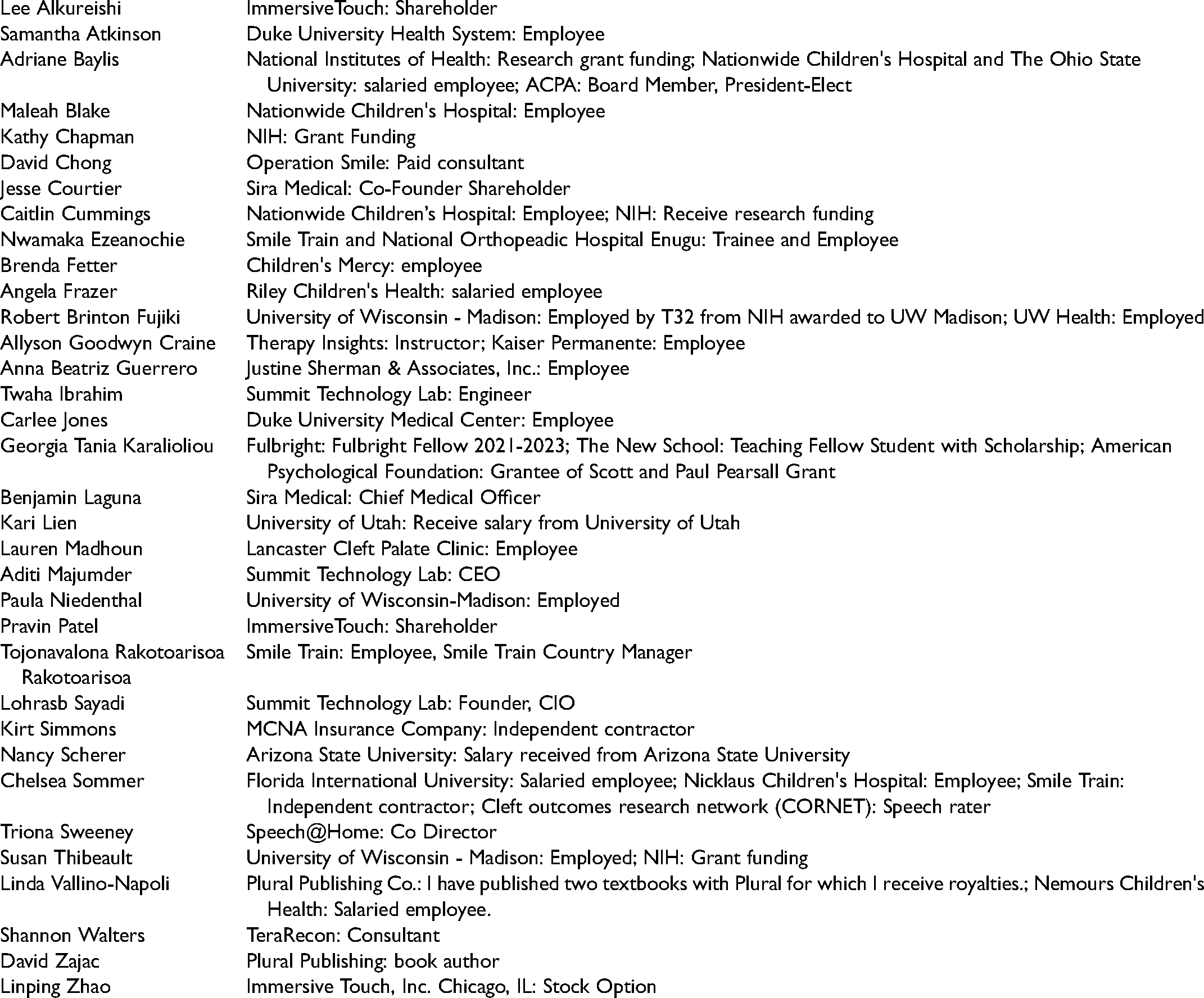
No Financial Relationships; Non-financial Relationship/s Declared, However Relationship Is Non-relevant And/or Not With Ineligible Organization.
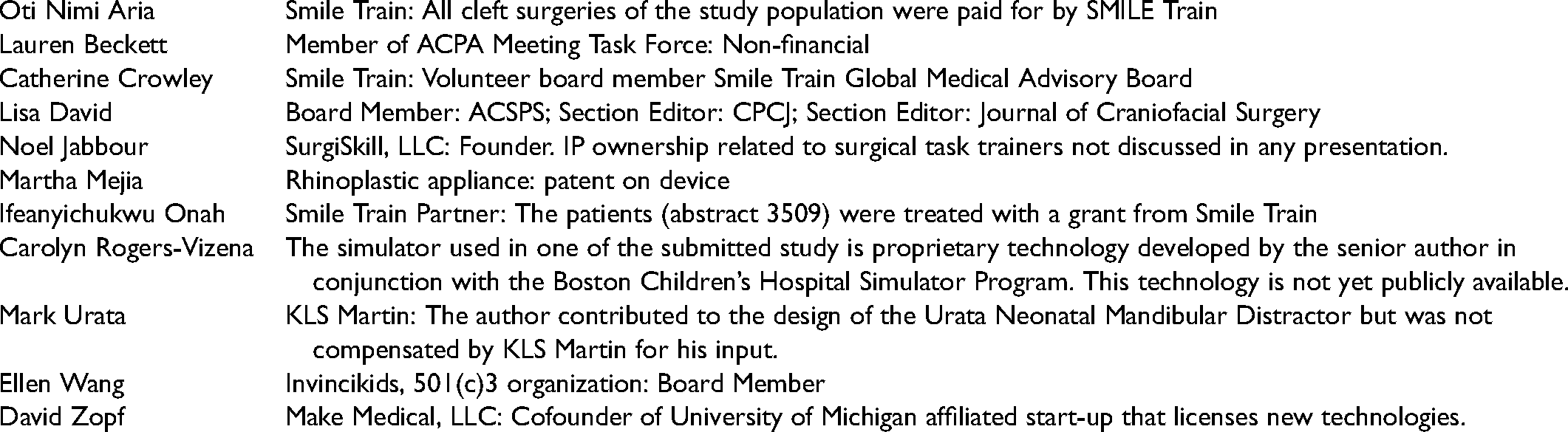
Financial Relationship With Ineligible Company Declared. Not Topically Related to Presentation. No Non-financial Relationship Declared, or Relationship Is Declared, However Relationship Is Non-relevant And/or With Eligible Organization. All Financial Relationships Have Been Mitigated.
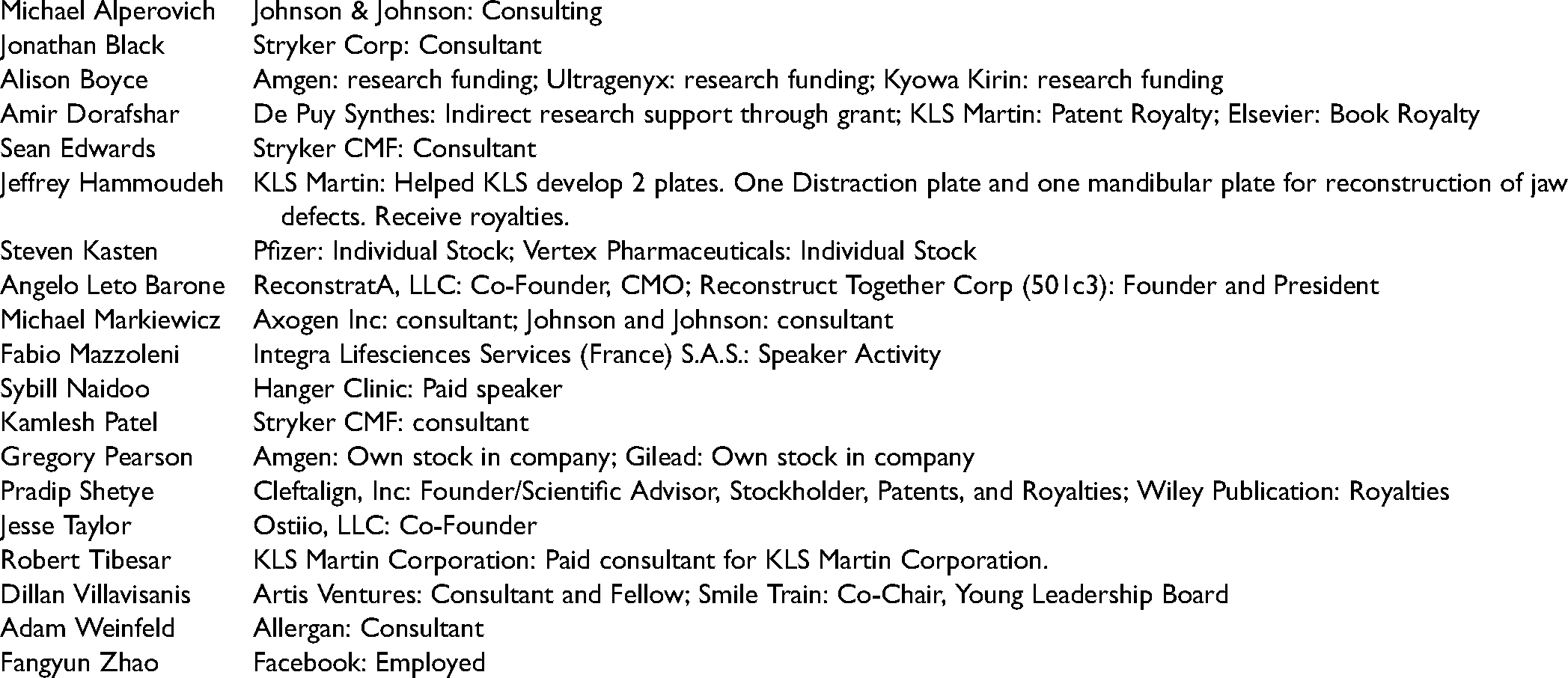
Relevant Financial Relationship With Ineligible Company Declared. All Financial Relationships Have Been Mitigated.
