







Abstract
Background
Patients undergoing orthognathic surgery may have limited information surrounding surgery. This leads to less satisfaction with surgical outcomes, anxiety surrounding surgery and difficulty following perioperative instructions.
Solution
Providing a multi-disciplinary pre-operative educational experience for patients and caregivers improves surgical readiness and satisfaction.
What is new
Our team provides a “Jaw Surgery Workshop” which includes lectures from providers, previous patients, cookbooks and supplies. This allows for improved confidence and expectations surrounding jaw surgery.
Introduction
Maxillomandibular discrepancy can affect oral function, facial appearance, and quality of life. 1 Corrective orthognathic surgery has been shown to improve patient oral health, psychosocial functioning, overall quality of life. 2 Despite these positive operative outcomes, surgery can be cumbersome and daunting to patients and caregivers and negative feelings surrounding surgery can be carried over to postoperative satisfaction about overall experience. One way the surgical team can improve patient and caregiver experience is by providing education on postoperative discomfort, surgical outcomes, surgical risks and perioperative care. 3 Difficulties surrounding orthognathic surgery, such as; diet restrictions, time away from school or sports, post-operative pain control and oral hygiene are often concerns for patients and caregivers. Addressing these topics ahead of surgery has been shown to improve patient satisfaction surrounding surgery. 3 In response to the need for relevant education and information for patients and families in a sufficient and consistent manner, we created standardized materials that are presented through a workshop for patients and families as they prepare for orthognathic surgery. While information workshops are not a novel method of sharing information, they have yet to be described in the field of orthognathic surgery. 4
The purpose of this paper is to describe our “jaw surgery workshop” that prepares patients and caregivers for an orthognathic procedure, so that other teams may develop similar approaches for their own patients.
Methods
The jaw surgery workshop is held in-person once a year in a conference room on our hospital campus. The workshop is offered virtually at other times of the year for patients undergoing surgery outside of this window or those unable to attend in person. The in-person format is offered prior to the summer season— when the orthognathic case load is the highest. The workshop is 1.5 h long with time for questions at the end of the course. This course is offered in addition to meeting with the team providers to address surgical readiness and their pre-operative visit.
The workshop incorporates presentations from multiple disciplines including craniofacial plastic surgery, anesthesiology, craniofacial orthodontics, Child Life, psychology, and speech and language therapy. Each presentation lasts approximately 10-15 min and includes informational material as well as photos. Additionally, two former orthognathic surgery recipients present their experiences (one male, one female). After the presentations there is time allotted for questions. Many of these questions have been related to pain control, recovery expectations, postoperative diet, and day of surgery logistics. Patients and their caregivers are encouraged to attend the workshop, though they were informed that the workshop does not take the place of a standard preoperative visit.
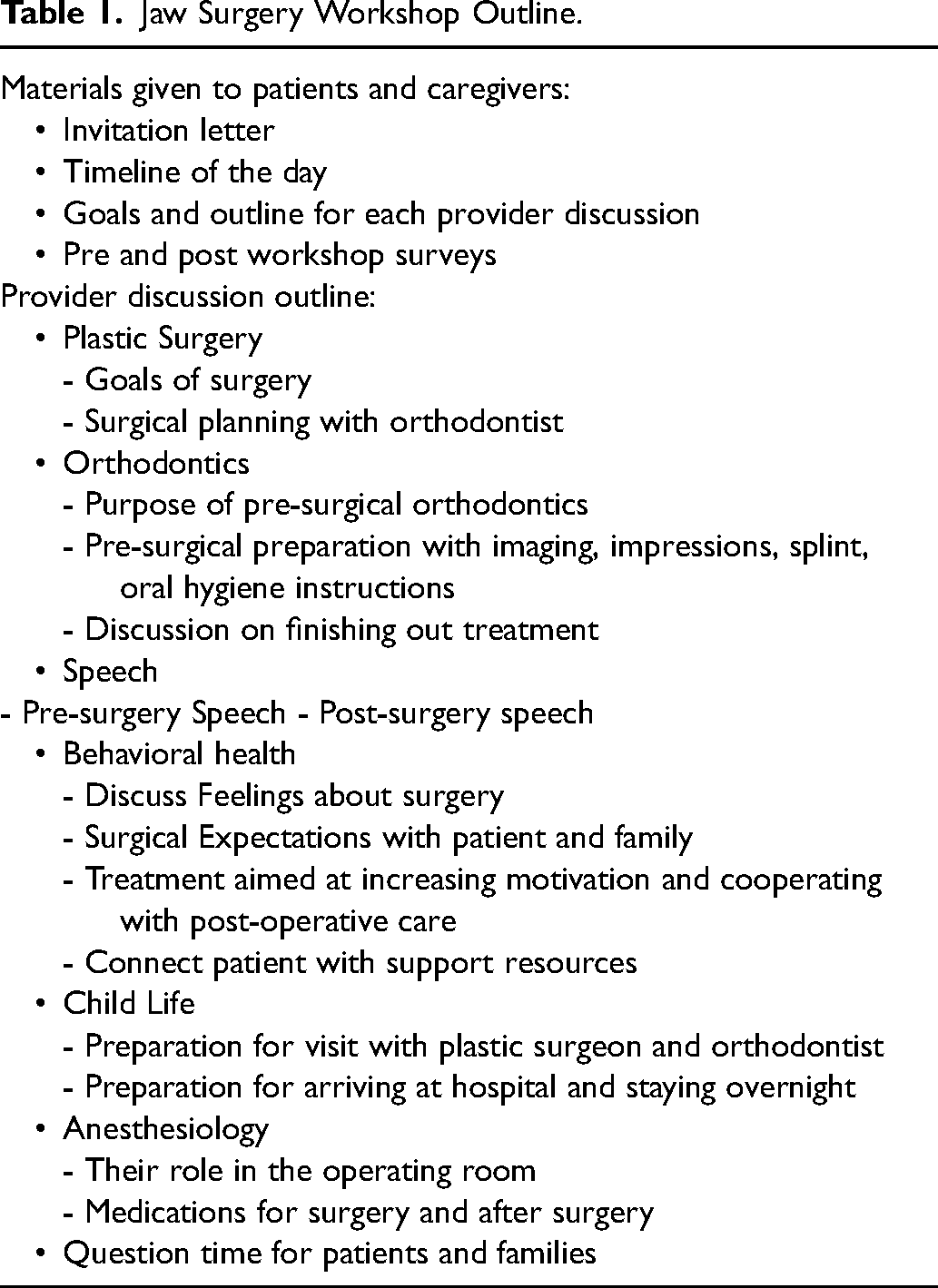
Educational materials, such as diet instructions, post-operative oral hygiene guidelines and day of surgery expectations, are given in a packet which outlines the topics to be discussed at the workshop (Table 1) and includes areas to take notes. A cookbook with suggested recipes and instructions suitable during the postoperative recovery period is also given for dietary inspiration. The workshop is conducted in English, with a hospital interpreter present as needed. A recording of the workshop is also provided for patients in a virtual format. Educational materials and supplies were mailed to the patient's homes who participated in the virtual format.
Jaw Surgery Workshop Outline.
The majority of our orthognathic surgery patients have attended this workshop, either in person or virtually. Subjective feedback in the pre and post-workshop surveys was overall positive for the course. To gauge satisfaction with the workshop, improved confidence in the understanding of the surgery, what to expect in perioperative time frame, and areas of improvement, pre- and post-workshop surveys were completed by patients and their caregivers before and after each workshop. Surveys were completed on the day of the workshop, just prior to and after the program. All surveys were submitted anonymously. To date 75 patients and 75 caregivers completed the survey. Results, shown in Figures 1 and 2, indicate that the workshop improved understanding and preparedness for the upcoming surgery, with patient and caregiver understanding improving significantly in almost all topic areas.
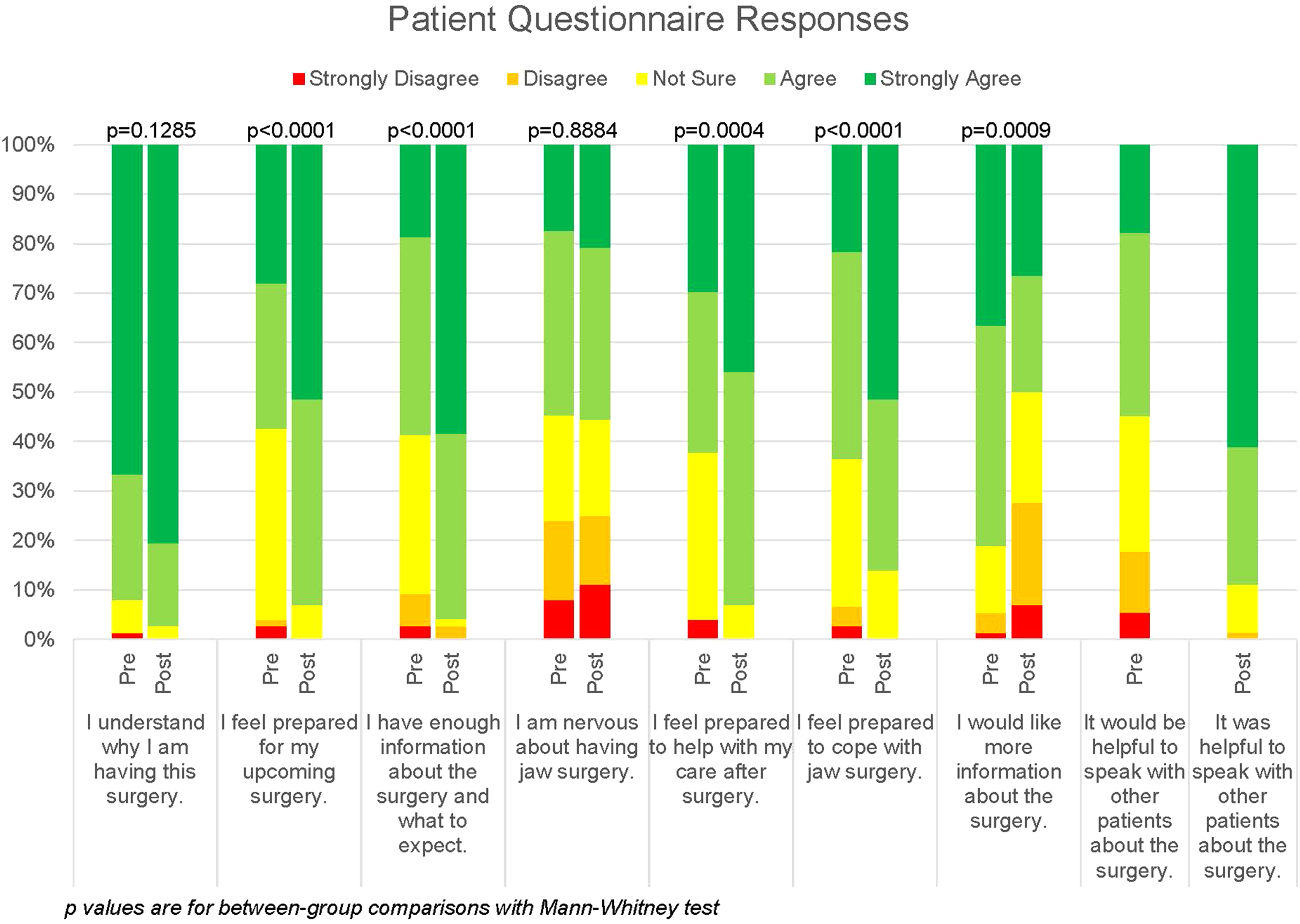
Patient questionaries.
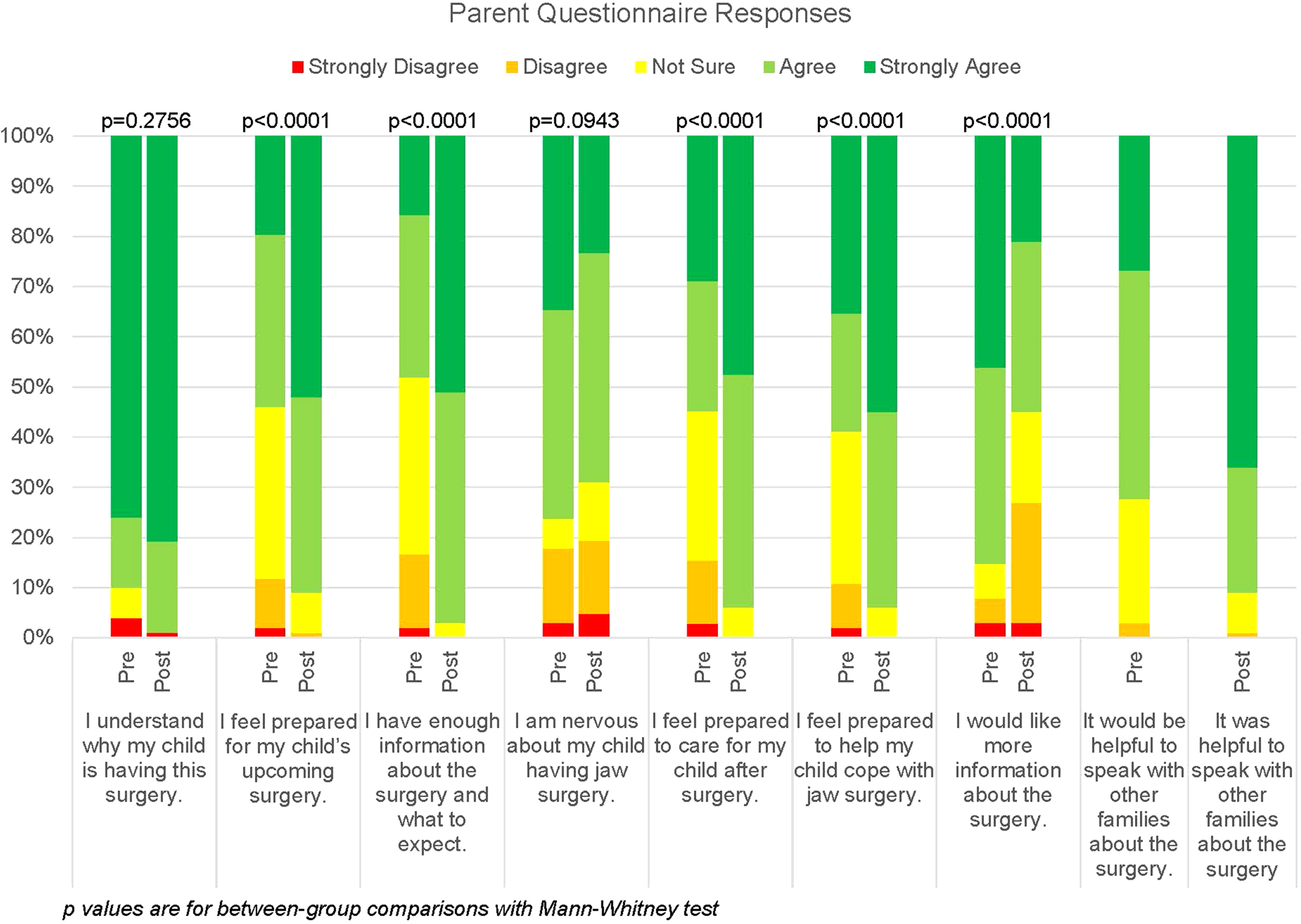
Caregiver questionaries.
Discussion
The importance of surgical planning and preparation for orthognathic surgery has been stressed in the literature. However, there is a paucity of reports discussing approaches to patient and caregiver preparation for surgery, including perioperative care and post-operative recovery. Previous studies auditing orthognathic surgery outcomes report lack of perioperative preparation leading to lower patient satisfaction with surgery.3–5 The current paper provides an example of a “Jaw Surgery Workshop” that has shown to be successful in preparing patients and caregivers for orthognathic surgery. This may lead to a more positive patient experience, greater adherence to post-operative instructions and improved outcomes. Given that the structure of this workshop involves multiple different types of educational delivery, it has allowed for a better understanding of patients and caregivers of different ages, development and educational background. A virtual option is also available, however there is no data on the outcomes of the workshop if administered virtually. This workshop can be used as a guide for other institutions who wish to adopt a similar jaw surgery workshop for their patients. In the future, gauging the satisfaction of the virtual workshop vs the in-person workshop would be useful.
Footnotes
Declaration of Conflicting Interests
The author(s) declared no potential conflicts of interest with respect to the research, authorship, and/or publication of this article.
Funding
The author(s) received no financial support for the research, authorship, and/or publication of this article
