







Abstract
The purpose of this study is to shed light on the mediating effect of heutagogical activities on the relationships between (1) social learning environment & self-determined learning and (2) students’ psychological needs & self-determined learning. The proposed model hypothesised that self-determined learning is dependent on the social learning environment, student psychological needs, and heutagogical activities. This study fills the knowledge gap by applying the partial least squares structural equation modelling (PLS-SEM) to test the proposed model based on a sample of 626 postgraduate students from a higher education institution in Malaysia. The findings revealed that heutagogical activities had mediating effect on postgraduates’ self-determined learning. These are new insights on self-determined learning as no studies have examined the mediating effect of heutagogical activities through structural equation modelling analysis. Overall, this study offers valuable contributions to the empirical evidence and body of literature on heutagogy by providing an extended understanding of the mediating role of heutagogical activities in postgraduates’ self-determined learning. The findings suggest that more efforts are needed to refine the learning activities in postgraduate education for the postgraduates’ development of self-determined learning. The theoretical and practical implications, limitations, and suggestions for future research are also discussed.
Introduction
Heutagogy, also known as self-determined learning, was initially coined by scholars, Hase and Kenyon in 2000. Heutagogy is empirically known as the extension of andragogy or self-directed learning (Blaschke, 2012). Having said that, self-determined learning advances the form of adult learning from self-directed learning in various aspects.
In a heutagogical educational environment, learners are placed at the central point of the teaching and learning process which means that they have to master their learning on how to learn (Hase & Kenyon, 2000). They are given complete autonomy to identify own learning needs, define learning goals and outcomes, seek solutions to problems actively, and decide the ways to achieve their learning outcomes (Blaschke, 2012; Hase & Kenyon, 2000). It is a set of skills that learners should equip to prepare themselves for the challenges in the fourth industrial revolution (IR 4.0). Self-determined learning skills are especially crucial for postgraduate students to excel in the research-intensive learning environment.
Based on the explanation Uday (2019) offered, heutagogical approach is highly relevant and to be implemented in postgraduate education programmes as postgraduate students are required to engage in the process of knowledge creation and contribution. Heutagogical approach can facilitate postgraduate students’ learning process. As there is a growing need to develop lifelong learners equipped with the desire to learn, rounded skills, and capabilities, Blaschke and Hase (2016) proposed a holistic model that incorporates heutagogy with the aim of fostering lifelong learning within various contexts and preparing learners to thrive in the rapidly changing and challenging world. Grounded in other researchers’ explanation, Blaschke (2019) proposed a heutagogical framework which includes the principles of learner agency, capability, double-loop learning and metacognition, and non-linear teaching and learning (Hase & Kenyon, 2000; 2013).
The principle of learner agency explains about the importance of students taking charge of their own learning and having complete autonomy in defining learning goals and outcomes (Hase & Kenyon, 2000). Next, double-loop learning induces the process beyond single-loop learning where learners challenge their firmly held beliefs, values, and assumptions, which in turn leads to reflective and metacognitive thinking for the attainment of deeper learning (Hase & Kenyon, 2013). Non-linear learning emphasizes the concept of multidirectional learning which allows learners to define their own learning paths by learning without the restriction of time and space. Lastly, the fourth principle, capability, highlights the development of capabilities in which learners have the ability to apply competencies in familiar, challenging, or novel settings.
In Malaysia, the emphasis on heutagogy approach in higher education can be witnessed through a number of national policies such as the Malaysian Education Blueprint-Higher Education (2015 − 2025), the 11th Malaysian Plan (2016–2020), and the National Higher Education Strategic Plan (PSPTN)(2007 − 2020). Despite the initiatives conducted by the ministry, it remains uncertain about the implementation of heutagogical approach and to what extent it influences the level of self-determined learning among postgraduate students.
This article examines the influences of heutagogical activities on postgraduate students’ self-determined learning. Meanwhile, the researchers proposed a total of seven hypotheses which were later discussed in section “Literature Review”. Based on the objectives of this research work, the study had the following research questions:
Do heutagogical activities affect postgraduate students’ self-determined learning? Do heutagogical activities mediate the relationship between postgraduate students’ self-determined learning Do heutagogical activities mediate the relationship between student's psychological needs and postgraduate students’ self-determined learning.
As the research in heutagogy is limited, this research work contributes to the valuable addition of empirical evidence for the implementation of heutagogical activities from the lens of Malaysian postgraduate education. The findings of this research work shed light on the deeper understanding of the mediating role of heutagogical activities in postgraduates’ self-determined learning. It also confirms the crucial role of incorporating the six heutagogical elements into the learning activities for the development of postgraduate students’ self-determined learning. Therefore, it is important to pay attention to the learning process that the students undertake. In addition, the findings in the study serve as an insightful guideline for the use of heutagogical approach in future higher education settings, with the aim of preparing postgraduate students to be autonomous and self-determined in their learning process.
Literature Review
The 3P model consists of presage, process, and product. Traditionally, presage variables explain the characterisation of a student at the beginning of a course or study such as gender, age, and other student factors. The process refers to the students’ learning processes, which involves their approaches to learning. The product relates to the eventual learning outcomes that conventionally include grades, and examination results (Biggs, 1987). The 3P model explains the mutual interaction among student factors, teaching context, on-task approaches to learning, and the learning outcomes that altogether form a dynamic system (Biggs et al., 2001).
In early studies, the presage factor was only limited to demographic variables when the model was first discussed by Biggs (1987). One gap discovered is that there has been no clear association between presage factor and contextual or relational aspects of learning (Kember et al., 2020). According to Kember et al. (2020), there have been numerous investigations looking at how learning and teaching variables have relation with approaches to learning. However, the review suggests the focus has always been placed on the factors that influence self-directed learning (Huang, 2021; Salleh et al., 2020; Tao et al., 2018). Kerry (2013) conducted a study on the implementation of heutagogical principles in a postgraduate distance-learning programme. A list of eight key factors of heutagogy was explained in the study. Nevertheless, as some of the factors share similar features, it is believed that they can be further classified into more focused dimensions. Although the researcher claimed that heutagogical approach was fulfilled in practice, little information and explanation could be found on the supporting factors that promoted heutagogical approach in the programme.
This study thus intends to fill the gap by proposing a model that investigated the effects of students’ psychological needs and social learning environment as the presage factor on heutagogical learning process as well as self-determined learning in postgraduate education. By only involving the social learning environment, the researchers wish to understand whether a single focused aspect of the learning environment could exert effect on heutagogical activities and postgraduate students’ self-determined learning. So, the 3P model can be adapted into the context of higher education to shed light on the effects of learning environment and student's psychological factors on the adoption of heutagogical learning activities among postgraduate students.
With the reference to relevant literature, the conceptual framework (Figure 1) underpinned in the present study was grounded in the 3P model of teaching and learning (Biggs, 1987); social learning environment (Kember et al., 2007); basic psychological needs (Deci & Ryan, 2000); heutagogical elements (Blaschke & Hase, 2016); and self-determined learning (Hase & Kenyon, 2013). In the present study, the proposed presage factors consisted of two variables, namely learning environment and student's psychological needs.
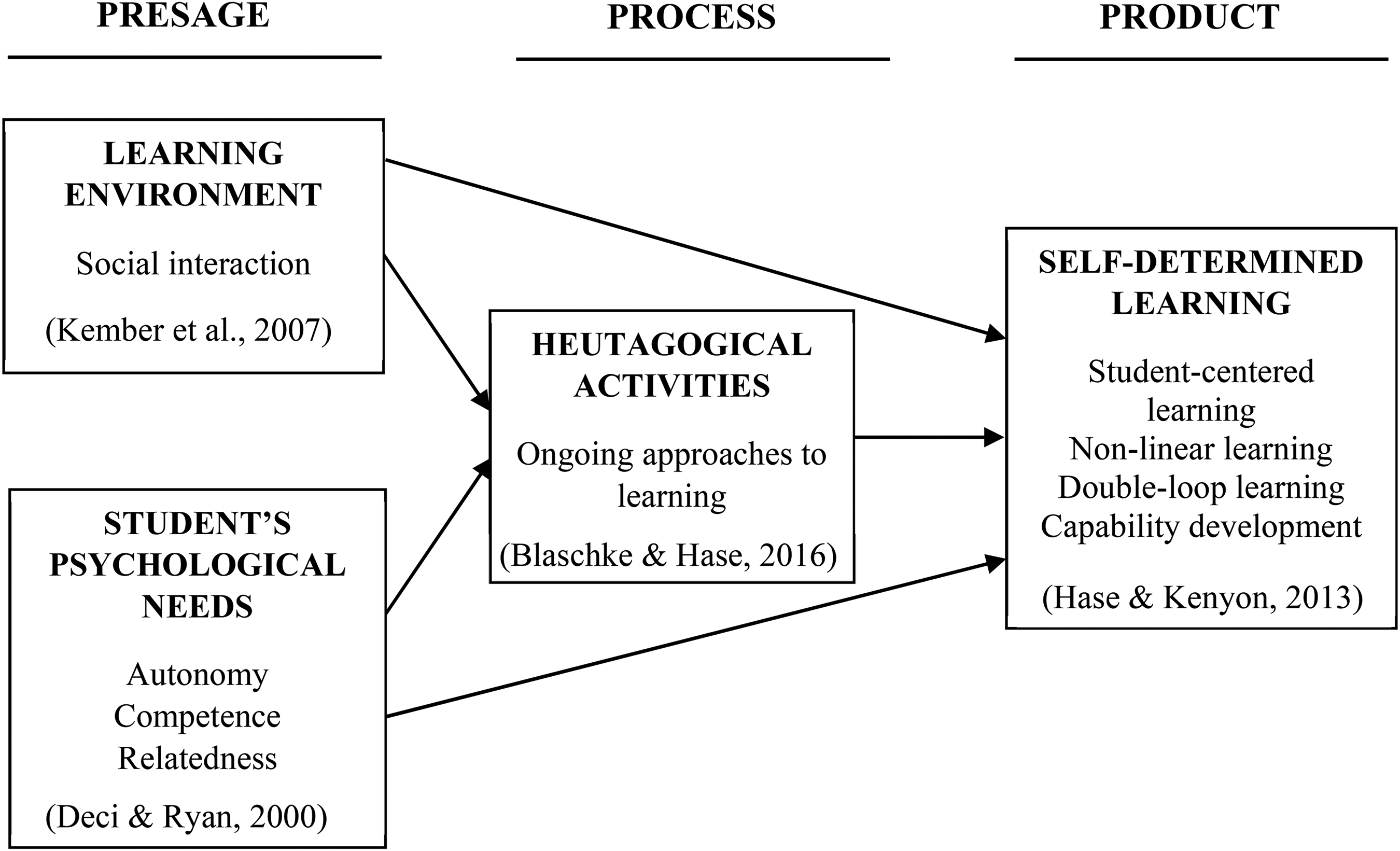
Conceptual framework.
In this study, the presage factors did not include demographic profiles that were previously examined in early studies. Instead, the present study aims to fill the gap by including students’ psychological and social learning environment as the presage factors. In the presage factors, teaching context was understood as social learning environment whereas student factor was known as student's psychological factors. First, the social learning environment focused on lecturer-student interaction, lecturers’ feedback, student-student interaction and cooperation (Kember et al., 2007). Theoretically, studies have shown that learning environment can encourage students’ approaches to learning (Kember et al., 2020).
The second presage factor highlighted student's psychological needs that are made up of the need for autonomy, competence, and relatedness (Deci & Ryan, 2000). In the process factor, heutagogical activities were conceptualised as students’ ongoing approaches to learning. According to Blaschke and Hase (2016), there are six heutagogical elements, which can be incorporated into the learning activities. The review of the literature suggested that self-determined learning consists of four major principles, namely student-centred learning, non-linear learning, double-loop learning, and capability development (Blaschke & Hase, 2016; Hase & Kenyon, 2013).
In the product factor, the learning outcome was understood as the development of self-determined learning. Based on the proposed framework, the researchers hypothesises that both presage factors (learning environment and student's psychological needs) have direct effect on process factor (heutagogical activities) and direct effect on product factor (self-determined learning). Also, it is hypothesised that the heutagogical activities has indirect effect on self-determined learning through learning environment and student's psychological needs respectively. Lastly, the heutagogical activities are hypothesised to have direct effect on self-determined learning.
Therefore, it is essential to explore the mediating role played by heutagogical activities in self-determined learning development. Due to the limited literature related to heutagogical elements, this study makes the pioneer attempt to investigate the role of heutagogical activities on postgraduate students’ self-determined learning. Founded on the literature review and 3P model, the following hypotheses were proposed in the current study:
H1: Social learning environment has a positive influence on heutagogical activities.
H2: Social learning environment has a positive influence on self-determined learning.
H3: Student's psychological needs have a positive influence on heutagogical activities.
H4: Student's psychological needs have a positive influence on self-determined learning.
H5: Heutagogical activities have a positive influence on self-determined learning.
H6: Heutagogical activities mediates the relationship between social learning environment and self-determined learning.
H7: Heutagogical activities mediates the relationship between student's psychological needs and self-determined learning.
Methodology
Instruments
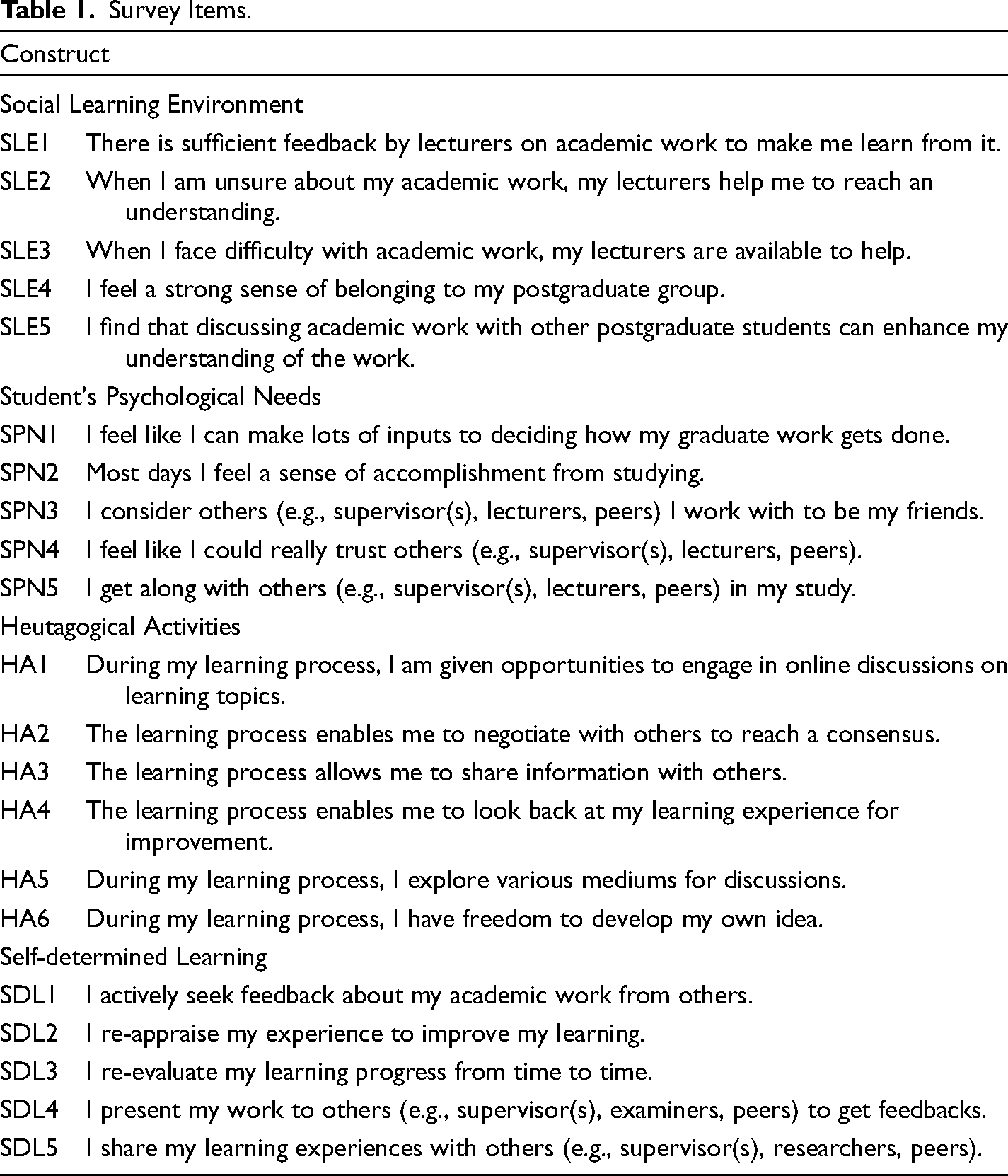
With references to the past literature, the items in learning environment, student's psychological needs, and heutagogical activities were slightly modified to suit the context of the present study (Kember et al., 2007; Deci et al., 2001; Mohaffyza et al., 2020). The learning environment construct consisted of 11 items adapted from a scale developed by Kember et al. (2007). For example, “There was sufficient feedback on activities and assignments to ensure that we learnt from the work we did” was adapted and modified into “There is sufficient feedback by lecturers on academic work to make me learn from it.”
The 12-item student's psychological needs scale adapted the basic psychological needs scale developed by Deci et al. (2001). For instance, “I feel like I can make a lot of inputs to deciding how my job gets done.” was adapted to form “I feel like I can make lots of inputs to deciding how my graduate work gets done.” Third, the 30 items in heutagogical learning activities scale were modified by adapting Mohaffyza et al.'s (2020) instrument. For example, “I use various medium for discussions to help improve my learning” was adapted to form “During my learning process, I explore various mediums for discussions.”
The Postgraduate Self-Determined Learning Questionnaire (PSLQ) was applied to measure postgraduate students’ self-determined learning. The PSLQ consists of 42 items to measure four dimensions namely (1) learner-centered learning (10 items); (2) interactive non-linear learning (10 items); (3) double-loop reflection (14 items); (4) capability development (8 items). Face and content validity were done by the experts from the field of educational psychology, physics, and business to make sure the questions were appropriate and measured what they were supposed to measure.
Professional judgements and feedback were provided by a panel of experts, who are experienced researchers in the field of educational psychology, information technology, business studies, digital education, STEM, as well as applied psychometric and statistics from a public university in the state of Penang, Malaysia on the relevance of the present questionnaire. A pilot test was conducted to check the reliability and validity of the PSLQ prior to the actual data collection. The results of the pilot study reported that the PSLQ has a Cronbach's alpha of 0.959, indicating excellent reliability (Abdullah et al., 2022). All the items were constructed in English language with a four-point Likert scale (strongly agree, agree, disagree, and strongly disagree). The mid-point response was omitted for the purpose of eliminating social desirability bias (Kulas & Stachowski, 2009). The survey items were presented in Table 1.
Survey Items.
Research Design
The present study employed a quantitative design to shed light on the research questions. As the study aimed to understand the effects of learning environment and student's psychological needs on self-determined learning, the researchers focused on postgraduate students from science and non-science disciplines in a Malaysian higher education institution.
Sample
The sample, which consisted of 626 postgraduate students, was taken from a public university in the state of Penang, Malaysia. This public university is classified as one of the research-intensive universities in Malaysia that empowers future talents. As of 2021, the total population of postgraduate students at the university recorded 11,043 people (Ministry of Education Malaysia, 2021). With the aim of empowering students with the values and characteristics that are accepted in local and global markets, the university is aspired by a vision, “transforming higher education for a sustainable tomorrow”.
The demographic profiles of the sample such as gender, age group, programme level, mode of programme, and programme discipline were tabulated as shown in Table 2. A total sample is formed by 276 (44.1%) male respondents and 350 (55.9 per cent) female respondents. The majority of the respondents (n = 328, 52.4 per cent) respondents aged between 26 and 35, followed by 170 (27.2%) respondents aged between 36 and 45; 74 (11.8%) respondents aged below 25; 49 (7.8%) respondents aged between 46 and 55; and 5 (0.8%) from the age group of above 56. In terms of the education level, 310 (49.5%) of them pursue doctorate programme whereas 316 (50.5%) pursue master programme.
Descriptive Statistics of Sample.
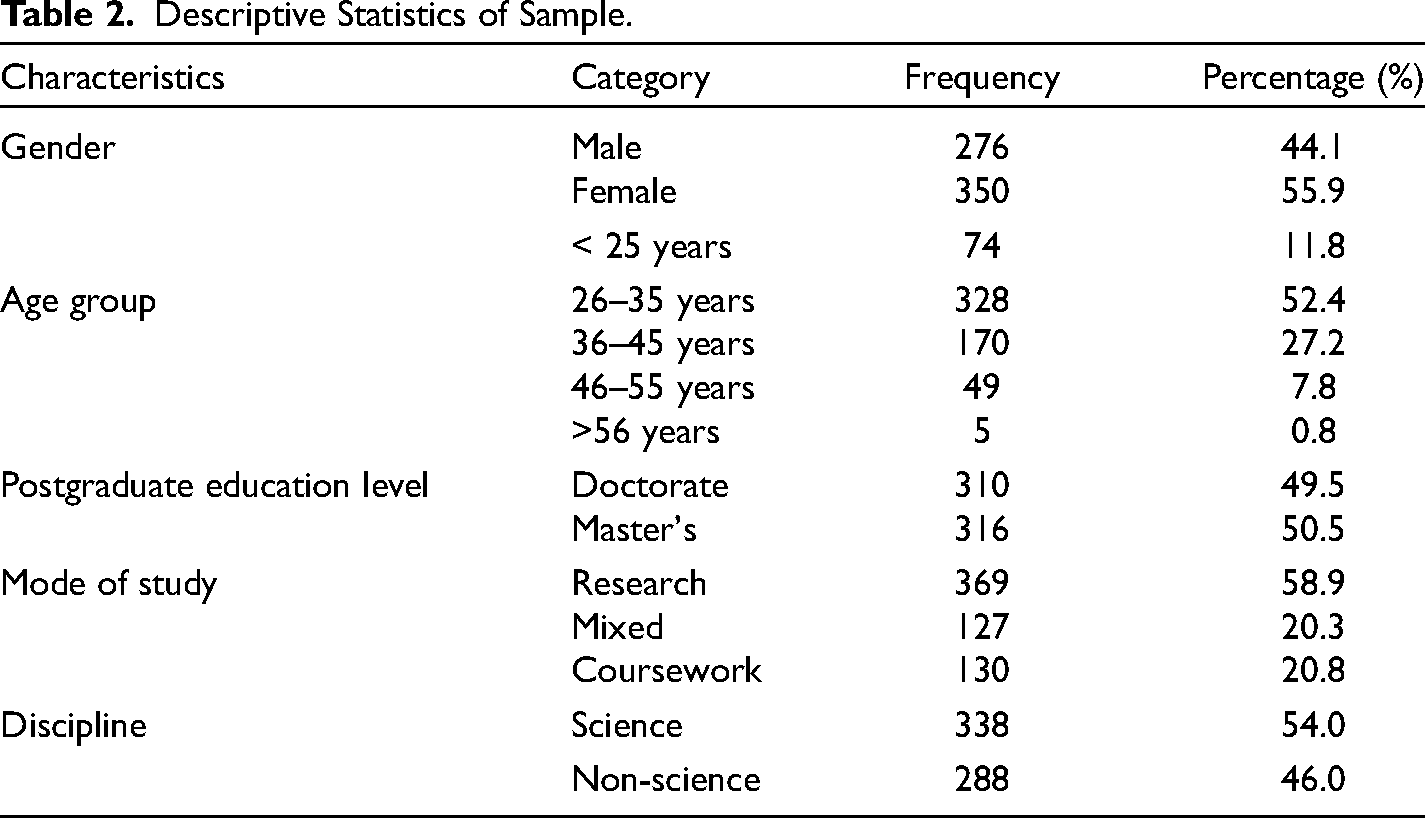
Most respondents (n = 369, 58.9%) undergo research mode; 127 (20.3%) respondents undergo mixed-mode programme; and 130 (20.8%) undergo coursework mode programme. Lastly, 288 (46%) respondents are from non-science discipline whereas 338 (54%) respondents are from science discipline.
Data Collection Procedures
The permission to carry out the study was granted by the Human Research Ethics Committee (JEPeM USM Code: USM/JEPeM/19090509) and respective dean of the schools prior to the actual data collection. Through simple random sampling technique, the questionnaire was sent to participants via an online link. All participants took part in the study on a voluntary basis after obtaining their consent. The data collection was done in the academic year 2021 − 2022.
Data Analysis
After gathering the data, the quantitative data were entered into Statistical Package for the Social Sciences (SPSS) version 27.0 for descriptive statistics. Next, partial least squares path modeling (PLS-SEM) method was conducted via SmartPLS 3 for the examination of the proposed research model and hypotheses. It is believed that PLS-SEM manifests greater statistical power which allows higher likeliness to demonstrate a specific relationship significant when it is significant in the population (Hair et al., 2017).
Findings
Assessment of Measurement Model
In PLS-SEM model assessment, Hair et al. (2017) suggest that the reliability and validity of a measurement model should be first evaluated. As this study proposed a reflective measurement model, the internal consistency reliability, convergent validity, and discriminant validity were assessed.
Convergent Validity
To test the internal consistency reliability, it is appropriate to check Cronbach's alpha and composite reliability. Table 3 showed the results of convergent validity of the model. The analysis showed that Cronbach's alpha of the latent variables recorded between 0.83 and 0.87, supporting that the latent variables fulfilled the minimum value of 0.60 and 0.70 for exploratory and confirmatory purposes respectively. The composite reliability also fell between the adequate value of 0.88 to 0.90. Both Cronbach's alpha and composite reliability proved that the current model achieved satisfactory internal consistency reliability (Garson, 2016; Hair et al., 2017). After confirming the internal consistency reliability of the model, the assessment continued with the convergent validity.
Convergent Validity Results.
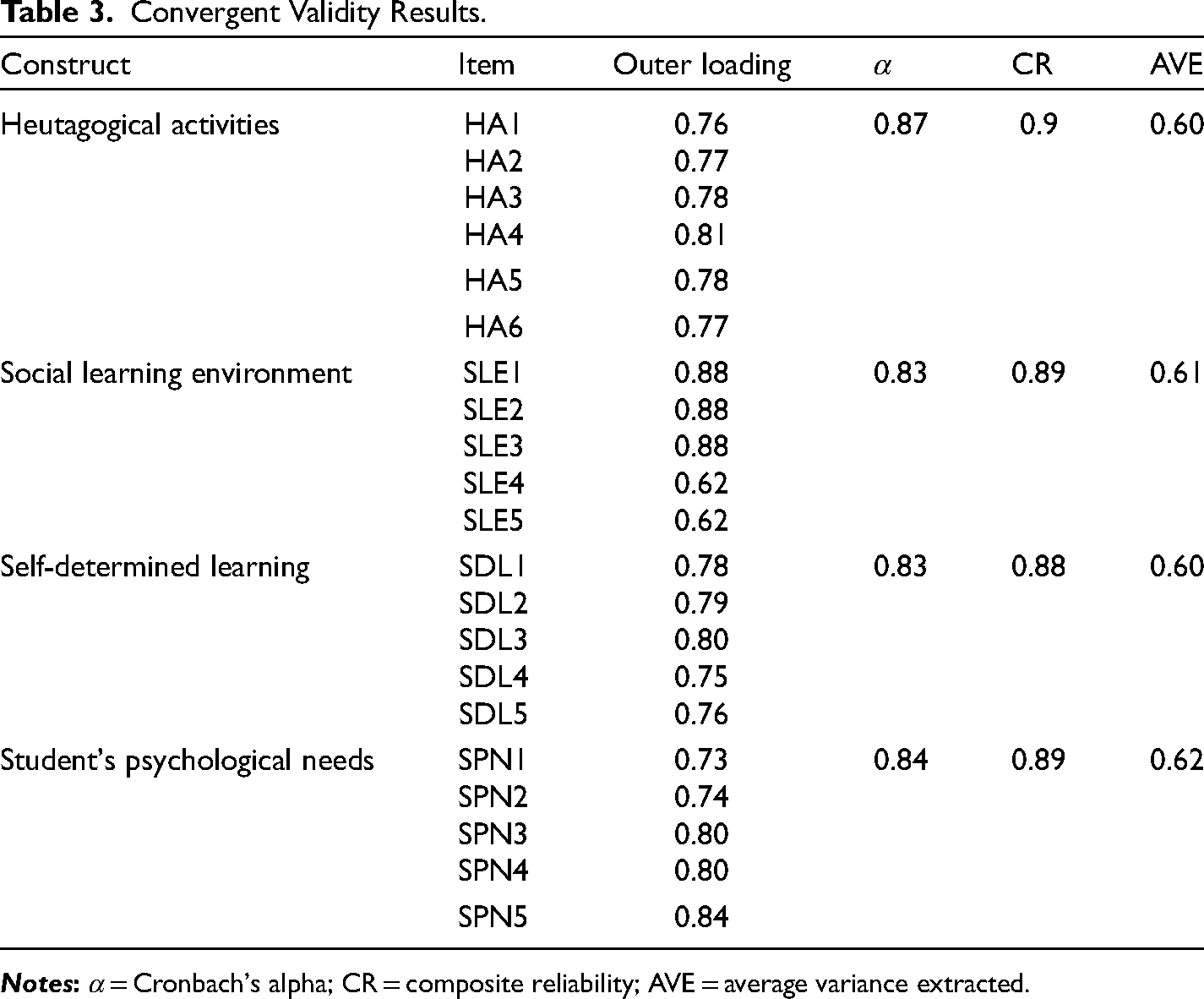
Convergent validity is known as the extent to which a measure has positive correlation with alternative measures of the same construct (Hair et al., 2017). To evaluate convergent validity of reflective constructs, researchers consider the outer loadings of the indicators and the average variance extracted (AVE). According to Henseler et al. (2015), it is suggested that a reflective model to have outer loadings of 0.7 and higher. In the present model, the outer loadings of all items except Items SLE4 and SLE5 recorded the recommended value of 0.7. Although the factor loading of Items SLE4 and SLE5 (0.62) was slightly lower than the threshold value, the removal of the two items did not increase the composite reliability and AVE above the threshold value (Hair et al., 2017).
Two additional items demonstrated significant contribution to the latent construct. Founded on the two reasons, the two items were retained. Besides, the values of AVE of constructs ranged between 0.60 and 0.62, which were greater than the acceptable threshold of 0.5 (Garson, 2016). Hence, it gave an indication that the construct explained more than half of the variance of its indicators. In short, the model fulfilled the recommended outer loadings, AVE, Cronbach's alpha, and composite reliability which indicated that the convergent validity was established.
Discriminant Validity
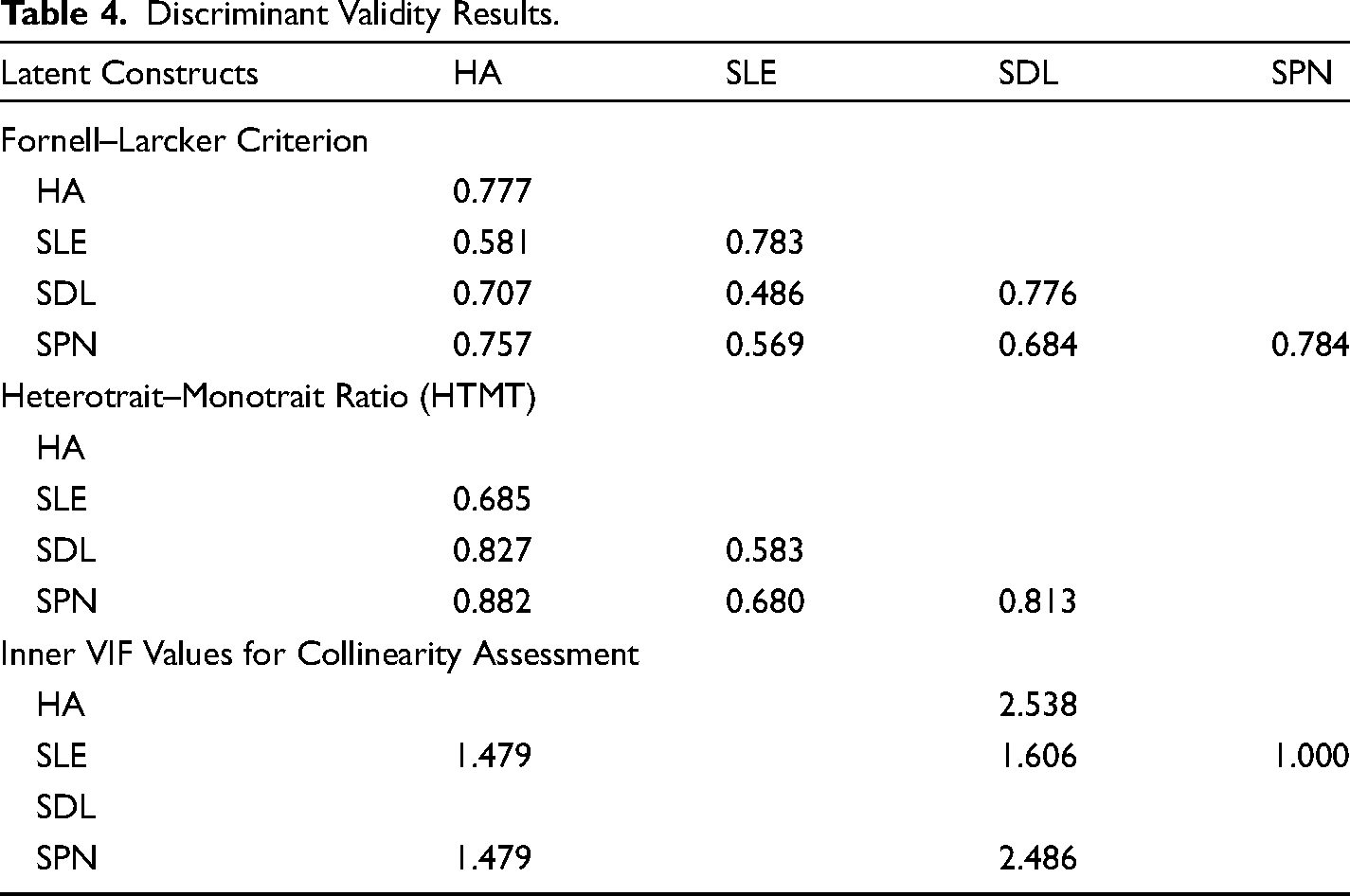
To ensure a well establishment of discriminant validity, the Fornell–Larcker criterion and heterotrait–monotrait (HTMT) ratio of correlations were used to examine the discriminant validity (Garson, 2016; Hair et al., 2017; Henseler et al., 2015). Reported in Table 4, the Fornell–Larcker criterion also known as the values of square root of AVE for each construct (0.776 to 0.784) were greater than its correlation with any other latent variables and the values of HTMT were below 0.85 as recommended by Henseler et al. (2015) for reflective constructs. Therefore, the discriminant validity of the model was established. With the well establishment of reliability and validity results, the researchers affirmed the fitness of the current measurement model.
Discriminant Validity Results.
Assessment of the Structural Model
For the assessment of the structural model, the collinearity test should be run by checking the values of variance inflation factors (VIF) in the constructs to make sure that the predictor constructs are below the critical levels of collinearity (Hair et al., 2017; Sarstedt et al., 2017). The findings showed that VIF values of the model was below the threshold of 5 (Table 4), confirming that the problem of collinearity in the structural model was eliminated. After confirming the measurement model, the analysis continued with the assessment of the structural path coefficients for the relationship between the latent variables through structural equation modelling analysis (Figure 2).
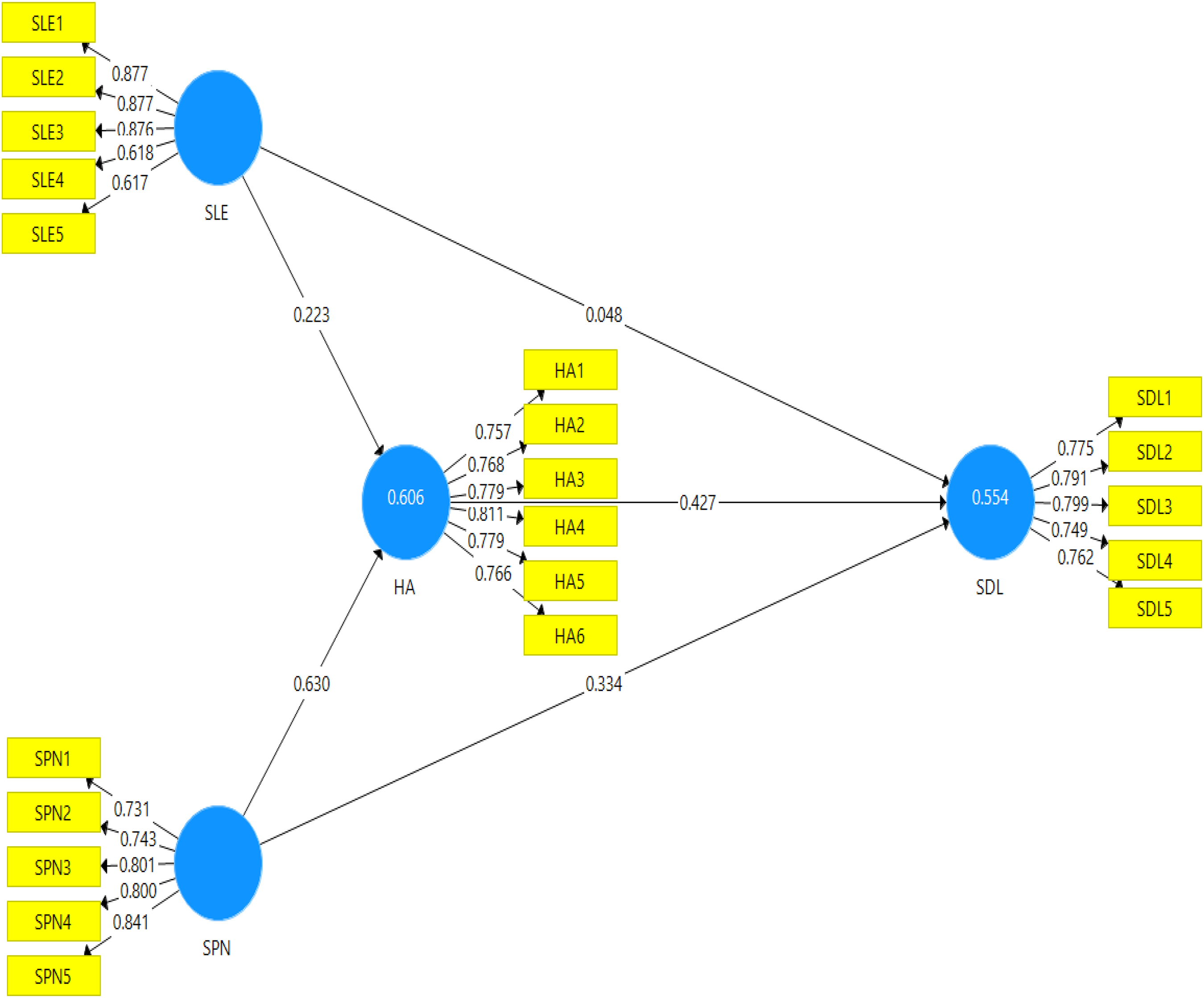
Structural model.
Table 5 illustrates the direct relationship between (1) social learning environment (SLE) and self-determined learning (SDL); (2) social learning environment (SLE) and heutagogical activities (HA); (3) student psychological needs (SPN) and self-determined learning (SDL); (4) student psychological needs (SPN) and heutagogical learning activities (HA); (5) heutagogical activities (HA) and self-determined learning (SDL). Bootstrapping, the methods based on 5000 resample, was applied to compute the confidence intervals and significance of PLS path coefficients. All the constructs (except the path relation between SLE to SDL) recorded t value of 1.96 and above. Hence, the researchers assumed that all the path relations (except SLE with SDL) were significantly different from zero at a significance level of 0.05.
Path Coefficients.
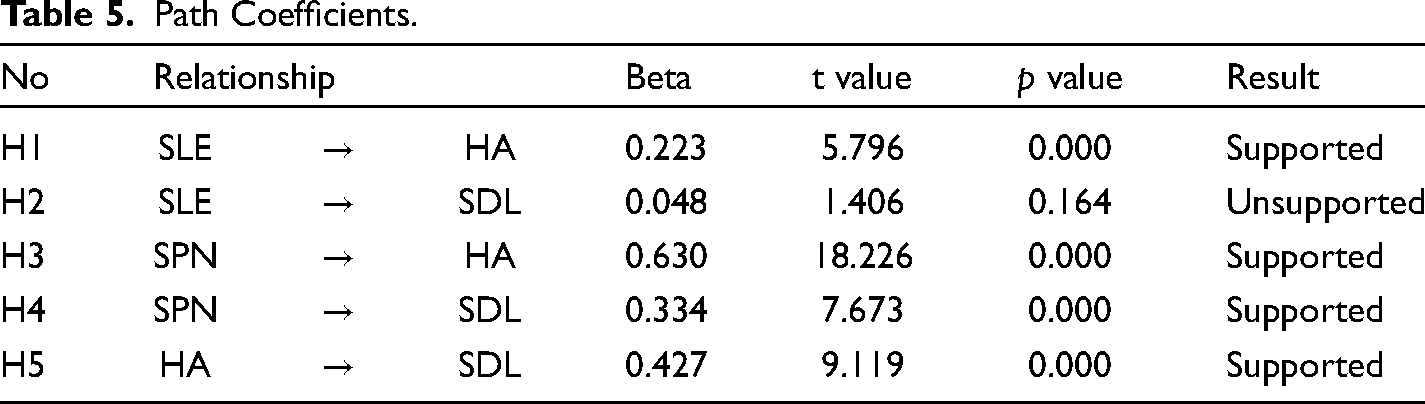
As shown in Table 5, the bootstrapping results showed that SLE exerted a positive and significant effect on HA (β = 0.223; t = 8.939; ρ < 0.01), which supported H1, ‘social learning environment has a positive influence on heutagogical activities.’ The result suggests that 1 unit increase in social learning environment will result in 0.223 units increase in heutagogical activities. On the other hand, SLE did not have a significant effect on SDL (β = 0.048; t = 1.393; ρ < 0.164), which rejected the second hypothesis, H2, ‘social learning environment has a positive influence on self-determined learning.’
Third, SPN had a positive and significant effect on HA (β = 0.630; t = 18.409; ρ < 0.01) and SDL (β = 0.333; t = 7.455; ρ < 0.01), respectively, accounting to the acceptance of H3, ‘student's psychological needs have a positive influence on heutagogical activities.’ and H4, ‘student's psychological needs have a positive influence on self-determined learning.’ The result suggests that 1 unit increase in student's psychological needs will increase 0.630 units in heutagogical activities and 0.333 units in self-determined learning. Lastly, HA exerted a positive and significant effect on SDL (β = 0.427; t = 8.939; ρ < 0.01), which supported the prediction in H5, ‘heutagogical activities influence self-determined learning.’ The result explains that 1 unit increase in heutagogical activities will increase 0.427 units in self-determined learning.
The values of the coefficient of determination, R2 were calculated. The endogenous construct, HA recorded an R2 value of 0.606, implying that the SLE and SPN moderately explained 60.6% of the variance in heutagogical activities. Second, SDL has an R2 value of 0.554 which means SLE, HA, and SPN moderately explained 55.4% of the variance in self-determined learning. The next step continues with the calculation of effect size (f2) that represents the magnitude of the relationship between the latent variables in the structural model (Wong, 2013).
As explained by Cohen (1988), the effect sizes (f2) greater than 0.02, 0.15, and 0.35 are considered as weak, moderate, and strong effects, respectively. SLE had a small effect of 0.085 on HA. SLE recorded f2 value of 0.003 on SDL, which means there was no effect as the value is below 0.02. However, SLE had a strong effect (f2 = 0.479) on SPN. Next, HA had a moderate effect (f2 = 0.161) on self-determined learning (SDL). SPN had the strongest effect (f2 = 0.680) on HA and a weak effect (f2 = 0.100) on SDL, respectively. Besides, the predictive relevance, Q2 values were obtained through blindfolding procedure. The findings revealed that the two endogenous constructs, HA and SDL, recorded Q2 values of 0.342 and 0.311, respectively. which were larger than 0. The result concluded that the model has predictive relevance.
After examining the path coefficients, the assessment of structural model continued with the mediation analysis. Table 6 displays the mediation effect of heutagogical activities (HA) on the two relationships: (1) social learning environment (SLE) to self-determined learning (SDL); (2) student's psychological needs (SPN) to self-determined learning (SDL). First, the indirect effects were calculated. In this study, the indirect effect from SLE via HA to SDL was the product of the path coefficients from SLE to HA and from HA to SDL (mediation path 1) whereas the indirect effect from SPN via HA to SDL was the product of the path coefficients from SPN to HA and from HA to SDL (mediation path 2).
Mediation Analysis.
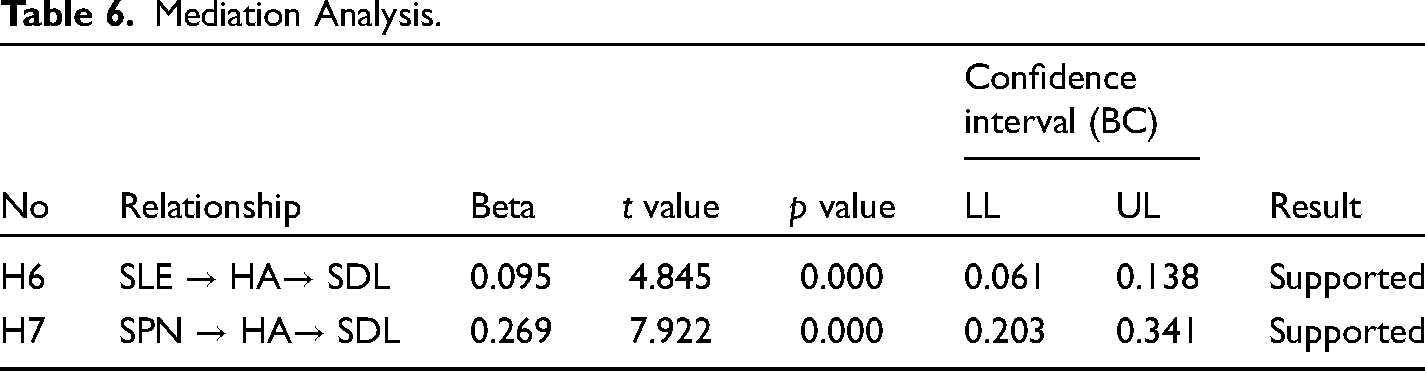
The results showed that both indirect effects were significant as the 95% confidence intervals were above zero (Hair et al., 2017). The t value of the indirect effect (0.095) for the SLE to SDL relationship was 4.845, p < 0.001. For the indirect effect (0.269) of the SPN to SDL relationship, t value was 7.922, p < 0.001. Based on the mediation analysis, the researchers concluded that HA fully mediated the SLE to SDL relationship. It also showed that the influence of the mediator (heutagogical activities) was stronger than the direct influence of independent variable (learning environment) on self-determined learning. In contrast, because both the direct (β = 0.334; t = 7.673; ρ < 0.01) and indirect effects (β = 0.269; t = 7.922; ρ < 0.01) of the SPN to SDL relationship were significant, the researchers concluded that SN partially mediated the relationship.
Discussion
The empirical findings of this study offered insights into the variables that affected self-determined learning of postgraduate students. Based on the findings, the researchers noticed a statistically significant direct effect of student's psychological needs on postgraduate students’ self-determined learning. The result was in line with the notion of Deci and Ryan (2000) whereby the basic psychological needs are the pre-requisite for intrinsic motivation, which is also the key determinant for self-determination theory. As explained by Ryan and Deci (2020), the need for autonomy, competence, and relatedness must firstly be fulfilled in order to maintain adequate intrinsic motivation, which will determine students’ behaviours in managing their own learning.
When students’ basic psychological needs are satisfied, it is more likely for them to become intrinsically motivated in adapting their learning behaviour when undergoing heutagogical activities (Barbeau et al., 2009; Deci & Ryan, 2000). On the other hand, another finding showed that the social learning environment did not exert a significant direct effect on self-determined learning. The findings indicated that social learning environment alone was not substantial to influence postgraduate students’ self-determined learning. This was inconsistent with the study by Kember et al. (2020), which explained that learning environment influenced the development of graduate attributes.
The findings also implied that the internal factors such as psychological needs are more crucial than the external factor such as the learning environment when it comes to developing self-determined learning among postgraduate students. Such findings were consistent with the notion proposed in Biggs’s (1987) 3P model of teaching and learning as in presage factor (student's psychological needs) influences process (heutagogical and learning activities) which in turn determines the product (self-determined learning). The findings clarified that student's psychological needs could affect their learning behaviours as in how they responded to the heutagogical activities during their learning process.
Based on the findings on direct and indirect effects, both explained the empirical support for the role of heutagogical activities in the model. The present observations provided initial evidence that heutagogical activities had two mediating effects. Heutagogical activities fully mediated the relationship between social learning environment and self-determined learning and partially mediated the relationship between students’ psychological needs and self-determined learning. In other words, heutagogical activities positively lead to self-determined learning. The more students practise heutagogical approaches or involve in heutagogical activities, the more they can develop their self-determined learning. The findings were in line with the explanation of Blaschke and Hase (2016) on the importance of heutagogical elements to foster self-determined learning in the learning process.
It is undeniable that self-determined learning has become an essential set of for students to thrive on the postgraduate education, which requires them to be fully independent and autonomous in their own learning, participate substantially in research-related work, create new knowledge, and achieve the learning outcomes (Blaschke & Hase, 2016). The present study provided a model of the determinants for postgraduate students’ self-determined learning through a comprehensive PLS-SEM approach. The study confirmed the robustness of PLS-SEM on the assessment of the structural model proposed in the present study. The researchers concluded that basic psychological needs are the prerequisite for intrinsic motivation, which in turn act as the key factor for self-determined learning.
One interesting result discovered in this study was that basic psychological needs are not only the critical determinants for self-determination, but they also play a major role in developing self-determined learning. Only with sufficient fulfilment of basic psychological needs, can postgraduate student promote their self-determined learning. Another significant finding from this study highlighted the mediating role of heutagogical activities. One possible explanation for this outcome is that the incorporation of the six heutagogical elements into the learning activities is crucial for the promotion of self-determined learning of postgraduate students. So, it is important to pay attention to the learning process that the students undertake.
This study gave a theoretical contribution concerning the emergent literature on self-determined learning. Although a large number of studies has investigated the factors affecting self-directed learning extensively (Huang, 2021; Salleh et al., 2020; Tao et al., 2018), the attention has not been given to the concept of self-determined learning in the pool of literature. The present study has initiated scholarly efforts for heutagogy or self-determined learning. As the literature on heutagogy or self-determined learning focuses on the implementation of heutagogical approaches (Blaschke, 2012; Kerry, 2013; Mohaffyza et al., 2020), consequently there are limited empirical studies investigating the factors that contribute to the successful development of self-determined learning.
This study contributed new understanding and perspectives to the empirical study on the factors affecting self-determined learning in postgraduate education. Second, the findings of this study also attested the theoretical validity of the 3P model. To be specific, the researchers revealed that the learning outcome is greatly influenced by the learning process. In this context, postgraduate students’ level of self-determined learning was significantly affected by the heutagogical activities throughout their learning processes. Such findings confirmed the direct relationship between the approaches to learning and learning outcomes (Biggs, 1987). In addition, the significant influence of student's psychological needs on (1) heutagogical activities; (2) self-determined learning also supported the theoretical notion in the 3P model where the approaches to learning (process) is directly dependent on student factor (presage). In short, this study supported the conclusion that student's psychological needs and heutagogical activities are crucial in promoting self-determined learning.
This present study provided relevant authorities with an understanding on the important role of learning environment and basic psychological needs in making sure the adoption of heutagogical activities during postgraduate students’ learning process. The observation of this study also indicated that relevance of heutagogical activities in developing self-determined learning. Besides, it is also important for the relevant stakeholders to recognise the crucial role of student's psychological needs and the teaching and learning activities in developing self-determined learning in postgraduate education.
The findings highlighted the needs for the related stakeholders (e.g., ministry, university, lecturers, department) to monitor postgraduate students’ psychological well-being on a regular basis. Only when their basic psychological needs are satisfied, can they function well with sufficient intrinsic motivation, which fuels their learning process. Due to the significant influence and mediating role of heutagogical activities on self-determined learning, the study offers some practical suggestions for educational policy.
As heutagogical framework is increasingly gaining attention by the Ministry of Higher Education (MOHE) in Malaysia, the policymakers may consider effective strategies for better implementation of heutagogical approaches in postgraduate education, which will result to the effective development of self-determined learning among the postgraduate students. With a well-structured outline that incorporate more heutagogical elements into the teaching and learning process, postgraduate students will be exposed to more heutagogical activities that can eventually help them manage their own learning.
Last, but not least, this study is not without limitations, and they could be acknowledged and addressed for future studies. As this study focuses on the influence of the social learning environment specifically, such shortcoming suggests that another research avenue could be ventured by investigating other aspects of learning environment and studying their effects towards self-determined learning. Second, this study did not consider other potential success factors that promote the development of self-determined learning in postgraduate education. Future studies would obtain valuable insights if these factors were taken into consideration. Third, as the current study was done specifically in one Malaysian research university, future research should consider broadening the research context by involving multiple higher education institutions in Malaysia. Because the study sampled postgraduate students of unrestricted choice of disciplines, the unfocused sampling suggested that further empirical studies can be conducted to address how factors can affect self-determined learning of postgraduate students within a specific discipline.
Conclusion
The growing demand of fully autonomous learning has created a valuable opportunity for postgraduate students’ to take charge of their own learning including conducting research and engaging with the academic community and industry. The statistical findings proved that heutagogical activities play an important role for the development of self-determined learning among postgraduate students in the context of higher education. Therefore, more efforts from the stakeholders are encouraged to incorporate heutagogical elements into postgraduate teaching and learning process, with the aim of promoting fully independent learners in thriving their studies. The findings also provided valuable insights by confirming the more significant effect of internal factors than the external factor in fostering self-determined learning among postgraduate students. Specifically, satisfaction of postgraduate students’ psychological needs is the key factor for strong intrinsic motivation, which in turn improving self-determination. This study suggests some encouraging educational transformations in higher education institutions.
Footnotes
Acknowledgements
Acknowledgement to the Ministry of Higher Education Malaysia for Fundamental Research Grant Scheme (FRGS) with Project Code: FRGS/1/2019/SS109/USM/02/
Declaration of Conflicting Interests
The author(s) declared no potential conflicts of interest with respect to the research, authorship, and/or publication of this article.
Funding
The author(s) disclosed receipt of the following financial support for the research, authorship, and/or publication of this article: This work was supported by the Ministry of Higher Education Malaysia – Fundamental Research Grant Scheme (FRGS), (grant number FRGS/1/2019/SS109/USM/02/).
