







Abstract
The purpose of this research is to identify the key problems involved in preparing students for teaching special disciplines in English and conducting experiments to introduce pedagogical conditions into teaching, taking into account the interdisciplinary integration of linguistic and professional disciplines. The object of our research is the pedagogical process in the multilingual groups of specialties of natural and mathematical cycle of Karaganda Buketov University. In the process of assessing the quality of knowledge and levels of English proficiency, we identified the groups with a low level of knowledge, analyzed the possible reasons for low indicators, and conducted a pedagogical experiment.
Introduction
In the modern educational sphere of Kazakhstan global changes are taking place, including those related to the modernization of secondary education in the multilingual environment (Hromchenko, 2022). The strategic objectives of trilingual education in the Republic have actualized the need to prepare students of pedagogical specialties to use English in their professional activities. The gradual transition to teaching subjects of the natural and mathematical cycle (physics, chemistry, biology, computer science) in English requires special attention of methodologists and teachers (Karhina, 2023; Inna et al., 2022). The tasks of training multilingual subject teachers should be solved in a higher school, which forms special pedagogical, linguistic, and professional communication skills in the studied area (Kálmán, 2023).
Kazakhstani education in the conditions of multilingualism is currently in search of adequate and effective measures to introduce a trilingual teaching model (Doszhan, 2022). One of the directions in this process is the mastering of Content and Language Integrated Learning (CLIL) by teachers. This approach uses an additional language to teach nonlinguistic subjects. The problems of teaching using this technology, the peculiarities of the methodology and teaching practice are discussed in detail in the articles of the Kazakh scientist Karabassova (2018; 2021). According to the author, a serious obstacle to the introduction of trilingual education in general and the CLIL technology in particular is the lack of proficiency in English by teachers and their pessimistic expectations regarding the quality of mastering a subject in another language.
The abovementioned problems are typical not only for the Kazakh society. Thus, in Japan, they also faced with a low readiness of teachers to teach in English (Machida, 2019). According to Kikuchi and Browne (2009), a number of studies in the field of integrated learning have shown “a complex gap between educational policy and real pedagogical practice.” Japanese teachers note serious difficulties in the transition to teaching in English: the lack of specialists who speak professional English, the lack of methodical guides, and insufficient readiness of schoolchildren to study in English (Machida & Walsh, 2015; Araki & Senior, 2015). The solution of these problems, as Japanese scientists believe, should be facilitated by interdisciplinary integration, an increase in the freedom of teachers in choosing teaching methods, extension of innovative pedagogical resources (Domenach et al., 2021). In China, scholars also note the discrepancy between the ideal model of integrated education and actual teaching practice. The researchers believe that the reasons for this discrepancy are the lack of motivation of students, fixed curricula and programs, complicated educational tasks, etc. (Hu et al., 2019; Kao, 2021). Asian and European scientists come to the same conclusions after similar research (O'Dowd, 2018; Rutt & Mumba, 2020; Heineke et al., 2019; Lyon et al., 2018).
Interdisciplinary integration can be a solution to the described problems. The experience of interdisciplinary integration is considered by scientists from different countries, including the United States (Yang et al., 2018; Ali, 2019), China (Chi et al., 2019; Jin et al., 2018), Germany (Dirsch-Weigand et al., 2015; Schiering et al., 2021), Denmark (Lindvig, 2018), and Estonia (Reiska et al., 2018). The experience of interdisciplinary integration of various specialties (Awad, 2021; Guerrero & Reiss, 2020; Van den Beemt et al., 2020) is being studied. Research is being conducted on the training of science teachers for interdisciplinary learning (Chowdhary et al., 2014). Thus, Slovak scientists Kordíková and Brestenská (2022), studying the readiness of future science teachers to teach in English, faced to the need to revise the content of teacher training programs in order to introduce interdisciplinary integration. German researchers (Schiering et al., 2021) talk about the need to provide cognitive support for future teachers by structuring the content used in teaching materials and providing clarity in explaining and highlighting the main ideas. Trinidad (2020) views student-centered learning as a way to bridge cognitive gaps in the preparation of future teachers.
Today, an interdisciplinary approach is viewed as the best way to learn and understand complex phenomena in the real world (Wang & Song, 2021). Interdisciplinary courses increase students’ readiness for complex solutions to complex social problems (Hammons et al., 2020). Scientists refer to the advantages of interdisciplinary teaching: improving the ability of critical thinking, acquiring metacognitive skills, the ability to compare several viewpoints (Ivanitskaya et al., 2002; Lattuca et al., 2017). Scientists note that an interdisciplinary approach increases the involvement, motivation and academic performance of students, makes it possible to synthesize knowledge (Moser et al., 2019; Klein, 2006). A number of works describe innovative teaching methods and techniques (Kreps, 2019; Klaassen, 2018), which most adequately reflect the needs of students in interdisciplinary learning. Ensuring the most effective strategy for interdisciplinary interaction is primarily associated with the content and structure of the curriculum (Lattuca et al., 2017; Leadbeatter, 2021). New interdisciplinary scientific directions appear, which involve the synthesis of not only natural science research but also their integration with the social sciences and humanities (Klein, 2005; Lattuca et al., 2013; Costa et al., 2018; Keenahan & McCrum, 2021). It is assumed that it is precisely such versatile specialists who will be more ready to solve modern socioecological and economic problems, develop, and implement innovations.
This research is devoted to the problem of forming the readiness of the graduates of pedagogical specialties to use English in their professional activities in the context of the modernization of education in the Republic of Kazakhstan. The relevance of the research is determined by the changes taking place in the Kazakhstani society in general and education in particular, the increasing role of language competencies in learning. Thereby, the research objectives of the study are:
to check the quality of knowledge and levels of English proficiency among the selected respondents; to identify the groups with a low quality of knowledge; to analyze the possible reasons for low indicators of the quality of knowledge; to conduct a pedagogical experiment to test the effectiveness of the pedagogical condition. How does the integrated sequential study of English language and special disciplines, such as biology, pedagogy, and natural science, impact students’ cognitive and professional skills development? Which teaching methodologies within the interdisciplinary curriculum most significantly impact student learning outcomes?
Research questions:
Materials and Methods
The object of this research is the pedagogical process in the multilingual groups of Karaganda Buketov University, specialties 6В01505—Informatics, 6В01507—Chemistry, 6В01509—Biology, and 6В01503—Physics. The present research was conducted over two years; the interim results were published (Andreyeva et al., 2020). The methodological basis of the research was formed by the system-activity approach, which allows considering the readiness of students of pedagogical specialties to use the English language in their professional activities as a complex integrative education in the unity of its components.
The sample of respondents is explained by the fact that in the Karaganda region only one higher educational institution (Karaganda Buketov University) trains students of the above pedagogical specialties in multilingual groups. At the same time, there are 77 undergraduates in these specialties; therefore, it was decided to use the method of directed (target) proportional sampling, which consists in equal representation of undergraduates of each specialty. Thus, the experiment involved 60 undergraduate students (30 students in the experimental group, 30 in the control group), 15 people studying in each of the four specialties (Andreyeva et al., 2020).
In addition, we conducted a survey among the teachers of special disciplines in English at the faculty of mathematics and information technology, chemical, biological–geographical, physical, and technical faculties of Karaganda Buketov University in order to identify their views on the parallel study of language and special disciplines. Thirty-six teachers took part in the survey.
For a comparative analysis aimed at detecting the reliability of differences, a wide range of criteria is proposed in statistics. The choice of criterion depends on the specific conditions of the research and the nature of the data obtained. In our case, the most adequate choice is Student's t-test and Fisher's F-test, which is justified by the following reasons:
no more than two groups are compared in these areas; the data obtained during the research are presented in an interval scale; the data obtained in the course of the study can be attributed to the parametric type; if the previous conditions are met, in comparison with other criteria, it is the t-test that has the highest sensitivity to differences.
Results and Discussion
Assessment of the Level of English Proficiency of Students Majoring in “Informatics,” “Chemistry,” “Biology,” and “Physics”
To assess the knowledge and levels of English proficiency among graduate students, the undergraduates were tested on four types of speech activity in accordance with the system of levels of foreign language proficiency “Common European Framework of References for Languages”: Speaking, Listening, Reading, and Writing. The results of the test in percentage by the types of speech activity corresponding to the level of English proficiency B1–B2 are shown in Table 1.
Percentage of Types of Speech Activity Corresponding to the Level of English Proficiency B1–B2.
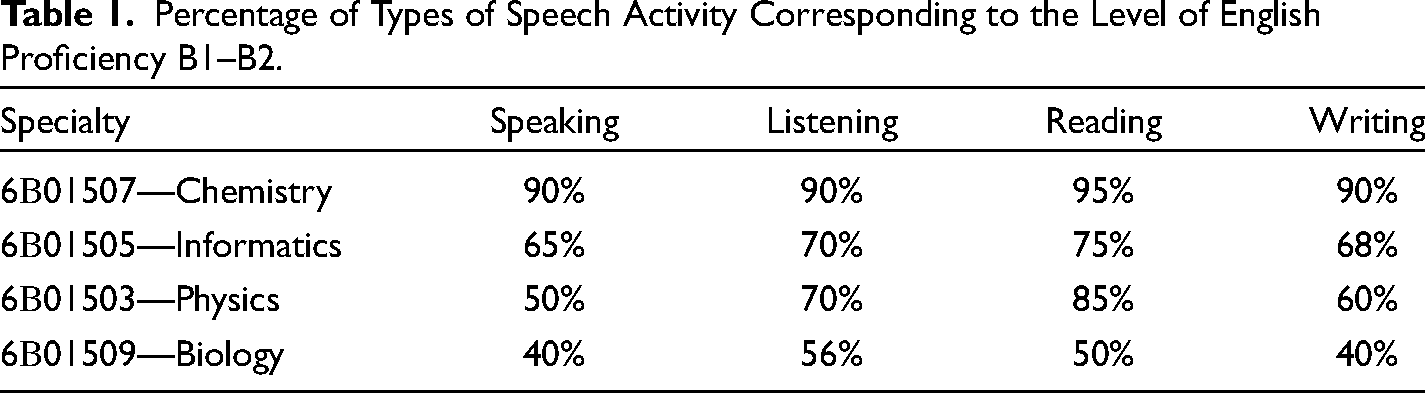
The test results have shown that the lowest level of formation of the cognitive component was demonstrated by the students of specialty “Biology.” The students of specialty “Physics” showed an average level and only the students of specialties “Informatics” and “Chemistry” speak English at a high professional level (Figure 1).
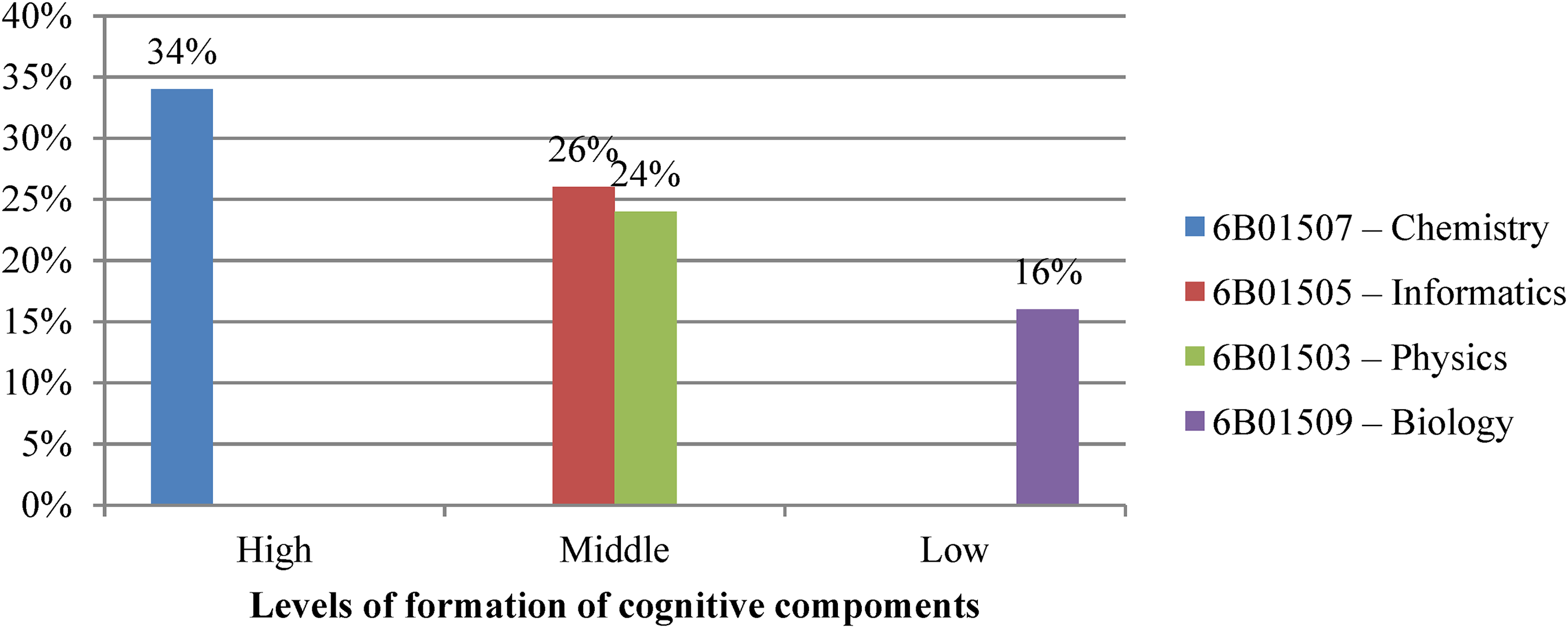
The levels of formation of the cognitive component of the readiness of students of pedagogical specialties to use English in their professional activities (cognitive criterion).
Initially, in order to study the factors that influenced the difference in the levels of training the students, we studied the working curricula of the above specialties. The analysis of working curricula showed that in all four specialties the discipline “Professionally oriented foreign language” was studied in the sixth semester, while special disciplines and special disciplines in English were studied in 2–5 semesters. Since 2019, the discipline “Professionally oriented foreign language” has not been included in the working curricula of the specialties “Biology” and “Physics.”
We conducted a survey among the teachers of special disciplines in English. First of all, the teachers were asked to assess the language preparation of the students to study special disciplines in English; 82% of teachers defined the level of students as low / elementary proficiency (they can read and translate using a dictionary), 18%—as middle / independent proficiency (know how to read and translate texts using a dictionary, verbally and in writing to express their thoughts and opinions, using simple grammatical constructions and vocabulary), and none of the teachers noted the high (fluency) level of students’ language preparation.
The teachers indicated the following reasons of the low level of language preparation: poor language training of graduates of secondary schools (70%), low motivation of students to learn English (20%), insufficient provision of educational and methodological literature, poor technical equipment (10%); 80% of teachers pointed to the need to ensure continuity between the discipline “Professionally oriented foreign language” and special disciplines. A consistent transition between disciplines, according to the teachers, will contribute to the formation of a systematic knowledge based on the development of general scientific ideas and concepts, the improvement of professionally oriented knowledge and skills of students, coordination in the work of teachers of various disciplines, their cooperation, a unified interpretation of general scientific concepts, etc.
Features of the New Design of the Curriculum, Taking into Account the Principle of Interdisciplinary Integration
We are offering our own vision of designing a curriculum, taking into account the principle of interdisciplinary integration. The pedagogical process of mastering the English language for professional activity is quite long and, undoubtedly, has its own dynamics of development. Hence, in our vision of this process, 1 year (1, 2 semester) is a preparatory stage in mastering English for professional activity, with a parallel study of the discipline “Foreign Language” and such special disciplines as “Pedagogy,” “Natural Science,” and “Fundamentals of Biology” in the native language. This arrangement of disciplines will contribute to the parallel development of linguistic and professional knowledge.
Second year (3, 4 semester) is the main stage of interdisciplinary integration. In the third semester, we consider it expedient to study the discipline “Professionally oriented foreign language” in combination with the discipline “Biological terminology (in English),” and from the fourth semester—the introduction of special disciplines in English: “Human Biology,” “Zoology.” At this stage, the use of English acts as a means of educational and cognitive activity; cognitive language and professional skills are formed. In the third and fourth years (5–8 semesters), the disciplines of vocational training are studied in English, which contributes to the deepening and systematization of cognitive language and professional skills.
It is this integrated sequence of studying language and special disciplines that will contribute to the formation of a cognitive component of students’ readiness to use English in their professional activities, the principles of scientific character, systematicity and continuity, improve professionally oriented knowledge and skills of students, enrich their worldview, and develop creative activity and mental independence.
Peculiarities of Conducting an Experiment with Students of a Biological Profile, Which Contributes to the Deepening of Knowledge in Professional English Language
The experimental work was carried out in practical classes in the discipline “Professionally oriented foreign language” in the experimental and control groups. Teaching in the experimental group differed from teaching in the control group and was aimed at developing students’ readiness to use English in their professional activities. In the learning process, we applied the following set of methods aimed at interdisciplinary integration:
technology of CLIL in the development of educational material; innovative and didactic complex with software and methodological support (curriculum (Syllabus) for the discipline “Professionally oriented foreign language (English) for specialty 6В01509—Biology”; study guide “Professionally oriented English. Biology”; electronic educational and methodical manual “Professionally oriented English. Biology”; interactive forms and methods of conducting classes (game method, sociopsychological training, immersion training, suggestion-cybernetic method, demonstration and partial search methods).
On the contrary, in the control group, we did not create the pedagogical conditions purposefully, the learning process was carried out according to the traditional method. In both cases, the learning process proceeded in accordance with the curriculum of the State Educational Standard.
The experiment consisted of three stages:
initial diagnostics of the readiness of students of pedagogical specialties to use English in their professional activities (summative experiment); introduction of a set of methods aimed at interdisciplinary integration in the experimental group (formative experiment); comparison of the levels of readiness of students of pedagogical specialties to use English in professional activity in the control and experimental groups. knowledge of the language system; knowledge of various aspects of a foreign language for the correct formation and understanding of the statement as an act of communicative activity; the ability to choose linguistic means adequate to communication situations; the ability to organize communication taking into account the rules, norms, and traditions of verbal and nonverbal behavior adopted in the country of the target language. Listening, which is 10 tasks of the test type offered to the audiotexts (e.g., finding the links between the spoken utterances and the statements presented in the task, finding correct or incorrect statements / given or not given information in the text, choosing the correct answer from the four proposed). With the help of listening, comprehension of the main content of the heard text, understanding of the requested information, full understanding of the proposed text is checked. Reading, which consists of texts and 10 tasks, offered to them in a test form (e.g., matching short texts of an informational and popular scientific nature and the names of texts; filling in the gaps in the sentences under the text, parts of sentences, and choosing an answer from four suggested). This section tests the understanding of the topic of the text, understanding of the structural and semantic relationships in the text, and the completeness and accuracy of understanding the text. Writing, in which the students had to complete the proposed tasks in writing (e.g., fill in a questionnaire, write a letter / message on the proposed items). A wide range of writing skills was tested: to give a detailed message, organize your utterance correctly and logically, use an utterance style adequate to the task, use means of logical communication, give arguments, etc. Speaking. Students were offered two tasks: a monologue statement and a dialogue—exchange of opinions. The tasks assessed the ability to independently cover all the proposed questions; to logically build your statement; respond appropriately to the interlocutor's remarks; to start, support, and end a conversation; to be an active conversationalist; to develop the conversation by offering options for discussion; to express your reasoned point of view and attitude to the topic; to request the opinion of the interlocutor; to demonstrate (as in the written part of the exam) mastery of grammatical structures and vocabulary sufficient to solve the communicative task, etc.
We had developed a set of tools that is complex in nature and consists of communication-oriented foreign language control tasks for all types of activities and testing according to the methodology for diagnosing the orientation of motivation for studying the subject. Let us consider this set of tools in more detail. Indicators of the cognitive criterion are:
The measurement of these indicators was carried with the help of:
The assessment system of students’ answers was determined by the specification of the experiment. Assessment in the sections “Listening” and “Reading,” where the correct answers of students are predetermined by tasks and checked with keys (the so-called “objective” tests), followed a dichotomous model. The grading system of students’ detailed free answers in the sections “Writing” and “Speaking” was carried out by specially trained experts on the basis of the criterion principle using detailed assessment schemes.
To check the hypothesis of our research, we compared the results obtained during the experiment in several directions:
checking the differences in the results between the experimental and control groups using Control Test 1 (to determine the degree of correctness of the procedure for the formation of the experimental and control groups); checking the differences in the results between the experimental and control groups using the second, third and, most importantly, for the fourth Control Tests (to determine the degree of success of the experiment); checking the differences in the results between the first, second, third, and fourth Control Tests in the experimental group (to determine the level of formation of readiness among the students of pedagogical specialties to use English in their professional activity as a result of the experiment); checking the differences in the results between the first, second, third, and fourth Control Tests in the control group (to determine the level of formation of students’ readiness of pedagogical specialties to use English in professional activity as a result of the traditional form of education).
The Statistically Significant Differences Between the Experimental and Control Groups
Taking into account the specifics of the analysis, a modification of the t-test was used, designed for independent samples (experimental and control groups). For comparison in the third and fourth directions, it was decided to use Fisher's F-test (analysis of variance), since it has the highest sensitivity to this type of difference. In order to present them conveniently, the diagnostic tools will further be denoted in the form of scales (“Listening” scale, “Reading” scale, “Writing” scale, and “Speaking” scale). In the first direction, as a result of calculating the Student's t-test, no significant differences were found (Table 2).
Comparative Results of the Experimental and Control Groups After Control Test 1 (Summative Experiment).
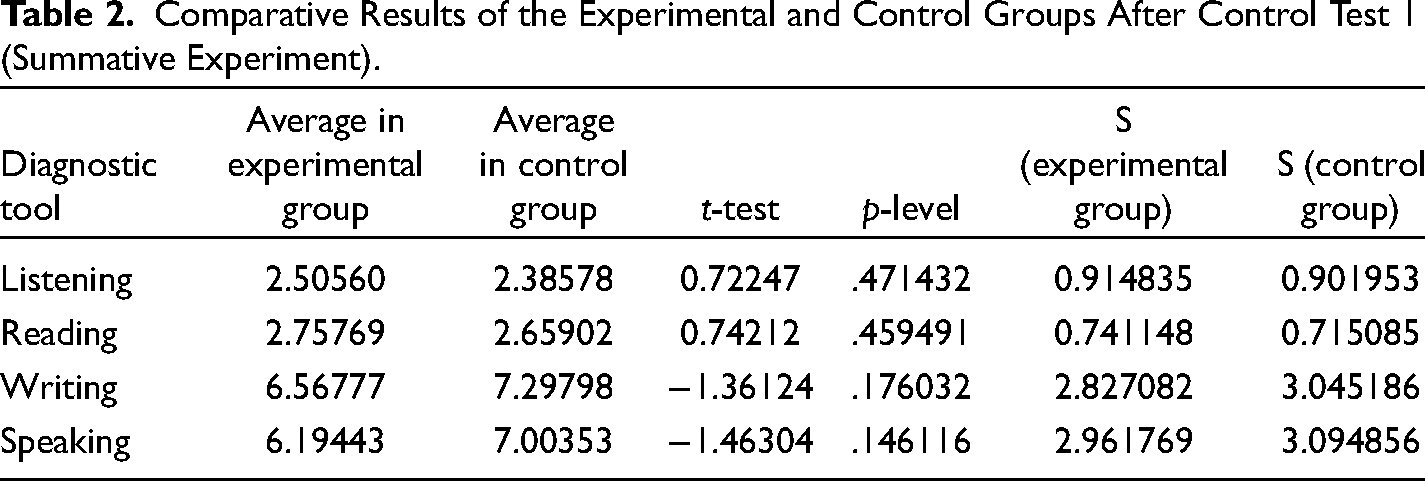
The absence of statistically significant differences between the experimental and control groups after Control Test 1 indicates that the groups were formed correctly and further differences between them can be justified either by experimental influence or by the influence of side variables (further, their effect will be recorded through an increase in the results in the control group).
In the second direction, as a result of calculating the Student's t-test, the following statistically significant differences were found (Table 3).
Comparative Results of the Experimental and Control Groups After Control Test 2 (Formative Experiment).

As it can be seen from the table, statistically significant differences appear on two scales: “Listening” and “Writing” after Control Test 2. As you can see, in the experimental group, the indicators are slightly higher than in the control. For the rest of the diagnostic scales, no significant differences were found after Control Test 2.
When calculating the t-test after Control Test 3, the following results were obtained (Table 4).
Comparative Results of the Experimental and Control Groups After Control Test 3 (Formative Experiment).
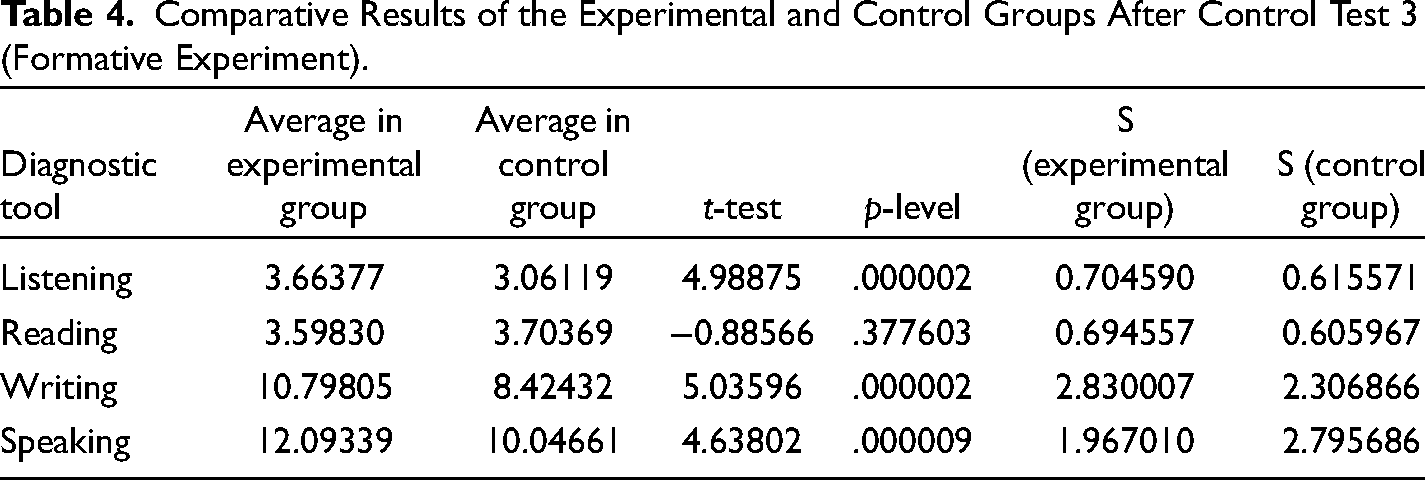
Analyzing the indicators after Control Test 3, one can find that the “Speaking” scale was added to the differences that appeared after Control Test 2 (“Listening” and “Writing”). In comparison with the previous tests, these differences are more visible, which can be detected by the increasing difference between the arithmetic means, as well as by the lower p-level in the t-test. No significant differences were found after Control Test on the “Reading” scale. When calculating the t-test after the fourth (final) Control Test, the following results were obtained (Table 5).
Comparison of the Experimental and Control Groups After Control Test 4 (Formative Experiment).
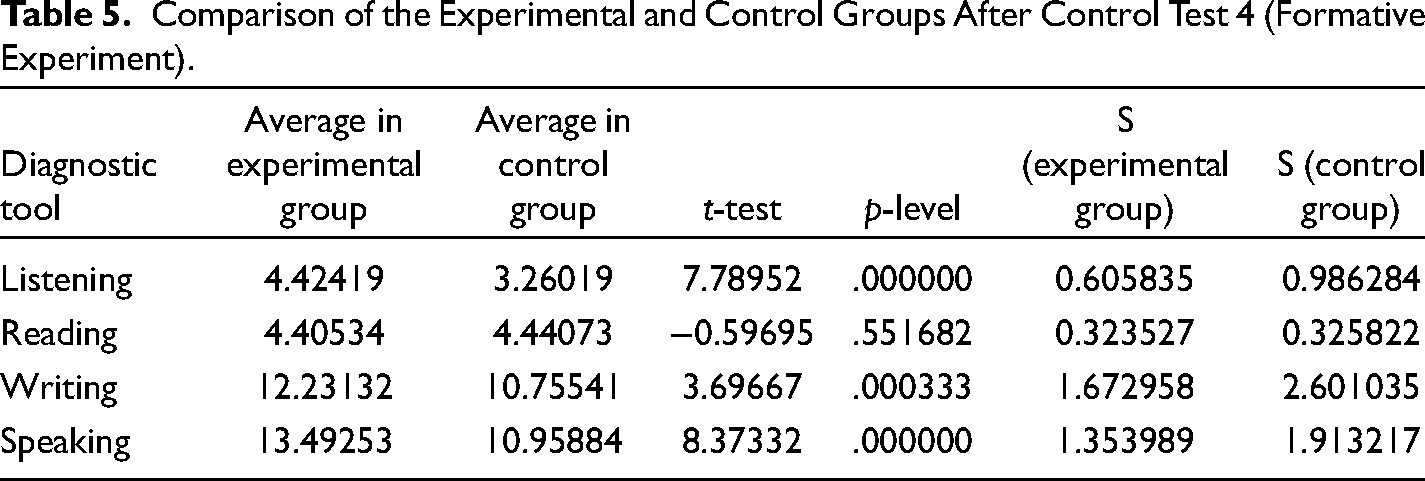
It can be seen from the table that the differences noted in the previous Control Tests were fixed and stabilized. Compared to the third Control Test, there are no changes, the differences are still observed on three scales: “Listening,” “Writing,” and “Speaking.” Statistically significant differences were found on all four scales, moreover, at the p-level, the significance of such differences is quite high. Analyzing the nature of the differences (this can be done according to the first two columns of the table, where the arithmetic mean for the groups is indicated), it can be found that the average number of points in the experimental group on all scales is higher than the average number of points in the control group. Unlike the three scales described above, there are still no significant differences in the Reading scale.
As a result of calculating the Fisher's F-criterion, statistically significant differences were found in the third direction of the analysis (Table 6).
Comparative Results of the Experimental Group After Four Control Tests During the Experimental Influence.
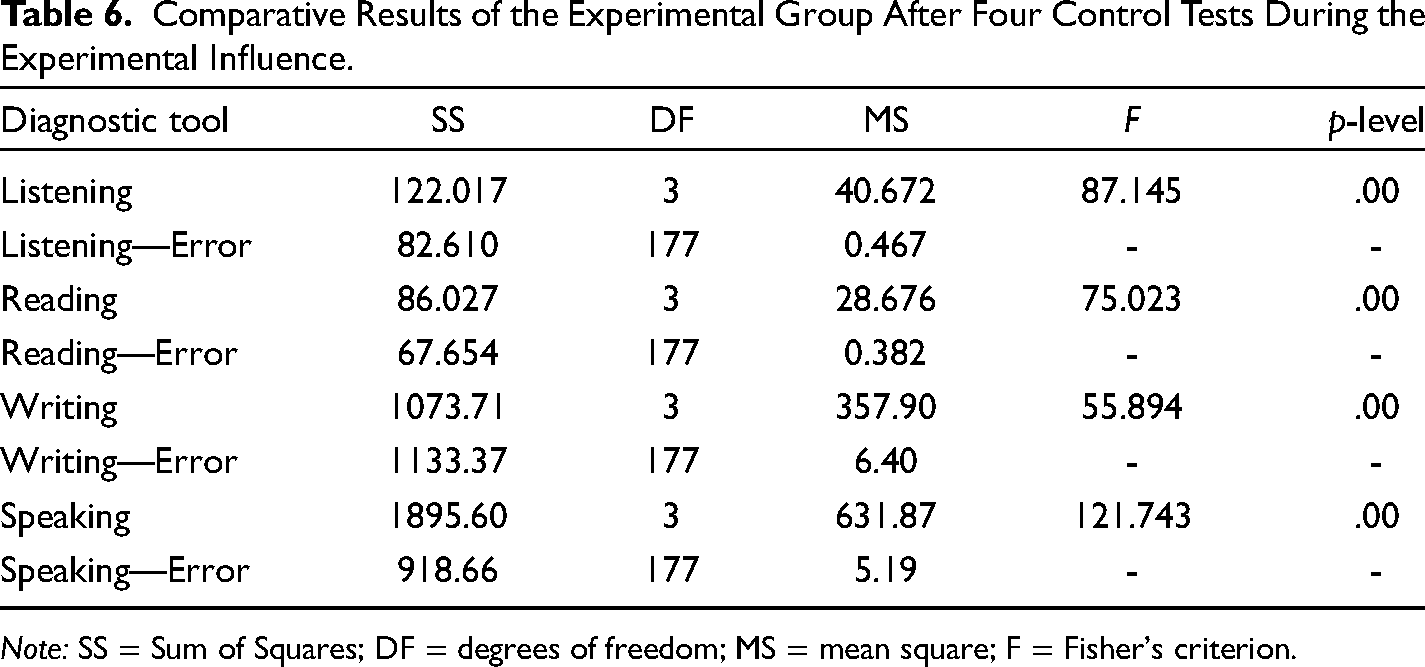
Note: SS = Sum of Squares; DF = degrees of freedom; MS = mean square; F = Fisher's criterion.
We have also checked the result differences between the first, second, third, and fourth Control Tests in the control group. This work has made it possible to determine the level of formation of the foreign language competence among the students of nonlinguistic specialties of the university as a result of the influence of the traditional education system, which will make it possible to better control the side variables of our study. Thus, in the fourth direction of the analysis, as a result of calculating the Fisher's F-test, statistically significant differences were also found (Table 7).
Comparative Results of the Control Group in Four After Control Tests.
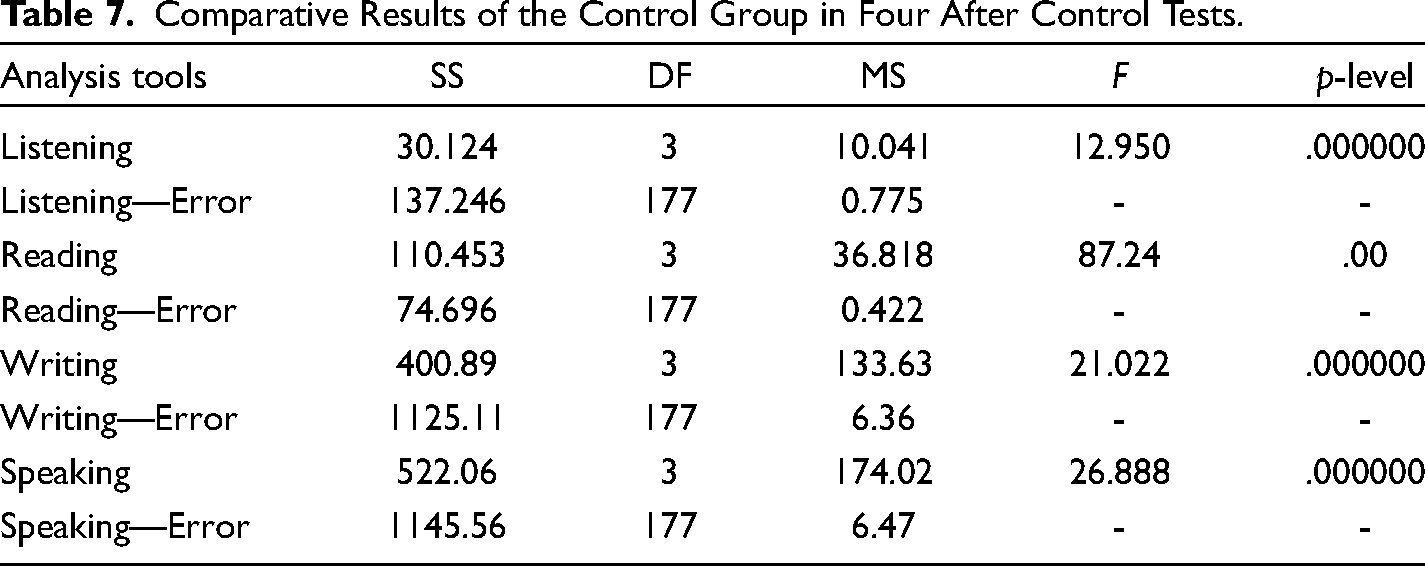
Calculation of the Fisher's F-test of Fisher based on the results of the control group also shows statistically significant changes in the number of points. This trend is observed on all four scales, as in the case of the experimental group. Statistically significant differences in this direction indicate that in the control group, without any experimental influence, there is an increase in the level of formation of the readiness of students of pedagogical specialties to use English in their professional activity in the context of modernization of education in the Republic of Kazakhstan.
However, it cannot be said that this disproves our hypothesis, since the increase in the number of correct answers in the control group is fewer than in the experimental one, which can be seen from the analysis carried out in the first two directions. A graphical comparison of the indicators for all scales is shown in Figure 2.
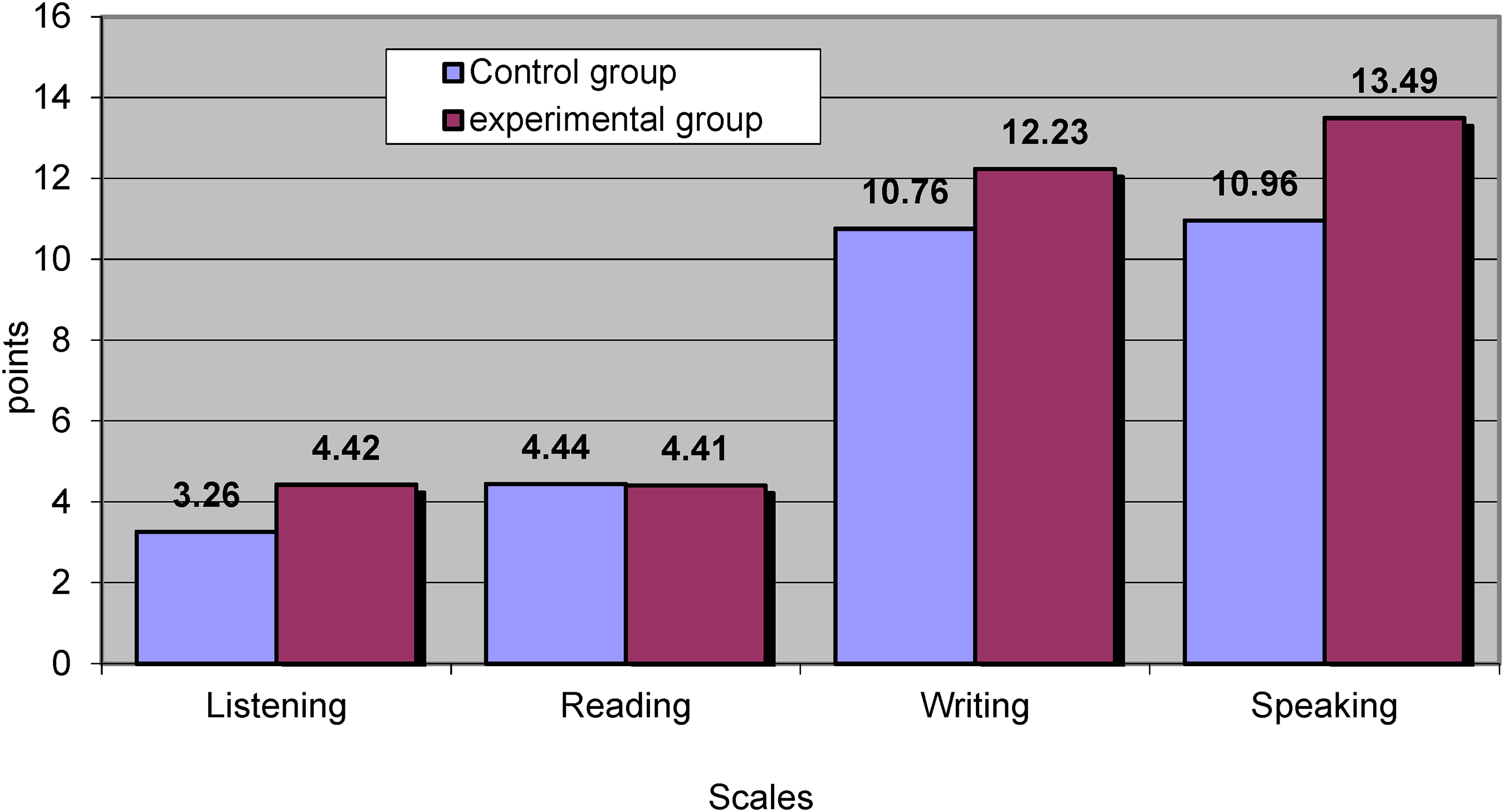
Comparative results of the experimental and control groups after the final control test.
Figure 2 graphically presents previously identified statistical differences across four scales. In particular, it can be seen that, in percentage terms, the indicators in the experimental group on the “Listening” scale are higher by 23.2%, on the “Writing” scale—by 9.8%, on the “Speaking” scale—by 16.9%. Indicators of the “Reading” scale in the experimental and control groups also increased, but are in the same position.
Conclusions
It was established that the present arrangement of linguistic and special disciplines does not correspond to the implementation of the principle of systematicity and continuity, which is organically linked to the principle of scientific character, which implies a consistent arrangement of educational material in the working curriculum, reliance on previous knowledge, consistency between them, taking into account interdisciplinary integration. The absence of the discipline “Professionally oriented foreign language,” in our opinion, has a negative effect on the level of professional training the undergraduates for teaching special disciplines in English.
The obtained results provide sufficient grounds to assert that the level of readiness formation to use of English in professional activity among the students of the experimental group has significantly increased (on average by 21.6%) compared with students in the control group. Analyzing the results of all four sections, it can be established that if initially there were no differences—the control and experimental groups were balanced and equal, later the differences increased and became fixed. This difference is determined not by the influence of random factors, but by the use of a set of methods focused on interdisciplinary integration.
Footnotes
Declaration of Conflicting Interests
The author(s) declared no potential conflicts of interest with respect to the research, authorship, and/or publication of this article.
Funding
The author(s) received no financial support for the research, authorship, and/or publication of this article.
