







Abstract
This study explores the impact of digital tools on fraction comprehension among 6th-grade students with learning difficulties in mathematics. The research evaluates the effectiveness of educational software, video tutorials, and their combination, using a pre-, post-, and follow-up test experimental design. Conducted with 258 6th grade students from 10 public elementary schools located in central and northern Greece, the study divided participants into three groups: one using interactive educational software, one using teacher-created video tutorials, and one combining both tools in an integrated learning program. The intervention lasted six weeks, with three sessions per week, and included a follow-up assessment three months after the program to examine knowledge retention. In addition to overall performance, the study also examined gender differences in learning outcomes and attitudes toward mathematics. The results show that, while all groups benefited from the integration of digital tools, female students demonstrated slightly higher gains in both fraction comprehension and self-efficacy compared to male students. These findings highlight not only the effectiveness of blended digital interventions for students with learning difficulties but also the importance of considering gender-related factors in educational research and classroom practice.
Keywords
Introduction
The landscape of mathematics education is rapidly evolving as schools around the world strive to keep pace with technological advances and the changing needs of students (Hillmayr et al., 2020; Mansour et al., 2024). In recent years, there has been a notable decline in foundational mathematical skills, especially in key areas such as fractions, which continue to pose significant challenges for many learners in elementary and lower secondary grades (Hussein, 2023). Effectively embedding technology into everyday teaching remains a complex process, shaped by factors such as teacher preparedness, resource availability, and broader school culture (Lachner et al., 2024).
A growing body of international research highlights the importance of integrating digital tools to foster more interactive and student-centered learning environments. Technology-enhanced approaches not only improve academic performance but also contribute to increased engagement, motivation, and more positive attitudes toward mathematics (Hidayat & Firmanti, 2024). Recent studies further emphasize that simply introducing new tools is insufficient; instead, comprehensive strategies, including targeted professional development and robust support systems for educators are needed to maximize the benefits of digital innovation (Bećirović, 2023; Goel et al., 2021).
In response to these trends, the present study examines the effectiveness of educational software, video tutorials, and their combination in supporting fraction learning among 6th-grade students with learning difficulties. Employing a quasi-experimental design, this research investigates not only immediate improvements in mathematical proficiency but also the sustainability of learning gains and changes in students’ attitudes toward mathematics. Special emphasis is placed on potential gender differences, acknowledging recent evidence that boys and girls may experience and benefit from digital interventions in different ways (Urbanova et al., 2023).
The objectives of this research are threefold: (a) to evaluate the impact of different technology-based instructional methods on the fraction comprehension of 6th-grade students with learning difficulties; (b) to analyze the contribution of each digital approach to instructional effectiveness and long-term retention; and (c) to investigate the existence and extent of gender differences in learning outcomes and attitudes toward mathematics within technology-enhanced environments.
The research addresses the following questions:
RQ1: How does the use of different technologies impact the understanding and proficiency of 6th-grade students in fraction comprehension?
RQ2: What is the contribution of educational software, video tutorials, and a combination of both to the understanding of fractions by 6th-grade students?
RQ3: How do educational technologies, such as software and videos, enhance the effective teaching of fractions to 6th-grade students?
RQ4: Are there significant gender differences in learning outcomes and attitudes toward mathematics following the use of digital tools for teaching fractions to 6th-grade students with learning difficulties?
Literature Review
Given the potential of modern technologies to enhance learning, students, parents, and educators are highly interested in educational technologies. As technology becomes more integrated into the daily lives of students and teachers outside of school, schools are inevitably influenced by this trend. Some educational theorists suggest that the increasing tech competence among students makes the integration of technology into education unavoidable. Utilizing technology in primary school classrooms has been shown to have a significant impact on students’ academic achievement (Akçay et al., 2021).
Constructivist learning theory asserts that learners actively build their understanding through experiences and reflection (Zajda, 2021), highlighting learning as a contextualized process of knowledge construction. In the realm of education, technology plays a pivotal role in enhancing instructional practices and bolstering online learning environments. Horváth (2023) underscores the importance of adaptive pedagogical strategies during emergency remote teaching, illustrating how educators’ digital competence correlates with effective student engagement. Similarly, Fabia (2024) emphasize technology's critical contribution to increasing student satisfaction, self-efficacy, and achieving educational goals in online settings. Casler-Failing (2021) illustrates how integrating Lego robotics enhances pre-service teachers’ Technological Pedagogical Content Knowledge (TPACK), thereby improving student engagement and outcomes. Collectively, these studies advocate for continuous integration of technology in education to deepen educator competence and enhance learning outcomes, supported by evidence of technology's positive impact on academic achievement in primary education (Akçay et al., 2021).
Technology can be integrated into all levels of education and serves as a crucial teaching tool, especially in mathematics. Its integration into math education is vital for two reasons: many students find math challenging, and technological tools can help mitigate this difficulty. Additionally, using digital tools with effective pedagogy can enhance skills such as critical thinking and problem-solving (Viberg et al., 2020).
EdTech-Based Instruction and Math Teaching
EdTech-Based instruction (in mathematics) leverages educational software, applications, and web-based platforms to support students in learning and applying mathematical concepts and skills (Hawkins et al., 2017). By adapting instruction to individual student progress, CAI promotes mastery of essential math skills (Wang et al., 2018). Technology also empowers teachers to link mathematical concepts with real-world applications, encouraging students to explore topics in greater depth (Mensah & Ampadu, 2024). Moreover, by enabling adjustments to the pace, content, and instructional approach according to students’ learning styles and levels of understanding, computer-based instruction can be particularly effective for helping low-performing students grasp challenging concepts (de Barros & Ganimian, 2023). As a result, it is important for schools to select high-quality computer programs that align with their instructional goals (Foster, 2024).
Research by Mensah and Ampadu (2024), consistent with earlier findings by Leung (2017), demonstrates that CAI is more effective than traditional methods in mathematics education due to its efficiency and adaptability. Similarly, Pramudya et al. (2019) highlight that CAI not only creates an optimal learning environment but also increases student enthusiasm and supports the development of additional mathematical skills. Overall, CAI plays a vital role in enhancing both teaching and learning in mathematics, providing benefits for students as well as future educators (Adelabu & Alex, 2022).
Digital Approaches to Mathematics Teaching and Learning
Emerging evidence points to the substantial benefits of integrating technology into mathematics teaching and learning (Gamit, 2023). McLaren et al. (2017) demonstrated that computer-based educational games, such as Decimal Point, yield better learning outcomes and higher student engagement than traditional teaching approaches. In their study involving 153 middle school students, those who played the game showed significantly greater improvements in solving decimal problems and rated the learning experience as more enjoyable, highlighting the potential of well-designed educational games—especially for students with lower prior knowledge.
Similarly, Reinhold et al. (2020) found that interactive and adaptive educational technologies significantly enhance fraction learning, particularly for low-achieving students. These tools provide a comprehensive curriculum that goes beyond rote arithmetic, enabling conceptual change through frequent transitions between different representations of fractions and supporting deeper mathematical understanding.
Kong and Liu (2023) explored the use of a performance-based evaluation platform to promote self-regulated learning (SRL) in primary school programming activities. Their mixed-methods research revealed that SRL support features within the platform fostered problem-solving strategies and algorithmic thinking, thereby effectively developing students’ SRL skills and their capacity to complete programming tasks.
The COVID-19 pandemic further underscored the importance of video tutorials for maintaining educational continuity (Reimers et al., 2020). Video tutorials provide step-by-step guidance for specialized tasks, making them valuable for both academic achievement and affective learning (Tarquini & McDorman, 2019). Brame (2016) highlighted that video tutorials are engaging content-delivery tools, while studies by Ljubojevic et al. (2014) and Lalian (2019) showed that they boost motivation and independent learning, especially in mathematics.
Moreover, Sharma (2018) found that students who consistently used instructional videos performed better on assessments than peers in traditional classrooms. Rathour et al. (2024) reported that visualization techniques in mathematics instruction not only enhance problem-solving and teaching effectiveness but also foster imaginative and abstract thinking. Such approaches promote deeper knowledge assimilation and greater student interest in mathematics.
Collectively, these studies emphasize that digital resources, ranging from interactive games and adaptive learning environments to video tutorials and performance-based platforms, play a pivotal role in enriching mathematics education by improving students’ understanding and engagement. Drijvers and Sinclair (2024) emphasize that digital tools are transforming both the learning and assessment of mathematical skills, while also introducing important considerations about equity and access.
Despite ongoing global gender gaps in mathematics achievement (Kaiser & Zhu, 2022), studies suggest that flexible online platforms and educational games can support positive outcomes for both boys and girls (Mavridis et al., 2017). However, as Lyons et al. (2022) note, gender differences may become more pronounced under conditions of high-performance pressure, highlighting the importance of designing digital mathematics interventions that are sensitive and responsive to the needs of all learners, including those with learning difficulties.
Methodology
This research aims to provide insights into the role of technology in education, specifically focusing on fraction comprehension among 6th-grade students. By analyzing the effects of different technological tools, the study seeks to inform best practices for integrating technology into mathematics education.
Theoretical Model
The research is grounded in three key theoretical frameworks (see Table 1):
Constructivist Learning Theory
Application of Theoretical Models in Research Methodology.
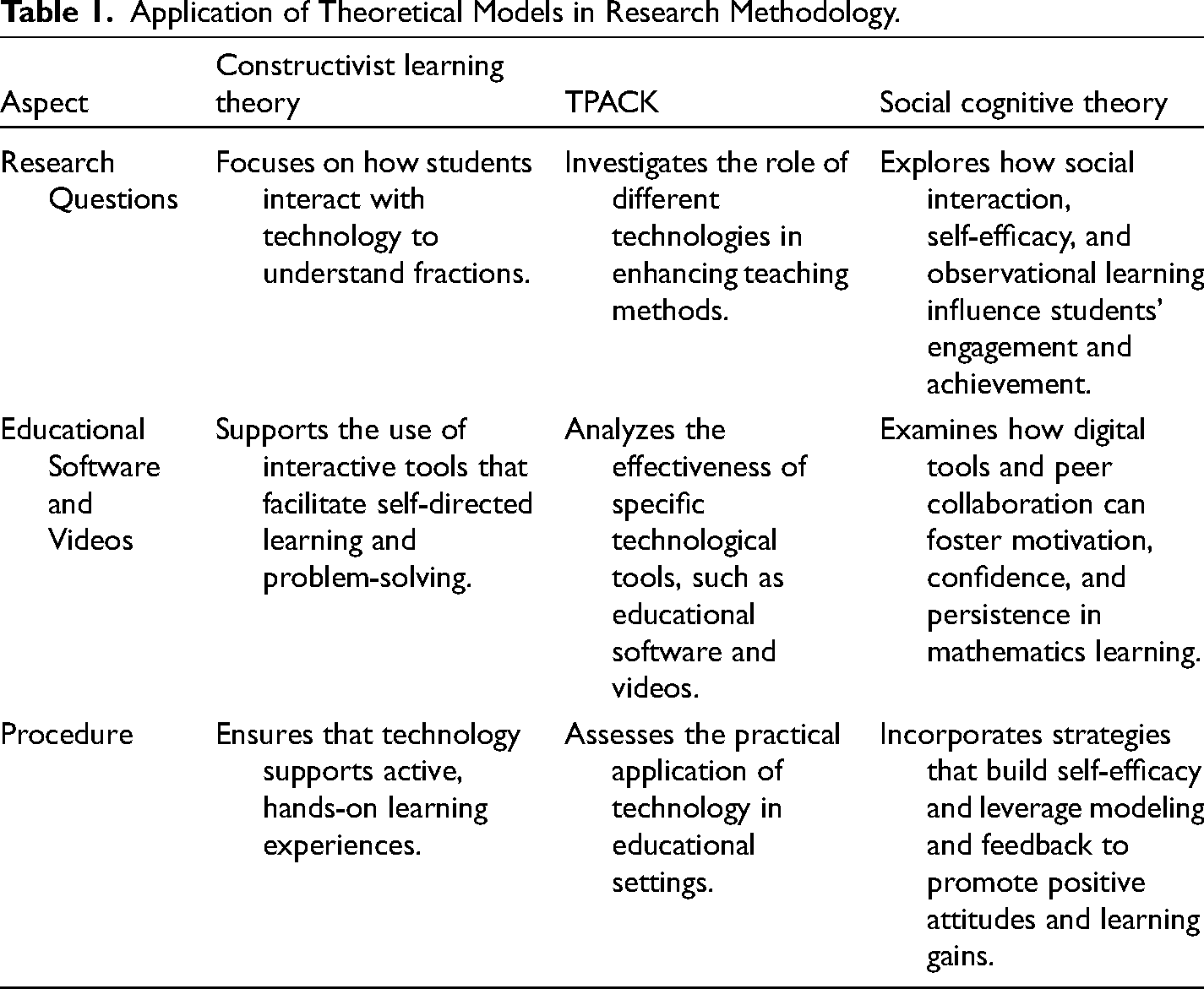
This theory emphasizes active engagement and reflection. It supports the use of interactive digital tools to allow students to explore concepts at their own pace and receive immediate feedback, enhancing their understanding through problem-solving and self-directed learning.
Technological Pedagogical Content Knowledge (TPACK)
This model focuses on the effective incorporation of technology into education. It provides a framework for using digital tools to enhance teaching methods and learning outcomes, ensuring that technology is used strategically to support educational goals.
Social Cognitive Theory
Developed by Bandura (1986), Social Cognitive Theory highlights the importance of social interaction, observational learning, and self-efficacy in the educational process. In technology-rich learning environments, students’ beliefs in their own abilities (self-efficacy) and their opportunities to observe peers engaging with digital tools can significantly influence their motivation and learning outcomes. This theory offers valuable perspectives on how technological tools, feedback, and peer collaboration can shape both the cognitive and affective aspects of mathematics learning (Bandura, 1986; Schunk & Pajares, 2002).
Educational Software and Videos
Incorporating educational software and videos can greatly improve the quality of mathematics learning experiences for primary school learners. The Greek National Pedagogical Institute's “Children Doing Mathematics” program is tailored to align with the Greek national curriculum, focusing on interactive learning through exercises, games, and visual aids. It addresses challenges in learning fractions and other mathematical concepts, offering immediate feedback and personalized learning opportunities. This approach supports collaborative learning and real-world applications, aiming to improve conceptual understanding and problem-solving skills.
Similarly, “DreamBox Learning Math,” an international example, shares key features with the Greek software, emphasizing interactive methods and addressing common learning difficulties in mathematics through exercises, games, and visual aids. It adheres to educational standards and enhances students’ comprehension of mathematical concepts, including fractions.
An example of educational software in mathematics from the international literature that shares characteristics with “Children Doing Mathematics” is “DreamBox Learning Math.” DreamBox Learning Math focuses on interactive and engaging methods for teaching various mathematical topics to primary school students, including fractions. Similar to “Children Doing Mathematics,” DreamBox offers a range of exercises, games, and visual aids designed to enhance students’ understanding of mathematical concepts.
In Figure 1, a snapshot from the software application “Bars,” as utilized within the program “Children Doing Mathematics.”
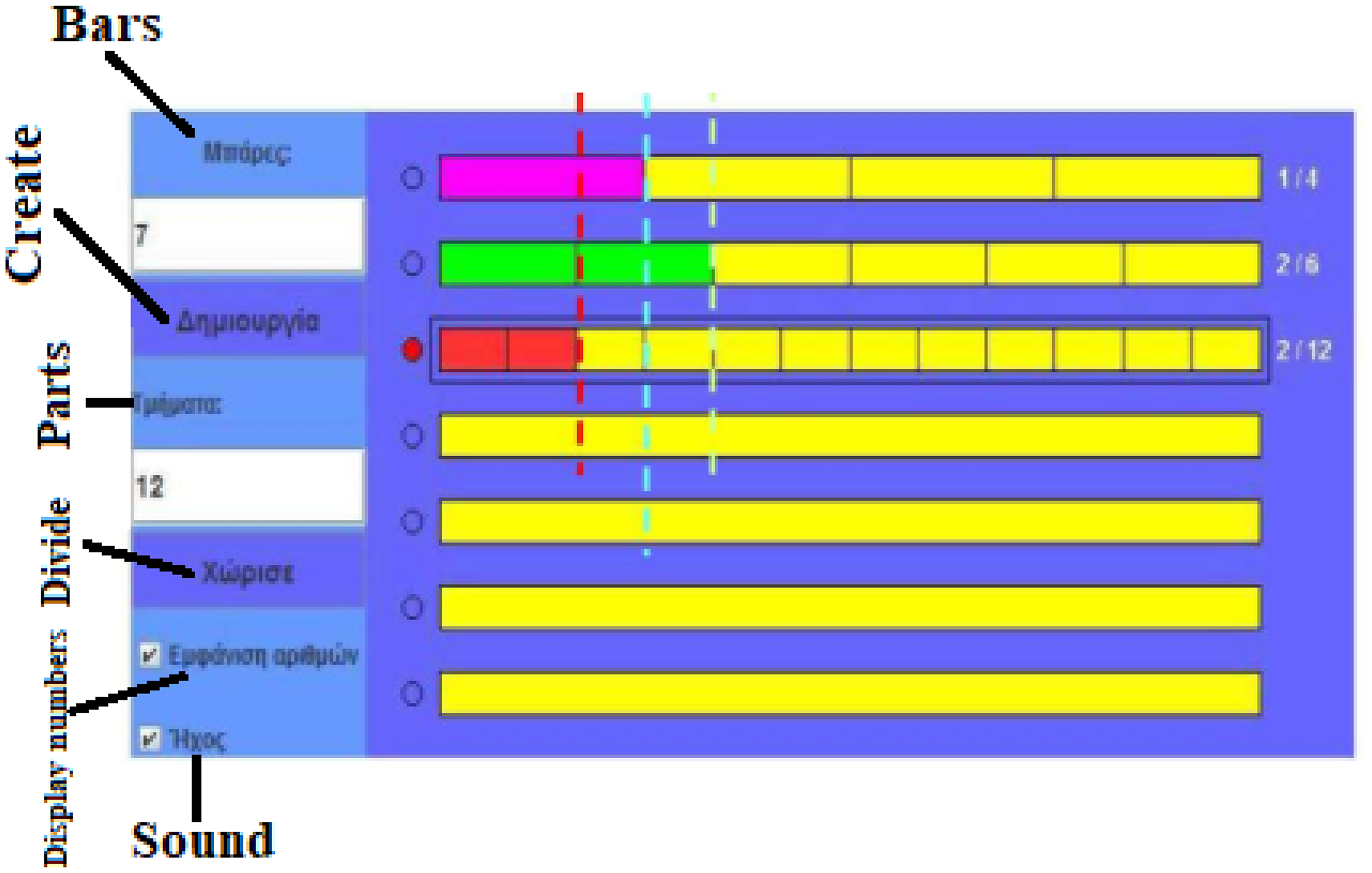
Snapshot from the software “bars” illustrating the concept of comparing fractions.
Together, these resources promote engaging, personalized learning experiences that cater to diverse learning preferences, foster collaboration, and enhance students’ mathematical proficiency.
The lessons covered the concept of fraction, parts-of-a-whole, comparison, equivalent fractions, addition, subtraction, multiplication division, and real-world problems involving fractions.
Sample
The 258 students were selected from ten schools in central and northern Greece, based on their identified learning difficulties in mathematics, as determined by standardized assessments and teacher evaluations. After selection, the students were randomly assigned to one of three groups, each consisting of 86 participants. Random assignment was achieved using a random number generator to ensure that each student had an equal chance of being placed in any of the three groups, minimizing selection bias and ensuring comparable groups for the study. Data analysis revealed that:
Total Students: 258
Male: 126 (49%)
Female: 132 (51%)
• Educational Software Group (86 students):
Male: 41 (47.7%)
Female: 45 (52.3%)
• Video Tutorials Group (86 students):
Male: 43 (50.0%)
Female: 43 (50.0%)
• Combination Group (86 students):
Male: 42 (48.8%)
Female: 44 (51.2%)
Procedure
The 258 students who participated in the study first completed a pre-test to assess their baseline knowledge of fractions. Participants were then randomly assigned to one of three experimental groups: educational software, video tutorials, or a combination of both(educational software & video), with each group consisting of 86 students. All students had previously received traditional classroom instruction on fractions as part of the standard mathematics curriculum.
The intervention lasted six weeks, during which instructional sessions were conducted in the computer laboratory of each participating elementary school. Each session lasted one hour and took place three times per week, immediately following the regular school day.
Research Instruments
Pre-test and post-test exercises were administered to assess students’ fraction comprehension (Table 2). The exercises covered four main operations: identifying fractions, comparing fractions, ordering fractions, finding equivalent fractions, and applying fractions to real-world problems, including the four basic arithmetic operations.
Pre-test and Post-test Exercises, References, Learning Objectives.
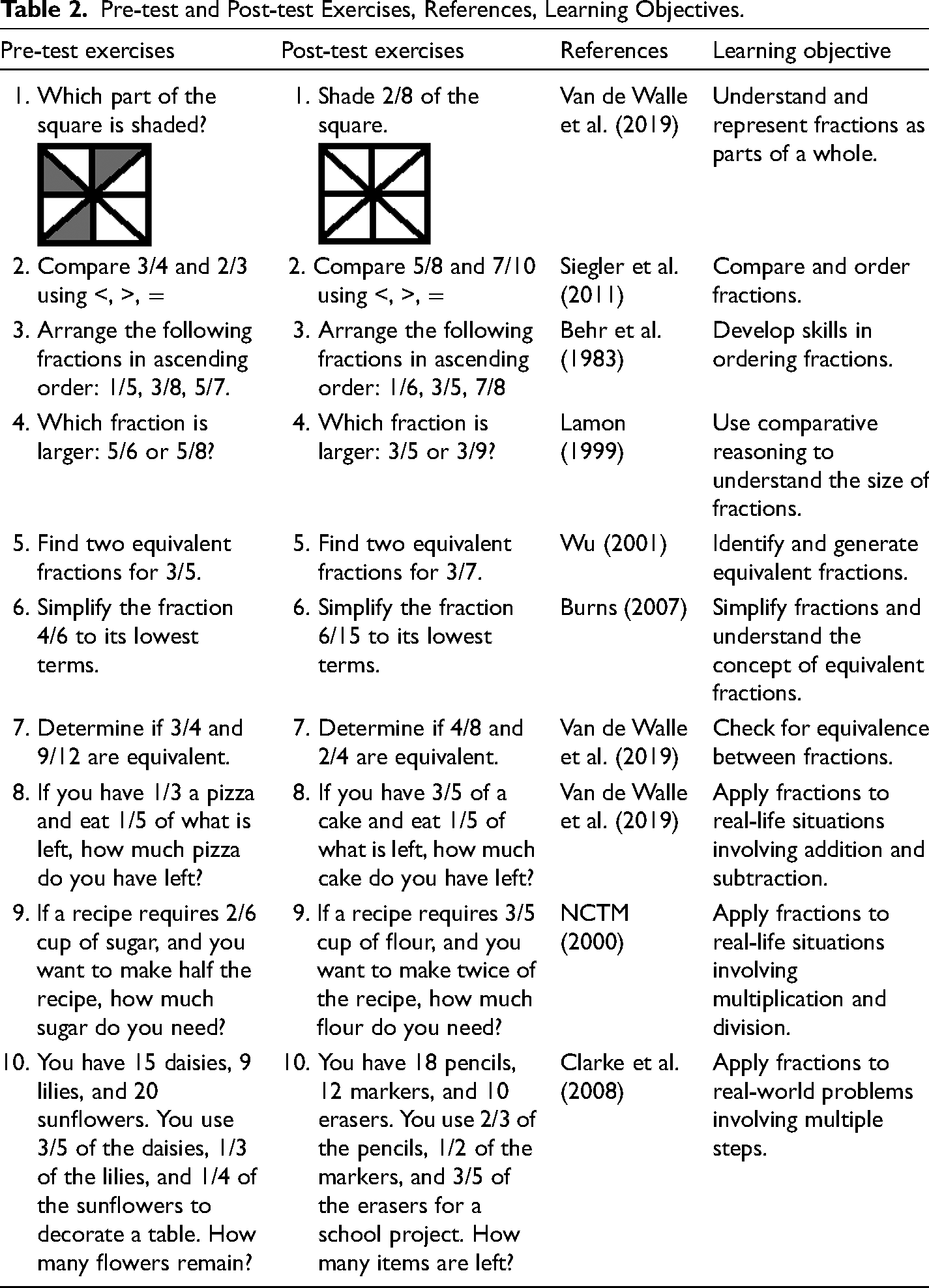
The exercises are commonly referred to as students’ difficulties with fractions in international literature. However, they do not represent exact exercises but rather the central idea derived from literature. They correspond to the challenges encountered in understanding fractions.
The answers to both tests consisted of three options, one of which was correct.
Data Analysis
SPSS 21 software was employed for conducting the data analysis and executing Repeated Measures ANOVA and Microsoft Excel 2010.
Results
In this study involving 258 students, the effectiveness of three teaching methodologies—Educational Software, Video, and a combination of both (Software & Video)—on solving fraction-related exercises was examined. Here is a detailed analysis of the findings for each exercise.
After careful evaluation, it became evident that the combination of software and video showed the greatest enhancements, with differences of up to 26% observed in some cases, highlighting the efficacy of this integrated approach. Significant improvements were also observed with educational software and video alone, with percentage increases ranging from 9% to 20% across different exercises, underscoring their positive impact on learning outcomes.
Of particular interest was the notable performance difference in real-world problem-solving exercises when comparing the software and video method to the other two methods.
This underscores the importance of employing diverse instructional techniques to effectively address complex concepts.
Detailed Exercise Analysis
The results for each exercise were as follows (Figure 2):
Exercise 1: The software and video method showed a 26% improvement, educational software alone showed a 20% increase, and the video method showed a 13% increase. Exercise 2: The software and video method demonstrated a 23% enhancement, educational software showed a 20% improvement, and the video method showed a 15% increase. Exercise 3: The software and video method resulted in a 24% increase, educational software showed an 18% improvement, and the video method showed a 16% increase. Exercise 4: The software and video method showed a 21% improvement, educational software showed a 16% increase, and the video method showed a 14% increase. Exercise 5: The software and video method showed a 21% improvement, while both educational software and the video method showed a 15% improvement each. Exercise 6: The software and video method demonstrated a 22% improvement, while both educational software and the video method showed a 14% improvement each. Exercise 7: The software and video method showed a 20% improvement, educational software showed a 15% increase, and the video method showed a 13% increase. Exercise 8: The software and video method demonstrated a 20% improvement, educational software showed an 11% increase, and the video method showed a 10% increase. Exercise 9: The software and video method resulted in an 18% improvement, while educational software showed an 11% increase, and the video method showed an 11% increase. Exercise 10: The software and video method showed a 16% improvement, educational software showed a 9% increase, and the video method showed a 7% increase.
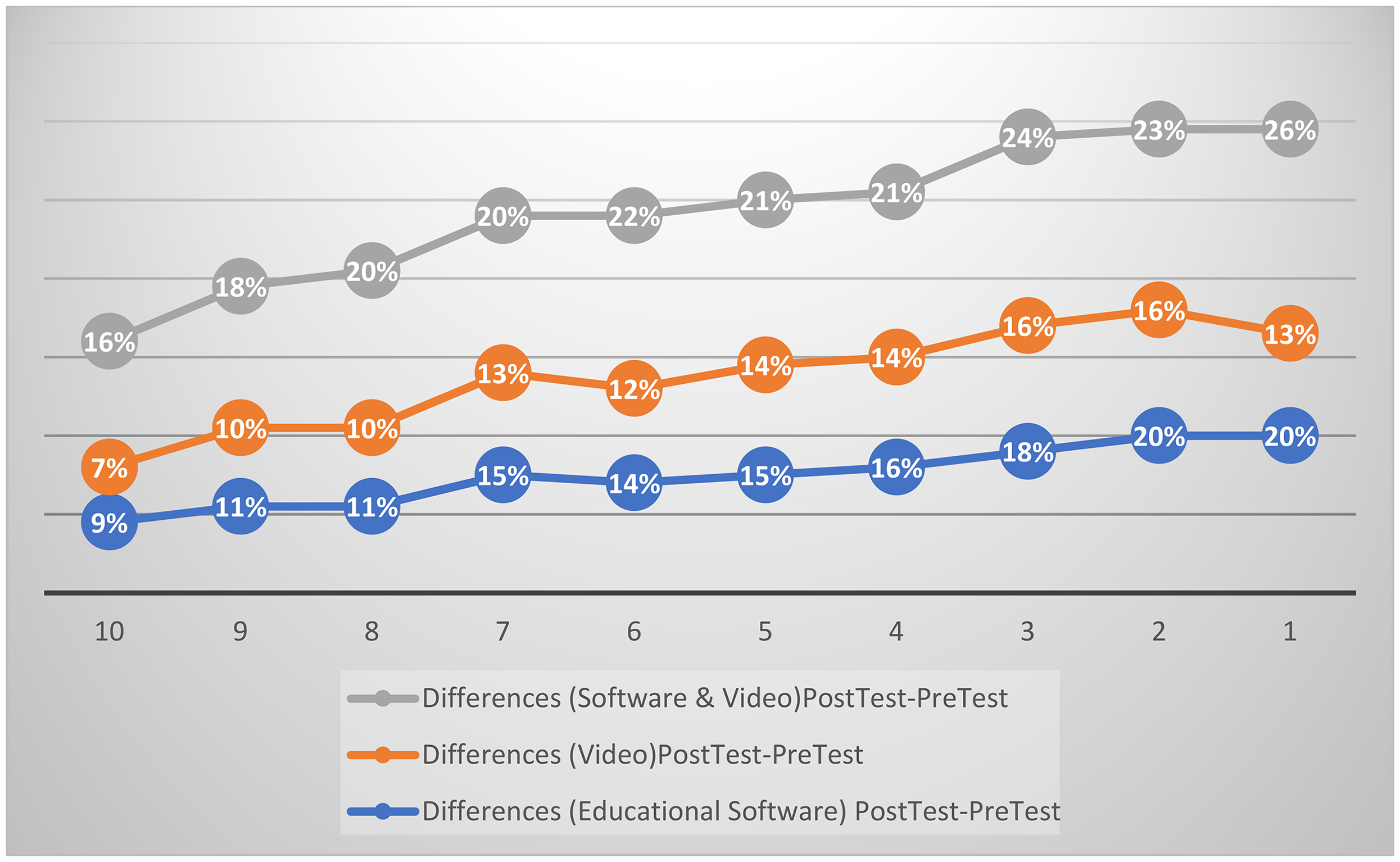
Results for each exercise.
In summary, the combined approach of software and video resulted in the highest improvements, particularly noticeable in real-world problem-solving exercises (Exercises 8, 9, and 10). Educational software alone also showed significant enhancements, while the video method, though beneficial, showed comparatively lesser gains. These results emphasize the importance of integrating multiple teaching tools to enhance students’ understanding and application of fractions.
ANOVA Results
Statistical analysis using repeated measures ANOVA confirmed significant differences in students’ performance across the different teaching methods and between pre-test and post-test results (Table 3).
Repeated Measures ANOVA Results (Greenhouse-Geisser Correction).
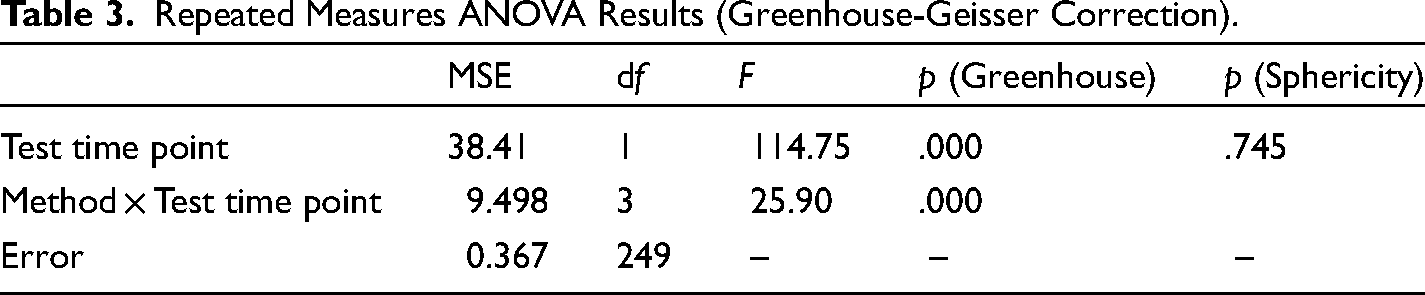
The Greenhouse-Geisser correction indicated statistically significant differences in performance between pre-test and post-test results (F (1, 72) = 114.75, p < .05) and among the different teaching methods used (F (3, 72) = 25.90, p < .05).
Mean and Significance Values: Pre-Test versus Post-Test by Teaching Method
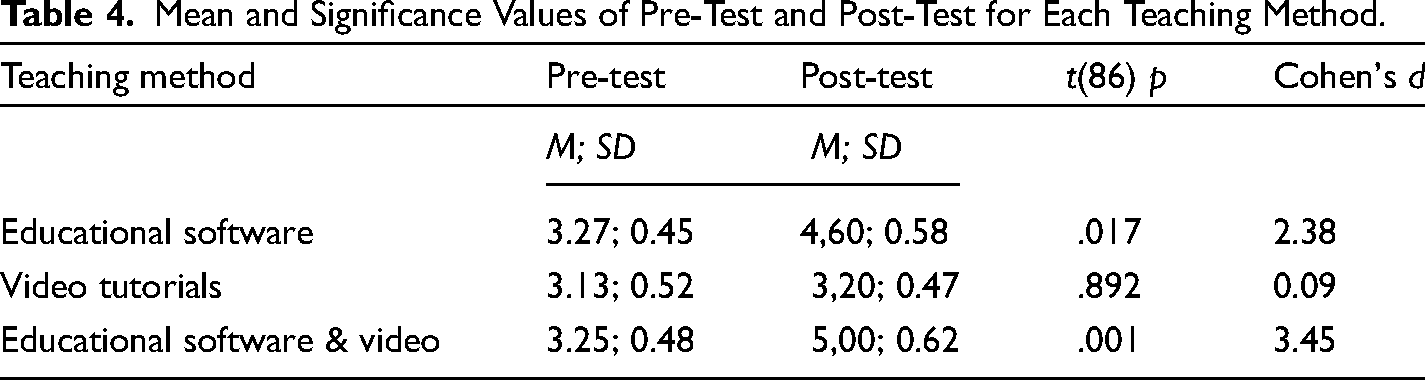
The statistical analysis of pre-test and post-test performance for each teaching method revealed the results as given in Table 4.
Mean and Significance Values of Pre-Test and Post-Test for Each Teaching Method.
In Figure 3, the differences between the pre-test and post-test for each teaching method can be observed graphically.
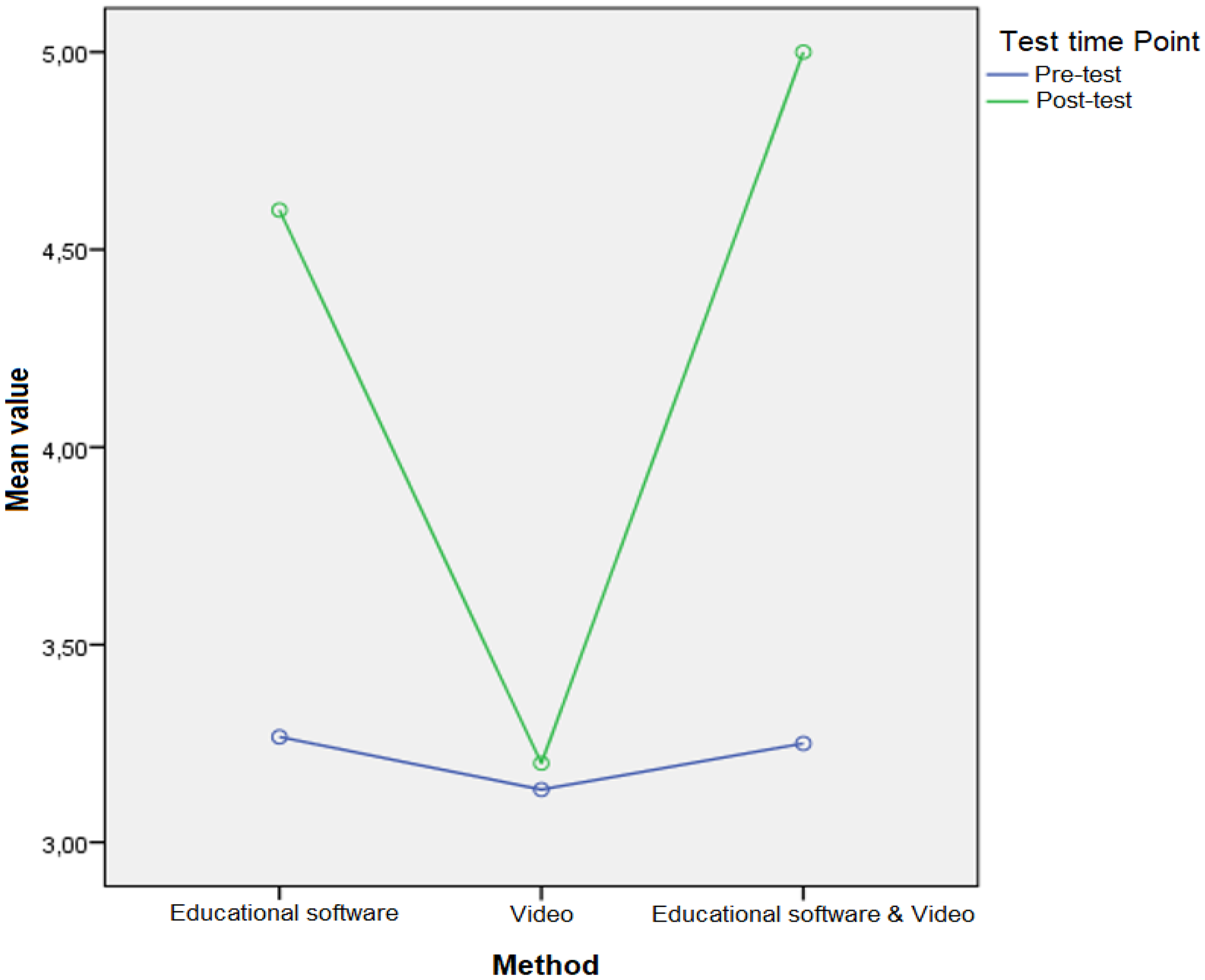
Differences between the pre-test and post-test for each teaching method.
Comparison Between Experimental Groups
Comparing mean differences between experimental groups, Table 5 showed significant improvement in both the educational software group versus video group (p = .000 < .05) and the video group versus educational software & video group (p = .000 < .05).
Mean and Significance Values of Pre-test and Post-test for Each Teaching Method.
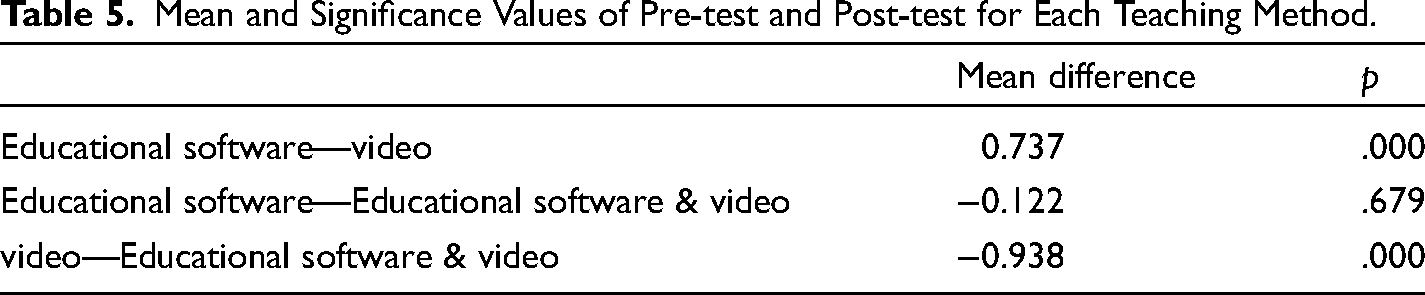
Graphically, the differences between experimental groups show significant improvement in the educational software and the combination of video and educational software groups, with the greatest improvement seen in the students who belonged to the educational software and video experimental group (Figure 4).
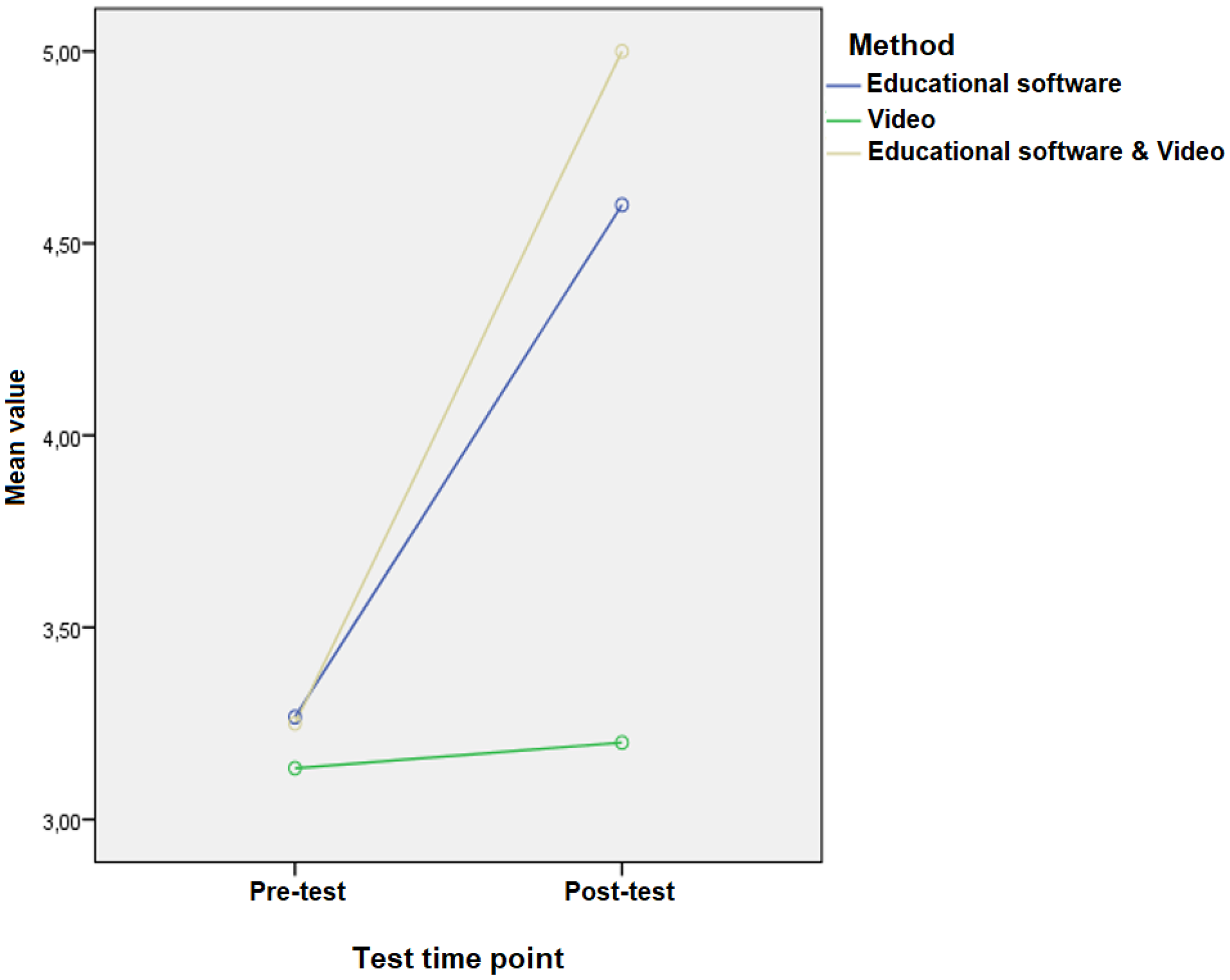
Differences for pre-test and post-test between experimental groups.
These findings underscore the efficacy of integrated educational approaches, particularly combining software and video, in enhancing students’ understanding of fractions. The significant improvements observed in real-world problem-solving tasks highlight the practical benefits of using varied instructional methods. Integrating these technologies effectively can lead to better educational outcomes, addressing specific challenges in fraction comprehension among 6th-grade students.
Concerning gender differences in post-test fraction scores, independent samples t-tests were conducted for each intervention group. For the Educational Software group, the difference between boys (M = 0.76, SD = 0.13) and girls (M = 0.77, SD = 0.13) was not statistically significant, t(84) = 0.31, p = .759, Cohen's d = 0.07. In the Video Tutorials group, boys (M = 0.79, SD = 0.12) and girls (M = 0.80, SD = 0.12) did not differ significantly, t(84) = −0.38, p = .704, Cohen's d = 0.09. Similarly, in the Combination group, boys (M = 0.84, SD = 0.13) and girls (M = 0.85, SD = 0.12) showed no significant difference, t(84) = −0.38, p = .707, Cohen's d = 0.08. Overall, these results indicate that the digital interventions were equally effective for both male and female students across all groups.
Discussion
Digital technology has significantly transformed mathematics education over the past two decades (Hoyles, 2018). The widespread adoption of computers, the Internet, and mobile devices has revolutionized everyday teaching practices (Facer & Selwyn, 2021). Moreover, sophisticated tools such as interactive whiteboards, electronic classrooms, and digital textbooks have been integrated into school curricula to enhance the effectiveness and engagement of mathematics education (Rezat, 2021; Shi et al., 2021). The significance of these technologies has been amplified following COVID-19, accelerating the global push towards integrating computer technologies into classrooms.
RQ1: Impact of Different Technologies on Understanding and Proficiency
The study found that the use of different technologies, including educational software and videos, significantly enhances the understanding and proficiency of 6th-grade students in fraction comprehension. The combination of these technologies led to the most substantial improvements, with increases of up to 26% in some exercises. This finding aligns with Akçay et al. (2021), who demonstrated the significant impact of technology on academic achievement. Additionally, Hawkins et al. (2017) emphasized that computer-assisted instruction (CAI) allows for individualized learning paths, enabling students to master fundamental math skills more effectively. Reinhold et al. (2020) also highlighted the effectiveness of interactive and adaptive technologies in teaching complex concepts such as fractions, particularly for low-achieving students. These results underscore the importance of integrating multiple technological tools to enhance mathematical understanding and proficiency. Furthermore, Mensah and Ampadu (2024) suggested that technology enables deeper exploration of mathematical concepts by connecting them to real-world problems, supporting the notion that interactive and adaptive technologies can significantly enhance learning outcomes.
RQ2: Contribution of Educational Software, Video, and their Combination
The research highlighted that educational software (Slavin & Cheung, 2013) and videos (Brame, 2016) each contribute significantly to improving students’ understanding of fractions. However, their combination was most effective, resulting in the highest performance gains across various exercises. This integrated approach resulted in increases ranging from 18% to 24%, demonstrating the synergistic effect of using both methods together. Nevertheless, it is important to note that the difference between the combined group and the software-only group did not reach statistical significance (p = .679; see Table 5). Therefore, the added value of combining both tools should be interpreted with caution, as the results do not provide strong evidence that the combination is more effective than the use of educational software alone.
This finding supports the conclusions of several studies, who noted substantial improvements in mathematical knowledge and academic achievement with CAI. McLaren et al. (2017) found that educational games led to better learning outcomes and higher engagement than traditional methods. Videos, as instructional tools, also play a crucial role in enhancing learning. Brame (2016), Ljubojevic et al. (2014), and Rathour et al. (2024) found that video tutorials improve motivation and independent learning, making complex mathematical concepts more accessible. These combined findings suggest that an integrated approach using both educational software and video provides a comprehensive learning environment that enhances understanding and skill acquisition in mathematics. Moreover, Tarquini and McDorman (2019) noted that video tutorials offer step-by-step guidance, which is particularly effective in academic and affective learning. This supports the idea that combining different technological tools can address diverse learning needs and styles, providing a more holistic educational experience.
RQ3: Tech-Enhanced Teaching for Fractions
Educational technologies, including software and videos, play a significant role in the effective teaching of fractions to 6th-grade students. Research has demonstrated that these technologies enhance the learning experience and improve academic achievement in mathematics. For instance, CAI has been shown to surpass traditional teaching methods due to its efficiency and ability to create an optimal learning environment (Leung, 2017; Mensah & Ampadu, 2024). CAI tailors instruction to individual student progress, ensuring mastery of fundamental math skills (Wang et al., 2018). It also helps students connect mathematical concepts to real-world problems, allowing for deeper exploration and understanding (Mensah & Ampadu, 2024).
RQ4: Gender Differences
The findings of the present study support the growing body of research that demonstrates the value of technology in mathematics education. Consistent with Drijvers and Sinclair (2024), the results indicate that digital interventions—such as educational software and video tutorials—can significantly enhance students’ understanding of mathematical concepts and increase their engagement. Notably, the absence of significant gender differences in post-test fraction scores across all intervention groups aligns with Mavridis et al. (2017), who found that well-designed digital tools can benefit both boys and girls equally. This is encouraging, given the persistent gender disparities reported in international assessments (Kaiser & Zhu, 2022). At the same time, the current findings underscore the importance of accessible and adaptive digital resources that are responsive to diverse learning needs, as suggested by Lyons et al. (2022), particularly for students with learning difficulties. Overall, these results highlight the potential for thoughtfully implemented technology to promote equity and support mathematical achievement for all students.
The study acknowledges two notable limitations. Firstly, the small sample size of 72 students may affect the representativeness of the findings. Despite this, small samples in experimental studies can help precisely measure results and identify significant effects before broader generalizations (Howell, 2016; Johnson & Christensen, 2017). Secondly, while the software “Children Doing Mathematics” aligns well with the Greek national curriculum and proved effective, its specific design might limit direct comparison to other educational contexts. However, its core functionalities are similar to internationally recognized educational software like “DreamBox Learning Math,” suggesting its findings could be applicable beyond the Greek setting (Cheung & Slavin, 2013; Pane et al., 2014).
Future research should compare different educational software and video tutorials to evaluate their effectiveness in improving fraction comprehension. Emphasis should be placed on developing comprehensive teacher training programs that focus on both the technical use and pedagogical strategies of these technologies. Longitudinal studies tracking students over multiple years would provide insights into the long-term effects of digital tools in mathematics education, helping to inform curriculum design and instructional practices. Additionally, mixed-methods research combining quantitative and qualitative data can offer a more thorough understanding of technology's impact on learning outcomes through surveys, interviews, and classroom observations.
The findings of this study underscore the significant impact that integrating technology, specifically educational software and video tutorials, can have on enhancing 6th-grade students’ understanding and proficiency in fractions. Through meticulous analysis and robust statistical methods, it has been demonstrated that a multi-modal approach, combining both software and video, yields the most substantial improvements in student performance. However, it should be noted that the difference between the combined group and the software-only group was not statistically significant, suggesting that the added value of combining both tools should be interpreted with caution. This study contributes to the growing body of literature advocating for the strategic integration of technology in mathematics education, particularly in addressing complex concepts such as fractions.
Footnotes
Acknowledgments
We express our gratitude to the University of Thessaly for its invaluable support and resources. We also thank the University's Ethical Committee for approving the research (protocol #166). Finally, we extend our heartfelt thanks to the participants and their families for their involvement in this study.
Declaration of Conflicting Interests
The authors declared no potential conflicts of interest with respect to the research, authorship, and/or publication of this article.
Funding
The authors received no financial support for the research, authorship, and/or publication of this article.
