







Abstract
The primary objective of this research is to explore how improvements can be proposed for the curricular design of the Information Engineering and Management Control program at the Universidad Santo Tomás (UST). This study examines UST's case, where a comprehensive curricular redesign was implemented. The redesign included an analysis of the graduate profile and curriculum structure, comparing it with similar programs at other universities in Chile. An ontological framework guided this process, helping to characterize the program, analyze data, and present the findings. As part of the redesign, UST changed the program's name from Management Control Engineering to Information Engineering and Management Control, placing a stronger emphasis on information systems. The curriculum was reorganized with new courses in Management Control and Information Systems, and an extra semester was added. The graduate profile was realigned to reflect the updated curriculum, ensuring the program is positioned to meet evolving labor market demands.
Keywords
Introducción
Management control is a cornerstone of organizational efficiency, yet its conceptualization varies depending on the perspective adopted. On one hand, it is often defined as a process aimed at evaluating and improving the functioning of an organization by optimizing resources and aligning activities with strategic objectives (Dextre Flores & Del Pozo, 2012). On the other hand, it is viewed as a managerial function focused on ensuring that plans and objectives set during the planning phase are achieved through monitoring and corrective actions (Pérez Carballo Veiga, 2006). For instance, Stoner, Freeman & Gilbert (1996) describe management control as “the process that ensures that actual activities conform to projected activities” (p. 610). Regardless of its definition, its necessity becomes evident as organizations grow in size and complexity, requiring systems that promote coordination and integration across decentralized units, often termed Responsibility Centers (Anthony, 1990). Efficient control systems enable organizations to identify deviations, reduce errors, assign responsibilities, and optimize decision-making, making them indispensable for achieving strategic objectives (Anthony & Govindarajan, 2003). Furthermore, effective management control can improve organizational performance by enhancing accountability, ensuring resources are allocated efficiently, and driving the continuous improvement of processes across all departments.
Within this context, professionals in the field of Information and Management Control Engineering play a pivotal role. These professionals are equipped to design and implement control systems that facilitate informed decision-making, mitigate operational risks, and ensure alignment with organizational goals. Their broad scope of action spans diverse areas, such as accounting, human resources, finance, strategic planning, and operations management, across various sectors of the economy, including mining, transportation, energy, agriculture, commerce, and financial services. This versatility underscores the importance of designing tailored curricula and graduate profiles that align with the specific demands of these roles and industries.
In response to these needs, Higher Education Institutions (HEIs) face the challenge of creating, modifying, and innovating curricula to ensure academic quality and relevance. This involves addressing educational quality standards, evolving teaching-learning models, and responding to external demands and competitive pressures (López, 2017).
The second approach, benchmarking, involves comparing curricula with reference programs and consulting stakeholders. Although this practice helps identify best practices, it is also susceptible to political influence, potentially affecting the internal coherence of programs, institutional alignment, and responsiveness to training demands (López, 2016). These challenges highlight the need for systematic methods to identify areas for specialization and differentiation in academic programs, addressing both professional application themes and institutional goals.
Given this context, the present study seeks to explore how improvements can be proposed for the curriculum design of the Information and Management Control Engineering program at Universidad Santo Tomás (UST). This research aims to understand the program's formative orientations, the relationship between its graduate profiles and curricula, and how these elements align with institutional objectives and external demands. The study focuses on a curriculum redesign process underpinned by an ontological framework for analyzing the exit profile and curriculum in detail. Ontological analysis, applied in various fields such as higher education management (La Paz et al., 2015; Vásquez & La Paz, 2019), innovation management (Cancino et al., 2018), and health institution management (Núñez et al., 2021), provides a robust methodology for conceptualizing and addressing complex phenomena. By utilizing this approach, the study aims to offer concrete recommendations that can be implemented to enhance the curriculum of UST's Information and Management Control Engineering program, thereby improving the educational experience and aligning the program with the evolving needs of the professional world.
At the Universidad Santo Tomás (UST), the Information and Management Control Engineering program underwent a comprehensive redesign to align with evolving technological landscapes and labor market demands. A central element of this reform was the rebranding of the program from ‘Management Control Engineering’ to ‘Information Engineering and Management Control,’ reflecting a substantive shift toward information systems and data-driven management. This restructuring extended the curriculum to nine semesters and integrated specialized training in areas such as business analytics and strategic control, supported by strategic partnerships like the SAP University Alliances and the first SAP NextGen Laboratory in Chile to ensure graduates can thrive in a dynamic knowledge society
Theoretical Framework
Over the past few decades, businesses and organizations have undergone significant transformations, marked by increasing complexity and a heightened level of professionalization among both companies and their workers. Traditional disciplines such as business administration, economics, accounting, and auditing have proven insufficient to fully address the evolving demands of modern management. The primary distinction between business management in the past and today lies in the level of complexity involved (Suárez-Tirado, 2013; Armijos & La Paz, 2022). In response to the emergence of new tools, technologies, and information systems—which are considered fundamental intermediaries for professional sustainability in modern times innovative academic programs have been developed to equip professionals with the skills needed to navigate and solve these challenges. One such program is Information and Management Control Engineering (Sakız, Çuhadar & Çirkin, 2025).
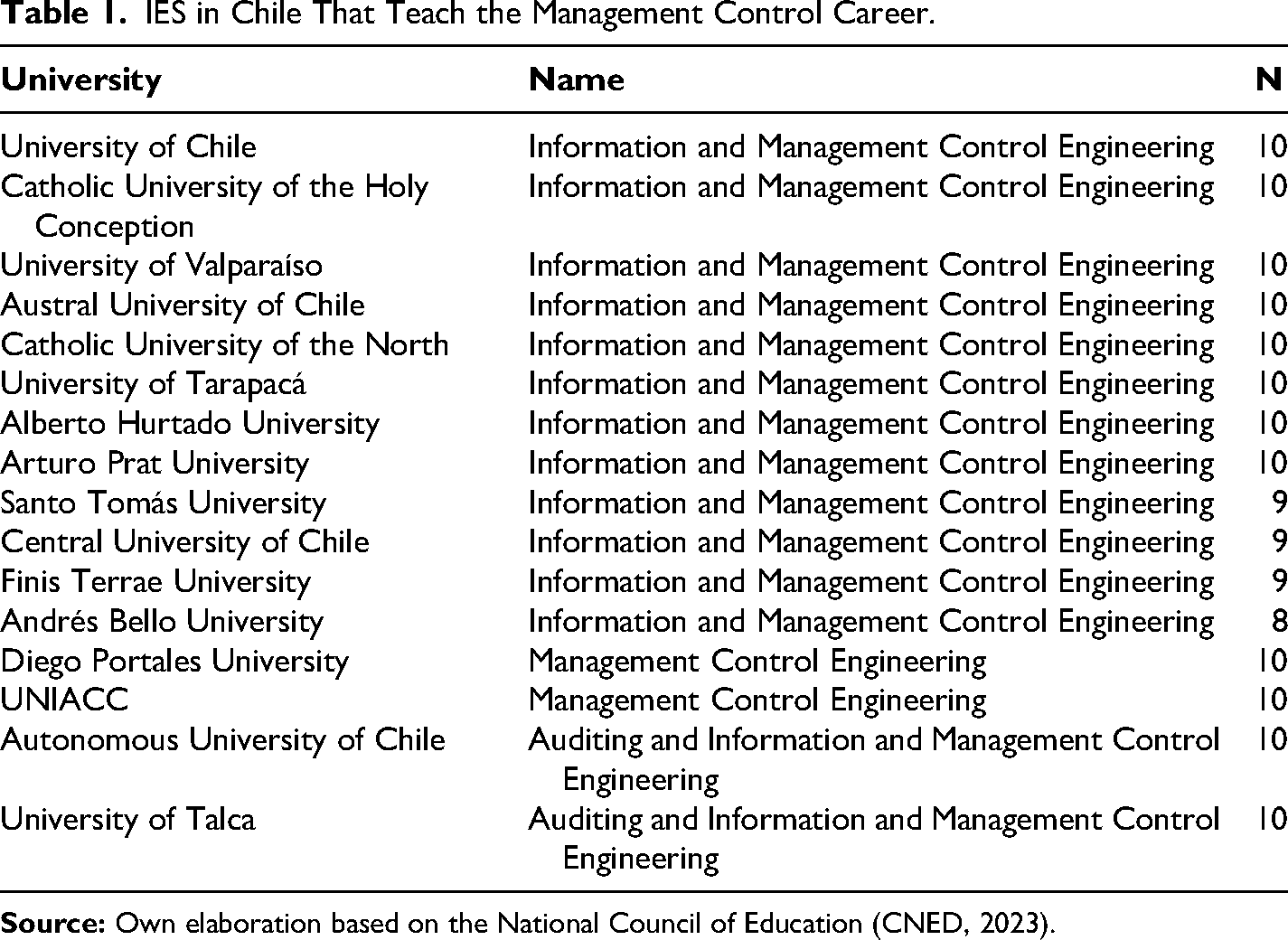
Chile has embraced these global trends, with the University of Chile pioneering this academic field. Following its lead, other universities have introduced similar engineering programs, contributing to the diversification of educational offerings. While the names of these programs vary, the most common designation is “Information and Management Control Engineering.” These programs typically span 9 to 10 semesters; however, there are exceptions, such as the Universidad Andrés Bello, which offers an 8-trimester program (Table 1).
IES in Chile That Teach the Management Control Career.
Curriculum Design and Program Challenges
The variations in program names and the differences in the number of semesters for Information and Management Control Engineering highlight the importance of examining curriculum design in depth. Unlike more established programs, such as accounting, which adhere to the guidelines of the International Federation of Accountants (IFAC) and its International Education Standards (IES), this program lacks a universally accepted or standardized curriculum framework. This is likely due to its relatively recent emergence and the diverse objectives that institutions aim to achieve with this type of engineering degree. Despite this, most programs tend to include core subjects such as Introduction to Microeconomics, Management and Business, Mathematics, Information Systems, Human Resources, Accounting, Statistics, and Macroeconomics, among others, ensuring foundational knowledge in business and data management.
Similar debates are found in other regions. Agbaje (2023) argues that African higher education curricula often fail to reflect local realities and societal needs because they replicate Western models. He emphasizes that curriculum reform must integrate indigenous knowledge systems to ensure relevance and social impact. This perspective resonates with the Chilean case, where curricular redesign must also respond to contextual demands and institutional objectives.
Despite its rapid expansion and recognition, the program faces significant challenges. Ramírez, Leger & Carolina (2014) identify three main issues stemming from the job market's unfamiliarity with this emerging engineering profile:
Mismatch in Employment Roles: Graduates are often hired for positions unrelated to their training, undermining their specialized skills. Student Dropout Rates: Misaligned expectations regarding the program's content and scope lead to dropout rates among students who perceive the program as similar to more traditional engineering careers.
The Case of UST
At the Universidad Santo Tomás (UST), the Information and Management Control Engineering program is relatively young but well-structured, designed to equip students with the necessary skills and knowledge for a rapidly evolving technological landscape. According to the university's official description, the program's main objective is to “train professionals with ethical behavior and social responsibility, whose skills focus on data analysis, management control, and the design and implementation of information systems.” This reflects UST's commitment to shaping professionals who are not only technically proficient but also capable of addressing societal challenges through responsible and ethical practices. The program aims to provide a robust foundation in management control and information systems while fostering the ability to innovate in the digital era. The university aspires to ensure that its graduates can integrate into multidisciplinary teams, contribute to the achievement of organizational objectives, and thrive in a dynamic, ever-changing knowledge society.
Curriculum Structure
The UST curriculum spans nine semesters and consists of 50 courses, along with a final graduation project, offering students a comprehensive academic experience. The program is divided into four main categories: Professional Training, Basic Training, Electives, and General Training. This structure is intended to provide a balanced education, blending foundational knowledge with specialized skills. To ensure that the curriculum remains relevant and in line with industry trends, the faculty undertakes regular reviews and updates. Emerging technologies, data-driven methodologies, and innovations in management control are integrated into the curriculum, ensuring that graduates are equipped with the latest skills required by employers. For example, the curriculum includes courses in advanced data analytics, enterprise resource planning (ERP) systems, and decision-making methodologies, providing students with tools to analyze complex business environments and make informed decisions.
A significant strength of the program is its focus on practical learning. The curriculum is designed to foster problem-solving skills and technical expertise through workshops, case studies, and projects that simulate real-world scenarios. This experiential learning approach ensures that students not only gain theoretical knowledge but also develop hands-on experience that prepares them to handle the challenges they will face in the workplace. Additionally, UST's emphasis on applied learning is enhanced by its innovative evening modality, which employs a blended learning approach. In this format, students attend face-to-face classes three times a week, complemented by virtual classroom activities, offering greater flexibility for working students. The program includes 49 courses and incorporates two competency assessments—conducted after the third and sixth semesters—that aim to evaluate and enhance students’ technical and professional skills.
Strategic Alliances and Global Collaboration
UST has developed strategic partnerships to enhance the program's competitiveness and ensure its alignment with global industry standards. One of the most significant partnerships is with SAP, a global leader in business applications, through the SAP University Alliances initiative. This collaboration provides faculty with access to the latest learning resources and ensures that students are exposed to cutting-edge business technologies, positioning them to succeed in the digital economy. Additionally, UST is home to Chile's first SAP NextGen Laboratory, a co-innovation hub where entrepreneurs, developers, educators, and students come together to create innovative business solutions. This facility serves as a practical space for collaboration, enabling students to engage directly with industry leaders and apply their learning to real-world problems.
In addition to these strategic partnerships, UST places a strong emphasis on global collaboration through exchange programs and partnerships with international universities. A notable example is the long-standing relationship between UST and the Confucius Institute, as well as the University of Foreign Studies of Guangdong, China. This partnership has facilitated academic exchange, language training, and cultural collaboration for over a decade, providing UST students with unique opportunities to broaden their horizons. These international alliances not only enrich the academic experience but also prepare graduates to operate effectively in an increasingly interconnected and globalized economy. By fostering cross-cultural understanding and providing exposure to different educational systems, these collaborations enhance UST's reputation as an institution that prioritizes both local relevance and global competitiveness.
Opportunities and Challenges for the Future
Despite its solid foundation, the program at UST faces critical opportunities for growth and improvement. For instance:
Typically, curriculum design and evaluation processes follow two main approaches: the expertise of curriculum specialists and benchmarking against reference programs. However, these practices are often susceptible to political and social influences, which can undermine the internal coherence of programs and their responsiveness to specific training demands. These challenges highlight the critical need for systematic, objective methods to identify areas for specialization and ensure that academic programs align with both institutional goals and professional reality.
International evidence shows that even when curricular reforms promote innovative approaches, their implementation often faces cultural and structural resistance. For instance, in China, Joong & Yixiang (2024) found that despite official policies encouraging student-centered learning and the integration of information and communication technologies, classroom practices remained dominated by traditional teacher-directed strategies due to the strong influence of the examination system. This highlights the importance of designing reform processes that not only redefine graduate profiles but also anticipate contextual barriers to implementation.
To address these limitations, this study adopts an ontological approach for curriculum analysis. Unlike traditional curriculum mapping, which often results in descriptive lists of topics, ontological models enable a systemic examination of the hierarchical and relational coherence among curricular components. This approach allows for a deeper understanding of how graduation profiles and study plans interact as a unified system rather than a collection of isolated courses. Furthermore, recent literature (2020–2024) demonstrates that ontology-based models are particularly effective in competency-based higher education, as they provide the theoretical grounding necessary to reveal structural gaps and misalignments that conventional mapping methods may overlook.
Specifically, this research employs the ontological framework proposed by Armijos & La Paz (2019), La Paz & Armijos (2020) and La Paz & Arrúa (2019). This framework is structured around four taxonomies: Educational Objectives, Competencies, Products, and Domains. While the first three categories capture the “promise” articulated in the graduate profiles, the fourth category (Domain) reflects the “execution” within the curriculum, providing a robust methodology for conceptualizing and addressing complex educational phenomena.
Methodology, Materials, and Methods
Graduate profiles are institutional definitions and commitments to society, serving as benchmarks for the educational objectives and purposes of academic programs. These profiles guide the design and implementation of curricula, ensuring alignment between the competencies and skills targeted in the graduate profile and the courses taught throughout the program. According to La Paz & Armijos (2020); Armijos, Paz & Higuerey (2025), “the relationship between the graduate profile and the curriculum presents a wide variety of competencies, skills to be developed, knowledge, and courses among which choices must be made, deciding whether the program will emphasize any particular approach or aim to achieve a generalist professional.”
Given the complexity of curriculum design, Guffante et al. emphasize that “redesigns are complex processes involving various activities, thus a methodology serves as a guide when conducting them” (p. 64). Consequently, this study adopts a mixed-methods research approach, drawing from the methodological frameworks proposed by Creswell, Creswell & Plano, and Tashakkori & Teddlie. Mixed-methods research integrates both quantitative and qualitative techniques to provide a comprehensive understanding of the phenomenon under study. As Hernández-Sampieri & Mendoza (2008) assert, “mixed methods represent a set of systematic, empirical, and critical research processes, involving the collection and analysis of quantitative and qualitative data, as well as their integration and joint discussion.”
Research Design
The methodology for this study follows a structured process that combines systematic literature review, qualitative analysis of academic constructs, and quantitative evaluation of curriculum elements. The
To ensure methodological transparency and replicability, specific sampling criteria were established, selecting only official curricular documents and graduate profiles from the 16 Chilean universities currently offering the program,. The qualitative coding procedure followed a manual protocol where academic constructs were classified into taxonomies—Educational Objectives, Professional Competencies, and Products—recording the presence (1) or absence (0) of specific terms to ensure systematic data entry,. To enhance reliability, an iterative validation process was conducted through cross-researcher reviews of the coding results, minimizing bias in the interpretation of the data. Finally, the quantitative analysis employed descriptive statistics and specialized software to assess the distribution and weight of these components across thematic domains, facilitating the creation of visual matrices and heatmaps.
Ontological Framework
To systematically analyze the alignment between graduate profiles and curricula, this study employs an ontological framework as proposed by Armijos & La Paz (2019) and La Paz & Armijos (2020). This framework is structured around four taxonomies:
The first three columns of the framework—Educational Objective, Competencies, and Products—are derived from graduate profiles, serving as the foundation for evaluating curriculum design. The fourth column, Domain, incorporates data from curricula, providing a comprehensive view of the knowledge areas addressed by the programs analyzed.
Data Collection and Analysis
The study focuses on Information and Management Control Engineering programs offered in Chile, leveraging data from institutional websites, official documents, and curricular frameworks. The analysis includes:
Graduate Profiles: Analyzed to identify the competencies, objectives, and outcomes emphasized by each institution. Curricula: Examined for course structure, content distribution, and the alignment of course objectives with graduate profiles. Competency Mapping: A cross-analysis of competencies in graduate profiles and curricula to assess coherence and coverage.
The data were processed using qualitative coding software for content analysis and statistical software for quantitative evaluations. Visualizations, such as heatmaps and competency matrices, were generated to highlight the alignment and gaps in curricular design.
Expected Outcomes
By employing this comprehensive methodology, the study seeks to achieve the following outcomes:
A detailed analysis of the alignment between graduate profiles and curricular components in Information and Management Control Engineering programs. Identification of key strengths and weaknesses in current curricula, with a focus on competencies and domain coverage. Recommendations for curriculum redesign and standardization to enhance program effectiveness and graduate employability.
Significance
This mixed-methods approach provides a robust framework for evaluating and improving curriculum design. By integrating qualitative and quantitative analyses, the study offers a holistic view of the academic constructs underpinning graduate profiles and curricula, contributing to the ongoing development and professionalization of Information and Management Control Engineering programs in Chile (Figure 1).
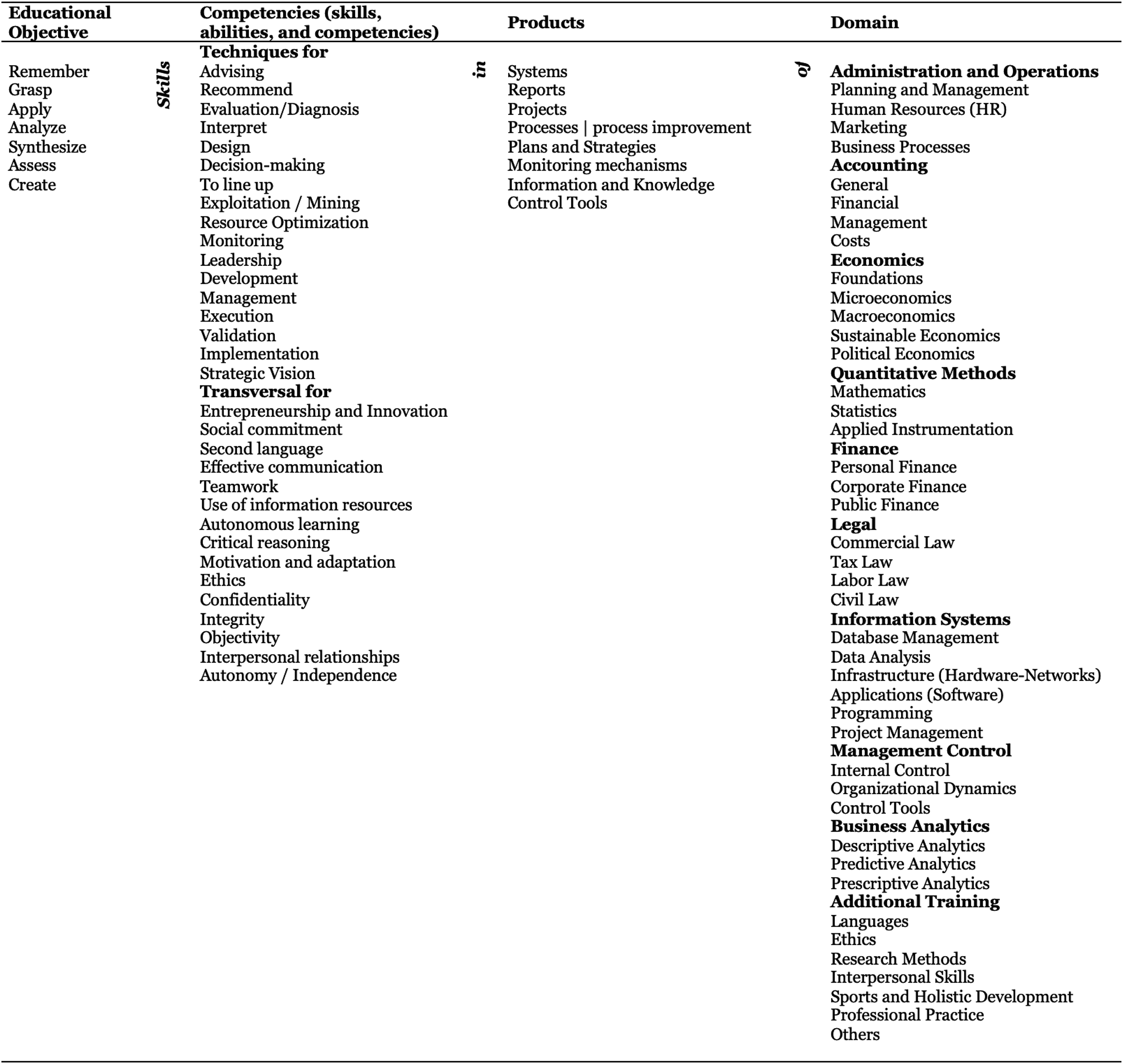
Ontology of information engineering and management control.
Gathering and Analysis of Information
The collection and analysis of data were conducted using two primary sources:
External Information: This includes environmental data gathered from all universities in Chile that offer the Information and Management Control Engineering program. The information comprises:
Graduation profiles and curricula. Labor market demand and trends. Opinions from graduates and field specialists. Accreditation standards and guidelines. General perceptions of the program's relevance and positioning in the job market. Internal Information: Internal data were sourced from institutional records related to accreditation processes, performance indicators, previous curriculum design and redesign efforts, program positioning strategies, and alignment with the university's strategic objectives.
Curriculum Redesign Process
The curriculum redesign process was structured in multiple stages, beginning with a strategic analysis of the program (see Figure 2). In this stage, information obtained from the institutional websites of universities offering the program was systematically classified. The process included:
Graduation Profile Analysis: Graduation profiles were analyzed and complemented with information about program objectives, professional performance expectations, and labor market requirements. Curricular Classification: Courses from the curricula of different universities were categorized into thematic areas or domains, including:
▪ Administration and Operations ▪ Accounting ▪ Economics ▪ Quantitative Methods ▪ Finance ▪ Legal Studies ▪ Information Systems ▪ Management Control ▪ Business Analytics ▪ Complementary Training
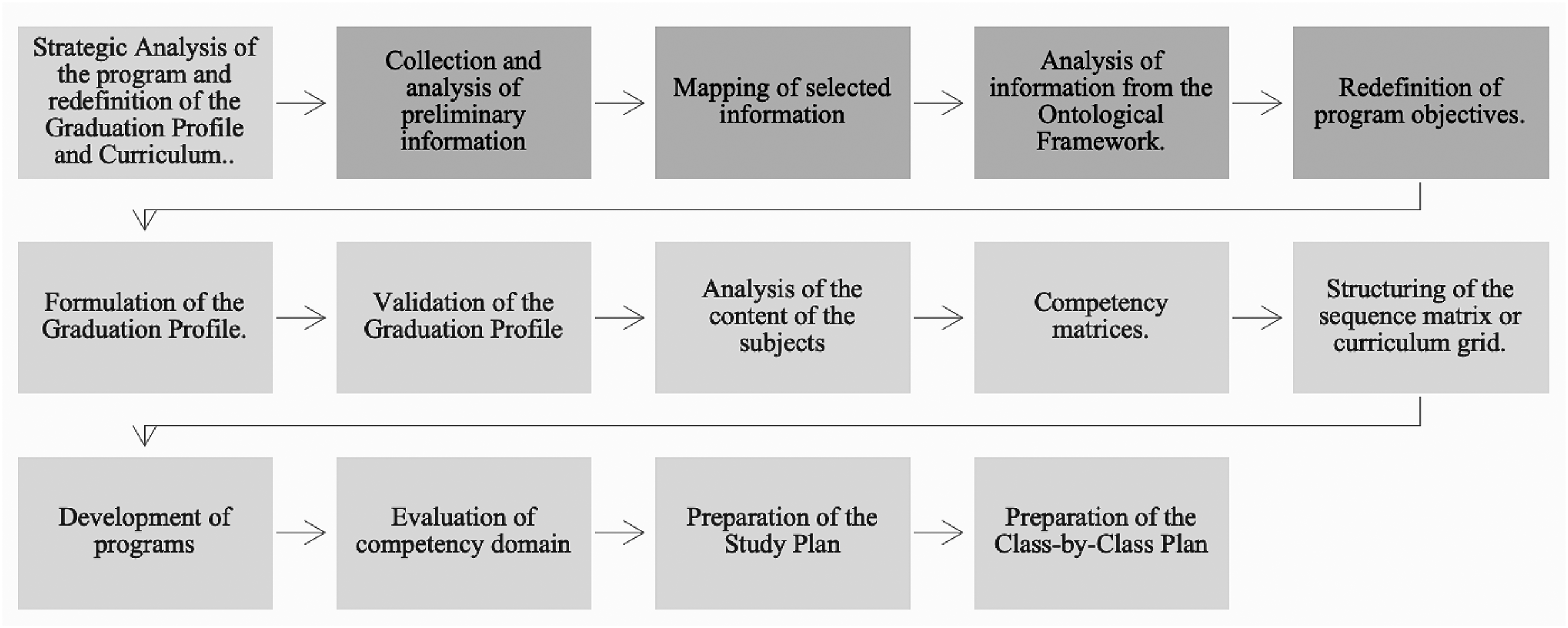
Description of the stages in the curriculum redesign process.
The UST Case
For the Universidad Santo Tomás (UST), the analysis process focused on a comparative approach. The graduation profile and curriculum of the UST program were benchmarked against those of other universities. This comparative analysis provided a clear understanding of the scope and areas of focus that other institutions offer to their students, as well as their engagement with the external environment, companies, and other stakeholders.
Based on this comparative evaluation, the UST identified gaps, strengths, and opportunities for improvement in its own program. This analysis served as the foundation for formulating both the graduation profile and the curriculum of the program.
Data Analysis
To analyze the information, this study utilized the Ontological Framework proposed by La Paz & Armijos (2020), La Paz et al.(2020) and La Paz et al. (2023). This methodology was implemented in two stages, each designed to systematically categorize and evaluate the content of graduate profiles and curricula from universities offering the Information and Management Control Engineering program in Chile.
The first stage focused on the graduate profiles. The content of these profiles was manually classified into three primary taxonomies: Educational Objectives
The second stage involved the analysis of curricula. Each course offered within the programs was manually classified and mapped to specific knowledge areas or domains, which included: Administration and Operations, Accounting, Economics, Quantitative Methods, Finance, Legal Studies, Information Systems, Management Control, Business Analytics, and Complementary Training. By grouping the courses into these domains, it was possible to identify the emphasis and scope of each program's curriculum and compare the offerings across institutions.
Results
Variations in Program Naming
The analysis revealed a significant degree of heterogeneity in the graduate profiles, starting with the variation in the names of the programs. Among the universities offering this degree in Chile:
11 programs are titled Engineering in Information and Management Control. 3 programs are titled Engineering in Management Control. 2 programs are titled Auditing and Engineering in Information and Management Control.
This demonstrates at least three distinct naming conventions. In response to this diversity, UST opted to update its program name, changing it from Engineering in Management Control to Engineering in Information and Management Control. This adjustment aimed to align with the most common naming trend while also reflecting the university's specific emphasis on the domain of information systems and data-driven management.
Strengthening of Information and Management Control
The incorporation of the term “Information” into the program's name is not merely cosmetic; it signals a substantive enhancement of the curriculum to better address the evolving demands of the field. To achieve this, UST introduced new courses that expand the program's focus on data analysis and information systems. These courses include:
Introduction to Data Analysis Database Management Data Visualization Strategic Management Control Operational Risk Management Management Control in the Public Sector
In addition, two elective courses were added to provide students with greater flexibility and the opportunity to tailor their education to their career interests. Together, these changes represent a significant investment in strengthening the areas of Management Control and Information Systems within the program.
Curriculum Restructuring
Beyond the introduction of new courses, the application of the ontological framework facilitated a broader restructuring of the curriculum. This process ensured that the program's educational objectives were more closely aligned with market demands and professional expectations. Several existing courses were updated or restructured to integrate new content and methodologies, providing students with a more comprehensive and relevant education.
Ontological Framework Application
The ontological framework used in this analysis is composed of five main categories:
Educational Objectives: Statements defining the overarching goals of the program. Transversal Competencies: Skills applicable across various professional contexts, such as critical thinking and teamwork. Technical Competencies: Domain-specific skills directly related to the field of study. Products: Tangible outputs or deliverables associated with the program, such as research projects or case studies. Areas or Domains: Specific knowledge areas derived from the curriculum, such as Accounting, Information Systems, or Business Analytics.
The first four categories focus on analyzing the content of graduate profiles, capturing the frequency and emphasis of key terms and concepts. The fifth category examines curricula, assessing the distribution of courses across various domains.
For the case of UST, a comparative analysis was conducted between the original program (Version 1.0) and the redesigned program (Version 2.0). This analysis considered not only internal changes but also the broader landscape of Information and Management Control programs in Chile. The results highlighted significant advancements in the program's alignment with market demands and educational best practices (Figures 3 and 4).
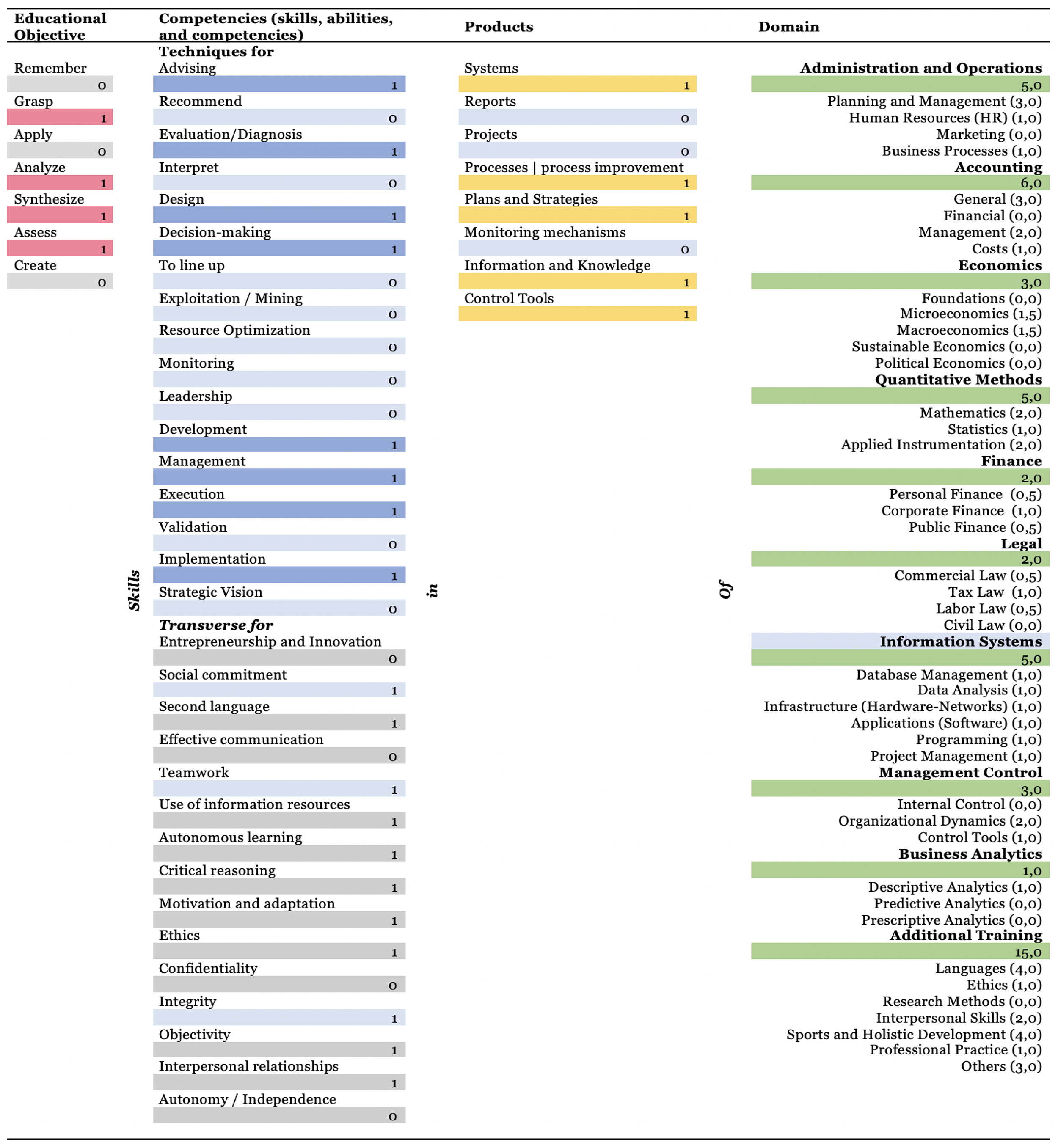
Characterization of the information and management control career at UST version 1.0. Source: Own elaboration, 2024.
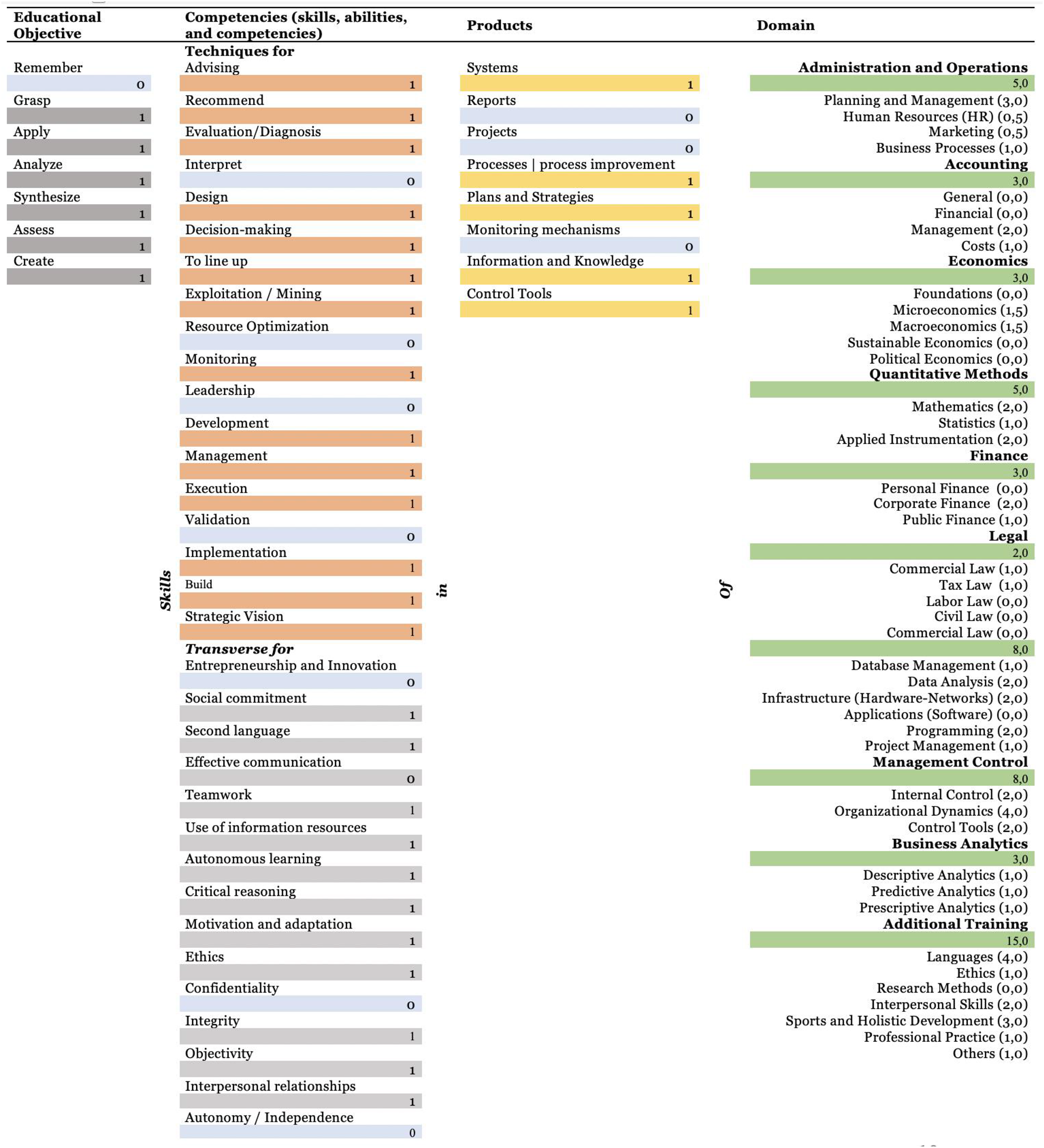
Characterization of the information and management control career at UST version 2.0. Source: Author's own work, 2023.
The analysis of the graduate profile reveals significant changes between version 1.0 and version 2.0, particularly regarding the elements listed in Column No. 1, which pertain to the educational objectives. The redesign of the graduate profile incorporates the elements of “Create” and “Apply,” expanding the scope of the graduate's capabilities. In practice, the Information and Management Control Engineer at UST is now expected to be a professional who can design, implement, and manage information and management control systems within organizations, providing relevant information to support decision-making in uncertain environments. Both versions highlight core elements such as Information and Communication Technologies, processes, plans, strategies, Information and Knowledge management, control tools, and process improvement.
Regarding the domain of the curriculum, which encompasses the courses that form the career program, it is useful to contrast the “promise” articulated in the graduate profiles with the “execution” reflected in the curriculum structure. Version 1.0 proposes four courses in the Administration and Operations area, whereas version 2.0 expands this to five courses, including one on Marketing and Human Resources, which are recognized as critical areas of management within organizations. Additionally, the number of courses in the accounting area decreases between version 1.0 and 2.0, while there is a notable increase in the focus on Information Systems (with eight courses in version 2.0 compared to five in version 1.0), Management Control (eight courses vs. three), and Business Analytics (three courses vs. one). Furthermore, the Supplementary Training area is reduced by three courses in the updated curriculum. Overall, the current version strengthens the curriculum through the addition of five new courses, a reordering of programs, and the inclusion of an additional semester, which facilitates the development of two elective courses and a graduation project.
Beyond descriptive reporting, this analysis examines how structural misalignments affect educational quality, ethical formation, curriculum coherence, and the development of transversal competencies. Specifically, the underrepresentation of ethical competencies is linked to potential weaknesses in graduates’ professional judgment, while fragmented foundational objectives contribute to reduced curriculum coherence. Furthermore, domain imbalances point to limited adaptability in interdisciplinary professional environments, interpretations which are supported by literature on constructive alignment, outcome-based education, and engineering education.
The ontological framework also highlights gaps that Chilean universities may overlook in their graduate profiles and curricula (La Paz & Armijos, 2020). A notable omission is related to the educational objective of “Remembering,” which is not explicitly stated in the graduate profiles of either version.
However, this omission could be viewed positively, as it reflects the transition toward competency-based programs that emphasize more complex educational objectives, rather than focusing on basic foundational levels.
Discussion
Variations in Program Naming
The analysis revealed significant heterogeneity in the graduate profiles, starting with the variation in program names. According to the results, Chilean universities present at least three different naming conventions for the degree: “Engineering in Information and Management Control,” “Engineering in Management Control,” and “Auditing and Engineering in Information and Management Control.” This diversity reflects the flexibility institutions have in adapting to market demands but may also create confusion among students and employers regarding the content and goals of the program.
In response to this, Universidad Santo Tomás (UST) decided to update its program name, changing it from “Engineering in Management Control” to “Engineering in Information and Management Control.” This change not only aligns with the most common naming trend but also highlights UST's specific emphasis on information systems and data-driven management, a focus reflected in the curriculum update and expansion.
Strengthening Information and Management Control
The incorporation of the term “Information” in the program's title is more than a cosmetic change—it marks a substantial enhancement of the curriculum to better address the evolving demands of the field. New courses such as “Introduction to Data Analysis,” “Database Management,” “Data Visualization,” and “Operational Risk Management” demonstrate UST's clear commitment to strengthening information systems and management control education. These courses equip students to face the challenges of decision-making in uncertain environments.
This expansion of content not only enriches the academic profile of the program but also addresses the growing need for professionals skilled in data analysis and strategic information management—critical elements in today's digital age.
Curriculum Restructuring
The use of the ontological framework in the analysis facilitated a broader restructuring of the curriculum, ensuring that the program's educational objectives aligned more closely with market demands and professional expectations. This framework, which includes educational objectives, transversal competencies, technical competencies, products, and areas of knowledge, provided a more comprehensive understanding of the elements that constitute the graduate profile and the curriculum structure.
The comparison between Version 1.0 and Version 2.0 of the UST program shows significant advancements in aligning the program with educational best practices and market needs. Changes include the introduction of new courses, updates to existing ones, and the reorganization of the programs to address emerging challenges in information systems, management control, and business analytics.
Identification of Gaps and Omission of Educational Objectives
One critical observation that emerged from applying the ontological framework is the omission of the “Remembering” educational objective, which is not explicitly stated in the graduate profiles of either version of the program. This omission can be seen positively as it reflects a transition towards competency-based programs that emphasize more complex educational goals such as application and creation, rather than focusing on basic memorization skills.
However, this gap may also point to an area for improvement in the graduate profiles, as a more balanced approach that combines memory skills with critical thinking could benefit the training of future professionals.
Conclusions
This study set out to examine how an ontological framework can guide the curriculum redesign of an Information and Management Control Engineering program and improve alignment between graduate profiles and curricula. The findings provide clear and direct answers to the research questions posed.
First, regarding the alignment between graduate profiles and curricular structures, the study demonstrates that an ontology-based approach enables a systemic evaluation of the coherence between the educational “promise” (graduate profile) and its curricular “execution.” The case of Universidad Santo Tomás (UST) shows that curriculum redesign guided by an ontological framework can significantly reduce structural misalignments, particularly by rebalancing disciplinary domains and clarifying professional identity through program renaming.
Second, in relation to formative orientations, the results confirm that the transition from Version 1.0 to Version 2.0 represents a substantive pedagogical shift toward higher-order cognitive objectives, specifically Apply and Create. This shift evidences the adoption of Outcome-Based Education principles and reflects an intentional move away from predominantly content-based learning toward competency-oriented preparation for complex and uncertain organizational environments. At the same time, the findings reveal residual tensions, such as the reduced emphasis on foundational cognitive levels, which must be carefully managed to maintain curricular coherence.
Third, concerning alignment with external and labor market demands, the study shows that strengthening Management Control and Information Systems—together with strategic industry partnerships such as the SAP University Alliances and the SAP NextGen Laboratory—enhances curricular relevance and graduate employability. However, the persistent heterogeneity in program naming and duration across institutions remains a systemic challenge that may limit professional recognition and stakeholder clarity.
Beyond answering the research questions, the findings also identify concrete next steps for both research and curriculum development. These include: (1) triangulating the results through systematic feedback from employers and graduates to assess the real-world impact of the redesigned curriculum; (2) advancing greater national-level harmonization of program names and core competencies to strengthen professional identity; and (3) explicitly integrating ethical education through dedicated courses or transversal assessment mechanisms to resolve the identified inconsistency between graduate profiles and curricular implementation.
In conclusion, while Information and Management Control Engineering programs are increasingly aligned with the demands of the digital economy, their long-term consolidation depends on continuous, systemic alignment between professional identity, curricular structures, industry engagement, and ethical commitments. Ontology-based curriculum design offers a robust and replicable framework for achieving this alignment in emerging academic fields.
Limitations and Future Research
While this study provides a systematic evaluation of curricular alignment, it is primarily focused on the structural and documentary analysis of graduate profiles and study plans. A significant limitation is the absence of direct perspectives from key stakeholders, including employers, faculty, and graduates. Although the research utilized external information such as labor market trends and general perceptions, it did not incorporate primary qualitative data—such as interviews or focus groups—to validate the ontological findings.
The decision to prioritize an ontological approach was driven by the need for an objective and systematic method that remains resilient to the political and social influences that often affect traditional benchmarking and expert-led redesigns. However, we recognize that human experience is vital for a holistic understanding of educational quality. Future research should aim to triangulate these structural results with experiential evidence. For instance, employer engagement is a critical next step to determine if the transition to Information Engineering and Management Control truly addresses the mismatch in employment roles and the evolving labor market demands.
Furthermore, the perspectives of faculty and graduates are necessary to explore the lack of explicit ethical training identified in this study. Such qualitative input would clarify whether ethical competencies are being addressed in an implicit or transversal manner that a purely documentary analysis cannot fully capture. By integrating these stakeholder perspectives, future studies can transition from assessing the “execution” of the curriculum to measuring its real-world impact on graduate employability and professional success
Footnotes
Author Contribution
Juan Carlos Armijos, He holds a PhD in Business Administration and Management from the Polytechnic University of Valencia, Spain, and a Master's degree in Management Control from the University of Chile. He is currently an Assistant Professor at Universidad Santo Tomás and an Associate Researcher at Universidad Americana del Paraguay. His research interests primarily focus on Quality and Management in Higher Education, Hospital Management, and Management Control. In addition, he has served as a peer reviewer and referee for numerous scientific journals.
Ariel La Paz, He is an Associate Professor and Director of the Department of Management Control and Information Systems (DCS) at the University of Chile. His research focuses on the design and strategic planning of Information Systems, technology and innovation, organizational impacts of Information Systems, the profile and responsibilities of Systems and Technology managers, and complexity management. He currently serves as an area advisor at the Acredita Colegio de Ingenieros de Chile agency and as an international peer reviewer.
Funding
The authors received no financial support for the research, authorship, and/or publication of this article.
Declaration of Conflicting Interests
The authors declared no potential conflicts of interest with respect to the research, authorship, and/or publication of this article.
