







Abstract
This study examined antecedents of technostress and evaluated the extent to which gender and teaching experience influenced technostress among Iranian private-sector EFL teachers. A mixed-methods design was employed, in which 303 teachers completed an adapted version of Tarafdar et al.’s Technostress Scale, and a purposive subsample of 25 participants participated in subsequent semi-structured interviews. The statistical analyses yielded no statistically significant differences in technostress by gender or across teaching-experience profiles. The interview findings, however, delineated privacy invasion, work overload, limited digital literacy, lack of physical interaction, work–home conflict, and emotional exhaustion as prominent stressors associated with heightened technostress.
Introduction
Information and communication technologies (ICT) have become integral to contemporary education systems, and teachers are increasingly expected to integrate emerging technologies in pedagogically purposeful and innovative ways to enhance student learning (Wang & Zhao, 2023). The effective use of ICT is also widely regarded as essential for meaningful professional and financial advancement in today's information-oriented society (Jena, 2015). Accordingly, twenty-first-century teachers are required to incorporate ICT across multiple domains of instruction, including lesson planning, the development of classroom materials, and the implementation of teaching, assessment, and evaluation practices aimed at improving learner achievement (Munyengabe et al., 2017). The literature further suggests that ICT can facilitate the fulfillment of professional responsibilities independent of time and location by enabling rapid access to information and supporting the continuous improvement of instructional methods and skills (Qi, 2019). Nevertheless, ICT use may also introduce risks and challenges that adversely affect teachers’ physical and psychological well-being as well as their job performance (Ayyagari et al., 2011).
Alongside the broader rise of ICT, which has contributed substantially to innovation and development in teaching and learning, the unexpected outbreak of the COVID-19 pandemic compelled teachers worldwide to transition abruptly to online instruction. This shift further intensified both the implementation of and expectations for technology integration, with wide-ranging consequences for teachers (Chou & Chou, 2021; Teng & Wu, 2021). The literature underscores that teachers play a pivotal role in integrating ICT into instructional practices and may therefore be particularly susceptible to technostress (see Joo et al., 2016). Technostress has been conceptualized as the adverse effects of technology use on individuals’ perceptions, behaviors, and psychological well-being (Tarafdar et al., 2011).
The enforced transition to remote instruction, often undertaken without adequate prior training, has been associated with increased stress among teachers (Li & Wang, 2021). Recent research further indicates that many teachers were insufficiently prepared for online teaching and lacked the specialized knowledge and competencies required to meet the demands of digital instruction (see Ferri et al., 2020). The literature also documents that technostress may contribute to teachers’ turnover intentions (Califf & Brooks, 2020) and is negatively associated with job performance (Li & Wang, 2021). Moreover, teachers are continually expected to respond to escalating professional demands regarding ICT use, pressures that are intensified by rapid technological change. When institutional expectations exceed teachers’ technology-related skills and resources, this misalignment may increase their vulnerability to technostress.
In this regard, technostress has emerged as a salient construct across diverse contexts and has garnered increasing scholarly attention in recent years (see Siddiqui et al., 2023; Wang & Yao, 2023). Nevertheless, empirical research examining the influence of individual characteristics, such as gender and years of teaching experience, on teachers’ technostress remains limited, and the available evidence has yielded somewhat inconsistent findings (Dong et al., 2020; Wang & Zhao, 2023). Moreover, identifying the determinants of technostress among teachers is of critical importance (Özgür, 2020). Within the Iranian context in particular, technostress appears to be relatively underexamined, to the best of the researchers’ knowledge. Addressing these gaps, the present study seeks to extend the literature by investigating the extent to which gender and years of teaching experience influence technostress among Iranian EFL teachers. In addition, it aims to identify the factors that contribute to Iranian EFL teachers’ technostress in the context of online instruction.
Literature Review
Teacher Technostress
The concept of technostress was first introduced in the 1980s by Brod (1984), who conceptualized it as an adaptation disorder stemming from individuals’ inability to cope effectively and in a healthier manner with new technologies. In educational settings, teacher technostress refers to teachers’ perceived inability to manage the technical demands associated with the integration of ICT into the teaching–learning process (Li & Wang, 2021). It is commonly manifested as tension or strain experienced when working with technological tools (Wang et al., 2008). In the present study, technostress is operationalized as teachers’ feelings of distress and anxiety stemming from difficulties in using technological tools and devices appropriately in online classes. Prior research suggests that technostress may produce a range of adverse outcomes, including negative affect and reduced job commitment (Jena, 2015), lower intention to use ICT (Joo et al., 2016), diminished willingness to engage in online instruction (Chou & Chou, 2021), reduced technology acceptance (Tacy et al., 2016), and decreased job satisfaction (Suh & Lee, 2017). Studies focusing on technostress “creators” further indicate that technostress can erode individuals’ self-confidence through perceived loss of control over time and may be associated with absenteeism, burnout, exhaustion, and cynicism (Ayyagari et al., 2011; Piszczek, 2017; Ragu-Nathan et al., 2008; Yener et al., 2021).
Teachers may experience technostress when using computers, which can, in turn, reduce the frequency of their technology use (Al-Fudail & Mellar, 2008). Andrade and Matias (2022) further reported that expanded communication with learners, parents, and administrators beyond regular instructional hours has intensified work–life tensions and contributed to imbalance. Consequently, effective technology integration into instruction and course planning often requires teachers to acquire additional ICT-related knowledge and skills, a process that may itself be experienced as stressful (Tarafdar et al., 2015). This challenge was particularly pronounced during the COVID-19 pandemic, when teachers were required to adapt rapidly to online teaching demands under pressure to use unfamiliar technologies (Teng & Wu, 2021). Such circumstances have been associated with heightened anxiety among ICT users, with potential implications for both productivity and health outcomes (Bou Reslan et al., 2021).
Expectations that teachers integrate technology into instruction may impose an additional professional burden, for instance, by increasing the time required for lesson preparation (Bou Reslan & El Hokayem, 2025). The absence of additional compensation for this expanded workload has likewise been identified as a contributor to teachers’ technostress (Voet & Wever, 2017). Prior research further suggests that technostress may be associated with teachers’ individual and contextual characteristics, including self-efficacy (Dong et al., 2020), prior experience with technology (Upadhyaya & Vrinda, 2021), and workplace culture and organizational commitment (Camarena & Fusi, 2022). Additionally, information technology mindfulness (Shirish et al., 2021) and time-management capacities (Salo et al., 2022) have been proposed as potential antecedents of technostress among teachers.
Beyond the individual and organizational sources of technostress discussed above, a range of external factors may also contribute to teachers’ technology-related stress. These include educational policies and regulations, teachers’ level of education, interactions with parents, insufficient or inadequate technological infrastructure, school-level requirements governing technology use, and limited collaboration between teachers and administrators, conditions that may create substantial barriers to the effective integration of ICT into instructional practice (Dysart & Weckerle, 2015; Hur et al., 2016). Overall, prior research suggests that technostress among teachers is multidetermined and may arise from a wide constellation of interrelated factors.
Previous Research on Teacher Technostress
Collecting data through direct and indirect classroom observations and in-person interviews with teachers, Al-Fudail and Mellar (2008) found that several factors caused technostress in teachers, including technical failures in the system, lack of sufficient social or technical support while using technology, increased workload due to lengthened preparation time for classes, and inappropriate workplace culture for adopting technology. In another study in the South Korean context, Lim (2012) reported that teachers’ technostress levels increased after utilizing digital coursebooks. He found that factors such as technical issues and limited support for implementing technology in the classroom resulted in mental and physical overload for teachers. Lack of digital devices with internet access, inability to effectively use technology for teaching, and uninformed supervision of online classes were identified as causes of technology stress among teachers (Ferreira, 2019).
Çoklar et al. (2016) explored the reasons behind 64 teachers’ technostress. They found that individual problems, such as inadequate knowledge of technology use and incuriosity; technical problems, including connection issues, security, and low-quality devices; education-oriented problems like changes in the approaches toward teaching; health issues, and time problems, were influential in creating technostress among these teachers. Wang et al. (2024) also found that teachers tend to view work overload in online education as a challenge rather than a source of stress. Furthermore, they found that privacy invasion did not impact teachers’ emotions, either as a challenge or a threat. That is, this factor was not associated with technostress. Eventually, they concluded that work–home conflict posed a threat and caused anxiety during online education, leading to technostress among teachers.
Khlaif et al. (2023) conducted a study in Palestine aimed at identifying the causes and experiences of technostress among teachers during online education. The data were gathered from 70 teachers through an open-ended questionnaire. Thematic analysis of the data revealed that individual factors, including professional identity, language-specific issues, lack of experience, time shortages, and social commitment, were influential determinants of technostress among Palestinian teachers. Furthermore, they found that school-level support variables, such as training courses, policies, trust, managerial support, colleague support, technical support, and infrastructure problems, played crucial roles in teachers’ experiences of technostress. Above all, the study found that technology features and properties, such as continuous updates, usability, accessibility, usefulness, and privacy, played a significant role in the level of technostress experienced by these teachers. In addition to all these factors, Technological Pedagogical and Content Knowledge (TPACK) was found to be a cause of technostress among the teachers.
Previous studies exploring the effects of demographic characteristics, such as gender and years of teaching experience, on teachers’ perceived technostress levels have yielded significant results. For instance, various studies have found a statistically significant difference between male and female teachers in their levels of technostress (see Marchiori et al., 2019; Tarafdar et al., 2011). Moreover, many studies have found no significant differences between male and female teachers (see Hsiao, 2017; Krishnan, 2017). For example, Huffman et al. (2013) concluded that men demonstrated lower levels of technostress and more positive perceptions of the implementation of computers. On the contrary, women manifested higher levels of tension, stress, and self-confidence regarding using computers. Özgür (2020) examined the effect of gender on the level of technostress perceived by 349 Turkish high school teachers. The data were collected through questionnaires and analyzed through structural equation modeling. The results of the study indicated that the gender variable did not make any statistically significant difference in teachers’ technostress.
Yangöz and Ünal (2023) examined the relationship between technostress and burnout among 188 English teachers in the Turkish context and found that the teachers experienced moderate levels of technostress. In addition, they examined the effect of gender and education level on the extent of technostress experienced by these teachers. They concluded that female teachers were significantly more exposed to technostress than their male counterparts. Likewise, the difference in teachers’ technostress levels by education level was statistically significant. Regarding factors that cause stress for teachers when using technology in their instruction, the researchers found that techno-anxiety, mental exhaustion, and perceptions of technology as a threat were associated with feelings of technostress. In a study of technostress among Eastern Chinese teachers, Wang and Yao (2023) found statistically significant differences among teachers in terms of teaching experience and gender.
Bou Reslan and El Hokayem (2025) aimed to examine the effects of various demographic characteristics on the technostress experienced by Lebanese school teachers during online education. A total of 379 teachers participated in the study (72.3% female) and completed the questionnaires. Most of the teachers held bachelor's and master's degrees and had various years of teaching experience (1–5 years, 6–10 years, 11–15 years, and more than 15 years). The study's findings highlighted that being female had a positive impact on techno-complexity, techno-invasion, techno-overload, and techno-insecurity, and a negative impact on techno-uncertainty. Furthermore, having a high level of education increased techno-complexity, techno-invasion, and techno-insecurity, and had a positive impact on techno-overload. Finally, having less than 11 years of teaching experience reduced techno-complexity and techno-invasion, while having a positive effect on techno-overload, techno-insecurity, and techno-uncertainty. Nevertheless, this study found that female teachers and those with less than 11 years of service were more vulnerable to developing higher levels of technostress.
Examining the technostress levels of 1185 secondary school teachers (338 male and 847 female) in Malaysia, Wahab et al. (2022) found no statistically significant difference between male and female teachers. Penado Abilleira et al. (2021) examined technostress among 239 Spanish university teachers. They found that the gender variable made a statistically significant difference among teachers, with female teachers experiencing greater levels of technostress than male teachers. As for teaching experience, the study found that teachers with higher years of service tended to experience higher levels of technostress during online teaching.
It is now well-documented that teachers are increasingly required to work differently at a higher pace and are expected to continually improve their skillsets and knowledge due to the developments in ICTs (Jena, 2015) and play a crucial role in the implementation of technology into their teaching process (Joo et al., 2016). In this regard, their attitudes, competence, and experience with ICT and technology integration are essential for successful teaching (Li & Wang, 2021). Therefore, it seems necessary to conduct studies to explore the potential experiences of technostress among teachers, which could benefit their well-being and work performance in the age of digitalization (Li & Wang, 2021). Moreover, it is argued that the effects of individual differences and demographic characteristics on teachers’ perceived levels of technostress have gained scant attention (see Krishnan, 2017). In addition to the previously mentioned points, the phenomenon of technostress is often viewed as a context-specific construct, arising from factors unique to particular contexts (Ayyagari et al., 2011; Tarafdar et al., 2015). This fact necessitates conducting studies across various contexts that implement specific ICT equipment and facilities to comprehensively explore the concept of technostress (Wang et al., 2024).
Motivated by the aforementioned gap in the literature, the present study aimed to contribute to the literature on teacher technostress by investigating the effects of two demographic variables on Iranian EFL teachers’ technostress and the factors that cause it in the context of online teaching. As a result, this study explored the following research questions:
RQ1: Is there a statistically significant difference in technostress levels among Iranian EFL teachers by gender and years of teaching experience? RQ2: What were the primary antecedents of technostress among Iranian EFL teachers in the context of online instruction?
Methodology
Research Design
Mixed-methods designs are defined as research approaches that integrate quantitative and qualitative methods in complementary ways, with each strand contributing to a more comprehensive understanding of the target phenomenon (Ary et al., 2018). Similarly, Creswell (2009) argues that mixed-methods inquiry affords greater depth and breadth than single-method studies by combining the explanatory power of quantitative data with the contextual richness of qualitative evidence. Within this methodological tradition, the present study adopted an explanatory sequential design (Creswell & Plano Clark, 2018). As Teddlie and Tashakkori (2009) note, this design is characterized by a sequential process in which quantitative data are collected and analyzed first, followed by a qualitative phase that is subsequently undertaken to elaborate on, clarify, or extend the initial quantitative results.
Participants and Context
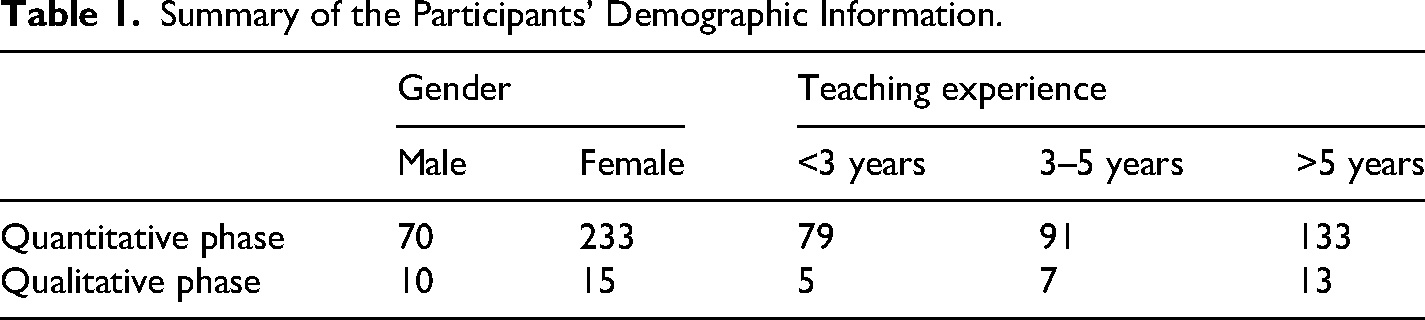
A total of 303 Iranian EFL teachers participated in the quantitative phase by completing an online questionnaire, and a subsample of 25 teachers subsequently took part in the qualitative phase through semi-structured interviews. Participation in the quantitative phase was voluntary, and eligibility criteria included (a) prior experience with online teaching and (b) employment in the private sector or a non-governmental language institute. For the qualitative phase, participants were selected via random sampling from among those who had completed and submitted the questionnaire. Across both phases, the sample comprised male and female teachers with varied levels of teaching experience. Participants’ demographic characteristics are summarized in Table 1.
Summary of the Participants’ Demographic Information.
Instruments
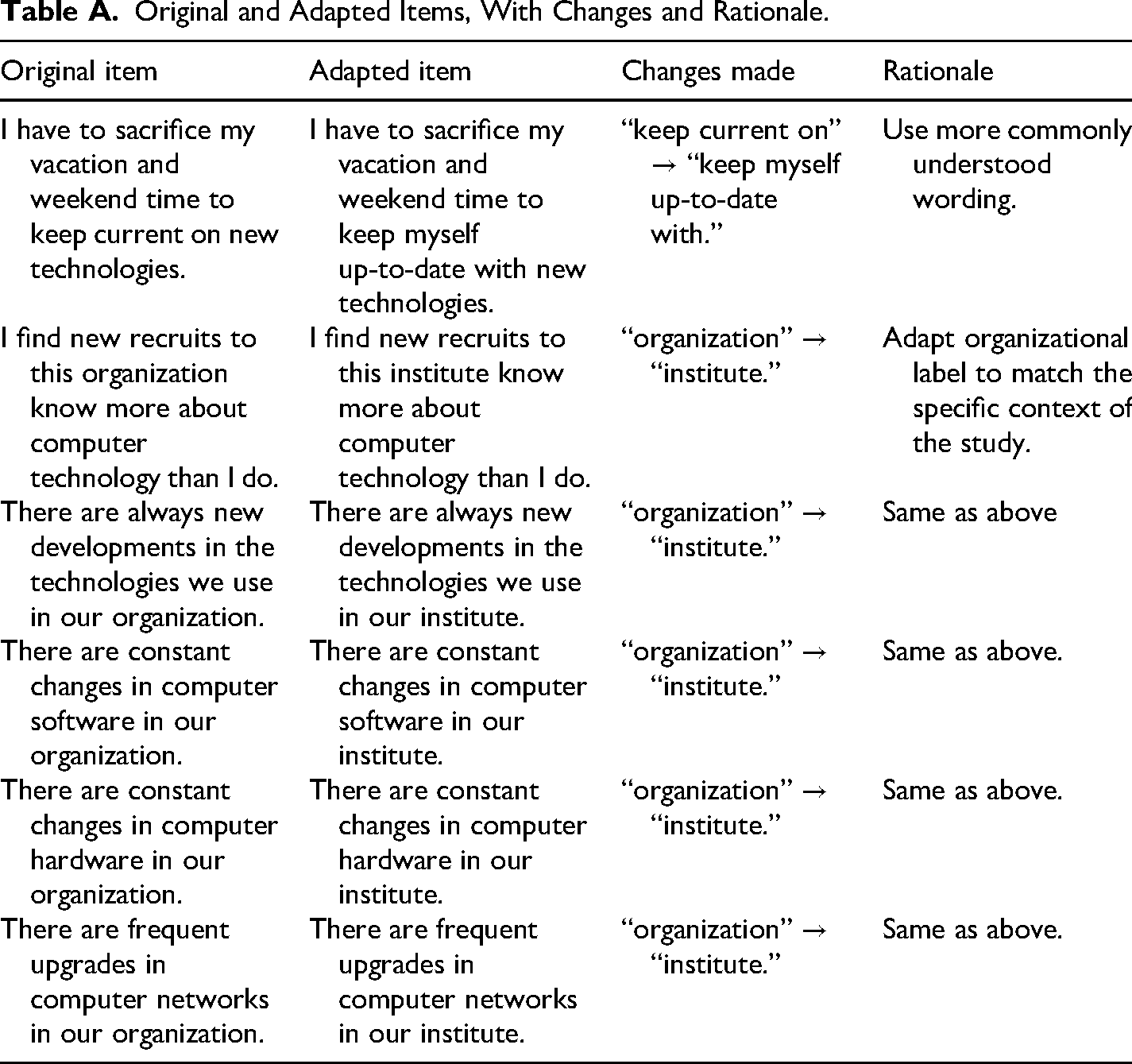
The Technostress Scale, developed by Tarafdar et al. (2007), was adapted for the quantitative phase of the study. To align the instrument with the study's specific context and enhance clarity for respondents, several items from the original questionnaire were modified. For example, the organizational label “organization” was replaced with “institute” to reflect the study setting, and the phrase “keep current on new technologies” was revised to “keep myself up-to-date with new technologies” to use more commonly understood wording while preserving the original meaning. A summary of all revised items, including the original item, the adapted item, the type of change made, and the rationale for each modification, is provided in Appendix A.
Following these adaptations, the modified questionnaire underwent an expert content validity check. Two professors in Applied Linguistics independently reviewed all items to evaluate their clarity, relevance, and conceptual equivalence to the original Technostress Scale. Their confirmation that the items appropriately represented the intended constructs provided additional support for the content validity of the adapted instrument. The final questionnaire was double-checked for grammatical issues and misspellings, implemented in Google Forms, and administered using a 5-point Likert scale ranging from strongly disagree to strongly agree.
In the qualitative phase, single-session semi-structured interviews were conducted with 25 participants. This interview format combines a guiding framework with sufficient flexibility to allow participants to develop their responses in depth. Accordingly, the interviewer offers direction and prompts while encouraging interviewees to discuss relevant issues expansively and to elaborate on experiences in an exploratory manner (Dörnyei, 2007).
Data Collection Procedure
Data collection commenced with the dissemination of the modified Technostress Scale via social media. A Google Forms link was shared in Telegram and WhatsApp groups frequented by Iranian teachers. In total, 308 teachers completed the online questionnaire; however, following response screening, five submissions were excluded due to missing data and/or patterned or inattentive responding. The final quantitative sample therefore comprised 303 valid cases.
Subsequently, the qualitative phase was implemented through semi-structured interviews. Twenty-five teachers expressed willingness to participate. The interview protocol was developed by the researchers and then reviewed by a domain expert to establish the face and content validity of the questions. After incorporating the expert's feedback, a finalized interview guide was produced for use in the interview sessions. Participants were permitted to conduct the interview in either English or Persian, depending on their preference. Interviews were conducted online via Google Meet and lasted between 25 and 60 minutes. With participants’ informed consent, all sessions were audio-recorded for subsequent analysis. At the outset of each interview, participants were informed of the voluntary nature of participation, their right to decline any question, and their option to withdraw from the interview at any time without penalty.
Data Analysis Procedure
The quantitative data were entered into SPSS for preliminary screening to identify and address potential data-quality issues. Subsequently, the dataset was analyzed in SPSS and AMOS to evaluate the instrument's psychometric properties, including reliability and validity indices, and to confirm that the adapted questionnaire was appropriate for investigating technostress among Iranian EFL teachers. Because the number of female respondents (n = 233) was considerably higher than the number of male respondents (n = 70), we constructed a gender-balanced subsample for the comparison between male and female teachers. Specifically, we used simple random selection without replacement to draw 70 female teachers from the pool of 233 female respondents, yielding two groups of equal size (70 male, 70 female). Similar random subsampling procedures have been employed in previous quantitative studies to obtain equal group sizes for t-tests and related analyses (see Nami, 2020; Spaniol, 2017). After ensuring the validity of the data collection tool, an independent-samples t-test was conducted on this gender-balanced subsample to examine potential differences in technostress between Iranian male and female teachers. Although standard independent-samples t-tests and alternative methods such as Welch's t-test can accommodate unequal group sizes and variances without discarding data, we opted for a matched design to facilitate interpretation of the gender comparison in the present study. For analyses across teaching experience groups (<3 years, 3–5 years, and >5 years), all 303 teachers were retained, and a one-way ANOVA was conducted to examine whether the groups differed significantly in technostress. Following confirmation of the instrument's validity, the quantitative analyses commenced with an independent-samples t-test to determine whether Iranian male and female teachers differed significantly in their reported levels of technostress. In addition, a one-way ANOVA was performed to assess whether technostress differed across the three teaching-experience groups.
The interview data were analyzed in accordance with the principles of thematic analysis (Braun & Clarke, 2006). All interviews were transcribed verbatim and imported into MAXQDA for systematic coding. To enhance rigor, all three researchers independently coded the first five transcripts, then met to compare codes and resolve discrepancies. Initial inter-rater agreement was .82, but after discussion and refinement of the coding scheme, agreement reached .91 on the subsequent five transcripts. The remaining transcripts were divided among researchers for primary coding, with regular consultation meetings to ensure consistency.
Saturation was also assessed through iterative data collection and analysis. After 18 interviews, no new themes emerged, and subsequent interviews (19–25) confirmed and elaborated on existing themes rather than generating new codes. Following Guest et al.'s (2006) recommendation that saturation in homogeneous samples often occurs within 12 interviews, our sample of 25 provided ample coverage. The sample of 25 was determined based on recommendations for qualitative interview studies in applied linguistics, such as Dörnyei (2007), who suggested 15–30 for interview-based studies, the principle of data saturation that was achieved by interview 18, and the need for sufficient diversity across gender and experience levels to explore demographic variations.
Results
Prior to conducting the primary analyses, the dataset was examined for distributional assumptions and the psychometric adequacy of the modified questionnaire. Normality was evaluated using the Kolmogorov–Smirnov test. The obtained p-value was .20, exceeding the .05 threshold; therefore, the normality assumption was satisfied. Subsequently, confirmatory factor analysis (CFA) was performed to evaluate the factorial validity of the modified scale. The model demonstrated an acceptable fit to the data, as reflected in the goodness-of-fit indices (χ2/df = 1.99, CFI = .90, TLI = .89, NFI = .82, IFI = .90, RMSEA = .06). Collectively, these indices suggest that the hypothesized five-factor structure provides a reasonable representation of the observed data. The measurement model is presented in Figure 1.
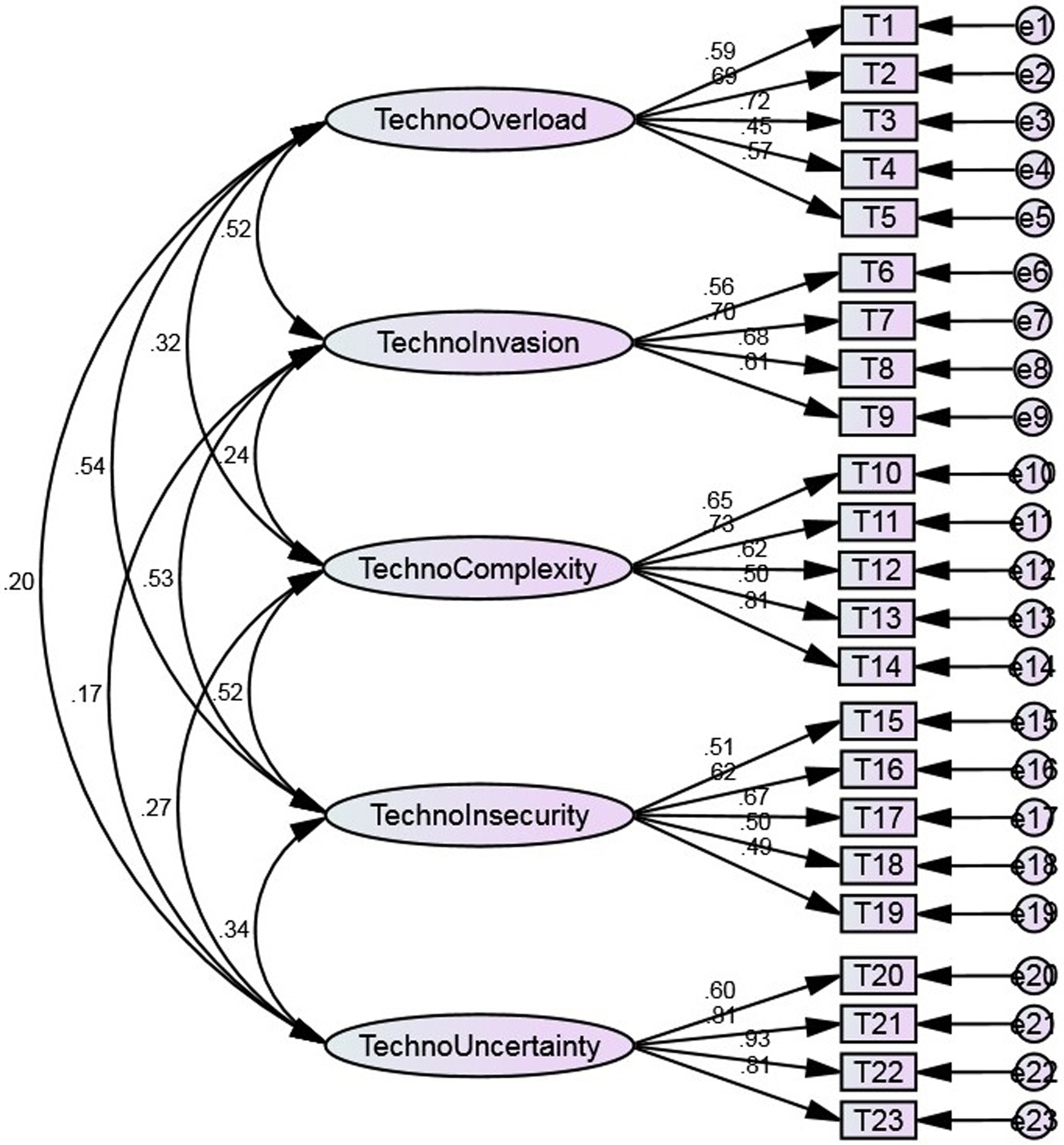
Measured model in standard mode.
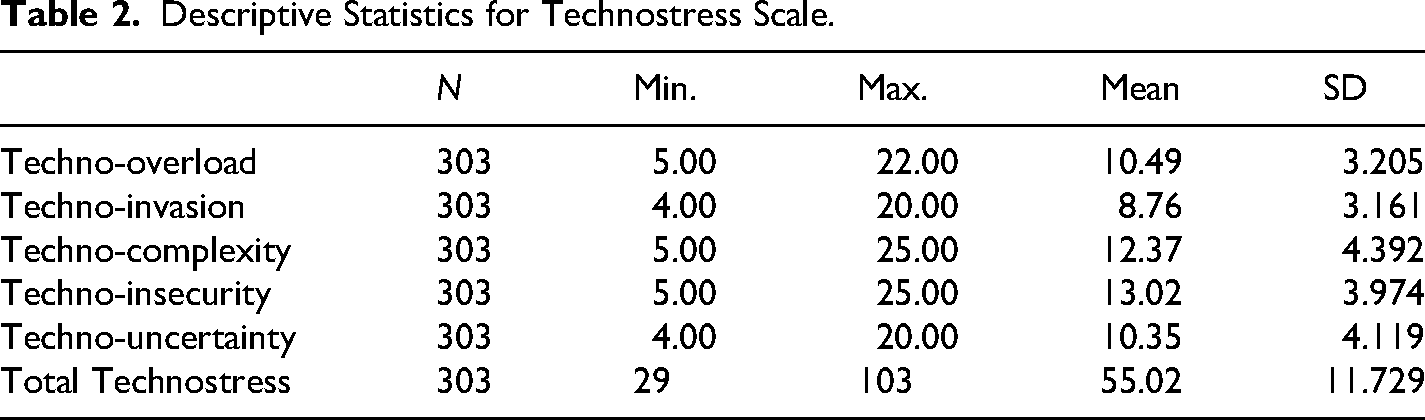
The descriptive statistics for the study are presented in Table 2. As indicated in Table 2, Techno-insecurity yielded the highest mean score (13.02), followed by Techno-complexity, Techno-overload, and Techno-uncertainty. By contrast, Techno-invasion had the lowest mean score (8.76).
Descriptive Statistics for Technostress Scale.
Results of Research Question One
Several statistical tests were conducted to examine differences in participants’ technostress levels. For the gender comparison, the analyses were based on the gender-balanced subsample described in the Method section (70 male, 70 female teachers), obtained by randomly selecting 70 female teachers from the 233 female respondents. As shown in Table 3, an independent-samples t-test was conducted on this gender-balanced subsample, and no statistically significant difference in technostress was found between male and female Iranian EFL teachers (p = .34).
Results of Independent Samples t-Test.

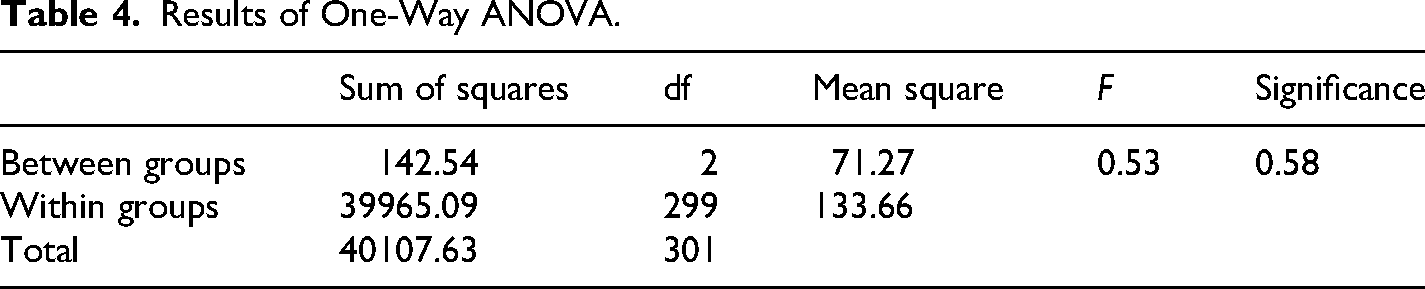
Afterward, to examine the impact of teaching experience on the teachers’ technostress, a one-way ANOVA using the full sample of 303 teachers was run, and the results showed no statistically significant differences among teachers across the three teaching experience groups (p = .58; see Table 4).
Results of One-Way ANOVA.
Results of Research Question Two
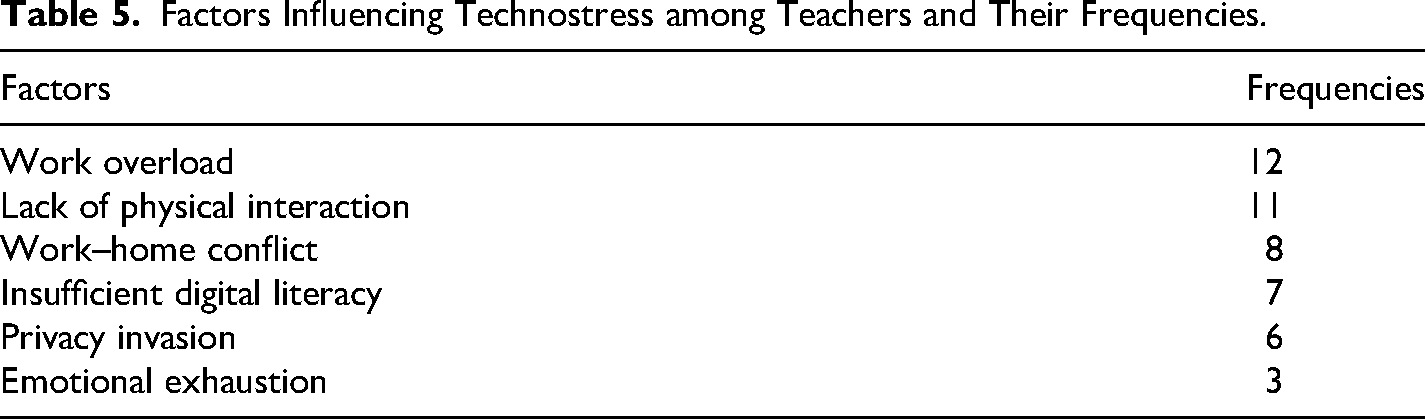
The second research question focused on identifying the factors associated with technostress among Iranian EFL teachers during online instruction. Guided by the principles of thematic analysis, six salient themes were identified as the primary contributors to teachers’ technostress: work overload, lack of physical interaction, work–home conflict, insufficient digital literacy, privacy invasion, and emotional exhaustion. Table 5 presents a summary of these factors and their frequencies of occurrence in the qualitative dataset.
Factors Influencing Technostress among Teachers and Their Frequencies.
Work Overload
The first and one of the most frequently reported contributors to technostress during online teaching was work overload. Teachers indicated that their workload increased substantially following the shift to online instruction. They noted that they were required to design and prepare extensive instructional materials to ensure the effectiveness of this modality, particularly given that learners cannot be continuously observed and assessed in virtual classrooms to the same extent as in face-to-face settings. As a result, participants perceived a heightened pressure to provide additional resources and activities to verify learners’ engagement and learning progress. Teacher 17, for instance, described her experiences of preparing materials for online classes and the challenges she encountered in managing this instructional format: In online classes, because everything is from a distance, you must manage everything from a distance. I must prepare a lot of materials to make sure that they [learners] understand very well. The other thing is that because I have to share files, I have to check the chat box, I have to listen to my students, by the way, I need to work with whiteboard or even check the camera, whether it is working or not, and check the track of all these modes of communication, that's so hard and demanding.
Lack of Physical Interaction
Most teachers attributed their experiences of technostress primarily to the absence of face-to-face interaction with learners. Physical co-presence is widely regarded as integral to effective teaching and learning because it facilitates immediacy, responsiveness to learners’ cues, and the development of rapport. In online classes, this interactional dimension is substantially diminished or reshaped, which participants perceived as generating a range of adverse consequences, including heightened technostress. Teacher 16, for example, explicitly described the lack of physical interaction as a central difficulty when teaching young learners online: Because I do and I did teach kids, you need your body movements and your gestures, and they are really helpful. But in online classes, you have your face, or you're actually in the very best condition, you can have your hands, not your body gestures, movements.
Work–Home Conflict
Because most online classes were conducted from teachers’ homes, participants frequently reported that the domestic setting was ill-suited to sustained instructional activity for both teachers and learners. Home environments were described as lacking the structural conditions typically available in institutional classrooms, which limited teachers’ ability to regulate incidents and maintain pedagogical flow. Teacher 7, for instance, described her experience of navigating an unfavorable home environment during online instruction: When I'm home, things become problematic because I've got a five-year-old kid. He can't observe the boundaries, like not making noise or not entering my room when I’m teaching. So, I'm in a room teaching, and he suddenly enters, often disrupting my classes.
Insufficient Digital Literacy
Limited knowledge of online teaching platforms emerged as a salient concern, with many teachers reporting that such deficits intensified their stress during online instruction. Participants emphasized that the abrupt transition to remote teaching, often implemented without adequate prior preparation or systematic training, undermined their readiness to teach effectively in digital environments. Teacher 15, for instance, recounted an incident in which his supervisor observed an online lesson, and he encountered difficulties managing the platform's basic functions: During one of my online classes, I did not know what was wrong, but I could not unmute one of my learners’ microphones. He had raised his hand to talk. And I remember that was one of the negative points that my supervisor mentioned when the class was over.
Privacy Invasion
Privacy concerns were widely perceived as a key determinant of technostress among the participating teachers. Many reported anxiety about the potential exposure of personal information when using computers and digital platforms for online education, particularly when instruction was conducted from their homes. In this regard, Teacher 19 explained that keeping her webcam enabled allowed learners to see aspects of her home environment, which she experienced as intrusive and stressful. She stated: My serious issue was privacy. I always turn on my webcam, and I can see that learners, instead of looking at me, are checking things around me in my room. Sometimes I worry about my privacy because I usually share my whole screen. So, my students might record the session.
Emotional Exhaustion
Emotional exhaustion emerged as one of the most salient symptoms reported by teachers during online instruction. In the present study, it also functioned as a strong predictor of teachers’ technostress levels. Teacher 10, for example, described the emotional fatigue she experienced while teaching online: When only my picture is on a screen all the time through using a kind of technology, I feel I am lost in the world of technology. So, I lose my contact with real life and real people. And everything gets very virtual. Sometimes in group classes, you cannot see your students. You have to talk with some voices. So yes, you feel really emotionally exhausted by the virtual world, and you want to take some real, physical classes.
Discussion
The present study examined whether two demographic variables (gender and teaching experience) were associated with technostress among Iranian EFL teachers. With respect to gender, the results indicated no statistically significant difference in technostress between male and female participants. This finding converges with prior research suggesting that gender does not meaningfully predict technostress (Bou Reslan & El Hokayem, 2025; Hsiao, 2017; Krishnan, 2017; Özgür, 2020; Wahab et al., 2022). However, it diverges from studies reporting significant gender-based differences in perceived technostress (e.g., Wang & Yao, 2023; Yangöz & Ünal, 2023). One plausible explanation for this discrepancy can be advanced through Hyde's (2005) gender similarities hypothesis, which argues that males and females are broadly comparable across many psychological attributes and challenges the assumptions of large, pervasive gender differences. From this perspective, the absence of gender effects in the present sample may reflect substantive similarity in stress appraisals and coping responses to technology-mediated teaching demands. At the same time, this pattern warrants consideration alongside the unified theory of acceptance and use of technology (UTAUT; Venkatesh et al., 2003), which conceptualizes gender as a moderator that can shape the relationships between key determinants and individuals’ technology-related behavioral intentions and actual use.
Another notable finding was that teachers’ technostress did not vary significantly as a function of teaching experience. This result contrasts with earlier studies reporting statistically significant differences in technostress across experience levels (e.g., Penado Abilleira et al., 2021; Wang & Yao, 2023). One plausible interpretation is that the abrupt transition to online education may have exposed teachers (irrespective of tenure) to comparable technological demands and constraints, thereby attenuating experience-based differences (e.g., <3 years, 3–5 years, >5 years). This pattern can be interpreted through the transactional model of stress and coping (Lazarus & Folkman, 1984), which posits that stress is not simply a direct consequence of external events (here, technology use) but is primarily shaped by individuals’ cognitive appraisals of those events and their perceived coping resources. Accordingly, stress responses depend on how individuals evaluate situational demands relative to available resources, rather than on the objective presence of stressors alone. From this perspective, teachers with differing levels of professional experience may nonetheless appraise the same technology-mediated teaching conditions in similar ways, particularly when their perceived resources are equally strained.
The explanatory sequential design of this study was intended to use qualitative findings to interpret and elaborate upon the quantitative results. Regarding the absence of demographic differences, the qualitative interviews provided a compelling explanation. The six themes that emerged were reported with similar frequency and intensity by both male and female teachers and by teachers across all experience levels. For instance, work overload was described by teachers with fewer than 3 years of experience (e.g., Teacher 4) as well as by those with more than 5 years (e.g., Teacher 17), and the nature of the overload was substantively similar across groups. Similarly, privacy concerns were articulated by both male interviewees (e.g., Teacher 15) and female interviewees (e.g., Teacher 19) in comparable terms. This qualitative convergence across demographic categories helps explain the quantitative null findings, in that the stressors associated with online teaching appear to be structural and contextual rather than individual, affecting all teachers who were thrust into online instruction regardless of gender or career stage.
The qualitative phase of the present study identified work overload in online education as a salient antecedent of technostress. Participants suggested that escalating instructional responsibilities in technology-mediated teaching were associated with an increased likelihood of nervousness and anxiety when using digital tools. This pattern accords with Al-Fudail and Mellar (2008), who reported that an expanding set of teacher duties can intensify tension in technology-based instruction. However, it diverges from the findings of Wang et al. (2024), who concluded that work overload in online teaching does not constitute a salient threat or a contributor to heightened technology-related anxiety. Such discrepancies may plausibly be attributable to contextual and individual differences across settings. In the Iranian context, participants appeared to construe increased workload as particularly burdensome, in part because additional responsibilities are not consistently accompanied by commensurate compensation. The job demands–resources (JD–R) model (Bakker & Demerouti, 2007; Demerouti et al., 2001) offers a useful explanatory framework for this result. Within the JD–R model, sustained job demands that require continuous effort (e.g., heavy workload) can activate a health-impairment process whereby chronic strain depletes energy resources, diminishes performance efficiency, and heightens susceptibility to stress-related outcomes. Complementing this account, Tarafdar et al. (2007) identify multiple ICT-related stressors, including techno-overload, which compels individuals to work faster, extend working hours, and engage in sustained multitasking, conditions that may be especially conducive to technostress in online teaching environments.
Teachers in the present study identified work–home conflict as a pivotal antecedent of technostress. Their professional obligations were frequently incongruent with the material and social conditions of the home environment, which often failed to support the orderly routines and pedagogical control typically associated with classroom instruction. This finding corroborates earlier evidence that work–home/work–life conflict constitutes a significant source of strain for teachers engaged in technology-mediated work (Ayyagari et al., 2011; Wang et al., 2024). Conceptually, these results align with work–family conflict theory (Greenhaus & Beutell, 1985), which defines work–family conflict as a form of inter-role friction arising when the demands of work and family are incompatible. Under such conditions, participation in one role becomes more difficult as a consequence of pressures originating in the other. In the context of online teaching, the blurring of spatial and temporal boundaries between home and work may intensify this incompatibility, thereby increasing the likelihood of technostress.
Insufficient digital literacy emerged as a salient stressor contributing to technostress. There is growing agreement that many teachers do not yet possess adequate expertise to use digital tools effectively or to integrate technology meaningfully into instruction. Such limitations may compromise instructional quality and, by extension, have substantial implications for learners’ outcomes. This result is consistent with prior research indicating that limited digital literacy can hinder successful teaching and elicit technology-related stress (e.g., Çoklar et al., 2016; Ferreira, 2019; Lim, 2012). Theoretically, this association can be interpreted through French et al.'s (1982) competence-based model of stress, grounded in person–environment fit theory, which conceptualizes stress as arising from a misalignment between individuals’ competencies and the demands of their work roles. When teachers’ technological capabilities do not meet the requirements of digitally mediated instruction, this mismatch may engender psychological, physiological, and/or behavioral strain as individuals struggle to respond to job-related challenges.
Privacy invasion also emerged as a significant determinant of technostress. Teachers reported apprehension that their personal information might be exposed when using digital tools and devices. They further noted that online instruction has intensified workload expectations, as managers often presume continual availability to support students beyond official class hours. This pattern is consistent with prior research indicating that technology-mediated work can heighten perceived intrusiveness and associated stress (e.g., Çoklar et al., 2016). From a theoretical perspective, the centrality of privacy concerns is supported by scholarship across management and organizational domains emphasizing individuals’ perceived ownership and control of personal data. In particular, information boundary theory (Stanton & Stam, 2003) provides a useful boundary-management lens for understanding how technology use reshapes privacy in organizational settings. The theory foregrounds employees’ privacy-related beliefs and behaviors as information traverses boundaries between personal and institutional domains. Applied to the present context, it suggests that teachers may experience tension, uncertainty, and psychological strain when privacy expectations are violated or when the management of personal information becomes ambiguous. Such boundary disruptions can generate feelings of turmoil and confusion, thereby exacerbating technostress, especially when digital work practices blur the limits between professional obligations and personal life.
The present study showed that emotional exhaustion was a key factor contributing to teacher technostress. Extended engagement with instructional technologies was associated with increased boredom and fatigue, and this strain was further amplified by diminished physical and social interaction with colleagues and students. Over time, such emotional depletion may trigger maladaptive outcomes, including burnout and heightened turnover intentions. This finding is consistent with Yangöz and Ünal (2023), who identified exhaustion and tiredness as consequential antecedents of technology-related anxiety. From a theoretical standpoint, the prominence of emotional exhaustion accords with the burnout framework advanced by Maslach et al. (2001), in which emotional exhaustion is conceptualized as a core dimension of burnout and a central component of stress-related syndromes. The results are also compatible with Hobfoll's (1989) conservation of resources theory, which posits that individuals rely on valued resources, such as personal characteristics, enabling conditions, and energies, to cope effectively with demands.
Finally, a distinctive contribution of the present study lies in identifying diminished physical interaction as an additional salient antecedent of teacher technostress. Specifically, the lack of in-person contact with learners during online instruction appears to function as a stress-inducing condition that may engender persistent technostress over time. The absence of face-to-face communication can weaken the teacher–learner relationship by constraining opportunities for immediate feedback, relational attunement, and interpersonal connection. When online platforms constrain gestures, eye contact, and real-time feedback, teachers may experience stress that is not fully captured by classic ICT-centered stressors alone. This finding highlights the need for technostress research in education to account for interactional and pedagogical disruptions alongside technological demands. The social presence theory (Short et al., 1976) provides an illuminating lens through which the centrality of face-to-face interactions becomes apparent. The theory posits that media differ based on nonverbal cues, degree of intimacy, and level of immediacy. The theory considers face-to-face communication as the channel that offers greater social visibility and presence than other channels, shaping relational interactions and social impact.
From a theoretical perspective, this study contributes to the scholarship on technostress in three ways. First, by examining whether gender and teaching experience shape technostress among private-sector EFL teachers in Iran, it helps specify the boundary conditions of demographic effects, suggesting that such differences may be muted in contexts where teachers face similar institutional constraints during technology-mediated instruction. Second, by integrating interview themes with the established technostress-creator framework (techno-overload, techno-invasion, techno-complexity, techno-uncertainty, and techno-insecurity; Tarafdar et al., 2007; Tarafdar et al., 2011), the study highlights an additional pedagogy- and relationship-centered stressor (e.g., lack of physical interaction), indicating that teacher technostress can stem not only from ICT demands but also from disruptions to instructional interaction, which is particularly salient in language education. Third, the adaptation and confirmatory validation of Tarafdar et al.'s scale in this context provides measurement support for its cross-context use while underscoring the value of mixed-method approaches for capturing context-specific stressors that standardized scales may overlook (Ayyagari et al., 2011; Tarafdar et al., 2015).
Conclusion
The present study sought to extend the literature on teacher technostress by examining whether demographic characteristics influence technostress among Iranian EFL teachers engaged in online instruction and by identifying contextual factors associated with its emergence. Drawing on questionnaire data and semi-structured interviews, the findings indicated that none of the demographic variables exerted a statistically significant effect on teachers’ technostress. The qualitative and quantitative evidence further suggested that technostress was primarily associated with privacy intrusion, increased workload, inadequate digital literacy, reduced opportunities for physical interaction, work–home conflict, and emotional exhaustion, all of which appeared to contribute meaningfully to elevated stress experiences during online teaching.
The present study yields several practical implications for both institute managers and teachers. First, institute managers are advised to attend systematically to the technological well-being of their teachers by conducting regular needs assessments and monitoring initiatives. In addition, administrators should implement targeted capacity-building initiatives, delivered through ongoing professional development across the semester, to strengthen teachers’ technological knowledge and pedagogical competencies for online instruction. Concurrently, teachers are encouraged to pursue technology-related self-empowerment by participating in webinars and other relevant training opportunities, with the aim of enhancing the quality of online instruction and, ultimately, improving student learning outcomes.
Notwithstanding these contributions, the study is subject to several limitations. First, the generalizability of the findings may be constrained, as the study was situated in a specific institutional context; therefore, caution is warranted when extrapolating the results to other educational settings (e.g., public schools or universities). Second, because the survey sample included a larger proportion of female respondents than male respondents, equal group sizes were created through random selection, which may have influenced representativeness and statistical power. Third, given the cross-sectional design, the findings capture technostress at a single point in time; future research would benefit from longitudinal designs to examine the longer-term and potentially cumulative effects of technostress on teachers. Finally, replication studies in diverse contexts are recommended, as setting-specific conditions may shape both the antecedents and consequences of technostress and thereby contribute to a more nuanced understanding of language teacher technostress across educational environments.
Footnotes

Funding
The authors received no financial support for the research, authorship, and/or publication of this article.
Declaration of Conflicting Interests
The authors declared no potential conflicts of interest with respect to the research, authorship, and/or publication of this article.
Author biographies
Parham Ahmadi is a Ph.D. student in Applied Linguistics at Shahid Beheshti University, Tehran, Iran. His areas of interest are Second Language Teacher Education and Computer-Assisted Language Learning (CALL). He has published peer-reviewed papers in prestigious journals, including Language Teaching Research (LTR).
Turaj Rahimi is a Ph.D. student in Applied Linguistics at Shiraz University, Shiraz, Iran. His areas of interest are second language teacher education and positive psychology.
Pouya Mahmoudi holds an MA in Applied Linguistics from Tarbiat Modares University and is currently pursuing a Ph.D. in the same field at the University of Tehran. His research interests include artificial intelligence (AI), technostress, job satisfaction, reflection, and demotivation, with a focus on online teaching.
Appendix A
Original and Adapted Items, With Changes and Rationale.
| Original item | Adapted item | Changes made | Rationale |
|---|---|---|---|
| I have to sacrifice my vacation and weekend time to keep current on new technologies. | I have to sacrifice my vacation and weekend time to keep myself up-to-date with new technologies. | “keep current on” → “keep myself up-to-date with.” | Use more commonly understood wording. |
| I find new recruits to this organization know more about computer technology than I do. | I find new recruits to this institute know more about computer technology than I do. | “organization” → “institute.” | Adapt organizational label to match the specific context of the study. |
| There are always new developments in the technologies we use in our organization. | There are always new developments in the technologies we use in our institute. | “organization” → “institute.” | Same as above |
| There are constant changes in computer software in our organization. | There are constant changes in computer software in our institute. | “organization” → “institute.” | Same as above. |
| There are constant changes in computer hardware in our organization. | There are constant changes in computer hardware in our institute. | “organization” → “institute.” | Same as above. |
| There are frequent upgrades in computer networks in our organization. | There are frequent upgrades in computer networks in our institute. | “organization” → “institute.” | Same as above. |