







Abstract
The narrative inquiry explored junior high school science teachers' reported practices in fostering students' critical thinking skills in Indonesia using a narrative inquiry approach guided by a critical thinking framework. Data were collected from October to November 2024 through semi-structured interviews and classroom observations involving science teachers at the junior high school level. The findings indicate that teachers frequently implemented student-centered instructional approaches, including problem-based learning, project-based learning, inquiry learning, and discovery learning, to encourage interpretation, analysis, evaluation, inference, explanation, and self-regulation. Teachers also emphasized contextual problems, collaborative discussions, scaffolding, reflective questioning, and evidence-based reasoning to support students' thinking processes. Classroom observations confirmed the presence of instructional practices intended to encourage active participation, argumentation, reflection, and analytical reasoning. However, the findings represent teachers' reported practices and observed classroom interactions rather than direct evidence of students' critical thinking achievement or instructional effectiveness. The study addresses the role of reflective, inquiry-oriented, and scaffolded science instruction in supporting critical thinking development.
Introduction
Educational literature consistently highlights the importance of cultivating critical thinking skills from an early age, as these skills are central to meaningful learning, analytical problem-solving, and informed decision-making (Coughlan, 2007; Southworth, 2022). Beyond academic achievement, critical thinking contributes to individuals’ quality of life (Derman & Bezen, 2026; Paul & Elder, 2007) and enables learners to critically evaluate information in an increasingly complex, media-rich society (Raphael et al., 2026; Vieira & Tenreiro-Vieira, 2016). Among school subjects, science education is widely regarded as a particularly fertile context for developing critical thinking because it emphasizes inquiry, evidence evaluation, and reasoned explanation. Scientific learning processes such as observing phenomena, analyzing data, and drawing conclusions closely align with the core components of critical thinking (Strat et al., 2024). Henceforth, fostering critical thinking has been deemed as a central goal of science teaching and learning (Butcher et al., 2023; García-Carmona, 2025; Kirk et al., 2023; Pinar et al., 2025; Vincent-Lancrin, 2023).
Despite this strong theoretical and curricular emphasis, effectively cultivating critical thinking in classrooms depends largely on teachers’ instructional practices. Teachers play a pivotal role in designing learning experiences that prompt students to question assumptions, analyze evidence, and reflect on their reasoning. Research suggests that the development of critical thinking requires intentional instructional design, continuous monitoring of student learning, and reflective refinement of teaching strategies (Kirk et al., 2023). Through such processes, teachers can identify pedagogical approaches that meaningfully engage students in higher-order thinking. However, although existing studies have documented various instructional models that support critical thinking, much of this research has focused on primary education or on preservice teachers. For instance, Essalih et al. (2025) examined primary science teachers’ perceptions and identified barriers such as limited teacher expertise, low student motivation, and insufficient parental support (Rofiah et al., 2024). While these findings are informative, they do not fully capture the instructional realities of junior secondary school science classrooms.
This reveals a significant gap in the current literature. Junior secondary school represents a critical transitional stage in students’ cognitive development, where learners are expected to move beyond basic comprehension toward more advanced analytical, evaluative, and inferential thinking. Yet empirical studies that closely examine how in-service science teachers at this level intentionally develop students’ critical thinking skills remain limited, particularly in non-Western contexts such as Indonesia. Moreover, many existing studies emphasize outcomes or curricular intentions rather than teachers’ lived experiences and day-to-day instructional practices. As a result, there is insufficient understanding of how critical thinking is enacted in real classroom settings, how teachers interpret theoretical frameworks of critical thinking, and how they adapt their practices in response to contextual constraints such as curriculum demands, assessment pressures, and diverse student abilities.
Addressing this gap, the present study investigates how junior secondary school science teachers develop students’ critical thinking skills in their classroom practice. Guided by the research question, how do science teachers develop students’ critical thinking skills in junior secondary school science education? This study foregrounds teachers’ experiences, instructional strategies, and reflections. By focusing on teachers’ perspectives, the study moves beyond abstract discussions of critical thinking to examine how it is operationalized in everyday teaching.
The contributions of this study are threefold. First, it provides empirical insight into the concrete instructional practices used by junior secondary school science teachers to foster critical thinking, thereby extending the literature beyond primary education contexts. Second, it highlights the challenges and enabling conditions teachers encounter when implementing critical thinking-oriented instruction, offering a more nuanced understanding of classroom realities. Third, the findings generate contextually grounded implications for curriculum development, teacher professional development, and instructional design. By illuminating how critical thinking is cultivated at the junior secondary level, this study contributes to ensuring continuity in students’ cognitive development across educational stages and supports broader efforts to align science education with the demands of a critically informed society.
Conceptualizing Critical Thinking from a Constructivist Perspective
The importance of critical thinking skills for both individual growth and societal advancement has been widely recognized across many countries, as reflected in the incorporation of critical thinking into national education curricula worldwide (Ülger, 2016). In an era characterized by rapid scientific, technological, and social change, learners are expected not only to acquire knowledge but also to evaluate information, solve complex problems, and make reasoned decisions. As a cross-disciplinary competence, critical thinking is essential for all students and should be systematically cultivated by educators at both the primary and secondary levels (Kpazai, 2015). Its development is particularly crucial in science education, where students are required to interpret data, evaluate evidence, and draw logical conclusions. Consequently, fostering critical thinking is not merely an instructional goal but part of a broader societal transformation that begins in classrooms guided by competent, reflective, and innovative teachers (Cirocki & Widodo, 2019; Essalih et al., 2025).
From a constructivist perspective, critical thinking is understood not as a fixed set of skills that can be directly transmitted from teacher to student but as an active and dynamic process of knowledge construction. Constructivist theory emphasizes that learners build understanding through personal experiences, inquiry, and social interaction. Within this framework, critical thinking emerges when students are encouraged to question assumptions, analyze evidence, consider multiple perspectives, and reflect on their reasoning processes. Constructivism thus provides a strong philosophical foundation for conceptualizing critical thinking as a learner-centered and context-dependent process. In practice, this perspective reshapes classroom instruction by positioning students as active participants in learning and teachers as facilitators who guide inquiry, encourage dialogue, and support reflection. Such environments promote autonomy, collaboration, and deeper engagement with meaningful problems, all of which are essential for the development of critical thinking skills (Leś & Moroz, 2021).
In science education, a wide range of instructional strategies and learning tools have been designed to support the cultivation of critical thinking. Research has highlighted the effectiveness of guided inquiry learning, which allows students to investigate scientific phenomena through structured questioning and experimentation (Kirk et al., 2023). Other approaches include the use of newspaper articles and real-world texts to contextualize scientific concepts and promote evaluative thinking (Oliveras et al., 2013), as well as cooperative learning activities focused on socioscientific issues that require students to reason, debate, and justify their viewpoints (Wang et al., 2016). In the Indonesian junior secondary school context, critical thinking has been promoted through teaching models such as guided inquiry (Amijaya et al., 2018) and problem-based learning (PBL) (Bendeliani & Torstensdotter, 2026), which emphasize problem-solving and student engagement. Additionally, instructional resources such as student worksheets have been developed to scaffold inquiry processes (Firdaus & Wilujeng, 2018), alongside practical science guides designed to strengthen students’ critical thinking abilities (Calma & Davies, 2026).
Despite these efforts, implementing critical thinking in everyday classroom practice remains challenging. Essalih et al. (2025) reported that primary science teachers encounter obstacles, including limited understanding of critical thinking concepts, low student motivation, and insufficient parental support (Rofiah et al., 2024). They emphasized the need for curriculum reform, greater student autonomy, and learning activities that explicitly stimulate critical inquiry. Similarly, Khalid et al. (2021) identified barriers among prospective teachers, such as inadequate preparation to assess critical thinking, limited pedagogical knowledge, and a lack of instructional resources. These findings underscore the importance of strengthening teacher education programs, improving instructional strategies, and fostering systemic changes in educational culture. Therefore, further research is needed to explore context-sensitive strategies, effective classroom practices, and supportive policies that can enhance the development of critical thinking skills in junior secondary school science education.
Research Methodology
Research Context
This qualitative study was conducted in both public and private junior secondary schools in Surakarta, Central Java, Indonesia. These schools were purposively selected because their science teachers actively sought to foster students’ critical thinking skills within classroom practice. In these settings, teachers employed a variety of student-centered and inquiry-oriented pedagogical approaches, including PBL, inquiry-based learning, and structured discussion activities. Such approaches were intentionally designed to encourage students to question, analyze, and reflect, thereby embedding critical thinking within everyday science instruction. The selected school contexts, therefore, provide a meaningful and information-rich setting for examining how critical thinking is enacted, negotiated, and experienced in real classroom situations at the junior secondary level.
Ontologically, this study is grounded in a constructivist perspective, which assumes that reality is not fixed or singular but is socially constructed through interactions among teachers, students, and the broader educational context. From this standpoint, critical thinking is not treated as a universal or purely measurable skill but as a context-dependent practice shaped by classroom dynamics, pedagogical choices, and institutional conditions. Epistemologically, the study adopts an interpretivist stance, emphasizing that knowledge is coconstructed between the researcher and participants. Understanding how critical thinking is integrated into science teaching requires accessing participants’ meanings, experiences, and interpretations rather than relying on objective measurement alone. The researcher, therefore, plays an active role in interpreting how teachers conceptualize and implement critical thinking within their instructional practices. This approach allows for a nuanced exploration of how pedagogical intentions, classroom interactions, and contextual factors jointly shape the development of critical thinking in science education.
Research Design
This study adopted a social constructivist and interpretivist approach, emphasizing the construction of meaning through participants’ lived experiences and interactions. Ontologically, the study was grounded in a relativist perspective, which assumed that reality was multiple, context-dependent, and socially constructed rather than fixed or objective. From this viewpoint, the practice of developing critical thinking skills in junior secondary science classrooms was understood as a dynamic phenomenon shaped by teachers’ interactions with students, pedagogical choices, and institutional contexts. Epistemologically, the study was positioned within an interpretivist paradigm, where knowledge was coconstructed between the researcher and participants. Understanding teaching practices required engaging with teachers’ subjective meanings, interpretations, and experiences rather than seeking universal or generalizable truths. This perspective guided the exploration of how teachers made sense of and enacted critical thinking development in their classrooms (Pihlainen, 2013).
Methodologically, the study employed a narrative inquiry design (Barkhuizen, 2013) to explore the social and experiential dimensions of teaching practice. Narrative inquiry was particularly appropriate as it enabled the examination of how individuals interpreted and gave meaning to their experiences over time (Fauziah et al., 2025; Riessman, 2008). In this study, science teachers were invited to share their personal and professional experiences in developing students’ critical thinking skills (Fowler, 2010). They were given the flexibility to narrate these experiences in their own words, allowing rich and authentic accounts to emerge. The collected narratives were treated as sociopsychological constructs, reflecting how teachers interpreted, negotiated, and made sense of their instructional practices and classroom interactions. Through this approach, the study sought to uncover the nuanced and contextually embedded processes through which critical thinking was understood and enacted in junior secondary science education.
Participants
Participants were recruited using a purposive sampling strategy to ensure relevance to the study's focus on critical thinking in science education (Lestariyana et al., 2025). The initial stage of the study involved contacting six university students who were undertaking teaching internships at junior secondary schools in the Surakarta residency area, Central Java, Indonesia. Through these students, we obtained information indicating that science teachers at their respective schools had implemented practices aimed at developing students’ critical thinking skills. Based on this information, we established access to and communication with 15 teachers who met the study criteria.
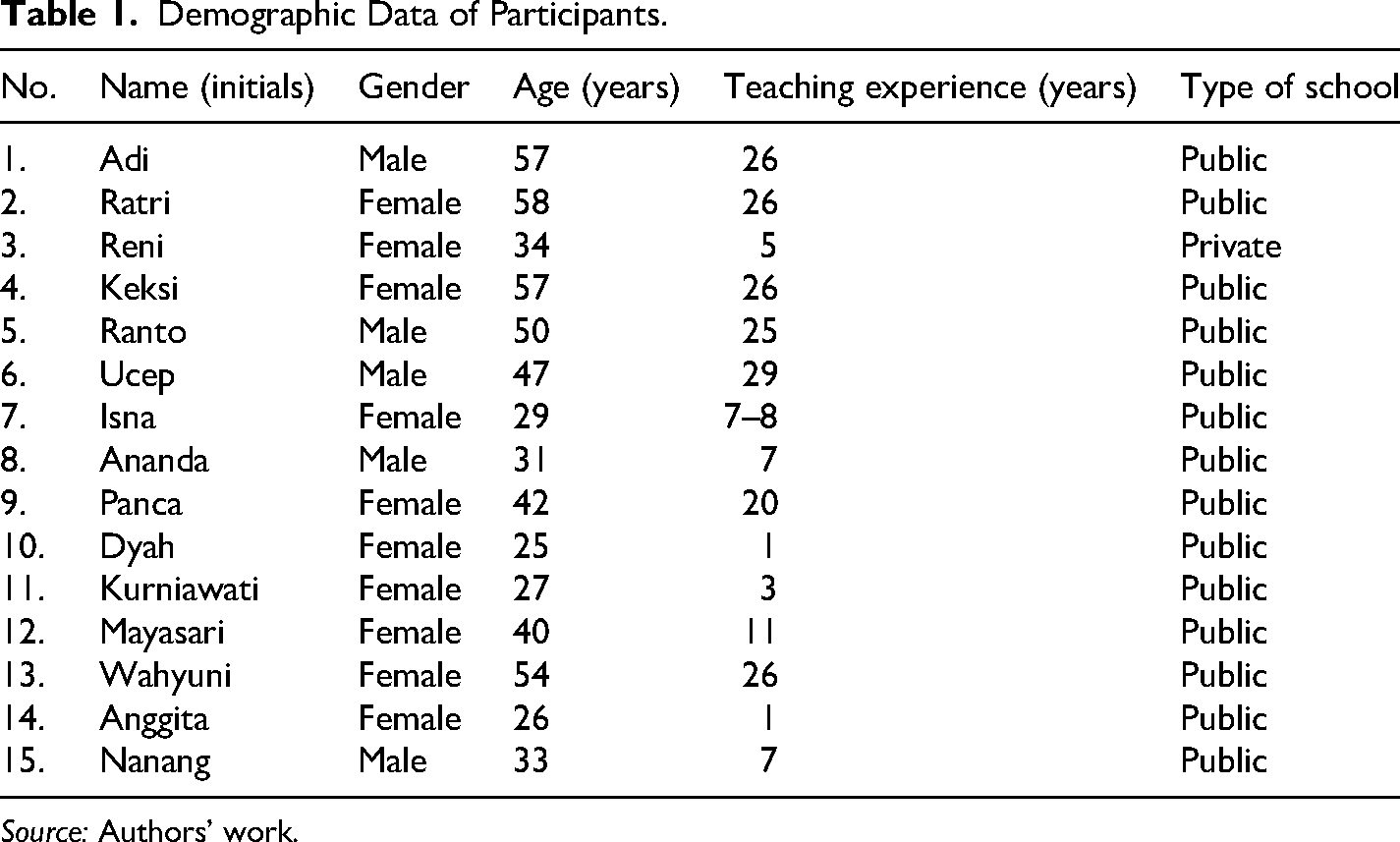
The recruited participants had educational backgrounds in biology, chemistry, physics, or general science and had a minimum of one year of teaching experience. Of the 35 teachers, 15 were from schools where our students conducted their teaching internships, facilitating access and trust. This approach enabled efficient access to information-rich participants with relevant teaching experience. Demographic characteristics of the participants are presented in Table 1.
Demographic Data of Participants.
Source: Authors’ work.
Ethical considerations were carefully observed throughout the research process. Prior to data collection, participants were provided with clear information about the purpose of the study, the nature of their involvement, and their rights as participants. Informed consent was obtained from all participants, and participation was entirely voluntary. Participants were assured of their right to withdraw from the study at any time without any negative consequences. To ensure confidentiality and anonymity, all identifying information was removed, and pseudonyms were used in reporting the findings. Given that access to participants was partly facilitated through student teachers and professional networks, particular attention was paid to minimizing potential power imbalances and coercion. Participants were explicitly informed that their decision to participate or decline would not affect their professional relationships or institutional standing. All data were securely stored and used solely for research purposes. The study adhered to established ethical standards for qualitative research and received approval from the relevant institutional review board.
The Implementation of Teaching Critical Thinking in Science Classrooms
During classroom implementation, teachers consistently positioned themselves as facilitators who guided students through structured yet flexible learning activities. In practice, each lesson typically began with a brief orientation phase lasting around 10–15 min. At this stage, the teacher introduced a contextual problem that was closely related to students’ everyday experiences and supported by simple, tangible materials. For example, in a lesson on measurement, the teacher distributed a coin to each group and explained that students would determine its diameter using three different instruments: a ruler, a vernier caliper, and a micrometer screw gauge. Before starting, the teacher demonstrated how to use each instrument correctly, ensuring that all students understood basic procedures.
Students were then divided into small groups of three to four members. Each group was provided with a worksheet designed to guide the activity step by step, including spaces to record measurements, note observations, and write initial interpretations. The teacher moved around the classroom to monitor progress, checking whether students used the instruments properly and recorded data accurately. When students encountered difficulties such as misreading the scale or handling the micrometer, the teacher intervened briefly with hands-on guidance rather than giving direct answers. After collecting data, students were instructed to compare their measurement results within their groups. This phase typically lasted 15–20 min and involved active discussion. The teacher initiated deeper inquiry by posing open-ended questions such as, “Why are your results different?” or “What might have caused these variations?” Instead of evaluating responses immediately, the teacher encouraged students to propose explanations based on their observations. Some groups discussed issues such as human error, instrument precision, or differences in measurement technique.
To deepen analysis, the teacher continued facilitating by asking follow-up questions tailored to each group's responses, such as, “Which instrument gave the smallest margin of error?” or “How can you tell which result is more reliable?” At this stage, the teacher provided scaffolding when necessary—for instance, by reminding students how to read the vernier scale or by clarifying the concept of precision versus accuracy. Importantly, the teacher avoided dominating the discussion, allowing students to take the lead in reasoning. In the next stage, each group was asked to reach a consensus regarding which instrument was most appropriate for measuring the coin's diameter. Students were required to justify their decision using the data they had collected. This activity encouraged negotiation within groups, as students often had differing opinions. Once a conclusion was reached, groups presented their findings in front of the class. Presentations were informal but structured, and other students were encouraged to ask questions or challenge the reasoning presented.
To extend critical thinking, the teacher posed reflective questions such as, “What can you conclude from your data?” and “Why do you think the micrometer gives more precise results?” Students were prompted to explain their reasoning clearly and respond to peer feedback. The teacher maintained a supportive atmosphere by acknowledging different viewpoints and encouraging respectful dialogue. Finally, the lesson concluded with a reflection session lasting about 10 min. The teacher asked students to think about both the results and the process, using prompts such as, “How confident are you in your conclusion?” and “What would you do differently next time?” Students shared brief reflections either orally or in writing. This closing activity helped consolidate learning and reinforced students’ analytical, evaluative, and reflective thinking skills developed throughout the lesson.
Data Collection
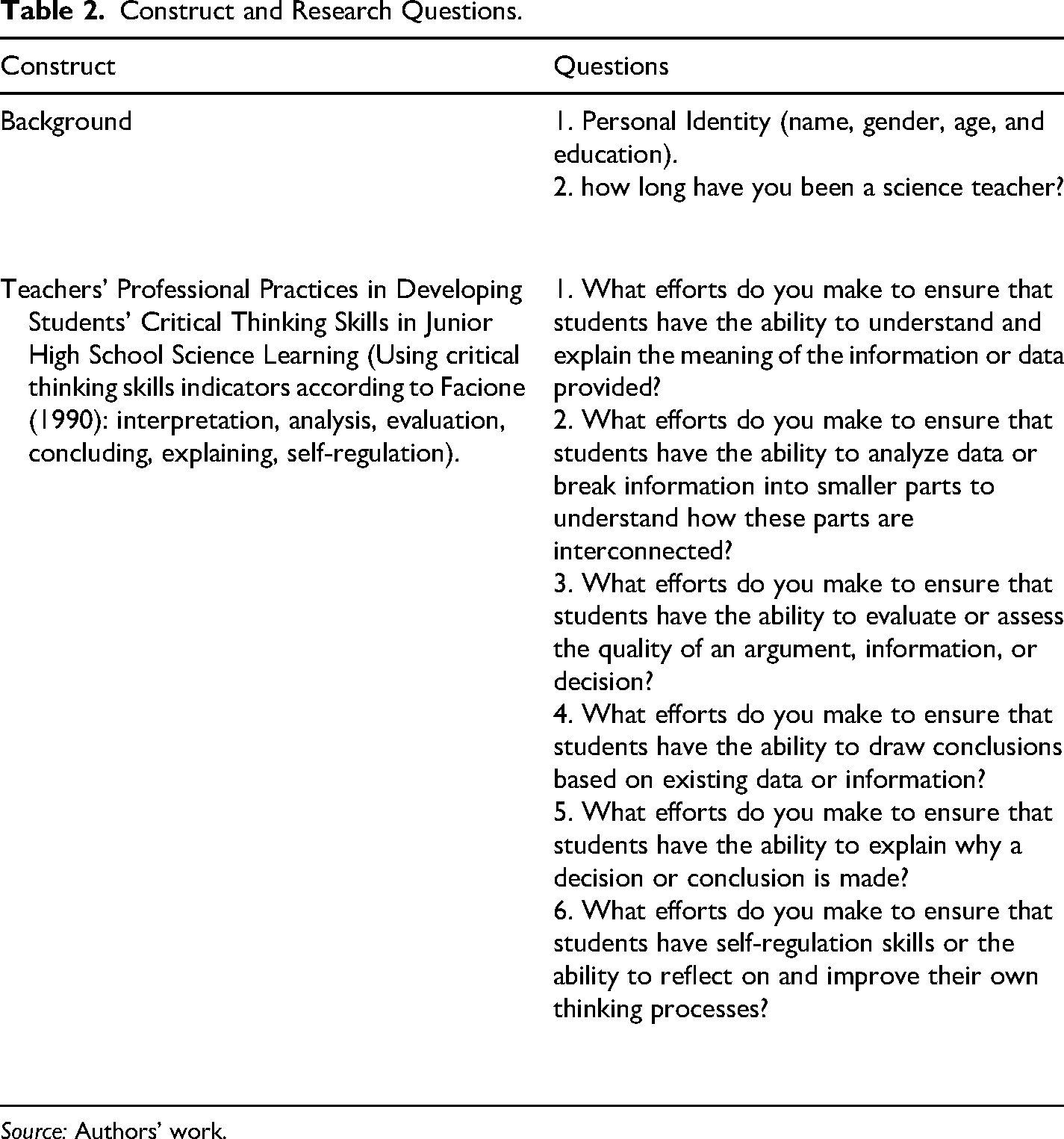
Data were collected through face-to-face, semistructured interviews with junior high school science teachers to explore their instructional practices in depth. A semistructured interview guide was prepared to ensure consistency across participants while allowing flexibility for elaboration. Each teacher was interviewed once between October and November 2024 at their respective schools in quiet, comfortable settings to encourage open discussion. As shown in Table 2, the interview guide comprised two sections. The first gathered background information, including personal identity and teaching experience. The second focused on teachers’ professional practices in developing students’ critical thinking skills, with questions aligned to Facione's critical thinking indicators. The interview protocol was developed by the authors to ensure contextual relevance and to capture comprehensive insights into teachers’ strategies, experiences, and perceptions.
Construct and Research Questions.
Source: Authors’ work.
Each interview lasted approximately 30–45 min and was audio-recorded using a mobile phone application to ensure accurate data capture and support verbatim transcription. All interviews were conducted in Bahasa Indonesia to allow participants to express their ideas naturally and in detail, reducing linguistic barriers and enhancing data richness, credibility, and trustworthiness. The interview questions were developed based on Facione's (1990) critical thinking framework, providing a strong theoretical foundation for data collection. Questions were organized around six core indicators, such as interpretation, analysis, inference, evaluation, explanation, and self-regulation, guiding teachers to reflect on their instructional practices in supporting students’ understanding, data analysis, argument evaluation, evidence-based conclusion drawing, justification of decisions, and reflective thinking processes.
In addition to interviewing, classroom observations were conducted during science learning activities from October to November 2024 to examine how teachers enacted the instructional practices described in the interviews. A total of 30 classroom sessions were observed across participating teachers, with each observation lasting approximately 90–120 min, following the regular duration of science lessons in junior high school. During the observations, one of the researchers (the first author) focused on classroom interactions, teaching strategies, questioning techniques, discussion activities, feedback processes, and students’ participation in problem-solving and argumentation tasks. Teachers were observed implementing student-centered approaches such as PBL, project-based learning (PjBL), inquiry learning, and discovery learning. To enhance the accuracy and credibility of the data, classroom activities were documented through field notes and supported by audio recordings of selected instructional interactions and classroom discussions, with participants’ consent. The field notes recorded how teachers guided students in analyzing data, interpreting information, presenting arguments, drawing conclusions, and reflecting on their learning processes. The observations were intended to capture naturally occurring classroom practices and contextual teaching processes rather than to directly measure students’ critical thinking achievement or instructional effectiveness.
Data Analysis
Narrative data in this study were analyzed within a narrative inquiry framework using Facione's (1990) critical thinking framework as the primary interpretive lens. Narrative inquiry was employed to explore teachers’ lived experiences, personal reflections, and professional stories regarding their instructional practices in fostering students’ critical thinking skills. Through semistructured interviews, participants were encouraged to share detailed narratives about classroom experiences, challenges, teaching strategies, and interactions with students. Classroom observations conducted from October to November 2024 were also used to support the interview data by documenting naturally occurring instructional practices during science learning activities. All interviews and selected classroom interactions were audio-recorded and transcribed verbatim to preserve the authenticity, sequence, and contextual meaning of participants’ accounts. Ethical approval for the study was obtained from the relevant institutional authority prior to data collection. All participants voluntarily agreed to participate and signed informed consent forms. Participants were informed about the purpose of the study, confidentiality procedures, the voluntary nature of participation, and their right to withdraw at any stage of the research process.
The analysis followed narrative inquiry procedures adapted from narrative thematic analysis, combining both inductive and deductive coding approaches. The coding system consisted of narrative familiarization, open coding, axial coding, selective coding, narrative structuring, and cross-narrative thematic interpretation. In the narrative familiarization stage, transcripts and observation notes were read repeatedly to gain a holistic understanding of each participant's story, including the chronology of experiences, significant events, and contextual factors influencing instructional practices. Attention was given not only to what participants said but also to how they constructed and interpreted their experiences as teachers.
During open coding, transcripts were analyzed line by line to identify meaningful narrative segments related to teachers’ reported practices, beliefs, and experiences in developing students’ critical thinking skills. Initial codes were generated inductively from participants’ narratives, including codes such as use of real-life problems, guided questioning, collaborative discussion, student argumentation, reflective feedback, classroom challenges, curriculum constraints, and teacher adaptation strategies. Narrative elements such as setting, actions, intentions, tensions, and reflections were also coded to preserve the contextual richness of participants’ stories. To strengthen the trustworthiness of the analysis, the coding process involved intercoder discussion between the researcher and a second qualitative research reviewer. Differences in interpretation were discussed until agreement was reached. An audit trail consisting of interview transcripts, observation notes, coding memos, and category development records was maintained throughout the analysis process to ensure transparency and consistency.
In the axial coding stage, related narrative codes were grouped into broader conceptual categories by examining relationships among events, actions, and meanings across participants’ accounts. At this stage, deductive coding was applied by aligning the emerging categories with Facione's critical thinking indicators: interpretation, analysis, evaluation, inference, explanation, and self-regulation. This process enabled the researchers to connect teachers’ instructional experiences with theoretically grounded dimensions of critical thinking while still maintaining the integrity of participants’ narratives. Selective coding was then conducted to integrate categories into overarching narrative themes representing teachers’ instructional experiences and perceptions. Themes were developed by identifying recurring storylines, shared experiences, and common pedagogical patterns across participants. Examples of overarching themes included teachers’ efforts to contextualize learning through real-life situations, challenges in encouraging student reasoning, and strategies used to promote reflective thinking in science classrooms.
To preserve the core principles of narrative inquiry, the analysis also involved narrative structuring and restorying. Individual participant accounts were organized chronologically to highlight sequences of experiences, turning points, and professional reflections. This process allowed the researchers to understand how teachers constructed meaning from their classroom experiences over time. Cross-narrative analysis was subsequently conducted to identify similarities and differences among participants’ stories while maintaining attention to each teacher's unique context. Member checking was conducted by sharing summaries of interpretations with several participants to confirm the accuracy of the researchers’ interpretations of their experiences. In addition, peer debriefing with fellow qualitative researchers was conducted periodically to review coding consistency, thematic interpretation, and analytical decisions. Throughout the analysis, iterative comparison and continuous reflection were employed to ensure consistency, coherence, credibility, and confirmability of interpretation. Contextual factors such as student characteristics, curriculum demands, school culture, and institutional expectations were incorporated into the interpretation of narratives. The findings therefore represent teachers’ reported experiences and perceptions regarding instructional practices intended to support students’ critical thinking development rather than direct evidence of instructional effectiveness or student learning outcomes. Thus, this narrative coding system provided a rigorous and context-sensitive approach for examining how junior high school science teachers in Indonesia understood, experienced, and described their efforts to foster critical thinking skills in classroom practice.
Findings and Discussion
This study aims to explore teachers’ practices in developing students’ critical thinking skills in science education at junior high school level. Teachers’ practices in fostering critical thinking skills are described as efforts to train students in the critical thinking indicators proposed by Facione (1990). Critical thinking skills can be defined as the ability to understand and explain the meaning of information or data provided, the ability to analyze data, evaluate, draw conclusions, explain (clarify), and self-regulate (Facione, 1990). Additionally, this research also seeks to explore the barriers in developing critical thinking skills in science education at junior high school.
Students’ Ability to Understand and Explain the Meaning of Information or Data Provided
The findings highlight that teachers employ various teaching approaches/models to develop students’ critical thinking skills (Kirk et al., 2023). In Table 3, the teacher participants explained how they developed their students’ critical thinking.
Teaching Models to Promote Critical Thinking.
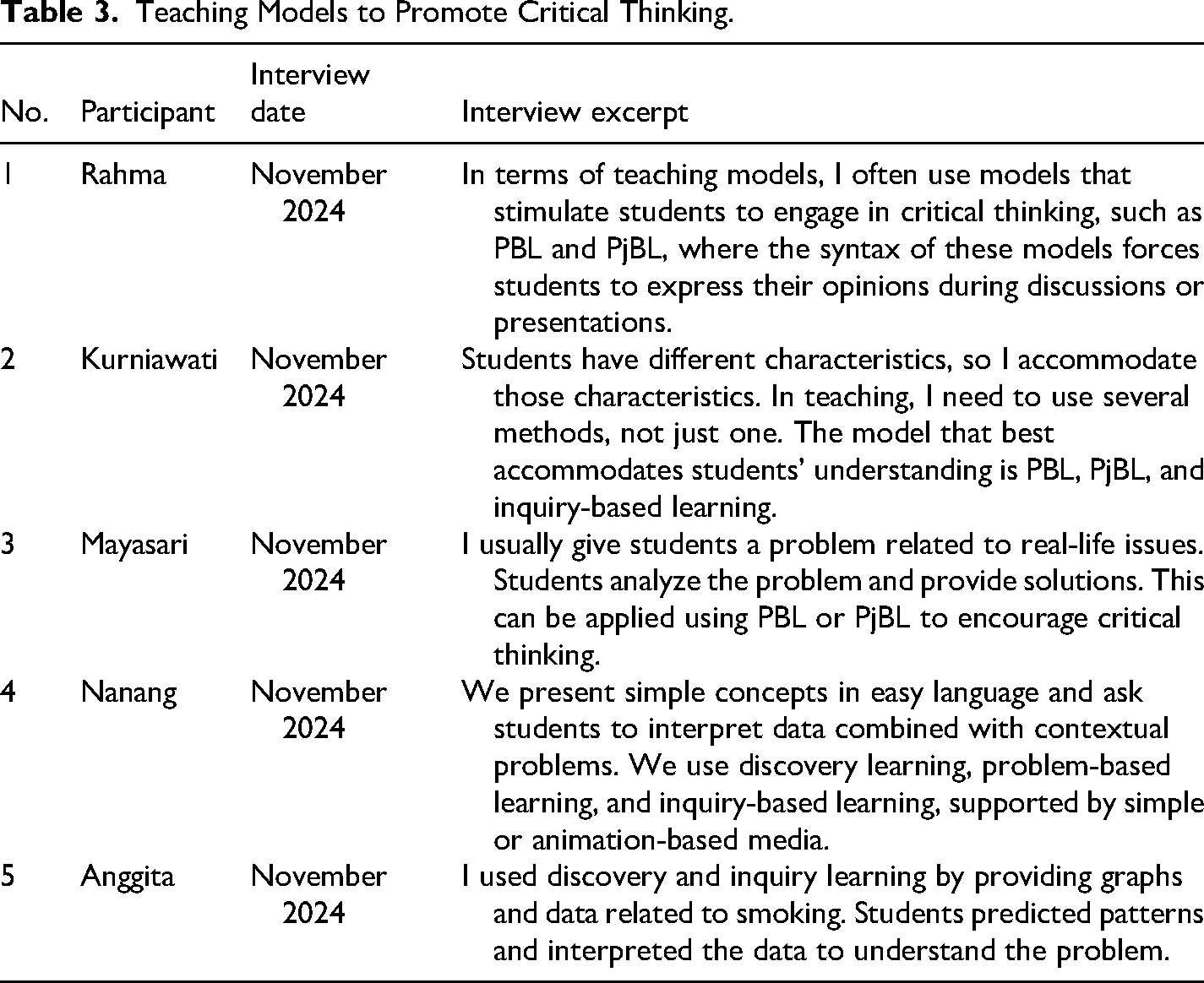
The interview data indicate a consistent emphasis on student-centered teaching models to promote critical thinking. All participants highlight active learning approaches, such as PBL, PjBL, inquiry-based learning, and discovery learning. These models encourage students to analyze real-life problems, interpret data, and articulate opinions through discussion, presentation, and debate (Coughlan, 2007; Southworth, 2022). Participants also stress the importance of accommodating diverse student characteristics by using multiple methods rather than a single instructional model. Contextual and authentic problems are repeatedly mentioned, suggesting that linking learning to real-world issues enhances students’ analytical and evaluative skills (Raphael et al., 2026). Additionally, the use of supportive media, such as graphs, data sets, and animation-based resources, helps scaffold understanding and stimulate interpretation. Overall, the findings show that critical thinking is fostered through instructional designs that require active participation, problem-solving, reflection, and evidence-based reasoning, positioning students as active constructors of knowledge rather than passive recipients.
Classroom observations indicated that teachers enact several student-centered instructional approaches intended to support students’ critical thinking processes in science learning. Teachers frequently applied PBL, PjBL, inquiry-based learning, and discovery learning during classroom activities. In observed lessons, teachers presented contextual and real-life problems to encourage students to analyze issues, express opinions, and discuss possible solutions with peers. Students were also guided to interpret graphs, identify patterns, and explain their reasoning during group discussions and presentations. Some teachers combined multiple instructional methods to accommodate students’ different learning characteristics and levels of understanding. In addition, visual and contextual media, including animations and data-based materials, were used to support concept understanding and stimulate classroom interaction. Teachers were observed simplifying complex concepts through accessible explanations and step-by-step guidance. These observations reflect instructional practices and classroom interactions intended to encourage reasoning and active participation, rather than direct evidence of students’ critical thinking improvement or learning effectiveness.
Teachers’ Practices of Developing Students’ Data Analysis Skills
Training students to analyze data progressively, from simple to complex data, and from concrete to abstract, is an essential step for teachers in enhancing students’ data analysis skills effectively (Kirk et al., 2023). These exercises also need to be repeated to ensure students become accustomed to analyzing data accurately. As seen in Table 4, the teachers added that:
Scaffolded and Progressive Learning Strategies.
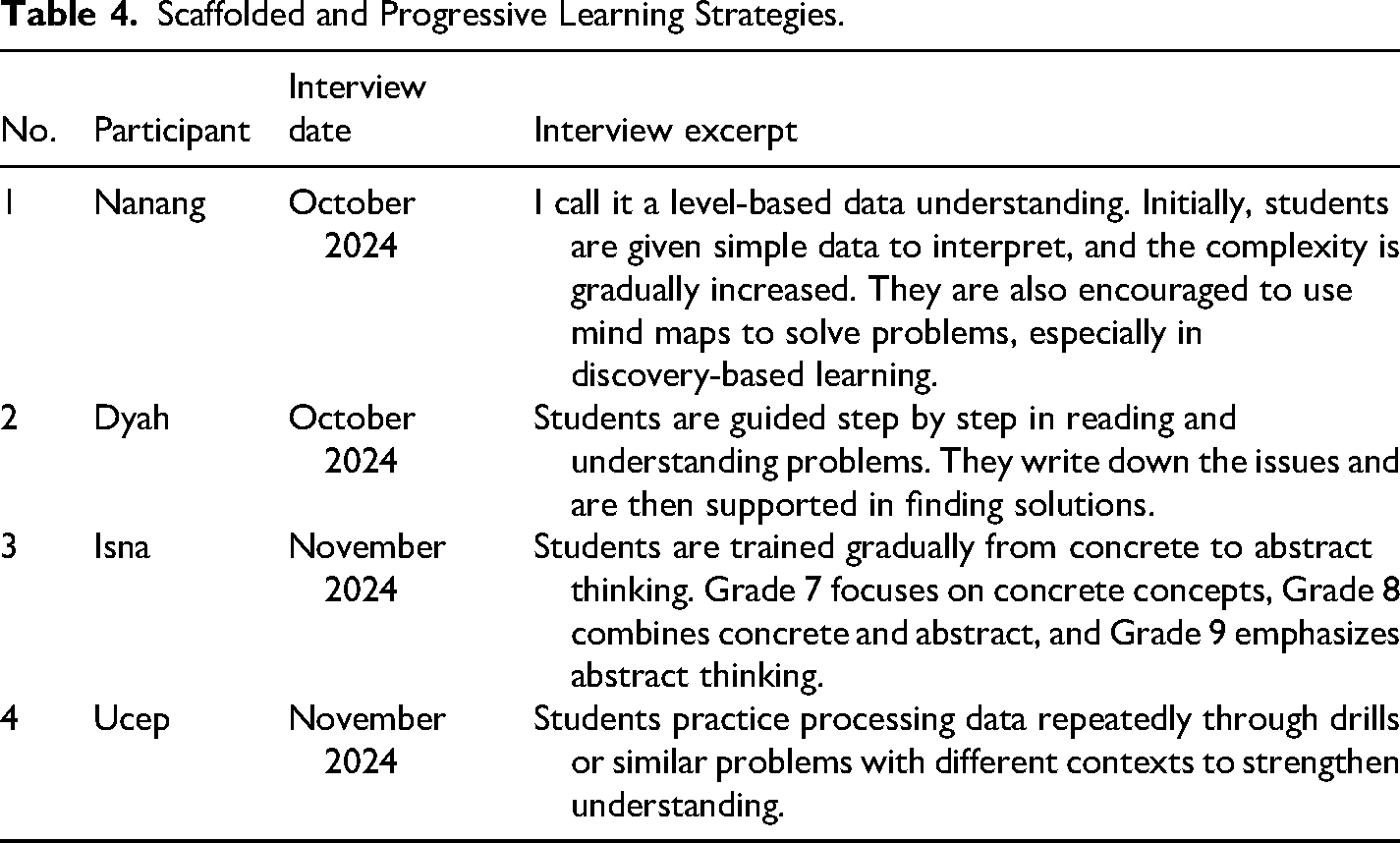
The interview data highlight a shared emphasis on gradual scaffolding to develop students’ understanding and critical thinking (Butcher et al., 2023; García-Carmona, 2025). Participants consistently describe structured progression, beginning with simple or concrete tasks and advancing toward more complex and abstract thinking. Nanang and Isna emphasize level-based development, where data complexity and cognitive demands increase across learning stages and grade levels. Dyah underscores guided instruction, helping students systematically identify problems before moving toward solutions, which supports comprehension and reduces cognitive overload. Ucep highlights repeated practice through drills and varied contexts to strengthen data-processing skills and transfer learning. The use of tools such as mind maps further supports students in organizing ideas and problem-solving, particularly within discovery-based learning (Pinar et al., 2025; Vincent-Lancrin, 2023). Overall, these findings suggest that critical thinking is fostered through intentional sequencing, repetition, and gradual abstraction, ensuring students build confidence and competence over time. Such approaches position learning as a developmental process rather than an immediate outcome.
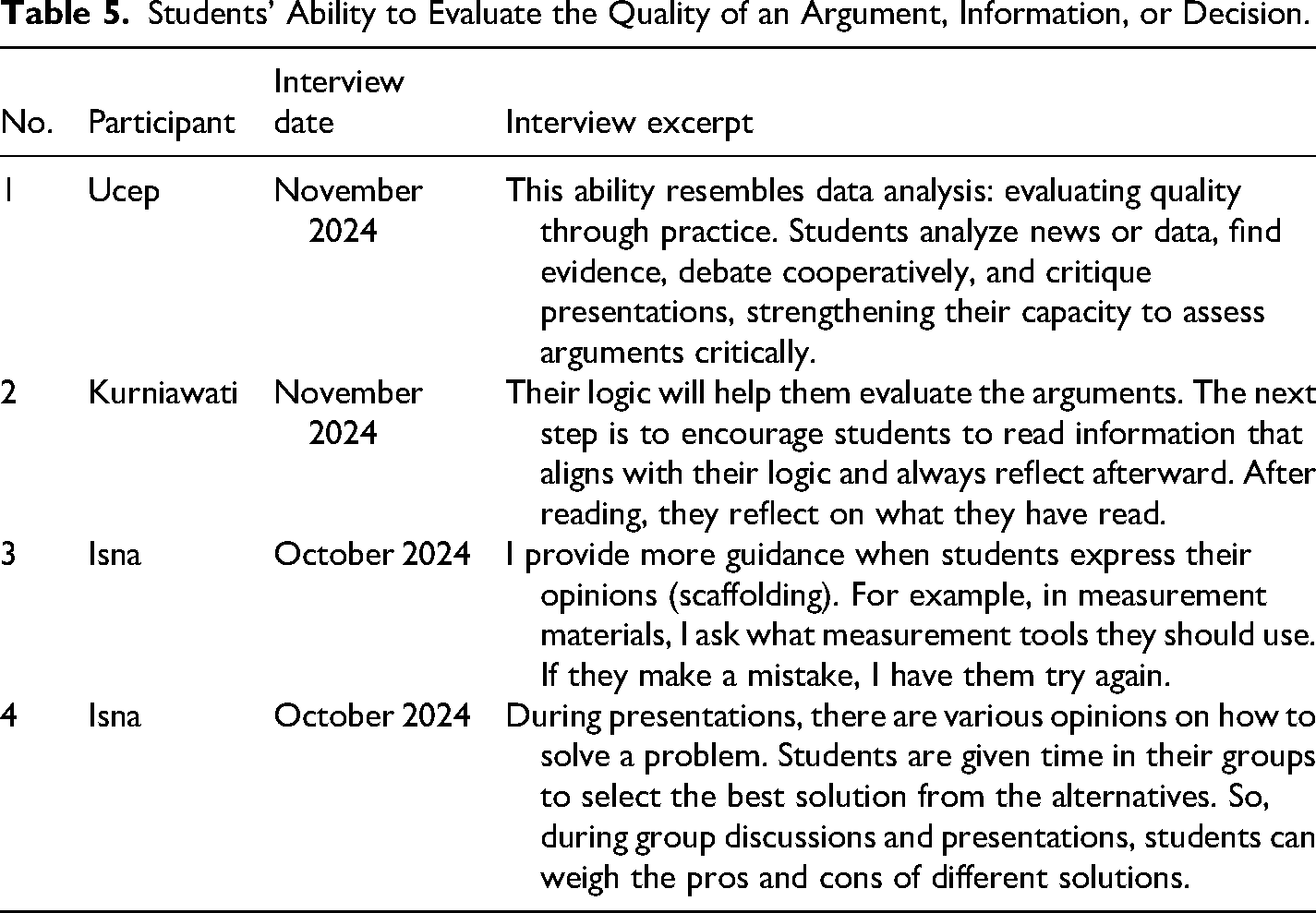
Students’ Ability to Evaluate the Quality of an Argument, Information, or Decision.
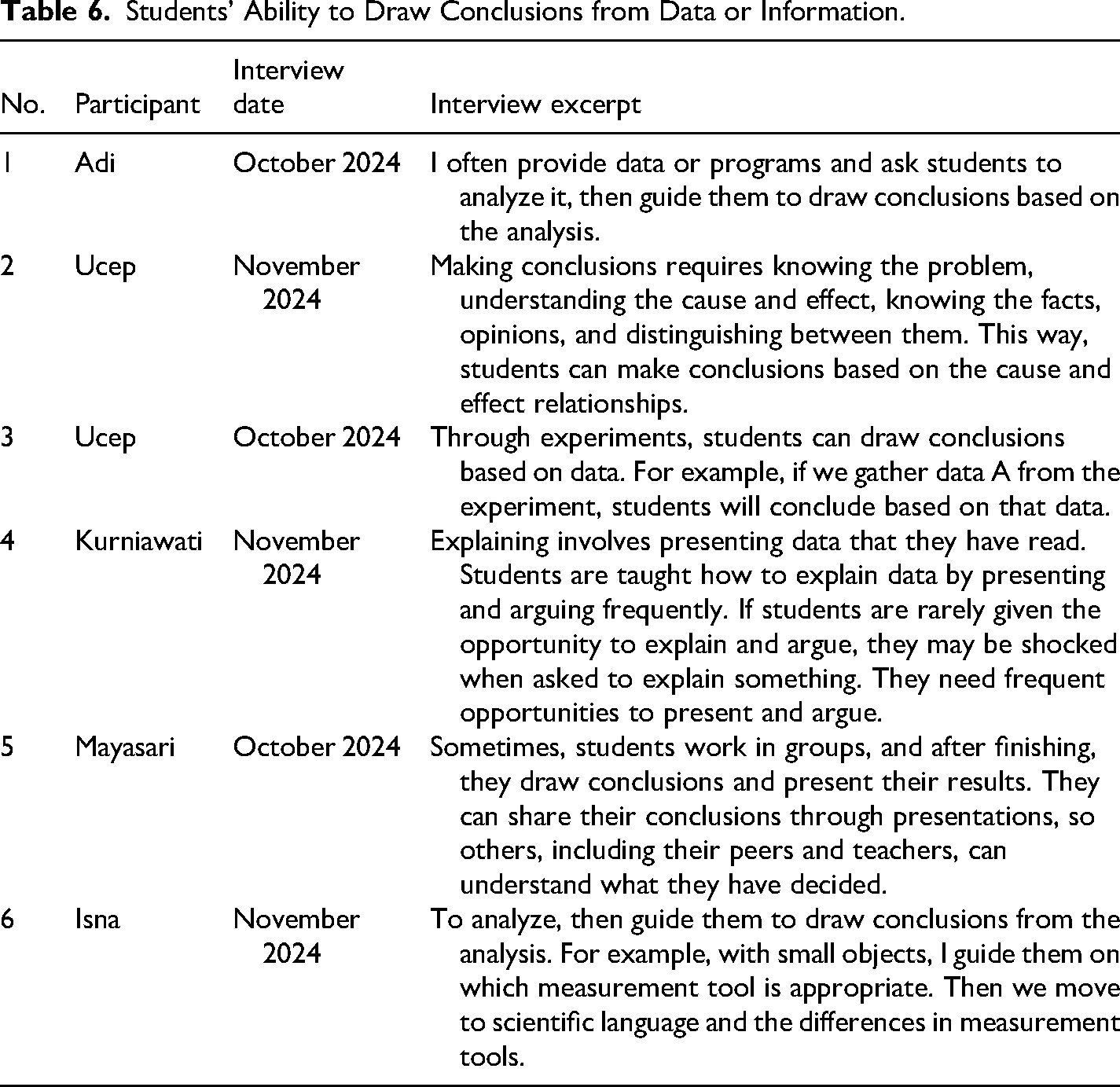
Students’ Ability to Draw Conclusions from Data or Information.
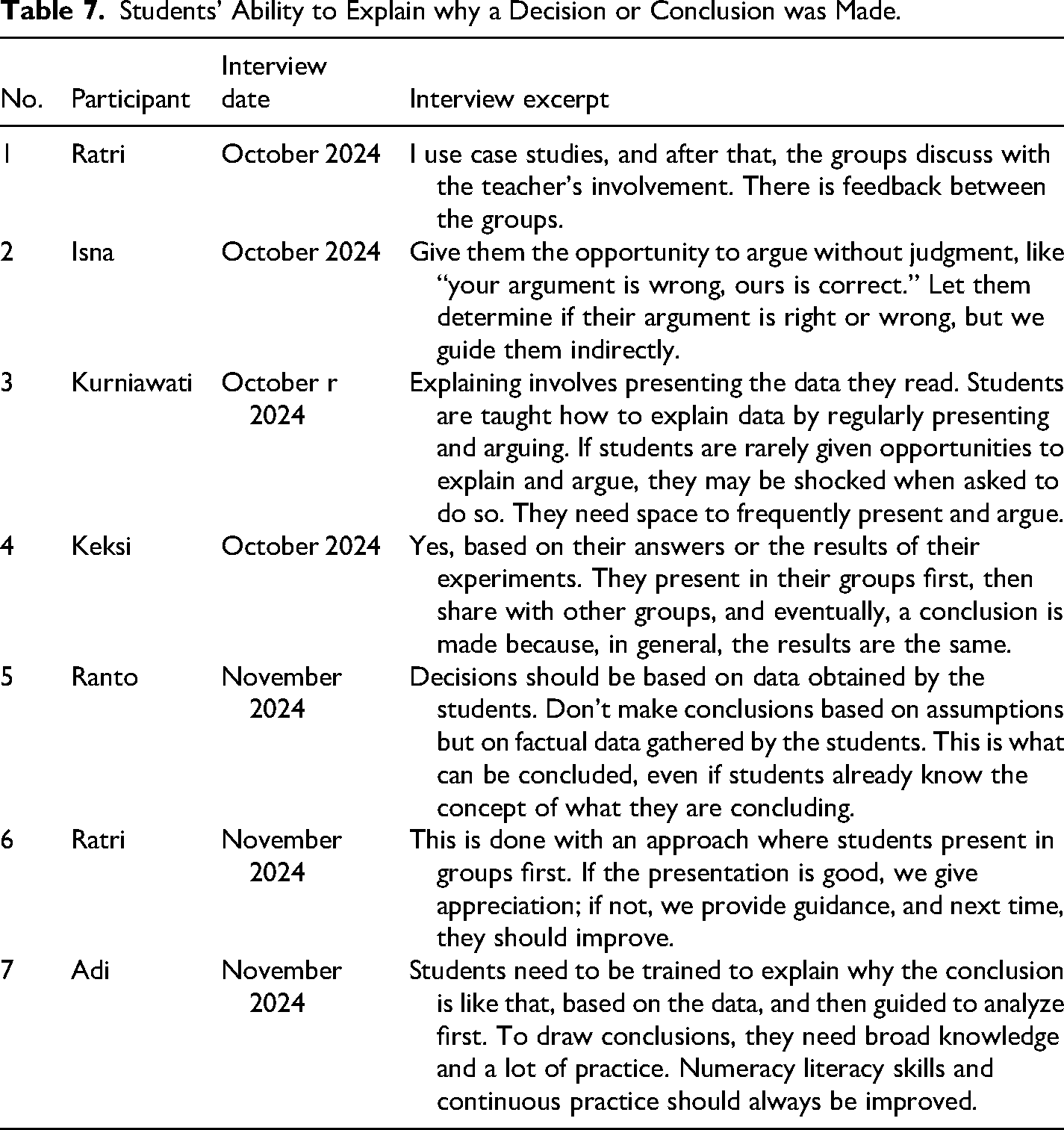
Students’ Ability to Explain why a Decision or Conclusion was Made.
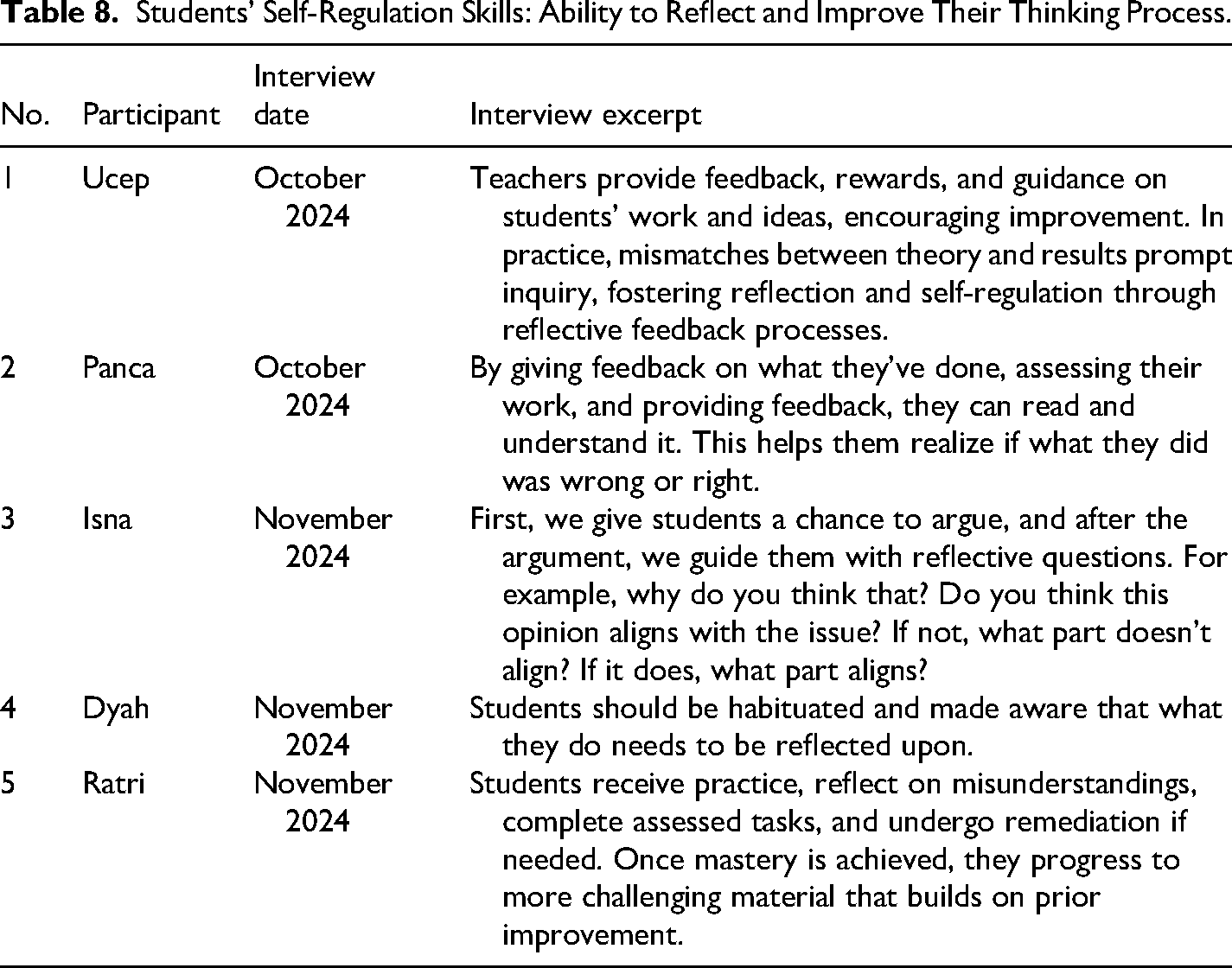
Students’ Self-Regulation Skills: Ability to Reflect and Improve Their Thinking Process.
Classroom observations showed that teachers implemented scaffolded and progressive instructional strategies intended to support students’ reasoning and understanding processes. In several lessons, teachers introduced students to simple data interpretation tasks before gradually increasing the complexity of the information and problems presented. Students were observed using mind maps and visual organizers to connect ideas and identify possible solutions during discovery-based learning activities. Teachers also guided students step by step in reading, identifying, and analyzing problems before asking them to formulate responses or propose solutions. In some classrooms, learning activities were adjusted according to grade level, with lower grades focusing more on concrete concepts and higher grades engaging with increasingly abstract thinking tasks. Repetitive exercises and contextual problem variations were also observed as part of classroom practice to strengthen students’ understanding of data interpretation and problem-solving processes. These observations reflect instructional practices intended to facilitate critical thinking development, although they do not provide direct evidence of improvements in students’ critical thinking outcomes.
Students’ Ability to Evaluate the Quality of an Argument, Information, or Decision
The findings highlight that teachers use techniques such as exercises, discussions, and debates to develop students’ skills in evaluating arguments (Vincent-Lancrin, 2023). As seen in Table 5. The teacher participants argued that:
The interview excerpts illustrate how critical thinking is developed through evaluation, reflection, and guided practice (Firdaus & Wilujeng, 2018). Ucep emphasizes that critical thinking mirrors data analysis, requiring students to assess information quality, identify evidence, and critique arguments through debate and presentations. This evaluative process is reinforced by Kurniawati, who highlights the role of logical reasoning and reflective reading, encouraging students to align information with logic and reflect after engagement. Isna underscores the importance of scaffolding, particularly when students express opinions or apply concepts, such as choosing appropriate measurement tools. Guidance and opportunities to retry after mistakes support deeper understanding (Leś & Moroz, 2021). Additionally, collaborative activities, such as group discussions and presentations, enable students to compare alternative solutions and weigh their strengths and weaknesses. These practices show that critical thinking is fostered through iterative reflection, structured support, and social interaction, allowing students to refine judgment, strengthen reasoning, and make informed decisions based on evidence and logical evaluation.
Classroom observations revealed that teachers implemented instructional activities intended to support students’ evaluative and reflective thinking processes. In several lessons, students were observed analyzing news articles, interpreting data, and identifying supporting evidence during group discussions. Teachers encouraged students to compare arguments, critique peers’ presentations, and discuss the strengths and weaknesses of alternative solutions collaboratively. Reflection activities were also incorporated after reading or discussion tasks, where students were guided to reconsider information and connect it with logical reasoning. In some classrooms, teachers provided scaffolding by giving prompts and follow-up questions when students experienced difficulty expressing opinions or selecting appropriate problem-solving strategies. During presentations, students were observed negotiating and evaluating multiple possible solutions before deciding on the most appropriate response within their groups. These observations reflect classroom practices intended to encourage argument evaluation, reasoning, and reflective thinking, although they do not constitute direct evidence of students’ critical thinking achievement or instructional effectiveness.
Students’ Ability to Draw Conclusions from Data or Information
Teaching logical thinking frameworks, guiding students through open-ended questions, facilitating group discussions, teaching the construction of arguments and evidence, providing feedback, and fostering communication skills are key steps in helping students draw conclusions (Derman & Bezen, 2026; Paul & Elder, 2007). Below are quotes from teachers illustrating these practices (see Table 6):
The interview excerpts demonstrate that drawing conclusions is a central component of developing students’ critical thinking, closely linked to data analysis, experimentation, and explanation (Derman & Bezen, 2026). Participants consistently describe instructional practices where students analyze data, programs, or experimental results and are then guided to formulate conclusions based on evidence. Adi and Ucep emphasize analytical reasoning, particularly understanding problems, identifying cause–effect relationships, and distinguishing facts from opinions to support valid conclusions. Experimental activities further strengthen this skill by grounding conclusions in observable data. Kurniawati highlights explanation and argumentation as essential processes, noting that frequent opportunities to present and argue help students articulate reasoning confidently. Collaborative learning also plays a key role, as Mayasari notes that group work followed by presentations allows students to communicate and justify shared conclusions (Guo et al., 2024). Isna underscores scaffolding, guiding students from concrete tasks, such as selecting measurement tools, toward scientific language and abstraction. Overall, the findings suggest that critical thinking is fostered through structured analysis, guided reasoning, repeated explanation, and evidence-based conclusion drawing.
Classroom observations indicated that teachers implemented instructional activities intended to support students’ abilities to analyze information, draw conclusions, and communicate their reasoning. During lessons, students were observed analyzing data, experimental results, and contextual problems before being guided to formulate conclusions based on evidence and cause-and-effect relationships. In several science activities, teachers encouraged students to distinguish between facts and opinions when interpreting information. Experimental activities were also used to help students generate conclusions from observed data and measurements. Teachers frequently provided scaffolding through guiding questions and explanations, particularly when students selected appropriate measurement tools or interpreted scientific concepts using academic language. In addition, students were given opportunities to present group findings and explain conclusions during classroom discussions and presentations. Teachers encouraged students to argue, justify their answers, and respond to peer feedback to strengthen communication and reasoning processes. These observations reflect classroom practices intended to facilitate analytical thinking, explanation, and evidence-based reasoning, rather than direct evidence of students’ critical thinking achievement or instructional effectiveness.
Students’ Ability to Explain why a Decision or Conclusion was Made (Explanation)
Teachers employ strategies such as case studies and class discussions to enhance students’ ability to justify their decisions and conclusions. Teachers encourage students to support their decisions with evidence or data, emphasizing the importance of logical argumentation (Kpazai, 2015). The ability to argue effectively allows students to think critically and provide strong reasons for the decisions they make. Below are teacher excerpts reflecting this approach (see Table 7):
The interview data emphasize that critical thinking is developed through discussion, argumentation, presentation, and evidence-based decision making (Derman & Bezen, 2026). Participants consistently describe interactive learning environments where students analyze case studies or experimental results, discuss findings collaboratively, and receive teacher feedback. Ratri and Keksi highlight group discussions and presentations as spaces for sharing ideas and refining conclusions through peer interaction. Isna and Kurniawati stress the importance of allowing students to argue freely without direct judgment, encouraging self-evaluation supported by indirect guidance. This approach builds confidence and reflective reasoning (Guo et al., 2024). Several participants, particularly Ranto and Adi, emphasize that conclusions must be grounded in factual data rather than assumptions, reinforcing scientific and logical reasoning. Regular opportunities to present, argue, and explain data help students articulate cause–effect relationships and justify conclusions. Appreciation, guidance, and repeated practice further support improvement. Overall, the findings show that critical thinking is fostered through structured dialogue, data-based reasoning, continuous practice, and a supportive, nonjudgmental learning climate.
Classroom observations demonstrated that teachers implemented discussion-based and collaborative learning activities intended to support students’ reasoning, explanation, and evidence-based argumentation skills. In several lessons, teachers used case studies and group discussions to encourage students to analyze problems and exchange ideas with peers. Students were observed presenting experimental results or discussion outcomes within groups before sharing them with the whole class. Teachers facilitated feedback sessions between groups and encouraged students to respond to differing opinions without direct judgment. Instead of immediately labeling answers as correct or incorrect, teachers provided indirect guidance through questioning and prompts to help students reconsider their reasoning. During presentations, students were encouraged to explain conclusions based on factual data gathered from observations or experiments rather than assumptions. Teachers also provided appreciation and constructive guidance to improve students’ confidence and communication skills. These observations reflect classroom practices intended to encourage explanation, argumentation, collaboration, and reflective reasoning processes, rather than direct evidence of students’ critical thinking achievement or instructional effectiveness.
Self-Regulation Skills or the Ability to Reflect and Improve One's Own Thinking Process
Teachers can develop students’ self-regulation skills by providing constructive feedback. The feedback should focus not only on the final results but also on the thinking process to motivate students to evaluate their steps and think about how to improve them (Essalih et al., 2025). As seen in Table 8. The participants reported that:
The interview excerpts highlight reflection and feedback as key mechanisms for developing students’ critical thinking and self-regulation (Wang et al., 2017). Participants consistently emphasize formative feedback, where teachers assess students’ work and provide guidance that helps learners recognize strengths and errors. Ucep and Panca stress that feedback enables students to compare theory with practice, prompting inquiry when discrepancies arise and supporting awareness of right or wrong reasoning. Isna underscores reflective questioning after students argue, using probing questions to help learners evaluate the alignment of their opinions with the issue. Dyah further emphasizes habituation, suggesting that reflection should become a routine part of students’ learning behavior. Ratri highlights an iterative learning cycle in which students practice, receive assessment, engage in remediation when necessary, and then progress to more challenging material once mastery is achieved. Collectively, these findings show that critical thinking is fostered through structured reflection, guided feedback, and continuous improvement, enabling students to monitor their learning, refine understanding, and develop self-regulated learning skills over time (Derman & Bezen, 2026; Paul & Elder, 2007).
Classroom observations reinforced that teachers implemented reflective and feedback-oriented instructional practices intended to support students’ self-regulation and awareness of their own learning processes. During classroom activities, teachers were observed providing feedback, guidance, and appreciation regarding students’ assignments, arguments, and problem-solving approaches. In several lessons, teachers used reflective questioning strategies to encourage students to reconsider their reasoning and evaluate whether their responses aligned with the discussed problems. Students were also guided to identify mistakes, reflect on misunderstandings, and revise their work based on teacher feedback. Some classrooms incorporated remediation activities for students who had not yet demonstrated understanding before progressing to more complex material. Teachers also encouraged students to compare theoretical concepts with experimental or task results to stimulate further inquiry and reflection. These observations reflect instructional practices intended to foster reflective thinking, self-monitoring, and continuous improvement in learning processes, rather than direct evidence of students’ self-regulation abilities or critical thinking achievement.
Conclusion
This study explored junior high school science teachers’ reported practices and classroom activities intended to foster students’ critical thinking skills within the framework proposed by Facione (1990). The findings demonstrate that teachers consistently emphasized student-centered and inquiry-oriented instructional approaches, including PBL, PjBL, inquiry learning, and discovery learning. Across interviews and classroom observations, teachers described and enacted instructional practices intended to support students’ abilities to interpret information, analyze data, evaluate arguments, draw evidence-based conclusions, explain reasoning, and engage in self-regulation. Critical thinking development was approached as a gradual and scaffolded process in which students were guided from concrete understanding toward more abstract reasoning through repeated practice, questioning, discussion, experimentation, reflection, and collaborative learning activities.
The findings further indicate that teachers viewed contextual learning and authentic problems as important tools for encouraging student engagement in reasoning and evidence-based discussion. Classroom interactions frequently involved argumentation, presentations, feedback, reflective questioning, and opportunities for students to justify conclusions using data rather than assumptions. Teachers also highlighted the importance of scaffolding, differentiated instruction, and supportive classroom climates that allowed students to express opinions without fear of immediate judgment. In addition, reflective feedback and remediation practices were described as important strategies for promoting self-regulation and continuous improvement in students’ thinking processes.
Implications
This study contributes to the growing body of literature on critical thinking development in science education, particularly within the Indonesian junior high school context. Practically, the findings suggest that critical thinking may be supported through instructional environments that emphasize active participation, collaborative inquiry, evidence-based reasoning, and structured reflection. The study also highlights the importance of teacher scaffolding, contextual learning materials, and gradual progression from simple to complex reasoning tasks. For policymakers and school leaders, the findings imply the need for sustained professional development programs that strengthen teachers’ pedagogical knowledge related to critical thinking instruction, classroom questioning strategies, and reflective learning practices. Curriculum developers may also consider integrating more authentic and inquiry-based activities that allow students to engage in analysis, argumentation, and scientific reasoning.
Study Limitations
Several limitations should be acknowledged. First, the findings are primarily based on teachers’ narratives and classroom observations conducted over a limited period from October to November 2024. Although observations supported the interview data, the study did not directly measure students’ critical thinking achievement or learning outcomes through assessments or performance tasks. Second, the study focused only on teachers’ perspectives and instructional practices; students’ perspectives and experiences were not included. Third, the qualitative narrative inquiry design emphasizes contextual understanding rather than broad generalization, meaning that the findings may not fully represent all science classrooms or educational contexts in Indonesia.
Future Studies
Future research should incorporate multiple data sources, including student interviews, classroom artifacts, and direct assessments of critical thinking skills, to provide a more comprehensive understanding of instructional effectiveness. Longitudinal studies could also examine how critical thinking develops over time across different grade levels. In addition, future studies may explore the relationship between teachers’ professional development, school culture, and students’ critical thinking outcomes using mixed-method or comparative research designs. Further investigation into the integration of technology, digital literacy, and culturally responsive pedagogy in promoting critical thinking in science education would also provide valuable insights for educational practice and policy development.
Footnotes
Acknowledgments
The authors would like to sincerely thank all participants whose reflections and contributions made this study possible. The authors are deeply grateful to Professor Handoyo Puji Widodo for his thorough guidance, enlightening feedback, and insightful comments on earlier drafts of this article and Reni Puspitasari Dwi Lestariyana for helping us with data analysis. Our appreciation also goes to the PERIISAI Center for Social Science Research for providing an intensive mentorship program that greatly supported the development of this manuscript.

Ethical Considerations
This study received ethics' approval from the participants involved in this study.
Consent to Participate
This study provided appropriate informed consents.
Consent for Publication
We hereby grant consent for the publication and dissemination of research article in understanding that the material will be publish and may be reproduced, distributed, and used for academic and professional purposes.
Funding
The author(s) disclosed receipt of the following financial support for the research, authorship, and/or publication of this article: This research was supported by Universitas Sebelas Maret, Indonesia, through an institutional financing guarantee scheme for academic staff. The funding was granted under the Financing Guarantee Letter No. 1874/UN27/KP/2023, covering the doctoral study period from August 2023 to July 2026, in accordance with the applicable institutional regulations and funding provisions of Universitas Sebelas Maret.
Declaration of Conflicting Interests
The author(s) declared no potential conflicts of interest with respect to the research, authorship, and/or publication of this article.
Data Availability
The authors confirm that the data supporting the findings of this study are available within the article.