






Abstract
This study examined the relationship between parenting styles and academic procrastination (AP), with social media usage (SMU) and fear of failure (FoF) as serial mediators. Data from 327 participants aged 18–22 were analyzed using SPSS 27 and PROCESS Macro Model 6. Authoritative parenting negatively predicted AP, whereas authoritarian and permissive parenting positively predicted AP. Significant indirect effects emerged for authoritative and authoritarian parenting through SMU and FoF, while permissive parenting showed no significant mediation effect. Findings highlight the importance of behavioral and emotional mechanisms in understanding and reducing AP.
Introduction
Procrastination is the deliberate and unnecessary delay in completing a planned occupation (Rahimi & Hall, 2021). It can occur in a variety of life situations, such as housekeeping, shopping, and doctor's appointments. According to researchers, 20% of Americans habitually procrastinate on daily duties. Procrastination is much more common in educational settings. For example, Peixoto et al. (2021) observed that 46% of college students frequently postpone academic activities, whereas 95% procrastinate at least once. Academic procrastination (AP), defined as the voluntary delay of academic tasks despite awareness of potential negative outcomes, is a common behavior among college students (Steel, 2007; Svartdal et al., 2020). AP remains a popular issue in educational research (Rozental et al., 2022). The phenomenon is associated with poorer academic outcomes, higher stress levels, and reduced psychological well-being (Albulescu et al., 2024; Bahl et al., 2025; Bu et al., 2021; Faure-Carvallo et al., 2025; Sparfeldt & Schwabe, 2024). Existing research indicates that AP is shaped by various psychological and environmental factors, including self-regulation abilities, parenting approaches, fear of failure (FoF), and patterns of social media usage (SMU) (Steel & Klingsieck, 2016; Svartdal et al., 2020; Wolters et al., 2017).
Adverse academic results have been linked to this behavior, with students suffering from lower performance (Goroshit, 2018), increased stress, and less psychological well-being (Ramanjaneyulu & Jalandharachari, 2024; Tice & Baumeister, 1997). As a result, AP has attracted considerable interest from both educational and psychological researchers.
Traditionally, procrastination has been viewed through the lens of self-regulation failure: inability to control one's thoughts, emotions, and behaviors when pursuing goals (Steel, 2007; Sirois & Pychyl, 2013). More recently, however, theorists have started to conceptualize procrastination as a multidimensional construct, with emphasis placed on the ways in which multiple factors (e.g., individual, emotional, and contextual) interact dynamically within individuals (Sirois & Kitner, 2015). Factors in one's early environment, particularly parenting, can play a major role in the development of one's self-regulation abilities and achievement-related behaviors (Schraw et al., 2007).
Authoritative, authoritarian, and permissive are three primary parenting styles defined by varying levels of involvement and control (Baumrind, 1991). Authoritative parenting is linked to positive outcomes that include higher self-efficacy, more effective emotional regulation, and less procrastination (Darling & Steinberg, 1993; Woo & Yeo, 2019). By contrast, authoritarian parenting has been associated with developing anxiety, fear of evaluation, and maladaptive coping strategies that are likely to result in procrastination (Soenens & Vansteenkiste, 2010). Although permissive parenting is associated with higher levels of responsiveness and lower levels of control, it actually undermines a child's ability to develop discipline or self-regulation and thus contributes to procrastination (Baumrind, 1991). Although the associations between parenting style and AP have been well-documented, the mechanisms through which parenting style impacts AP are not well understood.
SMU affects people's daily lives through their routines as well as how they connect with academic assignments (Reinecke et al., 2018). Procrastination can develop over time in response to several different factors; these are likely to include both the rapid growth of technology and how quickly the culture of the environment is changing. Social networks represent one type of technology that allows individuals to maintain contact and establish connections through real-time methods of communicating with one another (e.g., texting and chatting) (Landa-Blanco et al., 2024). SMA (social media addiction) refers to a cluster of cognitive and behavioral symptoms that result from excessive social media use and have been linked to negative outcomes (Davis, 2001). Although social media provides a means of communication and exchanging information, excessive use has been shown to lead to distractions from important tasks (e.g., studying), decreased concentration (Andreassen, 2015), difficulty managing time (Kuss & Griffiths, 2017), and difficulty achieving one's goals (Meier et al., 2016). Multiple studies have demonstrated a significant positive correlation between SMU and AP (Bao & Li, 2025; Kurker & Surucu, 2024; Rozgonjuk et al., 2018; Wang et al., 2023), implying that individuals who engage in digital activities may use social media as an alternative way of connecting with others while avoiding important tasks, such as completing schoolwork.
Another important psychological factor implicated in procrastination is FoF. FoF refers to the tendency to avoid achievement-related tasks due to concerns about negative evaluation, loss of self-worth, or perceived incompetence (Conroy et al., 2002). Researchers’ observation highlights irrational FoF as a main cause of procrastination (Aldhi et al., 2026; Sudirman et al., 2023; Tan & Prihadi, 2022). For instance, Solomon and Rothblum (1984) showed that 49.4% of the variance in a questionnaire measuring the reasons given for procrastinating was explained by a factor labeled FoF. Furthermore, according to a frequency analysis, 6.3%–14.3% of individuals cited FoF as a major cause of procrastination. According to one study, over 20% of participants cited “were worried that you would get a bad grade” and “were concerned that you wouldn't meet your own expectations” as the primary causes of procrastination (Kachgal et al., 2001). High FoF individuals are more inclined to avoid, including procrastinate, to maintain their self-esteem (Haghbin et al., 2012; Sagar & Stoeber, 2009). In addition, FoF is a mediating variable between environmental factors and maladaptive academic behaviors, indicating its central function as an emotion-based mediating variable (Soysa & Weiss, 2014). Growing up in an environment in which a child has experienced excessive criticism, conditional approval, or high expectations will increase the likelihood that the child will develop a FoF (Elliot & Thrash, 2004).
While earlier work has focused on the relationships between parenting approaches, social networking sites, FoF, and AP. Very little research has been conducted using an integrative framework to identify how these environmental, behavioral, and emotional factors interact with each other. A serial mediation model allows for an improved understanding of the underlying processes through which parenting styles influence both emotional tendencies (FoF) and behavioral patterns (SMU), thus influencing academic achievement.
Therefore, the present study aims to develop and empirically test a serial mediation model that examines the relationship between parenting styles and AP, with social media use and fear of failure serving as mediators. By integrating these variables into a unified framework, this study seeks to extend the existing literature by explaining the indirect pathways through which early environmental influences contribute to maladaptive academic behaviors (Figure 1).
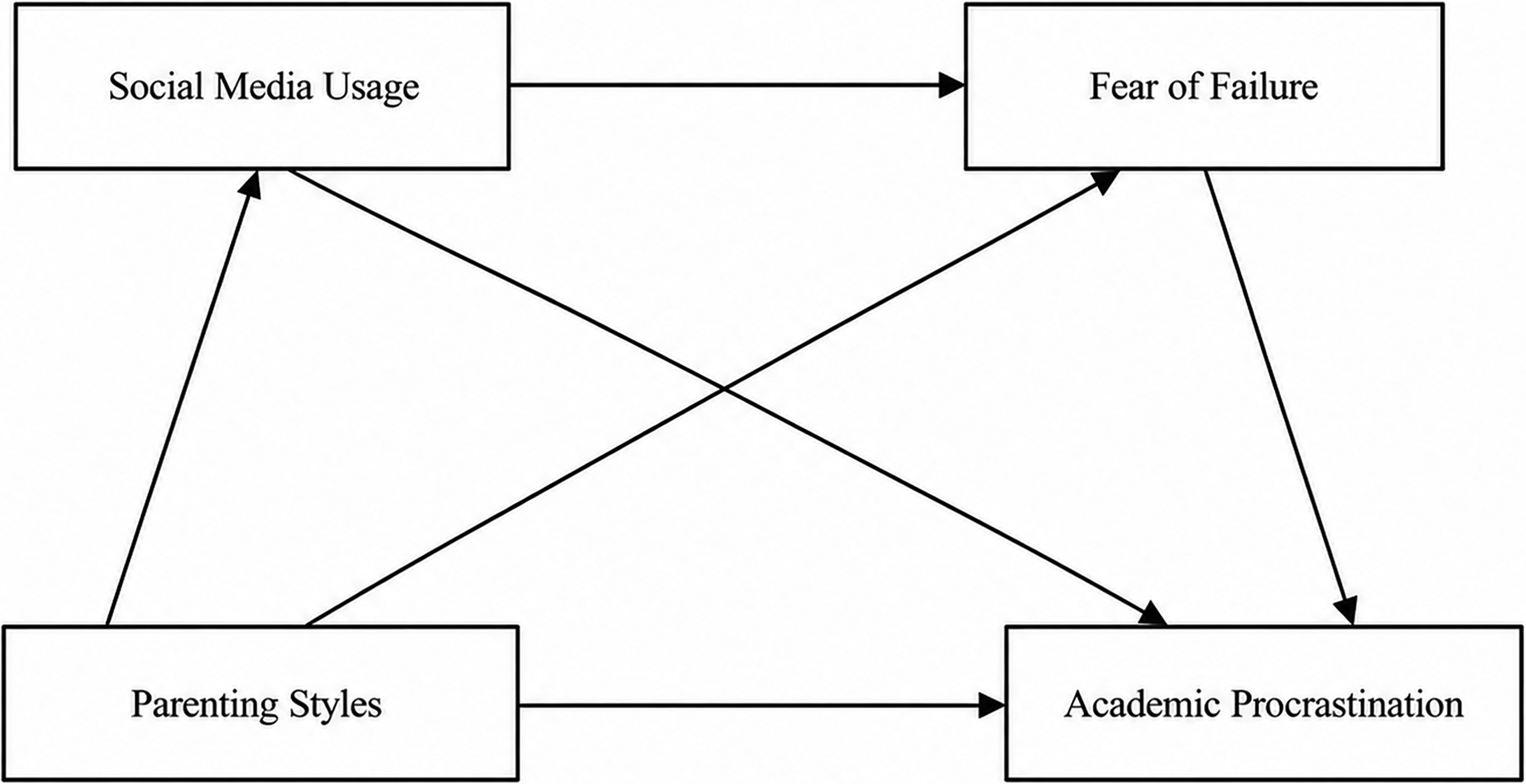
Graphical representation of the proposed model.
Hypothesis
Method
Research Design
In the current study, researchers used a quantitative framework and a cross-sectional, correlational research design, which allows for examining relationships between variables in a non-experimental manner. Specifically, the data were collected from participants at only one point in time (Setia & Singh, 2016). This design is well-suited for investigating indirect relationships using serial mediation models that assess how predictor variables affect outcome variables through a sequence of mediators. However, due to the cross-sectional nature of the data, a causal relationship cannot be established.
Participants
This research was done using a correlational design to help gather information about the undergraduate population at Guru Jambheshwar University of Science and Technology. In total, there were
Instruments
Data Analysis
Data from participants were managed and recorded with Microsoft Excel before being analyzed with IBM SPSS Statistics version 27. These included descriptive statistics (i.e., means, standard deviations, and frequencies) and Pearson's correlation analysis to assess basic relationships between study variables. To test the serial mediation model, the PROCESS macro for SPSS developed by Andrew F. Hayes (Version 4.0) (specifically model 6) was used. This approach models multiple mediators in the specified order following the causal chain as mediators of the effects of an independent variable on a dependent variable through the mediators in the causal chain (mediator 1, mediator 2, etc.). An indirect effect is deemed statistically significant if the bootstrap 95% confidence interval does not encompass zero; 5,000 bootstrap resamples were performed to estimate the indirect effects and their respective 95% confidence intervals.
Result
Prior to analysis, we must first examine our variables to determine if mediation is appropriate. The assumptions for multiple regression also apply to mediation analysis in the present study. Assumptions of linearity, normality, and homoscedasticity were examined. The results and residual plots supported the assumptions of homoscedasticity and linearity.
Descriptive statistics were computed to examine the central tendency and dispersion of the study variables. The mean and standard deviation values, along with the correlation values for all variables, are presented in Table 1. The results indicated that AP had a mean score of 70.07 (SD = 18.58), suggesting a moderate level among participants. SMU (M = 73.02, SD = 16.69) and FoF (M = 76.24, SD = 14.53) were also moderate to high. Among parenting styles, authoritative parenting showed the highest mean (M = 33.62, SD = 6.99), followed by permissive (M = 30.80, SD = 5.75) and authoritarian parenting (M = 30.39, SD = 6.44). Furthermore, skewness and kurtosis values indicated that the data were normally distributed.
Descriptive Statistics and Correlational Analysis.
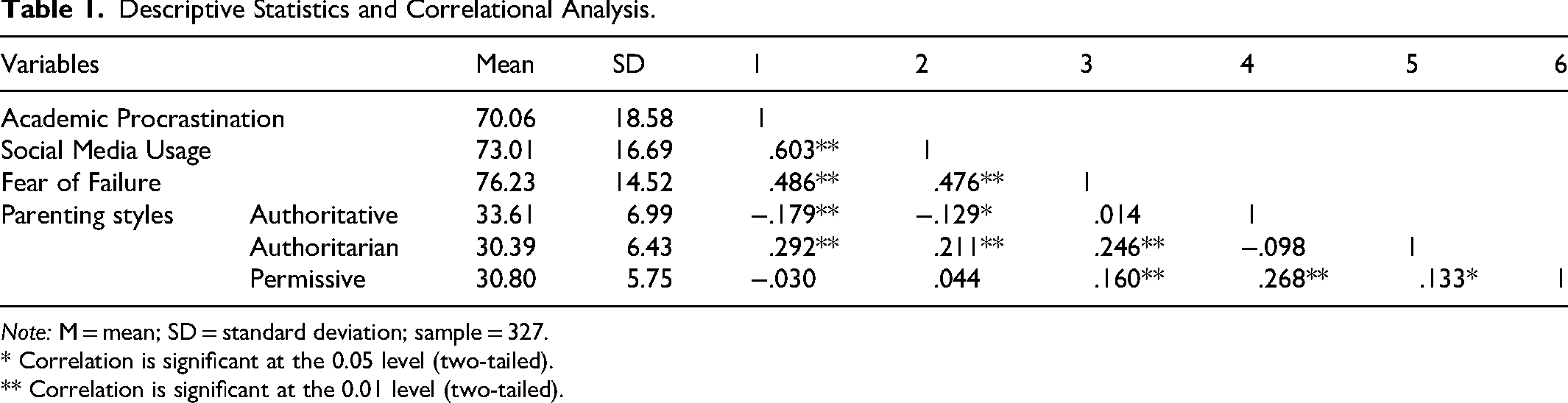
Note: M = mean; SD = standard deviation; sample = 327.
* Correlation is significant at the 0.05 level (two-tailed).
** Correlation is significant at the 0.01 level (two-tailed).
Pearson correlation analysis was conducted to examine the relationships among the study variables. The results of the correlation analysis revealed that AP was significantly (positive) correlated with SMU (r = .603, **p < .01), Similarly with FoF (r = .486, **p < .01), with Authoritarian parenting (r = .292, **p < .01), and a significant negative correlation was found between Authoritative parenting and AP (r = −.179, **p < .01). Furthermore, SMU showed a significant positive relationship with FoF (r = .476, **p < .01), similar with Authoritarian parenting (r = .211, **p < .01), and a negative but significant correlation with Authoritative parenting (r = −.129, *p < .05). Moreover, results indicated that FoF was positively associated with both parenting styles Authoritarian (r = .246, **p < .05), and Permissive (r = .160, **p < .05). Overall, the correlation results indicate significant relationships among the study variables, providing a basis for further mediation analysis.
Mediation Analysis Results
A serial mediation analysis with bias-corrected percentile bootstrap estimation was conducted using PROCESS Model 6 (Hayes, 2022) to examine the effect of Authoritative Parenting on AP through SMU and FOF. As shown in Table 2 and Figure 2, the analysis of standardized path coefficients showed that authoritative parenting significantly predicted (negatively) SMU (β = −0.3078, p < .05). SMU, in turn, significantly predicted FoF (β = 0.4225, p < .001) and AP (β = 0.5102, p < .001). Additionally, FoF significantly predicted AP (β = 0.3453, p < .001). However, the direct effect of authoritative parenting on FoF was not significant (β = 0.1596, p = .1184).
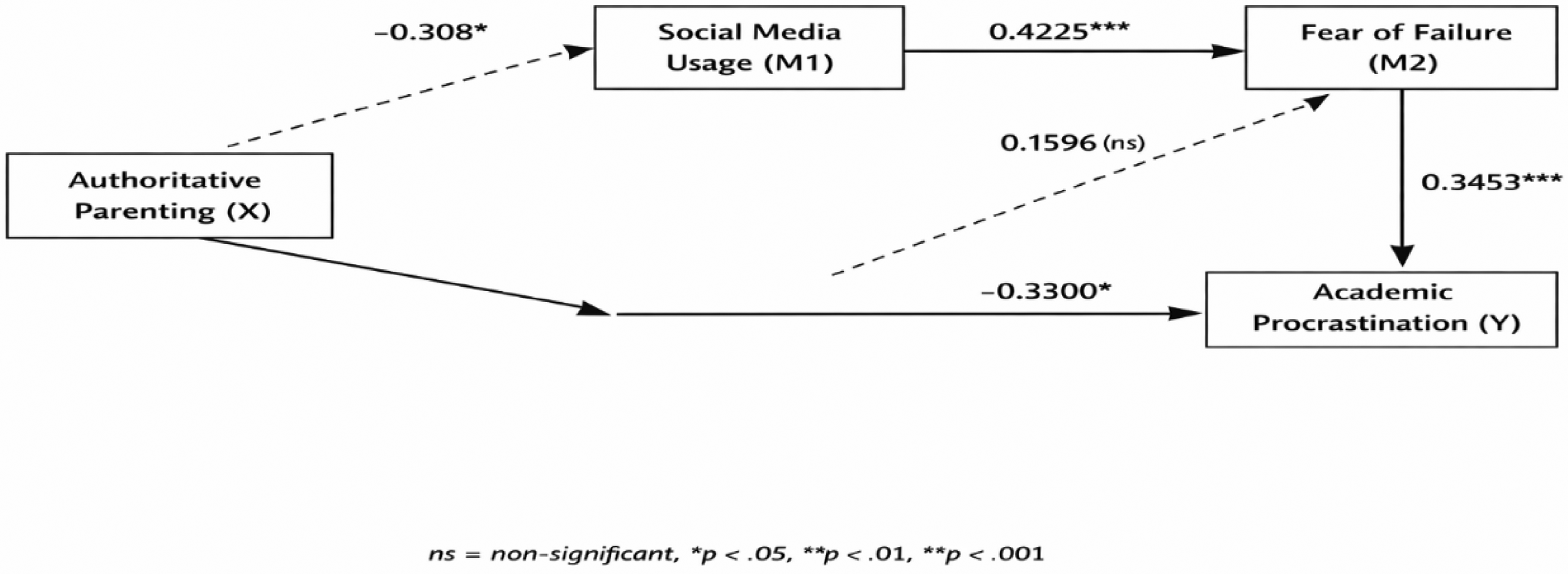
Serial mediation diagram (authoritative parenting model, social media usage, fear of failure, and academic procrastination).
Regression Analysis (PROCESS Model 6 – Authoritative Parenting, N = 327).
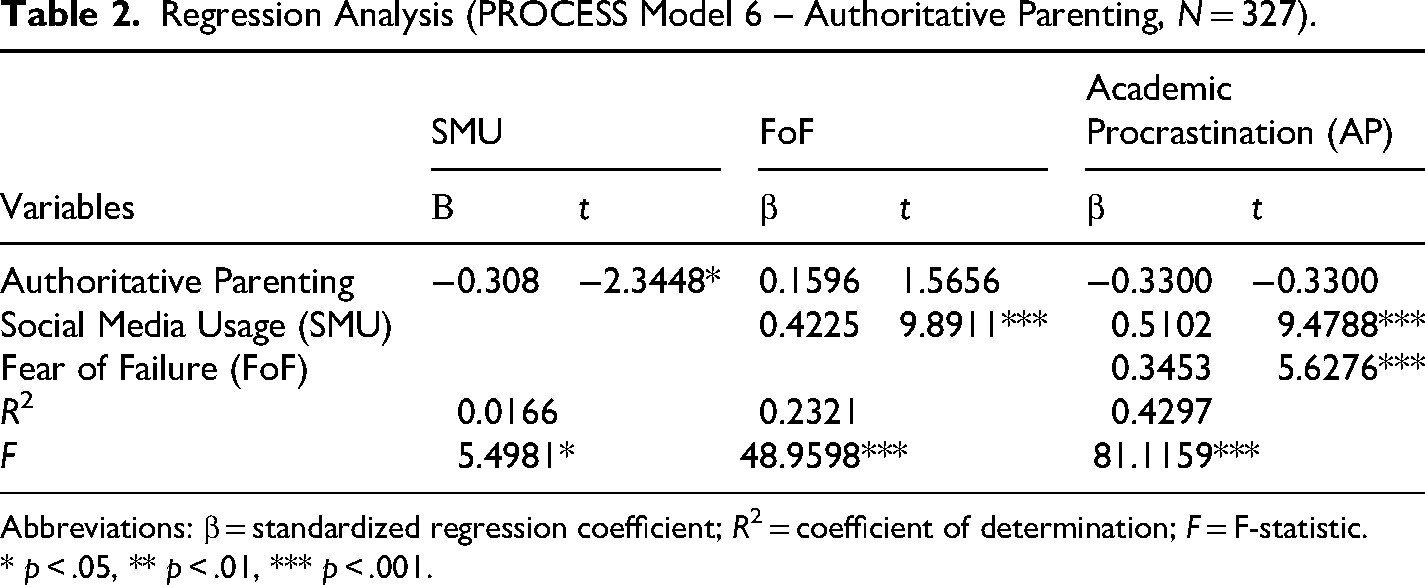
Abbreviations: β = standardized regression coefficient; R2 = coefficient of determination; F = F-statistic.
* p < .05, ** p < .01, *** p < .001.
The indirect effects were examined using bootstrapping (5,000 samples). The results shown in Table 3 indicate that the indirect effect of authoritative parenting on AP through SMU was significant (β = −0.1570, 95% CI [−0.3098, −0.0217]). The serial mediation pathway through SMU and FoF was also significant (β = −0.0449, 95% CI [−0.0945, −0.0059]). However, the indirect effect through FoF alone was not significant (β = 0.0551, 95% CI [−0.0267, 0.1439]). The overall model explained a substantial proportion of variance in AP (R2 = 0.4297). These findings indicate that SMU partially mediates the relationship between authoritative parenting and AP, while FoF operates as a sequential mediator rather than an independent mediator.
Direct and Indirect Effects (Bootstrapping Results).
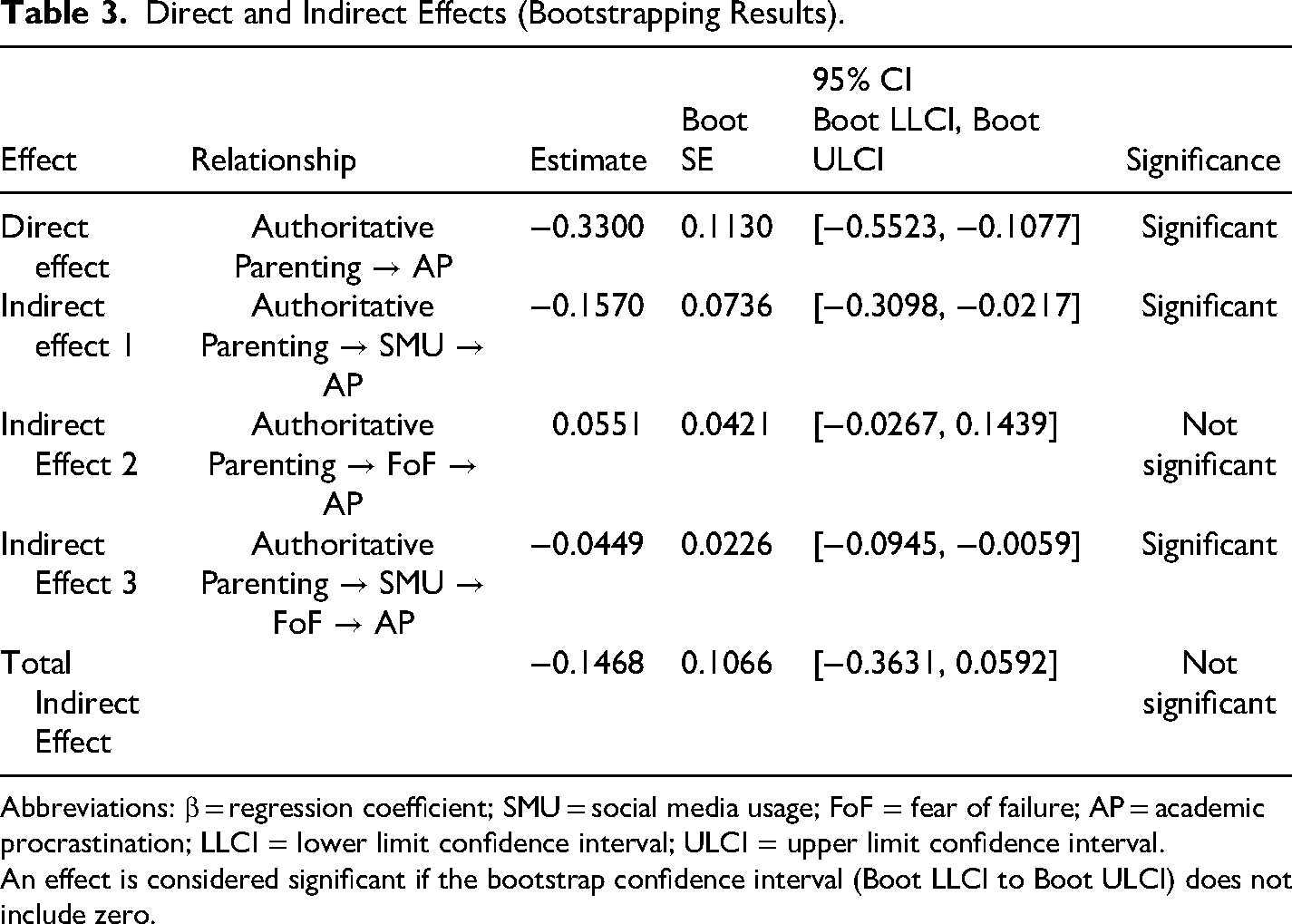
Abbreviations: β = regression coefficient; SMU = social media usage; FoF = fear of failure; AP = academic procrastination; LLCI = lower limit confidence interval; ULCI = upper limit confidence interval.
An effect is considered significant if the bootstrap confidence interval (Boot LLCI to Boot ULCI) does not include zero.
To investigate the impact of Authoritarian Parenting on AP via SMU and FoF. Table 4 and Figure 3 demonstrate that the examination of standardized path coefficients indicated that Authoritarian Parenting had a significant positive direct effect on AP (β = 0.3963, p < .001), and FoF (β = 0.3443, p < .01). SMU significantly predicted FoF (β = 0.3863, p < .001) and AP (β = 0.5175, p < .001). Additionally, FoF significantly predicted AP (β = 0.2954, p < .001).
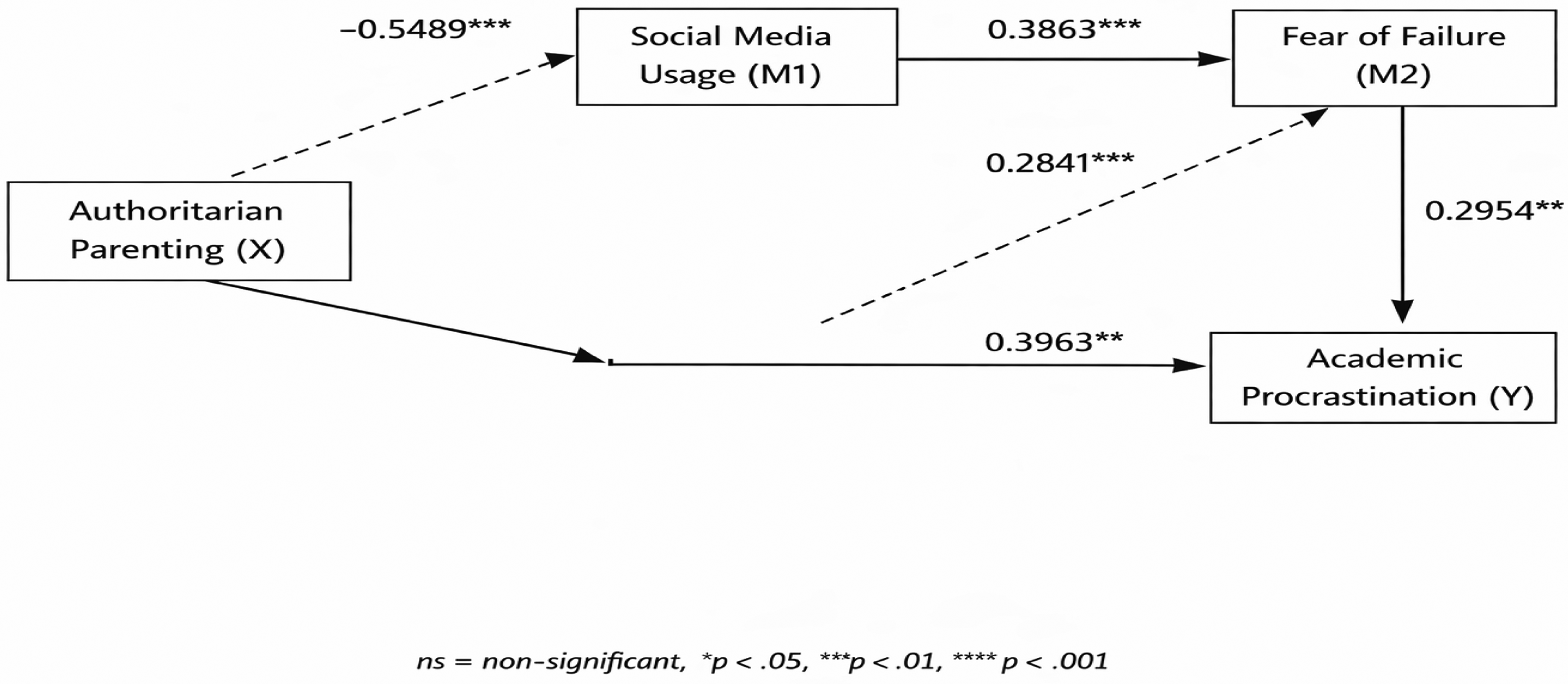
Serial mediation diagram (authoritarian parenting model, social media usage, fear of failure, and academic procrastination).
Regression Analysis (PROCESS Model 6 – Authoritarian Parenting, N = 327).
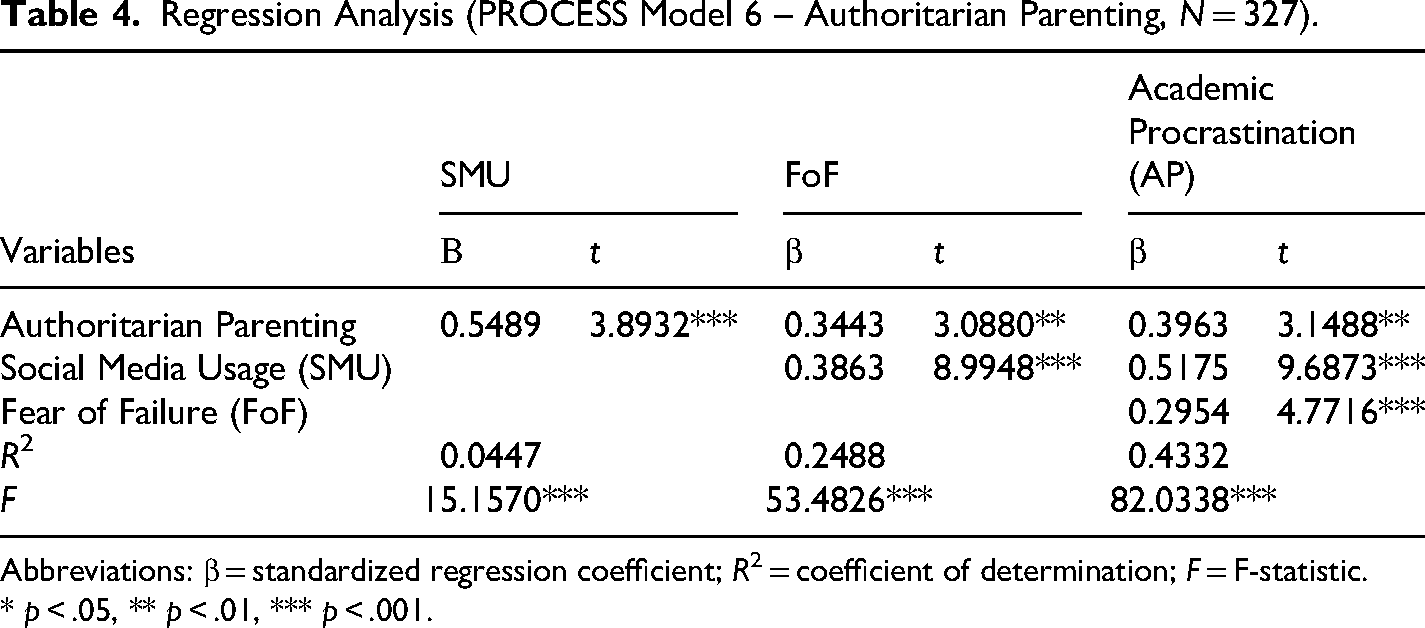
Abbreviations: β = standardized regression coefficient; R2 = coefficient of determination; F = F-statistic.
* p < .05, ** p < .01, *** p < .001.
The indirect effects were tested using bootstrapping (5,000 samples). In Table 5, the results showed that the indirect effect of authoritarian parenting on AP through SMU was significant (β = 0.2841, 95% CI [0.1280, 0.4454]). The indirect effect through FoF was also significant (β = 0.1017, 95% CI [0.0296, 0.1915]).
Direct and Indirect Effects (Bootstrapping Results).
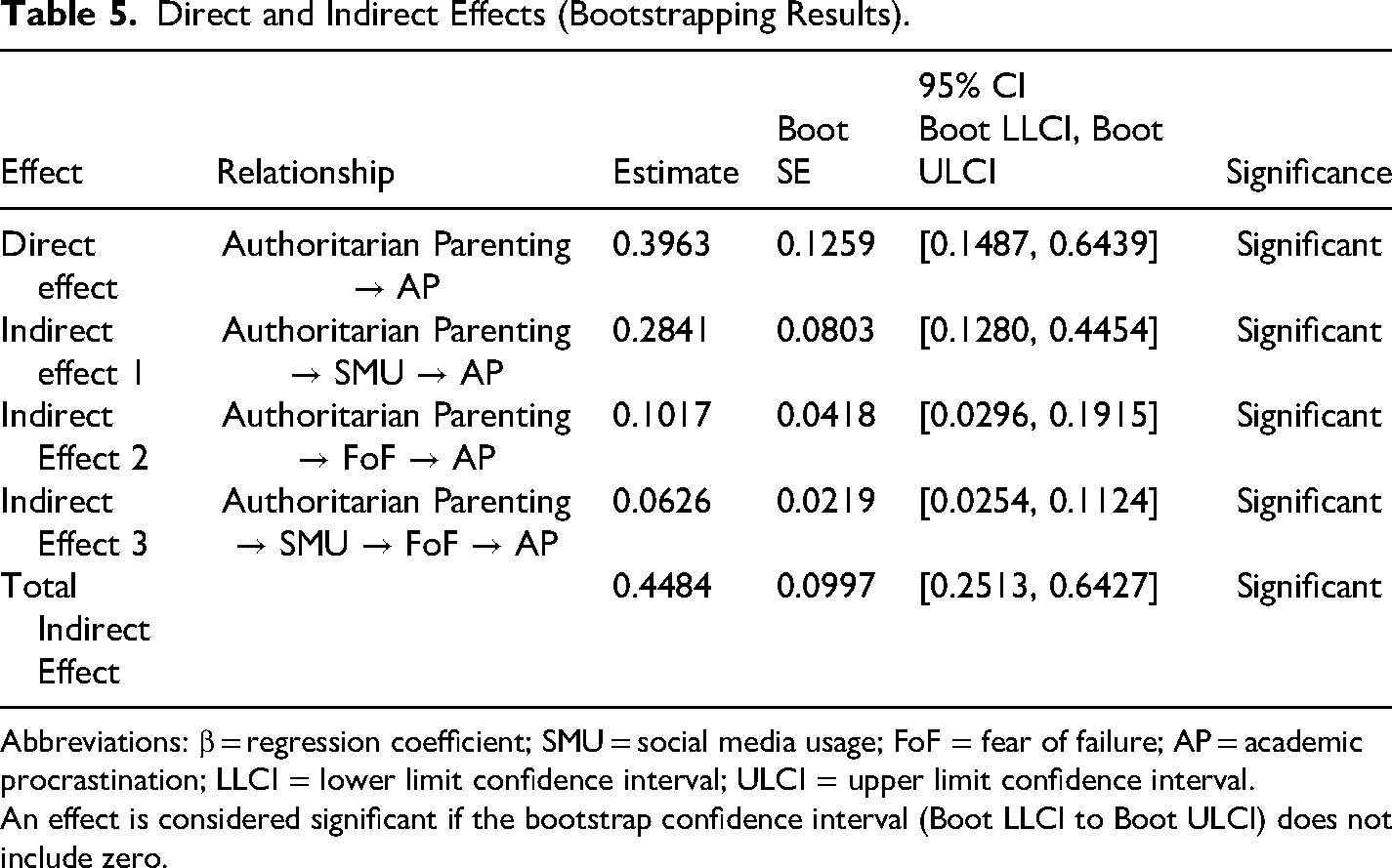
Abbreviations: β = regression coefficient; SMU = social media usage; FoF = fear of failure; AP = academic procrastination; LLCI = lower limit confidence interval; ULCI = upper limit confidence interval.
An effect is considered significant if the bootstrap confidence interval (Boot LLCI to Boot ULCI) does not include zero.
Furthermore, the serial mediation pathway through SMU and FoF was significant (β = 0.0626, 95% CI [0.0254, 0.1124]). The overall model explained a substantial proportion of variance in AP (R2 = 0.4332). These findings suggest that SMU and FoF both independently and sequentially mediate the relationship between authoritarian parenting and AP.
To investigate the impact of Permissive Parenting on AP via SMU and FOF, Table 6 and Figure 4 demonstrate that the examination of standardized path coefficients indicated that Permissive Parenting had a significant negative direct effect on AP (β = −0.3072, p < .05) and predicted FoF (β = 0.3523, p < .001). SMU significantly predicted FoF (β = 0.4086, p < .001) and AP (β = 0.5300, p < .001). Additionally, FoF significantly predicted AP (β = 0.3516, p < .001).
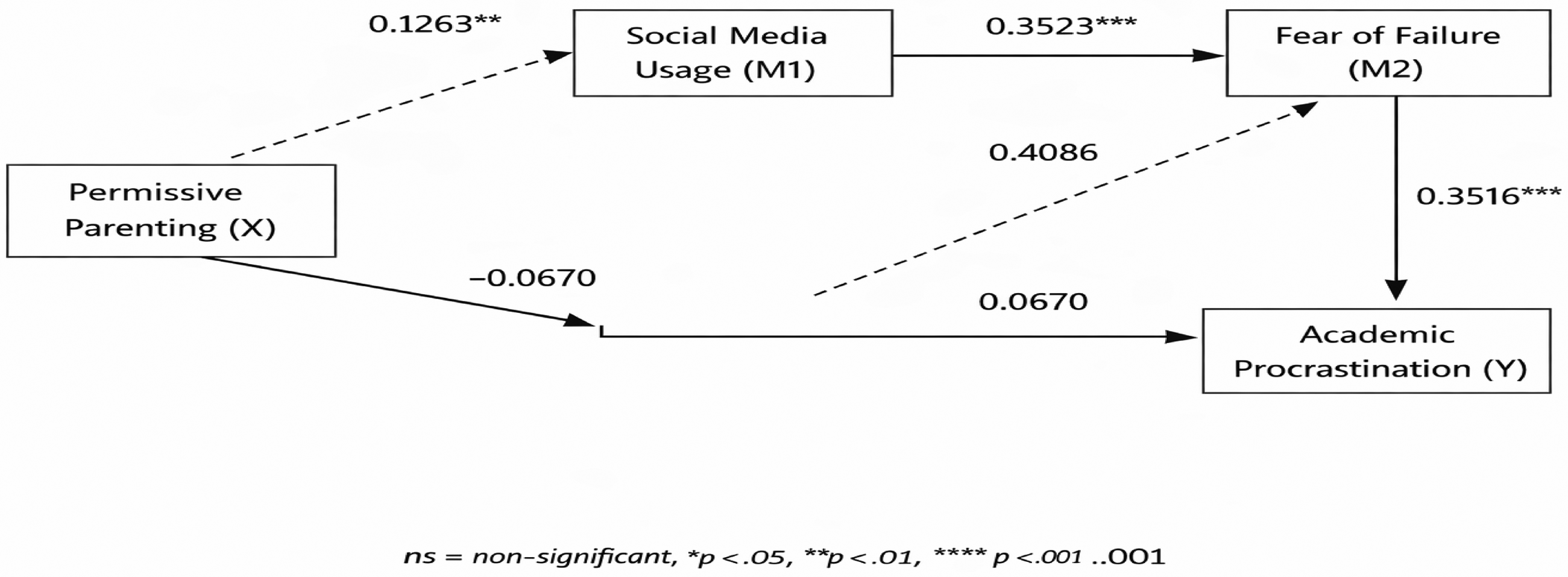
Serial mediation diagram (permissive parenting model, social media usage, fear of failure, and academic procrastination).
Regression Analysis (PROCESS Model 6 – Permissive Parenting, N = 327).
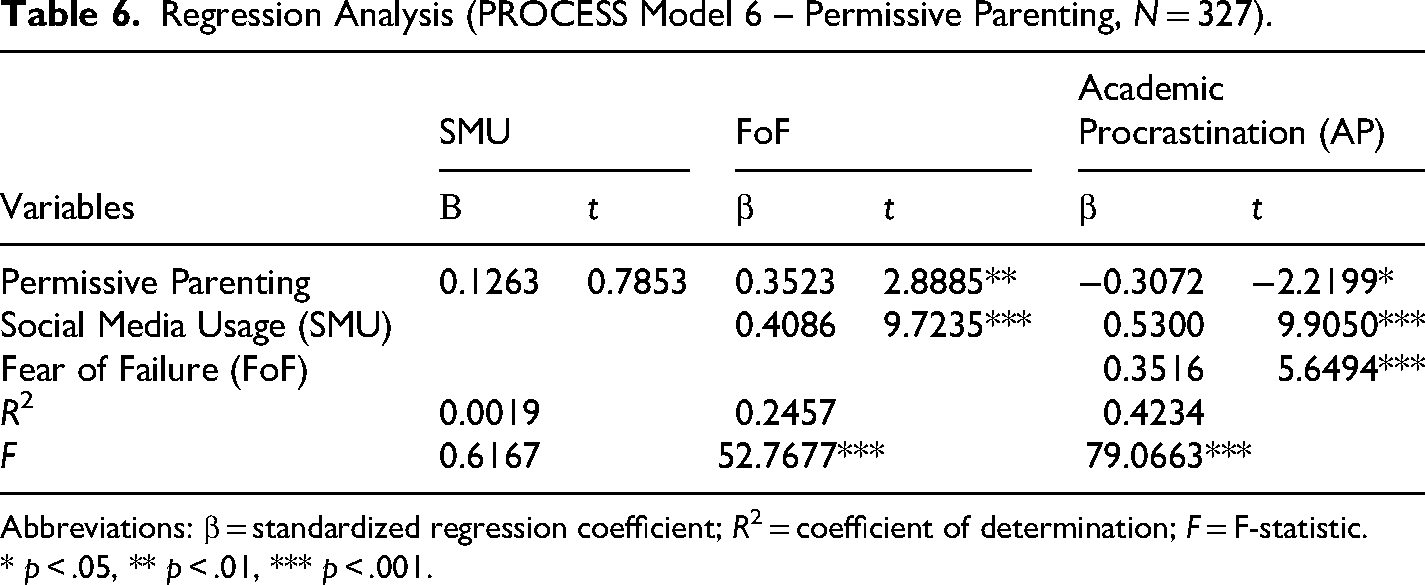
Abbreviations: β = standardized regression coefficient; R2 = coefficient of determination; F = F-statistic.
* p < .05, ** p < .01, *** p < .001.
The indirect effects were examined using bootstrapping (5,000 samples). The results shown in Table 7 indicate that the indirect effect of permissive parenting on AP through SMU was not significant (β = 0.0670, 95% CI [−0.0917, 0.2425]). The indirect effect through FoF was significant (β = 0.1239, 95% CI [0.0298, 0.2354]). However, the serial mediation pathway through SMU and FoF was not significant (β = 0.0181, 95% CI [−0.0265, 0.0642]). The overall model explained a substantial proportion of variance in AP (R2 = 0.4234). These findings suggest that FoF serves as a significant mediator in the relationship between permissive parenting and AP, whereas SMU and the sequential mediation pathway do not play a significant mediating role.
Direct and Indirect Effects (Bootstrapping Results).
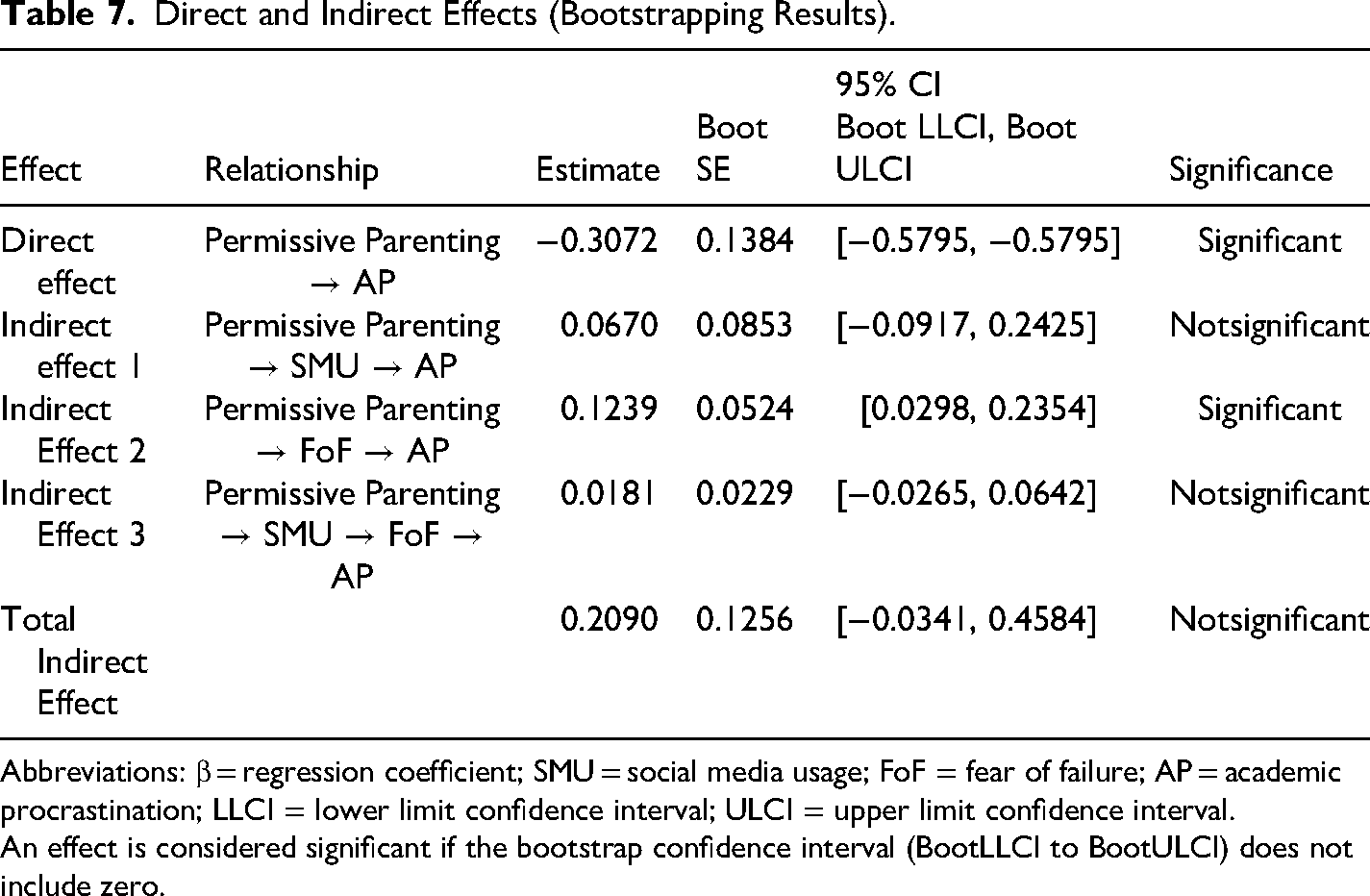
Abbreviations: β = regression coefficient; SMU = social media usage; FoF = fear of failure; AP = academic procrastination; LLCI = lower limit confidence interval; ULCI = upper limit confidence interval.
An effect is considered significant if the bootstrap confidence interval (BootLLCI to BootULCI) does not include zero.
Discussion
The present study examines the relationship among parenting styles (Authoritative, Authoritarian, and Permissive), SMU, FoF, and AP, and also examines how SMU and FoF mediate the relationship between parenting styles and AP among emerging adults. The correlation findings supported the main analysis, indicating that SMU and FoF are positively related to AP, while authoritative parenting shows a protective effect.
Consistent with
In line with
Regarding mediation,
While there has yet to be a study that has directly examined social media use and FoF as mediators between parenting styles and AP, there is adequate empirical support for each pathway separately to justify the proposed mediation model. Early childhood research provides evidence that one of the main ways in which parenting impacts adolescents’ and adults’ online behaviors (which includes social media use) is by placing an emphasis on monitoring, controlling, and emotionally supporting their online activities (Geurts et al., 2023). For example, many researchers have found that adolescents with authoritarian parents often use social media as a way of escaping their harsh realities and establishing their own identity without parental influence or guidance. Similarly, authoritative parenting is associated with providing warmth and having reasonable expectations of their children. Consequently, these adolescents tend to use social media in a much healthier manner and avoid overusing social media (Li & Zedginidze, 2015; Prabandari & Yuliati, 2016; Vossen et al., 2024). With these findings as a reference point, it follows that adolescents who engage more deeply in using social media are likely to demonstrate poorer academic performance and a greater amount of academic delay (Muslikah & Andriyani, 2018; Sarfo et al., 2023; Serrano et al., 2022). Thus, based on these findings, the present study contributes to our understanding of how using social media can be a behavioral pathway through which parenting styles can affect AP.
High control in parenting can cause FoF (Deneault et al., 2020), which in turn has been shown to predict AP, since students will avoid tasks to prevent a negative evaluation (Danne et al., 2024; Haghbin et al., 2012; Maulidia, 2020). Furthermore, parenting styles and procrastination are directly connected with each other. When you consider the impact that FoF and the use of social media have as a mediation between parenting style and AP, you can see how they contribute to the findings together.
Evidence supports
Results indicate that authoritative parenting can protect against AP, while authoritarian parenting can contribute to the risk of developing AP through several means. Additionally, permissive parenting may only operate through FoF. Therefore, prevention efforts against AP should consider the combination of both digital behaviors and personal fears when designing intervention programs (Geurts et al., 2023; Haghbin et al., 2012; Huang et al., 2022; Li et al., 2023).
Conclusion
In this study, the researchers have shown that different types of parenting styles have a profound effect on procrastination in children educationally both directly and indirectly. The Authoritative parenting style was identified to be a “protective” parenting style; both the Authoritarian and Permissive parenting styles have been associated with increased levels of procrastination in children through Behavioral (SMU) & Emotional (FoF) pathways. The findings of the present study, by examining and integrating the above mediators, demonstrate that the family environment is very influential in terms of impacting the degree of procrastination and, therefore, impacting students’ academic performance.
Implication and Limitation
The study builds on prior research to support the idea that procrastination is an emotional and behavioral construct that can be positively or negatively influenced by parenting styles and levels of self-regulation. The findings suggest the importance of more (authoritative) parenting, so there are better self-regulated youth, limiting recreational use of social media, and helping youth learn to properly cope with the fear of failure through counseling or educational intervention to reduce procrastination.
Limitations of the study include: the present research is based on a cross-sectional design; therefore, causal inference cannot be made. There is also limited diversity in the sample, thus limiting generalizability, and other important factors that may be correlated, such as self-regulation and motivation, were not assessed.
Footnotes

Funding
The authors received no financial support for the research, authorship, and/or publication of this article.
Declaration of Conflicting Interests
The authors declared no potential conflicts of interest with respect to the research, authorship, and/or publication of this article.