







Abstract
This study explored the potential of self-directed learning (SDL) to reform continuous professional development (CPD) for English second language (ESL) teachers in Namibia, where centralized, top-down CPD models have failed to address classroom realities. Through a qualitative case study of secondary school ESL teachers in the Khomas region, the research identifies systemic gaps in Namibia's CPD framework, including inadequate teacher agency, lack of specialized training, and resource constraints. Findings reveal that SDL empowers teachers to address context-specific challenges through collaborative peer networks, reflective practice, and grassroots initiatives, aligning with social constructivist theories and reflective practice frameworks. However, institutional barriers and under-resourcing hinder sustainable implementation. The study advocates for decentralized, teacher-led CPD models that prioritize autonomy, collaboration, and contextual relevance, offering a pathway to improve ESL instruction and align with global best practices in teacher professional development.
Keywords
Introduction
The pursuit of quality education remains a global priority, particularly in contexts where English serves as a second language and the primary medium of instruction (Galaczi et al., 2018; Garira, 2020). In Namibia, English was adopted as the official language of learning and teaching (LoLT) following independence in 1990, despite only 0.8% of the population being first-language English speakers (Iipinge, 2018; Mushelenga, 2023). This policy shift placed significant pressure on educators, many of whom were underqualified or trained in other languages to deliver effective English language instruction (Kretchmar et al., 2012; World Bank, 2015). Decades later, learner outcomes remain concerning, with Namibian students consistently underperforming in English literacy relative to regional benchmarks (SACMEQ IV, 2017; MoEAC, 2019). These challenges are rooted in both historical and systemic factors. Following independence, Namibia inherited a fragmented teacher workforce, with many educators lacking adequate proficiency for English-medium instruction (Muzira, 2021). Despite substantial investments in teacher training and curriculum reform (MoEAC, 2019), persistent learning deficits remain evident. For example, only 50% of Grade 5 and 7 learners achieve expected levels of reading comprehension (MoEAC, 2019), and Namibia ranks seventh out of 13 Southern and Eastern African countries in literacy (SACMEQ IV, 2017). Such outcomes point to enduring gaps in teacher preparedness, particularly in English as a second language (ESL) teaching.
Within this context, continuous professional development (CPD) has long been promoted as a key mechanism for enhancing teacher quality. Historically, CPD in Namibia developed within a centralized, deficit-oriented model characterized by standardized, workshop-based training delivered by institutions such as the Ministry of Education, Arts and Culture (MoEAC) and the National Institute for Educational Development (NIED) (Haifidi et al., 2019; UNAM, 2014). These approaches were designed to rapidly address post-independence capacity gaps but largely adopted a “one-size-fits-all” structure that overlooked contextual differences in teachers’ experiences, subject specializations, and classroom environments (Kayumbu, 2020). As a result, CPD initiatives often relied on short-term workshops and cascade models that positioned teachers as passive recipients of knowledge, with limited opportunities for reflection or sustained professional growth (Artman et al., 2020; Mpofu, 2023; Cirocki & Farrell, 2019).
In response to these limitations, Namibia introduced a revised CPD framework in 2013 aimed at decentralizing professional development and promoting school-based, needs-driven learning (UNAM, 2014). This policy shift signalled a move toward more collaborative and contextually responsive forms of professional learning, including teacher-led communities of practice (John, 2024; Kayumbu, 2020). However, implementation has been uneven. Structural constraints including resource limitations, bureaucratic inertia, and insufficient institutional support, have hindered the realization of these reforms (Haufiku, 2022; Nakambale, 2018). Consequently, many teachers, particularly those teaching ESL, continue to experience CPD as episodic and disconnected from their everyday classroom realities, limiting its impact on instructional practice (Porter & Freeman, 2020; Nakambale, 2018).
These limitations are especially pronounced in multilingual and resource-constrained contexts, where generic CPD models fail to address the complexities of second language acquisition and culturally responsive pedagogy (Haufiku, 2022; Nakambale, 2018). Globally, such shortcomings have contributed to a shift toward self-directed learning (SDL) as an alternative approach to teacher professional development (Özer et al., 2020; Porter & Freeman, 2020). SDL emphasizes teacher agency, reflective practice, and collaborative inquiry, enabling educators to tailor their learning to context-specific challenges (Morris, 2019). Grounded in social constructivist theory (Vygotsky, 1978), this approach supports the co-construction of knowledge through experience and peer interaction (Akpan et al., 2020; Mpofu & Maphalala, 2021). In Namibia, the persistence of low English literacy outcomes despite ongoing CPD initiatives underscores the limitations of existing models in supporting effective ESL instruction (MoEAC, 2019; SACMEQ IV, 2017). While these outcomes are often attributed to teachers’ linguistic and pedagogical limitations (Muzira, 2021), they also reflect a CPD system that remains insufficiently responsive to teachers’ contextual needs (Haufiku, 2022; Nakambale, 2018). This study therefore examines the potential of self-directed professional learning as a transformative approach to reforming CPD practices for ESL teachers in Namibian secondary schools (Mpofu, 2023; Williams et al., 2022).
Research Purpose and Questions
Against this backdrop, this study positions self-directed CPD as a transformative alternative to Namibia's stagnant professional development framework. Specifically, it examined:
How SDL can address the systemic gaps in Namibia's current CPD model, particularly its failure to equip ESL teachers with adaptable, classroom-relevant skills. The contextual barriers and enablers to implementing teacher-led professional learning in Namibian secondary schools.
Theoretical Framework
This study is grounded in three interconnected theoretical frameworks SDL, reflective practice, and social constructivism, which together provide a comprehensive foundation for examining self-directed professional learning as a transformative approach to (CPD for English Language Teachers (ELTs) in Namibia. These frameworks collectively address the limitations of Namibia's current top-down CPD model by emphasizing teacher autonomy, critical reflection, and collaborative learning within the country's multilingual educational context. SDL serves as the cornerstone of this study, drawing on the work of Morris (2019) and Gencel and Saracaloglu (2018), who argue that meaningful professional development occurs when teachers actively steer their learning. SDL challenges Namibia's conventional “cascade” CPD model, which is criticized for marginalizing teacher input (Haifidi et al., 2019) by prioritizing teacher agency, intrinsic motivation, and contextual relevance. Specifically, Collier (2022) highlights how SDL enables educators to diagnose their learning needs, set personalized goals, and select strategies aligned with their classroom realities. Özer et al. (2020) further emphasize that voluntary participation in CPD enhances engagement and long-term sustainability, while Mpofu (2023) underscores the importance of tailoring professional learning to address gaps in generic CPD offerings. By advocating for a bottom-up approach, SDL fosters deeper pedagogical competence and aligns with global shifts toward teacher-led professional growth.
Complementing SDL, reflective practice rooted in Schön's (1983) seminal work provides a mechanism for ELTs to critically assess and refine their instructional methods. Given Namibia's challenges with low English proficiency among learners (SACMEQ IV, 2017), reflective practice equips teachers to adapt their strategies dynamically. The study integrates three dimensions of reflection: reflection-in-action (real-time adjustments during teaching), reflection-on-action (post-lesson analysis to improve future practice, as discussed by Farrell & Macapinlac, 2021), and reflection-for-action (proactive planning informed by past experiences, per Lupinski et al., 2012). This framework addresses a critical shortcoming in Namibia's CPD system, where workshops often fail to provide avenues for teachers to apply or critically evaluate new knowledge (Cirocki & Farrell, 2019). By embedding reflective practice into CPD, ELTs can bridge theory and practice, enhancing their effectiveness in multilingual classrooms.
The third pillar, social constructivism (Vygotsky, 1978), reinforces the collaborative nature of learning, positing that knowledge is co-constructed through social interaction. This perspective critiques Namibia's centralized CPD model, which often isolates teachers from peer-learning opportunities (Haufiku, 2022). Instead, social constructivism advocates for communities of practice (Purnamasari, 2023), where teachers collectively share experiences and solutions, and for CPD structures that leverage Namibia's multilingual setting (Akpan et al., 2020). Notably, school-based committees (SBCPDCCs, UNAM, 2014) are highlighted as viable platforms for decentralized, teacher-driven professional development. The integration of these frameworks offers a cohesive strategy for reimagining CPD in Namibia: SDL empowers teachers to take ownership of their professional growth; reflective practice ensures that learning translates into tangible classroom improvements; and social constructivism fosters collaborative, context-responsive CPD. Together, they address the study's central problem—the misalignment between Namibia's standardized CPD programs and the diverse needs of ELTs (Nakambale, 2018). By centring autonomy, reflection, and collaboration, this theoretical triad proposes a sustainable model for CPD reform, one that aligns with international best practices while addressing Namibia's unique educational landscape.
Research Design
This study employed a qualitative, exploratory case study design grounded in interpretivism to explore how SDL could potentially reform Namibia's top-down CPD model for ESL teachers (Creswell & Poth, 2024). The research was theoretically framed by three complementary perspectives: SDL (Knowles, 1975), reflective practice (Schön, 1983), and social constructivism (Vygotsky, 1978), which collectively provided lenses to examine teacher autonomy, contextual adaptation, and collaborative learning as potential pathways toward transformative CPD. The interpretivist paradigm guided the study's approach by acknowledging the multiple, socially constructed realities shaped by teachers’ lived experiences, cultural backgrounds, and professional contexts (Merriam & Tisdell, 2015). Adopting a qualitative methodology allowed for an in-depth exploration of teachers’ perspectives, prioritizing rich, narrative data over broad generalizations (Braun & Clarke, 2006). Through this approach, the study sought to understand how ESL teachers in Namibia engaged with and could potentially reshape their professional development in ways that better aligned with their classroom realities and systemic needs.
By integrating SDL, reflective practice, and social constructivism, the research provided a comprehensive framework for analysing how teacher-led professional learning could address gaps in Namibia's centralized CPD model. SDL emphasized educators’ capacity to direct their own learning (Morris, 2019), while reflective practice illuminated how they critically assessed and adapted their teaching methods (Farrell & Macapinlac, 2021). Social constructivism, meanwhile, highlighted the role of peer collaboration and shared knowledge in meaningful professional growth (Purnamasari, 2023). Together, these theoretical perspectives reinforced the study's focus on teacher agency, contextual relevance, and collective learning as key drivers of CPD reform.
Exploratory Case Study
This study examined the under-researched phenomenon of SDL as an alternative approach to CPD for ESL teachers in Namibia, where traditional top-down CPD models have shown limited effectiveness in addressing classroom realities (Nakambale, 2018). The research focused specifically on in-service ESL teachers working in secondary schools across Namibia's Khomas region, making these educators the primary unit of analysis. This focus was particularly significant because it allowed for an in-depth exploration of how SDL principles, when examined through the study's three theoretical lenses, might offer more responsive and sustainable professional growth opportunities for language teachers in Namibia's multilingual educational context.
The choice to concentrate on ESL teachers’ experiences was theoretically grounded in several key considerations. From an SDL perspective (Knowles, 1975; Morris, 2019), these teachers represented active agents capable of identifying their own professional needs and directing their learning processes – a capacity often underutilized in Namibia's current cascade model of CPD (Haifidi et al., 2019). The reflective practice framework (Schön, 1983; Farrell & Macapinlac, 2021) justified this focus by recognizing that ESL teachers in Namibia's complex linguistic landscape require ongoing opportunities to critically examine and adapt their teaching methods to diverse learner needs (SACMEQ IV, 2017). Furthermore, the social constructivist lens (Vygotsky, 1978; Purnamasari, 2023) highlighted how these teachers’ professional development occurs within specific sociocultural contexts, where knowledge is co-constructed through interactions with colleagues, learners, and the broader educational community.
The selection of Khomas region secondary schools as the research setting was deliberate and theoretically informed. As Namibia's most populous educational region, it presented a rich context for examining how SDL-driven CPD might function across different school environments, from well-resourced urban institutions to under-resourced location schools. This variation allowed the study to explore how contextual factors a central concern in all three theoretical frameworks – influenced teachers’ ability to engage in self-directed professional learning. The social constructivist perspective emphasized the importance of understanding professional development as situated within specific institutional and community contexts (Akpan et al., 2020). By focusing on ESL teachers’ lived experiences with both traditional CPD and potential SDL approaches, the study operationalized the interpretivist paradigm that recognizes multiple, socially constructed realities (Merriam & Tisdell, 2015). This alignment was crucial because it enabled the research to capture not only what teachers did professionally, but how they made meaning of their professional learning experiences – a key concern of SDL theory. The qualitative case study approach allowed for examination of how these meaning-making processes interacted with Namibia's particular educational policies, school cultures, and resource realities – factors that social constructivism identifies as critical mediators of professional learning (UNAM, 2014).
Data Collection Methods
The study employed a triangulated approach to data collection, combining three complementary methods to ensure both methodological rigor and depth of understanding. This multi-method design was theoretically grounded in the study's interpretivist framework, which recognizes the value of capturing professional development phenomena through multiple lenses (Creswell & Poth, 2024). Each data collection method was carefully selected to align with and illuminate different aspects of the three theoretical frameworks guiding the research.
Focus group discussions with eight ESL teachers served as the primary method for exploring collective perspectives on professional development needs, systemic challenges, and the potential for SDL approaches. These discussions, informed by social constructivist principles (Vygotsky, 1978), created a dynamic space where teachers could co-construct knowledge through dialogue, revealing how professional understandings emerge through social interaction. The group setting allowed participants to build on each other's experiences, particularly valuable for examining shared institutional constraints and collaborative solutions – key concerns of both social constructivism and reflective practice frameworks. Secondly, semi-structured interviews provided a crucial counterpoint to the group discussions by eliciting detailed individual narratives about teachers’ personal experiences with professional development. This method proved particularly aligned with SDL theory (Knowles, 1975), as it allowed teachers to articulate their unique professional journeys, learning preferences, and contextual challenges without group influence.
Secondly, the interview protocol incorporated reflective practice elements by prompting teachers to critically examine specific instances where they had adapted or wanted to adapt their teaching approaches (Schön, 1983). These one-on-one conversations revealed nuanced differences in how teachers exercised agency within the same institutional framework, offering insights into the variable implementation of SDL principles in practice. Thirdly, document analysis of Namibia's CPD policy framework and related implementation guidelines served as the third methodological pillar. This approach enabled critical examination of the official discourse surrounding teacher development, assessing its alignment with SDL principles and identifying potential gaps between policy intentions and classroom realities. The document review was framed by all three theoretical perspectives: it evaluated policy provisions for teacher autonomy (SDL), opportunities for critical reflection (reflective practice), and support for collaborative learning (social constructivism). This analysis proved particularly valuable for contextualizing teachers’ reported experiences within the broader policy environment. The triangulation of these methods created a robust research design that addressed the study's objectives from multiple angles. Focus groups captured the social dimensions of professional learning, interviews revealed individual meaning-making processes, and document analysis provided the policy context framing both. This approach not only enhanced the study's credibility through methodological diversification (Patton, 2002) but also allowed for richer theoretical insights by examining how SDL, reflective practice, and social constructivism manifested at different levels of the professional development ecosystem – from individual teacher experiences to institutional policies and collective professional cultures.
Sampling Strategy
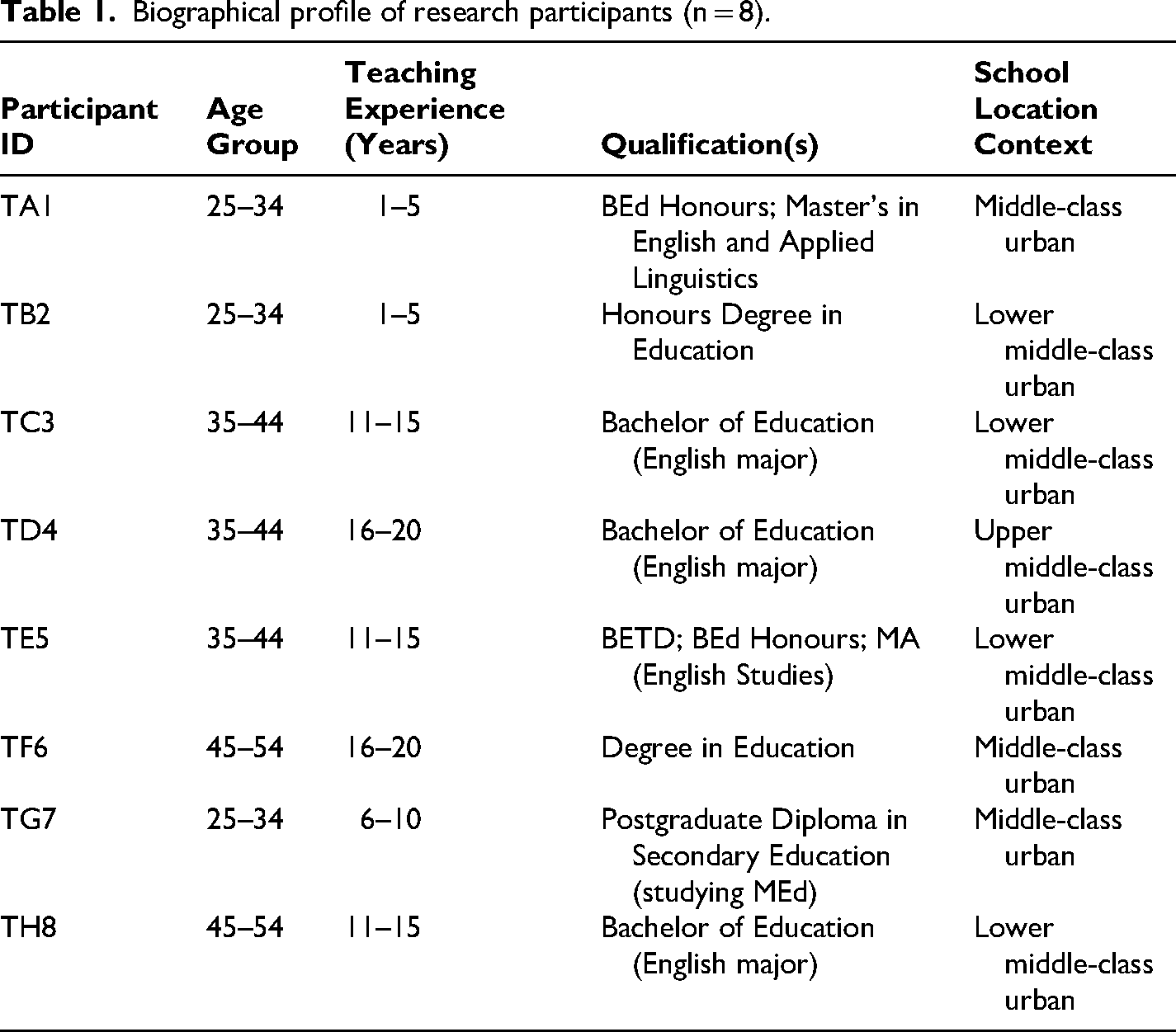
The study employed purposive sampling to select 8 participants who met specific criteria essential for addressing the research objectives as summarized in Table 1. Participants were required to be in-service ESL teachers currently teaching Grades 9–12 in secondary schools within Namibia's Khomas region (Bazen et al., 2021). This grade range was deliberately chosen as it represents the critical upper secondary levels where English language proficiency demands are highest in Namibia's education system. A minimum of 3 years’ teaching experience was set as an inclusion criterion to ensure participants had sufficient classroom experience to provide meaningful insights into CPD needs and practices (Creswell & Poth, 2024). The selection of the Khomas region was strategic, as it encompasses Namibia's most diverse educational landscape, including both well-resourced urban schools and under-resourced schools. (Nakambale, 2018). This regional focus allowed for examination of how varying school contexts might influence teachers’ professional development experiences and needs.
Biographical profile of research participants (n = 8).
All participants needed to be qualified ESL teachers with direct experience of Namibia's CPD system, ensuring they could speak knowledgeably about both current practices and potential improvements (Cohen et al., 2018). The purposive sampling approach, as described by Creswell and Poth (2024), enabled the selection of information-rich cases that could provide deep, contextually grounded perspectives on the research questions. This sampling strategy aligned with the study's interpretivist paradigm by prioritizing participants who could share nuanced, experience-based understandings of professional development in Namibia's multilingual educational context. The sampling criteria aimed to select participants who could provide: firsthand knowledge of classroom challenges in teaching ESL at the secondary level; substantial experience with Namibia's current CPD framework; diverse perspectives from various school contexts in the Khomas region; and professional maturity to critically reflect on their development needs (Quintão et al., 2020). By setting these specific criteria, the study ensured that participants could offer the rich, contextualized data necessary to explore the complexities of self-directed professional learning among Namibian ESL teachers.
Data Analysis and Trustworthiness
Inductive thematic analysis, following Braun and Clarke's (2006) framework, was employed to systematically identify and analyse emergent themes from multiple data sources, including interview transcripts, focus group discussions, and policy documents. This approach was particularly appropriate for exploring the under-researched area of self-directed CPD among ESL teachers in Namibia, as it allowed themes to emerge organically from participants lived experiences rather than being constrained by predetermined categories (Creswell & Poth, 2024).
The analytical process unfolded through four iterative phases. During the initial familiarization phase, the researcher immersed herself in the data through repeated readings of transcripts and documents while noting preliminary observations (Braun & Clarke, 2006). This was followed by systematic coding, where meaningful data segments were labelled with descriptive tags such as “SDL initiatives” and “collaborative knowledge-sharing” to capture key aspects of teachers’ professional development experiences (Merriam & Tisdell, 2015). Codes were developed inductively from the data and manually organized, without the use of coding software, to maintain close engagement with participants’ narratives. These codes were then synthesized into broader themes through an iterative refinement process, ensuring they remained grounded in the data while addressing the research questions (Yin, 2018). To enhance trustworthiness, themes were reviewed multiple times against the dataset, and consistency was ensured through careful cross-checking of coded segments. Given the single-researcher design, formal inter-coder reliability was not applicable; however, credibility was strengthened through prolonged engagement and systematic comparison of themes. The final synthesis phase involved interpreting these themes within the study's theoretical framework of social constructivism, which emphasizes the sociocultural dimensions of professional learning (Vygotsky, 1978). Several key themes emerged from this analysis. The theme of teacher agency highlighted educators’ proactive efforts to direct their professional growth, consistent with SDL theory (Knowles, 1975). Institutional constraints revealed systemic barriers to effective CPD implementation, while collaborative learning emphasized the importance of professional communities of practice (Lave & Wenger, 1991). The policy-practice gaps theme underscored discrepancies between Namibia's formal CPD framework and teachers’ contextual realities (Nakambale, 2018).
To ensure methodological rigor, multiple trustworthiness strategies were implemented. Data triangulation across different sources enhanced credibility, while the maintenance of a reflective journal supported dependability by documenting analytical decisions (Lincoln & Guba, 1985). Thick description of the research context and methods facilitated transferability, allowing readers to assess the applicability of findings to similar settings (Geertz, 1973). Audit trails and peer debriefing were used to minimize researcher bias and ensure confirmability (Shenton, 2004). These measures collectively strengthened the study's validity while remaining faithful to the interpretivist paradigm's emphasis on understanding participants’ subjective experiences and meaning-making processes (Creswell & Poth, 2024).
Ethical Considerations
Ethical considerations were rigorously implemented throughout the study, guided by established research principles (Polit & Beck, 2010). The research team obtained written informed consent from all participants, clearly explaining the study's purpose, procedures, and their rights as research subjects. Confidentiality was protected using pseudonyms and secure data storage, while participants’ anonymity was maintained by removing all identifiable information from transcripts and reports (Creswell & Poth, 2024). Participants were explicitly informed of their right to withdraw from the study at any time without consequence, reinforcing the voluntary nature of their involvement (Merriam & Tisdell, 2015).
The study's lead researcher (HA) occupied a dual role as both investigator and Chief Education Officer at Namibia's Ministry of Education, Arts and Culture (MoEAC), which necessitated careful attention to power dynamics (Holmes, 2020). While this institutional position facilitated access to research participants and sites, it also created potential concerns about participants feeling compelled to participate or provide socially desirable responses. To address these concerns, several measures were implemented. A clear separation between research and official roles was maintained throughout the data collection process. Participants were assured that their responses would not affect their professional standing. Additionally, data collection took place in neutral settings, away from normal work environments. Alternative communication channels were also provided for those who might feel uncomfortable speaking directly. These precautions aligned with Freeman and Johnson's (1998) assertion that teachers’ professional knowledge is socially constructed through their experiences, emphasizing the need for authentic, uninhibited expression in research contexts. The research team consciously created a safe space where participants could openly discuss their CPD needs and experiences without fear of professional repercussions (Patton, 2002). Regular reflexive journaling helped the researcher monitor and address any emerging power dynamics throughout the research process (Lincoln & Guba, 1985). This ethical framework not only protected participants but also enhanced the study's credibility by ensuring that data reflected genuine perspectives rather than potentially constrained or performative responses (Shenton, 2004). The approach acknowledged the complex interplay between institutional roles and research integrity, particularly in educational settings where hierarchical relationships may influence participant responses (Cohen et al., 2018).
Findings
The findings of this study reveal critical insights into reforming CPD practices for English language teachers in Namibia through SDL. The analysis identified three overarching themes and seven sub-themes that align with the research questions, emphasizing systemic gaps and contextual factors influencing teacher-led professional learning.
Theme 1: Systemic Gaps in Namibia's CPD Model and SDL as a Solution
The study reveals significant shortcomings in Namibia's current CPD model for ESL teachers. This theme had two sub-themes, one, the critical need for specialized knowledge and professional intervention through mentorship and collaboration. The system remains heavily reliant on traditional, top-down approaches, such as standardized workshops and externally mandated training programs, which fail to address the diverse and context-specific challenges faced by educators. As Teacher TD4 expressed: In the 18 years that I have been teaching, I have had very little say in how I can professionally develop myself. I feel like I do not have a voice … but we are working with the children 24/7 … I know what I need to give them … when decisions need to be made, you do not have a voice in that, your opinion is not being heard. (TD4:11FGD)
This lack of teacher agency in CPD design leads to a mismatch between training content and actual classroom needs. Participants highlighted their struggles with foundational literacy gaps among learners, as well as the increasing presence of students with special educational needs in mainstream classrooms—issues that current CPD programs do not adequately address. Teacher TE5 noted: There's a trend of learners coming to high school who do not know how to read, who cannot focus … as a normal teacher who's just come from university, not trained in special education or educational psychology, it's a struggle. (TE5:7FGD)
A recurring concern among participants was the absence of targeted professional development in specialized areas such as literacy remediation and inclusive education. Many teachers reported feeling ill-equipped to support learners with reading deficiencies or learning disabilities, despite encountering them daily. Teacher TG7 shared her frustration: You are working with kids who are not even fit for mainstream school … all these kids are literally packed in the mainstream, and sometimes there's little you can really do to help them. (TG7:9FGD)
This gap in teacher preparedness underscores a systemic failure in both pre-service training and in-service CPD. Without structured support, educators have resorted to SDL strategies, such as independent research and online courses, to fill these knowledge voids. Teacher TB2 explained: Maybe getting support from specialists, someone at least who's more knowledgeable for me, I think that would really help” (TB2:5). These findings align with research by Alshaikhi (2020) and Haufiku (2022), which critique Namibia's reliance on generic CPD models that ignore the nuanced demands of ESL instruction.
Given the limitations of formal CPD, teachers have turned to informal, self-driven professional networks to enhance their skills. Mentorship and peer collaboration emerged as vital yet underutilized strategies. Teacher TH8 emphasized the need for structured mentorship: “We need mentors in schools because we have a lot of new teachers, just graduated, and there's not proper guidance on what to do.” (TH8:8). Similarly, Teacher TC3 described the benefits of collaborative teaching with a more experienced colleague: “When I find that I am lacking in an area, I call [my HOD] to my class … while he's teaching, I also learn from him. We co-teach, plan lessons, and activities together” (TC3:5–6). Such initiatives highlight the potential of SDL to foster professional growth through peer learning a concept supported by social constructivist theories (Mpofu & Maphalala, 2021). However, these efforts remain sporadic due to a lack of institutional support. Teacher TF6 pointed out systemic inefficiencies: “Sometimes I have to invite a colleague from another school at my own cost … the regional office has the final say, and many times they reject [collaboration proposals]” (TF6:5; TH8:12FGD).
Theme 2: Contextual Barriers to Implementing Teacher-Led CPD
The analysis reveals significant institutional and structural obstacles that hinder the implementation of SDL approaches in Namibian schools. Participants consistently described a professional development system characterized by centralized control and limited teacher autonomy, which fundamentally contradicts the principles of effective, context-responsive CPD.
A predominant theme emerging from the data is teachers’ profound frustration with their exclusion from CPD planning processes. TD4's powerful testimony encapsulates this systemic issue: In the 18 years that I have been teaching, I have had very little say in how I can professionally develop myself. I feel like I don’t have a voice…when decisions need to be made, you don’t have a voice in that, your opinion is not being heard.” (TD4:11FGD)
This top-down approach extends to regional implementation, as TH8 explained: The regional office…they have the final say, many occasions they reject those…So you find that at the end of the day, although there's that document (CPD framework), it is not practical.” (TH8:12FGD)
These accounts align with Nakambale's (2018) findings about the persistent bureaucratic barriers in Namibian education and reflect what Dishena and Mokoena (2016) term the “implementation gap” between policy and practice.
The data reveals deep-seated institutional resistance to decentralizing CPD decision-making. Participants described a system that continues to view teachers as implementers rather than professionals capable of directing their own development. As Alshaikhi (2020) notes, this reflects a persistent “deficit model” of teacher development that undermines professional autonomy. TD4's experience highlights this disconnect: I was not actually…I was not even part of the whole preparing of the whole lecture and so forth, and I was just informed by a former colleague…that they will be conducting an English workshop.” (TA1:2)
Perhaps the most immediate barrier to implementing teacher-led CPD is the severe shortage of basic resources. Participants described working in environments with:
We have lack of resources…We try to improvise where we can, but we don’t really receive much from the government as most things now require you to be up to date, especially with technology.” (TC3:4) We do not have resources every time you say I need ABC, they say no, the school does not have money…we end up even using our own money to buy maybe posters and simple things like posters.” (TF6.FGD14) I went to the Internet and printed out this free download and handwriting those grade 2 copies.” (TH8:4)
These resource constraints force teachers to personally subsidize their professional development, as TF6 described: “Sometimes I have also to invite a colleague from another school at my own cost.” (TF6:4). The findings underscore what UNESCO (2022) identifies as a critical challenge across developing education systems – the need for adequate infrastructure to support modern teaching practices. Without addressing these fundamental resource gaps, even the most well-designed SDL initiatives will struggle to take root.
These barriers collectively create what participants described as a demoralizing professional environment. The combination of bureaucratic control and resource scarcity produces what Haufiku (2022) terms a “professional development paradox” – where teachers recognize what they need to improve their practice but lack the means or authority to pursue it. The cumulative impact of these systemic barriers is captured in TD4's reflection: “It's like you, you understand the kind of work and the planning that is involved behind everything and therefore you are just so much more attuned…to the work.” (TD4:6). This statement reveals the profound disconnect between the system's current operation and what research suggests constitutes effective professional learning – teacher ownership, contextual relevance, and sustained support (Kennedy, 2005; Williams et al., 2022). The study suggests that meaningful CPD reform in Namibia will require more than just advocating for SDL approaches; it demands confronting these deep-seated structural and cultural barriers that currently constrain teachers’ professional autonomy and development.
Theme 3: Enablers of Teacher-Led Professional Learning
Amidst systemic challenges, the study uncovered powerful organic mechanisms through which Namibian ESL teachers are reclaiming agency over their professional development. These emergent practices reveal the untapped potential for SDL when teachers create their own supportive ecosystems. Participants described how they have cultivated informal but robust networks of peer support that function as vital alternatives to formal CPD structures. TE5's account of reciprocal professional relationships illustrates this phenomenon: On a personal level, I have met a teacher there who's a senior and she was instrumental in helping me understand…how to mark…she had been instrumental in that aspect for me…because we co-taught grades for about two years and the sharing of materials and coming together to plan was helpful.” (TE5:6)
These collaborative arrangements often develop innovative solutions to shared challenges. TC3's description of co-teaching demonstrates how such partnerships create dynamic learning spaces for both experienced and novice teachers: When I find that I am lacking in this area, I call him to my class and then he teaches my class for that specific thing, and while he's teaching, I also now learn from him. So, we co-teach…plan lessons and activities together, whatever I teach, he teaches.” (TC3:5–6).
These practices exemplify what Williams et al. (2022) identify as the “transformative potential” of teacher communities that prioritize shared expertise over hierarchical knowledge transmission.
The findings also revealed how teachers engage in continuous reflection to navigate classroom challenges, though this process often remains unstructured. TH8's approach to addressing literacy gaps demonstrates reflective adaptation: I decided to make copies of some of my daughter's grade four reading…because those are basic words…give the boy to read…to gain a little bit of confidence, because when you give them the materials for grade nine, there are challenging words there…but if you give them a kind of easier piece, they will develop a kind of confidence…so I realized that it helped. (TH8:4)
Similarly, TF6's resourceful response to institutional limitations shows reflection-in-action: You go on YouTube; you get videos whereby a topic…can be taught by different teachers with different educational backgrounds…Sometimes I have also to invite a colleague from another school at my own cost. (TF6:4)
While these examples demonstrate the natural reflective capacity of teachers, the study suggests, as Farrell (2018) notes, that more systematic reflective frameworks could deepen the impact. Rannikmäe et al. (2020) argue that structured metacognitive practices could help teachers move beyond situational problem-solving to transformative professional growth.
Beneath these sub-themes lies a powerful undercurrent of professional resilience. TG7's vision for collaborative professional culture captures this spirit: More activities would help us develop our classrooms, in terms of…teaching methods, even if just coming together as teachers and learning from each other…Because most of the time we are isolated. (TG7:8).
This sentiment reflects what Porter and Freeman (2020) identify as the core principle of effective professional learning that sustainable development emerges from teachers’ collective wisdom when given space to flourish. The study suggests that these organic enablers, if recognized and supported systemically, could form the foundation for a new paradigm of teacher professional development in Namibia – one that honours teacher expertise, fosters collaborative inquiry, and ultimately transforms both teaching practice and student learning outcomes.
Discussion
The study's findings reveal a fundamental disconnect between Namibia's centralized CPD system and the actual needs of ESL teachers, echoing Kennedy's (2005) critique of “traditional transmission models” that fail to address classroom complexities. This misalignment manifests most acutely in three critical areas that our data illuminates. First, the research demonstrates how SDL empowers teachers to address context-specific challenges that formal CPD systems overlook. As TD4's reflection – “When I was involved in planning a CPD workshop, I took it much more seriously” (TD4:6) – powerfully illustrates, teacher agency fundamentally transforms professional learning engagement. This finding substantiates (2021) arguments about teacher ownership while aligning with Mushayikwa and Lubben's (2009) evidence that self-directed approaches yield deeper professional commitment. The organic professional networks that emerged among participants, exemplified by TC3's co-teaching experience – “while he's teaching, I also learn from him” (TC3:5–6) – embody Lave and Wenger's (1991) concept of situated learning communities, suggesting that effective professional development emerges from authentic practice rather than prescribed training.
Second, the study exposes critical gaps in specialized support that SDL could address. TE5's observation about learners entering high school unable to read (TE5:7FGD) highlights how current CPD fails to equip teachers for pressing classroom realities, supporting Mpofu and De Jager's (2018) emphasis on context-specific teacher knowledge. The resourcefulness teachers demonstrated in addressing these gaps through self-initiated strategies – like TF6's cross-school collaborations funded from personal resources (TF6:5) – reveals both the potential and the challenges of teacher-led development in resource-constrained environments, a tension well-documented in Namibian educational research (Nakambale, 2018; Dishena & Mokoena, 2016).
Most significantly, the study suggests SDL's transformative potential for teacher professionalism. TD4's account of attunement to workshop outcomes (TD4:6) exemplifies Schön's (1983) reflective practitioner ideal, while the collective evidence supports Porter and Freeman's (2020) thesis about self-direction's role in professional growth. This aligns with Williams et al.'s (2022) vision of “transformative CPD” that centres teacher expertise and classroom realities.
The significance of these findings is profound: effective CPD reform requires more than structural adjustments – it demands reconceptualizing teachers as autonomous professionals capable of directing their development. As the study shows, when teachers like TD4 and TC3 exercise agency, they develop precisely the reflective, adaptive capacities that Namibia's education system urgently needs. This suggests that policy should focus less on delivering standardized content and more on creating enabling conditions for teacher-led professional learning communities to flourish. However, realizing this vision requires addressing systemic constraints. The chronic under-resourcing that forces teachers like TF6 to personally subsidize professional collaboration (TF6:5) must be remedied. Similarly, bureaucratic structures that exclude teacher voices in CPD planning, as TD4 experienced (TD4:11FGD), need dismantling. The challenge, then, is to build institutional frameworks that nurture rather than constrain the self-directed professional learning that already exists organically among Namibia's teachers.
Implications
This study's findings present a compelling case for systemic reforms in Namibia's approach to continuing professional development (CPD) for English language teachers. The research reveals critical disjunctions between the centralized CPD model and the actual professional learning needs of educators, suggesting necessary transformations across multiple dimensions of the education system. Drawing on contemporary scholarship in teacher development, several key reform directions emerge from these findings. The most pressing implication concerns the fundamental restructuring of CPD delivery mechanisms. Current top-down approaches, characteristic of what Kennedy (2005) terms “traditional transmission models,” have proven inadequate for addressing the complex, context-specific challenges teachers face. The study's evidence aligns with Opfer and Pedder's (2011) conceptualization of teacher learning as a complex system, suggesting that Namibia should transition toward more decentralized, school-embedded professional learning models. This would involve shifting resources and decision-making authority to schools and teachers, enabling them to identify and address their most pressing developmental needs through professional learning communities and action research initiatives.
A second crucial reform area involves building systemic capacity for collaborative professional learning. The study's findings corroborate Vescio et al. (2008) evidence about the efficacy of professional learning communities, suggesting that Namibia should institutionalize structured opportunities for peer observation, co-teaching, and mentor relationships. This could be achieved through formalizing school-based professional learning time, creating cross-school teacher networks, and developing hybrid models that combine online collaboration platforms with face-to-face interactions. Such reforms would address the current isolation many teachers experience while capitalizing on existing expertise within the teaching force.
The study also highlights the urgent need for differentiated professional learning pathways. The diverse challenges identified – particularly regarding literacy instruction and inclusive education – support Timperley et al.'s (2007) argument for targeted, content-specific professional development. This suggests implementing a tiered CPD system where teachers can access both general pedagogical training and specialized modules addressing specific classroom challenges. Digital platforms could provide scalable solutions for delivering such differentiated content while maintaining opportunities for local adaptation and collaboration.
Resource allocation mechanisms require significant reform to enable these changes. The study's findings about material constraints align with UNESCO's (2022) warnings about under-resourced professional development systems in low- and middle-income countries. This implies the need for both increased funding and more strategic allocation of existing CPD budgets, with greater proportions directed toward school-based professional learning rather than centralized workshops. Investments should prioritize developing digital infrastructure for remote collaboration, establishing school-based professional learning resources, and creating incentives for teacher-led innovation. Underpinning these structural reforms must be a fundamental reconceptualization of teacher professionalism. The study's findings support Evans’ (2014) argument that effective professional development requires acknowledging teachers as autonomous professionals rather than technicians implementing prescribed methods. This suggests parallel reforms in teacher evaluation systems, career progression pathways, and professional standards to recognize and reward self-directed professional growth and leadership in pedagogical innovation.
The study also carries implications for initial teacher education reform. The gaps in specialized knowledge identified suggest that, as Darling-Hammond (2021) advocates, teacher preparation programs need stronger focus on developing adaptive expertise for diverse classroom contexts. This could involve expanding practice-based components of teacher education, strengthening partnerships between teacher training institutions and schools, and ensuring all new teachers graduate with basic competencies in inclusive education and literacy instruction. At the policy level, the findings suggest the need for more coherent articulation between CPD frameworks and other educational reforms. As Fullan (2007) emphasizes, sustainable educational improvement requires alignment across all system components. In Namibia, this would involve better integrating CPD reforms with curriculum implementation, assessment reforms, and school improvement initiatives to create a unified ecosystem supporting teacher development.
These proposed reforms collectively suggest a paradigm shift from viewing CPD as discrete training events to understanding it as an ongoing, career-long process of professional growth embedded in daily practice. While ambitious, such systemic changes align with international evidence about effective professional learning systems (OECD, 2019) and offer Namibia a pathway to building the teaching capacity needed to address its persistent educational challenges. The study ultimately argues that investing in such teacher-centred CPD reforms represents not just an improvement strategy, but a necessary foundation for achieving equitable, quality education for all Namibian learners.
Limitations
The study's findings are primarily focused on ESL teachers in Namibia's Khomas region, which may limit their applicability to other subjects or rural educational settings where contextual factors differ. While this narrow scope restricts broader generalizations, the researchers carefully framed their conclusions within the specific urban ESL context and suggested further studies to explore wider populations. The lead researcher's dual role as a Ministry of Education official introduced potential bias, despite measures to minimize its influence. To address this, the study ensured participant anonymity, employed independent facilitators for data collection, and cross-verified findings through multiple data sources. These steps helped reduce the risk of response distortion while maintaining methodological integrity. As a qualitative study, the research provided in-depth insights but did not support statistical generalizations. To compensate, the researchers emphasized detailed contextual descriptions and proposed future mixed methods approaches to validate and extend the findings. Expanding the study to include nationwide samples and comparative rural-urban analyses could further strengthen the robustness of the conclusions.
Footnotes
Acknowledgments
The authors have no acknowledgements to declare.

Ethical Approval and Informed Consent Statements
This study was reviewed and approved by the Rhodes University Education Faculty Research Ethics Committee (EF-REC) (Application No. 2022–5975–7278) on 12 February 2023. All participants provided informed consent prior to their involvement in the research.
Funding
The authors received no financial support for the research, authorship, and/or publication of this article.
Declaration of Conflicting Interests
The authors declared no potential conflicts of interest with respect to the research, authorship, and/or publication of this article.
Data Availability Statement
The datasets generated and/or analysed during the current study are available in the Rhodes University Figshare Repository and can be accessed via the following doi: https://doi.org/10.21504/RUR.28955744
Author Biographies