






Abstract
The rapid emergence of chat generative pretrained transformer (ChatGPT) has attracted considerable attention in higher education (HE), yet its research development remains insufficiently understood. This study provides an early-stage bibliometric analysis of 140 Scopus-indexed articles to map research trends in this field. The results show a sharp increase in publications, with China, the United States, and the United Kingdom as the leading contributors. Co-occurrence analysis identified three major themes: educational applications, learner interactions, and technological dimensions. Overlay visualization revealed emerging topics such as intention, relationship, and social influence, indicating a growing focus on adoption and behavioral aspects of ChatGPT in HE.
Keywords
Introduction
The field of artificial intelligence (AI) has experienced unprecedented growth in recent years, affecting a variety of sectors, specifically education. Among the AI tools that have attracted wide attention is Chat Generative Pretrained Transformer (ChatGPT), a language model developed by OpenAI. ChatGPT leverages the power of natural language processing to facilitate seamless human–computer interaction, allowing users to generate text, answer questions, and engage in meaningful conversations (Jeon et al., 2024). ChatGPT uses pre-trained language learning models derived from large datasets to predict outcomes based on given requests (Li et al., 2023). These tools have the potential to revolutionize education by providing personalized, accessible, and interactive learning experiences (Grassini, 2023). As higher education (HE) institutions seek to adapt to the evolving technological landscape, the integration of AI-based platforms such as ChatGPT becomes increasingly important in improving learning and teaching methods (Baig and Yadegaridehkordi, 2024; Dempere et al., 2023; Shahzad et al., 2024).
ChatGPT's ability to process large amounts of data and generate coherent, context-appropriate responses has attracted interest among educators and researchers in HE (Al-Mughairi & Bhaskar, 2025; Bhullar et al., 2024). Since its launch in late 2022, ChatGPT has shown potential in various educational environments, such as providing personalized tutoring, assisting with content creation, and offering real-time feedback (Cheung et al., 2023; Rawas, 2024). The HE sector, in particular, is beginning to explore how these AI tools can be leveraged to improve student engagement, streamline administrative processes, and support academic research (Dempere et al., 2023; Ding et al., 2023). As a generative AI model, ChatGPT can complement traditional pedagogical approaches by offering additional support to students and educators (Fadillah et al., 2024; Festiyed et al., 2026). For example, it can assist in generating assignments, answering subject-related questions, and facilitating more interactive and engaging discussions (Fergus et al., 2023; Firat, 2023; Javaid et al., 2023).
Despite the growing recognition of the usefulness of ChatGPT in HE, academic research on its applications and implications remains fragmented (Kurban & Şahin, 2024). The literature on AI and education is vast, but the focus on ChatGPT and its role in HE is relatively new (Chaudhry et al., 2023; Sok & Heng, 2024). Those studies that have examined ChatGPT in HE tend to focus on its general benefits, such as improving accessibility (Veza et al., 2024), enriching personalized learning (Abas et al., 2023), and supporting online education (Kayalı et al., 2023). However, little is known about the broader research landscape regarding ChatGPT in HE. How is ChatGPT research geographically distributed? Which institutions are leading the way in exploring their potential? Which journals publish ChatGPT-related studies, and what are the most frequently cited works in this area? What are the emerging trends and future research directions in this field? Answering these questions is critical to understanding how ChatGPT is shaping the future of HE and identifying gaps that need further exploration.
This research addresses the need for an in-depth bibliometric analysis of ChatGPT in HE, which has yet to be comprehensively explored. Some previous studies, such as Baig and Yadegaridehkordi (2024) and Rasul et al. (2023), have presented systematic and scoping reviews on using ChatGPT in HE. However, these studies did not use a bibliometric approach. Baig and Yadegaridehkordi (2024) examined the adoption and application of ChatGPT by various educational actors, such as academic staff, students, researchers, and non-academic staff. They highlighted the need for further exploration regarding the effective application of ChatGPT in HE, as ChatGPT is still at an early stage of development. On the other hand, Rasul et al. (2023) provided an overview of the benefits, challenges, and future research directions regarding ChatGPT in HE. Although this study discussed various applications of large language models such as ChatGPT in educational contexts, it did not use a bibliometric approach to analyze publication or citation trends related to ChatGPT. Ansari et al. (2024) also presented a scoping review, identifying the role of ChatGPT in HE based on global evidence but without conducting an in-depth bibliometric analysis. Among the limited studies that have adopted a bibliometric perspective, Bhullar et al. (2024) provided valuable insights into publication and citation trends related to ChatGPT in HE. Nevertheless, although their study identified thematic clusters and proposed future research directions, the analysis focused primarily on publication patterns and thematic structures. Less attention was given to the temporal evolution of research topics and the identification of emerging themes through overlay visualization techniques.
In addition, although several review and bibliometric studies have explored ChatGPT and AI in educational contexts, important gaps remain regarding the comprehensive mapping of research development, thematic evolution, and future research directions within HE. Stracke et al. (2023) introduced a Preferred Reporting Items for Systematic reviews and Meta-Analyses (PRISMA)-based protocol for systematic reviews in AI and education, but their work does not focus on citation trends or publication patterns specific to ChatGPT. Similarly, Ismail et al. (2023) proposed a systematic approach for analyzing generative AI models, yet without an emphasis on ChatGPT's bibliometric impact. Meanwhile, Ismail et al. (2024) developed an open-access database on AI in HE. However, their study primarily catalogs research without delving into citation analyses or identifying trends in ChatGPT research. Faisal (2024) examined the benefits of ChatGPT in HE, including its role in student engagement, language learning, and inclusivity, but again, the focus was not on bibliometric trends. Existing reviews, such as those by Vargas-Murillo et al. (2023) and Imran and Almusharraf (2023), provide insights into ethical challenges and applications of ChatGPT but lack the bibliometric depth required to uncover publication trends and influential works.
Table 1 summarizes the characteristics of previous reviews and bibliometric studies on ChatGPT in education and HE. While these studies have provided valuable insights into publication patterns, citation performance, thematic structures, and the educational implications of ChatGPT, differences remain regarding their scope, analytical focus, and attention to future research directions. The present study seeks to address these gaps by integrating conventional bibliometric indicators with overlay visualization analysis to identify emerging topics and future research trajectories within the HE context.
Positioning of the Present Study Relative to Existing Literature.
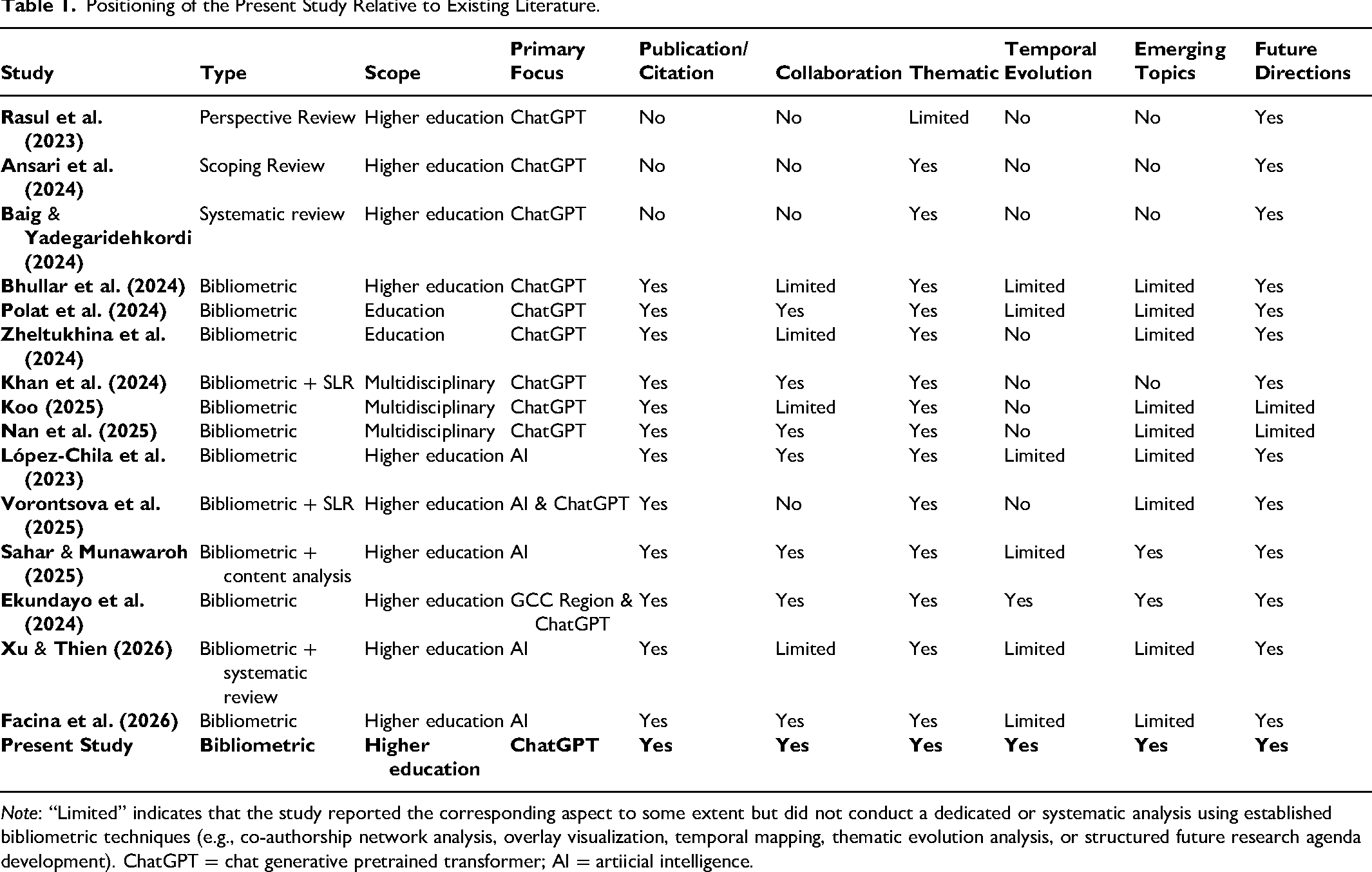
Note: “Limited” indicates that the study reported the corresponding aspect to some extent but did not conduct a dedicated or systematic analysis using established bibliometric techniques (e.g., co-authorship network analysis, overlay visualization, temporal mapping, thematic evolution analysis, or structured future research agenda development). ChatGPT = chat generative pretrained transformer; AI = artiicial intelligence.
Although previous reviews and bibliometric studies have provided important insights into ChatGPT research in education, several limitations remain. Existing review studies primarily synthesize benefits, challenges, adoption issues, and ethical concerns surrounding ChatGPT in HE (Ansari et al., 2024; Baig & Yadegaridehkordi, 2024; Rasul et al., 2023). Meanwhile, existing bibliometric studies mainly focus on descriptive publication trends, citation performance, influential countries, institutions, and thematic clusters (Bhullar et al., 2024; Polat et al., 2024; Zheltukhina et al., 2024). However, limited attention has been given to understanding the temporal evolution of research topics and identifying emerging themes that may shape future research agendas in HE.
Furthermore, many existing bibliometric studies have either examined ChatGPT within broader educational contexts (Polat et al., 2024; Zheltukhina et al., 2024) or investigated ChatGPT research across multiple disciplines without a specific focus on HE (Khan et al., 2024; Koo, 2025; Nan et al., 2025). Consequently, a comprehensive understanding of how ChatGPT research is evolving, specifically within HE remains underdeveloped. Given that HE institutions represent one of the earliest and most intensive adopters of generative AI technologies, a focused investigation of this context is particularly important.
Therefore, this study contributes to the growing body of ChatGPT research in HE by providing a focused bibliometric perspective that integrates publication productivity indicators, intellectual structure analysis, and temporal overlay visualization to uncover emerging research trajectories. Unlike previous studies that mainly reported publication patterns and thematic clusters, this study systematically examines how research topics have evolved over time and identifies emerging adoption-related themes within HE. By combining productivity analysis, collaboration patterns, thematic structures, and temporal evolution within a unified framework, this study contributes not only to understanding the current state of the field but also to revealing its potential future directions.
Specifically, this study addresses the following objectives: (1) to examine publication growth patterns, (2) to identify the most productive countries, institutions, journals, and influential publications, (3) to explore the intellectual and thematic structure of the field through co-occurrence analysis, and (4) to identify emerging topics and future research directions through overlay visualization analysis. Through these contributions, this study provides a more comprehensive understanding of the development, current state, and future trajectory of ChatGPT research in HE.
Methods
A research trend emerges when researchers begin to pay great attention to a particular scientific topic relevant to society's interests and current needs. These trends occur when the latest scientific findings align with societal needs. This study utilized a bibliometric analysis approach, identifying trends in ChatGPT-related research in HE. Bibliometric analysis involves applying mathematical and statistical techniques to quantitatively analyze the bibliographic characteristics of literature (Donthu et al., 2021). It is an effective way to uncover patterns in scientific literature, visualize research trends, and analyze the structure and evolution of a field. Specifically, bibliometric analysis in this study was used to visualize research trends and characteristics, such as subject domains, keywords, major themes, and contributions from countries, institutions, and authors.
Database Selection
This study used the Scopus database to review the literature on ChatGPT research in HE. The selection of Scopus is based on its reputation as one of the largest and most comprehensive databases, covering more than 20,000 peer-reviewed journals across multiple disciplines. The advantages of Scopus include its comprehensive coverage, the high quality of the selected sources, and its ability to provide various citation metrics and citation analysis that support bibliometric studies (Fadillah et al., 2025; Festiyed et al., 2024). Scopus also allows integration with data visualization tools, facilitating thorough and meaningful analysis of bibliometric data. Scopus was chosen for this study due to its rigorous selection process and broader coverage compared to other databases such as Web of Science, Medline, and Google Scholar (Zyoud et al., 2023).
Article Selection Strategy and Procedure
Once the research database is established, the next step is to determine an appropriate article retrieval strategy. This strategy needs to consider the balance between broad coverage and the precision of search results. The main keyword, “ChatGPT,” adopted from Baig and Yadegaridehkordi (2024), was used to target relevant research. In addition, a set of HE-related terms was adopted from Hernández-Torrano et al. (2020), which includes: “university,” “college,” “higher education,” “tertiary education,” “post-secondary education,” “postsecondary education,” “undergrad* student,” “grad* student,” “master's student,” “doctoral student,” and “Ph.D. student.” No time limit was applied in the search process. The search was restricted to article titles (TITLE) to maximize the precision of the retrieved records and ensure that HE and ChatGPT constituted the primary focus of the publications. Compared with title–abstract searches, title-based searches generally reduce the inclusion of marginally relevant studies in which the search terms appear only incidentally in the abstract or keyword sections, thereby minimizing false-positive results (Zyoud et al., 2023). Given the rapid emergence of ChatGPT research and the broad use of AI terminology across educational contexts, a title-only search was considered appropriate to maintain a highly focused dataset for bibliometric analysis. However, this approach may have excluded some relevant studies that discussed ChatGPT and HE extensively in the abstract or full text without explicitly mentioning these terms in the title. Therefore, the findings should be interpreted as representing the core literature explicitly focused on ChatGPT in HE rather than the entire body of related research. For a related summary of the specific criteria used in screening for this study, please see Table 2.
Source Summary and Data Selection.
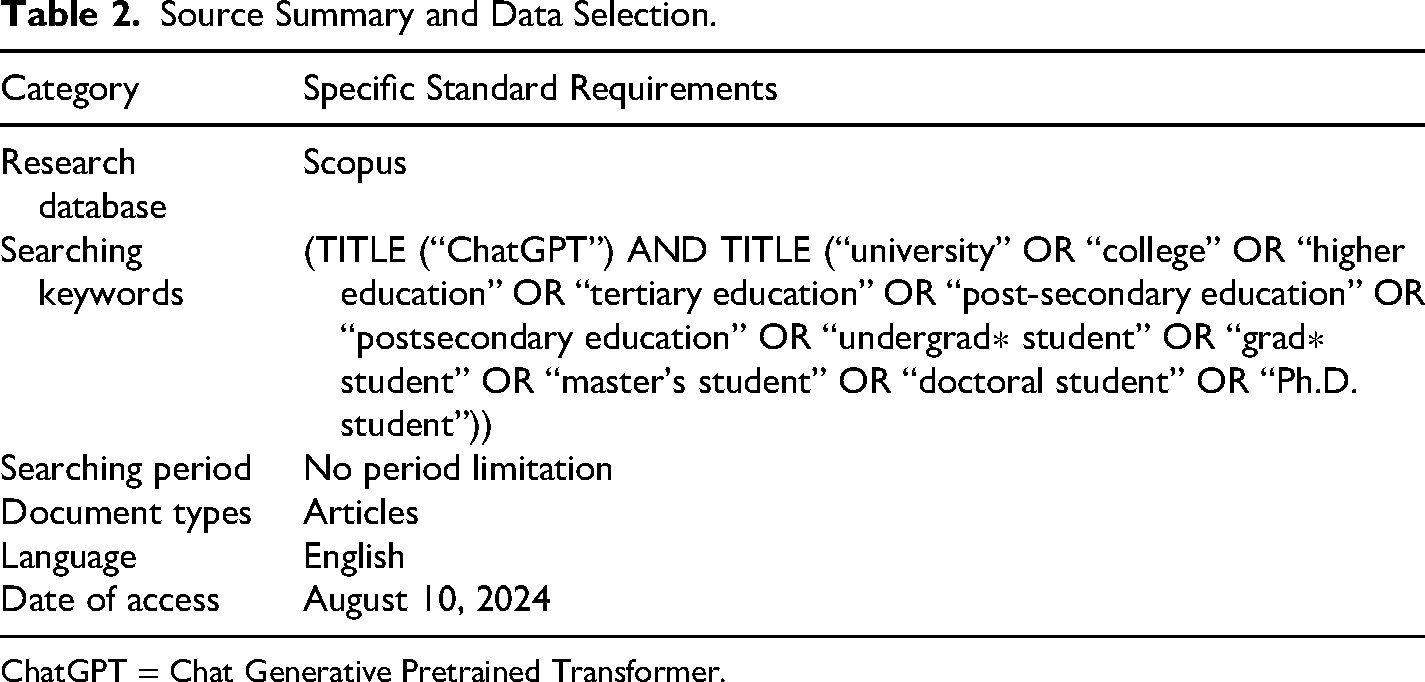
ChatGPT = Chat Generative Pretrained Transformer.
To ensure a systematic literature review, we followed the PRISMA guidelines (Page et al., 2021) in searching, identifying, selecting, reading, and extracting data from articles retrieved from the Scopus database (see Figure 1). In total, 235 articles were identified from Scopus using keyword searches on the article titles. The identification process was conducted on August 10, 2024, to avoid potential bias due to the continuous update of the Scopus database. There were no duplicate articles, as all articles came from one database. Articles were then filtered by document type; 85 articles were excluded because they were not “article” document types (consisting of Conference paper: 50, Book chapter: 15, Letter: 6, Review: 5, Note: 3, Editorial: 3, Book: 2, Erratum: 1). Of the remaining 150 articles, 10 articles were excluded. After all, they were not written in English (including Spanish: 6, Russian: 2, Korean: 1, and Chinese: 1). In addition, to ensure quality and relevance, the remaining 140 articles were manually analyzed by two researchers to verify their relevance to the topic, which is ChatGPT research in HE. Both researchers reached full agreement (100%) in the screening stage, so the 140 articles were deemed relevant for inclusion in this bibliometric analysis. Glänzel and Moed (2013) posit that a sample size of between 30 and 50 articles is sufficient to approach acceptable bibliometric practices. Rogers et al. (2020) propose that a sample of at least 200 documents may yield superior results; however, they also highlight that even a smaller sample size of 50 can provide meaningful insights. Our research, comprising 140 documents, is both relevant and consistent with accepted bibliometric practices.
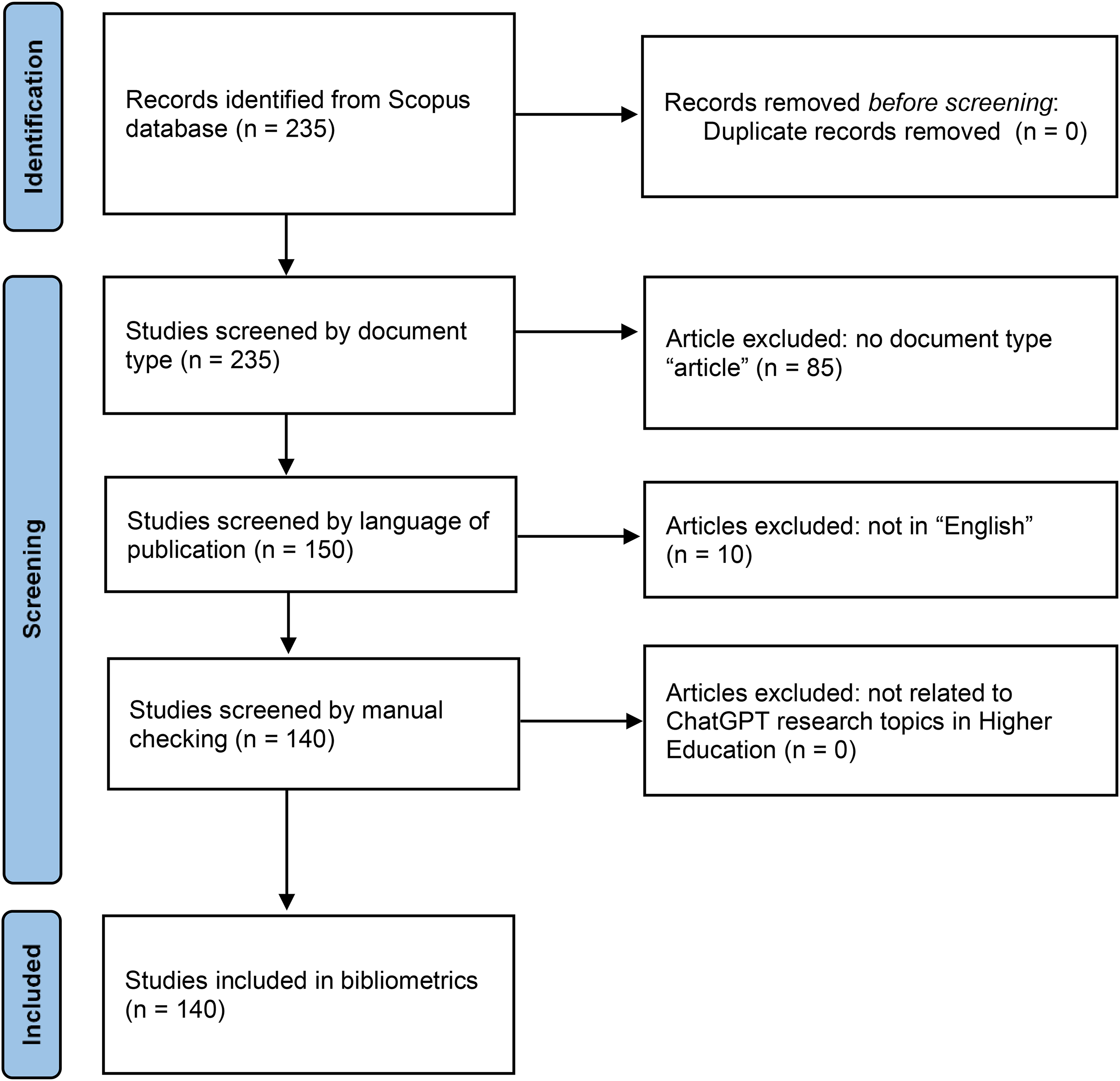
Preferred Reporting Items for Systematic reviews and Meta-Analyses (PRISMA) flow diagram.
Data Processing and Visualization
We exported the data from Scopus to Microsoft Excel in .csv format. This file contains information about the title and abstract of each document, the author's country of origin, and their institutional affiliation. In addition, the data includes the annual number of publications, document type, funding agency, citations, and journal name. ChatGPT was only released in November 2022 (Grassini, 2023), but the relevant publications are limited to the past few years. To analyze publication trends, we checked the month of publication of each article based on information from the publisher. Microsoft Excel 2021 was also used to analyze linear regression to evaluate publication trends and improve visualization. It is important to note that the analysis in this study mainly focused on publication frequency by considering only the top 10 publications. The h-index and g-index are employed to ascertain the impact and productivity of publications. The h-index is evaluated based on the largest value of h, whereby a researcher, source title, or institution has at least h articles, and each of those articles has at least h citations. Conversely, the g-index is evaluated based on the largest value of g, whereby the cumulative citation count of the top g articles is at least equal to g2.
In addition, the “.csv” data was imported into VOSviewer version 1.6.19 to create a network visualization. This network map shows the relationship between terms from article titles or abstracts and collaboration between countries. VOSviewer was chosen because of its ease of use. With this tool, we can predict the focus of future research through visualization of developments in various fields. The visualization network in VOSviewer displays nodes that represent various terms or entities. The larger the node, the more important its role in the analysis. Co-occurrence analysis is also performed to group terms into clusters, which helps identify and visualize emerging research trends.
Results
Article Publication Trend Analysis
Analysis of 140 ChatGPT-related articles in HE shows a significant growth in publications over time (see Figure 2). Linear regression indicates a strong positive correlation between publication numbers and year (R2 = .8247, p < .001), reflecting consistent growth and increasing academic interest in ChatGPT. The first publications appeared in 2023, marking the start of academic exploration. Only one article was published in January 2023, with no publications in February. Starting in March, the number gradually increased, peaking in September and December with 8 and 10 articles, respectively. It reflects growing interest and adoption throughout 2023. In 2024, the trend accelerated. In total, 79 articles had been published, with a peak of 18 in July alone. It indicates a rapid increase in researcher interest. The data only covers January to July 2024, suggesting the total will grow significantly by the end of the year and into the future. The rapid development of AI technologies (Goralski & Tan, 2020), widespread academic applications of ChatGPT (Dempere et al., 2023; Lo, 2023), and the need to explore its benefits and challenges continue to drive publication growth, reflecting increasing integration and acceptance in HE.
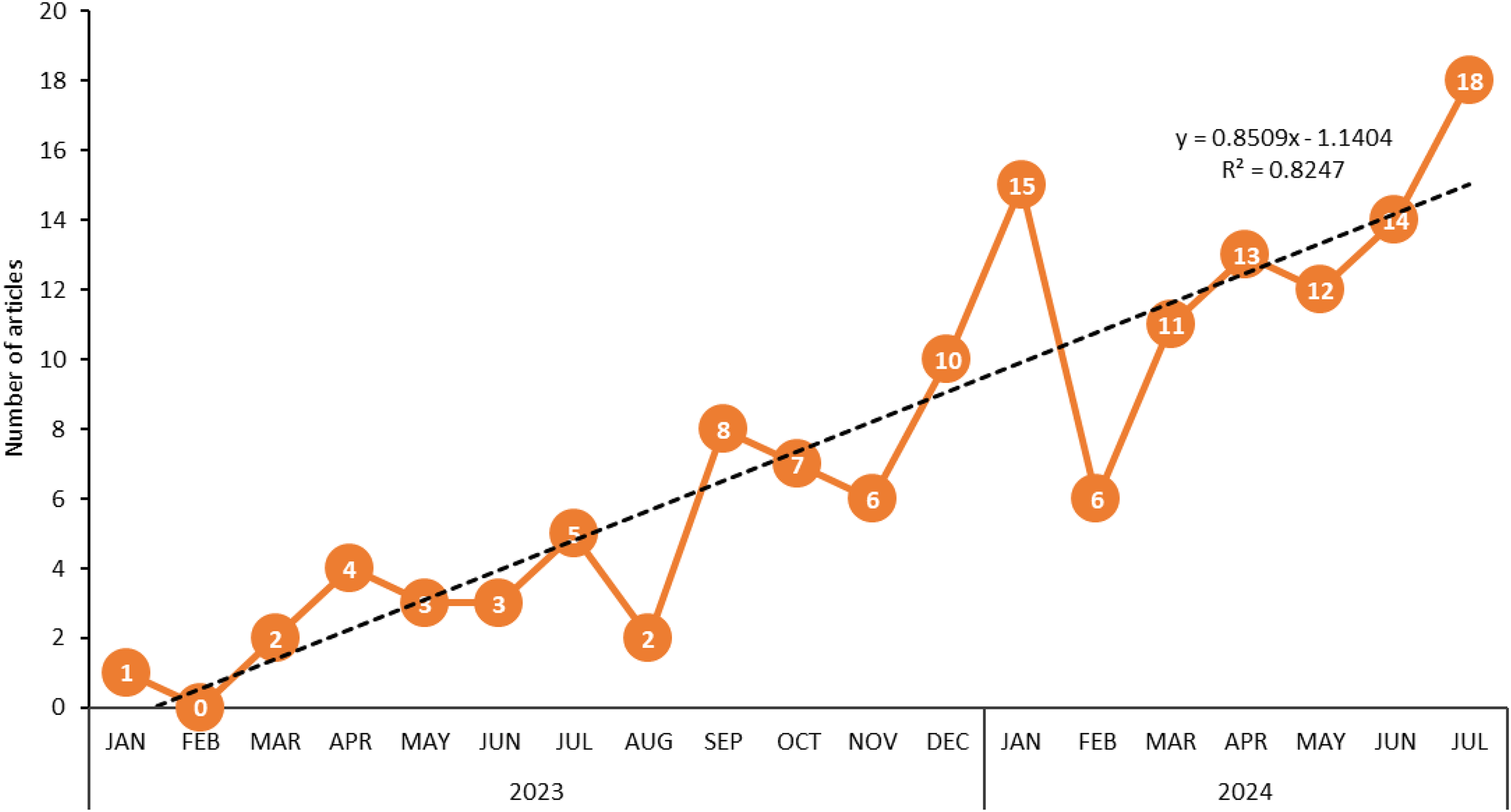
Publication trends in Chat generative pretrained transformer (ChatGPT) research in higher education.
Country Analysis
ChatGPT research in HE involves contributions from 62 countries (see Figure 3). China leads with 16 publications, followed by the United States (13) and the United Kingdom (11). This dominance may reflect not only the strength of their research ecosystems but also their strategic investments in AI and digital transformation initiatives within HE. The early adoption of generative AI technologies in these countries has likely accelerated scholarly attention toward ChatGPT-related opportunities and challenges. Furthermore, their leadership in AI research more broadly suggests that ChatGPT studies in HE are emerging as part of a wider national agenda focused on educational innovation and technological competitiveness. Beyond these leading contributors, a second group of countries has also demonstrated substantial research activity. Saudi Arabia (10), Malaysia (9), India and Australia (8 each), and Vietnam and the United Arab Emirates (7 each) represent growing centers of interest in generative AI within HE. These contributions signal the increasing diffusion of ChatGPT-related research beyond traditional AI powerhouses, particularly across the Middle East and Southeast Asia. Jordan (6), Indonesia, and Taiwan (5 each) also showed active involvement, with Indonesia's contributions indicating AI adoption growth in developing countries. Countries such as Brazil, Egypt, Pakistan, Peru, and Spain (4 each), along with others reporting smaller publication outputs, further illustrate the expanding global engagement with ChatGPT research. This pattern suggests that scholarly interest in generative AI for HE is becoming increasingly international and is likely to continue growing as AI applications in education mature worldwide. Despite this broad geographic participation, international research collaboration remains relatively limited. In co-authorship analysis, only 12 countries had at least five publications, highlighting limited international collaboration. Figure 4 shows co-authorship links, emphasizing the role of cross-border cooperation in advancing ChatGPT research in HE.
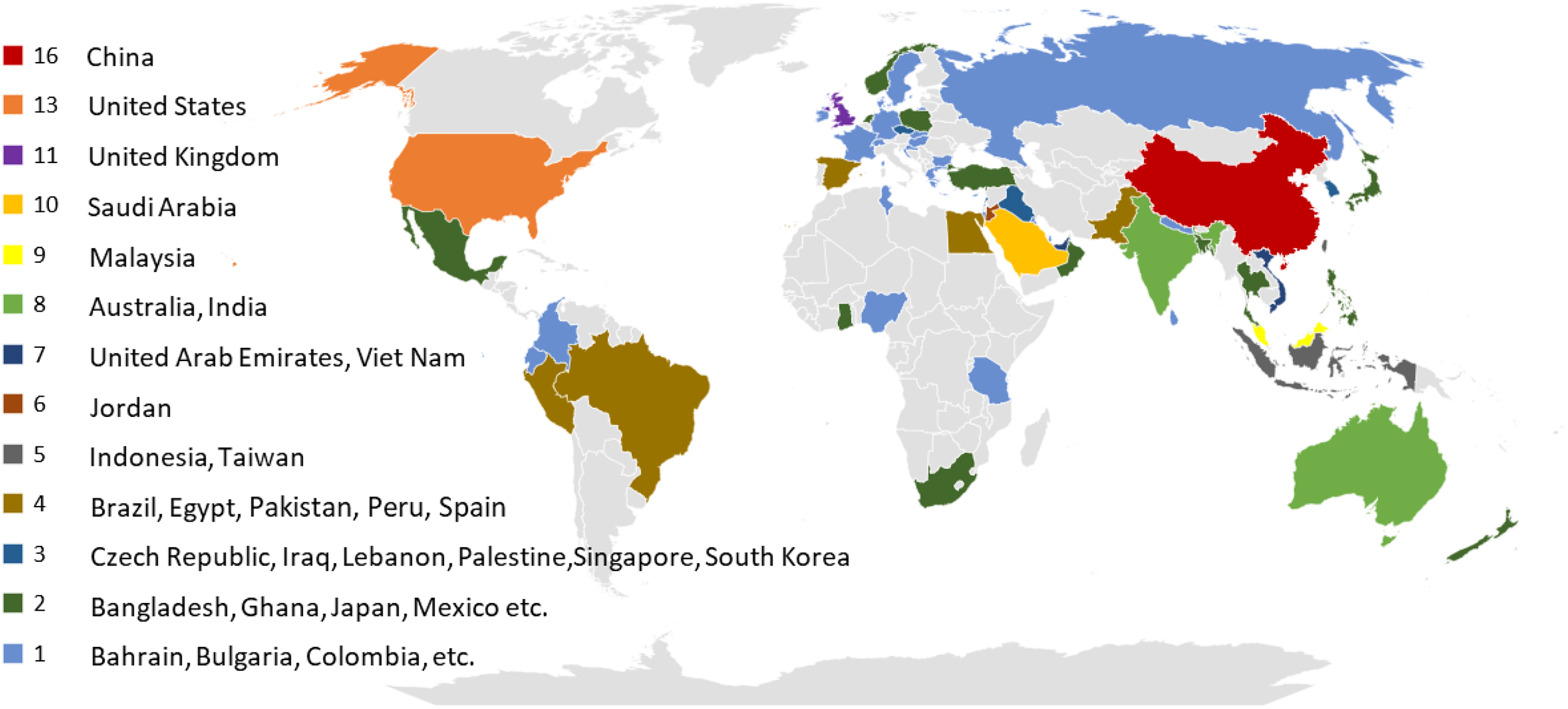
Distribution map of Chat generative pretrained transformer (ChatGPT) research articles in higher education by country.
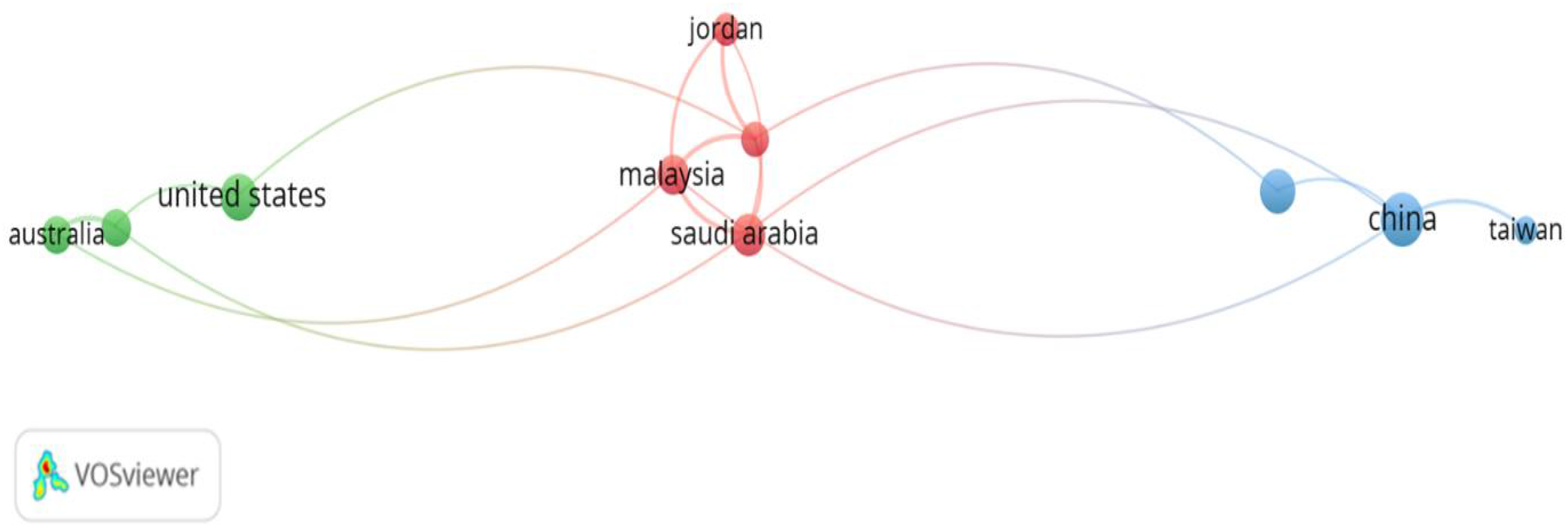
Network mapping of articles published by co-authors from different countries for chat generative pretrained transformer (ChatGPT) research in higher education.
Institutional Analysis
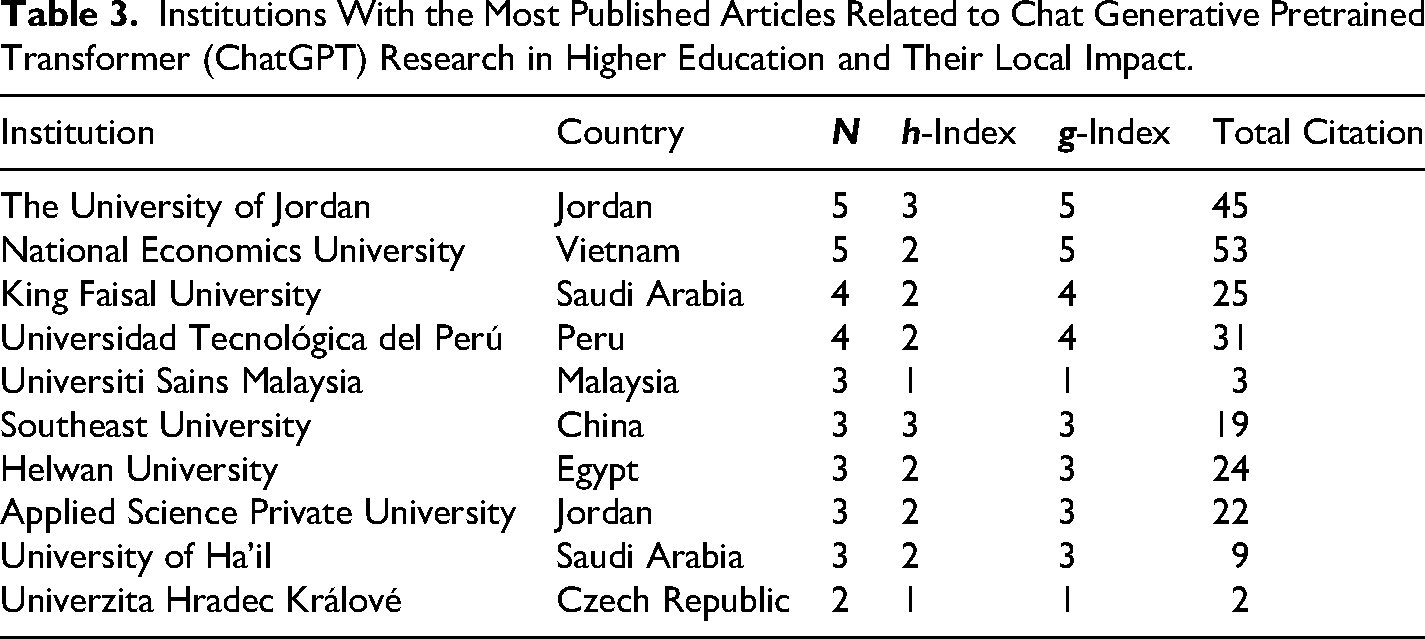
ChatGPT-related research in HE involved 160 institutions globally. Table 3 highlights the top 10 institutions and their h-index, g-index, and total citations, showcasing contributions from countries like Jordan, Vietnam, Saudi Arabia, Peru, Malaysia, China, Egypt, and the Czech Republic. The University of Jordan and National Economics University Hanoi lead with five articles each, reflecting significant contributions from the Middle East and Southeast Asia, regions rapidly adopting AI in HE. King Faisal University (Saudi Arabia) and Universidad Tecnológica del Perú follow with four articles each, highlighting interest from both Middle Eastern and South American institutions. Universiti Sains Malaysia, Southeast University (China), and Helwan University (Egypt) each contributed three articles, further indicating widespread interest across Asia and Africa. Applied Science Private University (Jordan) and the University of Ha’il (Saudi Arabia) also published three articles reinforcing the Middle East's active role in this research area. It is important to note that this table only shows the top 10 institutions. However, some countries still need to be included despite having the same number of publications, especially for institutions with two articles. The participation of 160 institutions underscores the rapid growth of ChatGPT research globally. Taken together, these institutional patterns reveal a geographical shift in the production of ChatGPT-related research within HE. Many of the most productive institutions are located in Asia and the Middle East rather than in traditionally dominant Western research hubs. This pattern may indicate that emerging and developing HE systems view generative AI as an opportunity to accelerate educational innovation, enhance learning accessibility, and strengthen international research visibility. The findings suggest that interest in ChatGPT is not confined to technologically advanced countries but is becoming a globally distributed research phenomenon.
Institutions With the Most Published Articles Related to Chat Generative Pretrained Transformer (ChatGPT) Research in Higher Education and Their Local Impact.
Journal Analysis
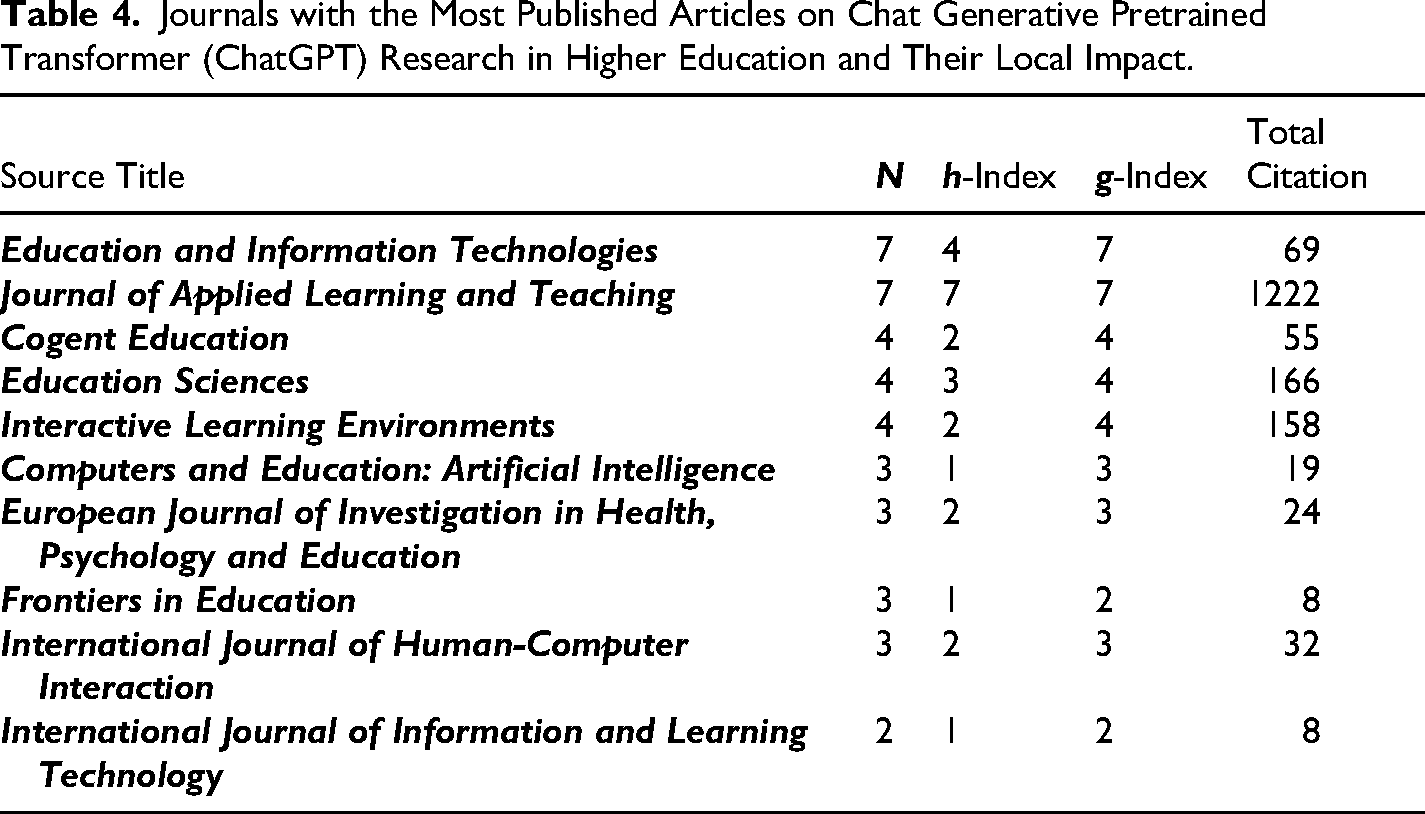
Research on ChatGPT in HE includes 48 articles from the top 10 journals (see Table 4). This selection, based on PRISMA and specific inclusion criteria, reflects varying editorial focuses on AI and education. The Journal of Education and Information Technologies and the Journal of Applied Learning and Teaching led with seven articles each, emphasizing technology's role in teaching and learning. Other journals, such as Cogent Education, Education Sciences, and Interactive Learning Environments, contributed four articles each, highlighting ChatGPT's growing relevance across educational disciplines, particularly in digital learning environments. Journals like Computers and Education: AI, European Journal of Investigation in Health Psychology and Education, Frontiers in Education, and International Journal of Human–Computer Interaction published three articles each, reflecting the interdisciplinary nature of ChatGPT research, spanning technology, psychology, and human–computer interaction. The International Journal of Information and Learning Technology contributed two articles, reinforcing its focus on integrating AI in education. It is important to note that Table 4 presents only the 10 most productive journals, while several other journals also contributed comparable publication outputs. The concentration of publications in education technology journals suggests that ChatGPT is primarily being examined as a pedagogical innovation rather than merely a technological advancement. This pattern reflects a growing shift in HE research from discussing the technical capabilities of generative AI toward evaluating its implications for teaching practices, student learning experiences, and institutional transformation.
Journals with the Most Published Articles on Chat Generative Pretrained Transformer (ChatGPT) Research in Higher Education and Their Local Impact.
Citation Analysis
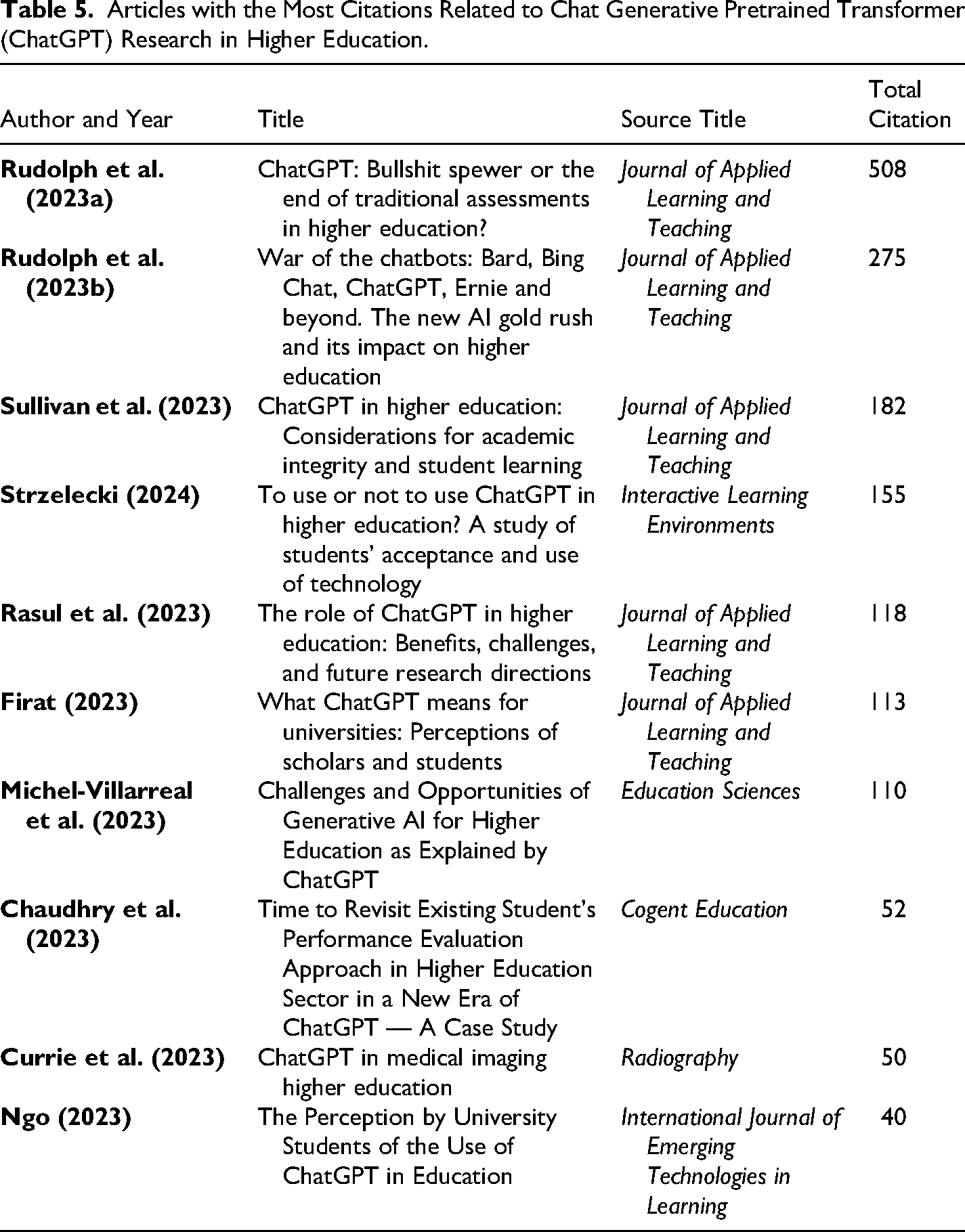
A citation analysis based on Scopus data identified 2,412 citations for articles on ChatGPT in HE, with the 10 most-cited works accounting for 1,603 citations (Table 5). These articles highlight the significant academic impact of ChatGPT research. The most-cited paper, Rudolph et al. (2023a), titled “ChatGPT: Bullshit spewer or the end of traditional assessments in HE?” has 508 citations. Published in the Journal of Applied Learning and Teaching, it explores how ChatGPT challenges traditional assessment methods, sparking widespread debate. Another notable work by Rudolph et al. (2023b), “War of the chatbots: Bard, Bing Chat, ChatGPT, Ernie and beyond. The new AI gold rush and its impact on HE”, garnered 275 citations. It examines AI chatbot competition and its implications for education. Sullivan et al. (2023), with 182 citations, address academic integrity and student learning challenges in adopting ChatGPT. Strzelecki (2024), cited 155 times, focuses on student acceptance of ChatGPT, while Rasul et al. (2023) explore its benefits and challenges in HE (118 citations). Firat (2023), with 113 citations, examines scholar and student perceptions of ChatGPT, and Michel-Villarreal et al. (2023), cited 110 times, discuss the challenges and opportunities of generative AI in education. Other impactful works include Chaudhry et al. (2023) on reassessing student performance metrics (52 citations), Currie et al. (2023) on ChatGPT's role in medical education (50 citations), and Ngo (2023) on student perceptions (40 citations). These articles collectively illustrate the growing influence of ChatGPT research in HE.
Articles with the Most Citations Related to Chat Generative Pretrained Transformer (ChatGPT) Research in Higher Education.
Co-Occurrence Analysis
Co-occurrence analysis in ChatGPT research in HE provides a comprehensive overview of research trends and thematic concentrations within the field. The co-occurrence of terms extracted from article titles and abstracts indicates conceptual relationships among topics, enabling the identification of dominant themes and emerging research directions. In this study, the binary counting method was used to calculate term frequencies, and only terms appearing at least 10 times were included in the analysis. The resulting visualization helps reveal key issues and thematic structures related to ChatGPT in HE. Node size represents term frequency, while different colors indicate clusters of closely related concepts.
A total of 89 terms were identified and grouped into three clusters, as shown in Figure 5. The first cluster, shown in red, contains terms associated with HE institutions, learning, and research activities. The prominence of these terms suggests that current ChatGPT research remains strongly anchored in institutional and pedagogical contexts rather than purely technical AI development. This finding indicates that researchers are primarily concerned with understanding how generative AI reshapes teaching, learning, and knowledge production within universities. The cluster is structured around highly connected terms such as HE, university, research, and learning, which collectively represent the dominant educational context of ChatGPT-related studies.
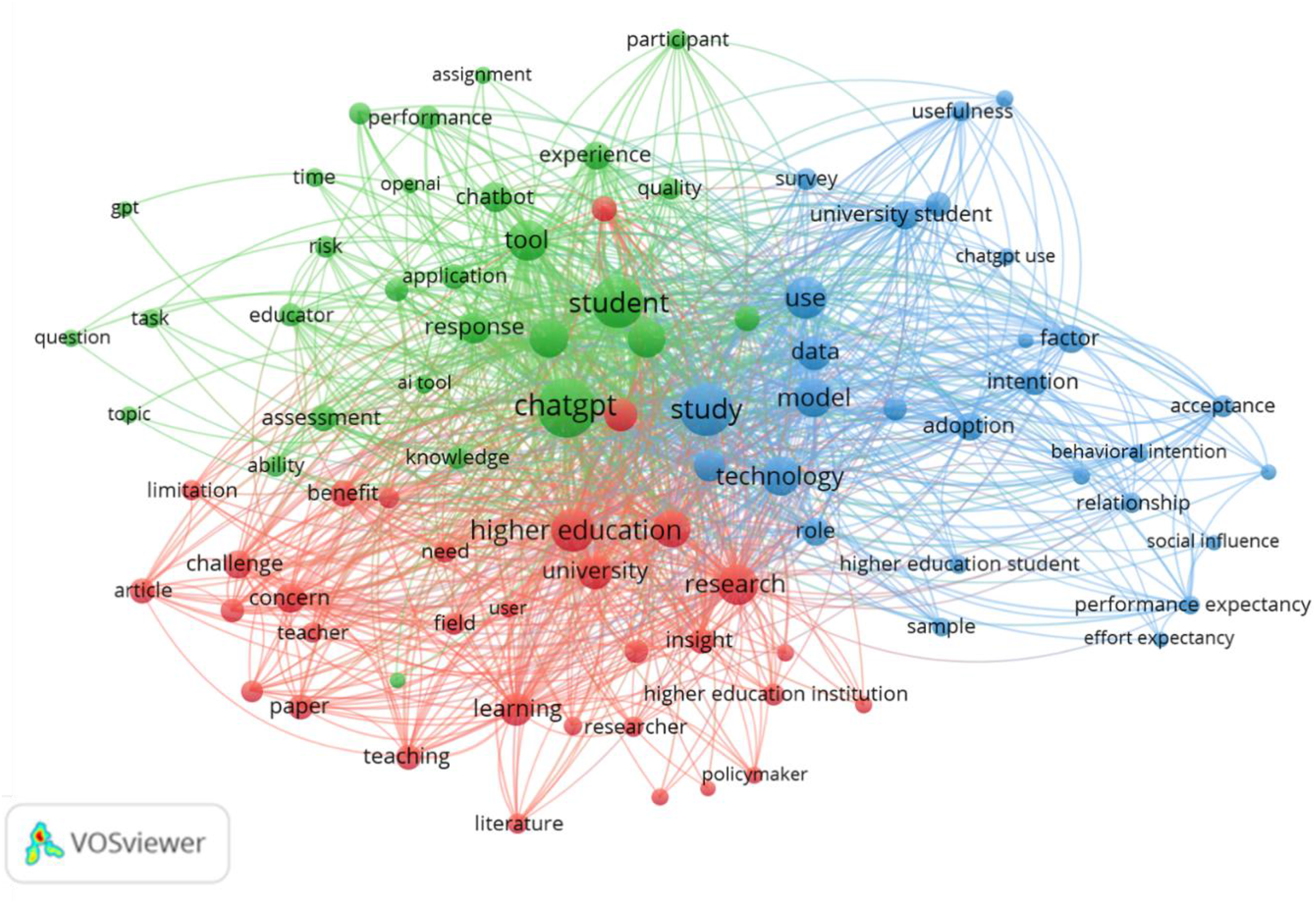
Visualize a cluster map based on co-occurrence in the title or abstract.
The second cluster (shown in green) focuses on ChatGPT as a learning tool, highlighting terms such as student, response, tool, and chatbot. The centrality of these terms suggests that much of the literature emphasizes user interaction and educational applications. This pattern reflects the relatively early stage of ChatGPT adoption in HE, where researchers are primarily investigating practical implementation, learning support functions, and user experiences before examining broader institutional or policy implications. The cluster, therefore, highlights the growing interest in how students engage with chatbot technologies to support academic tasks and learning activities.
The third cluster, shown in blue, includes terms related to technology, data, models, and research use. Unlike the first two clusters, which focus on educational settings and learner interactions, this cluster reflects efforts to understand the technological foundations and evidence base underlying ChatGPT implementation. The central terms—study, technology, use, data, model, and role—suggest that researchers are not only evaluating educational outcomes but also examining the technological mechanisms, data-related considerations, and conceptual frameworks that shape the effective integration of generative AI in HE.
Analysis of Future Research Directions
An analysis of future research directions in ChatGPT studies in HE, based on the network visualization generated by VOSviewer, provides insight into research topics that will trend in the future (see Figure 6). In this visualization, terms from article titles and abstracts are analyzed based on their frequency of occurrence, providing clues about established and emerging topics. Blue represents older, well-established terms in research, while yellow indicates emerging terms that may become a significant focus.
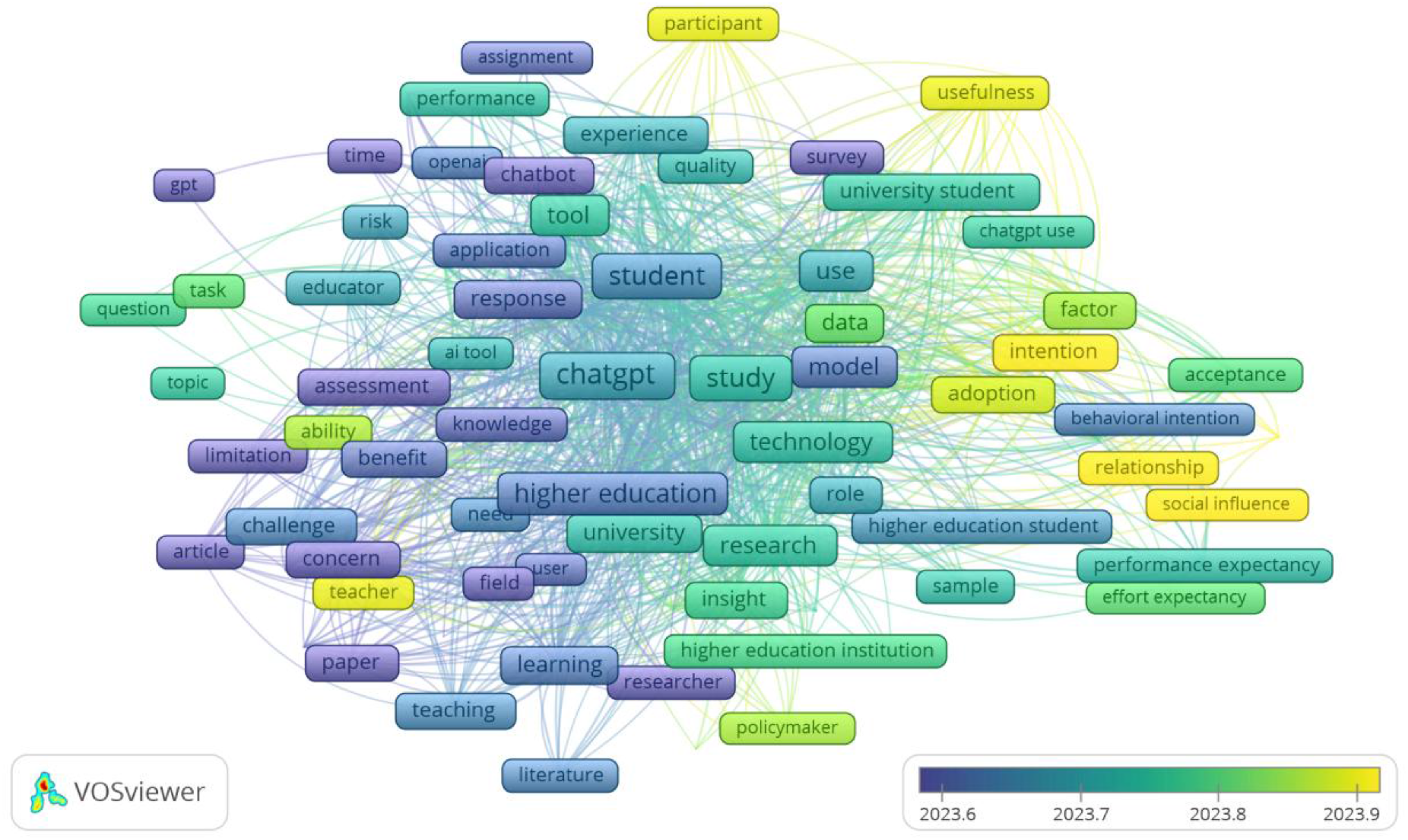
Network visualization map analyzes the terms in chat generative pretrained transformer (ChatGPT) research in higher education based on their frequency of occurrence. Blue represents terms that appeared earlier, while yellow indicates terms that appeared later.
Emerging terms such as intention, relationship, and social influence indicate a notable shift in research priorities. While early studies primarily focused on the capabilities and educational applications of ChatGPT, recent attention appears to be moving toward understanding the human and social factors that influence its adoption. This transition suggests that the field is gradually maturing from technology-centered investigations toward more theory-driven research grounded in technology acceptance, social interaction, and behavioral perspectives. The emergence of intention, relationship, and social influence as recent keywords illustrates this shift and highlights several promising directions for future investigation. The term intention refers to research exploring users’ motivations for adopting ChatGPT, particularly in HE settings. Future studies may focus on how students’ and lecturers’ intention to use ChatGPT affects the effectiveness and productivity of its use in the learning process (e.g., Foroughi et al., 2024; Maheshwari, 2024; Menon & Shilpa, 2023). This aspect is essential as the success of technology integration in education is often determined by user intent and acceptance (Dwivedi et al., 2019; Raffaghelli et al., 2022).
The term relationship also reflects the growing interest in research into the interactions between different components in HE involving ChatGPT. Future research might explore how ChatGPT affects the relationship between students and lecturers (e.g., Baskara, 2023; Yang et al., 2023) or how ChatGPT integration interacts with other learning technologies such as learning management systems (e.g., Firat, 2023) and other AI-based learning tools. This aspect is essential to understanding the emerging dynamics in the digital education environment, where ChatGPT can act as a catalyst in changing interactions and communication between educational actors (Firat, 2023; Niloy et al., 2024; Peters et al., 2024).
The term social influence has also emerged as a new topic being studied by researchers. Social influence may be necessary in adopting ChatGPT in HE environments. Social influence in this context may include students’ perceptions of ChatGPT use based on classmates’ experiences, the influence of academic norms, as well as how educational institutions promote the use of the technology (Chan & Hu, 2023; Ngo, 2023; Shoufan, 2023; Singh et al., 2023). Research on social influence may also expand understanding of resistance or support to using ChatGPT, particularly about questions of ethics and fairness in its access and use (Ray, 2023; Stahl & Eke, 2024).
This visualization of emerging terms indicates that the focus of research on ChatGPT is beginning to shift in more complex directions, including topics involving psychological (de Winter et al., 2024), social (Baldassarre et al., 2023), and technological (Kalla et al., 2023) aspects. This means that future research will focus not only on the technical aspects of ChatGPT in learning but also on how these technologies are received, integrated, and utilized by individuals and groups in HE environments (Al Shloul et al., 2024). Furthermore, this trend reflects a greater effort to understand how ChatGPT can create more adaptive and personalized learning environments (Festiyed et al., 2026; Kim & Adlof, 2024). For example, with the growing research on social intentions and relationships, there will be more studies looking at how ChatGPT can be tailored to individual needs and how this technology can contribute to academic success and the overall learning experience.
This development in research direction may also reflect the increasingly urgent need to prepare HE institutions for the ongoing technological transformation (de Mattos et al., 2024). With the emergence of these new terms, such as intention, relationship, and social influence, it is clear that ChatGPT, as one representation of AI, has the potential to bring significant changes in pedagogy and learning strategies. HE institutions must understand this trend to adapt quickly and maximize this technology's potential.
Discussion
This study presents an initial exploration of research trends related to ChatGPT in HE using a bibliometric approach. The results show a significant increase in publications during 2023 and 2024, indicating growing academic interest in this topic. Beyond reflecting the novelty of ChatGPT itself, this rapid growth suggests that HE institutions are actively responding to the disruptive potential of generative AI. Previous studies have shown that major technological disruptions often spur extensive educational research and institutional adaptation as scholars seek to understand both the opportunities and challenges posed by emerging technologies (Crawford et al., 2020; Tlili et al., 2023). Therefore, the observed growth in publications may reflect the early stages of a broader transformation in HE, driven by AI-assisted learning, teaching, and knowledge generation. At the same time, the literature highlights that the integration of generative AI is accompanied by both opportunities and challenges, particularly regarding learning support, assessment practices, and student–teacher interactions (ElSayary, 2024; Grassini, 2023; Javaid et al., 2023; Rudolph et al., 2023a). With the increasing adoption of ChatGPT in HE (Shahzad et al., 2024; Tiwari et al., 2024), understanding the conditions under which this technology enhances learning quality and teaching effectiveness has become an important research priority.
The findings also demonstrate that ChatGPT research in HE is globally distributed, although publication productivity remains concentrated in countries such as China, the United States, and the United Kingdom. Similar patterns have been identified in previous bibliometric studies, which consistently reported the dominance of technologically advanced countries in AI and ChatGPT research (Khan et al., 2024; Koo, 2025; Nan et al., 2025). However, the growing contributions from countries in Southeast Asia, the Middle East, and other developing regions suggest that generative AI is increasingly viewed as a strategic component of educational innovation rather than merely a technological novelty. The active participation of institutions from diverse geographical regions further indicates that interest in ChatGPT extends beyond traditional centers of educational technology research. Nevertheless, the relatively limited international collaboration observed in the co-authorship analysis suggests that the field remains fragmented. Strengthening international partnerships may facilitate the development of more comprehensive evidence, shared ethical frameworks, and context-sensitive policies for the responsible integration of generative AI in HE.
Another notable finding concerns the institutional and publication outlets driving the field. The prominence of institutions such as the University of Jordan and the National Economics University in Hanoi suggests that leadership in ChatGPT research is not confined to traditionally dominant Western universities. This pattern indicates that universities in emerging and developing HE systems are actively contributing to the global conversation on generative AI and educational innovation. Similarly, the concentration of publications within educational technology journals suggests that ChatGPT is increasingly being examined through pedagogical rather than purely technological lenses. The strong presence of journals focusing on learning, teaching, and educational technology reflects a growing recognition that generative AI's significance lies not only in its technical capabilities but also in its potential to reshape instructional practices, assessment approaches, and student learning experiences in HE.
The thematic structure identified through co-occurrence analysis provides additional insight into the field's evolving focus. The three clusters reveal that existing studies are primarily concerned with educational and institutional contexts, student-centered applications, and technology-related investigations. This finding suggests that ChatGPT research in HE has already moved beyond purely technical discussions and is increasingly examining how generative AI interacts with teaching, learning, and academic environments. The prominence of terms related to students, learning, research, and technology indicates that researchers are seeking to understand not only what ChatGPT can do but also how it can be meaningfully integrated into educational processes. Such findings are consistent with previous studies that position ChatGPT as both a technological innovation and a pedagogical phenomenon with implications for instructional design, learner support, and educational transformation (Bhullar et al., 2024; Polat et al., 2024).
The overlay visualization analysis further reveals emerging topics such as intention, relationship, and social influence. The emergence of these terms suggests a gradual shift from technology-centered investigations toward studies that emphasize the human, behavioral, and social dimensions of generative AI adoption. This trend aligns with broader developments in educational technology research, where successful implementation is increasingly understood as depending not only on technological capabilities but also on user perceptions, social environments, and institutional support mechanisms. Consequently, future research may increasingly draw upon theoretical perspectives from technology acceptance, educational psychology, motivation, and self-regulated learning to explain how students and educators adopt, use, and respond to ChatGPT within HE settings. The emergence of these topics indicates that the field is entering a more mature phase in which questions of adoption, engagement, and sustainable use may become as important as technical performance and functionality. Building upon this observed shift, Figure 7 presents a conceptual framework derived from the bibliometric findings. The framework suggests that emerging topics such as intention, relationship, and social influence may stimulate the integration of theoretical perspectives, including technology acceptance, self-regulated learning, and educational psychology. These theoretical foundations can inform future investigations into AI literacy, human–AI collaboration, assessment innovation, and academic integrity, ultimately contributing to improved educational outcomes and institutional transformation within HE.
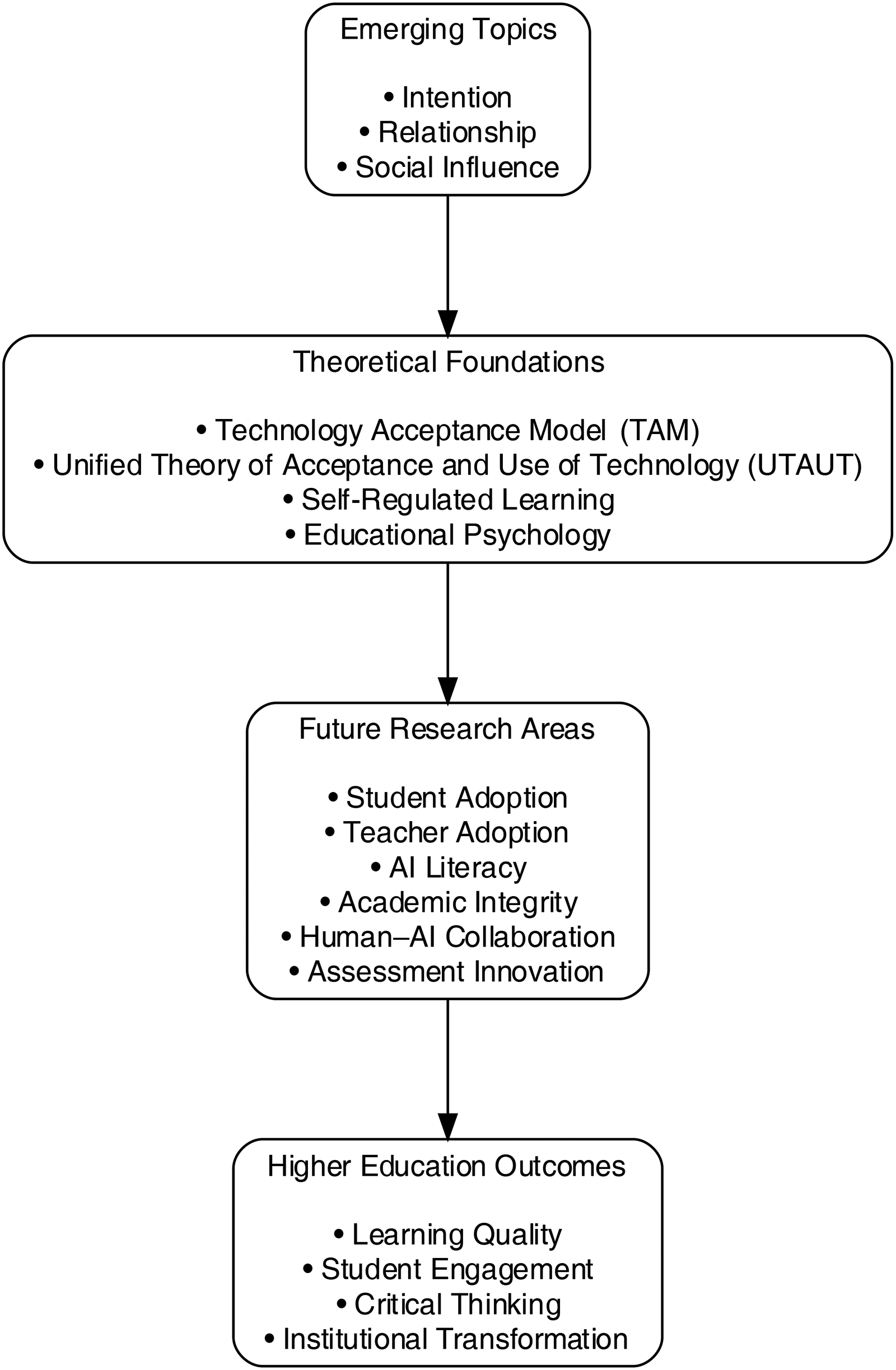
Emerging research agenda for chat generative pretrained transformer (ChatGPT) in higher education derived from bibliometric findings.
From a theoretical perspective, the findings suggest that research on ChatGPT in HE is gradually evolving from descriptive examinations of technological capabilities toward more theory-informed investigations. The emergence of adoption-related and social themes indicates growing opportunities to integrate perspectives from technology acceptance theories, educational psychology, motivation research, and self-regulated learning frameworks. Such theoretical integration is important because the educational impact of generative AI cannot be fully explained through technological perspectives alone. Instead, understanding how students and educators perceive, adopt, and interact with ChatGPT requires consideration of pedagogical, psychological, and institutional factors. By identifying emerging thematic directions and shifts in research focus, this study contributes to understanding the evolving intellectual structure of ChatGPT scholarship within HE.
The findings also have several practical implications for HE institutions, educators, and policymakers. First, the rapid growth of ChatGPT-related research suggests that generative AI technologies are becoming an increasingly important component of HE ecosystems. Institutions should therefore move beyond reactive measures and develop comprehensive strategies that address ethical AI use, academic integrity, assessment practices, data privacy, and responsible implementation. Second, educators should consider how to integrate ChatGPT into pedagogical practices to support higher-order thinking, reflection, and problem-solving, rather than merely automating academic tasks. Third, the growing prominence of behavioral and social themes suggests that successful implementation will depend not only on access to technology but also on users’ readiness, digital competencies, and AI literacy. Consequently, HE institutions may benefit from developing educational initiatives that promote critical awareness, ethical reasoning, and responsible AI use among students and educators alike.
Finally, the findings highlight several promising directions for future research. While current studies have largely focused on adoption, applications, and immediate educational implications, less attention has been paid to the long-term consequences of integrating generative AI in HE. Future investigations should therefore examine how ChatGPT influences learning autonomy, critical thinking, assessment practices, academic integrity, and institutional transformation over time. In addition, greater attention should be given to cross-cultural comparisons and collaborative international research efforts to better understand how generative AI is reshaping HE across diverse educational contexts.
Limitations
The findings of this study should be interpreted in light of several limitations. First, the analysis was limited to articles indexed in the Scopus database. Although Scopus is widely recognized as a comprehensive and reliable source for bibliometric studies (Boateng et al., 2024; Fadillah et al., 2025; Siregar et al., 2026), relevant publications indexed in other databases, such as Web of Science or PubMed, may not have been captured by Scopus. Second, the title-only search strategy was adopted to maximize precision and ensure that ChatGPT and HE constituted the primary focus of the retrieved records. However, this approach may have excluded relevant studies that discussed these topics extensively in the abstract or full text but did not explicitly mention them in the title.
In addition, the dataset reflects a relatively early stage of research development, as ChatGPT was introduced only in late 2022 (Grassini, 2023). Consequently, the available publication window remains limited, restricting the identification of long-term research patterns. Furthermore, the keyword selection was based on prior literature (Baig & Yadegaridehkordi, 2024; Hernández-Torrano et al., 2020), and some relevant terminology may have been omitted, potentially excluding relevant publications. Future studies may benefit from combining multiple databases, employing broader search strategies, and extending the observation period as the field continues to mature.
Conclusion
This study demonstrates that research on ChatGPT in HE has evolved rapidly from an emerging topic into a globally recognized field of scholarly inquiry. Beyond documenting publication growth, influential contributors, and thematic structures, the findings reveal a broader shift in research attention from the technological capabilities of generative AI toward questions of adoption, human behavior, social influence, and educational integration. This transition suggests that the future of ChatGPT research will be shaped not only by advances in AI but also by a deeper understanding of how students, educators, and institutions interact with these technologies within complex educational environments. By providing a comprehensive overview of the field's intellectual landscape and identifying emerging research trajectories, this study contributes to a clearer understanding of how generative AI is reshaping HE and offers a foundation for future investigations into its pedagogical, social, and institutional implications.
Footnotes

Ethical Approval
Institutional Review Board approval was not needed as all data are publicly available.
Funding
The authors received no financial support for the research, authorship, and/or publication of this article.
Declaration of Conflicting Interests
The authors declared no potential conflicts of interest with respect to the research, authorship, and/or publication of this article.