







Abstract
The dual pore structure of coal and occurence of gas adsorption make gas-bearing coal different from other non-adsorptive porous materials, and therefore interactions between coal and gas cannot be accurately described by Terzaghi effective stress. Considering adsorbed-gas-induced swelling stress and erosion, and pore/fracture-induced damage and failure to coal skeleton, the new effective stress equation for three-phase medium composed of free gas, adsorbed gas and coal skeleton is established. It can be used to reveal the effects of the spatial and temporal distribution and evolution of coal pores/fractures under different stress conditions on coal's mechanical deformation and damage characteristics, and to quantify the erosion effects of adsorbed gas on coal from a physicochemical point of view. Based on the basic principles of irreversible thermodynamics, a dual pore elastic-brittle-plastic damage constitutive model of gas-bearing coal is established. The model is further verified through the full stress–strain experiments and the adsorption-induced swelling experiments of gas-bearing coal under different axial pressures, and compared with the elasticoplasticity model established based on Terzaghi effective stress. The results show that the dual pore damage constitutive model could better describe the gas–coal interaction mechanism, and solve the fluid–solid coupling problems in gas and coal engineering practices.
Introduction
To solve the problems of mine gas disaster, develop coalbed methane resource and improve methane extraction efficiency, many researchers have carried out various theoretical and experimental studies on the gas diffusion in coalbed (He and Nie, 2001; Kuznetsov and Bobin, 1987; Vasyuchkov, 1985), seepage flow (Bordier and Zimmer, 2000; Liu et al., 2003; Wu et al., 1998; Yu et al., 1989), and fluid–solid coupling (Jasinge et al., 2011; Liu et al., 2009; Pini et al., 2009; Tang et al., 2002; Yang et al., 2005; Zhao et al., 1993). Among them, the deformation and mechanical response characteristics of gas-bearing coal are the key for solving fluid–solid coupling of gas and coal. The fluid–solid coupling is established mainly based on effective stress principle (Biot, 1941, 1956; Skempton, 1960; Terzaghi, 1943). At the early years of study, most gas–coal coupling theories were based on the principle of Terzaghi effective stress (Terzaghi, 1943) and consideration that the effective stress is the difference between the external body stress and the internal pore pressure of the medium. However, experimental studies found that Terzaghi model is more applicable to soil medium with greater looseness, while for coal rock with higher degree of cementation, there are certain differences between experimental results and theoretical model. Biot (1941, 1956) studied the interaction between the three-directional deformation material and the pore pressure in it and established a three-dimensional consolidation theory fit for rock materials, laying the foundation for the underground fluid–solid coupling theory.
However, coal rock with pores and fluid is a multiphase medium consisting of pore fluid and coal rock solid pore material, and methane is in both free and adsorbed status in coal seams (Gray, 1987; Harpalani and Chen, 1997; Pillalamarry et al., 2011). In the study on multi-phase or two-phase media, Terzaghi effective stress (or related modified models) was usually used to describe the interaction between pore fluid and solid skeleton. However, modern physicochemical researches and a large number of experiments showed that between pore fluid and solid skeleton, not just is there pure mechanical action, there still exist gas adsorption-induced swelling, gas desorption-induced shrinkage, and gas-induced erosion of coal (He, 1995). Thus, directly applying the effective stress theory in soil mechanics cannot accurately describe the mechanism of coal and gas interaction. For the three-phase medium composed of free gas, adsorbed gas and solid skeleton of coal, only considering the overall deformation and failure law of three-phase medium, can be more accurate quantitative description the effective stress and mechanical deformation and damage characteristics of gas-filled coal.
Many experimental researches on gas-adsorption-induced swelling (Gao et al., 1999; Harpalani and Chen, 1997; Karacan, 2003, 2007; Liu et al., 2010; Zhou and Lin, 1999) found that coal would swell and deform after adsorbing gas. Li et al. (2007) theoretically analyzed the relationship between the swelling stress generated by gas adsorption on coal and the effective stress. He et al. (1996), Jin et al. (1991), and Liang et al. (1995) experimentally studied the effects of adsorbed gas on mechanical properties of coal and found that after coal adsorbing gas, coal’s elastic modulus and strength all reduced. Jiang et al. (2007) applied the mixture theory to set up the constitutive model in which the effects of free and adsorbed gases on coal deformation were considered. From previous researches, it can be seen that the impacts of gas adsorption on coal deformation are mainly mechanical and non-mechanical impacts. The former is the reduced effective stress directly due to pore pressure and the adsorption-induced swelling stress, and the latter is erosion effect. Gas adsorption on coal surface leads to a reduction in the solid surface potential of coal, which in turn decreases its strength. Therefore, in the study on the effective stress and the mechanical properties of gas-bearing coal, it is necessary to consider both the mechanical and non-mechanical impacts of adsorbed gas on coal's mechanical properties.
In addition, based on the characteristics of coal's dual pore structure (Clarkson and Bustin, 2011; Engler, 2000; Liu et al., 2011), scholars widely adopted the dual pore model to characterize coal rock characteristics (Luo, 1998; Manik et al., 2002; Thararoop, 2010; Warren and Root, 1963; Wu et al., 2010). The model holds that fractures are of high permeability and pores in the coal matrix are of low permeability, while gas simultaneously flows in both fractures and pores. Gas adsorbed by coal is mainly stored in micropores, and gas in fractures is mainly in its free state. Therefore, gas in pores and gas in fractures has different impacts on coal deformation. The former, being in its adsorbed state, produces the pore pressure and the adsorption-induced swelling stress, while the latter, being in its free state, only causes the pore pressure. The pressure of free gas on pores behaves as the volume force, only will the mechanical action be considered. Gas adsorption/desorption on coal also will produce non-mechanical effects (He et al., 1996; Jin et al., 1991; Liang et al., 1995). So, to better fit the true mechanical response of gas-bearing coal, the dual pore structure of coal (the matrix pores and microscopic fractures) should be considered into the constitutive equation of effective stress of gas-bearing coal, and pore deformation should be distinguished from fracture deformation.
The solid–fluid interaction is still related to the distribution of internal bores\fractures structure (Stephansson et al., 2001; Tsang, 1991; Zhao et al., 2004). During coal mining or gas drainage, the stress field of coal seams, the fracture field, and the gas seepage field all will change. The development and coalescence of coal rock fissures excited by mining or unloading will change the coal–gas interaction. The impacts of both pore gas and adsorbed gas on coal change with coal damage and failure. In some existing researches on effective stress, the impacts of coal damage and failure are overlooked.
Above all, gas-filled coal is a three-phase medium composed of free gas and adsorbed gas and the solid skeleton, and the existence of the pore fluid has the nature and mechanical behavior of solid porous media change, especially when the pore fluid has stronger adsorption performance, and this effect is more outstanding. In order to further reveal the deformation and failure mechanisms and mechanical properties of gas-bearing coal, this paper focuses on the following three issues:
According to fracture mechanics and microscopic damage mechanics, the effects of the temporal and spatial evolution of pores/fractures on the mechanical properties of coal are quantitatively investigated. From the angle that coal’s solid surface potential will decrease after it adsorbs gas, the non-mechanical impacts of adsorbed gas on the basic strength parameters of coal are studied, and especially the non-mechanical impact of adsorbed gas on the deformation characteristics of coal is quantified. Based on the basic principle of effective stress, the anisotropic, effective stress equation of gas-bearing coal is established by concurrently considering the swelling stress and erosion of adsorbed gas and the dual pore structure characteristics of coal. From the Mohr–Columb criterion, combined with the impacts of both expansion, damage, and failure of fractures and the non-mechanical action (erosion) of adsorbed gas on the mechanical properties of coal, the constitutive model for the dual pore damage of gas-bearing coal is constructed and the related verification experiments are performed.
The research is of significance for understanding the coal–gas interaction mechanism, and the characteristics of mechanical deformation and failure of gas-bearing coal, and as well as the diffusion and percolation of gas in coal seams.
Mechanical deformation and damage characteristics of gas-bearing coal
Dual pore structure of gas-bearing coal
Coal is a rock containing organic matter. Under an electron microscope, its organic matter looks like sponge, that is, it is a system of large micropores: the diameter of micropores is in the range from zero to a few nanometers, between them are linked and interwoven a lot of micro capillaries whose sizes approximate methane molecules, forming a ultra fine mesh structure, and in them there are a large internal surface area to form the pore structure characteristic of coal. In addition, inside the coal there still are a number of microfractures, pores and fractures which together form the dual pore structure of coal, as shown in Figure 1.
Dual pore structure of coal under scanning electron microscope. SEM images of a bituminous sample: intra-particle porosity. Magnification = 500_ (left), 1000_ (right).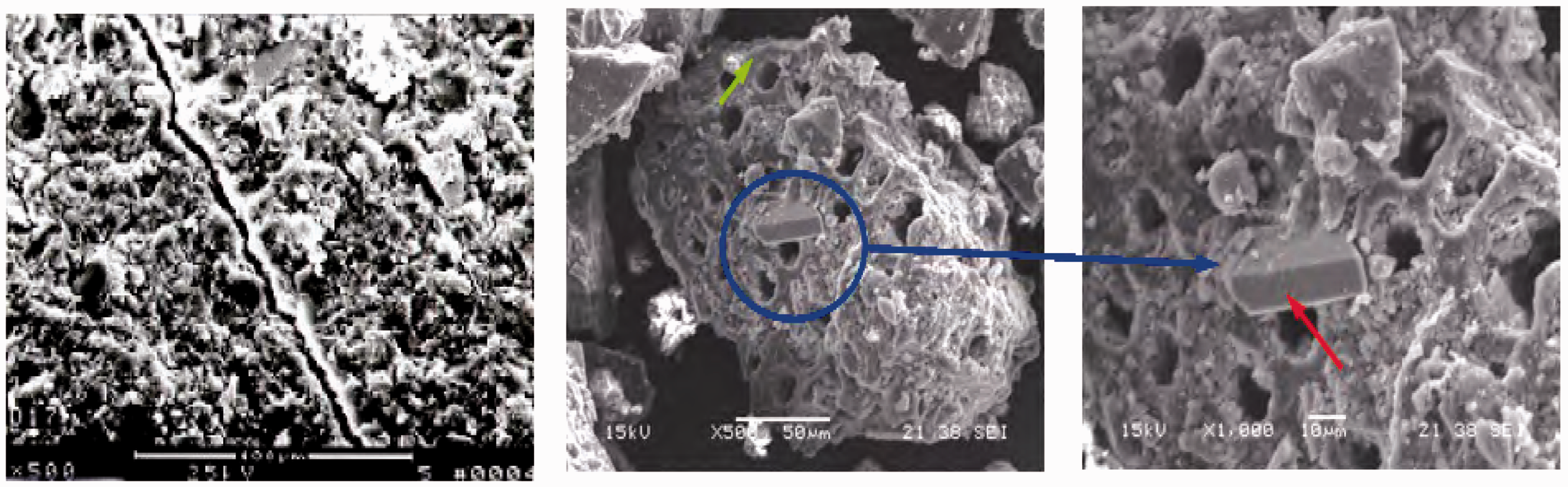
The micropore structure in the coal matrix provides a great adsorption space (Clarkson and Bustin, 2011; Engler, 2000; Liu et al., 2011). Gas in its adsorbed state desorbs in a specific condition, and flows through diffusion into fractures in coal where it exists in its free state. In pores and cracks of the coal matrix coexists free gas, and the main flow patterns of gas in coal are shown in Figure 2.
Schematic of gas flow in coal rock. (a) Gas sorption from a coal grain; (b) gas flow in the coal matrix; and (c) gas flow in the fracture network.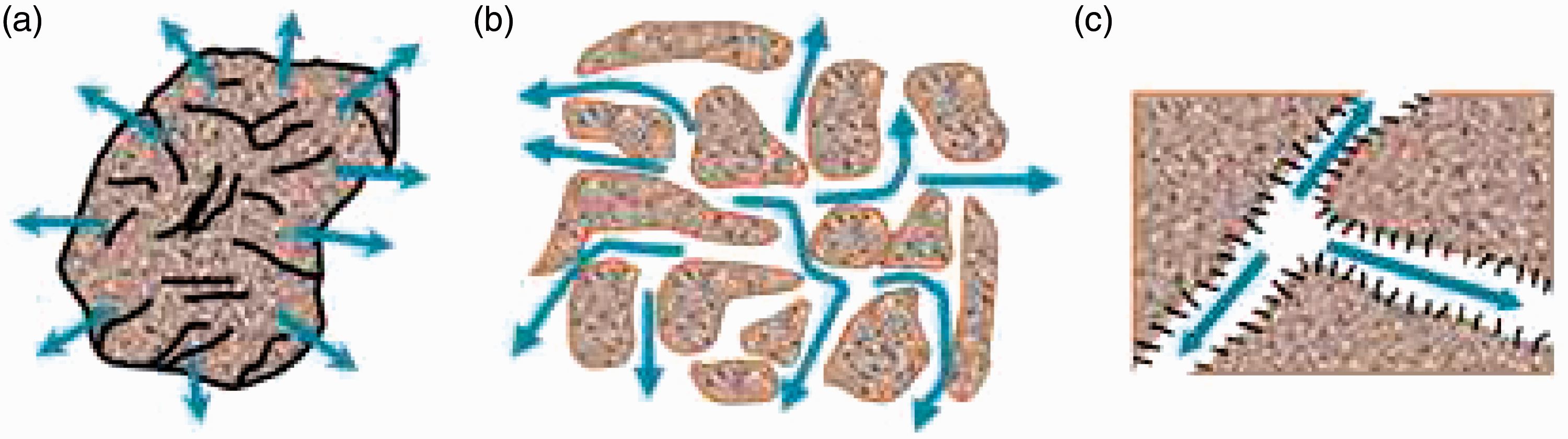
Coal rock in the underground mining space is subjected to the joint action of the in situ rock stress, mining stress, and gas pressure. Coal mining causes the in situ stress to re-distribute, accompanying with the production, development, and expansion of coal rock cracks, thus resulting in a decrease in the strength and the stiffness of coal rock. Gas adsorption on coal not only causes the volume of coal rock to swell (Gao et al., 1999; Harpalani and Chen, 1997; Karacan, 2003, 2007; Liu et al., 2010; Zhou and Lin, 1999), but also causes the chemical energy on the coal surface to decrease, thus affecting its elastic modulus and strength (He et al., 1996; Jin et al., 1991; Liang et al., 1995). Therefore, in order to accurately describe the mechanical properties of gas-bearing coal rock, it is necessary to consider the combined effects of the coal's skeleton, pores/fractures, and gas.
Pore and fracture damage of coal
Inside the coal, there are a lot of matrix pores and mesofractures. Scholars (Du et al., 2013; Jaric et al., 2013; Sophie et al., 2013) widely adopted elastic damage mechanics and mesoscopic damage mechanics to study the mechanical properties, the constitutive equation and the numerical calculation method of anisotropic materials. The damage compliance tensor is often used to describe the effects of coal matrix pores and initial fractures on coal deformation.
Many experimental researches on the impact of matrix pores on mechanical properties of dense rock have been done (Aran, 2002; Boutéca and Guéguen, 1999; Luo and Stevens, 1999). Through them, the corresponding empirical and theoretical formulas have been obtained. Based on the concept of two-phase equivalent body, Li et al. (2007), assuming that the matrix porosity is sphere-shaped, deduced the exact expression of the porosity rate and the bulk modulus of the porous medium. The theoretical formula of the impact of spherical matrix pores on the bulk modulus of rock is
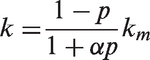
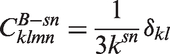
In addition to that the coal matrix porosity produces damage to coal, the anisotropic meso-fractures distributed in coal also damages coal. The Impacts of fractures on the damage of rocks have been reported by many scholars (Li and Zhu, 1999; Zhao et al., 2008; Zheng and Zhu, 2001; Zheng et al., 2002, 2004). Based on the hypothesis of the equivalent strain energy, Zheng and Zhu (2001) and Zheng et al. (2002, 2004) found the equivalent initial damage compliance tensor

The equivalent initial damage compliance tensor of fractured rock,

According to fracture mechanics, fractures under the pore pressure and peripheral stress will expand and coalesce. From Zheng et al. (2002), the additional compliance tensor

The equivalent elastic damage compliance tensor of porous media of the porosity n consists of two parts, one produced by the matrix pores, the other produced by fractures. Thus, the equivalent elastic damage compliance tensor of gas-bearing coal with the porosity n,

The equivalent elastic damage compliance tensor

To sum up, matrix pores and meso-fractures affect the coal’s characteristics of deformation and failure mainly by causing coal's damage and failure and increasing coal's damage compliance tensor.
Impact of gas on the mechanical properties of coal
Through the above analysis of experimental results of mechanical properties of porous gas-bearing coal, it is obvious that the damaging effects of gas adsorbed by pores on coal rock are not consistent with Terzaghi's principle of effective stress. He's deformation and failure experiments on gas bearing coal (He, 1995) found that the higher the pore gas pressure and the greater the load, the greater the amount of coal rock deformation, and the faster the speed of damage. The sorption-induced swelling experiments (Liu et al., 2010) also showed that the greater the gas pressure, the greater the coal's swelling deformation.
A large number of experiments with gas-containing coal rock showed that the volume of coal rock swells after it adsorbs porous gas and manifests the swelling stress (Gao et al., 1999; Harpalani and Chen, 1997; Karacan, 2003, 2007; Liu et al., 2010; Zhou and Lin, 1999). The elastic modulus of coal rock lowers with a rise in the pressure of gas adsorbed by solid skeleton rising (He et al., 1996; Jin et al., 1991; Liang et al., 1995). The rheological deformation and failure experiments on gas-bearing coal showed that methane gas directly affects coal rock destruction process. Thus, the application of Terzaghi's principle of effective stress to study the deformation and failure characteristics of gas-bearing coal has obvious flaws.
The interaction between porous gas and coal skeleton is not only mechanical but also physical, chemical one. The swelling deformation induced by coal adsorbing gas (He et al., 1996) is
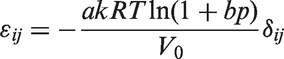
Assuming that coal’s swelling deformation still obeys Hooke's law, the size of the swelling stress
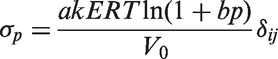
He (1995) found that the adsorbed gas erosion of coal skeleton makes coal more prone to yield. From the surface physical chemistry, a decrease in the solid surface energy results in a decrease in its strength. Adsorbed gas results in a decrease in the surface free energy of coal described by Gibbs formula

A decrease in the surface energy of solid is found as follows
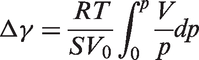
According to Griffith formula, the uniaxial compressive strength of coal is found to be
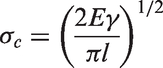
After coal adsorbs gas, its compressive strength satisfies
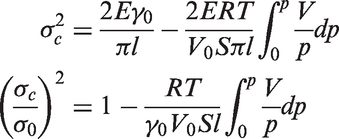
According to the Mohr–Columb criterion, the coal’s unconfined compressive strength qu is determined by the cohesion C and the friction angle Φ, that is

It is visible from equation (14) that the greater the cohesion of coal, C, and the greater the friction angle, Φ, the greater its compressive strength of coal. Equation (13) reveals that gas adsorption reduces the surface energy of coal, resulting in a decrease in the compressive strength of coal. In fact, from equation (14), such a decrease in coal's compressive strength originates from that adsorbed gas changes the cohesion and the internal friction angle of coal. Assuming that the internal friction angle of coal is less affected by adsorbed gas, or can be omitted, from equation (14), the compressive strength of coal is positively proportional to the cohesion of coal. The coal's compressive strength (After adsorption gas) is

The coal's compressive strength before adsorption is

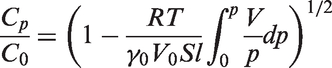
Combined equations (13), (15), and (16), we can get
That is

The above theoretical analysis results is in agreement with the macroscopic appearance of the damaging action of porous gas on coal rock. Therefore, the mechanism of the damaging effect of porous gas on coal rock deformation and failure can be accounted as follows: as a result of the presence of porous gas, besides the mechanical action of its vacuum force, it also exerts its physical chemical effect on coal skeleton, i.e. non-mechanical effect, resulting in a reduction in surface energy among coal grains in coal skeleton. On the one hand, it causes the swelling deformation of coal, and inside it forms the swelling stress. On the other hand, the presence of porous gas reduces the cohesion among coal grains.
Effective stress of gas-bearing coal
The mechanical response characteristics of gas containing coal depend mainly on the effective stress. He et al. (1995, 1996) experimentally found that the use of Terzaghi principle of effective stress to study deformation and failure characteristics of gas-bearing coal encountered insurmountable difficulties. The interaction of gas and coal has two aspects: first, the mechanical effect of the gas pressure as the volume force (that is, the pore pressure and the swelling stress). Second, the non-mechanical effects of gas adsorption and desorption on coal (i.e., erosion). Therefore, in the study of the interaction of coal and gas, it is necessary to consider gas' mechanical and non-mechanical effects on coal's mechanical properties and constitutive relations.
Based on coal's dual pore structure characteristics, Zhou and Sun (1965), from the fluid mechanics point of view, considered coal as the virtual continuum medium of a large-scale and uniformly distributed pores and cracks. Bear (1988) also proposed the use of multiple pores and cracks to characterize the representative elementary volume (REV). That is, treating the porous medium as a continuous medium. Combined with the dual pore structure of coal, select an appropriate scale of REV, assuming that the gas free in fractures will produce the free gas pressure p1, the gas adsorbed on pores will produce the pore pressure p2 and the sorption-induced swelling stress σp, and thus the stress distribution of gas-bearing coal can be simplified as shown in Figure 3.
REV stress distribution of gas-bearing coal.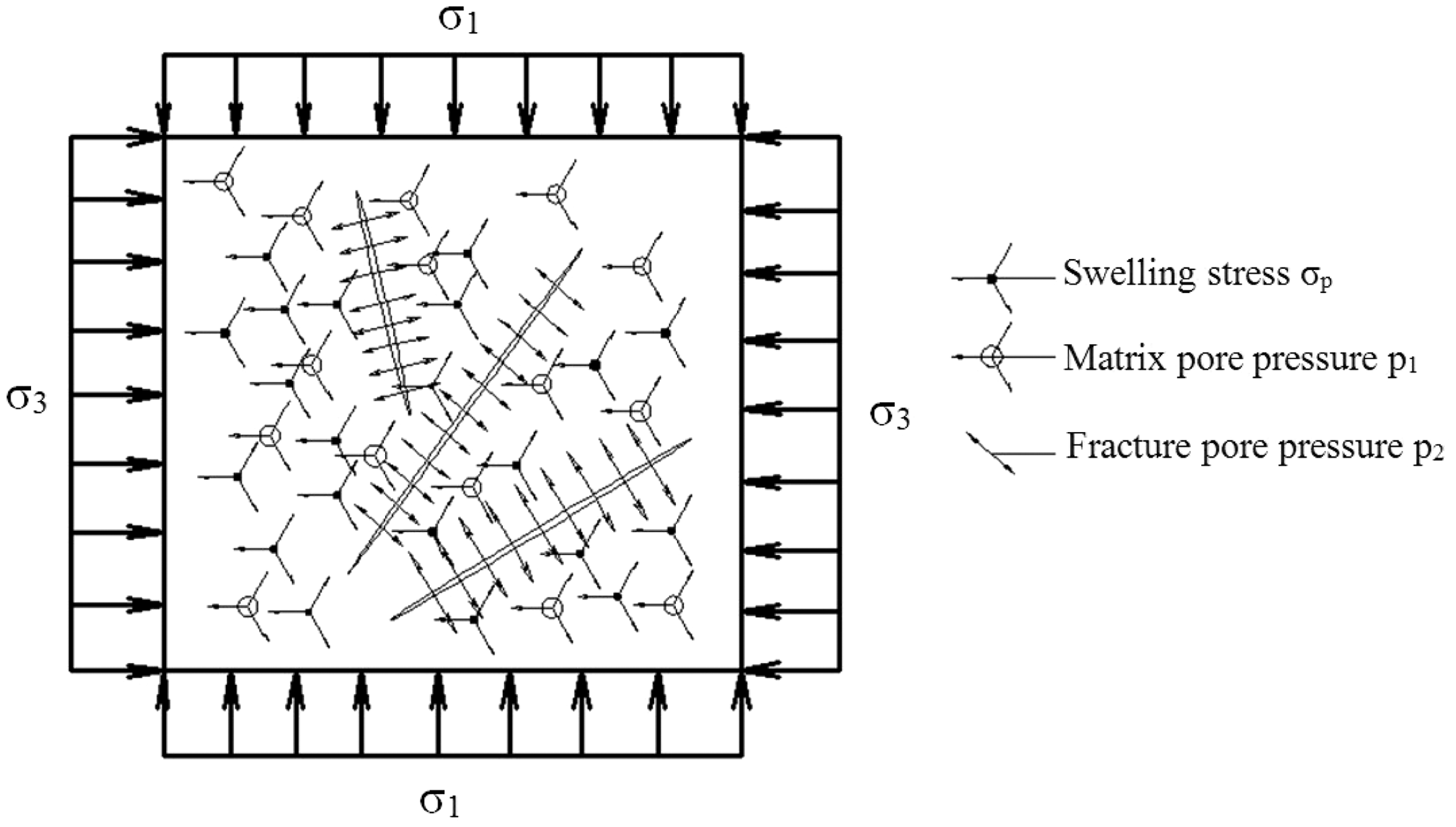
Coal adsorption of gas has two effects: first, coal will swell and produce the swelling pressure after coal adsorbs gas. Second, adsorption of gas will decrease the strength of coal and change its mechanics properties. Taking into account the swelling deformation and erosion of coal skeleton induced by adsorbed gas, and based on linear elastic theory, the REV stress distribution shown in Figure 3 can make the equivalent transformation shown in Figure 4.
REV equivalent stress distribution of gas-bearing coal.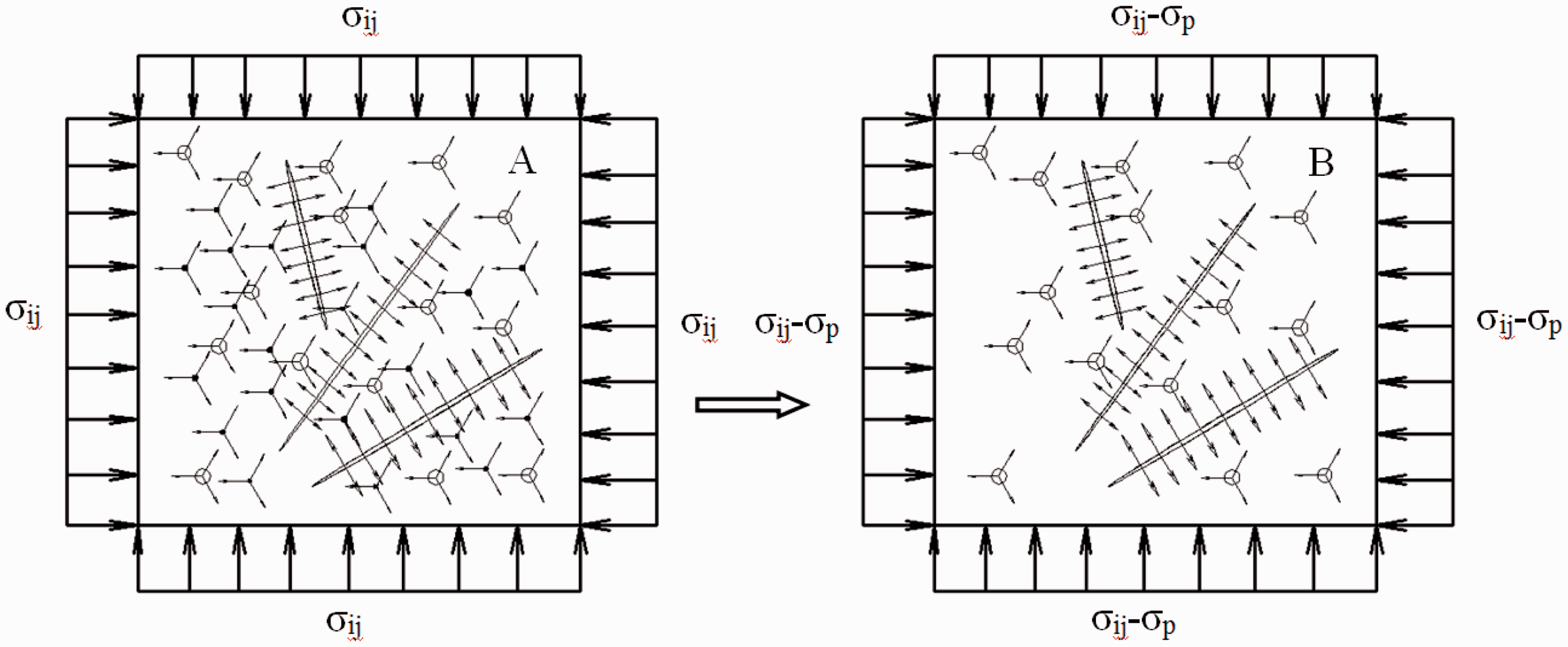
It is seen from Figure 4 that on the one hand, coal subject to the sorption-induced swelling force (if it's isotropic) undergoes swelling deformation, which is equivalent to lowering the effective stress applied on coal skeleton. On the other hand, considering the adsorbed gas erosion of coal, because of a decrease in the surface energy of coal after it adsorbs gas, its compressive strength and elastic modulus decrease, and its skeleton changes from A into B. Therefore, the stress distribution of gas-containing coal is equivalent to the effective stress distribution only considering the gas pressure of matrix pores, p1, and the pore pressure of fractures, p2, resulting in that the external stress directly applied on coal is reduced as σij − σp, and the cohesion of coal due to gas adsorption also changes accordingly.
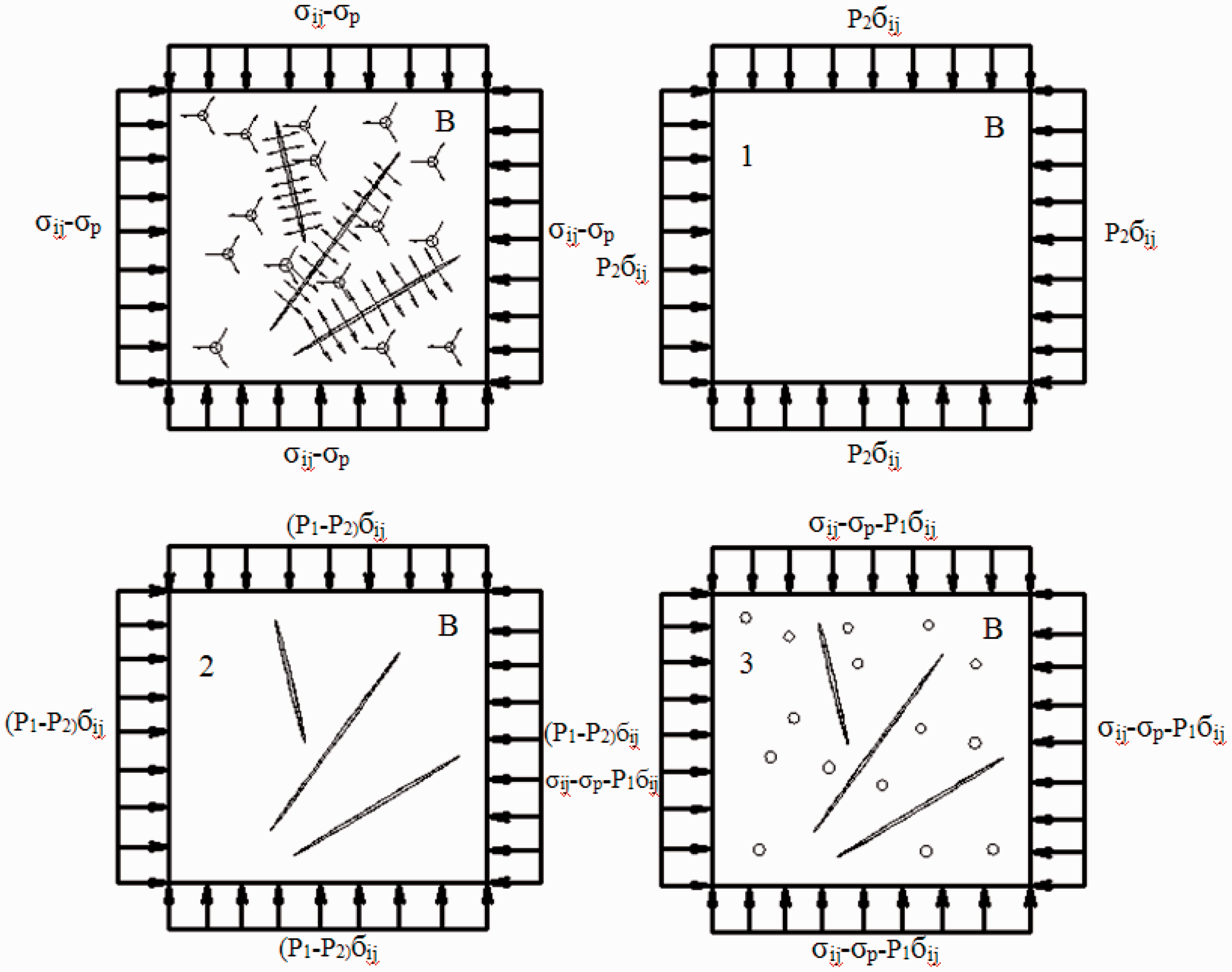
Gas-bearing coal is an anisotropic porous medium whose interior distributes a large number of micropores and cracks. Assuming that its total porosity is n and the porosity of micropores is sn, the porosity of fractures is (1 − sn). Free gas pressures in both matrix pores and fractures are generally equal to each other, and both exchange through gas adsorption, desorption, diffusion, and percolation. The total stress applied on coal unit is σij − σp, and the free gas pressures inside micro-pores and cracks, respectively, are p1 and p2 in the assumption of p1 > p2. Carroll (1979) studied the effective stress of anisotropic porous medium that underwent linear, elastic deformation. Based on his research approach, this effective stress state on the coal sample is realized through three loading steps, as shown in Figure 5.
Applying the pore pressure p11 = p2 on pores sn, p2 on fractures (1 − sn), and the total stress σ
ij
1 = Applying the pore pressure p12 = p1 − p2 on pores sn, p2 on fractures (1 − sn), the stress σij2 = Applying the periphery pressure σij3 on the sample
Equivalence transformation for REV stress distribution.
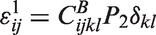



According to the linear elasticity hypothesis, the total strain of the sample obtained by applying the superposition principle is

On the other hand, according to the effective stress concept, there are
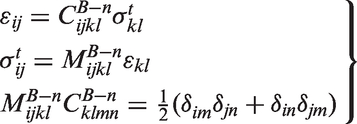
By combining Equations (19) to (24), the effective stress σijt can be found as follows

Equation (25) is the effective stress of anisotropic elastic porous medium with different pore pressures. The so-called anisotropy includes three aspects: First, the coal skeleton is anisotropic and denoted by
The effective stress is the basis for the establishment of the stress–strain constitutive relationship of gas-bearing coal. The above equation of the effective stress of gas-bearing coal has two features: (1) the sorption-induced swelling stress and the pore pressure, as the volume force, reduce the effective stress. (2) The adsorbed gas causes the strength of coal to reduce, the free gas pore pressure also speeds up the splitting and failure, and both make coal more prone to compression deformation and shear slippage failure, resulting in an increase in coal's damage compliance tensor.
Constitutive model for dual pore damage of gas-bearing coal
Coal, as a natural discrete medium, belongs to sedimentary rock with its many defects such as stratification, joints, pores, fractures, etc. Its distributions of fracture and gas fields also have significant anisotropy. Therefore, in order to study the gas-bearing coal stress–strain constitutive relations, it is imperative to make the basic assumption of coal medium so as to make the constitutive model not only fit for the macroscopic deformation of engineering rocks and also deeply describe production, expansion, and coalescence of rock fractures.
Basic assumptions
Combined with previous researches, the following assumptions on gas-bearing coal are made:
Gas-bearing coal consists of solid-phase component (skeleton formed by coal and rock) and gas (adsorbed and free states). Coal structure includes pores and fractures, adsorbed gas only exists in micropores, while free gas mainly in fractures. The gas pressures in micropores and cracks, in general, are not equal. Fluid and solid skeletons do not exchange material, and the nature of solid phase material is determined by the nature of its components. Gas adsorption and desorption are instantaneously completed. The distribution of coal fractures in its REV is anisotropic. Fractures inside the gas-bearing coal expand and coalesce under the transpression stress or tensile shear stress, resulting in elastic brittle damage and failure. Coal REV under the action of peripheral stress exceeds the ultimate strength of coal, plastic failure also occurs, in turn resulting in plastic deformation.
Mechanical properties of gas-bearing coal possess their scale effect. To build the stress–strain constitutive relationship of gas-bearing coal, it is necessary for REV to satisfy a certain size and contain a large number of pores/fractures, and thus the coal medium can be viewed as a continuum medium.
Dual pore damage constitutive equation of gas-bearing coal
The stress–strain constitutive relationship of gas-bearing coal may be controlled by the effective stress. According to the second law of irreversible thermodynamics, considering the initial damage of coal rock, the elastic brittle damage constitutive model of gas-affected rock is obtained as follows

The material will fail and lose its bearing capacity when the stress exceeds the yield strength of material. Brittle materials in failure generally break. But for coal, it not only suffers elastic brittle damage failure, the compression/shear strength of coal will also lower due to the crack propagation and gas absorption, which will cause the plastic flow and deformation. So equation (26) should be modified. The compressive strength of common rock is much larger than its shear strength and tensile strength, so the failure modes of rock mainly are shear and tensile failures. In this way, Mohr–Columb criterion is more suitable for the shear and tensile failure modes of multi-fractured rocks.
The shear failure criterion is

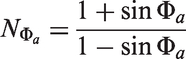
The tensile failure criterion is

The yield function established presents a space surface in the space of an effective stress. It determines the state material failed. When the stress reaches the yield surface, the size and direction of plastic strain increment in the stress state can be determined by the plastic potential surface. Lade et al. (1987) held that the non-associated flow rule might be more suitable for fracture-bearing rock. Therefore, according to the rule, the shear and tensile plastic potential functions are respectively defined as follows


In order to describe the mechanical properties of coal after it yields, plastic deformation should satisfy the continuous flow potential function. From the incremental theory of plasticity, the plasticity increment can be found through the plastic potential function as follows
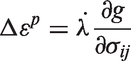
In coal's shear and tensile failure rules, the fundamental strength parameters are the cohesion and the internal friction angle. Many laboratories and field test results (Hajiabdolmajid, 2001) showed that in the strain softening process, the strength parameters of rock will change. Based on this, the following cohesion softening model is established

On the other hand, in addition to fractures' impact on coal's bond strength, the adsorbed gas has its erosion of coal's skeleton, leading to a lower in the cohesion of skeleton particles of coal, see equation (18). The coal cohesion softening model after considering crack propagation and gas absorption is found

To sum up, based on elastic brittle damage constitutive equation, and after considering plastic deformation, the mechanical constitutive equation for gas-bearing coal is


Equation (36) is simplified as

Equations (35) and (37) are the dual pore damage constitutive equations of gas-bearing coal. The equations take into account not only the dual pore structure of coal, but also the impacts of gas mechanics as the non-mechanical action on the physical properties and the constitutive equation of coal. Meanwhile, the constitutive equations also reflect the mechanism of interaction between coal skeleton and gas in coal fracture expansion process. Considering the plastic deformation more accurately describes the characteristics of mechanical deformation and failure of gas-bearing coal.
Experimental verification and discussion
Dual pore structure of coal and adsorption properties of gas make gas-bearing coal obviously different from the gas (or liquid) containing soil media or rock in mechanical properties. For more in-depth understanding of the mechanical properties of gas-bearing coal, on the basis of predecessors' experimental and theoretical research, we set up a dual porosity damage constitutive model of gas-bearing coal. To further verify the reasonableness of the model, two types of experiments were performed, and the comparisons between experimental and theoretical results were made. The experiment system is shown in Figure 6.
Mechanical properties test system of gas-bearing coal.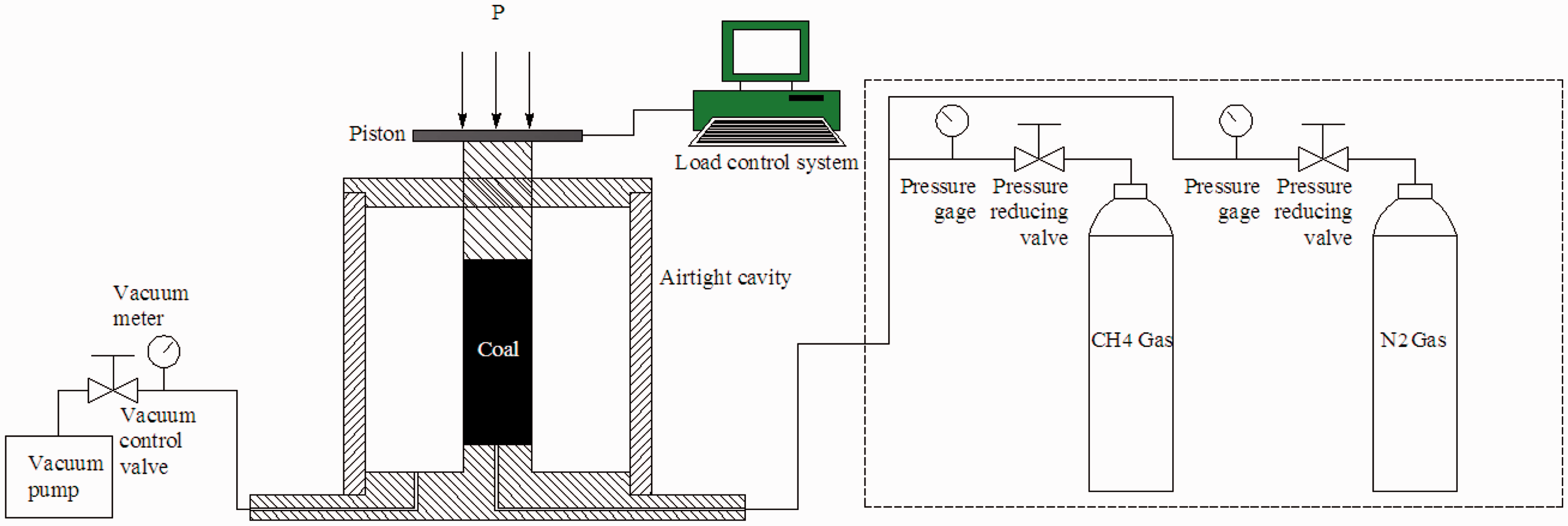
As shown in Figure 6, the test system is mainly composed of the loading system, the load–displacement recording system, the parameters collection system and the vacuum pumps and piping, etc.
The process of the first verification experiment: 1) According to the international society for rock mechanics (ISRM) standards, large lump coal masses extracted from the underground were sampled with the body core tubes, processed into cylinders with 50 mm diameter and 100 mm length, and polished at both ends with an error of 0.02 mm, and check the gas tightness of airtight cavity. 2)When the system is airtight, vacuum pumps for 12 hours. 3)Turn off the vacuum pump, open the gas cylinder valve, adjust the gas pressure at different pressures and adsorpt for 12 hours until adsorption equilibrium. 4) Continuous loading in which coal sample was continuously loaded at loading rate of 1 mm/min until its failure.
Figure 7 shows the first verification experiment on the full stress–strain of gas-bearing coal under different gas pressures, all the stress and strain of gas-bearing coal experiments, and the experimental results are shown in Figure 7. From the figure, it can be seen that with the increase in adsorbed gas pressure, the uniaxial compressive strength (the maximum compressive stress that rock specimens can withstand in the absence of lateral pressure and only under the axial load) and elastic modulus of gas-bearing coal decrease significantly, making the coal much easier to achieve the its yield strength (after the elastic deformation stage, when the stress reached a critical value, the coal began to enter the stage of plastic deformation damage, and the critical stress is called yield strength which in general is 0.95 Full stress–strain curves of gas-bearing coal under different gas pressures.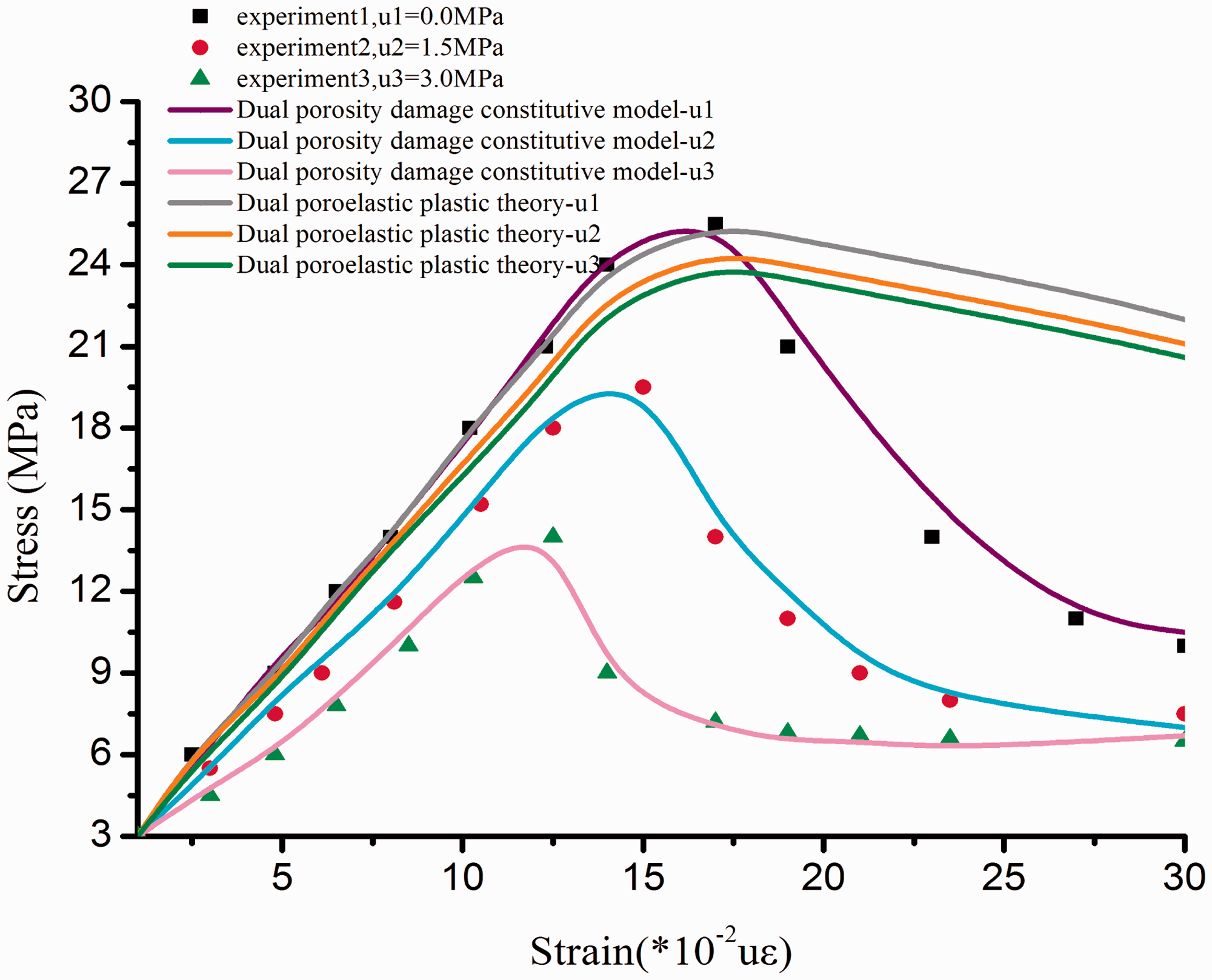
Basic mechanical parameters of coal samples.
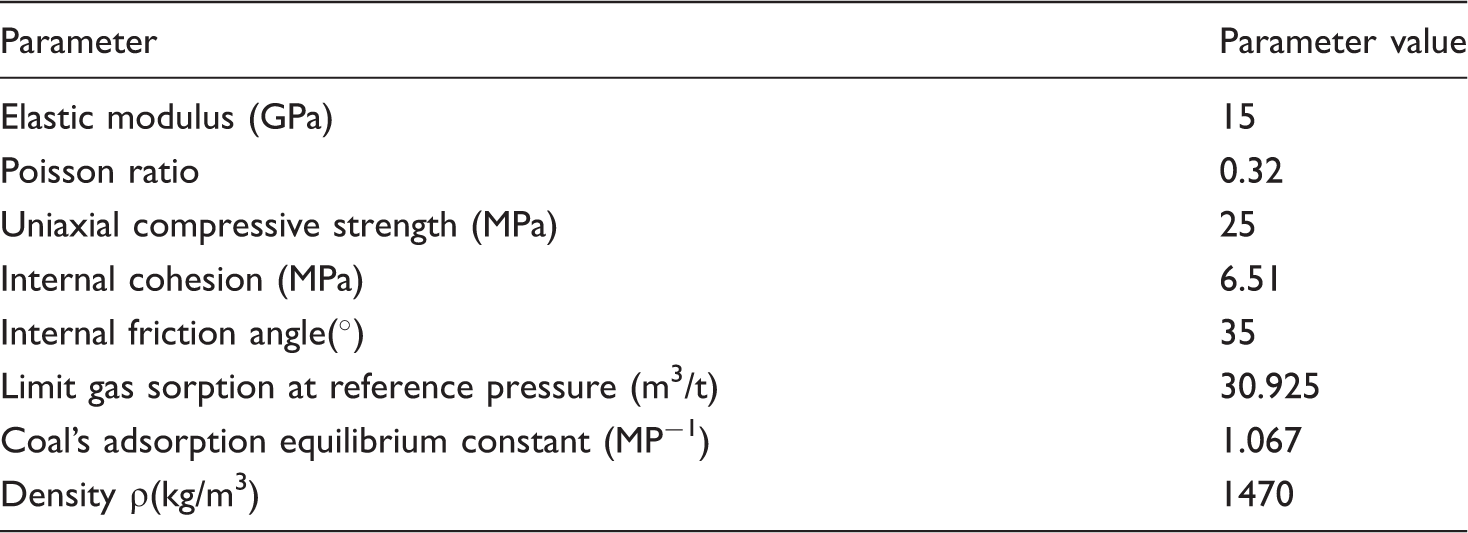
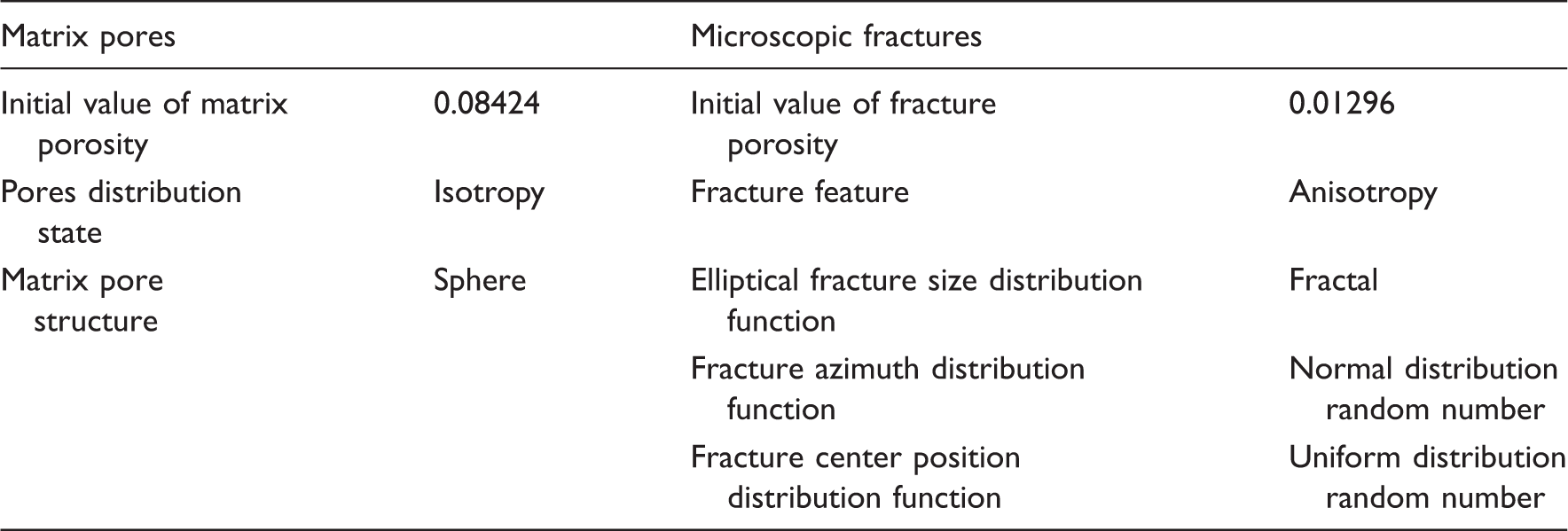
Pore and fracture structure parameters of coal.
It is known from the first verification experiment that the uniaxial compressive strength of gas-bearing coal decreases from 25 MPa before gas adsorption to 14 MPa after gas adsorption (adsorbed gas pressure 3 MPa). To further validate the presence of adsorption-induced swelling stress and the adsorbed gas erosion of coal, the second verification experiment was designed. The process of the second verification experiment: 1) in the experiments, the axial load was directly loaded to 16 MPa and kept it unchanged; 2) different pressure gases were filled into the pressure cylinder and the initial gas pressures at 0.5 MPa, 1.5 MPa, and 3 Mpa were made, and then the changes in the axial strain in the gas adsorption equilibrium process were measured.
Two different kinds of gas (CH4 and N2) with different adsorption intensity were chosen to further study the erosion of adsorbed gas on coal. The strength of the methane-bearing coal is much higher than the nitrogen-bearing coal (almost no adsorption for nitrogen). Therefore, only consider the effect of pore gas pressure for nitrogen, but for methane, the adsorption swelling stress and erosion is also considered. For comparison, the strain–time curve of N2 (whose ability to adsorb is lower or can be omitted) at 3 MPa was also tested at the same time, as shown in Figure 8.
Experiments on adsorption-induced swelling (compression) strain in the fixed axial pressure.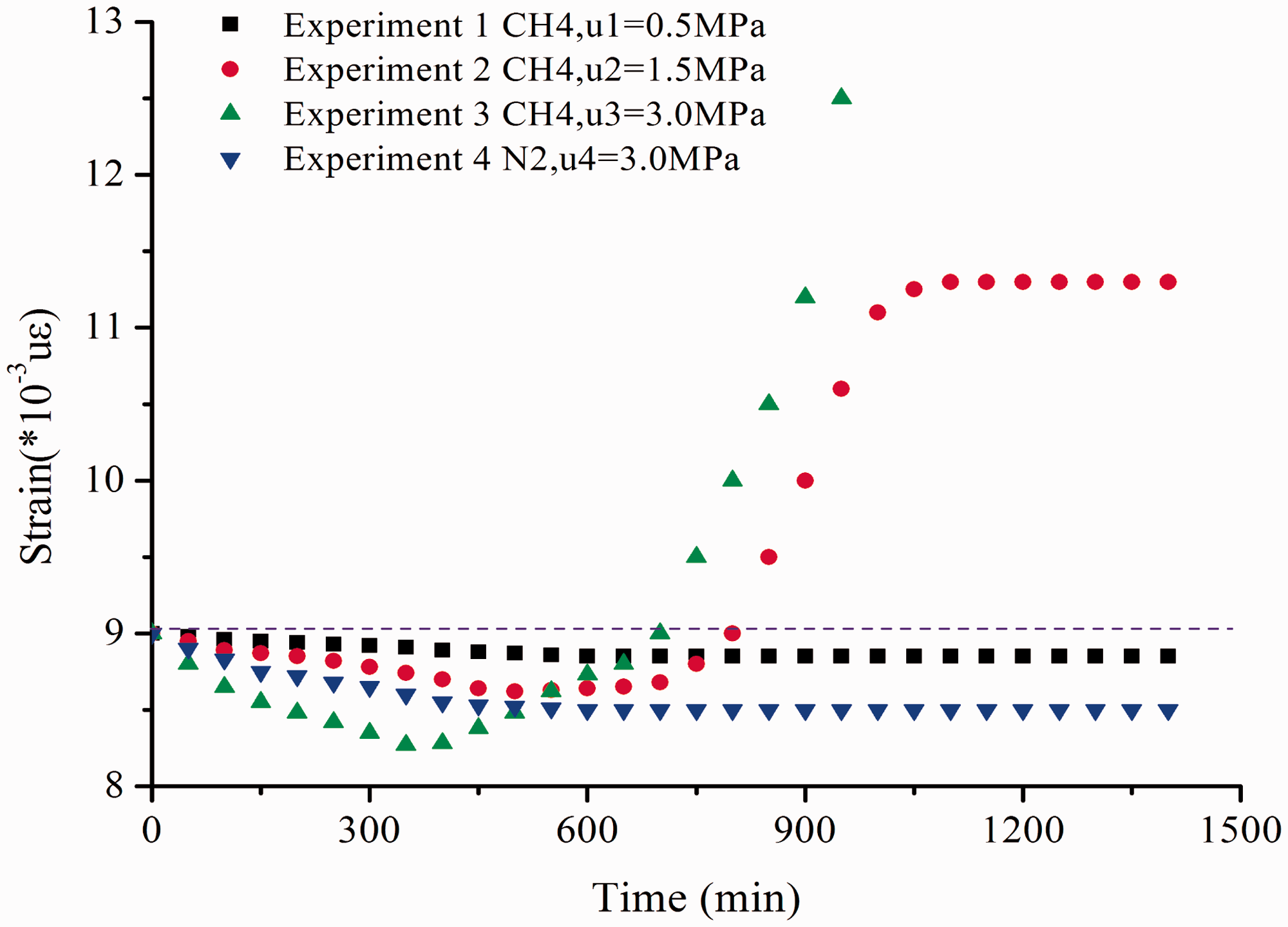
It is obvious from Figure 8 that in the process of gas adsorption on coal, a certain swelling deformation of coal will occur; the greater the gas pressure, the greater the swelling deformation (The initial compressive strain is +9 × 10⁻³
Furthermore, it is also clear from Figure 8 that the experimental result at 3 MPa gas pressure (CH4) had a great difference from one at 3 MPa N2 pressure. Gas (CH4) adsorption on coal has strong erosion, but the nitrogen has not. As the gas pressure (CH4) rises, the strength of coal after it adsorbed gas apparently decreased, and the ability to resist deformation was reduced. The axial compressive strain of coal rapidly increased till eventually failure occurred. While for the coal filled at 3 MPa N2 pressure only occurred some swelling deformation (the strain curve reduce relative to the initial compressive strain), it still had a strong capacity to resist deformation.
From experimental results, it was evident that the non-adsorbed phase model based on the principle of effective stress only considered the effect of the gas pore pressure. The model only considered the mechanical effects of the pore pressure as the volume force, indicating that an increase in the pore pressure would lead to a decrease in effective stress on coal skeleton. The model held that the larger the pore gas pressure, the greater the deformation recovery of coal. In addition to that, the gas pressure of pores led to the deformation recovery of coal, and the adsorbed gas also made the coal to produce swelling deformation. With the increase in the gas adsorption capacity of coal, its volume would swell. However, the above two experimental results clearly showed that only considering gas pore pressure and adsorption-induced stress could not well reveal the mechanical properties of gas-bearing coal. The reason is that the non-mechanical effects of adsorbed gas lower the surface tension of coal and the parts of coal skeleton swell, resulting in a decrease in the interaction among coal particles. A lower in the desired surface energy in failure exhibits macroscopically a decrease in the ability of coal to resist deformation. Therefore, it is necessary to fully consider adsorbed gas erosion of coal in considering the constitutive equations of gas-bearing coal.
In addition, the pore/fracture structure characteristics of coal itself are often overlooked in establishing the constitutive equations. Some scholars, in the study of the mechanical properties of gas-bearing coal, introduced the damage variable and indirectly studied the impact of fractures on coal mechanical characteristics through the statistical damage variable or the self-defined damage variable (Li et al., 2008; Liang et al., 2008). With its practical significance, the approach could not fully describe the true impacts of fractures on coal, and especially it is of obvious limitations in the study of fracture seepage and fluid–solid coupling.
The dual pore damage constitutive equation proposed in this study is capable of describing the mechanical properties of gas-bearing coal from the following three respects:
Coal's pore structure characteristics. These characteristics distinguish the effects of the pores in the coal matrix and the meso-fractures on coal deformation. The gas pressure in the pores of general coal matrix is not equal to the free gas pressure in macro-fractures, and both exchange through diffusion, percolation, and adsorption/desorption. The mechanism of interaction of the gas in matrix pores on coal skeleton is different from that of the gas in mesocracks. The gas in matrix pores is related to the mechanical and non-mechanical actions, while the gas in meso-fractures is only associated with the mechanical role of gas as a volume force. So considering two types of pore/fracture structures is in line with the structure characteristics of real coal, and provides a basis for the study of gas seepage, fluid–solid coupling, etc. Adsorbed gas erosion of coal. Adsorbed gas results in a lower surface energy among coal particles and bond strength among solid particles, and in changes in coal's elastic modulus and compressive strength. From the angle of a lower in its solid surface potential after coal adsorbs gas, the effects of adsorbed gas on coal's fundamental strength parameters are quantitatively investigated. Fully considering the plastic deformation of coal based on Mohr–Columb criterion, the effect of adsorbed gas' non-mechanical action upon coal's deformation properties in the constitutive equations is quantitatively studied. So the new model can better describe the characteristics of gas-bearing coal. Impacts of cracks' extension and coalescence on coal's physical characteristics. Inside coal, there exist a large number of fissures, and they expand and coalesce under pore gas pressure and external stress, thus changing coal's damage compliance tensor. The impacts of the spatial distribution and temporal evolution characteristics of cracks on the damage characteristics of coal are really considered.
In short, in this study, the dual pore damage constitutive equation of gas-bearing coal is established by not only considering the effects of the matrix pores and meso-fractures of coal on its physical characteristics, but also considering the adsorbed gas erosion of coal. Further, the full stress–strain constitutive relationship of gas-bearing coal is setup by combining the spatial and temporal distribution features of coal cracks.
Conclusions
The form of occurrence of gas adsorbed state in coal makes the effective stress of gas-bearing coal different from that of media without adsorption, so Terzaghi effective stress has not been able to correctly describe the interaction of coal and gas. On the one hand, coal swells after it adsorbs gas, resulting in the production of the swelling stress (Gao et al., 1999; Harpalani and Chen, 1997; Karacan 2003, 2007; Liu et al., 2010; Zhou and Lin, 1999). On the other hand, after coal adsorbs gas, its solid surface energy, strength, and elastic modulus all decrease (He et al., 1996; Jin et al., 1991; Liang et al., 1995). The adsorbed gas plays both mechanical role (swelling stress) and non-mechanical role (erosion) on the physical properties of coal.
The mechanism of the impact of Matrix pores on coal deformation is different from that of meso-fractures. In the pores, there are free gas and adsorbed gas, while in fissures there is only free gas considered. By considering the swelling stress and erosion of adsorbed gas and combining the deformation and failure of pores/fractures on coal skeleton, the effective stress equation of gas-coal is established. The impacts of the spatial and temporal distribution and evolution of coal's pores/fractures under different stress conditions upon coal's deformation and failure characteristics are revealed, and the adsorbed gas erosion of coal is quantified from the perspective of physical chemistry. This method synthesizes the effects of coal pore/crack structure characteristics, gas mechanical and non-mechanical actions, and as well as fracture temporal and spatial distribution and evolution, upon coal mechanical characteristics.
Coal subject to gas in its nonlinear deformation stage exhibits plastic softening phenomenon due to the additional impact of non-mechanical effect of gas. Focusing on the plastic deformation, the effects of adsorbed gas on coal fundamental strength parameters are quantitatively studied from an angle of a lower in the solid surface energy after gas adsorption on coal. Fully considering the plastic deformation of Mohr–Columb criterion, the non-mechanical effect of adsorbed gas on coal's deformation characteristics in the constitutive equations is quantitatively studied. Thus, the dual pore damage constitutive equations can better describe the mechanical properties of gas-bearing coal.
Based on previous experimental and theoretical analyses, the dual pore damage constitutive equations of gas-bearing coal is established for further studying the mechanical properties of gas-bearing coal. However, further study is still needed for application of the model to theoretical researches and experimental verifications.
Footnotes
Acknowledgement
The authors are grateful to all the coal mines mentioned in the paper for providing experimental environments.
Declaration of Conflicting Interests
The author(s) declared no potential conflicts of interest with respect to the research, authorship, and/or publication of this article.
Funding
The author(s) disclosed receipt of the following financial support for the research, authorship, and/or publication of this article: This work is supported by the Research Project of Chinese Ministry of Education(113031A) and the 12th Five Year National Science and Technology Support Key Project of China (2012BAK04B07-2 and 2012BAK09B01-04).