







Abstract
Fire represents one of the significant hazards encountered by civil infrastructures, and thus providing appropriate fire safety measures is a major requirement in a building design for ensuring the safety of the occupants. Minimizing fire-induced damage and collapse of structural systems are the primary objectives in the design of concrete structures. An experimental investigation has been carried out to examine the mechanical properties such as compressive, tensile and flexural strengths of concrete exposed to elevated temperature following standard fire curve as per ISO 834. Capacity-based standards have been formulated to predict the residual strength of various grades of concrete exposed to various duration of heating. Stress strain behaviour, elastic modulus, weight loss, spalling and thermal crack pattern of specimens were also investigated. Water–cement ratio and porosity of concrete were found to be the critical factors for strength loss of concrete. A relationship is established between weight loss and strength loss of concrete. Higher grades of concrete were found to have more weight and strength loss than those of lower grades.
Keywords
Introduction
Fire is one of the most damaging environmental factors that cause deterioration of reinforced concrete structures. Although concrete is a non-combustible material, when concrete structures are exposed to high temperature, its chemical, physical and mechanical properties deteriorate. The effect of high temperature on the mechanical properties of concrete is being studied by various researchers with the suitable experiments (Malhotra, 1956; Xiao and Konig, 2004). Concrete is an important construction material. In reinforced concrete, steel is protected by concrete from elevated temperature. The behaviour of concrete under fire needs to be investigated to ensure the safety of structures and occupants during fire accidents (Yüzer et al., 2004).
The performance of concrete at high temperature is better than those of other construction materials, due to its non-combustibility and low thermal conductivity (Buchanan, 2001; Ding and Li, 2018; Li and Wu, 2018). However, the behaviour of concrete under fire exposure differs for each strength grade due to its variation in water to cement ratio, and the permeability and paste content present in the concrete. Compressive strength, tensile strength and flexural strength of concrete have been investigated by researchers frequently, because these properties indicate the overall performance of concrete under compression, tension and flexural loading.
The reduction in the mechanical strength of concrete after exposure to elevated temperature is due to the thermal incompatibility between cement paste and aggregate, disruption of CSH gel, deformation of aggregate, loss of bond between aggregate and cement paste interface, internal pressure due to evaporation of water and chemical transformation in cement paste (Chen et al., 2018; Fletcher et al., 2007; Husem, 2006; Li et al., 2004; Noumowe et al., 2006; Poon et al., 2001; Savva et al., 2005; Yüzer et al., 2004). Experimental studies revealed that when concrete is exposed to elevated temperature, mass loss occurs. Cracking, spalling and mass loss were also observed in concrete when it was exposed to fire (Bastami et al., 2014).
The grade of concrete was also found to have a significant influence on the performance of concrete under fire (Anand and Arulraj, 2014). Earlier investigation shows that, strength reduction was found to be lower for concrete with lower grade. Concrete with higher grade was found to be detrimental in improving the fire performance of concrete because of the development of pore pressure within dense internal structure (Anand and Arulraj, 2014; Jin et al., 2018).
The changes in the mechanical properties of concrete subjected to high temperature also depend on the rate of heating. When concrete is heated, between 100 and 200℃, free water evaporates slowly and no structural damage is observed. However, rapid heating results in higher vapour pressure and causes cracks in concrete. Loss in compressive strength of concrete occurs when heated between 200 and 250℃ (Lin et al., 1996). At temperatures between 300 and 500℃, the compressive strength of concrete is reduced to about 15–70% of that of the non-heated concrete (Lin et al., 1996). When heated, bounded water starts to evaporate at 300℃, and thus leads to dehydration of the chemical compound CSH (calcium silicate hydrate) which is responsible for binding the different constituents of the concrete together (Lin et al., 1996). When the exposure temperature is higher than 400℃, the strength of concrete further deteriorates; however, relative residual compressive strength does not change considerably (Xiao and Falkner, 2006). The dehydration of CSH crystals results in the decrease of strength of concrete and this process is not reversible. At 530℃, Ca(OH)2 turns into CaO resulting in a shrinkage of 33% in volume of cement paste (Buchanan, 2001). At 750℃, the reduction increases from 75% to 93%. Temperatures between 300 and 750℃ are critical and most of the strength loss of concrete occurs between 300 and 750℃ (Savva et al., 2005). Jonaitis and Papinigis (2005) found that the decrease in compressive strength of the concrete when exposed to a temperature of 90℃ is about 20–30%.
Ergun (2013) investigated the influence of cement dosage on the residual flexural strength of beam specimens after exposing to temperatures of 100℃, 200℃, 400℃, 600℃ and 800℃. The test results indicated that at the temperature above 400℃, concrete undergoes significant strength loss when compared to the strength of non-heated concrete. It is observed that, strength reduction was found to be unaffected by the cement dosages.
All the experimental results on concrete exposed to elevated temperature depend on nature of experiment, heating conditions and mix design parameters. Compressive strength of concrete is a significant parameter that affects the performance of concrete exposed to elevated temperatures. Thus, it is necessary to improve the fundamental understanding on concrete with different strength grade exposed to elevated temperature.
The increase in temperature and resulting temperature profile can be related to fire resistance determined by standard fire testing as per ISO 834 (1999). Xiao and Falkner (2006) has estimated the residual compressive and flexural strengths of concrete specimens at target temperatures ranging from 20 to 900℃ as per ISO 834 and the target temperature was maintained for 3 h. Simple expressions were proposed to obtain both the residual compressive strength and the residual flexural strength corresponding to a particular exposure temperature. But in real cases, the effect of fire on buildings is based on the duration of exposure and grade of concrete. When concrete is exposed to elevated temperature as per Standard fire, thermal gradient occurs across the section and this causes deterioration of concrete. During the present study, the specimens were heated as per standard fire curve. Mechanical properties of concrete exposed to elevated temperature for durations of 15 min, 30 min, 45 min, 60 min, 120 min, 180 min and 240 min were determined.
Many investigations have been carried out to determine the effect of elevated temperatures on mechanical properties and microstructure of various types of concrete. Investigations on mechanical properties of concrete with varying water cement ratio subjected to elevated temperatures are limited. Information on the relationship to determine the residual strength such as compressive, tensile and flexure strength of concrete with varying strength grade and temperature is not available in the literature. A detailed investigation has not been carried out so far focusing on the mechanical properties and physical characteristics of concrete with different strength grades subjected to standard fire.
The aim of this investigation is to enhance the understanding of the residual mechanical properties such as compressive strength, tensile strength, flexural strength, stress strain behaviour and elastic modulus of different grades of concrete exposed to elevated temperature. Seven concrete grades were chosen, viz., M20, M25, M30, M35, M40, M45 and M50 for this study. A mathematical relationship is proposed to obtain the residual compressive, tensile and flexural strength based on exposure time and strength of concrete ranging between 20 N/mm2and 50 N/mm2. The results of this investigation resulted in a large data base that can be used for the development of guidelines for the fire-resistant design.
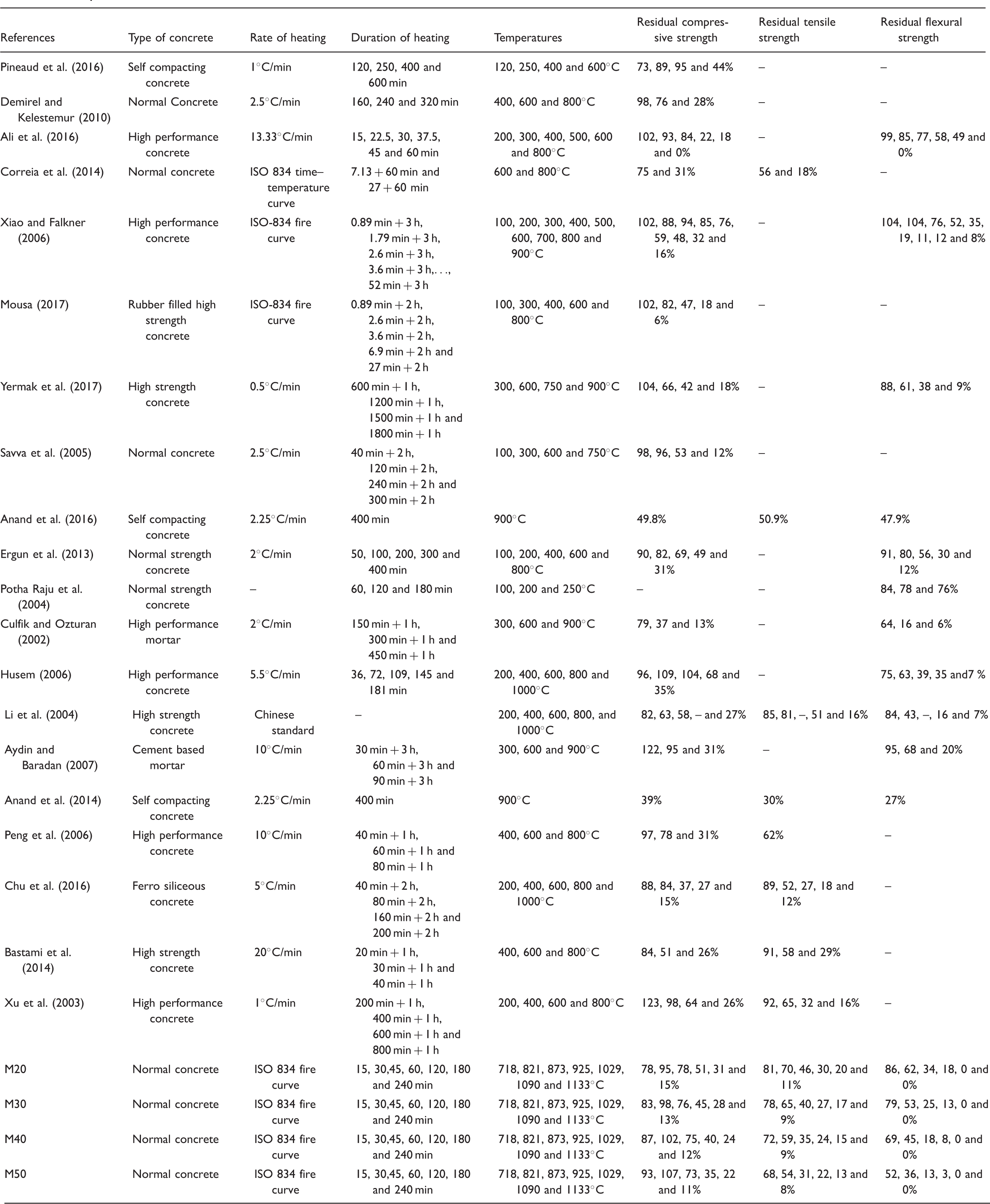
Experimental results database.
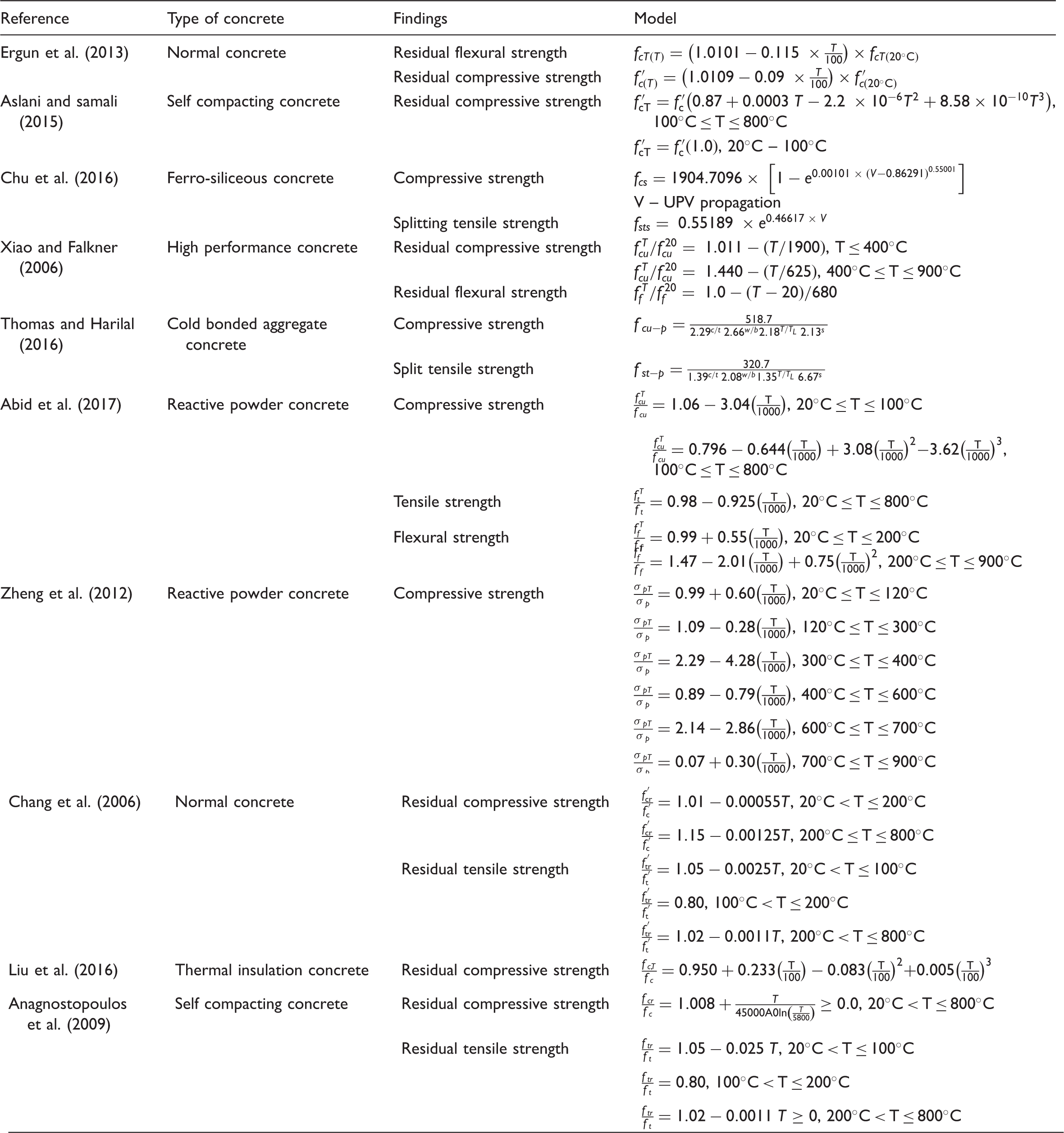
Residual compressive, tensile and flexural strength models.
Experimental schedule
Materials
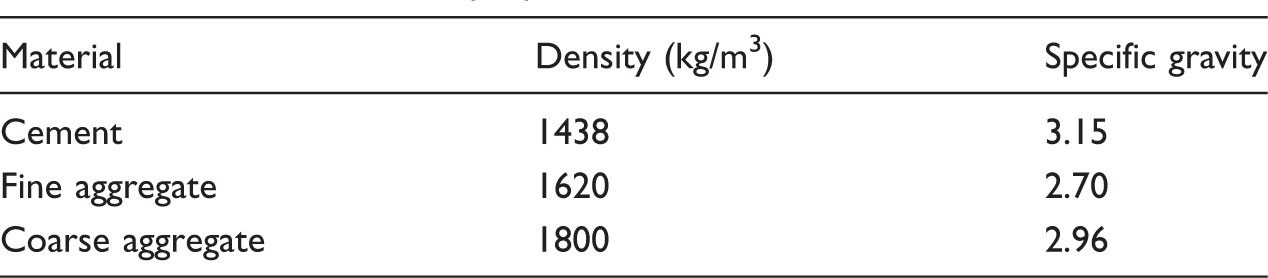
Details of material properties.
Details of mix proportion
Details of concrete mix proportions.
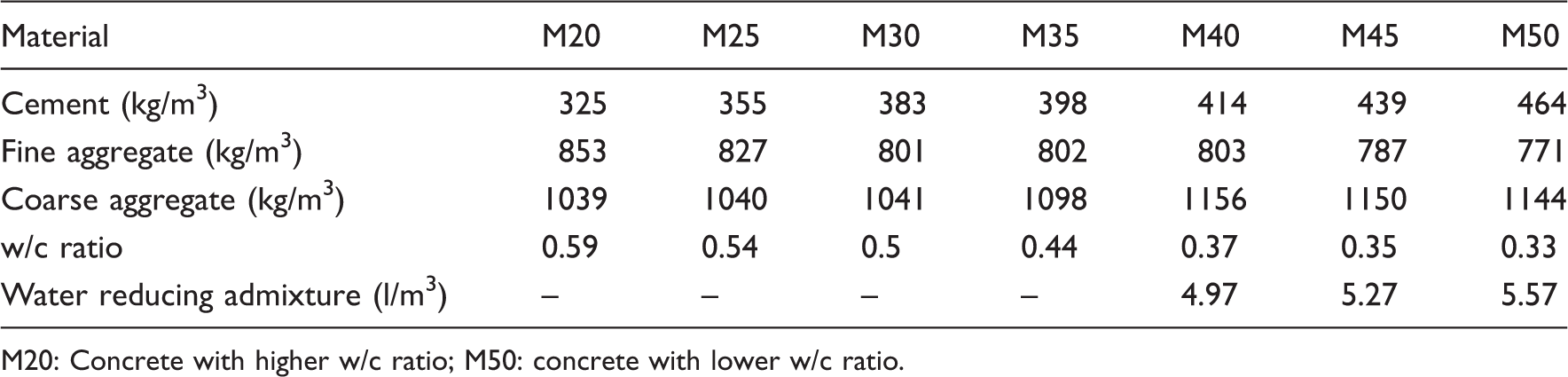
M20: Concrete with higher w/c ratio; M50: concrete with lower w/c ratio.
Experimental test setup
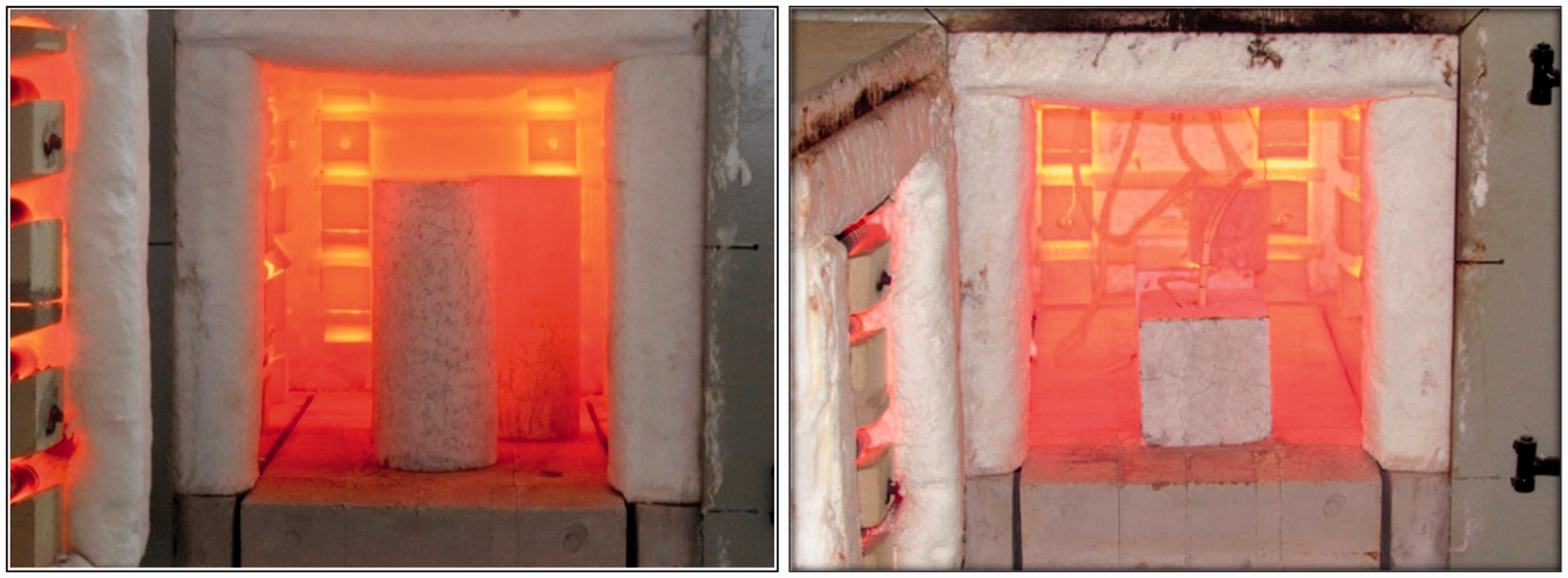
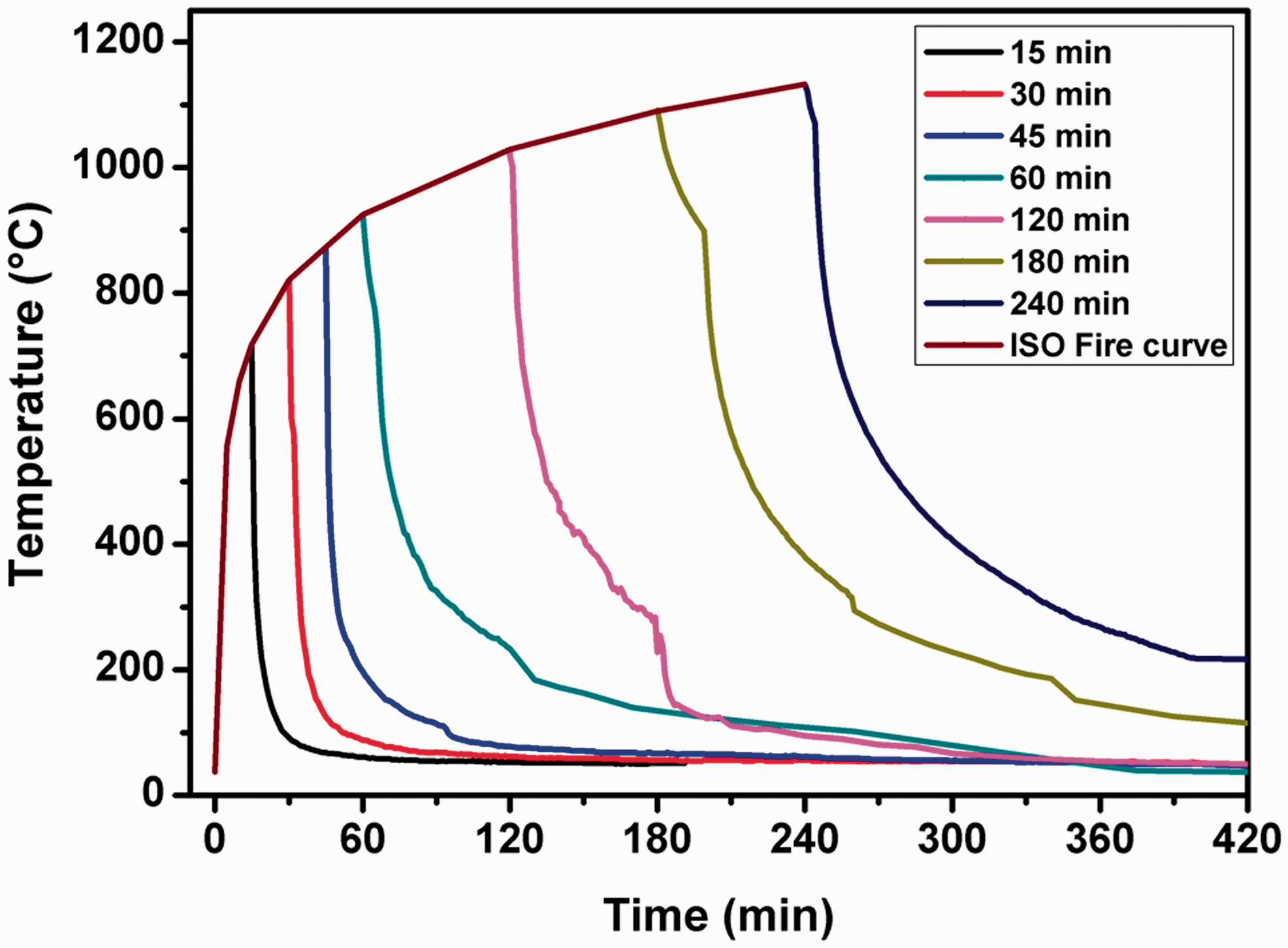
To determine the mechanical properties of concrete after exposure to elevated temperatures, a computer controlled electrical furnace with inner dimensions of 700 × 400 × 400 mm and a power of 100 kW was used (Figure 1). The maximum operating temperature of the furnace is 1200℃, with a capability to follow the standard temperature curve, equation (1). Type K thermocouples connected to an automatic data acquisition were used to monitor temperatures inside the furnace. Figure 2 gives the heating cooling cycles used for the investigation.
View of furnace. Heating–cooling cycles.
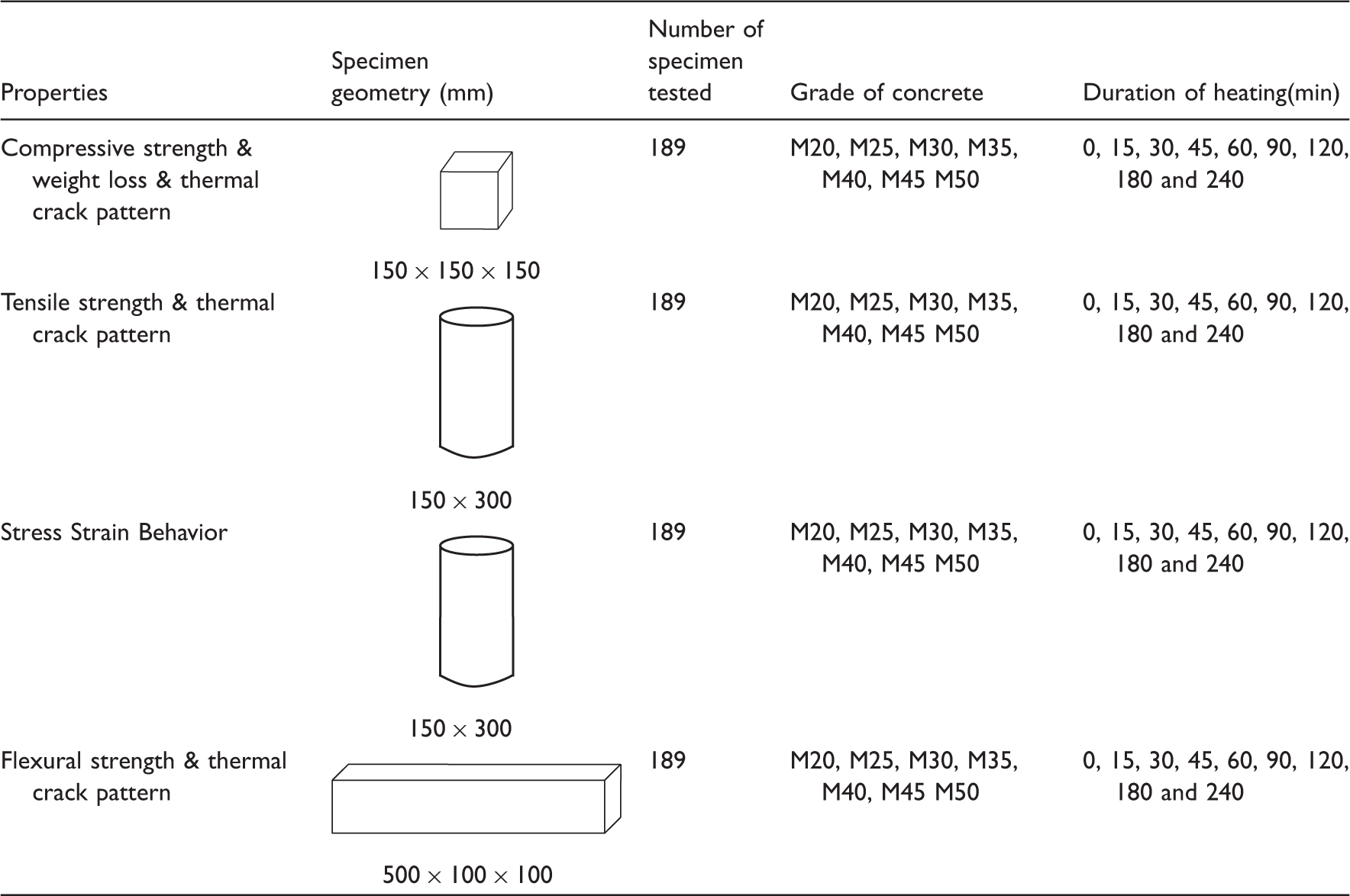
Details of the test samples and fire exposure.
Results and discussion
Compressive strength
Based on the experimental results, the residual compressive strength of samples subjected to the range of heat exposure can be grouped into three regions as 0–15 min, 15–30 min and 30–240 min (Figure 3). Well-defined pattern of strength loss followed by a gain in strength is observed in the first two regions and subsequently a sharp loss is observed in the third region. For all grades of concrete, the decrease in initial compressive strength ranges between 6.8% and 21.5% after 15 min of exposure (718℃). This can be attributed to the driving out of free water and this causes micro-cracks in the transition zone between aggregate and cement paste due to shrinkage of the cement paste. Concrete specimens with lower water cement ratio (M50) had a lower reduction in strength of 6.8%, while for higher water cement ratio (M20) it was 21.5%.
Residual compressive strength of concrete specimens exposed to elevated temperature.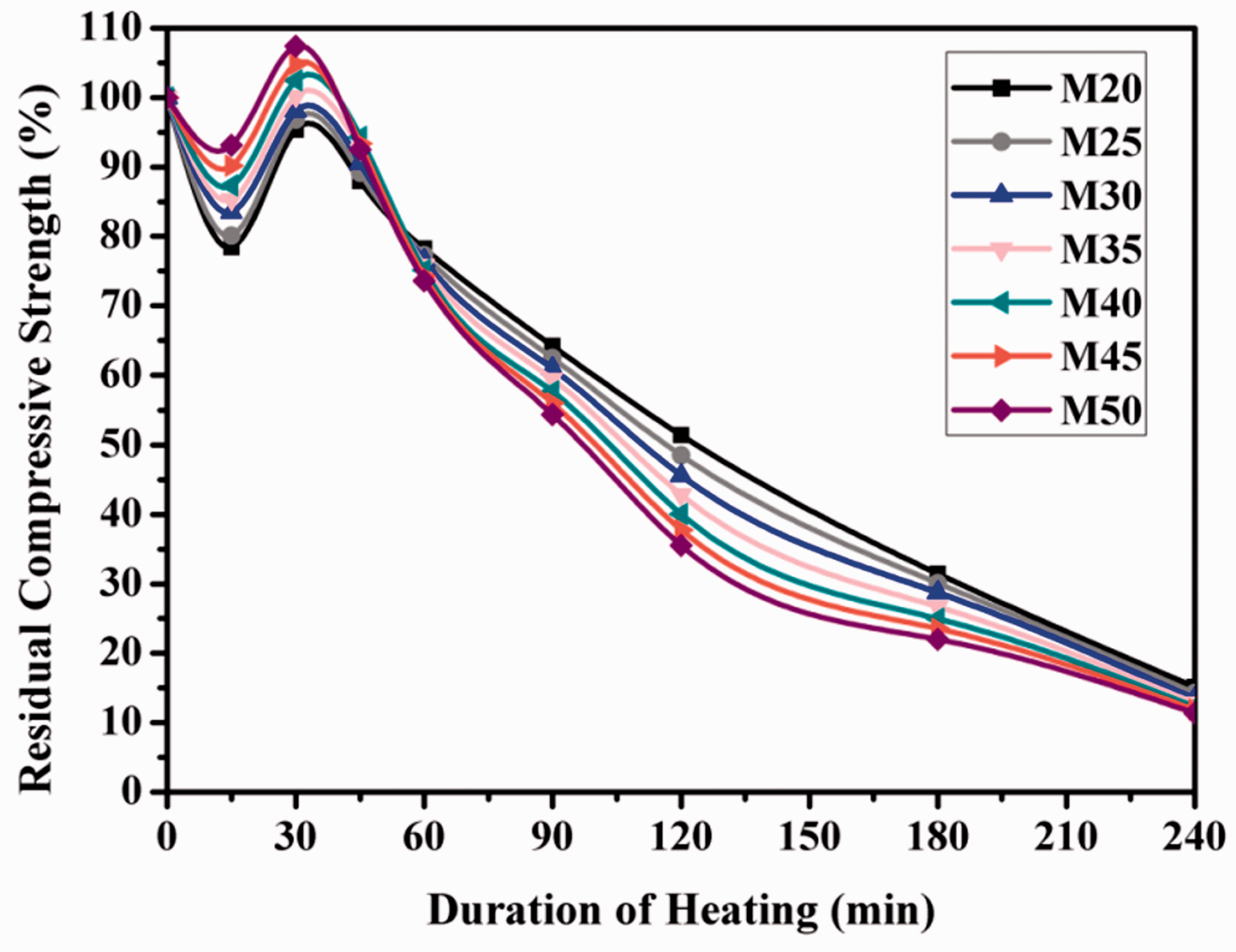
Fresh unheated concrete includes capillary water, physically absorbed water, interlayer water and chemically bound water in C–S–H and Ca(OH)2 (Savva et al., 2005). During heating the cement paste dries and absorbed water gets evaporated. At 15 minutes, most of the free water gets evaporated by leaving free pores in concrete. For concrete specimens with higher water cement ratio, heating results in higher number of pores, thus weakening the internal structure.
All specimens showed a gradual increase in compressive strength at 15–30 min duration of heating (718–821℃) followed by a sharp loss in strength. At 30 min duration of heating, the decrease in compressive strength ranged between 4.6% and 7.4% of the initial strength. Samples with higher grade (M40-M50) had a slight increase in strength of 2.5–7.4% of the initial strength and the concrete with lower grade specimens showed a reduction in strength of about 2–4.5% of the initial strength. Therefore, based on experiments up to 30 min duration of heating, the performance of concrete with lower water cement ratio (M50) was found to be good. The space enclosed around the cement paste was affected by the powerful elimination of water (as steam) at high temperature. Due to the resistance of steam to flow, steam generates a high pressure in the paste. Thus, internal autoclaving process occurred in the cement paste, and as a result, secondary hydration took place on unhydrated cement particles, which causes a small gain in strength (Piasta et al., 1984).
The specimens showed a gradual reduction in compressive strength between 30 min and 60 min duration of heating (821℃ and 925℃). After 45 min of heating (873℃), M20 and M50 samples showed a reduction in compressive strength of 7.5% and 12%, respectively. At 60 min exposure (925℃), the strength loss was 21% and 26%, respectively, Figure 4.
Loss in compressive strength of concrete specimens exposed to elevated temperature.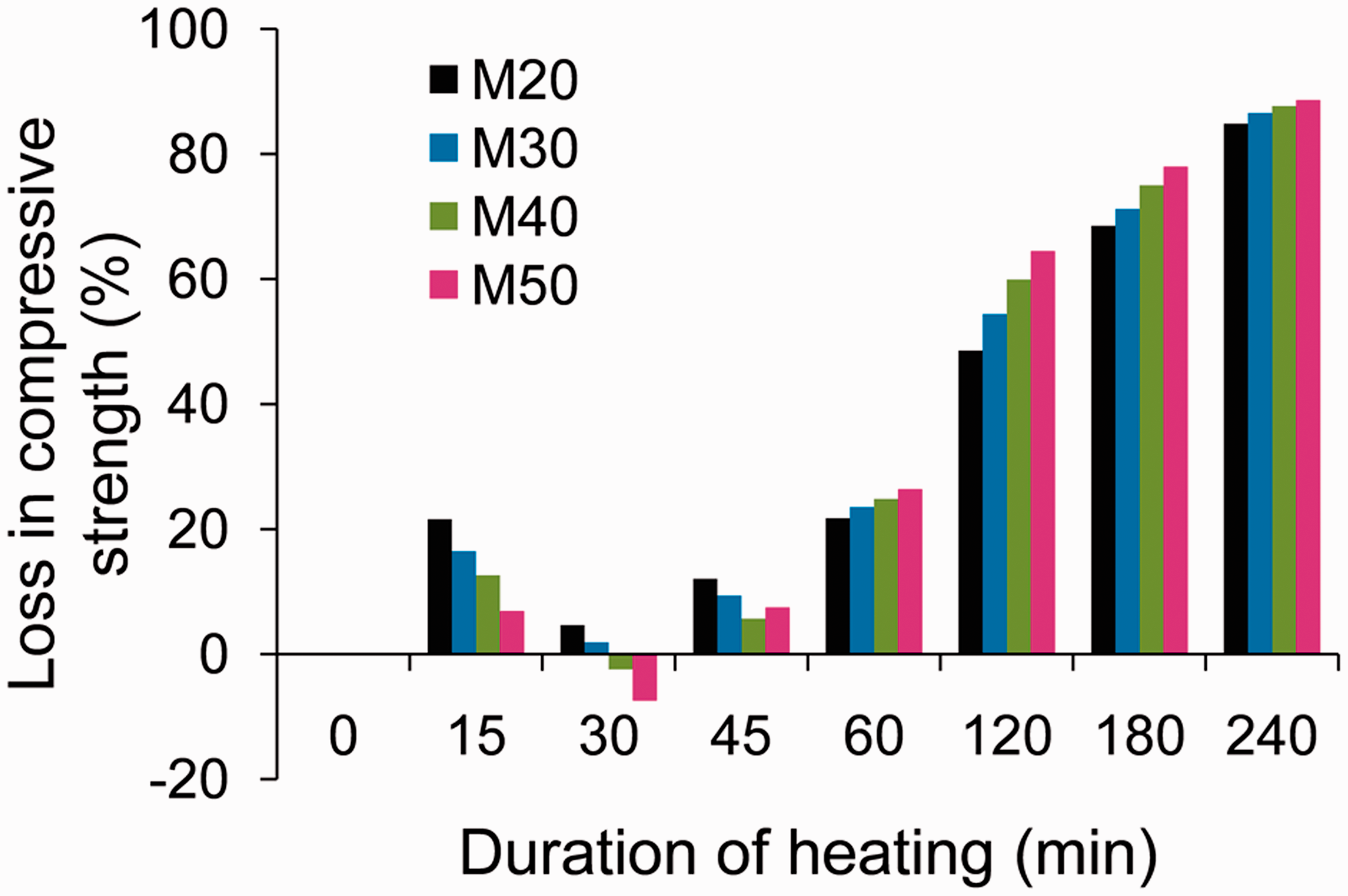
Rate of reduction in compressive strength of cube specimens.
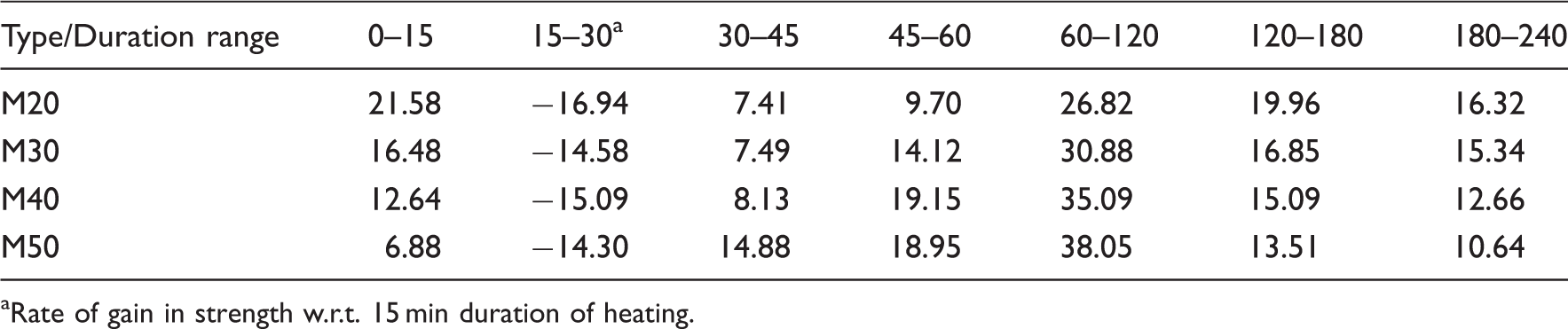
Rate of gain in strength w.r.t. 15 min duration of heating.
With further increase in duration of heating from 60 min (925℃) to 120 min (1029℃), the loss of strength became more significant. Concrete had a reduction in strength ranging from 48% for M20 grade concrete and 64% for M50 grade concrete at 120 min (1029℃) exposure duration. The duration of exposure above 60 min (925℃) is characterized by the decomposition of Ca(OH)2. Complete dehydration occurs at about 120 min of exposure time to fire; and dehydration of C–S–H gel occurs in cement paste and the paste loses its cementing ability. At this duration, due to high temperature, the crystal structure transformation of aggregate takes place and thus aggregate losses its strength.
At a heating duration of over 180 min (1090℃), the concrete specimens lose about 85–90% of the initial strength and only a very low residual strength was left for all the grades of concrete. The residual strength was found to be 15.1% for M20 concrete, and 11.3% for M50 concrete at 240 min (1133℃) duration of heating. In this case, specimens of all grades showed severe deterioration due to the decomposition of C–S–H gel in cement paste. At this stage, complete transformation of crystal structures of aggregate occurs.
The following empirical relation has been established to determine the residual compressive strength of different grades of concrete subjected to elevated temperature with different durations of heating.
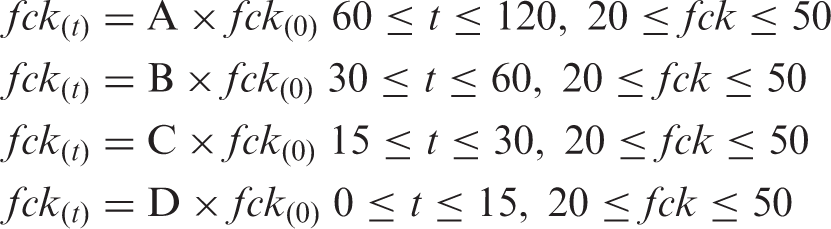
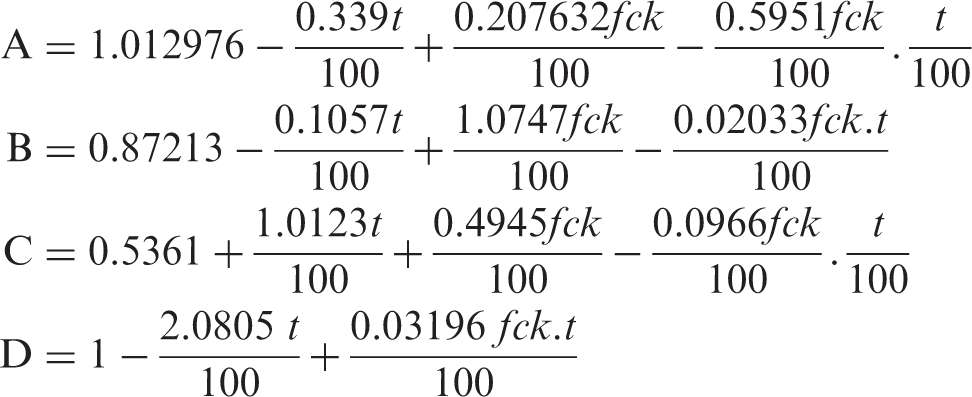
fck(t) is residual compressive strength of concrete at ‘t’ min; fck(0) is compressive strength of concrete at 0 min exposure(N/mm2); fck is characteristic compressive strength of concrete (N/mm2); t is duration of heating (min); A, B, C and D are constants.
Tensile strength
It is also essential to understand the residual tensile strength of concrete, after exposure to elevated temperature since a very low value of residual tensile strength will result in a number of cracks, also tensile strength of concrete provides resistance to internal water pressure and crack propagation in concrete produced at high temperature and safeguards the concrete from explosive spalling (Khaliq and Kodur, 2012). The residual tensile strengths of the cylinder specimens are obtained after exposure to elevated temperature at various duration of heating.
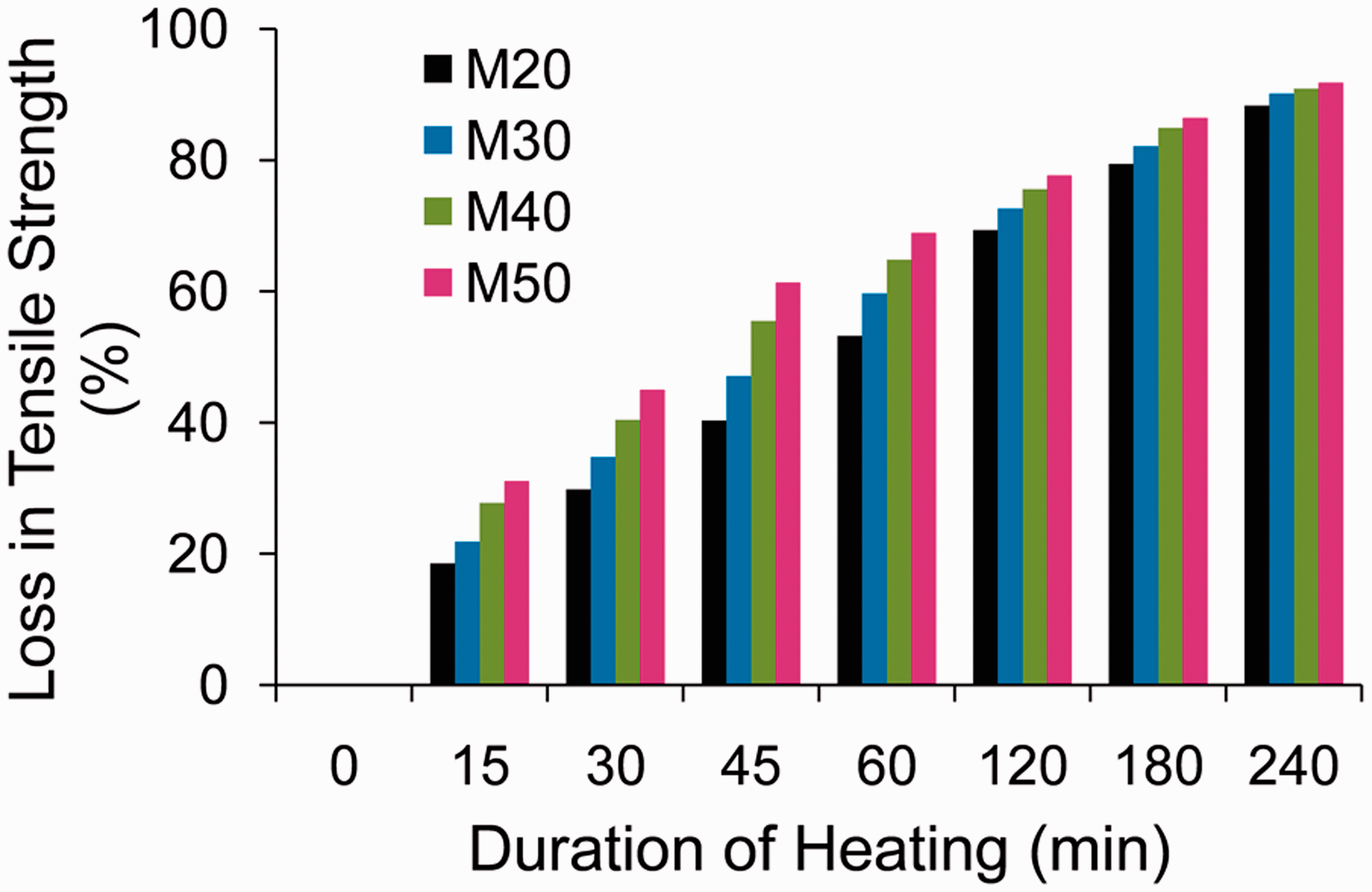
Figure 5 illustrates the relative residual tensile strength of different grades of concrete after exposure to elevated temperature for durations of 15, 30, 45, 60, 120, 180 and 240 min as per standard fire curve. With increasing temperature, the residual tensile strengths of all the concrete grades are found to significantly decrease as shown in Figure 5. The reduction in tensile strength is 19% for the M20 grade concrete at 15 min (718℃) exposure time. However, a sharp reduction in tensile strength is observed for the M50 grade concrete at 15 min, which is about 31%. At 45 min (873℃), the reduction in tensile strength for M20 grade concrete is 40% and for M50 grade concrete, it is 61%. The reduction in strength is found to be gradual beyond 60 min (925℃) exposure time, but loss in tensile strength is 88% for M20 grade concrete and 92% for M50 grade concrete at 240 min (1133℃) of exposure time. Figure 6 shows the percentage loss in tensile strength of concrete.
Residual tensile strength of concrete specimens exposed to elevated temperature. Loss in tensile strength of concrete specimens exposed to elevated temperature.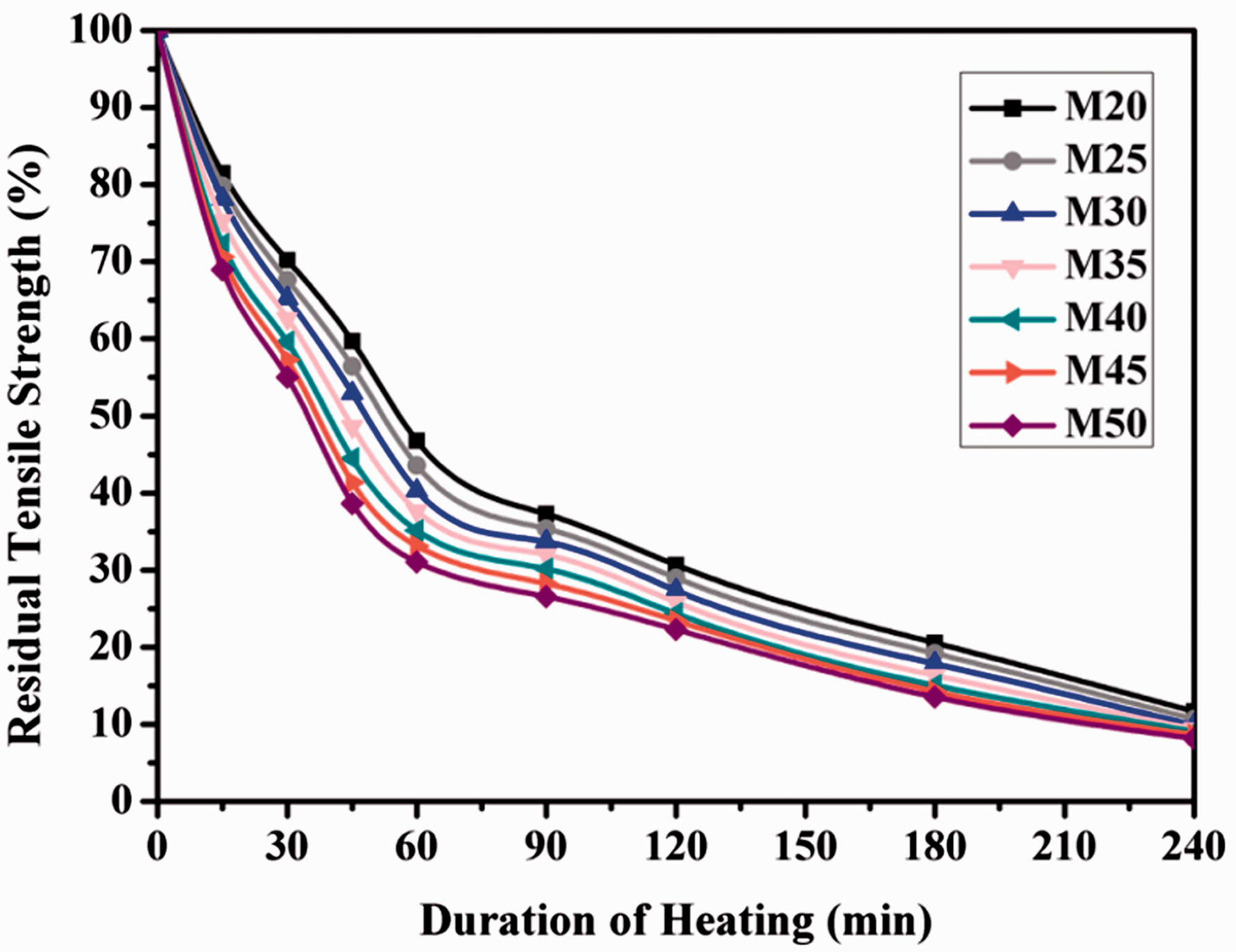
The residual compressive strength and residual tensile strength of different concrete grade with different duration of heating (%).
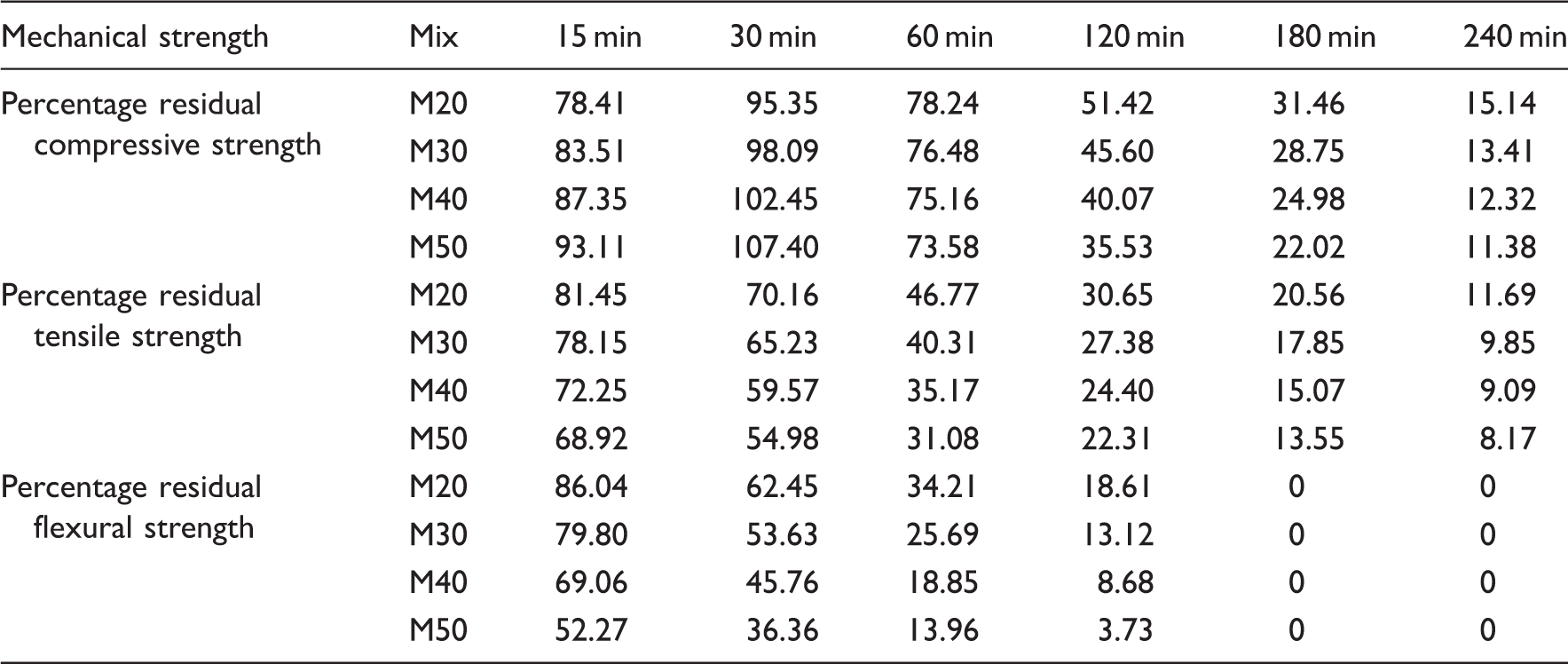
As shown in Table 7, the percentage residual compressive strengths of all the grades of concrete specimens are higher than those of residual tensile strengths in the range of 15–240 min duration of heating.
The tensile strength of concrete decreases more rapidly than the compressive strength when the concrete specimens are subjected to elevated temperature. During tensile loading, the crack gets open, whereas the crack closes due to compressive loading. Thus, the influence of fusing of cracks is more critical on the splitting tensile strength than compressive strength of concrete specimens. Increasing duration of heating has a significant influence on the crack propagation, decomposition of the hydration products and contradictory thermal deformation between aggregates and cement paste (Kalifa et al., 2000).
The following empirical relation has been established to determine the residual tensile strength of different grades of concrete subjected to elevated temperature with different durations of heating.
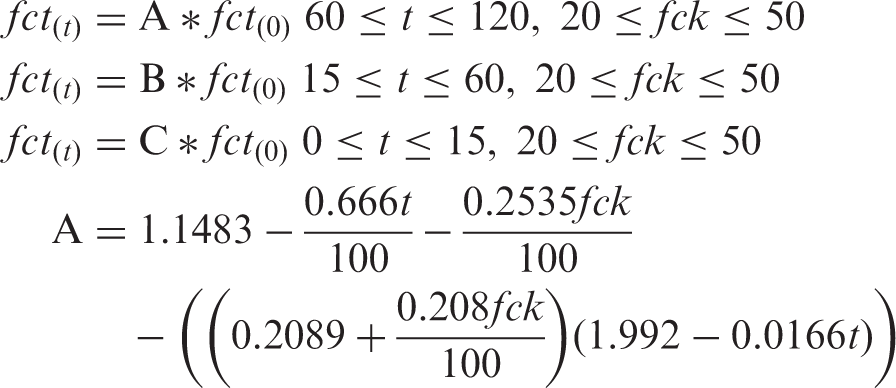
Here fct(t) is residual tensile strength of concrete at ‘t’ min; fct(0) is tensile strength of concrete at 0 min exposure(N/mm2); fck is characteristic compressive strength of concrete (N/mm2); t is duration of heating (min); and A, B, C and D are constants.
Flexural strength
Experimental investigation has also been carried out to determine the residual flexural strength of the beam specimens exposed to elevated temperature for various duration of heating. The flexural strength was found after cooling the specimens. Figure 7 shows the variation in the residual flexural strength of different grades of concrete. It can be inferred from Figure 7 that as exposure time increases, the rate of reduction in flexural strength of concrete decreases.
Residual flexural strength of concrete specimens exposed to elevated temperature.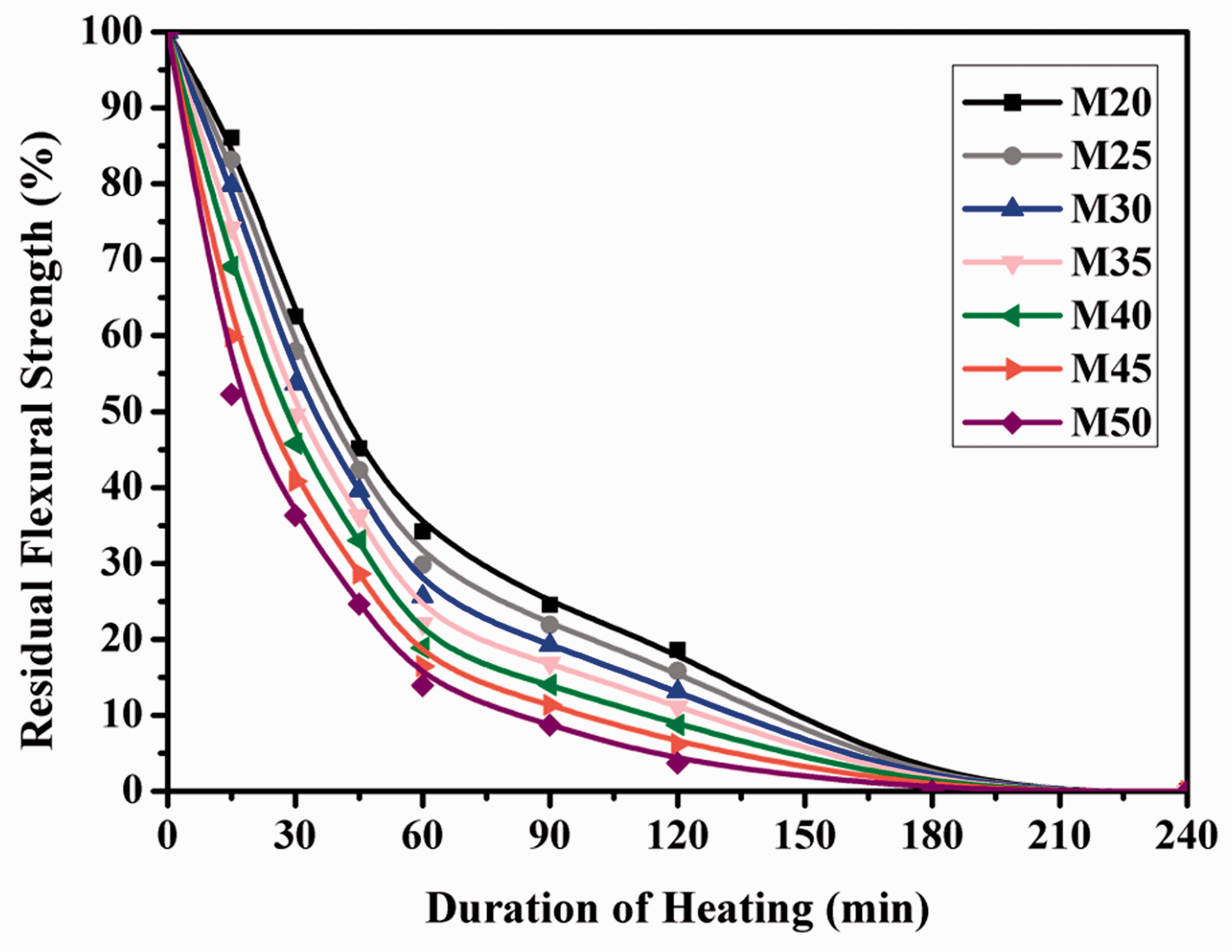
Initially (up to 15 min) the strength loss of concrete with higher w/c ratio (M20-M30) is found to be minimum, and as duration of heating increases, the loss increases. However, significant decrease in strength is observed after 15 min. In the case of concrete with lower w/c ratio (M40-M50), the higher strength loss is noticed from the beginning. The reduction in flexural strength of concrete was about 13% at 15 min (718℃) exposure duration of heating for M20 concrete; however, a higher reduction of 47% was observed for M50 grade. Residual flexural strength of all the grades of concrete decreased sharply in the range of 15-60 min of exposure time of heating. The reduction in flexural strength at 60 min (925℃) exposure duration was found to range from 65% to 86%. Further, strength reduced slowly for 60–120 min (925–1029℃) and the residual flexural strengths were barely 0% at 180 and 240 min (1090 and 1133℃) duration of heating.
The percentage residual compressive strengths of all the grades of concrete specimens were higher than that of the percentage residual flexural strengths in the entire range of exposure duration of heating as presented in Table 7. Therefore, the elevated temperature has a more severe effect on the flexural strength of all grades of concrete than that of the compressive strength. Heated specimens are more prone to crack under flexural loading, while they are prone to close up under compressive loading. Thus, the impact of crack coalescence is more crucial on the flexural strength than that of the compressive strength of concrete specimen. Increase in temperature has a significant influence on the crack propagation and on the propagation of micro-cracks into macro-cracks which is caused by the moisture clog and decomposition of the hydration products (Aydın S and Baradan, 2007; Potha Raju et al., 2004).
As compared to concrete with higher water–cement ratio, concrete with lower water cement ratio showed higher reduction in the flexural strengths. It is mainly due to the evaporation of water in concrete with higher amount of hardened cement paste which releases the water vapour pressure that causes additional cracks. This water vapour finds a way through the interface between aggregate and cement paste forms cracks to escape. It also develops the micro cracks around the pores in the hardened cement paste concrete. This phenomenon reduces the fracture energy between aggregate and cement paste at the core of the concrete section.
The appearance of ruptured section was carefully examined after the flexural strength test to identify the smoothness. The smoothness (i.e. the ratio of the cross-section area of ruptured aggregates to non-ruptured aggregates) of the ruptured sections decreased with increase of the duration of heating. Smoothness is directly proportional to cross section area of ruptured aggregates. As the duration of heating increases, separation of aggregate from the cement paste (i.e. non ruptured aggregate) also increases which may be due to the loss of bond between aggregate and cement paste. Figure 8 shows the ruptured cross section of tested concrete beam specimens after exposure to elevated temperature; the cross section is of size 100 × 100 mm.
Ruptured cross section of concrete specimens exposed to elevated temperature.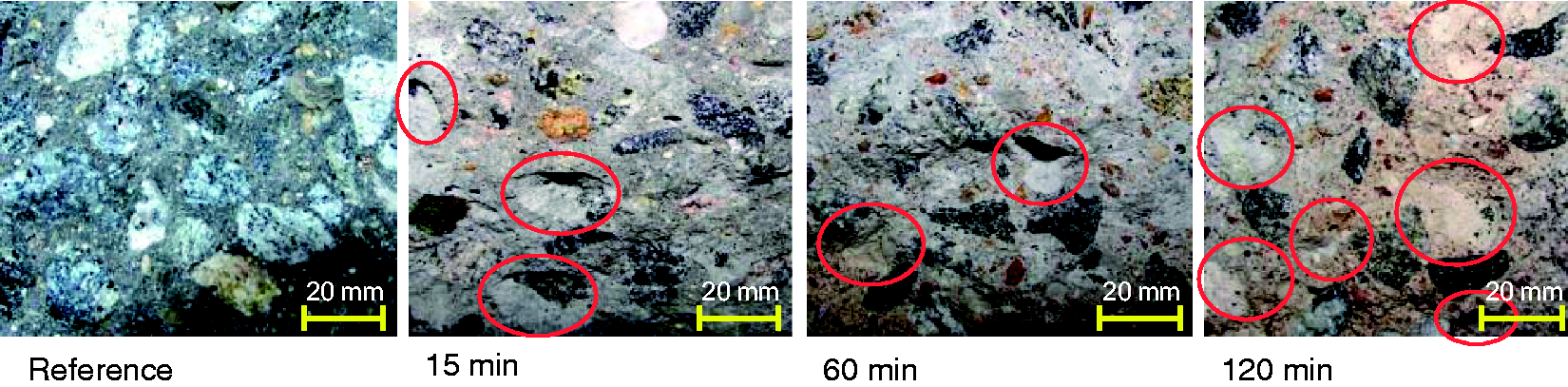
The red circles indicate the non-ruptured cross section of aggregates in which there is a separation in the interface between aggregate and the cement paste. The remaining portions are the ruptured cross sections of the aggregates. The smoothness of the ruptured section decreased significantly when the concrete specimens were exposed to 15 min (718℃) duration of heating. This reduction in smoothness is due to a decrease in the fracture energy of the interface between the aggregate and the cement paste caused by the shrinkage of cement paste due to dehydration. Further, the smoothness marginally increased between 15 and 60-min duration of heating. A remarkable decrease is noticed in smoothness as the duration of heating increases beyond 60 min (925℃). This phenomenon reflects that, with an increase in the fire exposure time, fracture energy at the interface between the aggregate and cement paste decreases (Xiao and Konig, 2004). The colour change of the ruptured sections was also examined. When the fire exposure time is lower than 45 min, the colour in the ruptured section at the central part is almost similar as that of the surface. The colour distribution is non-uniform within cross sections when the temperature is beyond 60 min duration of heating.
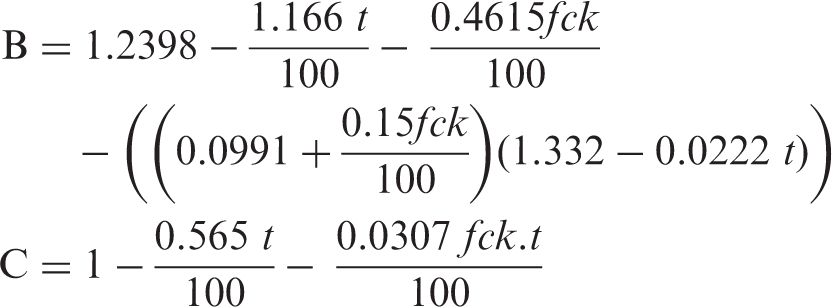
The following empirical relation has been established to determine the residual flexural strength of different grades of concrete subjected to elevated temperature with different durations of heating.
Stress strain behavior
Experimental investigation has also been carried out to examine the stress–strain behaviour of concretes with different water cement ratio and density. The relationship between the peak strain and the exposure duration of different grades of concrete is shown in Figure 9. It is seen that the peak strain of concrete increases with an increasing duration of fire exposure. For the fire exposure time below 30 min (821℃), the peak strain is roughly equal to the strain of unheated concrete. When the fire exposure time is 45 min (873℃), the peak strains of M20, M30, M40 and M50 are, respectively, 1.23, 1.26, 1.24 and 1.31 times of those of the unheated specimens. At 60 min (925℃), the peak strains of M20, M30, M40 and M50 concrete are, respectively, 1.43, 1.46, 1.55 and 1.56 times of those of the unheated specimen. At 240 min (1133℃) exposure time, the peak strains are 4.28, 4.39, 4.70 and 4.68 times those of the specimens for M20, M30, M40 and M50 concrete grades, respectively.
Peak strain values of concrete specimens exposed to elevated temperature.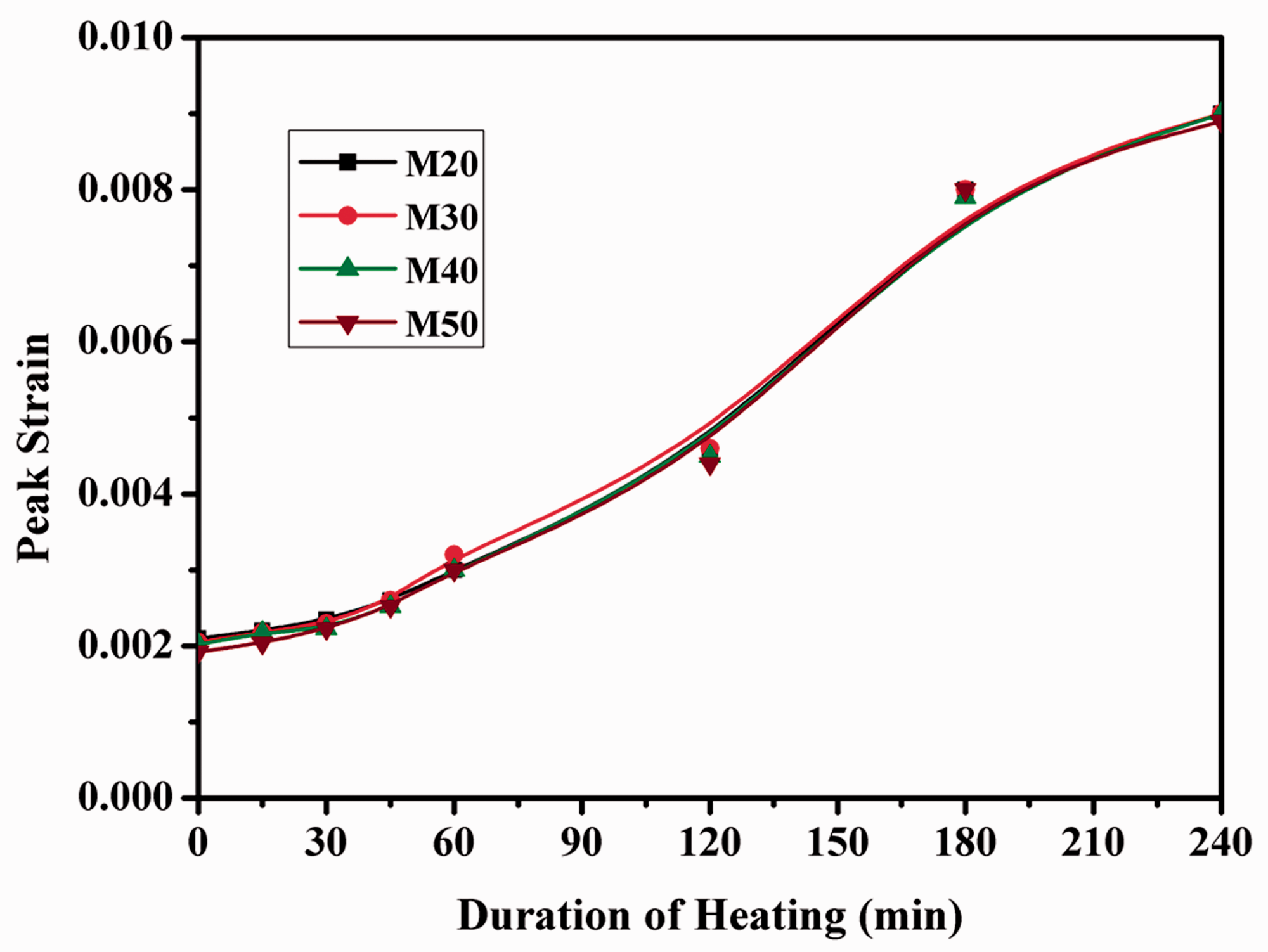
Further, the grade of concrete has a significant effect on the peak strain for the durations of heating above 60 min. It is also found that, the lower the strength of concrete, the higher is the increase in the normalized peak strain. This effect is found to be more pronounced for higher durations of heating. Previous research (Youssef and Moftah, 2007) has shown that the main cause for the rise of the peak strain of concrete after a higher duration of fire is mainly due to the enlargement of cracks. As the fire exposure time increases, tensile stress of concrete increases and thermal incompatibility between aggregate and cement paste also increases during the heating and cooling process thus leading to crack development. The volume dilatations in aggregate and cement paste provoke minimal compressive stress at the initial stage of heating. As the duration increases, the tensile stress has greater influence. Ma et al. (2015) has concluded that the tensile stress may be large enough to cause cracks in concrete. When the fire exposure time is higher than 1 hour, the effective bearing area of a test specimen gets reduced due to the formation of larger number of cracks occurring due to the decomposition of calcium silicate hydrate and calcium hydroxide (Fu et al., 2004) leading to higher peak strains. The peak strain does not increase for the fire exposure duration below 60 min but increases rapidly above 60 min due to increase in density of cracks.
The stress–strain curve represents the deformation and material characteristic of concrete (Anand et al., 2014; Liu et al., 2018; Yi et al., 2003). The stress–strain curves of M20, M30, M40 and M50 grade concrete specimens after exposure to different durations of heating are shown in Figure 10. With an increasing time of fire exposure, the peak strain moves towards to the right side of the stress–strain curve and the elastic modulus decreases sharply. The difference between the initial tangent elastic modulus and the secant modulus at peak stress decreases. Initially the shape of the ascending curve is concave down, this is due to the less number of cracks in the concrete upto 45 min duration of heating.
Stress–strain curves of concrete specimens exposed to elevated temperature.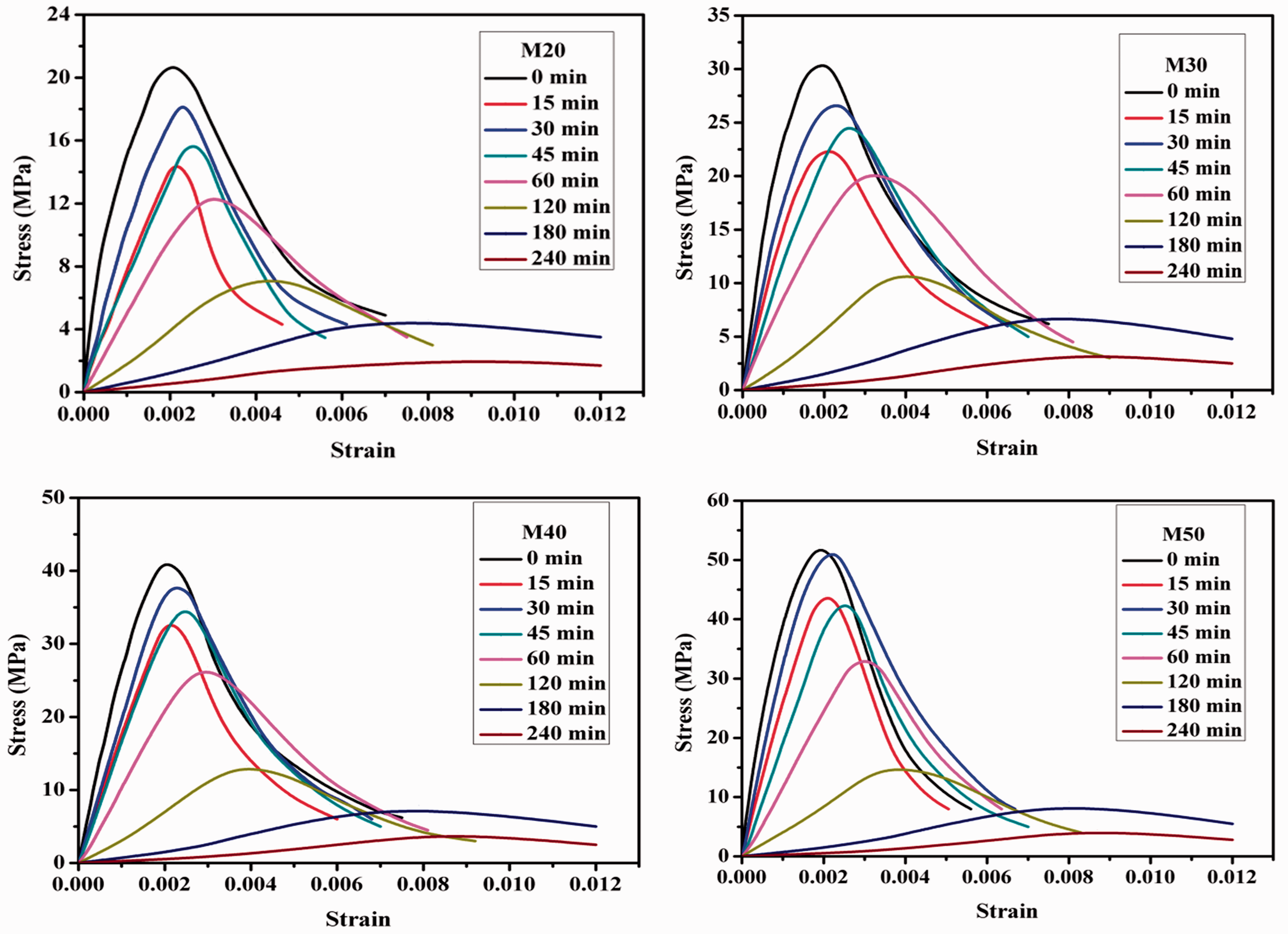
For the durations 45 min and 60 min, both the peak stress and the area of stress–strain diagrams slightly decreases. At 60 min duration of heating, the ascending curve becomes linear. Further when the fire exposure time increases above 60 min duration of heating, a pronounced concave up curve is noted; this shape is due to the closing of cracks that occurred due to complete dehydration of free and chemically bound water, deterioration of calcium silicate gel and deformation of aggregate at higher temperature. At 180 and 240 min of fire exposure time, the shape of the stress strain curves becomes flatter. This shape of stress strain curve is similar for all the strength grades of concrete. For exposure time more than 60 min, with an increasing duration of heating, the peak stress was found to decrease, the peak strain was found to increase, the strength and elastic modulus of concrete were found to drastically reduce, and the area under the stress–strain curve reduced significantly.
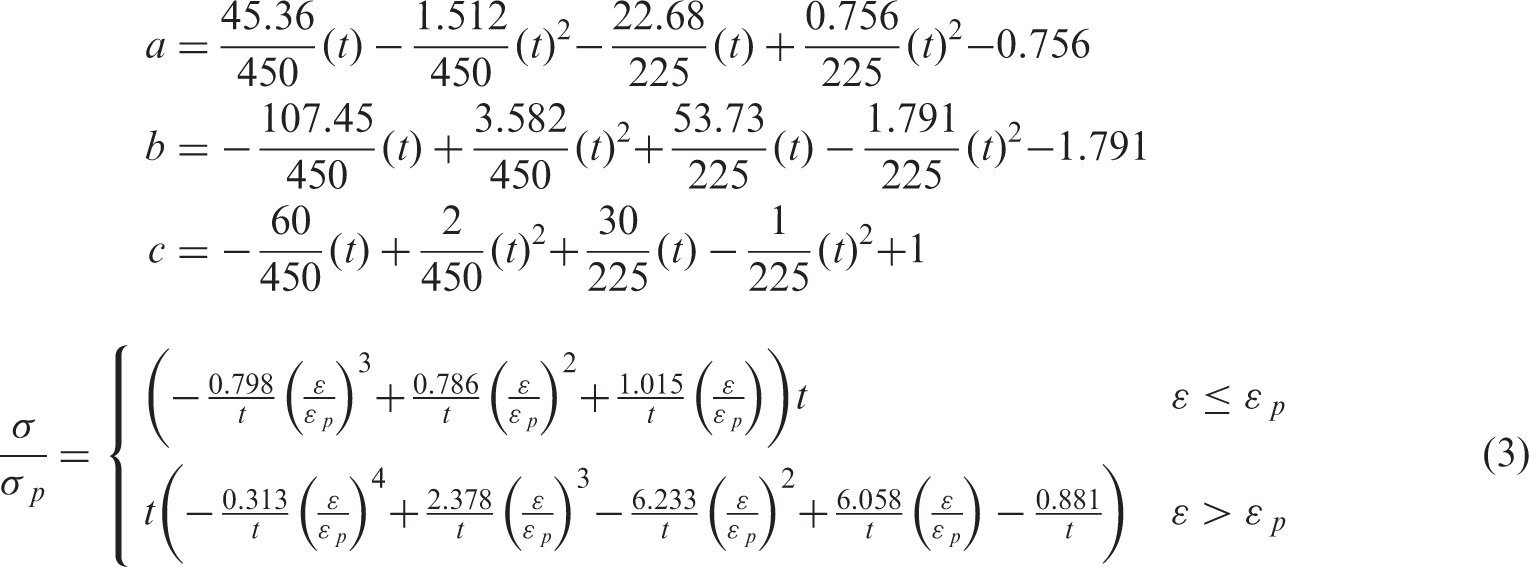
Based on previous studies (Sumarac and Krasulja, 1998; Xiao et al., 2006, 2016), data fitting was performed on stress–strain curves. When the stress–strain diagram is normalized with the stress relative to the peak stress and the strain relative to the peak strain for each specimen, the normalized stress–strain curves have almost identical shape for all the grade of concrete. But the shape of the normalized stress–strain curve varies based on the duration of heating, and it is classified into three regions as 0–30 min, 45–60 min and 120–240 min. A polynomial expression is developed to describe the ascending and descending phase for different fire exposure time (0–30 min, 45–60 min and 120–240 min).
Equations (2) to (4) present the polynomial expression to fit the shape of stress–strain curves for 0–30 min, 45–60 min and 120–240 min duration of heating, respectively.
Normalized stress strain curve of concrete exposed to elevated temperature.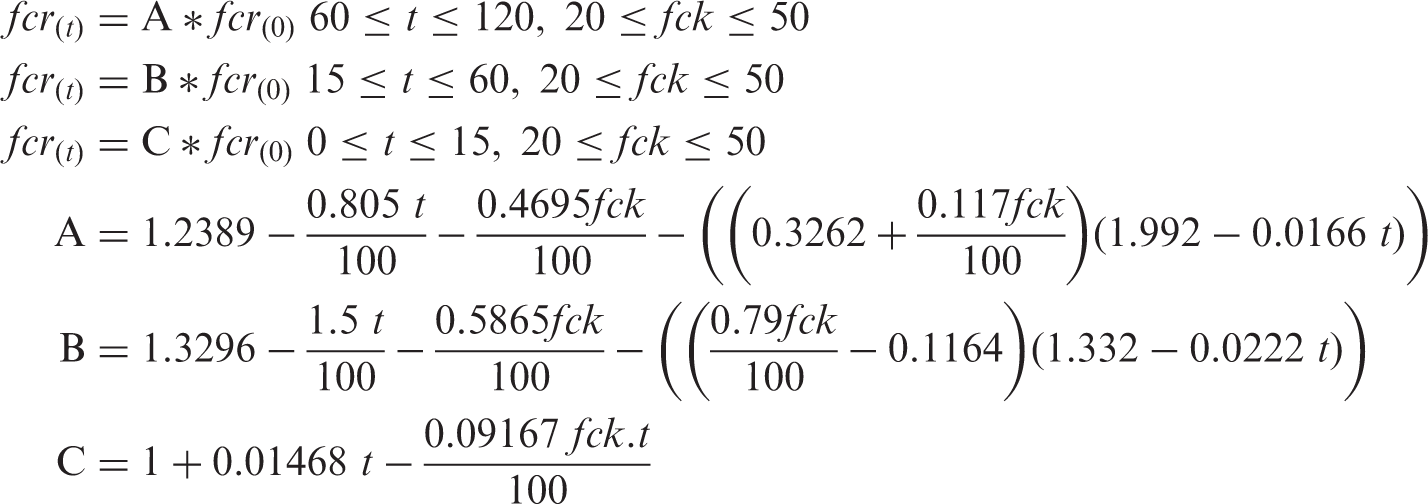


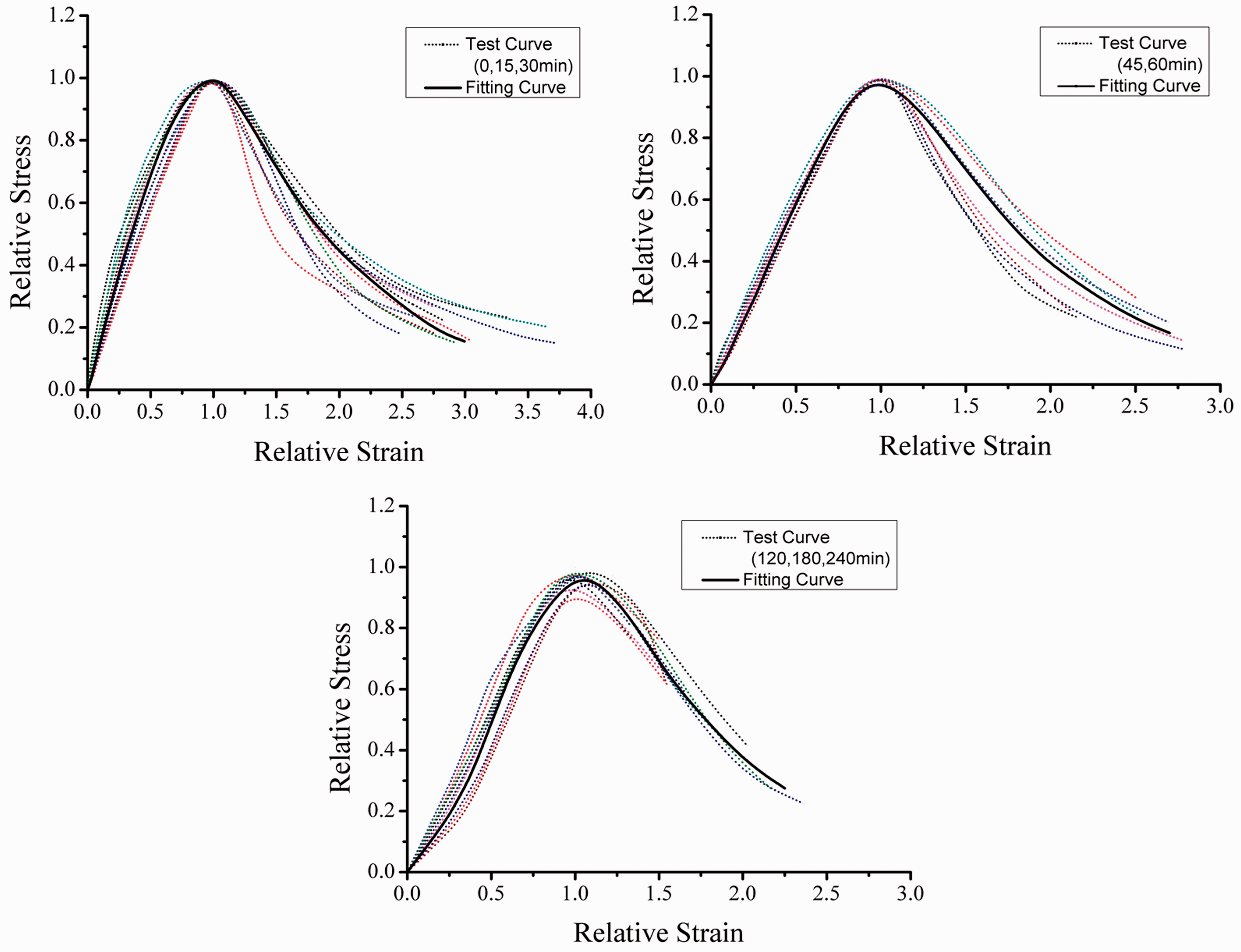
An increase in peak stress is noticed at 30 min duration of heating, when compared to specimen exposed to 15 min. The area under the curve is also larger than 15 min. For 45-min and 60-min durations, both peak stress and the area of stress–strain diagram slightly decrease. When the exposure time increases beyond 60 min, the curve becomes flatter due to decrease in stress and increase in strain.
Figure 12 shows the elastic modulus ratio of concrete exposed to various duration of heating. As the duration of heating increases from 15 min to 240 min, the ratio of elastic modulus of heated specimen (Er) to elastic modulus of unheated specimen (E) decreases. Higher reduction is observed for concrete with low water cement ratio for the duration beyond 60 min. It may be due to higher rate of stress reduction in the concrete.
Elastic modulus ratio of concrete specimens exposed to elevated temperature.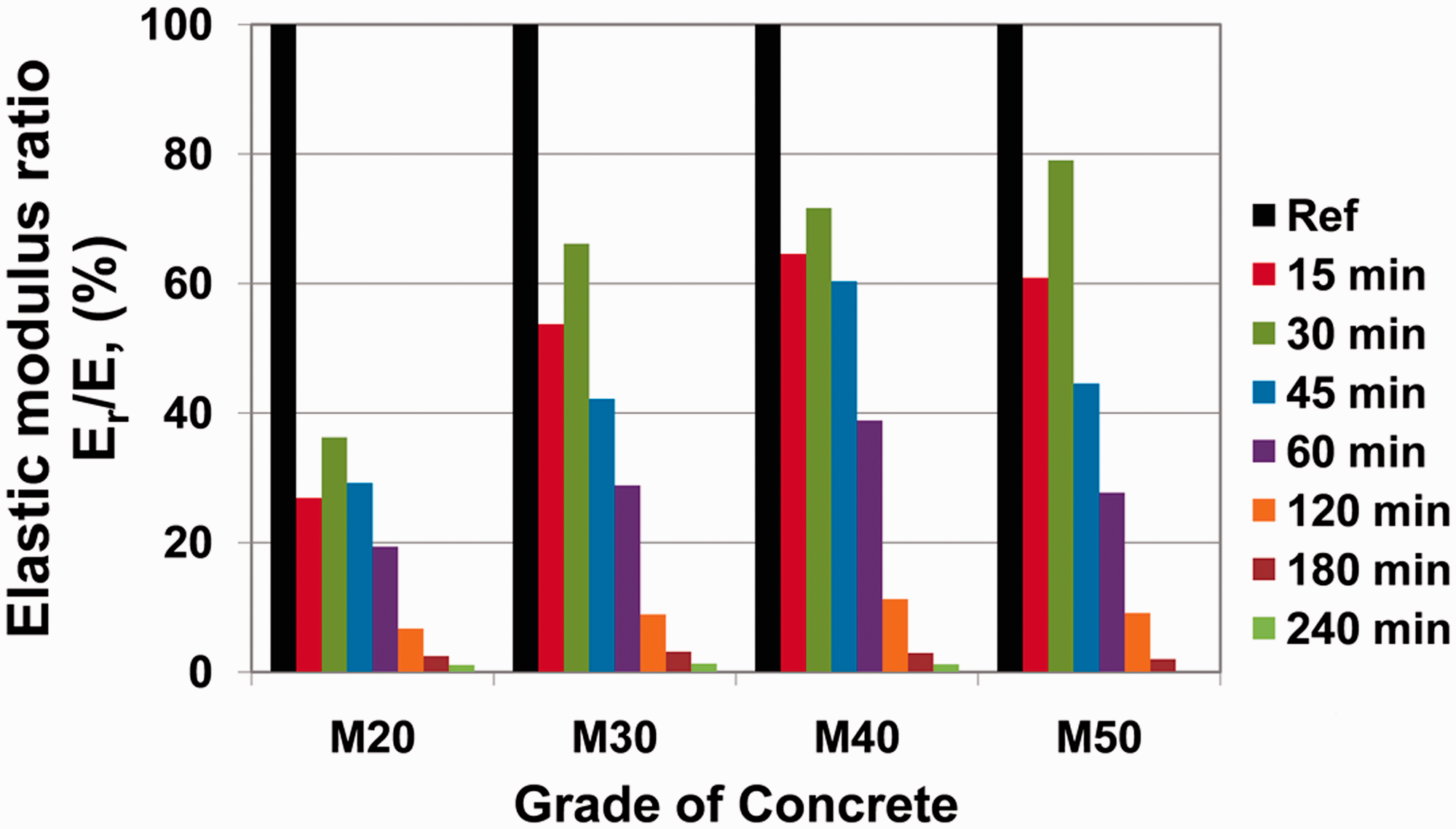
Weight loss
The scattered data in Figure 13 has two distinct gradient patterns, the initial sharp gradient from 0 min to 60 min exposure time followed by a flatter gradient above 60 min duration of heating. The initial weight loss was due to evaporation of absorbed and chemically bound water. Beyond 60 min (925℃) fire exposure time, weight loss gradually increased because of decomposition of Ca(OH)2, C–S–H and CH hydrates (Rashad and Sadek, 2017; Yermak et al., 2017).
Weight loss of concrete specimens exposed to elevated temperature.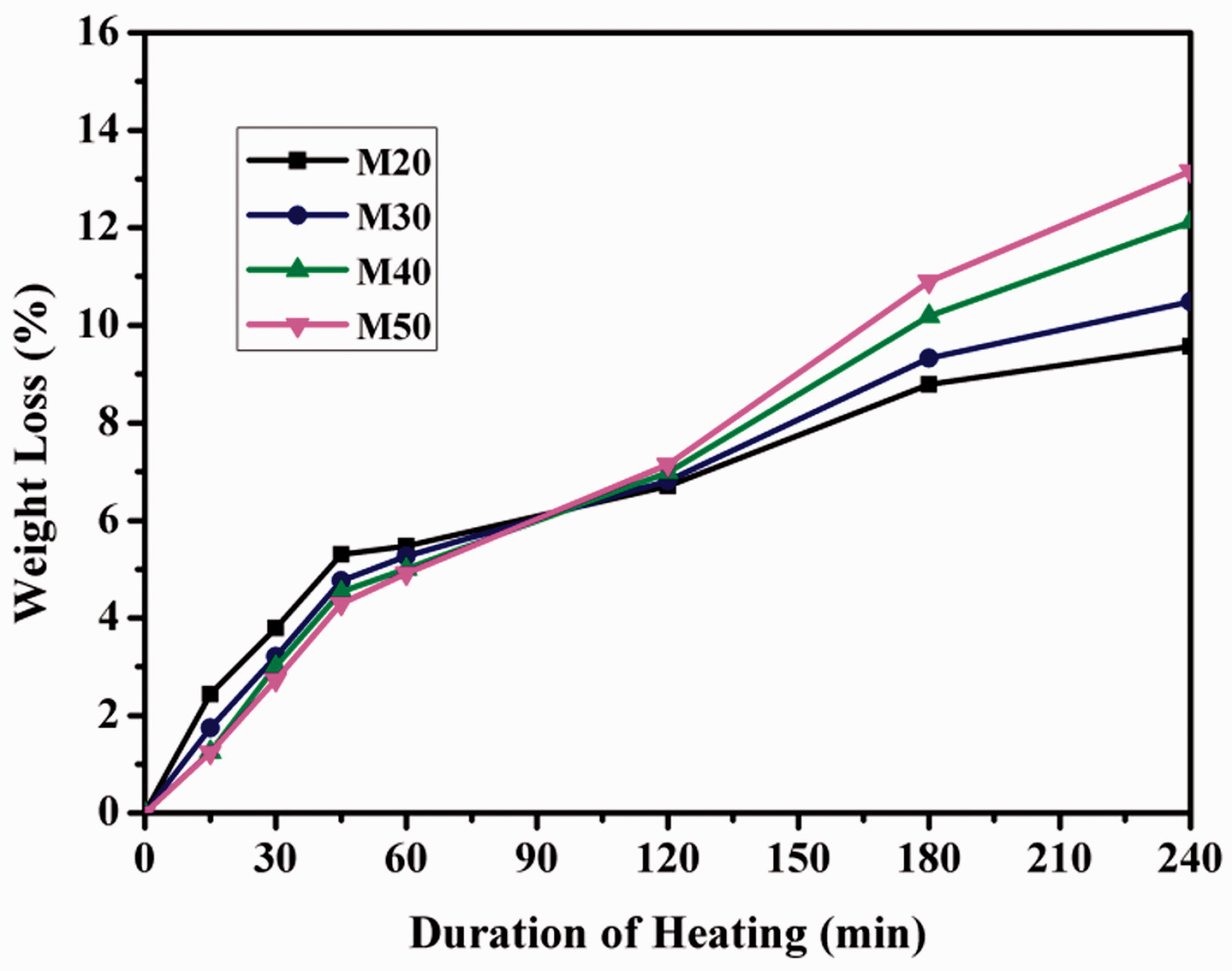
The weight loss on the specimens heated upto 15 min (718℃) duration is negligible, because the evaporation of water just begins at this duration of heating. At this duration, M20 concrete specimen experienced a weight loss of 2.44%, and M50 concrete specimen experienced a weight loss of 1.24%. At 240 min (1133℃) duration of heating, the losses were about 9.56% for M20 concrete and 13.16% for M50 concrete. The effect of w/c ratio on the weight loss of heated concrete specimen is found to be significant.
The effects of grade of concrete on weight loss are difficult to judge. Based on the grade of concrete, the weight losses of concrete specimens are categorized into two ranges. The parameters such as permeability and water cement ratio of concrete have direct effects on weight loss in the range of 0–60 min (27–925℃) and 60–240 (925–1133℃) min duration of heating. The weight loss of M20 concrete is found to be higher, i.e. about 5.47% up to 60 min. This is due to the presence of higher water content in the concrete, which creates more number of pores during heating. However, for M50 concrete it is 4.55%. Beyond 60 min duration of heating, it is observed that the weight loss is found to be higher for M50 concrete. This is due to the lower water cement ratio that results in less permeable structure and higher amount of cement content. The presence of higher amount of cement content leads to larger decomposition of Ca(OH)2, C–S–H and CH hydrates.
Figure 14 shows the percentage loss in compressive strength of concrete with M20 and M50 grade subjected to 60 min, 120 min, 180 min and 240 min duration of heating. As the weight loss increases, strength loss also increases for the concretes with low and higher water cement ratio. Higher weight loss (13.16%) and strength loss (88.61%) is observed for concrete with low water cement ratio.
Relation between compressive strength loss and weight loss of concrete specimens.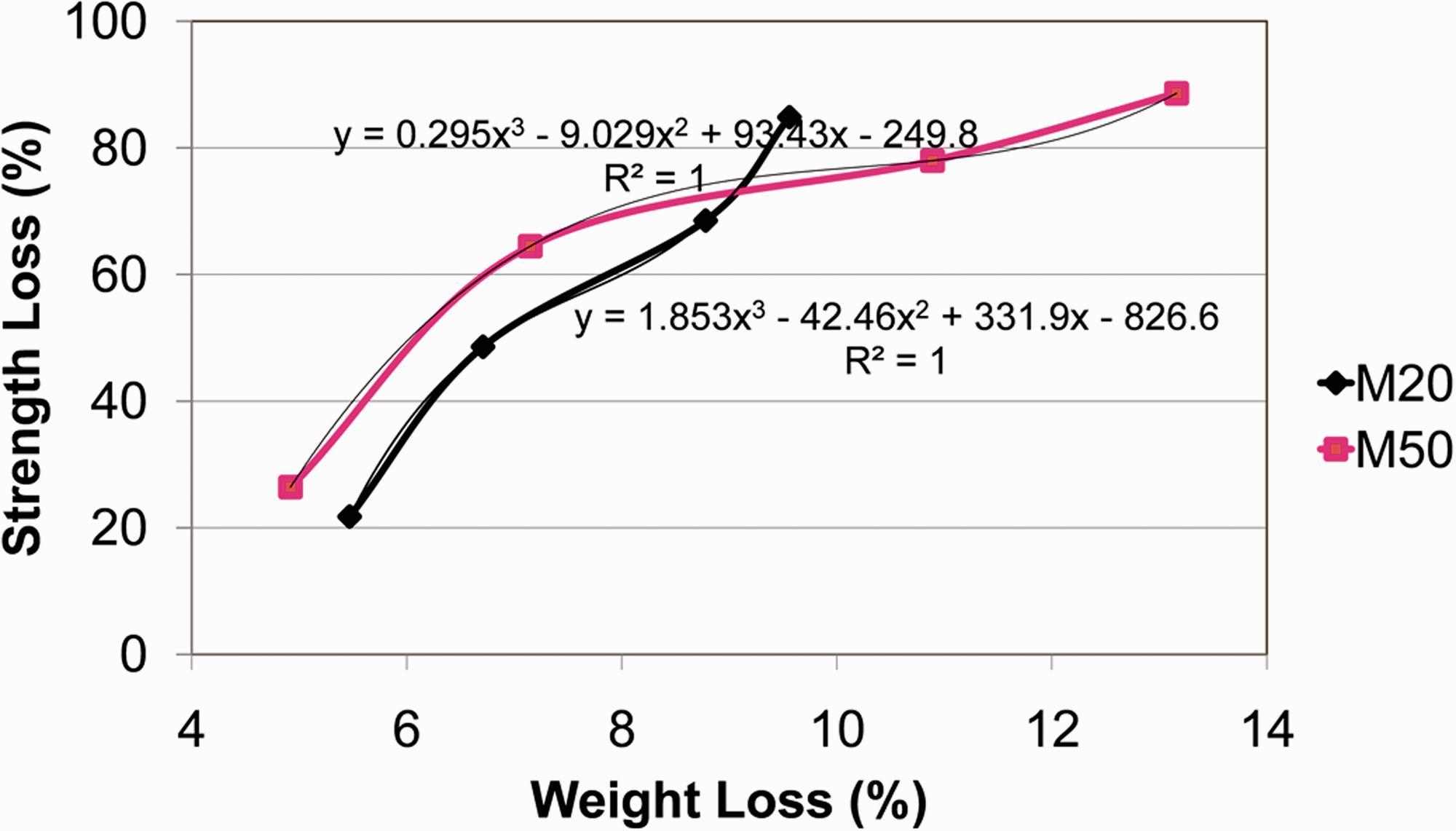
Crack pattern
The damage to the concrete surface, after being subjected to high temperatures, can be roughly detected by observing the surface of concrete. Thus, evaluation of fire affected concrete typically begins with visual inspection of crack formation and spalling of concrete surface (Daniel Paul et al., 2018; Jin et al., 2018; Lin et al., 1996; Wardeh and Toutanji, 2017). Figure 15 illustrates the concrete surfaces after treatment at elevated temperatures at different fire exposure time. There was no visible effect on the surface of the specimens heated up to 30 min (821℃) duration of heating. The concrete started to crack when the duration of heating was increased to 60 min (925℃) but the effect was not significant at that exposure time. The cracks became very pronounced at exposure duration of 120 min (1090℃) and extensively increased at 180 min (1090℃) duration of heating. The specimens were found to completely decompose and lose their binding properties after exposure to 240 min (1133℃) duration of fire, where spalling of the samples due to too much cracking was noticed. The failure of heated concrete surface occurs because of the crack formation at the hot surface, strength degradation and pressure of concrete pores (Sakr and El-Hakim, 2005).
Surface characteristics of concrete after exposed to standard fire.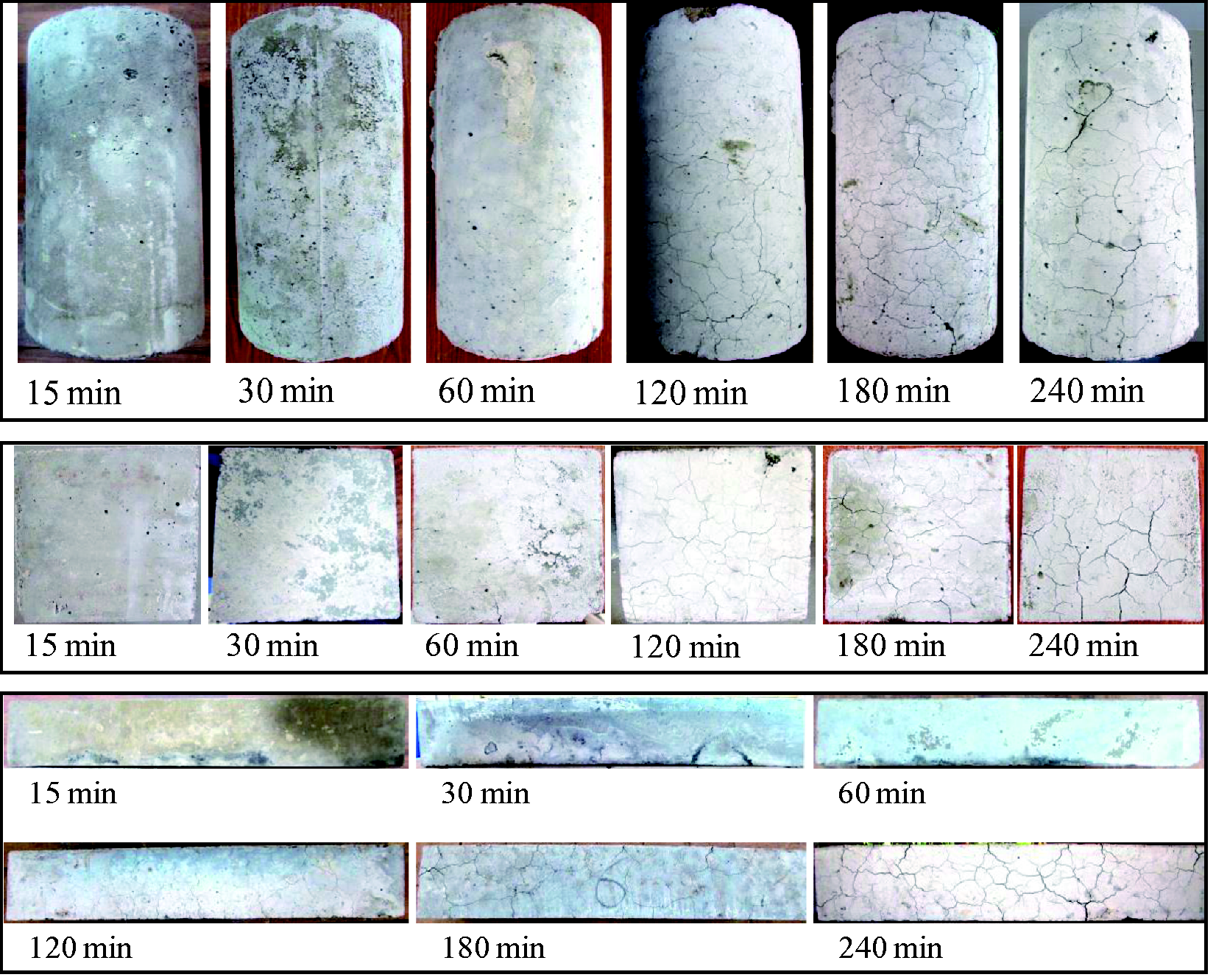
Image of thermal cracks of concrete specimens exposed to elevated temperature.
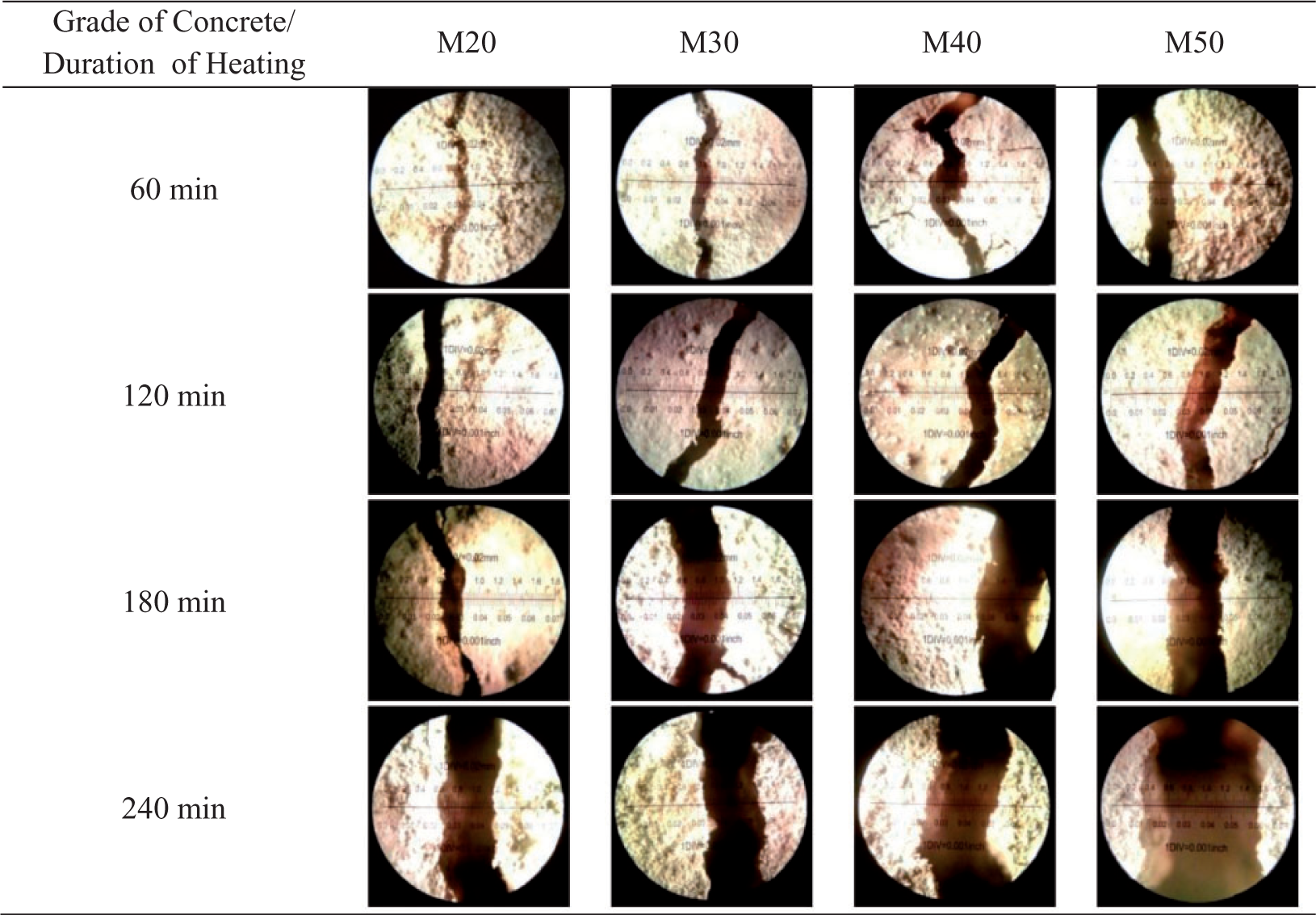
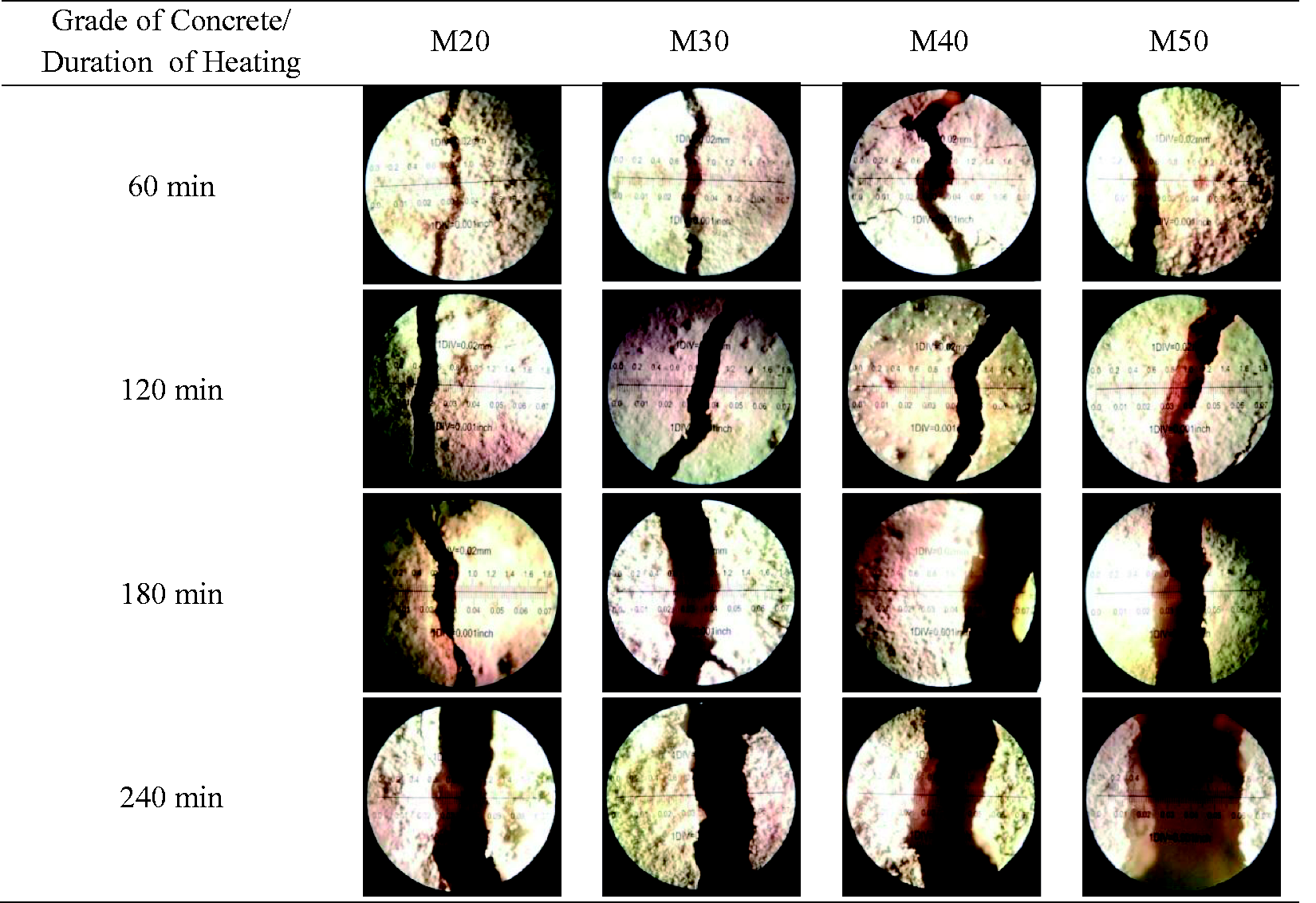
Spalling characteristics
When the concrete element exposed to fire, separation of a portion of concrete occurs which is called as spalling. The two main causes of spalling after exposure to elevated temperature are shrinkage of concrete and building up of vapor pressure in the concrete. Shrinkage of concrete is due to evaporation of free water and chemically combined water causes cracks induced spalling which is shown in Figure 15. Explosive spalling is due to the restriction of water vapor to escape from the dense concrete structure. In this study, few concrete specimens were found to have explosive spalling. Most of the specimens exhibited a crack-induced spalling.
Spalling of concrete specimens exposed to elevated temperature.
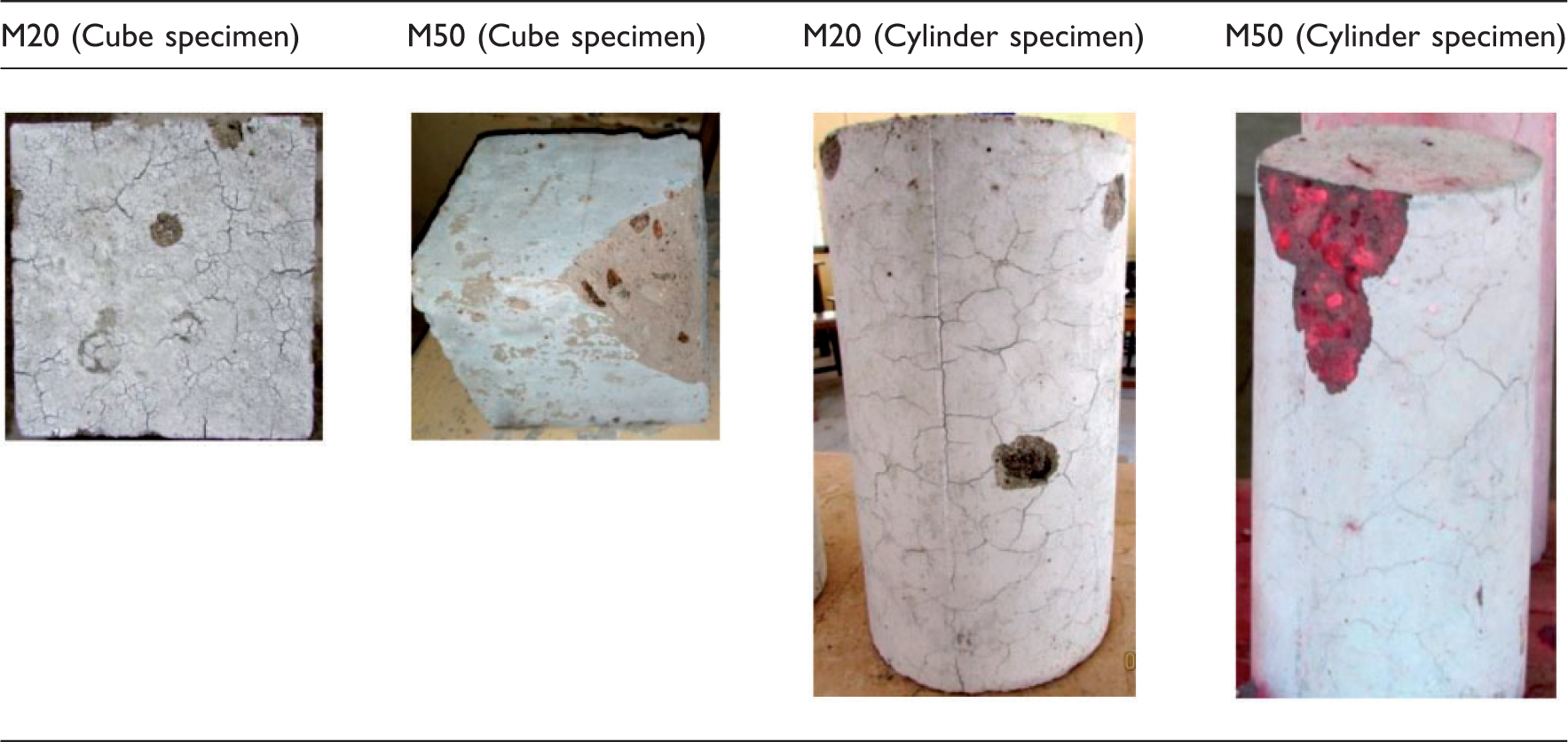
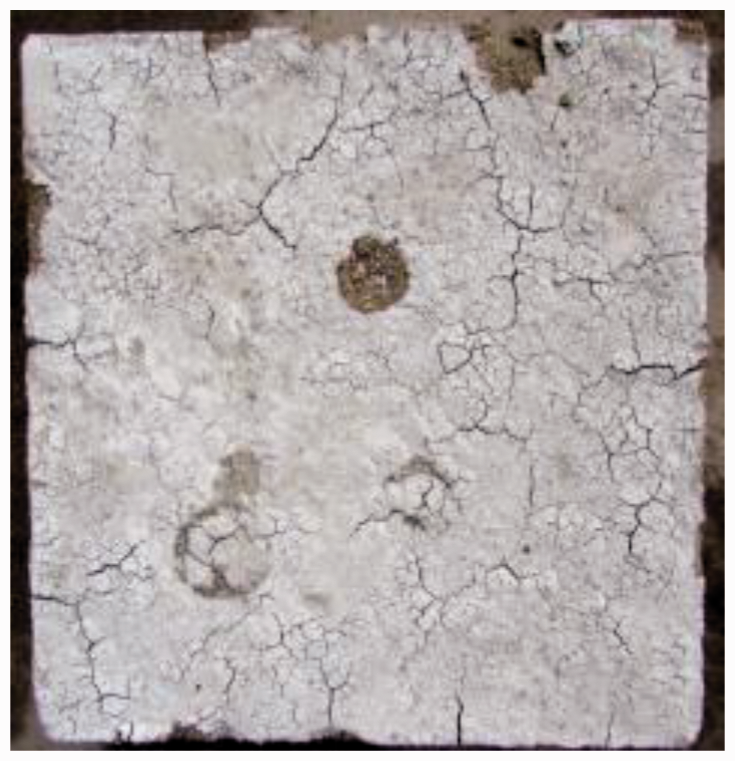
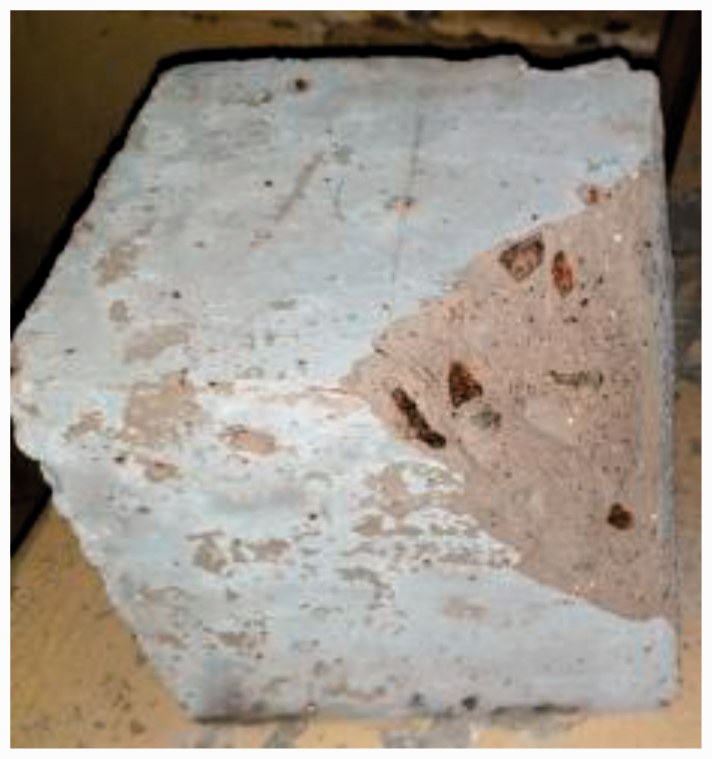
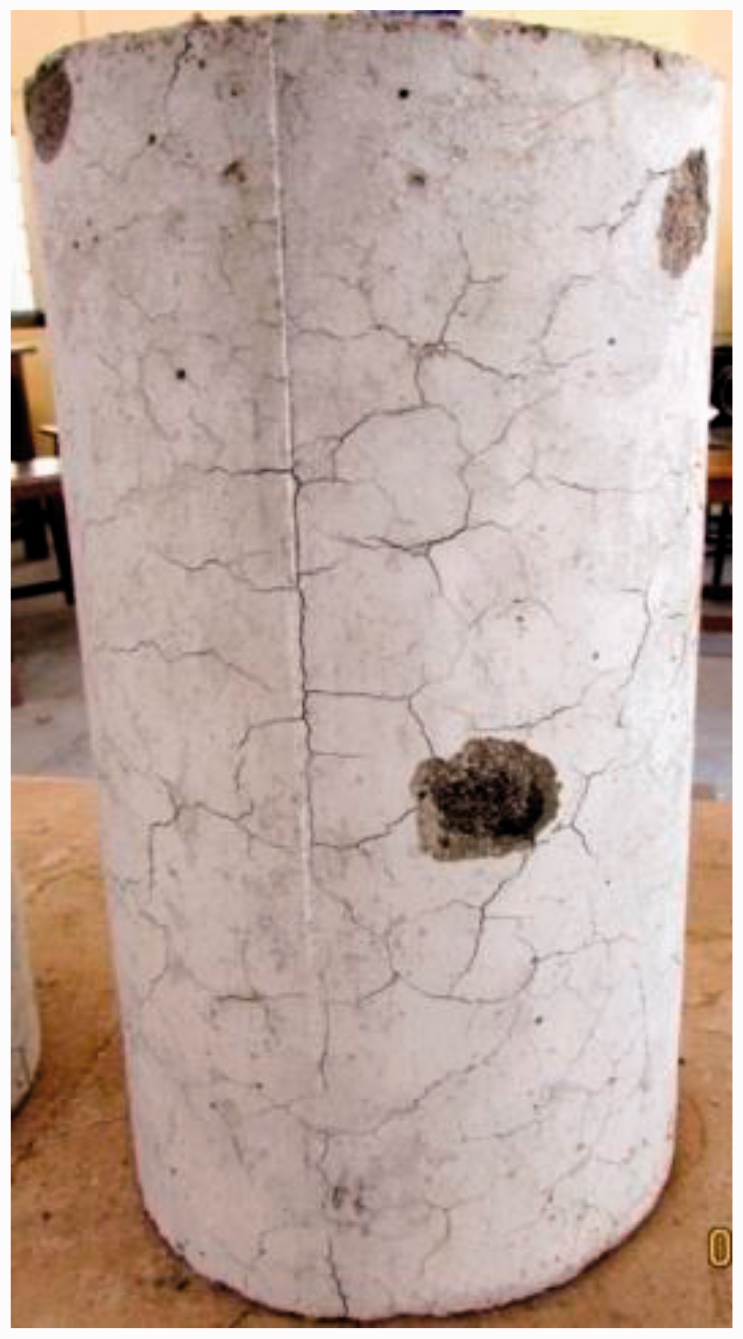
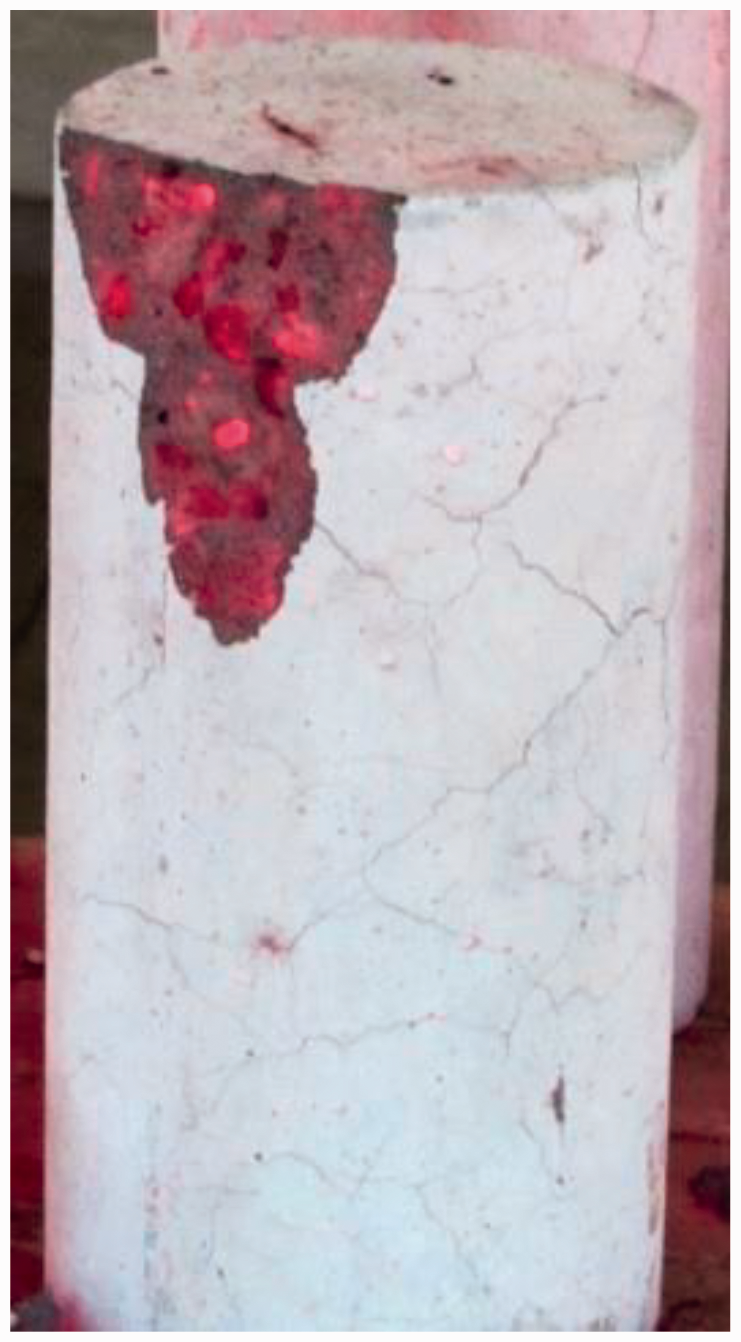
Generally concrete with the higher w/c ratio (M20-M30) has greater porosity, and for this reason it does not show any explosive spalling behavior. On the contrary, explosive spalling takes place for concrete with lower w/c ratio (M40-M50) due to its higher dense structure. Particularly, the explosive spalling occurred between 60 and 120 min duration of heating.
Phan and Carino (2002) reported that the tendency for explosive spalling depends on w/c ratio. The increase in the internal pore pressure owed to the vaporization of the free and chemically bound water cause cracks in concrete and explosive spalling. High strength concrete is denser and hence internal pressure gets built up leading to spalling of concrete (Chan et al., 1999; Hertz, 2003; Kalifa et al., 2000; Phan et al., 2001; Sideris et al., 2009). It can be seen from the table that the local spalling occurred for lower strength grade concrete specimens. But higher strength grade concrete specimens exhibited a sloughing off.
Spalling in concrete specimens may be due to dense concrete structure, sudden temperature increase and irregular temperature distribution. Exposure to higher temperature results in a sharp thermal gradient due to the low conductivity and high heat capacity of concrete. As a result of this, tensile stresses occur in concrete. These tensile stresses along with pore pressure in one direction cause spalling. During heating, thermal compressive stress is also developed at hot outer layer of concrete specimen in addition to tensile stresses. If this tensile stress reaches the tensile strength of concrete, the corner piece can spall as indicated in Figure 16 (Lee, 2008). It is observed that, spalling occurred significantly in cube and cylinder specimens during the heating.
Development of stresses during heating.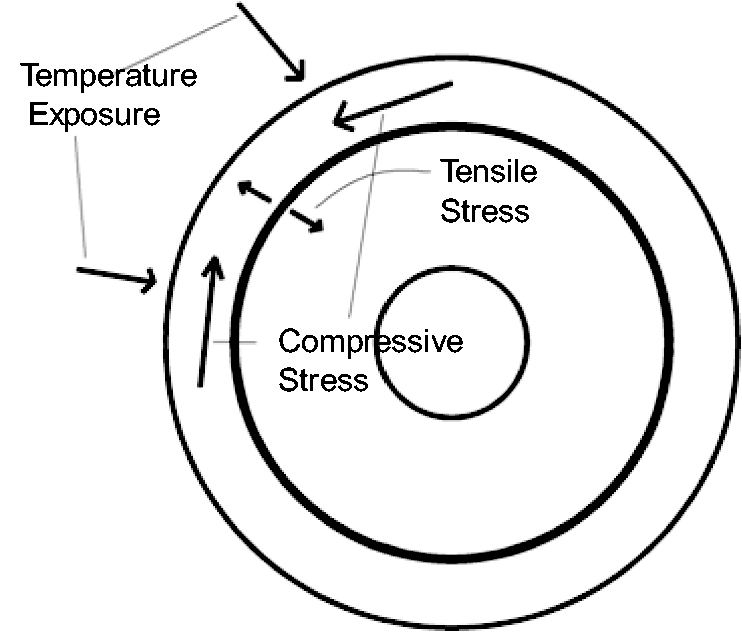
Figure 16 shows the schematic view of development of stresses during heating.
Weight loss and intensity of cracks (Figure13 and Table 8) are directly proportional to rate of spalling. As the crack induced spalling increases, the weight loss and density of cracks increases for all the grades of concrete (M20–M50). The weight loss of concrete with low w/c is higher (Figure 13), and the same is confirmed from the experiments. This higher weight loss is observed beyond 120 min (1029℃) duration of heating and explosive spalling also occurred in the same duration. Larger crack width and more number of cracks were observed for concrete with lower w/c ratio (Daniel et al., 2019) and these specimens exhibited explosive spalling.
SEM investigation
SEM investigation of hardened concrete revealed the major morphological changes that originated as a consequence of exposure to elevated temperatures. It will be useful to predict the reasons for the loss of strength in heated specimen by understanding the pore structure, micro cracks and changes in the CSH gel that were formed during heating. It is elucidated from the analysis that as the temperature increases length of micro-cracks increased, and the micro-cracks intermingled with voids due to the increasing porosity. Figure 17 shows the SEM investigation of lower (M20) and higher (M50) grade concrete specimens heated upto 60 min and 240 min duration of heating, respectively.
SEM images of concrete samples exposed to different duration of heating.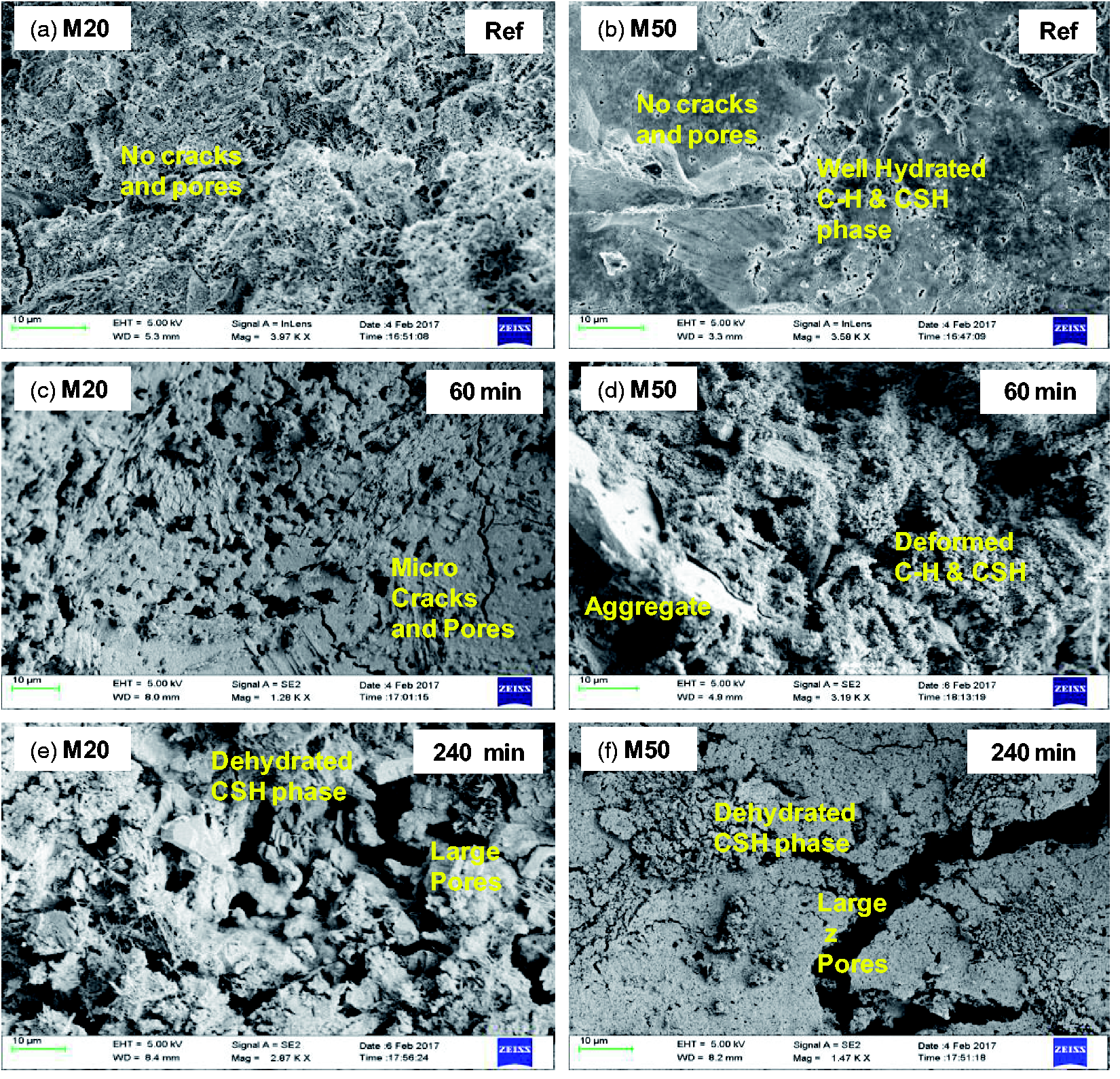
Figure 17(a) and (b) (reference specimen) shows a well-developed hydrated phases such as Ca(OH)2 crystals intermixed with C-S-H. Similar findings were previously reported by few researchers (Arioz, 2007; Demirel and Keleştemur, 2010; Diamond, 1972). Figure 17(c) to (f) demonstrates the decomposition of Ca(OH)2 crystals and the C-S-H gel, and the formation of micro cracks due to higher temperature. Significant changes were observed in the microstructure, interface between the aggregate particles and cementitious materials of the reference and heated specimens. As the temperature increases, both the density and length of micro cracks increased.
Figure 17(c) and (d) elucidate development of pores and cracks at 60-min duration of heating, which is due to the loss of bound water, increased porosity, resulting in increased permeability (Anagnostopoulos et al., 2009; Handoo et al., 2002; Saridemir et al., 2016). When exposed to 60-min duration of heating, even though the internal structure of concrete is compact, the pores and cracks begin to increase. At 60-min exposure time, the pores and micro-cracks develop due to evaporation of bound water. Particularly, when compared to 60-min duration of heating (925℃), the cracks and pores in the matrix and interface drastically increase when exposed to 240-min duration of heating (1133℃). At higher exposure time, the deterioration took place in the Ca(OH)2 and C-S-H gel which increased the number of cracks and pores which results in loss of strength (Saridemir et al., 2016; Varghese et al., 2018, 2019).
The quantity of decomposed CSH was found to be higher for the specimen heated to 240 min duration as compared to specimens heated to 60 min duration. In case of M50 grade concrete, concentration of CSH gel was more and more deterioration of CSH gel was noticed.
Therefore it is concluded that the reduction in the strength is due to deterioration, development of large pores and cracks formation in the concrete specimens exposed to elevated temperature. Concrete with low w/c ratio exhibited higher amount of cracks and pores as compared to concrete with higher w/c ratio. SEM images confirm higher porosity levels of specimens exposed to elevated temperature.
Conclusions
Based on the experimental investigation, it is found that cement content, water cement ratio, and aggregate to cement ratio are the key factors that affect the residual strength of concrete exposed to elevated temperatures. Due to these factors, a significant change occurs in the density and porosity of concrete. The failure of Types M20-M30 concrete at compression exposed to elevated temperature upto 45 min mainly depends on the water cement ratio. Concrete with dense internal structure and low porosity is the reason for the failure of Type M40-M50 concrete exposed to elevated temperature above the duration of 45 min. In the case of tensile and flexural strengths, concrete with lower water cement ratio is critical to strength loss due to its different nature of loading and pore structure.
Duration of heating plays a major role on the strength reduction on compressive strength of concrete. Upto 15 min duration of fire exposure, a minor reduction in compressive strength was noticed. The reduction was higher for concrete with higher w/c ratio. This is due to the rapid expulsion of water leaves minor pores in concrete. At the heating range of 30 min, a gain in compressive strength was observed than 15 min duration of heating. This increase was higher for concrete with lower w/c ratio.
Beyond 45 min duration of heating, concrete with lower w/c ratio have a predominant reduction in compressive strength. The dehydration and decomposition of chemical compounds in the hardened cement paste is the primary cause for higher reduction in strength.
For samples exposed to duration higher than 120 min, the reduction in compressive strength of concrete was significantly larger. At the heating range from 180 to 240 min, complete decomposition of CSH gel and CaOH2 occurs.
A continuous drop in flexural and tensile strength was noticed for all the duration of heating. Concrete with lower w/c ratio shows a higher drop. A higher reduction in compressive, tensile and flexure strength of concrete was observed, i.e. 21.76%, 53.23% and 65.79%, respectively, for concrete with lower water cement ratio (M50 heated up to 1 h).
The effect of water cement ratio on the weight loss of concrete is found to be significant. However, weight loss was higher for the duration beyond 60 min in the case of concrete with lower water cement ratio. An empirical relationship was developed using regression analysis to determine the residual strength of different grade of concrete exposed to standard fire temperature. A simple relationship was also developed between weight loss and strength loss of concrete.
Supplemental Material
IJD881484 Supplemental Material - Supplemental material for Post-fire damage assessment and capacity based modeling of concrete exposed to elevated temperature
Supplemental material, IJD881484 Supplemental Material for Post-fire damage assessment and capacity based modeling of concrete exposed to elevated temperature by Daniel Paul Thanaraj, N Anand, Prince Arulraj G and Ehab Zalok in International Journal of Damage Mechanics
Footnotes
Declaration of conflicting interests
The author(s) declared no potential conflicts of interest with respect to the research, authorship, and/or publication of this article.
Funding
The author(s) disclosed receipt of the following financial support for the research, authorship, and/or publication of this article: The authors wish to thank the Science and Engineering Research Board, Department of Science and Technology of the Indian Government for the financial support (Grant No. YSS/2015/001196) provided for carrying out this research.
References
Supplementary Material
Please find the following supplemental material available below.
For Open Access articles published under a Creative Commons License, all supplemental material carries the same license as the article it is associated with.
For non-Open Access articles published, all supplemental material carries a non-exclusive license, and permission requests for re-use of supplemental material or any part of supplemental material shall be sent directly to the copyright owner as specified in the copyright notice associated with the article.
