







Abstract
Growing awareness of sustainability in the landfill cover system has increased the use of biochar amendment for degraded landfill surface soils. Hydraulic and vegetative benefits of biochar on cover soil have been studied in the past, while ignoring mechanical characteristics, which is important to understand progressive failure of landfill infrastructure. In this study, the mechanical characteristics of four soil–biochar composites were investigated by conducting 81 unconfined compressive strength test. The results based on four in-house produced biochar were used to study the effect of compaction state (density, moisture content) and biochar percentage (5% and 10%) on unconfined compressive strength of soil–biochar. The ductility of soil–biochar was investigated for all the four biochars. Results from this study indicate a contrasting observation of strength gain depending on the type of biochar. The unconfined compressive strength of soil–biochar is potentially influenced by the different surface functional groups of biochar (hydrophilicity/hydrophobicity) and soil-biochar interlocking. It was noted that the peanut shell biochar gave comparable unconfined compressive strength of soil–biochar with that of bare soil for different compaction state. However, a diminution in the unconfined compressive strength was observed for all the other three soil–biochar sourced from water hyacinth, saw dust, and poultry litter. The study indicates that the use of biochar in soils does not ensure an improvement in the strength of soil–biochar. Enhancement in ductility was found for all the four soil–biochar irrespective of compaction state. Improvement in ductility was maximum when the soil–biochar is compacted at the dry state of optimum. Plant-based biochar has higher potency to increase the ductility of soil as compared to the animal-based biochar. Our study identifies peanut shell biochar ideal for landfill cover amendment material, considering its mechanical characteristics and design criterion. Soil biochar composite from water hyacinth, saw dust, and poultry litter can be used for potential application in green-infrastructure.
Introduction
Biochar (BC) is a carbonaceous solid material produced via pyrolysis (at high temperature and pressure) of plant and animal based organic wastes in the absence of or under a limited amount of oxygen (Glaser et al., 2009; Vassilev et al., 2013; Woolf et al., 2010; Wu et al., 2012). Its efficacy in promoting crop productivity, ecological rehabilitation, and carbon-sequestration are well documented in the literature (Deng et al., 2017; Doan et al., 2015; Wang et al., 2010; Xu et al., 2013). Soil biochar composite (SBC) as a sustainable cover material for degraded landfill sites has recently gained momentum in the field of geo-environmental applications (Garg et al., 2020; Sadasivam and Reddy, 2015a; Wang et al., 2020). SBC has the potential to oxidize methane emissions by increasing the methane retention time and intensifying the biological activity (Reddy et al., 2015). Additionally, the SBC promotes vegetation growth due to its enhanced water retention, which is essential for the functioning of the evapotranspiration of cover systems (Lehmann and Joseph, 2009; Ni et al., 2020). Inherent physical and chemical properties of BC such as high surface area have been found to enhance micro-porosity, adsorption capacity and alters the hydraulic characteristics of soil (Lehmann and Joseph, 2009; Reddy et al., 2015). However, the engineering viability of applying BC in landfill cover system also depends upon the mechanical characteristics in addition to the hydraulic considerations (Guo and Kuang, 2019; Sadasivam and Reddy, 2015b). Limited studies conducted so far have focused on the investigation of the mechanical properties of SBC, most of which have shown an improvement in the shear strength parameters of SBC using direct shear test. An increase in the shear strength parameters of cohesive soils amended with BC was also reported (Reddy et al., 2015; Sadasivam and Reddy, 2015c). In the case of pure sand, the inclusion of BC was reported to increase shear resistance under monotonic and cyclic conditions (Pardo et al., 2018).
The United States Environmental Protection Agency (USEPA, 1989) has recommended a minimum unconfined compressive strength (UCS) of 200 kPa at the optimum moisture content (OMC) and maximum dry density (MDD) conditions for surface cover soils. In literature, contrasting results were reported for UCS of fine-grained, clayey silt soil amended with sugarcane bagasse BC (Sudhakar et al., 2017; Zong et al., 2014). The majority of these studies have investigated the performance of a singular type of BC wherein the inherent BC properties such as surface functional groups, particle shape, and dimensions were not discussed. These inherent properties of BC can potentially influence the UCS of SBC due to varied hydrophilicity/hydrophobicity and soil–biochar interlocking (Pardo et al., 2018). The water–biochar bonding forces (adhesive) depend on the BC surface functional groups (either hydrophilic or hydrophobic). Furthermore, the soil–BC interlocking directly corresponds to the roughness of the BC type used. Another limitation in previous studies was that the tests were conducted at different compaction energy neglecting any changes in compaction characteristics due to BC inclusions (Pardo et al., 2018; Sudhakar et al., 2017). Also, the effect of BC on the ductility of soil has not been explored till date, which is essential to understand any deformation expected in the surface layer during compressive loading.
Therefore, the main objective of this study is to investigate the comprehensive strength characteristics of SBC by conducting UCS tests, considering four different in-house produced BC (both plant and animal based). It is the first study of its kind to explore the application of different BC into geo-environmental application from strength point of view considering microstructure and functional groups of the composite. A total of 81 UCS tests were conducted on bare soil and SBC, considering different BC percentages and compaction conditions. Effect of individual BC on compaction characteristics of soil was initially investigated along with the effect on basic geotechnical parameters. A detailed BC characterization was also done by analyzing surface functional groups, particle shape parameters, and thermo-gravimetric response. It is envisaged that the findings of this study would determine the need to carefully assess the strength characteristics of BC-amended soil based on its end application.
Experimental setup and methodology
Figure 1 describes the experimental plan and procedure for BC production. Thermo-gravimetric analysis (TGA) of the selected feedstocks was done using TGA 5500 setup (De Bhowmick et al., 2018). The pyrolysis conditions were ascertained from TGA results to obtain the highest yield of BC. The elemental composition, surface morphology, and surface functional groups for the BC were determined henceforth. The elemental compositions were determined using the Carlo Erba Elemental Analyser EA 1108 (De Bhowmick et al., 2018). Field emission scanning electron microscope (FESEM) was used to determine the surface morphology of the selected BC. Fourier-transform infrared spectroscopy (FTIR) was used to ascertain the surface functional groups of the produced BC. In this study, BC was used in 5% and 10% content by weight. According to the literature, recommended BC content for landfill application is considered in the range of 0–15% BC content by weight (Kumar et al., 2019, 2020; Reddy et al., 2015; Sadasivam and Reddy, 2015c). On the other hand, BC is generally alkaline in nature. High content of BC can make the soil alkaline in nature which is not beneficial for plant growth. Furthermore, as BC percentage increases, the soil properties such as shrinkage, cracking and infiltration do not show further improvement (Bordoloi et al., 2018b; Gopal et al., 2019). A total of eight samples of SBC were investigated for basic geotechnical properties such as grain size distribution, Atterberg limits, compaction characteristics, shrinkage area ratio, and pH. The compaction characteristics were found to vary with BC inclusion. Hence, to maintain uniformity for carrying out the mechanical test, each test was done at same compaction energy by considering three compaction states such as (a) dry state of OMC (OMC − 5%), (b) OMC, and (c) wet state of OMC (OMC + 5%). Each experiment was repeated thrice for accuracy and minimizing the error.
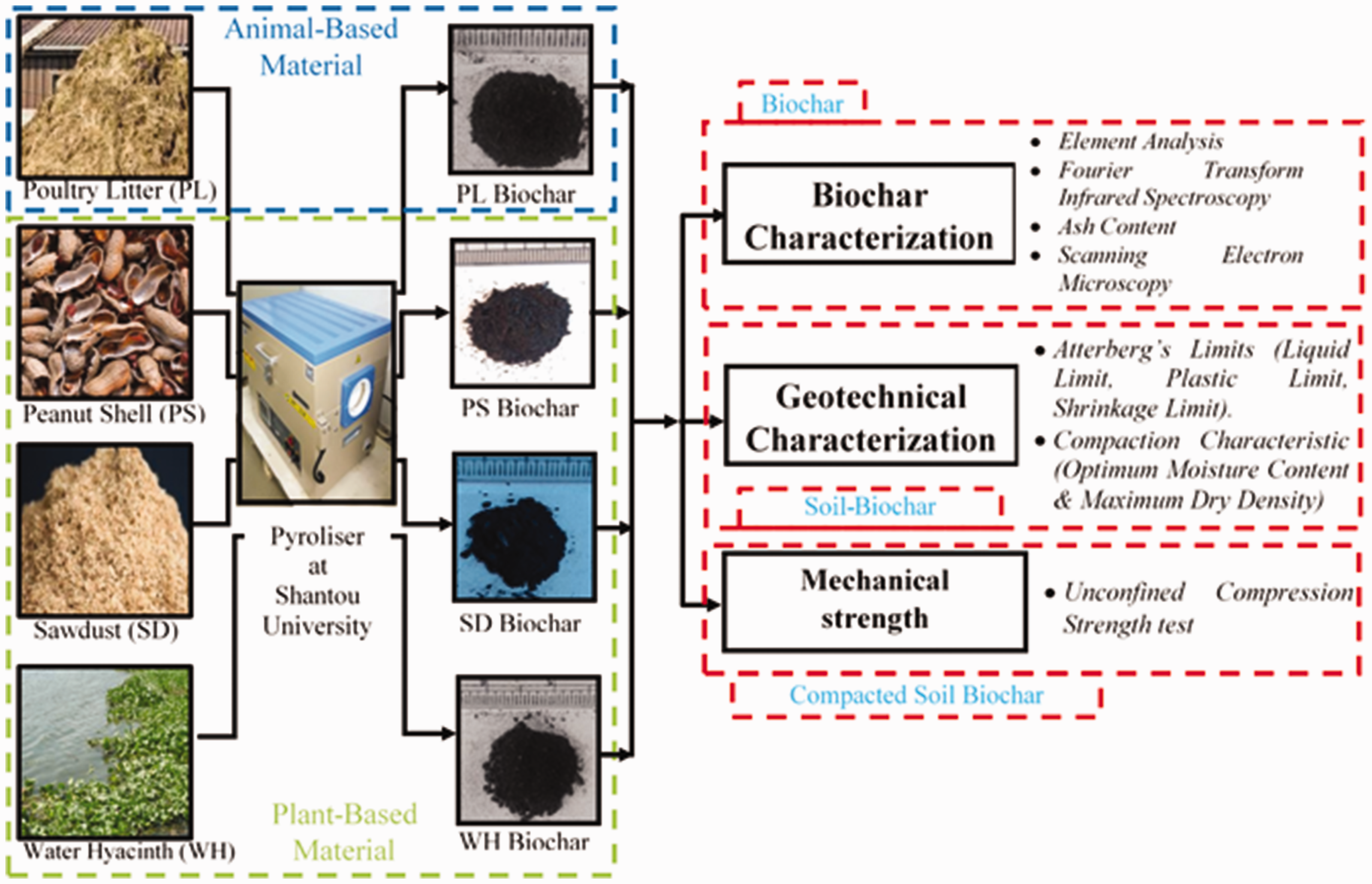
Schematic representation of biochar production and characterization.
The primary aim of this study was to investigate the engineering viability of SBC as cover soil material for degraded landfill sites from strength point of view. The UCS is a quick test which is useful for comparing the performance of different geo-materials for geotechnical and geo-environmental applications. Recommendations exist for qualifying a given geo-material in terms of UCS (minimum 200 kPa) for landfill liner and cover application (USEPA, 1989). Hence, the parameter UCS was chosen in the study to obtain the stress–strain response of the SBC and bare soil. The test setup as shown in Figure 2 was used to perform UCS at a strain rate of 1.25 mm/min according to ASTM D2166. A cylindrical sample of 3.8 cm diameter and 7.6 cm height was prepared in a cylindrical sampler. The sampler was facilitated for providing static compaction to obtain the desired compaction state. The sample was placed in the triaxial cell over the base plate (movable plate) of the load frame. The sample was subjected to compressive stress at a constant strain rate. This shear force was measured by the proving ring attached to the triaxial setup as portrayed in Figure 2. UCS is taken as the maximum force attained per unit area at failure or the force per unit area at 15% axial strain, whichever occurs first during the UCS test (ASTM D2166).
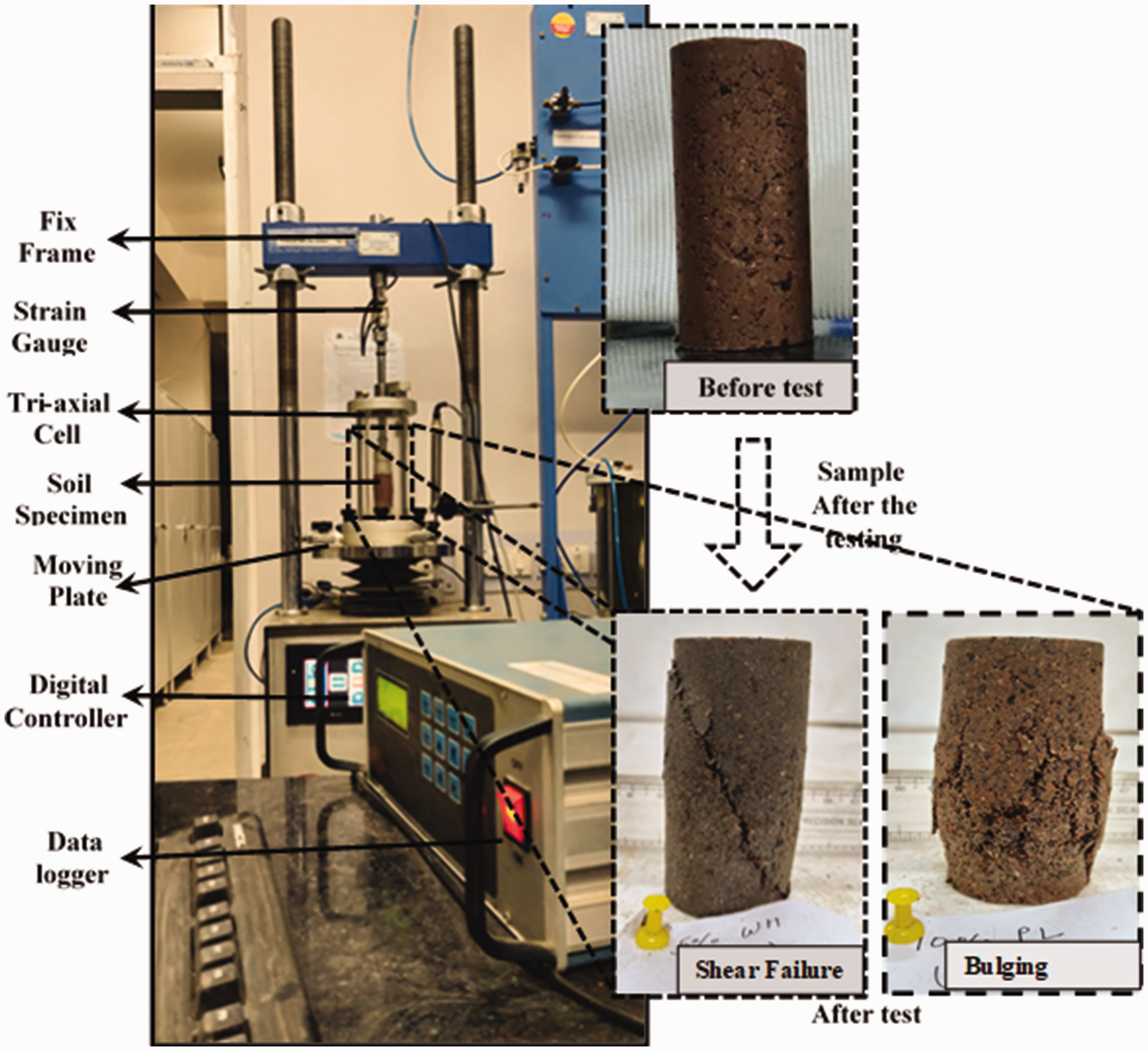
Experimental setup for conducting unconfined compressive strength test.
Material characterization
Soil characterization
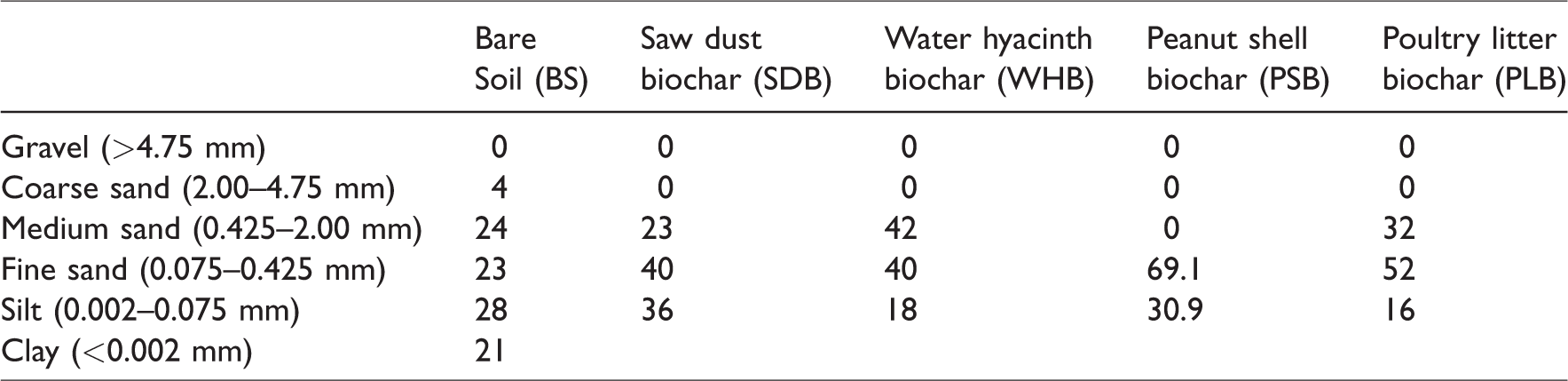
The soil used in the current study was classified as silty sand (SM) as per the unified soil classification system (ASTM D2487-11, 2011). The current study focused on the mechanical characteristics of cover soil for landfill cover using SBC as cover material. The non-amended soil (SM) used in the current study was found to be suited for landfill cover soil based on criteria of erosion resistance (Kumar et al., 2019). The soil was obtained from a hill site within the campus of the Indian Institute of Technology Guwahati, Assam, India. The liquid limit, plastic limit, and shrinkage limit of the soil were found to be 43%, 25%, and 14%, respectively (ASTM D4318-10, 2010). The grain size distribution of the soil is presented in Table 1 as per ASTM-D422-63 (2007). The specific gravity of the soil was found to be 2.56 (ASTM D854-14, 2014). The compaction characteristics (i.e., MDD and OMC) were found to be 1.73 g/cm3 and 16.71% (ASTM D1557, 2015) for bare soil.
Particle size distribution of the soil and the selected biochar.
Biochar characterization
Four different BC—water hyacinth (WH), poultry litter (PL), saw dust (SD), and peanut shell (PS) as shown in Figure 1 were produced in-house. Feed stocks of these four different BC used in this study are waste materials causing various ecological problems such as reducing bio-diversity, block canals, increasing sedimentation along with other environmental problems. Conversion of waste materials into sustainable resource materials for landfill cover was the basis for selecting the BCs considered in this study. These waste materials cause various ecological problems such as reducing bio-diversity, block canals, increasing sedimentation along with other environmental problems. All the WH plants were selected from the same water body to minimize the effect of any genetic variability. The PL was collected from a local chicken farm. The SD was collected from a local carpentry workshop. The PS was sourced from a local peanut industry. The grain size distribution of the BC is presented in Table 1 (ASTM D422-63, 2007). The grain size distribution of BC was done following the specified range of particle size for soil (ASTM D422-63, 2007). According to the TGA curve and observed mass loss of the feedstock (Figure 3), pyrolysis temperatures in the pyrolizer were determined as 390
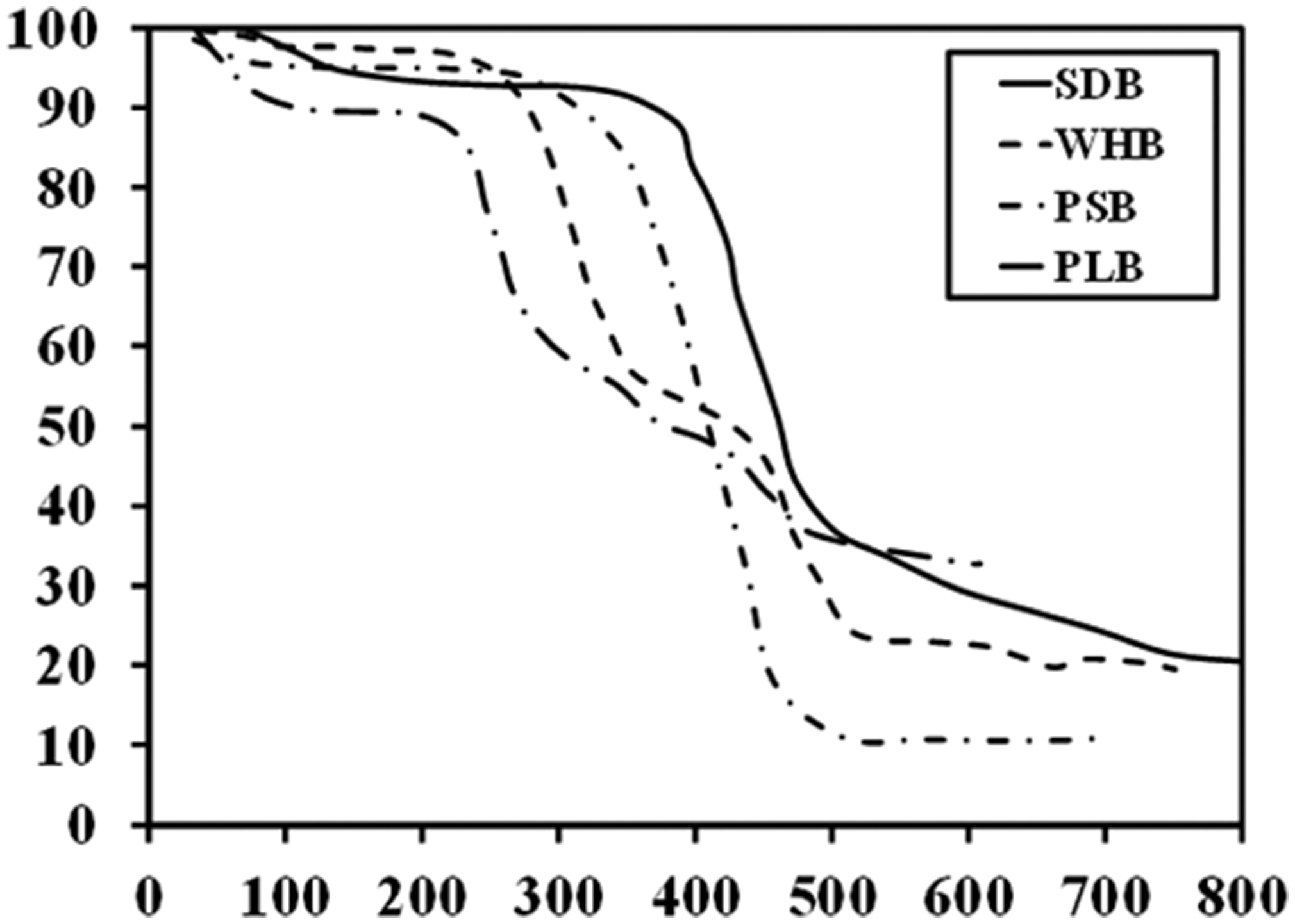
Thermo-gravimetric analysis (TGA) of the selected feedstock for biochar production.
Production conditions, elemental composition, and other chemical properties of selected biochar.
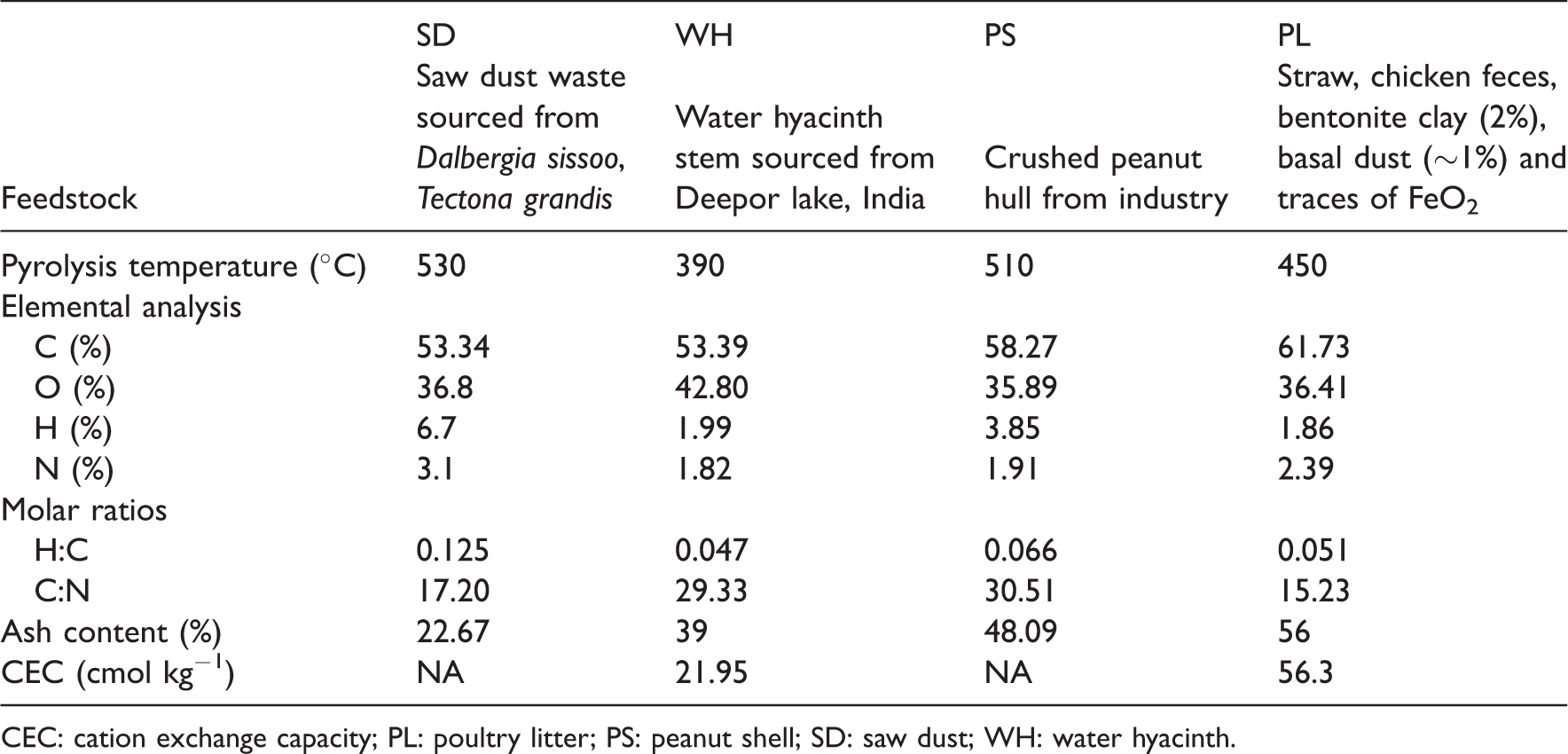
CEC: cation exchange capacity; PL: poultry litter; PS: peanut shell; SD: saw dust; WH: water hyacinth.
FESEM imaging was conducted to observe the surface morphology of the BCs (Figure 4). Three BCs exhibited porous nature (honeycomb pores) at the same magnification (200×). In the case of PL BC, these stacked honeycomb pores were not observed. The pores were random and smaller in number. The SD BC possessed a random porous structure. Moreover, the FESEM analysis showcased that PS BC particles had a comparatively rougher surface as compared to the other three BCs and had fewer pores on its surface. PS BC has high percentage of lignin content (26.4%) as compared to other BCs used in this study. According to Das and Sarmah (2015), at low temperature, cellulose and hemicellulose content get degraded, followed by lignin. As lignin degrades in the end, PS BC has lower intra-pores. A high amount of lignin content of PS BC amended soil facilitates higher strain upon loading. The particle surface morphology was further investigated by Occhio 500nanoXY particle shape and size analyzer (Cabanettes et al., 2018) using the static image analysis technique in accordance with ISO 13322-1. The method was used for the precision measurement of powdered materials. The system combines an integrated vacuum dispersion device and a high resolution optical bench (Camera 10 Mpixels + specific LED light). The blue light allows for detecting the smallest particles. The shape parameters obtained and their definitions are reported in Table 3. However, three significant parameters, i.e. roundness, circularity, and Occhio roughness were used to explain the observations discussed in the results section. Occhio roughness is the amount of material to be removed from the shape before getting a smooth surface. PS BC showcased the roughest surface and low roundness which can potentially facilitate greater soil–BC and BC–BC interface friction than the other BC. High amount of polymer lignin (26.4%) in PS BC as compared to the other BC results in reduced degradation during pyrolysis. Thus, for the temperature at which pyrolysis was conducted, the lignin does not degrade readily as seen for other three feedstocks, and forms a coarser morphology. In contrast, the WH BC particles exhibited the lowest roughness and high circularity.
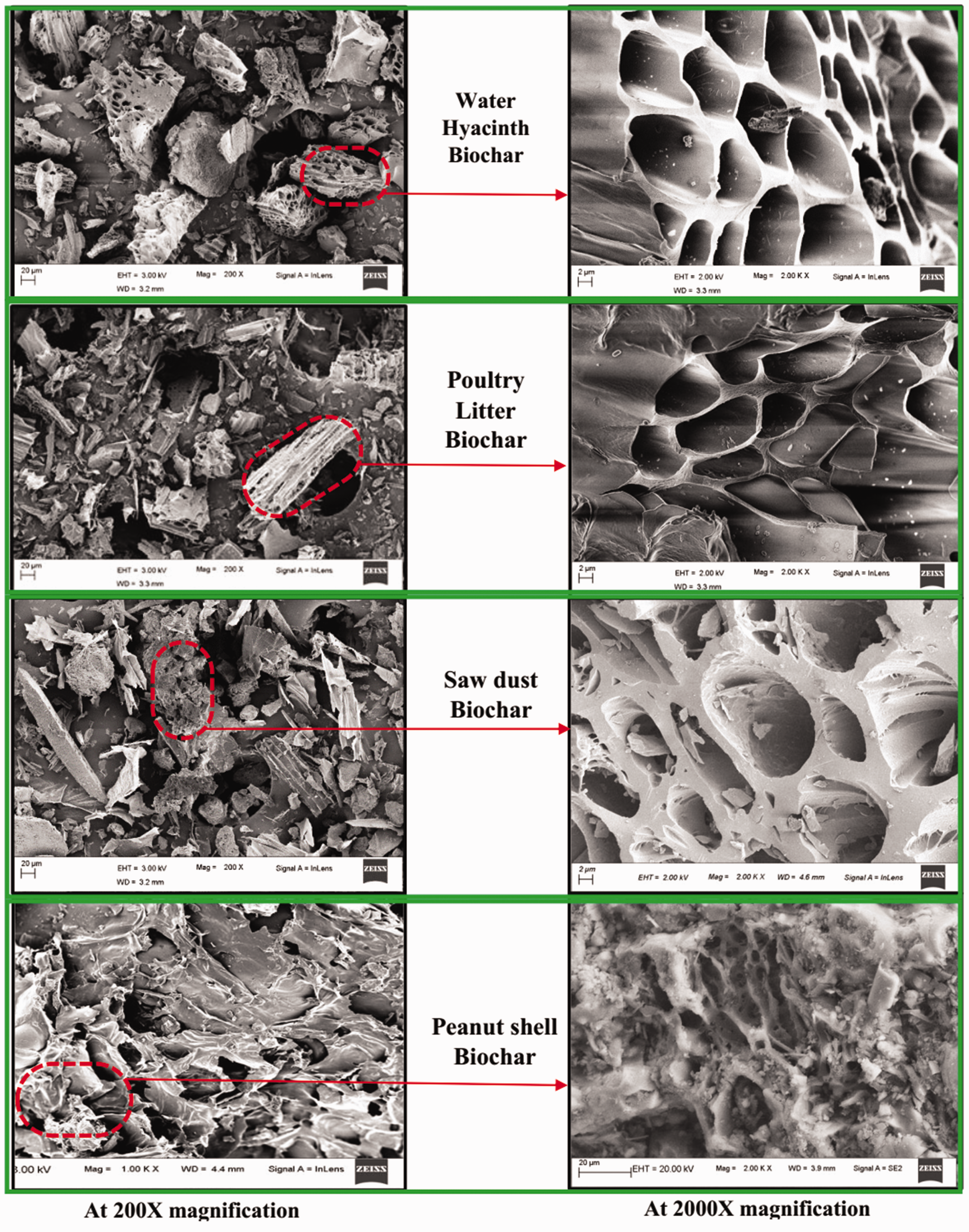
Surface morphology of selected biochar using FESEM at two magnifications.
Mean shape parameters measured from particle characteristic analyzer.
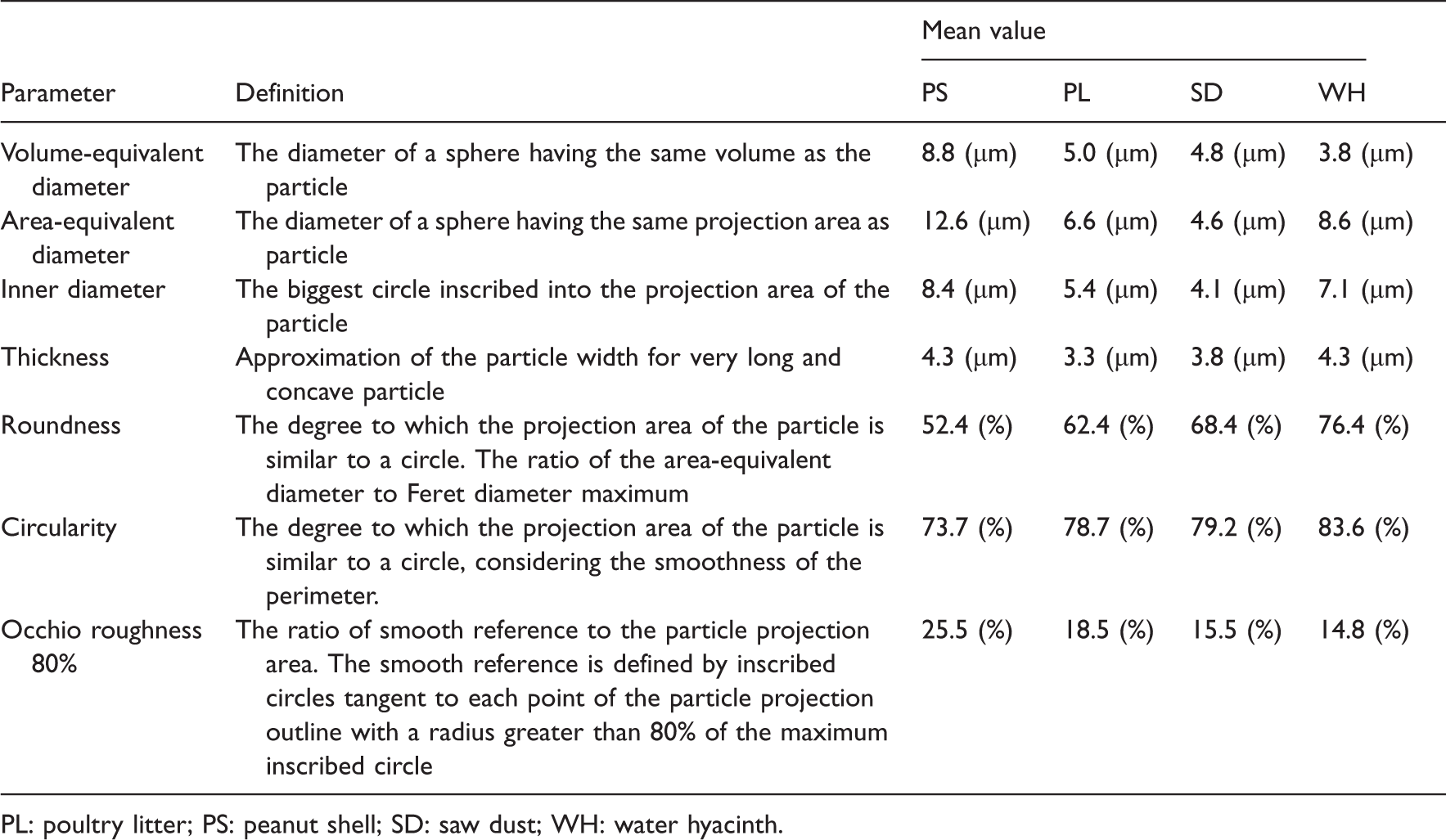
PL: poultry litter; PS: peanut shell; SD: saw dust; WH: water hyacinth.
FTIR was used to investigate the surface-active functional groups of the four BCs at their individual pyrolysis temperature (Rehman and Bonfield, 1997; Figure 5). In the case of WH, the predominant surface functional group was hydrophilic hydroxyl (–OH) group with neutral ether (C–O) being the second functional group (Gray et al., 2014). The PL BC had a predominant hydroxyl group (–OH) with significant peak stretching. In contrast, there were hydrophobic functional groups such as alkyl aliphatic (C–H) group as well as aromatic hydrophobic groups, (C–C) and (C–OH) present in PL BC (Gray et al., 2014; Kinney et al., 2012). The SD BC had hydroxyl group (–OH) as the dominant functional group along with the aromatic hydrophobic group (C–H) and aliphatic group (CH2). In the case of PS BC, FTIR analysis showed that hydrophilic (–OH) was the dominant functional group and neutral ether (C–O), aromatic hydrophobic group (C–H) are the other two functional groups, which were present in the BC. Elemental analyses of C, H, and N were done using an elemental analyzer and reported in Table 2. The percentage of ash content and cation exchange capacity (CEC) was measured according to ASTM D1762-84 (2013) and Munera-Echeverri et al.(2018), respectively.
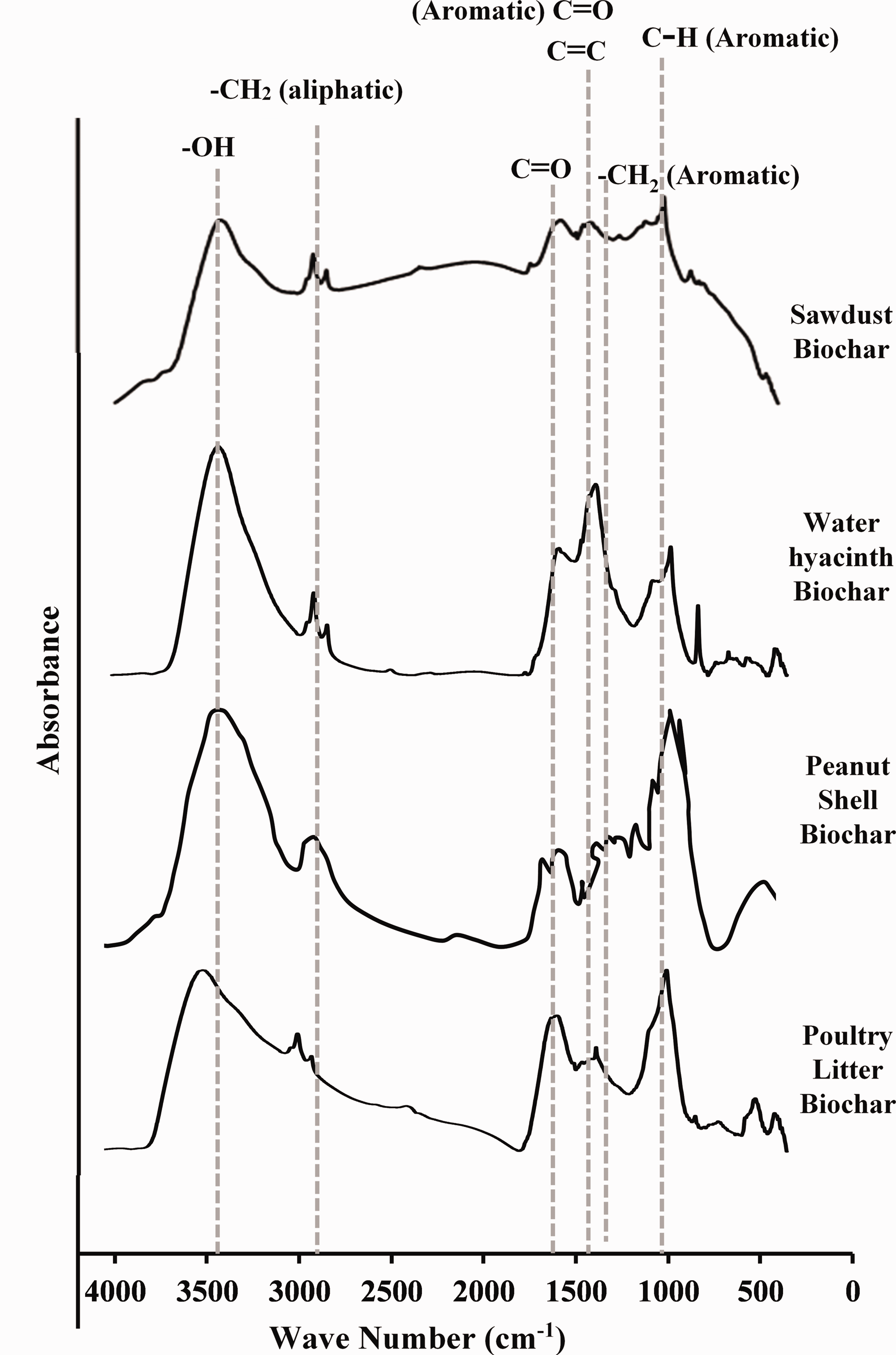
Surface functional group of selected biochar using FTIR spectroscopy.
Results and discussion
Effect of biochar on geotechnical properties of SBC
Figure 6 depicts the index properties of bare soil and SBC. The liquid limit of bare soil was increased in the range of 5% to 19% with BC inclusion for all four BCs. The liquid limit of SBC was further increased with higher BC percentage from 5% to 10%. The addition of BC increased the water retention capacity of bare soil owing to its enhanced micro-porosity (Figure 4). High water retention capacity of the SBC reduces the flow ability and increases the resistance to slump failure (Deka et al., 2009). The plastic limit of bare soil did not exhibit any significant change with 5% BC inclusion for all BCs. However, an increase in the plastic limit was observed with the addition of BC from 5% to 10%. It can be noted that the increase in plastic limit was higher for WH as compared to the other BC. This can be attributed to the porous honeycomb structure of WH as shown in Figure 4. Shrinkage limit for bare soil decreased by 3% to 4% with BC inclusion except for SD. Reduction in the shrinkage limit can be ascribed to the cohesion less nature of BC (Bordoloi et al., 2018a). The shrinkage area ratio of BC was found to be maximum for SD and minimum for PS. This may be attributed to a higher shear resistance of the latter (Sridharan and Prakash, 2000). Compaction characteristics of bare soil and SBC (Figure 7) revealed that MDD of bare soil reduced with the addition of BC. Reduction in MDD was attributed to the lower specific gravity of BC particles (Liu et al., 2016) and lower compressibility of the SBC at a given compaction energy. Compaction results for BC amended soils are found to be consistent with literature (Ni et al., 2018). The addition of BC increased the OMC of bare soil. It was postulated that the higher surface area (Guo et al., 2014) and macro-porosity of BC particles are the main factors for enhancing the OMC of SBC.
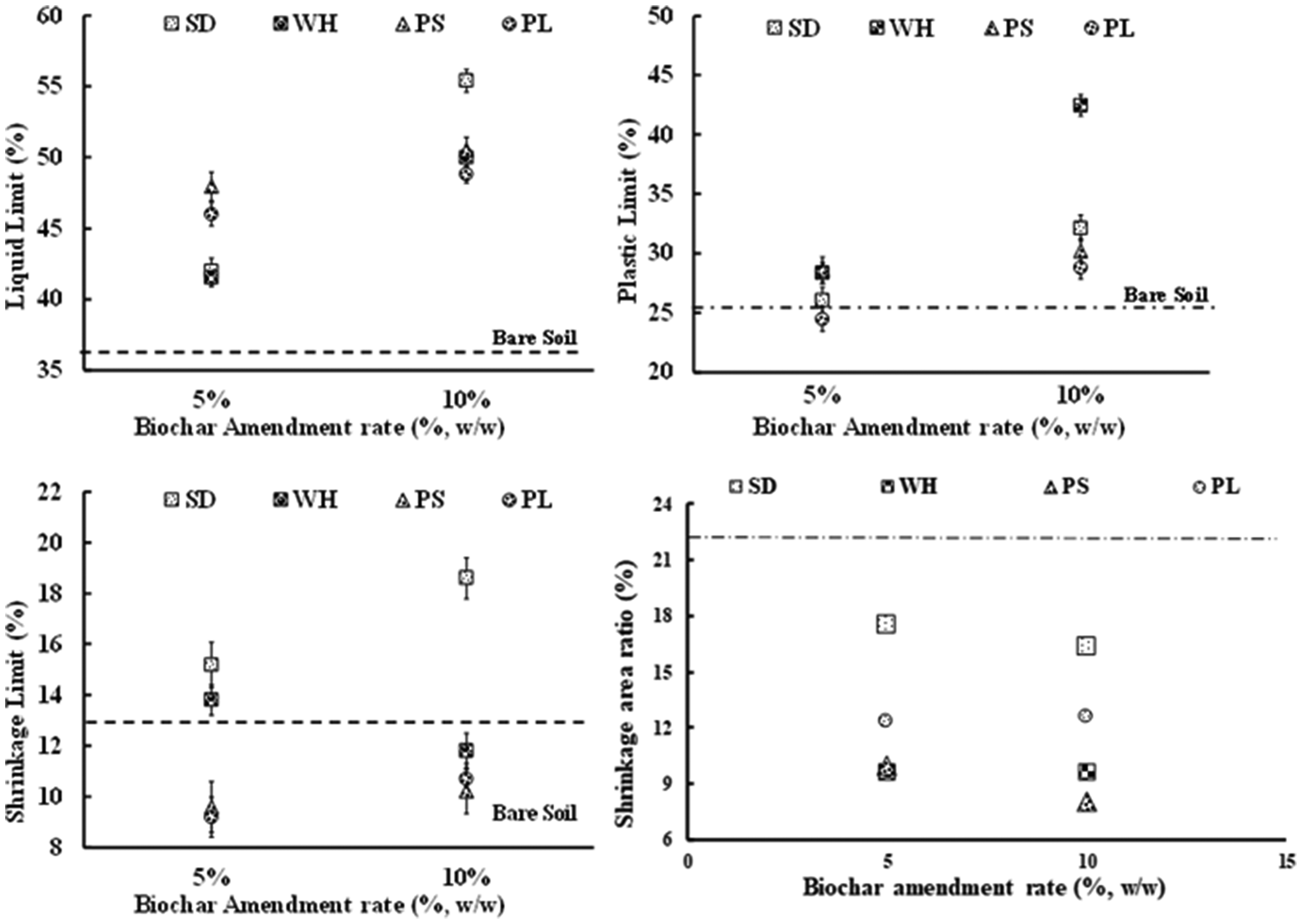
Comparison of index properties of bare soil and SBC.
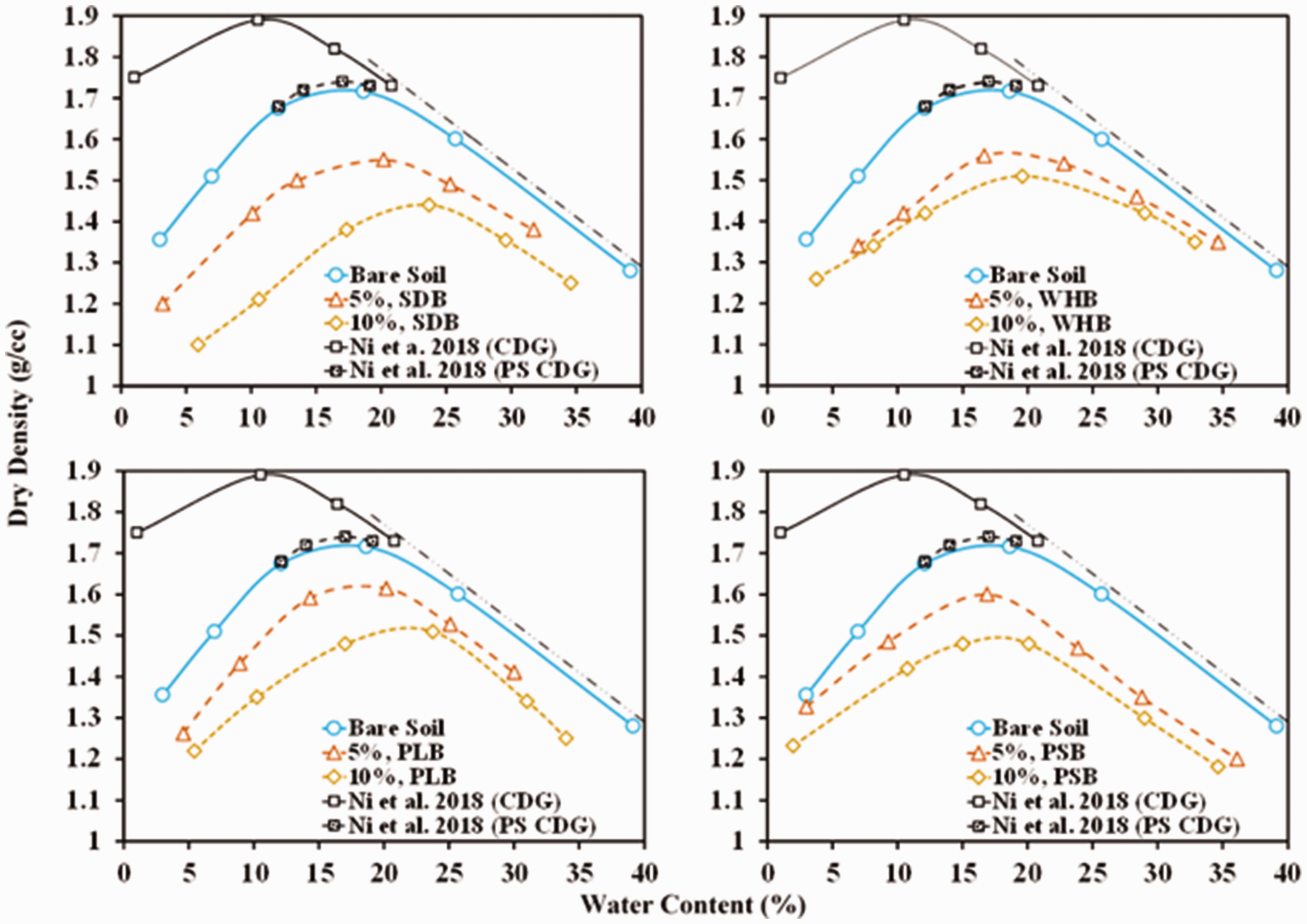
Standard proctor test response of bare soil and SBC.
Stress–strain response of SBC and bare soil
Figure 8 depicts the stress–strain response of bare soil and SBC compacted at different compaction states (dry state of OMC, OMC and wet state of OMC) for UCS tests. Figure 8(a) and (b) represents the SBC having 5% and 10% BC by weight, respectively. The stress–strain response of bare soil showed an increase in stress upon loading up to peak strength, followed by either shear failure or bulging failure (as portrayed by the samples in Figure 2). Shear failure was more drastic as compared to bulging failure. In the present study, it was seen that most of the SBC failed in bulging at the wet state of OMC. Owing to the increase in water content from dry state of OMC to wet state of OMC, the cohesive force between soil particles and BC increases resulting in bulging failure at wet state of OMC. Failure mechanism in dry state of OMC is governed by the frictional interlocking among the soil particles and BC. However, at wet state of OMC, cohesive bond is more prominent in governing the failure mechanism owing to the presence of high amount of moisture. All the SBCs exhibit lower UCS at strain higher than that of bare soil for all the three compaction states. These outcomes are contradictory to the conclusions forwarded by Sudhakar et al. (2017). UCS of SBC was reported to be enhanced with the inclusion of sugarcane bagasse BC up to 20% inclusion (Sudhakar et al., 2017). Reduction in UCS of the SBC can be attributed to the decrease in the cohesive bond and interlocking between the soil particles with the addition of BC. This is ascribed to the interaction between soil particles and BC in the presence of moisture (Figure 9). The BC particles (size 30–70 μm; Kumar et al., 2019) have hindered the ability of the soil particles to draw closer according to the intergranular theory (Sudhakar et al., 2017), which resulted in a reduction in interlocking and cohesion. Engulfment of soil particles by BC dust (size 10–20 μm) reduced the cohesive bond between soil particles by forming a complex network with water due to the presence of both hydrophilic and hydrophobic functional groups (Kumar et al., 2019; Pardo et al., 2018). The reduction in strength of SBC was similar to the study of Zong et al. (2014), which reported that SBC with woodchip, straw, and wastewater sludge as BC at 0, 2%, 4%, and 6% reduced shear strength by reducing cohesion and the internal friction angle. Zong et al. (2016) found that woodchip BC application at 4% and 6% diminished soil cohesion compared to 0 and 2%. Reduction of tensile strength of SBC was observed in the study of Chan et al. (2007) and Zong et al. (2016) with BC percentage higher than 2%. The reduced tensile strength of SBC was attributed to the weakening of inter-particle bonding that diminished the density and overall cohesiveness of SBC (Busscher et al., 2011; Chan et al., 2007; Zong et al., 2016). Liu et al. (2020) reported that shear modulus and residual cyclic strength values of SBC with 5%, 10% and 15% BC by weight diminished after 15 cycles during cyclic loading owing to high pore-water pressure development. However, an increase in shear strength parameter of SBC was reported in literature (Reddy et al., 2015; Sadasivam and Reddy, 2015c). Among all the SBC, PS BC has shown comparable strength with respect to bare soil for most of the conditions. The presence of a high amount of lignin (26.4%) in PS BC, attributed to the low pyrolysis temperature, increased the rigidity of SBC. Besides, PS BC possesses rough surface (Figure 4) and high Occhio roughness (Table 3) as compared to the other BC. Surface roughness and interlocking behavior resist the relative movement of soil particle and BC due to the presence of higher contact points on the BC surface. This necessitates high abrasive force to break them (or) to move up and down over them, thus increasing frictional resistance of PS SBC.
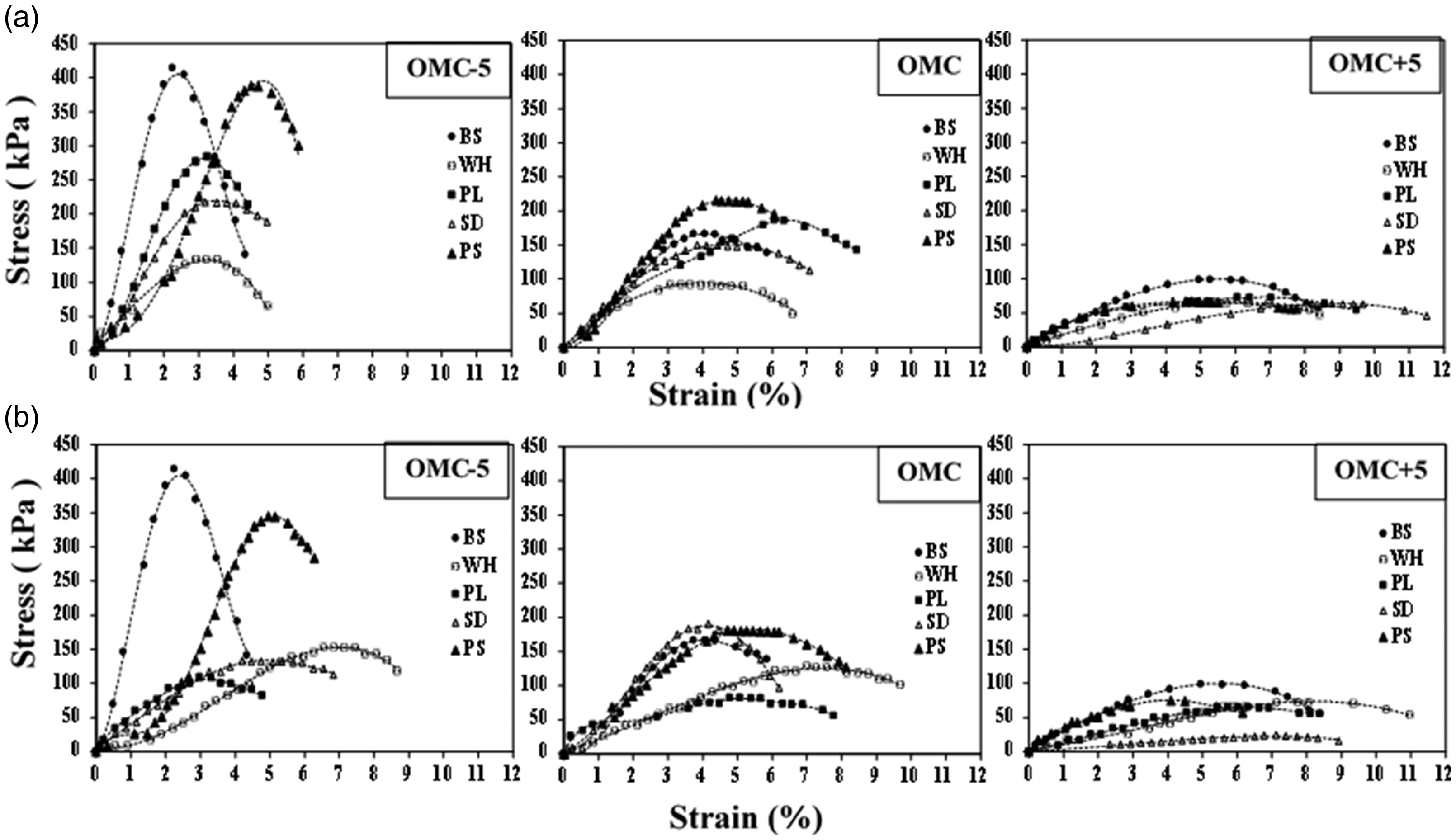
Stress–strain response of bare soil and SBC. (a) SBC having 5% biochar; (b) SBC having 10% biochar.
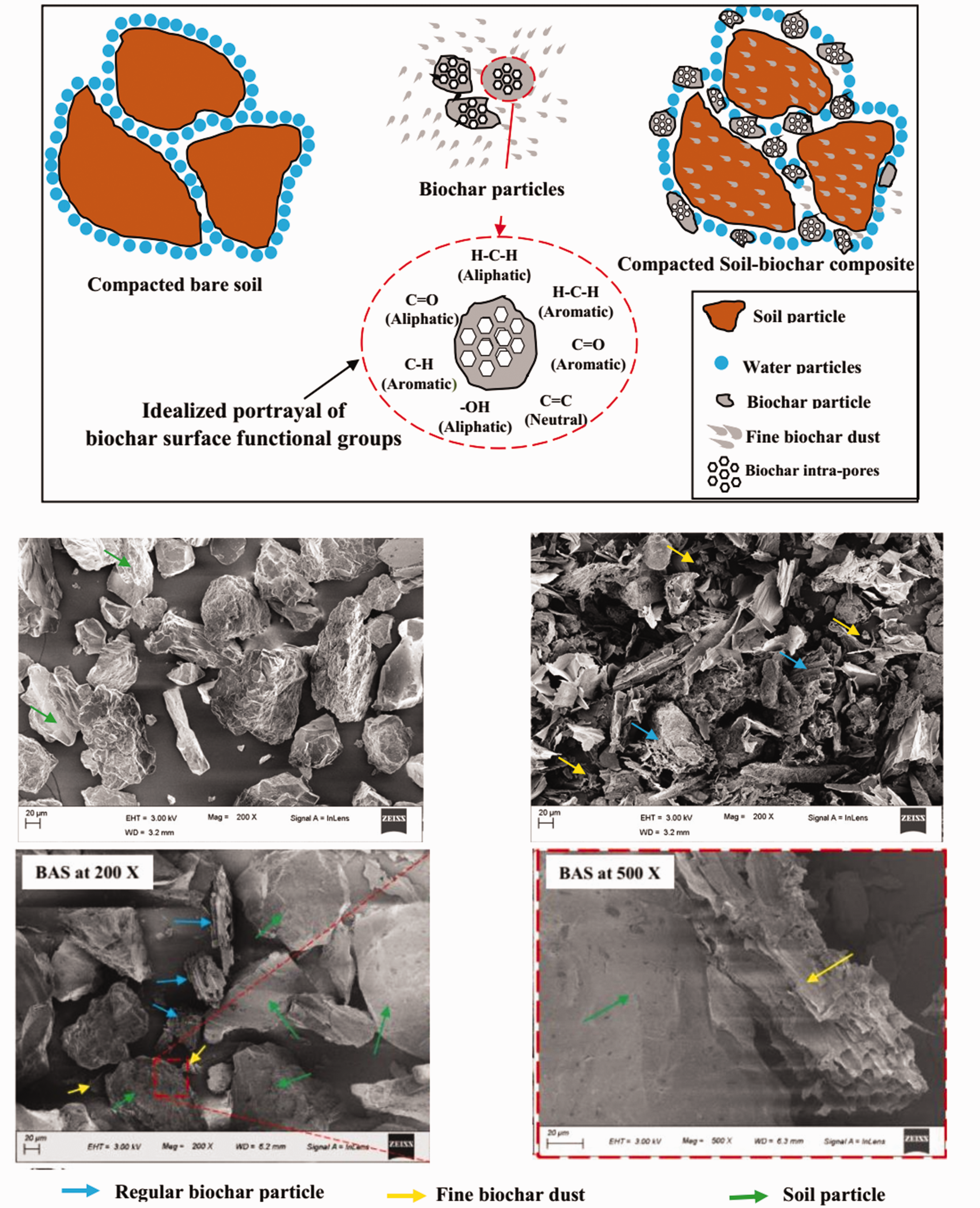
Schematic representation of soil–biochar interaction in the presence of water.
Effect of density and moisture content on the UCS of bare soil and SBC
Figure 10 represents the UCS variation with the change in density and moisture content of soil samples at the selected compaction states for bare soil and SBC. UCS of bare soil reduced with the addition of moisture from the dry state of OMC to the wet state of OMC. Higher peak strength for the dry state of OMC was attributed to soil suction and flocculated structure of the soil (Chae et al., 2010; Kumar et al., 2019). Reduction in suction due to increased moisture content reduced the UCS of bare soil from the dry state of OMC to OMC. An increase in moisture content from OMC to the wet state of OMC changed the structure of soil from flocculated to dispersed arrangement causing further reduction in UCS. The SBC results also showcase a diminution in UCS with the addition of moisture from the dry state of OMC to the wet state of OMC. However, the difference of UCS of bare soil and SBC reduces with the addition of moisture from the dry to wet state of OMC. The FTIR results of the four BCs in Figure 5 portray the presence of different hydrophilic and hydrophobic functional groups in the selected BC. During the interaction with water, these functional groups form a complex network between the BC particle and water (Pardo et al., 2018). Fine BC particles with a complex network of water between the soil particle increase the separation distance between them. This resulted in the reduction of the electrostatic force of attraction between soil particles, which resulted in a drop of cohesive forces (Al-Shayea and Naser, 2001). Decrease in UCS with the addition of moisture is less for the SBC as compared to bare soil as highlighted in Figure 10. A coherent transition from brittle to ductile behavior of bare soil and SBC was observed with the change in compaction state from the dry state of OMC to the wet state of OMC. UCS of SBC was found to decrease with an increase in BC percentage as depicted in Figure 10 for all compaction states. It can be highlighted that 10% BC inclusion resulted in a greater decrement in UCS as compared to 5% BC inclusion.
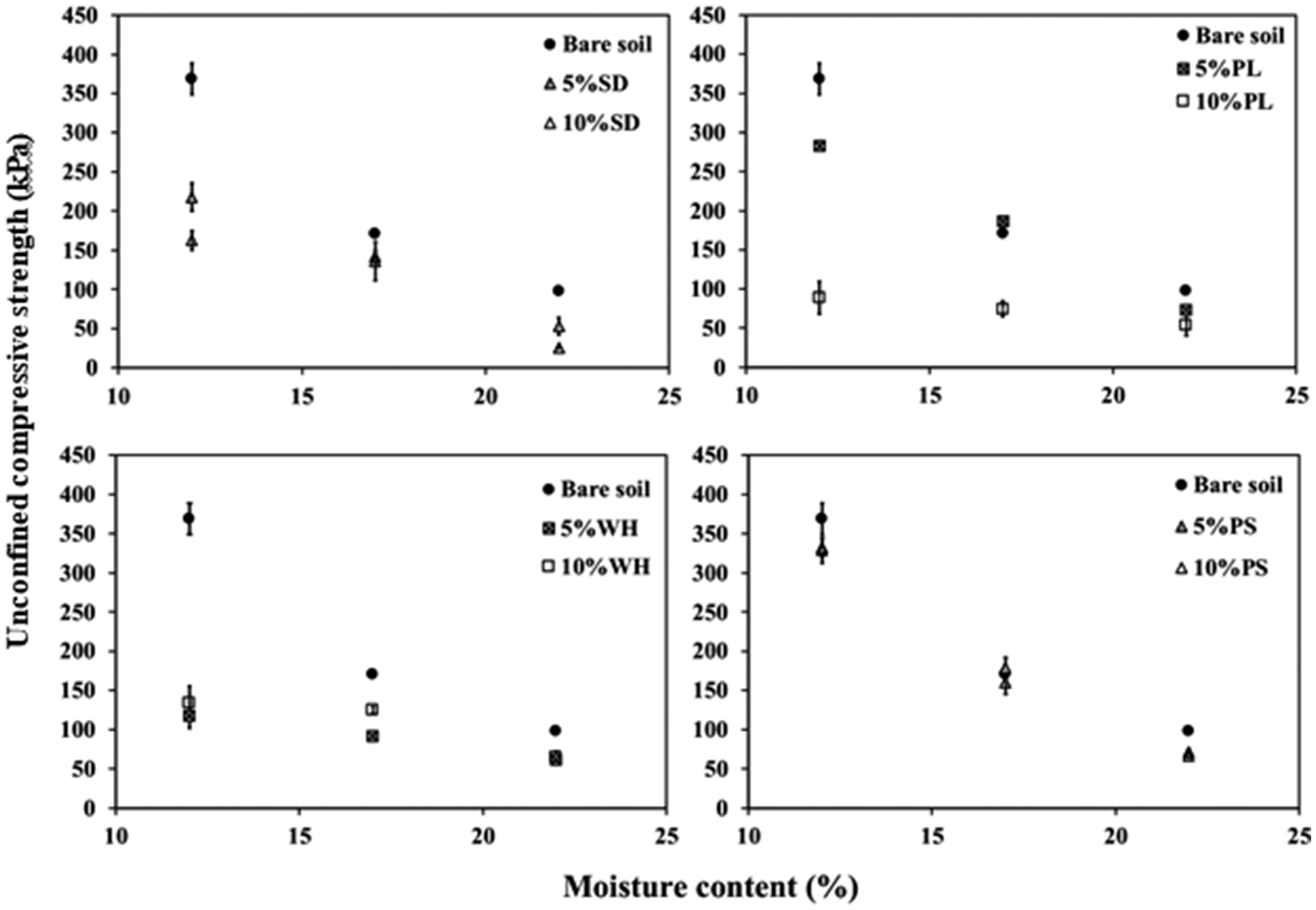
Unconfined compressive strength of bare soil and SBC.
Mobilized peak strain factor
Mobilized peak strain factor (MPSF) is defined as the ratio of peak strain of SBC to that of the peak strain of bare soil for the same compaction state (Bordoloi et al., 2018c). It reveals the change in mobilized ductility at peak strength. MPSF values higher than unity indicate an enhancement in ductility. The variation of MPSF for the dry and wet state of OMC for all the SBCs was depicted in Figure 11. MPSF was higher at lower moisture content (dry state of OMC) than at relatively wet conditions (wet state of OMC). For the wet state of OMC, MPSF was found to be less than unity for all SBC. A plausible explanation for this could be due to bare soil undergoing high strains at the wet state of OMC. Consequently, the MPSF was less, even though there was an increase in strain for SBC. Significant improvement in ductility was observed with the addition of BC. A sharp increase in MPSF was noted for WH and PS for the dry state of OMC and OMC, with the increase in BC amendment rate. Given WH and PS are lignocellulosic BC (being produced from plants), it is interesting to note that both show an increase in ductility parameters. Improvement in ductility was also reported in the literature with the inclusion of lignocellulose fiber (Bordoloi et al., 2018c) and natural biopolymers (Khatami and O’Kelly., 2013). As lignocellulose biopolymers are intricately spaced (refer Figure 4), there is scope of fibers/BC to partake strain upon loading. However, PL (animal-based BC) exhibited a reduction in MPSF with the increase in BC quantity from 5% to 10% for all compaction state.
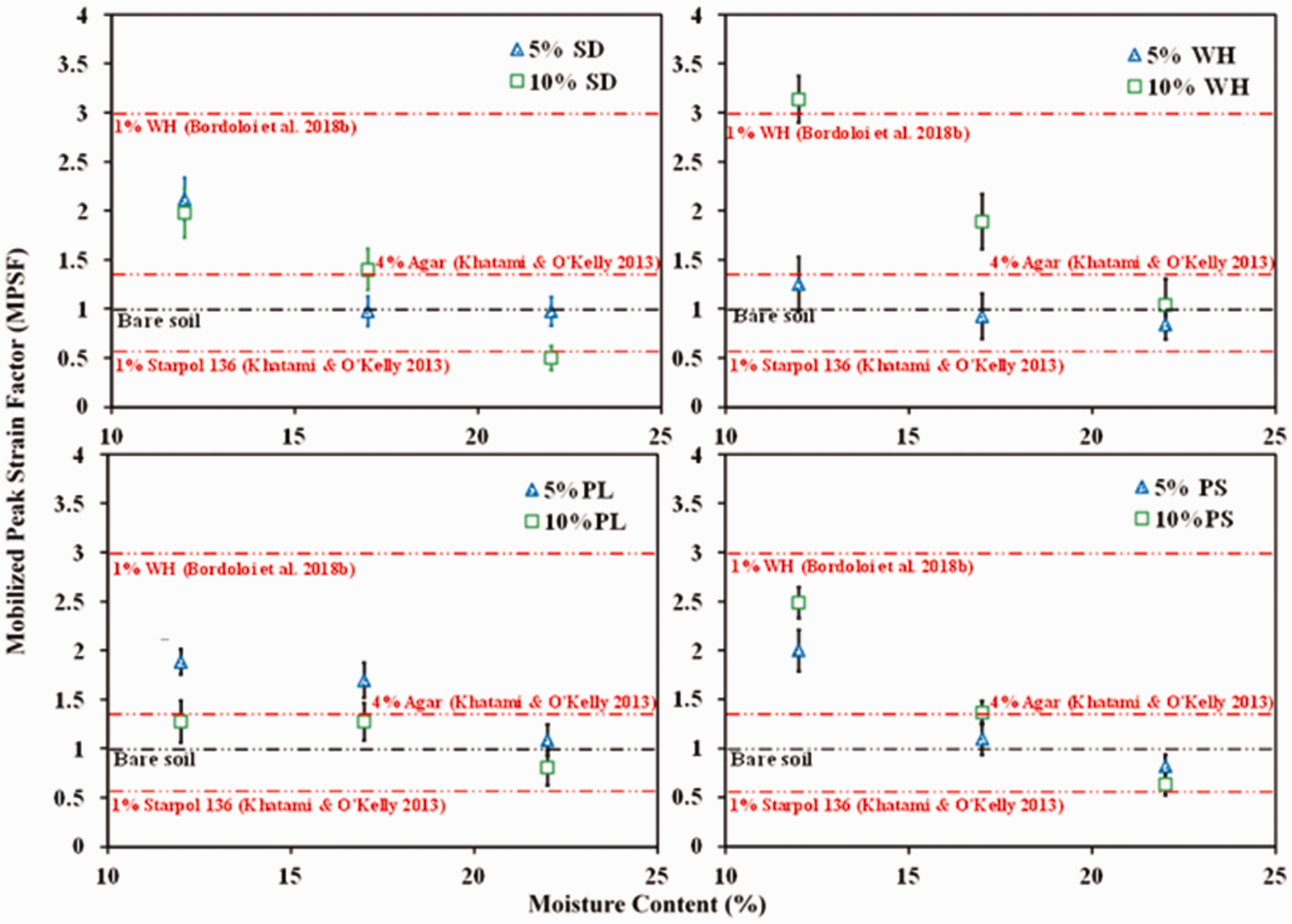
Mobilized peak strain factor of bare soil and SBC.
Conclusion
Through this study, we demonstrated the engineering viability of BC as an amendment material for degraded landfill cover surface material. A totally different perspective was found with respect to the use of BC as bio-engineered material rather than conceiving it as water retention (soft material). Although, literature discusses on the positive aspects of BC amendment by focusing on the hydrologic and biological benefits, the current study raises concern over its strength characteristics. A total of 81 strength tests were carried out to investigate the mechanical response of SBC considering different BC percentages and compaction conditions. Effect of individual BC on compaction characteristics of soil was initially investigated along with the effect on basic geotechnical parameters. In view of the outcomes and discussions, the following conclusions are inferred.
UCS of bare soil reduced with BC inclusion for water hyacinth, poultry litter, and SD BC. The BC particles hinder the ability of the soil particles to be placed closer, which resulted in reduced interlocking and cohesive characteristics. The engulfment of soil particles by BC dust further reduced the cohesive bond between soil particles and can be attributed to the surface functional groups of BC. Among all the SBC, PS SBC showcased a relatively comparable strength with respect to bare soil for most of the conditions. The presence of a high amount of lignin in PS BC increased the rigidity of SBC. Besides, PS BC possesses rough surface and high occhio roughness as compared to the other BC that can potentially increase the frictional resistance of the SBC. UCS of bare soil reduced with the addition of moisture from the dry state of OMC to the wet state of OMC. This was attributed to the reduction in soil suction with the increase in moisture content, surface group functionality, and microstructure change. UCS of SBC decreased with the increase in BC percentage from 5% to 10%. Therefore, the inclusion of BC should be limited within 5%, for fulfilling the minimum USEPA criteria for UCS. The ductility of bare soil increased with BC inclusion. MPSF values higher than unity for the SBC indicated the improvement in ductility for all BC. Plant-based BC has higher potency to increase the ductility of bare soil owing to the presence of lignocellulose biopolymers.
We envisage that the amendment of BC with soil does not necessarily assure enhancement in the strength of the SBC. In this study, the reduction in strength was explained based on the hydrophilicity/hydrophobicity of BC. Based on the findings from this study it is recommended to evaluate the strength characteristics for every BC with its different production conditions for projects where the mechanical properties become essential such as landfill covers. Furthermore, our study identifies PS BC for landfill cover surface layer considering its mechanical characteristics. SBC of WH, SD, and PL can be used for potential application in green infrastructure for the promotion of vegetation growth, as strength is not a significant concern in these projects.
Future work
The current work evaluates the compressive strength of BC amended soil from different feedstock, which helps in ecological restoration of degraded landfill cover soils. The future work should involve in developing a constitutive model or numerical model as seen for soil and concrete (Liu et al., 2018). The effect of freeze–thaw cycles on evaluating the compressive strength and crack potential need to be studied as seen for other composite soils (Cao et al., 2018; Keshavarz and Ghajar, 2019).
Footnotes
Acknowledgements
All data, models, and code generated or used during the study appear in the submitted article.
Declaration of conflicting interests
The author(s) declared no potential conflicts of interest with respect to the research, authorship, and/or publication of this article.
Funding
The author(s) received no financial support for the research, authorship, and/or publication of this article.
