







Abstract
In the present paper, a novel combined damage-based failure criterion is being proposed for predicting failure stresses in unidirectional fibrous composite laminas or laminates having a nonlinear material behavior. The present model incorporates the effect of a quantitative damage factor on the final stresses at failure. This is achieved through a new term called the quantitative directional damage-index (QDD-I) which assesses the contribution and effectiveness of damage in each principal material direction on the present failure criterion. From the QDD-I, it is proved that the principal material-direction with a linear or nonlinear stress-strain behavior showed a quantitative damage response on the proposed failure criterion. In a composite lamina, the contribution of fiber-damage and matrix transverse-damage are proved to have minor effects on the failure criterion, while in-plane shear-damage has the major effect. In order to verify the suitability and applicability of the criterion, results are tested using various theoretical and experimental data available from the literature. Furthermore, the model is compared with other failure criteria under both uniaxial and biaxial loading cases from a worldwide comparison, which showed reasonable accuracy and good agreement. Three types of fibrous composite materials are used; Graphite/Epoxy 4617/Modmore-II, Carbon/Epoxy AS4/3501-6, and Boron/Epoxy Narmco 5505.
Keywords
Introduction
The fibrous composite laminate is widely used in structural engineering applications, such as for strengthening and retrofitting of structures. The massive demand for fibrous composite materials is mainly due to their high stiffness/density ratio, lightweight, and outstanding mechanical properties. However, most fibrous composite materials exhibit nonlinear behavior, at least in one or two of the principal material directions. This is one reason that encourages the researchers to examine, predict, and develop different models and methods to attain the failure mechanisms of a fibrous composite lamina. Furthermore, as a consequence of the increased stresses in the lamina, damage also developed in a composite material due to voids, debonding between fiber and matrix, matrix micro-cracks, and other deteriorations. However, enrolling the damaging effect on the failure criteria was and still a massive research area for the researchers.
Over the last decades, the failure accounting for the nonlinear behavior of composite materials has been a wide research area due to the complexity and non-uniformity in the behavior of these materials. And in order to reach a comprehensive model for predicting the failure-stress in a lamina made of a composite material, researchers examine various terms to achieve such purpose.
Tsai-Wu failure criterion (1971) is one of the well-known criteria for the researchers. It is extremely popular, and it was used for composite materials and gave reasonable results. However, it could not determine the different modes of failure for a composite material, which made the theory limited for a specific application.
Failure criteria based on the total strain-energy density (TSED) were developed starting in 1976. The basic assumption of these criteria was that failure occurs in a lamina when the summation of the ratio of strain-energies in each principal material direction (longitudinal, transverse, and shear) at a specific load to the corresponding maximum strain-energies of that material equals unity (Sandhu, 1976; Sandhu et al., 1982; Swanson et al., 1987).
A new material model for linear and nonlinear behavior of fibrous composite materials was developed by Abu-Farsakh (1989). In the model, the secant mechanical property was presented in in terms of the plastic strain-energy density (PSED) instead of the TSED as in the Jones model (1975). Moreover, both Sandhu model (1976) and Abu-Farsakh model (1989) provided valuable observations by using the TSED, where the fundamental difference between the two models was in selecting the area under the stress-strain diagram. In Sandhu (1976) the TSED was equal to the whole area under the stress-strain curve. In contrast, in Abu-Farsakh (1989), the area under the secant modulus line (triangular area) was considered as the TSED.
Abu-Farsakh and Abdel-Jawad (1994) developed a three-dimensional failure criterion for nonlinear composite materials to determine the failure envelope. It was based on TSED material model using the secant modulus approach (Abu-Farsakh, 1989). The model was comprehensive and compared well with Cole and Pipes (1974) experimental failure stresses and corresponding failure strains in the composite lamina.
Numerical and finite element models based on TSED (whole area under the stress-strain curve) were developed and expanded to predict the fatigue life of polymer composite lamina and laminate. The models consider the damage model from Sandhu et al. (1982) and the material property degradation in the polymer composite lamina. Furthermore, the models are capable of predicting the fatigue-damage under static and cycling loading. (Samareh-Mousavi et al., 2019; Shokrieh and Taheri-Behrooz, 2006, 2010).
Daniel et al. (2009) investigated experimentally the inter-laminar failure of Carbon/Epoxy fibrous composite laminates under a multi-axial state of stress (through-thickness and in-plane tensile, compressive, and shear) at various fiber-orientations. Furthermore, the authors developed a new failure criterion, which showed excellent agreement with the experimental results. Results using the model showed good agreement in the off-axis compressive behavior, especially, for combined shear and transverse compression parallel to the fiber-direction case.
Another new three-dimensional model (Camanho et al., 2015) to determine the failure- envelope of a fibrous composite material. The model has an invariant quadratic formulation based on structural tensors, and it was valid for both quasi-static and dynamic loading cases. However, it was verified using many experimental results from the literature such as; Swanson et al. (1987) and Daniel et al. (2009).
Extended to the Tsai-Wu failure-criterion, Li et al. (2017) rationalized the determination of the interactive coefficient (F12). In the Tsai-Wu failure-criterion, the factor was obtained from the experimental results, while Li et al. (2017) estimated the factor based on logical circumstances to eject the empiricism, as far as it was applicable to unidirectional composites.
Daniel et al. (2018) developed a new yield and failure theory for the linear and nonlinear behavior of fibrous composite materials under both static and dynamic loads. They derived the hypothesis to predict the yield and failure under a multi-axial state of stress.
Abu-Farsakh and Asfa (2018) proposed a macro-mechanical damage model for accounting and evaluating damage in the load-direction (directional-damage) and in the principal material directions. The model was extended for the Ghazi-Farid model (Abu-Farsakh et al., 1999) with more generalization accounting for the off-axis loading cases. Since, Ghazi-Farid model was derived to predict damage in the principal material directions from uniaxial loading cases only. They also proposed a quantitative-damage (QD) factor, which helped in the assessment of the quantity of damage that occurred in a composite material lamina subjected to a specific load.
Moreover, Abu-Farsakh and Asfa (2020) presented a unified-damage model (UDM). The model can determine the QD-factor in a certain composite material as being independent of the fiber-orientation angle and case of loading. Also, they obtained a relation between Abu-Farsakh (1989) material model and the QD-factor utilizing the Ghazi-Asfa damage model from Abu-Farsakh and Asfa (2018).
On the other hand, Okabe et al. (2018) considered a continuum-damage approach as the main factor including the transverse cracks, for predicting the stiffness reduction in the composite material laminate. The model was shown to be effective at early stages of damage formation due to transverse cracks in the composite laminas.
A micro-mechanical damage model was developed by Abu-Farsakh and Al-Jarrah (2018) to predict the matrix cracking effect in fibrous composite laminas. The model was comprehensive for predicting damage through a new term called volumetric crack-density (VCD) that occurred in the fibrous composite lamina or laminates. The model was compared with various damage models available in the literature, where the results showed a good agreement in damage prediction. Also, Lou et al. (2020) developed a micro-mechanical damage model to investigate the stress behavior of composite laminates under impact loading. The model considered stress amplification factors to calculate the micro-stress in fiber and matrix to obtain the structural response, residual compressive strength and failure mechanism.
A comprehensive review paper on the nonlinear mechanical behavior of fibrous composite material was published by Fallahi et al. (2020). The paper reviewed the unloading characteristics, the tension-compression asymmetry, and the interaction between stress components of the fibrous composite materials. Also, the effects of environmental factors and viscous behavior on mechanical properties are briefly reviewed. Furthermore, four models were reviewed (such as elastic-plastic models and Damage-Plasticity models) and categorized according to the complexity of the models in predicting the stress-strain behavior of the fibrous composite materials.
In a recent work, Khayyam et al. (2020) determined the ultimate failure strength of composite pipes made of woven composite laminas (with E-glass fabrics) by considering the progressive-damage modeling. The finite element analysis was carried out through using a representative volume-element model to form the equivalent stiffness matrix due to material-degradation, which was implemented utilizing the ABAQUS computer-software. The model compared well with both the experimental results and the finite element model.
Scope and objective
As a consequence of increased stresses in a lamina, damage will develop due to voids, debonding between fiber and matrix, matrix micro-cracks, and other deteriorations. Most of researchers in the literature mainly studied the damaging effect aside from the failure strength of a lamina. Due to the lack of combined damage-failure models in the literature, the present research is devoted to obtaining such a model. In order to achieve this objective, a certain damage-parameter (known as quantitative directional damage-index (QDD-I)) is incorporated in a modified failure-criterion. Thereafter, to study its effect on failure stresses and failure envelops of fibrous-composite laminas.
The failure criterion
Description of failure criterion
The three-dimensional failure criterion model proposed by Abu-Farsakh and Abdel-Jawad (1994) was the starting point to develop a new model to predict the failure stress in the fibrous composite material by considering the effect of the QD-factor. As aforementioned, the Abu-Farsakh-Jawad (AF-AJ) (1994) model depends on the TSED approach, and it was represented as;





The
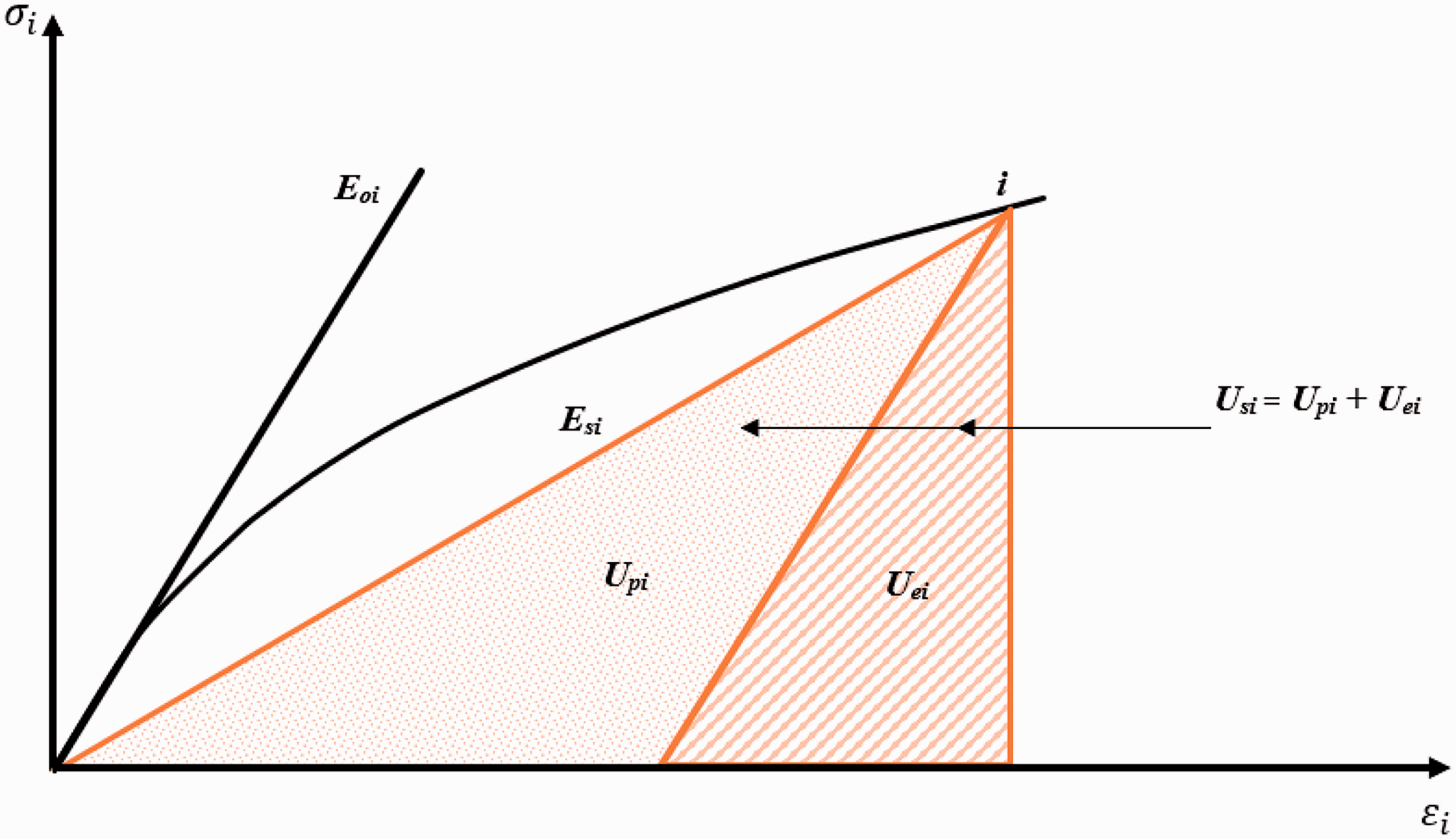
Figure 1. Typical nonlinear stress-strain curve for the i-th mechanical property showing all the energy terms.
Considering the in-plane stress state (1–2 plane) case, equation (1) will be represented as:

The principal material directions in equation (6) represent the fiber direction (direction-1) and transverse direction (direction-2) and in-plane shear (plane 1–2). It should be noted that, for an orthotropic material the principal-stress directions are different than stresses in the principal material directions (1 and 2).
Determination of strain-energy densities
The quantities Usim and Usijm which represent the maximum TSED are determined experimentally through the uniaxial test (tension, compression, shear) of the composite lamina. If the fibrous composite material has the same behavior in tension and compression, then one set of data will be used for all cases.
The quantities Usi and Usij which represent TSED at any position on the stress-strain curve. In a general in-plane stress state test (σ
x
, σ
y
, and τ
xy
) for a fibrous composite lamina having a fiber-orientation angle (θ), stresses in the principal material directions σ1, σ2, and τ12 are obtained using the following transformation relation;

Where, x and y indicate the body geometric axes.
The Mis -term in equations (2) to (4) indicate the secant mechanical property; E1s, E2s, or G12s. The value of the secant modulus is determined by using Abu-Farsakh (1989) model which was developed to account for the nonlinear material behavior and was given as:

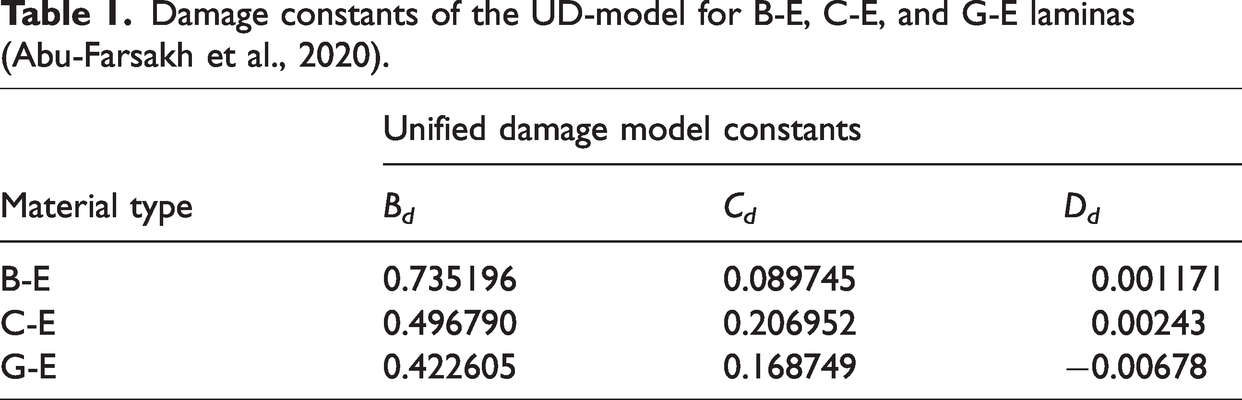
The Bi, Ci, and Di constants are determined from the experimental stress-strain curves for the principal material directions 1, 2, and 12. The corresponding constants and the material mechanical properties for Boron/Epoxy Narmco 5505 (B-E), Carbon/Epoxy AS4/3501-6 (C-E), and Graphite/Epoxy 4617/Modmore-II (G-E) are listed in Tables 6 to 8 in the Appendix 1.
The Upi -term in equation (8) indicates the plastic strain energy density (PSED) (Figure 1), which is determined using the relation;

The Uei -term in equation (9) indicates the elastic strain-energy density.

Where, the Mio indicates the initial modulus in the principal material direction (i).
Then, by rearranging equations (2), (9) and 10 the PSED (Upi) can be represented as follows;

Damage model
The unified damage model (UDM) from Abu-Farsakh and Asfa (2020) is modified and then incorporated in the failure criterion developed in this research. The UDM determines the QD-factor (

Or, alternatively, the modified damage model can be expressed as:

In the present work, as a modification of the UD-model, the Quantitative-Directional-Damage (QDD) factor is determined through the equation below:

The material damage constants Bd, Cd, and Dd are different from those used in equation (8); the d-subscript indicates damage. The constants in equation (13) are determined by plotting
Damage constants of the UD-model for B-E, C-E, and G-E laminas (Abu-Farsakh et al., 2020).
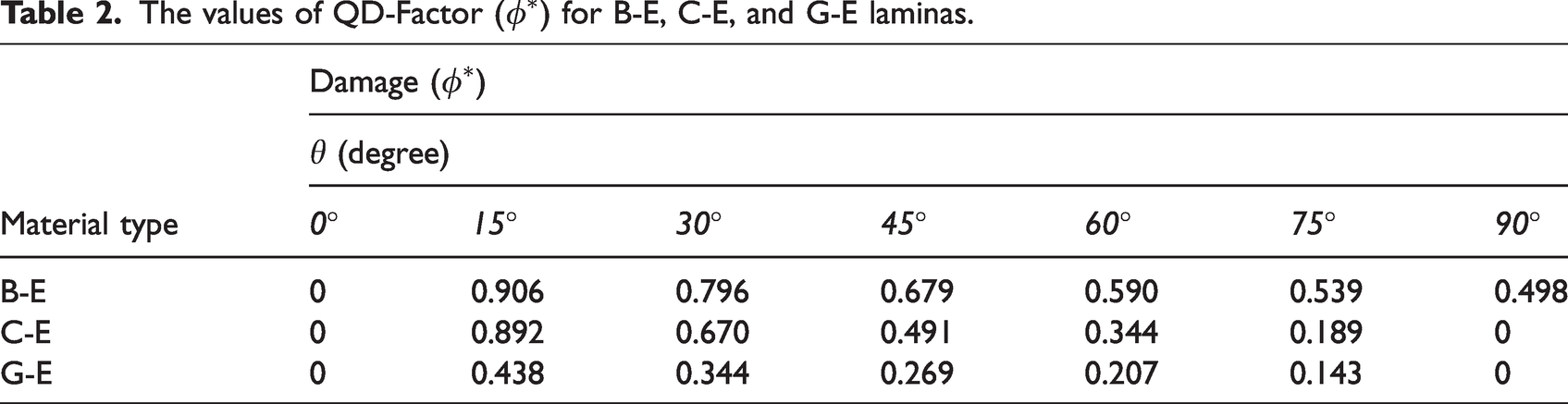
The QDD-factor is different from the QD-factor, in the sense that the QDD-factor does not depend on the total PSED of a lamina. Such that, the total PSED in equation (14) (Up) induced in a lamina should not exceed the maximum plastic strain-energy (Upim) for the same principal material direction. In other words,
The values of QD-factor (
The values of QD-Factor (
Present failure criterion
In order to improve the AF-AJ (1994) failure-criterion by relating it to damage, the QD-factor (
By combining secant modulus of the material model from Abu-Farsakh (1989) (equation (8)) with the modified QDD model (equation (14)), one obtains:

The relation between the QD-factor and the QDD-factor can be represented as:

From equation (16), the new QDD-I (di) will become as:

The new QDD-I (di) factor represents the contribution of damage in each principal material direction on the failure criterion as indicated in equation (15). Figures 2 to 4 represent the inverse-value of QDD-I for B-E, C-E, and G-E fibrous composite materials, respectively, in the principal material directions 1, 2, and 12.
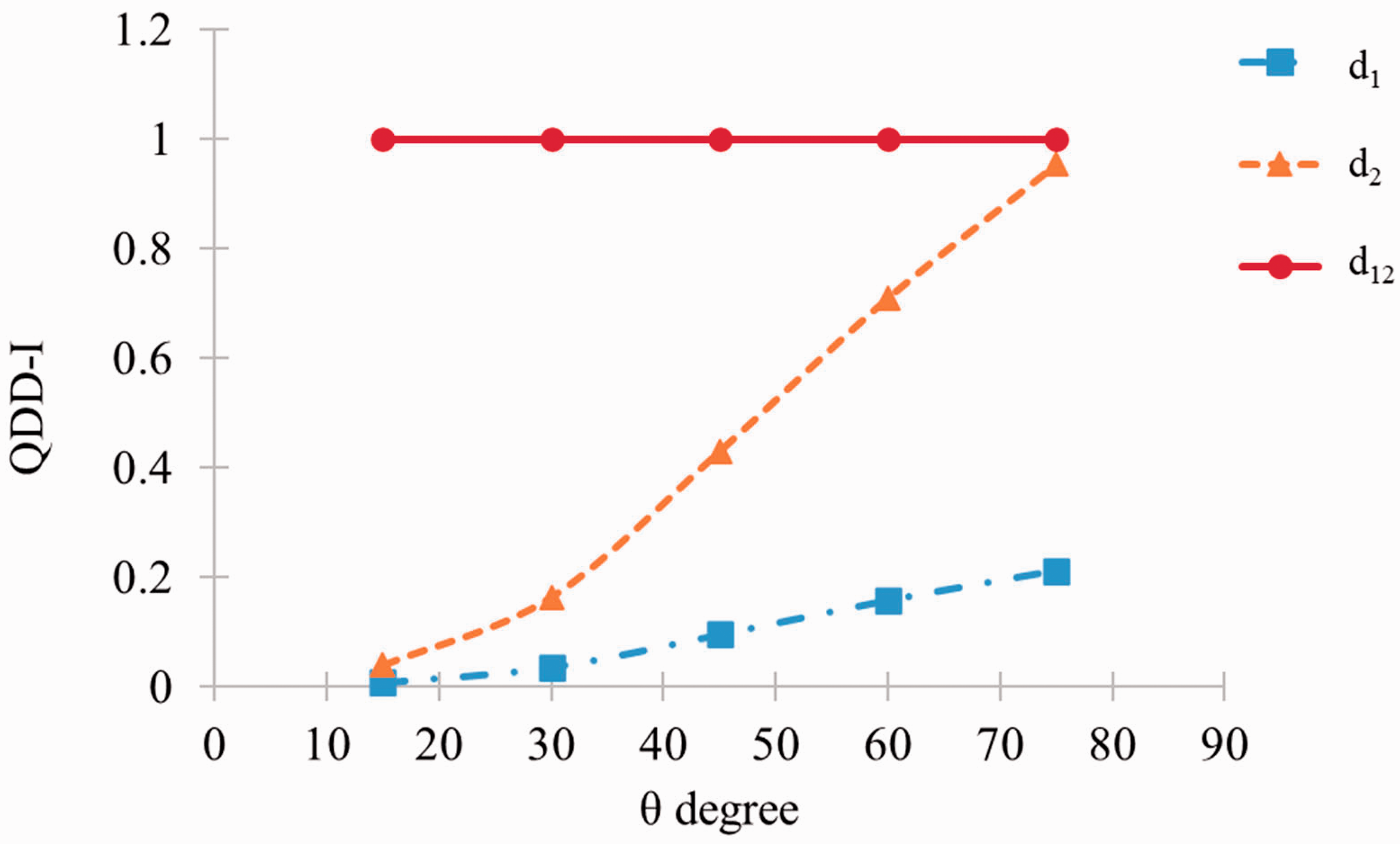
The QDD-I for B-E composite material.
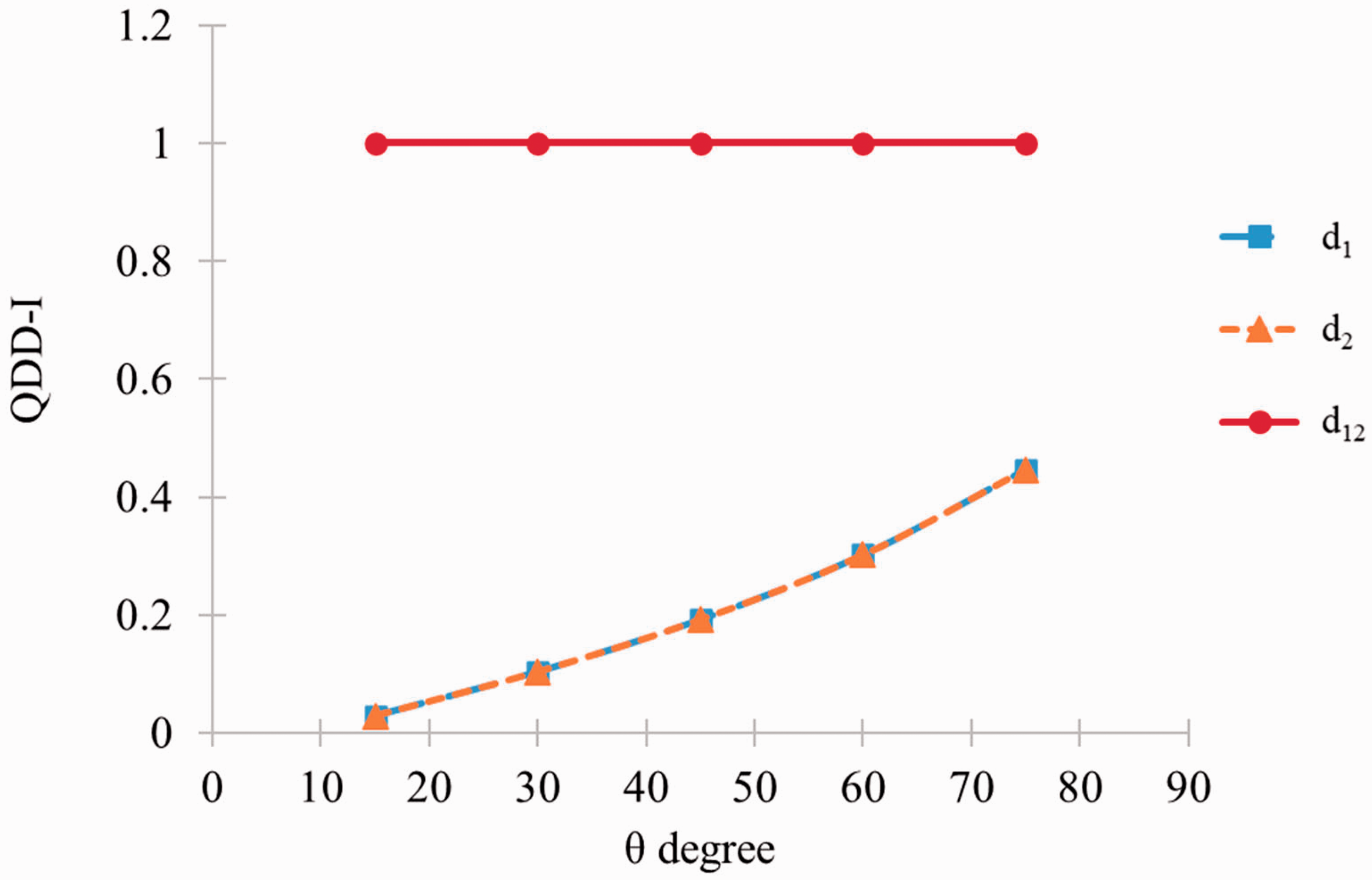
The QDD-I for C-E composite material.
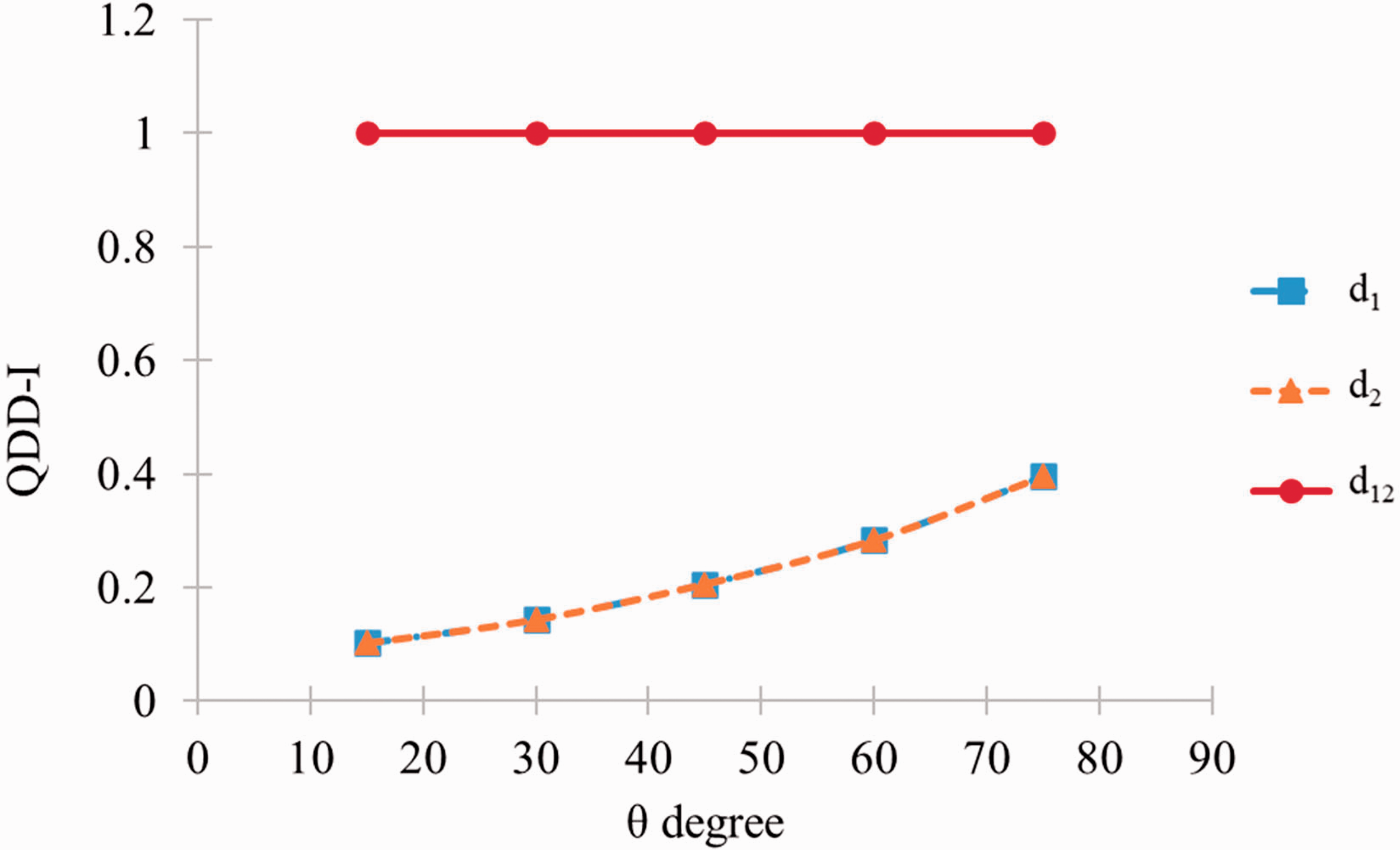
The QDD-I for G-E composite material.
In order to illustrate the significance of the QDD-I term, it has been shown that from Figures 2 to 4 that the elastic linear stress-strain behavior direction has a damage quantity (di) that affects the failure-stress of a lamina. Whilst in the literature it was stated that there was no damage resulting from the elastic linear stress-strain behavior. The value of the QDD-I is set between 0 and 1. The value of one (1) indicates that the damage in that direction has a dominant effect on the failure-criterion, while on the other hand the value of zero (0) indicates no effect. With decreasing the QDD-I value, the impact of damage will be decreased on the failure-criterion, as illustrated in Figures 2 to 4. Thus, since shear has a high non-linearity stress-strain behavior, the QDD-I value for shear is 1 in all the three composite materials. Directions 1 and 2 have a linear elastic stress-strain behavior in both C-E and G-E materials, hence, that the two curves have the same behavior.
For a further grasp of the QDD-I terms, the contribution and effect on the failure-criterion (equation (15)) for the three materials for B-E, C-E, and G-E are presented in Figures 5 and 6 as a percentage using the bar-form for the angles
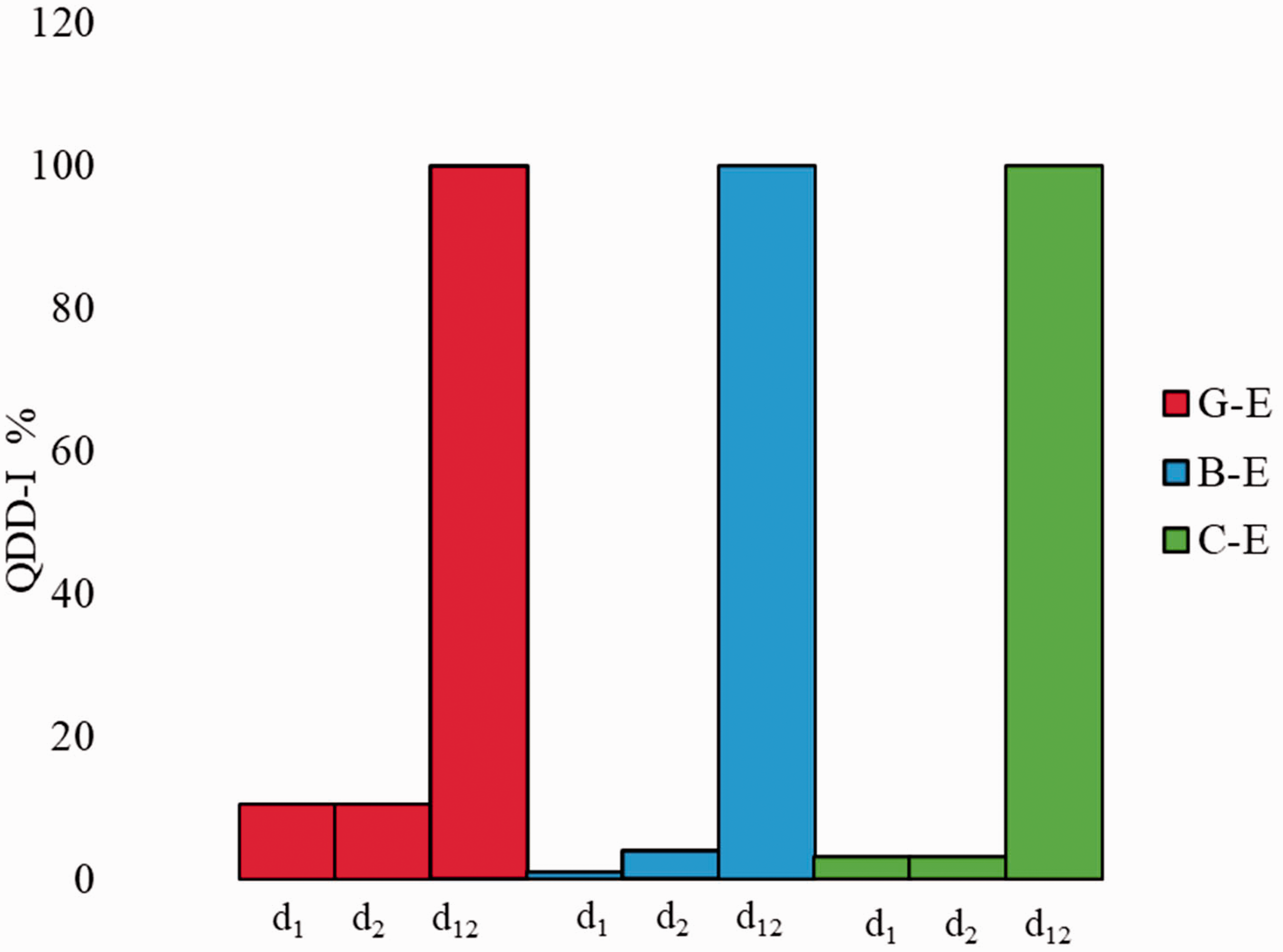
The percentage of the quantitative directional damage-index for θ =
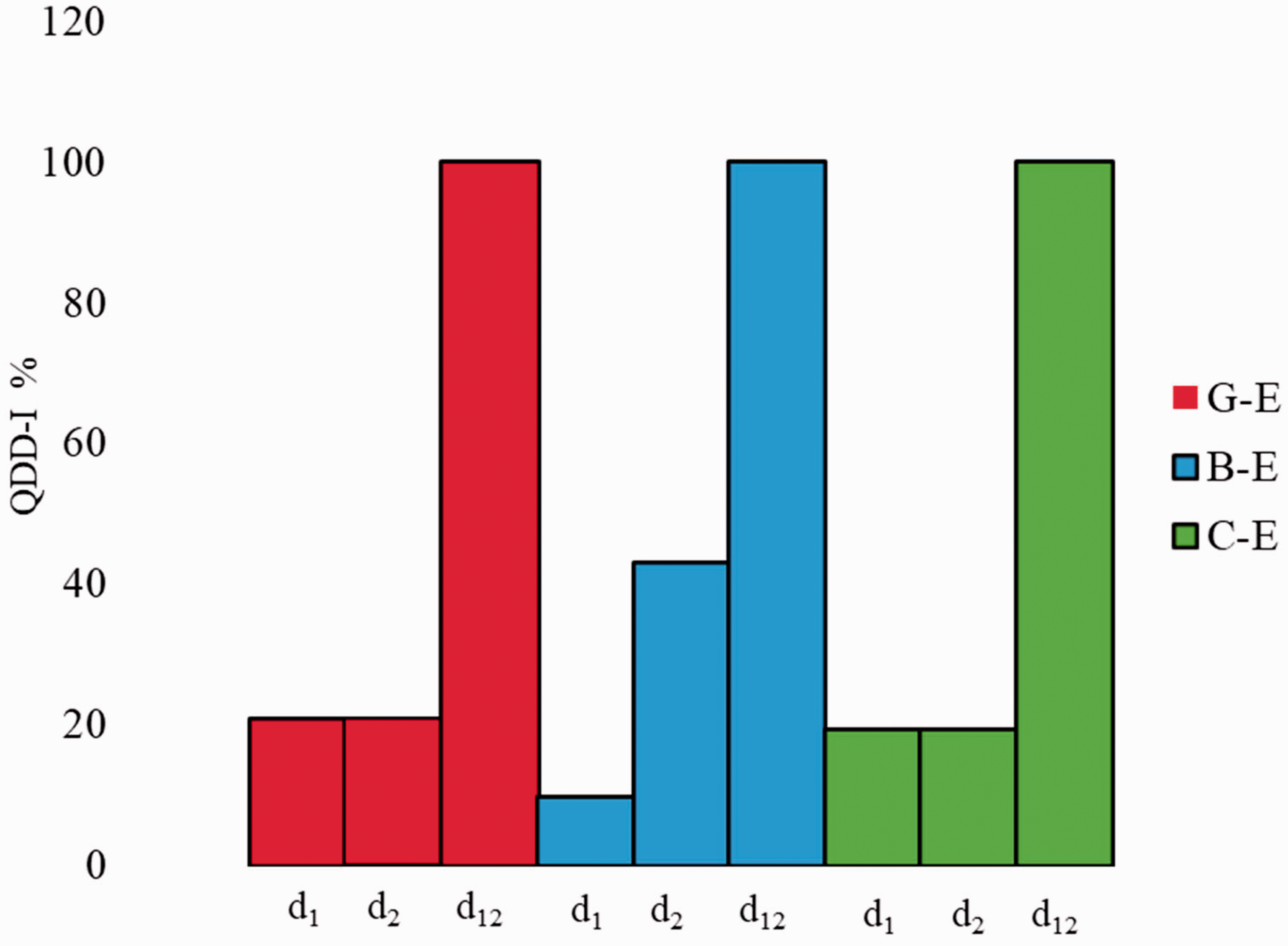
The percentage of the quantitative directional damage-index for θ =
By substituting equation (18) into equation (15), the QDD-factor will be replaced with QD-factor, then the relation can be expressed as:

The TSED (
Similarly, the same procedure can be applied to determine Us2 and Us12;


Consequently, the PSED for directions 1, 2, and 12 will be represented as:



Finally, the present failure criterion in terms of the quantitative damage factor (QD) will appear as:

Methodology
The present model is valid for a generally orthotropic composite material (whether it has linear or nonlinear behavior) subject to an in-plane stress-state (σ
x
, σ
y
, and τ
xy
) as a case of loading. At a specific shear stress (τ
xy
) and certain fiber-orientation angle (θ), the failure-envelope can be obtained according to the following procedure;
From the uniaxial experimental data for the stress-strain curves (σ1-ε1, σ2-ε2, and τ12-γ12), one can determine the maximum corresponding TSED terms (Us1m, Us2m, Us12m). Furthermore, the corresponding maximum PSED in terms of QD-factor will be determined, accordingly, as:
Express the stress in y-direction (σ
y
) as a ratio (Ry) to the stress in x-direction (σ
x
) i.e.
To determine the stress in the x-direction (σ
x
) which satisfies equation (22) (at a certain shear stress τ
xy
= τ, and using equation (24) one obtains:





where










The discriminant (d) in equation (25) obtained by
4. After determining σ
x
, σ
y
, and τ
xy
, we can find stresses in the principal material directions σ1, σ2, and τ12 by using equation (7). 5. Determine the QD-factor ( 6. Determine the PSED in each principal material direction (Up1, Up2, Up12) using equation (23). 7. Determine the secant modulus in each principal material direction (E1s, E2s, or G12s) from equation (8). 8. Substitute the new value of the secant modulus (E1s, E2s, or G12s) from step 7 into step 3, in order to determine a new value for σx. 9. Repeat steps 3 to 8 in order to satisfy the convergence of failure-criterion depending on the PSED (Up) of the system. In a mathematical form, the convergence criterion can be represented as:


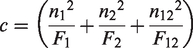

Where, the subscripts o and n indicate old and new values, respectively. The term- 10. Now, at a certain shear-stress (τxy = τ) and from σ
x
and σ
y
that were obtained from the previous steps, we have a point on the failure-envelope. To determine other points on the envelope, change the Ry -ratio.
Model validation and discussion
In order to validate the current failure-criterion in predicting the failure stresses, several experimental and theoretical data of uniaxial off-axis and biaxial loading on a lamina are obtained from the literature. Furthermore, a unidirectional laminate with various fiber-orientation angles subject to uniaxial tension (or compression) is, examined using the new model.
Uniaxial off-axis loading
Two materials are considered in this part; the first material is G-E, and the second one is B-E.
The material mechanical properties of the Graphite/Epoxy 4617/Modmore-II (G-E) are given in Table 7 of Appendix 1. The material exhibits the same linear stress-strain behavior and the same failure stresses in both tension and compression in the principal material direction-1 and -2; failure stresses are 204 ksi for direction-1 and 9.05 ksi for direction-2. However, for the in-plane material direction-12, it has a nonlinear stress-strain behavior with a failure shear-stress equals to 11.5 ksi.
As mentioned before, the failure stresses produced from the present model are compared with those obtained from various theories and experimental ones. Table 3 represents the predicted failure stresses from the present model, Tsai (1968) and Hill (1948) and AF-AJ (1994), in addition to the experimental values from Cole and Pipes (1974) tests for the different fiber-orientation angles (
Comparison between experimental results and various failure criteria for G-E for the case of uniaxial off-axis tension load.
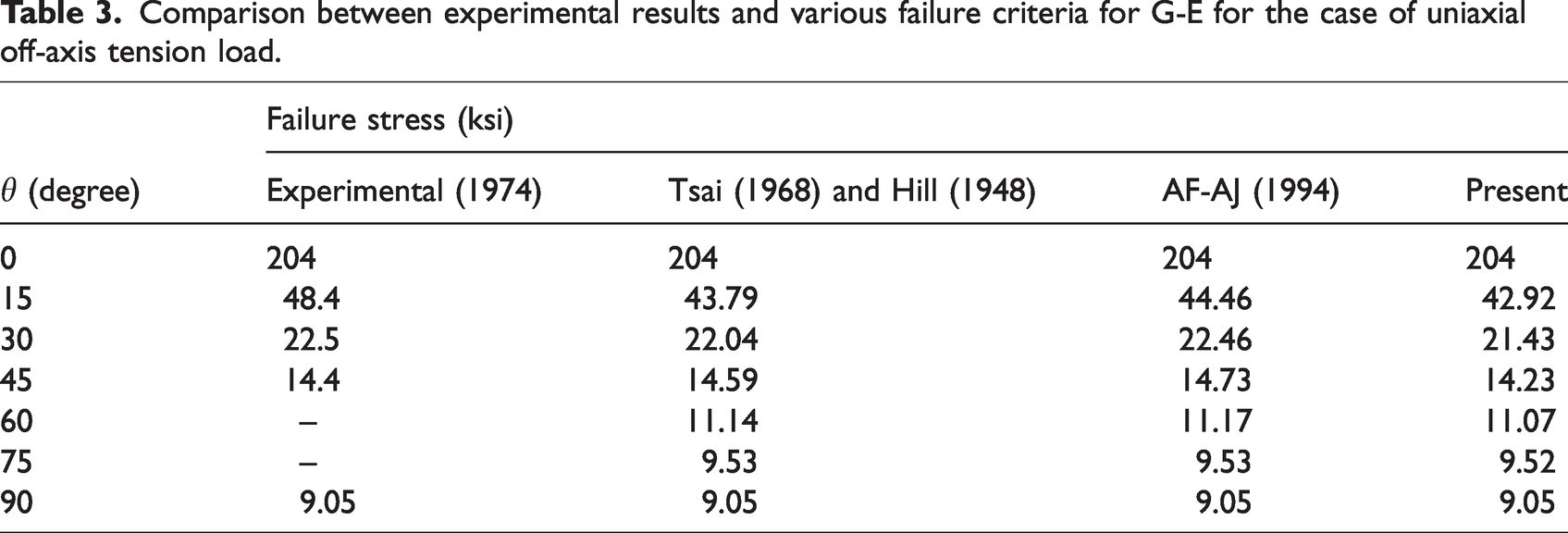
According to Table 3, there is an excellent agreement between the present study and both Tsai-Hill and AF-AJ failure criteria. The absolute percentage-error between the failure criteria starts with 0% and maximum at the angle of
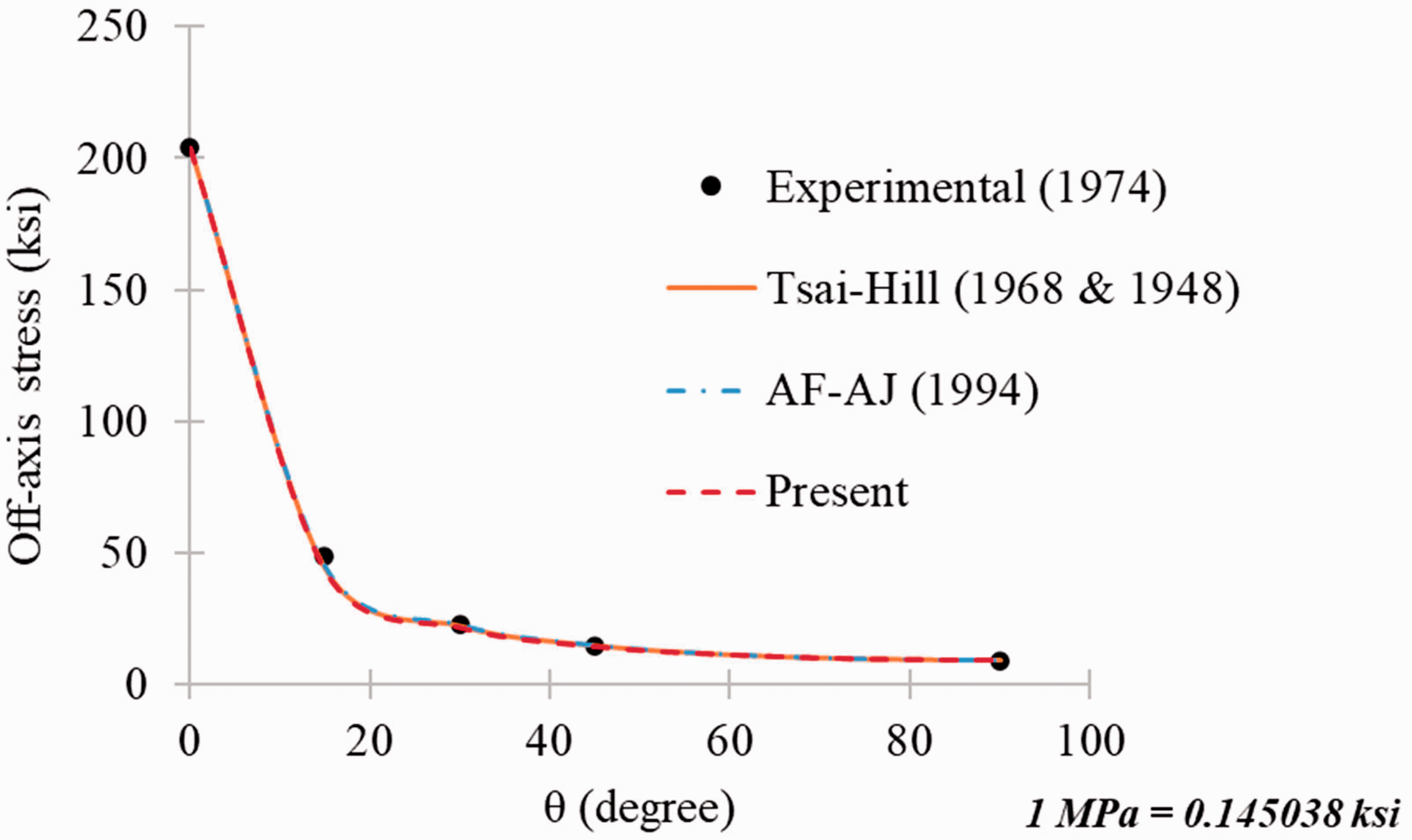
Comparison between experimental results and various failure criteria for G-E; uniaxial off-axis tension load.
In order to further verify the validity of the present failure criterion, a comparison with another experimental tensile off-axis loading from Tsai-Hahn (1980) is performed. As indicated in Figure 8, the present criterion, also, compares well with the other failure criteria from Serpieri (2005) and AF-AJ (1994). According to Figure 8, one can notice the validity of the present failure-criterion in predicting failure stresses at smaller angles less than
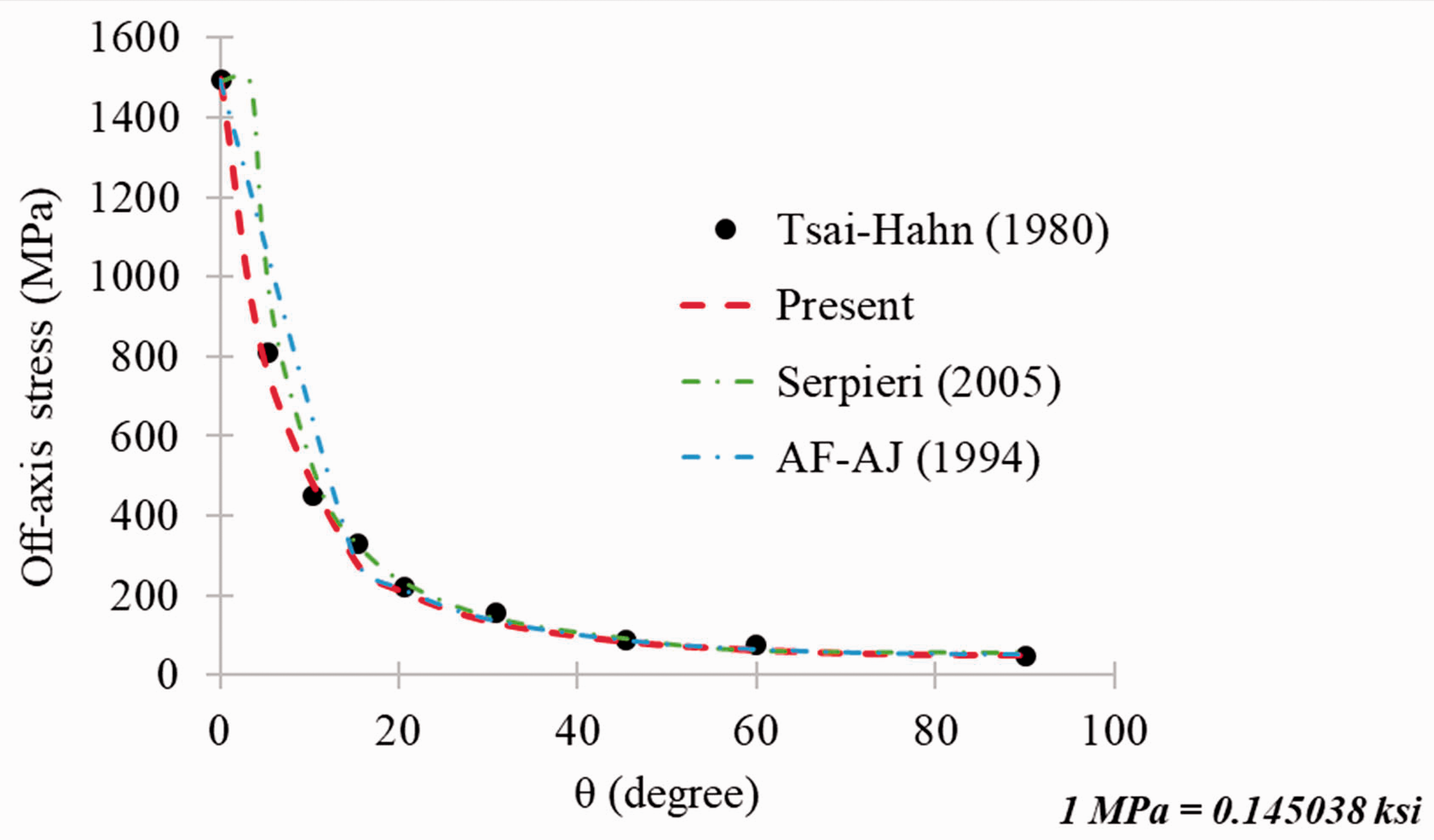
Comparison between experimental results and various failure criteria for G-E; uniaxial off-axis tension load.
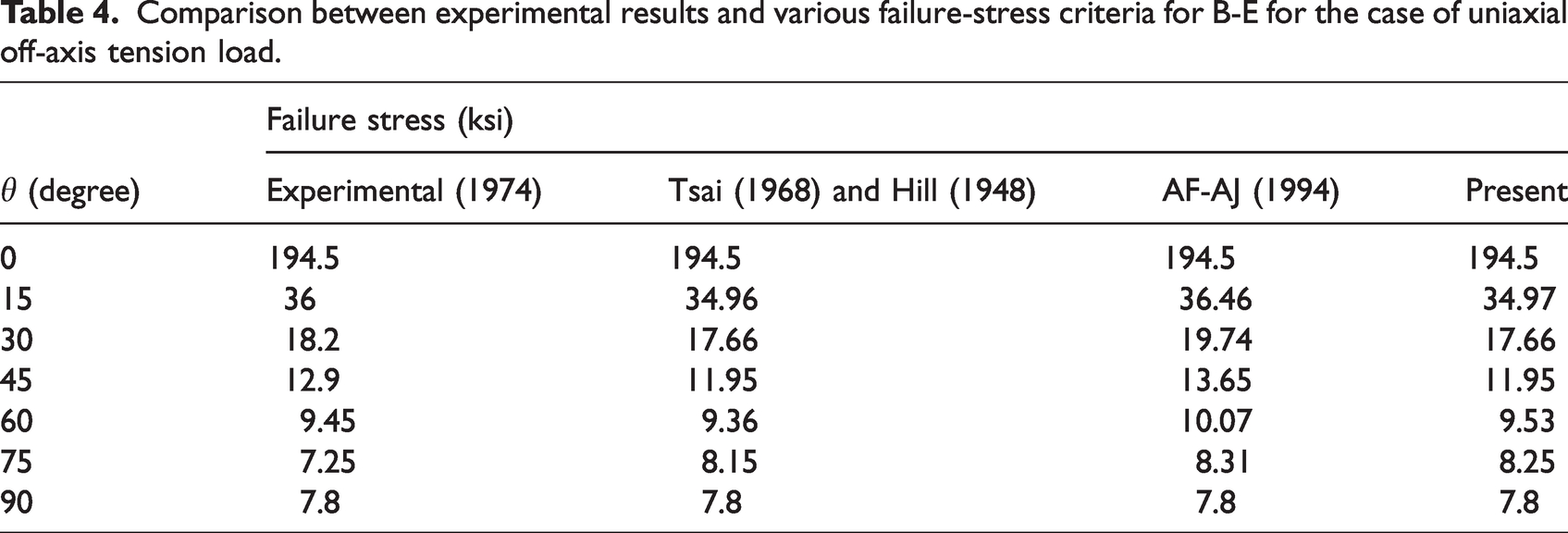
For Boron/Epoxy-Narmco 5505 (B-E), the mechanical material properties are as illustrated in Table 8 in the Appendix 1. The B-E material has a linear stress-strain behavior for the material principal direction-1 only, with a tensile failure-stress equals to 194.5 ksi and 295 ksi for the compressive failure-stress. The principal material directions -2 and -12 exhibit nonlinear stress-strain behavior. The failure stresses are 7.8 ksi, 37.5 ksi, and 9.3 ksi for the tensile, compressive, and shear stresses, respectively.
From Table 4, there is an excellent agreement between the present study and both Tsai-Hill and AF-AJ failure criteria. The maximum absolute percentage-error is 12% occurred at the angle of
Comparison between experimental results and various failure-stress criteria for B-E for the case of uniaxial off-axis tension load.
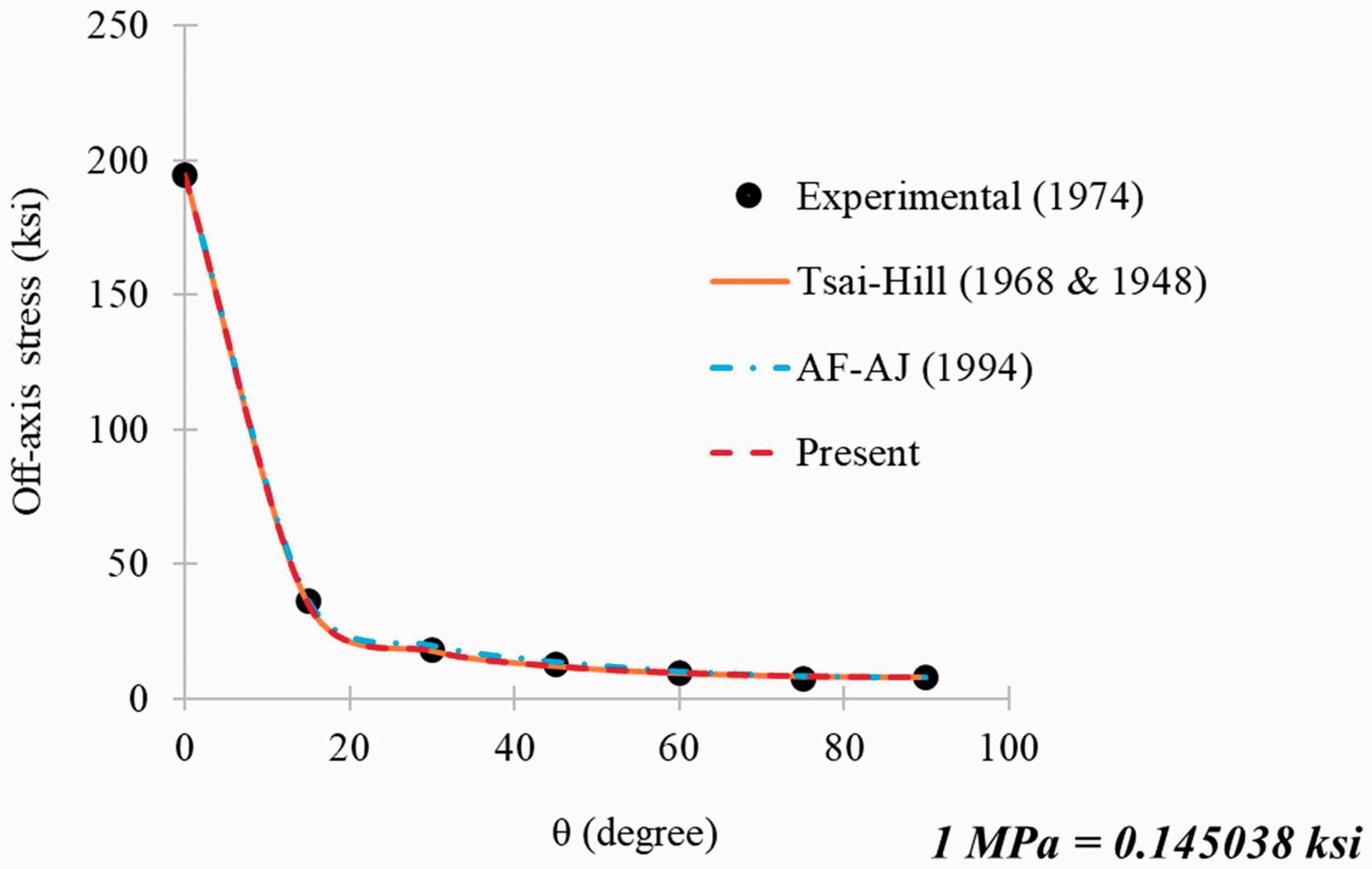
Comparison between experimental results and various failure criteria for B-E; uniaxial off-axis tension load.
For a further validation of the present model, a comparison of Carbon/Epoxy AS4/3501-6 (C-E) laminate with unidirectional fiber-orientation angles has been considered, the mechanical material properties are illustrated in Table 6 of the Appendix 1. As shown in Figure 10, a comparison is carried out between the experimental results and various failure criteria for a unidirectional fibrous composite laminate subject to a uniaxial off-axis tension load. A good agreement between Tsai and Wu (1971), Daniel et al. (2009) and the present criterion is found. Results of Camanho et al. (2015) failure criteria showed an increased discrepancy from the other models, because of the inclusion of the fiber-misalignment angle as a material property in their model. Moreover, as illustrated in Figure 10, the Maximum-stress failure-criterion represented an upper-bound curve, while the Camanho model and experimental results showed a lower-bound curve. The purpose of the present comparison is to show the reliability and validity of the present model with respect to other available models.
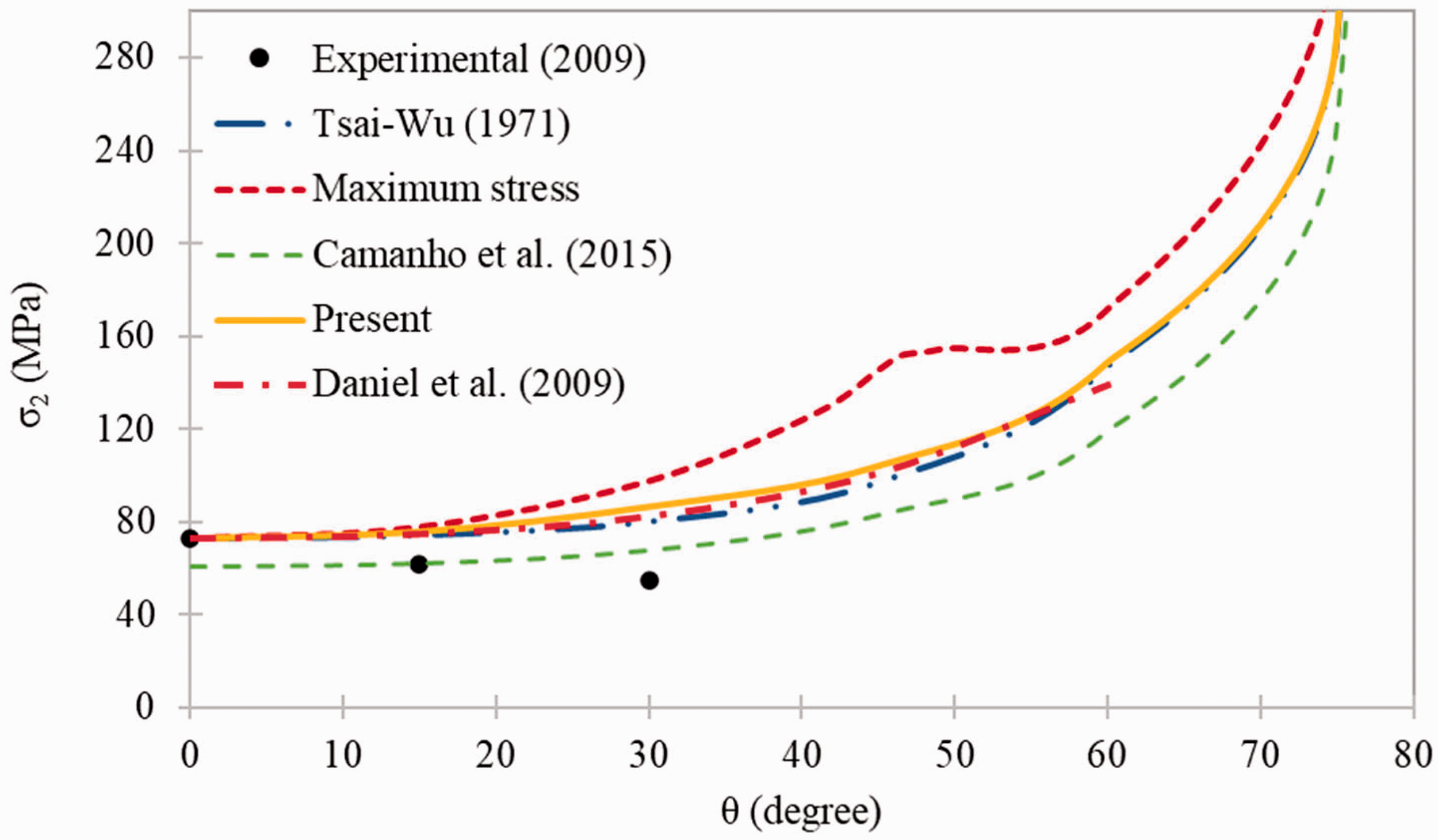
Comparison between experimental results and various failure criteria for C-E; uniaxial off-axis tension load.
Biaxial loading
At a certain angle and zero shear stress (θ = 0, τxy = 0), the failure envelope of B-E lamina under a biaxial stress state has been determined. A world-wide comparison between the present failure criterion and six different failure criteria, as illustrated in Figure 11, which showed that the present failure criterion compares well with the other failure criteria.
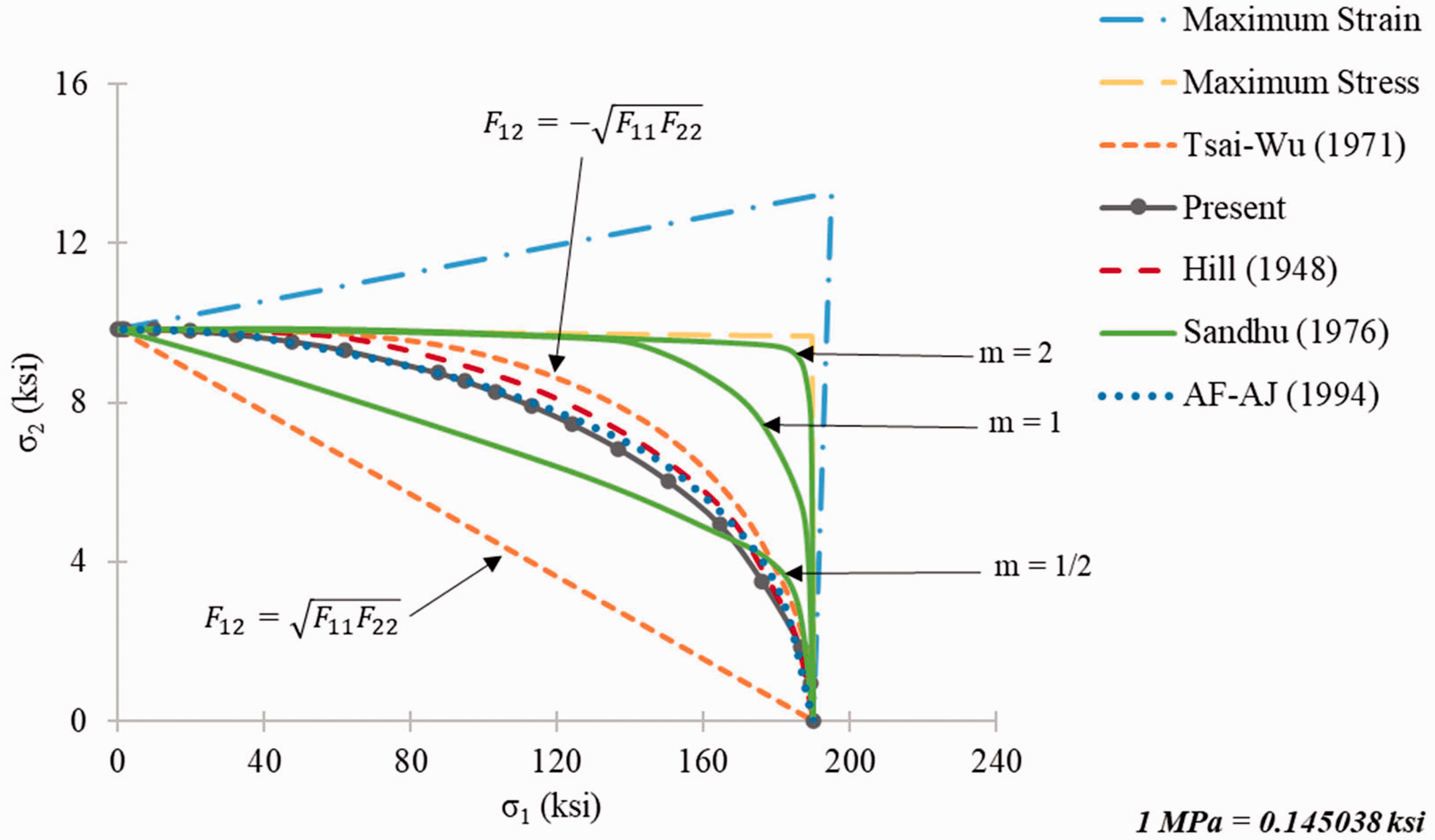
World-wide comparison between failure-envelopes of various failure criteria for B-E.
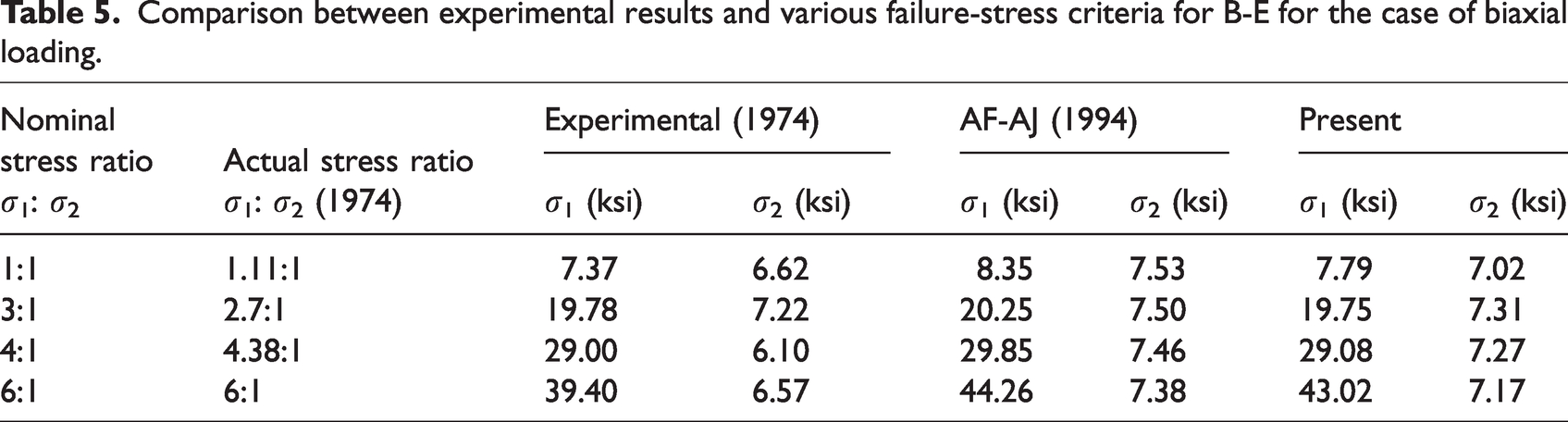
In a further study, a biaxial failure-stress comparison between the present failure-criterion and experimental results from Cole and Pipes (1974) are represented in Table 5. The experiments were performed using tubes made of a unidirectional lamina of B-E fibrous composite material. Moreover, various stress ratios were tested in the experiment, as illustrated in Table 5. According to Table 5, there is an improvement in results of the present criterion compared to AF-AJ (1994) and with respect to the experimental ones.
Comparison between experimental results and various failure-stress criteria for B-E for the case of biaxial loading.
Failure envelopes
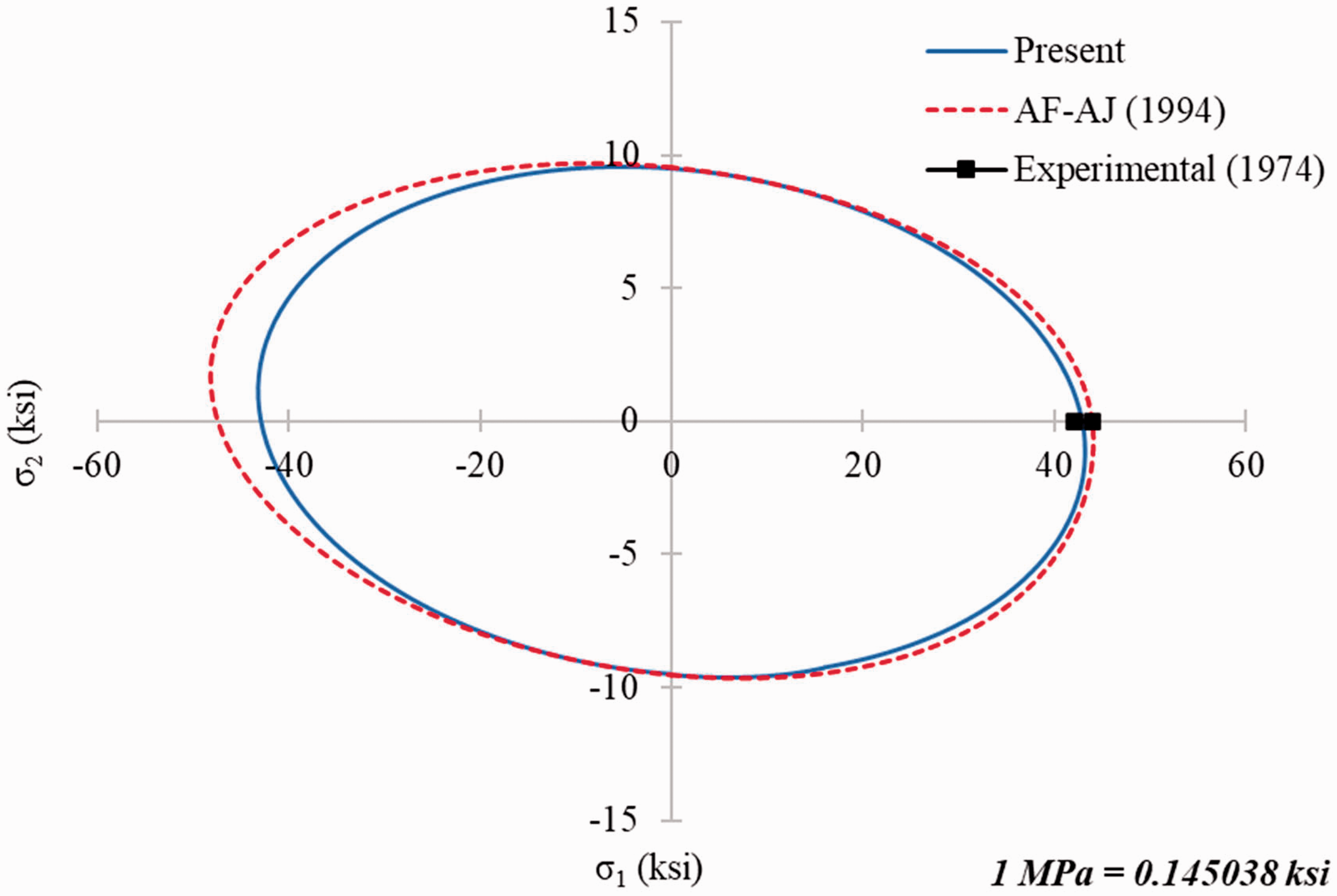
In order to further investigate and validate the effect of damage-factor on the present failure- criterion, the failure envelopes for G-E were determined. The failure envelopes from the present study are compared with those of AF-AJ (1994) failure-criterion. At zero shear stress (τxy = 0) and different fiber-orientation angles (θ =
Figure 12. Failure envelopes for G-E at fiber-orientation angle θ =
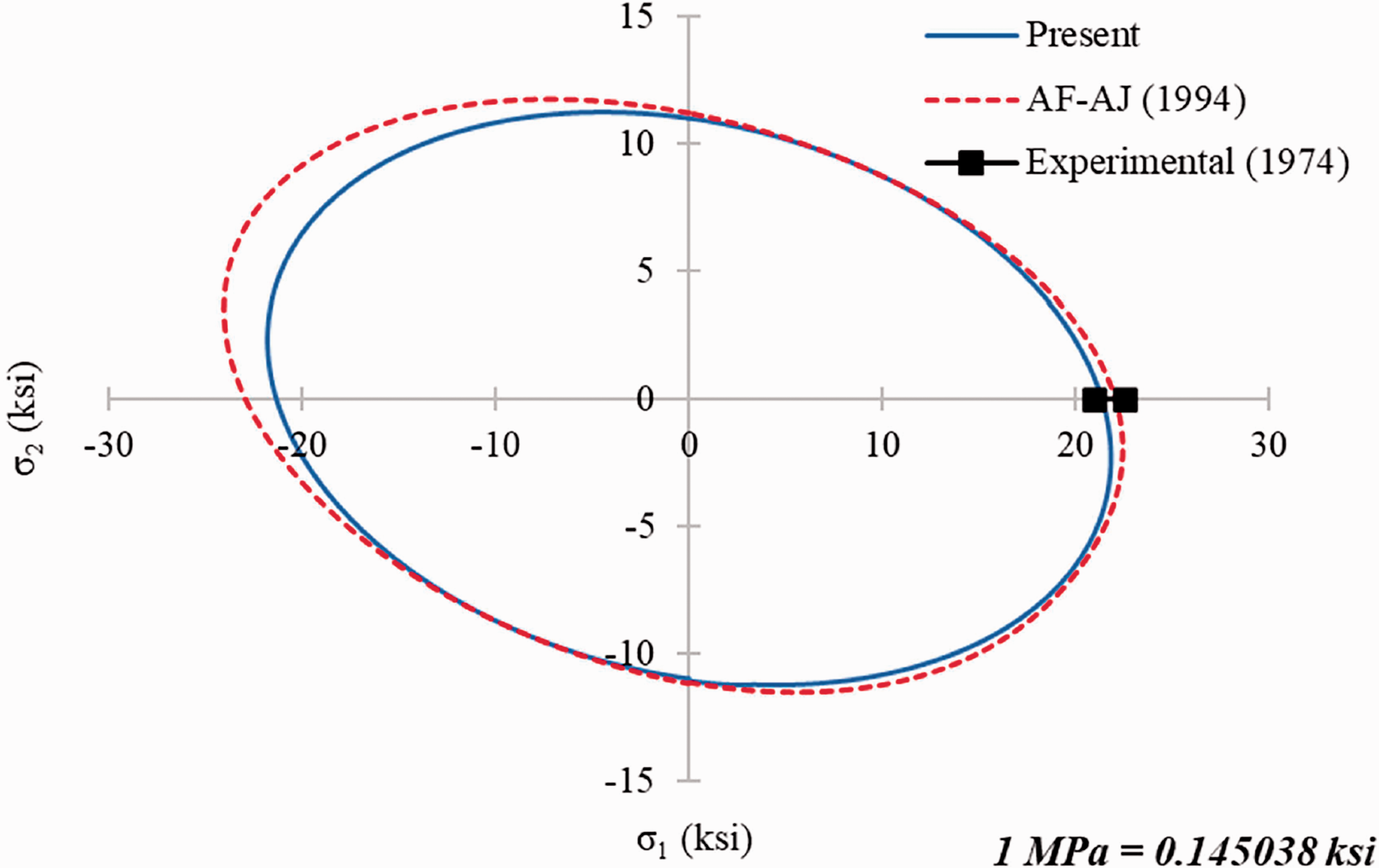
Failure envelopes for G-E at fiber-orientation angle θ =
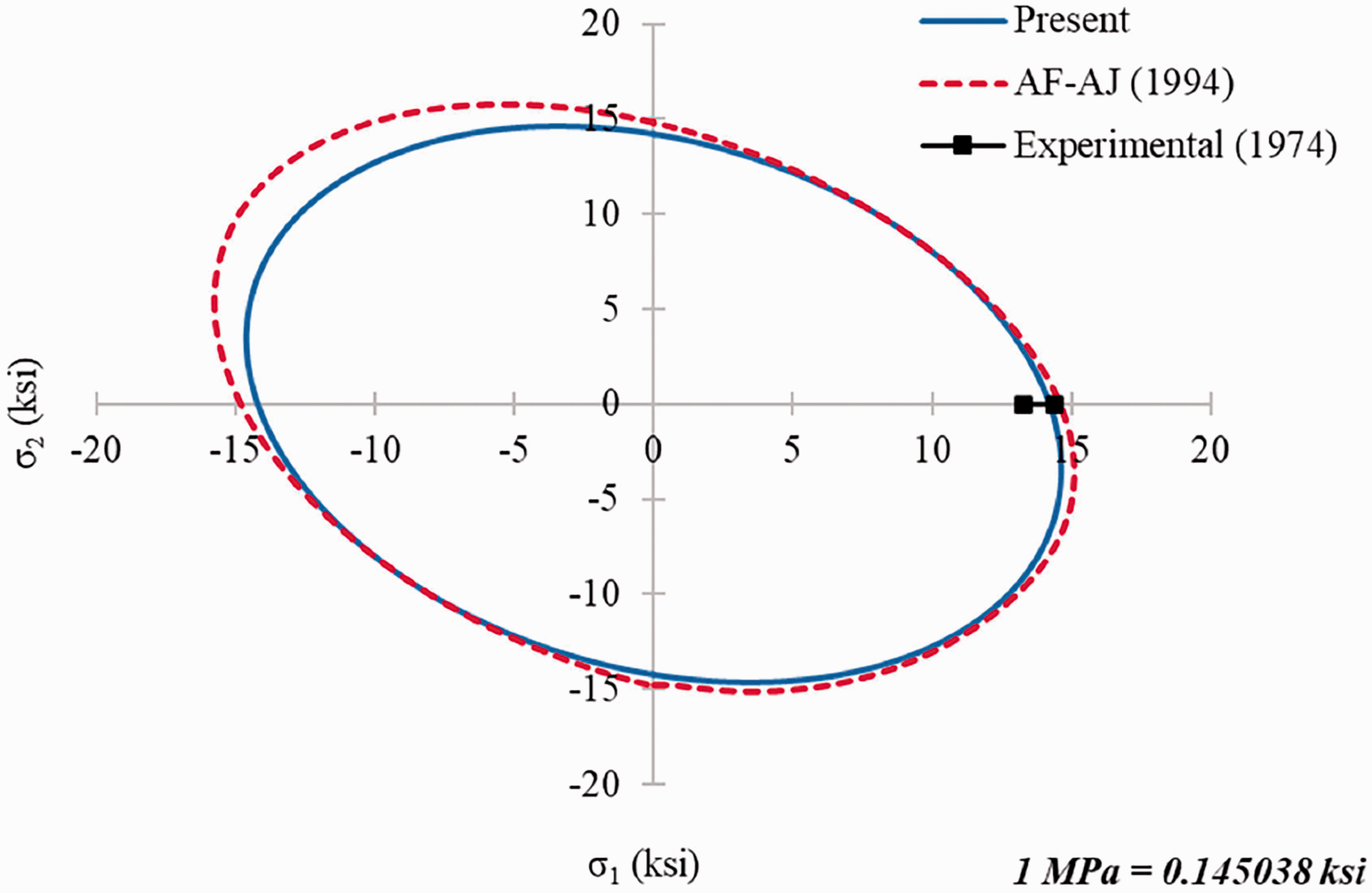
Failure envelopes for G-E at fiber-orientation angle θ =
As expected, all failure envelopes have a closed shape. The effect of damage is noticed from Figures 12 to 14 as a reduction in the strength of the fibrous composite material. Moreover, the reduction in the second quadrant in all envelopes was the highest, which is the case of compressive stress in the x-direction and tensile stress in the y-direction, while the three other quadrants have a slightly reduced strength.
Conclusions
A novel damage-based failure-criterion was developed. It incorporated a newly proposed quantum damage factor (QD) into an energy-based failure-criterion. Moreover, a new term called the quantitative directional damage-index (QDD-I) was introduced, which indicated the damage contribution and effectiveness of each principal material direction on the present failure-criterion. Nevertheless, it was proved that the linear elastic stress-strain behavior of a composite lamina had a minor damage impact on the failure- criterion.
The proposed model was proved to be applicable to fibrous composite laminas or laminates and compared well with the corresponding experimental results and other available failure criteria from literature. The new model can be used for generally orthotropic fibrous composite laminas, whatever the case of stress (uniaxial, biaxial, or general). The composite material behavior might be linear or nonlinear and, also, might have different mechanical properties in tension and compression.
The model exhibited reasonably failure stresses in all the considered cases and compared well utilizing a worldwide comparison for a biaxial-stress state for Boron/Epoxy composite material. Incorporating damage into the failure-criterion was shown to further enhance and improve the prediction of failure-stress and failure-envelope and to be closer to the experimental results.
Footnotes
Acknowledgements
This paper is part of the Master thesis of the second author.
Declaration of conflicting interests
The author(s) declared no potential conflicts of interest with respect to the research, authorship, and/or publication of this article.
Funding
The author(s) received no financial support for the research, authorship, and/or publication of this article.
